More plant blindness?

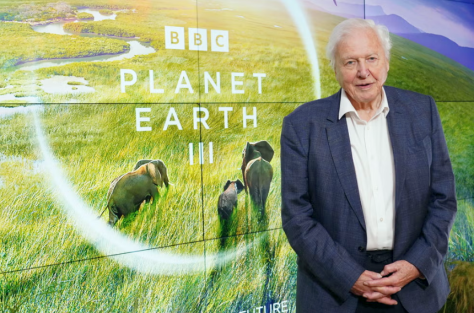
Tomorrow, 22 October, BBC1 will air Sir David Attenborough‘s next blockbuster 8-part series, Planet Earth III¹, just a year after his last series Frozen Planet II was broadcast.

Planet Earth III? From what I have seen in the trailer for the series, perhaps this should—once again—be titled [Animal] Planet Earth III.

There’s no doubt that the filming is spectacular, the ‘stories’ riveting. As one of the cinematographers has written, [the series] is set to be the most ambitious natural history landmark series ever undertaken by the BBC. It will take audiences to stunning new landscapes, showcase jaw-dropping newly-discovered behaviors, and follow the intense struggles of some of our planet’s most amazing animals (my underlining emphasis).

It’s not very likely that the series will feature plants much, if at all. Are plants being short-changed yet again? Of course there are many programs on television about gardening. But these don’t count, in my opinion, towards any greater understanding of and knowledge about plants and their uses.

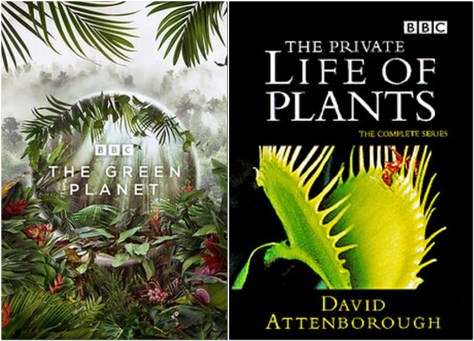
That’s not to say that the BBC (or Sir David) have completely ignored plants. In January 2022, his five episode The Green Planet series was broadcast. It was, for me however, a bit like the curate’s egg²: good in parts.

And you have to go way back to 2003 for his The Private Life of Plants series, described as a study of the growth, movement, reproduction and survival of plants.

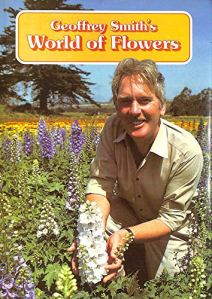
Before that, I can only think of Geoffrey Smith‘s World of Flowers double series, broadcast on BBC2 in 1983 and 1984, and apparently attracting an audience of over five million.

Who said there was no appetite for programs about plants? These programs weren’t your run-of-the-mill gardening programs. No, in each program Smith highlighted the origin and development of different groups of plant species commonly grown in British gardens.

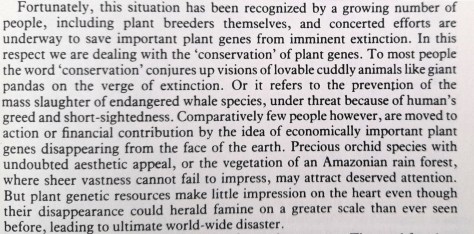
Furthermore, conservation for many relates to animals. This is something my former Birmingham colleague Brian Ford-Lloyd and I wrote back in 1986.


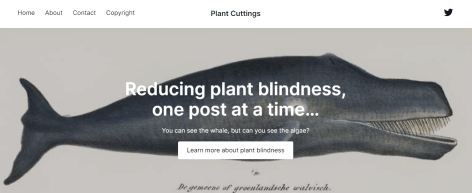
So what has brought about this latest concern of mine? Well, I first came across the announcement for Planet Earth III‘s imminent broadcast on the same day recently that I subscribed to a new plant-based blog: Plant Cuttings. And there, on the home page, was the blog’s goal for all to see: to reduce plant blindness.

The blog is the creation of Mr P Cuttings (aka Dr Nigel Chaffey, a former senior lecturer in botany at Bath Spa University, and a self proclaimed freelance plant science communicator), and is dedicated to all those who find fascination in plants (and how they are used by people). You can find more about the rationale for and antecedents of Plant Cuttings here. It’s a continuation of the series of articles he published in Annals of Botany, the last one, Check beneath your boots . . ., being published in 2019 (also about ‘plant blindness’).

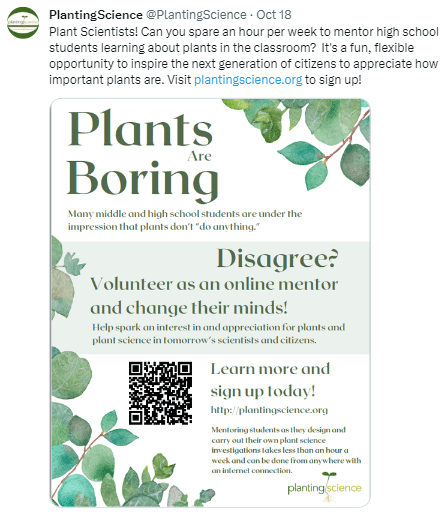
Unfortunately, plants are often seen as boring, especially by high school students who we need to attract to the plant sciences if the discipline (in all its aspects) is to thrive. Thus this initiative by PlantingScience, a Student-Teacher-Scientist partnership in the USA that was founded in 2005 by the Botanical Society of America.

Let me wish Nigel all the best as he develops this new Plant Cuttings blog. I’m very much in accord with his goals. After all, much of my career in the plant sciences has focused on the origin of the plants that feed us, how they can preserved for posterity in genebanks, and used to increase crop productivity.

So what sparked my interests in plants and human societies? 

While a high school student, I first thought I’d become a zoologist. But I saw the light and my interests turned towards plants, and I took a botany degree (combined with geography) in the late 1960s at the University of Southampton.

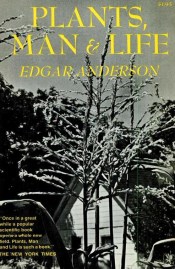
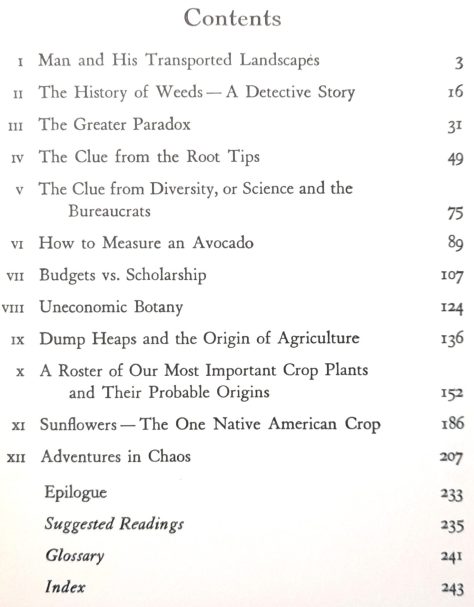
One of the books that I read was first published in 1952 (I have the 1969 reprint) by American botanist Edgar Anderson. He wrote it for readers with little technical understanding of plants. After 70 years it has stood the test of time, and I thoroughly recommend anyone who has the slightest interest of the relationships between humans and plants to delve into Plants, Man & Life.

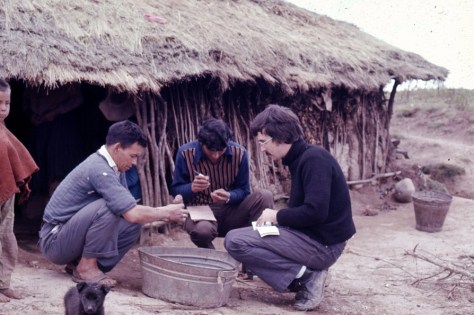
Thus I’ve been fascinated for decades about the beginnings of agriculture and how humans domesticated wild plants, and where, and to what uses they have put the myriad of varieties that were developed. My own expertise in conservation of genetic resources has permitted me to explore the Andes of Peru to find many different varieties of potato, the foundation on which Andean civilizations such as the Incas became successful.

Collecting potatoes from a farmer in northern Peru, May 1974.

A graduate student of mine worked out the probable origin of the grasspea, a famine crop in some parts of the world. And I’ve managed the largest genebank for rice in the world (rice feeding half the world’s population every day), and with my colleagues expanded our knowledge of the relationships of cultivated rices to their wild ancestors. I directed a five year program in the mid-1990s to collect cultivated rices from many countries in Asia and Africa, especially from the Lao PDR.

These are just three examples from all the plants which societies use and depend on. So many more, and so many fascinating stories of how civilization and agriculture developed.

Just recently, on holiday in North Wales, my wife and I came across the site of about 20 hut circles on the northwest tip of Anglesey, dating back to the Iron Age, some 2500 years ago.

What is particularly fascinating for me is that there is good evidence that crops like wheat, barley, and oats among others were being cultivated there 3000 years earlier. That’s about 4500 years after these crops were first domesticated in the Near East in Turkey and along the river valleys of the Tigris and Euphrates. In the intervening years, these crops were carried across Europe by migrating peoples as they headed west until they became staples on the far west of mainland Britain. The domestication and expansion of these crops is also the story of those societies.

Plants are definitely not boring. Botany opens up a host of career opportunities. Today we need to harness the whole range of plant sciences, from molecule to field, to understand and use all the genetic diversity that is safely conserved in genebanks around the world, and backed up in many cases in the Svalbard Global Seed Vault. We now have so many more tools, particularly molecular ones, at our fingertips to study plants.

Be sure to follow Plant Cuttings to find out more about the joy of plants and their value to humankind. I trust many more generations will be proud to say they became botanists (or, at the very least, took up one of the allied plant sciences).


¹I watched the first episode of Planet Earth III on BBC IPlayer catch up. Verdict: stunning photography but boring content, seemingly a rehash of so many nature programs. All animals. However, at 97, Sir David Attenborough is a remarkable presenter.

² A curate’s egg is something described as partly bad and partly good.

We walked to Scotland last Thursday

Well, I might be exaggerating a wee bit. We didn’t walk all the way there. Just the last half mile. Let me explain.

Thursday was, for the first time in many days, bright and sunny although much cooler than we have enjoyed of late. And while the weather has been better here on the coast (we live just a few miles inland), it has been much more unpredictable in the hills, and rainy on many days.

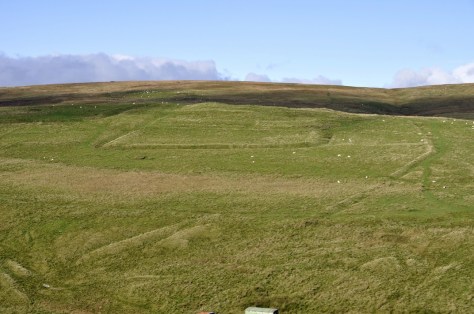
However, with a more promising forecast we decided to head off to the Cheviots, and specifically to Chew Green Roman fort and encampment (built around 79 AD) close to the border with Scotland, and a location we have visited twice before.

At its nearest, the Scottish border is only 40 miles or so (65 km) northwest as the crow flies from our home in North Tyneside, or about 55 miles or so by road. This is the route we took.

Chew Green is just beyond the ‘end’ of the road near the headwaters of the River Coquet, and the drive there (on a very narrow road) beyond Alwinton winds its way through beautiful Upper Coquetdale.

This video, of the drive from Alwinton to Chew Green lasts over 41 minutes. You can double the playback  speed (without affecting your appreciation of the marvellous landscapes) by clicking on the Settings button.

The road does continue beyond Chew Green. However, it passes over the Otterburn Ranges, an area of the Northumberland National Park controlled by the Ministry of Defence where troops are trained and live firing takes place. Access is often restricted, as it was on Thursday, when the red flags are raised.

Nevertheless, we just drove a few hundred meters beyond the parking spot, climbing the hill facing Chew Green to get a better view of the embankments of the camp, something we had not done on either of our previous visits.

Leaving the parking spot on foot, we headed west (just south of the fort/encampment) until we reached a dip in the landscape with a small burn (and tributary of the River Coquet, if not the beginnings of the river itself), crossing over a stile, and stepping into Scotland.

No border patrols here, although for centuries past this was a most contentious border, and the location of many cross-border raids and cattle rustling.

That’s Scotland beyond the dip in the landscape in this video. It’s a pity there was no post along the path to indicate exactly where you pass from one nation into the other.

Then we walked up over the fort, and made our way back to the car. Dere Street, one of the most important Roman roads that connected Eboracum (York) with Roman forts beyond Hadrian’s Wall and over the border into Scotland, runs right beside Chew Green. It’s remarkable that the camp’s embankments are so well preserved, after 1900 years.

At its headwaters here in the Cheviots, the River Coquet is no more than a babbling brook.

But within a short distance from Chew Green, it becomes a substantial river (as you can see in this video of the return journey down the valley) wending its way east to the North Sea at Amble.

Incidentally, most of the sheep in the videos are the local Cheviot breed, with some horned Scottish blackface.


Potatoes have no special chemistry to induce romance . . . but they brought us together

Saturday 13 October 1973, 11:30 am
Lima, Peru

Fifty years ago today, Steph and I were married at the town hall (municipalidad) in the Miraflores district of Lima, where we had an apartment on Avenida José Larco. Steph had turned 24 just five days earlier; it would be my 25th in the middle of November.
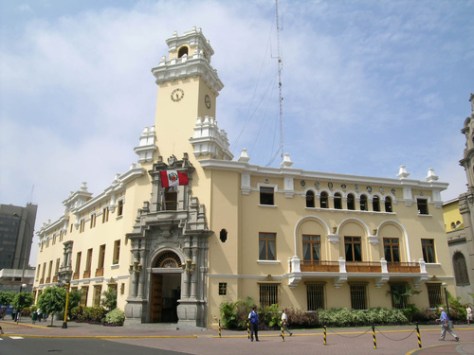
Municipalidad de Miraflores, Lima

It was a brief ceremony, lasting 15 minutes at most, and a quiet affair.  Just Steph and me, and our two witnesses, John and Marian Vessey. And the mayor (or other official) of course.

John, a plant pathologist working on bacterial diseases of potato, was a colleague of ours at the International Potato Center (CIP) in Lima, who had joined the center a few months before I arrived in Lima in January 1973.
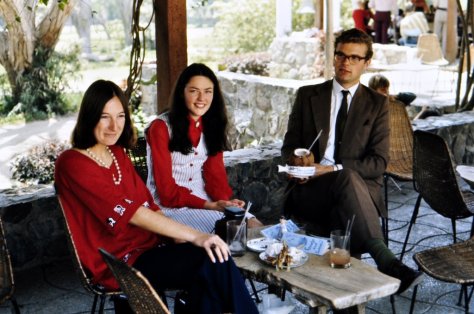
Enjoying pre-lunch drinks with Marian and John at ‘La Granja Azul‘ restaurant at Santa Clara – Ate, on the outskirts of Lima.

The newly-weds.


It’s by chance, I suppose, that Steph and I got together in the first place. We met at the University of Birmingham, where we studied for our MSc degrees in Conservation and Utilization of Plant Genetic Resources.

Steph arrived in Birmingham in September 1971, just after I had finished the one-year course. I was expecting imminently to head off to Peru where I had been offered a position at CIP to help curate the large collection of native potato varieties in the CIP genebank. So, had I flown off to South America then, our paths would have hardly crossed.

But fate stepped in I guess.

My departure to Peru was delayed until January 1973. So I registered for a PhD with renowned potato expert Professor Jack Hawkes (right, head of the Department of Botany and architect of the MSc course), and began my research in Birmingham while CIP’s Director General, Richard Sawyer, negotiated a financial package from the British government to support the center’s research for development agenda, and my work there in particular.

It must have been early summer 1972 that Steph and I first got together. Having completed the MSc written exams in May, Steph began a research project on reproductive strategies in three legume species, directed by Dr Trevor Williams (who had supervised my project a year earlier on lentils). And she completed the course in September.

By then, she had successfully applied for a scientific officer position at the Scottish Plant Breeding Station in Edinburgh (SPBS, now part—after several interim phases—of the James Hutton Institute in Dundee), as Assistant Curator of the Commonwealth Potato Collection. But that position wasn’t due to start until November.
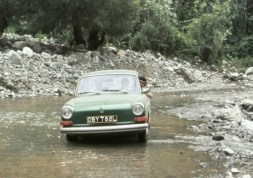
Our VW Variant in Peru, around May 1973 – before receiving a Peruvian registration plate.

In early November I took delivery of a left-hand-drive Volkswagen for shipment to Peru. On a rather dismal Birmingham morning, we loaded up the VW with Steph’s belongings and headed north to Edinburgh. She returned to Birmingham in mid-December for her graduation.
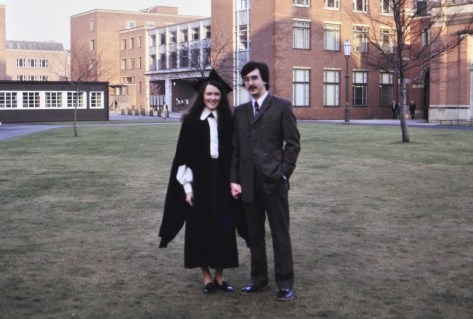
Then, just after Christmas 1972, we met up in a London for a couple of days before I was due to fly out to Lima.

At that time we could not make any firm commitments although we knew that—given the opportunity—we wanted to be together.

Again fate stepped in. On 4 January 1973, Jack Hawkes and I flew to Lima. Jack had been asked to organize a planning conference to guide CIP’s program to collect and conserve native Andean potato varieties and their wild relatives.
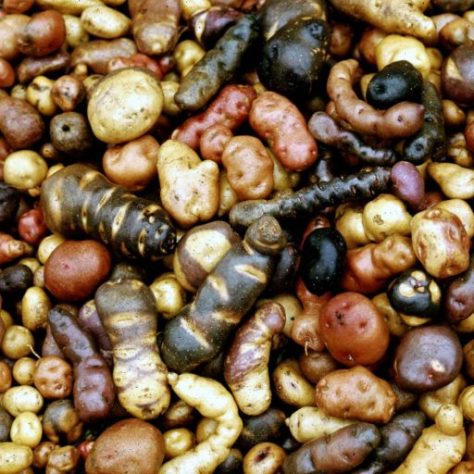
Potato varieties from the Andes of Peru.

While I stayed in a small hotel (the Pensión Beech, in the San Isidro district) until I could find an apartment to rent, Jack stayed with Richard Sawyer and his wife Norma. And it was over dinner one evening that Jack mentioned to Richard that I had a ‘significant other’ in the UK, also working on potato genetic resources, and was there a possibility of finding a position at CIP for her. Richard mulled the idea over, and quickly reached a decision: he offered Steph a position in the Breeding and Genetics Department to work with the germplasm collection.

With that, Steph resigned from the SPBS and made plans to move to Lima in July, with us planning to get married later on in the year.

In the CIP germplasm screenhouses in La Molina. Bottom: with Peruvian potato expert Ing. Carlos Ochoa.


A couple of weeks after I arrived in Peru, I found an apartment in Miraflores at 156 Los Pinos (how that whole area has changed in the intervening 50 years), and that’s where Steph joined me.

In our Los Pinos apartment, Miraflores in July 1973.

A few weeks later we found a larger apartment, nearby at 730 Avda. Larco, apartment 1003. Very interesting during earthquakes!
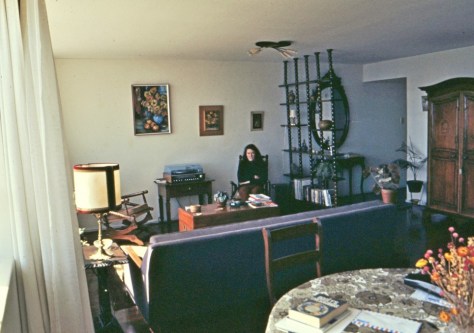
Around mid-August 1973 we began the paperwork (all those tramites!) to marry in Peru. Not as simple as you might think, but on reflection perhaps not as difficult as we anticipated.

While we were allowed to post marriage banns in the British Embassy, we had to announce our intention to marry in the official Peruvian government gazette, El Peruano, and one of the principal daily broadsheets (El Comercio if memory serves me right), and have the police visit us at our apartment to verify our address. I think we also had to have blood tests as well. This all took time, but everything was eventually in place for us to set the wedding date: 13 October.

Some friends wanted to give us a big wedding, but Steph said she just wanted an intimate, quiet day. So that’s what we organized.

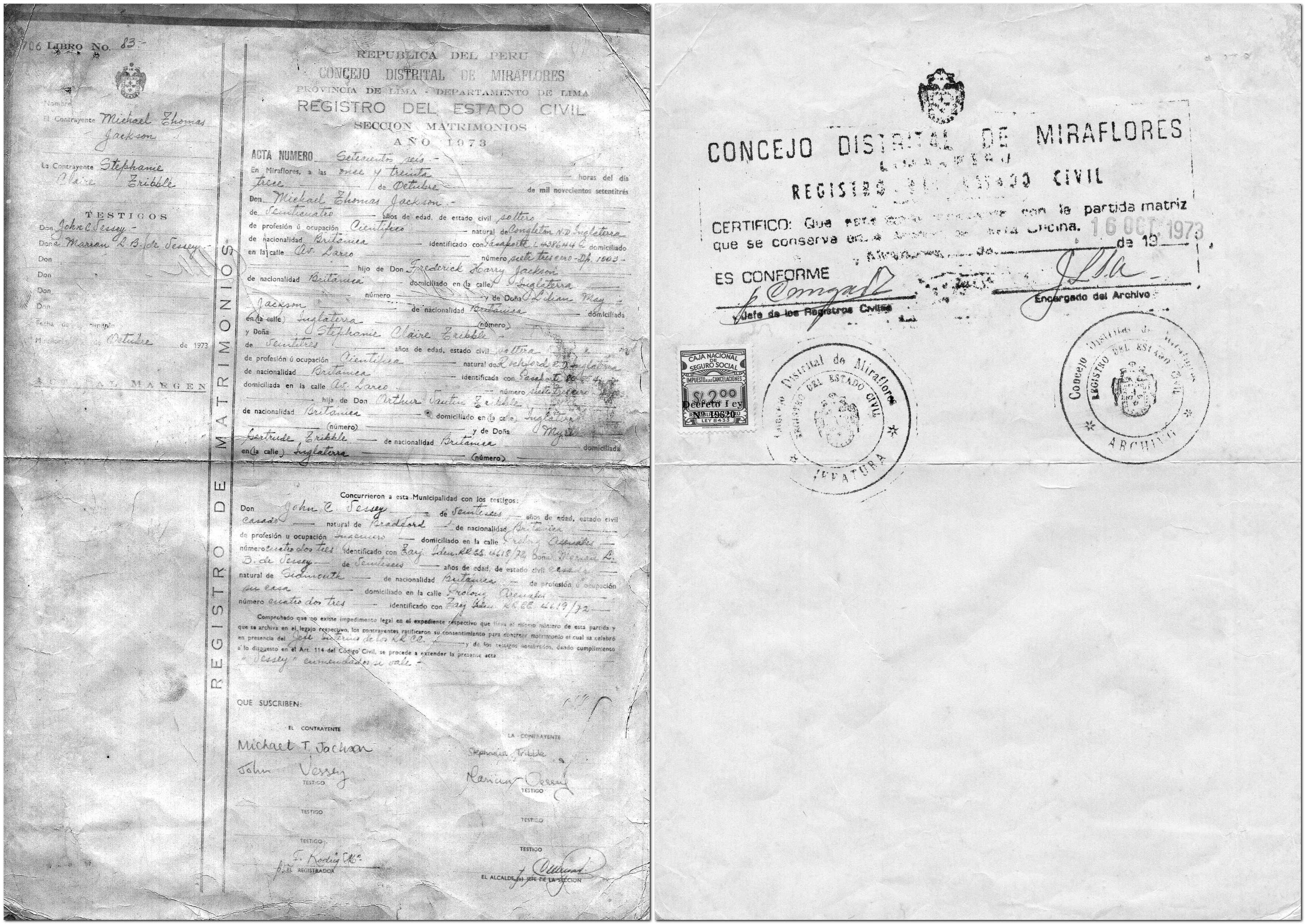
In the week leading up to our wedding, we had to present all the notarised documents at the municipality. After the ceremony, we signed the registry, hand-written in enormous volumes (or tomos). There was a bank of clerical staff, all with their Parker fountain pens, inscribing the details of each wedding in their respective tomo. A week later we collected our Constancia de Matrimonio (with some errors) which detailed in which tomo (No. 83, page 706) our marriage had been recorded, as well as photocopies (now sadly faded) of the actual page.

My work, collecting potatoes, took me all over the Andes; not so much for Steph who only made visits every other week or so to CIP’s highland experiment station (at over 3000 masl) in Huancayo east of Lima, and a six hour drive away.

However, Steph and I explored Peru together as much as we could, taking our VW on several long trips, to the north and central Andes, and south to Lake Titicaca. We also delayed our honeymoon until December 1973, flying to Cusco for a few days, and spending one night at Machu Picchu.
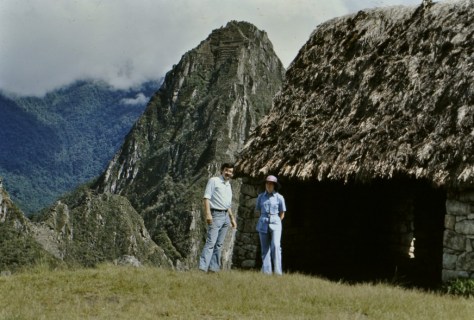
At Machu Picchu, December 1973.


In May 1975, we returned to the UK for seven months for me to complete my PhD, returning to Lima just before New Year.
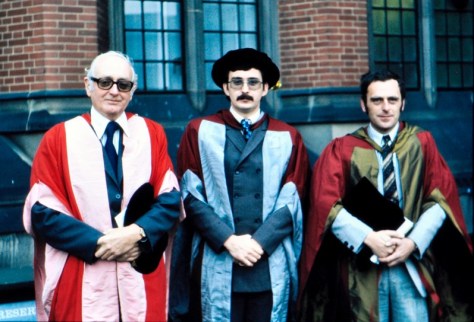
With Jack Hakes and Trevor Williams at my PhD graduation on 12 December 1975 at the University of Birmingham.
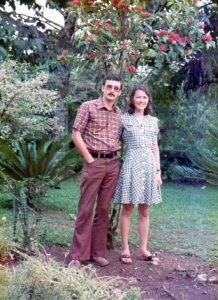
Christmas Day 1976 in Turrialba.

Then, in April 1976, we moved to Costa Rica where I worked on potato diseases and production, based in Turrialba, some 70 km east of the capital city, San José. Under the terms of our visas, Steph was not permitted to work in Costa Rica. I became regional representative for CIP’s Region II (Mexico, Central America, and the Caribbean) in August 1997 when my colleague, Oscar Hidalgo (who was based in Toluca, Mexico) headed to North Carolina to begin his PhD studies.

Our elder daughter Hannah Louise was born in San José in April 1978. Later that year, we took our first home leave in the UK and both sets of grandparents were delighted to meet their first granddaughter.
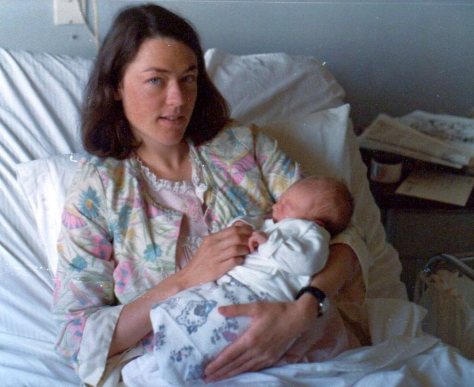
24 April 1978 in the Clinica Santa Rita, San José, Costa Rica.
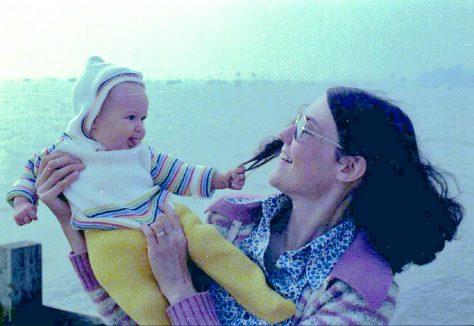
On home leave in the UK in September 1978.
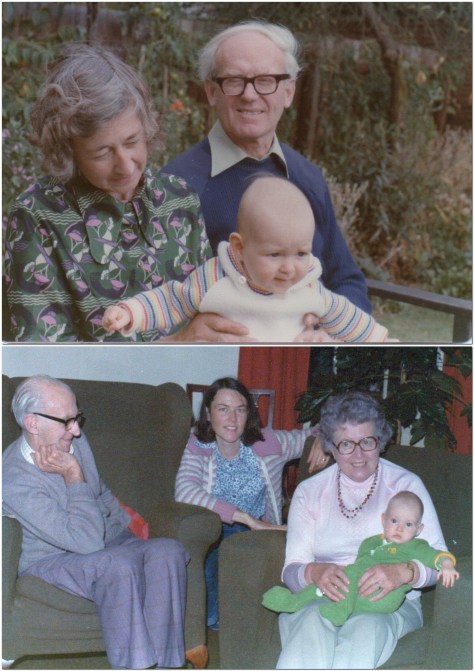
With Steph’s parents Myrtle and Arthur (top) in Southend-on-Sea, and mine, Lilian and Fred, in Leek.

We spent five happy years in Costa Rica before moving back to Lima at the end of November 1980, and began making plans to move to the Philippines by Easter 1981.

However, in early 1981, a lectureship was created at the University of Birmingham, in the Department of Plant Biology (formerly Botany, where Steph and I had studied), for which I successfully applied. We left CIP at the end of March and had set up home in Bromsgrove (about 13 miles south of Birmingham in north Worcestershire) by the beginning of July.
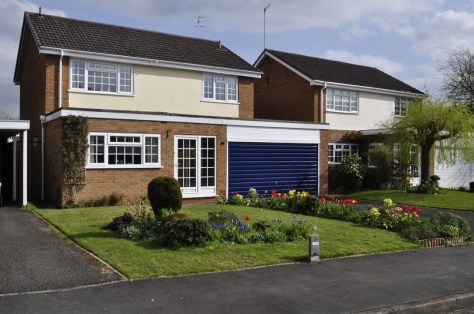
4 Davenport Drive


A decade after we were married, we were already a family of four. In May 1982 Philippa Alice was born in Bromsgrove.
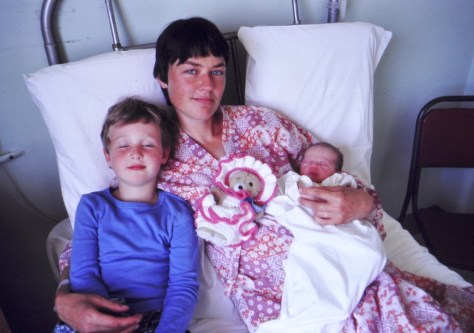
30 May 1982 in Bromsgrove hospital.

During the 1980s we enjoyed many family holidays, including this one in 1983 on the canals close to home.

Many other family holidays followed, in South Wales, in Norfolk, on the North York Moors, and in 1989, in the Canary Islands.
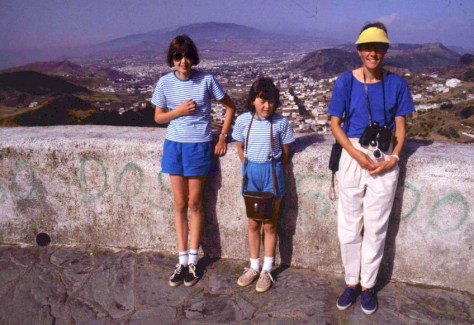
In Tenerife, Canary Islands in July 1989. Steph is carrying the binoculars that I bought around 1964 and which I still possess.

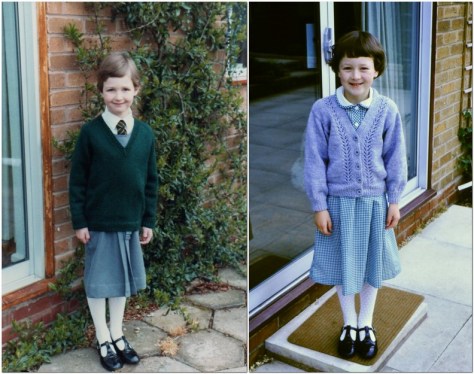
Hannah (left) and Philippa (right) thrived at local Finstall First School, shown here on their first day of school in 1983 and 1987, respectively.
My work at Birmingham kept me very busy (perhaps too busy), but I particularly enjoyed working with my graduate students (many of them from overseas), and my undergraduate tutees.

All in all, it looked like Birmingham would be a job for life. That was not to be, however. By the end of the 1980s, academic life had sadly lost much of its allure, thanks in no small part to the policies and actions of the Thatcher government. We moved on.


By 1993, we had already been in the Philippines for almost two years, where I had been hired (from July 1991) as head of the Genetic Resources Center (GRC) at the International Rice Research Institute (IRRI) in Los Baños, some 65 km south of Manila in the Philippines. I moved there ahead of Steph and the girls (then aged 13 and nine) who joined me just after Christmas 1991.

Meeting fellow newcomer and head of communications, Ted Hutchcroft and his wife at our joint IRRI welcoming party in early 1992.

In 1993 I learned to scuba dive, a year after Hannah, and it was one of the best things I’ve ever done. Philippa trained a couple of years later.
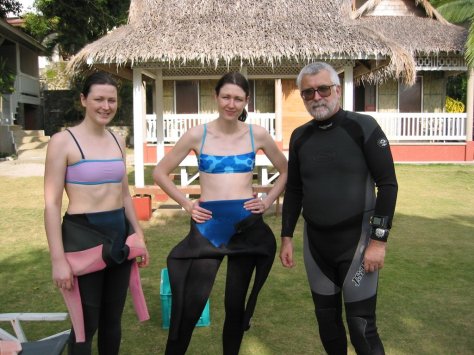
Getting ready to dive, at Arthur’s Place, Anilao, Philippines in January 2003.

Steph was quite content simply to snorkel or beachcomb, and we derived great pleasure from our weekends away (about eight or nine a year) at Anilao, 92 km south from Los Baños. In fact, our weekends in Anilao were one of our greatest enjoyments during the 19 years we spent in the Philippines.

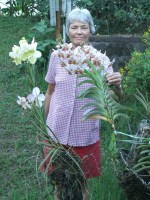
Steph became an enthusiastic beader and has made several hundred pieces of jewelry since then. In Los Baños we had a live-in helper, Lilia, and so in the heat of Los Baños, Steph was spared the drudgery of housework or cooking, and could focus on the hobbies she enjoyed, including a daily swim in the IRRI pool, and looking after her garden and orchids.
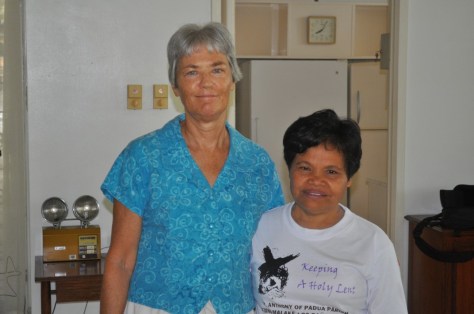
Steph and Lilia on our last day in IRRI Staff Housing #15 on 30 April 2010.

Hannah and Philippa completed their school education at the International School Manila (ISM) in 1995 and 1999 respectively, both passing the International Baccalaureate Diploma with commendably high scores.
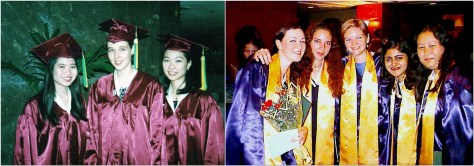
Graduation at ISM: Hannah and Philippa with their friends from around the world.

Traveling to Manila each day from Los Baños had not been an easy journey, due to continual roadworks and indescribable traffic. It was at least two hours each way. By the time Philippa finished school in 1999, the buses were leaving Los Baños at 04:30 in order to reach Manila by the start of classes at 07:15.

In October 1996, Hannah started her university degree in psychology and social anthropology at Swansea University in the UK. However, after two years, she transferred to Macalester College, a highly-rated liberal arts college in St Paul, Minnesota, graduating summa cum laude in psychology and anthropology in May 2000. She then registered for a PhD in industrial and organizational psychology at the University of Minnesota. Philippa began her BSc degree in psychology at the prestigious University of Durham, UK later that same year, in October.

Hannah’s graduation in May 2000 at Macalester College, with Philippa and Michael (Hannah’s boyfriend, now her husband).

Once Hannah and Philippa had left for university, IRRI paid for return visits each year, especially at Christmas.

Christmas 2001. Michael joined Hannah for the visit.

While my work took me outside the Philippines quite often, Steph and I did manage holidays together in Hong Kong/Macau and Australia. And, together with Philippa, we toured Angkor Wat in Cambodia in December 2000.

But Steph also accompanied me on work trips to Laos, Bali, and Japan. She also joined me and my staff when we visited the rice terraces in northern Luzon in March 2009.

Enjoying a cold beer as the sun goes down, near Sagada, northern Luzon, Philippines.
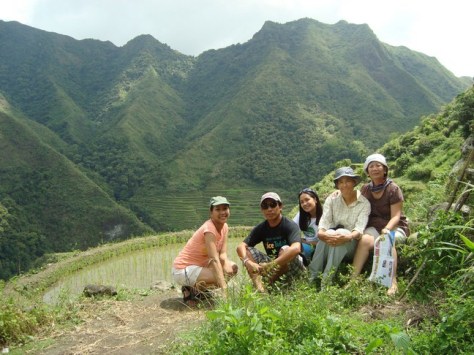
Overlooking the Batad rice terraces in northern Luzon in March 2009.

However, we always used our annual home leave allowance to return to the UK, stay in our home in Bromsgrove (which we had purposely left unoccupied), and meet up with family and friends.

Philippa was awarded a 2:1 degree in July 2003, and the graduation ceremony took place inside Durham Cathedral. She then headed off to Vancouver for a year, before returning to the UK and looking for a job, eventually settling in Newcastle upon Tyne where she has lived ever since.
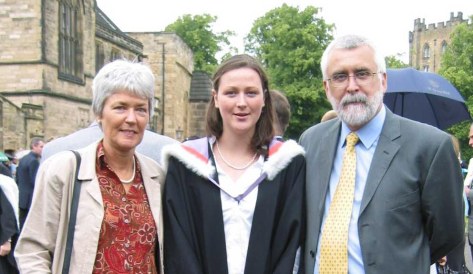
Outside Durham Cathedral where Phil received her BSc degree from the university’s Chancellor, the late Sir Peter Ustinov.

Hannah married Michael in May 2006, and finished her PhD. We flew to Minnesota from the Philippines.
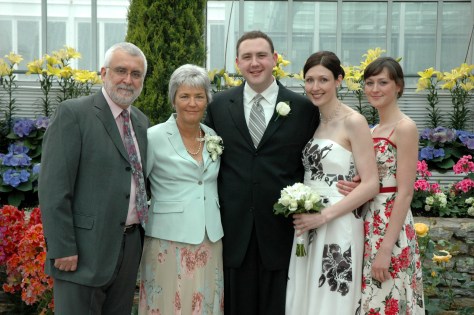
15 May 2006, at the Marjorie McNeely Conservatory in Como Park, St Paul.
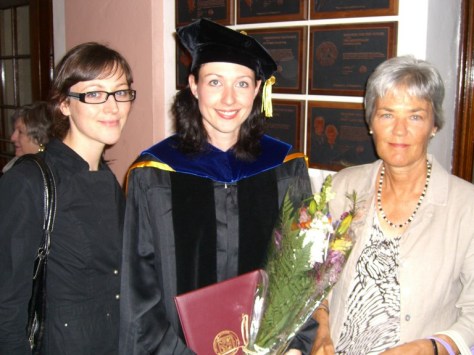
PhD graduation at the University of Minnesota.

Philippa registered for a PhD in biological psychology at Northumbria University in Newcastle upon Tyne where she was already working.

Professionally, the period between 2001 and my retirement in 2010 was the most satisfying. I had changed positions at IRRI in May, moving from GRC to join the institute’s senior management team as Director for Program Planning and Communications (DPPC). I worked with a great team, and we really made an impact to increase donor support for IRRI’s research program. However, by 2008/9 when my contract was up for renewal, Steph and I had already agreed not to continue with IRRI, but take early retirement and return to the UK.

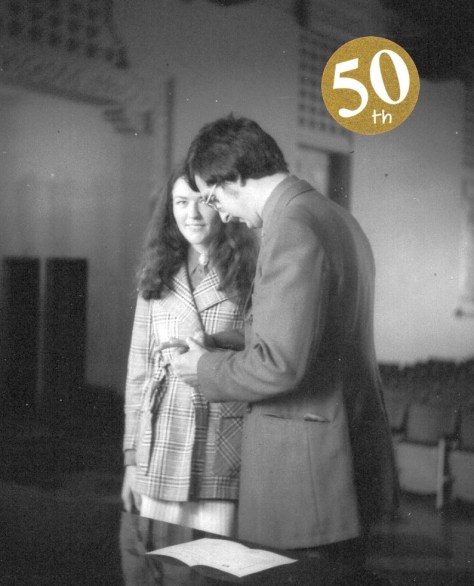
But not quite yet. IRRI’s Director General, Bob Zeigler, persuaded me to stay on for another year, and organize the celebrations for the institute’s 50th anniversary. Which I duly did, and had great fun doing so.

But as our retirement date approached in April 2010, I was honored by the institute’s Board of Trustees with a farewell party (despedida) coinciding with the 50th anniversary of the very first Board meeting in April 1960.
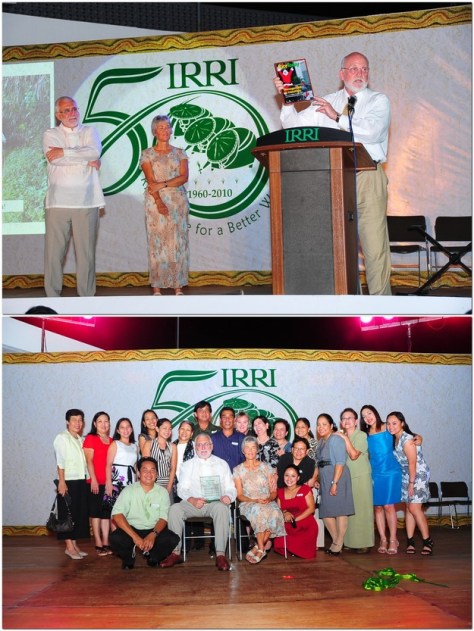
14 April 2010 – IRRI’s 50th celebration dinner and our despedida.


Friday 30 April was my last day in the office.
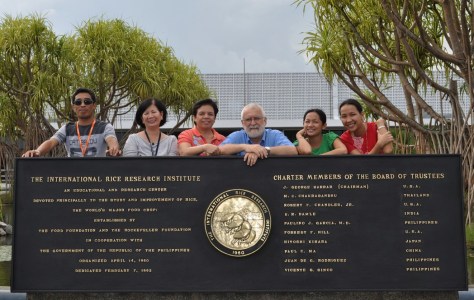
With my DPPC friends. L-R: Eric, Corinta, Zeny, me, Vhel, and Yeyet.

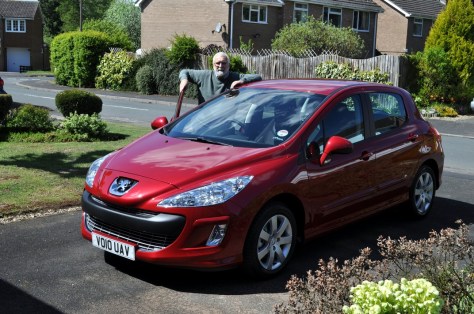
We flew back to the UK two days later, arriving on Monday 3 May and taking delivery of our new car, a Peugeot 308, the following day.
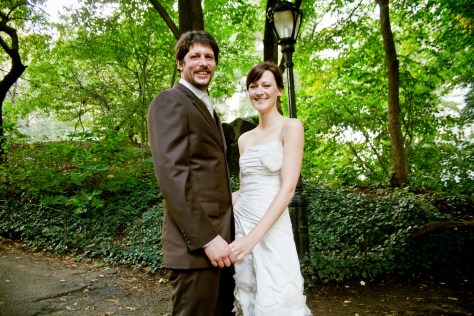
Philippa and Andi flew off to New York in October 2010 and were married in Central Park. She graduated with her PhD in December.
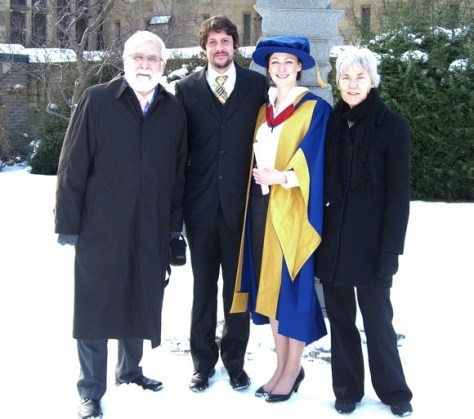
By 2013 we had been married for four decades, and were well-settled into retirement, enjoying all the opportunities good weather gave us to really explore Worcestershire and neighboring counties, especially as National Trust and English Heritage members. And touring Scotland in 2015, Northern Ireland in 2017, Cornwall in 2018, East Sussex and Kent in 2019, and Hampshire and West Sussex in 2022.

We were, by then, the proud grandparents of three beautiful boys and a girl.

Callum Andrew (August 2010) – St Paul, Minnesota
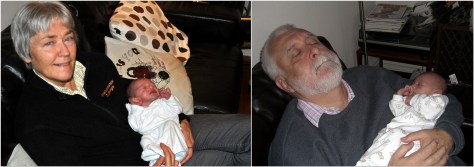
Elvis Dexter (September 2011) – Newcastle upon Tyne
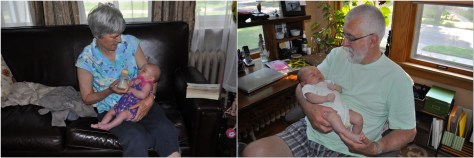
Zoë Isobel (May 2012) – St Paul, Minnesota
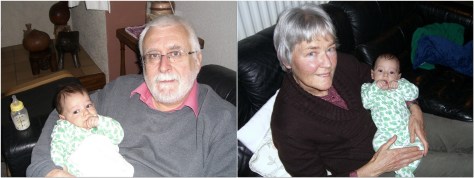
Felix Sylvester (September 2013) – Newcastle upon Tyne

And how could we ever forget a very special day in February 2012, when Steph, Philippa and my former colleague from IRRI, Corinta joined me at Buckingham Palace for an investiture.

Receiving my OBE from King Charles III (then HRH The Prince of Wales) on 14 February 2012.
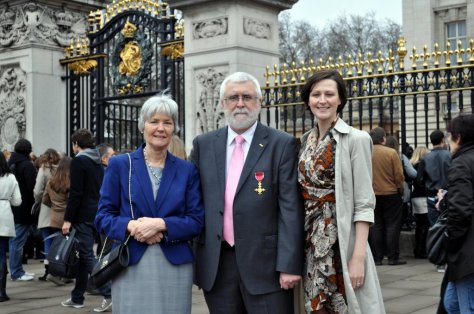
With Steph and Philippa outside the gates of Buckingham Palace.
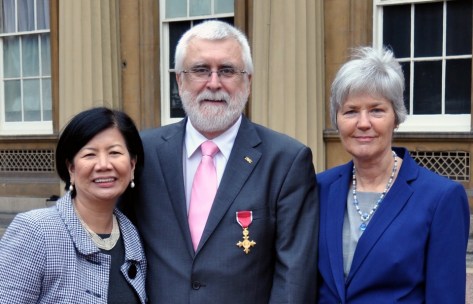
With Corinta and Steph in the courtyard of Buckingham Palace after the investiture.

Since 2010, we have traveled to the USA each year except during the pandemic years (2020-2022), and only returning there this past May and June. We’ve made some pretty impressive road trips around the USA, taking in the east and west coasts, and all points in between with the exception of the Deep South. Just click here to find a list of those road trips.

In July 2016, a few months after I broke my leg, Hannah and family came over to the UK, and we got together with Phil and Andi and the boys for the first time, sharing a house in the New Forest.

Our first group photo as a family, near Beaulieu Road station in the New Forest, 7 July 2016. L-R: Zoë, Michael, me (still using a walking stick), Steph, Callum, Hannah, Elvis, Andi, Felix, and Philippa.

And they came over again in July 2022, to our new home in the northeast of England where we had moved from Bromsgrove in October 2020 at the height of the Covid-19 pandemic.
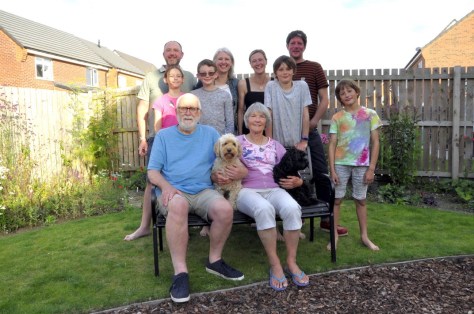
In our garden in Backworth, North Tyneside, August 2022.

L-R: Felix, Elvis, Zoë, and Callum, at Dunstanburgh Castle, Northumberland in August 2022.


So it’s 2023, and fifty years have passed since we married.

During our visit to the USA this past May and June, we met up with Roger Rowe and his wife Norma, along the Mississippi River at La Crosse in Wisconsin.
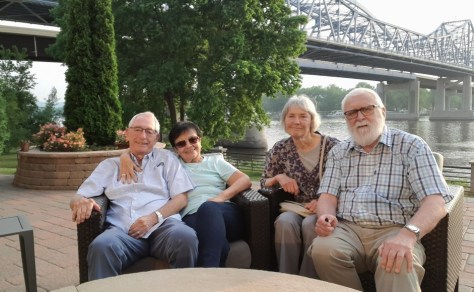
Roger joined CIP in 1973 as head of the Breeding and Genetics Department and was our first boss. Roger also co-supervised my PhD. So it was great meeting up with them again 50 years on.

We’ve been in the northeast just over three years now, and haven’t regretted for a moment making the move north. It’s a wonderful part of the country, and in fact has given us a new lease of life.
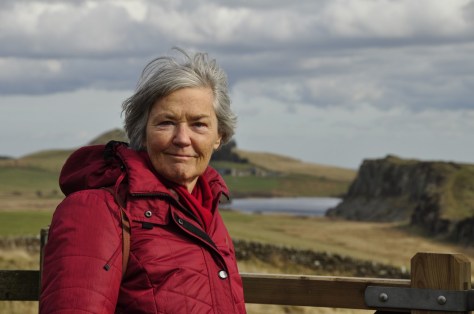
At Steel Rigg looking east towards the Whin Sill, Crag Lough, and Hadrian’s Wall, Northumberland, February 2022.

Steph has taken great pleasure in developing her new garden here. It’s a work in progress, and quite a different challenge from her garden in Worcestershire, discovering what she can grow and what won’t survive this far north or in the very heavy (and often waterlogged) soil.
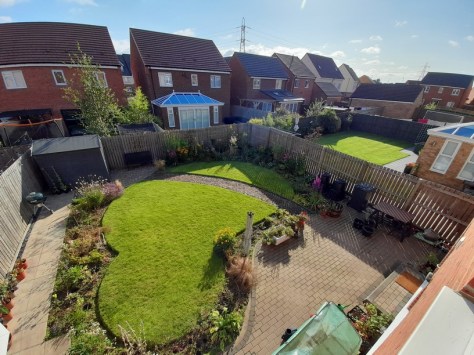
22 August 2023

I’ve had much enjoyment writing this blog since 2012, combining my interests of writing and photography. It has certainly given me a focus in retirement. I never thought I’d still be writing as many stories, over 700 now, and approaching 780,000 words. Since returning to the UK, I’ve also tried to take a daily walk of 2-4 miles. However, that’s not been possible these past six months. A back and leg problem has curtailed my daily walk, but I’m hopeful that it will eventually resolve itself and I’ll be able to get out and about locally, especially along the famous North Tyneside waggonways.

After 50 years together, we have much to be thankful for. We’ve enjoyed the countries where we have lived and worked, or visited on vacation. Our daughters and their families are thriving. Hannah is a Senior Director of Talent Management and Strategy for one of the USA’s largest food companies, and Philippa is an Associate Professor of Biological Psychology at Northumbria University.
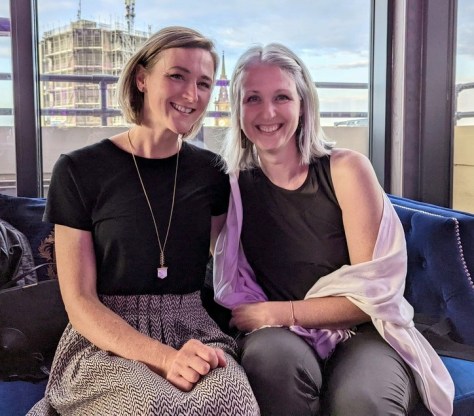
Sisters!
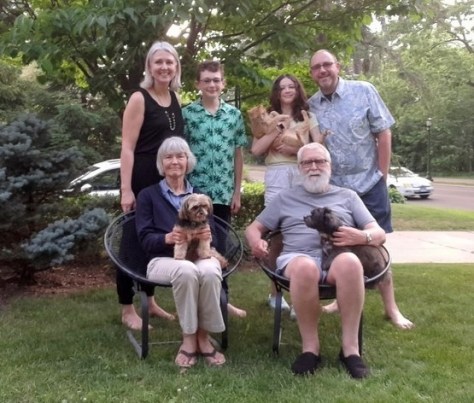
With Hannah and Michael, Callum and Zoë (and doggies Bo and Ollie, and cat Hobbes) in St Paul, MN on 18 June 2023.
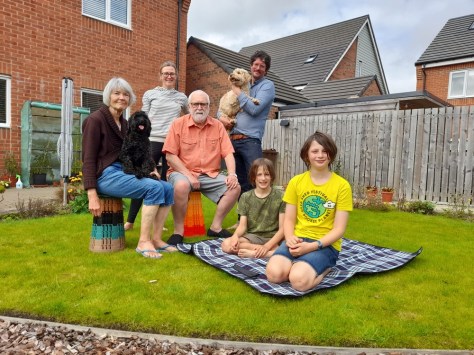
With Philippa and Andi, Elvis and Felix (and doggies Rex and Noodle) on 2 September 2023.

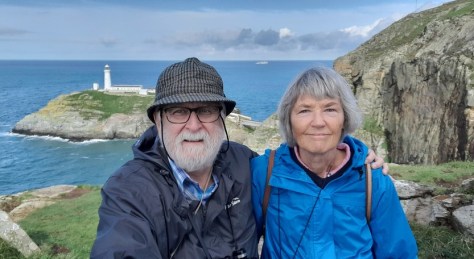
And here we are, at South Stack cliffs, in the prime of life (taken in mid-September) when we enjoyed a short break in North Wales.
Steph with Philippa and family on her birthday on 8 October.
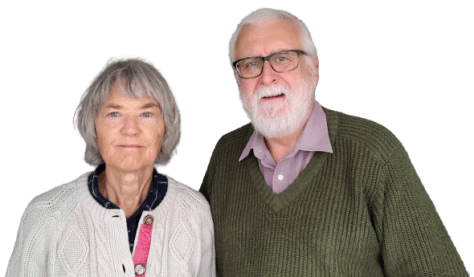
13 October 2023 – still going strong!


While drafting this reminiscence, I came across this article by Hannah Snyder on the Northwest Public Broadcasting website, and it inspired the title I used.

It doesn’t add up

Several weeks ago (or was it months?) UK Prime Minister Rishi Sunak (right) announced that his government would soon propose plans to reform secondary education for all pupils to study mathematics and English up to the age of 18, like many other countries.

After GCSEs (known as ‘O Levels’ back in the day when I was at school in the 1960s), taken at 15/16, many pupils receive no further tuition in maths (or English for that matter), and specialise in their final two years of high school, taking just three subjects, known as ‘A Levels’ (Advanced Level) as university entrance exams.

During his speech to the Tory Party conference on 4 October Sunak pledged to introduce this ‘revolutionary’ change. That’s assuming, of course, that the Tories remain in power after the next General Election. Which seems highly unlikely if the latest polls are to be believed. (Should Labour win the next election, I have no idea what its policy on continuing maths and English education will be, although as far back as 2014 they made it one of their policy pledges¹).

By teatime on the 4th, the Prime Minister’s Office had posted a press release on the government’s website.

Justifying this proposal, Sunak indicated that this new qualification for 16-19 year olds will put technical and academic education on an equal footing and ensure that all young people leave school knowing the basics in maths and English.

The new Advanced British Standard will bring together the best of A Levels and T Levels into a single new qualification. Students will take a larger number of subjects at both ‘major’ and ‘minor’ level, with most studying a minimum of five subjects at different levels – for example, three majors alongside two minors. Importantly, students will have the freedom to take a mix of technical and academic subjects, giving them more flexibility over their future career options.

However, it would take at least a decade to introduce such a change apparently. Very quickly, unions and teachers dismissed this proposed reform. Not, I hope, because they were opposed to reform in principle, but because schools do not have the staff or resources to teach English and maths to age 18. Yes, that is a real issue, and it will take political courage from the next government to tackle this issue head on, and support education at the level required. And to increase standards and achievements for GCSE students.


Notwithstanding there little or nothing about this Tory government I can support – and they certainly won’t have my vote in 2024 or whenever the election is called – I am actually in favor of this proposed educational reform. Let me explain.

When I was in high school (1960-1967), maths was one of my least favorite subjects. I dreaded maths lessons. But I did manage a pass in ‘O’ Level maths in 1964, but never took a maths course per se ever since. Much to my regret. And there are thousands of schoolchildren in exactly the same boat as me. Cowed by maths, and thus uninterested in the beauty of the discipline.

I often wish I had been able, had the ability, and perhaps more importantly had the support of good maths teachers to instill a continuing interest. I had really poor teachers at my high school, only interested in those who could and tolerating (just) those who struggled.

Having said all this, I have spent much of my career in agricultural science working with numbers, and thoroughly enjoying it. Indeed, in 2017 I wrote this blog post, There’s beauty in numbers, about my enjoyment of playing with data, looking for patterns and trends, and coming to conclusions about the behavior of the plants and crops I was studying. But although I became reasonably proficient (under guidance and advice from those better experienced than me) in the use of statistics, I do wish I had a better theoretical background underlying some of the statistical concepts I applied.

But beyond the basics of algebra, geometry, or trigonometry that high school pupils receive leading up to GCSEs, most do not need higher levels of mathematical education, like calculus for example. What they do need, in my opinion, are good numeracy skills, and how maths operates in the real world.

And as far as English is concerned, my emphasis for many students would be having the ability to write coherent prose and learning how to communicate effectively, both in written form and verbally. No need for deep analysis of set texts by Shakespeare or others.

So how would they achieve this? Sunak’s proposed Advanced British Standard qualification is his solution.

Often referred to (in previous government statements) as an English or British Baccalaureate, the Advanced British Standard seems remarkably similar to an existing and widely accepted qualification: the International Baccalaureate Diploma, offered in over 3600 state and private schools worldwide (but in just 22 state schools in the UK, although offered in 71 private ones).

If a widely-accepted qualification is up and running, and has been for decades, since 1968 in fact, why bother to reinvent the wheel with the Advanced British Standard? Is this another case of British exceptionalism?

This is what one headmistress, Victoria Hearn (right), Principal of state-assisted Impington Village College and Impington International College near Cambridge had to say about the proposal in a letter to The Guardian on 27 September last:

While Rishi Sunak’s plans to reform post-16 education are welcome news, I can’t help but feel that valuable resources could be saved by utilising a tried and tested education framework that students are already benefiting from. The international baccalaureate (IB) diploma enables students to study six subjects including mathematics, English and a foreign language until the age of 18, providing a broader and more rewarding syllabus compared with that of the UK’s national curriculum.

The development of a “British baccalaureate” will be costly, and funding this new vision will be a concern to many, particularly for state-funded schools that are already overstretched. In the UK, the IB is often seen as only accessible to independent schools, but with some creative budgeting and timetable management, a comprehensive IB programme can be delivered by state schools. We have been offering the IB at the state-maintained Impington Village college for more than 30 years as we believe it places our students in the best position to succeed in the global workplace.

Adapting the current curriculum framework is going to be lengthy and costly. The IB represents a proven alternative that can give students the broad range of skills required to thrive in the future.

Also, these are the IB values:

  • valuing inquiry and reflection, encouraging students to be open minded in their learning;
  • being principled and encouraging a caring attitude;
  • promoting high quality communication and discussions within the school community; and
  • encouraging international-mindedness and building respectful relationships.

I couldn’t agree more. And here are some reasons why.

First, from my own experience, I believe keeping your options broad is a positive perspective. In fact,

  • I studied both humanities and sciences at ‘A Level’: English Literature, Geography, and Biology (and General Studies).
  • I read for a combined BSc degree at the University of Southampton (1967-1970) in Environmental Botany and Geography.
  • For my MSc degree at the University of Birmingham in the conservation and use of plant genetic resources (1970-1971) many different topics were included.
  • It wasn’t until I began my PhD on potatoes (awarded 1975) that I settled into a narrow discipline.

Second, I don’t agree with either the retired teacher who thinks that additional ‘useless’ subjects in a baccalaureate would not be appropriate for many pupils, or the Emeritus Professor of Mathematical Education, who felt that students applying for maths at university would not have appropriate preparation. Both expressed their views in letters to The Guardian. The professor seemingly doesn’t appreciate that IB subjects are taught at both a higher and lower level. And, in any case, from my experience as a university lecturer (1981-1991, in plant biology in the School of Biological Sciences at the University of Birmingham) many first year university courses are designed to bring everyone up to the same level.

Furthermore, and again from my university days as a tutor, many students would certainly benefit from having a received a broader pre-university education, that would have given them a broader perspective on life, with access to the humanities as well as sciences, and would have enhanced, I believe, their ability to think and discuss more critically, and present their ideas verbally as well as written.

And lastly, both my daughters took the IB Diploma, and emerged with highly creditable grades at age 17, with subsequent access to good universities in the USA and UK, and endowing them with the academic capabilities and discipline to graduate with excellent degrees, and subsequently taking a PhD each in psychology.

But, I should add, their IB Diplomas were not earned at a British state school. In July 1991, I took a senior position with the International Rice Research Institute (IRRI) in the Philippines. My wife Steph and daughters followed me out to the Philippines by the end of the year, when Hannah and Philippa were 13 and nine (and had just moved up to high school and middle school respectively just three months previously in our home town, Bromsgrove, in Worcestershire).

Steph and I discussed the various education options. We were not keen in sending them to boarding school in the UK. There was a British School in Manila, but that did not, in the 1990s, offer an ‘A Level’ curriculum. So, after GCSEs, we would have had to send them back to the UK. Again not something we considered.

So both were enrolled in the fee-paying International School Manila (ISM), with the expectation from the outset that the IB Diploma would be their pre-university goal. Fees were subsidised by my employer as many IRRI children were also enrolled there, and traveled the 70 km daily each way north from Los Baños, where IRRI’s research center is located, into the city.
Yes, the courses were tough. Since besides the six academic subjects (three at higher, three at lower), IB students took a Theory of Knowledge course. Both our daughters studied English, history, and biology at higher level, and maths studies, French, and psychology at lower level.

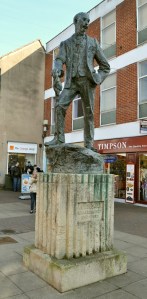
Each had to complete a 4000 word essay based on independent research. Hannah’s history project was an analysis of the impact of the railways on the canals in mid-19th century England. Philippa made an analysis of A Shropshire Lad, an epic poem by Bromsgrove classical scholar poet, AE Housman (whose statue, right, proudly stands in the High St there) and interpreting his repressed sexuality through the poem’s themes.

For her community project, Hannah helped each weekend at a Montessori school in Los Baños, while Philippa joined a group for two weeks helping to construct a road in the mountains north of Manila.

There was one last challenge: the daily journey into Manila. Classes began at 07:15, and by the time my younger daughter graduated in 1999, the IRRI bus for ISM was departing from Los Baños at 04:30, and not returning until 16:30 or later. Then there were homework assignments to complete until late evening. All the family was relieved come graduation!

I’ve asked them about the IB experience. Both were unequivocal. The Diploma gave them enhanced skills for critical thinking, time organization, as well as covering the various subjects in depth. They both said the Diploma was a worthwhile qualification. It certainly hasn’t held them back.

So as the discussion continues over post-16 education and whether to replace ‘A Levels’ with a broader curriculum qualification, it’s certainly worthwhile looking at the IB mix, and what level of maths and English education and skills most students really need to prepare them for the workplace, and life in general.


¹ 11 October update. Labour just announced at its 2023 Conference that there will be a focus on teaching ‘real world maths’ to younger children. See this article in The Guardian.

Definitely not castles in the air . . .

Portrait in Westminster Abbey supposedly depicting Edward I, installed sometime during his reign.

King Edward I of England. Eldest son of Henry III. Born 1239, reigned 1272 to 1307.

Also known as Edward Longshanks (on account of his height, over six feet) and Hammer of the Scots.

Notwithstanding his campaigns against the Scots, Edward I left a permanent legacy of 17 castles in Wales following military campaigns against the Welsh princes.

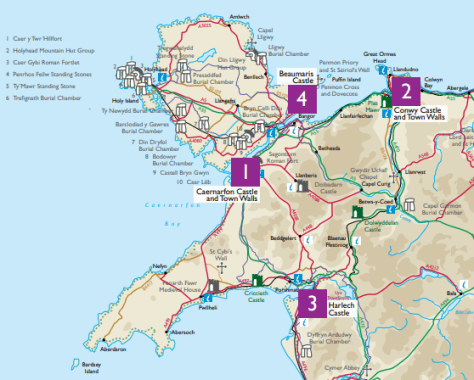
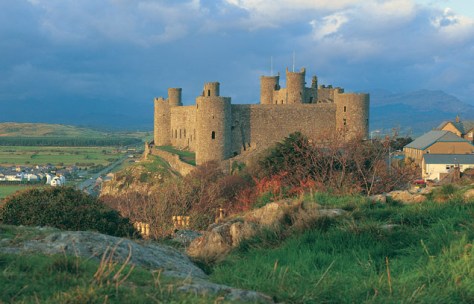
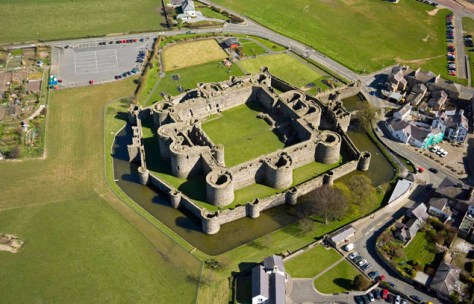
During our recent holiday in North Wales, we took time out to visit four of these (all owned and managed by Cadw, on whose website you can find the necessary information for visiting), among the most impressive still standing today, and all of them World Heritage Sites: (1) Caernarfon, (2) Conwy, (3) Harlech, and (4) Beaumaris.

Their construction began in 1283, but one—Caernarfon Castle—was not completed until 1330, long after Edward’s death when his grandson, Edward III was already king. Situated along the coast they were presumably more easily re-supplied than if they had been built inland, like many others.

These castles are not only impressive feats of medieval engineering but also symbolic representations of English dominance over Wales. They played a significant role in shaping the political and cultural landscape of the region for centuries to come. Today, these castles stand as enduring testaments to the historical events that unfolded in North Wales during Edward I’s reign.

Behind the design and construction of these castles was master of works/architect, James of Saint George from Savoy, regarded as one of the greatest architects of the European Middle Ages.

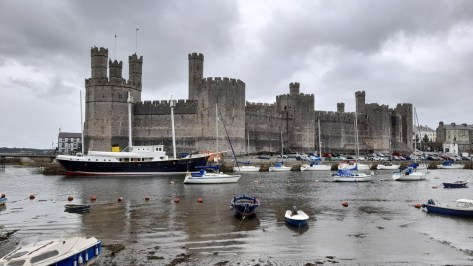
Caernarfon Castle
Situated on the Menai Strait, Caernarfon Castle is perhaps the grandest fortress constructed by Edward I in Wales.

Begun in 1283, it took 47 years to complete, at the enormous cost of £25,000. The remains of the Roman fort Segontium (founded AD 77) are close by.

Caernarfon Castle from the southwest, across the Afon Seiont.

The castle was designed not only as a military stronghold but also as a royal residence, exemplifying Edward’s desire to display English authority in North Wales. Edward I’s fourth son (who became Edward II) was born at Caernarfon in April 1284 and later, in 1301, he was invested here as the first English Prince of Wales. Caernarfon Castle was the location, in July 1969, for the investiture of Prince Charles (now King Charles III) as Prince of Wales. Not a popular occasion for many proud Welsh.

Caernarfon’s distinctive polygonal towers and color-coded stone work make it one of the most visually striking castles in the region.

View more photos of Caernarfon Castle here.

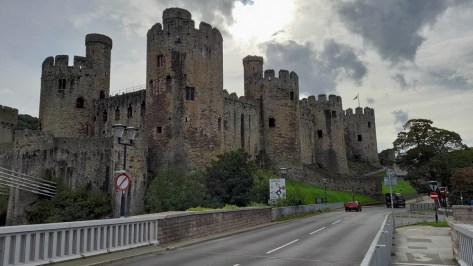
Conwy Castle
One of the most iconic examples of Edwardian architecture, Conwy Castle, built in the remarkably short period between 1283 and 1289, stands at the mouth of the River Conwy. The castle is characterized by its twin-towered gatehouse and imposing curtain walls. Once again, James of Saint George was the master mason.

The town of Conwy was also enclosed in town walls, like at Caernarfon.

Take a look at this photo album.

Harlech Castle
Perched dramatically on a cliff overlooking the Irish Sea, Harlech Castle was strategically positioned to control the vital sea routes along the western coast of Wales.

Its design included a concentric structure, making it an architectural marvel of its time. Harlech played a significant role in the Welsh uprisings of the 15th century, becoming a symbol of Welsh resistance.

Here are a few more photos.

Beaumaris Castle 
While Beaumaris Castle was part of Edward I’s comprehensive plan to assert control over North Wales, it remained unfinished. He ran out of funds while campaigning against the Scots. So although the castle today looks like it was slighted (demolished), the towers never reached their projected height. Nevertheless, its design was highly innovative for its time, incorporating concentric walls and a water-filled moat. Beaumaris Castle is located on Anglesey.

Although the castle was never completed due to resource shortages, its architectural prowess is evident in its symmetrical layout.

This is a photo album of more Beaumaris photos.


Cadw does a great job of looking after these castles, and enhancing the visitor experience as much as possible. There’s lots of information posted everywhere.

I was surprised to find such extensive access to the castle walls and towers/turrets, from where there are excellent views over the castles and surrounding landscapes, as you can see from the photos I have posted. And the passageways inside the walls connecting the various exterior towers.

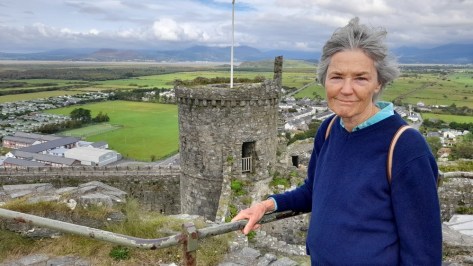
During our visit to Harlech the walls were closed because workmen were repairing the safety handrails. Just one turret (very high) was accessible there, but the climb was well worth it, with just enough space at the top for four or five people.

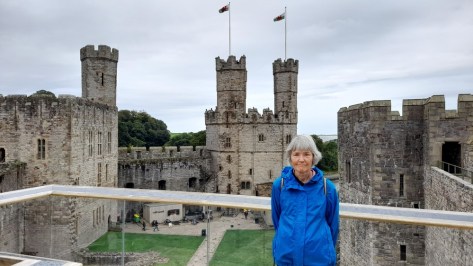
At Caernarfon, Cadw has constructed a viewing platform on the King’s Gate Tower (the main entrance), where the gift shop and a cafe are also located, for those unable or unwilling to tackle the walls and numerous (and narrow) tower steps.


A Victorian in Tudor clothing . . .

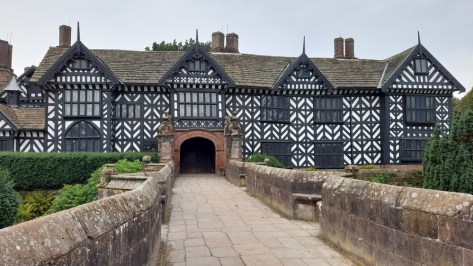
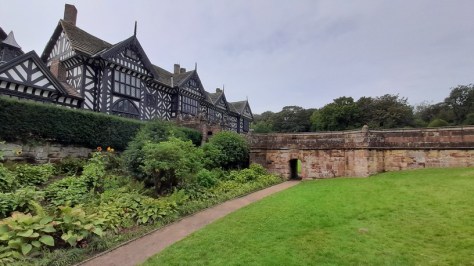
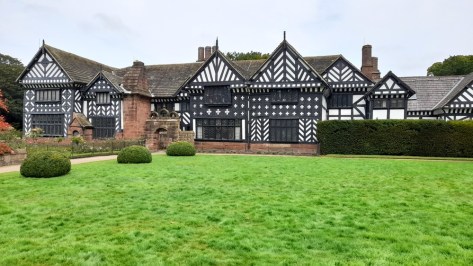
Speke Hall, a National Trust property on the eastern outskirts of Liverpool (right next to Liverpool John Lennon Airport, built on former Speke estate land) is a typical half-timbered, moated Tudor manor house. Although the moat has long since dried up.

However, much of the interior is—to all intents and purpose—Victorian.

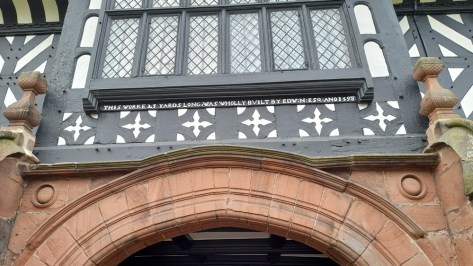
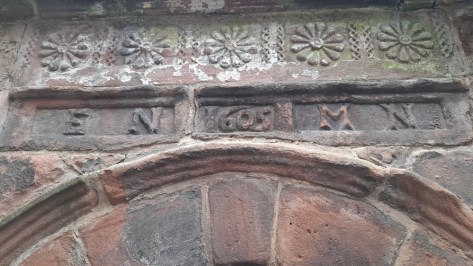
Speke Hall is a late Elizabethan house, completed by Edward Norris (son of Sir William Norris, who had begun the build) in 1598. Although, at the rear of the house, another gate also displays the date 1605.

The main entrance to Speke Hall, showing the 1598 date.

The rear of the house, with an arched stone gateway with the date 1605.

Being short on time during our visit (we’d stopped off on our way home from holiday in North Wales), we took the guided tour and missed some of the rooms that remain closer to their Tudor origins. Only in one bedroom that we viewed, above the main entrance, was there a fireplace with clear Tudor craftsmanship.


The house is also a tale of two families: the Norris family that built the house and lived there for generations; and the Watt family that purchased the Speke estate in 1795. Both the Norrises and Watts made their fortunes from the transatlantic slave trade and plantations in the Caribbean.

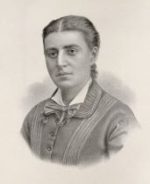
There were a number of tenants over the centuries, the most prominent being Frederick Leyland (right), a Liverpool shipping magnate who lived at Speke for a decade from 1867, while the current owner, Adelaide Watt (1857-1921) was living in Scotland until she came of age and could inherit the estate.

There’s a nice potted history of the hall and its inhabitants on the National Trust website.

It was Leyland who refurbished the Speke interior in heavy and dark Victorian Gothic style.

He also patronised artists like Dante Gabriel Rossetti and James McNeil Whistler (of Whistler’s Mother painting fame). I’m not sure if William Morris (of the Arts and Crafts Movement) was actually involved directly with the decoration of the passageway and two rooms, but three of his wallpaper designs were hung there. We’ve also seen Morris designs at Wightwick near Wolverhampton, and Standen House in West Sussex.

After Leyland’s tenancy came to an end, Adelaide Watt (right) returned to Speke, and although only a young woman (around 21 years of age, and unmarried) set about running the estate herself, and introducing numerous innovations to make the estate more productive.

She immersed herself in every detail of the estate’s management. Today we’d view her as the archetypal micromanager, perhaps almost a termagant. But the estate thrived.

In her will Adelaide named three members of the Norris family as estate trustees (who sold off land to Liverpool corporation), with the proviso that the estate would transfer to the National Trust after 21 years. In 1942 the estate was handed to the Trust, which took on full management from 1986.


A full album of photos can be viewed here.