The Captain’s cat . . .

nt-logoSteph and I have been members of the National Trust since 2011, and over the past five and a half years, we have enjoyed some wonderful day trips to view exquisite houses and inspiring landscapes.

We have now visited 53 properties, and most of those within a 50 mile radius of home. We’ve picked the ‘low-hanging fruit’ so to speak, although we have ventured further afield from time to time. This year, once the weather improved to make outings possible, we have been constrained to some extent in our choice of properties to visit because I still recovering from that nasty accident in early January when I broke my leg.

So, in the main, we have chosen to revisit a number of properties quite close to home: Hanbury Hall, Packwood House, Baddesley Clinton, Coughton Court, and the like. Last week, however, I was determined to wander further afield. But it wasn’t my leg holding me back (although by the end of the day my ankle had swollen to almost twice the size of the other, and I was ready to put my foot up on a stool and rest it). No, it was the thought of the journey. Any trip north of Birmingham, either to the west on the M5/M6 motorways or to the east on the M42. Inevitably the volume of traffic just makes such journey tedious in the extreme. The Birmingham metropolitan area is a huge obstacle around which north-south journeys have to be navigated.

20160622 102 Shugborough Hall

So when I suggested to Steph that we should head north to Shugborough Hall, just a few miles east of Stafford, I wasn’t really too enthusiastic about the prospects for an enjoyable day out. How wrong I was!

First, making the trip mid-week, we did not encounter the volume of traffic that I had feared, so the 55 mile journey too just over an hour. Second, although I can’t say I had any high expectations of Shugborough, it was one of the nicest National Trust properties that we have visited since becoming members.

Earl_of_Lichfield_COAShugborough is the ancestral home of the Earls of Lichfield – the Anson family. In writing this account of our visit to Shugborough, I came across this excellent account (by archivist and architectural historian Nick Kingsley) of the Anson family, so all I need to do is describe some of those aspects of our visit last Thursday that caught my attention. The central manor house dates from 1695 (William & Mary), and wings either side were added by 1745. The portico was added at the beginning of the 19th century.

The estate was passed to the National Trust in 1960 on the death of the 4th earl, in lieu of death duties. However, the estate was managed by Staffordshire County Council (SCC) until this year when the council decided it could no longer afford the £35 million annual cost of upkeep, and the property will revert entirely to the National Trust in due course.

Patrick Lichfield

Patrick Lichfield (from the blog of Nick Kingsley)

The 5th earl, society photographer Patrick Lichfield (as he liked to be known) and first cousin (once removed) to Her Majesty The Queen, continued to reside at Shugborough, occupying first (upper) floor apartments at a nominal rent from SCC until his untimely death at the age of 66 in 2005. Then his son Thomas, the 6th earl, cleared the private apartments of personal effects. The apartments are open, almost in their entirety today, but have been ‘refurnished’ by the National Trust in the style they originally enjoyed, with just a few original pieces left behind.

Given my reduced walking capacity, I was relieved to see that a shuttle bus (and a ‘train’) operated throughout the day from the entrance up to house, a distance of about 800 m.

shugborough-map001

Under normal circumstances it would have been a delightful walk across the parkland, but I knew that this would have been impossible for me. As it is we did walk for more than 3 miles, and my foot and leg were certainly complaining by the evening.

Not all parts of the estate are open under National Trust membership, and there is a car parking fee of £3 to everyone, only refundable if you purchase a ticket for all the attractions at Shugborough. We wanted to see only the gardens and the house, and those were accessible with our membership.

Before lunch, we decided to walk the gardens and part of the park. The weather was threatening for later on when we could at least then be under cover in the house. Behind the house, on the west side, and across a channel of the River Sow (that is very slow flowing, and controlled by sluice gates) are the formal terrace gardens.

20160622 032 Shugborough Hall

The west (rear) face of Shugborough Hall from across the River Sow channel

There are just a few formal parts to the gardens. To the rear, west side of the house, is a rather splendid terrace laid out with a series of sculptured shrubs.  In the grounds there is a number of features, including the Cat’s Monument (commemorating a moggie that reputedly belonged to Admiral George Anson), and the Shepherd’s Monument. A delightful bridge next to the Chinese House crosses the River Sow channel and there is walking access to other parts of the parkland opposite the house.

From the entrance hall (where there are some splendid Italian plaster casts of centaurs) you pass through the Bust Parlor and Ante Room to the dining room and its exquisite plaster ceiling.

The Red Drawing Room was originally several bedrooms on two floors. But it was opened up to form this beautiful reception room decorated in a beautiful coral pink. In the other (south sing) is the Salon. The Library also has a beautiful plaster ceiling.

The ‘private apartments’ on the upper floor are decorated now to the style they had when they were the Shugborough residence of the Earl of Lichfield. Among the most finely decorated is the Bird Room, with its ‘matching’ ceiling and carpet.

From the outside, Shugborough Hall is not particularly impressive. Its grey façade is not exactly welcoming. But what a delight the inside is, and how many of the rooms ares, unexpectedly, open to visitors. And the National Trust volunteers here are really special—friendly, helpful, and knowledgeable. A thoroughly enjoyable visit.

 

Retired? Never been busier . . .

47212bf119d17ee84106d4b745b2a091

A week ago or so, I received an email from an old friend who, like me, had spent much of his career in international agricultural research. He was writing to tell me that he had now retired, giving me his latest contact details, but also musing on the void he was feeling now that he was no longer gainfully employed. Apart from a couple of small consultancies he did wonder how he was going to fill his days.

I know how he feels. I didn’t have to retire when I did at the end of April 2010. I was not yet 62, but having decided that my pension would keep us comfortably, Steph and I decided to return to the UK and begin a new life in retirement. My Director general, Bob Zeigler, did his best to persuade me sign another contract and stay on at IRRI until 65. But I felt there were other things I wanted to do, places to visit, and we would only be able to enjoy those if no longer tied to an 8 to 5 regime.

Nevertheless, it was still a shock to the system once we’d returned home. I did find myself, from time-to-time, at a loose end. However, on receiving that recent email, I got to wondering what I had done over the past six years, how I’d filled my time. And once I compiled my list, I’m both surprised—and impressed—with my energy and activities.

So here goes:

  • I initially took up swimming on a daily basis, but once the local council reinstated swimming and parking fees for pensioners within about four months, I felt I could no longer justify such an expense of about £7 daily. So I took up walking, as much on a daily basis as energy and weather permitted, and really got to explore my town and surrounding countryside. I must have walked somewhere between 2000 and 3000 miles.
  • The house was in need of some TLC, so in the first year back (2010) I set about decorating most of the inside. There’s still one small bedroom (now Steph’s work room and full of all her things) and the kitchen to complete. I’m inclined now to find a professional decorator for that, and in any case, the kitchen could do with a complete refurbishment after 30+ years.
  • I oversaw the complete refurbishment of two bathrooms and a downstairs toilet/washroom (in late 2010), the erection of a new garden fence (in 2014), and the re-roofing of the house, the remodelling of our drive, and the installation of an electric garage door (all in 2015).
  • Professionally, I rejoined the editorial board of the science journal Genetic Resources and Crop Evolution published by Springer, and have regularly reviewed manuscripts over the past three years.
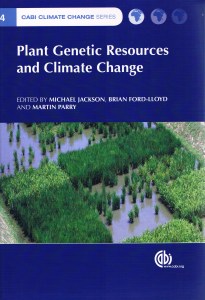
  • PGRCCI co-edited (as lead editor) a 16 chapter book—Plant Genetic Resources and Climate Change—published in 2014 by CABI, and also contributing one of the chapters.
  • In 2010 and 2014, I organised (as Chair of the Scientific Committee) the major science conferences at two international rice congresses in Hanoi, Vietnam (IRC2010) and Bangkok, Thailand (IRC2014), each attended by more than 1000 participants.
  • I also undertook two short consultancies (a week each) for the CGIAR through IRRI, contributing to the development of a common financial and administrative online tool called One Corporate System or OCS. This took me to Malaysia and the Philippines in 2012 or 2013. I don’t remember the exact dates. My involvement was curtailed as I rather spoke my mind when I saw that things were going awry, and my perspectives were not particularly appreciated. But I could see some pitfalls that the project managers were not willing to recognise. As far as I know there are still some challenges for the full implementation of the system.
  • Since March 2016 I have been leading the team for the evaluation of the CGIAR program for Maintaining and Sustaining Crop Collections (also known as the Genebanks CRP), commissioned by the CGIAR’s Independent Evaluation Arrangement in Rome. This evaluation will involve me until early 2017. In fact we have only really just begun. Even so, the evaluation has already taken me to Bonn, Germany at the end of April, to Montpellier in the south of France in mid-May, and to Rome, Italy just two weeks ago. I’m scheduled to make a 12-day trip to three CGIAR centers in Peru, Colombia, and Mexico at the end of July, to two more in Kenya and Ethiopia in October, before returning to Rome for a week in mid-November to draft a report.
  • I began this blog, A Balanced Diet, in February 2012, and have now posted 308 stories comprising, I guess, at least 300,000 words, probably more.
  • We became members of the National Trust in 2011, and English Heritage last year. We must have visited more than 40 properties, some for a second or even third time. Descriptions of these visits are one of the staples of this blog. I think we have visited most of those within a 50 mile radius from home, some a little further afield, and we have now picked the low-hanging fruit. Time to think about some trips where we book ourselves into a bed and breakfast for a couple of nights much further away.
  • Besides my consultancy travel to Vietnam (twice), Bangkok (three times) and the Philippines (at least half a dozen times), we have travelled to the USA each year since 2010, and will be there again for three weeks from early September. This is of course to visit our elder daughter Hannah and her family in Minnesota. But each year (apart from 2010) we have also made a trip to explore other regions of the country:
    • in May 2011, we had a spectacular road trip through Arizona and New Mexico;
    • we headed north along Lake Superior on the Minnesota Riviera in May 2012;

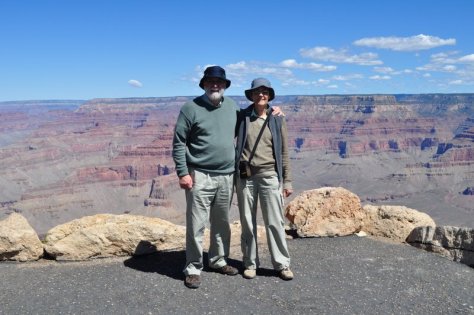
Grand Canyon album

04-20130523 131 Chelsea Flower Show

  • Music is very important to me, so hardly a day goes by without something being played on my iPod (connected to my sound system) or on CD. I have catholic tastes in music, just depending on my mood.
  • On 23 May 2010, I went to my second rock concert to hear Mark Knopfler and his band play at the LG Arena in Birmingham during his Get Lucky Tour. A great evening. (I’d been to my first concert in 2008 [?] in St Paul, Minnesota, to see the great Fleetwood Mac).
  • History books have been my main reading material, and I am a regular visitor the Bromsgrove’s public library. Since my accident last January I haven’t been able to get about as much so have delved more into books I bought in the UK in past years, those given me for Christmas, or the novels of Anthony Trollope (his Barsetshire chronicles) that I haven’t picked up for more than 30 years, but which I am thoroughly enjoying once again.
  • Yes, my accident in January certainly curtailed my mobility, but at least I was able to spend more time reading or working on this blog.
  • In February 2012 we visited Buckingham Palace where I was invested with the Order of the British Empire (Officer or OBE) in a ceremony presided by HRH The Prince of Wales. An unbelievable experience.
  • Philippa (our younger daughter, pictured with Steph and me at Buckingham Palace above) married Andi in New York in October 2010, and was awarded her PhD in psychology from Northumbria University in December.
  • But perhaps the most important happenings in the past six years have been the births of my four grandchildren: Callum Andrew (in August 2010), Elvis Dexter (in September 2011), Zoë Isabel (in May 2012), and Felix Sylvester (in September 2013). We only get to see Callum and Zoë once a year. Elvis and Felix live in Newcastle upon Tyne so we see them several times a year either when we travel the 250 miles northeast, or they come down to Worcestershire. But next weekend (2 July), Hannah and Michael, Callum and Zoë fly over here for two weeks holiday. And we are meeting up with Phil and Andi, Elvis and Felix in the New Forest where we have rented a holiday home. It will the first time we will have all been together, and the first time that the four cousins will meet each other.

So, there you have it. Quite busy, and I don’t intend to slow down if I can help it.

Be careful what you wish for . . .

IMG_1623I’m proud to be British. But yesterday, 23 June, was a profoundly depressing day.

I’m also old (67 going on 68, if that counts as old), white-haired, and very ANGRY. I belong to that generation that overwhelmingly sold the youth of the UK down the river yesterday when they voted to leave in the referendum on the UK’s continuing membership of the European Union (EU).

There’s just one important difference. I voted to Remain. I was proud to be a British member of the EU. Now that has been dashed.

strongerin2

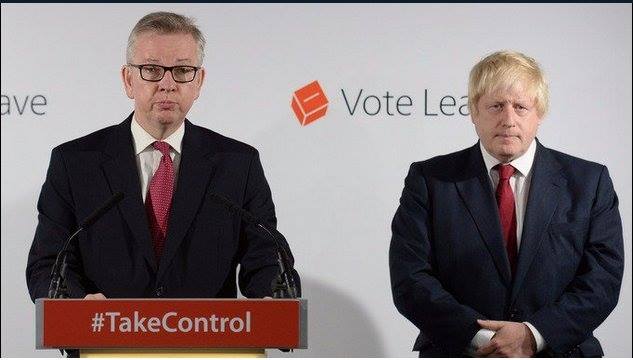
Now we are faced with the unedifying prospect of a (Not Caring) Conservative party led by the likes of ex-London Mayor and professional buffoon, Boris Johnson (BoJo), and his sidekick Michael Gove (MiGo) who always looks as though someone has just shoved a poker up his rear end.

From a photo I saw in one of yesterday’s newspapers, when they spoke at a news conference, they seemed as surprised – and as worried as many of us – that the vote had supported Leave.

13494953_10154072682472911_4451137048557914411_n

The Muppets, aka Michael Gove and Boris Johnson

Well BoJo and MiGo, it’s up to you now. You led the electorate down a slippery slope with your claims and beliefs not supported by any credible factual information. And the majority of voters, especially all the Little Englanders, duped by the virulent and racist propaganda spread by the moronic Nigel Farage (NiFa) of UKIP (immigration was the big issue it seems), placed their X in the ‘Leave’ box on the voting slip.

There was an interesting article in The Guardian newspaper today. The article surmises that BoJo really didn’t expect the Leave side to win the referendum – and frankly has no idea how to salvage the situation. Brexiters, be careful what you wish(ed) for!

It was a close call. Just under 52% of a 72% turnout (referendum statistics and maps here). A high turnout admittedly. Even so, that’s only 37% of the total electorate actually voted in favour of Brexit. Surely the bar for winning should have been set higher in light of the expected constitutional and far-reaching economic and social change that Brexit would inevitably bring about. But maybe that’s jumping the gun.

The country is now fragmented, a ‘house divided’. Scotland and Northern Ireland voted to Remain. England (apart from London) and most of Wales voted to Leave. This will surely lead to a second referendum for Scottish independence, and who would really blame the Scots this time round if they made the choice to go solo. The Northern Ireland perspective is much more problematical. After several decades of peace (more or less) after ‘The Troubles‘, could that increasing stability and prosperity be put in jeopardy if a border has to be set up between Northern Ireland and the Irish Republic. This alone should have been enough to make voters pause for thought. No-one wants to see a return to the violence, both in Ireland and in mainland Great Britain, of the 1970s to 1990s.

poundAnyway, it’s too late now. The electorate has ‘spoken’. The pound has fallen off a cliff, and more damage has been done to the British economy in a few hours than the contributions to the EU would have cost the country for many years to come.
The tone of debate in the referendum campaign was banal on so many occasions. And I was appalled listening to several members of the public asked on TV why they had voted to leave the EU.

I didn’t think my vote to leave would count‘, said one man, obviously regretting how he had voted in the light of the immediate aftermath when the value of pound fell, the stock market crashed and the Prime Minister resigned.

Another woman wisely commented (and I paraphrase): ‘We have taken control back and can now make our country great again, just as it was hundreds of years ago‘. How prophetic!

Another ignorant woman (and I’m sorry to have to use such a description) voted Leave because she claimed ‘All those immigrants are taking OUR (my emphasis) money and sending it back to their countries. It’s our money‘. I don’t think anyone ever questioned how she disposed of her legally-earned income.

It has to be admitted that the Remain side did not run a smart campaign. They did not persuade the electorate of the benefits of EU membership, and continuing membership. The campaign was hijacked by unsubstantiated promises of untold wealth outside the EU and growing fears of immigration. Oh, and the fact that everyone would be queuing at our door to make agreements with us.

OK. The EU is far from a perfect institution. But, warts and all, I still feel very strongly that it’s better to be in rather than out. We are now floating, rudderless, in uncharted waters. It seems our former EU partners wish us to float off westwards into the Atlantic, and as soon as possible. Far from countries lining up to support us, even close allies like the USA have indicated that when it comes to trade deals, the UK will have to join the queue. Heaven knows how our economy will shape up over the coming years. I’m not optimistic.

It’s a great pity that this lecture by Michael Dougan, Professor of European Law at Liverpool University, was not compulsory viewing for everyone intending to participate in the referendum.

I have many fewer years ahead of me than I have already enjoyed. With all the economic, constitutional, and political turmoil, we can expect the next years to be challenging. But I feel for my daughters’ generation and their children. Bigotry, false promises, and downright lies have condemned us all to an uncertain future.

There are even (anecdotal?) reports in the media that immediately after the polls closed on Thursday there was surge of Google searches from the UK for ‘What is the EU?’ I despair.

The leaders of the Brexit campaign now have to deal with the aftermath of the momentous decision to Leave. Are they up to it? Probably not. Many are second-rate or failed politicians, and that does not bode well for the country of my birth.

~~~~~~~~~~~~~~~~~~~~~~~~~~~~~~~~~~~~~~~~~~~~~~
And I just came across this on a Facebook post:

I voted to remain in the European Union but I guess I should congratulate those who supported the Leave campaign.

  • Congratulations to Boris Johnson, a political flip-flopper who has convinced the general population he is a cuddly, bumbling, caricature as opposed to the publicly schooled politically astute ego-driven megalomaniac he is.
  • Congratulations to Michael Gove, former Education minister who genuinely believed all schools could be “above average” and who literally said about the EU campaign “This is not the time to listen to experts”
  • Congratulations to Nigel Farage, man of the people who is actually a former commodities broker and deeply divisive. The man who put up Nazi-inspired propaganda just last week.
  • Congratulations to the Baby Boomers; you’ve already fucked our economy, our healthcare, our housing market, our education, and our pensions and now this.
  • Congratulations to “My name is Death To Traitors, Britain First”.
  • Congratulations to everyone who doesn’t believe in scientific research, academia, arts, culture, and intellectual development.
  • Congratulations to the firm who flew a Brexit plane over Jo Cox’s memorial service.
  • Congratulations to everyone who doesn’t believe in social mobility or social progress.
  • Congratulations to everyone who is deathly scared of anybody who looks or sounds slightly different to you.
  • Congratulations to everyone who believes we’ll now have a brand new hospital every week with the money we’ll save (if only we had access to a skilled workforce from which we could staff them eh!).
  • Congratulations to everyone who wanted to “get our country back”. You haven’t got it back, but you’ll get the country you deserve.
  • Congratulations to Katie Hopkins.
  • Congratulations to everyone who hates the NHS and our education system and thinks that someone, somewhere should making profit from these systems.
  • Congratulations to Nick Griffin.
  • Congratulations to everyone who wanted to seize power from the “unelected elite” by leaving the EU but who happily clap like a seal when new pictures of a fucking royal baby come out. “They’re better than me because look….he’s royal. He’s made from like different sperm and that”.
  • Congratulations to everyone who is against universal workers’ rights, universal human rights, maternity leave, climate change interventions, and labour laws.
  • Congratulations to everyone who is against the scary scary refugees but at the same time support bombing the countries from whence they came.
  • Congratulations to everyone who believes this will make the country better.
  • Congratulations to those who believe more of our wealth should be shared by fewer of our people.
  • Congratulations to everyone who disagreed with the politics of Jo Cox who refused to acknowledge the cause of the hatred and anger which may have led to her assassination.
  • Congratulations to the constituencies who received masses of EU funding recently to repair damages caused by flooding who voted Out. You fuckwits.
  • Congratulations to those who say “You have no right to tell people how to vote” but who made their mind up because they saw six minutes of a televised debate during the Gogglebox ad breaks and they thought “That guy has funny hair”.
  • Congratulations to every single person who voted to leave the largest single economic market in global history.
  • Congratulations to everyone who thinks we’ll now travel back to the glory days of the 40s, 50s, and 60s. Everyone was much better back then don’t you know?
  • Congratulations to everyone who voted Out because they listened to the racist elements of our society.
  • Congratulations if you are indeed one of the racist elements of our society. Not everyone who voted Out is a racist, but all the racists voted Out.
  • Congratulations to everyone older than 70 who voted Out whose vote somehow counts as much as mine, you’ll only have to live with the consequences for a few more years. Well done you. As of 04:35, at least 60% of over 65s voted Out compared to just 24% of 18-25 year olds. Nice one you guys! Thanks so much
  • Congratulations to everyone who is persuaded by characters, by headlines, by propaganda, by impossible dreams, by xenophobia, by racism, by idiocy. You hate facts and you’re right, facts are scary, especially when you disagree with them.
  • Congratulations to anyone who voted for the above.
  • Congratulations to anyone who loves political, financial, and social instability. It normally works out fine….

Seriously. Congratulations to you all. Well fucking done…..
~~~~~~~~~~~~~~~~~~~~~~~~~~~~~~~~~~~~~~~~~~~~~~

Plant Genetic Resources: Our challenges, our food, our future

phillips-jade

Jade Phillips

That was the title of a one day meeting on plant genetic resources organized by doctoral students, led by Jade Phillips, in the School of Biosciences at The University of Birmingham last Thursday, 2 June. And I was honoured to be invited to present a short talk at the meeting.

Now, as regular readers of my blog will know, I began my career in plant genetic resources conservation and use at Birmingham in September 1970, when I joined the one year MSc course on genetic conservation, under the direction of Professor Jack Hawkes. The course had been launched in 1969, and 47 years later there is still a significant genetic resources presence in the School, even though the taught course is no longer offered (and hasn’t accepted students for a few years). Staff have come and gone – me included, but that was 25 years ago less one month, and the only staff member offering research places in genetic resources conservation is Dr Nigel Maxted. He was appointed to a lectureship at Birmingham (from Southampton, where I had been an undergraduate) when I upped sticks and moved to the International Rice Research Institute (IRRI) in the Philippines in 1991.

image

Click on this image for the full program and a short bio of each speaker.

Click on each title below; there is a link to each presentation.

Nigel Maxted (University of Birmingham)
Introduction to PGR conservation and use

Ruth Eastwood (Royal Botanic Gardens, Kew – Wakehurst Place)
‘Adapting agriculture to climate change’ project

Holly Vincent (PhD student, University of Birmingham)
Global in situ conservation analysis of CWR

Joana Magos Brehm (University of Birmingham)
Southern African CWR conservation

Mike Jackson
Valuing genebank collections

Åsmund Asdal (NordGen)
The Svalbard Global Seed Vault

Neil Munro (Garden Organic)
Heritage seed library

Maria Scholten
Natura 2000 and in situ conservation of landraces in Scotland: Machair Life (15 minute film)

Aremi Contreras Toledo, Maria João Almeida, and Sami Lama (PhD students, University of Birmingham)
Short presentations on their research on maize in Mexico, landraces in Portugal, and CWR in North Africa

Julian Hosking (Natural England)
Potential for genetic diversity conservation – the ‘Fifth Dimension’ – within wider biodiversity protection

I guess there were about 25-30 participants in the meeting, mainly young scientists just starting their careers in plant genetic resources, but with a few external visitors (apart from speakers) from the Millennium Seed Bank at Kew-Wakehurst Place, the James Hutton Institute near Dundee, and IBERS at Aberystwyth.

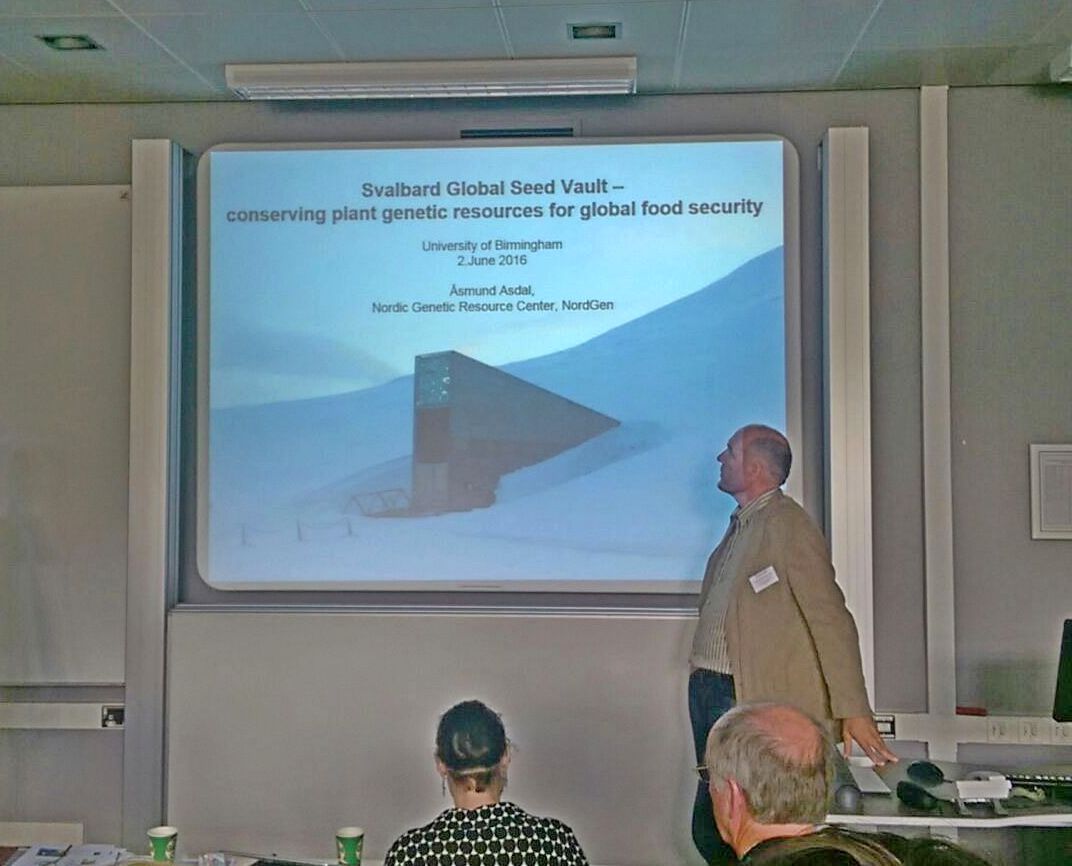
The meeting grew out of an invitation to Åsmund Asdal from the Nordic Genetic Resources Center (NordGen) to present a School of Biosciences Thursday seminar. So the audience for his talk was much bigger.

asmund

Åsmund is Coordinator of Operation and Management for the Svalbard Global Seed Vault, and he gave a fascinating talk about the origins and development of this important global conservation facility, way above the Arctic Circle. Today the Vault is home to duplicate samples of germplasm from more than 60 depositor genebanks or institutes (including the international collections held in the CGIAR genebank collections, like that at IRRI.

Nigel Maxted’s research group has focused on the in situ conservation and use of crop wild relatives (CWR), although they are also looking at landrace varieties as well. Several of the papers described research linked to the CWR Project, funded by the Government of Norway through the Crop Trust and Kew. Postdocs and doctoral students are looking at the distributions of crop wild relatives, and using GIS and other sophisticated approaches that were beyond my comprehension, to determine not only where there are gaps in distributions, lack of germplasm in genebank collections, but also where possible priority conservation sites could be established. And all this under the threat of climate change. The various PowerPoint presentations demonstrate these approaches—which all rely on vast data sets—much better than I can describe them. So I encourage you to dip into the slide shows and see what this talented group of scientists has been up to.

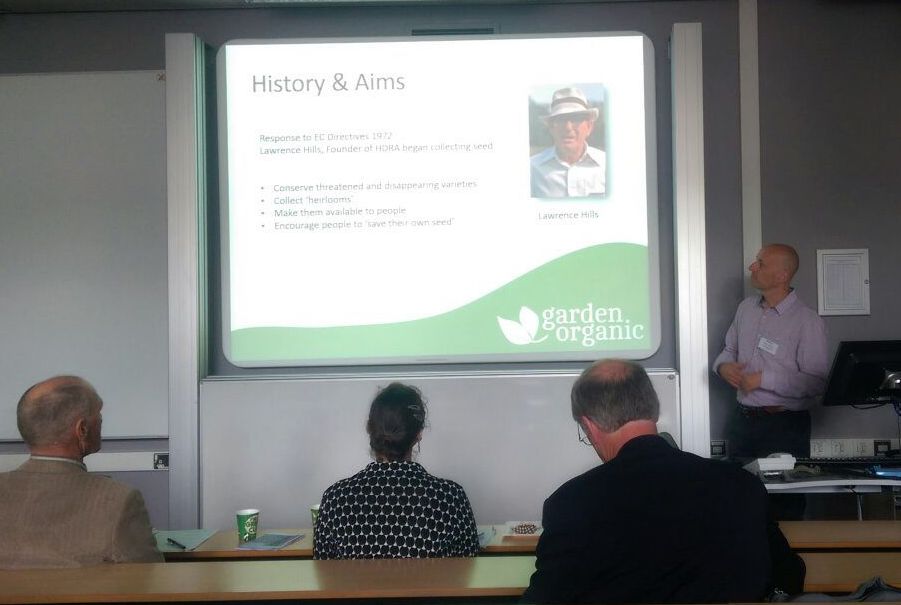
Neil Munro from Garden Organic described his organization’s approach to rescue and multiply old varieties of vegetables that can be shared among enthusiasts.

n_munro

Seeds cannot be sold because they are not on any official list of seed varieties. What is interesting is that one variety of scarlet runner bean has become so popular among gardeners that a commercial seed company (Thompson & Morgan if I remember what he said) has now taken  this variety and selling it commercially.

julian

Julian Hosking from Natural England gave some interesting insights into how his organization was looking to combine the conservation of genetic diversity—his ‘Fifth Dimension’—with conservation of natural habitats in the UK, and especially the conservation of crop wild relatives of which there is a surprisingly high number in the British flora (such as brassicas, carrot, and onions, for example).

So, what about myself? When I was asked to contribute a paper I had to think hard and long about a suitable topic. I’ve always been passionate about the use of plant genetic diversity to increase food security. I decided therefore to talk about the value of genebank collections, how that value might be measured, and I provided examples of how germplasm had been used to increase the productivity of both potatoes and rice.

m_jackson

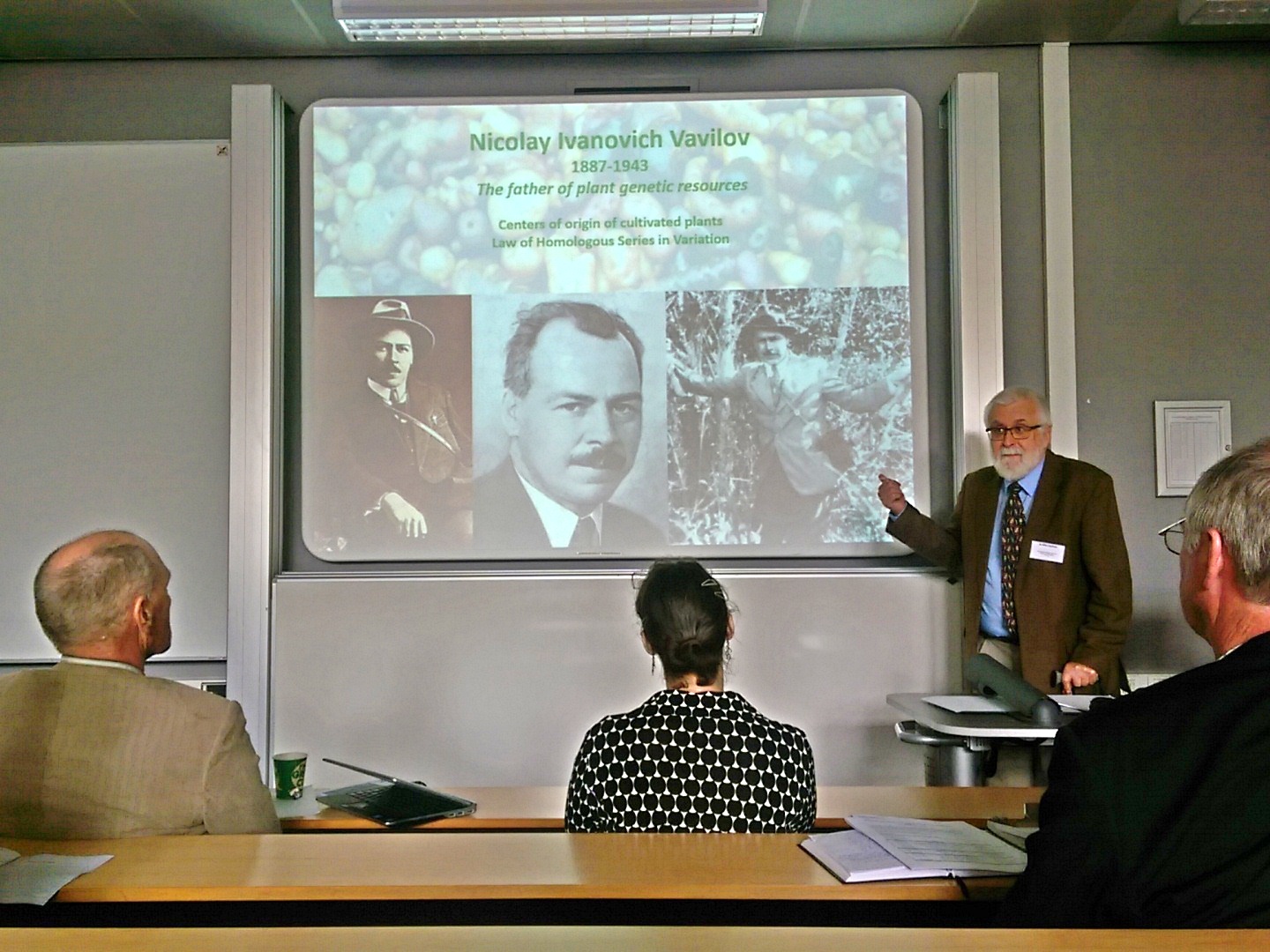
Nicolay Vavilov is a hero of mine

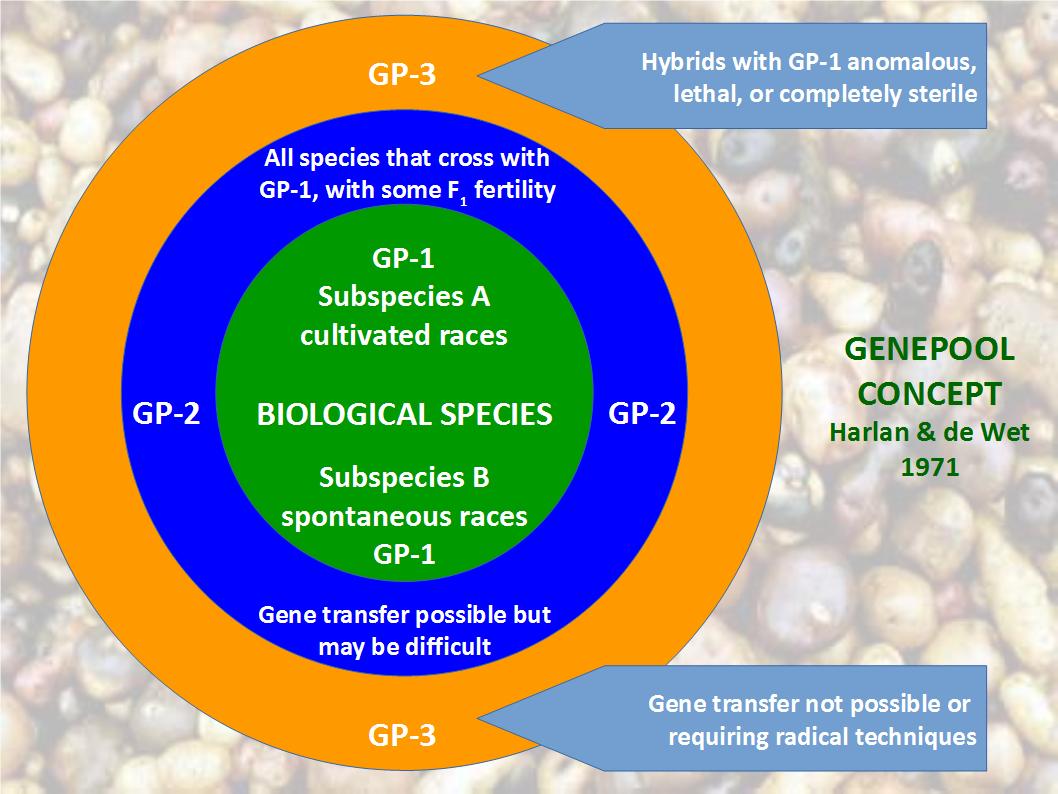
Although all the speakers developed their own talks quite independently, a number of common themes emerged several times. At one point in my talk I had focused on the genepool concept of Harlan and de Wet to illustrate the biological value (easy to use versus difficult to use) of germplasm in crop breeding.

Jackson FINAL - Valuing Genebank Collections

In the CWR Project research several speakers showed how the genepool concept could be used to set priorities for conservation.

Finally, there was one interesting aspect to the meeting—from my perspective at least. I had seen the titles of all the other papers as I was preparing my talk, and I knew several speakers would be talking about future prospects, especially under a changing climate. I decided to spend a few minutes looking back to the beginning of the genetic conservation movement in which Jack Hawkes was one of the pioneers. What I correctly guessed was that most of my audience had not even been born when I started out on my genetic conservation career, and probably knew very little about how the genetic conservation movement had started, who was involved, and what an important role The University of Birmingham had played. From the feedback I received, it seems that quite a few of the participants were rather fascinated by this aspect of my talk.