Navigating the Stourport Ring

I’m fascinated by canals. You have to admire the visionaries who financed and built the canals, and the armies of men who constructed them.

Most canals in England and Wales were dug by gangs of navvies in the 18th and early 19th centuries. However, within just a generation or two the canals were already in decline as an expanding railway network made transportation of goods cheaper and faster. The writing was on the wall for the canals once George Stephenson had demonstrated the power of steam locomotion.

The economic justification for and value of the canals waned, and they fell into disuse, and no longer navigable. However, in recent decades there has been a resurgence in the use of inland waterways. Today some 2000 miles of navigable waterways (canals and rivers) are managed by the Canal & River Trust, used mainly for pleasure traffic. Narrowboat holidays on the canals are very popular.

I have written several stories about the pleasure Steph and I take from walking along the towpath of the Worcester & Birmingham Canal, that runs north-south between Gas Street Basin in the center of Birmingham and the River Severn at Worcester. The canal is less than two miles east of our home in Bromsgrove in north Worcestershire. Our walks normally cover small sections of the towpath between Tardebigge Top Lock (No. 58) and Astwood Bottom Lock (No. 17), a distance of about 5½ miles.

We not only enjoy the surrounding countryside, tranquil for the most part (unless a mainline express is speeding by about half a mile to the west), but also watching the canal narrowboats navigating their way up and down the Tardebigge Flight, the longest flight (of 30 locks) in the country, some with a greater degree of proficiency than others. Some days it can be like Piccadilly Circus¹ with boats queuing up to pass through the locks.

Taking to the water
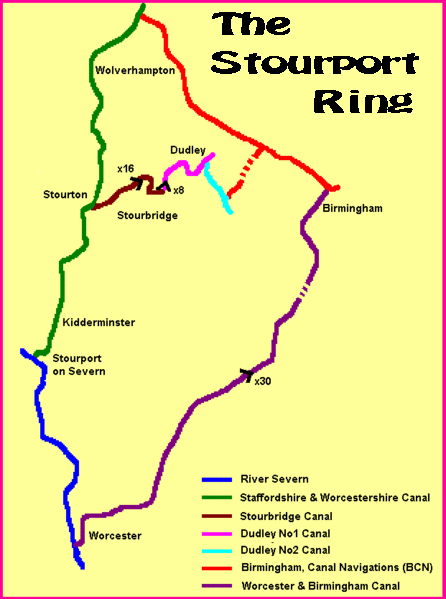
We have taken only one canal holiday, in the summer of 1983, when Steph, Hannah (just five years old), Philippa (15 months) and me took to the water for a week, to navigate the Stourport Ring.

The Ring, for our purposes, comprised four waterways:

If I remember correctly, the various links connecting the Staffordshire & Worcestershire Canal with the BCN via the Stourbridge Canal and the Dudley Canals were not navigable in 1983.

Setting out, and setting some rules
It was early July, and we took Hannah out of school for the week with readily-granted permission from Mr Richards, the headmaster at Finstall First School. That would be almost impossible nowadays. We had chosen a small, 4-berth narrowboat for our holiday, Blue Heron, from a hire-boat center operating out of Alvechurch, about 15 minutes from home. So, packing clothes for a week, and several boxes of groceries (including the inevitable wine boxes that were very popular in the 80s), we headed to Alvechurch to board our boat.
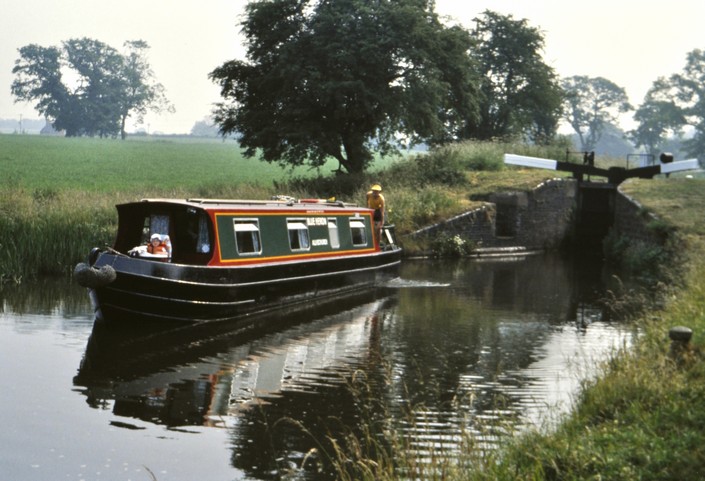
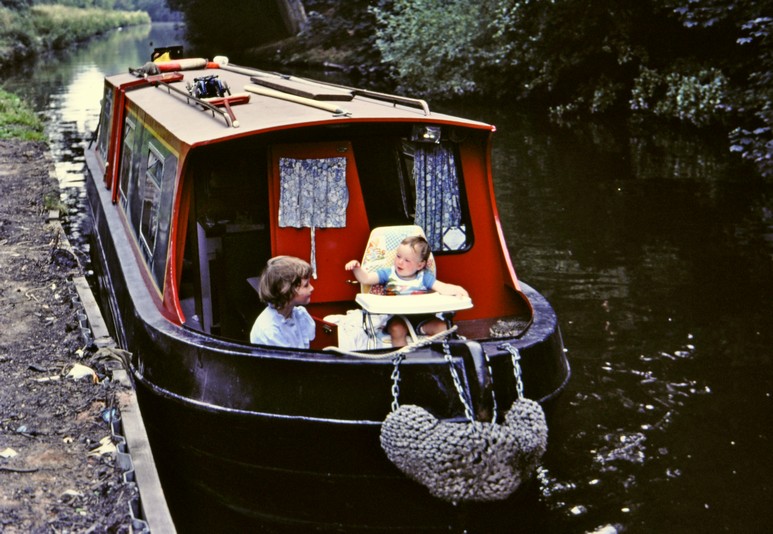
Blue Heron, with Steph at the helm, and Philippa in the bow.

After a familiarization tour of the boat, one of the marina staff joined us for the first three miles to the first lock on our trip, Tardebigge Top Lock. Not only would that be the first lock we’d encounter over the next week, but it was one of the deepest. So, the marina staff not only wanted to guide us safely through this lock but also to show us the rudiments of safe canal navigation.
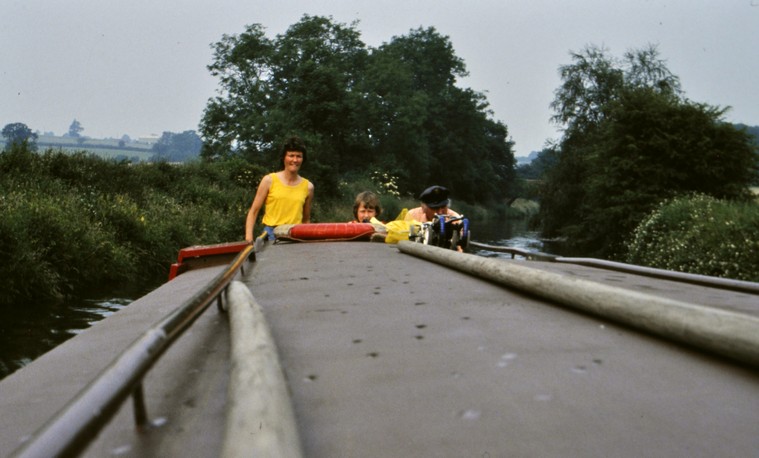
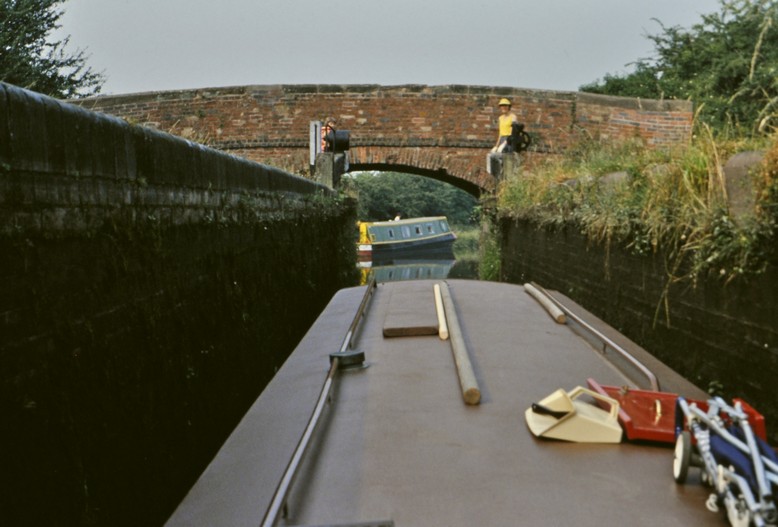
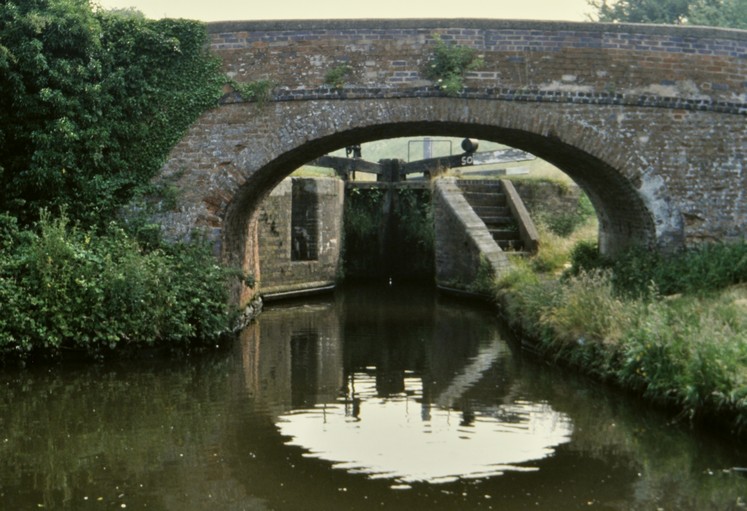
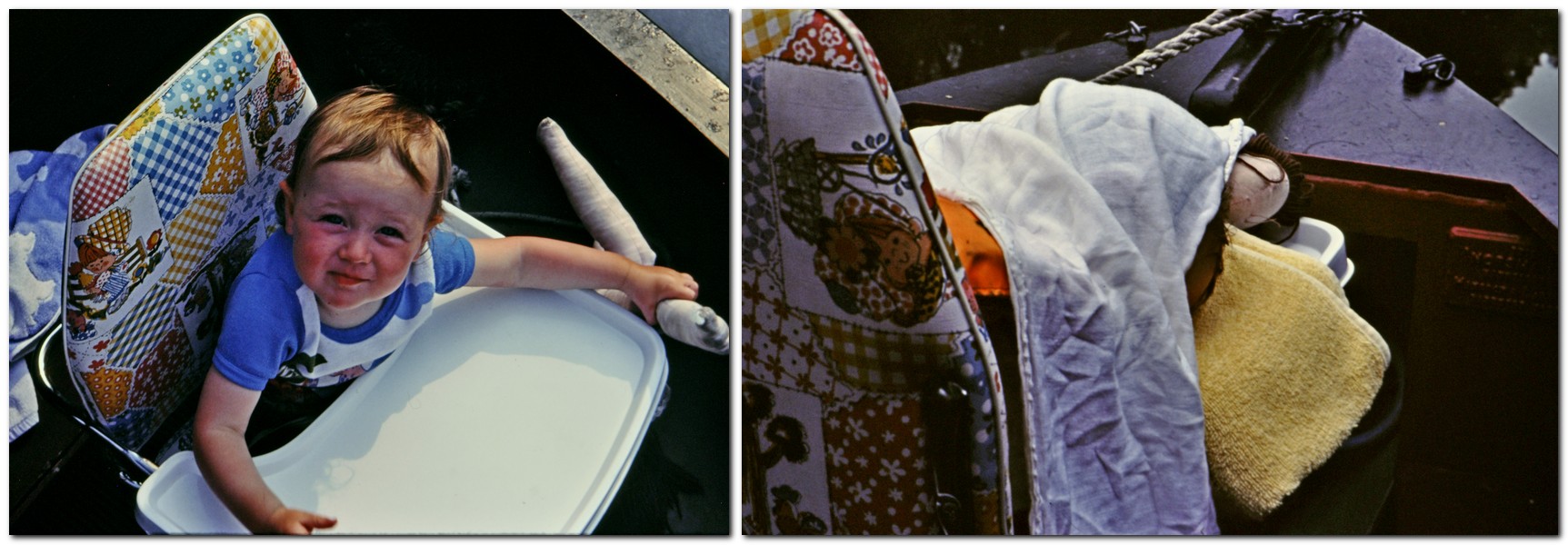
Looking at the various photos I have included in this post, you might be forgiven for questioning our apparent lack of awareness of on-board safety. Only Hannah is wearing a life jacket, something that would not be allowed more than three decades later. At five years old, we had to set Hannah some strict limits how to move around the boat. At 15 months, Philippa was already walking, and would crawl and stagger around the cabin whenever we moored for a meal break or at night. With either Steph or me steering the boat, one of us had to operate the locks, raising/ lowering the paddles to empty or fill each lock, and open the lock gates. So it was important we knew where the girls were at all times.
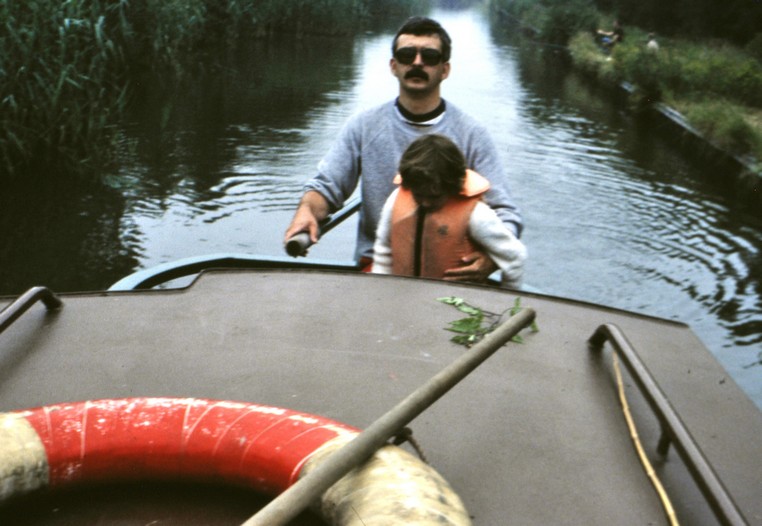
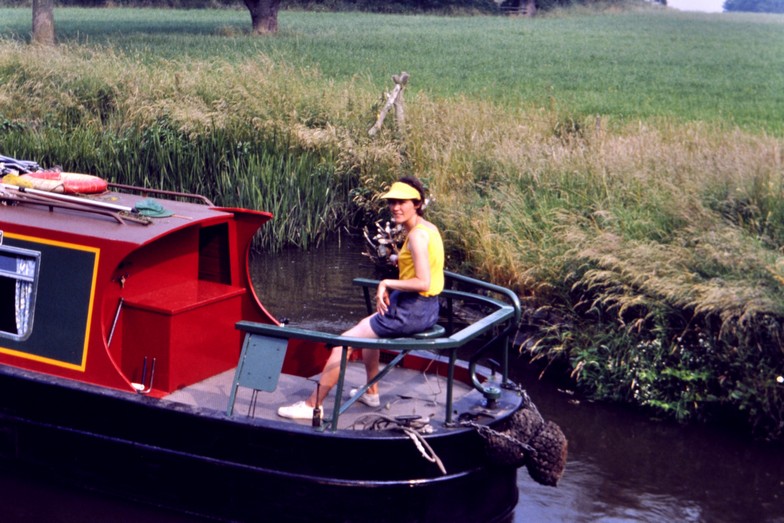
To keep Philippa safe, we put her in a high chair in the bow of the boat, and with her mob cap for protection, and a good coating of sun cream, she was (mostly) quite happy watching the world go by at a leisurely 4 mph (the maximum speed permitted on the canals), waving to passers-by, or falling asleep when the fancy took her. Hannah would often sit beside whoever was steering at the stern of the boat, or ‘help’ with the locks.
Our journey continues
Having successfully passed through Tardebigge Top Lock, we headed down a few more on our own, before mooring for the night just below the Engine House, then a nightclub/restaurant (but now converted into luxury apartments), near Lock 55 or 54, in the early evening. With two small children on board, we had to get them fed and not too late bedded down for the night.
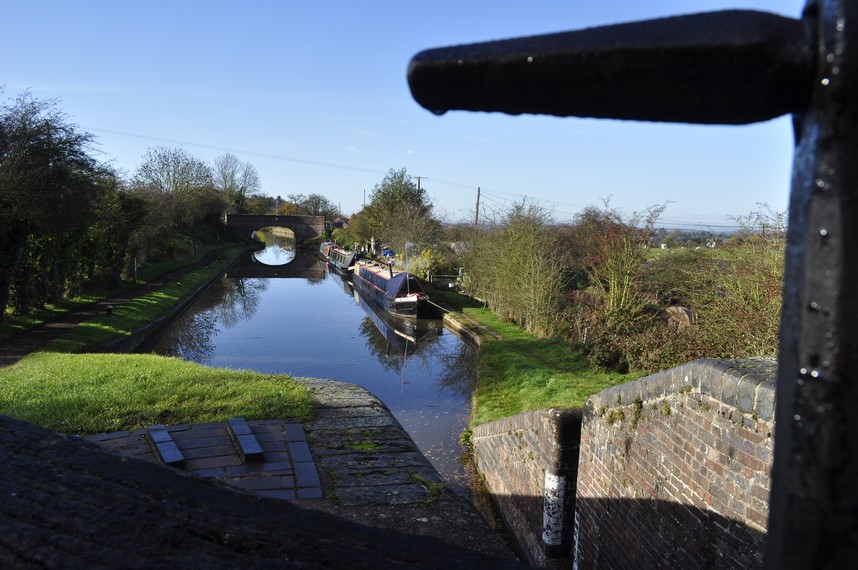
The view from Tardebigge Top Lock (No. 58).
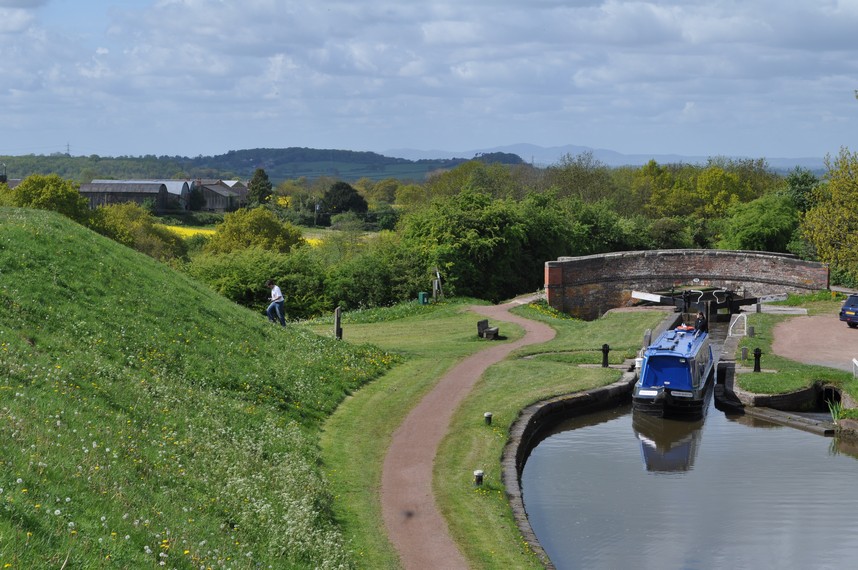
Looking south on the Worcester & Birmingham Canal near Lock 54. The Malvern Hills can be seen in the far distance.

We spent all the next day completing the Tardebigge flight, but I’m not sure if we reached Worcester that same day, or took another day. Probably the latter. However, we spent one night at Worcester’s Diglis Basin before facing the River Severn.

It had become clear on the final stretch into Worcester that Hannah was not her usual perky self. And by bedtime, she had a temperature. The next morning she really looked very unwell, so she and I headed off into the center of Worcester in search of medical help. Although only 15 miles or so from home, it felt like 100 miles. I didn’t have our doctor’s telephone number with me. In any case, there were no mobile phones in 1983.

Nevertheless, we finally got to see a doctor (after completing a slew of NHS forms because we were being treated as ‘visitors’, not our own doctor), who diagnosed tonsillitis, and prescribed a course of antibiotics. It was remarkable how quickly those had an effect, because by late afternoon Hannah was feeling very much better, and almost back to her normal self by bedtime.
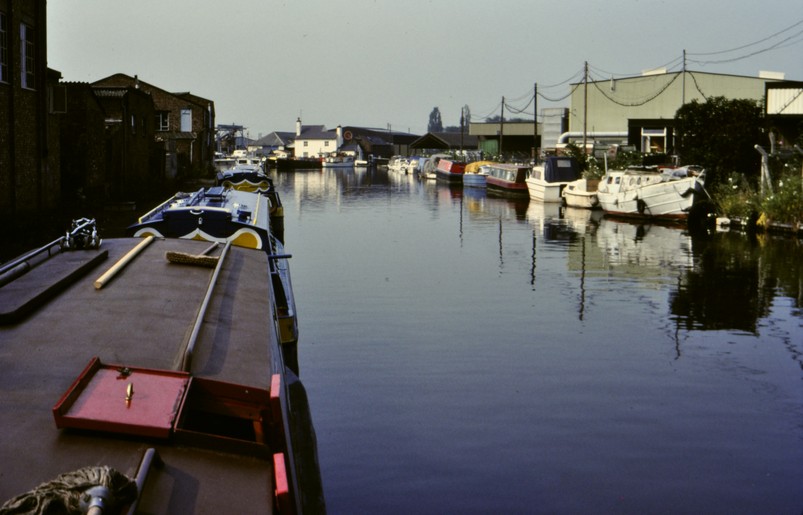
Diglis Basin in Worcester.
Our departure from Worcester was delayed until after lunch. We steeled ourselves for the section of our trip on the River Severn. We had good weather (and for the whole week), and no particular difficulties on the river itself. But we did have to pass through the Diglis Lock connecting Diglis Basin with the River Severn. This lock is wide and deep, and a challenge for two canal novices like Steph and myself. I don’t remember that this lock was assisted.

Once on the Severn we turned north, having a grandstand view from the center of the river of Worcester Cathedral on the east bank, and the city center.
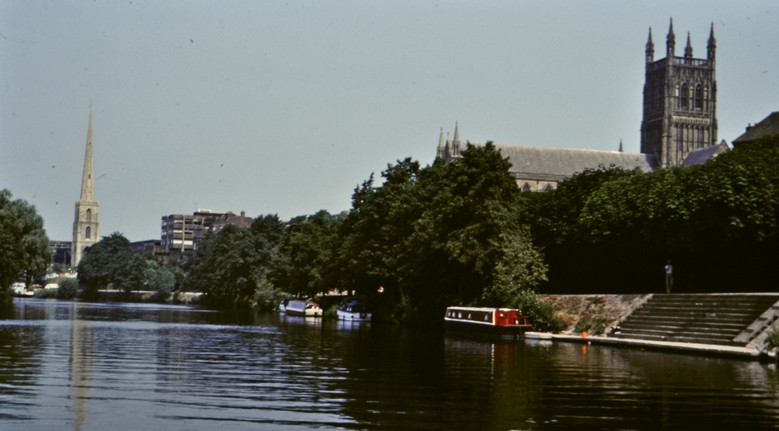
There was just one other lock on the Severn itself, at Holt, to bypass a weir. That lock had lock keepers, and was electrically operated. Once we reached Stourport-on-Severn, it was time to leave the river and join the Staffordshire & Worcestershire Canal, for the next stage of our trip.
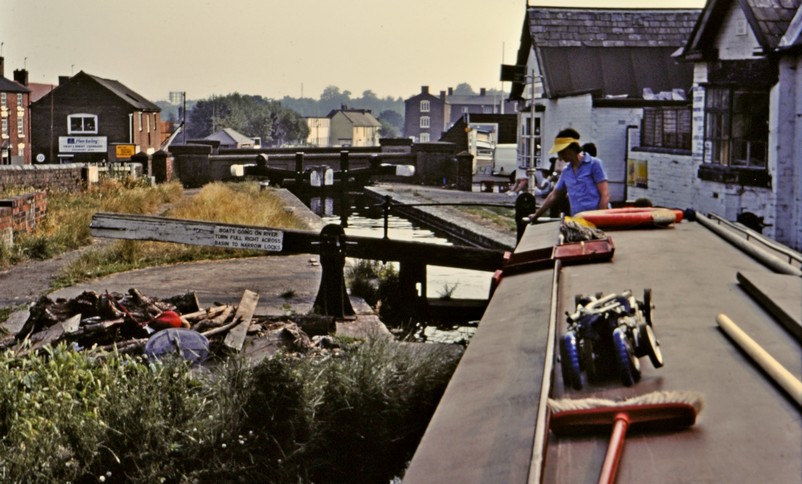
Entering the Staffordshire & Worcestershire Canal at Stourport-on-Severn.

This canal passes through the center of Kidderminster, a town famous world-wide for its carpet-making industry, then on through some lovely and peaceful red sandstone landscapes near Kinver in South Staffordshire.

We must have taken a couple of days to travel this section as far as Aldersley Junction, where we had to turn east and join the Birmingham Canals Navigation. However, as we needed water and some other supplies, we travelled a couple of miles further north, joining the Shropshire Union Canal at Autherley Junction for a very short distance before turning around to moor up for the night by Aldersley Junction. At Autherley Junction, there is a stop lock, with just a small height difference, a matter of inches, between the two canals to prevent drainage of one canal into the other.

The next section on the BCN was our penultimate day, taking us from Aldersley Junction, through the Black Country, Birmingham city center, and south again on to the Worcester & Birmingham Canal, mooring up north of Alvechurch in order to arrive back on time at the marina the next day.

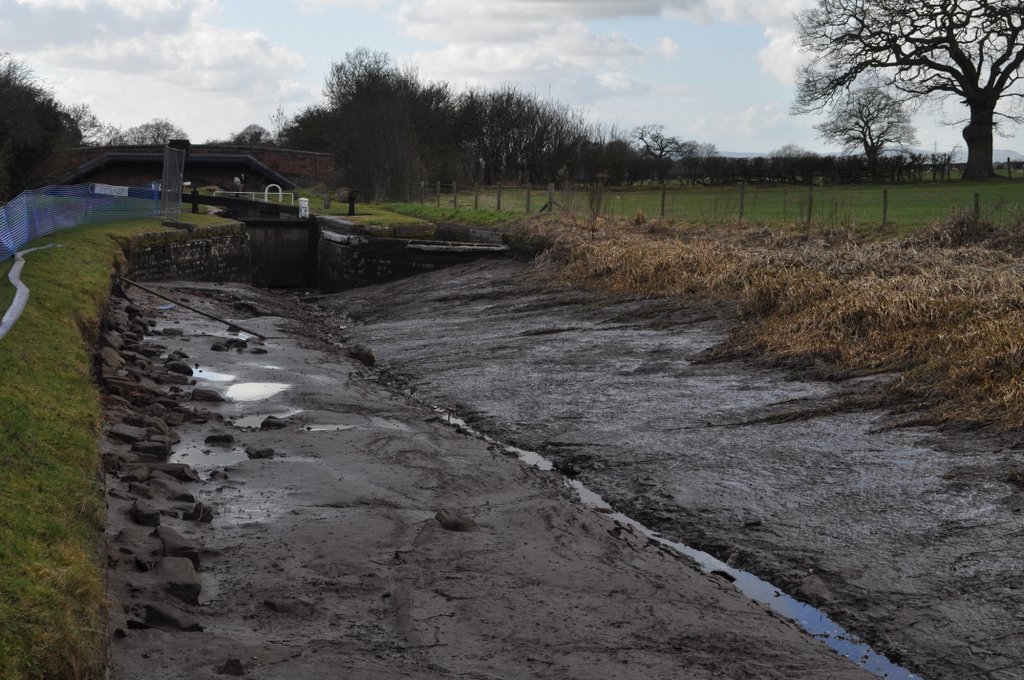
From Aldersley Junction there is a flight of 21 locks that raise the canal 132 feet. We made an early start, with the idea of stopping about half way for breakfast. However, we discovered at about one third of the climb that a previous boat had left the lock paddles open and several pounds between the locks had drained completely. The photo below was taken on the Worcester & Birmingham Canal a couple of years ago when several refurbishment projects were underway. But it shows the sort of scene that greeted us that morning on the BCN. It must have taken an hour or more to restore water levels to the pounds before we could get on the move once again.
Travelling between Wolverhampton and Birmingham in 1983 was like passing through a desolate lunar landscape, with scenes of dereliction all around. This is part of the so-called Black Country of Dudley and Tipton, formerly an important industrial area. Today this whole area has been reclaimed for housing. Even the derelict warehouses along the canals in the center of Birmingham have either been refurbished as ‘desirable residences’ or demolished and replaced by new housing and offices.
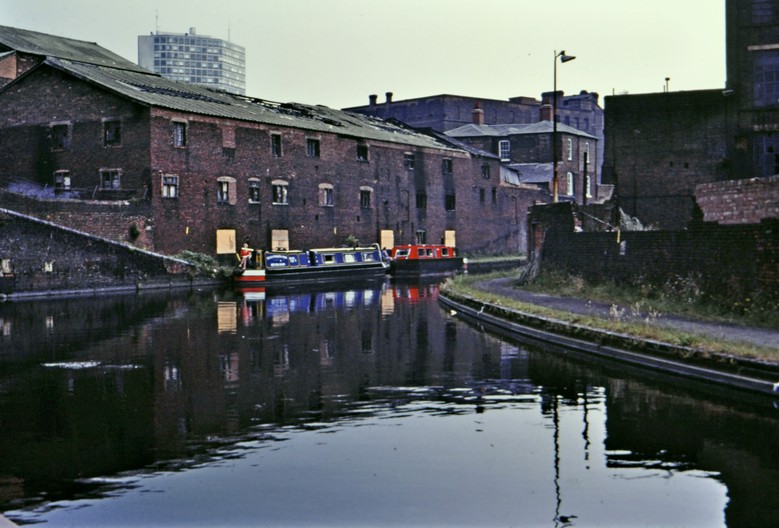
Near Gas Street Basin in 1983.
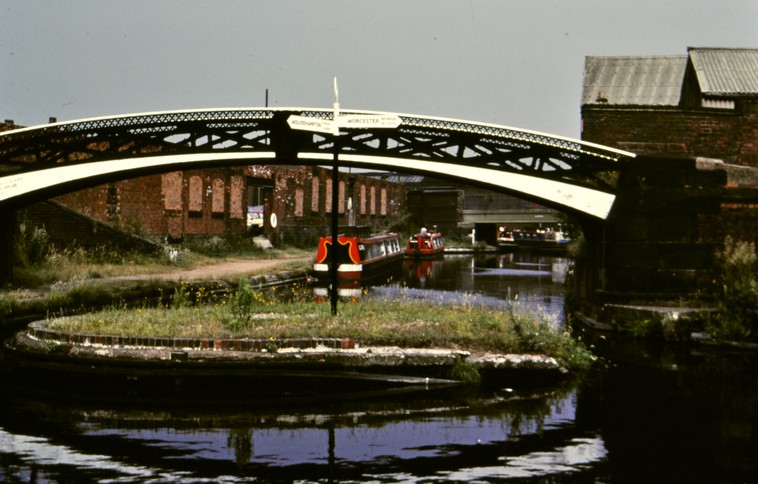
Signposts on the canal, Wolverhampton to the left, Worcester to the right.

However in 1983, there was little shade along the banks of the BCN in the Black Country of Dudley and Tipton. It was a very hot day, and the sun was beating down. Because we had to travel more miles than usual, I had my lunch and tea breaks on the move, so to speak. Just as we crossed Gas Street Basin, the weather broke and there was a tremendous thunderstorm. With that, we decided to moor until the storm had passed, before continuing south, past the University of Birmingham Edgbaston campus, and through the one and a half mile long Wast Hills Tunnel (under the Lickey Hills) north of Alvechurch, one of the longest in the country. We moored close to where the A441 crosses the canal at Hopwood, and enjoyed an evening meal at the Hopwood House pub.
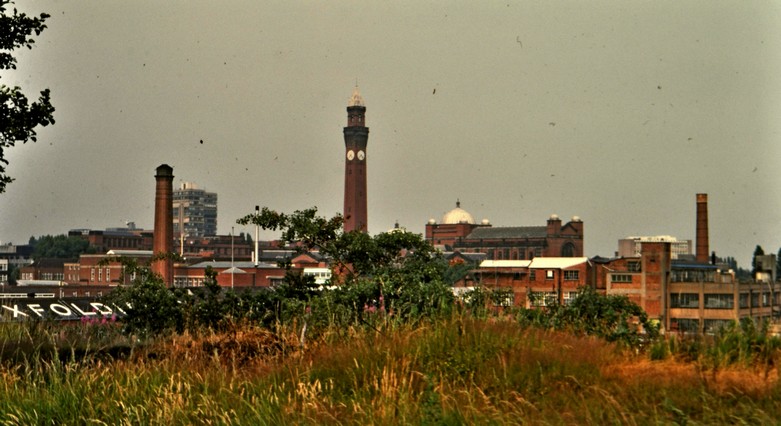
The University of Birmingham campus from the canal near Selly Oak.
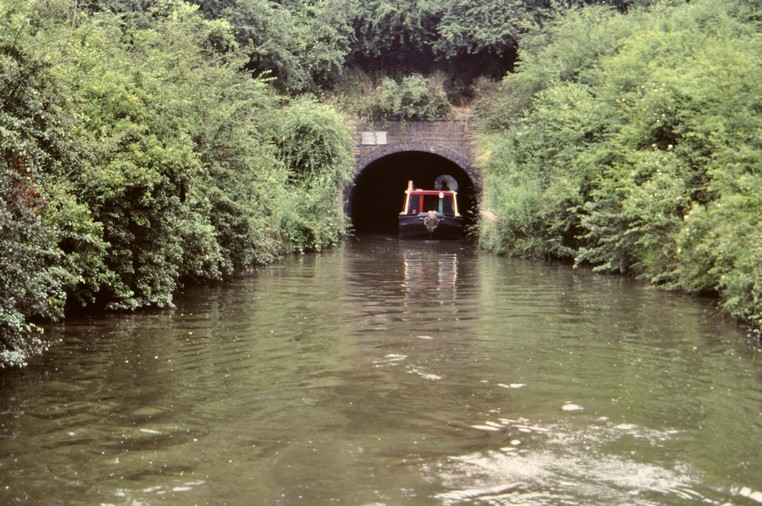
Just passed through one of the tunnels north of Alvechurch.

With only a short distance to Alvechurch, we spent a couple of hours cleaning the boat on the final morning, getting everything shipshape and Bristol fashion, and arriving back at the marina by the noon deadline.

From there, it was just a case of hopping into our car, and within 15 minutes we were back home. A very enjoyable holiday and, as you can tell as you read this post, one that left me with long-lasting memories.

~~~~~~~~~~~~~~~~~~~~~~~~~~~~~~~~~~~~~~~~

¹ The phrase it’s like Piccadilly Circus is commonly used in the UK to refer to a place or situation which is extremely busy with people.
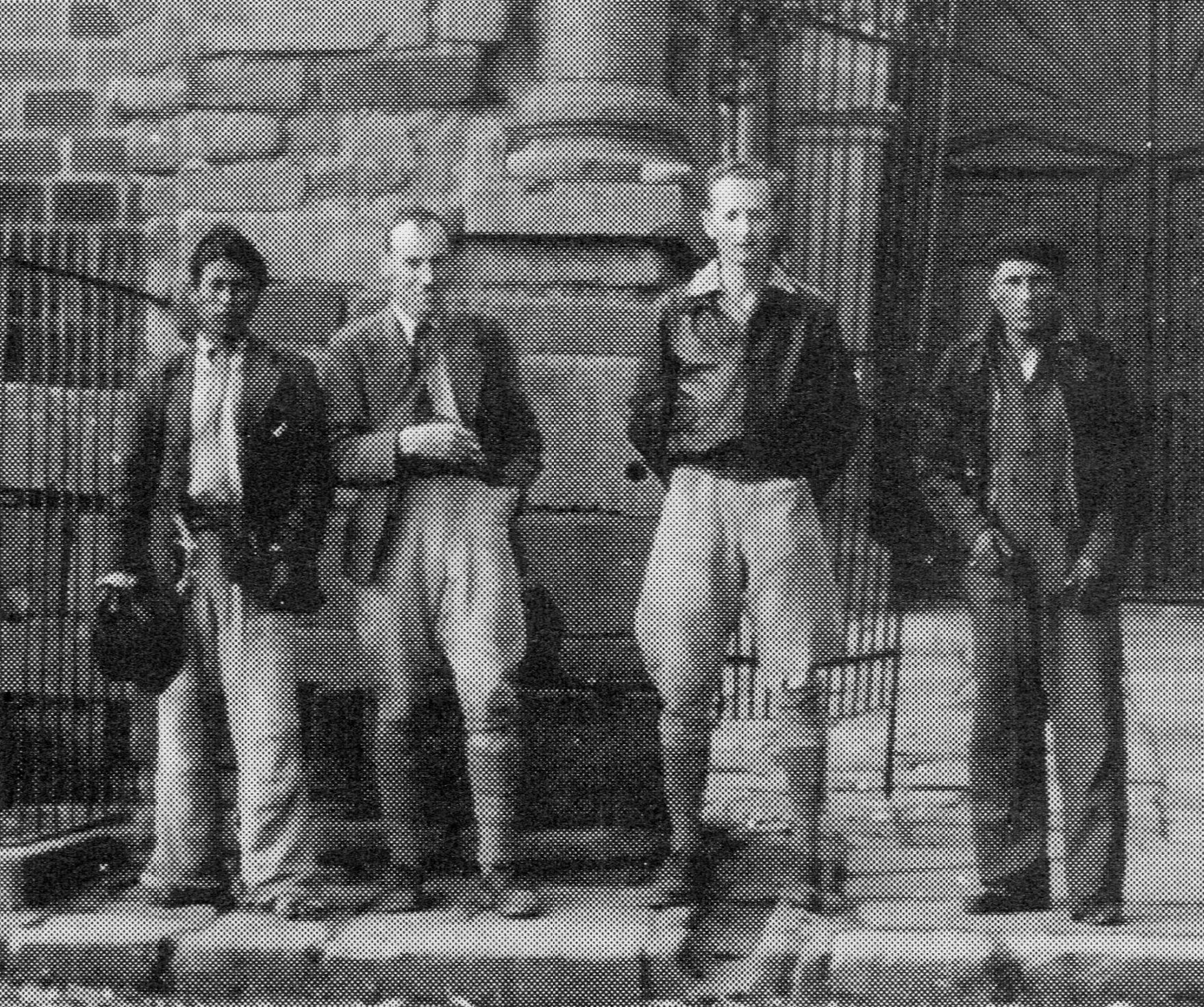
Outside the EU . . . even before Brexit

Imagine a little corner of Birmingham, just a couple of miles southwest of the city center. Edgbaston, B15 to be precise. The campus of The University of Birmingham; actually Winterbourne Gardens that were for many decades managed as the botanic garden of the Department of Botany / Plant Biology.

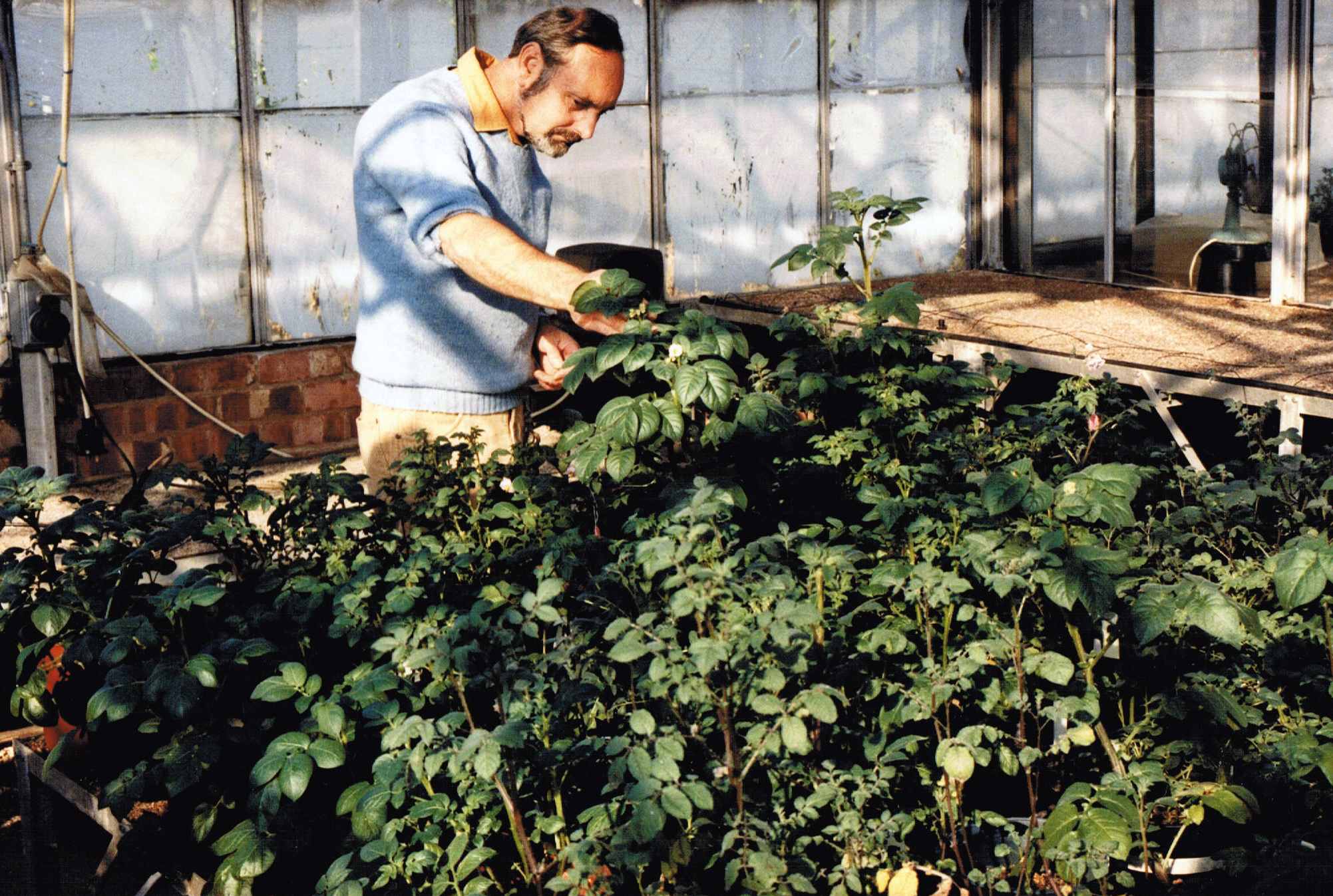
As a graduate student there in the early 1970s I was assigned laboratory space at Winterbourne, and grew experimental plants in the greenhouses and field. Then for a decade from 1981, I taught in the same department, and for a short while had an office at Winterbourne. And for several years continued to teach graduate students there about the conservation and use of plant genetic resources, the very reason why I had ended up in Birmingham originally in September 1970.

Potatoes at Birmingham
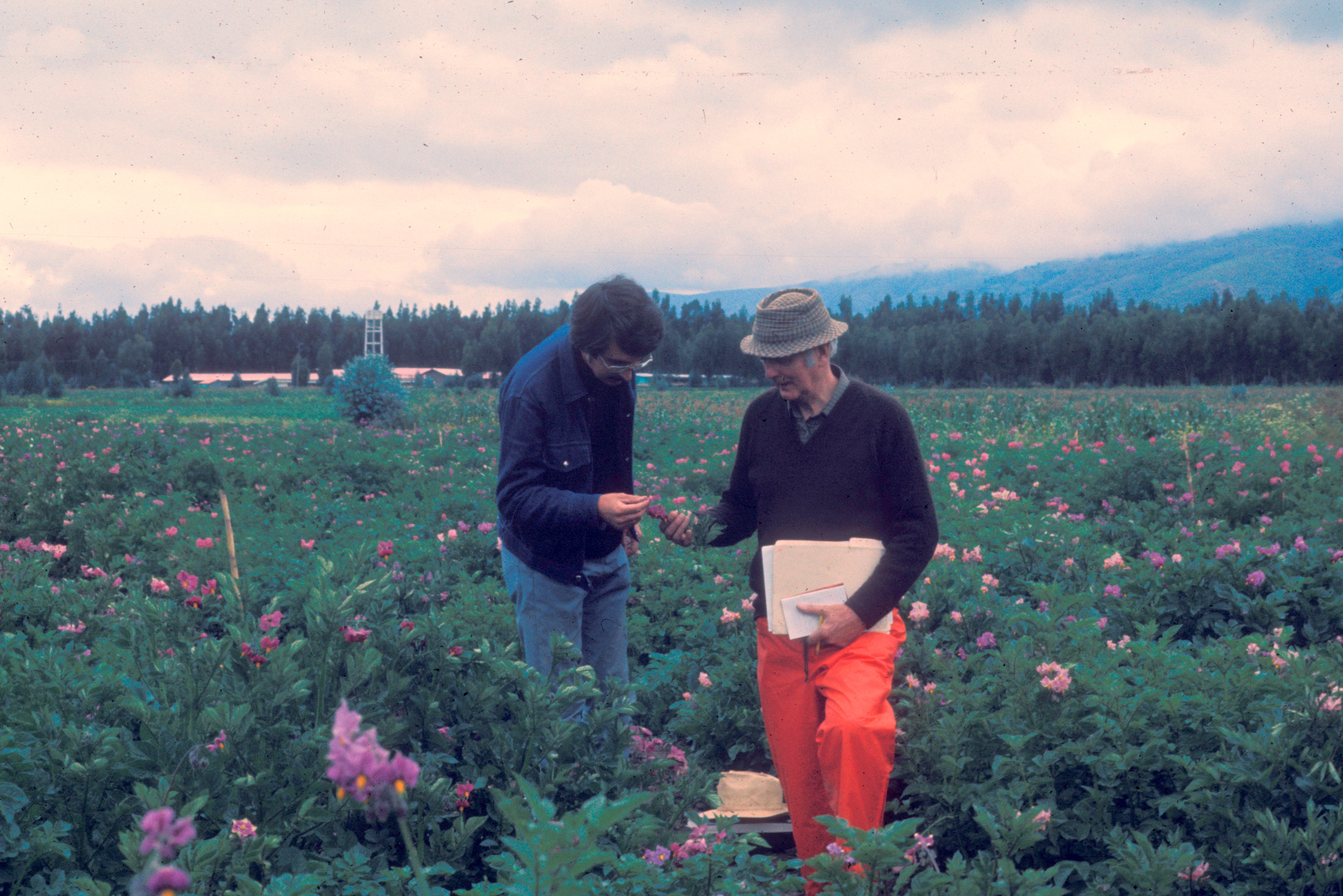
It was at Birmingham that I first became involved with potatoes, a crop I researched for the next 20 years, completing my PhD (as did many others) under the supervision of Professor Jack Hawkes, a world-renowned expert on the genetic resources and taxonomy of the various cultivated potatoes and related wild species from the Americas. Jack began his potato career in 1939, joining Empire Potato Collecting Expedition to South America, led by Edward Balls. Jack recounted his memories of that expedition in Hunting the Wild Potato in the South American Andes, published in 2003.

29 March 1939: Bolivia, dept. La Paz, near Lake Titicaca, Tiahuanaco. L to R: boy, Edward Balls, Jack Hawkes, driver.

The origins of the Commonwealth Potato Collection
Returning to Cambridge, just as the Second World War broke out, Jack completed his PhD under the renowned potato breeder Sir Redcliffe Salaman, who had established the Potato Virus Research Institute, where the Empire Potato Collection was set up, and after its transfer to the John Innes Centre in Hertfordshire, it became the Commonwealth Potato Collection (CPC) under the management of institute director Kenneth S Dodds (who published several keys papers on the genetics of potatoes).

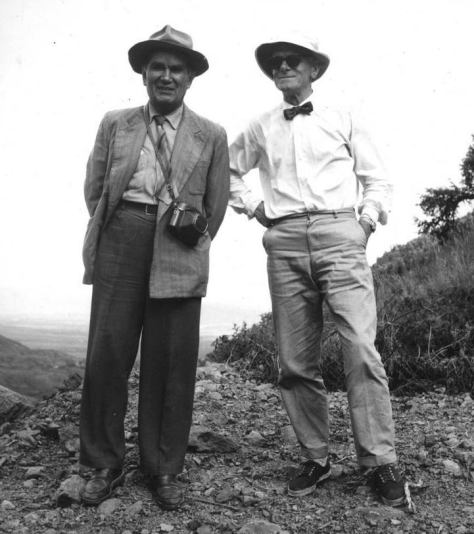
Bolivian botanist Prof Martin Cardenas (left) and Kenneth Dodds (right). Jack Hawkes named the diploid potato Solanum cardenasii after his good friend Martin Cardenas. It is now regarded simply as a form of the cultivated species S. phureja.

Hawkes’ taxonomic studies led to revisions of the tuber-bearing Solanums, first in 1963 and in a later book published in 1990 almost a decade after he had retired. You can see my battered copy of the 1963 publication below.

Dalton Glendinning

The CPC was transferred to the Scottish Plant Breeding Station (SPBS) at Pentlandfield just south of Edinburgh in the 1960s under the direction of Professor Norman Simmonds (who examined my MSc thesis). In the early 1970s the CPC was managed by Dalton Glendinning, and between November 1972 and July 1973 my wife Steph was a research assistant with the CPC at Pentlandfield. When the SPBS merged with the Scottish Horticultural Research Institute in 1981 to form the Scottish Crops Research Institute (SCRI) the CPC moved to Invergowrie, just west of Dundee on Tayside. The CPC is still held at Invergowrie, but now under the auspices of the James Hutton Institute following the merger in 2011 of SCRI with Aberdeen’s Macaulay Land Use Research Institute.

Today, the CPC is one of the most important and active genetic resources collections in the UK. In importance, it stands alongside the United States Potato Genebank at Sturgeon Bay in Wisconsin, and the International Potato Center (CIP) in Peru, where I worked for more than eight years from January 1973.

Hawkes continued in retirement to visit the CPC (and Sturgeon Bay) to lend his expertise for the identification of wild potato species. His 1990 revision is the taxonomy still used at the CPC.

So what has this got to do with the EU?
For more than a decade after the UK joined the EU (EEC as it was then in 1973) until that late 1980s, that corner of Birmingham was effectively outside the EU with regard to some plant quarantine regulations. In order to continue studying potatoes from living plants, Jack Hawkes was given permission by the Ministry of Agriculture, Fisheries and Food (MAFF, now DEFRA) to import potatoes—as botanical or true seeds (TPS)—from South America, without them passing through a centralised quarantine facility in the UK. However, the plants had to be raised in a specially-designated greenhouse, with limited personnel access, and subject to unannounced inspections. In granting permission to grow these potatoes in Birmingham, in the heart of a major industrial conurbation, MAFF officials deemed the risk very slight indeed that any nasty diseases (mainly viruses) that potato seeds might harbour would escape into the environment, and contaminate commercial potato fields.

Jack retired in 1982, and I took up the potato research baton, so to speak, having been appointed lecturer in the Department of Plant Biology at Birmingham after leaving CIP in April 1981. One of my research projects, funded quite handsomely—by 1980s standards—by the Overseas Development Administration (now the Department for International Development, DFID) in 1984, investigated the potential of growing potatoes from TPS developed through single seed descent in diploid potatoes (that have 24 chromosomes compared with the 48 of the commercial varieties we buy in the supermarket). To cut a long story short, we were not able to establish this project at Winterbourne, even though there was space. That was because of the quarantine restrictions related to the wild species collections were held and were growing on a regular basis. So we reached an agreement with the Plant Breeding Institute (PBI) at Trumpington, Cambridge to set up the project there, building a very fine glasshouse for our work.

Then Margaret Thatcher’s government intervened! In 1987, the PBI was sold to Unilever plc, although the basic research on cytogenetics, molecular genetics, and plant pathology were not privatised, but transferred to the John Innes Centre in Norwich. Consequently our TPS project had to vacate the Cambridge site. But to where could it go, as ODA had agreed a second three-year phase? The only solution was to bring it back to Birmingham, but that meant divesting ourselves of the Hawkes collection. And that is what we did. However, we didn’t just put the seed packets in the incinerator. I contacted the folks at the CPC and asked them if they would accept the Hawkes collection. Which is exactly what happened, and this valuable germplasm found a worthy home in Scotland.

In any case, I had not been able to secure any research funds to work with the Hawkes collection, although I did supervise some MSc dissertations looking at resistance to potato cyst nematode in Bolivian wild species. And Jack and I published an important paper together on the taxonomy and evolution of potatoes based on our biosystematics research.

A dynamic germplasm collection
It really is gratifying to see a collection like the CPC being actively worked on by geneticists and breeders. Especially as I do have sort of a connection with the collection. It currently comprises about 1500 accessions of 80 wild and cultivated species.

Sources of resistance to potato cyst nematode in wild potatoes, particularly Solanum vernei from Argentina, have been transferred into commercial varieties and made a major impact in potato agriculture in this country.

Safeguarded at Svalbard
Just a couple of weeks ago, seed samples of the CPC were sent to the Svalbard Global Seed Vault (SGSV) for long-term conservation. CPC manager Gaynor McKenzie (in red) and CPC staff Jane Robertson made the long trek north to carry the precious potato seeds to the vault.

Potato reproduces vegetatively through tubers, but also sexually and produces berries like small tomatoes – although they always remain green and are very bitter, non-edible.

We rarely see berries after flowering on potatoes in this country. But they are commonly formed on wild potatoes and the varieties cultivated by farmers throughout the Andes. Just to give an indication of just how prolific they are let me recount a small piece of research that one of my former colleagues carried out at CIP in the 1970s. Noting that many cultivated varieties produced an abundance of berries, he was interested to know if tuber yields could be increased if flowers were removed from potato plants before they formed berries. Using the Peruvian variety Renacimiento (which means rebirth) he showed that yields did indeed increase in plots where the flowers were removed. In contrast, potatoes that developed berries produced the equivalent of 20 tons of berries per hectare! Some fertility. And we can take advantage of that fertility to breed new varieties by transferring genes between different strains, but also storing them at low temperature for long-term conservation in genebanks like Svalbard. It’s not possible to store tubers at low temperature.

Here are a few more photos from the deposit of the CPC in the SGSV.

I am grateful to the James Hutton Institute for permission to use these photos in my blog, and many of the other potato photographs displayed in this post.

“Oi’ll give it foive”

coat_of_arms_of_birmingham-svgBirmingham lies at the heart of England. It is the UK’s second city.

I first visited Birmingham in the 1960s. At that time I was living in Leek, just under 60 miles to the north in North Staffordshire. I moved to Birmingham in September 1970 when I began my graduate studies in the Department of Botany at The University of Birmingham, never envisaging that I would return a decade later to join the staff of the same department. Since 1981, my wife and I have lived in Bromsgrove, some 13 miles south of Birmingham in northeast Worcestershire (with a 19 year break while I worked in the Philippines).

birmingham

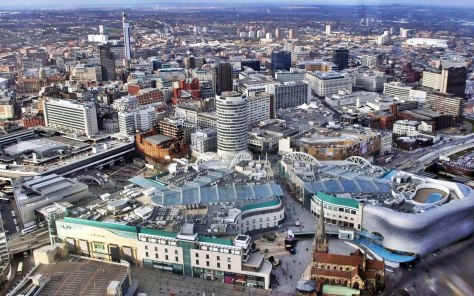
Birmingham city center, overlooking New Street Station, the Bull Ring Shopping Centre and Rotunda, and the BT Tower, and looking towards the Black Country further on.

Birmingham is one of seven metropolitan boroughs that make up the County of  West Midlands, from Wolverhampton in the northwest to Solihull and Coventry in the southeast, and encompassing the area known as the Black Country lying to the west of Birmingham proper.

To the ears of someone from outside the region, everyone in the West Midlands speaks with the same ‘Brummie‘ accent, rated the least appealing in the nation. Shame! There are subtle differences across the region, but I can understand why most outsiders maybe hear just a single accent. You can read (and hear) what one American writer has to say about ‘Brummie’ here.

It is rather interesting to note that one Brummie, accent and all, has made it big on US television. Comedian John Oliver came to the fore on The Daily Show with Jon Stewart, and now in his own Last Week Tonight with John Oliver.

And there have now been three series of the cult drama Peaky Blinders about a gangster family in Birmingham just after the ending of the First World War. Again, it’s amazing that this became so popular on the other side of The Pond, given the strong Brummie accents, strong language, and explicit sexual content.

So what has me waxing lyrical this morning about all things Brummie? Well, last night, Heavy Metal band Black Sabbath (of Ozzy Osbourne fame) performed the second of two concerts in Birmingham at the end of an 81-date tour that began in January last year. After 50 years, Black Sabbath have hung up their guitars and microphones. Yesterday’s concert was the final one.

Birmingham is the birthplace of Heavy Metal, but it’s not a genre I appreciate. Nevertheless, this story about Black Sabbath got me thinking.

The ‘Merseyside Sound’ of the 1960s, 1970s is rightly renowned worldwide for The Beatles, Gerry and the Pacemakers, Cilla Black, just to mention three of a very long list.

However, there was—and is—a vibrant ‘Birmingham Sound‘, with musicians and bands having an enormous impact everywhere. Do any come immediately to mind? No? Well, among the most famous are: Jeff Lynne and ELO, Roy Wood (in The Move and Wizzard), The Moody Blues, Duran DuranUB40, Dexys Midnight Runners, Slade, even Musical Youth. As anyone who follows my blog will know, I’m a great Jeff Lynne-ELO-Traveling Wilburys fan.

Fleetwood Mac’s Christine McVie was born in Lancashire, but from early childhood was raised in Birmingham. Led Zeppelin’s Robert Plant was born in West Bromwich in the Black Country, but grew up in Kidderminster, nine miles west of Bromsgrove.

So let’s enjoy some of the Brummie talent.

https://youtu.be/cwqhdRs4jyA

Flowers in the Rain was the first record to be played at the launch of BBC Radio 1 by DJ Tony Blackburn in 1967.

https://youtu.be/oDnNF5cHCdo

https://youtu.be/rVxcwe7EcaY

https://youtu.be/0A8KT365wlA

So what’s this Oi’ll give it foive business?

In the early to mid 1960s, there was a TV series, Thank Your Lucky Stars produced by the Birmingham-based commercial channel, ATV, and broadcast nationwide. In the show’s Wikipedia page it states: Audience participation was a strong feature of Thank Your Lucky Stars, and the Spin-a-Disc section, where a guest DJ and three teenagers reviewed three singles, is a very well remembered feature of the show. Generally American singles were reviewed. It was on this section that Janice Nicholls appeared. She was a former office clerk from the English Midlands who became famous for the catchphrase “Oi’ll give it foive” which she said with a strong Black Country accent.

Janice Nicholls released this dreadful single in 1963, but at least you can hear her say Oi’ll give it foive.

https://youtu.be/UoCi38LQSag

Among the notable comedians and actors proudly from the region are Sir Lenny Henry (who hails from Dudley in the Black Country), and Jasper Carrott and Julie Walters, who are true Brummies.

Plant Genetic Resources: Our challenges, our food, our future

phillips-jade

Jade Phillips

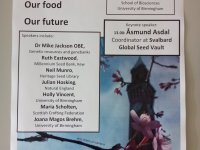
That was the title of a one day meeting on plant genetic resources organized by doctoral students, led by Jade Phillips, in the School of Biosciences at The University of Birmingham last Thursday, 2 June. And I was honoured to be invited to present a short talk at the meeting.

Now, as regular readers of my blog will know, I began my career in plant genetic resources conservation and use at Birmingham in September 1970, when I joined the one year MSc course on genetic conservation, under the direction of Professor Jack Hawkes. The course had been launched in 1969, and 47 years later there is still a significant genetic resources presence in the School, even though the taught course is no longer offered (and hasn’t accepted students for a few years). Staff have come and gone – me included, but that was 25 years ago less one month, and the only staff member offering research places in genetic resources conservation is Dr Nigel Maxted. He was appointed to a lectureship at Birmingham (from Southampton, where I had been an undergraduate) when I upped sticks and moved to the International Rice Research Institute (IRRI) in the Philippines in 1991.

image

Click on this image for the full program and a short bio of each speaker.

Click on each title below; there is a link to each presentation.

Nigel Maxted (University of Birmingham)
Introduction to PGR conservation and use

Ruth Eastwood (Royal Botanic Gardens, Kew – Wakehurst Place)
‘Adapting agriculture to climate change’ project

Holly Vincent (PhD student, University of Birmingham)
Global in situ conservation analysis of CWR

Joana Magos Brehm (University of Birmingham)
Southern African CWR conservation

Mike Jackson
Valuing genebank collections

Åsmund Asdal (NordGen)
The Svalbard Global Seed Vault

Neil Munro (Garden Organic)
Heritage seed library

Maria Scholten
Natura 2000 and in situ conservation of landraces in Scotland: Machair Life (15 minute film)

Aremi Contreras Toledo, Maria João Almeida, and Sami Lama (PhD students, University of Birmingham)
Short presentations on their research on maize in Mexico, landraces in Portugal, and CWR in North Africa

Julian Hosking (Natural England)
Potential for genetic diversity conservation – the ‘Fifth Dimension’ – within wider biodiversity protection

I guess there were about 25-30 participants in the meeting, mainly young scientists just starting their careers in plant genetic resources, but with a few external visitors (apart from speakers) from the Millennium Seed Bank at Kew-Wakehurst Place, the James Hutton Institute near Dundee, and IBERS at Aberystwyth.

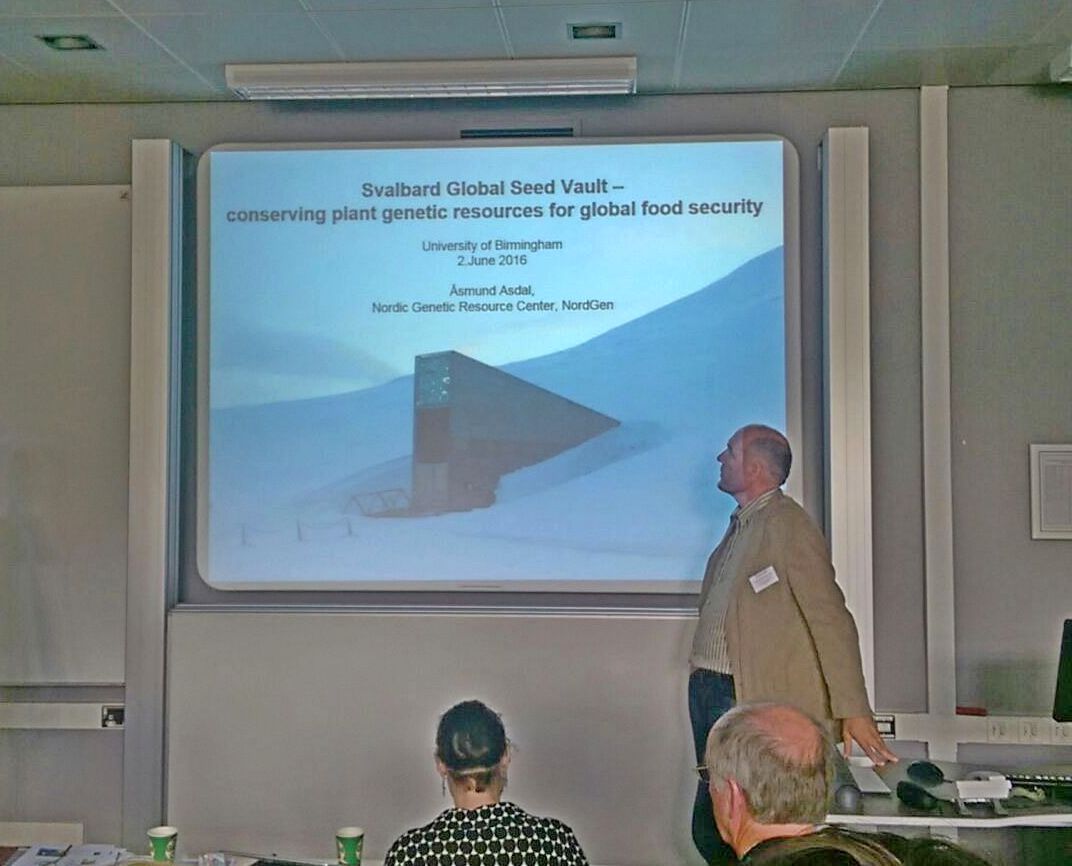
The meeting grew out of an invitation to Åsmund Asdal from the Nordic Genetic Resources Center (NordGen) to present a School of Biosciences Thursday seminar. So the audience for his talk was much bigger.

asmund

Åsmund is Coordinator of Operation and Management for the Svalbard Global Seed Vault, and he gave a fascinating talk about the origins and development of this important global conservation facility, way above the Arctic Circle. Today the Vault is home to duplicate samples of germplasm from more than 60 depositor genebanks or institutes (including the international collections held in the CGIAR genebank collections, like that at IRRI.

Nigel Maxted’s research group has focused on the in situ conservation and use of crop wild relatives (CWR), although they are also looking at landrace varieties as well. Several of the papers described research linked to the CWR Project, funded by the Government of Norway through the Crop Trust and Kew. Postdocs and doctoral students are looking at the distributions of crop wild relatives, and using GIS and other sophisticated approaches that were beyond my comprehension, to determine not only where there are gaps in distributions, lack of germplasm in genebank collections, but also where possible priority conservation sites could be established. And all this under the threat of climate change. The various PowerPoint presentations demonstrate these approaches—which all rely on vast data sets—much better than I can describe them. So I encourage you to dip into the slide shows and see what this talented group of scientists has been up to.

Neil Munro from Garden Organic described his organization’s approach to rescue and multiply old varieties of vegetables that can be shared among enthusiasts.

n_munro

Seeds cannot be sold because they are not on any official list of seed varieties. What is interesting is that one variety of scarlet runner bean has become so popular among gardeners that a commercial seed company (Thompson & Morgan if I remember what he said) has now taken  this variety and selling it commercially.

julian

Julian Hosking from Natural England gave some interesting insights into how his organization was looking to combine the conservation of genetic diversity—his ‘Fifth Dimension’—with conservation of natural habitats in the UK, and especially the conservation of crop wild relatives of which there is a surprisingly high number in the British flora (such as brassicas, carrot, and onions, for example).

So, what about myself? When I was asked to contribute a paper I had to think hard and long about a suitable topic. I’ve always been passionate about the use of plant genetic diversity to increase food security. I decided therefore to talk about the value of genebank collections, how that value might be measured, and I provided examples of how germplasm had been used to increase the productivity of both potatoes and rice.

m_jackson

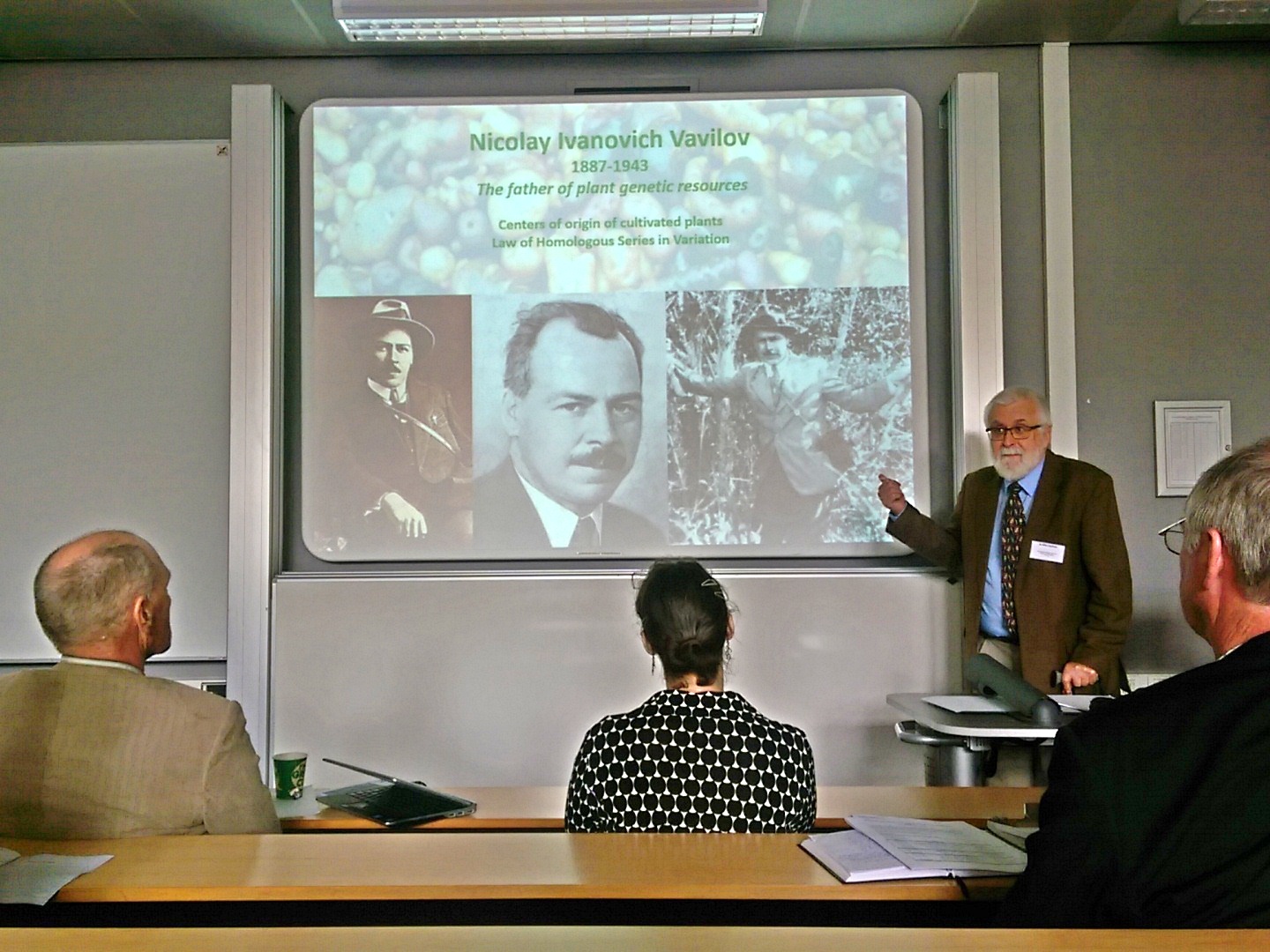
Nicolay Vavilov is a hero of mine

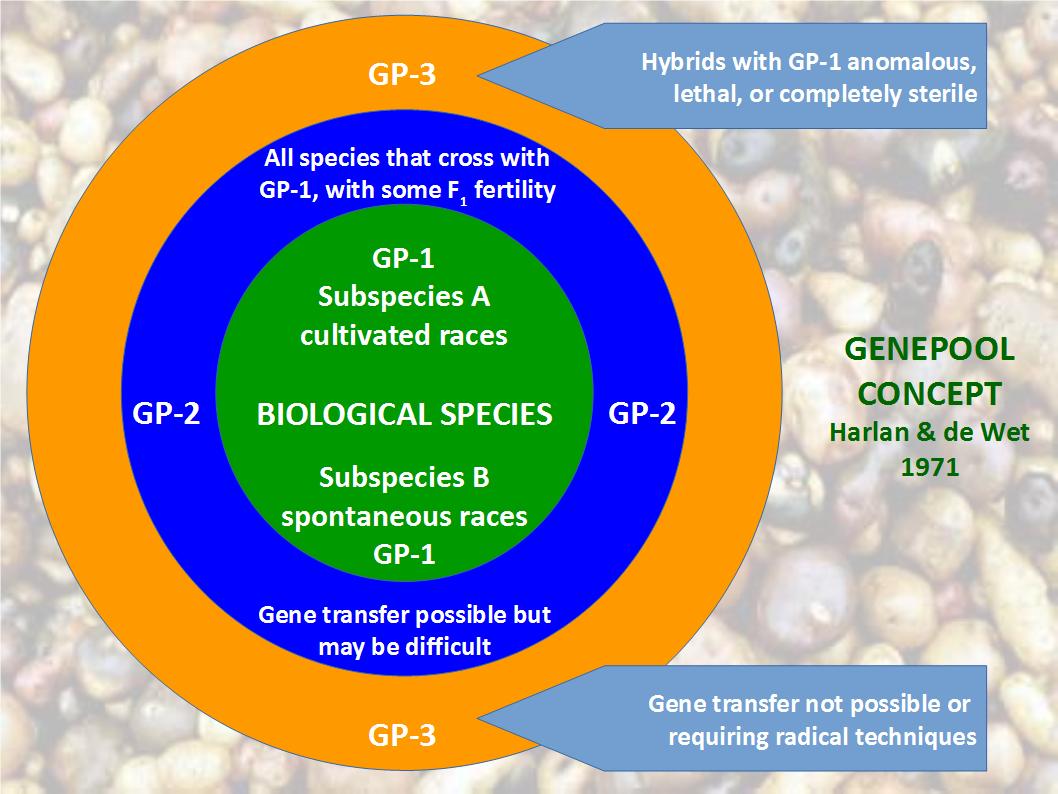
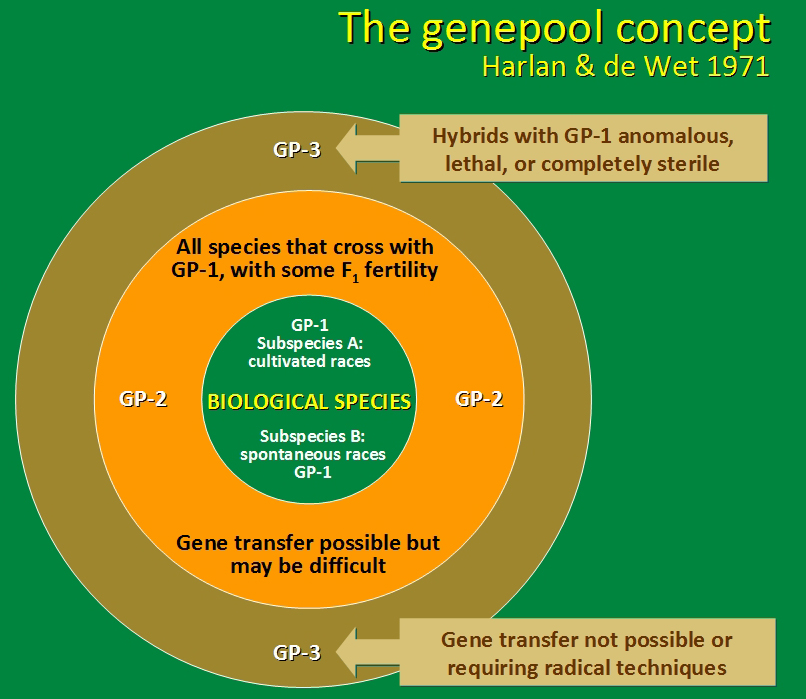
Although all the speakers developed their own talks quite independently, a number of common themes emerged several times. At one point in my talk I had focused on the genepool concept of Harlan and de Wet to illustrate the biological value (easy to use versus difficult to use) of germplasm in crop breeding.

Jackson FINAL - Valuing Genebank Collections

In the CWR Project research several speakers showed how the genepool concept could be used to set priorities for conservation.

Finally, there was one interesting aspect to the meeting—from my perspective at least. I had seen the titles of all the other papers as I was preparing my talk, and I knew several speakers would be talking about future prospects, especially under a changing climate. I decided to spend a few minutes looking back to the beginning of the genetic conservation movement in which Jack Hawkes was one of the pioneers. What I correctly guessed was that most of my audience had not even been born when I started out on my genetic conservation career, and probably knew very little about how the genetic conservation movement had started, who was involved, and what an important role The University of Birmingham had played. From the feedback I received, it seems that quite a few of the participants were rather fascinated by this aspect of my talk.

Through hard work, great things are achieved

BirminghamUniversityCrestPer Ardua Ad Alta

That’s the motto of The University of Birmingham, and ‘these sentiments sum up the spirit of Birmingham and illustrate the attitude of the people who have shaped both the city and the University.’

Almost 50 years ago, I had no inkling that I would have more than half a lifetime’s association with this university. Receiving its royal charter in 1900 (although the university was a successor to several institutions founded in the 19th century as early as 1828), Birmingham is the archetypal ‘redbrick university‘, located on its own campus in Edgbaston, about 3 miles southwest of Birmingham city center.


First encounter in 1967

My first visit to the university was in May or June 1967—to sit an exam. Biology was one of the four subjects (with Geography, English Literature, and General Studies) I was studying for my Joint Matriculation Board Advanced Level high school certificate (essentially the university entrance requirement) here in the UK. We were only four or five biology students at my high school, St Joseph’s College in Trent Vale, Stoke-on-Trent (motto: Fideliter et Fortiter).

Now, I don’t remember (maybe I never knew) whether we were too few in number to sit our biology practical exam at the school, or all students everywhere had to attend an examination venue, but we set off by train from Stoke to Birmingham, and ended up at the School of Biological Sciences building. It was a new building then, and the (federal) School had only recently been formed from the four departments of Botany, Zoology & Comparative Physiology, Genetics, and Microbiology.

Just before 2 pm, the five of us—and about 100 other students—trooped into the main laboratory (that I subsequently came to know as the First Year Lab) on the second floor. Little did I know that just over three years later I’d be joining the Department of Botany as a graduate student, nor that 14 years later in 1981 I would join the faculty as Lecturer in Plant Biology. Nothing could have been further from my mind as I settled down to tackle a dissection of the vascular system of a rat, and the morphology of a gorse flower, among other tasks to attempt.

Birmingham was not on the list of universities to which I had applied in December 1966. I’d chosen King’s College, London (geography), Aberystwyth (zoology and geography), Southampton (botany and geography), York (biology), Queen Mary College, London (general biological sciences), and Newcastle (botany and geography). In the end, I chose Southampton, and spent three very happy if not entirely fruitful years there.

Entering the postgraduate world

Jack Hawkes

Jack Hawkes

The next time I visited Birmingham was in February 1970. I had applied to join the recently-founded postgraduate MSc Course on Conservation and Utilization of Plant Genetic Resources. I was interviewed by Course Director and Head of the Department of Botany, Professor JG Hawkes and Senior Lecturer and plant ecologist, Dr Denis Wilkins.

Despite the grilling from both of  them, I must have made an impression because I was offered a place for the following September. The only problem: no support grant. Although Hawkes had applied for recognition by one of the research councils to provide postgraduate studentships, nothing had materialized when I applied (although he was successful the following year, and for many years afterwards providing studentships to British students). So, after graduation from Southampton in July 1970 I was on tenterhooks all summer as I tried to sort out a financial solution to attend the course. Finally, around mid-August, I had a phone call from Hawkes telling me that the university would provide a small support grant. It was only £380 for the whole year, to cover all my living expenses including rent. That’s the equivalent of about £5600 today. The university would pay my fees.

All set then. I found very comfortable bed-sit accommodation a couple of miles from the university, and turned up at the department in early September to begin my course, joining four other students (from Nigeria, Pakistan, Turkey and Venezuela). It was during this one year course that I really learned how to study, and apart from my weekly Morris dancing night, I had few other distractions. It was study, study, study: and it paid off. The rest is history. I graduated in September 1971, by which time I’d been offered a one-year position at the newly-founded International Potato CenterCIP logo (CIP) in Lima, Peru, and I was all set for a career (I hoped) in the world of genetic resources and conservation. As it turned out, my travel to South America was delayed by more than a year during which time I registered for and commenced a PhD study on potatoes, finally landing in Lima in January 1973 and beginning a career in international agricultural research that lasted, on and off, until my retirement in 2010. I carried out most of my PhD research in Peru, and submitted my thesis in October 1975.

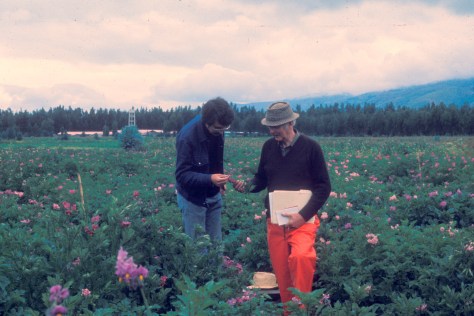
Jack Hawkes and me discussing landrace varieties of potatoes in the CIP potato germplasm collection, Huancayo, central Peru in early 1974.

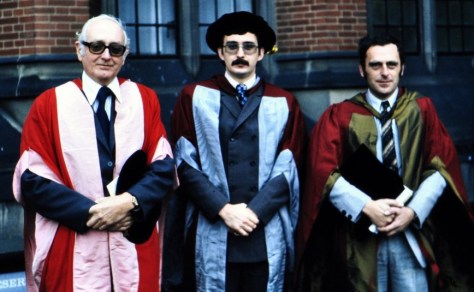
Graduation December 1975. L to R: Jack Hawkes (who co-supervised my PhD), me, and Trevor Williams (who became the first Director General of the International Board for Plant Genetic Resources). Trevor supervised my MSc dissertation.

Then I returned to Lima, spending another five years with CIP in Costa Rica carrying out research on bacterial diseases of potatoes among other things.

I should add that during the academic year 1971-72, a young woman, Stephanie Tribble, joined the MSc course. A few months later we became an ‘item’.

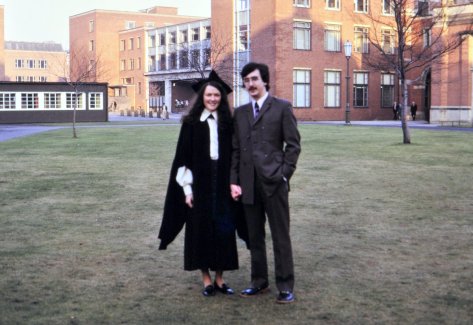
Steph’s MSc graduation at the University of Birmingham in December 1972, just weeks before I flew to South America and join the International Potato Center in Lima, Peru.

After graduation, she joined the Scottish Plant Breeding Station just south of Edinburgh, but joined me in Lima in July 1973. We married there in October, and she also had a position with CIP for the years we remained in Lima.

A faculty position
On 1 April 1981 I joined the University of Birmingham as a lecturer in the Department of Plant Biology.

Richard Sawyer

By mid-1980, after almost five years in Costa Rica, I felt that I had achieved as much as I could there, and asked my Director General in Lima, Dr Richard Sawyer, for a transfer to a new position. In November, we moved back to Lima, and I was expecting to be posted either to Brazil or possibly to the Philippines. In the meantime, I had been alerted to a recently-established lectureship in the Department of Plant Biology (formerly Botany) at Birmingham, and had been encouraged to apply¹. With encouragement from Richard Sawyer², and having been invited for interview, I made the trek back to the UK from Lima towards the end of January 1981. The interview process then was very different from what might be expected nowadays. No departmental seminar. Just a grilling from a panel chaired by the late Professor John Jinks, FRS, Dean of the Faculty of Science and head of the Department of Genetics. There were three staff from Plant Biology (Hawkes, Dennis Wilkins, and Brian Ford-Lloyd), and the head of the Department of Biochemistry and Deputy Dean, Professor Derek Walker.

We were three candidates. Each interview lasted about 45 minutes, and we all had to wait outside the interview room to learn who would be selected. I was interviewed last. Joining the other two candidates afterwards, we sat side-by-side, hardly exchanging a word between us, nervously waiting for one of us to be called back in to meet the panel. I was the lucky one. I was offered the position, accepted immediately, and a couple of days later flew back to Lima to break the news and make plans to start a new life with Steph and our daughter Hannah (then almost three) in Birmingham.

Over the 10 years I spent at Birmingham I never had the worry (or challenge) of teaching any First Year Course – thank goodness. But I did contribute a small module on agricultural systems to the Second Year common course (and became the Second Year Chair in the School of Biological Sciences), as well as sharing teaching of flowering plant taxonomy to plant biology stream students mtj-and-bfl-book-launchin the Second Year. With my colleague Brian Ford-Lloyd (with whom I’ve published three books on genetic resources) I developed a Third Year module on genetic resources that seems to have been well-received (from some subsequent feedback I’ve received). I also contributed to a plant pathology module for Third Year students. But the bulk of my teaching was to MSc students on the graduate course on Conservation and Utilization of Plant Genetic Resources – the very course I’d attended a decade earlier. My main focus was crop evolution, germplasm collecting, and agricultural systems, among others. And of course there was supervision of PhD and MSc student research projects.

One of the responsibilities I enjoyed was tutoring undergraduate students, and always had an open door if they needed to see me. It quite shocked me in the late 1990s when my elder daughter, then a student at Swansea University, told me that her tutors had very limited and defined access hours for students. Of course you can’t be on call all day, every day, but you have to be there if a student really need to see you. And my tutees knew that if my office door was open (as it mostly was) they were free to come in and see me.

Once the four departments of the School of Biological Sciences merged into a single department in 1988, I aligned myself with and joined the Plant Genetics Group, and found a better role for myself. I also joined and became Deputy Chair of a cross-disciplinary group called Environmental Research Management (ERM) whose aim was to promote the strength of environment-related research across the university. Through ERM I became acquainted with Professor Martin Parry, and together with Brian Ford-Lloyd we published a book on genetic resources and climate change in 1990, and another in 2014 after we had retired.

Moving on
Even though the prospect of promotion to Senior Lecturer was quite good (by 1989 I’d actually moved on to the Senior Lecturer pay scale), I was becoming somewhat disillusioned with university life by that time. Margaret Thatcher and her government had consistently assaulted the higher education sector, and in any case I couldn’t see things getting any better for some years to come. In this I was unfortunately proved correct. In September 1990 a circular dropped into my post, advertising a new position at the International Rice Research Institute (IRRI) in the Philippines. This was for a germplasm specialist and first head of the Genetic Resources Center. So I applied, was interviewed in January 1991, and accepted the position with a view to joining the institute from 1 July. They actually wanted me to start on 1 April. But as I explained—and IRRI Management accepted—I had teaching and examination commitments to fulfill at the university. In February I began to teach my third year module on genetic resources for the last time, and set the exams for all students to take in May and June. Once the marking and assessments had been completed, I was free to leave.

Friday 28 June was my last day, ending with a small farewell party in the School. I flew out to the Philippines on Sunday 30 June. And, as they say, the rest is history. I never looked back. But now, retirement is sweet, as are my memories.

~~~~~~~~~~~~~~~~~~~~~~~~~~~~~~~~~~~~~~~~~~
¹ Jack Hawkes was due to retire in September 1982 and, recognizing that his departure would leave a big hole in the MSc teaching, the university approved the recruitment of a lecturer in plant genetic resources (with a focus on crop evolution, flowering plant taxonomy, and the like) essentially covering those areas where Jack had contributed.
² Dick Sawyer told me that applying for the Birmingham position was the right thing to do at that stage of my career. However, the day before I traveled to the UK he called me to his office to wish me well, and to let me know whichever way the interview went, he would have a new five-year contract waiting on his desk for me on my return. From my point of view (and I hope CIP’s) it was a win-win situation. Thus I left for the interview at Birmingham full of confidence.


Don’t put all your eggs in one basket . . . or your seeds in a single genebank

On 20 May 2015, a long article was published in The Guardian about the Svalbard Global Seed Vault (SGSV), popularly—and rather unfortunately—known as the ‘Doomsday Vault’. I’ve recently been guilty of using that moniker simply because that’s how the vault has come to be known, rightly or wrongly, in the media.

Authored by US-based environment correspondent of The Guardian, Suzanne Goldenberg, the article had the headline grabbing title: The doomsday vault: the seeds that could save a post-apocalyptic world.

You get a flavor of what’s in store, however, from the very first paragraph. Goldenberg writes: ‘One Tuesday last winter, in the town nearest to the North Pole, Robert Bjerke turned up for work at his regular hour and looked at the computer monitor on his desk to discover, or so it seemed for a few horrible moments, that the future of human civilisation was in jeopardy.’

Turns out there was a relatively minor glitch in one of the supplementary cooling systems of this seed repository under the Arctic permafrost where millions of seeds of the world’s most important food staples and other species are being stored, duplicating the germplasm conservation efforts of the genebanks from which they were sent. Hardly the stuff of Apocalypse Now. So while making a favorable case for the need to store seeds in a genebank like the Svalbard vault, Goldenberg ends her introduction with this somewhat controversial statement: ‘Seed banks are vulnerable to near-misses and mishaps. That was the whole point of locating a disaster-proof back-up vault at Svalbard. But what if there was a bigger glitch – one that could not be fixed by borrowing a part from the local shop? There is now a growing body of opinion that the world’s faith, in Svalbard and the Crop Trust’s broader mission to create seed banks, is misplaced. [The emphasis in bold is mine.] Those who have worked with farmers in the field, especially in developing countries, which contain by far the greatest variety of plants, say that diversity cannot be boxed up and saved in a single container—no matter how secure it may be. Crops are always changing, pests and diseases are always adapting, and global warming will bring additional challenges that remain as yet unforeseen. In a perfect world, the solution would be as diverse and dynamic as plant life itself.’ 

I have several concerns about the article—and the many comments it elicited that stem, unfortunately, from lack of understanding on the one hand and ignorance and prejudice on the other.

  • Goldenberg gives the impression that it’s an either/or situation of ex situ conservation in a genebank versus in situ conservation in farmers’ fields or natural environments (in the case of crop wild relatives).
  • There is a perception apparently held by some that the development of the SGSV has been detrimental to the cause of in situ conservation of crop wild relatives.
  • Because there is no research or use of the germplasm stored in the SGSV, then it only has an ‘existence value’. Of course this does not take into account the research on and use of the same germplasm in the genebanks from which it was sent to Svalbard. Therefore Svalbard by its very nature is assumed to be very expensive.
  • The role of Svalbard as a back-up to other genebank efforts is not emphasized sufficiently. As many genebanks do not have adequate access to long-term conservation facilities, the SGSV is an important support at no cost directly to those genebanks as far as I am aware. However, Svalbard can never be a panacea. If seeds of poor quality (i.e less than optimum viability) are stored in the vault then they will deteriorate faster than good seeds. As the saying goes: ‘Junk in, junk out’.
  • The NGO perspective is interesting. It seems it’s hard for some of our NGO colleagues to accept that use of germplasm stored in genebanks actually does benefit farmers.Take for example the case of submergence tolerant rice, now being grown by farmers in Bangladesh and other countries on land where a consistent harvest was almost unheard of before. Or the cases where farmers have lost varieties due to natural disasters but have had them replaced because they were in a genebank. My own experience in the Cagayan valley in the northern Philippines highlights this very well after a major typhoon in the late 1990s devastated the rice agriculture of that area. See the section about on farm management of rice germplasm in this earlier post. They also still harbour a concern that seeds in genebanks are at the mercy of being expropriated by multinationals. In the comments, Monsanto was referred to many times, as was the issue of GMOs. I addressed this in the comment I contributed.

I added this comment that same day on The Guardian web site:
‘For a decade during the 1990s I managed one of the world’s largest and most important genebanks – the International Rice Genebank at the International Rice Research Institute (IRRI) in the Philippines. Large, because it holds over 116,000 samples of cultivated varieties and wild species of rice. And important, because rice is the most important food staple feeding half the world’s population several times daily.

The Svalbard Global Seed Vault (SGSV), the so-called ‘Doomsday Vault’ in Spitsbergen, holds on behalf of IRRI an almost complete duplicate set of samples (called ‘accessions’), in case something should happen to the genebank in Los Baños, south of Manila. I should add that for decades the USDA has also held a duplicate set in its genebank at Fort Collins in Colorado, under exactly the same ‘black box’ terms as the SGSV.

Germplasm is conserved so that it can be studied and used in plant breeding to enhance the productivity of the rice crop, to increase its resilience in the face of climate change, or to meet the challenge of new strains of diseases and pests. The application of molecular biology is unlocking the mysteries of this enormous genetic diversity, making it accessible for use in rice improvement much more efficiently than in past decades.

Many genebanks round the world and the collections they manage do not have access to long-term and safe storage facilities. This is where the SGSV plays an important role. Genebanks can be at risk from a whole range of natural threats (earthquakes, typhoons, volcanic eruptions, etc.) or man-made threats: conflicts, lack of resources, and inadequate management that can lead to fires, flooding, etc. Just take the example of the International Rice Genebank. The Philippines are subject to the natural threats mentioned, but the genebank was designed and built to withstand these. The example of the ICARDA genebank in Aleppo highlights the threat to these facilities from being located in a conflict zone.

To understand more about what it means to conserve a crop like rice please visit this post on my blog.  There is an enlightening 15 minute video there that I made about the genebank.

It is not a question of taking any set of seeds and putting them into cold storage. Only ‘good’ seeds will survive for any length of time under sub-zero conditions. Many studies have shown that if stored at -18C, seeds with initial high viability may be stored for decades even hundreds of years. The seeds of many plant species – including most of the world’s most important food crops like rice, wheat, maize and many others conform to this pattern. What I can state unequivocally is that the seeds from the genebanks of the world’s most important genebanks, managed like that of IRRI under the auspices of the Consultative Group on International Agricultural Research (CGIAR), have been routinely tested for viability and only the best sent to Svalbard.

Prof. Phil Pardey, University of Minnesota

Prof. Phil Pardey, University of Minnesota

The other aspect of Goldenberg’s otherwise excellent article are the concerns raised by a number of individuals whose ‘comments’ are quoted. I count both Phil Pardey and Nigel Maxted among my good friends, and it seems to me that their comments have been taken completely out of context. I have never heard them express such views in such a blunt manner. Their perspectives on conservation and use, and in situ vs. ex situ are much more nuanced as anyone will see for themselves from reading their many publications. The SEARICE representative I do not know, but I’ve had many contacts with her organization. It’s never a question of genebank or ex situ conservation versus on-farm or in situ conservation. They are complementary and mutually supportive approaches. Crop varieties will die out for a variety of reasons. If they can be stored in a genebank so much the better (not all plant species can be stored successfully as seeds, as was mentioned in Goldenberg’s article). The objection to genebanks on the grounds of permitting multinationals to monopolize these important genetic resources is a red herring and completely without foundation.

So the purpose of the SGSV is one of not ‘putting all your eggs in one basket’. Unfortunately the name ‘Doomsday Vault’ as used by Goldenberg has come to imply a post cataclysm world. It’s really much more straightforward than that. The existence of the SGSV is part of humanity’s genetic insurance policy, risk mitigation, and business continuity plan for a wise and forward-thinking society.’

Over the next couple of days others chipped in with first hand knowledge of the SGSV or genetic conservation issues in general.

Simon Jeppsonsiminjeppson is someone who has first-hand knowledge and experience of the SGSV, and he wrote: ‘I’m currently working as the project coordinator of the Svalbard Global Seed Vault on behalf of NordGen and I just wanted to add some of my reflections on this article some of the comments.

This article is an interesting read but a rather unbalanced one. The temperature increase that is described as putting the world heritage in jeopardy is a misconception. There has been a background study used as a worst case scenario during the planning stage of the Svalbard Global Seed Vault based on the seeds stored in the old abandoned mine shaft mentioned. These results were published in 2003 and even the most recent data (after 25 years in permafrost conditions prevailing in the same mountain without active cooling) shows that all samples are still viable. Anyone curious about this can for themselves try out various storage temperatures and find out the predicted storage time for specific crops at: http://data.kew.org/sid/viability/

Further I have some reflections regarding some of the recently posted comments. The statement “Most seed resources for plant breeding come from farmers’ fields via national seed stores in developing countries: these countries are not depositing in Svalbard.” is wrong; more than 60% of the deposited material originates from developing countries. Twenty-three of depositors represent national or regional institutes situated in developing counties, 12 are international centers and 28 are from developed countries according to IMF. This data is readily available at: http://www.nordgen.org/sgsv

Finally, a comment about the statement that “Seeds will not be distributed – only ever sent back to the institute that provided them. The reason is that seeds commonly have seed-borne diseases, sometimes nasty viruses and the rest.” This statement is also a misconception. The seeds samples stored in the vault are of the same seed lots already readily distributed worldwide from the depositing institutes. There are more than 1750 plant genetic institutes many of them distributing several thousand samples every year.’

maxted-nigel-Cropped-110x146Nigel Maxted is a senior lecturer in the School of Biosciences at the University of Birmingham. As I suspected, when I commented on Goldenberg’s article, Nigel’s contribution to the discussion was taken out of context. He commented: ‘I believe I have been mis-quoted in this article, I do think the Svalbard genebank is worthwhile and I hope the Trust reach their funding goal, even though ex situ does freeze evolution for the accessions included, it provides our best chance of long-term stability for preserving agrobiodiversity in an increasingly unstable world.

I was trying to make a more nuanced point to Suzanne, that I strongly support complementary conservation that involves both in situ and ex situ actions. However at the moment if we compare the financial commitment to in situ and ex situ conservation of agrobiodiversity, globally over 99% of funding is spent on ex situ alone, therefore by any stretch of the imagination can we be considered to be implementing a complementary approach? I was used to make a point and I suppose it would be naive of me to complain, but I hope one day we will stop trying to create an artificial dichotomy between the two conservation strategies and wake up to the need for real complementary conservation. Conservation that includes a balanced range of in situ actions as well to conservation agrobiodiversity before it is too late for us all.’

HawtinGeoff Hawtin is someone who knows what he’s talking about. As Director General of the International Plant Genetic Resources Institute for just over a decade from 1991, and the founding Executive Secretary of the Global Crop Diversity Trust, Geoff had several telling comments: ‘As someone who has worked for the last 25 years to help conserve the genetic diversity of our food crops, I welcome the article by Suzanne Goldenberg in spite of its very many inaccuracies and misconceptions. She rightly draws attention to the plight of what is arguably the world’s most important resource in the fight against food and nutritional insecurity. If this article results in more attention and funds being devoted to safeguarding this resource—whether on farm or in genebanks—it will have served a useful purpose.

The dichotomy between in situ and ex situ conservation is a false one. The two are entirely complementary and both approaches are vital. For farmers around the world the genetic diversity of their landraces and local varieties is their lifeblood—a living resource that they can use and mould to help meet their current and future needs and those of their families.

But we all live in a world of rapid and momentous change and a world in which we all depend for our food on crops that may have originated continents away. The diversity an African farmer—or plant breeder—needs to improve her maize or beans may well be found in those regions where these crops were originally domesticated – in this case in Latin America, where to this day genetic diversity of these two crops remains greatest. Without the work of genebanks in gathering and maintaining vast collections of such genetic diversity, how can such farmers and breeders hope to have access to the traits they need to develop new crop varieties that can resist or tolerate new diseases and pests, or that can produce higher yields of more nutritious food, or that are able to meet the ever growing threats of heat, drought and flooding posed by climate change?

Scientists have been collecting genetic diversity since at least the 1930s, but efforts expanded significantly in the 1970s and 80s in response to growing recognition that diversity was rapidly disappearing from farmers fields in many parts of the world as a result of major shifts in agricultural production systems and the introduction and adoption of new, higher yielding varieties. Today, thanks to these pioneering efforts, diversity is being conserved in genebanks that no longer exists in the wild or on farmers’ fields.

The common misconception that the Svalbard Global Seed Vault exists to save the world following an apocalyptic disaster is perpetuated, even in the title of the article. In reality, the SGSV is intended to provide a safety-net as a back-up for the world’s more than 1,700 genebanks which themselves, as pointed out in the article, are often far from secure. At a cost of about £6 million to build and annual running and maintenance costs of less than £200,000 surely this ranks as the world’s most inexpensive yet arguably most valuable insurance policy.’

Susan_BragdonFinally, among the genetic resources experts, Susan Bragdon made the following comments: ‘I think the author overstates the fierce debates between the proponents of ex situ and in situ conservation. Most would agree that both are needed with in situ being complemented by ex situ.

The controversy over money is because funders are not understanding this need for both and may feel they have checked off that box by funding Svalbard (which is perhaps better seen as an insurance policy—one never hopes to have to use one’s insurance policy.) Svalbard is of course sexier than the on-farm development and conservation of diversity by small scale farmers around the world. Donors can jet in, go dog sledding, see polar bears. Not as sexy to visit most small-scale farms but there are more and more exceptions (e.g., the Potato Park in Peru)

Articles like this set up a false choice between ex situ and in situ which is simply not shared except by a few loud voices. We need to work together to create the kind of incentives that make small scale farming in agrobiodiverse settings an attractive life choice.’

In her staff biography on the Quaker United Nations Office web page, it relates that ‘from 1997-2005 Susan worked with the International Plant Genetic Resources Institute as a Senior Scientist, Law & Policy, on legal and policy issues related to plant genetic resources and in particular managed projects on intellectual property rights, Farmers’ Rights, biotechnology and biological diversity, and on developing decision-making tools for the development of policy and law to manage plant genetic resources in the interest of food security.’

Comments are now closed on The Guardian website for this article. I thought it would useful to bring together some of the expert perspectives in the hope of balancing the arguments—since so many readers had taken the ‘apocalypse’ theme at face value— and making them more widely available.

When I have time, I’ll address some of the perspectives about genebank standards.

The humble spud

Humble? Boiled, mashed, fried, roast, chipped or prepared in many other ways, the potato is surely the King of Vegetables. And for 20 years in the 1970s and 80s, potatoes were the focus of my own research.

The potato (Solanum tuberosum) has something scientifically for everyone: the taxonomist or someone interested in crop diversity, geneticist or molecular biologist, breeder, agronomist, plant pathologist or entomologist, seed production specialist, biotechnologist, or social scientist. So many challenges – so many opportunities, especially since many potatoes are polyploids; that is, they have multiple sets of chromosomes, from 2x=24 to 6x=72.

MTJ collecting cultivated potatoes in 1974Much of my own work – both in the Andes of Peru in the early 70s and once I was back in Birmingham during the 80s – focused on potato genetic resources, understanding the evolutionary dynamics of speciation, and the distribution and breeding value of wild potatoes.

If you’re interested in species diversity, then the potato is the crop for you. In South America there are many indigenous varieties integral to local farming systems at high altitude. Grown alongside other crops such as oca (Oxalis tuberosa) and other Andean tubers of limited distribution, quinoa, and introduced crops such as barley and faba bean (that must have been brought to South America by the Spanish in the 16th century and afterwards). In a recent series on BBC TV (The Inca – Masters of the Cloud), archaeologist and South American expert Dr Jago Cooper repeatedly talked about the wonders of Incan agriculture as one of the foundations of that society yet, disappointingly chose not to illustrate anything of indigenous agriculture today. Farmers still grow potatoes and other crops on the exactly the same terraces that the Incas constructed hundreds of years ago (see my post about Cuyo Cuyo, for example). The continued cultivation of native potato varieties today is a living link with the Incas.

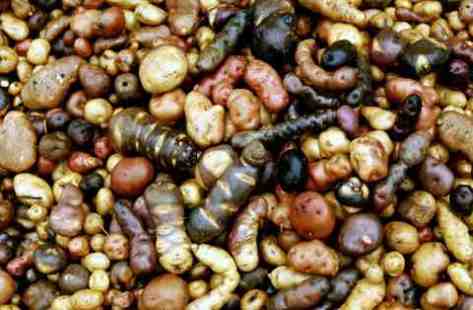
Native varieties of potato from Peru

Native cultivated potatoes are found throughout the Andes from Colombia and Venezuela in the north, south through Ecuador, Peru, Bolivia and Chile, and into northern Argentina. One of the main centres of diversity lies in the region of Lake Titicaca that straddles the border between Peru and Bolivia.

Another important centre of diversity is in the island of Chiloé , southeast of Puerto Montt, a well-known potato growing region of Chile.

The wild tuber-bearing Solanums have a much wider distribution, from the USA south through Mexico and Central America, and widely in South America. And from the coast of Peru to over 4000 m in the high Andes. They certainly have a wide ecological range. But how many wild species are there? Well, it depends who you follow, taxonomy-wise.

SM Bukasob

SM Bukasov

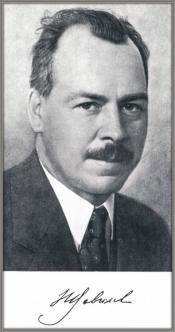
Some of the earliest studies (in the 1930s) were made by Russian potato experts SM Bukasov and SV Juzepczuk, contemporaries of the great geneticist and plant breeder, Nikolai I Vavilov.

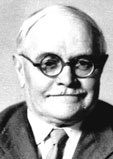
In 1938, a young Cambridge graduate, Jack Hawkes (on the left below), visited the Soviet Union to meet with Bukasov (and Vavilov) as he would soon be joining a year-long expedition to the Americas to collect wild and cultivated potatoes. His PhD thesis (under the supervision of Sir Redcliffe Salaman) was one of the first taxonomies of wild potatoes. By 1963, Hawkes had published a second edition of A Revision of the Tuber-Bearing Solanums. By 1990 [1] the number of wild species that he recognized had increased to 228 and seven cultivated ones. Hawkes (and his Danish colleague Peter Hjerting) focused much of their effort on the wild potatoes of the southern cone countries (Argentina, Brazil, Paraguay and Uruguay) [2] and Bolivia [3]. Working at the National Agrarian University and the International Potato Center (CIP) in La Molina, Lima, Peru, potato breeder and taxonomist Carlos Ochoa (on the right below) spent several decades exploring the Andes of his native country, and discovered many new species. But he also produced monographs on the potatoes of Bolivia [4] and Peru [5].

Both Hawkes and Ochoa – rivals to some extent – primarily used plant morphology to differentiate the species they described or recognized, but also using the tools of biosystematics (crossing experiments) and a detailed knowledge of species distributions and ecology.

MTJ and JGH collecting wild potatoes

March 1975, somewhere above Canta in Lima Province. Probably a small population of Solanum multidissectum = S. candolleanum (that now includes S. bukasovii)

I made only one short collecting trip with Jack Hawkes, in March 1975 just before I returned to Birmingham to defend my PhD thesis. Travelling in the Andes between Cerro de Paso, Huanuco and Lima, at one point he asked me to stop our vehicle. “There are wild potatoes near here,” he told me. “To be specific, I think we’ll find Solanum bukasovii”. And within minutes, he had. That’s because Jack had a real feel for the ecology of wild potatoes; he could almost smell them out. I’m sure Carlos Ochoa was just the same, if not more so.

Spooner_David_hs10_9951

David Spooner

The potato taxonomist’s mantle was taken up in the early 1990s by USDA Agricultural Research Service professor David Spooner at the University of Wisconsin. Over two decades, and many field expeditions, he has published an impressive number of papers on potato biology. More importantly, he added molecular analyses to arrive at a comprehensive revision and understanding of the diversity of the tuber-bearing Solanums. In fact, in December 2014, Spooner and his co-authors published one of the most important papers on the biodiversity of wild and cultivated potatoes, recognizing just 107 wild and four cultivated species [6]. For anyone interested in crop evolution and systematics, and potatoes in particular, I thoroughly recommend you take the time to look at their paper (available as a PDF file).


~~~~~~~~~~~~~~~~~~~~~~~~~~~~~~~~~~
[1] Hawkes, JG. 1990. The Potato – Evolution, Biodiversity and Genetic Resources. Belhaven Press, London.
[2] Hawkes, JG & JP Hjerting. 1969. The Potatoes of Argentina, Brazil, Paraguay, and Uruguay – A Biosystematic Study. Annals of Botany Memoirs No. 3, Clarendon Press, Oxford.
[3] Hawkes, JG & JP Hjerting. 1989. The Potatoes of Bolivia – Their Breeding Value and Evolutionary Relationships. Clarendon Press, Oxford.
[4] Ochoa, CM. 1990. The Potatoes of South America: Bolivia. Cambridge University Press.
[5] Ochoa, CM. 2004. The Potatoes of South America: Peru. Part 1. The Wild Species. International Potato Center, Lima, Peru.
[6] Spooner, DM, M Ghislain, R Simon, SH Jansky & T Gavrilenko. 2014. Systematics, diversity, genetics, and evolution of wild and cultivated potatoes. Bot. Rev. 80:283–383
DOI 10.1007/s12229-014-9146-y.


Mr Blue Sky . . .

I’ve been a fan of ELO – Electric Light Orchestra – for several decades, and also followed ELO lead Jeff Lynne after he made his solo album Armchair Theatre in the 1980s. There’s an interesting story about how I acquired a CD version of Armchair Theatre that I blogged about some time ago.

Then there was Lynne’s collaboration with George Harrison, Roy Orbison, Tom Petty, and Bob Dylan as Otis/Clayton Wilbury in the Traveling Wilburys.

While I knew that Lynne spent most of his time producing hit albums for other musicians, and writing new material, I hadn’t realized how unpopular ELO had become since their heyday in the 70s. Apparently they just weren’t cool. That didn’t diminish my enthusiasm for the music and the intricate arrangements of guitars and strings that were ELO’s signature.

So it was a surprise to read last week that BBC4 would be broadcasting a live concert of Jeff Lynne’s ELO that was recorded in Hyde Park, London in mid-September. Now that one passed me by. I finally got round to watching the concert on catch-up TV last weekend – and what pure joy it was. I walked around afterwards with a big smile on my face for at least a couple of hours.

This was the first time that Jeff Lynne had performed live for almost 30 years. You wouldn’t think that from seeing him and his backing band (with original ELO keyboard player Richard Tandy, and other musicians who normally tour and back Take That!), and supported by the BBC Concert Orchestra, playing to an audience of 50,000. It’s reported that when tickets went on sale they sold out in 90 minutes.

During a 17 song set* Jeff Lynne’s ELO treated us to some of the more magical tracks that had been written and first recorded several decades ago. And they sounded as fresh now – perhaps better even – than all those years ago. Having been persuaded by Radio 2 DJ Chris Evans to play live, I guess Jeff Lynne wanted to produce the sound on stage that he had only been able to achieve in the studio. And with the impressive light show as well, he not only achieved his goal but surpassed it. It was simply wonderful, and I could sit down and watch it all over again. There was just one song from his Wilbury days – Handle With Care – as a tribute to deceased members Roy Orbison and George Harrison.

Reviews of the concert on social media sites and in the press were overwhelming in praise for Lynne and his musicians. The old dog can certainly show the pups of the pop world a trick or two! There’s even talk now of some more concerts in the UK and maybe even a world tour. Now that would be something to look forward to.

*All Over The World
Evil Woman
Ma Ma Ma Belle
Showdown
Livin Thing
Strange Magic
10538 Overture
Can’t Get It Out Of My Head
Sweet Talkin Woman
Turn To Stone
Steppin Out
Handle With Care
Don’t Bring Me Down
Rock n Roll Is King
Telephone Line
Mr Blue Sky
Roll Over Beethoven


Plant Genetic Resources and Climate Change – publication by the end of the year*

A perspective from 25 years ago
In April 1989, Brian Ford-Lloyd, Martin Parry and I organized a workshop on plant genetic resources and climate change at the University of Birmingham. A year later, Climatic Change and Plant Genetic Resources was published (by Belhaven Press), with eleven chapters summarizing perspectives on climatic change and how it might affect plant populations, and its expected impact on agriculture around the world.

We asked whether genetic resources could cope with climate change, and would plant breeders be able to access and utilize genetic resources as building blocks of new and better-adapted crops? We listed ten consensus conclusions from the workshop:

  1. The importance of developing collection, conservation and utilization strategies for genetic resources in the light of climatic uncertainty should be recognised.
  2. There should be marked improvement in the accuracy of climate change predictions.
  3. There must be concern about sea level rises and their impact on coastal ecosystems and agriculture.
  4. Ecosystems should be preserved thereby allowing plant species – especially crop species and their wild relatives – the flexibility to respond to climate change.
  5. Research should be prioritized on tropical dry areas as these might be expected to be more severely affected by climate change.
  6. There should be a continuing need to characterize and evaluate germplasm that will provide adaptation to changed climates.
  7. There should be an increase in screening germplasm for drought, raised temperatures, and salinity.
  8. Research on the physiology underlying C3 and C4 photosynthesis should merit further investigation with the aim of increasing the adaptation of C3 crops.
  9. Better simulation models should drive a better understanding of plant responses to climate change.
  10. Plant breeders should become more aware of the environmental impacts of climate change, so that breeding programs could be modified to accommodate these predicted changes.

Climate change perspectives today
There is much less scepticism today about greenhouse gas-induced climate change and what its consequences might be, even though the full impacts of climate change cannot yet be predicted with certainty. On the other hand, the nature of weather variability – particularly in the northern hemisphere in recent years – has left some again questioning whether our climate really is warming. But the evidence is there for all to see, even as the sceptics refuse to accept the empirical data of increases in atmospheric CO2, for example, or the unprecedented summer melting of sea ice in the Arctic and the retreat of glaciers in the Alps.

Over the past decade the world has experienced a number of severe climate events – wake-up calls to what might be the normal pattern in the future under a changed climate – such as extreme drought in one region, or unprecedented flooding in another. Even the ‘normal’ weather patterns of Western Europe appear to have become disrupted in recent years leading to increased stresses on agriculture.

Some of the same questions we asked in 1989 are still relevant. However, there are some very important differences today from the situation then. Our understanding of what is happening to the climate has been refined significantly over the past two decades, as the efforts of the International Panel on Climate Change (IPCC) have brought climate scientists worldwide together to provide better predictions of how climate will change. Furthermore, governments are now taking the threat of climate change seriously, and international agreements like the Kyoto Protocol to the United Nations Framework on Climate Change, which came into force in 2005 and, even with their limitations, have provided the basis for society and governments to take action to mitigate the effects of climate change.

A new book from CABI
It is in this context, therefore, that our new book Plant Genetic Resources and Climate Change was commissioned to bring together, in a single volume, some of the latest perspectives about how genetic resources can contribute to achieving food security under the challenge of a changing climate. We also wanted to highlight some key issues for plant genetic resources management, to demonstrate how perspectives have changed over two decades, and discuss some of the actual responses and developments.

Food security and genetic resources
So what has happened during the past two decades or so? In 1990, world population was under 6 billion, but today there are more than 1 billion additional mouths to feed. The World Food Program estimates that there are 870 million people in the world who do not get enough food to lead a normal and active life. Food insecurity remains a major concern. In an opening chapter, Robert Zeigler (IRRI) provides an overview on food security today, how problems of food production will be exacerbated by climate change, and how – in the case of one crop, rice – access to and use of genetic resources have already begun to address many of the challenges that climate change will bring.

Expanding on the plant genetic resources theme, Brian Ford-Lloyd (University of Birmingham) and his co-authors provide (in Chapter 2) a broad overview of important issues concerning their conservation and use, including conservation approaches, strategies, and responses that become more relevant under the threat of climate change.

Climate projections
In three chapters, Richard Betts (UK Met Office) and Ed Hawkins (University of Reading), Martin Parry (Imperial College – London), and Pam Berry (Oxford University) and her co-authors describe scenarios for future projected climates (Chapter 3), the effects of climate change on food production and the risk of hunger (Chapter 4), and regional impacts of climate change on agriculture (Chapter 5), respectively. Over the past two decades, development of the global circulation models now permits climate change prediction with greater certainty. And combining these with physiological modelling and geographical information systems (GIS) we now have a better opportunity to assess what the impacts of climate change might be on agriculture, and where.

Sharing genetic resources
In the 1990s, we became more aware of the importance of biodiversity in general, and several international legal instruments such as the Convention on Biological Diversity (CBD) and the International Treaty on Plant Genetic Resources for Food and Agriculture were agreed among nations to govern access to and use of genetic resources for the benefit of society. A detailed discussion of these developments is provided by Gerald Moore (formerly FAO) and Geoffrey Hawtin (formerly IPGRI) in Chapter 6.

Crop wild relatives, in situ and on-farm conservation
In Chapters 7 and 8, we explore the
in situ conservation of crop genetic resources and their wild relatives. Nigel Maxted and his co-authors (University of Birmingham) provide an analysis of the importance of crop wild relatives in plant breeding and the need for their comprehensive conservation. Mauricio Bellon and Jacob van Etten (Bioversity International) discuss the challenges for on-farm conservation in centres of crop diversity under climate change.

Informatics and the impact of molecular biology
Discussing the data management aspects of germplasm collections, Helen Ougham and Ian Thomas (Aberystwyth University) describe in Chapter 9 several developments in genetic resources databases, and regional projects aimed at facilitating conservation and use. Two decades ago we had little idea of what would be the impact of molecular biology and its associated data today on the identification of useful crop diversity and its use in plant breeding. In Chapter 10, Kenneth McNally (IRRI) provides a comprehensive review of the present and future of how genomics and other molecular technologies – and associated informatics – are revolutionizing how we study and understand diversity in plant species. He also provides many examples of how responses to environmental stresses that can be expected as a result of climate change can be detected at the molecular level, opening up unforeseen opportunities for precise germplasm evaluation, identification, and use. Susan Armstrong (University of Birmingham, Chapter 11) describes how a deeper understanding of sexual reproduction in plants, specifically the processes of meiosis, should lead to better use of germplasm in crop breeding as a response to climate change.

Coping with climate change
In a final series of five chapters, responses to a range of abiotic and biotic stresses are documented: heat (by Maduraimuthu Djanaguiraman and Vara Prasad, Kansas State University, Chapter 12); drought (Salvatore Ceccarelli, formerly ICARDA, Chapter 13); salinity (including new domestications) by William Erskine, University of Western Australia, and his co-authors in Chapter 14; submergence tolerance in rice as a response to flooding (Abdelbagi Ismail, IRRI and David Mackill, University of California – Davis, Chapter 15); and finally plant-insect interactions and prospects for resistance breeding using genetic resources (by Jeremy Pritchard, University of Birmingham, and co-authors, Chapter 16).

Why this book is timely and important
The climate change that has been predicted is an enormous challenge for society worldwide. Nevertheless, progress in the development of scenarios of climate change – especially the development of more reliable projections of changes in precipitation – now provide a much more sound basis for using genetic resources in plant breeding for future climates. While important uncertainty remains about changes to variability of climate, especially to the frequency of extreme weather events, enough is now known about the range of possible changes (for example by using current analogues of future climate) to provide a basis for choosing genetic resources in breeding better-adapted crops. Even the challenge of turbo-charging the photosynthesis of a C
3 crop like rice has already been taken up by a consortium of scientists worldwide under the leadership of the International Rice Research Institute in the Philippines.

Unlike the situation in 1989, estimates of average sea level rise, and consequent risks to low lying land areas, are now characterised by less uncertainty and indicate the location and scale of the challenges posed by inundation, by soil waterlogging and by land salinization. Responses to all of these challenges and the progress achieved are spelt out in detail in several chapters in this volume.

We remain confident that research will continue to demonstrate just what is needed to mitigate the worst effects of climate change; that germplasm access and use frameworks – despite their flaws – facilitate breeders to choose and use genetic resources; and that ultimately, genetic resources will be used successfully in crop breeding for climate change thereby enhancing food security.

Would you like to buy a copy?
The authors will receive their page proofs any day now, and we should have the final edits made by the middle of September. CABI expects to publish Plant Genetic Resources and Climate Change in December 2013. Already this book can be found online through a Google search even though it’s not yet published. But do go to the CABI Bookshop – the book has been priced at £85 (or USD160 and €110). If you order online I’m told there is a discount on the list price.

_______________________________________________________
* This post is based on the Preface from the forthcoming CABI book.

Early morning cup of tea . . .

Tea – the elixir of life.

It was just before 6 am today. I was lying in bed, enjoying my early morning cup of tea, and waiting for the news bulletin on Radio 4 on the hour.

And I got to thinking about this photo of tea pickers in the highlands of Kenya that my friend Luigi had posted on Facebook yesterday. Tea is a very important crop in Kenya, and it now ranks as the world’s third largest producer, after China and India, with Sri Lanka and Turkey coming fourth and fifth, respectively. I’ve seen tea cultivation in Sri Lanka (above Kandy) and Indonesia (in the hills east-southeast of Bogor).

Tea is not, however, a crop that is native to Kenya, having originated in east Asia. And the same could be said for most of the plants we consume today. Just a quick survey of country of origin of fruits and vegetable on sale in supermarkets here in the UK demonstrates the global system of food production, and how far from their original regions of cultivation many of them have spread – beans from Kenya, asparagus from Peru, etc. The potato is referred to in the USA as the ‘Irish potato’ (presumably to distinguish it from the sweet potato, to which it is not related at all; or was it because of the dependence of the Irish in the 19th century on this one crop that led to mass emigration, most often to the USA, during and after the potato famine of the mid-1840s), but comes from the Andes of South America, with its greatest diversity in southern Peru and northern Bolivia. It’s now a major crop worldwide. Maize originated in the Americas but is a major staple today in many parts of Africa, although the major production area is the Corn Belt of the USA. Wheat originated in the Middle East, but major wheat-producing countries are the USA and Canada, Australia, and Russia. Rice is still the staple of Asia where it originated – probably in several centers of domestication.

In the 1980s, when I was on the faculty at the University of Birmingham, I taught a graduate course on crop evolution. I guess this interest in and research on crop origins had been instilled in me by Jack Hawkes, former head of the Department of Plant Biology at Birmingham (and my PhD supervisor), and I continued my work on potatoes for more than 20 years before moving on to rice.

One of the reasons why I find the study of crop evolution so fascinating is that it is a synthesis of so many seemingly unrelated disciplines: the biology of the wild and domesticated plants themselves, their genetics and molecular biology, ecology, and use plant breeding and farming, as well as their history and archaeology, social context, and economics over the past 10,000 years or so since the beginnings of agriculture in the Middle East, in China, and in parts of South and Central America. An interesting introductory text for anyone interested in the origins of crops is Evolution of Crop Plants (1995) edited by Joe Smartt and Norman Simmonds.

Today, the application of molecular techniques is helping to unravel further the ancestry of crop plants, showing linkages to their related wild species, and opening up many opportunities of using these genetic resources for the benefit of farmers and consumers alike, making the crops we depend on more productive, climate resilient, and pest and disease resistant.

In the 1980s the two BBC TV series of Geoffrey Smith’s World of Flowers documented the origins and history of many of the flowers that we grow in our gardens today – roses, tulips, daffodils, fuchsias, dahlias, and lilies, to name just a few. Based on the success of these programs, I did contact the series producer and sent in a prospectus for a series of programs about the origins of crop plants.

I could imagine a program on potatoes, for example, that would take the viewer to the Andes of Peru, looking at indigenous potato cultivation, linking it to the origins of Inca agriculture and the archaeology of the coastal cultures, the wealth of diversity of more than 200 wild species in the Americas, how these are conserved in major genebank collections in the USA and Europe (as well as at the International Potato Center in Lima), and how this diversity is used in potato breeding. No longer would we take these crops for granted! And the same could be done for wheat and barley – the cereal staples of the Middle east, with its wealth of archaeology in Turkey, Syria and Iraq, maize in Mexico and coastal Peru, and many other examples.

I even spent some time with a BBC producer who visited me at Birmingham – but to no avail. While they liked the idea, there was no budget to do the programs justice. I could just imagine Sir David Attenborough waxing lyrical – in his inimitable way – about our food and where it comes from. Who knows – it might happen one day (but Sir D is an unlikely presenter given his age).

Proud to be a botanist

Botanist. That’s right. Not plant scientist or plant biologist. Botanist!

Call me old-fashioned, but I prefer the term ‘botany’ to ‘plant sciences’ or ‘plant biology’ that are now preferentially used to give the study of plants a more ‘modern’ image.

And I’m proud that I received my university education in botany: BSc at Southampton (combined with geography, 1970), and MSc (in genetic resources, 1971) and PhD (botany – biosystematics of potatoes, 1975) at Birmingham. By the time I returned to teach at the University of Birmingham in 1981, the Department of Botany had already become the Department of Plant Biology, a decision made in the late 1970s in the hope of attracting more undergraduates to study plant courses offered as part of the biological sciences degree.

Botany has had a bit of a bad press, I guess. And there has been a significant decline in teaching plant sciences at university level in the UK.

For one thing there’s an image issue. It’s often seen as old-fashioned, the purview of enthusiastic Victorian amateurs like country parsons collecting and studying wild flowers, and perhaps not relevant for today’s society. Nothing could be further from the truth. Given that food security is dependent upon the productivity of agricultural systems – all life depends on plants in one way or another – the study of plants is essential for humanity’s survival.

In an interesting article [1], Grierson et al. (2011) ask what are the 100 most important questions for plant science research. They also propose that “We need to radically change our culture so that ‘plant scientist’ (or, if we can rehabilitate the term, ‘botanist’) can join ‘doctor’, ‘vet’ and ‘lawyer’ in the list of top professions to which our most capable young people aspire.”

I’ve had a successful career over 40 years based on botany, one way or the other. So why did I become a botanist in the first place? In high school, I didn’t study biology until I began my GCE Advanced Level courses in 1965. Biology was not taught at my school in earlier years, and only accepted a handful of students for the advanced course. I’d always had an interest in natural history, particularly bird watching, and had harbored ideas at one time of becoming a professional ornithologist. But over the two years of the biology ‘A level’, I came to realize there was likely to be a more secure future in plants, and even the possibility of getting into agriculture in some way, better still if that would take me overseas.

Southampton University was not my first choice, but once I’d attended an interview there, I knew that was where I wanted to study. As a botany-geography undergraduate, I knew that there would be a focus on plant ecology, even though we took the full honours course for two years, and selected modules in the final year. My tutor was Dr Joyce Lambert, Reader in Ecology, who had studied the origin of the Norfolk Broads in the east of England, and shown that they were actually man-made, the result of medieval peat diggings that became flooded. Just before I went to Southampton (and for the rest of her career at Southampton – she retired in 1979) she began working on multivariate methods to study plant communities (with former head of department Bill Williams, who had left Southampton in 1966 to join CSIRO in Australia). I even completed my dissertation on an assessment of vegetation sampling techniques based on quadrat size related to the height of the vegetation (not really a success). I made this study in the Back Forest area of the Roaches in the Staffordshire Moorlands. I measured quadrats along a 200 m transect from open heath to larch-oak woodland dropping steeply to the Black Brook and River Dane. I used a tape recorder with a thumb switch microphone to record the presence and absence of species in each quadrat, using a checklist of species.

As a final year student, however, my interests had already begun to turn from ecology. I took courses on plant speciation and plant breeding with geneticist Dr Joe Smartt, and a special course in flowering plant taxonomy offered by Professor Vernon Heywood of Reading University. Southampton’s own taxonomist, Leslie Watson had emigrated to Australia in 1969, and it was felt that a botany degree without any taxonomy component was not complete. Heywood travelled down from Reading once a week for 10 weeks, giving two lectures each time. This was not one of my specific elective courses for examination, but I decided to sit in and listen – and I was hooked. Linking what I heard in Heywood’s lectures with the plant speciation and plant breeding courses, and ecology was the foundation for my career-long study of plant variation, and entry into the world of plant genetic resources.

But there was one research endeavor that really fired my imagine (and others) – and it’s as good today as when it was originally published in the 1930s, 40s and 50s. In a ground-breaking series of experiments, geneticist/ecologist Jens Clausen, taxonomist David Keck, and plant physiologist William Hiesey, from the Carnegie Institute of Washington located on the campus of Stanford University, studied the adaptation of plants to their environments, the variation in plant populations, and the genetical and physiological basis of the variation they observed.

Establishing a series of experimental stations across California, they undertook transplant experiments in a range of species such as Achillea and Potentilla, to understand the nature of variation and species, and published in a series of monographs Experimental Studies on the Nature of Species.

Similar work had been carried out in Scandinavia by Turesson and in Scotland by Gregor, but the Californian group was, in my estimation, pre-eminent. Thus was the concept of the ecotype established. And the methods of experimental taxonomy and genecology which they developed are used to study the nature of variation in the genetic resources of crop plants conserved in genebanks around the world – and certainly the approach I took with my own work on lentils and grasspea (Lathryus sativus), potatoes, and rice.

Another influence was Missouri Botanical Garden geneticist Edgar Anderson. If you’ve not read his highly entertaining and readable Plants, Man & Life, then grab yourself a copy.

But the most influential concept he developed was introgressive hybridization, the merging of plant species populations through crossing and backcrossing – a phenomenon we believe to have played a major role in the evolution of many crop plants.

Joe Smartt encouraged me to follow a career in plant genetic resources. In fact he was the one who suggested I should apply for a place on the Birmingham MSc course on Conservation and Utilization of Plant Genetic Resources, founded by Jack Hawkes in 1969. Joe had studied the cytogenetics of groundnut (= peanut, Arachis spp.) under Walter C Gregory at North Carolina State University, and joined the Department of Botany at Southampton in 1967. He had also spent time in Northern Rhodesia (= Zambia) working on groundnuts in the 1950s.

And the rest is history, as they say, and I spent the rest of my career studying genetic resources and agriculture in many different countries (Peru, Costa Rica, Canary Islands, Philippines and other countries in Asia).

Some of my own interests have included the species relationships of triploid potatoes, and we have looked at the compatibility relationships between wild and cultivated forms.

These photos show the growth of pollen tubes in compatible (left) and incompatible (right) crosses between wild potato species.

In potatoes and rice we made tens of thousands of crosses to understand the biological relationships between different species.

It’s important to make many crosses when the chances of success are quite low. And we have looked at the morphological and biochemical variation in different plant populations – the ability to study species relationships at the molecular level is throwing a whole new perspective on plant speciation; applications of GIS permit easier mapping of diversity.

One of the concepts that has guided much of my work with genetic resources is the genepool concept developed by Illinois geneticists Harlan and de Wet in 1971 [2]. This allows one to assess the relationship between crops and their wild relatives based on crossability, and the accessibility of different genetic resources that can be used in crop improvement.

I’ve been very fortunate in my career choices – all because of my decision to become a botanist. Who says that botany is an old-fashioned science? Just look through the 100 science challenges I referred to earlier on and you will see just how and why it’s ever more important that we invest in the study of plants.

[1] C. S. Grierson, S. R. Barnes, M. W. Chase, M. Clarke, D. Grierson, K. J. Edwards, G. J. Jellis, J. D. Jones, S. Knapp, G. Oldroyd, G. Poppy, P. Temple, R. Williams, and R. Bastow, 2011. One hundred important questions facing plant science research. New Phytologist 192 (1): 6-12.

[2] J.R. Harlan and J.M.J. de Wet, 1971. Toward a rational classification of cultivated plants. Taxon 20: 509-517.

Birmingham – a center for potato studies

When the late Professor Jack Hawkes was appointed to a lectureship in botany at the University of Birmingham in 1952, he had already been working on potatoes for more than a decade. And immediately prior to arriving in Birmingham he’d spent three years in Colombia helping to establish a national potato breeding program. From then until his retirement in 1982  – and indeed throughout the 1980s – Birmingham was an important center for potato studies.

The potato germplasm that Hawkes collected (with EK Balls and W Gourlay in the 1938-39 expedition to South America) eventually formed the basis of the Empire then Commonwealth Potato Collection, maintained at the James Hutton Institute in Scotland. Throughout the 50s, 60s, 70s, and 80s Jack also had a large collection of wild potato (Solanum) species at Birmingham. This was a special quarantine collection; in the 1980s for potato quarantine purposes, Birmingham was effectively outside the European Union! For more than two decades Jack was assisted by horticultural technician Dave Downing, seen in the photo below. At the end of the 1980s we decided to donate the seed stocks from Jack’s collection to the Commonwealth Potato Collection, and it went into quarantine in Scotland. As the various lines were tested for viruses diseases they were introduced into the main collection.  Jack used this collection to train a succession of PhD students on the biosystematics of potatoes. I continued with this tradition after I joined the University of Birmingham in 1981. My first student graduated in 1982 (after I had taken over supervision from Jack).

Here is the list of University of Birmingham PhD students who worked on potatoes, as far as I can remember. All of them from 1975 (with the exception of Ian Gubb) had also attended the MSc course on genetic resources:

Richard Lester (UK), 1962. Taught at Makerere University in Uganda, before joining the Dept. of Botany at Birmingham in 1969. Retired in 2002, and died in 2006. Studied the biochemical systematics of Mexican wild Solanum species. The species Solanum lesteri is named after him.

Richard Tarn (UK), 1967. Emigrated to Canada in 1968, and joined Agriculture Canada as a potato breeder in Fredericton, New Brunswick. Retired in 2008. Studied the origin of ploidy levels in wild species.

Katsuo Armando Okada (Argentina), 1970 (?). Retired. Was with IBPGR for a while in the 1980s (?) in Colombia. Studied the origin of Solanum x rechei from Argentina.

Phillip Cribb (UK), 1972. He joined the Royal Botanic Gardens – Kew, and became a renowned orchid taxonomist. Studied the origin of the tetraploid Solanum tuberosum ssp. andigena.

Mike Jackson (UK), 1975. Studied the triploid cultigen Solanum x chaucha. Joint with CIP and Roger Rowe.

David Astley (UK), 1975. Became the curator of the vegetable genebank at Wellesbourne (now the Warwick Crop Centre). Studied the Bolivian wild species Solanum sucrense. The species S. astleyi is named after Dave.

Zosimo Huaman (Peru), 1976. He returned to the International Potato Center (CIP) in Lima, and continued working with the germplasm collection until December 2000; he then began work with several NGOs on biodiversity issues in Peru. Studied the origin of the diploid cultigen Solanum x ajanhuiri. Joint with CIP and Roger Rowe.

Peter Schmiediche (Germany), 1977. He continued working with CIP as a potato breeder (for resistance to bacterial wilt), and was later CIP’s regional leader based in Indonesia. Now retired and sharing his time between Texas (where his children settled) and his native Berlin. Studied the bitter potatoes Solanum x juzepczukii (3x) and S. x curtilobum (5x). Joint with CIP and Roger Rowe.

Luis Lopez (Colombia), 1979. Studied wild species in the Series Conicibaccata.

Lenny Taylor (UK), late 1970s. I don’t remember his thesis topic, but I think it had something to do with tetraploid forms. He joined the Potato Marketing Board (now the Potato Council) but I’ve lost contact.

Lynne Woodwards (UK), 1982. Studied the Mexican tetraploid Solanum hjertingii, which does not show enzymic blackening in cut tubers.

Rene Chavez (Peru), 1984. He returned to the University of Tacna, Peru, but also spent time at CIAT in Cali, Colombia studying a large wild cassava (Manihot spp.) collection. He sadly died of cancer a couple of years ago. Studied wide crossing to transfer resistance to tuber moth and potato cyst nematode. Joint with CIP and Peter Schmiediche.

Elizabeth Newton (UK), 1987? Studied sexually-transmitted viruses in potato. Joint with former CIP virologist Roger Jones (now at the University of Western Australia) at the MAFF Harpenden Laboratory.

Denise Clugston (UK), 1988. Studied embryo rescue and protoplast fusion to use wild species in potato breeding.

Carlos Arbizu (Peru), 1990. An expert on minor Andean tuber crops, he came from the University of Ayacucho. Spent time working in the germplasm program at CIP. Studied the origin and value of resistance to spindle tuber viroid in Solanum acaule. Joint with CIP and principal virologist Luis Salazar (who gained his PhD while studying at the Scottish Crop Research Institute in Dundee).

Ian Gubb (UK), 1991. Studied the biochemical basis of non-blackening in Solanum hjertingii. Joint with the Food Research Institute, Norwich.

Susan Juned (UK), 1994. Now a sustainable technology consultant, Sue is an active local government councillor, and has stood for election to parliament on a couple of occasions for the Liberal Democrats. Studied somaclonal variation in potato cv. Record; this commercial contract research was commissioned by United Biscuits.

David Tay (Malaysia), 2000. He worked in Australia and then was Director of the USDA Ornamental Plant Germplasm Center in Columbus, Ohio, but returned to CIP as head of the genetic resources unit in 2007. He’s now left CIP. I think he worked on diploid cultivated species. Joint with CIP. Not sure why his PhD is dated 2000, as he’d been in CIP in the late 70s.

I also supervised several MSc students who completed dissertations on potatoes (Reiner Freund from Germany, and Beatrice Male-Kayiwa and Nelson Wanyera from Uganda).

The Birmingham link with CIP is rather interesting. In the early 70s, staff at CIP seemed to have a graduate degree in the main from one of four universities: Cornell, North Carolina State, Wisconsin, or Birmingham.

Besides the Birmingham PhD students who went on to work at CIP, my wife Stephanie (MSc 1972, who had been working with the Commonwealth Potato Collection from November 1972 – June 1973 when it was still based at the Scottish Plant Breeding Station – now closed) joined the Breeding and Genetics Dept. at CIP in July 1973.

Roger Rowe, who had been in charge of the US potato genebank in Sturgeon Bay, Wisconsin, also joined CIP in July 1973 as head of the Breeding and Genetics Dept. He co-supervised (with Jack Hawkes) a number of Birmingham PhD students.

With the closure of Jack’s collection at Birmingham we were able to develop other potato research ideas since there were no longer any quarantine restrictions. In 1984 we secured funding from the Overseas Development Administration (now the Department for International Development – DfID) to work on single seed descent (SSD) from diploid potatoes to produce true potato seed (TPS). Diploids are normally self-incompatible, but evidence from a range of species had shown that such incompatibility could be broken and transgressive segregants selected. The work was originally started in collaboration with the Plant Breeding Institute (PBI) in Cambridge, but when the Thatcher government privatized the PBI and sold it to Monsanto in 1988, we continued the work at Birmingham. After a further year we hit a ‘biological brick wall’ and decided that the resources needed would be too great to warrant continued effort. This paper reflects our philosophy on TPS [1]. Another paper [2] spells out the approach we planned.

[1] Jackson, M.T., 1987. Breeding strategies for true potato seed. In: G.J. Jellis & D.E. Richardson (eds.), The Production of New Potato Varieties: Technological Advances. Cambridge University Press, pp. 248-261.

[2] Jackson, M.T., L. Taylor & A.J. Thomson, 1985. Inbreeding and true potato seed production. In: Report of a Planning Conference on Innovative Methods for Propagating Potatoes, held at Lima, Peru, December 10-14, 1984, pp. 169-179.

Standing on Vavilov’s shoulders . . .

Nikolai Ivanovich Vavilov (1887-1943). Not a name familiar to many people. Vavilov is, however, one of my scientific heroes.
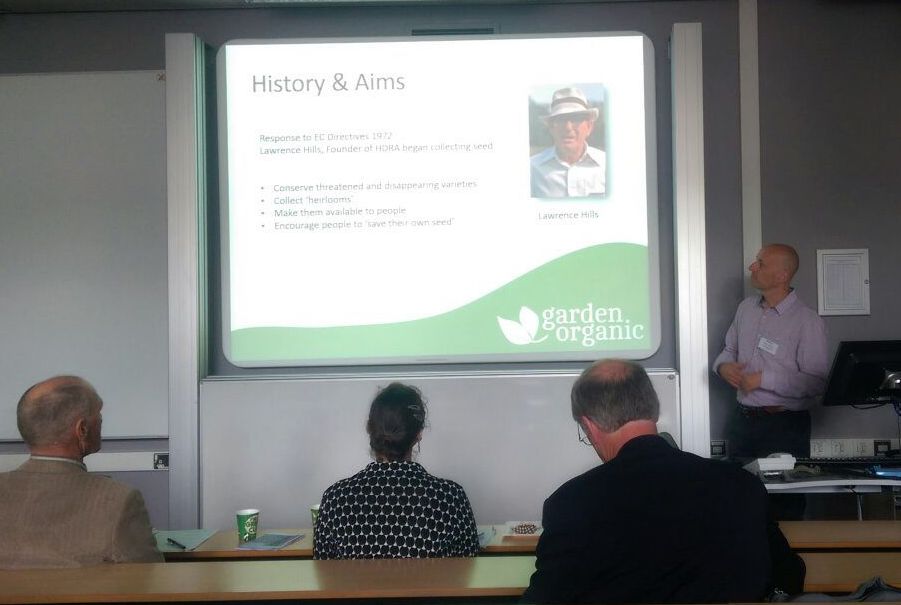
Until I began graduate school in September 1970, when I joined the MSc course at the University of Birmingham on Conservation and Utilization of Plant Genetic Resources, I’d never even heard of him. In fact, looking back, I’m rather surprised that his name didn’t crop up once during my undergraduate years. I’d been encouraged to apply for a place on the Birmingham course by a lecturer in genetics at Southampton University, Dr Joe Smartt. But Vavilov and his work was not on the curriculum of botany courses that I took.

In preparation for Birmingham, I’d been advised to purchase and absorb a book that was published earlier that year, edited by Sir Otto Frankel and Erna Bennett [1] on genetic resources, and dedicated to NI Vavilov. And I came across Vavilov’s name for the first time in the first line of the Preface written by Frankel, and in the first chapter on Genetic resources by Frankel and Bennett. I should state that this was at the beginning of the genetic resources movement, a term coined by Frankel and Bennett at the end of the 60s when they had mobilized efforts to collect and conserve the wealth of diversity of crop varieties (and their wild relatives) – often referred to as landraces – grown all around the world, but were in danger of being lost as newly-bred varieties were adopted by farmers. The so-called Green Revolution had begun to accelerate the replacement of the landrace varieties, particularly among cereals like wheat and rice.
Thus began my fascination with Vavilov’s work, and a career in genetic resources in a broad sense that was to last 40 years until my retirement in 2010.

Vavilov was a botanist, geneticist and plant breeder who rose to the top of agricultural research in the Soviet Union who, through his many expeditions around the world (described in the book Five Continents [2], published posthumously in English in 1997) assembled a vast array of diversity in many crop species. Vavilov developed two seminal theories of crop evolution, which have influenced the science of genetic resources ever since.

The first was his Centers of Diversity and Origin, in which he stated that “the place of origin of a species of a cultivated plant is to be found in the area which contains the largest number of genetic varieties of this plant.” While we now appreciate that this was an oversimplification, his ideas about the origin of crop diversity have been the foundation for much of the genetic resources exploration carried out in subsequent decades.

The second was his Law of Homologous Series in the Case of Variation, published in Russian in 1920 and in English in 1922. I applied this concept in my search for pest resistance in wild potatoes, which I presented at a Symposium organized by the Linnean Society of London and the Institute of Archaeology, University College, London in 1987 to celebrate the centenary of Vavilov’s birth [3].

Vavilov died of starvation in prison at the relatively young age of 55, following persecution under Stalin through the shenanigans of the charlatan Trofim Lysenko. Lysenko’s legacy also included the rejection of Mendelian genetics in the Soviet Union for many years. Eventually Vavilov was rehabilitated, long after his death, and he was commemorated on postage stamps at the time of his centennial.
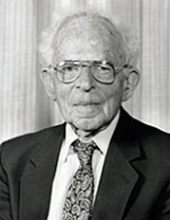
Although never having the privilege of knowing Vavilov, I do feel that I met him vicariously through three people I have known, who did meet him, and I worked with two of these for many years.

First, Sir Otto Frankel FRS, who I first met at a genetic resources meeting in Jakarta in the mid-80s, was an eminent wheat breeder and geneticist, and one of the founders of the genetic resources movement. Originally from Austria, he had escaped before the Nazis came to power, and moved to New Zealand and Australia afterwards. Frankel visited Vavilov in Leningrad (now St Petersburg again) in 1935.

Jack Hawkes, Mason Professor of Botany at the University of Birmingham and my PhD supervisor, travelled to Leningrad in 1938 to consult with Vavilov’s colleague, SM Bukasov, about the potatoes he had collected in South America. He wrote about his meeting with Vavilov, which he presented at the Vavilov Symposium referred to above [4].

John S Niederhauser was an eminent plant pathologist who spent many years researching the potato late blight fungus in Mexico. He was awarded the World Food Prize in 1990. I worked for several years with John in the 1970s when I was regional leader for the International Potato Center in Costa Rica, and we were developing and implementing what turned out to be the first consortium, PRECODEPA (Cooperative Regional Potato Program – in four Central American countries, Mexico and the Dominican Republic), of the Consultative Group on International Agricultural Research (CGIAR). As a young man of about 17, so John told me, he’d asked a travel agent how far he would be able to travel (return) from San Francisco with the money he had available: Leningrad was the destination. Walking around a research garden there one day, he was approached by a kindly gentleman – Vavilov as it turned out – who offered him the chance to work for a few weeks harvesting germplasm evaluation trials on one of his institute’s research stations in the Soviet southeast.

What all three emphasised – in their writings or related to me personally – was Vavilov’s friendliness, generosity of spirit, his boundless energy, and above all, his humanity, and that he treated everyone as an equal, even young persons as Hawkes and Niederhauser were when they met him.

Vavilov’s legacy endures. He is recognized as one of the giants of 20th century biology. And he has been an inspiration for countless students of genetic resources conservation and use.

[1] Frankel, OH & E Bennett (eds), 1970. Genetic Resources in Plants – their Exploration and Conservation. IBP Handbook No 11. International Biological Programme, London and Blackwell Scientific Publications, Oxford and Edinburgh. pp. 554. SBN 632 05730 0.

[2] Vavilov, NI, 1997. Five Continents. International Plant Genetic Resources Institute, Rome, Italy. pp. 198. ISBN 92-9043-302-7.

[3] Jackson, MT, 1990. Vavilov’s Law of Homologous Series – is it relevant to potatoes? Biological Journal of the Linnean Society 39, 17-25.

[4] Hawkes, JG, 1990. NI Vavilov – the man and his work. Biological Journal of the Linnean Society 39, 3-6.

Dumbing down science . . . only in The Sun

A sweet crisp
During the late 1980s, when I was on the faculty of the University of Birmingham, my colleague, Brian Ford-Lloyd (now Emeritus Professor of Conservation Genetics) and I had a research grant from United Biscuits to work on somaclonal variation in potatoes. Whatever is that? I hear you cry. Well, it’s technique to grow plants from small pieces of plant tissue on sterile nutrient agar (a jelly-like substance), and try and bring about genetic changes which are primarily due to disorganized tissue growth and chromosome changes. The plants thus produced are called somaclones. And our aim was to produce a somaclonal variant of the potato variety Record, which was at that time, one of the most important varieties for producing potato crisps (chips in American parlance).


Now, the main crop of potatoes is harvested in the autumn in the UK, and they are stored at low temperature over many months while stocks last. But this leads to a problem that is significant for producing good crisps. And that is, low temperature sweetening that is due to the conversion of starch to sugars, such as glucose and fructose. In itself this would not be a particular problem, but when potato slices are deep fried to produce crisps, any that have a relatively high sugar content will caramelize and the crisps themselves will be much darker in colour – even some ‘black bits (although some of these are due to use of diseased potatoes) – which the consumer does not like. The ideal potato crisp should be a light golden colour.

Anyway, our aim was to try and produce a non-sweetening variant of Record. I left Birmingham before the project was completed, but by that time we had sent a number of clones for field testing. I don’t know if any of these ever went into commercial production.

Susan Juned joined the project as a research associate, and successfully went on to complete a PhD based on this work. Since leaving Birmingham, Susan has had a distinguished career in local politics, as a Liberal Democrat councillor for Stratford-on-Avon and Warwickshire County Council. She unsuccessfully contested three parliamentary elections for the Stratford constituency.

Publish and be damned
Since the research was funded by a commercial company, we had to seek approval before we were permitted to publish any of our work. But after a couple of years, everyone agreed that a small story in the university bulletin would be appropriate (in November 1987)  and that’s when some of our headaches began, although in hindsight rather humorous. The story was picked up in the local media, and one afternoon I received a phone call from someone at the BBC asking if I’d like to appear on the breakfast show on national TV the following morning to discuss our work. The editorial assistant wanted some more details, and when it became apparent to her that I was talking about a serious piece of research – and not a wind-up about ‘black crisps’, the BBC dropped the story like the proverbial hot potato.

But it was picked up by the tabloid newspaper, The Sun, one of Murdoch’s publications, notorious for its Page Three girl, always half naked! And that’s where our story was published – just check out the tiny item at the bottom of the page (Crunch time for boffins) right next to Suzanne, who’s apparently ‘a bite of alright‘!

A proper scientific outcome
But the research did have some implications for the tissue culture of plants like potatoes that are produced vegetatively through tubers, and also for their genetic conservation in vitro. We showed that the ability to produce somaclones was not the same in all of the cv. Record tubers we started the research project with, and that the whole process of multiplication of disease-free stocks might be leading to a certain level of genetic change and selection. We published this work in the Annals of Botany [1].

~~~~~~~~~~~~~~~~~~~~~~

[1] Juned, S.A., M.T. Jackson & B.V. Ford-Lloyd, 1991. Genetic variation in potato cv. Record: evidence from in vitro “regeneration ability”. Annals of Botany 67, 199-203.

‘Thank you, Margaret Thatcher’ – my Pioneer Interview with Gene Hettel

The head of IRRI’s Communication and Publications Services (CPS), Gene Hettel, is compiling a set of Pioneer Interviews with IRRI staff, past and present. These have been published in IRRI’s in house magazine for the past decade, Rice Today. In addition he usually also makes a video.

In mid-February 2010, just over two months before I retired from the institute, Gene and I found a time for my Pioneer Interview. If you want to know about many of the things I did at IRRI, and elsewhere – and some of my opinions about international agricultural research and how it’s organized, just watch the videos.