Laos – jewel in the rice biodiversity crown

From 1995 to late 2000, the International Rice Research Institute (IRRI) through its Genetic Resources Center (GRC, now the TT Chang Genetic Resources Center) coordinated a project to collect and conserve the genetic diversity of rice varieties that smallholder farmers have nourished for generations in Asia and Africa. The collecting program also targeted many of the wild species relatives of cultivated rice found in those continents as well as Latin America.

With a grant of more than USD3 million from the Swiss Agency for Development Cooperation (SDC) the project made significant collections of rice varieties and wild species at a time when, in general, there was a moratorium on germplasm exploration worldwide. The Convention on Biological Diversity had come into force at the end of December 1993, and many countries were developing and putting in place policies concerning access to germplasm. Many were reluctant to allow access to non-nationals, or even exchange germplasm internationally. It’s not insignificant then that IRRI was able to mount such a project with the full cooperation of almost 30 countries, and many collecting expeditions were made, many of them including IRRI staff.

As Head of GRC from 1991 to 2001, I developed the project concept and was responsible for its implementation, recruiting several staff to fill a number of important positions for germplasm collection, project management, and the research and training components. I have written about the project in more detail elsewhere in this blog.

One of the most important strategic decisions we took was to locate one staff member, Dr Seepana Appa Rao, in Laos (also known as the Lao People’s Democratic Republic) where IRRI already managed the Lao-IRRI project for the enhancement of the rice sector. This project was also funded by the SDC, so it was a natural fit to align the rice germplasm activities alongside, and to some extent within, the ongoing Lao-IRRI Project.

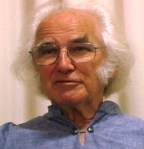
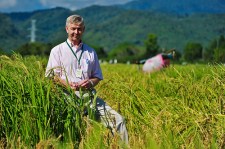
The leader of the Lao-IRRI Project was Australian agronomist, Dr John Schiller, who had spent about 30 years working in Thailand, Cambodia and Laos, and whose untimely death was announced just yesterday¹.

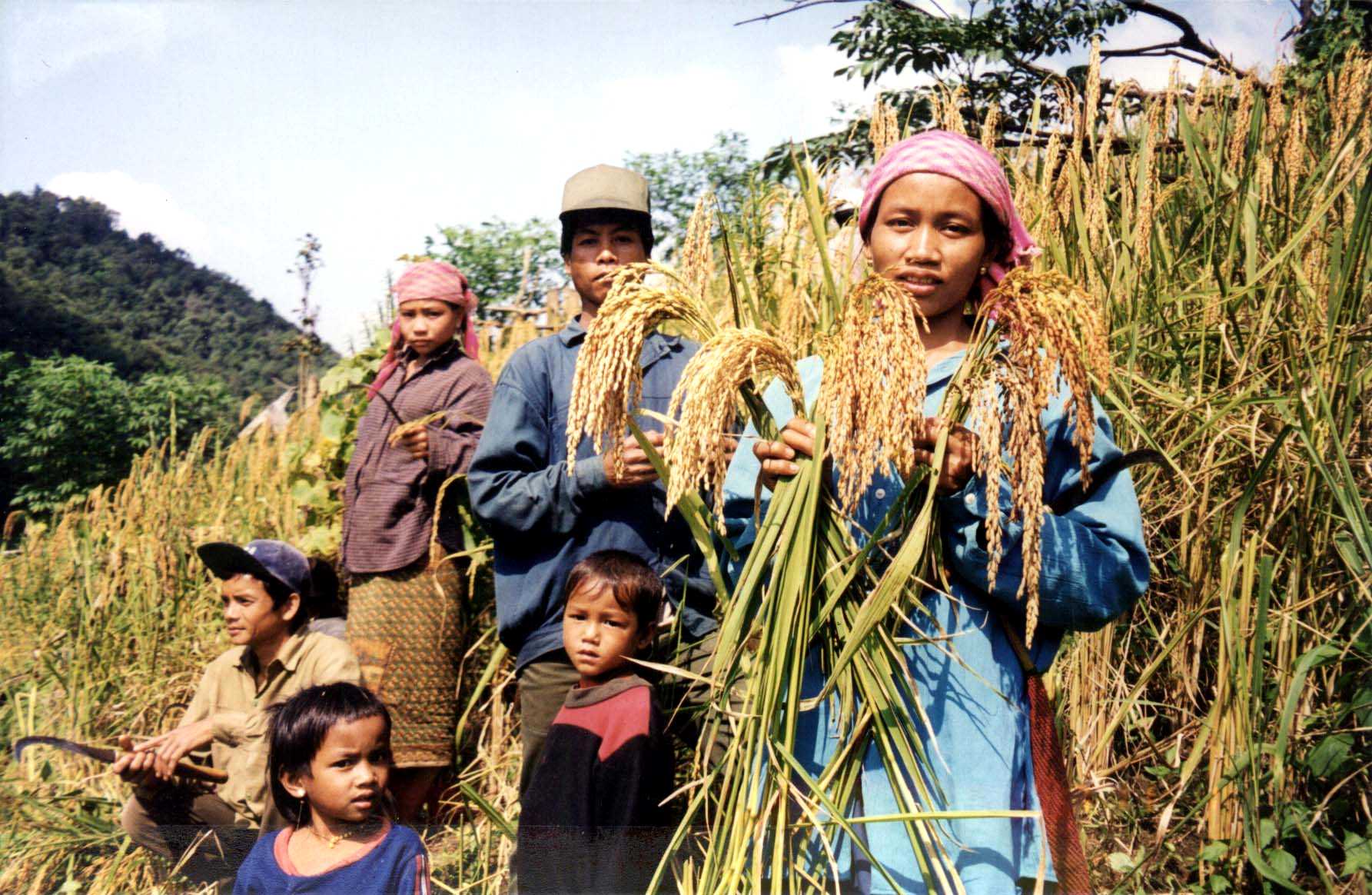
Until Appa Rao moved to Laos, very little germplasm exploration had taken place anywhere in the country. It was a total germplasm unknown, but with excellent collaboration with national counterparts, particularly Dr Chay Bounphanousay (now a senior figure in Lao agriculture), the whole of the country was explored and more than 13,000 samples of cultivated rice collected from the different farming systems, such as upland rice and rainfed lowland rice. A local genebank was constructed by the project, and duplicate samples were sent to IRRI for long-term storage as part of the International Rice Genebank Collection in GRC. Duplicate samples of these rice varieties were also sent to the Svalbard Global Seed Vault when IRRI made its various deposits in that permafrost facility inside the Arctic Circle.

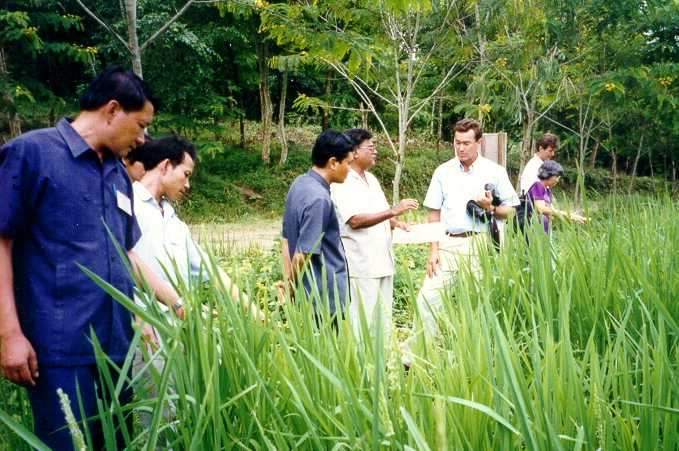
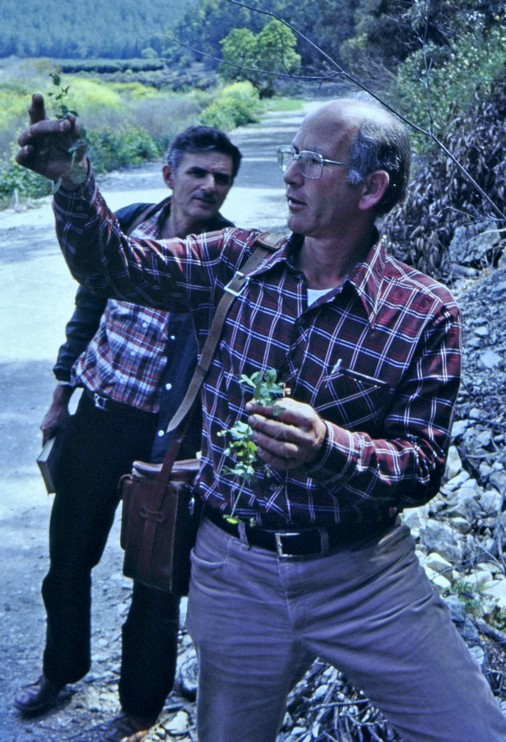
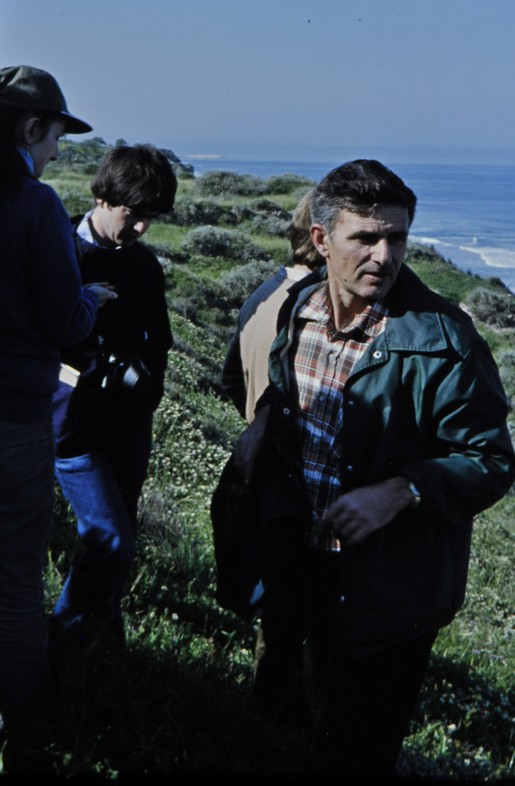
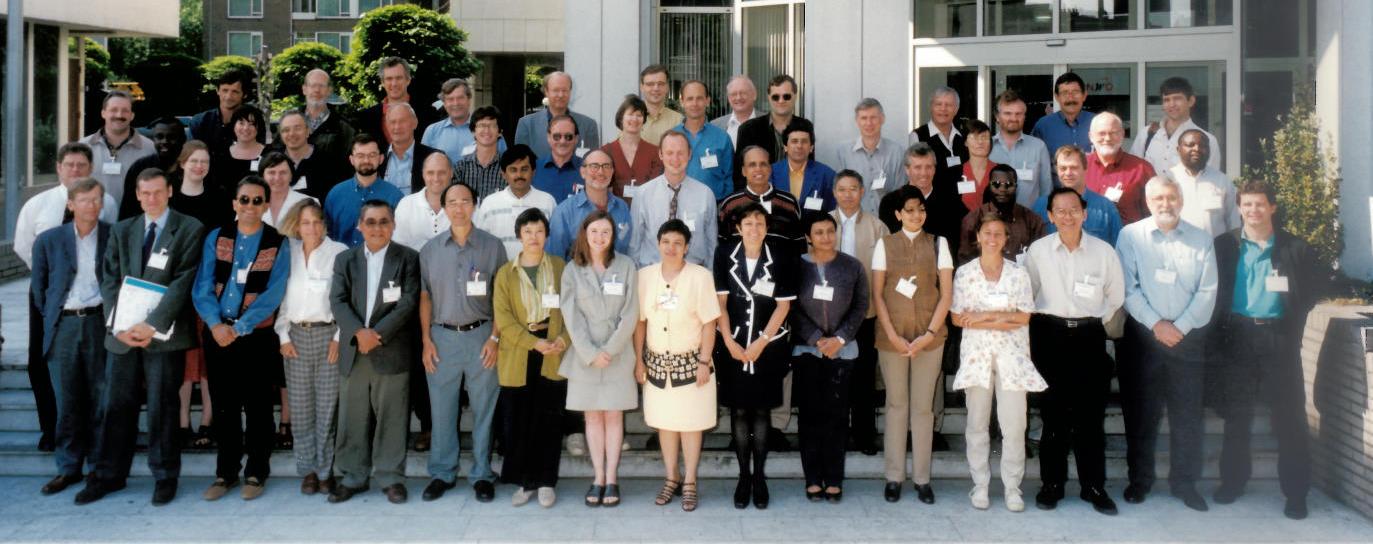
Appa Rao and John Schiller (in the center) discussing Lao rice varieties. Im not sure who the person in the blue shirt is. In the background, IRRI scientist Eves Loresto describes rice diversity to her colleague, Mauricio Bellon.

Of particular interest is that Lao breeders immediately took an interest in the collected germplasm as it was brought back to the experiment station near the capital Vientiane, and multiplied in field plots prior to storage in the genebanks. There are few good examples where breeders have taken such an immediate interest in germplasm in this way. In so many countries, germplasm conservation and use activities are often quite separate, often in different institutions. In some Asian countries, rice genebanks are quite divorced from crop improvement, and breeders have no ready access to germplasm samples.

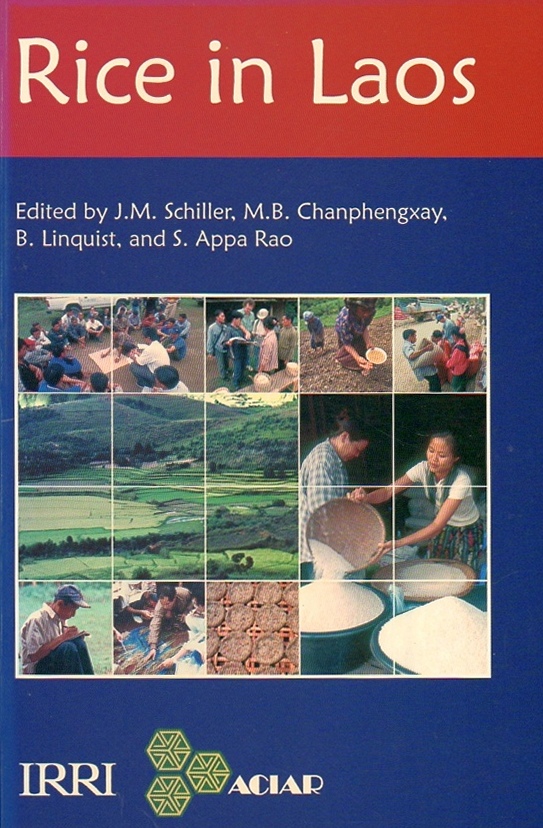
Appa Rao was an assiduous rice collector, and spent weeks at a time in the field, visiting the most remote localities. He has left us with a wonderful photographic record of rice in Laos, and I have included a fine selection below. We also published three peer-reviewed papers (search for Appa Rao’s name here) and seven of the 25 chapters in the seminal Rice in Laos edited by John and others. 

The rices from Laos now represent one of the largest components (maybe the largest) of the International Rice Genebank Collection. Many are unique to Laos, particularly the glutinous varieties.

This slideshow requires JavaScript.

~~~~~~~~~~~~~~~~~~~~~~~~~~~~~~~~~~~~~~~~~~~~~~

¹ Yesterday, I received an email from one of my former IRRI colleagues, Professor Melissa Fitzgerald who is now at the University of Queensland, with the very sad news that John Schiller had been found in his apartment just that morning. It’s believed he had passed away due to heart failure over the course of the weekend.

I first met John in November 1991, a few months after I’d joined IRRI. He and I were part of a group of IRRI scientists attending a management training course, held at a beach resort bear Nasugbu on the west coast of Luzon, south of Manila. The accommodation was in two bedroom apartments, and John and I shared one of those, so I got to know him quite well.

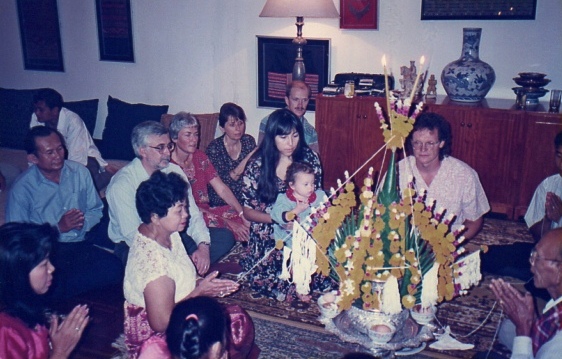
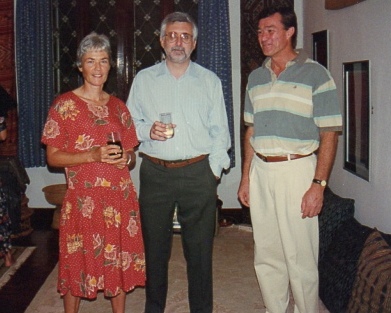
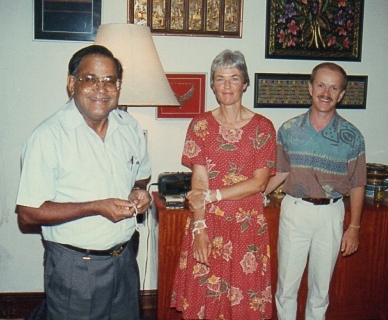
Our friendship blossomed from 1995 onwards when we implemented the rice biodiversity project, Appa Rao was based in Vientiane, and I would travel there two or three times a year. In February 1997, I had the opportunity of taking Steph with me on one trip, and that coincided with the arrival of another IRRI agronomist, Bruce Linquist (with his wife and small son) to join the Lao-IRRI Project. We were invited to the Lao traditional welcoming or Baci ceremony at John’s house, for the Linquists and Steph. I’d already received this ceremony on my first visit to Laos in 1995 or 1996.

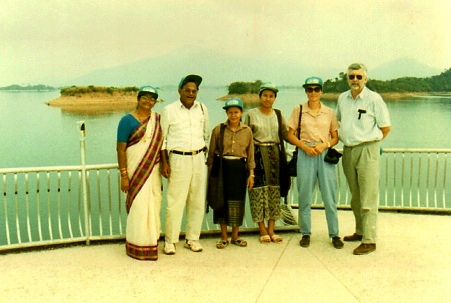
John also arranged for Appa and Chay to show Steph and me something of the countryside around Vientiane. Here were are at the lookout over the Ang Nam Ngum Lake, just north of the capital, where we took a boat trip.

L to R: Mrs Appa Rao, Appa, Kongphanh Kanyavong, Chay Bounphanousay, Steph, and me.

After he retired from IRRI, John moved back to Brisbane, and was given an honorary fellowship at the University of Queensland. He continued to support training initiatives in Laos. As he himself said, his heart was with those people. But let John speak for himself.

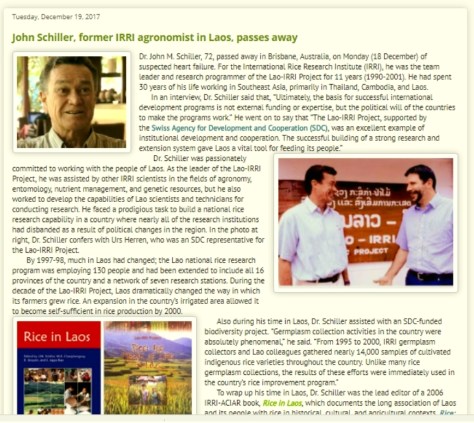
My other close colleague and former head of IRRI’s Communication and Publications Services, Gene Hettel, overnight wrote this eloquent and touching obituary about John and his work, that was published today on the IRRI News website. Just click on the image to read this in more detail.


Learning about crop wild relatives

Much of my work with plant genetic resources has concerned the conservation and use of landrace varieties, of potatoes and rice.

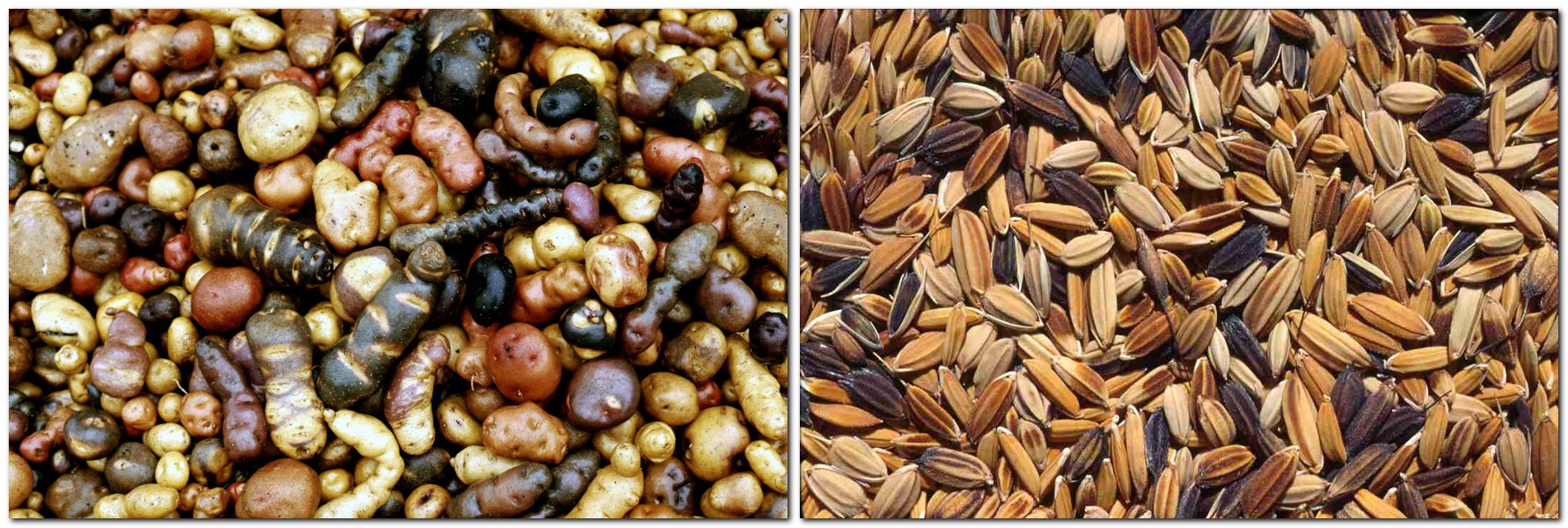
Diversity in potatoes and rice

Yes, I have done some work with wild species, and helped occasionally with collection of wild species germplasm. In terms of research, I managed an active group of scientists at IRRI in the Philippines working on the biosystematics of rice (mainly AA genome species relationships). I also had undergraduate and postgraduate students work on the wild species of Lathyrus and potatoes during the years I taught at The University of Birmingham.

I made just one short collecting trip with Jack Hawkes in early 1975, into the Andes of Central Peru to find wild potatoes. That was a fascinating trip. He knew his potato ecology; he could almost smell them. On returning to the UK in 1981, I joined my colleague Brian Ford-Lloyd to collect wild beets in the Canary Islands, and some years later assisted one of my PhD students, Javier Francisco-Ortega, to collect seeds of a forage legume in Tenerife. I wrote about these two collecting trips recently.  I also helped to collect some wild rices during a visit to Costa Rica in the late 1990s but, in the main, orchestrated a major germplasm collecting program while leaving the actual collecting to my other colleagues in IRRI’s Genetic Resources Center.

One of my teaching assignments at Birmingham was a 10-week module, two or three classes a week plus plus an afternoon practical, on crop diversity and evolution. Many of the world’s most important crops such as wheat and barley, and a plethora of legume species such as lentil, chickpea, and faba bean originated in the so-called Fertile Crescent of the Middle East. Apart from a couple of short trips to western Turkey, I had limited experience of Mediterranean environments where these crops were domesticated. I’ve since been in Syria a couple of times in the 1990s.

That was all rectified in at the end March-early April 1982¹ when I had the good fortune to participate in a course—two weeks long if my memory serves me well—in Israel, organized by Profs. Gideon Ladizinsky and Amos Dinoor of the Hebrew University of Jerusalem, at the Rehovot campus near Tel Aviv.

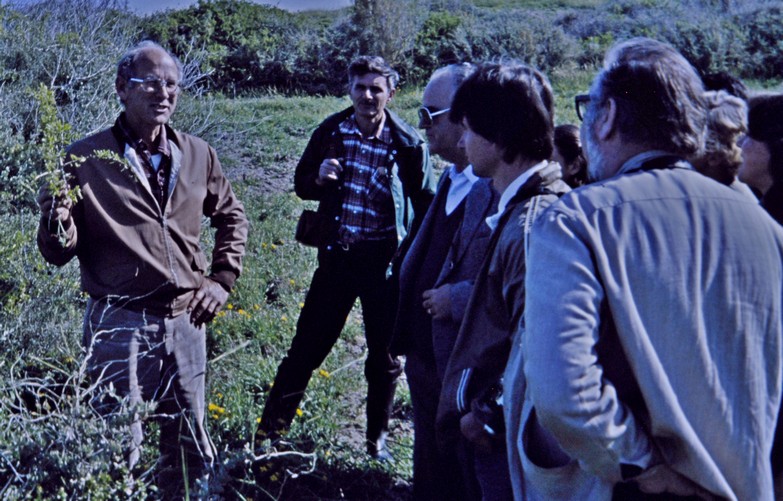
Gideon Ladizinsky explains the ecology of wild lentils (or is that wild chickpea?) while Amos Dinoor looks on.

I recall that the course was funded (or at least supported in part) by the International Board for Plant Genetic Resources (IBPGR). Among the other participants were several MSc students, class of 1981-82, from The University of Birmingham attending the Conservation and Utilization of Plant Genetic Resources course in the Department of Plant Biology. Not all the students of that intake could take up the invitation to travel to Israel. Those from Bangladesh, Malaysia, and Indonesia for example were not permitted (under their national laws) to visit Israel, even though an invitation had been extended to all students regardless of nationality, and the Israeli authorities would have issued visas without a stamp in their passports.

I don’t remeber all the other participants. We must have been half a dozen or so from Birmingham, plus Bruce Tyler from the Welsh Plant Breeding Station (now part of the Institute of Biological, Environmental and Rural Sciences, IBERS, at Aberystwyth University), George Ayad from IBPGR, Zofia Bulinska-Radomska and one of her colleagues from the National Centre for Plant Genetic Resources, IHAR, near Warsaw, Poland, Luis Gusmão from Portugal (who attended a short course at Birmingham), and others whose names I cannot remember.

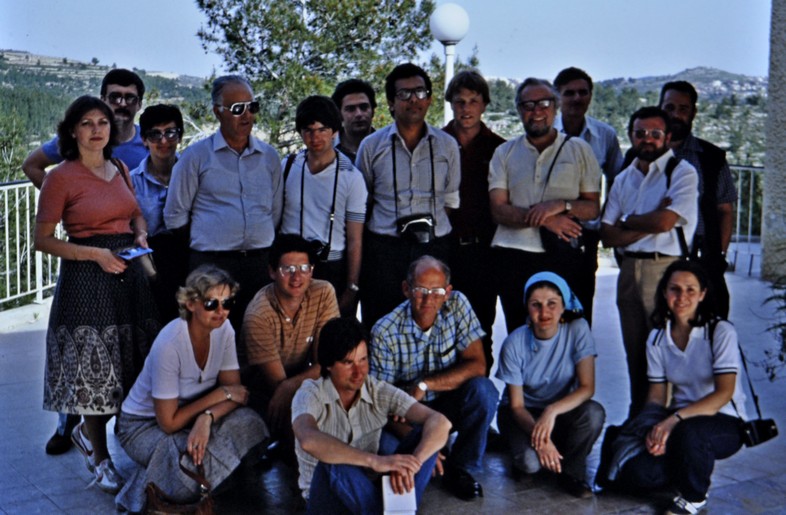
Standing, L-R: Zofia Bulinska-Radomska (Poland), Mike Jackson, ??, ??, ??, ??, George Ayad (Egypt, IBPGR), Rainer Freund (Germany), Bruce Tyler (WPBS), Amos Dinoor, ??, Luis Gusmao (Portugal). Front row, L-R: Krystina ?, ??, Brazilian MSc student, Gideon Ladizinsky, Ayfer Tan (Turkey), Margarida Texeira (Portugal).

Bruce Tyler, from the WPBS. An inveterate smoker, one of Bruce’s comments on almost anything was ‘He’s a cracker!’

We stayed at a kibbutz near to Rehovot, and were quite comfortable there. It was a short drive each day into the campus for the classroom activities, some lectures and practical classes. But we also made excursions from the north to the south of the country, and east to the Dead Sea to find crop wild relatives in their native habitats. I wonder, 35 years on, how many of those habitats exist. We travelled freely between Israel and parts of what are now the Palestine Authority controlled West Bank.

We had opportunity of seeing these wild relatives in what was essentially a living laboratory. Both Gideon and Amos, experts in their fields of crop diversity and domestication, and disease epidemiology in wild species, respectively, used many of these wild populations for their research and of their students.

My eyes were opened to the important role of ecology in these seasonally dry-wet landscapes, often on limestone, and the differences to be found between north- and south-facing slopes. I unfortunately no longer have some of the photos I took during that trip of the populations of wild barley, Hordeum spontaneum, that grew over large swathes of the landscape, looking to all intents and purposes like a field of cultivated barley. It was in populations like these, and of wild oats that Amos Dinoor studied the dynamics of disease spread and resistance.

Gideon had a wonderful way of linking species in different habitats, how they maintained they biological identity, often through flowering at different times of the day. I remember on one occasion as we walked through a mixture of oat species with different chromosome numbers, or ploidy. I asked Gideon the time, but he didn’t look at his watch. Instead, he picked a panicle of one of the oats alongside the path, and replied ‘It’s about 4:15 pm’. Then he looked at his watch. It was almost 4:15 pm! He was so familiar with the ecology of these species that, under defined conditions, he could predict when different species would flower. Remarkable! On the coast, south of Tel Aviv, we did look at disease in different wild species. I certainly learned a great deal from this course, and discussing crop evolution and domestication with these experts from the Fertile Crescent, and others like Daniel Zohary (who had published on the origin of lentils about the same time as me in the mid-1970s; he passed away in December 2016). Among the young scientists we met was Dani Zamir who pioneered the use of enzymes, or isozymes,to study the diversity of crops and their wild relatives, tomatoes in his case.

There was one interesting episode during the course. When teaching crop evolution to my Birmingham students, I encouraged them to analyse the evidence presented to account for the origin and evolution of different crop species, often based on conflicting hypotheses. So, it was natural for them to ask questions at the end of each lecture, and even question the interpretations they had heard. After just one or two sessions, and much to the consternation of my students, the ‘professors’ refused to take any questions. As I explained to my group, their hosts had worked on a range of species in depth, and were convinced that their interpretations were the correct (and only?) ones to be believed.  My students hadn’t been impolite or ‘aggressive’ in their questioning, just keen to explore more ideas.

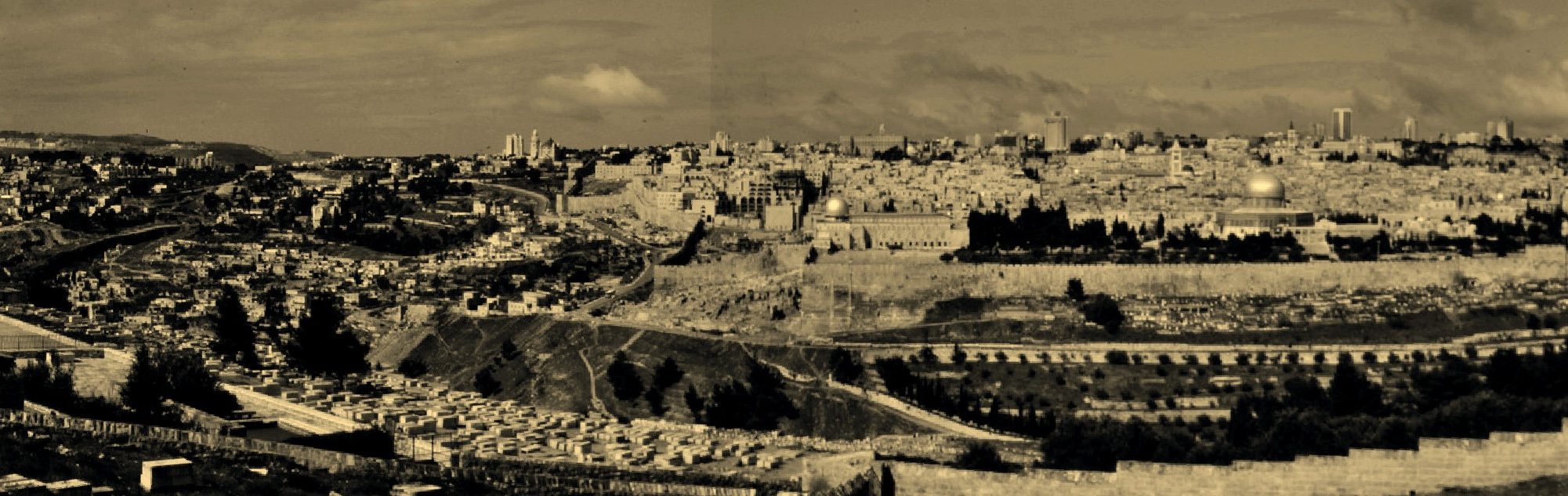
We did also have opportunities for sight-seeing, around Jerusalem and to the Dead Sea, as well as understand some more about irrigation agriculture for which Israeli scientists and engineers had become renowned.

~~~~~~~~~~~~~~~~~~~~~~~~~~~~~~~~~~~~~~~~~
¹ I remember the dates quite well, as they coincided with the invasion of the Falkland Islands in the South Atlantic by Argentina, and the course group had many discussions in the bar at night what the reaction of Margaret Thatcher’s government would be.

Genetic resources in safe hands

Among the most important—and most used—collections of plant genetic resources for food and agriculture (PGRFA) are those maintained by eleven of the fifteen international agricultural research centers¹ funded through the Consultative Group on International Agricultural Research (CGIAR). Not only are the centers key players in delivering many of the 17 Sustainable Development Goals (SDGs) adopted by the United Nations in 2015, but their germplasm collections are the genetic base of food security worldwide.

Over decades these centers have collected and carefully conserved their germplasm collections, placing them under the auspices of the Food and Agriculture Organization (FAO), and now, the importance of the PGRFA held by CGIAR genebanks is enshrined in international law, through agreements between CGIAR Centers and the International Treaty on Plant Genetic Resources for Food and Agriculture (ITPGRFA)². These agreements oblige CGIAR genebanks to make collections and data available under the terms of the ITPGRFA and to manage their collections following the highest standards of operation.

Evaluation and use of the cultivated and wild species in these large collections have led to the development of many new crop varieties, increases in agricultural productivity, and improvements in the livelihoods of millions upon millions of farmers and poor people worldwide. The genomic dissection of so many crops is further enhancing access to these valuable resources.

The CGIAR genebanks
In the Americas, CIP in Peru, CIAT in Colombia, and CIMMYT in Mexico hold important germplasm collections of: potatoes, sweet potatoes and other Andean roots and tubers; of beans, cassava, and tropical forages; and maize and wheat, respectively. And all these collections have serious representation of the closest wild species relatives of these important crops.

In Africa, there are genebanks at Africa Rice in Côte d’Ivoire, IITA in Nigeria, ILRI in Ethiopia, and World Agroforestry in Kenya, holdings collections of: rice; cowpea and yams; tropical forage species; and a range of forest fruit and tree species, respectively.

ICARDA had to abandon its headquarters in Aleppo in northern Syria, and has recently relocated to two sites in Morocco and Lebanon.

ICRISAT in India and IRRI in the Philippines have two of the largest genebank collections, of: sorghum, millets, and pigeon pea; and rice and its wild relatives.

There is just one CGIAR genebank in Europe, for bananas and plantains, maintained by Bioversity International (that has its headquarters in Rome) at the University of Leuven in Belgium.

Genebank security
Today, the future of these genebanks is brighter than for many years. Since 2012 they received ‘secure’ funding through the Genebanks CGIAR Research [Support] Program or Genebanks CRP, a collaboration with and funding from the Crop Trust. It was this Genebanks CRP that I and my colleagues Brian Ford-Lloyd and Marisé Borja evaluated during 2016/17. You may read our final evaluation report here. Other background documents and responses to the evaluation can be found on the Independent Evaluation Arrangement website. The CRP was superseded by the Genebank Platform at the beginning of 2017.

As part of the evaluation of the Genebanks CRP, Brian Ford-Lloyd and I attended the Annual Genebanks Meeting in Australia in November 2016, hosted by the Australian Grains Genebank at Horsham, Victoria.

While giving the Genebanks CRP a favorable evaluation—it has undoubtedly enhanced the security of the genebank collections in many ways—we did call attention to the limited public awareness about the CGIAR genebanks among the wider international genetic conservation community. And although the Platform has a website (as yet with some incomplete information), it seems to me that the program is less proactive with its public awareness than under the CGIAR’s System-wide Genetic Resources Program (SGRP) more than a decade ago. Even the folks we interviewed at FAO during our evaluation of the Genebanks CRP indicated that this aspect was weaker under the CRP than the SGRP, to the detriment of the CGIAR.

Now, don’t get me wrong. I’m not advocating any return to the pre-CRP or Platform days or organisation. However, the SGRP and its Inter-Center Working Group on Genetic Resources (ICWG-GR) were the strong foundations on which subsequent efforts have been built.

The ICWG-GR
When I re-joined the CGIAR in July 1991, taking charge of the International Rice Genebank at IRRI, I became a member of the Inter-Center Working Group on Plant Genetic Resources (ICWG-PGR), but didn’t attend my first meeting until January 1993. I don’t think there was one in 1992, but if there was, I was not aware of it.

We met at the campus of the International Livestock Centre for Africa (ILCA)³ in Addis Ababa, Ethiopia. It was my first visit to any African country, and I do remember that on the day of arrival, after having had a BBQ lunch and a beer or three, I went for a nap to get over my jet-lag, and woke up 14 hours later!

I’m not sure if all genebanks were represented at that ILCA meeting. Certainly genebank managers from IRRI, CIMMYT, IITA, CIP, ILCA, IPGRI (the International Plant Genetic Resources Institute, now Bioversity International) attended, but maybe there were more. I was elected Chair of the ICWG-PGR as it was then, for three years. These were important years. The Convention on Biological Diversity had been agreed during June 1992 Earth Summit in Rio de Janeiro, and was expected to come into force later in 1993. The CGIAR was just beginning to assess how that would impact on its access to, and exchange and use of genetic resources.

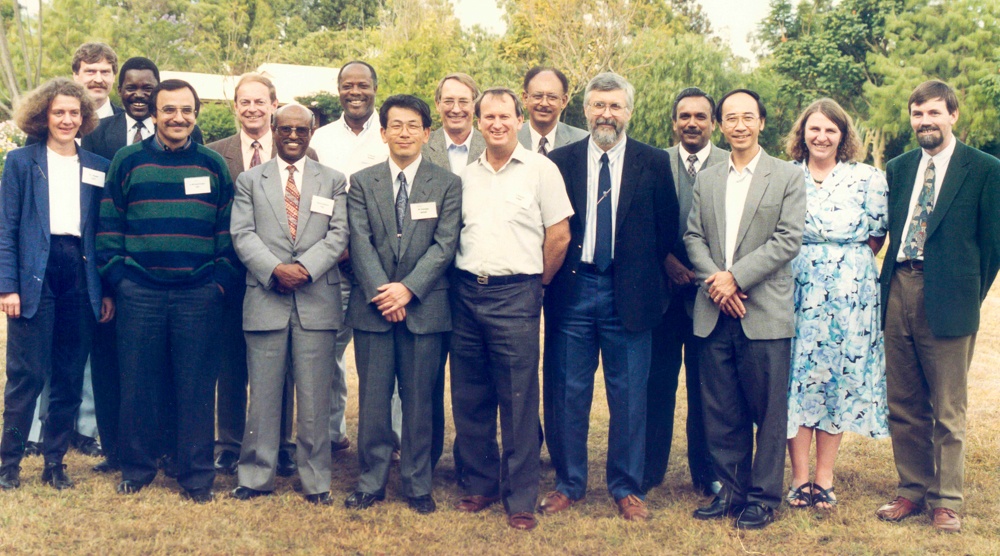
L-R: Brigitte Maass (CIAT), Geoff Hawtin (IPGRI), ??, Ali Golmirzaie (CIP), Jan Valkoun (ICARDA), ??, ??, Masa Iwanaga (IPGRI), Roger Rowe (CIMMYT), ?? (ICRAF), Melak Mengesha (ICRISAT), Mike Jackson (IRRI), Murthi Anishetty (FAO), Quat Ng (IITA), Jean Hanson (ILCA), Jan Engels (IPGRI).

We met annually, and tried to visit a different center and its genebank each year. In 1994, however, the focus was on strengthening the conservation efforts in the CGIAR, and providing better corrdination to these across the system of centers. The SGRP was born, and the remit of the ICWG-PGR (as the technical committee of the program) was broadened to include non-plant genetic resources, bringing into the program not only ICLARM (the International Centre for Living Aquatic Resources Management, now WorldFish, but at that time based in Manila), the food policy institute, IFPRI in Washington DC, the forestry center, CIFOR in Indonesia, and ICRAF (the International Centre for Research on Agro-Forestry, now World Agroforestry) in Nairobi. The ICWG-PGR morphed into the ICWG-GR to reflect this broadened scope.

Here are a few photos taken during our annual meetings in IITA, at ICRAF (meetings were held at a lodge near Mt. Kenya), and at CIP where we had opportunity of visiting the field genebanks for potatoes and Andean roots and tubers at Huancayo, 3100 m, in central Peru.

The System-wide Genetic Resources Program
The formation of the SGRP was an outcome of a review of the CGIAR’s genebank system in 1994. It became the only program of the CGIAR in which all 16 centers at that time (ISNAR, the International Services for National Agricultural Research, based in The Hague, Netherlands closed its doors in March 2004) participated, bringing in trees and fish, agricultural systems where different types of germplasm should be deployed, and various policy aspects of germplasm conservation costs, intellectual property, and use.

In 1995 the health of the genebanks was assessed in another review, and recommendations made to upgrade infrastructure and techical guidelines and procedures. In our evaluation of the Genebanks CRP in 2016/17 some of these had only recently been addressed once the secure funding through the CRP had provided centers with sufficient external support.

SGRP and the ICWG-GR were major players at the FAO International Technical Conference on Plant Genetic Resources held in Leipzig in 1997.

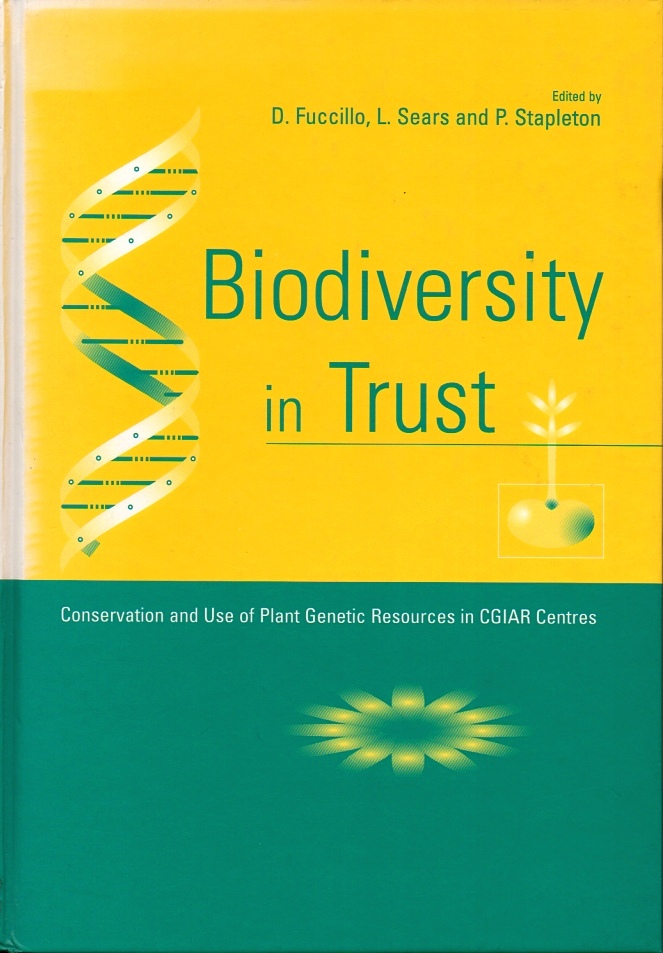
Under the auspices of the SGRP two important books were published in 1997 and 2004 respectively. The first, Biodiversity in Trust, written by 69 genebank managers, plant breeders and others working with germplasm in the CGIAR centers, and documenting the conservation and use status of 21 species or groups of species, was an important assessment of the status of the CGIAR genebank collections and their use, an important contribution not only in the context of the Convention on Biological Diversity, but also as a contribution to FAO’s own monitoring of PGRFA that eventually led to the International Treaty in 2004.

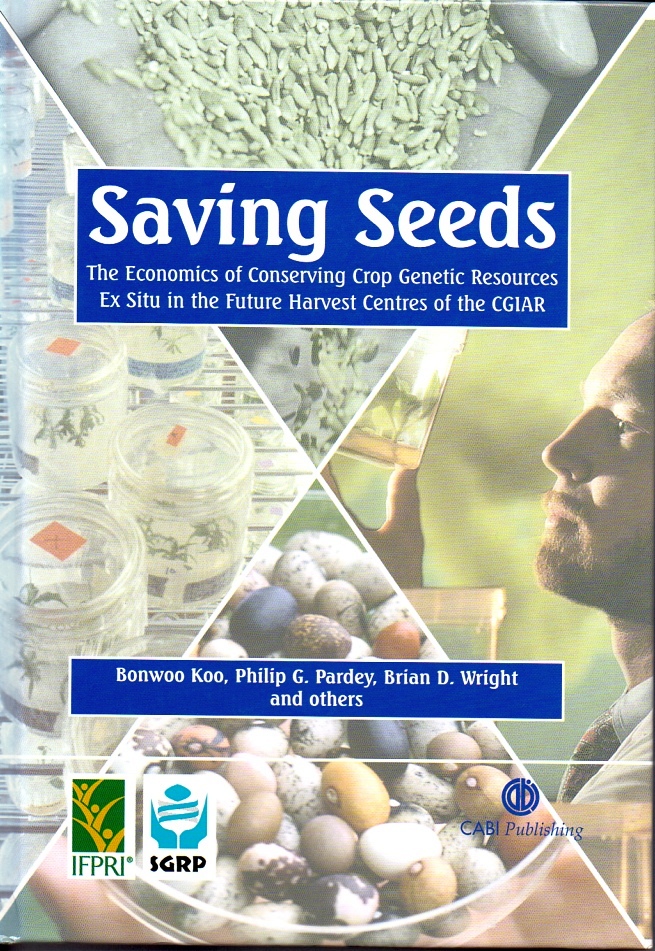
The second, Saving Seeds, was a joint publication of IFPRI and the SGRP, and was the first comprehensive study to calculate the real costs of conserving seed collections of crop genetic resources. Costing the genebanks still bedevils the CGIAR, and it still has not been possible to arrive at a costing system that reflects both the heterogeneity of conservation approaches and how the different centers operate in their home countries, their organizational structures, and different costs basis. One model does not fit all.

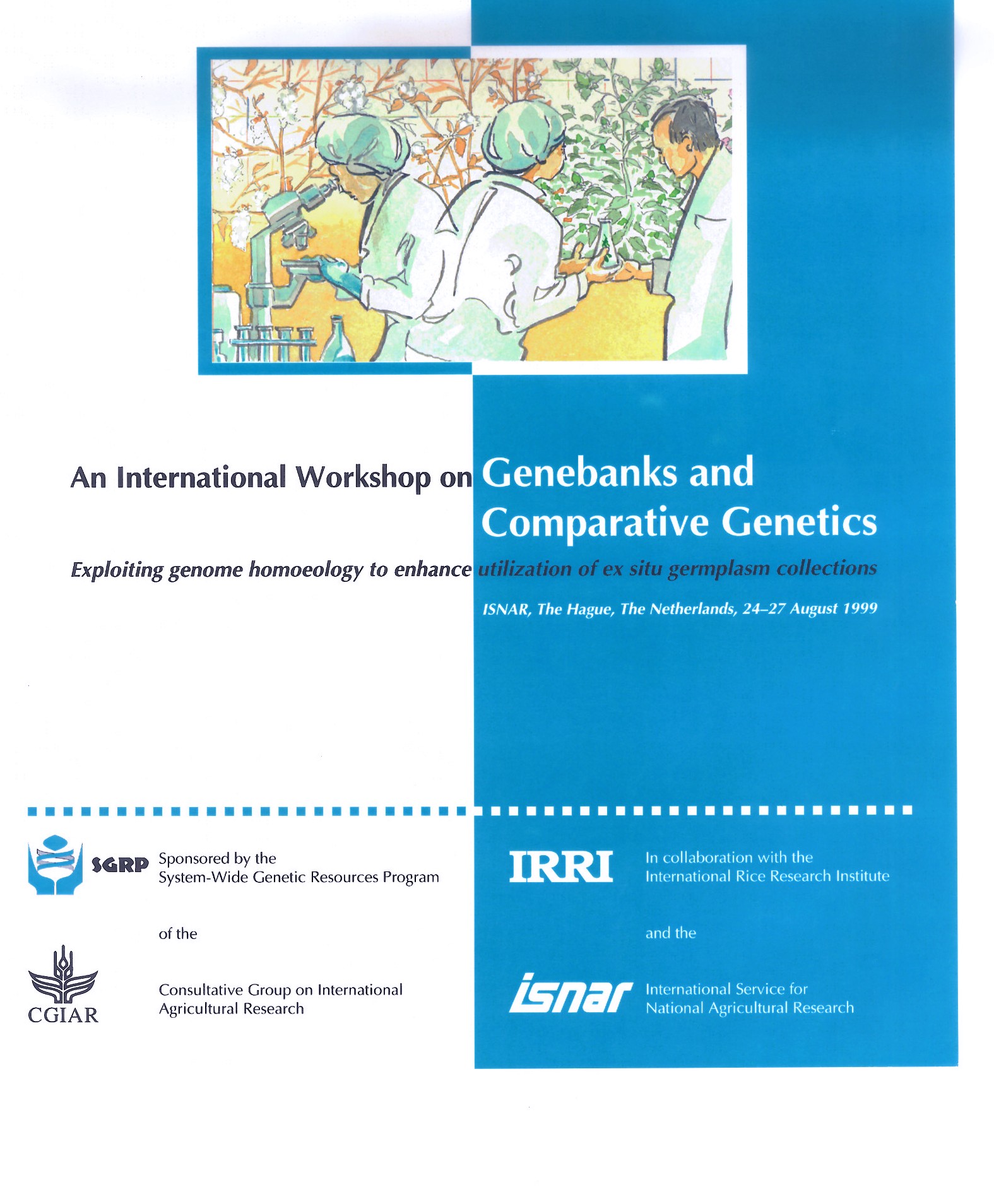
In 1996/97 I’d been impressed by some research from the John Innes Institute in the UK about gene ‘homology’ or synteny among different cereal crops. I started developing some ideas about how this might be applied to the evaluation of genebank collections. In 1998, the ICWG-GR gave me the go-ahead—and a healthy budget— to organize an international workshop on Genebanks and Comparative Genetics that I’d been planning. With the help of Joel Cohen at ISNAR, we held a workshop there in ISNAR in August 1999, and to which we invited all the genebank managers, staff working at the centers on germplasm, and many of the leading lights from around the world in crop molecular biology and genomics, a total of more than 50 participants.

This was a pioneer event for the CGIAR, and certainly the CGIAR genebank community was way ahead of others in the centers in thinking through the possibilities for genomics, comparative genetics, and bioinformatics for crop improvement. Click here to read a summary of the workshop findings published in the SGRP Annual Report for 1999.

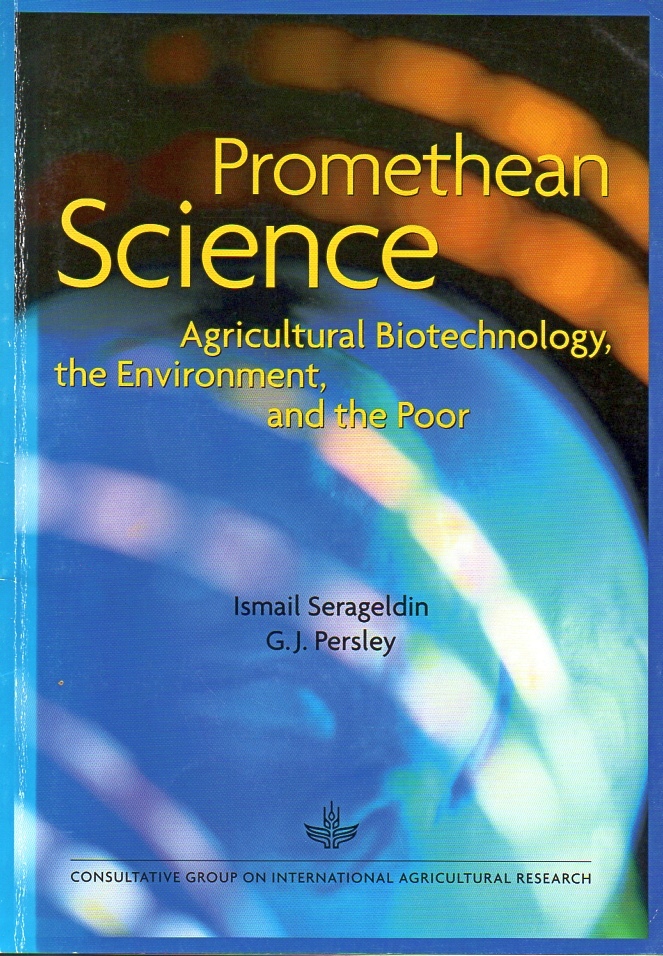
The workshop was also highlighted in Promethean Science, a 41 page position paper published in 2000 on the the importance of agricultural biotechnology, authored by former CGIAR Chair and World Bank Vice-President Ismail Serageldin and Gabrielle Persley, a senior strategic science leader who has worked with some of the world’s leading agricultural research and development agencies. They address address the importance of characterizing biodiversity (and the workshop) in pages 21-23.

Although there was limited uptake of the findings from the workshop by individual centers (at IRRI for instance, breeders and molecular biologists certainly gave the impression that us genebankers has strayed into their turf, trodden on their toes so-to-speak, even though they had been invited to the workshop but not chosen to attend), the CGIAR had, within a year or so, taken on board some of the findings from the workshop, and developed a collective vision related to genomics and bioinformatics. Thus, the Generation Challenge Program (GCP) was launched, addressing many of the topics and findings that were covered by our workshop. So our SGRP/ICWG-GR effort was not in vain. In fact, one of the workshop participants, Bob Zeigler, became the first director of the GCP. Bob had been a head of one of IRRI’s research programs from 1992 until he left in about 1998 to become chair of the Department of Plant Pathology at Kansas State University. He returned to IRRI in 2004 as Director General!

Moving forward
Now the Genebanks CRP has been superseded by the Genebank Platform since the beginning of the year. The genebanks have certainly benefited from the secure funding that, after many years of dithering, the CGIAR finally allocated. The additional and external support from the Crop Trust has been the essential element to enable the genebanks to move forward.

In terms of data management, Genesys has gone way beyond the SGRP’s SINGER data management system, and now includes data on almost 3,602,000 accessions held in 434 institutes. Recently, DOIs have been added to more than 180,000 of these accessions.

One of the gems of the Genebanks CRP, which continues in the Genebank Platform, is delivery and implementation of a Quality Management System (QMS), which has two overarching objectives. QMS defines the necessary activities to ensure that genebanks meet all policy and technical standards and outlines ways to achieve continual quality improvement in the genebank’s administrative, technical and operational performance. As a result, it allows genebank users, regulatory bodies and donors to recognize and confirm the competence, effectiveness and efficiency of Platform genebanks.

The QMS applies to all genebank operations, staff capacity and succession, infrastructure and work environments, equipment, information technology and data management, user satisfaction, risk management and operational policies.

The Platform has again drawn in the policy elements of germplasm conservation and use, as it used to be under the SGRP (but ‘ignored’ under the Genebanks CRP), and equally importantly, the essential elements of germplasm health and exchange, to ensure the safe transfer of germplasm around the world.

Yes, I believe that as far as the CGIAR genebanks are concerned, genetic resources are in safe(r) hands. I cannot speak for genebanks elsewhere, although many are also maintained to a high standard. Unfortunately that’s not always the case, and I do sometimes wonder if there are simply too many genebanks or germplasm collections for their own good.

But that’s the stuff of another blog post once I’ve thought through all the implications of the various threads that are tangled in my mind right now.

~~~~~~~~~~~~~~~~~~~~~~~~~~~~~~~~~~~~~~~~~~~~

¹ Research centers of the CGIAR (* genebank)

  • International Potato Center (CIP), Lima, Peru*
  • International Center for Tropical Agriculture (CIAT), Cali, Colombia*
  • International Center for Maize and Wheat Improvement (CIMMYT), Texcoco, nr. Mexico DF, Mexico*
  • Bioversity International, Rome, Italy*
  • International Center for Research in the Dry Areas (ICARDA), Lebanon and Morocco*
  • AfricaRice (WARDA), Bouaké / Abidjan, Côte d’Ivoire*
  • International Institute for Tropical Agriculture (IITA), Ibadan, Nigeria*
  • International Livestock Research Institute (ILRI), Addis Ababa, Ethiopia and Nairobi, Kenya*
  • World Agroforestry Centre (WARDA), Nairobi, Kenya*
  • International Crops Research Institute for the Semi-Arid Tropics (ICRISAT), Hyderabad, India*
  • International Rice Research Institute (IRRI), Los Baños, Philippines*
  • Center for International Forestry Research (CIFOR), Bogor, Indonesia
  • WorldFish, Penang, Malaysia
  • International Water Management Institute (IWMI), Colombo, Sri Lanka
  • International Food Policy Research Institute (IFPRI), Washington, DC, USA

² The objectives of the International Treaty on Plant Genetic Resources for Food and Agriculture are the conservation and sustainable use of all plant genetic resources for food and agriculture and the fair and equitable sharing of the benefits arising out of their use, in harmony with the Convention on Biological Diversity, for sustainable agriculture and food security.

³ ILCA was merged in January 1995 with the International Laboratory for Research on Animal Diseases, based in Nairobi, Kenya, to form the International Livestock Research Institute (ILRI) with two campuses in Nairobi and Addis Ababa. The forages genebank is located at the Addis campus. A new genebank building was opened earlier this year.

Beets, ‘beans’, and Canaries

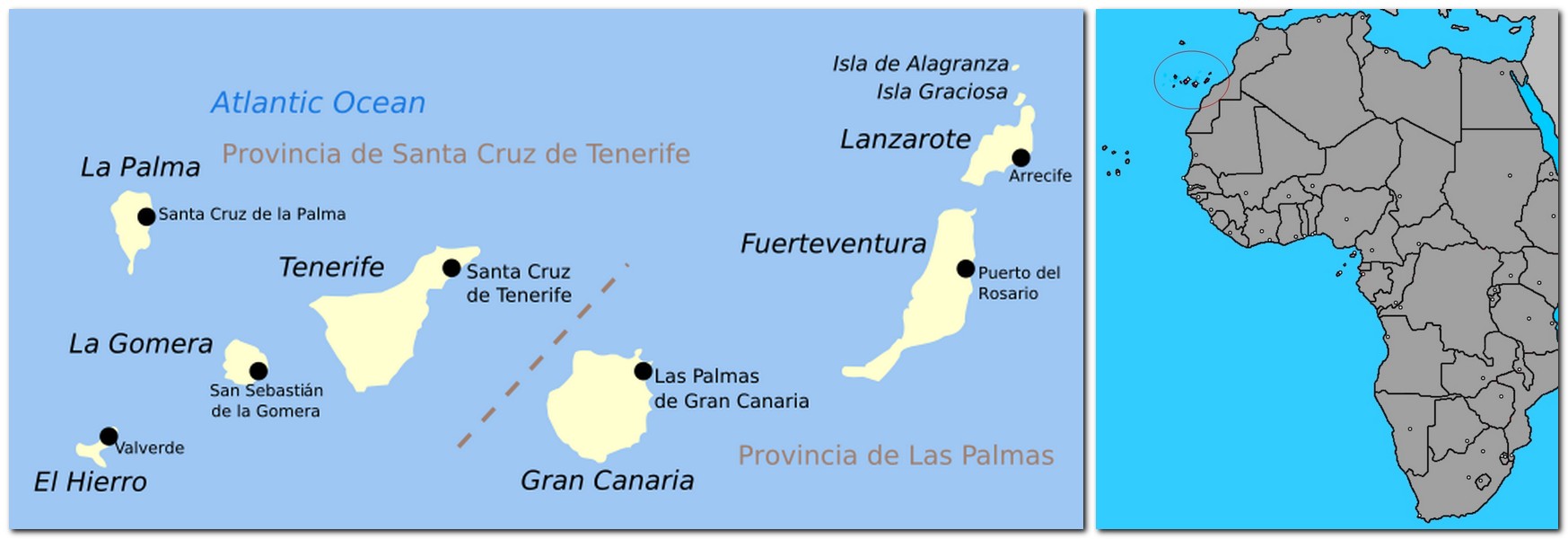
Lying off the Atlantic coast of northwest Africa by less than 600 miles, the Canary Islands archipelago comprises seven large islands, and a small group of islets off the north coast of Lanzarote, the island that lies furthest east and north. Volcanic in origin, and arid for the most part, their flora comprises many interesting endemic species found only on the Atlantic islands of MacaronesiaI’ve visited the Canaries twice, both in the 1980s, to collect plant germplasm (and also take a family holiday). Both expeditions were funded by the International Board for Plant Genetic Resources (IBPGR, now Bioversity International, based in Rome, Italy). So, as someone who studied potatoes and rice (and some legumes) most of my career, how did I become involved with collecting germplasm in the Canaries?

Brian Ford-Lloyd

Searching for beets
After leaving the International Potato Center in March 1981, I arrived at The University of Birmingham to begin my decade-long teaching career as Lecturer in Plant Biology from 1 April. Almost immediately, my colleague and fellow lecturer, Brian Ford-Lloyd (who retired a few years back as Emeritus Professor of Plant Conservation Genetics) invited me to join him on a collecting trip to the Canaries to look for wild relatives of beets (Beta spp.) that would contribute to an IPBGR global initiative on beet germplasm.

Now while I had my own experiences of germplasm collecting of cultivated (and some wild) potatoes in the Andes of South America between 1973 and 1976, I had no experience of beets whatsoever. Brian was keen to have me along on the trip because I did have one very important skill: I spoke (quite) fluent Spanish, and he expected that our Canarian counterparts would speak little English (which turned out to be more or less correct). So, not only would I be an experienced pair of germplasm hands, I could also be interpreter-in-chief.

Fortunately the dates for the trip coincided with my personal timetable then. Having arrived back in the UK at the end of March, my wife Steph (and daughter Hannah) stayed with her parents in Essex while I settled into my new job at the university, and while we house hunted. By the time Brian and I headed off to the Canaries in June, we’d bought our house, but moving in was not scheduled until the first or second weeks of July. So this was a great opportunity for me to join Brian.

Trevor Williams

Brian completed his PhD in 1973 under the supervision of Trevor Williams, submitting a thesis on the biosystematics of the genus Beta. As part of that research he made a collecting trip throughout Turkey in the early 1970s; and subsequently he maintained his research interest and activity in beets. Collecting in the Canaries was part of an IBPGR global initiative on beets.

Our particular interest there was a group of three beet species of Beta Sect. Patellares (I’m not sure if, or how, the taxonomy of Beta has changed in the intervening years) native to the archipelago, little represented at that time in different germplasm collections. Beets were reported from a range of localities throughout the islands, most often around the coasts or in ruderal habitats, but rarely inland (except in Fuerteventura) where the terrain is too high. In any case, this beet germplasm was considered under threat of genetic erosion, and had to be collected before habitats were lost through expansion of tourist resorts and holiday homes. Brian tells me he has been back to some of the sites where we collected and they have indeed been lost in this way.

Arnoldo Santos-Guerra

Travelling to the Canaries from Elmdon Airport (now Birmingham Airport) via London and Madrid, our first stop was Gran Canaria, staying for a couple of nights at the Jardín Botánico Canario Viera y Clavijo, where British botanist Dr David Bramwell was the director (and his wife Zoë, an acclaimed botanical artist). Those first days were essentially to find our feet, take some advice from David on where best to collect, before heading off to the island of Fuerteventura, the next island east from Gran Canaria, where we would meet our local expert and collaborator, Dr Arnoldo Santos-Guerra of the Centro Regional de Investigación y Tecnología Agrarias, Tenerife. For the collections in Tenerife, La Palma, and La Gomera we were joined by Arnoldo’s colleague, Lic. Manuel Fernández-Galván.

L-R: Brian, Arnoldo, Manuel, and me

In all, we collected 93 samples of beets from 52 locations on five islands: Gran Canaria, Fuerteventura, Tenerife, La Palma, and La Gomera.  Afterwards we published a trip report¹ in the FAO/IBPGR Plant Genetic Resources Newsletter.

On Tenerife, La Palma, and particularly La Gomera, there are precipitous inclines from the main roads down to the ocean’s edge. Deeply dissected landscapes ensure that wild beet populations are isolated from one another, even over relatively short distances as the cliff coastlines project into the ocean, with coves and beaches in between, where beets were often found. Therefore our ability to collect beet samples was quite often dependent entirely upon accessibility to the beach. The photos below were taken in Fuerteventura, Tenerife, and La Gomera. In some of them you can see the level of urbanization, almost 40 years ago, in many localities that were suitable environments for wild beets. The housing and tourist developments must be many times greater today.

But the actual process of collecting was not difficult at all, and seeds were often sampled from most if not all plants in some populations. Wild beets have a prostrate habit, and the ‘seeds’ were often found, in abundance, underneath the living plants. It was then just a question of scooping up handfuls of the seeds into a collecting bag, and annotating the collecting information appropriately.

Beta webbiana (left) and B. procumbens (right) from the Canary Islands

I say ‘seeds’, but the morphology of beets is a little more complex than that. Actually what we collected were small fruits with a hard pericarp, with several joined together to form multigerm seedballs. Modern sugar beet varieties are monogerm, a trait discovered in a wild beet species, in the former Soviet Union (Ukraine, in fact) during the 1930s . Because of their impermeability to moisture, and also due to the arid environments in which these beets species grew, we were confident that we were collecting viable seeds. In fact, as Brian explained to me, beet seeds are quite difficult to germinate.

Morphology of a beet inflorescence, seedballs, and a sugar beet (from: Wikipedia)

On our return to Birmingham, the seeds were added to the Birmingham Beta Collection that Brian curated, and other collections that are part of the World Beta Network. One recipient was Lothar Frese in Germany, now at the Julius Kühn-Institut in Quedlinburg. This germplasm has been used in a variety of studies looking at disease resistance such as Cercospora leaf spot resistance in B. procumbens in particular, and there has been much work since in terms of genetic mapping for resistance. After Brian retired, his beet collection was passed to the Genetic Resources Unit at the Warwick Crop Centre for safe storage.

A beet -‘bean’ linkage
In addition to beets, we collected 11 samples of other crops, among which was just one sample of a shrub or tree fodder legume, tagasaste, from La Palma, classified botanically as Chamaecytisus palmensis, and cultivated by many farmers. In our trip report, referred to above, we commented that the species did seem to be quite variable and, given its wider potential as a fodder legume, we suggested that it would warrant further study.

Javier Francisco-Ortega

And that was the last I thought about tagasaste until six years later when a young Spanish student from Tenerife, Javier Francisco-Ortega, enrolled on the genetic resources MSc course at Birmingham. Thirty years ago this month! I supervised Javier’s MSc dissertation on chromosome variation in Lathyrus pratensis, one of around 150 species in a genus that also contains the commonly-grown garden sweetpea, L. odoratus, and the edible grasspea L. sativus that was one of my research interests during the 1980s.

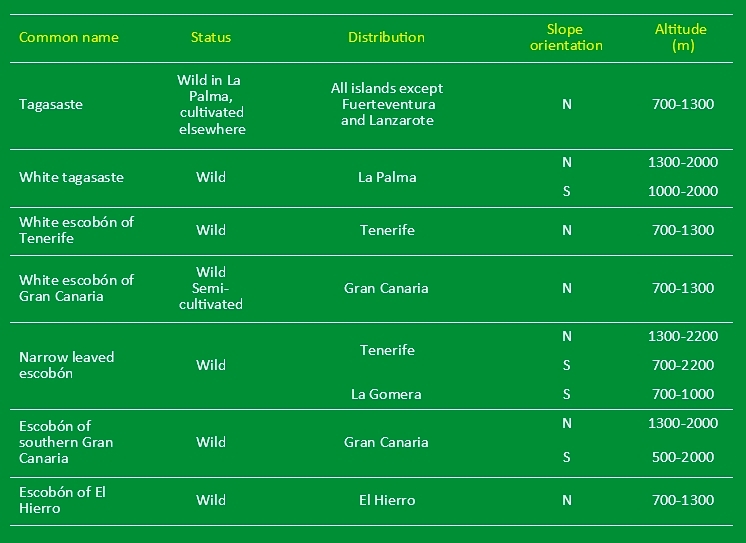
Anyway, to cut a long story short, Javier was an outstanding student, and began a PhD project with me in October 1988 on the ecogeography of the tagasaste complex, now classified taxonomically as C. proliferus. Only the forms from La Palma are popularly known as tagasaste (the ‘C. palmensis‘ we’d seen in La Palma in 1981), whereas those from the rest of the archipelago are commonly called escobón.

Morphological variants of tagasaste and escobón, Chamaecytisus proliferus

Tagasaste is the only form which is broadly cultivated in the Canary Islands and, since the late 19th century, also in New Zealand and Australia (particularly as fodder for sheep and goats). It has also become naturalized in Australia (South Australia, New South Wales, Victoria and Tasmania), Java, the Hawaiian Islands, California, Portugal, North Africa, Kenya, Tanzania and South Africa.

When I resigned from the university in June 1991 to join the International Rice Research Institute in the Philippines, supervision of Javier’s PhD passed to Brian.

In Spring and Summer 1989, and with funding from IBPGR, Javier began a systematic survey of 184 tagasaste and escobón populations throughout the archipelago (all islands except Fuerteventura and Lanzarote which are too dry), taking herbarium samples from each for morphological study, and revisited later to collect seeds. I joined Javier in July to assist with the collection of seeds from the Tenerife populations. Our trip report² was published in Plant Genetic Resources Newsletter in 1990. Arnoldo Santos-Guerra and Manuel Fernández-Galván were also contributors to this work.

Escobón populations are found commonly growing in gullies among pine forests, and appear to thrive here where there is the ever-present expectation (and danger) of forest fires. Indeed periodic burning appears to support the maintenance of escobón populations. These photos show the habitats of escobón populations in Tenerife, and Javier and myself making collections.

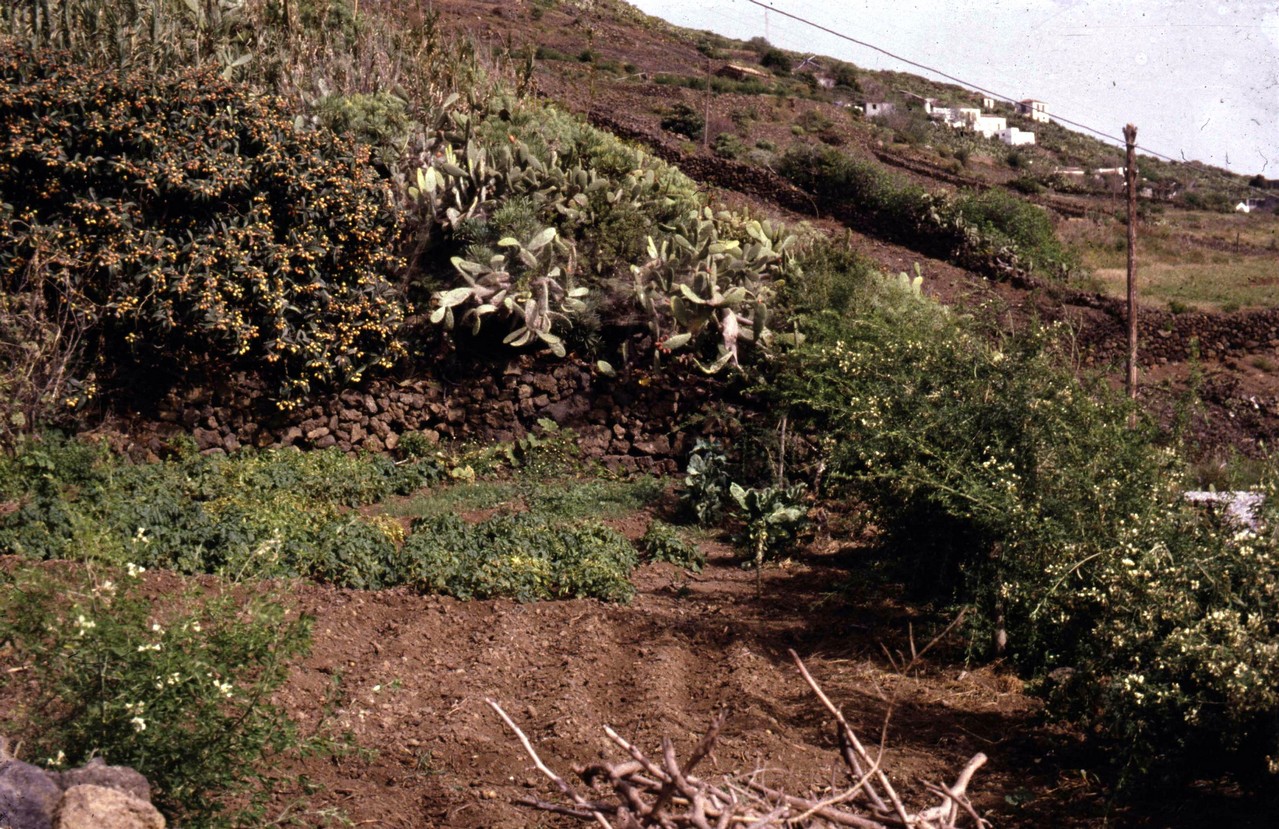
While more common in La Palma, farmers in Tenerife grow a few bushes of tagasaste in their terraces (seen on the right edge of the field in the picture below) on the north-facing slopes of the Teide volcano sloping down to the Atlantic.

We deposited duplicate seed samples in the Spanish national genebank in Madrid, and also in Tenerife. Javier took seeds back to Birmingham for further study, especially for analysis of molecular variation. Besides his PhD thesis, submitted successfully in 1992, his research led to several other scientific papers on morphological variation, phytogeography, ecogeographical characterization, genetic diversity, and the history of origin and distribution.

After he completed his PhD at Birmingham, Javier took postdoctoral fellowships at Ohio State University and the University of Texas at Austin before returning to Tenerife for a couple of years. In 1999 he was appointed Assistant Professor in the Department of Biological Sciences at Florida International University in Miami. He became Full Professor in 2012. He also has a joint appointment at the Fairchild Tropical Garden just south of Miami, as head of the Fairchild Plant Molecular Systematics Laboratory, with a special interest in cycads and palms, as well as an abiding interest in island floras. He has maintained his links with Arnoldo Santos-Guerra and David Bramwell.

In this video, Javier talks about his interests and the impact of his botanical research.

~~~~~~~~~~~~~~~~~~~~~~~~~~~~~~~~~~~~~~~~~

¹ Ford-Lloyd, B.V., M.T. Jackson & A. Santos Guerra, 1982. Beet germplasm in the Canary Islands. Plant Genetic Resources Newsletter 50, 24-27.

² Francisco-Ortega, F.J., M.T. Jackson, A. Santos-Guerra & M. Fernández-Galván, 1990. Genetic resources of the fodder legumes tagasaste and escobón (Chamaecytisus proliferus (L. fil.) Link sensu lato) in the Canary Islands. Plant Genetic Resources Newsletter 81/82, 27-32.

Outside the EU . . . even before Brexit

Imagine a little corner of Birmingham, just a couple of miles southwest of the city center. Edgbaston, B15 to be precise. The campus of The University of Birmingham; actually Winterbourne Gardens that were for many decades managed as the botanic garden of the Department of Botany / Plant Biology.

As a graduate student there in the early 1970s I was assigned laboratory space at Winterbourne, and grew experimental plants in the greenhouses and field. Then for a decade from 1981, I taught in the same department, and for a short while had an office at Winterbourne. And for several years continued to teach graduate students there about the conservation and use of plant genetic resources, the very reason why I had ended up in Birmingham originally in September 1970.

Potatoes at Birmingham
It was at Birmingham that I first became involved with potatoes, a crop I researched for the next 20 years, completing my PhD (as did many others) under the supervision of Professor Jack Hawkes, a world-renowned expert on the genetic resources and taxonomy of the various cultivated potatoes and related wild species from the Americas. Jack began his potato career in 1939, joining Empire Potato Collecting Expedition to South America, led by Edward Balls. Jack recounted his memories of that expedition in Hunting the Wild Potato in the South American Andes, published in 2003.

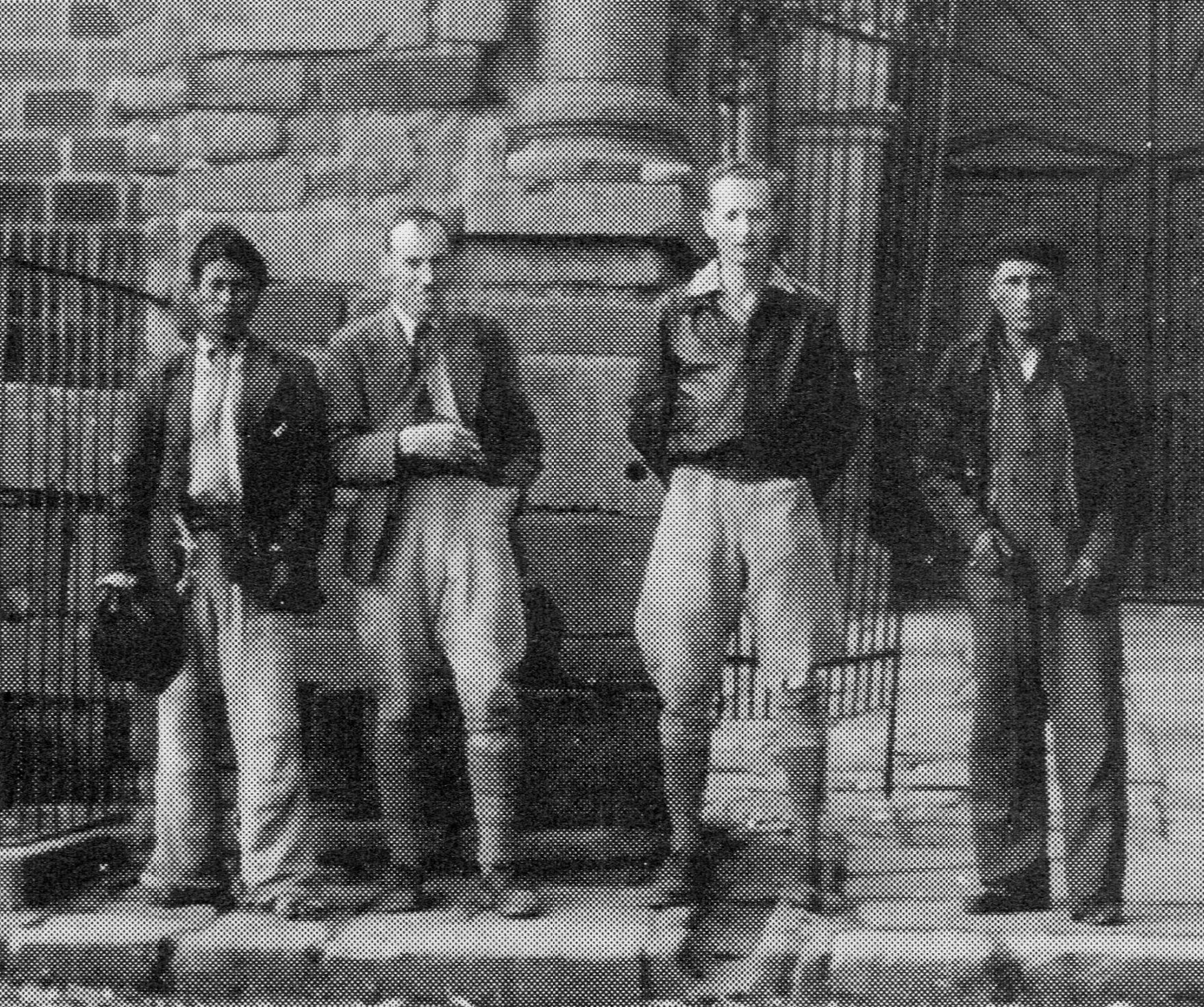
29 March 1939: Bolivia, dept. La Paz, near Lake Titicaca, Tiahuanaco. L to R: boy, Edward Balls, Jack Hawkes, driver.

The origins of the Commonwealth Potato Collection
Returning to Cambridge, just as the Second World War broke out, Jack completed his PhD under the renowned potato breeder Sir Redcliffe Salaman, who had established the Potato Virus Research Institute, where the Empire Potato Collection was set up, and after its transfer to the John Innes Centre in Hertfordshire, it became the Commonwealth Potato Collection (CPC) under the management of institute director Kenneth S Dodds (who published several keys papers on the genetics of potatoes).

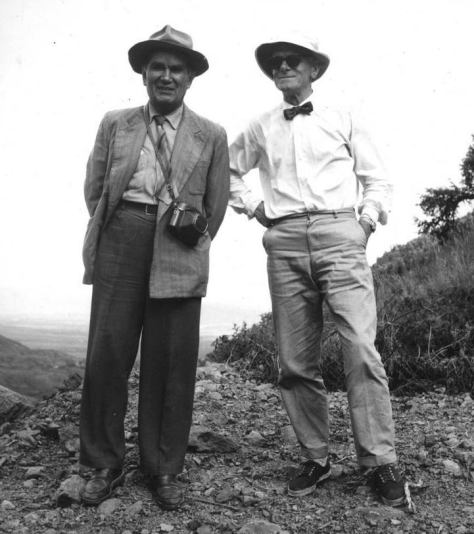
Bolivian botanist Prof Martin Cardenas (left) and Kenneth Dodds (right). Jack Hawkes named the diploid potato Solanum cardenasii after his good friend Martin Cardenas. It is now regarded simply as a form of the cultivated species S. phureja.

Hawkes’ taxonomic studies led to revisions of the tuber-bearing Solanums, first in 1963 and in a later book published in 1990 almost a decade after he had retired. You can see my battered copy of the 1963 publication below.

Dalton Glendinning

The CPC was transferred to the Scottish Plant Breeding Station (SPBS) at Pentlandfield just south of Edinburgh in the 1960s under the direction of Professor Norman Simmonds (who examined my MSc thesis). In the early 1970s the CPC was managed by Dalton Glendinning, and between November 1972 and July 1973 my wife Steph was a research assistant with the CPC at Pentlandfield. When the SPBS merged with the Scottish Horticultural Research Institute in 1981 to form the Scottish Crops Research Institute (SCRI) the CPC moved to Invergowrie, just west of Dundee on Tayside. The CPC is still held at Invergowrie, but now under the auspices of the James Hutton Institute following the merger in 2011 of SCRI with Aberdeen’s Macaulay Land Use Research Institute.

Today, the CPC is one of the most important and active genetic resources collections in the UK. In importance, it stands alongside the United States Potato Genebank at Sturgeon Bay in Wisconsin, and the International Potato Center (CIP) in Peru, where I worked for more than eight years from January 1973.

Hawkes continued in retirement to visit the CPC (and Sturgeon Bay) to lend his expertise for the identification of wild potato species. His 1990 revision is the taxonomy still used at the CPC.

So what has this got to do with the EU?
For more than a decade after the UK joined the EU (EEC as it was then in 1973) until that late 1980s, that corner of Birmingham was effectively outside the EU with regard to some plant quarantine regulations. In order to continue studying potatoes from living plants, Jack Hawkes was given permission by the Ministry of Agriculture, Fisheries and Food (MAFF, now DEFRA) to import potatoes—as botanical or true seeds (TPS)—from South America, without them passing through a centralised quarantine facility in the UK. However, the plants had to be raised in a specially-designated greenhouse, with limited personnel access, and subject to unannounced inspections. In granting permission to grow these potatoes in Birmingham, in the heart of a major industrial conurbation, MAFF officials deemed the risk very slight indeed that any nasty diseases (mainly viruses) that potato seeds might harbour would escape into the environment, and contaminate commercial potato fields.

Jack retired in 1982, and I took up the potato research baton, so to speak, having been appointed lecturer in the Department of Plant Biology at Birmingham after leaving CIP in April 1981. One of my research projects, funded quite handsomely—by 1980s standards—by the Overseas Development Administration (now the Department for International Development, DFID) in 1984, investigated the potential of growing potatoes from TPS developed through single seed descent in diploid potatoes (that have 24 chromosomes compared with the 48 of the commercial varieties we buy in the supermarket). To cut a long story short, we were not able to establish this project at Winterbourne, even though there was space. That was because of the quarantine restrictions related to the wild species collections were held and were growing on a regular basis. So we reached an agreement with the Plant Breeding Institute (PBI) at Trumpington, Cambridge to set up the project there, building a very fine glasshouse for our work.

Then Margaret Thatcher’s government intervened! In 1987, the PBI was sold to Unilever plc, although the basic research on cytogenetics, molecular genetics, and plant pathology were not privatised, but transferred to the John Innes Centre in Norwich. Consequently our TPS project had to vacate the Cambridge site. But to where could it go, as ODA had agreed a second three-year phase? The only solution was to bring it back to Birmingham, but that meant divesting ourselves of the Hawkes collection. And that is what we did. However, we didn’t just put the seed packets in the incinerator. I contacted the folks at the CPC and asked them if they would accept the Hawkes collection. Which is exactly what happened, and this valuable germplasm found a worthy home in Scotland.

In any case, I had not been able to secure any research funds to work with the Hawkes collection, although I did supervise some MSc dissertations looking at resistance to potato cyst nematode in Bolivian wild species. And Jack and I published an important paper together on the taxonomy and evolution of potatoes based on our biosystematics research.

A dynamic germplasm collection
It really is gratifying to see a collection like the CPC being actively worked on by geneticists and breeders. Especially as I do have sort of a connection with the collection. It currently comprises about 1500 accessions of 80 wild and cultivated species.

Sources of resistance to potato cyst nematode in wild potatoes, particularly Solanum vernei from Argentina, have been transferred into commercial varieties and made a major impact in potato agriculture in this country.

Safeguarded at Svalbard
Just a couple of weeks ago, seed samples of the CPC were sent to the Svalbard Global Seed Vault (SGSV) for long-term conservation. CPC manager Gaynor McKenzie (in red) and CPC staff Jane Robertson made the long trek north to carry the precious potato seeds to the vault.

Potato reproduces vegetatively through tubers, but also sexually and produces berries like small tomatoes – although they always remain green and are very bitter, non-edible.

We rarely see berries after flowering on potatoes in this country. But they are commonly formed on wild potatoes and the varieties cultivated by farmers throughout the Andes. Just to give an indication of just how prolific they are let me recount a small piece of research that one of my former colleagues carried out at CIP in the 1970s. Noting that many cultivated varieties produced an abundance of berries, he was interested to know if tuber yields could be increased if flowers were removed from potato plants before they formed berries. Using the Peruvian variety Renacimiento (which means rebirth) he showed that yields did indeed increase in plots where the flowers were removed. In contrast, potatoes that developed berries produced the equivalent of 20 tons of berries per hectare! Some fertility. And we can take advantage of that fertility to breed new varieties by transferring genes between different strains, but also storing them at low temperature for long-term conservation in genebanks like Svalbard. It’s not possible to store tubers at low temperature.

Here are a few more photos from the deposit of the CPC in the SGSV.

I am grateful to the James Hutton Institute for permission to use these photos in my blog, and many of the other potato photographs displayed in this post.

There’s more to genetic resources than Svalbard

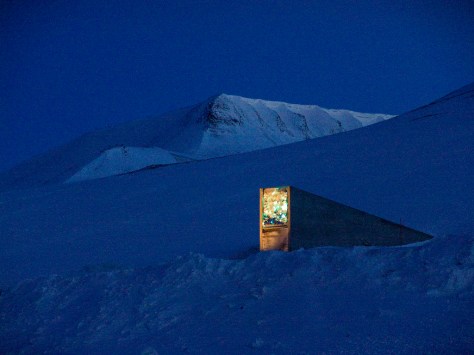
Way above the Arctic Circle (in fact at 78°N) there is a very large and cold hole in the ground. Mostly it is dark. Few people visit it on a daily basis.

A germplasm backup for the world
Nevertheless it’s a very important hole in the ground. It is the Svalbard Global Seed Vault, where more than 70 genebanks have placed — for long-term security, and under so-called blackbox storage [1] — a duplicate sample of seeds from their genetic resources (or germplasm) collections of plant species important for agriculture. Many of the most important and genetically diverse germplasm collections are backed up in Svalbard. But there are hundreds more collections, including some very important national collections, still not represented there.

A beacon of light – and hope – shining out over the Arctic landscape. Photo courtesy of the Crop Trust.

Since it opened in 2008, the Svalbard vault has hardly ever been out of the media; here is a recent story from Spain’s El Pais, for example. If the public knows anything at all about genetic resources and conservation of biodiversity, they have probably heard about that in relation to Svalbard (and to a lesser extent, perhaps, Kew Gardens’ Millennium Seed Bank at Wakehurst Place in Sussex).

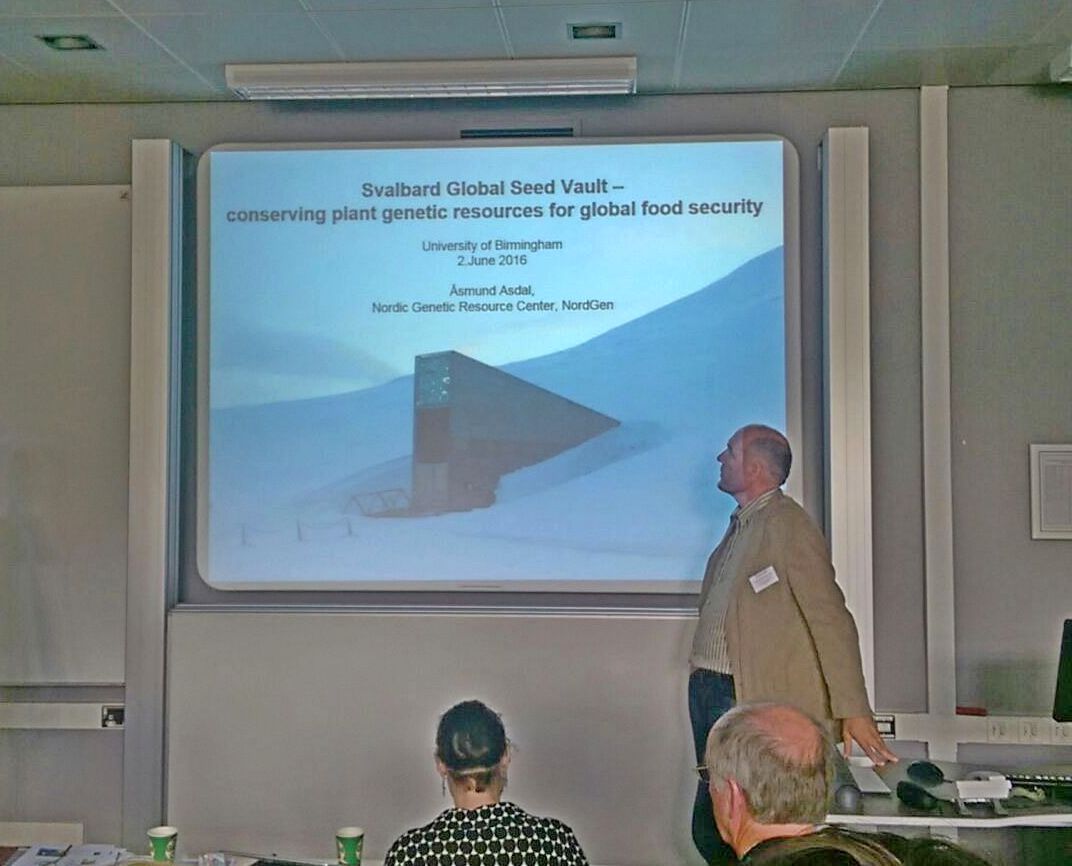
The Svalbard Vault is a key and vital component of a worldwide network of genebanks and genetic resources collections. It provides a long-term safety backup for germplasm that is, without doubt, the genetic foundation for food security; I have blogged about this before. At Svalbard, the seeds are ‘sleeping’ deep underground, waiting to be wakened when the time comes to resurrect a germplasm collection that is under threat. Waiting for the call that hopefully never comes.

Svalbard comes to the rescue
But that call did come in 2015 for the first and only time since the vault opened. Among the first depositors in Svalbard in 2008 were the international genebanks of the CGIAR Consortium, including the International Center for Agricultural Research in the Dry Areas (ICARDA). The ICARDA genebank conserves important cereal and legume collections from from the Fertile Crescent (the so-called ‘Cradle of Agriculture’) in the Middle East, and from the Mediterranean region. Until the civil war forced them out of Syria, ICARDA’s headquarters were based in Aleppo. Now it has reestablished its genebank operations in Morocco and Lebanon. In order to re-build its active germplasm collections, ICARDA retrieved over 15,000 samples from Svalbard in 2015, the only time that this has happened since the vault was opened. Now, thanks to successful regeneration of those seeds in Morocco and Lebanon, samples are now being returned to Svalbard to continue their long sleep underground.

ICARDA genebank staff ready to send precious seeds off to the Arctic. Dr Ahmed Amri, the ICARDA Head of Genetic Resources, is third from the right. Photo courtesy of ICARDA.

Another point that is often not fully understood, is that Svalbard is designated as a ‘secondary’ safety backup site. Genebanks sending material to Svalbard are expected to have in place a primary backup site and agreement. In the case of the International Rice Research Institute (IRRI), which I am most familiar with for obvious reasons, duplicate germplasm samples of almost the entire collection of 127,000 accessions, are stored under blackbox conditions in the -18°C vaults of The National Center for Genetic Resources Preservation in Fort Collins, Colorado. Although ICARDA had safety backup arrangements in place for its collections, these involved several institutes. To reestablish its active collections in 2015 it was simpler and more cost effective to retrieve the samples from just one site: Svalbard.

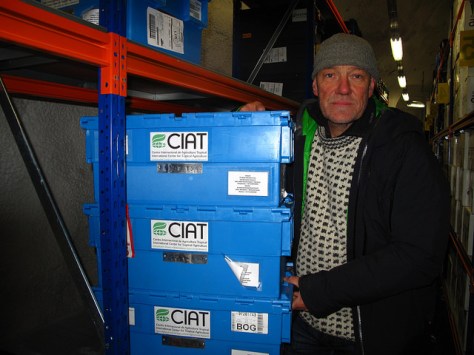
We see frequent reports in the media about seeds being shipped to Svalbard.  Just last week, the James Hutton Institute in Dundee, Scotland, announced that it was sending seeds of potatoes from the Commonwealth Potato Collection to Svalbard; it was even reported on the BBC. A few days ago, the International Maize and Wheat Improvement Center (CIMMYT) in Mexico sent a ton of seeds to the vault. The International Center for Tropical Agriculture (CIAT), in Cali, Colombia sent its latest shipment of beans and tropical forages last October.

30423318505_1b5fdb9c2d_z

Dr Åsmund Asdal, Coordinator of the Svalbard Global Seed Vault, from the Nordic Genetic Resource Center (NordGen), receives a shipment of germplasm from CIAT in October 2016. Photo courtesy of the Crop Trust.

The germplasm iceberg
Key and vital as Svalbard is, it is just the tip of the germplasm iceberg. The Svalbard vault is just like the part of an iceberg that you see. There’s a lot more going on in the genetic resources world that the public never, or hardly ever, sees.

There are, for example, other types of genetic resources that will never be stored at Svalbard. Why? Some plant species cannot be easily stored as seeds because they either reproduce vegetatively (and are even sterile or have low fertility at the very least; think of bananas, potatoes, yams or cassava); or have so-called recalcitrant seeds that are short-lived or cannot be stored at low temperature and moisture content like the seeds of many cereals and other food crop species (the very species stored at Svalbard). Many fruit tree species have recalcitrant seeds.

Apart from the ICARDA story, which was, for obvious reasons, headline news, we rarely see or hear in the media the incredible stories behind those seeds: where they were collected, who is working hard to keep them alive and studying the effects of storage conditions on seed longevity, and how plant breeders have crossed them with existing varieties to make them more resistant to diseases or better able to tolerate environmental change, such as higher temperatures, drought or flooding. Last year I visited a potato and sweet potato genebank in Peru, a bean and cassava genebank in Colombia, and one for wheat and maize in Mexico; then in Kenya and Ethiopia, I saw how fruit trees and forage species are being conserved.

Here is what happens at IRRI. You can’t do these things at Svalbard!

These are the day-to-day (and quite expensive) operations that genebanks manage to keep germplasm alive: as seeds, as in vitro cultures, or as field collections.

But what is the value of genebank collections? Check out a PowerPoint presentation I gave at a meeting last June. One can argue that all germplasm has an inherent value. We value it for its very existence (just like we would whales or tigers). Germplasm diversity is a thing of beauty.

Most landraces or wild species in a genebank have an option value, a potential to provide a benefit at some time in the future. They might be the source of a key trait to improve the productivity of a crop species. Very little germplasm achieves actual value, when it used in plant breeding and thereby bringing about a significant increase in productivity and economic income.

There are some spectacular examples, however, and if only a small proportion of the economic benefits of improved varieties was allocated for long-term conservation, the funding challenge for genebanks would be met. Human welfare and nutrition are also enhanced through access to better crop varieties.

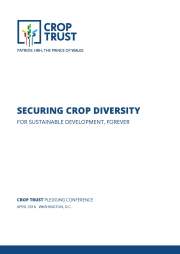
impact-paper_small_page_01Last year, in preparation for a major fund-raising initiative for its Crop Diversity Endowment Fund, the Crop Trust prepared an excellent publication that describes the importance of genebanks and their collections, why they are needed, and how they have contributed to agricultural productivity. The economic benefits from using crop wild relatives are listed in Table 2 on page 8. Just click on the cover image (right) to open a copy of the paper. A list of wild rice species with useful agronomic traits is provided in Table 3 on page 9.

Linking genebanks and plant breeding
Let me give you, once again, a couple of rice examples that illustrate the work of genebanks and the close links with plant breeding, based on careful study of genebank accessions.

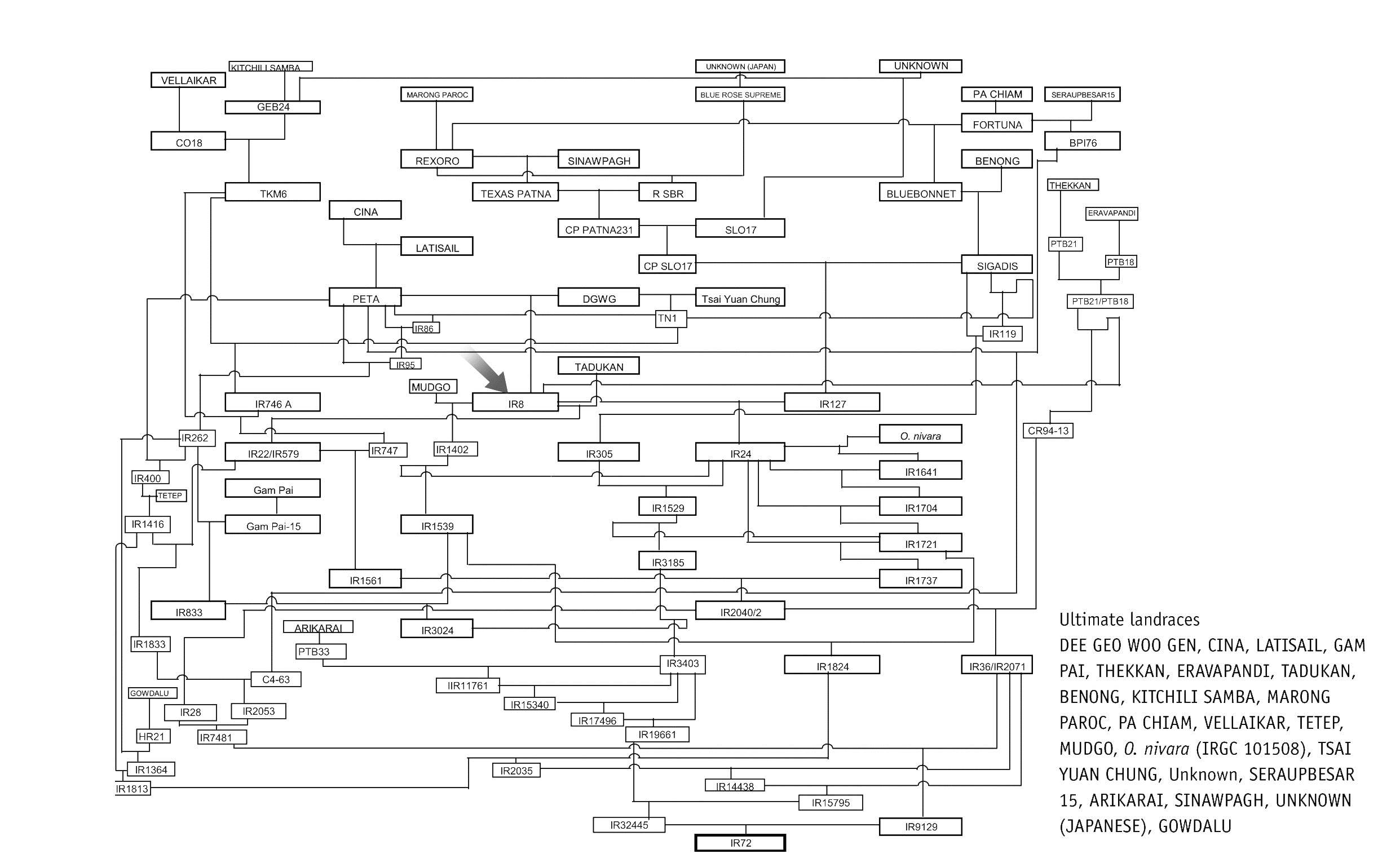
The indica variety IR72 was bred at IRRI, and released in 1990. It became the world’s highest yielding rice variety. One of its ancestors, IR36 was, at one time, grown on more than 11 million hectares. IR72 has 22 landrace varieties and a single wild rice, Oryza nivara, in its pedigree. It gets its short stature ultimately from IR8, the first of the so-called ‘miracle rices’ that was released in 1966. IRRI celebrated the 50th anniversary of that release recently. Resistance to a devastating disease, grassy stunt virus, was identified in just one accession of O. nivara from India. That resistance undoubtedly contributed to the widespread adoption of both IR36 and IR72. Just click on the pedigree diagram below to open a larger image [2].

IR Varieties_TOC.indd

The pedigree of rice variety IR72, that includes 22 landrace varieties and one wild species, Oryza nivara. Courtesy of IRRI.

A more recent example has been the search for genes to protect rice varieties against flooding [3]. Now that might seem counter-intuitive given that rice in the main grows in flooded fields. But if rice is completely submerged for any length of time, it will, like any other plant, succumb to submergence and die. Or if it does recover, the rice crop will be severely retarded and yield very poorly.

Rice varieties with and without the SUB1 gene after a period of inundation

Rice varieties with and without the SUB1 gene following transient complete submergence. Photo courtesy of IRRI.

Seasonal flooding is a serious issue for farmers in Bangladesh and eastern India. So the search was on for genes that would confer tolerance of transient complete submergence. And it took 18 years or more from the discovery of the SUB1 gene to the release of varieties that are now widely grown in farmers’ fields, and bringing productivity backed to farming communities that always faced seasonal uncertainty. These are just two examples of the many that have been studied and reported on in the scientific press.

There are many more examples from other genebanks of the CGIAR Consortium that maintain that special link between conservation and use. But also from other collections around the world where scientists are studying and using germplasm samples, often using the latest molecular genetics approaches [4] for the benefit of humanity. I’ve just chosen to highlight stories from rice, the crop I’m most familiar with.

~~~~~~~~~~~~~~~~~~~~~~~~~~~~~~~~~~~~~~~~
[1] Blackbox storage is described thus on the Crop Trust website (https://www.croptrust.org/our-work/svalbard-global-seed-vault/): “The depositors who will deposit material will do so consistently with relevant national and international law. The Seed Vault will only agree to receive seeds that are shared under the Multilateral System or under Article 15 of the International Treaty or seeds that have originated in the country of the depositor.

Each country or institution will still own and control access to the seeds they have deposited. The Black Box System entails that the depositor is the only one that can withdraw the seeds and open the boxes.” 

[2] Zeigler, RS (2014). Food security, climate change and genetic resources. In: M Jackson, B Ford-Lloyd & M Parry (eds). Plant Genetic Resources and Climate Change. CABI, Wallingford, Oxfordshire. pp. 1-15.

[3] Ismail, AM & Mackill, DJ (2014). Response to flooding: submergence tolerance in rice. In: M Jackson, B Ford-Lloyd & M Parry (eds). Plant Genetic Resources and Climate Change. CABI, Wallingford, Oxfordshire. pp. 251-269.

[4] McNally, KL (2014). Exploring ‘omics’ of genetic resources to mitigate the effects of climate change. In: M Jackson, B Ford-Lloyd & M Parry (eds). Plant Genetic Resources and Climate Change. CABI, Wallingford, Oxfordshire. pp. 166-189.

Genebanking, East Africa style

As part of the evaluation of the CGIAR’s program on Managing and Sustaining Crop Collections (aka the Genebanks CRP), my colleague Professor Brian Ford-Lloyd and I made site visits to two genebanks in Kenya and Ethiopia, at the World Agroforesty Centre (ICRAF) and the International Livestock Research Institute (ILRI), respectively.

20161011-002-icraf

L to R: Director General Tony Simons, Brian, Alice Muchugi, and me

Learning about trees
While I have visited ICRAF (the acronym for the institute’s former name, which is still used) a couple of times in the past, I had never visited the genebank, and was intrigued to learn more about the particularities of conserving tree germplasm for food and agriculture. And we were not disappointed.

ICRAF’s Genetic Resources Unit (GRU) is part of the Tree diversity, domestication and delivery science domain, and is managed by Dr Alice Muchugi. On its web site, it states that the GRU has a global role to collect, conserve, document, characterize and distribute a diverse collection of agroforestry trees, mainly focusing on indigenous species in all ICRAF working regions. The ICRAF seed bank in Nairobi and field genebanks in the regions ensure the supply of superior tree germplasm for research and conserve material for the benefit of present and future generations. The current aim of ex situ conservation activities at ICRAF is to be a world leader in the conservation of agroforestry tree germplasm and develop a global conservation system for priority agroforestry trees. Genetic resources databases provide information on agroforestry tree taxonomy, uses, suitability and sources of seed as well as details of the ICRAF agroforestry genetic resources collection. The Genetic Resources Strategy guides in ensuring that collections are conserved to international standards, encouraging quality research to fill information gaps and promote use, and sharing knowledge and germplasm to improve livelihoods.

The genebank holds more than 5000 accessions of some 190 tree species. Among the important species are the tallow tree (Allanblackia floribunda), the baobab (Adansonia spp.), and a whole slew of fruit tree species like mango.While many have seeds that can be stored at low temperature, others have short-lived or so-called recalcitrant seeds. Seed conservation is therefore quite challenging. Some species can only be maintained as living plants in field genebank collections at several sites around Africa and also in Peru. The conservation biology of some of the species is further complicated by sex! Some trees have separate male and female plants, known as dioecy. As you can imagine, this is a very important characteristic to know at the seedling stage, since it might take up to 25 years for a tree to flower. And it’s not much consolation for a farmer to discover then that he has planted only male trees. Knowing whether a seed or seedling is male or female is actually a rather important conservation objective.

Not only is the biology complicated for ICRAF’s genebank staff, seed size varies from the ‘dust’ of gum trees (Eucalyptus species) to fruits and seeds weighing a kilo or more. Many have very hard seed cases, and staff have to resort to garden secateurs to break into them, or even place a seed in a workbench vice and attack them with hammer and chisel! Because so few seeds are available for some species, the seedlings from germination tests are most often taken to the field nursery. In the following photos, Alice Muchugi and some of  her staff explain how seeds are tested in the laboratory and stored in the genebank

My genetic resources experience is limited mainly to potatoes and rice, each of which presents its own challenges. But nothing like the scale of agroforestry species. It was fascinating to see how Alice and her staff are successfully facing these challenges.

The Genetic Resources Research Institute (GeRRI) of Kenya
Brian and I took the opportunity of visiting the national genebank of Kenya, located at ‘at the former KARI Muguga South, 28 km from Nairobi, in Kiambu County. Muguga, located at an altitude of 2200 metres above sea-level, has a bimodal rainfall pattern and provides naturally cool temperatures that are conducive for genetic resources conservation‘. This was interesting for a number of reasons. We wanted to have a national perspective on the CGIAR genebanks program we were evaluating, but also to see how this national genebank was operating. The Institute Director, Dr Desterio Nyamongo, is also a Birmingham genetic resources alumnus, having studied for his MSc in the early 1990s (after I had left to join IRRI). I should add that Brian was the Course Director for the MSc course on plant genetic resources.

The genebank has more than 45,000 accessions of 2000 species, landraces and wild species, and aims eventually to cover the flora of Kenya. The comprises the usual facilities for data management, seed conservation, and cold storage units. We were very impressed with the program of the genebank, and it has engaged very actively in international agreements for the collection, conservation, and use of genetic resources. Its recent collaboration with Hyderabad-based ICRISAT has led to collections of sorghum, pigeonpea and finger millet in Kenya, and germplasm is now conserved in both the GeRRI and in ICRISAT’s regional genebank in Nairobi where it has already been evaluated for useful traits and selections released to farmers.

I had one small embarrassing moment as we were shown around the genebank. When introduced to one of the staff, Mr Joseph Kamau, he told me we had already met. My mind was a blank. In 1998, he had attended a training course at IRRI on morphological and agronomic characterisation of rice varieties, as part of the participation by Kenya in the IRRI-led (and Swiss-sponsored) Rice Biodiversity Project. There he is on the left in the second row.

irri004

Now, forages are another thing . . .
After Nairobi, Brian and I moved on to ILRI’s Addis Ababa campus. We had earlier visited ILRI’s headquarters in Nairobi, located a few miles west of ICRAF.

ILRI’s genebank has always been located in Ethiopia, and has a very large collection of forage species (legumes and grasses) important for livestock. It has almost 19,000 accessions of 1000 species. During our recent visit to Australia we heard about a strategy for the conservation of forage species that aims to rationalise the forages collection held at ILRI and CIAT in Colombia (that I visited at the end of July). Forages are complex to conserve. The breeding system for many is not fully understood, nor their tolerance of low temperature storage conditions. The strategy contemplates archiving some of the species, since it’s unlikely that they will be useful for agriculture, even in the medium-term.

The head of the genebank is Dr Jean Hanson, a seed physiologist by training, and another Birmingham alumna, both MSc (1973) and PhD. Jean and I received our PhD degrees at the same congregation in December 1975. Jean has tried to retire at least once, but was asked to return to her old position after her successor left ILRI after just one year. Nevertheless, Jean has her sights set on permanently retiring once the new genebank facilities in Addis are commissioned in 2017.

In managing a genebank, you sometimes have to make tough (even hard) decisions. I never expected to have to become hard-hatted!

But that’s exactly what we had to do during our visit, as Jean showed us round the impressive building that is being constructed around the existing cold store and will expand the conservation capacity significantly. It’s also interesting that the genebank and its collection will now be managed through ILRI’s Feed and Forages Biosciences program, whose new head, Dr Chris Jones is keen to use genomics to study and exploit the diversity in this important germplasm collection.

In these photos, Jean explained some of the complexities of seed increase in the greenhouse (these were Trifolium or clover species), and in the field where it’s often necessary to spatially separate different accessions to prevent cross pollination. She also showed us bar-coded samples in small refrigerators of the Most Original Samples – samples closest genetically to the germplasm collected in the field. We did go inside one of the cold stores after navigating our way through a construction site. Thus the hard hats for health and safety purposes.

This is an important investment by ILRI in its genetic resources conservation responsibilities, and is a great commitment for the future, based no doubt on the broader institutional support for genetic resources conservation through the Genebanks CRP (soon to become the Genebanks Platform).


Genebanking Down Under

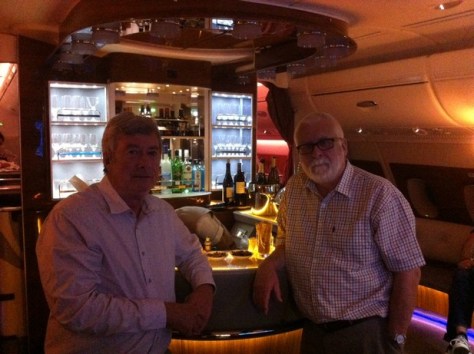
I have just returned from Australia, a round trip of almost 21,500 miles, to attend the Annual Genebanks Meeting of the CGIAR’s Genebanks CRP. I was in Australia for only four nights! I travelled there with my colleague Brian Ford-Lloyd. Considering the distance I think I coped with the travel reasonably well, no jet-lag to speak of, although I was just tired from the length of each flight. There’s no doubt that travelling business class with Emirates took away much of the ‘travel pain’, with three of the sectors (DXB-MEL, MEL-DXB, and DXB-BHX) operated with the A380-800.

20161104-001-australia

Brian and me enjoying a wee dram in the A380 upper-deck lounge on the flight from Melbourne to Dubai, all 14 hours plus.

Arrival in Australia
We landed in Melbourne early on the Sunday morning. I was just thankful to be there. Our trip down-under had not be confirmed until a week before we were due to travel on Friday 28 October. I immediately applied for a free visa (yes, even UK citizens need a visa for Australia) through the official Australian Government Department of Immigration and Border Protection (DIBP) website. It indicated that most visas are granted in one working day. Since it was a Friday when I applied, I didn’t expect to receive my visa until Monday morning, UK time when offices in Tasmania would already be closed.

Well, to cut a long story short, I still hadn’t heard back from the DIBP on Thursday, the day before I was scheduled to travel. Talk about stress! So I bit the bullet and applied for an ETA (electronic travel authorisation) through an agency, and paid for the Fast Track (20 minute) service. And less than 30 minutes later I had my travel authorisation. Weird. I did wonder if this was a scam, but when I checked in at the departure gate at BHX to board the flight to Dubai, the system initially denied me permission to board, but once my passport details were entered into the system, there was my authorisation.

On landing in Dubai on the Saturday morning (29 October), I checked my emails, and there was a message from the DIBP with my ‘official’ visa approval. I had no issues at all when we went through immigration in Melbourne.

About five or six hours after departing Dubai I woke up and needed to visit the toilet. By then, we’d hit rough air (somewhere off the coast of south India) and the cabin crew wouldn’t let me out of my seat. So I had to sit uncomfortably cross-legged until the seat belt signs had been turned off.

The meeting that Brian and I were to attend was held in Horsham, a small town with a population of around 14,000, half distance between Melbourne and Adelaide in western Victoria. We met up with the rest of the genebank managers group at an airport hotel. They were all headed for a tour of the lovely Royal Botanic Gardens Victoria in Melbourne (that Steph and I had visited in January 2004). Instead Brian and I were able to take a half day room, have a shower and get our heads down for a few hours before leaving on the 3½ hour coach trip to Horsham.

The AGM was hosted in Horsham at the Grains Innovation Park, an agricultural research station on the western limits of the town, and the location of the Australian Grains Genebank.

Australia’s genebanks
Until quite recently, Australia did not have any federal genebanks, rather genetic resources conservation was the responsibility of various state agencies. Having no federal coordination in this respect, it was difficult for Australia to comply fully with the International Treaty on Plant Genetic Resources for Food and Agriculture. So two national genebanks were set up. Horsham is the home of the Australian Grains Genebank (AGG), a state-of-the art facility built in the last couple of years, and headed by Dr Sally Norton. The other genebank (that we didn’t visit) is the Australian Pastures Genebank (APG) located in Adelaide. However, the leader of that genebank, Mr Steve Hughes and some of his colleagues did attend the open second half of the meeting held in Melbourne.

agg002During one of the meeting breaks, Sally Norton took us on a tour of the genebank. The AGG ‘underpins the development of new, more productive temperate and tropical grain crop varieties for Australia . . . to acquire, conserve, maintain stocks of viable seed, and distribute seed of diverse germplasm to Australia plant research and breeding programs.’ Click on the flyer image to open a PDF version.

The genebank has an impress collection of cereals, pulses, and oilseeds, almost 119,000 accessions in total, of which >5000 are unique (that is, as far as can be determined, they do not exist in any other genebank collection).

The genebank has impressive interconnected facilities: a laboratory for seed sorting and cleaning, a drying room with controlled temperature and relative humidity to dry seeds to an acceptable equilibrium moisture content, and several cold stores, all at -20C.

We spent two days in closed meetings, during which Brian and I sat quietly at the back of the room, intently listening to the discussions about the Genebanks CRP, its progress and achievements, and plans for the next phase beginning in 2017.

On the Wednesday, we had a tour of other facilities at the Grains Innovation Park, before setting off to Melbourne for a break at Brambuk, the National Park & Cultural Center in the Grampians National Park, a BBQ lunch and the chance to get up close and personal with some native Australian wildlife.

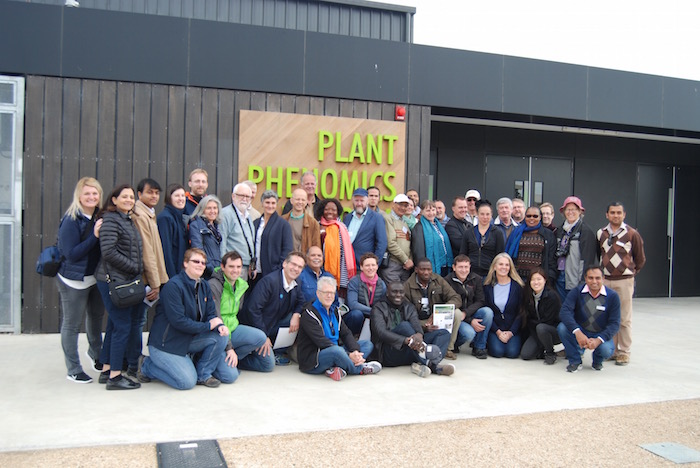
ppv002Another facility that has recently opened at Horsham is Plant Phenomics Victoria.

It’s one thing to conserve seeds of potentially useful varieties and wild species. It’s another to discover if they have traits useful for breeders to increase productivity. The study of plants for drought or heat tolerance, for example has certainly moved into the 21st century. Not only can drones (and other pieces of clever kit) be used to record in real time the responses of individual plants and even whole crops in the field, but sophisticated equipment can be used to measure plants every few minutes or more frequently. And at Horsham, Plant Phenomics Victoria is a AUD7 million initiative with greenhouses, growth chambers and a state-of-the-art automated high-throughput phenotyping system (that is, for measuring how the plants look and grow). Just check out what this facility can be used for by clicking on the image on the left and opening a PDF flyer. Pots move along various conveyor belts, are photographed, weighed, water use and temperature measured – all automatically. Very impressive.

Up close with a koala
We had a great time getting to know a koala (named Bruce – what else?), a young kangaroo, dingo, crocodile, echidna, and python, and a toothy wombat at Brambuk. I’ve never touched a snake before – somewhat of a phobia for me. But I decided to have the python draped around my neck, and help hold a jumpy crocodile. Thank goodness its jaw was held shut! Then it was back on the coach to Melbourne.

Brian and I stayed on for one more day, departing on the Thursday evening, having missed a bush meat (kangaroo and crocodile, among others) BBQ in Melbourne. Our flight departed at 22:35, and we landed, on time at BHX just after 11:30 on Friday morning. It was interesting landing at BHX in an A380, a service that Emirates launched earlier this year, replacing the Boeing Triple 7 on that midday service. Apparently Emirates will replace its evening service that we took to Dubai with another A380 in January. It just goes to show how profitable this BHX-DXB route has become.

If it’s Wednesday, it must be Colombia . . .

Not quite the ‘Road to Rio . . .’
I have just returned from one of the most hectic work trips I have taken in a very long time. I had meetings in three countries: Peru, Colombia, and Mexico in just over 6½ days.

And then, of course, there were four days of travel, from Birmingham to Lima (via Amsterdam), Lima to Cali (Colombia), then on to Mexico City, and back home (again via Amsterdam). That’s some going. Fortunately the two long-haul flights (BHX-AMS-LIM and MEX-AMS-BHX) were in business class on KLM. Even so the journeys from Lima to Cali (direct, on Avianca) and Cali to Mexico (via Panama City, on COPA) were 12 hours and 11 hours door-to-door, respectively, the former taking so long because we were delayed by more than 5 hours.

As I have mentioned in an earlier blog post, I am leading the evaluation of the program to oversee the genebank collections in eleven of the CGIAR centers (known as the Genebanks CRP). Together with my team colleague, Marisé Borja, we met with the genebank managers at the International Potato Center (CIP, in Lima), the International Center for Tropical Agriculture (CIAT, in Cali), and the International Maize and Wheat Improvement Center (CIMMYT, in Texcoco near Mexico City).

20160724 018

A drop of cognac.

It all started on Sunday 24 July, when I headed off to Birmingham Airport at 04:30 for a 6 o’clock flight to Amsterdam. Not really having slept well the night before, I can’t say I was in the best shape for flying half way round the world. I had a four hour stopover in Amsterdam, and managed to make myself more or less comfortable in the KLM lounge before boarding my Boeing 777-300 Lima flight sometime after noon. There’s not a lot to do on a long flight across the Atlantic except eat, drink and (try to) sleep. I mainly did the first two.

It never ceases to impress me just how vast South America is. Once we crossed the coast of Venezuela and headed south over the east of Colombia and northern Peru we must have flown for about three hours over rain forest as far as you could see. I wish I’d taken a few pictures of the interesting topography of abandoned river beds and oxbow lakes showing through all that dense vegetation. At one point we flew over a huge river, and there, on its banks, was a city, with an airport to the west. I checked later on Google Maps, and I reckon it must have been Iquitos in northern Peru on the banks of the Amazon. Over 2000 miles from the Atlantic, ocean going ships can sail all the way to Iquitos. I once visited Iquitos in about 1988 in search of cocoa trees, and we crossed the Amazon (about two miles wide at this point) in a small motorboat.

Then the majestic Andes came into view, and after crossing these we began our long descent into Lima, with impressive views of the mountains all the way and, nearer Lima, the coastal fogs that creep in off the Pacific Ocean and cling to the foothills of the Andes.

We landed on schedule at Jorge Chavez International Airport in Lima around 18:00 (midnight UK time) so I had been travelling almost 20 hours since leaving home. I was quickly through Immigration and Customs, using the Preferencial (Priority) line reserved for folks needing special assistance. My walking stick certainly gives me the edge these days on airlines these days.

Unfortunately, the taxi that had been arranged to take me to my hotel, El Condado, in the Lima district of Miraflores (where Steph and I lived in the 1970s) was a no-show. But I quickly hired another through one of the official taxi agencies inside the airport (necessary because of the various scams perpetrated by the cowboy taxi drivers outside the terminal) at half the price of the pre-arranged taxi.

After a quick shower, I met up with old friends and former colleagues at CIP, Dr Roger Rowe and his wife Norma. I first joined CIP in January 1973, and Roger joined in July that same year as CIP’s first head of Breeding & Genetics. He was my first boss!

20160724 001

They were in the bar, and we enjoyed several hours of reminiscences, and a couple of pisco sours (my first in almost two decades), and a ‘lite bite’ in the restaurant. It must have been almost 11 pm before I settled into bed. That was Sunday done and dusted. The work began the following morning.

All things potatoes . . . and more
I haven’t been to CIP since the 1990s. Given the tight schedule of meetings arranged for us, I didn’t get to see much more than the genebank and dining room.

CIP has a genebank collection of wild and cultivated potatoes (>4700 samples or accessions, most from the Andes of Peru), wild and cultivated sweet potatoes (>6400, Ipomoea spp.), and Andean roots and tubers (>1450) such as ulluco (Ullucus tuberosus), mashua (Tropaeolum tuberosum), and oca (Oxalis tuberosa).

20160726 028

Native potato varieties.

Although potatoes are grown annually at the CIP experiment station at Huancayo, some six or more hours by road east of Lima, at over 10,000 feet in the Mantaro Valley, and sweet potatoes multiplied in greenhouses at CIP’s coastal headquarters at La Molina, the collections are maintained as in vitro cultures and, for potatoes at least, in cryopreservation at the temperature of liquid nitrogen. The in vitro collections are safety duplicated at other sites in Peru, with Embrapa in Brazil, and botanical seeds are safely stored in the Svalbard Global Seed Vault.

With a disease pressure from the many diseases that affect potato in its center of origin—fungal, bacterial, and particularly viruses—germplasm may only be sent out of the country if it has been declared free of these diseases. That requires growth in aseptic culture and treatments to eradicate viruses. It’s quite an operation. And the distribution does not even take into account all the hoops that everyone has to jump through to comply with local and international regulations for the exchange of germplasm.

The in vitro culture facilities at CIP are rather impressive. When I worked at CIP more than 40 years ago, in vitro culture was really in its infancy. Today, its application is almost industrial in scale.

Our host at CIP was Dr David Ellis, genebank manager, but we also met with several of the collection curators and managers.

20160725 009

L to R: Ivan Manrique (Andean roots and tubers), Alberto Salas (consultant, wild potatoes), Marisé Borja (evaluation team), me, René Gómez (Senior Curator), David Ellis.

20160725 010

Alberto Salas, now in his 70s, worked as assistant to Peruvian potato expert Prof. Carlos Ochoa. Alberto’s wealth of knowledge about wild potatoes is enormous. I’ve known Alberto since 1973, and he is one of the most humble and kind persons I have ever met.

Prior to our tour of the genebank, René Gómez and Fanny Vargas of the herbarium had found some specimens that I had made during my studies in Lima during 1973 and 1974. I was also able to confirm how the six digit germplasm numbering system with the prefix ’70’ had been introduced and related to earlier designations.

It was great to see how the support from the Genebanks CRP has brought about so many changes at CIP.

Lima has changed so much over the past couple of decades. It has spread horizontally and upwards. So many cars! In the district of Miraflores where we used to live, the whole area has been refurbished and become even smarter. So many boutiques and boutique restaurants. My only culinary regret is that the famous restaurant La Rosa Nautica, on a pier over the Pacific Ocean closed down about two months ago. It served great seafood and the most amazing pisco sours.

All too soon our two days in Lima were over. Next stop: Cali, Colombia.

Heading to the Cauca Valley . . . 
Our Avianca flight to Cali (an Embraer 190, operated by TACA Peru) left on time at 10:25. Once we’d reached our cruising altitude, the captain turned off the seat belt sign, and I headed to the toilet at the front of the aircraft, having been turned away from the one at the rear. Strange, I thought. I wasn’t allowed to use the one at the front either. It seems that both refused to flush. The captain decided to return to Lima, but as we still almost a full load of fuel, he had to burn of the excess so we could land safely. So, at cruising altitude and as we descended, he lowered the undercarriage and flaps to create drag which meant he had to apply more power to the engines to keep us flying, thereby burning more fuel. Down and down we went, circling all the time, for over an hour! We could have made it to Cali in the time it took us to return to Lima. We could have all sat there with legs crossed, I guess.

Once back on the ground, engineers assessed the situation and determined they could fix the sensor fault in about a couple of hours. We were taken back to the terminal for lunch, and around 15:30 we took off again, without further incident.

But as we waited at the departure gate for a bus to the aircraft, there was some impromptu entertainment by a group of musicians.

Unfortunately because of our late arrival in Cali, we missed an important meeting with the CIAT DG, who was not available the following days we were there.

CIAT was established in 1967, and is preparing for its 5oth anniversary next year.

Daniel Debouck, from Belgium, is CIAT’s genebank manager, and he has been there for more than 20 years. He steps down from this position at the end of the year, and will be replaced by Peter Wenzl who was at the Global Crop Diversity Trust in Bonn until the end of April this year. Daniel is an internationally-recognised expert on Phaseolus beans.

The CIAT genebank has three significant collections: wild and cultivated Phaseolus beans (almost 38,000 accessions), wild and cultivated cassava (Manihot spp., >6600 accessions in vitro or as ‘bonsai’ plants), and more than 23,000 accessions of tropical forages. Here’s an interesting fact: one line of the forage grass Brachiaria is grown on more than 100 million hectares in Brazil alone!

20160729 021

Me and Daniel Debouck.

20160729 022

Bean varieties.

The bean collections are easily maintained as seeds in cold storage, as can most of the forages. But, like potato, the cassava accessions present many of the same quarantine issues, have to be cleaned of diseases, particularly viruses, and maintained in tissue culture. Cryopreservation is not yet an option for cassava, and even in vitro storage needs more research to optimise it for many clones.

20160729 040

QMS manuals in the germplasm health laboratory.

Like many of the genebanks, CIAT has been upgrading its conservation processes and procedures through the application of a Quality Management System (QMS). A couple of genebanks (including CIP) have opted for ISO certification, but I am of the opinion that this is not really suitable for most genebanks. Everything is documented, however,  including detailed risk assessments, and we saw that the staff at CIAT were highly motivated to perform to the highest standards. In all the work areas, laboratory manuals are always to hand for easy reference.

An exciting development at CIAT is the planned USD18-20 million biodiversity center, with state of the art conservation and germplasm health facilities, construction of which is expected to begin next year. It is so designed to permit the expected thousands of visitors to have good views of what goes on in a genebank without actually having to enter any of the work areas.

On our first night in Cali, our hosts graciously wined and dined us at Platillos Voladores, regarded as one of Cali’s finest restaurants.

1520778_329652313848934_5424856017809772967_n

We had the private room for six persons with all the wine bottles on the wall, which can be seen in this photo above.

Arriba, arriba! Andale!
On Saturday afternoon around 15:30, we headed to Mexico City via Tocumen International Airport in Panama City. Cali’s international airport is being expanded significantly and there are now international flights to Europe as well as the USA. This must be great for CIAT staff, as the airport is only 15 minutes or so from the research center.

After takeoff, we climbed out of the Cauca Valley and had great views of productive agriculture, lots of sugar cane.

Tocumen is lot busier than when I was travelling through therein the late 1970s. With several wide-bodied jets getting set to depart to Europe, the terminal was heaving with passengers and there was hardly anywhere to sit down. On our COPA 737-800 flight to Mexico I had chosen aisle seat 5D immediately behind the business class section, so had plenty of room to stretch my legs. Much more comfortable than had I stayed with the seat I was originally assigned. I eventually arrived to CIMMYT a little after midnight.

CIMMYT is the second oldest of the international agricultural centers of the CGIAR, founded in 1966. And it is about to celebrate its 50th anniversary in about 1 month from now. IRRI, where I worked for 19 years, was the first center.

Unlike many of the CGIAR centers that have multi-crop collections in their genebanks (ICARDA, ICRISAT, and IITA for example), CIMMYT has two independent genebank collections for maize and wheat in a single facility, inaugurated in 1996, and dedicated to two renowned maize and wheat scientists, Edwin Wellhausen and Glenn Anderson. But CIMMYT’s most famous staff member is Nobel Peace prize Laureate, Norman Borlaug, ‘Father of the Green Revolution’.

Tom Payne and Denise Costich are the wheat and maize genebank managers. CIMMYT’s genebank has ISO 9001:2008 accreditation.

20160802 014

20160802 003

Ayla Sençer

Tom has been at CIMMYT in various wheat breeding capacities for more than 25 years. In addition to managing the wheat genebank, Tom manages the wheat international nurseries. One of the first curators of the wheat collection was Ayla Sençer from Turkey, and a classmate of mine when we studied at Birmingham in 1970 for the MSc in Conservation and Utilisation of Plant Genetic Resources. The CIMMYT wheat collection is unlike many other germplasm collections in that most of the 152,800 samples are actually breeding lines (in addition to landrace varieties and wild species).

Denise joined CIMMYT just a year or so ago, from the USDA. She has some very interesting work on in situ conservation and management of traditional maize varieties in Mexico and Guatemala. A particular conservation challenge for the maize genebank is the regeneration of highland maizes from South America that are not well-adapted to growing conditions in Mexico. The maize collection comprises over 28,000 accessions including a field collection of Tripsacum (a wild relative of maize).

In recent years has received major infrastructure investments from both the Carlos Slim Foundation and the Bill & Melinda Gates Foundation. New laboratories, greenhouses and the like ensure that CIMMYT is well-placed to deliver on its mission. And the support received through the Genebanks CRP has certainly raised the morale of genebank staff.

On our last day at CIMMYT (Wednesday), we met with Janny van Beem from the Crop Trust. Janny is a QMS expert, based in Houston, Texas, and she flew over to Mexico especially to meet with Marisé and me. When we visiited Bonn in April we only had opportunity to speak by Skype with Janny for jsut 30 minutes. Since the implementation of QMS in the genebanks seems to be one of the main challenges—and success stories—of the Genebanks CRP, we thought it useful to have an in-depth discussion with Janny about this. And very useful it was, indeed!

On the previous evening (Tuesday) Tom, Denise, Marisé, Janny and I went out for dinner in Texcoco, to a well-known tacqueria, then into the coffee shop next door afterwards. No margaritas that night – we’d sampled those on Monday.

20160802 044

L to R: Janny, me, Tom, Marisé, and Denise.

But on this trip we did have one free day, Sunday. And I met up with members of CIMMYT’s Filipino community, many of them ex-IRRI employees, some of who worked in units for which I had management responsibility. They organised a ‘boodle fight‘ lunch, and great fun was had by one and all.

Hasta la vista . . .
At 6 pm on Wednesday I headed into Mexico City to take the KLM flight to Amsterdam. It was a 747-400 Combi (half passengers, half cargo). I haven’t flown a 747 for many years, and I’d forgotten what a pleasant experience it can be. It’s remarkable that the 747 is being phased out by most airlines; they are just not as economical as the new generation twin engine 777s, 787s, and A350s.

With the new seating configuration, I had a single seat, 4E, in the center of the main deck forward cabin. Very convenient. I was glad to have the opportunity of putting my leg up for a few hours. Over the previous 10 days my leg had swelled up quite badly by the end of each day, and it was quite painful. The purser asked if I had arranged any ground transport at Schipol to take me from the arrival to departure gates. I hadn’t, so she arranged that for me before we landed. The distances at Schipol between gates can be quite challenging, so I was grateful for a ride on one of the electric carts.

But after we went through security, my ‘assistant’ pushed me to my gate in a wheelchair. I must admit I felt a bit of a fraud. An electric cart is one thing, and most welcome. But a wheelchair? Another was waiting for me on arrival at Birmingham. Go with the flow!

20160804 014

I was all alone in Business Class from Schipol to Birmingham. We were back at BHX on time, and I was out in the car park looking for my taxi home within about 20 minutes, and home at 6 pm.

Now the hard work really begins—synthesising all the discussions we had with so many staff at CIP, CIAT, and CIMMYT. For obvious reasons I can’t comment about those discussions, but visiting these important genebanks in such a short period was both a challenging but scientifically enriching experience.

Plant Genetic Resources: Our challenges, our food, our future

phillips-jade

Jade Phillips

That was the title of a one day meeting on plant genetic resources organized by doctoral students, led by Jade Phillips, in the School of Biosciences at The University of Birmingham last Thursday, 2 June. And I was honoured to be invited to present a short talk at the meeting.

Now, as regular readers of my blog will know, I began my career in plant genetic resources conservation and use at Birmingham in September 1970, when I joined the one year MSc course on genetic conservation, under the direction of Professor Jack Hawkes. The course had been launched in 1969, and 47 years later there is still a significant genetic resources presence in the School, even though the taught course is no longer offered (and hasn’t accepted students for a few years). Staff have come and gone – me included, but that was 25 years ago less one month, and the only staff member offering research places in genetic resources conservation is Dr Nigel Maxted. He was appointed to a lectureship at Birmingham (from Southampton, where I had been an undergraduate) when I upped sticks and moved to the International Rice Research Institute (IRRI) in the Philippines in 1991.

image

Click on this image for the full program and a short bio of each speaker.

Click on each title below; there is a link to each presentation.

Nigel Maxted (University of Birmingham)
Introduction to PGR conservation and use

Ruth Eastwood (Royal Botanic Gardens, Kew – Wakehurst Place)
‘Adapting agriculture to climate change’ project

Holly Vincent (PhD student, University of Birmingham)
Global in situ conservation analysis of CWR

Joana Magos Brehm (University of Birmingham)
Southern African CWR conservation

Mike Jackson
Valuing genebank collections

Åsmund Asdal (NordGen)
The Svalbard Global Seed Vault

Neil Munro (Garden Organic)
Heritage seed library

Maria Scholten
Natura 2000 and in situ conservation of landraces in Scotland: Machair Life (15 minute film)

Aremi Contreras Toledo, Maria João Almeida, and Sami Lama (PhD students, University of Birmingham)
Short presentations on their research on maize in Mexico, landraces in Portugal, and CWR in North Africa

Julian Hosking (Natural England)
Potential for genetic diversity conservation – the ‘Fifth Dimension’ – within wider biodiversity protection

I guess there were about 25-30 participants in the meeting, mainly young scientists just starting their careers in plant genetic resources, but with a few external visitors (apart from speakers) from the Millennium Seed Bank at Kew-Wakehurst Place, the James Hutton Institute near Dundee, and IBERS at Aberystwyth.

The meeting grew out of an invitation to Åsmund Asdal from the Nordic Genetic Resources Center (NordGen) to present a School of Biosciences Thursday seminar. So the audience for his talk was much bigger.

asmund

Åsmund is Coordinator of Operation and Management for the Svalbard Global Seed Vault, and he gave a fascinating talk about the origins and development of this important global conservation facility, way above the Arctic Circle. Today the Vault is home to duplicate samples of germplasm from more than 60 depositor genebanks or institutes (including the international collections held in the CGIAR genebank collections, like that at IRRI.

Nigel Maxted’s research group has focused on the in situ conservation and use of crop wild relatives (CWR), although they are also looking at landrace varieties as well. Several of the papers described research linked to the CWR Project, funded by the Government of Norway through the Crop Trust and Kew. Postdocs and doctoral students are looking at the distributions of crop wild relatives, and using GIS and other sophisticated approaches that were beyond my comprehension, to determine not only where there are gaps in distributions, lack of germplasm in genebank collections, but also where possible priority conservation sites could be established. And all this under the threat of climate change. The various PowerPoint presentations demonstrate these approaches—which all rely on vast data sets—much better than I can describe them. So I encourage you to dip into the slide shows and see what this talented group of scientists has been up to.

Neil Munro from Garden Organic described his organization’s approach to rescue and multiply old varieties of vegetables that can be shared among enthusiasts.

n_munro

Seeds cannot be sold because they are not on any official list of seed varieties. What is interesting is that one variety of scarlet runner bean has become so popular among gardeners that a commercial seed company (Thompson & Morgan if I remember what he said) has now taken  this variety and selling it commercially.

julian

Julian Hosking from Natural England gave some interesting insights into how his organization was looking to combine the conservation of genetic diversity—his ‘Fifth Dimension’—with conservation of natural habitats in the UK, and especially the conservation of crop wild relatives of which there is a surprisingly high number in the British flora (such as brassicas, carrot, and onions, for example).

So, what about myself? When I was asked to contribute a paper I had to think hard and long about a suitable topic. I’ve always been passionate about the use of plant genetic diversity to increase food security. I decided therefore to talk about the value of genebank collections, how that value might be measured, and I provided examples of how germplasm had been used to increase the productivity of both potatoes and rice.

m_jackson

Nicolay Vavilov is a hero of mine

Although all the speakers developed their own talks quite independently, a number of common themes emerged several times. At one point in my talk I had focused on the genepool concept of Harlan and de Wet to illustrate the biological value (easy to use versus difficult to use) of germplasm in crop breeding.

Jackson FINAL - Valuing Genebank Collections

In the CWR Project research several speakers showed how the genepool concept could be used to set priorities for conservation.

Finally, there was one interesting aspect to the meeting—from my perspective at least. I had seen the titles of all the other papers as I was preparing my talk, and I knew several speakers would be talking about future prospects, especially under a changing climate. I decided to spend a few minutes looking back to the beginning of the genetic conservation movement in which Jack Hawkes was one of the pioneers. What I correctly guessed was that most of my audience had not even been born when I started out on my genetic conservation career, and probably knew very little about how the genetic conservation movement had started, who was involved, and what an important role The University of Birmingham had played. From the feedback I received, it seems that quite a few of the participants were rather fascinated by this aspect of my talk.

How many crop varieties can you name?

Do you ever look at the variety name on a bag of potatoes in the supermarket? I do. Must get a life.

How many potato varieties can you name? Reds? Whites? Or something more specific, like Maris Piper, King Edward, or Desiree to name just three? Or do you look for the label that suggests this variety or that is better for baking, roasting, mashing? Let’s face it, we generally buy what a supermarket puts on the shelf, and the choice is pretty limited. What about varieties of rice? Would it just be long-grain, Japanese or Thai, arboreo, basmati, maybe jasmine? 

When I lived in the Philippines, we used to buy rice in 10 kg bags (although you could buy 25 kg or larger if you so desired). On each, the variety name was printed. This was important because they all had different cooking qualities or taste (or fragrance in the case of the Thai jasmine rice). In Filipino or Thai markets, it’s not unusual to see rice sold loose, with each pile individually labelled and priced, as the two images below show¹:

Today, our rather limited choice of varieties on the shelf does change over time as new ones are adopted by farmers, or promoted by the breeding companies because they have a better flavor, cooking quality, or can be grown more efficiently (often because they have been bred to resist diseases better).

Apples on the other hand are almost always promoted and sold by variety: Golden Delicious, Pink Lady, Granny Smith, Red McIntosh, and Bramley are some of the most popular. That’s because, whether you consciously think about it, you are associating the variety name with fruit color, flavor and flesh texture (and use). But there were so many more apple varieties grown in the past, which we often now describe as ‘heirloom varieties’. Most of these are just not commercial any more.

In many parts of the world, however, what we might consider as heirloom varieties are everyday agriculture for farmers. For example, a potato farmer in the Andes of South America, where the plant was first domesticated, might grow a dozen or more varieties in the same field. A rice farmer in the uplands of the Lao People’s Democratic Republic in Southeast Asia grows a whole mixture of varieties. As would a wheat farmer in the Middle East. There’s nothing heirloom or heritage about these varieties. This is survival.

Heirloom potato varieties still grown by farmers in the Andes of Peru.

An upland rice farmer and her family in the Lao People’s Democratic Republic showing just some of the rice varieties they continue to cultivate. Many Lao rice varieties are glutinous (sticky) and particular to that country.

What’s even more impressive is that these farmers know each of the varieties they grow, what characteristics (or traits) distinguish each from the next, whether it is disease resistant, what it tastes like, how productive it will be. And just as we name our children, all these varieties have names that, to our unsophisticated ears, sound rather exotic.  Names can be a good proxy for the genetic diversity of varieties, but it’s not necessarily a perfect association. In the case of potatoes, for example, I have seen varieties that were clearly different (in terms of the shape and color of the tubers) but having the same name; while other varieties that we could show were genetically identical and looked the same had different names. The cultural aspects of naming crop varieties are extremely interesting and can point towards quite useful traits that a plant breeder might wish to introduce into a breeding program. Some years back, my colleague Appa Rao, I and others published a paper on how and why farmers name rice varieties in the Lao PDR.

In the genebank of the International Rice Research Institute (IRRI) in Los Baños in the Philippines, there are more than 120,000 samples of cultivated rice. And from memory there are at least 65,000 unique names. Are these genetically distinct? In many cases, yes they are. The genebank of the International Potato Center (CIP) in Lima, Peru conserves about 4000 different potato varieties.

What these potato and rice varieties represent (as do maize varieties from Mexico, wheats from the Middle East, soybeans from China, and beans from South and Central America, and many other crops) is an enormous wealth of genetic diversity or, if you prefer, agricultural biodiversity (agrobiodiversity): the genetic resources of the main staple crops and less widely planted crops that sustain human life. The efforts over the past six decades and more to collect and conserve these varieties (as seeds in genebanks wherever possible) provides a biological safety net for agriculture without depriving farmers of the genetic heritage of their indigenous crops. But as we have seen, time and time again, when offered choices—and that’s what it is all about—farmers may abandon their own crop varieties in favor of newly-bred ones that can offer the promise of higher productivity and better economic return. The choice is theirs (although agricultural policy in a number of countries has worked against the continued cultivation of so-called ‘farmer varieties’).

CGIARThank goodness for the genebanks of 11 centers of the global agricultural research partnership that is the Consultative Group on International Agricultural Research (CGIAR). These centers carefully conserve the largest, most important, and genetically-diverse collections of crop germplasm (and forages and trees) of the most important agricultural species. The flow of genetic materials to users around the world is sustained by the efforts of these genebanks under the International Treaty on Plant Genetic Resources for Food and Agriculture. And, of course, these collections have added long-term security because they are duplicated, for the most part, in the long-term vaults of the Svalbard Global Seed Vault¹ deep within a mountain on an island high above the Arctic Circle.

Heritage is not just about conservation. Heritage is equally all about use. So it’s gratifying (and intriguing) to see how IRRI, for example, is partnering with the Philippines Department of Agriculture and farmers in an ‘heirloom rice project‘ that seeks ‘to enhance the productivity and enrich the legacy of heirloom or traditional rice through empowered communities in unfavorable rice-based ecosystems‘ by adding value to the traditional varieties that farmers continue to grow but which have not, until now, been widely-accepted commercially. I gather a project is being carried out by the International Maize and Wheat Improvement Center (CIMMYT) for maize in Mexico that aims to raise the cuisine profile of traditional varieties.

Genetic conservation is about ensuring the survival of heritage varieties (and their wild relatives) for posterity. We owe a debt of gratitude to farmers over the millennia who have been the custodians of this important genetic diversity. It’s a duty of care on which humanity must not renege.

~~~~~~~~~~~~~~~~~~~~~~~
¹ Courtesy of IRRI
² The Seed Vault is owned and administered by the Ministry of Agriculture and Food on behalf of the Kingdom of Norway and is established as a service to the world community. The Global Crop Diversity Trust provides support for the ongoing operations of the Seed Vault, as well as funding for the preparation and shipment of seeds from developing countries to the facility. The Nordic Gene Bank (NordGen) operates the facility and maintains a public on-line database of samples stored in the seed vault. An International Advisory Council oversees the management and operations of the Seed Vault.

Little Big Man – Tom Clemeno (1956-2015)

20100220041-001One of my former staff at IRRI’s Genetic Resources Center (GRC) passed away last week. Tom Clemeno had been an employee of IRRI for many years, working his way up to Senior Manager of the institute’s Experiment Station (ES). Diagnosed with a lymphoma in 2013, Tom fought the disease with courage but it became clear in recent weeks that he could not win this last battle.

It is a sign of the affection in which he was held by friends and former colleagues that there has been an enormous outpouring of sympathy on his Facebook page and those of his immediate family.

Tom’s role in GRC in the 90s
Tom must have been a Research Assistant in GRC when I joined IRRI in July 1991. He was one of at least two staff handling field operations: rice germplasm multiplication, rejuvenation, and characterization. Once I’d made a thorough review of the genebank operations, I separated germplasm multiplication/rejuvenation and germplasm characterization as distinct activities, and we determined the level of field support needed to carry out each of these functions efficiently. I asked Tom to take charge of germplasm characterization, while his colleague Ato Reaño was put in charge of the germplasm multiplication and rejuvenation operations.

CHAR2

GRC field staff measuring various morphological traits of conserved rice varieties during the annual germplasm characterization cycle, on the IRRI Experiment Station.

Towards the end of the 1990s I was approached by the then head of the ES because he wanted to recruit Tom as his 2-I-C. In those days there was a pretty strange job transfer protocol in place at IRRI. An employee was allowed to move across to a new position in another department only with the approval of his/her current head of department. A head could effectively block someone’s career, and unfortunately that did happen from time-to-time. As Tom related in a short memoir that he wrote not long before he passed away, he came to see me full of trepidation. He did acknowledge that while I was quite strict, I did listen to my staff. Anyway, I told him that if he wanted to move to the Experiment Station, and if he felt it was an appropriate move for him to progress his career, then the decision was his, not mine. We arrived at an accommodation with the head of the ES to allow Tom to complete some important germplasm characterization activities he was involved with, and so Tom moved on from GRC. He eventually left IRRI in 2010 to manage a 200 ha rice farm in Malaysia, but did return to the institute three years later as a consultant in the plant breeding group.

Tom and CIEM
While Tom was on my staff in the early 1990s, there had been considerable staff unrest at IRRI. I don’t remember all the background after so many years. But Tom played an important role for several years as the local staff chair of the Committee of IRRI Employees and Management (CIEM). I think Tom was a born politician, and had a pivotal role in negotiating an outcome to the unrest that was best for everyone. He certainly had the gift of the gab! But these CIEM responsibilities increasingly took him away from his GRC ones. And that was not a sustainable position to be in. His colleagues would have to cover for him when he was called away frequently—and often unexpectedly—to a meeting with senior management.

20100211026So we agreed among ourselves to effectively allow Tom a three-year ‘leave of absence’ from GRC, and we re-organized the field operations with Ato taking on an enhanced role (that he has maintained to this day). I do believe that the support of Tom’s GRC colleagues, particularly Ato, should also be recognized during this important phase in IRRI’s history. After three years, we asked Tom to return full-time to GRC, but not long after, as I mentioned earlier, he was recruited to the Experiment Station.

Participating in groundbreaking research
But while Tom was managing the germplasm characterization activities in the early 90s, we had begun a research project (with my former colleagues at The University of Birmingham and at the John Innes Centre, and funded by the British government through DfID) to determine how molecular markers could be applied to the study of genetic diversity in a rice germplasm collection. We used rather crude molecular markers by today’s standards. These were so-called RAPD (Random Amplification of Polymorphic DNA) markers, and we wanted to determine if there might be an association between these markers with ten quantitative traits: culm number, culm length (cm), culm diameter (mm), grain length (mm), grain width (mm), leaf length (cm), leaf width (cm), days to 50 per cent flowering, panicle length (cm) and seedling height (cm). I asked Tom to take charge of the important field experiment that was planted between November 1993 and May 1994. Without hesitation I can say that Tom conducted this field trial with great care and generated valuable data. In fact, they were so good that not only were we able to correlate (or ‘associate’) markers with these morphological traits, but were able to predict the performance of rice germplasm growing in the field at Los Baños. A paper was finally published in the international journal Heredity in 1996, and Tom was included as one of the authors, and rightly so, for his contribution to the research. This paper was one of the first, if indeed the first, rice research paper to definitely demonstrate the link between molecular markers and phenotype in a sub-discipline now known as ‘association genetics’. We also believe it’s one of the first papers for any plant species. Click on the image below to read the paper.

heredity

Committed friends
It was very sad to see Tom’s decline over recent months, which I did through various posts on his and others Facebook pages, most often in connection with his beloved and very active Rotary Club of West Bay membership, of which he was Charter President. I think the last time I met Tom in person must have been in August 2014 when I visited IRRI in connection with the 4th International Rice Congress. He seemed his usual robust, and substantial self. Tom was rather short in stature, and we always had a teasing joke between the two of us about that. But that belied a BIG heart.

Another Tom characteristic was his (almost) ubiquitous hat. Everywhere! Here is a photo of Tom (wearing his signature titfer) among GRC friends during a lunch we shared at Tagaytay in late February 2010 shortly before I retired from IRRI, and probably not long before he headed to Malaysia.

20100220026

Tom Clemeno with current and former GRC colleagues. Sitting, L to R: Steph Jackson, Vangi Guevarra, Zeny Federico, Sylvia Arellano, Adel Alcantara. Standing, L to R: Tom Clemeno, Soccie Almazan, Andong Bernardo, Myrna Oliva, Ato Reaño, Tessie Santos, Nelia Resurreccion, son and daughter of Adel.

Tom, you will be missed. But your memory will linger on in the hearts and minds of your IRRI friends and former colleagues.

My sincere condolences to Tom’s wife Jovith, and his three children Jaicee, Teejay, and J2.

The ‘tourism’ of genebanks

Even though I managed a large genebank for ten years, I still don’t fully understand why seeing lots and lots of packets of seeds in a cold store at -18C—essentially a very large refrigerator—holds such a fascination for so many people. There’s nothing particularly glamorous about that, but it just seems everyone wants to walk inside and see for themselves. In a tropical country like the Philippines this is a novel experience, of course. Not so at the Svalbard Global Seed Vault inside the Arctic Circle. I guess there are times of the year when it must be colder outside than in. There again, that genebank has a particular attraction and significance*.

Let’s hope that when visitors do visit a genebank they see more than just packets of seeds on cold shelves, and get to appreciate just what it entails to conserve these important varieties and wild species, and why that is important for society at large. And of course, they should finish their genebank visit with a little more understanding about genetic diversity, how it came about, and how plant breeders can tap into this gene pool to breed new crop varieties.

The International Rice Research Institute (IRRI) receives thousands of visitors each year. Most of them are parties of Filipino schoolchildren, however, who come to learn what rice and rice agriculture is all about. Not surprising really, given that many children raised in urban environments have little idea where their food comes from. But a visit to the genebank is no longer part of their visit.

Rice museum and children

That was not always the case. At the start of my tenure as head of the genebank in 1991, I had the impression that most of the visitors to the institute were given, or seemingly entitled to, a tour of the International Rice Genebank (IRG). Now, most visitors are shown the Riceworld Museum and Learning Center (developed with support from the German government) where there is a display of the genebank’s work.

But if you are one of the ‘chosen’, a tour of the genebank can still be part of your visitor program. In this gallery (courtesy of IRRI) my former colleague and successor as head of the Genetic Resources Center (GRC), Dr Ruaraidh Sackville Hamilton, describing what the genebank is all about to participants of the 6th Meeting of the APEC Policy Partnership on Science, Technology and Innovation, who visited IRRI on 12 August 2015.

So why was free access to the genebank restricted?

A few months after I joined IRRI, I needed to talk to one of my staff. Going downstairs to the ground floor, I saw a line of 50 or more high school/university students filing in through the front door of the building, a line that snaked its way around the corridors and into the genebank itself. My colleagues in the institute’s Visitors Service felt they had carte blanche permission to take any number of visitors into the genebank, at any time.

Not only was the front door of the building open, but also every door between there and the -18C long-term storage vault, notwithstanding that it must have been over 30C outside with humidity approaching 90% or more. Although the configuration of the various genebank rooms and laboratories has changed since 1991, they were (and remain) temperature and humidity controlled. It made no sense to me to have hordes of visitors passing through, leaving all the doors open to the outside in their wake. This had to stop. And it soon did, with visitors scheduled in a more coordinated way.

However, I soon realized that if I hosted all these visitors myself, that’s about all I would be attending to daily. So I roped in the other genebank international staff and senior Filipinos to take their share of handling the visitor load (burden on some occasions). As head of GRC, I would generally host only the VIPs.

So who were (and are) these VIPs? Well they ranged from royalty (HRH Princess Maha Chakri Sirindhorn of Thailand, Prince Albert of Monaco, and HRH The Duke of Gloucester from the UK); heads of state (from the Philippines, India, Lao People’s Democratic Republic, Myanmar to name just a few, even disgraced former President Fujimori of Peru); heads of government and other politicians (from Bangladesh, Vietnam for example, and the Philippines of course); ambassadors and other members of the diplomatic community in the Philippines; Nobel Laureates such as Norman Borlaug (Peace, 1970) and Joseph Stiglitz (Economics, 2001); heads and representatives of donor agencies to IRRI; eminent scientists; and germplasm specialists with a particular interest in seeing how IRRI tackled the challenge of managing such a large germplasm collection. Usually I had just 10-15 minutes at most to describe why conserving rice seeds was so important for the future of rice agriculture—after all, rice is the staple food of half the world’s population. Most visitors had never been inside in a genebank before, let alone seen the diversity of rice varieties, or in fact realized that such diversity even existed.

In 1994 or 1995,GRC held a one-day Open House for over 1000 IRRI staff and colleagues from the nearby University of the Philippines Los Baños. It was then we made the world map from rice grains of different shapes, sizes and colors that you can see in a couple of the photos above. A duplicate of that map is also on display in the Riceworld Museum and Learning Center. Some of the other cartoon display materials showing how seeds are dried and stored are still on display in the genebank, but have been updated periodically.

Here is a small selection of some of the people I met. I wish I had a better record of all those VIPs I met over a decade in GRC.

Heads of State

Politicians

Nobel Laureates

There’s no doubt however that explaining the role and work of the genebank to these visitors is not only necessary, but it is actually a rather important aspect of genebank management. These visitors are ‘genebank ambassadors’ and can spread the good word about the strategic importance of genetic conservation. Time (mostly) well spent!

~~~~~~~~~~~~~~~~~~~~~~~~~~~~
*I’m waiting for my invitation to visit.

When is white not white? When it’s green, of course.

Or maybe another color altogether. Then again, I could ask when tall is actually short, or a whole host of apparently contradictory questions.

What a conundrum.

No, this isn’t some fiction. It was the reality I faced when I took up the reins as head of IRRI’s Genetic Resources Center (GRC) in July 1991 and asked for a demonstration of the ‘genebank data management system’.

free-images-for-websites-computer_clipart1A large germplasm collection, or was it?
The International Rice Genebank (IRG) at IRRI holds the world’s largest and (almost certainly) the most genetically diverse collection of rice varieties of Asian rice (Oryza sativa), African rice (O. glaberrima) and wild species of rice (not only Oryza species, but representatives from related genera).

Besides providing the very best conditions to ensure the long-term survival of these precious seed samples (as I blogged about recently), it’s also essential to document, curate, and easily retrieve information about the germplasm stored in the genebank. That’s quite a daunting prospect, especially for a collection as large as the International Rice Genebank Collection (IRGC), with over 126,600 samples or accessions at the last count¹. (During my tenure as head of GRC, the collection actually grew by about 25% or so, with funding for germplasm collecting from the Swiss government.)

I discovered that the three rice types—Asian, African and wild species—were being managed essentially as three separate germplasm collections, each with its own data management system. What a nightmare! It was almost impossible to get a quick answer to any simple question, such as ‘How many accessions are there in the genebank from Sri Lanka?’ It took three staff to query the databases, formulating their queries in slightly different ways because of the different database structures.

But why was it necessary to ask such questions, and require a rapid response? In 1993 the Convention on Biological Diversity (CBD) came into force. I had anticipated that IRRI would receive an increasing number of requests from different countries about the status and disposition of rice germplasm from each that was conserved in the IRG. Until we had an effective data management system we would have to continue trawling through decades of paperwork to find answers. And indeed there was an increase in such requests as countries became concerned that their germplasm might be misappropriated in some way or other. I should say that the changes we subsequently implemented put IRRI in good stead when the International Treaty on Plant Genetic Resources for Food and Agriculture came into force, with its requirements to track all germplasm flows and use. But I’m getting ahead of myself.

It made no sense to me that the rice types should be managed as separate collections, since once in the same genebank vaults seeds were stored under identical conditions.  So, as I indicated elsewhere on this blog, I appointed Flora de Guzman as genebank manager with overall responsibility for the entire rice collection, and started to study various aspects of germplasm regeneration and seed conservation. Since the wild rices had a special nursery screenhouse for multiplication of seed stocks (a requirement of the Philippines Quarantine Service), another member of staff became curator of the wild species on a day-to-day basis.

The data management challenge
In 1991 the IRG had three very competent data management staff: Adel Alcantara, Vanji Guevarra, and Myrna Oliva, soon to be joined by a technical assistant, Nelia Resurreccion.

Due to the lack of oversight for data management, I realized the trio were each doing their own thing for the sativas, the glaberrimas, and the wild species, so to speak, with limited reference to what the others were doing. To make any significant improvements to data management, it would be necessary to build a single data system for all germplasm in the genebank. I thought this would be quite a straightforward undertaking, taking maybe a couple of months or so. How wrong I was! It was much more complex than I had, in my naivety, envisaged.

Back in 1991, PC technology was still in its infancy; well maybe approaching juvenility. The databases were managed using ORACLE on a VAX mainframe. More nightmares! Fortunately, with some investment in office design and furniture, providing each staff with a proper workstation, and the ability to work better as a team, and more powerful PCs, we were able to migrate the new data management systems to local servers. We left the VAX behind, but unfortunately still had an ORACLE legacy that was far more difficult to ditch. I also wanted to develop an online data management system that would permit researchers at IRRI, and eventually around the world, to access germplasm data for themselves rather than always having to request information from genebank staff. This was the less than ideal situation when I joined IRRI. In fact, in order to access genebank data then it was necessary to make a request in writing that was approved by the head of the genebank, then Dr TT Chang. I put a stop to that right away. Because data had been accumulated using public funds they should be made freely available henceforth to anyone.  Direct and unhindered access to genebank data was my goal.

The underlying problem
However, the three databases could not ‘talk’ to one another, because their structures and data were different for the three ‘collections’. Let me explain.

There are basically two types of germplasm data, what we call passport data, and characterization and evaluation data. The passport data include such pieces of information as the identity of germplasm (often referred to as the accession number), the donor number and the collector’s number, for example. These data are, or should be, unique to a piece of germplasm or an accession. But passport data also include information about the date of acquisition, when it was first stored in the genebank, who has requested a seed sample, and when. Of course there’s a great deal more, but these examples suffice to explain something of the nature of these data.

Characterization (qualitative) and evaluation (mainly quantitative) data describe various aspects (or traits as they are known) of rice plants such as leaf and grain color, or plant height, days to flowering, and resistance or tolerance to pests and diseases, using agreed sets of descriptors and scoring codes or actual measurements. The International Board for Plant Genetic Resources (IBPGR, which became the International Plant Genetic Resources Institute, then Bioversity International) had developed these crop descriptors, and the first—for rice—was published jointly with IRRI in 1980 (and revised and updated in 2007).

An essential condition for a successful data management system therefore is that information is recorded and stored consistently. In order for the three databases to talk to each other, we had to correct any differences in database structure, such as the naming and structure of database fields, as well as consistent use of codes, units, etc. for the actual information. This is what we discovered.

Take the most basic (and one of the most important) database field for accession number, for example. In one database, this field was named ‘ACC_NO’, in another ‘ACCNO’. And the structure was different as well. For the sativas it was a five digit numeric field; for the glaberrimas, a six digit numeric field; and for the wild species, a seven digit alphanumeric field. No wonder the databases couldn’t talk to each other at the most basic level.

But why were there three structures? The field name was easily resolved, incidentally. Well, when the collection was first established, the accession numbers from ‘00001’ to ‘99999’ were reserved for the O. sativa accessions. Then the the numbers from ‘100000’ and above were assigned to O. glaberrima and the wild species. However, thirteen wild species samples were found to be mixtures of two species. So they were divided and each given a suffix ‘A’ or ‘B’, such as ‘100569A’ and ‘100569B’ (not actual numbers, just illustrative). That meant that the wild species now had a seven digit alphanumeric field. Why one of the mixture wasn’t just assigned a new six digit number—as we did—I’ll never understand. Then we had to convert the O. sativa accession number into a six digit numeric field (‘000001’ etc.) and, with a consistent field name across databases (‘ACCNO’ perhaps), we could then link databases for the first time. In 1991, there was a gap between the sativa numbers (perhaps between ‘80000’ and ‘99999’) before the other accessions started at ‘100000’. Irrespective of rice type, we just inserted consecutive numbers as we received new samples, until there were no gaps at all in the sequence.

White is white, yeah?
Now imagine achieving consistency right across the databases for all fields. We found that a character was often recorded/coded in different ways between rice types. So in one, the color ‘white’ might have been coded as a ‘1’, but as a ‘5’ in another. Or ‘1’ was ‘green’ in another database. And so it went on. We had to convert all codes to a meaningful and consistent description, each independent of the other. So ‘1’ was converted in one database to ‘white’ and ‘5’ to ‘white’ as well, etc. Having made all these conversions, with very careful cross checking along the way, and regular data back-ups, we finally had consistent field names and structures, and recording/coding of data for the entire germplasm collection. I don’t remember exactly how long this took, but it must have been between 18 months and two years.

The next step
IRGCISBut once completed, we could move on to the next phase of developing an online system to access genebank data, the International Rice Genebank Collection Information System (IRGCIS), with inputs from the former System-wide Genetic Resources Program (SGRP), an initiative of all the CGIAR centers with genebanks and genetic resources activities.

IRGCIS is a comprehensive system that manages the data of all rice germplasm conserved at IRRI.  It is designed to manage the genebank operations more efficiently. It links all operations associated with germplasm conservation and management from acquisition of samples through seed multiplication, conservation, characterization, rejuvenation and distribution to end-users.

The system aims to:

  • Assist the genebank staff in day-to-day activities.
  • Facilitate recording, storage and maintenance of germplasm data.
  • Allow the request of desired seeds and provide direct access to information about accessions in the genebank.

The data that are accessible are:

  • Passport data.
  • Morpho-agronomic descriptions.
  • Evaluation data on the International Rice Genebank Collection.
  • Germplasm availability.

A couple of years after IRGCIS, work began to develop the International Rice Information System (IRIS) as part of the International Crop Information System (ICIS) for the management of improved germplasm, breeding lines and the like, with full genealogy data. INGER also developed the INGERIS, but to tell the truth I’m not sure exactly where IRRI is these days with regard to cross system integration and the like.

But as I mentioned earlier, of one thing I am certain. Had we not taken the fundamental steps to clean up our data management act almost 25 years ago, we would not have had an effective platform to respond to global germplasm initiatives like the International Treaty or CBD, nor take advantage relatively easily of new data management software and hardware. It did require that broad perspective in the first instance. That I could bring to the party even though I didn’t have the technical know-how to undertake the detailed work myself.

~~~~~~~~~~~~~~~~~~~~~~~~~~~~~~~~~~~~

¹ Source: the International Rice Genebank Collection Information System (IRGCIS), 8 June 2015.

I used to be uncertain, but now I’m not so sure (updated 5 December 2015)

Regular visitors to my blog will, by now, know that for many years from July 1991 I worked at the International Rice Research Institute (IRRI) in Los Baños in the Philippines, south of Manila. For the first 10 years, I was head of the Genetic Resources Center (GRC), having particular responsibility for the International Rice Genebank (now supported financially by the Global Crop Diversity Trust). Elsewhere on this blog I have written about the genebank and what it takes to ensure the long-term safety of all the germplasm samples (or accessions as they are known) of cultivated rices and related wild species of Oryza.

Well, consider my surprise, not to say a little perplexed, when I recently read a scientific paper¹ that had just been published in the journal Annals of Botany by my former colleagues Fiona Hay (IRRI) and Richard Ellis (University of Reading), with their PhD student Katherine Whitehouse, about the beneficial effect of high-temperature drying on the longevity of rice seeds in storage. Now this really is a big issue for curators of rice germplasm collections, let alone other crop species perhaps.

So why all the fuss, and why am I perplexed about this latest research? Building on a paper published in 2011 by Crisistomo et al. in Seed Science & Technology², this most recent research¹ provides significant evidence, for rice at least, that seed drying at a relatively low temperature and relative humidity, 15C and 15RH—the genebank standard for at least three decades—may not be the best option for some rice accessions, depending on the moisture content of seeds at the time of harvest. It’s counter-intuitive.

But also because germplasm regeneration and production of high quality seeds is one aspect of germplasm conservation most likely to be impacted by climate change, as Brian Ford-Lloyd, Jan Engels and I emphasized in our chapter in Genetic Resources and Climate Change.

To explain further, it’s necessary to take you back 24 years to when I first joined IRRI.

20150202-klaus-lampe

Dr Klaus Lampe, IRRI Director General 1988-1995

The first six months or so
The Director General in 1991, Dr Klaus Lampe, encouraged me to take a broad view of seed management services at IRRI, specifically the operations and efficiency of the International Rice Genebank (IRG). It was also agreed that I should develop research on the germplasm collection and its conservation, something that had not been considered when the GRC Head position was advertised in September 1990. I should add that in negotiating and accepting the GRC position, I had insisted that GRC should have a research arm, so to speak. I guess I was in a fairly strong negotiating position.

Dr TT Chang, first head of the International Rice Germplasm Center at IRRI

Dr TT Chang

Once at IRRI, I didn’t rush into things. After all, I had never run a genebank before let alone work on rice, although much of my career to that date had been involved in various aspects of germplasm conservation and use. But after about six months, I reckon I’d asked enough questions, looked at how the genebank was running on a day-to-day basis. I had developed a number of ideas that I thought should vastly enhance the long-term conservation of rice germplasm, but at the same time allow all the various operations of the genebank run smoothly and hopefully more efficiently. In one sense, managing the individual aspects or operations of a genebank are quite straight-forward. It’s bringing them all together that’s the tricky part.

There was another ‘delicate’ situation to address, however. All the Filipino staff had worked for only one person for many years, my predecessor as head of the genebank (then known as the International Rice Germplasm Center, or IRGC), Dr TT Chang. It’s not an understatement to say that many of these staff were fiercely loyal to Dr Chang (loyalty being one of their greatest virtues), firmly fixed in their ways, and didn’t feel—or maybe understand—that changes were desirable or even necessary. It was a classic change management situation that I was faced with. I needed to help them evaluate for themselves the current genebank management focus, and propose (with more than a little encouragement and suggestions from me) how we might do things differently, and better.

Some radical changes
But I don’t think anyone foresaw the radical changes to the management of the genebank that actually emerged. The genebank was ‘the jewel in IRRI’s crown’, the facility that every visitor to the institute just had to see. It seemed to run like clockwork—and it did, in its own way.

Staffing and responsibilities
Apart from several staffing issues, I was particularly concerned about how rice germplasm was being regenerated in the field, and how it was handled prior to medium-and long-term storage in the genebank. There were also some serious germplasm data issues that needed tackling—but that’s for another blog post, perhaps.

In terms of genebank operations, it was clear that none of the national staff had responsibility (or accountability) for their various activities. In fact, responsibilities for even the same set of tasks, such as germplasm regeneration or characterization, to name just two, were often divided between two or more staff. No-one had the final say. So very quickly I appointed two staff, Flora ‘Pola’ de Guzman and Renato ‘Ato’ Reaño to take charge of the day-today management of the seed collection (and genebank facilities per se) and germplasm regeneration, respectively. Another staff, Tom Clemeno, was given responsibility for all germplasm characterization.

Working in the field
But what seemed rather strange to me was the regeneration of rice germplasm at a site, in rented fields, some 10km east of the IRRI Experiment Station, at Dayap. This meant that everything—staff, field supplies, etc.—had to be transported there daily, or even several times a day. It made no sense to me especially as the institute sat in the middle of a 300 ha experiment station, right on the genebank’s doorstep. In fact, the screenhouse for the wild rice collection had been constructed on one part of the station known as the Upland Farm. To this day I still don’t understand the reasons why Dr Chang insisted on using the site at Dayap. What was the technical justification?

Also the staff were attempting to regenerate the germplasm accessions all year round, in both ‘Dry Season’ (approximately December to May) and the ‘Wet Season’ (June to November). Given that the IRRI experiment station has full irrigation backup, it seemed to me that we should aim to regenerate the rice accessions in the Dry Season when, under average conditions, the days are bright and sunny, and nights cooler, just right for a healthy rice crop, and when the best yields are seen. The Wet Season is characterized obviously by day after day of continuous rainfall, often heavy, with overcast skies, and poor light quality. Not to mention that Wet Season in the Philippines is also ‘typhoon season’. So we separated the regeneration (Dry Season) from the characterization (Wet Season) functions.

But could we do more, particularly with regard to ensuring that only seeds of the highest quality are conserved in the genebank?  That is, to increase the longevity of seeds in storage—the primary objective of the genebank, after all, to preserve these rice varieties and wild species for future generations? And in the light of the latest research by Katherine Whitehouse, Fiona and Richard, did we make the right decisions and were we successful?

Seed environment and seed longevity
That’s where I should explain about the research collaboration with Richard Ellis at that time (Ellis et al. 1993; Ellis & Jackson 1995), and helpful advice we received from Roger Smith and Simon Linington, then at Kew’s Wakehurst Place (and associated with the founding of the Millennium Seed Bank).

Dr N Kameswara Rao

Dr N Kameswara Rao, now head of the genebank at the International Center for Biosaline Agriculture (ICBA) in the UAE-Dubai.

I hired a post-doctoral fellow, Dr N Kameswara Rao, on a two-year assignment from sister center ICRISAT (based in Hyderabad).  Kameswara Rao had completed his PhD at Reading under seed physiologist Professor Eric Roberts.

We set about studying the relationship between the seed production environment and seed longevity in storage, and the effect of sowing date and harvest time on seed longevity in different rice types, particularly hard-to-conserve temperate (or japonica) rice varieties (Kameswara Rao & Jackson 1996a; 1996b; 1996c; 1997). And these results supported the changes we had proposed (and some even implemented) to germplasm regeneration and seed drying.

In 1991, the IRG did not have specific protocols for germplasm generation such as the appropriate harvest dates, and seed drying appeared to me to be rather haphazard, hazardous even. Let me explain. Immediately after harvest, rice plants in bundles (stems, leave and grains) were dried on flat bed dryers before threshing, heated by kerosene flames, for several days. Following threshing, and before final cleaning and storage, seeds were dried in small laboratory ovens at ~50C. It seemed to me that rice seeds were being cooked. So much for the 15C/15RH genebank standard for seed drying!

During the renovation of institute infrastructure in the early 1990s we installed a dedicated drying room³, with a capacity for 9000 kg, in which seeds could be dried to an equilibrium 6% moisture content (MC) or thereabouts, after a week or so, under the 15/15 regime.

A rethink
Now this approach has been apparently turned on its head. Or has it?

To read the headlines in some reports of the Whitehouse et al. paper, you would think that the 15/15 protocol had been abandoned altogether. This is not my reading of what they have to report. In fact, what they report is most encouraging, and serves as a pointer to others who are engaged in the important business of germplasm conservation.

In her experiments, Katherine compared seeds with different initial MC harvested at different dates that were then dried either under the 15/15 conditions, or put through up to six cycles of drying on a batch drier, each lasting eight hours, before placing them in the 15/15 seed drying room to complete the drying process, before different seed treatments to artificially age them and thereby be able to predict their longevity in storage before potential germination would drop to a dangerous level.

This is what Katherine and her co-authors conclude: Seeds harvested at a moisture content where . . . they could still be metabolically active (>16.2%) may be in the first stage of the post-mass maturity, desiccation phase of seed development and thus able to increase longevity in response to hot-air drying. The genebank standards regarding seed drying for rice and, perhaps, for other tropical species should therefore be reconsidered.

Clearly seeds that might have a higher moisture content at the time of harvest do benefit from a period of high temperature drying. Because of the comprehensive weather data compiled at IRRI over decades, Katherine was also able to infer some of the field conditions and seed status of the Kameswara Rao experiments. And although the latest results do seem to contradict our 1996 and 1997 papers, they provide very strong support for the need to investigate this phenomenon further. After all, Katherine studied only a small sample of rice accessions (compared to the 117,000+ accessions in the genebank).

The challenge will be, if these results are confirmed in independent rice studies—and even in other species, to translate them into a set of practical genebank standards for germplasm regeneration and drying and storage for rice. And it must be possible for genebank managers to apply these new standards easily and effectively. After all many are not so fortunate as GRC to enjoy the same range of facilities and staff support.

I’m really pleased to see the publication of this research. It’s just goes to demonstrate the importance and value of research on genebank collections, whatever the crop or species. Unfortunately, not many genebank are in this league, so it behoves the CGIAR centers to lead from the front; something I’m afraid that not all do, or are even able to do. Quite rightly they keep a focus on managing the collections. But I would argue that germplasm research is also a fundamental component of that management responsibility. Brownie points for IRRI for supporting this role for almost a quarter of a century. And for Fiona as well for ensuring that this important work got off the ground. Good luck to Katherine when she comes to defend her thesis shortly.

A recent seminar
On 12 November, Fiona gave a seminar at IRRI in the institute’s weekly series, titled How long can rice seeds stay alive for? In this seminar she explores changes that have been made to genebank operations over the years and the extent to which these did or did not affect the potential longevity of rice seeds in the genebank. She talks in some detail about the benefits of initial ‘high temperature’ drying that appears to increase potential longevity of seeds. As I queried with her in a series of emails afterwards, it’s important to stress that this high temperature drying does not replace drying in the 15/15 drying room. Furthermore, it will be necessary at some stage to translate these research findings into a protocol appropriate for the long term conservation of rice seeds at -18C.

Fiona has graciously permitted me to post her PowerPoint presentation in this blog, and the audio file that goes with it. You’ll have to open the PPT file and make the slide changes as you listen to Fiona speaking. I’ve done this and it’s actually quite straightforward to follow along and advances the slides and animations in her PPT. Click on the image below to download the PPT file. Just open it then set the audio file running.

Fiona Hay seminar title

Here’s the audio file.


I am also pleased to see that the CGIAR genebanks have also established a seed longevity initiative under the auspices of the Global Crop Diversity Trust. You can read more about it here.

Seed storage – an interesting anecdote
In 1992 we implemented the concept of Active (+3-4C) and Base (-18C) Collections in the IRG. Before then all rice seeds were stored in small (20g if I remember correctly) aluminium cans. We retained the cans for the Base Collection: once sealed we could expect that they would remain so for the next 50 years or more. But in the Active Collection there was no point having cans, if they had to be opened periodically to remove samples for distribution, and could not be re-sealed.

So we changed to laminated aluminium foil packs. Through my contacts at Kew – Wakehurst Place (home of the Millennium Seed Bank), Roger Smith and Simon Linington, we identified a manufacturer in the UK (from near Manchester I believe) who could make packs of different sizes, using a very high quality and tough laminate of Swedish manufacture (originally developed to mothball armaments). It had an extremely low, if not zero, permeability, and was ideal for seed storage. Unfortunately by the time we made contact, the company had gone into liquidation, but the former managing director was trying to establish an independent business. On the strength of a written commitment from IRRI to purchase at least 250,000 packs, and probably more in the future, this gentleman was able to secure a bank loan, and go into business once again. And IRRI received the seed storage packages that it ordered, and still uses as far as I know. The images below show genebank staff handling both aluminium cans in the Base Collection and the foil packs in the Active Collection. You can see the Active Collection in the video below at minute 1:09.

~~~~~~~~~~~~~~~~~~~~~~~~~~~~
¹ KJ Whitehouse, FR Hay & RH Ellis, 2015. Increases in the longevity of desiccation-phase developing rice seeds: response to high-temperature drying depends on harvest moisture content. Annals of Botany doi:10.1093/aob/mcv091.

² S Crisostomo, FR Hay, R Reaño and T Borromeo, 2011. Are the standard conditions for genebank drying optimal for rice seed quality? Seed Science & Technology 39: 666-672.

³ If you would like to see what the seed drying room looks like, just go to minute 9:40 in the video below:


Thank you Science!

Last Monday (3 August) I came across an interesting article in The Guardian newspaper here in the UK. It was all about the success—or so it would seem—in developing a vaccine against the Ebola virus, the deadly pathogen that hit three countries in West Africa so dramatically over the past year. In particular, one photo caught my eye, which I have included below (and I hope no-one from The Guardian nor the photographer objects).

801de426-aa9e-476f-b100-b9e58614d838-620x372

From The Guardian 3 August 2015: Six-year-old Cecilia Kamara from Robertsport, Liberia holds up a sign after receiving news about the Ebola vaccine. Photograph: Alphanso Appleton

The development of this Ebola vaccine depended on rigorous scientific research and testing, and a little serendipity and luck as well in some cases. Isn’t science wonderful?

Not a scientist?
So it must come as a bit of surprise if I declare, here and now, that I never aspired to become a scientist, even though that’s what I spent more than 40 years doing. As a youngster, I was never enthralled by the moon and stars; dinosaurs didn’t pique my interest. On the other hand, I was quite a keen bird watcher, and had a general interest in nature and conservation. So while I ended up taking a science degree at the University of Southampton, I guess it could have gone the other way and I might have studied humanities instead. And that’s especially so given my deep interest in history over the past decade or so. I have even considered taking a history degree at the Open University in retirement, but have consigned that to the realm of fantasy. I don’t think I could take the discipline of formal study once again.

Paul Nurse has a passion for science
I can’t complain, however. Science gave me a good career and living, but I never developed a passion for it as described by Nobel laureate and President of the Royal Society, Sir Paul Nurse, in the BBC’s Richard Dimbleby Lecture in 2012. It’s really worthwhile persevering for the whole 45 minutes as Nurse delivers a most erudite analysis (without referring to notes at any point) of the importance and relevance of science to and for society.

There’s much of what Sir Paul describes that I can empathize with. After all, my own work on the conservation and use of plant genetic resources was a contribution to so-called ‘Green Revolution’ agricultural research aimed at improving the livelihoods of poor farmers around the world and the hundreds of millions of poor who depend on staple crops for their daily well-being.

Did I do good science?
Only my peers can confirm that. I think I did some competent science that was successfully submitted for publication in internationally-recognized journals. There was nothing I did that was ground-breaking science. But in terms of my contributions to agricultural research, I like to think that fewer people went to bed hungry each night because of the research I had contributed. Managing the world’s largest collection of rice genetic resources in the International Rice Genebank, not only did we study the nature and scope of genetic variation in rice, but we also aimed to enhance the long-term survival of rice seeds in cold storage. The submergence tolerant varieties of rice developed by IRRI in partnership with scientists at the University of California, and now released throughout Bangladesh and India are already enhancing the productivity of rice farming. Several rice germplasm accessions tolerant of complete transient submergence are safely conserved in the International Rice Genebank Collection.

Research management
I felt much more comfortable as a research manager, with a team of much more competent and talented colleagues. My role was to develop a broad perspective on research needs, and prioritize which research to undertake. And to provide a research environment where my colleagues could be productive to the best of their abilities. I think that’s where my forte lay.

Design, luck, or serendipity?
Nevertheless, there are several things I was directly involved with, or decisions made, which merit some highlighting, with serendipity playing a significant role. As Sir Paul Nurse pointed out, it’s up to the scientist to recognize the significance of—and then exploit—observations and discoveries made.

My work on bacterial wilt of potatoes at the International Potato Center (CIP) in Costa Rica depended on recognizing the significance of diseased plants in a field trial that was set up originally to test potato varieties for adaptation to warm and humid climates. Having identified ‘resistant‘ plants, as well as the importance of the field testing site, we went on to establish the importance of a particular variety (Cruza 148) that went on to become one of the most important in East Africa.

In work at the University of Birmingham, with my colleagues Professor Brian Ford-Lloyd and Dr Susan Juned, we discovered differential responses of cv. Record clones in terms of somaclone production. But that wouldn’t have been possible had we not taken a simple decision from the outset to number each stock tuber individually, and all the somaclones selected from each.

The application of molecular biology to study germplasm collections has come a long way since a PhD student of mine, Adi Damania, published a paper in 1983 using RAPD markers with wheat and barley landraces. Then, with colleagues at The University of Birmingham (Dr Parminder Virk, Brian, and Professor John Newbury – now at the University of Worcester), we published in 1995 one of the first—if not the first—paper on association genetics, based on studies of accessions in the International Rice Genebank Collection.

The experience of years
I’d like to think that the books I’ve written or edited have also contributed in some way to the discussion about the value of genetic resources and their importance as the planet faces the threat of climate chnage. And some of our thinking goes back to 1989 when the whole idea of climate change was far more contentious than today (unless you’re a Republican presidential hopeful).

The value of research metrics?
Some research has an impact, benefits society directly, other research is much longer-term. How can this be valued? Well, there’s a plethora of metrics to assess the value of published research such as citation indices, and others that frankly I don’t understand the meaning of or how they are calculated and applied. Journals have a so-called ‘Impact Factor’, and there’s great pressure on researchers to publish in high impact journals. Fortunately I never had to worry about these things when I worked at The University of Birmingham in the 1980s, and it was never raised as an issue when I was with IRRI. But there is growing concern about the use—and misuse—of research metrics, as highlighted in a recent article in The Guardian newspaper.

When I was teaching at The University of Birmingham in the 1980s, a monthly bulletin, Teaching News, was circulated to staff, by the School of Education, I believe. There was one article I remember quite vividly discussing the use and misuse of citation indices. Crude numbers don’t tell you anything. And to emphasize the point further, the article went on to compare two articles with very different citation indices. One, with a low index, was a piece of eminent scholarship about rural communities in South Wales, but cited infrequently simply because sociological studies in this field were not frequent. The other, in the crowded field on the rise of Naziism, had a very high index, because it had been cited so often—but mainly in a negative way.

I also saw something from IRRI the other day stating that the ORYZA2000 model had been cited more than 16,000 times in scientific publications. I’m sure most of those citations do reflect a meaningful application of the model, but it would be interesting to see beyond the raw metric.

Science should never be kept in the closet. Knowledge increases as ideas are shared, tested, and accepted or rejected in the course of scientific exploration. While I may not have been a dedicated scientist per se, I can also say “Thank you Science!” It was fun while it lasted.


Indulging my [genetic resources] fantasies . . .

dnaLying in bed this morning, waiting for the news at 6 am on BBC’s Radio 4, I heard a brief ‘trailer’ for a new three-part series, Fantasy Festival, which begins on 13 August.

On the program’s website it states that: Festivals are fast becoming significant events on more and more people’s calendars. Whether it’s a huge rock fest or a small scale village event, it’s somebody’s job to imagine the festival before it happens, and to assemble all the pieces of the jigsaw that are needed to bring their vision to life.

But what if you could create your own festival – where you set the agenda, chose the guests, pick the acts, and dictate the weather, the food and the ambience? A festival where anyone – whether dead or alive – can be summoned to perform, and nothing is unimaginable.

What a treat!

Having been responsible for two international science conferences (on rice) in 2010, in Hanoi, and 2014, in Bangkok, I know all about the trials and tribulations of putting together a program of topics and speakers that most (never all) delegates will enjoy.

But, if there were no constraints at all, who would I invite to take part in a round-table discussion. From my perspective, it would be all about the nature and structure of genetic variation, and how it can be used for the benefit of society, especially under the threat of climate change.

So here’s a list I’ve just come up with. Who would be on yours?

I’m sure you must find this list rather surprising. And I can think of many more scientists* who could be a ‘panel member’. Some of my choices are obvious, others less so.

The fundamentals of evolution and genetics were the purview of Darwin and Mendel. What would they make of today’s advances in molecular biology, and how geneticists and plant breeders are using this sort of information to improve the crops that feed us. Susan McCouch is at the forefront of molecular genetics in her laboratory at Cornell University, dissecting the genome of rice and feeding that information into rice breeding. She’s also an excellent communicator.

Vavilov is the giant of genetic resources exploration and use. A genetic resources hero to many, no discussion of genetic conservation and use would be complete without his insights.

Edgar Anderson, a pioneer botanist in the USA, and former director of the Missouri Botanical Garden, demonstrated the importance of introgressive hybidization. Sir Otto Frankel is the father of the modern genetic resources movement, and an acclaimed wheat breeder in Australia. Jack Heslop-Harrison could turn his hand to almost anything botanical. But it’s for his broad perspectives on genetic variation in populations that I would include him, specifically for those on genecology.

Trevor Williams, a former director of the International Board for Plant Genetic Resources, oversaw the development of the international network of genebanks, and development of national capacity around the worked to successfully collect and conserve genetic resources. He had a broad view about conservation and use.

And sitting among these eminent scientists, from the pivotal year of 1953, is Nobel laureate Francis Crick. It would be interesting to know what he would have thought about these latest applications of molecular genetics in the service of humanity.

* G Ledyard Stebbins; Jack Hawkes; Erna Bennett; Clausen, Keck and Hiesey among others.

A lifetime’s work . . .

I published my first scientific paper in 1972. It described a new technique to make root tip squashes to count chromosomes, and it was published in the August 1972 volume of the Journal of Microscopy. It came out of the work I did for my MSc dissertation on lentils and their origin.

Then in January 1973 I entered the world of work, and for the next 37 years until my retirement in April 2010, I worked as a research scientist or research manager at just three organizations (although I actually held five different positions) at: the International Potato Center (CIP) in Peru (1973-1981); The University of Birmingham (1981-1991); and the International Rice Research Institute (IRRI) in the Philippines (1991-2010).

The focus of my research was primarily the conservation and use of plant genetic resources, specifically of potatoes, grain legumes, and rice, with biosystematics and genetic diversity, as well as different approaches to germplasm conservation, being particular themes. But I also studied potato diseases and agronomy.

So as much for my own interest and anyone else who might like to review my scientific contributions, this blog post relates specifically to my refereed papers, books, chapters, and other miscellaneous publications that I have written over the decades.

Science is a collaborative endeavour, and I have been extremely fortunate to have had the opportunity of working with some outstanding colleagues from different organizations around the world, as well as supervising the research of great graduate students at Birmingham for their PhD degrees, or staff at the Genetic Resources Center at IRRI. But having taken on a senior management role at IRRI in 2001 there was obviously less opportunity thereafter to engage in scientific publication, apart from several legacy studies from my active research years.

I have provided links to PDF copies of these papers where available. And I have also given, in [ ], the number of citations for each (details from Google Scholar, where available, as of 24 March 2024).

PAPERS IN REFEREED JOURNALS

Biosystematics & germplasm diversity
I trained as a biosystematist looking at the species relationships of lentils and potatoes. So when I moved to IRRI in 1991, I decided that we needed to understand better the germplasm collection (now more than 117,000 seed accessions of cultivated and wild rices) in terms of species range and relationships. Over the next 10 years we invested in a significant effort to study the AA genome species most closely related to cultivated rice, Oryza sativa. We also reported some of the first applications of molecular markers to study a germplasm collection, and one of the first—if not the first—studies in association genetics, in a collaboration with The University of Birmingham and the John Innes Centre, Norwich.

Wild rice crosses

The 39 papers listed here cover work on potatoes, rice, lentil, grass pea (Lathyrus), and a fodder legume, tagasaste, from the Canary Islands.

Damania, A.B., M.T. Jackson & E. Porceddu, 1984. Variation in wheat and barley landraces from Nepal and the Yemen Arab Republic. Zeitschrift für Pflanzenzüchtung 94, 13-24. PDF [21]

Ford-Lloyd, B.V., D. Brar, G.S. Khush, M.T. Jackson & P.S. Virk, 2008. Genetic erosion over time of rice landrace agrobiodiversity. Plant Genetic Resources: Characterization and Utilization 7(2), 163-168. PDF [27]

Ford-Lloyd, B.V., M.T. Jackson & A. Santos Guerra, 1982. Beet germplasm in the Canary Islands. Plant Genetic Resources Newsletter 50, 24-27. PDF [2]

Ford-Lloyd, B.V., H.J. Newbury, M.T. Jackson & P.S. Virk, 2001. Genetic basis for co-adaptive gene complexes in rice (Oryza sativa L.) landraces. Heredity 87, 530-536. PDF [24]

Francisco-Ortega, J. & M.T. Jackson, 1992. The use of discriminant function analysis to study diploid and tetraploid cytotypes of Lathyrus pratensis L. (Fabaceae: Faboideae). Acta Botanica Neerlandica 41, 63-73. PDF [4]

Francisco-Ortega, J., M.T. Jackson, J.P. Catty & B.V. Ford-Lloyd, 1992. Genetic diversity in the Chamaecytisus proliferus (L. fil.) Link complex (Fabaceae: Genisteae) in the Canary Islands in relation to in situ conservation. Genetic Resources and Crop Evolution 39, 149-158. PDF [23]

Francisco-Ortega, F.J., M.T. Jackson, A. Santos-Guerra & M. Fernandez-Galvan, 1990. Genetic resources of the fodder legumes tagasaste and escobón (Chamaecytisus proliferus (L. fil.) Link sensu lato) in the Canary Islands. Plant Genetic Resources Newsletter 81/82, 27-32. PDF [15]

Francisco-Ortega, J., M.T. Jackson, A. Santos-Guerra & M. Fernandez-Galvan, 1991. Historical aspects of the origin and distribution of tagasaste (Chamaecytisus proliferus (L. fil.) Link ssp. palmensis (Christ) Kunkel), a fodder tree from the Canary Islands. Journal of the Adelaide Botanical Garden 14, 67-76. PDF [31]

Francisco-Ortega, J., M.T. Jackson, A. Santos-Guerra & B.V. Ford-Lloyd, 1993. Morphological variation in the Chamaecytisus proliferus (L. fil.) Link complex (Fabaceae: Genisteae) in the Canary Islands. Botanical Journal of the Linnean Society 112, 187-202. PDF [9]

Francisco-Ortega, J., M.T. Jackson, A. Santos-Guerra, M. Fernandez-Galvan & B.V. Ford-Lloyd, 1994. The phytogeography of the Chamaecytisus proliferus (L. fil.) Link (Fabaceae: Genisteae) complex in the Canary Islands: a multivariate analysis. Vegetatio 110, 1-17. PDF [11]

Francisco-Ortega, J., M.T. Jackson, A.R. Socorro-Monzon & B.V. Ford-Lloyd, 1992. Ecogeographical characterization of germplasm of tagasaste and escobón (Chamaecytisus proliferus (L. Fil.) Link sensu lato) from the Canary Islands: soil, climatological and geographical features. Investigación Agraria: Producción y Protección Vegetal 7, 377-388. PDF

Gubb, I.R., J.C. Hughes, M.T. Jackson & J.A. Callow, 1989. The lack of enzymic browning in the wild potato species Solanum hjertingii Hawkes compared with commercial Solanum tuberosum varieties. Annals of Applied Biology 114, 579-586. PDF [14]

Jackson, M.T. 1975. The evolutionary significance of the triploid cultivated potato, Solanum x chaucha Juz. et Buk. PhD thesis, University of Birmingham. [10]

Jackson, M.T., J.G. Hawkes & P.R. Rowe, 1977. The nature of Solanum x chaucha Juz. et Buk., a triploid cultivated potato of the South American Andes. Euphytica 26, 775-783. PDF [39]

Jackson, M.T., J.G. Hawkes & P.R. Rowe, 1980. An ethnobotanical field study of primitive potato varieties in Peru. Euphytica 29, 107-113. PDF [58]

Jackson, M.T., P.R. Rowe & J.G. Hawkes, 1978. Crossability relationships of Andean potato varieties of three ploidy levels. Euphytica 27, 541-551. PDF [45]

Jackson, M.T. & A.G. Yunus, 1984. Variation in the grasspea, Lathyrus sativus L. and wild species. Euphytica 33, 549-559. PDF [170]

Juliano, A.B., M.E.B. Naredo & M.T. Jackson, 1998. Taxonomic status of Oryza glumaepatula Steud. I. Comparative morphological studies of New World diploids and Asian AA genome species. Genetic Resources and Crop Evolution 45, 197-203. PDF [40]

Juliano, A.B., M.E.B. Naredo, B.R. Lu & M.T. Jackson, 2005. Genetic differentiation in Oryza meridionalis Ng based on molecular and crossability analyses. Genetic Resources and Crop Evolution 52, 435-445. PDF [18]

Juned, S.A., M.T. Jackson & J.P. Catty, 1988. Diversity in the wild potato species Solanum chacoense Bitt. Euphytica 37, 149-156. PDF [32]

Juned, S.A., M.T. Jackson & B.V. Ford-Lloyd, 1991. Genetic variation in potato cv. Record: evidence from in vitro “regeneration ability”. Annals of Botany 67, 199-203. PDF [3]

Lu, B.R., M.E.B. Naredo, A.B. Juliano & M.T. Jackson, 1997. Hybridization of AA genome rice species from Asia and Australia. II. Meiotic analysis of Oryza meridionalis and its hybrids. Genetic Resources and Crop Evolution 44, 25-31. PDF [26]

Lu, B.R., M.E.B. Naredo, A.B. Juliano & M.T. Jackson, 1998. Taxonomic status of Oryza glumaepatula Steud. III. Assessment of genomic affinity among AA genome species from the New World, Asia, and Australia. Genetic Resources and Crop Evolution 45, 215-223. PDF [25]

Martin, C., A. Juliano, H.J. Newbury, B.R. Lu, M.T. Jackson & B.V. Ford-Lloyd, 1997. The use of RAPD markers to facilitate the identification of Oryza species within a germplasm collection. Genetic Resources and Crop Evolution 44, 175-183. PDF [80]

Naredo, M.E.B., A.B. Juliano, B.R. Lu & M.T. Jackson, 1997. Hybridization of AA genome rice species from Asia and Australia. I. Crosses and development of hybrids. Genetic Resources and Crop Evolution 44, 17-23. PDF [52]

Naredo, M.E.B., A.B. Juliano, B.R. Lu & M.T. Jackson, 1998. Taxonomic status of Oryza glumaepatula Steud. II. Hybridization between New World diploids and AA genome species from Asia and Australia. Genetic Resources and Crop Evolution 45, 205-214. PDF [35]

Naredo, M.E.B., A.B. Juliano, B.R. Lu & M.T. Jackson, 2003. The taxonomic status of the wild rice species Oryza ridleyi Hook. f. and O. longiglumis Jansen (Ser. Ridleyanae Sharma et Shastry) from Southeast Asia. Genetic Resources and Crop Evolution. Genetic Resources and Crop Evolution 50, 477-488. PDF [9]

Parsons, B.J., H.J. Newbury, M.T. Jackson & B.V. Ford-Lloyd, 1997. Contrasting genetic diversity relationships are revealed in rice (Oryza sativa L.) using different marker types. Molecular Breeding 3, 115-125. PDF [217]

Parsons, B., H.J. Newbury, M.T. Jackson & B.V. Ford-Lloyd, 1999. The genetic structure and conservation of aus, aman and boro rices from Bangladesh. Genetic Resources and Crop Evolution 46, 587-598. PDF [57]

Virk, P.S., B.V. Ford-Lloyd, M.T. Jackson & H.J. Newbury, 1995. Use of RAPD for the study of diversity within plant germplasm collections. Heredity 74, 170-179. PDF [383]

Virk, P.S., B.V. Ford-Lloyd, M.T. Jackson, H.S. Pooni, T.P. Clemeno & H.J. Newbury, 1996. Predicting quantitative variation within rice using molecular markers. Heredity 76, 296-304. PDF [233]

Virk, P.S., H.J. Newbury, M.T. Jackson & B.V. Ford-Lloyd, 1995. The identification of duplicate accessions within a rice germplasm collection using RAPD analysis. Theoretical and Applied Genetics 90, 1049-1055. PDF [207]

Virk, P.S., H.J. Newbury, M.T. Jackson & B.V. Ford-Lloyd, 2000. Are mapped markers more useful for assessing genetic diversity? Theoretical and Applied Genetics 100, 607-613. PDF [92]

Virk, P.S., J. Zhu, H.J. Newbury, G.J. Bryan, M.T. Jackson & B.V. Ford-Lloyd, 2000. Effectiveness of different classes of molecular marker for classifying and revealing variation in rice (Oryza sativa) germplasm. Euphytica 112, 275-284. PDF [207]

Williams, J.T., A.M.C. Sanchez & M.T. Jackson, 1974. Studies on lentils and their variation. I. The taxonomy of the species. Sabrao Journal 6, 133-145. PDF [61]

Woodwards, L. & M.T. Jackson, 1985. The lack of enzymic browning in wild potato species, Series Longipedicellata, and their crossability with Solanum tuberosum. Zeitschrift für Pflanzenzüchtung 94, 278-287. PDF [24]

Yunus, A.G. & M.T. Jackson, 1991. The gene pools of the grasspea (Lathyrus sativus L.). Plant Breeding 106, 319-328. PDF [65]

Yunus, A.G., M.T. Jackson & J.P. Catty, 1991. Phenotypic polymorphism of six isozymes in the grasspea (Lathyrus sativus L.). Euphytica 55, 33-42. PDF [36]

Zhu, J., M.D. Gale, S. Quarrie, M.T. Jackson & G.J. Bryan, 1998. AFLP markers for the study of rice biodiversity. Theoretical and Applied Genetics 96, 602-611. PDF [271]

Zhu, J.H., P. Stephenson, D.A. Laurie, W. Li, D. Tang, M.T. Jackson & M.D. Gale, 1999. Towards rice genome scanning by map-based AFLP fingerprinting. Molecular and General Genetics 261, 184-295. PDF [30]

Germplasm conservation
The 14 papers in this section focus primarily on studies we carried out at IRRI to enhance the conservation of rice seeds. It’s interesting to note that new research on seed drying just published by seed physiologist Fiona Hay and colleagues at IRRI has thrown some doubt on the seed drying measures we introduced in the mid-1990s. But there is much more to learn, and after all, that’s the way of science.
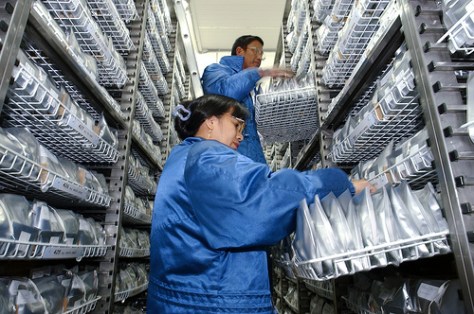
People_working_inside_the_International_Rice_Genebank

Appa Rao, S., C. Bounphanouxay, V. Phetpaseut, J.M. Schiller, V. Phannourath & M.T. Jackson, 1997. Collection and preservation of rice germplasm from southern and central regions of the Lao PDR. Lao Journal of Agriculture and Forestry 1, 43-56. PDF [13]

Appa Rao, S., C. Bounphanousay, J.M. Schiller & M.T. Jackson, 2002. Collection, classification, and conservation of cultivated and wild rices of the Lao PDR. Genetic Resources and Crop Evolution 49, 75-81. PDF [48]

Appa Rao, S., C. Bounphanousay, J.M. Schiller, A.P. Alcantara & M.T. Jackson, 2002. Naming of traditional rice varieties by farmers in the Lao PDR. Genetic Resources and Crop Evolution 49, 83-88. PDF [67]

Ellis, R.H., T.D. Hong & M.T. Jackson, 1993. Seed production environment, time of harvest, and the potential longevity of seeds of three cultivars of rice (Oryza sativa L.). Annals of Botany 72, 583-590. PDF [166]

Ellis, R.H. & M.T. Jackson, 1995. Accession regeneration in genebanks: seed production environment and the potential longevity of seed accessions. Plant Genetic Resources Newsletter 102, 26-28. PDF [13]

Ford-Lloyd, B.V. & M.T. Jackson, 1991. Biotechnology and methods of conservation of plant genetic resources. Journal of Biotechnology 17, 247-256. PDF [19]

Francisco-Ortega, F.J. & M.T. Jackson, 1993. Conservation strategies for tagasaste and escobón (Chamaecytisus proliferus (L. fil.) Link) in the Canary Islands. Boletim do Museu Municipal do Funchal, Sup. N° 2, 99-105. PDF

Kameswara Rao, N. & M.T. Jackson, 1996. Seed longevity of rice cultivars and strategies for their conservation in genebanks. Annals of Botany 77, 251-260. PDF [79]

Kameswara Rao, N. & M.T. Jackson, 1996. Seed production environment and storage longevity of japonica rices (Oryza sativa L.). Seed Science Research 6, 17-21. PDF [47]

Kameswara Rao, N. & M.T. Jackson, 1996. Effect of sowing date and harvest time on longevity of rice seeds. Seed Science Research 7, 13-20. PDF [31]

Kameswara Rao, N. & M.T. Jackson, 1997. Variation in seed longevity of rice cultivars belonging to different isozyme groups. Genetic Resources and Crop Evolution 44, 159-164. PDF [40]

Kiambi, D.K., B.V. Ford-Lloyd, M.T. Jackson, L. Guarino, N. Maxted & H.J. Newbury, 2005. Collection of wild rice (Oryza L.) in east and southern Africa in response to genetic erosion. Plant Genetic Resources Newsletter 142, 10-20. PDF [23]

Loresto, G.C., E. Guevarra & M.T. Jackson, 2000. Use of conserved rice germplasm. Plant Genetic Resources Newsletter 124, 51-56. PDF [11]

Naredo, M.E.B., A.B. Juliano, B.R. Lu, F. de Guzman & M.T. Jackson, 1998. Responses to seed dormancy-breaking treatments in rice species (Oryza L.). Seed Science and Technology 26, 675-689. PDF [98]

Germplasm evaluation & use
These five papers come from the work of some of my graduate students, looking primarily at the resistance of wild potato species to a range of pests and diseases, especially potato cyst nematode.
OLYMPUS DIGITAL CAMERA

Andrade-Aguilar, J.A. & M.T. Jackson, 1988. Attempts at interspecific hybridization between Phaseolus vulgaris L. and P. acutifolius A. Gray using embryo rescue. Plant Breeding 101, 173-180. PDF [33]

Chávez, R., M.T. Jackson, P.E. Schmiediche & J. Franco, 1988. The importance of wild potato species resistant to the potato cyst nematode, Globodera pallida, pathotypes P4A and P5A, in potato breeding. I. Resistance studies. Euphytica 37, 9-14. PDF [25]

Chávez, R., M.T. Jackson, P.E. Schmiediche & J. Franco, 1988. The importance of wild potato species resistant to the potato cyst nematode, Globodera pallida, pathotypes P4A and P5A, in potato breeding. II. The crossability of resistant species. Euphytica 37, 15-22. PDF [14]

Chávez, R., P.E. Schmiediche, M.T. Jackson & K.V. Raman, 1988. The breeding potential of wild potato species resistant to the potato tuber moth, Phthorimaea operculella (Zeller). Euphytica 39, 123-132. PDF [50]

Jackson, M.T., J.G. Hawkes, B.S. Male-Kayiwa & N.W.M. Wanyera, 1988. The importance of the Bolivian wild potato species in breeding for Globodera pallida resistance. Plant Breeding 101, 261-268. PDF [17]

Plant pathology & agronomy
Just three papers in this section. In the mid-1970s when I was based in Turrialba, I did some important work on bacterial wilt of potatoes.

Jackson, M.T., L.F. Cartín & J.A. Aguilar, 1981. El uso y manejo de fertilizantes en el cultivo de la papa (Solanum tuberosum L.) en Costa Rica. Agronomía Costarricense 5, 15-19. PDF [8]

Jackson, M.T. & L.C. González, 1981. Persistence of Pseudomonas solanacearum (Race 1) in a naturally infested soil in Costa Rica. Phytopathology 71, 690-693. PDF [38]

Jackson, M.T., L.C. González & J.A. Aguilar, 1979. Avances en el combate de la marchitez bacteriana de papa en Costa Rica. Fitopatología 14, 46-53. PDF [8]

Reviews
Hawkes, J.G. & M.T. Jackson, 1992. Taxonomic and evolutionary implications of the Endosperm Balance Number hypothesis in potatoes. Theoretical and Applied Genetics 84, 180-185. PDF [83]

Jackson, M.T., 1986. The potato. The Biologist 33, 161-167. PDF

Jackson, M.T., 1990. Vavilov’s Law of Homologous Series – is it relevant to potatoes? Biological Journal of the Linnean Society 39, 17-25. PDF [4]

Jackson, M.T., 1991. Biotechnology and the environment: a Birmingham perspective. Journal of Biotechnology 17, 195-198. PDF

Jackson, M.T., 1995. Protecting the heritage of rice biodiversity. GeoJournal 35, 267-274. PDF [92]

Jackson, M.T., 1997. Conservation of rice genetic resources: the role of the International Rice Genebank at IRRI. Plant Molecular Biology 35, 61-67. PDF [134]

Techniques
Andrade-Aguilar, J.A. & M.T. Jackson, 1988. The insertion method: a new and efficient technique for intra- and interspecific hybridization in Phaseolus beans. Annual Report of the Bean Improvement Cooperative 31, 218-219. [1]

Damania, A.B., E. Porceddu & M.T. Jackson, 1983. A rapid method for the evaluation of variation in germplasm collections of cereals using polyacrylamide gel electrophoresis. Euphytica 32, 877-883. PDF [51]

Kordan, H.A. & M.T. Jackson, 1972. A simple and rapid permanent squash technique for bulk-stained material. Journal of Microscopy 96, 121-123. PDF [1]

BOOKS
Brian Ford-Lloyd and I wrote one of the first general texts about plant genetic resources and their conservation in 1986. We were also at the forefront in the climate change debate in 1990, and published an update in 2014.

Ford-Lloyd, B.V. & M.T. Jackson, 1986. Plant Genetic Resources – An Introduction to Their Conservation and Use. Edward Arnold, London, p. 146. [212]

Jackson, M., B.V. Ford-Lloyd & M.L. Parry (eds.), 1990. Climatic Change and Plant Genetic Resources. Belhaven Press, London, p. 190. [20]

Engels, J.M.M., V.R. Rao, A.H.D. Brown & M.T. Jackson (eds.), 2002. Managing Plant Genetic Diversity. CAB International, Wallingford, p. 487.

Jackson, M., B. Ford-Lloyd & M. Parry (eds.), 2014. Plant Genetic Resources and Climate Change. CAB International, Wallingford, p. 291. [36]

BOOK CHAPTERS
There are 21 chapters in this section, and they cover a whole range of topics on germplasm conservation and use, among others.

Appa Rao, S., C. Bounphanousay, J.M. Schiller, M.T. Jackson, P. Inthapanya & K. Douangsila. 2006. The aromatic rice of Laos. In: J.M. Schiller, M.B. Chanphengxay, B. Linquist & S. Appa Rao (eds.), Rice in Laos. Los Baños (Philippines): International Rice Research Institute, pp. 159-174. PDF [1]

Appa Rao, S., J.M. Schiller, C. Bounphanousay, A.P. Alcantara & M.T. Jackson. 2006. Naming of traditional rice varieties by the farmers of Laos. In: J.M. Schiller, M.B. Chanphengxay, B. Linquist & S. Appa Rao (eds.), Rice in Laos. Los Baños (Philippines): International Rice Research Institute, pp. 141-158. PDF [6]

Appa Rao, S., J.M. Schiller, C. Bounphanousay, P. Inthapanya & M.T. Jackson. 2006. The colored pericarp (black) rice of Laos. In: J.M. Schiller, M.B. Chanphengxay, B. Linquist & S. Appa Rao (eds.), Rice in Laos. Los Baños (Philippines): International Rice Research Institute, pp. 175-186. PDF [17]

Appa Rao, S., J.M. Schiller, C. Bounphanousay & M.T. Jackson. 2006. Diversity within the traditional rice varieties of Laos. In: J.M. Schiller, M.B. Chanphengxay, B. Linquist & S. Appa Rao (eds.), Rice in Laos. Los Baños (Philippines): International Rice Research Institute, pp. 123-140. PDF [23]

Appa Rao, S., J.M. Schiller, C. Bounphanousay & M.T. Jackson, 2006. Development of traditional rice varieties and on-farm management of varietal diversity in Laos. In: J.M. Schiller, M.B. Chanphengxay, B. Linquist & S. Appa Rao (eds.), Rice in Laos. Los Baños (Philippines): International Rice Research Institute, pp. 187-196. PDF [3]

Bellon, M.R., J.L. Pham & M.T. Jackson, 1997. Genetic conservation: a role for rice farmers. In: N. Maxted, B.V. Ford-Lloyd & J.G. Hawkes (eds.), Plant Genetic Conservation: the In Situ Approach. Chapman & Hall, London, pp. 263-289. PDF [210]

Ford-Lloyd, B., J.M.M. Engels & M. Jackson, 2014. Genetic resources and conservation challenges under the threat of climate change. In: M. Jackson, B. Ford-Lloyd & M. Parry (eds.), Plant Genetic Resources and Climate Change. CAB International, Wallingford, pp. 16-37. [16]

Ford-Lloyd, B.V., M.T. Jackson & H.J. Newbury, 1997. Molecular markers and the management of genetic resources in seed genebanks: a case study of rice. In: J.A. Callow, B.V. Ford-Lloyd & H.J. Newbury (eds.), Biotechnology and Plant Genetic Resources: Conservation and Use. CAB International, Wallingford, pp. 103-118. PDF [50]

Ford-Lloyd, B.V., M.T. Jackson & M.L. Parry, 1990. Can genetic resources cope with global warming? In: M. Jackson, B.V. Ford-Lloyd & M.L. Parry (eds.), Climatic Change and Plant Genetic Resources. Belhaven Press, London, pp. 179-182. PDF [1]

Jackson, M.T., 1983. Potatoes. In: D.H. Janzen (ed.), Costa Rican Natural History. University of Chicago Press, pp. 103-105. PDF

Jackson, M.T., 1985. Plant genetic resources at Birmingham—sixteen years of training. In: K.L. Mehra & S. Sastrapradja (eds.), Proceedings of the International Symposium on South East Asian Plant Genetic Resources, Jakarta, Indonesia, August 20-24, 1985, pp. 35-38.

Jackson, M.T., 1987. Breeding strategies for true potato seed. In: G.J. Jellis & D.E. Richardson (eds.), The Production of New Potato Varieties: Technological Advances. Cambridge University Press, pp. 248-261. PDF [8]

Jackson, M.T., 1992. UK consumption of the potato and its agricultural production. In: Bioresources – Some UK Perspectives. Institute of Biology, London, pp. 34-37.

Jackson, M.T., 1994. Ex situ conservation of plant genetic resources, with special reference to rice. In: G. Prain & C. Bagalanon (eds.), Local Knowledge, Global Science and Plant Genetic Resources: towards a partnership. Proceedings of the International Workshop on Genetic Resources, UPWARD, Los Baños, Philippines, pp. 11-22.

Jackson, M.T., 1999. Managing genetic resources and biotechnology at IRRI’s rice genebank. In: J.I. Cohen (ed.), Managing Agricultural Biotechnology – Addressing Research Program and Policy Implications. International Service for National Agricultural Research (ISNAR), The Hague, Netherlands and CAB International, UK, pp. 102-109. PDF [4]

Jackson, M.T. & B.V. Ford-Lloyd, 1990. Plant genetic resources – a perspective. In: M. Jackson, B.V. Ford-Lloyd & M.L. Parry (eds.), Climatic Change and Plant Genetic Resources. Belhaven Press, London, pp. 1-17. PDF [23]

Jackson, M.T., G.C. Loresto, S. Appa Rao, M. Jones, E. Guimaraes & N.Q. Ng, 1997. Rice. In: D. Fuccillo, L. Sears & P. Stapleton (eds.), Biodiversity in Trust: Conservation and Use of Plant Genetic Resources in CGIAR Centres. Cambridge University Press, pp. 273-291. PDF [18]

Koo, B., P.G. Pardey & M.T. Jackson, 2004. IRRI Genebank. In: B. Koo, P.G. Pardey, B.D. Wright and others, Saving Seeds – The Economics of Conserving Crop Genetic Resources Ex Situ in the Future Harvest Centres of the CGIAR. CABI Publishing, Wallingford, pp. 89-103. PDF [1]

Lu, B.R., M.E.B. Naredo, A.B. Juliano & M.T. Jackson, 2000. Preliminary studies on the taxonomy and biosystematics of the AA genome Oryza species (Poaceae). In: S.W.L. Jacobs & J. Everett (eds.), Grasses: Systematics and Evolution. CSIRO: Melbourne, pp. 51-58. PDF [41]

Pham, J.L., S.R. Morin, L.S. Sebastian, G.A. Abrigo, M.A. Calibo, S.M. Quilloy, L. Hipolito & M.T. Jackson, 2002. Rice, farmers and genebanks: a case study in the Cagayan Valley, Philippines. In: J.M.M. Engels, V.R. Rao, A.H.D. Brown & M.T. Jackson (eds.), Managing Plant Genetic Diversity. CAB International, Wallingford, pp. 149-160. PDF [10]

Vaughan, D.A. & M.T. Jackson, 1995. The core as a guide to the whole collection. In: T. Hodgkin, A.H.D. Brown, Th.J.L. van Hintum & E.A.V. Morales (eds.), Core Collections of Plant Genetic Resources. John Wiley & Sons, Chichester, pp. 229-239. PDF [17]

MISCELLANEOUS PUBLICATIONS
There are 34 publications here, so-called ‘grey literature’ that were not reviewed before publication.

Aggarwal, R.K., D.S. Brar, G.S. Khush & M.T. Jackson, 1996. Oryza schlechteri Pilger has a distinct genome based on molecular analysis. Rice Genetics Newsletter 13, 58-59. [7]

Appa Rao, S., C. Bounphanousay, K. Kanyavong, V. Phetpaseuth, B. Sengthong, J.M. Schiller, S. Thirasack & M.T. Jackson, 1997. Collection and classification of rice germplasm from the Lao PDR. Part 2. Northern, Southern and Central Regions. Internal report of the National Agricultural Research Center, Department of Agriculture and Extension, Ministry of Agriculture and Forestry, Vientiane, Lao PDR, and Genetic Resources Center, International Rice Research Institute (IRRI), Los Baños, Philippines.

Appa Rao, S., C. Bounphanousay, K. Kanyavong, B. Sengthong, J.M. Schiller & M.T. Jackson, 1999. Collection and classification of Lao rice germplasm, Part 4. Collection Period: September to December 1998. Internal report of the National Agricultural Research Center, National Agriculture and Forestry Research Institute, Ministry of Agriculture and Forestry, Vientiane, Lao PDR, and Genetic Resources Center, International Rice Research Institute (IRRI), Los Baños, Philippines.

Appa Rao, S., C. Bounphanousay, V. Phetpaseuth, K. Kanyavong, B. Sengthong, J.M. Schiller & M.T. Jackson, 1998. Collection and Classification of Lao Rice Germplasm Part 3. Collecting Period – October 1997 to February 1998. Internal report of the National Agricultural Research Center, National Agriculture and Forestry Research Institute, Ministry of Agriculture and Forestry, Vientiane, Lao PDR, and Genetic Resources Center, International Rice Research Institute (IRRI), Los Baños, Philippines.

Appa Rao, S., C. Bounphanousay, V. Phetpaseuth, K. Kanyavong, B. Sengthong, J. M. Schiller, V. Phannourath & M.T. Jackson, 1996. Collection and classification of rice germplasm from the Lao PDR. Part 1. Southern and Central Regions – 1995. Internal report of the National Agricultural Research Center, Dept. of Agriculture and Extension, Ministry of Agriculture and Forestry, Vientiane, Lao PDR, and Genetic Resources Center, International Rice Research Institute (IRRI), Los Baños, Philippines.

Appa Rao, S,. V. Phetpaseut, C. Bounphanousay & M.T. Jackson, 1997. Spontaneous interspecific hybrids in Oryza in Lao PDR. International Rice Research Notes 22, 4-5. [1]

Arnold, M.H., D. Astley, E.A. Bell, J.K.A. Bleasdale, A.H. Bunting, J. Burley, J.A. Callow, J.P. Cooper, P.R. Day, R.H. Ellis, B.V. Ford-Lloyd, R.J. Giles, J.G. Hawkes, J.D. Hayes, G.G. Henshaw, J. Heslop-Harrison, V.H. Heywood, N.L. Innes, M.T. Jackson, G. Jenkins, M.J. Lawrence, R.N. Lester, P. Matthews, P.M. Mumford, E.H. Roberts, N.W. Simmonds, J. Smartt, R.D. Smith, B. Tyler, R. Watkins, T.C. Whitmore & L.A. Withers, 1986. Plant gene conservation. Nature 319, 615. [10]

Cohen, M.B., M.T. Jackson, B.R. Lu, S.R. Morin, A.M. Mortimer, J.L. Pham & L.J. Wade, 1999. Predicting the environmental impact of transgene outcrossing to wild and weedy rices in Asia. In: 1999 PCPC Symposium Proceedings No. 72: Gene flow and agriculture: relevance for transgenic crops. Proceedings of a Symposium held at the University of Keele, Staffordshire, U.K., April 12-14, 1999. pp. 151-157. [15]

Damania, A.B. & M.T. Jackson, 1986. An application of factor analysis to morphological data of wheat and barley landraces from the Bheri river valley, Nepal. Rachis 5, 25-30. [24]

Dao The Tuan, Nguyen Dang Khoi, Luu Ngoc Trinh, Nguyen Phung Ha, Nguyen Vu Trong, D.A. Vaughan & M.T. Jackson, 1995. INSA-IRRI collaboration on wild rice collection in Vietnam. In: G.L. Denning & Vo-Tong Xuan (eds.), Vietnam and IRRI: A partnership in rice research. International Rice Research Institute, Los Baños, Philippines, and Ministry of Agriculture and Food Industry, Hanoi, Vietnam, pp. 85-88.

Ford-Lloyd, B.V. & M.T. Jackson, 1984. Plant gene banks at risk. Nature 308, 683. [1]

Ford-Lloyd, B.V. & M.T. Jackson, 1990. Genetic resources refresher course embraces biotech. Biotechnology News No. 19, 7. University of Birmingham Biotechnology Management Group.

Jackson, M.T. (ed.), 1980. Investigación Agroeconómica para Optimizar la Productividad de la Papa. International Potato Center, Lima, Peru. Proceedings of the Regional Workshop held at Turrialba, Costa Rica, August 19-25, 1979.

Jackson, M.T., 1988. Biotechnology and the environment. Biotechnology News No. 15, 2. University of Birmingham Biotechnology Management Group.

Jackson, M.T., 1991. Global warming: the case for European cooperation for germplasm conservation and use. In: Th.J.L. van Hintum, L. Frese & P.M. Perret (eds.), Crop Networks. Searching for New Concepts for Collaborative Genetic Resources Management. International Crop Network Series No. 4. International Board for Plant Genetic Resources, Rome, Italy. Papers of the EUCARPIA/IBPGR symposium held in Wageningen, the Netherlands, December 3-6, 1990., pp. 125-131. PDF

Jackson, M.T., 1994. Preservation of rice strains. Nature 371, 470. [23]

Jackson, M.T. & J.A. Aguilar, 1979. Progresos en la adaptación de la papa a zonas cálidas. Memoria XXV Reunión PCCMCA, Honduras, Marzo 1979, Vol. IV, H16/1-10.

Jackson, M.T. & B.V. Ford-Lloyd, 1989. University of Birmingham holds international workshop on climate change and plant genetic resources. Diversity 5, 22-23.

Jackson, M.T. & B.V. Ford-Lloyd, 1990. University of Birmingham celebrates 20th anniversary of germplasm training course. Diversity 6, 11-12.

Jackson, M.T. & R.D. Huggan, 1993. Sharing the diversity of rice to feed the world. Diversity 9, 22-25. [45]

Jackson, M.T. & R.D. Huggan, 1996. Pflanzenvielfalt als Grundlage der Welternährung. Bulletin—das magazin der Schweizerische Kreditanstalt SKA. March/April 1996, 9-10.

Jackson, M.T., E.L. Javier & C.G. McLaren, 2000. Rice genetic resources for food security: four decades of sharing and use. In: W.G. Padolina (ed.), Plant Variety Protection for Rice in Developing Countries. Limited proceedings of the workshop on the Impact of Sui Generis Approaches to Plant Variety Protection in Developing Countries. February 16-18, 2000, IRRI, Los Baños, Philippines. International Rice Research Institute, Makati City, Philippines. pp. 3-8.

Jackson, M.T. & R.J.L. Lettington, 2003. Conservation and use of rice germplasm: an evolving paradigm under the International Treaty on Plant Genetic Resources for Food and Agriculture. In: Sustainable rice production for food security. Proceedings of the 20th Session of the International Rice Commission. Bangkok, Thailand, 23-26 July 2002.
http://www.fao.org/DOCREP/006/Y4751E/y4751e07.htm#bm07. Invited paper. PDF [24]

Jackson, M.T., G.C. Loresto & A.P. Alcantara, 1993. The International Rice Germplasm Center at IRRI. In: The Egyptian Society of Plant Breeding (1993). Crop Genetic Resources in Egypt: Present Status and Future Prospects. Papers of an ESPB Workshop, Giza, Egypt, March 2-3, 1992.

Jackson, M.T., J.L. Pham, H.J. Newbury, B.V. Ford-Lloyd & P.S. Virk, 1999. A core collection for rice—needs, opportunities and constraints. In: R.C. Johnson & T. Hodgkin (eds.), Core collections for today and tomorrow. International Plant Genetic Resources Institute, Rome, Italy, pp. 18-27. [25]

Jackson, M.T., L. Taylor & A.J. Thomson, 1985. Inbreeding and true potato seed production. In: Innovative Methods for Propagating Potatoes. Report of the XXVIII Planning Conference held at Lima, Peru, December 10-14, 1984, pp. 169-179. PDF [10]

Loresto, G.C. & M.T. Jackson, 1992. Rice germplasm conservation: a program of international collaboration. In: F. Cuevas-Pérez (ed.), Rice in Latin America: Improvement, Management, and Marketing. Proceedings of the VIII international rice conference for Latin America and the Caribbean, held in Villahermosa, Tabasco, Mexico, November 10-16, 1991. Centro Internacional de Agricultura Tropical, Cali, Colombia, pp. 61-65.

Loresto, G.C. & M.T. Jackson, 1996. South Asia partnerships forged to conserve rice genetic resources. Diversity 12, 60-61. [3]

Morin, S.R., J.L. Pham, M. Calibo, G. Abrigo, D. Erasga, M. Garcia, & M.T. Jackson, 1998. On farm conservation research: assessing rice diversity and indigenous technical knowledge. Invited paper presented at the Workshop on Participatory Plant Breeding, held in New Delhi, March 23-24, 1998.

Morin, S.R., J.L. Pham, M. Calibo, M. Garcia & M.T. Jackson, 1998. Catastrophes and genetic diversity: creating a model of interaction between genebanks and farmers. Paper presented at the FAO meeting on the Global Plan of Action on Plant Genetic Resources for Food and Agriculture for the Asia-Pacific Region, held in Manila, Philippines, December 15-18, 1998.

Newbury, H.J., B.V. Ford-Lloyd, P.S. Virk, M.T. Jackson, M.D. Gale & J.-H. Zhu, 1996. Molecular markers and their use in organising plant germplasm collections. In: E.M. Young (ed.), Plant Sciences Research Programme Conference on Semi-Arid Systems. Proceedings of an ODA Plant Sciences Research Programme Conference , Manchester, UK, September 5-6, 1995, pp. 24-25.

Pham, J.L., M.R. Bellon & M.T. Jackson, 1996. A research program for on-farm conservation of rice genetic resources. International Rice Research Notes 21, 10-11. [8]

Pham, J.L., M.R. Bellon & M.T. Jackson, 1996. What is on-farm conservation research on rice genetic resources? In: J.T. Williams, C.H. Lamoureux & S.D. Sastrapradja (eds.), South East Asian Plant Genetic Resources. Proceedings of the Third South East Asian Regional Symposium on Genetic Resources, Serpong, Indonesia, August 22-24, 1995, pp. 54-65.

Rao, S.A, M.T. Jackson, V Phetpaseuth & C. Bounphanousay, 1997. Spontaneous interspecific hybrids in Oryza in the Lao PDR. International Rice Research Notes 22, 4-5. [5]

Virk, P.S., B.V. Ford-Lloyd, M.T. Jackson, H.S. Pooni, T.P. Clemeno & H.J. Newbury, 1996. Marker-assisted prediction of agronomic traits using diverse rice germplasm. In: International Rice Research Institute, Rice Genetics III. Proceedings of the Third International Rice Genetics Symposium, Manila, Philippines, October 16-20, 1995, pp. 307-316. [25]

CONFERENCE PAPERS AND POSTERS
Over the years I had the good fortune to attend scientific conferences around the world—a great opportunity to hear about the latest developments in one’s field of research, and also to network. For some conferences I contributed a paper or poster; at others, I was an invited speaker.

15478148209_df32c0ed57_z

Alcantara, A.P., E.B. Guevarra & M.T. Jackson, 1999. The International Rice Genebank Collection Information System. Poster presented at the annual meeting of the Crop Science Society of America, Salt Lake City, October 31-November 4, 1999.

Appa Rao, S., C. Bounphanouxay, J.M. Schiller & M.T. Jackson, 1999. Collecting Rice Genetic Resources in the Lao PDR. Poster presented at the annual meeting of the Crop Science Society of America, Salt Lake City, October 31-November 4, 1999.

Cabanilla, V.R., M.T. Jackson & T.R. Hargrove, 1993. Tracing the ancestry of rice varieties. Poster presented at the 17th International Congress of Genetics, Birmingham, U.K., August 15-21, 1993. Volume of abstracts, 112-113.

Clugston, D.B. & M.T. Jackson, 1987. The application of embryo rescue techniques for the utilization of wild species in potato breeding. Paper presented at the Plant Breeding Section meeting of the Association of Applied Biologists, held at Churchill College, University of Cambridge, April 14-15, 1987.

Coleman, M., M. Jackson, S. Juned, B. Ford-Lloyd, J. Vessey & W. Powell, 1990. Interclonal genetic variability for in vitro response in Solanum tuberosum cv. Record. Paper presented at the 11th Triennial Conference of the European Association for Potato Research, Edinburgh, July 8-13, 1990.

Francisco-Ortega, F.J., M.T. Jackson, A. Santos-Guerra & M. Fernandez-Galvan, 1990. Ecogeographical variation in the Chamaecytisus proliferus complex in the Canary Islands. Paper presented at the Linnean Society Conference on Evolution and Conservation in the North Atlantic Islands, held at the Manchester Polytechnic, September 3-6, 1990.

Gubb, I.R., J.A. Callow, R.M. Faulks & M.T. Jackson, 1989. The biochemical basis for the lack of enzymic browning in the wild potato species Solanum hjertingii Hawkes. Am. Potato J. 66, 522 (abst.). Paper presented at the 73rd Annual Meeting of the Potato Association of America, Corvalis, Oregon, July 30 – August 3, 1989.

Hunt, E.D., M.T. Jackson, M. Oliva & A. Alcantara, 1993. Employing geographical information systems (GIS) for conserving and using rice germplasm. Poster presented at the 17th International Congress of Genetics, Birmingham, U.K., August 15-21, 1993. Volume of abstracts, 117.

Jackson, M.T., 1984. Variation patterns in Lathyrus sativus. Paper presented at the Second International Workshop on the Vicieae, held at the University of Southampton, February 15-16, 1984.

Jackson, M.T., 1993. Biotechnology and the conservation and use of plant genetic resources. Invited paper presented at the Workshop on Biotechnology in Developing Countries, held at the 17th International Congress of Genetics, Birmingham, U.K., August 15-21, 1993.

Jackson, M.T., 1994. Care for and use of biodiversity in rice. Invited paper presented at the Symposium on Food Security in Asia, held at the Royal Society, London, November 1, 1994.

Jackson, M.T., 1995. The international crop germplasm collections: seeds in the bank! Invited paper presented at the meeting Economic and Policy Research for Genetic Resources Conservation and Use: a Technical Consultation, held at IFPRI, Washington, D.C., June 21-22, 1995

Jackson, M.T., 1996. Intellectual property rights—the approach of the International Rice Research Institute. Invited paper presented at the Satellite Symposium on Biotechnology and Biodiversity: Scientific and Ethical Issues, held in New Delhi, India, November 15-16, 1996.

Jackson, M.T., 1999. Managing the world’s largest collection of rice genetic resources. In: J.N. Rutger, J.F. Robinson & R.H. Dilday (eds.), Proceedings of the International Symposium on Rice Germplasm Evaluation and Enhancement, held at the Dale Bumpers National Rice Research Center, Stuttgart, Arkansas, USA, August 30-September 2, 1998. Arkansas Agricultural Experiment Station Special Report 195. PDF [13]

Jackson, M.T., 1998. Intellectual property rights—the approach of the International Rice Research Institute. Invited paper at the Seminar-Workshop on Plant Patents in Asia Pacific, organized by the Asia & Pacific Seed Association (APSA), held in Manila, Philippines, September 21-22, 1998.

Jackson, M.T., 1998. Recent developments in IPR that have implications for the CGIAR. Invited paper presented at the ICLARM Science Day, International Center for Living Aquatic Resources Management, Manila, Philippines, September 30, 1998.

Jackson, M.T., 1998. The genetics of genetic conservation. Invited paper presented at the Fifth National Genetics Symposium, held at PhilRice, Nueva Ecija, Philippines, December 10-12, 1998.

Jackson, M.T., 1998. The role of the CGIAR’s System-wide Genetic Resources Programme (SGRP) in implementing the GPA. Invited paper presented at the Regional Meeting for Asia and the Pacific to facilitate and promote the implementation of the Global Plan of Action for the Conservation and Sustainable Use of Plant Genetic Resources for Food and Agriculture, held in Manila, Philippines, December 15-18, 1998.

Jackson, M.T., 2001. Collecting plant genetic resources: partnership or biopiracy. Invited paper presented at the annual meeting of the Crop Science Society of America, Charlotte, North Carolina, October 21-24, 2001.

Jackson, M.T., 2004. Achieving the UN Millennium Development Goals begins with rice research. Invited paper presented to the Cross Party International Development Group of the Scottish Parliament, Edinburgh, Scotland, June 2, 2004.

Jackson, M.T., 2001. Rice: diversity and livelihood for farmers in Asia. Invited paper presented in the symposium Cultural Heritage and Biodiversity, at the annual meeting of the Crop Science Society of America, Charlotte, North Carolina, October 21-24, 2001.

Jackson, M.T., A. Alcantara, E. Guevarra, M. Oliva, M. van den Berg, S. Erguiza, R. Gallego & M. Estor, 1995. Documentation and data management for rice genetic resources at IRRI. Paper presented at the Planning Meeting for the System-wide Information Network for Genetic Resources (SINGER), held at CIMMYT, Mexico, October 2-6, 1995.

Jackson, M.T. & L.C. González, 1979. Persistence of Pseudomonas solanacearum in an inceptisol in  Costa Rica. In: CIP, Developments in the Control of Bacterial Diseases of Potato. Report of a Planning Conference held at CIP, LIma, Peru, 12-15 June 1979. pp. 66-71. [4]

Jackson, M.T. & L.C. González, 1979. Persistence of Pseudomonas solanacearum in an inceptisol in Costa Rica. Am. Potato J. 56, 467 (abst.). Paper presented at the 63rd Annual meeting of the Potato Association of America, Vancouver, British Columbia, July 22-27, 1979.

Jackson, M.T., F.C. de Guzman, R.A. Reaño, M.S.R. Almazan, A.P. Alcantara & E.B. Guevarra, 1999. Managing the world’s largest collection of rice genetic resources. Poster presented at the annual meeting of the Crop Science Society of America, Salt Lake City, October 31-November 4, 1999.

Jackson, M.T., E.L. Javier & C.G. McLaren, 1999. Rice genetic resources for food security. Invited paper at the IRRI Symposium, held at the annual meeting of the Crop Science Society of America, Salt Lake City, October 31-November 4, 1999.

Jackson, M.T. & G.C. Loresto, 1996. The role of the International Rice Research Institute (IRRI) in supporting national and regional programs. Invited paper presented at the Asia-Pacific Consultation Meeting on Plant Genetic Resources, held in New Delhi, India, November 27-29, 1996.

Jackson, M.T., G.C. Loresto & F. de Guzman, 1996. Partnership for genetic conservation and use: the International Rice Genebank at the International Rice Research Institute (IRRI). Poster presented at the Beltsville Symposium XXI on Global Genetic Resources—Access, Ownership, and Intellectual Property Rights, held in Beltsville, Maryland, May 19-22, 1996.

Jackson, M.T., B.R. Lu, G.C. Loresto & F. de Guzman, 1995. The conservation of rice genetic resources at the International Rice Research Institute. Paper presented at the International Symposium on Research and Utilization of Crop Germplasm Resources held in Beijing, People’s Republic of China, June 1-3, 1995.

Jackson, M.T., B.R. Lu, M.S. Almazan, M.E. Naredo & A.B. Juliano, 2000. The wild species of rice: conservation and value for rice improvement. Poster presented at the annual meeting of the Crop Science Society of America, Minneapolis, November 5-9, 2000.

Jackson, M.T., P.R. Rowe & J.G. Hawkes, 1976. The enigma of triploid potatoes: a reappraisal. Am. Potato J. 53, 395 (abst.). Paper presented at the 60th Annual meeting of the Potato Association of America, University of Wisconsin—Stevens Point, July 26-29, 1976. [4]

Kameswara Rao, N. & M.T. Jackson, 1995. Seed production strategies for conservation of rice genetic resources. Poster presented at the Fifth International Workshop on Seeds, University of Reading, September 11-15, 1995.

Lu, B.R., A. Juliano, E. Naredo & M.T. Jackson, 1995. The conservation and study of wild Oryza species at the International Rice Research Institute. Paper presented at the International Symposium on Research and Utilization of Crop Germplasm Resources held in Beijing, People’s Republic of China, June 1-3, 1995.

Lu, B.R., M.E. Naredo, A.B. Juliano & M.T. Jackson, 1998. Biosystematic studies of the AA genome Oryza species (Poaceae). Poster presented at the Second International Conference on the Comparative Biology of the Monocotyledons and Third International Symposium on Grass Systematics and Evolution, Sydney, Australia, September 27-October 2, 1998.

Lu, B.R., M.E.B. Naredo, A.B. Juliano & M.T. Jackson, 2008. Genomic relationships of the AA genome Oryza species. In: G.S. Khush, D.S. Brar & B. Hardy (eds), Advances in Rice Genetics, Proceedings of the Fourth International Rice Genetics Symposium, Los Baños, Laguna, Philippines, 22-27 October 2000. pp. 118-121. [2]

Naredo, M.E., A.B. Juliano, M.S. Almazan, B.R. Lu & M.T. Jackson, 2000. Morphological and molecular diversity of AA genome species of rice. Poster presented at the annual meeting of the Crop Science Society of America, Minneapolis, November 5-9, 2000.

Newbury, H.J., P. Virk, M.T. Jackson, G. Bryan, M. Gale & B.V. Ford-Lloyd, 1993. Molecular markers and the analysis of diversity in rice. Poster presented at the 17th International Congress of Genetics, Birmingham, U.K., August 15-21, 1993. Volume of abstracts, 121-122.

Newton, E.L., R.A.C. Jones & M.T. Jackson, 1986. The serological detection of viruses of quarantine significance transmitted through true potato seed. Paper presented at the Virology Section meeting of the Association of Applied Biologists, held at the University of Warwick, September 29 – October 1, 1986.

Parsons, B.J., B.V. Ford-Lloyd, H.J. Newbury & M.T. Jackson, 1994. Use of PCR-based markers to assess genetic diversity in rice landraces from Bhutan and Bangladesh. Poster presented at the Annual Meeting of the British Ecological Society, held at The University of Birmingham, December 1994.

Pham, J.L., M.R. Bellon & M.T. Jackson, 1995. A research program on on-farm conservation of rice genetic resources. Poster presented at the Third International Rice Genetics Symposium, Manila, Philippines, October 16-20, 1995.

Pham J.L., S.R. Morin & M.T. Jackson, 2000. Linking genebanks and participatory conservation and management. Invited paper presented at the International Symposium on The Scientific Basis of Participatory Plant Breeding and Conservation of Genetic Resources, held at Oaxtepec, Morelos, Mexico, October 9-12, 2000.

Reaño, R., M.T. Jackson, F. de Guzman, S. Almazan & G.C. Loresto, 1995. The multiplication and regeneration of rice germplasm at the International Rice Genebank, IRRI. Paper presented at the Discussion Meeting on Regeneration Standards, held at ICRISAT, Hyderabad, India, December 4-7, 1995, sponsored by IPGRI, ICRISAT and FAO. [1]

Virk, P., B.V. Ford-Lloyd, M.T. Jackson & H.J. Newbury, 1994. The use of RAPD analysis for assessing diversity within rice germplasm. Paper presented at the Annual Meeting of the British Ecological Society, held at The University of Birmingham, December 1994.

Virk, P.S., H.J. Newbury, Y. Shen, M.T. Jackson & B.V. Ford-Lloyd, 1996. Prediction of agronomic traits in diverse germplasm of rice and beet using molecular markers. Paper presented at the Fourth International Plant Genome Conference, held in San Diego, California, January 14-18, 1996.

Watanabe, K., C. Arbizu, P. Schmiediche & M.T. Jackson, 1990. Germplasm enhancement methods for disomic tetraploid species of Solanum with special reference to S. acaule. Am. Potato J. 67, 586 (abst.). Paper presented at the 74th Annual meeting of the Potato Association of America, Quebec City, Canada, July 22-26, 1990. [4]

TECHNICAL PUBLICATIONS
Bryan, J.E., M.T. Jackson & N. Melendez, 1981. Rapid Multiplication Techniques for Potatoes. International Potato Center, Lima, Peru. PDF

Bryan, J.E., M.T. Jackson, M. Quevedo & N. Melendez, 1981. Single-Node Cuttings, a Rapid Multiplication Technique for Potatoes. CIP Slide Training Series, Guide Book I/2. International Potato Center, Lima, Peru. [25]

Bryan, J.E., N. Melendez & M.T. Jackson, 1981. Sprout Cuttings, a Rapid Multiplication Technique for Potatoes. CIP Slide Training Series, Guide Book I/1. International Potato Center, Lima, Peru. [2]

Bryan, J.E., N. Melendez & M.T. Jackson, 1981. Stem Cuttings, a Rapid Multiplication Technique for Potatoes. CIP Slide Training Series, Guide Book I/3. International Potato Center, Lima, Peru. [63]

Catty, J.P. & M.T. Jackson, 1989. Starch Gel Electrophoresis of Isozymes – A Laboratory Manual, Second edition. School of Biological Sciences, University of Birmingham.

Quevedo, M., J.E. Bryan, M.T. Jackson & N. Melendez, 1981. Leaf-Bud Cuttings, a Rapid Multiplication Technique for Potatoes. CIP Slide Training Series – Guide Book I/4. International Potato Center, Lima, Peru. [2]

BOOK REVIEWS
Jackson, M.T., 1983. Outlook on Agriculture 12, 205. Dictionary of Cultivated Plants and Their Regions of Diversity, by A.C. Zeven & J.M.J. de Wet, 1982. Pudoc, Wageningen.

Jackson, M.T., 1985. Outlook on Agriculture 14, 50. 1983 Rice Germplasm Conservation Workshop. IRRI and IBPGR, 1983. Manila.

Jackson, M.T., 1986. Journal of Applied Ecology 23, 726-727. The Value of Conserving Genetic Resources, by Margery L. Oldfield, 1984. US Dept. of the Interior, Washington, DC.

Jackson, M.T., 1989. Phytochemistry 28, 1783. World Crops: Cool Season Food Legumes, edit. by R.J. Summerfield, 1988. Martinus Nijhoff Publ.

Jackson, M.T., 1989. Plant, Cell & Environment 12, 589-590. Genetic Resources of Phaseolus Beans, edit. by P. Gepts, 1988. Martinus Nijhoff Publ.

Jackson, M.T., 1989. Heredity 64, 430-431. Genetic Resources of Phaseolus Beans, edit. by P. Gepts, 1988. Martinus Nijhoff Publ.

Jackson, M.T., 1989. Botanical Journal of the Linnean Society 102, 88-91. Seeds and Sovereignty, edit. by J.R. Kloppenburg, 1988. Duke University Press.

Jackson, M.T., 1989. Botanical Journal of the Linnean Society 100, 285-286. Conserving the Wild Relatives of Crops, by E. Hoyt, 1988. IBPGR/IUCN/WWF.

Jackson, M.T., 1989. Annals of Botany 64, 606-608. The Potatoes of Bolivia – Their Breeding Value and Evolutionary Relationships, by J.G. Hawkes & J.P. Hjerting, Oxford Scientific Publications.

Jackson, M.T., 1991. Botanical Journal of the Linnean Society 107, 102-104. Grain Legumes – Evolution and Genetic Resources, by J. Smartt, 1990, Cambridge University Press.

Jackson, M.T., 1991. Botanical Journal of the Linnean Society 107, 104-107. Plant Population Genetics, Breeding, and Genetic Resources, edit. by A.H.D. Brown, M.T. Clegg, A.L. Kahler & B.S. Weir, 1990, Sinauer Associates Inc.

Jackson, M.T., 1991. Field Crops Research 26, 77-79. The Use of Plant Genetic Resources, ed. by A.H.D. Brown, O.H. Frankel, D.R. Marshall & J.T. Williams, 1989, Cambridge University Press.

Jackson, M.T., 1991. Annals of Botany 67, 367-368. Isozymes in Plant Biology, edit. by D.E. Soltis & P.S. Soltis, 1990, Chapman and Hall.

Jackson, M.T., 1991. The Biologist 38, 154-155. The Molecular and Cellular Biology of the Potato, edit. by M.E. Vayda & W.D. Park, 1990, C.A.B. International.

Jackson, M.T., 1992. Diversity 8, 36-37. Biotechnology and the Future of World Agriculture, by H. Hobbelink, 1991, Zed Books Ltd.

Jackson, M.T., 1997. Experimental Agriculture 33, 386. Biodiversity and Agricultural Intensification: Partners for Development and Conservation, edit. by J.P. Srivastava, N.J.H. Smith & D.A. Forno, 1996. Environmentally Sustainable Development Studies and Monographs Series No. 11, The World Bank, Washington, D.C.

Jackson, M.T., 2001. Annals of Botany 88, 332-333. Broadening the genetic base of crop production, edit. By Cooper H.D., C. Spillane & T. Hodgkin, 2001. Wallingford: CAB International with FAO and IPGRI, Rome.

CONSULTANCY REPORT
CGIAR-IEA, 2017. Evaluation of CGIAR research support program for Managing and Sustaining Crop Collections. Rome, Italy: Independent Evaluation Arrangement (IEA) of CGIAR. Authored by M.T. Jackson, M.J. Borja Tome & B.V. Ford-Lloyd. [2]

OBITUARIES

Jackson, M.T., 2011. John Gregory Hawkes (1915–2007). Oxford Dictionary of National Biography, Oxford University Press. doi:10.1093/ref:odnb/99090. PDF

Jackson, M.T., 2013. Dr. Joseph Smartt (1931-2013). Genetic Resources and Crop Evolution 60, 1921-1922. PDF

Jackson, M.T. & N. Murthi Anishetty, 2015. John Trevor Williams (1938 – 2015). Indian Journal of Plant Genetic Resources 28, 161-162. PDF

Jackson, M.T., 2015. J Trevor Williams (1938–2015): IBPGR director and genetic conservation pioneer. Genetic Resources and Crop Evolution 62, 809–813. PDF

Jackson, M.T., 2023. Sheehy, John Edward (1942-2019). Oxford Dictionary of National Biography, Oxford University Press. https://doi.org/10.1093/odnb/9780198614128.013.90000380930. PDF.

Jackson, M.T., 2024. Williams, (John) Trevor (1938-2015). Oxford Dictionary of National Biography, Oxford University Press. https://doi.org/10.1093/odnb/9780198614128.013.90000382511. PDF.

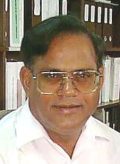
Keeping up standards . . . but whose?

haga

Ms Marie Haga, Executive Director of the Global Crop Diversity Trust that has its headquarters in Bonn, Germany

Marie Haga, Executive Director of the Global Crop Diversity Trust was interviewed by Suzanne Goldenberg for her recent—and contentious—article in The Guardian newspaper about the Svalbard Global Seed Vault (SGSV). Ms Haga was also asked about the state of genebanks around the world, and the extent to which they are worthy of funding support from the Trust.

What she is quoted as saying both surprised (shocked even) and perplexed me: ‘What the Crop Trust proposed was a sort of triage on the major seed banks: selecting those worthy of support and winnowing out those not up to standard. In its early days, however, it is a process not unlike natural selection. Only one of 11 major gene banks operated under the Consortium of International Agricultural Research Centres met the Crop Trust’s standards and would be eligible for those funds: the International Rice Research Institute in the Philippines.

The biggest surprise for everybody when we dived into the international gene banks was that they are not up to the standard that we had expected.’

While I’m proud that the International Rice Genebank at IRRI is held in high regard (‘a model for others to follow’ according to the 1995 External Review of CGIAR genebanks), and that it continues to meet most if not all of the genebank standards, it came as a big surprise to me that 10 other CGIAR genebanks are viewed in a different light. The 1995 review was conducted by a panel and involved 20 experts from national and regional genetic resources programs, including the United Nations Food and Agriculture Organization (FAO). Its purpose was to assess the technical, scientific and financial constraints facing the Centre genebanks and to identify opportunities for improving their operations and the services they provide.

But if there were genebank deficiencies identified in the 1995 External Review, why had steps not been taken before now to sort these out? And that perplexes me. To be fair, I don’t know the details of the Crop Trust’s evaluation of each of the genebanks, and on what grounds they were ‘failed’. After all, I ‘retired’ from active genebank management in 2001, and no longer had regular contact with my colleagues in the CGIAR’s Inter-Centre Working Group on Genetic Resources.

Genebank standards
The first genebank standards were published by the International Board for Plant Genetic Resources (IBPGR) in 1985, and they were revised in 1994. I used the 1985 (and 1994 standards before they were published) when I joined IRRI and began a review of the International Rice Genebank operations. I first visited IRRI in January 1991 when I interviewed for the position of Head of the Genetic Resources Center (GRC), and was rather impressed with the genebank. On joining IRRI in July later that year I was concerned to discover that first impressions had been quite misleading. Over the next six months I uncovered a ‘genebank can of worms’, and had the genebank been reviewed then, it would have failed miserably.

We made an in-depth review of every aspect of genebank management, what would require increased investment (staff, funds, and equipment), and what could be improved significantly just by changing the way we did things in terms of seed management, germplasm regeneration, data management, and the like. Some of these didn’t actually require more resources, just a different approach that freed up existing staff time to concentrate on things that were important. I’m not going to elaborate. What I can say is that we enhanced operations right across the genebank operations, and I have described some of what we did in an earlier blog post.

A lot has been made of the publication of the latest Genebank Standards for Plant Genetic Resources for Food and Agriculture, by FAO in 2013 (revised in 2014), after endorsement by the Commission on Genetic Resources for Food and Agriculture at its Fourteenth Session in 2013. The wheels of progress turn rather slowly at FAO. And I can’t remember how many years it has taken to come to agreement over the latest version.

The standards are non-binding, but they do provide guidance on best practice for a whole range of germplasm, and of course the norms that have to be followed today for germplasm exchange and use under the International Treaty on Plant Genetic Resources for Food and Agriculture using material transfer agreements.

Lack of progress?
What I cannot fathom is why the CGIAR genebanks did not apparently take a hard look at their operations before now and what is needed to bring them into line with accepted standards. As custodians of the world’s most important genetic resources collections I believe it was their obligation to do so.  Or was it that center managements were waiting for someone else to step in and pick up the financial tab, rather than investing, as IRRI did, from its own resources?  I wonder if many genebanks (not just those of the CGIAR) have held off making any changes or investment until the latest genebank standards had been ‘approved’ by the FAO Commission.

When I presented my upgrade plans to IRRI management way back in 1992 or so, we were fortunate that the institute was undergoing a thorough refurbishment of its physical plant. IRRI management was surprised however when I presented my ‘resources shopping list’ as no-one had expected that the genebank would need any attention. To everyone concerned, it was the ‘jewel in the institute’s crown’ that operated like clockwork. My genebank upgrade plan had to compete for resources with all the other things that needed improving around IRRI. Fortunately for the cause of rice genetic resources IRRI management approved what I has asked for (almost in its entirety) and we made the infrastructure improvements that went along with the changes to genebank operations.

6832247180_53581686d7

Dr Ruaraidh Sackville Hamilton, Head of the TT Chang Genetic Resources Center at IRRI

I am pleased that my successor as Head of the Genetic Resources Center (now the TT Chang Genetic Resources Center), Dr Ruaraidh Sackville Hamilton, has built on what I started. Many of the changes we made during the 1990s are still in place, but improved in a number of respects. For instance, all packets of seeds are now bar-coded, data management systems have been integrated with the rice breeding databases (something we started before I left GRC), more sub-zero cold storage capacity has been added, and even more screenhouse space for managing the wild rice species collection. The publication of the latest genebank standards provides another yardstick against which to measure the operations of the International Rice Genebank. I’m confident that there is and will continue to be a close congruence between the two.


Don’t put all your eggs in one basket . . . or your seeds in a single genebank

On 20 May 2015, a long article was published in The Guardian about the Svalbard Global Seed Vault (SGSV), popularly—and rather unfortunately—known as the ‘Doomsday Vault’. I’ve recently been guilty of using that moniker simply because that’s how the vault has come to be known, rightly or wrongly, in the media.

Authored by US-based environment correspondent of The Guardian, Suzanne Goldenberg, the article had the headline grabbing title: The doomsday vault: the seeds that could save a post-apocalyptic world.

You get a flavor of what’s in store, however, from the very first paragraph. Goldenberg writes: ‘One Tuesday last winter, in the town nearest to the North Pole, Robert Bjerke turned up for work at his regular hour and looked at the computer monitor on his desk to discover, or so it seemed for a few horrible moments, that the future of human civilisation was in jeopardy.’

Turns out there was a relatively minor glitch in one of the supplementary cooling systems of this seed repository under the Arctic permafrost where millions of seeds of the world’s most important food staples and other species are being stored, duplicating the germplasm conservation efforts of the genebanks from which they were sent. Hardly the stuff of Apocalypse Now. So while making a favorable case for the need to store seeds in a genebank like the Svalbard vault, Goldenberg ends her introduction with this somewhat controversial statement: ‘Seed banks are vulnerable to near-misses and mishaps. That was the whole point of locating a disaster-proof back-up vault at Svalbard. But what if there was a bigger glitch – one that could not be fixed by borrowing a part from the local shop? There is now a growing body of opinion that the world’s faith, in Svalbard and the Crop Trust’s broader mission to create seed banks, is misplaced. [The emphasis in bold is mine.] Those who have worked with farmers in the field, especially in developing countries, which contain by far the greatest variety of plants, say that diversity cannot be boxed up and saved in a single container—no matter how secure it may be. Crops are always changing, pests and diseases are always adapting, and global warming will bring additional challenges that remain as yet unforeseen. In a perfect world, the solution would be as diverse and dynamic as plant life itself.’ 

I have several concerns about the article—and the many comments it elicited that stem, unfortunately, from lack of understanding on the one hand and ignorance and prejudice on the other.

  • Goldenberg gives the impression that it’s an either/or situation of ex situ conservation in a genebank versus in situ conservation in farmers’ fields or natural environments (in the case of crop wild relatives).
  • There is a perception apparently held by some that the development of the SGSV has been detrimental to the cause of in situ conservation of crop wild relatives.
  • Because there is no research or use of the germplasm stored in the SGSV, then it only has an ‘existence value’. Of course this does not take into account the research on and use of the same germplasm in the genebanks from which it was sent to Svalbard. Therefore Svalbard by its very nature is assumed to be very expensive.
  • The role of Svalbard as a back-up to other genebank efforts is not emphasized sufficiently. As many genebanks do not have adequate access to long-term conservation facilities, the SGSV is an important support at no cost directly to those genebanks as far as I am aware. However, Svalbard can never be a panacea. If seeds of poor quality (i.e less than optimum viability) are stored in the vault then they will deteriorate faster than good seeds. As the saying goes: ‘Junk in, junk out’.
  • The NGO perspective is interesting. It seems it’s hard for some of our NGO colleagues to accept that use of germplasm stored in genebanks actually does benefit farmers.Take for example the case of submergence tolerant rice, now being grown by farmers in Bangladesh and other countries on land where a consistent harvest was almost unheard of before. Or the cases where farmers have lost varieties due to natural disasters but have had them replaced because they were in a genebank. My own experience in the Cagayan valley in the northern Philippines highlights this very well after a major typhoon in the late 1990s devastated the rice agriculture of that area. See the section about on farm management of rice germplasm in this earlier post. They also still harbour a concern that seeds in genebanks are at the mercy of being expropriated by multinationals. In the comments, Monsanto was referred to many times, as was the issue of GMOs. I addressed this in the comment I contributed.

I added this comment that same day on The Guardian web site:
‘For a decade during the 1990s I managed one of the world’s largest and most important genebanks – the International Rice Genebank at the International Rice Research Institute (IRRI) in the Philippines. Large, because it holds over 116,000 samples of cultivated varieties and wild species of rice. And important, because rice is the most important food staple feeding half the world’s population several times daily.

The Svalbard Global Seed Vault (SGSV), the so-called ‘Doomsday Vault’ in Spitsbergen, holds on behalf of IRRI an almost complete duplicate set of samples (called ‘accessions’), in case something should happen to the genebank in Los Baños, south of Manila. I should add that for decades the USDA has also held a duplicate set in its genebank at Fort Collins in Colorado, under exactly the same ‘black box’ terms as the SGSV.

Germplasm is conserved so that it can be studied and used in plant breeding to enhance the productivity of the rice crop, to increase its resilience in the face of climate change, or to meet the challenge of new strains of diseases and pests. The application of molecular biology is unlocking the mysteries of this enormous genetic diversity, making it accessible for use in rice improvement much more efficiently than in past decades.

Many genebanks round the world and the collections they manage do not have access to long-term and safe storage facilities. This is where the SGSV plays an important role. Genebanks can be at risk from a whole range of natural threats (earthquakes, typhoons, volcanic eruptions, etc.) or man-made threats: conflicts, lack of resources, and inadequate management that can lead to fires, flooding, etc. Just take the example of the International Rice Genebank. The Philippines are subject to the natural threats mentioned, but the genebank was designed and built to withstand these. The example of the ICARDA genebank in Aleppo highlights the threat to these facilities from being located in a conflict zone.

To understand more about what it means to conserve a crop like rice please visit this post on my blog.  There is an enlightening 15 minute video there that I made about the genebank.

It is not a question of taking any set of seeds and putting them into cold storage. Only ‘good’ seeds will survive for any length of time under sub-zero conditions. Many studies have shown that if stored at -18C, seeds with initial high viability may be stored for decades even hundreds of years. The seeds of many plant species – including most of the world’s most important food crops like rice, wheat, maize and many others conform to this pattern. What I can state unequivocally is that the seeds from the genebanks of the world’s most important genebanks, managed like that of IRRI under the auspices of the Consultative Group on International Agricultural Research (CGIAR), have been routinely tested for viability and only the best sent to Svalbard.

Prof. Phil Pardey, University of Minnesota

Prof. Phil Pardey, University of Minnesota

The other aspect of Goldenberg’s otherwise excellent article are the concerns raised by a number of individuals whose ‘comments’ are quoted. I count both Phil Pardey and Nigel Maxted among my good friends, and it seems to me that their comments have been taken completely out of context. I have never heard them express such views in such a blunt manner. Their perspectives on conservation and use, and in situ vs. ex situ are much more nuanced as anyone will see for themselves from reading their many publications. The SEARICE representative I do not know, but I’ve had many contacts with her organization. It’s never a question of genebank or ex situ conservation versus on-farm or in situ conservation. They are complementary and mutually supportive approaches. Crop varieties will die out for a variety of reasons. If they can be stored in a genebank so much the better (not all plant species can be stored successfully as seeds, as was mentioned in Goldenberg’s article). The objection to genebanks on the grounds of permitting multinationals to monopolize these important genetic resources is a red herring and completely without foundation.

So the purpose of the SGSV is one of not ‘putting all your eggs in one basket’. Unfortunately the name ‘Doomsday Vault’ as used by Goldenberg has come to imply a post cataclysm world. It’s really much more straightforward than that. The existence of the SGSV is part of humanity’s genetic insurance policy, risk mitigation, and business continuity plan for a wise and forward-thinking society.’

Over the next couple of days others chipped in with first hand knowledge of the SGSV or genetic conservation issues in general.

Simon Jeppsonsiminjeppson is someone who has first-hand knowledge and experience of the SGSV, and he wrote: ‘I’m currently working as the project coordinator of the Svalbard Global Seed Vault on behalf of NordGen and I just wanted to add some of my reflections on this article some of the comments.

This article is an interesting read but a rather unbalanced one. The temperature increase that is described as putting the world heritage in jeopardy is a misconception. There has been a background study used as a worst case scenario during the planning stage of the Svalbard Global Seed Vault based on the seeds stored in the old abandoned mine shaft mentioned. These results were published in 2003 and even the most recent data (after 25 years in permafrost conditions prevailing in the same mountain without active cooling) shows that all samples are still viable. Anyone curious about this can for themselves try out various storage temperatures and find out the predicted storage time for specific crops at: http://data.kew.org/sid/viability/

Further I have some reflections regarding some of the recently posted comments. The statement “Most seed resources for plant breeding come from farmers’ fields via national seed stores in developing countries: these countries are not depositing in Svalbard.” is wrong; more than 60% of the deposited material originates from developing countries. Twenty-three of depositors represent national or regional institutes situated in developing counties, 12 are international centers and 28 are from developed countries according to IMF. This data is readily available at: http://www.nordgen.org/sgsv

Finally, a comment about the statement that “Seeds will not be distributed – only ever sent back to the institute that provided them. The reason is that seeds commonly have seed-borne diseases, sometimes nasty viruses and the rest.” This statement is also a misconception. The seeds samples stored in the vault are of the same seed lots already readily distributed worldwide from the depositing institutes. There are more than 1750 plant genetic institutes many of them distributing several thousand samples every year.’

maxted-nigel-Cropped-110x146Nigel Maxted is a senior lecturer in the School of Biosciences at the University of Birmingham. As I suspected, when I commented on Goldenberg’s article, Nigel’s contribution to the discussion was taken out of context. He commented: ‘I believe I have been mis-quoted in this article, I do think the Svalbard genebank is worthwhile and I hope the Trust reach their funding goal, even though ex situ does freeze evolution for the accessions included, it provides our best chance of long-term stability for preserving agrobiodiversity in an increasingly unstable world.

I was trying to make a more nuanced point to Suzanne, that I strongly support complementary conservation that involves both in situ and ex situ actions. However at the moment if we compare the financial commitment to in situ and ex situ conservation of agrobiodiversity, globally over 99% of funding is spent on ex situ alone, therefore by any stretch of the imagination can we be considered to be implementing a complementary approach? I was used to make a point and I suppose it would be naive of me to complain, but I hope one day we will stop trying to create an artificial dichotomy between the two conservation strategies and wake up to the need for real complementary conservation. Conservation that includes a balanced range of in situ actions as well to conservation agrobiodiversity before it is too late for us all.’

HawtinGeoff Hawtin is someone who knows what he’s talking about. As Director General of the International Plant Genetic Resources Institute for just over a decade from 1991, and the founding Executive Secretary of the Global Crop Diversity Trust, Geoff had several telling comments: ‘As someone who has worked for the last 25 years to help conserve the genetic diversity of our food crops, I welcome the article by Suzanne Goldenberg in spite of its very many inaccuracies and misconceptions. She rightly draws attention to the plight of what is arguably the world’s most important resource in the fight against food and nutritional insecurity. If this article results in more attention and funds being devoted to safeguarding this resource—whether on farm or in genebanks—it will have served a useful purpose.

The dichotomy between in situ and ex situ conservation is a false one. The two are entirely complementary and both approaches are vital. For farmers around the world the genetic diversity of their landraces and local varieties is their lifeblood—a living resource that they can use and mould to help meet their current and future needs and those of their families.

But we all live in a world of rapid and momentous change and a world in which we all depend for our food on crops that may have originated continents away. The diversity an African farmer—or plant breeder—needs to improve her maize or beans may well be found in those regions where these crops were originally domesticated – in this case in Latin America, where to this day genetic diversity of these two crops remains greatest. Without the work of genebanks in gathering and maintaining vast collections of such genetic diversity, how can such farmers and breeders hope to have access to the traits they need to develop new crop varieties that can resist or tolerate new diseases and pests, or that can produce higher yields of more nutritious food, or that are able to meet the ever growing threats of heat, drought and flooding posed by climate change?

Scientists have been collecting genetic diversity since at least the 1930s, but efforts expanded significantly in the 1970s and 80s in response to growing recognition that diversity was rapidly disappearing from farmers fields in many parts of the world as a result of major shifts in agricultural production systems and the introduction and adoption of new, higher yielding varieties. Today, thanks to these pioneering efforts, diversity is being conserved in genebanks that no longer exists in the wild or on farmers’ fields.

The common misconception that the Svalbard Global Seed Vault exists to save the world following an apocalyptic disaster is perpetuated, even in the title of the article. In reality, the SGSV is intended to provide a safety-net as a back-up for the world’s more than 1,700 genebanks which themselves, as pointed out in the article, are often far from secure. At a cost of about £6 million to build and annual running and maintenance costs of less than £200,000 surely this ranks as the world’s most inexpensive yet arguably most valuable insurance policy.’

Susan_BragdonFinally, among the genetic resources experts, Susan Bragdon made the following comments: ‘I think the author overstates the fierce debates between the proponents of ex situ and in situ conservation. Most would agree that both are needed with in situ being complemented by ex situ.
The controversy over money is because funders are not understanding this need for both and may feel they have checked off that box by funding Svalbard (which is perhaps better seen as an insurance policy—one never hopes to have to use one’s insurance policy.) Svalbard is of course sexier than the on-farm development and conservation of diversity by small scale farmers around the world. Donors can jet in, go dog sledding, see polar bears. Not as sexy to visit most small-scale farms but there are more and more exceptions (e.g., the Potato Park in Peru)

Articles like this set up a false choice between ex situ and in situ which is simply not shared except by a few loud voices. We need to work together to create the kind of incentives that make small scale farming in agrobiodiverse settings an attractive life choice.’

In her staff biography on the Quaker United Nations Office web page, it relates that ‘from 1997-2005 Susan worked with the International Plant Genetic Resources Institute as a Senior Scientist, Law & Policy, on legal and policy issues related to plant genetic resources and in particular managed projects on intellectual property rights, Farmers’ Rights, biotechnology and biological diversity, and on developing decision-making tools for the development of policy and law to manage plant genetic resources in the interest of food security.’

Comments are now closed on The Guardian website for this article. I thought it would useful to bring together some of the expert perspectives in the hope of balancing the arguments—since so many readers had taken the ‘apocalypse’ theme at face value— and making them more widely available.

When I have time, I’ll address some of the perspectives about genebank standards.