Email. Something we take for granted. In these Covid-19 lockdown days, where would be without email to keep in touch with family and friends? In fact, for many, working from home without access to emails would not be an option.
And what about Facebook, Twitter, Instagram, WhatsApp, Zoom, and all the other messaging apps?
Bob Zeigler
Yet it’s not so long ago that none of us had access to any of these. How things have changed over the past 40 years, even just the last decade.
My former colleague and IRRI Director General Bob Zeigler often said that we were living through three revolutions: in telecommunications, computing, and molecular biology. It was the combination of these three that allowed scientists to collaborate world-wide in real time, using the ‘new’ computing power to handle the vast amounts of data that molecular biology was generating.
That wasn’t so . . . not so long ago.
When, in 1976, the Director General of the International Potato Center (CIP), Dr Richard Sawyer, asked me to set up a satellite research program in Costa Rica (at a regional center, CATIE, in Turrialba) the only ways we had to communicate with HQ in Lima were ‘snail mail’, telephone, or Telex. Even making a phone call was difficult. I had to book an international call to Peru at least a day ahead.
Margaret Hamilton in 1969, standing next to listings of the software she and her MIT team produced for the Apollo project.
There were no personal computers. Even hand-held calculators were a novelty. I remember one scientist at CATIE, soil scientist Warren Forsythe, proudly showing off a newfangled—and basic—electronic calculator (addition, subtraction, division, multiplication functions only) that he’d recently spent more than USD400 on (that’s about USD1800 today!). They almost give them away nowadays. There’s more processing power in your basic smartphone than took the first astronauts to the Moon.
When I was an undergraduate at the University of Southampton in the late 1960s we used either logarithmic tables (log tables) or a hand-cranked calculating machine like the one shown below. I’m not sure if I remember nowadays how to use log tables. I never did master the slide rule.
The first computer I ever saw was at a major steelworks (Ravenscraig I think it was, at Motherwell, just south of Glasgow) where my eldest brother Martin was a computer engineer. He took me along one afternoon when he had access to the computer (an ICL mainframe if memory serves me right) for routine maintenance.
He showed me how paper tapes were used to run routines. Paper tape? I can’t remember the last time I saw that.
Completing an honours ecology project for my undergraduate dissertation in 1970, I used the university’s mainframe computer to complete a type of vegetation analysis known as Association Analysis. Ecologist Joyce Lambert was my supervisor, and she and former head of the Department of Botany, Professor Bill Williams, were pioneers in the use of computers and quantitative methods in ecology [1]. I encoded my data on punched cards, with the help of one of the graduate students, John Barr (studying for a PhD in numerical taxonomy).
When I moved to Birmingham in 1970 (to study for the one year MSc course on plant genetic resources) there was a short module on data management, taught by Brian Kershaw, a programmer in the university’s Computer Centre. He developed the computer programs to sort and collate data, and print maps, for A Computer-Mapped Flora: A Study of The County of Warwickshire [2] published in 1971, and the first of its kind. His MSc module was more about basic programming than data management per se and not, in my opinion, very helpful, or enlightening. Things changed once we had access to personal computers over a decade later.
IBM launched its first personal computer (PC) in August 1981, just a few months after I had returned to the UK and joined the faculty of the University of Birmingham. My memory is fuzzy. We must have had one of these in our lab in the Department of Plant Biology (School of Biological Sciences). I can remember that we used 5¼ inch floppy disks, but also installed an 8 inch disk reader. MS-DOS was the operating system.
It wasn’t until one of my colleagues, plant physiologist Dr Digby Idle secured a grant to purchase half a dozen Apple Macintosh computers that we had access to personal computers, mainly for teaching. They certainly revolutionized the teaching of data management to MSc students by my colleague Dr Brian Ford-Lloyd.
Staff were sometimes allowed to take a machine home for weekend. My young daughters Hannah and Philippa had great fun exploring a couple of the games (rudimentary by today’s standards) that came with each computer.
Personal computing really took off, however, once Alan Sugar released the first IBM clones under the Amstrad brand in the 1980s. I bought several machines for my lab. We were still using the university’s mainframe computer for analysis of large data sets. It wasn’t until the end of the 1980s that PCs began to have the power to carry out some of these same analyses.
I even purchased an Amstrad for home use. It had twin 5¼ inch floppy disk drives, each with a capacity of about 500 Kb if I’m not mistaken. But then I installed a 32 MB hard drive, and then we were really cooking! There was no internet of course, and no WiFi. But connected to a dot matrix printer (are they around any more?), and using a word processing package called PFS First Choice. By today’s standards it wasn’t sophisticated at all, but it was convenient for home use [3].
We even took that Amstrad to the Philippines in 1991 and used it for a couple of years. I found it at the back of a cupboard 19 years later when we were packing to return to the UK.
But I digress. Back to emails.
I don’t really remember when we started to use email in a rather simple way at the university during the 1980s. Even after I had moved to IRRI in July 1991 I had to ‘fight’ to have a PC on my desk. Again I’m not certain when email was routinely used at the institute.
But by the time I had moved from the Genetic Resources Center to become Director for Program Planning and Communications (DPPC) in May 2001, email was well established as the most convenient and regularly used method of communication among staff at IRRI, and with external collaborators and donors. In fact, as I set up the DPPC Office much of what we achieved was based on a systematic use and filing of emails in lieu of communication through hard copies.
I’m the sort of person who attends to all incoming correspondence—memos, letters, emails—more or less straight away, deciding whether to respond immediately or taking a decision to put that to one side for a response later on. At the very least, I tried to send an acknowledgment that someone’s communication has been received. Being in a senior management position, I felt it was really important to keep on top of emails and the like, because without a response, the sender might not be able to move ahead without a decision from me. Even if that meant working through 10s if not 100s of emails a day. I never liked the grass to grow beneath my feet, so to speak.
But communication by email was both a blessing and a curse as far as project management was concerned. Because emails could be sent instantaneously, more or less, it was possible to send off project reports, or even funding requests, right up to any deadline, not having to prepare several weeks ahead for ‘snail mail’ delivery.
However, the use of emails also made some donors (like USAID, for example) somewhat dysfunctional. Knowing that we would be able to send replies in by email, they would often make demands of us for information, reports, or whatever, just before their deadline, without understanding that we also needed appropriate lead time to compile and prepare the information requested. The transmission by email was just a bonus.
But there’s no doubt that how we used email in DPPC, straight to our donor contacts, greatly enhanced fund-raising capability at IRRI.
I still look forward to receiving emails from family and friends. For many years I have used Fastmail as my platform of choice, although I do keep a Gmail address as a backup. And, for most of my continuing business and utility contacts, emails are the preferred method of communication. It’s always a pleasure when an unexpected email drops into my mailbox especially from someone I haven’t heard from for some time.
Yes, I’ve got mail . . .
[1] Williams, WT and JM Lambert, 1960. Multivariate methods in plant ecology: the use of an electronic digital computer for Association-Analysis. Journal of Ecology, 48: 689-710.
[2] Cadbury, DA, JG Hawkes and RC Readett, 1971. A Computer-Mapped Flora: A Study of The County of Warwickshire. Academic Press, London and New York.
[3] After I’d published this story yesterday (4 May 2020) a friend reminded me of the word processing software we used in the 1980s: WordStar, written for the CP/M operating system. It was generally replaced by WordPerfect, a package I never got to grips with. I became really quite proficient in the use of WordStar. Who can forget all those formatting tools for bold, underlining, and italics, etc?
I graduated in July 1970 from the University of Southampton (a university on England’s south coast) with a BSc Hons degree in botany and geography. ‘Environmental botany’ actually, whatever that meant. The powers that be changed the degree title half way through my final (i.e. senior) year.
Anyway, there I was with my degree, and not sure what the future held in store. It was however the beginning of a fruitful 40 year career in international agricultural research and academia at three institutions over three continents, in a number of roles: research scientist, principal investigator (PI), program leader, teacher, and senior research manager, working primarily on potatoes (Solanum tuberosum) and rice (Oryza sativa), with diversions into some legume species such as the grasspea, an edible form of Lathyrus.
Potatoes on the lower slopes of the Irazu volcano in Costa Rica, and rice in Bhutan
I divided my research time during those 40 years more or less equally between potatoes and rice (not counting the legume ‘diversions’), and over a range of disciplines: biosystematics and pre-breeding, genetic conservation, crop agronomy and production, plant pathology, plant breeding, and biotechnology. I was a bit of a ‘jack-of-all-trades’, getting involved when and where needs must.
However, I haven’t been a ‘hands-on’ researcher since the late 1970s. At both Birmingham and IRRI, I had active research teams, with some working towards their MSc or PhD, others as full time researchers. You can see our research output over many years in this list of publications.
Richard Sawyer
Very early on in my career I became involved in research management at one level or another. Having completed my PhD at Birmingham in December 1975 (and just turned 27), CIP’s Director General Richard Sawyer asked me to set up a research program in Costa Rica. I moved there in April 1976 and stayed there until November 1980.
In these Covid-19 lockdown days, I’m having ample time to reflect on times past. And today, 30 April, it’s exactly 10 years since I retired.
Just recently there was a Twitter exchange between some of my friends about the focus of their research, and the species they had most enjoyed working on.
And that got me thinking. If I had to choose between potatoes and rice, which one would it be? A hard decision. Even harder, perhaps, is the role I most enjoyed (or gave me the most satisfaction) or, from another perspective, in which I felt I’d accomplished most. I’m not even going to hazard a comparison between living and working in Peru (and Costa Rica) versus the Philippines. However, Peru has the majesty of its mountain landscapes and its incredible cultural history and archaeological record (notwithstanding I’d had an ambition from a small boy to visit Peru one day). Costa Rica has its incredible natural world, a real biodiversity hotspot, especially for the brilliant bird life. And the Philippines I’ll always remember for all wonderful, smiling faces of hard-working Filipinos.
And the scuba diving, of course.
Anyway, back to potatoes and rice. Both are vitally important for world food security. The potato is, by far, the world’s most important ‘root’ crop (it’s actually a tuber, a modified underground stem), by tonnage at least, and grown worldwide. Rice is the world’s most important crop. Period! Most rice is grown and consumed in Asia. It feeds more people on a daily basis, half the world’s population, than any other staple. Nothing comes close, except wheat or maize perhaps, but much of those grains is processed into other products (bread and pasta) or fed to animals. Rice is consumed directly as the grain.
Just 24 when I joined CIP as a taxonomist in January 1973, one of my main responsibilities was to collect potato varieties in various parts of the Peruvian Andes to add to the growing germplasm collection of native varieties and wild species. I made three trips during my three years in Peru: in May 1973 to the departments of Ancash and La Libertad (with my colleague, Zósimo Huamán); in May 1974 to Cajamarca (accompanied by my driver Octavio); and in January/February 1974 to Cuyo-Cuyo in Puno and near Cuzco, with University of St Andrews lecturer, Dr Peter Gibbs.
Top: with Octavio in Cajamarca, checking potato varieties with a farmer. Bottom: ready for the field, near Cuzco.
My own biosystematics/pre-breeding PhD research on potatoes looked at the breeding relationships between cultivated forms with different chromosome numbers (multiples of 12) that don’t naturally intercross freely, as well as diversity within one form with 36 chromosomes, Solanum x chaucha. In the image below, some of that diversity is shown, as well as examples of how we made crosses (pollinations) between different varieties, using the so-called ‘cut stem method’ in bottles.
Several PhD students of mine at Birmingham studied resistance to pests and diseases in the myriad of more than 100 wild species of potato that are found from the southern USA to southern Chile. We even looked at the possibility of protoplast fusion (essentially fusion of ‘naked’ cells) between different species, but not successfully.
I developed a range of biosystematics projects when taking over leadership of the International Rice Genebank at IRRI, publishing extensively about the relationships among the handful (about 20 or so) wild rice species and cultivated rice. One of the genebank staff, Elizabeth Ma. ‘Yvette’ Naredo (pointing in the image below) completed her MS degree under my supervision.
Although this research had a ‘taxonomic’ focus in one sense (figuring out the limits of species to one another), it also had the practical focus of demonstrating how easily species might be used in plant breeding, according to their breeding relationships, based on the genepool concept of Harlan and de Wet, 1971 [1], illustrated diagrammatically below.
When I transferred to Costa Rica in 1976, I was asked to look into the possibility of growing potatoes under hot, humid conditions. At that time CIP was looking to expand potato production into areas and regions not normally associated with potato cultivation. One of the things I did learn was how to grow a crop of potatoes.
I was based in Turrialba (at the regional institute CATIE), at around 650 masl, with an average temperature of around 23°C (as high as 30°C and never much lower than about 15°C; annual rainfall averages more than 2800 mm). Although we did identify several varieties that could thrive under these conditions, particularly during the cooler months of the year, we actually faced a more insidious problem, and one that kept me busy throughout my time in Costa Rica.
Shortly after we planted the first field trials on CATIE’s experiment station, we noticed that some plants were showing signs of wilting but we didn’t know the cause.
With my research assistant Jorge Aguilar checking on wilted plants in one of the field trials.
Luis Carlos González
Fortunately, I established a very good relationship with Dr Luis Carlos González Umaña, a plant pathologist in the University of Costa Rica, who quickly identified the culprit: a bacterium then known as Pseudomonas solanacearum (now Ralstonia solanacearum) that causes the disease known as bacterial wilt.
I spent over three years looking into several ways of controlling bacterial wilt that affects potato production in many parts of the world. An account of that work was one of the first posts I published in this blog way back in 2012.
The other aspect of potato production which gave me great satisfaction is the work that my colleague and dear friend Jim Bryan and I did on rapid multiplication systems for seed potatoes.
Being a vegetatively-propagated crop, potatoes are affected by many diseases. Beginning with healthy stock is essential. The multiplication rate with potatoes is low compared to crops that reproduce through seeds, like rice and wheat. In order to bulk up varieties quickly, we developed a set of multiplication techniques that have revolutionised potato seed production systems ever since around the world.
AS CIP’s Regional Representative for Mexico, Central America, and the Caribbean (known as CIP’s Region II), I also contributed to various potato production training courses held each year in Mexico. But one of our signature achievements was the launch of a six nation research network or consortium in 1978, known as PRECODEPA (Programa REgional COoperativo DE PApa), one of the first among the CGIAR centers. It was funded by the Swiss Government.
Shortly after I left Costa Rica in November 1980, heading back to Lima (and unsure where my next posting would be) PRECODEPA was well-established, and leadership was assumed by the head of one of the national potato program members of the network. PRECODEPA expanded to include more countries in the region (in Spanish, French, and English), and was supported continually by the Swiss for more than 25 years. I have written here about how PRECODEPA was founded and what it achieved in the early years.
I resigned from CIP in March 1981 and returned to the UK, spending a decade teaching at the University of Birmingham.
Did I enjoy my time at Birmingham? I have mixed feelings.
I had quite a heavy teaching load, and took on several administrative roles, becoming Chair of the Biological Sciences Second Year Common Course (to which I contributed a module of about six lectures on agricultural ecosystems). I had no first teaching commitments whatsoever, thank goodness. I taught a second year module with my colleague Richard Lester on flowering plant taxonomy, contributing lectures about understanding species relationships through experimentation.
Brian Ford-Lloyd
With my close friend and colleague Dr Brian Ford-Lloyd (later Professor), I taught a final year module on plant genetic resources, the most enjoyable component of my undergraduate teaching.
One aspect of my undergraduate responsibilities that I really did enjoy (and took seriously, I believe—and recently confirmed by a former tutee!) was the role of personal tutor to 1st, 2nd and 3rd year students. I would meet with them about once a week to discuss their work, give advice, set assignments, and generally be a sounding board for any issues they wanted to raise with me. My door was always open.
Most of my teaching—on crop diversity and evolution, germplasm collecting, agricultural systems, among others—was a contribution to the one year (and international) MSc Course on Conservation and Utilization of Plant Genetic Resources on which I had studied a decade earlier. In my travels around the world after I joined IRRI in 1991, I would often bump into my former students, and several also contributed to a major rice biodiversity project that I managed for five years from 1995. I’m still in contact with some of those students, some of whom have found me through this blog. And I’m still in contact with two of my classmates from 1970-71.
Research on potatoes during the 1980s at Birmingham was not straightforward. On the one hand I would have liked to continue the work on wild species that had been the focus of Professor Jack Hawkes’ research over many decades.
With Jack Hawkes, collecting Solanum multidissectum in the central Andes north of Lima in early 1981 just before I left CIP to return to the UK. This was the only time I collected with Hawkes. What knowledge he had!
He had built up an important collection of wild species that he collected throughout the Americas. I was unable to attract much funding to support any research projects. It wasn’t a research council priority. Furthermore, there were restrictions on how we could grow these species, because of strict quarantine regulations. In the end I decided that the Hawkes Collection would be better housed in Scotland at the Commonwealth Potato Collection (or CPC, that had been set up after the Empire Potato Collecting Expedition in 1938-39 in which Jack participated). In 1987, the Hawkes Collection was acquired by the CPC and remains there to this day.
Dave Downing was the department technician who looked after the potato collection at Birmingham. He did a great job coaxing many different species to flower.
Having said that, one MSc student, Susan Juned, investigated morphological and enzyme diversity in the wild species Solanum chacoense. After graduating Susan joined another project on potato somaclones that was managed by myself and Brian Ford-Lloyd (see below). Another student, Ian Gubb, continued our work on the lack of enzymic blackening in Solanum hjertingii, a species from Mexico, in collaboration with the Food Research Institute in Norwich, where he grew his research materials under special quarantine licence. A couple of Peruvian students completed their degrees while working at CIP, so I had the opportunity of visiting CIP a couple of times while each was doing field work, and renew my contacts with former colleagues. In 1988, I was asked by CIP to join a panel for a three week review of a major seed production project at several locations around Peru.
With funding of the UK’s Overseas Development Administration (ODA, or whatever it was then), and now the Department for International Development (DFID), and in collaboration with the Plant Breeding Institute (PBI) in Cambridge and CIP, in 1983/84 we began an ambitious (and ultimately unsuccessful) project on true potato seed (TPS) using single seed descent (SSD) in diploid potatoes (having 24 chromosomes). Because of the potato quarantine situation at Birmingham, we established this TPS project at PBI, and over the first three years made sufficient progress for ODA to renew our grant for a second three year period.
We hit two snags, one biological, the other administrative/financial that led to us closing the project after five years. On reflection I also regret hiring the researcher we did. I’ve not had the same recruitment problem since.
Working with diploid potatoes was always going to be a challenge. They are self incompatible, meaning that the pollen from a flower ‘cannot’ fertilize the same flower. Nowadays mutant forms have been developed that overcome this incompatibility and it would be possible to undertake SSD as we envisaged. Eventually we hit a biological brick wall, and we decided the effort to pursue our goal would take more resources than we could muster. In addition, the PBI was privatized in 1987 and we had to relocate the project to Birmingham (another reason for handing over the Hawkes Collection to the CPC). We lost valuable research impetus in that move, building new facilities and the like. I think it was the right decision to pull the plug when we did, admit our lack of success, and move on.
We wrote about the philosophy and aims of this TPS project in 1984 [2], but I don’t have a copy of that publication. Later, in 1987, I wrote this review of TPS breeding [3].
Susan Juned
As I mentioned above, Brian Ford-Lloyd and I received a commercial grant to look into producing tissue-culture induced variants, or somaclones, of the crisping potato variety Record with reduced low temperature sweetening that leads to ‘blackened’ crisps (or chips in the USA) on frying. We hired Susan Juned as the researcher, and she eventually received her PhD in 1994 for this work. Since we kept the identity of each separate Record tuber from the outset of the project, over 150 tubers, and all the somaclone lines derived from each, we also showed that there were consequences for potato seed production and maintenance of healthy stocks as tissue cultures. We published that work in 1991. We also produced a few promising lines of Record for our commercial sponsor.
One funny aspect to this project is that we made it on to Page 3 of the tabloid newspaper The Sun, notorious in those days for a daily image of a well-endowed and naked young lady. Some journalist or other picked up a short research note in a university bulletin, and published an extremely short paragraph at the bottom of Page 3 (Crunch time for boffins) as if our project did not have a serious objective. In fact, I was even invited to go on the BBC breakfast show before I explained that the project had a serious objective. We weren’t just investigating ‘black bits in crisp packets’.
Brian and I (with a colleague, Martin Parry, in the Department of Geography) organized a workshop on climate change in 1989, when there was still a great deal of skepticism. We published a book in 1990 from that meeting (and followed up in 2013 with another).
Despite some successes while at Birmingham, and about to be promoted to Senior Lecturer, I had started to become disillusioned with academic life by the end of the 1980s, and began to look for new opportunities. That’s when I heard about a new position at IRRI in the Philippines: Head of the newly-established Genetic Resources Center, with responsibility for the world renowned and largest international rice genebank. I applied. The rest is history,
Klaus Lampe
I was appointed by Director General Klaus Lampe even though I’d never actually run a genebank before. Taking on a genebank as prestigious as the International Rice Genebank was rather daunting. But help was on the way.
I knew I had a good team of staff. All they needed was better direction to run a genebank efficiently, and bring the genebank’s operations up to a higher standard.
Staff of the International Rice Genebank on a visit to PhilRice in 1996.
There was hardly an aspect of the operations that we didn’t overhaul. Not that I had the genebank team on my side from the outset. It took a few months for them to appreciate that my vision for the genebank was viable. Once on board, they took ownership of and responsibility for the individual operations while I kept an overview of the genebank’s operation as a whole.
With Pola de Guzman inside the Active Collection store room at +4C. Pola was my right hand in the genebank, and I asked her to take on the role of genebank manager, a position she holds to this day.
You can find more detailed stories of the issues we faced with data management and germplasm characterization, or seed conservation and regeneration (in collaboration with my good friend Professor Richard Ellis of the University of Reading). We also set about making sure that germplasm from around Asia (and Africa and the Americas) was safe in genebanks and duplicated in the International Rice Genebank. We embarked on an ambitious five year project (funded by the Swiss government) to collect rice varieties mainly (and some wild samples as well), thereby increasing the size of the genebank collection by more than 25% to around 100,000 samples or accessions. The work in Laos was particularly productive.
My colleague, Dr Seepana Appa Rao (left) and Lao colleagues interviewing a farmer in Khammouane Province about the rice varieties she was growing.
We did a lot of training in data management and germplasm collecting, and successfully studied how farmers manage rice varieties (for in situ or on farm conservation) in the Philippines, Vietnam, and India.
One of IRRI’s main donors is the UK government through DFID. In the early 1990s, not long after I joined IRRI, DFID launched a new initiative known as ‘Holdback’ through which some of the funding that would, under normal circumstances, have gone directly to IRRI and its sister CGIAR centers was held back to encourage collaboration between dneters and scientists in the UK.
Whenever I returned on annual home leave, I would spend some time in the lab at Birmingham. John Newbury is on the far left, Parminder Virk is third from left, and Brian Ford-Lloyd on the right (next to me). One of my GRC staff, the late Amy Juliano spent a couple of months at Birmingham learning new molecular techniques. She is on the front row, fourth from right.
With my former colleagues at the University of Birmingham (Brian Ford-Lloyd, Dr John Newbury, and Dr Parminder Virk) and a group at the John Innes Centre in Norwich (the late Professor Mike Gale and Dr Glenn Bryan) we set about investigating how molecular markers (somewhat in their infancy back in the day) could be used describe diversity in the rice collection or identify duplicate accessions.
Not only was this successful, but we published some of the first research in plants showing the predictive value of molecular markers for quantitative traits. Dismissed at the time by some in the scientific community, the study of associations between molecular markers and traits is now mainstream.
In January 1993, I was elected Chair while attending my first meeting of the Inter-Center Working Group on Genetic Resources (ICWG-GR) in Ethiopia (my first foray into Africa), a forum bringing expertise in genetic conservation together among the CGIAR centers.
ICWG-GR meeting held at ILCA in Addis Ababa, Ethiopia in January 1993.
Over the next three years while I was Chair, the ICWG-GR managed a review of genetic resources in the CGIAR, and a review of center genebanks. We also set up the System-Wide Genetic Resources Program, that has now become the Genebank Platform.
I never expected to remain at IRRI as long as I did, almost nineteen years. I thought maybe ten years at most, and towards the end of the 1990s I began to look around for other opportunities.
Then, in early 2001, my career took another course, and I left genetic resources behind, so to speak, and moved into senior management at IRRI as Director for Program Planning and Coordination (later Communications, DPPC). And I stayed in that role until retiring from the institute ten years ago.
Top: after our Christmas lunch together at Antonio’s restaurant in Tagaytay, one of the best in the Philippines. To my left are: Sol, Eric, Corints, Vel, and Zeny. Below: this was my last day at IRRI, with Eric, Zeny, Corints, Vel, and Yeyet (who replaced Sol in 2008).
Ron Cantrell
The Director General, Ron Cantrell, asked me to beef up IRRI’s resource mobilization and project management. IRRI’s reputation with its donors had slipped. It wasn’t reporting adequately, or on time, on the various projects funded at the institute. Furthermore, management was not sure just what projects were being funded, by which donor, for what period, and what commitments had been set at the beginning of each. What an indictment!
I wrote about how DPPC came into being in this blog post. One of the first tasks was to align information about projects across the institute, particularly with the Finance Office. It wasn’t rocket science. We just gave every project (from concept paper to completion) a unique ID that had to be used by everyone. We also developed a corporate brand for our project reporting so that any donor could immediately recognise a report from IRRI.
So we set about developing a comprehensive project management system, restoring IRRI’s reputation in less than a year, and helping to increase the annual budget to around US$60 million. We also took on a role in risk management, performance appraisal, and the development of IRRI’s Medium Term Plans and its Strategy.
Bob Zeigler
Then under Ron’s successor, Bob Zeigler, DPPC went from strength to strength. Looking back on it, I think those nine years in DPPC were the most productive and satisfying of my whole career. In that senior management role I’d finally found my niche. There’s no doubt that the success of DPPC was due to the great team I brought together, particularly Corinta who I plucked out of the research program where she was working as a soil chemist.
Around 2005, after Bob became the DG, I also took on line management responsibility for a number of support units: Communication and Publications Services (CPS), Library and Documentation Services (LDS), Information Technology Service (ITS), and the Development Office (DO). Corinta took over day-to-day management of IRRI’s project portfolio.
With my unit heads, L-R: Gene Hettel (CPS), Mila Ramos (LDS), Marco van den Berg (ITS), Duncan Macintosh (DO), and Corinta Guerta (DPPC).
So, ten years on, what memories I have to keep my mind ticking over during these quiet days. When I began this post (which has turned out much longer than I ever anticipated) my aim was to decide between potatoes and rice. Having worked my way through forty years of wonderful experiences, I find I cannot choose one over the other. There’s no doubt however that I made a greater contribution to research and development during my rice days.
Nevertheless, I can’t help thinking about my South American potato days with great affection, and knowing that, given the chance, I’d be back up in the Andes at a moment’s notice. Potatoes are part of me, in a way that rice never became.
Farmer varieties of potatoes commonly found throughout the Andes of Peru.
Everyone needs good mentors. I hope I was a good mentor to the folks who worked with me. I was fortunate to have had great mentors. I’ve already mentioned a number of the people who had an influence on my career.
I can’t finish this overview of my forty years in international agriculture and academia without mentioning five others: Joe Smartt (University of Southampton); Trevor Williams (University of Birmingham); Roger Rowe (CIP); John Niederhauser (1990 World Food Prize Laureate); and Ken Brown (CIP)
L-R: Joe Smartt, Trevor Williams, Roger Rowe, and John Niederhauser.
Joe, a lecturer in genetics, encouraged me to apply for the MSc Course at Birmingham in early 1970. I guess without his encouragement (and Jack Hawkes accepting me on to the course) I never would have embarked on a career in genetic conservation and international agriculture. I kept in regular touch with Joe until he passed away in 2013.
At Birmingham, Trevor supervised my MSc dissertation on lentils. He was an inspirational teacher who went on to become the Director General of the International Board for Plant Genetic Resources (IBPGR) in Rome. The last time I spoke with Trevor was in 2012 when he phoned me one evening to congratulate me on being awarded an OBE. He passed away in 2015.
Roger joined CIP in July 1973 as Head of the Breeding and Genetics Department, from the USDA Potato Collection in Wisconsin. He was my first boss in the CGIAR, and I learnt a lot from him about research and project management. We are still in touch.
John was an eminent plant pathologist whose work on late blight of potatoes in Mexico led to important discoveries about the pathogen and the nature of resistance in wild potato species. John and I worked closely from 1978 to set up PRECODEPA. He had one of the sharpest (and wittiest) minds I’ve come across. John passed away in 2005.
Ken Brown
Ken was a fantastic person to work with—he knew just how to manage people, was very supportive, and the last thing he ever tried to do was micromanage other people’s work. I learnt a great deal about program and people management from him.
[1] Harlan, JR and JMJ de Wet, 1971. Toward a rational classification of cultivated plants. Taxon 20, 509-517.
[2] Jackson, MT. L Taylor and AJ Thomson 1985. Inbreeding and true potato seed production. In: Report of a Planning Conference on Innovative Methods for Propagating Potatoes, held at Lima, Peru, December 10-14,1984, pp. 169-79.
[3] Jackson, MT, 1987. Breeding strategies for true potato seed. In: GJ Jellis & DE Richardson (eds), The Production of New Potato Varieties: Technological Advances. Cambridge University Press, pp. 248-261.
2020 was meant to be a positive year of change. In early January we placed our house in Bromsgrove, Worcestershire on the market, with the hope (expectation?) of a quick sale. Instead, it’s a year on hold.
By the end of 2019 we had already decided (after pondering this decision for a couple of years or more) to leave the Midlands and move north to the Newcastle upon Tyne area, to be closer to our younger daughter Philippa and her family: husband Andi, and sons Elvis (8) and Felix (6).
Steph and I are not getting any younger (70 and 71, respectively) and we decided that if we were going to make a move, we’d better get on with it while we had the enthusiasm, and continuing good health. Newcastle is almost 250 miles from where we currently live.
Back in January we thought we might be in Newcastle by mid-year, early autumn at the latest. That was before Covid-19 reared its ugly head. We are now in lockdown, and will be for the foreseeable future. Heaven knows when we might eventually push through with a sale.
So, with the expectation of this house move, we had already decided not to make our ‘annual’ visit to the USA (and road trip as in past years) to stay with our elder daughter Hannah and her family in Minnesota: husband Michael, Callum (9) and Zoë (7). Instead, they had decided to join us all in the Newcastle area for a two week vacation from early August. That’s also on hold until conditions improve and is unlikely now until 2021.
Since retirement in 2010, Steph and I have been making these US visits, and taking another holiday here in the UK, such as to Scotland in 2015, Northern Ireland in 2017, Cornwall in 2018, and East Sussex and Kent last year. As followers of this blog will know, Steph and I are avid members of both the National Trust and English Heritage. Alas, those day trips are also on hold.
Anyway, to cheer myself in the absence of any holiday breaks this year, I decided to look through the various blog posts I have published about many of the places we have visited in the USA—shown on the map below—and then give you my top five choices. As you can see from the map, there are several regions of the USA that we’ve not yet explored: Colorado, Utah and Idaho, southern Midwest, and southern states.
The dark red symbols indicate various national parks or other landscapes we have visited. Each has a link to the relevant blog post. The green symbols show cities where I have spent some days over the years.
It’s very hard to make a choice of my top five. But here they are, in no particular order (the links below open photo albums):
Having said that, Canyon de Chelly really is my No. 1, and I would return there tomorrow given half a chance. So why not include the Grand Canyon or Yellowstone in my top five? They would certainly be in the top 10.
We have been so fortunate to have had such great opportunities to travel around the USA. And we look forward to many more, filling in some of the gaps as we go.
I hope you enjoy looking at these road trip sites as much as we did visiting them over the past decade.
Joseph-Marie, comte de Maistre (1 April 1753 – 26 February 1821)
Do we get the government we deserve? Or even the politicians? What do we deserve?
Surely not the dangerous, incompetent, and frankly moronic governments that are in charge in both the United Kingdom and the United States. However, the UK does have one thing in its favor. It doesn’t have Donald J Trump, thank goodness. But that’s not saying much.
We have Boris Johnson—BoJo the Clown—along with a gamut of lacklustre Cabinet ministers who don’t seem to know their backsides from their elbows. It’s almost stretching credulity that in these difficult Covid-19 days there is a dearth of able leadership in both countries.
To give BoJo his due, he has been off work for a few weeks recovering from the virus. But from many accounts that have been making the rounds in the media, he wasn’t exactly on top of things before the pandemic took hold. Successive governments took their eye off the ball, even when advised that a pandemic was long overdue.
I blame David Cameron in the first instance. Coming to power after the May 2010 General Election, he (with Chancellor of the Exchequer George Osborne) embraced economic austerity with enthusiasm. Years of Brexit dysfunction followed. Now, all of a sudden, when faced with an unprecedented economic fallout from the pandemic, the Johnson government has found eye-watering amounts of financial support to keep the economy afloat, sums that the Conservatives consistently said the country never had nor could afford. Not that I’m knocking the economic measures that have been taken. Far from it. People have to live. Have to survive.
But in that decade of austerity, what suffered? The National Health Service (NHS) suffered, starved of funds, starved of staff. The very NHS that government ministers are now queueing up (hypocritically) to praise and support. Ah, words are so easy to come by.
I know it’s important to have clear, concise messages to guide the behavior of the public at large. So, the government’s slogan (at right) achieves that goal. But, in some respects, hollow words. Trotted out, almost by rote, during every daily ministerial briefing. Protect the NHS? Something that these past Tory governments have not done.
Utter dysfunctionality is how I would describe the situation in the USA. With a narcissistic, egotistical moron at the head of government, who does not have the great (bigly even) intellect he professes to have, frankly it’s no wonder that the economically most powerful country on the planet is suffering from the virus like no other. Trump’s leadership is inept, dangerous even. His press conferences have become re-election campaign events. And I heard on the news just this morning that he’d cancelled the daily press briefing yesterday as no longer worthwhile because he was getting only ‘hostile questions’. That says a lot about the man.
Having promoted hydroxychloroquine as a remedy for the virus, he then turned to disinfectants and light as possible cures. How stupid (and dangerous) can the man get?
He’s mostly incoherent, unable even to read a prepared text without stumbling over the words. This is how he speaks all the time, comments on the virus situation. Just listen to his actual words (not an impression) mimed by this girl pretending to have had one too many. He really is losing his marbles.
So what’s the solution? Well, I think these folks have it down pat (with an interesting take on Dave Newman’s 1972 hit The Lion Sleeps Tonight, reprised by Tight Fit in 1982). This video has gone viral (sorry about the pun) in the USA among Democrats, who can only hope—and campaign to ensure—that Trump is not re-elected come November.
But what an indictment of a serving POTUS. It beggars belief.
I put these words in print, so to speak, as an indication of what I’ve been thinking about over these past few days as the competency of governments to handle the Covid-19 crisis is increasingly called into question. And to look back on once we come out the other side.
Well, I guess that’s one way of looking at it. Donatien Alphonse François was such a sad character. Not my scene.
Pain is nature’s way of warning of danger. It’s always a relief (pleasure even?) however when pain goes away. Thank goodness for modern-day analgesics—and anaesthesia.
As I was completing my morning shower a few days, I happened to step on the hard rubber stop for the bathroom door. I hadn’t seen it underneath the bath mat. As I stooped to pick up the mat, I stepped forward on to the door stop. Ouch! But just a momentary ouch, I hasten to add.
But there’s an insidious hazard lurking in most households with small children.
Surely every parent has, at one time or another, painfully encountered a rogue Lego brick on the floor. This must be one of the most painful household—and probably frequent—’accidents’. We’ve all been there. I even came across an article that describes just why stepping on a Lego brick is so painful. It’s a combination of the shape and hardness of the bricks, and the fact that we have so many receptors on the soles of our feet.
Anyway, despite how much that hurts, as with most pain (in my experience) it’s often a challenge to remember just how bad it was after the pain has receded.
Take the time in January 2016 when I slipped on black ice outside my home, dislocated my ankle, and broke my leg, that I wrote about after coming out of hospital. I remember slipping and suddenly finding myself staring at the sky. Such a shock. I didn’t feel any pain immediately. It wasn’t until I tried to move that I felt this wave of excruciating pain engulf me. But once I’d calmed down, and my neighbors—mother and daughter, both nurses—had come to my aid, I just don’t remember feeling such pain again. Painful, yes, but more like a continual ache, but an intense ache. Once in the ambulance, dosed up with laughing gas, or on codeine and stronger morphine-based pills in hospital, the pain was kept under control. And eventually disappeared altogether. It’s remarkable how the body heals itself—with a little help along the way.
At a party one time while I was working at IRRI in the Philippines, the wife of one of my colleagues asked me how I was getting on. She’d heard that I’d had a rather painful dental intervention lasting nearly three hours and multiple novocaine (or whatever) injections. It wasn’t pleasant, to say the least, but with the anaesthetic, not particularly painful. I never look forward to a dental appointment. I guess it’s the anticipation of pain that stresses me. Anyway, this colleague’s wife said she’d rather go through childbirth rather than having a dental appointment. I’m pretty sure that’s a rather singular opinion, a real aversion to the dentist and anticipation of pain.
A few nights ago, I caught the tail end of the first episode of a three part series, Pain, Pus & Poison (first broadcast in 2013) by medical doctor Dr Michael Moseley. I must catch up when I have the opportunity.
But the point that caught my attention was that medicine has been able to control pain only relatively recently. It beggars belief just what our forebears (grandparents even) had to endure if they became sick, and worse even if the ‘remedy’ involved surgery of any type. Cure being worse than the cause even.
In my mind’s eye, the historian in me would love to visit previous centuries, to see what things were really like. Then the horrors of satirist William Hogarth’s cartoon Gin Lane (published in support of the Gin Act 1751) come to mind, and any such desires quickly disappear.
‘Gin Lane’ by William Hogarth (1697-1764)
Despite the fact that there’s a crazy occupant of the White House right now, touting all sorts of cures for Covid-19, I’m more than happy to place my confidence in medical science. No quackery for me. I am thankful that I was born in this age, and that the relief of pain is an outcome that is readily achievable for most conditions.
Packwood House and Baddesley Clinton are impressive houses in Warwickshire, a few miles east of Junction 16 on the M40 motorway (map) near the village of Lapworth. The former started life as a Tudor farmhouse in the 1550s, whereas Baddesley Clinton is a moated manor house dating from the 13th century. They are just 2½ miles apart. Both are owned and managed by the National Trust.
The entrance to Packwood House.
Baddesley Clinton from the north.
We consider them among our ‘local’ properties, being only 17 miles away (and usually just over 20 minutes) from Bromsgrove down the M42 and M40 motorways. We have visited both several times over the years since we joined the National Trust.
There are interesting walks around both. I don’t have photos of the three mile Packwood walk (map), but I have written about a delightful walk we made at Baddesley Clinton in mid-October 2018.
Let’s first turn to Packwood House.
It’s not what it seems. I’ve even seen it described as a pastiche. There’s no doubt that the house does date from the sixteenth century, originally built for William Featherston. It remained in the Featherston family for generations. There are few original features in the house, but the garden is a reflection of former generations. The Yew Garden in particular, which is reputed to have been planted in the 1670s by John Featherston, grandson of William.
Graham Baron Ash
But the house we see today, and its interiors, are the creation of Graham Baron Ash (Baron being his second name, not a title), who inherited Packwood House on the death of his Birmingham industrialist father, Alfred James Ash, in 1925.
This article, on the Landed Families of Britain and Ireland website (published in December 2015), not only describes the genealogy of the Ash family, but also details how Baron Ash set about restoring Packwood House, installing new features like the staircase, and building a link (The Long Gallery) between the house and a converted barn. He then set about acquiring architectural salvage from houses that were being demolished (detailed in the web article I referred to above). Unless you were aware of this story before visiting Packwood House, you’d probably have no idea that the interiors were a ‘fantasy’. But an elegant fantasy.
To one side of the house is a sunken garden, and beyond that the Yew Garden.
This link will take you to an album with all the photos taken during our various visits to Packwood House.
Satisfied with his creation, Baron Ash donated Packwood House, its contents, and gardens to the National Trust in 1941, although he continued to live there until 1947 when he moved to Wingfield Castle in Suffolk.
Baddesley Clinton retains much of its medieval ancestry. Entrance to the house is across the moat that surrounds the house.
The estate was acquired by John Brome in 1438, and passed to his son Nicholas, who built the nearby Church of St Michael. On Nicholas’s death in 1517, Baddesley Clinton passed to his daughter Constance who had married Sir Edward Ferrers, Sheriff of Warwickshire. It was Edward Ferrers who reconstructed the house much as we see today. He is buried in the church, as is Nicholas and many generations of the family. The Ferrers were a recusant Catholic family, and there is a priest hole in the gate tower.
The house remained in the Ferrers family for five centuries until 1940, when it was sold to a distant cousin who changed his name to Ferrers. The National Trust acquired the estate from his son in 1980.
I have included many photos of the interior of the house in this album.
The gardens are not extensive, but the National Trust gardeners keep the borders looking spick and span. At the time of our 2018 visit, there were dahlias of all colors in bloom. On the side of one building a glorious wisteria blooms in the early summer.
Even though Packwood House and Baddesley Clinton are such a short distance apart, there is too much to see if you would try to include both in a single visit. About four years ago, a new shop and restaurant were constructed at Packwood House serving great meals. Baddesley Clinton has a sheltered courtyard next to converted outbuildings (not inside the moat) where one can enjoy an excellent cup of coffee and a National Trust flapjack sitting in the sun, weather (and Steph) permitting.
Maybe. Unless the threat causing fear of danger, pain, or harm is tangible.
Fear is a powerful emotion. We all surely experience fear at some point in our lives. Some of that fear we are able to rationalise because we understand the threat (or at least the risk). I guess it rarely gets to the level where we feel paralysed, but as our anxiety levels rise, then our ability to respond decreases.
While we may be aware of a potential threat, when or where it impacts cannot often be predicted with certainty. Whatever it may be, we can all recall experiences that were unpleasant, dangerous even, causing our anxiety level to rise. And there is so many things in our surroundings beyond our control that do precisely this.
Let’s begin with war or civil conflict. Thankfully, I have not personally experienced war or civil conflict first hand. I have not dreaded being attacked, or cowered in fear of being bombed like refugees today in the Yemen or Syria, for instance. And regrettably in so many continuing conflicts around the world.
But I have experienced the fear of the threat of war. Take October 1962, for example. During the Cuban Missile Crisis the world came within a hair’s breadth of nuclear war between the USA and USSR. The behavior of some political leaders today (no names no packdrill) does not inspire confidence that careless words and actions won’t lead us down a similar road to conflict. In fact, one particular head of state seems hell bent on confronting friends and foes alike.
I was in high school back in October 1962, almost 14 years old. I remember quite clearly the approaching 3 pm GMT deadline on that fateful October day (the 25th?), and wondering whether any of us would be alive beyond the end of the day. I was certainly anxious.
In terms of geological threats, I lived on the slopes of two volcanoes, both dormant (or at least thought to be dormant).
In Costa Rica, the Turrialba Volcano towers more than 3300 m over the town of Turrialba where I lived for almost five years from April 1976 until November 1980. I even once went to the summit of the volcano. There were no signs of life, just perhaps a little steam emitted on one side of the crater. In the last decade however, it has become explosively active, threatening surrounding towns.
In quieter times, the Turrialba Volcano from my garden at CATIE in Turrialba.
In the Philippines, IRRI Staff Housing was built on the lower slopes of Mt Makiling. Although considered dormant, there is geothermal activity locally, and just 20km or so due west lies the dangerous Taal Volcano, which became active earlier this year; it has since subsided.
Mt Makiling overlooks the experimental fields at the International Rice Research Institute in the Philippines.
However, I’ve never been threatened directly by volcanoes, although on a couple of occasions serious volcanic eruptions almost disrupted my travel plans.
Just before I was due to join IRRI on 1 July 1991, Mt Pinatubo blew its stack in mid-June, closing Manila airport some 54 miles southeast of the volcano. By the beginning of July, the volcano’s activity had subsided sufficiently for the airport to be reopened, and life began to return to normal for most Filipinos. But not those close to the volcano who had seen their livelihoods destroyed. This eruption was totally unexpected. Pinatubo was covered in dense forests, heavily eroded, showing no signs of having erupted for centuries if not millennia. This was one of the most powerful eruptions in the 20th century.
In April 2010, a couple of weeks before I was due to retire from IRRI, the Eyjafjallajökull volcano erupted in Iceland, and its ash cloud shut down air travel over Europe for almost a week. My concern was whether Steph and I would be able to return to the UK.
Now earthquakes are a different matter. In a country like Peru, where Steph and I lived from July 1973 until April 1976, there can be no doubt that earthquakes happen frequently, many quite minor but, on occasion, some major ones as well. It’s one thing to appreciate that Peru is tectonically active, it’s quite another to know when earthquakes might hit. It’s the unpredictability, the uncertainty that increases one’s anxiety.
And when a major quake does hit, such as we experienced in October 1974 (over 8 on the Richter Scale, and lasting over two minutes) I can only describe my reaction as fear! There were few deaths. Most people, in Lima at least, were at work, in buildings that had been constructed to withstand such movements. Unlike the May 1970 disaster in central Peru when more than 70,000 people died, as the result of a massive landslide caused by the earthquake.
Fear, yes. Fear about aftershocks and how bad they will be. We lived on the 12th floor of an apartment building then. And there were some pretty serious aftershocks. I found myself in a continuous state of anxious anticipation. Even today I’m highly sensitive to any movement that even hints of an earth tremor. My hair started to turn grey around that time as well.
What about weather events? Here in the UK we’ve had some pretty nasty winter storms over the past two winters. I hate the sound of the wind howling around the rafters, sudden gusts that sound (and feel) as if they are going to rip the roof off. But these UK storms are nothing in comparison to the tornadoes that break out across parts of the USA, causing devastation as they touch down. I’ve only ever seen minor twisters, and hope never to find myself in the path of a full bloodied tornado. Or a hurricane for that matter, although we came close to Hurricane Dorian last September on the coast of New Jersey as we travelled around the eastern seaboard of the USA.
In the Philippines, however, I have lived through many typhoons, some mega-typhoons, that came right over the top of Los Baños, south of Manila, where we lived at IRRI. Like Typhoon Xangsane (or Milenyo as it was named in the Philippines) in September 2006. Yes, it’s really frightening to hear and feel winds of 200kph batter your house, meanwhile seemingly dump bathfuls of water every second on the roof. It caused considerable damage at IRRI Staff Housing. And as with many typhoons, it’s often not the damage caused by the high winds that are the main problem (serious as they are), but the impressive and damaging amounts of rain that a typhoon can dump on an area, especially if it’s a slow-moving system.
But hurricanes and typhoons are predictable in one sense. They can be tracked before they make landfall, and precautions set in train beforehand to evacuate vulnerable communities if necessary (and possible). Although, as I have seen too often I’m afraid, this time advantage is not always exploited.
And so it goes with the current Covid-19 pandemic. Our government here in the UK, and perhaps even more so in the USA, culpably failed to take heed of what was happening elsewhere in the world. They lost valuable time, weeks even, in preparing for the worst that this nasty little virus could throw at us.
Yes, this pandemic makes me fearful. While my wife and I have not been affected physically, life has changed. For the time-being at least. It looks like lockdown will be here for at least another three weeks, if not longer. And I cannot see how we can return to a ‘new normal’ until a Covid-19 vaccine affords the necessary protection that we just don’t have right now.
My anxiety levels on some days have been sky high. I’ve had days of quite deep depression. We know the virus is there. We can’t see it. We don’t know if any persons standing next to us, albeit at a social distance of at least 2m, has the virus but is not showing any symptoms. We are fearful because we have seen just how infectious the pathogen is, and how sick people can become, with a very high mortality rate among the old (especially if they have underlying health issues). Steph and I are both in our seventies.
But the fear is not just about health. It’s also fear of financial loss, of lives blighted for a generation. Not just us. We have fewer years remaining to us. But our daughters and their families.
This Covid-19 pandemic is the first experienced by most people worldwide. Perhaps there hasn’t been a threat like this since the ‘Spanish flu’ pandemic of 1918. That’s not to downplay the SARS, MERS, and ebola epidemics of recent years. Or the ongoing fight against tuberculosis, the resurgence of measles because of the actions of anti-vaxxers, and many other health problems confronting us today. It’s just that Covid-19 is caused by a novel pathogen, for humans at least. That’s the frightening aspect, and until we have that protection, many of us will continue to experience mental health problems even if we do not contract the virus as such.
It wasn’t until AD 43 that the Roman conquest of Britain under the Emperor Claudius began in earnest and was, to all intents and purposes, completed over the next 50 years. However, Roman rule lasted only 400 years or so. Then the Romans just upped and left.
Julius Caesar
Emperor Claudius
But what a profound impact Roman occupation had on the British landscape during those four centuries.
Take the road system, for instance. The Romans built 8000 miles of roads that enabled them to move armies and commerce across the country more easily. Roman roads are still exposed in many places, like the Wheeldale Roman road on the North York Moors that we visited in the summer of 1988 when Hannah and Philippa were ten and six, respectively.
However, take a look at today’s road system in the UK, and many of the most important trunk roads still follow the routes of Roman roads built 2000 years ago, such as the Fosse Way, Watling Street, and Ermine Street.
And at the same time that the conquest of Britain was underway on the far-flung northwest frontier of the Roman empire, just over 1000 miles southeast in Rome itself, the Colosseum was being built (by the Emperor Vespasian).
Aerial view of the Colosseum, with the Forum on the top right, and the Palatine Hill beyond on the top left.
The Romans founded cities all over England. There are so many fine examples of Roman settlements and architecture to be explored. Just take four examples that we have visited: the city of Wroxeter (Viroconium) near Shrewsbury, the villa at Chedworth in Gloucestershire, the lighthouse in Dover, standing high above the chalk cliffs on the south coast, or the landing stage at The Weir along the River Wye in Herefordshire.
Chedworth
Mosaics at Chedworth
Detail from the floor of the dining room at Chedworth
Looking west towards the west wing and the new display center, with the dining room on the left and the plunge pools on the right
Gate at Wroxeter
Wroxeter Roman city, Shropshire, south of Shrewsbury
Wroxeter
Wroxeter
Pharos at Dover
Pharos at Dover
Pharos at Dover
Inside the pharos
Roman archaeology along the River Wye
Along the River Wye
It’s also remarkable just how far north the Romans expanded their control. In order to protect their domain, a 73 mile long wall was constructed across the north of England, just south of what is today the border with Scotland, from the west coast on the Solway Firth to Newcastle (Wallsend) on the east. This is, of course, Hadrian’s Wall, whose construction began around 122 AD under the Emperor Hadrian.
Emperor Hadrian
Location of Hadrian’s Wall and the Antonine Wall
Hadrian’s Wall facing east towards Crag Lough. The rocky outcrop is the Whin Sill, of volcanic origin.
Sections of Hadrian’s Wall still remain, particularly in its hilly central sector. Little remains in lowland regions, where the Wall was previously plundered as a source of free stone for new buildings.
This fortification remained the Romans’ principal fortification against hostile tribes to the north. Here’s a short video from the Smithsonian Channel.
What I believe is less well known is that the Romans built another wall, the Antonine Wall some 100 miles further north, spanning a length of about 40 miles between the Firth of Clyde on the west coast and the Firth of Forth on the east, twenty years after construction began on Hadrian’s Wall. Unlike its counterpart to the south, the Antonine Wall was abandoned just a few years after it completion, and the Romans retreated south behind Hadrian’s Wall.
In 1998, when Steph and I spent a week touring Northumberland, we took the opportunity of exploring different sections of the Wall, near Cawfield Quarry, and at Housesteads Fort (Vercovicium; map) one of the largest settlements along the Wall. We’ve been back a couple of times since, but if I did take many more photos, I can’t lay my hands on them. That will be a project in progress once we move north.
Housesteads from the air (Source: English Heritage)
Just two miles southwest from Housesteads Fort is one of the most important Roman sites in the north of England, perhaps in the whole country: Vindolanda. It is owned and managed by The Vindolanda Trust.
Vindolanda is known for the huge quantity of Roman artefacts that have been recovered during archaeological excavations, many of which are on display in the excellent museum there. Of particular renown are the Vindolanda tablets, handwritten documents on wood detailing life on this lonely frontier of the Empire, and beautifully preserved for almost 2000 years.
Tablet 343: Letter from Octavius to Candidus concerning supplies of wheat, hides and sinews.
The tablet that is perhaps most cited, No. 291 from around 100 AD, was an invitation to a birthday party from the wife of the commander of a nearby fort.
North of Hadrian’s Wall, we also explored the site of a Roman encampment at Chew Green, overlooking the border with Scotland.
There’s not to much to see, just some raised mounds marking various buildings and the like. It’s a bleak spot, to say the least.
But there is (or at least should be) another legacy of the Roman occupation here and elsewhere. It’s not a legacy that you can observe as such. It needs the techniques of molecular genetics to reveal it. DNA!
We know, from writings left behind, that Roman soldiers from all corners of the Empire served on this northwest frontier. From as far east as Iran and Afghanistan, North Africa, and other regions of Europe. Unquestionably many will have had relationships (consenting or otherwise) with local women, and had children.
Britain is a nation built on immigration over millennia. The Roman conquest was the first major invasion of many that followed—the Germanic invasions, the Vikings, and the Normans. All left their DNA behind in the genetic melting pot. It’s just that the ‘Romans’ were the first, so to speak.
And we’re so hung up over immigration today. Ironic.
No, not The Sound of Music, but The Story of Music.
I’ve just finished reading the excellent The Story of Music, written by English composer of musicals, choral music, and music for television, Howard Goodall to accompany his six-part BBC TV series broadcast between January and March 2013. Here’s an interesting book review.
I have also just watched all six episodes that some kind soul uploaded to YouTube, which I have shared below. They really are worth six hours of your time.
At a time when we can call up any genre of music, composer, or even specific composition via the Internet, on our phones, or even ask Alexa, it’s quite an eye-opener (or should that be ‘ear-opener’) to realise that hasn’t always been the case. In the introduction to each episode of the TV series. and early on in his book, Goodall makes two assertions (that I have no reason to challenge whatsoever) that had never crossed my mind before.
First, he states that many people in centuries past might go weeks, months even (or perhaps longer) without hearing any music whatsoever. Music had really only been accessible to a narrow stratum of society, commissioned by and composed for the aristocracy.
And second, until the age of recording began in the last quarter of the nineteenth century, someone might hear their favorite piece of music maybe four or five times only in their entire life.
Now with the likes of Classic FM or Scala Radio here in the UK, a wide range of music is instantly available to millions upon millions of listeners.
I have extremely broad tastes in music, catholic tastes even, as I blogged about in the context of being cast away on a desert island. There’s much so-called ‘classical music’ that I’m fond of, the piano works of Chopin in particular. But I also regularly listen to ragtime, some jazz, and rock and pop. In fact, a day isn’t a day unless I’ve been listening to music for a minimum of six hours or more. Access to music is something that’s keeping me going under Covid-19 lockdown.
And even though I learnt to (passably) play the cello when I was in high school in the 1960s, I never did develop any musicological ability. In fact, looking back on it, I wonder how I managed to read music at all. It’s all squiggles on a page to me now. I wouldn’t recognise a diminished chord or a triad if they hit me in the face. So why this ‘sudden’ interest in music?
Well, about five or six weeks ago as I was enjoying my early morning cup of tea in bed, I was listening to a lovely composition by Mozart on Classic FM. That got to thinking about the complexity of his music, and other eighteenth century composers like JS Bach, Handel, Vivaldi, Haydn and others, and why music almost overnight changed from what had gone before.
I decided to ask my friend Kevin Painting, who pointed me in the direction of The Story of Music. And then he sent me a YouTube link to Episode 2 about composition in the eighteenth century, The Age of Invention. That’s when I found all six episodes, and realised that I had, in fact, watched the series seven years ago, but it had completely slipped my mind.
Spanning 30,000 years or more (from cave dwellers in France) to modern times, Howard Goodall states that there are many ways to tell the story of music. This is his way. It’s unpretentious, clear, and excellent in demonstrating how techniques developed in earlier centuries still influence composition today, even the music of The Beatles, Stevie Wonder, Lady Gaga and thousands more.
And this is a particular point that Goodall emphasises time and again. Musical progression didn’t happen by chance. Someone sat down and ‘invented’ them.
Although some of the musicology left me flummoxed, I turned to the videos to hear what Goodall was explaining in the book. Taken together, these are an excellent—and uplifting—resource for anyone interested in music.
I’ll never take music for granted again. Enjoy the videos.
Episode 1: The Age of Discovery – traces the development of music from the religious ‘Gregorian’ chant to the growth of instrumental and folk music between 1000 and 1600.
Episode 2: The Age of Invention – looks at the fertile musical period between 1650 and 1750, in which many of the musical innovations we take for granted today were invented.
Episode 3: The Age of Elegance & Sensibility – looks at the age in which composers went from being the paid servants of princes and archbishops to working as freelancers.
Episode 4: The Age of Tragedy – examines the music of the middle to late 19th century, in which a craze for operas and music that dealt with death and destiny swept Europe.
Episode 5: The Age of Rebellion – looks at the period when modernism in music arrived, and when the birth of recorded sound changed the way music was heard forever.
Episode 6: The Popular Age – looks at the popular age – the last hundred years in music. A period when classical music seemed to many to be in retreat.
Belsay Hall, some 14 miles northwest from Newcastle upon Tyne, is a country mansion, constructed between 1810 and 1817 in the so-called Greek Revival style. It is believed to be the first house in the country to be built along these lines.
Steph and I visited Belsay Hall in late July 2009, along with our younger daughter Philippa and Andi (who she married in 2010).
The east front and main entrance
Its owner was Sir Charles Monck who, until taking up residence in his new house, occupied the 14th century castle on the Belsay estate nearby, and which is also open to the public.
Belsay Hall is a square building, and today is completely empty inside, being left in what has been described as ‘benign decay’. The only maintenance prevents the building from deteriorating further. The house is decorated throughout in the ‘Greek style’, pillars everywhere.
The stables and coach house, which are sited just to the northeast of the main entrance, are also open to the public.
On the south side of the house, there is a terrace and formal gardens.
After exploring the house, we made our way to the castle, a half mile walk through the Quarry Garden, a cool, dark, and damp environment favored by luxuriant ferns. The house was built from stone quarried here.
There is access to the roof of the tower and, on a nice day, I’m sure there must be fine views over the surrounding landscape. It was rather grey and misty on the day we visited.
In July 2009, there was a very special art installation mounted in the Great Hall.
Lucky Spot, as it is known, is a three dimensional chandelier in the shape of a leaping Appaloosa horse, hanging from the rafters of the Great Hall. Made from 8000 large crystals beads, it was a collaboration between Stella McCartney (daughter of former Beatle, Sir Paul McCartney) and the Austrian glass maker Swarovski. I’ve read that Stella McCartney was inspired to create Lucky Spot after a visit to Belsay.
Catching the light from all directions, this is one of the more impressive pieces of art that I have come across.
Once we move up to the northeast, a return visit to Belsay is definitely on the cards. This time I’ll make sure to use my camera rather more liberally than I did in 2009.
In the summer of 1998, when Steph and I were back in the UK on our annual home leave (I was working in the Philippines at the time), we had a week’s holiday in Northumberland. We spent almost the whole week within the boundaries of the county, the fifth largest in England, crossing into southern Scotland for just one night. It was the first time we had visited the county. But it wouldn’t be the last, not by a long chalk.
Our younger daughter Philippa enrolled at Durham University (under 20 miles south of Newcastle upon Tyne) in 2000, and after graduation in 2003, remained in the northeast, marrying Andi in 2010 and now raising two boys, Elvis and Felix. So, we’ve been traveling up to Newcastle at least a couple of times a year, and taking more opportunities to explore the fabulous Northumbrian countryside.
Northumberland has so much to offer, from moorlands to coast. There are so many Roman ruins to explore like Vindolanda and Hadrian’s Wall as well as magnificent castles like Bamburgh, Warkworth, and Dunstanburgh. The coast has some of the best beaches in the whole of the country, but not so good for bathing, at least in my opinion. Why? Because the North Sea is too damned cold!
The Farne Islands The Farnes (owned by the National Trust) are an archipelago of some 15-20 islands (depending on the tides) up to 4 miles off the northern coast of Northumberland, just south of the border with Scotland. They are one of the country’s most important sites for breeding seabirds, with significant colonies of puffins, terns, guillemots, and kittiwakes, among others. After a short (maybe 30 minutes) boat ride from Seahouses, we arrived at Inner Farne, the only island with access. It was a smooth crossing to Inner Farne in bright sunshine, but by the time of our arrival there, it had clouded over.
Puffins on the cliff edge, with guillemots on the far right.
Guillemots
Puffins, with guillemots closer to the cliff edge
Kittiwakes
Arctic tern
Shag
Arctic tern on its nest
Puffins
Arctic tern chicks
Shag on its nest
Puffins
As we approached Inner Farne, it was hard not to wonder at the sheer number of seabirds flying to and from the islands, as well as the rising cacophony of calls from the different species.
After landing, and as we made our way on the short walk to St Cuthbert’s Chapel, and afterwards as we explored other open paths, we were dive-bombed by protective Arctic terns that were nesting in the grass on all sides. And I can assure you that a passing peck from the tern’s dagger-like beak hurts! In fact, the National Trust encourages all visitors to bring suitable headgear for protection.
This was my first up-close experience of large colonies of seabirds. And what a feast for the eyes as you can see from the images above.
Besides the various bird (and grey seal) colonies, Inner Farne also has a long history of human occupation dating back to the late seventh century AD, becoming first the solitary home of St Aidan, and then St Cuthbert (who is buried in Durham Cathedral). Apart from National Trust reserve wardens stationed on the islands during the seabird summer breeding season, the islands are now uninhabited.
But they do have a particular claim to fame for the brave exploits of Grace Darling, daughter of the Longstone lighthouse keeper on another of the islands who, with her father, saved nine persons on board the paddle steamer Forfarshire that was wrecked in a tremendous storm on the Farnes in 1838. She was only 22. She died of tuberculosis in 1842, a national heroine.
Grace Darling (1815-1842) and the SS Forfarshire that foundered on the Farne Islands in 1838.
Holy Island and Lindisfarne Priory A little further up the coast is Holy Island, the site of Lindisfarne Priory (owned by English Heritage).
Access to the island is across a one mile tidal causeway that is submerged twice a day at high tide, so careful planning is required to safely cross on to the island, and avoid being stranded before the tide covers the causeway. I don’t remember exactly when we crossed, but we had no issues, and had plenty of time on the island itself before returning to the mainland. We did see a couple of cars that hadn’t made it in time, caught in a rising tide and abandoned by their owners.
We did not visit the castle on Holy Island. That is owned by the National Trust. I’m not sure if it was open to the public back in the day.
Monks first settled on Holy Island in AD 635, but after a violent Viking raid in AD 793 they fled from the island. The ruins that comprise Lindisfarne Priory date from the 12th century. The most spectacular is the Rainbow Arch.
I must have taken more photos, but these are the few that I’ve been able to lay my hands on.
We’ve only scratched the surface of Holy Island. Once we have moved north, then we hope to have many opportunities of exploring this magical place again, including the castle next time.
Update (11 June 2022): I just published an account of a recent visit to Lindisfarne Priory and Lindisfarne Castle.
One thing I’ve already discovered is that to keep me sane, I must limit my news intake. Why?
First, much of the news about this global pandemic is just too depressing, despite the tales of heroism about those on the frontline: the doctors and nurses, those keeping us supplied with food, or maintaining vital services when almost everything else is closed down.
Second, I just can’t listen to all the cant that spews from the mouths of politicians who I never trusted in the first place. In the United Kingdom, Boris Johnson and his Cabinet colleagues spouting their fancy Brexit-like slogans that say nothing, making commitments they will probably be unable to meet, and the Prime Minister displaying his usual bluster and lack of command of detail (until he went down with the virus himself). He and his government appear to have no clear strategy to combat the epidemic in this country (well, England at least).
And when I look across the Atlantic to see what is going on in the USA under the leadership of Donald Trump, it’s appalling. I use the term ‘leadership’ very lightly indeed. It is disgraceful how he has behaved and continues to do so.
I think that when the crisis has passed, there will be a political reckoning, and I hope and expect these incompetent individuals will be consigned to the cesspit of history.
I’m sure for many families working from home, the lockdown is a real challenge, especially if there are children in the house, and young ones at that who often find it harder to keep themselves amused.
I guess, in one respect, Steph and I have an advantage. We’ve been retired now for a few weeks short of ten years. So we’ve already had to find things to keep us amused and occupied.
For Steph, it means spending time each day on her beading projects. She’s been doing this for a couple of decades, and first started when we lived in the Philippines. One of the downsides of the lockdown for her is being unable to make her bi-weekly trip to the shops. She has sourced many of her beads from charity shops, purchasing pieces of jewelry (bracelets, necklaces and the like) at knockdown prices, then deconstructing them into new pieces that she has designed.
She also has the garden to keep her busy. I only mow the lawns. We had started the year thinking we’d be moving to Newcastle upon Tyne by mid-summer or thereabouts, and hadn’t expected to spend too much time working in the garden (apart from the usual tidying up). It looks like the garden will need much more attention for many months to come. Our house move is on hold—almost indefinitely—until the housing market reopens and it’s safe to even contemplate reviving viewings and the like.
As for myself, I have this blog to keep me busy.
If you read my blog on a regular basis you will appreciate that it allows me to bring together two of my main hobbies: writing and photography. As well as the pleasure of designing each blog post, deciding what topics to focus on, what extra resources I might need (Wikipedia is a great source), and choosing the photos I want to include. And I have thousands of images to choose from.
So, with fewer opportunities to get out and about, I’m finding more time to work through stories that I had put to one side. Certainly it has been an opportunity to catch up on my posts about the many National Trust and English Heritage properties we have visited since 2011 (and some from even before then, when we joined both organizations).
I guess we are more fortunate than many countries. Provided we keep the recommended 2m physical/social distancing, we are permitted one period of exercise outside every day.
Since I retired in April 2010 I have tried to get out most days, in any case. I regularly walked three or four miles or more. But since I broke my leg in January 2016, I find that more than three miles is not very comfortable, and my leg swells up, aching for the rest of the day. So I limit myself to around two miles, about 45 minutes, and I have a regular set of routes that I follow. This has been useful since I’m able to navigate those that are reasonably quiet, as you can see from the images below. I mainly encounter folks walking their dogs. Steph has joined me on occasion.
However, shopping for food is quite the most stressful thing I have to do right now. Apart from the infection risk of having to mix with others (even though reasonably strict physical distancing is in place), but also because I’m a member of the over-70 ‘vulnerable’ demographic, we always wonder just what will be available on the shelves. At the start of the lockdown, many unreasonable (and irresponsible) people did panic buy, and stripped the shelves of many of the essentials.
The Morrisons supermarket we frequent is over a mile away, so we have to drive there. Since last week, the supermarket permits just one family member inside at a time (one per trolley), so the shopping trip has fallen to me alone, rather than together which has been the norm until now. I had to queue the first time to get inside; yesterday at 8:30 am there was no queue at all, and I was able to source almost everything that was on Steph’s list. Just a few minutes ago, our next door neighbor (who is a theater sister in the NHS, and who has special hours access to the supermarket) has just brought round the one item we needed but I couldn’t buy yesterday: plain flour! Simple pleasures.
So as far as food is concerned, we are managing fine for the time-being. I can feel my anxiety levels decreasing once I have left the supermarket with a full trolley. There really is no shortage of food – yet.
I also have music playing throughout the day. That’s a great comfort. It has to be Radio Paradise in the morning and early afternoon. Followed by Classic FM late afternoon and over dinner.
We’ve been catching up on the first four series of the excellent BBC crime drama Line of Duty (we hadn’t seen the first three series when they were first broadcast). Last night we watched the first episode of Series 5.
I find myself often going to bed earlier than normal, and enjoying an hour or so of Radio 4 before listening to the news headlines at 10 pm, and then settling to sleep.
Both Steph and I are avid readers. Her genre is crime fiction (I hope she doesn’t have anything planned). I read what takes my fancy, usually less fiction, even though I did read mostly fiction during 2018 and 2019.
My Kindle is great; I wouldn’t be without it. I’m currently well into Howard Goodall’s The Story of Music published in 2013. It’s an excellent read, but certainly technically difficult in places for someone like me with zero background in music theory or composition. Nevertheless it’s fascinating, and I look forward to viewing the BBC TV series of the same name that someone has kindly uploaded to YouTube. Here’s Episode 2.
The River Dove is a 45 mile long tributary of the River Trent (the third longest river in the UK), and for much of its length is the county boundary between Staffordshire to the west, and Derbyshire to the east (map).
It’s a sparkling trout stream, and was partly the inspiration for The Compleat Angler by Izaak Walton first published in 1653.
The river cuts through the Peak District’s limestone dome to form a series of deep valleys covered in ash woodland, known as dales, of which perhaps the most well known is Dovedale.
Dovedale is a National Nature Reserve; the land is owned by the National Trust, and apparently receives a million visitors a year, so you can imagine just how crowded it might become at the height of the summer tourist season. But not in these Covid-19 days, regrettably.
The entrance to Dovedale from the south, with Thorpe Cloud on the right.
I grew up in Leek in North Staffordshire, just 14 miles to the west of Dovedale (about 25 minutes by car). My paternal grandparents, Tom and Alice Jackson, lived in the Derbyshire village of Hollington, just 10 miles south of Dovedale, between Ashbourne and Derby.
Dovedale was the destination for many family outings when I was growing up in the early 1950s. I was born in November 1948, so these two photos below must have been taken around 1952 or 1953.
Crossing Dovedale’s famous Stepping Stones, with L-R: my eldest brother Martin, my elder brother Edgar, my cousin Marion, ??, my sister Margaret, my cousin Alec, me, and my mother Lilian Jackson
With my father, Fred Jackson, my brothers Edgar and Martin, and sister Margaret. I remember sailing those yachts.
The famous Stepping Stones connect the Staffordshire bank with its counterpart on the Derbyshire side. On the Derbyshire side there are trails up to the summit of Thorpe Cloud, or along the valley beside the river. Several spectacular limestone outcrops are exposed in the valley sides.
Looking south along the River Dove at the Stepping Stones.
My wife Steph is from Essex (to the east of London) and had never visited Dovedale until she moved to Birmingham in 1971. After we returned from South America in 1981 and set up home in Worcestershire, we took our daughters Hannah and Philippa on several occasions to enjoy the beauty that is Dovedale, the last visit being in July 2006.
Crossing the Stepping Stones
Steph on the Stepping Stones
Philippa and Hannah thinking about climbing Thorpe Cloud
Steph and Phil beside the river just before ascending Thorp Cloud
Steph on the summit of Thorpe Cloud
Philippa on the summit of Thorpe Cloud
Looking north along Dovedale from the Stepping Stones
Thorpe Cloud
Along the river
My mother, Lilian Jackson and our Jack Russell terrier, Chem
Ilam Rock
Steph coming down from the summit of Thorpe Cloud
View north along Dovedale from the summit of Thorpe Cloud
Me and Steph near the Stepping Stones
Footpath up to Thorpe Cloud
The entrance to Dovedale, and Thorpe Cloud
The view south beyond the entrance to dDovedale.
My sister Margaret had friends who farmed land near Alstonefield just above Dovedale. When I was in my mid-teens (around 1964, I guess) a friend of mine and I camped for a week on that farm, and enjoyed many excursions over the lip of the valley into Dovedale. And, being in those days a keen birdwatcher, I saw for the first time (but few times since) the iconic bird of Dovedale: the dipper.
It’s a remarkable little bird, and feeds underwater, scurrying along the riverbed in search of crustaceans and the like. I came across this video showing a dipper feeding in mid-stream.
The limestone landscape of the Derbyshire dales is striking, and botanically very interesting. In 1970, after I had graduated (in geography and botany) from the University of Southampton, for a few days I assisted my friend John Rodwell (now Professor, who was a graduate student studying for his PhD under renowned plant ecologist Joyce Lambert) in his field work in Cressbrook Dale, about 18 miles north of Dovedale. It’s part of the same geological formation, and the botany is similar.
Near the northern edge of the Cotswolds, just 4 miles northeast of Chipping Camden lies the sleepy village of Hidcote Bartrim (map).
Well, it was sleepy once upon a time. It’s home to Hidcote, an estate of more than 300 acres and an Arts and Crafts-inspired garden that was the creation of naturalised British garden designer and plant hunter, Lawrence Johnston. He came from a wealthy American family, but served in the British Army during World War I, reaching the rank of Major.
Johnston was apparently inspired to design and create Hidcote by reading The Art and Craft of Garden Making (first published in 1900) by Thomas H Mawson. He not only sponsored plant collecting expeditions to many parts of the world, he even went on some himself.
The Hidcote estate was purchased by Johnston’s mother in 1907, and it reached its heyday (under Johnston’s care) during the 1920s and 1930s. His mother bequeathed Hidcote to him on her death in 1927.
Johnston is also known for another garden, Serre de la Madone on the Mediterranean coast of France.
On its website, the National Trust has provided a comprehensive history of Hidcote and its development, so there’s little need to cover that here in any detail.
Acquired in 1948, Hidcote today is one of the jewels in the National Trust’s portfolio. Thousands of visitors flock to Hidcote to wonder at Johnston’s beautiful creation, which must have inspired many in their own gardening endeavors, though perhaps not on the same scale.
Steph and I were among those visitors at the beginning of October 2011, as the seasons were turning from late summer to autumn. We didn’t see the garden (or should I say gardens, because it was developed as a series of ‘rooms’) at the height of its summer exuberance, but we were still treated to a feast of garden design and carefully thought-through planting.
The Circle
The Bathing Pool Garden
The Wilderness
The Gazebo from the Long Walk
The Long Walk
The Red Border
The Stilt Garden
The Beech Alley
The Theatre Lawn
The Plant House
The Pine Garden and Lily Pool
This is just a selection of the many photos I took at Hidcote. Please click here to open an album.
When we visited there were just a couple of rooms on the ground floor of the Manor open to visitors. I believe that more may have been opened to the public since then.
Lawrence Johnston has a semi-double, yellow climbing rose named in his honor.
This is the view, over the Vale of Evesham, from the north facing escarpment of the Cotswolds beside Broadway Tower, just under seven miles southwest from Hidcote.
The Vale of Evesham from Broadway Tower on the Cotswolds escarpment.
Beningbrough Hall in North Yorks, is less than 10 miles northwest from the ancient city of York. It was one of the first properties owned by the National Trust that Steph and I visited in August 2011 a few months after becoming members.
The main entrance, on the north side of the Hall.
Beningbrough Hall is over 150 miles northeast from our home in Worcestershire (map), so it was not the sort of place to visit on a day trip. However, our younger daughter and her family live in Newcastle, a further 82 miles north from Beningbrough, and we stopped off at Beningbrough on the journey north to visit them.
This is believed to be a portrait of John Bourchier III.
There has been a house on the Beningbrough estate since the mid-sixteenth century. The original house was sited a few hundred meters away from the present Hall that was finished in 1716.
It was constructed by John Bourchier III (one of whose forebears, also named John, was one of the 59 persons who signed the death warrant of King Charles I in January 1649).
In 1916, Beningbrough Hall was acquired by Lord and Lady Chesterfield, and after her death in 1957, the Hall passed to the National Trust in 1958 (in lieu of death duties), although none of the contents came with that acquisition.
Besides its elegant architecture and interiors (the work of Bourchier’s chief craftsman William Thornton) and gardens, Beningbrough Hall was home to a collection of 18th century paintings, displayed as part of a partnership between the National Trust and the National Portrait Gallery.
There’s no doubt that the collection of paintings on display is of the highest quality and significance. Nevertheless, our visit to Beningbrough was equally enjoyable taking in views of the Hall’s elegant exterior, and the formal gardens and orchards, mostly on the rear, south-facing side of the Hall.
The Beale family, c. 1900 (source: the National Trust).
It is located just south of East Grinstead (map) and is owned today by the National Trust. Steph and I visited the house and gardens on a glorious day in mid-May 2019.
The exterior design of the house blends effortlessly with the surrounding Kent landscape. From the gardens that surround the house there are impressives views overlooking the Kent countryside to the south.
The view from Standen House garden looking south across Weir Wood Reservoir to the Weald of (East) Sussex. The West/East Sussex County boundary runs along it northern side. The high ground (left of centre) on the furthest horizon is Ashdown Forest.
But Standen House is famous for its Arts and Crafts interiors. And they are impressive indeed. Most of the rooms are a celebration of the best of the Arts and Crafts Movement, and incorporate many of Morris’s iconic designs in the various wallpapers. It’s a pure feast for the eyes – although I’m not sure I could live with Morris’s designs every day [1].
William Morris in 1884
To view the magnificence (and perhaps to our more minimalist eyes today, the exuberance) of Standen’s interiors, please click here to open a comprehensive album of photos that I took during our visit.
After a tour of the house, it was very pleasant to wander through the shade of the gardens, before completing our visit and returning to our holiday cottage near Robertsbridge in East Sussex, some 32 miles to the southeast of Standen.
[1] Another National Trust property full of William Morris designs is Wightwick Manor near Wolverhampton in the West Midlands. Steph and I visited there in the summer of 2014.
Warkworth Castle, built in the 12th century, stands on a narrow neck of land in a loop of the River Coquet in Northumberland, close to where the river flows into the North Sea at Amble.
View from the Keep along the River Coquet towards Amble and the North Sea.
The view north overlooking part of Warkworth.
Steph and I were visiting family in Newcastle in April 2018, and on a bright sunny day, enjoyed an excursion to Warkworth beach with our younger daughter Philippa and her husband Andi, and grandsons Elvis and Felix (then 6 and 4, respectively).
Phil and Andi went straight home after the walk and a picnic, but we decided to take the boys to Warkworth Castle close-by, which is owned by English Heritage. And we were in luck.
On the day of our visit (21 April) English Heritage was celebrating St George’s Day (actually 23 April) with displays of ‘armed combat between knights in shining armour’, and many other attractions.
Visitors enjoying combat between ‘knights in shining armour’.
Felix and Elvis (with Grandma behind) enjoying the armed combat.
View from the Keep towards the Gatehouse. The Lion Tower is on the right.
Carvings on the face of the Lion Tower.
The castle came into the Percy family (later the Dukes of Northumberland) in the mid-fourteenth century. It saw action in the Wars of the Roses in the late fifteenth century, and parts of the castle were demolished (or ‘slighted’) then. It suffered further damage in the late sixteenth century.
Today, many of the internal structures have disappeared, but the outer curtain wall stands more or less intact. The Keep can be explored. The Lion Tower (on the right in the image immediately above) has some impressive stone carvings above the archway.
It’s an excellent destination for adventurous grandchildren who have some excess energy to burn off. From their reaction at being allowed to explore the different buildings it was clear that Elvis and Felix enjoyed their visit – just as much as Grandma and Grandad.
English Heritage Warkworth Castle in April
The image of Warkworth Tower on its mound that’s covered in daffodils has become iconic, and often use in tourism brochures and the like for Northumberland. Here’s my take.
If you are traveling south on the M40 motorway in Warwickshire and, about half way between Junction 12 (B4451 Gaydon Rd for the British Motor Museum) and Junction 11 (A422 for Banbury), you happen to look to your left, you’ll see an obelisk on the skyline. That obelisk is in the grounds of Farnborough Hall, a country house that has been occupied by the Holbech family since 1684. It’s now owned by the National Trust (since 1960) when the family endowed it to the Trust, although a descendant of the Holbech family still lives there and manages the property.
Farnborough Hall is just under 40 miles southeast from our home in Bromsgrove, Worcestershire (map).
It is an elegant, soft coloured stone building (probably Cotswold limestone) with elegant gardens, and a mile-long grassy terrace with the obelisk at the far end.
The main entrance, on the northeast facade of the house.
Steph and I visited there at the end of July 2012, having visited Upton House earlier that same day. Upton House is only 6 miles west from Farnborough Hall.
I don’t have any images of the interior of Farnborough Hall. I seem to recall that photography was not permitted (for copyright reasons, as many of the artefacts were still owned by the family). So I don’t have any firm memories of the rooms that we may have visited. It apparently has exquisite plaster work, which you can see on the National Trust webpage for the Hall.
Here is more information about the history of the Hall.
Another feature are the beautiful landscaped gardens, and views across the estate and the Warmington Valley.
I would certainly like to make a return visit before we move north to Newcastle. But I guess that is going to have to wait at least 3-6 months, as all National Trust properties are closed until further notice and the Covid-19 situation improves.
In September 2018, Steph and I enjoyed a week long break in Cornwall, and visited sixteen National Trust and English Heritage properties scattered over the county. And a couple in Devon on the journey south and return.
On our last full day, we made the 58 mile journey from our holiday cottage near the Lizard in the far south to Tintagel on the north coast to visit Tintagel Castle, of King Arthur fame, and a National Trust property in the center of the village: Tintagel Old Post Office.
Tintagel Old Post Office was built over 600 years ago. Originally a farmhouse, it has had many functions over the centuries, and became the village post office in 1870. Besides the five rooms to explore on two floors, Tintagel Old Post Office has a delightful cottage garden.
A complete album of photos of the post office and garden can be viewed here.
Then we headed down some very narrow lanes to the cliffs for a picnic overlooking the Atlantic Ocean. Next stop: Newfoundland!
We also took the opportunity to explore the Church of St Materianna, and enjoy the view back to the village itself.
I have included photos of this side trip in the same photo album referred to above.
Cragside, the house built by William, 1st Baron Armstrong between 1869 and 1882, is remarkable. It was the first house in the world to be lit (and powered throughout) by hydroelectricity. Armstrong was a wealthy engineer and industrialist, eminent scientist, inventor and philanthropist.
Surrounded by moorland and farmland, Cragside stands in the heart of Northumberland near the village of Rothbury (map). It has been owned by the National Trust since 1977. It was one of the first National Trust properties that Steph and I visited after becoming members in 2011.
Cragside was a joint creation between William Armstrong, his wife Margaret (née Ramshaw), and architect Richard Norman Shaw.
Armstrong constructed a dam and lake high on the moorland above Cragside to provide the water to generate electricity. The original turbine house still stands in the grounds.
There are many magnificent treasures to view inside the house. However, I don’t have any images of Cragside’s interior. I guess in 2011 the National Trust’s policy on photography was not as liberal as it is today (as my readers will have realised from the many images I have posted about our National Trust visits). Or perhaps, there were copyright issues that did not permit photography inside the house.
What is also remarkable about Cragside is the garden that the Armstrongs carved out of the hillside, planting many trees and exotic plants obtained from all over the world. In particular there are outstanding stands of tall Wellingtonias. Of course they never lived to see their garden in its mature magnificence. Below the house, is a large and impressive rockery, and a bridge takes you across the valley bottom, and a path towards the formal garden, some distance from the house. This garden was designed on an open south-facing slope overlooking Rothbury and the farmland beyond.
Once the Covid-19 crisis has passed, and we have finally made the move north to Newcastle upon Tyne (assuming we can sell our house in Worcestershire), Steph and I look forward to re-visiting Cragside. And then, with any luck, I can add to my collection of photos with some interior images.
23 October 2020
Well, Steph and I moved to the northeast three weeks ago and, having already settled on a house to purchase (we are currently renting a small house towards the coast on the northeast side of Newcastle), we no longer have to spend time viewing prospective houses. More time for getting out and about.
So yesterday, with the weather boding fair (but with gales forecast for the next few days) we headed to Cragside and enjoy the autumn colors before the coming gales rip all the leaves from the trees.
Cragside is magnificent. The staff were doing a great job yesterday, checking everyone on to the site with our timed tickets (at 10:30 in our case), at the café for a welcome Americano, then around the house after we had toured the Rock and Formal Gardens.
We hadn’t expected the house to be open, and although fewer rooms were open yesterday than in 2011 when we first visited, National Trust policy regarding photography inside its properties has changed, and I was able to capture many of the details I was denied nine years back.
Here is a selection of garden photos, followed by some of the house interior. A full set of photos from yesterday and 2001 can be viewed here.
Cragside
Cragside
Cragside
Looking across the moors at Cragside
The garden at Cragside
The rooms that were open included the billiard room, the main hall, gallery, the library, study, and the kitchen.
Then we decided to drive the six miles around the estate on the Carriage Drive. Check the settings on the video for video quality and speed (it’s possible to speed up and slow down).

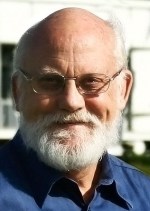


 He showed me how paper tapes were used to run routines. Paper tape? I can’t remember the last time I saw that.
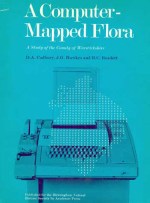 When I moved to Birmingham in 1970 (to study for the one year MSc course on plant genetic resources) there was a short module on data management, taught by Brian Kershaw, a programmer in the university’s Computer Centre. He developed the computer programs to sort and collate data, and print maps, for A Computer-Mapped Flora: A Study of The County of Warwickshire [2] published in 1971, and the first of its kind. His MSc module was more about basic programming than data management per se and not, in my opinion, very helpful, or enlightening. Things changed once we had access to personal computers over a decade later.
 IBM launched its first personal computer (PC) in August 1981, just a few months after I had returned to the UK and joined the faculty of the University of Birmingham. My memory is fuzzy. We must have had one of these in our lab in the Department of Plant Biology (School of Biological Sciences). I can remember that we used 5¼ inch floppy disks, but also installed an 8 inch disk reader. MS-DOS was the operating system.
 Digby Idle secured a grant to purchase half a dozen Apple Macintosh computers that we had access to personal computers, mainly for teaching. They certainly revolutionized the teaching of data management to MSc students by my colleague Dr Brian Ford-Lloyd.
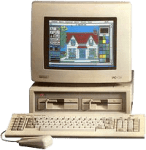 Personal computing really took off, however, once Alan Sugar released the first IBM clones under the Amstrad brand in the 1980s. I bought several machines for my lab. We were still using the university’s mainframe computer for analysis of large data sets. It wasn’t until the end of the 1980s that PCs began to have the power to carry out some of these same analyses.
 But I digress. Back to emails.
 [3] After I’d published this story yesterday (4 May 2020) a friend reminded me of the word processing software we used in the 1980s: WordStar, written for the CP/M operating system. It was generally replaced by WordPerfect, a package I never got to grips with. I became really quite proficient in the use of WordStar. Who can forget all those formatting tools for bold, underlining, and italics, etc?
 I graduated in July 1970 from the University of Southampton (a university on England’s south coast) with a BSc Hons degree in botany and geography. ‘Environmental botany’ actually, whatever that meant. The powers that be changed the degree title half way through my final (i.e. senior) year.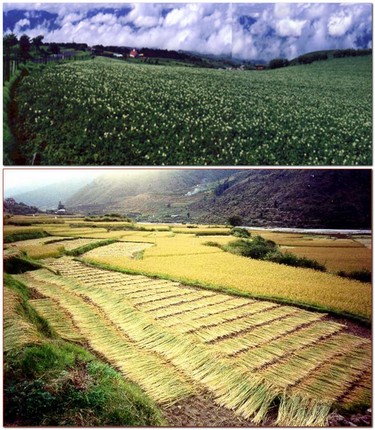



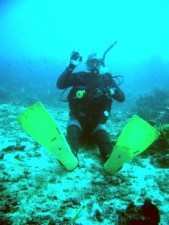 And the scuba diving, of course.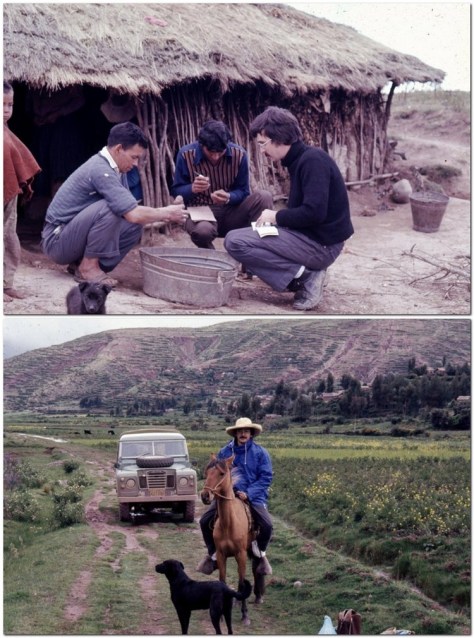

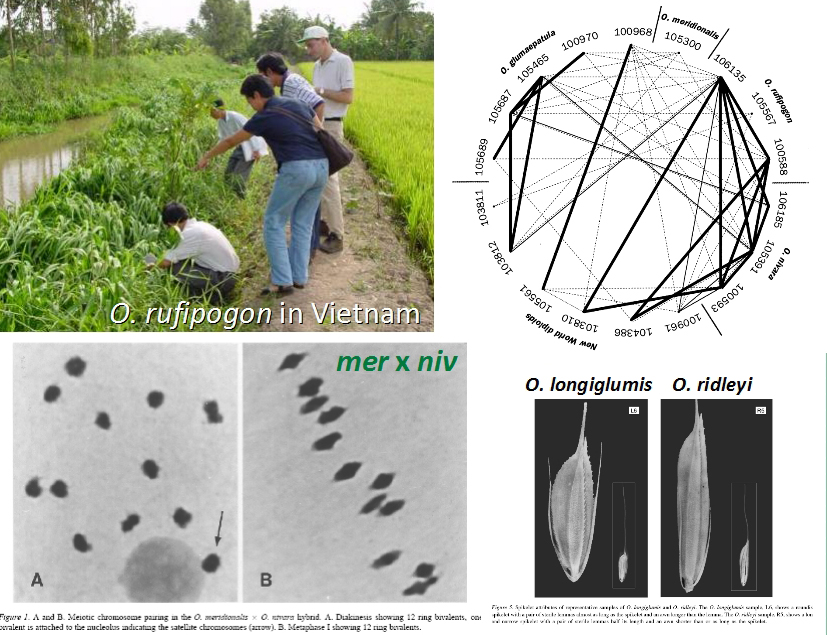

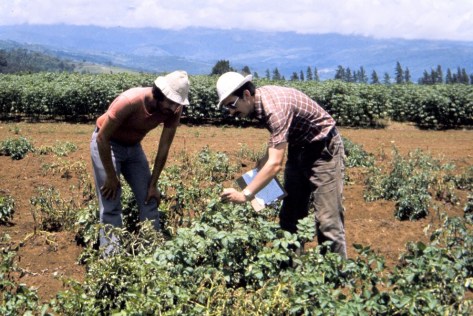
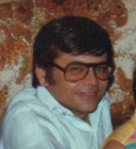

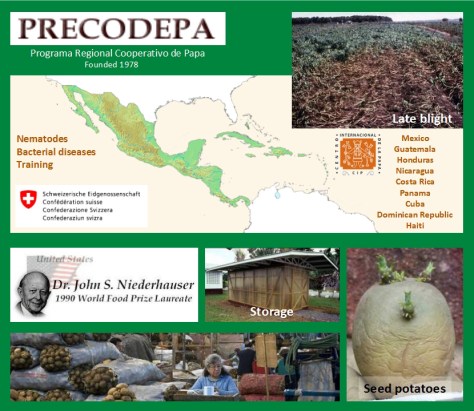
 Did I enjoy my time at Birmingham? I have mixed feelings.

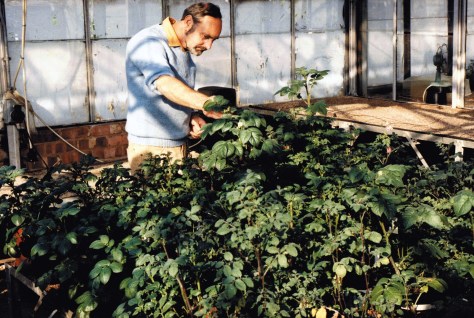

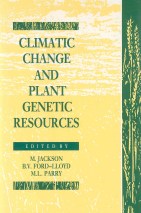 Brian and I (with a colleague, Martin Parry, in the Department of Geography) organized a workshop on climate change in 1989, when there was still a great deal of skepticism. We published a book in 1990 from that meeting (and followed up in 2013 with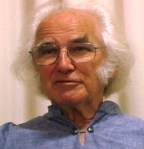
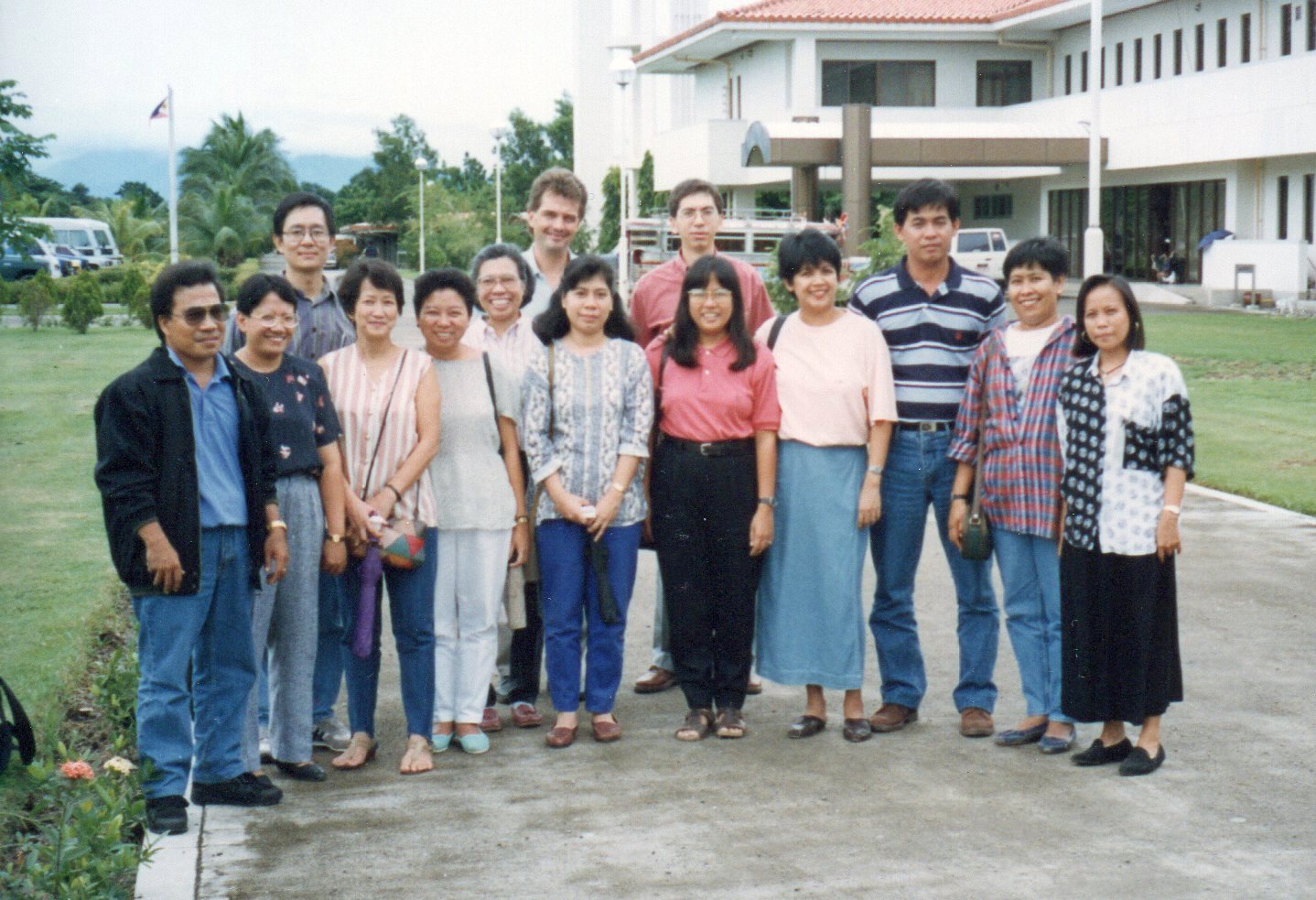
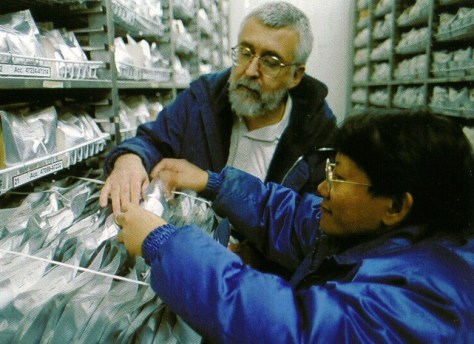

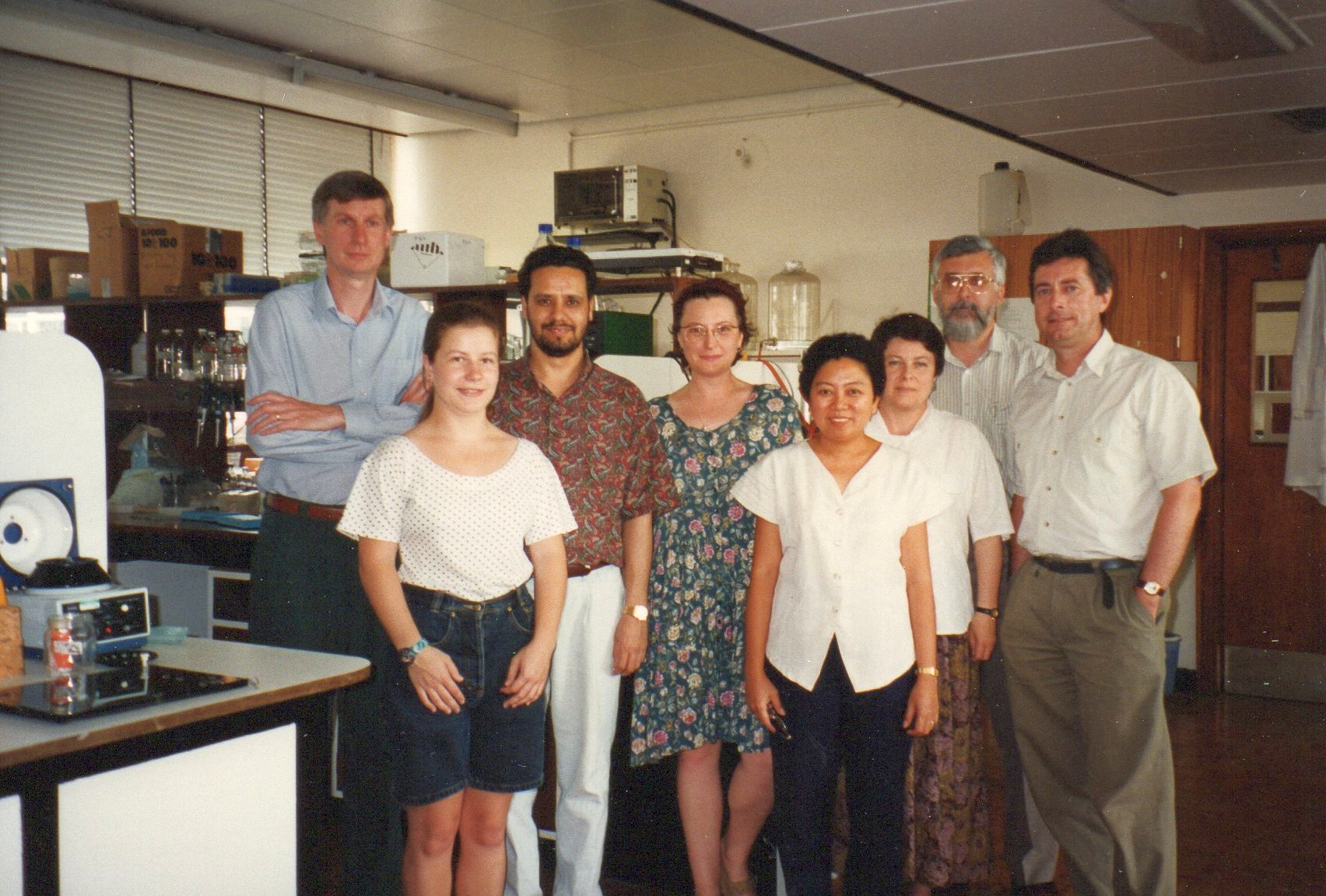

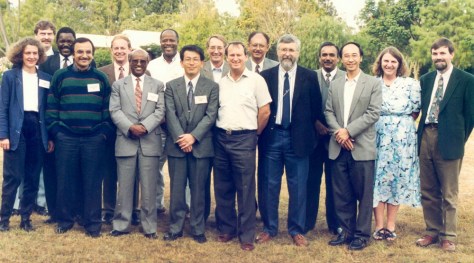

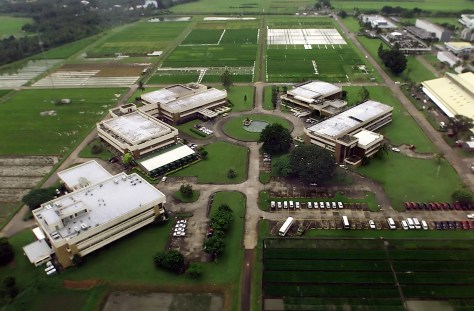
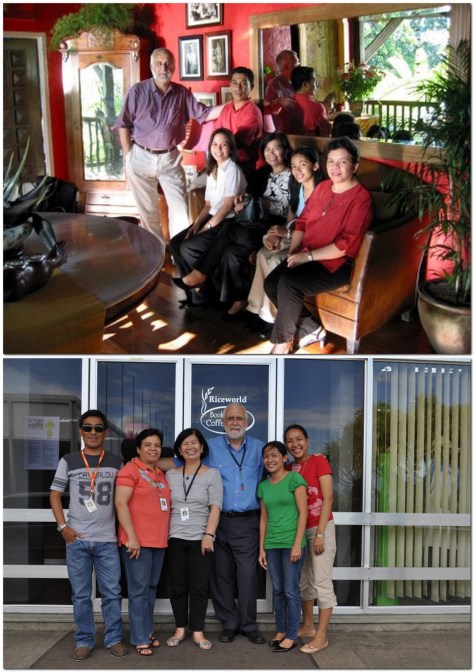



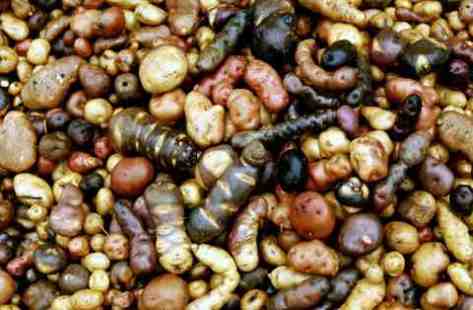
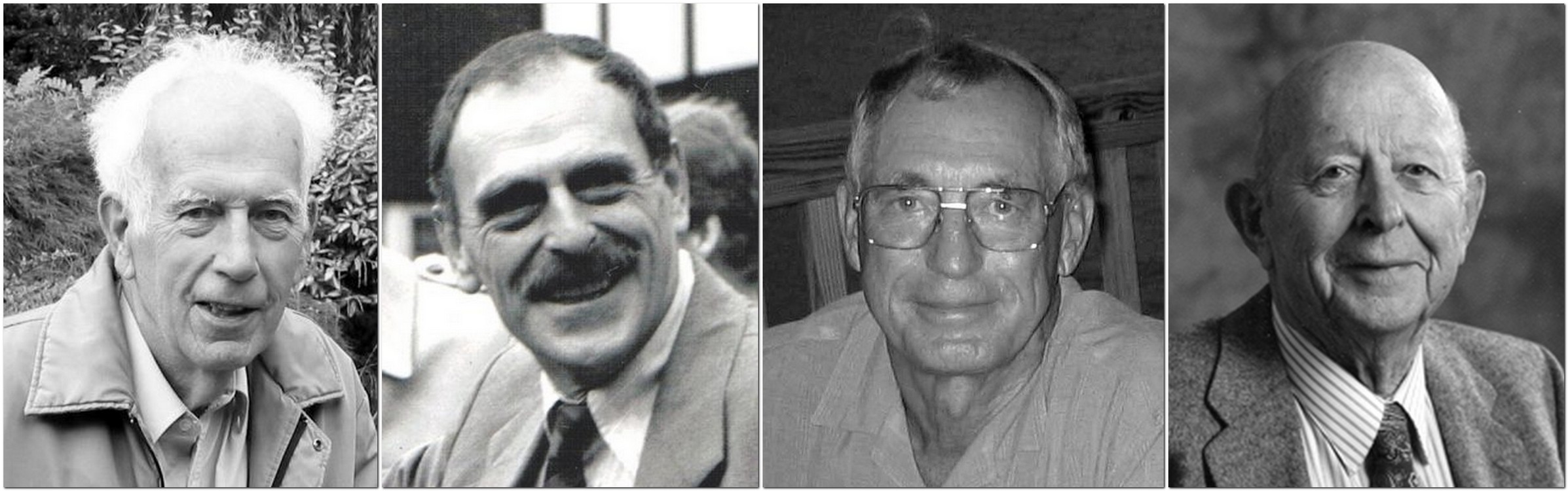
 2020 was meant to be a positive year of change. In early January we placed our house in Bromsgrove, Worcestershire on the market, with the hope (expectation?) of a quick sale. Instead, it’s a year on hold.
 But in that decade of austerity, what suffered? The National Health Service (NHS) suffered, starved of funds, starved of staff. The very NHS that government ministers are now queueing up (hypocritically) to praise and support. Ah, words are so easy to come by.
 Well, I guess that’s one way of looking at it. Donatien Alphonse François was such a sad character. Not my scene.
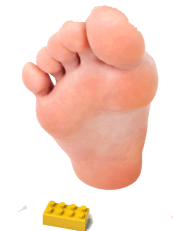 But there’s an insidious hazard lurking in most households with small children.

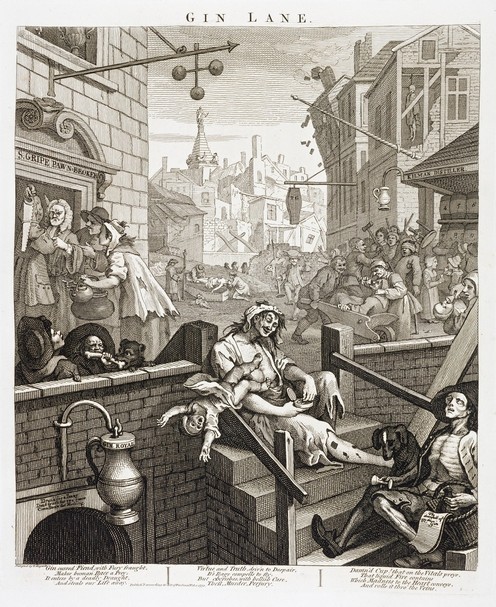
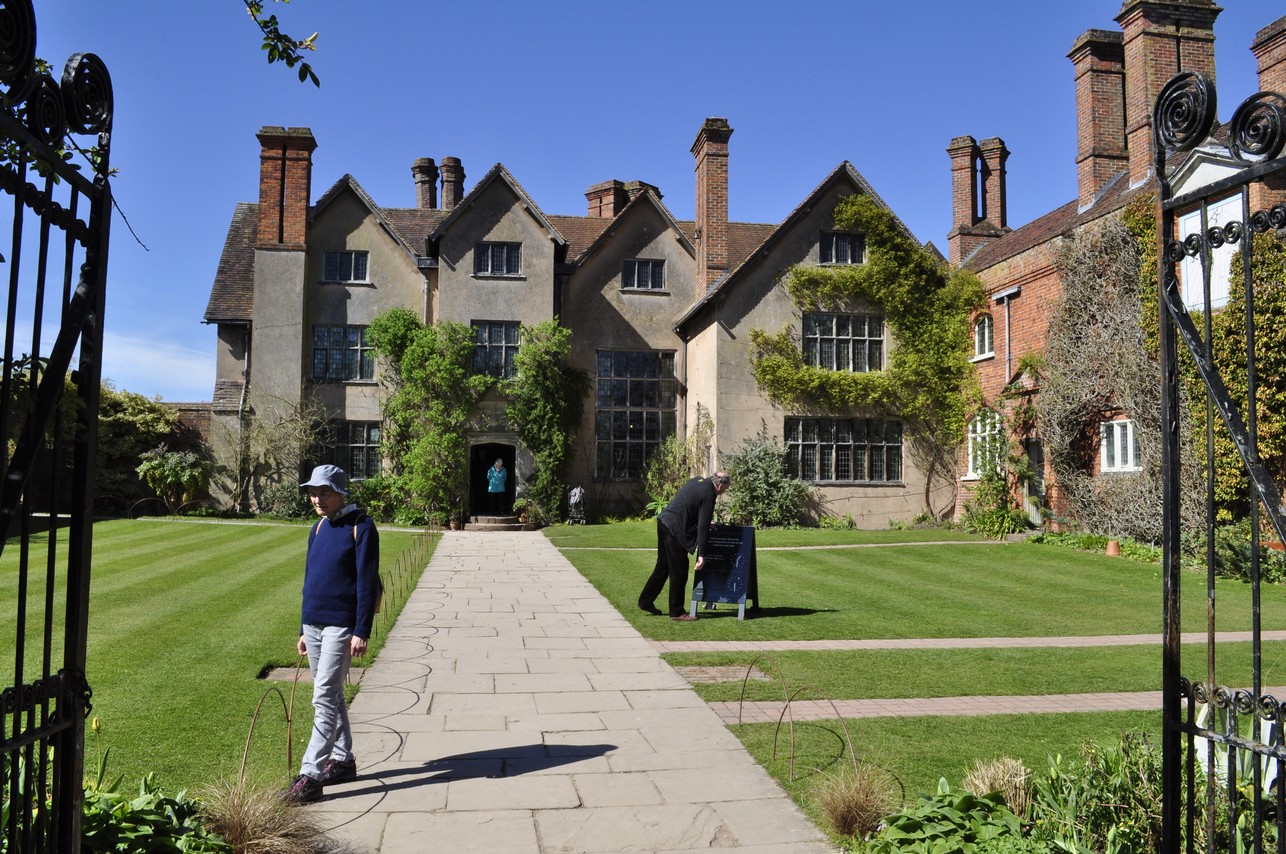
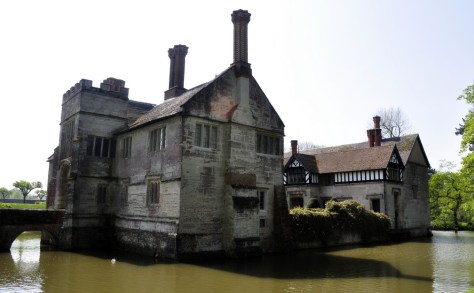
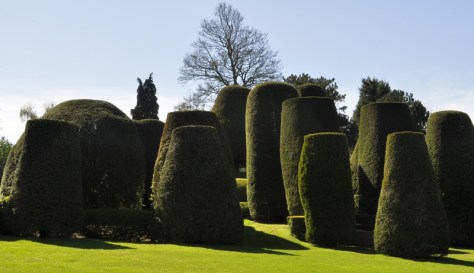
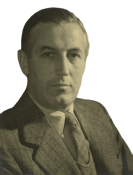


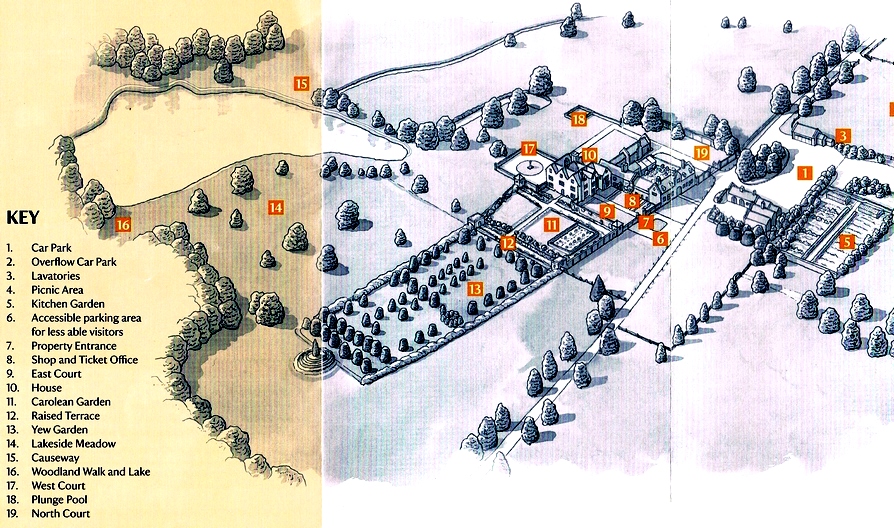


 The estate was acquired by


 Maybe. Unless the threat causing fear of danger, pain, or harm is tangible.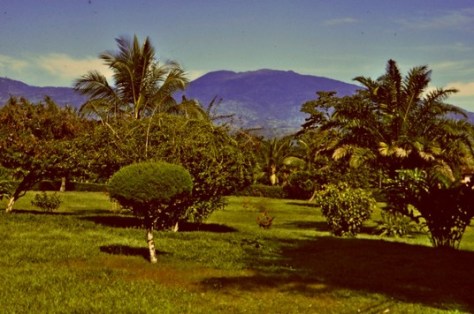
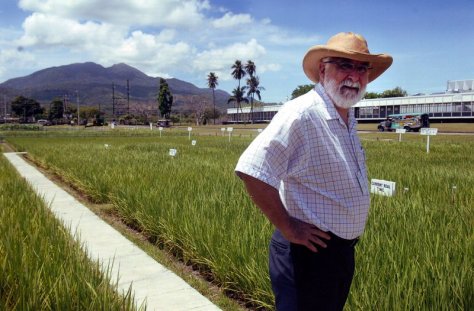


 And so it goes with the current Covid-19 pandemic. Our government here in the UK, and perhaps even more so in the USA, culpably failed to take heed of what was happening elsewhere in the world. They lost valuable time, weeks even, in preparing for the worst that this nasty little virus could throw at us.
 My anxiety levels on some days have been sky high. I’ve had days of quite deep depression. We know the virus is there. We can’t see it. We don’t know if any persons standing next to us, albeit at a social distance of at least 2m, has the virus but is not showing any symptoms. We are fearful because we have seen just how infectious the pathogen is, and how sick people can become, with a very high mortality rate among the old (especially if they have underlying health issues). Steph and I are both in our seventies.

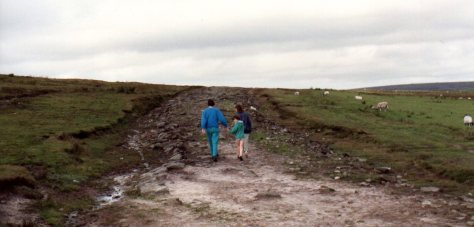
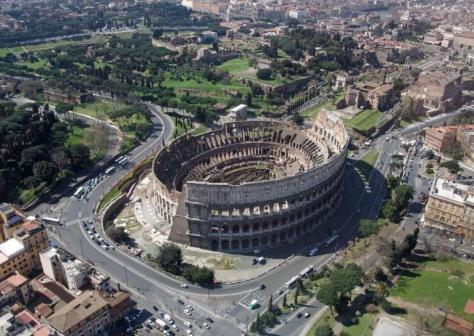


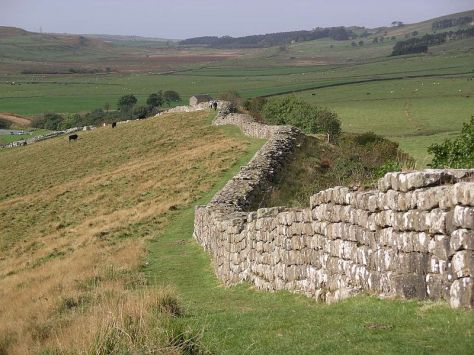
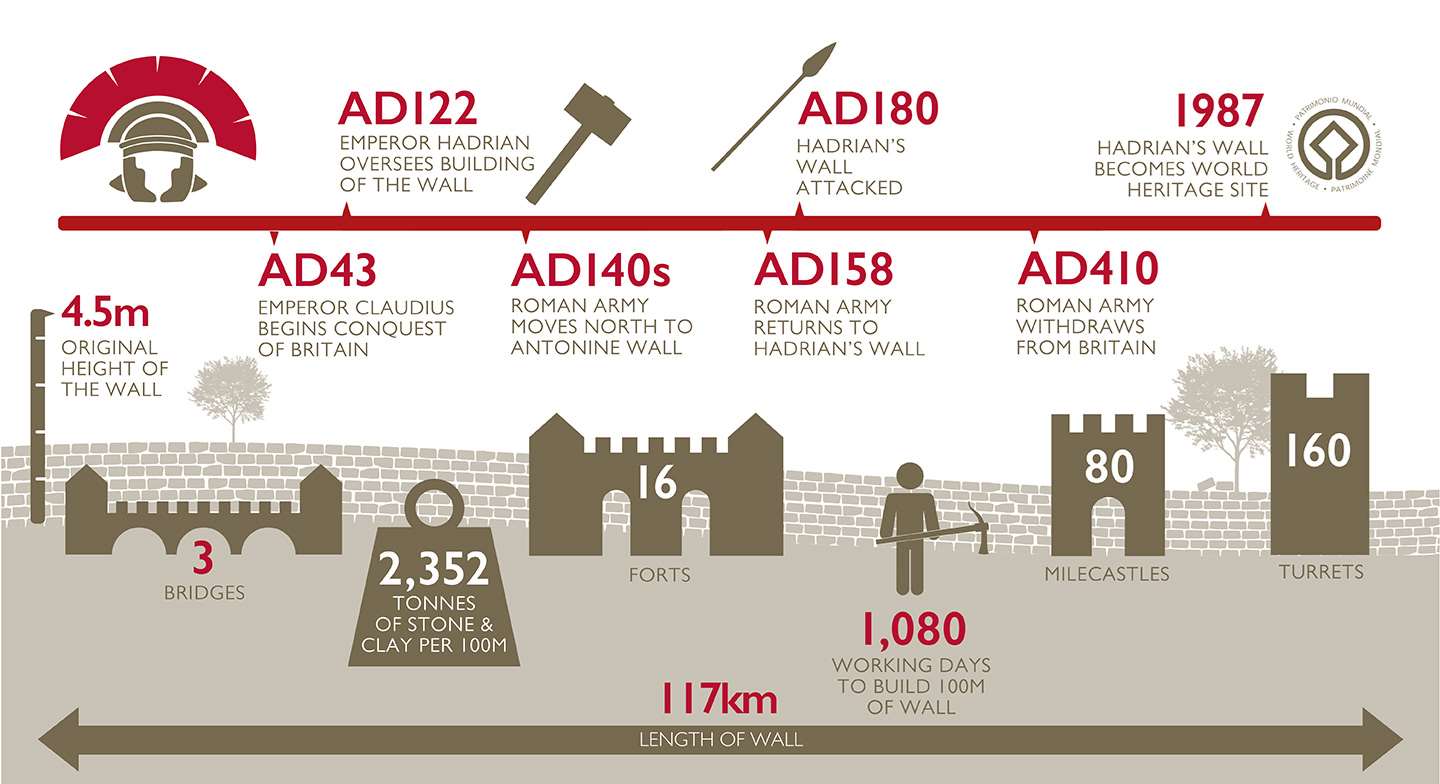


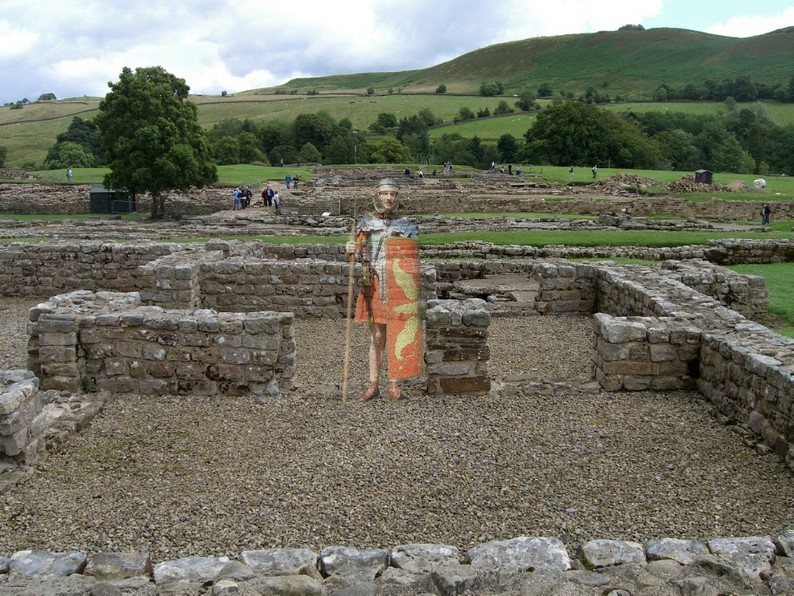


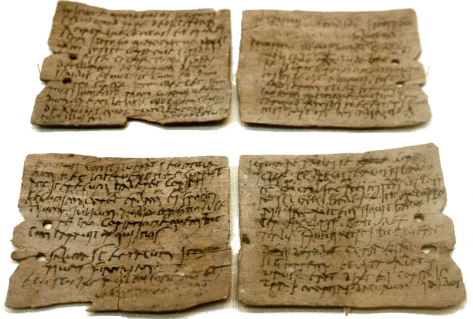
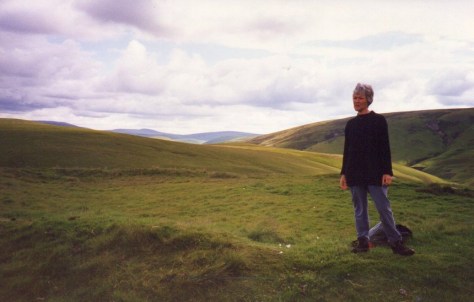
 But there is (or at least should be) another legacy of the Roman occupation here and elsewhere. It’s not a legacy that you can observe as such. It needs the techniques of molecular genetics to reveal it. DNA!
 I’ve just finished reading the excellent
  Spanning 30,000 years or more (from cave dwellers in France) to modern times, Howard Goodall states that there are many ways to tell the story of music. This is his way. It’s unpretentious, clear, and excellent in demonstrating how techniques developed in earlier centuries still influence composition today, even the music of The Beatles, Stevie Wonder, Lady Gaga and thousands more.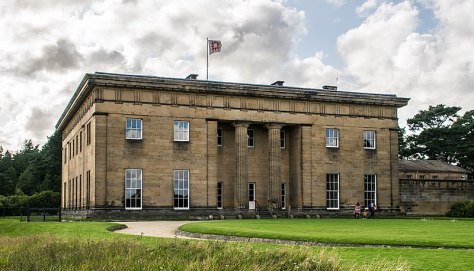
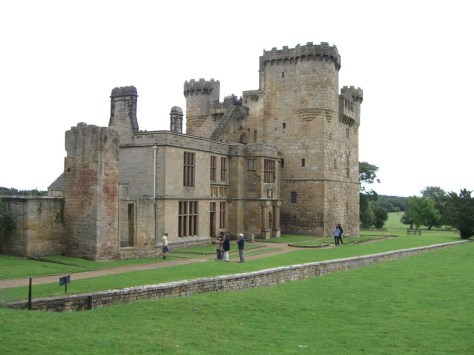


 A little further up the coast is Holy Island, the site of Lindisfarne Priory (owned by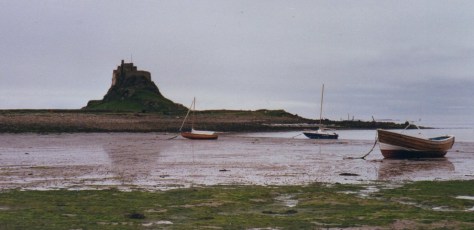


 Two weeks in lockdown . . . and counting!
 As for myself, I have this blog to keep me busy.


 The Morrisons supermarket we frequent is over a mile away, so we have to drive there. Since last week, the supermarket permits just one family member inside at a time (one per trolley), so the shopping trip has fallen to me alone, rather than together which has been the norm until now. I had to queue the first time to get inside; yesterday at 8:30 am there was no queue at all, and I was able to source almost everything that was on Steph’s list. Just a few minutes ago, our next door neighbor (who is a theater sister in the NHS, and who has special hours access to the supermarket) has just brought round the one item we needed but I couldn’t buy yesterday: plain flour! Simple pleasures.
 I also have music playing throughout the day. That’s a great comfort. It has to be
  We’ve been catching up on the first four series of the excellent BBC crime drama



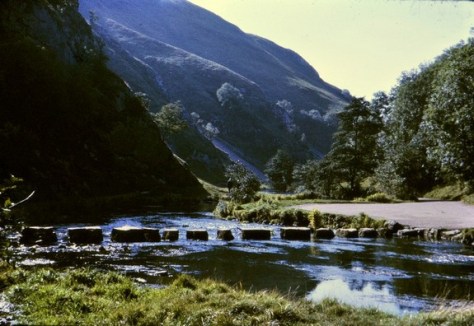


 My sister Margaret had friends who farmed land near Alstonefield just above Dovedale. When I was in my mid-teens (around 1964, I guess) a friend of mine and I camped for a week on that farm, and enjoyed many excursions over the lip of the valley into Dovedale. And, being in those days a keen birdwatcher, I saw for the first time (but few times since) the iconic bird of Dovedale: the
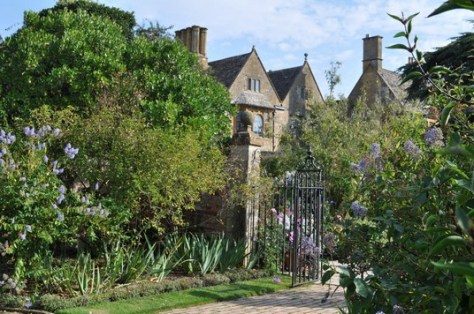



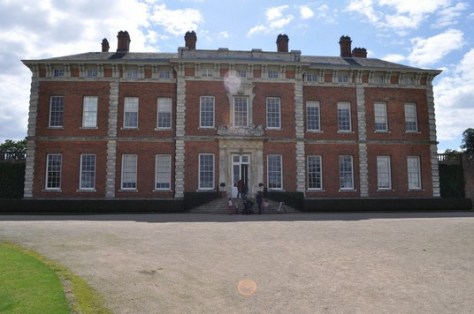


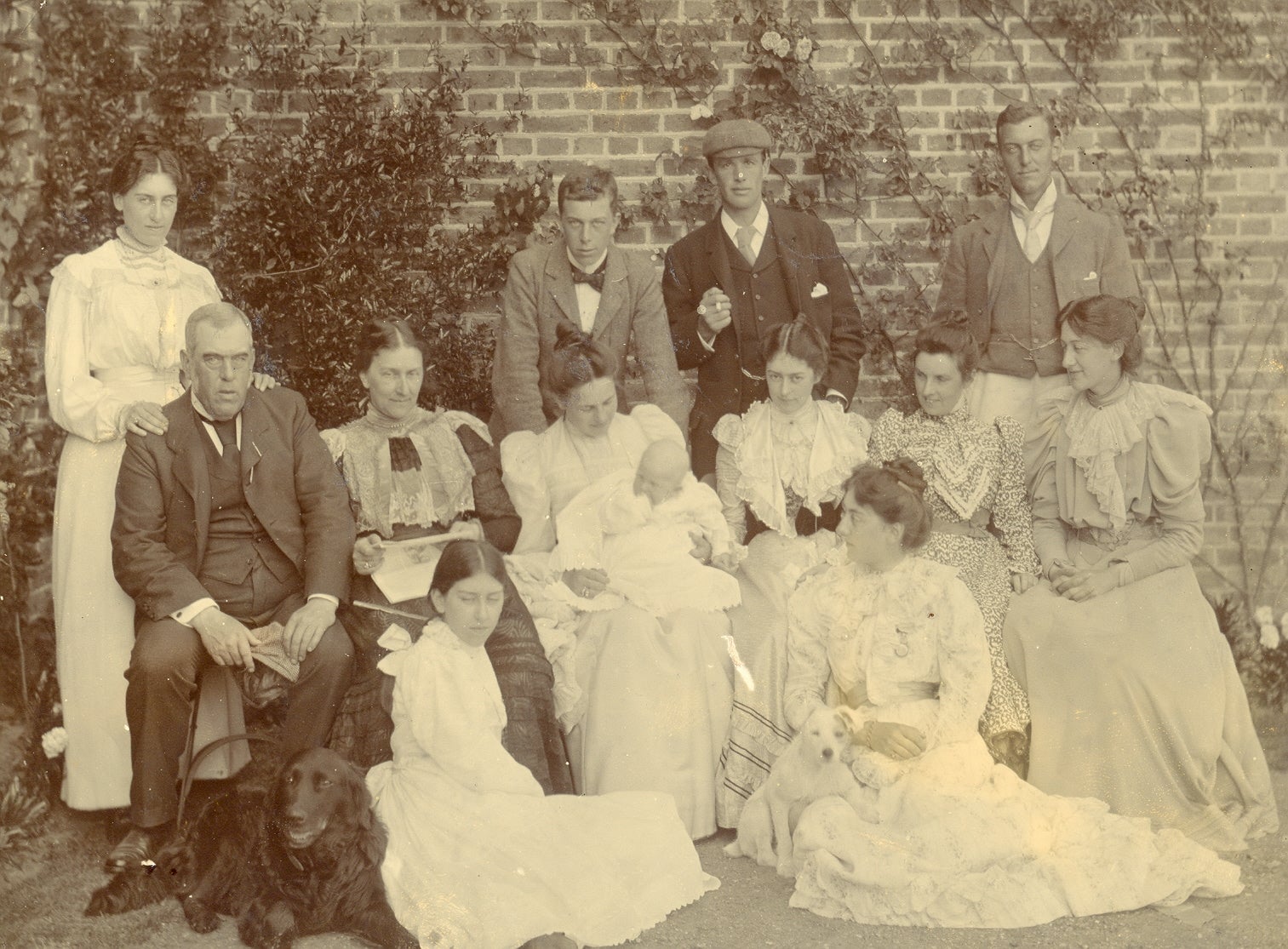

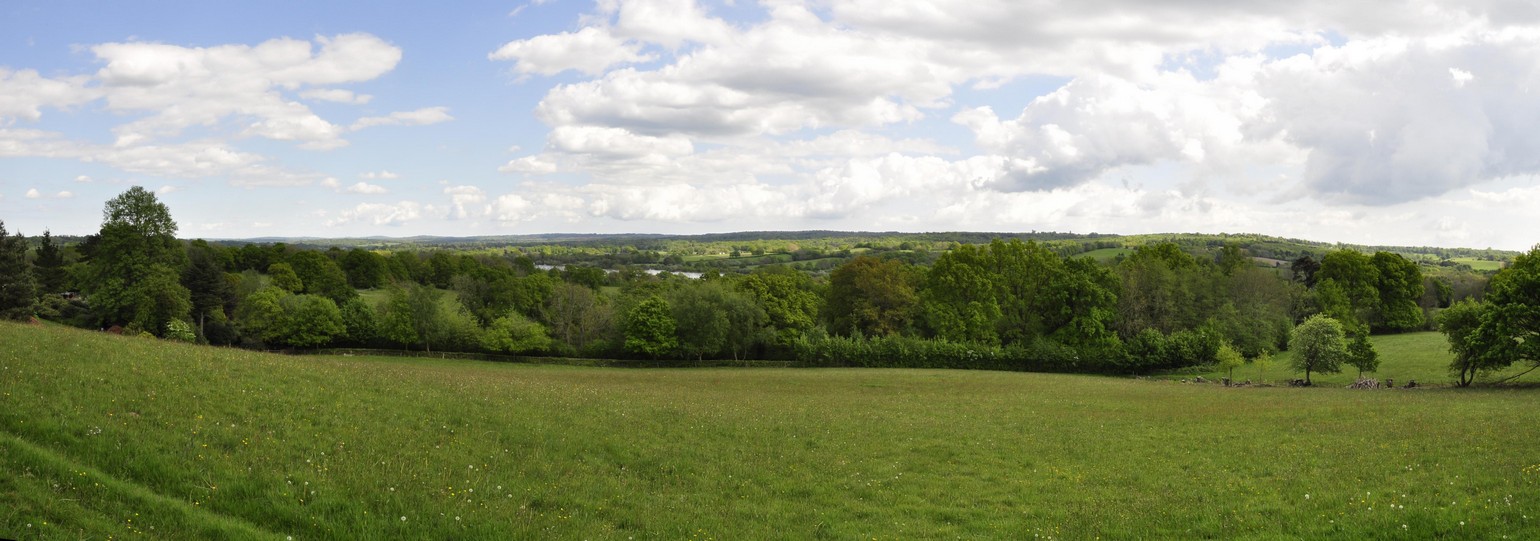


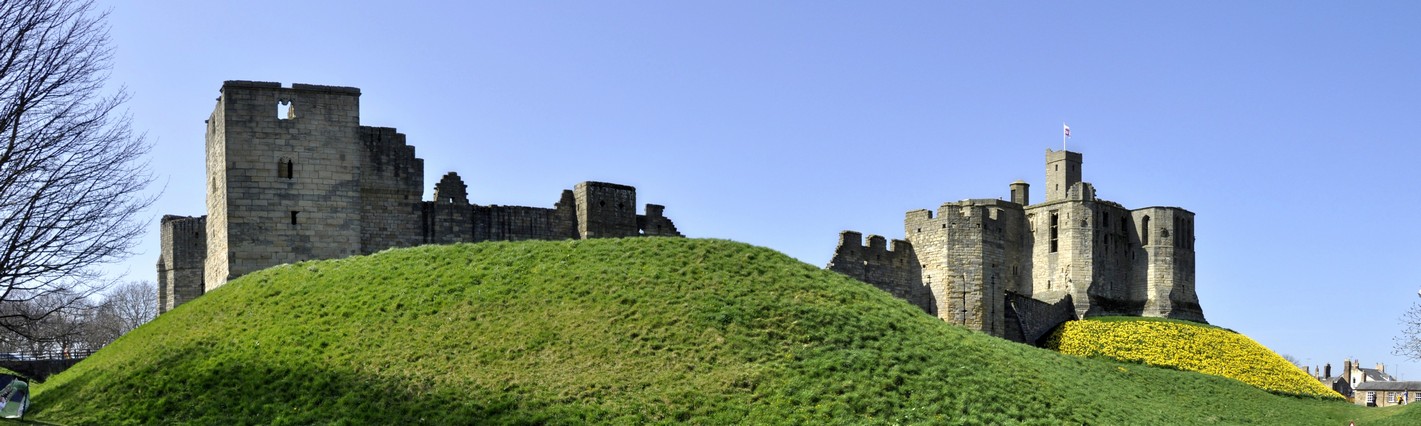
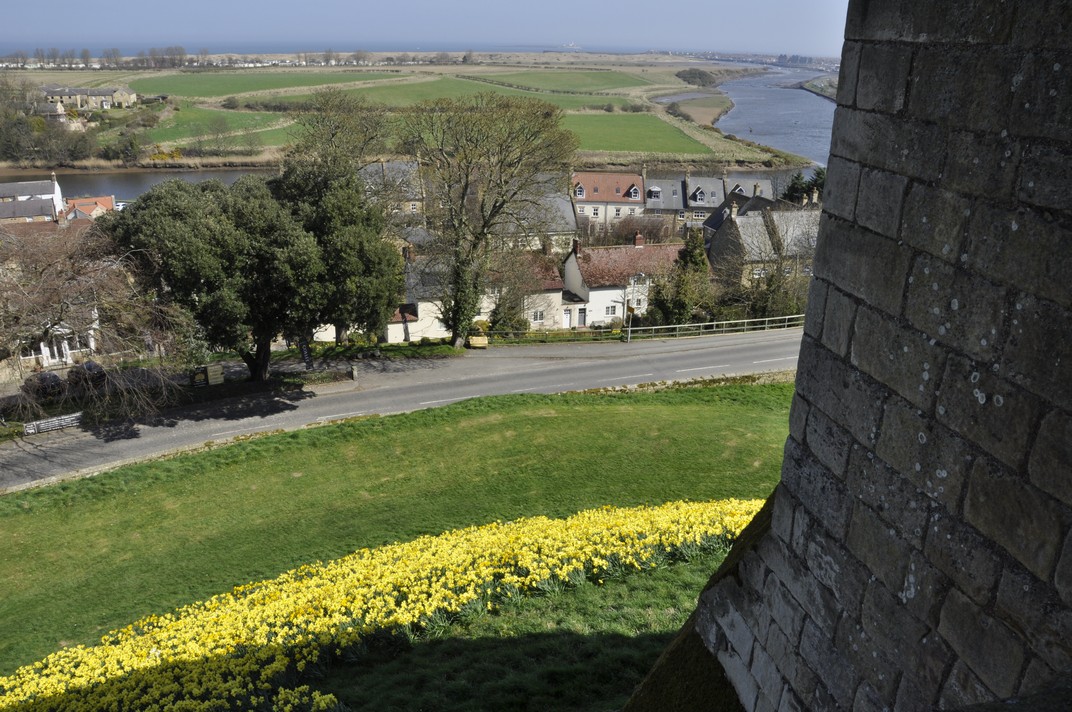
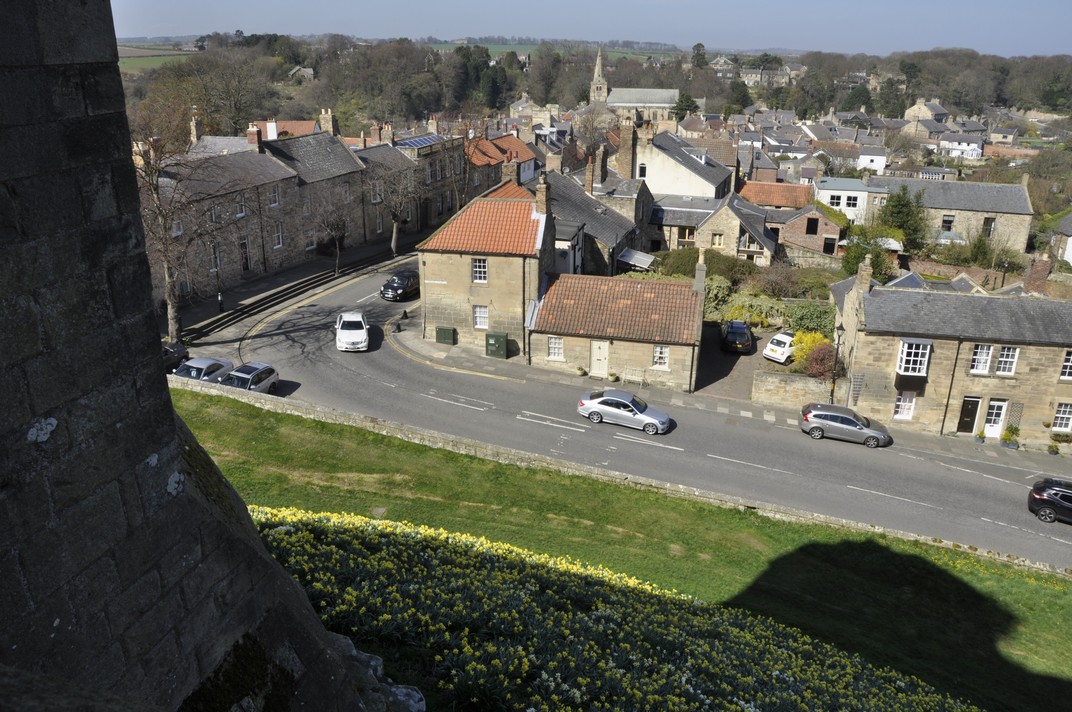


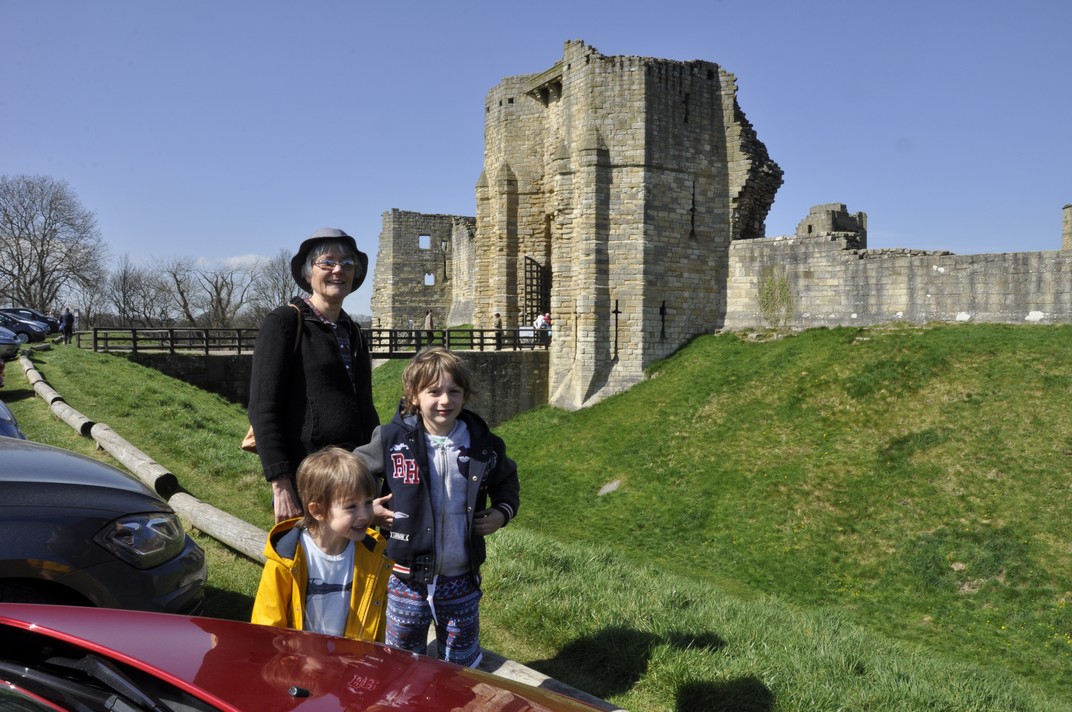

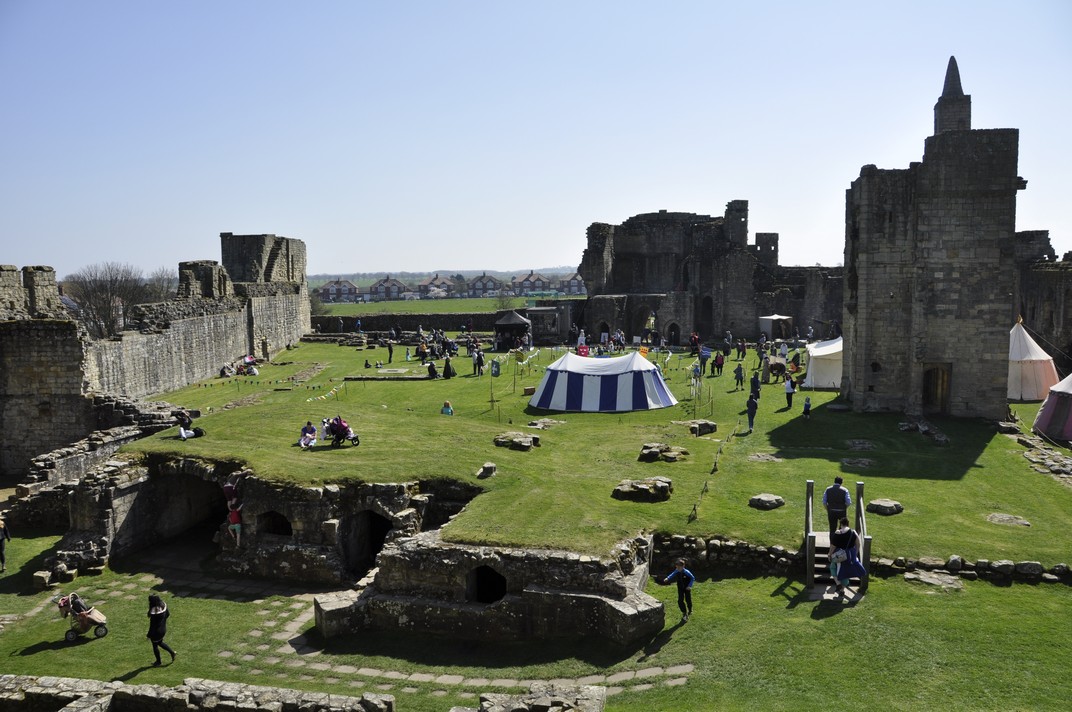


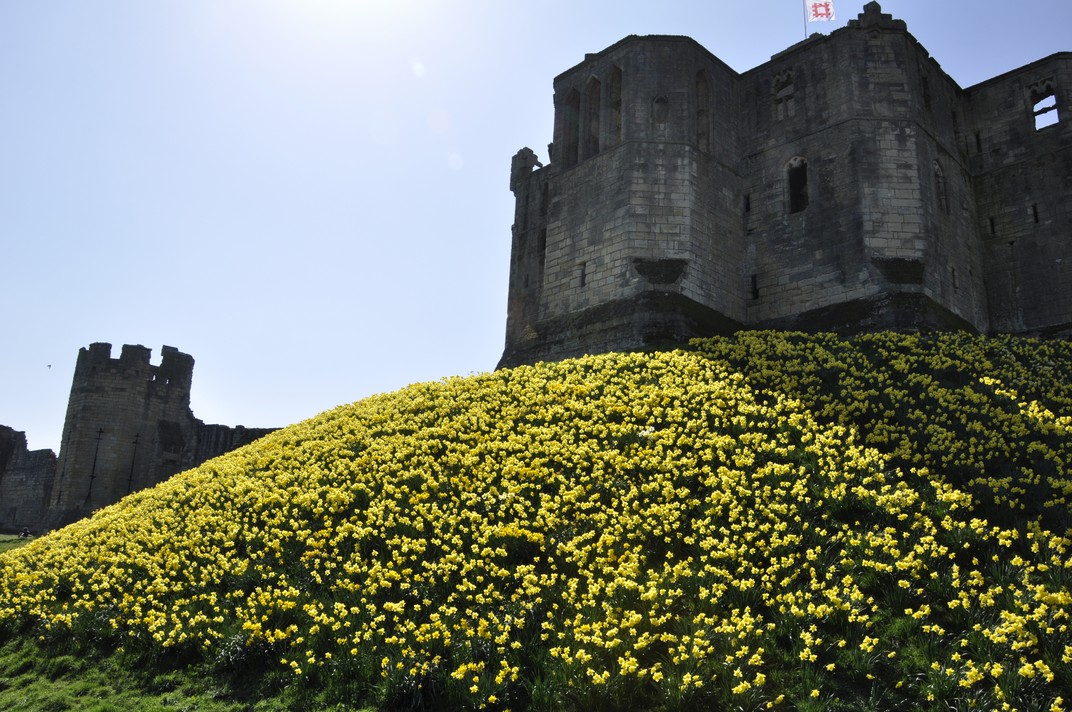
 If you are traveling south on the M40 motorway in Warwickshire and, about half way between Junction 12 (B4451 Gaydon Rd for the British Motor Museum) and Junction 11 (A422 for Banbury), you happen to look to your left, you’ll see an obelisk on the skyline. That obelisk is in the grounds of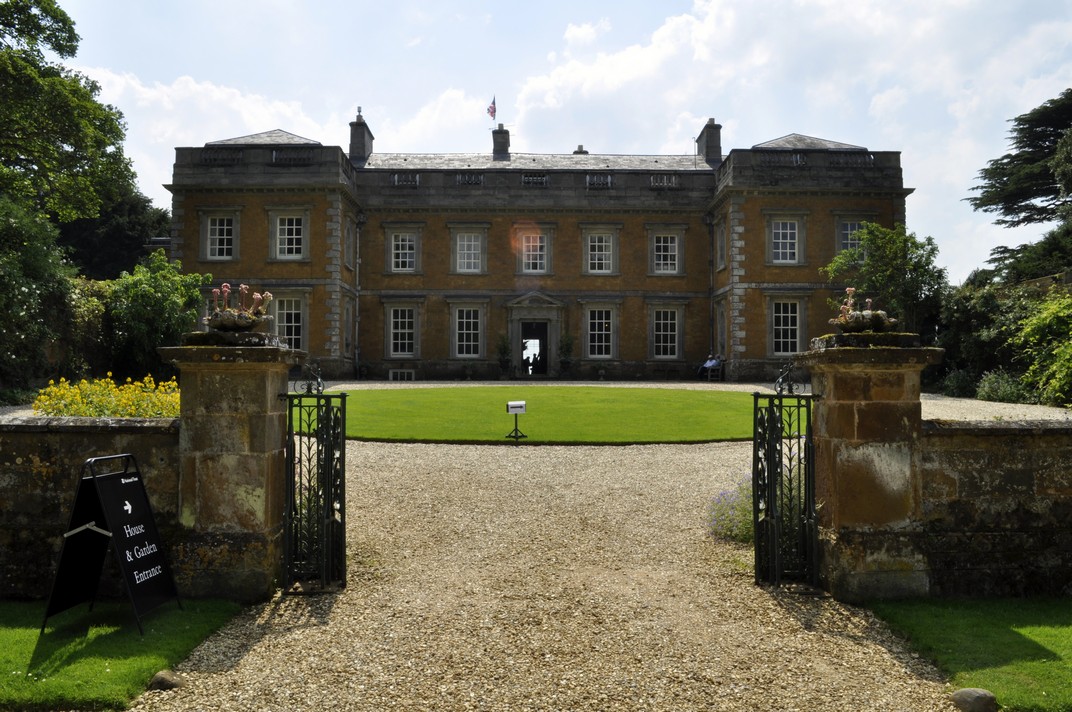


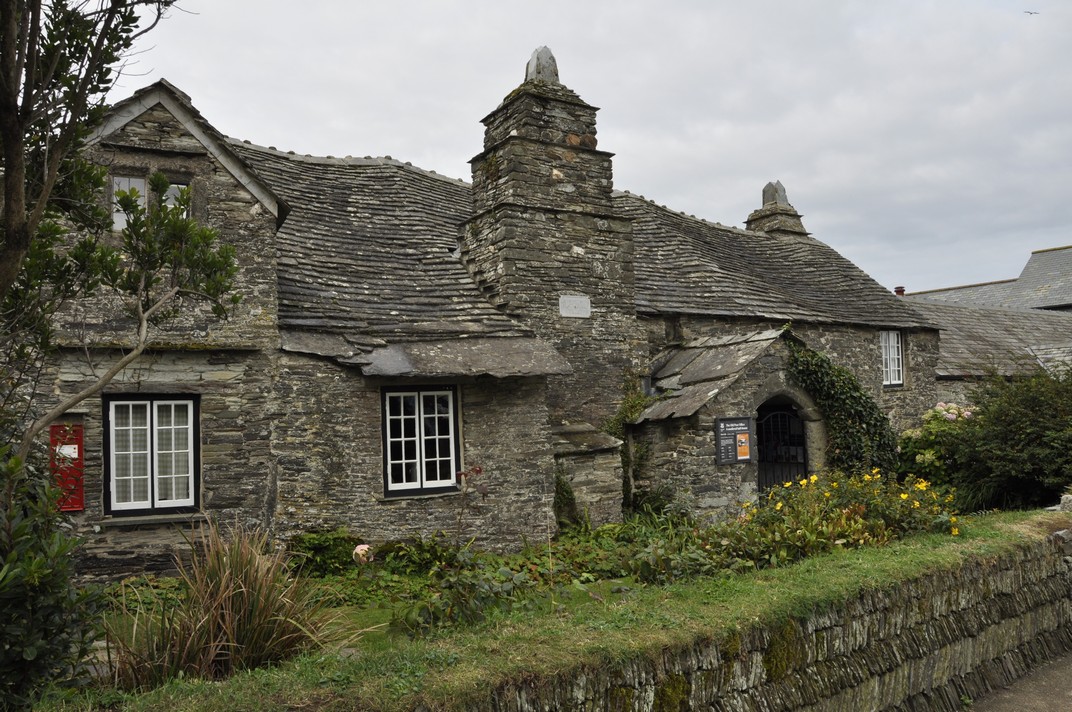
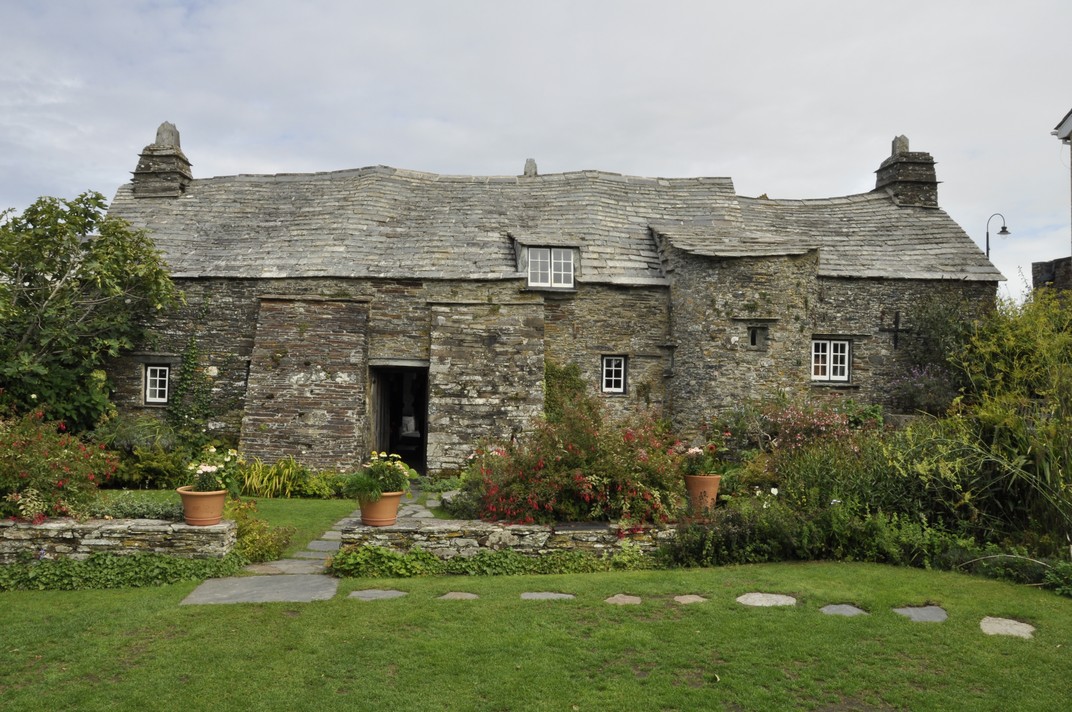
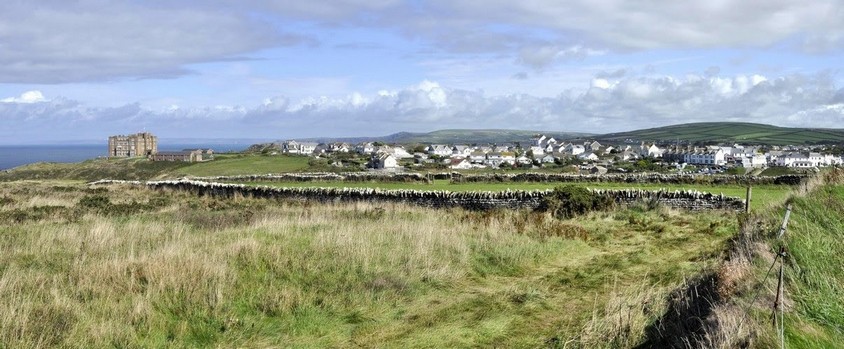




 A balanced diet . . .