Studying at Southampton, 1967-1970 (updated 20 October 2025)

In October 1967 (when I started my undergraduate studies in [Environmental] Botany and Geography¹), The University of Southampton was a very different institution from what it is today. So many changes over the past 50 years! One of the biggest changes is its size. In 1967 there were around 4500-5000 undergraduates (maybe 5000 undergraduates and postgraduates combined) if my memory serves me well, just on a single campus at Highfield.

Today, Southampton is a thriving university with a total enrolment (in 2015/16) of almost 25,000 (70% undergraduates) spread over seven campuses. Southampton has a healthy research profile, a respectable international standing, and is a founding member of the Russell Group of leading universities in the UK.

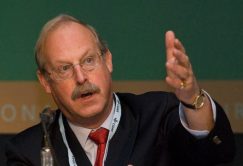
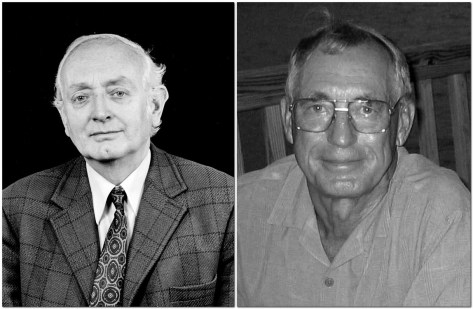
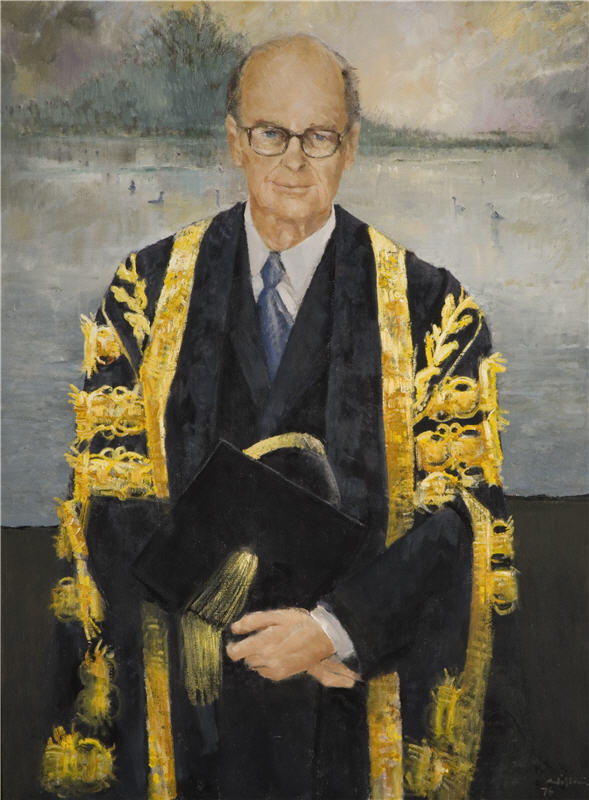
In 1967, the university was led by Vice-Chancellor Professor Sir Kenneth Mather² FRS (1965-1971), an eminent biometrical geneticist, who came to Southampton from the Department of Genetics at The University of Birmingham, where he had been head of department. The Chancellor (1964-1974) was Baron Murray of Newhaven.
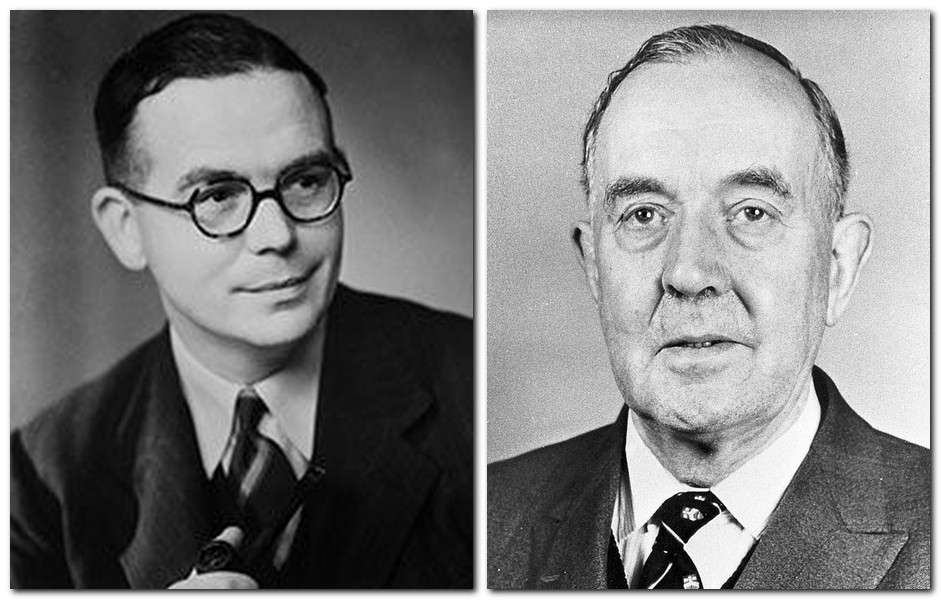
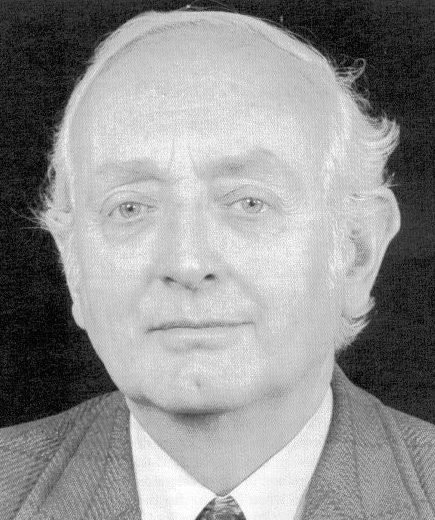
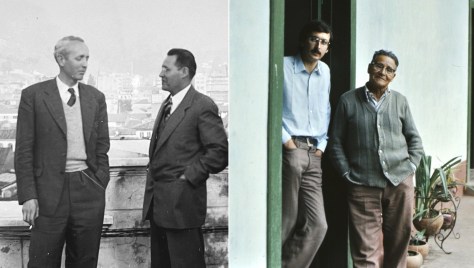
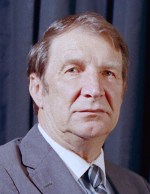
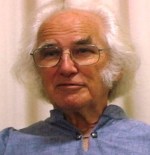
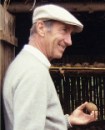
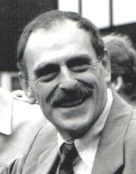
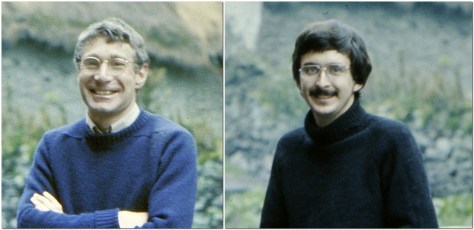
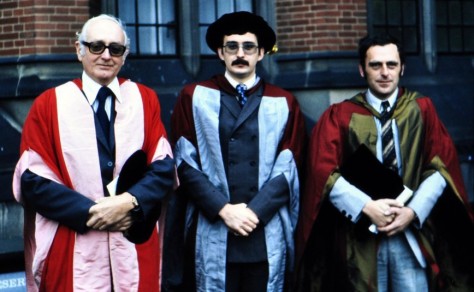
(L) Professor Sir Kenneth Mather and (R) Lord Keith Murray (from Wikipedia)

The campus
Looking at a map of the Highfield campus today, many new buildings have risen since 1967, departments have moved between buildings, and some have relocated to new campuses.

In the 1960s, Southampton had benefited from a period of university expansion and new infrastructure under the then Conservative Government (how times have changed), with Sir Edward Boyle at the helm in the Department for Education or whatever it was named in those days.

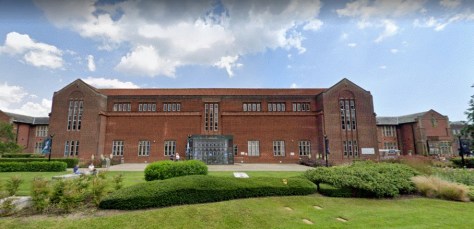
Until about 1966 or early 1967, Botany had been housed in a small building immediately north of the Library, which has since disappeared. It was one of the early beneficiaries of the ‘Boyle building expansion’ at Southampton, moving to Building #44, shared with Geology.

After I left Southampton in the summer of 1970, Botany and Zoology merged (maybe also with physiology and biochemistry) to form a new department of Biological Sciences at the Boldrewood Campus along Burgess Road, a short distance west of the Highfield Campus. Biological Sciences relocated to a new Institute for Life Sciences (#85) on the main campus at Highfield a few years back.

Geology now resides within Ocean and Earth Science, National Oceanography Centre Southampton located at the Waterfront campus on Southampton Docks.

The Geography department had been located on the first floor of the Hartley Building (#36, now entirely devoted to the university library). By autumn 1968, Geography moved to a new home in the Arts II Building (#2). For some years now it has occupied the Shackleton Building (#44), the former Botany and Geology home.

Spending more time in Botany
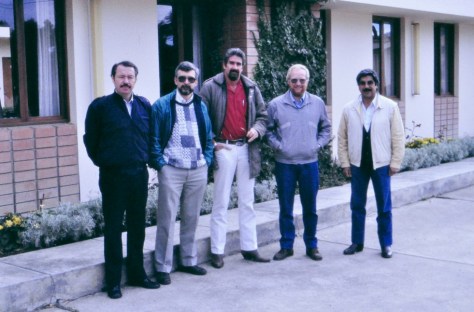
As Combined Honours students, the four of us had feet in two departments, and tutors in each. We took the full Single Honours botany course for the first two years, but in the final year, specialised in plant ecology, with a few optional courses (such as plant speciation, plant breeding, and population genetics in my case) taken from the botany common course that all Single Honours students took. I also sat in our the plant taxonomy lectures given by Reading professor and head of the department of botany there, Vernon Heywood, who traveled to Southampton twice a week for five or six weeks. In the early 1990s I crossed paths with him in Rome where we were attending a conference at FAO, and enjoyed an excellent meal together and an evening of reminiscing.

Students complain today that they have few formal contact hours during their degree courses. Not so at Southampton in the late 1960s. But that was also a consequence of taking two subjects with a heavy practical class load, and an ancillary, Geology, for one year, also with a practical class component.

During the first term, Fridays were devoted to practical classes from 9-5 with a break for lunch. In the mornings we spent 10 weeks learning about (or honing existing knowledge) plant anatomy, taught by cytologist Senior Lecturer Dr Roy Lane. Afternoons were devoted to plant morphology, taught by Reader and plant ecologist Dr Joyce Lambert. In the Spring Term in 1968, we started a series of practical classes looking at the flowering plants. Ferns and mosses were studied in the second year.

In the second year, we focused on genetics, plant biochemistry, plant physiology, and mycology, taught by Drs. Joe Smartt, Alan Myers, David Morris, and John Manners. On reflection, the genetics course was pretty basic; most of us had not studied any genetics at school. So practical classes focused on Drosophila fruit fly crossing experiments, and analysing the progeny. Today, students are deeply involved with molecular biology and genomics; they probably learn all about Mendelian genetics at school. During the second year, plant taxonomist Leslie Watson departed for Australia, and this was the reason why Vernon Heywood was asked to cover this discipline later on.

The structure of the Single Honours Botany course changed by my final year. There was a common course covering a wide range of topics, with specialisms taken around the various topics. For us Combined Honours students, we took the plant ecology specialism, and three components from the common course. We also had to complete a dissertation, the work for which was undertaken during the long vacation between the second and third years, and submitted, without fail, on the first day of the Spring Term in January. We could choose a topic in either Botany or Geography. I made a study of moorland vegetation near my home in North Staffordshire, using different sampling methods depending on the height of vegetation.

We made two field courses. The first, in July 1968, focusing on an appreciation of the plant kingdom, took us to the Burren on the west coast of Ireland in Co. Clare. We had a great time.

The last morning, Saturday 27 July 1968, outside the Savoy Hotel in Lisdoonvarna. In the right photo, L-R, back row: Alan Myers, Leslie Watson (staff), Jenny?, Chris ? (on shoulders), Paul Freestone, Gloria Davies, John Grainger, Peter Winfield. Middle row: Janet Beazley and Nick Lawrence (crouching) Alan Mackie, Margaret Barran, Diana Caryl, John Jackson, Stuart Christophers. Sitting: Jill Andison, Patricia Banner, Mary Goddard, Jane Elliman, Chris Kirby (crouching)
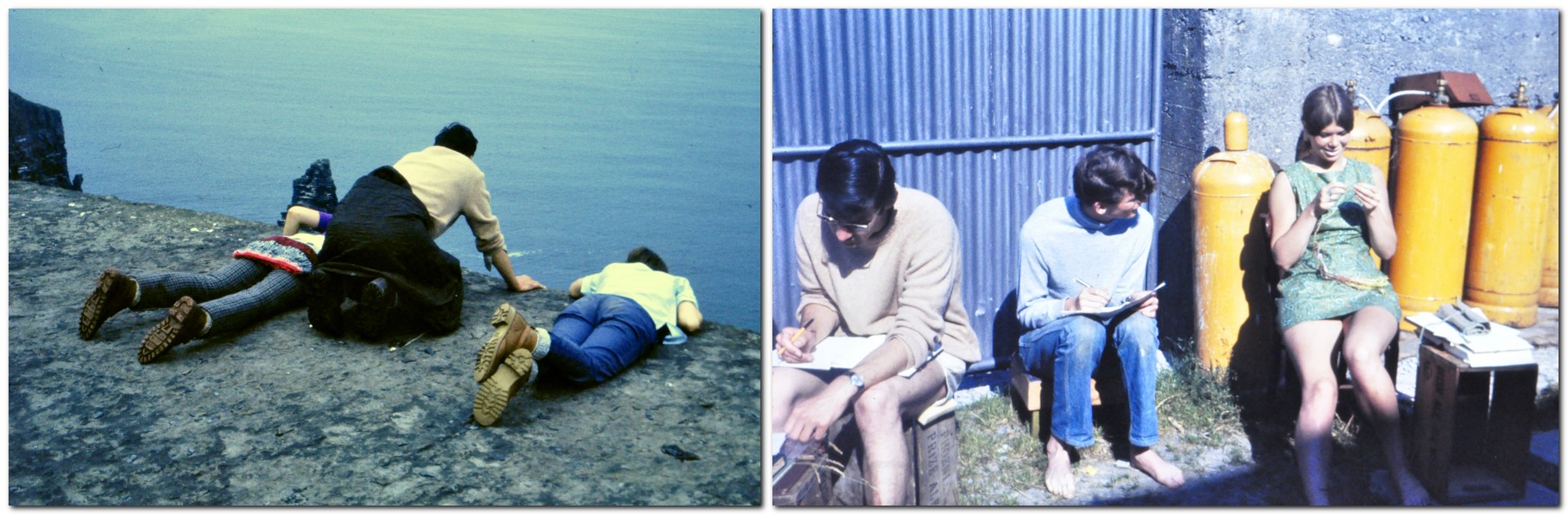
Checking out the Cliffs of Moher, and working on individual projects (Paul Freestone, John Grainger, Jane Elliman)

We all had to carry out a short project, in pairs, and I worked with Chris Kirby on the brown algae abundant on the coast near Lisdoonvarna which was our base. At the end of the second year, we spent two weeks in Norfolk, when the Americans first landed on the Moon. Led by Joyce Lambert and John Manners, the course had a strong ecology focus, taking us around the Norfolk Broads, the salt marshes, the Breckland, and fens. We also had small individual projects to carry out. I think mine looked at the distribution of a particular grass species across Wheatfen, home of Norfolk naturalist (and good friend of Joyce Lambert), Ted Ellis.

Professor Stephen H Crowdy was the head of department. He had come to Southampton around 1966 from the ICI Laboratores at Jealott’s Hill. He was an expert on the uptake and translocation of various pesticides and antibiotics in plants. I never heard him lecture, and hardly ever came into contact with him. He was somewhat of a non-entity as far as us students were concerned.
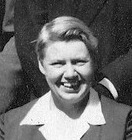
Joyce Lambert in 1964

Joyce Lambert was my tutor in botany, a short and somewhat rotund person, a chain-smoker, known affectionately by everyone as ‘Bloss’ (short for Blossom). Her reputation as a plant ecologist was founded on pioneer research, a stratigraphical analysis of the Norfolk Broads confirming their man-made origin, the result of medieval peat diggings. Later on, with her colleague and head of department until 1965, Professor Bill Williams, Joyce developed multivariate methods to study plant communities. This latter research area was the focus of much of her final year teaching in plant ecology. Joyce passed away in 2005.
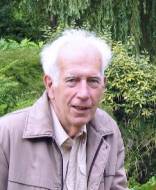
Joe Smartt

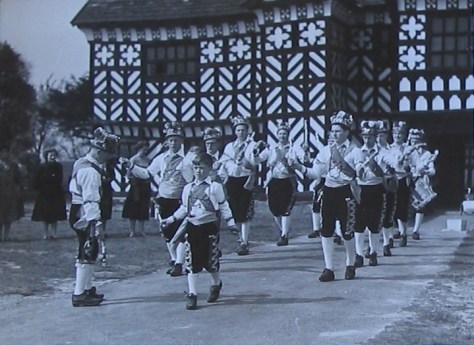
I became a close friend of Joe Smartt, who retired in 1996 as Reader in Biology, and a highly respected expert on grain legumes. It was Joe who encouraged my interest in the nexus between genetics and ecology, which eventually led to me applying to Birmingham in February 1970 to join the MSc course on Conservation and Utilization of Plant Genetic Resources  in September that year, the beginnings of my career in genetic resources conservation. Outside academics, Joe and I founded a Morris dancing team at Southampton, The Red Stags, in October 1968, and its ‘descendant’ is still thriving today. Joe passed away in June 2013.
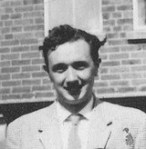
A young Alan Myers in 1964

I also had little contact outside lectures and practical classes with the other staff, such as physiologists Alan Myers and David Morris, or cytologist Roy Lane. In the late 1980s, when I was a lecturer in plant biology at The University of Birmingham, as internal examiner I joined plant pathologist John Manners (the external examiner) to examine a plant pathology PhD dissertation at Birmingham. I hadn’t seen him since I left Southampton in 1970.

Every October he used to organize a fungus foray into the New Forest for a day. I’ve read a couple of accounts from former botany students, before my time, and how enjoyable these outings were. John was elected President of the British Mycological Society in 1968, and was a recipient of the very special President’s Medal of the Society.
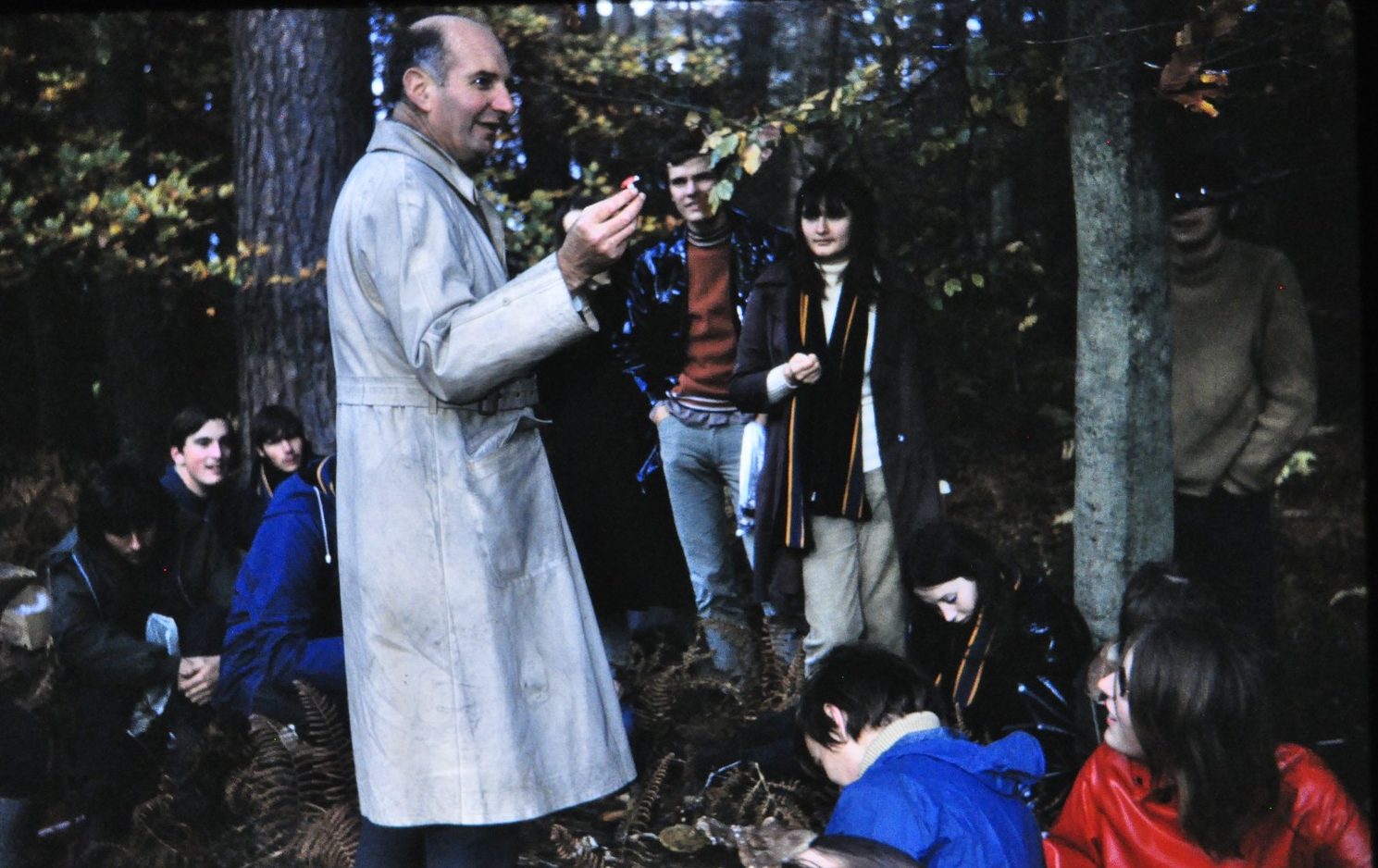
October 1969 – John Manners leading a fungus foray, near Denny Wood in the New Forest
Les Watson in 1964

Leslie Watson (who came from my home town of Leek in Staffordshire) taught flowering plant taxonomy, and had an interest in the application of numerical techniques to classify plants. At some point in my second year, he joined the Australian National University in Canberra, completing several important studies on the grass genera of the world. After I had posted something a few years back on my blog, Leslie left a comment. I’ve subsequently found that he retired to Western Australia. I’ve recently been in touch with him again, and he gave me some interesting insights regarding the setting up of the combined degree course in botany and geography.

In October 1968 (the beginning of my second year), John Rodwell joined Joyce Lambert’s research group to start a PhD study of limestone vegetation. He had graduated with First Class Honours from the University of Leeds that summer. In the summer of 1969, John stayed with me in Leek for a few days while making some preliminary forays (with me acting as chauffeur) to the Derbyshire Dales. After completing his PhD, John was ordained an Anglican priest, and was based at the University of Lancaster and becoming the co-ordinator of research leading to the development of the British National Vegetation Classification. He joined the faculty at Lancaster in 1991, and became Professor of Ecology in 1997, retiring in 2004.

Until 1970 there were no re-sit exams at Southampton – unlike the general situation today nationwide in our universities. You either passed your exams first time or were required to withdraw. We lost about half the botany class in 1968, including one of the five Combined Botany and Geography students. Students could even be asked to withdraw at the end of their second year. However, after much uproar among the student body in 1969, the university did eventually permit re-sit exams.
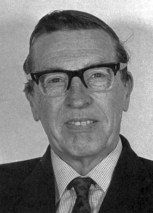
James H Bird, Professor of Geography and head of department, 1967-1989

Geography in the late sixties
The Head of Geography was Professor James Bird, an expert on transport geography (focusing on ports) who joined the department in 1967, replacing renowned physical geographer, FJ Monkhouse. I can’t recall having seen, let alone met him more than a handful of occasions during my three years at Southampton. But from his obituary that I came across recently, he was remembered with affection apparently. He passed away in 1997.

In the Geography department I had contact with just a few staff who taught aspects of physical geography. Dr Ronald John Small lectured on the geomorphology of the Wessex region, and various tropical erosion processes. He was an excellent lecturer. After I left Southampton he authored a student text on geomorphology, published in 1970, with a second edition in 1978. He became first Reader in Geography, then Professor, and head of department (1983-1989). He retired in 1989.
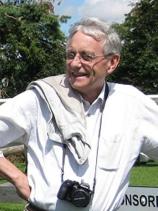
His younger colleague, Michael Clark (later Professor of Geography) also taught several courses in physical geography, focusing on river erosion and weathering processes. He was only 27 in 1967, and had completed his PhD in the department just a couple of years earlier. His work evolved to focus on environmental management, water resources, coastal zone management and cold regions research and on the interactions between society and risk. His involvement in multi-disciplinary applied research and the application of Geographic Information Systems (GIS) to decision-making led to the co-founding of the GeoData Institute in 1984, where he served as Director for 18 years (1988-2010). A Fellow of the Royal Geographical Society, he received the Gill Memorial Award in 1983. He passed away in 2014.

The third year geomorphology class had eight students: four from Combined honours, and four single Geography honours. Among those was Geoff Hewlett/Hewitt (?), a rather intense, mature student, who was awarded one of just two Firsts in Geography. Just a week before Finals in May/June 1970, John Small took our group of eight students for a short field trip (maybe four days) to Dartmoor in Devon, to look at tropical weathered granite landscapes (the tors) there. It was also an opportunity, they divulged, to get us all away from intense revision, and to relax while learning something at the same time.

My Geography tutor during my first year was Dr Roger Barry, a climatologist who left Southampton in 1968 for a new position at the Institute of Arctic and Alpine Research at the University of Colorado, Boulder. He passed away in 2018.

Dr Brian P Birch became my tutor in my second and third years (he had interviewed me for a place at Southampton in early 1967 with Joyce Lambert from Botany). Brian taught a course on soils and their classification. But I have subsequently discovered that his interest was in settlement patterns (particularly in the US Midwest, where he had completed his Master’s degree in Indiana; he has undergraduate and PhD degrees from Durham University) and their impact on the environment. I never attended any lectures in this field from him. After contacting Prof Jane Hart at Southampton earlier in the year, she gave me Brian’s address so I wrote to him. In a lengthy reply, he told me about the evolution of the Combined Honours degree course into a fully-fledged Environmental Sciences degree, for which he was the Geography lead person. The course grew to include Geology, Oceanography, and even Chemistry. Brian took early retirement in 1990. It was lovely hearing from him after so many decades; he is now in his 80s. He recalled that on one occasion, I had turned up in the Geography department coffee room, and met with staff. He still knew all about my connections with Peru and potatoes. I wonder if that was in 1975 while I was back in the UK to complete my PhD, or later on in the 80s when I did attend a meeting in Botany/ Biological Sciences on a plant genus, Lathyrus, I was working on.

In my final year, there was a new member of staff, Keith Barber who taught Quaternary studies, and who was still completing his PhD at Lancaster University. Keith later became Professor of Environmental Change, and retired in 2009; he passed away in February 2017.

At the end of the first week of classes in October 1967, all geography students had a Saturday excursion to the northwest outskirts of Southampton (I don’t remember the exact route we took), and having been dropped off, we all walked back into the city, with various stops for the likes of Small and Clark, and another lecturer named Robinson, to wax lyrical about the landscape and its evolution and history. This was an introduction to a term long common course about the geography of the Southampton region, examined just before Christmas.

There was only one field course in Geography that I attended, just before Easter in March 1968, to Swansea (where we stayed at the university), and traveled around the region. It was fascinating seeing the effects of industrialization and mining, and pollution over centuries, in the Swansea Valley, and attempts at vegetation regeneration, as well as the physical geography of the Gower Peninsula. The weather was, like the curate’s egg, good in parts. On some days it was hot enough to wear swimsuits on the beach; other days it rained. On the morning of our departure home, there were several inches of snow!

Student life
I had a place in South Stoneham House (now demolished), an all male hall of residence about 25 minutes walk southeast from the Highfield campus. In the sixties, most of the halls of residence were single sex (some of the time – remember these were the Swinging Sixties). Across the road from Stoneham was Montefiore House, a self-catering hall mainly for mature students, and just down Wessex Lane was Connaught, another all male hall. Highfield (to the west of the campus) and Chamberlain (to the north) were all female halls; Glen Eyre (close to Chamberlain) was, if I remember, both male and female, and self catering.

Rules about occupancy were supposedly strictly enforced. Being caught was cause for expulsion from hall. However, the number of males in female halls and vice versa overnight on Fridays and Saturdays was probably quite significant.

I enjoyed my two years in Stoneham, being elected Vice-President of the Junior Common Room (JRC) in my second year. Law student Geoff Pickerill was the President of the JCR. One of my roles was to organize the annual social events: a fireworks party and dance in November, and the May Ball.

Several of my closest friends came from my Stoneham days, and Neil Freeman (Law) and I have remained in touch all these years. Neil and I moved into ‘digs’ together (with an English and History student, Trevor Boag, from York) in a house at 30 University Road, less than 100 m south of the university administration building that opened in 1969. Our landlord and landlady were Mr and Mrs Drissell who looked after the three of us as though we were family.
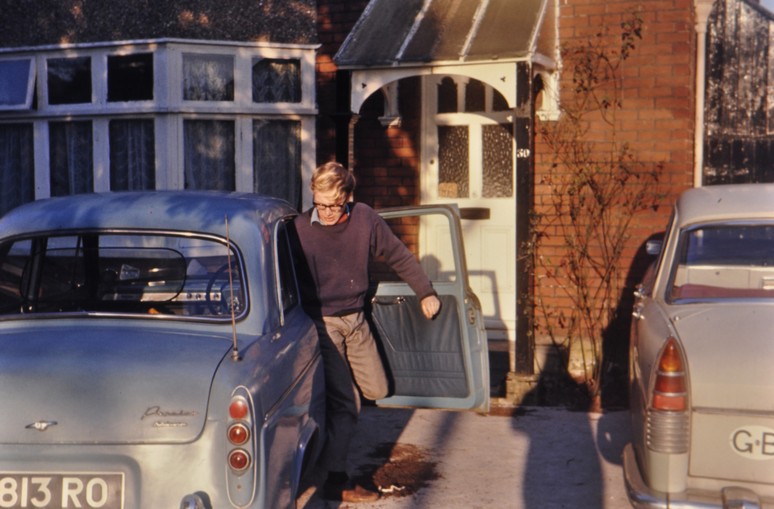
Neil had an old Ford Popular

The university had a very active Students’ Union in the late sixties. A new complex of cafeterias, ballrooms, meeting rooms, and sports facilities had just been completed in 1967. My main interest was folk music and dancing. I joined the Folk Club that met every Sunday evening, and even got up to sing on several occasions. I joined the English and Scottish Folk Dance Society³, and as I mentioned earlier, co-founded The Red Stags Morris in Autumn 1968. Through these dancing activities, I attended three Inter-Varsity Folk Dance Festivals in Hull (1968), Strathclyde (1969), and Reading (1970), performing a demonstration dance at each: Scottish at Hull and Strathclyde, and Morris (Beaux of London City) at Reading.

I also was involved in the University Rag Week as part of the Stoneham contributions.

In my final year, I bumped into a couple of young women in the foyer of the university library. They were from a local teaching college, and were taking part in the city-wide Rag activities. They asked me to buy a raffle ticket – which I did. Then, I suddenly asked one of the girls, who had very long hair, if her name was Jackson. You can imagine her surprise when she confirmed it was. ‘Then’, I said, ‘you are my cousin Caroline’ (the daughter of my father’s younger brother Edgar). I hadn’t seen Caroline for more than a decade, but when I was speaking with her I just knew we were related!

Three years passed so quickly. I graduated on 10 July 1970.
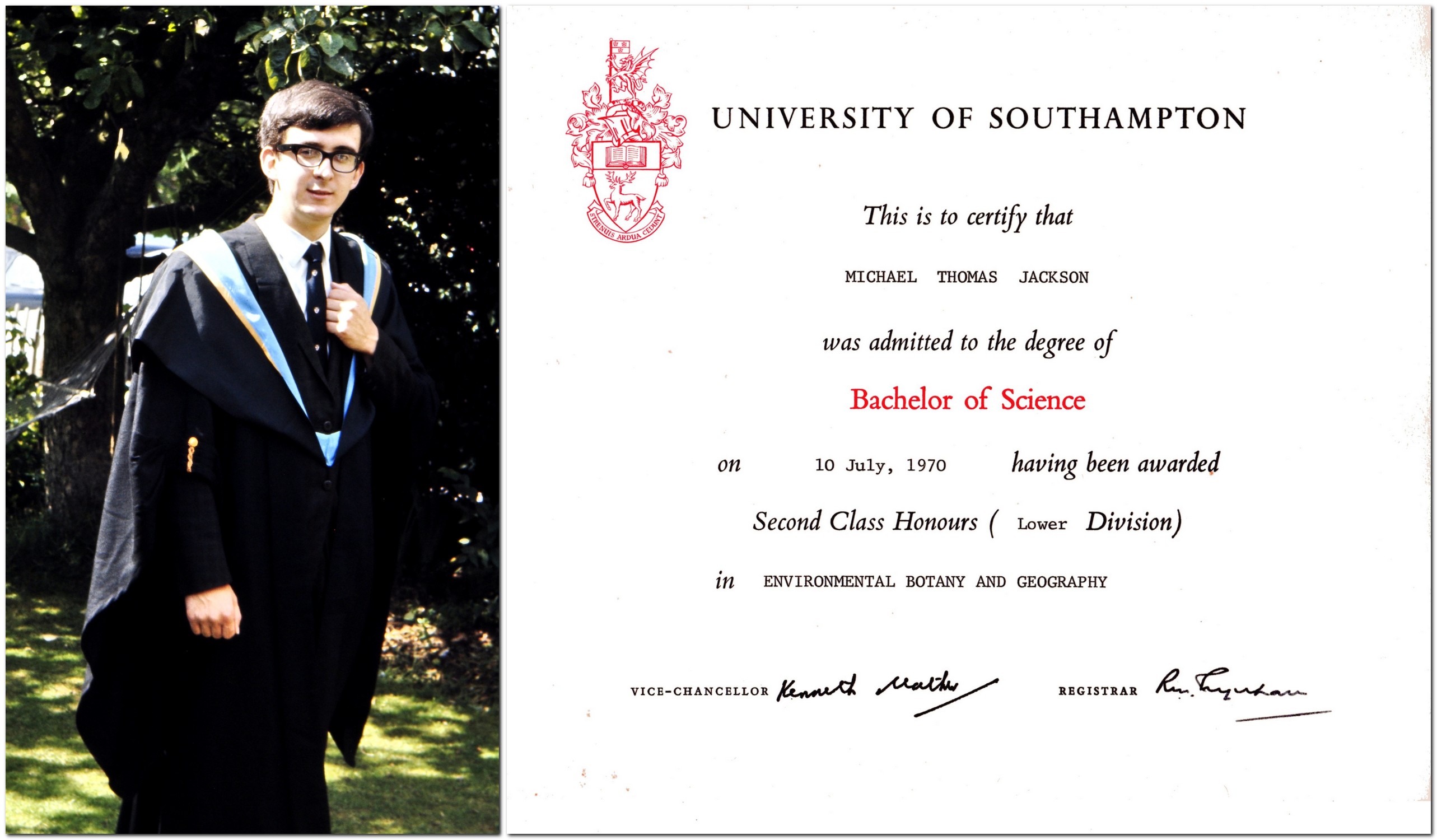
Later in September I began graduate studies at The University of Birmingham, and a career in international agricultural research for development. But that’s another story.

I spent some of my happiest years at Southampton, enjoyed the academics and the social life. I grew up, and was able to face the world with confidence. Southampton: an excellent choice.

These are some of my memories. Thinking back over 50 years I may have got some details wrong, but I think the narrative is mostly correct. If anyone reading this would like to update any details, or add information, please do get in touch. Just leave a comment.

~~~~~~~~~~~~~~~~~~~~~~~~~~~~~~~~~~~~~~

¹ In 1967 I applied to study Botany and Geography. During the Autumn Term of my final year, in 1969, the university changed the degree title to Environmental Botany and Geography that perhaps better reflected the course structure of (mainly) ecology on the one hand and physical geography (geomorphology, climatology, biogeography) on the other. This was probably one of the first environmental degrees.


² After he retired, Mather returned to his home in Birmingham, and became an Honorary Professor in the Department of Genetics in the School of Biological Sciences. In 1981 I joined the staff of the Department of Plant Biology (where I’d taken my PhD) in the same School. By about 1988, the four departments of the School (Plant Biology, Zoology & Comparative Physiology, Microbiology, and Genetics) had merged to form a unitary School of Biological Sciences, and I became a member of the Plant Genetics Research Group. I also moved my office and laboratory to the south ground floor of the School building, that was previously the home of Genetics. Prof. Mather had an office just down the corridor from mine, and we would meet for afternoon tea, and often chat about Southampton days. At Southampton he taught a population genetics course to a combined group of Botany and Zoology students. It was an optional course for me that I enjoyed. One day, he was lecturing about the Hardy-Weinburg Equilibrium, or some such, and filling the blackboard with algebra. Turning around to emphasise one point, he saw a young woman (from Zoology) seated immediately in front of me. She was about to light a cigarette! Without batting an eyelid, and not missing an algebraic beat, all he said was ‘We don’t smoke in lectures’, and turned back to complete the formula he was deriving. Needless to say the red-faced young lady put her cigarette away.

The late 60s were a period of student turmoil, and Southampton was not immune. Along University Road (which bisects the Highfield Campus), close to the Library, a new Administration building, with the Vice-Chancellor’s office (#37) was completed in late 1969 or early 1970 and, as rumored ahead of the event, was immediately the focus of a student sit-in, and regrettably some significant damage. However, one of Mather’s enduring legacies, however, was the establishment of a Medical School at Southampton.


³ At the first meeting of the EDFDS that I attended (probably the first week proper of term), I met a young woman, Liz Holgreaves, who became my best friend during that first year at Southampton, and we dated for many months.
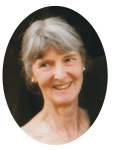
Almost two weeks ago, I received the sad news from Liz’s husband, John Harvey, that she had passed away on 30 August. She was 76.

Liz was studying English and History and I was studying Botany and Geography. Such disparate academic interests, yet we were brought together through our love of folk dancing.

When I met her for the first time, at the first meeting of the English and Scottish Folk Dance Society, I thought that I had never met a lovelier person. And, much to my delight (and perhaps even astonishment), she agreed to meet me later on in the week for a coffee.

As the weeks progressed, we went out together more and more, and by the middle of the Spring Term, our relationship had begun to blossom. During the summer vacation, I spent several weeks at her home in Church Fenton near York, and we went youth hostelling over the North York Moors, visiting Robin Hoods Bay where she had spent many happy childhood holidays.

Liz visited my family home in Leek in North Staffordshire and I was delighted to show her the beautiful Staffordshire Moorlands and the dales of Derbyshire where I grew up. She even joined my family at the wedding of my elder brother Ed and Christine in Brighton. On that evening Liz and I enjoyed a theatre show of The White Heather Club seeing many of the singers and dancers who regularly appeared on the BBC program of that same name, such as folk legends Robin Hall and Jimmy Macgregor.

Sadly, our relationship did not endure, although Liz and I remained good friends and always enjoyed dancing together. She was one of the most graceful dancers I have ever partnered.

I lost touch with Liz after I left Southampton. She and John were married in 1971. And I met Steph in 1972 at the University of Birmingham where we were graduate students.

However, moving on almost 30 years (I was working in the Philippines at the time) I came across the name of someone online who I thought might be related to Liz, and so I wrote to them. You can imagine my surprise when a long letter from Liz landed on my desk a couple of months later. Catching up on so many intervening years, we agreed to meet whenever I was next in the UK on home leave, sharing so many memories and finding out about each other’s families. She had three children: Jamie, Joseph, and Sarah. Steph and I have two daughters, Hannah and Philippa, who are much the same age as Liz’s.

Early in the 2000s, Liz wrote me that the pain she was suffering had been finally diagnosed as secondary progressive multiple sclerosis, and it was this condition (and others) that led to her going into care around 5 years ago. And despite her deteriorating health, she remained happy and always confident in the deep and enduring love of John and children.

Liz died peacefully with John holding her hand, while he and Joe read to her from one of her favourite books, as they listened to the second movement of Mozart’s 21st piano concerto, another of Liz’s favourites.

I was privileged to attend her funeral online on 14 October. It was moving ceremony, full of love and admiration for a beautiful and gentle woman. Many tears were shed.

And although I met Liz only once since we left Southampton in 1970, her passing has raised so many good memories of those times. And for that I will be forever grateful, and she continues to have a place in my heart.

My deep and sincere condolences to John, Jamie, Joe, and Sarah, and their families. Liz will be sorely missed.


The Commonwealth Potato Collection – it really is a treasure trove (revised and updated)*

I originally wrote this story in August 2021 after a friend and former colleague, Dr Glenn Bryan¹ posted a link on his Facebook page to a story—Treasure trove could hold secrets to potato problems—that had just appeared in the online edition of Dundee’s The Courier.

It was about the Commonwealth Potato Collection (CPC) that is held at The James Hutton Institute (JHI) at Invergowrie, just west of Dundee.
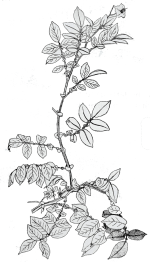
Until a couple of years ago (when he retired) Glenn led the Potato Genetics and Breeding Group at JHI, with Gaynor McKenzie as the CPC curator, a position she still occupies.

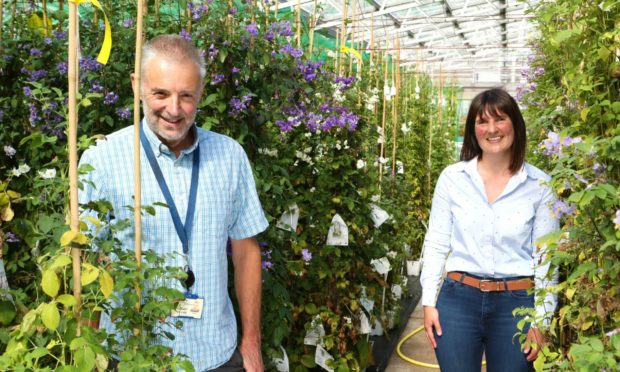
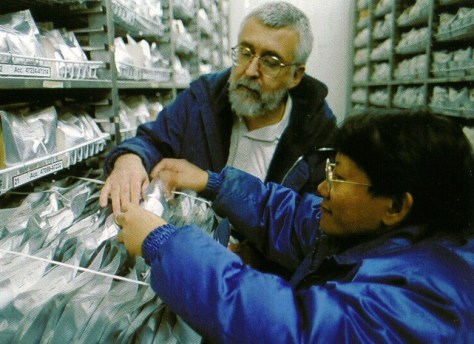
Glenn Bryan and Gaynor McKenzie at the James Hutton Institute in Invergowrie, where wild potato species in the Commonwealth Potato Collection are conserved.

The Commonwealth Potato Collection has a long and distinguished history, going back more than 80 years. It is one of a handful of potato germplasm collections around the world in which breeders have identified disease and pest resistance genes to enhance the productivity of cultivated varieties. The CPC is particularly important from a plant quarantine perspective because the collection has been routinely tested and cleaned for various pathogens, particularly seed-borne pathogens.

Jack Hawkes

It is a collection with which Steph and I have both a personal and professional connection, from the 1970s and 80s. It’s also the legacy of one man, Professor Jack Hawkes (1915-2007) with whom I had the privilege of studying for both my MSc and PhD degrees.

Let me tell that story.


In December 1938, a young botanist—just 23 years old the previous June—set off from Liverpool, headed to Lima, Peru to join the British Empire Potato Collecting Expedition to South America, the adventure of a lifetime.

Jack in Bolivia in 1939

John ‘Jack’ Gregory Hawkes, a Christ’s College, Cambridge graduate, was destined to become one of the world’s leading potato experts and a champion of the conservation and use of plant genetic resources for food and agriculture.

He was the taxonomic botanist on the 1939 expedition, which was led by experienced plant collector Edwards Kent Balls (1892-1984). Medical doctor and amateur botanist William ‘Bill’ Balfour Gourlay (1879-1966) was the third member of the expedition. Balls and Gourlay had been collecting plants in Mexico (including some potatoes) in 1938 before moving on to Peru for the ‘Empire’ expedition.

The expedition had originally been scheduled to start in 1937, but had to be delayed because of ill health of the original expedition leader, Dr PS Hudson, Director of the Empire Bureau of Plant Breeding and Genetics in Cambridge. Jack had been hired as his assistant.

Whilst waiting for the expedition to get underway, Jack took the opportunity—in August 1938—to visit Leningrad to pick the brains of Russian botanists, Drs SM Bukasov, VS Juzepczuk, and VS Lechnovicz who had already collected potatoes in South America. Jack openly acknowledged that ‘as a raw recently graduated student, [he] knew very little about potatoes’.

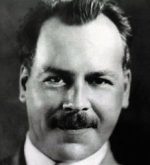
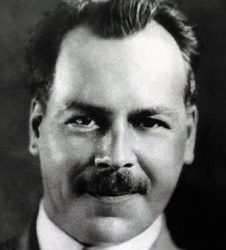
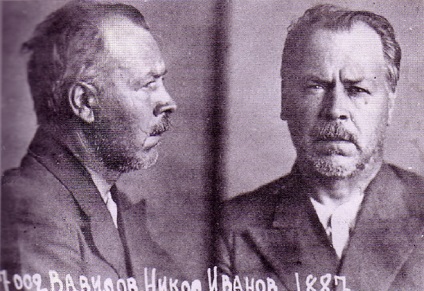
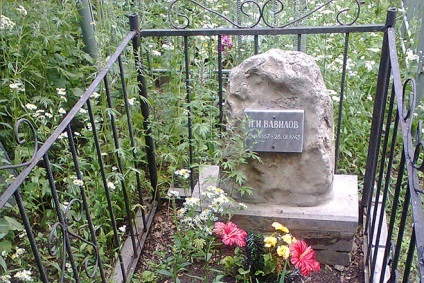
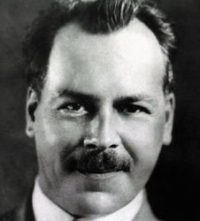
Nikolai Vavilov

Not only did Jack receive useful advice from these knowledgeable botanists, but he also met with the great geneticist and ‘Father of Plant Genetic Resources’ Nikolai Vavilov on several occasions during his visit to Leningrad and Moscow, ‘an experience that changed [his] life in many ways’. Vavilov had a profound effect on Jack’s subsequent career as an academic botanist and genetic resources pioneer. Alas there do not appear to be any surviving photos of Jack with Vavilov.

‘Solanum vavilovii’ growing at an experiment station near Leningrad in 1938

In Leningrad, Jack took this photo (right) of a wild potato species that had been described as Solanum vavilovii by Juzepczuk and Bukasov in 1937. Sadly that name is no longer taxonomically valid, and vavilovii is now considered simply as a variant of the species Solanum wittmackii that had been described by the German botanist Friedrich August Georg Bitter in 1913.


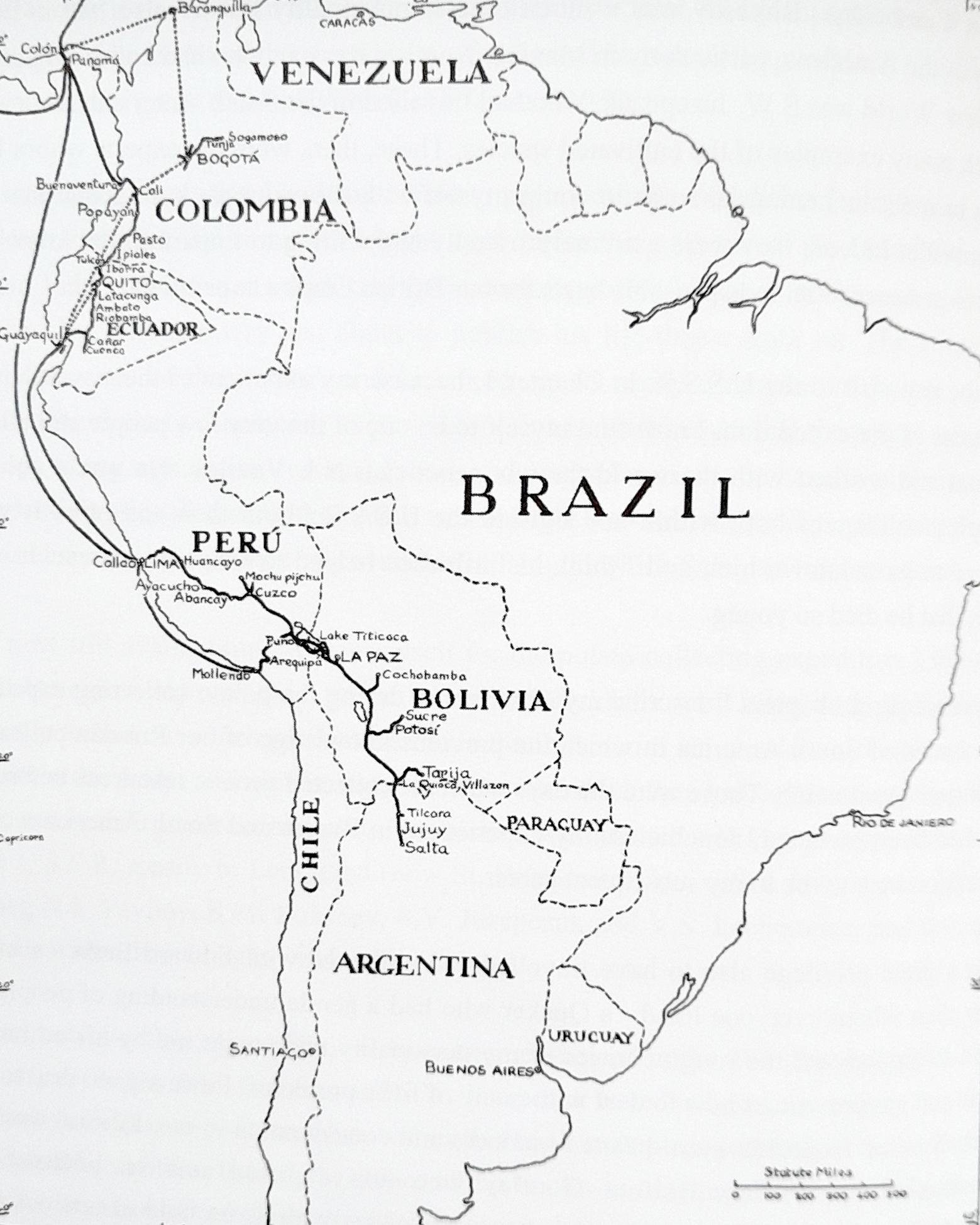
The Empire expedition lasted eight months from January 1939, covering northern Argentina, Bolivia, Peru, Ecuador, and ending in Colombia (a country where Jack was to reside for three years from 1948 when he was seconded to establish a national potato research station near Bogota).

Route taken by the Empire Potato Collecting Expedition

More than 1150 samples of cultivated and wild potatoes were collected in these five countries as well as a further 46 samples collected by Balls and Gourlay in Mexico in 1938.

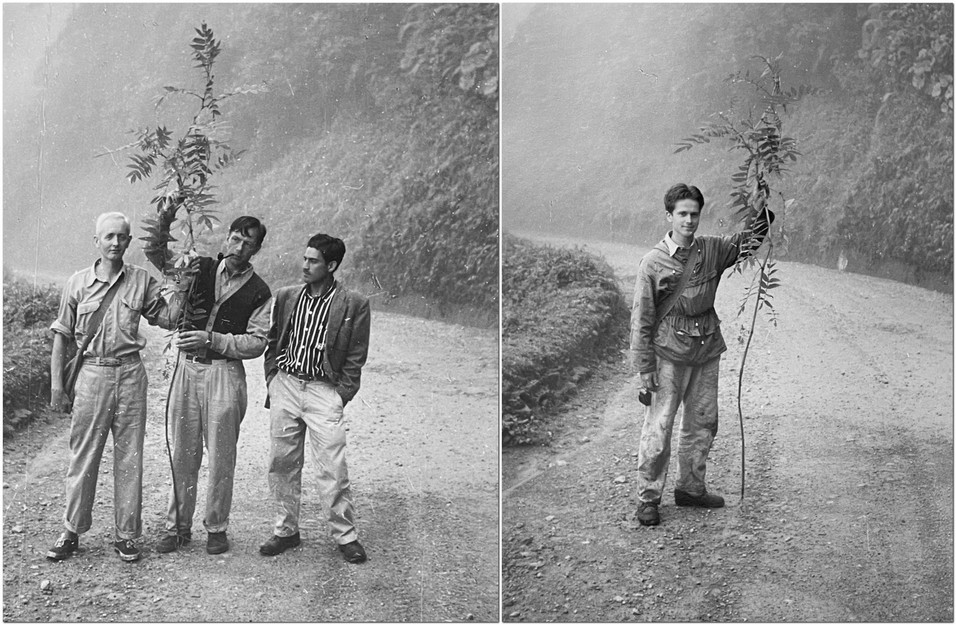
Here is a small selection of photographs taken during the expedition (and a link to an album of photos).


By the time the expedition ended in early September 1939, war with Germany had already been declared, and Jack’s return to the UK by ship convoy from Halifax, Newfoundland was not as comfortable as the outbound voyage nine months earlier, docking in Liverpool early in November.

Jack published an official expedition report in March 1941. Then, in 2003, he published an interesting and lengthy memoir of the expedition, Hunting the Wild Potato in the South American Andes.

In December 2021, my friend Dr Abigail Amey and I published a website (with permission of the Hawkes family) about Jack’s experiences of the 1938-39 expedition, as well as others to the USA, Mexico, and Central America in 1958, and Bolivia in 1971. Just click on the red box below (and others) to open the links.

The website also has several of Jack’s original 16mm films (which we were able to digitise through a special grant from the Crop Wild Relatives Project at Kew and the Crop Trust).

Redcliffe N Salaman

Potato tubers (and presumably seeds) were shipped back to the UK, and after a quarantine inspection, were planted out in a glasshouse at the Potato Virus Research Station, Cambridge whose director was the renowned botanist (and originally a medical doctor) Redcliffe Nathan Salaman, author of the seminal work on potatoes, The History and Social Influence of the Potato, first published in 1949 and reprinted with a new introduction by Hawkes in 1985. I jealously guard the signed copy that Jack gave me.

On his return to the UK in 1939 Jack began to study the collected germplasm, describing several new species, and completing his PhD thesis (supervised by Salaman) at the University of Cambridge in 1941.

South American potato species in the Cambridge glasshouse in the summer of 1940

Among the species identified in the course of Jack’s dissertation research was Solanum ballsii from northern Argentina, which he dedicated to EK Balls in a formal description in 1944. However, in his 1963 revised taxonomy of the tuber-bearing Solanums (potatoes), Jack (with his Danish colleague Jens Peter Hjerting, 1917-2012) recognized Solanum ballsii simply as a subspecies of Solanum vernei, a species which has since provided many important sources of resistance to the potato cyst nematode.


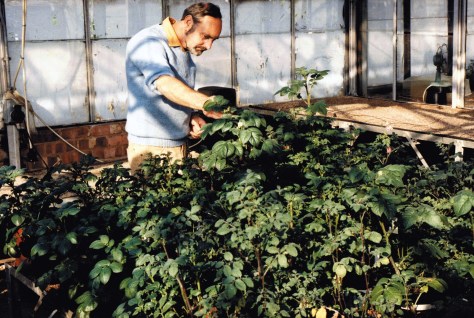
Jack Hawkes in the glasshouse of the Empire Potato Collection at Cambridge in July 1947.

The 1939 germplasm was the foundation of the Empire Potato Collection. When the collection curator Dr Kenneth S Dodds was appointed Director of the John Innes Institute in Bayfordbury in 1954, the collection moved with him, and was renamed the Commonwealth Potato Collection.

By the end of the decade (or early 1960s) the CPC was on the move again. This time to the Scottish Plant Breeding Station (SPBS) at Pentlandfield just south of Edinburgh when Dr Norman W Simmonds moved there in 1959. He rose through the ranks to become the station’s Director.

Dodds and his colleague Dr GJ Paxman traveled through South America during 1959-60, and their research on the genetics of diploid potatoes was based on some of the material collected. Dodds and Simmonds also collected potatoes in early 1963.

But that was not the end of the CPC’s peripatetic existence. It remained at the SPBS until the early 1980s, when the SPBS amalgamated with the Scottish Horticultural Research Institute (which became the Scottish Crop Research Institute or SCRI, and now known as the James Hutton Institute), and the collection moved to its present site near Dundee.

Today, the CPC comprises some 1500 samples or accessions of about 80 wild and cultivated potato species. And over two-thirds were collected by Hawkes himself. Another 9% of the collection were collected by Dodds and his colleagues, as mentioned earlier. The remainder represent donations over the years from various individuals and institutions.


I am not sure how much the CPC grew in the intervening years, but there was a significant boost to the size and importance of the collection around 1987. Let me explain.

As I already mentioned, Jack spent three years in Colombia from 1948, returning to the UK in 1951 when he was appointed Lecturer in Taxonomy in the Department of Botany at the University of Birmingham. He was given a personal chair as Professor of Taxonomic Botany in April 1961, and became Head of Department and Mason Professor of Botany in July 1967. He remained at Birmingham until retirement in September 1982.

It was during his Birmingham years that Jack’s work on the tuber-bearing Solanums expanded significantly with several important monographs and taxonomic revisions published, based on his own field work over the years and experimental studies back at Birmingham on the potato samples he brought back to the UK and which formed an important collection in its own right. Because of the quarantine threat from these seeds (particularly of sexually-transmitted pathogens or new variants of potato viruses already present in the UK), Jack had a special quarantine licence from the then Ministry of Agriculture, Fisheries and Food (MAFF, now DEFRA) to maintain his collection at Birmingham.

In 1958, with Peter Hjerting and young research assistant Richard Lester (who later joined the Department of Botany as a Lecturer), Jack made a six month expedition to the USA , Mexico, and Central America.

Here is another account of that trip from the University of Birmingham Gazette. Besides potatoes, many other species were made for other institutions and botanic gardens.

Collecting a sample of Solanum agrimonifolium (No. 1854) in Guatemala. L: Jack Hawkes, Peter Hjerting, and Morse (driver?); R: Richard Lester

Just three months after I arrived at Birmingham in September 1970 to enrol on the MSc course on plant genetic resources, Jack was off on his travels once again, this time to Bolivia accompanied by Peter Hjerting once again, his research assistant Phil Cribb and, in South America by Zósimo Huamán from the International Potato Center (CIP) and Moisés Zavaleta and others from Bolivia.

This is the official trip report. Here are some images from the 1971 expedition, courtesy of Phil Cribb.

Jack and Peter made another trip to Bolivia in 1974 (with research assistant Dave Astley), and another in 1980. They published their monograph of The Potatoes of Bolivia in 1989.


In September 1971, Zósimo Huamán and Moisés Zavaleta came to Birmingham to study on the genetic resources MSc course. In that same cohort was a young botanist, Stephanie Tribble, recently graduated from the University of Wales – Swansea (now Swansea University). During the summer of 1972, Steph and I became ‘an item’, so-to-speak. However, by then I was already making plans to leave the UK and join CIP in Lima by January 1973, and on graduation, Steph was keen to find a position to use the experiences and skills she had gained on the course.

Just at that time, a Scientific Officer position opened at the SPBS, as assistant to Dalton Glendinning who was the curator of the CPC. Steph duly applied and was appointed from about October that year. Jack must have supported her application. Coincidentally, the MSc course external examiner was no other that Norman Simmonds who met Steph during his course assessment.

I moved to Peru in January 1973, and within a few days discovered that Jack had mentioned Steph to CIP’s Director General, Richard Sawyer. Well, to cut a long story short, Steph was offered a position as Assistant Geneticist at CIP, to support management of CIP’s large potato collection, similar to the role she’d had at Pentlandfield. She resigned from the SPBS and joined me in Lima in July that year. We married there in October, remaining with CIP in Peru and Central America for another eight years.

Steph working in one of CIP’s screen-houses at La Molina on the eastern outskirts of Lima in 1974.

In April 1981 I was appointed Lecturer in Plant Biology at Birmingham, 18 months before Jack’s retirement, the aim being that I would assume Jack’s teaching commitments on the MSc course. When I also took over the Hawkes potato collection in 1982, I had high hopes of identifying funding for biosystematics and pre-breeding research, and continuing the Birmingham focus on potatoes.

Dave Downing was the glasshouse technician who carefully managed the Hawkes collection at Birmingham for many years.

That was not the case, and as the collection needed a dedicated glasshouse and technician I could not justify (nor financially support) holding on to such valuable research space. And, in any case, continuing with the Hawkes collection was actually blocking the opportunities for other potato research because of the MAFF-imposed restrictions.

So, with some regret but also acknowledging that Jack’s collection would be better placed elsewhere, I contacted my colleagues at the CPC to see if they would be interested to receive it—lock, stock, and barrel. And that indeed was what happened. I’m sure many new potato lines were added to the CPC. The germplasm was placed in quarantine in the first instance, and has passed through various stages of testing before being added officially to the CPC. Throughout the 80s and 90s Jack would visit the CPC from time-to-time, and look through the materials, helping with the correct identification of species and the like.

Jack’s interest in and contributions to potato science remained with him almost up to his death in 2007. By then he had become increasingly frail, and had moved into a care home, his wife Barbara having passed away some years previously. By then, Jack’s reputation and legacy was sealed. Not only has his scientific output contributed to the conservation and use of potato genetic resources worldwide, embodied in the CPC that he helped establish all those decades earlier, but through the MSc course that he founded in 1969, hundreds of professionals worldwide have continued to carry the genetic conservation torch. A fine legacy, indeed!


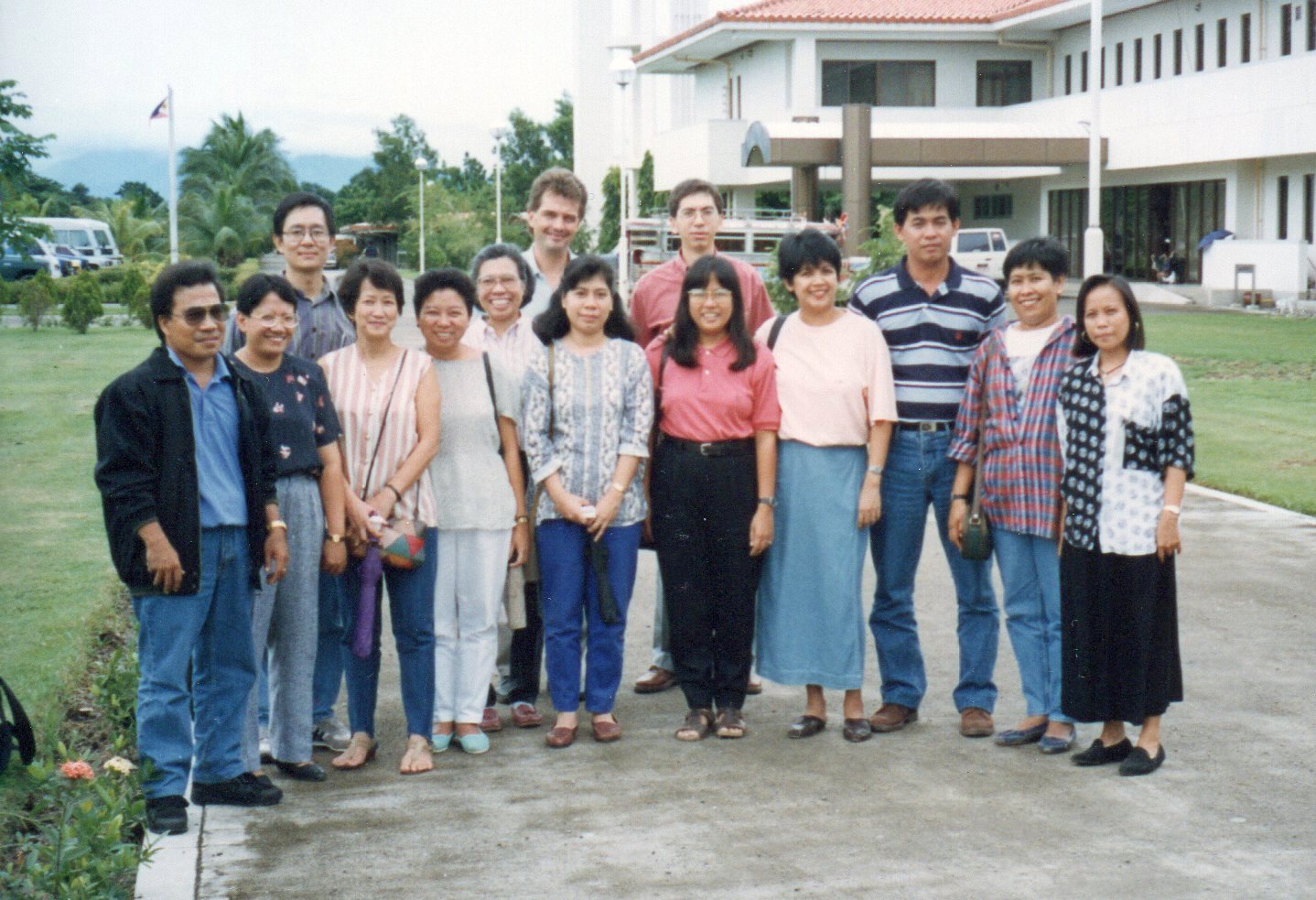
¹ Glenn and I go back almost 30 years when, as a young scientist at the John Innes Centre (JIC) in Norwich, he was a member of a rice research project, funded by the British government, that brought together staff at the International Rice Research Institute (IRRI) in the Philippines where I was Head of the Genetic Resources Center, the University of Birmingham (where I had been a faculty member for a decade from 1981), and the JIC to use molecular markers to study IRRI’s large and globally-important germplasm collection conserved in its International Rice Genebank.

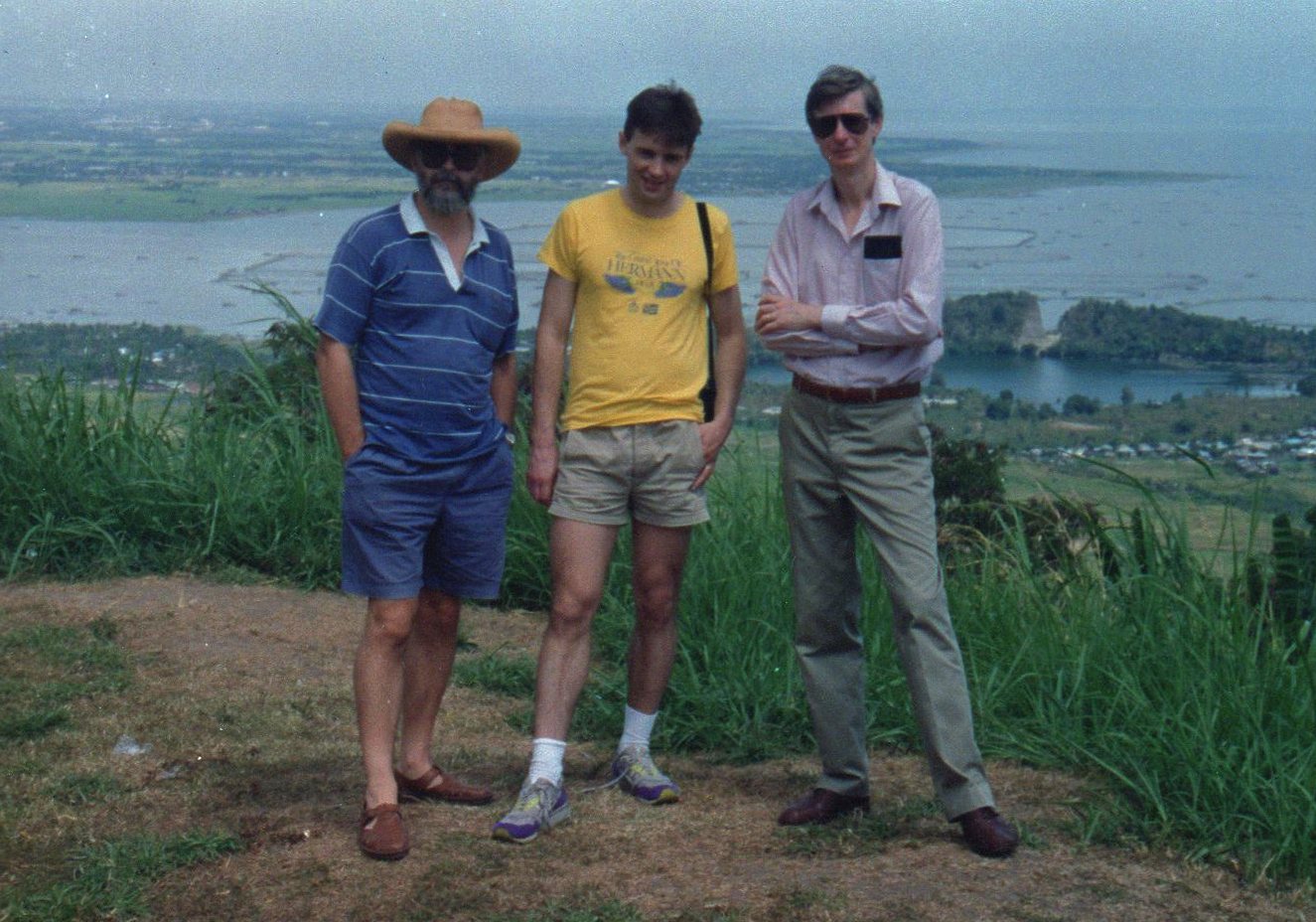
L-R: me, Glenn, and John Newbury (who later became professor at the University of Worcester) during a spot of sight-seeing near IRRI in 1993.


  • Originally published on 24 August 2021.

Two Bs, two Ps, seven Us, and nine Ds

Education is a wonderful thing, and my family and I have taken advantage of the opportunities a good education opens up.

As I read an email a few days ago from the University of Birmingham, announcing its 125th anniversary celebrations later this year, my mind wandered back to 1975.

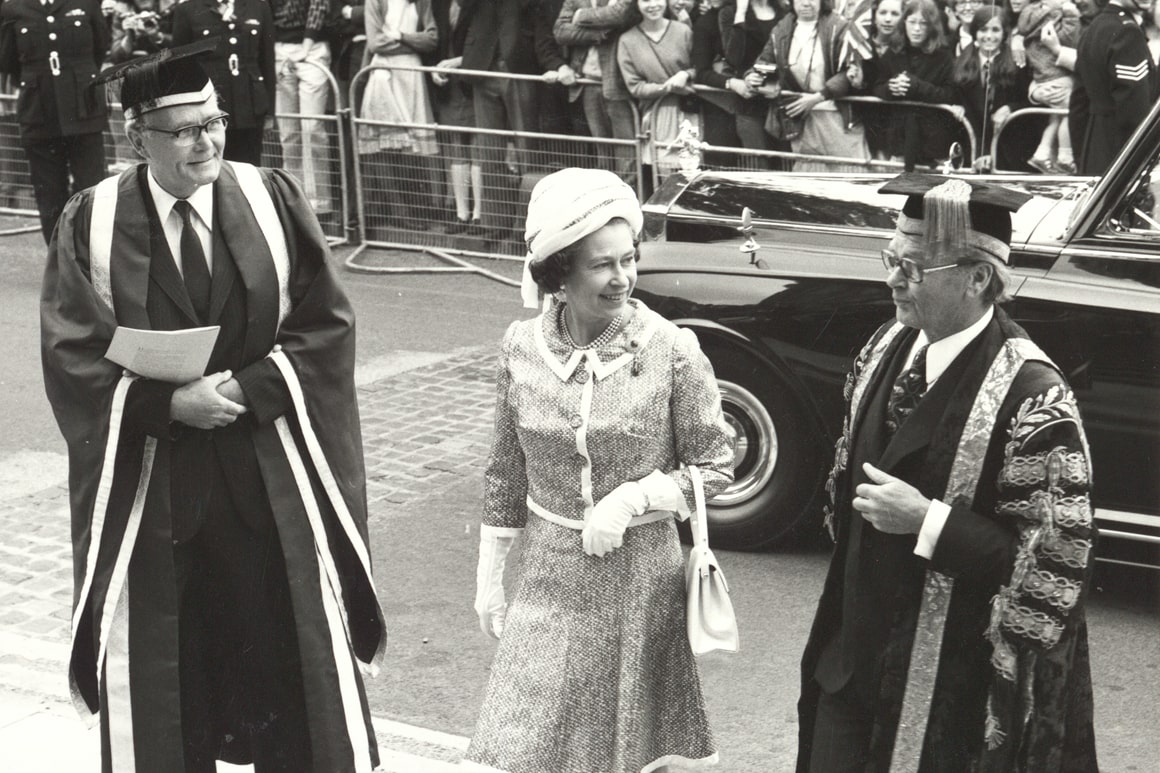
That was when the university celebrated the centennial of laying of the foundation stone of the Mason Science College in 1875, itself a successor of Queen’s College, founded in 1825 as a medical college. HM The Queen visited the university in 1975 to celebrate that centennial, seen in this photo with the university Chancellor, Sir Peter Scott (on the right) and the Vice-Chancellor, Dr Robert Hunter (later Baron Hunter of Newington, on the left). I was in the crowd there, somewhere.

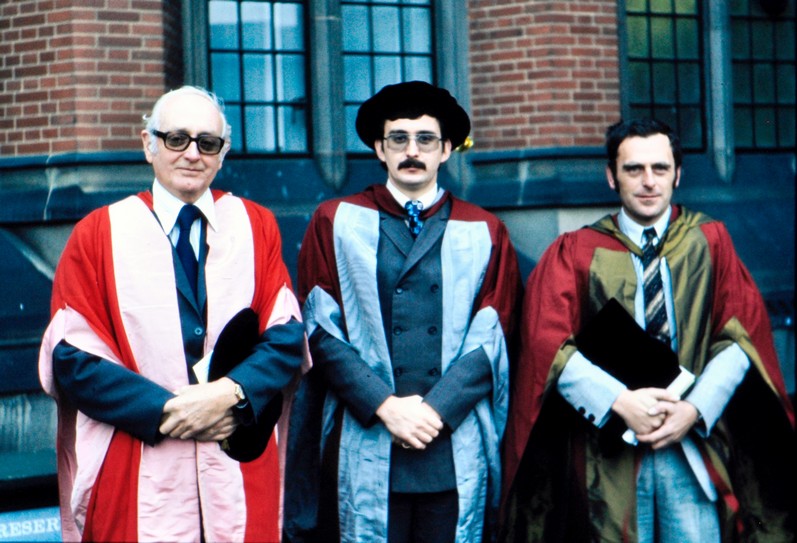
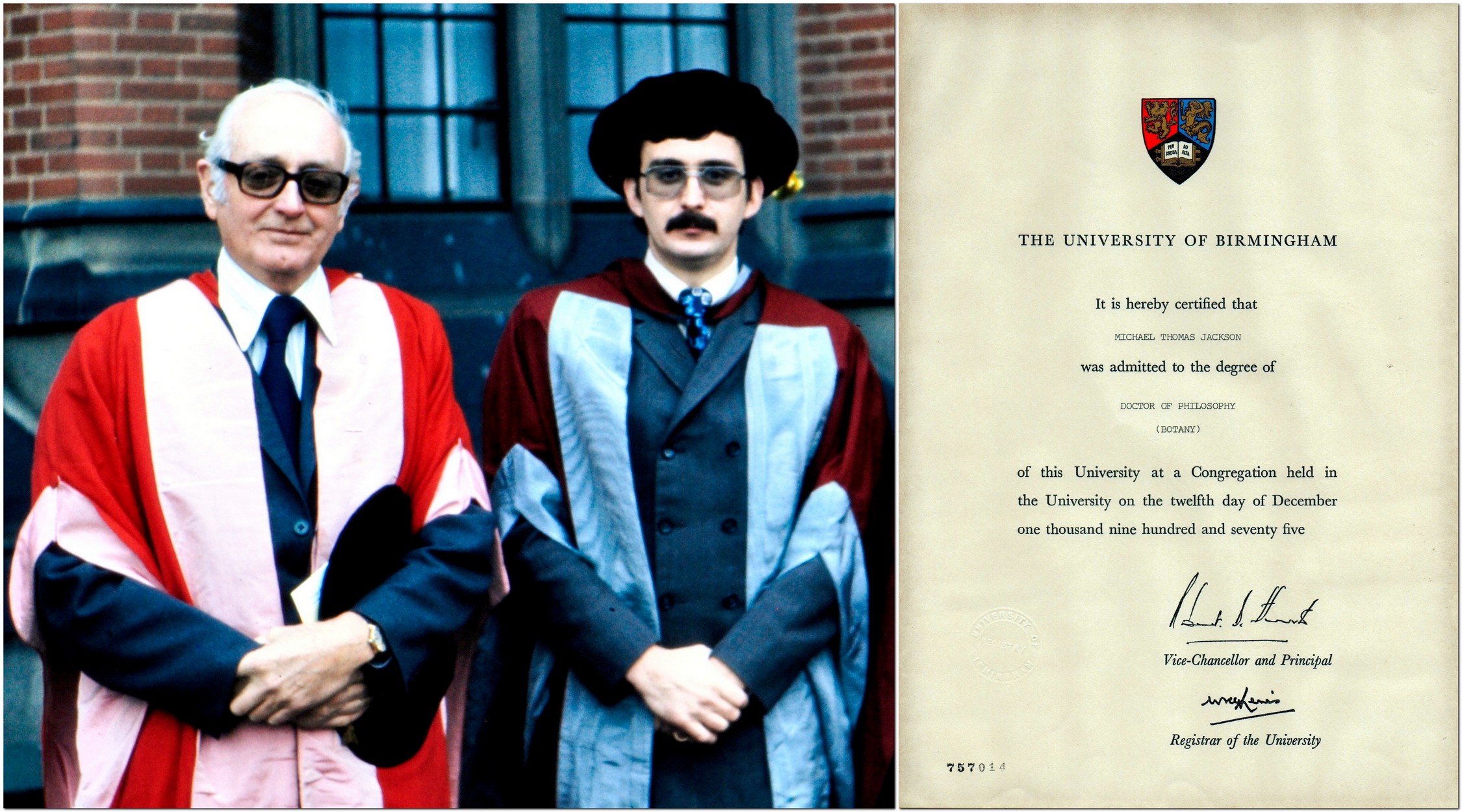
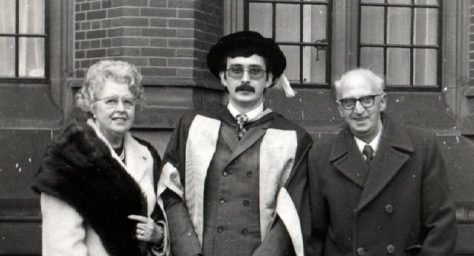
I was back at Birmingham for a few months (from the International Potato Center or CIP in Lima, Peru where I was working as an Associate Taxonomist) to complete the residency requirements for my PhD, and to submit my dissertation. I successfully defended that in late October, and the degree was conferred by Sir Peter Scott at a congregation on 12 December. In the photo below, my PhD supervisor and Mason Professor of Botany, Jack Hawkes is on my right, and Dr Trevor Williams on my left.

But I’m getting a little ahead of myself.

My first experience of Birmingham was in the late Spring of 1967, when I sat the Joint Matriculation Board Advanced or ‘A’ Level biology practical exam in the First Year Lab in the School of Biological Sciences. Many high schools took advantage of that arrangement if they had insufficient facilities in their own premises to hold the exam.

Going into my ‘A’ level exams I had ambitions to attend university. Not that I’d applied to Birmingham. That honour went to the University of Southampton where I had been accepted to study for a BSc degree in environmental botany and geography.

As ‘baby boomers’ my elder brother Edgar and I were the first in our family and among all our cousins to attend university. Once Edgar had persuaded our parents that he wanted to go to university (1964-1967) it was easier for me to follow that same path three years later.

I enjoyed my three years at Southampton. Although I’d registered for a combined degree in environmental botany and geography, my interests shifted significantly towards botany by my third and final year.

However, graduating in July 1970 and with just a BSc under my belt, I knew I’d have to pursue graduate studies to achieve my ambition of working overseas. And it was at the beginning of my final year at Southampton that a one year taught MSc course on the Conservation and Utilisation of Plant Genetic Resources was launched at Birmingham, under the leadership of Jack Hawkes. One of the lecturers at Southampton, geneticist Dr Joe Smartt, suggested that I should apply.

Which I duly did, and after an interview at Birmingham was offered a place for the following September, subject to funding being available for a maintenance grant and tuition fees. It was not until the course was about to commence that Professor Hawkes could confirm the financial support. By mid-September I headed to Birmingham, and the beginning of an association with the university that lasted several decades, as both student and member of staff.

I was awarded the MSc degree in December 1971. During that year, Hawkes (a world-renowned potato expert) had arranged for me to join CIP in Lima for just a year (which later extended to more than eight years) to help conserve its important collection of native potato varieties. An opportunity I jumped at. However, funding from the British government was not confirmed until late 1972. Instead of kicking my heels waiting for that funding to be confirmed, and concerned I might find a position elsewhere, Hawkes raised a small grant to allow me to begin a PhD project under his supervision, and that I would continue after arriving  in Peru.

A third cohort of students arrived in Birmingham in September 1971, among them Stephanie Tribble from Southend-on-Sea who had just graduated from the University College of Swansea (now Swansea University) with a degree in botany. By the summer of 1972 Steph and I had become an item.
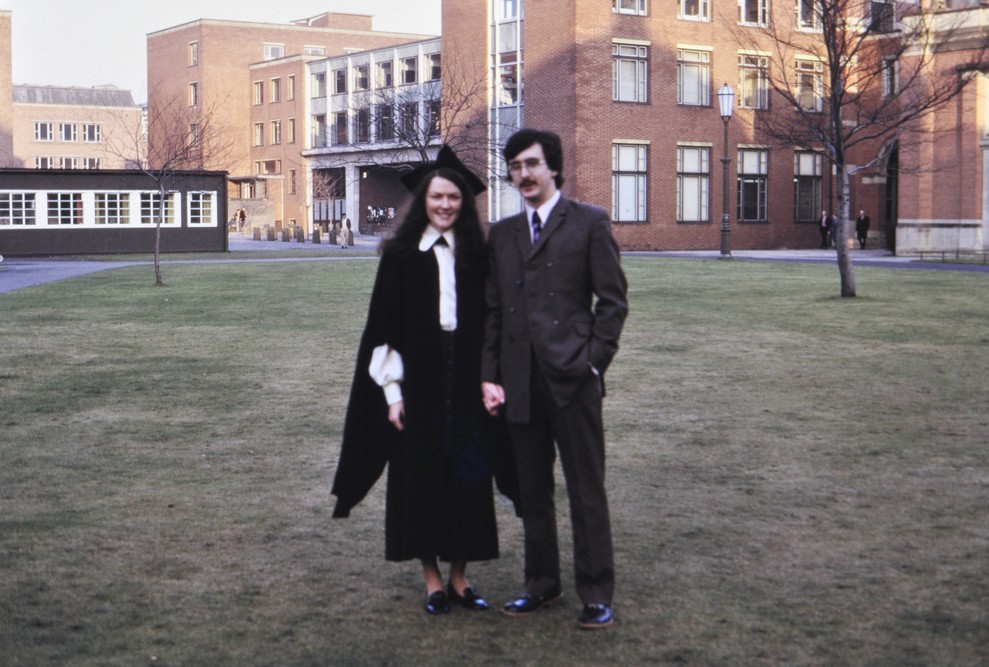
In November 1972 she joined the Scottish Plant Breeding Station (SPBS) at Pentlandfield, south of Edinburgh, as assistant curator of the Commonwealth Potato Collection. She returned to Birmingham in December for the MSc degree congregation, just three weeks before I was due to fly out to Peru at the beginning of January 1973.

Well, things have a habit of turning out for the best. Once I was in Peru, I asked Steph to marry me and join me in Lima where I knew there would be a position for her at CIP. Resigning from the SPBS, she arrived in early July and we were married in the local registry office in Lima in October.

So that’s two botanists, three universities (Southampton, Swansea, and Birmingham), and five degrees (2xBSc, 2xMSc, 1xPhD) between us.


After another fruitful five years with CIP based in Costa Rica after I’d completed my PhD (during which our elder daughter Hannah was born), a lectureship opened in the Department of Plant Biology at Birmingham, so I applied. I flew back from Peru for an interview, and having been offered the position, I joined the university on 1 April 1981.

Much of my teaching focused on the genetic resources MSc course that was accepting ever more numbers of students from around the world. I remained at Birmingham for a decade, before deciding that I wasn’t really cut out for academia and, in any case, a more exciting opportunity had presented itself at the International Rice Research Institute (IRRI) in the Philippines. I joined IRRI as head of the Genetic Resources Center in July 1991, remaining in that position for almost a decade. In May 2001, I was appointed Director for Program Planning and Communications (DPPC), joining the institute’s senior management team, until my retirement in April 2010.

During the 1990s, I had an excellent research collaboration with my former colleagues in the School of Biological Sciences at Birmingham, and each year when I returned to the UK on home leave, I’d spend time in the university discussing our research as well as delivering several lectures to the MSc students, for which the university appointed me an Honorary Senior Lecturer.


As I mentioned before, Hannah was born in 1978 when we were living in Costa Rica. Once back in the UK her younger sister Philippa was born in 1982 in the small market town of Bromsgrove, about 13 miles south of the University of Birmingham in north Worcestershire.

Both girls thrived in Bromsgrove, enjoyed school, and each had a good circle of friends.

We upended their world when I took the position at IRRI and they moved to the Philippines with Steph just after Christmas 1991. Even more challenging was their enrolment in the International School Manila, which had a US-based curriculum, and eventually an academic stream based on the International Baccalaureate (IB). There’s no doubt that the first year was tough. Not only was it challenging academically, but living 70 km south of Manila, IRRI students were bussed into school each day departing around 04:30 to begin classes at 07:30, and returning by 16:30, or later if there were holdups on the highway, as was often the case.

Despite the bumpy start, Hannah and Phil rose to the challenge and achieved outstanding scores on the IB in 1995 and 1999 respectively.

From the outset, attending university had been part of our plan for them, and an ambition they readily embraced. Both took a gap year between high school and university. Hannah was drawn towards Psychology, with a minor in Anthropology. And she discovered that this combination was offered at few universities in the UK, opting to attend Swansea University in 1996. And although she was on course to excel academically, half way through her second year she asked if she could transfer to Macalester College, a liberal arts college in Minnesota, USA.

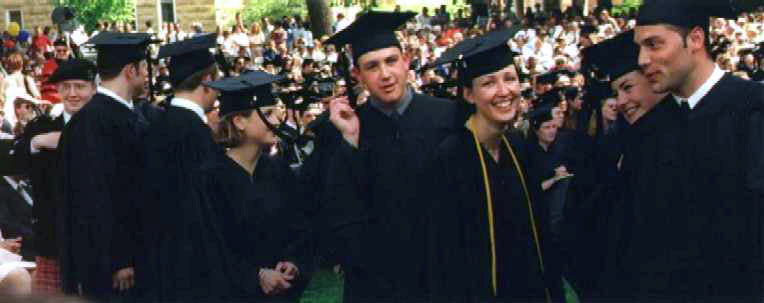
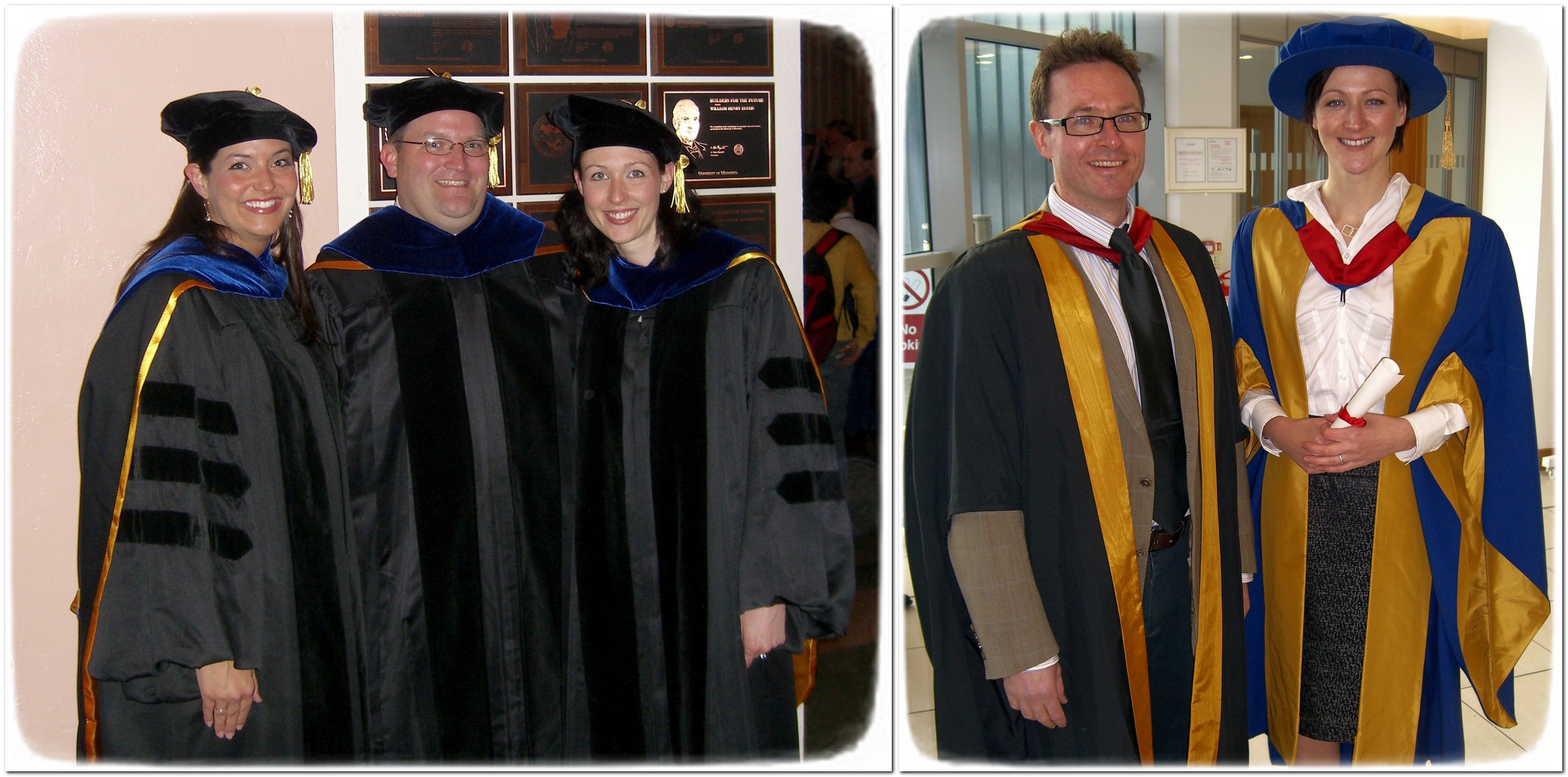
Macalester graduation in May 2000, with Hannah and Michael facing the camera.

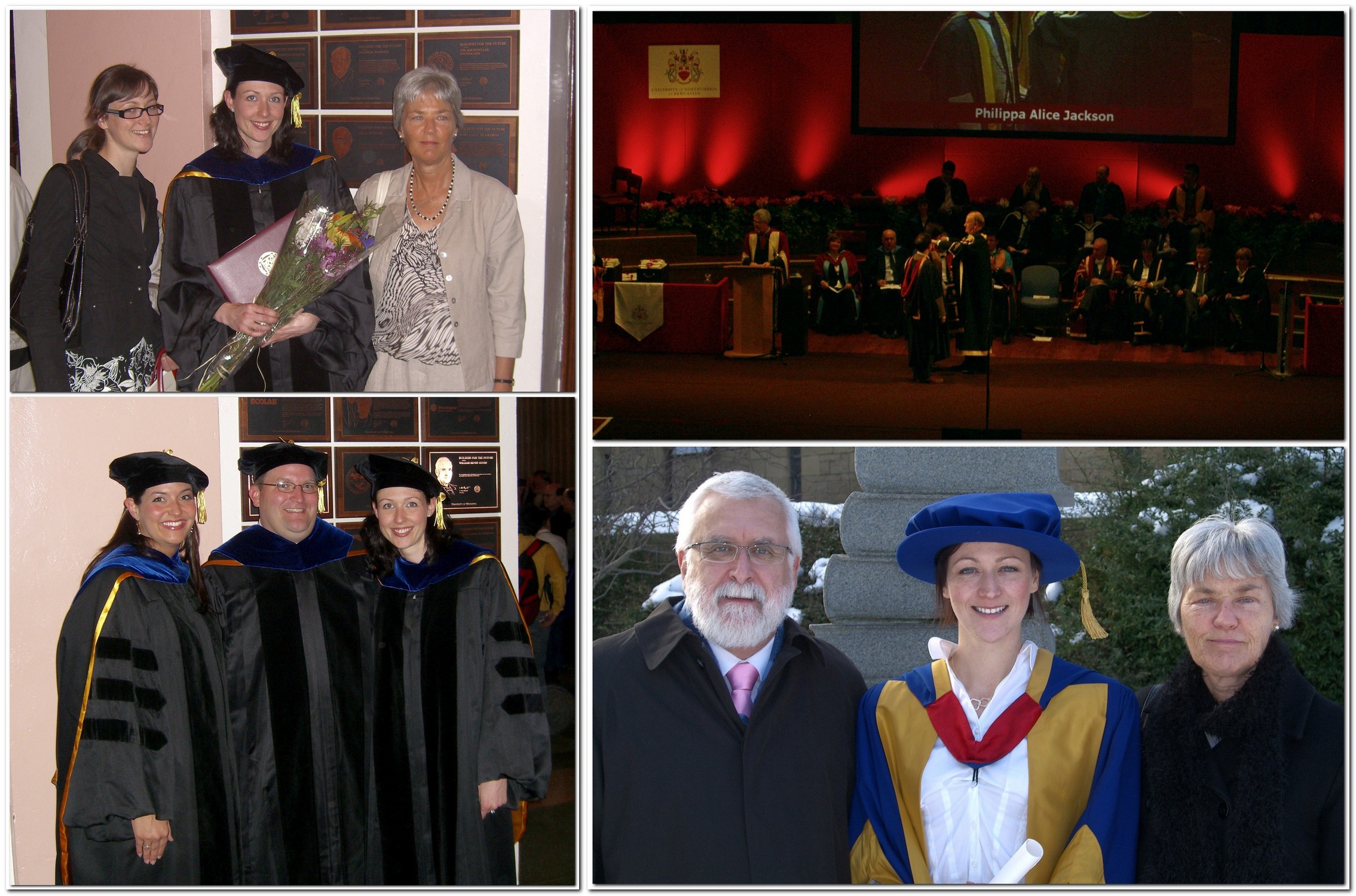
Graduating Summa cum laude in May 2000 from Macalester, with a BA in Psychology and a minor in Anthropology, Hannah was then accepted into a graduate program in the Department of Psychology at the University of Minnesota in the Twin Cities.
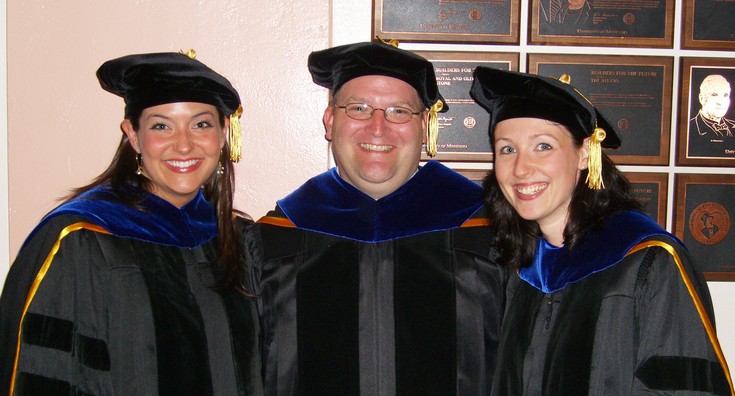

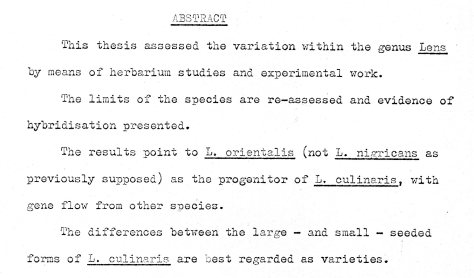
She was awarded her PhD in Industrial and Organizational Psychology in 2006 with a thesis that assessed the behaviour and ethical misconduct of senior leaders in the workplace.

Hannah (right) with her peers in Industrial & organizational Psychology

That’s one psychologist, another two universities (Macalester and Minnesota), and two more degrees (BA, PhD).

Remaining in Minnesota, she married Michael (also a Macalester graduate) in 2006, became a US citizen, and has a senior position focused on talent management and performance with one of the largest international conglomerates. They have two children: Callum (14) and Zoë (12).


After a gap year, Philippa began her studies in Psychology at Durham University in 2000, graduating with a 2:i BSc degree three years later. Uncertain what path then to follow, she moved to Vancouver for a year, before having to return to the UK at short notice after the Canadian government refused to renew her work visa.
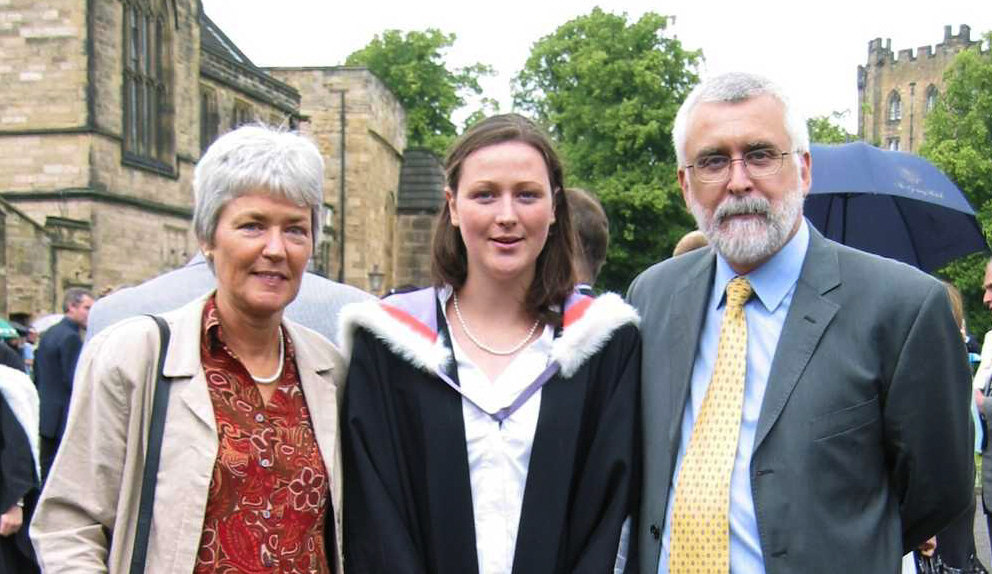
Post-graduation, outside Durham Cathedral.

She spent six months looking for a job, finally landing a research assistantship in the Brain, Performance and Nutrition Research Centre in the Department of Psychology at Northumbria University in Newcastle upon Tyne. After a couple of years she began her own PhD studies investigating the effects of bioactive lipids such as omega-3 fatty acids on cognition and brain health. She was awarded her PhD in December 2010.
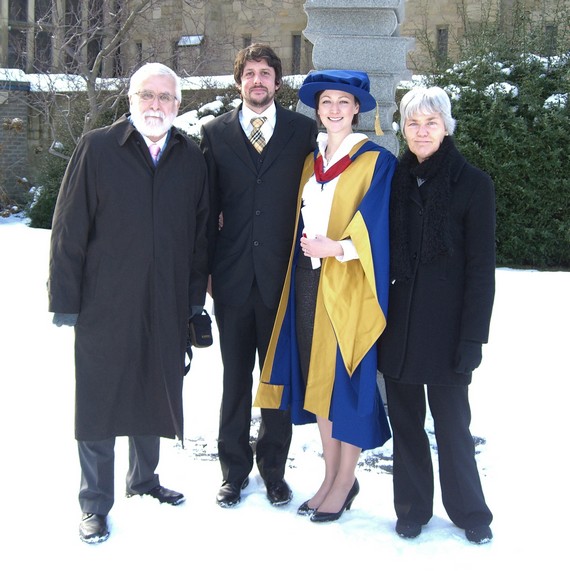
Post-graduation with Steph and me, and Andi.

She’s the second psychologist in the family, with two more universities and two degrees (BSc, PhD) under her belt.

Philippa is now Director of the Brain, Performance and Nutrition Research Centre, and Associate Professor in Biological Psychology at Northumbria.

She married Andi in September 2010 (taking themselves off to New York to get married), and have two sons: Elvis (13) and Felix (11).


Two botanists and two psychologists. Who’d have thought it? Neither Hannah nor Philippa showed any interest in pursuing biology at degree level. Having two psychologists in the family we do wonder, from time-to-time, if we went wrong somewhere along the line.

More plant blindness?

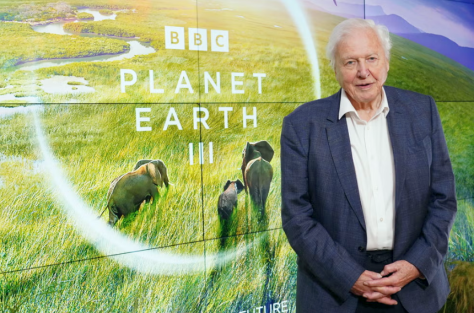
Tomorrow, 22 October, BBC1 will air Sir David Attenborough‘s next blockbuster 8-part series, Planet Earth III¹, just a year after his last series Frozen Planet II was broadcast.

Planet Earth III? From what I have seen in the trailer for the series, perhaps this should—once again—be titled [Animal] Planet Earth III.

There’s no doubt that the filming is spectacular, the ‘stories’ riveting. As one of the cinematographers has written, [the series] is set to be the most ambitious natural history landmark series ever undertaken by the BBC. It will take audiences to stunning new landscapes, showcase jaw-dropping newly-discovered behaviors, and follow the intense struggles of some of our planet’s most amazing animals (my underlining emphasis).

It’s not very likely that the series will feature plants much, if at all. Are plants being short-changed yet again? Of course there are many programs on television about gardening. But these don’t count, in my opinion, towards any greater understanding of and knowledge about plants and their uses.

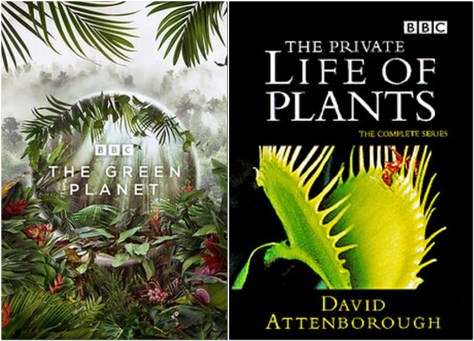
That’s not to say that the BBC (or Sir David) have completely ignored plants. In January 2022, his five episode The Green Planet series was broadcast. It was, for me however, a bit like the curate’s egg²: good in parts.

And you have to go way back to 2003 for his The Private Life of Plants series, described as a study of the growth, movement, reproduction and survival of plants.

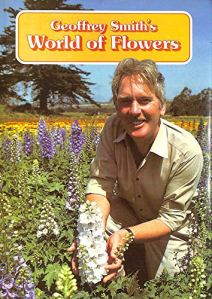
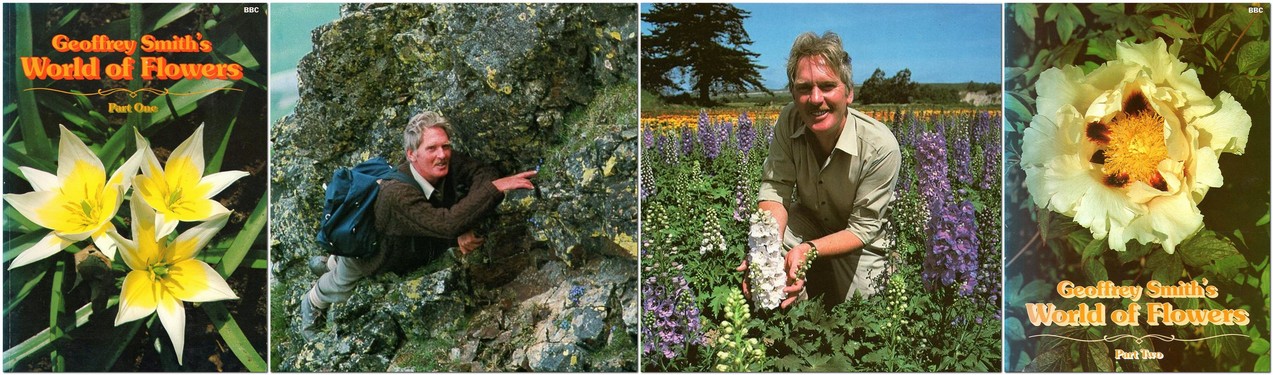
Before that, I can only think of Geoffrey Smith‘s World of Flowers double series, broadcast on BBC2 in 1983 and 1984, and apparently attracting an audience of over five million.

Who said there was no appetite for programs about plants? These programs weren’t your run-of-the-mill gardening programs. No, in each program Smith highlighted the origin and development of different groups of plant species commonly grown in British gardens.

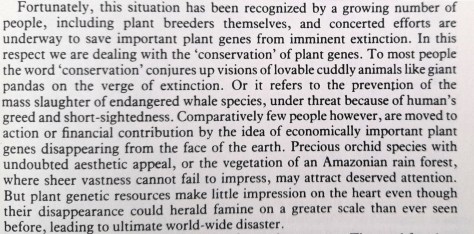
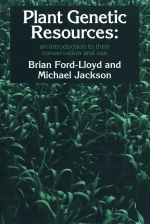
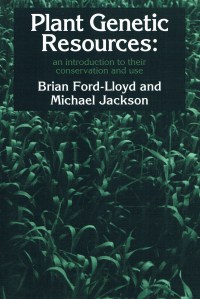
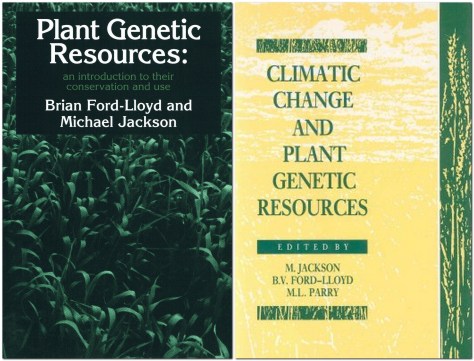
Furthermore, conservation for many relates to animals. This is something my former Birmingham colleague Brian Ford-Lloyd and I wrote back in 1986.


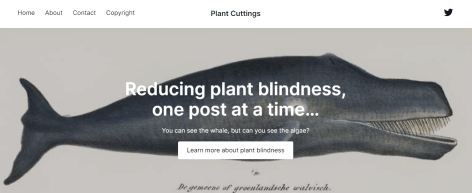
So what has brought about this latest concern of mine? Well, I first came across the announcement for Planet Earth III‘s imminent broadcast on the same day recently that I subscribed to a new plant-based blog: Plant Cuttings. And there, on the home page, was the blog’s goal for all to see: to reduce plant blindness.

The blog is the creation of Mr P Cuttings (aka Dr Nigel Chaffey, a former senior lecturer in botany at Bath Spa University, and a self proclaimed freelance plant science communicator), and is dedicated to all those who find fascination in plants (and how they are used by people). You can find more about the rationale for and antecedents of Plant Cuttings here. It’s a continuation of the series of articles he published in Annals of Botany, the last one, Check beneath your boots . . ., being published in 2019 (also about ‘plant blindness’).

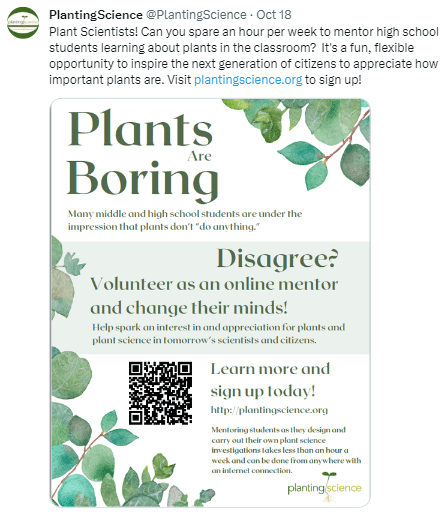
Unfortunately, plants are often seen as boring, especially by high school students who we need to attract to the plant sciences if the discipline (in all its aspects) is to thrive. Thus this initiative by PlantingScience, a Student-Teacher-Scientist partnership in the USA that was founded in 2005 by the Botanical Society of America.

Let me wish Nigel all the best as he develops this new Plant Cuttings blog. I’m very much in accord with his goals. After all, much of my career in the plant sciences has focused on the origin of the plants that feed us, how they can preserved for posterity in genebanks, and used to increase crop productivity.

So what sparked my interests in plants and human societies? 

While a high school student, I first thought I’d become a zoologist. But I saw the light and my interests turned towards plants, and I took a botany degree (combined with geography) in the late 1960s at the University of Southampton.

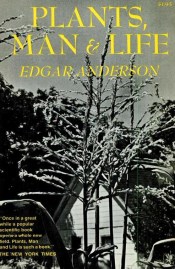
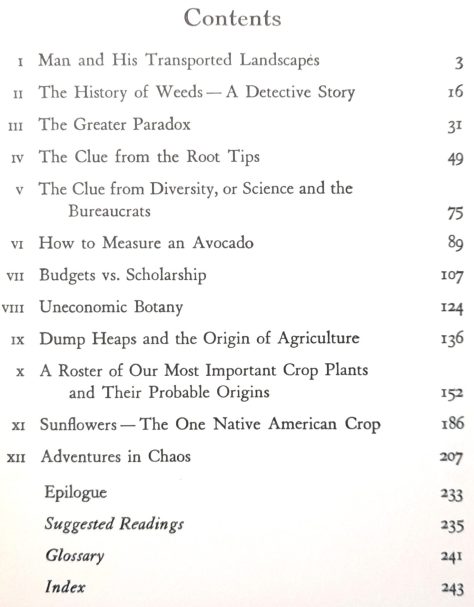
One of the books that I read was first published in 1952 (I have the 1969 reprint) by American botanist Edgar Anderson. He wrote it for readers with little technical understanding of plants. After 70 years it has stood the test of time, and I thoroughly recommend anyone who has the slightest interest of the relationships between humans and plants to delve into Plants, Man & Life.

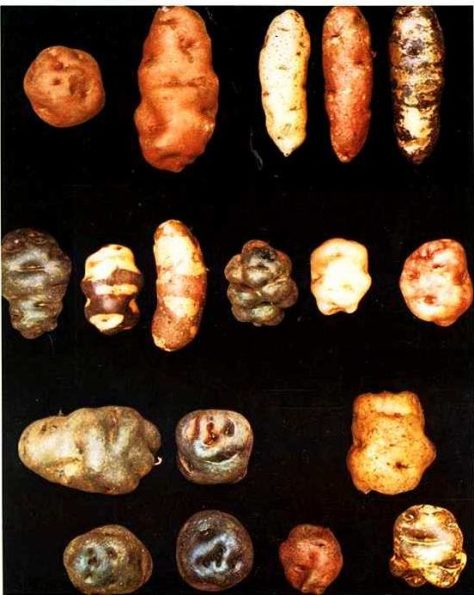
Thus I’ve been fascinated for decades about the beginnings of agriculture and how humans domesticated wild plants, and where, and to what uses they have put the myriad of varieties that were developed. My own expertise in conservation of genetic resources has permitted me to explore the Andes of Peru to find many different varieties of potato, the foundation on which Andean civilizations such as the Incas became successful.

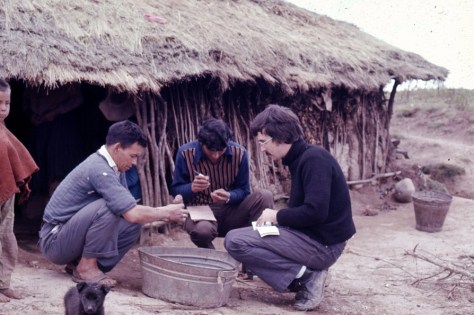
Collecting potatoes from a farmer in northern Peru, May 1974.

A graduate student of mine worked out the probable origin of the grasspea, a famine crop in some parts of the world. And I’ve managed the largest genebank for rice in the world (rice feeding half the world’s population every day), and with my colleagues expanded our knowledge of the relationships of cultivated rices to their wild ancestors. I directed a five year program in the mid-1990s to collect cultivated rices from many countries in Asia and Africa, especially from the Lao PDR.

These are just three examples from all the plants which societies use and depend on. So many more, and so many fascinating stories of how civilization and agriculture developed.

Just recently, on holiday in North Wales, my wife and I came across the site of about 20 hut circles on the northwest tip of Anglesey, dating back to the Iron Age, some 2500 years ago.

What is particularly fascinating for me is that there is good evidence that crops like wheat, barley, and oats among others were being cultivated there 3000 years earlier. That’s about 4500 years after these crops were first domesticated in the Near East in Turkey and along the river valleys of the Tigris and Euphrates. In the intervening years, these crops were carried across Europe by migrating peoples as they headed west until they became staples on the far west of mainland Britain. The domestication and expansion of these crops is also the story of those societies.

Plants are definitely not boring. Botany opens up a host of career opportunities. Today we need to harness the whole range of plant sciences, from molecule to field, to understand and use all the genetic diversity that is safely conserved in genebanks around the world, and backed up in many cases in the Svalbard Global Seed Vault. We now have so many more tools, particularly molecular ones, at our fingertips to study plants.

Be sure to follow Plant Cuttings to find out more about the joy of plants and their value to humankind. I trust many more generations will be proud to say they became botanists (or, at the very least, took up one of the allied plant sciences).


¹I watched the first episode of Planet Earth III on BBC IPlayer catch up. Verdict: stunning photography but boring content, seemingly a rehash of so many nature programs. All animals. However, at 97, Sir David Attenborough is a remarkable presenter.

² A curate’s egg is something described as partly bad and partly good.

Plants deserve more than five minutes of fame . . .

I’m currently enjoying Frozen Planet II, broadcast on Sunday evenings on BBC1, presented and narrated by that icon of nature broadcasting, Sir David Attenborough.

It’s visually stunning, with so many awe-inspiring wildlife stories that film crews have taken months, years even, to capture sometimes for the very first time on camera. The cinematography itself is incredible — photographic technology has certainly come a long way since the first Frozen Planet series was broadcast in 2011.

Of course, Frozen Plant II is only the latest of a series of wildlife blockbusters produced by the BBC, but as with most of the others it is zoocentric. Where are the plants? The series title is, after all, Frozen Planet not Frozen Animals. Like so many nature programs, Frozen Planet II is basically plant blind.

Of course I am biased. After all, I trained (ever so many years ago) as a botanist.

Proud to be a botanist

The BBC has produced series about plants (although I’m not counting the various gardening ones), the most recent being The Green Planet, broadcast over five episodes at the beginning of 2022 (which I found somewhat disappointing). And the 1995 The Private Life of Plants, of course. Both narrated and presented by Attenborough.

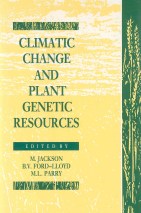
On the whole, however, most nature programs focus on animals. Why? Well, as my friend and former colleague Professor Brian Ford-Lloyd and I wrote in Chapter 1 of our 1986 book on the conservation and use of plant genetic resources:

To most people the word ‘conservation’ conjures up visions of lovable cuddly animals like giant pandas on the verge of extinction. Or it refers to the prevention of the mass slaughter of endangered whale species, under threat because of human’s greed or short-sightedness. Comparatively few people however, are moved to action or financial contribution by the idea of economically important plant species disappearing from the face of the earth. Precious orchids with undoubted aesthetic appeal, or the vegetation of the Amazonian rain forest, where sheer vastness cannot fail to impress, may attract deserved attention. But plant genetic resources [or plant biodiversity as a whole, I would hasten to add] make little impression on the heart even though their disappearance could herald famine on a greater scale than ever seen before, leading to ultimate world-wide disaster.

And there was a similar—and understandable— reaction (from a professor of molecular plant pathology at Imperial College) to a tweet I posted after seeing the latest Frozen Planet II episode last Sunday evening

Yes, gory indeed. Lots of predator-prey footage involving penguins, seals, and killer whales in various combinations. But nevertheless very interesting, showing learned and coordinated behavior by the whales to capture their prey.

It took skill (and courage) to film a puma stalking guanacos in Patagonia in the dark using high resolution night vision cameras. But there was no mention that pumas only survive in that hostile environment because of the guanacos. And the guanaco population is healthy only because there is sufficient vegetation to support their herds. What mechanisms to the plants employ to thrive in these harsh environments? I’m hopeful—but not holding my breath—that in next Sunday’s program, featuring the Northern Hemisphere boreal forests there will be more than lip-service paid to the botanical elements of this enormous ecosystem.

For many years, the British Antarctic Survey had a botanical section (that was actually based in the Department of Botany at the University of Birmingham where I studied) before it moved to BAS headquarters in Cambridge. Botanical research per se no longer features prominently on the BAS website. At least after a cursory search, I have to admit, nothing stood out. In the past BAS botanists combined lab work in Birmingham on the taxonomy, ecology, and physiology of grasses and mosses in particular with fieldwork in the south, especially on the sub-Antarctic islands like South Georgia.

And thinking of that work reminds me of one segment of last Sunday’s program featuring the Antipodean Wandering Albatross that nests on Antipodes island (49°40′12″S 178°46′48″E). I’m sure that outcrop in the southern ocean would be less inviting were it not for the various tussocky grasses that provide shelter.

Having proposed to a BBC producer, many decades ago, the idea of a series based around the topic of plants and man, I still believe it could/would make rather interesting TV. So many topics to choose from, but here’s a few off the top of my head:

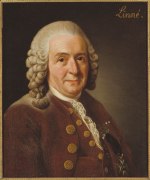
  • Swedish naturalist, Carl von Linné (Linnaeus)

    Making sense of plant diversity – taxonomy, famous taxonomists, plant collectors, Linnaeus, Sir Joseph Banks, Captain Cook, Darwin.

  • The origins of agriculture – cradles of agriculture, archaeology, crop wild relatives, domestication, Vavilov.
  • The legacy of empire, colonization – slavery, cotton, tobacco, oil palm, bananas, sugarcane, and many more.
  • Farming on the edge – the Andes of South America (potatoes), hills of Southeast Asia (rice), among many.
  • Food security – genetic resources, genebanks, climate change, modern plant breeding, molecular biology, genetic modification, turbocharging photosynthesis, plants and pathogens.

It’s no wonder that applications to study plant sciences have declined. Plants (and the exciting times of plant science) just don’t receive the same airtime (apart from the multiplicity of gardening programs which I am discounting). I’m not suggesting for one moment that they should, but a little less plant blindness would be welcome.

I don’t believe there’s a single department of botany left in the UK universities (although some do still offer botany/plant sciences degree courses); they have all merged with other disciplines to form departments of schools of biological sciences. It’s also good to know that my alma mater, Birmingham, has increased the staff teaching and researching plants. In the USA many universities still retain healthy departments of botany or plant sciences.

Am I being overly pessimistic? Perhaps. I enjoyed a varied and successful career over almost 40 years after studying botany as an undergraduate, and gaining graduate degrees in genetic conservation and crop evolution. A career in agricultural research that took me to so many countries and interesting environments, natural and agricultural.

Let’s encourage a younger generation to take up the plant sciences because there are so many exciting developments to explore, and many central to our survival. Without interesting botanical air time, fewer perhaps are likely to be attracted in the first place.

Let’s remove the botanical blinkers. How about it, BBC?


Southampton @ 15

29 April 1952. A memorable day. Hartley University College, Southampton was granted a royal charter by Her Majesty The Queen (the first of her reign) to award its own degrees, and became the University of Southampton. As Her Majesty celebrates her Platinum Jubilee, so does the university with an interesting of program of events next month, on 14 May.

The University of Southampton is my alma mater. I graduated in July 1970 with a BSc combined honours degree in environmental botany and geography, after three very happy years there.

Studying at Southampton, 1967-1970

Anyway, having written in detail about the academics, I thought I’d put together a few anecdotes and tales of being a student at Southampton in the late 60s.


Mid-afternoon, late September/early October 1967. Almost 55 years ago, and I was searching for a seat on the train chartered by the university’s Student’s Union taking freshers from London’s Waterloo Station to Southampton.

Finding the last empty seat in one compartment, I sat next to Neil, a law student from Hemel Hempstead. Like me, Neil was heading to South Stoneham House [1], one of the university’s halls of residence on Wessex Lane, about a mile east of the Highfield campus, as were several others in the same railway compartment. Neil and I remained firm friends over the course of our degrees, and are still in touch today.

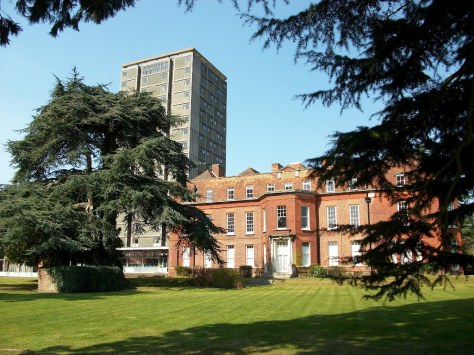
South Stoneham House – in its heyday.

Swaythling station, on the outskirts of the city, was the first stop where those joining South Stoneham, Connaught, and Montefiore halls were taken by coach the short distance to their destinations.

I had a room on the 6th floor as did Neil. Next door to me was John, also signed up for botany and geography. A couple of days later we discovered there were only five of us on that particular degree course.

Thus was my introduction to hall life, and looking forward to the next three years at the university.


So why had I chosen and ended up at Southampton? The university was not my first choice when I sent in my UCAS application the previous December. That honor went to King’s College, London to study for a degree in geography.

Back in the day, it was normal practice for all applicants to be interviewed. But, in February 1967, when the call came through to attend several interviews, I went down with the flu and had to reschedule all of them. Southampton was extremely accommodating. I contacted the university to say that I’d be in London on a certain day, and could I come on to Southampton the following day.

So, several weeks later, and on a bright, sunny, and quite warm day for the time of year, I was interviewed for about an hour by Dr Joyce Lambert, an ecologist and Reader in the Department of Botany, and Dr Brian Birch, a biogeographer and Lecturer from the Department of Geography.

I met them in the Geography department that, in those days, was based in the Hartley Building on the first floor at the rear, above the university administration offices and behind the university library.

The Hartley Building on University Road, Highfield, now the university library only.

I felt the interview had gone well. It’s hard to explain but I knew the moment that I walked through the doors of the Hartley Building that I could be very happy at Southampton. It just felt right! And a week or so later I received a generous offer of 3 Cs (in biology, geography, and/or English literature/general studies.


The first week at Southampton, Freshers’ Week, passed by in a blur. For many of us, this was our first time away from home. Freedom! Not only did we have to get used to the hall of residence regime, make new friends, there was the whole of the university to explore, very much smaller than it is today.

It was probably by the end of that week that we had our first introduction to the departments and our personal tutees. Joyce Lambert was my tutor in Botany, and Brian Birch in Geography, thus renewing directly my acquaintance from the interview. And also meeting the other members of the botany and geography cohort: Jane, Stuart, and Michael.

(I later learned that one of the combined honours students in the year ahead [1966 intake] reputedly was or became an infamous Mossad agent and assassin. I have had that ‘confirmed’ by someone who knew her).

Our course structure was explained, and in the case of geography we had to sign up immediately for a weekend of field trips around Southampton at the end of the first week of teaching. On one of those days we were taken to the northern outskirts of the city, and then as a group of more than 50 students, walked back into the city with the physical and historical geography features explained along the way. All in the pouring rain! Welcome to geography fieldwork.

Also at the end of Freshers’ Week, the Students’ Union organized the annual ‘Bun Fight’, where all the societies made pitches to recruit and welcome new members.

I signed up to join the English and Scottish Folk Dance Society, although I’d never danced a step before then. And dancing remained an enjoyable pastime during my three years.

Dance as if no one is watching . . .

From that initial folk dancing experience, I helped to found the university morris dance side, the Red Stags, at the beginning of my second year in October 1968.

Sticks and hankies – a tale of Red Stags

The Red Stags are thriving 54 years later, as a mixed male/female Border morris side, but no longer associated with the university.

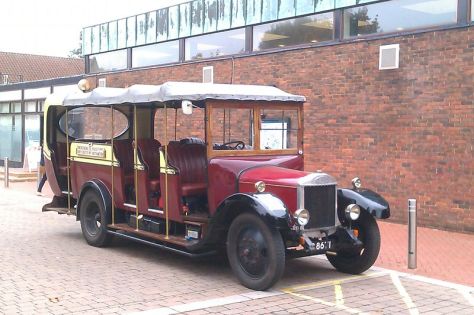
One other thing I remember about Freshers’ Week were the short trips around the city in the Toastrack, a 1929 vintage Dennis bus, owned and maintained by the Southampton University Engineering Society since 1958.

In the late 60s, Southampton was engineering-heavy, and about one quarter of all undergrads were studying for one engineering degree or another.


In South Stoneham House there were shared rooms in the original Queen Anne mansion but single occupancy ones in the 16 storey tower block erected in 1964. It was all male, fewer than 200 students all told. And woe betide any student with a girl in his room, or attempting to smuggle one out, after the curfew hour of 9 pm. Each room had a wash basin, and there were two baths and toilet/showers on each floor.

The accommodation included breakfast and dinner Monday to Saturday, and breakfast, lunch and afternoon tea on Sundays. Dinner was always formal, and we had to wear a black gown. A bit pretentious, I guess; Southampton trying to emulate an Oxbridge college in some respects.

I enjoyed life in South Stoneham, and when, towards the end of my first year I discovered I’d not secured a place for my second year, I decided to stand for Vice President of the Junior Common Room (JCR, as opposed to the Senior Common Room comprising the Warden and several faculty members who had rooms in hall). Being duly elected, I was automatically allocated a room, moving up to the 13th floor, with a south-facing view over the gardens and the banks of the River Itchen, and all the way down to Southampton docks.

As Vice President I took responsibility for various entertainments, including the Stoneham November dance and fireworks, as well as the May Ball. Neil and I also took on the firework display, and I had a budget of £20 or so (almost £400 today) to source appropriate display fireworks. I was called before the Bursar who gave me a ticking-off for storing the fireworks in my room, and ordering me to put them safely in the basement under lock and key.

For the May Ball, we developed a Parisian theme and review. A great success. I wonder if anyone recognizes a few faces.

In my third year, Neil and I moved into digs at No. 30 University Road, just down from the recently-opened University Administration Building and bookshop (now the Student Services Centre). After I left Southampton in 1970 many of the houses on that side of University Road were taken over by the university as departmental expansion space. No. 30 has now been demolished.


In the late 60s the university was beginning to expand, and new buildings were being put up. Just a year before I arrived there, Botany moved from an old building (now demolished I believe) that stood next to the Hartley Building to Building 44 (now named the Shackleton Building and housing the Geography and Psychology departments) along with geology. Of course Botany no longer exists as a separate department, merging with Zoology (and others?) after I’d left Southampton.

In my second year, Geography moved from the Hartley Building to the new Arts II, which now houses the Southampton Business School and the Music department (formerly located around the Nuffield Theatre).

And talking of the Administration Building. The late 60s were a radical time at Southampton, and rumors abounded that the new building would be occupied within days of its opening. And it came to pass, with the Vice Chancellor (Professor Sir Kenneth Mather FRS) having to remain in his old suite of offices until the students were evicted and the extensive damage repaired. Not the best of times.

Professor Mather came to Southampton from the University of Birmingham where he had been head of the Department of Genetics. He taught a course on population genetics to a class of third year botany and zoology students, and often claimed he was the only teaching Vice Chancellor in the country. After retiring from Southampton, he returned to Birmingham, keeping an office in the School of Biological Sciences. By 1981, I was also a faculty member at Birmingham, and Professor Mather had an office just down the corridor from mine. We often shared Southampton anecdotes.


During my first year I had to attend two field courses. The geography course was held in Swansea in late March 1968 just after the end of the Spring term. We stayed in one of the university halls of residence there, making field trips to see the legacy of the industrial revolution in the Swansea Valley, and the physical geography of the Gower Peninsula. The weather was mixed. It was warm enough on some days for bathing suits on the beach, but on the final morning we woke to almost 12 inches of snow!

I attended two botany field courses. The first, in July 1968, was based near the Burren in County Clare in the west of Ireland. We had a great time.

“There isn’t a tree to hang a man, water to drown a man nor soil to bury a man”.

A year later, we spent two weeks in Norfolk, which coincided with the first Moon landing by Armstrong and Aldrin.

The Man [on] the Moon (updated 20 July 2019)

I guess I was lucky to attend both botany field courses. Until 1970, the university did not allow any students to resit exams they had failed. One strike and you were out, even if the failed course was an ancillary one. And large numbers of students were asked to leave, even at the end of their second year. I scraped my first year ancillary geology course by a whisker.

It all came to a head in 1969 when a very large number (almost 50% if my memory serves me right) of second year chemists failed one or more exams and were expelled. That was a step too far. There was a student uproar. The expelled students were not re-admitted but resit exams were introduced the following year.


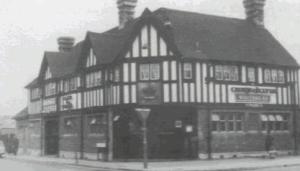
Apart from the folk dancing, I guess I spent more than my fair share of time in the pub or the Student Union bar (in the old building), sometimes playing squash in the new Students’ Union building that had been opened in 1967. There were two pubs close to the university on Burgess Road, both now closed perhaps even demolished. I favored the Crown & Sceptre (above) over The Gate, and held my 21st birthday party there in November 1969.
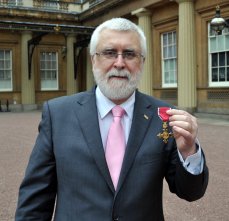
In the summer term, we often had lunch on Saturday at a pub on Woodmill Lane (they did an excellent ploughman’s) on the bank of the River Itchen. It looks as if it’s no longer there. Across the road was a pitch and putt course.

Not having a car, I hardly ever went to the New Forest, but Bursledon on the Hamble River was much more easily accessible by train. My girlfriend Liz and I often missed Friday evening dinner in our respective halls for a pub meal at The Jolly Sailor overlooking the river (where they had an amazing selection of fruit wines). This pub featured several times in the BBC production Howard’s Way over six series from 1985 to 1990.


I joined the Folk Club that was held every Sunday evening in one of the Union bars. Tim Hart and Maddy Prior (later of Steeleye Span fame) were frequent performers at the club.

I even performed once or twice myself. And in February 1969, the Red Stags made their debut at a ceilidh that I organized, attended by several hundred students

I can remember attending only three rock concerts, and all during my first year, held in the Old Refectory.

The first was the Alan Price Set (former keyboard player with The Animals) on 25 November 1967. Then there was Pink Floyd on 26 January 1968 (without Syd Barrett) and supported by T-Rex. I can’t find a gig date for The Crazy World of Arthur Brown; in fact Southampton University is not even listed on several web lists. But he did perform because I remember him launching into his iconic Fire, and setting his hair alight!


Anyway, these are just a few of my Southampton memories. Good times, and an excellent launch pad for a later career in international agricultural research and academia.

On graduation in 1970 I moved to the University of Birmingham to study for an MSc in genetic resources conservation, and then completed a PhD on potatoes from Peru in 1975. I spent more than 8 years with the International Potato Center (CIP) in Peru and Costa Rica from January 1973, and another 19 years at the International Rice Research Institute (IRRI) in the Philippines from 1991. In between, I spent a decade teaching botany at Birmingham.

Returning in 2010, I now just have happy memories of my time at Southampton and the successful career that stemmed from those first years. In 2012 I was awarded an OBE for services to international food science, and I like to think that in many ways it was a culmination of a career in science that began at Southampton in 1967.
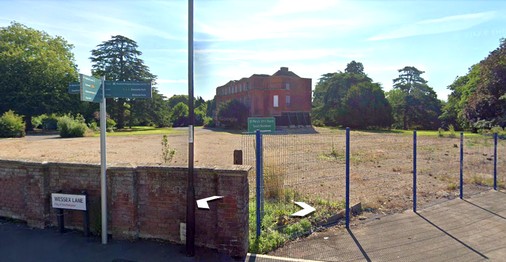

[1] South Stoneham House was closed in 2005 as it was deemed unsuitable for further occupation. Apparently asbestos had been used in its construction. After standing empty for many years, the tower block was demolished in 2022. The old hall remains, as it is a Grade II listed building.

This is the site today.


Collecting potatoes in Peru – following in Jack Hawkes’ footsteps (Part 2)

A year after returning from collecting in Ancash and La Libertad (as described in Part 1) I was heading north once again, this time to the Department of Cajamarca. In a long wheelbase Land Rover, a donation from the British government to CIP. But alone this time, almost. By May 1974 I was already quite fluent in Spanish, and had done more travelling around the country. It was assumed therefore I could look after myself, so we decided I should travel with just one of the CIP drivers, Octavio. I regret I cannot recall his surname.

Just about to head out (May 1974)

Parked on the side of the Panamericana Norte highway north of Lima

Cajamarca is also the capital city of the department, and is one of my favorite places in Peru. At 2700 m elevation, the city lies in a broad valley among rolling hills. The landscape of Cajamarca has a much gentler feel to it than the high peaks of Ancash or further south around Cuzco, or the altiplano surrounding Puno.

We must have split the journey to Cajamarca city. It’s almost 900 km and even today, on better roads, the journey is estimated to take more than 14 hours. North of the coastal city of Trujillo, the road to Cajamarca diverges east from the Panamericana Norte, winding through a lush river valley in the desert, and climbing into the mountains. Dropping down the other side, you eventually are treated to views of the city unfolding in the distance. The climate is spring-like, the food is good (the leche asada or caramel custard is a local treat), and the architecture of the (unfinished) cathedral on the main square of Plaza de Armas is a wonder.

We spent around three weeks travelling to remote areas, but were able to return from time to time to Cajamarca to enjoy the comforts of the Turista Hotel, and the Inca baths and their hot springs.

As with our collecting the previous year, we stopped to chat with farmers, ask about the varieties they and their neighbors cultivated, and requesting a sample of healthy tubers of each variety.

The market town of Bambamarca, 100 km or so north of Cajamarca was particularly interesting. It was a colorful, vibrant scene with many wearing their typical tall sombreros and russet-red ponchos, typical of Cajamarca.

On one day we stopped to chat with one farmer and his wife who became very interested why we were collecting potato varieties, and what we would do with them once back in Lima. They were so pleased to show me this particular variety with its large tubers. It’s one of my favorite images from my time in Peru.

There was even a little time for some sightseeing. Just 10 km northeast from the Plaza de Armas in Cajamarca stands an unusual archaeological site, the Ventanillas de Otuzco, a pre-Inca necropolis with more than 300 niches carved in the rock face. We even found wild tomatoes growing there.

If I have one abiding image of Cajamarca—city and landscape—it would be this one. Having eaten an early breakfast, Octavio and I headed north from the city, climbing above the valley. We stopped almost at the summit so I could take this photo of the Cajamarca valley. If you look carefully you can see the steam rising from the Inca baths in the distance.

Octavio and I got along quite well. He’d never traveled to that part of Peru before and, as a driver from the big city, had very little knowledge of potatoes. We had just the one falling-out, if you can call it that. He would insist in driving downhill along quite treacherous roads in high gear, or even in neutral, relying solely on the brakes alone to control our speed. I had to insist he use low gear to slow the vehicle or he wouldn’t be driving any more until we reached the coast and the Panamerican highway. Anyway, we arrived back in Lima after an incident-free trip.

Later on that year, I returned to Cajamarca with my wife Steph and two English friends from CIP. Again in 1988, as a member of a CIP project review team, I spent a few days in the city and surrounding countryside looking at seed production and storage systems.


When I visited CIP in 2016 as part of a review of the genebank, the staff showed me some herbarium sheets from some of the varieties I had collected on that trip to Cajamarca.


Earlier in 1974, in February, I traveled to Puno and Cuzco in the south of the country with Dr Peter Gibbs from the University of St Andrews, Scotland. He was studying the floral biology of another Andean tuber crop known as oca (Oxalis tuberosa). He had contacted CIP’s Director General to see if anyone might be headed south for fieldwork with whom he could travel.

I’d already decided to carry out some field studies of potato varietal mixtures and was looking for suitable locations. Peter suggested that we might head to Cuyo Cuyo, a municipality just under 250 km northeast of Puno and Lake Titicaca. Famous for its agricultural terraces or andenes, there had been one study in 1951 describing the cultivation of oca in the valley. Peter convinced me that it was worth heading in that direction. Which is precisely what we did.

On this trip we drove a short wheelbase Land Rover, another donation to CIP from the British government. It had a separate cab; the rear was covered with a canvas hood, not the most secure vehicle for venturing into remote parts.

Heading south down the Panamericana Sur, we had a road trip of almost 1300 km ahead of us. I know we stopped in Nazca on the first night, after driving 447 km. From there to Arequipa was another 568 km, and the final leg into Puno was 295 km. I think we must have made it to Arequipa on the second day, resting up before the climb to the altiplano on the third day.

In Puno, we rested for a couple of days, checking our gear, and meeting with some officials from the Ministry of Agriculture for further advice before setting off for Cuyo Cuyo. Peter had developed a taste for algarrobina, a popular Peruvian cocktail, a bit like egg-nog, but with a kick, especially after one too many. We weren’t in the best shape to head off across the altiplano the next day.

Each time I crossed the altiplano it was hard to understand just how people managed to survive in such a harsh environment: flat, cold, and often over 4000 m. Yet we passed farms, growing the bitter and frost-resistant potatoes that are processed to make chuño as well as herding llamas and alpacas. Crossing several rivers, we finally reached the head of the Cuyo Cuyo valley and, descending into the cloud, encountered workmen struggling to clear a landslide. However that gave an opportunity for some impromptu botany, finding a beautiful begonia with flowers as large as saucers.

Once clear of the landslide, and out of the cloud, the most amazing vista opened up before us. The whole valley was terraced and, as we learned over the next few days, supported a rotation system involving potatoes, oca, barley and faba beans (both imported by the Spanish in the 16th century), and a fallow.

Arriving in the village it was important to find somewhere to stay. We hadn’t thought to make any enquiries before setting out for Cuyo Cuyo. There was no hotel, but the postmaster offered us space to set up our camp beds and herbarium drying equipment, and there we stayed for about five days. We were certainly a curiosity with the village children.

Peter set about collecting samples of oca with different floral structures for his study, and to make herbarium specimens to take back to St Andrews. At the time of our visit many of the oca fields were planted in the lower levels of the valley often close to the river. I set off on my own, guided by a local farmer, to potato terraces higher up the valley to study the varietal mixtures and to learn more about the agricultural system. That study was finally published in the journal Euphytica in 1980 and can be read here.

Peter’s oca samples were the devil to dry because of their fleshy stems. When he finally made it back to St Andrews a couple of months later, he found that his ‘dry’ specimens were still alive. So he planted them in a university glasshouse, and had the best of both worlds being able to continue his study with living plants.

Leaving Cuyo Cuyo, we headed back to Puno staying one night there before setting off for Cuzco some 385 km to the northwest.

I was interested in locating another site for study, and we settled on a community near Chinchero outside Cuzco. We hired horses to reach remote fields, and there I collected flower buds (for chromosome counts) from several fields.

It was interesting to find large commercial cultivation of potatoes (for sale in markets like Cuzco) alongside smaller plots of native varieties that farmers grew for home consumption. As I was collecting samples from one field, two women stopped close-by and one of them crouched down to feed her baby. Both were dressed in the typical costume of that region.

Soon we had all the information we thought we needed (in hindsight I would have done things very differently, and at Cuyo Cuyo), and headed back to Cuzco where we left the vehicle to be collected by Zósimo Huamán who was heading south for his own field studies, and who would drive it back to Lima.

While we in Cuzco, we visited the home of Professor César Vargas, a renowned Peruvian botanist, who I had first met in January 1973 when Jack Hawkes introduced me to him. Jack first met Vargas when he was working in Colombia between 1948 and 1951. Also, Vargas’ daughter Martha was an MSc student at St Andrews so it was a good opportunity for Peter also to meet him.


I only made one field trip with Jack Hawkes, in March 1981 just a few weeks before I left CIP to return to the UK and take up a lectureship at The University of Birmingham.

Jack was in Lima on his way back to the UK having led yet another expedition to collect potatoes in Bolivia. He suggested that we take a long weekend to head up into the mountains and see what wild species of potato could be found. A CIP colleague, potato breeder Juan Landeo, came along for the trip.

On the first day, we set off east up the Carretera Central, over Ticlio at 4800 m and on to the smelting town of La Oroya, before heading north to the important mining center of Cerro de Pasco (4330 m), one of the highest (and bleakest) cities in the world.

The next morning we continued north, finally descending to the warmth of Huánuco, a lovely city at just 1880 m. We spent the night there.

I don’t recall if we split the journey back to Lima (or the exact route) or traveled from Huánuco in one day, stopping every now and then to collect potatoes.

Early in the day we came across some farmers using the traditional foot plough or chaqui tacclla. This is an iconic image.

We passed through some awesome landscapes. Even encountering a significant landslide that blocked our path. Closer to the coast the mountains were lost in the clouds as we made our way down the side of the valley.

I learned one very important lesson from Jack Hawkes: that a sound knowledge of the ecology of the species was very important (a point emphasized by Israeli geneticist Gideon Ladizinsky when I took a party of Birmingham students to a genetic resources course near Tel Aviv in 1982).

We’d be driving along, when Jack would suddenly ask us to pull over, saying that we’d find potatoes in the vicinity. Even naming which species we’d be likely to find. And I don’t remember him ever being wrong. It was fascinating to see how his deep knowledge guided his approach to collecting wild potatoes.

This is the only photo of me in the field with Jack, as we collected Solanum multiinterruptum (or was it S. multidissectum?).

It was a great experience, learning more about wild species in the field, from the master. These are memories that will stay with me for years to come.


Is it really five decades?

years ago today (Friday 17 December 1971) I received my MSc degree in Conservation and Utilization of Plant Genetic Resources from the University of Birmingham. Half a century!

With my dissertation supervisor Dr (later Professor) Trevor Williams, who became the first Director General of the International Board for Plant Genetic Resources (now Bioversity International).

I hadn’t planned to be at the graduation (known as a congregation in UK universities). Why? I had expected to be in Peru for almost three months already. I was set to join the International Potato Center (CIP) (which has just celebrated its 50th anniversary) as an Associate Taxonomist after graduation, but didn’t actually get fly out to Lima until January 1973. Funding for my position from the British government took longer to finalize than had been envisaged. In the meantime, I’d registered for a PhD on the evolution of Andean potato varieties under Professor Jack Hawkes, a world-renowned potato and genetic resources expert.

So let’s see how everything started and progressed.


1970s – potatoes
Having graduated from the University of Southampton in July 1970 (with a BSc degree in Environmental Botany and Geography), I joined the Department of Botany at Birmingham (where Jack Hawkes was head of department) in September that year to begin the one year MSc course, the start of a 39 year career in the UK and three other countries: Peru, Costa Rica, and the Philippines. I took early retirement in 2010 (aged 61) and returned to the UK.

Back in December 1971 I was just relieved to have completed the demanding MSc course. I reckon we studied as hard during that one year as during a three year undergraduate science degree. Looking back on the graduation day itself, I had no inkling that 10 years later I would be back in Birmingham contributing to that very same course as Lecturer in Plant Biology. Anyway, I’m getting ahead of myself.

Arriving in Lima on 4 January 1973, I lived by myself until July when my fiancée Steph flew out to Peru, and join CIP as an Associate Geneticist working with the center’s germplasm collection of Andean potato varieties. She had resigned from a similar position at the Scottish Plant Breeding Station near Edinburgh where she helped conserve the Commonwealth Potato Collection.

Later that year, on 13 October, Steph and I were married in Miraflores, the coastal suburb of Lima where we rented an apartment.

At Pollería La Granja Azul restaurant, east of Lima, after we were married in Miraflores.

My own work in Peru took me all over the Andes collecting potato varieties for the CIP genebank, and conducting field work towards my PhD.

Collecting potato tubers from a farmer in the northern Department of Cajamarca in May 1974.

In May 1975, we returned to Birmingham for just six months so that I could complete the university residency requirements for my PhD, and to write and successfully defend my dissertation. The degree was conferred on 12 December.

With Professor Jack Hawkes

Returning to Lima just in time for the New Year celebrations, we spent another three months there before being posted to Turrialba, Costa Rica in Central America at the beginning of April 1976, where we resided until November 1980. The original focus of my research was adaptation of potatoes to hot, humid conditions. But I soon spent much of my time studying the damage done by bacterial wilt, caused by the pathogen Ralstonia solancearum (formerly Pseudomonas solanacearum).

Checking the level of disease in a bacterial wilt trial of potatoes in Turrialba, July 1977.

Each year I made several trips throughout Central America, to Mexico, and various countries in the Caribbean, helping to set up a collaborative research project, PRECODEPA, which outlasted my stay in the region by more than 20 years. One important component of the project was rapid multiplication systems for potato seed production for which my Lima-based colleague, Jim Bryan, joined me in Costa Rica for one year in 1979.

My two research assistants (in blue lab-coats), Moises Pereira (L) and Jorge Aguilar (R) demonstrating leaf cuttings to a group of potato agronomists from Guatemala, Panama, the Dominican Republic, and Costa Rica, while my CIP colleague and senior seed production specialist, Jim Bryan, looks on.

There’s one very important thing I want to mention here. At the start of my career with CIP, as a young germplasm scientist, and moving to regional work in Costa Rica, I count myself extremely fortunate I was mentored through those formative years in international agricultural research by two remarkable individuals.

Roger Rowe and Ken Brown

Dr Roger Rowe joined CIP in July 1973 as head of the Breeding and Genetics Department. He was my boss (and Steph’s), and he also co-supervised my PhD research. I’ve kept in touch with Roger ever since. I’ve always appreciated the advice he gave me. And even after I moved to IRRI in 1991, our paths crossed professionally. When Roger expressed an opinion it was wise to listen.

Dr Ken Brown joined CIP in January 1976 and became Director of the Regional Research Program. He was my boss during the years I worked in Central America. He was very supportive of my work on bacterial wilt and the development of PRECODEPA. Never micro-managing his staff, I learned a lot from Ken about people and program management that stood me in good stead in the years to come.


1980s – academia
By the middle of 1980 I was beginning to get itchy feet. I couldn’t see myself staying in Costa Rica much longer, even though Steph and I enjoyed our life there. It’s such a beautiful country. Our elder daughter Hannah was born there in April 1978.

To grow professionally I needed other challenges, so asked my Director General in Lima, Richard Sawyer, about the opportunity of moving to another region, with a similar program management and research role. Sawyer decided to send me to Southeast Asia, in the Philippines, to take over from my Australian colleague Lin Harmsworth after his retirement in 1982.

However, I never got to the Philippines. Well, not for another decade. In the meantime I had been encouraged to apply for a lectureship at the University of Birmingham. In early 1981 I successfully interviewed and took up the position there in April.

Thus my international potato decade came to an end, as did any thoughts of continuing in international agricultural research. Or so it seemed at the time.

For three months I lodged with one of my colleagues, John Dodds, who had an apartment close to the university’s Edgbaston campus while we hunted for a house to buy. Steph and Hannah stayed with her parents in Southend on Sea (east of London), and I would travel there each weekend.

It took only a couple of weeks to find  a house that suited us, in the market town of Bromsgrove, Worcestershire, about 13 miles south of the university. We moved in during the first week of July, and kept the house for almost 40 years until we moved to Newcastle upon Tyne in the northeast of England almost 15 months ago. However we didn’t live there continually throughout that period as will become apparent below.

Our younger daughter Philippa was born in Bromsgrove in May 1982. How does the saying go? New house, new baby!

With Brian when we attended a Mediterranean genetic resources conference in Izmir, Turkey in April 1972. Long hair was the style back in the day.

I threw myself into academic life with enthusiasm. Most of my teaching was for the MSc genetic conservation students, some to second year undergraduates, and a shared ten-week genetic conservation module for third year undergraduates with my close friend and colleague of more than 50 years, Brian Ford-Lloyd.

I also supervised several PhD students during my time at Birmingham, and I found that role particularly satisfying. As I did tutoring undergraduate students; I tutored five or six each year over the decade. Several tutees went on to complete a PhD, two of whom became professors and were recently elected Fellows of the Royal Society.

One milestone for Brian and me was the publication, in 1986, of our introductory text on plant genetic resources, one of the first books in this field, and which sold out within 18 months. It’s still available as a digital print on demand publication from Cambridge University Press.

This was followed in 1990 by a co-edited book (with geography professor Martin Parry) about genetic resources and climate change, a pioneering text at least a decade before climate change became widely accepted. We followed up with an updated publication in 2014.

The cover of our 1990 book (L), and at the launch of the 2014 book, with Brian Ford-Lloyd in December 2013

My research interests in potatoes continued with a major project on true potato seed collaboratively with the Plant Breeding Institute in Cambridge (until Margaret Thatcher’s government sold it to the private sector) and CIP. My graduate students worked on a number of species including potatoes and legumes such as Lathyrus.

However, I fully appreciated my research limitations, and enjoyed much more the teaching and administrative work I was asked to take on. All in all, the 1980s in academia were quite satisfying. Until they weren’t. By about 1989, when Margaret Thatcher had the higher education sector firmly in her sights, I became less enthusiastic about university life.

And, in September 1990, an announcement landed in my mailbox for a senior position at the International Rice Research Institute (IRRI) in the Philippines. I applied to become head of the newly-created Genetic Resources Center (GRC, incorporating the International Rice Genebank), and joined IRRI on 1 July 1991. The rest is history.

I’ve often been asked how hard it was to resign from a tenured position at the university. Not very hard at all. Even though I was about to be promoted to Senior Lecturer. But the lure of resuming my career in the CGIAR was too great to resist.


1990s – rice genetic resources
I never expected to remain at IRRI much beyond 10 years, never mind the 19 that we actually spent there.

Klaus Lampe

I spent the first six months of my assignment at IRRI on my own. Steph and the girls did not join me until just before the New Year. We’d agreed that it would be best if I spent those first months finding my feet at IRRI. I knew that IRRI’s Director General, Dr Klaus Lampe, expected me to reorganize the genebank. And I also had the challenge of bringing together in GRC two independent units: the International Rice Germplasm Center (the genebank) and the International Network for the Genetic Evaluation of Rice (INGER). No mean feat as the INGER staff were reluctant, to say the least, to ever consider themselves part of GRC. But that’s another story.

Elsewhere in this blog I’ve written about the challenges of managing the genebank, of sorting out the data clutter I’d inherited, investigating how to improve the quality of seeds stored in the genebank, collaborating with my former colleagues at Birmingham to improve the management and use of the rice collection by using molecular markers to study genetic diversity, as well as running a five year project (funded by the Swiss government) to safeguard rice biodiversity.

I was also heavily involved with the CGIAR’s Inter-Center Working Group on Genetic Resources (ICWG-GR), attending my first meeting in January 1993 in Addis Ababa, when I was elected Chair for the next three years.

The ICWG-GR at its meeting hosted by ILRI (then ILCA) in Addis Ababa, in 1993.

In that role I oversaw the development of the System-wide Genetic Resources Program (SGRP), and visited Rome several times a year to the headquarters of the International Plant Genetic Resources Institute (IPGRI, now Bioversity International) which hosted the SGRP Secretariat.

But in early 2001 I was offered an opportunity (which I initially turned down) to advance my career in a totally different direction. I was asked to join IRRI’s senior management team in the newly-created post of Director for Program Planning and Coordination.


The 2000s – management
It must have been mid-January 2001. Sylvia, the Director General’s secretary, asked me to attend a meeting in the DG’s office just after lunch. I had no idea what to expect, and was quite surprised to find not only the DG, Dr Ron Cantrell, there but also his two deputies, Dr Willy Padolina (DDG-International Programs) and Dr Ren Wang, DDG-Research.

To cut a long story short, Cantrell asked me to leave GRC and move into a new position, as one of the institute’s directors, and take over the management of resource mobilization and donor relations, among other responsibilities (after about one year I was given line management responsibility for the Development Office [DO], the Library and Documentation Services [LDS], Communication and Publications Services [CPS], and the Information Technology Services [ITS]).

With my unit heads, L-R: me, Gene Hettel (CPS), Mila Ramos (LDS), Marco van den Berg (ITS), Duncan Macintosh (DO), and Corinta Guerta (DPPC).

In DPPC, as it became known, we established all the protocols and tracking systems for the many research projects and donor communications essential for the efficient running of the institute. I recruited a small team of five individuals, with Corinta Guerta becoming my second in command, who herself took over the running of the unit after my retirement in 2010 and became a director. Not bad for someone who’d joined IRRI three decades earlier as a research assistant in soil chemistry. We reversed the institute’s rather dire reputation for research management and reporting (at least in the donors’ eyes), helping to increase IRRI’s budget significantly over the nine years I was in charge.

With, L-R, Yeyet, Corinta, Zeny, Vel, (me), and Eric.

I’m not going to elaborate further as the details can be found in that earlier blog post. What I can say is that the time I spent as Director for Program Planning and Communications (the Coordination was dropped once I’d taken on the broader management responsibilities) were among the most satisfying professionally, and a high note on which to retire. 30 April 2010 was my last day in the office.


Since then, and once settled into happy retirement, I’ve kept myself busy by organizing two international rice research conferences (in Vietnam in 2010 and Thailand in 2014), co-edited the climate change book I referred to earlier, and been the lead on a major review of the CGIAR’s Genebank Program (in 2017). Once that review was completed, I decided I wouldn’t take on any more consultancy commitments, and I also stepped down from the editorial board of the Springer scientific journal Genetic Resources and Crop Evolution.

As I said from the outset of this post, it’s hard to imagine that this all kicked off half a century ago. I can say, without hesitation and unequivocally, that I couldn’t have hoped for a more rewarding career. Not only in the things we did and the many achievements, but the friendships forged with many people I met and worked with in more than 60 countries. It was a blast!


Not so good in the field . . .

I have a rather embarrassing confession to make. Although I have degrees in botany, I’m not very good at all at identifying plants in the field. It’s just not something that has ever come easily. But I do know how to identify different species. More of that later.

Birds are a different kettle of fish altogether (says he, mixing his metaphors). I have little difficulty in identifying most of the species I come across. Maybe that’s because I’ve had an interest in bird watching since I was a small boy.

I came late to botany, however. It wasn’t until I was studying for my university entrance exams (known here in the UK as the General Certificate of Education (GCE) Advanced Level exams) that I realized that botany was the degree course for me, something I achieved at the University of Southampton (in a combined honors degree with geography) for three years from 1967.

Les Watson

During that first year, and on a field trip to the west of Ireland, we systematically studied the different families of flowering plants, under the careful guidance of fellow Leekensian¹ Les Watson who was a lecturer in plant taxonomy at Southampton.

But after graduation, my interest in all things botanical turned to the conservation and use of plant genetic resources for food and agriculture, and that became my research interest for the next 40 years, focusing on potatoes in South and Central America during the 1970s, on potatoes and grain legumes when I taught at the University of Birmingham in the 1980s, and then rice after I joined the International Rice Research Institute in the Philippines in 1991 up to my retirement in 2010.

With my Birmingham PhD supervisor, Professor Jack Hawkes, identifying potato varieties in the field genebank of the International Potato Center in Peru in 1974, and collecting wild species in the Andes northeast of Lima in March 1975.


So I’ve never been much focused on field botany, and unlike many amateur botanists and naturalists, didn’t have much enthusiasm for naming all the plants I came across. It’s a bit ironic really because in 1981 when I joined the University of Birmingham as a lecturer in plant biology, I was ‘asked’ to contribute to a second year module on flowering plant taxonomy. My contributions had less to do with identifying and studying the various plant families per se than understanding how and why variation in plant species comes about, and how variation patterns are treated in formal taxonomy.

In recent months, however, my interest has turned to plant identification. Since Steph and I moved to the northeast of England last October, I have tried to get out for a walk every day, a minimum of two miles, weather permitting. We have discovered the fantastic waggonways that crisscross Tyneside, the remnants of a busy coal mining industry that opened up in the nineteenth century and eventually met its demise in the second half of the last century. The waggonways are the routes of the railway lines that carried coal from the mines to quays (or staiths as they were known locally) on the River Tyne from where it was shipped all over the world.

Nowadays the waggonways are a haven for wildlife, and a lush abundance of plant species almost too numerous to count. They have become important (vital even) biodiversity corridors connecting different habitats across Newcastle and into the surrounding Northumberland landscape.

And, as I walking along the Cramlington Waggonway recently close to home on my way to the Silverlink Biodiversity Park (developed on a former coal waste tip), I was struck about how many of the plants I could not identify, although many were familiar. But I did want to know their names.

Now, as part of my student training in botany, I learnt how to use a flora, which is a list of all the species known to grown in a particular area or region. For the UK, the most comprehensive flora was the Flora of the British Isles, by Clapham, Tutin and Warburg, first published in 1952, and still in print today after several editions and revisions, but supplanted to some extent perhaps by Clive Stace’s New Flora of the British Isles, first published in 1991 and now in its 4th edition.

The essential thing about these floras is that they have a key to help you identify plants.

However, recognizing many of the plant families or genera as I can, I don’t have to start at the beginning of a key, but can jump to a particular family or genus to narrow down my search for the correct identity.


But my quest to identify plants has been made a whole lot easier. I follow lots of botanical related feeds on Twitter, and a couple of weeks ago, I came across one tweet referring to a plant identification site called Pl@ntNet, for which there is an app for use of mobile phones and the like. So I thought I’d give it a try.

Essentially, you upload an image to the site, and it comes back with a probability (%) of it being a particular species, but also suggesting other candidates albeit at a lower probability.

So what is Pl@ntNet? On its website, it states that Pl@ntNet is a citizen science project available as an app that helps you identify plants thanks to your pictures. This project is part of the Floris’Tic initiative, which aims to promote scientific, technical and industrial culture in plant sciences. For this, it relies on a consortium of complementary expertise in Botany, IT and Project Animation.

Pl@ntNet is a French project under the Agropolis Foundation initiated in 2009 with the objective of developing new forms of identification, sharing and accumulation of data on plants. The mobile application allows you to take photos of a plant, and to compare these photos with those of an expertly-validated and dynamically updated image base, so as to facilitate the identification of a plant. The application, with more than a million downloads, and several thousand daily users demonstrates the keen interest of the general public and the educational world for this type of technology, and a thirst for knowledge about the plants around us. This initiative illustrates the great motivation of the teams involved to produce and disseminate new forms of access to knowledge in the field of botany.

Nothing ventured, nothing gained. I decided to give it a whirl. Like all projects of this type, it depends on expert feedback, so there is a large database of photos of correctly identified species, and these are also cataloged into the floras from different parts of the world, such as Western Europe or Costa Rica, for example. In fact there are 35 subcategories to narrow down your selection. And thousands upon thousands of images of flowers, leaves, habit and habitat, fruits and the like.

So I started with a plant I did know to test how the app worked and its accuracy. I came across a patch of bloody cranesbill (Geranium sanguineum L., Geraniaceae) on the sand dunes close to home. I took a closeup of the flowers and submitted it to Pl@ntNet there and then. Within seconds, a result came back: bloody cranesbill, 95%!

On a walk last week in Northumberland, I saw a daisy-like plant that looked familiar. I’d seen something similar growing at Biddulph Grange (a National Trust property in North Staffordshire some years back). Again, within seconds, Pl@ntNet suggested Doronicum pardalianches L, Asteraceae, commonly known as giant leopard’s-bane), but with only a 56% certainty based on the flowers. So I took another photo, of the leaves this time, and Pl@ntNet again proposed the same species, with 80% certainty. So I’m pretty confident that this was indeed giant leopard’s-bane.

I must say how impressed I am with this app. As I take my smartphone with me on all my walks, Pl@ntNet will be part of my armory to identify wildlife, along with my binoculars and camera. It really is worth having a go. The app is a little memory hungry at 231 MB, but already I’m finding that my field botany is improving, and it’s so much fun having at least an indication there and then of a species identity that can be verified later on with reference to a flora, should the app not give a high identification value.

Maybe, one day, I’ll even become a competent field botanist. Although that might be stretching things a little too far.


¹ A native of Leek, a small market town in North Staffordshire where I grew up.

I never aspired to be an academic

If, in the summer of 1970, someone had told me that one day I would be teaching botany at university, I would have told them they were delusional. But that’s what happened in April 1981 when I was appointed Lecturer in Plant Biology at the University of Birmingham. Hard to believe that’s already 40 years ago today. I stayed at Birmingham for a decade.

Birmingham is a campus university, one of the first, and also the first of the so-called ‘redbrick‘ universities. The campus has changed radically in the 30 years since I left, but many of the same landmarks are still there. The beauty of the campus can be appreciated in this promotional video.


I never, ever had any pretensions to a life in academia. As an undergraduate studying for a combined degree in Environmental Botany and Geography at University of Southampton between 1967 and 1970, I was a run-of-the-mill student. It wasn’t that I had little enthusiasm for my degree. Quite the contrary, for the most part. I enjoyed my three years at university, but I did burn the candle more at one end than the other. Also, I didn’t really know (or understand) how to study effectively, and no-one mentored me to become better. And it showed in my exam results. So while I graduated with a BSc (Hons.) degree, it was only a Lower Second; I just missed out, by a couple of percentage points, on an Upper or 2(i) degree. Perhaps with a little more effort I could have achieved that goal of a ‘better degree’. Que será . . .

However, about halfway through my final year at Southampton, I applied to Birmingham for a place on the recently-established graduate MSc course on Conservation and Utilisation of Plant Genetic Resources (CUPGR) in the Department of Botany. And the rest is history, so to speak.

I was interviewed in February 1970 and offered a place, but with no guarantee of funding. It wasn’t until late in the summer—about a couple of weeks before classes commenced—that the head of department, Professor Jack Hawkes phoned me to confirm my place (notwithstanding my ‘poor’ degree) and that he’d managed to squeeze a small grant from the university. It was just sufficient to pay my academic fees, and provide an allowance of around £5 per week (about £67 at today’s value) towards my living expenses.

So, in early September 1970 I found myself in Birmingham alongside four other MSc candidates, all older than me, from Nigeria, Pakistan, Turkey, and Venezuela, excited to learn all about plant genetic resources. I discovered my study mojo, redeeming myself academically (rather well, in fact), sufficient for Jack Hawkes to take me on as one of his PhD students, even as I was expecting to move to Peru to join the newly-established International Potato Center (CIP) in Lima. And that’s what I did for the rest of the decade, working in South and Central America before returning to Birmingham as a member of staff.


The years before Birmingham
I spent over eight years with CIP, between January 1973 and April 1976, working as an Associate Taxonomist in Lima, and helping to manage the multitude of potato varieties in the center’s field genebank, participating in collecting trips to different parts of Peru to find new varieties not already conserved in the genebank, and continuing research towards my PhD.

In the meantime, my girlfriend Stephanie (who I met at Birmingham) and I decided to get married, and she flew out to Peru in July 1973. We were married in Lima in October [1].

In May 1975, Steph and I returned to Birmingham for six months so I could complete the residency requirements for my PhD, and to write and defend my thesis. We returned to Lima by the end of December just after I received my degree.

From April 1976 and November 1980, Steph and I lived in Costa Rica in Central America on the campus of the regional agricultural research center, CATIE, in Turrialba, a small town 62 km due east of the capital, San José.

I had joined CIP’s Regional Research Department to strengthen the regional program for Mexico, Central America and the Caribbean. In 1976, the regional headquarters were in Toluca, Mexico where my head of program, Oscar Hidalgo lived. After he moved to the USA for graduate studies in 1977, CIP’s Director General, Richard Sawyer, asked me to take on the leadership of the regional program, and that’s what I did for the next four years, with an emphasis on breeding potatoes adapted to hot tropical environments, seed systems, bacterial disease resistance, and regional program development.

By November 1980 I felt it was time to move on, and requested CIP to assign me to another program. We moved back to Lima. However, with one eye on life beyond CIP, and with a growing daughter, Hannah (born in April 1978, and who would, in the next couple of years, be starting school) I also began to look for employment opportunities in the UK.


Looking for new opportunities
Towards the end of 1980 (but before we had returned to Lima) I became aware that a new lectureship was about to be advertised in the Department of Plant Biology (formerly Botany, my alma mater) at Birmingham. With the retirement of Jack Hawkes scheduled for September 1982, the lectureship would be recruited to fill an anticipated gap in teaching on the CUPGR Course.

I sent in an application and waited ‘patiently’ (patience is not one of my virtues) for a reply to come through. By the end of December (when we were already back in Lima, and in limbo so to speak) I was told I was on a long short list, but would only proceed to the final short list if I would confirm attending an interview in Birmingham (at my own expense) towards the end of January 1981. So, nothing ventured, nothing gained, and with the encouragement of the Dr Sawyer (who promised to keep a position open for me if the Birmingham application was unsuccessful) I headed to the UK.

Since completing my PhD in 1975, I had published three papers from my thesis, and a few others on potato diseases and agronomy. Not an extensive publication list by any stretch of the imagination, compared to what might be expected of faculty candidates nowadays. In reality my work at CIP hadn’t led to many scientific publication opportunities. Publications were not the be-all and end-all metric of success with the international centers back in the day. It’s what one achieved programmatically, and its impact on the lives of potato farmers that was the most important performance criterion. So, while I didn’t have a string of papers to my name, I did have lots of field and managerial experience, I’d worked with genetic resources for a number of years, and my research interests, in taxonomy and biosystematics, aligned well with the new position at Birmingham.

I interviewed successfully (eminent geneticist Professor John Jinks chairing the selection panel), and was offered the lectureship on the spot, from 1 April. The university even coughed up more than half the costs of my travel from Peru for interview. Subject to successfully passing a three-year probation period, I would then be offered tenure (tenure track as they say in North America), the holy grail of all who aspire to life in academia.


Heading to Birmingham
Saying farewell to CIP in mid-March 1981, and after more than eight happy years in South and Central America, Steph, Hannah, and I headed back to the UK via New York, where I had to close our account with Citibank on 5th Avenue.

Steph and Hannah at the top of the Empire State Building

This was just a couple of weeks or so before I was due to begin at Birmingham. We headed first to Steph’s parents in Southend-on-Sea. Since we had nowhere to live in Birmingham, we decided that I should move there on my own in the first instance, and start to look for a house that would suit us.

A few months before I joined Plant Biology, the department had recruited a lecturer in plant biochemistry, Dr John Dodds, a few years younger than me (I was 32 when I joined the university). John and I quickly became friends, and he offered me the second bedroom in his apartment, a short distance from the university.

The search for a house didn’t take long, and by mid-April we’d put in an offer on a house in Bromsgrove, some 13 miles south of the university, which was to remain our home for the next 39 years until we sold up last September. We moved in at the beginning of July, the day before I had to go away for the following two weeks as one of the staff supervising a second year undergraduate ecology field trip in Scotland. Not the most convenient of commitments under the circumstances. But that’s another story.


I start teaching
So, 40 years on, what are my reflections on the decade I spent at Birmingham?

It was midway through the 1980-81 academic year when I joined the department. I spent much of April settling in. My first office (I eventually moved office three times over the next decade) was located in the GRACE Lab (i.e., Genetic Resources and Crop Evolution Lab) where the CUPGR MSc students were based, in the grounds of Winterbourne House, on the edge of the main university campus, and about ten minutes walk from the department.

The GRACE Lab

The lab had been constructed around 1970 or so to house the Botanical Section of the British Antarctic Survey (before it moved to Cambridge). One other member of staff, Dr Pauline Mumford (a seed physiologist, on a temporary lectureship funded by the International Board for Plant Genetic Resources – now Bioversity International) also had her office there.

Pauline Mumford (standing, center) with the MSc Class of ’82 (my first full year at Birmingham) from (L-R) Malaysia, Uruguay, Germany, Turkey, Bangladesh (x2), Portugal, and Indonesia.

By September, an office had been found for me in the main building. This was necessary since, unlike Pauline, I had teaching commitments to undergraduate students on the honours Biological Sciences degree course, as well as having undergraduate tutees to mentor and meet with on a regular basis.

As I said, I’d been recruited to take over, in the first instance, Jack Hawkes’ teaching commitments, which comprised a contribution to the second year module in plant taxonomy, and evolution of crop plants, one of the main components of the CUPGR course. There were also opportunities to develop other courses, and in due time, this is what I did.

At the end of April 1981, Jack called me into his office, handed me his taxonomy lecture notes and said ‘You’re up tomorrow morning’. Talk about being thrown in the deep end. Jack lectured about ‘experimental taxonomy’, patterns of variations, breeding systems and the like, and how taxonomic classification drew on these data. Come the next day, I strode into the lecture theater with as much confidence as I could muster, and began to wax lyrical about breeding systems. About half way through, I noticed Jack quietly walk into the room, and seat himself at the back, to check on how well I was doing (or not). That was one of his mentor roles. He was gone before I’d finished, and later on he gave me some useful feedback—he’d liked what he had seen and heard.

But the lecture hadn’t nearly taken place. One of my colleagues, Dr Richard Lester, who was the lead on the taxonomy module, blithely informed me that he would be sitting in on my lecture the next day. ‘Oh no, you’re not‘ I emphatically retorted. I continued, ‘Walk in and I stop the lecture’. I had never really seen eye-to-eye with Richard ever since the day he had taught me on the MSc Course. I won’t go into detail, but let me say that we just had a prickly relationship. What particularly irked me is that Richard reported our conversation to Jack, and that’s why Jack appeared the next day.

I had quite a heavy teaching load, compared to many of my colleagues, even among those in the other three departments [2] that made up the School of Biological Sciences. Fortunately, I had no first year teaching. Besides my second year plant taxonomy lectures, I developed a small module on agroecosystems in the Second Year Common Course (of which I became chair over the course of the decade).

In their final year, students took four modules each of five weeks (plus a common evolution course). My long-time friend Brian Ford-Lloyd and I developed a module on plant genetic resources. Besides daily lectures, each student had to complete a short research project. I can’t deny that it was always a challenge to come up with appropriate projects that would yield results in such a short period. But I found working alongside these (mostly enthusiastic) students a lot of fun.

Dave Astley

Each year I’d take the group a few miles down the road to the National Vegetable Gene Bank (now the UK Vegetable Genebank) at Wellesbourne, where we’d meet its Director, Dr Dave Astley (who had completed his MSc and PhD, on potatoes with Jack Hawkes at Birmingham). It was a great opportunity for my students to understand the realities of genetic conservation.

I taught a 25 lecture course to the MSc students on crop diversity and evolution, with two practical classes each week during which students would look at as wide a range of diversity as we could grow at Winterbourne (mostly under glass). In this way, they learned about the taxonomy of the different crops, how diversity had developed, their breeding systems, and the like. The practical classes were always the most challenging element to this course. We never knew until each class just what materials would be available.

In 1982, I took a group of students to Israel for a two week course on genetic resources of the eastern Mediterranean. Not all of that year’s intake, unfortunately, as some came from countries that banned travel to Israel.

I developed a module on germplasm collecting, and in the summer months set some field exercises on a synthetic barley population comprising up to ten varieties that differed morphologically, and also matured at different times, among other traits. We would sample this population in several ways to see how each method ‘captured’ the various barleys at the known frequency of each (obviously I knew the proportions of each variety in the population).

The functioning of agroecosystems was something I’d been drawn to during my time in Costa Rica, so I passed some of that interest on to the MSc group, and helped out on some other modules like data management. And I became the Short Course Tutor for students who came to Birmingham for one or other of the two taught semesters, or both in some instances. Looking after a cohort of students from all over the world, who often had limited language skills, was both a challenge and a worthwhile endeavour. To help all of our MSc and Short Course students we worked with colleagues in the English Department who ran courses for students with English as a second language. Each member of staff would record a lecture or more, and these would be worked up into an interactive tutorial between students, ourselves, and the English staff. Once one’s lectures have been pulled apart, it’s remarkable to discover just how many idiomatic phrases one uses quite casually but which mean almost nothing to a non-native speaker.

Each MSc student had to write a dissertation, examined in September at the end of the year (just as I had on lentils in 1971), based on research completed during the summer months after sitting the written exams. Over my decade with the course, I must have supervised the dissertations of 25 students or more, working mainly on potatoes and legumes, and leading in some cases to worthwhile scientific publications. Several of these students went on to complete their PhD under my supervision often in partnership with another research institute like CIP, Rothamsted Experiment Station (now Rothamsted Research), MAFF plant pathology lab in Harpenden, and the Food Research Institute in Norwich.

2020-06-27007

With PhD students Ghani Yunus (from Malaysia) and Javier Francisco-Ortega (from Spain-Canary Islands).

The course celebrated it 20th anniversary in 1989, and among the celebrations we planted a medlar tree (sadly no longer there) in the Biological Sciences quadrangle.

Left of the tree: Professor Smallman, Jim Callow, Trevor Williams, Jack Hawkes. Right of the tree: Mike Jackson, Richard Lester, Mike Lawrence. And many students, of course.


Tutees
Earlier, I mentioned that at the beginning of each academic year every staff member was assigned a group of students (the annual intake then was more than 100 students, and is considerably larger today) as tutees, with whom we would meet on a regular basis. These tutorial sessions, one-on-one or in a small group, were an informal opportunity of assessing each student’s progress, to set some work, and overall to help with their well-being since for many, attending university would be the first time they were away from home, and fending for themselves. The tutorial system was not like those at the Oxbridge colleges.

Most students flourished, some struggled. Having someone with whom to share their concerns was a lifeline for some students. I always thought that my tutor responsibilities were among the most important I had as a member of staff, and ensuring my door was always open (or as open as it could be) whenever a tutee needed to contact me. Not all my colleagues viewed their tutorial responsibilities the same. And I do appreciate that, today, with so many more students arriving at university, staff have to structure their availability much more rigidly, sometimes to excess.

In October 1981, my first final year tutee was Vernonica ‘Noni’ Tong* who went on to complete a PhD with my close colleague, geneticist Dr Mike Lawrence on incompatibility systems in poppies. Noni joined the Genetics Department and rose to become Professor of Plant Cell Biology (now Emeritus). Several others also went on to graduate work. Another, Julian Parkhill, graduated around 1987 or 1988, went on to Bristol for his PhD, and is now Professor of Veterinary Medicine at the University of Cambridge. He was elected a Fellow of the Royal Society in 2014.

I like to think that, in some way, I helped these students and others make wise career choices, and instilled in them a sense of their own worth. At least one former tutee (who completed her PhD at the University of Durham) has told me so, and that made it all worthwhile.


The School of Biological Sciences
In September 1982, Jack Hawkes retired from the Mason Chair of Botany, and a young lecturer, Jim Callow from the University of Leeds, was elected to the position. Jim took on the role of MSc Course leader, but the day-to-day administration fell to Brian Ford-Lloyd (as Tutor) and myself (for the Short Course students). Jim was a physiologist/ biochemist with an interest in biotechnology, but nothing about genetic resources. He also had little understanding (or sympathy, so I felt) for my areas of research and teaching interests. He frankly did not understand, so I never developed a good relationship with him.

Brian Ford-Lloyd

My closest colleague in the department was Brian who had been appointed to a lectureship around 1977 or 1978. He had completed his PhD in the department in 1973, and he and I were graduate students together until I moved to Peru. We became good friends, and this friendship has lasted until today. He also lived in Bromsgrove, and after I returned to the UK on retirement in 2010, Brian (now Professor Ford-Lloyd) and I would meet up every few weeks for a few beers at the Red Lion on Bromsgrove’s High Street, and to put the world to rights.

On reflection, I can say that relationships among the staff of Plant Biology were pretty harmonious, notwithstanding the comment I made earlier. But several staff were approaching retirement as well, so there was quite a change in the department when a couple of young lecturers were also appointed within a year of me, Drs John Newbury and Jon Green, both of whom also rose to professorships late in their careers.

Towards the end of the 1980s, the School of Biological Sciences underwent a fundamental reorganization, abandoning the federal system, and transforming into a single department with a unitary Head of School. Much to the chagrin of my friends and colleagues in Genetics, Jim Callow was selected as the first Head of School under this new arrangement. To replace the old four department structure, we organized ourselves into five research themes. I joined the Plant Genetics Group, moving my office once again closer to other group members. As a member of this group, I probably had two or three of the best years I spent at Birmingham, with Dr (later Professor) Mike Kearsey as my head of group.


Research and publications
My research interests focused on potatoes and legumes, often sustained by a healthy cohort of MSc and PhD students.

One project, funded by the British government from overseas aid budget in partnership with CIP, investigated the options for breeding potatoes grown from true potato seed. A project that we had to pull the plug on after five years.

In another, Brian and I worked with a commercial crisping (potato chips, in US parlance) company to produce improved potato varieties using induced somaclonal variation, leading to some interesting and unexpected implications for in vitro genetic conservation. There was also an interesting PR outcome from the project.

All in all, my group research led to 29 scientific papers in peer-reviewed journals, several book chapters, and a range of contributions to the so-called grey literature (not peer-reviewed, but nonetheless important scientifically). You can open a list of those Birmingham publications here.

I’m also proud of the introductory textbook on genetic resources that Brian and I wrote together, published in 1986. It quickly sold its print run of more than 3000 copies.

Then, in 1989, we organized a weekend conference (with Professor Martin Parry of the Department of Geography) on climate change, leading to the pioneer publication of the conference proceedings in 1990 [3] in this newly-emerged field of climate change science. Brian, Martin and I collaborated almost a quarter of a century later to edit another book on the same topic.

I was fortunate to undertake one or two consultancies during my years at Birmingham. The most significant was a three week assignment towards the end of the decade to review a seed production project funded by the Swiss government, that took us Huancayo in the Central Andes, to Cajamarca in the north, and Cuzco in the south, as well as on the coast. This was an excellent project, which we recommended for second phase funding, that ultimately collapsed due to the conflict with the terrorist group Shining Path or Sendero Luminoso that affected all parts of Peruvian society.

The seed project review team (L-R): Peruvian agronomist, me (University of Birmingham), Cesar Vittorelli (CIP Liaison), Swiss economist (SDC), Carlos Valverde (ISNAR, team leader)

With funding from the International Board for Plant Genetic Resources, one of my PhD students, Javier Francisco-Ortega was able to collect an indigenous legume species from his native Canary Islands in 1989, for his dissertation research. I joined Javier for three weeks on that trip.

Collecting escobon (Chamaecytisus proliferus) in Tenerife in 1989


All work and no play . . .
Each December, the Plant Biology Christmas party was usually held at Winterbourne House. For several years, we organized a pantomime, written and produced by one of the graduate students, Wendy (I don’t remember her surname). These were great fun, and everyone could let their hair down, taking the opportunity for some friendly digs at one staff member or another. In the photos below, I played the Fairy Godmother in a 1987 version of Cinderella, and on the right, I was the Grand Vizier in Aladdin, seen here with graduate student Hilary Denny as Aladdin. In the top left photo, kneeling on the right, and wearing what looks like a blue saucepan on his head, is Ian Godwin, a postdoc from Australia for one year. Ian is now Professor of Crop Science at the Queensland Alliance for Agriculture and Food Innovation. To Ian’s left is Liz Aitken, also a postdoc at that time who came from the University of Aberdeen, and now also a Professor at the University of Queensland.

Then, in the summer months, I organized a departmental barbecue that we held in Winterbourne Gardens, that were part of the department in those days, and now open to the public. In this photo, I’m being assisted by one of my PhD students, Denise Burman.

2020-06-27007 - Copy (2)


Moving on
So why did I leave in July 1991?

Professor Martin Parry

Towards the end of the 1980s I also became heavily involved in a university-wide initiative, known as Environmental Research Management or ERM, to promote the university’s expertise in environmental research, chaired by Martin Parry (I became the Deputy Chair). So, coupled with my own teaching, research, and administrative duties in Biological Sciences, I was quite busy, and on my way to promotion. I was doing all the ‘right things’, and working my way up the promotions ladder (competing with all other eligible staff in the Science Faculty). It was quite helpful that the Dean of the Science Faculty, Professor George Morrison (a nuclear physicist), and someone with his finger on the promotions pulse, also took a close interest in ERM, and I got to know him quite well.

When I handed in my resignation in March 1991, I knew that my application for promotion to Senior Lecturer was about to be approved (I was already on the Senior Lecturer pay scale). By then, however, life in academia had lost some of its allure. And Margaret Thatcher was to blame.

Around 1998 or 1989, the Thatcher government forced a number of ‘reforms’ on the universities, bringing in performance initiatives and the like, without which the government would not consider either increased funding to the system or pay increases for staff.

So we all underwent performance management training (something I became very familiar with during the next phases of my career). It was made clear that staff who were struggling (as teachers, researchers, or even with administration) would be offered help and remedial training to up their game. Those of us performing well (which included myself) were offered the opportunity to take on even more. It was a breaking point moment. With the increased emphasis on research performance and research income, I felt that my time in academia had almost run its course. My research interests did not easily attract research council funding. I was beginning to feel like a square peg in a round hole.

So, when in September 1990, a job advert for the position of head of the Genetic Resources Center at IRRI landed on my desk, I successfully threw my hat in the ring, and joined IRRI in July 1991, remaining there for the next 19 years, before retiring back to the UK in May 2010.

With few regrets I resigned and prepared for the move to the Philippines. I had to see my students (both undergraduate and MSc) through their exams in June before I could, with good conscience, leave the university. My last day was Friday 30 June, and Brian often reminds me that when he came round to our house in Bromsgrove to say goodbye and wish me well the following day, he was shocked at how white-faced and stressed I appeared. Well, it was a big move and I was leaving the family behind for the next six months, and heading off into the unknown to some extent. Early on Sunday morning I headed to Birmingham International Airport to begin the long journey east via London Heathrow.


But that’s not quite the end of my academic life. Not long after I joined IRRI, I was appointed Affiliate Professor of Agronomy at the University of the Philippines-Los Baños (UPLB). Then, with Brian, John Newbury, and colleagues at the John Innes Centre, we developed a collaborative research project looking at the application of molecular markers to study and manage the large rice germplasm collection at IRRI. I was appointed Honorary Senior Lecturer at Birmingham, and for several years when I was back on home leave I would visit the university and lecture to the MSc students on the realities and challenges of managing a large genebank, as well as following up on our research collaboration.

That came to an end when the funding ran out after five years, and I moved out of research and genebank management at IRRI into a senior management position as Director for Program Planning and Communications.

As Director for Program Planning and Communications, I had line management responsibility for (L-R) Communications and Publications Services (Gene Hettel), IRRI’s library (Mila Ramos), IT Services (Marco van den Berg), the Development Office (Duncan Macintosh), and Program Planning (Corinta Guerta).


Was I cut out for a life in academia? Yes and no. I think I fulfilled my duties conscientiously, and with some success in some aspects. I admit that my research contributions were not the strongest perhaps. But I did mostly enjoy the teaching and the interaction with students. I always felt that not enough weight was given to one’s teaching contributions. Back in the day research was the main performance metric, and increasingly the amount of research funding that one could generate. That was a bit of a treadmill. So while I mostly enjoyed my decade at Birmingham, I found the next nineteen years at IRRI far more satisfying. I had the opportunity to put my stamp on an important component of the institute’s program, bringing the genebank and its operations into the 21st century, and ensuring the safety and availability of one of the world’s most important germplasm collections. Having left genebanking behind in 2001, I then enjoyed another nine years as a member of the institute’s senior management team. And, on reflection, I think those management years gave me the most satisfaction of my career.


Roger Rowe

[1] Steph also worked at CIP as an Associate Geneticist assisting the head of department, Dr Roger Rowe (who co-supervised my PhD research), to manage the germplasm collection. Prior to joining CIP, Steph had been a research assistant with the Commonwealth Potato Collection (CPC) that, in those days, was housed at the Scottish Plant Breeding Station just south of Edinburgh. The CPC is now maintained at the James Hutton Institute west of Dundee.

[2] These were: Zoology & Comparative Physiology; Genetics; and Microbiology. With Plant Biology, the four departments were administratively semi-independent in a federal School of Biological Sciences, coming together to teach a degree in Biological Sciences, with specialisms in the component disciplines. All first year biologists took the same common course, as well as a multidisciplinary common course in their second year and an evolution course in the third and final year.

In 2000, the School of Biological Sciences merged with the School of Biochemistry to form the School of Biosciences. Then, in 2008, there was a much larger university-wide reorganization, and Biosciences became part of the College of Life and Environmental Sciences, one of five Colleges that replaced Faculties across the university.

[3] Jackson, M., B.V. Ford-Lloyd & M.L. Parry (eds.), 1990. Climatic Change and Plant Genetic Resources. Belhaven Press, London, p. 190.

* On 6 May 2021, it was announced that Noni had been elected as a Fellow of the Royal Society!

I was doctored . . . but the benefits were long-lasting

Philosophiae Doctor. Doctor of Philosophy. PhD. Or DPhil in some universities like Oxford. Doctorate. Hard work. Long-term benefits.

Forty-five years ago today I was awarded a PhD by the University of Birmingham. As a freshman undergraduate at the University of Southampton in October 1967, I was naïvely ignorant of what a PhD was [1]. And I certainly never had any ambition then or inkling that one day I would go on to complete a doctorate in botany. Let alone a study on potatoes!

Although registered for my PhD at the University of Birmingham, I actually carried out much of the research while working as an Associate Taxonomist at the International Potato Center (CIP) in Lima, Peru. My thesis was supervised by eminent potato experts Professor Jack Hawkes, head of the Department of Botany (later Plant Biology) in the School of Biological Sciences at Birmingham, and Dr Roger Rowe, head of CIP’s Department of Breeding & Genetics.

Jack Hawkes (L) and Roger Rowe (R)

On 12 December 1975 I was joined at the Birmingham graduation ceremony or congregation by Jack and Dr Trevor Williams (on my left below, who supervised my MSc dissertation on lentils). Trevor later became the first Director General of the International Board for Plant Genetic Resources (now Bioversity International). I’d turned 27 just a few weeks earlier, quite old in those days when it wasn’t all that unusual for someone to be awarded a PhD at 24 or 25, just three years after completing a bachelor’s degree. My research took four years however, from 1971, when I was awarded the MSc degree in genetic resources conservation at Birmingham.

The moment of being ‘doctored’ in the university’s Great Hall.

Sir Peter Scott, CH, CBE, DSC & Bar, FRS, FZS (by Clifton Ernest Pugh, 1924–1990)

As a biologist, it was particularly special that my degree was conferred by one of the most eminent naturalists and conservationists of his age, Sir Peter Scott (son of ill-fated Antarctic explorer Captain Robert Falcon Scott), who was Chancellor of the University of Birmingham for a decade from 1973.


According to the Birmingham PhD degree regulations today, a candidate must enter on a programme, normally of three years’ duration, in which the key activity is undertaking research, combined with appropriate training. Registered students must produce a thesis which makes an original contribution to knowledge, worthy of publication in whole or in part in a learned journal.

It was much the same back in the 1970s, except that we had eight years from first registration to submit a thesis. By the end of the 1980s this had already been reduced to four years.

Like the majority of PhD theses I guess, mine (The evolutionary significance of the triploid cultivated potato, Solanum x chaucha Juz. et Buk.) was a competent piece of original research, but nothing to write home about. However, I did fulfil the other important criterion for award of the degree as three scientific papers from my thesis research were later accepted for publication in Euphytica, an international journal of plant breeding:

  1. Jackson, MT, JG Hawkes & PR Rowe, 1977. The nature of Solanum x chaucha Juz. et Buk., a triploid cultivated potato of the South American Andes. Euphytica 26, 775-783. PDF

  2. Jackson, MT, PR Rowe & JG Hawkes, 1978. Crossability relationships of Andean potato varieties of three ploidy levels. Euphytica 27, 541-551. PDF

  3. Jackson, MT, JG Hawkes & PR Rowe, 1980. An ethnobotanical field study of primitive potato varieties in Peru. Euphytica 29, 107-113. PDF


It took me just over six weeks to write my thesis of about 150 pages. I achieved that by sticking to a well-defined daily schedule. I was under a tight time constraint.

Having returned from Peru at the beginning of May 1975, I still had a couple of things to wrap up: checking the chromosome numbers of some progeny from experimental crosses, then preparing all the hand drawn diagrams and maps (fortunately my cartographic skills from my geography undergraduate days at the University of Southampton placed me in good stead in this respect) and photographs. My thesis was typed on a manual typewriter; none of that fancy word processing and formatting available today. Nevertheless, I did submit my thesis by the mid-September deadline to meet the December graduation. I could hardly return to CIP by the beginning of the New Year without a PhD in my back pocket.

Looking at my thesis 45 years on, it does seem rather ‘thin’ compared to what PhD students can achieve today. In the early 1970s we didn’t have any of the molecular biology techniques that have become routine (essential even) today, to open up a whole new perspective on plant diversity, crop evolution, and crop domestication that were the basic elements of my thesis research.

Back in the day, it was normal for a PhD thesis to be examined by just one external examiner and an internal university one, usually from a candidate’s department and often the person who had supervised the research. Today the supervisor cannot be the internal examiner at many if not all universities in the UK, and it has become more common for a PhD student to have a committee to oversee the research.

So, towards the end of October 1975 I met with my examiners for what turned out to be a viva voce of over three hours. It got off to a good start because the external examiner told me he had enjoyed reading my thesis. That allowed me to relax somewhat, and we then embarked on an interesting discussion about the work, and potatoes and their evolution in general. The examiner found just one typographical error, and I corrected that immediately after the viva. I then sent the thesis for binding and official submission to the university library (where it languishes on a shelf somewhere, or maybe reduced to just a microfilm copy).


On the evening of my examination I rang my parents to tell them the good news, only to discover that my dad had suffered a heart attack earlier in the day. That certainly but a damper on the exhilaration I felt at having just passed my final exam – ever! Dad was resting, but expected to make a full recovery. By December, when the congregation was held, he was back on his feet, and he and mum attended the congregation. Having been allocated only two guest tickets, Steph gave hers up so mum and dad could attend.

They gave me a Parker fountain pen, engraved with my name and date, as a graduation present. I still have it.


So, I completed a PhD. Was it worth it? I actually waxed lyrical on that topic in a blog post published in October 2015. When the idea of working in Peru was first mooted in February 1971, it was intended to be just a one year assignment from September. Registering for a PhD was not part of the equation. But circumstances changed, my departure to Peru was delayed until January 1973, so Jack registered me for a PhD, setting me on a path that I have never regretted.

In any case, once I was established at CIP in Lima, I quickly came to the viewpoint that a career in international agricultural research was something I wanted to pursue. And without a PhD under my belt that would have been almost impossible. The PhD degree became a sort of ‘union card’, which permitted me to work subsequently in Central America, as a lecturer at the University of Birmingham for a decade, and almost 19 years up to my retirement in 2010 at the International Rice Research Institute (IRRI) in the Philippines in roles managing the world’s largest genebank for rice, and then as one of the institute’s senior management team.


[1] Unlike our two daughters Hannah and Philippa. They grew up in a home with parents having graduate degrees (Steph has an MSc degree in genetic resources from Birmingham). And when we moved to the Philippines in 1991, almost every neighbor of ours at IRRI Staff Housing had a PhD degree. So although it was never inevitable, both went on to complete a PhD in psychology (although different branches of the discipline) in 2006 and 2010 respectively, at the University of Minnesota and Northumbria University.

L (top and bottom): Phil, Hannah, and Steph after the graduation ceremony; Hannah with her cohort of graduands, Emily and Michael in Industrial & Organizational Psychology on 12 May 2006. R (top and bottom): Phil’s graduation at Northumbria University on 11 December 2010.

Combatting jet lag for job interviews across the globe

I started my first job on 1 January 1973. I retired (at 61) on 30 April 2010, after more than 37 years continuous employment. All but ten years were spent working abroad, in South and Central America, and in Asia. I also got to travel to more than 60 countries in the course of my work in international agricultural research and academia.

I’ve held five different positions in three organizations: the International Potato Center (CIP, in Lima, Peru); the University of Birmingham; and the International Rice Research Institute (IRRI, in the Philippines). However, I was interviewed for just two of those five positions, although during the course of my career I have flown all over the world for at least three other job interviews, none of which were successful as there always seemed to be an ‘internal candidate’ waiting in the wings. And in all cases, I had to combat jet lag to a greater or lesser extent all the while. You run on adrenaline and a certain degree of sang froid through the interviews [1].


My first job at CIP, as an Associate Taxonomist, came about almost by chance. In September 1970 I had enrolled on a one year MSc course on plant genetic resources conservation and use in the Department of Botany at the University of Birmingham.

The head of department, Professor Jack Hawkes, was an internationally-renowned potato expert and one of the pioneers of the 1960s genetic conservation movement. Just before Christmas that year he set off for a two month wild potato collecting trip to Bolivia, calling at CIP in Lima to seek some logistical help with the expedition. It was during that visit to CIP that the Director General, Dr Richard Sawyer mentioned that he wanted to send one of his young staff to the Birmingham course in September 1971. And did Jack know anyone who could come to CIP, for just one year, to help look at after the center’s growing germplasm collection of native Andean potato varieties (of which there are thousands).

On returning to the UK at the end of February 1971, Jack phoned me within a day of his return, and mentioned the position at CIP, and asked if I would be interested. I had no hesitation in saying an emphatic Yes! I’d always wanted to visit Peru, and having a position, albeit short-term, in genetic resources conservation was almost too good to be true.

Things didn’t go exactly to plan. There was a delay, while CIP negotiated with the UK government through the Overseas Development Administration (or was it Ministry of Overseas Development back in the day). My travel to Peru was put on hold, but I did register for and begin studies on potatoes towards a PhD in botany.

Richard Sawyer

Sometime during 1972 (I don’t remember exactly when) Richard Sawyer visited Birmingham, and I had an opportunity to sit down with him and Jack to discuss my posting in Lima. By then it had been agreed that it would be longer than just one year, and that I’d stay there long enough to complete the research for my PhD. I must have said all the right things, since Sawyer agreed to this arrangement. What I can say is that it wasn’t a formal interview as such. He had a habit of meeting prospective candidates around the world, often in airports, and deciding there and then if he wanted to hire them.

Anyway, to cut a long story short, I flew to Lima on 4 January 1973 and remained there until April 1975, when I returned to Birmingham to complete the residency requirements for my PhD and to submit my thesis. But before returning to the UK, I met with Sawyer concerning my future ambitions with CIP. And he made me an offer to move into CIP’s Outreach Program (later Regional Research) provided I successfully defended my thesis.

I was back in Lima just before the end of December, but not sure then to which regional office I would be posted although we had already initiated some plans for a move to Central America, about which I wrote recently. In April 1976, Steph and I left Lima headed for Turrialba in Costa Rica. And we remained there for almost five years, until the end of November 1980 in fact.

Returning to Lima, I had expected to move on to another of the CIP’s regional offices. Brazil was proposed, but when that fell through, we set about planning to move to the Philippines.


But fate intervened. Around September or October 1980 I heard about a new lectureship (in plant genetic resources) in my old department (by then renamed Plant Biology) at the University of Birmingham. I was torn. I was very happy at CIP and enjoyed the work I had been doing in various aspects of potato production. There again, a tenure-track university lectureship was too good an opportunity to ignore. So I sent in an application.

Around mid-December or so, I received feedback that my name would be put on the short list of candidates for interview, with one proviso. I had to commit to travel to Birmingham (at my own expense) for interview. After a long discussion with Steph, and looking at the most economical way of flying back to the UK (I eventually used Freddie Laker’s Skytrain airline into London-Gatwick from Miami), I confirmed my availability for interview during January.

I was in Birmingham for just over 36 hours (two nights) and afterwards I took the opportunity of visiting my mother who was staying with my eldest brother Martin and his family in Gloucestershire, south of Birmingham. I was in the UK for just under a week all told.

We were three candidates (one female, two male) and I guess that I was, to all intents and purposes, the ‘internal candidate’ (so I can’t rail too much about internal candidates) being the only one with an existing affiliation with the university. I was the last to be interviewed and arrived at the interview room a short while before my turn, to find the first candidate waiting in the corridor while the second was being grilled. We had been told to wait outside the interview room until all interviews had been concluded. One of us would be then invited back in to discuss a possible job offer.

With dry mouth and somewhat sweaty palms (and feeling rather jaded through jet lag) I entered the interview room with some trepidation. However, I was greeted by some friendly faces. The interview panel (certainly five persons) was chaired by Professor John Jinks, head of the Genetics Department and a formidable intellect. He was supported by Professor Derek Walker, head of the Biochemistry Department and Dean of the Science Faculty. There were three staff from Plant Biology: Jack Hawkes, Dr Dennis Wilkins (a fierce ecologist whose interviewing style seemed like a dog worrying a bone – I’d already come across him during my interview for a place on the MSc course, and as a graduate student), and Dr (later Professor) Brian Ford-Lloyd, who I’d known since my early graduate days and who has remained a lifelong friend and colleague with whom I have since published three books and many scientific papers. There may have been another person from the university administration, but I don’t recall.

I guess the interview must have lasted about 40 minutes, each member of the panel taking turns to probe my suitability for this lectureship. Unlike interviews for academic and research positions nowadays, I did not have to present a seminar to the department or be ‘interviewed’ by anyone outside the panel. (Incidentally, when the Mason Chair of Botany became vacant in 1982 on Jack Hawkes’ retirement, none of the staff met any of the professorial candidates nor were they expected to present a seminar).

Interview over, I joined the other two candidates outside, each of us deep in our own thoughts and very little conversation among us. After what seemed an age, but was probably no more than about 15 minutes, the door opened, and Brian came out to invite me back. John Jinks told me that the panel had agreed to offer me the lectureship and asked if I would accept it. I had already discussed with Steph what my answer would be under these circumstances. Unequivocally yes!

I don’t remember much after that. Except that Jack invited me for dinner at his house. I was staying in one of the guest rooms at Staff House in the center of the Birmingham campus. Early next morning, I made my way to the railway station and headed south for a few days before flying back to Peru and telling Steph (and our young daughter Hannah, almost three) the good news.


I joined the Plant Biology faculty on 1 April 1981 and spent ten years teaching undergraduate classes in flowering plant taxonomy, agricultural systems (as a component of a second year common course), and an honours course (with Brian) on plant genetic resources. But most of my teaching was at graduate level, to students from all over the world, who came to Birmingham for its world-renowned MSc course on genetic resources.

Then there was research on potatoes and legumes, and during this decade I supervised a number of graduate students to successfully submit their PhD theses. I had some administrative responsibilities that we were all expected to carry, some more than others. Towards the end of the 80s, however, things were changing at the university, and Margaret Thatcher’s government intervention in higher education was causing considerable disruption and disquiet. I found myself increasingly disillusioned with academic life.

Fate intervened, once again. I received notice of a new position at the International Rice Research Institute (IRRI) in the Philippines to lead one of the world’s most important genebanks. I decided to throw my hat in the ring. It was not an easy decision. Since IRRI was a sister institute to CIP, funded the same way through the Consultative Group on International Agricultural Research (or CGIAR) I knew, more or less what I would be letting myself in for if I joined IRRI.

However, there were more pressing personal issues. When we returned to the UK in 1981, our elder daughter Hannah was almost three. Her sister Philippa was born in May 1982. In 1991 they were thirteen and nine, and about to make the transition from from middle to high school, and from first to middle school, respectively. How would they cope with a move halfway across the world, leaving everything familiar behind, all their friends, and moving into an entirely new education system (we’d already decided that boarding school in the UK would not be an option).


Klaus Lampe

In early January 1991 I was invited for interview at IRRI, and flew with British Airways on a flight from London-Gatwick via Abu Dhabi and Hong Kong. The interviews were scheduled for Tuesday to Thursday, three rather intensive days of panel discussions, one-on-one meetings with senior staff, and a seminar. So I chose a flight that would get me into Manila on the Monday afternoon. Well, that was the plan. Arriving at Gatwick I discovered that my flight was delayed about 12 hours. Our designated 747 had a mechanical fault that could not be sorted easily, so we had to wait for a replacement plane to arrive from Florida before being turned around for the flight to the Far East. What a miserable experience. As a result I arrived to IRRI’s research campus in Los Baños (about 65 km south of Manila) around 01:30 on Tuesday morning and, checking over the interview schedule that had been left in my room at IRRI’s guesthouse, noted to my distinct discomfort that I had a breakfast meeting with the Director General, Dr Klaus Lampe, and his three Deputies at 07:00. Having left a request to be woken at 06:15, I took a sleeping pill, not that it helped much .

My internal clock was eight hours awry, but somehow I made it through the breakfast, and the next three days, taking a flight back to the UK late on Thursday night. I think I must have slept for a week once I was back in the UK.

There were three candidates for the genebank position. And we all had MSc (genetic resources) and PhD degrees (two on potatoes, one on rice) from the University of Birmingham and with Jack Hawkes as our PhD supervisor. I knew the other two candidates very well. One managed the Vegetable Genebank at Wellesbourne near Birmingham and the other headed the genebank at another CGIAR center in Nigeria, IITA. Although we overlapped some days at IRRI, our schedule of interviews and meetings meant that we hardly saw anything of each other.

On reflection, the interview schedule was gruelling, with hardly any time to catch one’s breath. We were kept on the go all the time, often with just short breaks between one interview and the next. It was an IRRI tradition to involve as many of the staff in interviewing candidates as possible, with a multiplicity of interview panels representing the different disciplines or a mixture [2]. And of course there was the more detailed interaction with staff in the genebank in my case.

Because the different panels did not interact with one another, candidates (as in my case) were faced with the same line of questions across different panels. Very repetitive and tiresome. And there were, in my opinion, the totally unacceptable and asinine questions from some IRRI staff, some of which received short shrift from me.

Let me give you two or three examples. I was asked if I was prepared to work hard. One line of questioning seemed to question my suitability for joining a center like IRRI and the CGIAR in general. I answered by a question: when did the person join the CGIAR? I was able to reply that I had joined and left the CGIAR years before this particular person had even first entered international agricultural research. 15: love to me! Another scientist, British, was obsessed with my undergraduate career and how successful I had been, notwithstanding that I had graduate degrees, and had been working already for almost 20 years.

A couple of weeks after arriving back in the UK I received a phone call from Lampe offering me the position, which I accepted after some negotiation over the salary and benefits package they originally put on the table. I joined IRRI on 1 July that year, and remained there until my retirement a decade ago.

After successfully running the genebank, in 2001 I was asked by Director General Ron Cantrell (with Board of Trustees approval) to join the senior management team, and become IRRI’s Director for Program Planning and Communications, a position I held until my retirement 2010.


[1] At one interview for the Crop Trust in Rome, I was interrupted by someone as I was delivering my seminar, a vision for the future of the organization. After the second interruption, in which this person had tried to ‘correct’ me, I had to tell her that this was my seminar, not hers, and went on to explain my thoughts on web presence. As it turned out I was not selected, but the organization did adopt my proposal for a more meaningful URL for its website.

On another occasion at Trinity College, Dublin, I delivered my seminar in the very lecture theater (in the Department of Botany) where Michael Caine had his wicked way with Julie Walters in the 1983 film Educating Rita.

When I interviewed for a position at ICARDA in Syria, much to my consternation and many members of staff the internal candidate accompanied me to one of the panel interviews, and even sat in on the interview. Needless to say a stop was soon put to that. Very unprofessional for senior management to even allow this to happen.

[2] When I joined IRRI and was involved in interviewing candidates (sometimes as chair of the selection committee) I tried to streamline the process somewhat, reducing the number of panel interviews per se, giving more time for informal interactions, while giving more responsibility to the selection panel.


Potatoes or rice?

I graduated in July 1970 from the University of Southampton (a university on England’s south coast) with a BSc Hons degree in botany and geography. ‘Environmental botany’ actually, whatever that meant. The powers that be changed the degree title half way through my final (i.e. senior) year.

Anyway, there I was with my degree, and not sure what the future held in store. It was however the beginning of a fruitful 40 year career in international agricultural research and academia at three institutions over three continents, in a number of roles: research scientist, principal investigator (PI), program leader, teacher, and senior research manager, working primarily on potatoes (Solanum tuberosum) and rice (Oryza sativa), with diversions into some legume species such as the grasspea, an edible form of Lathyrus.

Potatoes on the lower slopes of the Irazu volcano in Costa Rica, and rice in Bhutan

I spent the 1970s in South and Central America with the International Potato Center (CIP), the 1980s at the University of Birmingham as a Lecturer in the School of Biological Sciences (Plant Biology), and almost 19 years from July 1991 (until my retirement on 30 April 2010) at the International Rice Research Institute (IRRI) in the Philippines¹.

I divided my research time during those 40 years more or less equally between potatoes and rice (not counting the legume ‘diversions’), and over a range of disciplines: biosystematics and pre-breeding, genetic conservation, crop agronomy and production, plant pathology, plant breeding, and biotechnology. I was a bit of a ‘jack-of-all-trades’, getting involved when and where needs must.

However, I haven’t been a ‘hands-on’ researcher since the late 1970s. At both Birmingham and IRRI, I had active research teams, with some working towards their MSc or PhD, others as full time researchers. You can see our research output over many years in this list of publications.

Richard Sawyer

Very early on in my career I became involved in research management at one level or another. Having completed my PhD at Birmingham in December 1975 (and just turned 27), CIP’s Director General Richard Sawyer asked me to set up a research program in Costa Rica. I moved there in April 1976 and stayed there until November 1980.


In these Covid-19 lockdown days, I’m having ample time to reflect on times past. And today, 30 April, it’s exactly 10 years since I retired.

Just recently there was a Twitter exchange between some of my friends about the focus of their research, and the species they had most enjoyed working on.

And that got me thinking. If I had to choose between potatoes and rice, which one would it be? A hard decision. Even harder, perhaps, is the role I most enjoyed (or gave me the most satisfaction) or, from another perspective, in which I felt I’d accomplished most. I’m not even going to hazard a comparison between living and working in Peru (and Costa Rica) versus the Philippines. However, Peru has the majesty of its mountain landscapes and its incredible cultural history and archaeological record (notwithstanding I’d had an ambition from a small boy to visit Peru one day). Costa Rica has its incredible natural world, a real biodiversity hotspot, especially for the brilliant bird life. And the Philippines I’ll always remember for all wonderful, smiling faces of hard-working Filipinos.

And the scuba diving, of course.

Anyway, back to potatoes and rice. Both are vitally important for world food security. The potato is, by far, the world’s most important ‘root’ crop (it’s actually a tuber, a modified underground stem), by tonnage at least, and grown worldwide. Rice is the world’s most important crop. Period! Most rice is grown and consumed in Asia. It feeds more people on a daily basis, half the world’s population, than any other staple. Nothing comes close, except wheat or maize perhaps, but much of those grains is processed into other products (bread and pasta) or fed to animals. Rice is consumed directly as the grain.


Just 24 when I joined CIP as a taxonomist in January 1973, one of my main responsibilities was to collect potato varieties in various parts of the Peruvian Andes to add to the growing germplasm collection of native varieties and wild species. I made three trips during my three years in Peru: in May 1973 to the departments of Ancash and La Libertad (with my colleague, Zósimo Huamán); in May 1974 to Cajamarca (accompanied by my driver Octavio); and in January/February 1974 to Cuyo-Cuyo in Puno and near Cuzco, with University of St Andrews lecturer, Dr Peter Gibbs.

Top: with Octavio in Cajamarca, checking potato varieties with a farmer. Bottom: ready for the field, near Cuzco.

My own biosystematics/pre-breeding PhD research on potatoes looked at the breeding relationships between cultivated forms with different chromosome numbers (multiples of 12) that don’t naturally intercross freely, as well as diversity within one form with 36 chromosomes, Solanum x chaucha. In the image below, some of that diversity is shown, as well as examples of how we made crosses (pollinations) between different varieties, using the so-called ‘cut stem method’ in bottles.

Several PhD students of mine at Birmingham studied resistance to pests and diseases in the myriad of more than 100 wild species of potato that are found from the southern USA to southern Chile. We even looked at the possibility of protoplast fusion (essentially fusion of ‘naked’ cells) between different species, but not successfully.

I developed a range of biosystematics projects when taking over leadership of the International Rice Genebank at IRRI, publishing extensively about the relationships among the handful (about 20 or so) wild rice species and cultivated rice. One of the genebank staff, Elizabeth Ma. ‘Yvette’ Naredo (pointing in the image below) completed her MS degree under my supervision.

Although this research had a ‘taxonomic’ focus in one sense (figuring out the limits of species to one another), it also had the practical focus of demonstrating how easily species might be used in plant breeding, according to their breeding relationships, based on the genepool concept of Harlan and de Wet, 1971 [1], illustrated diagrammatically below.


When I transferred to Costa Rica in 1976, I was asked to look into the possibility of growing potatoes under hot, humid conditions. At that time CIP was looking to expand potato production into areas and regions not normally associated with potato cultivation. One of the things I did learn was how to grow a crop of potatoes.

I was based in Turrialba (at the regional institute CATIE), at around 650 masl, with an average temperature of around 23°C (as high as 30°C and never much lower than about 15°C; annual rainfall averages more than 2800 mm). Although we did identify several varieties that could thrive under these conditions, particularly during the cooler months of the year, we actually faced a more insidious problem, and one that kept me busy throughout my time in Costa Rica.

Shortly after we planted the first field trials on CATIE’s experiment station, we noticed that some plants were showing signs of wilting but we didn’t know the cause.

With my research assistant Jorge Aguilar checking on wilted plants in one of the field trials.

Luis Carlos González

Fortunately, I established a very good relationship with Dr Luis Carlos González Umaña, a plant pathologist in the University of Costa Rica, who quickly identified the culprit: a bacterium then known as Pseudomonas solanacearum (now Ralstonia solanacearum) that causes the disease known as bacterial wilt.

I spent over three years looking into several ways of controlling bacterial wilt that affects potato production in many parts of the world. An account of that work was one of the first posts I published in this blog way back in 2012.

The other aspect of potato production which gave me great satisfaction is the work that my colleague and dear friend Jim Bryan and I did on rapid multiplication systems for seed potatoes.

Being a vegetatively-propagated crop, potatoes are affected by many diseases. Beginning with healthy stock is essential. The multiplication rate with potatoes is low compared to crops that reproduce through seeds, like rice and wheat. In order to bulk up varieties quickly, we developed a set of multiplication techniques that have revolutionised potato seed production systems ever since around the world.

AS CIP’s Regional Representative for Mexico, Central America, and the Caribbean (known as CIP’s Region II), I also contributed to various potato production training courses held each year in Mexico. But one of our signature achievements was the launch of a six nation research network or consortium in 1978, known as PRECODEPA (Programa REgional COoperativo DE PApa), one of the first among the CGIAR centers. It was funded by the Swiss Government.

Shortly after I left Costa Rica in November 1980, heading back to Lima (and unsure where my next posting would be) PRECODEPA was well-established, and leadership was assumed by the head of one of the national potato program members of the network. PRECODEPA expanded to include more countries in the region (in Spanish, French, and English), and was supported continually by the Swiss for more than 25 years. I have written here about how PRECODEPA was founded and what it achieved in the early years.

I resigned from CIP in March 1981 and returned to the UK, spending a decade teaching at the University of Birmingham.


Did I enjoy my time at Birmingham? I have mixed feelings.

I had quite a heavy teaching load, and took on several administrative roles, becoming Chair of the Biological Sciences Second Year Common Course (to which I contributed a module of about six lectures on agricultural ecosystems). I had no first teaching commitments whatsoever, thank goodness. I taught a second year module with my colleague Richard Lester on flowering plant taxonomy, contributing lectures about understanding species relationships through experimentation.

Brian Ford-Lloyd

With my close friend and colleague Dr Brian Ford-Lloyd (later Professor), I taught a final year module on plant genetic resources, the most enjoyable component of my undergraduate teaching.

One aspect of my undergraduate responsibilities that I really did enjoy (and took seriously, I believe—and recently confirmed by a former tutee!) was the role of personal tutor to 1st, 2nd and 3rd year students. I would meet with them about once a week to discuss their work, give advice, set assignments, and generally be a sounding board for any issues they wanted to raise with me. My door was always open.

Most of my teaching—on crop diversity and evolution, germplasm collecting, agricultural systems, among others—was a contribution to the one year (and international) MSc Course on Conservation and Utilization of Plant Genetic Resources on which I had studied a decade earlier. In my travels around the world after I joined IRRI in 1991, I would often bump into my former students, and several also contributed to a major rice biodiversity project that I managed for five years from 1995. I’m still in contact with some of those students, some of whom have found me through this blog. And I’m still in contact with two of my classmates from 1970-71.

Research on potatoes during the 1980s at Birmingham was not straightforward. On the one hand I would have liked to continue the work on wild species that had been the focus of Professor Jack Hawkes’ research over many decades.

With Jack Hawkes, collecting Solanum multidissectum in the central Andes north of Lima in early 1981 just before I left CIP to return to the UK. This was the only time I collected with Hawkes. What knowledge he had!

He had built up an important collection of wild species that he collected throughout the Americas. I was unable to attract much funding to support any research projects. It wasn’t a research council priority. Furthermore, there were restrictions on how we could grow these species, because of strict quarantine regulations. In the end I decided that the Hawkes Collection would be better housed in Scotland at the Commonwealth Potato Collection (or CPC, that had been set up after the Empire Potato Collecting Expedition in 1938-39 in which Jack participated). In 1987, the Hawkes Collection was acquired by the CPC and remains there to this day.

Dave Downing was the department technician who looked after the potato collection at Birmingham. He did a great job coaxing many different species to flower.

Having said that, one MSc student, Susan Juned, investigated morphological and enzyme diversity in the wild species Solanum chacoense. After graduating Susan joined another project on potato somaclones that was managed by myself and Brian Ford-Lloyd (see below). Another student, Ian Gubb, continued our work on the lack of enzymic blackening in Solanum hjertingii, a species from Mexico, in collaboration with the Food Research Institute in Norwich, where he grew his research materials under special quarantine licence. A couple of Peruvian students completed their degrees while working at CIP, so I had the opportunity of visiting CIP a couple of times while each was doing field work, and renew my contacts with former colleagues. In 1988, I was asked by CIP to join a panel for a three week review of a major seed production project at several locations around Peru.

With funding of the UK’s Overseas Development Administration (ODA, or whatever it was then), and now the Department for International Development (DFID), and in collaboration with the Plant Breeding Institute (PBI) in Cambridge and CIP, in 1983/84 we began an ambitious (and ultimately unsuccessful) project on true potato seed (TPS) using single seed descent (SSD) in diploid potatoes (having 24 chromosomes). Because of the potato quarantine situation at Birmingham, we established this TPS project at PBI, and over the first three years made sufficient progress for ODA to renew our grant for a second three year period.

We hit two snags, one biological, the other administrative/financial that led to us closing the project after five years. On reflection I also regret hiring the researcher we did. I’ve not had the same recruitment problem since.

Working with diploid potatoes was always going to be a challenge. They are self incompatible, meaning that the pollen from a flower ‘cannot’ fertilize the same flower. Nowadays mutant forms have been developed that overcome this incompatibility and it would be possible to undertake SSD as we envisaged. Eventually we hit a biological brick wall, and we decided the effort to pursue our goal would take more resources than we could muster. In addition, the PBI was privatized in 1987 and we had to relocate the project to Birmingham (another reason for handing over the Hawkes Collection to the CPC). We lost valuable research impetus in that move, building new facilities and the like. I think it was the right decision to pull the plug when we did, admit our lack of success, and move on.

We wrote about the philosophy and aims of this TPS project in 1984 [2], but I don’t have a copy of that publication. Later, in 1987, I wrote this review of TPS breeding [3].

Susan Juned

As I mentioned above, Brian Ford-Lloyd and I received a commercial grant to look into producing tissue-culture induced variants, or somaclones, of the crisping potato variety Record with reduced low temperature sweetening that leads to ‘blackened’ crisps (or chips in the USA) on frying. We hired Susan Juned as the researcher, and she eventually received her PhD in 1994 for this work. Since we kept the identity of each separate Record tuber from the outset of the project, over 150 tubers, and all the somaclone lines derived from each, we also showed that there were consequences for potato seed production and maintenance of healthy stocks as tissue cultures. We published that work in 1991. We also produced a few promising lines of Record for our commercial sponsor.

One funny aspect to this project is that we made it on to Page 3 of the tabloid newspaper The Sun, notorious in those days for a daily image of a well-endowed and naked young lady. Some journalist or other picked up a short research note in a university bulletin, and published an extremely short paragraph at the bottom of Page 3 (Crunch time for boffins) as if our project did not have a serious objective. In fact, I was even invited to go on the BBC breakfast show before I explained that the project had a serious objective. We weren’t just investigating ‘black bits in crisp packets’.

Brian and I (with a colleague, Martin Parry, in the Department of Geography) organized a workshop on climate change in 1989, when there was still a great deal of skepticism. We published a book in 1990 from that meeting (and followed up in 2013 with another).

Despite some successes while at Birmingham, and about to be promoted to Senior Lecturer, I had started to become disillusioned with academic life by the end of the 1980s, and began to look for new opportunities. That’s when I heard about a new position at IRRI in the Philippines: Head of the newly-established Genetic Resources Center, with responsibility for the world renowned and largest international rice genebank. I applied. The rest is history,


Klaus Lampe

I was appointed by Director General Klaus Lampe even though I’d never actually run a genebank before. Taking on a genebank as prestigious as the International Rice Genebank was rather daunting. But help was on the way.

I knew I had a good team of staff. All they needed was better direction to run a genebank efficiently, and bring the genebank’s operations up to a higher standard.

Staff of the International Rice Genebank on a visit to PhilRice in 1996.

There was hardly an aspect of the operations that we didn’t overhaul. Not that I had the genebank team on my side from the outset. It took a few months for them to appreciate that my vision for the genebank was viable. Once on board, they took ownership of and responsibility for the individual operations while I kept an overview of the genebank’s operation as a whole.

With Pola de Guzman inside the Active Collection store room at +4C. Pola was my right hand in the genebank, and I asked her to take on the role of genebank manager, a position she holds to this day.

I’ve written extensively in this blog about the genebank and genetic resources of rice, and in this post I gave an overview of what we achieved.

You can find more detailed stories of the issues we faced with data management and germplasm characterization, or seed conservation and regeneration (in collaboration with my good friend Professor Richard Ellis of the University of Reading). We also set about making sure that germplasm from around Asia (and Africa and the Americas) was safe in genebanks and duplicated in the International Rice Genebank. We embarked on an ambitious five year project (funded by the Swiss government) to collect rice varieties mainly (and some wild samples as well), thereby increasing the size of the genebank collection by more than 25% to around 100,000 samples or accessions. The work in Laos was particularly productive.

My colleague, Dr Seepana Appa Rao (left) and Lao colleagues interviewing a farmer in Khammouane Province about the rice varieties she was growing.

We did a lot of training in data management and germplasm collecting, and successfully studied how farmers manage rice varieties (for in situ or on farm conservation) in the Philippines, Vietnam, and India.

One of IRRI’s main donors is the UK government through DFID. In the early 1990s, not long after I joined IRRI, DFID launched a new initiative known as ‘Holdback’ through which some of the funding that would, under normal circumstances, have gone directly to IRRI and its sister CGIAR centers was held back to encourage collaboration between dneters and scientists in the UK.

Whenever I returned on annual home leave, I would spend some time in the lab at Birmingham. John Newbury is on the far left, Parminder Virk is third from left, and Brian Ford-Lloyd on the right (next to me). One of my GRC staff, the late Amy Juliano spent a couple of months at Birmingham learning new molecular techniques. She is on the front row, fourth from right.

With my former colleagues at the University of Birmingham (Brian Ford-Lloyd, Dr John  Newbury, and Dr Parminder Virk) and a group at the John Innes Centre in Norwich (the late Professor Mike Gale and Dr Glenn Bryan) we set about investigating how molecular markers (somewhat in their infancy back in the day) could be used describe diversity in the rice collection or identify duplicate accessions.

Not only was this successful, but we published some of the first research in plants showing the predictive value of molecular markers for quantitative traits. Dismissed at the time by some in the scientific community, the study of  associations between molecular markers and traits is now mainstream.

In January 1993, I was elected Chair while attending my first meeting of the Inter-Center Working Group on Genetic Resources (ICWG-GR) in Ethiopia (my first foray into Africa), a forum bringing expertise in genetic conservation together among the CGIAR centers.

ICWG-GR meeting held at ILCA in Addis Ababa, Ethiopia in January 1993.

Over the next three years while I was Chair, the ICWG-GR managed a review of genetic resources in the CGIAR, and a review of center genebanks. We also set up the System-Wide Genetic Resources Program, that has now become the Genebank Platform.


I never expected to remain at IRRI as long as I did, almost nineteen years. I thought maybe ten years at most, and towards the end of the 1990s I began to look around for other opportunities.

Then, in early 2001, my career took another course, and I left genetic resources behind, so to speak, and moved into senior management at IRRI as Director for Program Planning and Coordination (later Communications, DPPC). And I stayed in that role until retiring from the institute ten years ago.

Top: after our Christmas lunch together at Antonio’s restaurant in Tagaytay, one of the best in the Philippines. To my left are: Sol, Eric, Corints, Vel, and Zeny. Below: this was my last day at IRRI, with Eric, Zeny, Corints, Vel, and Yeyet (who replaced Sol in 2008).

Ron Cantrell

The Director General, Ron Cantrell, asked me to beef up IRRI’s resource mobilization and project management. IRRI’s reputation with its donors had slipped. It wasn’t reporting adequately, or on time, on the various projects funded at the institute. Furthermore, management was not sure just what projects were being funded, by which donor, for what period, and what commitments had been set at the beginning of each. What an indictment!

I wrote about how DPPC came into being in this blog post. One of the first tasks was to align information about projects across the institute, particularly with the Finance Office. It wasn’t rocket science. We just gave every project (from concept paper to completion) a unique ID that had to be used by everyone. We also developed a corporate brand for our project reporting so that any donor could immediately recognise a report from IRRI.

So we set about developing a comprehensive project management system, restoring IRRI’s reputation in less than a year, and helping to increase the annual budget to around US$60 million. We also took on a role in risk management, performance appraisal, and the development of IRRI’s Medium Term Plans and its Strategy.

Bob Zeigler

Then under Ron’s successor, Bob Zeigler, DPPC went from strength to strength. Looking back on it, I think those nine years in DPPC were the most productive and satisfying of my whole career. In that senior management role I’d finally found my niche. There’s no doubt that the success of DPPC was due to the great team I brought together, particularly Corinta who I plucked out of the research program where she was working as a soil chemist.

Around 2005, after Bob became the DG, I also took on line management responsibility for a number of support units: Communication and Publications Services (CPS), Library and Documentation Services (LDS), Information Technology Service (ITS), and the Development Office (DO). Corinta took over day-to-day management of IRRI’s project portfolio.

With my unit heads, L-R: Gene Hettel (CPS), Mila Ramos (LDS), Marco van den Berg (ITS), Duncan Macintosh (DO), and Corinta Guerta (DPPC).


So, ten years on, what memories I have to keep my mind ticking over during these quiet days. When I began this post (which has turned out much longer than I ever anticipated) my aim was to decide between potatoes and rice. Having worked my way through forty years of wonderful experiences, I find I cannot choose one over the other. There’s no doubt however that I made a greater contribution to research and development during my rice days.

Nevertheless, I can’t help thinking about my South American potato days with great affection, and knowing that, given the chance, I’d be back up in the Andes at a moment’s notice. Potatoes are part of me, in a way that rice never became.

Farmer varieties of potatoes commonly found throughout the Andes of Peru.


Everyone needs good mentors. I hope I was a good mentor to the folks who worked with me. I was fortunate to have had great mentors. I’ve already mentioned a number of the people who had an influence on my career.

I can’t finish this overview of my forty years in international agriculture and academia without mentioning five others: Joe Smartt (University of Southampton); Trevor Williams (University of Birmingham); Roger Rowe (CIP); John Niederhauser (1990 World Food Prize Laureate); and Ken Brown (CIP)

L-R: Joe Smartt, Trevor Williams, Roger Rowe, and John Niederhauser.

  • Joe, a lecturer in genetics, encouraged me to apply for the MSc Course at Birmingham in early 1970. I guess without his encouragement (and Jack Hawkes accepting me on to the course) I never would have embarked on a career in genetic conservation and international agriculture. I kept in regular touch with Joe until he passed away in 2013.
  • At Birmingham, Trevor supervised my MSc dissertation on lentils. He was an inspirational teacher who went on to become the Director General of the International Board for Plant Genetic Resources (IBPGR) in Rome. The last time I spoke with Trevor was in 2012 when he phoned me one evening to congratulate me on being awarded an OBE. He passed away in 2015.
  • Roger joined CIP in July 1973 as Head of the Breeding and Genetics Department, from the USDA Potato Collection in Wisconsin. He was my first boss in the CGIAR, and I learnt a lot from him about research and project management. We are still in touch.
  • John was an eminent plant pathologist whose work on late blight of potatoes in Mexico led to important discoveries about the pathogen and the nature of resistance in wild potato species. John and I worked closely from 1978 to set up PRECODEPA. He had one of the sharpest (and wittiest) minds I’ve come across. John passed away in 2005.
  • Ken Brown

    Ken was a fantastic person to work with—he knew just how to manage people, was very supportive, and the last thing he ever tried to do was micromanage other people’s work. I learnt a great deal about program and people management from him.


[1] Harlan, JR and JMJ de Wet, 1971. Toward a rational classification of cultivated plants. Taxon 20, 509-517.

[2] Jackson, MT. L Taylor and AJ Thomson 1985. Inbreeding and true potato seed production. In: Report of a Planning Conference on Innovative Methods for Propagating Potatoes, held at Lima, Peru, December 10-14,1984, pp. 169-79.

[3] Jackson, MT, 1987. Breeding strategies for true potato seed. In: GJ Jellis & DE Richardson (eds), The Production of New Potato Varieties: Technological Advances. Cambridge University Press, pp. 248-261.


Have [botany] degree . . . will travel (#iamabotanist)

One thing I had known from a young boy was that I wanted to see the world; and work overseas if possible. Following somewhat in the footsteps of my parents, Fred and Lilian Jackson.

Who would have thought that a degree in botany would open up so many opportunities?

Come 1 January, it will be 47 years since I joined the staff of the International Potato Center (CIP) in Lima, Peru, and the start of a 37 year career in the plant sciences: as a researcher, teacher, and manager. Where has the time flown?

After eight years in South and Central America, I spent a decade on the faculty of the School of Biological Sciences at the University of Birmingham. Then, in 1991, I headed to Southeast Asia, spending almost 19 years at the International Rice Research Institute (IRRI) in the Philippines, before retiring in 2010.

However, I have to admit that Lady Luck has often been on my side, because my academic career didn’t get off to an auspicious start and almost thwarted my ambitions.

While I enjoyed my BSc degree course at the University of Southampton (in environmental botany and geography) I was frankly not a very talented nor particularly industrious student. I just didn’t know how to study, and always came up short in exams. And, on reflection, I guess I burnt the candle more at one end than the other.

It would hard to underestimate just how disappointed I was, in June 1970, to learn I’d been awarded a Lower Second Class (2ii) degree, not the Upper Second (2i) that I aspired to. I could have kicked myself. Why had I not applied myself better?

But redemption was on the horizon.

Prof. Jack Hawkes

In February 1970, Professor Jack Hawkes (head of the Department of Botany at the University of Birmingham) interviewed me for a place on the MSc Course Conservation and Utilization of Plant Genetic Resources, that had opened its doors to the first cohort some months earlier. I must have made a favorable impression, because he offered me a place for September.

But how was I to support myself for the one year course, and pay the tuition  fees? I didn’t have any private means and, in 1970, the Course had not yet been recognized for designated studentships by any of the UK’s research councils.

Through the summer months I was on tenterhooks, and with the end of August approaching, started seriously to think about finding a job instead.

Then salvation arrived in the form of a phone call from Professor Hawkes, that the university had awarded me a modest studentship to cover living expenses and accommodation (about £5 a week, or equivalent to about £66 in today’s money) as well as paying the tuition fees. I could hardly believe the good news.

Prof. Trevor Williams

By the middle of September I joined four other students (from Venezuela, Pakistan, Turkey, and Nigeria) to learn all about the importance of crop plant diversity. Over the next year, discovered my academic mojo. I completed my MSc dissertation on lentils under Course Tutor (and future Director General of the International Board for Plant Genetic Resources, now Bioversity International), Professor Trevor Williams.

Starting a career in international agricultural research
Just before Christmas 1970, Hawkes traveled to Peru and Bolivia to collect wild potatoes. On his return in February 1971, he dangled the possibility of a one year position in Peru (somewhere I had always wanted to visit) to manage the potato germplasm collection at CIP while a Peruvian researcher came to Birmingham for training on the MSc Course. Then, in mid-summer, CIP’s Director General, Dr. Richard Sawyer, visited Birmingham and confirmed the position at CIP beginning in September 1971.

But things didn’t exactly go to plan. Funding from the British government’s overseas development aid budget to support my position at CIP didn’t materialise until January 1973. So, during the intervening 15 months, I began a PhD research project on potatoes (under the supervision of Professor Hawkes), continuing with that particular project as part of my overall duties once I’d joined CIP in Lima, under the co-supervision of Dr. Roger Rowe. That work took me all over the Andes—by road, on horseback, and on foot—collecting native varieties of potatoes for the CIP genebank.

Screening potatoes in Turrialba, Costa Rica for resistance to bacterial wilt.

After successfully completing my PhD in December 1975, I transferred to CIP’s Outreach Program in Central America, moved to Costa Rica for the next 4½ years, and began research on potato diseases, adaptation of potatoes to warm climates, and seed production. This was quite a change from my thesis research, but I acquired valuable experience about many different aspects of potato production. I learnt to grow a crop of potatoes!

But this posting was not just about research. After a year, my regional leader (based in Mexico) moved to the USA to pursue his PhD, and CIP asked me to take over as regional research leader. Thus I began to develop an interest in and (if I might be permitted to say) a flair for research management. In this role I traveled extensively throughout Central America and Mexico, and the Caribbean Islands, and helped to found and establish one of the most enduring and successful research partnerships between national research programs and any international agricultural research institute: PRECODEPA.

Then, just as I was thinking about a move to CIP’s regional office in the Philippines (for Southeast Asia), an entirely different opportunity opened up, and we moved back to the UK.

Back to Birmingham
In January 1981 I successfully applied for a Lectureship in my old department (now named the Department of Plant Biology) at Birmingham. I said goodbye to CIP in March 1981, and embarked on the next stage of my career: teaching botany.

The lectureship had been created to ensure continuity of teaching in various aspects of the conservation and use of plant genetic resources (and other topics) after Professor Hawkes’ retirement in September 1982. I assumed his particular teaching load, in crop plant evolution and germplasm collecting on the MSc Course, and flowering plant taxonomy to second year undergraduates, as well as developing other courses at both undergraduate and graduate level.

In addition to my continuing research interest on potatoes I assembled a large collection of Lathyrus species and one PhD student from Malaysia made an excellent study of species relationships of the one cultivated species, the grasspea, L. sativus. I successfully supervised (or co-supervised) the theses of nine other PhD students (and at least a couple of dozen MSc students) during the decade I spent at Birmingham.

I generally enjoyed the teaching and interaction with students more than research. Having struggled as an undergraduate myself, I think I could empathise with students who found themselves in the same boat, so-to-speak. I took my tutor/tutee responsibilities very seriously. In fact, I did and still believe that providing appropriate and timely tutorial advice to undergraduates was one of the more important roles I had. My door was always open for tutees to drop by, to discuss any issues in addition to the more formal meetings we had on a fortnightly basis when we’d discuss some work they had prepared for me, and I gave feedback.

While I appreciate that university staff are under increasing pressures to perform nowadays (more research, more grants, more papers) I just cannot accept that many consider their tutor responsibilities so relatively unimportant, assigning just an hour or so a week (or less) when they make themselves accessible by their tutees.

The 1980s were a turbulent time in the UK. Politics were dominated by the Tories under Margaret Thatcher. And government policies came to significantly affect the higher education sector. By the end of the decade I was feeling rather disillusioned by university life, and although I was pretty confident of promotion to Senior Lecturer, I also knew that if any other opportunity came along, I would look at it seriously.

And in September 1990 just such an opportunity did come along, in the form of an announcement that IRRI was recruiting a head for the newly-created Genetic Resources Center.

Dr. Klaus Lampe

A return to international agriculture
It was early January 1991, and I was on a delayed flight to Hong Kong on my way to the Philippines for an interview. Arriving in Los Baños around 1 am (rather than 3 pm the previous afternoon), I had just a few hours sleep before a breakfast meeting with the Director General, Dr. Klaus Lampe and his two deputies. Severely jet-lagged, I guess I more or less sleep-walked through the next three days of interviews, as well as delivering a seminar. And the outcome? IRRI offered me the position at the end of January, and I moved to the Philippines on 1 July remaining there for almost 19 years.

For the first ten years, management of the International Rice Genebank (the world’s largest collection of rice varieties and wild species) was my main priority. I have written about many aspects of running a genebank in this blog, as well as discussing the dual roles of genebank management and scientific research. So I won’t repeat that here. Making sure the rice germplasm was safe and conserved in the genebank to the highest standards were the focus of my early efforts. We looked at better ways of growing diverse varieties in the single environment of IRRI’s Experiment Station, and overhauled the genebank data management system. We also spent time studying the diversity of rice varieties and wild species, eventually using a whole array of molecular markers and, in the process, establishing excellent collaboration with former colleagues at the University of Birmingham and the John Innes Centre in Norwich, UK.

Dr. Ron Cantrell

Then, one day in early 2001, IRRI’s Director General, Dr. Ron Cantrell, called me to his office, asking me to give up genebanking and join the institute’s senior management team as Director for Program Planning and Communications. As I said earlier, I really enjoyed management, but wasn’t sure I wanted to leave research (and genetic resources) behind altogether. But after some serious soul-searching, I did move across in May 2001 and remained in that position until my retirement in April 2010.

Even in that position, my background and experience in the plant sciences was invaluable. All research project proposals for example passed through my office for review and submission to various donors for funding. I was able not only look at the feasibility of any given project in terms of its objectives and proposed outcomes within the project timeframe, I could comment on many of the specific scientific aspects and highlight any inconsistencies. Because we had a well-structured project proposal development and submission process, the quality of IRRI projects increased, as well as the number that were successfully supported. IRRI’s budget increased to new levels, and confidence in the institute’s research strategy and agenda gained increased confidence among its donors.

What a good decision I made all those years ago to study botany. I achieved that early ambition to travel all over the world (>60 countries in connection with my work) in North and South America, Europe, Africa, Asia, and Australia. But the study (and use) of plants gave me so much more. I used the knowledge and experience gained to help transform lives of some of the poorest farmers and their families, by contributing to efforts to grow better yielding crops, more resilient to climate change, and resistant to diseases.

I’m sure that a degree in botany would be the last in many people’s minds as leading to so many opportunities such as I enjoyed. Knowing that opportunities are out there is one thing. Seizing those opportunities is quite another. And I seized them with both hands. I never looked back.

I should also mention that I also ascribe some of my success to having had excellent mentors—many mentioned in this piece—throughout my career to whom I could turn for advice. Thank you!


If you are interested, a list of my scientific output (papers, book, book chapters, conference presentations and the like) can be seen here.


Are you plant blind?

In our 1986 book Plant Genetic Resources: An Introduction to their Conservation and Use, my former colleague and friend of almost 50 years, Professor Brian Ford-Lloyd and I wrote (on page 1):

To most people the word ‘conservation’ conjures up visions of lovable cuddly animals like giant pandas on the verge of extinction. Or it refers to the prevention of the mass slaughter of endangered whale species, under threat because of human’s greed and short-sightedness. Comparatively few  however, are moved to action or financial contribution by the idea of economically important plant genes disappearing from the face of the earth. . . . But plant genetic resources make little impression on the heart even though their disappearance could herald famine on a greater scale than ever seen before, leading to ultimate world-wide disaster.

Hyperbole? Perhaps. Through our 1986 lens that did not seem far-fetched. And while it’s fair to say that the situation today is better in some respects than Brian and I predicted, there are new threats and challenges, such as global warming.

The world needs genetic diversity to breed varieties of crops that will keep agricultural systems sustainable, allow production of crops in drought-prone regions, where temperatures are increasing, and where new races of diseases threaten even the very existence of agriculture for some crops.

That genetic diversity comes from the hundreds of thousands of crop varieties that farmers have nurtured for generations since the birth of agriculture millennia ago, or in closely related wild species. After all, all crops were once wild species before domestication.

These are the genetic resources that must be safely guarded for future generations.

The work of the International Board for Plant Genetic Resources (IBPGR), then the International Plant Genetic Resources Institute (IPGRI), was pivotal in coordinating and supporting genetic resources programs worldwide, in the 1970s, 80s and 90s.

Then a new and very important player came along. Over the past decade and half the Crop Trust, has provided long-term support to some of the world’s most important genebanks.

International mechanisms have been put in place to support collection, conservation, study, and use of plant genetic resources. Yet, much remains to be done. And ‘Joe Public’ is probably still as unaware of the importance of the crop varieties and their wild relatives (and perhaps plants in general) as we feared more than three decades ago.


Wildlife programs on TV are mostly about animals, apart from the weekly gardening programs, and some such as David Attenborough’s The Private Life of Plants (broadcast in 1995). Animal programs attract attention for precisely the reasons that Brian and I highlighted in 1986. A couple of nights ago for instance I watched a fascinating, hour-long program on the BBC about hippos in the Okavango Delta of Botswana. Wonderful footage revealing never-before-seen hippo behaviour and ecology.

When it comes to genetic resources, animals don’t do so badly either, at least here in the UK. We get an almost weekly item about the importance of rare breeds of livestock and their imperiled status during the BBC’s flagship Countryfile program on Sunday evenings presented by farmer Adam Henson, whose father Joe helped set up the Rare Breeds Survival Trust (RBST) in 1973. The RBST has been pivotal in rescuing many breeds from the brink of extinction. Just last night (28 July) Adam proudly showed an Albion calf born the day before on his farm in the Cotswolds. The Albion breed is one of the rarest in the UK.

Photo credit: the RBST

But that says very little about all the endangered livestock breeds around the world that are fortunately the focus of the work of the International Livestock Research Institute (ILRI).

Ankole cattle from southwestern Uganda (photo credit: ILRI/Stevie Mann).

However . . .

When was the last time—if ever—you watched a TV documentary about the rare (so-called ‘heritage’) varieties of the food plants on which we depend, or their closest wild species relatives, such as the barleys of Ethiopia or the potatoes of the South American Andes, for instance. And would you really care if you hadn’t?

Are you even aware that the barleys that we use for brewing originally came from Ethiopia and the Middle East? Or that the Spanish brought the potato back to Europe in the 16th century from Peru? What about your daily cups of tea or coffee?

These are just some of the myriad of fascinating histories of our food crops. Today many of these staples are often more important in agriculture in parts of the world far distant from the regions where they originated and were first domesticated.

In the UK, enthusiasts will be aware of heritage vegetable varieties, and the many varieties of fruits like apples that have disappeared from commercial orchards, but are still grown at places like Berrington Hall in Herefordshire.

Take a look at this article by freelance communicator Jeremy Cherfas about the origins of the food we eat. Jeremy has written a lot about genetic resources (and many other aspects of sustainable agriculture). As he says, you may discover a few surprises.

In centers of domestication, the diversity of the crops grown by farmers is impressive indeed. It’s wonderful. It’s BEAUTIFUL! The domestication of crops and their use by farmers worldwide is the story of civilization.

Here are just a few examples from beans, maize, cocoa, cucurbits, wheat, and lentil.

And take a look at the video below.

Who could fail to be impressed by such a range of shapes and colors of these varieties? And these varieties (and wild species) contain all the genes we need to keep crops productive.

Plant genetic resources: food for the stomach, food for the soul.


My own work since 1971 concerned the conservation and use of potatoes and rice (and some legume species as side projects).

In Peru, I came to learn just how important potatoes are for communities that live at altitude in the Andes. Could the Inca empire have grown and dominated the region had there been no potatoes (and maize)?

Machu Picchu

And there are so many wild species of potatoes that can be found from the southern USA to the south of Chile and east into the plains of Brazil. The International Potato Center (CIP) in Lima (where I worked for over eight years) has the world’s largest genebank of potato varieties. Important wild species collections are maintained there, as well as in Scotland at the Commonwealth Potato Collection (maintained by the James Hutton Institute), and the USA, at the NRSP-6 Potato Genebank in Sturgeon Bay, WI.

Rice is the food of Asia. There are thousands upon thousands of varieties that grow in standing water, or on sloping uplands, or in areas that flood and so have evolved to elongate rapidly to keep pace with rising flood waters.

Here is a selection of images of rice diversity in Laos, one of the countries that we explored during the 1990s.

Would it have been possible to build the temple complex at Angkor Wat in Cambodia in the 12th century without rice? It has been estimated that upwards of one million workers were employed in its construction. That workforce needed a constant supply of staple rice, the only crop that could be grown productively in this monsoon environment.

These potato and rice examples are the tip of the genetic resources and civilization history iceberg. Think about the origins of agriculture in Turkey and the Mideast, 10,000 years ago. Remains of wheat, barley and pulses like lentil and chickpea have been found at the earliest cities in that region. And these histories are repeated all around the world.


In 1983 and 1984, BBC2 aired two series of a program called Geoffrey Smith’s World of Flowers, in which Smith (a professional gardener and broadcaster) waxed lyrical on the history of many of his favorite garden plants, and their development in cultivation: tulips from Turkey, dahlias from Mexico, lilies from North America, and many, many more.

In these programs, he talked about where and how the plants grow in the wild, when they had been collected, and by whom, and how through decades (centuries in some cases) of hybridization and selection, there are so many varieties in our gardens today. The programs attracted an audience of over 5 million apparently. And two books were also published.

I had an idea. If programs like these could be so popular, how about a series on the food plants that we eat, where they originated, how they were domesticated, and how modern varieties have been bred using these old varieties and wild species. I envisaged these programs encompassing archaeology and crop science, the rise of civilizations, completing the stories of why and which crops we depend on.

I wrote a synopsis for the programs and sent it to the producer at the BBC of the Geoffrey Smith programs, Brian Davies. I didn’t hear back for several weeks, but out of the blue, he wrote back and asking to come up to Birmingham for a further discussion. I pitched the idea to him. I had lots of photos of crop diversity and wild species, stories about the pioneers of plant genetic resources, like Vavilov, Jack Harlan, Erna Bennett, and Jack Hawkes, to name just a few. I explained how these plant stories were also stories about the development and growth of civilizations, and how this had depended on plant domestication. Stories could be told from some of the most important archaeological sites around the world.

Well, despite my enthusiasm, and the producer warming to the idea, he eventually wrote back that the BBC could not embark on such a series due to financial limitations. And that’s all I heard. Nevertheless, I still think that a series along these lines would make fascinating television. Now who would present the series (apart from myself, that is!)?

Maybe its time has come around again. From time-to-time, interesting stories appear in the media about crops and their origins, as this recent one about cocoa and vanilla in the Smithsonian Magazine illustrates.

But we need to do more to spread the plant genetic resources ‘gospel’. The stories are not only interesting, but essential for our agricultural survival.


Lentils (and Mrs. Vavilov) on my mind . . .

Nikolai Ivanovich Vavilov (1887-1943)—The Father of Plant Genetic Resources—is one of my scientific heroes. Yet I knew nothing about him until September 1970 when I began my graduate studies concerning the conservation and use of plant genetic resources at The University of Birmingham (in the Department of Botany as it was then).

Last Saturday, 26 January, was the 76th anniversary of Vavilov’s death in a Soviet prison.

Prison photos of Vavilov.

Vavilov’s grave in Saratov.

Botanist, science writer, and broadcaster James Wong (@Botanygeek) posted a short thread of tweets about Vavilov. So, I tweeted a reply to James about three scientists (two I worked with; the other I’d been introduced to) who met Vavilov in the 1930s.

I followed up with another  tweet.

Actually, Elena Barulina (1896-1957) was Vavilov’s second wife who passed away just two years after Vavilov had been ‘rehabilitated’ by the Soviet government, as she was working her way through his various publications.

Vavilov had first married Ekaterina Saharova in 1912, and they had one son, Oleg (born 1918).

Vavilov with his first wife Ekaterina, and son Oleg.

Vavilov divorced Ekaterina in 1926 and married Elena; they had one son, Yuri (born 1928). Both Oleg and Yuri became physicists, like their renowned uncle Sergey, Nikolai’s younger brother. Ekaterina died in 1963 never having remarried.

Elena Barulina and Nikolai Vavilov.


Elena (Helena) Barulina was an international lentil expert, publishing an important monograph in 1930. During the course of 1970-71, I got to know this publication in great detail.

So how did I get involved with lentils, and what was the outcome? As part of the MSc course requirements at Birmingham, each student had to present a short dissertation. I opted to carry out a study of crop variation, but first I had to choose the species for my study.

Trevor Williams

My dissertation supervisor was Dr J Trevor Williams (who went on to become the first Director General of the International Board for Plant Genetic Resources or IBPGR (that then became the International Plant Genetic Resources Institute or IPGRI, and is now Bioversity International) in Rome.

In November 1970, we scanned the pages of Flora Europaea, looking for potential targets among the various legume species. And there, under the cultivated lentil (Lens culinaris) was the important comment: Origin unknown. Now there was a challenge if ever we saw one!

Lentil is an ancient crop, associated with the earliest developments and spread of agriculture in the Near East and Mediterranean, and this is where the wild lentil species are also found. When I began my study, there were just five recognized lentil species (this was increased to seven in a 2015 paper):

  • Lens culinaris (the cultivated species)
  • L. orientalis
  • L. nigricans
  • L. ervoides
  • L. montbretii (now regarded as a species of Vicia)

I presented my dissertation, Studies in the genus Lens Miller with special reference to Lens culinaris Medik., in September 1971, having used Barulina’s monograph as my lentil ‘Bible’ throughout.

I grew a large field trial of lentil varieties and, from my analysis of the variation in morphological characters, some chromatographic analyses, and growth pattern relationships, concluded that the small- and large-seeded forms described by Barulina as subsp. microsperma and subsp. macrosperma were the extremes of a continuous variation pattern, and not correlated with geographical origin. Similar small- and large-seeded forms can also be seen in other legumes like faba bean and grasspea.

To analyze the relationships between the different lentil species, I spent several days working in the Herbarium at the Royal Botanic Gardens at Kew, measuring variation in many morphological characters on as many herbarium specimens of lentil species I could get my hands on. I also borrowed herbarium specimens from several other herbaria. In all I must have looked at least a couple of hundred herbarium sheets.

Hybrid indices for lentil species.

Species were compared by constructing hybrid indices (a numerical method developed and first described in 1949 by renowned American botanist, Edgar Anderson—another scientific hero of mine—in his seminal publication Introgressive Hybridization). This allowed me to determine to what extent variation patterns in lentil species overlapped, or were distinct. Click on the image to the right to see an enlarged version of the resulting hybrid indices.

While the variation patterns between some species were quite distinct, the continuity in variation between L. orientalis and L. culinaris led me to the conclusion that we might be describing a wild species progenitor-domesticate relationship. And, indeed, this is what I proposed in my dissertation.

A year later, the eminent Israeli botanist Daniel Zohary actually published a paper¹ in the scientific journal Economic Botany arriving at the same conclusion. The studies I commenced in 1970-71 were continued by Carmen Sánchez Kilner the following year, and in our 1974 paper we proposed that L. culinaris and L. orientalis were subspecies of the same species, L. culinaris. In 1979, another Israeli botanist, Gideon Ladizinsky, reached the same conclusion based on hybridization experiments and cytogenetic analysis, in a paper published in Euphytica.

Today, I’m sure students would dive straight into analyses of molecular markers to clarify the taxonomy and species relationships. Almost 50 years ago these techniques were not available, so we had to rely on a thorough analysis of species morphology, an approach that is often regarded today as ‘old hat’ but still remains the solid foundation of plant taxonomy. It was an approach that served us well, and our conclusions were corroborated by others later on.

I see my studies on lentils as an important link to Vavilov and his colleagues such as Elena Barulina. Also, in later research, I drew on Vavilov’s Law of Homologous Series and its relevance to potatoes, especially with regard to resistance to the cyst nematode (Globodera spp.).

It’s also interesting to note just how relevant the ‘Vavilov approach’ still is today (76 years after his death), guiding the exploration and use plant genetic resources to increase agricultural productivity, which was the focus of my career over 40 years.


¹ Zohary, D., 1972. The wild progenitor and the place of origin of the cultivated lentil, Lens culinaris. Econ. Bot. 26: 326–332.

A botanical field trip to the south of Peru . . . 45 years ago

In 1976, a paper appeared in the scientific journal Flora, authored by University of St Andrews botanist Peter Gibbs¹ (now retired), on the breeding system of a tuber crop, oca (Oxalis tuberosa), that is grown by farmers throughout the Andes of Peru and Bolivia.

Like a number of Oxalis species, oca has a particular floral morphology known as heterostyly that promotes outcrossing between different plants. In his 1877 The Different Forms of Flowers on Plants of the Same Species, Charles Darwin had illustrated (in Fig. 11) the particular situation of tristyly in ‘Oxalis speciosa‘, the same floral morphology that is found in oca. In this illustration taken from Darwin’s publication, the ‘legitimate’ pollinations are shown; stigmas can only receive pollen from stamens at the same level in another flower.

Anyway, to cut a long story short, Peter had visited Peru in early 1974 (hard to believe that it’s 45 years ago), made collections of oca from a number of localities, particularly one village, Cuyo Cuyo, in the Department of Puno in the south of Peru (just north of Lake Titicaca), and then studied the breeding system of the oca varieties that he’d collected. His 1976 paper in Flora emanated from that field trip.


But there’s more to that story (and publication) than meets the eye. It was also tied up with the research I was carrying out on potatoes in the Peruvian Andes at that time. Peter and I made that field trip together, spending at least three weeks on the road, before flying back to Lima from Cuzco.

I don’t recall precisely when I first met Peter. We were obviously in touch when planning the trip south, but I simply can’t remember whether, during 1973, Peter had passed through Lima where I was working at the International Potato Center (CIP) in La Molina since January that year, or he had contacted CIP’s Director General Richard Sawyer asking if the center could provide logistical support and the DG had passed that request on to me. Whatever the course of events, Peter and I came to an agreement to make a field trip together to the south of Peru.

This is the route of more than 2000 km that we took.

While working as an Associate Taxonomist at CIP I was also registered for a PhD in potato biosystematics (under potato expert Professor Jack Hawkes at The University of Birmingham) which I was expected to complete by 1975. My work, studying the breeding relationships of potato varieties with different chromosome numbers was similar, in some respects, to that Peter envisaged with oca.

I’d been looking for suitable field locations where it might be possible to study the dynamics of potato cultivation in an ‘unspoiled’ area where mostly traditional potato varieties were cultivated rather than varieties bred and released on the market in recent years. At the back end of 1973 I made a short visit to Puno on the shore of Lake Titicaca to explore several possible field sites. Then, Peter proposed we visit the remote village of Cuyo Cuyo, around 250 km north of Puno. He’d come across a paper (either one by AW Hill in 1939 or another by WH Hodge in 1951 – both are cited by Peter in his Flora paper) that described widespread oca cultivation at Cuyo Cuyo on a series of ancient terraces, but also of potato varieties. I wasn’t sure if this was the location I was looking for, but agreed that we could explore Cuyo Cuyo first before heading north towards Cuzco in search of other likely sites.


Our journey south to Puno took at least three days if memory serves me correctly. Our trusty chariot was a short wheelbase Land Rover, with a canvas hood.

Not the most secure vehicle if you have to park up overnight in an unprotected lot. Nor the most comfortable; very sturdy suspension. But an excellent vehicle otherwise for ‘driving’ out of tricky situations.

We headed south on the Panamericana Sur, stopping at Ica or Nazca on the first night south of Lima, then on to Arequipa on the second day.

The Panamericana hugs the coast through the southern desert, crossing river valleys that flow down from the Andes to meet the Pacific Ocean. Along these, and in the area of Camana (where the road heads inland to Arequipa) quite a lot of rice is grown.

From Arequipa it must have taken another day to travel to Puno across the altiplano.

We then had another night to recoup in Puno, enjoying a comfortable bed, some good food, and perhaps one too many algarrobina cocktails (made from pisco) that Peter had taken a shine to.

Along the shore of Lake Titicaca near Puno


It took a day to travel to Cuyo Cuyo, across the altiplano (>4000 masl), fording rivers, and then, as we approached the village from the south, dropping into a steep-sided valley, the Sandia Gorge.

We hit a cloud layer, obscuring views of the valley, but also coming across a landslide that had to be cleared before we could make progress.

Once past that barrier, the cloud cleared and we began to see something of the majesty of the Cuyo Cuyo valley, with the steep valley sides covered in ancient terraces that, as we discovered over the next few days, were still be farmed communally as they had been for generations apparently. On the descent into Cuyo Cuyo, the banks alongside the road were also covered in masses of a beautiful begonia (Begonia clarkei Hook.) with large white flowers about 3-4 inches in diameter.


Where to stay? There was no hotel or pensión in Cuyo Cuyo. We did however have some camping gear with us such as camp beds, sleeping bags and the like. Plus all our other equipment for collecting (and drying) herbarium samples, and flowers and flower buds for pollen and chromosome studies.

After some enquiries we met Sr Justo Salas Rubín (who was, if I remember correctly, the local postmaster – seen with Peter below) who gave us space in one of the rooms of his home (the ‘post office’?) to set up ‘camp’. We also soon became quite a curiosity for the local children (and some animal friends as well).

I was not disappointed that we chose Cuyo Cuyo first. It was an extraordinary location where we could interact with potato and oca farmers who grew a wide range of varieties, and who were open to collaborate with us. Since that visit in 1974 several other botanists (and anthropologists) have made field studies at Cuyo Cuyo on the agricultural terraces that I described here.

While Peter set about collecting samples in the many oca fields (mainly beside the river on the valley floor), I set off up the terraces to study a couple of fields for their varietal composition, the ploidy (or chromosome number) of these varieties, and the factors that led farmers to accept or reject varieties. I was interested to see how triploid varieties (sterile forms with 36 chromosomes that can only be formed following hybridization between varieties with 48 and 24 chromosomes) could enter farmer systems, and at what frequency.

I also looked at the methods used to cultivate potatoes, and the tools used.²

On the left is a foot plough, about 4 feet in length, known in Cuyo Cuyo as a ‘huire’ (most often ‘chaqui taccla’ in other parts of Peru). Its component parts are: A. ‘calzada’ that rests on the shoulder; B. ‘huiso’ or hand grip; C. ‘lazo’ or leather binding fastening the parts together; D. ‘taquillpo’ or foot rest; and E. the ‘reja’ or blade. On the right is a hand tool used for harvesting potatoes (and presumably oca as well) called the ‘lawccana’, as well as other cultivations during the growing season. Its component parts are: A. the ‘ccalo’ or handle; B. the ‘lazo’, a leather thong holding the blade C. or ‘chonta’ on to the handle.

My paper on potatoes at Cuyo Cuyo was finally published in 1980 in the journal Euphytica. And that’s a tale in itself.³

Peter was keen to make herbarium sheets of many of the varieties he’d collected. We set up a dryer in the house where we were staying. But there was a problem. Most of the samples were pretty wet to begin with, as we experienced intermittent rain during our stay in Cuyo Cuyo. Oca stems are very fleshy, and despite our best efforts, they just didn’t dry out. Even when we got them back to Lima, and Peter prepared them for shipping back to St Andrews, many of the samples were still showing signs of life.

Indeed, after he returned to Scotland, Peter was able to take cuttings from his herbarium samples and grow plants to maturity in the glasshouse, thus continuing his studies there.


After three or four days in Cuyo Cuyo, we retraced our steps to Puno, then headed north towards Cuzco and further study sites near Chinchero.

At these, I was particularly interested in taking flower bud samples from different potato fields. In the area we chose, farmers grew a combination of bred varieties for sale in the local markets of Cuzco and, around their homes, native varieties for home consumption. In this photo, large plantings of commercial varieties stretch into the distance. Around the homes in the foreground, in walled gardens, farmers grew their native varieties.

As I was busy looking at different varieties, these two women came by, and one sat down to breastfeed her baby. They are wearing the traditional dress of that region of Cuzco.

On another day we set out to study potato (and oca) fields a little more remote, so had to hire horses to reach our destination.

Field work complete, Peter and I spent a couple of days resting up in Cuzco before flying back to Lima. We left the Land Rover there for one of my colleagues Zósimo Huamán to pick up, as he planned to undertake some fieldwork as well before driving back to Lima.

During the couple of days in Cuzco we paid a call on Prof. César Vargas, a renowned Peruvian botanist (and close friend of my PhD supervisor Jack Hawkes), who I’d met once before in January 1973 not long after I arrived in Peru. Prof Vargas’s daughter Martha studied for her MSc degree in botany at the University of St Andrews.

L to R: my wife Steph, Peter, and Martha Vargas

All in all, we had a successful field trip to the south of Peru. It’s hard to believe it all took place 45 years ago next month. But it remains, in my mind’s eye, quite a significant trip from the years I spent in Peru.


¹ Peter graduated in botany from the University of Liverpool, and completed his PhD in 1964 there under the supervision of Professor Vernon Heywood, who moved to the University of Reading to become head of that university’s Department of Botany a couple of years later. Peter and I had a lot to talk about, because in 1969-70, when I was an undergraduate at the University of Southampton, Vernon Heywood gave a series of 20 lectures on flowering plant taxonomy over 10 weeks to Southampton botanists, because Leslie Watson, Southampton’s taxonomy lecturer had moved to Australia. Vernon and I renewed our acquaintance some years later, in 1991, when he and I attended a genetic resources meeting at the Food and Agriculture Organization of the United Nations (FAO) in Rome just before I moved to the Philippines to join the International Rice Research Institute (IRRI).
² One interesting piece of information that didn’t make it into my thesis but which I remember clearly was the incidence of geophagy among some residents of Cuyo Cuyo. I was taken to a location where farmers would excavate small quantities of a hard clay, that would be ground to a powder and mixed with water to form a slurry or soft paste. They would then dip recently harvested boiled potatoes in the clay as this, apparently, would decrease the slightly ‘spicy’ flavor of some of the varieties. I’m not sure how widespread this behavior was, but it’s something that has stuck in my mind all these years. I think I once had photos but they are long lost, more’s the pity.

³ I completed my PhD in December 1975, and shortly afterwards moved to Costa Rica to continue working for CIP, in potato breeding and agronomy. I started to prepare three manuscripts from my thesis for publication in Euphytica. The first, on varietal diversity, was submitted in February 1977, and published later the same year. The second, on breeding relationships, was published in 1978, having been submitted in July 1977. The third, on the ethnobotany of potato cultivation in Cuyo Cuyo finally appeared in print in 1980, having been submitted to Euphytica in February 1979.

But Euphytica had not been the first choice for this third paper. I actually produced a manuscript for the journal Economic Botany, and it included more details of the cropping systems and varietal choices made by farmers. My paper was received by the journal and acknowledged, but then I heard nothing more, for months and months. Eventually I wrote to the editor asking about the status of my manuscript. And I received a very strange reply.

It seemed that the editor-in-chief had retired, and his replacement had found, on file, manuscripts that had been submitted up to 20 years earlier, but had never been published! I was asked how I wanted to proceed with my manuscript as there was no guarantee it would appear in print any time soon. But about the same time, I received a nice letter from the then editor of Euphytica, Dr AC Zeven, complimenting me on my PhD thesis (which he had read in the library at Wageningen University in the Netherlands) and encouraging me to publish my work on the ethnobotany of potatoes – if I hadn’t already done so. I withdrew my manuscript from Economic Botany, and after some reformatting to fit the Euphytica style, sent it to Dr Zeven. He requested some deletions of the more descriptive sections on ethnobotany, and published my paper in 1980.


One last thing: I also remember was the novel that Peter was reading throughout the trip. Watership Down by Richard Adams, first published in 1972, that went on to become a literary sensation. I did read it myself at some point, but whether I borrowed Peter’s copy immediately after the trip, or some time later, I don’t recall. I know I didn’t think it would become the phenomenon that it did. What do I know?


9 February 2023
Today I received the news that Peter passed away, at home in St Andrews, on 6 February. That would be almost 49 years to the day since we set out from Lima on our expedition to the south of Peru. Rest in peace, Peter.


Discovering Vavilov, and building a career in plant genetic resources: (2) Training the next generation of specialists in the 1980s

When, in the mid- to late-60s, Jack Hawkes was planning a one-year MSc course, Conservation and Utilization of Plant Genetic Resources (CUPGR), at the University of Birmingham (in the Department of Botany), Sir Otto Frankel (that doyen of the genetic resources movement) predicted that the course would probably have a lifetime of just 20 years, at most. By then, he assumed, all the persons who needed such training would have passed through the university’s doors. Job done! Well, it didn’t turn out quite that way.

The first cohort of four students graduated in September 1970, when I (and four others) arrived at the university to begin our careers in plant genetic resources. In 1989, the course celebrated its 20th anniversary. But there was still a demand, and Birmingham would continue to offer graduate training (and short course modules) in genetic resources for the next 15 or so years before dwindling applications and staff retirements made the course no longer viable.

Over its lifetime, I guess at least 500 MSc and Short Course students from more than 100 countries received their training in genetic conservation and use. So, for many years, the University of Birmingham lay at the heart of the growing genetic resources movement, and played a pivotal role in ensuring that national programs worldwide had the trained personnel to set up and sustain genetic conservation of local crops and wild species. Many Birmingham graduates went on to lead national genetic resources programs, as evidenced by the number who attended the 4th International Technical Conference on Plant Genetic Resources convened by FAO in Leipzig in June 1996.

Birmingham PGR students at the Leipzig conference in 1996. Trevor Sykes (class of 1969) is wearing the red tie, in the middle of the front row, standing next to Andrea Clausen (Argentina) on his left. Geoff Hawtin, then Director General of IPGRI is fourth from the right (On the back row), and Lyndsey Withers (who gave a course on in vitro conservation to Birmingham students) is second from the right on the front row (standing in between Liz Matos (from Angola) on her left, and the late Rosa Kambuou (Papua New Guinea).


In April 1981, I joined that training effort as a faculty member at the university. For the previous eight years, I had been working for the International Potato Center (CIP) in Peru and Costa Rica. Around September 1980 (a couple months before I left Costa Rica to return to Lima and my next assignment with CIP), I was made aware that a Lectureship had just been advertised in the Department of Plant Biology (as the Department of Botany had been renamed) to contribute to the MSc course curriculum.

Jack Hawkes was due to retire in September 1982 after he reached the mandatory retirement age (for full professors) of 67. He persuaded the university to create a lectureship in his department to cover some of the important topics that he would vacate, primarily in crop diversity and evolution.

After my arrival in Birmingham, I didn’t have any specific duties for first four months. With the intake of the 1981-82 cohort, however, it was ‘full steam ahead’ and my teaching load remained much the same for the next decade. My teaching focused on crop diversity and evolution, germplasm exploration, and agricultural systems, although I made some small contributions to other topics as well.

I also took on the role of Short Course Tutor for those who came to study on one or both of the semester modules (about 12 weeks each).

Since its inception in 1969, the overall structure of the course remained much the same, with about nine months of theory, followed by written examinations. The curriculum varied to some degree over the lifetime of the course, as did the content as new biology opened new opportunities to study, conserve, and use genetic resources.

Following the examinations, all students completed a three-month research project and submitted a dissertation around the middle of September, which was examined by an external examiner. The first external examiner, from 1970-1972, was Professor Norman Simmonds, then Director of the Scottish Plant Breeding Station, and a widely respected plant breeder and potato and banana expert.

Financial support for students came from a variety of sources. The year after I graduated, the course was recognized by one of the UK research councils (I don’t remember which) for studentship support, and annually three or four British students were funded in this way through the 1970s and 80s. By the late 1970s, the International Board for Plant Genetic Resources¹ (IBPGR) funded many of the students coming from overseas, and had also agreed an annual grant to the department that, among other aspects, funded a lectureship in seed physiology and conservation (held by Dr Pauline Mumford). A few students were self-funded.

Here are some of the classes from 1978 to 1988; names of students can be found in this file. Do you recognize anyone?

L: Class of 1978 | R: Class of 1979

L: Class of 1984 | R: Class of 1985

L: Class of 1986 | Class of 1987

L: Class of 1988 | R: Short Course participants, Autumn semester 1987

The first group of students that I had direct contact with, in the autumn of 1981, came from Bangladesh, Germany, Indonesia, Malaysia, Portugal, Turkey, and Uruguay. After nearly 40 years I can’t remember all their names, unfortunately.

The MSc class of 1982: L-R: Ghani Yunus (Malaysia), ?? (Uruguay), Rainer Freund (Germany), Ayfer Tan (Turkey), Dr Pauline Mumford (IBPGR-funded lecturer), ?? (Bangladesh), ?? (Bangladesh), Maria Texeira (Portugal), ?? (Indonesia).

Over the decade I remained at Birmingham, I must have supervised the dissertation projects of about 20-25 students, quite an intensive commitment during the summer months. Since my main interest was crop diversity and biosystematics, several students ran projects on potatoes and Lathyrus. I curated the Hawkes collection of wild potato species, and had also assembled a large collection of Lathyrus species from different countries and diverse environments. Some students wanted to work on crops and species important in their countries and, whenever possible, we tried to accommodate their interests. Even with glasshouse facilities it was not always possible to grow many tropical species at Birmingham². In any case, the important issue was for students to gain experience in designing and executing projects, and evaluating germplasm effectively. Two students from Uganda for example, studied the resistance of wild potatoes from Bolivia to the potato cyst nematode, in collaboration with the Nematology Department at Rothamsted Experiment Station.

Several students stayed on to complete PhD degrees under my supervision, or jointly supervised with my colleague Professor Brian Ford-Lloyd (who was the MSc Course Tutor), and I have written more about that here.

Immediately on joining the department in 1981, Jack asked me to take on the supervision of two of his students, Lynne Woodwards and Adi Damania who were half way through their research. Lynne competed her study of the non-blackening trait in a tetraploid (2n=4x=48 chromosomes) wild potato species from Mexico, Solanum hjertingii in 1982. Adi split his time between Birmingham and the Germplasm Institute in Bari, Italy, where he was co-supervised by Professor Enrico Porceddu, studying barley and wheat landraces from Nepal and Yemen. One of the methods he used was the separation of seed proteins using gel electrophoresis. His PhD was completed in 1983.

Lynne’s research on Solanum hjertingii was continued by Ian Gubb, in collaboration with the Institute of Food Research in Norwich.

Two Peruvian students, Rene Chavez (1978) and Carlos Arbizu (1979) completed their PhD theses in 1984 and 1990 respectively. They did all their experimental work at CIP in Lima, studying wide crosses in potato breeding, and wild potatoes as sources of virus resistance.

Malaysian student Ghani Yunus (1982) returned to Birmingham around 1986 to commence his PhD and continued his study of the grasspea (Lathyrus sativus) that he began for his MSc dissertation.


While the MSc course comprised my main teaching load, I also had some undergraduate teaching commitments. I did no First Year teaching, thank goodness! In the Summer Semester I had a 50% commitment to a Flowering Plant Taxonomy module as part of the Second Year Plant Biology stream. I also gave half a dozen lectures on agricultural systems as part of a Second Year Common Course attended by all Biological Sciences students, and I eventually became chair of that course.

With Brian, we offered a Third (Final) Year option in conservation and use of genetic resources under the Plant Biology degree. I guess during the 1980s some 40 students (maybe more) chose that option. The five-week module comprised about 20-25 lectures, and each student also had to undertake an practical project as well. It was quite a challenge to devise and supervise so many ‘doable’ projects during such a short period.


While all this was going on, I also had a couple of research projects on potatoes. The first, on true potato seed, was in collaboration with CIP in Peru and the Plant Breeding Institute in Cambridge. Over the project’s five-year life, I traveled to Lima at least once a year. This also gave me an opportunity to check on progress of my PhD students there.

In another project (with Brian) funded by industry, we investigated the opportunity for using somaclonal variation to identify genotypes resistant to low temperature sweetening in potatoes. The research had an important spin-off however for the genetic conservation of vegetatively-propagated crops like potatoes, as we demonstrated that genetic changes do occur during in vitro or tissue culture.

Knowing of my annual trips to Peru, the chocolate and confectionery manufacturers in the UK asked me to scope the possibility of establishing a field genebank in Peru of cacao (cocoa) trees in the northeast of the country. The industry had funded a project like this in Ecuador, and wanted to replicate it in Peru. Regrettably, the security situation deteriorated markedly in Peru (due to the Shining Path or Sendero Luminoso terrorist group), and the project never went ahead.


Brian and I collaborated a good deal during the 1980s, in teaching, research, and publishing.

Around 1983 he and I had the idea of writing a short general text about genetic resources and their conservation. As far as we could determine there were no books of this nature suitable for both undergraduates and postgraduates. Having approached the publisher Edward Arnold, we set about putting our ideas down on paper. The book appeared in 1986, with a print run of 3000, which quickly sold out. After Edward Arnold was taken over by Cambridge University Press, our modest volume was re-issued in a digitally printed version in 2010.

In 1988, we organized the first International Workshop on Plant Genetic Resources at Birmingham, on in situ conservation. The topic of the second two-day workshop, in April 1989, focused on climate change and genetic resources. We were ahead of our time! Proceedings from the workshop were published by Belhaven Press in 1990. It was a theme that my co-editors and I returned to in 2014, published by CAB International.


Around 1989, however, I was becoming increasingly disillusioned with university life, and had begun to think about seeking other opportunities, although none seemed to come along. Until September 1990, that is. One morning, I received in the mail a copy of a recruitment announcement for Head of the Genetic Resources Center at the International Rice Research Institute (IRRI) in the Philippines. To this day I have no idea who sent me this announcement, as there was no cover note.

Nothing ventured, nothing gained, I decided to submit my application. After all, IRRI was a sister center of CIP, and I was very familiar with the international agricultural research centers funded through the Consultative Group on International Agricultural Research (CGIAR).

Personally, I knew it would be a huge opportunity, but also a challenge for Steph and our two daughters Hannah (13) and Philippa (9). But apply I did, and went for an interview at the beginning of January 1991, learning three weeks later that I was the preferred candidate of three interviewed. All three of us were ex-Birmingham MSc and PhD, having completed our theses under the supervision of Jack Hawkes. My ‘rivals’ were managing genebanks in the UK and Nigeria. I had no genebank experience per se.

I was about to become a genebanker, but I couldn’t join the institute quite as early as IRRI management desired. I still had teaching and examination commitments to fulfill for that academic year, which would not be finished until the end of June. Nevertheless, IRRI did ask me to represent the institute at a meeting in April of the Commission on Plant Genetic Resources at the Food and Agriculture Organization (FAO) in Rome, the first of many that I would attend over the next decade.

Friday 28 June was my last day at the university. Two days later I was on my way to Manila, to open the next chapter of my genetic resources adventure.


¹ Around 1990, IBPGR became the International Plant Genetic Resources Institute (IPGRI), and later, Bioversity International, expanding its headquarters in Rome.

² One of the students in my 1970-71 class, Folu Ogbe from Nigeria, undertook a project on West African rice and part of one glasshouse was converted to a ‘rice paddy’!


Discovering Vavilov, and building a career in plant genetic resources: (1) Starting out in South America in the 1970s

Nikolai Vavilov

Russian geneticist and plant breeder Nikolai Vavilov (1887-1943) is a hero of mine. He died, a Soviet prisoner, five years before I was born.

Until I began my graduate studies in the Department of Botany at the University of Birmingham in the conservation and use of plant genetic resources (i.e., crops and their wild relatives) almost 50 years ago in September 1970, his name was unknown to me. Nevertheless, Vavilov’s prodigious publications influenced the career I subsequently forged for myself in genetic conservation.

At the same time I was equally influenced by my mentor and PhD supervisor Professor Jack Hawkes, at Birmingham, who met .

Vavilov undoubtedly laid the foundations for the discipline of genetic resources —the collection, conservation, evaluation, and use of plant genetic resources for food and agriculture (PGRFA). It’s not for nothing that he is widely regarded as the Father of Plant Genetic Resources.

Almost 76 years on from his death, we now understand much more about the genetic diversity of crops than we ever dreamed possible, even as recently as the turn of the Millennium, thanks to developments in molecular biology and genomics. The sequencing of crop genomes (which seems to get cheaper and easier by the day) opens up significant opportunities for not only understanding how diversity is distributed among crops and species, but how it functions and can be used to breed new crop varieties that will feed a growing world population struggling under the threat of environmental challenges such as climate change.

These tools were not available to Vavilov. He used his considerable intellect and powers of observation to understand the diversity of many crop species (and their wild relatives) that he and his associates collected around the world. Which student of genetic resources can fail to be impressed by Vavilov’s theories on the origins of crops and how they varied among regions.

In my own small way, I followed in Vavilov’s footsteps for the next 40 years. I can’t deny that I was fortunate. I was in the right place at the right time. I had some of the best connections. I met some of the leading lights such as Sir Otto Frankel, Erna Bennett, and Jack Harlan, to name just three. I became involved in genetic conservation just as the world was beginning to take notice.


Knowing of my ambition to work overseas (particularly in South America), Jack Hawkes had me in mind in early 1971 when asked by Dr Richard Sawyer, the first Director General of the International Potato Center (CIP, based in Lima, Peru) to propose someone to join the newly-founded center to curate the center’s collection of Andean potato varieties. This would be just a one-year appointment while a Peruvian scientist received MSc training at Birmingham. Once I completed the MSc training in the autumn of 1971, I had some of the expertise and skills needed for that task, but lacked practical experience. I was all set to get on the plane. However, my recruitment to CIP was delayed until January 1973 and I had, in the interim, commenced a PhD project.

I embarked on a career in international agricultural research for development almost by serendipity. One year became a lifetime. The conservation and use of plant genetic resources became the focus of my work in two international agricultural research centers (CIP and IRRI) of the Consultative Group on International Agricultural Research (CGIAR), and during the 1980s at the University of Birmingham.
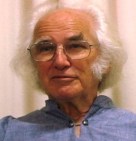

My first interest were grain legumes (beans, peas, etc.), and I completed my MSc dissertation studying the diversity and origin of the lentil, Lens culinaris whose origin, in 1970, was largely speculation.

Trevor Williams

Trevor Williams, the MSc Course tutor, supervised my dissertation. He left Birmingham around 1977 to become the head of the International Board for Plant Genetic Resources (IBPGR) in Rome, that in turn became the International Plant Genetic Resources Institute (IPGRI), and continues today as Bioversity International.

Joe Smartt

I guess that interest in legume species had been sparked by Joe Smartt at the University of Southampton, who taught me genetics and encouraged me in the first instance to apply for a place to study at Birmingham in 1970.

But the cold reality (after I’d completed my MSc in the autumn of 1971) was that continuing on to a PhD on lentils was never going to be funded. So, when offered the opportunity to work in South America, I turned my allegiance to potatoes and, having just turned 24, joined CIP as Associate Taxonomist.

From the outset, it was agreed that my PhD research project, studying the diversity and origin, and breeding relationships of a group of triploid (with three sets of chromosomes) potato varieties that were known scientifically as Solanum x chaucha, would be my main contribution to the center’s research program. But (and this was no hardship) I also had to take time each year to travel round Peru and collect local varieties of potatoes to add to CIP’s germplasm collection.

I explored the northern departments of Ancash and La Libertad (with my colleague Zósimo Huamán) in May 1973, and Cajamarca (on my own with a driver) a year later. Each trip lasted almost a month. I don’t recall how many new samples these trips added to CIP’s growing germplasm collection, just a couple of hundred at most.

Collecting in Ancash with Zosimo Huaman in May 1973.

Collecting potatoes from a farmer in Cajamarca, northern Peru in May 1974 (L); and getting ready to ride off to a nearby village, just north of Cuzco, in February 1974 (R).

In February 1974, I spent a couple of weeks in the south of Peru, in the department of Puno, studying the dynamics of potato cultivation on terraces in the village of Cuyo-Cuyo.

Potato terraces at Cuyo Cuyo in Puno, southern Peru.

I made just one short trip with Jack Hawkes (and another CIP colleague, Juan Landeo) to collect wild potatoes in central Peru (Depts. of Cerro de Pasco, Huánuco, and Lima). It was fascinating to watch ‘the master’ at work. After all, Jack had been collecting wild potatoes the length of the Americas since 1939, and instinctively knew where to find them. Knowing their ecological preferences, he could almost ‘smell out’ each species.

With Jack Hawkes, collecting Solanum multidissectum in the central Andes north of Lima, early 1975.

My research (and Zósimo’s) contributed to a better understanding of potato diversity in the germplasm collection, and the identification of duplicate clones. During the 1980s the size of the collection maintained as tubers was reduced, while seeds (often referred to as true potato seed, or TPS) was collected for most samples.

Potato varieties (representative ‘morphotypes’) of Solanum x chaucha that formed part of my PhD study. L-R, first row: Duraznillo, Huayro, Garhuash Shuito, Puca Shuito, Yana Shuito L-R, second row: Komar Ñahuichi, Pishpita, Surimana, Piña, Manzana, Morhuarma L-R, third row: Tarmeña, Ccusi, Yuracc Incalo L-R, fourth row: Collo, Rucunag, Hayaparara, Rodeñas

Roger Rowe

Dr Roger Rowe was my department head at CIP, and he became my ‘local’ PhD co-supervisor. A maize geneticist by training, Roger joined CIP in July 1973 as Head of the Department of Breeding & Genetics. Immediately prior to joining CIP, he led the USDA’s Inter-Regional Potato Introduction Project IR-1(now National Research Support Program-6, NRSP-6) at the Potato Introduction Station in Sturgeon Bay, Wisconsin.

Although CIP’s headquarters is at La Molina on the eastern outskirts of Lima, much of my work was carried out in Huancayo, a six hour drive winding up through the Andes, where CIP established its highland field station. This is where we annually grew the potato collection.

Aerial view of the potato germplasm collection at the San Lorenzo station of CIP, near Huancayo in the Mantaro Valley, central Peru, in the mid-1970s.

During the main growing season, from about mid-November to late April  (coinciding with the seasonal rainfall), I’d spend much of every week in Huancayo, making crosses and evaluating different varieties for morphological variation. This is where I learned not only all the practical aspects of conservation of a vegetatively-propagated crop, and many of the phytosanitary implications therein, but I also learned how to grow a crop of potatoes. Then back in Lima, I studied the variation in tuber proteins using a tool called polyacrylamide gel electrophoresis (that, I guess, is hardly used any more) by separating these proteins across a gel concentration gradient, as shown diagrammatically in the so-called electrophoregrams below. Compared to what we can achieve today using a range of molecular markers, this technique was really rather crude.

Jack Hawkes visited CIP two or three times while I was working in Lima, and we would walk around the germplasm collection in Huancayo, discussing different aspects of my research, the potato varieties I was studying, and the results of the various crossing experiments.

With Jack Hawkes in the germplasm collection in Huancayo in January 1975 (L); and (R), discussing aspects of my research with Carlos Ochoa in a screenhouse at CIP in La Molina (in mid-1973).

I was also fortunate (although I realized it less at the time) to have another potato expert to hand: Professor Carlos Ochoa, who joined CIP (from the National Agrarian University across the road from CIP) as Head of Taxonomy.

Well, three years passed all too quickly, and by the end of May 1975, Steph and I were back in Birmingham for a few months while I wrote up and defended my dissertation. This was all done and dusted by the end of October that year, and the PhD was conferred at a congregation held at the university in December.

With Jack Hawkes (L) and Trevor Williams (R) after the degree congregation on 12 December 1975 at the University of Birmingham.

With that, the first chapter in my genetic resources career came to a close. But there was much more in store . . .


I remained with CIP for the next five years, but not in Lima. Richard Sawyer asked me to join the center’s Regional Research Program (formerly Outreach Program), initially as a post-doctoral fellow, the first to be based outside headquarters. Thus, in April 1976 (only 27 years old) I was posted to Turrialba, Costa Rica (based at a regional research center, CATIE) to set up a research project aimed at adapting potatoes to warm, humid conditions of the tropics. A year later I was asked to lead the regional program that covered Mexico, Central America, and the Caribbean.

CATIE had its own germplasm collections, and just after I arrived there, a German-funded project, headed by Costarrican scientist Dr Jorge León, was initiated to strengthen the ongoing work on cacao, coffee, and pejibaye or peach palm, and other species. Among the young scientists assigned to that project was Jan Engels, who later moved to Bioversity International in Rome (formerly IBPGR, then IPGRI), with whom I have remained in contact all these years and published together. So although I was not directly involved in genetic conservation at this time, I still had the opportunity to observe, discuss and learn about crops that had been beyond my immediate experience.

It wasn’t long before my own work took a dramatically different turn. In July 1977, in the process of evaluating around 100 potato varieties and clones (from a collection maintained in Toluca, Mexico) for heat adaptation (no potatoes had ever been grown in Turrialba before), my potato plots were affected by an insidious disease called bacterial wilt (caused by the pathogen Ralstonia solanacearum).

(L) Potato plants showing typical symptoms of bacterial wilt. (R) An infected tuber exuding the bacterium in its vascular system.

Turrialba soon became a ‘hot spot’ for evaluating potato germplasm for resistance against bacterial disease, and this and some agronomic aspects of bacterial wilt control became the focus of much of my research over the next four years. I earlier wrote about this work in more detail.

This bacterial wilt work gave me a good grounding in how to carefully evaluate germplasm, and we went on to look at resistance to late blight disease (caused by the fungus Phytophthora infestans – the pathogen that caused the Irish Potato Famine of the 1840s, and which continues to be a scourge of potato production worldwide), and the viruses PVX, PVY, and PLRV.

One of the most satisfying aspects of my work at this time was the development and testing of rapid multiplication techniques, so important to bulk up healthy seed of this crop.

My good friend and seed production specialist colleague Jim Bryan spent a year with me in Costa Rica on this project.

Throughout this period I was, of course, working more on the production side, learning about the issues that farmers, especially small farmers, face on a daily basis. It gave me an appreciation of how the effective use of genetic resources can raise the welfare of farmers and their families through the release of higher productivity varieties, among others.

I suppose one activity that particularly helped me to hone my management skills was the setting up of PRECODEPA in 1978, a regional cooperative potato project involving six countries, from Mexico to Panama and the Dominican Republic. Funded by the Swiss, I had to coordinate and support research and production activities in a range of national agricultural research institutes. It was, I believe, the first consortium set up in the CGIAR, and became a model for other centers to follow.

I should add that PRECODEPA went from strength to strength. It continued for at least 25 years, funded throughout by the Swiss, and expanding to include other countries in Central America and the Caribbean.

However, by the end of 1980 I felt that I had personally achieved in Costa Rica and the region as much as I had hoped for and could be expected; it was time for someone else to take the reins. In any case, I was looking for a new challenge, and moved back to Lima (38 years ago today) to discuss options with CIP management.

It seemed I would be headed for pastures new, the southern cone of South America perhaps, even the Far East in the Philippines. But fate stepped in, and at the end of March 1981, Steph, daughter Hannah (almost three) and I were on our way back to the UK. To Birmingham in fact, where I had accepted a Lectureship in the Department of Plant Biology.


The subsequent decade at Birmingham opened up a whole new set of genetic resources opportunities . . .


Three score and ten . . .

18 November 1948. Today is my 70th birthday. Septuagenarian. The Biblical three score and ten (Psalm 90:10)!

Steph and I have come away for the weekend to celebrate my birthday with The Beatles in Liverpool.

We are staying for a couple of nights at Jurys Inn close to the Albert Dock. Later this morning we’ve booked to visit the National Trust-owned Beatles’ Childhood Homes (of John Lennon and Paul McCartney). And after lunch, we will tour The Beatles Story where I’m hoping to see, displayed there, something special from my childhood.

How the years have flown by. Just a month ago, Steph and I celebrated our 45th wedding anniversary. And I find it hard to believe that I started university over 50 years ago.

That got me thinking. I’ve written quite a lot in this blog about the years after I graduated, my time working overseas, about travel, and what Steph and I have been up to since retiring in 2010.

However, I written much less about my early years growing up in Cheshire and Staffordshire. This is then an appropriate moment to fill some gaps.

A son of Cheshire
I was born in Knowlton House nursing home in Congleton, Cheshire (map), third son and fourth and youngest child of Frederick Harry Jackson (aged 40), a photo process engraver, and Lilian May Jackson, also aged 40, housewife.

Mum and Dad, around 1959/60 after we had moved to Leek

My eldest brother Martin has been able to trace our family’s ancestry (mainly on my father’s side) back to someone named Bull, who was my 13th great-grandfather, born around 1480 on the Staffordshire/ Derbyshire border, just one of my 32,000 plus direct ancestors then. I must be related to royalty in one way or another (as are most of us), although looking at the occupations noted for many of them in various official documents (birth and marriage certificates, census data), we came a long way down the pecking order. Definitely below the salt! We’re Irish on my mother’s side of the family.

A punk before it was fashionable!

I am also a child of the National Health Service (NHS) that was founded in July 1948. In fact, I’m (approximately) the 190,063rd baby born under the NHS!

Knowlton House on Parson Street in Congleton – it’s no longer a nursing home.

I wonder who assisted at my birth? It could well have been our family Dr Galbraith, or Nurses Frost and Botting.

Dr Galbraith (R) was our family doctor, who (with his partner Dr Ritchie) often attended births at Knowlton House, and is seen here with resident midwife Nurse Rose Hannah Frost, who assisted at more than 3000 births. There is a very good chance either Nurse Frost or Nurse May Botting (who ran the nursing home) assisted at my birth. In this photo from 1936, Dr Galbraith and Nurse Frost are holding the Nixon triplets. Photo courtesy of Alan Nixon, who was apparently named after Dr Galbraith.

My dad registered my birth¹ on 22 November (Entry No. 442). There are few ‘Michaels’ in the family; Thomas is my paternal grandfather’s name.

My eldest brother Martin was born in September 1939, just a couple of days before war was declared on Germany. My sister Margaret was born in January 1941. Martin and Margaret spent much of WWII with my paternal grandparents in rural Derbyshire. My elder brother Edgar (‘Ed’) is, like me, one of the baby boomer generation, born in July 1946.

The difference of around 55 years – 1951/52 and 2006

I’ve often wondered what sacrifices Mum and Dad had to make to give us all such a good start in life.

Growing up in Congleton, we lived at 13 Moody Street, close to the town center’s High Street.

There’s not much to tell about my first couple of years, other than what I can surmise from a few photographs taken around that time when I was still in my pram or just beginning to walk. Two things I do remember clearly, though. The hens my father used to keep, and even the large henhouse he constructed at the bottom of the garden. And our female cat, Mitten, and all her kittens. That must have been the start of becoming an ailurophile (cat lover).

My best friend was Alan Brennan, a year younger, who lived a little further up Moody Street at No. 23 (and with whom I reconnected through this blog, after a gap of around 60 years!).

With Alan and his parents (and friends) at Timbersbrook, in 1955. I clearly remember Mr Brennan’s Vauxhall car – a Wyvern I believe.

We didn’t go to the same primary school. Like my brothers and sister before me, I was enrolled (in September 1952 or April 1953, maybe as late as September 1953) at the small Church of England school on Leek Road in Mossley, south of the town. By then, Martin had moved on to grammar school in Macclesfield; Margaret had also transferred to secondary school in Congleton.

Each morning, Ed and I would catch the bus in the High Street together for the short, 1½ mile ride to Mossley. And even as young as five, I would sometimes walk home alone from school during the summer months, along Leek Road and Canal Road/Street. How times change!

I remember the headteacher, Mr Morris, as a kind person. My class teachers were Mrs Bickerton (on the left) and Mrs Johnson (on the right). Courtesy of Liz Campion.

There was a real community of children around Moody Street, Howie Lane/Hill, and Priesty Fields. In summer, we’d all wander up to play on the swing bridge over the Macclesfield Canal (beyond the cemetery – where we would also play in a WWII air raid shelter). The bridge has long been replaced, but from comments on a Congleton Facebook group I belong to, it seems that over the generations, many children enjoyed the swing bridge as much as we did.

In winter, we had fun in the snow at Priesty Fields just round the corner from Moody St. And, as you can see below, we enjoyed dressing up. Happy days!

In the upper image, taken on Coronation Day in 1953, I’m fifth from the right (carrying the stick). Alan Brennan is the little by to the left of the ‘clown’, and in front of the ‘pirate’, my elder brother Ed. The lower image was taken on May Day, probably 1953 or 54. I’m on the left, carrying the sword, uncertain whether to be a knight or a cowboy.

c. 1955. L-R: Veronica George, Carol Brennan, Jessica George, my elder brother Ed, me, Margaret Moulton, and Alan Brennan. Taken in the garden of No 13 Moody St. The George sisters lived at No. 21 Moody St.

I often joined my father when he went out on photographic assignments for the Congleton Chronicle (where he was Chief Photographer), often to Biddulph Grange when it was an orthopedic hospital, also to Astbury, and out into the beautiful Cheshire countryside.

I remember one outing in particular, to Little Moreton Hall in May 1954. This is my father’s photo of Manley Morris Men dancing there, an image that stuck in my mind for many years. So much so that when I went to university in the later 1960s, I helped form a morris dancing side, the Red Stags, that’s still going strong (albeit in a slightly different form) 50 years later.

The Manley Morris Men at Little Moreton Hall on 8 May 1954.

For family holidays I remember those in North Wales, at a caravan park or, on one occasion, a camping coach, a converted railway carriage alongside the mainline to Holyhead next to the beach at Abergele.

During these early years, until July 1954, rationing was still in place that had come into effect at the start of the Second World War. I often wonder how my parents managed to raise four children during these difficult years. One thing I do recall, however, is how we shared things, particularly confectionery. No individual treats. My father would buy a Mars bar (I’m sure they were bigger then) and cut it into six pieces. Funny how these things stick in one’s memory.


The move to Leek
April 1956. A big change in my life. My family upped sticks and moved 12 miles southeast to the market town of Leek in north Staffordshire, where my father took over a retail photography business. As I was only 7½ when we moved, I’ve come to regard Leek as my home town. My parents lived there for the rest of their lives. My father passed away in 1980, and after my mother had a stroke in 1990, only then did she move away from Leek to spend her last couple of years in a care home near my sister in South Wales.

We lived at No. 65, St Edward Street, and within a couple of days of arriving there, I’d made friends with three boys who lived close by: Philip Porter (next door), Geoff Sharratt – whose father was publican at The Quiet Woman pub a few doors away, and David Phillips who lived over the road. Geoff’s younger sister Susan sometimes joined in our games, as did Philip’s sister Jill. We were the ‘St Edward Street Gang’.

Here we are in the late 1950s (probably 1958), in the yard of The Quiet Woman pub. L-R: Sue, Geoff, me, Philip, and Dave. And again in 2018.

Geoff was my best friend, and we spent a lot of time playing together. There were several upstairs rooms at The Quiet Woman, one of which was the Lodge of the Royal Antediluvian Order of Buffaloes (RAOB, the Buffs, a fraternal organization somewhat similar to the Freemasons). During inclement weather, we often took refuge in the Lodge, playing among the benches and high chairs.

Playing with my Hornby ‘O’ gauge clockwork train at ‘Congleton’ station – it would be a collectors’ item today. Taken around 1958.

I was also a cub scout, as was Ed.

Around 1960, the lease on No. 65 came due, so my father decided to to find a better location for his business. First, he moved across St Edward’s St to No. 56 (while we lived in a flat at the top of the Market Place). In 1962/63 my father acquired No. 19 Market Place as premises for his photographic business, with living accommodation above. This was just what he had been looking for, centrally located in the town, lots of footfall. But the whole property had to be refurbished; there was only one water tap – in the cellar. He did much of the refurbishment himself. I’ve never ceased to be amazed at his DIY talents, something I sadly have not inherited to the same degree. My parents remained at No. 19 until they retired in 1976.

Sandwiched between Jackson the Optician (no relation) on the left, and Victoria Wine on the right, No 19 Market Place was my parents home for 14 years.

Around the same time, Geoff’s parents left The Quiet Woman and moved elsewhere in the town. I was also traveling every day to school to Trent Vale on the south side of Stoke-on-Trent (a round trip of about 28 miles), while Geoff continued his education in Leek. As a consequence, we drifted apart, but through my blog we reconnected in 2012.

Mr Smith

My mother’s family were Irish Catholics, and although we had not been brought up in the faith while in Congleton, both Ed and myself were enrolled in St. Mary’s RC primary school on Cruso Street, a short walk away from home. We were taught by Sisters of Loreto nuns. Headmistress Mother Elizabeth or my class teacher, Mother Bernadine, were never averse to wrapping us across the knuckles with the sharp edge of a ruler. In my final year at St Mary’s (1959-60), we were taught by Mr Smith. But my recollections don’t tally so much with many others who also attended St Mary’s. And I have been horrified at some accounts of how unhappy they were at the school in the 1950s and 60s.

In the late 50s and early 60s, just Ed and I would join our parents for holidays in Wales, most often camping or in our own caravan.

Some of my happiest memories though come from our visits to my grandparents² (my father’s parents) in Hollington, a small Derbyshire village between Ashbourne and Derby. My grandfather was almost 76 when I was born; Grandma was 68.

Family picnic at Hollington, c. 1952, with cousins. Grandma in the center, my mum is on the left. I’m center front ‘guarding’ the bottle.

With Grandad and Grandma Jackson, and our cousin Diana, c. 1959 at Ebenezer Cottage.

Grandma and Grandad celebrated their Golden Wedding in 1954, the occasion of a large gathering of family and friends in Hollington.


Enduring high school
I passed my 11 Plus exam to attend a Roman Catholic grammar school, St Joseph’s College, at Trent Vale on the south side of Stoke-on-Trent. Founded by Irish Christian Brothers in 1932, the school took boys only (but is now co-educational). I had to be on the bus by 07:50 each morning if I was to get to school by 09:00. This was my daily routine for the next seven years.

On reflection, I can’t say that I found the school experience satisfying or that the quality of the education I received was worth writing home about. Yes, there were some good teachers who I looked up to, but much of the teaching was pretty mediocre. I’ve written elsewhere about the gratuitous use of corporal punishment at the school.

Perhaps one of the school’s claims to fame was the priest who attended to our ‘spiritual needs’. He was Father John Tolkien, son JRR Tolkien, the author of Lord of the Rings and The Hobbit. My first impressions of Fr Tolkien were not favorable. He came across as cold and authoritarian. When I got to know him later on, however, I found he was a warm person with a good sense of humor. I was saddened to learn that his last years were blighted by accusations of abuse, later dropped.


On to university . . . and faraway places
I was lucky to secure a place in October 1967 at the University of Southampton to study botany and geography, beginning three of the happiest years of my life. I’ve already blogged about various aspects of my time at Southampton, and you can read them here. Little did I think that I would have a career in botany, and that would lead me to fulfill one of my ambitions: to visit Peru.

Even though I graduated in 1970 with only an average BSc degree, that didn’t hold me back. I had ambitions.

I was fortunate to be accepted into graduate school at the University of Birmingham, where I completed MSc and PhD degrees in plant genetic resources, and returned there in 1981 for a decade as Lecturer in Plant Biology.

After my PhD graduation at The University of Birmingham on 12 December 1975 with my PhD supervisor, Prof. Jack Hawkes (L) and Prof. Trevor Williams (R) who supervised my MSc dissertation.

My international career in plant genetic resources conservation and agriculture took me to Peru and Costa Rica from 1973-1981, to work on potatoes for the International Potato Center (CIP). And then in July 1991, I moved to the Philippines to join the International Rice Research Institute (IRRI) for the next 19 years as head of the genebank then as Director for Program Planning and Communications.

I had good opportunities to publish my research over the years, in terms of journal articles, books and book chapters, and presentations at scientific conferences.

I retired in April 2010, at the age of 61. But I haven’t rested on my laurels. Scientifically I have:

In the 2012 I was honored to be made an Officer of the Most Excellent Order of the British Empire, or OBE, for services to international food science (in the New Year’s Honours).

I set up this blog in February 2012, and have written more than 460 stories for a total of around 470,000 words since then, and posted thousands of images, most of which I have taken myself.


Family
Steph and I were married on 13 October 1973 in Lima, Peru. We’d met at Birmingham during 1971-72, and after I’d moved to Lima in January 1973, she joined me there in July and also worked at CIP.

At La Granja Azul restaurant near Lima (on the left) after our wedding in 1973. And on the right, exactly 45 years later during one of our walks at Croome Court in Worcestershire.

Hannah, our elder daughter was born in Costa Rica in April 1978. Philippa was born in Bromsgrove in May 1982, a year after we had moved back to the UK (in March 1981). When we moved to the Philippines in 1991, they both attended the International School Manila, and then went on to university in the USA (Macalester College in Minnesota) and Durham in the UK, respectively. In 2006 and 2010, they completed their PhD degrees in psychology, respectively at the University of Minnesota and Northumbria University.

PhD graduands! On the left, Hannah is with her classmates in Industrial-Organizational Psychology at the University of Minnesota, Emily and Mike, on 12 May 2006. Philippa (on the right) is with one of her PhD supervisors, Prof. David Kennedy of the Brain, Performance and Nutrition Research Centre in the Dept. of Psychology at Northumbria University on 7 December 2010.

In those same years Hannah married Michael, and Phil married Andi. We now have four wonderful grandchildren: Callum (8), Elvis (7), Zoë (6), and Felix (5). The family came together for the first time in a New Forest holiday in July 2016.

On holiday in the New Forest in July 2016. L-R (sitting): Callum, Hannah, Zoë, me, Steph, Elvis, Felix, and Philippa. Standing: Michael and Andi

The 2018-19 school year started for Callum and Zoë in August, and for Elvis and Felix in September. It was also Felix’s first day at school.

In September, Steph and I spent a week in Cornwall exploring many National Trust and English Heritage properties around the county.

Foldes and Fenner family photos in July and September


So, as I look back on the past 70 years, I can’t say I have much to complain about. Steph and I have a beautiful family. An interesting career took me to more than 65 countries (and Steph to some of those). We’ve lived and worked in three countries and made some wonderful friends.

Je ne regrette rien

At 70, though, what does life have in store?

I think Fleetwood Mac (one of my favorite bands) sum it up quite nicely. If it was fine for Bill Clinton, it’s good enough for me.

Retirement is sweet. Who could ask for more?


¹ I no longer have my original birth certificate. That now sits in an archive somewhere in the Miraflores Municipality building in Lima, Peru. When Steph and I married there in October 1973 we had to present our original birth certificates, not realizing these would be filed away in perpetuity and never returned to us.

² I did not really know my mother’s parents, who died before my sixth birthday. They lived in Epsom, Surrey.