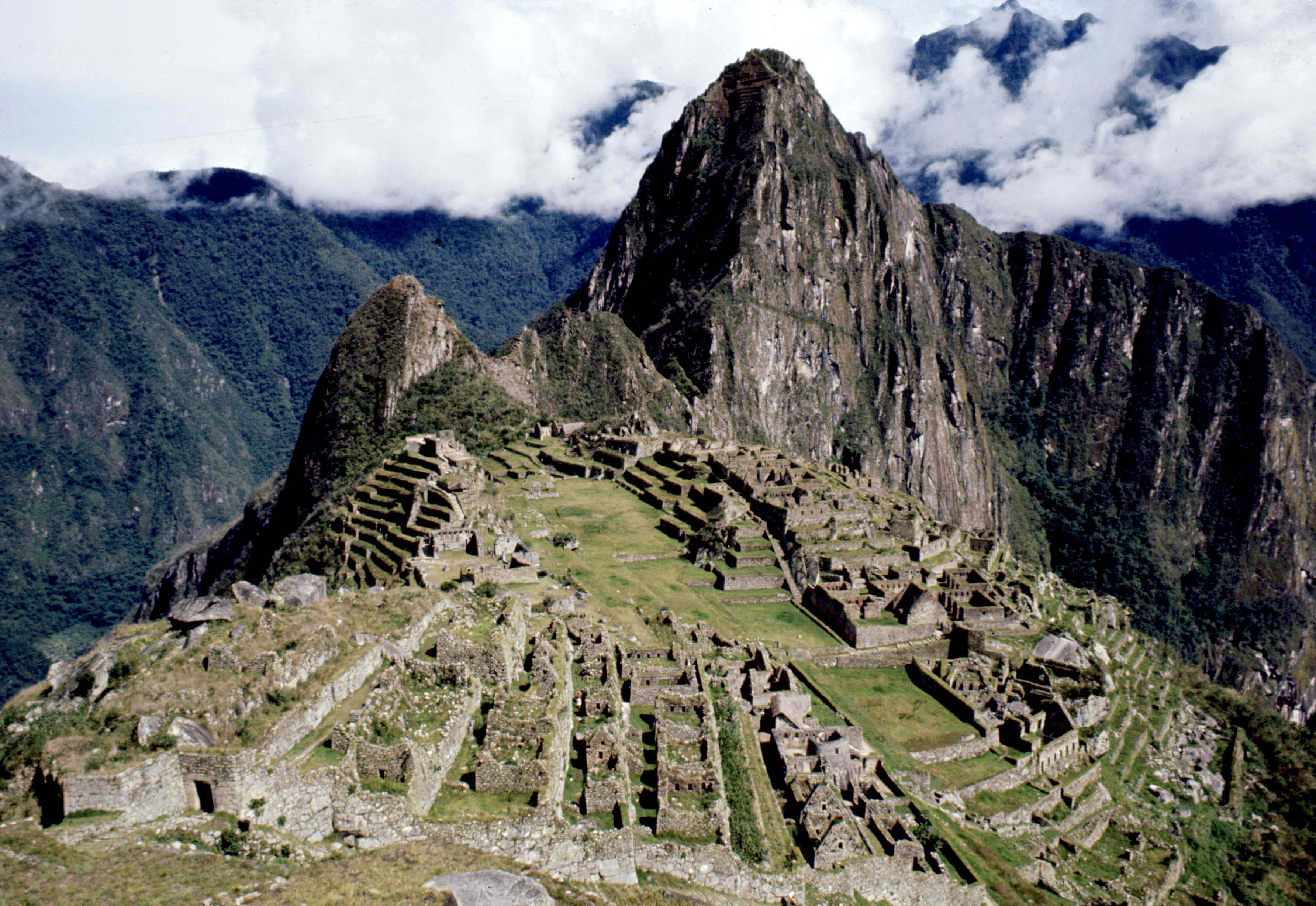
Outside the EU . . . even before Brexit

Imagine a little corner of Birmingham, just a couple of miles southwest of the city center. Edgbaston, B15 to be precise. The campus of The University of Birmingham; actually Winterbourne Gardens that were for many decades managed as the botanic garden of the Department of Botany / Plant Biology.

As a graduate student there in the early 1970s I was assigned laboratory space at Winterbourne, and grew experimental plants in the greenhouses and field. Then for a decade from 1981, I taught in the same department, and for a short while had an office at Winterbourne. And for several years continued to teach graduate students there about the conservation and use of plant genetic resources, the very reason why I had ended up in Birmingham originally in September 1970.

Potatoes at Birmingham
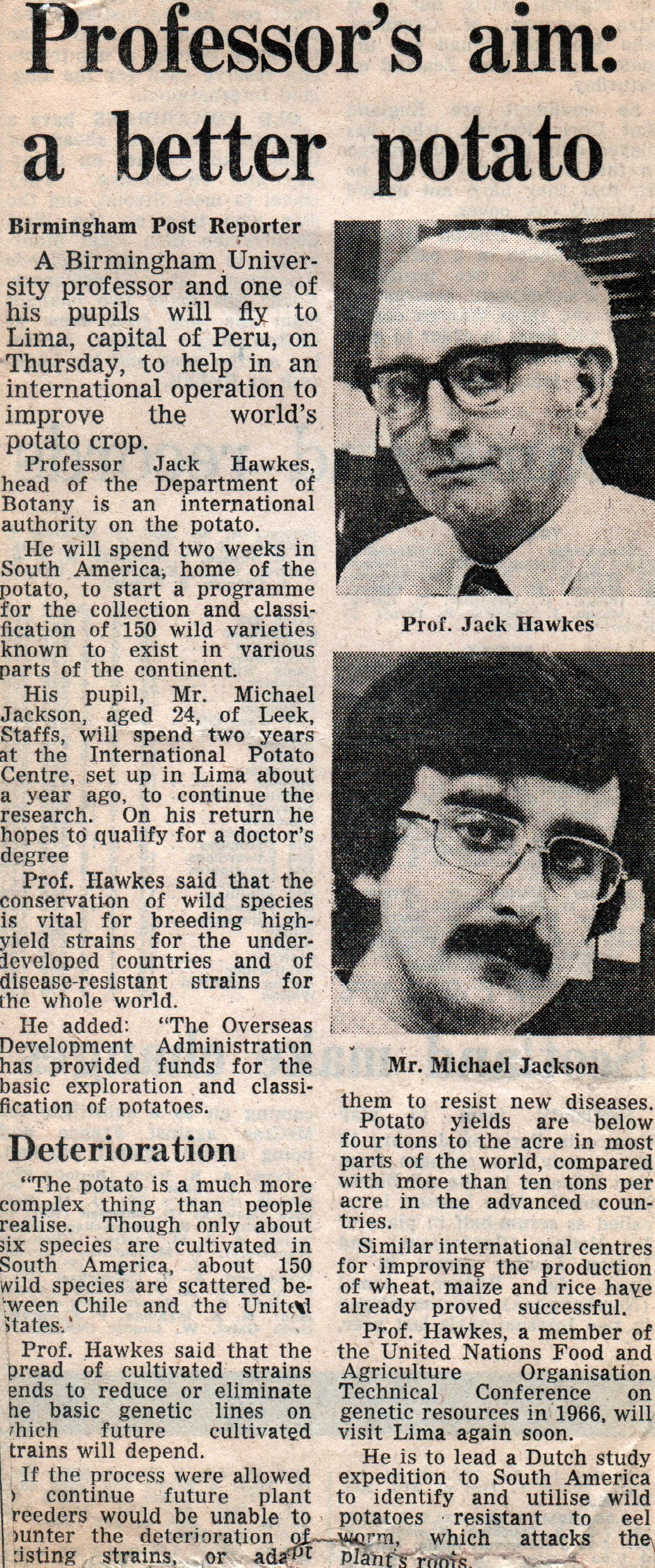
It was at Birmingham that I first became involved with potatoes, a crop I researched for the next 20 years, completing my PhD (as did many others) under the supervision of Professor Jack Hawkes, a world-renowned expert on the genetic resources and taxonomy of the various cultivated potatoes and related wild species from the Americas. Jack began his potato career in 1939, joining Empire Potato Collecting Expedition to South America, led by Edward Balls. Jack recounted his memories of that expedition in Hunting the Wild Potato in the South American Andes, published in 2003.

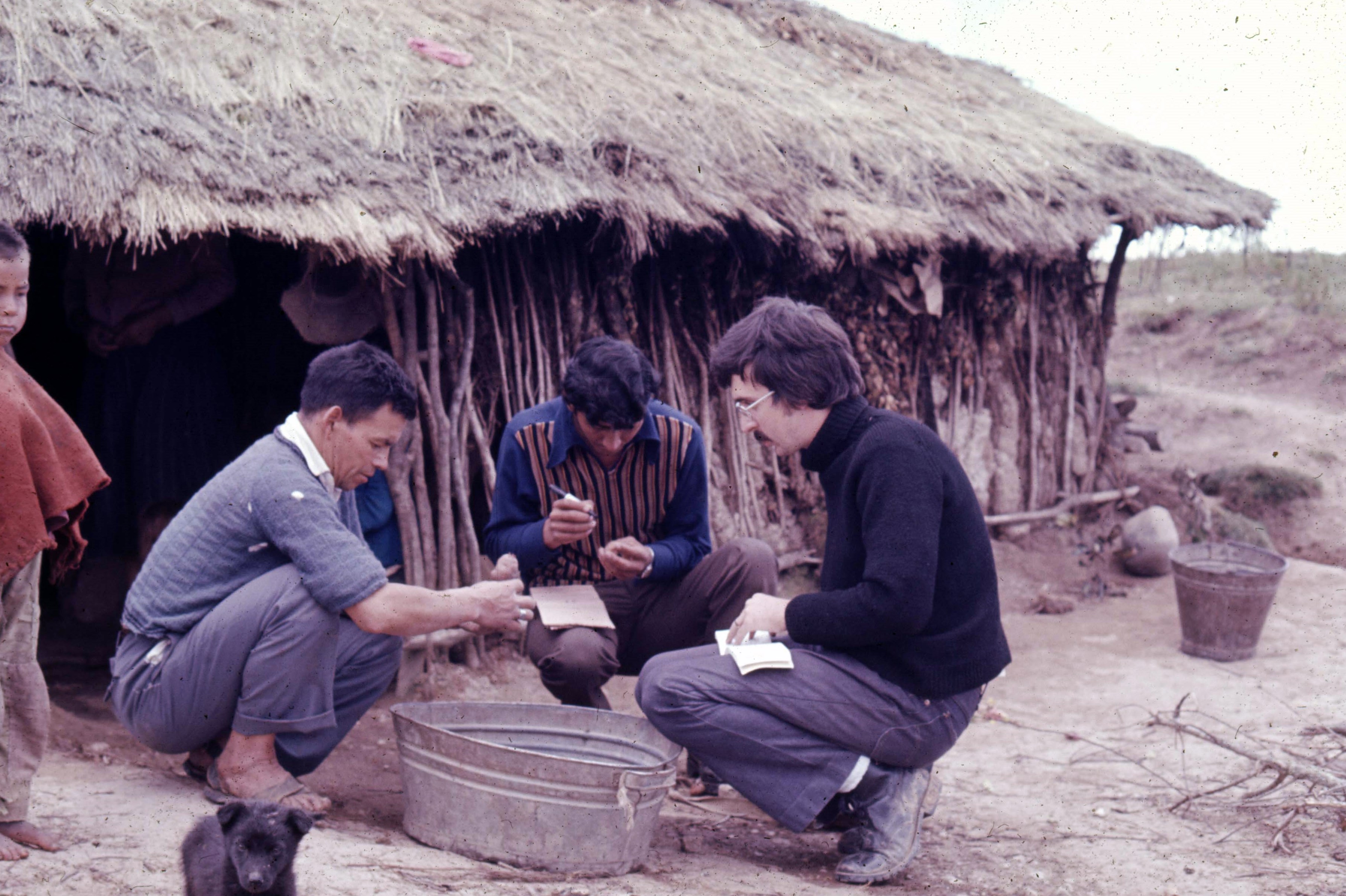
29 March 1939: Bolivia, dept. La Paz, near Lake Titicaca, Tiahuanaco. L to R: boy, Edward Balls, Jack Hawkes, driver.

The origins of the Commonwealth Potato Collection
Returning to Cambridge, just as the Second World War broke out, Jack completed his PhD under the renowned potato breeder Sir Redcliffe Salaman, who had established the Potato Virus Research Institute, where the Empire Potato Collection was set up, and after its transfer to the John Innes Centre in Hertfordshire, it became the Commonwealth Potato Collection (CPC) under the management of institute director Kenneth S Dodds (who published several keys papers on the genetics of potatoes).

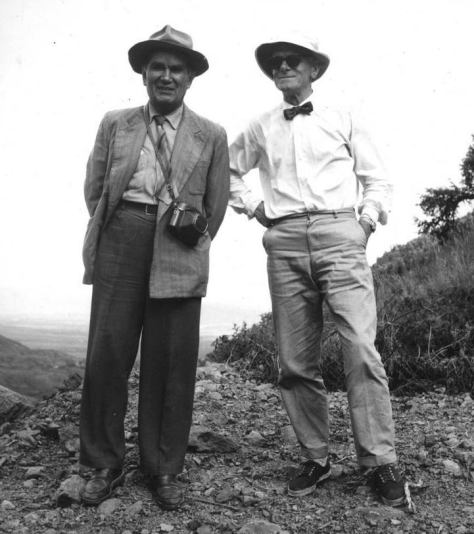
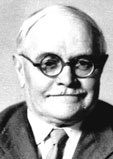
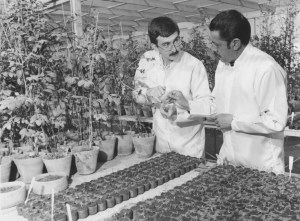
Bolivian botanist Prof Martin Cardenas (left) and Kenneth Dodds (right). Jack Hawkes named the diploid potato Solanum cardenasii after his good friend Martin Cardenas. It is now regarded simply as a form of the cultivated species S. phureja.

Hawkes’ taxonomic studies led to revisions of the tuber-bearing Solanums, first in 1963 and in a later book published in 1990 almost a decade after he had retired. You can see my battered copy of the 1963 publication below.

Dalton Glendinning

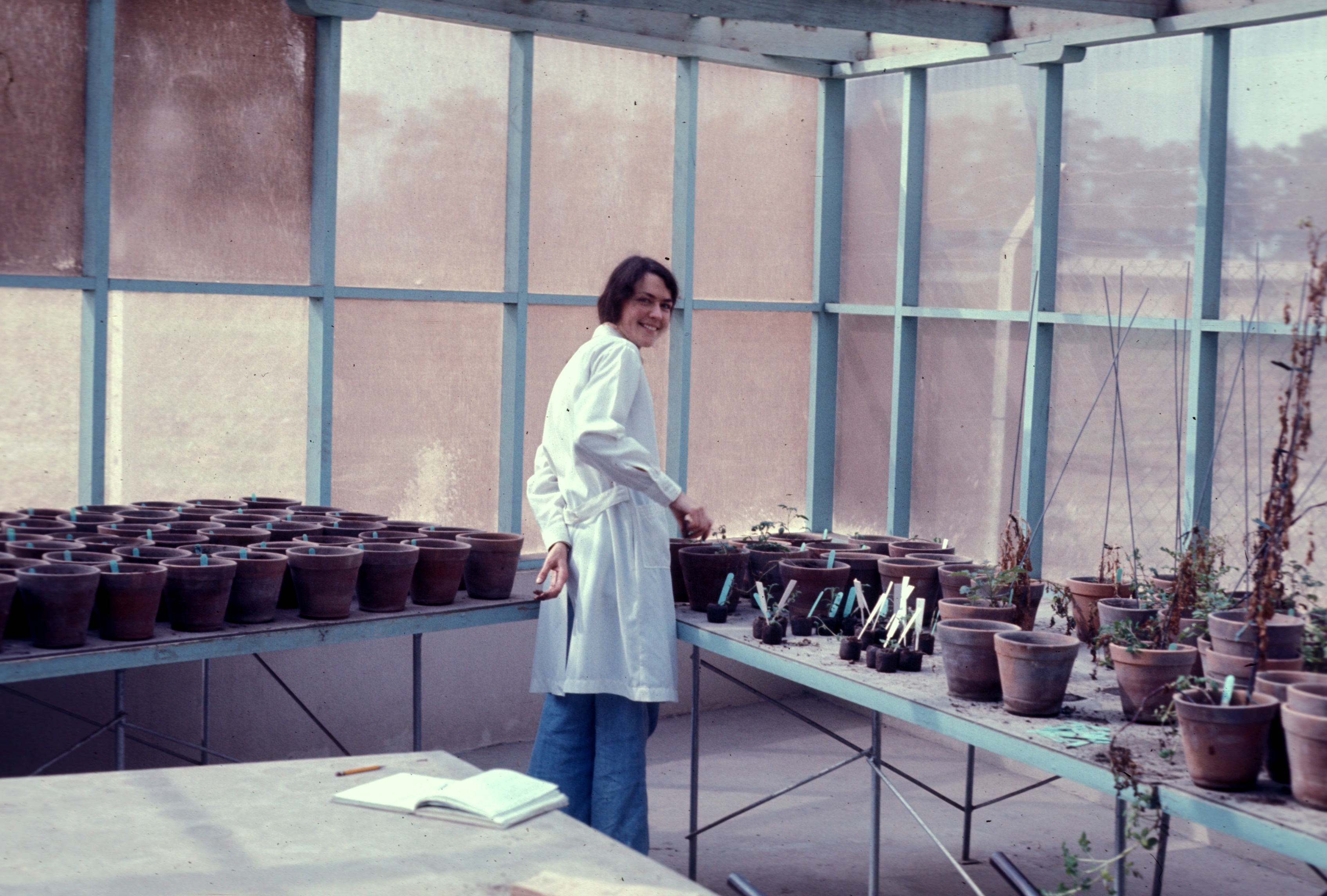
The CPC was transferred to the Scottish Plant Breeding Station (SPBS) at Pentlandfield just south of Edinburgh in the 1960s under the direction of Professor Norman Simmonds (who examined my MSc thesis). In the early 1970s the CPC was managed by Dalton Glendinning, and between November 1972 and July 1973 my wife Steph was a research assistant with the CPC at Pentlandfield. When the SPBS merged with the Scottish Horticultural Research Institute in 1981 to form the Scottish Crops Research Institute (SCRI) the CPC moved to Invergowrie, just west of Dundee on Tayside. The CPC is still held at Invergowrie, but now under the auspices of the James Hutton Institute following the merger in 2011 of SCRI with Aberdeen’s Macaulay Land Use Research Institute.

Today, the CPC is one of the most important and active genetic resources collections in the UK. In importance, it stands alongside the United States Potato Genebank at Sturgeon Bay in Wisconsin, and the International Potato Center (CIP) in Peru, where I worked for more than eight years from January 1973.

Hawkes continued in retirement to visit the CPC (and Sturgeon Bay) to lend his expertise for the identification of wild potato species. His 1990 revision is the taxonomy still used at the CPC.

So what has this got to do with the EU?
For more than a decade after the UK joined the EU (EEC as it was then in 1973) until that late 1980s, that corner of Birmingham was effectively outside the EU with regard to some plant quarantine regulations. In order to continue studying potatoes from living plants, Jack Hawkes was given permission by the Ministry of Agriculture, Fisheries and Food (MAFF, now DEFRA) to import potatoes—as botanical or true seeds (TPS)—from South America, without them passing through a centralised quarantine facility in the UK. However, the plants had to be raised in a specially-designated greenhouse, with limited personnel access, and subject to unannounced inspections. In granting permission to grow these potatoes in Birmingham, in the heart of a major industrial conurbation, MAFF officials deemed the risk very slight indeed that any nasty diseases (mainly viruses) that potato seeds might harbour would escape into the environment, and contaminate commercial potato fields.

Jack retired in 1982, and I took up the potato research baton, so to speak, having been appointed lecturer in the Department of Plant Biology at Birmingham after leaving CIP in April 1981. One of my research projects, funded quite handsomely—by 1980s standards—by the Overseas Development Administration (now the Department for International Development, DFID) in 1984, investigated the potential of growing potatoes from TPS developed through single seed descent in diploid potatoes (that have 24 chromosomes compared with the 48 of the commercial varieties we buy in the supermarket). To cut a long story short, we were not able to establish this project at Winterbourne, even though there was space. That was because of the quarantine restrictions related to the wild species collections were held and were growing on a regular basis. So we reached an agreement with the Plant Breeding Institute (PBI) at Trumpington, Cambridge to set up the project there, building a very fine glasshouse for our work.

Then Margaret Thatcher’s government intervened! In 1987, the PBI was sold to Unilever plc, although the basic research on cytogenetics, molecular genetics, and plant pathology were not privatised, but transferred to the John Innes Centre in Norwich. Consequently our TPS project had to vacate the Cambridge site. But to where could it go, as ODA had agreed a second three-year phase? The only solution was to bring it back to Birmingham, but that meant divesting ourselves of the Hawkes collection. And that is what we did. However, we didn’t just put the seed packets in the incinerator. I contacted the folks at the CPC and asked them if they would accept the Hawkes collection. Which is exactly what happened, and this valuable germplasm found a worthy home in Scotland.

In any case, I had not been able to secure any research funds to work with the Hawkes collection, although I did supervise some MSc dissertations looking at resistance to potato cyst nematode in Bolivian wild species. And Jack and I published an important paper together on the taxonomy and evolution of potatoes based on our biosystematics research.

A dynamic germplasm collection
It really is gratifying to see a collection like the CPC being actively worked on by geneticists and breeders. Especially as I do have sort of a connection with the collection. It currently comprises about 1500 accessions of 80 wild and cultivated species.

Sources of resistance to potato cyst nematode in wild potatoes, particularly Solanum vernei from Argentina, have been transferred into commercial varieties and made a major impact in potato agriculture in this country.

Safeguarded at Svalbard
Just a couple of weeks ago, seed samples of the CPC were sent to the Svalbard Global Seed Vault (SGSV) for long-term conservation. CPC manager Gaynor McKenzie (in red) and CPC staff Jane Robertson made the long trek north to carry the precious potato seeds to the vault.

Potato reproduces vegetatively through tubers, but also sexually and produces berries like small tomatoes – although they always remain green and are very bitter, non-edible.

We rarely see berries after flowering on potatoes in this country. But they are commonly formed on wild potatoes and the varieties cultivated by farmers throughout the Andes. Just to give an indication of just how prolific they are let me recount a small piece of research that one of my former colleagues carried out at CIP in the 1970s. Noting that many cultivated varieties produced an abundance of berries, he was interested to know if tuber yields could be increased if flowers were removed from potato plants before they formed berries. Using the Peruvian variety Renacimiento (which means rebirth) he showed that yields did indeed increase in plots where the flowers were removed. In contrast, potatoes that developed berries produced the equivalent of 20 tons of berries per hectare! Some fertility. And we can take advantage of that fertility to breed new varieties by transferring genes between different strains, but also storing them at low temperature for long-term conservation in genebanks like Svalbard. It’s not possible to store tubers at low temperature.

Here are a few more photos from the deposit of the CPC in the SGSV.

I am grateful to the James Hutton Institute for permission to use these photos in my blog, and many of the other potato photographs displayed in this post.

If it’s Wednesday, it must be Colombia . . .

Not quite the ‘Road to Rio . . .’
I have just returned from one of the most hectic work trips I have taken in a very long time. I had meetings in three countries: Peru, Colombia, and Mexico in just over 6½ days.

And then, of course, there were four days of travel, from Birmingham to Lima (via Amsterdam), Lima to Cali (Colombia), then on to Mexico City, and back home (again via Amsterdam). That’s some going. Fortunately the two long-haul flights (BHX-AMS-LIM and MEX-AMS-BHX) were in business class on KLM. Even so the journeys from Lima to Cali (direct, on Avianca) and Cali to Mexico (via Panama City, on COPA) were 12 hours and 11 hours door-to-door, respectively, the former taking so long because we were delayed by more than 5 hours.

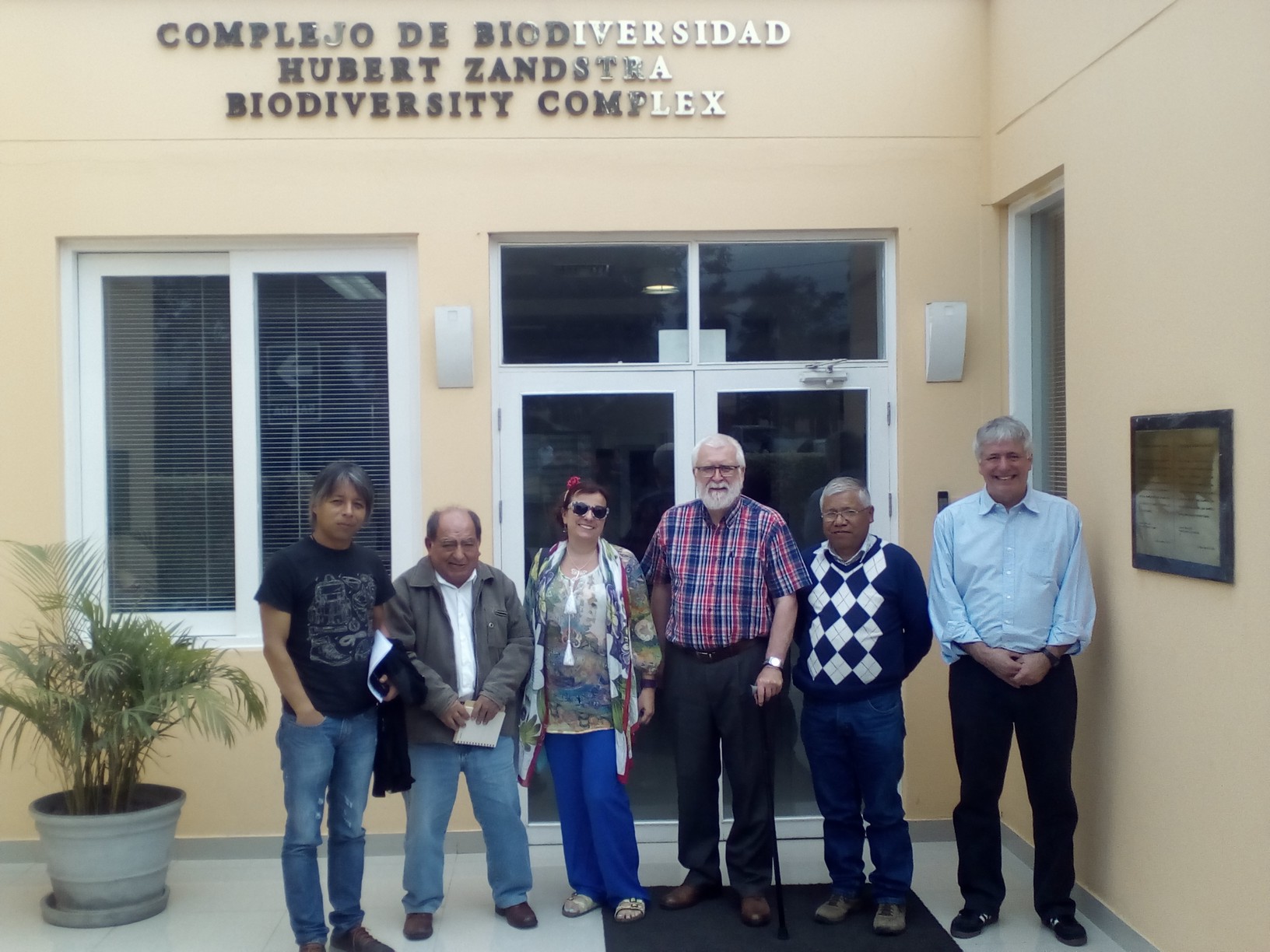
As I have mentioned in an earlier blog post, I am leading the evaluation of the program to oversee the genebank collections in eleven of the CGIAR centers (known as the Genebanks CRP). Together with my team colleague, Marisé Borja, we met with the genebank managers at the International Potato Center (CIP, in Lima), the International Center for Tropical Agriculture (CIAT, in Cali), and the International Maize and Wheat Improvement Center (CIMMYT, in Texcoco near Mexico City).

20160724 018

A drop of cognac.

It all started on Sunday 24 July, when I headed off to Birmingham Airport at 04:30 for a 6 o’clock flight to Amsterdam. Not really having slept well the night before, I can’t say I was in the best shape for flying half way round the world. I had a four hour stopover in Amsterdam, and managed to make myself more or less comfortable in the KLM lounge before boarding my Boeing 777-300 Lima flight sometime after noon. There’s not a lot to do on a long flight across the Atlantic except eat, drink and (try to) sleep. I mainly did the first two.

It never ceases to impress me just how vast South America is. Once we crossed the coast of Venezuela and headed south over the east of Colombia and northern Peru we must have flown for about three hours over rain forest as far as you could see. I wish I’d taken a few pictures of the interesting topography of abandoned river beds and oxbow lakes showing through all that dense vegetation. At one point we flew over a huge river, and there, on its banks, was a city, with an airport to the west. I checked later on Google Maps, and I reckon it must have been Iquitos in northern Peru on the banks of the Amazon. Over 2000 miles from the Atlantic, ocean going ships can sail all the way to Iquitos. I once visited Iquitos in about 1988 in search of cocoa trees, and we crossed the Amazon (about two miles wide at this point) in a small motorboat.

Then the majestic Andes came into view, and after crossing these we began our long descent into Lima, with impressive views of the mountains all the way and, nearer Lima, the coastal fogs that creep in off the Pacific Ocean and cling to the foothills of the Andes.

We landed on schedule at Jorge Chavez International Airport in Lima around 18:00 (midnight UK time) so I had been travelling almost 20 hours since leaving home. I was quickly through Immigration and Customs, using the Preferencial (Priority) line reserved for folks needing special assistance. My walking stick certainly gives me the edge these days on airlines these days.

Unfortunately, the taxi that had been arranged to take me to my hotel, El Condado, in the Lima district of Miraflores (where Steph and I lived in the 1970s) was a no-show. But I quickly hired another through one of the official taxi agencies inside the airport (necessary because of the various scams perpetrated by the cowboy taxi drivers outside the terminal) at half the price of the pre-arranged taxi.

After a quick shower, I met up with old friends and former colleagues at CIP, Dr Roger Rowe and his wife Norma. I first joined CIP in January 1973, and Roger joined in July that same year as CIP’s first head of Breeding & Genetics. He was my first boss!

20160724 001

They were in the bar, and we enjoyed several hours of reminiscences, and a couple of pisco sours (my first in almost two decades), and a ‘lite bite’ in the restaurant. It must have been almost 11 pm before I settled into bed. That was Sunday done and dusted. The work began the following morning.

All things potatoes . . . and more
I haven’t been to CIP since the 1990s. Given the tight schedule of meetings arranged for us, I didn’t get to see much more than the genebank and dining room.

CIP has a genebank collection of wild and cultivated potatoes (>4700 samples or accessions, most from the Andes of Peru), wild and cultivated sweet potatoes (>6400, Ipomoea spp.), and Andean roots and tubers (>1450) such as ulluco (Ullucus tuberosus), mashua (Tropaeolum tuberosum), and oca (Oxalis tuberosa).

20160726 028

Native potato varieties.

Although potatoes are grown annually at the CIP experiment station at Huancayo, some six or more hours by road east of Lima, at over 10,000 feet in the Mantaro Valley, and sweet potatoes multiplied in greenhouses at CIP’s coastal headquarters at La Molina, the collections are maintained as in vitro cultures and, for potatoes at least, in cryopreservation at the temperature of liquid nitrogen. The in vitro collections are safety duplicated at other sites in Peru, with Embrapa in Brazil, and botanical seeds are safely stored in the Svalbard Global Seed Vault.

With a disease pressure from the many diseases that affect potato in its center of origin—fungal, bacterial, and particularly viruses—germplasm may only be sent out of the country if it has been declared free of these diseases. That requires growth in aseptic culture and treatments to eradicate viruses. It’s quite an operation. And the distribution does not even take into account all the hoops that everyone has to jump through to comply with local and international regulations for the exchange of germplasm.

The in vitro culture facilities at CIP are rather impressive. When I worked at CIP more than 40 years ago, in vitro culture was really in its infancy. Today, its application is almost industrial in scale.

Our host at CIP was Dr David Ellis, genebank manager, but we also met with several of the collection curators and managers.

20160725 009

L to R: Ivan Manrique (Andean roots and tubers), Alberto Salas (consultant, wild potatoes), Marisé Borja (evaluation team), me, René Gómez (Senior Curator), David Ellis.

20160725 010

Alberto Salas, now in his 70s, worked as assistant to Peruvian potato expert Prof. Carlos Ochoa. Alberto’s wealth of knowledge about wild potatoes is enormous. I’ve known Alberto since 1973, and he is one of the most humble and kind persons I have ever met.

Prior to our tour of the genebank, René Gómez and Fanny Vargas of the herbarium had found some specimens that I had made during my studies in Lima during 1973 and 1974. I was also able to confirm how the six digit germplasm numbering system with the prefix ’70’ had been introduced and related to earlier designations.

It was great to see how the support from the Genebanks CRP has brought about so many changes at CIP.

Lima has changed so much over the past couple of decades. It has spread horizontally and upwards. So many cars! In the district of Miraflores where we used to live, the whole area has been refurbished and become even smarter. So many boutiques and boutique restaurants. My only culinary regret is that the famous restaurant La Rosa Nautica, on a pier over the Pacific Ocean closed down about two months ago. It served great seafood and the most amazing pisco sours.

All too soon our two days in Lima were over. Next stop: Cali, Colombia.

Heading to the Cauca Valley . . . 
Our Avianca flight to Cali (an Embraer 190, operated by TACA Peru) left on time at 10:25. Once we’d reached our cruising altitude, the captain turned off the seat belt sign, and I headed to the toilet at the front of the aircraft, having been turned away from the one at the rear. Strange, I thought. I wasn’t allowed to use the one at the front either. It seems that both refused to flush. The captain decided to return to Lima, but as we still almost a full load of fuel, he had to burn of the excess so we could land safely. So, at cruising altitude and as we descended, he lowered the undercarriage and flaps to create drag which meant he had to apply more power to the engines to keep us flying, thereby burning more fuel. Down and down we went, circling all the time, for over an hour! We could have made it to Cali in the time it took us to return to Lima. We could have all sat there with legs crossed, I guess.

Once back on the ground, engineers assessed the situation and determined they could fix the sensor fault in about a couple of hours. We were taken back to the terminal for lunch, and around 15:30 we took off again, without further incident.

But as we waited at the departure gate for a bus to the aircraft, there was some impromptu entertainment by a group of musicians.

Unfortunately because of our late arrival in Cali, we missed an important meeting with the CIAT DG, who was not available the following days we were there.

CIAT was established in 1967, and is preparing for its 5oth anniversary next year.

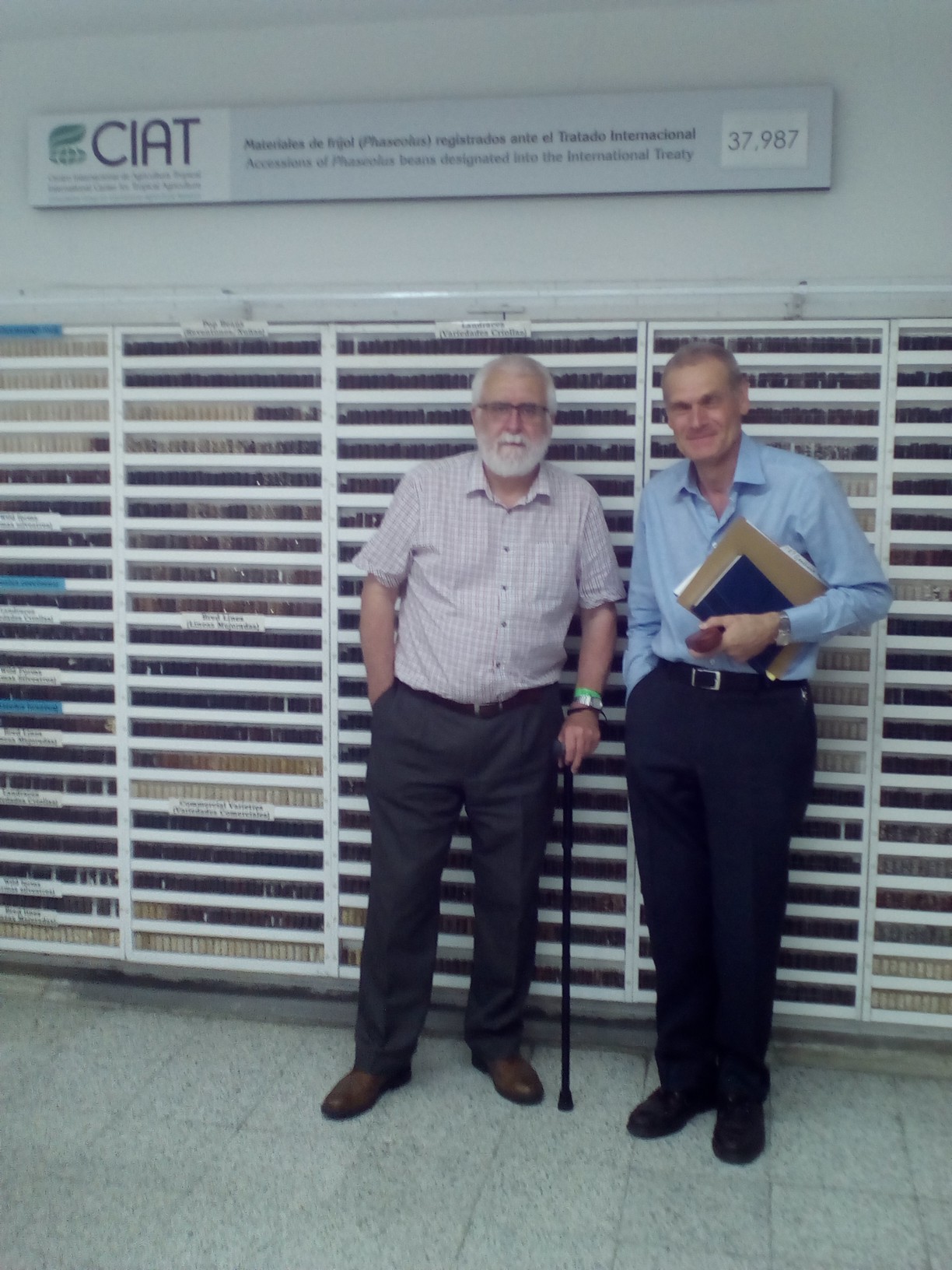
Daniel Debouck, from Belgium, is CIAT’s genebank manager, and he has been there for more than 20 years. He steps down from this position at the end of the year, and will be replaced by Peter Wenzl who was at the Global Crop Diversity Trust in Bonn until the end of April this year. Daniel is an internationally-recognised expert on Phaseolus beans.

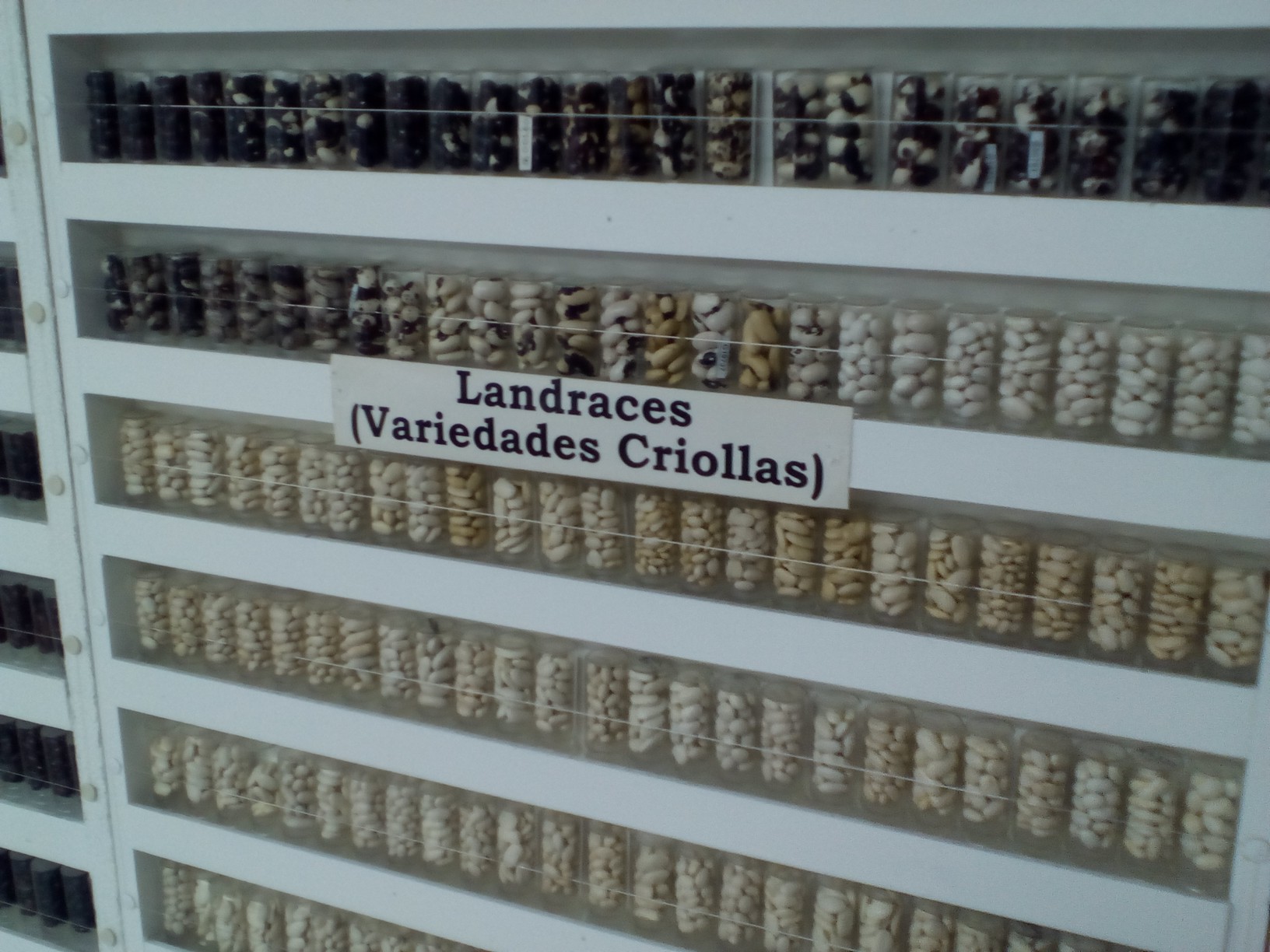
The CIAT genebank has three significant collections: wild and cultivated Phaseolus beans (almost 38,000 accessions), wild and cultivated cassava (Manihot spp., >6600 accessions in vitro or as ‘bonsai’ plants), and more than 23,000 accessions of tropical forages. Here’s an interesting fact: one line of the forage grass Brachiaria is grown on more than 100 million hectares in Brazil alone!

20160729 021

Me and Daniel Debouck.

20160729 022

Bean varieties.

The bean collections are easily maintained as seeds in cold storage, as can most of the forages. But, like potato, the cassava accessions present many of the same quarantine issues, have to be cleaned of diseases, particularly viruses, and maintained in tissue culture. Cryopreservation is not yet an option for cassava, and even in vitro storage needs more research to optimise it for many clones.

20160729 040

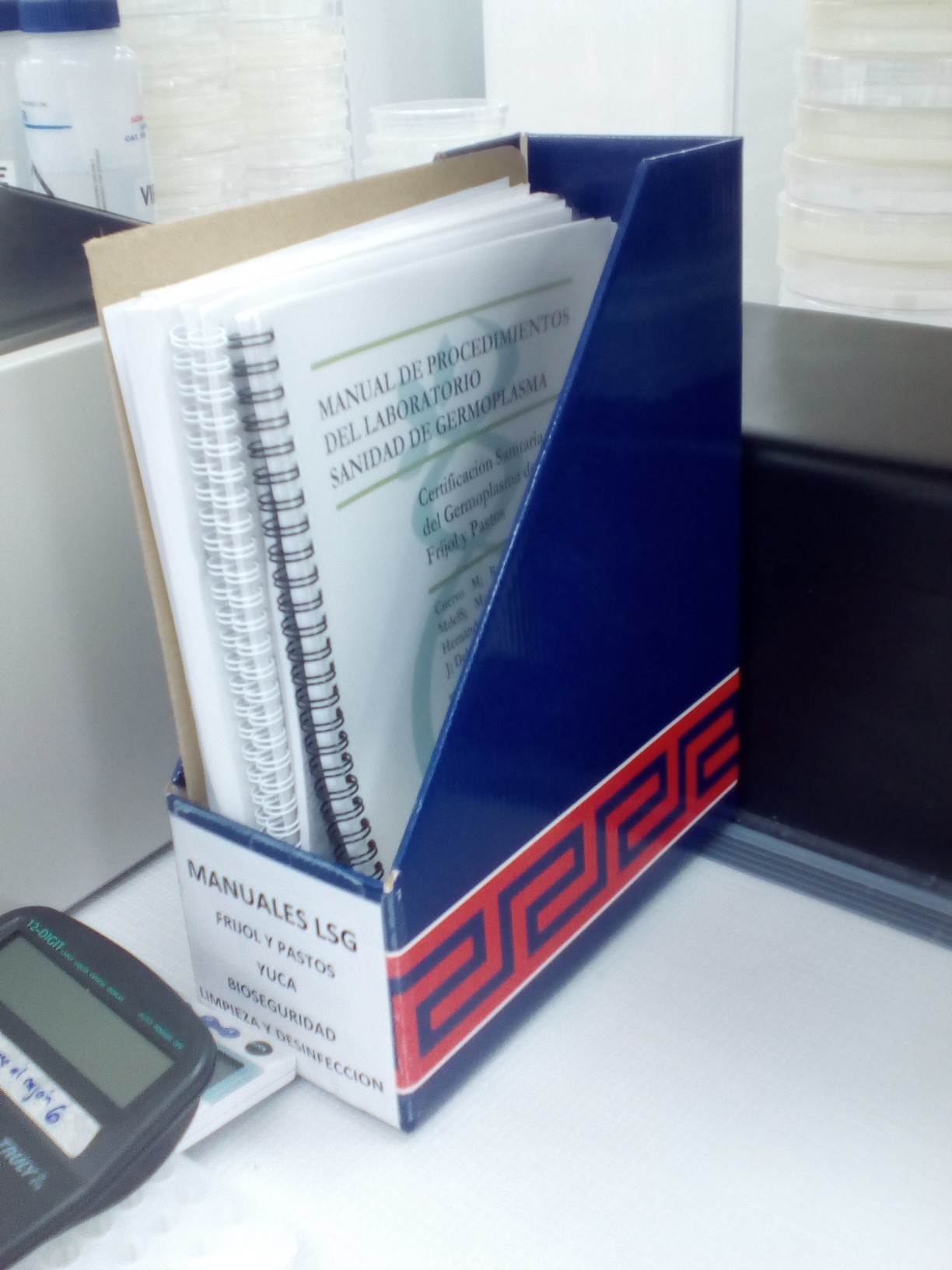
QMS manuals in the germplasm health laboratory.

Like many of the genebanks, CIAT has been upgrading its conservation processes and procedures through the application of a Quality Management System (QMS). A couple of genebanks (including CIP) have opted for ISO certification, but I am of the opinion that this is not really suitable for most genebanks. Everything is documented, however,  including detailed risk assessments, and we saw that the staff at CIAT were highly motivated to perform to the highest standards. In all the work areas, laboratory manuals are always to hand for easy reference.

An exciting development at CIAT is the planned USD18-20 million biodiversity center, with state of the art conservation and germplasm health facilities, construction of which is expected to begin next year. It is so designed to permit the expected thousands of visitors to have good views of what goes on in a genebank without actually having to enter any of the work areas.

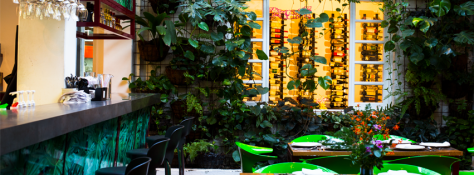
On our first night in Cali, our hosts graciously wined and dined us at Platillos Voladores, regarded as one of Cali’s finest restaurants.

1520778_329652313848934_5424856017809772967_n

We had the private room for six persons with all the wine bottles on the wall, which can be seen in this photo above.

Arriba, arriba! Andale!
On Saturday afternoon around 15:30, we headed to Mexico City via Tocumen International Airport in Panama City. Cali’s international airport is being expanded significantly and there are now international flights to Europe as well as the USA. This must be great for CIAT staff, as the airport is only 15 minutes or so from the research center.

After takeoff, we climbed out of the Cauca Valley and had great views of productive agriculture, lots of sugar cane.

Tocumen is lot busier than when I was travelling through therein the late 1970s. With several wide-bodied jets getting set to depart to Europe, the terminal was heaving with passengers and there was hardly anywhere to sit down. On our COPA 737-800 flight to Mexico I had chosen aisle seat 5D immediately behind the business class section, so had plenty of room to stretch my legs. Much more comfortable than had I stayed with the seat I was originally assigned. I eventually arrived to CIMMYT a little after midnight.

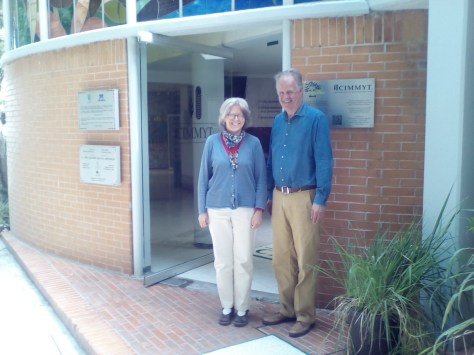
CIMMYT is the second oldest of the international agricultural centers of the CGIAR, founded in 1966. And it is about to celebrate its 50th anniversary in about 1 month from now. IRRI, where I worked for 19 years, was the first center.

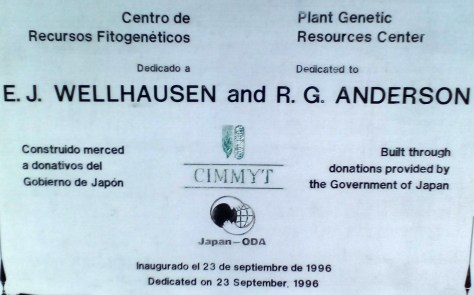
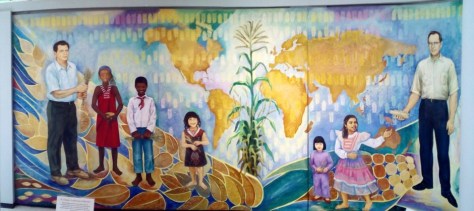
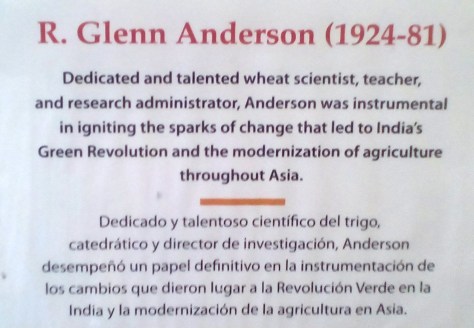
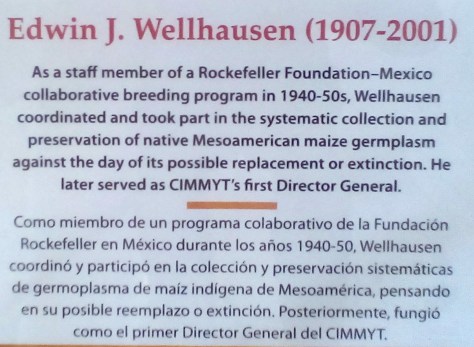
Unlike many of the CGIAR centers that have multi-crop collections in their genebanks (ICARDA, ICRISAT, and IITA for example), CIMMYT has two independent genebank collections for maize and wheat in a single facility, inaugurated in 1996, and dedicated to two renowned maize and wheat scientists, Edwin Wellhausen and Glenn Anderson. But CIMMYT’s most famous staff member is Nobel Peace prize Laureate, Norman Borlaug, ‘Father of the Green Revolution’.

Tom Payne and Denise Costich are the wheat and maize genebank managers. CIMMYT’s genebank has ISO 9001:2008 accreditation.

20160802 014

20160802 003

Ayla Sençer

Tom has been at CIMMYT in various wheat breeding capacities for more than 25 years. In addition to managing the wheat genebank, Tom manages the wheat international nurseries. One of the first curators of the wheat collection was Ayla Sençer from Turkey, and a classmate of mine when we studied at Birmingham in 1970 for the MSc in Conservation and Utilisation of Plant Genetic Resources. The CIMMYT wheat collection is unlike many other germplasm collections in that most of the 152,800 samples are actually breeding lines (in addition to landrace varieties and wild species).

Denise joined CIMMYT just a year or so ago, from the USDA. She has some very interesting work on in situ conservation and management of traditional maize varieties in Mexico and Guatemala. A particular conservation challenge for the maize genebank is the regeneration of highland maizes from South America that are not well-adapted to growing conditions in Mexico. The maize collection comprises over 28,000 accessions including a field collection of Tripsacum (a wild relative of maize).

In recent years has received major infrastructure investments from both the Carlos Slim Foundation and the Bill & Melinda Gates Foundation. New laboratories, greenhouses and the like ensure that CIMMYT is well-placed to deliver on its mission. And the support received through the Genebanks CRP has certainly raised the morale of genebank staff.

On our last day at CIMMYT (Wednesday), we met with Janny van Beem from the Crop Trust. Janny is a QMS expert, based in Houston, Texas, and she flew over to Mexico especially to meet with Marisé and me. When we visiited Bonn in April we only had opportunity to speak by Skype with Janny for jsut 30 minutes. Since the implementation of QMS in the genebanks seems to be one of the main challenges—and success stories—of the Genebanks CRP, we thought it useful to have an in-depth discussion with Janny about this. And very useful it was, indeed!

On the previous evening (Tuesday) Tom, Denise, Marisé, Janny and I went out for dinner in Texcoco, to a well-known tacqueria, then into the coffee shop next door afterwards. No margaritas that night – we’d sampled those on Monday.

20160802 044

L to R: Janny, me, Tom, Marisé, and Denise.

But on this trip we did have one free day, Sunday. And I met up with members of CIMMYT’s Filipino community, many of them ex-IRRI employees, some of who worked in units for which I had management responsibility. They organised a ‘boodle fight‘ lunch, and great fun was had by one and all.

Hasta la vista . . .
At 6 pm on Wednesday I headed into Mexico City to take the KLM flight to Amsterdam. It was a 747-400 Combi (half passengers, half cargo). I haven’t flown a 747 for many years, and I’d forgotten what a pleasant experience it can be. It’s remarkable that the 747 is being phased out by most airlines; they are just not as economical as the new generation twin engine 777s, 787s, and A350s.

With the new seating configuration, I had a single seat, 4E, in the center of the main deck forward cabin. Very convenient. I was glad to have the opportunity of putting my leg up for a few hours. Over the previous 10 days my leg had swelled up quite badly by the end of each day, and it was quite painful. The purser asked if I had arranged any ground transport at Schipol to take me from the arrival to departure gates. I hadn’t, so she arranged that for me before we landed. The distances at Schipol between gates can be quite challenging, so I was grateful for a ride on one of the electric carts.

But after we went through security, my ‘assistant’ pushed me to my gate in a wheelchair. I must admit I felt a bit of a fraud. An electric cart is one thing, and most welcome. But a wheelchair? Another was waiting for me on arrival at Birmingham. Go with the flow!

20160804 014

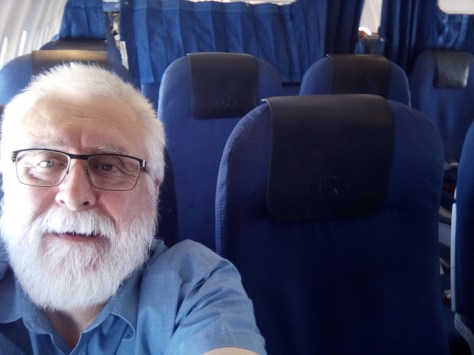
I was all alone in Business Class from Schipol to Birmingham. We were back at BHX on time, and I was out in the car park looking for my taxi home within about 20 minutes, and home at 6 pm.

Now the hard work really begins—synthesising all the discussions we had with so many staff at CIP, CIAT, and CIMMYT. For obvious reasons I can’t comment about those discussions, but visiting these important genebanks in such a short period was both a challenging but scientifically enriching experience.

Plant Genetic Resources: Our challenges, our food, our future

phillips-jade

Jade Phillips

That was the title of a one day meeting on plant genetic resources organized by doctoral students, led by Jade Phillips, in the School of Biosciences at The University of Birmingham last Thursday, 2 June. And I was honoured to be invited to present a short talk at the meeting.

Now, as regular readers of my blog will know, I began my career in plant genetic resources conservation and use at Birmingham in September 1970, when I joined the one year MSc course on genetic conservation, under the direction of Professor Jack Hawkes. The course had been launched in 1969, and 47 years later there is still a significant genetic resources presence in the School, even though the taught course is no longer offered (and hasn’t accepted students for a few years). Staff have come and gone – me included, but that was 25 years ago less one month, and the only staff member offering research places in genetic resources conservation is Dr Nigel Maxted. He was appointed to a lectureship at Birmingham (from Southampton, where I had been an undergraduate) when I upped sticks and moved to the International Rice Research Institute (IRRI) in the Philippines in 1991.

image

Click on this image for the full program and a short bio of each speaker.

Click on each title below; there is a link to each presentation.

Nigel Maxted (University of Birmingham)
Introduction to PGR conservation and use

Ruth Eastwood (Royal Botanic Gardens, Kew – Wakehurst Place)
‘Adapting agriculture to climate change’ project

Holly Vincent (PhD student, University of Birmingham)
Global in situ conservation analysis of CWR

Joana Magos Brehm (University of Birmingham)
Southern African CWR conservation

Mike Jackson
Valuing genebank collections

Åsmund Asdal (NordGen)
The Svalbard Global Seed Vault

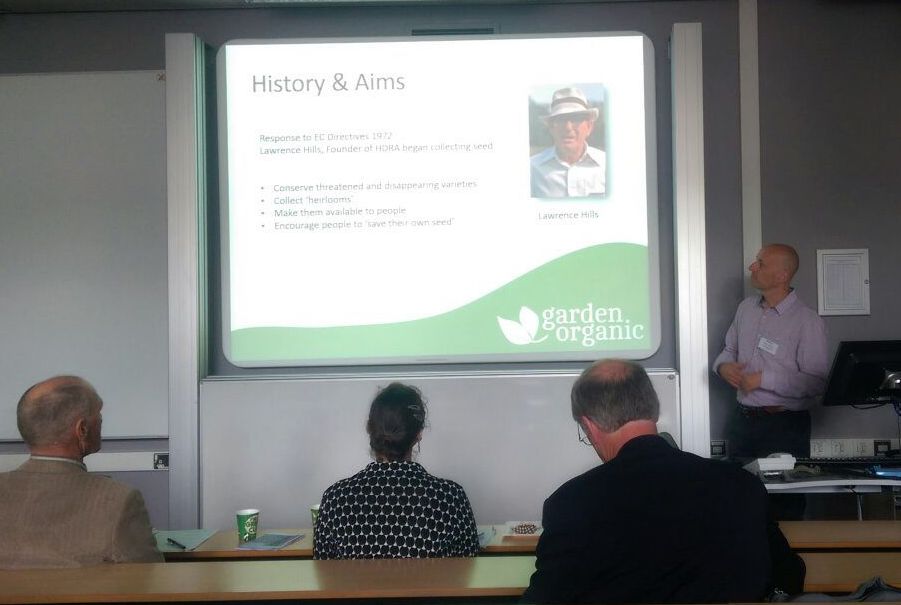
Neil Munro (Garden Organic)
Heritage seed library

Maria Scholten
Natura 2000 and in situ conservation of landraces in Scotland: Machair Life (15 minute film)

Aremi Contreras Toledo, Maria João Almeida, and Sami Lama (PhD students, University of Birmingham)
Short presentations on their research on maize in Mexico, landraces in Portugal, and CWR in North Africa

Julian Hosking (Natural England)
Potential for genetic diversity conservation – the ‘Fifth Dimension’ – within wider biodiversity protection

I guess there were about 25-30 participants in the meeting, mainly young scientists just starting their careers in plant genetic resources, but with a few external visitors (apart from speakers) from the Millennium Seed Bank at Kew-Wakehurst Place, the James Hutton Institute near Dundee, and IBERS at Aberystwyth.

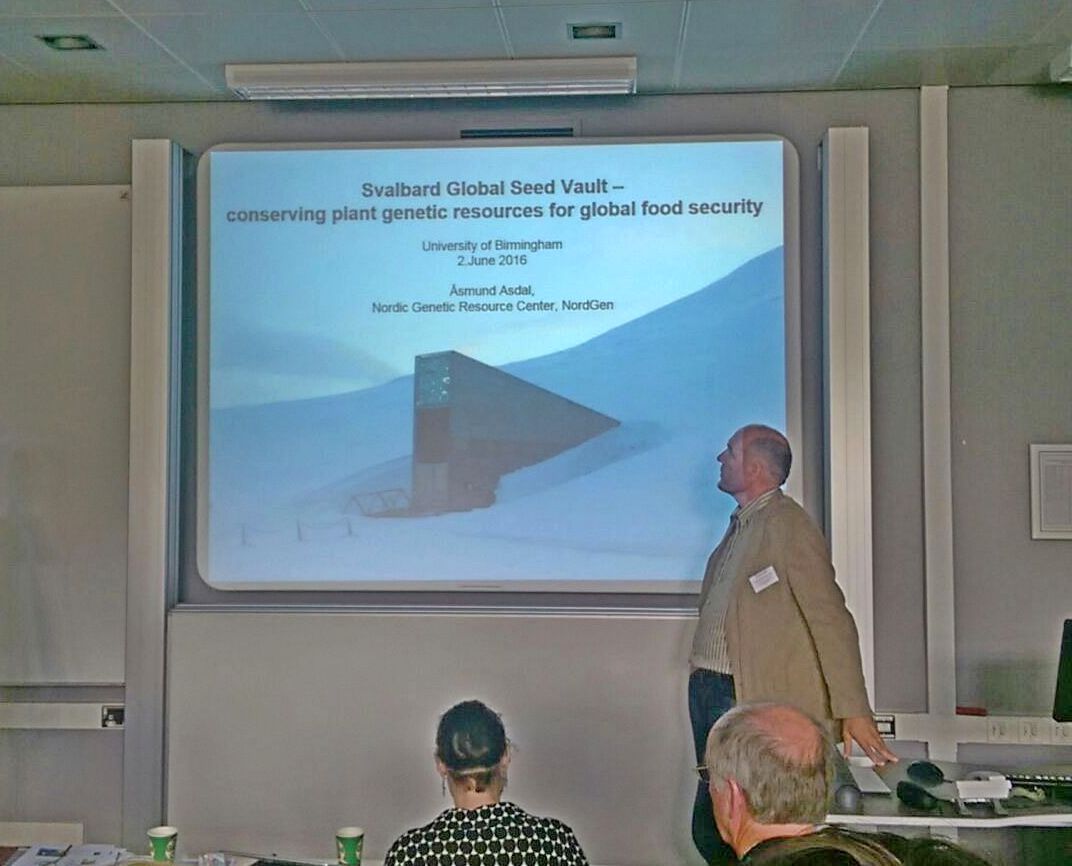
The meeting grew out of an invitation to Åsmund Asdal from the Nordic Genetic Resources Center (NordGen) to present a School of Biosciences Thursday seminar. So the audience for his talk was much bigger.

asmund

Åsmund is Coordinator of Operation and Management for the Svalbard Global Seed Vault, and he gave a fascinating talk about the origins and development of this important global conservation facility, way above the Arctic Circle. Today the Vault is home to duplicate samples of germplasm from more than 60 depositor genebanks or institutes (including the international collections held in the CGIAR genebank collections, like that at IRRI.

Nigel Maxted’s research group has focused on the in situ conservation and use of crop wild relatives (CWR), although they are also looking at landrace varieties as well. Several of the papers described research linked to the CWR Project, funded by the Government of Norway through the Crop Trust and Kew. Postdocs and doctoral students are looking at the distributions of crop wild relatives, and using GIS and other sophisticated approaches that were beyond my comprehension, to determine not only where there are gaps in distributions, lack of germplasm in genebank collections, but also where possible priority conservation sites could be established. And all this under the threat of climate change. The various PowerPoint presentations demonstrate these approaches—which all rely on vast data sets—much better than I can describe them. So I encourage you to dip into the slide shows and see what this talented group of scientists has been up to.

Neil Munro from Garden Organic described his organization’s approach to rescue and multiply old varieties of vegetables that can be shared among enthusiasts.

n_munro

Seeds cannot be sold because they are not on any official list of seed varieties. What is interesting is that one variety of scarlet runner bean has become so popular among gardeners that a commercial seed company (Thompson & Morgan if I remember what he said) has now taken  this variety and selling it commercially.

julian

Julian Hosking from Natural England gave some interesting insights into how his organization was looking to combine the conservation of genetic diversity—his ‘Fifth Dimension’—with conservation of natural habitats in the UK, and especially the conservation of crop wild relatives of which there is a surprisingly high number in the British flora (such as brassicas, carrot, and onions, for example).

So, what about myself? When I was asked to contribute a paper I had to think hard and long about a suitable topic. I’ve always been passionate about the use of plant genetic diversity to increase food security. I decided therefore to talk about the value of genebank collections, how that value might be measured, and I provided examples of how germplasm had been used to increase the productivity of both potatoes and rice.

m_jackson

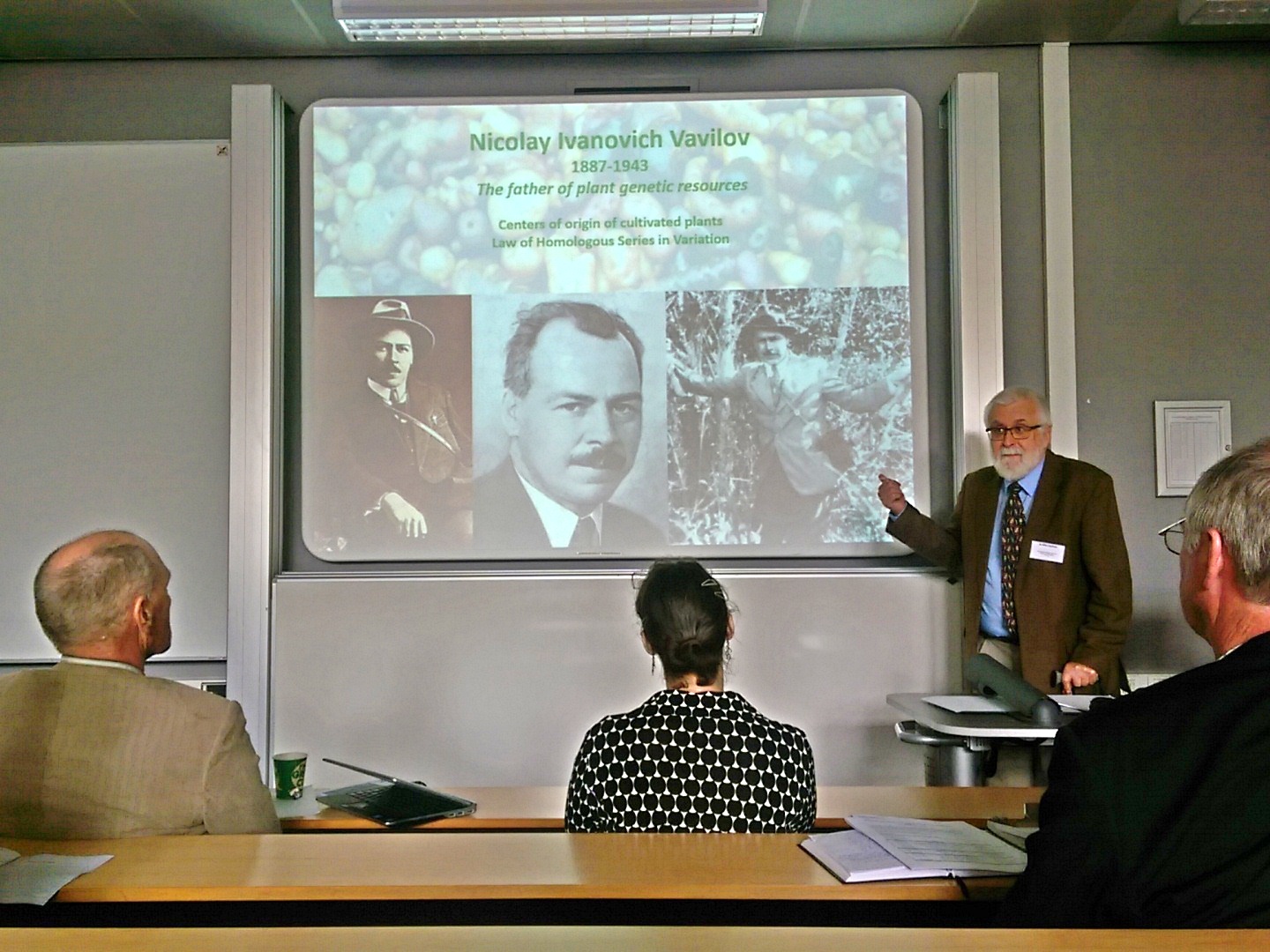
Nicolay Vavilov is a hero of mine

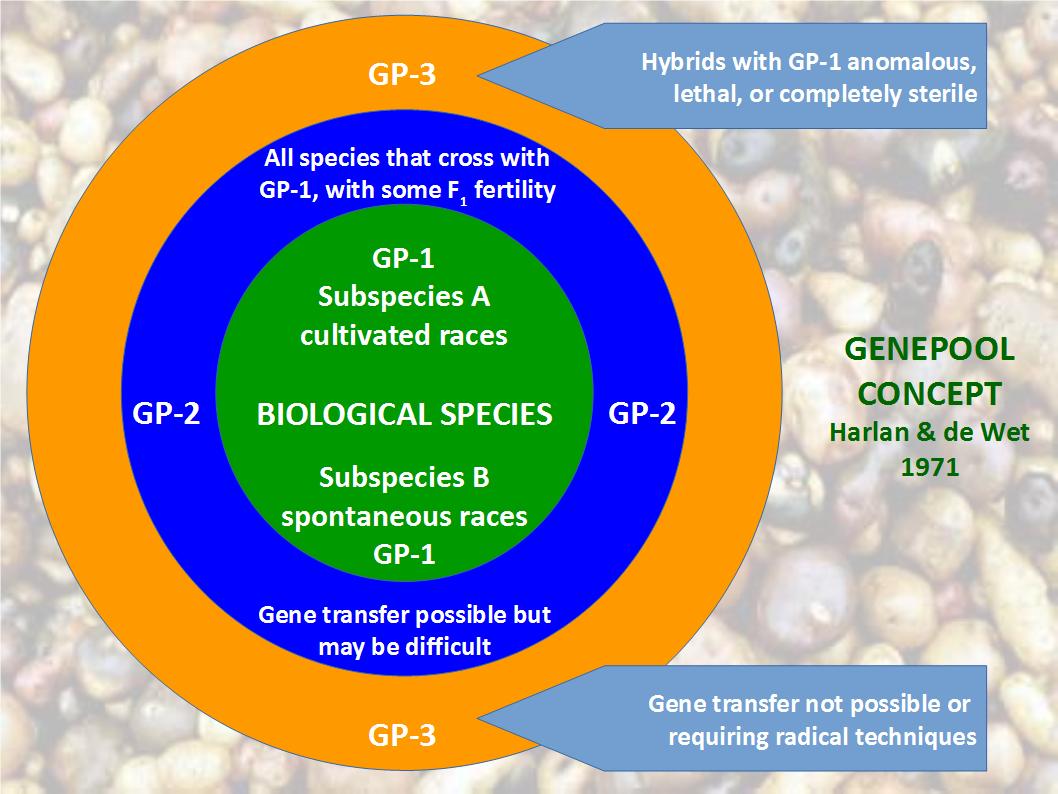
Although all the speakers developed their own talks quite independently, a number of common themes emerged several times. At one point in my talk I had focused on the genepool concept of Harlan and de Wet to illustrate the biological value (easy to use versus difficult to use) of germplasm in crop breeding.

Jackson FINAL - Valuing Genebank Collections

In the CWR Project research several speakers showed how the genepool concept could be used to set priorities for conservation.

Finally, there was one interesting aspect to the meeting—from my perspective at least. I had seen the titles of all the other papers as I was preparing my talk, and I knew several speakers would be talking about future prospects, especially under a changing climate. I decided to spend a few minutes looking back to the beginning of the genetic conservation movement in which Jack Hawkes was one of the pioneers. What I correctly guessed was that most of my audience had not even been born when I started out on my genetic conservation career, and probably knew very little about how the genetic conservation movement had started, who was involved, and what an important role The University of Birmingham had played. From the feedback I received, it seems that quite a few of the participants were rather fascinated by this aspect of my talk.

Through hard work, great things are achieved

BirminghamUniversityCrestPer Ardua Ad Alta

That’s the motto of The University of Birmingham, and ‘these sentiments sum up the spirit of Birmingham and illustrate the attitude of the people who have shaped both the city and the University.’

Almost 50 years ago, I had no inkling that I would have more than half a lifetime’s association with this university. Receiving its royal charter in 1900 (although the university was a successor to several institutions founded in the 19th century as early as 1828), Birmingham is the archetypal ‘redbrick university‘, located on its own campus in Edgbaston, about 3 miles southwest of Birmingham city center.


First encounter in 1967

My first visit to the university was in May or June 1967—to sit an exam. Biology was one of the four subjects (with Geography, English Literature, and General Studies) I was studying for my Joint Matriculation Board Advanced Level high school certificate (essentially the university entrance requirement) here in the UK. We were only four or five biology students at my high school, St Joseph’s College in Trent Vale, Stoke-on-Trent (motto: Fideliter et Fortiter).

Now, I don’t remember (maybe I never knew) whether we were too few in number to sit our biology practical exam at the school, or all students everywhere had to attend an examination venue, but we set off by train from Stoke to Birmingham, and ended up at the School of Biological Sciences building. It was a new building then, and the (federal) School had only recently been formed from the four departments of Botany, Zoology & Comparative Physiology, Genetics, and Microbiology.

Just before 2 pm, the five of us—and about 100 other students—trooped into the main laboratory (that I subsequently came to know as the First Year Lab) on the second floor. Little did I know that just over three years later I’d be joining the Department of Botany as a graduate student, nor that 14 years later in 1981 I would join the faculty as Lecturer in Plant Biology. Nothing could have been further from my mind as I settled down to tackle a dissection of the vascular system of a rat, and the morphology of a gorse flower, among other tasks to attempt.

Birmingham was not on the list of universities to which I had applied in December 1966. I’d chosen King’s College, London (geography), Aberystwyth (zoology and geography), Southampton (botany and geography), York (biology), Queen Mary College, London (general biological sciences), and Newcastle (botany and geography). In the end, I chose Southampton, and spent three very happy if not entirely fruitful years there.

Entering the postgraduate world

Jack Hawkes

Jack Hawkes

The next time I visited Birmingham was in February 1970. I had applied to join the recently-founded postgraduate MSc Course on Conservation and Utilization of Plant Genetic Resources. I was interviewed by Course Director and Head of the Department of Botany, Professor JG Hawkes and Senior Lecturer and plant ecologist, Dr Denis Wilkins.

Despite the grilling from both of  them, I must have made an impression because I was offered a place for the following September. The only problem: no support grant. Although Hawkes had applied for recognition by one of the research councils to provide postgraduate studentships, nothing had materialized when I applied (although he was successful the following year, and for many years afterwards providing studentships to British students). So, after graduation from Southampton in July 1970 I was on tenterhooks all summer as I tried to sort out a financial solution to attend the course. Finally, around mid-August, I had a phone call from Hawkes telling me that the university would provide a small support grant. It was only £380 for the whole year, to cover all my living expenses including rent. That’s the equivalent of about £5600 today. The university would pay my fees.

All set then. I found very comfortable bed-sit accommodation a couple of miles from the university, and turned up at the department in early September to begin my course, joining four other students (from Nigeria, Pakistan, Turkey and Venezuela). It was during this one year course that I really learned how to study, and apart from my weekly Morris dancing night, I had few other distractions. It was study, study, study: and it paid off. The rest is history. I graduated in September 1971, by which time I’d been offered a one-year position at the newly-founded International Potato CenterCIP logo (CIP) in Lima, Peru, and I was all set for a career (I hoped) in the world of genetic resources and conservation. As it turned out, my travel to South America was delayed by more than a year during which time I registered for and commenced a PhD study on potatoes, finally landing in Lima in January 1973 and beginning a career in international agricultural research that lasted, on and off, until my retirement in 2010. I carried out most of my PhD research in Peru, and submitted my thesis in October 1975.

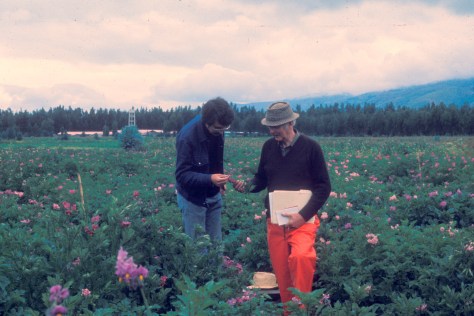
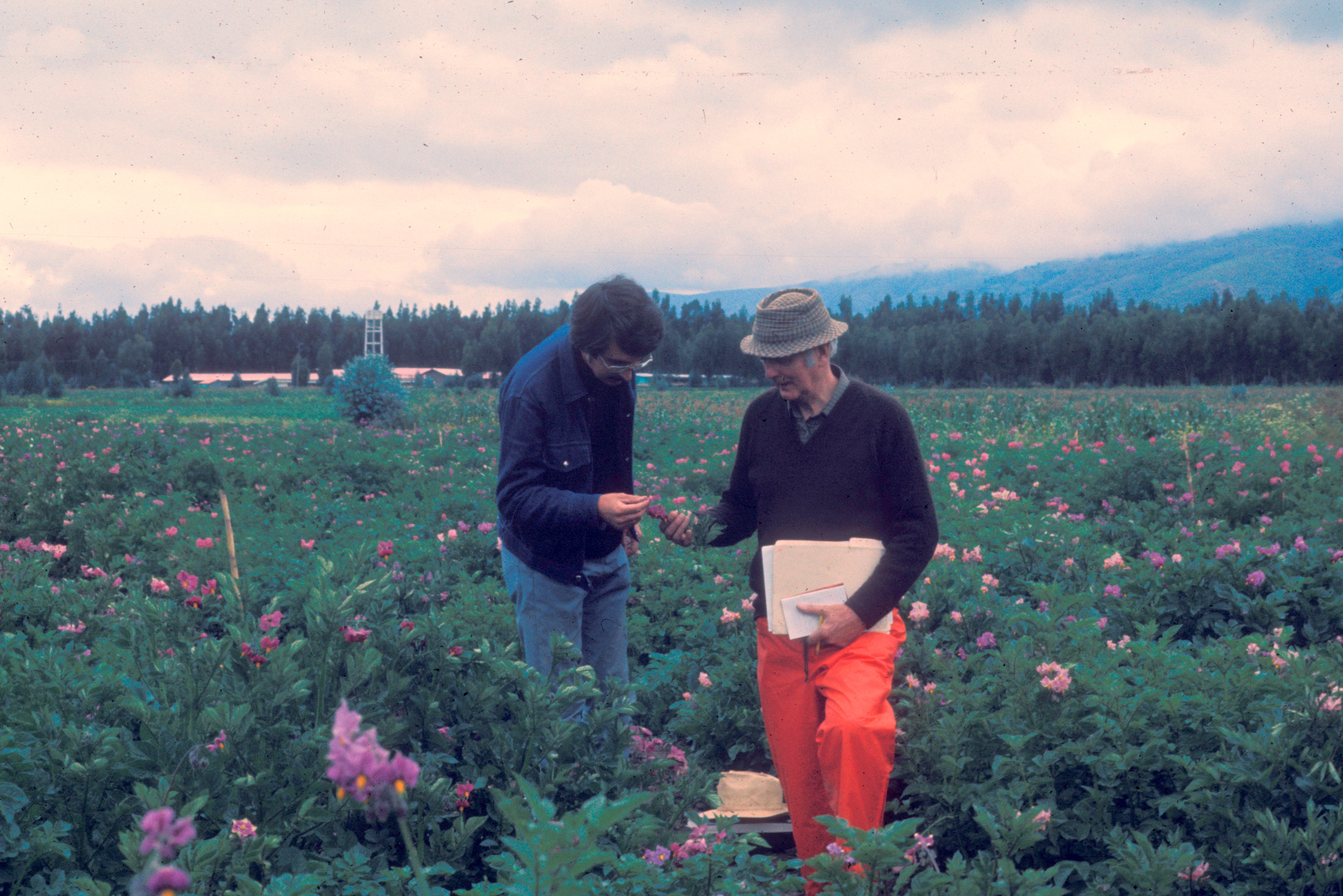
Jack Hawkes and me discussing landrace varieties of potatoes in the CIP potato germplasm collection, Huancayo, central Peru in early 1974.

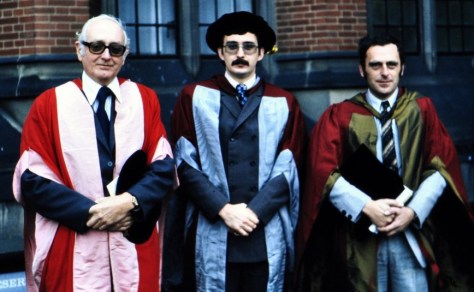
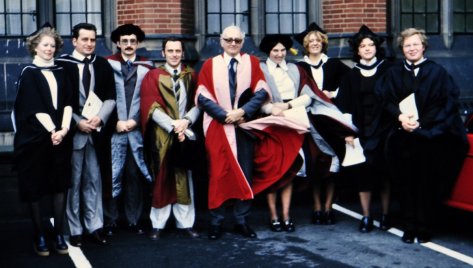
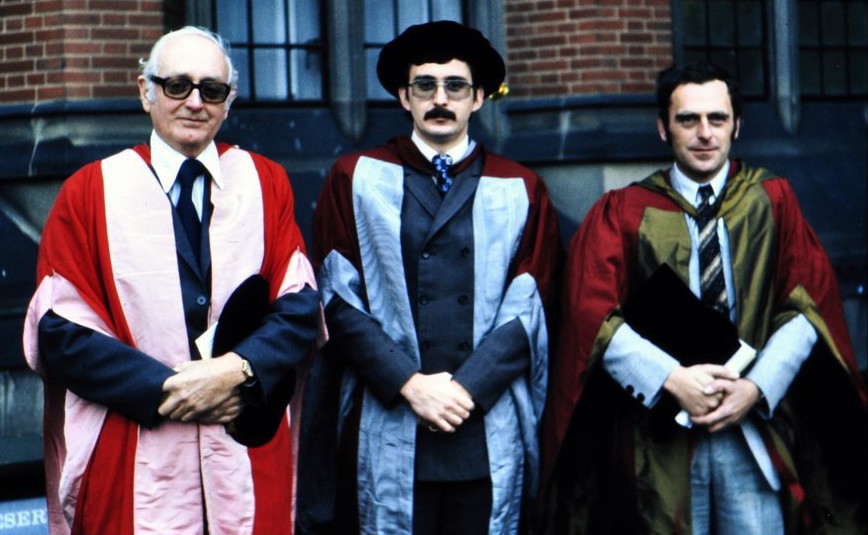
Graduation December 1975. L to R: Jack Hawkes (who co-supervised my PhD), me, and Trevor Williams (who became the first Director General of the International Board for Plant Genetic Resources). Trevor supervised my MSc dissertation.

Then I returned to Lima, spending another five years with CIP in Costa Rica carrying out research on bacterial diseases of potatoes among other things.

I should add that during the academic year 1971-72, a young woman, Stephanie Tribble, joined the MSc course. A few months later we became an ‘item’.

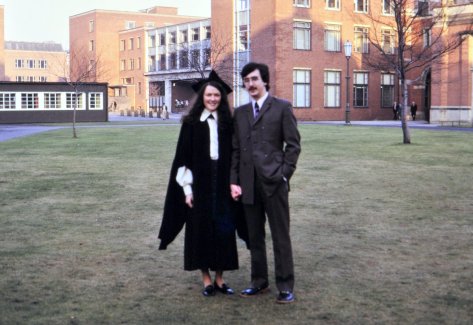
Steph’s MSc graduation at the University of Birmingham in December 1972, just weeks before I flew to South America and join the International Potato Center in Lima, Peru.

After graduation, she joined the Scottish Plant Breeding Station just south of Edinburgh, but joined me in Lima in July 1973. We married there in October, and she also had a position with CIP for the years we remained in Lima.

A faculty position
On 1 April 1981 I joined the University of Birmingham as a lecturer in the Department of Plant Biology.

Richard Sawyer

By mid-1980, after almost five years in Costa Rica, I felt that I had achieved as much as I could there, and asked my Director General in Lima, Dr Richard Sawyer, for a transfer to a new position. In November, we moved back to Lima, and I was expecting to be posted either to Brazil or possibly to the Philippines. In the meantime, I had been alerted to a recently-established lectureship in the Department of Plant Biology (formerly Botany) at Birmingham, and had been encouraged to apply¹. With encouragement from Richard Sawyer², and having been invited for interview, I made the trek back to the UK from Lima towards the end of January 1981. The interview process then was very different from what might be expected nowadays. No departmental seminar. Just a grilling from a panel chaired by the late Professor John Jinks, FRS, Dean of the Faculty of Science and head of the Department of Genetics. There were three staff from Plant Biology (Hawkes, Dennis Wilkins, and Brian Ford-Lloyd), and the head of the Department of Biochemistry and Deputy Dean, Professor Derek Walker.

We were three candidates. Each interview lasted about 45 minutes, and we all had to wait outside the interview room to learn who would be selected. I was interviewed last. Joining the other two candidates afterwards, we sat side-by-side, hardly exchanging a word between us, nervously waiting for one of us to be called back in to meet the panel. I was the lucky one. I was offered the position, accepted immediately, and a couple of days later flew back to Lima to break the news and make plans to start a new life with Steph and our daughter Hannah (then almost three) in Birmingham.

Over the 10 years I spent at Birmingham I never had the worry (or challenge) of teaching any First Year Course – thank goodness. But I did contribute a small module on agricultural systems to the Second Year common course (and became the Second Year Chair in the School of Biological Sciences), as well as sharing teaching of flowering plant taxonomy to plant biology stream students mtj-and-bfl-book-launchin the Second Year. With my colleague Brian Ford-Lloyd (with whom I’ve published three books on genetic resources) I developed a Third Year module on genetic resources that seems to have been well-received (from some subsequent feedback I’ve received). I also contributed to a plant pathology module for Third Year students. But the bulk of my teaching was to MSc students on the graduate course on Conservation and Utilization of Plant Genetic Resources – the very course I’d attended a decade earlier. My main focus was crop evolution, germplasm collecting, and agricultural systems, among others. And of course there was supervision of PhD and MSc student research projects.

One of the responsibilities I enjoyed was tutoring undergraduate students, and always had an open door if they needed to see me. It quite shocked me in the late 1990s when my elder daughter, then a student at Swansea University, told me that her tutors had very limited and defined access hours for students. Of course you can’t be on call all day, every day, but you have to be there if a student really need to see you. And my tutees knew that if my office door was open (as it mostly was) they were free to come in and see me.

Once the four departments of the School of Biological Sciences merged into a single department in 1988, I aligned myself with and joined the Plant Genetics Group, and found a better role for myself. I also joined and became Deputy Chair of a cross-disciplinary group called Environmental Research Management (ERM) whose aim was to promote the strength of environment-related research across the university. Through ERM I became acquainted with Professor Martin Parry, and together with Brian Ford-Lloyd we published a book on genetic resources and climate change in 1990, and another in 2014 after we had retired.

Moving on
Even though the prospect of promotion to Senior Lecturer was quite good (by 1989 I’d actually moved on to the Senior Lecturer pay scale), I was becoming somewhat disillusioned with university life by that time. Margaret Thatcher and her government had consistently assaulted the higher education sector, and in any case I couldn’t see things getting any better for some years to come. In this I was unfortunately proved correct. In September 1990 a circular dropped into my post, advertising a new position at the International Rice Research Institute (IRRI) in the Philippines. This was for a germplasm specialist and first head of the Genetic Resources Center. So I applied, was interviewed in January 1991, and accepted the position with a view to joining the institute from 1 July. They actually wanted me to start on 1 April. But as I explained—and IRRI Management accepted—I had teaching and examination commitments to fulfill at the university. In February I began to teach my third year module on genetic resources for the last time, and set the exams for all students to take in May and June. Once the marking and assessments had been completed, I was free to leave.

Friday 28 June was my last day, ending with a small farewell party in the School. I flew out to the Philippines on Sunday 30 June. And, as they say, the rest is history. I never looked back. But now, retirement is sweet, as are my memories.

~~~~~~~~~~~~~~~~~~~~~~~~~~~~~~~~~~~~~~~~~~
¹ Jack Hawkes was due to retire in September 1982 and, recognizing that his departure would leave a big hole in the MSc teaching, the university approved the recruitment of a lecturer in plant genetic resources (with a focus on crop evolution, flowering plant taxonomy, and the like) essentially covering those areas where Jack had contributed.
² Dick Sawyer told me that applying for the Birmingham position was the right thing to do at that stage of my career. However, the day before I traveled to the UK he called me to his office to wish me well, and to let me know whichever way the interview went, he would have a new five-year contract waiting on his desk for me on my return. From my point of view (and I hope CIP’s) it was a win-win situation. Thus I left for the interview at Birmingham full of confidence.


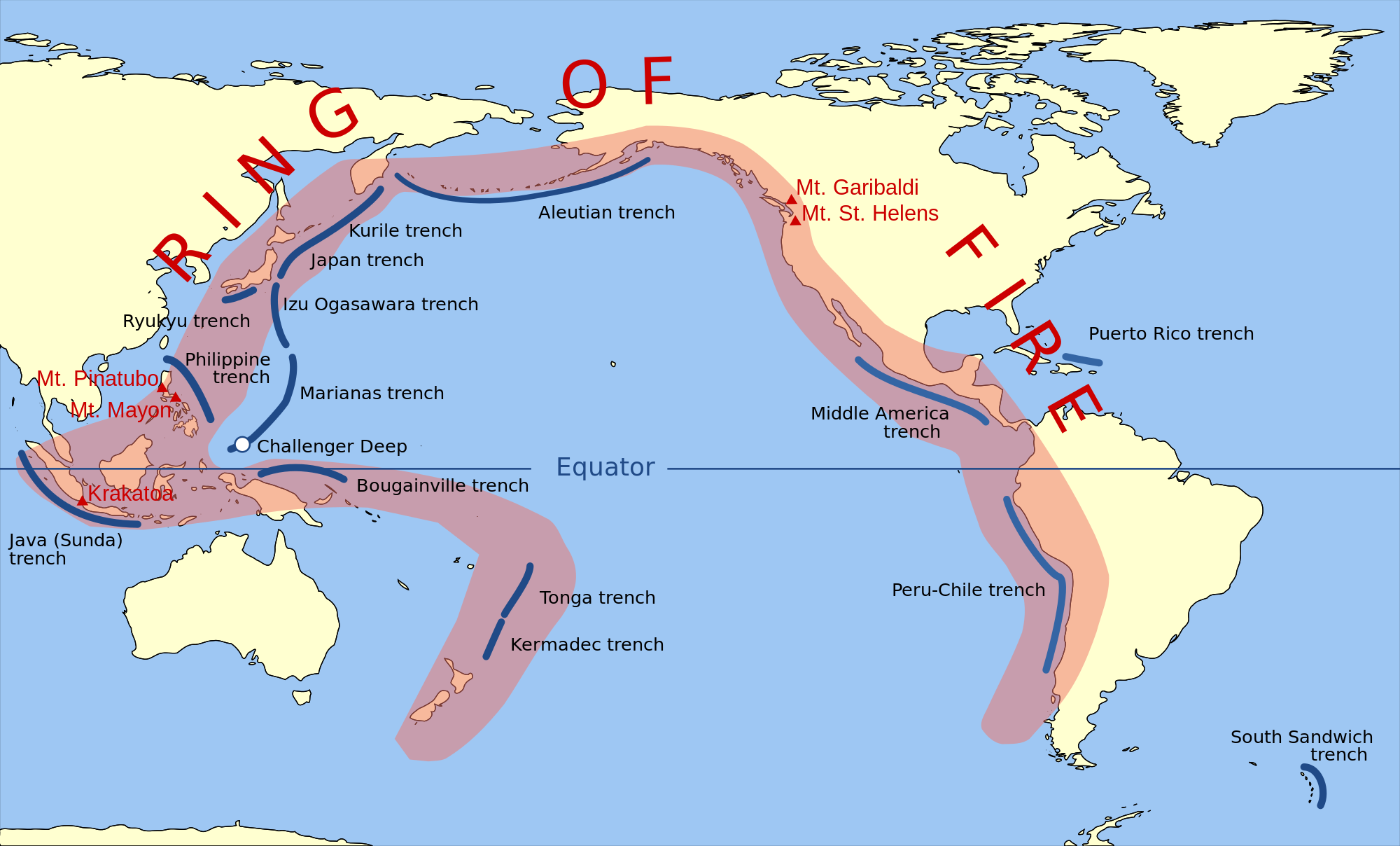
Around the world in 40 years . . . Part 13. Tales (mainly) from the ‘Ring of Fire’

Earth, wind, and fire (not that Earth, Wind & Fire—still active 45 years after the group formed).

No, these are some reflections, going back almost as far as EWF, about my encounters with and experiences of earthquakes, typhoons, and volcanoes (fortunately mostly dormant) around the Ring of Fire.

But first, a summer morning in west Wales
Take 19 July 1984 for example. Steph and I with our two daughters Hannah and Philippa were enjoying a week’s holiday in Pembrokeshire, in west Wales. We’d rented a nice cottage, in Broad Haven, on the coast south of St David’s. As usual, one of us had gone downstairs to make a cup of tea. Steph says it was her; I think it was me. No matter. But just as the tea-maker was about to climb the stairs back to our bedroom (lying in bed, waking up to and enjoying a cup of tea, is one of life’s simple pleasures), we felt the house shake. There had been an earth tremor, hardly worthy of the description ‘earthquake’. But noticeable enough, especially if, like me, you had become sensitized to such tectonic events.

Further north, close to the epicenter on the Llŷn Peninsula, it was much stronger, registering 5.4 on the Richter scale, and was ‘the largest known onshore earthquake to occur in the UK since instrumental measurements began‘. It was felt all over Wales and many parts of England. Chimneys fell from roofs. Liverpool was apparently quite badly hit.

But a Richter 5 quake in the UK is nothing compared to what I have experienced along the ‘Ring of Fire‘.

October 1974
Thursday 3 October started as a normal day. Steph and I had taken the staff bus from our apartment in the Lima district of Miraflores to the International Potato Center (CIP) in La Molina (on the eastern outskirts of the city, and close to the National Agrarian University). We didn’t have our car that day. The government had introduced a gasoline rationing system, and the decal we choose allowed us to drive only over the weekends and on alternate days during the week. This is relevant.

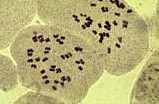
36 chromosomes from a triploid potato variety.

I had arranged to show one of the laboratory technicians how to make chromosome preparations from potatoes. Then, around 09:20, as I was enjoying a cup of coffee, and without any warning, the whole building started to rock and shake backwards and forwards. Clearly this was more than the all-too-frequent earth tremors or temblores that we were ‘used’ to. We all rushed out of the building into the car park. I was still carrying my cup of coffee! And in the car park we all endeavored to remain upright as the ground rolled back and forth, almost a meter at a time, for over two minutes! At La Molina the earthquake (or terremoto) was recorded over 8 on the Richter Scale. Remember of course that the scale is a logarithmic one, so the La Molina earthquake was hundreds of times more powerful than the alarming Llŷn Peninsula version in 1984.

Damage to laboratories and offices at CIP was considerable.

Fortunately there were fewer than 80 deaths and only a couple of thousand injuries around the city, because many people were already in their places of work that were better constructed to withstand an earthquake. However, it was the continual aftershocks (the strongest—at 7.1—felt on Saturday 9 November just before 08:00 as military parade was commencing in downtown Lima) that unnerved everyone. Ever since I have been hypersensitive to any sort of movement of that kind. ‘Did the earth move for you?‘ holds no pleasant connotations.

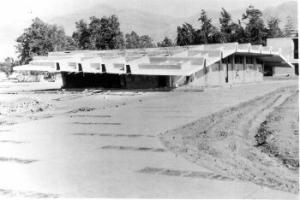
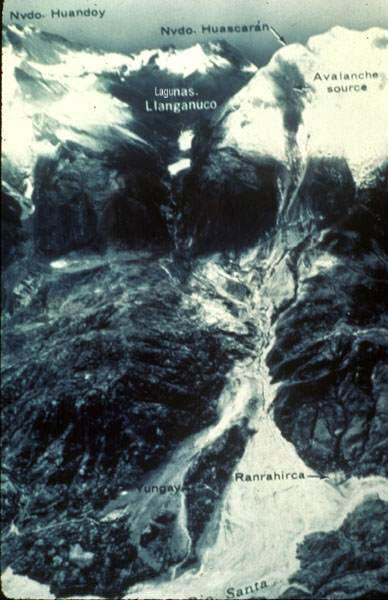
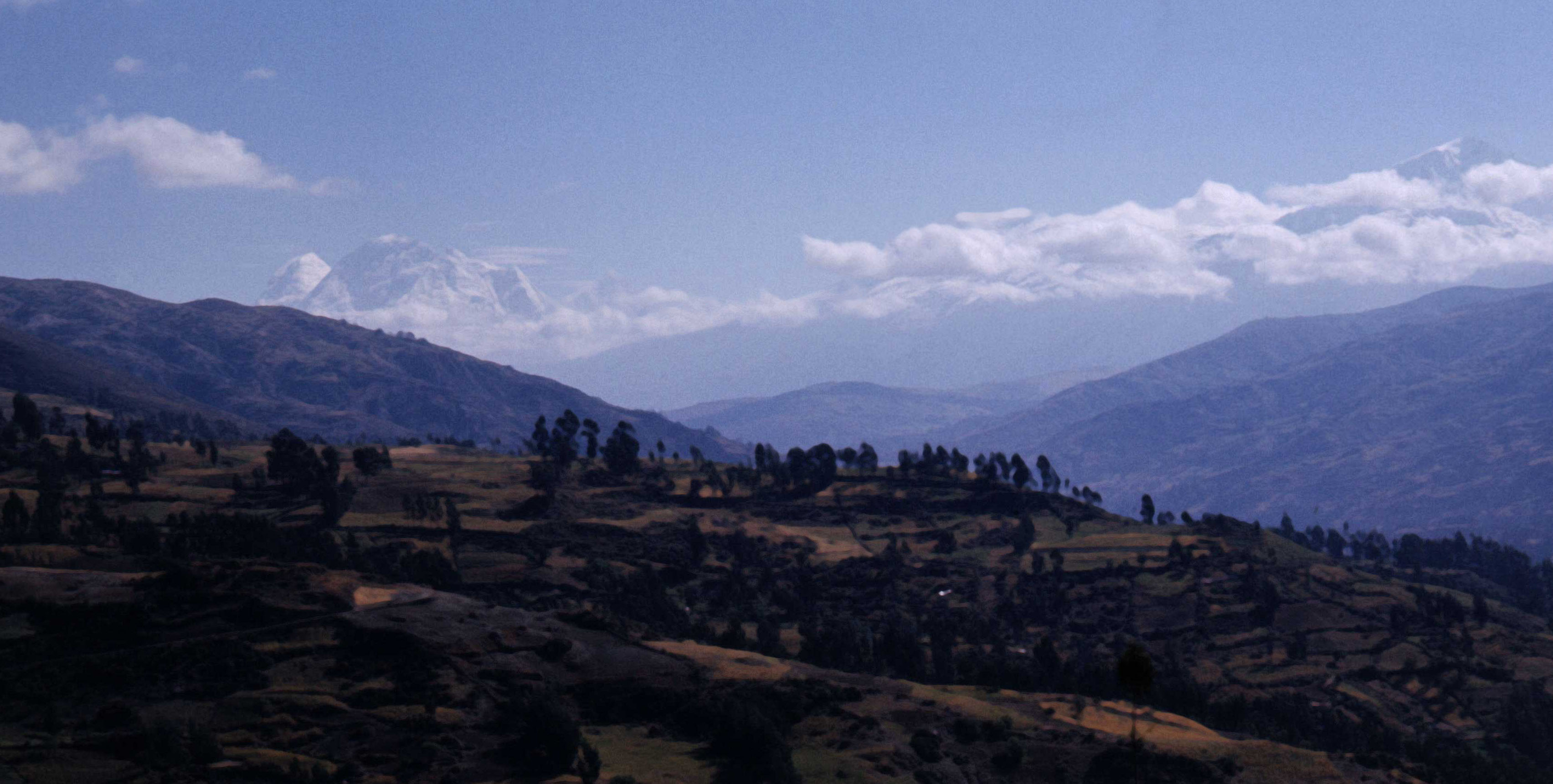
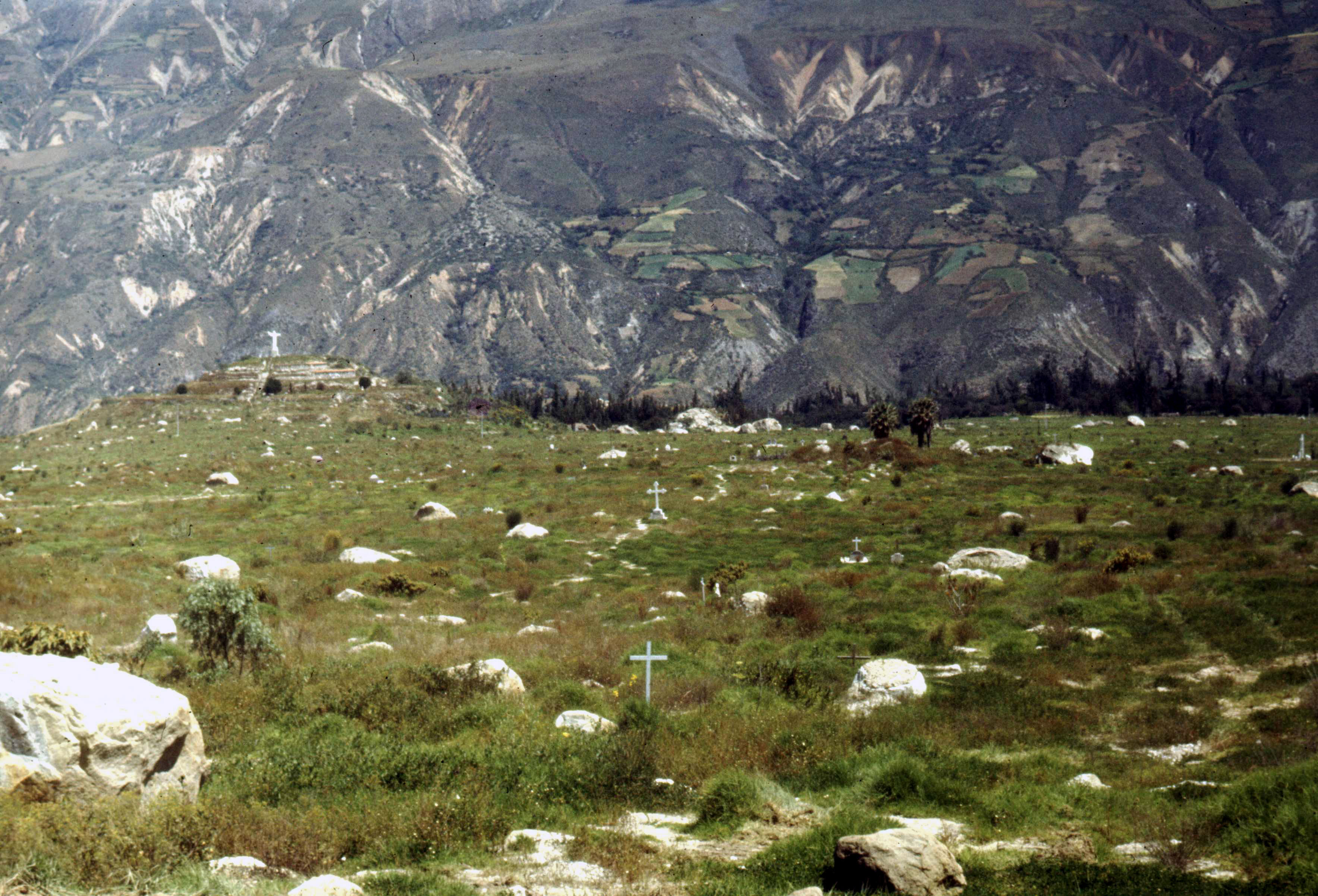
However, it was in May 1973 that I saw first hand the aftermath of a powerful earthquake. My colleague, Zosimo Huaman and I were away from Lima on a three-week trip to collect native varieties of potatoes from farmers in the Departments of Ancash and La Libertad in central-northern Peru. Just north of Huaraz in the Callejon de Huaylas, and beneath Peru’s highest mountain, Huascarán, lie the remains of two towns, Yungay and Ranrahirca. On 31 May 1970 a huge earthquake triggered an ice and rock landslide from the top of Huascarán, which quickly sped down the mountain obliterating everything in its path. More than 70,000 people lost their lives, and the two towns were destroyed. When we visited just three years later the scene in Yungay was one of utter devastation, with just a few palm trees surviving, and the statue of Christ in the cemetery.

Further north, Zosimo and I had the opportunity of visiting several remote villages on foot. In one (I don’t recall the name) we were welcomed as honored guests, and in my case, as a representative of Queen Elizabeth. After making a short speech of thanks in broken Spanish to about 200 residents gathered in the ‘town hall’, everyone came up and shook my hand. Apparently they had received no help for the government to rebuild their communities nor livelihoods even three years after the earthquake.

Over the course of our three years in Lima, five years in Costa Rica, and almost 19 years in the Philippines, we felt many earth tremors, some stronger than others, but never as awe-inspiring or sphincter-challenging as that in October 1974.

Winds over the Pacific
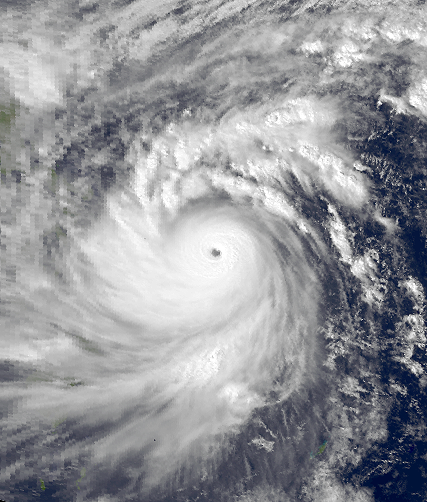
The Pacific Ocean sees its fair share of tropical storms and stronger. Severe storms in the Pacific are called ‘typhoons’, and the Philippines is unlucky to be battered, on average, by 20 or more each year.  Developing way to the east in the open ocean, typhoons head due west towards the Philippines, but often veer northwards and clip the northern tip of the main island of Luzon. Nevertheless, the weather effects of high winds and heavy and prolonged rainfall can affect a much wider area than hit by the ‘eye of the storm’. Some typhoons do head straight for Metro Manila and its 11.8 million population, many living in poverty.

During our almost two decades in Los Baños (working and living at the International Rice Research Institute, IRRI, some 65 km south of Manila, we were hit by just a couple of super typhoons (although after our departure in May 2010 there have been others) but we did feel the effects of many of the typhoons that barreled into the country, disrupting daily life and communications.

I was away in Laos on 3 November 1995 when Los Baños was hit by Super Typhoon Angela (known as Rosing in the Philippines). I’d departed totally unaware that a typhoon was headed for the Philippines, let alone one that was expected to develop into a ‘super typhoon’. It was only when I tried to phone home during the height of the storm that I realised what I had missed. You can experience something of the force of this typhoon and the unimaginable rainfall that accompanied it in the video below, made by my neighbor and former colleague, Gene Hettel.

At the end of September 2006, the Philippines was hit by Typhoon Milenyo. This was a slow-moving typhoon, dumping a huge amount of rain. In the Los Baños area, most damage was caused by flooding not by the wind. Laguna de Bay rose several meters. The Philippines national genebank in Los Baños was flooded to a depth of several meters because debris washed down the sides of nearby Mt Makiling accumulated created a log jam under a bridge and causing the creek to overflow.

At IRRI Staff Housing, there were several major landslips and the integrity of the Guesthouse and several houses threatened. Creeks around the campus of the University of the Philippines – Los Baños were scoured, and much timber and other vegetation felled.

This slideshow requires JavaScript.

Since 2010, there have been two super typhoons. In November 2013, Typhoon Haiyan (Yolanda in the Philippines) killed more than 6000 people in the Philippines, and was the strongest storm ever recorded at landfall. Many of the deaths in Tacloban were caused by a storm surge. And in July 2014 (just before I made a visit to IRRI) Super Typhoon Glenda did considerable damage to IRRI’s glasshouses and other buildings. Here is another video by Gene Hettel taken at the height of Super Typhoon Glenda.

Now the fire . . . 
I lived on the slopes of two volcanoes for almost 24 years; in Costa Rica, on Volcán Turrialba and in the Philippines, on Mt Makiling. On one occasion I got to the top of Turrialba, driving most of the way with a colleague from CATIE, Dr Andrew King and his wife Heather. That must have been about 1976 or 1977. I almost made it to the top of Makiling, but the final stretch—almost vertical and defeating my arthritic hips—was impossible. Makiling has been dormant for centuries. Turrialba had been inactive for a hundred years but burst into life at the end of October 2014.

To the west of Turrialba stands the Irazú volcano, the highest in Costa Rica at more than 3400 m. It has a perfect crater with a turquoise lake.

The main potato growing area of Costa Rica is found on the slopes of Irazú, and I’ve spent many a long week planting research trials and growing seed potatoes there. After the 1963 eruption, meters of volcanic ash were dumped on the slopes. The soils today are fine, deep and fertile.

A field of potatoes, var. Atzimba, above Cartago on the slopes of the Irazú volcano in Costa Rica.

Los Baños is surrounded by volcanoes.

Mt Makiling from the IRRI research station and rice fields (looking northwest).

cropped-banahaw1.jpg

Mt Banahaw and other volcanoes near San Pablo, south and southeast from the IRRI research station.

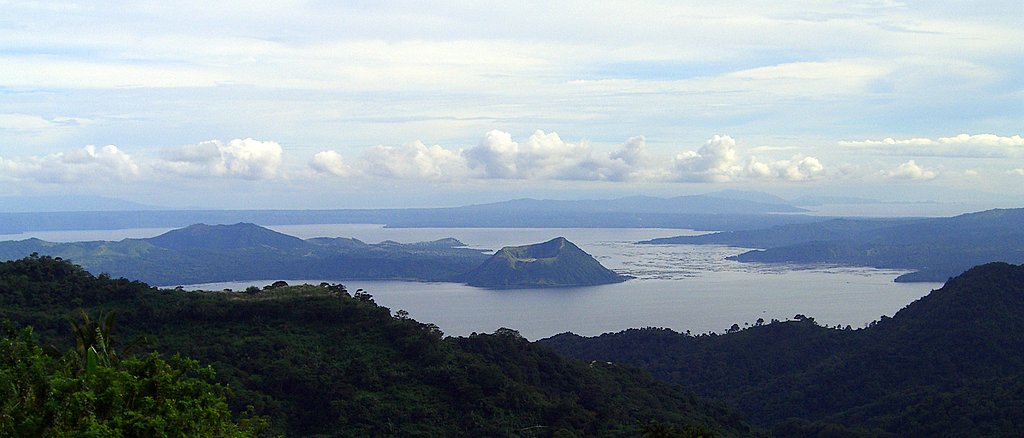
About 20 km or so as the crow flies almost due west from Los Baños lies the Taal volcano, apparently one of the world’s most dangerous volcanoes.

Taal volcano and volcano island from Tagaytay, on the northern rim of a vast caldera.

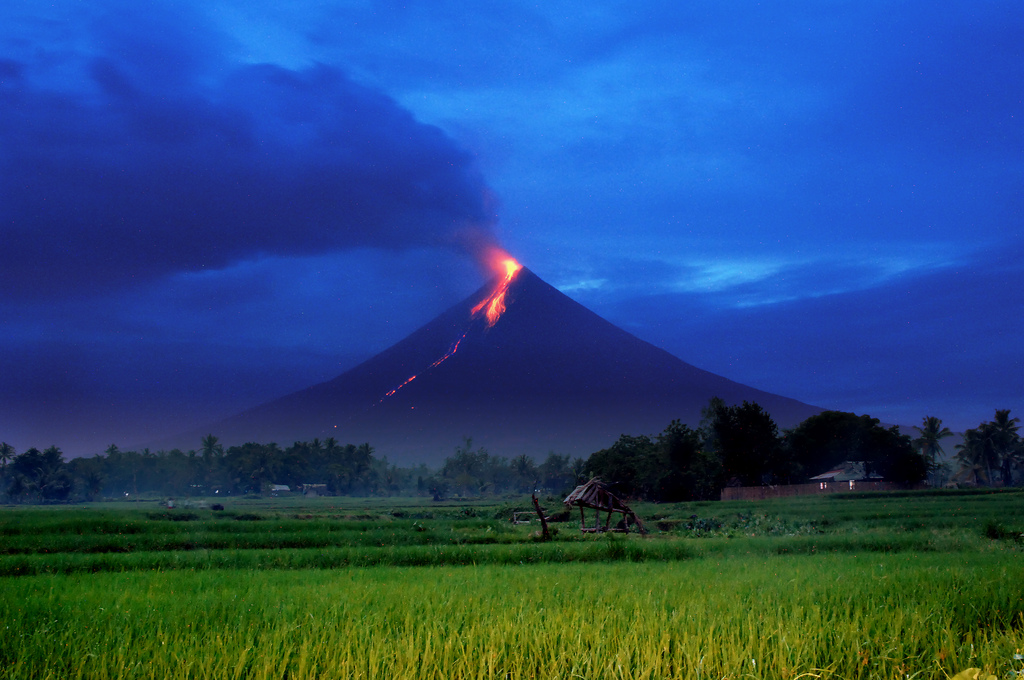
During our time in the Philippines there was the occasional rumble, but nothing significant since its last major eruption in 1977. Some 400 km southeast from Los Baños and north of the port city of Legazpi is the Mayon volcano, a perfect cone. This is very active and farmers often have to be evacuated when an eruption occurs.

Rice farmer Gloria Miranda’s house at the foot of Mayon Volcano was threatened by lava flows in July 2006. (Photo courtesy of IRRI. Photo by Ariel Javellana).

However, I’ve never been affected directly by a volcanic eruption, only indirectly. Let me explain.

Mt Pinatubo
At the beginning of January 1991 I was invited to interview for the position of Head of the Genetic Resources Center at IRRI. I flew out from Gatwick on British Airways via Hong Kong, after a 13 hour delay in London. After a week at IRRI, I flew back to the UK. Uneventful you may say, and so it was. At the end of January, IRRI offered me the position, and I accepted to join in July that year once I’d completed some teaching and examination commitments at The University of Birmingham.

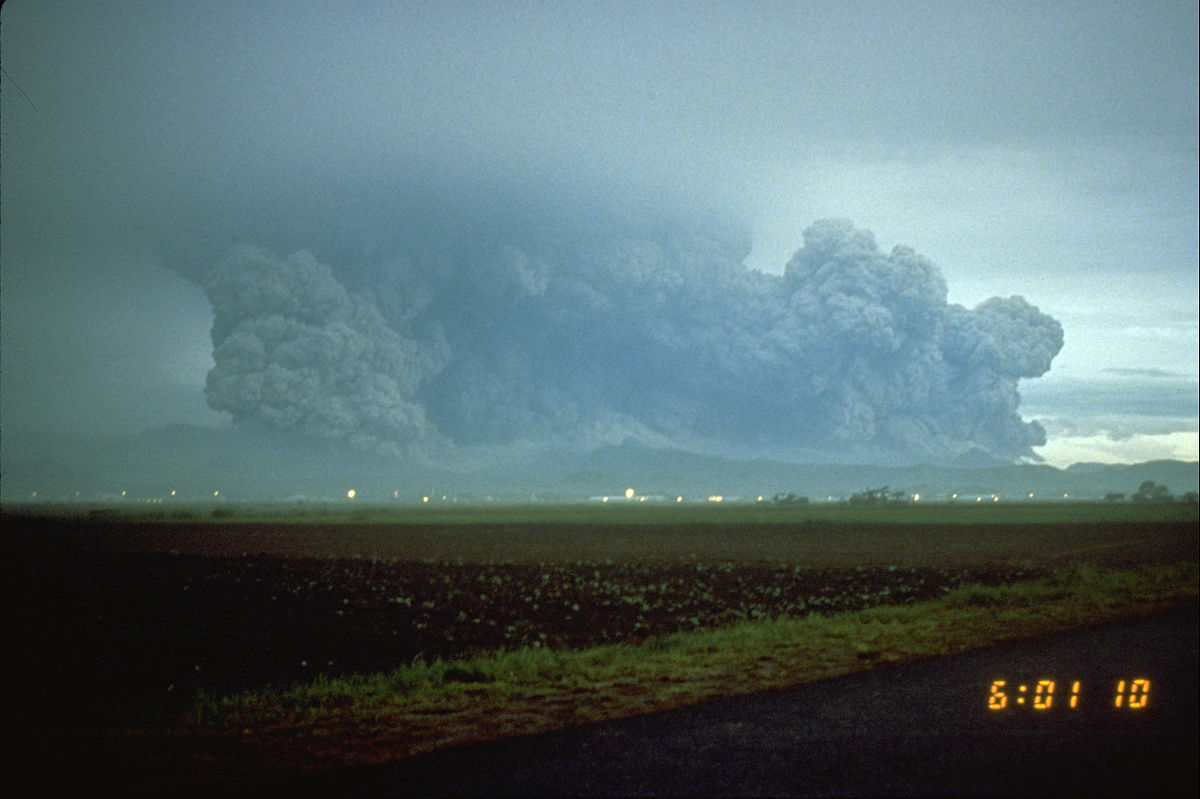
From mid-March, Mount Pinatubo, a seemingly innocuous volcano north of Manila, began to show signs of seismic activity. In early June there was a series of eruptions, but the massive, climactic eruption of 15 June had a massive effect over a huge area. Ash fell on Los Baños, 150 km to the south.

Fewer than 900 people lost their lives, due in no small part to the evacuations that had been enforced in the days leading up to the 15 June eruption.Nevertheless, the impact on humans, livestock and agriculture in general was immense and pitiful.

On June 15, 1991, this is the eruption plume minutes after the climactic eruption.

Manila airport was closed for days, flights were diverted. This was just a fortnight before I was scheduled to fly to the Philippines. Glued to the news each day I waited to see what the outcome would be. Fortunately I was able to travel on 30 June. But it was touch and go.

Over a year later, when we visited the flight deck of a British Airways 747 out of Hong Kong bound for Manila, the First Officer indicated that flights into the Philippines had to take well-defined flight paths to avoid the lingering ash layers at certain levels in the atmosphere, clearly visible to the naked eye.

A volcano with an unpronounceable name
And when it was time to return to the UK in 2010 on my retirement, it was another volcano, thousands of miles from the Philippines, that almost derailed our travel plans. We had booked to fly back (on our usual Emirates route via Dubai) on Sunday 2 May. But just a fortnight or so earlier, Iceland’s Eyjafjallajökull volcano had erupted; the ever expanding ash cloud effectively closed the airspace over much of Europe for many days.

The estimated ash cloud at 18:00 GMT on 15 April, just a day after the main eruption began.

Once again Fortune smiled on us, and we returned to the UK without delay or incident. Nevertheless, the disruption to air travel, inconvenience to passengers, and not least the economic costs just illustrate how feeble humanity is in the face of the forces of Nature.

Having ‘survived’ numerous earth tremors (or worse) I’m now highly sensitive to anything that smacks of an earthquake. I’m instantly alert. The fugitive impulse kicks in immediately. And you never know, even here in the UK when the next tremor will hit.

The UK is experiencing ever more severe winter storms, with gale-force winds. Not quite on the typhoon scale, but damaging enough, all the same. I hate lying in bed hearing the wind howling around, gusting as though the chimney might be toppled at any moment.

But unless I choose to, I’m unlikely to encounter an active volcano any time soon. Touch wood! However, those Icelandic volcanoes can be highly unpredictable.


How many crop varieties can you name?

Do you ever look at the variety name on a bag of potatoes in the supermarket? I do. Must get a life.

How many potato varieties can you name? Reds? Whites? Or something more specific, like Maris Piper, King Edward, or Desiree to name just three? Or do you look for the label that suggests this variety or that is better for baking, roasting, mashing? Let’s face it, we generally buy what a supermarket puts on the shelf, and the choice is pretty limited. What about varieties of rice? Would it just be long-grain, Japanese or Thai, arboreo, basmati, maybe jasmine? 

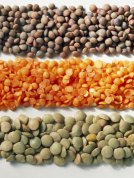
When I lived in the Philippines, we used to buy rice in 10 kg bags (although you could buy 25 kg or larger if you so desired). On each, the variety name was printed. This was important because they all had different cooking qualities or taste (or fragrance in the case of the Thai jasmine rice). In Filipino or Thai markets, it’s not unusual to see rice sold loose, with each pile individually labelled and priced, as the two images below show¹:

Today, our rather limited choice of varieties on the shelf does change over time as new ones are adopted by farmers, or promoted by the breeding companies because they have a better flavor, cooking quality, or can be grown more efficiently (often because they have been bred to resist diseases better).

Apples on the other hand are almost always promoted and sold by variety: Golden Delicious, Pink Lady, Granny Smith, Red McIntosh, and Bramley are some of the most popular. That’s because, whether you consciously think about it, you are associating the variety name with fruit color, flavor and flesh texture (and use). But there were so many more apple varieties grown in the past, which we often now describe as ‘heirloom varieties’. Most of these are just not commercial any more.

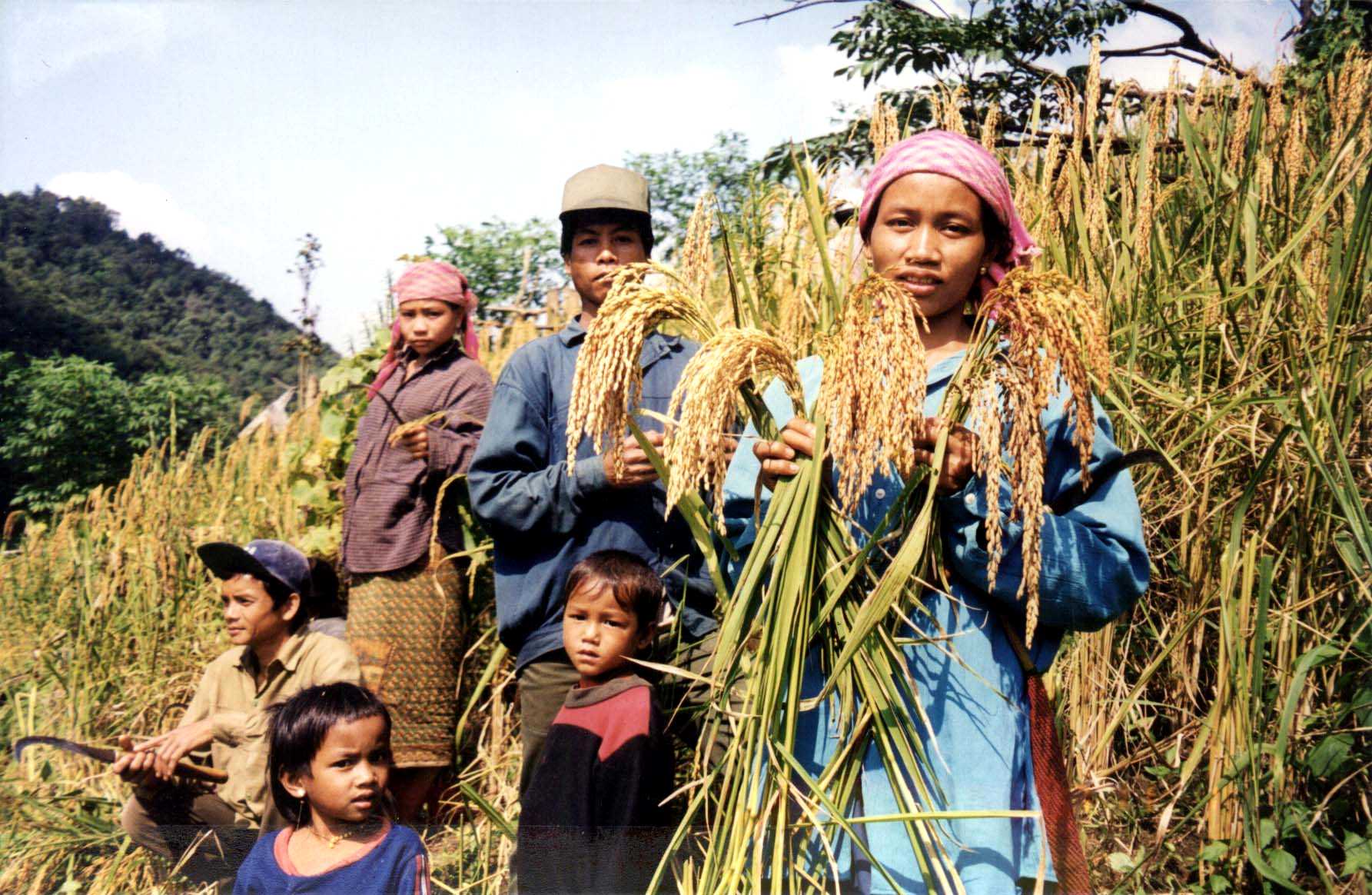
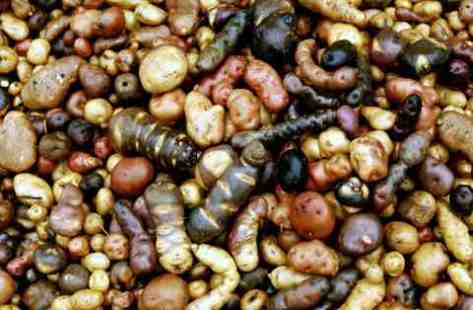
In many parts of the world, however, what we might consider as heirloom varieties are everyday agriculture for farmers. For example, a potato farmer in the Andes of South America, where the plant was first domesticated, might grow a dozen or more varieties in the same field. A rice farmer in the uplands of the Lao People’s Democratic Republic in Southeast Asia grows a whole mixture of varieties. As would a wheat farmer in the Middle East. There’s nothing heirloom or heritage about these varieties. This is survival.

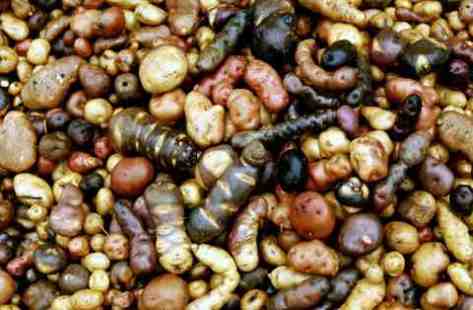
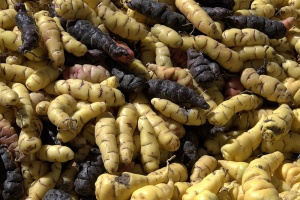
Heirloom potato varieties still grown by farmers in the Andes of Peru.

An upland rice farmer and her family in the Lao People’s Democratic Republic showing just some of the rice varieties they continue to cultivate. Many Lao rice varieties are glutinous (sticky) and particular to that country.

What’s even more impressive is that these farmers know each of the varieties they grow, what characteristics (or traits) distinguish each from the next, whether it is disease resistant, what it tastes like, how productive it will be. And just as we name our children, all these varieties have names that, to our unsophisticated ears, sound rather exotic.  Names can be a good proxy for the genetic diversity of varieties, but it’s not necessarily a perfect association. In the case of potatoes, for example, I have seen varieties that were clearly different (in terms of the shape and color of the tubers) but having the same name; while other varieties that we could show were genetically identical and looked the same had different names. The cultural aspects of naming crop varieties are extremely interesting and can point towards quite useful traits that a plant breeder might wish to introduce into a breeding program. Some years back, my colleague Appa Rao, I and others published a paper on how and why farmers name rice varieties in the Lao PDR.

In the genebank of the International Rice Research Institute (IRRI) in Los Baños in the Philippines, there are more than 120,000 samples of cultivated rice. And from memory there are at least 65,000 unique names. Are these genetically distinct? In many cases, yes they are. The genebank of the International Potato Center (CIP) in Lima, Peru conserves about 4000 different potato varieties.

What these potato and rice varieties represent (as do maize varieties from Mexico, wheats from the Middle East, soybeans from China, and beans from South and Central America, and many other crops) is an enormous wealth of genetic diversity or, if you prefer, agricultural biodiversity (agrobiodiversity): the genetic resources of the main staple crops and less widely planted crops that sustain human life. The efforts over the past six decades and more to collect and conserve these varieties (as seeds in genebanks wherever possible) provides a biological safety net for agriculture without depriving farmers of the genetic heritage of their indigenous crops. But as we have seen, time and time again, when offered choices—and that’s what it is all about—farmers may abandon their own crop varieties in favor of newly-bred ones that can offer the promise of higher productivity and better economic return. The choice is theirs (although agricultural policy in a number of countries has worked against the continued cultivation of so-called ‘farmer varieties’).

CGIARThank goodness for the genebanks of 11 centers of the global agricultural research partnership that is the Consultative Group on International Agricultural Research (CGIAR). These centers carefully conserve the largest, most important, and genetically-diverse collections of crop germplasm (and forages and trees) of the most important agricultural species. The flow of genetic materials to users around the world is sustained by the efforts of these genebanks under the International Treaty on Plant Genetic Resources for Food and Agriculture. And, of course, these collections have added long-term security because they are duplicated, for the most part, in the long-term vaults of the Svalbard Global Seed Vault¹ deep within a mountain on an island high above the Arctic Circle.

Heritage is not just about conservation. Heritage is equally all about use. So it’s gratifying (and intriguing) to see how IRRI, for example, is partnering with the Philippines Department of Agriculture and farmers in an ‘heirloom rice project‘ that seeks ‘to enhance the productivity and enrich the legacy of heirloom or traditional rice through empowered communities in unfavorable rice-based ecosystems‘ by adding value to the traditional varieties that farmers continue to grow but which have not, until now, been widely-accepted commercially. I gather a project is being carried out by the International Maize and Wheat Improvement Center (CIMMYT) for maize in Mexico that aims to raise the cuisine profile of traditional varieties.

Genetic conservation is about ensuring the survival of heritage varieties (and their wild relatives) for posterity. We owe a debt of gratitude to farmers over the millennia who have been the custodians of this important genetic diversity. It’s a duty of care on which humanity must not renege.

~~~~~~~~~~~~~~~~~~~~~~~
¹ Courtesy of IRRI
² The Seed Vault is owned and administered by the Ministry of Agriculture and Food on behalf of the Kingdom of Norway and is established as a service to the world community. The Global Crop Diversity Trust provides support for the ongoing operations of the Seed Vault, as well as funding for the preparation and shipment of seeds from developing countries to the facility. The Nordic Gene Bank (NordGen) operates the facility and maintains a public on-line database of samples stored in the seed vault. An International Advisory Council oversees the management and operations of the Seed Vault.

Completing a PhD – was it worth the effort?

A topical story in the Lima press
Overnight, there was an interesting and topical post (as far as I’m concerned) on the Facebook page of one of my ‘friends’—the son of one of my graduate students when I was a faculty member at The University of Birmingham in the 1980s. He hails from Peru. Carlos Arbizu Jr. is studying for his PhD at the University of Wisconsin-Madison and, as far as I can determine, he’s working on carrot genetics under the supervision of my friend and former potato scientist David Spooner.

Carlos had posted a link to an article published on the website of the Lima-based Newspaper Perú21: ¿Por qué estudiar un doctorado?  (Why study for a PhD?). To which Carlos had added the byline: PhD = Permanent Head Damage.

Maybe he’s going through a difficult patch right now. I’ve seen from several of his posts that he’s immersed in some pretty ‘heavy’ molecular genetic analysis. It’s beyond my comprehension.

But all PhD students go through peaks and troughs. I know I did. Some days nothing can go wrong, progress is swift. The world is your oyster, and there really is a light at the end of the tunnel. On other days, you just wish the earth would open up and swallow you.

And for many PhD students, the most trying time often comes when they begin to draft their thesis and eventually prepare to defend it. Unfortunately many science graduates have received very little formal training in how to write clear and concise prose. Writing just doesn’t come naturally. So what should be one of the most important aspects of completing a PhD can become a long and tedious chore. And before submission regulations were tightened up at UK universities, some students could take a couple of years or more to write up and submit their thesis for examination.

40 years ago today
Well, this Perú21 article was published yesterday. And today, 23 October (if memory serves me right) is exactly 40 years since I defended my PhD thesis: The Evolutionary Significance of the Triploid Cultivated Potato, Solanum x chaucha Juz. et Buk. I was almost 27 (old by UK standards, average or maybe young compared to many US graduate students), and had been working on my degree for four years. I’d completed a one-year MSc degree in genetic resources at Birmingham in September 1971 (having graduated from the University of Southampton with a BSc in botany and geography in July 1970), and then been offered the opportunity to work in Peru for a year at the newly-established International Potato Center (CIP). Well, for various reasons, and to cut a long story short, That opportunity didn’t materialize in September 1971 so my head of department, Professor Jack Hawkes (who went on to supervise my PhD) persuaded the Overseas Development Administration (now Department for International Development, DfID) to cough up some support until the funding for my position at CIP was guaranteed. Thus I began my study in Birmingham, and finally moved to Lima in January 1973, working as an Associate Taxonomist and conducting research that went towards my PhD thesis. And since I was employed and having a regular income, I took another three years to complete all the experimental work I had planned. In any case, when I joined CIP in 1973 the institute was still establishing and developing its own infrastructure. That was also one of the exciting aspects to my work. It was a real opportunity to build up and curate a large collection of Andean potato varieties and wild species, and study them in their native environment.

CIP collection

The CIP field collection of potato varieties planted in the Mantaro Valley near Huancayo in central Peru.

spuds

The diversity of Andean potato varieties.

The next couple of photos show some of the field work I carried out in various parts of Peru.

Mike Jackson and Jack Hawkes in the CIP potato germplasm collection, Huancayo, central Peru in early 1974

Learning from my supervisor, Professor Jack Hawkes, during one of his visits to Peru while I was carrying out my study.

MTJ in CIP

With CIP taxonomist, Professor Carlos Ochoa, a renowned Peruvian expert on potatoes and their wild relatives.

I was looking at the relationship between potato varieties with different chromosome numbers, so-called diploids and tetraploids, with 24 and 48 chromosomes respectively. If you can cross these two types you expect to produce some with an intermediate chromosome number. So, 48 x 24 = 36, the triploids. For the first years at CIP we didn’t have any glasshouses where we could work. Instead we had rather rustic polytunnels right in the field next to the germplasm collection, where I would make all those pollinations using the so-called cut-stem technique.

Experimental data from other parts of the world had shown that triploids were formed only rarely in such crosses. Yet triploid varieties were quite common and highly prized by potato farmers in the Andes. I was trying to determine if the crossability relationships of these native potatoes might be different in their indigenous environment. So I went on to make hundreds of crosses (and thousands of pollinations), as well as study indigenous farming systems in the south of Peru. This next gallery show some of the triploids potatoes grown by farmers. One of the most prized was the variety Huayro, and there were two forms, one round and the other elongated (and quite large). Both had red skins and yellow flesh.

Back to Birmingham
In May 1975, Steph and I headed back to the UK. But not directly. On the assumption that I would successfully defend my PhD thesis, CIP’s Director General had offered me a new position in the Outreach Department, and with the possibility of moving to Central America. So we headed for Costa Rica (where I’d eventually move to in April 1976) to see the lie of the land, so to speak. And from there we went on to Mexico for a few days to visit our old friends, and former CIP colleagues, John and Marion Vessey who had moved to maize and wheat center, CIMMYT, near Mexico City. From Mexico we headed to New York (first flight on a wide-bodied jet, an Eastern Airlines L-1011 Tristar) for a connection with British Airways to Manchester where my parents met us. We spent a further week looking for somewhere to live in Birmingham, and were fortunate to find an apartment very convenient to the university and only a few minutes walk from the Department of Botany (as it was then) Winterbourne Gardens where I had been assigned some lab space and a desk.

A nightmare waiting to happen
Now remember, there were no PCs or laptops, cloud computing, USB sticks or floppy disks in 1975. All my thesis data was available in hard copy only, and I carried a briefcase with four years of work with me from Lima to the UK on that journey I just related. The briefcase was hardly ever out of my sight! In those days it was not unknown for a graduate student to have lost a briefcase on a journey containing a complete draft of a thesis. No backup!

Getting into a routine
Once settled in Birmingham, I planned out my work for the coming months, with a deadline of 1 October. That was the final day of submission if I wanted to have my thesis examines and (if approved) have the degree awarded at the next congregation or commencement in early December that same year. But by the beginning of June I had not even begun to write, never mind complete the last minute field experiment I had planned (checking the ploidy of a set of hybrids produced earlier in the year) or create the figures I would include. Again, there was no digital technology available. I had to hand draw all my maps and other figures (my geography training in cartography at Southampton finally came in useful). While the department’s chief technician actually photographed all of these, I had to print all my own photographs (again, the experience I’d gained from my father, a professional photographer all his life, came in handy).

Working to a regular schedule every day, from around 7:30 am until 5 pm with a break for lunch, and spending another couple of hours after dinner, I soon began to make progress, although I didn’t actually start putting pen to paper until the beginning of July. It took me only six weeks to draft my thesis. Once I’d completed a chapter I’d hand it over to Jack Hawkes for review and revision. And to give him credit, he usually handed me back my draft with his comments within a couple of days only (and this was an approach I adopted with all my graduate students during the 1980s).

So, by mid-August or so I had a completed text, I’d checked the chromosome numbers of the hundred or so plants in the field, and set about the figures. I found someone who would type my thesis, but at the last moment he had to use a manual typewriter since the electric one he’d wanted to rent was no longer available. In 1975 The University of Birmingham changed the thesis submission regulations and it was no longer necessary to submit a thesis fully bound in a hard cover. I was able to submit in temporary binding, and this in fact saved perhaps three weeks from my tight schedule. I hit the 1 October deadline with about twenty minutes to spare just before 5 pm.

Thesis defence
I was quite surprised when my external examiner planned the defence of my thesis just three weeks later. All went to plan. In those days, the exam consisted of the graduate student, the external examiner and an internal examiner (usually the thesis supervisor). Today things might have changed, and even when I worked at Birmingham in the 80s the supervisor was no longer permitted to act as the internal examiner. I believe there may now also be a third panel member, to see fair play.

From the outset it was apparent that my thesis would pass muster, since the external examiner told me that he’d enjoyed reading the thesis. But we then went on to have a thorough discussion over the next three hours about many of the details, and the implications for potato genetic conservation and breeding. Phew!

And in early December, the 12th actually, I was able to celebrate with others from the department as we were awarded our degrees at the mid-year congregation.

19 Ed & Mike

L to R: Pam Haigh, Brenig Garrett,  me, Prof Trevor Williams, Prof Jack Hawkes, Dr Jean Hanson, Margaret Yarwood, Jane Toll, Stephen Smith

20 Ed & Mike

With my PhD supervisor, Prof. Jack Hawkes on my right, and MSc supervisor, Prof. Trevor Williams on my left; 12 December 1975.

PhD congregation, 12 December 1975 - with Mum and Dad

With my Mum and Dad.

bluedivider-hi

Was it worth it?
So let me come back to the question I posed in the title of this post. Was it worth it? Unequivocally Yes! Would I want to do it again? No!

Actually completing a PhD is probably the most selfish piece of research that a scientist will ever get to do. There’s one aim: complete a thesis and have the doctorate awarded. PhD research does not have to be ground-breaking at all. In fact much of it is pretty mundane, and that’s one of the down sides when things are not going so well. For Birmingham at least, the PhD regulations stated that the thesis had to represent a piece of original research, completed under supervision. And it’s the ‘under supervision’ that is critical. A PhD student is still maturing, so to speak. The work is guided by a mentor. Of course there can be breakthroughs that lead to the most prestigious prizes. I believe that Sir Paul Nurse’s PhD research set him off on the path that eventually led to his Nobel prize.

I have encouraged others to research for a PhD, and I hope I was able to give them the support and advice that my supervisors gave me. In that respect my PhD was a positive experience. It’s not always the case, and when student-supervisor relationships break down, every one suffers. It does not necessarily have to take many, many months (or years even) to write a thesis. It takes self-discipline but also support from the supervisor.

Without a PhD I would not have enjoyed the career in international agricultural research and academia that I did. My PhD was like a ‘union card’. It enabled me to seek opportunities that would probably have been closed without a PhD. But I also acknowledge that I was lucky. I moved into a field—genetic resources—that was just expanding, as were the international centers of the CGIAR. And I had mentors who were prepared to back me.

Forty years on I can look back to those days in 1975 with a fair degree of nostalgia. And then reflect on the benefits that accrued from that intense but disciplined period in the summer of 1975 (when there was a heat wave, and Arthur Ashe won the men’s title at Wimbledon), and which allow me now to enjoy the retirement I started five years ago.

Both of our daughters, Hannah and Philippa, went on to complete a PhD (in 2006 and 2010, respectively) in their chosen field: psychology! So I can’t have passed on so many negative vibes about graduate study, although their choice of psychology does make a profound statement, perhaps.

Peer-reviewed papers
Incidentally, I finally got around to publishing three papers from my thesis. When I returned to CIP just before New Year 1976, I moved into a new role and responsibilities. And even though I eventually found time to draft manuscripts, these took some time to appear in print after peer review, revision and acceptance. One of the papers—on the field work at Cuyo Cuyo—was originally submitted to the journal Economic Botany. And there it languished for over two years. I received an invitation from the editor of Euphytica to submit a paper on the same topic, so I withdrew my manuscript from Economic Botany. About that same time I received a letter from that journal’s interim editor in chief that manuscripts had been discovered unpublished up to 20 years after they had been submitted, and what did I want to happen to mine. It was published in Euphytica in 1980.

Jackson, M.T., J.G. Hawkes & P.R. Rowe, 1977. The nature of Solanumchaucha Juz. et Buk., a triploid cultivated potato of the South American Andes. Euphytica 26, 775-783. PDF

Jackson, M.T., J.G. Hawkes & P.R. Rowe, 1980. An ethnobotanical field study of primitive potato varieties in Peru. Euphytica 29, 107-113. PDF

Jackson, M.T., P.R. Rowe & J.G. Hawkes, 1978. Crossability relationships of Andean potato varieties of three ploidy levels. Euphytica 27, 541-551.PDF

Around the world in 40 years . . . Part 11. Peru: jewel of the Andes

peru_map_outline_titleOver the past few days, I have exchanged some messages on Facebook with the son of a former PhD student of mine from Peru, Dr  Carlos Arbizu. The son, also named Carlos, is currently a PhD student at the University of Wisconsin.

The Arbizu family hails from the fair city of Ayacucho, in the central Andes, almost 600 miles by road southeast of Lima. And it was a photo that Carlos Jr had posted on Facebook recently that made me think about the various travels Steph and I enjoyed around Peru during the two and a half years we lived and worked in Peru. And then I realized that I hadn’t blogged very much about our travels around Peru, although I have posted several stories about our time and work there.

Abra Apacheta

Carlos’ photo was taken at a location known as Abra Apacheta and, as you can see, it’s rather high (map). He confirmed that this place is on the road between Pisco on the coast, and Ayacucho, capital of the Department of the same name further east. But the condition of the road looks significantly better today than in 1974 when Steph and I took our 1600 cc VW Variant on the same trip. I also remember rather a lot of mud somewhere near the top, and great relief when we eventually ploughed through it and reached a slightly firmer road surface on the long descent towards Ayacucho.

I purchased the VW in the UK in September 1972 (for about £1200 tax free), used it for three months, and then it was shipped from Liverpool to Callao. And it served us well for the three years we lived in Peru.

Just a few days after Steph arrived in Peru in early July 1973, we took a day trip up the Santa Eulalia valley near Chosica. This would become one of our favorite short trip destinations.

Steph and I made these long road trips:

  1. Lima-Pisco-Ayacucho-Huancayo-Lima (September 1973)
  2. Lima-Huaraz-Trujillo-Cajamarca-Lima (in June 1974, with our friends John and Marion Vessey)
  3. Lima-San Ramon-Lima (with a day trip by air to Puerto Bermudez, September 1974)
  4. Lima-Arequipa-Puno-Arequipa-Lima (November 1974)

Lima-Pisco-Ayacucho-Huancayo-Lima (map)
to tell the truth, I don’t remember too many details. It seemed like a long climb to the top, and even longer down to Ayacucho. Carlos Arbizu Jr mentioned a duration of 17 hours for the journey. I guess I must have told his father about it once upon a time. Of course Ayacucho became an extremely unsafe place to travel after about 1975 as it was a center of terrorist Sendero Luminoso activity. In 1973 it was a lovely city, with a beautiful Plaza de Armas. The continuation of our journey took us north to Huancayo (location of CIP’s mountain research station) along the valley of the Rio Mantaro. The road was so narrow, with many steep drops into the river below that, in 1973 at least, traffic was only permitted in each direction on alternate days.

Steph was a keen aficionado of cacti, so we had to stop frequently especially on the road north from Ayacucho before we reached the Rio Mantaro valley.

Lima-Huaraz-Trujillo-Cajamarca-Lima (map)
In May 1973 (just a few months after I’d joined CIP), my colleague Zosimo Huaman and I made a month-long collecting trip to the Departments of Ancash and La Libertad. The scenery is stunning, so I had to take Steph there.

19731013005

Marion, Steph, and John on 13 October 1973 – the day Steph and I were married in Miraflores town hall. John and Marion were our witnesses, and we celebrated afterwards at La Granja Azul near Chosica.

And we were joined by our friends John and Marion Vessey (John was a plant pathologist at CIP).

We stayed in Huaraz in the Callejón de Huaylas, and traveled north from there to view the destruction of the earthquake from May 1970 in the former towns of Ranrahirca and Yungay just below Peru’s tallest mountain, Huascarán. We also visited the famous archaeological site at Chavín de Huantar east of Huaraz. It was on that part of the journey that I slammed into a small boulder in the road. I couldn’t see any damage so we continued. The following day as we climbed out of the Callejón de Huaylas towards the coast, i could hear creaking from the rear of the car, and I discovered that one of the shock absorber mountings had been damaged. In fact there was a split, so we limped back into Huaraz to see if it could be repaired. I didn’t have much hope of finding a replacement. Well, as soon as the mechanic had jacked the car up, the mounting split and the wheel almost fell off. With some judicious welding, we were on our way again after a little over an hour. I soon had all the shock absorbers replaced with heavy duty ones.

On the coast, near Casma we visited the archaeological site of Cerro Sechín that has a collection of the most extraordinary carved stones depicting severed heads and the like, obviously the site of a battle.

Peru 027

Battle carvings at Cerro Sechin.

And from the coast, we climbed back up into the Andes to Cajamarca, probably my favorite city in the mountains. It’s not so high, around 2700 m, and has a very pleasant climate. I had visited just a month earlier as part of a three week collecting trip that I made throughout the Department.

Two memories stand out. First, the leche asada (or crème caramel) for which Cajamarca is famous. And the Inca hot baths where we spent a relaxing couple of hours. Cajamarca had in the 1970s a thriving dairy industry. Cajamarca cheese was justly renowned. The British overseas aid had a veterinary team based in Cajamarca, and their offices were located in a renovated ranch house (or finca). The cathedral in the Plaza de Armas was never completed, but the carving of the stonework is exquisite.

Lima-San Ramón-Lima (map)
CIP had a field station on San Ramón (just 770 m altitude), where germplasm was tested for adaptation to warm climates, as well as resistance to various diseases. My work didn’t take me there, so Steph and I decided to go and see for ourselves. The first part of the journey was the same as traveling to Huancayo, but turning north towards Tarma before reaching Huancayo. Tarma is famous for its flower production. The drop down to San Ramón from there is quite spectacular, and it’s quite a sensation to feel the air getting much warmer and more humid as you descend. On one day we drove on to La Merced along the Rio Chanchamayo. On another day we took a light aircraft from San Ramón to the hamlet of Puerto Bermudez on the Rio Pichis, which is apparently the geographical center of Peru. We hired a dugout canoe for a trip upriver, from which there is a great view west towards the escarpment of the east side of the Andes. We faced our return flight with some trepidation. The weather en route was a little stormy, and San Ramón was rained in. There were no seats for us passengers, so we sat on upturned empty beer crates. And our travel companions were several pig carcasses. We lived to tell the tale.

Lima-Arequipa-Puno-Arequipa-Lima (map)
It’s a long drive to Puno, although I’d made the same trip in January that year to carry out field studies at Cuyo-Cuyo. We drove only as far as Arequipa, and then decided to take a communal taxi (or colectivo) for the rest of the trip over the mountains to Puno, which lies at over 4000 m above sea level.

Arequipa is a lovely city and its Plaza de Armas is framed with the  El Misti volcano in the background. The cathedral dates back to the late 17th century. Another site we visited was the Santa Catalina monastery, built almost like a small Spanish village with painted ochre walls.

In Puno we took a trip to the floating islands on Lake Titicaca (the highest navigable lake in the world), inhabited by the Uru people. The beautiful boats made from the totora reeds are used for everyday activities, including school classes, and even growing potatoes. On another day we headed north from Puno to see the Aymara stone towers or chullpas of the Colla people at Sillustani on the shore of Lake Umayo. The chullpas were family tombs, and the stonework is fantastic.

We traveled back to Arequipa to pick up our car, and return to Lima, a journey of two days.

I was lucky to visit Machu Picchu within a week of arriving to Lima in January 1973, and although Steph and I were married in Lima in October that year, we didn’t go away on honeymoon until December, when we visited Cuzco (and Machu Picchu) by air. In Cuzco we visited the famous fortress of Sacsayhuaman.

On the Sunday we went by taxi to the market at Pisac in the Urubamba valley, about 30 km northeast of Cuzco.

Of course I made other trips in the course of my work, and Steph and I regularly traveled to Huancayo for field work, that involved crossing Ticlio, one of the highest passes in the Andes.

Peru 037


A lifetime’s work . . .

I published my first scientific paper in 1972. It described a new technique to make root tip squashes to count chromosomes, and it was published in the August 1972 volume of the Journal of Microscopy. It came out of the work I did for my MSc dissertation on lentils and their origin.

Then in January 1973 I entered the world of work, and for the next 37 years until my retirement in April 2010, I worked as a research scientist or research manager at just three organizations (although I actually held five different positions) at: the International Potato Center (CIP) in Peru (1973-1981); The University of Birmingham (1981-1991); and the International Rice Research Institute (IRRI) in the Philippines (1991-2010).

The focus of my research was primarily the conservation and use of plant genetic resources, specifically of potatoes, grain legumes, and rice, with biosystematics and genetic diversity, as well as different approaches to germplasm conservation, being particular themes. But I also studied potato diseases and agronomy.

So as much for my own interest and anyone else who might like to review my scientific contributions, this blog post relates specifically to my refereed papers, books, chapters, and other miscellaneous publications that I have written over the decades.

Science is a collaborative endeavour, and I have been extremely fortunate to have had the opportunity of working with some outstanding colleagues from different organizations around the world, as well as supervising the research of great graduate students at Birmingham for their PhD degrees, or staff at the Genetic Resources Center at IRRI. But having taken on a senior management role at IRRI in 2001 there was obviously less opportunity thereafter to engage in scientific publication, apart from several legacy studies from my active research years.

I have provided links to PDF copies of these papers where available. And I have also given, in [ ], the number of citations for each (details from Google Scholar, where available, as of 24 March 2024).

PAPERS IN REFEREED JOURNALS

Biosystematics & germplasm diversity
I trained as a biosystematist looking at the species relationships of lentils and potatoes. So when I moved to IRRI in 1991, I decided that we needed to understand better the germplasm collection (now more than 117,000 seed accessions of cultivated and wild rices) in terms of species range and relationships. Over the next 10 years we invested in a significant effort to study the AA genome species most closely related to cultivated rice, Oryza sativa. We also reported some of the first applications of molecular markers to study a germplasm collection, and one of the first—if not the first—studies in association genetics, in a collaboration with The University of Birmingham and the John Innes Centre, Norwich.

Wild rice crosses

The 39 papers listed here cover work on potatoes, rice, lentil, grass pea (Lathyrus), and a fodder legume, tagasaste, from the Canary Islands.

Damania, A.B., M.T. Jackson & E. Porceddu, 1984. Variation in wheat and barley landraces from Nepal and the Yemen Arab Republic. Zeitschrift für Pflanzenzüchtung 94, 13-24. PDF [21]

Ford-Lloyd, B.V., D. Brar, G.S. Khush, M.T. Jackson & P.S. Virk, 2008. Genetic erosion over time of rice landrace agrobiodiversity. Plant Genetic Resources: Characterization and Utilization 7(2), 163-168. PDF [27]

Ford-Lloyd, B.V., M.T. Jackson & A. Santos Guerra, 1982. Beet germplasm in the Canary Islands. Plant Genetic Resources Newsletter 50, 24-27. PDF [2]

Ford-Lloyd, B.V., H.J. Newbury, M.T. Jackson & P.S. Virk, 2001. Genetic basis for co-adaptive gene complexes in rice (Oryza sativa L.) landraces. Heredity 87, 530-536. PDF [24]

Francisco-Ortega, J. & M.T. Jackson, 1992. The use of discriminant function analysis to study diploid and tetraploid cytotypes of Lathyrus pratensis L. (Fabaceae: Faboideae). Acta Botanica Neerlandica 41, 63-73. PDF [4]

Francisco-Ortega, J., M.T. Jackson, J.P. Catty & B.V. Ford-Lloyd, 1992. Genetic diversity in the Chamaecytisus proliferus (L. fil.) Link complex (Fabaceae: Genisteae) in the Canary Islands in relation to in situ conservation. Genetic Resources and Crop Evolution 39, 149-158. PDF [23]

Francisco-Ortega, F.J., M.T. Jackson, A. Santos-Guerra & M. Fernandez-Galvan, 1990. Genetic resources of the fodder legumes tagasaste and escobón (Chamaecytisus proliferus (L. fil.) Link sensu lato) in the Canary Islands. Plant Genetic Resources Newsletter 81/82, 27-32. PDF [15]

Francisco-Ortega, J., M.T. Jackson, A. Santos-Guerra & M. Fernandez-Galvan, 1991. Historical aspects of the origin and distribution of tagasaste (Chamaecytisus proliferus (L. fil.) Link ssp. palmensis (Christ) Kunkel), a fodder tree from the Canary Islands. Journal of the Adelaide Botanical Garden 14, 67-76. PDF [31]

Francisco-Ortega, J., M.T. Jackson, A. Santos-Guerra & B.V. Ford-Lloyd, 1993. Morphological variation in the Chamaecytisus proliferus (L. fil.) Link complex (Fabaceae: Genisteae) in the Canary Islands. Botanical Journal of the Linnean Society 112, 187-202. PDF [9]

Francisco-Ortega, J., M.T. Jackson, A. Santos-Guerra, M. Fernandez-Galvan & B.V. Ford-Lloyd, 1994. The phytogeography of the Chamaecytisus proliferus (L. fil.) Link (Fabaceae: Genisteae) complex in the Canary Islands: a multivariate analysis. Vegetatio 110, 1-17. PDF [11]

Francisco-Ortega, J., M.T. Jackson, A.R. Socorro-Monzon & B.V. Ford-Lloyd, 1992. Ecogeographical characterization of germplasm of tagasaste and escobón (Chamaecytisus proliferus (L. Fil.) Link sensu lato) from the Canary Islands: soil, climatological and geographical features. Investigación Agraria: Producción y Protección Vegetal 7, 377-388. PDF

Gubb, I.R., J.C. Hughes, M.T. Jackson & J.A. Callow, 1989. The lack of enzymic browning in the wild potato species Solanum hjertingii Hawkes compared with commercial Solanum tuberosum varieties. Annals of Applied Biology 114, 579-586. PDF [14]

Jackson, M.T. 1975. The evolutionary significance of the triploid cultivated potato, Solanum x chaucha Juz. et Buk. PhD thesis, University of Birmingham. [10]

Jackson, M.T., J.G. Hawkes & P.R. Rowe, 1977. The nature of Solanum x chaucha Juz. et Buk., a triploid cultivated potato of the South American Andes. Euphytica 26, 775-783. PDF [39]

Jackson, M.T., J.G. Hawkes & P.R. Rowe, 1980. An ethnobotanical field study of primitive potato varieties in Peru. Euphytica 29, 107-113. PDF [58]

Jackson, M.T., P.R. Rowe & J.G. Hawkes, 1978. Crossability relationships of Andean potato varieties of three ploidy levels. Euphytica 27, 541-551. PDF [45]

Jackson, M.T. & A.G. Yunus, 1984. Variation in the grasspea, Lathyrus sativus L. and wild species. Euphytica 33, 549-559. PDF [170]

Juliano, A.B., M.E.B. Naredo & M.T. Jackson, 1998. Taxonomic status of Oryza glumaepatula Steud. I. Comparative morphological studies of New World diploids and Asian AA genome species. Genetic Resources and Crop Evolution 45, 197-203. PDF [40]

Juliano, A.B., M.E.B. Naredo, B.R. Lu & M.T. Jackson, 2005. Genetic differentiation in Oryza meridionalis Ng based on molecular and crossability analyses. Genetic Resources and Crop Evolution 52, 435-445. PDF [18]

Juned, S.A., M.T. Jackson & J.P. Catty, 1988. Diversity in the wild potato species Solanum chacoense Bitt. Euphytica 37, 149-156. PDF [32]

Juned, S.A., M.T. Jackson & B.V. Ford-Lloyd, 1991. Genetic variation in potato cv. Record: evidence from in vitro “regeneration ability”. Annals of Botany 67, 199-203. PDF [3]

Lu, B.R., M.E.B. Naredo, A.B. Juliano & M.T. Jackson, 1997. Hybridization of AA genome rice species from Asia and Australia. II. Meiotic analysis of Oryza meridionalis and its hybrids. Genetic Resources and Crop Evolution 44, 25-31. PDF [26]

Lu, B.R., M.E.B. Naredo, A.B. Juliano & M.T. Jackson, 1998. Taxonomic status of Oryza glumaepatula Steud. III. Assessment of genomic affinity among AA genome species from the New World, Asia, and Australia. Genetic Resources and Crop Evolution 45, 215-223. PDF [25]

Martin, C., A. Juliano, H.J. Newbury, B.R. Lu, M.T. Jackson & B.V. Ford-Lloyd, 1997. The use of RAPD markers to facilitate the identification of Oryza species within a germplasm collection. Genetic Resources and Crop Evolution 44, 175-183. PDF [80]

Naredo, M.E.B., A.B. Juliano, B.R. Lu & M.T. Jackson, 1997. Hybridization of AA genome rice species from Asia and Australia. I. Crosses and development of hybrids. Genetic Resources and Crop Evolution 44, 17-23. PDF [52]

Naredo, M.E.B., A.B. Juliano, B.R. Lu & M.T. Jackson, 1998. Taxonomic status of Oryza glumaepatula Steud. II. Hybridization between New World diploids and AA genome species from Asia and Australia. Genetic Resources and Crop Evolution 45, 205-214. PDF [35]

Naredo, M.E.B., A.B. Juliano, B.R. Lu & M.T. Jackson, 2003. The taxonomic status of the wild rice species Oryza ridleyi Hook. f. and O. longiglumis Jansen (Ser. Ridleyanae Sharma et Shastry) from Southeast Asia. Genetic Resources and Crop Evolution. Genetic Resources and Crop Evolution 50, 477-488. PDF [9]

Parsons, B.J., H.J. Newbury, M.T. Jackson & B.V. Ford-Lloyd, 1997. Contrasting genetic diversity relationships are revealed in rice (Oryza sativa L.) using different marker types. Molecular Breeding 3, 115-125. PDF [217]

Parsons, B., H.J. Newbury, M.T. Jackson & B.V. Ford-Lloyd, 1999. The genetic structure and conservation of aus, aman and boro rices from Bangladesh. Genetic Resources and Crop Evolution 46, 587-598. PDF [57]

Virk, P.S., B.V. Ford-Lloyd, M.T. Jackson & H.J. Newbury, 1995. Use of RAPD for the study of diversity within plant germplasm collections. Heredity 74, 170-179. PDF [383]

Virk, P.S., B.V. Ford-Lloyd, M.T. Jackson, H.S. Pooni, T.P. Clemeno & H.J. Newbury, 1996. Predicting quantitative variation within rice using molecular markers. Heredity 76, 296-304. PDF [233]

Virk, P.S., H.J. Newbury, M.T. Jackson & B.V. Ford-Lloyd, 1995. The identification of duplicate accessions within a rice germplasm collection using RAPD analysis. Theoretical and Applied Genetics 90, 1049-1055. PDF [207]

Virk, P.S., H.J. Newbury, M.T. Jackson & B.V. Ford-Lloyd, 2000. Are mapped markers more useful for assessing genetic diversity? Theoretical and Applied Genetics 100, 607-613. PDF [92]

Virk, P.S., J. Zhu, H.J. Newbury, G.J. Bryan, M.T. Jackson & B.V. Ford-Lloyd, 2000. Effectiveness of different classes of molecular marker for classifying and revealing variation in rice (Oryza sativa) germplasm. Euphytica 112, 275-284. PDF [207]

Williams, J.T., A.M.C. Sanchez & M.T. Jackson, 1974. Studies on lentils and their variation. I. The taxonomy of the species. Sabrao Journal 6, 133-145. PDF [61]

Woodwards, L. & M.T. Jackson, 1985. The lack of enzymic browning in wild potato species, Series Longipedicellata, and their crossability with Solanum tuberosum. Zeitschrift für Pflanzenzüchtung 94, 278-287. PDF [24]

Yunus, A.G. & M.T. Jackson, 1991. The gene pools of the grasspea (Lathyrus sativus L.). Plant Breeding 106, 319-328. PDF [65]

Yunus, A.G., M.T. Jackson & J.P. Catty, 1991. Phenotypic polymorphism of six isozymes in the grasspea (Lathyrus sativus L.). Euphytica 55, 33-42. PDF [36]

Zhu, J., M.D. Gale, S. Quarrie, M.T. Jackson & G.J. Bryan, 1998. AFLP markers for the study of rice biodiversity. Theoretical and Applied Genetics 96, 602-611. PDF [271]

Zhu, J.H., P. Stephenson, D.A. Laurie, W. Li, D. Tang, M.T. Jackson & M.D. Gale, 1999. Towards rice genome scanning by map-based AFLP fingerprinting. Molecular and General Genetics 261, 184-295. PDF [30]

Germplasm conservation
The 14 papers in this section focus primarily on studies we carried out at IRRI to enhance the conservation of rice seeds. It’s interesting to note that new research on seed drying just published by seed physiologist Fiona Hay and colleagues at IRRI has thrown some doubt on the seed drying measures we introduced in the mid-1990s. But there is much more to learn, and after all, that’s the way of science.
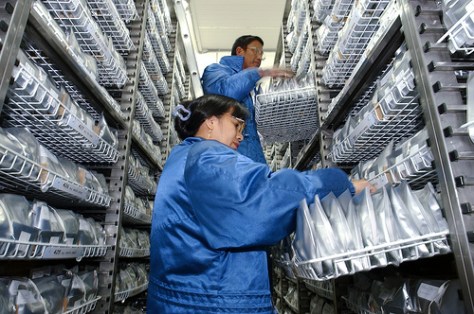
People_working_inside_the_International_Rice_Genebank

Appa Rao, S., C. Bounphanouxay, V. Phetpaseut, J.M. Schiller, V. Phannourath & M.T. Jackson, 1997. Collection and preservation of rice germplasm from southern and central regions of the Lao PDR. Lao Journal of Agriculture and Forestry 1, 43-56. PDF [13]

Appa Rao, S., C. Bounphanousay, J.M. Schiller & M.T. Jackson, 2002. Collection, classification, and conservation of cultivated and wild rices of the Lao PDR. Genetic Resources and Crop Evolution 49, 75-81. PDF [48]

Appa Rao, S., C. Bounphanousay, J.M. Schiller, A.P. Alcantara & M.T. Jackson, 2002. Naming of traditional rice varieties by farmers in the Lao PDR. Genetic Resources and Crop Evolution 49, 83-88. PDF [67]

Ellis, R.H., T.D. Hong & M.T. Jackson, 1993. Seed production environment, time of harvest, and the potential longevity of seeds of three cultivars of rice (Oryza sativa L.). Annals of Botany 72, 583-590. PDF [166]

Ellis, R.H. & M.T. Jackson, 1995. Accession regeneration in genebanks: seed production environment and the potential longevity of seed accessions. Plant Genetic Resources Newsletter 102, 26-28. PDF [13]

Ford-Lloyd, B.V. & M.T. Jackson, 1991. Biotechnology and methods of conservation of plant genetic resources. Journal of Biotechnology 17, 247-256. PDF [19]

Francisco-Ortega, F.J. & M.T. Jackson, 1993. Conservation strategies for tagasaste and escobón (Chamaecytisus proliferus (L. fil.) Link) in the Canary Islands. Boletim do Museu Municipal do Funchal, Sup. N° 2, 99-105. PDF

Kameswara Rao, N. & M.T. Jackson, 1996. Seed longevity of rice cultivars and strategies for their conservation in genebanks. Annals of Botany 77, 251-260. PDF [79]

Kameswara Rao, N. & M.T. Jackson, 1996. Seed production environment and storage longevity of japonica rices (Oryza sativa L.). Seed Science Research 6, 17-21. PDF [47]

Kameswara Rao, N. & M.T. Jackson, 1996. Effect of sowing date and harvest time on longevity of rice seeds. Seed Science Research 7, 13-20. PDF [31]

Kameswara Rao, N. & M.T. Jackson, 1997. Variation in seed longevity of rice cultivars belonging to different isozyme groups. Genetic Resources and Crop Evolution 44, 159-164. PDF [40]

Kiambi, D.K., B.V. Ford-Lloyd, M.T. Jackson, L. Guarino, N. Maxted & H.J. Newbury, 2005. Collection of wild rice (Oryza L.) in east and southern Africa in response to genetic erosion. Plant Genetic Resources Newsletter 142, 10-20. PDF [23]

Loresto, G.C., E. Guevarra & M.T. Jackson, 2000. Use of conserved rice germplasm. Plant Genetic Resources Newsletter 124, 51-56. PDF [11]

Naredo, M.E.B., A.B. Juliano, B.R. Lu, F. de Guzman & M.T. Jackson, 1998. Responses to seed dormancy-breaking treatments in rice species (Oryza L.). Seed Science and Technology 26, 675-689. PDF [98]

Germplasm evaluation & use
These five papers come from the work of some of my graduate students, looking primarily at the resistance of wild potato species to a range of pests and diseases, especially potato cyst nematode.
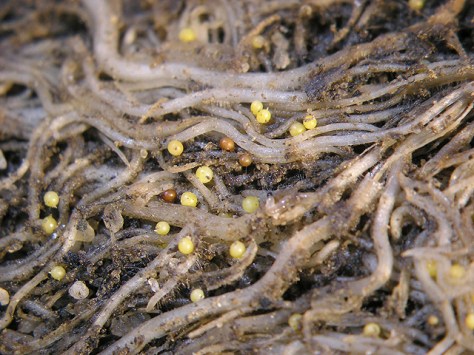
OLYMPUS DIGITAL CAMERA

Andrade-Aguilar, J.A. & M.T. Jackson, 1988. Attempts at interspecific hybridization between Phaseolus vulgaris L. and P. acutifolius A. Gray using embryo rescue. Plant Breeding 101, 173-180. PDF [33]

Chávez, R., M.T. Jackson, P.E. Schmiediche & J. Franco, 1988. The importance of wild potato species resistant to the potato cyst nematode, Globodera pallida, pathotypes P4A and P5A, in potato breeding. I. Resistance studies. Euphytica 37, 9-14. PDF [25]

Chávez, R., M.T. Jackson, P.E. Schmiediche & J. Franco, 1988. The importance of wild potato species resistant to the potato cyst nematode, Globodera pallida, pathotypes P4A and P5A, in potato breeding. II. The crossability of resistant species. Euphytica 37, 15-22. PDF [14]

Chávez, R., P.E. Schmiediche, M.T. Jackson & K.V. Raman, 1988. The breeding potential of wild potato species resistant to the potato tuber moth, Phthorimaea operculella (Zeller). Euphytica 39, 123-132. PDF [50]

Jackson, M.T., J.G. Hawkes, B.S. Male-Kayiwa & N.W.M. Wanyera, 1988. The importance of the Bolivian wild potato species in breeding for Globodera pallida resistance. Plant Breeding 101, 261-268. PDF [17]

Plant pathology & agronomy
Just three papers in this section. In the mid-1970s when I was based in Turrialba, I did some important work on bacterial wilt of potatoes.

Jackson, M.T., L.F. Cartín & J.A. Aguilar, 1981. El uso y manejo de fertilizantes en el cultivo de la papa (Solanum tuberosum L.) en Costa Rica. Agronomía Costarricense 5, 15-19. PDF [8]

Jackson, M.T. & L.C. González, 1981. Persistence of Pseudomonas solanacearum (Race 1) in a naturally infested soil in Costa Rica. Phytopathology 71, 690-693. PDF [38]

Jackson, M.T., L.C. González & J.A. Aguilar, 1979. Avances en el combate de la marchitez bacteriana de papa en Costa Rica. Fitopatología 14, 46-53. PDF [8]

Reviews
Hawkes, J.G. & M.T. Jackson, 1992. Taxonomic and evolutionary implications of the Endosperm Balance Number hypothesis in potatoes. Theoretical and Applied Genetics 84, 180-185. PDF [83]

Jackson, M.T., 1986. The potato. The Biologist 33, 161-167. PDF

Jackson, M.T., 1990. Vavilov’s Law of Homologous Series – is it relevant to potatoes? Biological Journal of the Linnean Society 39, 17-25. PDF [4]

Jackson, M.T., 1991. Biotechnology and the environment: a Birmingham perspective. Journal of Biotechnology 17, 195-198. PDF

Jackson, M.T., 1995. Protecting the heritage of rice biodiversity. GeoJournal 35, 267-274. PDF [92]

Jackson, M.T., 1997. Conservation of rice genetic resources: the role of the International Rice Genebank at IRRI. Plant Molecular Biology 35, 61-67. PDF [134]

Techniques
Andrade-Aguilar, J.A. & M.T. Jackson, 1988. The insertion method: a new and efficient technique for intra- and interspecific hybridization in Phaseolus beans. Annual Report of the Bean Improvement Cooperative 31, 218-219. [1]

Damania, A.B., E. Porceddu & M.T. Jackson, 1983. A rapid method for the evaluation of variation in germplasm collections of cereals using polyacrylamide gel electrophoresis. Euphytica 32, 877-883. PDF [51]

Kordan, H.A. & M.T. Jackson, 1972. A simple and rapid permanent squash technique for bulk-stained material. Journal of Microscopy 96, 121-123. PDF [1]

BOOKS
Brian Ford-Lloyd and I wrote one of the first general texts about plant genetic resources and their conservation in 1986. We were also at the forefront in the climate change debate in 1990, and published an update in 2014.

Ford-Lloyd, B.V. & M.T. Jackson, 1986. Plant Genetic Resources – An Introduction to Their Conservation and Use. Edward Arnold, London, p. 146. [212]

Jackson, M., B.V. Ford-Lloyd & M.L. Parry (eds.), 1990. Climatic Change and Plant Genetic Resources. Belhaven Press, London, p. 190. [20]

Engels, J.M.M., V.R. Rao, A.H.D. Brown & M.T. Jackson (eds.), 2002. Managing Plant Genetic Diversity. CAB International, Wallingford, p. 487.

Jackson, M., B. Ford-Lloyd & M. Parry (eds.), 2014. Plant Genetic Resources and Climate Change. CAB International, Wallingford, p. 291. [36]

BOOK CHAPTERS
There are 21 chapters in this section, and they cover a whole range of topics on germplasm conservation and use, among others.

Appa Rao, S., C. Bounphanousay, J.M. Schiller, M.T. Jackson, P. Inthapanya & K. Douangsila. 2006. The aromatic rice of Laos. In: J.M. Schiller, M.B. Chanphengxay, B. Linquist & S. Appa Rao (eds.), Rice in Laos. Los Baños (Philippines): International Rice Research Institute, pp. 159-174. PDF [1]

Appa Rao, S., J.M. Schiller, C. Bounphanousay, A.P. Alcantara & M.T. Jackson. 2006. Naming of traditional rice varieties by the farmers of Laos. In: J.M. Schiller, M.B. Chanphengxay, B. Linquist & S. Appa Rao (eds.), Rice in Laos. Los Baños (Philippines): International Rice Research Institute, pp. 141-158. PDF [6]

Appa Rao, S., J.M. Schiller, C. Bounphanousay, P. Inthapanya & M.T. Jackson. 2006. The colored pericarp (black) rice of Laos. In: J.M. Schiller, M.B. Chanphengxay, B. Linquist & S. Appa Rao (eds.), Rice in Laos. Los Baños (Philippines): International Rice Research Institute, pp. 175-186. PDF [17]

Appa Rao, S., J.M. Schiller, C. Bounphanousay & M.T. Jackson. 2006. Diversity within the traditional rice varieties of Laos. In: J.M. Schiller, M.B. Chanphengxay, B. Linquist & S. Appa Rao (eds.), Rice in Laos. Los Baños (Philippines): International Rice Research Institute, pp. 123-140. PDF [23]

Appa Rao, S., J.M. Schiller, C. Bounphanousay & M.T. Jackson, 2006. Development of traditional rice varieties and on-farm management of varietal diversity in Laos. In: J.M. Schiller, M.B. Chanphengxay, B. Linquist & S. Appa Rao (eds.), Rice in Laos. Los Baños (Philippines): International Rice Research Institute, pp. 187-196. PDF [3]

Bellon, M.R., J.L. Pham & M.T. Jackson, 1997. Genetic conservation: a role for rice farmers. In: N. Maxted, B.V. Ford-Lloyd & J.G. Hawkes (eds.), Plant Genetic Conservation: the In Situ Approach. Chapman & Hall, London, pp. 263-289. PDF [210]

Ford-Lloyd, B., J.M.M. Engels & M. Jackson, 2014. Genetic resources and conservation challenges under the threat of climate change. In: M. Jackson, B. Ford-Lloyd & M. Parry (eds.), Plant Genetic Resources and Climate Change. CAB International, Wallingford, pp. 16-37. [16]

Ford-Lloyd, B.V., M.T. Jackson & H.J. Newbury, 1997. Molecular markers and the management of genetic resources in seed genebanks: a case study of rice. In: J.A. Callow, B.V. Ford-Lloyd & H.J. Newbury (eds.), Biotechnology and Plant Genetic Resources: Conservation and Use. CAB International, Wallingford, pp. 103-118. PDF [50]

Ford-Lloyd, B.V., M.T. Jackson & M.L. Parry, 1990. Can genetic resources cope with global warming? In: M. Jackson, B.V. Ford-Lloyd & M.L. Parry (eds.), Climatic Change and Plant Genetic Resources. Belhaven Press, London, pp. 179-182. PDF [1]

Jackson, M.T., 1983. Potatoes. In: D.H. Janzen (ed.), Costa Rican Natural History. University of Chicago Press, pp. 103-105. PDF

Jackson, M.T., 1985. Plant genetic resources at Birmingham—sixteen years of training. In: K.L. Mehra & S. Sastrapradja (eds.), Proceedings of the International Symposium on South East Asian Plant Genetic Resources, Jakarta, Indonesia, August 20-24, 1985, pp. 35-38.

Jackson, M.T., 1987. Breeding strategies for true potato seed. In: G.J. Jellis & D.E. Richardson (eds.), The Production of New Potato Varieties: Technological Advances. Cambridge University Press, pp. 248-261. PDF [8]

Jackson, M.T., 1992. UK consumption of the potato and its agricultural production. In: Bioresources – Some UK Perspectives. Institute of Biology, London, pp. 34-37.

Jackson, M.T., 1994. Ex situ conservation of plant genetic resources, with special reference to rice. In: G. Prain & C. Bagalanon (eds.), Local Knowledge, Global Science and Plant Genetic Resources: towards a partnership. Proceedings of the International Workshop on Genetic Resources, UPWARD, Los Baños, Philippines, pp. 11-22.

Jackson, M.T., 1999. Managing genetic resources and biotechnology at IRRI’s rice genebank. In: J.I. Cohen (ed.), Managing Agricultural Biotechnology – Addressing Research Program and Policy Implications. International Service for National Agricultural Research (ISNAR), The Hague, Netherlands and CAB International, UK, pp. 102-109. PDF [4]

Jackson, M.T. & B.V. Ford-Lloyd, 1990. Plant genetic resources – a perspective. In: M. Jackson, B.V. Ford-Lloyd & M.L. Parry (eds.), Climatic Change and Plant Genetic Resources. Belhaven Press, London, pp. 1-17. PDF [23]

Jackson, M.T., G.C. Loresto, S. Appa Rao, M. Jones, E. Guimaraes & N.Q. Ng, 1997. Rice. In: D. Fuccillo, L. Sears & P. Stapleton (eds.), Biodiversity in Trust: Conservation and Use of Plant Genetic Resources in CGIAR Centres. Cambridge University Press, pp. 273-291. PDF [18]

Koo, B., P.G. Pardey & M.T. Jackson, 2004. IRRI Genebank. In: B. Koo, P.G. Pardey, B.D. Wright and others, Saving Seeds – The Economics of Conserving Crop Genetic Resources Ex Situ in the Future Harvest Centres of the CGIAR. CABI Publishing, Wallingford, pp. 89-103. PDF [1]

Lu, B.R., M.E.B. Naredo, A.B. Juliano & M.T. Jackson, 2000. Preliminary studies on the taxonomy and biosystematics of the AA genome Oryza species (Poaceae). In: S.W.L. Jacobs & J. Everett (eds.), Grasses: Systematics and Evolution. CSIRO: Melbourne, pp. 51-58. PDF [41]

Pham, J.L., S.R. Morin, L.S. Sebastian, G.A. Abrigo, M.A. Calibo, S.M. Quilloy, L. Hipolito & M.T. Jackson, 2002. Rice, farmers and genebanks: a case study in the Cagayan Valley, Philippines. In: J.M.M. Engels, V.R. Rao, A.H.D. Brown & M.T. Jackson (eds.), Managing Plant Genetic Diversity. CAB International, Wallingford, pp. 149-160. PDF [10]

Vaughan, D.A. & M.T. Jackson, 1995. The core as a guide to the whole collection. In: T. Hodgkin, A.H.D. Brown, Th.J.L. van Hintum & E.A.V. Morales (eds.), Core Collections of Plant Genetic Resources. John Wiley & Sons, Chichester, pp. 229-239. PDF [17]

MISCELLANEOUS PUBLICATIONS
There are 34 publications here, so-called ‘grey literature’ that were not reviewed before publication.

Aggarwal, R.K., D.S. Brar, G.S. Khush & M.T. Jackson, 1996. Oryza schlechteri Pilger has a distinct genome based on molecular analysis. Rice Genetics Newsletter 13, 58-59. [7]

Appa Rao, S., C. Bounphanousay, K. Kanyavong, V. Phetpaseuth, B. Sengthong, J.M. Schiller, S. Thirasack & M.T. Jackson, 1997. Collection and classification of rice germplasm from the Lao PDR. Part 2. Northern, Southern and Central Regions. Internal report of the National Agricultural Research Center, Department of Agriculture and Extension, Ministry of Agriculture and Forestry, Vientiane, Lao PDR, and Genetic Resources Center, International Rice Research Institute (IRRI), Los Baños, Philippines.

Appa Rao, S., C. Bounphanousay, K. Kanyavong, B. Sengthong, J.M. Schiller & M.T. Jackson, 1999. Collection and classification of Lao rice germplasm, Part 4. Collection Period: September to December 1998. Internal report of the National Agricultural Research Center, National Agriculture and Forestry Research Institute, Ministry of Agriculture and Forestry, Vientiane, Lao PDR, and Genetic Resources Center, International Rice Research Institute (IRRI), Los Baños, Philippines.

Appa Rao, S., C. Bounphanousay, V. Phetpaseuth, K. Kanyavong, B. Sengthong, J.M. Schiller & M.T. Jackson, 1998. Collection and Classification of Lao Rice Germplasm Part 3. Collecting Period – October 1997 to February 1998. Internal report of the National Agricultural Research Center, National Agriculture and Forestry Research Institute, Ministry of Agriculture and Forestry, Vientiane, Lao PDR, and Genetic Resources Center, International Rice Research Institute (IRRI), Los Baños, Philippines.

Appa Rao, S., C. Bounphanousay, V. Phetpaseuth, K. Kanyavong, B. Sengthong, J. M. Schiller, V. Phannourath & M.T. Jackson, 1996. Collection and classification of rice germplasm from the Lao PDR. Part 1. Southern and Central Regions – 1995. Internal report of the National Agricultural Research Center, Dept. of Agriculture and Extension, Ministry of Agriculture and Forestry, Vientiane, Lao PDR, and Genetic Resources Center, International Rice Research Institute (IRRI), Los Baños, Philippines.

Appa Rao, S,. V. Phetpaseut, C. Bounphanousay & M.T. Jackson, 1997. Spontaneous interspecific hybrids in Oryza in Lao PDR. International Rice Research Notes 22, 4-5. [1]

Arnold, M.H., D. Astley, E.A. Bell, J.K.A. Bleasdale, A.H. Bunting, J. Burley, J.A. Callow, J.P. Cooper, P.R. Day, R.H. Ellis, B.V. Ford-Lloyd, R.J. Giles, J.G. Hawkes, J.D. Hayes, G.G. Henshaw, J. Heslop-Harrison, V.H. Heywood, N.L. Innes, M.T. Jackson, G. Jenkins, M.J. Lawrence, R.N. Lester, P. Matthews, P.M. Mumford, E.H. Roberts, N.W. Simmonds, J. Smartt, R.D. Smith, B. Tyler, R. Watkins, T.C. Whitmore & L.A. Withers, 1986. Plant gene conservation. Nature 319, 615. [10]

Cohen, M.B., M.T. Jackson, B.R. Lu, S.R. Morin, A.M. Mortimer, J.L. Pham & L.J. Wade, 1999. Predicting the environmental impact of transgene outcrossing to wild and weedy rices in Asia. In: 1999 PCPC Symposium Proceedings No. 72: Gene flow and agriculture: relevance for transgenic crops. Proceedings of a Symposium held at the University of Keele, Staffordshire, U.K., April 12-14, 1999. pp. 151-157. [15]

Damania, A.B. & M.T. Jackson, 1986. An application of factor analysis to morphological data of wheat and barley landraces from the Bheri river valley, Nepal. Rachis 5, 25-30. [24]

Dao The Tuan, Nguyen Dang Khoi, Luu Ngoc Trinh, Nguyen Phung Ha, Nguyen Vu Trong, D.A. Vaughan & M.T. Jackson, 1995. INSA-IRRI collaboration on wild rice collection in Vietnam. In: G.L. Denning & Vo-Tong Xuan (eds.), Vietnam and IRRI: A partnership in rice research. International Rice Research Institute, Los Baños, Philippines, and Ministry of Agriculture and Food Industry, Hanoi, Vietnam, pp. 85-88.

Ford-Lloyd, B.V. & M.T. Jackson, 1984. Plant gene banks at risk. Nature 308, 683. [1]

Ford-Lloyd, B.V. & M.T. Jackson, 1990. Genetic resources refresher course embraces biotech. Biotechnology News No. 19, 7. University of Birmingham Biotechnology Management Group.

Jackson, M.T. (ed.), 1980. Investigación Agroeconómica para Optimizar la Productividad de la Papa. International Potato Center, Lima, Peru. Proceedings of the Regional Workshop held at Turrialba, Costa Rica, August 19-25, 1979.

Jackson, M.T., 1988. Biotechnology and the environment. Biotechnology News No. 15, 2. University of Birmingham Biotechnology Management Group.

Jackson, M.T., 1991. Global warming: the case for European cooperation for germplasm conservation and use. In: Th.J.L. van Hintum, L. Frese & P.M. Perret (eds.), Crop Networks. Searching for New Concepts for Collaborative Genetic Resources Management. International Crop Network Series No. 4. International Board for Plant Genetic Resources, Rome, Italy. Papers of the EUCARPIA/IBPGR symposium held in Wageningen, the Netherlands, December 3-6, 1990., pp. 125-131. PDF

Jackson, M.T., 1994. Preservation of rice strains. Nature 371, 470. [23]

Jackson, M.T. & J.A. Aguilar, 1979. Progresos en la adaptación de la papa a zonas cálidas. Memoria XXV Reunión PCCMCA, Honduras, Marzo 1979, Vol. IV, H16/1-10.

Jackson, M.T. & B.V. Ford-Lloyd, 1989. University of Birmingham holds international workshop on climate change and plant genetic resources. Diversity 5, 22-23.

Jackson, M.T. & B.V. Ford-Lloyd, 1990. University of Birmingham celebrates 20th anniversary of germplasm training course. Diversity 6, 11-12.

Jackson, M.T. & R.D. Huggan, 1993. Sharing the diversity of rice to feed the world. Diversity 9, 22-25. [45]

Jackson, M.T. & R.D. Huggan, 1996. Pflanzenvielfalt als Grundlage der Welternährung. Bulletin—das magazin der Schweizerische Kreditanstalt SKA. March/April 1996, 9-10.

Jackson, M.T., E.L. Javier & C.G. McLaren, 2000. Rice genetic resources for food security: four decades of sharing and use. In: W.G. Padolina (ed.), Plant Variety Protection for Rice in Developing Countries. Limited proceedings of the workshop on the Impact of Sui Generis Approaches to Plant Variety Protection in Developing Countries. February 16-18, 2000, IRRI, Los Baños, Philippines. International Rice Research Institute, Makati City, Philippines. pp. 3-8.

Jackson, M.T. & R.J.L. Lettington, 2003. Conservation and use of rice germplasm: an evolving paradigm under the International Treaty on Plant Genetic Resources for Food and Agriculture. In: Sustainable rice production for food security. Proceedings of the 20th Session of the International Rice Commission. Bangkok, Thailand, 23-26 July 2002.
http://www.fao.org/DOCREP/006/Y4751E/y4751e07.htm#bm07. Invited paper. PDF [24]

Jackson, M.T., G.C. Loresto & A.P. Alcantara, 1993. The International Rice Germplasm Center at IRRI. In: The Egyptian Society of Plant Breeding (1993). Crop Genetic Resources in Egypt: Present Status and Future Prospects. Papers of an ESPB Workshop, Giza, Egypt, March 2-3, 1992.

Jackson, M.T., J.L. Pham, H.J. Newbury, B.V. Ford-Lloyd & P.S. Virk, 1999. A core collection for rice—needs, opportunities and constraints. In: R.C. Johnson & T. Hodgkin (eds.), Core collections for today and tomorrow. International Plant Genetic Resources Institute, Rome, Italy, pp. 18-27. [25]

Jackson, M.T., L. Taylor & A.J. Thomson, 1985. Inbreeding and true potato seed production. In: Innovative Methods for Propagating Potatoes. Report of the XXVIII Planning Conference held at Lima, Peru, December 10-14, 1984, pp. 169-179. PDF [10]

Loresto, G.C. & M.T. Jackson, 1992. Rice germplasm conservation: a program of international collaboration. In: F. Cuevas-Pérez (ed.), Rice in Latin America: Improvement, Management, and Marketing. Proceedings of the VIII international rice conference for Latin America and the Caribbean, held in Villahermosa, Tabasco, Mexico, November 10-16, 1991. Centro Internacional de Agricultura Tropical, Cali, Colombia, pp. 61-65.

Loresto, G.C. & M.T. Jackson, 1996. South Asia partnerships forged to conserve rice genetic resources. Diversity 12, 60-61. [3]

Morin, S.R., J.L. Pham, M. Calibo, G. Abrigo, D. Erasga, M. Garcia, & M.T. Jackson, 1998. On farm conservation research: assessing rice diversity and indigenous technical knowledge. Invited paper presented at the Workshop on Participatory Plant Breeding, held in New Delhi, March 23-24, 1998.

Morin, S.R., J.L. Pham, M. Calibo, M. Garcia & M.T. Jackson, 1998. Catastrophes and genetic diversity: creating a model of interaction between genebanks and farmers. Paper presented at the FAO meeting on the Global Plan of Action on Plant Genetic Resources for Food and Agriculture for the Asia-Pacific Region, held in Manila, Philippines, December 15-18, 1998.

Newbury, H.J., B.V. Ford-Lloyd, P.S. Virk, M.T. Jackson, M.D. Gale & J.-H. Zhu, 1996. Molecular markers and their use in organising plant germplasm collections. In: E.M. Young (ed.), Plant Sciences Research Programme Conference on Semi-Arid Systems. Proceedings of an ODA Plant Sciences Research Programme Conference , Manchester, UK, September 5-6, 1995, pp. 24-25.

Pham, J.L., M.R. Bellon & M.T. Jackson, 1996. A research program for on-farm conservation of rice genetic resources. International Rice Research Notes 21, 10-11. [8]

Pham, J.L., M.R. Bellon & M.T. Jackson, 1996. What is on-farm conservation research on rice genetic resources? In: J.T. Williams, C.H. Lamoureux & S.D. Sastrapradja (eds.), South East Asian Plant Genetic Resources. Proceedings of the Third South East Asian Regional Symposium on Genetic Resources, Serpong, Indonesia, August 22-24, 1995, pp. 54-65.

Rao, S.A, M.T. Jackson, V Phetpaseuth & C. Bounphanousay, 1997. Spontaneous interspecific hybrids in Oryza in the Lao PDR. International Rice Research Notes 22, 4-5. [5]

Virk, P.S., B.V. Ford-Lloyd, M.T. Jackson, H.S. Pooni, T.P. Clemeno & H.J. Newbury, 1996. Marker-assisted prediction of agronomic traits using diverse rice germplasm. In: International Rice Research Institute, Rice Genetics III. Proceedings of the Third International Rice Genetics Symposium, Manila, Philippines, October 16-20, 1995, pp. 307-316. [25]

CONFERENCE PAPERS AND POSTERS
Over the years I had the good fortune to attend scientific conferences around the world—a great opportunity to hear about the latest developments in one’s field of research, and also to network. For some conferences I contributed a paper or poster; at others, I was an invited speaker.

15478148209_df32c0ed57_z

Alcantara, A.P., E.B. Guevarra & M.T. Jackson, 1999. The International Rice Genebank Collection Information System. Poster presented at the annual meeting of the Crop Science Society of America, Salt Lake City, October 31-November 4, 1999.

Appa Rao, S., C. Bounphanouxay, J.M. Schiller & M.T. Jackson, 1999. Collecting Rice Genetic Resources in the Lao PDR. Poster presented at the annual meeting of the Crop Science Society of America, Salt Lake City, October 31-November 4, 1999.

Cabanilla, V.R., M.T. Jackson & T.R. Hargrove, 1993. Tracing the ancestry of rice varieties. Poster presented at the 17th International Congress of Genetics, Birmingham, U.K., August 15-21, 1993. Volume of abstracts, 112-113.

Clugston, D.B. & M.T. Jackson, 1987. The application of embryo rescue techniques for the utilization of wild species in potato breeding. Paper presented at the Plant Breeding Section meeting of the Association of Applied Biologists, held at Churchill College, University of Cambridge, April 14-15, 1987.

Coleman, M., M. Jackson, S. Juned, B. Ford-Lloyd, J. Vessey & W. Powell, 1990. Interclonal genetic variability for in vitro response in Solanum tuberosum cv. Record. Paper presented at the 11th Triennial Conference of the European Association for Potato Research, Edinburgh, July 8-13, 1990.

Francisco-Ortega, F.J., M.T. Jackson, A. Santos-Guerra & M. Fernandez-Galvan, 1990. Ecogeographical variation in the Chamaecytisus proliferus complex in the Canary Islands. Paper presented at the Linnean Society Conference on Evolution and Conservation in the North Atlantic Islands, held at the Manchester Polytechnic, September 3-6, 1990.

Gubb, I.R., J.A. Callow, R.M. Faulks & M.T. Jackson, 1989. The biochemical basis for the lack of enzymic browning in the wild potato species Solanum hjertingii Hawkes. Am. Potato J. 66, 522 (abst.). Paper presented at the 73rd Annual Meeting of the Potato Association of America, Corvalis, Oregon, July 30 – August 3, 1989.

Hunt, E.D., M.T. Jackson, M. Oliva & A. Alcantara, 1993. Employing geographical information systems (GIS) for conserving and using rice germplasm. Poster presented at the 17th International Congress of Genetics, Birmingham, U.K., August 15-21, 1993. Volume of abstracts, 117.

Jackson, M.T., 1984. Variation patterns in Lathyrus sativus. Paper presented at the Second International Workshop on the Vicieae, held at the University of Southampton, February 15-16, 1984.

Jackson, M.T., 1993. Biotechnology and the conservation and use of plant genetic resources. Invited paper presented at the Workshop on Biotechnology in Developing Countries, held at the 17th International Congress of Genetics, Birmingham, U.K., August 15-21, 1993.

Jackson, M.T., 1994. Care for and use of biodiversity in rice. Invited paper presented at the Symposium on Food Security in Asia, held at the Royal Society, London, November 1, 1994.

Jackson, M.T., 1995. The international crop germplasm collections: seeds in the bank! Invited paper presented at the meeting Economic and Policy Research for Genetic Resources Conservation and Use: a Technical Consultation, held at IFPRI, Washington, D.C., June 21-22, 1995

Jackson, M.T., 1996. Intellectual property rights—the approach of the International Rice Research Institute. Invited paper presented at the Satellite Symposium on Biotechnology and Biodiversity: Scientific and Ethical Issues, held in New Delhi, India, November 15-16, 1996.

Jackson, M.T., 1999. Managing the world’s largest collection of rice genetic resources. In: J.N. Rutger, J.F. Robinson & R.H. Dilday (eds.), Proceedings of the International Symposium on Rice Germplasm Evaluation and Enhancement, held at the Dale Bumpers National Rice Research Center, Stuttgart, Arkansas, USA, August 30-September 2, 1998. Arkansas Agricultural Experiment Station Special Report 195. PDF [13]

Jackson, M.T., 1998. Intellectual property rights—the approach of the International Rice Research Institute. Invited paper at the Seminar-Workshop on Plant Patents in Asia Pacific, organized by the Asia & Pacific Seed Association (APSA), held in Manila, Philippines, September 21-22, 1998.

Jackson, M.T., 1998. Recent developments in IPR that have implications for the CGIAR. Invited paper presented at the ICLARM Science Day, International Center for Living Aquatic Resources Management, Manila, Philippines, September 30, 1998.

Jackson, M.T., 1998. The genetics of genetic conservation. Invited paper presented at the Fifth National Genetics Symposium, held at PhilRice, Nueva Ecija, Philippines, December 10-12, 1998.

Jackson, M.T., 1998. The role of the CGIAR’s System-wide Genetic Resources Programme (SGRP) in implementing the GPA. Invited paper presented at the Regional Meeting for Asia and the Pacific to facilitate and promote the implementation of the Global Plan of Action for the Conservation and Sustainable Use of Plant Genetic Resources for Food and Agriculture, held in Manila, Philippines, December 15-18, 1998.

Jackson, M.T., 2001. Collecting plant genetic resources: partnership or biopiracy. Invited paper presented at the annual meeting of the Crop Science Society of America, Charlotte, North Carolina, October 21-24, 2001.

Jackson, M.T., 2004. Achieving the UN Millennium Development Goals begins with rice research. Invited paper presented to the Cross Party International Development Group of the Scottish Parliament, Edinburgh, Scotland, June 2, 2004.

Jackson, M.T., 2001. Rice: diversity and livelihood for farmers in Asia. Invited paper presented in the symposium Cultural Heritage and Biodiversity, at the annual meeting of the Crop Science Society of America, Charlotte, North Carolina, October 21-24, 2001.

Jackson, M.T., A. Alcantara, E. Guevarra, M. Oliva, M. van den Berg, S. Erguiza, R. Gallego & M. Estor, 1995. Documentation and data management for rice genetic resources at IRRI. Paper presented at the Planning Meeting for the System-wide Information Network for Genetic Resources (SINGER), held at CIMMYT, Mexico, October 2-6, 1995.

Jackson, M.T. & L.C. González, 1979. Persistence of Pseudomonas solanacearum in an inceptisol in  Costa Rica. In: CIP, Developments in the Control of Bacterial Diseases of Potato. Report of a Planning Conference held at CIP, LIma, Peru, 12-15 June 1979. pp. 66-71. [4]

Jackson, M.T. & L.C. González, 1979. Persistence of Pseudomonas solanacearum in an inceptisol in Costa Rica. Am. Potato J. 56, 467 (abst.). Paper presented at the 63rd Annual meeting of the Potato Association of America, Vancouver, British Columbia, July 22-27, 1979.

Jackson, M.T., F.C. de Guzman, R.A. Reaño, M.S.R. Almazan, A.P. Alcantara & E.B. Guevarra, 1999. Managing the world’s largest collection of rice genetic resources. Poster presented at the annual meeting of the Crop Science Society of America, Salt Lake City, October 31-November 4, 1999.

Jackson, M.T., E.L. Javier & C.G. McLaren, 1999. Rice genetic resources for food security. Invited paper at the IRRI Symposium, held at the annual meeting of the Crop Science Society of America, Salt Lake City, October 31-November 4, 1999.

Jackson, M.T. & G.C. Loresto, 1996. The role of the International Rice Research Institute (IRRI) in supporting national and regional programs. Invited paper presented at the Asia-Pacific Consultation Meeting on Plant Genetic Resources, held in New Delhi, India, November 27-29, 1996.

Jackson, M.T., G.C. Loresto & F. de Guzman, 1996. Partnership for genetic conservation and use: the International Rice Genebank at the International Rice Research Institute (IRRI). Poster presented at the Beltsville Symposium XXI on Global Genetic Resources—Access, Ownership, and Intellectual Property Rights, held in Beltsville, Maryland, May 19-22, 1996.

Jackson, M.T., B.R. Lu, G.C. Loresto & F. de Guzman, 1995. The conservation of rice genetic resources at the International Rice Research Institute. Paper presented at the International Symposium on Research and Utilization of Crop Germplasm Resources held in Beijing, People’s Republic of China, June 1-3, 1995.

Jackson, M.T., B.R. Lu, M.S. Almazan, M.E. Naredo & A.B. Juliano, 2000. The wild species of rice: conservation and value for rice improvement. Poster presented at the annual meeting of the Crop Science Society of America, Minneapolis, November 5-9, 2000.

Jackson, M.T., P.R. Rowe & J.G. Hawkes, 1976. The enigma of triploid potatoes: a reappraisal. Am. Potato J. 53, 395 (abst.). Paper presented at the 60th Annual meeting of the Potato Association of America, University of Wisconsin—Stevens Point, July 26-29, 1976. [4]

Kameswara Rao, N. & M.T. Jackson, 1995. Seed production strategies for conservation of rice genetic resources. Poster presented at the Fifth International Workshop on Seeds, University of Reading, September 11-15, 1995.

Lu, B.R., A. Juliano, E. Naredo & M.T. Jackson, 1995. The conservation and study of wild Oryza species at the International Rice Research Institute. Paper presented at the International Symposium on Research and Utilization of Crop Germplasm Resources held in Beijing, People’s Republic of China, June 1-3, 1995.

Lu, B.R., M.E. Naredo, A.B. Juliano & M.T. Jackson, 1998. Biosystematic studies of the AA genome Oryza species (Poaceae). Poster presented at the Second International Conference on the Comparative Biology of the Monocotyledons and Third International Symposium on Grass Systematics and Evolution, Sydney, Australia, September 27-October 2, 1998.

Lu, B.R., M.E.B. Naredo, A.B. Juliano & M.T. Jackson, 2008. Genomic relationships of the AA genome Oryza species. In: G.S. Khush, D.S. Brar & B. Hardy (eds), Advances in Rice Genetics, Proceedings of the Fourth International Rice Genetics Symposium, Los Baños, Laguna, Philippines, 22-27 October 2000. pp. 118-121. [2]

Naredo, M.E., A.B. Juliano, M.S. Almazan, B.R. Lu & M.T. Jackson, 2000. Morphological and molecular diversity of AA genome species of rice. Poster presented at the annual meeting of the Crop Science Society of America, Minneapolis, November 5-9, 2000.

Newbury, H.J., P. Virk, M.T. Jackson, G. Bryan, M. Gale & B.V. Ford-Lloyd, 1993. Molecular markers and the analysis of diversity in rice. Poster presented at the 17th International Congress of Genetics, Birmingham, U.K., August 15-21, 1993. Volume of abstracts, 121-122.

Newton, E.L., R.A.C. Jones & M.T. Jackson, 1986. The serological detection of viruses of quarantine significance transmitted through true potato seed. Paper presented at the Virology Section meeting of the Association of Applied Biologists, held at the University of Warwick, September 29 – October 1, 1986.

Parsons, B.J., B.V. Ford-Lloyd, H.J. Newbury & M.T. Jackson, 1994. Use of PCR-based markers to assess genetic diversity in rice landraces from Bhutan and Bangladesh. Poster presented at the Annual Meeting of the British Ecological Society, held at The University of Birmingham, December 1994.

Pham, J.L., M.R. Bellon & M.T. Jackson, 1995. A research program on on-farm conservation of rice genetic resources. Poster presented at the Third International Rice Genetics Symposium, Manila, Philippines, October 16-20, 1995.

Pham J.L., S.R. Morin & M.T. Jackson, 2000. Linking genebanks and participatory conservation and management. Invited paper presented at the International Symposium on The Scientific Basis of Participatory Plant Breeding and Conservation of Genetic Resources, held at Oaxtepec, Morelos, Mexico, October 9-12, 2000.

Reaño, R., M.T. Jackson, F. de Guzman, S. Almazan & G.C. Loresto, 1995. The multiplication and regeneration of rice germplasm at the International Rice Genebank, IRRI. Paper presented at the Discussion Meeting on Regeneration Standards, held at ICRISAT, Hyderabad, India, December 4-7, 1995, sponsored by IPGRI, ICRISAT and FAO. [1]

Virk, P., B.V. Ford-Lloyd, M.T. Jackson & H.J. Newbury, 1994. The use of RAPD analysis for assessing diversity within rice germplasm. Paper presented at the Annual Meeting of the British Ecological Society, held at The University of Birmingham, December 1994.

Virk, P.S., H.J. Newbury, Y. Shen, M.T. Jackson & B.V. Ford-Lloyd, 1996. Prediction of agronomic traits in diverse germplasm of rice and beet using molecular markers. Paper presented at the Fourth International Plant Genome Conference, held in San Diego, California, January 14-18, 1996.

Watanabe, K., C. Arbizu, P. Schmiediche & M.T. Jackson, 1990. Germplasm enhancement methods for disomic tetraploid species of Solanum with special reference to S. acaule. Am. Potato J. 67, 586 (abst.). Paper presented at the 74th Annual meeting of the Potato Association of America, Quebec City, Canada, July 22-26, 1990. [4]

TECHNICAL PUBLICATIONS
Bryan, J.E., M.T. Jackson & N. Melendez, 1981. Rapid Multiplication Techniques for Potatoes. International Potato Center, Lima, Peru. PDF

Bryan, J.E., M.T. Jackson, M. Quevedo & N. Melendez, 1981. Single-Node Cuttings, a Rapid Multiplication Technique for Potatoes. CIP Slide Training Series, Guide Book I/2. International Potato Center, Lima, Peru. [25]

Bryan, J.E., N. Melendez & M.T. Jackson, 1981. Sprout Cuttings, a Rapid Multiplication Technique for Potatoes. CIP Slide Training Series, Guide Book I/1. International Potato Center, Lima, Peru. [2]

Bryan, J.E., N. Melendez & M.T. Jackson, 1981. Stem Cuttings, a Rapid Multiplication Technique for Potatoes. CIP Slide Training Series, Guide Book I/3. International Potato Center, Lima, Peru. [63]

Catty, J.P. & M.T. Jackson, 1989. Starch Gel Electrophoresis of Isozymes – A Laboratory Manual, Second edition. School of Biological Sciences, University of Birmingham.

Quevedo, M., J.E. Bryan, M.T. Jackson & N. Melendez, 1981. Leaf-Bud Cuttings, a Rapid Multiplication Technique for Potatoes. CIP Slide Training Series – Guide Book I/4. International Potato Center, Lima, Peru. [2]

BOOK REVIEWS
Jackson, M.T., 1983. Outlook on Agriculture 12, 205. Dictionary of Cultivated Plants and Their Regions of Diversity, by A.C. Zeven & J.M.J. de Wet, 1982. Pudoc, Wageningen.

Jackson, M.T., 1985. Outlook on Agriculture 14, 50. 1983 Rice Germplasm Conservation Workshop. IRRI and IBPGR, 1983. Manila.

Jackson, M.T., 1986. Journal of Applied Ecology 23, 726-727. The Value of Conserving Genetic Resources, by Margery L. Oldfield, 1984. US Dept. of the Interior, Washington, DC.

Jackson, M.T., 1989. Phytochemistry 28, 1783. World Crops: Cool Season Food Legumes, edit. by R.J. Summerfield, 1988. Martinus Nijhoff Publ.

Jackson, M.T., 1989. Plant, Cell & Environment 12, 589-590. Genetic Resources of Phaseolus Beans, edit. by P. Gepts, 1988. Martinus Nijhoff Publ.

Jackson, M.T., 1989. Heredity 64, 430-431. Genetic Resources of Phaseolus Beans, edit. by P. Gepts, 1988. Martinus Nijhoff Publ.

Jackson, M.T., 1989. Botanical Journal of the Linnean Society 102, 88-91. Seeds and Sovereignty, edit. by J.R. Kloppenburg, 1988. Duke University Press.

Jackson, M.T., 1989. Botanical Journal of the Linnean Society 100, 285-286. Conserving the Wild Relatives of Crops, by E. Hoyt, 1988. IBPGR/IUCN/WWF.

Jackson, M.T., 1989. Annals of Botany 64, 606-608. The Potatoes of Bolivia – Their Breeding Value and Evolutionary Relationships, by J.G. Hawkes & J.P. Hjerting, Oxford Scientific Publications.

Jackson, M.T., 1991. Botanical Journal of the Linnean Society 107, 102-104. Grain Legumes – Evolution and Genetic Resources, by J. Smartt, 1990, Cambridge University Press.

Jackson, M.T., 1991. Botanical Journal of the Linnean Society 107, 104-107. Plant Population Genetics, Breeding, and Genetic Resources, edit. by A.H.D. Brown, M.T. Clegg, A.L. Kahler & B.S. Weir, 1990, Sinauer Associates Inc.

Jackson, M.T., 1991. Field Crops Research 26, 77-79. The Use of Plant Genetic Resources, ed. by A.H.D. Brown, O.H. Frankel, D.R. Marshall & J.T. Williams, 1989, Cambridge University Press.

Jackson, M.T., 1991. Annals of Botany 67, 367-368. Isozymes in Plant Biology, edit. by D.E. Soltis & P.S. Soltis, 1990, Chapman and Hall.

Jackson, M.T., 1991. The Biologist 38, 154-155. The Molecular and Cellular Biology of the Potato, edit. by M.E. Vayda & W.D. Park, 1990, C.A.B. International.

Jackson, M.T., 1992. Diversity 8, 36-37. Biotechnology and the Future of World Agriculture, by H. Hobbelink, 1991, Zed Books Ltd.

Jackson, M.T., 1997. Experimental Agriculture 33, 386. Biodiversity and Agricultural Intensification: Partners for Development and Conservation, edit. by J.P. Srivastava, N.J.H. Smith & D.A. Forno, 1996. Environmentally Sustainable Development Studies and Monographs Series No. 11, The World Bank, Washington, D.C.

Jackson, M.T., 2001. Annals of Botany 88, 332-333. Broadening the genetic base of crop production, edit. By Cooper H.D., C. Spillane & T. Hodgkin, 2001. Wallingford: CAB International with FAO and IPGRI, Rome.

CONSULTANCY REPORT
CGIAR-IEA, 2017. Evaluation of CGIAR research support program for Managing and Sustaining Crop Collections. Rome, Italy: Independent Evaluation Arrangement (IEA) of CGIAR. Authored by M.T. Jackson, M.J. Borja Tome & B.V. Ford-Lloyd. [2]

OBITUARIES

Jackson, M.T., 2011. John Gregory Hawkes (1915–2007). Oxford Dictionary of National Biography, Oxford University Press. doi:10.1093/ref:odnb/99090. PDF

Jackson, M.T., 2013. Dr. Joseph Smartt (1931-2013). Genetic Resources and Crop Evolution 60, 1921-1922. PDF

Jackson, M.T. & N. Murthi Anishetty, 2015. John Trevor Williams (1938 – 2015). Indian Journal of Plant Genetic Resources 28, 161-162. PDF

Jackson, M.T., 2015. J Trevor Williams (1938–2015): IBPGR director and genetic conservation pioneer. Genetic Resources and Crop Evolution 62, 809–813. PDF

Jackson, M.T., 2023. Sheehy, John Edward (1942-2019). Oxford Dictionary of National Biography, Oxford University Press. https://doi.org/10.1093/odnb/9780198614128.013.90000380930. PDF.

Jackson, M.T., 2024. Williams, (John) Trevor (1938-2015). Oxford Dictionary of National Biography, Oxford University Press. https://doi.org/10.1093/odnb/9780198614128.013.90000382511. PDF.

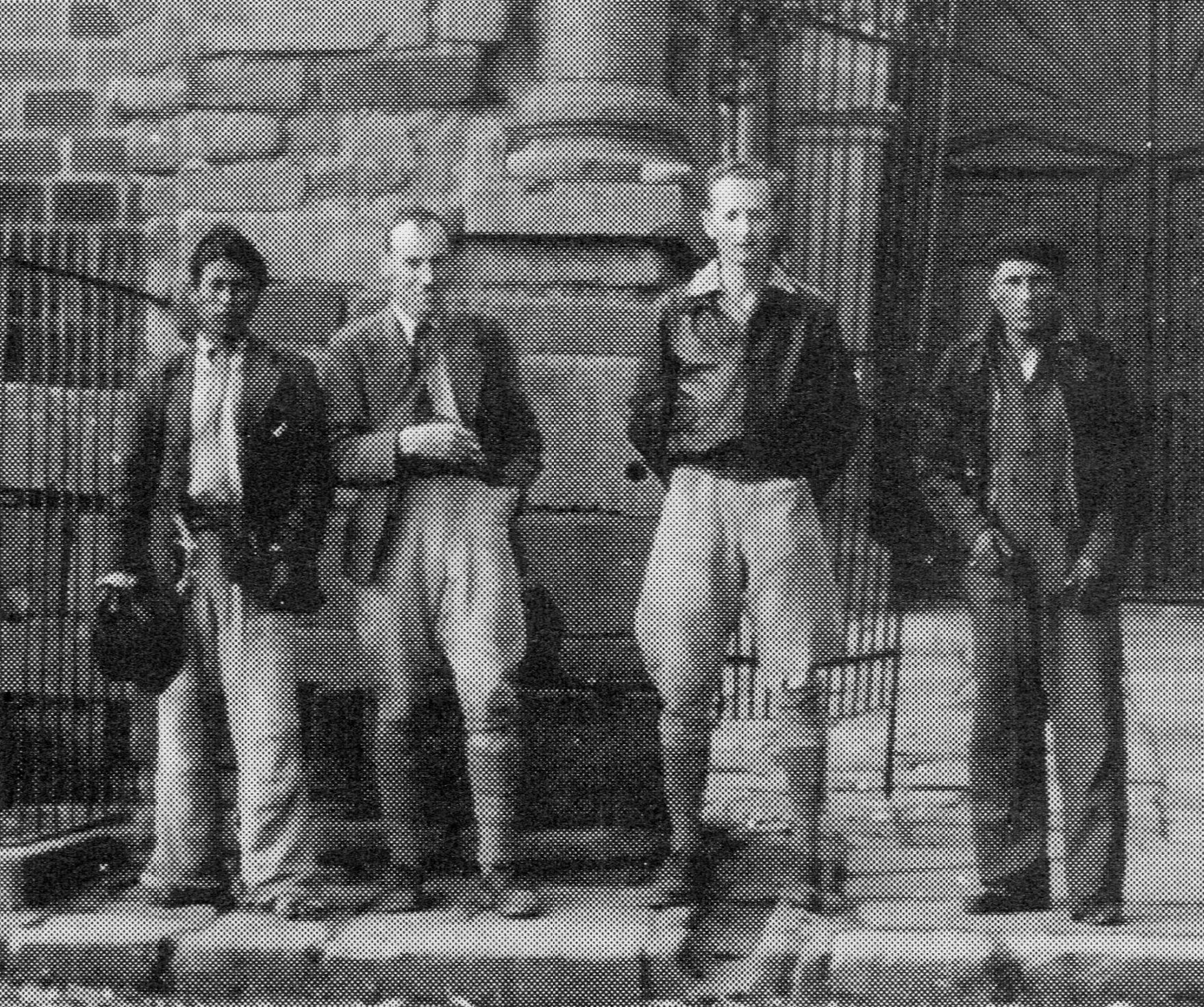
Don’t put all your eggs in one basket . . . or your seeds in a single genebank

On 20 May 2015, a long article was published in The Guardian about the Svalbard Global Seed Vault (SGSV), popularly—and rather unfortunately—known as the ‘Doomsday Vault’. I’ve recently been guilty of using that moniker simply because that’s how the vault has come to be known, rightly or wrongly, in the media.

Authored by US-based environment correspondent of The Guardian, Suzanne Goldenberg, the article had the headline grabbing title: The doomsday vault: the seeds that could save a post-apocalyptic world.

You get a flavor of what’s in store, however, from the very first paragraph. Goldenberg writes: ‘One Tuesday last winter, in the town nearest to the North Pole, Robert Bjerke turned up for work at his regular hour and looked at the computer monitor on his desk to discover, or so it seemed for a few horrible moments, that the future of human civilisation was in jeopardy.’

Turns out there was a relatively minor glitch in one of the supplementary cooling systems of this seed repository under the Arctic permafrost where millions of seeds of the world’s most important food staples and other species are being stored, duplicating the germplasm conservation efforts of the genebanks from which they were sent. Hardly the stuff of Apocalypse Now. So while making a favorable case for the need to store seeds in a genebank like the Svalbard vault, Goldenberg ends her introduction with this somewhat controversial statement: ‘Seed banks are vulnerable to near-misses and mishaps. That was the whole point of locating a disaster-proof back-up vault at Svalbard. But what if there was a bigger glitch – one that could not be fixed by borrowing a part from the local shop? There is now a growing body of opinion that the world’s faith, in Svalbard and the Crop Trust’s broader mission to create seed banks, is misplaced. [The emphasis in bold is mine.] Those who have worked with farmers in the field, especially in developing countries, which contain by far the greatest variety of plants, say that diversity cannot be boxed up and saved in a single container—no matter how secure it may be. Crops are always changing, pests and diseases are always adapting, and global warming will bring additional challenges that remain as yet unforeseen. In a perfect world, the solution would be as diverse and dynamic as plant life itself.’ 

I have several concerns about the article—and the many comments it elicited that stem, unfortunately, from lack of understanding on the one hand and ignorance and prejudice on the other.

  • Goldenberg gives the impression that it’s an either/or situation of ex situ conservation in a genebank versus in situ conservation in farmers’ fields or natural environments (in the case of crop wild relatives).
  • There is a perception apparently held by some that the development of the SGSV has been detrimental to the cause of in situ conservation of crop wild relatives.
  • Because there is no research or use of the germplasm stored in the SGSV, then it only has an ‘existence value’. Of course this does not take into account the research on and use of the same germplasm in the genebanks from which it was sent to Svalbard. Therefore Svalbard by its very nature is assumed to be very expensive.
  • The role of Svalbard as a back-up to other genebank efforts is not emphasized sufficiently. As many genebanks do not have adequate access to long-term conservation facilities, the SGSV is an important support at no cost directly to those genebanks as far as I am aware. However, Svalbard can never be a panacea. If seeds of poor quality (i.e less than optimum viability) are stored in the vault then they will deteriorate faster than good seeds. As the saying goes: ‘Junk in, junk out’.
  • The NGO perspective is interesting. It seems it’s hard for some of our NGO colleagues to accept that use of germplasm stored in genebanks actually does benefit farmers.Take for example the case of submergence tolerant rice, now being grown by farmers in Bangladesh and other countries on land where a consistent harvest was almost unheard of before. Or the cases where farmers have lost varieties due to natural disasters but have had them replaced because they were in a genebank. My own experience in the Cagayan valley in the northern Philippines highlights this very well after a major typhoon in the late 1990s devastated the rice agriculture of that area. See the section about on farm management of rice germplasm in this earlier post. They also still harbour a concern that seeds in genebanks are at the mercy of being expropriated by multinationals. In the comments, Monsanto was referred to many times, as was the issue of GMOs. I addressed this in the comment I contributed.

I added this comment that same day on The Guardian web site:
‘For a decade during the 1990s I managed one of the world’s largest and most important genebanks – the International Rice Genebank at the International Rice Research Institute (IRRI) in the Philippines. Large, because it holds over 116,000 samples of cultivated varieties and wild species of rice. And important, because rice is the most important food staple feeding half the world’s population several times daily.

The Svalbard Global Seed Vault (SGSV), the so-called ‘Doomsday Vault’ in Spitsbergen, holds on behalf of IRRI an almost complete duplicate set of samples (called ‘accessions’), in case something should happen to the genebank in Los Baños, south of Manila. I should add that for decades the USDA has also held a duplicate set in its genebank at Fort Collins in Colorado, under exactly the same ‘black box’ terms as the SGSV.

Germplasm is conserved so that it can be studied and used in plant breeding to enhance the productivity of the rice crop, to increase its resilience in the face of climate change, or to meet the challenge of new strains of diseases and pests. The application of molecular biology is unlocking the mysteries of this enormous genetic diversity, making it accessible for use in rice improvement much more efficiently than in past decades.

Many genebanks round the world and the collections they manage do not have access to long-term and safe storage facilities. This is where the SGSV plays an important role. Genebanks can be at risk from a whole range of natural threats (earthquakes, typhoons, volcanic eruptions, etc.) or man-made threats: conflicts, lack of resources, and inadequate management that can lead to fires, flooding, etc. Just take the example of the International Rice Genebank. The Philippines are subject to the natural threats mentioned, but the genebank was designed and built to withstand these. The example of the ICARDA genebank in Aleppo highlights the threat to these facilities from being located in a conflict zone.

To understand more about what it means to conserve a crop like rice please visit this post on my blog.  There is an enlightening 15 minute video there that I made about the genebank.

It is not a question of taking any set of seeds and putting them into cold storage. Only ‘good’ seeds will survive for any length of time under sub-zero conditions. Many studies have shown that if stored at -18C, seeds with initial high viability may be stored for decades even hundreds of years. The seeds of many plant species – including most of the world’s most important food crops like rice, wheat, maize and many others conform to this pattern. What I can state unequivocally is that the seeds from the genebanks of the world’s most important genebanks, managed like that of IRRI under the auspices of the Consultative Group on International Agricultural Research (CGIAR), have been routinely tested for viability and only the best sent to Svalbard.

Prof. Phil Pardey, University of Minnesota

Prof. Phil Pardey, University of Minnesota

The other aspect of Goldenberg’s otherwise excellent article are the concerns raised by a number of individuals whose ‘comments’ are quoted. I count both Phil Pardey and Nigel Maxted among my good friends, and it seems to me that their comments have been taken completely out of context. I have never heard them express such views in such a blunt manner. Their perspectives on conservation and use, and in situ vs. ex situ are much more nuanced as anyone will see for themselves from reading their many publications. The SEARICE representative I do not know, but I’ve had many contacts with her organization. It’s never a question of genebank or ex situ conservation versus on-farm or in situ conservation. They are complementary and mutually supportive approaches. Crop varieties will die out for a variety of reasons. If they can be stored in a genebank so much the better (not all plant species can be stored successfully as seeds, as was mentioned in Goldenberg’s article). The objection to genebanks on the grounds of permitting multinationals to monopolize these important genetic resources is a red herring and completely without foundation.

So the purpose of the SGSV is one of not ‘putting all your eggs in one basket’. Unfortunately the name ‘Doomsday Vault’ as used by Goldenberg has come to imply a post cataclysm world. It’s really much more straightforward than that. The existence of the SGSV is part of humanity’s genetic insurance policy, risk mitigation, and business continuity plan for a wise and forward-thinking society.’

Over the next couple of days others chipped in with first hand knowledge of the SGSV or genetic conservation issues in general.

Simon Jeppsonsiminjeppson is someone who has first-hand knowledge and experience of the SGSV, and he wrote: ‘I’m currently working as the project coordinator of the Svalbard Global Seed Vault on behalf of NordGen and I just wanted to add some of my reflections on this article some of the comments.

This article is an interesting read but a rather unbalanced one. The temperature increase that is described as putting the world heritage in jeopardy is a misconception. There has been a background study used as a worst case scenario during the planning stage of the Svalbard Global Seed Vault based on the seeds stored in the old abandoned mine shaft mentioned. These results were published in 2003 and even the most recent data (after 25 years in permafrost conditions prevailing in the same mountain without active cooling) shows that all samples are still viable. Anyone curious about this can for themselves try out various storage temperatures and find out the predicted storage time for specific crops at: http://data.kew.org/sid/viability/

Further I have some reflections regarding some of the recently posted comments. The statement “Most seed resources for plant breeding come from farmers’ fields via national seed stores in developing countries: these countries are not depositing in Svalbard.” is wrong; more than 60% of the deposited material originates from developing countries. Twenty-three of depositors represent national or regional institutes situated in developing counties, 12 are international centers and 28 are from developed countries according to IMF. This data is readily available at: http://www.nordgen.org/sgsv

Finally, a comment about the statement that “Seeds will not be distributed – only ever sent back to the institute that provided them. The reason is that seeds commonly have seed-borne diseases, sometimes nasty viruses and the rest.” This statement is also a misconception. The seeds samples stored in the vault are of the same seed lots already readily distributed worldwide from the depositing institutes. There are more than 1750 plant genetic institutes many of them distributing several thousand samples every year.’
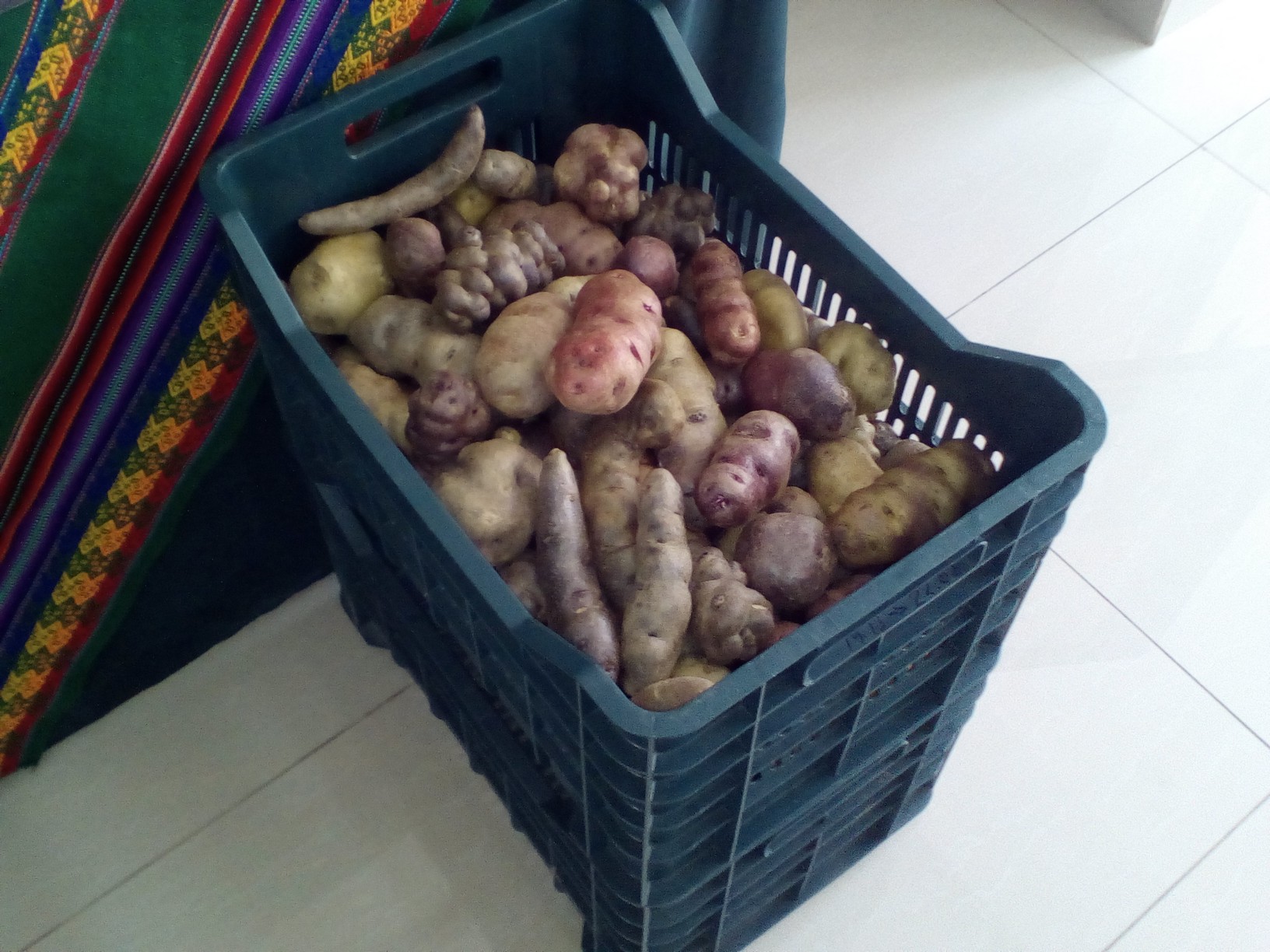
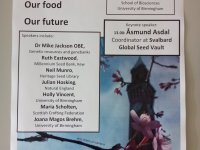
maxted-nigel-Cropped-110x146Nigel Maxted is a senior lecturer in the School of Biosciences at the University of Birmingham. As I suspected, when I commented on Goldenberg’s article, Nigel’s contribution to the discussion was taken out of context. He commented: ‘I believe I have been mis-quoted in this article, I do think the Svalbard genebank is worthwhile and I hope the Trust reach their funding goal, even though ex situ does freeze evolution for the accessions included, it provides our best chance of long-term stability for preserving agrobiodiversity in an increasingly unstable world.

I was trying to make a more nuanced point to Suzanne, that I strongly support complementary conservation that involves both in situ and ex situ actions. However at the moment if we compare the financial commitment to in situ and ex situ conservation of agrobiodiversity, globally over 99% of funding is spent on ex situ alone, therefore by any stretch of the imagination can we be considered to be implementing a complementary approach? I was used to make a point and I suppose it would be naive of me to complain, but I hope one day we will stop trying to create an artificial dichotomy between the two conservation strategies and wake up to the need for real complementary conservation. Conservation that includes a balanced range of in situ actions as well to conservation agrobiodiversity before it is too late for us all.’

HawtinGeoff Hawtin is someone who knows what he’s talking about. As Director General of the International Plant Genetic Resources Institute for just over a decade from 1991, and the founding Executive Secretary of the Global Crop Diversity Trust, Geoff had several telling comments: ‘As someone who has worked for the last 25 years to help conserve the genetic diversity of our food crops, I welcome the article by Suzanne Goldenberg in spite of its very many inaccuracies and misconceptions. She rightly draws attention to the plight of what is arguably the world’s most important resource in the fight against food and nutritional insecurity. If this article results in more attention and funds being devoted to safeguarding this resource—whether on farm or in genebanks—it will have served a useful purpose.

The dichotomy between in situ and ex situ conservation is a false one. The two are entirely complementary and both approaches are vital. For farmers around the world the genetic diversity of their landraces and local varieties is their lifeblood—a living resource that they can use and mould to help meet their current and future needs and those of their families.

But we all live in a world of rapid and momentous change and a world in which we all depend for our food on crops that may have originated continents away. The diversity an African farmer—or plant breeder—needs to improve her maize or beans may well be found in those regions where these crops were originally domesticated – in this case in Latin America, where to this day genetic diversity of these two crops remains greatest. Without the work of genebanks in gathering and maintaining vast collections of such genetic diversity, how can such farmers and breeders hope to have access to the traits they need to develop new crop varieties that can resist or tolerate new diseases and pests, or that can produce higher yields of more nutritious food, or that are able to meet the ever growing threats of heat, drought and flooding posed by climate change?

Scientists have been collecting genetic diversity since at least the 1930s, but efforts expanded significantly in the 1970s and 80s in response to growing recognition that diversity was rapidly disappearing from farmers fields in many parts of the world as a result of major shifts in agricultural production systems and the introduction and adoption of new, higher yielding varieties. Today, thanks to these pioneering efforts, diversity is being conserved in genebanks that no longer exists in the wild or on farmers’ fields.

The common misconception that the Svalbard Global Seed Vault exists to save the world following an apocalyptic disaster is perpetuated, even in the title of the article. In reality, the SGSV is intended to provide a safety-net as a back-up for the world’s more than 1,700 genebanks which themselves, as pointed out in the article, are often far from secure. At a cost of about £6 million to build and annual running and maintenance costs of less than £200,000 surely this ranks as the world’s most inexpensive yet arguably most valuable insurance policy.’

Susan_BragdonFinally, among the genetic resources experts, Susan Bragdon made the following comments: ‘I think the author overstates the fierce debates between the proponents of ex situ and in situ conservation. Most would agree that both are needed with in situ being complemented by ex situ.

The controversy over money is because funders are not understanding this need for both and may feel they have checked off that box by funding Svalbard (which is perhaps better seen as an insurance policy—one never hopes to have to use one’s insurance policy.) Svalbard is of course sexier than the on-farm development and conservation of diversity by small scale farmers around the world. Donors can jet in, go dog sledding, see polar bears. Not as sexy to visit most small-scale farms but there are more and more exceptions (e.g., the Potato Park in Peru)

Articles like this set up a false choice between ex situ and in situ which is simply not shared except by a few loud voices. We need to work together to create the kind of incentives that make small scale farming in agrobiodiverse settings an attractive life choice.’

In her staff biography on the Quaker United Nations Office web page, it relates that ‘from 1997-2005 Susan worked with the International Plant Genetic Resources Institute as a Senior Scientist, Law & Policy, on legal and policy issues related to plant genetic resources and in particular managed projects on intellectual property rights, Farmers’ Rights, biotechnology and biological diversity, and on developing decision-making tools for the development of policy and law to manage plant genetic resources in the interest of food security.’

Comments are now closed on The Guardian website for this article. I thought it would useful to bring together some of the expert perspectives in the hope of balancing the arguments—since so many readers had taken the ‘apocalypse’ theme at face value— and making them more widely available.

When I have time, I’ll address some of the perspectives about genebank standards.

Dr Richard L Sawyer (1921-2015), first Director General of the International Potato Center (CIP)

Sawyer3I opened my email this morning to find one with the sad news that Richard Sawyer, the first Director General of the International Potato Center (CIP) had died at his home in North Carolina on 9 March. He was 93, just a week short of his 94th birthday.

Richard was my first boss from January 1973 when I joined the International Potato Center (CIP) as an associate taxonomist in Lima, Perú. In fact, Richard was one of the first Americans I had ever met, and it was quite an eye-opener, as a young British graduate, to be working for an organization led by an American.

I first met Richard in early summer 1971 or thereabouts, while I was a graduate student at the University of Birmingham. My major professor, and head of the Department of Botany at the university was renowned potato taxonomist Jack Hawkes. Jack had made a collecting expedition for wild potatoes to Bolivia in the first couple months of 1971. And his trip was supported by the USAID-funded North Carolina State University – Peru potato project. Richard had been in Lima since 1966 as head of that mission. I believe that Jack stayed in Lima with Richard and his wife, and had the opportunity to discuss with Richard how the recently-founded MSc course on Conservation and Utilization of Plant Genetic Resources could support the genetic resources activities at what would soon become the International Potato Center. Richard wanted to send a young Peruvian scientist (Zosimo Huaman) for training at Birmingham, but wondered if Jack had anyone in mind who could accept a one-year assignment in Peru while Zosimo was away in Birmingham studying for his MSc degree.

During a visit to meet with potential donors for the fledgling CIP in the UK, Richard came up to Birmingham from London to discuss some more about training possibilities, and the one-year assignment. And Jack invited me to meet Richard. I remember quite clearly entering Jack’s office, and my first impression of Richard Sawyer. “Good grief,” I thought to myself, “I’ve come to meet Uncle Sam!” At that time, Richard sported a goatee beard and, to my mind, was the spitting image of ‘Sam’.

I eventually moved to Lima in January 1973, and spent the next eight happy and scientifically fruitful years with CIP in Perú and Central America.

cip4

CIP staff in 1972, taken a few months before I joined the center. L to r: Ed French, Richard Sawyer, John Vessey, ??, Rosa Rodriguez, Carlos Bohl, Sr., Haydee de Zelaya, Rosa Mendez, Heather ??, Oscar Gil, Javier Franco, Luis Salazar, David Baumann

A family man. There are several things I remember specially about Richard. When I joined CIP he had recently remarried, and was devoted to his young wife Norma who was expecting their son Ricardo Jr. The Sawyers hosted a cocktail at their San Isidro apartment during that first week I was in Lima for the participants of a potato genetic resources and taxonomy planning workshop. Almost the whole staff of CIP had been invited – we were so few that everyone could easily fit into their apartment.

During that workshop we traveled to Huancayo to see the germplasm collection, and Richard drove one of the vehicles himself. Staying at the Turista hotel in the center of Huancayo, we spent that first night drinking pisco sours and playing dudo for a couple of hours.

Richard practiced what he preached. He was very supportive of CIP scientists and their families, and always encouraged his staff to maintain a healthy balance between work and home. At 4 pm each day he was the first out of the office and on to the frontón court; he was very competitive.

A TPS incident. I remember one (potentially disastrous) incident, in about 1978 or 1979, during the annual review meeting held in Lima, and in which all staff from around the world also participated. I came down to Lima from Costa Rica where I was leading CIP’s Region II Program (Mexico, Central America and the Caribbean). After several presentations about the emerging technology of true potato seed (TPS) during the first couple of days, the then Director of Research, Dr Ory Page from Canada, opened the floor for general comments and questions. I’d been storing up some comments and, nothing venture, nothing gained, stuck my hand up and began to make several critical comments about the TPS program and how it was not currently applicable to the farmers of Central America.

Well, as they say, the ‘proverbial’ hit the fan. Richard was seated immediately in front of me, among the CIP staff. He turned on me, and gave me a public dressing down. I decided not to accept this quietly, and responded as vigorously. As tempers began to fray, the Chair of the CIP Board Program Committee, British scientist Dr Glyn Burton, suspended the meeting. Richard stormed out to his office, followed by Dr Ken Brown, head of Regional Research and my immediate boss who was upset at Richard’s reaction. Several colleagues came up to me during the enforced break, and while they might have concurred with my point of view, felt that I had burned my bridges at CIP, and was likely to lose my job.

Far from it. A couple of days later, Richard came looking for me and apologized for how he’d behaved towards me; he told me that I’d had every right to question aspects of CIP’s research. I think this whole incident strengthened the relationship I had with Richard, and he was very supportive. It also indicated to me that Richard was a supremely confident person, and a strong leader.

Moving on. In 1980, a teaching position opened at the University of Birmingham. I was keen to apply, but felt I had to discuss the various options first. Ken Brown advised me to talk directly with Richard, and it was fortunate that I was already back in Lima, having left Costa Rica in November just before the Birmingham position was announced. Richard strongly encouraged me to apply for the Birmingham lectureship, but at the same time offering me a new five-year contract with CIP should I fail with my application. Now that was, as you can imagine, an unbelievable way to approach a job interview. I was offered the position and resigned from CIP in March 1981 to return to the UK.

But that wasn’t the end of my relationship with CIP. The UK Department for International Development (then the Overseas Development Institute) supported my research project with CIP on TPS of all things during the 1980s. And I also carried out a couple of consultancies for CIP, the more significant being an evaluation of a Swiss-funded seed potato project in Perú, during which I always had the opportunity to meet with Richard. He was always interested in what I was up to and how the family was getting on. After all, my wife Stephanie had also personally been offered a position at CIP by Richard from July 1973.

Richard’s legacy. There are so many things I could point out, but three come most readily to my mind:

  • Richard was a compassionate individual, very supportive of his staff and their families. But having a clear vision, he could also be determined and make the tough decisions. This served CIP extremely well during his tenure.
  • He placed the conservation of the germplasm collection and its use at the heart of CIP’s strategy and research. Later this was expanded to include sweet potatoes and several ‘minor’ Andean tuber crops. Focusing only on potato for the first decade enabled CIP to establish and maintain a strong research program, that had the strong foundation for expansion into other tuber crops.
  • His vision of regional research and collaboration with potato researchers around the world – and the use of CIP funding to support these scientists as part of CIP’s core research program – was not always appreciated around the CGIAR in the early 1970s. It was innovative, and CIP was able to have an early impact on and bring new technologies to potato programs and systems right around the world. The establishment of PRECODEPA in 1978 was one of these important initiatives. Not only did Richard persevere, but he showed that this model of collaboration was one applicable to other centers and their mandate crops. It is the modus operandi today.

It is always sad when a colleague and friend passes away. While we – his family, friends and former colleagues – mourn his passing, let us also celebrate a life of service to international agriculture by this extraordinary individual. It has been my privilege to count Richard Sawyer as a friend and mentor. My life has certainly been profoundly changed by knowing and working with him.

Deepest condolences to his wife Norma, son Ricardo Jr., his daughters from his first marriage, and all his family.

The humble spud

Humble? Boiled, mashed, fried, roast, chipped or prepared in many other ways, the potato is surely the King of Vegetables. And for 20 years in the 1970s and 80s, potatoes were the focus of my own research.

The potato (Solanum tuberosum) has something scientifically for everyone: the taxonomist or someone interested in crop diversity, geneticist or molecular biologist, breeder, agronomist, plant pathologist or entomologist, seed production specialist, biotechnologist, or social scientist. So many challenges – so many opportunities, especially since many potatoes are polyploids; that is, they have multiple sets of chromosomes, from 2x=24 to 6x=72.

MTJ collecting cultivated potatoes in 1974Much of my own work – both in the Andes of Peru in the early 70s and once I was back in Birmingham during the 80s – focused on potato genetic resources, understanding the evolutionary dynamics of speciation, and the distribution and breeding value of wild potatoes.

If you’re interested in species diversity, then the potato is the crop for you. In South America there are many indigenous varieties integral to local farming systems at high altitude. Grown alongside other crops such as oca (Oxalis tuberosa) and other Andean tubers of limited distribution, quinoa, and introduced crops such as barley and faba bean (that must have been brought to South America by the Spanish in the 16th century and afterwards). In a recent series on BBC TV (The Inca – Masters of the Cloud), archaeologist and South American expert Dr Jago Cooper repeatedly talked about the wonders of Incan agriculture as one of the foundations of that society yet, disappointingly chose not to illustrate anything of indigenous agriculture today. Farmers still grow potatoes and other crops on the exactly the same terraces that the Incas constructed hundreds of years ago (see my post about Cuyo Cuyo, for example). The continued cultivation of native potato varieties today is a living link with the Incas.

Native varieties of potato from Peru

Native cultivated potatoes are found throughout the Andes from Colombia and Venezuela in the north, south through Ecuador, Peru, Bolivia and Chile, and into northern Argentina. One of the main centres of diversity lies in the region of Lake Titicaca that straddles the border between Peru and Bolivia.

Another important centre of diversity is in the island of Chiloé , southeast of Puerto Montt, a well-known potato growing region of Chile.

The wild tuber-bearing Solanums have a much wider distribution, from the USA south through Mexico and Central America, and widely in South America. And from the coast of Peru to over 4000 m in the high Andes. They certainly have a wide ecological range. But how many wild species are there? Well, it depends who you follow, taxonomy-wise.

SM Bukasob

SM Bukasov

Some of the earliest studies (in the 1930s) were made by Russian potato experts SM Bukasov and SV Juzepczuk, contemporaries of the great geneticist and plant breeder, Nikolai I Vavilov.

In 1938, a young Cambridge graduate, Jack Hawkes (on the left below), visited the Soviet Union to meet with Bukasov (and Vavilov) as he would soon be joining a year-long expedition to the Americas to collect wild and cultivated potatoes. His PhD thesis (under the supervision of Sir Redcliffe Salaman) was one of the first taxonomies of wild potatoes. By 1963, Hawkes had published a second edition of A Revision of the Tuber-Bearing Solanums. By 1990 [1] the number of wild species that he recognized had increased to 228 and seven cultivated ones. Hawkes (and his Danish colleague Peter Hjerting) focused much of their effort on the wild potatoes of the southern cone countries (Argentina, Brazil, Paraguay and Uruguay) [2] and Bolivia [3]. Working at the National Agrarian University and the International Potato Center (CIP) in La Molina, Lima, Peru, potato breeder and taxonomist Carlos Ochoa (on the right below) spent several decades exploring the Andes of his native country, and discovered many new species. But he also produced monographs on the potatoes of Bolivia [4] and Peru [5].

Both Hawkes and Ochoa – rivals to some extent – primarily used plant morphology to differentiate the species they described or recognized, but also using the tools of biosystematics (crossing experiments) and a detailed knowledge of species distributions and ecology.

MTJ and JGH collecting wild potatoes

March 1975, somewhere above Canta in Lima Province. Probably a small population of Solanum multidissectum = S. candolleanum (that now includes S. bukasovii)

I made only one short collecting trip with Jack Hawkes, in March 1975 just before I returned to Birmingham to defend my PhD thesis. Travelling in the Andes between Cerro de Paso, Huanuco and Lima, at one point he asked me to stop our vehicle. “There are wild potatoes near here,” he told me. “To be specific, I think we’ll find Solanum bukasovii”. And within minutes, he had. That’s because Jack had a real feel for the ecology of wild potatoes; he could almost smell them out. I’m sure Carlos Ochoa was just the same, if not more so.

Spooner_David_hs10_9951

David Spooner

The potato taxonomist’s mantle was taken up in the early 1990s by USDA Agricultural Research Service professor David Spooner at the University of Wisconsin. Over two decades, and many field expeditions, he has published an impressive number of papers on potato biology. More importantly, he added molecular analyses to arrive at a comprehensive revision and understanding of the diversity of the tuber-bearing Solanums. In fact, in December 2014, Spooner and his co-authors published one of the most important papers on the biodiversity of wild and cultivated potatoes, recognizing just 107 wild and four cultivated species [6]. For anyone interested in crop evolution and systematics, and potatoes in particular, I thoroughly recommend you take the time to look at their paper (available as a PDF file).


~~~~~~~~~~~~~~~~~~~~~~~~~~~~~~~~~~
[1] Hawkes, JG. 1990. The Potato – Evolution, Biodiversity and Genetic Resources. Belhaven Press, London.
[2] Hawkes, JG & JP Hjerting. 1969. The Potatoes of Argentina, Brazil, Paraguay, and Uruguay – A Biosystematic Study. Annals of Botany Memoirs No. 3, Clarendon Press, Oxford.
[3] Hawkes, JG & JP Hjerting. 1989. The Potatoes of Bolivia – Their Breeding Value and Evolutionary Relationships. Clarendon Press, Oxford.
[4] Ochoa, CM. 1990. The Potatoes of South America: Bolivia. Cambridge University Press.
[5] Ochoa, CM. 2004. The Potatoes of South America: Peru. Part 1. The Wild Species. International Potato Center, Lima, Peru.
[6] Spooner, DM, M Ghislain, R Simon, SH Jansky & T Gavrilenko. 2014. Systematics, diversity, genetics, and evolution of wild and cultivated potatoes. Bot. Rev. 80:283–383
DOI 10.1007/s12229-014-9146-y.


It was 40 years ago today . . .

News item in The Birmingham Post, 2 January 1973

News item in The Birmingham Post, 2 January 1973

One evening in February 1971 I received a phone call from Professor Jack Hawkes who was head of the Department of Botany at the University of Birmingham, and Course Director for the MSc on Conservation and Utilization of Plant Genetic Resources. I’d begun my studies at Birmingham in September 1970 after graduating some months earlier from the University of Southampton with a BSc in environmental botany and geography. He asked me if I was interested in working in Peru for a year. Well, it had been my ambition for many years to visit Peru, and here was my chance.

Jack was a world-renowned authority on the potato, its taxonomy and origins in the Andes of South America. And on the day that he phoned me, he had just returned from a two month expedition to Bolivia to collect samples of wild potato species. He had been joined on that expedition by his close collaborator from Denmark, Dr Peter Hjerting, and one of his PhD students, Phillip Cribb (who went on to become an orchid expert at the Royal Botanic Gardens – Kew).

Dr Richard L Sawyer, Director General of CIP, 1971-1991

Dr Richard L Sawyer, Director General of CIP, 1971-1991

The expedition also received logistical support from the North Carolina State University-Peru USAID project, led at that time by Dr Richard Sawyer who would go on to found and become the first Director General of the International Potato Center (CIP) in October 1971.

Peruvian potato expert, Dr Zosimo Huaman

While in Lima at the start and end of the expedition, Jack has stayed with Richard and his wife Norma. Richard talked of his vision to found CIP, and that he wanted to send a young Peruvian to study on the MSc course at Birmingham. That was Zosimo Huaman, who would go on to complete his PhD with Jack, and stay with CIP for the next 20 or more years. Zosimo was helping to manage a collection of native varieties of potato from Peru that the USAID project had taken over, and which would pass to CIP once that institute was open for business.

But if Zosimo went off to the UK, who would look after the potato collection? Richard asked Jack if he knew of anyone from Birmingham who might be interested in going out to Peru, just for a year, while Zosimo was completing his master’s studies. ‘I think I know just the person’, was Jack’s reply. And that’s how Jack came to phone me that February evening over 40 years ago.

But it wasn’t quite that simple.

There was the question of funding to support my year-long appointment, and Richard Sawyer was hoping that the British government, through the then Overseas Development Administration (now the Department for International Development – DfID) might cough up the support. The intention was for me to complete my MSc and fly out to Peru in September 1971. In the event, however, my departure was delayed until January 1973.

By February 1971, an initiative was already under way that would lead to the formation of the Consultative Group on International Agricultural Research (CGIAR) later that same year, and the ODA was contemplating two issues: whether to join the CGIAR, and whether to fund a position at CIP on a bilateral basis, or on a multilateral basis if it became a member of the CGIAR. But that decision would not be made before my expected move to Peru in September.

At what became a pivotal meeting in London in mid-1971, Jack argued – convincingly as it turned out – that he’d identified a suitable candidate, me, to join CIP’s genetic resources program, and that if some funding support was not found quickly, I’d likely find a job elsewhere. And so ODA agreed to support me at Birmingham on a Junior Research Fellowship for 15 months until December 1972, and that if negotiations to join the CGIAR went smoothly, I could expect to join CIP in January 1973. In the interim, Richard Sawyer did come through Birmingham and I had the chance to meet him, and for him to give me the once over. All seemed set for a January 1973 move to Peru, and I settled down to begin a PhD study under Jack’s supervision, working on the group of triploid potatoes known as Solanum x chaucha.

Mike discussing potato taxonomy with renowned Peruvian potato expert, Prof. Carlos Ochoa

Steph checking potatoes in the CIP germplasm collection in one of the screenhouses at La Molina

Although I went on to the CIP payroll on 1 January 1973, I didn’t fly out to Peru until the 4th (a Thursday). After spending Christmas with my parents in Leek, then a couple of days in London with my girlfriend Stephanie (who joined me in Peru in July 1973, where we were married in October, and she joined CIP’s staff as well) I spent a couple of nights in Birmingham with Jack and his wife Barbara before we set out on the long journey to Lima.

In those days, the ‘direct’ route to Peru from the UK was with BOAC from London-Heathrow, with three intermediate stops: in St John’s, Antigua in the Caribbean; in Caracas, Venezuela; and finally in Bogotá, Colombia. We finally arrived in Lima late at night, were met at Jorge Chavez airport by plant pathologist Ed French, and whisked off to our respective lodgings: me to the Pension Beech on Los Libertadores in the San Isidro district of Lima, and Jack to stay with the Sawyers. Thus began my association with CIP – for the next eight and a half years (I moved to Costa Rica in April 1976), and with the CGIAR until my retirement in 2010.

Celebrating the 20th anniversary of the Birmingham genetic resources MSc course in 1989. R to L: Trevor Williams, Jim Callow (Mason Professor of Botany), Jack Hawkes, Brian Ford-Lloyd, Mike Jackson, not sure

After CIP I returned to the UK to teach at the University of Birmingham. By then, many of the overseas MSc students were being supported by another of the CGIAR institutes, the International Board for Plant Genetic Resources, IBPGR (later to become the International Plant Genetic Resources Institute, IPGRI, then Bioversity International) based in Rome. A former Birmingham faculty member, Dr Trevor Williams (who had supervised my master’s thesis) was the first Director General of IBPGR. I maintained my links with CIP, and for a number of years had a joint research project with it and the Plant Breeding Institute in Cambridge on true potato seed. I also took part in a very detailed project review for CIP in about 1988.

In 1991 I joined the International Rice Research Institute (IRRI) in the Philippines, which was founded in 1960, and is the oldest of the 15 centers that are part of the CGIAR Consortium. I was head of IRRI’s Genetic Resources Center for 10 years, followed by almost nine as Director for Program Planning and Communications.

The CGIAR gave me a great career. I was able to work for excellent scientific research organizations that had noble goals to reduce rural poverty, increase food security, ensure better nutrition and health, and manage resources sustainably. As a small cog in a big wheel it’s hard to fathom what contribution you might be making. But I often thought that if people were going to bed less hungry each night, then we were making a difference. This does not diminish the scale of the continuing problems of poverty and food security problems in the developing world, which are all-too-often exacerbated by civil strife and conflict in some of the most vulnerable societies. Nevertheless, I feel privileged to have played my part, however small. It was my work with the CGIAR that led to my appointment as an OBE by HM The Queen in 2012, for services to international food science.

PRECODEPA – one of the CGIAR’s first research networks

Establishing a regional program
In April 1976, CIP opened an office in Turrialba, Costa Rica, hosted by the Centro Agronómico Tropical de Investigación y Enseñanza (CATIE). My role there was to support the regional office based in Toluca, Mexico, and to carry out research on breeding potatoes to tropical conditions, and once we’d realized the problem of bacterial wilt, searching for resistance to this insidious disease.


In July 1997, the regional leader, Ing. Oscar Hidalgo (a Peruvian bacteriologist) departed for his PhD studies in the USA, and instead of transferring me to Toluca, the Turrialba office became the regional headquarters. And in doing so, my responsibilities changed considerably; I became CIP’s primary link with the national potato programs in Mexico, Central America and the Caribbean.

I was supported by my boss in Lima, Dr Ken Brown, who had joined CIP in early 1976 to support the Outreach Program, and soon becoming the head of the Regional Research Program, replacing Dick Wurster. Ken was a cotton physiologist, and had spent most of his career in various parts of Africa, especially Nigeria, and just before joining CIP had headed a cotton research project in Pakistan. Ken was a fantastic person to work with – he knew just how to manage people, was very supportive, and the last thing he ever tried to do was micromanage other people’s work. I learnt a great deal about program and people management from Ken.

Towards the end of 1977, Dr John Niederhauser, proposed the idea of a cooperative regional network among several countries. I worked closely with John over about six months developing and refining ideas, and travelling together to meet program leaders (and even ministers and vice ministers of agriculture) in six countries: Mexico, Guatemala, Honduras, Costa Rica, Panama, and the Dominican Republic. In April 1978 a meeting was held in Guatemala City to launch the Programa Regional Cooperativa de Papa – PRECODEPA, with funding from the Swiss Agency for Development and Cooperation (SDC).

PRECODEPA

The inaugural meeting of PRECODEPA in Guatemala City, April 1978. L to R (sitting): Ken Brown, me, Richard Sawyer, John Niederhauser (CIP), Carlos Crisostomo (ICTA-Guatemala), unknown. I don’t recognise/remember the two gentlemen standing in the rear.

The SDC was just the right donor agency – one with a long-term commitment. Although I’m not able to determine the current status of PRECODEPA, it was supported by the SDC for more than 25 years, and expanded from the initial six countries to 10 or more, with French and English-speaking countries participating. Of course the original members were all Spanish-speaking – one of the major advantages of this regional program in its early years.

For the next three years, much of my time as CIP’s regional leader was spent supporting PRECODEPA and contributing my own work on bacterial wilt and seed production. However, I have to say that my role during this period – especially during the inception design and development phase – has essentially been removed from the record. And for reasons I could never understand, John Niederhauser chose not to recognize the important contributions that CIP (and me) made to the overall success of PRECODEPA.

Why was PRECODEPA needed, and what did it achieve?
While potato was an important commodity in most of the countries of the region, it was never in the same league as other staples such as maize and beans. Mexico had (and still has) the largest area of potato cultivation in the region, but even this pales into insignificance compared to maize. While agriculture ministries supported potato production, this crop was not a top priority, nor did the countries have the resources (both finance and staff) to support and maintain a fully-rounded potato program. Thus the principal idea behind PRECODEPA was a distributed research effort among the member countries, with each taking leadership in one or more areas of potato research and production which had a high national priority, and sharing that expertise with the other members of the network. This also facilitated support from CIP in that CIP specialists were able to meet with their counterparts from one or two countries in the region rather than all of them, and then the national programs supporting each other, as explained earlier.

Thus, Mexico took a lead in seed potato production and late blight research (Phytophthora infestans; some of the pioneer research funded by the Rockefeller Foundation was carried out in the Toluca valley); Guatemala concentrated on post harvest storage, Costa Rica on bacterial wilt (Ralstonia solanacearum), and Panama on potato cyst nematode (Globodera spp.) After 40 years I cannot remember the lead activities for Honduras and the Dominican Republic. With support from the SDC and back stopping from CIP each country developed its capabilities in its lead area, offered training and technical support to the other members, and in turn received support from the others in those areas where it was ‘weaker’.

Among the first national members of PRECODEPA were Ing. Manuel Villareal (Mexico), who had once served as CIP’s regional leader for Region II, Ing. Alberto Vargas (Vice Minister) and Ing. Fernando Cartín from the agriculture ministry in Costa Rica, Ing. Roberto Rodriguez (IDIAP) from Panama, and Ing. Polibio Vargas from the Dominican Republic. Unfortunately, after 38 years, I am unable to remember the names of the Guatemala (ICTA) and Honduras representatives. In 1979, I think it was, Peruvian scientist Dr Jorge Christiansen was appointed to PRECODEPA and based in Guatemala.

The fact that all original members spoke Spanish was a huge advantage. This greatly facilitated all the nitty-gritty discussions needed to achieve consensus among the members about the advantages of working together – as equals. The fact that the SDC supported PRECODEPA for so many years is one indication of its success. On the SDC website there is this succinct assessment: PRECODEPA’s achievements include increases in yields, output and profitability; substantial reduction in the use of pesticides – representing savings for Central American farmers and reducing the impact on the environment and consumers; the beginnings of a processing industry (French fries, crisps) – meaning regional products entered a market previously dominated by their powerful northern neighbours; production of quality potato seed and the development of a regional potato seed market; and training for thousands of farmers and technicians.

I’m proud to have been part of this innovative program – one of the first such research networks or regional programs established by the centers of the CGIAR.

CIP’s direct involvement
CIP contributed specifically in a couple of areas. In an earlier post I have described the work we did on resistance to bacterial wilt. Some of those resistant materials found their way into the Costarrican seed potato program.

Seed production through rapid multiplication techniques was another important area, and I supported in this by seed production specialist Jim Bryan who spent a sabbatical year with me in 1979-80. We developed further (from Jim’s initial work in Lima) the techniques of stem, sprout and single-node cuttings [1], bringing these to the field to produce disease-free seed potatoes, and help establish a vibrant seed potato industry in Costa Rica.

Since I left CIP (in March 1981) PRECODEPA increased in size, and the members continued to share the coordination of the program among the members. As the information on the SDC website indicates, PRECODEPA was indeed the blueprint for other regional programs on maize and beans, and for other collaborative programs around the world. It was a model for the various consortia that have developed among the centers of the CGIAR and national program partners.

[1] Bryan, J.E., M.T. Jackson & N. Melendez, 1981. Rapid Multiplication Techniques for Potatoes. International Potato Center, Lima, Peru.

Has the Earth ever moved for you?

For me? Frequently. And in many countries.

I’m talking about earthquakes – not just a little tremble (known in Peru as a temblor), but a full-bloodied bone rattler that occurred on 3 October 1974, at 09:21. Although I’d felt a number of tremors of various magnitudes since my arrival in Lima in January 1973, I wasn’t prepared for what happened that morning and continued for many weeks afterwards.

Getting the shakes in 1974
I was working in La Molina on the eastern outskirts of Lima. Usually when an earthquake hit, we would first hear a rumbling noise (somewhat like the sound of a train passing) just before everything started shaking, and often building in intensity. But not the October 1974 earthquake.

I was busy showing a colleague how to make cell preparations to count potato chromosomes (rather tiny and many of them). I was also enjoying (if that’s the right word, given the strength of the CIP brew) my first cup of coffee of the day. And then it hit, without warning, no noise. Just a massive sideward shaking of the building. We immediately joined everyone else in making a beeline for the exit – somehow I even carried my coffee cup outside – and assembling in the car park. The shaking continued for more than two minutes, as strong at the end as when it commenced. Parked cars were bouncing up and down, and I had a hard time even standing up, since the ground was moving about a meter back and forth. As abruptly as it had started, it stopped and we were all left dazed to contemplate what we had just experienced. We later found out that it was a 8.1 M earthquake, the biggest in Peru since those of 1966 and 1970. It was felt about 1300 km north and south of Lima, as well as in the selva to the east of the Andes. The whole country and its major mountain chain rocked for two minutes!

During the earthquake we could hear walls in the CIP building cracking, and shelves falling down. Afterwards we discovered a bizarre cocktail of various chemicals that had mixed together as their containers had smashed on the floor. This was enough, in the months to follow, to re-design all storage cupboards, to segregate potentially flammable materials, and generally improve the housekeeping, having taken serious advice from an agency of the Japanese government.

The earthquake was centered in the Pacific Ocean about 80 km southwest of Lima. There were reports of the ocean retreating off the coast of Miraflores, but no tsunami occurred. The remarkable thing however is that there were few casualties although many properties were badly damaged. Some attribute this to the fact that many people were at work or children in school, in buildings that were safer than their homes. Additionally, the earthquake was hardly felt in some parts of Lima, where buildings had been constructed on alluvial sands near to the River Rimac, the sands having absorbed much of the violent movements.

In La Molina, where buildings had been constructed on bed rock, damage even to new buildings was considerable, particularly in the National Agrarian University.

Once the shaking had stopped, I ran off to find my wife Steph and check if she was alright. She was. Another colleague, Maria Scurrah, had just entered the toilet on the first (upper) floor when the shaking started, and she was unable to escape from the building, and spent the entire time clutching one of the main support pillars. The first thing everyone wanted to do was get home, to check on family and friends – and property. We had an apartment on the 12th floor, and did wonder what we might find. Another problem at that time was the shortage of motor transport. Why? Well, the Peruvian government had introduced a fuel rationing system whereby each car was assigned a different color decal which allowed it to circulate on just certain days of the week. While the CIP buses quickly set off taking staff home, I used my car to ferry quite a number of staff home in the La Molina area before setting off to our Miraflores apartment.

There was little damage to speak of – just a few cracks, but large pieces of furniture had waltzed around the living room, and some items had smashed on the floor. But with aftershocks continuing, we didn’t really want to spend a night on the 12th floor. So we arranged to stay the night with our good friends, Jim and Jeanne Bryan, sleeping on their living room floor. After the earthquake it was agreed that a group of us would return that afternoon to begin the clean-up in the laboratories; eventually large quantities of peat were used to soak up the various spilled chemicals. While I had been fine in the morning, cool and calm, and in full possession of my faculties, by the early afternoon, shock had set in, and I was unable to get up out of my seat, and continued to sit there, hands shaking.

Just less than a week later, on a national holiday to commemorate the naval Battle of Angamos in 1879 against Chile (which Peru lost), there was a major aftershock that occurred as the president of the republic, General Juan Velasco, was about to make a speech. And so they continued week after week, some minor, one or two quite hefty – keeping everyone alert and tense. All the secretaries at CIP were put into a communal office space on the ground floor, but they kept the doors open all the way to the exit. At the first hint of an aftershock there was a stampede down the corridor – woe betide anyone who got in the way!

Ever since I have been incredibly sensitive to the slightest movement that even hints of a tremor or worse, and ready to make my escape. I used to have very dark hair, but from 3 October 1974 my hair started to turn grey.

The earthquake of May 1970
This was a major earthquake that caused the death of tens of thousands of Peruvians. It occurred off the coast of Chimbote, north of Lima. While damage was severe in Chimbote and Casma on the coast, inland in the Callejón de Huaylas, a long valley nestling below the highest snow-capped peaks of the Andes in the Department of Ancash, there was a major landslide.

This fell from near the summit of Nevado Huascarán, Peru’s highest mountain. I read that more than 80 million cubic meters of rock and ice fell at a speed of more than 250 kph. Click on the photo to the left to see the path of the landslide. The towns of Yungay and Ranrahirca were in the path of this landslide, known in Peru as a huayco, and were totally destroyed. In Yungay, just a few palm trees were left standing, and the statue of Christ in the cemetery, where some of the only survivors were visiting when the landslide hit.

Experiences in other countries
I never again experienced another earthquake of such magnitude while I lived in Peru (until early 1976) nor on the many occasions afterwards that I visited. But there were some in Costa Rica and Mexico during the mid- to late-1970s, and during the 19 years we lived in the Philippines, we felt the odd tremor from time-to-time. The strongest earthquake in the Philippines for many years had occurred in July 1990 which did some damage in Los Baños at IRRI. Many of the bookshelves in the library toppled like dominoes. Elsewhere, and in Baguio in particular, there was serious damage, and deaths.

We’ve even felt a few tremors in the UK over the years, both here in Worcestershire, as well as on the Welsh coast in Pembrokeshire in about 1983 or so.

Typhoons
Of course, living in the Philippines we experienced typhoons on a regular basis, several each year in fact. While many of them headed west towards Luzon from the open Pacific, most of these usually headed north to clip the top of the island and regularly doing great damage there. But on a couple of occasions, major typhoons did pass over Los Baños. One of these was Typhoon Milenyo in September 2006. Although the winds were strong it was the typhoon’s slow progress coupled with heavy rain, dumping an enormous amount of water and causing massive flooding, that did most damage and leading to loss of life over a wide area. Laguna de Bay rose several meters, flooding villages along the shoreline.

Early days in Lima – 1973

Potatoes were not my first choice
Hindsight is a wonderful thing. Although I spent more than 20 years studying potatoes – in a variety of guises – that had not been my first choice. I originally wanted to become the world’s lentil expert.

Well, not exactly. When I joined the 1970 intake on the MSc course Conservation and Utilization of Plant Genetic Resources at the University of Birmingham, I quickly decided to work with Trevor Williams on the taxonomy and origin of lentils (Lens culinaris). I wanted to study variation in a crop species that had received little attention; and preferably it had to be a legume species.

Working our way through Flora Europaea, we came across the notation under lentil: Origin unknown. Now that seemed like an interesting challenge, and we began to plan a suitable dissertation project on that basis. I completed my dissertation in September 1971.

Interestingly, unknown to Trevor and me, renowned Israeli expert on crop evolution Professor Daniel Zohary (of the Hebrew University of Jerusalem) had been working on the same problem, and published his results in Economic Botany in 1972 [1], which essentially confirmed the conclusions I’d reached a year earlier.

As it turned out – and this is the hindsight bit – continuing work on lentils was not really an option; and funding for a lentil PhD would have been very difficult to find.

In any case, the MSc course leader Professor Jack Hawkes had, by March 1971, already raised the possibility of spending a year in Peru (see my posts about potatoes in Peru and about Peru in general), which I jumped at. So in January 1973, I landed in Lima, an employee of the recently-founded International Potato Center (CIP).

First impressions
Then, CIP was housed in just a single building on a developing campus in La Molina, on the eastern outskirts of Lima, where the National Agrarian University is located (in fact, just across the road from CIP). In those days, the journey to La Molina from the Lima suburbs of San Isidro or Miraflores (we lived in Miraflores on Av. Larco, close to the cliffs overlooking the Pacific Ocean) took about 20 minutes. Around La Molina it was essentially a rural setting. But even in those days, housing developments were already underway, and today what were once fields of maize are now ‘fields of concrete’. I’m told that the journey can now take forever, and CIP staff often plan to arrive early or depart late just to avoid the horrendous traffic.

But I digress. The CIP building was essentially an empty shell on both floors. This was gradually partitioned to form offices and laboratories, and over the years, new buildings were added. On my first day at CIP (Friday 5 January) I was shown to my ‘office’ on the upper (first) floor. The whole floor at that time was completely open plan from one end to the other, except for one room opposite the staircase that actually had two solid walls either side (the toilets were located on either side), and a wooden panel front. Inside was a desk, a chair, a filing cabinet, and a bookshelf. That was it!

While there were no laboratories as such at CIP until a few months later (the pathologists were using space in a national program laboratory building across the street), we did have access to a couple of screenhouses at La Molina for growing experimental materials, but that was quite a challenge in the heat of the Lima summer from January to April until facilities with some sort of cooling system were constructed.

I must admit I did wonder what I’d let myself in for. There were no established research facilities such as laboratories, I didn’t speak Spanish (although that was rectified in about six months), and went through all the stages of ‘culture shock’.

A planning meeting on germplasm
The following week CIP held the second planning workshop (but the first on germplasm and taxonomy) of a whole series that would be convened over the next decade to help plan its program. The participants were Jack Hawkes, taxonomist Carlos Ochoa (Peru), potato breeder Frank Haynes (North Carolina State University), geneticist Roger Rowe (then with the USDA regional potato germplasm project in Sturgeon Bay, Wisconsin, and later to join CIP in July 1973 as head of the breeding and genetics department), ethnobotanist and taxonomist Don Ugent (Southern Illinois University-Carbondale), and potato breeder Richard Tarn (from Agriculture and Agri-Food Canada, New Brunswick, and a former PhD student of Jack Hawkes), and myself. We made a trip to Huancayo in the central Andes (more than 3000 m above sea level) where CIP proposed to establish its highland field station (more of that below), and also to Cuzco in southern Peru (where I seized the opportunity, with Richard Tarn, of making a day trip to Machu Picchu). In Huancayo, we visited the small, but growing, potato germplasm collection which in those days was being multiplied on rented land.

The field supervisor was a young agronomist, David Baumann, who can be seen in this photo explaining the collection to the workshop participants. Around this time, plant pathologist Dr Marco Soto – who had just returned from his PhD studies in the USA – was named as the head of the Huancayo station.

The arrangements for that meeting say a lot about the early CIP days. We traveled to Huancayo by road, in two Iranian-built Hillman station wagons, one of them driven by the CIP Director General, Richard Sawyer. Another point worth mentioning is the research planning strategy that CIP implemented. Since potato research was strong in many countries around the world, Sawyer decided it would be effective to engage potato scientists from elsewhere in CIP’s research. Not only were they invited to participate in planning workshops, they also received research grants to carry out specific research projects (such as the potato breeding and nematology resistance research at Cornell University, for example), and provide graduate opportunities for students sponsored by CIP. This approach, as well as developing a regional program for research and dissemination, were heavily criticised in the early days of the CGIAR. This was not the approach taken by other centers such as IRRI, CIMMYT, and CIAT for example. It now seems a rather silly opposition, and is more the norm than the exception in how the centers of the CGIAR do business.

So who worked at CIP in the early days?
In Lima, there were only a handful of staff in January 1973 (click on the photo to see the list), me included as a Fellow in Taxonomy, even though I only had a masters degree, and would continue with my PhD research while working for CIP.

Head of plant pathology, and long-time North Carolina team member, Ed French (a US citizen of Anglo-Argentinian ancestry) had already begun to recruit staff. Post-doctoral fellow John Vessey from the UK worked on resistance to bacterial wilt, and he and his wife Marian became close friends (we are still in touch with them), although John departed for CIMMYT in Mexico in 1974, followed by United Fruit in Honduras – more bacterial wilt – before returning to the UK (John was my principal contact for the somaclone project I reported in another post).

At first, there were few internationally-recruited staff, but throughout 1973, the staff increased quite rapidly. Rainer Zachmann, a German plant pathologist working on Rhizoctonia solani, joined in February, followed by Julia Guzman, a late blight specialist from Colombia; Parviz Jatala, a nematologist from Iran; Ray Meyer, an agronomist from the USA; and Dick Wurster as head of the Outreach Dept. , among others. Dick had been working in Uganda prior to joining CIP.

A qualified pilot, Dick brought his plane with him (it had two engines – one at the front, and one behind!), which was also used by CIP to ferry staff to Huancayo on occasion, although we usually made the six hour journey by road. Jim Bryan returned from his leave in the USA to join CIP as a seed specialist.

Among the Peruvian staff were virologist Luis Salazar (who gained his PhD some years later from the University of Dundee in Scotland), nematologist Javier Franco (who studied at Rothamsted for a University of London PhD), and plant pathologist Oscar Hidalgo (who went to North Carolina State University). Just returned from Cornell was Dr Marco Soto (a plant pathologist) who became superintendent of the Huancayo experiment station. About to return from graduate studies overseas were plant physiologists Willy Roca (and his wife Charo) and Fernando Ezeta, and virologist Anna-Maria Hinostroza. Nematologist Maria Scurrah (who was born in Huancayo of German parents, and who spoke Spanish, German and English will equal rapidity) returned from her PhD studies at Cornell in 1972. Entomologist Luis Valencia was mentored by Maurie Semel who was on sabbatical from Cornell. Zosimo Huaman returned from Birmingham in April 1973.

The first support staff  included secretaries Rosa Benavides (who sadly succumbed to cancer just a few years later) and Haydee de Zelaya, caretaker José Machuca, messenger Victor Madrid (who eventually became a very talented member of the communications support team), carpenter Maestro Caycho, and screenhouse technicians, the Gomez brothers – Lauro, Felix, and Walter.

My fiancée Stephanie joined me in Lima in July 1973 and began work as a germplasm expert with the CIP potato collection. We married in October 1973 in the Municipalidad de Miraflores, near to where we were renting a 12th floor apartment on Av. Larco.

[1] Zohary, D. 1972. The wild progenitor and the place of origin of the cultivated lentil: Lens culinaris. Economic Botany 26: 326-332.

Birmingham – a center for potato studies

When the late Professor Jack Hawkes was appointed to a lectureship in botany at the University of Birmingham in 1952, he had already been working on potatoes for more than a decade. And immediately prior to arriving in Birmingham he’d spent three years in Colombia helping to establish a national potato breeding program. From then until his retirement in 1982  – and indeed throughout the 1980s – Birmingham was an important center for potato studies.

The potato germplasm that Hawkes collected (with EK Balls and W Gourlay in the 1938-39 expedition to South America) eventually formed the basis of the Empire then Commonwealth Potato Collection, maintained at the James Hutton Institute in Scotland. Throughout the 50s, 60s, 70s, and 80s Jack also had a large collection of wild potato (Solanum) species at Birmingham. This was a special quarantine collection; in the 1980s for potato quarantine purposes, Birmingham was effectively outside the European Union! For more than two decades Jack was assisted by horticultural technician Dave Downing, seen in the photo below. At the end of the 1980s we decided to donate the seed stocks from Jack’s collection to the Commonwealth Potato Collection, and it went into quarantine in Scotland. As the various lines were tested for viruses diseases they were introduced into the main collection.  Jack used this collection to train a succession of PhD students on the biosystematics of potatoes. I continued with this tradition after I joined the University of Birmingham in 1981. My first student graduated in 1982 (after I had taken over supervision from Jack).

Here is the list of University of Birmingham PhD students who worked on potatoes, as far as I can remember. All of them from 1975 (with the exception of Ian Gubb) had also attended the MSc course on genetic resources:

Richard Lester (UK), 1962. Taught at Makerere University in Uganda, before joining the Dept. of Botany at Birmingham in 1969. Retired in 2002, and died in 2006. Studied the biochemical systematics of Mexican wild Solanum species. The species Solanum lesteri is named after him.

Richard Tarn (UK), 1967. Emigrated to Canada in 1968, and joined Agriculture Canada as a potato breeder in Fredericton, New Brunswick. Retired in 2008. Studied the origin of ploidy levels in wild species.

Katsuo Armando Okada (Argentina), 1970 (?). Retired. Was with IBPGR for a while in the 1980s (?) in Colombia. Studied the origin of Solanum x rechei from Argentina.

Phillip Cribb (UK), 1972. He joined the Royal Botanic Gardens – Kew, and became a renowned orchid taxonomist. Studied the origin of the tetraploid Solanum tuberosum ssp. andigena.

Mike Jackson (UK), 1975. Studied the triploid cultigen Solanum x chaucha. Joint with CIP and Roger Rowe.

David Astley (UK), 1975. Became the curator of the vegetable genebank at Wellesbourne (now the Warwick Crop Centre). Studied the Bolivian wild species Solanum sucrense. The species S. astleyi is named after Dave.

Zosimo Huaman (Peru), 1976. He returned to the International Potato Center (CIP) in Lima, and continued working with the germplasm collection until December 2000; he then began work with several NGOs on biodiversity issues in Peru. Studied the origin of the diploid cultigen Solanum x ajanhuiri. Joint with CIP and Roger Rowe.

Peter Schmiediche (Germany), 1977. He continued working with CIP as a potato breeder (for resistance to bacterial wilt), and was later CIP’s regional leader based in Indonesia. Now retired and sharing his time between Texas (where his children settled) and his native Berlin. Studied the bitter potatoes Solanum x juzepczukii (3x) and S. x curtilobum (5x). Joint with CIP and Roger Rowe.

Luis Lopez (Colombia), 1979. Studied wild species in the Series Conicibaccata.

Lenny Taylor (UK), late 1970s. I don’t remember his thesis topic, but I think it had something to do with tetraploid forms. He joined the Potato Marketing Board (now the Potato Council) but I’ve lost contact.

Lynne Woodwards (UK), 1982. Studied the Mexican tetraploid Solanum hjertingii, which does not show enzymic blackening in cut tubers.

Rene Chavez (Peru), 1984. He returned to the University of Tacna, Peru, but also spent time at CIAT in Cali, Colombia studying a large wild cassava (Manihot spp.) collection. He sadly died of cancer a couple of years ago. Studied wide crossing to transfer resistance to tuber moth and potato cyst nematode. Joint with CIP and Peter Schmiediche.

Elizabeth Newton (UK), 1987? Studied sexually-transmitted viruses in potato. Joint with former CIP virologist Roger Jones (now at the University of Western Australia) at the MAFF Harpenden Laboratory.

Denise Clugston (UK), 1988. Studied embryo rescue and protoplast fusion to use wild species in potato breeding.

Carlos Arbizu (Peru), 1990. An expert on minor Andean tuber crops, he came from the University of Ayacucho. Spent time working in the germplasm program at CIP. Studied the origin and value of resistance to spindle tuber viroid in Solanum acaule. Joint with CIP and principal virologist Luis Salazar (who gained his PhD while studying at the Scottish Crop Research Institute in Dundee).

Ian Gubb (UK), 1991. Studied the biochemical basis of non-blackening in Solanum hjertingii. Joint with the Food Research Institute, Norwich.

Susan Juned (UK), 1994. Now a sustainable technology consultant, Sue is an active local government councillor, and has stood for election to parliament on a couple of occasions for the Liberal Democrats. Studied somaclonal variation in potato cv. Record; this commercial contract research was commissioned by United Biscuits.

David Tay (Malaysia), 2000. He worked in Australia and then was Director of the USDA Ornamental Plant Germplasm Center in Columbus, Ohio, but returned to CIP as head of the genetic resources unit in 2007. He’s now left CIP. I think he worked on diploid cultivated species. Joint with CIP. Not sure why his PhD is dated 2000, as he’d been in CIP in the late 70s.

I also supervised several MSc students who completed dissertations on potatoes (Reiner Freund from Germany, and Beatrice Male-Kayiwa and Nelson Wanyera from Uganda).

The Birmingham link with CIP is rather interesting. In the early 70s, staff at CIP seemed to have a graduate degree in the main from one of four universities: Cornell, North Carolina State, Wisconsin, or Birmingham.

Besides the Birmingham PhD students who went on to work at CIP, my wife Stephanie (MSc 1972, who had been working with the Commonwealth Potato Collection from November 1972 – June 1973 when it was still based at the Scottish Plant Breeding Station – now closed) joined the Breeding and Genetics Dept. at CIP in July 1973.

Roger Rowe, who had been in charge of the US potato genebank in Sturgeon Bay, Wisconsin, also joined CIP in July 1973 as head of the Breeding and Genetics Dept. He co-supervised (with Jack Hawkes) a number of Birmingham PhD students.

With the closure of Jack’s collection at Birmingham we were able to develop other potato research ideas since there were no longer any quarantine restrictions. In 1984 we secured funding from the Overseas Development Administration (now the Department for International Development – DfID) to work on single seed descent (SSD) from diploid potatoes to produce true potato seed (TPS). Diploids are normally self-incompatible, but evidence from a range of species had shown that such incompatibility could be broken and transgressive segregants selected. The work was originally started in collaboration with the Plant Breeding Institute (PBI) in Cambridge, but when the Thatcher government privatized the PBI and sold it to Monsanto in 1988, we continued the work at Birmingham. After a further year we hit a ‘biological brick wall’ and decided that the resources needed would be too great to warrant continued effort. This paper reflects our philosophy on TPS [1]. Another paper [2] spells out the approach we planned.

[1] Jackson, M.T., 1987. Breeding strategies for true potato seed. In: G.J. Jellis & D.E. Richardson (eds.), The Production of New Potato Varieties: Technological Advances. Cambridge University Press, pp. 248-261.

[2] Jackson, M.T., L. Taylor & A.J. Thomson, 1985. Inbreeding and true potato seed production. In: Report of a Planning Conference on Innovative Methods for Propagating Potatoes, held at Lima, Peru, December 10-14, 1984, pp. 169-179.

The agricultural terraces of Cuyo Cuyo, southern Peru

In early 1974 I travelled to southern Peru with a taxonomist friend from the University of St Andrews, Dr Peter Gibbs.

Peter and I had become friends when he visited the International Potato Center (CIP) in 1973. At that time Peter was supervising the Master’s thesis of a Peruvian student, Martha Vargas (daughter of renowned Peruvian botanist Professor César Vargas from Cuzco). At CIP he wanted to see if he could hitch a ride to the south of Peru on any germplasm collecting trips planned to that region, so that he could make some collections of oca (Oxalis tuberosa), a minor Andean tuber crop.

Oca tubers

As it happened, I was looking to carry out some ethnobotanical studies on the different potato varieties grown by farmers as part of my PhD research – but where would be a good site?

Peter showed me an old scientific paper (from 1951) by WH Hodge from the University of Massachusetts [1] about the cultivation of different tuber crops, including potatoes and oca, in the village of Cuyo Cuyo, located about 140 km northeast of Puno (69˚50’W, 14˚50’S) at the head of the Sandia Gorge. Well, this seemed like too good an opportunity to miss, and we agreed to pool our resources for the trip.

The drive south in a small Land Rover – down the coastal desert Panamericana highway, across the Nasca plain, climbing to Arequipa, and even higher to Puno – took three days. After resting up in Puno (next to Lake Titicaca), and getting used to the 3827 m altitude, we set off for Cuyo Cuyo. Dropping down from the altiplano at well over 4000 m, Cuyo Cuyo lies at an altitude of about 3300 m. Below the village the valley drops quickly towards the ceja de la montaña – literally ‘eyebrow of the mountain’ – where the humid air of the rainforests below rises up east-facing valleys to form cloud forest.

No-one in Cuyo Cuyo was expecting us, so there were quite a few surprised faces when these two gringos drove into town. Cuyo Cuyo was not on the ‘research-tourist’ trail in 1974, but many researchers have visited Cuyo Cuyo since I was there (see below), and there are quite a few publications now about the socio-economic systems and agriculture there.

Peru 110

Under these circumstances (as on other germplasm collecting trips) I’d found it useful to find the local mayor (alcalde) or schoolteacher and explain what we were up to and have them in turn explain to the local farmers and their families (in Quechua). On a previous trip to the north of Peru in May 1973, a local schoolteacher (rather drunk at the time as we’d arrived on his village’s fiesta) hailed me as a representative of La Reina Isabel (HM The Queen), promptly calling a village meeting, and asked me to give a ‘loyal address’. At that time I had fairly rudimentary Spanish, but it didn’t matter. After a few words of congratulations for the fiesta, every person in the hall (maybe 200 or so) came and shook me by the hand!

Peter and I set up camp, so-to-speak, in the local post office where we could sleep, brew the odd cup of tea (there was a small café in the village where we could eat), and gather our specimens together, including a rudimentary drier for the extensive set of oca herbarium samples that Peter intended to make. But more of that particular story later.

The sides of the Cuyo Cuyo valley are covered with the most wonderful system of agricultural terraces, called andenes, which must have been constructed centuries ago, in Inca times, and have been cultivated ever since. Farmers have different terraces dotted around the valley, and when I was there, at least, farmers were still using a communal rotation system. Thus in one part of the valley the terraces were covered in potatoes (year 1 after a fallow), and oca (years 2 and 3), barley or beans (year 4), or fallow (years 5-8) elsewhere. Sheep are corralled on a terrace prior to planting potatoes, and their urine and dung used as fertilizer. Whether, almost 40 years later, this remains the case I do not know.

But this system of potato and oca cultivation allowed me to make some detailed studies of the diversity of potato fields in terms of varieties grown and their genetic make-up (chromosome number). I eventually published this work in Euphytica in 1980 [2]. And there’s a story about that publication that’s also worth repeating, a little later on.

Since the terraces are quite small, only the native foot plough is used to till the soil (see my earlier post about potatoes). I discovered that different varieties were apparently suited to the growing conditions in different parts of the valley. The most highly prized varieties with a high dry matter content, termed harinosa or floury, were grown on the upper terraces where there was little chance of flooding. Whereas on the valley floor, which was flooded from time-to-time, farmers grew varieties which tended to be more ‘watery’ and used preferentially in soups.

Another very interesting discovery, for me at least, was seeing freshly harvested potatoes dipped in a clay paste after cooking. This practice, known generally as geophagy, has been reported from many societies, as well as observed in animals and birds.

Farmers told me that freshly harvested potatoes (but not the so-called bitter potatoes – see below) tended to be somewhat ‘peppery’ (that’s the best word I can find to describe the sharp taste of some varieties), and that dipping the tubers in the clay paste helped not only with digestion but also reduced the sharpness of the taste. One of the farmers showed me the site where they collected lumps of clay that were then ground to a fine powder and mixed with water. What’s interesting, however, is that I did not find any frost tolerant, bitter potatoes (Solanum juzepczukii or Solanum curtilobum) that have to be processed to make chuño before they can be eaten.

After two or three days, Peter and I felt that we’d done sufficient field work there, and headed north towards Cuzco to visit some additional sites. From there we returned to Lima by air, leaving the Land Rover behind for a CIP colleague.

But what about all those oca herbarium specimens? Despite our best efforts, we had great difficulty in drying the specimens that Peter collected, for two reasons. It was quite wet during our visit to Cuyo Cuyo, and all the samples were covered in moisture even before we attempted to turn them into dried herbarium sheets. Furthermore, oca has rather fleshy stems that just wouldn’t dry. Even after a couple more weeks of drying in Lima, Peter packed up what he had and posted them to St Andrews. After he arrived home, he found that his herbarium specimens were not only alive, but had begun to sprout – so he promptly planted them all in his university glasshouse, and had a range of living samples to use in his study of pollination mechanisms!

And what about the ethnobotany paper that I referred to earlier? I completed my PhD in 1975, and began to write-up my work for publication in scientific journals. I chose the Wageningen-based journal Euphytica for two papers submitted in 1977 on triploid potatoes and crossability studies, and Economic Botany for the Cuyo Cuyo paper. Well, that paper was finally accepted by mid-1977, and I waited for it to appear in print (by that time I’d already moved to Costa Rica and was busy with other potato research).

I didn’t hear anything for many months, but then, out of the blue, I received a letter from the new Editor-in-Chief of Economic Botany asking me if I’d published the paper elsewhere. In taking over the helm at Economic Botany, he’d found manuscripts in the files that had been accepted for publication up to two decades earlier, but had never been published! Well, at about the same time, the Editor of Euphytica, Prof. Anton Zeven, wrote to me, commenting on my PhD thesis (he’d obtained a copy through interlibrary loan) and wondering if I had published my Cuyo Cuyo research. And if I hadn’t, would I seriously consider doing so. What an invitation! With some revisions (but unfortunately removal of some of the more anthropological aspects) I submitted the paper to Euphytica in early 1979, and it was published some months later in 1980.
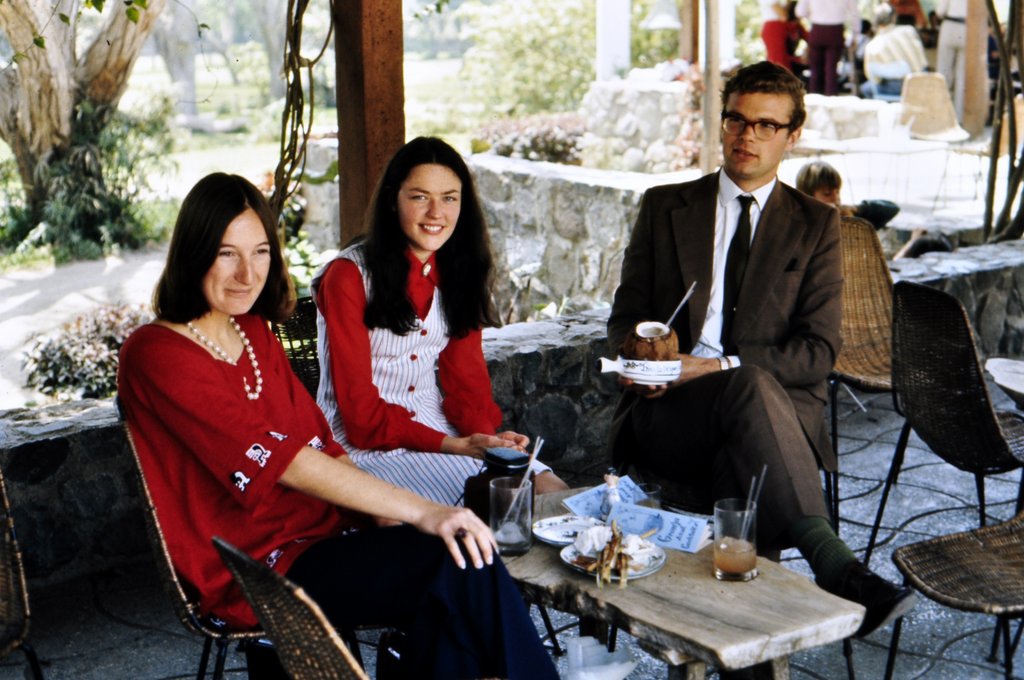
Cuyo Cuyo in 2006
Among the researchers to have visited Cuyo Cuyo more recently than me – in early 1997 and May 2006 – is University of Wisconsin-Madison associate professor of botany Dr Eve Emshwiller, who has been studying oca for many years now. In a recent message (15 March 2014)  she commented that Cuyo Cuyo was a fascinating place, but changing fast. I’m sure that’s something that could be said about many of the places I visited in the 1970s, then quite remote, but now opened up through better roads and telecommunications. Eve has kindly given me permission to include here some of her wonderful photos taken in 2006 of the oca harvest in Cuyo Cuyo. In one of the photos you can see the patchwork of fields, some with oca, others with potatoes. That cropping system certainly hadn’t changed in more than 30 years.

[1] Hodge, WH, 1951. Three native tuber foods of the high Andes. Economic Botany 5 (No. 2): 185-201.

[2] Jackson, MT, JG Hawkes and PR Rowe, 1980. An ethnobotanical field study of primitive potato varieties in Peru. Euphytica 29: 107-113. Click to read the paper in full.

Potatoes – the real treasure of the Incas . . .

Home of the potato
The Andes of South America are the home of the potato that has supported indigenous civilizations for thousands of years. As many as 4,000 native potato varieties are still grown. The region around Lake Titicaca in southern Peru and northern Bolivia is particularly rich in genetic diversity, and the wild potatoes from here are valuable for their disease and pest resistance [1].

For three years, from 1973-1975 I had the privilege of living and working in Peru (fulfilling an ambition I’d had since I was a boy) and studying the potato in its homeland. My work took me all over the mountains to collect potato varieties (for conservation in the germplasm collection of the International Potato Center (CIP), and to carry out studies of potato cultivation that I hoped would throw some light on different aspects of potato evolution [2].

I joined CIP in January 1973 as Associate Taxonomist, charged with the task of collecting potato varieties and helping them to maintain the large germplasm collection, that grew to at least 15,000 separate entries (or clonal accessions), but was reduced to a more manageable number through the elimination of duplicate samples. The germplasm collection was planted each year from October through April, coinciding with the most abundant rains, in the field in Huancayo, central Peru at an altitude of more than 3,100 meters.
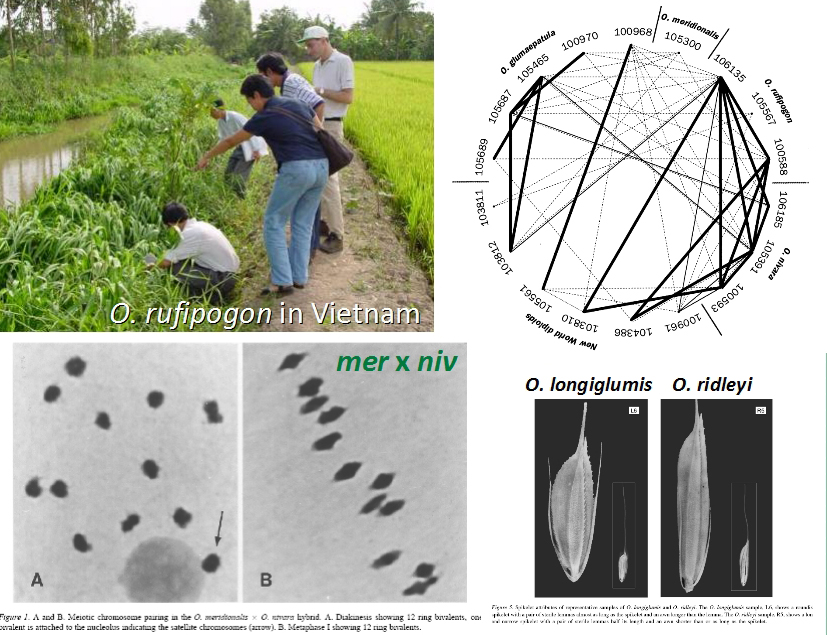
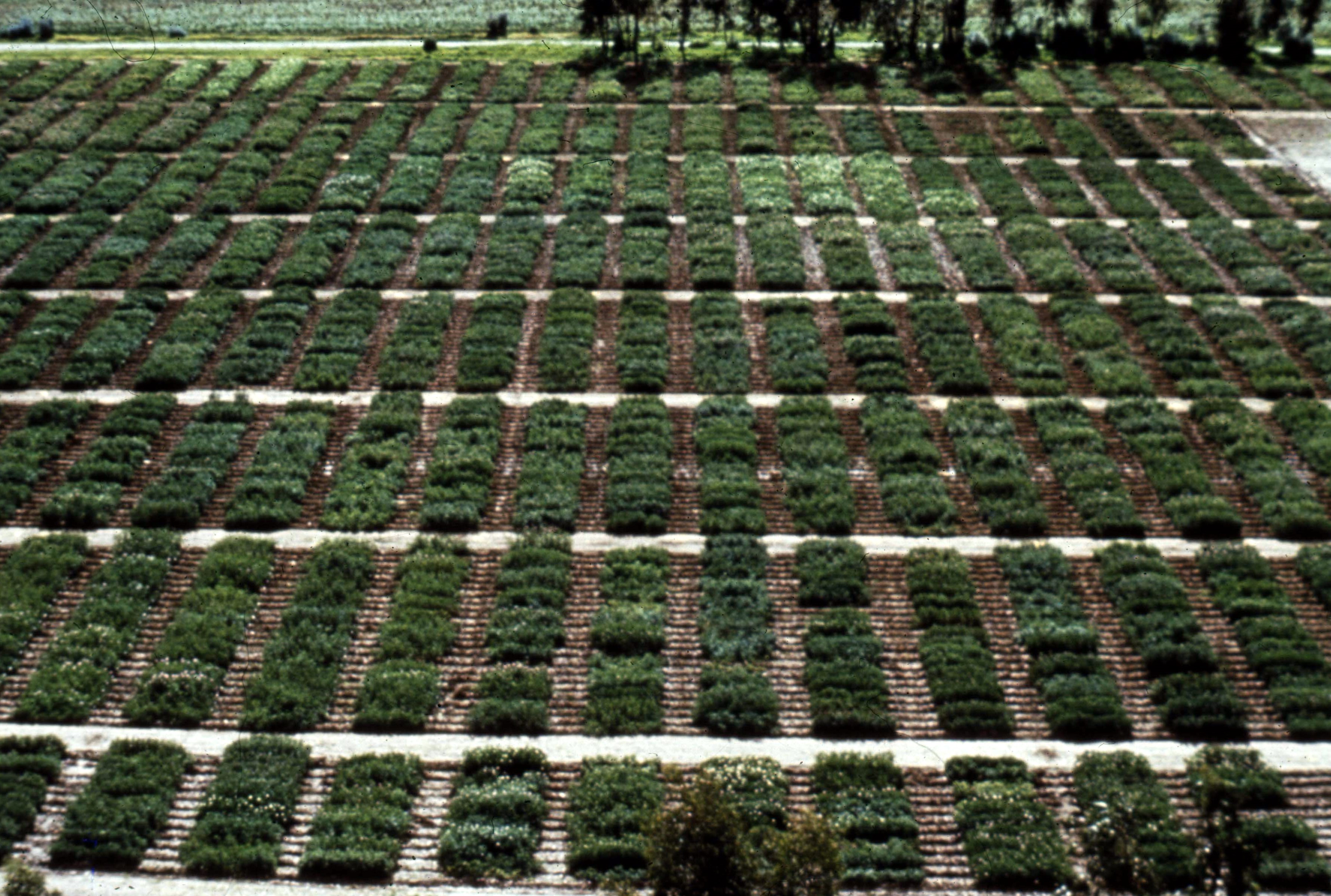
Potato collection at CIP, grown in the field at Huancayo, central Peru, at 3100 m. Taken around mid 1980s.

When CIP was founded in 1971, several germplasm collections from various institutes in Peru and elsewhere were donated to the new collection, but from 1973 CIP organized a program of collecting throughout Peru – and I was fortunate to be part of that endeavour. In May 1973 I joined my colleague Zosimo Huaman to collect potatoes in the Departments of Ancash and La Libertad, to the north of Lima. The highest mountains in Peru are found in Ancash, and our route took us through into the Callejón de Huaylas (between two ranges of the highest mountains in Peru, the Cordillera Blanca on the east, and Cordillera Negra on the west), and over the mountains to valleys on the eastern flanks. This was my first experience of collecting germplasm, and it was exhilarating. I think we did quite well in terms of the varieties collected, and the photograph below illustrates some of  their  immense genetic diversity.

Genetic diversity in cultivated potatoes

The following year I traveled with just a driver, Octavio (who was unfortunately killed in a road accident a couple of years later) further north into the Department of Cajamarca during April-May 1974. The photograph below shows the view, in the early morning sun, south towards Cajamarca city. The mist hanging over the city comes from hot springs that were utilized centuries ago by the Incas to build bath houses.

We collected potatoes in the field at the time of harvest, but also in markets (here is shown the market of Bambamarca), and from farmers’ own potato stores. Incidentally, the tall straw hats are very typical Cajamarca, as are the russet-colored ponchos.

In January 1974 I made a trip south, with Dr Peter Gibbs, a taxonomist from the University of St Andrews, Scotland, who was interested in the tri-styly pollination of a minor Andean tuber crop called oca (Oxalis tuberosa). We went to the village of Cuyo Cuyo, more than 100 km north of Puno in southern Peru. Dropping down from the altiplano, the road hugs the sides of the valley, and is often blocked by landslides (a very common occurrence throughout Peru in the rainy season). Along the way – and due to the warmer air rising from the selva (jungle) to the east – the vegetation is quite luxurious in places, as the white begonia below shows (the flowers were about 8 cm in diameter). Eventually the valley opens out, with terraces on all sides. These terraces (or andenes) are ancient structures constructed by the Incas to make the valley more productive.

In Cuyo Cuyo, I studied the varieties growing in farmers’ fields, and their uses [3].

Getting to some locations by four-wheel drive vehicle was often difficult. Then it was either ‘shanks’ pony’, or real pony. I do remember that I became very sore after many hours in the saddle. Incidentally, I still have that straw hat and it’s as good as the day I bought it in January 1973.

But studying potato systems, and working with farmers was fascinating. Here I am collecting flower buds, and preserving them in alcohol ready to make chromosome counts in the laboratory, back in Lima.

The next photograph shows a community we visited close to Chincheros, near Cuzco in southern Peru. While farmers grew commercial varieties to send to market in Cuzco – the large plantings of potatoes in the distance -closer to their dwellings they grew complex mixtures of varieties, with different cooking and eating qualities.

Most farmers do not have access to mechanization, apart from manual labor and oxen to pull ploughs. In any case, much of the land in these steep valleys is unsuitable for mechanization. For centuries, farmers use the chakitaqlla or foot plough illustrated by Peruvian chronicler Felipe Guaman Poma de Ayala in the early 17th century. There are many different foot ploughs in used throughout Peru. The foot plough shown below in one of Poma de Ayala’s illustrations is the same as that used by farmers in Cuyo Cuyo. The photograph underneath shows farmers near Huanuco in central Peru.

I never collected wild potatoes as such, but it was fun on two occasions to accompany my thesis supervisor and mentor, Jack Hawkes (a world-renowned expert on the taxonomy and evolution of potatoes, and one of the founders of the genetic resources movement in the 1960s) on short trips. In January 1973 we visited Cuzco, and Jack found Solanum raphanifolium growing among the ruins of the Inca fortress of Sacsayhuaman.

Early 1975 (during one of his annual trips to CIP)  Jack, Juan Landeo (then a research assistant, who later became one of CIP’s potato breeders), and I traveled over four days through the central Andes just north and east of Lima, in the Departments of Cerro de Pasco, Huanuco, and Lima. It was fascinating watching an expert at work, especially someone so familiar with the wild potatoes and their ecology. We’d be driving along, and suddenly Jack would say “Stop the car! I can smell potatoes”. And more than nine times out of ten we’d find clumps of wild potatoes after just a few minutes of searching. Here we are (looking rather younger) about to make a herbarium collection just south of Cerro de Pasco (I don’t remember which wild species, however).

Markets are always fascinating places to collect germplasm of many different crops. The next two photographs show colorful diversity in maize and peppers.

Among the many you can find in the market is chuño, a type of freeze-dried potato, made from several varieties of so-called bitter potatoes, which have a high concentration of alkaloids which must be removed before eating. This is done by first leaving the tubers on the ground on frosty nights to freeze, and then thaw the following morning. After several cycles of freezing and thawing the tubers are then soaked for several weeks in fast-flowing streams to leach out the bitter compounds. Afterwards, they are left to dry in the sun, and in this preserved state will last for months. This photograph was taken in the Sunday market at Pisac, near Cuzco.

Clearly the potato is an ancient crop in Peru (and other countries of the South American Andes), and domesticated several thousand years ago. It was revered by ancient civilizations, as these anthropomorphic potato pots (or huacos) show. The national anthropological museum in Lima has a fine collection of these pots showing a vast array of different crop plants. It also holds an extensive collection of erotic ceramics for which the Incas, Moche, and other coastal civilizations were equally famous.

After the conquest of the Incan empire by Francisco Pizarro González in the 16th century, the Spanish plundered all the gold and other precious items they could find, and sent everything back to Spain. It’s often said, however, that the value of all this gold fades into insignificance compared to the value of the potato crop today worldwide. The real treasure of the Incas has certainly been put to better use.

~~~~~~~~~~~~~~~~~~~~~~~~~~~~~~~~~~~~~~~~~~~~~

[1] Jackson, M.T., J.G. Hawkes, B.S. Male-Kayiwa & N.W.M. Wanyera, 1988. The importance of the Bolivian wild potato species in breeding for Globodera pallida resistance. Plant Breeding 101, 261-268.

[2] Jackson, M.T., J.G. Hawkes & P.R. Rowe, 1977. The nature of Solanum x chaucha Juz. et Buk., a triploid cultivated potato of the South American Andes. Euphytica 26, 775-783.

[3] Jackson, M.T., J.G. Hawkes & P.R. Rowe, 1980. An ethnobotanical field study of primitive potato varieties in Peru. Euphytica 29, 107-113.


City in the sky . . . celebrating Machu Picchu

Like many of the people I worked with over the years, I have been able to combine pleasure with business travel. I have seen some spectacular sights in the many countries I have visited, none more so perhaps, than the Lost City of the Incas, Machu Picchu in southern Peru.

Having joined CIP at the beginning of January 1973, I participated in a research planning workshop on the taxonomy and genetic resources of potato. And while we visited Cuzco, I took a day off (with Richard Tarn from Agriculture Canada in Fredericton, New Brunswick – and also a former PhD student of Jack Hawkes) to make the 80 km journey to Machu Picchu, which lies to the northwest of Cuzco. After Steph and I were married in Lima in October 1973, we delayed a honeymoon until December, but then flew south to enjoy a week in Cuzco and an overnight stay at the turista hotel at Machu Picchu itself. And what a bonus that was since the hotel accommodated only a small number of guests – in those days the tourist pressure on the site was much less – and we saw no evidence of travelers camping there. So it was great to see the sunset and sunrise over the magnificent ruins, and to have opportunity to take all the photos we wanted without too many people in the frame.