I began this personal blog, A Balanced Diet, on 1 February 2012, so I’m now into my 15th year of blogging. I was 63 then; I’m 77 now.
What an interesting pastime it has been. It has certainly kept me busy in retirement, allowing me to combine two of my other hobbies: writing and photography.
It started, somewhat tentatively, with a short story about a visit that Steph and I made during our 2008 annual home leave from the Philippines (where I was working at the International Rice Research Institute or IRRI) to an early 19th century pumping station alongside the Kennet & Avon Canal in Wiltshire.
A complete list of all posts, from most recent to oldest can be found in the Archive.
So what has been my annual output? It has varied considerably over the years, but I’ve now written almost 889,000 words*. Although I have written fewer posts in the past five years, the average length has increased.
The blog has been viewed just under 425,000 times, by 223,000 ‘visitors’. That’s not 223,000 distinct visitors but includes, so I believe, persons who come back to the blog time and again.
So who is reading my blog? It never ceases to surprise me where my blog has been read. Almost every country.
And these are the Top 10 countries, with number of views as of 3 February.
What have all these folks been reading? Here are the 25 posts that have received most views over the past decade and a half (at 3 February), with number of views per post and publication date:
‘Where all the women are strong, all the men are good looking, and all the children are above average (10,001) 1 October 2015
A Prairie Home Companion, a variety show written and presented by raconteur Garrison Keillor was broadcast weekly on Minnesota Public Radio, and included a monologue, News from Lake Wobegon, about a fictional small town in rural Minnesota. During one of our visits to family in the Twin Cities in 2015, Steph and I enjoyed a live broadcast at The Fitzgerald Theater in downtown St Paul.
‘The bowler is Holding, the batsman’s Willey’ (7671) 13 August 2013 I enjoy Test Cricket. This post is all about some of the broadcasting bloopers over the years. Enjoy a good laugh.
“There isn’t a tree to hang a man, water to drown a man nor soil to bury a man”(4459) 1 February 2015 In the summer of 1968, when I was studying environmental botany and geography at the University of Southampton, I attended a botany field course in the west of Ireland in Co. Clare, taking in the magnificent limestone landscape of the Burren.
Potatoes – the real treasure of the Incas(4097) 18 February 2012 This was my first post about potatoes, and some of the work I undertook at the International Potato Center (CIP) in Peru where I worked for three years between 1973 and 1975 before moving on to Central America in 1976 in another position with CIP.
Please, sir, I want some more (3909) 5 October 2017 In 2017, I read all the novels of Charles Dickens. This is my account of that very enjoyable literary adventure.
Walking in Hadrian’s footsteps (3637) 8 August 2021 In October 2020, Steph and I moved to the northeast of England, where there is a plethora of Roman remains, with Hadrian’s Wall being the shining example. This is an account of some of the visits we made during our first year there.
Leek – Queen of the Moorlands (updated 2018-11-05) (2892) 3 August 2013 I was born in Congleton, Cheshire, but in April 1956 (aged seven) my family moved to Leek, Staffordshire, some 12 miles away. Since then I’ve always considered this delightful market town on the edge of the Staffordshire moorlands as my home town.
Cockwomble-in-Chief(2336) 9 June 2020 One of my first posts about the individual who currently occupies the White House in Washington, DC.
The perfect country house . . . a stunning English treasure (2317) 7 August 2017 Steph and I have visited 164 National Trust properties since joining in 2011. This post describes the visit we made to Belton House in Lincolnshire in 2017. It’s one of the finest houses owned by the National Trust.
Hidcote: an Arts and Crafts-inspired garden (2144) 1 April 2020
Hidcote Manor in the Cotswolds has one of the most-visited gardens of all National Trust properties. We visited in October 2011.
Norman Borlaug – tireless advocate of research for development (1974) 8 March 2012 Norman Borlaug, a world-renowned wheat breeder, was awarded the Nobel Peace Prize in 1970 for his work to develop high-yielding varieties of wheat that averted famine in the Indian sub-continent.
They’re changing the guard at Buckingham Palace (1802) 1 March 2012 In November 2011 (on my birthday actually) I received a letter informing me that I had been awarded an OBE. This blog post describes the investiture at Buckingham Palace on 29 February 2012.
An 18th century landscape of temples and statues (1741) 27 November 2014
Stowe Landscape Gardens. Perhaps one of the finest examples we have of the fashion for ‘natural’ gardening that blossomed in the mid- to late-18th century.
Little Moreton Hall – an iconic Tudor manor house (1698) 6 September 2013 This was the first National Trust property I ever visited – in May 1954. It’s located just south of Congleton in Cheshire, where I was born in 1948.
Studying at Southampton, 1967-1970 (updated 20 October 2025) (1364) 10 October 2017 I spent three of the happiest years of my life at the University of Southampton between October 1967 and July 1970, studying environmental botany and geography. I updated this post at the end of last October after I’d learned of the death of a dear friend from Southampton days.
Are you a picky eater? (1354) 24 August 2022 This was one of those ‘random’ ideas for a blog post that came to me.
A walk down memory lane . . . literally (1204) 7 September 2013 After the visit to Little Moreton Hall (number 16 above), we went to Congleton, and explored some of the places where I grew up, including the offices of the local newspaper, The Congleton Chronicle, where my dad had been the staff photographer.
Fashion, so said Louis XIV, is the mirror of history (1194) 8 February 2018 I wrote this post after watching a BBC TV program, A Stitch in Time (presented by historian and broadcaster Amber Butchart) that really caught my fancy.
The agricultural terraces of Cuyo Cuyo, southern Peru (1156) 13 March 2012 During the three years I spent in Peru (1973-1975) I had the privilege of traveling extensively over the Andes mountains, including a visit in February 1974 to a remote village in the south of country, Cuyo Cuyo, where farmers were still growing their crops on ancient Inca terraces.
Bromsgrove: my adoptive town . . . but not for too much longer(1103) 19 February 2020 When I left CIP in 1981 and returned to the UK to join the faculty at The University of Birmingham, Steph and I bought a house in the northeast Worcestershire town of Bromsgrove, about 13 miles south of the university. And although we kept the house empty during the almost 19 years we lived in the Philippines, we moved back to Bromsgrove in May 2010 when I retired. I wrote this blog in early 2020 (just before lockdown) when we had put the house on the market in preparation for a move to the northeast of England.
J Trevor Williams, genetic resources champion, passes away at 76 (1080) 8 April 2015 Trevor was my dissertation supervisor when I studied for my MSc in genetic resources conservation and use at The university of Birmingham in 1970. Trevor left Birmingham in the late-70s to become the first Director General of the International Board for Plant Genetic Resources (IBPGR) in Rome.
In the footsteps of Mr Darcy (1051) 15 June 2019 Do you remember the BBC’s adaptation of Jane Austen’s Pride and Prejudice (aired in 1995), starring Colin Firth as Mr Darcy. And that swim he took in the lake, emerging with his shirt clinging to his torso, causing females nationwide to swoon. That was filmed at the National Trust’s Lyme Park in Cheshire.
* I have also included >19,000 images (most of them taken by me), 143 short videos (plus links to videos on YouTube, etc.), 66 audio files, and 230 documents.
One regret is not having an app or widget to scan my blog for broken links. So broken links can be encountered throughout unfortunately.
Well, that’s how The Sun newspaper reported our research, rather flippantly in a 55 word piece (Crunch time for boffins), back in December 1987.
And to emphasise the point, that story was printed alongside Page 3 model Suzanne, topless models being a daily feature of The Sun since 1970. But no longer.
Anyway, to cut a long story short, The Sun had come across an article that my colleague Dr Brian Ford-Lloyd (left) and I had written for a research bulletin at The University of Birmingham, where we both lectured in the School of Biological Sciences.
We had received a research grant from United Biscuits [1]—the makers of Walkers Crisps—to develop potatoes less susceptible to low temperature sweetening.
However, before I get into the details, let me explain how this grant came about.
In the mid-1980s, I was contacted by Dr John Vessey who was a research manager for United Biscuits in Lincolnshire. He and I had been colleagues at the International Potato Center (CIP) in Lima, Peru during 1973 and 1974. In fact, John and his wife Marian were our witnesses when Steph and I married in Lima.
Marian and John Vessey with Steph (in the middle) on 13 October 1973, enjoying pre-lunch cocktails at La Granja Azul outside Lima after Steph and I were married in the Municipalidad de Miraflores.
John knew that I was making frequent visits CIP as I had a joint research project as well as supervising two Peruvian PhD students who were conducting their thesis research there.
Representing United Biscuits on the council of The Biscuit, Cake, Chocolate and Confectionery Alliance or BCCCA (dissolved in 2004) John proposed that I could (during one of my visits to Peru, and as a consultant to the BCCCA) scope the possibility of a cocoa conservation project similar to one that had been funded in Ecuador. A year later, John’s managing director at United Biscuits (whose name I forget), John, and Tony Lass, a cocoa agronomist from Cadbury’s, and I made a joint visit to Peru, and while traveling together we discussed a project to develop potatoes resistant to low temperature sweetening.
So, what is low temperature sweetening, and why is it important to the crisping industry? It’s a potato storage and processing issue.
After harvest, not all potatoes can be processed immediately into crisps (that’s potato chips in American parlance), and thousands of tonnes of tubers must be stored for quite long periods before processing. If the storage temperature is too high, then tubers will begin to sprout and quality lost. However, when potatoes are stored at low temperatures (typically below ~8–10°C), their starch starts breaking down into so-called reducing sugars (mainly glucose and fructose). That sugar build-up is what we call low-temperature sweetening. It matters because:
Extra sugars make potatoes taste slightly sweet;
When fried or baked at high heat, the sugars react with amino acids (the Maillard reaction), causing:
excessive browning or dark crisps/fries;
bitter flavours; and
higher acrylamide formation (a food safety concern).
And what the industry wants is a nice, pale yellow or light gold crisp. Anything darker leads to ‘black bits in crisp packets‘.
Back in the 1980s, one of the main crisping potato varieties was cv. Record (now surpassed by a range of other varieties). Cv. Record was quite susceptible to low temperature sweetening. Would it be possible to develop a line (or lines) of cv. Record that were more resistant. And to achieve that aim without a costly and lengthy potato breeding project. That’s why we opted for a biotechnology approach, namely the generation of somaclonal variation.
Somaclonal variation is a type of genetic variation that appears in plants which are regenerated through plant tissue culture (in vitro culture), rather than grown from seeds.
It’s a two-step process (see Juned et al., 1991 below). Leaf disks must first be cultured on an appropriate nutrient medium to produce undifferentiated plant tissue, known as callus (left below). The second step, which usually involves transfer to another medium, is to induce the formation of shoots and roots (right below). The regenerated plantlets, known as somaclones, may not be exact copies of the original plant.
One of my former MSc genetic conservation students Susan Juned [2] joined the project as a Research Associate (and registering for a PhD). In the summer of 1990, one of my undergraduate tutees, Abigail Amey (née Gregory [3]) joined the project for two months as a research assistant.
Our research material was a small sack of potatoes of cv. Record, 170 tubers in total sent to us by John Vessey. From the outset we made decision that would have implications not only for this project per se, but more widely for seed potato production and in vitro conservation of plant genetic resources. It wasn’t rocket science. We just gave each tuber a unique number, R1 to R170, the aim being to follow subsequent generations of somaclones derived from each.
So, were we successful in producing cv. Record somaclones? The short answer is yes. And did we produce somaclones less susceptible to low temperature sweetening? Again the answer is a conditional yes. John Vessey gave us this feedback:
The project was successful in that it produced cv. Record somaclones with lower reducing sugars in the tubers, but unsuccessful in that none entered commercial production . . . Shortly after the end of the project, Record was replaced by a superior variety, Saturna.
The project very clearly showed the potential of somaclones but also emphasised that it needs to be combined with conventional breeding.
Other important aspects were the demonstration that the commercial seed potato lines available were not genetically identical, as previously thought, and that regeneration of clones from single cells had to be as rapid as possible to avoid unwanted somaclonal variation.
Mixed results then, perhaps. But there was an unexpected outcome. The majority of somaclones were derived from just a few of the 170 tubers, each potentially (and quite unexpectedly) a different cv. Record clone. We suggested that the differential regeneration ability was due to genetic differences between tubers as it was found to be maintained in subsequent tuber generations. Furthermore, this would have major implications for seed potato production specifically and, more generally, for in vitro genetic conservation of vegetatively-propagated species.
We published this aspect of the project in Annals of Botany in 1991. Just click on the image below to read the full article.
We drew two important conclusions from this research project (apart from the success of generating clones with reduced low temperature sweetening).
First, it appears that the tubers of cv. Record were not genetically homogeneous.
Second, in terms of genetic conservation of crops that cannot be conserved long-term as seed but must be grown in field genebanks, grown continuously as tissue cultures, or cryopreserved at the temperature of liquid nitrogen, this statement is very important:
In vitro techniques are advantageous for many reasons, since field maintenance of germplasm has many risks attached to it. However, one of the criteria for efficient and acceptable in vitro storage of germplasm is the maintenance of the original genotype over a long period. The choice of material from which to establish an in vitro germplasm collection may therefore have long-term consequences since we may not be dealing with a random sample of plants within a genotype at the culture stage. What is actually conserved may be a genetically biased sample favouring an inherent ability to regenerate and multiply under in vitro conditions.
Enzymic browning of different potato varieties after wounding for 0-12 hours.
Low temperature sweetening is not the only darkening issue that occurs in potatoes. When potato tubers (as well as apples and other fruits) are bruised or cut, they will turn brown or darker if left exposed to air (see right). This is because of a process known as enzymic browning, a reaction of the enzyme polyphenol oxidase (PPO) with phenolic compounds in tubers. Melanins form, and tubers turn dark, or ‘blacken’. It’s a condition found in most potato varieties.
However, there is a species of wild potato, Solanum hjertingii Hawkes, found in northeast Mexico whose tubers do not darken when damaged or cut, or at the very least show minimum browning.
Peter Hjerting (left) and Jack Hawkes on board ship during the crossing to New York in 1958.
S. hjertingii is a tetraploid species, that’s to say it has 48 chromosomes. It was first described by Mason Professor of Botany at The University of Birmingham and potato taxonomist Professor Jack Hawkes in 1963, and named in honour of his Danish long-time collaborator and noted botanist, J Peter Hjerting. Jack and Peter collected together over many years in the southern USA, Mexico, Central America, Bolivia, and the southern cone countries of South America. An account and film of their 1958 expedition to the USA, Mexico, and Central America can be found here.
When I joined the Department of Plant Biology at The University of Birmingham in April 1981, Jack Hawkes had only 18 months to retirement and asked me to take on supervision of one of his PhD students, Lynne Woodwards.
Lynne successfully submitted her thesis in 1982, showing how S. hjertingii and some related species in the same taxonomic grouping, Series Longipedicellata Buk. from the southern USA to central Mexico did not darken, making comparisons among these species and cultivated potatoes (S. tuberosum). She also attempted crosses between S. hjertingii and cultivars but these were unsuccessful. However, crosses with some bridging species did produce hybrid progeny with little or no enzymic blackening. We published this paper in 1985.
After leaving CIP in the mid-1980s, one of my former colleagues, Dr Charles Brown, joined USDA-ARS, Vegetable and Forage Crops Research Unit, Prosser, Washington. In 2002 he published a paper on the transfer of the S. hjertingii trait into cultivated germplasm through bridging species [4].
Later in the 1980s, I had another PhD student, Ian Gubb, who I co-supervised with Professor Jim Callow (who had become Mason Professor of Botany after Jack Hawkes’ retirement) and Dr JC Hughes at the Institute of Food Research Institute in Norwich.
Having a strong biochemistry background, Ian quantified both enzyme and substrate levels in S. hjertingii and cultivars, demonstrating that the lack of enzymic browning in this wild species was a ‘true’ trait. This research was published in Annals of Applied Biology in 1989. Click on this image to read the full text. Ian completed his PhD in 1991.
Both of these projects demonstrate the need for different approaches to tackle issues with crop productivity and value. Not only is there a need to identify and quantify the underlying causes of a problem, but also how to use genetic diversity to transfer a trait from one germplasm source to another. And if there is no apparent variation, how to generate it as we showed with the somaclones.
Having said that I suspect that in this genomic discovery and editing age, low temperature sweetening and enzymic browning will be overcome more efficiently than we contemplated almost 40 years ago.
[1] Which became KP Agriculture.
[2] After leaving the project, Susan worked in the green energy industry and became involved in local and national politics for the Liberal Democrats. She now serves as the Leader of Stratford-upon-Avon District Council in Warwickshire.
[3] Abigail graduated in July 1991 and moved to Durham University where she completed a PhD in plant biochemistry. In 2019, I invited her to participate in a project to publish online the films and narratives of potato collecting expeditions to the Americas made by Jack Hawkes. Abigail is a co-author of Plant Biology (2009) by Alison M Smith et al., and published by Garland Science.
[4] Culley, DE, BB Dean & CR Brown, 2002. Introgression of the low browning trait from the wild Mexican species Solanum hjertingii into cultivated potato (Solanum tuberosum L.). Euphytica 125:293–303.
Current international activities surrounding the genetic resources of plants aim to confront one paradoxical problem. This is that scientists throughout the world are rightly engaged in developing better and high yielding cultivars of crop plants to be used on increasingly larger scales. But this involves the replacement of generally variable, lower yielding, locally adapted strains grown traditionally, by the products of modern agriculture – the case of uniformity replacing diversity. It is here we find the paradox, for these self-same breeders are dependent upon the availability of a pool of diverse genetic material for success in their work. They are themselves dependent upon that which they are unwittingly destroying.
Those words, still relevant today in many respects, were not written recently, but more than 40 years ago. They are the first paragraph of Chapter 1 of Plant Genetic Resources: an introduction to their conservation and use [1]. Written with my former colleague at the University of Birmingham, Brian Ford-Lloyd, this book is a short—146 page—primer about genetic conservation, originally published in 1986 by Edward Arnold, but now part of the Cambridge University Press (CUP) stable.
Brian and I began writing around 1983 or 1984 for publication in 1985. As we explained in the Preface: We [were] motivated to write this book because of our stimulating association with IBPGR [the International Board for Plant Genetic Resources] and Birmingham over the past decade or so, and the general need for a text which would serve as an introduction to the field of plant genetic resources, not only for students, but also for scientists and laymen alike, who are perhaps working in other, but related, disciplines.
Our book was never intended to ‘rival’ a couple of standard texts [2, 3] that had launched the genetic resources conservation movement in the 1970s.
Originally, we proposed an even shorter book, part of the Edward Arnold Studies in Biology Series (published by the Institute of Biology), and intending to join such luminaries as plant breeder and John Innes horticulturist WJC Lawrence (No. 12 Plant Breeding) and renowned taxonomist Professor Vernon Heywood (No. 5 Plant Taxonomy). The Series, covering a wide range of biological topics, was aimed at teachers and students at school and university levels.
That was our intention. But after we had pitched our proposal to the commissioning editor at Edward Arnold, we were invited to write a longer version. Publication was delayed by about a year as the typesetter who sent us the first set of proofs had made such a hash of the job (literally thousands of errors), that the publisher was obliged to pull the typesetting contract and pass it on to another.
Nevertheless, Plant Genetic Resources: an introduction to their conservation and use was a best-seller. The 2500 print run (considerably more than the contracted 1000), sold out in just over a year. After the rights to the book were acquired by CUP around 2000, it was re-issued in 2010 as a digitally printed version, and still remains available on request.
But before going further, permit me to digress to provide a little more background as to how this book came about.
Brian (right) and I have been friends since September 1970 when I first arrived in Birmingham to attend the 1-year MSc course on Conservation and Utilisation of Plant Genetic Resources [4] run by the Department of Botany (later Plant Biology) in the School of Biological Sciences. I had graduated from the University of Southampton in July. Brian graduated from Birmingham at the same time and was starting a PhD project under the supervision of Dr Trevor Williams who had arrived in Birmingham a year earlier and was the MSc Course Tutor. Trevor would later move on to become the first Director General of the International Board for Plant Genetic Resources (IBPGR) in Rome [5].
After completing his PhD on the Biosystematics of the genus Beta (beets, beetroot, and wild relatives) in 1973, Brian took a post-doctoral fellowship at Keele University in Staffordshire, before returning to Birmingham in 1976 as Lecturer in Plant Biology. He was also appointed MSc Course Tutor, Trevor Williams having already departed for IBPGR.
In 1991, Brian was promoted to Senior Lecturer, Reader in 2004, and awarded a personal Chair in Plant Conservation Genetics in 2010. The School of Biological Sciences and the School of Biochemistry merged to form the School of Biosciences in 2000. Brian was Deputy Head of School from 2011 until his retirement in 2014, while concurrently serving as Director of the University Graduate School.
On completion of the MSc course in September 1971, I registered for a PhD under the supervision of potato taxonomist and genetic resources pioneer Professor Jack Hawkes, Mason Professor of Botany (who was also the MSc course leader) as a prelude to moving to Lima, Peru in January 1973 to continue my research at the International Potato Center (CIP). I returned to Birmingham to defend my dissertation in 1975, and my degree was awarded at a congregation in December.
Brian and I became colleagues in April 1981 when I returned to the UK after more than eight years with CIP in South and Central America, when I was appointed Lecturer in Plant Biology. I also took the reins as Short Course Tutor for genetic resources.
Given our departmental roles, and teaching commitments to MSc/Short Course students, and that we jointly taught a final year undergraduate module on genetic resources, it was natural that we would collaborate quite closely. We also both lived in the Worcestershire market town of Bromsgrove, some 13 miles south the university’s Edgbaston campus, and for the next decade we travelled together by car to and from the university almost every day. So we had ample opportunity to sound each other out on a range of topics, and it was during these that the idea of writing an introductory textbook took hold.
I left the university in June 1991 to join the International Rice Research Institute (IRRI) in the Philippines, as Head of the Genetic Resources Center (managing the world’s largest genebank for rice) and as Program Leader for Genetic Resources. I retired in 2010, returning to the UK. But in those intervening years, and afterwards, the collaboration between Brian and myself continued, as I will explain later.
Brian and I had a shared concern, as we explained in the first chapter of our book:
To most people the word ‘conservation’ conjures up visions of lovable cuddly animals like giant pandas on the verge of extinction. Or it refers to the prevention of the mass slaughter of endangered whale species, under threat because of human’s greed and short-sightedness. Comparatively few people however, are moved to action or financial contribution by the idea of economically important plant genes disappearing from the face of the earth. Precious orchid species with undoubted aesthetic appeal, or the vegetation of an Amazonian rain forest, where sheer vastness cannot fail to impress, may attract deserved attention. But plant genetic resources make little impression on the heart even though their disappearance could herald famine on a greater scale than ever seen before, leading to ultimate world-wide disaster (my emphasis).
The book comprised just nine chapters, encompassing the scope of genetic conservation, the origins of agriculture and crop evolution, germplasm exploration, ex situ conservation of genetic resources in genebanks, and in situ in farmers’ fields, data management, uses of germplasm, forest genetic resources, and a gaze into the future, limited as that may have been. And, looking back over the past 40 years, perhaps our perspective was a little naïve and short-sighted. We had no crystal ball, however.
Just click on the image below for a list of chapters and content:
Obviously in a book of this length we could not delve into any single topic in great detail. That was not our intention. But, as a snapshot of what was current and possible 40 years ago it allowed readers to understand the why and wherefore of plant genetic resources and their conservation.
What’s perhaps more interesting is to review how the genetic resources landscape has changed over the past 40 years. I see there are two important issues.
The first is world population that, in 1986, numbered just under 5 billion mouths to feed. That’s now increased to 8.3 billion . . . and growing! Never has the need been greater or more urgent to use genetic resources to enhance crop productivity to feed a growing world population.
Second is the challenge of climate change, a topic we didn’t even address in 1986. But more about that below.
In our final Chapter 9, Future Prospects, we put forward a few ideas how things might change, including novel procedures such as biotechnology or wide crosses with wild species to utilise genetic resources (how limited I think we were in our thinking), and how the political landscape with regard to ownership and use of genetic resources was evolving.
And that political landscape changed beyond all imagination.
In December 1993 the Convention on Biological Diversity (CBD) came into force, a global treaty aimed at conserving biological diversity, promoting sustainable use of its components, and ensuring fair and equitable sharing of benefits arising from genetic resources. It has two important protocols. The Cartagena Protocol (2003) on biosafety governs the movement of living modified organisms. The Nagoya Protocol(2014) is concerned with access and benefit sharing.
Then in 2004, the International Treaty on Plant Genetic Resources for Food and Agriculture under the auspices of the Food and Agriculture Organization of the United Nations (FAO) came into force. It is a legally binding international agreement that focuses specifically on conserving and sharing plant genetic resources essential for food and agriculture, with >150 members. It is consistent with the CBD but more specialised.
The Treaty has two important aspects:
The Multilateral System of Access and Benefit-Sharing, which covers 64 major food and forage crops (e.g., rice, wheat, maize, potatoes); allows researchers, breeders, and farmers in member countries to access seeds and genetic material for research, breeding, and training; and requires benefit-sharing (e.g., funding, technology transfer) when commercial products are developed.
The treaty explicitly recognizes Farmers’ Rights, which are farmers’ contributions to conserving and developing crop diversity; rights to save, use, exchange, and sell farm-saved seed (subject to national law); and participation in decision-making and benefit-sharing.
An enhanced genebank system, with those of the Consultative Group on International Agricultural Research or CGIAR continuing to play an important role, is meeting accepted international standards for conservation and increasingly supported (some like IRRI in perpetuity) through the Crop Trust that opened its doors in 2004. And at the hub, of course, is the Svalbard Global Seed Vault, opened in February 2008. Unfortunately international development assistance aid (that supports international agricultural research) has been cut back in many countries. Just look at the abolition of USAID by the Trump Administration in 2025. Even the British government has reduced its aid commitment.
Progress in agricultural research (including the conservation and use of genetic resources) has been made because of what my former colleague and Director General of IRRI, Bob Zeigler, has called the Three Revolutions in:
Telecommunications that allow international collaboration in real time.
Computing and informatics that facilitate curation and analysis of large datasets, and development of genebank data management systems like GRIN-Global (an open-source software system and data platform designed to help plant genebanks store, organise, share, and publish information about plant genetic resources, and Genesys (a window on the world’s genebank collections).
Molecular biology and genomics.
This last bullet is particularly significant, as rapid developments in these fields (which we had little or no inkling of the potential four decades ago) have opened so many insights as to the structure of genetic variation in crops and wild relatives, and how genes can be used for crop improvement. A revolution indeed! For an excellent introduction to how the various ‘omics’ of genetic resources could be used to respond to climate change, take a look at Ken McNally’s chapter [6]. Although published in 2014, it still is relevant today. Ken was a Senior Scientist at IRRI until his retirement earlier last year. He was a co-author of the 3000 rice genomes project.
Another area that was still in its infancy in the 1980s was cryopreservation of vegetatively-propagated species at the temperature of liquid nitrogen, although our colleague at Birmingham, Dr Graham Henshaw (later Professor at the University of Bath) was a pioneer in this area. Today, for example, CIP opened its Cryo-Facility in November 2024, the largest cryobank of its kind in Latin America.
And talking of climate change, Brian and I organised a two -day meeting at Birmingham in 1989 on this topic, leading to the publication in 1990 of Climatic Change and Plant Genetic Resources [7], edited with our colleague from the Department of Geography, Professor Martin Parry. Then almost a quarter of a century later, CABI Publishing asked us to compile and edit an updated book on the same topic [8].
In this video we discussed how climate change science had moved on between publication of the two books.
And we don’t just discuss climate change in this interview but also how the conservation and use of plant genetic resources have evolved over the previous couple of decades.
After I left Birmingham in 1991, Dr Nigel Maxted (now Professor of Plant Genetic Conservation) was recruited in my stead. And he, Brian and others edited a series of books on ex situ and in situ conservation, and biotechnology [9, 10, 11], a couple of which I and my colleagues contributed to.
And the Birmingham group continued to publish several more texts [12, 13, 14, 15] that have influenced how this field of genetic conservation developed.
During my tenure at IRRI, I continued to collaborate with Brian and his colleagues at the University of Birmingham (and at the John Innes Centre in Norwich), specifically studying the use of molecular markers to characterise and use rice genetic diversity. A list of all the publications can be found in this post.
Finally, during 2016-2017, Brian joined me (and Dra Maria José Borja Tome) in an external review that assessed the CGIAR’s Genebanks CGIAR Research Program (Genebanks CRP) — the system responsible for managing and conserving major crop genetic collections — as it transitioned into the Genebank Platform.
What started in 1969 with the launch of the MSc Course at The University of Birmingham was built upon by successive staff and students. The university has an enviable legacy in terms of teaching, research, and publishing widely about the conservation and use of plant genetic resources. I think it’s fair to claim that Plant Genetic Resources: an introduction to their conservation and use occupies a place in the pantheon of significant genetic resources literature.
[1] Ford-Lloyd, BV and Jackson, MT. 1986. Plant Genetic Resources – an introduction to their conservation and use. Edward Arnold, London. Re-issued as a digitally-printed version by Cambridge University Press in 2010.
[2] Frankel, OH & Bennett, E. (eds.). 1970. Genetic resources in plants: Their exploration and conservation (IBP Handbook No. 11). Oxford & London: Blackwell Scientific Publications / International Biological Programme.
[3] Frankel, OH & Hawkes, JG. (eds.). 1975. Crop Genetic Resources for Today and Tomorrow. International Biological Programme Synthesis Series No. 2. Cambridge: Cambridge University Press.
[4] From its inception in 1969 until the early 2000s (when the taught course was replaced by MRes options), we estimate that more than 600 students from 150 countries attended the MSc and Short Courses on genetic resources.
[5] The International Board for Plant Genetic Resources (IBPGR) was established in June 1974 with support, and under the legal and administrative umbrella, of FAO. During the first ten years, IBPGR concentrated on collecting threatened crop genetic resources (including species in the mandates of other CGIAR Centres), setting up genebanks (including a number at the CGIAR Centres), developing standards (descriptors, etc.), providing training and supporting seed conservation research. From 1985 IBPGR gave increased attention to contract research and reduced its technical assistance to genebanks, while maintaining activities on collecting, developing standards and training. IBPGR worked increasingly in direct partnership with national programmes.
[6] McNally, K. 2014. Exploring ‘omics’ of genetic resources to mitigate the effects of climate change. In: Jackson, M, Ford-Lloyd, B and Parry, M. (eds). 2014. Plant genetic resources and climate change. 291 pp. CABI Publishing, Wallingford.
[7] Jackson, MT, Ford-Lloyd, BV and Parry, ML (eds). 1990. Climatic Change and Plant Genetic Resources. Belhaven Press, London.
[8] Jackson, M, Ford-Lloyd, B and Parry, M. (eds). 2014. Plant genetic resources and climate change. 291 pp. CABI Publishing, Wallingford.
[9] Hawkes, JG, Maxted, N and Ford-Lloyd, BV. 2000. The Ex Situ Conservation of Plant Genetic Resources. Kluwer, Dordrecht.
[10] Maxted, N, Ford-Lloyd, BV and Hawkes, JG (eds). 1997. Plant Genetic Conservation: The In-Situ Approach. Chapman and Hall.
[11] Callow, JA, Ford-Lloyd, BV, and Newbury, HJ. (eds). 1997. Biotechnology and Plant Genetic Resources. Biotechnology in Agriculture Series, no. 19. CAB International, Oxford.
[12] Stolton, S, Maxted, N, Ford-Lloyd, B, Kell, S and Dudley, N. 2006. Food Stores: Using protected areas to secure crop genetic diversity. A research report by WWF, Equilibrium and the University of Birmingham, UK. ISBN: 2-88085-272-2.
[13] Maxted, N, Ford-Lloyd, B.V, Kell, S.P, Iriondo, J, Dulloo, E and Turok, J. (eds.). 2008. Crop Wild Relative Conservation and Use. 682 pp. CABI Publishing, Wallingford.
[14] Maxted, N, Dulloo, ME, Ford-Lloyd, BV, Frese, L, Iriondo, J and Pinheiro de Carvalho. (eds). 2012. Agrobiodiversity Conservation. CABI, Wallingford, 353 pp.10.
[15] Maxted, N, Dulloo, M and Ford-Lloyd, B. (eds). 2016 Enhancing Crop Genepool use: Capturing Wild Relative and Landrace Diversity for Crop Improvement. CABI Publishing, Wallingford.
Well, almost a lifetime. Sixty-one years in fact. So yesterday afternoon (New Year’s Day), at the age of 77, I watched a film I have assiduously avoided for six decades: The Sound of Music.
Although it has been shown on TV multiple times since we returned to the UK in 2010, and must have been shown at least once a year during the 1980s when we were back in the UK between working for the International Potato Center (CIP) in South and Central America in the 1970s, and then moving to the Philippines in 1991.
Released in March 1965 (and with a running time of 174 minutes), The Sound of Music was a screen version of the 1959 Rogers and Hammerstein stage musical of the same name, the story of the Trapp Family Singers.
Set in Salzburg, Austria in the weeks leading to the March 1938 Anschluss, the annexation of the Federal State of Austria by Nazi Germany, The Sound of Music tells of the blossoming love affair between former naval Captain Georg von Trapp (who had seven children) and Maria, a ‘wayward’ postulant in a convent sent to be the children’s governess. At the end of the film, the family escape over the mountains into neutral Switzerland, and from there they moved to the USA, eventually becoming naturalised citizens.
Starring Julie Andrews (right, as Maria) and Christopher Plummer (as Captain von Trapp), the film became the highest-grossing film of 1965. It won several Oscars at the 38th Academy Awards in 1966, including Best Picture and Best Director, not bad considering that it was up against Doctor Zhivago. Julie Andrews was nominated for Best Actress but that accolade went to Julie Christie in Darling (who also starred in Doctor Zhivago).
So, having broken my habit, what was my reaction? It’s very much a film of its time, as was the stage production. Some of the cinematography was spectacular, especially in the opening sequences as the camera panned over the mountains. And the choral numbers and choreography were well done. Julie Andrews was outstanding, as a singer and actress. But overall, I found the whole film rather twee (i.e., excessively or affectedly quaint, pretty, or sentimental), particularly against the backdrop of what was taking place in Austria at that time. I can only give it a score of 6 out of 10.
More recently I have become somewhat obsessed with Mamma Mia! that I first watched in 2009 on an Emirates flight from Dubai to Manila.
Mainly because I am a fan of ABBA’s music. My first recollection of any ABBA song was in July 1979. I was in Chile’s capital, Santiago, as part of a review team (from CIP) of the Chilean National Potato Program. On one evening, while my colleagues were out buying beef to take back to Lima where there was a chronic meat shortage, I headed out to buy some souvenirs to take home.
I heard a song above the ambient noise of commercial transactions. It was ABBA’s Chiquitita, released on their sixth studio album Voulez-Vous in April that year. I was hooked, and later acquired a vinyl of Voulez-Vous when I visited my brother Edgar in Canada later in July.
And ever since I often listen to their music. It was the accompaniment to my tour of Israel in March 1982 when I took a party of graduate students from the University of Birmingham there to attend a genetic resources course. One of the participants, Zofia Bulińska-Radomska from Poland, pulled my leg incessantly.
As to the scores to Mamma Mia! (and its sequel Mamma Mia! Here We Go Again, which I haven’t seen) the brilliance of Benny Andersson‘s compositions and arrangements shines through. Just take this one song, Lay All Your Love On Me, by Amanda Seyfried and Dominic Cooper and appreciate the musical intricacies.
For me, Mamma Mia! is pure musical joy, and even though critics reviewed the film unfavourably, it was a huge commercial success. What gave the film added authenticity, I believe, were actors not singers (Pierce Brosnan, Colin Firth, and Stellan Skarsgård, for example) in many of the lead roles, but they did their best. Meryl Streep and Amanda Seyfried on the other hand have excellent voices.
Anyway, I came across these three videos about how the films were made, which certainly throw light on the casting and production processes. Illuminating.
I started this post exactly a year ago with the intention of chronicling what Steph and I have been up to during 2025, month by month. In this respect, this post is unlike any of the others I’ve written over the past 13 years. Certainly this post reflects how busy we’ve been, and how, in our late 70s, it is important to keep active in retirement, .
In this map you can see where our excursions have taken us, although our trip to the USA in May-June is not included.
December
The first half of the month was rather quiet. On the 11th, however, we woke to the most glorious sunrise that I think I’ve ever seen. I looked out of my office window just before 8 am, and the sky to the east and south was ablaze.
Later that same day, Steph and I headed off to Seaton Delaval Hall, the National Trust property closest to home—less than 6 miles and about 11 minutes by road. It was our second visit of the year, and we wanted to see what Christmas decorations were displayed. In past years we’ve traveled much further afield but decided to keep closer to home this year, enjoying a welcome cup of coffee in the excellent Brewhouse Café there.
On the 19th we took the Metro into Newcastle city center to have a look around the Christmas market, enjoy a coffee in Grainger Market, and check out the window display, based on A Christmas Carol by Charles Dickens in the Fenwick department store on Northumberland Street.
Here’s a short video about the history of the Fenwick Christmas displays.
Here in the northeast of England, there are many more Christmas light displays on homes roundabout than we ever saw in Bromsgrove over the many years we lived there. Some folks really go overboard, and we had a nice walk around one evening on the 19th.
On Christmas Day, our younger daughter Philippa and her family joined us for Christmas lunch and presents. Phil had done all the preparation and cooking, and we (Steph actually) only had to put the turkey in the oven at the required time before the family arrived.
In general the weather during December has been very disappointing, but we did manage a long walk along the Backworth waggonway on Boxing Day to walk off some of the excess of the previous day.
And we ended the year, on New Year’s Eve as we had started on 1 January, with a walk along Seaton Sluice beach. It was a cracker of a morning, very bright and sunny but bitingly cold. With days of winds from the northeast, there was quite a swell and some of the biggest waves we’ve seen since we started walking there just after moving north in October 2020.
November
This was a quiet month, excursion-wise. November started very mild, with some glorious sunny days, such that we headed north (on the 8th) to one of our favorite locations: Hauxley Wildlife Discovery Centre, just behind the beach at Druridge Bay, south of Amble.
It was a good bird-watching day, with lots of geese and ducks on the water. And a surprise as well. A blackcap (below), normally a summer visitor but a species that is increasingly staying resident in the UK the whole year round.
Then the weather really deteriorated, becoming windy and very wet. By 20 November, the temperature had really fallen and we had two days of frost and snow, quite unusual for November. But at least here in the northeast we were spared the torrential and devastating rains that blighted parts further south, especially in Wales.
Finally, on the last day of the month, and having been ‘trapped’ indoors for several days, the skies cleared and we headed to Seaton Sluice for a bracing walk along the beach.
Oh, and I celebrated my 77th birthday on the 18th, Steph cooking my favorite meal: homemade steak and kidney pie.
October
It has been incredibly mild, with just one slight frost at the end of the month. What’s also remarkable is the number of plants that are still flowering in our garden, including hollyhocks, antirrhinums, and calendulas. Even the odd strawberry plant. And this fine weather has allowed us to take some nice walks locally. Finally the trees are beginning to show some autumn color, like these birches along one of my favorite waggonway walks a couple of days ago.
At the beginning of October (from the 6th) we made a four-day trip to Scotland to visit my sister Margaret who lives west of Dunfermline in Fife, stopping off on the way north at a small fishing community, St Abbs, just north of the border with Scotland. I wrote about that trip in this post.
The harbour at St Abbs.
We visited Stirling Castle (managed by Historic Environment Scotland (HES) – the Scottish equivalent of English Heritage) enjoying the splendour of castle that has stood on a volcanic crag since the 14th century, but became a renaissance palace during the 16th century under James V of Scotland, father of Mary, Queen of Scots.
With my sister Margaret, looking north towards the Wallace Monument and the Ochil Hills from Stirling Castle.
HES has undertaken some impressive refurbishment of the royal palace there. Here is a small selection of some of the sights there.
King Robert I (aka The Bruce)
The Inner Gate built in 1708 on the orders of Queen Anne
The gatehouse leading to the Outer Court
The Royal Palace from Queen Anne Garden
The Great Hall from the Outer Court
The Royal Palace from the Outer Court
The Chapel Royal built in 1594
The Queen’s Outer Hall
Ceiling of the Queen’s Inner Hall
The Queen’s Inner Chamber with the Unicorn Tapestry above the fireplace
The Queen’s Bedchamber
The King’s Bedchamber
A triptych in the Queen’s Bedchamber
The ceiling of the King’s Bedchamber
The Stirling heads on the ceiling of the King’s Inner Hall
The Great Hall from the Inner Court
Inside the Chapel Royal
The hammerbeam roof of the Great Hall
The North Gate, the oldest part of the castle, built in 1381
After lunch, we headed a few miles southwest from Stirling to visit a landscape feature we’ve passed by at high speed on the M9 motorway on a couple of previous occasions. The Kelpies, mythical water horses, 30 m (100 foot) tall horses heads. Very impressive indeed!
On the Wednesday, we headed south to the north Northumberland town of Woolmer, nestling under the Cheviot Hills. We had gift vouchers (from last Christmas) for a tour and whisky tasting at the recently opened (2022) Ad Gefrin distillery and museum, named after an important Anglo-Saxon settlement and royal palace a few miles to the northwest.
Since I wanted to enjoy the whisky tasting, we parked in the town close to the guest house where we spent the night. Next morning – after an excellent full English breakfast – we headed to the site of the Anglo-Saxon settlement, and then crossed over the border again to make a quick visit to ruined Cessford Castle (ancestral home of the Ker family who became the Dukes of Roxburghe), before heading south again and crossing over into Northumberland at Carter Bar.
On 17 October we decided to take the Metro to Tynemouth and walk back to the Metro station at Cullercoats along Long Sands Beach, a little over 2 miles.
Then, just last Monday on the 27th, we headed out the Rising Sun Country Park which is quite close to home, and the reclaimed site of several collieries. What a glorious day, and just right to enjoy a cup of coffee and soaking up the Vitamin D.
Then it was Halloween, and although I don’t have any photos of all the children in their lovely costumes, we did hand out quite a large amount of candy. I guess there was a sugar rush in the houses round-about last night.
4 pm
6:15 pm
September In some ways, September was a rather quiet month, despite having a week-long break in Somerset from the 5th.
We had booked a cottage in a small community a couple of miles south of Shepton Mallet in central Somerset, with the aim of visiting around a dozen National Trust and English Heritage properties in Somerset and west Wiltshire over the week.
We set out on the Friday morning, heading to Dunham Massey, a large estate owned by the National Trust on the west side of Manchester, and a couple of miles from the Manchester Ship Canal (which we had to cross). Having spent the night in a Premier Inn on the south side of Stoke-on-Trent (not far from where I went to high school in the 1960s), we headed south the next day, stopping off at Dyrham Park, just north of Bath, a property we had visited once before on a day trip from our former home in Worcestershire.
We also ticked off another location from our bucket list: Cheddar Gorge.
On the 21st (a Sunday), we headed west of Newcastle to the small village of Wylam to view the birthplace cottage of The Father of the Railways, George Stephenson. The cottage, owned by the National Trust, is open only on a few select weekends each year, and as the 200th anniversary of the birth of the railways took place the following weekend (on the 27th), we took advantage of the cottage opening and had booked tickets several months back.
And while the weather continued fine, we enjoyed a glorious walk along the Whitburn coast south of the River Tyne, from Souter Lighthouse towards Sunderland on 26 September. I was surprised to discover that this was our first visit here this year, as it’s one of our favorite places to visit. So after a welcome americano in the National Trust café we set off along the cliffs as far as Whitburn Beach and Finn’s Labyrinth.
In this drone video (from YouTube) you can see the complete walk we took from the Lighthouse to the beach.
August
Hannah and Michael, Callum and Zoë were still with us at the beginning of the month. On the 1st, we had an enjoyable trip north to Druridge Bay, with all the grandchildren, and dogs as well. It was rather overcast, and a fair breeze, but with miles of beach to enjoy, I think everyone had a good time.
Hannah and family returned to the USA on 6 August, and since Philippa and her family had already left for their camping holiday in France, we had the doggies (Noodle and Rex) for the day.
At the site of the former Fenwick Colliery, close to home
We had great walks along Cambois beach on 8 and 12 August, the second time with Rex and Noodle again.
On 13 August, a very hot day, we decided to visit Derwent Walk Country Park, west of Newcastle, and close to the National Trust’s Gibside. Here in the northeast, local government have converted industrial waste sites to country parks and other recreational facilities. The Derwent Walk stretches for miles along the River Derwent, a tributary of the Rive Tyne, joining the latter west of Newcastle.
Never ones to miss out on a freebie, we spent the morning of 15 August picking blackberries close to home, and have enough to keep us in apple and blackberry crumble for the next 12 months!
Since then we have been very quiet, with just one walk along the promenade at Whitley Bay on the 17th, and (almost) daily walks close to home.
I spent many hours in the last week of the month planning visits (and routes) to National Trust and English Heritage properties in Somerset where we’ll spend a week from 6 September.
July
The first half of the month was generally rather quiet. I think we were still in post-USA mode. But with the good weather, I did get out and about on the local waggonways and another of my ‘Metro walks’ – this time from Four Lane Ends to Ilford Road. With the heatwaves that we’ve experienced recently, the vegetation everywhere was looking more like late summer than mid-July.
However, we did make one excursion on 11 July, taking in the birthplaces of father of the railways, George Stephenson (right), in Wylam (which we didn’t tour – it’s open in September and we have tickets then), and Thomas Bewick (renowned wood engraver) at Cherryburn, both owned by the National Trust. Then we stopped by the confluence of the North and South Tyne Rivers near Acomb in Northumberland, before making a second visit to St Oswald’s in Lee church at Heavenfield.
George Stephenson’s cottage
‘Cherryburn’
Tyne waters meet
Heavenfield panorama
On the 17th, we enjoyed an afternoon walk on the beach at Seaton Sluice.
Then, on 26 July, our elder daughter Hannah and her family (husband Michael, and Callum and Zoë) arrived from Minnesota after spending a few days in London prior to their travel north to Newcastle. And we’ve been out and about almost every day since, taking in Seaham in County Durham searching for sea glass (on the 28th), Belsay Hall, Winter’s Gibbet, and Elsdon Castle on the 29th, and the National Trust’s Allen Banks west of Newcastle (that we visited last April) on the 30th.
The ‘hidden face’ at Belsay
Winter’s Gibbet
With the grandchildren at Allen Banks
Searching for sea glass
Elsdon Castle
June 1 June. Not long after breakfast, Hannah drop me off at MSP (less than 10 minutes from her home) so I could collect our hire car for the next four days, for the trip south into north-eastern Iowa.
We set off just after 13:30, and took a leisurely drive to Decorah in Iowa where we’d spend the next two nights, for our visit to Seed Savers Exchange the next day.
Seed Savers Exchange (SSE) is a wonderful community of gardeners and horticulturalists who collect and preserve heirloom varieties of vegetables, fruits, and some flowers. I had contacted SSE in February about a possible ‘behind-the scenes’ tour of their facilities. And as it turned out we were treated to a six hour visit, which I have described in detail in this post.
Steph with Director for Preservation, Michael Washburn, who arranged our visit.
We enjoyed looking round Decorah (in Iowa’s part of the Bluff Country). It’s the county seat of Winneshiek County. We were impressed by the various murals that can be seen around the town. The sun was quite hazy that first evening, caused by smoke from Canadian wildfires drifting south.
The following day we headed west to Cresco to visit the birthplace and boyhood farms of Dr Norman Borlaug (right), who was awarded the Nobel Peace Prize in 1970 for his research leading to the development of high-yielding varieties of wheat, making several countries self-sufficient in that grain, but also saving millions from the dire prospect of famine. You can read all about Dr Borlaug’s life and career, and our visit to the farm hosted by two members of the Norman Borlaug Heritage Foundation.
One the last day, as we headed back to the Twin Cities, we stopped off at Nerstrand Big Woods State Park in Minnesota (about 60 miles south of the TC), and enjoyed a peaceful 3 mile walk through the park, visiting the Hidden Falls, and having a picnic lunch before hitting the road again.
After our return to St Paul, we spent the rest of our time there chilling out, walking along the Mississippi, dining out with the family. And we did enjoy an afternoon of mini-golf on the roof of Minneapolis’ Walker Art Center, and looking at some of the sculptures in the Garden. It was so hot!
Then it was time to pack up and fly back to the UK on 17 June. Looking back on our 3 weeks plus in the USA, we had a great time, despite all the dire warnings about what is happening there right now. We had no issues at immigration, nor on departure. Everyone we met was friendly, but perhaps that’s just the Mid-West culture. But it’s so sad to hear how the Trump administration is dismantling the very fabric of democracy, and it’s scary how the Supreme Court is supporting him.
We arrived back the following day to a heat wave, and decided to barbecue the next. Since then we’ve been getting over jet-lag, but have managed a coupe of short excursions.
On the 25th we took one of our favorite walks from Whitley Bay to St Mary’s Lighthouse. It’s always nice to walk beside the sea.
Then, on the last day of the month, and one of the hottest of the year, we once again visited the Penshaw Monument (about 11 miles south of where we live) and Herrington Country Park.
May What a busy month May has been. With good weather over several days during the first half of the month, we managed three excursions, before departing to Minnesota for almost a month on 21 May, flying from Newcastle International Airport (NCL) to Minneapolis-St Paul (MSP) via Schipol (AMS).
Om 3 May, I continued my exploration of the Tyne and Wear Metro, walking between Four Lane Ends and Chillingham Road ( just under 4 miles), taking the train from Northumberland Park to Four Lane Ends, then from Chillingham Road all the way east to Tynemouth before turning west again to arrive back at Northumberland Park. On 13 May, I explored the short distance between Four Lane Ends to Benton, before taking the metro back home.
On a couple of walks on nearby fields at the beginning of the month, I was lucky to observe kestrels, yellowhammers, and lapwings, all putting on impressive flight or vocal displays.
On 9 May, we returned to Kielder Forest in the west of Northumberland, making the Forest Drive east to west this time. What a beautiful part of the county.
We had never visited our local National Trust property Seaton Delaval Hall (just under 6 miles from home) in the Spring. But finally made it on 16 May.
Then on 17 May, we enjoyed a fine barbecue.
Our trip to Minnesota began at 06:30 when our taxi picked us up for the short ride to Newcastle airport. The airport was quiet and we were soon checked through and had a couple of hours to wait for our 09:30 flight on KLM to AMS. I had been concerned about the relative short connect ion time in AMS (just 1¼ hours). But we arrived on time, and our Delta flight to MSP departed from an E gate quite to close to where we had arrived on the D pier.
The Delta flight was not full, and we had a very comfortable flight, arriving on time in MSP at around 15:00. We were through immigration and baggage collection and out of the airport in around 20 minutes. Hannah was there to pick us up. And although jet-lagged, we did manage to stay awake to hear Callum (our eldest grandson) sing in a school concert that evening.
Apart from a short trip to Iowa from the beginning of June (which I will describe in next month’s update) we had no road trip plans during this year’s visit to the USA. So we stayed mostly around the neighbourhood where Hannah and Michael live, enjoying walks, chilling out with their two dogs, Bo and Gizmo, reading, and sampling many of the local beers.
It was interesting to see how much the Highland Bridge development and parks had progressed since 2024. This is the site of a former (and huge) Ford motor assembly plant. The City of St Paul has been very imaginative in its planning of the development (condos, town houses, commercial properties, healthcare, and landscaping – it’s incredible how much wildlife has already taken up residence).
We enjoyed a couple of hours exploring Excelsior and the shore of Lake Minnetonka west of the Twin Cities, while Hannah had brunch with a former work colleague. Lake Minnetonka is now one large lake formed by the merging into a single body of water of numerous kettle lakes after the last glaciation.
On Memorial Day (26 May) we took a walk from the Minneapolis side of the Mississippi back to Hannah’s stopping off the Longfellow Gardens and Minnehaha Park and Falls. We encountered a group of (mainly) old folks protesting against Trump. Well done!
Michael had been smoking several racks of pork ribs for about six hours, and his father Paul and partner Marsha joined us for a delightful evening meal on the patio.
On 30 May we made our annual ‘pilgrimage’ to Como Park in St Paul and the Marjorie McNeely Conservatory (where Hannah and Michael were married in 2006) to see what floral display the gardeners had designed for 2025. The visit to Como was completed with a stroll around the Japanese Garden, and to watch the glorious carousel nearby.
On the last day of the month we prepared for our trip south to Iowa the next day.
April
It has been one of the driest Aprils on record, so we’ve had lots of opportunities of getting out and about.
The month started, right on the 1st, with Steph and I receiving our Covid-19 Spring booster vaccinations. One of the advantages of being over 75 – we get offered these vaccinations twice a year. We believe in science, not the mad ravings of RFK, Jr!
The next day, we headed 75 miles south to Fountains Abbey and Studley Royal Water Gardens just beyond the small cathedral city of Ripon in North Yorkshire. We’ve been there twice before, in July 2013 and again at the end of March 2014. On both occasions it was heavily overcast and rather cold. Not so on this latest visit. We enjoyed a walk of almost 5 miles in the warm sunshine. The ruins of the abbey looked magnificent, likewise the water gardens.
We then came home via the road from Teesdale to Weardale.
I made another of my Metro walks the following day, from West Monkseaton to Monkseaton, and rode one of the new Stadler consists for the first time.
On the 11th, Steph and I headed to the coast to take a look at the newly-renovated St Mary’s Lighthouse. The last time we were there it was high tide so couldn’t cross to the island. As usual, there was a good number of grey seals basking on the rocks.
It wasn’t until the 22nd that we had another excursion, a return visit to Hauxley Wildlife Discovery Centre, where we saw many of the birds that were highlighted on the centre’s reporting board. Including a rare ruddy shelduck, probably an escape or a migrant that had lost its way.
Finally, on the last day of the month, and 15 years to the day since I retired from IRRI in the Philippines, we made a second visit to the National Trust’s Allen Banks and Staward Gorge, about 6 miles west of Hexham. Another glorious day, and we enjoyed a 4 mile return walk along the banks of the River Allen to Plankey Mill from the car park. We’d visited once before at the end of October 2022.
This recent walk was particularly pleasant as the woodlands were waking up in the Spring sunshine.
Internationally, this month saw the death of Pope Francis, and the dramatic election win for Mark Carney and the Liberal Party in Canada, overturning a predicted drubbing from the nation’s right wing Conservative Party. Donald Trump and his henchman continue to embarrass themselves, the USA, and democracy.
March This has been a walking month, but with a difference. Having walked the waggonways and fields close to home over the past four years, I decided it was time to explore further afield. So, on several occasions, I have taken to the Metro and walked back home as I did at the beginning of the month from Palmersville (the next station west from our nearest at Northumberland Park) or traveling to other stations and taking a walk from there.
On the 9th, Steph and I headed to Cullercoats, on the coast to walk back to Whitley Bay. Ethereal. There was a light fog rolling off the North Sea which added atmosphere to our walk. By the time we reached the Metro in Whitley Bay, the fog had lifted.
On the 20th, we headed west to Bolam Lake Country Park, making two full circuits of the lake by slightly different routes, enjoying a picnic, before taking a look at the nearby Anglo-Saxon Church of St Andrew’s.
We have explored the center of Newcastle on just a few occasions. However, on 24 March, I took the Metro to West Jesmond, and walked across the city center to St James’ Park (home of Newcastle United), stopping off near Northumbria University for a coffee with my elder daughter Philippa who is an Associate professor there.
Northumberland Park Metro station
West Jesmond Metro station
Jesmond parish church
Northumberland Street
Coffee date with Philippa
Salvaged sculptures beside Elsdon Square Shopping Centre
St James’ Park
Last Friday, 28 March Steph and I took the Metro to Ilford Road, and walked the length of Jesmond Dene, covering almost 5 miles by the time we returned home.
Jesmond Dene is a public park, occupying the steep valley of the River Ouseburn. It was created by William, Lord Armstrong (engineer and industrialist owner of Cragside in Rothbury, now in the hands of the National Trust) in the 1860s, and he gave the park to the people of Newcastle in 1883.
Although showery at times, it was a thoroughly enjoyable walk through the Dene, lots of birdlife (some of which I hadn’t seen for several years such as jays).
However, at the beginning of the month we visited the National Glass Centre in Sunderland for the second time, and took advantage of the visit to explore the nearby St Peter’s Church (with its Saxon tower) which had been closed when we traveled there in November 2022.
Here are some of the studio pieces on display in the Glass Zoo and Menagerie exhibitions.
St Peter’s is one half of the twin monasteries established by Benedict Biscop in the 7th century. The other half is at St Paul’s, Jarrow that we visited in August 2023.
Internationally, I guess the big story has been the powerful earthquake on 28 March in Myanmar, with its epicenter close to Mandalay. Even 1000 km south in Bangkok the effects of the earthquake were devastating. What has been particularly awful about this tragedy has been the request by the Myanmar military junta for international aid while continuing to bomb so-called rebels throughout the country. No humanity!
I am unable to fathom why Israel continues to bomb civilian targets in Gaza, killing recently more than 400 people including many women and children. And why the Israeli government tacitly permits settlers to attack Palestinian families on the West Bank. Meanwhile, Israeli Prime Minister Benjamin Netanyahu joined soldiers of the Israeli Defence Force for a meal in a Palestinian apartment which they had occupied. Obscene.
And don’t get me started on what the Trump Administration has been up to, almost on a daily basis, during March.
February
It’s been a rather quiet month on the home front. Why? The weather has been so foul – cold, wet, and overcast and certainly not the weather (mostly) for excursions. Apart from the 6th, when there was hardly a cloud in the sky so we headed off to National Trust Gibside, and enjoyed a 4 mile walk through the estate and along the River Derwent. Hoping to see a lot of birdlife, it was rather a disappointment apart from a solitary dipper feeding along the river, and a stately heron sunning itself a little further along.
On the 26th, our two grandsons Elvis and Felix spent the day with us during their half-term break. We originally had plans for a trip into the wilds of Northumberland, but the weather deteriorated, Elvis had hurt his ankle at a Parkour class the previous week, so all we could manage was a short hobble around the nearby lake.
But the following day, Spring arrived. I even resurrected my summer straw hat from the recesses of my wardrobe.
The highlight of the month however was the Transatlantic Sessions concert we attended at The Glasshouse International Centre for Music in Gateshead on 4 February. What an evening! Read all about it by clicking on the box below (and the other red boxes).
I commented about Donald Trump twice during the month. I’d promised myself many weeks ago, even before his inauguration of 20 January, that I would avoid writing anything. I couldn’t help myself.
So on 17 February I published this:
Then, Trump reposted this offensive AI-generated video about Gaza on his Truth Social at the end of the month:
Trump was publicly fact-checked by President Macron of France and prime Minister Sir Keir Starmer of the UK.
On the 28th, I wrote this:
And just when you didn’t think he could sink any lower, Donald came up trumps later that same day, and he and his VP disgraced the Office of the President of the United States in the behaviour towards and treatment of President Volodymyr Zelenskyy of Ukraine in the Oval Office. I’ll just leave this video and let you make your own minds up. I’m appalled.
And this comes on top of Trump being invited to the UK this year or next for an unprecedented second State Visit. Although not a monarchist, I feel sorry for the King that he’s been put in this invidious position, welcoming a convicted felon and sexual abuser once more to the UK.
I also updated these two posts:
January The weather was quite mixed during this month, with Storm Éowyn (see below) arriving on the 24th, and causing widespread disruption. Having slipped and broken my leg (back in 2016) when it was icy, I rarely venture out these days when there are similar conditions. But we managed a great walk at Cambois beach on 10 January, a rather disappointing bird-watching visit to Hauxley Wildlife Discovery Centre on the 15th, and last Thursday (30th), on a beautiful but sharp sunny day, we completed the River Walk at National Trust Wallington in Northumberland.
Cambois beach
Hauxley Wildlife Discovery Centre
Hauxley Wildlife Discovery Centre
Wallington
Here are some other news items:
31 January: Donald Trump has been President for just eleven days, and already it feels like a lifetime.
31 January: a Medevac Learjet 55 crashes into a Philadelphia suburb just after take-off from Northeast Philadelphia Airport, killing all on board. This was the second fatal crash in two days in the USA.
30 January: Singer and actress, and 60s icon, Marianne Faithfull (right) died, aged 78.
29 January: American Airlines 5342 (from Wichita, Kansas) collided with an army helicopter as it was coming into land at Washington Ronald Reagan National Airport (DCA), and plunged into the Potomac River, killing all 64 passengers and crew, and three soldiers in the helicopter. Donald Trump ‘speculates’ – because he has ‘common sense’ – about the causes of the accident and, to the outrage of many, blames the accident on the Obama and Biden administrations, and diversity, equity, and inclusion (DEI) policies.
24 January: Storm Éowyn hit the UK and Ireland with winds in excess of 100 mph.
20 January: the Orange moron, Donald J Trump was inaugurated as the 47th President of the United States, and immediately disgraced himself in his speech.
15 January: Gaza ceasefire agreed between Hamas and Israel, coming into force on the 19th when the first Israeli hostages and Palestinian prisoners exchanged.
9 January: state funeral, in Washington DC for Jimmy Carter, the 39th President of the United States. A president with an impressive legacy.
7 January: catastrophic wildfires devastate huge areas of Los Angeles, leaving thousands homeless.
7 January: 7.1 earthquake hits holy Shigatse city in Tibet, with as many as 400 people killed, and many more injured.
6 January: Vice President Kamala Harris certifies the 2024 US presidential election results. Justin Trudeau resigns as Prime Minister of Canada. Widespread flooding in the UK.
I wrote these four posts:
New Year’s Day 2025 After a stormy few days, with expectations of worse to come today, we actually woke to a bright, fine morning, blue skies and only a moderate breeze.
Having been confined to indoors for the past couple of days, we decided to head off to Whitley Bay and take a stroll along the promenade, and check whether the sea was still churning after all the recent weather. As the car park was full, we then drove north by a couple of miles to Seaton Sluice, and enjoyed a short (1.07 miles) walk along the beach, collecting small pebbles and sea glass on the way. The temperature was around 7°C but felt much colder in the brisk breeze.
Harold Wilson had almost reached the end of his second term as Prime Minister. Queen were No. 1 in the UK chart withBohemian Rhapsody, and would remain there for several weeks.
And, at The University of Birmingham, as the clock on Old Joe (actually the Joseph Chamberlain Memorial Clock Tower) struck 12 noon, so the Chancellor’s Procession made its way (to a musical accompaniment played by the University Organist) from the rear of the Great Hall to the stage.
Thus began a degree congregation (aka commencement in US parlance) to confer graduate and undergraduate degrees in the physical sciences (excluding physics and chemistry), biological and medical sciences, and in medicine and dentistry. All the graduands and their guests remained seated.
And I was among those graduands, about to have my PhD conferred by the Chancellor and renowned naturalist Sir Peter Scott (right).
Here are some photos taken during the ceremony as I received my degree, in the procession leaving the Great Hall, and with my parents afterwards.
I’d completed my thesis on the biosystematics of South American potatoes, The Evolutionary Significance of the Triploid Cultivated Potato, Solanum x chaucha Juz. et Buk., at the end of September, just meeting the deadline to have the degree conferred (subject to a successful examination) at the December congregation.
Native potato varieties from the Andes of South America.
My thesis defence (an oral examination or viva voce to give its complete title) was held around the third week of October if my memory serves me right. Fortunately I didn’t have to make any significant corrections to the text, and the examiners’ reports were duly submitted and the degree confirmed by the university [1].
Among the university staff who attended the degree congregation were Professor JG ‘Jack’ Hawkes, Mason Professor of Botany and head of the Department of Botany (later Plant Biology) in the School of Biological Sciences, and Dr J Trevor Williams, Course Tutor for the MSc degree course Conservation and Utilisation of Plant Genetic Resources in the same department.
Jack was a world-renowned expert on the taxonomy of potatoes and a pioneer in the field of genetic resources conservation, who founded the MSc course in 1969. He supervised my PhD research. Trevor had supervised my MSc dissertation on lentils, Studies in the Genus Lens Millerwith Special Reference to Lens culinaris Medik., in 1971 when I first came to Birmingham to join the plant genetic resources course.
Here I am with Jack (on my right) and Trevor just after the congregation. Click on the image to view an abridged version of the congregation program.
At the same congregation several other graduates from the Department of Botany received their MSc degrees in genetic resources or PhD.
L-R: Pamela Haigh, Brenig Garrett, me, Trevor Williams, Jack Hawkes, Jean Hanson, Margaret Yarwood, Jane Toll, and Stephen Smith
When I began my MSc studies in genetic resources conservation and use at Birmingham in September 1970 I had no clear idea how to forge a career in this fascinating field. The other four students in my cohort came from positions in their own countries, to which they would return after graduating.
My future was much less certain, until one day in February 1971 when Jack Hawkes returned to Birmingham from an expedition to collect wild potatoes in Bolivia. He told me about a one-year vacancy from September that same year at the International Potato Center (CIP) in Lima, Peru, and asked if I’d be interested. Not half! And as the saying goes, The rest is history.
Jack’s expedition had been supported, in part, by CIP’s Director General, Dr Richard Sawyer, who told Jack that he wanted to send a young Peruvian scientist, Zósimo Huaman, to attend the MSc course at Birmingham from September 1971. He was looking for someone to fill that vacancy and did he know of anyone who fitted the bill. Knowing of my interest of working in South America if the opportunity arose, Jack told Sawyer about me. I met him some months later in Birmingham.
Well, things didn’t proceed smoothly, even though Zósimo came to Birmingham as scheduled. Because of funding delays at the UK’s Overseas Development Administration, ODA (which became the Department for International Development or DfID before it was absorbed into the Foreign Office), I wasn’t able to join CIP until January 1973.
In the interim, Jack persuaded ODA to support me at Birmingham until I could move to CIP, and he registered me for a PhD program. He just told me: I think we should work on the triploids. And I was left to my own devices to figure out just what that might mean, searching the literature, growing some plants at Birmingham to get a feel for potatoes, even making a stab (rather unsuccessfully) at learning Spanish.
Despite his relaxed view about what my PhD research might encompass, Jack was incredibly supportive, and we spent time in the field together on both occasions he visited CIP while I was there.
With Jack Hawkes in the CIP potato germplasm collection field, in Huancayo, central Peru (alt. 3100 masl) in January 1974.
I was also extremely fortunate that I had, as my local supervisor at CIP, the head of the Department of Breeding & Genetics, Dr P Roger Rowe, originally a maize geneticist, who joined CIP in mid-1973 from the USDA potato collection in Wisconsin where he was the curator. Roger and I have remained friends ever since, and Steph and I met him and his wife Norma in 2023 during our annual visit to the USA (where our elder daughter lives).
Roger and Norma Rowe, Steph and me beside the mighty Mississippi in La Crosse, Wisconsin in June 2023.
On joining CIP, Roger thoroughly evaluated—and approved—my research plans, while I also had some general responsibilities to collect potatoes in Peru, which I have written about in these two posts.
My research involved frequent trips between December and May each year to the CIP field station in Huancayo, to complete a crossing program between potato varieties with different chromosome numbers and evaluating their progeny. In CIP headquarters labs in Lima, I set about describing and classifying different potato varieties, and comparing them using a number of morphological and biochemical criteria. And I made field studies to understand how farmers grow their mixed fields of potato varieties in different regions of Peru.
With eminent Peruvian potato taxonomist, Carlos Ochoa
Solanum x chaucha varoeties, and pollinating potatoes in Huancayo.
Collecting potatoes in the south of Peru.
Off to farmers’ fields.
Collecting potatoes in Cajamarca, northern Peru in May 1974.
Collecting potato flower buds for chromosome counts, from a farmer’s field near Cuzco, in February 1974.
Sampling potato flower buds for chromosome studies, near Cuzco, 1974
Harvest time in Cajamarca.
Hydroponic potatoes on Lake Titicaca..
At the beginning of April 1975, Steph and I returned to Birmingham so that I could write my thesis. But we didn’t fly directly home. Richard Sawyer had promised me a postdoctoral position with CIP—subject to successful completion of my PhD—with a posting in the Outreach Program (then to become the Regional Research and Training Program) based in Central America. So we spent time visiting Costa Rica and Mexico before heading for New York and a flight back to Manchester. And all the while keeping a very close eye on my briefcase that contained all my raw research data. Had that gone astray I’m not sure what I would have done. No such thing in 1975 as personal computers, cloud storage and the like. So, you can imagine my relief when we eventually settled into life again in Birmingham, and I could get on with the task in hand: writing my thesis and submitting it before the 1 October deadline.
I still had some small activities to complete, and I didn’t start drafting my thesis in earnest until July. It took me just six weeks to write, and then I spent time during September preparing all the figures. Jack’s technician, Dave Langley, typed my thesis on a manual typewriter!
Of course each chapter had to be approved by Jack. And he insisted that I handed over each chapter complete, with the promise that he’d read it that same evening and return the draft to me with corrections and suggestions by the next day, or a couple of days at most. That was a supervision model I took on board when I became a university lecturer in 1981 and had graduate students of my own.
Looking back, my thesis was no great shakes. It was, I believe, a competent piece of research that met the university criteria for the award of a PhD: that it should comprise original research carried out under supervision, and of a publishable standard.
I did publish three papers from my thesis, which have been cited consistently in the scientific literature over the years by other researchers.
So, PhD under my belt so-to-speak, Steph and I returned to Lima just before New Year 1976. Later in April that year, we moved to Costa Rica where I did research on a serious bacterial disease of potatoes, seed potato production, and co-founded a pioneer regional cooperative program on potato research and development. We remained in Costa Rica for almost five years before returning to Lima, and from there to The University of Birmingham.
I taught at Birmingham for a decade before becoming Head of the Genetic Resources Center (with the world’s largest and most important rice genebank) at the International Rice Research Institute (IRRI) in Los Baños, Philippines from July 1991. Then in May 2001, I gave up any direct involvement in research and joined IRRI’s senior management team as Director for Program Planning and Communications. I retired in 2010 and returned to the UK.
50 years later
Since retiring, I’ve co-edited—in 2013—a major text on climate change and genetic resources, and led an important review, in 2016-2017, of the management of a network of international genebanks.
Without a PhD none of this would have been possible. Indeed continued employment at CIP in 1976 was contingent upon successful completion of my PhD.
I was extremely fortunate that, as a graduate student (from MSc to PhD) I had excellent mentors: Trevor, Jack, and Roger. I learned much from them and throughout my career tried (successfully I hope) to emulate their approach with my colleagues, staff who reported to me, and students. I’ve also held to the idea that one is never too old to have mentors.
[1] I completed my PhD in four years (September 1971 to September 1975. Back in the day, PhD candidates were allowed eight years from first registration to carry out their research and submit their thesis for examination. Because of concern about submission rates among PhD students in the 1980s, The University of Birmingham (and other universities) reduced the time limit to five years then to four. So nowadays, a PhD program in the UK comprises three years of research plus one year to write and submit the thesis, to be counted as an on-time submission.
In October 1967 (when I started my undergraduate studies in [Environmental] Botany and Geography¹), The University of Southampton was a very different institution from what it is today. So many changes over the past 50 years! One of the biggest changes is its size. In 1967 there were around 4500-5000 undergraduates (maybe 5000 undergraduates and postgraduates combined) if my memory serves me well, just on a single campus at Highfield.
Today, Southampton is a thriving university with a total enrolment (in 2015/16) of almost 25,000 (70% undergraduates) spread over seven campuses. Southampton has a healthy research profile, a respectable international standing, and is a founding member of the Russell Group of leading universities in the UK.
In 1967, the university was led by Vice-Chancellor Professor Sir Kenneth Mather² FRS (1965-1971), an eminent biometrical geneticist, who came to Southampton from the Department of Genetics at The University of Birmingham, where he had been head of department. The Chancellor (1964-1974) was Baron Murray of Newhaven.
(L) Professor Sir Kenneth Mather and (R) Lord Keith Murray (from Wikipedia)
The campus Looking at a map of the Highfield campus today, many new buildings have risen since 1967, departments have moved between buildings, and some have relocated to new campuses.
In the 1960s, Southampton had benefited from a period of university expansion and new infrastructure under the then Conservative Government (how times have changed), with Sir Edward Boyle at the helm in the Department for Education or whatever it was named in those days.
Until about 1966 or early 1967, Botany had been housed in a small building immediately north of the Library, which has since disappeared. It was one of the early beneficiaries of the ‘Boyle building expansion’ at Southampton, moving to Building #44, shared with Geology.
After I left Southampton in the summer of 1970, Botany and Zoology merged (maybe also with physiology and biochemistry) to form a new department of Biological Sciences at the Boldrewood Campus along Burgess Road, a short distance west of the Highfield Campus. Biological Sciences relocated to a new Institute for Life Sciences (#85) on the main campus at Highfield a few years back.
The Geography department had been located on the first floor of the Hartley Building (#36, now entirely devoted to the university library). By autumn 1968, Geography moved to a new home in the Arts II Building (#2). For some years now it has occupied the Shackleton Building (#44), the former Botany and Geology home.
Spending more time in Botany
As Combined Honours students, the four of us had feet in two departments, and tutors in each. We took the full Single Honours botany course for the first two years, but in the final year, specialised in plant ecology, with a few optional courses (such as plant speciation, plant breeding, and population genetics in my case) taken from the botany common course that all Single Honours students took. I also sat in our the plant taxonomy lectures given by Reading professor and head of the department of botany there, Vernon Heywood, who traveled to Southampton twice a week for five or six weeks. In the early 1990s I crossed paths with him in Rome where we were attending a conference at FAO, and enjoyed an excellent meal together and an evening of reminiscing.
Students complain today that they have few formal contact hours during their degree courses. Not so at Southampton in the late 1960s. But that was also a consequence of taking two subjects with a heavy practical class load, and an ancillary, Geology, for one year, also with a practical class component.
During the first term, Fridays were devoted to practical classes from 9-5 with a break for lunch. In the mornings we spent 10 weeks learning about (or honing existing knowledge) plant anatomy, taught by cytologist Senior Lecturer Dr Roy Lane. Afternoons were devoted to plant morphology, taught by Reader and plant ecologist Dr Joyce Lambert. In the Spring Term in 1968, we started a series of practical classes looking at the flowering plants. Ferns and mosses were studied in the second year.
In the second year, we focused on genetics, plant biochemistry, plant physiology, and mycology, taught by Drs. Joe Smartt, Alan Myers, David Morris, and John Manners. On reflection, the genetics course was pretty basic; most of us had not studied any genetics at school. So practical classes focused on Drosophila fruit fly crossing experiments, and analysing the progeny. Today, students are deeply involved with molecular biology and genomics; they probably learn all about Mendelian genetics at school. During the second year, plant taxonomist Leslie Watson departed for Australia, and this was the reason why Vernon Heywood was asked to cover this discipline later on.
The structure of the Single Honours Botany course changed by my final year. There was a common course covering a wide range of topics, with specialisms taken around the various topics. For us Combined Honours students, we took the plant ecology specialism, and three components from the common course. We also had to complete a dissertation, the work for which was undertaken during the long vacation between the second and third years, and submitted, without fail, on the first day of the Spring Term in January. We could choose a topic in either Botany or Geography. I made a study of moorland vegetation near my home in North Staffordshire, using different sampling methods depending on the height of vegetation.
We made two field courses. The first, in July 1968, focusing on an appreciation of the plant kingdom, took us to the Burren on the west coast of Ireland in Co. Clare. We had a great time.
The last morning, Saturday 27 July 1968, outside the Savoy Hotel in Lisdoonvarna. In the right photo, L-R, back row: Alan Myers, Leslie Watson (staff), Jenny?, Chris ? (on shoulders), Paul Freestone, Gloria Davies, John Grainger, Peter Winfield. Middle row: Janet Beazley and Nick Lawrence (crouching) Alan Mackie, Margaret Barran, Diana Caryl, John Jackson, Stuart Christophers. Sitting: Jill Andison, Patricia Banner, Mary Goddard, Jane Elliman, Chris Kirby (crouching)
Checking out the Cliffs of Moher, and working on individual projects (Paul Freestone, John Grainger, Jane Elliman)
We all had to carry out a short project, in pairs, and I worked with Chris Kirby on the brown algae abundant on the coast near Lisdoonvarna which was our base. At the end of the second year, we spent two weeks in Norfolk, when the Americans first landed on the Moon. Led by Joyce Lambert and John Manners, the course had a strong ecology focus, taking us around the Norfolk Broads, the salt marshes, the Breckland, and fens. We also had small individual projects to carry out. I think mine looked at the distribution of a particular grass species across Wheatfen, home of Norfolk naturalist (and good friend of Joyce Lambert), Ted Ellis.
Professor Stephen H Crowdy was the head of department. He had come to Southampton around 1966 from the ICI Laboratories at Jealott’s Hill. He was an expert on the uptake and translocation of various pesticides and antibiotics in plants. I never heard him lecture, and hardly ever came into contact with him. He was somewhat of a non-entity as far as us students were concerned.
Joyce Lambert in 1964
Joyce Lambert was my tutor in botany, a short and somewhat rotund person, a chain-smoker, known affectionately by everyone as ‘Bloss’ (short for Blossom). Her reputation as a plant ecologist was founded on pioneer research, a stratigraphical analysis of the Norfolk Broads confirming their man-made origin, the result of medieval peat diggings. Later on, with her colleague and head of department until 1965, Professor Bill Williams, Joyce developed multivariate methods to study plant communities. This latter research area was the focus of much of her final year teaching in plant ecology. Joyce passed away in 2005.
Joe Smartt
I became a close friend of Joe Smartt, who retired in 1996 as Reader in Biology, and a highly respected expert on grain legumes. It was Joe who encouraged my interest in the nexus between genetics and ecology, which eventually led to me applying to Birmingham in February 1970 to join the MSc course on Conservation and Utilization of Plant Genetic Resources– in September that year, the beginnings of my career in genetic resources conservation. Outside academics, Joe and I founded a Morris dancing team at Southampton, The Red Stags, in October 1968, and its ‘descendant’ is still thriving today. Joe passed away in June 2013.
A young Alan Myers in 1964
I also had little contact outside lectures and practical classes with the other staff, such as physiologists Alan Myers and David Morris, or cytologist Roy Lane. In the late 1980s, when I was a lecturer in plant biology at The University of Birmingham, as internal examiner I joined plant pathologist John Manners (the external examiner) to examine a plant pathology PhD dissertation at Birmingham. I hadn’t seen him since I left Southampton in 1970.
Every October he used to organize a fungus foray into the New Forest for a day. I’ve read a couple of accounts from former botany students, before my time, and how enjoyable these outings were. John was elected President of the British Mycological Society in 1968, and was a recipient of the very special President’s Medal of the Society.
October 1969 – John Manners leading a fungus foray, near Denny Wood in the New Forest
Les Watson in 1964
Leslie Watson (who came from my home town of Leek in Staffordshire) taught flowering plant taxonomy, and had an interest in the application of numerical techniques to classify plants. At some point in my second year, he joined the Australian National University in Canberra, completing several important studies on the grass genera of the world. After I had posted something a few years back on my blog, Leslie left a comment. I’ve subsequently found that he retired to Western Australia. I’ve recently been in touch with him again, and he gave me some interesting insights regarding the setting up of the combined degree course in botany and geography.
In October 1968 (the beginning of my second year), John Rodwell joined Joyce Lambert’s research group to start a PhD study of limestone vegetation. He had graduated with First Class Honours from the University of Leeds that summer. In the summer of 1969, John stayed with me in Leek for a few days while making some preliminary forays (with me acting as chauffeur) to the Derbyshire Dales. After completing his PhD, John was ordained an Anglican priest, and was based at the University of Lancaster and becoming the co-ordinator of research leading to the development of the British National Vegetation Classification. He joined the faculty at Lancaster in 1991, and became Professor of Ecology in 1997, retiring in 2004.
Until 1970 there were no re-sit exams at Southampton – unlike the general situation today nationwide in our universities. You either passed your exams first time or were required to withdraw. We lost about half the botany class in 1968, including one of the five Combined Botany and Geography students. Students could even be asked to withdraw at the end of their second year. However, after much uproar among the student body in 1969, the university did eventually permit re-sit exams.
James H Bird, Professor of Geography and head of department, 1967-1989
Geography in the late sixties The Head of Geography was Professor James Bird, an expert on transport geography (focusing on ports) who joined the department in 1967, replacing renowned physical geographer, FJ Monkhouse. I can’t recall having seen, let alone met him more than a handful of occasions during my three years at Southampton. But from his obituary that I came across recently, he was remembered with affection apparently. He passed away in 1997.
In the Geography department I had contact with just a few staff who taught aspects of physical geography. Dr Ronald John Small lectured on the geomorphology of the Wessex region, and various tropical erosion processes. He was an excellent lecturer. After I left Southampton he authored a student text on geomorphology, published in 1970, with a second edition in 1978. He became first Reader in Geography, then Professor, and head of department (1983-1989). He retired in 1989.
His younger colleague, Michael Clark (later Professor of Geography) also taught several courses in physical geography, focusing on river erosion and weathering processes. He was only 27 in 1967, and had completed his PhD in the department just a couple of years earlier. His work evolved to focus on environmental management, water resources, coastal zone management and cold regions research and on the interactions between society and risk. His involvement in multi-disciplinary applied research and the application of Geographic Information Systems (GIS) to decision-making led to the co-founding of the GeoData Institute in 1984, where he served as Director for 18 years (1988-2010). A Fellow of the Royal Geographical Society, he received the Gill Memorial Award in 1983. He passed away in 2014.
The third year geomorphology class had eight students: four from Combined honours, and four single Geography honours. Among those was Geoff Hewlett/Hewitt (?), a rather intense, mature student, who was awarded one of just two Firsts in Geography. Just a week before Finals in May/June 1970, John Small took our group of eight students for a short field trip (maybe four days) to Dartmoor in Devon, to look at tropical weathered granite landscapes (the tors) there. It was also an opportunity, they divulged, to get us all away from intense revision, and to relax while learning something at the same time.
John Small and Geoff (R)
My Geography tutor during my first year was Dr Roger Barry, a climatologist who left Southampton in 1968 for a new position at the Institute of Arctic and Alpine Research at the University of Colorado, Boulder. He passed away in 2018.
Dr Brian P Birch became my tutor in my second and third years (he had interviewed me for a place at Southampton in early 1967 with Joyce Lambert from Botany). Brian taught a course on soils and their classification. But I have subsequently discovered that his interest was in settlement patterns (particularly in the US Midwest, where he had completed his Master’s degree in Indiana; he has undergraduate and PhD degrees from Durham University) and their impact on the environment. I never attended any lectures in this field from him. After contacting Prof Jane Hart at Southampton earlier in the year, she gave me Brian’s address so I wrote to him. In a lengthy reply, he told me about the evolution of the Combined Honours degree course into a fully-fledged Environmental Sciences degree, for which he was the Geography lead person. The course grew to include Geology, Oceanography, and even Chemistry. Brian took early retirement in 1990. It was lovely hearing from him after so many decades; he is now in his 80s. He recalled that on one occasion, I had turned up in the Geography department coffee room, and met with staff. He still knew all about my connections with Peru and potatoes. I wonder if that was in 1975 while I was back in the UK to complete my PhD, or later on in the 80s when I did attend a meeting in Botany/ Biological Sciences on a plant genus, Lathyrus, I was working on.
In my final year, there was a new member of staff, Keith Barber who taught Quaternary studies, and who was still completing his PhD at Lancaster University. Keith later became Professor of Environmental Change, and retired in 2009; he passed away in February 2017.
At the end of the first week of classes in October 1967, all geography students had a Saturday excursion to the northwest outskirts of Southampton (I don’t remember the exact route we took), and having been dropped off, we all walked back into the city, with various stops for the likes of Small and Clark, and another lecturer named Robinson, to wax lyrical about the landscape and its evolution and history. This was an introduction to a term long common course about the geography of the Southampton region, examined just before Christmas.
There was only one field course in Geography that I attended, just before Easter in March 1968, to Swansea (where we stayed at the university), and traveled around the region. It was fascinating seeing the effects of industrialization and mining, and pollution over centuries, in the Swansea Valley, and attempts at vegetation regeneration, as well as the physical geography of the Gower Peninsula. The weather was, like the curate’s egg, good in parts. On some days it was hot enough to wear swimsuits on the beach; other days it rained. On the morning of our departure home, there were several inches of snow!
Student life
I had a place in South Stoneham House (now demolished), an all male hall of residence about 25 minutes walk southeast from the Highfield campus. In the sixties, most of the halls of residence were single sex (some of the time – remember these were the Swinging Sixties). Across the road from Stoneham was Montefiore House, a self-catering hall mainly for mature students, and just down Wessex Lane was Connaught, another all male hall. Highfield (to the west of the campus) and Chamberlain (to the north) were all female halls; Glen Eyre (close to Chamberlain) was, if I remember, both male and female, and self catering.
Rules about occupancy were supposedly strictly enforced. Being caught was cause for expulsion from hall. However, the number of males in female halls and vice versa overnight on Fridays and Saturdays was probably quite significant.
I enjoyed my two years in Stoneham, being elected Vice-President of the Junior Common Room (JRC) in my second year. Law student Geoff Pickerill was the President of the JCR. One of my roles was to organize the annual social events: a fireworks party and dance in November, and the May Ball.
Several of my closest friends came from my Stoneham days, and Neil Freeman (Law) and I have remained in touch all these years. Neil and I moved into ‘digs’ together (with an English and History student, Trevor Boag, from York) in a house at 30 University Road, less than 100 m south of the university administration building that opened in 1969. Our landlord and landlady were Mr and Mrs Drissell who looked after the three of us as though we were family.
Neil had an old Ford Popular
The university had a very active Students’ Union in the late sixties. A new complex of cafeterias, ballrooms, meeting rooms, and sports facilities had just been completed in 1967. My main interest was folk music and dancing. I joined the Folk Club that met every Sunday evening, and even got up to sing on several occasions. I joined theEnglish and Scottish Folk Dance Society³, and as I mentioned earlier, co-founded The Red Stags Morris in Autumn 1968. Through these dancing activities, I attended three Inter-Varsity Folk Dance Festivalsin Hull (1968), Strathclyde (1969), and Reading (1970), performing a demonstration dance at each: Scottish at Hull and Strathclyde, and Morris (Beaux of London City) at Reading.
I also was involved in the University Rag Week as part of the Stoneham contributions.
In my final year, I bumped into a couple of young women in the foyer of the university library. They were from a local teaching college, and were taking part in the city-wide Rag activities. They asked me to buy a raffle ticket – which I did. Then, I suddenly asked one of the girls, who had very long hair, if her name was Jackson. You can imagine her surprise when she confirmed it was. ‘Then’, I said, ‘you are my cousin Caroline’ (the daughter of my father’s younger brother Edgar). I hadn’t seen Caroline for more than a decade, but when I was speaking with her I just knew we were related!
Three years passed so quickly. I graduated on 10 July 1970.
Later in September I began graduate studies at The University of Birmingham, and a career in international agricultural research for development. But that’s another story.
I spent some of my happiest years at Southampton, enjoyed the academics and the social life. I grew up, and was able to face the world with confidence. Southampton: an excellent choice.
These are some of my memories. Thinking back over 50 years I may have got some details wrong, but I think the narrative is mostly correct. If anyone reading this would like to update any details, or add information, please do get in touch. Just leave a comment.
~~~~~~~~~~~~~~~~~~~~~~~~~~~~~~~~~~~~~~
¹ In 1967 I applied to study Botany and Geography. During the Autumn Term of my final year, in 1969, the university changed the degree title to Environmental Botany and Geography that perhaps better reflected the course structure of (mainly) ecology on the one hand and physical geography (geomorphology, climatology, biogeography) on the other. This was probably one of the first environmental degrees.
² After he retired, Mather returned to his home in Birmingham, and became an Honorary Professor in the Department of Genetics in the School of Biological Sciences. In 1981 I joined the staff of the Department of Plant Biology (where I’d taken my PhD) in the same School. By about 1988, the four departments of the School (Plant Biology, Zoology & Comparative Physiology, Microbiology, and Genetics) had merged to form a unitary School of Biological Sciences, and I became a member of the Plant Genetics Research Group. I also moved my office and laboratory to the south ground floor of the School building, that was previously the home of Genetics. Prof. Mather had an office just down the corridor from mine, and we would meet for afternoon tea, and often chat about Southampton days. At Southampton he taught a population genetics course to a combined group of Botany and Zoology students. It was an optional course for me that I enjoyed. One day, he was lecturing about the Hardy-Weinburg Equilibrium, or some such, and filling the blackboard with algebra. Turning around to emphasise one point, he saw a young woman (from Zoology) seated immediately in front of me. She was about to light a cigarette! Without batting an eyelid, and not missing an algebraic beat, all he said was ‘We don’t smoke in lectures’, and turned back to complete the formula he was deriving. Needless to say the red-faced young lady put her cigarette away.
The late 60s were a period of student turmoil, and Southampton was not immune. Along University Road (which bisects the Highfield Campus), close to the Library, a new Administration building, with the Vice-Chancellor’s office (#37) was completed in late 1969 or early 1970 and, as rumored ahead of the event, was immediately the focus of a student sit-in, and regrettably some significant damage. However, one of Mather’s enduring legacies, however, was the establishment of a Medical School at Southampton.
³ At the first meeting of the EDFDS that I attended (probably the first week proper of term), I met a young woman, Liz Holgreaves, who became my best friend during that first year at Southampton, and we dated for many months.
Almost two weeks ago, I received the sad news from Liz’s husband, John Harvey, that she had passed away on 30 August. She was 76.
Liz was studying English and History and I was studying Botany and Geography. Such disparate academic interests, yet we were brought together through our love of folk dancing.
When I met her for the first time, at the first meeting of the English and Scottish Folk Dance Society, I thought that I had never met a lovelier person. And, much to my delight (and perhaps even astonishment), she agreed to meet me later on in the week for a coffee.
As the weeks progressed, we went out together more and more, and by the middle of the Spring Term, our relationship had begun to blossom. During the summer vacation, I spent several weeks at her home in Church Fenton near York, and we went youth hostelling over the North York Moors, visiting Robin Hoods Bay where she had spent many happy childhood holidays.
Liz visited my family home in Leek in North Staffordshire and I was delighted to show her the beautiful Staffordshire Moorlands and the dales of Derbyshire where I grew up. She even joined my family at the wedding of my elder brother Ed and Christine in Brighton. On that evening Liz and I enjoyed a theatre show of The White Heather Club seeing many of the singers and dancers who regularly appeared on the BBC program of that same name, such as folk legends Robin Hall and Jimmy Macgregor.
Sadly, our relationship did not endure, although Liz and I remained good friends and always enjoyed dancing together. She was one of the most graceful dancers I have ever partnered.
I lost touch with Liz after I left Southampton. She and John were married in 1971. And I met Steph in 1972 at the University of Birmingham where we were graduate students.
However, moving on almost 30 years (I was working in the Philippines at the time) I came across the name of someone online who I thought might be related to Liz, and so I wrote to them. You can imagine my surprise when a long letter from Liz landed on my desk a couple of months later. Catching up on so many intervening years, we agreed to meet whenever I was next in the UK on home leave, sharing so many memories and finding out about each other’s families. She had three children: Jamie, Joseph, and Sarah. Steph and I have two daughters, Hannah and Philippa, who are much the same age as Liz’s.
Early in the 2000s, Liz wrote me that the pain she was suffering had been finally diagnosed as secondary progressive multiple sclerosis, and it was this condition (and others) that led to her going into care around 5 years ago. And despite her deteriorating health, she remained happy and always confident in the deep and enduring love of John and children.
Liz died peacefully with John holding her hand, while he and Joe read to her from one of her favourite books, as they listened to the second movement of Mozart’s 21st piano concerto, another of Liz’s favourites.
I was privileged to attend her funeral online on 14 October. It was moving ceremony, full of love and admiration for a beautiful and gentle woman. Many tears were shed.
And although I met Liz only once since we left Southampton in 1970, her passing has raised so many good memories of those times. And for that I will be forever grateful, and she continues to have a place in my heart.
My deep and sincere condolences to John, Jamie, Joe, and Sarah, and their families. Liz will be sorely missed.
Two weeks ago, Steph and I had a four-day minibreak to visit my sister Margaret who lives in a small community west of Dunfermline in Fife, Scotland on the north side of the Firth of Forth.
And we took advantage of that trip north to redeem—on the return journey—a couple of Christmas gift vouchers for a whisky distillery tour and tasting in the north Northumberland town of Wooler, then visiting several other localities along the Scottish border before returning home. The whole trip covered 376 miles.
On the Monday morning (6 October) we set off a little after 10 am, heading north on the A1. North of Berwick-upon-Tweed, the road runs close to the coast, and there are some lovely views over the North Sea, and further north still, views of the mouth of the Firth of Forth and Bass Rock, an important seabird colony particularly for gannets. We were very lucky with the weather more or less until we hit the Edinburgh By-Pass when it began to cloud over.
We broke the journey at St Abbs in the Scottish Borders, just 15 miles north of Berwick. We’d visited there once before. It’s an attractive small community with a harbour of fishing and dive boats. Dive boats? Yes, because the waters off St Abbs head nearby south to Eyemouth are a marine reserve, and attract many dry suit divers. But not for me, although I’m sure the diving could be spectacular. I learned to dive in the Philippines where the waters are considerably warmer.
Here is a short video of the drive down to St Abbs and views around the harbour and village.
We enjoyed a walk around the harbour, and had hoped to see something of the birdlife that the location is famous for. It was all quiet on the bird front – they must have all been hiding or out to sea.
After a spot of lunch, we headed back to the A1 and continued north to Comrie, arriving there about 15:30 just in time for a welcome cup of tea and a slice of lemon drizzle cake.
Our route took us around the Edinburgh By-Pass, and crossing the Firth of Forth on the ‘new’ Queensferry Crossing that carries the M90 motorway. The bridge opened to traffic on 30 August 2017. At 1.7 miles (2.7km) it is the longest 3-tower, cable-stayed bridge in the world, and replaced the Forth Road Bridge (which opened in 1964) and which now only carries buses, taxis, cyclists, and pedestrians. This link gives a potted history of these two bridges and the iconic rail bridge that opened in 1890.
The next day, Margaret, Steph and me headed 18 miles west to visit Stirling Castle, owned by Historic Environment Scotland, and as we are long-standing members of English Heritage, we had free entry. The castle is perched high on a volcanic crag with impressive 360º views across the city and hills to the north.
The castle reached its zenith, as a renaissance royal palace, in the 1500s and was the home of King James V (right), father of Mary, Queen of Scots. Her son, James VI of Scotland and I of England(who Elizabeth I named as her heir in 1603) acceded to the Scottish throne (aged 13 months) in 1567, and spent much of his youth in this castle. The oldest part of the castle (the North Tower) dates from the 14th century; there were additions in the 18th century when the castle became a military stronghold.
Being mid-week, we didn’t think there would be many visitors, so booked our tickets for an 11:30 entrance. The car park was almost full, with coach after coach disgorging tourists from all corners of the globe. Fortunately, parking (at £5) was well-organized, and we were not permitted to drive into the carpark itself until parking marshals could direct us to a free space.
There’s certainly plenty to see at Stirling Castle, and by the time we ‘retired’ to have lunch, I was quite overwhelmed by all the information that I had tried to absorb.
Outside the castle is an impressive statue of King Robert I, known as Robert the Bruce (1274-1329) whose particular claim to fame is his defeat of the forces of King Edward II of England at the Battle of Bannockburn in 1314. What I had never realised until this visit to Stirling Castle is that the site of the battle is just 2 miles south.
There’s so much to see inside the castle walls, from Queen Anne’s Garden with its view over the surrounding landscape, the Royal Palace that has been luxuriously refurbished and newly fabricated tapestries hung, the Chapel Royal (built in 1594 by James VI for the baptism of his first-born Henry), and the Great Hall, one of the largest and finest in Europe.
The Inner Gate built in 1708 on the orders of Queen Anne
The gatehouse leading to the Outer Court
The Royal Palace from Queen Anne Garden
The Royal Palace from the Outer Court
The Queen’s Outer Hall
Ceiling of the Queen’s Inner Hall
The Queen’s Inner Chamber with the Unicorn Tapestry above the fireplace
The Queen’s Bedchamber
A triptych in the Queen’s Bedchamber
The King’s Bedchamber
The ceiling of the King’s Bedchamber
The Stirling heads on the ceiling of the King’s Inner Hall
The Chapel Royal built in 1594
Inside the Chapel Royal
The Great Hall from the Outer Court
The Great Hall from the Inner Court
The hammerbeam roof of the Great Hall
The North Gate, the oldest part of the castle, built in 1381
A full set of photographs of our visit to Stirling Castle (and the other sites on our trip) can be viewed here.
By the time we left the castle around 14:00 the clouds had lifted and we could see all the way into the surrounding hills. So we headed to see an impressive landscape feature near Falkirk, just under 17 miles southeast of Stirling.
The Kelpies are to Falkirk what The Angel of the North is to Gateshead. So what are The Kelpies? Sitting beside the M9 motorway (from which we have glimpsed The Kelpies on previous occasions when passing by and always meaning to visit one day) and alongside the Forth and Clyde Canal, The Kelpies are large (very large) heads of mythical horses made from steel, standing 98 feet (or 30 m) high.
Designed by sculptor Andy Scott, they were completed in October 2013 and unveiled the following April to reflect the mythological transforming beasts possessing the strength and endurance of ten horses. The Kelpies represent the lineage of the heavy horse of Scottish industry and economy, pulling the wagons, ploughs, barges, and coal ships that shaped the geographical layout of the Falkirk area (Wikipedia). They are impressive indeed.
That’s Steph and my sister standing beside one of The Kelpies
Our original idea was to visit The Kelpies the following morning as we left my sister’s to head south towards Wooler. Thank goodness our plans changed as the following morning we met heavy congestion south of the Queensferry Crossing, and crawled in traffic for about 10 miles, extending our journey by almost an hour. Consequently, we arrived in Wooler just after 1 pm and only 45 minutes before our distillery tour was due to begin.
The Ad Gefrin distillery was opened in 2023, but has not yet released its own whisky, although its warehouse is full of barrels ready for release as single malts by the end of 2026 or early the next year. For the time being it is retailing two whiskies—Corengyst and Tácnbora, branded as ‘blended in Northumberland’— made from Scottish and Irish whiskies.
We enjoyed the whisky tasting, and since Steph does not like the beverage, we took her samples home which I sampled again last week.
The distillery takes its name from the 7th century Anglo-Saxon settlement and royal palace of Gefrin, a few miles northwest of Wooler near the community of Yeavering, surrounded by hills in the vale of the River Glen. There is a small museum dedicated to Gefrin at the distillery which we also had opportunity to view.
Then, next day after an excellent full English breakfast at the guesthouse where we stayed, we headed to Gefrin. And although there’s not a lot to see on the ground, there are several information boards explaining how the site was discovered in 1949 from aerial photographs, and subsequently excavated by Brian Hope-Taylor (right) between 1952 and 1962. Some of his interpretations remain problematical.
You can better appreciate the landscape around Gefrin in this video from about 3’30”.
We continued our journey west, crossing over the border back into Scotland near Morebattle before arriving at Cessford Castle, ancestral home of the Ker family (who became Dukes of Roxburghe) around 1450.
The castle is unsafe to enter, but one can still appreciate its walls, 13 feet thick. It’s so isolated in its landscape, surrounded by a ditch that can still be appreciated to this day. As we walked around the ruin, we kept our eyes on a flock of sheep grazing nearby that I came to realise were actually rams, warily scrutinizing us.
The route of St Cuthbert’s Way (from Holy Island on the Northumberland coast west to Melrose in the Scottish Borders) passes near the castle, and which we more or less followed for a while as we headed towards Jedburgh and the A68 that would take us over the border at Carter Bar back into England.
Carter Bar, at 1371 feet or 418 m, is the highest point on the pass in the Cheviot Hills, before crossing over into Redesdale on the England side. On a good day there must be a better view north into Scotland since we experienced low cloud cover. Nevertheless we still could appreciate the beauty of this location.
It has a long history in the relations between England and Scotland, and the Romans were here in the 1st century CE. Just a few miles away is Dere Street, a Roman road that we have encountered before at Chew Green, a Roman encampment close to the border but further south.
Then it was downhill all the way to North Tyneside, and it wasn’t far beyond Carter Bar that we were once again on familiar territory.
We must have been home by about 3 pm or so, just avoiding a major holdup less than a mile south from where we left the A19. A construction company had ruptured a mains water pipe and the road was flooded for several hours. I read that the diversions and traffic disruption were epic!
October 1967. I remember it well. I’d landed up in Southampton about to begin a three year BSc course in botany and geography. I’d gained a place in one of the halls of residence, South Stoneham House, and life was hunky-dory.
I think we arrived in Southampton on the Wednesday evening. On the following Saturday, the Students’ Union had organised its annual ‘Bun Fight’, when all the student societies put all their wares on display and try and persuade as many freshmen to join as possible. Like many others, I went along to see what was on offer.
I loitered a little longer in front of the booth of the English & Scottish Folk Dance Society, and before I had chance to ‘escape’ some of the folks there had engaged me in conversation and persuaded me to come along to their next evening.
While I had long had an interest in folk music, I’d never done any folk dancing whatsoever, although I had a passing interest. Whenever there was something on the TV about folk dance I always watched. But that was it.
Anyway, to cut a long story short, I did go along the next week to my first folk dance club session – and I was hooked. And I also met a girl, Liz Holgreaves (seen in several of the photos below) who became my best friend during the first year at university [1].
It took some time to master much of the stepping for both English and Scottish country dances, but I found I was more or less ‘a natural’, with a good sense of rhythm. And for the next three years, I thoroughly enjoyed all the dancing I took part in. At the beginning of my second year in 1968 I helped found the Red Stags Morris Men, and that was my introduction to Morris dancing for more than a decade, and it really only lapsed while I was away in Latin America during the 1970s, and since 1991 when I moved to the Philippines.
I really like Scottish dancing. Mix with a great set of dancers, and dance to a band that can really make the floor bounce, and there’s nothing better.
During my Southampton days, we attended three Inter-Varsity Folk Dance Festivals, at the University of Hull (in February 1968), Strathclyde University (a year later), and the University of Reading in 1970. At Hull and Strathclyde I was a member of the Scottish dance demonstration team, the first occasion only four months or so after I first began dancing.
I don’t remember the names of two of the girls here at the Inter-Varsity Folk Dance Festival at the University of Hull in 1968. Standing, L to R: Edward Johns, me, John Chubb. Sitting, L to R: Elizabeth Holgreaves, ??, Pauline ??
The following year we were at Strathclyde University in Glasgow. Fortunately the Students’ Union subsidised our air fares to Glasgow from London Heathrow. We flew on a BEA Comet! We got through, but many of the university representatives from south of the Border were caught up in the bad weather when snow blocked many of the main routes from England to Scotland, and they eventually turned up almost 24 hours late. The evening ceilidh was wonderful.
L to R: me, ??, Clive James, ??. Elizabeth Holgreaves, Neil Freeman
Enjoying ourselves at the evening ceilidh.
I think this must be an eightsome reel, with Liz in the middle.
L to R: Me, Dr Joe Smartt (genetics lecturer in the Dept. of Botany), Clive James, Neil Freeman.
By the 1970 festival at Reading, I had already help found the Morris side, and that year I participated only in Morris dancing. After Southampton, I moved to Birmingham to begin graduate studies, and joined the Green Man’s Morris & Sword Club, eventually becoming Squire in 1982.
L to r: Russell Meredith, me, Steve Jordan, Joe Smartt
GMM&SC logo
Dancing ‘Sheriff’s Ride’ from the Lichfield tradition
By the end of the 1980s I’d given up dancing, having developed arthritis in my knees and hips. It was just too uncomfortable to carry on dancing even though my arthritis never became debilitating. I’d love to dance again, but given my current condition, it’s more than I can manage to make a two mile walk, never mind dance. Having both feet off the ground at the same time is something that my left leg and ankle would not tolerate.
[1] An update on 17 October 2025 A few days ago, I received the sad news (from Liz Holgreaves husband John Harvey) that Liz had passed away on 30 August. She was 76. This photo was taken in 2006 at her elder son’s wedding.
During our first year at the University of Southampton (1967-68), Liz and I were best friends, and we dated for several months. She was studying English and History and I was studying Botany and Geography. Such disparate academic interests, yet we were brought together through our love of folk dancing.
When I met her for the first time, at the first meeting of the English and Scottish Folk Dance Society, I thought that I had never met a lovelier person. And, much to my delight (and perhaps even astonishment), she agreed to meet me later on in the week for a coffee.
As the weeks progressed, we went out together more and more, and by the middle of the Spring Term, our relationship had begun to blossom. During the summer vacation, I spent several weeks at her home in Church Fenton near York, and we went youth hostelling over the North York Moors. This is an area my wife Steph and I have come to enjoy since we moved to the northeast in 2020. Liz visited my family home in Leek in North Staffordshire and I was delighted to show her the beautiful Staffordshire Moorlands and the dales of Derbyshire where I grew up. She even joined my family at the wedding of my elder brother Ed and Christine in Brighton. On that evening Liz and I enjoyed a theatre show of The White Heather Club seeing many of the singers and dancers who regularly appeared on the BBC program of that same name, such as folk legends Robin Hall and Jimmy Macgregor.
Sadly, our relationship did not endure, although Liz and I remained good friends and always enjoyed dancing together. She was one of the most graceful dancers I have ever partnered.
I lost touch with Liz after I left Southampton. She and John were married in 1971. And I met Steph in 1972 at the University of Birmingham where we were graduate students.
However, moving on almost 30 years (I was working in the Philippines at the time) I came across the name of someone online who I thought might be related to Liz, and so I wrote to them. You can imagine my surprise when a long letter from Liz landed on my desk a couple of months later. Catching up on so many intervening years, we agreed to meet whenever I was next in the UK on home leave, sharing so many memories and finding out about each other’s families. She had three children: Jamie, Joseph, and Sarah. Steph and I have two daughters, Hannah and Philippa, who are much the same age as Liz and John’s.
Early in the 2000s, Liz wrote me that the pain she was suffering had been finally diagnosed as secondary progressive multiple sclerosis, and it was this condition (and others) that led to her going into care around five years ago. And despite her deteriorating health, she remained happy and always confident in the deep and enduring love of John and her children.
Liz passed away peacefully with John holding her hand, while he and Joe read to her from one of her favourite books, as they listened to her favourite music, the second movement of Mozart’s 21st piano concerto.
I was privileged to attend her funeral online last Tuesday. It was a moving ceremony, full of love and admiration for a beautiful and gentle woman. Many tears were shed.
And although I met Liz only once since we left Southampton in 1970, her passing has raised so many good memories of those times. And for that I will be forever grateful, and she continues to have a place in my heart.
My deep and sincere condolences to John, Jamie, Joe, and Sarah, and their families. Liz will be sorely missed.
Rail transport was one of the most important technological advances of the 19th century, a key component of the so-called Industrial Revolution (approximately 1760-1840) that marked a transformative period characterized by mechanization, urbanization, and significant social changes.
And today, 27 September 2025, is the 200th anniversary of the opening of the Stockton and Darlington Railway, the first public railway to use steam locomotives, and which is considered the beginning of the Railway Age. One man, George Stephenson(right, 1781-1848), is inextricably linked with the birth of the railways, having surveyed the Stockton and Darlington line and constructed (with his son Robert, 1803-1859) the first locomotive, Locomotion No.1, to haul passengers. But they built upon the ingenuity of great engineers before them, like the pioneering Cornish engineer Richard Trevithick who actually developed the world’s first steam locomotive in 1804.
For this, and other inventions and innovations such as surveying lines, the standard gauge (at 4 feet 8½ inches) that was more or less adopted worldwide, and design of steam locos, George Stephenson is often referred to as the Father of the Railways, and rightly so. Although perhaps that’s an accolade that should be shared with son Robert (right).
Steam locomotives and the birth of the railways are part of the proud historic and heritage fabric of the northeast of England where the history of the railways is synonymous with the expansion of the coal mines. Coal had been transported since the late 17th century from the pits along waggonways to wharves or staiths along the River Tyne where it could be loaded on boats for export, most often to London.
Waggons were initially hauled by horses on rails made from wood. Later, stationary steam engines were built to pull the waggons, and wooden rails were replaced by cast iron ones. The design and development of steam locomotives to bring coal from the pits to the River Tyne was the driving force that brought about the birth of the railways. It was a major step forward, and dramatically reduced the cost of coal.
While working at Killingworth Colliery, northeast of Newcastle upon Tyne, Stephenson had a workshop where he constructed his first steam locomotive, Blücher in 1814, establishing his reputation as an engineer. Remarkable for a man who was illiterate until the age of 18.
And while Locomotion No 1 was a major step forward in the development of the railways in 1825, it was Rocket built by George and son Robert in 1829 for the Liverpool and Manchester Railway (which opened on 15 September 1830) that included design innovations (explained in the video below) seen in steam engines over the next century and a half. Although Stephenson did not design flanged wheels (that was done by William Jessop in 1788), he did use them on Rocket, a significant advance in railway technology.
Just imagine how sophisticated some steam locomotives became. Take Union Pacific Big Boy, a 4-8-8-4 locomotive in the USA, the world’s largest and most powerful locomotive ever built. What a beauty!
It’s also remarkable just how quickly railways expanded in and after the 1840s in the UK and around the world. By 1870, the network in the UK comprised around 16,000 miles of track. A year earlier, in May 1869, the the transcontinental rail line in the USA was completed, when the two construction companies met in Utah, north of Salt Lake City. The rail network had been important during the American Civil War (1861-1865) for the movement of troops and materiel, perhaps the first time that railways had taken on such a significant role.
For most railway buffs, I guess there’s no finer sight than a steam locomotive at top speed. Poetry in motion! Today, that’s something you’ll only ever witness here in the UK when special excursions are run on the mainline. And that speed capability came about because of the design innovations in Rocket, and subsequent improvements that engineers made, of course.
The last standard gauge mainline service in this country ran on 11 August 1968 from Liverpool to Carlisle. The focus thereafter was on diesel power and the expansion of electrification.
However, steam locomotives can still be seen in action on the many heritage lines around the UK such as the Severn Valley Railway, a 16-mile line between Kidderminster and Bridgnorth close to our former home in Worcestershire which we rode in 2008. However, trains on heritage lines are restricted to a 25 mph speed limit.
The days of steam power on the railways were always numbered, even as soon as 60 years after the opening of the first steam-only railway. Steam locos were already being replaced in some cities as early as the 1880s, and Switzerland for example, had achieved 50% electrification of its network by 1928.
George Stephenson was born in a cottage, known formerly as High Street House, in the colliery village of Wylam in Northumberland, which is about nine miles west of Newcastle upon Tyne, beside the River Tyne.
George Stephenson’s birthplace in Wylam, Northumberland.
His father Robert was a fireman for the Wylam Colliery pumping engine and, being poor, could not pay for George’s education. It’s remarkable, therefore, that George achieved so much, and having become wealthy through his own engineering prowess, ensured that his son Robert benefitted from a better education, and becoming one of the greatest engineers of the Victorian Age.
A week ago (on 21 September) Steph and I had the opportunity of visiting George Stephenson’s birthplace, which is owned by the National Trust and opened on a limited ticketed basis on just a few days each year.
Father Robert, his wife Mabel, and their five children occupied just one ground floor room (to the left of the front door) in this cottage, each of the other rooms also housing a single family. Can you imagine a family of seven living in one room, just 12 x 12 feet approximately? He lived there until he was eight.
The Wylam waggonway ran by the front door, so young George would have, from an early age, seen just what rail systems could achieve.
Then, during the tour of the cottage, and in subsequent reading, I discovered that George Stephenson lived, from 1805 to 1823 (after he had become engineer at Killingworth Colliery) in a cottage (known as Dial Cottage for the dial that he and son Robert made and placed over the front door) just 1.80 miles as the crow flies from our home in North Tyneside.
From such humble origins to fame and fortune, and perhaps even greater for son Robert who was elected a Fellow of the Royal Society. Neither accepted a knighthood.
And one final point. George Stephenson invented a mining safety lamp, the Geordie lamp, resulting in a lifelong controversy with Cornish aristocratic chemist Humphry Davy who accused Stephenson of stealing his design for a similar device.
By the mid-1860s, natives of Newcastle became known as Geordies, and it’s commonly believed that the name of the lamp attached to the pit men who worked in the numerous mines across Tyneside.
Well, if you take into account an iconic landscape, Cheddar Gorge, that we drove up on the next to last day, then it’s millions of years. But let’s not quibble. More of that later.
Steph and I have just spent an excellent week (5-13 September) exploring National Trust and English Heritage properties in Somerset and west Wiltshire. From our home in North Tyneside it was a round trip of almost 700 miles (by the routes we took) to the cottage we rented (through Vrbo) in Prestleigh a couple of miles south of Shepton Mallet in central Somerset. An excellent location for moving around this region.
Over the week, we visited nine National Trust properties in Somerset and west Wiltshire (plus Cheddar Gorge that is owned and managed by the National Trust on the north side) and the two on the way south, plus four properties owned by English Heritage.
Once in Somerset, we were rather lucky with the weather, especially over the first four days when there was hardly any rain. The second half of the week was more unsettled, but with judicious use of the weather radar maps and forecasts, we could decide which direction to head to and avoid the worst of the showers. And it worked out just fine.
I’ll be posting separate stories about some of the properties we visited, and at the end of this post I have provided links to photo albums that I made for each one.
Heading south on 5 September, we split the journey over two days, stopping off at the National Trust’s Dunham Massey west of Manchester, and spending overnight at a Premier Inn in Stoke-on-Trent, only a couple of miles in fact from where I attended high school in the 1960s.
Then, the next day (Saturday), we revisited Dyrham Park (also a National Trust property) in south Gloucestershire a few miles north of Bath , a property we had first visited in August 2016 on a day trip from our former home (until five years ago) in north Worcestershire.
Dunham Massey is an early 17th century mansion, home of the Booth (Earls of Warrington) and Grey families. Lady Mary Booth (1704-72), only daughter of George, the 2nd Earl of Warrington, married her cousin Harry Grey, 4th Earl of Stamford in 1736, and their son George Harry (the 5th earl) inherited the estate, which includes a large deer park and extensive gardens, with the estate passing to the Grey family.
Dunham Massey
Dyrham Park was created in the 17th century by William Blathwayt, and has strong links to Britain’s colonial and empire past. Since our first visit, the house has undergone some serious refurbishment after the leaking roof was fixed, and we had the impression that there was more on display in the house today than almost 10 years ago.
Dyrham Park
On the third day (Sunday) we headed east to the outskirts of Salisbury to explore Old Sarum Castle, a hilltop fort that was occupied for at least 5000 years, and where William the Conqueror, post-1066, built a fine Norman Castle. It’s also where the first two Salisbury cathedrals were built, but only the footprint of the second remains. What is particularly striking (apart from the great views over Salisbury and its cathedral spire) is just how much earth was moved to construct the hillfort. The Iron Age ramparts are high and the ditches incredibly deep. Wandering around, there is a deep sense of history over the centuries.
Old Sarum Castle
Returning west from Old Sarum we headed to Stourhead that was built on the site of Stourton Manor in Wiltshire from 1717, by Henry Hoare I, son of Sir Richard Hoare who founded a private bank in 1672, now the UK’s oldest private bank and still in the ownership of the Hoare family after 12 generations.
Henry I began construction of a large Palladian mansion, but died before it was completed. It was his son, Henry II (also known as Henry the Magnificent) who made alterations to the fabric of the building, filled it with treasures, and created Stourhead’s world-famous garden.
Stourhead
On Monday we headed northeast into Wiltshire once again to visit Lacock and The Courts Garden. And as I was plotting a route home on Google Maps I discovered that the preferred routed passed within a couple of miles of Farleigh Hungerford Castle, so we made a detour there.
Lacock is a fine country house built on the foundations of a medieval abbey, and is full of the most wonderful treasures. It was the home of 19th century polymath William Henry Fox Talbot (right) one of the inventors of photography, developed through his keen interest in botany. There is an interesting museum at Lacock celebrating Fox Talbot’s work. On reflection, this was one of the best visits of the week. The National Trust also owns most of the houses in Lacock village, and after visiting the Abbey we took a short walk around. As you can see from those photos, it’s no wonder that the village has served as the backdrop for numerous film and TV productions.
Lacock
The Courts Garden in Holt is a delightful English country garden, divided into a number of ‘rooms’. Major Clarence Goff and his wife Lady Cecilie bought The Courts in 1921, developing the garden very much in line with the ideas of renowned horticulturalist Gertrude Jekyll. Major Goff gave The Courts to the National Trust in 1944, but he and his daughter Moya remained life tenants at the property. In the mid-1980s, the Trust began to take a more active role in management of the garden.
The Courts Garden
Construction of Farleigh Hungerford Castle began around 1380, and it remains one of the most complete surviving in the region. Over the centuries it became an elegant residence, and was lived in until the late 17th century. There is remarkably well-preserved chapel with wall paintings and painted tombs, and another with elegant marble effigies of Sir Edward Hungerford (d. 1648) and his wife Jane.
Farleigh Hungerford Castle
On Tuesday we headed south, no more than 23 miles from our holiday cottage, to visit three properties close by: Lytes Cary Manor, Tintinhull Garden, and Montacute House.
Lytes Cary Manor dates from the 14th century, but has been added to over the centuries. The Lytes family finally sold the estate in 1755, and it was occupied by numerous tenants subsequently until Sir Walter Jenner and his wife Flora purchased it in 1907. They added a west wing, and designed a garden inspired by the Arts and Crafts Movement. The house was left to the National Trust in 1947, and is filled with their personal possessions.
Lytes Cary Manor
Tintinhull Garden was the work of two 20th century gardeners, one amateur the other professional, around a 17th century house (not open to the public). The property was bought by Phyllis Reiss and her husband, Capt. F.E. Reiss in 1933. Phyllis died in 1961 and left Tintinhull to the National Trust. Twenty years later renowned gardener Penelope Hobhouse (right) took on the tenancy of Tintinhull and built on Reiss’s earlier garden design.
Tintinhull Garden
Montacute House is an elegant Elizabethan Renaissance country house, completed in 1601, and just a few miles from Tintinhull. Only the ground floor is currently open to the public since conservation work is making the stairs and upper floors safe to view. Most of the artefacts and paintings on display have been assembled by the National Trust, and they have been fortunate to acquire many portraits of the Phelips family who built and occupied Montacute. The house is surrounded by extensive gardens. However, we didn’t explore the gardens to any extent since thunderstorms were threatening.
Montacute House
The following day we made the longest excursion (a round trip of 110 miles) to visit Dunster Castle and Cleeve Abbey on the north Somerset coast west of Prestleigh. It was a miserable drive there and back: lots of traffic along narrow and winding trunk roads. But the grandeur of Dunster and the exceptional preservation of Cleeve made up for the driving.
Dunster Castle was originally founded after the Norman conquest of 1066 when William I gave the land to the de Mohun family who built first a timber castle on an earlier Saxon mound, during the Norman pacification of Somerset. Only the 13th century gatehouse remains from the original castle. Much of the medieval castle was demolished at the end the First English Civil War in 1646. Over the centuries Dunster became the elegant country residence of the Luttrell family who had lived there since the mid-14th century, with views over the Bristol Channel and surrounding hills. The family lived at Dunster until 1976 when it passed to the National Trust.
Here is a 5 minute potted history of Dunster Castle.
Dunster
Cleeve Abbey, just a few miles east of Dunster, was founded in the late 12th century by the Cistercians. It is remarkably well preserved, with many buildings more or less intact. In fact it was acquired by George Luttrell of Dunster Castle in 1870 with the intention of preserving what remained and making it a tourist attraction. Only the footprint of the abbey church remains after the abbey was suppressed in 1536 as part of Henry VIII’s Dissolution of the Monasteries. There is a floor of exquisite 13th century tiles.
Cleeve Abbey
On Thursday we headed northwest to explore two National Trust properties southeast of Bristol and north of Weston-Super-Mare.
Tyntesfield is one of the most opulent houses we have visited. Victorian Gothic Revival in design, it was built by William Gibbs (right, 1790-1875) who made a fortune mining and exporting guano (bird poo) from the Chincha Islands off the coast of Peru, about 235 km south of Lima, for use as fertilizer in British agriculture. As they say in Yorkshire, ‘Where’s there’s muck, there’s brass‘ (meaning ‘dirty or unpleasant activities can be lucrative’). The house has an enormous collection of family possessions, more than 70,000 apparently. Opulent as it was, Tyntesfield was a family home. It was bought by the National Trust in 2002 as the house and estate were in danger of being auctioned off piecemeal.
Tyntesfield
A few miles west of Tyntesfield stands Clevedon Court, a mid-14th century manor house and home of the Elton family since 1709. The National Trust owns the buildings, but the family has responsibility for the interiors and possessions. While there are many pieces of furniture and paintings and the like to attract one’s attention (including a collection of rare glass), what particularly grabbed mine was the fabulous collection of studio pottery made in the Sunflower Pottery close by the house by Sir Edmund Elton, the 8th Baronet. I’ll have more to say about this collection in a separate post.
Clevedon Court
Although not the quickest route back to our cottage, we took a diversion to drive through limestone Cheddar Gorge, somewhere that has been on my bucket list for many years. It’s three miles long and, in places, 400 feet deep. From the number of commercial outlets at the bottom of the Gorge, it’s a location that must receive an overwhelming number of visitors each year.
On our last day, 12 September, we headed east again to Old Wardour Castle, which was built in the 1390s for John, Lord Lovell. It’s an unusual hexagonal castle with a similar courtyard. It was partly demolished in the English Civil Wars in 1644 when Henry, Lord Arundell accidentally detonated a mine. He was the owner of the castle and was attempting to retake it from Parliamentary Forces. In the late 18th century the 8th Lord Arundell abandoned Old Wardour Castle and built a country house, New Wardour Castle, close by which can be seen from the top of the south tower. Much of the castle is accessible, and English Heritage has placed many information boards around the site in addition to a possible audio tour. They constructed a banqueting hall beside the old castle as somewhere to entertain guests visiting the ruin.
Old Wardour Castle
And that was the end of our visits. We departed early the following morning (Saturday) for the long haul north to Newcastle, with a couple of stops on the way. It took less than hours, and we were home by mid-afternoon, reflecting on a very enjoyable week in Somerset and Wiltshire, a part of the country that we knew very little about before this trip.
I’m not sure why or precisely when I developed an interest in the American Civil War. A devastating war (the bloodiest in American history¹), a continent away, with which we had no family connections that I’m aware of, although any on the Irish side of my family who emigrated to the United States in the 1840s and subsequently (as a consequence of the Irish Potato Famine) may well have become involved in the fighting. I just don’t know.
In my early teens, I saw an exhibition of photographs of the Civil War by celebrated American photographer Matthew Brady (right, taken in 1875). Perhaps he was the first photojournalist. And while there are images from earlier wars (such as the Crimean War, from October 1853 to March 1856), I guess the American Civil War was the first to be documented so extensively in this medium.
These are just a few archival images that illustrate the National Geographic’s The Untold Civil War, by James Robertson, published in 2011.
Also, another aspect that caught my attention was the role that the railways played in moving troops and materiel in the various theaters where the war was contested. Again, this was probably a first in terms of the extensive and critical role of railways in any conflict. And the wireless of course, which permitted ‘rapid’ communications about the state of the conflict, provided the lines hadn’t been cut. Like the railways, the lines were frequently targeted.
A war that ended 160 years ago, but started on 12 April 1861 when Confederate forces bombarded Fort Sumter (in South Carolina), and which ended to all intents and purposes almost exactly four years later on 9 April 1865 when Confederate General Robert E Lee (right below) surrendered the Army of Northern Virginia to Union General Ulysses S Grant (left) at Appomattox Courthouse in Virginia.
On 18 December 1865, the 13th Amendment to the US Constitution was proclaimed, abolishing slavery and involuntary servitude, once and for all. And with it the root cause for secession and war four years earlier. But, as we know, the abolition of slavery and emancipation of slaves did not correct the ingrained racism that did not die away and continues to this day, despite legislation conferring civil rights and the like.
Over the past decade I purchased (from Half Price Books in St Paul) several books² (accounts and biographies) about the war, while visiting family in Minnesota.
And it was one of these, April 1865: The Month that Saved America (first published in 2001) by acclaimed author and historian Jay Winik that I decided to read for a second time, and took it with me on our latest trip to Minnesota in May.
Winik highlights three events that all occurred within a fortnight. First there was the evacuation and fall of the Confederate capital of Richmond between 2-4 April.
Second, with the writing on the wall, Lee surrendered to Grant on 9 April in the McLean house at Appomattox Courthouse.
Lee signs the surrender of the Army of Northern Virginia, witnessed by Ulysses S Grant and his officers.
The surrender terms were quite favourable to the Confederates, but there was a lingering fear that undefeated troops would take to the mountains and wage guerrilla war for decades. However, Confederate General Joseph E Johnston surrendered his large army to William Tecumseh Sherman at Bennett Place in North Carolina on 26 April. Fighting overall in the Civil War came to an end by the end of May 1865.
And third, was the assassination of President Abraham Lincoln on 14 April (he actually died the following day). This had major ramifications for the post-bellum rapprochement that Linclon had long envisaged, and with the ascendancy of his Vice President Andrew Johnson to the highest office, there was no certainty that a lasting peace would prevail.
Not all reviewers agree with Winik’s interpretation that April 1865 was so crucial. Events earlier in the same year, and perhaps since the Confederate defeat at Gettysburg in 1863 meant that the Confederacy was always destined to fail.
But April 1865 is an easy read. One aspect that I really appreciated were the vignettes of the main protagonists that Winik interspersed with the main chronology of events. It’s remarkable that the Confederates were as successful on the battlefield over the course of the war, albeit their cause ultimately ending in failure, given the jealousies between many of their general officers. I guess most soldiers who reach general rank must have pretty big egos.
Over the course of our road trips across the USA, Steph and I have taken the opportunity of visiting several historical sites connecting with the Civil War.
In 2017, we drove from Georgia to Minnesota, taking in Savannah (the destination of Sherman’s March to the Sea in November and December 1864, and through the Appalachians, and crossing (as we did in 2019) much of the region in Virginia and West Virginia in particular where many of the battles were fought.
In 2019, on a trip that took in many northeast and Atlantic states, we visited both the Gettysburg battlefield site and Appomattox Court House.
Virginia Monument (General Robert E Lee on horseback)
Acoss the battlefield
The McLean House at Appomattox Courthouse
Lee signs the surrender
Inside the surrender room
The courthouse
In 2018, travelling from Maine to Minnesota, we passed through Ohio, the birthplace of two of the most famous generals of the Civil War: Grant (in Point Pleasant) and Sherman (in Lancaster); and the boyhood home—in Somerset—of Philip Sheridan (who was born in Albany, NY, but grew up in Ohio).
The mural of Sherman on the wall of the Glass Museum in Lancaster that I illustrated in that post is no longer there. It has been whitewashed over!
I’ve just completed an abridged biography (see below, down from four volumes) of General Lee. Rather tough going, I must say, with so much miniscule detail rather than a broader horizon to explore.
¹Over 620,000 killed. In fact, more soldiers died from post combat infection of wounds or from diseases like dysentery and measles that spread like wildfire through camps. See this link for a breakdown of the statistics.
² Here are the books about the Civil War that I have read:
On this day, 55 years ago, I received my BSc degree in Environmental Botany and Geography from the University of Southampton, at a degree congregation (aka commencement) held in Southampton’s Guildhall (now the O2 Guildhall) in the city center.
How the years have flown by, after what I can only describe as an inauspicious start. Because instead of the hoped-for 2:i degree, I missed out by a whisker. I’m not sure which hurt more: missing out, or being told by my tutor that I’d missed out by just 1%.
Anyway, I left Southampton not sure what my future would hold. I hadn’t attempted to find any meaningful employment, and I’d had no intention of going into teaching as a ‘last resort’.
What I did have, however, was a firm offer of a place on a newly-established MSc course on Conservation and Utilisation of Plant Genetic Resources in the Department of Botany at the University of Birmingham. The only problem was that there was no funding to support my participation, either for the academic fees or maintenance. And I certainly didn’t have the financial resources to cover those costs.
In February 1970, I’d been invited for interview at Birmingham by Professor Jack Hawkes, who was Mason Professor of Botany, head of department, and Course Director for the MSc course. I had an interesting interview with Hawkes and senior lecturer in plant ecology, Dr Dennis Wilkins. Little imagining that they would be colleagues a decade later.
In any case, everything turned out for the best. I guess it must have been in early August that I received a phone call from Professor Hawkes with the good news that the university had approved a small grant that would cover fees and maintenance (at £5 per week, approximately). So I set about looking for somewhere to live in Birmingham, ordering several key books, and preparing for an intense year of study.
And the rest is history, so to speak.
I redeemed myself academically during the MSc course. I studied hard and effectively, something that clearly had not been my forte at Southampton.
Before I retired in April 2010, I’d worked in three countries overseas: with CIP in Peru (1973-1976), Costa Rica (1976-1981), and at the International Rice Research Institute (IRRI) in the Philippines (1991-2010), as well as spending a decade in academia as a lecturer in plant biology in the School of Biological Sciences at the University of Birmingham.
Having had a somewhat chequered undergraduate career (having burnt the candle at one end more than the other), I was sympathetic towards undergraduate students, tutees in particular, who began their studies and even struggled from time-to-time. I knew where they were coming from, and was able to provide (I believe) sound counsel about how to move forward. Having learnt from my own mistakes (shortcomings even) I think I was able to provide useful insights into how to study effectively and take full advantage of life as an undergraduate student.
In my career I’ve been fortunate to travel widely around the world, held senior positions in agricultural research institutes (at IRRI), published widely, supervised some excellent PhD and MSc students, and wherever, left things better than I found them.
And it all started with a rather disappointing performance at Southampton 55 years ago today.
Official portrait of Norman Borlaug for his Nobel Peace Prize.
And that man was Dr Norman Ernest Borlaug (1914-2009), an agricultural scientist from northeast Iowa, whose research to develop short-strawed and high-yielding varieties staved off predicted widespread famines in the 1960s.
It was the beginning of an international effort to enhance agricultural productivity that endures to this day through the centers of the Consultative Group on International Agricultural Research or CGIAR, one of which is CIMMYT¹ (the International Center for Maize and Wheat Improvement in Mexico) where Borlaug spent many years as Director of the International Wheat Improvement Program (now the Global Wheat Program).
Dr Borlaug was awarded the 1970 Nobel Peace Prize for his work to promote global food supply, an act that contributes greatly to peace. And for having given a well-founded hope – the green revolution.
The expression “the green revolution” is permanently linked to Norman Borlaug’s name. He obtained a PhD in plant protection [from the University of Minnesota] at the age of 27, and worked in Mexico in the 1940s and 1950s to make the country self-sufficient in grain. Borlaug recommended improved methods of cultivation, and developed a robust strain of wheat – dwarf wheat – that was adapted to Mexican conditions. By 1956 the country had become self-sufficient in wheat.
Success in Mexico made Borlaug a much sought-after adviser to countries whose food production was not keeping pace with their population growth. In the mid-1960s, he introduced dwarf wheat into India and Pakistan, and production increased enormously. The expression “the green revolution” made Borlaug’s name known beyond scientific circles, but he always emphasized that he himself was only part of a team. (Source: www.nobelprize.org).
Almost thirty years later, Borlaug returned to Oslo and reflected (in this lecture) on the progress that had been made since his 1970 Nobel Peace Prize.
He received many other awards in addition to the Nobel Peace Prize, including the Presidential Medal of Freedom (1977) and the Congressional Gold Medal (2006), one of only seven individuals worldwide to receive all three awards².
His is one of two Iowa statues in the US Capitol’s Statuary Hall, unveiled in 2014 and replacing one of the state’s existing statues. It was sculpted by Benjamin Victor. A duplicate stands on the University of Minnesota campus in St Paul, outside the building named in his honour.
He founded the World Food Prize in 1986, a prestigious, international award given each year to honor the work of great agricultural scientists working to end hunger and improve the food supply.
It was initially sponsored and formed by businessman and philanthropist John Ruan Sr with support from the Governor and State Legislature of Iowa. Since 1987, there have been 55 laureates from 21 countries.
On 9 June 2017, Steph and I were on the last day of a 10 day road trip that had taken us from Atlanta, Georgia down to the coast at Savannah, then up through South Carolina, North Carolina, Tennessee, Virginia, West Virginia, Kentucky, Illinois, Missouri, Iowa, and back to the Twin Cities in Minnesota. Almost 2800 miles.
We’d spent our last night in a suburb of Iowa City before setting off north to St Paul the following morning. In a little under 3 hours, we found ourselves in Cresco, the county seat of Howard County (just south of the state line with Minnesota) in the lovely Bluff Country that encompasses northeast Iowa, southeast Minnesota, and southwest Wisconsin.
On the eastern outskirts of Cresco we came across this large billboard beside the road.
Anyway, as I stopped to take a photograph, I recalled having caught a glimpse—some miles south of Cresco—of a signpost to the ‘Borlaug Birthplace Farm’. Well, being somewhat pressed for time (and having another 180 miles to complete our journey to St Paul), we didn’t turn round and explore.
So it was just a vague hope that someday I might return, since I had met Dr Borlaug in April 1999when he visited the International Rice Research Institute (IRRI, another of the CGIAR centers) in the Philippines where I was working at the time. It was a hope recently fulfilled.
Explaining how rice seeds are stored in the International Rice Genebank to Nobel Laureate Norman Borlaug
Earlier this year, I had contacted Seed Savers Exchange in Decorah, Iowa asking if Steph and I could have a ‘behind-the-scenes’ visit during our vacation in the USA, a vacation we have just returned from. It was then I discovered that Cresco was just a short drive west from Decorah, and I contemplated whether a tour of the Borlaug Birthplace and Boyhood Farms might be feasible.
So I contacted the Norman Borlaug Heritage Foundation (NBHF, set up in 2000) and very quickly received a reply that NBHF board members would be delighted to arrange a tour.
And that’s what we did on 3 June, setting off from Decorah in time to meet up with board members Tom Spindler (Tours) and Gary Gassett (Co-Treasurer) at the Borlaug Boyhood Farm.
NBHF board members Gary Gassett (L) and Tom Spindler (R) in the old school room on the Borlaug boyhood farm site.
Norman Borlaug came from humble beginnings, the great-grandson of Norwegian immigrants in the late 19th century.
Norman’s grandparents, Emma and Nels (and others of the Borlaug clan) settled in the Cresco area. They had three sons: Oscar, Henry (Norman’s father, second from left), and Ned.
Henry married Clara Vaala, and after Norman was born on 25 March 1914 in his grandparents house, the family lived there for several years. Norman had three younger sisters, Palma Lilian, Charlotte, and Helen (who was born and died in 1921).
The house is currently not open for visitors, as several parts are undergoing extensive repair and renovation.
Henry and Clara bought a small plot of land (around 200 acres) less than a mile from their parent’s farm, but until he was 8, Norman continued to live with his grandparents. By then, in 1922, Henry and Clara had built their own home, ordered from Sears, Roebuck of Chicago. The original flatpack!
Life must have been hard on the Borlaug farm, the winters tough. Heating for the house came solely from the stove in the kitchen with warm(er) air rising to the four bedrooms bedrooms upstairs through a metal grill in the ceiling. There was an outhouse privy some 15 m or so from the back porch.
Besides the kitchen, with its hand pump to deliver water for washing, the other room on the ground floor was a combined parlour cum dining room.
Norman’s bedroom
The view over the farm from Norman’s bedroom
On the front of the house there is a set of steps leading to a porch along the width of the house. Mature pine trees now surround the house, with a row to the front of the house planted by Norman when he was studying for his BS in forestry at the University of Minnesota (only later did he turn to plant pathology for his graduate studies).
On the farm, Henry eventually built a barn in 1929 to house their livestock There is a long chicken coop, beside which is a bronze statue of Norman as a boy feeding the chickens. It was created by Dr Bill Faller and donated to the NBHF, as was another nearby depicting Norman’s work around the world.
In one outhouse there’s a nice memento of Norman’s boyhood here: his initials inscribed on a wall.
It’s said that Norman was an average student. From an early age, until Grade 8, he joined his classmates (of both Lutheran Norwegian and Catholic Czech descent – Czechs had settled in the area of Protivin and Spillville west of the Borlaug farms) in a one room schoolroom (built in 1865) that was originally located about a mile away from the farm. Norwegian children on one side of the room, the Czechs on the other.
At that time, most pupils reaching Grade 8 would leave full-time education and return to working on the family farm. But Norman’s teacher at the time, his cousin Sina Borlaug (right), encouraged both parents and grandparents to permit Norman to attend high school in Cresco. Which he did, boarding with a family there Monday to Friday, returning home each weekend to take on his fair share of the farm chores.
And the rest is history, so to speak. He eventually made it to the University of Minnesota in St Paul to study forestry, spending some time working in that field before completing (in 1942) his PhD on variation and variability in the pathogen that causes flax wilt, Fusarium lini (now F. oxysporum f.sp. lini).
He joined a small group of scientists on a Rockefeller Foundation funded project in Mexico in 1944, and remained in Mexico until he retired. Among these colleagues was potato pathologist, Dr John Niederhauser, who became a colleague of mine as we developed a regional potato program (PRECODEPA) in the late 1970s.
Borlaug and Niederhauser were very keen baseball fans, and they introduced Little League Baseball to Mexico. That achievement is mentioned in one of the posters (below) in the Borlaug home, and our two NBHF guides, Tom and Garry, were surprised to learn that not only had I met Borlaug, but had worked with Niederhauser as well.
Active to the end of his life, Dr Borlaug passed away in Texas on 12 September 2009. His ashes were scattered at several places, including the Iowa farms.
To the end of his life he was passionate about the need for technology to enhance agricultural productivity. And one point of view remained as strong as ever: peace and the eradication of human misery were underpinned by food security.
It was a fascinating tour of the Borlaug Birthplace and Boyhood Farms, and Steph and I are grateful to Tom and Garry for taking the time (over 2.5 hours) to give us a personal tour.
The NBHF has several programs, including internships and one designed especially for schoolchildren to make them aware of Borlaug’s legacy, and why it is important. You can find much more information on the Foundation website.
¹ Many of Dr Borlaug’s day-to-day belongings (including his typewriter) are displayed in the office suite he occupied at CIMMYT. The photos are courtesy of two former IRRI colleagues, plant breeder Dr Mark Nas and Finance Manager Remy Labuguen who now work at CIMMYT.
Dr Borlaug stepped down as head of CIMMYT’s wheat program around 1982, but he remained as active as ever. He especially enjoyed spending time with trainees, passing on his wealth of knowledge about wheat improvement to the next generation of breeders and agronomists.
In this photo, he is showing trainees how to select viable seeds at CIMMYT’s Obregon Wheat Research Station in the spring of 1992.
One of my colleagues at IRRI, Gene Hettel, was the communications specialist in the wheat program at CIMMYT between 1986 and 1995.
Gene told me that Borlaug’s office was directly above mine—that made it handy for when he had editorial chores for me. Sometimes he would call me up to his office if he had a really big job—maybe a major book chapter to edit. Other times he dropped by my office with a grin on his face: “Are you busy?”
Here they are together in the wheat plots just outside their offices to get away from all the paperwork and just “talk” to the plants!
² The other six are: Nelson Mandela (South Africa), Martin Luther King Jr (USA), Mother Teresa (Albania-India), Muhammad Yunus (Bangladesh), Elie Wiesel (USA), and Aung San Suu Kyi (Myanmar). Mohammad Yunus (currently Chief Advisor of the interim government of Bangladesh) was a member of IRRI’s Board of Trustees (1989 to 1994) when I joined the institute in 1991.
If you’ve never been to Seed Savers Exchange near Decorah in the lovely Bluff Country of northeast Iowa, then you should. Especially as it is celebrating its 50th anniversary this year.
Founded in 1975 (originally as True Seed Exchange) by Kent and Diane Ott Whealy in Missouri, Seed Savers Exchange is a tax-exempt 501(c)3 non-profit that conserves and promotes America’s culturally diverse but endangered garden and food crop heritage for future generations by collecting, growing, and sharing heirloom seeds and plants.
In this video, Diane Ott Whealy describes how it all began.
Seed Savers Exchange moved to Decorah in 1987, when the Whealys bought a parcel of land, which became Heritage Farm.
Over five decades, Seed Savers Exchange has built an impressive community (in reality a movement) of gardeners and seed stewards, sharing and swapping unique varieties you might not find anywhere else, combining in situ conservation in home gardens and ex situ in the seedbank at Decorah.
Varieties such as these (of the many thousands in the Exchange network and collection):
Cherokee Trail of Tears, a snap bean carried by the Cherokee over the Trail of Tears, the infamous death march from the Smoky Mountains to Oklahoma in 1838-39);
Bull Nose Bell, a sweet pepper introduced into North America in the 1700s, and grown by elder statesman and third POTUS, Thomas Jefferson, in his garden at Monticello in 1812);
or the tomato variety German Pink (one of two varieties that started it all – the other being Grandpa Ott’s, a morning glory) introduced into the USA from Bavaria in the late 19th century. Both are featured on the covers of The Exchange 2025 Yearbook and The 2025 Seed Catalog.
There’s lots to see and do at Seed Savers Exchange (click on the image below – and others with a red border – to open a larger version) and visitors are encouraged to hike the trails, and explore the 890 acre farm.
When the apples are ripe in the Historic Orchard, visitors may pick their own. Local cider producers make a beeline to harvest and collect windfalls.
But Seed Savers Exchange is not all plants. The Ancient White Park cattle were introduced into the USA from the UK during WWII as a safeguard against loss of this ancient breed. Several herds were established, two ending up in Decorah. Coincidentally, not far from where we are now living in the northeast of England, there is a completely feral (but enclosed) herd of these beautiful cattle at Chillingham.
During our recent trip to the USA, Steph and I enjoyed a day-long visit to Seed Savers Exchange, staying a couple of nights in Decorah. It was an easy drive south from St Paul, MN (just under 160 miles, and about 3.5 hours on a sunny Sunday afternoon).
A visit to Seed Savers Exchange was first mooted in May 2024, but having just made a long road trip across Utah and Colorado, I really didn’t want to get behind the wheel again. However, we had no epic road trip plans this year, so I decided to contact Executive Director, Mike Bollinger (right) last February to set up a visit.
Regular readers of my blog will know that Steph and I first became part of the germplasm conservation movement in the early 1970s. I spent much of my career in international agricultural research and academia, collecting farmer varieties of potatoes across the Andes of Peru, and in the Philippines managing the world’s largest genebank for rice at the International Rice Research Institute.
So I asked Mike if we could have a ‘behind-the-scenes’ visit (not open to regular visitors), to learn about the organization in detail, and the management of such a large and diverse collection of plant species. He quickly agreed, and asked Director of Preservation, Michael Washburn (right) to set up a program for us.
In this post I’m not going to describe how Seed Savers Exchange works with its members, and how they share seeds among the community or from the seedbank. That information is available in detail on this section of its website.
Incidentally, Seed Savers Exchange also has a commercial arm (which supports its non-profit mission), selling seeds through an annual catalog of around 600 or so varieties of vegetables, herbs, and flowers, some of which come from the collection.
Michael introduced us to the preservation team (see below), and we spent time with each as well as having a very informative round table discussion where we shared our different perspectives and experiences in seed conservation.
Let me highlight some fundamental differences between managing (as I did) the rice collection at IRRI and the collection at Seed Savers Exchange.
On the other hand, Seed Savers Exchange is a voluntary non-profit, operating within the USA, and not subject to the same bureaucratic constraints. However, its complexity lies with the number of species conserved (and their conservation needs), as well as catering to the needs of the many members in the Exchange network.
Standing (L-R): Heidi Betz (seed bank inventory technician), Maddison MacDonald (potato tissue culture lab manager), Briana Smorstad ( seed bank manager), Jamie Hanson (orchard manager), Sara Straate (seed historian), Natalie Aird (seed bank inventory coordinator), and Michael Washburn. Kneeling: Eduardo Fernandez (assistant seed historian). Seated (L-R): me, Josie Flatgrad (membership and exchange coordinator), and Steph.
Seed bank manager Briana Smorstad explained that the Seed Savers Exchange Collection has around 20,000 accessions (although the database lists many more that are no longer available). About 6000 (about 30% of the collection) are distributable accessions.
This is the scope of the collection, as defined in its 2013 Accessions Policy (updated in 2020):
As with any genebank, this one has its issues with ‘duplicate’ varieties (some with the same name but not necessarily the same variety, and others with different names) currently estimated at around 21% of the collection. Fortunately, and as we all agreed in our round table, Seed Savers Exchange does have a comprehensive database (developed in Microsoft Access) that keeps track of all the germplasm, its status, and where it actually sits in the cold stores (so can be quickly accessed). In the past year, some 4922 varieties were offered through the Exchange. However, if one of the members is listing any variety the Decorah team don’t list these for distribution.
In the ‘active collection’ with seed bank manager Briana Smorstad.
Natalie Aird, the seed bank inventory coordinator (who showed us the database) handles the seed quality assessments, running routine germination tests according to well-established protocols. And these important data guide how and when seeds become available for distribution.
Natalie demonstrating the seed germination test for bean seeds, and the incubator for the tests.
We were especially privileged to be shown the base collection cold store (at around -18°C).
A recent initiative was launched, known as the L-to-D Project (Legacy to Distribution) which has moved 70 varieties in the collection into the Exchange.
The collection has Distributable or D varieties with sufficient seeds to meet regular requests through the Exchange. To have enough seeds means regeneration and multiplication on the Heritage Farm, which is time-, space, and labor-intensive. However, a whole series of seed packets or Legacy (L) accessions were identified in the collection, which were tested for quality and germination, and if reaching the desired standard were moved on to the D list, as was the case with the 70 varieties mentioned above. The project is described in more detail here.
And to safeguard the collection decades into the future, Seed Savers Exchange has sent seeds to the Svalbard Global Seed Vault every year since the vault was first opened in 2008. Here’s a brief report from a Crop Trust news article in early June.
Here are the seedbank team (L-R, Natalie, Heidi, and Briana) preparing to send seeds to Svalbard earlier this year.
Seed Savers Exchange faces particular challenges with two components of its collection, namely the potato varieties, and the apple trees in the Heritage Orchard, which are maintained vegetatively.
In the case of potatoes, curated by Maddison MacDonald, there are 18 US heirloom varieties, 72 historic heirloom varieties, 10 exchange heirlooms. But the number of accessions is much higher. All maintained a virus-free tissue cultures. Potato varieties are distributed as tissue cultures, illustrated below.
One of the collection advisers (and former head of the genebank at the International Potato Center) Dr David Ellis has identified a group of 53 varieties (a core, so-to-speak) that represent the genetic diversity of the whole potato collection. But there is almost no overlap with the heirloom varieties mentioned earlier. The heirloom varieties meet the strict acquisition criteria for the collection and therefore have the highest priority. Managing a smaller number of priority varieties would permit greater focus on those. And, quite independently from David Ellis, I did suggest that Maddison should consider converting many of the other varieties to true potato seed, and in this way conserving the genetic diversity of the collection if not the individual clones.
The collection has an apple orchard with 1042 trees, consisting of 337 unique named varieties, managed by Jamie Hanson (below) and an assistant.
But there are duplicate trees, and these have been identified by DNA fingerprinting through Washington State University’s MyFruitTree initiative (at a cost of just $50 per sample). For example, fingerprinting has identified seven Bethel trees in the orchard, which will permit, in the future, removal of duplicate trees as part of orchard management. Jamie also curates a legacy grape breeding collection from the University of Minnesota.
I was particularly impressed by the outreach program involved in distributing apple varieties, whereby online tuition in grafting is given and the necessary tools also sent with the rootstocks and scions.
Besides conserving the seeds and vegetatively-propagated species at Seed Savers Exchange, there is also coordination of the membership and Exchange (the gardener-to-gardener seed swap) a role that falls to Josie Flatgrad (right).
Each year the Yearbook is published, a comprehensive tome of 474 pages! What a treasure trove of germplasm detail.
It has all the listings of varieties (this link explains how to read the listings) available from members, Seed Savers Exchange, details of the person offering seeds (some of whom have been listing seeds for more than 30 years), as well as a description of each variety. And to illustrate, here is the listing for Cherokee Trail of Tears (and also its catalog description) offered by members in California, Missouri, Oklahoma, Wisconsin, and Ontario.
Following a lively round-table discussion with everyone who we met, Steph and I toured the Lillian Goldman Visitors Center (named after the philanthropist whose daughter Amy Goldman Fowler is a Special Advisor to Seed Savers Exchange Board of Directors), and the Iowa heritage barn (beside which Grandpa Ott’s morning glory were just beginning to climb), and the lovely garden in front that Diane Ott Whealy designed and looks after.
We are extremely grateful to Mike Bollinger and the whole Seed Savers Exchange team for their hospitality, their collegiality, and open discussions. We thoroughly enjoyed our six hours at Seed Savers Exchange, and hope to visit again in the future. And even though I spent most of my career in genetic conservation and use, I learned much that was new to me on this visit. It was an experience I shall cherish.
But let me finish this post by pointing you to this page on the Seed Savers Exchange website where there are numerous stories about a range of heirloom varieties and some of the stewards who make conservation of these varieties possible.
And with those two words, Protodeacon of the College of Cardinals, Cardinal Dominique François Joseph Mamberti, announced from the balcony of St Peter’s in Rome (on the afternoon of 8 May 2025) thatCardinal Robert Francis Prevost (right, a dual US-Peruvian citizen, born in Chicago) had been elected as the new pope, taking the name Leo XIV, less than three weeks after the death of Pope Francis. Leo XIV is the 267th occupant of the Holy See stretching back 2000 years.
He is the first English-speaking pope since Adrian IV (c. 1100-(1154)-1159), born Nicholas Breakspear in England (who probably spoke French for much of his life).
During my lifetime, there have been eight popes . . . so far. And given his relatively young age (69, and in seemingly good health, as a keen tennis player), Leo XIV will probably outlast me.
L-R: Pius XII, John XXIII, Paul VI, and John Paul I
L-R: John Paul II, Benedict XVI, and Francis.
I was baptised a Catholic, probably in early 1949 (having been born in November 1948), but didn’t attend a Catholic school until my family moved to Leek in April 1956. Then, my elder brother Edgar and I moved to St Mary’s primary school where we were taught by nuns of the Sisters of Loreto order (and some lay teachers as well).
I went through a phase of religious commitment for a few years, but by the time I’d left high school in June 1967, I had—as they say—’lost my faith’. And ever since I’ve been a contented atheist verging on agnostic. I say this because I don’t think I can entirely escape my early religious upbringing/indoctrination.
In my formative years, with Sunday Mass and other religious observations, reverence for the Pope was just accepted as part of being a Catholic.
But what this recent Conclave has illustrated, once again, is just how anticipated and newsworthy the election of a pope is worldwide, for Catholics and non-Catholics alike. And immediately, Leo XIV’s face has become one of the most recognisable.
In the immediate aftermath of his election, much has been written and spoken about this new pope, his origins, ministry, and beliefs. He’s the first pope from the USA, and the second from the Americas. Indeed it was often thought that the election of a pope from the USA could never happen given the potential geopolitical ramifications. He became a naturalised Peruvian citizen after spending many years in that country, latterly as Bishop of Chiclayo, and was made a cardinal by Pope Francis just two years ago. He took a degree in mathematics, and is the first Augustinian (OSA) pope.
The choice of his papal name is also significant. His nominal predecessor, Leo XIII (1810-(1878)-1903) published the encyclical Rerum novarum (Rights and Duties of Capital and Labor), a foundation of Catholic social teaching. And surely this choice of name indicates that Leo XIV will speak out in support of the poor, the disadvantaged. It seems he is not shy of speaking truth to power, as evidenced by a recent put down of US Vice-President JD Vance (a convert to Catholicism) and other commentaries on the policies enacted by the Trump administration. He’ll continue to have moral authority of taking on the likes of Trump, provided he also confronts, head on, the worst excesses and abuses (particularly the sexual abuses perpetrated by clergy) of the Church.
Not all Catholics are happy at the outcome of the Conclave. In the USA for example there is a not insignificant traditionalist arm of the church who are not likely to welcome Leo’s continuation (perhaps expansion even) of the social and inclusive legacy left by Pope Francis.
And some have even been outspoken about Leo’s election. Take alt-right political activist, Trump acolyte and apologist Steve Bannon (himself a Catholic apparently) for instance.
Just take a look (in the first minute or so of this video) at his egregiously offensive and outrageously conspiratorial commentary, condemning the Conclave as ‘rigged’, because Prevost was considered anti-Trump. How preposterous!
Regular readers of my blog will know that I often write about visits that Steph and I have made to National Trust properties since we became members in 2011. Most of these visits have been to the grand (and not-so-grand) houses that the Trust owns, like Cragside in Northumberland, Belton House in Lincolnshire, Waddesdon Manor in Buckinghamshire, and Kingston Lacy in Dorset to mention just four of the grandest that we have visited (clockwise from top left).
The National Trust manages >600 properties across England, Wales, and Northern Ireland. But I guess that many overseas readers may not realise that the National Trust is also one of the largest landowners in the United Kingdom, with almost 250,000 hectares of farm land and 780 miles (1,260 km) of coast.
Allen Banks (and Staward Gorge) is a deep valley of the River Allen, that flows north from the Pennine uplands, to join the River South Tyne less than half a mile away. Close by is Ridley Hall, originally a 16th century property that has been redeveloped several times over the centuries, and the building standing there today dates from the mid-18th century and the late Victorian period. Ridley Hall is now a residential and conference center.
Allen Banks was part of the Ridley Hall estate, and it was in the early 19th century that Susan Davidson (nee Jessup, and daughter of the 9th Earl of Strathmore and Kinghorne, and a family link to another National Trust property, Gibside in Co. Durham) laid out the paths and trails along the river. Today, Allen Banks comprises some 250 ha of ancient semi-natural woodland that is a haven for wildlife, and is noted in Spring for its carpets of bluebells and wild garlic or ramsons (Allium ursinum).
Our walk (the orange and brown trails on this map) last week south from the car park (which used to be the walled garden of Ridley Hall) was along the west bank of the River Allen. There has been little rain for the past few weeks so the river was running quite low. Just beyond the car park there’s a fairly steep but short climb and thereafter until we reached Plankey Mill beside the river, the footpath runs more or less along the flat, with just a few moderate inclines. It was around 4 miles in total, as we came back to the car park along the same route.
But what a joy to be wandering through these woods in the late Spring just as all the magnificent beech trees were coming into leaf.
There’s a sturdy bridge across the Allen at Plankey Mill, and there we sat and watched a dipper scurrying among the rocks.
We first visited Allen Banks in the middle of October 2022, and took the footpaths on the eastern bank to reach Morralee Tarn (the purple route on the map). it’s quite steep in places, and we did lose our way since we didn’t have the map with us, and assumed the tarn would be at the top of the rise. In fact it’s half way up. I don’t recall seeing any signposts, although once we encountered the path it was clear which way we should have been headed.
Once back at the car park last week, we enjoyed a picnic in the shade of one of the beeches, before setting off on the A69 back to Newcastle. It’s certainly an easy excursion to Allen Banks. The car park holds about 30 years, and non-members of the National Trust must pay a parking fee. There is also a toilet on site.
Until about three weeks ago, I’d never heard of Jacob Collier. Then YouTube offered up this video.
In this performance at the O2 Arena in London in December 2024, he was joined by Coldplay front man Chris Martin to sing Coldplay’s Fix You. The video has been viewed more than 5.5 million times.
So, who is Jacob Collier (right)? He’s an English singer, songwriter, multi-instrumentalist, producer, and educator. Born in London in 1994, he certainly has an interesting musical pedigree. He is of part Chinese descent through his mother Suzie Collier, a highly acclaimed conductor, violinist, educator, and mentor. And his grandfather, Derek Collier, was also a violinist, and leader of the Bournemouth Symphony Orchestra.
Jacob has been active since 2002, but it was not until around 2013 that his video covers of songs began to go viral, one in particular.
This was his cover of Stevie Wonder’s Don’t You Worry ‘Bout A Thing, released in 2013, that launched his career. It’s had 11 million views.
He’s a seven times Grammy Award winner. His YouTube channel has almost 2 million subscribers. And he’s about to embark on a world tour of 36 concerts that will finish at the end of October.
Why had I never heard of him? He completely slipped under my musical radar. Not your cup of tea, perhaps. And there’s some of what I’ve heard and seen that’s not for me. But he does have a huge following around the world and plays to packed houses.
And what’s his secret? Here, composer David Bruce explains.
Sharing the emotional impact of one of Collier’s live performances, here is another video by Scottish vocal coach Beth Compson Bradford (aka Beth Roars on her website and YouTube channel), who was in the audience for that December 2024 concert.
His fascination with harmony and engaging the audiences in his performances has certainly captured my attention.
It never ceases to amaze me just how quickly the Normans established control of England after the conquest in 1066, building castles right across the country. For example, construction of Barnard Castle (which we visited a couple of weeks ago) in County Durham began in 1083. And although the Normans did their fair share of castle building perhaps the golden age came under the Plantagenets, between the 12th and 14th centuries.
Through our membership of English Heritage, Steph and I have now visited 50 castles and fortifications. These range from pre-historic hill forts, several constructed by the Romans, as well as those in the centuries following the arrival of the Normans. I have written about those castles, and included a map, in this post. Castles come in all shapes and sizes.
I guess if you were to ask a child to draw a castle, the stylised image would include a curtain wall with crenellations, towers, a central keep, and an enclosing ditch or moat, just like we have seen at Warkworth in Northumberland, Caernarfon in North Wales, Goodrich in Herefordshire, Bodiam in East Sussex, and Dover in Kent, to name just five.
Warkworth Castle
Caernarfon Castle
Goodrich Castle
Bodiam Castle
Dover Castle
Last September, during a week long holiday in East Anglia, we took in the late 12th castle at Framlingham, about half distance between our holiday cottage and the Suffolk coast.
As it says on the English Heritage website, Framlingham is a magnificent late 12th-century castle, its striking outline reflected in the nearby mere. Surrounded by parkland and estates, it was once at the centre of a vast network of power and influence. Its owners for over 400 years were the Earls and Dukes of Norfolk, the supreme magnates in East Anglia – rich, ambitious and influential both at home and abroad.
And it was not quite what we expected, even though first impressions from outside did not suggest anything unusual. There it was, standing on a bluff over looking the River Ore, with a high curtain wall and thirteen towers. Hugh Bigod (d. 1177), 1st Earl of Norfolk began construction of the castle, but it was his successor Roger Bigod II (d. 1221) who built the curtain walls seen today.
English Heritage has published a comprehensive history on its website, and also tells Framlingham’s complex story in this animation.
What is unusual about Framlingham is that there is no central keep. And apparently there never was one. Instead, inside the Inner Court there were numerous free-standing buildings, or leaning against the curtain wall, with the remains of Tudor chimneys still in situ today. One special feature of a visit to Framlingham is the Wall Walk, which permits a 360º view of the Inner Court.
Two nieces of Thomas Howard, 3rd Duke of Norfolk, Anne Boleyn and Catherine Howard, were the second and fifth wives of Henry VIII, both losing their heads after being accused of adultery. The duke was disgraced, and in 1552, Framlingham became the property of Mary Tudor, Henry VIII’s elder daughter by his first wife, Catherine of Aragon. In 1553, after Lady Jane Grey launched her unsuccessful nine-day claim to the throne of England, Mary assembled troops at Framlingham, and was proclaimed queen in mid-July.
The castle became a prison, and by about 1589, it had fallen into disrepair. But history hadn’t done with Framlingham quite yet.
In 1635, the castle was sold to Sir Robert Hitcham, Member of Parliament and Attorney General to King James I. He died a year later but left instructions in his will for the castle buildings to be demolished and the stone used to build a workhouse (poorhouse), which still stands today. The workhouse comprises the original 17th century ‘Red Wing’, an 18th century middle wing, and on the right, the remains of the Great Hall.
I guess many folks south of the Watford Gap (often seen as the gateway between Northern England and Southern England) would have seldom if ever heard of Barnard Castle, a small market town in County Durham in the northeast of the country.
That is until May 2020 (during the height of the Covid-19 pandemic) when Dominic Cummings (right), a political strategist and chief adviser to then Prime Minister Boris Johnson was accused of breaking the strict lockdown regulations. Having taken his family north to County Durham from London (over 270 miles) in mid-April to stay with his parents, the family drove 30 miles to Barnard Castle to test—so Cummings claimed in a press conference—whether he was well enough to drive, having some problems with his eyesight. Since the majority of the population had isolated as required, Cummings’ apparent breach of the lockdown rules caused quite a scandal.
Even the local optician, Specsavers (whose strapline is ‘Should have gone to Specsavers‘) got in on the act offering free eye tests for anyone visiting the town. Needless to say that the visit Steph and I made to this delightful Durham town a couple of weeks ago was not for an eye test.
No, we were there to explore the medieval castle built on a craggy outcrop overlooking the River Tees, as well as the ruins of Egglestone Abbey just a couple of miles southeast from the town center. And we planned a drive home over the glorious moorland between Teesdale and Weardale.
And we couldn’t have asked for better weather.
There is a comprehensive description and chronology of the castle’s history on the English Heritage website, so I am not going to elaborate further here, save to post the introduction on that particular page:
Barnard Castle was begun soon after 1093 on a dramatic site above the river Tees.
The castle was built to control a river crossing between the Bishop of Durham’s territory and the Honour of Richmond. Much of the present castle was built during the 12th and early 13th centuries by the Balliol family. The clifftop inner ward shows the remains of fine domestic buildings, including a magnificent round tower of around 1200.
From the 14th century onwards, the castle belonged to the earls of Warwick, and from 1471 to 1485 to the Duke of Gloucester, later Richard III.
This is the remains of the image of Richard III’s boar above the oriel window.
The round tower and oriel window from below.
After a fierce siege in 1569, when the castle was bombarded by rebels, the castle went into steep decline and was effectively abandoned by the early 17th century. It has remained an imposing ruin ever since.
Richmond Castle is just 15 miles southeast, and Middleham Castle (the boyhood home and northern stronghold of Richard III) is another 11 miles south.
Before heading to Barnard Castle, a neighbour had mentioned there was little to see there. Perhaps the ruins of the castle are not as extensive as others we have visited, but all around the site, English Heritage has placed explanatory information boards that put everything in perspective. And the young employees on reception were most helpful in pointing out different points of interest, and where precisely to view the Richard III boar!
The layout of the castle is a series of courtyards or wards, enclosed in a curtain wall, with the strongest and best fortified being the Inner Ward surrounding the Round Tower, Great Hall, and ancillary buildings like the bakery. The Inner Ward was also protected on two sides by the Great Ditch, and of course on the others by the cliff on which the castle had been built.
Entering through the main or North Gate, the expanse of the Tower Ward stretches to the Outer Ward.
The North Gate
Town Ward looking towards the Outer Ward
The Great Ditch around the Middle and Inner Wards
Curtain wall
Curtain wall
The Outer Ward
The Town Ward from the Outer Ward
The Great Ditch is rather impressive, and the Inner Ward is protected by a huge wall across the ditch.
What particularly impressed me about the Round Tower was the beauty of the dressed stone which covers the outer surface. English Heritage has opened the narrow stairs around the tower that take you up to the upper levels, with interesting views inside. Of course all the floors have long disappeared.
You can see the complete album of photos (together with images of the information boards) here.
After a walk down to the river so we could observe the castle in all its splendour on top of the crag, we headed back into the town, passing again past the impressive butter market (officially the Market Cross) built in 1747. It’s had several uses including town hall, fire station, prison, and dairy market.
I should add, for the benefit of anyone contemplating visiting Barnard Castle, that it is a busy town. There is no English Heritage parking at the castle. We parked at the long-term Queen Street car park (cash, cards, and app payment), £1.10 for 4 hours. There are 65 spaces, including two electric charging points. Great value. Well done Durham County Council!
Egglestone Abbey (formally the abbey of St Mary and St John the Baptist) was founded between 1195 and 1198 for Premonstratensian or ‘white’ canons. The only other abbey or priory of this order we have visited was in Kent, at Bayham Old Abbey.
The abbey was never prosperous, indeed quite small. It stands on a rise overlooking the Tees. English Heritage have a comprehensive history account on its website. A ground plan can be accessed here.
Today, the ruins comprise parts of the nave (with both Norman and Gothic doors), the outlines of the cloister and several other buildings, and the east range which was rebuilt in the 16th century, presumably after the Dissolution of the Monasteries. There is some particularly fine stonework.
I have posted more photos of the site and information boards in this album.
Then it was time to head home, a round trip of 120 miles.
The North Pennines National Landscape is truly spectacular, especially if the weather is good. Here is a video I made from my dashcam. It starts just before reaching Eggleston where we turned on to the B6278 to cross from Teesdale into Weardale, reaching almost 1700 feet at the highest point. It must be grim up there in mid-winter.
In July 2024 we’d visited High Force waterfall, further west up Teesdale from Barnard Castle, and crossed over from Teesdale to Weardale there. In this post you can view the video of that western route, as well as from Weardale to the Tyne Valley. We also took that latter route on our recent trip.

 I began this personal blog, A Balanced Diet, on 1 February 2012, so I’m now into my 15th year of blogging. I was 63 then; I’m 77 now.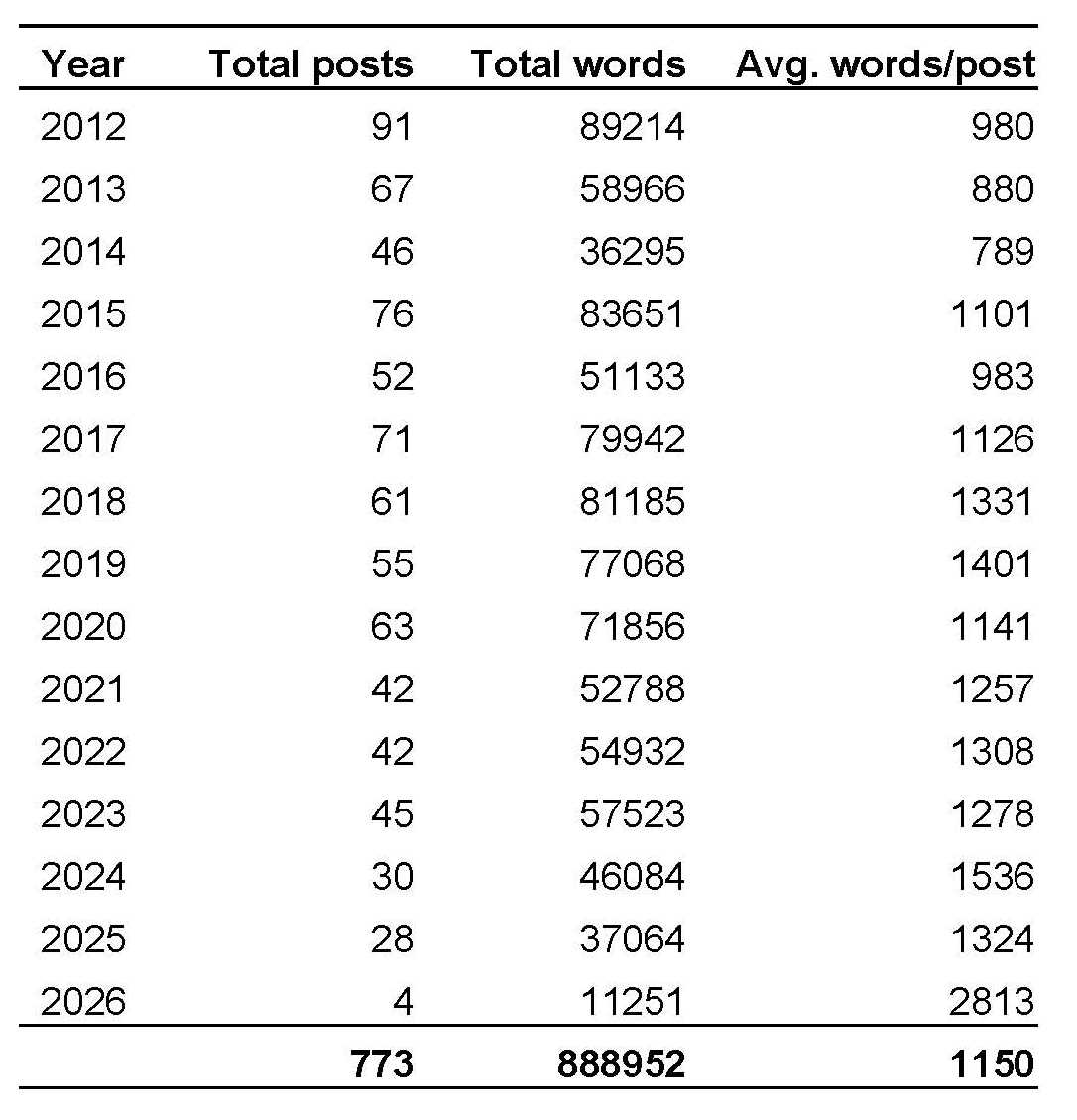

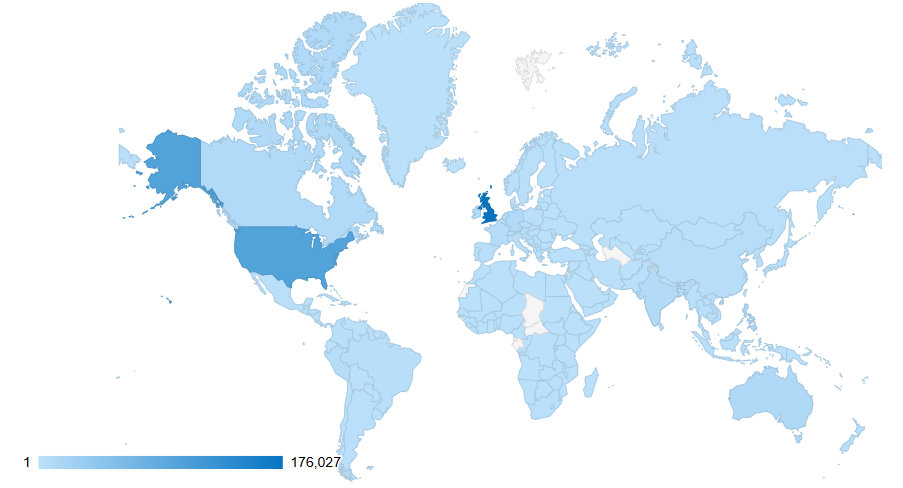
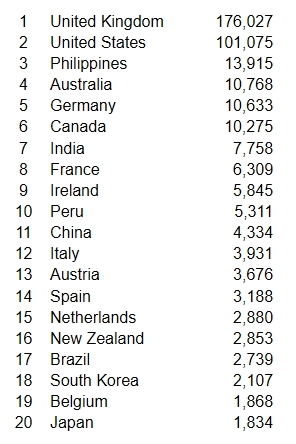
 Well, that’s how The Sun newspaper reported our research, rather flippantly in a 55 word piece (Crunch time for boffins), back in December 1987.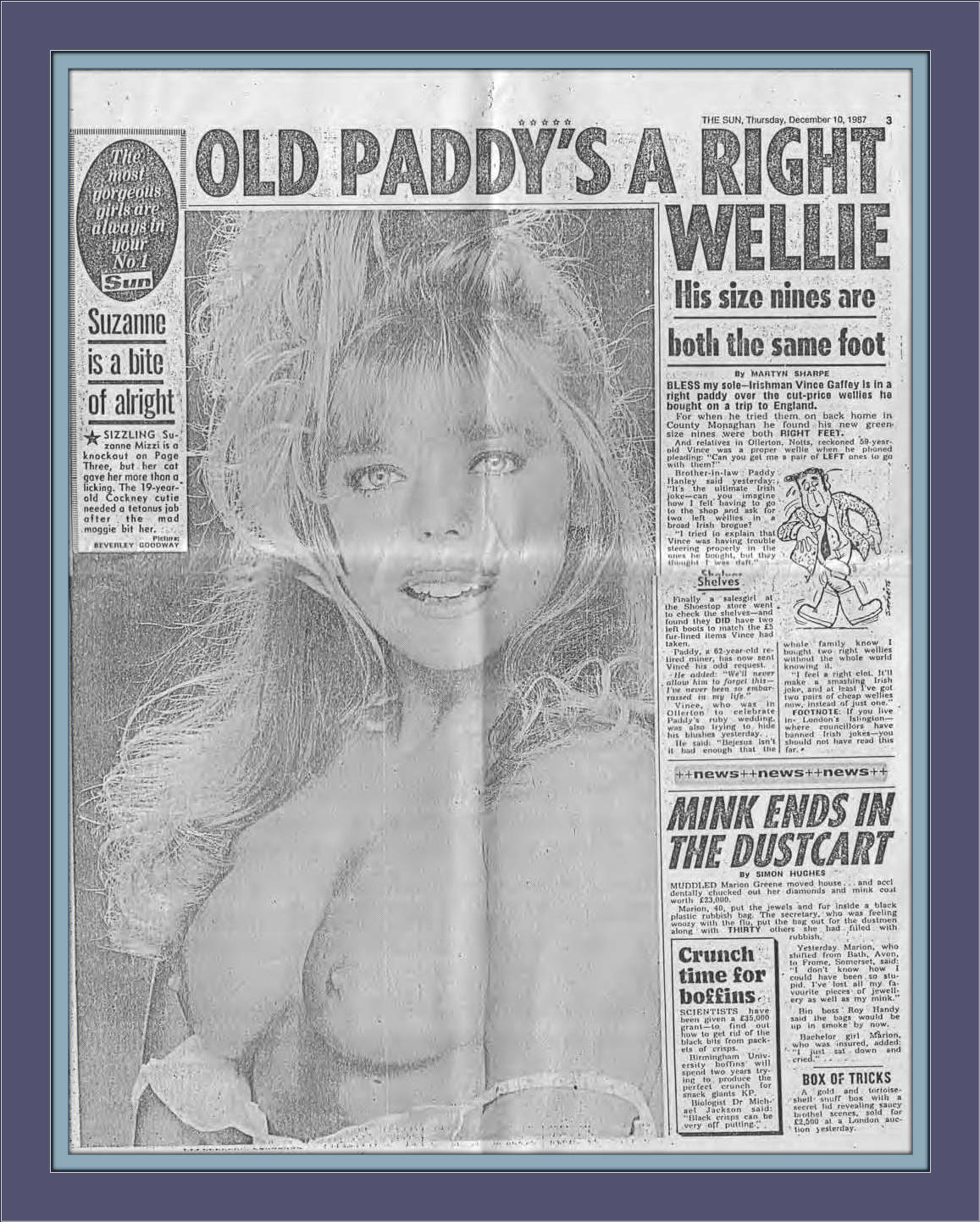
 colleague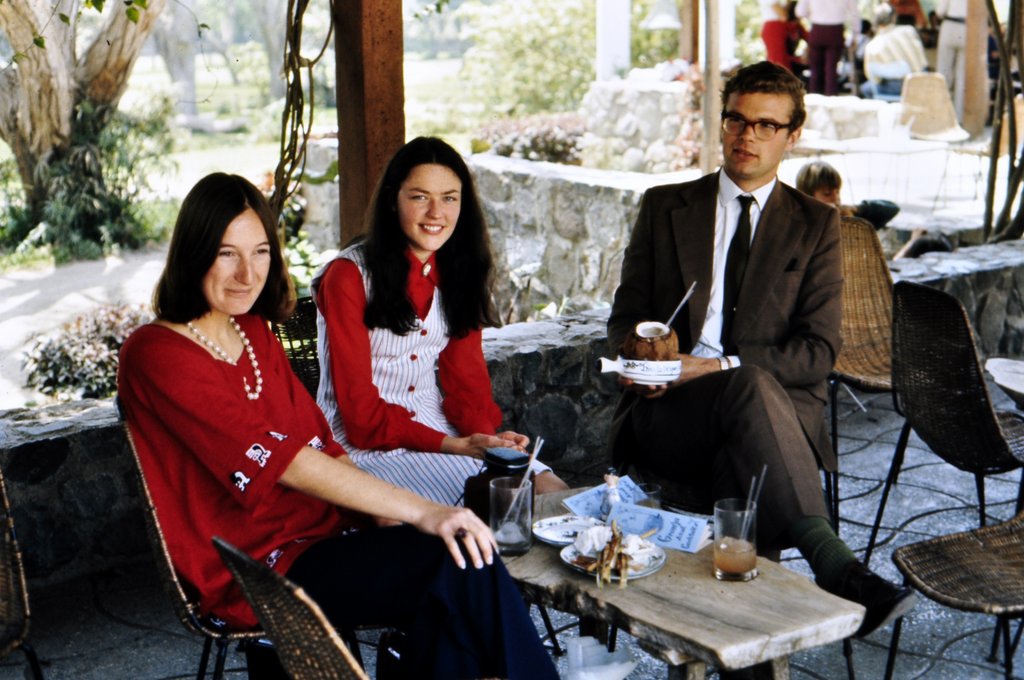

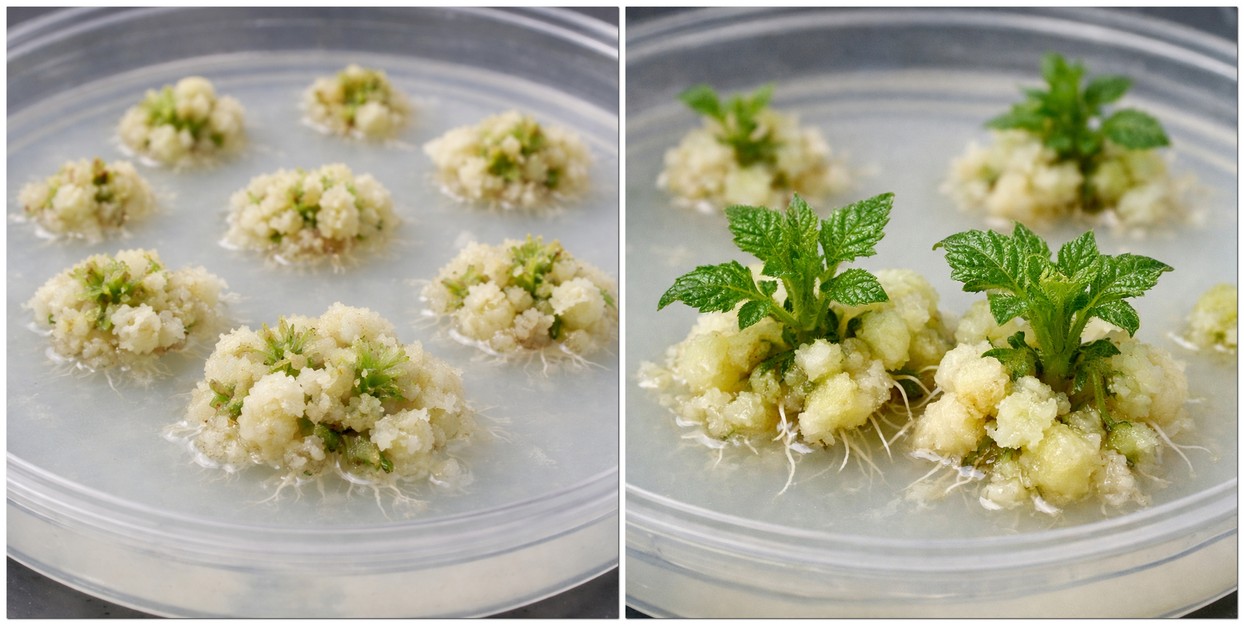
 One of my former MSc genetic conservation students Susan Juned [2] joined the project as a Research Associate (and registering for a PhD). In the summer of 1990, one of my undergraduate tutees, Abigail Amey (née Gregory [3]) joined the project for two months as a research assistant.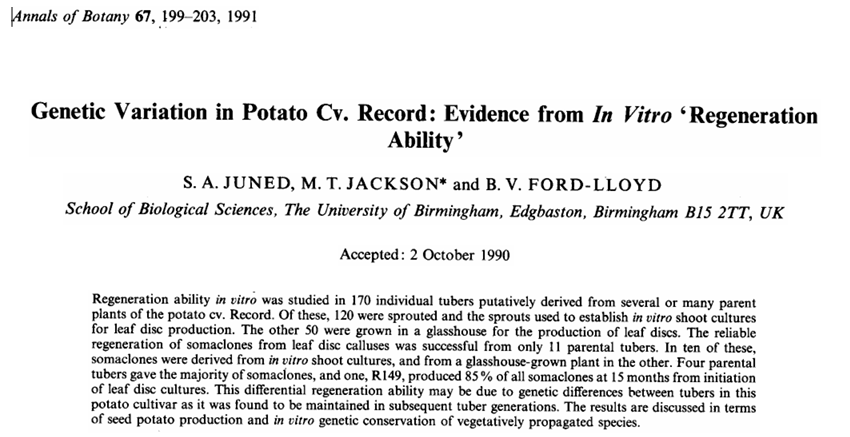
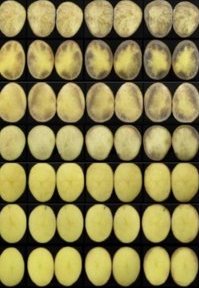
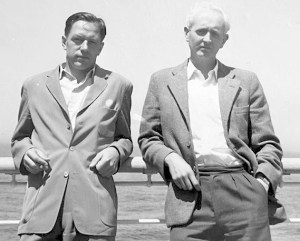
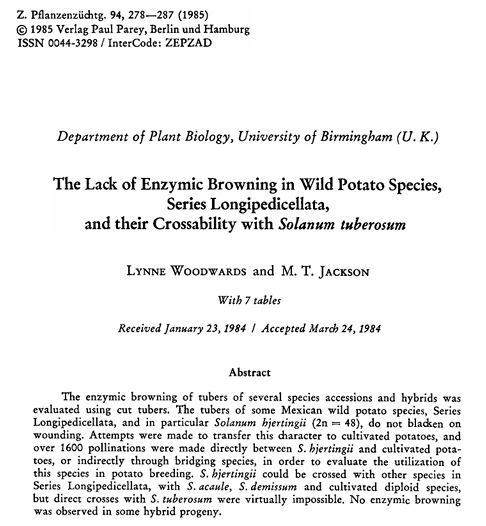
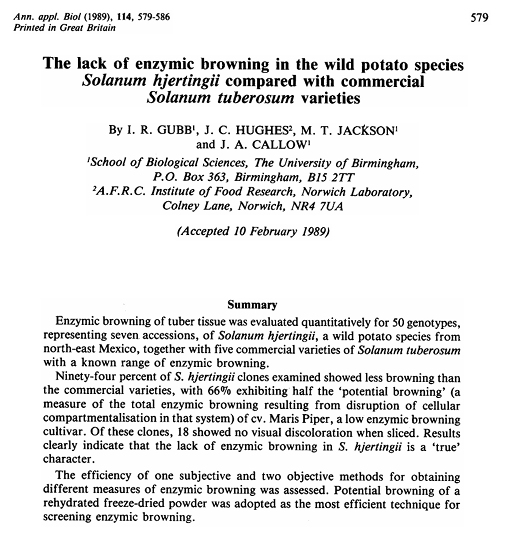
 Those words, still relevant today in many respects, were not written recently, but more than 40 years ago. They are the first paragraph of Chapter 1 of Plant Genetic Resources: an introduction to their conservation and use [1]. Written with my former colleague at the University of Birmingham, Brian Ford-Lloyd, this book is a short—146 page—primer about genetic conservation, originally published in 1986 by Edward Arnold, but now part of the Cambridge University Press (CUP) stable.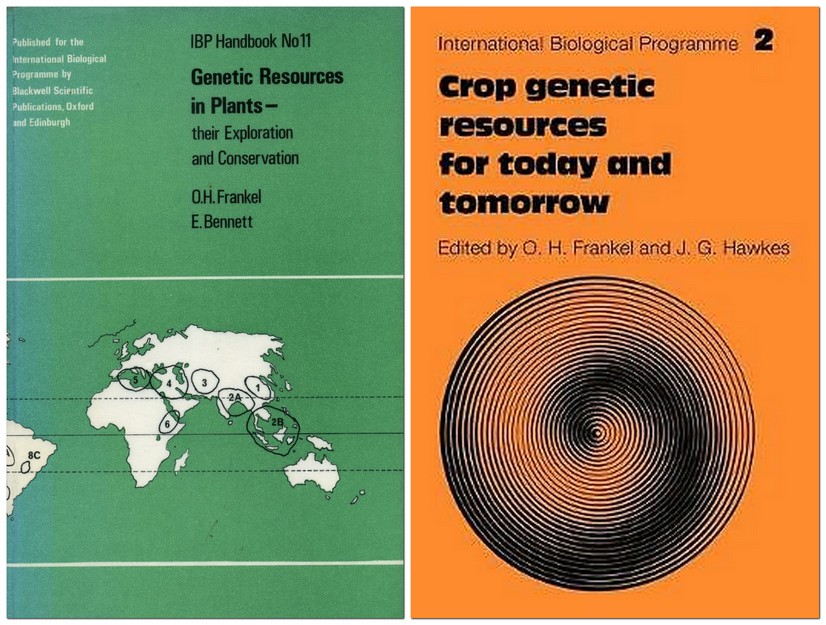
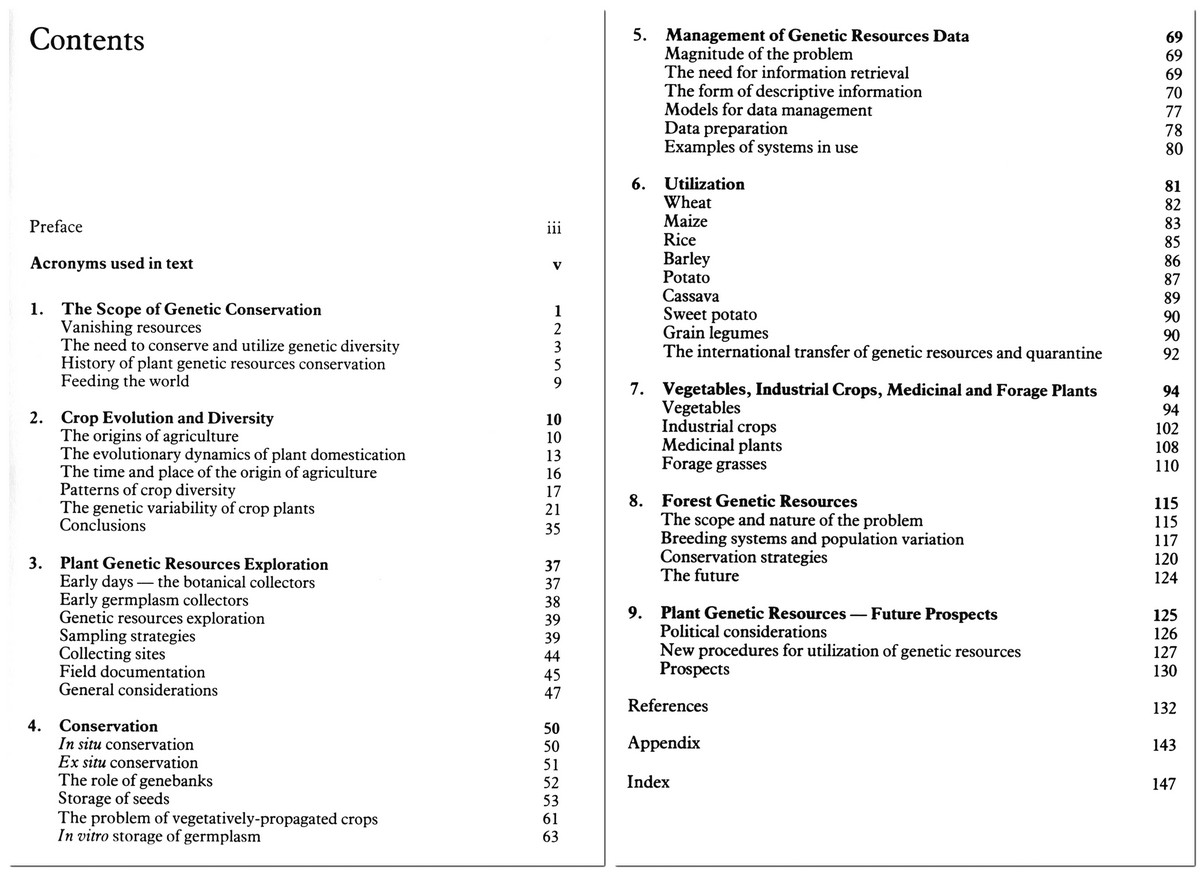
 In December 1993 the
  An enhanced genebank system, with those of the
 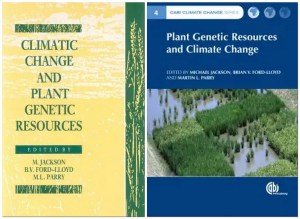 And talking of climate change, Brian and I organised a two -day meeting at Birmingham in 1989 on this topic, leading to the publication in 1990 of Climatic Change and Plant Genetic Resources [7], edited with our colleague from the Department of Geography, Professor Martin Parry. Then almost a quarter of a century later, CABI Publishing asked us to compile and edit an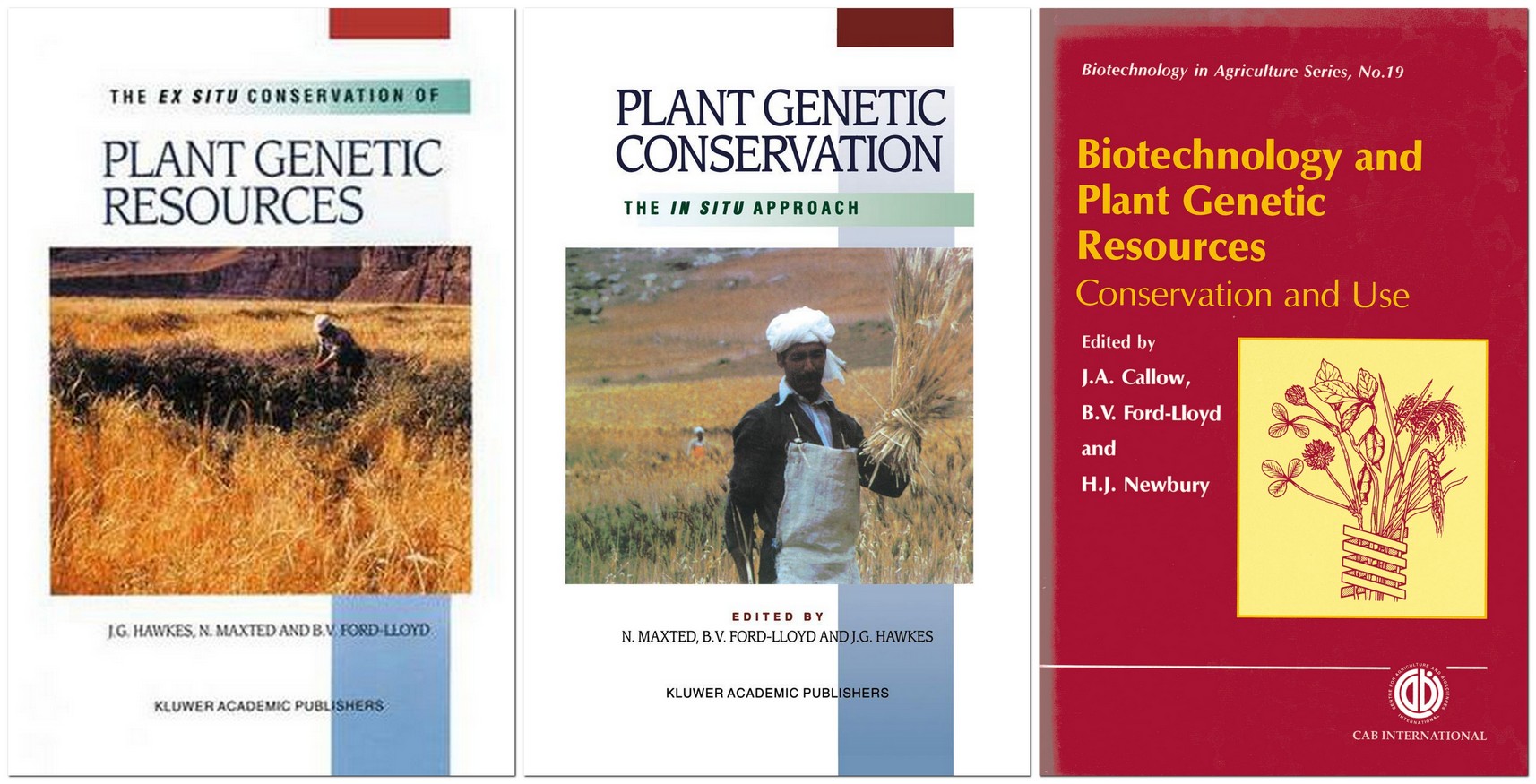
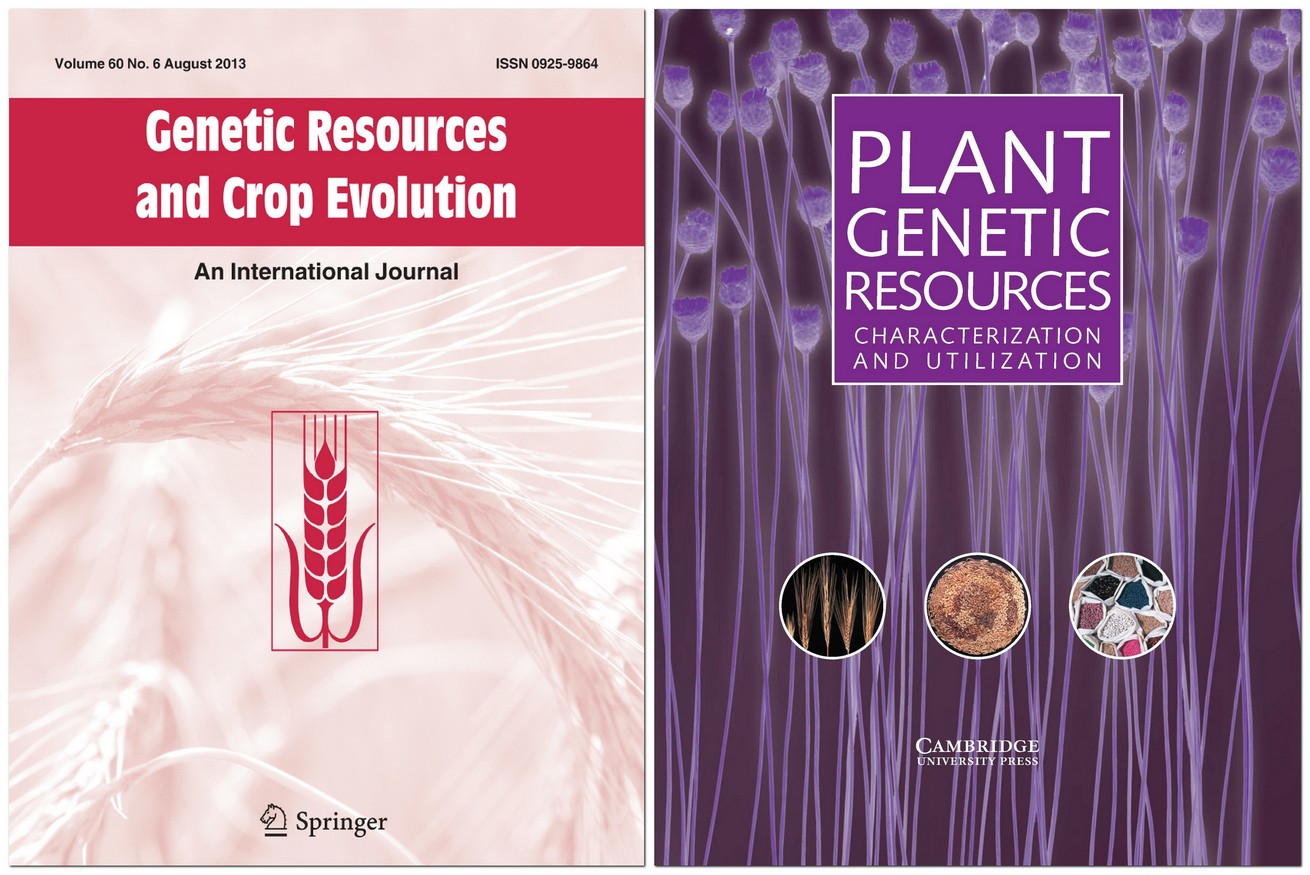
 During my tenure at IRRI, I continued to collaborate with Brian and his colleagues at the University of Birmingham (and at the John Innes Centre in Norwich), specifically studying the use of molecular markers to characterise and use rice genetic diversity. A list of all the publications can be found in
  What started in 1969 with the launch of the MSc Course at The University of Birmingham was built upon by successive staff and students. The university has an enviable legacy in terms of teaching, research, and publishing widely about the conservation and use of plant genetic resources. I think it’s fair to claim that Plant Genetic Resources: an introduction to their conservation and use occupies a place in the pantheon of significant genetic resources literature.
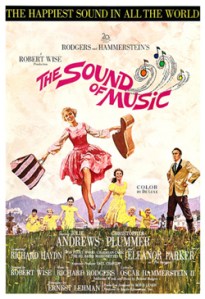 Well, almost a lifetime. Sixty-one years in fact. So yesterday afternoon (New Year’s Day), at the age of 77, I watched a film I have assiduously avoided for six decades:
  Starring
  More recently I have become somewhat obsessed with


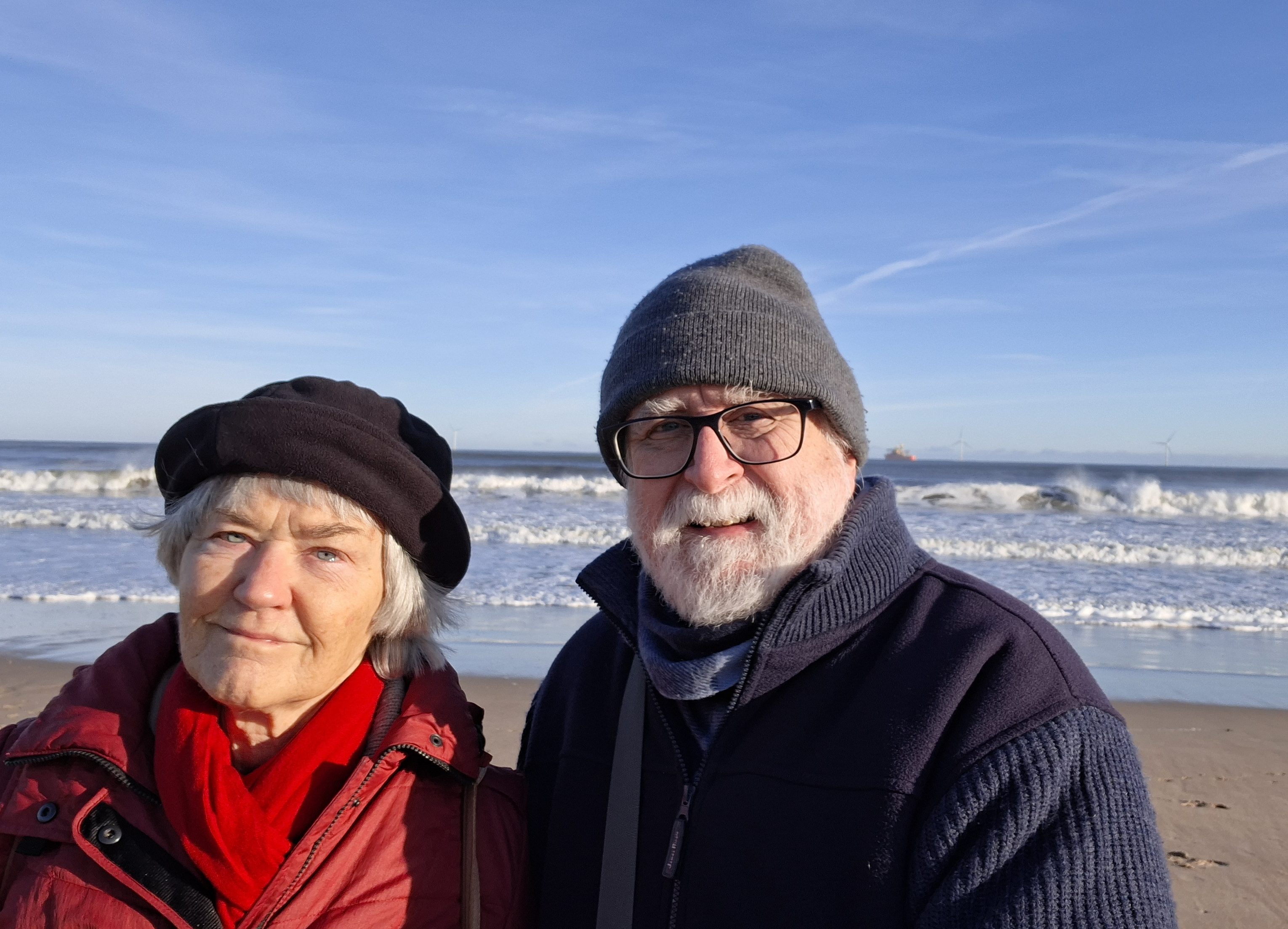


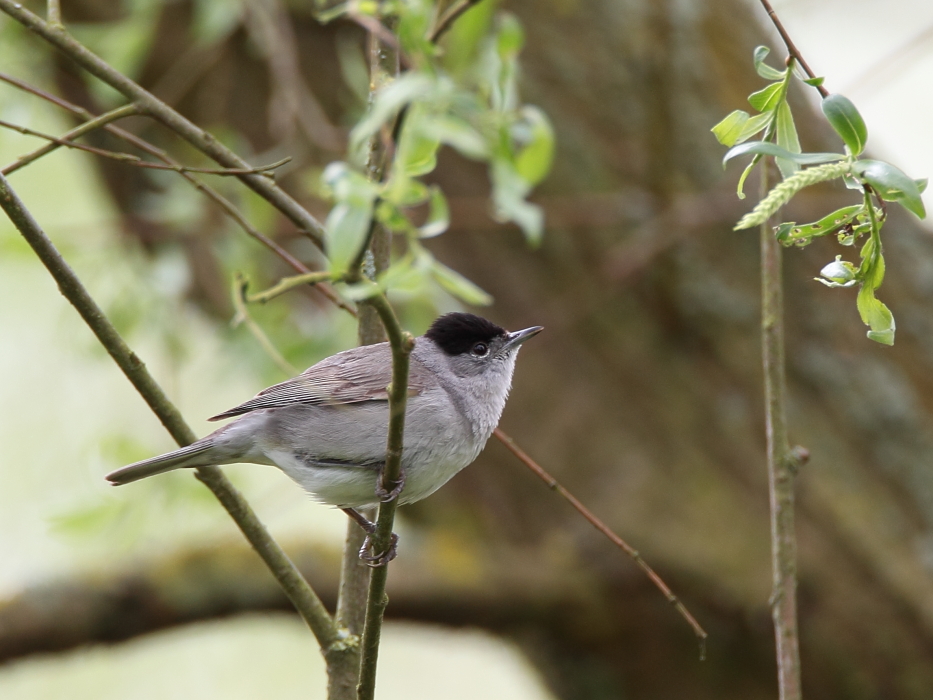


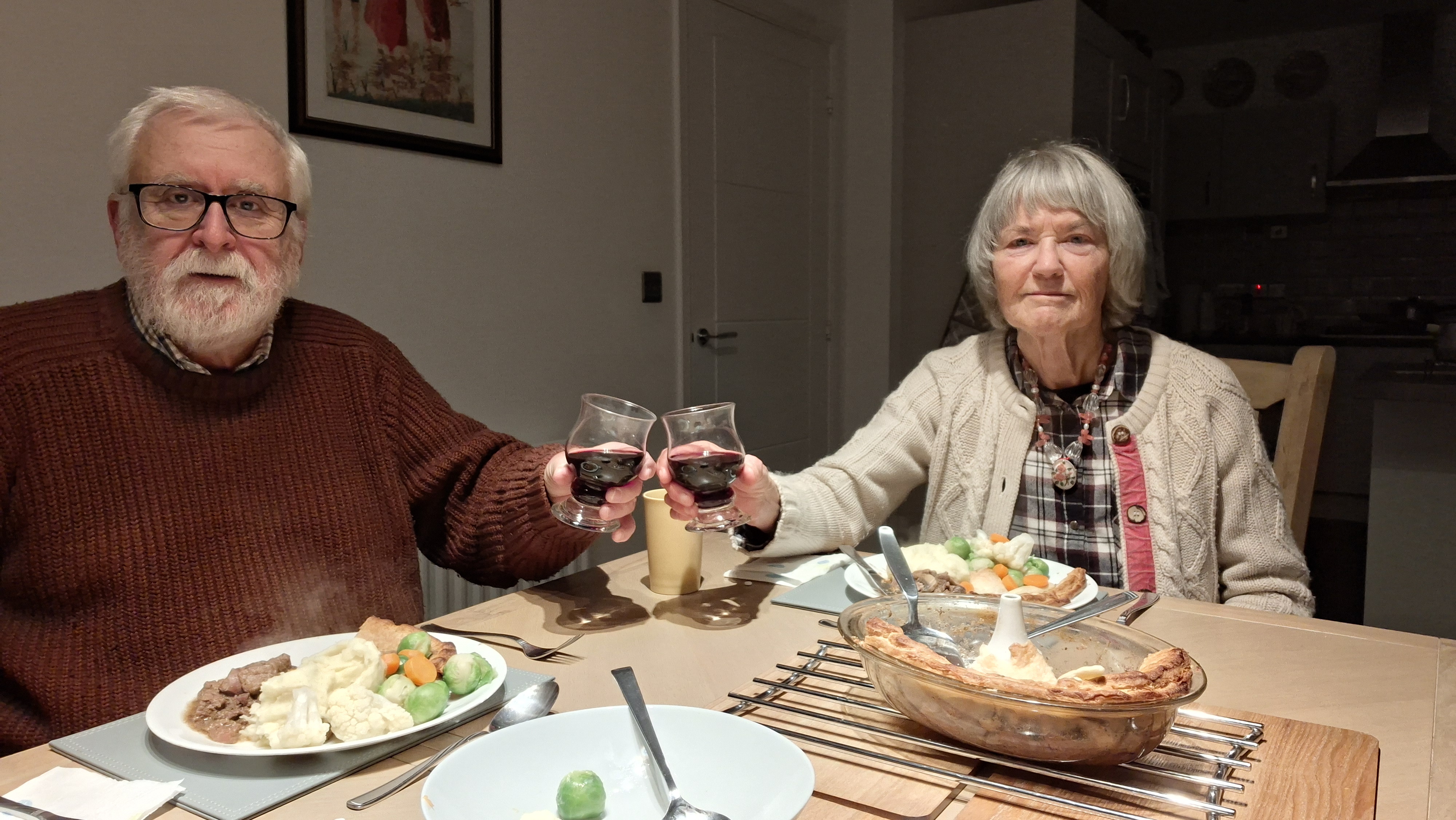


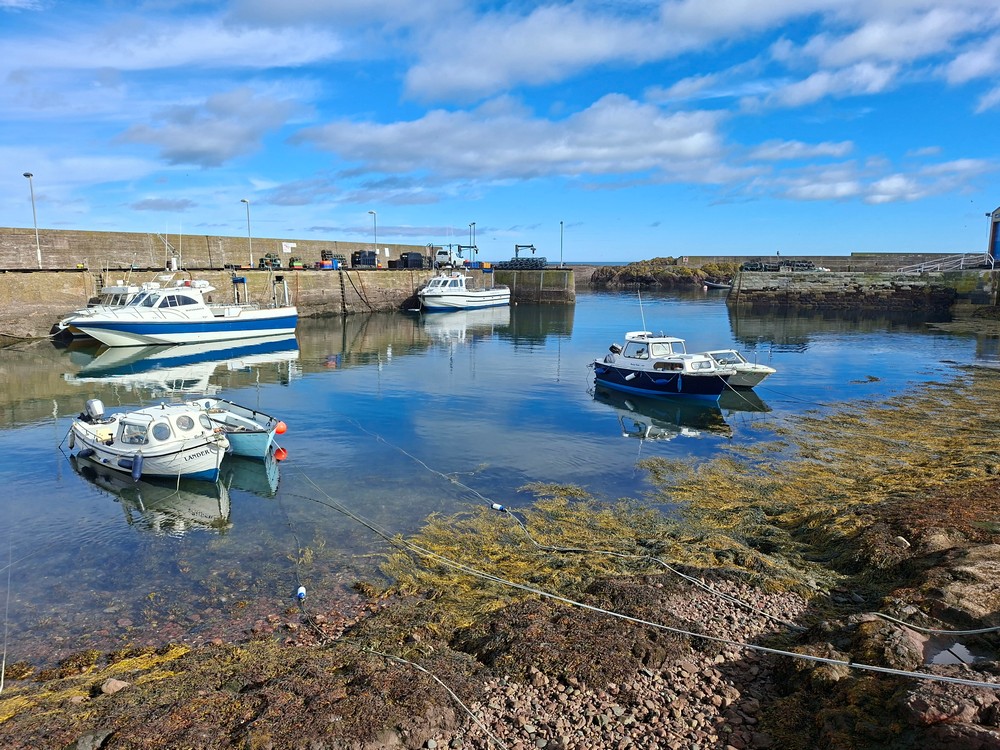
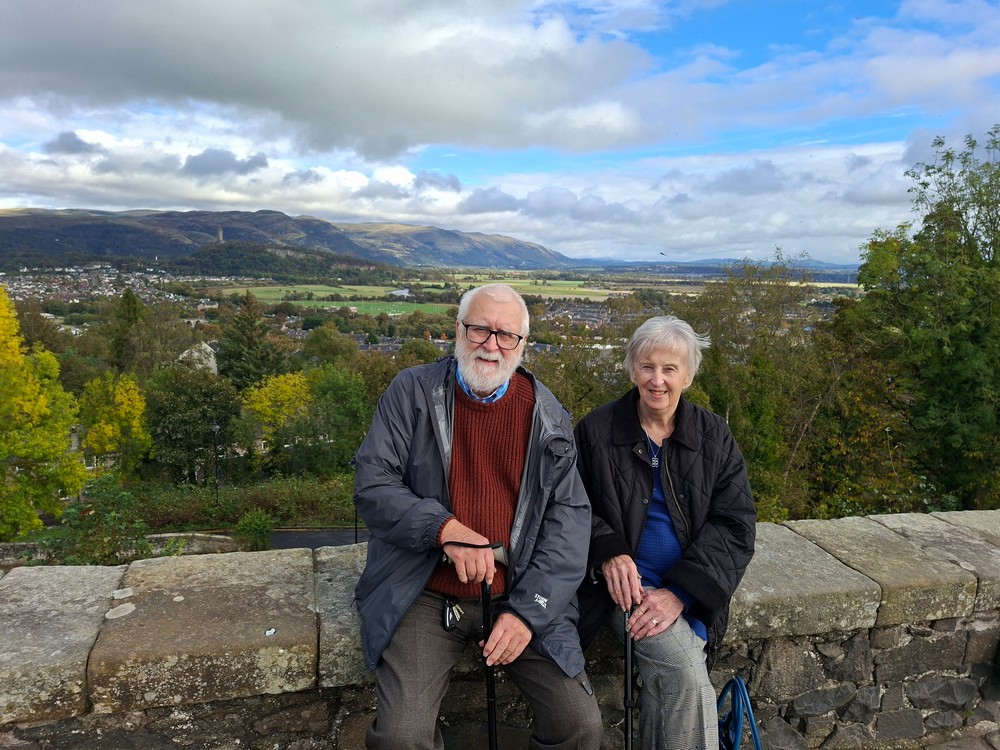


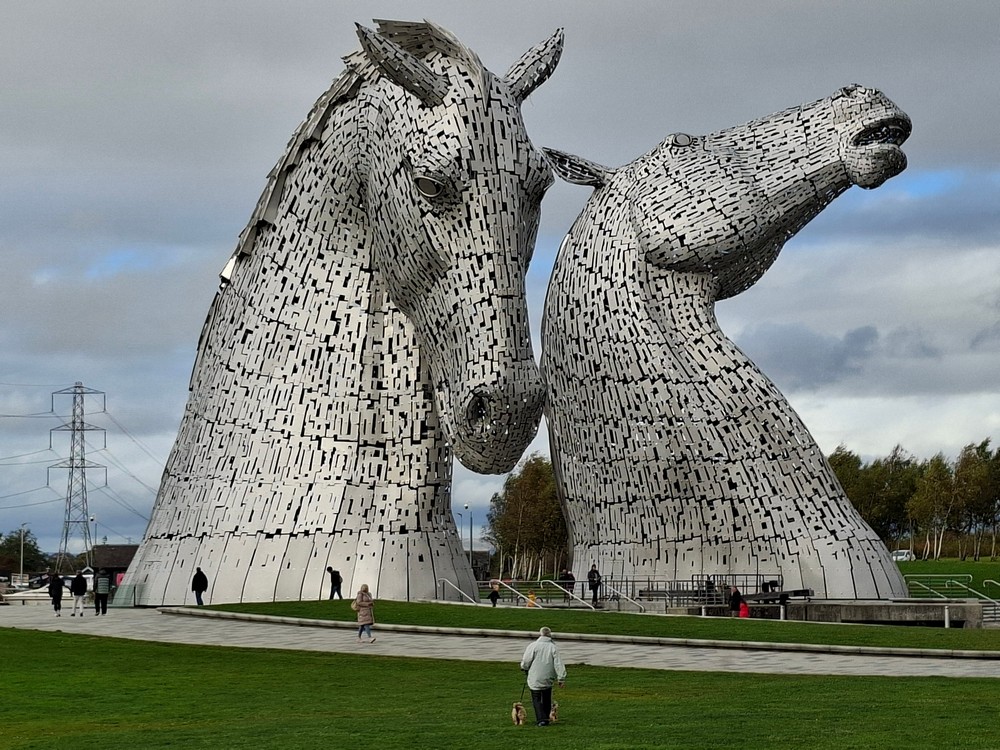


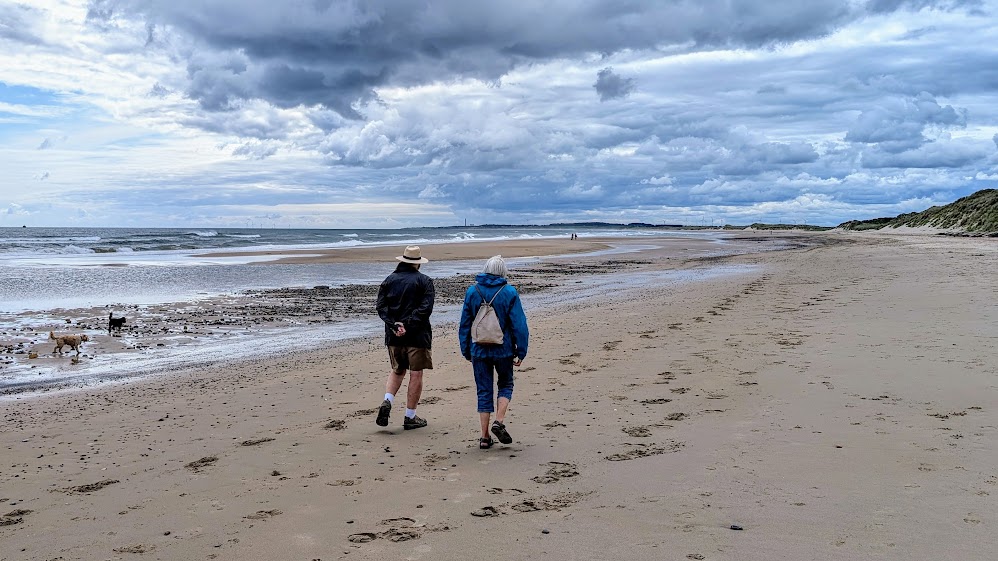
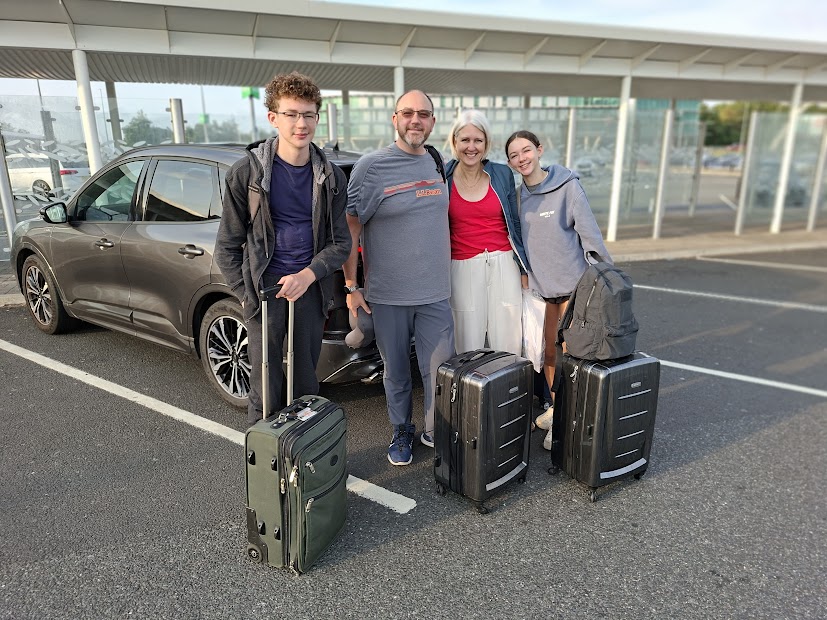
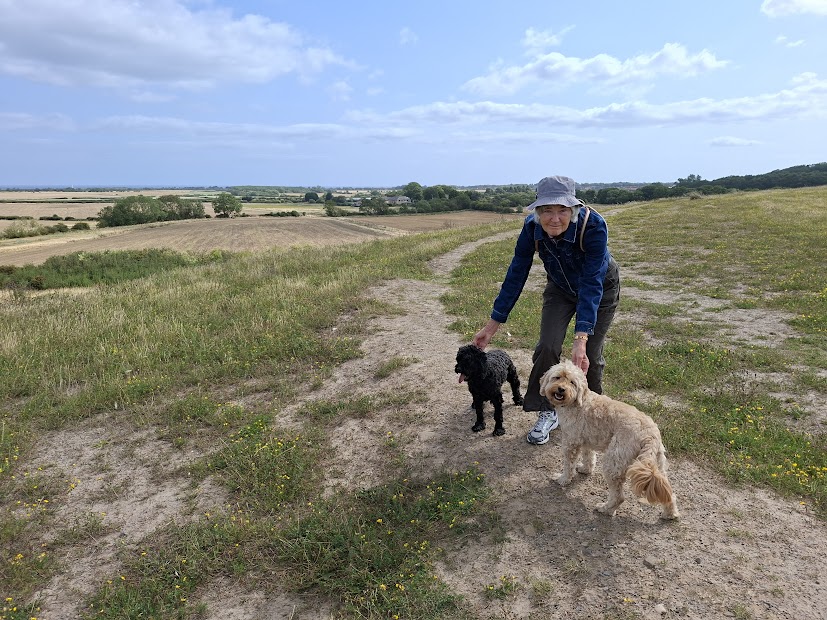


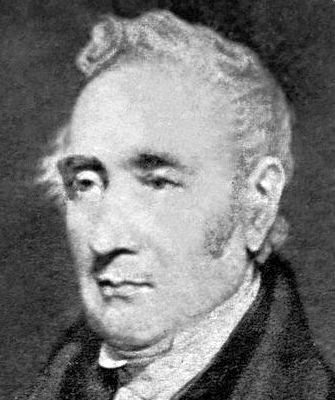


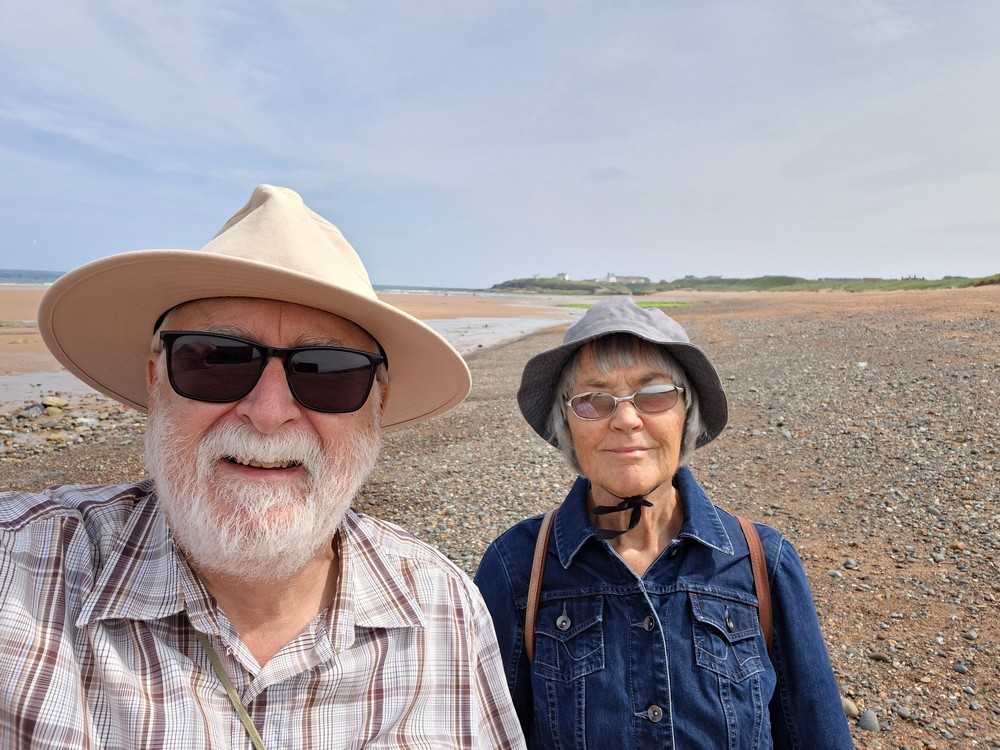



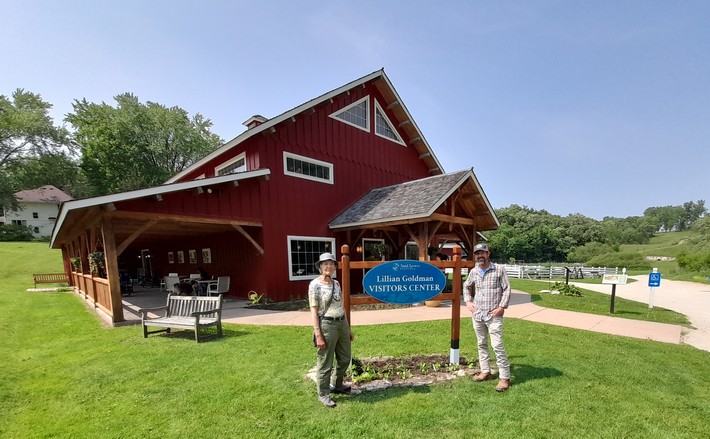


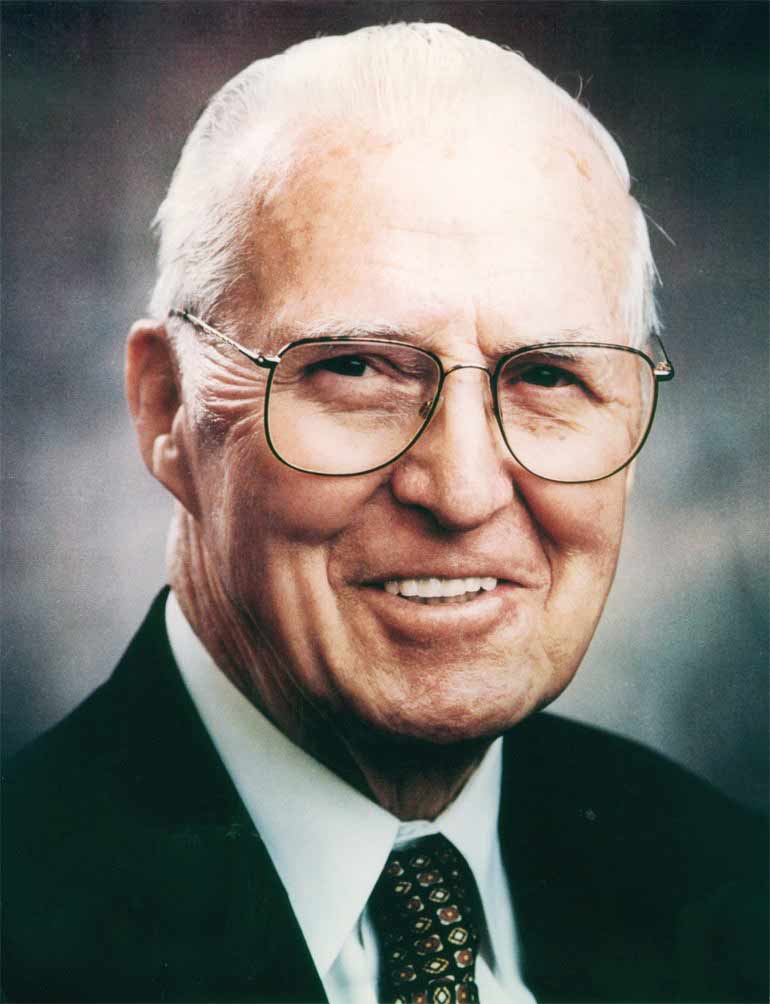 The following day we headed west to Cresco to visit the birthplace and boyhood farms of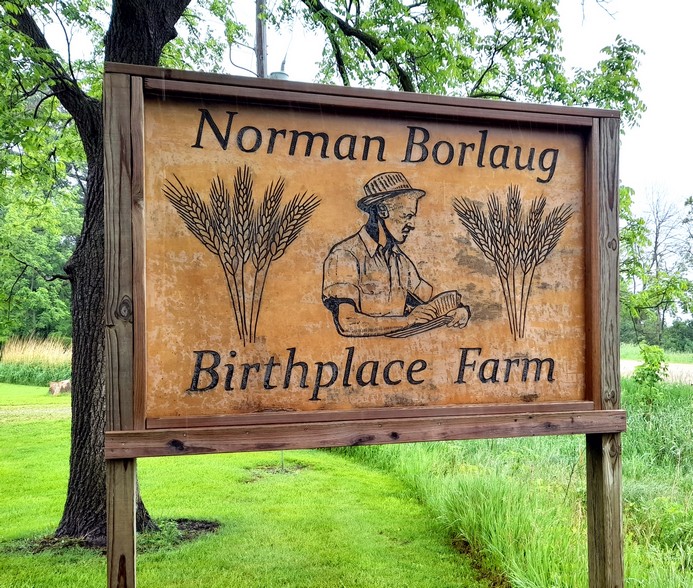


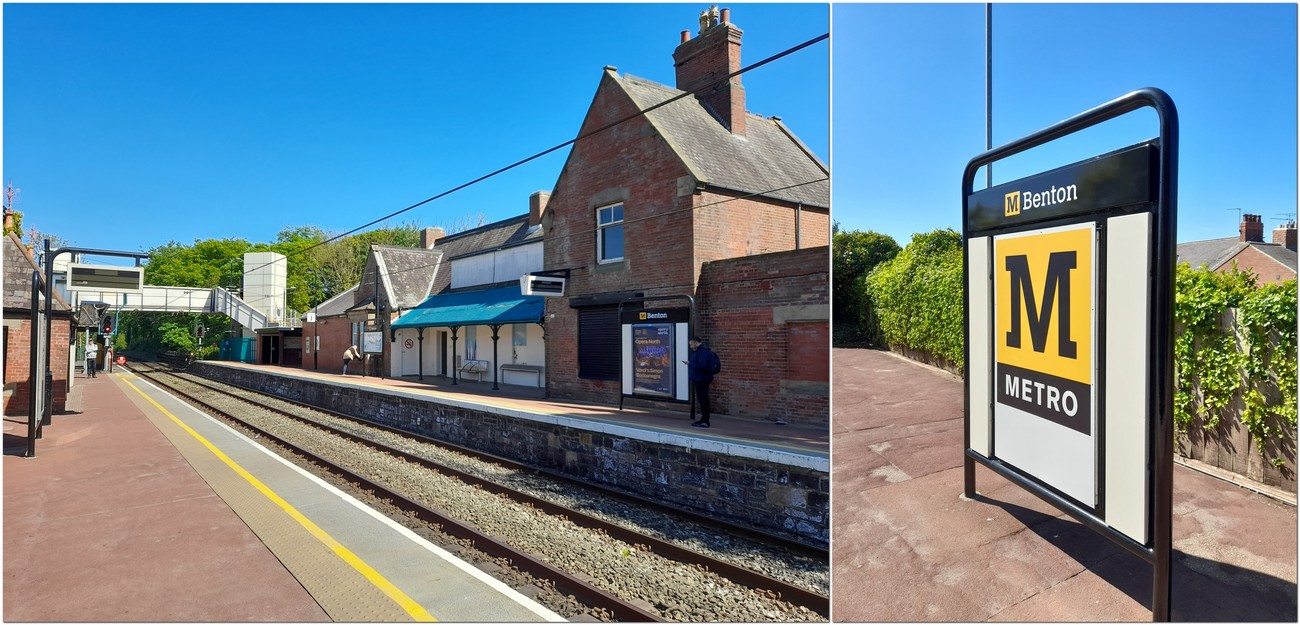


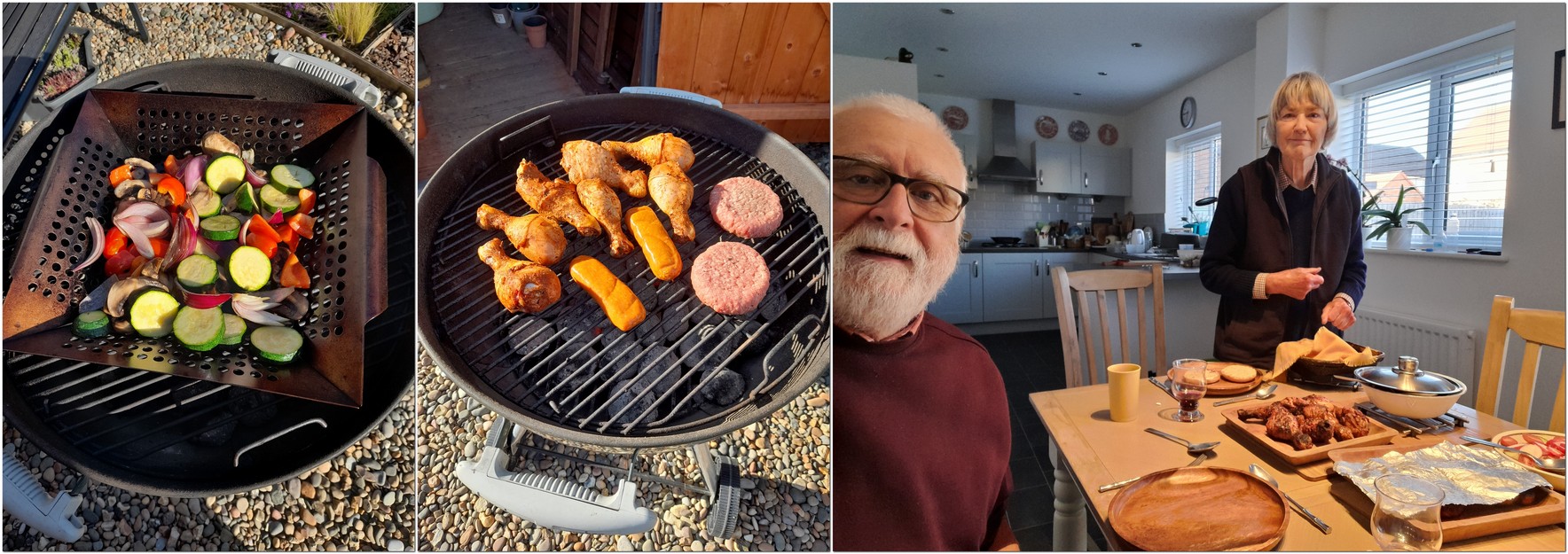
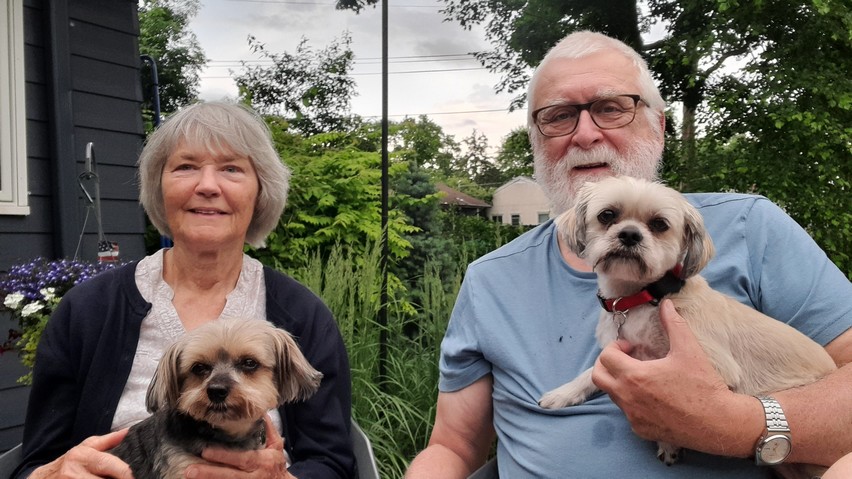


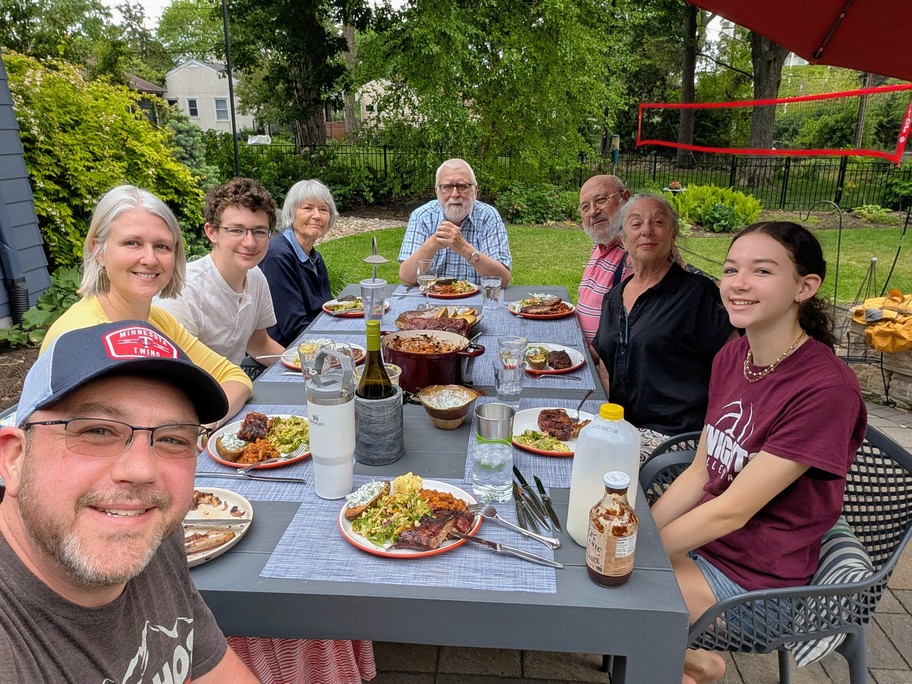


 The month started, right on the 1st, with Steph and I receiving our Covid-19 Spring booster vaccinations. One of the advantages of being over 75 – we get offered these vaccinations twice a year. We believe in science, not the mad ravings of RFK, Jr!


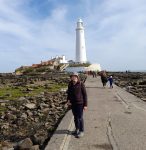 On the 11th, Steph and I headed to the coast to take a look at the newly-renovated St Mary’s Lighthouse. The last time we were there it was high tide so couldn’t cross to the island. As usual, there was a good number of grey seals basking on the rocks.


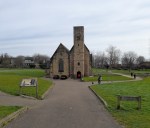
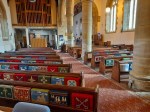
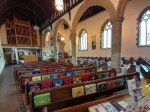


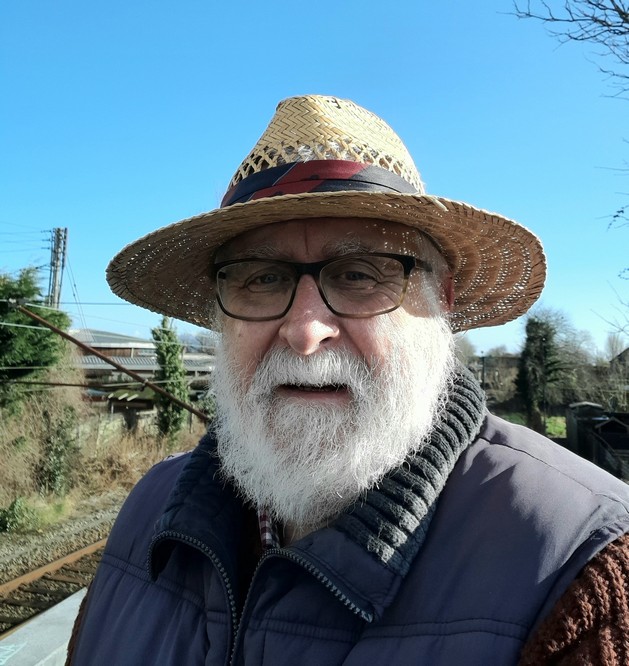







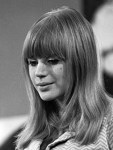 30 January: Singer and actress, and 60s icon,
  9 January:





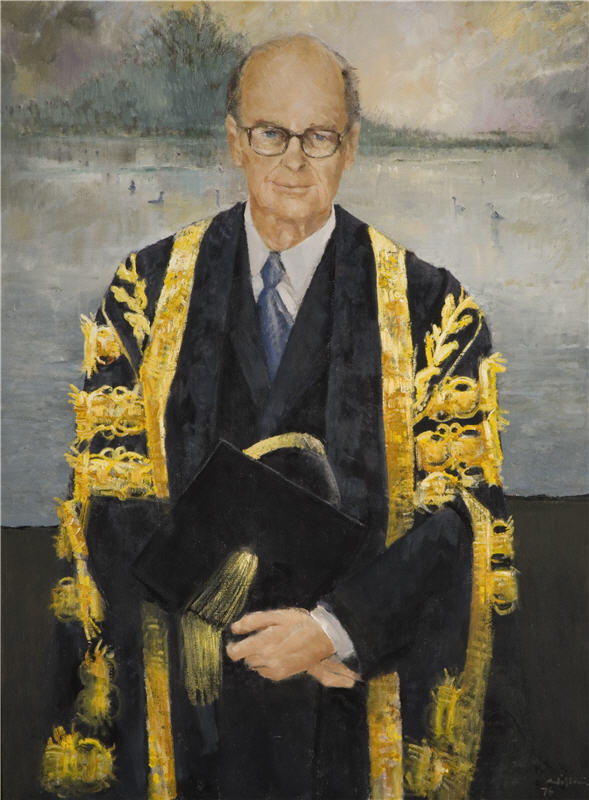


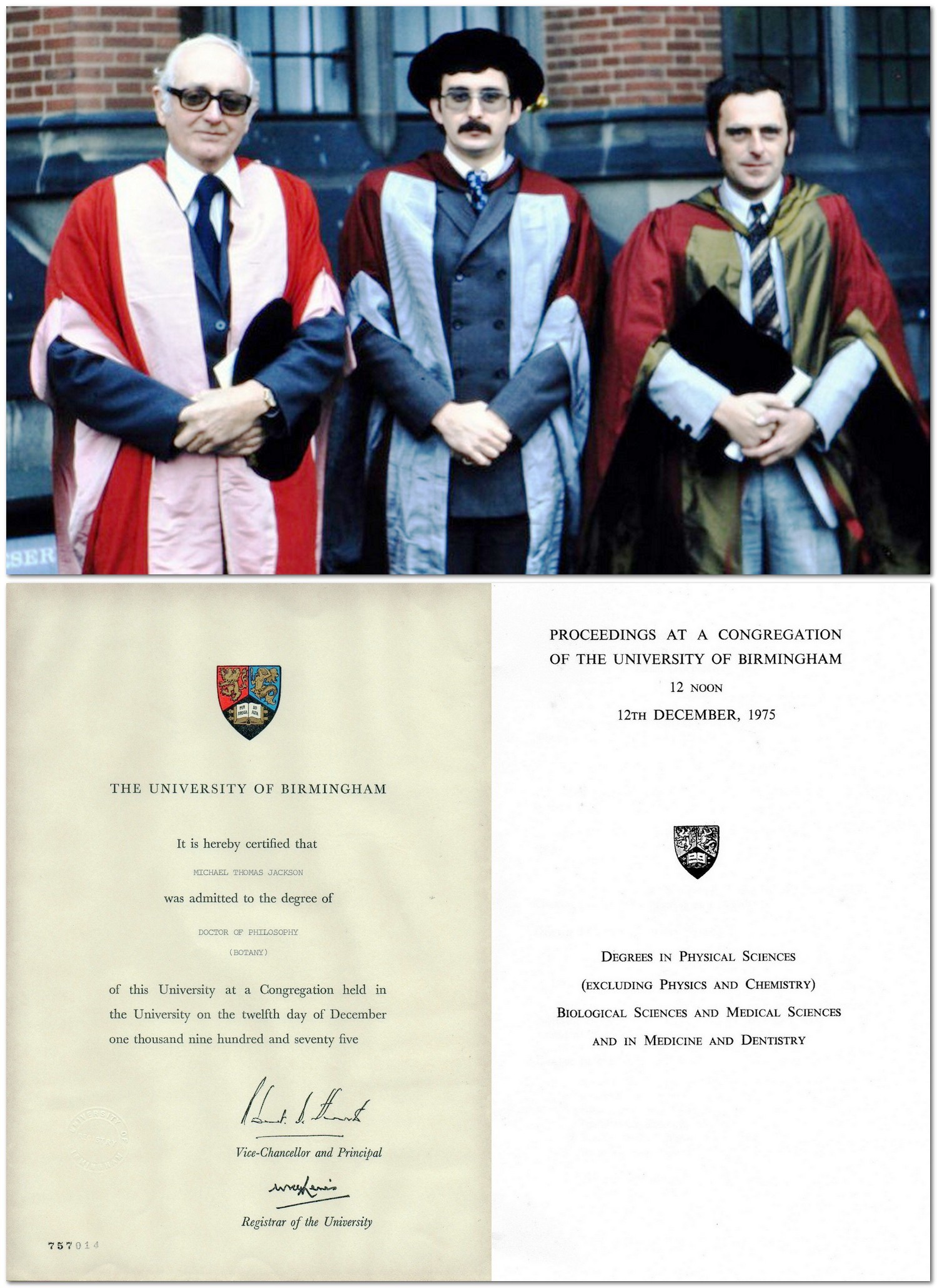
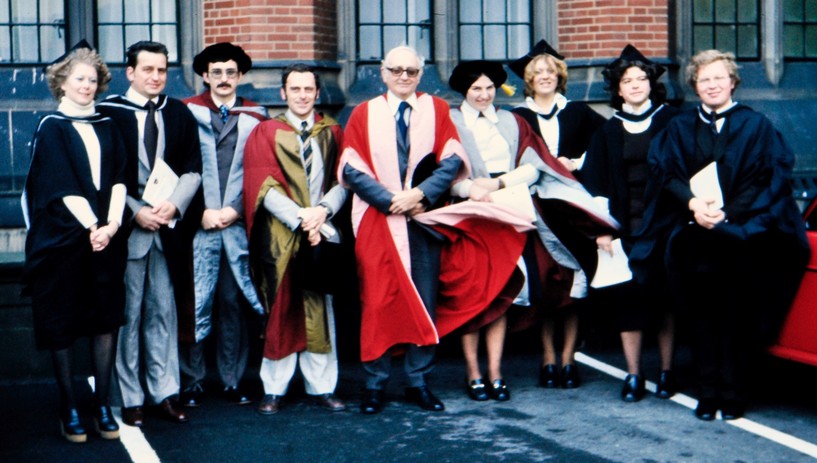

 returned to Birmingham from an expedition to collect wild potatoes in Bolivia. He told me about a one-year vacancy from September that same year at the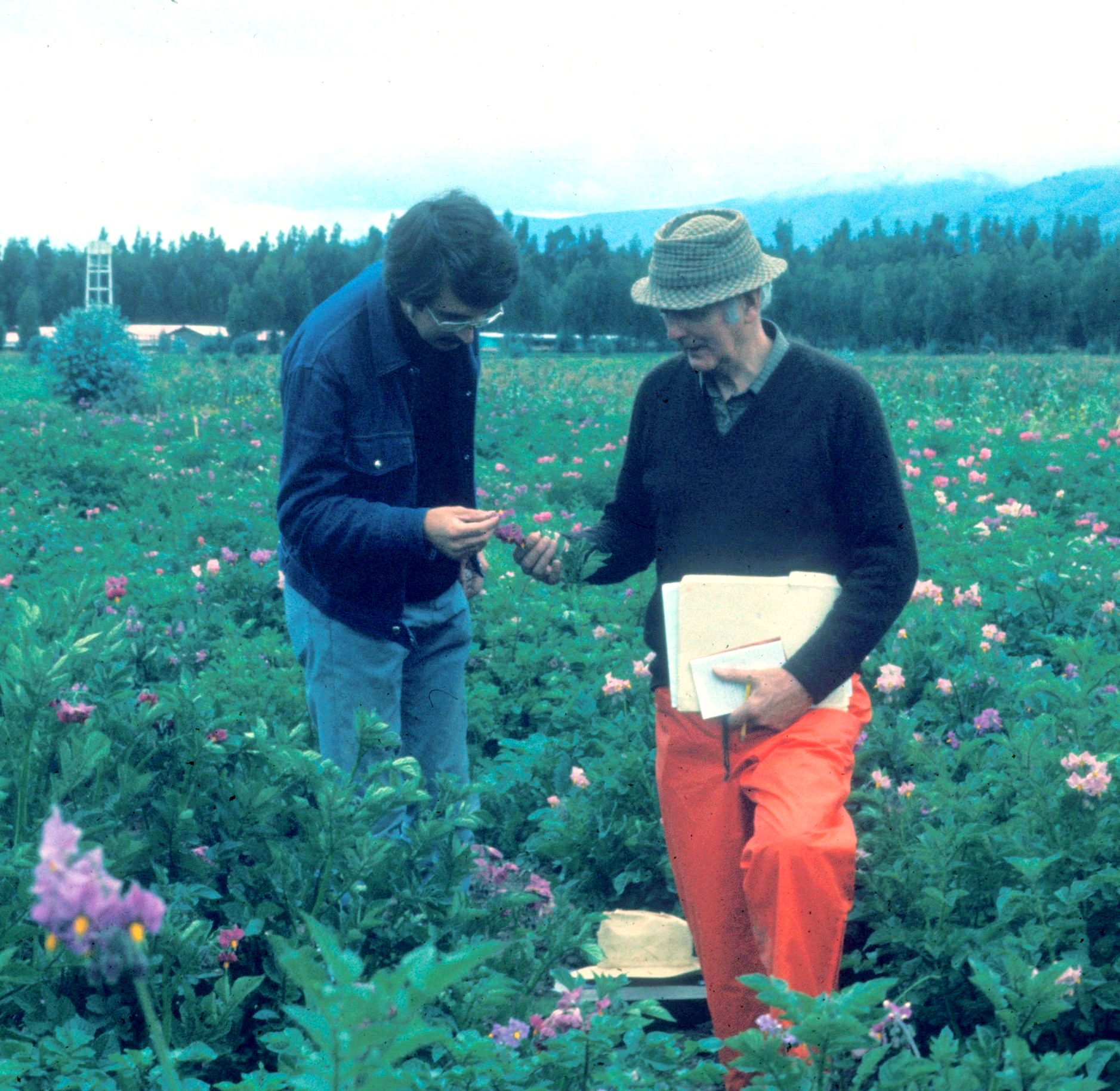
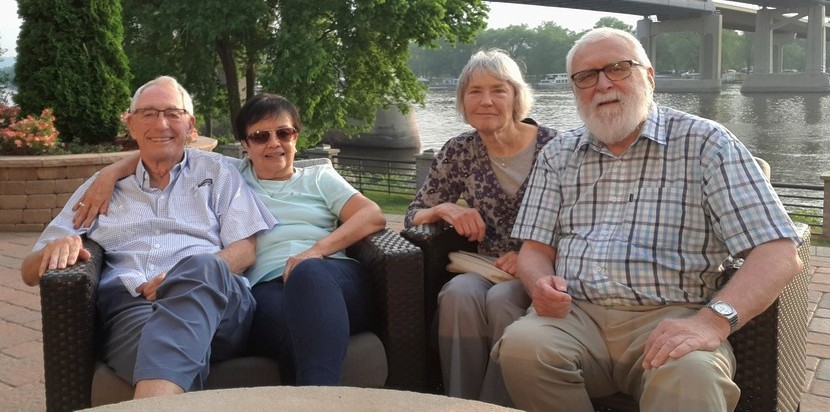




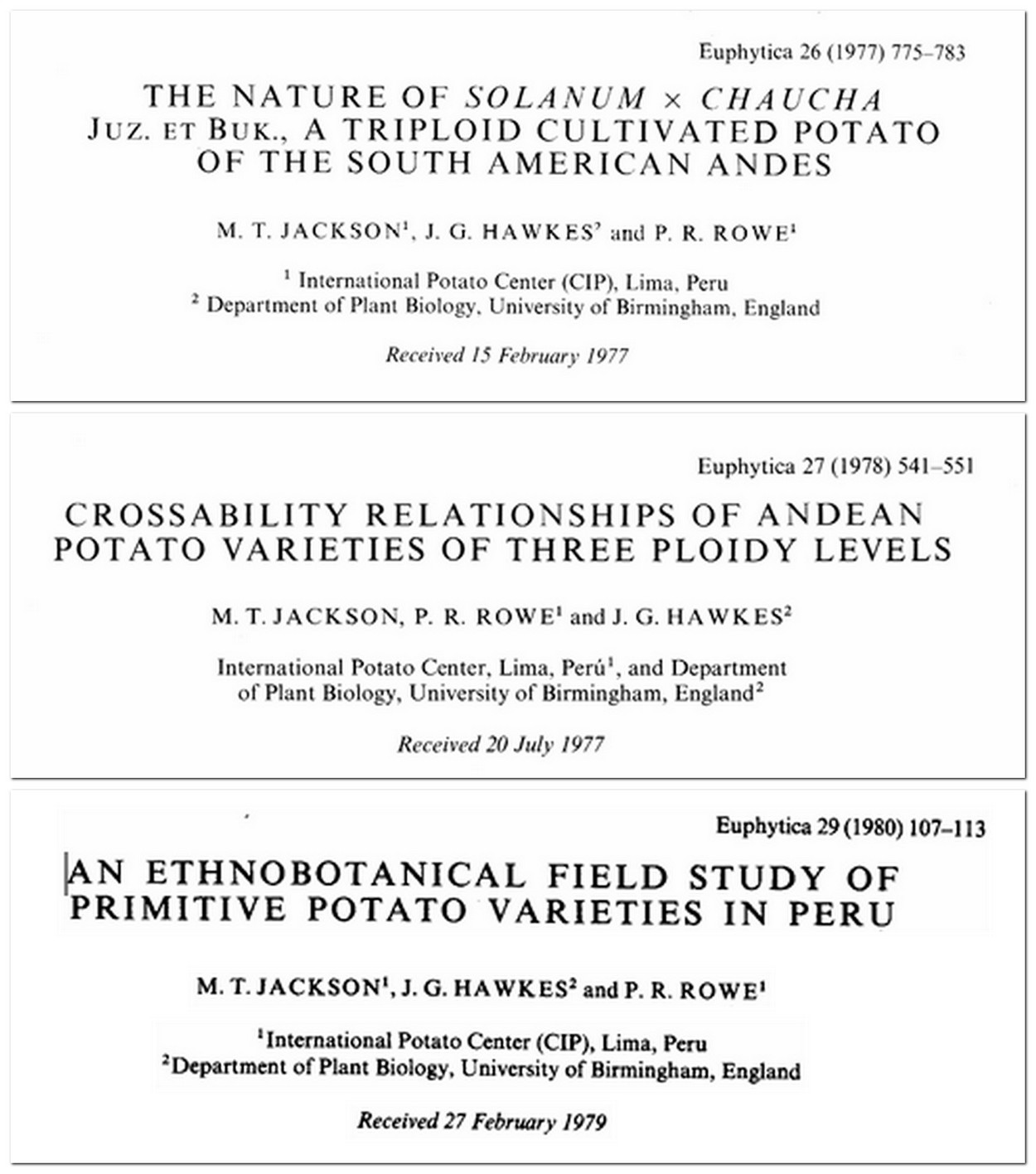

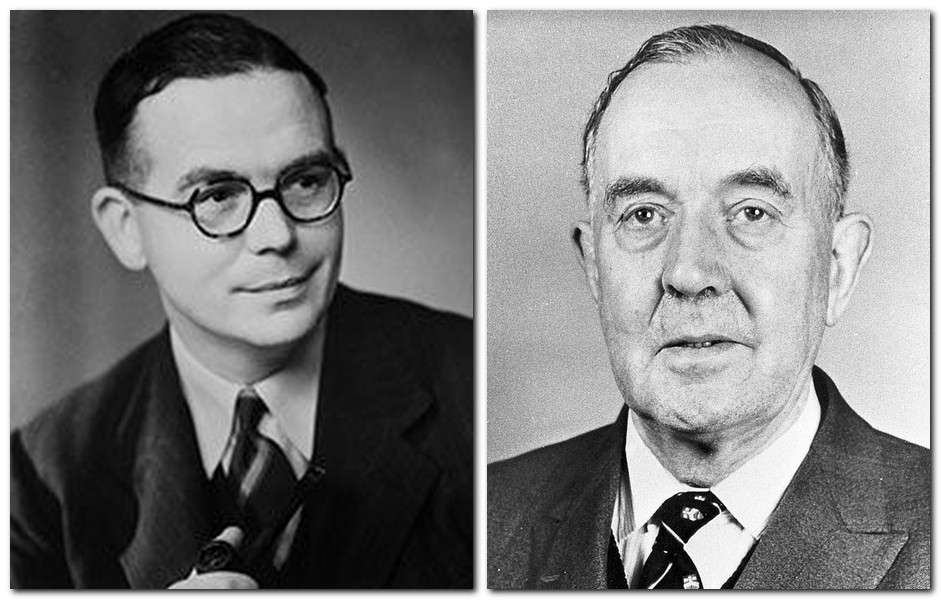

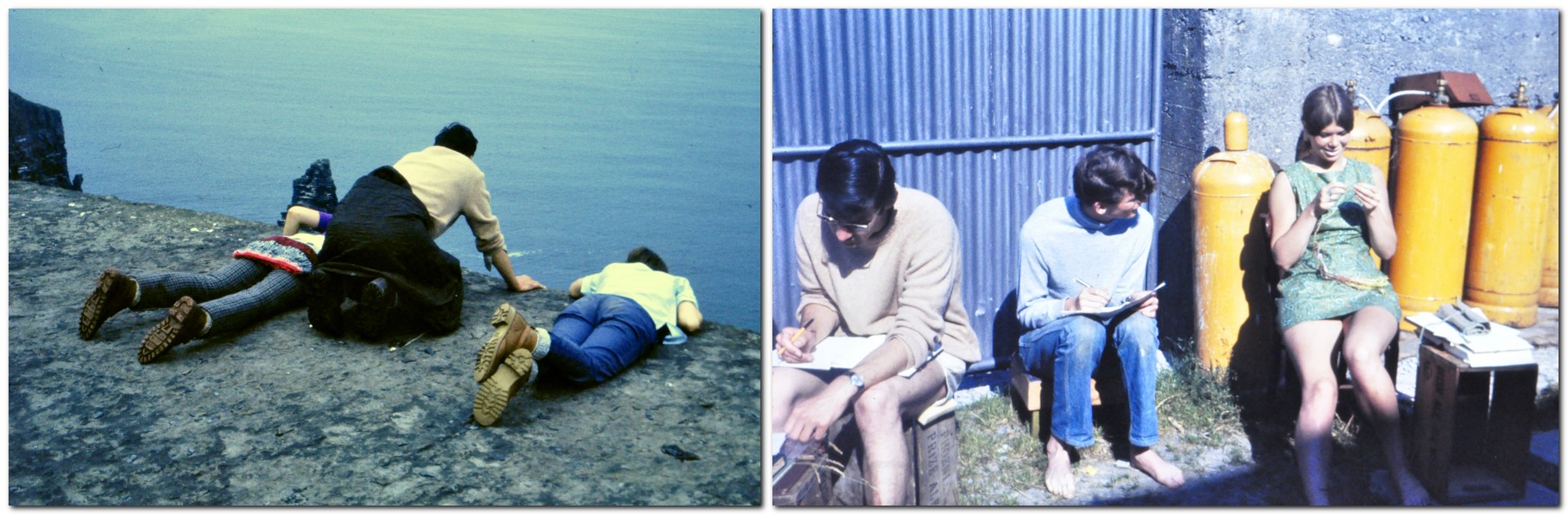
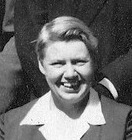
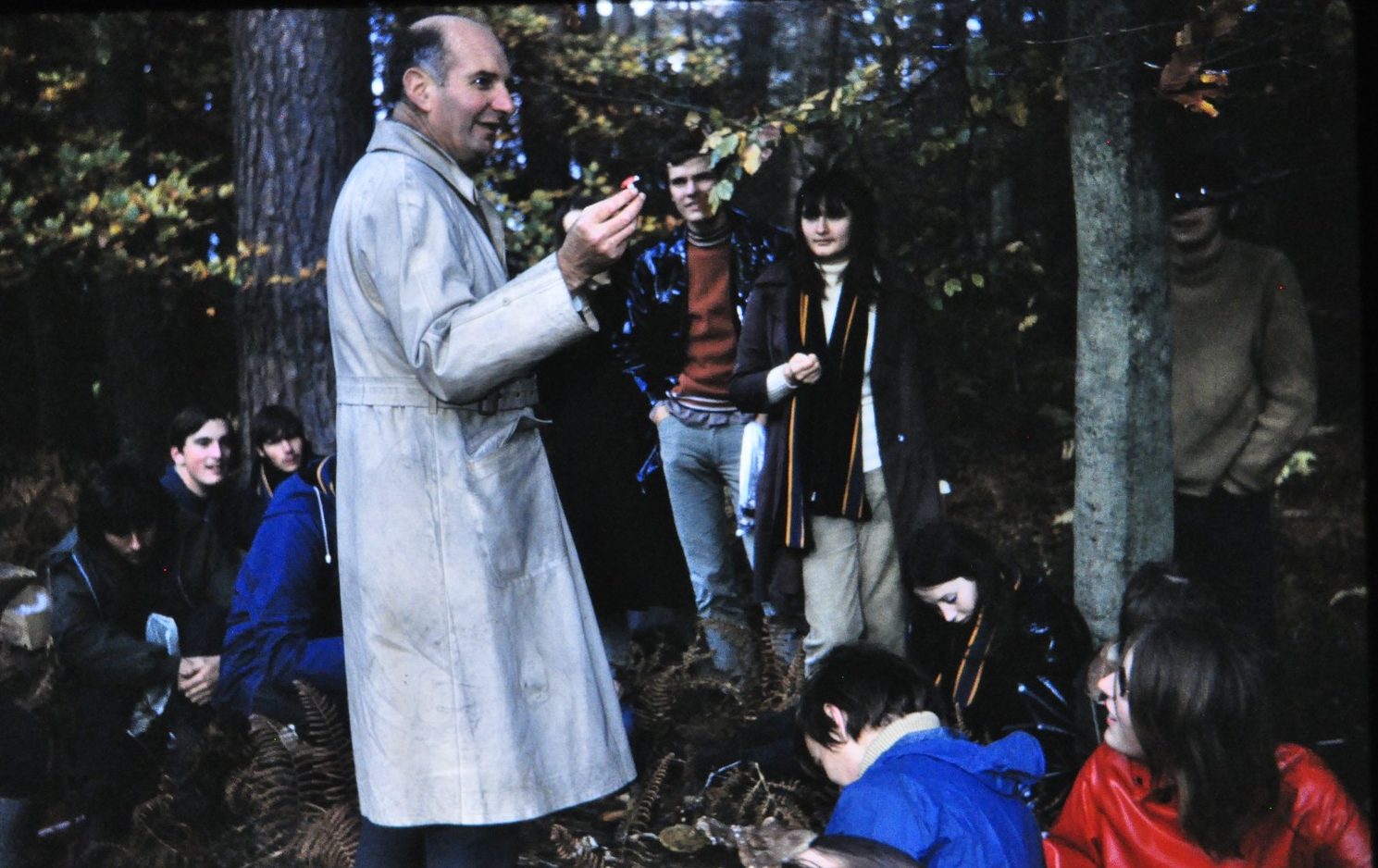
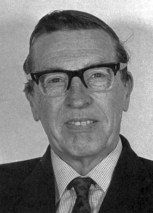
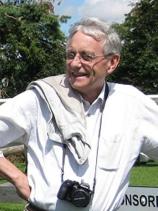 His younger colleague,


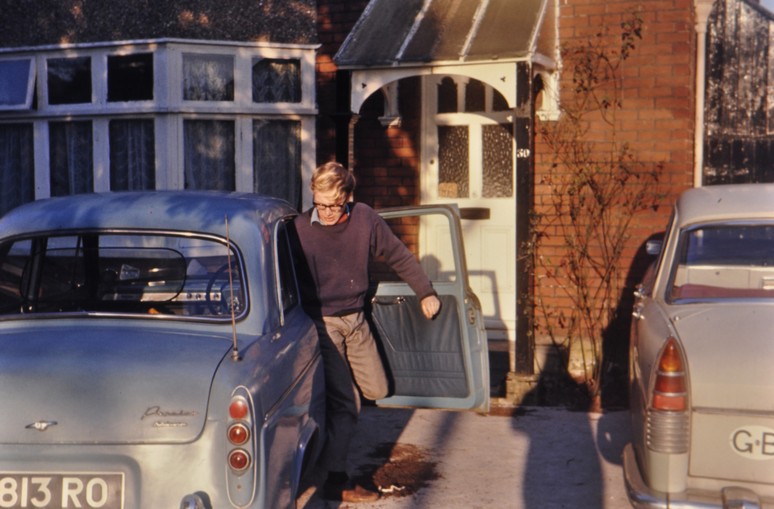
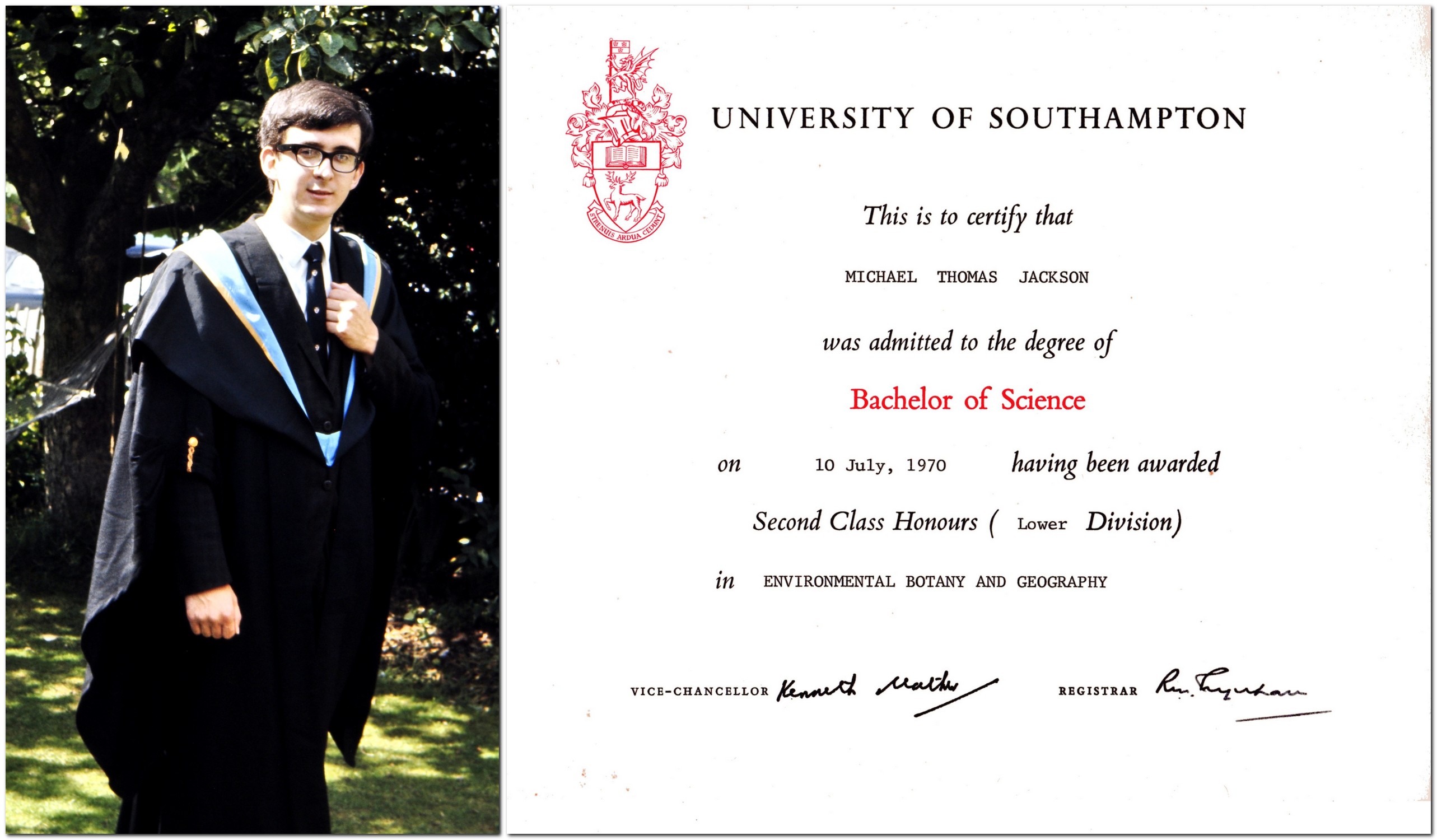
 Almost two weeks ago, I received the sad news from Liz’s husband, John Harvey, that she had passed away on 30 August. She was 76.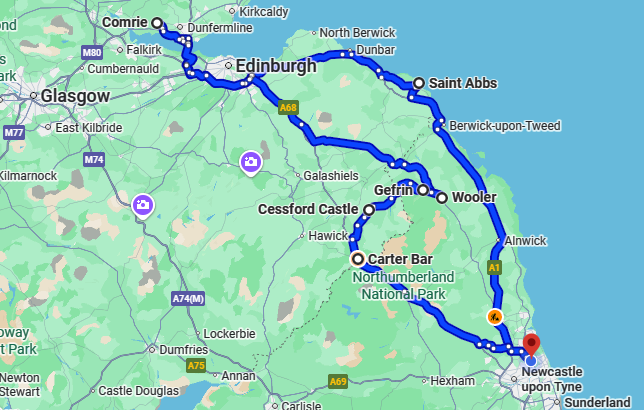
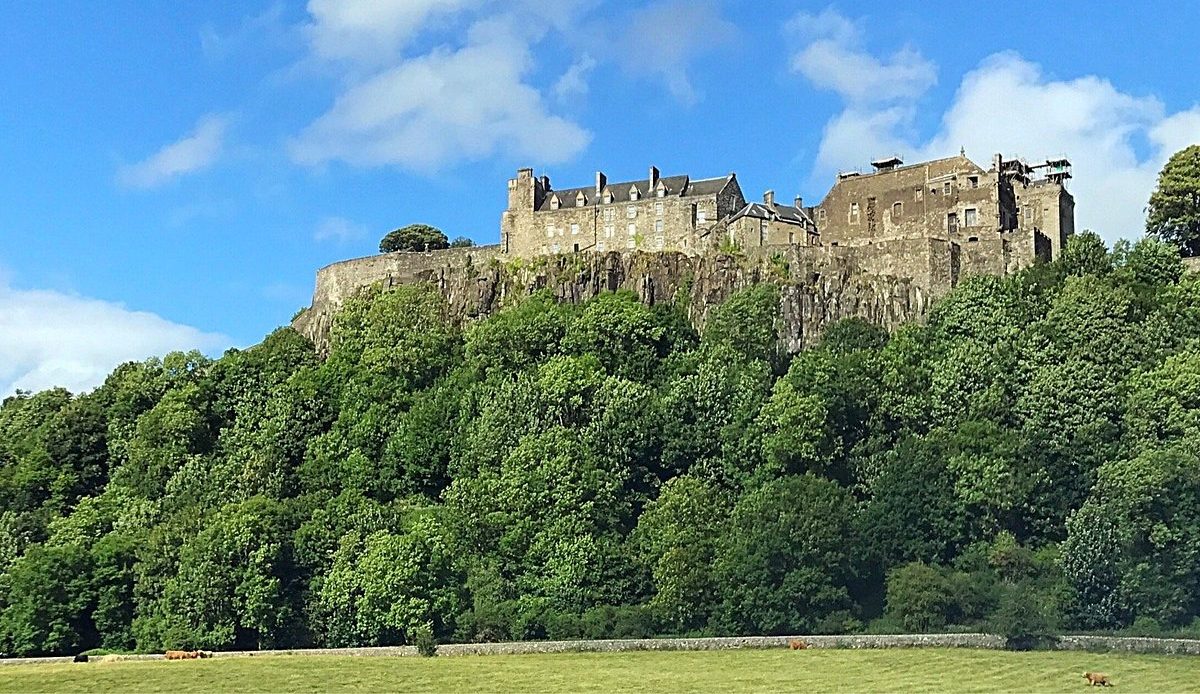


 The castle reached its zenith, as a renaissance royal palace, in the 1500s and was the home of
 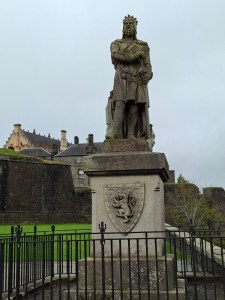 There’s certainly plenty to see at Stirling Castle, and by the time we ‘retired’ to have lunch, I was quite overwhelmed by all the information that I had tried to absorb.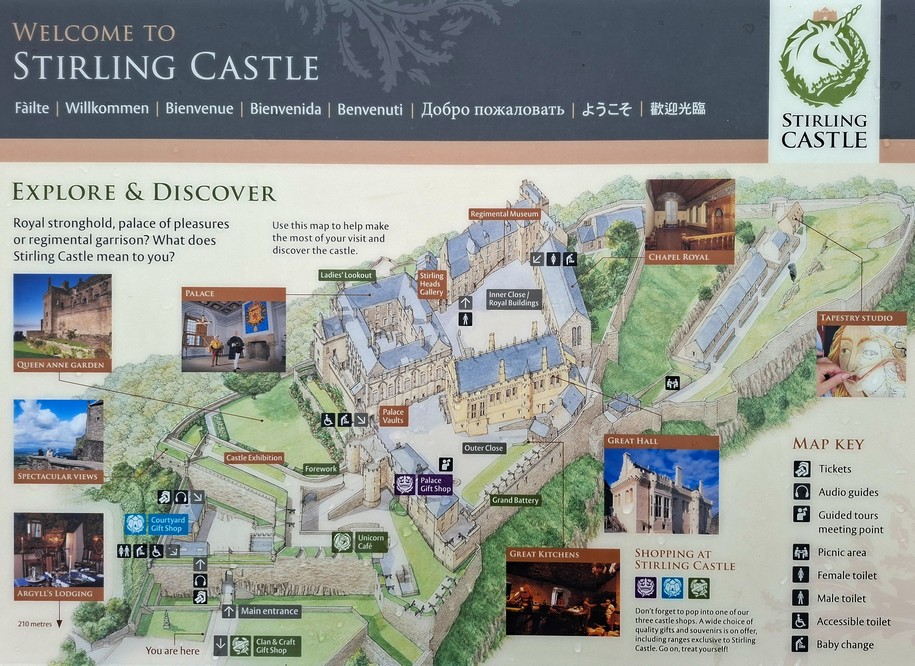



 River Glen. There is a small museum dedicated to Gefrin at the distillery which we also had opportunity to view.


 We continued our journey west, crossing over the border back into Scotland near Morebattle before arriving at


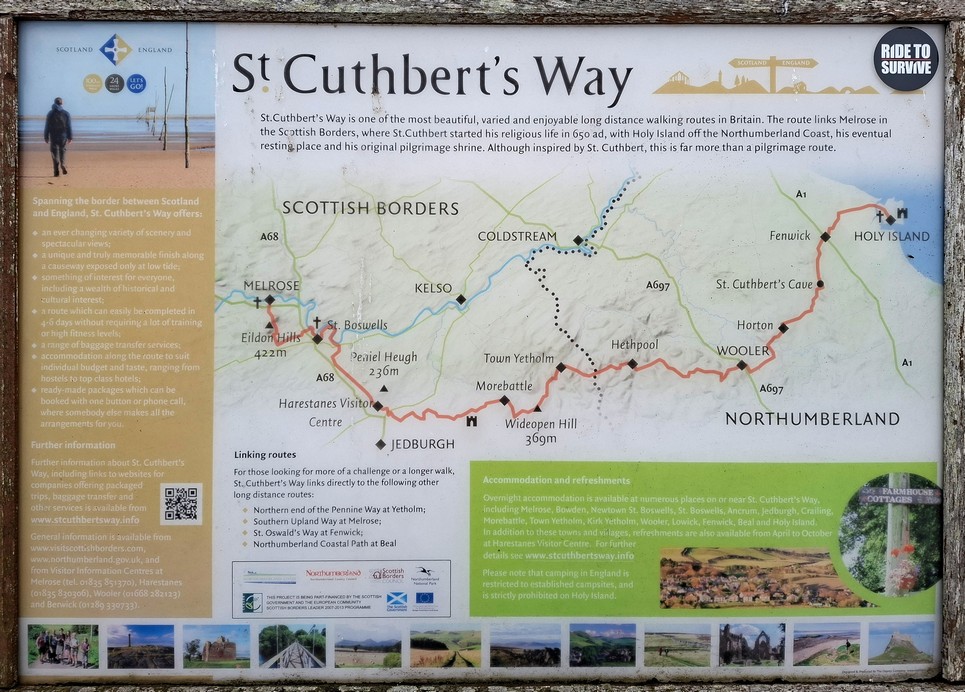
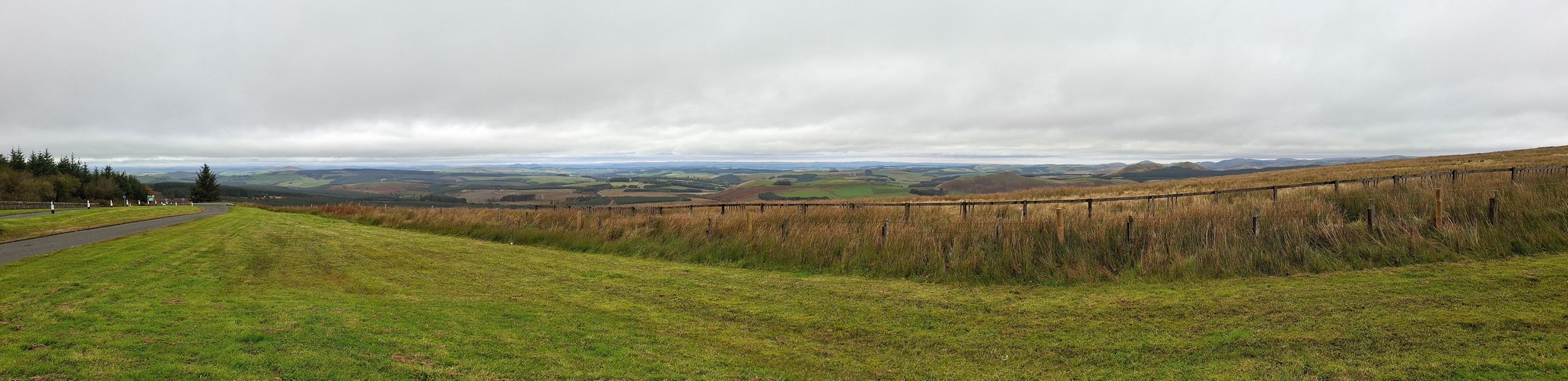
 I loitered a little longer in front of the booth of the English & Scottish Folk Dance Society, and before I had chance to ‘escape’ some of the folks there had engaged me in conversation and persuaded me to come along to their next evening.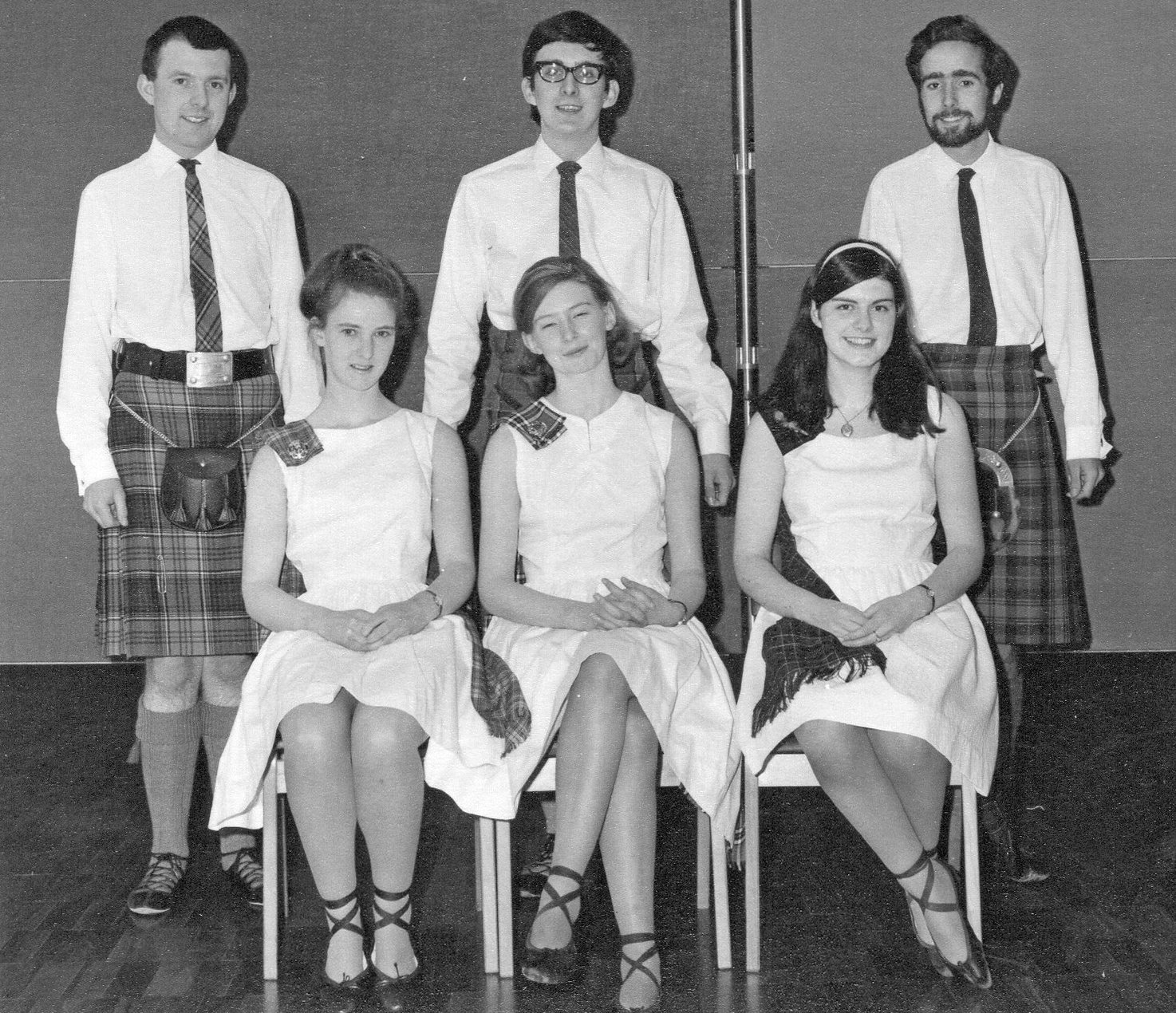


 A few days ago, I received the sad news (from Liz Holgreaves husband John Harvey) that Liz had passed away on 30 August. She was 76. This photo was taken in 2006 at her elder son’s wedding.
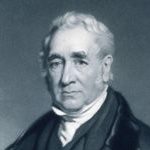 And today, 27 September 2025, is the 200th anniversary of the opening of the
  For this, and other inventions and innovations such as surveying lines, the standard gauge (at 4 feet 8½ inches) that was more or less adopted worldwide, and design of steam locos, George Stephenson is often referred to as the Father of the Railways, and rightly so. Although perhaps that’s an accolade that should be shared with son Robert (right).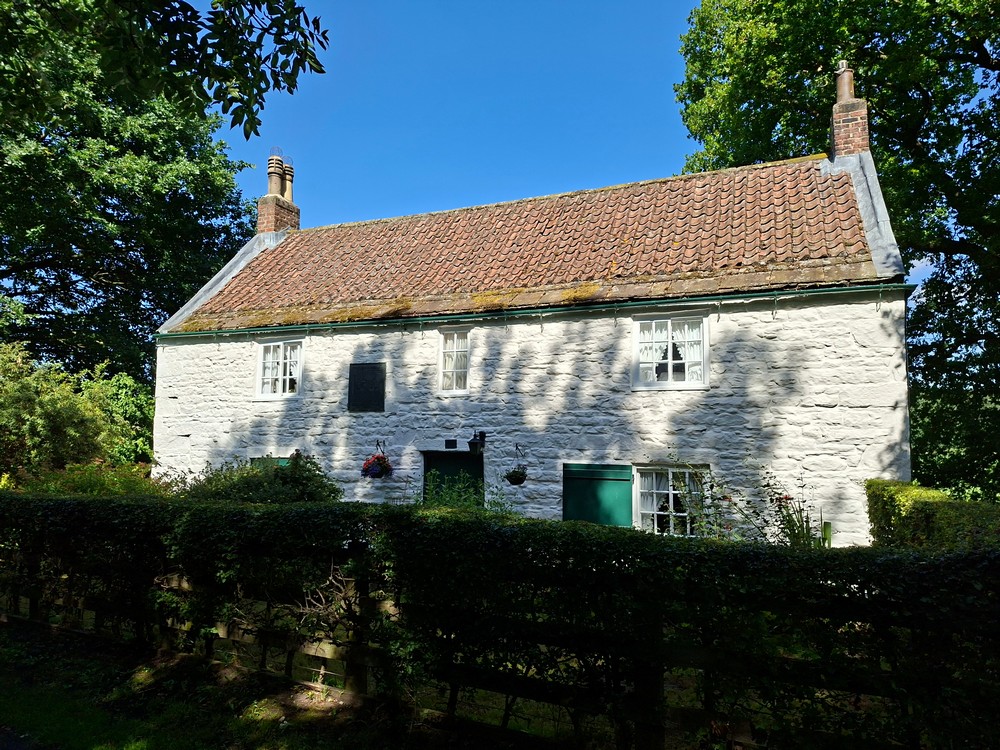


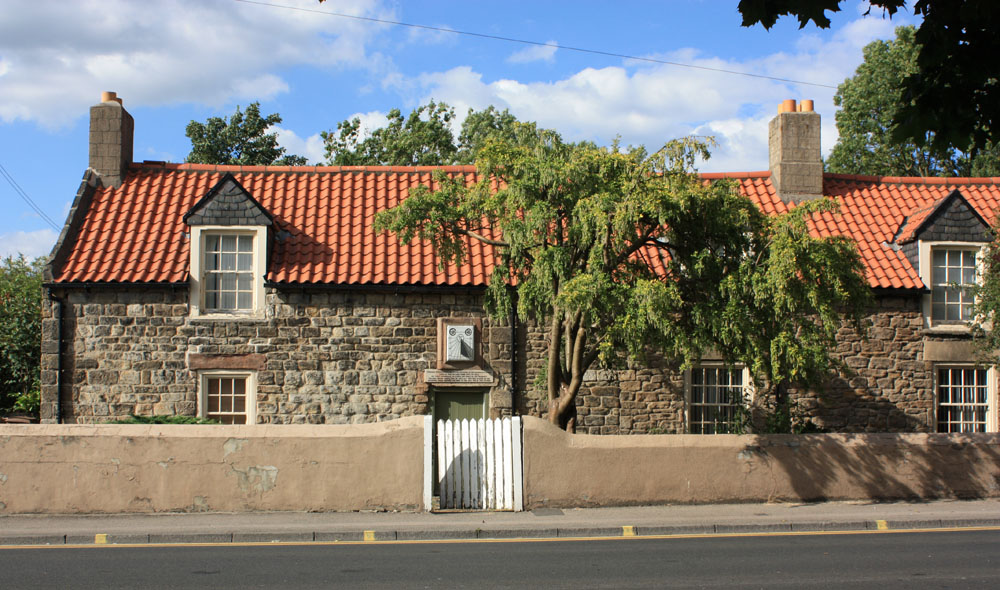
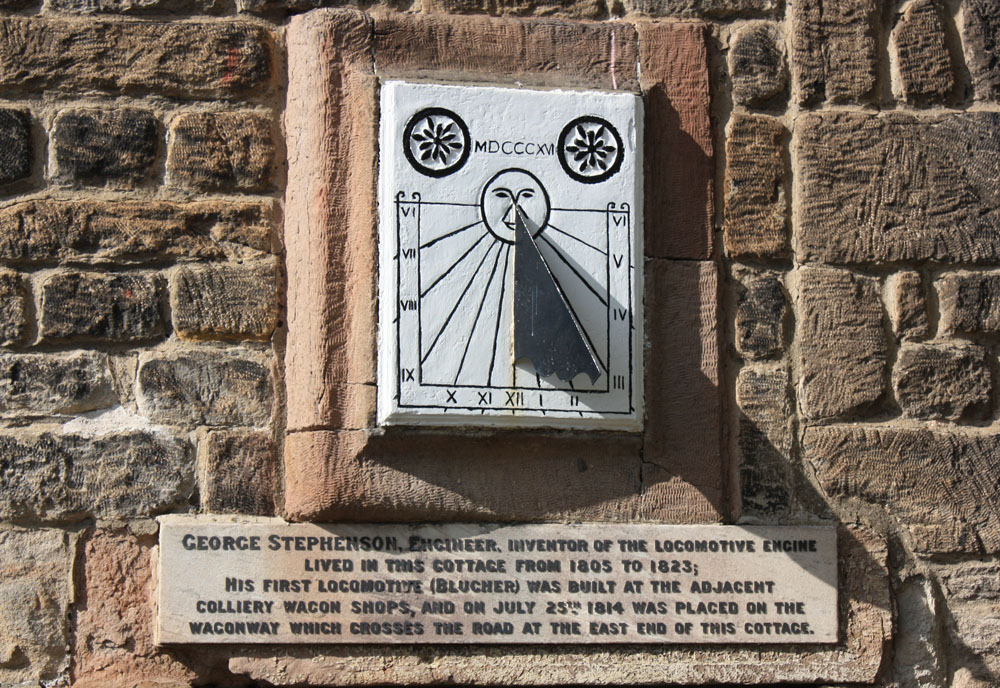


 Lacock is a fine country house built on the foundations of a medieval abbey, and is full of the most wonderful treasures. It was the home of 19th century polymath




 Tyntesfield




 And it was one of these, April 1865: The Month that Saved America (first published in 2001) by acclaimed author and historian





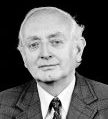
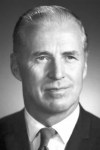
 It was the beginning of an international effort to enhance agricultural productivity that endures to this day through the centers of the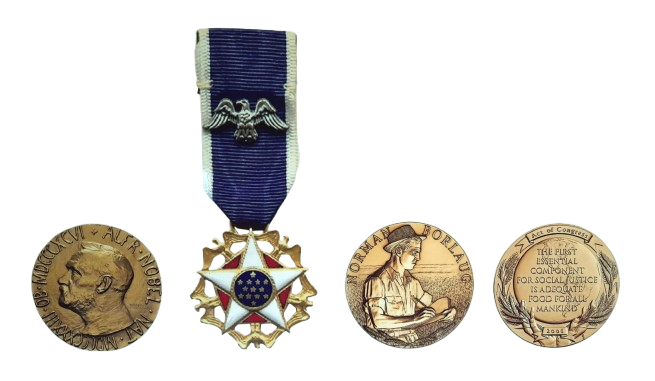
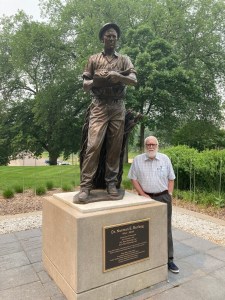 His is one of two Iowa statues in the US Capitol’s Statuary Hall, unveiled in 2014 and replacing one of the state’s existing statues. It was sculpted by
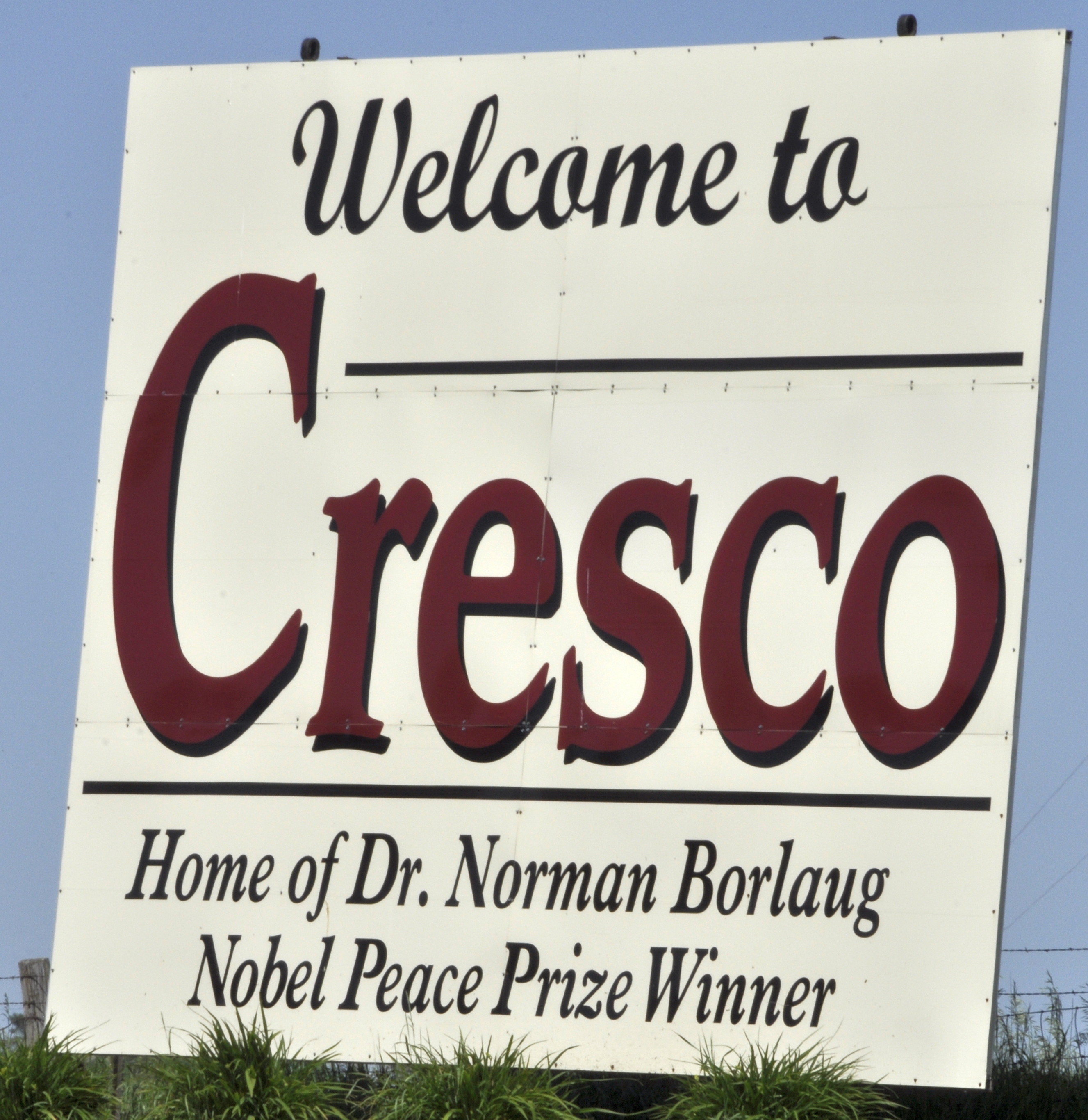
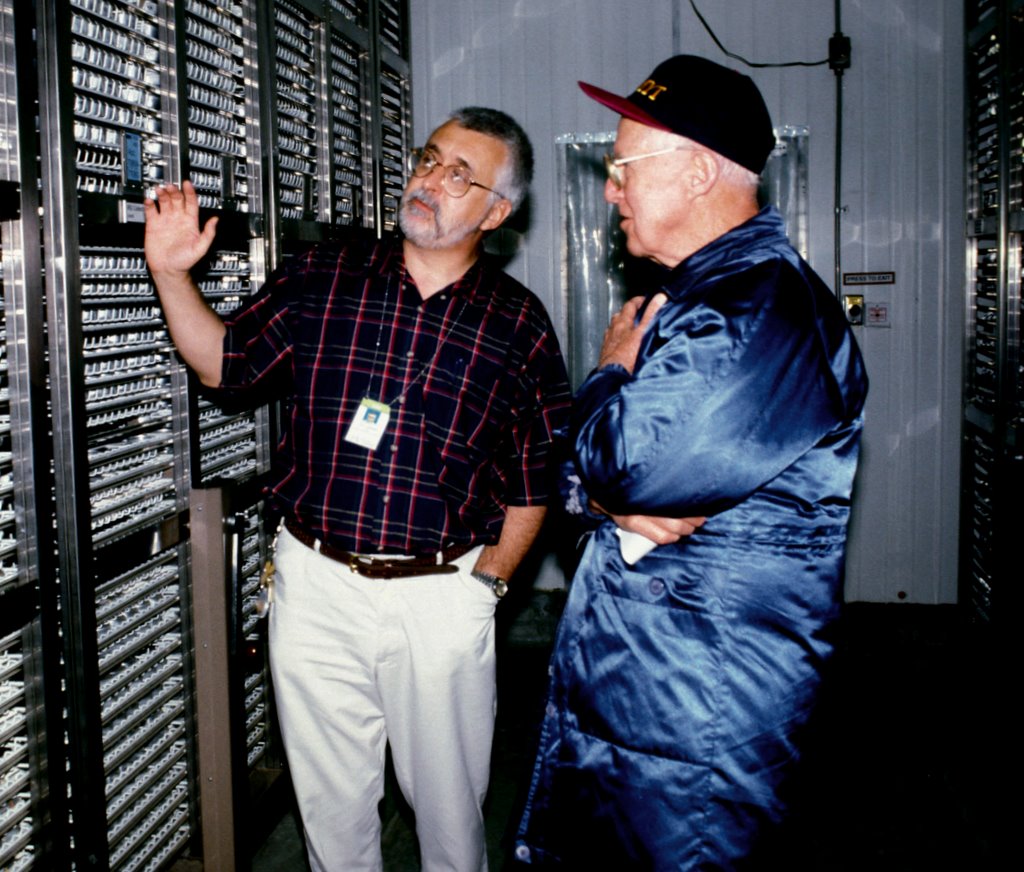

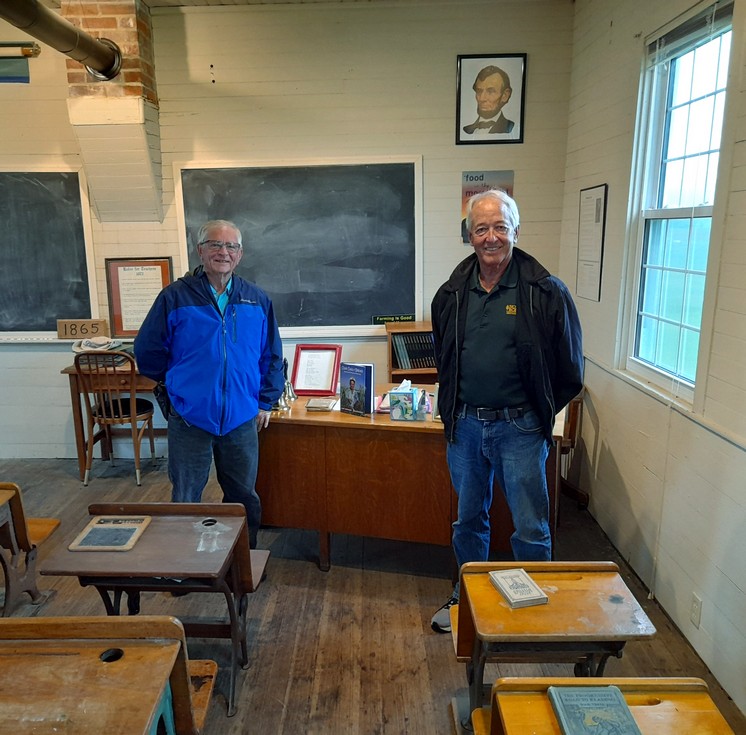
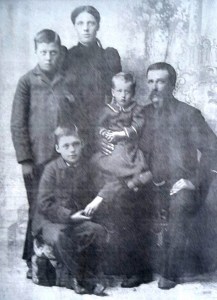 Norman’s grandparents, Emma and Nels (and others of the Borlaug clan) settled in the Cresco area. They had three sons: Oscar, Henry (Norman’s father, second from left), and Ned.




 At that time, most pupils reaching Grade 8 would leave full-time education and return to working on the family farm. But Norman’s teacher at the time, his cousin Sina Borlaug (right), encouraged both parents and grandparents to permit Norman to attend high school in Cresco. Which he did, boarding with a family there Monday to Friday, returning home each weekend to take on his fair share of the farm chores.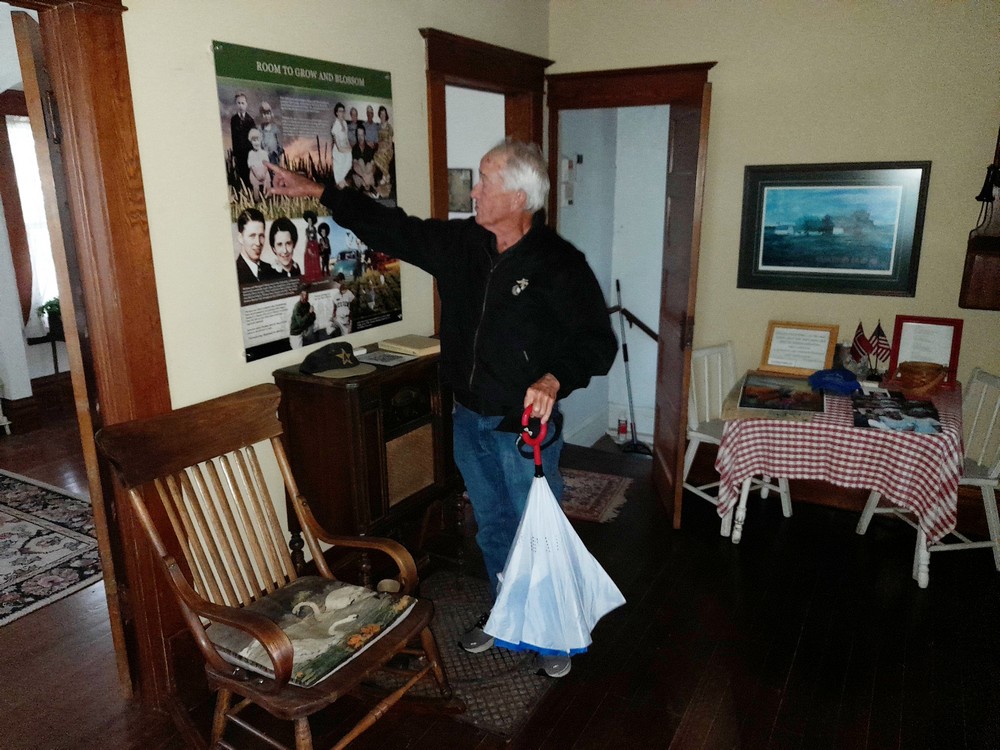
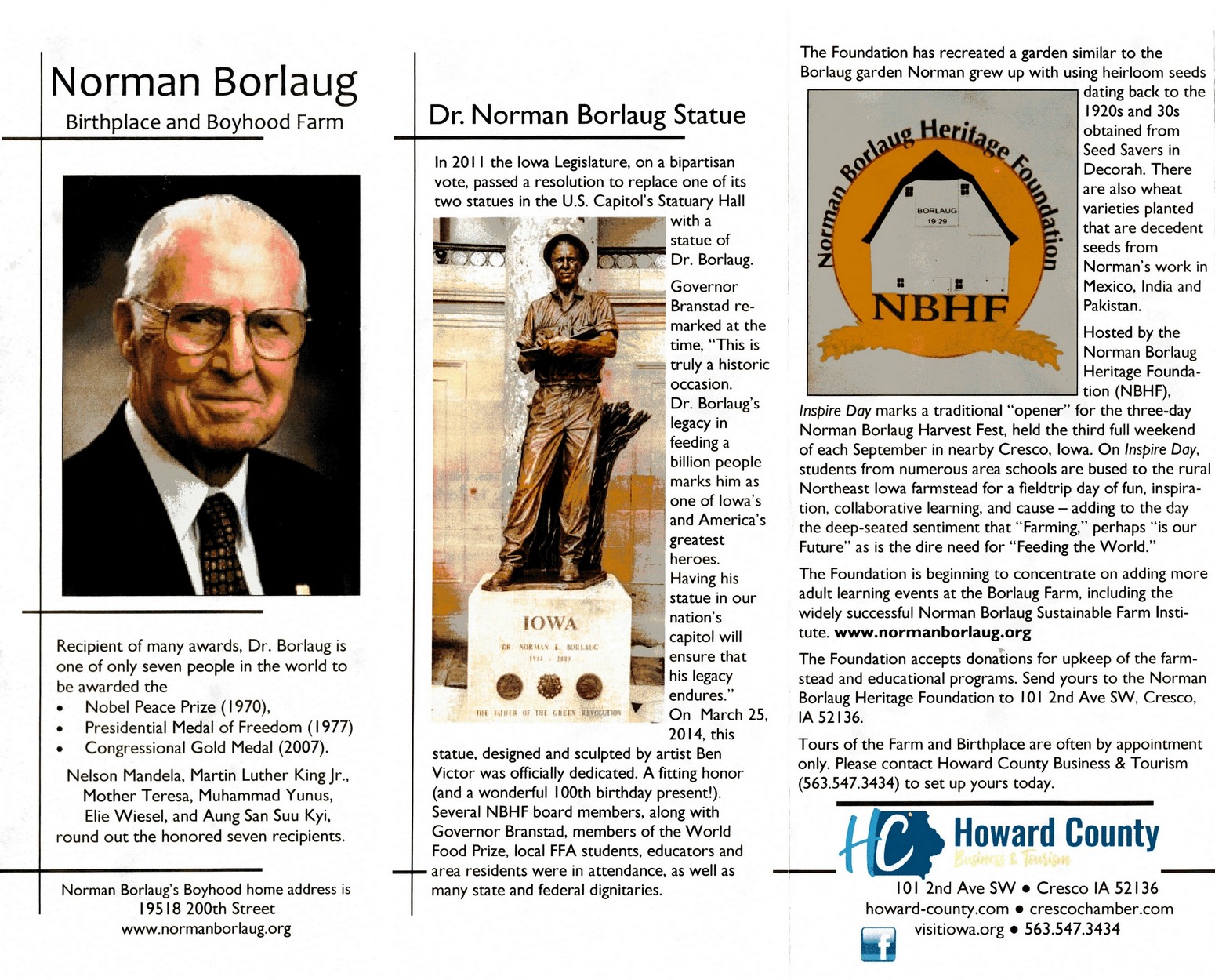
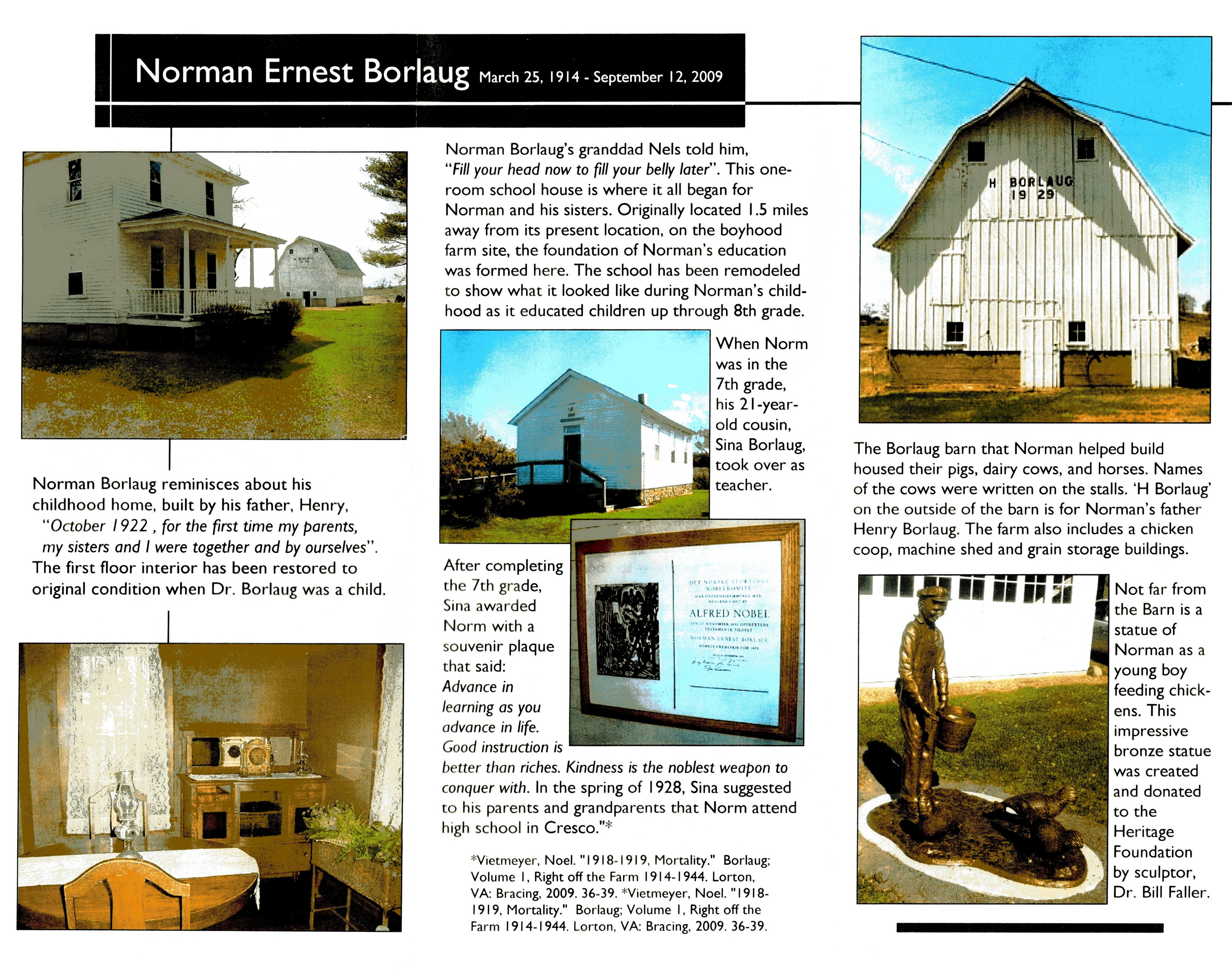


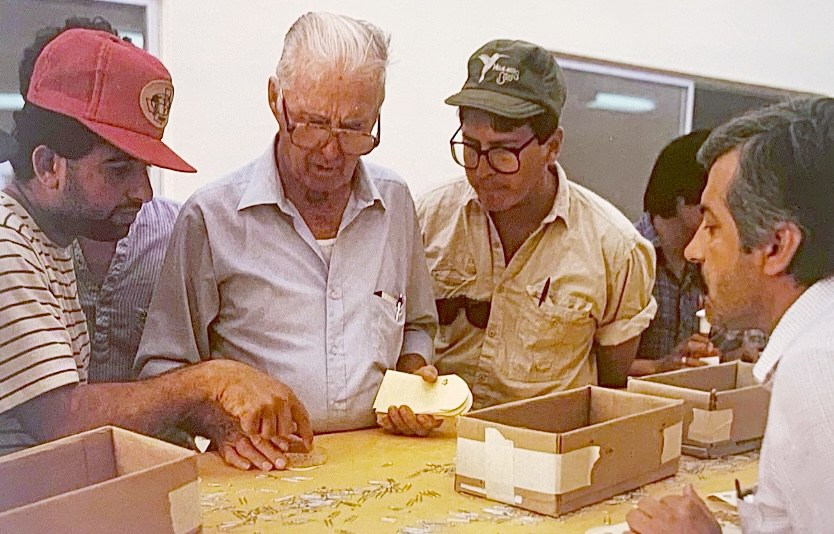
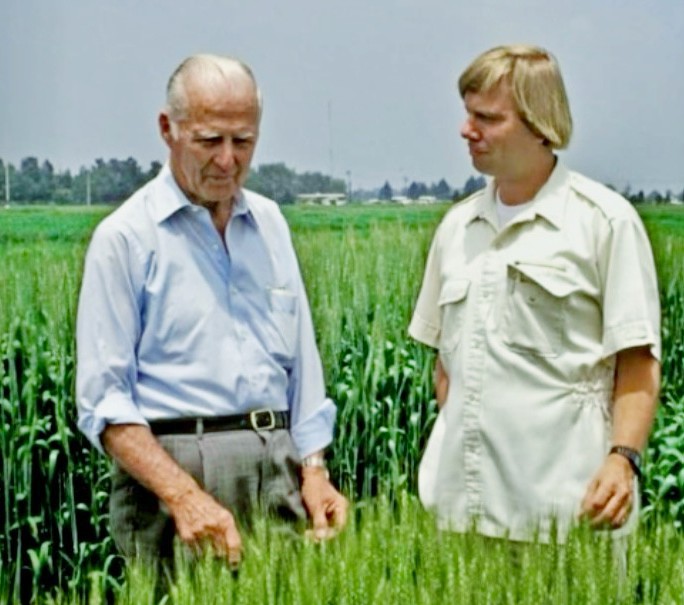


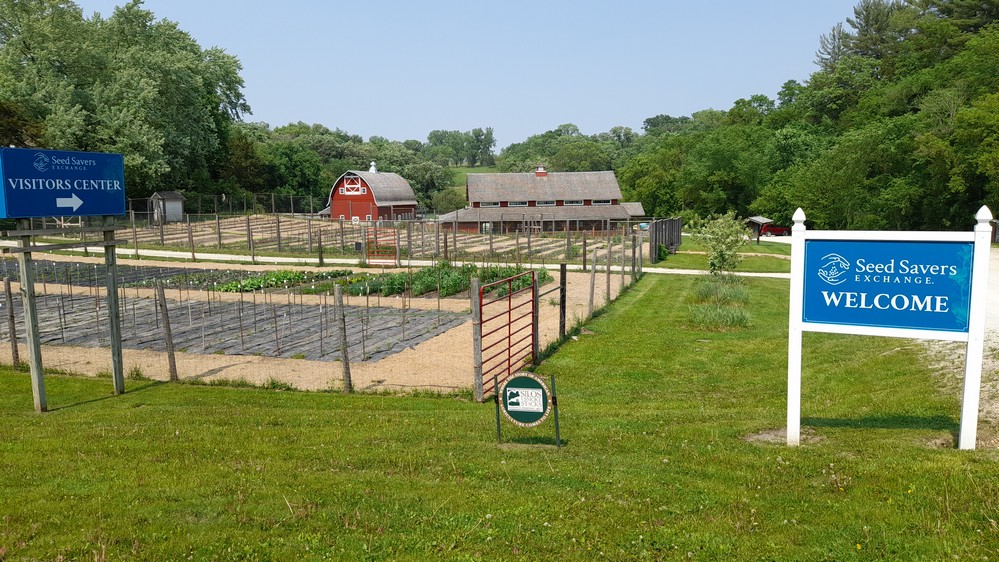
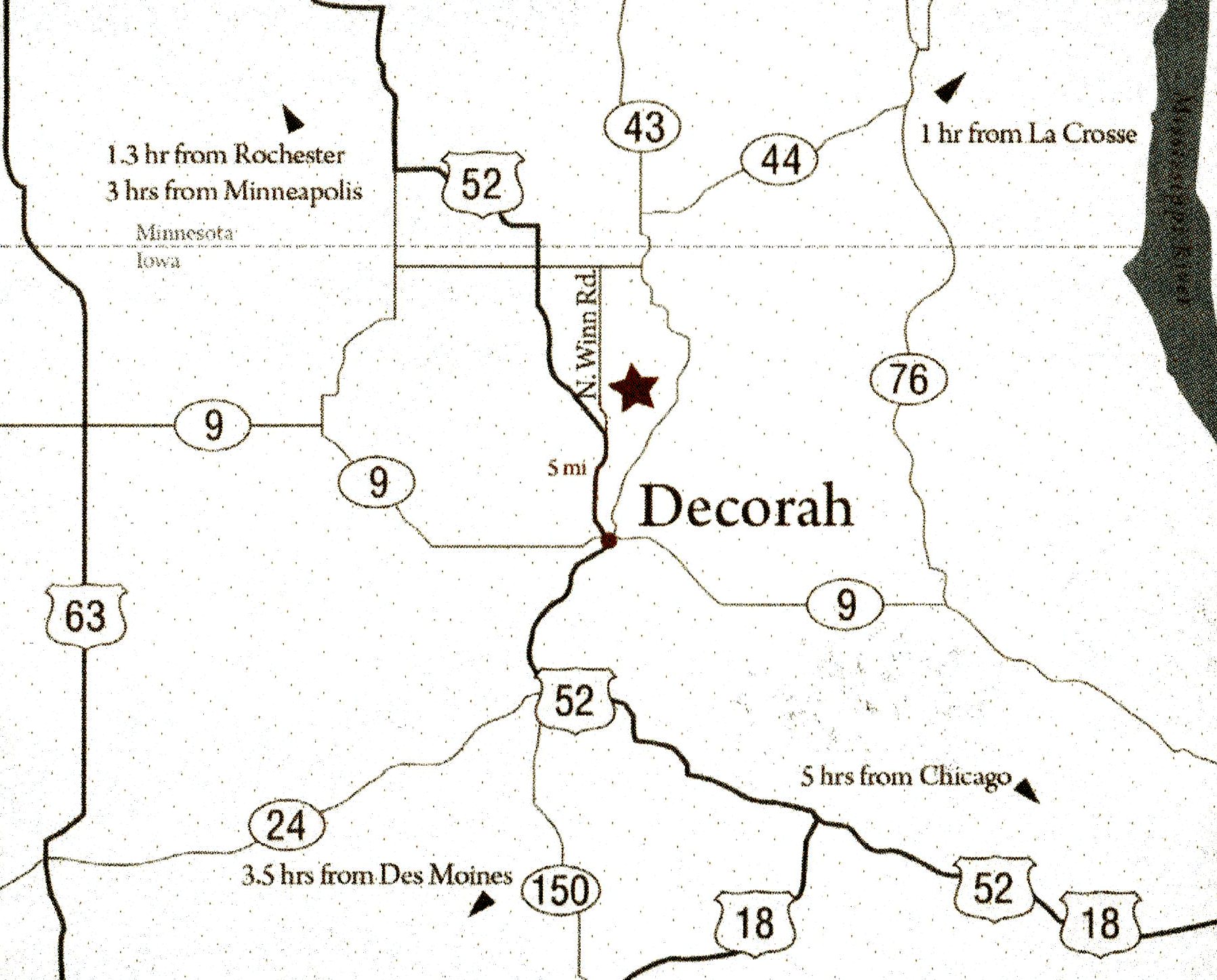
 Varieties such as these (of the many thousands in the Exchange network and collection):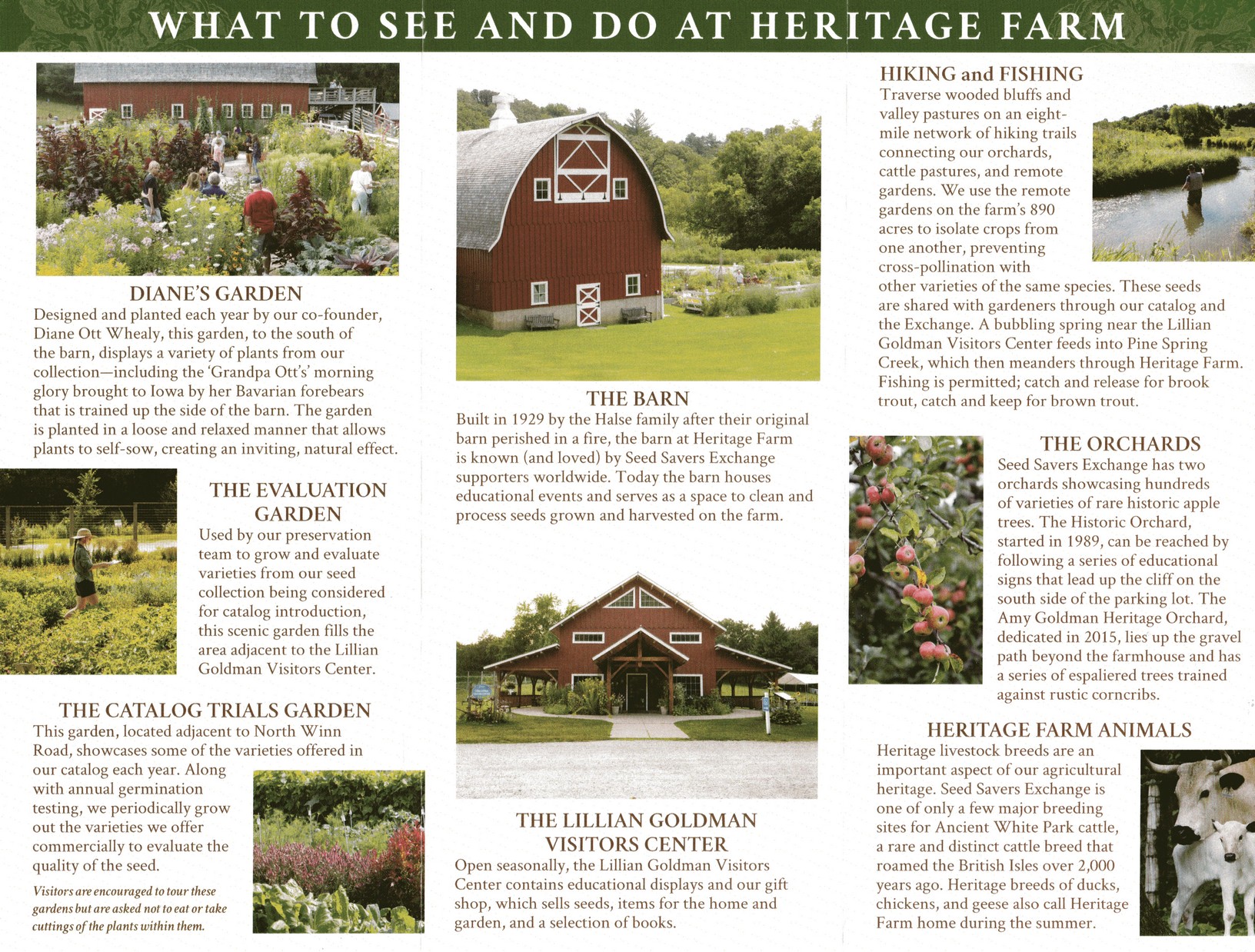
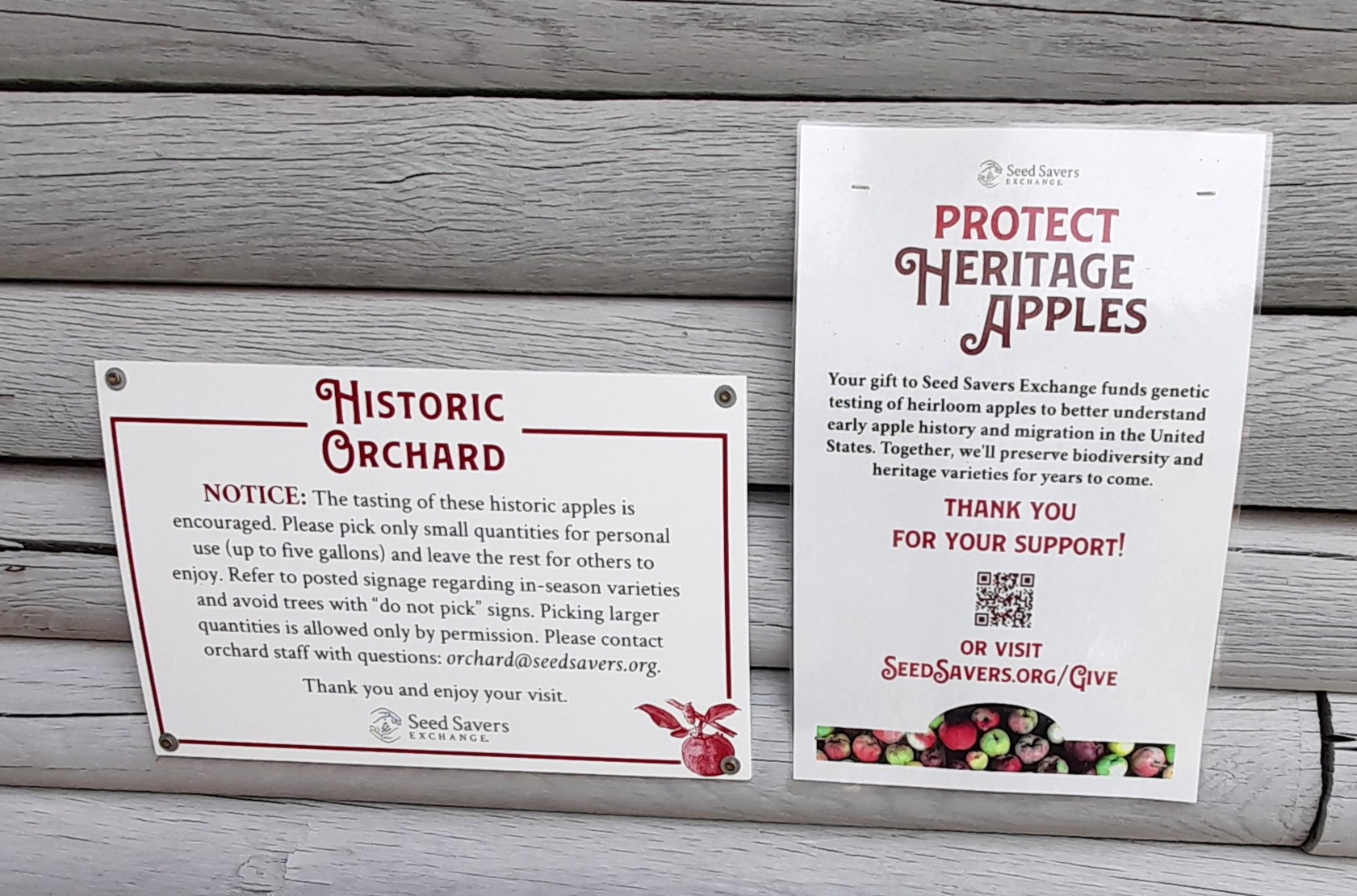
 A visit to Seed Savers Exchange was first mooted in May 2024, but having just made a long road trip across Utah and Colorado, I really didn’t want to get behind the wheel again. However, we had no epic road trip plans this year, so I decided to contact Executive Director,
  So I asked Mike if we could have a ‘behind-the-scenes’ visit (not open to regular visitors), to learn about the organization in detail, and the management of such a large and diverse collection of plant species. He quickly agreed, and asked Director of Preservation,
 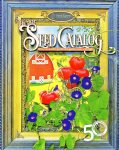 Incidentally, Seed Savers Exchange also has a commercial arm (which supports its non-profit mission), selling seeds through an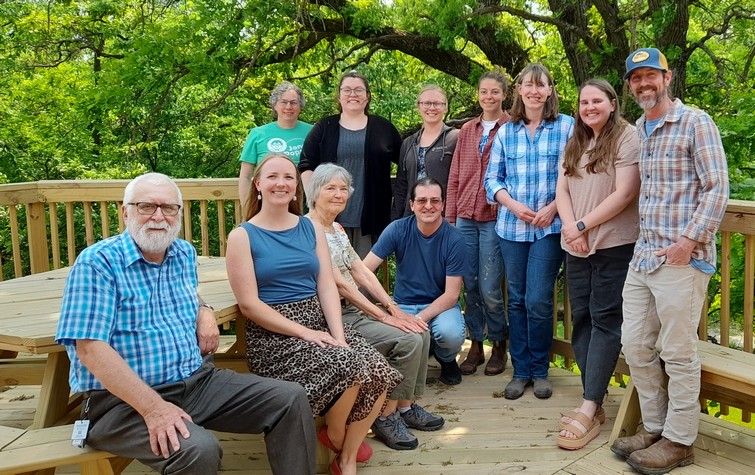
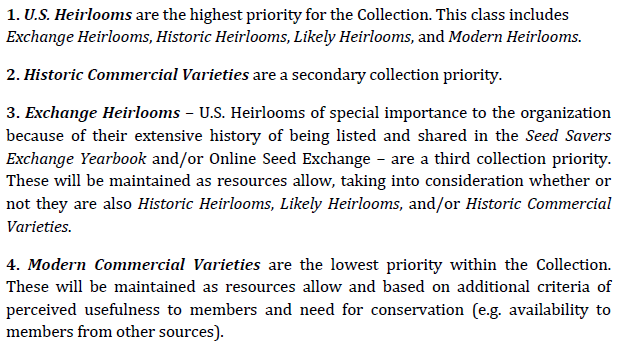
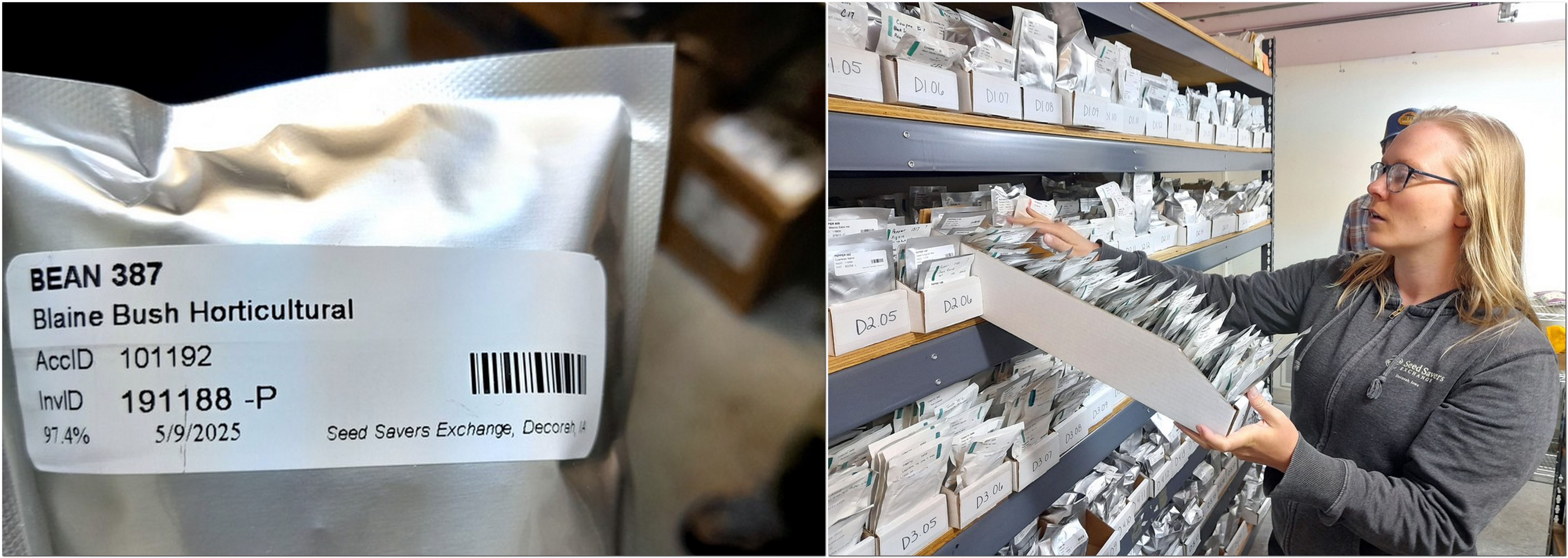
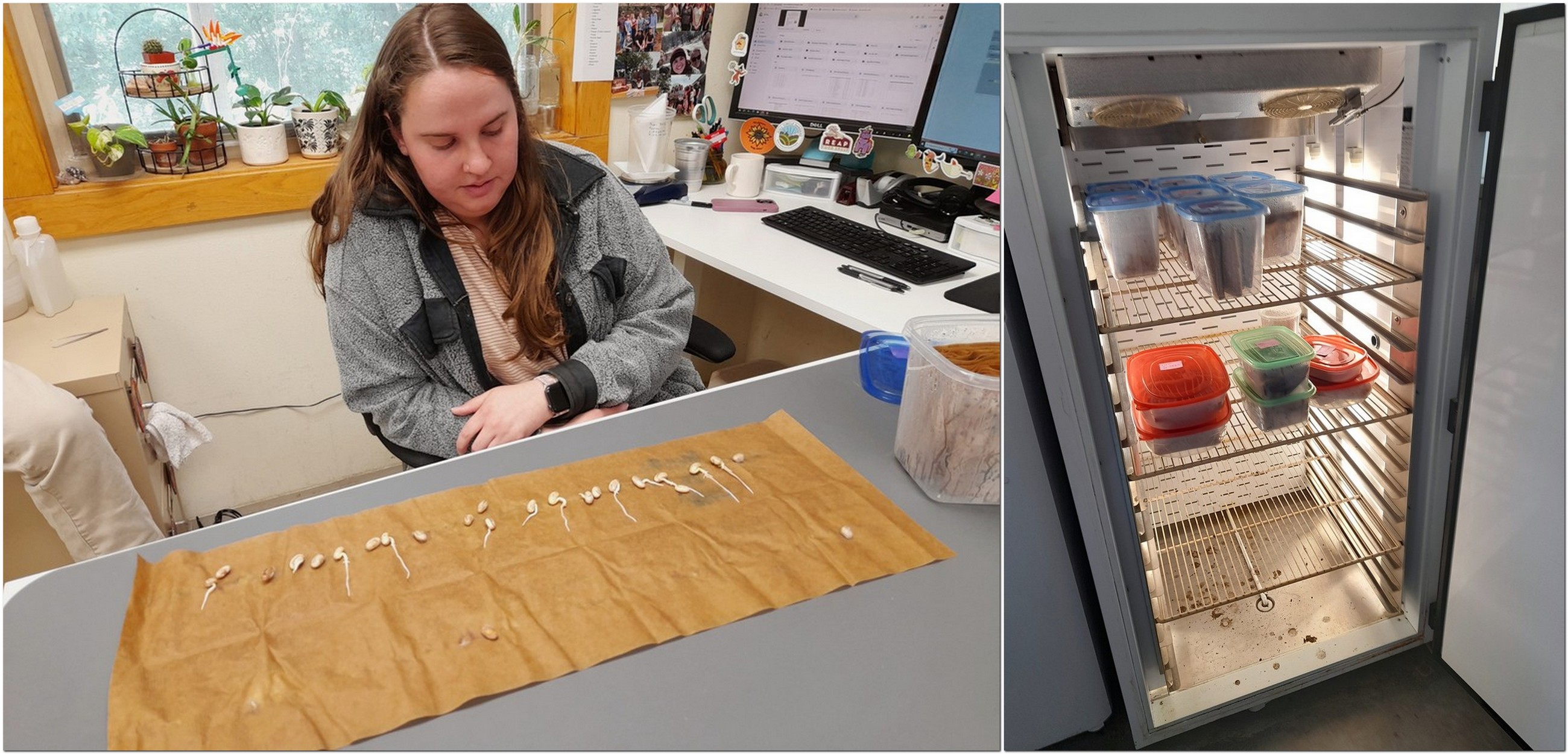
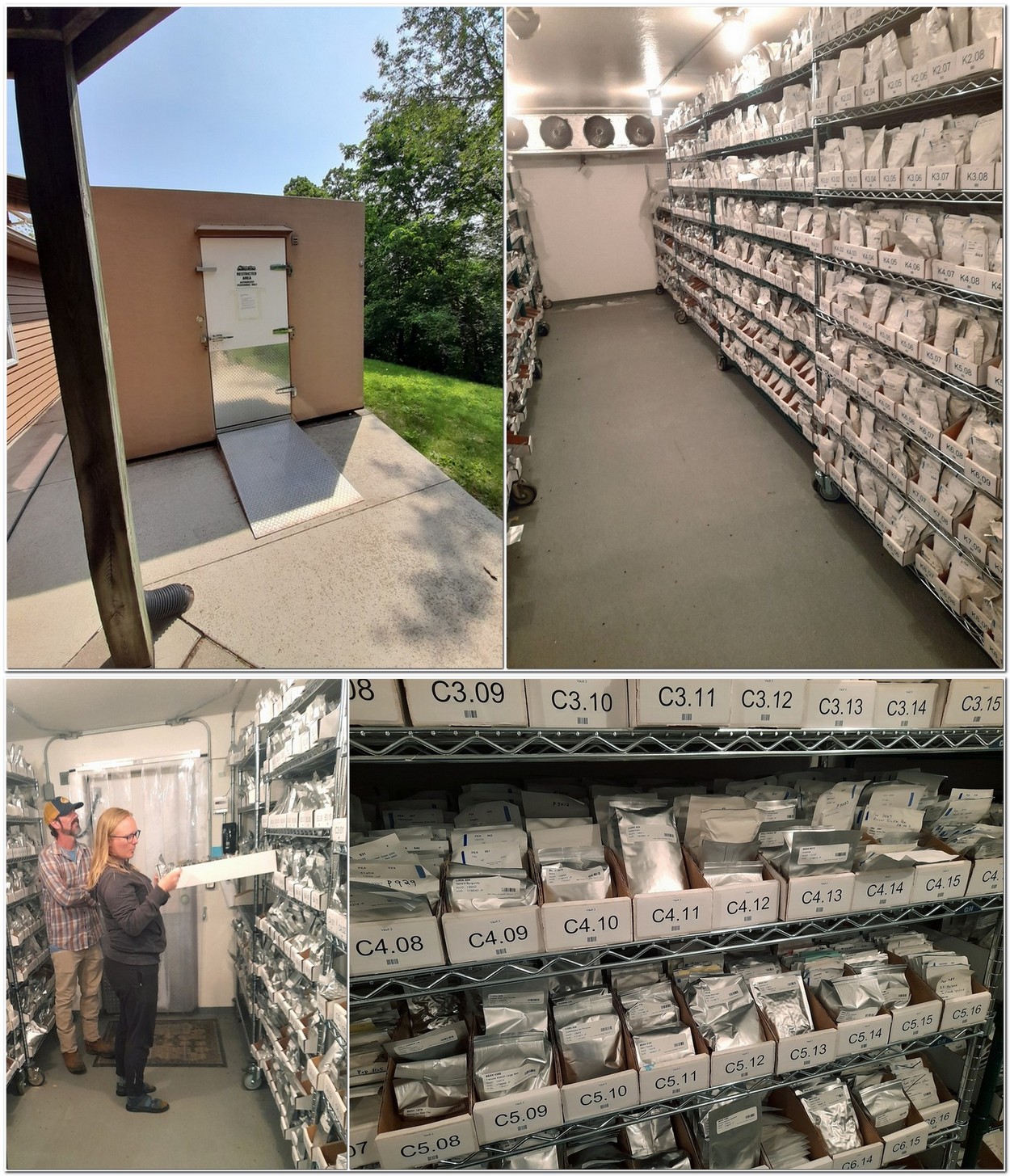
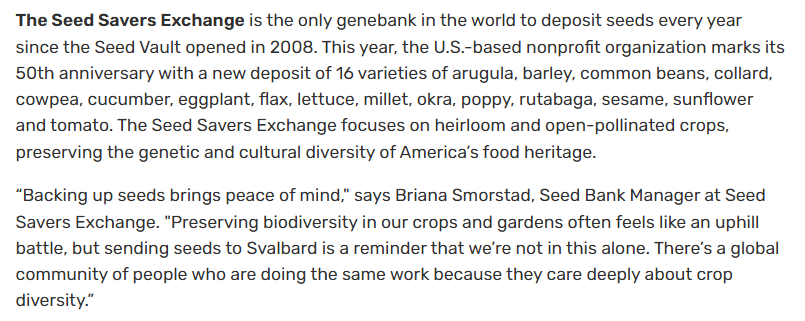
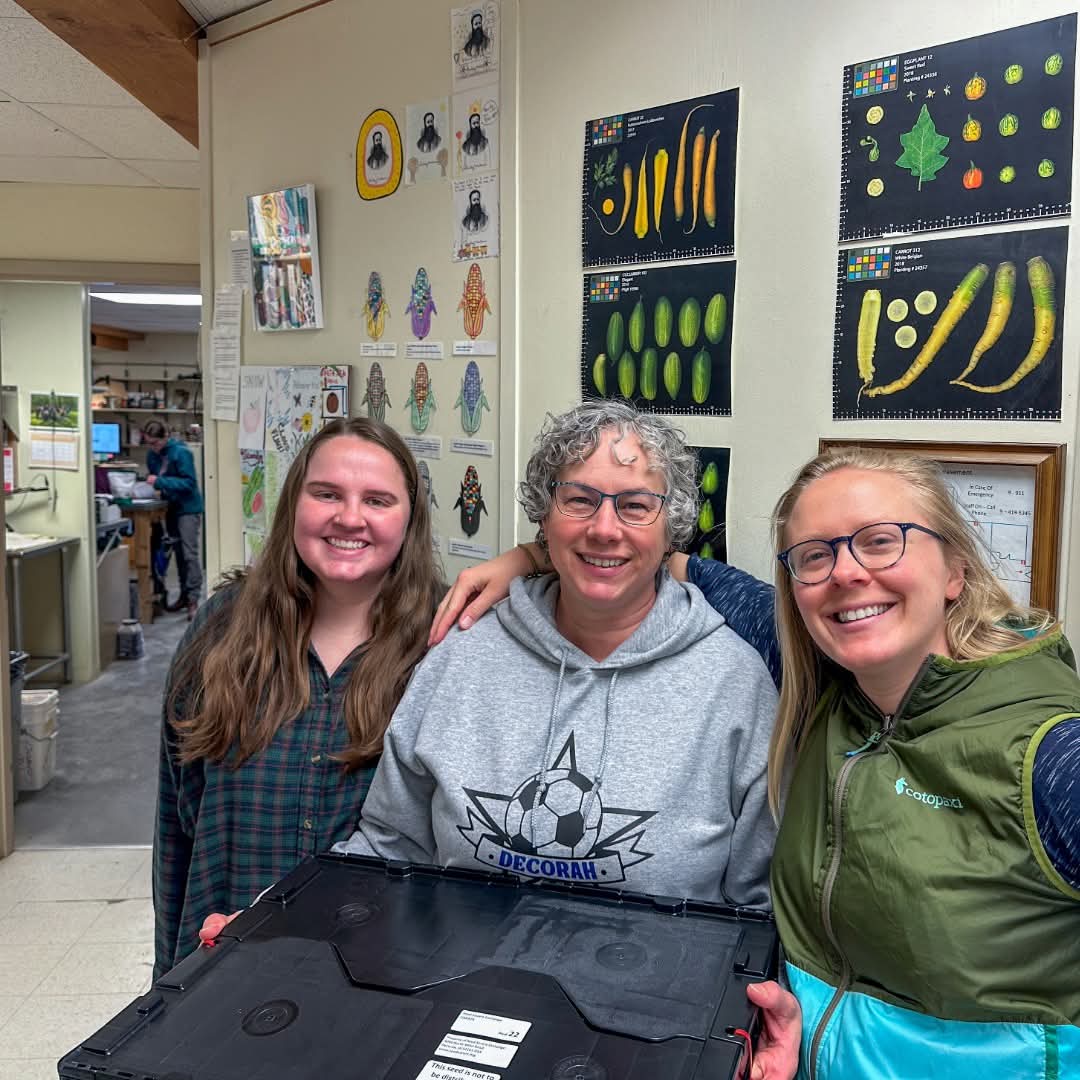
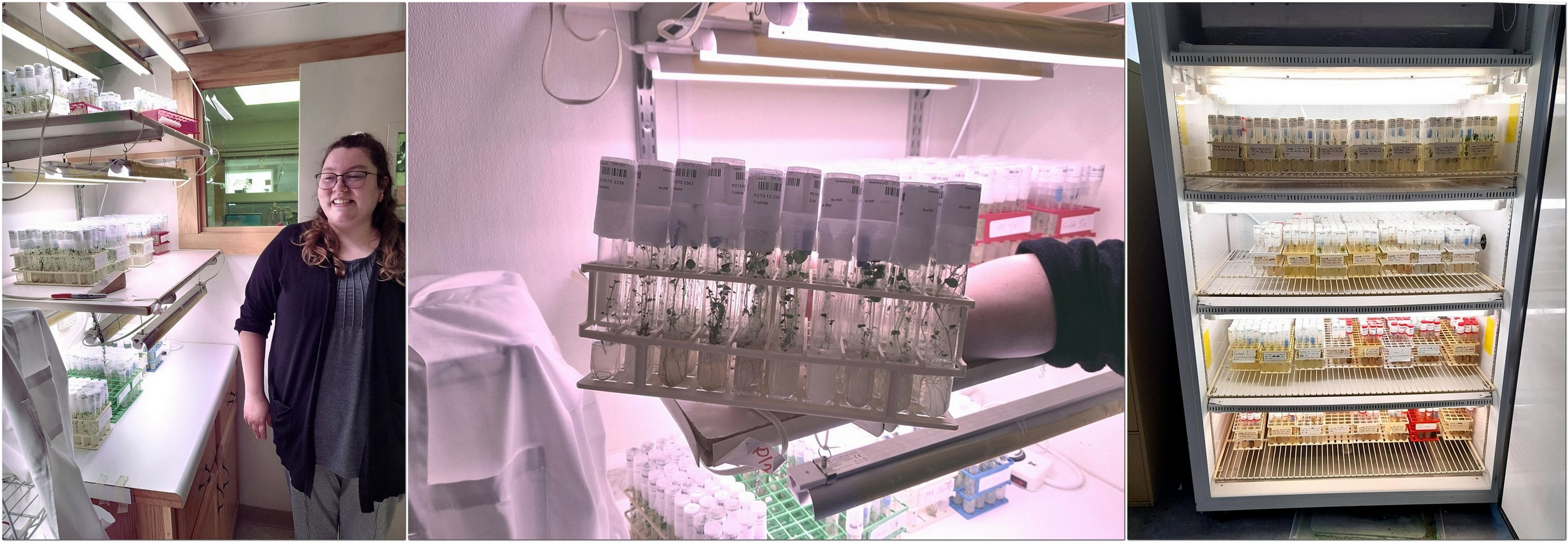
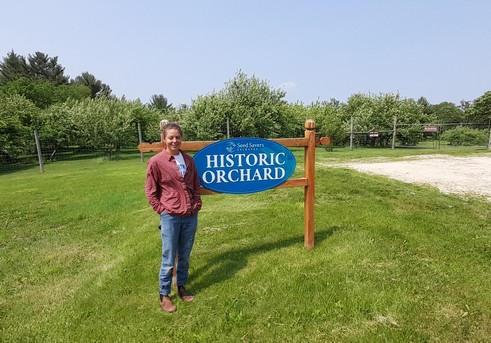
 Besides conserving the seeds and vegetatively-propagated species at Seed Savers Exchange, there is also coordination of the membership and Exchange (the gardener-to-gardener seed swap) a role that falls to Josie Flatgrad (right).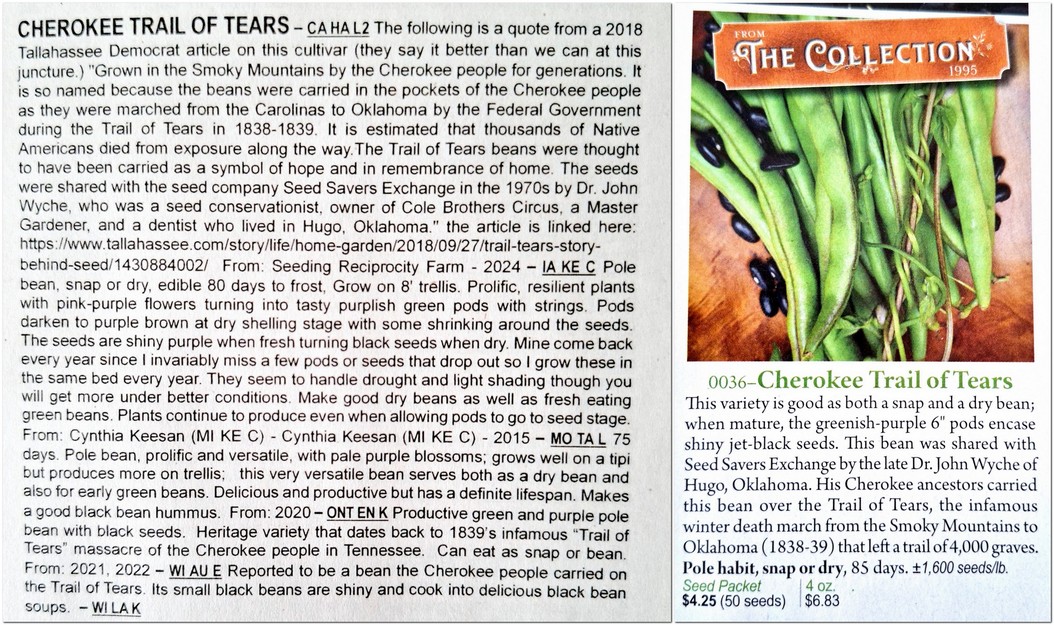





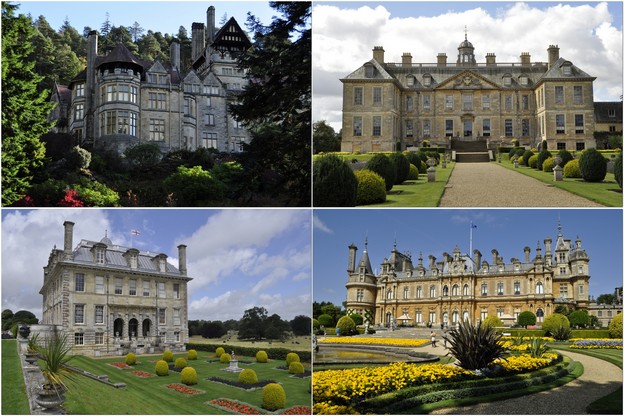
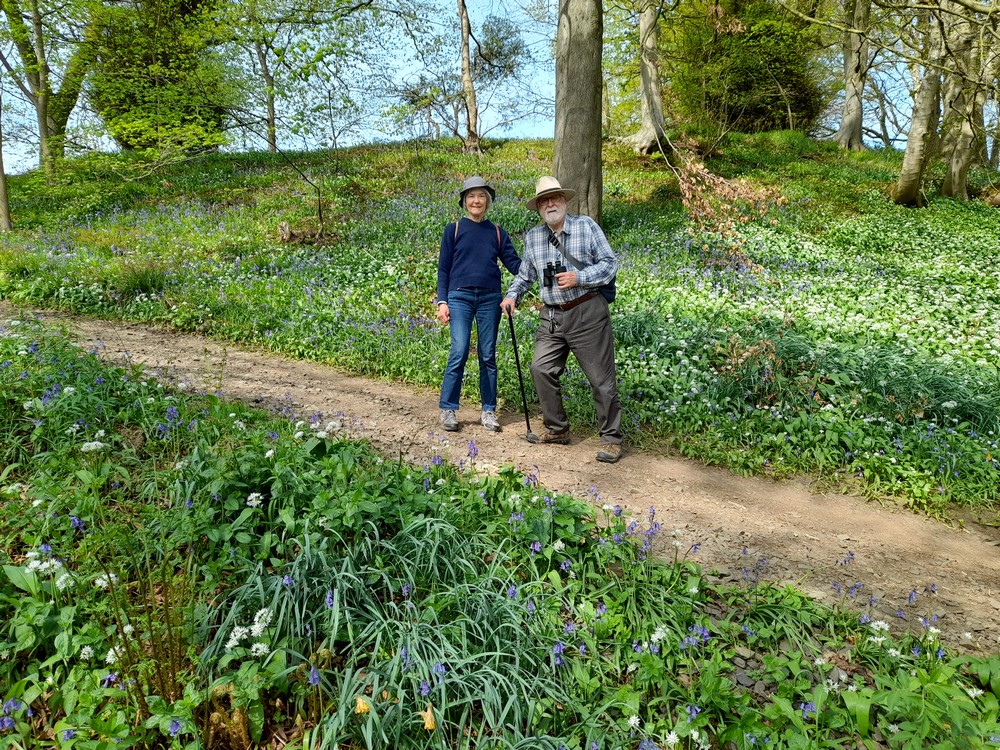


 There’s a sturdy bridge across the Allen at Plankey Mill, and there we sat and watched a dipper scurrying among the rocks.


 So, who is
  I guess if you were to ask a child to draw a castle, the stylised image would include a curtain wall with crenellations, towers, a central keep, and an enclosing ditch or moat, just like we have seen at


 Durham in the northeast of the country.
 Even the local optician, Specsavers (whose strapline is ‘Should have gone to Specsavers‘) got in on the act offering free eye tests for anyone visiting the town. Needless to say that the visit Steph and I made to this delightful Durham town a couple of weeks ago was not for an eye test.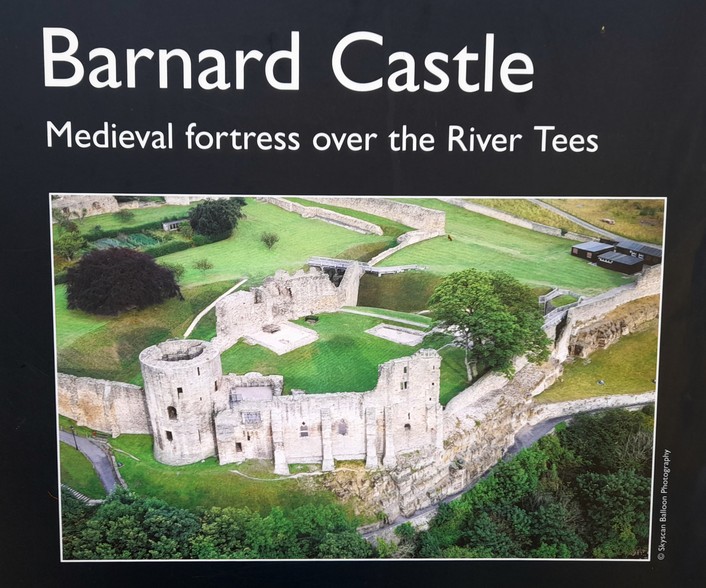
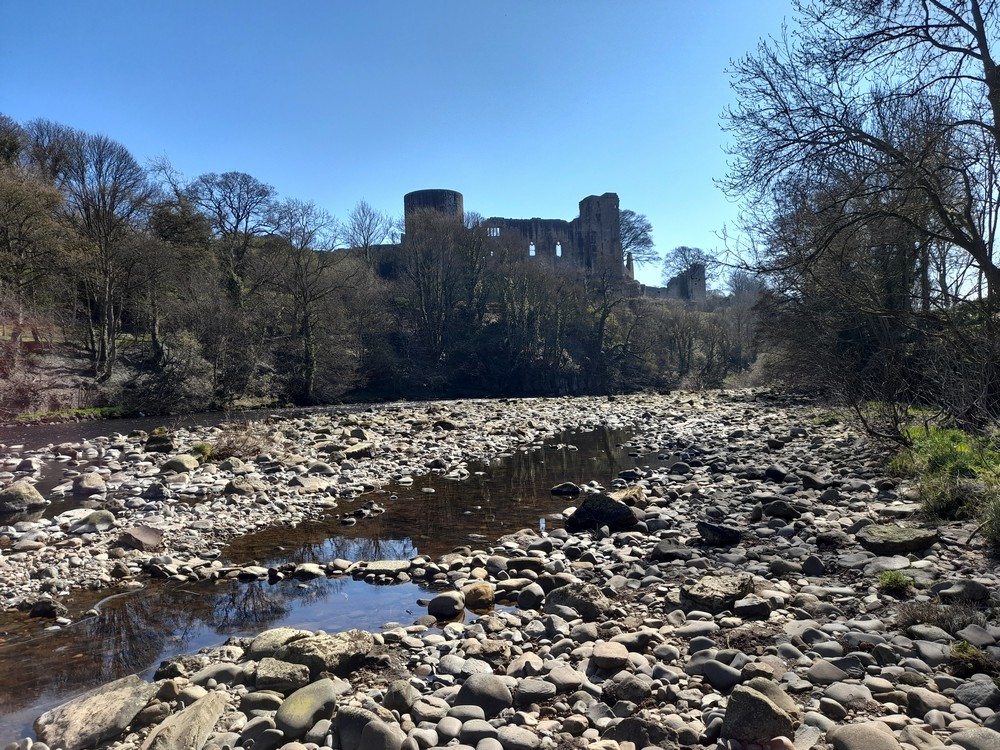
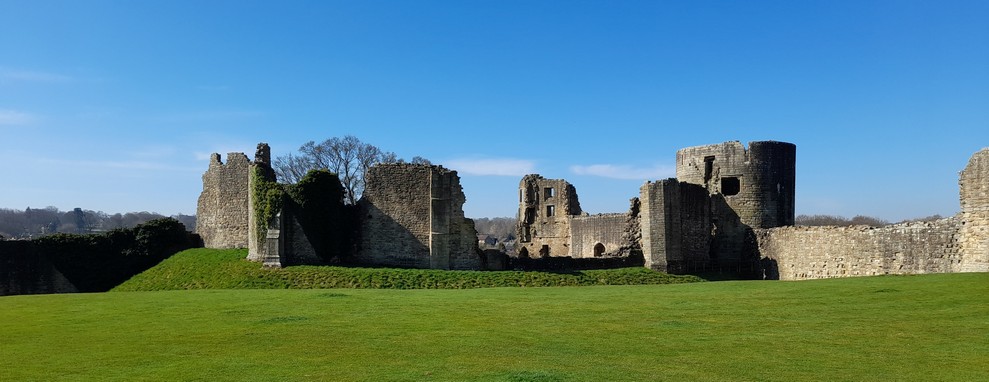
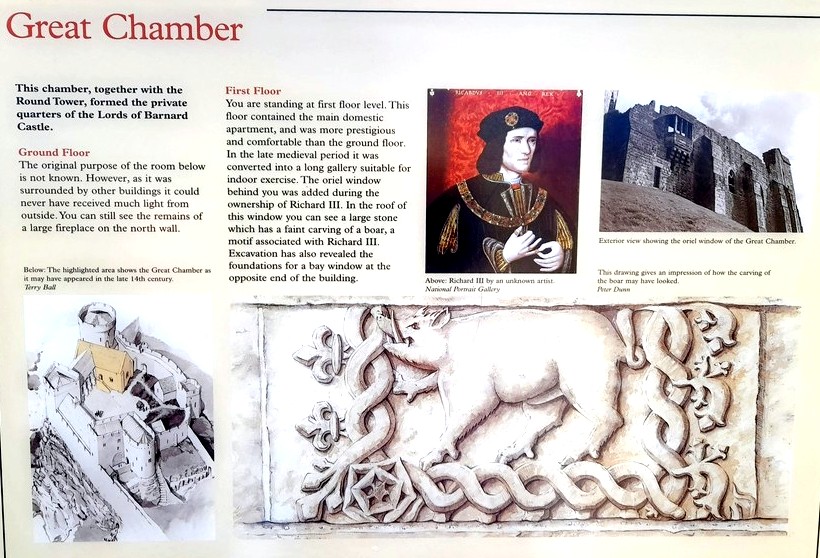
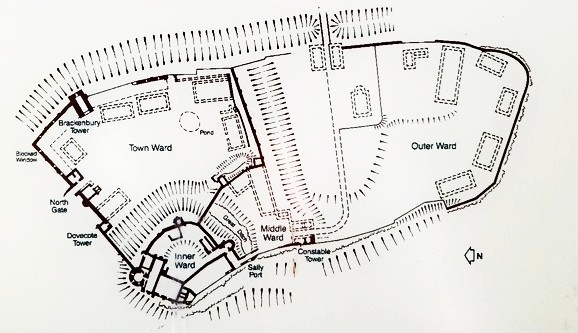


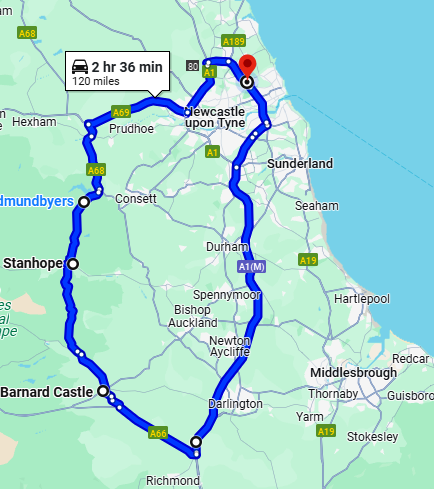
 A balanced diet . . .