Have PhD, will travel . . . for half a century

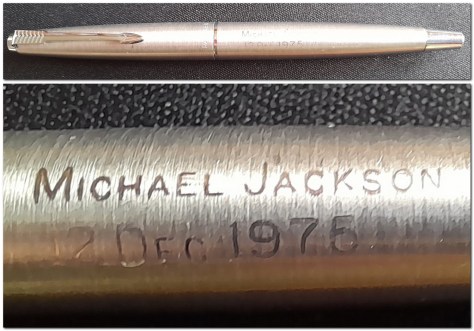
Friday 12 December 1975. Fifty years ago today!

Harold Wilson had almost reached the end of his second term as Prime Minister. Queen were No. 1 in the UK chart with Bohemian Rhapsody, and would remain there for several weeks.

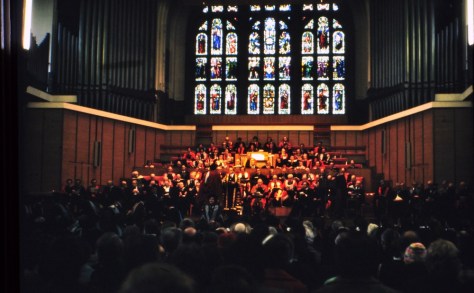
And, at The University of Birmingham, as the clock on Old Joe (actually the Joseph Chamberlain Memorial Clock Tower) struck 12 noon, so the Chancellor’s Procession made its way (to a musical accompaniment played by the University Organist) from the rear of the Great Hall to the stage.

Thus began a degree congregation (aka commencement in US parlance) to confer graduate and undergraduate degrees in the physical sciences (excluding physics and chemistry), biological and medical sciences, and in medicine and dentistry. All the graduands and their guests remained seated.

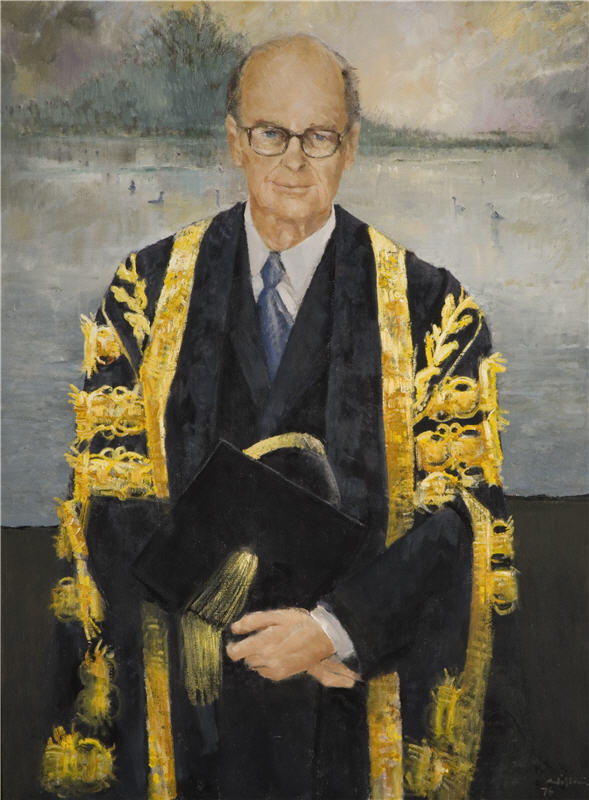
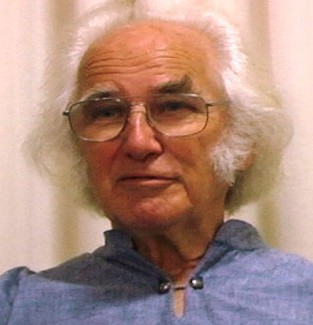
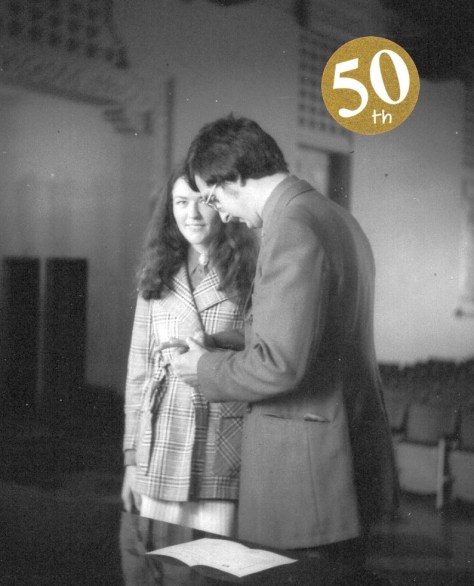
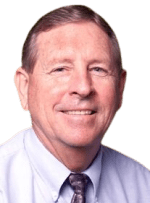
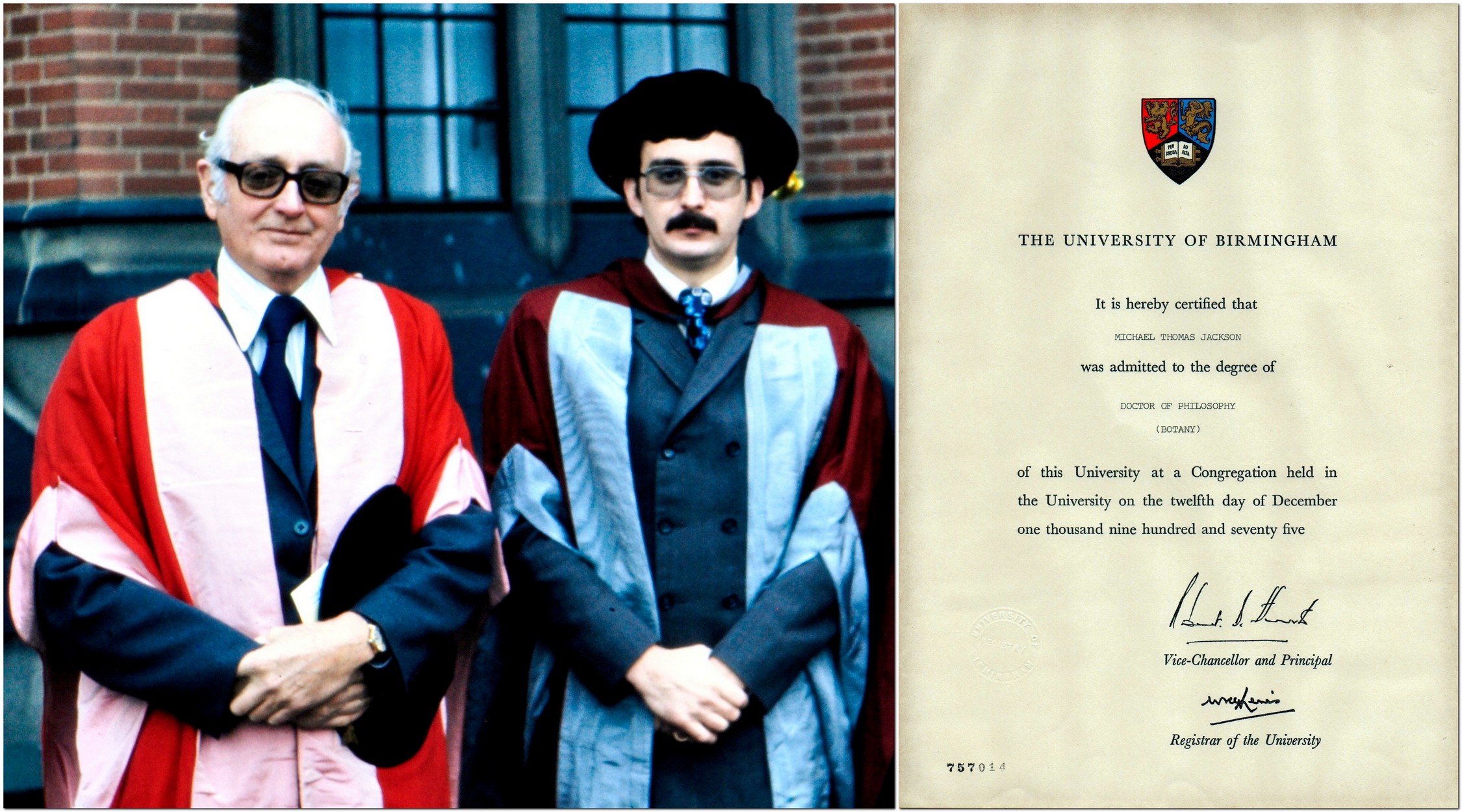
And I was among those graduands, about to have my PhD conferred by the Chancellor and renowned naturalist Sir Peter Scott (right).

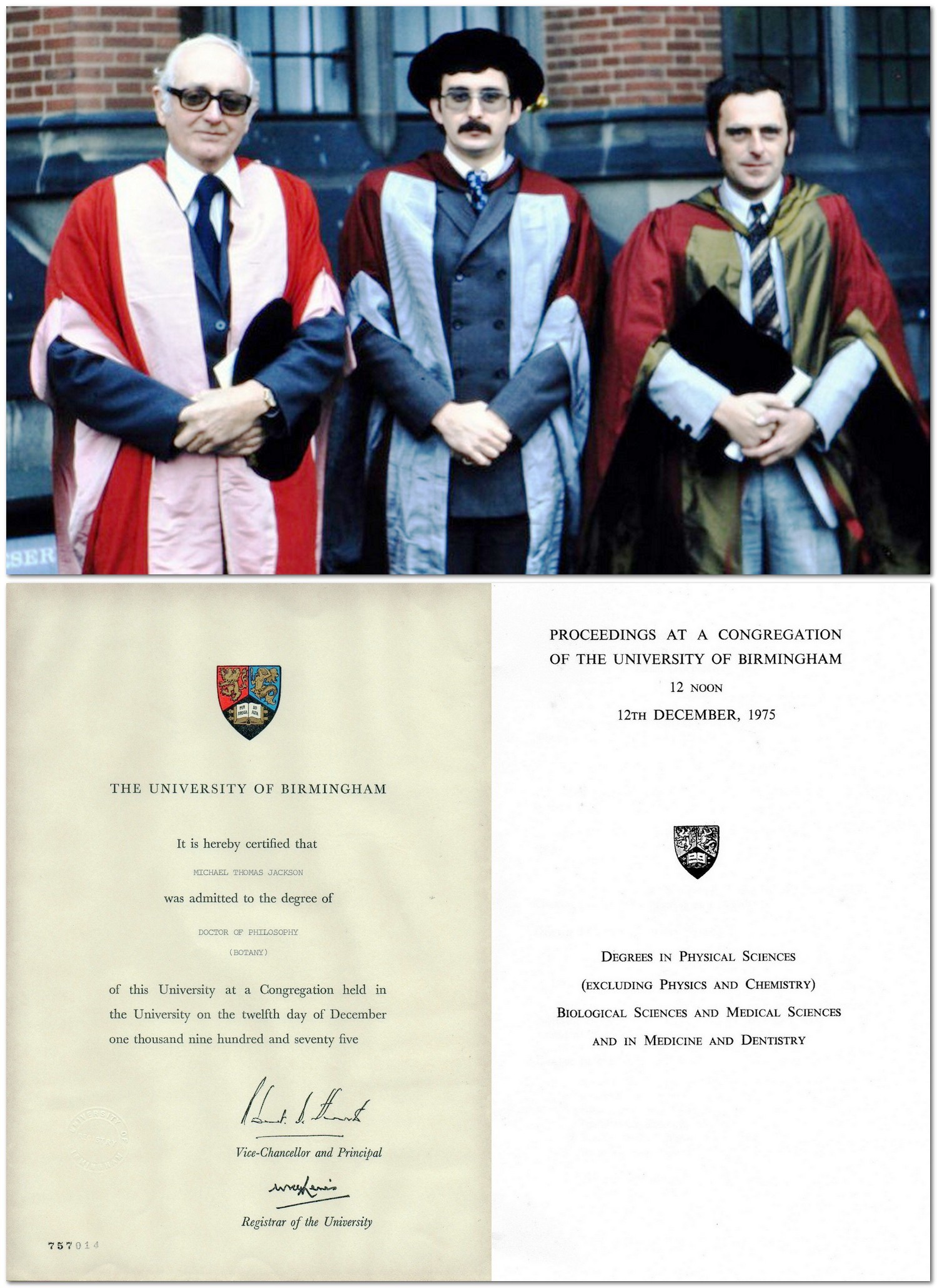
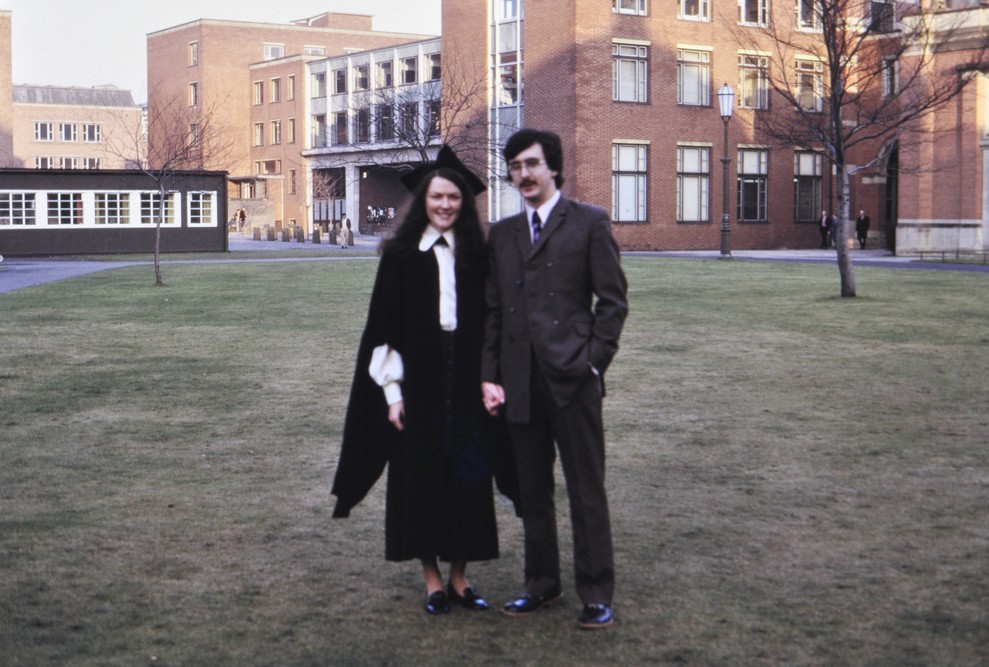
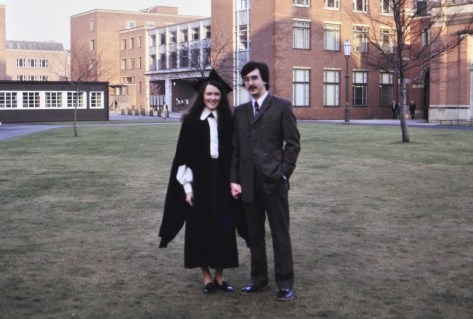
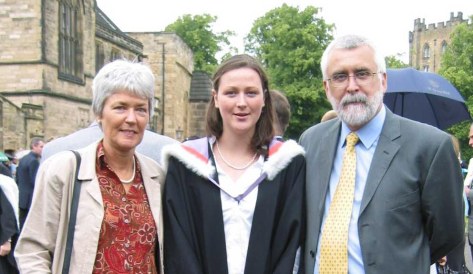
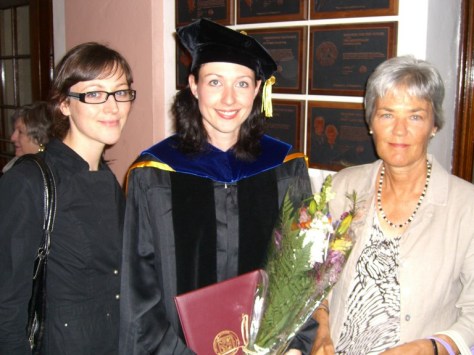
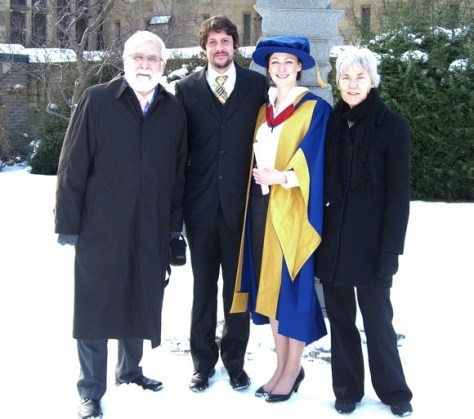
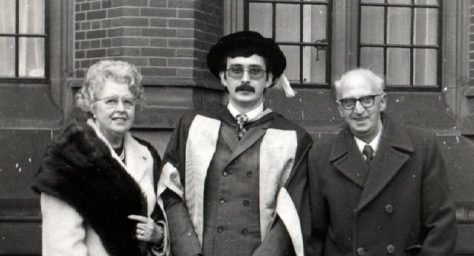
Here are some photos taken during the ceremony as I received my degree, in the procession leaving the Great Hall, and with my parents afterwards.

I’d completed my thesis on the biosystematics of South American potatoes, The Evolutionary Significance of the Triploid Cultivated Potato, Solanum x chaucha Juz. et Buk., at the end of September, just meeting the deadline to have the degree conferred (subject to a successful examination) at the December congregation.

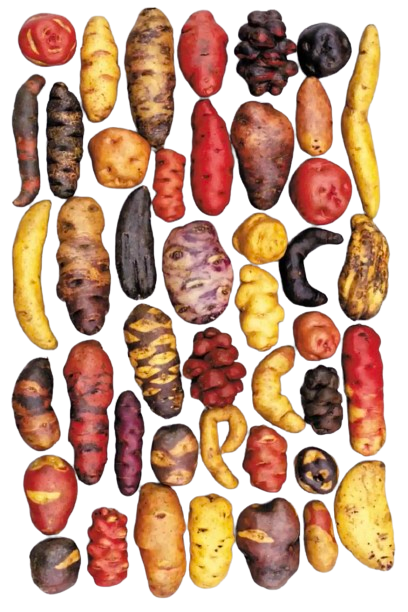
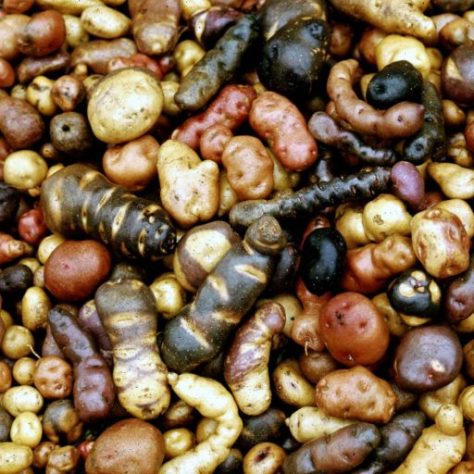
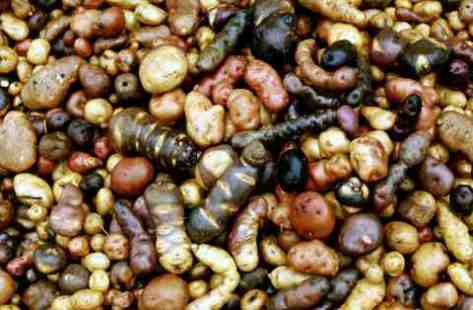
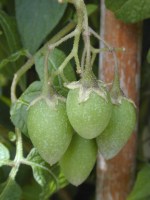
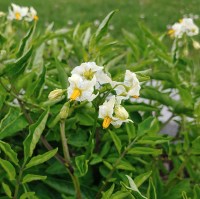
Native potato varieties from the Andes of South America.

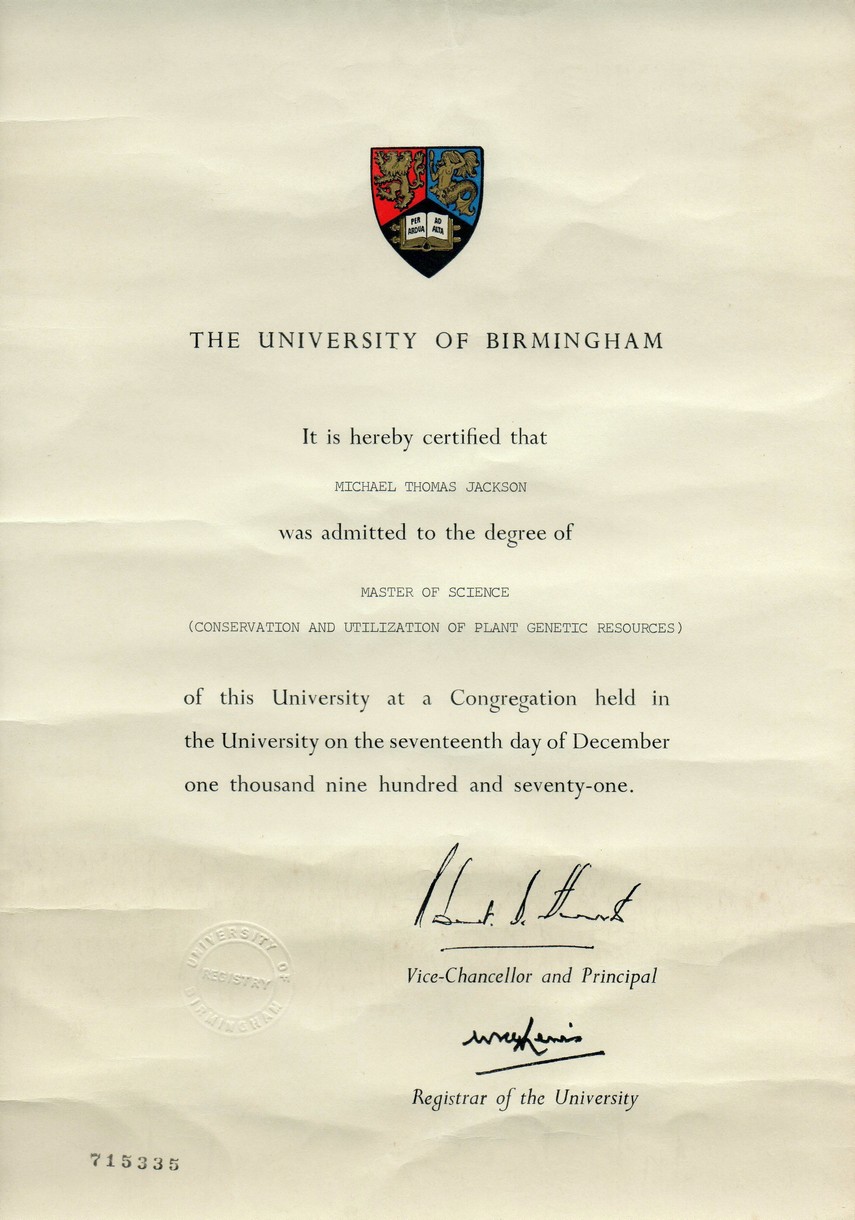
My thesis defence (an oral examination or viva voce to give its complete title) was held around the third week of October if my memory serves me right. Fortunately I didn’t have to make any significant corrections to the text, and the examiners’ reports were duly submitted and the degree confirmed by the university [1].

Among the university staff who attended the degree congregation were Professor JG ‘Jack’ Hawkes, Mason Professor of Botany and head of the Department of Botany (later Plant Biology) in the School of Biological Sciences, and Dr J Trevor Williams, Course Tutor for the MSc degree course Conservation and Utilisation of Plant Genetic Resources in the same department.

Jack was a world-renowned expert on the taxonomy of potatoes and a pioneer in the field of genetic resources conservation, who founded the MSc course in 1969. He supervised my PhD research. Trevor had supervised my MSc dissertation on lentils, Studies in the Genus Lens Miller with Special Reference to Lens culinaris Medik., in 1971 when I first came to Birmingham to join the plant genetic resources course.

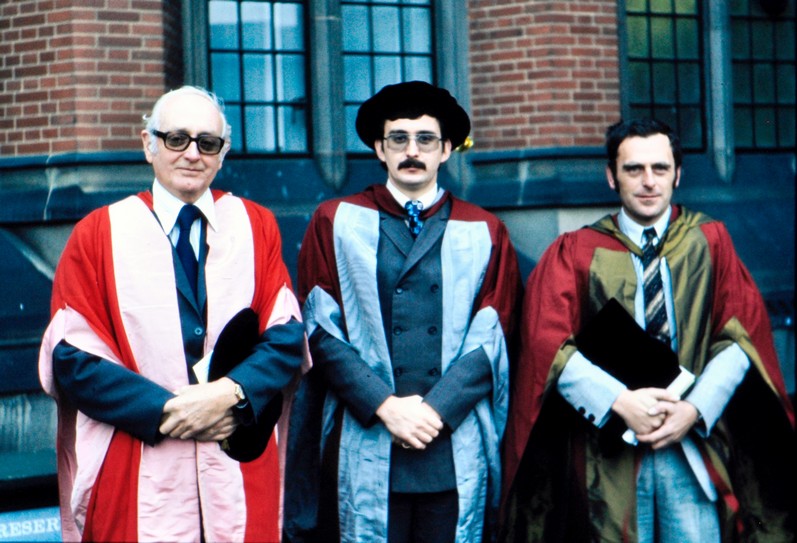
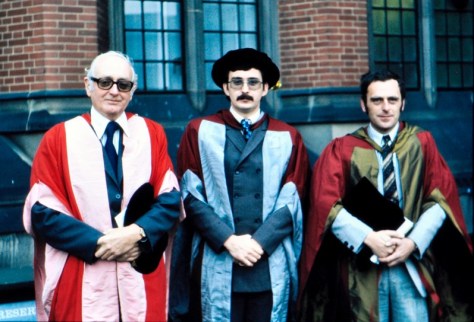
Here I am with Jack (on my right) and Trevor just after the congregation. Click on the image to view an abridged version of the congregation program.

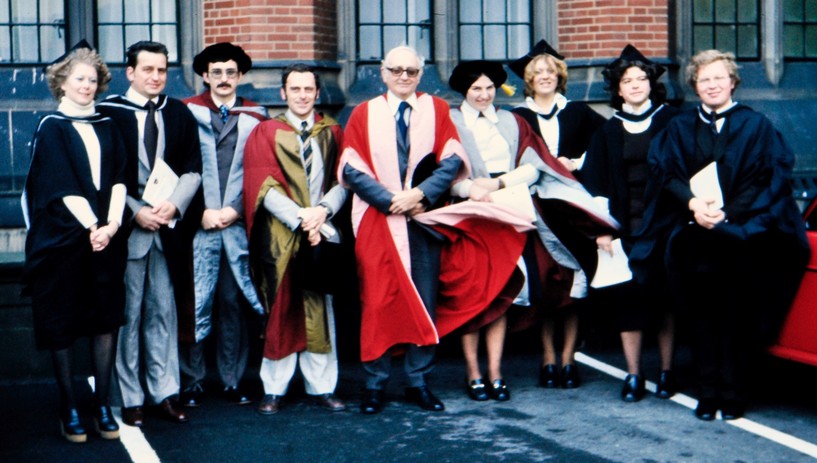
At the same congregation several other graduates from the Department of Botany received their MSc degrees in genetic resources or PhD.

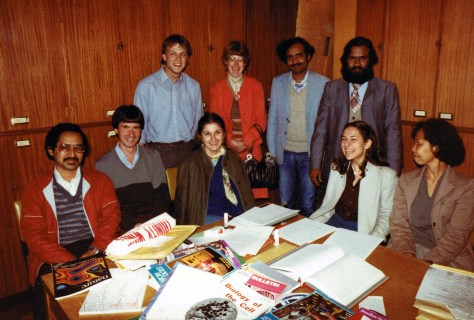
L-R: Pamela Haigh, Brenig Garrett, me, Trevor Williams, Jack Hawkes, Jean Hanson, Margaret Yarwood, Jane Toll, and Stephen Smith


When I began my MSc studies in genetic resources conservation and use at Birmingham in September 1970 I had no clear idea how to forge a career in this fascinating field. The other four students in my cohort came from positions in their own countries, to which they would return after graduating.

My future was much less certain, until one day in February 1971 when Jack Hawkes returned to Birmingham from an expedition to collect wild potatoes in Bolivia. He told me about a one-year vacancy from September that same year at the International Potato Center (CIP) in Lima, Peru, and asked if I’d be interested. Not half! And as the saying goes, The rest is history.

Jack’s expedition had been supported, in part, by CIP’s Director General, Dr Richard Sawyer, who told Jack that he wanted to send a young Peruvian scientist, Zósimo Huaman, to attend the MSc course at Birmingham from September 1971. He was looking for someone to fill that vacancy and did he know of anyone who fitted the bill. Knowing of my interest of working in South America if the opportunity arose, Jack told Sawyer about me. I met him some months later in Birmingham.

Well, things didn’t proceed smoothly, even though Zósimo came to Birmingham as scheduled. Because of funding delays at the UK’s Overseas Development Administration, ODA (which became the Department for International Development or DfID before it was absorbed into the Foreign Office), I wasn’t able to join CIP until January 1973.

In the interim, Jack persuaded ODA to support me at Birmingham until I could move to CIP, and he registered me for a PhD program. He just told me: I think we should work on the triploids. And I was left to my own devices to figure out just what that might mean, searching the literature, growing some plants at Birmingham to get a feel for potatoes, even making a stab (rather unsuccessfully) at learning Spanish.

Despite his relaxed view about what my PhD research might encompass, Jack was incredibly supportive, and we spent time in the field together on both occasions he visited CIP while I was there.

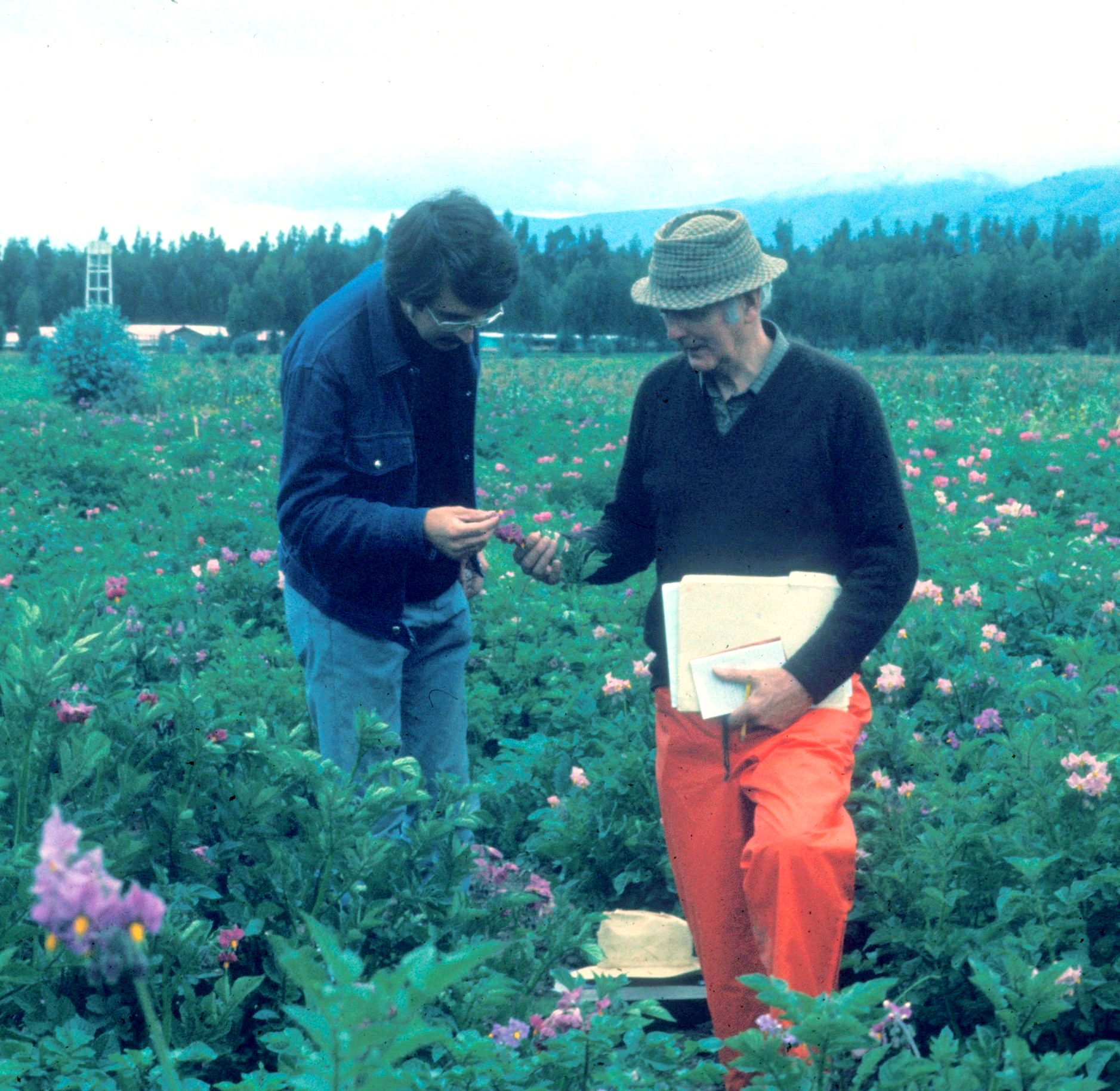
With Jack Hawkes in the CIP potato germplasm collection field, in Huancayo, central Peru (alt. 3100 masl) in January 1974.

I was also extremely fortunate that I had, as my local supervisor at CIP, the head of the Department of Breeding & Genetics, Dr P Roger Rowe, originally a maize geneticist, who joined CIP in mid-1973 from the USDA potato collection in Wisconsin where he was the curator. Roger and I have remained friends ever since, and Steph and I met him and his wife Norma in 2023 during our annual visit to the USA (where our elder daughter lives).

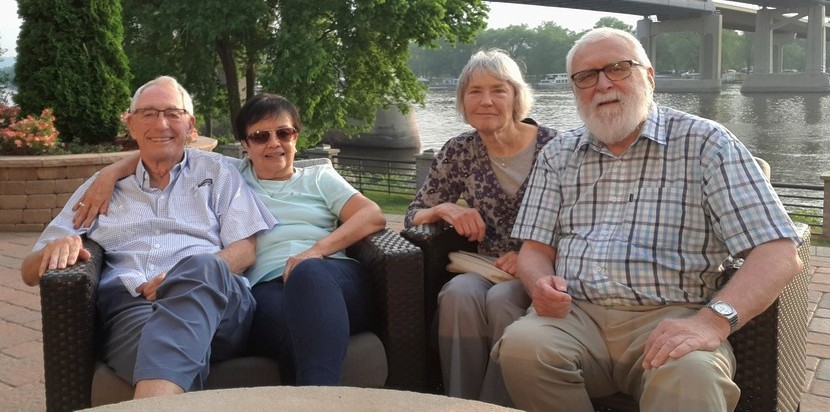
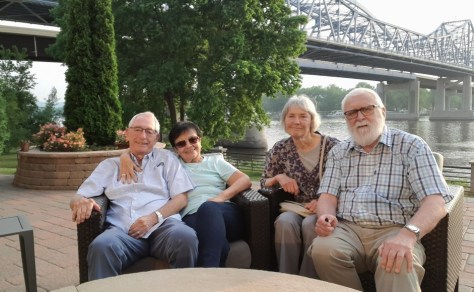
Roger and Norma Rowe, Steph and me beside the mighty Mississippi in La Crosse, Wisconsin in June 2023.

On joining CIP, Roger thoroughly evaluated—and approved—my research plans, while I also had some general responsibilities to collect potatoes in Peru, which I have written about in these two posts.

My research involved frequent trips between December and May each year to the CIP field station in Huancayo, to complete a crossing program between potato varieties with different chromosome numbers and evaluating their progeny. In CIP headquarters labs in Lima, I set about describing and classifying different potato varieties, and comparing them using a number of morphological and biochemical criteria. And I made field studies to understand how farmers grow their mixed fields of potato varieties in different regions of Peru.

At the beginning of April 1975, Steph and I returned to Birmingham so that I could write my thesis. But we didn’t fly directly home. Richard Sawyer had promised me a postdoctoral position with CIP—subject to successful completion of my PhD—with a posting in the Outreach Program (then to become the Regional Research and Training Program) based in Central America. So we spent time visiting Costa Rica and Mexico before heading for New York and a flight back to Manchester. And all the while keeping a very close eye on my briefcase that contained all my raw research data. Had that gone astray I’m not sure what I would have done. No such thing in 1975 as personal computers, cloud storage and the like. So, you can imagine my relief when we eventually settled into life again in Birmingham, and I could get on with the task in hand: writing my thesis and submitting it before the 1 October deadline.

I still had some small activities to complete, and I didn’t start drafting my thesis in earnest until July. It took me just six weeks to write, and then I spent time during September preparing all the figures. Jack’s technician, Dave Langley, typed my thesis on a manual typewriter!

Of course each chapter had to be approved by Jack. And he insisted that I handed over each chapter complete, with the promise that he’d read it that same evening and return the draft to me with corrections and suggestions by the next day, or a couple of days at most. That was a supervision model I took on board when I became a university lecturer in 1981 and had graduate students of my own.


Looking back, my thesis was no great shakes. It was, I believe, a competent piece of research that met the university criteria for the award of a PhD: that it should comprise original research carried out under supervision, and of a publishable standard.

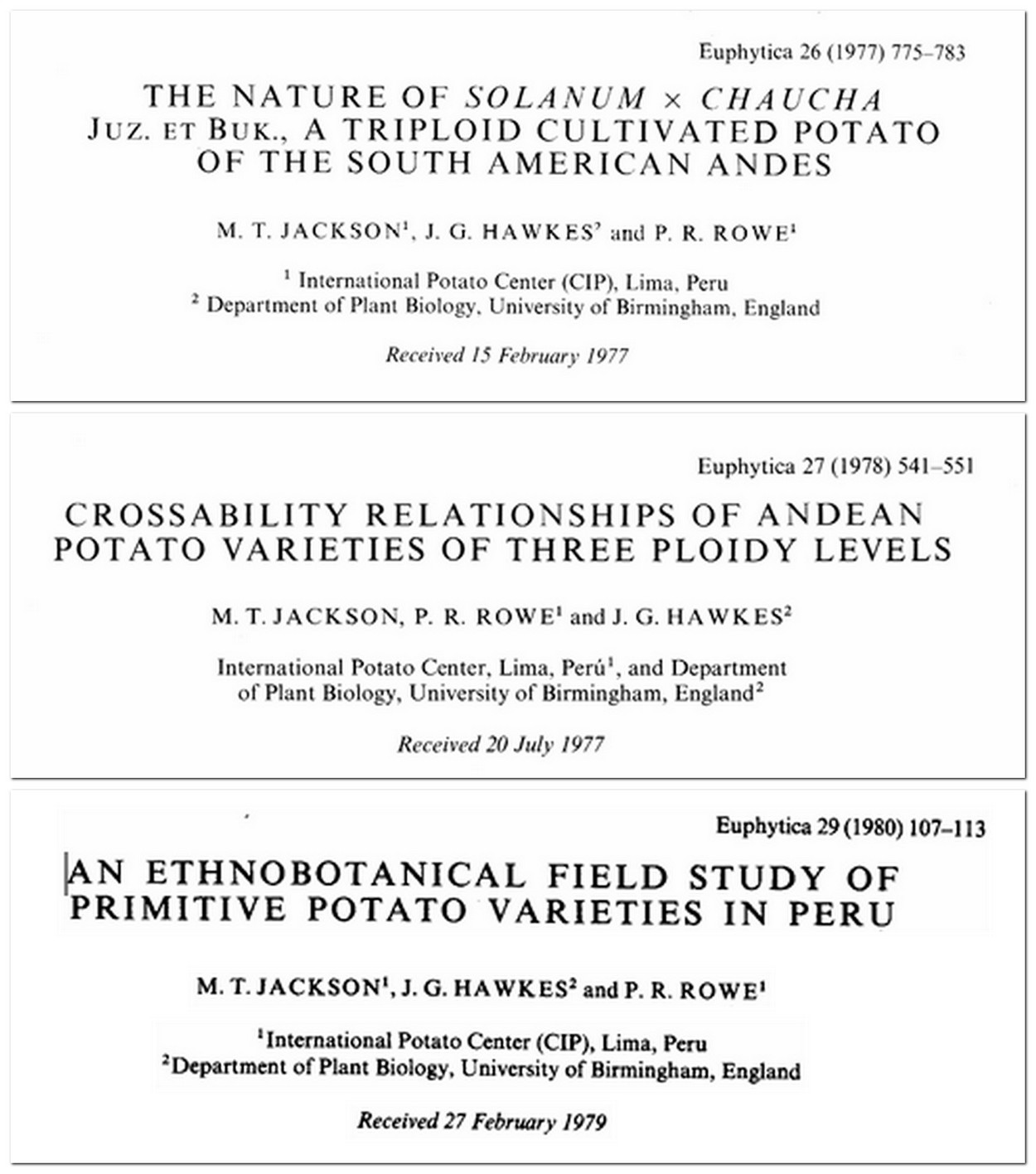
I did publish three papers from my thesis, which have been cited consistently in the scientific literature over the years by other researchers.


So, PhD under my belt so-to-speak, Steph and I returned to Lima just before New Year 1976. Later in April that year, we moved to Costa Rica where I did research on a serious bacterial disease of potatoes, seed potato production, and co-founded a pioneer regional cooperative program on potato research and development. We remained in Costa Rica for almost five years before returning to Lima, and from there to The University of Birmingham.

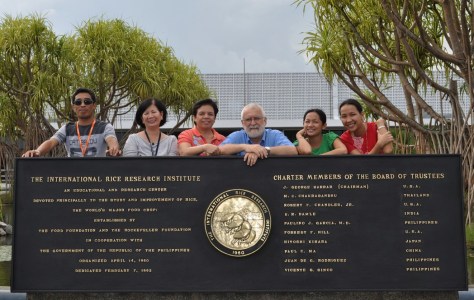
I taught at Birmingham for a decade before becoming Head of the Genetic Resources Center (with the world’s largest and most important rice genebank) at the International Rice Research Institute (IRRI) in Los Baños, Philippines from July 1991. Then in May 2001, I gave up any direct involvement in research and joined IRRI’s senior management team as Director for Program Planning and Communications. I retired in 2010 and returned to the UK.

50 years later

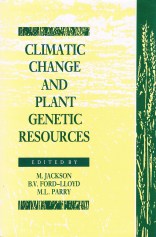
Since retiring, I’ve co-edited—in 2013—a major text on climate change and genetic resources, and led an important review, in 2016-2017, of the management of a network of international genebanks.

Without a PhD none of this would have been possible. Indeed continued employment at CIP in 1976 was contingent upon successful completion of my PhD.

I was extremely fortunate that, as a graduate student (from MSc to PhD) I had excellent mentors: Trevor, Jack, and Roger. I learned much from them and throughout my career tried (successfully I hope) to emulate their approach with my colleagues, staff who reported to me, and students. I’ve also held to the idea that one is never too old to have mentors.


[1] I completed my PhD in four years (September 1971 to September 1975. Back in the day, PhD candidates were allowed eight years from first registration to carry out their research and submit their thesis for examination. Because of concern about submission rates among PhD students in the 1980s, The University of Birmingham (and other universities) reduced the time limit to five years then to four. So nowadays, a PhD program in the UK comprises three years of research plus one year to write and submit the thesis, to be counted as an on-time submission.


The Commonwealth Potato Collection – it really is a treasure trove (revised and updated)*

I originally wrote this story in August 2021 after a friend and former colleague, Dr Glenn Bryan¹ posted a link on his Facebook page to a story—Treasure trove could hold secrets to potato problems—that had just appeared in the online edition of Dundee’s The Courier.

It was about the Commonwealth Potato Collection (CPC) that is held at The James Hutton Institute (JHI) at Invergowrie, just west of Dundee.

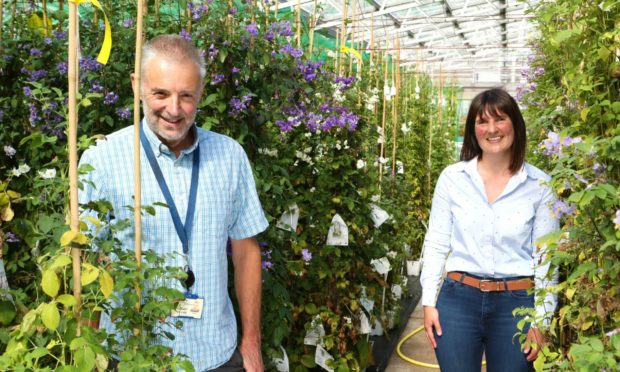
Until a couple of years ago (when he retired) Glenn led the Potato Genetics and Breeding Group at JHI, with Gaynor McKenzie as the CPC curator, a position she still occupies.

Glenn Bryan and Gaynor McKenzie at the James Hutton Institute in Invergowrie, where wild potato species in the Commonwealth Potato Collection are conserved.

The Commonwealth Potato Collection has a long and distinguished history, going back more than 80 years. It is one of a handful of potato germplasm collections around the world in which breeders have identified disease and pest resistance genes to enhance the productivity of cultivated varieties. The CPC is particularly important from a plant quarantine perspective because the collection has been routinely tested and cleaned for various pathogens, particularly seed-borne pathogens.

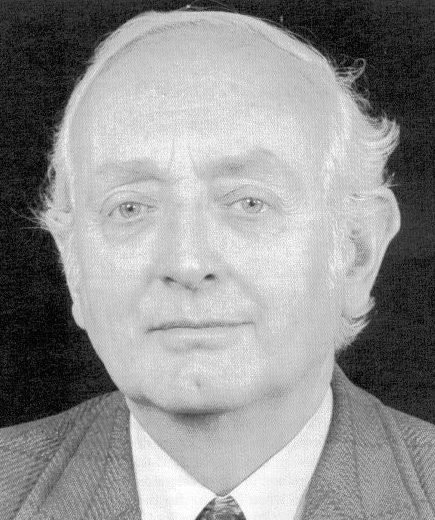
Jack Hawkes

It is a collection with which Steph and I have both a personal and professional connection, from the 1970s and 80s. It’s also the legacy of one man, Professor Jack Hawkes (1915-2007) with whom I had the privilege of studying for both my MSc and PhD degrees.

Let me tell that story.


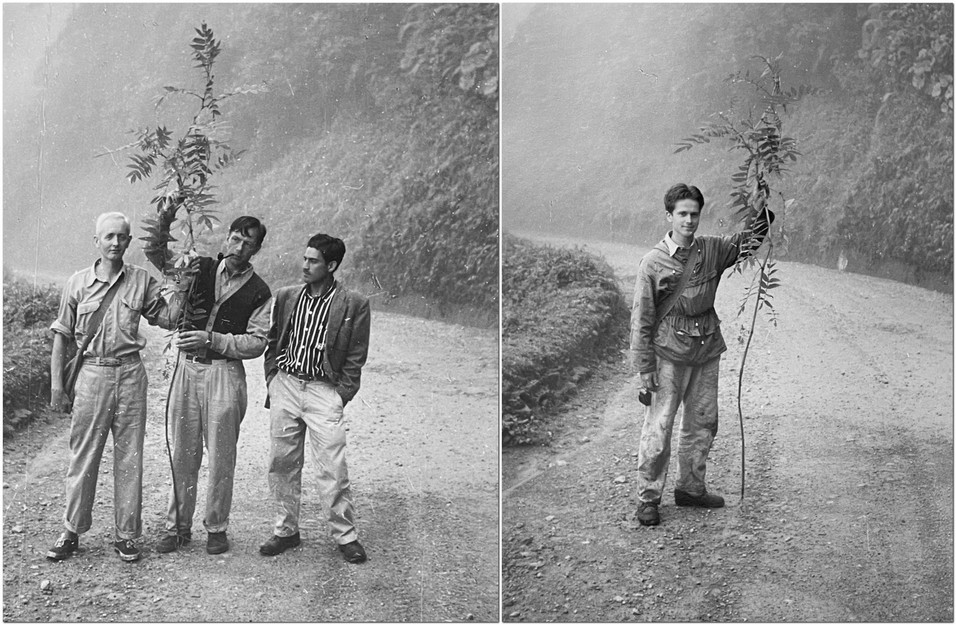
In December 1938, a young botanist—just 23 years old the previous June—set off from Liverpool, headed to Lima, Peru to join the British Empire Potato Collecting Expedition to South America, the adventure of a lifetime.

Jack in Bolivia in 1939

John ‘Jack’ Gregory Hawkes, a Christ’s College, Cambridge graduate, was destined to become one of the world’s leading potato experts and a champion of the conservation and use of plant genetic resources for food and agriculture.

He was the taxonomic botanist on the 1939 expedition, which was led by experienced plant collector Edwards Kent Balls (1892-1984). Medical doctor and amateur botanist William ‘Bill’ Balfour Gourlay (1879-1966) was the third member of the expedition. Balls and Gourlay had been collecting plants in Mexico (including some potatoes) in 1938 before moving on to Peru for the ‘Empire’ expedition.

The expedition had originally been scheduled to start in 1937, but had to be delayed because of ill health of the original expedition leader, Dr PS Hudson, Director of the Empire Bureau of Plant Breeding and Genetics in Cambridge. Jack had been hired as his assistant.

Whilst waiting for the expedition to get underway, Jack took the opportunity—in August 1938—to visit Leningrad to pick the brains of Russian botanists, Drs SM Bukasov, VS Juzepczuk, and VS Lechnovicz who had already collected potatoes in South America. Jack openly acknowledged that ‘as a raw recently graduated student, [he] knew very little about potatoes’.

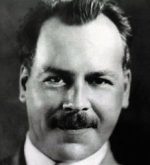
Nikolai Vavilov

Not only did Jack receive useful advice from these knowledgeable botanists, but he also met with the great geneticist and ‘Father of Plant Genetic Resources’ Nikolai Vavilov on several occasions during his visit to Leningrad and Moscow, ‘an experience that changed [his] life in many ways’. Vavilov had a profound effect on Jack’s subsequent career as an academic botanist and genetic resources pioneer. Alas there do not appear to be any surviving photos of Jack with Vavilov.

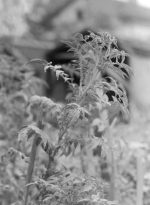
‘Solanum vavilovii’ growing at an experiment station near Leningrad in 1938

In Leningrad, Jack took this photo (right) of a wild potato species that had been described as Solanum vavilovii by Juzepczuk and Bukasov in 1937. Sadly that name is no longer taxonomically valid, and vavilovii is now considered simply as a variant of the species Solanum wittmackii that had been described by the German botanist Friedrich August Georg Bitter in 1913.


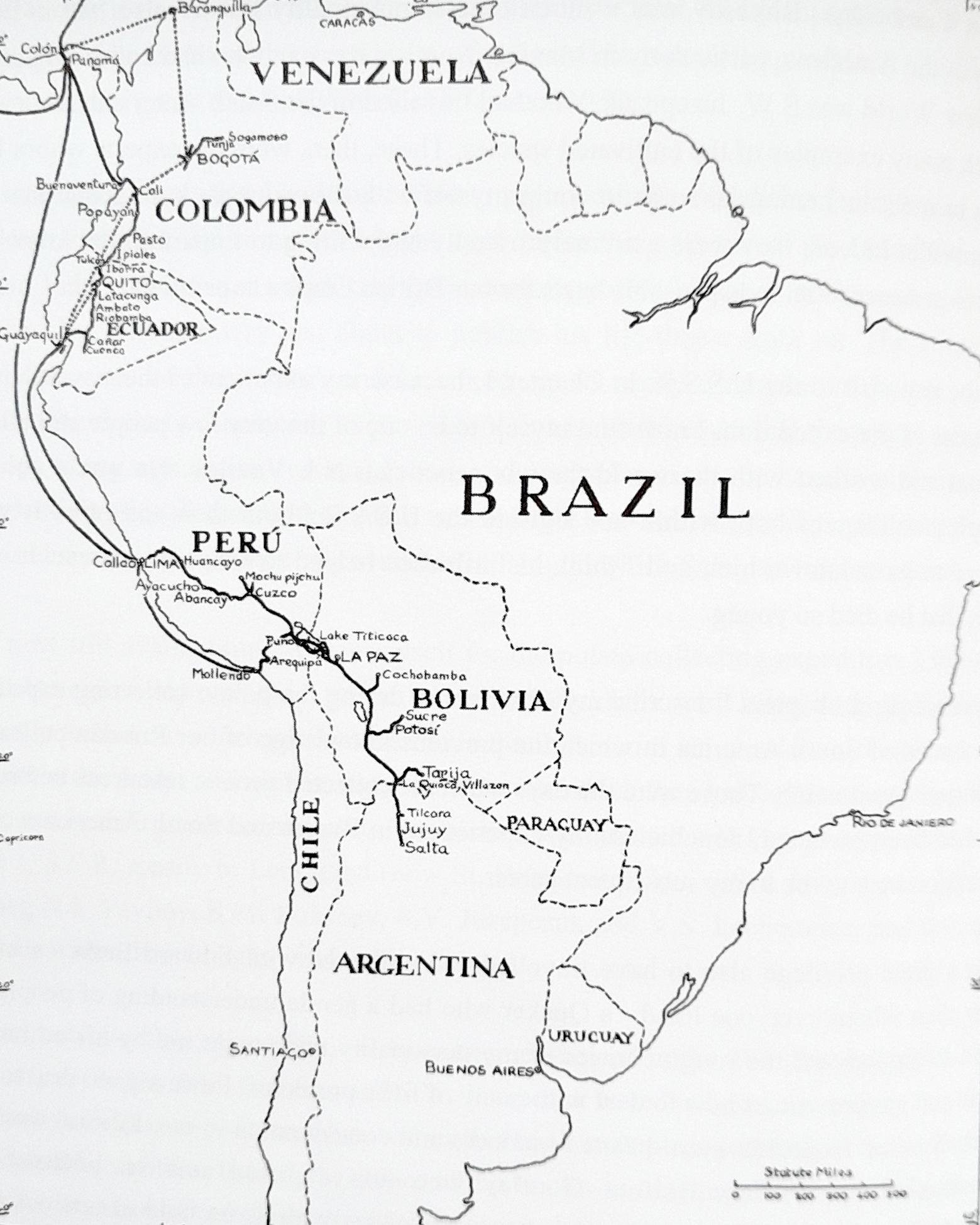
The Empire expedition lasted eight months from January 1939, covering northern Argentina, Bolivia, Peru, Ecuador, and ending in Colombia (a country where Jack was to reside for three years from 1948 when he was seconded to establish a national potato research station near Bogota).

Route taken by the Empire Potato Collecting Expedition

More than 1150 samples of cultivated and wild potatoes were collected in these five countries as well as a further 46 samples collected by Balls and Gourlay in Mexico in 1938.

Here is a small selection of photographs taken during the expedition (and a link to an album of photos).


By the time the expedition ended in early September 1939, war with Germany had already been declared, and Jack’s return to the UK by ship convoy from Halifax, Newfoundland was not as comfortable as the outbound voyage nine months earlier, docking in Liverpool early in November.

Jack published an official expedition report in March 1941. Then, in 2003, he published an interesting and lengthy memoir of the expedition, Hunting the Wild Potato in the South American Andes.

In December 2021, my friend Dr Abigail Amey and I published a website (with permission of the Hawkes family) about Jack’s experiences of the 1938-39 expedition, as well as others to the USA, Mexico, and Central America in 1958, and Bolivia in 1971. Just click on the red box below (and others) to open the links.

The website also has several of Jack’s original 16mm films (which we were able to digitise through a special grant from the Crop Wild Relatives Project at Kew and the Crop Trust).

Redcliffe N Salaman

Potato tubers (and presumably seeds) were shipped back to the UK, and after a quarantine inspection, were planted out in a glasshouse at the Potato Virus Research Station, Cambridge whose director was the renowned botanist (and originally a medical doctor) Redcliffe Nathan Salaman, author of the seminal work on potatoes, The History and Social Influence of the Potato, first published in 1949 and reprinted with a new introduction by Hawkes in 1985. I jealously guard the signed copy that Jack gave me.

On his return to the UK in 1939 Jack began to study the collected germplasm, describing several new species, and completing his PhD thesis (supervised by Salaman) at the University of Cambridge in 1941.

South American potato species in the Cambridge glasshouse in the summer of 1940

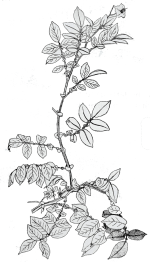
Among the species identified in the course of Jack’s dissertation research was Solanum ballsii from northern Argentina, which he dedicated to EK Balls in a formal description in 1944. However, in his 1963 revised taxonomy of the tuber-bearing Solanums (potatoes), Jack (with his Danish colleague Jens Peter Hjerting, 1917-2012) recognized Solanum ballsii simply as a subspecies of Solanum vernei, a species which has since provided many important sources of resistance to the potato cyst nematode.


Jack Hawkes in the glasshouse of the Empire Potato Collection at Cambridge in July 1947.

The 1939 germplasm was the foundation of the Empire Potato Collection. When the collection curator Dr Kenneth S Dodds was appointed Director of the John Innes Institute in Bayfordbury in 1954, the collection moved with him, and was renamed the Commonwealth Potato Collection.

By the end of the decade (or early 1960s) the CPC was on the move again. This time to the Scottish Plant Breeding Station (SPBS) at Pentlandfield just south of Edinburgh when Dr Norman W Simmonds moved there in 1959. He rose through the ranks to become the station’s Director.

Dodds and his colleague Dr GJ Paxman traveled through South America during 1959-60, and their research on the genetics of diploid potatoes was based on some of the material collected. Dodds and Simmonds also collected potatoes in early 1963.

But that was not the end of the CPC’s peripatetic existence. It remained at the SPBS until the early 1980s, when the SPBS amalgamated with the Scottish Horticultural Research Institute (which became the Scottish Crop Research Institute or SCRI, and now known as the James Hutton Institute), and the collection moved to its present site near Dundee.

Today, the CPC comprises some 1500 samples or accessions of about 80 wild and cultivated potato species. And over two-thirds were collected by Hawkes himself. Another 9% of the collection were collected by Dodds and his colleagues, as mentioned earlier. The remainder represent donations over the years from various individuals and institutions.


I am not sure how much the CPC grew in the intervening years, but there was a significant boost to the size and importance of the collection around 1987. Let me explain.

As I already mentioned, Jack spent three years in Colombia from 1948, returning to the UK in 1951 when he was appointed Lecturer in Taxonomy in the Department of Botany at the University of Birmingham. He was given a personal chair as Professor of Taxonomic Botany in April 1961, and became Head of Department and Mason Professor of Botany in July 1967. He remained at Birmingham until retirement in September 1982.

It was during his Birmingham years that Jack’s work on the tuber-bearing Solanums expanded significantly with several important monographs and taxonomic revisions published, based on his own field work over the years and experimental studies back at Birmingham on the potato samples he brought back to the UK and which formed an important collection in its own right. Because of the quarantine threat from these seeds (particularly of sexually-transmitted pathogens or new variants of potato viruses already present in the UK), Jack had a special quarantine licence from the then Ministry of Agriculture, Fisheries and Food (MAFF, now DEFRA) to maintain his collection at Birmingham.

In 1958, with Peter Hjerting and young research assistant Richard Lester (who later joined the Department of Botany as a Lecturer), Jack made a six month expedition to the USA , Mexico, and Central America.

Here is another account of that trip from the University of Birmingham Gazette. Besides potatoes, many other species were made for other institutions and botanic gardens.

Collecting a sample of Solanum agrimonifolium (No. 1854) in Guatemala. L: Jack Hawkes, Peter Hjerting, and Morse (driver?); R: Richard Lester

Just three months after I arrived at Birmingham in September 1970 to enrol on the MSc course on plant genetic resources, Jack was off on his travels once again, this time to Bolivia accompanied by Peter Hjerting once again, his research assistant Phil Cribb and, in South America by Zósimo Huamán from the International Potato Center (CIP) and Moisés Zavaleta and others from Bolivia.

This is the official trip report. Here are some images from the 1971 expedition, courtesy of Phil Cribb.

Jack and Peter made another trip to Bolivia in 1974 (with research assistant Dave Astley), and another in 1980. They published their monograph of The Potatoes of Bolivia in 1989.


In September 1971, Zósimo Huamán and Moisés Zavaleta came to Birmingham to study on the genetic resources MSc course. In that same cohort was a young botanist, Stephanie Tribble, recently graduated from the University of Wales – Swansea (now Swansea University). During the summer of 1972, Steph and I became ‘an item’, so-to-speak. However, by then I was already making plans to leave the UK and join CIP in Lima by January 1973, and on graduation, Steph was keen to find a position to use the experiences and skills she had gained on the course.

Just at that time, a Scientific Officer position opened at the SPBS, as assistant to Dalton Glendinning who was the curator of the CPC. Steph duly applied and was appointed from about October that year. Jack must have supported her application. Coincidentally, the MSc course external examiner was no other that Norman Simmonds who met Steph during his course assessment.

I moved to Peru in January 1973, and within a few days discovered that Jack had mentioned Steph to CIP’s Director General, Richard Sawyer. Well, to cut a long story short, Steph was offered a position as Assistant Geneticist at CIP, to support management of CIP’s large potato collection, similar to the role she’d had at Pentlandfield. She resigned from the SPBS and joined me in Lima in July that year. We married there in October, remaining with CIP in Peru and Central America for another eight years.

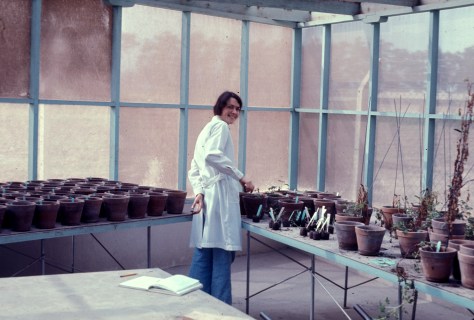
Steph working in one of CIP’s screen-houses at La Molina on the eastern outskirts of Lima in 1974.

In April 1981 I was appointed Lecturer in Plant Biology at Birmingham, 18 months before Jack’s retirement, the aim being that I would assume Jack’s teaching commitments on the MSc course. When I also took over the Hawkes potato collection in 1982, I had high hopes of identifying funding for biosystematics and pre-breeding research, and continuing the Birmingham focus on potatoes.

Dave Downing was the glasshouse technician who carefully managed the Hawkes collection at Birmingham for many years.

That was not the case, and as the collection needed a dedicated glasshouse and technician I could not justify (nor financially support) holding on to such valuable research space. And, in any case, continuing with the Hawkes collection was actually blocking the opportunities for other potato research because of the MAFF-imposed restrictions.

So, with some regret but also acknowledging that Jack’s collection would be better placed elsewhere, I contacted my colleagues at the CPC to see if they would be interested to receive it—lock, stock, and barrel. And that indeed was what happened. I’m sure many new potato lines were added to the CPC. The germplasm was placed in quarantine in the first instance, and has passed through various stages of testing before being added officially to the CPC. Throughout the 80s and 90s Jack would visit the CPC from time-to-time, and look through the materials, helping with the correct identification of species and the like.

Jack’s interest in and contributions to potato science remained with him almost up to his death in 2007. By then he had become increasingly frail, and had moved into a care home, his wife Barbara having passed away some years previously. By then, Jack’s reputation and legacy was sealed. Not only has his scientific output contributed to the conservation and use of potato genetic resources worldwide, embodied in the CPC that he helped establish all those decades earlier, but through the MSc course that he founded in 1969, hundreds of professionals worldwide have continued to carry the genetic conservation torch. A fine legacy, indeed!


¹ Glenn and I go back almost 30 years when, as a young scientist at the John Innes Centre (JIC) in Norwich, he was a member of a rice research project, funded by the British government, that brought together staff at the International Rice Research Institute (IRRI) in the Philippines where I was Head of the Genetic Resources Center, the University of Birmingham (where I had been a faculty member for a decade from 1981), and the JIC to use molecular markers to study IRRI’s large and globally-important germplasm collection conserved in its International Rice Genebank.

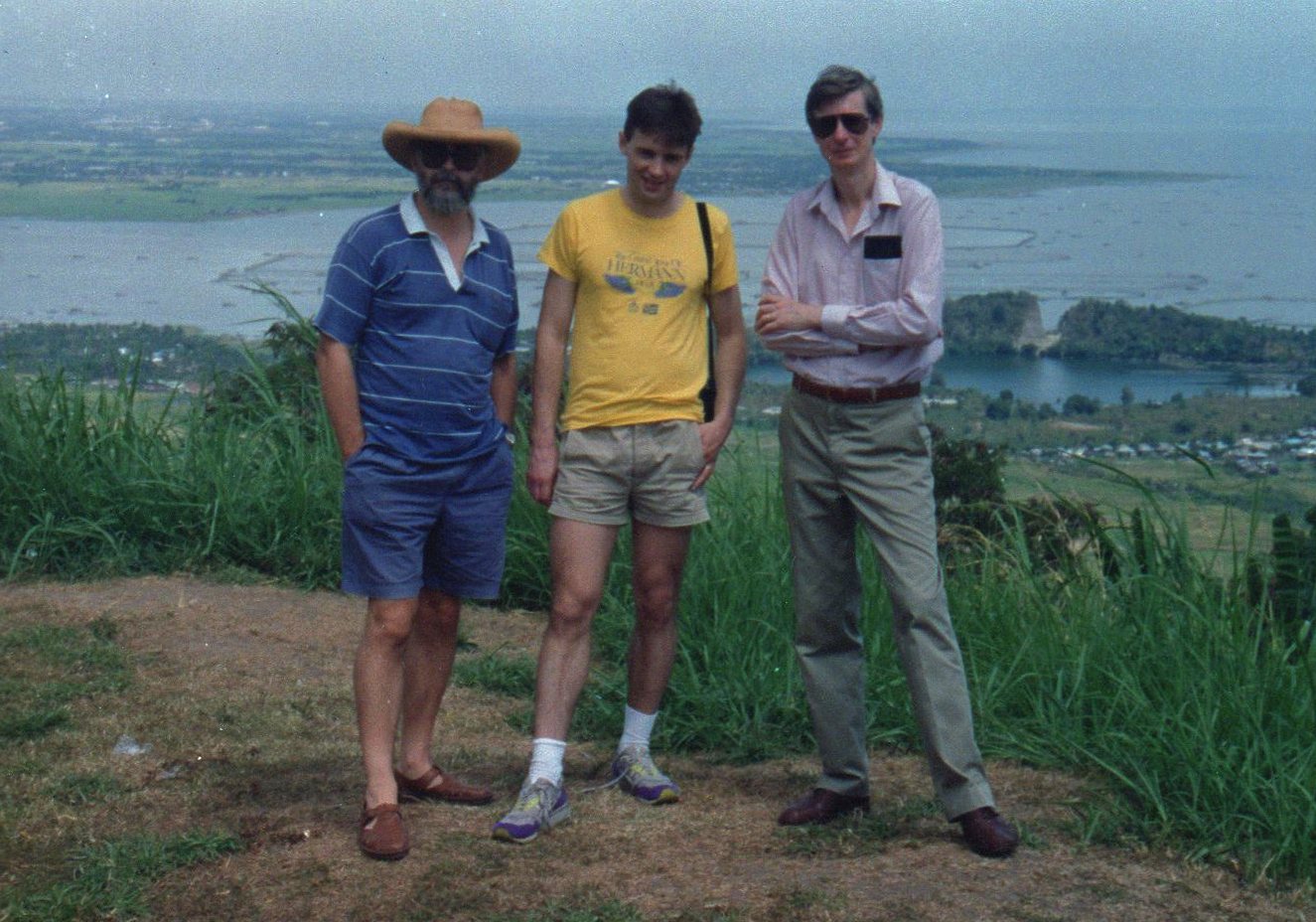
L-R: me, Glenn, and John Newbury (who later became professor at the University of Worcester) during a spot of sight-seeing near IRRI in 1993.


  • Originally published on 24 August 2021.

Two Bs, two Ps, seven Us, and nine Ds

Education is a wonderful thing, and my family and I have taken advantage of the opportunities a good education opens up.

As I read an email a few days ago from the University of Birmingham, announcing its 125th anniversary celebrations later this year, my mind wandered back to 1975.

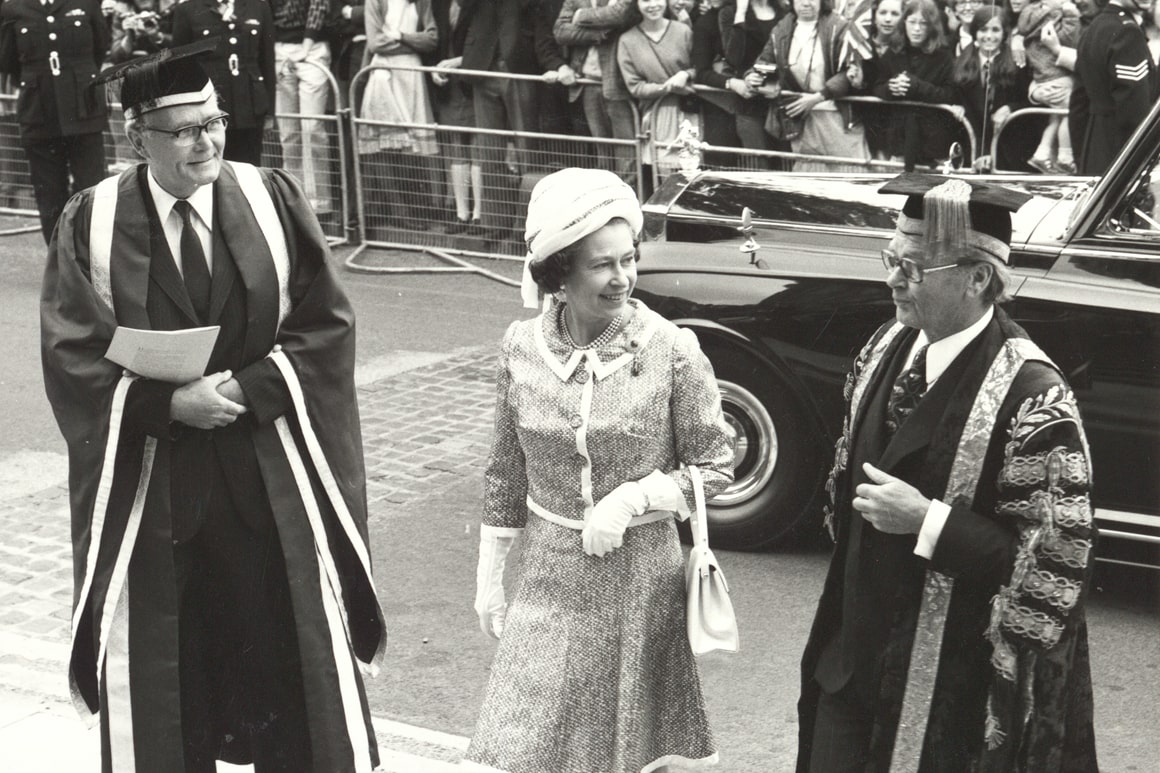
That was when the university celebrated the centennial of laying of the foundation stone of the Mason Science College in 1875, itself a successor of Queen’s College, founded in 1825 as a medical college. HM The Queen visited the university in 1975 to celebrate that centennial, seen in this photo with the university Chancellor, Sir Peter Scott (on the right) and the Vice-Chancellor, Dr Robert Hunter (later Baron Hunter of Newington, on the left). I was in the crowd there, somewhere.

I was back at Birmingham for a few months (from the International Potato Center or CIP in Lima, Peru where I was working as an Associate Taxonomist) to complete the residency requirements for my PhD, and to submit my dissertation. I successfully defended that in late October, and the degree was conferred by Sir Peter Scott at a congregation on 12 December. In the photo below, my PhD supervisor and Mason Professor of Botany, Jack Hawkes is on my right, and Dr Trevor Williams on my left.

But I’m getting a little ahead of myself.

My first experience of Birmingham was in the late Spring of 1967, when I sat the Joint Matriculation Board Advanced or ‘A’ Level biology practical exam in the First Year Lab in the School of Biological Sciences. Many high schools took advantage of that arrangement if they had insufficient facilities in their own premises to hold the exam.

Going into my ‘A’ level exams I had ambitions to attend university. Not that I’d applied to Birmingham. That honour went to the University of Southampton where I had been accepted to study for a BSc degree in environmental botany and geography.

As ‘baby boomers’ my elder brother Edgar and I were the first in our family and among all our cousins to attend university. Once Edgar had persuaded our parents that he wanted to go to university (1964-1967) it was easier for me to follow that same path three years later.

I enjoyed my three years at Southampton. Although I’d registered for a combined degree in environmental botany and geography, my interests shifted significantly towards botany by my third and final year.

However, graduating in July 1970 and with just a BSc under my belt, I knew I’d have to pursue graduate studies to achieve my ambition of working overseas. And it was at the beginning of my final year at Southampton that a one year taught MSc course on the Conservation and Utilisation of Plant Genetic Resources was launched at Birmingham, under the leadership of Jack Hawkes. One of the lecturers at Southampton, geneticist Dr Joe Smartt, suggested that I should apply.

Which I duly did, and after an interview at Birmingham was offered a place for the following September, subject to funding being available for a maintenance grant and tuition fees. It was not until the course was about to commence that Professor Hawkes could confirm the financial support. By mid-September I headed to Birmingham, and the beginning of an association with the university that lasted several decades, as both student and member of staff.

I was awarded the MSc degree in December 1971. During that year, Hawkes (a world-renowned potato expert) had arranged for me to join CIP in Lima for just a year (which later extended to more than eight years) to help conserve its important collection of native potato varieties. An opportunity I jumped at. However, funding from the British government was not confirmed until late 1972. Instead of kicking my heels waiting for that funding to be confirmed, and concerned I might find a position elsewhere, Hawkes raised a small grant to allow me to begin a PhD project under his supervision, and that I would continue after arriving  in Peru.

A third cohort of students arrived in Birmingham in September 1971, among them Stephanie Tribble from Southend-on-Sea who had just graduated from the University College of Swansea (now Swansea University) with a degree in botany. By the summer of 1972 Steph and I had become an item.

In November 1972 she joined the Scottish Plant Breeding Station (SPBS) at Pentlandfield, south of Edinburgh, as assistant curator of the Commonwealth Potato Collection. She returned to Birmingham in December for the MSc degree congregation, just three weeks before I was due to fly out to Peru at the beginning of January 1973.

Well, things have a habit of turning out for the best. Once I was in Peru, I asked Steph to marry me and join me in Lima where I knew there would be a position for her at CIP. Resigning from the SPBS, she arrived in early July and we were married in the local registry office in Lima in October.

So that’s two botanists, three universities (Southampton, Swansea, and Birmingham), and five degrees (2xBSc, 2xMSc, 1xPhD) between us.


After another fruitful five years with CIP based in Costa Rica after I’d completed my PhD (during which our elder daughter Hannah was born), a lectureship opened in the Department of Plant Biology at Birmingham, so I applied. I flew back from Peru for an interview, and having been offered the position, I joined the university on 1 April 1981.

Much of my teaching focused on the genetic resources MSc course that was accepting ever more numbers of students from around the world. I remained at Birmingham for a decade, before deciding that I wasn’t really cut out for academia and, in any case, a more exciting opportunity had presented itself at the International Rice Research Institute (IRRI) in the Philippines. I joined IRRI as head of the Genetic Resources Center in July 1991, remaining in that position for almost a decade. In May 2001, I was appointed Director for Program Planning and Communications (DPPC), joining the institute’s senior management team, until my retirement in April 2010.

During the 1990s, I had an excellent research collaboration with my former colleagues in the School of Biological Sciences at Birmingham, and each year when I returned to the UK on home leave, I’d spend time in the university discussing our research as well as delivering several lectures to the MSc students, for which the university appointed me an Honorary Senior Lecturer.


As I mentioned before, Hannah was born in 1978 when we were living in Costa Rica. Once back in the UK her younger sister Philippa was born in 1982 in the small market town of Bromsgrove, about 13 miles south of the University of Birmingham in north Worcestershire.

Both girls thrived in Bromsgrove, enjoyed school, and each had a good circle of friends.

We upended their world when I took the position at IRRI and they moved to the Philippines with Steph just after Christmas 1991. Even more challenging was their enrolment in the International School Manila, which had a US-based curriculum, and eventually an academic stream based on the International Baccalaureate (IB). There’s no doubt that the first year was tough. Not only was it challenging academically, but living 70 km south of Manila, IRRI students were bussed into school each day departing around 04:30 to begin classes at 07:30, and returning by 16:30, or later if there were holdups on the highway, as was often the case.

Despite the bumpy start, Hannah and Phil rose to the challenge and achieved outstanding scores on the IB in 1995 and 1999 respectively.

From the outset, attending university had been part of our plan for them, and an ambition they readily embraced. Both took a gap year between high school and university. Hannah was drawn towards Psychology, with a minor in Anthropology. And she discovered that this combination was offered at few universities in the UK, opting to attend Swansea University in 1996. And although she was on course to excel academically, half way through her second year she asked if she could transfer to Macalester College, a liberal arts college in Minnesota, USA.

Macalester graduation in May 2000, with Hannah and Michael facing the camera.

Graduating Summa cum laude in May 2000 from Macalester, with a BA in Psychology and a minor in Anthropology, Hannah was then accepted into a graduate program in the Department of Psychology at the University of Minnesota in the Twin Cities.

She was awarded her PhD in Industrial and Organizational Psychology in 2006 with a thesis that assessed the behaviour and ethical misconduct of senior leaders in the workplace.

Hannah (right) with her peers in Industrial & organizational Psychology

That’s one psychologist, another two universities (Macalester and Minnesota), and two more degrees (BA, PhD).

Remaining in Minnesota, she married Michael (also a Macalester graduate) in 2006, became a US citizen, and has a senior position focused on talent management and performance with one of the largest international conglomerates. They have two children: Callum (14) and Zoë (12).


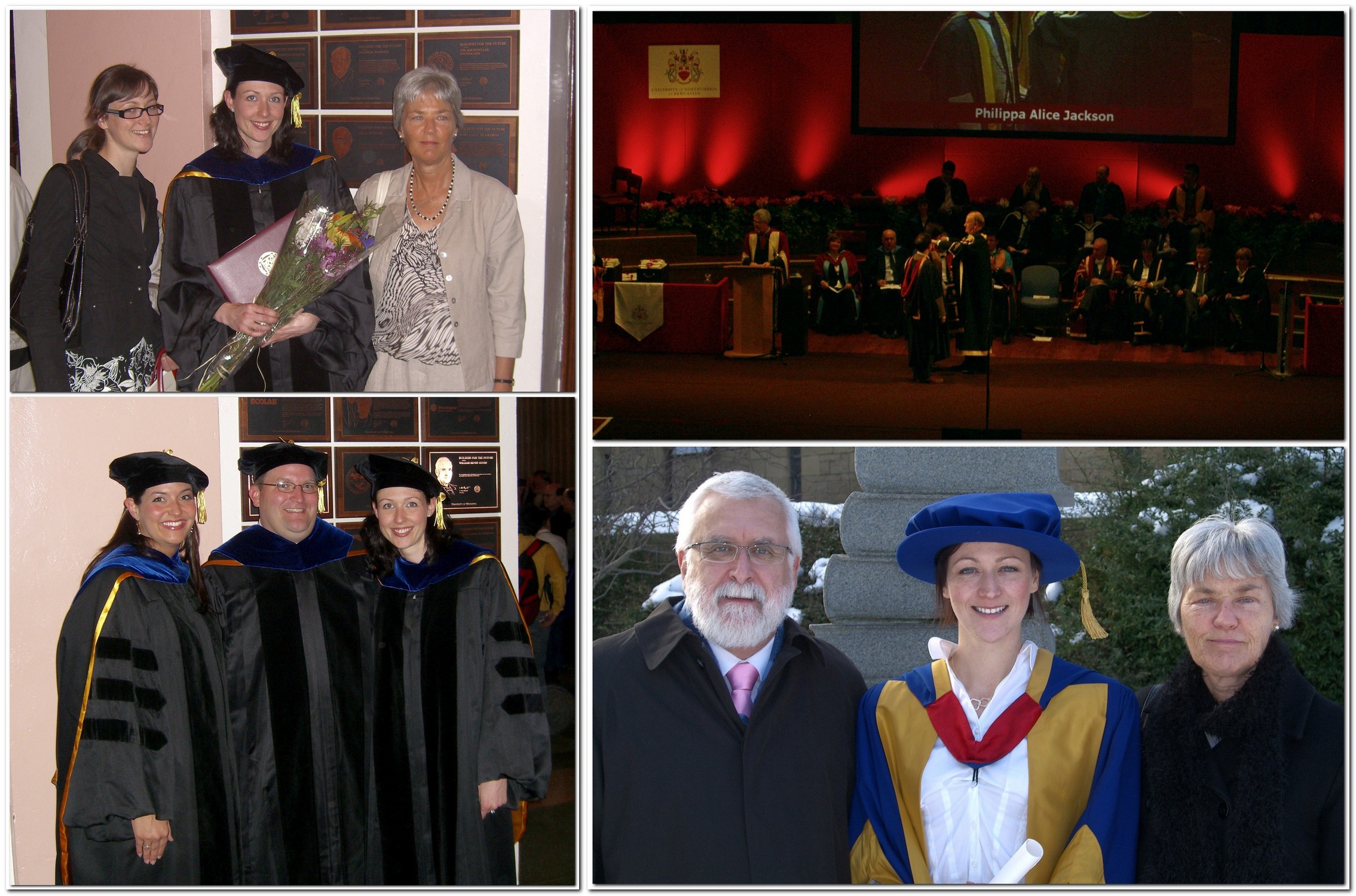
After a gap year, Philippa began her studies in Psychology at Durham University in 2000, graduating with a 2:i BSc degree three years later. Uncertain what path then to follow, she moved to Vancouver for a year, before having to return to the UK at short notice after the Canadian government refused to renew her work visa.

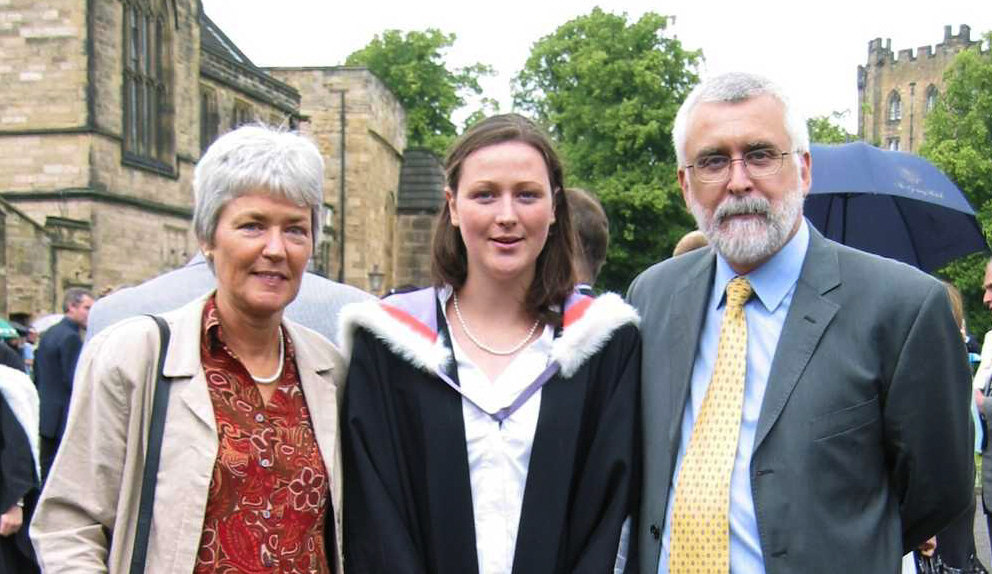
Post-graduation, outside Durham Cathedral.

She spent six months looking for a job, finally landing a research assistantship in the Brain, Performance and Nutrition Research Centre in the Department of Psychology at Northumbria University in Newcastle upon Tyne. After a couple of years she began her own PhD studies investigating the effects of bioactive lipids such as omega-3 fatty acids on cognition and brain health. She was awarded her PhD in December 2010.

Post-graduation with Steph and me, and Andi.

She’s the second psychologist in the family, with two more universities and two degrees (BSc, PhD) under her belt.

Philippa is now Director of the Brain, Performance and Nutrition Research Centre, and Associate Professor in Biological Psychology at Northumbria.

She married Andi in September 2010 (taking themselves off to New York to get married), and have two sons: Elvis (13) and Felix (11).


Two botanists and two psychologists. Who’d have thought it? Neither Hannah nor Philippa showed any interest in pursuing biology at degree level. Having two psychologists in the family we do wonder, from time-to-time, if we went wrong somewhere along the line.

Then there was rice . . .

For 20 years before I joined the International Rice Research Institute (IRRI) in the Philippines in July 1991, as head of the Genetic Resources Center (GRC), my career in international agricultural research at the International Potato Center (CIP, 1973-1981) in Peru and academia (at The University of Birmingham, 1981-1991) focused on potatoes and legume species. Although I remained at IRRI until 2010 (when I retired), I was head of GRC for just a decade, after which I moved to a senior management position.

I’d travelled in Asia only twice before. And one of those trips had been to IRRI in January 1991 for interview. The other, in 1985, was to attend a genetic resources conference in Jakarta, Indonesia.
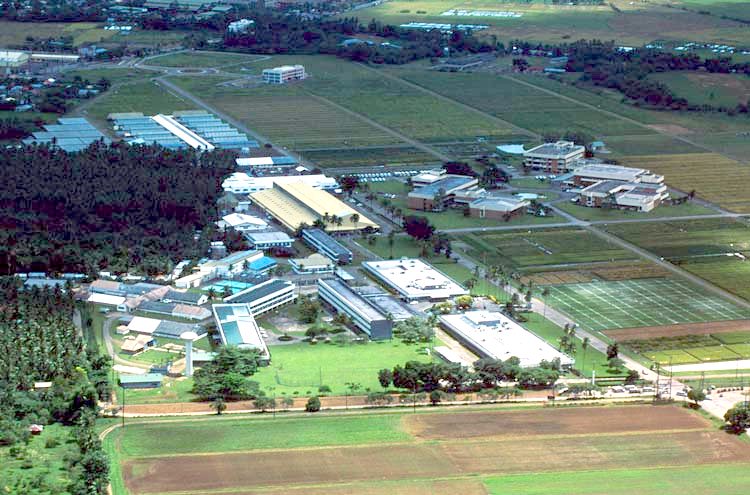
IRRI research center in Los Baños. GRC is housed in the Brady Building on the extreme right. Other buildings have been added since the photo was taken.

So my experience in Asia was limited to say the least, and non-existent for rice. Joining IRRI was certainly a challenge. Why?
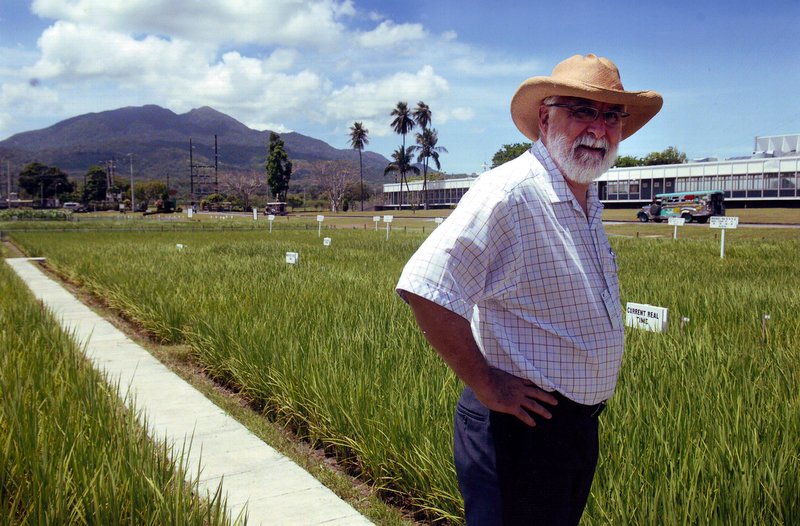
In the experiment field at IRRI research center in 2010, with Mt Makiling in the background. I bought that sombrero in Peru in January 1973, just a few days after I arrived there to begin my career in international agricultural research at CIP. The hat is still going strong 50+ years later – not so sure about the wearer.

At IRRI, I had to learn about rice from scratch, manage one of the world’s most important genebanks (I’d never managed a genebank before), and supervise a group of more than 70 professional and support staff. Furthermore, I had to learn (quickly) to empathise with a very different culture, specifically Filipino but Asian more broadly (very different from that I’d experienced in Latin America). It wasn’t so straightforward, but I was up for the challenge.

In 1991, Klaus Lampe (right, who passed away earlier this year) was IRRI’s Director General, who was appointed in 1988 to revive the institute’s status in the world of international agricultural research. That meant not only refurbishment of IRRI’s laboratories and offices at its Los Baños campus headquarters, but also involved a significant turnover of staff, replacing many (who had been with IRRI for a decade or more, even since the 1960s) with a cohort of younger staff who could bring new ideas,  enthusiasm, and skills to IRRI’s research for development agenda. I was part of that recruitment cohort.

I first heard about the GRC position at IRRI in September 1990. It was advertised as a new department, bringing together the rice genebank (then known as the International Rice Germplasm Center, later renamed the International Rice Genebank) and INGER, a global network for testing rice varieties and breeding lines. While the head would have overall management responsibility for GRC, his/her day-to-day duties would focus on the genebank, while another staff member was the INGER leader.

During my interviews at IRRI over three days I indicated I would only be interested in the position if there was a specific research component and funding to support it, something that had not been envisaged when GRC was established and the position advertised.

I must have been persuasive because I was offered the position, and Lampe approved a research role for GRC. Specifically for research aimed at managing and using the important rice germplasm collection of indigenous varieties, improved lines, genetic stocks, and wild species that, in 1991, totalled around 75,000 seed samples or accessions.

But in July 1991, research per se was not an immediate priority. There were other, more pressing issues to be attended to first—and their outcome equally as important as our many research publications.

I had to quickly familiarise myself with IRRI’s research and management culture as one of the world’s leading agricultural research centers (and oldest among the research centers supported through the Consultative Group on International Agricultural Research, or CGIAR), build a GRC culture and, specifically, work out just how the genebank could be better managed and the roles of each of the staff.

My predecessor (as head of the International Rice Germplasm Center) was eminent rice geneticist and upland rice breeder, Dr TT Chang. ‘TT’, as he was known, ran the genebank (I quickly discovered) along the lines: ‘Do as I say’, and staff had little or no individual responsibility or leeway to manage their work more effectively.

It didn’t take me long to realise that changes could and should be made to increase efficiency, and eliminate duplication of effort among staff. I needed to assign specific responsibilities (and accountability) to each staff member for seed conservation, germplasm multiplication and rejuvenation, for data management, among others, and also identify individuals who might take on a specific research role.

After six months of asking lots of questions and discussing the genebank operations, I had a genebank strategy and plan ready. And because my staff had been involved in developing the plan, its implementation was fairly plain-sailing from then on.

I’m not going to detail here the sorts of changes that were made. Almost none of the genebank operations in the field or in storage escaped our attention. Job descriptions were rewritten, and positions upgraded to reflect new responsibilities.
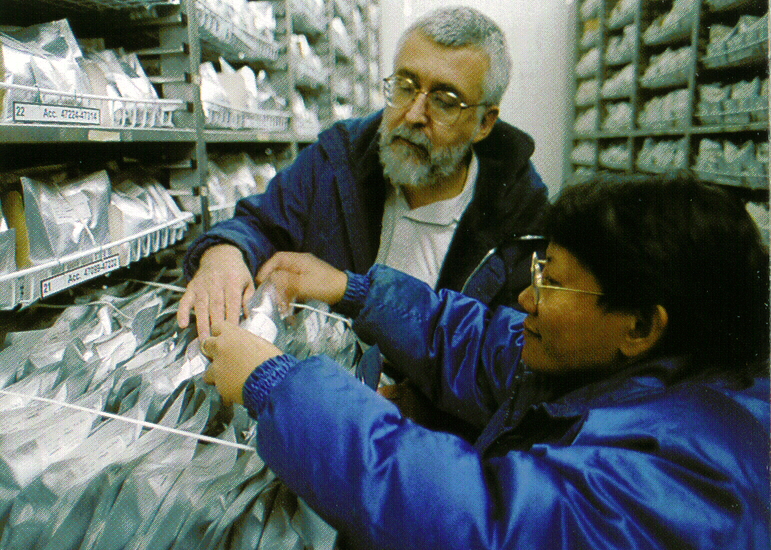
Inside the International Rice Genebank, with Pola de Guzman who became the genebank manager.

The genebank was fortunate to be included in the institute’s refurbishment plan, so we upgraded many of its facilities and installed a dedicated seed drying room, a significant addition.

In this post I summarised what it entails to run a genebank for rice. And check out this video I made  about the genebank in 2015 on a return visit to IRRI. Many of the staff who feature in the video have themselves now retired and some have sadly died.

Among the tasks we undertook was revision of the data management system, one of the most important components of genebank operations. For a number of reasons the data system I inherited was not really fit for purpose. It took two years to complete all the changes!

And for the sake of my successor(s), we wrote a genebank operations manual, the first of its kind among the CGIAR genebanks. Publishing the manual was not the only ‘first’ that IRRI achieved.

The fruits of our endeavours were recognised around 1994 when the CGIAR launched an external review of the center genebanks. The reviewers concluded that IRRI’s genebank was ‘a model for others to emulate‘. Our hard work had paid off. But we weren’t complacent, striving to make more improvements which were taken further by my immediate successor, Dr Ruaraidh Sackville Hamilton.


The management and status of the International Rice Genebank
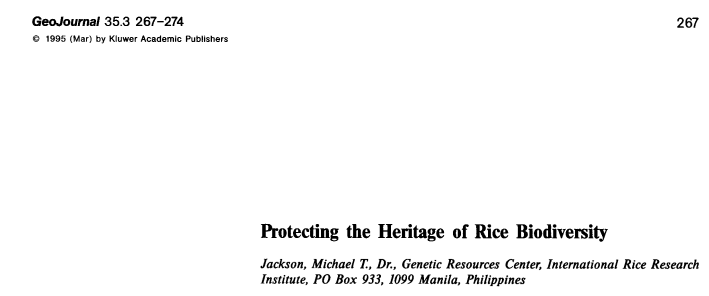
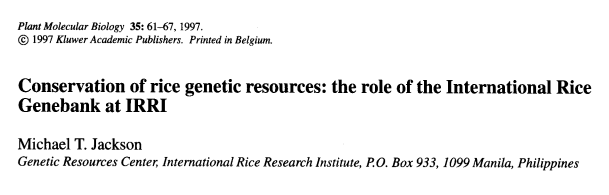
Over the decade I was in charge of IRRI’s genebank, we published several papers and book chapters describing the rice collection and its management (and in the wider CGIAR context), how much it cost to run, who had requested germplasm and for what purpose, using biotechnology for conservation, as well as issues related to the management of intellectual property.

During the mid-1990s, and post-Convention on Biological Diversity (CBD) there was concern internationally about how germplasm was being conserved in the 11 CGIAR center genebanks.

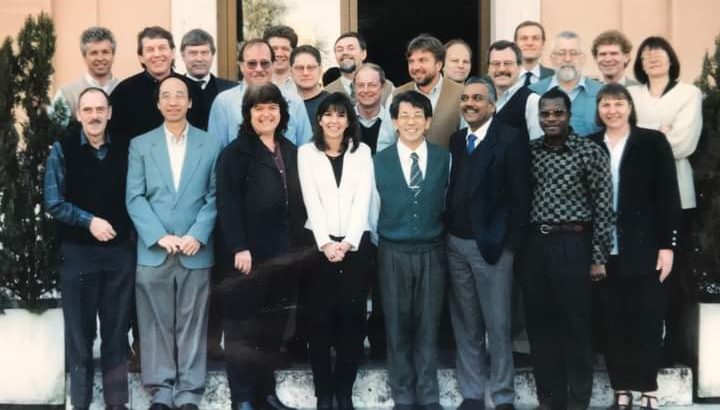
The CGIAR’s System-wide Genetic Resources Program (SGRP, launched in 1994 and which I chaired for several years, seen in the image below meeting in Rome had members from all CGIAR centers) responded to these concerns by publishing Biodiversity in Trust in 1997.
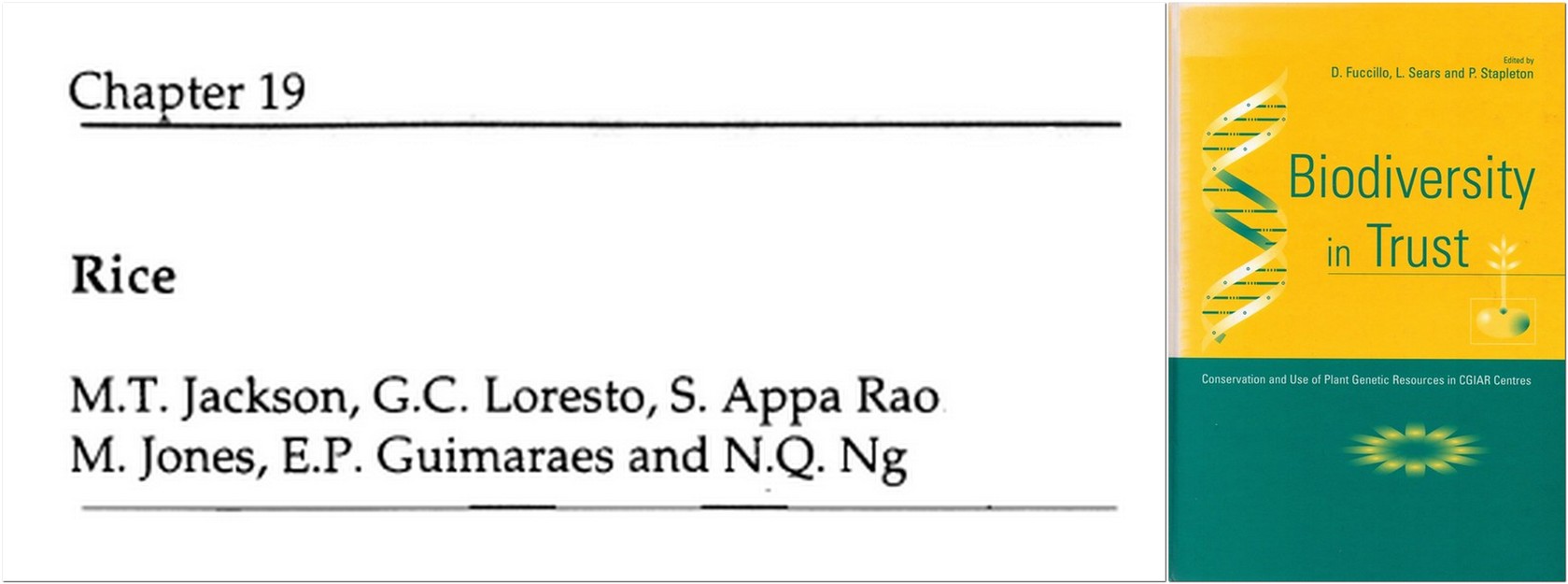
The chapters described the status and management of each of the crops held in trust in the genebanks. The rice chapter had authors from IRRI, Africa Rice (in Ivory Coast), IITA (in Nigeria), and CIAT (in Colombia), all of which had rice collections, with that at IRRI the largest and most comprehensive.
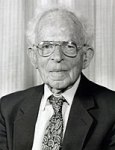
In the 1990s, there was considerable interest in developing ‘core collections’ (first proposed by genetic resources pioneer, Sir Otto Frankel (right, one of the pioneers of the plant genetic resources conservation movement launched in the 1960s, who I had the pleasure of meeting at that 1985 conference in Jakarta), a subset of the whole collection that encompassed all the diversity—a concept that has been (mis)interpreted in a multiplicity of ways ever since. I’ve never been much of an advocate for core collections, simply because we had so much to achieve to ensure the safety of the whole collection rather concentrate our efforts on a subset. Nevertheless, my colleague Duncan Vaughan (who left IRRI in 1993 to join a research institute in Tsukuba, Japan) and I speculated how a core collection for rice might be assembled.
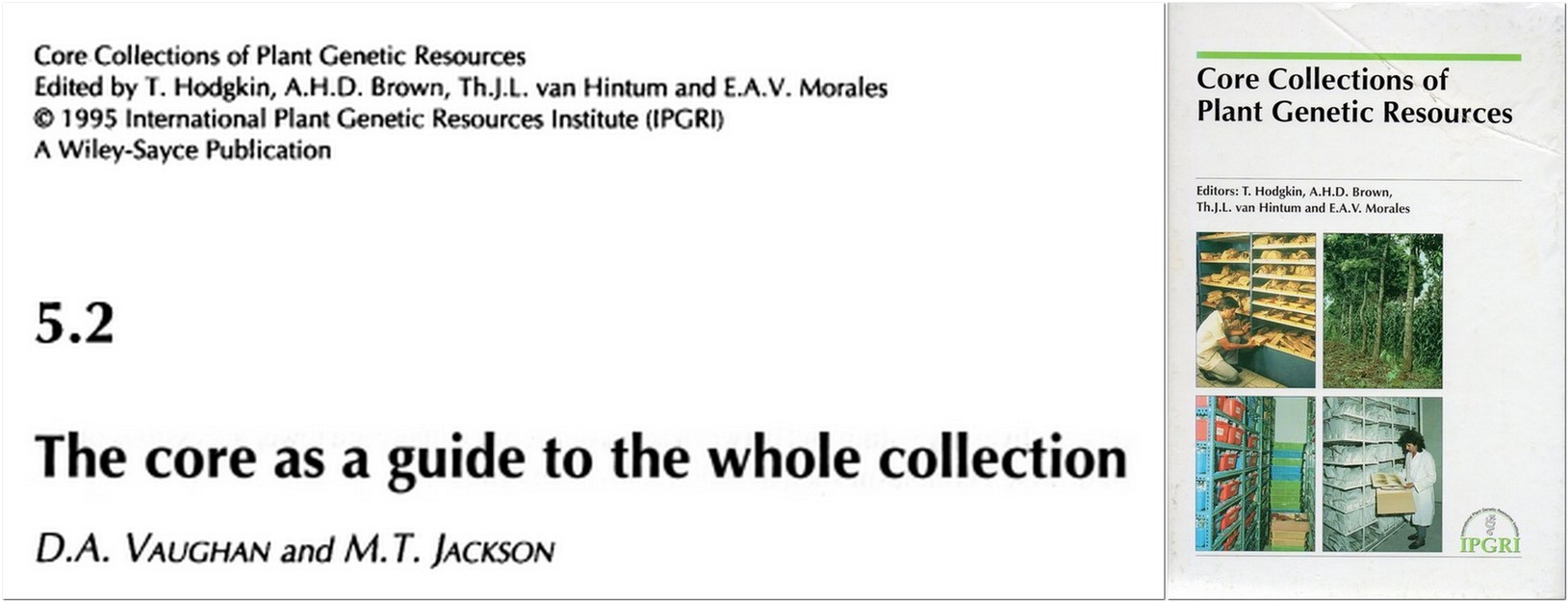
We published an update in 1999, after we’d had several years of molecular analysis experience.
The IRRI collection has been widely used in plant breeding, and rice research in general. It’s not a museum collection, and access to the germplasm is one justification for its continued financial support.

The long-term security of any genebank collection is dependent upon reliability of long-term funding. Fortunately the Crop Trust now provides a significant level of security to genebanks in perpetuity through its Endowment Fund.

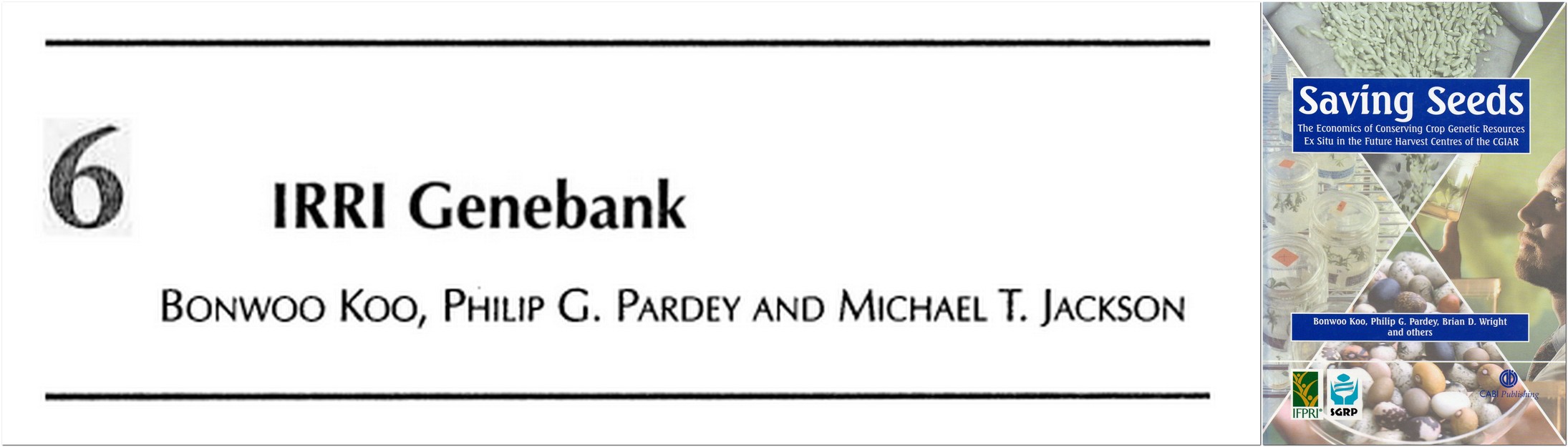
But what does it cost to run a genebank like IRRI’s? In the late 1990s, we didn’t really have a good handle on this. With the help of agricultural economists Bonwoo Koo, Philip Pardey, and Brian Wright, several of the CGIAR genebanks made a stab at a costing exercise – subsequently revised since methodologies have been improved. Here is the original IRRI costing study, published in 2004.
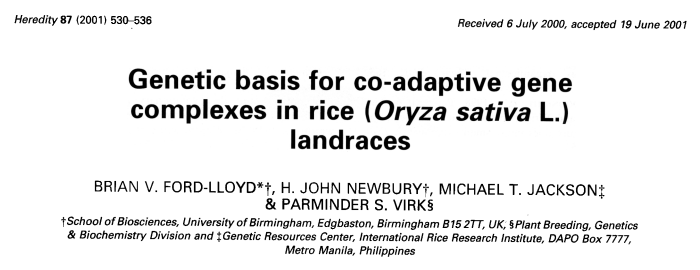
During our research on the breeding relationships of wild and cultivated rices, we used in vitro culture of embryos (on nutrient medium), and over the years adopted various molecular approaches (see below) to study the diversity of the rice collection. Some of these also had implications for intellectual property management, and I addressed some of these issues in this chapter in 1999.
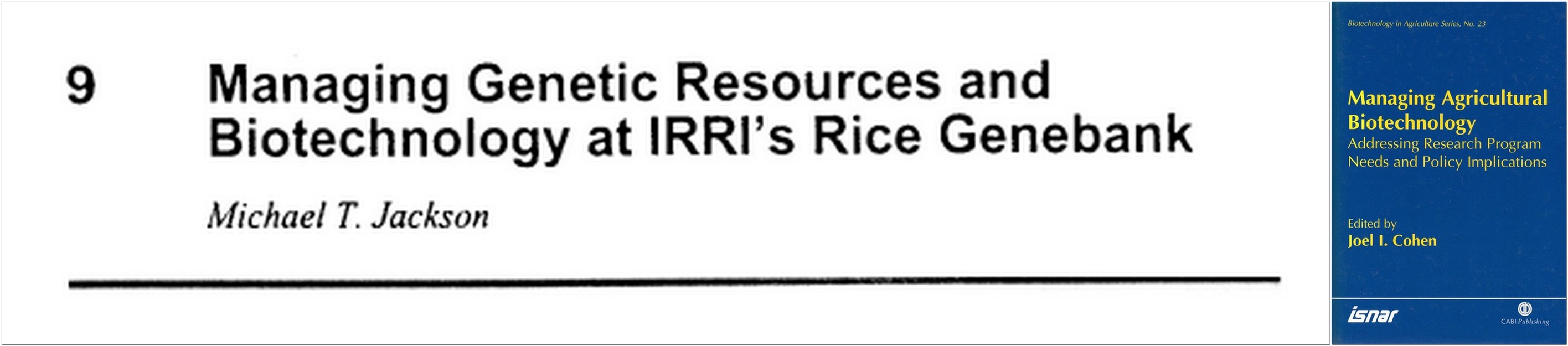
In a later section of this post I describe in more detail how we (with colleagues in the UK) adopted and developed molecular approaches to manage the collection (and study diversity). But here are two general descriptions of what we did.
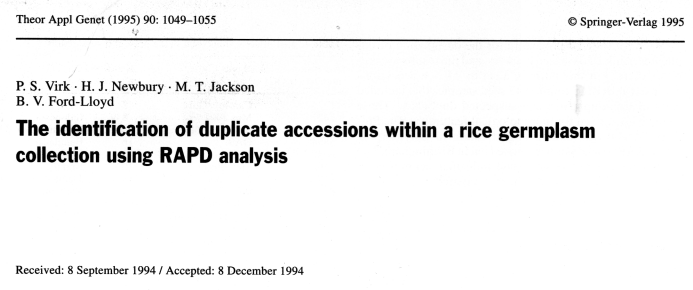
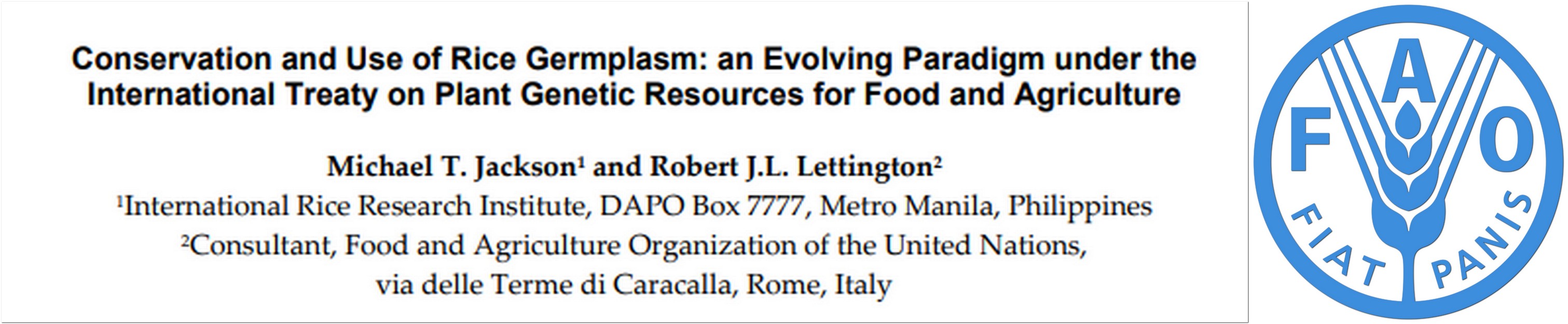
Post-CBD, and with the coming into force of the International Treaty on Plant Genetic Resources for Food and Agriculture, I (together with an FAO consultant Robert Lettington) was asked to provide FAO with an analysis of some of the current developments affecting access to germplasm, including the effects of the development of access legislation under the Convention on Biological Diversity (CBD), legislation on intellectual property rights (IPRs), and other relevant national legislation.
Now let me turn to GRC research per se, which focused on two main areas:

  • managing the germplasm collection; and
  • understanding the diversity of rice accessions in the collection.

From the outset it was clear to me that we would need external collaborators simply because we did not have the resources (human, laboratory, or financial) to carry out everything by ourselves. And in the account below, I’ll explain how and with whom we developed such collaboration.

Germplasm conservation
The top priority (or should be) for any genebank manager is to ensure that conserved germplasm is safe and will retain its viability for decades.

Since the IRRI collection comprised rice varieties and wild species from across the world, I was concerned that we had insufficient information how to improve the multiplication of diverse seed samples in one location, namely Los Baños (14°N). While there was quite a body of literature about seed multiplication, drying, and storage from a range of other species, not so much was known then about rice.
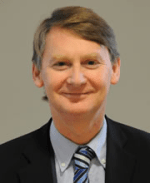
So I turned to my good friend at the University of Reading, Professor Richard Ellis (right), a leading expert in seed conservation, and together we successfully applied for one of the UK Overseas Development Administration’s (ODA, later to become the Department for International Development or DfID) ‘Holdback’ grants. This was a scheme in which the ODA set aside a small portion of its overseas aid budget to the CGIAR centers to fund collaborative work between British institutions and centers, but with the bulk of the funds spent in the UK.

Our project focused on how the seed production environment and time of harvest affected seed longevity in storage, leading to a couple of publications that guided our practices in the genebank.
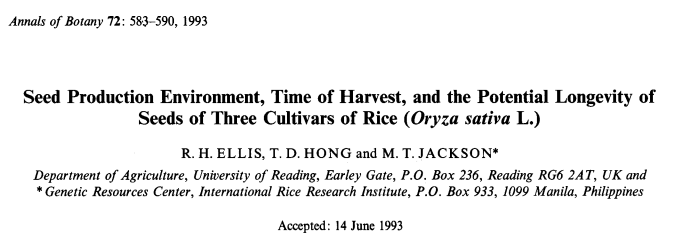
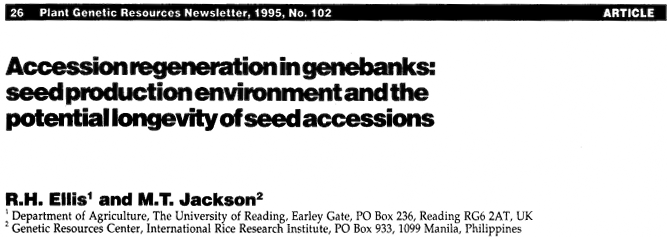
The next step was to expand the research in Los Baños itself looking at more rice varieties in a real rice-growing environment.

I recruited Dr N Kameswara Rao (right) from India (who had completed his PhD at Reading) to join GRC on a postdoctoral position for three years.

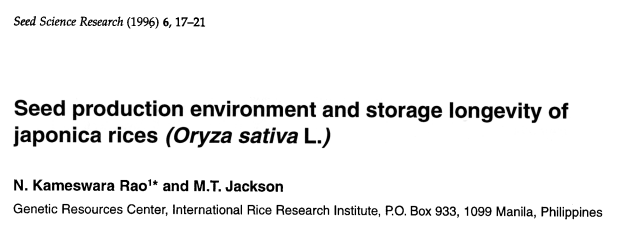
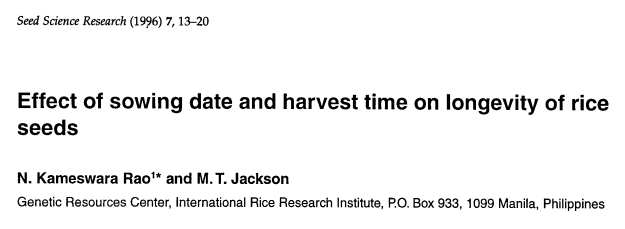
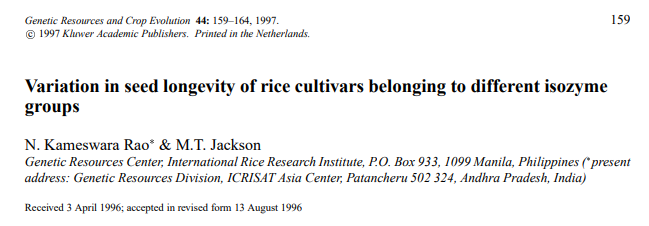
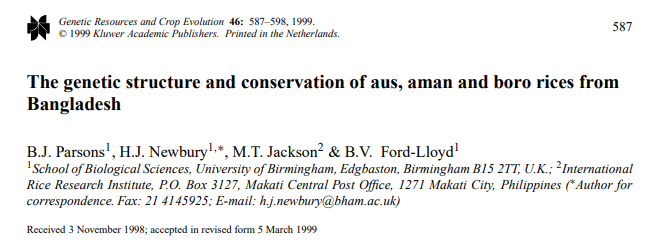
Kameswara Rao and I published these four papers:
As a result of this project, we made several important changes to germplasm multiplication and rejuvenation, and post-harvest drying and management was enhanced, as I mentioned earlier, with the addition of a dedicated seed drying room (with a capacity of at least 2 tonnes, that allowed seeds to dry slowly) to the genebank.

Seed germination of wild rice species had always been somewhat hit-and-miss, so my staff set up a series of experiments to improve the germination rate, leading to the adoption of different protocols.
Molecular markers – collaboration with the University of Birmingham and the John Innes Centre
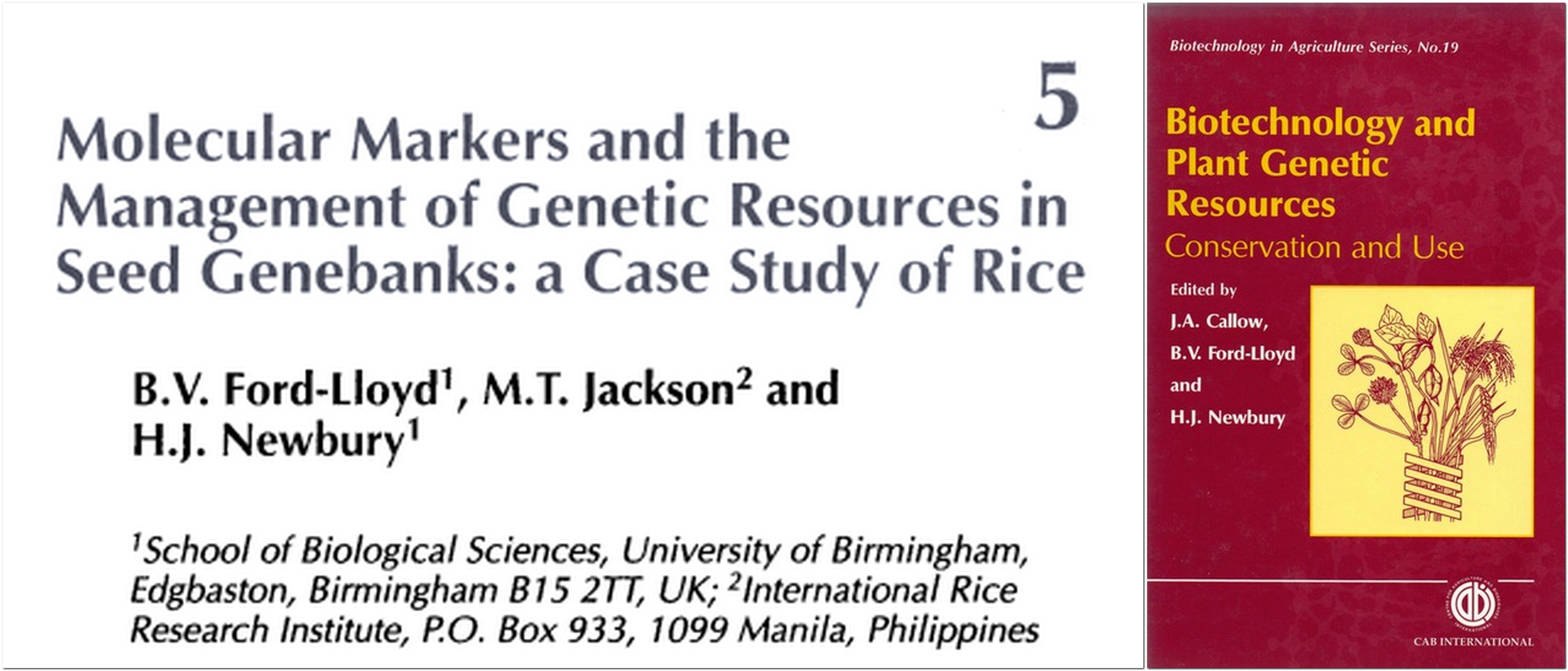
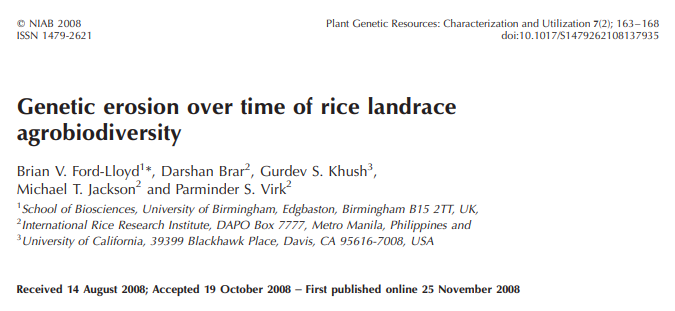
Even before I left the university to join IRRI, I had discussed with my colleagues Brian Ford-Lloyd and John Newbury [1] how we might continue to collaborate. Then, like I had with Richard Ellis at Reading, we successfully applied for a UK ‘Holdback’ grant (R5059) jointly with John Innes Centre (JIC, with the late Professor Mike Gale, FRS) in Norwich, to study how molecular markers could be used to reveal the nature of diversity in the germplasm collection and help in its management. Parminder Virk [2], a quantitative geneticist, joined the project in Birmingham, and added his considerable statistical analysis skills to the research. Dr Glenn Bryan [3] was the lead scientist at JIC.

But not without a little controversy at IRRI. Why should that have been? Well, some of my IRRI colleagues argued that the funds should come directly to the institute since there was a laboratory already established to use molecular markers (mainly Restriction Fragment Length Polymorphism markers or RFLPs), even though that lab was operating at almost full capacity.

They just couldn’t accept that ‘Holdback Funds’ would never be awarded directly to a center, even though we could allocate some of our expenses in the research to the project. In any case, it was clear to me that we had neither the capacity in house, nor did we have the trained personnel in GRC. With that in mind, I was able eventually to send one of my staff, Amita ‘Amy’ Juliano (who sadly passed away around 2004) for several weeks training (on a travel grant from the British Council) in the Birmingham lab, and on her return she set up her own lab in GRC.
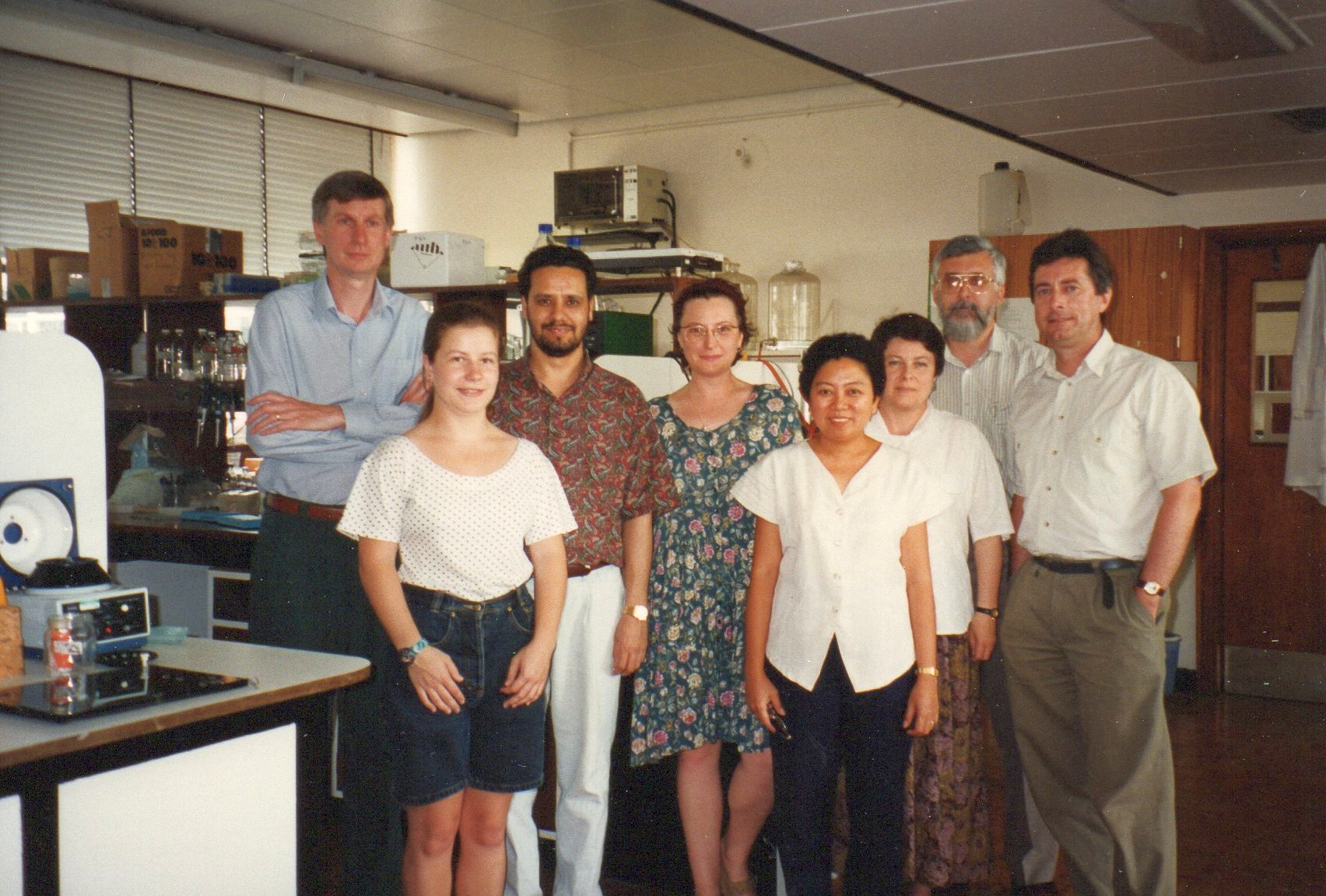
L-R: John Newbury, Faye Hughes (lab technician), Parminder Virk (postdoc), visitor, Amy Juliano (IRRI), visitor, me, Brian Ford-Lloyd in the lab at Birmingham.

Birmingham had responsibility for the molecular screening (and development of techniques and methodologies), using PCR-based markers like Random Amplification of Polymorphic DNA or RAPD markers. What we at IRRI contributed was expertise to phenotype rice varieties in the field.

Compared to what molecular markers are available for research today (and more than a decade before the rice genome was sequenced in 2002), and the developments in genome sequencing that have taken place, our initial focus on RAPD markers was just the beginning of an innovative (pioneering even) molecular study of any germplasm collection. And has led to some molecular firsts.

We showed that RAPD markers were useful for expanding our knowledge of diversity beyond the purely morphological or isozyme data then available.
In a particularly significant development we demonstrated how RAPD markers could be used to predict the behaviour of rice varieties in the field (combining excellent molecular analysis with accurate phenotyping). This was one of the first (if not the first) examples of what came to be known as ‘association genetics’, dismissed at the time by many (including Mike Gale) but now widely verified in other species.
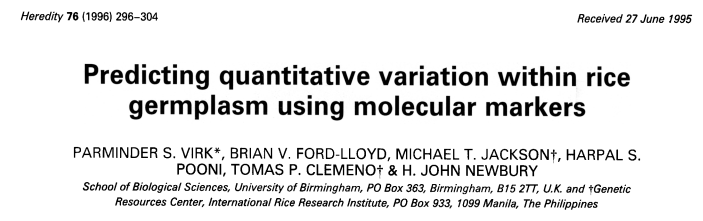
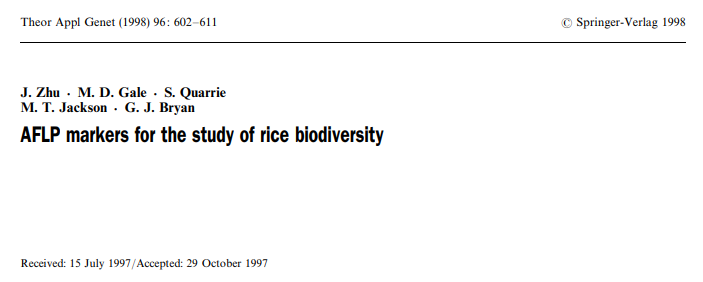
Our colleagues at the JIC also developed work on Amplified Fragment Length Polymorphism or AFLP markers to study rice germplasm. A young Chinese scientist, Zhu Jiahui, joined the project and eventually was awarded his PhD for the research.
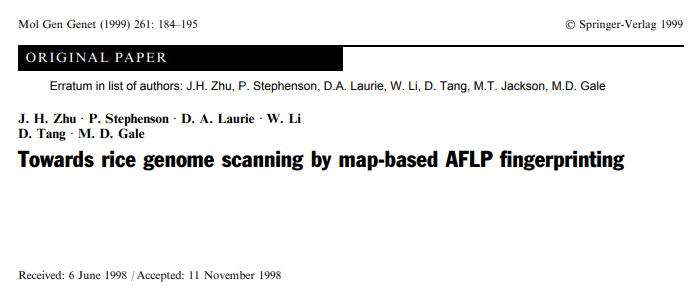
A couple of PhD students at Birmingham used molecular markers to study material from the collection.
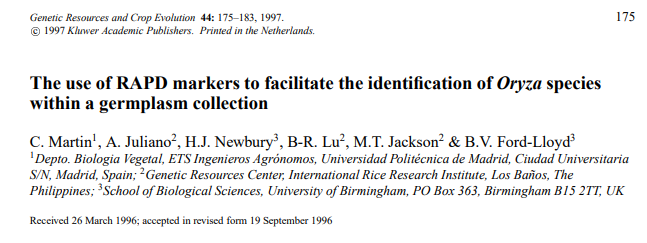
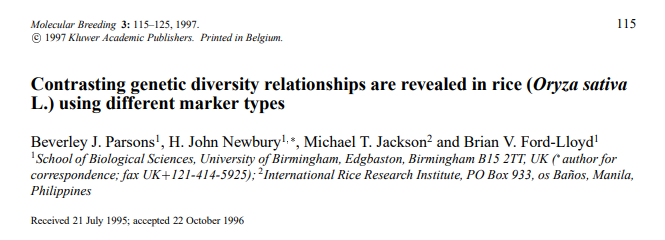
After several years of study we developed a deep appreciation of how molecular markers really did open a window on the diversity of the germplasm collection.
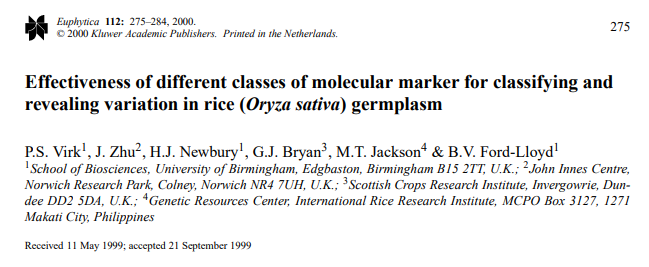
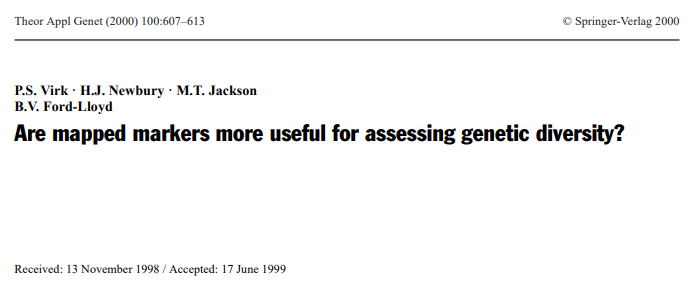
Biosystematics and pre-breeding
Wild species have been used to improve rice varieties, and the genebank collection holds many accessions of the 20 or so wild Oryza species. However, there had been little systematic study in terms of their taxonomy or their breeding relationships with the cultivated species. We decided to rectify that situation and launched a program to study the variation in and relationships of the wild and cultivated rices, Oryza sativa and Oryza glaberrima.
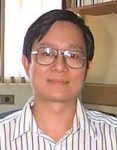
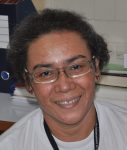
In 1994 we recruited Chinese cytogeneticist Dr Lu Bao-Rong (right, now at Fudan University in Shanghai) to lead this biosystematics initiative and to continue the collecting of wild species of his predecessor, Dr Duncan Vaughan. The two Filipino support staff were Amy Juliano and Maria Elizabeth ‘Yvette’ Naredo.

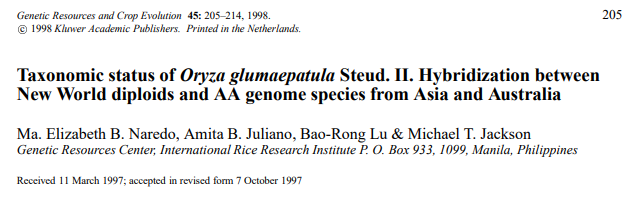
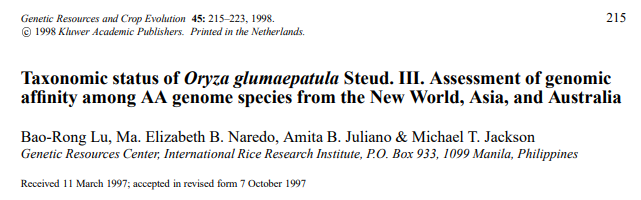
Under our supervision, Amy and Yvette carried out some important work on the AA genome rices (the two cultivated species and their closest wild relatives), establishing crossing and embryo rescue protocols.

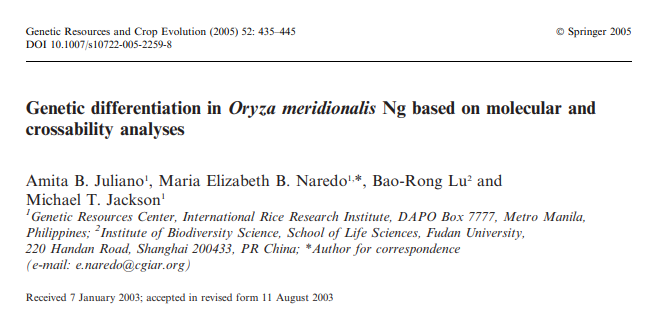
In all, the biosystematics research led to these papers:
Yvette completed her MS degree at the University of the Philippines-Los Baños, co-supervised by me and a faculty member from the university, for a study on two distantly related species, Oryza ridleyi and Oryza longiglumis. Some years later she went on to complete her PhD as well.


In 1994, I applied to the Swiss government for funding to:

  • ‘complete’ the collection of rice varieties (and some wild species) throughout Asia, and wild rices in several African countries, and Costa Rica and Brazil in South America;
  • train personnel in national programs the principles and practices of rice germplasm conservation and use (including data management); and
  • evaluate the role for on-farm management of rice varieties as a component of genetic conservation.

We received a grant of USD3.286 million, and the project ran until 2000. I’ve written extensively about the project in this blog post. There you will find links to original project reports – and lots more.

Collecting rice germplasm
But in terms of collecting, one of my former MSc students at the University of Birmingham, Dr Dan Kiambi (a Kenyan national) coordinated collecting efforts in Africa.
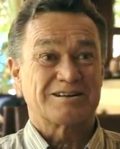
In Asia, few collections of rice germplasm had been made in Laos, due to the conflict that had blighted that country over many years. In fact it’s overall capacity for agricultural R&D was quite limited. At the end of the 1980s, and supported with Swiss funding, IRRI opened a country program office in Vientiane (the capital city), headed by the late Dr John Schiller (right), an Australian agronomist who became a good friend.

With funding from the rice biodiversity project, I hired a project scientist based in Vientiane who would work with the Lao national program to collect rice varieties throughout the country (as well as assisting collecting elsewhere if time permitted).
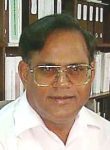
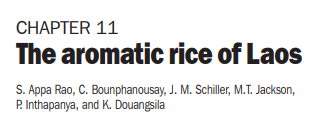
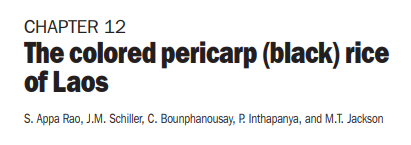
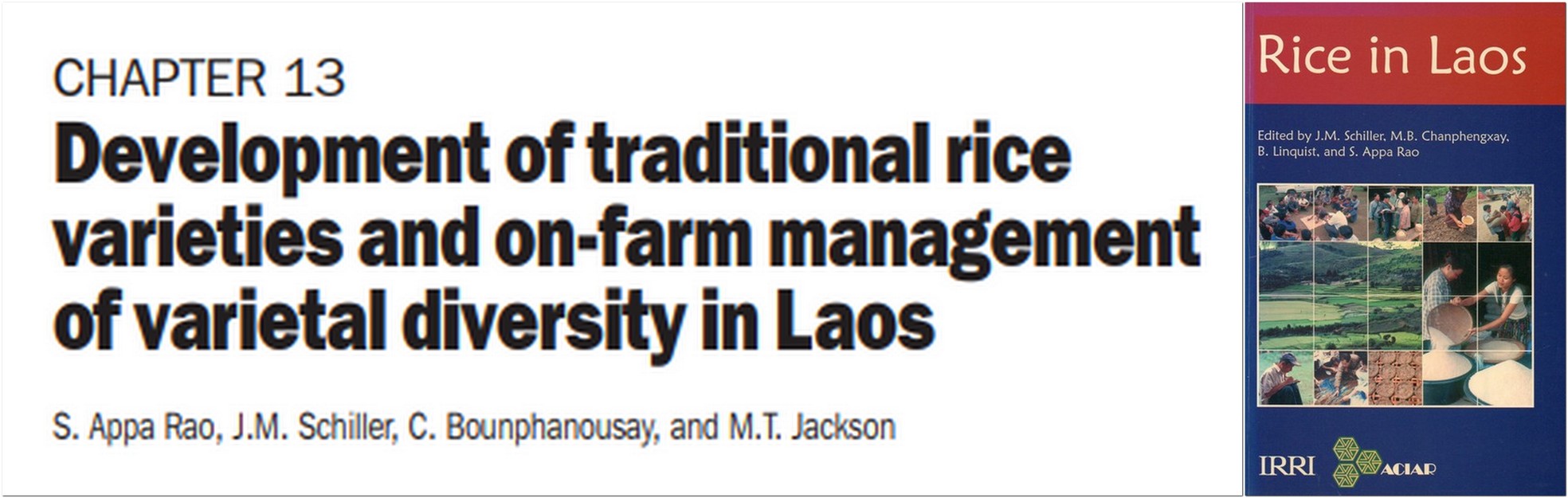
Dr Seepana Appa Rao (right, a germplasm scientist) came to us from a sister center, ICRISAT, in Hyderabad, India and he spent five years in Laos, assembling a comprehensive collection of 13,000 Lao rice samples which were duplicated in the International Rice Genebank. I wrote about this special aspect of the rice biodiversity project here.
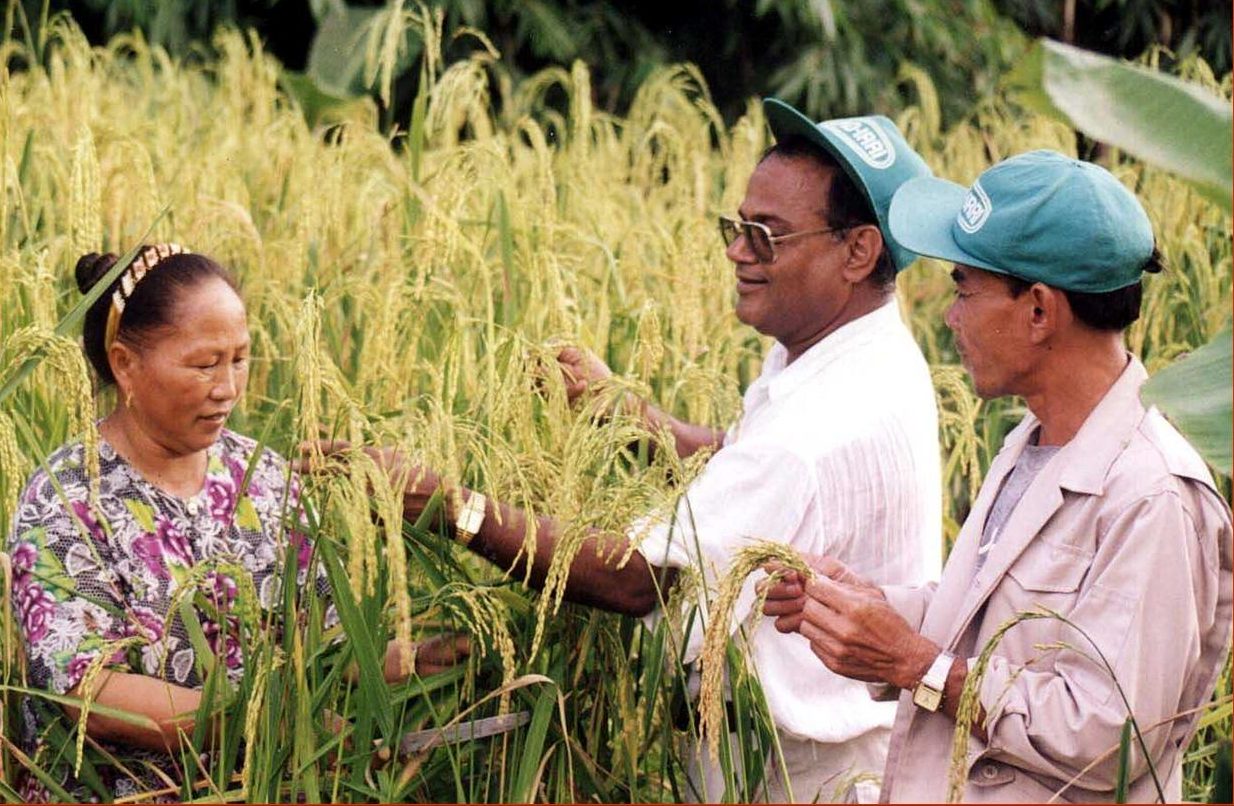
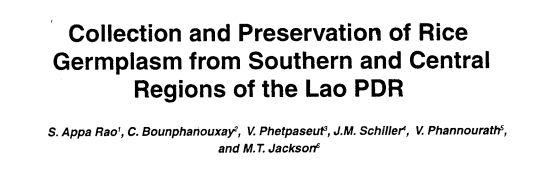
Appa was an enthusiastic writer and here are two papers about the collections he made.
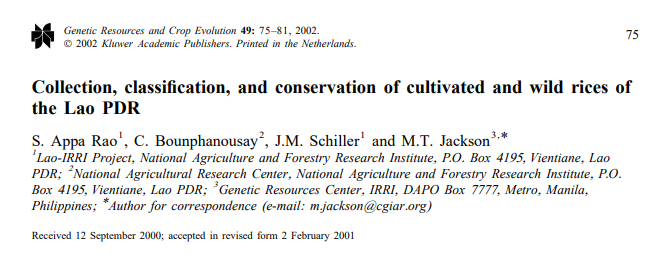
But Appa didn’t just collect rice varieties and leave it at that. With his Lao colleagues he studied the germplasm, leading to several interesting papers and book chapters.
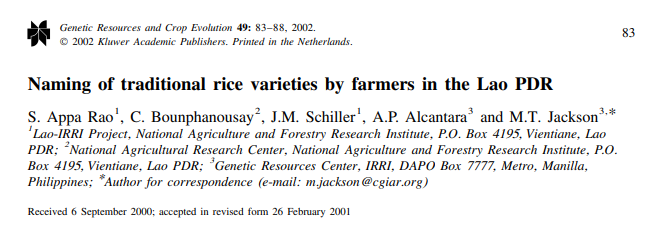
The following chapters were all published in the same book.
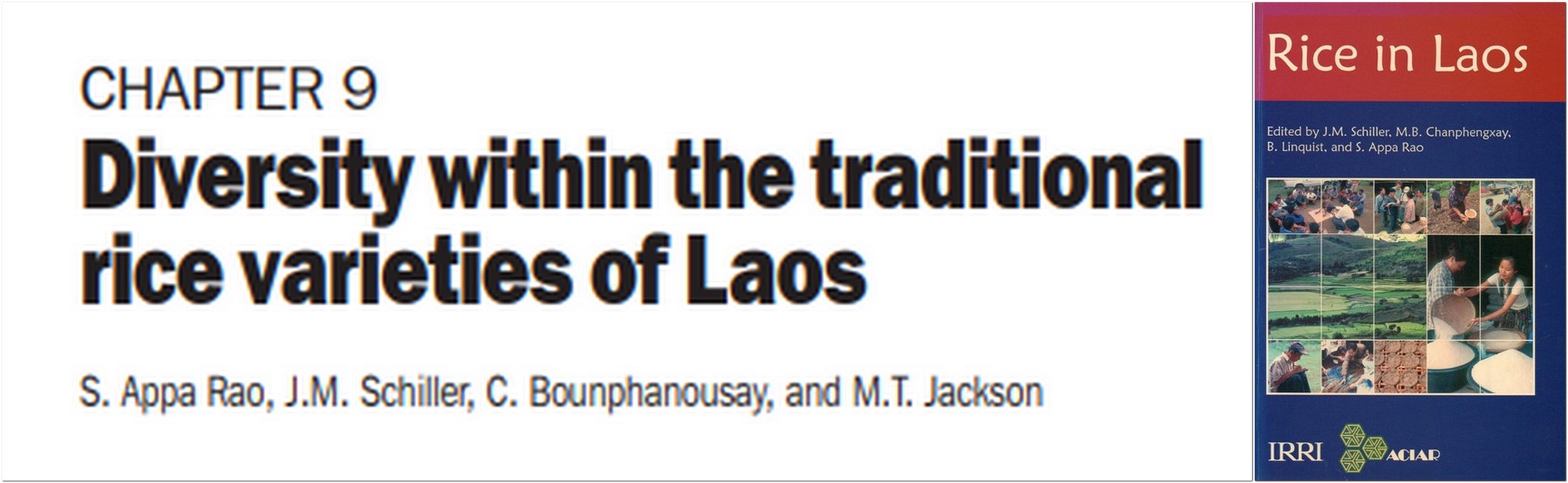
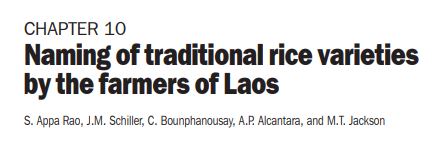
On-farm management of rice genetic resources
During the 1990s there was a concerted effort among some activist NGOs and the like to downplay the important (and safe) role of ex situ conservation in genebanks, instead promoting an in situ on-farm management (conservation) approach that should be adopted. Whereas there was a considerable body of scientific literature to support the efficacy of ex situ conservation, on-farm management seemed to almost be an ideology with little scientific basis to support its long-term consequences in terms of genetic conservation.

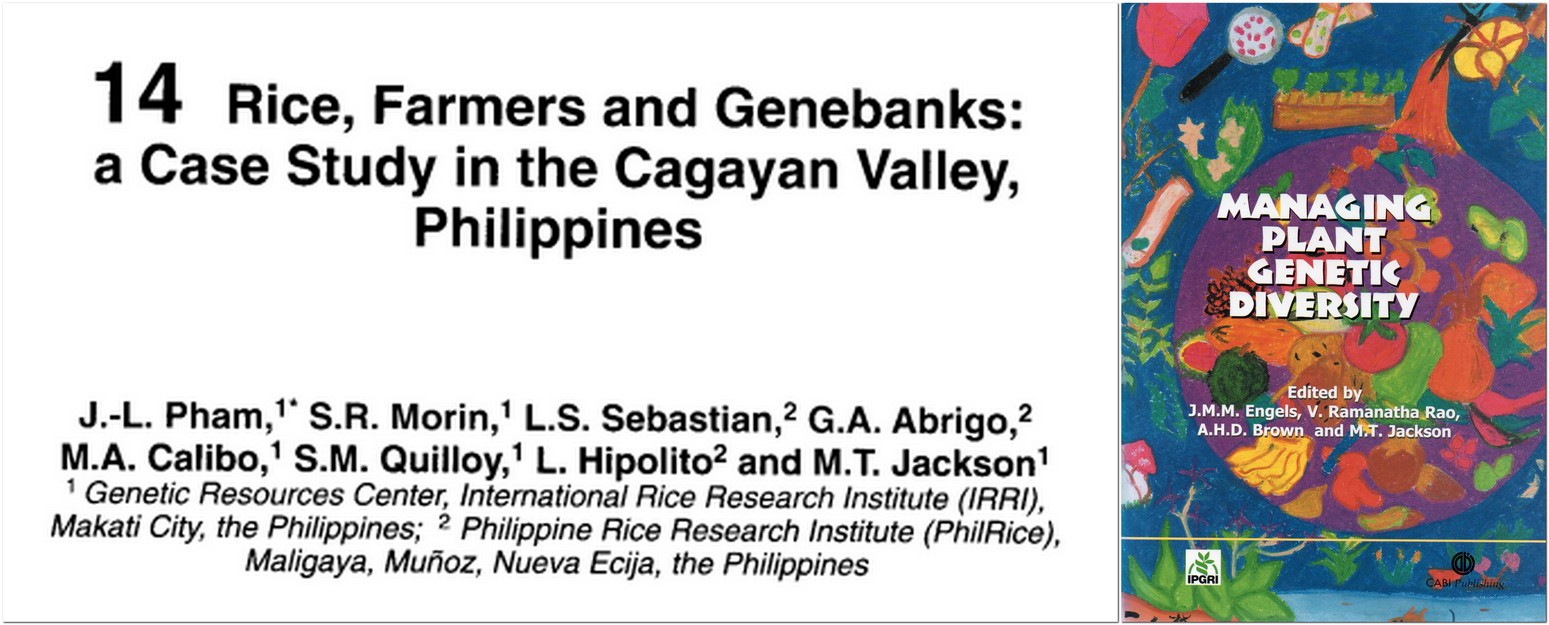
I felt we needed to tackle this situation head on, so I hired a population geneticist, Dr Jean-Louis Pham (on secondment from IRD in France) and a Mexican human ecologist, Dr Mauricio Bellon who together would look into the genetic and societal implications of on-farm management. After Mauricio moved to another institute after a couple of years, we recruited Dr Steve Morin, a social anthropologist from Nebraska.
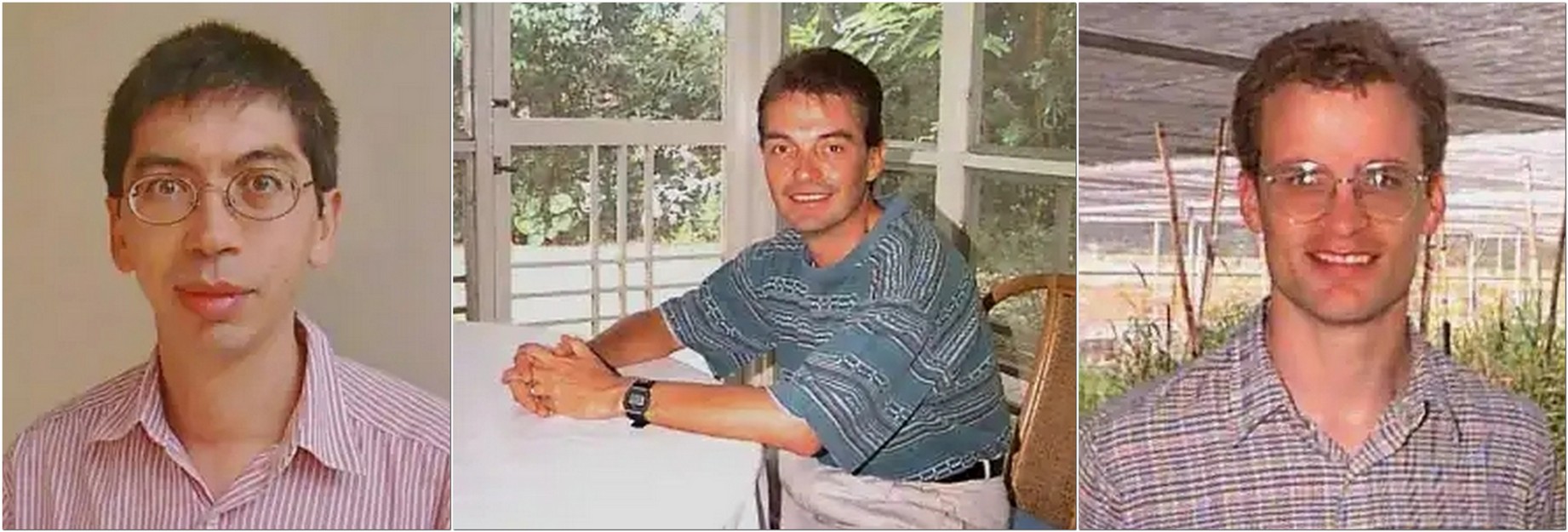
L-R: Jean-Louis Pham, Mauricio Bellon, and Steve Morin

All in all, quite a productive decade, upgrading the genebank and its collection, and establishing excellent collaborations with scientists in the UK and elsewhere, without whom we could never have achieved so much.

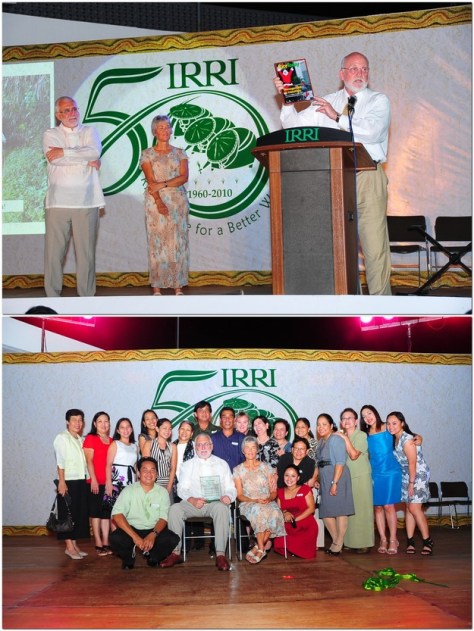
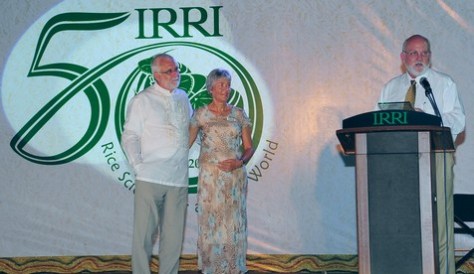
My Filipino staff grew in their roles, and the genebank went from strength to strength. I retired just as IRRI reached its Golden Jubilee.

Although I moved into a program management role after leaving GRC, I retained a keen interest in what my former colleagues were undertaking. And to this day, they keep me posted from time-to-time.


Besides the papers and chapters that I have included above, we presented these papers and posters at conferences. No digital copies are available.

1993
Cabanilla, V.R., M.T. Jackson & T.R. Hargrove, 1993. Tracing the ancestry of rice varieties. Poster presented at the 17th International Congress of Genetics, Birmingham, U.K., August 15-21, 1993. Volume of abstracts, 112-113.

Hunt, E.D., M.T. Jackson, M. Oliva & A. Alcantara, 1993. Employing geographical information systems (GIS) for conserving and using rice germplasm. Poster presented at the 17th International Congress of Genetics, Birmingham, U.K., August 15-21, 1993. Volume of abstracts, 117.

Jackson, M.T., 1993. Biotechnology and the conservation and use of plant genetic resources. Invited paper presented at the Workshop on Biotechnology in Developing Countries, held at the 17th International Congress of Genetics, Birmingham, U.K., August 15-21, 1993.

Jackson, M.T., G.C. Loresto & A.P. Alcantara, 1993. The International Rice Germplasm Center at IRRI. In: The Egyptian Society of Plant Breeding (1993). Crop Genetic Resources in Egypt: Present Status and Future Prospects. Papers of an ESPB Workshop, Giza, Egypt, March 2-3, 1992.

Newbury, H.J., P. Virk, M.T. Jackson, G. Bryan, M. Gale & B.V. Ford-Lloyd, 1993. Molecular markers and the analysis of diversity in rice. Poster presented at the 17th International Congress of Genetics, Birmingham, U.K., August 15-21, 1993. Volume of abstracts, 121-122.

1994
Jackson, M.T., 1994. Care for and use of biodiversity in rice. Invited paper presented at the Symposium on Food Security in Asia, held at the Royal Society, London, November 1, 1994.

Parsons, B.J., B.V. Ford-Lloyd, H.J. Newbury & M.T. Jackson, 1994. Use of PCR-based markers to assess genetic diversity in rice landraces from Bhutan and Bangladesh. Poster presented at the Annual Meeting of the British Ecological Society, held at The University of Birmingham, December 1994.

Virk, P., B.V. Ford-Lloyd, M.T. Jackson & H.J. Newbury, 1994. The use of RAPD analysis for assessing diversity within rice germplasm. Paper presented at the Annual Meeting of the British Ecological Society, held at The University of Birmingham, December 1994.

1995
Dao The Tuan, Nguyen Dang Khoi, Luu Ngoc Trinh, Nguyen Phung Ha, Nguyen Vu Trong, D.A. Vaughan & M.T. Jackson, 1995. INSA-IRRI collaboration on wild rice collection in Vietnam. In: G.L. Denning & Vo-Tong Xuan (eds.), Vietnam and IRRI: A partnership in rice research. International Rice Research Institute, Los Baños, Philippines, and Ministry of Agriculture and Food Industry, Hanoi, Vietnam, pp. 85-88.

Jackson, M.T., 1995. The international crop germplasm collections: seeds in the bank! Invited paper presented at the meeting Economic and Policy Research for Genetic Resources Conservation and Use: a Technical Consultation, held at IFPRI, Washington, D.C., June 21-22, 1995

Jackson, M.T., A. Alcantara, E. Guevarra, M. Oliva, M. van den Berg, S. Erguiza, R. Gallego & M. Estor, 1995. Documentation and data management for rice genetic resources at IRRI. Paper presented at the Planning Meeting for the System-wide Information Network for Genetic Resources (SINGER), held at CIMMYT, Mexico, October 2-6, 1995.

Jackson, M.T., B.R. Lu, G.C. Loresto & F. de Guzman, 1995. The conservation of rice genetic resources at the International Rice Research Institute. Paper presented at the International Symposium on Research and Utilization of Crop Germplasm Resources held in Beijing, People’s Republic of China, June 1-3, 1995.

Kameswara Rao, N. & M.T. Jackson, 1995. Seed production strategies for conservation of rice genetic resources. Poster presented at the Fifth International Workshop on Seeds, University of Reading, September 11-15, 1995.

Lu, B.R., A. Juliano, E. Naredo & M.T. Jackson, 1995. The conservation and study of wild Oryza species at the International Rice Research Institute. Paper presented at the International Symposium on Research and Utilization of Crop Germplasm Resources held in Beijing, People’s Republic of China, June 1-3, 1995.

Pham, J.L., M.R. Bellon & M.T. Jackson, 1995. A research program on on-farm conservation of rice genetic resources. Poster presented at the Third International Rice Genetics Symposium, Manila, Philippines, October 16-20, 1995.

Reaño, R., M.T. Jackson, F. de Guzman, S. Almazan & G.C. Loresto, 1995. The multiplication and regeneration of rice germplasm at the International Rice Genebank, IRRI. Paper presented at the Discussion Meeting on Regeneration Standards, held at ICRISAT, Hyderabad, India, December 4-7, 1995, sponsored by IPGRI, ICRISAT and FAO.

1996
Appa Rao, S., C. Bounphanousay, V. Phetpaseuth, K. Kanyavong, B. Sengthong, J. M. Schiller, V. Phannourath & M.T. Jackson, 1996. Collection and classification of rice germplasm from the Lao PDR. Part 1. Southern and Central Regions – 1995. Internal report of the National Agricultural Research Center, Dept. of Agriculture and Extension, Ministry of Agriculture and Forestry, Vientiane, Lao PDR, and Genetic Resources Center, International Rice Research Institute (IRRI), Los Baños, Philippines.

Jackson, M.T. & G.C. Loresto, 1996. The role of the International Rice Research Institute (IRRI) in supporting national and regional programs. Invited paper presented at the Asia-Pacific Consultation Meeting on Plant Genetic Resources, held in New Delhi, India, November 27-29, 1996.

Jackson, M.T. & R.D. Huggan, 1996. Pflanzenvielfalt als Grundlage der Welternährung. Bulletin—das magazin der Schweizerische Kreditanstalt SKA. March/April 1996, 9-10.

Jackson, M.T., 1996. Intellectual property rights—the approach of the International Rice Research Institute. Invited paper presented at the Satellite Symposium on Biotechnology and Biodiversity: Scientific and Ethical Issues, held in New Delhi, India, November 15-16, 1996.

Jackson, M.T., G.C. Loresto & F. de Guzman, 1996. Partnership for genetic conservation and use: the International Rice Genebank at the International Rice Research Institute (IRRI). Poster presented at the Beltsville Symposium XXI on Global Genetic Resources—Access, Ownership, and Intellectual Property Rights, held in Beltsville, Maryland, May 19-22, 1996.

Virk, P.S., H.J. Newbury, Y. Shen, M.T. Jackson & B.V. Ford-Lloyd, 1996. Prediction of agronomic traits in diverse germplasm of rice and beet using molecular markers. Paper presented at the Fourth International Plant Genome Conference, held in San Diego, California, January 14-18, 1996.

1997
Appa Rao, S., C. Bounphanousay, K. Kanyavong, V. Phetpaseuth, B. Sengthong, J.M. Schiller, S. Thirasack & M.T. Jackson, 1997. Collection and classification of rice germplasm from the Lao PDR. Part 2. Northern, Southern and Central Regions. Internal report of the National Agricultural Research Center, Department of Agriculture and Extension, Ministry of Agriculture and Forestry, Vientiane, Lao PDR, and Genetic Resources Center, International Rice Research Institute (IRRI), Los Baños, Philippines.

1998
Appa Rao, S., C. Bounphanousay, V. Phetpaseuth, K. Kanyavong, B. Sengthong, J.M. Schiller & M.T. Jackson, 1998. Collection and Classification of Lao Rice Germplasm Part 3. Collecting Period—October 1997 to February 1998. Internal report of the National Agricultural Research Center, National Agriculture and Forestry Research Institute, Ministry of Agriculture and Forestry, Vientiane, Lao PDR, and Genetic Resources Center, International Rice Research Institute (IRRI), Los Baños, Philippines.

Jackson, M.T., 1998. Intellectual property rights—the approach of the International Rice Research Institute. Invited paper at the Seminar-Workshop on Plant Patents in Asia Pacific, organized by the Asia & Pacific Seed Association (APSA), held in Manila, Philippines, September 21-22, 1998.

Jackson, M.T., 1998. Recent developments in IPR that have implications for the CGIAR. Invited paper presented at the ICLARM Science Day, International Center for Living Aquatic Resources Management, Manila, Philippines, September 30, 1998.

Jackson, M.T., 1998. The genetics of genetic conservation. Invited paper presented at the Fifth National Genetics Symposium, held at PhilRice, Nueva Ecija, Philippines, December 10-12, 1998.

Jackson, M.T., 1998. The role of the CGIAR’s System-wide Genetic Resources Programme (SGRP) in implementing the GPA. Invited paper presented at the Regional Meeting for Asia and the Pacific to facilitate and promote the implementation of the Global Plan of Action for the Conservation and Sustainable Use of Plant Genetic Resources for Food and Agriculture, held in Manila, Philippines, December 15-18, 1998.

Lu, B.R., M.E. Naredo, A.B. Juliano & M.T. Jackson, 1998. Biosystematic studies of the AA genome Oryza species (Poaceae). Poster presented at the Second International Conference on the Comparative Biology of the Monocotyledons and Third International Symposium on Grass Systematics and Evolution, Sydney, Australia, September 27-October 2, 1998.

Morin, S.R., J.L. Pham, M. Calibo, G. Abrigo, D. Erasga, M. Garcia, & M.T. Jackson, 1998. On farm conservation research: assessing rice diversity and indigenous technical knowledge. Invited paper presented at the Workshop on Participatory Plant Breeding, held in New Delhi, March 23-24, 1998.

Morin, S.R., J.L. Pham, M. Calibo, M. Garcia & M.T. Jackson, 1998. Catastrophes and genetic diversity: creating a model of interaction between genebanks and farmers. Paper presented at the FAO meeting on the Global Plan of Action on Plant Genetic Resources for Food and Agriculture for the Asia-Pacific Region, held in Manila, Philippines, December 15-18, 1998.

1999
Alcantara, A.P., E.B. Guevarra & M.T. Jackson, 1999. The International Rice Genebank Collection Information System. Poster presented at the annual meeting of the Crop Science Society of America, Salt Lake City, October 31-November 4, 1999.

Appa Rao, S., C. Bounphanousay, K. Kanyavong, B. Sengthong, J.M. Schiller & M.T. Jackson, 1999. Collection and classification of Lao rice germplasm, Part 4. Collection Period: September to December 1998. Internal report of the National Agricultural Research Center, National Agriculture and Forestry Research Institute, Ministry of Agriculture and Forestry, Vientiane, Lao PDR, and Genetic Resources Center, International Rice Research Institute (IRRI), Los Baños, Philippines.

Appa Rao, S., C. Bounphanouxay, J.M. Schiller & M.T. Jackson, 1999. Collecting Rice Genetic Resources in the Lao PDR. Poster presented at the annual meeting of the Crop Science Society of America, Salt Lake City, October 31-November 4, 1999.

Jackson, M.T., E.L. Javier & C.G. McLaren, 1999. Rice genetic resources for food security. Invited paper at the IRRI Symposium, held at the annual meeting of the Crop Science Society of America, Salt Lake City, October 31-November 4, 1999.

Jackson, M.T., F.C. de Guzman, R.A. Reaño, M.S.R. Almazan, A.P. Alcantara & E.B. Guevarra, 1999. Managing the world’s largest collection of rice genetic resources. Poster presented at the annual meeting of the Crop Science Society of America, Salt Lake City, October 31-November 4, 1999.

2000
Jackson, M.T., B.R. Lu, M.S. Almazan, M.E. Naredo & A.B. Juliano, 2000. The wild species of rice: conservation and value for rice improvement. Poster presented at the annual meeting of the Crop Science Society of America, Minneapolis, November 5-9, 2000.

Naredo, M.E., A.B. Juliano, M.S. Almazan, B.R. Lu & M.T. Jackson, 2000. Morphological and molecular diversity of AA genome species of rice. Poster presented at the annual meeting of the Crop Science Society of America, Minneapolis, November 5-9, 2000.

Pham J.L., S.R. Morin & M.T. Jackson, 2000. Linking genebanks and participatory conservation and management. Invited paper presented at the International Symposium on The Scientific Basis of Participatory Plant Breeding and Conservation of Genetic Resources, held at Oaxtepec, Morelos, Mexico, October 9-12, 2000.

2001
Jackson, M.T., 2001. Collecting plant genetic resources: partnership or biopiracy. Invited paper presented at the annual meeting of the Crop Science Society of America, Charlotte, North Carolina, October 21-24, 2001.

Jackson, M.T., 2001. Rice: diversity and livelihood for farmers in Asia. Invited paper presented in the symposium Cultural Heritage and Biodiversity, at the annual meeting of the Crop Science Society of America, Charlotte, North Carolina, October 21-24, 2001.

2004
Jackson, M.T., 2004. Achieving the UN Millennium Development Goals begins with rice research. Invited paper presented to the Cross Party International Development Group of the Scottish Parliament, Edinburgh, Scotland, June 2, 2004.


[1] Brian was subsequently appointed Professor of Conservation Genetics at Birmingham, and Deputy Head of the School of Biosciences. He retired almost a decade ago.

John moved to the University of Worcester in 2008 as Professor of Bioscience, and head of of the Institute of Science and the Environment. He is now retired.

[2] Parminder later joined IRRI as a rice breeder, and from there, in the early 2000s, joined the CGIAR’s Harvest Plus program. I believe he has now retired.

[3] When the project ended, Glenn moved to the James Hutton Institute near Dundee, Scotland where he was lead of the potato genetics and breeding group, retiring in July 2023.


 

Celebrating the humble spud . . .

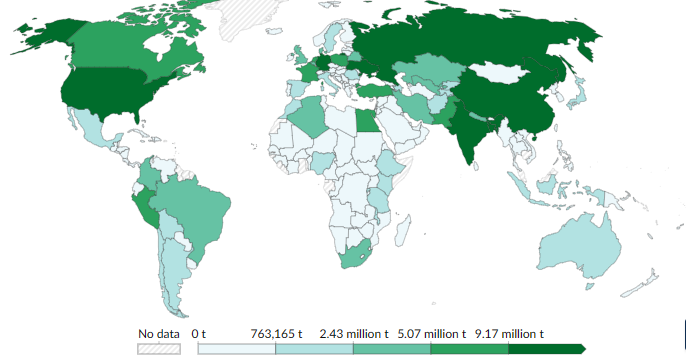
Not so humble really. The potato is an incredibly important crop worldwide (the fourth, after maize, rice, and wheat), with a production of 376 million metric tonnes in 2021. China is the leading producer, with 95.5 million metric tonnes, followed by India, Ukraine, Russia, and the USA.

Native to and a staple food in the Andean countries of South America, the potato spread to Spain in the 16th century [1, 2] and the rest of the world afterwards.

It’s no wonder that Peru championed the International Day of the Potato (decreed by the United Nations in December 2023 [3]) which is being celebrated today.

I thought this would be an excellent opportunity to reflect on my own journey with potatoes over 20 years in the 1970s and 1980s.


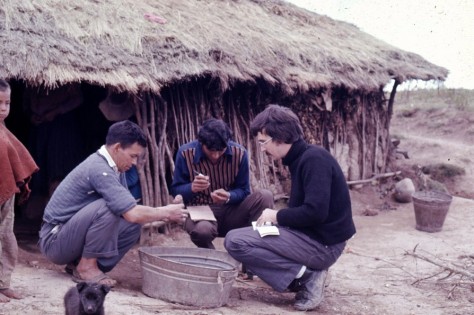
Fifty years ago (in May 1974) I had just returned to Lima after collecting potatoes for three weeks in the north of Peru (Department of Cajamarca), accompanied by my driver, Octavio.

A farmer in Cajamarca discusses his potato varieties with me, while my driver Octavio writes a collecting number on each tuber and a paper bag with a permanent marker pen.

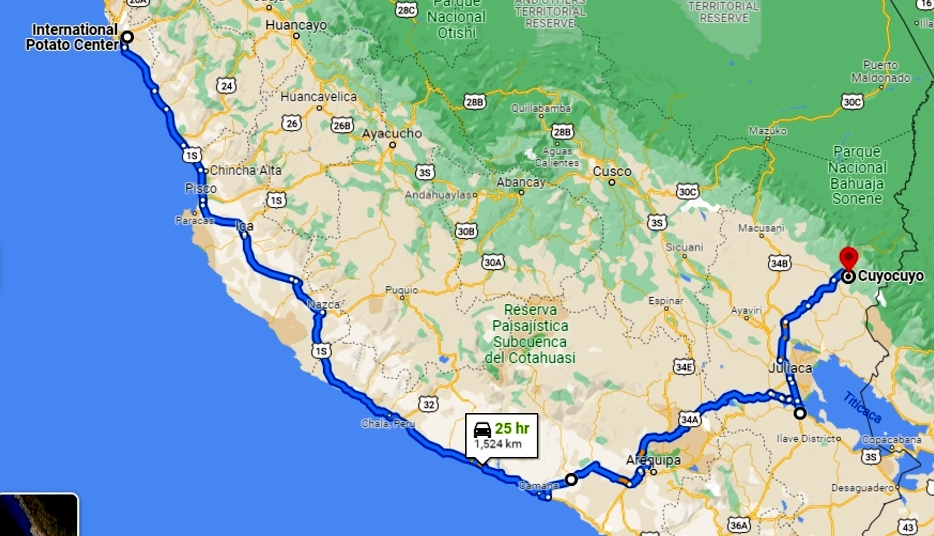
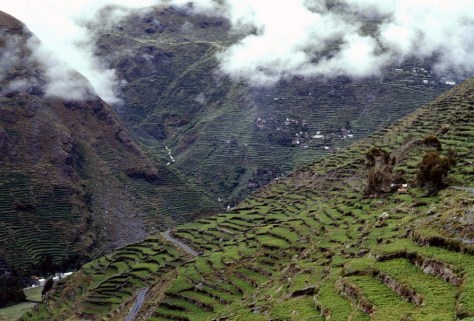
A few months earlier, at the beginning of February, I’d travelled to Cuyo Cuyo (Department of Puno in southern Peru) to make a study of potato varieties in farmers’ fields on the ancient terraces there (below).

So what was I doing in Peru?

I’d joined the International Potato Center (CIP) in Lima the previous year, in January 1973 [4] as an Associate Taxonomist while continuing with my PhD research. And I found myself, a few months later—in May—travelling with with my colleague Zosimo Huamán (right) to the northern departments of Ancash and La Libertad where, over almost a month, we collected many indigenous potato varieties—the real treasure of the Incasthat were added to CIP’s growing germplasm collection. Here are just a few examples of the incredible diversity of Andean potato varieties in that collection. Maybe I collected some of these.

Source: International Potato Center (CIP)

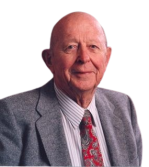
In October 1975, I successfully defended my PhD thesis (The evolutionary significance of the triploid cultivated potato, Solanum x chaucha Juz. et Buk.) at the University of Birmingham, where my co-supervisor, potato taxonomist and germplasm pioneer Professor Jack Hawkes (right) was head of the Department of Botany.

During my time in Lima, Dr Roger Rowe (left, then head of CIP’s Breeding and Genetics Department) was my local supervisor.

Fifty years after I first met Roger in Peru, we had a reunion on the banks of the Mississippi in Wisconsin last year.

After the University of Birmingham congregation on 12 December 1975, with Jack Hawkes on my right, and Professor Trevor Williams (who supervised my MSc dissertation in 1971) on my left.

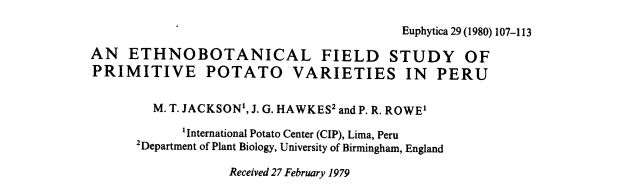
I published three papers from my thesis. Click on any title image below (and most others throughout this post) to read the full paper.

There’s an interesting story behind the publication of this third paper from my thesis.

I originally sent a manuscript to Economic Botany, probably not long after I’d submitted the others to Euphytica.

I received an acknowledgment from Economic Botany, but then it went very quiet for at least a year.

Anyway, towards the end of 1978 or early 1979 I received—quite out of the blue—a letter from the then editor-in-chief of Euphytica, Professor AC Zeven. He told me he’d read my thesis, a copy of which had been acquired apparently by the Wageningen University library. He liked the chapter I’d written about an ethnobotanical study in Cuyo-Cuyo, and if I hadn’t submitted a paper elsewhere, he would welcome one from me.

It was about that same time I also received a further communication from the incoming editor of Economic Botany, who had found papers submitted to the journal up to 20 years previously and still waiting publication, and was I still interested in continuing with the Economic Botany submission, since he was unable to say when or if my manuscript might be considered for publication. I immediately withdrew the manuscript and, after some small revisions to fit the Euphytica style and focus, sent the manuscript to Professor Zeven. It was published in February 1980.


I returned to Lima just before the New Year 1976, knowing that CIP’s Director General, Dr Richard Sawyer (right), had already approved my transfer to CIP’s Outreach Program (later renamed Regional Research). I relocated to Costa Rica in Central America in April 1976 (living and working at the Tropical Agricultural Research and Higher Education Center, CATIE in Turrialba), establishing a program to adapt potatoes to the warm humid tropics. I became leader of CIP’s regional program (or Regional Representative) in late 1977.

However, the tropical adaptation objective per se didn’t exactly endure. The potato trials were almost immediately attacked by bacterial wilt (caused by Ralstonia solaneacearum, formerly known as Pseudomonas solanacearum) even though no susceptible crops such as tomatoes had been planted on the CATIE experiment station in recent years. We subsequently discovered that the bacterium survived in a number of non-solanaceous weed hosts.

Screening for bacterial wilt resistance in CATIE’s experiment station.

I’ve posted earlier about our research on bacterial wilt and finding tolerance to the disease in a potato clone (not quite a commercial variety) known simply as Cruza 148.

Plant pathologist Professor Luis Carlos Gonzalez (right, from the University of Costa Rica in San José) and I also studied how to control the disease through a combination of tolerant varieties and soil and weed management.
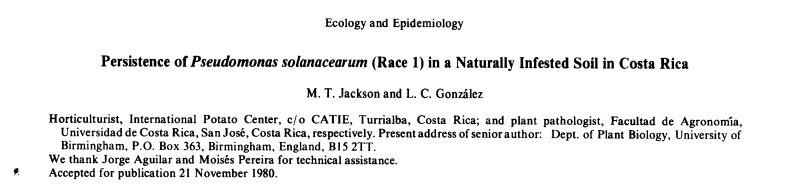
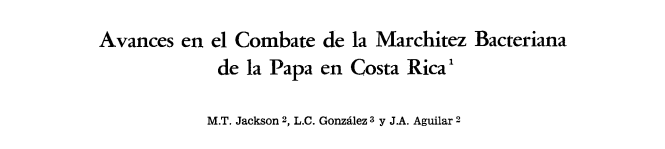
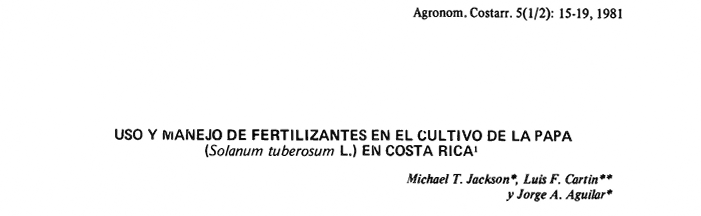
We published these two papers, the first in the international journal Phytopathology, and the second in the Costarrican journal Fitopatologia.


During the late 1970s, CIP launched an initiative aimed at optimising potato productivity, jointly led by Chilean agronomist Dr Primo Accatino and US agricultural economist Dr Doug Horton. Contributing to this initiative in Costa Rica, I worked with potato farmers to reduce the excessive use of fertilizers, and fungicides to control the late blight pathogen, Phytophthora infestans. It was then (and probably remains) a common misconception among farmers that more input of fertilizer or fungicide, the better would be the outcome in terms of yield or disease control. What a fallacy! Our small project on fertilizer use was published in Agronomía Costarricense.

During the five years I spent in Costa Rica, my colleagues in the Ministerio de Agricultura y Ganadería (MAG) and I screened germplasm sent to us by CIP breeders in Lima for resistance to late blight, and common potato viruses like PVX, PVY, PLRV.

Ing. Jorge Esquivel (MAG) and me screening potatoes for virus resistance in a field trial on the slopes of the Irazú volcano in Costa Rica, while my assistants Jorge Aguilar and Moisés Pereira check plants nearby.


In 1977, Dr John Niederhauser (right, an eminent plant pathologist who had worked on late blight in Mexico for the Rockefeller Foundation before becoming an international consultant to CIP) and I worked together to develop and implement (from April 1978) a cooperative regional potato program, PRECODEPA, in six countries: Mexico, Guatemala, Honduras, Costa Rica, Panama, and the Dominican Republic. Funded by the Swiss Agency for Development and Cooperation, SDC (and for the next 25 years or so, and expanded to more countries in the region), the network was a model for regional collaboration, with members contributing research based on their particular scientific strengths.

Clean seed tubers are one of the most important components for successful potato production, and technologies to scale up the multiplication of clean seed were contributed by CIP to PRECODEPA. My colleague from Lima, Jim Bryan (an Idaho-born seed production specialist) joined me in Costa Rica in 1979 for one year, and together we successfully developed several rapid multiplication techniques, including stem cuttings and leaf node cuttings, and producing a technical bulletin (published also in Spanish).

And we showed that it was possible to produce one tonne in a year from a single tuber. Read all about that effort here.

I can’t finish this section about my time at CIP without mentioning Dr Ken Brown (left), who was head of Regional Research.
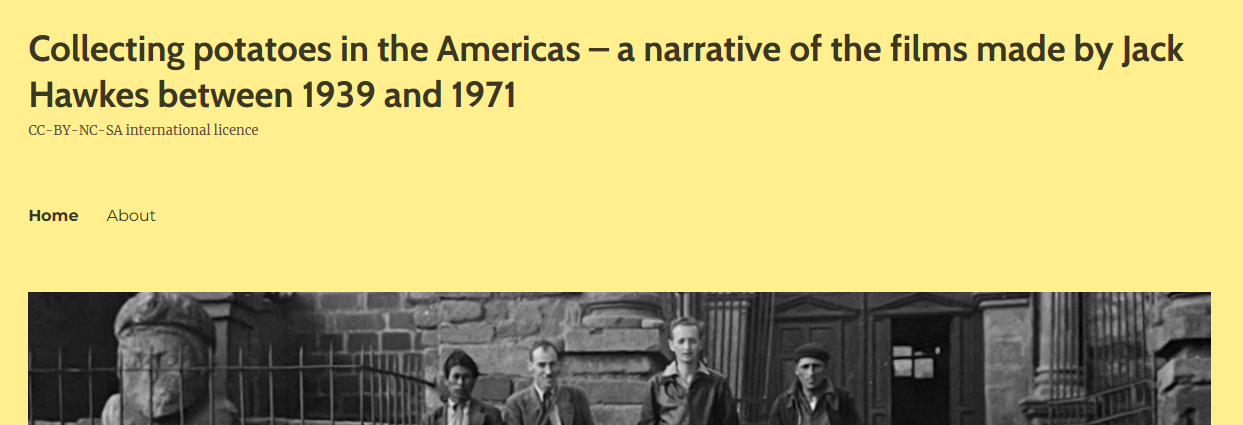
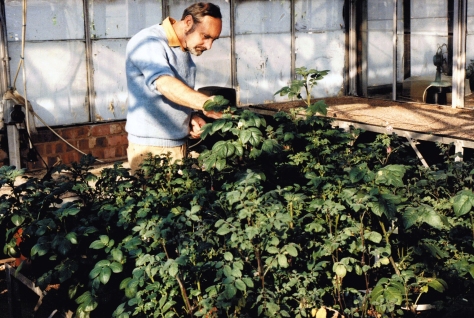
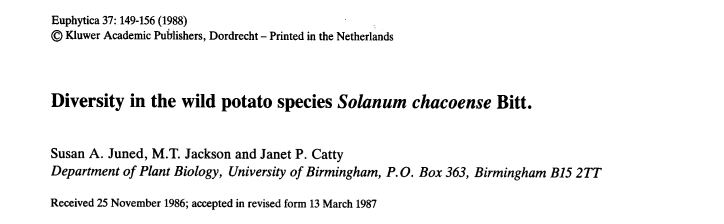
Ken, a cotton physiologist, joined CIP in January 1976 as head of Regional Research, just at the time Steph and I returned to Lima after I’d completed my PhD. He was one of the best program managers I have worked for, keeping everything on track, but never micro-managing. I learnt a great deal from Ken about managing staff, and getting the best out of them.

At the end of November 1980, I returned to Lima expecting to be posted to the Philippines. Instead, in March 1981, I resigned from CIP and accepted a lectureship in plant biology at the University of Birmingham, continuing potato research there, as well as working on several legume species.

I look back on those formative CIP years with great appreciation: for all that I learned about potatoes and potato production, the incredible scientists from around the world I met and worked with, and the many friendships I made.


Jack Hawkes retired from the university in September 1982, having left behind his large collection of wild potatoes accumulated during several expeditions to the Americas, and a legacy of potato research on which I endeavoured to build.

You can read all about Jack’s many expeditions, view many original photos, and watch several videos dating back to 1939 by clicking on the image below.

I soon realised there were few opportunities to continue research with Jack’s collection. It was almost impossible to secure funding. But I could offer short-term projects for MSc and PhD students.

Dave Downing was the technician managing the potato collection at Birmingham.

One MSc student, Susan Juned, studied the diversity in Solanum chacoense Bitt., a wild potato species from Argentina and Paraguay, in relation to in situ conservation opportunities.

Two MSc students from Uganda, Beatrice Male-Kayiwa and Nelson Wanyera evaluated resistance to potato cyst nematode (Globodera pallida) in wild potatoes from Bolivia. We asked Jack Hawkes to advise on the choice of germplasm to include, since he had made the collections in that country in the 1970s. Beatrice and Nelson worked at Rothamsted Experiment Station (now Rothamsted Research) in Hertfordshire with the late Dr Alan Stone.

Two PhD students, Lynne Woodwards and Ian Gubb, studied the lack of enzymic browning (potatoes turn brown when they are cut) in wild potatoes, Series Longipedicellata Buk., and one tetraploid (2n=4x=48 chromosomes) species from Mexico in particular, Solanum hjertingii Hawkes, and their crossability with cultivated potatoes. Ian’s studentship (co-supervised at Birmingham by Professor Jim Callow) involved a collaboration with the Institute of Food Research (now Quadram Institute Bioscience) in Norwich, where his co-supervisor was Dr JC Hughes.

Gene editing has recently successfully produced non-browning potatoes. Wide crossing is probably no longer needed.


I had two PhD students from Peru, René Chavez and Carlos Arbizu, who carried out their research at CIP (like I had in the early 1970s) and only came back to Birmingham to complete their residency requirements and defend their theses, although I visited them in Lima several times during their research.

René evaluated the breeding potential of wild species of potato for resistance to potato cyst nematodes and tuber moth, publishing three excellent papers from his thesis The use of wide crosses in potato breeding, submitted in 1984.

Carlos submitted his thesis, The use of Solanum acaule as a source of resistance to potato spindle tuber viroid (PSTV) and potato leaf roll virus (PLRV), in 1990. He never published any papers from his research, returning to Lima to work at CIP for a few years on Andean minor tuber crops, before setting himself up as a major avocado producer in Peru.


Denise Clugston (co-supervised by Professor Brian Ford-Lloyd) defended her thesis, Embryo culture and protoplast fusion for the introduction of Mexican wild species germplasm into the cultivated potato in 1988. She left biology almost immediately, and regrettably never did write any papers, although she did present this work at a conference held in Cambridge.

Another PhD student, Elizabeth Newton, worked on sexually-transmitted potato viruses of quarantine significance in the UK, in collaboration with one of my former colleagues at CIP, Dr Roger Jones who had returned to the UK and was working for the Ministry of Agriculture, Fisheries and Food (MAFF) at the Harpenden Laboratory. In 1989 she successfully submitted her thesis, Studies towards the control of viruses transmitted through true potato seed but never published any papers, only presenting this one at a conference in Warwick in 1986.

Because of the quarantine restrictions imposed on the Hawkes collection, I took the decision (with Jack’s blessing) to donate it to the Commonwealth Potato Collection in Dundee. Once the collection was gone, we had other opportunities for potato research at Birmingham.


In the late 1980s, my colleague Brian Ford-Lloyd (right) and I ran a project, funded by KP Agriculture (and managed by my former CIP colleague, Dr John Vessey) to generate somaclonal lines resistant to low temperature sweetening of the crisping var. Record .
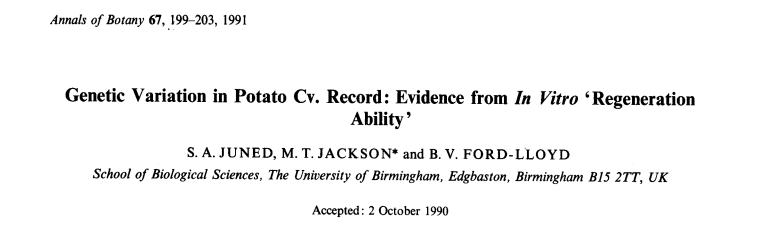
My former MSc student Susan Juned (right) was hired as a Research Associate.

We began the project with a batch of 170 Record tubers, uniquely numbering each one and keeping the identity of all somaclones derived from each tuber. And there were some interesting results (and an unexpected response from the media [5]).

Did the project meet its objectives? Well, this is what John later told us:

The project was successful in that it produced Record somaclones with lower reducing sugars in the tubers, but unsuccessful in that none entered commercial production . . . Shortly after the end of the project, Record was replaced by a superior variety, Saturna

The project very clearly showed the potential of somaclones but also emphasised that it needs to be combined with conventional breeding . . . Other important aspects were the demonstration that the commercial seed potato lines available were not genetically identical, as previously thought, and that regeneration of clones from single cells had to be as rapid as possible to avoid unwanted somaclonal variation. 

The majority of somaclones were derived from just a few of the 170 tubers, each potentially (and quite unexpectedly) a different Record clone. We suggested that the differential regeneration ability was due to genetic differences between tubers as it was found to be maintained in subsequent tuber generations. Furthermore, this would have major implications for seed potato production specifically and, more generally, for in vitro genetic conservation of vegetatively-propagated species.

Sue completed her PhD, Somaclonal variation in the potato (Solanum tuberosum L.) cultivar Record with particular reference to the reducing sugar variation after cold storage in 1994 after I’d already left Birmingham for the Philippines.

After leaving the university, Sue became a very successful local politician, even running in one General Election as a Liberal Democrat candidate for Parliament. Sue is now Leader of Stratford-on-Avon District Council.


From 1984, I had a project to work on true potato seed (or TPS) in collaboration with CIP, funded by the Overseas Development Administration (ODA, a UK government agency that eventually became the Department for International Development or DfID, but now fully subsumed into the Foreign, Commonwealth & Development Office).

For many reasons, this project was not a success. Let me explain.

At the end of the 1970s CIP launched a project to use TPS as an alternative production approach to seed potatoes (i.e., tubers). But the use of TPS is not without its challenges.

Potato genetics are complex because most cultivated potatoes are polyploid, actually tetraploid with 48 chromosomes. And although self compatible, and producing copious quantities of TPS through self pollination, the progeny are highly variable. My approach was to produce uniform or homozygous diploid (with 24 chromosomes) inbred lines. The only obstacle being that diploid potatoes are self incompatible. We aimed to overcome that obstacle. There were precedents, albeit from a species in a totally unrelated plant family but with a similar incompatibility genetic base.

One of my colleagues at Birmingham, geneticist Dr Mike Lawrence spent many years working on field poppy (Papaver rhoeas) and, through persistent selfing, had manage to break its strong self incompatibility. We believed that a similar approach using single seed descent might yield dividends in diploid potatoes. Well, at least ODA felt it was worth a try, and the project had CIP’s backing (although not enthusiastically from the leading breeder there at the time). However, in the light of subsequent research, I think we have been vindicated in taking this particular approach.

Because of quarantine restrictions at Birmingham that I already mentioned, we negotiated an agreement with the Plant Breeding Institute (PBI) in Cambridge to base the project there, building a bespoke glasshouse for the research. My counterpart at PBI was the head of potato breeding, Dr Alan J Thomson. We hired a postdoc, recently graduated with a PhD from the University of St Andrews, who came with glowing references.

We set out our perspectives on inbreeding at a CIP planning conference in Lima.

I further elaborated on these perspectives in a book chapter (published in 1987) based on a paper I presented at a joint meeting of EAPR and EUCARPIA at King’s College, Cambridge, in December 1985.

Ultimately the project did not meet its main objective. We encountered three problems, even though making progress in the first three years:

  1. By year five, we really did hit a ‘biological brick wall’, and couldn’t break the self incompatibility. We decided to pull the plug, so-to-speak, one year before the end of the project. It was a hard decision to make, but I think we were being honest rather than consuming the remaining financial resources for the sake of completing the project cycle.
  2. We lost momentum in the project after three years when Margaret Thatcher’s government privatised the PBI, and we had to relocate the project to the university campus in Birmingham (having disposed of the wild potato collection to the CPC as I mentioned earlier). And then build new glasshouse facilities to support the project.
  3. As the lead investigator, I was not successful in encouraging our postdoc to communicate more readily and openly. That lack of open communication did not help us make the best strategic decisions. And I take responsibility for that. However, on reflection, I think that her appointment to this pioneering project was not the best decision that Alan and I made.

Looking at the progress in diploid breeding since, it’s quite ironic really because several breeders published a call in 2016 to reinvent the potato as a diploid inbred line-based crop, just as we proposed in the 1980s. Our publications have been consistently overlooked.

Inbreeding in diploids became possible because of the discovery of a self compatibility gene, Sli, in the wild species Solanum chacoense after selfing over seven generations. With that breakthrough, such an inbreeding approach had become a reality. Pity that we were not able to break self incompatibility in cultivated diploid potatoes ourselves. And there’s no doubt that advances in molecular genetics and genomics since the 1980s have significantly opened up and advanced this particular breeding strategy.


Around 1988, I was invited by CIP to join three other team members (a program manager, an agronomist, and an economist) to review a seed production project, funded by the SDC [6], in Peru. I believe Ken Brown had suggested me as the seed production technical expert.

L-R: Peruvian agronomist, me, Cesar Vittorelli (CIP review manager), Swiss economist, and Carlos Valverde (program manager and team leader).

I flew to Lima, and we spent the next three weeks visiting sites in La Molina (next to CIP headquarters), in Huancayo in the central Andes, Cuzco in the south of Peru, and Cajamarca in the north.

That consultancy taught me a lot about program reviews and would stand me in good stead later on in my career. Once we had submitted our report, I returned to the UK, and a couple of weeks later spent a few days in Bern at the headquarters of the SDC for a debriefing session.

We found the project had been remarkably successful, making an impact in its operational areas, and we recommended a second phase, which the SDC accepted. Unfortunately, events in Peru overtook the project, as the Shining Path (Sendero Luminoso) guerrilla movement was on the ascendancy and it became too dangerous to move around the country.


After Jack Hawkes retired in 1982, he and I would meet up for lunch and a beer at least once a week to chat about our common interests in genetic resources conservation, and potatoes in particular. Out of those discussions came a couple of theoretical papers.

The Endosperm Balance Number (or EBN) hypothesis had been proposed to explain the crossability between tuber-bearing Solanum species (there are over 150 wild species of potato). We wrote this paper to combine the taxonomic classification of the different species and their EBNs.

In 1987, Jack asked me to contribute a paper to a symposium he was organizing with Professor David Harris of the Institute of Archaeology at University College London to celebrate the centenary of one of my scientific heroes, Russian geneticist and acclaimed as the Father of Plant Genetic Resources, Nikolai Vavilov. I conceptualized how Vavilov’s Law of Homologous Series could be applied to potatoes.

By the end of the 1990s, I was already looking for scientific pastures new – in rice! And in early 1991, I accepted a position at the International Rice Research Institute (IRRI) in the Philippines, and my research focus moved from potatoes to rice.

What surprises me is that some of my potato work endures, and I regularly receive citations of several of my papers, the last of which was published more than 30 years ago.

With the announcement of the International Day of the Potato, it certainly has brought back many memories of the couple of decades I enjoyed working on this fascinating crop.


[1] Hawkes, JG  and J Francisco-Ortega (1992). The potato in Spain during the Late 16th Century. Economic Botany 46: 86-97.

[2] Hawkes, JG and J Francisco-Ortega (1993). The early history of the potato in Europe. Euphytica 70: 1-7.

[3] The Food and Agriculture Organization of the United Nations (FAO) today welcomed the UN’s decision to designate 30 May as International Day of Potato, an opportunity to raise awareness of a crop regularly consumed by billions of people and of global importance for food security and nutrition.

The annual observance was championed by Peru, which submitted a proposal for adoption to the UN General Assembly based on an FAO Conference Resolution of July 7, 2023. The impetus for the Day, which builds upon the International Year of Potato that was observed in 2008, originates from the need to emphasize the significant role of the potato in tackling prevalent global issues, such as food insecurity, poverty and environmental threats.

[4] Steph joined me in Lima in July 1973 and we were married there in October. John Vessey and his wife Marian were our witnesses.

In November 1972, a couple of months after she had graduated with an MSc in genetic resources conservation from the University of Birmingham (where we met), Steph joined the Scottish Plant Breeding Station in Edinburgh as Assistant Curator of the Commonwealth Potato Collection. At CIP, she was an Associate Geneticist responsible for the day-to-day management of the institute’s potato germplasm collection.

Steph in one of CIP’s screenhouses at La Molina.

[5] In 1987, we wrote a piece about the somaclone project for the University of Birmingham internal research bulletin. This was picked up by several media, including the BBC and I was invited to appear on a breakfast TV show. Until, that is, the producer realised that the project was a serious piece of research.

One of the tabloid newspapers, The Sun, was less forgiving, and ran a brief paragraph on page 3 (Crunch time for boffins) alongside the daily well-endowed young lady. Click on the image to enlarge.

[6] The seed project was my second contact with the SDC (after PRECODEPA). After I joined IRRI in 1991, the SDC funded a five year project from 1995 to rescue rice biodiversity, among other objectives. I have written about that project here.


Before potatoes and rice, there were pulses

Although I spent most of my career working on potatoes and rice, my first interest was pulse crops or grain legumes. In fact the first pulse that I studied was the lentil (Lens culinaris Medik.) when I was an MSc student at the University of Birmingham from 1970-1971.

So why the interest in pulses?

It was surely the influence of one of my mentors, Dr Joe Smartt (right) at the University of Southampton where I was awarded my BSc in Environmental Botany and Geography in 1970. A geneticist who had studied groundnuts in Africa and at Southampton was working on Phaseolus beans, Joe taught a second year genetics course, and two in the third or final year, on plant breeding and plant speciation.

He published two seminal texts on pulses in 1976 and 1990.

It was Joe who ignited my interest in plant genetic resources, and encouraged me to apply for a place on the one year MSc course at Birmingham on Conservation and Utilization of Plant Genetic Resources (CUPGR). The course had been launched by the head of the Department of Botany, potato expert, and genetic resources pioneer, Professor Jack Hawkes, with the first intake of students commencing their studies in September 1969. I landed in Birmingham a year later.

My three year undergraduate course at Southampton was a stroll in the park compared to the intensity of that one year MSc course. We had eight months of lectures and practical classes, followed by written examinations at the end of May. Each student also had to complete a piece of independent but supervised research, and present a dissertation for examination in September. In order to take full advantage of the summer months, planning and some initial research began much earlier. First of all for most of us, we had to decide on a topic that was feasible and doable in the allotted time, and assemble the necessary seed samples ready for planting at the most appropriate date.

Almost immediately I decided on three points. First, I wanted to run a project with a taxonomy/natural variation theme. Second, I wanted—if feasible—to work on a pulse species. And finally (which I decided quite quickly after arriving in Birmingham) I wanted to work with Dr Trevor Williams (right) who delivered a brilliant series of lectures on variation in natural populations, among others.

Trevor and I thumbed our way through the Leguminosae (now Fabaceae) section of Flora Europaea, until we came upon the entry for Lens, and the topic for my project leapt off the page: Lens culinaris Medik. Lentil. Origin unknown.

My project had two components:

  • An analysis of variation in the then five species of lentil (one cultivated, the others wild species; the taxonomy has changed subsequently) from herbarium specimens borrowed from several herbaria in Europe. I also spent a week in the Herbarium at Kew Gardens in London taking measurements from their complete set of lentil specimens.
  • A study of variation in Lens culinaris from living plants, with seeds obtained from Russia (the Vavilov Institute in St Petersburg), from the (then) East German genebank in Gatersleben, and from the agricultural research institute in Madrid.

With the guidance of another member of the Botany department staff, Dr Herb Kordan, I made chromosome preparations and counts of all the Lens culinaris samples I’d obtained, confirming they were all diploid with 2n=2x=14 chromosomes. In the process, we developed a simple but effective technique for making chromosome squash preparations, and this led to my first ever publication in 1972. Just click on the title below (and others in this post) to read the full text.

In September 1971, I submitted my dissertation, Studies in the genus Lens Miller with special reference to Lens culinaris Medik. (which was examined by Professor Norman Simmonds who was the course External Examiner), and the degree was awarded.

I proposed that the wild progenitor of the cultivated lentil was Lens orientalis (Boiss.) Hand.-Mazz., a conclusion reached independently by Israeli botanist Daniel Zohary in a paper published the following year.

In 1971-1972, Carmen Kilner (née Sánchez) continued with the lentil studies at Birmingham, leading to a publication in SABRAO Journal in 1974. Our paper added further evidence to confirm the status of Lens orientalis.

When I began my lentil project, I had ideas to extend it to a PhD were the funding available. However, in February 1971 Jack Hawkes had just returned from a potato collecting mission to Bolivia, and told me about an exciting opportunity to spend a year in Peru at the newly-founded International Potato Center (CIP), from September that same year. My departure to Peru was delayed until January 1973, so I began a PhD on potatoes with Jack in the meantime. And with that move to potatoes, I assumed that any future work with pulses was more or less ruled out. However, from April 1981 I was appointed Lecturer in Plant Biology at Birmingham, and needed to develop a number of research areas. Would pulses figure in those plans?


While I wanted to continue projects on potatoes at Birmingham, I also decided to return partially to my first interest: pulses. And while I never had major grants in this area, I did supervise graduate students for MSc and PhD degrees who worked on a range of grain and forage legume/pulse species. Here I highlight the work of three students. There may have been more who worked on pulses, but after four decades I can’t remember those details.

Almost immediately after returning to Birmingham, I discovered (by looking through Flora Europaea once again) that the origin of the grasspea, Lathyrus sativus, was unknown. The grasspea is a distant relative of the ornamental sweetpea, Lathyrus odoratus, one of my favorite flowers since I was a small boy. My grandfather used to grow a multitude of sweetpeas in his cottage garden in Derbyshire. Anyway, I set about assembling a large collection of seed samples (or accessions) of grasspea and wild Lathyrus species from agricultural centers and botanic gardens worldwide.
The academic year September 1981-September 1982 was my first full year at Birmingham. Among the CUPGR intake was a Malaysian student, Abdul bin Ghani Yunus (right), who asked me to supervise his MSc research project. I persuaded him to tackle a study of variation in the grasspea and its wild relatives, much along the lines I had approached lentil a decade earlier.
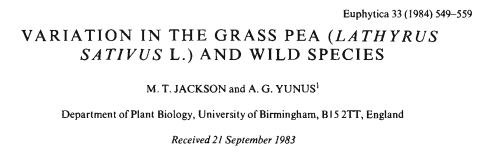
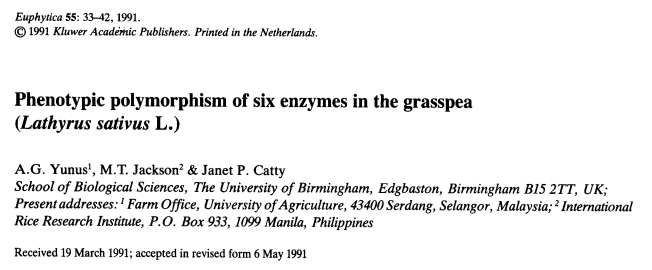
We published this paper in 1984, and I guess it heralded what would become, a several decades later, an international collaborative effort to improve the grasspea and make it safer for human consumption.

Ghani returned to Malaysia, and I didn’t hear from him for several years. Then, in 1987, he contacted me to say he’d secured a Malaysian government grant to study for his PhD and would like to return to Birmingham. But to work on a tropical species, the name of which I cannot remember.

I persuaded him that would not really be feasible in Birmingham as we didn’t have the glasshouse space available, and it would be hit or miss whether we would be able to grow it successfully. I suggested it would be better to carry on his Lathyrus work from where he left off. And that’s what he did, successfully submitting his thesis in 1990 from which these papers were published.


Among the 1986 CUPGR intake was a student from Mexico, José Andrade-Aguilar (right) who was keen to attempt a pre-breeding study in Phaseolus beans, specifically trying to cross the tepary bean, Phaseolus acutifolius A. Gray with the common bean, Phaseolus vulgaris L.

José published two papers from his dissertation.

This next paper (for which I no longer have a copy) described how pollinations in Phaseolus species could be made more successful.


Then, in 1987, a student from Spain, Javier Francisco-Ortega (right, actually from Tenerife in the Canary Islands) joined the course, and he and I worked closely on his MSc and PhD projects until I left Birmingham to join IRRI in the Philippines in July 1991.

Javier was an extraordinary student: hard-working, focused, and very productive. After completing his PhD in 1992, he took two postdoctoral fellowships in the USA (at Ohio State University and the University of Texas at Austin) before joining the faculty of the Department of Biological Sciences at Florida International University in 1999, where he has been Professor in Plant Molecular Systematics since 2012.

For his 1988 MSc dissertation, Javier studied the variation in Lathyrus pratensis L., using multivariate analysis, and publishing this paper some years later.

Then, having successfully completed his MSc, and being awarded a second Spanish government scholarship, Javier began a PhD project to study the ecogeographical variation in an endemic forage legume from the Canary Islands, Chamaecytisus proliferus (L. fil.) Link., known locally as tagasaste or escobón, depending whether it is cultivated or a purely wild type.

With a special grant from the International Board for Plant Genetic Resources (IBPGR, now Bioversity International) in Rome, Javier returned to the Canary Islands in the summer of 1989 to survey populations and collect seeds from as many provenances as possible across all the islands, and I joined him there for several weeks.

Collecting escobón (Chamaecytisus proliferus) in Tenerife in 1989

After I left Birmingham, my colleague Professor Brian Ford-Lloyd took over supervision of Javier’s research, seeing it through to completion in 1992.

Together we published these papers from his research on tagasaste and escobón.

Once I was in the Philippines, I forgot completely about legume species, apart from contributing to any of the papers that were published after I’d left Birmingham.

One aspect that is particularly gratifying however is seeing the work Ghani Yunus and I did on Lathyrus still being cited in the literature as efforts are scaled up to improve grasspea lines.


Potatoes have no special chemistry to induce romance . . . but they brought us together

Saturday 13 October 1973, 11:30 am
Lima, Peru

Fifty years ago today, Steph and I were married at the town hall (municipalidad) in the Miraflores district of Lima, where we had an apartment on Avenida José Larco. Steph had turned 24 just five days earlier; it would be my 25th in the middle of November.

Municipalidad de Miraflores, Lima

It was a brief ceremony, lasting 15 minutes at most, and a quiet affair.  Just Steph and me, and our two witnesses, John and Marian Vessey. And the mayor (or other official) of course.

John, a plant pathologist working on bacterial diseases of potato, was a colleague of ours at the International Potato Center (CIP) in Lima, who had joined the center a few months before I arrived in Lima in January 1973.
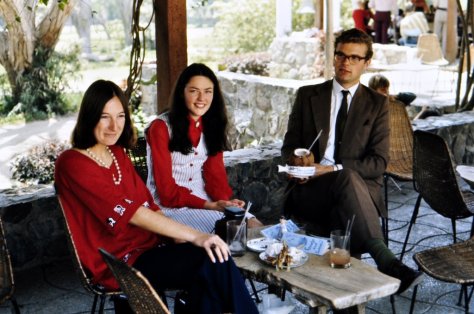
Enjoying pre-lunch drinks with Marian and John at ‘La Granja Azul‘ restaurant at Santa Clara – Ate, on the outskirts of Lima.

The newly-weds.


It’s by chance, I suppose, that Steph and I got together in the first place. We met at the University of Birmingham, where we studied for our MSc degrees in Conservation and Utilization of Plant Genetic Resources.

Steph arrived in Birmingham in September 1971, just after I had finished the one-year course. I was expecting imminently to head off to Peru where I had been offered a position at CIP to help curate the large collection of native potato varieties in the CIP genebank. So, had I flown off to South America then, our paths would have hardly crossed.

But fate stepped in I guess.

My departure to Peru was delayed until January 1973. So I registered for a PhD with renowned potato expert Professor Jack Hawkes (right, head of the Department of Botany and architect of the MSc course), and began my research in Birmingham while CIP’s Director General, Richard Sawyer, negotiated a financial package from the British government to support the center’s research for development agenda, and my work there in particular.

It must have been early summer 1972 that Steph and I first got together. Having completed the MSc written exams in May, Steph began a research project on reproductive strategies in three legume species, directed by Dr Trevor Williams (who had supervised my project a year earlier on lentils). And she completed the course in September.

By then, she had successfully applied for a scientific officer position at the Scottish Plant Breeding Station in Edinburgh (SPBS, now part—after several interim phases—of the James Hutton Institute in Dundee), as Assistant Curator of the Commonwealth Potato Collection. But that position wasn’t due to start until November.

Our VW Variant in Peru, around May 1973 – before receiving a Peruvian registration plate.

In early November I took delivery of a left-hand-drive Volkswagen for shipment to Peru. On a rather dismal Birmingham morning, we loaded up the VW with Steph’s belongings and headed north to Edinburgh. She returned to Birmingham in mid-December for her graduation.

Then, just after Christmas 1972, we met up in a London for a couple of days before I was due to fly out to Lima.

At that time we could not make any firm commitments although we knew that—given the opportunity—we wanted to be together.

Again fate stepped in. On 4 January 1973, Jack Hawkes and I flew to Lima. Jack had been asked to organize a planning conference to guide CIP’s program to collect and conserve native Andean potato varieties and their wild relatives.

Potato varieties from the Andes of Peru.

While I stayed in a small hotel (the Pensión Beech, in the San Isidro district) until I could find an apartment to rent, Jack stayed with Richard Sawyer and his wife Norma. And it was over dinner one evening that Jack mentioned to Richard that I had a ‘significant other’ in the UK, also working on potato genetic resources, and was there a possibility of finding a position at CIP for her. Richard mulled the idea over, and quickly reached a decision: he offered Steph a position in the Breeding and Genetics Department to work with the germplasm collection.

With that, Steph resigned from the SPBS and made plans to move to Lima in July, with us planning to get married later on in the year.

In the CIP germplasm screenhouses in La Molina. Bottom: with Peruvian potato expert Ing. Carlos Ochoa.


A couple of weeks after I arrived in Peru, I found an apartment in Miraflores at 156 Los Pinos (how that whole area has changed in the intervening 50 years), and that’s where Steph joined me.

In our Los Pinos apartment, Miraflores in July 1973.

A few weeks later we found a larger apartment, nearby at 730 Avda. Larco, apartment 1003. Very interesting during earthquakes!

Around mid-August 1973 we began the paperwork (all those tramites!) to marry in Peru. Not as simple as you might think, but on reflection perhaps not as difficult as we anticipated.

While we were allowed to post marriage banns in the British Embassy, we had to announce our intention to marry in the official Peruvian government gazette, El Peruano, and one of the principal daily broadsheets (El Comercio if memory serves me right), and have the police visit us at our apartment to verify our address. I think we also had to have blood tests as well. This all took time, but everything was eventually in place for us to set the wedding date: 13 October.
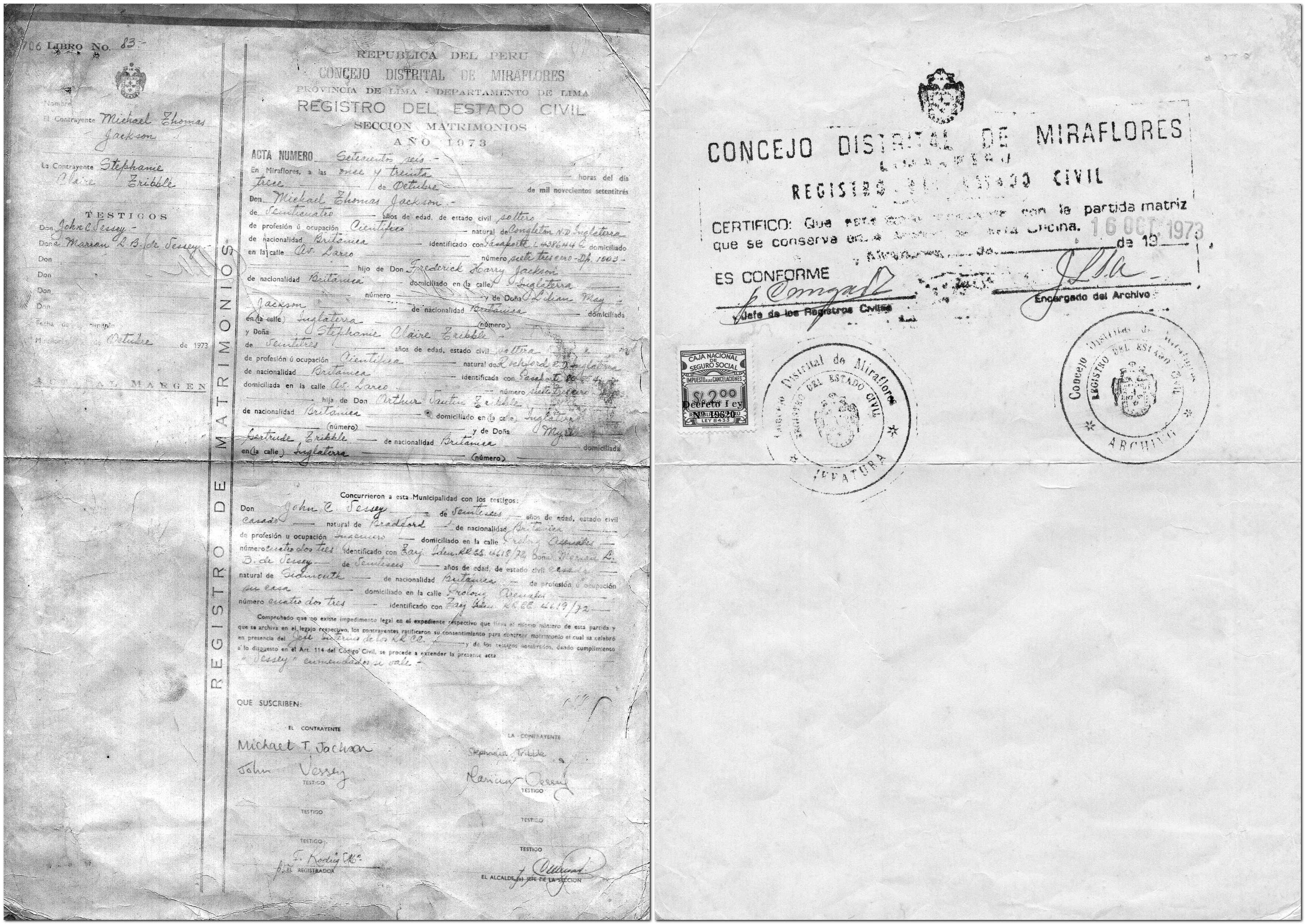
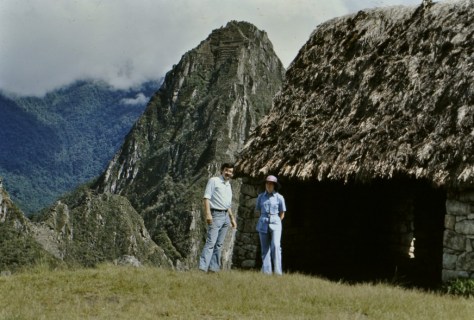
Some friends wanted to give us a big wedding, but Steph said she just wanted an intimate, quiet day. So that’s what we organized.

In the week leading up to our wedding, we had to present all the notarised documents at the municipality. After the ceremony, we signed the registry, hand-written in enormous volumes (or tomos). There was a bank of clerical staff, all with their Parker fountain pens, inscribing the details of each wedding in their respective tomo. A week later we collected our Constancia de Matrimonio (with some errors) which detailed in which tomo (No. 83, page 706) our marriage had been recorded, as well as photocopies (now sadly faded) of the actual page.

My work, collecting potatoes, took me all over the Andes; not so much for Steph who only made visits every other week or so to CIP’s highland experiment station (at over 3000 masl) in Huancayo east of Lima, and a six hour drive away.

However, Steph and I explored Peru together as much as we could, taking our VW on several long trips, to the north and central Andes, and south to Lake Titicaca. We also delayed our honeymoon until December 1973, flying to Cusco for a few days, and spending one night at Machu Picchu.

At Machu Picchu, December 1973.


In May 1975, we returned to the UK for seven months for me to complete my PhD, returning to Lima just before New Year.

With Jack Hakes and Trevor Williams at my PhD graduation on 12 December 1975 at the University of Birmingham.

Christmas Day 1976 in Turrialba.

Then, in April 1976, we moved to Costa Rica where I worked on potato diseases and production, based in Turrialba, some 70 km east of the capital city, San José. Under the terms of our visas, Steph was not permitted to work in Costa Rica. I became regional representative for CIP’s Region II (Mexico, Central America, and the Caribbean) in August 1997 when my colleague, Oscar Hidalgo (who was based in Toluca, Mexico) headed to North Carolina to begin his PhD studies.

Our elder daughter Hannah Louise was born in San José in April 1978. Later that year, we took our first home leave in the UK and both sets of grandparents were delighted to meet their first granddaughter.

24 April 1978 in the Clinica Santa Rita, San José, Costa Rica.

On home leave in the UK in September 1978.

With Steph’s parents Myrtle and Arthur (top) in Southend-on-Sea, and mine, Lilian and Fred, in Leek.

We spent five happy years in Costa Rica before moving back to Lima at the end of November 1980, and began making plans to move to the Philippines by Easter 1981.

However, in early 1981, a lectureship was created at the University of Birmingham, in the Department of Plant Biology (formerly Botany, where Steph and I had studied), for which I successfully applied. We left CIP at the end of March and had set up home in Bromsgrove (about 13 miles south of Birmingham in north Worcestershire) by the beginning of July.

4 Davenport Drive


A decade after we were married, we were already a family of four. In May 1982 Philippa Alice was born in Bromsgrove.

30 May 1982 in Bromsgrove hospital.

During the 1980s we enjoyed many family holidays, including this one in 1983 on the canals close to home.

Many other family holidays followed, in South Wales, in Norfolk, on the North York Moors, and in 1989, in the Canary Islands.

In Tenerife, Canary Islands in July 1989. Steph is carrying the binoculars that I bought around 1964 and which I still possess.

Hannah (left) and Philippa (right) thrived at local Finstall First School, shown here on their first day of school in 1983 and 1987, respectively.

My work at Birmingham kept me very busy (perhaps too busy), but I particularly enjoyed working with my graduate students (many of them from overseas), and my undergraduate tutees.

All in all, it looked like Birmingham would be a job for life. That was not to be, however. By the end of the 1980s, academic life had sadly lost much of its allure, thanks in no small part to the policies and actions of the Thatcher government. We moved on.


By 1993, we had already been in the Philippines for almost two years, where I had been hired (from July 1991) as head of the Genetic Resources Center (GRC) at the International Rice Research Institute (IRRI) in Los Baños, some 65 km south of Manila in the Philippines. I moved there ahead of Steph and the girls (then aged 13 and nine) who joined me just after Christmas 1991.

Meeting fellow newcomer and head of communications, Ted Hutchcroft and his wife at our joint IRRI welcoming party in early 1992.

In 1993 I learned to scuba dive, a year after Hannah, and it was one of the best things I’ve ever done. Philippa trained a couple of years later.

Getting ready to dive, at Arthur’s Place, Anilao, Philippines in January 2003.

Steph was quite content simply to snorkel or beachcomb, and we derived great pleasure from our weekends away (about eight or nine a year) at Anilao, 92 km south from Los Baños. In fact, our weekends in Anilao were one of our greatest enjoyments during the 19 years we spent in the Philippines.

Steph became an enthusiastic beader and has made several hundred pieces of jewelry since then. In Los Baños we had a live-in helper, Lilia, and so in the heat of Los Baños, Steph was spared the drudgery of housework or cooking, and could focus on the hobbies she enjoyed, including a daily swim in the IRRI pool, and looking after her garden and orchids.
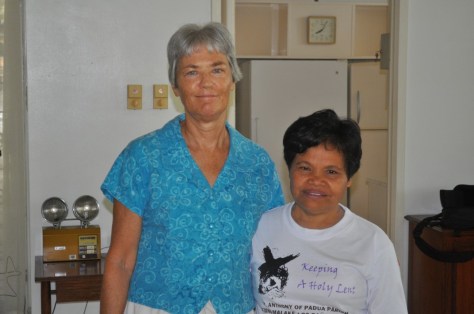
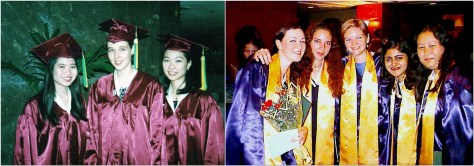
Steph and Lilia on our last day in IRRI Staff Housing #15 on 30 April 2010.

Hannah and Philippa completed their school education at the International School Manila (ISM) in 1995 and 1999 respectively, both passing the International Baccalaureate Diploma with commendably high scores.

Graduation at ISM: Hannah and Philippa with their friends from around the world.

Traveling to Manila each day from Los Baños had not been an easy journey, due to continual roadworks and indescribable traffic. It was at least two hours each way. By the time Philippa finished school in 1999, the buses were leaving Los Baños at 04:30 in order to reach Manila by the start of classes at 07:15.

In October 1996, Hannah started her university degree in psychology and social anthropology at Swansea University in the UK. However, after two years, she transferred to Macalester College, a highly-rated liberal arts college in St Paul, Minnesota, graduating summa cum laude in psychology and anthropology in May 2000. She then registered for a PhD in industrial and organizational psychology at the University of Minnesota. Philippa began her BSc degree in psychology at the prestigious University of Durham, UK later that same year, in October.

Hannah’s graduation in May 2000 at Macalester College, with Philippa and Michael (Hannah’s boyfriend, now her husband).

Once Hannah and Philippa had left for university, IRRI paid for return visits each year, especially at Christmas.

Christmas 2001. Michael joined Hannah for the visit.

While my work took me outside the Philippines quite often, Steph and I did manage holidays together in Hong Kong/Macau and Australia. And, together with Philippa, we toured Angkor Wat in Cambodia in December 2000.

But Steph also accompanied me on work trips to Laos, Bali, and Japan. She also joined me and my staff when we visited the rice terraces in northern Luzon in March 2009.

Enjoying a cold beer as the sun goes down, near Sagada, northern Luzon, Philippines.

Overlooking the Batad rice terraces in northern Luzon in March 2009.

However, we always used our annual home leave allowance to return to the UK, stay in our home in Bromsgrove (which we had purposely left unoccupied), and meet up with family and friends.

Philippa was awarded a 2:1 degree in July 2003, and the graduation ceremony took place inside Durham Cathedral. She then headed off to Vancouver for a year, before returning to the UK and looking for a job, eventually settling in Newcastle upon Tyne where she has lived ever since.

Outside Durham Cathedral where Phil received her BSc degree from the university’s Chancellor, the late Sir Peter Ustinov.

Hannah married Michael in May 2006, and finished her PhD. We flew to Minnesota from the Philippines.

15 May 2006, at the Marjorie McNeely Conservatory in Como Park, St Paul.

PhD graduation at the University of Minnesota.

Philippa registered for a PhD in biological psychology at Northumbria University in Newcastle upon Tyne where she was already working.

Professionally, the period between 2001 and my retirement in 2010 was the most satisfying. I had changed positions at IRRI in May, moving from GRC to join the institute’s senior management team as Director for Program Planning and Communications (DPPC). I worked with a great team, and we really made an impact to increase donor support for IRRI’s research program. However, by 2008/9 when my contract was up for renewal, Steph and I had already agreed not to continue with IRRI, but take early retirement and return to the UK.

But not quite yet. IRRI’s Director General, Bob Zeigler, persuaded me to stay on for another year, and organize the celebrations for the institute’s 50th anniversary. Which I duly did, and had great fun doing so.

But as our retirement date approached in April 2010, I was honored by the institute’s Board of Trustees with a farewell party (despedida) coinciding with the 50th anniversary of the very first Board meeting in April 1960.

14 April 2010 – IRRI’s 50th celebration dinner and our despedida.


Friday 30 April was my last day in the office.

With my DPPC friends. L-R: Eric, Corinta, Zeny, me, Vhel, and Yeyet.

We flew back to the UK two days later, arriving on Monday 3 May and taking delivery of our new car, a Peugeot 308, the following day.

Philippa and Andi flew off to New York in October 2010 and were married in Central Park. She graduated with her PhD in December.

By 2013 we had been married for four decades, and were well-settled into retirement, enjoying all the opportunities good weather gave us to really explore Worcestershire and neighboring counties, especially as National Trust and English Heritage members. And touring Scotland in 2015, Northern Ireland in 2017, Cornwall in 2018, East Sussex and Kent in 2019, and Hampshire and West Sussex in 2022.

We were, by then, the proud grandparents of three beautiful boys and a girl.

Callum Andrew (August 2010) – St Paul, Minnesota

Elvis Dexter (September 2011) – Newcastle upon Tyne

Zoë Isobel (May 2012) – St Paul, Minnesota

Felix Sylvester (September 2013) – Newcastle upon Tyne

And how could we ever forget a very special day in February 2012, when Steph, Philippa and my former colleague from IRRI, Corinta joined me at Buckingham Palace for an investiture.

Receiving my OBE from King Charles III (then HRH The Prince of Wales) on 14 February 2012.

With Steph and Philippa outside the gates of Buckingham Palace.

With Corinta and Steph in the courtyard of Buckingham Palace after the investiture.

Since 2010, we have traveled to the USA each year except during the pandemic years (2020-2022), and only returning there this past May and June. We’ve made some pretty impressive road trips around the USA, taking in the east and west coasts, and all points in between with the exception of the Deep South. Just click here to find a list of those road trips.

In July 2016, a few months after I broke my leg, Hannah and family came over to the UK, and we got together with Phil and Andi and the boys for the first time, sharing a house in the New Forest.

Our first group photo as a family, near Beaulieu Road station in the New Forest, 7 July 2016. L-R: Zoë, Michael, me (still using a walking stick), Steph, Callum, Hannah, Elvis, Andi, Felix, and Philippa.

And they came over again in July 2022, to our new home in the northeast of England where we had moved from Bromsgrove in October 2020 at the height of the Covid-19 pandemic.

In our garden in Backworth, North Tyneside, August 2022.

L-R: Felix, Elvis, Zoë, and Callum, at Dunstanburgh Castle, Northumberland in August 2022.


So it’s 2023, and fifty years have passed since we married.

During our visit to the USA this past May and June, we met up with Roger Rowe and his wife Norma, along the Mississippi River at La Crosse in Wisconsin.

Roger joined CIP in 1973 as head of the Breeding and Genetics Department and was our first boss. Roger also co-supervised my PhD. So it was great meeting up with them again 50 years on.

We’ve been in the northeast just over three years now, and haven’t regretted for a moment making the move north. It’s a wonderful part of the country, and in fact has given us a new lease of life.

At Steel Rigg looking east towards the Whin Sill, Crag Lough, and Hadrian’s Wall, Northumberland, February 2022.

Steph has taken great pleasure in developing her new garden here. It’s a work in progress, and quite a different challenge from her garden in Worcestershire, discovering what she can grow and what won’t survive this far north or in the very heavy (and often waterlogged) soil.

22 August 2023

I’ve had much enjoyment writing this blog since 2012, combining my interests of writing and photography. It has certainly given me a focus in retirement. I never thought I’d still be writing as many stories, over 700 now, and approaching 780,000 words. Since returning to the UK, I’ve also tried to take a daily walk of 2-4 miles. However, that’s not been possible these past six months. A back and leg problem has curtailed my daily walk, but I’m hopeful that it will eventually resolve itself and I’ll be able to get out and about locally, especially along the famous North Tyneside waggonways.

After 50 years together, we have much to be thankful for. We’ve enjoyed the countries where we have lived and worked, or visited on vacation. Our daughters and their families are thriving. Hannah is a Senior Director of Talent Management and Strategy for one of the USA’s largest food companies, and Philippa is an Associate Professor of Biological Psychology at Northumbria University.

Sisters!

With Hannah and Michael, Callum and Zoë (and doggies Bo and Ollie, and cat Hobbes) in St Paul, MN on 18 June 2023.

With Philippa and Andi, Elvis and Felix (and doggies Rex and Noodle) on 2 September 2023.

And here we are, at South Stack cliffs, in the prime of life (taken in mid-September) when we enjoyed a short break in North Wales.

Steph with Philippa and family on her birthday on 8 October.

13 October 2023 – still going strong!


While drafting this reminiscence, I came across this article by Hannah Snyder on the Northwest Public Broadcasting website, and it inspired the title I used.

The best job ever?

I was asked recently what was the best job I’d had.

Well, I guess the best job was the one I was occupying at the time. Until it wasn’t.

As a teenager in the 1960s, I had a Saturday job at a local garage, Peppers of Leek, pumping gasoline and helping in the car parts store, for which I earned 15/- (fifteen shillings or 75p in new money), equivalent today of less than £18 for an eight hour shift. What exploitation!

However, discounting that Saturday job, then I’ve held five different positions at three organizations over a fulfilling career lasting 37 years and 4 months. I took early retirement at the end of April 2010, aged 61.


Exploring Peru
My first job was at the International Potato Center (CIP) in Lima, Peru. I first met Richard Sawyer (left), CIP’s Director General when he visited the University of Birmingham after I’d completed my MSc degree in genetic resources conservation and use in September 1971.  He confirmed my appointment at CIP from January 1973. It was my first encounter with an American.

As an Associate Taxonomist at CIP I had two responsibilities: collecting potato varieties in the Andes of Peru, which were added to CIP’s large germplasm collection; and completing the field research for my PhD at the University of Birmingham.

In May 1973, just a few months after I arrived in Peru, I travelled to the north of Peru, specifically to the Departments of Ancash and La Libertad, with my Peruvian colleague Zosimo Huaman (seen in the photo below with two farmers). We explored remote valleys in this region (that has the highest mountains in the country) for almost a month, arriving back in Lima with a handsome collection of potato varieties.

Looking north towards Peru’s highest mountain, Huascaran (6768 m) in the Callejon de Huaylas in Ancash.

Some of the places we visited were so remote we could only access them on foot or on horseback.

In February 1974 I traveled to the south of Peru to carry out a field study of mixed variety potato cultivation as part of my thesis research in the remote valley of Cuyo Cuyo (below) with its fabulous terraces or andenes, northeast of Lake Titicaca.

And then, in May, I explored the Department of Cajamarca in the north of Peru with a driver, Octavio, seen in the photo below marking potato tubers with a collection number while I discussed these samples with the farmer.

Three years passed by in a flash. It had been a fantastic opportunity for a young person like myself. I was just 24 when I headed to Peru in 1973.

Working in CIP’s potato field genebank at Huancayo, 3100 m (>10,000 feet) in the central Andes.

Not many folks enjoy the same level of freedom to pursue a project as I did, or to travel throughout such an awe-inspiring country. I continue to count my blessings.
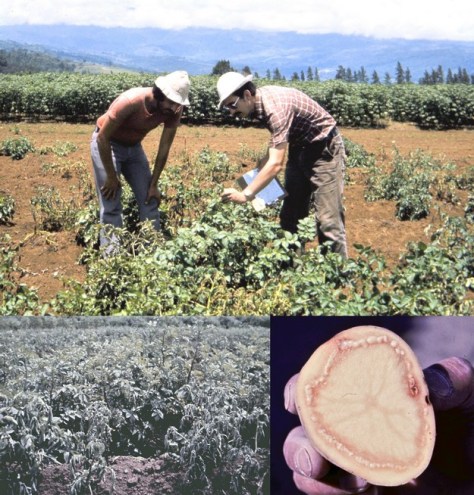
I also had a fantastic supervisor/head of department in geneticist Dr Roger Rowe (left).


Heading to Central America
I stayed with CIP for another five years, until March 1981. But not in Lima. It would have been fun to remain in the germplasm program, but there wasn’t a position available. The only one was filled by Zosimo. In any case, I was keen to expand my potato horizons and learn more about potato production in the round. So, after completing my PhD in December 1975, I joined CIP’s Outreach Program (that, in the course of time, became the Regional Research Program), not entirely sure what the future held. Costa Rica was mooted as a possible regional location.

In January 1976, Roger Rowe, Ed French (head of plant pathology at CIP), and I made a recce visit to Costa Rica, where we met officials at CATIE in Turrialba and it was agreed that CATIE would host a CIP scientist to work on adaptation of potatoes to warm environments. My wife Steph and I finally made it to Turrialba in April, and I set about setting up my research.

CATIE plant pathologist Raul Moreno (left) explains the center’s research in Turrialba on multiple cropping systems to (L-R) University of Wisconsin professor Luis Sequeira, Ed French, and Roger Rowe.

Quite quickly the focus changed to identify resistance to a disease known as bacterial wilt.

Evaluating potatoes in the field at Turrialba in 1977 (top). Potatoes showing typical asymmetrical wilt symptoms (bottom left) and bacterial exudate in infected tubers (bottom right).

Not only did we test different potatoes varieties for resistance to the bacterium, but we developed different agronomic solutions to control the amount of disease that was surviving from one season to the next.

I also worked closely with colleagues in the Ministry of Agriculture and the University of Costa Rica, and with potato farmers to reduce the high use of fertilizers and pesticides, as well as setting up a potato seed production project.
We developed a major regional project, PRECODEPA, during this time, involving six countries in the region and Caribbean, and funded by the Swiss government.
I was just 27 when we moved to Costa Rica. This was my first taste of program management; I was on my own (although I did receive administrative backup from CATIE, where we lived). My boss in Lima, Dr Ken Brown (left, head of the Regional Research Program) managed all his staff outside Lima on ‘a light rein’: encouraging, supporting, correcting program alignment when necessary. And always with great humor.

We spent five, happy years in Costa Rica. The work was enjoyable. I had a great couple of technical staff, Jorge and Moises, and secretary Leda.

I worked with the CIP team in Toluca, Mexico, and after the regional team leader left for the USA to pursue his PhD, Richard Sawyer asked me to take on the leadership of the program, which I did for over three years.

I learnt to grow a potato crop, and work alongside farmers and various government officials from the region. I learnt a lot about people management, and was all set to continue my career with CIP.

However, by November 1980, I decided that I needed a change. I’d achieved as much as I could in Central America. So we returned to Lima, with the expectation of moving with CIP to Brazil or the Philippines.


Joining academia
But fate stepped in. I was asked to apply for a lectureship at Birmingham, in my old department, now renamed ‘Plant Biology’. In January 1981 I flew back to the UK for interview (at my own expense!) and was offered the position to start in April that year. So, with some regret—but full of anticipation—I resigned from CIP and we returned to the UK in mid-March.

With the forthcoming retirement in September 1982 of Professor Jack Hawkes (right), Mason Professor of Botany and genetic resources MSc course leader (who had supervised my PhD), the university created this new lectureship to ‘fill the teaching gap’ following Jack’s departure, particularly on the MSc course.

I spent the next ten years teaching and carrying out research on potatoes and legume species at Birmingham. I had quite a heavy teaching load, mostly with graduate MSc students studying the theory and practice of the conservation and use of plant genetic resources (the same course that I had attended a decade earlier).

I co-taught a BSc third (final) year module on genetic resources with my close friend and colleague Brian Ford-Lloyd (left), and contributed half the lectures in a second-year module on flowering plant taxonomy with another colleague, Richard Lester. Fortunately I had no first year teaching.
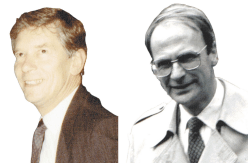
Over a decade I supervised or co-supervised ten PhD students, and perhaps 30 MSc students. I really enjoyed working with these graduates, mostly from overseas.

Around 1988, the four departments (Plant Biology, Zoology and Comparative Physiology, Microbiology, and Genetics) making up the School of Biological Sciences merged, and formed five research groups. I moved to the Plant Genetics Group, and was quite contented working with my new head of group, Professor Mike Kearsey (left above). Much better than the head of Plant Biology, Professor Jim Callow (right above, who was appointed in 1983 to succeed Hawkes as Mason Professor of Botany) who had little understanding of and empathy with my research interests.

By 1990 I still hadn’t hadn’t made Senior Lecturer, but I was on that particular pay scale and hoping for promotion imminently. I was working my way up the academic ladder, or at least I thought so. I took on wider responsibilities in the School of Biological Sciences, where I became Second Year Course Chair, and also as vice-chair of a university-wide initiative known as ‘Environmental Research Management’, set up to ‘market’ the university’s expertise in environmental research.

Nevertheless, I could see the writing on the wall. It was highly unlikely that I’d ever get my research on wild species funded (although I had received a large government grant to continue my potato collaboration with CIP). And with other work pressures, academia was beginning to lose its appeal.


Returning to international agricultural research
In September 1990, I received—quite out of the blue (and anonymously)—information about a new position at the International Rice Research Institute (IRRI) in the Philippines, as Head of a newly-created Genetic Resources Center (GRC).

Nothing ventured, nothing gained, I threw my proverbial hat in the ring, and was called for interview at the beginning of January 1991. My flight from London-Gatwick to Manila via Hong Kong was delayed more than 12 hours. Instead of arriving in Los Baños a day ahead of the interviews, I arrived in the early hours of the morning and managed about two hours sleep before I had a breakfast meeting with the Director General, Klaus Lampe (right) and his three deputies! The interview sessions lasted more than three days. There were two other candidates, friends of mine who had studied at Birmingham under Jack Hawkes!

To cut a long story short, I was offered the position at the end of January which I accepted once a starting salary had been agreed. However I wasn’t able to join IRRI until 1 July because I still had teaching and examination commitments at the university.

Quite a few of my university colleagues were surprised, concerned even, that I was giving up a tenured position. I’ll admit to some qualms as well. But the die was cast. I flew out to the Philippines on Sunday 30 June. Steph and our daughters Hannah (13) and Philippa (9) joined me at the end of December.

Not long after he joined IRRI in 1988, Klaus Lampe launched a major reorganization of departments and programs. The Genetic Resources Center combined two of the seed conservation and distribution activities of the institute: the International Rice Genebank (the largest and most genetically-diverse of its kind in the world), and the International Network for the Genetic Evaluation of Rice (INGER). Besides overall responsibility for GRC, I had day-to-day management of the genebank. INGER was led by an Indian geneticist and rice breeder Dr Seshu Durvasula who made it quite clear from the outset that he didn’t take kindly to these new arrangements nor having to report to someone who had never worked on rice. Such inflexible attitudes were not part of Lampe’s plan, and Seshu lasted only about 18 more months more before resigning. That’s yet another story.

I quickly realised that many improvements were needed to enhance the management of the genebank and its important rice germplasm collection. I took six months to familiarize myself fully with the genebank operations, consulting frequently with my staff, before making changes and assigning new responsibilities. Working with the genebank staff was a delight.

I convinced KLaus Lampe and senior management to invest appropriately in improving the genebank’s facilities, and to upgrade the positions of more than 70 staff. Since they constantly claimed that ‘the genebank was the jewel in IRRI’s crown‘, all I asked them was to put the money where their mouths were.

Our efforts paid off. We made the genebank ‘a model for others to emulate’. Not my words but those of external reviewers.

During my time in GRC, I had the privilege of meeting VIPs from around the world: presidents, prime ministers and other government officials, members of the diplomatic corps, and Nobel Prize winners.

In 1995 we initiated a major research and exploration project funded by the Swiss Government, which lasted for five years. We expanded the genebank collection by more than 25% to over 100,000 seed samples or accessions (since when it has grown further), many of them having been collected from farmers’ fields for the first time. This was a great opportunity to collect in more than 20 countries in Asia, Africa, and South and Central America where there were gaps in collections or, as in the case of Laos for example, war and other unrest had prevented any collections being made throughout the country until peace was established. In the photo below, taken in the Lao genebank at Vientiane in 1999, I’m with one of my staff Dr Seepana Appa Rao (center) and two genebank staff. On the left is Dr Chay Bounphanousay, head of the genebank, and now Director of the National Agriculture and Forestry Research Institute (NAFRI).

I had international commitments as well, chairing the Inter-Center Working Group on Genetic Resources (ICWG-GR) and establishing the System-wide Genetic Resources Program, the only program of the Consultative Group on International Agricultural Research (or CGIAR) involving all fifteen centers. In 1994, the ICWG-GR met in Kenya, and stayed at a hotel in the shadow of Mt Kenya (below). The ICWG-GR was a great group of colleagues to work with, and we worked together with great enthusiasm and collegiality. 

The early 1990s were an important time for genebanks since the Convention on Biological Diversity had come into effect in December 1992, and this began to have an impact on access to and use of genetic resources. However, one consequence was the increased politicization of genetic resources conservation and use. As the decade wore on, these aspects began to take up more and more of my time. Not so much fun for someone who was more interested in the technical and research aspects of genetic conservation.


A directorship beckons
Then, quite out of the blue at the beginning of January 2001, Director General Ron Cantrell (right) asked me to stop by his office. He proposed I should leave GRC and join the senior management team as a Director to reorganize and manage the institute’s research portfolio and relationships with the donor community. I said I’d think it over, talk with Steph, and give him my answer in a couple of days.
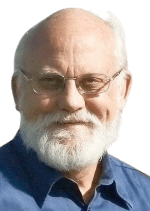
I turned him down! The  reasons are too complicated to explain here. I was contented in GRC. There were many things I still wanted to achieve there.

After about six weeks, Cantrell sent word he’d like to discuss his proposal once again. This time we came to an understanding, and my last day as head of GRC was 30 April 2001. I became IRRI’s Director for Program Planning and Coordination (later Communications) or DPPC, with line management for Communication and Publications Services (CPS), Library and Documentation Services (LDS), IT Services (ITS), the Development Office (DO), as well as the Program Planning and Communications unit (PPC).

Here I am with (left to right): Gene Hettel (CPS), Mila Ramos (LDS), Marco van den Berg (ITS), Duncan Macintosh (DO), and Corinta Guerta (PPC).

When I set up DPPC I inherited a small number of staff who had managed (not very effectively I’m sad to say) IRRI’s relationships with the donor community. IRRI’s reputation had hit rock bottom with its donors. I had to dig deep to understand just why the institute could not meet its reporting and financial obligations to the donors. After recruiting five new staff, we implemented new procedures to keep things on an even keel, and within six months we had salvaged what had been quite a dire situation. Data management and integration of information across different research and finance functions was the basis of the changes we made. And we never looked back. By the time I retired from IRRI, we had supported raising the institute’s annual budget to around USD 60 million, and IRRI’s was shining bright among the donors.

Here I am with PCC staff on my last day at IRRI, 30 April 2010. Left to right: Eric Clutario, Corinta Guerta, Zeny Federico, me, Vel Ilao, and Yeyet Enriquez. After I left IRRI, Corinta became head of PPC and was made a Director, the first national staff to rise through the ranks from Research Assistant in 1975 (she was originally a soil chemist) to a seat on the senior management committee.

As a Director, I was a member of IRRI’s senior management team taking responsibility for the institute’s strategy development and medium term plans, performance management, and several cross-cutting initiatives that enhanced IRRI’s welfare and that of the staff.

It wasn’t a bowl of cherries all the time at IRRI. There certainly were some impressive downs. The institute had a bit of a bleak patch for just under a decade from the time Lampe retired in 1995 until Bob Zeigler’s appointment in 2005. The institute had lost its way, and I guess that was one of the reasons I was asked to create the PPC office, to coordinate different functions of institute management.

But all good things come to an end, and by 2009 I’d already decided that I wanted to retire (and smell the roses, as they say), even though Zeigler encouraged me to stay on. By then I was already planning the celebrations for IRRI’s 50th anniversary, and agreed to see those through to April 2010. What fun we had, at the Big Show on Sunday 13 December 2009 and earlier.

With the Big Show production crew on stage afterwards.


The best?
Having thought long and hard about this, I believe that the DPPC role was the one I enjoyed most. That’s not to say that everything else I accomplished has not been cherished. But DPPC was different. I’d moved into a position where I could really influence events, I was managing areas of the institute’s portfolio and making a difference.

IRRI gave me the honour of hosting my despedida during the institute’s 50th gala anniversary dinner on 14 April 2010.

Do I have any regrets about the career choices I made? Not for one second.

I made some useful contributions to science (some of which is still being cited 40 years after publication). I traveled the world. I became fluent (for a while at least) in Spanish. And I have worked alongside many great scientists, fought with a few. Made many great friends, some sadly no longer with us.

Who could ask for more?


8 billion . . . and counting

This is the latest estimate of the world’s population announced by the United Nations on 15 November 2022. Can you imagine? I was born 74 years ago when the population was just over a quarter of what it is today.

So many more mouths to feed, so many challenges to overcome. And population growth fastest in many of the world’s poorest countries.

The UN’s latest prediction is that another billion will be added by 2037, and that . . . half of the world’s population growth will be concentrated in just nine countries: India, Nigeria, the Democratic Republic of the Congo, Pakistan, Ethiopia, the United Republic of Tanzania, the United States of America, Uganda and Indonesia (ordered by their expected contribution to total growth).


In 2021, the Food and Agriculture Organization of the UN or FAO reported that 193 million people in 53 countries or territories were facing acute food insecurity. And while conflict and the effects of the Covid pandemic are contributors to this state of affairs, there is no doubt that weather extremes are also a major contributing factor, affecting many more people worldwide. More frequent storms. Too much water—or too little. Rising temperatures reducing the agricultural productivity in many regions.

Sustainable food and agricultural production were appropriately important themes at the latest climate change conference—COP27—in Egypt. The Consultative Group on International Agricultural Research or CGIAR, the Food and Agriculture Organization of the UN or FAO, and the Rockefeller Foundation together were prominent at COP27 with the aim of putting agrifood systems transformation at the heart of the conference.

So, whether you are a believer in climate change or a denier (I’ve never been a climate change denier—quite the opposite, in fact), surely you have to accept that something strange is happening to our climate.

More than 30 years ago, two University of Birmingham colleagues—Brian Ford-Lloyd and Martin Parry—and I organized a workshop to discuss the impact of climate change on agriculture and the conservation of plant genetic resources (and how they could, and should, be used to mitigate the effects of a warming climate). The proceedings were published in 1990. Twenty-five years later, in 2014, we followed up with a second volume reflecting how the science of climate change itself had progressed, and how better we were equipped to use genetic resources to enhance crop productivity.


So while agriculture has been—and continues to be—one of the contributors to climate change (livestock, methane from rice paddies, use of fertilizers and the like) it can and has to be part of the solution.

Since more than half of the world’s population are now urban dwellers, they do not produce their own food. Or at least not enough (even if they grow their own vegetables and such on small holdings or allotments) to support many others.

Subsistence farming is not a solution either, even though these farmers can increase productivity by adopting new agricultural practices and higher-yielding crop varieties, if appropriate and affordable. And those campaigners who advocate the abolition of livestock farming (and I have seen one young person state that all farming should be stopped!) have little notion of how that would affect the lives of farmers globally, or where the rest of us would source our food.

There has been much talk recently about diversification of farming systems and adoption of so-called ‘orphan crops’ as part of the solution. Of course these approaches can make a difference, but should not diminish the role and importance of staple crops like wheat, maize, rice, potatoes, sorghum, and many others.

So what are the options? Investment in plant breeding, among others, has to be central to achieving food security. We will need a pipeline of crop varieties that are better adapted to changing environmental conditions, that are one step ahead of novel pest and disease variants. Crop productivity will have to increase significantly over the next few decades.


My first encounter with plant breeding—or plant breeders for that matter—was during a visit, in July 1969, to the Plant Breeding Institute (PBI) in Cambridge during a field course at the end of my second year undergraduate degree course at the University of Southampton. We heard all about wheat breeding and cytogenetics from Dr Ralph Riley FRS (right) no less (later knighted and Director of the PBI from 1972 to 1978). Our paths crossed again several times during the 1990s when he was associated with the CGIAR.

During my third and final year at Southampton, 1969-1970, I enjoyed a plant breeding module taught by genetics lecturer Dr Joe Smartt whose original research background was in peanut cytogenetics. He had spent some years in Africa as a peanut breeder in Zambia (then known as Northern Rhodesia).

It was in that course that I was introduced to one of the classic texts on the topic, Principles of Plant Breeding by University of California-Davis geneticist, RW Allard (first published in 1960). Sadly I no longer have my copy that I purchased in 1969. It was devoured by termites before I left the Philippines in 2010.

I’ve never been actively involved in plant breeding per se. However, the focus of my research was the conservation of genetic resources (of potatoes and rice, and some other species) and pre-breeding studies to facilitate the use of wild species in plant breeding.


It’s been my privilege to know and work with some outstanding plant breeders. Not only did they need a knowledge of genetics, reproductive behavior, physiology and agronomy of a plant species, but this was coupled with creativity, intuition and the famous ‘breeder’s eye’ to develop new varieties.

Perhaps the most famous plant breeder I met in the early 1990s was 1970 Nobel Peace Laureate (and ‘Father of the Green Revolution’) Norman Borlaug, who spent a lifetime breeding wheat varieties, first with the Rockefeller Foundation and then with the International Center for the Improvement of Maize and Wheat (CIMMYT) in Mexico. I wrote about that encounter here.

Explaining how rice seeds are stored in the International Rice Genebank at IRRI to Nobel Peace Laureate Norman Borlaug

In the potato world I met Stan Peloquin from the University of Wisconsin, George Mackay in Scotland, and John Hermsen from Wageningen University. I worked alongside Peruvian potato breeder and taxonomist Carlos Ochoa (below) for several years.

When I joined IRRI in the Philippines in 1991 as head of the Genetic Resources Center, one of my close colleagues was 1996 World Food Prize Laureate Gurdev Khush (below left) who led the institute’s breeding program. He and his team bred more than 300 varieties of rice, some of which—like IR36 and IR72—have been grown over millions of hectares and saved countless millions from starvation.

And another rice breeder (and 2004 World Food Prize Laureate) famous for NERICA rice was Monty Jones (above right) at the Africa Rice Center in West Africa. Monty was a graduate at Birmingham and I was the internal examiner for his PhD thesis in 1983.


Plant breeding has come a long way since I first became interested 50 years ago. Breeders now have access to a whole new toolbox to accelerate the development of new varieties, some of which were not available just a few years ago.

A decade ago I asked my friend and former colleague at IRRI, Ken McNally to contribute a review of genomics and other ‘omics’ technologies to discover and analyse useful traits in germplasm collections to the 2014 genetic resources book that I referred to earlier [1]. I’m sure there have been many useful developments in the intervening years.

One of these is gene editing, and Nicholas Karavolias (a graduate student at Berkeley University) has written an interesting review (from which the diagram above was sourced) of how the CRISPR gene editing tool is being used to improve crops and animals.

Among the climate change challenges that I mentioned earlier is the likelihood of increased flooding in many parts of the world. Just last year there were devastating floods along the Indus River in Pakistan where rice is an important crop, as it is in many Asian countries. Although grown in standing water in paddy fields, rice varieties will die if totally submerged for more than a few days when floods hit.

Rice paddies near Vientiane, Laos.

There are rice varieties that can grow rapidly as flood waters rise. Known as deepwater rice varieties, they can grow several centimeters a day. But they are never submerged as such for long.

The harvest of deepwater rice varieties in Thailand.

Over several decades, submergence tolerant rice varieties were developed in a collaborative project between US-based scientists and those at IRRI using marker-assisted selection (not genetic engineering) to identify a gene, named Sub1 (derived from an Indian rice variety) and incorporate it into breeding lines. My former IRRI colleagues, plant physiologist Abdelbagi Ismail and breeder David Mackill have written about response to flooding. In the video below you can see the impact of the Sub1 gene [2]. And the impact of that gene is readily seen in the video below which shows two forms of the rice variety IR64 with and without the Sub1 gene.

To date, the impact of genetic engineering in crop improvement has not been as significant as the technology promised, primarily because of opposition (environmental, social, and political) to the deployment of genetically-modified varieties. I wrote about that issue some years back, and focused on the situation of beta-carotene rich rice known as ‘Golden Rice’. After many years of development, it’s gratifying to see that Golden Rice (as the variety Malusog) has now been grown commercially in the Philippines for the first time, and can now deliver real health and nutritional benefits to Vitamin A impoverished communities in the Philippines and hopefully elsewhere before too long.

In recent weeks there have been interesting news releases about the development of perennial rice and its potential to mitigate some climate change effects, and reduce labor usage. Researchers at the John Innes Centre in the UK have identified a gene that they hope will make wheat varieties more heat-resistant. The need for trait identification has never been greater or the importance of the hundreds of thousands of crop varieties and wild species that are safely conserved in genebanks around the world. Fortunately, as mentioned earlier, there are now better and more efficient tools available to screen germplasm for disease and pest resistance, or for genes like the wheat gene just discussed.

In terms of adaptation to a changing climate through plant breeding, I guess much of the focus has been on developing varieties that are better adapted to changing environment, be that the physical or biotic environment.

But here’s another challenge that was first raised some years back by one of my former colleagues at IRRI, Melissa Fitzgerald (right) who was head of the Grain Quality, Nutrition, and Postharvest Center, and is now Professor and Interim Head of the School of Agriculture and Food Sciences at the University of Queensland, Australia.

And it’s to do with the potential global savings of carbon. Melissa and her colleagues were looking at the cooking time of different rice varieties. This is what she (and her co-authors wrote in an interesting 2009 paper):

The cooking time of rice is determined by the temperature at which the crystalline structures of the starch begin to melt. This is called gelatinization temperature (GT). Lowering the GT of the rice grain could decrease average cooking times by up to 4 min. Although this might initially seem entirely insignificant, by computing the number of times rice is cooked in any one day by millions of households around the world, a decrease of just 4 min for each cooking event could save >10,000 years of cooking time each day. This represents massive potential for global savings of carbon and is of particular relevance to poor, rural households that depend on scarce local supplies of fuel.

Now there’s a huge breeding challenge.

Anyway, in this post I’ve really only scratched the surface of the topic, but hopefully for those readers not familiar with plant breeding, what it entails, and what it can promise, I hope that I’ve explored a few interesting aspects.


[1] McNally, KL. 2014. Exploring ‘omics’ of genetic resources to mitigate the effects of climate change. In: M Jackson, B Ford-Lloyd & M Parry (eds), Plant Genetic Resources and Climate Change. CABI, Wallingford, UK. pp. 166-189

[2] Ismail, AM & Mackill, DJ. 2014. Response to flooding: submergence tolerance in rice. In: M Jackson, B Ford-Lloyd & M Parry (eds), Plant Genetic Resources and Climate Change. CABI, Wallingford, UK. pp. 251-269.

Launching a career in agricultural research

Over a career spanning almost four decades, I spent more than 27 years in international agricultural research in South and Central America, and Asia. And a decade teaching at the University of Birmingham.

It all started on this day, 50 years ago, when I joined the International Potato Center (CIP) in Lima, Peru as an Associate Taxonomist.

But first, let me take you back a couple of years, to September 1970.


I’d enrolled at the University of Birmingham for the MSc degree in Conservation and Utilization of Plant Genetic Resources, taught in the Department of Botany. It was the following February that I first heard about the possibility of joining CIP.

The head of department, potato expert Professor Jack Hawkes had just returned from a six week expedition to Bolivia (to collect wild species of potato) that was supported, in part, by the USAID-North Carolina State University-sponsored potato program in Peru.

The American joint leader of that program, Dr Richard Sawyer (left), mentioned to Jack that he wanted to send a young Peruvian scientist, Zosimo Huamán, to Birmingham for the MSc course in September 1971, and could he suggest anyone to fill a one-year vacancy.

On the night of his return to Birmingham, Jack phoned me about this exciting opportunity. And would I be interested. Interested? I’d long had an ambition to travel to South America, and Peru in particular.

However, my appointment at CIP was delayed until January 1973. Why? Let me explain.


In 1971, Sawyer was in the final stages of setting up the International Potato Center. However, a guaranteed funding stream for this proposed research center had not been fully identified.

At that time, there were four international agricultural research centers:

  • the International Rice Research Institute (IRRI) in Los Baños, the Philippines (founded in 1960);
  • the International Center for the Improvement of Maize and Wheat (CIMMYT) near Mexico City (1966);
  • the International Institute for Tropical Agriculture (IITA) in Ibadan, Nigeria (1967); and
  • the International Center for Tropical Agriculture (CIAT) in Cali, Colombia (also 1967).

All received bilateral funding from several donors, like the non-profit Rockefeller and Ford Foundations for example, or government agencies like USAID in the USA or the UK’s Overseas Development Administration.

In May 1971 there was a significant development in terms of long-term funding for agricultural research with the setting up of the Consultative Group on International Agricultural Research or CGIAR (an umbrella organization of donors, run from the World Bank in Washington, DC) to coordinate and support the four centers I already mentioned, and potentially others (like CIP) that were being established.

Since its inception, CGIAR-supported research was dedicated to reducing rural poverty, increasing food security, improving human health and nutrition, and ensuring more sustainable management of natural resources.

For more than 50 years, CGIAR and partners have delivered critical science and innovation to feed the world and end inequality. Its original mission—to solve hunger—is now expanding to address wider 21st century challenges, with the aim of transforming the world’s food, land, and water systems in a climate crisis. More on that below.


Back in 1971 the question was which funding agencies would become CGIAR members, and whether CIP would join the CGIAR (which it did in 1973).

Throughout 1971, Sawyer negotiated with the UK’s ODA to support CIP. But with the pending establishment of the CGIAR, ODA officials were uncertain whether to join that multilateral funding initiative or continue with the current bilateral funding model.

Decisions were, in the main, delayed. But one important decision did affect me directly. The ODA gave me a personal grant in September 1971 to remain in Birmingham until funding to CIP could be resolved. I therefore registered for a PhD on potatoes under Jack Hawkes’ supervision, and spent the next 15 months working on ideas I hoped to pursue further once I could get my hands on potatoes in the Andes, so to speak.

With Jack Hawkes in the potato field genebank at Huancayo, central Peru (3100 m above sea level) in early 1974.

In the event, the ODA provided £130,000 directly to CIP between 1973 and 1975 (= £1.858 million today), which funded, among other things, development of the center’s potato genebank, germplasm collecting missions around Peru, and associated research, as well as my position at the center.


Arriving in Peru was an ambition fulfilled, and working at a young center like CIP was a dream come true, even though, at just 24, I was somewhat wet behind the ears.

However, there were some great colleagues who taught me the ropes, and were important mentors then and throughout my career. I learnt a lot about working in a team, and about people management, very useful in later years as I moved up the management ladder.

For the first three years, my work was supervised and generously supported by an American geneticist, Dr Roger Rowe (right, with his wife Norma) who joined CIP on 1 May 1973 as head of the Breeding and Genetics Department. I owe a great deal to Roger who has remained a good friend all these years.

Always leading from the front, and never shy of making the tough decisions, Roger went on to fill senior management positions at several CGIAR centers. As a former colleague once commented to me, “Roger was the best Director General the CGIAR never had.” I couldn’t agree more.

When I joined CIP’s Regional Research group in 1976 and moved to Costa Rica, my new boss was Ken Brown (left). Ken had been working as a cotton physiologist in Pakistan for the Cotton Research Corporation, although he had previously worked in several African countries.

Ken never micromanaged his staff, was always there to help set priorities and give guidance. In those aspects of people management, I learned a lot from Ken, and he certainly earned my gratitude.

Aside from my work on potato genetic resources (and completing my PhD in 1975), I enjoyed the work on bacterial wilt and setting up a regional program, PRECODEPA as part of my Regional Research activities.

Jim Bryan (right, with Costarrican assistant Jorge Aguilar) was my closest friend at CIP. A native of Idaho, Jim was CIP’s seed production specialist. Down to earth and pragmatic, Jim taught me the importance of clean potato seed and seed production systems. He came to work with me in Costa Rica during 1979/80 and together we worked on a successful project (with the Costarrican Ministry of Agriculture) for the rapid multiplication of seed potatoes.

But by the end of 1980, I was looking for a new challenge when one came to my attention back home in the UK.


In April 1981, I joined the University of Birmingham as a Lecturer in the Department of Plant Biology (as the Department of Botany had been renamed since I graduated).

I have mixed feelings about that decade. Enthusiastic for the first few years, I became increasingly disenchanted with academic life. I enjoyed teaching genetic resources conservation to MSc students from many different countries, and particularly supervision of graduate students. I also kept a research link on true potato seed (TPS) with CIP, and around 1988 participated in a three-week review of a Swiss-funded seed production project at four locations in Peru.

With members of the project review team, with team leader Carlos Valverde on the right. Cesar Vittorelli, our CIP liaison is in the middle. I don’t remember the names of the two other team members, a Peruvian agronomist, on my right, and a Swiss economist between Vittorelli and Valverde.

But universities were under pressure from the Tory government of Margaret Thatcher. It was becoming a numbers, performance-driven game. And even though the prospects of promotion to Senior Lecturer were promising (I was already on the SL pay scale), by 1991 I was ready for a change.


And so I successfully applied for the position of Head of the Genetic Resources Center at IRRI, and once again working under the CGIAR umbrella. I moved to the Philippines in July, and stayed there for the next 19 years until retiring at the end of April 2010.

I was much happier at IRRI than Birmingham, although there were a number of challenges to face: both professional and personal such as raising two daughters in the Philippines (they were 13 and 9 when we moved to IRRI) and schooling at the International School Manila.

Whereas I’d joined CIP at the beginning of its institutional journey in 1973, IRRI already had a 30 year history in 1991. It was beginning to show its age, and much of the infrastructure built in the early 1960s had not fared well in the tropical climate of Los Baños and was in dire need of refurbishment.

A new Director General, Dr Klaus Lampe (right) from Germany was appointed in 1988 with a mandate to rejuvenate the institute before it slipped into terminal decline. That meant ‘asking’ many long-term staff to move on and make way for a cohort of new and younger staff. I was part of that recruitment drive. But turning around an institute with entrenched perspectives was no mean feat.


With responsibility for the world’s largest and most important rice genebank, and interacting with genebank colleagues at all the other centers, I took on the chair of the Inter-Center Working Group when we met in Ethiopia in January 1993, and in subsequent years took a major role in setting up the System-wide Genetic Resources Program (SGRP). This was a forerunner—and a successful one at that—of the programmatic approach adopted by the CGIAR centers.

The Swiss-funded project to collect and conserve rice varieties from >20 countries, and the innovative and pioneer research about on-farm conservation were highlights of the 1990s. As was the research, in collaboration with my old colleagues at Birmingham, on the use of molecular markers to study and conserve germplasm. A first for the CGIAR centers. Indeed a first for any crop.

Helping my genebank staff grow in their positions, and seeing them promoted gave me great satisfaction. I’d inherited a staff that essentially did what they were told to do. With encouragement from me they took on greater responsibility—and accountability—for various genebank operations, and their enthusiastic involvement allowed me to make the necessary changes to how the genebank was managed, and putting it at the forefront of CGIAR genebanks, a position it retains today.

My closest friend and colleague at IRRI was fellow Brit and crop modeller, Dr John Sheehy (right). John joined the institute in 1995, and I was chair of his appointment committee. Within a short time of meeting John for the first time, I recognized someone with a keen intellect, who was not constrained by a long-term rice perspective, and who would, I believed, bring some exceptional scientific skills and thinking to the institute.
Among his achievements were a concept for C4 rice, and persuading the Bill and Melinda Gates Foundation to back a worldwide consortium (now administered from the University of Oxford) of some of the best scientists working on photosynthesis to make this concept a reality.

By May 2001, however, change was in the air. I was asked to leave the Genetic Resources Center (and research) and join IRRI’s senior management team as Director for Program Planning and Communications, to reconnect the institute with its funding donors, and develop a strategy to increase financial support. I also took IT Services, the Library and Documentation Services, Communication and Publication Services, and the Development Office under my wing.

IRRI’s reputation with its donors was at rock bottom. Even the Director General, Ron Cantrell, wasn’t sure what IRRI’s financial and reporting commitments were.

We turned this around within six months, and quickly re-established IRRI as a reliable partner under the CGIAR. By the time I left IRRI in 2010, my office had helped the institute increase its budget to US$60 million p.a.


This increased emphasis on funding was important as, by the end of the 1990s, several donors were raising concerns about the focus of the centers and how they should be supported. Furthermore, a number of external factors like the Convention on Biological Diversity (CBD, agreed by 150 countries in 1992), the growing consensus on the threat of climate change, the adoption of the UN Millennium Development Goals (MDGs, and subsequent Sustainable Development Goals or SDGs) meant that the 15 CGIAR centers as they had become could not continue with ‘business as usual’.

Until the end of the 1990s, each center had followed its own research agenda. But it became increasingly clear that they would have to cooperate better with each other and with the national programs. And funding was being directed at specific donor-led interests.

There is no doubt that investment in the CGIAR over 50 years has brought about great benefits, economically and in humanitarian ways. Investment in crop genetic improvement has been the mainstay of the CGIAR, and although research on natural resources management (NRM, such as soils and water) has been beneficial at local levels, it has not had the widespread impact that genetic improvement has.

The impact of the CGIAR is well-documented. Take this 2010 paper for example. Click on the image for more information.

My good friend from the University of Minnesota, Professor Phil Pardey and two colleagues have calculated the economic benefits of CGIAR to be worth about 10 times the cost. Impressive. Click on the image below for more information.

I have watched a couple of decades of CGIAR navel gazing as the system has tried to ‘discover’ the best modus operandi to support national programs and the billions of farmers and consumers who depend on its research outputs.

There’s no doubt these changes have increased bureaucracy across the CGIAR. One early development was the introduction of 3-year rolling Medium Term Plans with performance targets (always difficult in agricultural and biological research), which led to perverse incentives as many centers set unambitious targets that would attract high scores and therefore guarantee continued donor support.

I did not favor that approach (supported by my DG), encouraging my colleagues to be more ambitious and realistic in their planning. But it did result in conflict with an accountant in the World Bank – a ‘bean counter’ – who had been assigned to review how the centers met their targets each year. I don’t remember his name. We had endless arguments because, it seemed to me, he simply didn’t understand the nature of research and was only interested if a particular target had been met 100%. Much as I tried to explain that reaching 75% or perhaps lower could also mean significant impact at the user level, with positive outcomes, he would not accept this point of view. 100% or nothing! What a narrow perspective.

A former colleague in the CGIAR Independent Evaluation Arrangement office in Rome and a colleague have written an excellent evaluation of this performance management exercise, warts and all. Click on the image below to access a PDF copy.

Now we have OneCGIAR that is attempting to make the system function as a whole. Very laudable, and focusing on these five highly relevant research initiatives. Click on the image below for more information.

What I’m not sure about are the levels of management that the new structure entails: global directors, regional directors, program or initiative leaders, center directors (some taking on more than one role). Who reports to whom? It seems overly complicated to my simple mind. And there is certainly less emphasis on the centers themselves – despite these being the beating heart of the system. It’s not bureaucrats (for all their fancy slogans and the like) who bring about impacts. It’s the hard-working scientists and support staff in the centers.


Nevertheless, looking back on 50 years, I feel privileged to have worked in the CGIAR. I didn’t breed a variety of rice, wheat, or potatoes that were grown over millions of hectares. I didn’t help solve a water crisis in agriculture. But I did make sure that the genetic resources of potato and rice that underpin future developments in those crops were safe, and ready to be used by breeders whenever. I also helped IRRI get back on its feet, so to speak, and to survive.

And along the way, I did make some interesting contributions to science, some of which are still being cited more than four decades later.

I’m more than grateful for the many opportunities I’ve been afforded.


Collecting potatoes in Peru – following in Jack Hawkes’ footsteps (Part 2)

A year after returning from collecting in Ancash and La Libertad (as described in Part 1) I was heading north once again, this time to the Department of Cajamarca. In a long wheelbase Land Rover, a donation from the British government to CIP. But alone this time, almost. By May 1974 I was already quite fluent in Spanish, and had done more travelling around the country. It was assumed therefore I could look after myself, so we decided I should travel with just one of the CIP drivers, Octavio. I regret I cannot recall his surname.

Just about to head out (May 1974)

Parked on the side of the Panamericana Norte highway north of Lima

Cajamarca is also the capital city of the department, and is one of my favorite places in Peru. At 2700 m elevation, the city lies in a broad valley among rolling hills. The landscape of Cajamarca has a much gentler feel to it than the high peaks of Ancash or further south around Cuzco, or the altiplano surrounding Puno.

We must have split the journey to Cajamarca city. It’s almost 900 km and even today, on better roads, the journey is estimated to take more than 14 hours. North of the coastal city of Trujillo, the road to Cajamarca diverges east from the Panamericana Norte, winding through a lush river valley in the desert, and climbing into the mountains. Dropping down the other side, you eventually are treated to views of the city unfolding in the distance. The climate is spring-like, the food is good (the leche asada or caramel custard is a local treat), and the architecture of the (unfinished) cathedral on the main square of Plaza de Armas is a wonder.

We spent around three weeks travelling to remote areas, but were able to return from time to time to Cajamarca to enjoy the comforts of the Turista Hotel, and the Inca baths and their hot springs.

As with our collecting the previous year, we stopped to chat with farmers, ask about the varieties they and their neighbors cultivated, and requesting a sample of healthy tubers of each variety.

The market town of Bambamarca, 100 km or so north of Cajamarca was particularly interesting. It was a colorful, vibrant scene with many wearing their typical tall sombreros and russet-red ponchos, typical of Cajamarca.

On one day we stopped to chat with one farmer and his wife who became very interested why we were collecting potato varieties, and what we would do with them once back in Lima. They were so pleased to show me this particular variety with its large tubers. It’s one of my favorite images from my time in Peru.

There was even a little time for some sightseeing. Just 10 km northeast from the Plaza de Armas in Cajamarca stands an unusual archaeological site, the Ventanillas de Otuzco, a pre-Inca necropolis with more than 300 niches carved in the rock face. We even found wild tomatoes growing there.

If I have one abiding image of Cajamarca—city and landscape—it would be this one. Having eaten an early breakfast, Octavio and I headed north from the city, climbing above the valley. We stopped almost at the summit so I could take this photo of the Cajamarca valley. If you look carefully you can see the steam rising from the Inca baths in the distance.

Octavio and I got along quite well. He’d never traveled to that part of Peru before and, as a driver from the big city, had very little knowledge of potatoes. We had just the one falling-out, if you can call it that. He would insist in driving downhill along quite treacherous roads in high gear, or even in neutral, relying solely on the brakes alone to control our speed. I had to insist he use low gear to slow the vehicle or he wouldn’t be driving any more until we reached the coast and the Panamerican highway. Anyway, we arrived back in Lima after an incident-free trip.

Later on that year, I returned to Cajamarca with my wife Steph and two English friends from CIP. Again in 1988, as a member of a CIP project review team, I spent a few days in the city and surrounding countryside looking at seed production and storage systems.


When I visited CIP in 2016 as part of a review of the genebank, the staff showed me some herbarium sheets from some of the varieties I had collected on that trip to Cajamarca.


Earlier in 1974, in February, I traveled to Puno and Cuzco in the south of the country with Dr Peter Gibbs from the University of St Andrews, Scotland. He was studying the floral biology of another Andean tuber crop known as oca (Oxalis tuberosa). He had contacted CIP’s Director General to see if anyone might be headed south for fieldwork with whom he could travel.

I’d already decided to carry out some field studies of potato varietal mixtures and was looking for suitable locations. Peter suggested that we might head to Cuyo Cuyo, a municipality just under 250 km northeast of Puno and Lake Titicaca. Famous for its agricultural terraces or andenes, there had been one study in 1951 describing the cultivation of oca in the valley. Peter convinced me that it was worth heading in that direction. Which is precisely what we did.

On this trip we drove a short wheelbase Land Rover, another donation to CIP from the British government. It had a separate cab; the rear was covered with a canvas hood, not the most secure vehicle for venturing into remote parts.

Heading south down the Panamericana Sur, we had a road trip of almost 1300 km ahead of us. I know we stopped in Nazca on the first night, after driving 447 km. From there to Arequipa was another 568 km, and the final leg into Puno was 295 km. I think we must have made it to Arequipa on the second day, resting up before the climb to the altiplano on the third day.

In Puno, we rested for a couple of days, checking our gear, and meeting with some officials from the Ministry of Agriculture for further advice before setting off for Cuyo Cuyo. Peter had developed a taste for algarrobina, a popular Peruvian cocktail, a bit like egg-nog, but with a kick, especially after one too many. We weren’t in the best shape to head off across the altiplano the next day.

Each time I crossed the altiplano it was hard to understand just how people managed to survive in such a harsh environment: flat, cold, and often over 4000 m. Yet we passed farms, growing the bitter and frost-resistant potatoes that are processed to make chuño as well as herding llamas and alpacas. Crossing several rivers, we finally reached the head of the Cuyo Cuyo valley and, descending into the cloud, encountered workmen struggling to clear a landslide. However that gave an opportunity for some impromptu botany, finding a beautiful begonia with flowers as large as saucers.

Once clear of the landslide, and out of the cloud, the most amazing vista opened up before us. The whole valley was terraced and, as we learned over the next few days, supported a rotation system involving potatoes, oca, barley and faba beans (both imported by the Spanish in the 16th century), and a fallow.

Arriving in the village it was important to find somewhere to stay. We hadn’t thought to make any enquiries before setting out for Cuyo Cuyo. There was no hotel, but the postmaster offered us space to set up our camp beds and herbarium drying equipment, and there we stayed for about five days. We were certainly a curiosity with the village children.

Peter set about collecting samples of oca with different floral structures for his study, and to make herbarium specimens to take back to St Andrews. At the time of our visit many of the oca fields were planted in the lower levels of the valley often close to the river. I set off on my own, guided by a local farmer, to potato terraces higher up the valley to study the varietal mixtures and to learn more about the agricultural system. That study was finally published in the journal Euphytica in 1980 and can be read here.

Peter’s oca samples were the devil to dry because of their fleshy stems. When he finally made it back to St Andrews a couple of months later, he found that his ‘dry’ specimens were still alive. So he planted them in a university glasshouse, and had the best of both worlds being able to continue his study with living plants.

Leaving Cuyo Cuyo, we headed back to Puno staying one night there before setting off for Cuzco some 385 km to the northwest.

I was interested in locating another site for study, and we settled on a community near Chinchero outside Cuzco. We hired horses to reach remote fields, and there I collected flower buds (for chromosome counts) from several fields.

It was interesting to find large commercial cultivation of potatoes (for sale in markets like Cuzco) alongside smaller plots of native varieties that farmers grew for home consumption. As I was collecting samples from one field, two women stopped close-by and one of them crouched down to feed her baby. Both were dressed in the typical costume of that region.

Soon we had all the information we thought we needed (in hindsight I would have done things very differently, and at Cuyo Cuyo), and headed back to Cuzco where we left the vehicle to be collected by Zósimo Huamán who was heading south for his own field studies, and who would drive it back to Lima.

While we in Cuzco, we visited the home of Professor César Vargas, a renowned Peruvian botanist, who I had first met in January 1973 when Jack Hawkes introduced me to him. Jack first met Vargas when he was working in Colombia between 1948 and 1951. Also, Vargas’ daughter Martha was an MSc student at St Andrews so it was a good opportunity for Peter also to meet him.


I only made one field trip with Jack Hawkes, in March 1981 just a few weeks before I left CIP to return to the UK and take up a lectureship at The University of Birmingham.

Jack was in Lima on his way back to the UK having led yet another expedition to collect potatoes in Bolivia. He suggested that we take a long weekend to head up into the mountains and see what wild species of potato could be found. A CIP colleague, potato breeder Juan Landeo, came along for the trip.

On the first day, we set off east up the Carretera Central, over Ticlio at 4800 m and on to the smelting town of La Oroya, before heading north to the important mining center of Cerro de Pasco (4330 m), one of the highest (and bleakest) cities in the world.

The next morning we continued north, finally descending to the warmth of Huánuco, a lovely city at just 1880 m. We spent the night there.

I don’t recall if we split the journey back to Lima (or the exact route) or traveled from Huánuco in one day, stopping every now and then to collect potatoes.

Early in the day we came across some farmers using the traditional foot plough or chaqui tacclla. This is an iconic image.

We passed through some awesome landscapes. Even encountering a significant landslide that blocked our path. Closer to the coast the mountains were lost in the clouds as we made our way down the side of the valley.

I learned one very important lesson from Jack Hawkes: that a sound knowledge of the ecology of the species was very important (a point emphasized by Israeli geneticist Gideon Ladizinsky when I took a party of Birmingham students to a genetic resources course near Tel Aviv in 1982).

We’d be driving along, when Jack would suddenly ask us to pull over, saying that we’d find potatoes in the vicinity. Even naming which species we’d be likely to find. And I don’t remember him ever being wrong. It was fascinating to see how his deep knowledge guided his approach to collecting wild potatoes.

This is the only photo of me in the field with Jack, as we collected Solanum multiinterruptum (or was it S. multidissectum?).

It was a great experience, learning more about wild species in the field, from the master. These are memories that will stay with me for years to come.


Collecting potatoes in Peru – following in Jack Hawkes’ footsteps (Part 1)

Professor Jack Hawkes examines a specimen of the wild potato species Solanum raphanifolium in the ruins of Sacsayhuaman outside Cuzco, January 1973

Potatoes are native to the Americas; the wild Solanum species are found from Colorado in the United States, south through Mexico and Central America, and throughout the Andes as far south as northern Argentina. They even grow on the plains of Argentina, Uruguay and Brazil. Different forms of potato were domesticated thousands of years ago in the Andean region and southern Chile. Even today, farmers in the Andes grow (and conserve) a wonderful range of potato varieties.

Over many decades potato scientists made expeditions to the Americas to collect wild and cultivated potatoes, to learn about their biology and ecology, and how they might be used to enhance potato productivity through plant breeding. Among the potato pioneers was my friend, colleague, and mentor, the late Professor Jack Hawkes, a world-renowned expert on potato diversity and taxonomy and a leading light in the genetic resources conservation movement that emerged in the 1960s.

The wonder of potato diversity

I began my own studies on potato under Jack’s tutelage in September 1971 at The University of Birmingham, after graduating with an MSc degree in genetic resources conservation. Jack took me under his wing, so to speak, to teach me about potatoes and prepare me for a posting at the International Potato Center (CIP) in Lima, Peru where (from January 1973) I worked as an Associate Taxonomist for three years. I had just turned 24 the previous November.

Jack made his first trip to South America in 1939 at the age of 23, turning 24 during the course of the expedition in June that year, as a member of the Empire Potato Collecting Expedition to South America and spending nine months collecting wild and cultivated potatoes along the Andes of Argentina, Bolivia, Peru, Ecuador, and Colombia.

Jack Hawkes (second from right) with expedition leader Edward Balls (on Jack’s right) and two others outside a church in La Paz, Bolivia in March 1939.

Returning to Cambridge in December 1939, just after the Second World War broke out, Jack continued to study the materials collected on the Empire expedition, completing his PhD in 1941. He remained at Cambridge until 1948 when he was seconded by the Government of Colombia to set up a research station for potatoes near Bogota.

In 1952, he returned to the UK, joining The University of Birmingham as a lecturer in the Department of Botany, but he returned to the Americas many times over the next four decades to collect potatoes. Awarded a personal chair in taxonomic botany in 1961, he became Mason Professor of Botany and head of department in 1967.

In 1969 he launched the one year MSc course I referred to earlier, and that’s when I first met him a year later. It would be no exaggeration to state that Jack Hawkes played an incredibly important role in shaping my subsequent career in international agricultural research and academia.


In December 1970, just three months after I arrived in Birmingham, Jack joined his Danish colleague Peter Hjerting on an expedition to collect wild potatoes in Bolivia, accompanied by Jack’s research assistant and PhD candidate Phil Cribb.

Richard Sawyer

The expedition received support from the newly-established International Potato Center (CIP) in Lima whose Director General, Dr Richard Sawyer kindly loaned a four-wheel drive vehicle. Joining the expedition was a young Peruvian scientist, Zósimo Huamán who had been hired by CIP to manage its large germplasm collection of native potato varieties.

While in Lima, Jack was asked to accept Zósimo on the Birmingham MSc course in September 1971. And then Sawyer asked Jack if he could recommend someone to join CIP on a one-year posting to cover for Zósimo while away in Birmingham. Apparently, so Jack later told me, my name immediately came to mind. Perhaps I’d mentioned that I had a burning ambition to visit South America and, in any case, I would graduate just when Zósimo was expected in the UK.

Anyway, to cut a long story short, immediately on his return to Birmingham at the end of February 1971, Jack told me about the opportunity at CIP. Was I interested? There was no question about it.

Zósimo and Jack in a potato field in Bolivia standing beside a variety of S. ajanhuiri

As it turned out, my departure to Peru was delayed by 15 months while different funding options for my posting were finalized. I began my PhD study, and after he graduated with his MSc in September 1972, Zósimo also registered for a PhD, studying the evolution of a frost-resistant form of cultivated potato known as Solanum ajanhuiri that he and Jack had collected at high altitude in Bolivia.

I departed for Lima on 4 January 1973, and by the beginning of April that year Zósimo had also returned to Peru having completed the first six month residency requirement for his PhD at Birmingham.


With hardly any time to get himself sorted after being outside Peru for 18 months, Zósimo and I organized a trip in May to collect potato varieties from two departments to the north of Lima: Ancash and La Libertad.

To say that I found the experiences beyond my expectations would be an understatement. Peru was everything I hoped it would be when I spent hours poring over a map of the country as a young boy. It is an extremely beautiful country, even if (at least in the 1970s) it was not the easiest country to travel around.


After 49 years, and without access to any notes we made, reports we wrote, or the books in which we recorded the germplasm samples collected, I am unable to detail the routes we took with any degree of confidence, except in the most broad terms. We were away from Lima for almost a month, and explored much of these two departments as best we could: by road, on foot, and on horseback.

At the end of the road, preparing to walk into a distant village; and below, riding back from a side-trip to a village

This was the first collecting trip that I had made. Time to put theory into practice. I bowed to Zósimo’s better knowledge, not only of potatoes and the terrain, but because he was a native Spanish speaker and after just a few months in Peru my Spanish was rudimentary to say the least. Also, as I mentioned earlier, Zósimo already had experience of collecting, having joined the Hawkes-led expedition to Bolivia in 1971.

We headed north on the Panamerican highway, destination Huaraz, the capital of Ancash located in the Callejón de Huaylas, a long north-south valley between the Cordillera Blanca to the east with the highest snow-covered peaks in the country and the Cordillera Negra to the west. Our aim was to explore regions right round these mountain ranges, and we certainly found ourselves in some remote locations.

We moved north into La Libertad, spending a little less time there than in Ancash before heading back to Trujillo on the coast for a well-deserved shower and rest at a good hotel, and better food before heading south to Lima, a journey of 575 km. I don’t recall if we attempted that last sector in one day or made an overnight stop about half way. In any case the journey would have taken about 10 hours or more, and given an incident on the way south that I’ll explain below, maybe we did split the journey.


In 1973, the Peruvian government was led by left-wing-leaning military junta headed by General Juan Velasco Alvarado who came to power in 1968 following a coup d’état. We encountered military checkpoints frequently on our travels in the mountains, often manned by young recruits or conscripts, teenagers even, armed with automatic weapons. Coming from a country where the police never carried firearms (at least then) nor were the armed forces deployed on the streets (that would change in Northern Ireland in the 1970s) I found it extremely disconcerting to be faced with soldiers pointing weapons at me and wondering if their discipline was as tight as I hoped. Needless to say we never encountered any specific threats or hostility.

What particularly struck me during this trip (and others that I made in 1974 and 1975, which I describe in Part 2) was the generosity of almost everyone we met. Farmers were generous with the potato varieties and knowledge they shared with us. Each potato variety collected was carefully labeled with a unique number inscribed on each tuber, and on the paper bags in which they were stored. All the details were recorded in a small booklet; I wonder if these are still archived in the CIP genebank in Lima.

Often we were invited to share a meal with a family, and only on one occasion did I baulk at what was put in front of me: fried cuy or guinea-pig (which are native to Peru and most households keep a small herd of them running around the house ready for the pot). I just couldn’t bring myself to tuck in. Guinea-pigs, to my mind, were furry pets. Needless to say that, as I grew older, such inhibitions diminished.

Despite being memory-deficient when it comes to the route or the places we stayed, there are several anecdotes that are still fresh today.

One experience was particularly emotional. Just 57 km north of Huaraz lies the town of Yungay, and a few kilometers closer to Huaraz, the town of Ranrahirca. On 31 May 1970 a powerful earthquake off the coast west of here, dislodged a massive landslide, a mixture of ice and rocks, that fell from Huascarán, Peru’s highest mountain.

Looking north along the Callejón de Huaylas towards the twin peaks of Huascarán

Travelling at speeds up to 335 kph the landslide quickly reached and obliterated both towns, killing tens of thousands. In Yungay, when we visited almost three years later, the only remains of the town still standing were the cemetery mound with a statue of Christ with outstretched arms, and four palm trees. They had survived, yet everywhere else the landscape was dotted with crosses marking where houses used to stand and presumably families perished. What a sobering sight indeed.

The statue of Christ in the site of Yungay, May 1973

This was the site of Ranrahirca where the town had been obliterated by boulders the size of houses, May 1973


We followed the road south from Huaraz and round to the east of the Cordillera Blanca, to Chavín de Huántar.

A stone tenon head, one of the iconic features of the ruins at Chavín

The next day we headed north up a steep and extremely muddy road, slipping and sliding from side to side. Fortunately the road was wide and there were no drop-offs, until we reached the highest point. The road levelled off, snaking along the side of the valley, barely wide enough for our Toyota Landcruiser. It was also quite muddy there as well.

We could see there was a drop-off, but given that we were in cloud, couldn’t see more than about 50-100 m ahead. It was only on the return journey and checking our maps that we saw that the side of the road plunged about 1000 m to the valley below. Talk about a stressful situation.

Having enjoyed a good bistek in Chavín that evening, we both got very drunk on Ron Pomalca, regretting sincerely the following morning that we had imbibed so freely. Incidentally, Zósimo found that the rum was also a useful liniment after several hours on horseback, and kept a bottle for that purpose.


On one occasion, we drove as far as we could before walking to two villages some kilometers away. When we arrived at the first village, we found everyone celebrating the jubilee of its founding (and were informed that the next village was also in fiesta mode). We were made welcome, offered refreshments, and talked with village officials before explaining that we had to push on to the next village before it got dark. There we found almost everyone in an advanced state of inebriation, especially the schoolteacher, who spoke a little English.

As special guests on that auspicious day, the mayor invited us to a reception, where the whole village crammed into the town hall. Speeches were made, with Zósimo translating for me. It was clear we would have to respond, especially me as a representative of La Reina Isabel. I frantically whispered to Zósimo how to say such and such in Spanish, writing his translations on the palm of my hand. When it was my turn to make a short speech, I nervously complimented the village on its anniversary and how pleased we were to be there. On sitting down, everyone in that room, at least a hundred men and women, maybe more, came and shook my hand. What a memory.

Zósimo (on the right) beside the teacher, his wife and child in front of his house where we spent the night


Later in the trip in La Libertad, we arrived in one village looking for a hotel. There were two: one had been opened not many months before our arrival there; the other was quite run down. We chose the new hotel, ignoring ‘advice’ that it was flea-infested. Surely that couldn’t be the case? How wrong could we be, waking next morning covered in flea bites and itching madly. Those pesky fleas got everywhere, so we had to endure several days of purgatory until we reached the coast and could send all our gear for cleaning. And take a welcome shower.


Finally, on the return journey south on the Panamerican Highway south of Trujillo, there was a puncture in the rear nearside tyre. We quickly replaced it with the spare, and resumed our journey, hoping to find a grifo or garage soon where the tyre could be repaired. I was driving. Suddenly there was a bang, and the vehicle lurched wildly. I managed to bring it under control, even though the rear was touching the ground. You can imagine our surprise when the wheel passed beside us, travelling at speed ahead. Zósimo and I had each thought the other made a final check of the wheel nuts. They just worked their way loose until the wheel fell off. Our humble jack was not powerful enough to lift the vehicle, but we flagged down a truck driver who used his more robust jack. We retrieved the wheel several hundred meters down the road, and even located all four wheel nuts scattered across the highway. What luck! Fortunately there were no further incidents before we reached CIP’s headquarters in the La Molina district of the Lima.


What an experience, and despite some stressful incidents (and occasional differences of opinion with Zósimo) we returned to Lima after a successful collecting trip. Maybe there were a couple of hundred samples or more to add to CIP’s germplasm collection. That collection eventually grew to around 15,000 samples or accessions but was reduced to its current more manageable size of around 4000 accessions after possible duplicate samples were removed (although converted to botanical or true seed samples before discarding the tubers). On his trips to Peru after 1973 Jack would spend time in the collection at CIP’s high altitude station in Huancayo (3100 m), a six-hour drive east of Lima, working through the germplasm samples and giving his advice about their conservation status. In the photo below, taken in early 1974, I briefly left off my own research to join Jack as he studied different varieties.


In Part 2, I write about the trips I made to Cuyo Cuyo in the south of Peru in February 1974, then to Cajamarca in May the same year. Finally, I describe the trip over a long weekend I made in March 1981 with Jack and a CIP colleague to collect wild potatoes in the mountains northeast from Lima. This was the only time that I went collecting with Jack, but even in that short journey I learned so much.


Is it really five decades?

years ago today (Friday 17 December 1971) I received my MSc degree in Conservation and Utilization of Plant Genetic Resources from the University of Birmingham. Half a century!
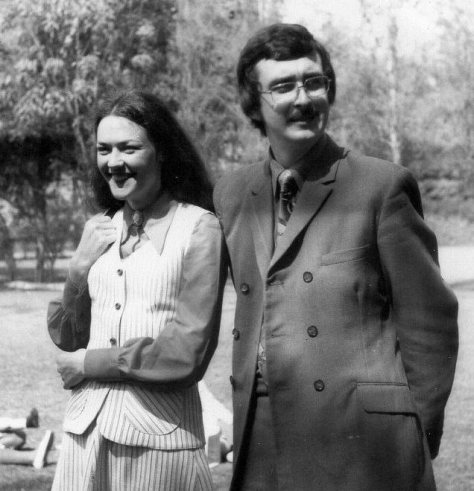
With my dissertation supervisor Dr (later Professor) Trevor Williams, who became the first Director General of the International Board for Plant Genetic Resources (now Bioversity International).

I hadn’t planned to be at the graduation (known as a congregation in UK universities). Why? I had expected to be in Peru for almost three months already. I was set to join the International Potato Center (CIP) (which has just celebrated its 50th anniversary) as an Associate Taxonomist after graduation, but didn’t actually get fly out to Lima until January 1973. Funding for my position from the British government took longer to finalize than had been envisaged. In the meantime, I’d registered for a PhD on the evolution of Andean potato varieties under Professor Jack Hawkes, a world-renowned potato and genetic resources expert.

So let’s see how everything started and progressed.


1970s – potatoes
Having graduated from the University of Southampton in July 1970 (with a BSc degree in Environmental Botany and Geography), I joined the Department of Botany at Birmingham (where Jack Hawkes was head of department) in September that year to begin the one year MSc course, the start of a 39 year career in the UK and three other countries: Peru, Costa Rica, and the Philippines. I took early retirement in 2010 (aged 61) and returned to the UK.

Back in December 1971 I was just relieved to have completed the demanding MSc course. I reckon we studied as hard during that one year as during a three year undergraduate science degree. Looking back on the graduation day itself, I had no inkling that 10 years later I would be back in Birmingham contributing to that very same course as Lecturer in Plant Biology. Anyway, I’m getting ahead of myself.

Arriving in Lima on 4 January 1973, I lived by myself until July when my fiancée Steph flew out to Peru, and join CIP as an Associate Geneticist working with the center’s germplasm collection of Andean potato varieties. She had resigned from a similar position at the Scottish Plant Breeding Station near Edinburgh where she helped conserve the Commonwealth Potato Collection.

Later that year, on 13 October, Steph and I were married in Miraflores, the coastal suburb of Lima where we rented an apartment.

At Pollería La Granja Azul restaurant, east of Lima, after we were married in Miraflores.

My own work in Peru took me all over the Andes collecting potato varieties for the CIP genebank, and conducting field work towards my PhD.

Collecting potato tubers from a farmer in the northern Department of Cajamarca in May 1974.

In May 1975, we returned to Birmingham for just six months so that I could complete the university residency requirements for my PhD, and to write and successfully defend my dissertation. The degree was conferred on 12 December.

With Professor Jack Hawkes

Returning to Lima just in time for the New Year celebrations, we spent another three months there before being posted to Turrialba, Costa Rica in Central America at the beginning of April 1976, where we resided until November 1980. The original focus of my research was adaptation of potatoes to hot, humid conditions. But I soon spent much of my time studying the damage done by bacterial wilt, caused by the pathogen Ralstonia solancearum (formerly Pseudomonas solanacearum).

Checking the level of disease in a bacterial wilt trial of potatoes in Turrialba, July 1977.

Each year I made several trips throughout Central America, to Mexico, and various countries in the Caribbean, helping to set up a collaborative research project, PRECODEPA, which outlasted my stay in the region by more than 20 years. One important component of the project was rapid multiplication systems for potato seed production for which my Lima-based colleague, Jim Bryan, joined me in Costa Rica for one year in 1979.

My two research assistants (in blue lab-coats), Moises Pereira (L) and Jorge Aguilar (R) demonstrating leaf cuttings to a group of potato agronomists from Guatemala, Panama, the Dominican Republic, and Costa Rica, while my CIP colleague and senior seed production specialist, Jim Bryan, looks on.

There’s one very important thing I want to mention here. At the start of my career with CIP, as a young germplasm scientist, and moving to regional work in Costa Rica, I count myself extremely fortunate I was mentored through those formative years in international agricultural research by two remarkable individuals.

Roger Rowe and Ken Brown

Dr Roger Rowe joined CIP in July 1973 as head of the Breeding and Genetics Department. He was my boss (and Steph’s), and he also co-supervised my PhD research. I’ve kept in touch with Roger ever since. I’ve always appreciated the advice he gave me. And even after I moved to IRRI in 1991, our paths crossed professionally. When Roger expressed an opinion it was wise to listen.

Dr Ken Brown joined CIP in January 1976 and became Director of the Regional Research Program. He was my boss during the years I worked in Central America. He was very supportive of my work on bacterial wilt and the development of PRECODEPA. Never micro-managing his staff, I learned a lot from Ken about people and program management that stood me in good stead in the years to come.


1980s – academia
By the middle of 1980 I was beginning to get itchy feet. I couldn’t see myself staying in Costa Rica much longer, even though Steph and I enjoyed our life there. It’s such a beautiful country. Our elder daughter Hannah was born there in April 1978.

To grow professionally I needed other challenges, so asked my Director General in Lima, Richard Sawyer, about the opportunity of moving to another region, with a similar program management and research role. Sawyer decided to send me to Southeast Asia, in the Philippines, to take over from my Australian colleague Lin Harmsworth after his retirement in 1982.

However, I never got to the Philippines. Well, not for another decade. In the meantime I had been encouraged to apply for a lectureship at the University of Birmingham. In early 1981 I successfully interviewed and took up the position there in April.

Thus my international potato decade came to an end, as did any thoughts of continuing in international agricultural research. Or so it seemed at the time.

For three months I lodged with one of my colleagues, John Dodds, who had an apartment close to the university’s Edgbaston campus while we hunted for a house to buy. Steph and Hannah stayed with her parents in Southend on Sea (east of London), and I would travel there each weekend.

It took only a couple of weeks to find  a house that suited us, in the market town of Bromsgrove, Worcestershire, about 13 miles south of the university. We moved in during the first week of July, and kept the house for almost 40 years until we moved to Newcastle upon Tyne in the northeast of England almost 15 months ago. However we didn’t live there continually throughout that period as will become apparent below.

Our younger daughter Philippa was born in Bromsgrove in May 1982. How does the saying go? New house, new baby!

With Brian when we attended a Mediterranean genetic resources conference in Izmir, Turkey in April 1972. Long hair was the style back in the day.

I threw myself into academic life with enthusiasm. Most of my teaching was for the MSc genetic conservation students, some to second year undergraduates, and a shared ten-week genetic conservation module for third year undergraduates with my close friend and colleague of more than 50 years, Brian Ford-Lloyd.

I also supervised several PhD students during my time at Birmingham, and I found that role particularly satisfying. As I did tutoring undergraduate students; I tutored five or six each year over the decade. Several tutees went on to complete a PhD, two of whom became professors and were recently elected Fellows of the Royal Society.

One milestone for Brian and me was the publication, in 1986, of our introductory text on plant genetic resources, one of the first books in this field, and which sold out within 18 months. It’s still available as a digital print on demand publication from Cambridge University Press.

This was followed in 1990 by a co-edited book (with geography professor Martin Parry) about genetic resources and climate change, a pioneering text at least a decade before climate change became widely accepted. We followed up with an updated publication in 2014.

The cover of our 1990 book (L), and at the launch of the 2014 book, with Brian Ford-Lloyd in December 2013

My research interests in potatoes continued with a major project on true potato seed collaboratively with the Plant Breeding Institute in Cambridge (until Margaret Thatcher’s government sold it to the private sector) and CIP. My graduate students worked on a number of species including potatoes and legumes such as Lathyrus.

However, I fully appreciated my research limitations, and enjoyed much more the teaching and administrative work I was asked to take on. All in all, the 1980s in academia were quite satisfying. Until they weren’t. By about 1989, when Margaret Thatcher had the higher education sector firmly in her sights, I became less enthusiastic about university life.

And, in September 1990, an announcement landed in my mailbox for a senior position at the International Rice Research Institute (IRRI) in the Philippines. I applied to become head of the newly-created Genetic Resources Center (GRC, incorporating the International Rice Genebank), and joined IRRI on 1 July 1991. The rest is history.

I’ve often been asked how hard it was to resign from a tenured position at the university. Not very hard at all. Even though I was about to be promoted to Senior Lecturer. But the lure of resuming my career in the CGIAR was too great to resist.

1990s – rice genetic resources
I never expected to remain at IRRI much beyond 10 years, never mind the 19 that we actually spent there.

Klaus Lampe

I spent the first six months of my assignment at IRRI on my own. Steph and the girls did not join me until just before the New Year. We’d agreed that it would be best if I spent those first months finding my feet at IRRI. I knew that IRRI’s Director General, Dr Klaus Lampe, expected me to reorganize the genebank. And I also had the challenge of bringing together in GRC two independent units: the International Rice Germplasm Center (the genebank) and the International Network for the Genetic Evaluation of Rice (INGER). No mean feat as the INGER staff were reluctant, to say the least, to ever consider themselves part of GRC. But that’s another story.

Elsewhere in this blog I’ve written about the challenges of managing the genebank, of sorting out the data clutter I’d inherited, investigating how to improve the quality of seeds stored in the genebank, collaborating with my former colleagues at Birmingham to improve the management and use of the rice collection by using molecular markers to study genetic diversity, as well as running a five year project (funded by the Swiss government) to safeguard rice biodiversity.

I was also heavily involved with the CGIAR’s Inter-Center Working Group on Genetic Resources (ICWG-GR), attending my first meeting in January 1993 in Addis Ababa, when I was elected Chair for the next three years.

The ICWG-GR at its meeting hosted by ILRI (then ILCA) in Addis Ababa, in 1993.

In that role I oversaw the development of the System-wide Genetic Resources Program (SGRP), and visited Rome several times a year to the headquarters of the International Plant Genetic Resources Institute (IPGRI, now Bioversity International) which hosted the SGRP Secretariat.

But in early 2001 I was offered an opportunity (which I initially turned down) to advance my career in a totally different direction. I was asked to join IRRI’s senior management team in the newly-created post of Director for Program Planning and Coordination.


The 2000s – management
It must have been mid-January 2001. Sylvia, the Director General’s secretary, asked me to attend a meeting in the DG’s office just after lunch. I had no idea what to expect, and was quite surprised to find not only the DG, Dr Ron Cantrell, there but also his two deputies, Dr Willy Padolina (DDG-International Programs) and Dr Ren Wang, DDG-Research.

To cut a long story short, Cantrell asked me to leave GRC and move into a new position, as one of the institute’s directors, and take over the management of resource mobilization and donor relations, among other responsibilities (after about one year I was given line management responsibility for the Development Office [DO], the Library and Documentation Services [LDS], Communication and Publications Services [CPS], and the Information Technology Services [ITS]).

With my unit heads, L-R: me, Gene Hettel (CPS), Mila Ramos (LDS), Marco van den Berg (ITS), Duncan Macintosh (DO), and Corinta Guerta (DPPC).

In DPPC, as it became known, we established all the protocols and tracking systems for the many research projects and donor communications essential for the efficient running of the institute. I recruited a small team of five individuals, with Corinta Guerta becoming my second in command, who herself took over the running of the unit after my retirement in 2010 and became a director. Not bad for someone who’d joined IRRI three decades earlier as a research assistant in soil chemistry. We reversed the institute’s rather dire reputation for research management and reporting (at least in the donors’ eyes), helping to increase IRRI’s budget significantly over the nine years I was in charge.

With, L-R, Yeyet, Corinta, Zeny, Vel, (me), and Eric.

I’m not going to elaborate further as the details can be found in that earlier blog post. What I can say is that the time I spent as Director for Program Planning and Communications (the Coordination was dropped once I’d taken on the broader management responsibilities) were among the most satisfying professionally, and a high note on which to retire. 30 April 2010 was my last day in the office.


Since then, and once settled into happy retirement, I’ve kept myself busy by organizing two international rice research conferences (in Vietnam in 2010 and Thailand in 2014), co-edited the climate change book I referred to earlier, and been the lead on a major review of the CGIAR’s Genebank Program (in 2017). Once that review was completed, I decided I wouldn’t take on any more consultancy commitments, and I also stepped down from the editorial board of the Springer scientific journal Genetic Resources and Crop Evolution.

As I said from the outset of this post, it’s hard to imagine that this all kicked off half a century ago. I can say, without hesitation and unequivocally, that I couldn’t have hoped for a more rewarding career. Not only in the things we did and the many achievements, but the friendships forged with many people I met and worked with in more than 60 countries. It was a blast!


Leaving academia . . . heading east

28 June 1991. It was a Friday. Ten years and three months since I joined the University of Birmingham as a Lecturer in Plant Biology. And it was my last day in that post. A brief farewell party in the School of Biological Sciences at the end of the day, and that was it. I was no longer an academic.
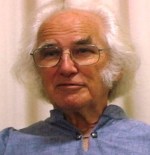
I’d left Peru in March 1981 with such enthusiasm for the next stage of my career at Birmingham. Having spent the previous eight years and three months in South and Central America with the International Potato Center (CIP), Steph and I were looking forward to setting up home with our daughter Hannah (then almost three) back in the UK. I joined the university on 1 April. Was I the fool?

By the end of the 1980s, however, my enthusiasm for academia had waned considerably. Not that I wasn’t getting on. Far from it. I was about to be promoted to Senior Lecturer, I had an active research group (looking at the relationships between crop plants and their wild species relatives), and I enjoyed teaching.

But I began to get itchy feet, and when the opportunity arose (in September 1990) for a move to the Philippines, to join the International Rice Research Institute (IRRI) as Head of the newly-established Genetic Resources Center (with its mandate to manage the world’s largest and genetically most important genebank for rice), I didn’t hesitate. Although, I have to admit, Steph and our daughters (Philippa was born in 1982) were less keen on the idea.

In early January 1991, I was interviewed for the position at IRRI (at its research center in Los Baños, about 70 km south of Manila, the capital city of the Philippines)

This was only my second trip to Asia. I’m not sure how or why at this distance of 30 years, but I flew to Manila (MNL) with British Airways out of London-Gatwick (LGW). Having checked in, I was informed that the flight to Manila was delayed because of a fault with the assigned aircraft (a 747), and that it would be replaced by an incoming aircraft – from Miami, which wasn’t expected for at least five hours. In the end, the delay was almost 15 hours, and I arrived in Los Baños just after 1 am on the Monday morning, having set out from the UK early on Saturday, with the expectation of arriving in the Philippines with just under 24 hours to recover from my trip before the interview schedule began. In the end, I had less than four hours sleep, and was up for a 7 am breakfast meeting with Director General Klaus Lampe (right) and his three Deputy Directors General!

By the end of the month I’d agreed a three year contract. Lampe wanted me to start on 1 April. But, as I explained—and he reluctantly accepted—I still had teaching and examination commitments at the university that would take me up to the end of June. So the earliest I would be able to join the institute was 1 July.

Even so, Lampe asked me to represent IRRI at a genetic resources meeting held in April at the Food and Agriculture Organization of the United Nations (FAO) in Rome. That would be the first of many meetings at FAO and even more visits to Rome where the International Plant Genetic Resources Institute (IPGRI, now Bioversity International) also had its office.

I flew out to the Philippines on Sunday 30 June. With just one day between leaving Birmingham and heading east, I still had some final packing. And, in any case, I had to make sure that everything was ship shape and Bristol fashion for Steph and the girls, as we’d agreed I would head off to the Philippines on my own, in the first instance, get settled into my new job, and they would join me just after Christmas.

That last couple of days were quite stressful. My friend and close colleague at Birmingham, Brian Ford-Lloyd and his wife Pat dropped by on the Saturday to wish me Bon Voyage! Brian has often told me subsequently that I looked rather drained. After all it was quite a step to up sticks and move the family to the Philippines. But it was a move we have never regretted.

Steph and I also agreed that we wouldn’t rent out our home in Bromsgrove (in northeast Worcestershire, and about thirteen miles south of Birmingham), but keep it locked up and safe in case we ever needed a bolt hole, as it were, should things not work out well at IRRI, or civil unrest required us to leave the country at short notice. Politics in the Philippines has always been volatile, to say the least.

So, come Sunday morning, it was a teary goodbye for all of us when the taxi arrived to take me to Birmingham airport (BHX) for the flight to MNL via London Heathrow (LHR) and Hong Kong (HKG). In subsequent years, and for a decade until Emirates had daily flights from BHX to Dubai (DXB) and on to MNL, we always flew with KLM via Amsterdam (AMS), much more convenient than transiting through LHR. Apart from our first home leave in the summer of 1992.

British Midland (now defunct) operated the connecting flight from BHX to LHR. Placing my two or three bags on the scales, the check-in agent told me that I was way over my allowance, and if I chose to check them through to MNL, then she would have to charge me £500. On the other hand, she could send them to LHR free of charge, and I could argue with my next carrier, British Airways, for the onward flight. She checked my schedule and we agreed there was more than sufficient time between landing in LHR and the departure of my HKG flight to pick up my bags in Terminal 1 and get to Terminal 4 to check-in for the HKG/MNL flight. Wrong!

The flight left BHX on time, but on landing at LHR we taxied to the perimeter of the apron because gates were either occupied or undergoing refurbishment. And there we sat for about 30 minutes until buses came along to take us to the terminal. All the while, my connection time was being eroded by the minute. Then I had to wait for my bags to offload, and for the bus to Terminal 4. On previous transits through LHR between terminals, the bus had always crossed to the other side of the airport where Terminal 4 is located through a tunnel, a journey of a matter of minutes. Not that day, however. Our bus headed out on to the public roads, hit the M25 then exited close to Terminal 4. By the time I reached the back of a check-in queue for my flight, it was due to depart in just five minutes. Panic stations!

Leaving my bags where they were, I politely walked to the front of the queue explaining to other waiting passengers my dilemma, and they kindly let me move to the front. I was in luck. The flight had been delayed by at least 30 minutes, and the agent reckoned I could still make it. What to do about the excess baggage charges? He agreed not to charge me the full amount, and after several attempts to charge my credit card, he waived the fees, told me to put the bags on an express shute, and RUN!

The aircraft door was closed immediately after I boarded and found the only empty seat in Business Class (my reserved seat having been reallocated), and we were off. I sat there, thanking my lucky stars that I’d made the flight after all, feeling rather sweaty, and hoping it wouldn’t be too long after take-off before the cabin crew brought round the drinks trolley and I could get stuck into my first G&T.


I don’t remember too much about the trip from that point. Not because of over-imbibing, I hasten to add. It was just uneventful. On arrival in Manila, I was greeted by Director of Administration Tim Bertotti (right) and his Vietnamese wife who would be my ‘welcomers’ for the next few weeks, show me the IRRI ropes, so to speak, and be a couple I could turn to for advice. Having collected my heavy bags, and found the IRRI driver we headed south to Los Baños, where I stayed in the IRRI Guesthouse for the next month or so until the house allocated to me had been redecorated.

I can’t deny that the first night in Los Baños was quite miserable. I was overwhelmed by a feeling of regret, whether I had made the right choice to give up a tenured position at the university (a number of colleagues there thought I was crazy to leave a tenured position for the ‘insecurity’ of short-term contracts overseas). And how would the family fare during the intervening six months until they headed east? So many questions, so many uncertainties. And hard to sleep because of jet-lag.


But the next morning there was no time for self pity. I had a job to do, and just get stuck in. A driver collected me from the Guesthouse after breakfast and took me down to the research center, less than a ten minute drive across the campus of the University of the Philippines-Los Baños (UPLB). I got my ID, was assigned a car, and made an appointment to meet with Klaus Lampe.

Jack Hawkes

Then it was off to GRC in the Brady Laboratory, a building named after IRRI’s second Director General, Nyle Brady. I was already aware that there was only measured enthusiasm among the GRC staff for my appointment. Three of us had been interviewed in January, all with MSc and PhD degrees from the University of Birmingham, and Professor Jack Hawkes had supervised our PhD research. The other two candidates already managed genebanks; I had no hands-on experience of genebank management. One of the candidates, a Chinese Malay national, had carried out his thesis research at IRRI (on rice of course) with my predecessor in the IRRI gene bank, Dr TT Chang, co-supervising his research. He was a known quantity for the GRC staff and, I think, their preferred candidate. Instead they got this straight-talking Brit.

First things first. I needed to understand in detail how the genebank was currently being managed, who the key personnel were, and what were their thoughts about how things might change. I also had to manage the merger of the genebank (known in 1991 as the International Rice Germplasm Center) with another group, the International Network for the Genetic Evaluation of Rice (INGER) that was coordinated by a senior Indian scientist, Dr Seshu Durvasula who, I’m sorry to say, had no intention of going along easily with the intended merger into GRC. He resented, I believe, that he had been overlooked for the leadership of GRC.  And, in any case, who was this British scientist with no rice experience?

Anyway, back to the genebank. I think the staff were quite surprised to be asked their opinions. That was not Dr Chang’s style. Thanks to Eves, Pola (who I quickly identified as someone to lead the genebank operations on a daily basis, as genebank manager), Ato, Tom, Soccie, the data management group (Adel, Myrna, and Vangie), and Yvette and Amy (who I assigned to wild species research) for being very patient, answering all my questions, and letting me know when one of my ideas was perhaps a step too far. But one thing was clear: the operations of the genebank had to be upgraded and made more efficient. After about six months I was ready to put a plan into operation. By then, Steph and the girls were ready to fly out to the Philippines to join me.

But I have to make special mention to two very special ladies, who made my first months at GRC (and IRRI in general) so much easier: the GRC secretaries Sylvia Arellano (L below) and Tessie Santos (R). Jewels in the IRRI crown.

Sylvia was my personal secretary, and had worked for TT Chang for a number of years before he retired. Tessie supported the other internationally-recruited scientist in the genebank, British geneticist Dr Duncan Vaughan, and the rest of the genebank staff as and when needed.

Sylvia (known as Syl to everyone) was a mine of information, knew exactly who to contact should I need to follow up on any issue, and was quick to advise me how to deal with colleagues (especially the old timers) with whom I had to work across the institute. She knew just how to get things done, call in favors, and the like. I reckon that without her day-to-day support my first few months at IRRI (before I knew the ropes or understood the institutional politics) would have been far less productive. I cannot thank her too much for all the support she gave me, and we remain in contact and good friends to this day, even though it’s eleven years since I retired from IRRI, and almost 25 years since she last worked with me.

When I was on home leave in the UK during the summer of 1997, I had a phone call from the then Director General, Dr George Rothschild, who asked ‘permission’ for Sylvia to move from my office to become Executive Secretary to the Director General. It was hardly an offer I could refuse, and in any case, it was a huge promotion for Syl. She remained as Executive Secretary to the DG until her retirement a few years back, serving under three DGs (possibly four) and an Acting DG.

Tessie was quite shy, and seemed rather in awe of me. But she was a valued member of the GRC staff, and on those occasions when Syl was away from the institute, Tessie would admirably step into her shoes as my personal secretary. After a few months and once she got used to me, Tessie began to relax in my presence. Tessie was just the sort of staff member that IRRI should be proud of: hard-working, loyal, knowledgeable. And it was my good fortune that Syl had someone like Tessie to back her up.


By the end of 1991, I was very much at home at IRRI. I had a good relationship with Klaus Lampe (well, for the next couple of years or so), I had the measure of my immediate boss, Deputy Director General for International Programs, Dr Fernando ‘Nanding’ Bernardo for whom, I’m sad to relate, I didn’t have much time, and I was moving ahead with plans for the upgrade of the genebank, and reorganization of the staff. It felt like the world was my oyster, and I looked forward to the coming year with the family in Los Baños as well.

Originally thinking that I’d remain at IRRI for perhaps a couple of three-year contracts, but certainly no longer than ten years, when I retired at the end of April 2010 I’d been at IRRI for almost 19 years. Joining IRRI was the best career move I made.


Morris dancing and genetic resources – an unlikely combination

I was never much good at taking exams. That is, until I studied for my Masters degree in Conservation and Utilization of Plant Genetic Resources at the University of Birmingham in 1970-1971. So how come I improved?

It was exactly 50 years ago, Tuesday 1 June 1971, when I sat the first of four written exams over consecutive days. It was also the day after the Late Spring Bank Holiday, the 31st and the last Monday of May. I spent that day—all day, in fact—Morris dancing in Lichfield, a town in south Staffordshire famous for its three-spired medieval cathedral, the ‘city of philosophers’ according one of its famous sons, Samuel, Dr Johnson.

Let me backtrack a few years.

Soon after arriving in Southampton in October 1967 to begin my undergraduate studies at the university, I joined the English & Scottish Folk Dance Society in the Students’ Union, although I’d never danced before. Then, a year later, I co-founded (with Dr Joe Smartt, a genetics lecturer in the Department of Botany) the Red Stags Morris that is still dancing today although no longer associated with the university for many years now.

The Red Stags dancing outside the Arts Faculty in March 1970 at a university Open Day. I’m the second dancer from the left, facing Joe Smartt, with Dudley Savage from the Winchester Morris Men playing the fiddle.

As I described in that earlier post about the Red Stags, we were supported from the outset by the Winchester Morris Men, and during the summer term we would join them when they danced out around the villages and pubs of Hampshire. Such a beautiful county.

Each Late Spring Bank Holiday, the Winchester Morris Men would also organize a Day of Dance, beginning in late morning and lasting well into the evening, and probably visiting half a dozen villages in the process (and their hostelries). The Red Stags joined the 1969 Day of Dance around the New Forest and ending up in Winchester by early evening. By then, we’d developed some dancing skills in the Headington and Adderbury traditions and didn’t embarrass ourselves among much more accomplished dancers. Here is a group of photos taken on that particular Day of Dance, 26 May.

Move on a year. In May 1970, the Late Spring Bank Holiday (25 May) fell on the day before my Final exams were due to start. The weather was glorious, just the sort that was never conducive for exam revision. Joe Smartt encouraged me to take that last day off from revision and join the Morris tour. Peer pressure was too great. I declined, and that’s something I have regretted ever since. Those final few hours of revision didn’t help me one iota, and my exam performance over the next week was only satisfactory to say the least, not the glory I hoped for (but didn’t really expect).

Nevertheless, I was accepted on to the MSc course at Birmingham, and moved there in September 1970, full of anticipation for this new field of plant genetic resources, and looking forward to joining a new Morris side.

There were two choices in Birmingham: Jockey Men’s Morris Club or Green Man’s Morris and Sword Club [1]. I chose the latter. One of the people who’d encouraged me to join the folk dance society at Southampton, Dr Edward Johns, had moved to Birmingham and had joined Green Man a couple of years previously.

I danced with Green Man on a weekly basis for the next two years before I moved to Peru in January 1973. When I returned to the UK in 1981, I rejoined Green Man, and became Squire (club chairman) in 1982 for a year. Unfortunately I developed arthritis in my knees and my doctor discouraged me from from dancing. So, by about 1985 or ’86, my dancing days were over.

That’s me, fourth from the right.

One of Green Man’s traditions, something they did for at least 50 years, was leading the Lichfield Bower Procession (a community event dating back to the 12th century) each Late Spring Bank Holiday. This is a procession around the city, of a couple of miles at the very least. And Green Man would dance the Bower Processional, with arms outstretched and carrying leafy boughs (typically elm in the past) the whole way, but with frequent stops to take refreshment on board.


In 1971, I was again faced with the same dilemma: should I spend the last day before exams doing some last minute revision, or head off and forget my exams fears by enjoying a day of Morris dancing, and my first Lichfield Bower?
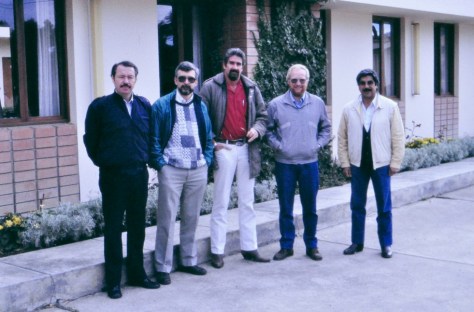
Actually, I’d more or less made the decision some months previously. Morris dancing it was. During the MSc course I had upped my game and really learnt how to study more effectively and, more importantly, how to organize myself in preparation for the written exams. Everything went to plan, and by the end of May I felt I’d done all that I could to prepare myself for the coming week of exams. I was ready and primed, so to speak.

So, without any last minute feelings of guilt, just after breakfast I joined my fellow club members traveling to Lichfield, and spent the next twelve or thirteen hours dancing, and consuming not an inconsiderable amount of beer in the process, probably at least twelve pints over the course of the day.

I don’t think I got to bed much before midnight, but then had one of the best night’s sleep I’ve ever enjoyed. Not a care in the world, waking up the following morning fully refreshed and relaxed and ready to take on whatever the exam threw at me.

And the outcome? Well it’s plain to see.

During the 1980s, when I was teaching at the University of Birmingham, I gave my own students the same advice: Don’t spend the final day before exams trying to cram last minute information. Take the day off, do something completely different to take your mind of the coming exams. Relax, have a good time, and then have a good night’s sleep.

I know hindsight is a wonderful thing. I just wish I’d taken my own advice back in 1970.


[1] Sadly, in 2017 Green Man’s Morris and Sword Club decided that the side was no longer viable. With ageing members and not recruiting new blood, the club was no longer able to put up a side of six dancers and musician. Thus came to an end 60 or more years of dancers from a club that had provided two Squires of the Morris Ring, John Venables and Ray King. Click here to read a short account of how and why Green Man came to an end.

Getting the message out about genetic resources

For much of my career, I have taken a keen interest in science communication. Such that, a couple of years after I’d become IRRI’s Director for Program Planning & Coordination in 2001, I was asked to take on line management responsibility for several of IRRI’s administrative units, including the Communication and Publications Services (CPS) headed by my good friend Gene Hettel. My job changed to some degree, as did my title: Director for Program Planning & Communications.

I’ve always felt that scientists have a responsibility to explain their work to the general public in plain language. We’re fortunate here in the UK; there are several leading lights in this respect who have made their mark in the media and now represent, to a considerable extent, ‘the face of science’ nationally. None of them is shy about speaking out on matters of concern to society at large.

Sir David Attenborough (far left, above) is one of the world’s leading advocates for biodiversity conservation who also eloquently explains the threat and challenges of climate change. Professors Alice Roberts (second left, of The University of Birmingham) and Brian Cox (second right, The University of Manchester) have both made their mark in TV broadcasts in recent years, bringing fascinating programs covering a range of topics to the small screen. And then again, there’s Sir Paul Nurse (far right), Director of the Francis Crick Institute in London and former President of the Royal Society. I was particularly impressed with his Richard Dimbleby Lecture, The New Enlightenment, on the BBC in 2012 about his passion for science. It’s well worth a watch.


I would never claim to be in the same league as these illustrious scientists. However, over the years I have tried—in my small way—to raise awareness of the science area with which I am most familiar: plant genetic resources and their conservation. And in this blog, I have written extensively about some of my work on potatoes at the International Potato Center in Peru and on rice at the International Rice Research Institute in the Philippines, as well as training genetic resources scientists at the University of Birmingham.

So, when I was approached a few weeks ago to be interviewed and contribute to a podcast series, Plant Breeding Stories, I jumped at the chance.

The podcasts are hosted by Hannah Senior, Managing Director of PBS International, a world leading company in pollination control. So far, there have been eleven podcasts in two series, with mine broadcast for the first time just a couple of days ago. In this clip, Hannah explains the rationale for the series.

Just click on the image below to listen to our 35 minute conversation about genetic resources, genebanks, and their importance for plant breeding and food security. Oh, and a little about me and how I got into genetic resources work in the first place.

I hope you find the podcast interesting, and even a little bit enlightening. A transcript of the broadcast can be downloaded here. Thanks for listening.


I never aspired to be an academic

If, in the summer of 1970, someone had told me that one day I would be teaching botany at university, I would have told them they were delusional. But that’s what happened in April 1981 when I was appointed Lecturer in Plant Biology at the University of Birmingham. Hard to believe that’s already 40 years ago today. I stayed at Birmingham for a decade.

Birmingham is a campus university, one of the first, and also the first of the so-called ‘redbrick‘ universities. The campus has changed radically in the 30 years since I left, but many of the same landmarks are still there. The beauty of the campus can be appreciated in this promotional video.


I never, ever had any pretensions to a life in academia. As an undergraduate studying for a combined degree in Environmental Botany and Geography at University of Southampton between 1967 and 1970, I was a run-of-the-mill student. It wasn’t that I had little enthusiasm for my degree. Quite the contrary, for the most part. I enjoyed my three years at university, but I did burn the candle more at one end than the other. Also, I didn’t really know (or understand) how to study effectively, and no-one mentored me to become better. And it showed in my exam results. So while I graduated with a BSc (Hons.) degree, it was only a Lower Second; I just missed out, by a couple of percentage points, on an Upper or 2(i) degree. Perhaps with a little more effort I could have achieved that goal of a ‘better degree’. Que será . . .

However, about halfway through my final year at Southampton, I applied to Birmingham for a place on the recently-established graduate MSc course on Conservation and Utilisation of Plant Genetic Resources (CUPGR) in the Department of Botany. And the rest is history, so to speak.

I was interviewed in February 1970 and offered a place, but with no guarantee of funding. It wasn’t until late in the summer—about a couple of weeks before classes commenced—that the head of department, Professor Jack Hawkes phoned me to confirm my place (notwithstanding my ‘poor’ degree) and that he’d managed to squeeze a small grant from the university. It was just sufficient to pay my academic fees, and provide an allowance of around £5 per week (about £67 at today’s value) towards my living expenses.

So, in early September 1970 I found myself in Birmingham alongside four other MSc candidates, all older than me, from Nigeria, Pakistan, Turkey, and Venezuela, excited to learn all about plant genetic resources. I discovered my study mojo, redeeming myself academically (rather well, in fact), sufficient for Jack Hawkes to take me on as one of his PhD students, even as I was expecting to move to Peru to join the newly-established International Potato Center (CIP) in Lima. And that’s what I did for the rest of the decade, working in South and Central America before returning to Birmingham as a member of staff.


The years before Birmingham
I spent over eight years with CIP, between January 1973 and April 1976, working as an Associate Taxonomist in Lima, and helping to manage the multitude of potato varieties in the center’s field genebank, participating in collecting trips to different parts of Peru to find new varieties not already conserved in the genebank, and continuing research towards my PhD.

In the meantime, my girlfriend Stephanie (who I met at Birmingham) and I decided to get married, and she flew out to Peru in July 1973. We were married in Lima in October [1].

In May 1975, Steph and I returned to Birmingham for six months so I could complete the residency requirements for my PhD, and to write and defend my thesis. We returned to Lima by the end of December just after I received my degree.

From April 1976 and November 1980, Steph and I lived in Costa Rica in Central America on the campus of the regional agricultural research center, CATIE, in Turrialba, a small town 62 km due east of the capital, San José.

I had joined CIP’s Regional Research Department to strengthen the regional program for Mexico, Central America and the Caribbean. In 1976, the regional headquarters were in Toluca, Mexico where my head of program, Oscar Hidalgo lived. After he moved to the USA for graduate studies in 1977, CIP’s Director General, Richard Sawyer, asked me to take on the leadership of the regional program, and that’s what I did for the next four years, with an emphasis on breeding potatoes adapted to hot tropical environments, seed systems, bacterial disease resistance, and regional program development.

By November 1980 I felt it was time to move on, and requested CIP to assign me to another program. We moved back to Lima. However, with one eye on life beyond CIP, and with a growing daughter, Hannah (born in April 1978, and who would, in the next couple of years, be starting school) I also began to look for employment opportunities in the UK.


Looking for new opportunities
Towards the end of 1980 (but before we had returned to Lima) I became aware that a new lectureship was about to be advertised in the Department of Plant Biology (formerly Botany, my alma mater) at Birmingham. With the retirement of Jack Hawkes scheduled for September 1982, the lectureship would be recruited to fill an anticipated gap in teaching on the CUPGR Course.

I sent in an application and waited ‘patiently’ (patience is not one of my virtues) for a reply to come through. By the end of December (when we were already back in Lima, and in limbo so to speak) I was told I was on a long short list, but would only proceed to the final short list if I would confirm attending an interview in Birmingham (at my own expense) towards the end of January 1981. So, nothing ventured, nothing gained, and with the encouragement of the Dr Sawyer (who promised to keep a position open for me if the Birmingham application was unsuccessful) I headed to the UK.

Since completing my PhD in 1975, I had published three papers from my thesis, and a few others on potato diseases and agronomy. Not an extensive publication list by any stretch of the imagination, compared to what might be expected of faculty candidates nowadays. In reality my work at CIP hadn’t led to many scientific publication opportunities. Publications were not the be-all and end-all metric of success with the international centers back in the day. It’s what one achieved programmatically, and its impact on the lives of potato farmers that was the most important performance criterion. So, while I didn’t have a string of papers to my name, I did have lots of field and managerial experience, I’d worked with genetic resources for a number of years, and my research interests, in taxonomy and biosystematics, aligned well with the new position at Birmingham.

I interviewed successfully (eminent geneticist Professor John Jinks chairing the selection panel), and was offered the lectureship on the spot, from 1 April. The university even coughed up more than half the costs of my travel from Peru for interview. Subject to successfully passing a three-year probation period, I would then be offered tenure (tenure track as they say in North America), the holy grail of all who aspire to life in academia.


Heading to Birmingham
Saying farewell to CIP in mid-March 1981, and after more than eight happy years in South and Central America, Steph, Hannah, and I headed back to the UK via New York, where I had to close our account with Citibank on 5th Avenue.

Steph and Hannah at the top of the Empire State Building

This was just a couple of weeks or so before I was due to begin at Birmingham. We headed first to Steph’s parents in Southend-on-Sea. Since we had nowhere to live in Birmingham, we decided that I should move there on my own in the first instance, and start to look for a house that would suit us.

A few months before I joined Plant Biology, the department had recruited a lecturer in plant biochemistry, Dr John Dodds, a few years younger than me (I was 32 when I joined the university). John and I quickly became friends, and he offered me the second bedroom in his apartment, a short distance from the university.

The search for a house didn’t take long, and by mid-April we’d put in an offer on a house in Bromsgrove, some 13 miles south of the university, which was to remain our home for the next 39 years until we sold up last September. We moved in at the beginning of July, the day before I had to go away for the following two weeks as one of the staff supervising a second year undergraduate ecology field trip in Scotland. Not the most convenient of commitments under the circumstances. But that’s another story.


I start teaching
So, 40 years on, what are my reflections on the decade I spent at Birmingham?

It was midway through the 1980-81 academic year when I joined the department. I spent much of April settling in. My first office (I eventually moved office three times over the next decade) was located in the GRACE Lab (i.e., Genetic Resources and Crop Evolution Lab) where the CUPGR MSc students were based, in the grounds of Winterbourne House, on the edge of the main university campus, and about ten minutes walk from the department.

The GRACE Lab

The lab had been constructed around 1970 or so to house the Botanical Section of the British Antarctic Survey (before it moved to Cambridge). One other member of staff, Dr Pauline Mumford (a seed physiologist, on a temporary lectureship funded by the International Board for Plant Genetic Resources – now Bioversity International) also had her office there.

Pauline Mumford (standing, center) with the MSc Class of ’82 (my first full year at Birmingham) from (L-R) Malaysia, Uruguay, Germany, Turkey, Bangladesh (x2), Portugal, and Indonesia.

By September, an office had been found for me in the main building. This was necessary since, unlike Pauline, I had teaching commitments to undergraduate students on the honours Biological Sciences degree course, as well as having undergraduate tutees to mentor and meet with on a regular basis.

As I said, I’d been recruited to take over, in the first instance, Jack Hawkes’ teaching commitments, which comprised a contribution to the second year module in plant taxonomy, and evolution of crop plants, one of the main components of the CUPGR course. There were also opportunities to develop other courses, and in due time, this is what I did.

At the end of April 1981, Jack called me into his office, handed me his taxonomy lecture notes and said ‘You’re up tomorrow morning’. Talk about being thrown in the deep end. Jack lectured about ‘experimental taxonomy’, patterns of variations, breeding systems and the like, and how taxonomic classification drew on these data. Come the next day, I strode into the lecture theater with as much confidence as I could muster, and began to wax lyrical about breeding systems. About half way through, I noticed Jack quietly walk into the room, and seat himself at the back, to check on how well I was doing (or not). That was one of his mentor roles. He was gone before I’d finished, and later on he gave me some useful feedback—he’d liked what he had seen and heard.

But the lecture hadn’t nearly taken place. One of my colleagues, Dr Richard Lester, who was the lead on the taxonomy module, blithely informed me that he would be sitting in on my lecture the next day. ‘Oh no, you’re not‘ I emphatically retorted. I continued, ‘Walk in and I stop the lecture’. I had never really seen eye-to-eye with Richard ever since the day he had taught me on the MSc Course. I won’t go into detail, but let me say that we just had a prickly relationship. What particularly irked me is that Richard reported our conversation to Jack, and that’s why Jack appeared the next day.

I had quite a heavy teaching load, compared to many of my colleagues, even among those in the other three departments [2] that made up the School of Biological Sciences. Fortunately, I had no first year teaching. Besides my second year plant taxonomy lectures, I developed a small module on agroecosystems in the Second Year Common Course (of which I became chair over the course of the decade).

In their final year, students took four modules each of five weeks (plus a common evolution course). My long-time friend Brian Ford-Lloyd and I developed a module on plant genetic resources. Besides daily lectures, each student had to complete a short research project. I can’t deny that it was always a challenge to come up with appropriate projects that would yield results in such a short period. But I found working alongside these (mostly enthusiastic) students a lot of fun.

Dave Astley

Each year I’d take the group a few miles down the road to the National Vegetable Gene Bank (now the UK Vegetable Genebank) at Wellesbourne, where we’d meet its Director, Dr Dave Astley (who had completed his MSc and PhD, on potatoes with Jack Hawkes at Birmingham). It was a great opportunity for my students to understand the realities of genetic conservation.

I taught a 25 lecture course to the MSc students on crop diversity and evolution, with two practical classes each week during which students would look at as wide a range of diversity as we could grow at Winterbourne (mostly under glass). In this way, they learned about the taxonomy of the different crops, how diversity had developed, their breeding systems, and the like. The practical classes were always the most challenging element to this course. We never knew until each class just what materials would be available.

In 1982, I took a group of students to Israel for a two week course on genetic resources of the eastern Mediterranean. Not all of that year’s intake, unfortunately, as some came from countries that banned travel to Israel.

I developed a module on germplasm collecting, and in the summer months set some field exercises on a synthetic barley population comprising up to ten varieties that differed morphologically, and also matured at different times, among other traits. We would sample this population in several ways to see how each method ‘captured’ the various barleys at the known frequency of each (obviously I knew the proportions of each variety in the population).

The functioning of agroecosystems was something I’d been drawn to during my time in Costa Rica, so I passed some of that interest on to the MSc group, and helped out on some other modules like data management. And I became the Short Course Tutor for students who came to Birmingham for one or other of the two taught semesters, or both in some instances. Looking after a cohort of students from all over the world, who often had limited language skills, was both a challenge and a worthwhile endeavour. To help all of our MSc and Short Course students we worked with colleagues in the English Department who ran courses for students with English as a second language. Each member of staff would record a lecture or more, and these would be worked up into an interactive tutorial between students, ourselves, and the English staff. Once one’s lectures have been pulled apart, it’s remarkable to discover just how many idiomatic phrases one uses quite casually but which mean almost nothing to a non-native speaker.

Each MSc student had to write a dissertation, examined in September at the end of the year (just as I had on lentils in 1971), based on research completed during the summer months after sitting the written exams. Over my decade with the course, I must have supervised the dissertations of 25 students or more, working mainly on potatoes and legumes, and leading in some cases to worthwhile scientific publications. Several of these students went on to complete their PhD under my supervision often in partnership with another research institute like CIP, Rothamsted Experiment Station (now Rothamsted Research), MAFF plant pathology lab in Harpenden, and the Food Research Institute in Norwich.

2020-06-27007

With PhD students Ghani Yunus (from Malaysia) and Javier Francisco-Ortega (from Spain-Canary Islands).

The course celebrated it 20th anniversary in 1989, and among the celebrations we planted a medlar tree (sadly no longer there) in the Biological Sciences quadrangle.

Left of the tree: Professor Smallman, Jim Callow, Trevor Williams, Jack Hawkes. Right of the tree: Mike Jackson, Richard Lester, Mike Lawrence. And many students, of course.


Tutees
Earlier, I mentioned that at the beginning of each academic year every staff member was assigned a group of students (the annual intake then was more than 100 students, and is considerably larger today) as tutees, with whom we would meet on a regular basis. These tutorial sessions, one-on-one or in a small group, were an informal opportunity of assessing each student’s progress, to set some work, and overall to help with their well-being since for many, attending university would be the first time they were away from home, and fending for themselves. The tutorial system was not like those at the Oxbridge colleges.

Most students flourished, some struggled. Having someone with whom to share their concerns was a lifeline for some students. I always thought that my tutor responsibilities were among the most important I had as a member of staff, and ensuring my door was always open (or as open as it could be) whenever a tutee needed to contact me. Not all my colleagues viewed their tutorial responsibilities the same. And I do appreciate that, today, with so many more students arriving at university, staff have to structure their availability much more rigidly, sometimes to excess.

In October 1981, my first final year tutee was Vernonica ‘Noni’ Tong* who went on to complete a PhD with my close colleague, geneticist Dr Mike Lawrence on incompatibility systems in poppies. Noni joined the Genetics Department and rose to become Professor of Plant Cell Biology (now Emeritus). Several others also went on to graduate work. Another, Julian Parkhill, graduated around 1987 or 1988, went on to Bristol for his PhD, and is now Professor of Veterinary Medicine at the University of Cambridge. He was elected a Fellow of the Royal Society in 2014.

I like to think that, in some way, I helped these students and others make wise career choices, and instilled in them a sense of their own worth. At least one former tutee (who completed her PhD at the University of Durham) has told me so, and that made it all worthwhile.


The School of Biological Sciences
In September 1982, Jack Hawkes retired from the Mason Chair of Botany, and a young lecturer, Jim Callow from the University of Leeds, was elected to the position. Jim took on the role of MSc Course leader, but the day-to-day administration fell to Brian Ford-Lloyd (as Tutor) and myself (for the Short Course students). Jim was a physiologist/ biochemist with an interest in biotechnology, but nothing about genetic resources. He also had little understanding (or sympathy, so I felt) for my areas of research and teaching interests. He frankly did not understand, so I never developed a good relationship with him.

Brian Ford-Lloyd

My closest colleague in the department was Brian who had been appointed to a lectureship around 1977 or 1978. He had completed his PhD in the department in 1973, and he and I were graduate students together until I moved to Peru. We became good friends, and this friendship has lasted until today. He also lived in Bromsgrove, and after I returned to the UK on retirement in 2010, Brian (now Professor Ford-Lloyd) and I would meet up every few weeks for a few beers at the Red Lion on Bromsgrove’s High Street, and to put the world to rights.

On reflection, I can say that relationships among the staff of Plant Biology were pretty harmonious, notwithstanding the comment I made earlier. But several staff were approaching retirement as well, so there was quite a change in the department when a couple of young lecturers were also appointed within a year of me, Drs John Newbury and Jon Green, both of whom also rose to professorships late in their careers.

Towards the end of the 1980s, the School of Biological Sciences underwent a fundamental reorganization, abandoning the federal system, and transforming into a single department with a unitary Head of School. Much to the chagrin of my friends and colleagues in Genetics, Jim Callow was selected as the first Head of School under this new arrangement. To replace the old four department structure, we organized ourselves into five research themes. I joined the Plant Genetics Group, moving my office once again closer to other group members. As a member of this group, I probably had two or three of the best years I spent at Birmingham, with Dr (later Professor) Mike Kearsey as my head of group.


Research and publications
My research interests focused on potatoes and legumes, often sustained by a healthy cohort of MSc and PhD students.

One project, funded by the British government from overseas aid budget in partnership with CIP, investigated the options for breeding potatoes grown from true potato seed. A project that we had to pull the plug on after five years.

In another, Brian and I worked with a commercial crisping (potato chips, in US parlance) company to produce improved potato varieties using induced somaclonal variation, leading to some interesting and unexpected implications for in vitro genetic conservation. There was also an interesting PR outcome from the project.

All in all, my group research led to 29 scientific papers in peer-reviewed journals, several book chapters, and a range of contributions to the so-called grey literature (not peer-reviewed, but nonetheless important scientifically). You can open a list of those Birmingham publications here.

I’m also proud of the introductory textbook on genetic resources that Brian and I wrote together, published in 1986. It quickly sold its print run of more than 3000 copies.

Then, in 1989, we organized a weekend conference (with Professor Martin Parry of the Department of Geography) on climate change, leading to the pioneer publication of the conference proceedings in 1990 [3] in this newly-emerged field of climate change science. Brian, Martin and I collaborated almost a quarter of a century later to edit another book on the same topic.

I was fortunate to undertake one or two consultancies during my years at Birmingham. The most significant was a three week assignment towards the end of the decade to review a seed production project funded by the Swiss government, that took us Huancayo in the Central Andes, to Cajamarca in the north, and Cuzco in the south, as well as on the coast. This was an excellent project, which we recommended for second phase funding, that ultimately collapsed due to the conflict with the terrorist group Shining Path or Sendero Luminoso that affected all parts of Peruvian society.

The seed project review team (L-R): Peruvian agronomist, me (University of Birmingham), Cesar Vittorelli (CIP Liaison), Swiss economist (SDC), Carlos Valverde (ISNAR, team leader)

With funding from the International Board for Plant Genetic Resources, one of my PhD students, Javier Francisco-Ortega was able to collect an indigenous legume species from his native Canary Islands in 1989, for his dissertation research. I joined Javier for three weeks on that trip.

Collecting escobon (Chamaecytisus proliferus) in Tenerife in 1989


All work and no play . . .
Each December, the Plant Biology Christmas party was usually held at Winterbourne House. For several years, we organized a pantomime, written and produced by one of the graduate students, Wendy (I don’t remember her surname). These were great fun, and everyone could let their hair down, taking the opportunity for some friendly digs at one staff member or another. In the photos below, I played the Fairy Godmother in a 1987 version of Cinderella, and on the right, I was the Grand Vizier in Aladdin, seen here with graduate student Hilary Denny as Aladdin. In the top left photo, kneeling on the right, and wearing what looks like a blue saucepan on his head, is Ian Godwin, a postdoc from Australia for one year. Ian is now Professor of Crop Science at the Queensland Alliance for Agriculture and Food Innovation. To Ian’s left is Liz Aitken, also a postdoc at that time who came from the University of Aberdeen, and now also a Professor at the University of Queensland.

Then, in the summer months, I organized a departmental barbecue that we held in Winterbourne Gardens, that were part of the department in those days, and now open to the public. In this photo, I’m being assisted by one of my PhD students, Denise Burman.

2020-06-27007 - Copy (2)


Moving on
So why did I leave in July 1991?

Professor Martin Parry

Towards the end of the 1980s I also became heavily involved in a university-wide initiative, known as Environmental Research Management or ERM, to promote the university’s expertise in environmental research, chaired by Martin Parry (I became the Deputy Chair). So, coupled with my own teaching, research, and administrative duties in Biological Sciences, I was quite busy, and on my way to promotion. I was doing all the ‘right things’, and working my way up the promotions ladder (competing with all other eligible staff in the Science Faculty). It was quite helpful that the Dean of the Science Faculty, Professor George Morrison (a nuclear physicist), and someone with his finger on the promotions pulse, also took a close interest in ERM, and I got to know him quite well.

When I handed in my resignation in March 1991, I knew that my application for promotion to Senior Lecturer was about to be approved (I was already on the Senior Lecturer pay scale). By then, however, life in academia had lost some of its allure. And Margaret Thatcher was to blame.

Around 1998 or 1989, the Thatcher government forced a number of ‘reforms’ on the universities, bringing in performance initiatives and the like, without which the government would not consider either increased funding to the system or pay increases for staff.

So we all underwent performance management training (something I became very familiar with during the next phases of my career). It was made clear that staff who were struggling (as teachers, researchers, or even with administration) would be offered help and remedial training to up their game. Those of us performing well (which included myself) were offered the opportunity to take on even more. It was a breaking point moment. With the increased emphasis on research performance and research income, I felt that my time in academia had almost run its course. My research interests did not easily attract research council funding. I was beginning to feel like a square peg in a round hole.

So, when in September 1990, a job advert for the position of head of the Genetic Resources Center at IRRI landed on my desk, I successfully threw my hat in the ring, and joined IRRI in July 1991, remaining there for the next 19 years, before retiring back to the UK in May 2010.

With few regrets I resigned and prepared for the move to the Philippines. I had to see my students (both undergraduate and MSc) through their exams in June before I could, with good conscience, leave the university. My last day was Friday 30 June, and Brian often reminds me that when he came round to our house in Bromsgrove to say goodbye and wish me well the following day, he was shocked at how white-faced and stressed I appeared. Well, it was a big move and I was leaving the family behind for the next six months, and heading off into the unknown to some extent. Early on Sunday morning I headed to Birmingham International Airport to begin the long journey east via London Heathrow.


But that’s not quite the end of my academic life. Not long after I joined IRRI, I was appointed Affiliate Professor of Agronomy at the University of the Philippines-Los Baños (UPLB). Then, with Brian, John Newbury, and colleagues at the John Innes Centre, we developed a collaborative research project looking at the application of molecular markers to study and manage the large rice germplasm collection at IRRI. I was appointed Honorary Senior Lecturer at Birmingham, and for several years when I was back on home leave I would visit the university and lecture to the MSc students on the realities and challenges of managing a large genebank, as well as following up on our research collaboration.

That came to an end when the funding ran out after five years, and I moved out of research and genebank management at IRRI into a senior management position as Director for Program Planning and Communications.

As Director for Program Planning and Communications, I had line management responsibility for (L-R) Communications and Publications Services (Gene Hettel), IRRI’s library (Mila Ramos), IT Services (Marco van den Berg), the Development Office (Duncan Macintosh), and Program Planning (Corinta Guerta).


Was I cut out for a life in academia? Yes and no. I think I fulfilled my duties conscientiously, and with some success in some aspects. I admit that my research contributions were not the strongest perhaps. But I did mostly enjoy the teaching and the interaction with students. I always felt that not enough weight was given to one’s teaching contributions. Back in the day research was the main performance metric, and increasingly the amount of research funding that one could generate. That was a bit of a treadmill. So while I mostly enjoyed my decade at Birmingham, I found the next nineteen years at IRRI far more satisfying. I had the opportunity to put my stamp on an important component of the institute’s program, bringing the genebank and its operations into the 21st century, and ensuring the safety and availability of one of the world’s most important germplasm collections. Having left genebanking behind in 2001, I then enjoyed another nine years as a member of the institute’s senior management team. And, on reflection, I think those management years gave me the most satisfaction of my career.


Roger Rowe

[1] Steph also worked at CIP as an Associate Geneticist assisting the head of department, Dr Roger Rowe (who co-supervised my PhD research), to manage the germplasm collection. Prior to joining CIP, Steph had been a research assistant with the Commonwealth Potato Collection (CPC) that, in those days, was housed at the Scottish Plant Breeding Station just south of Edinburgh. The CPC is now maintained at the James Hutton Institute west of Dundee.

[2] These were: Zoology & Comparative Physiology; Genetics; and Microbiology. With Plant Biology, the four departments were administratively semi-independent in a federal School of Biological Sciences, coming together to teach a degree in Biological Sciences, with specialisms in the component disciplines. All first year biologists took the same common course, as well as a multidisciplinary common course in their second year and an evolution course in the third and final year.

In 2000, the School of Biological Sciences merged with the School of Biochemistry to form the School of Biosciences. Then, in 2008, there was a much larger university-wide reorganization, and Biosciences became part of the College of Life and Environmental Sciences, one of five Colleges that replaced Faculties across the university.

[3] Jackson, M., B.V. Ford-Lloyd & M.L. Parry (eds.), 1990. Climatic Change and Plant Genetic Resources. Belhaven Press, London, p. 190.

* On 6 May 2021, it was announced that Noni had been elected as a Fellow of the Royal Society!

Exploring the mysteries of sex . . . and taking control!

I’ve been fascinated with sex (especially controlled sex) since my undergraduate days at the University of Southampton between 1967 and 1970. We were the socially permissive flower power generation.

But before you get too excited about this post’s content, I need to point out that, as a former botany student, I’m referring to sex among plants! And plant breeding. The real flower power!


Joe Smartt and Edgar Anderson

I guess it all started with two final year honours course on plant speciation (how different species evolve) and plant breeding, taught by geneticist Dr Joe Smartt. It was through the first that I discovered the beauty of introgressive hybridization (a mechanism that blends the gene pools of separate species; see a diagrammatic explanation in this post), a concept first expounded by another of my botanical heroes, Dr Edgar Anderson. And, there was this transformative book to dip into: Variation and Evolution in Plants (published 1950) by another great American botanist, G Ledyard Stebbins. In Joe’s introduction to plant breeding, we followed yet another classic text: Principles of Plant Breeding by American plant breeder and geneticist, Robert W Allard.

Trevor Williams

And when I moved to the University of Birmingham as a graduate student in September 1970, to study for a Master’s degree in plant genetic resources, Trevor Williams taught a fascinating course on plant variation, emphasising their breeding systems, and how understanding of these was important for the conservation and use of genetic resources. Much of my career subsequently was then spent studying variation and breeding systems in two important crop species, potatoes and rice, and a minor legume species, the grasspea.


Plants reproduce in the most weird and wonderful ways. If they didn’t, humanity’s days would be numbered. Where would we be if wheat and rice plants failed to produce their grains, the potato its underground treasure of tubers, or the banana those abundant hands of green fruits? No wonder in times past folks celebrated a Harvest Festival each autumn to give thanks for a successful harvest.

Beautiful acorns on the pedunculate oak, Quercus robur

You only have to look about you in late summer, as I did each day on my walks last year, to see Nature’s bounty all around—the consequence of plant sex. The trees and bushes were dripping with fruit—2020 was a mast year (as I have written about before). I don’t think I’ve seen such a year for acorns on the oak trees. And the chestnuts, hazels, and so many others. Such exuberant fecundity!


Have you ever looked closely at a ‘typical’ flower? Well, for the most part you can see the female pistil(s) comprising the style, stigma, and ovary, and the male stamens that carry the pollen.

However, there are many variations on this basic theme, different arrangements of the sex organs, even separate male and female flowers on the same plant (known as monoecy; maize is a good example) or separate plants (dioecy; holly). Differences in plant reproductive morphology promote self fertilization or cross fertilization. In addition, there is a host of physical and genetic mechanisms to promote or prevent self fertilization, as well as limiting sex between different species. All of this is aimed at ensuring a next generation of plants, and the one after that, and so on.

Plants attract a host of pollinators: visiting insects such as bees and moths, even some nectar-feeding marsupials and bats. I watched a remarkable sequence on David Attenborough’s latest blockbuster series, A Perfect Planet a few nights ago, about the fascinating pollination role of fig wasps.

Then I came across this tweet. Cockroaches of all creatures!

Wind pollination is a common feature of many grasses. However, several wheat and rice species, for example, promiscuously dangle their stamens apparently seeking cross fertilization. But they have often self fertilized before their flowers open. That’s not to deny that some cross pollination does occur in these species, but it’s generally the exception.

Some plants appear to reproduce sexually, but they have got around actual sex through a mechanism known as apomixis. These plants produce seeds but not following the normal fertilization process, so each seedling is a genetic copy of the ‘mother’ plant.

Berries on a diploid potato species, Solanum berthaultii

Other species have given up sex (almost) altogether, instead reproducing vegetatively with the ‘offspring’ being genetically identical (or essentially identical) to the mother plant. In others, like the potato, propagation is primarily through tubers. Yet, in the Andes especially where potatoes were first domesticated, many varieties are extremely sexually fertile, and produce berries rather like small tomatoes, although they are inedible. They contain lots of small seeds that we often refer to as true potato seed or TPS. In fact, in one experiment I observed at the International Potato Center (CIP) in Peru where I worked during the 1970s, a colleague of mine recorded a particular variety known as Renacimiento producing more than 20 t/ha of berries, in addition to about 20 t of tubers.


Anyway, I digress somewhat. During the years I was active scientifically (before I joined the ranks of senior management at the International Rice Research Institute in the Philippines, IRRI in the Philippines), I looked into various aspects of reproductive biology of several species.

In my doctoral research, carried out in the Andes of Peru, I investigated the breeding relationships between potato varieties with different numbers of chromosomes. The potato we consume almost on a daily basis (at least in my home) is known scientifically as Solanum tuberosum, and has four sets (48 in total) of chromosomes. It is what we call a tetraploid. Many other potato species have only two sets or 24 chromosomes, and are known as diploids. The tetraploid forms are mostly self fertile; diploids, on the other hand, have a genetic system of self incompatibility, and will only produce seeds if pollinated with pollen from a different genetic type.

This or similar system of self incompatibility is known from other species, like poppies for example. Anyway, the outcome is that ‘self’ pollen will not germinate on the stigma. The two images below (of various pollinations among wild potatoes), show a typical compatible pollination and fertilization event. Lots of pollen grains have stuck to the stigma, have germinated and grown the length of the style to reach the numerous ovules in the ovary.

In these next images, showing incompatible pollinations, few pollen grains remain on the stigma, not all germinated, and those that did, grew erratically. A few pollen tubes may reach the ovules but compared to the compatible pollinations, they are many fewer.


In the 1970s, one of my colleagues at CIP, Chilean breeder/agronomist Primo Accatino, championed the use of TPS as an alternative to propagation from seed tubers. One of the weak links, as it were, in any potato production cycle is the availability and cost of disease-free seed tubers. So TPS was seen as potentially fulfilling a gap in many developing countries that had neither the infrastructure nor staff to support seed potato production.

As I mentioned earlier, the common potato is a tetraploid with four sets of chromosomes, and this complicates the genetics and breeding. Breeding at the diploid level could be more straightforward. At least that was the hope and the challenge when I embarked on a project to produce TPS lines through inbreeding diploid potatoes and single seed descent. Funded by the British government, it involved scientists at the University of Birmingham (where I had joined the staff in 1981), the former Plant Breeding Institute in Cambridge, and CIP in Peru.

Was this just a pipe dream? Perhaps. Before developing the project concept, I’d had extensive discussions with my colleague at Birmingham, geneticist Dr Mike Lawrence who worked on self incompatibility in poppies (that has a similar genetic system to that in potatoes). His experience with poppies showed that if one tried long and hard enough, it was possible to break the self incompatibility.

Flowers of Solanum chacoense

We tried—and ultimately failed—closing the project after five years. We decided it would take just too much investment to make progress. If only we’d had available then what are now helping to transform potato breeding: self compatible diploid lines. At the end of the 1990s, scientists working at the USDA potato collection in Sturgeon Bay, Wisconsin identified self compatible lines in the widespread wild species Solanum chacoense. The Sli gene that confers self compatibility is apparently more widespread than previously thought, and has now been bred into diploid lines. Had we had those self compatible lines back in the 1980s, our work would have perhaps have reached a better conclusion.


When I moved to the Philippines in 1991 to head IRRI’s Genetic Resources Center (GRC), I had a collection of around 100,000 different lines of rice, cultivated and wild, to conserve in the institute’s International Rice Genebank.

With my colleagues in GRC, Dr Lu Bao-Rong, Amita ‘Amy’ Juliano and Dr Ma Elizabeth ‘Yvette’ Naredo, I spent several years investigating the breeding relationships between the cultivated forms of rice, Oryza sativa from Asia, and O. glaberrima from West Africa, and the closest wild Oryza species with a similar AA genome. We made thousands of crosses with the aim of understanding not only the breeding relationships, which is important to be able to better use wild species in rice breeding, but also to understand the taxonomy of wild and cultivated rices.

Pollinations (L) in the genebank screenhouse among AA genome species from Asia, Australia, and the New World, and (R) a crossing polygon from those pollinations expressed in terms of spikelet fertility.

This work led to several scientific publications, which you can access here: just look for publications with our names.


Another aspect of plant sex, important for genebank managers, is how the environment can affect plant fertility. While the seeds of many species (including rice and potatoes) can be stored at a low temperature (typically -18ºC) and for decades if not longer, it is essential that only the best seeds are placed in a genebank for long term conservation. That means ensuring that the growing conditions are the best possible to produce seeds of high quality—and in abundance—during an initial multiplication or later on for rejuvenation after some years of storage, if seed stocks are running low, or there are signs that seed viability may be declining.

At IRRI, in Los Baños south of Manila, we were faced with managing a large germplasm collection of rice lines from all over Asia, from Africa, and South America as well. And these had been collected over a very broad latitudinal range, while Los Baños sits at around 14ºN. We were attempting to grow in a single location many different rice lines, some of which had evolved under more temperate conditions, under different temperature regimes and daylengths.

Kameswara Rao

With my colleague Dr Kameswara Rao (and Professor Richard Ellis from the University of Reading, UK) we spent three years carefully analyzing the effects of different growing environments on seed quality for conservation. Just look for publications here under our names to check out what we achieved. The important changes we made to how we grew rice lines for optimum seed quality have endured until today, although (as I have reported elsewhere) changes to post-harvest handling of seeds have been improved through the work of former IRRI seed physiologist, Dr Fiona Hay.


So, as you can see, there are many different, and interesting, facets to plant sex. And as plant breeders and gene conservationists, we aim to exploit the idiosyncrasies of each species to produce more productive crop varieties or ensure the long term survival of varieties that no longer find favor with farmers, or wild species whose habitats are threatened through agricultural expansion, increasing urbanization, or climate change.


I was doctored . . . but the benefits were long-lasting

Philosophiae Doctor. Doctor of Philosophy. PhD. Or DPhil in some universities like Oxford. Doctorate. Hard work. Long-term benefits.

Forty-five years ago today I was awarded a PhD by the University of Birmingham. As a freshman undergraduate at the University of Southampton in October 1967, I was naïvely ignorant of what a PhD was [1]. And I certainly never had any ambition then or inkling that one day I would go on to complete a doctorate in botany. Let alone a study on potatoes!

Although registered for my PhD at the University of Birmingham, I actually carried out much of the research while working as an Associate Taxonomist at the International Potato Center (CIP) in Lima, Peru. My thesis was supervised by eminent potato experts Professor Jack Hawkes, head of the Department of Botany (later Plant Biology) in the School of Biological Sciences at Birmingham, and Dr Roger Rowe, head of CIP’s Department of Breeding & Genetics.
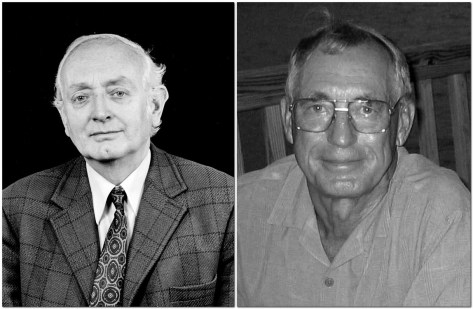
Jack Hawkes (L) and Roger Rowe (R)

On 12 December 1975 I was joined at the Birmingham graduation ceremony or congregation by Jack and Dr Trevor Williams (on my left below, who supervised my MSc dissertation on lentils). Trevor later became the first Director General of the International Board for Plant Genetic Resources (now Bioversity International). I’d turned 27 just a few weeks earlier, quite old in those days when it wasn’t all that unusual for someone to be awarded a PhD at 24 or 25, just three years after completing a bachelor’s degree. My research took four years however, from 1971, when I was awarded the MSc degree in genetic resources conservation at Birmingham.

The moment of being ‘doctored’ in the university’s Great Hall.

Sir Peter Scott, CH, CBE, DSC & Bar, FRS, FZS (by Clifton Ernest Pugh, 1924–1990)

As a biologist, it was particularly special that my degree was conferred by one of the most eminent naturalists and conservationists of his age, Sir Peter Scott (son of ill-fated Antarctic explorer Captain Robert Falcon Scott), who was Chancellor of the University of Birmingham for a decade from 1973.


According to the Birmingham PhD degree regulations today, a candidate must enter on a programme, normally of three years’ duration, in which the key activity is undertaking research, combined with appropriate training. Registered students must produce a thesis which makes an original contribution to knowledge, worthy of publication in whole or in part in a learned journal.

It was much the same back in the 1970s, except that we had eight years from first registration to submit a thesis. By the end of the 1980s this had already been reduced to four years.

Like the majority of PhD theses I guess, mine (The evolutionary significance of the triploid cultivated potato, Solanum x chaucha Juz. et Buk.) was a competent piece of original research, but nothing to write home about. However, I did fulfil the other important criterion for award of the degree as three scientific papers from my thesis research were later accepted for publication in Euphytica, an international journal of plant breeding:

  1. Jackson, MT, JG Hawkes & PR Rowe, 1977. The nature of Solanum x chaucha Juz. et Buk., a triploid cultivated potato of the South American Andes. Euphytica 26, 775-783. PDF

  2. Jackson, MT, PR Rowe & JG Hawkes, 1978. Crossability relationships of Andean potato varieties of three ploidy levels. Euphytica 27, 541-551. PDF

  3. Jackson, MT, JG Hawkes & PR Rowe, 1980. An ethnobotanical field study of primitive potato varieties in Peru. Euphytica 29, 107-113. PDF


It took me just over six weeks to write my thesis of about 150 pages. I achieved that by sticking to a well-defined daily schedule. I was under a tight time constraint.

Having returned from Peru at the beginning of May 1975, I still had a couple of things to wrap up: checking the chromosome numbers of some progeny from experimental crosses, then preparing all the hand drawn diagrams and maps (fortunately my cartographic skills from my geography undergraduate days at the University of Southampton placed me in good stead in this respect) and photographs. My thesis was typed on a manual typewriter; none of that fancy word processing and formatting available today. Nevertheless, I did submit my thesis by the mid-September deadline to meet the December graduation. I could hardly return to CIP by the beginning of the New Year without a PhD in my back pocket.

Looking at my thesis 45 years on, it does seem rather ‘thin’ compared to what PhD students can achieve today. In the early 1970s we didn’t have any of the molecular biology techniques that have become routine (essential even) today, to open up a whole new perspective on plant diversity, crop evolution, and crop domestication that were the basic elements of my thesis research.

Back in the day, it was normal for a PhD thesis to be examined by just one external examiner and an internal university one, usually from a candidate’s department and often the person who had supervised the research. Today the supervisor cannot be the internal examiner at many if not all universities in the UK, and it has become more common for a PhD student to have a committee to oversee the research.

So, towards the end of October 1975 I met with my examiners for what turned out to be a viva voce of over three hours. It got off to a good start because the external examiner told me he had enjoyed reading my thesis. That allowed me to relax somewhat, and we then embarked on an interesting discussion about the work, and potatoes and their evolution in general. The examiner found just one typographical error, and I corrected that immediately after the viva. I then sent the thesis for binding and official submission to the university library (where it languishes on a shelf somewhere, or maybe reduced to just a microfilm copy).


On the evening of my examination I rang my parents to tell them the good news, only to discover that my dad had suffered a heart attack earlier in the day. That certainly but a damper on the exhilaration I felt at having just passed my final exam – ever! Dad was resting, but expected to make a full recovery. By December, when the congregation was held, he was back on his feet, and he and mum attended the congregation. Having been allocated only two guest tickets, Steph gave hers up so mum and dad could attend.

They gave me a Parker fountain pen, engraved with my name and date, as a graduation present. I still have it.


So, I completed a PhD. Was it worth it? I actually waxed lyrical on that topic in a blog post published in October 2015. When the idea of working in Peru was first mooted in February 1971, it was intended to be just a one year assignment from September. Registering for a PhD was not part of the equation. But circumstances changed, my departure to Peru was delayed until January 1973, so Jack registered me for a PhD, setting me on a path that I have never regretted.

In any case, once I was established at CIP in Lima, I quickly came to the viewpoint that a career in international agricultural research was something I wanted to pursue. And without a PhD under my belt that would have been almost impossible. The PhD degree became a sort of ‘union card’, which permitted me to work subsequently in Central America, as a lecturer at the University of Birmingham for a decade, and almost 19 years up to my retirement in 2010 at the International Rice Research Institute (IRRI) in the Philippines in roles managing the world’s largest genebank for rice, and then as one of the institute’s senior management team.


[1] Unlike our two daughters Hannah and Philippa. They grew up in a home with parents having graduate degrees (Steph has an MSc degree in genetic resources from Birmingham). And when we moved to the Philippines in 1991, almost every neighbor of ours at IRRI Staff Housing had a PhD degree. So although it was never inevitable, both went on to complete a PhD in psychology (although different branches of the discipline) in 2006 and 2010 respectively, at the University of Minnesota and Northumbria University.

L (top and bottom): Phil, Hannah, and Steph after the graduation ceremony; Hannah with her cohort of graduands, Emily and Michael in Industrial & Organizational Psychology on 12 May 2006. R (top and bottom): Phil’s graduation at Northumbria University on 11 December 2010.

Combatting jet lag for job interviews across the globe

I started my first job on 1 January 1973. I retired (at 61) on 30 April 2010, after more than 37 years continuous employment. All but ten years were spent working abroad, in South and Central America, and in Asia. I also got to travel to more than 60 countries in the course of my work in international agricultural research and academia.

I’ve held five different positions in three organizations: the International Potato Center (CIP, in Lima, Peru); the University of Birmingham; and the International Rice Research Institute (IRRI, in the Philippines). However, I was interviewed for just two of those five positions, although during the course of my career I have flown all over the world for at least three other job interviews, none of which were successful as there always seemed to be an ‘internal candidate’ waiting in the wings. And in all cases, I had to combat jet lag to a greater or lesser extent all the while. You run on adrenaline and a certain degree of sang froid through the interviews [1].



My first job at CIP, as an Associate Taxonomist, came about almost by chance. In September 1970 I had enrolled on a one year MSc course on plant genetic resources conservation and use in the Department of Botany at the University of Birmingham.

The head of department, Professor Jack Hawkes, was an internationally-renowned potato expert and one of the pioneers of the 1960s genetic conservation movement. Just before Christmas that year he set off for a two month wild potato collecting trip to Bolivia, calling at CIP in Lima to seek some logistical help with the expedition. It was during that visit to CIP that the Director General, Dr Richard Sawyer mentioned that he wanted to send one of his young staff to the Birmingham course in September 1971. And did Jack know anyone who could come to CIP, for just one year, to help look at after the center’s growing germplasm collection of native Andean potato varieties (of which there are thousands).

On returning to the UK at the end of February 1971, Jack phoned me within a day of his return, and mentioned the position at CIP, and asked if I would be interested. I had no hesitation in saying an emphatic Yes! I’d always wanted to visit Peru, and having a position, albeit short-term, in genetic resources conservation was almost too good to be true.

Things didn’t go exactly to plan. There was a delay, while CIP negotiated with the UK government through the Overseas Development Administration (or was it Ministry of Overseas Development back in the day). My travel to Peru was put on hold, but I did register for and begin studies on potatoes towards a PhD in botany.

Richard Sawyer

Sometime during 1972 (I don’t remember exactly when) Richard Sawyer visited Birmingham, and I had an opportunity to sit down with him and Jack to discuss my posting in Lima. By then it had been agreed that it would be longer than just one year, and that I’d stay there long enough to complete the research for my PhD. I must have said all the right things, since Sawyer agreed to this arrangement. What I can say is that it wasn’t a formal interview as such. He had a habit of meeting prospective candidates around the world, often in airports, and deciding there and then if he wanted to hire them.

Anyway, to cut a long story short, I flew to Lima on 4 January 1973 and remained there until April 1975, when I returned to Birmingham to complete the residency requirements for my PhD and to submit my thesis. But before returning to the UK, I met with Sawyer concerning my future ambitions with CIP. And he made me an offer to move into CIP’s Outreach Program (later Regional Research) provided I successfully defended my thesis.

I was back in Lima just before the end of December, but not sure then to which regional office I would be posted although we had already initiated some plans for a move to Central America, about which I wrote recently. In April 1976, Steph and I left Lima headed for Turrialba in Costa Rica. And we remained there for almost five years, until the end of November 1980 in fact.

Returning to Lima, I had expected to move on to another of the CIP’s regional offices. Brazil was proposed, but when that fell through, we set about planning to move to the Philippines.


But fate intervened. Around September or October 1980 I heard about a new lectureship (in plant genetic resources) in my old department (by then renamed Plant Biology) at the University of Birmingham. I was torn. I was very happy at CIP and enjoyed the work I had been doing in various aspects of potato production. There again, a tenure-track university lectureship was too good an opportunity to ignore. So I sent in an application.

Around mid-December or so, I received feedback that my name would be put on the short list of candidates for interview, with one proviso. I had to commit to travel to Birmingham (at my own expense) for interview. After a long discussion with Steph, and looking at the most economical way of flying back to the UK (I eventually used Freddie Laker’s Skytrain airline into London-Gatwick from Miami), I confirmed my availability for interview during January.

I was in Birmingham for just over 36 hours (two nights) and afterwards I took the opportunity of visiting my mother who was staying with my eldest brother Martin and his family in Gloucestershire, south of Birmingham. I was in the UK for just under a week all told.

We were three candidates (one female, two male) and I guess that I was, to all intents and purposes, the ‘internal candidate’ (so I can’t rail too much about internal candidates) being the only one with an existing affiliation with the university. I was the last to be interviewed and arrived at the interview room a short while before my turn, to find the first candidate waiting in the corridor while the second was being grilled. We had been told to wait outside the interview room until all interviews had been concluded. One of us would be then invited back in to discuss a possible job offer.

With dry mouth and somewhat sweaty palms (and feeling rather jaded through jet lag) I entered the interview room with some trepidation. However, I was greeted by some friendly faces. The interview panel (certainly five persons) was chaired by Professor John Jinks, head of the Genetics Department and a formidable intellect. He was supported by Professor Derek Walker, head of the Biochemistry Department and Dean of the Science Faculty. There were three staff from Plant Biology: Jack Hawkes, Dr Dennis Wilkins (a fierce ecologist whose interviewing style seemed like a dog worrying a bone – I’d already come across him during my interview for a place on the MSc course, and as a graduate student), and Dr (later Professor) Brian Ford-Lloyd, who I’d known since my early graduate days and who has remained a lifelong friend and colleague with whom I have since published three books and many scientific papers. There may have been another person from the university administration, but I don’t recall.

I guess the interview must have lasted about 40 minutes, each member of the panel taking turns to probe my suitability for this lectureship. Unlike interviews for academic and research positions nowadays, I did not have to present a seminar to the department or be ‘interviewed’ by anyone outside the panel. (Incidentally, when the Mason Chair of Botany became vacant in 1982 on Jack Hawkes’ retirement, none of the staff met any of the professorial candidates nor were they expected to present a seminar).

Interview over, I joined the other two candidates outside, each of us deep in our own thoughts and very little conversation among us. After what seemed an age, but was probably no more than about 15 minutes, the door opened, and Brian came out to invite me back. John Jinks told me that the panel had agreed to offer me the lectureship and asked if I would accept it. I had already discussed with Steph what my answer would be under these circumstances. Unequivocally yes!

I don’t remember much after that. Except that Jack invited me for dinner at his house. I was staying in one of the guest rooms at Staff House in the center of the Birmingham campus. Early next morning, I made my way to the railway station and headed south for a few days before flying back to Peru and telling Steph (and our young daughter Hannah, almost three) the good news.


I joined the Plant Biology faculty on 1 April 1981 and spent ten years teaching undergraduate classes in flowering plant taxonomy, agricultural systems (as a component of a second year common course), and an honours course (with Brian) on plant genetic resources. But most of my teaching was at graduate level, to students from all over the world, who came to Birmingham for its world-renowned MSc course on genetic resources.

Then there was research on potatoes and legumes, and during this decade I supervised a number of graduate students to successfully submit their PhD theses. I had some administrative responsibilities that we were all expected to carry, some more than others. Towards the end of the 80s, however, things were changing at the university, and Margaret Thatcher’s government intervention in higher education was causing considerable disruption and disquiet. I found myself increasingly disillusioned with academic life.

Fate intervened, once again. I received notice of a new position at the International Rice Research Institute (IRRI) in the Philippines to lead one of the world’s most important genebanks. I decided to throw my hat in the ring. It was not an easy decision. Since IRRI was a sister institute to CIP, funded the same way through the Consultative Group on International Agricultural Research (or CGIAR) I knew, more or less what I would be letting myself in for if I joined IRRI.

However, there were more pressing personal issues. When we returned to the UK in 1981, our elder daughter Hannah was almost three. Her sister Philippa was born in May 1982. In 1991 they were thirteen and nine, and about to make the transition from from middle to high school, and from first to middle school, respectively. How would they cope with a move halfway across the world, leaving everything familiar behind, all their friends, and moving into an entirely new education system (we’d already decided that boarding school in the UK would not be an option).


Klaus Lampe

In early January 1991 I was invited for interview at IRRI, and flew with British Airways on a flight from London-Gatwick via Abu Dhabi and Hong Kong. The interviews were scheduled for Tuesday to Thursday, three rather intensive days of panel discussions, one-on-one meetings with senior staff, and a seminar. So I chose a flight that would get me into Manila on the Monday afternoon. Well, that was the plan. Arriving at Gatwick I discovered that my flight was delayed about 12 hours. Our designated 747 had a mechanical fault that could not be sorted easily, so we had to wait for a replacement plane to arrive from Florida before being turned around for the flight to the Far East. What a miserable experience. As a result I arrived to IRRI’s research campus in Los Baños (about 65 km south of Manila) around 01:30 on Tuesday morning and, checking over the interview schedule that had been left in my room at IRRI’s guesthouse, noted to my distinct discomfort that I had a breakfast meeting with the Director General, Dr Klaus Lampe, and his three Deputies at 07:00. Having left a request to be woken at 06:15, I took a sleeping pill, not that it helped much .

My internal clock was eight hours awry, but somehow I made it through the breakfast, and the next three days, taking a flight back to the UK late on Thursday night. I think I must have slept for a week once I was back in the UK.

There were three candidates for the genebank position. And we all had MSc (genetic resources) and PhD degrees (two on potatoes, one on rice) from the University of Birmingham and with Jack Hawkes as our PhD supervisor. I knew the other two candidates very well. One managed the Vegetable Genebank at Wellesbourne near Birmingham and the other headed the genebank at another CGIAR center in Nigeria, IITA. Although we overlapped some days at IRRI, our schedule of interviews and meetings meant that we hardly saw anything of each other.

On reflection, the interview schedule was gruelling, with hardly any time to catch one’s breath. We were kept on the go all the time, often with just short breaks between one interview and the next. It was an IRRI tradition to involve as many of the staff in interviewing candidates as possible, with a multiplicity of interview panels representing the different disciplines or a mixture [2]. And of course there was the more detailed interaction with staff in the genebank in my case.

Because the different panels did not interact with one another, candidates (as in my case) were faced with the same line of questions across different panels. Very repetitive and tiresome. And there were, in my opinion, the totally unacceptable and asinine questions from some IRRI staff, some of which received short shrift from me.

Let me give you two or three examples. I was asked if I was prepared to work hard. One line of questioning seemed to question my suitability for joining a center like IRRI and the CGIAR in general. I answered by a question: when did the person join the CGIAR? I was able to reply that I had joined and left the CGIAR years before this particular person had even first entered international agricultural research. 15: love to me! Another scientist, British, was obsessed with my undergraduate career and how successful I had been, notwithstanding that I had graduate degrees, and had been working already for almost 20 years.

A couple of weeks after arriving back in the UK I received a phone call from Lampe offering me the position, which I accepted after some negotiation over the salary and benefits package they originally put on the table. I joined IRRI on 1 July that year, and remained there until my retirement a decade ago.

After successfully running the genebank, in 2001 I was asked by Director General Ron Cantrell (with Board of Trustees approval) to join the senior management team, and become IRRI’s Director for Program Planning and Communications, a position I held until my retirement 2010.


[1] At one interview for the Crop Trust in Rome, I was interrupted by someone as I was delivering my seminar, a vision for the future of the organization. After the second interruption, in which this person had tried to ‘correct’ me, I had to tell her that this was my seminar, not hers, and went on to explain my thoughts on web presence. As it turned out I was not selected, but the organization did adopt my proposal for a more meaningful URL for its website.

On another occasion at Trinity College, Dublin, I delivered my seminar in the very lecture theater (in the Department of Botany) where Michael Caine had his wicked way with Julie Walters in the 1983 film Educating Rita.

When I interviewed for a position at ICARDA in Syria, much to my consternation and many members of staff the internal candidate accompanied me to one of the panel interviews, and even sat in on the interview. Needless to say a stop was soon put to that. Very unprofessional for senior management to even allow this to happen.

[2] When I joined IRRI and was involved in interviewing candidates (sometimes as chair of the selection committee) I tried to streamline the process somewhat, reducing the number of panel interviews per se, giving more time for informal interactions, while giving more responsibility to the selection panel.