
Steph and I are enthusiastic members of the National Trust (NT, since 2011) and English Heritage (EH, since 2015). And we have now visited 145 National Trust properties, and 43 from English Heritage. As well as a smattering of others owned by the National Trust for Scotland, Historic Environment Scotland, and the Welsh heritage organization, Cadw, as well as some not affiliated with any of these organizations.


On this map, I have included all of these properties. You can also expand the map to full screen by clicking on this icon [ ] in the top right corner of the map. Just zoom in to explore in more detail, and click on each icon for more information. They are also listed by region as well on this page.
Until three years ago, we lived in north Worcestershire, and visited many (almost all?) of the NT and EH properties within a 50 mile radius. Since 2020, we have lived in North Tyneside and have been exploring what the northeast has to offer. The NT has fewer properties close to home here in the northeast, although it does manage some spectacular stretches of coastline (as elsewhere in the country).
As you can see from the map, there are several regions of the country that we have yet to explore in any detail. We’ve still to visit the Lake District where the NT is well represented. English Heritage has more properties here in the northeast, but we’ve hardly scratched the surface yet.
Later this year we will spend a week in Norfolk and Suffolk, and have already planned which NT and EH properties to make a beeline for.
It’s hard to choose which have been my favorite visits over the past 13 years. Nevertheless, here are a few choices according to some rather arbitrary categories. The web links will take you to the stories I posted on this blog after each visit or to albums of my own photos.
Our heritage organizations are custodians of many fine properties, which frequently reflect the history of wealth accumulation over the centuries by the families that built and lived in them. As the National Trust is increasingly showing (and rightly so in my opinion, although it’s an approach not unanimously appreciated) how such wealth was accumulated, often off the back of nefarious activities like slavery. Also, even since we became members of the National Trust, visitors now have much more access than before, and photography (without flash) is now widely permitted. And that has made my visits all the more enjoyable.
So, here goes . . .
If I had to choose one property for its ostentation, it would have to be Waddesdon Manor, the former family home of the Rothschild family, near Aylesbury in Buckinghamshire. We visited in August 2014.


What a treasure trove! Magnificent! It’s quite easy to be overwhelmed.
However, coming close behind must surely be Kingston Lacy in Dorset, Belton House in Lincolnshire, and Mount Stewart in Northern Ireland. And, of course, there’s Penrhyn Castle outside Bangor in North Wales that we visited for the first time last September.
Many of the houses have quite spectacular interiors, and I’ve taken quite an interest in those architectural features and furnishings. In 2016, we took a trip south from Bromsgrove to Claydon House in Buckinghamshire.
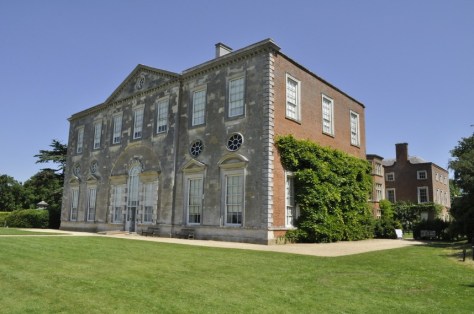
On arrival I discovered that, due to copyright considerations (the Verney family still live in one part of the property and own many of the furnishings), photography is not permitted inside the house. However, after a chat with the National Trust house manager, and explaining my blog and interest in design features of the house, I was given permission to photograph these and never published any photo until I’d been given clearance.
The carvings throughout the house are some of the finest in the country and work of 18th century carver and stonemason Luke Lightfoot (1722-1789).


In terms of carved woodwork, examples of the exquisite craftsmanship of Grinling Gibbons (1648-1721) can be seen at Petworth in West Sussex, Lyme in Cheshire, Belton House, and Sudbury Hall in Derbyshire.
Many properties have significant collections of paintings. There’s one that has particularly attracted my attention. It’s the enclosed courtyard at Wallington, where bright Pre-Raphaelite murals by Victorian painter William Bell Scott, several depicting local scenes and personalities, cover the walls. They are simply exquisite.


Over the many visits we’ve made, I’ve taken an interest in wallpapers, particularly those designed by William Morris. I guess one of the best examples has to be Wightwick Manor near Wolverhampton, which we visited in 2014.

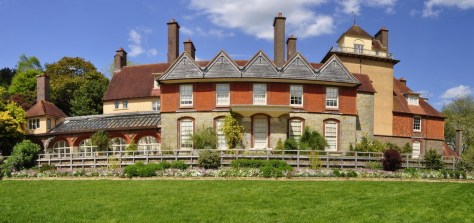
I don’t have any photos from there since photography inside the house was not permitted. But here are some examples from Standen House in West Sussex.


During our visit to Northern Ireland in 2017, we spent a week visiting as many National Trust properties as possible. And there’s no doubt about it. Castle Ward, overlooking Strangford Lough, must be the most architecturally quirky anywhere across the nation.
Built in the 1760s by the 1st Viscount Bangor, he and his good lady wife were unable to agree on architectural style. So the southwest face is Classical Georgian while the northeast is Gothic. And this is repeated throughout the house. Quite extraordinary.


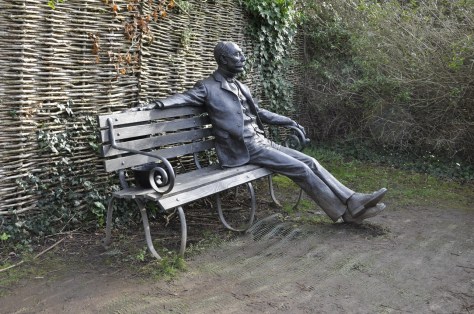
If I had to choose any others, it would be for the eclectic possessions accumulated by their owners and never discarded, at Erddig near Wrexham and Calke Abbey in Derbyshire. Or the active collecting of Charles Paget Wade at Snowshill Manor in the Cotswolds (below).


All of these heritage properties have claim to historic fame in one way or another. Where history was written. On reflection I have given that accolade to Chartwell, near Sevenoaks in Kent, the home of former Prime Minister Sir Winston Churchill. What a life lived!
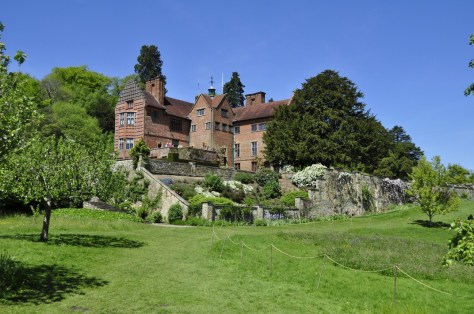
I wasn’t sure quite what to expect, but was quite overwhelmed at the access visitors had to all areas of the house, to a huge number of Sir Winston’s possessions, and those of his wife Lady Clementine. Even Sir Winston’s huge collection of paintings. It was quite overwhelming.


Being a scientist, I’d always wanted to visit two properties in particular: Down House in Kent, the home of Charles Darwin; and Woolsthorpe Manor near Grantham in Lincolnshire, the birthplace of 17/18th century polymath, Sir Isaac Newton.
I was a little disappointed with the Down House visit. I felt that English Heritage hadn’t made as much of presenting the property as they might have.
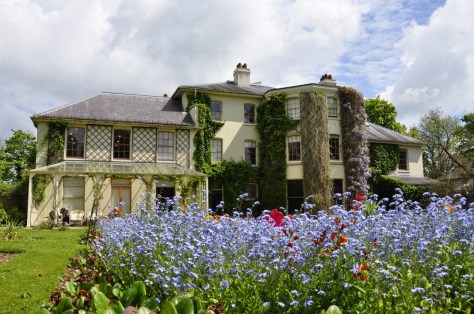
And, due to Darwin family restrictions, photography was not permitted inside. Nevertheless, as a student of evolution, it was a privilege to wander around the house and gardens, knowing this was where Darwin formulated his theory of the origin of species.
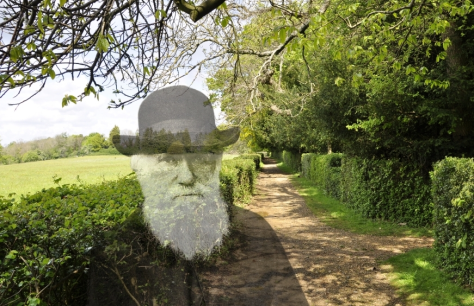

The legacy of 18th century landscape architect Lancelot ‘Capability’ Brown (right) can be seen at multiple properties across the country. He was born in Kirkharle, Northumberland, just over 19 miles (30 km) northwest of where we now live.
For me, there are two standout landscapes that Brown designed, one of them—at Croome Court in Worcestershire—being among his earliest commissions. The other is at Stowe in Buckinghamshire.
The parkland at Croome has the Croome River that was hand dug over several years, against the backdrop of the Malvern Hills. Quite spectacular, and being one of our ‘local’ heritage sites, Croome became a favorite of ours when we lived in Bromsgrove.


We visited Stowe just the once, but there’s no doubt that it is one of the finest examples of so-called ‘natural’ gardening that flourished under Capability’s supervision.


Steph is a very keen gardener, so our garden visits are always a pleasure. I guess Sissinghurst in Kent, designed by Vita Sackville-West and her husband, would be at the top of our list.


A close second has to be the Arts and Craft garden at Hidcote Manor on the northern edge of the Cotswolds, the inspiration of Lawrence Johnston. Since there are so many fine heritage gardens it almost seems unfair to choose just a couple.


Cragside, near Rothbury in Northumberland was the first house to be powered by hydroelectricity. Home of William, 1st Baron Armstrong (a wealthy engineer and industrialist, eminent scientist, inventor and philanthropist), Cragside has many other innovations throughout the house. And equally impressive, 150 years later, is the estate of trees from around the world that have now matured into such magnificent specimens.


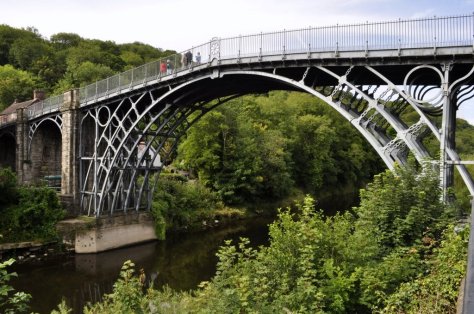
And while I’m on the topic of technology, I guess anyone has to be impressed by the industrial technology that led to the construction of the bridge across the River Severn at Ironbridge in Shropshire in 1779.
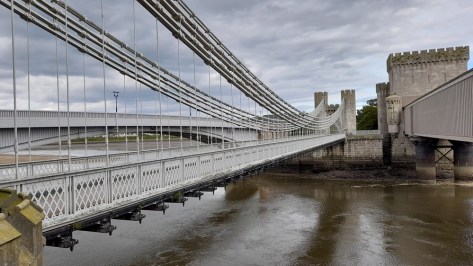
Also Thomas Telford’s suspension bridges at Conwy (below) and over the Menai Strait, both completed in 1826.
Over the years, I’ve become quite an aficionado of parterres that were popular design features at many country houses. My favorite is the one at Hanbury Hall in Worcestershire, which was the heritage property closest to our home when we lived in Bromsgrove, just seven miles. We’d often pop over to Hanbury for a walk in the parkland, and take a look at the parterre in all seasons. It certainly is a credit to the garden staff and volunteers who keep it in such fine shape.


A number of properties have literary links, and a couple were the homes of Nobel Literature Laureates. Of course, I’m referring to Rudyard Kipling at Bateman’s and Sir Winston Churchill at Chartwell.


Rudyard Kipling was named after the village of Rudyard in North Staffordshire, just a few miles from my home town of Leek. Kipling’s parents had met there.
Bateman’s is an elegant Jacobean mansion in the East Sussex countryside, acquired by Kipling in 1902 and remained the family home until his death in 1936. Our visit to Bateman’s in May 2019 inspired me to reach into Kipling’s novels, which I hadn’t before, and subsequently enjoyed.
I found visits to a couple of National Trust properties quite emotional, sufficient to bring tears to my eyes. In November 2018 I celebrated my 70th birthday, and Steph and I spent a long weekend in Liverpool, taking in The Beatles Childhood Homes of John Lennon and Paul McCartney.


When I was inside John Lennon’s home at ‘Mendips’, 251 Menlove Avenue in the Woolton suburb, I was suddenly overcome with a powerful emotion. Hard to explain, but I felt myself welling up. As a teenager in the 1960s, The Beatles were very much part of my formative years.
The other place where this has happened was at The Firs, the birthplace of that great English composer Sir Edward Elgar. We’d toured the cottage, looked round the small garden, then headed back to the fascinating museum. It was when we were watching a short documentary film about Elgar to the accompaniment of one of his most memorable compositions, Variation IX commonly known as Nimrod from the Enigma Variations, that I once again felt tears coming. Music can be such a powerful stimulus.
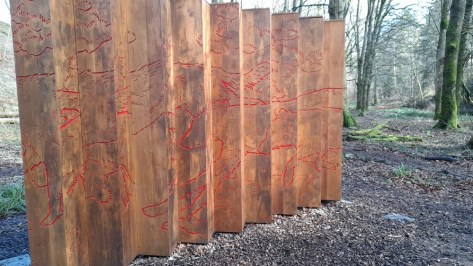
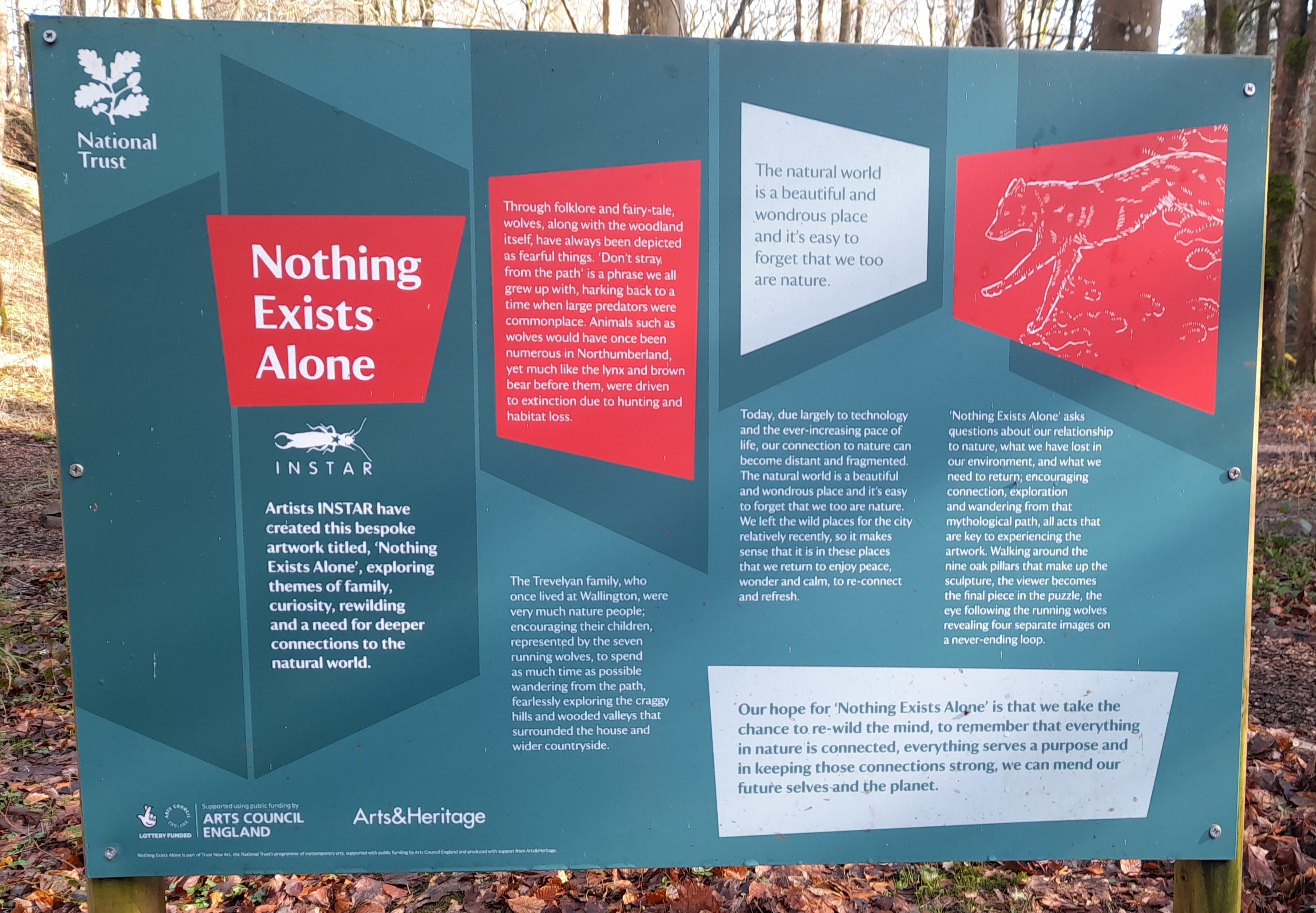
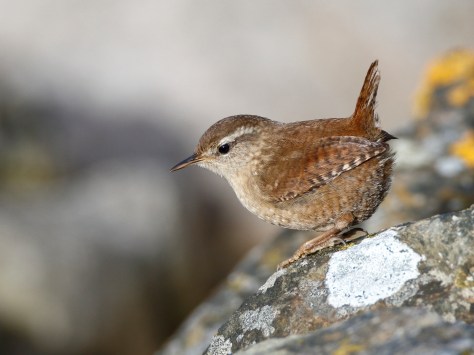
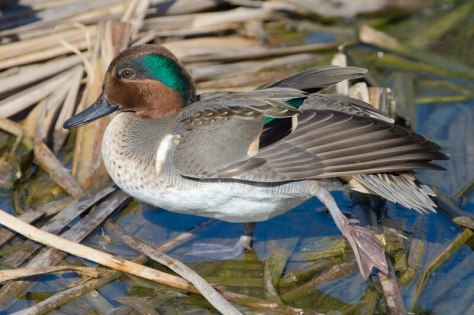
I wrote recently about a successful birding walk around the parkland and woods at Wallington in Northumberland. But there’s one site where the birding opportunities are out of this world. In the Farne Islands just off the Northumberland coast.
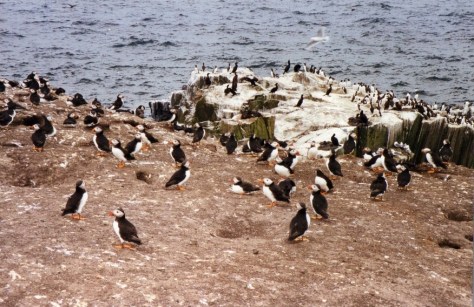
Puffins, with guillemots closer to the cliff edge.
Steph and I visited there in 1998, and have plans to revisit again this year. The islands have been closed to visits for the past couple of years because of bird flu that had seriously depleted some of the colonies. We also look forward to birding on the Suffolk coast at Orford Ness later this year.
All the heritage charities maintain an impressive portfolio of castles, some more complete than others. The northeast is particularly rich in castles. Many were reduced to ruins, or slighted, centuries ago following conflicts.
But if I had to choose a couple to put at the top of my list, they would be Caernarfon Castle, owned by Cadw, and which we visited last September during an enjoyable week’s holiday exploring North Wales, and Dover Castle, owned by English Heritage.
Caernarfon (below) is one of four castles built by King Edward I in the late 13th century.

Of the four (the others being Conwy, Beaumaris, and Harlech), Caernarfon is the most complete, and Cadw allows access to much of the castle. Although it was a grey day when we visited, there were relatively few other tourists and we easily had access to all parts.
Speaking of access, English Heritage has innovatively opened up Kenilworth Castle and Hardwick Old Hall (below) by constructing internal stairways and viewing platforms that just expand one’s appreciation of these buildings.


Of the many ruined abbeys and priories we have visited, Rievaulx Abbey in North Yorkshire stands out for me (closely followed by Fountains Abbey and Whitby Abbey). I guess it must be to do with Rievaulx’s location in the valley of the River Rye. The monks knew just where to build!


However, there is one church where worship is still celebrated today, and is quite outstanding. That has to be St Mary’s Church in the village of Kempley in Gloucestershire. The interior walls are decorated with beautiful frescoes.


The British landscape is blessed with the remains of ancient cultures going back thousands of years, from various standing stones (like Stonehenge and the Avebury Ring), ancient villages (Chysauster in Cornwall), and Iron Age settlements and hill forts.
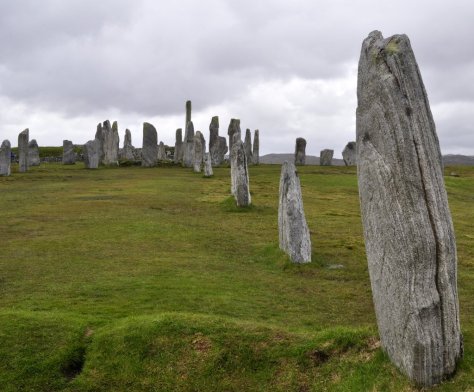
Impressive as Stonehenge and Avebury are, there’s something about the Calanais Stones in the Isle of Lewis in the Outer Hebrides. I first came across these standing stones in the summer of 1967, and Steph and I visited them during our tour of Scotland in 2015.
Of all the Roman remains throughout these islands, Hadrian’s Wall (and all its associated forts and watchtowers) has to the number one attraction. And it’s on our doorstep.


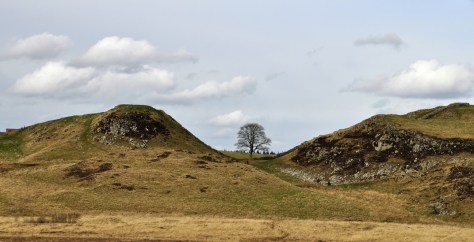
In February 2022, on a bright but sunny day, we decided to walk a short length of the Wall, from Steel Rigg Car Park to Sycamore Gap (below). And we saw the iconic tree before it was maliciously felled in 2023.
Undoubtedly there are so many more properties to choose from, and I’m sure my choices won’t be to everyone’s taste. But the heritage is out there to explore and enjoy, and that’s what Steph and I will continue to do, come rain or shine.
 Along the path beside the Garden Pond, there’s a newly installed sculpture of an owl, carved from one of the downed trees, standing in open woodland (mainly of beech) but with lots of understorey bushes.
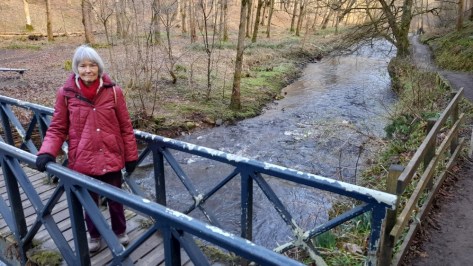
 We walked through the walled garden, and enjoyed the crocus lawns at their best on the upper terrace, before heading through the gate that led to the River Walk path.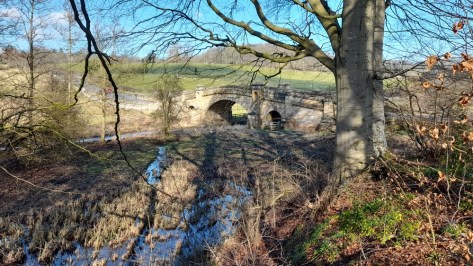
 You’ve probably never heard of
 At the heart of the empire was the capital, Angkor, with its principal temple




 A balanced diet . . .