Rice Today . . . and tomorrow

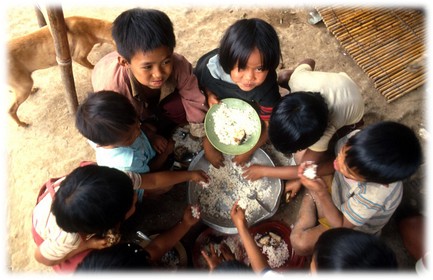
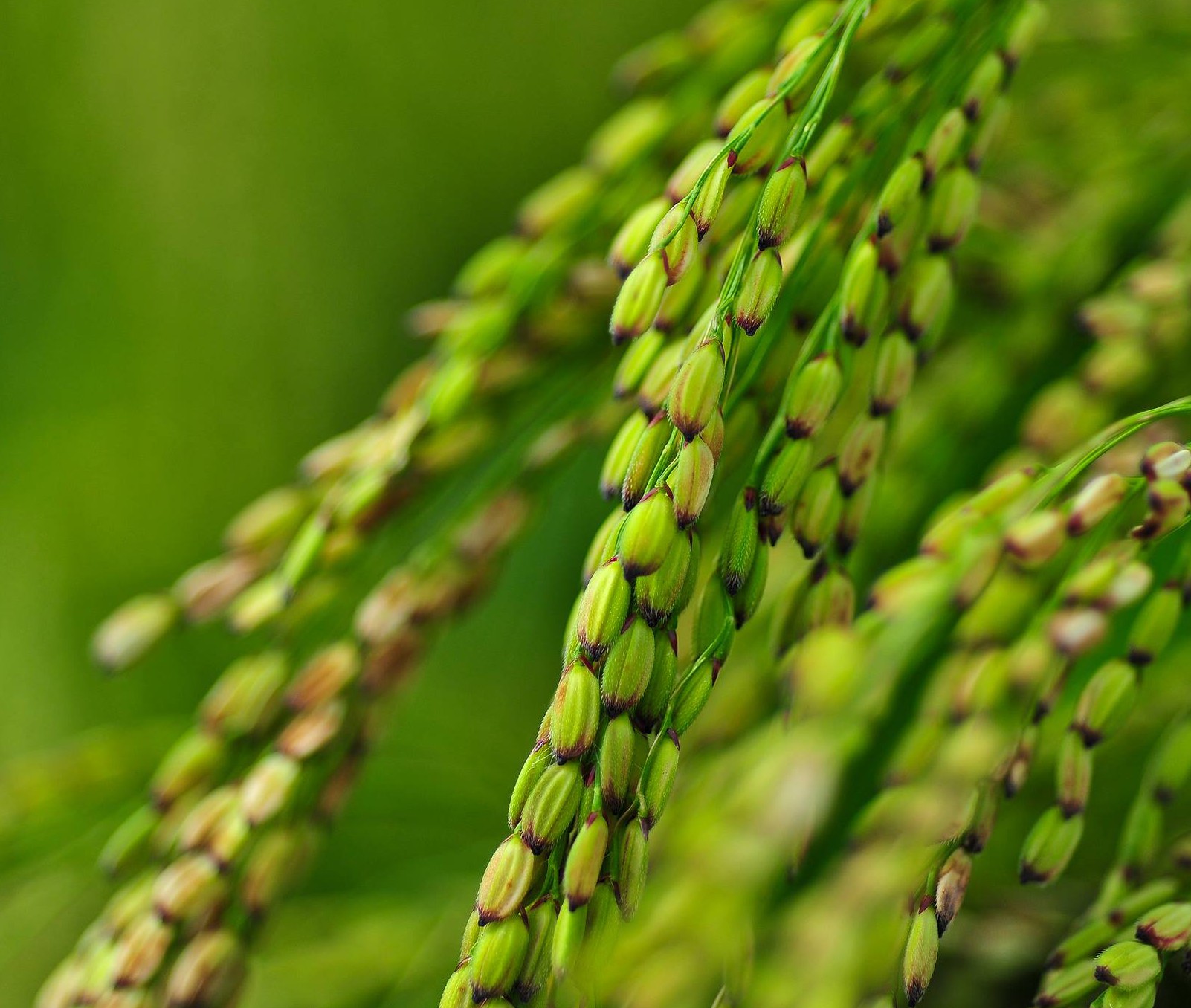
Rice. Oryza sativa. A crop that feeds more people worldwide on a daily basis than any other.

20100409007

It’s the staple food of at least half the world’s population. In many countries, it is eaten several times a day. A meal without rice is no meal at all in many Asian countries. Rice is life!

41-copy

For almost 20 years from 1991-2010 it was also my life.

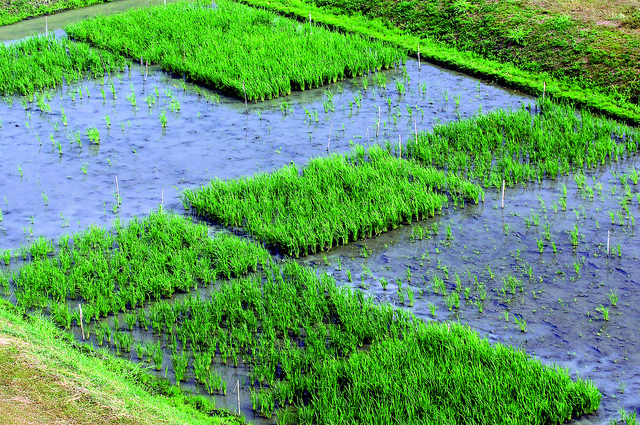
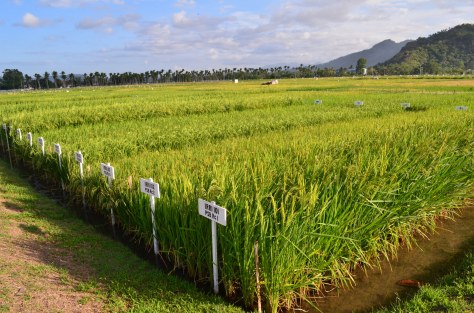
While you might know that rice is grown in flooded fields (in so-called rice paddies) in Asia, this crop can be found almost everywhere. It’s an important crop in California and Louisiana in the USA, grown widely in many Latin American countries, and in Europe it is found in the Camargue delta in the south of France, and in the Po Valley south of Milan in northern Italy, in sight of the snow-capped Alps!

Rice is a particularly important crop in West Africa where it evolved from an indigenous species, Oryza glaberrima. In the Riverina of New South Wales, Australia, rice is an irrigated crop, under threat due to water shortages, but where some of the highest global yields have been achieved. In the temperate regions of Japan and northern China rice agriculture is widely grown.

But it is South and Southeast Asia that has the largest areas of cultivation. Farmers throughout the region, particularly in the highlands of Indonesia and the Philippines, have adapted the environment to rice agriculture, terracing whole hillsides to provide pockets of land that can be flooded to grow rice.

The rice we eat in Europe has probably come from Thailand, one of the world’s major rice exporting nations. In Asia, many families subsist by growing their crops on small parcels of land – in flooded conditions, on steep slopes, wherever rice can be grown. Many farmers still grow the same varieties that have been nurtured for generations; yields are often low. Modern rice varieties, in contrast, can yield up to several tons per hectare, vital for feeding ever-burgeoning populations throughout Asia.

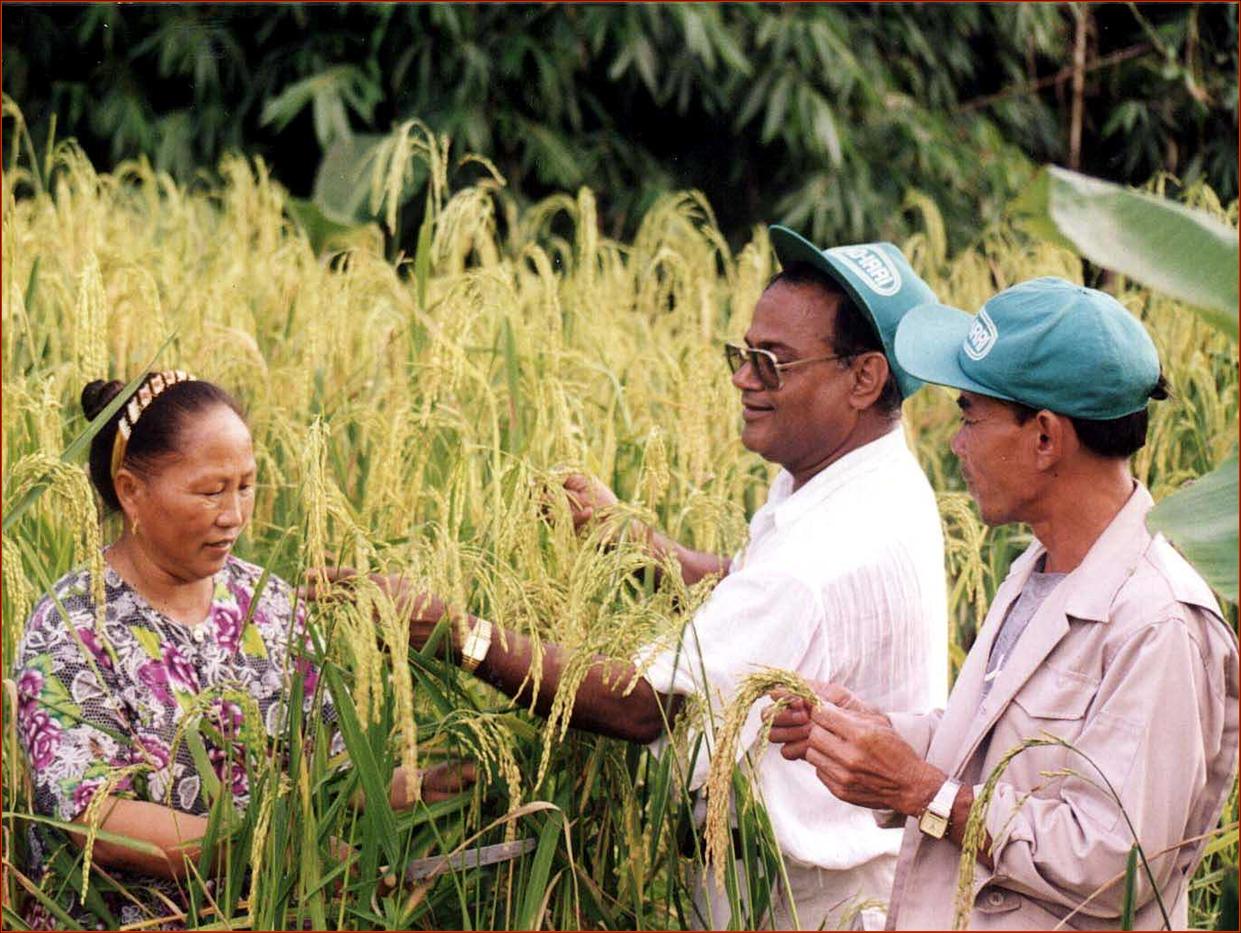
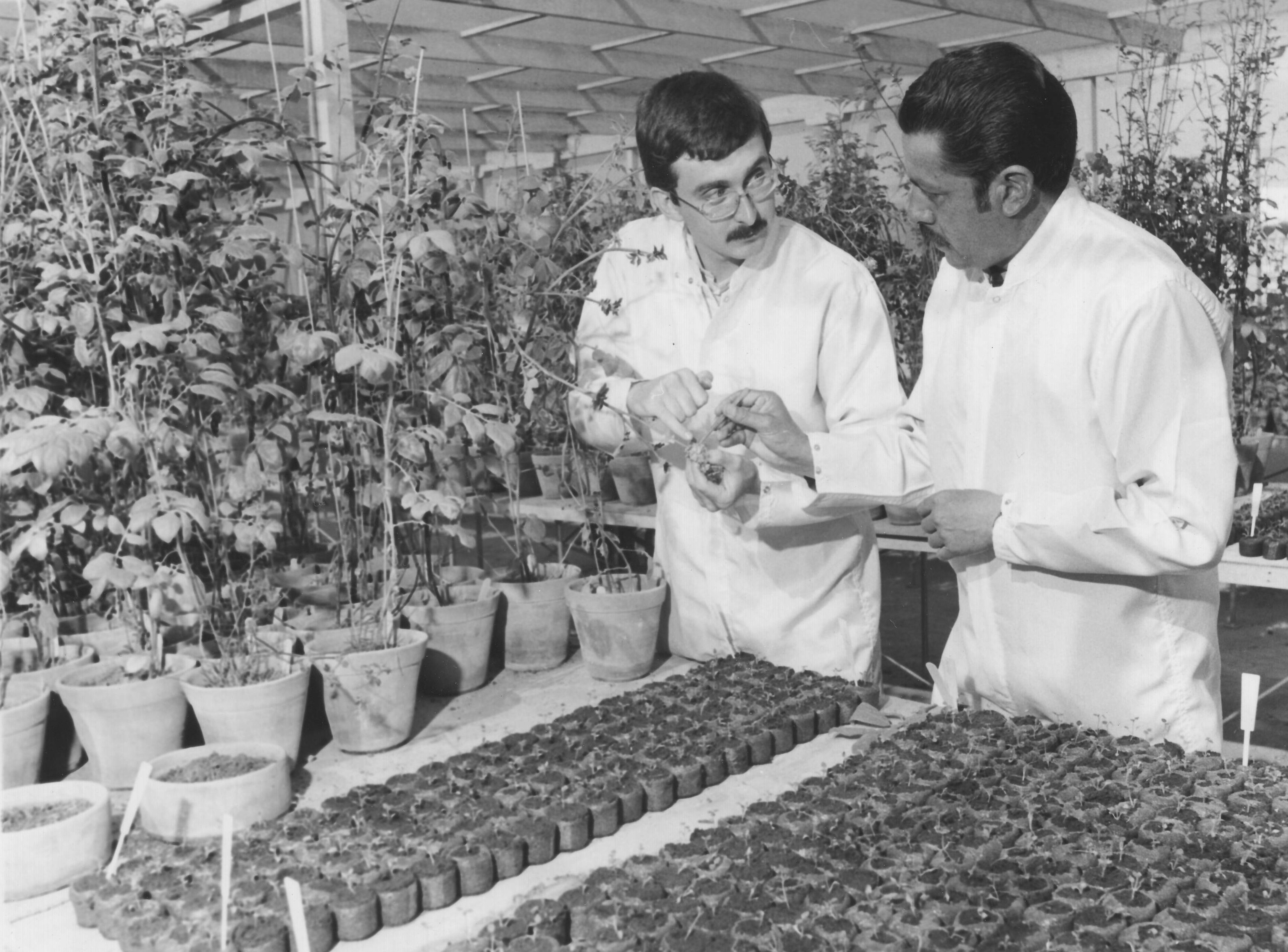
Here is a selection of rice agriculture photographs taken by my former colleague Dr Seepana Appa Rao (center in the photo below) who was based in the Lao People’s Democratic Republic (Lao PDR) for five years from 1995. They illustrate different types of rice agriculture, and farmers proudly displaying their varieties.

Appar Rao collecting upland rice in the Lao PDR

Together with Lao colleagues Appa (as we called him) collected, for the first time, more than 13,000 samples of indigenous rice varieties, many with interesting names that often describe their appearance or use in cooking.

rice-today-logoRice is such a fascinating crop you might want to understand a little more. And there’s no better source than Rice Today, a magazine launched by the International Rice Research Institute (IRRI) in 2002, and published quarterly ever since. It’s a solid mix of rice news and research, stories about rice agriculture from around the world, rice recipes even, and the odd children’s story about rice.

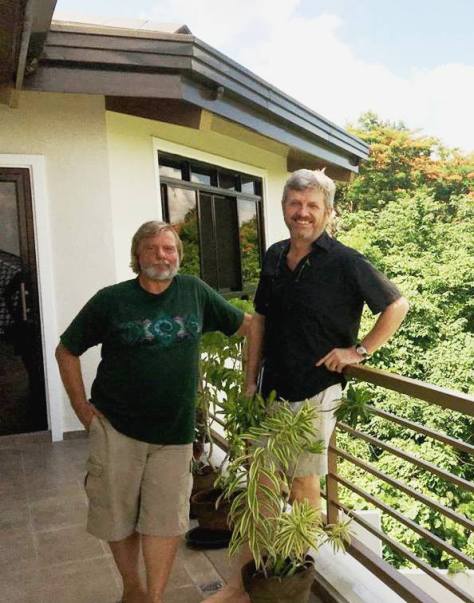
It was the brainchild of Gene Hettel, former head of IRRI’s Communication and Publications Services (CPS) and Duncan Macintosh, who was initially IRRI’s spokesperson and head of the Visitors’ Office; he became Director for Development. Duncan moved back to Australia a few years back. Recently he was back in the Philippines on a visit, and caught up with Gene.

17077864_10211719434403144_1059056041_n

Gene Hettel and Duncan Macintosh

The cover story on the very first Rice Today issue was all about the development of rice agriculture in Cambodia after the downfall of the brutal Pol Pot regime. It celebrated the role of Australian agronomist Dr Harry Nesbitt who was team leader for IRRI in Cambodia.

Now in it’s 16th volume, with a change of logo even, the cover of latest issue shows a painting of a traditional method of rice planting by Filipino artist Erick Dator. Throughout each issue, the graphics and images are stunning. Take for example the aerial photographs accompanying an article published in  the Jan-Mar 2008 issue, written by Gene about the of the Ifugao rice terraces in the Philippines.

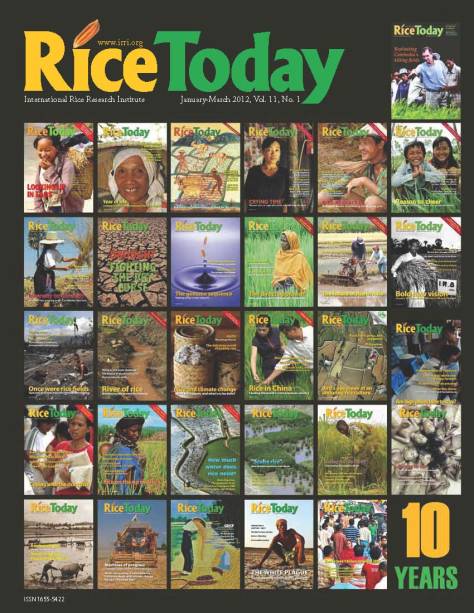
For its 10th anniversary (Vol 11) in January 2012, former Director General Bob Zeigler talked about the value of Rice Today. Just click on the image below to read it.

pages-from-10th-anniversary_rice-today-vol-11-no-1

reyes_aboutRice Today is published by IRRI on behalf of Rice (GRiSP), the CGIAR research program on rice; it is also available online. Lanie Reyes (right) joined IRRI in 2008 as a science writer and editor. She is now editor-in-chief. She is supported by Savitri Mohapatra and Neil Palmer from sister centers Africa Rice Center in Côte d’Ivoire and CIAT in Colombia, respectively.

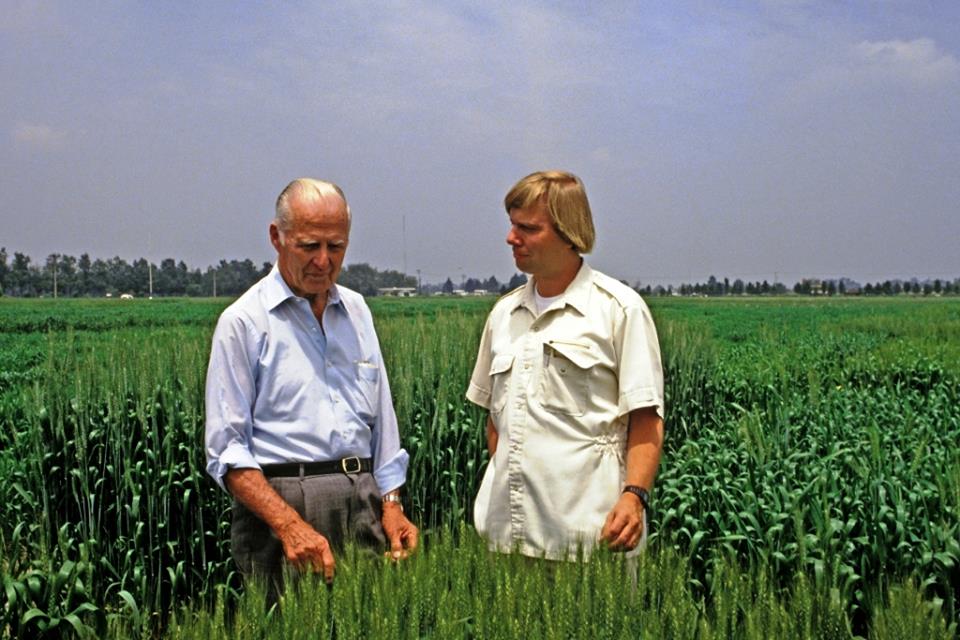
Gene was a close colleague of mine; we even won the odd communications award together as well! He came to IRRI in 1995 (having been a visiting editor in 1982-83) from a sister center, CIMMYT, based north of Mexico City that works on maize and wheat improvement, just like IRRI works on rice. He had been a communications expert at CIMMYT. Here is a younger Gene in a wheat field in Mexico with Nobel Peace Laureate Dr Norman Borlaug, who spent much of his career at CIMMYT.

hettel-borlaug

There’s more to genetic resources than Svalbard

Way above the Arctic Circle (in fact at 78°N) there is a very large and cold hole in the ground. Mostly it is dark. Few people visit it on a daily basis.

A germplasm backup for the world
Nevertheless it’s a very important hole in the ground. It is the Svalbard Global Seed Vault, where more than 70 genebanks have placed — for long-term security, and under so-called blackbox storage [1] — a duplicate sample of seeds from their genetic resources (or germplasm) collections of plant species important for agriculture. Many of the most important and genetically diverse germplasm collections are backed up in Svalbard. But there are hundreds more collections, including some very important national collections, still not represented there.

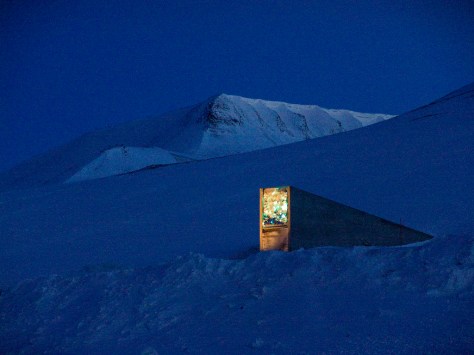
A beacon of light – and hope – shining out over the Arctic landscape. Photo courtesy of the Crop Trust.

Since it opened in 2008, the Svalbard vault has hardly ever been out of the media; here is a recent story from Spain’s El Pais, for example. If the public knows anything at all about genetic resources and conservation of biodiversity, they have probably heard about that in relation to Svalbard (and to a lesser extent, perhaps, Kew Gardens’ Millennium Seed Bank at Wakehurst Place in Sussex).

The Svalbard Vault is a key and vital component of a worldwide network of genebanks and genetic resources collections. It provides a long-term safety backup for germplasm that is, without doubt, the genetic foundation for food security; I have blogged about this before. At Svalbard, the seeds are ‘sleeping’ deep underground, waiting to be wakened when the time comes to resurrect a germplasm collection that is under threat. Waiting for the call that hopefully never comes.

Svalbard comes to the rescue
But that call did come in 2015 for the first and only time since the vault opened. Among the first depositors in Svalbard in 2008 were the international genebanks of the CGIAR Consortium, including the International Center for Agricultural Research in the Dry Areas (ICARDA). The ICARDA genebank conserves important cereal and legume collections from from the Fertile Crescent (the so-called ‘Cradle of Agriculture’) in the Middle East, and from the Mediterranean region. Until the civil war forced them out of Syria, ICARDA’s headquarters were based in Aleppo. Now it has reestablished its genebank operations in Morocco and Lebanon. In order to re-build its active germplasm collections, ICARDA retrieved over 15,000 samples from Svalbard in 2015, the only time that this has happened since the vault was opened. Now, thanks to successful regeneration of those seeds in Morocco and Lebanon, samples are now being returned to Svalbard to continue their long sleep underground.

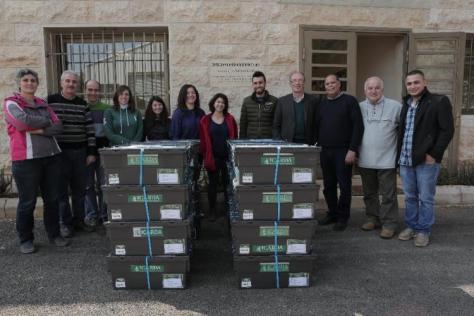
ICARDA genebank staff ready to send precious seeds off to the Arctic. Dr Ahmed Amri, the ICARDA Head of Genetic Resources, is third from the right. Photo courtesy of ICARDA.

Another point that is often not fully understood, is that Svalbard is designated as a ‘secondary’ safety backup site. Genebanks sending material to Svalbard are expected to have in place a primary backup site and agreement. In the case of the International Rice Research Institute (IRRI), which I am most familiar with for obvious reasons, duplicate germplasm samples of almost the entire collection of 127,000 accessions, are stored under blackbox conditions in the -18°C vaults of The National Center for Genetic Resources Preservation in Fort Collins, Colorado. Although ICARDA had safety backup arrangements in place for its collections, these involved several institutes. To reestablish its active collections in 2015 it was simpler and more cost effective to retrieve the samples from just one site: Svalbard.

We see frequent reports in the media about seeds being shipped to Svalbard.  Just last week, the James Hutton Institute in Dundee, Scotland, announced that it was sending seeds of potatoes from the Commonwealth Potato Collection to Svalbard; it was even reported on the BBC. A few days ago, the International Maize and Wheat Improvement Center (CIMMYT) in Mexico sent a ton of seeds to the vault. The International Center for Tropical Agriculture (CIAT), in Cali, Colombia sent its latest shipment of beans and tropical forages last October.

30423318505_1b5fdb9c2d_z

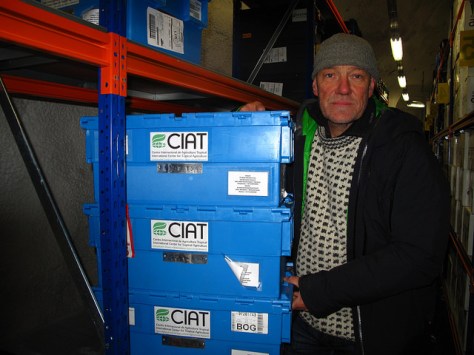
Dr Åsmund Asdal, Coordinator of the Svalbard Global Seed Vault, from the Nordic Genetic Resource Center (NordGen), receives a shipment of germplasm from CIAT in October 2016. Photo courtesy of the Crop Trust.

The germplasm iceberg
Key and vital as Svalbard is, it is just the tip of the germplasm iceberg. The Svalbard vault is just like the part of an iceberg that you see. There’s a lot more going on in the genetic resources world that the public never, or hardly ever, sees.

There are, for example, other types of genetic resources that will never be stored at Svalbard. Why? Some plant species cannot be easily stored as seeds because they either reproduce vegetatively (and are even sterile or have low fertility at the very least; think of bananas, potatoes, yams or cassava); or have so-called recalcitrant seeds that are short-lived or cannot be stored at low temperature and moisture content like the seeds of many cereals and other food crop species (the very species stored at Svalbard). Many fruit tree species have recalcitrant seeds.

Apart from the ICARDA story, which was, for obvious reasons, headline news, we rarely see or hear in the media the incredible stories behind those seeds: where they were collected, who is working hard to keep them alive and studying the effects of storage conditions on seed longevity, and how plant breeders have crossed them with existing varieties to make them more resistant to diseases or better able to tolerate environmental change, such as higher temperatures, drought or flooding. Last year I visited a potato and sweet potato genebank in Peru, a bean and cassava genebank in Colombia, and one for wheat and maize in Mexico; then in Kenya and Ethiopia, I saw how fruit trees and forage species are being conserved.

Here is what happens at IRRI. You can’t do these things at Svalbard!

These are the day-to-day (and quite expensive) operations that genebanks manage to keep germplasm alive: as seeds, as in vitro cultures, or as field collections.

But what is the value of genebank collections? Check out a PowerPoint presentation I gave at a meeting last June. One can argue that all germplasm has an inherent value. We value it for its very existence (just like we would whales or tigers). Germplasm diversity is a thing of beauty.

Most landraces or wild species in a genebank have an option value, a potential to provide a benefit at some time in the future. They might be the source of a key trait to improve the productivity of a crop species. Very little germplasm achieves actual value, when it used in plant breeding and thereby bringing about a significant increase in productivity and economic income.

There are some spectacular examples, however, and if only a small proportion of the economic benefits of improved varieties was allocated for long-term conservation, the funding challenge for genebanks would be met. Human welfare and nutrition are also enhanced through access to better crop varieties.

impact-paper_small_page_01Last year, in preparation for a major fund-raising initiative for its Crop Diversity Endowment Fund, the Crop Trust prepared an excellent publication that describes the importance of genebanks and their collections, why they are needed, and how they have contributed to agricultural productivity. The economic benefits from using crop wild relatives are listed in Table 2 on page 8. Just click on the cover image (right) to open a copy of the paper. A list of wild rice species with useful agronomic traits is provided in Table 3 on page 9.

Linking genebanks and plant breeding
Let me give you, once again, a couple of rice examples that illustrate the work of genebanks and the close links with plant breeding, based on careful study of genebank accessions.

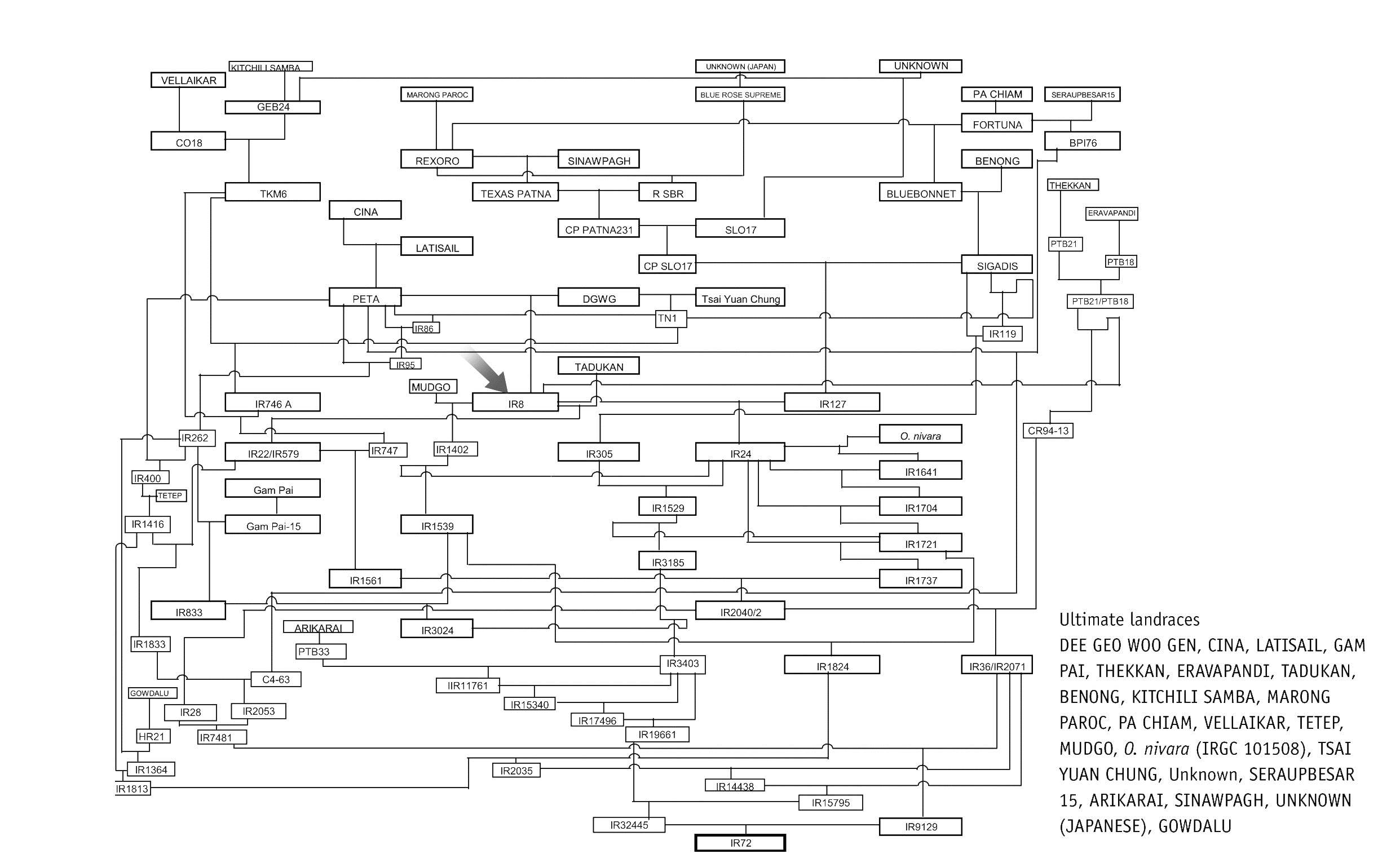
The indica variety IR72 was bred at IRRI, and released in 1990. It became the world’s highest yielding rice variety. One of its ancestors, IR36 was, at one time, grown on more than 11 million hectares. IR72 has 22 landrace varieties and a single wild rice, Oryza nivara, in its pedigree. It gets its short stature ultimately from IR8, the first of the so-called ‘miracle rices’ that was released in 1966. IRRI celebrated the 50th anniversary of that release recently. Resistance to a devastating disease, grassy stunt virus, was identified in just one accession of O. nivara from India. That resistance undoubtedly contributed to the widespread adoption of both IR36 and IR72. Just click on the pedigree diagram below to open a larger image [2].

IR Varieties_TOC.indd

The pedigree of rice variety IR72, that includes 22 landrace varieties and one wild species, Oryza nivara. Courtesy of IRRI.

A more recent example has been the search for genes to protect rice varieties against flooding [3]. Now that might seem counter-intuitive given that rice in the main grows in flooded fields. But if rice is completely submerged for any length of time, it will, like any other plant, succumb to submergence and die. Or if it does recover, the rice crop will be severely retarded and yield very poorly.

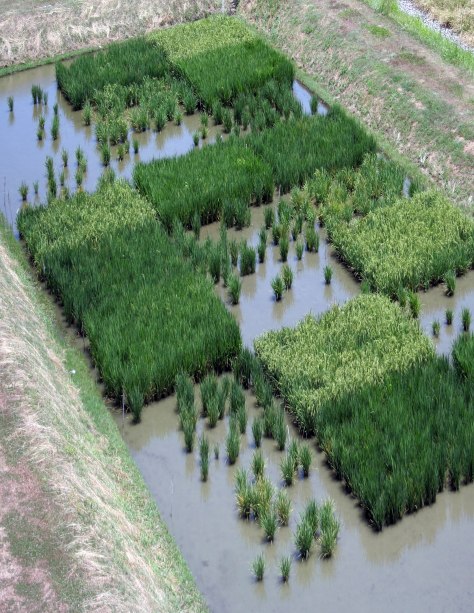
Rice varieties with and without the SUB1 gene after a period of inundation

Rice varieties with and without the SUB1 gene following transient complete submergence. Photo courtesy of IRRI.

Seasonal flooding is a serious issue for farmers in Bangladesh and eastern India. So the search was on for genes that would confer tolerance of transient complete submergence. And it took 18 years or more from the discovery of the SUB1 gene to the release of varieties that are now widely grown in farmers’ fields, and bringing productivity backed to farming communities that always faced seasonal uncertainty. These are just two examples of the many that have been studied and reported on in the scientific press.

There are many more examples from other genebanks of the CGIAR Consortium that maintain that special link between conservation and use. But also from other collections around the world where scientists are studying and using germplasm samples, often using the latest molecular genetics approaches [4] for the benefit of humanity. I’ve just chosen to highlight stories from rice, the crop I’m most familiar with.

~~~~~~~~~~~~~~~~~~~~~~~~~~~~~~~~~~~~~~~~
[1] Blackbox storage is described thus on the Crop Trust website (https://www.croptrust.org/our-work/svalbard-global-seed-vault/): “The depositors who will deposit material will do so consistently with relevant national and international law. The Seed Vault will only agree to receive seeds that are shared under the Multilateral System or under Article 15 of the International Treaty or seeds that have originated in the country of the depositor.

Each country or institution will still own and control access to the seeds they have deposited. The Black Box System entails that the depositor is the only one that can withdraw the seeds and open the boxes.” 

[2] Zeigler, RS (2014). Food security, climate change and genetic resources. In: M Jackson, B Ford-Lloyd & M Parry (eds). Plant Genetic Resources and Climate Change. CABI, Wallingford, Oxfordshire. pp. 1-15.

[3] Ismail, AM & Mackill, DJ (2014). Response to flooding: submergence tolerance in rice. In: M Jackson, B Ford-Lloyd & M Parry (eds). Plant Genetic Resources and Climate Change. CABI, Wallingford, Oxfordshire. pp. 251-269.

[4] McNally, KL (2014). Exploring ‘omics’ of genetic resources to mitigate the effects of climate change. In: M Jackson, B Ford-Lloyd & M Parry (eds). Plant Genetic Resources and Climate Change. CABI, Wallingford, Oxfordshire. pp. 166-189.

Genebanking, East Africa style

As part of the evaluation of the CGIAR’s program on Managing and Sustaining Crop Collections (aka the Genebanks CRP), my colleague Professor Brian Ford-Lloyd and I made site visits to two genebanks in Kenya and Ethiopia, at the World Agroforesty Centre (ICRAF) and the International Livestock Research Institute (ILRI), respectively.

20161011-002-icraf

L to R: Director General Tony Simons, Brian, Alice Muchugi, and me

Learning about trees
While I have visited ICRAF (the acronym for the institute’s former name, which is still used) a couple of times in the past, I had never visited the genebank, and was intrigued to learn more about the particularities of conserving tree germplasm for food and agriculture. And we were not disappointed.

ICRAF’s Genetic Resources Unit (GRU) is part of the Tree diversity, domestication and delivery science domain, and is managed by Dr Alice Muchugi. On its web site, it states that the GRU has a global role to collect, conserve, document, characterize and distribute a diverse collection of agroforestry trees, mainly focusing on indigenous species in all ICRAF working regions. The ICRAF seed bank in Nairobi and field genebanks in the regions ensure the supply of superior tree germplasm for research and conserve material for the benefit of present and future generations. The current aim of ex situ conservation activities at ICRAF is to be a world leader in the conservation of agroforestry tree germplasm and develop a global conservation system for priority agroforestry trees. Genetic resources databases provide information on agroforestry tree taxonomy, uses, suitability and sources of seed as well as details of the ICRAF agroforestry genetic resources collection. The Genetic Resources Strategy guides in ensuring that collections are conserved to international standards, encouraging quality research to fill information gaps and promote use, and sharing knowledge and germplasm to improve livelihoods.

The genebank holds more than 5000 accessions of some 190 tree species. Among the important species are the tallow tree (Allanblackia floribunda), the baobab (Adansonia spp.), and a whole slew of fruit tree species like mango.While many have seeds that can be stored at low temperature, others have short-lived or so-called recalcitrant seeds. Seed conservation is therefore quite challenging. Some species can only be maintained as living plants in field genebank collections at several sites around Africa and also in Peru. The conservation biology of some of the species is further complicated by sex! Some trees have separate male and female plants, known as dioecy. As you can imagine, this is a very important characteristic to know at the seedling stage, since it might take up to 25 years for a tree to flower. And it’s not much consolation for a farmer to discover then that he has planted only male trees. Knowing whether a seed or seedling is male or female is actually a rather important conservation objective.

Not only is the biology complicated for ICRAF’s genebank staff, seed size varies from the ‘dust’ of gum trees (Eucalyptus species) to fruits and seeds weighing a kilo or more. Many have very hard seed cases, and staff have to resort to garden secateurs to break into them, or even place a seed in a workbench vice and attack them with hammer and chisel! Because so few seeds are available for some species, the seedlings from germination tests are most often taken to the field nursery. In the following photos, Alice Muchugi and some of  her staff explain how seeds are tested in the laboratory and stored in the genebank

My genetic resources experience is limited mainly to potatoes and rice, each of which presents its own challenges. But nothing like the scale of agroforestry species. It was fascinating to see how Alice and her staff are successfully facing these challenges.

The Genetic Resources Research Institute (GeRRI) of Kenya
Brian and I took the opportunity of visiting the national genebank of Kenya, located at ‘at the former KARI Muguga South, 28 km from Nairobi, in Kiambu County. Muguga, located at an altitude of 2200 metres above sea-level, has a bimodal rainfall pattern and provides naturally cool temperatures that are conducive for genetic resources conservation‘. This was interesting for a number of reasons. We wanted to have a national perspective on the CGIAR genebanks program we were evaluating, but also to see how this national genebank was operating. The Institute Director, Dr Desterio Nyamongo, is also a Birmingham genetic resources alumnus, having studied for his MSc in the early 1990s (after I had left to join IRRI). I should add that Brian was the Course Director for the MSc course on plant genetic resources.

The genebank has more than 45,000 accessions of 2000 species, landraces and wild species, and aims eventually to cover the flora of Kenya. The comprises the usual facilities for data management, seed conservation, and cold storage units. We were very impressed with the program of the genebank, and it has engaged very actively in international agreements for the collection, conservation, and use of genetic resources. Its recent collaboration with Hyderabad-based ICRISAT has led to collections of sorghum, pigeonpea and finger millet in Kenya, and germplasm is now conserved in both the GeRRI and in ICRISAT’s regional genebank in Nairobi where it has already been evaluated for useful traits and selections released to farmers.

I had one small embarrassing moment as we were shown around the genebank. When introduced to one of the staff, Mr Joseph Kamau, he told me we had already met. My mind was a blank. In 1998, he had attended a training course at IRRI on morphological and agronomic characterisation of rice varieties, as part of the participation by Kenya in the IRRI-led (and Swiss-sponsored) Rice Biodiversity Project. There he is on the left in the second row.

irri004

Now, forages are another thing . . .
After Nairobi, Brian and I moved on to ILRI’s Addis Ababa campus. We had earlier visited ILRI’s headquarters in Nairobi, located a few miles west of ICRAF.

ILRI’s genebank has always been located in Ethiopia, and has a very large collection of forage species (legumes and grasses) important for livestock. It has almost 19,000 accessions of 1000 species. During our recent visit to Australia we heard about a strategy for the conservation of forage species that aims to rationalise the forages collection held at ILRI and CIAT in Colombia (that I visited at the end of July). Forages are complex to conserve. The breeding system for many is not fully understood, nor their tolerance of low temperature storage conditions. The strategy contemplates archiving some of the species, since it’s unlikely that they will be useful for agriculture, even in the medium-term.

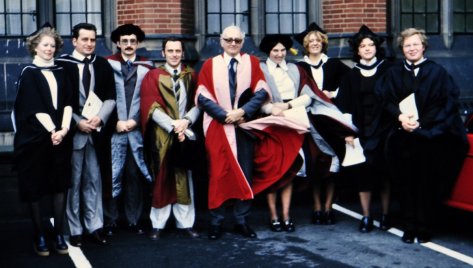
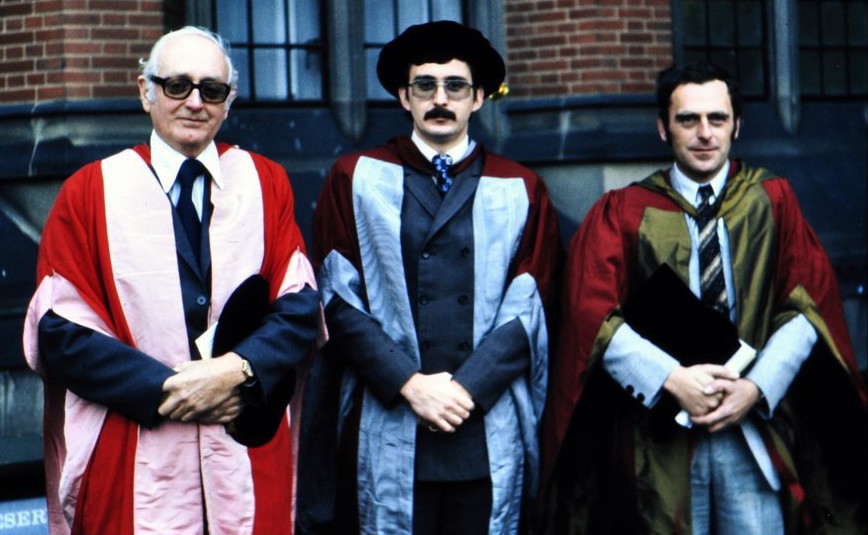
The head of the genebank is Dr Jean Hanson, a seed physiologist by training, and another Birmingham alumna, both MSc (1973) and PhD. Jean and I received our PhD degrees at the same congregation in December 1975. Jean has tried to retire at least once, but was asked to return to her old position after her successor left ILRI after just one year. Nevertheless, Jean has her sights set on permanently retiring once the new genebank facilities in Addis are commissioned in 2017.

In managing a genebank, you sometimes have to make tough (even hard) decisions. I never expected to have to become hard-hatted!

But that’s exactly what we had to do during our visit, as Jean showed us round the impressive building that is being constructed around the existing cold store and will expand the conservation capacity significantly. It’s also interesting that the genebank and its collection will now be managed through ILRI’s Feed and Forages Biosciences program, whose new head, Dr Chris Jones is keen to use genomics to study and exploit the diversity in this important germplasm collection.

In these photos, Jean explained some of the complexities of seed increase in the greenhouse (these were Trifolium or clover species), and in the field where it’s often necessary to spatially separate different accessions to prevent cross pollination. She also showed us bar-coded samples in small refrigerators of the Most Original Samples – samples closest genetically to the germplasm collected in the field. We did go inside one of the cold stores after navigating our way through a construction site. Thus the hard hats for health and safety purposes.

This is an important investment by ILRI in its genetic resources conservation responsibilities, and is a great commitment for the future, based no doubt on the broader institutional support for genetic resources conservation through the Genebanks CRP (soon to become the Genebanks Platform).


Plant Genetic Resources: Our challenges, our food, our future

phillips-jade

Jade Phillips

That was the title of a one day meeting on plant genetic resources organized by doctoral students, led by Jade Phillips, in the School of Biosciences at The University of Birmingham last Thursday, 2 June. And I was honoured to be invited to present a short talk at the meeting.

Now, as regular readers of my blog will know, I began my career in plant genetic resources conservation and use at Birmingham in September 1970, when I joined the one year MSc course on genetic conservation, under the direction of Professor Jack Hawkes. The course had been launched in 1969, and 47 years later there is still a significant genetic resources presence in the School, even though the taught course is no longer offered (and hasn’t accepted students for a few years). Staff have come and gone – me included, but that was 25 years ago less one month, and the only staff member offering research places in genetic resources conservation is Dr Nigel Maxted. He was appointed to a lectureship at Birmingham (from Southampton, where I had been an undergraduate) when I upped sticks and moved to the International Rice Research Institute (IRRI) in the Philippines in 1991.

image

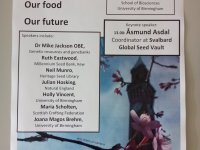
Click on this image for the full program and a short bio of each speaker.

Click on each title below; there is a link to each presentation.

Nigel Maxted (University of Birmingham)
Introduction to PGR conservation and use

Ruth Eastwood (Royal Botanic Gardens, Kew – Wakehurst Place)
‘Adapting agriculture to climate change’ project

Holly Vincent (PhD student, University of Birmingham)
Global in situ conservation analysis of CWR

Joana Magos Brehm (University of Birmingham)
Southern African CWR conservation

Mike Jackson
Valuing genebank collections

Åsmund Asdal (NordGen)
The Svalbard Global Seed Vault

Neil Munro (Garden Organic)
Heritage seed library

Maria Scholten
Natura 2000 and in situ conservation of landraces in Scotland: Machair Life (15 minute film)

Aremi Contreras Toledo, Maria João Almeida, and Sami Lama (PhD students, University of Birmingham)
Short presentations on their research on maize in Mexico, landraces in Portugal, and CWR in North Africa

Julian Hosking (Natural England)
Potential for genetic diversity conservation – the ‘Fifth Dimension’ – within wider biodiversity protection

I guess there were about 25-30 participants in the meeting, mainly young scientists just starting their careers in plant genetic resources, but with a few external visitors (apart from speakers) from the Millennium Seed Bank at Kew-Wakehurst Place, the James Hutton Institute near Dundee, and IBERS at Aberystwyth.

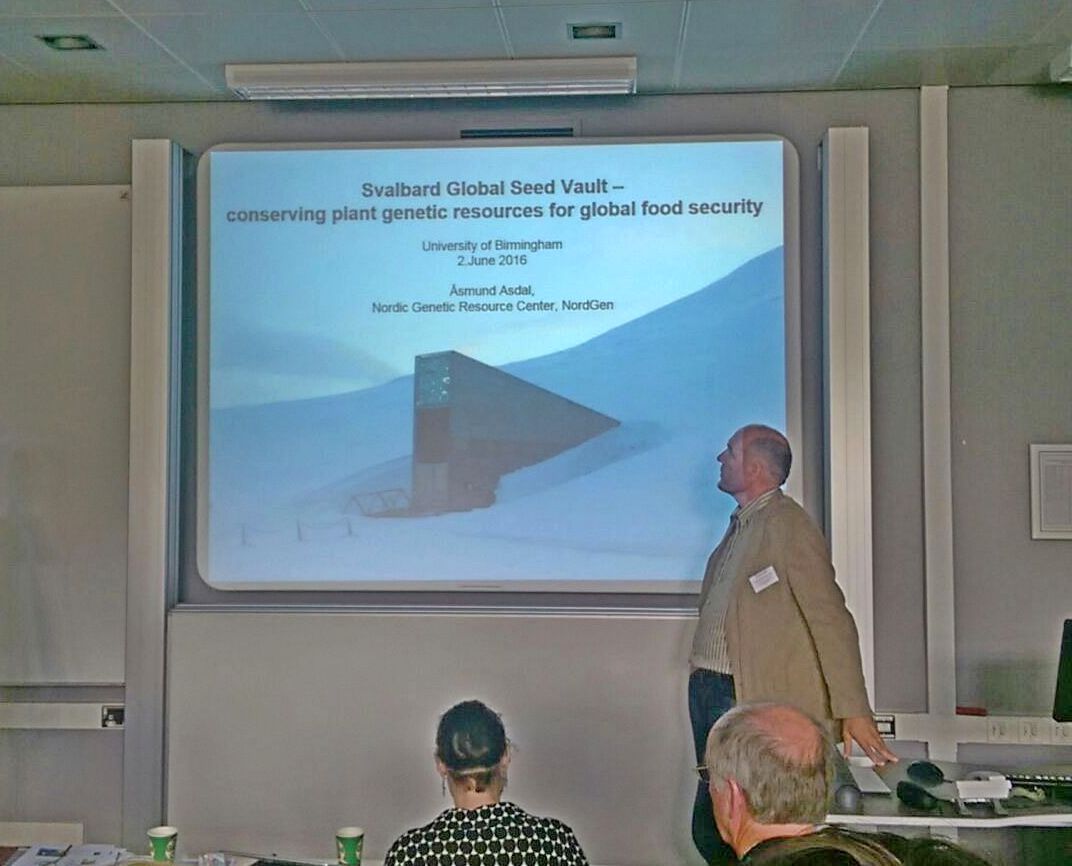
The meeting grew out of an invitation to Åsmund Asdal from the Nordic Genetic Resources Center (NordGen) to present a School of Biosciences Thursday seminar. So the audience for his talk was much bigger.

asmund

Åsmund is Coordinator of Operation and Management for the Svalbard Global Seed Vault, and he gave a fascinating talk about the origins and development of this important global conservation facility, way above the Arctic Circle. Today the Vault is home to duplicate samples of germplasm from more than 60 depositor genebanks or institutes (including the international collections held in the CGIAR genebank collections, like that at IRRI.

Nigel Maxted’s research group has focused on the in situ conservation and use of crop wild relatives (CWR), although they are also looking at landrace varieties as well. Several of the papers described research linked to the CWR Project, funded by the Government of Norway through the Crop Trust and Kew. Postdocs and doctoral students are looking at the distributions of crop wild relatives, and using GIS and other sophisticated approaches that were beyond my comprehension, to determine not only where there are gaps in distributions, lack of germplasm in genebank collections, but also where possible priority conservation sites could be established. And all this under the threat of climate change. The various PowerPoint presentations demonstrate these approaches—which all rely on vast data sets—much better than I can describe them. So I encourage you to dip into the slide shows and see what this talented group of scientists has been up to.

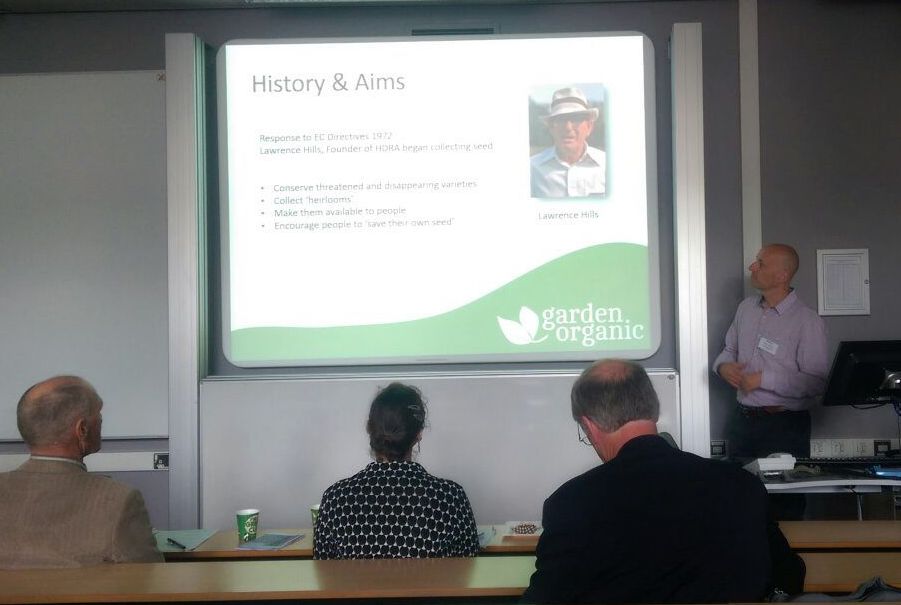
Neil Munro from Garden Organic described his organization’s approach to rescue and multiply old varieties of vegetables that can be shared among enthusiasts.

n_munro

Seeds cannot be sold because they are not on any official list of seed varieties. What is interesting is that one variety of scarlet runner bean has become so popular among gardeners that a commercial seed company (Thompson & Morgan if I remember what he said) has now taken  this variety and selling it commercially.

julian

Julian Hosking from Natural England gave some interesting insights into how his organization was looking to combine the conservation of genetic diversity—his ‘Fifth Dimension’—with conservation of natural habitats in the UK, and especially the conservation of crop wild relatives of which there is a surprisingly high number in the British flora (such as brassicas, carrot, and onions, for example).

So, what about myself? When I was asked to contribute a paper I had to think hard and long about a suitable topic. I’ve always been passionate about the use of plant genetic diversity to increase food security. I decided therefore to talk about the value of genebank collections, how that value might be measured, and I provided examples of how germplasm had been used to increase the productivity of both potatoes and rice.

m_jackson

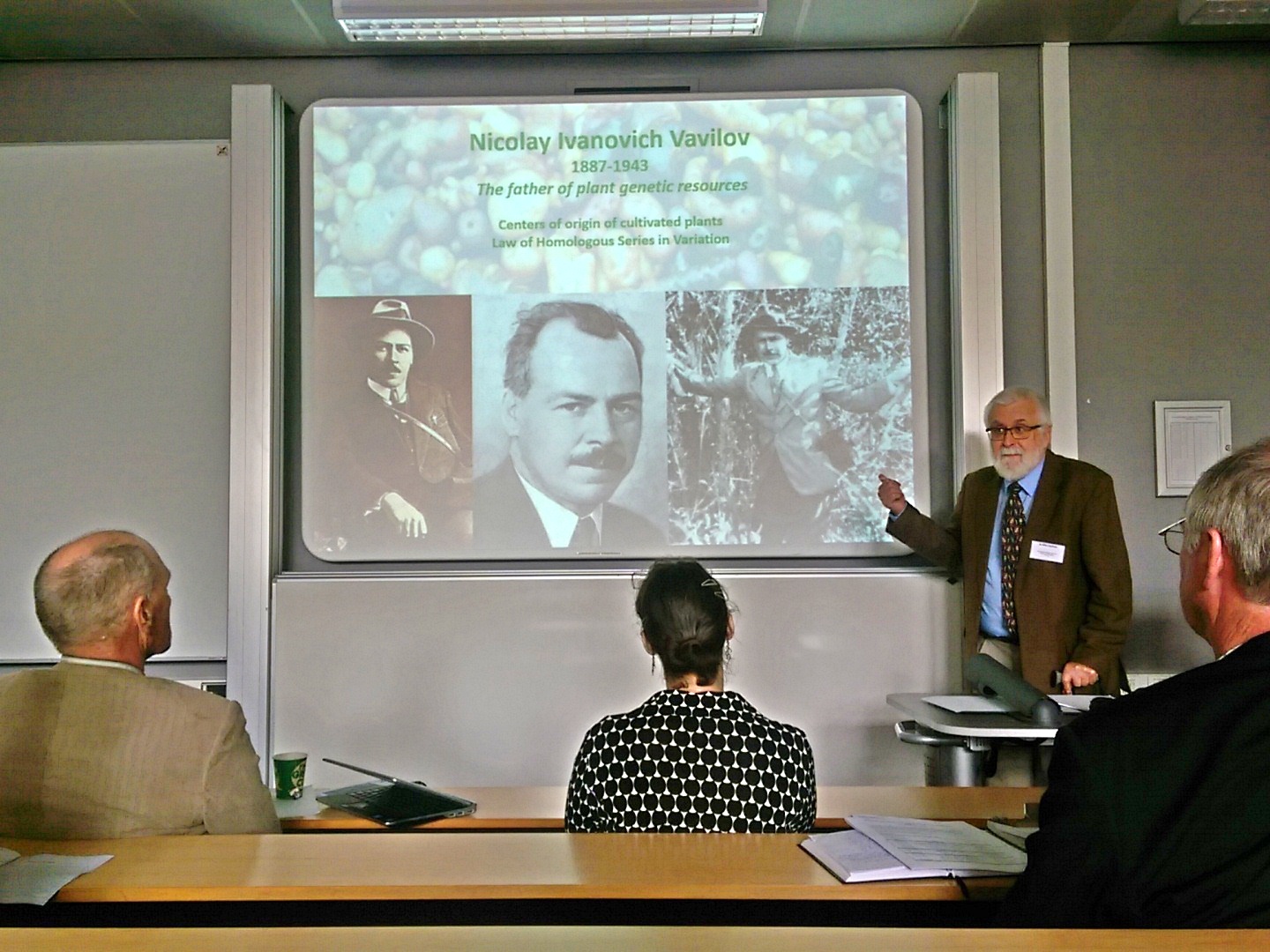
Nicolay Vavilov is a hero of mine

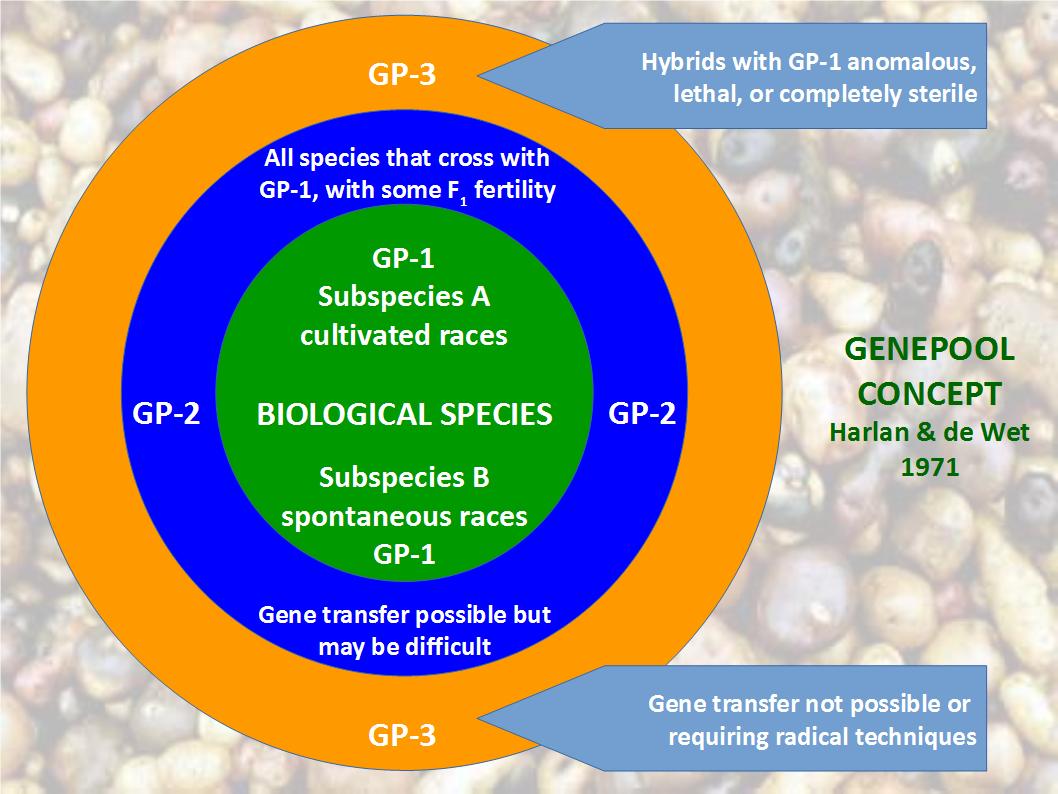
Although all the speakers developed their own talks quite independently, a number of common themes emerged several times. At one point in my talk I had focused on the genepool concept of Harlan and de Wet to illustrate the biological value (easy to use versus difficult to use) of germplasm in crop breeding.

Jackson FINAL - Valuing Genebank Collections

In the CWR Project research several speakers showed how the genepool concept could be used to set priorities for conservation.

Finally, there was one interesting aspect to the meeting—from my perspective at least. I had seen the titles of all the other papers as I was preparing my talk, and I knew several speakers would be talking about future prospects, especially under a changing climate. I decided to spend a few minutes looking back to the beginning of the genetic conservation movement in which Jack Hawkes was one of the pioneers. What I correctly guessed was that most of my audience had not even been born when I started out on my genetic conservation career, and probably knew very little about how the genetic conservation movement had started, who was involved, and what an important role The University of Birmingham had played. From the feedback I received, it seems that quite a few of the participants were rather fascinated by this aspect of my talk.

Four seasons in one day . . . and white asparagus

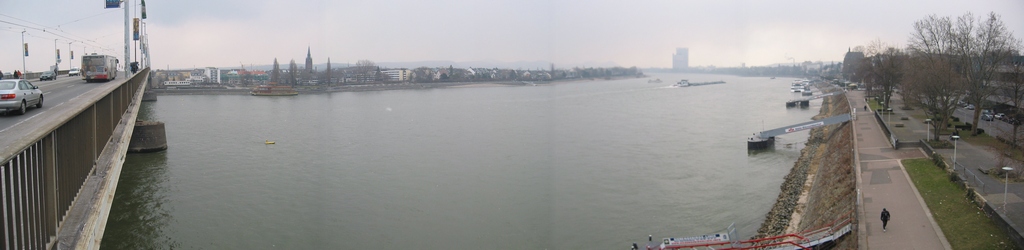
I’ve just returned from a week-long trip to Bonn, the former capital of West Germany. And on two of the days, our meetings were held in the former Bundestag (the German parliament building) in United Nations Plaza, just south of the city center, and close to the south/ west bank of the mighty River Rhine. It’s now home to the Crop Trust.

20050306015

The River Rhine, looking southeast from the Kennedy Bridge (Kennedybrücke).

CGIARI am leading the evaluation of an international genebanks program, part of the portfolio of the CGIAR (now the CGIAR Consortium). The evaluation has been commissioned by the Independent Evaluation Arrangement (IEA, an independent unit that supports the CGIAR Consortium) whose offices are hosted by the Food and Agriculture Organization of the United Nations (FAO) in Rome. Regular readers of my blog will know that for almost nine years from 1973 and 19 years from 1991, I worked for two international agricultural research centers, CIP and IRRI respectively. This evaluation of the CGIAR Research Program (CRP) on Managing and Sustaining Crop Collections (also known as the Genebanks CRP) focuses on 11 (of 15) CGIAR centers with genebanks.

Joining me in Bonn were two other team members: Dr Marisé Borja (from Spain) and Professor Brian Ford-Lloyd (from the UK). Our meeting was managed by IEA staff member Ms Jenin Assaf. Dr Sirkka Immonen, the IEA Senior Evaluation Officer was unable to travel at the last moment, but we did ‘meet’ with her online at various times during the four days of our meetings.

20160428 001

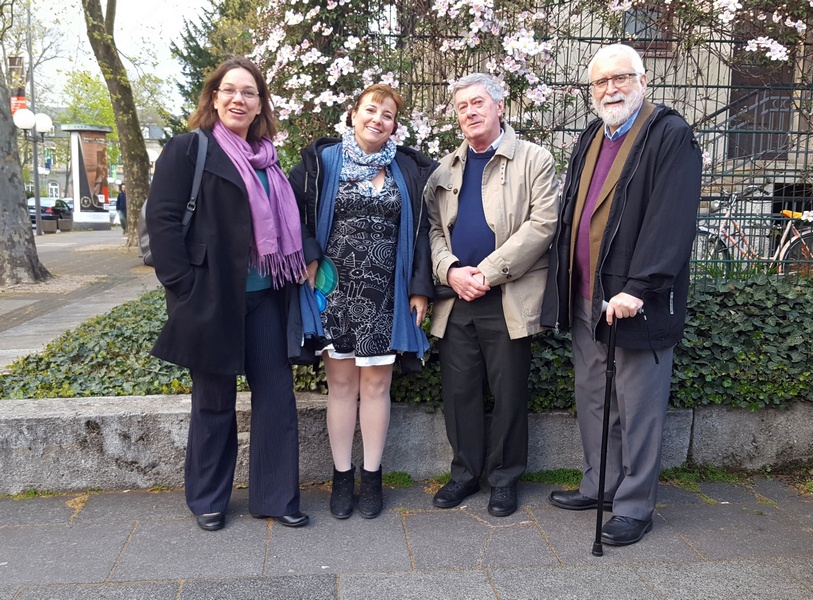
On our way to dinner last Thursday evening. L to R: Jenin Assaf, Marisé Borja, Brian Ford-Lloyd, and yours truly.

Brian and I traveled together from Birmingham, flying from BHX to Frankfurt, and catching the fast train from there to Siegburg/Bonn, a 20 minute taxi ride into the center of the city. The weather on arrival in Frankfurt was quite bright and sunny. By the time we reached Bonn it was raining very heavily indeed. In fact over the course of the next few days we experienced everything that a northern European Spring can throw at you (as in the Crowded House song, Four Seasons in One Day).

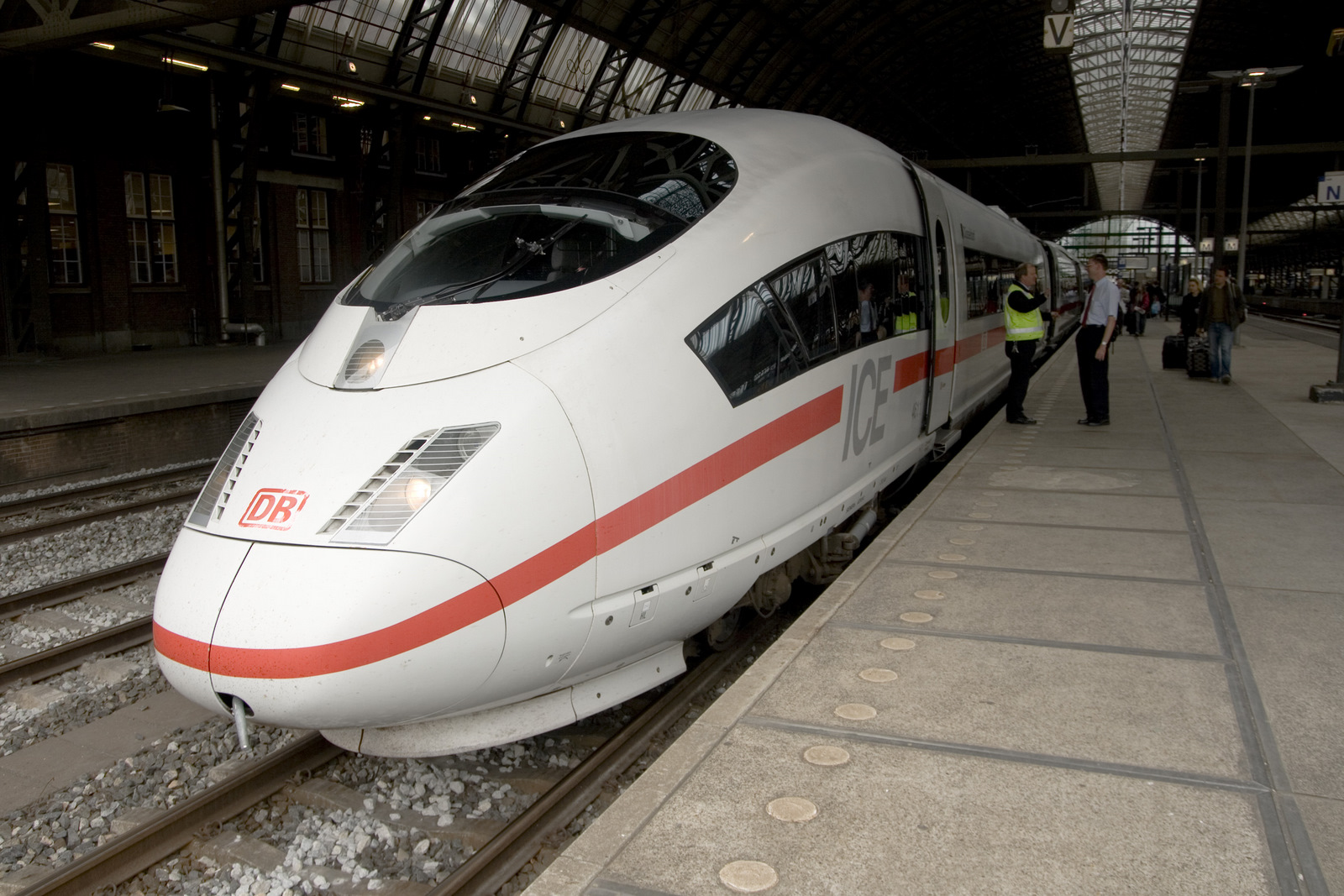
Now you can see from the photo above, I’m still using a walking stick¹, and expect to do so for several months more. While walking is definitely becoming easier, my lower leg and ankle do swell up quite badly by the end of the day. I therefore decided to wear ‘flight socks’ for travel. Even so, I had not anticipated the long walk we’d have in Frankfurt Airport. We arrived to a C pier, and it must have been at least a mile by the time we were on the platform waiting for our intercity express (ICE) to Bonn. Now that 40 minute journey was interesting, reaching over 300 kph on several occasions!

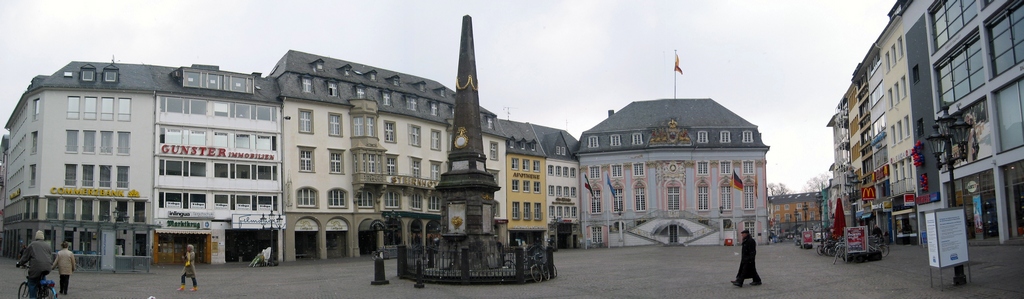
We stayed at the Stern Hotel in the central market square in Bonn, which is dominated at the northern end by the Bundesstadt Bonn – Altes Rathaus, the city’s municipal headquarters (it’s the building at the far end of the square in the image below).

20050306014

On the first night, last Monday, we met with an old friend and colleague, Dr Marlene Diekmann, and her husband Jürgen. Marlene works for the German development aid agency, GIZ, and was one of my main contacts whenever I had to visit Germany while working for IRRI. Jürgen was the Experiment Station manager for ICARDA based in Aleppo for many years before the Syrian civil war forced the closure of the center there and evacuation of personnel. South of Bonn is the Ahr Valley, a small red wine growing area where Marlene and I have walked through the vineyards in all weathers. It’s amazing how the vines are cultivated on the steep slopes of the valley.

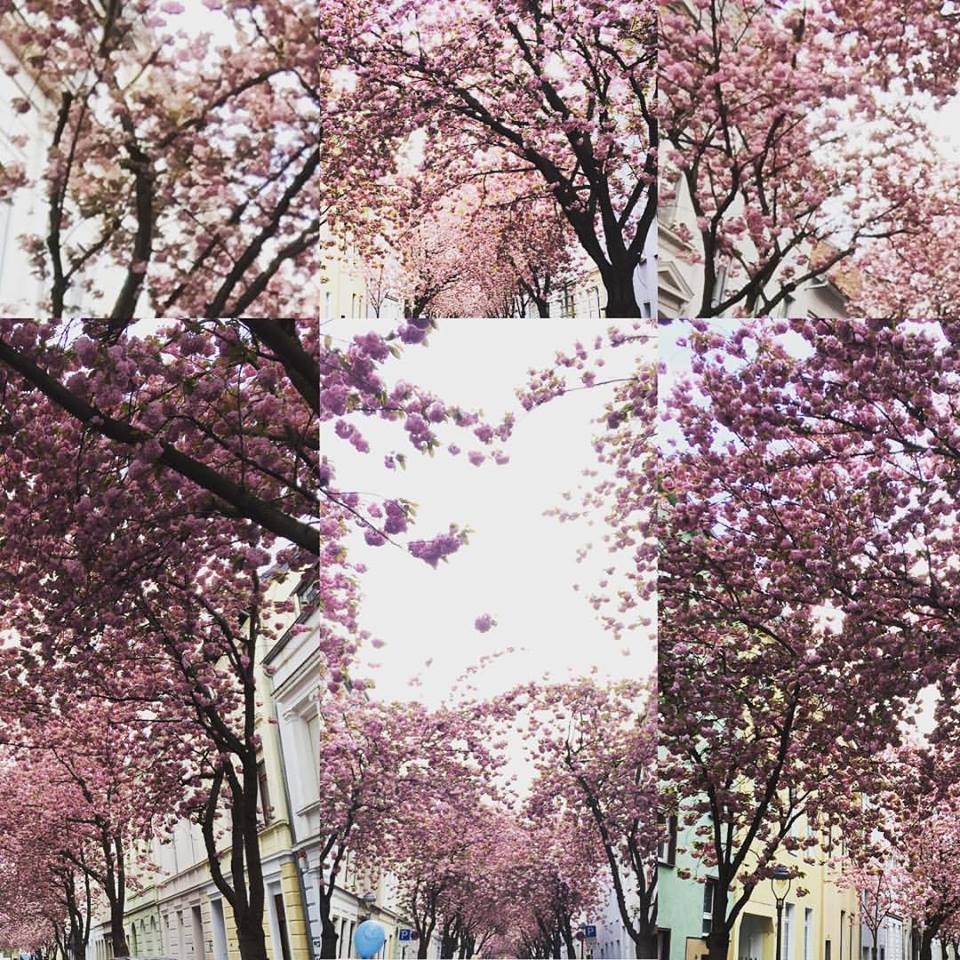
Arriving at the end of April, and with the weather so unpredictable, and unseasonably cold, we missed the cherry blossom festival in Bonn a week earlier. In fact, I don’t recall seeing any cherry blossom anywhere in the city.

Cherry blossom in the streets of Bonn, mid-April 2016. (Photo courtesy of Luigi Guarino).

But there was another delight – culinary – that we did experience, having arrived just as Spargelzeit or ‘asparagus time’ began.

With so many food options to choose from in Bonn, Marlene suggested that we should try the Gaststätte Em Höttche, a traditional German restaurant right next door to the Stern Hotel. That was fine by me as I didn’t fancy a long walk in any case. The food was good (as was the weissbier or wheat beer), and we ate there the following night as well.

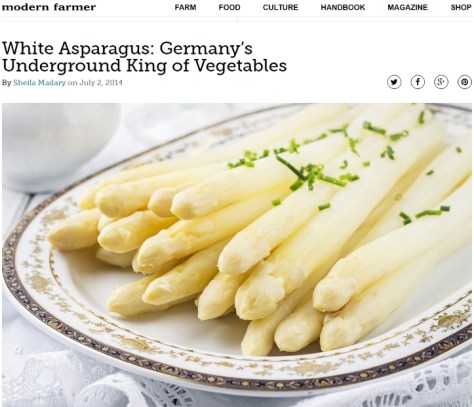
And since it was Spargelzeit, it wasn’t just any old asparagus. But white asparagus! Big, white, succulent spears of heaven. Just click on the image below for a more detailed explanation. Enjoyed on their own with a butter sauce, or with ham, schnitzel or fish (halibut was my particular favorite), white asparagus is offered on most menus from the end of April to June. The Germans just go crazy for it.

white asparagus

On the final evening, we had dinner with a number of colleagues from the Crop Trust, at the Restaurant Oliveto in Adenauerallee, less than half a kilometer from the hotel, on the bank of the Rhine.

After a wrap-up meeting on the Friday morning, Brian and I returned to Frankfurt by train, and caught the late afternoon Lufthansa flight back to BHX. Where the weather was equally unpredictable – and cold!

As far as the program evaluation is concerned, the hard work is just beginning, with genebank site visits planned (but not yet confirmed) to Peru (CIP), Colombia (CIAT), and Mexico (CIMMYT) in July/August, to Ethiopia (ILRI) and Kenya (ICRAF) in October, as well as the CGIAR Consortium Office in Montpellier before the end of May, and FAO in Rome by mid-June. We’ll be back in Rome to draft our report in mid-November. Before that, there will be lots of documents to review, and interviews over Skype. No peace for the wicked!

~~~~~~~~~~~~~~~~~~~~~~~~~~~~~~~~~~
¹ The walking stick came in handy on the return journey. Waiting in line at Frankfurt Airport to board our flight to Birmingham, one of the Lufthansa ground staff pulled me and Brian out of the queue and took us first through the boarding gate, even offered me a seat until the door to the air-bridge was opened. And we boarded the plane first.


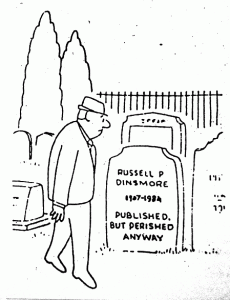
It’s publish or perish, Jim – but not as we know it

perishOr to put it another way: The scientist’s dilemma . . . Where to publish?

Let me explain.

It’s autumn 1982. And just over a year since I joined the faculty of The University of Birmingham. Our department had a new Mason Professor of Botany, someone with a very different academic background and interests from myself.

At one departmental coffee break several of us were sitting around discussing various issues when the topic of academic publishing came up.

“In which journals do you publish, Mike?” the new head of department asked me. 1355408371_883_00_800I told him that I’d published several papers in the journal Euphytica, an international journal covering the theoretical and applied aspects of plant breeding. It’s now part of the Springer stable, but I’m not sure who was the publisher then.

His next question surprised me. It’s not an exaggeration to say that I was gob-smacked. “Is that a refereed journal?” he asked, and went on to explain that he’d never even heard of Euphytica. In my field, Euphytica was considered then as an excellent choice for papers on genetic resources. In a sense he was valuing my academic output based on his ‘blinkered’ view of our shared discipline, botany, which is after all a broad church.

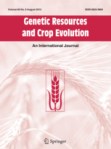
10722Springer now has its own in-house genetic resources journal, Genetic Resources and Crop Evolution (I’m a member of the editorial board), but there are others such as Plant Genetic Resources – Characterization and Utilization (published by Cambridge University Press). Nowadays there are more journals to choose from dealing with disciplines like seed physiology, molecular systematics and ecology, among others, in which papers on genetic resources can find a home.

But in the 1970s and 80s and beyond, I’d always thought about the visibility of my research to others working in the same or allied fields. My research would be of little or no interest to researchers beyond genetic resources or plant breeding for example. So choice of journal in which to publish was predicated very much on this basis. Today, with online searches, the world’s voluminous scientific publishing is accessible at the click of a mouse, it’s perhaps less important exactly where you publish.

Back in the day we had to seek out a hard copy of a journal that interested us, or use something like Current Contents (I’m surprised that’s still going, even in hard copy) to check, on a regular basis, what was being published in various journals. And then contact the author for a reprint (before the days of email).

I can remember way back in the mid-1980s when I had to write a review of true potato seed, when you had to pay for a special literature search through the university library. Now everyone can do it themselves—from their own desk. Nowadays you just search for a journal online, or tap in a few key words, and Hey Presto! there’s a list of relevant papers, complete journal contents lists, abstracts, and even full papers if your institute has a subscription to the journal or the article itself is Open Access.

So the dynamics of scientific publishing have changed from the days when I first began. In some respects then scientific publishing has never been easier but then again never more challenging. Not only are scientists publishing more but they are expected to publish more. Sink or swim!

About a year ago, I was ‘invited’ to join ResearchGatea social networking site for scientists and researchers to share papers, ask and answer questions, and find collaborators. Since then I receive almost daily (if not more frequent) stats about my science publications and who is citing them. It’s obviously quite gratifying to know that many of the papers I published over the decades are still having scientific traction, so-to-speak. And ResearchGate gives me a score indicating how much my papers are being cited (currently 32.10—is this good? I have no idea). There’s obviously no metric that determines the quality of these papers, nor whether they are being cited for good or bad.

In the 1980s there was some discussion of the value of citation indices. I remember reading an interesting article in an internal University of Birmingham newsletter, Teaching News I think it was called, that was distributed to all staff. In this article the author had warned against the indiscriminate use of citation indices, pointing out that an excellent piece of scholarship on depopulation in rural Wales would receive a much lower citation than say a lower quality paper on the rise of fascism, simply because the former represented a much narrower field of academic pursuit.

Today there are so many more metrics, journal impact factors and the like that are taken into account to assess the quality of science. And for many young researchers these metrics play an important role—for good or bad—for the progression of their careers. Frankly, I don’t understand all of these, and I’m glad I didn’t have to worry about them when I was a young researcher.

David_Colquhoun

Prof. David Colquhoun, FRS

And there are many pitfalls. I came across this interesting article on the blog of Professor David Colquhoun, FRS (formerly professor of pharmacology at University College London) about the use (and misuse) of metrics to assess research performance. There was one very interesting comment that I think sums up many of the concerns about the indiscriminate use of publication metrics:

. . . in six of the ten years leading up to the 1991 Nobel prize, Bert Sakmann failed to meet the metrics-based publication target set by Imperial College London, and these failures included the years in which the original single channel paper was published and also the year, 1985, when he published a paper that was subsequently named as a classic in the field. In two of these ten years he had no publications whatsoever.

Application of metrics in the way that it’s been done at Imperial and also at Queen Mary College London, would result in firing of the most original minds.

We seem obsessed by metrics. And whenever there is a request for publication metrics for whatever purpose, there are always perverse incentives and opportunities to game the system, as I discovered to IRRI’s cost during the CGIAR annual performance exercise in the late ‘Noughties’. And when the submitted data are scrutinized by someone who really does not understand the nature of scientific publishing, then you’re on a slippery slope to accepting scientific mediocrity.

The passion and intemperance of ignorance . . .

This past weekend, I was called a liar on Facebook. Not once. But three times.

Well, I’ve been called many things over my career but never a liar when it comes to my science. Back in the day that would have been sufficient cause for challenging the perpetrator to a duel. Instead, I’ll just blog about this incident.

The background I guess to this whole episode is a flurry of Facebook posts after ‘the Supreme Court of the Philippines recently ordered a permanent ban on field trials of genetically engineered (GE) eggplant and a temporary halt on approving applications for the “contained use, import, commercialisation and propagation” of GE crops, including the import of GE products. The court ruled in favour of Greenpeace Southeast Asia, as well as several Filipino activists, academics and politicians.’ This ban also affects the work of the International Rice Research Institute (IRRI) with regard to its research on Golden Rice.

The decision of the court invalidates the Department of Agriculture’s Administrative Order No. 08-2002 (DAO8).  The Department of Agriculture and the Department of Science and Technology may not issue any GE approvals until a new Administrative Order is approved. This seems an odd decision, especially since biotech maize (Bt/Ht maize) has been grown commercially in the Philippines since 2003.

While Greenpeace and other opponents of GM technology are undoubtedly elated by this turn of events, the Supreme Court’s decision has been widely condemned among the scientific community, none perhaps more powerfully than Filipino geneticist Michael Purugganan (the Dorothy Schiff Professor of Genomics, Professor of Biology, and Dean for Science at New York University) reported on the www.rappler.com website.

tolentino-contactThere then followed a number of posts on Facebook. The latest spat at the weekend began after I had read something posted by Dr Bruce Tolentino (IRRI’s Deputy Director General – Communication and Partnerships) about the value of GMOs. He was citing a recent article by computational biologist Grant Jacobs on the New Zealand Sciblogs, titled GMOs and the plants we eat: neither are “natural”.

This is what Jacobs wrote and which caused the subsequent furore on Facebook:
Some say that genetically modified plants are a concern because they’re genetically modified organisms (GMOs), that “natural” plants are safer.

Yet what most people call “natural” foods are rare mutants that have been selected or have been artificially bred (or often both). They have much more dramatic genetic changes than GMOs. Changes that scientists are still learning about.

Foods we eat today bear little resemblance to the wild species they were originally derived from. Even plants that we might not at first consider to be cultivated have been selected for many hundreds or, more usually, thousands of years.

LOGOGREENPEACECOLORThree hours after Bruce had posted the link to Jacobs’ blog piece, this comment was posted by someone affiliated to Greenpeace Sweden, Mr Stefan Bruhn:
‘Who is paying you for your lies Bruce Tolentino? Monsanto? Of course natural plants are safer since they have been consumed for hundreds or, more usually, thousands of years. And no, GMOs are not unsafe because they are GMOs, they are unsafe because they haven’t been properly tested. Further, most types of GMOs are crafted to be immune to toxics, which increases the use of toxics. And Monsanto owns the patent to the majority of GMOs, and Monsanto is evil. Stop lying your ass off for money you fraudster.’

stefan-bruhn-160x185Well, I was quite shocked to see such a response so decided to discover who had made such a wild—and unfounded—accusation. Mr Bruhn (an erstwhile Facebook ‘friend’ of Bruce’s) is a political science graduate from Lund University who is listed on the Greenpeace site as having a responsibility for Donor Relations and Marketing (although ‘off duty’ right now, whatever that means). He has has worked at Greenpeace for almost 13 years.

I couldn’t resist adding a comment myself, and suggested that Mr Bruhn’s comment had been uncouth. I also made a link to something I had posted on my blog posts earlier in the year about GMOs after a Golden Rice field trial in the Philippines had been trashed by activists. Unfortunately I spelled his first name ‘Stephan’ rather than ‘Stefan’, and that appeared to have incensed him in subsequent comments:
‘Pity that you don’t even have the decency to spell my name right. Pity that you are trying to make people believe that GMOs are natural. Since when did fish naturally mate with tomatoes and strawberries? You know what is truly uncouth? Lying to people just to make more money.’

He then directed me to this blog by Green Diva Meg where there are some truly wacky ideas about GMOs and technology being promoted as ‘truth’ without incontrovertible scientific evidence. He followed up with:
‘You people are LIARS, you lie so good that you even believe it yourself.’

Some of the things mentioned in that Green Diva Meg blog reminded me of the Penn and Teller Bullshit video I had posted elsewhere (there’s some strong language), and in which GM myths promoted by the likes of Greenpeace are debunked.

Mr Bruhn again raised the ‘Monsanto bugaboo’. I agree that Monsanto did not play a particularly responsible role during the 1980s in the UK when the deployment of GMOs was first being explored; Monsanto’s response (or lack of response) set back biotechnology in the UK from which it has yet to fully recover. But to lay the blame at Monsanto’s door for everything that activists like Greenpeace believe is wrong about GM technology is not only unwarranted but egregious. They obviously have not fully understood how the technology for the development of Golden Rice, for example, has been donated by industry and placed in the public domain for the benefit of humanity. Nor the involvement of philanthropic foundations like the Bill & Melinda Gates Foundation. But I’m sure there’s nothing I can write or say that would convince them otherwise. Pity.

Anyway, getting back to our Facebook spat, I apologized for spelling Mr Bruhn’s name wrong, and then attempted to calm things down with a little humor (I suggested that perhaps he’d got out of bed the wrong side, and that Santa might leave him some tasty GM treats—I’m afraid I couldn’t resist winding him up), he finally added this:
Pity that you keep on avoiding the topic and instead choose to focus on my moods. That is an old school classic for people without arguments. I know I am right and you know you are wrong. GMOs are not natural, and anyone who says so is either a paid liar or plain stupid. Regarding your GM treats, just mark them “GMO” so that I can make an informed choice and throw them away. And to make my Xmas more merry, please don’t waste my time by writing back, you have already proved yourself to be a liar.

And there our exchange of comments ended, for the time being, although I guess this blog post might stir things up again. It’s really a pity that a rational discussion about GMOs and GM foods is seemingly impossible. Opposition to GM technology seems to be an article of faith. I think that I—as a convinced atheist—am more likely to believe in God than Mr Bruhn would accept GM approaches to solving food insecurity.

Greenpeace has, in many respects played an important role in highlighting and tackling important environmental issues, and I can sympathize with some of these. No worries! But not with regard to their opposition to GM technology. I also wish they would also base their campaigns on solid scientific evidence rather than beliefs. I also decry the tactics and stunts they pull from time-to-time, such as the desecration of the Nazca lines on the coast of Peru (for which they apparently apologized but didn’t seem particularly contrite).

And there it remains.


Transitions . . .

The community of the Consultative Group on International Agricultural Agriculture (CGIAR) has mourned the loss of three giants of agricultural research for development, two of whom I have blogged about earlier in the year. For a number of years they were contemporaries, leading three of the research centers that are supported through the CGIAR.

Sawyer3

Richard Sawyer

In March, Dr Richard Sawyer, first Director General of the International Potato Center (CIP) in Lima, Peru passed away at the age of 93. Richard was my first boss in the CGIAR when I joined CIP in January 1973. He remained Director General until 1991. Not one to suffer fools gladly, Richard set CIP on a course that seemed – to some at least – at odds with the way they thought international agricultural research centers should operate. He was eventually proved correct, and CIP expanded its mandate to include sweet potatoes and other Andean crops. His legacy in potato research lives on.

Trevor Williams

Trevor Williams

In April, Professor Trevor Williams, the first Director General of the International Board for Plant Genetic Resources (that became the International Plant Genetic Resources Institute, and now Bioversity International) passed away after a long respiratory illness, aged 76. Trevor had supervised my MSc thesis when I first joined the Department of Botany at the University of Birmingham in September 1970. We did some interesting work together on lentils. Here is my blog post. I also published an obituary in the scientific journal Genetic Resources and Crop Evolution.

Nyle Brady

Nyle Brady

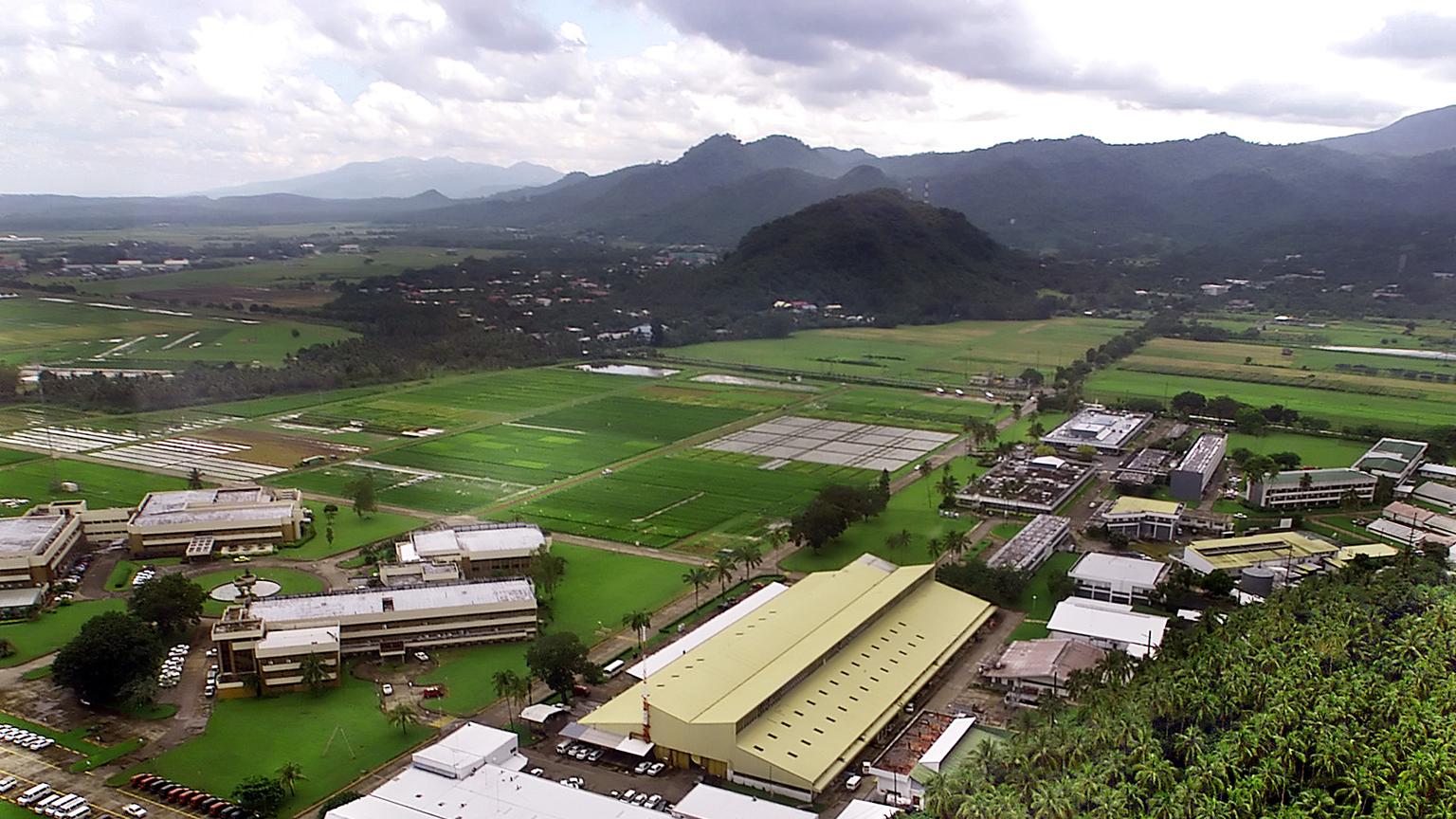
Now we have just heard that Dr Nyle C Brady, third Director General of the International Rice Research Institute (IRRI), based in Los Baños, Philippines, passed away at the end of November. He was 95. I never worked for Brady, although I met him on several occasions during the 1990s and early 2000s. However, for a decade I worked at IRRI in the building that was named after him when he retired from IRRI in 1981. There is a long-standing tradition of such naming honours at IRRI for former Directors General (and two other dignitaries who were instrumental in setting up IRRI in 1959/60).

This is what IRRI just published recently on its website (where you will find other links and videos):

Dr. Nyle C. Brady, the third director general of the International Rice Research Institute (IRRI) and long-time professor and leader in soil science at Cornell University in the United States, passed away on 24 November in Colorado at age 95.

After 26 years at Cornell, Brady became IRRI’s director general in 1973. During 8 years at the helm, he pioneered new cooperative relationships between the Institute and the national agricultural research systems in Asia.

In October 1976, Dr. Brady led an IRRI group of scientists on a historic 3-week trip to China where they visited most of the institutions conducting rice research, as well as rice-growing communes where they interacted with farmers (a rare circumstance in 1976). Brady had previously provided China with seeds of IRRI-developed varieties, which jump-started the Institute’s formal scientific collaboration that facilitated the development of the country’s rice economy. The October 1976 trip marked the beginning of dramatic changes in China and of a close relationship between China and IRRI that has resulted in major achievements in rice research.

In a 2006 interview, Dr. Brady said, “My IRRI experience ranks very high. I had three careers: one at Cornell as a professor and a teacher, one at IRRI, and then one in Washington, D.C. with the U.S. Agency for International Development (USAID; as senior assistant administrator for science and technology, 1981-89), the United Nation Development Programme (UNDP), and The World Bank. I won’t say which one was the more critical. I will say that my experience at IRRI, not only for me but for my wife and family, was a highlight because we were involved in something that would help humanity. I felt I was working with a group of individuals, men and women, who wanted to improve the lot of people. They were not there just to do research and write papers; they were there to solve problems.”

“Nyle Brady led IRRI into a tremendous period of growth in the 1970s, through which some of its greatest achievements came to fruition,” said Robert Zeigler, IRRI’s current director general. “Even after he left IRRI to join USAID, and through his retirement, he was always looking out for IRRI’s best interest. He understood the power of what IRRI had to offer some of the world’s least advantaged people and did what he could to help us realize our full potential. IRRI and the world are better places for having had Nyle at the helm for so many productive years.”

Born in Colorado in the U.S., he earned his B.S. in chemistry from Brigham Young University in 1941 and his PhD in soil science from North Carolina State University in 1947. An emeritus professor at Cornell, he was the co-author (with Ray R. Weil) of the classic textbook, The nature and properties of soils, now in its 14th edition. “He was a giant in soil science and agriculture, and left an important legacy in many ways,” said Weil, professor of environmental science and technology at the University of Maryland.

“Brady was one of the giants of our field, and yet known for his personable approach to students and colleagues,” said Pedro Sanchez, director of the Agriculture and Food Security Center and senior research scholar at Columbia University’s Earth Institute, whom Brady mentored.

An exceptional CEO: Bob Zeigler, IRRI Director General, 2005-2015

When the Director General of one of the world’s premier agricultural research institutes talks about poverty and food security, and what has to change, the global development community better take note. The Director General of IRRI—the International Rice Research Institute, located in Los Baños, the Philippines—has a unique perspective on these issues, since rice is the most important staple crop on the planet, and the basis of food security for more than half the world’s population who eat rice at least once a day. And rice agriculture is also the livelihood for millions of farmers and their families worldwide. When rice prospers, so do they. They feed their families, they send their children to school. The converse, alas, is also true.

15795686657_1ea9eb116a_o

For the past decade, IRRI has been led by a remarkable scientist, someone I am honored to call a friend, and a close colleague for many years. In mid-December, however, Dr Robert ‘Bob’ Zeigler will step down as CEO and Director General of IRRI, a position he has held since March 2005. Bob is IRRI’s ninth Director General. And of all those who have held this position, he perhaps has been uniquely qualified, because of his practical experience of working in many developing countries, his in-depth understanding of international agricultural research funded through the Consultative Group on International Agricultural Research (CGIAR), and his profound knowledge of rice agriculture.

A passion for science
Bob hails from the USA, and completed his BS degree in biological sciences at the University of Illinois in 1972, followed by an MS from the University of Oregon in forest ecology in 1978. He joined the Peace Corps and spent a couple of years in Zaire (now Democratic Republic of Congo), and it was there that his passion for plant pathology was ignited. He returned to Cornell University to work for his PhD in 1982 on cassava diseases under the guidance of renowned plant pathologist Dr H David Thurston. For his PhD research, Bob also spent time at a sister center, the International Center for Tropical Agriculture (CIAT) in Cali, Colombia that has an important global cassava research program, and germplasm collection. After his PhD Bob returned to Africa, working in the national maize program in Burundi.

After three years, he joined CIAT as a senior plant pathologist and then became head of the rice program. IRRI recruited Bob in December 1991 to lead the Rainfed Lowland Rice Research Program, and I first met Bob around September of that year when he came for interview. I was also a newbie, having joined IRRI as head of the Genetic Resources Center just three months earlier. After a couple of years or so, he became leader of the Irrigated Rice Research Program. Much of his own research focused on the rice blast pathogen, Magnaporthe grisea, and I know he is particularly proud of the work he and his colleagues did on the population genetic structure of the pathogen.

As a program leader Bob visited all of the rice-growing countries in Asia, and with his experience in Latin America at CIAT, as well as working in Africa, he had a broad perspective on the challenges facing rice agriculture. And of all his eight predecessors as Director General of IRRI, Bob is the only one who made rice his career. This has given him the edge, I believe, to speak authoritatively about this important crop and rice research. His scientific credentials and passion for ‘doing the right science, and doing the science right‘ ensured that Bob was the candidate recruited as the next Director General when Ron Cantrell stepped down in 2004.

First departure from IRRI
Bob first left IRRI in 1998, and became professor and head of the Department of Plant Pathology at Kansas State University. But he couldn’t stay away from international agriculture for long, and by 2004 he became Director of the CGIAR’s cross-cutting Generation Challenge Program (GCP). I like to think my colleagues and I in the System-wide Genetic Resources Program (SGRP) had something to do with the founding of the GCP, since we held an interdisciplinary workshop in The Hague in September 1999 assessing the role of comparative genetics to study germplasm diversity. I invited Bob as one of the participants. Comparative genetics and its applications became one of the pillars of the GCP. And its was from the GCP that Bob returned to IRRI in March 2005 as the institute’s ninth Director General.

Back ‘home’ again
strategic_plan_cover_4a1f1e1b122f0c53ab77464b73eb40cbAnd it wasn’t long before his presence was felt. It’s not inappropriate to comment that IRRI had lost its way during the previous decade for various reasons. There was no clear research strategy nor direction. Strong leadership was in short supply. Bob soon put an end to that, convening an international expert group of stakeholders (rice researchers, rice research leaders from national programs, and donors) to help the institute chart a perspective for the next decade or so. In 2006 IRRI’s Strategic Plan (2007-2015), Bringing Hope, Improving Lives, was rolled out.

Bob wasn’t averse to tackling a number of staffing issues, even among the senior management team. And although the changes were uncomfortable for the individuals involved (and Bob himself), Bob built a strong team to support the finance, administration, and research challenges that he knew IRRI would face if it was to achieve its goals.

A born leader
Not every good scientist can become a good manager or research leader, but I do think that Bob was an exception. His major strength, as I see it, was to have a clear vision of what he wanted the institute to achieve, and to be able to explain to all stakeholders why this was important, what needed to be done or put in place, and how everyone could contribute. He nurtured an environment at IRRI where research flourished. Rice research was once again at the center of the international agricultural research agenda. Many visitors to the institute commented on the ‘science buzz’ around the institute. And if Bob felt he wasn’t equipped to tackle a particular situation, he sought—and took—advice. Perhaps uniquely among many of the Directors General of the CGIAR centers, Bob has this ability to listen, to argue fiercely if he thinks you are wrong or misguided. But once convinced of an argument, he accepts the alternatives and moves forward. However, he also admits when he gets something wrong, a very important attribute for any CEO.

Science at the heart of IRRI’s agenda
With Bob at the helm, IRRI’s research agenda expanded, as did the funding base, with significant funding coming from the Bill & Melinda Gates Foundation for submergence tolerant rice, for C4 rice, and stressed rice environments. Under Bob’s guidance IRRI developed the first of the CGIAR research programs, GRiSP—the Global Rice Science Partnership. I think that name is instructive. Science and partnership are the key elements. Bob has vigorously defended IRRI’s research for development focus in the face of quite hostile criticism from some of his colleagues and peers among the CGIAR Center Directors. As Bob has rightly rebutted their ‘anti-science’ attacks, by explaining that submergence tolerant rice varieties for example (that are now benefiting millions of farmers in Asia) didn’t materialize as if by magic. There had been an 18 year intensive research program to identify the genetic base of submergence tolerance, and several years to transfer the genes into widely-adapted rice varieties before farmers even had the first seeds.

These are just a few of the research innovations that have taken place with Bob at IRRI’s helm. No doubt there will be much more appearing in print in due course that will fill in many more of the details. I’ll let Bob tell us a few things in his own words, just published in the latest issue of Rice Today.

Public recognition
Over the past 10 years Bob has been invited to speak at many international meetings, including the World Economic Forum held each year in Davos. He’s appeared on numerous television broadcasts and news programs. His contributions to rice science have been recognized with numerous awards and honorary doctorates. Just last week he received from the Government of the Philippines its highest honour awarded to a foreign national—the Order of Sikatuna, Grand Cross (Rank of Datu), Gold Distinction (Katangiang Ginto).

A downturn . . . but continuing strength
It must be rather disappointing for Bob to leave IRRI just as the funding support for the centers has once again hit the buffers, and led to a trimming of IRRI’s research and staff. But even with these setbacks, Bob leaves a strong institute that can and will withstand such setbacks. Incoming Director General Matthew Morell, the current Deputy Director General for Research, has big shoes to fill. Nevertheless, I’m sure that the underlying strength of IRRI will enable Matthew to move IRRI once again towards the important goals of supporting rice farmers, enhancing food security, and reducing poverty. Rice research is closely aligned with the United Nations Millennium Development Goals, as it will be with the recently-agreed Sustainable Development Goals. In fact it’s hard to contemplate the successful delivery of these goals without rice being part of the equation.

20100414013

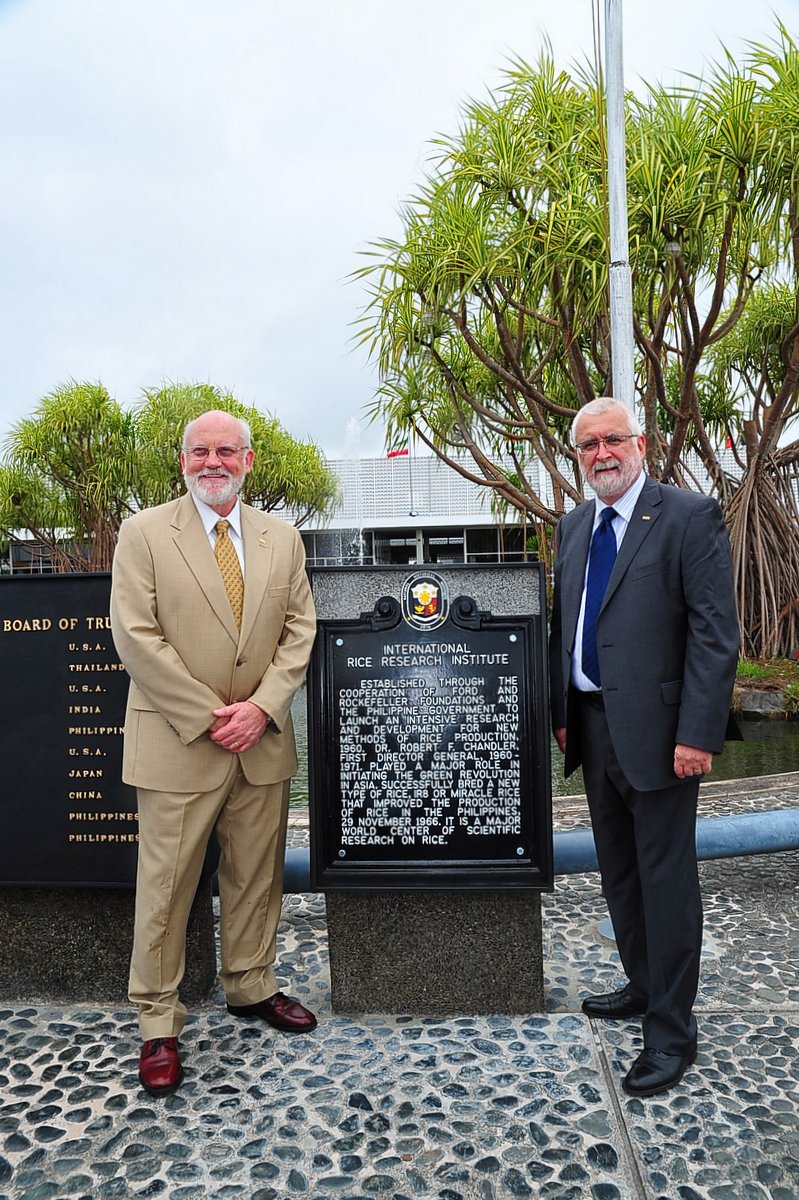
Bob Zeigler and Mike Jackson after the unveiling of one of two historical markers at IRRI, on 14 April 2010, IRRI’s 50th anniversary.

Thank you
So let me take this opportunity of thanking Bob for his friendship and collegiality over many years, and to wish him and Crissan many years of happy retirement back in Portland, OR. However, I’m sure it won’t be long before he is lured out of retirement in some capacity or other to continue contributing his intellect, experience, and broad perspectives to the global development agenda.

A few anecdotes
But I can’t end this blog post without telling a ‘tale’ or two.

Bob has a great sense of humor, often self-deprecating. Unfortunately this is not always understood by everyone. But I certainly appreciated it, as I’m much the same.

Not long after Bob joined IRRI he took up scuba diving, as did I. And we have, over the years, made some great dives together at Anilao, Batangas. Here are a few memorable photos from a great dive we made at the ‘coral garden’ site, to the south of Sombrero Island in April 2005.

In the 1990s, Bob rode the IRRI Staff bus to and from Staff Housing each day. The ten or so minute drive down to the research center was a good opportunity to catch up on gossip, check a few things with colleagues before everyone disappeared into their offices, or simply to exchange some friendly banter. On two occasions, Bob was the ‘victim’ of some leg-pulling from his colleagues, me included.

I don’t remember which year it was, but Bob had been asked to chair the committee organizing the biennial International Rice Research Conference that would be held at IRRI HQ. The guest speaker was President of the Philippines, Fidel Ramos, and it was Bob’s responsibility to introduce him. For several weeks Bob would be greeted with the sound advice from his colleagues each time he took the bus: “Remember“, they exhorted him, “It’s President Marcos. Marcos!” In the event, Bob cleverly avoided any embarrassment, simply introducing him as ‘Mr President’.

On a couple of occasions, Bob and I were members of the ‘IRRI Strolling Players’, taking part in a pantomime (usually three performances) in the institute’s auditorium. In 1995 the theme was Robin Hood and His Merry Men. I played a rather camp Prince John; Bob was Friar Tuck.

Bob had the awkward line at some point in the play: “My, that’s a cunning stunt“. And you can imagine the bus banter around that. “Remember Bob, you say it’s a ‘cunning stunt’!” Fortunately Bob was not susceptible to Spoonerisms.

Both Bob and I have contributed over the years to the Christmas festivities at Staff Housing by taking on the role of Santa (hush, don’t tell anyone).

It was fun working with Bob. He set a challenging agenda that staff responded to. It’s not for nothing that IRRI has continued to retain its high reputation for science and scientific impact. And for the past decade IRRI has indeed been fortunate to have Bob in charge.

Completing a PhD – was it worth the effort?

A topical story in the Lima press
Overnight, there was an interesting and topical post (as far as I’m concerned) on the Facebook page of one of my ‘friends’—the son of one of my graduate students when I was a faculty member at The University of Birmingham in the 1980s. He hails from Peru. Carlos Arbizu Jr. is studying for his PhD at the University of Wisconsin-Madison and, as far as I can determine, he’s working on carrot genetics under the supervision of my friend and former potato scientist David Spooner.

Carlos had posted a link to an article published on the website of the Lima-based Newspaper Perú21: ¿Por qué estudiar un doctorado?  (Why study for a PhD?). To which Carlos had added the byline: PhD = Permanent Head Damage.

Maybe he’s going through a difficult patch right now. I’ve seen from several of his posts that he’s immersed in some pretty ‘heavy’ molecular genetic analysis. It’s beyond my comprehension.

But all PhD students go through peaks and troughs. I know I did. Some days nothing can go wrong, progress is swift. The world is your oyster, and there really is a light at the end of the tunnel. On other days, you just wish the earth would open up and swallow you.

And for many PhD students, the most trying time often comes when they begin to draft their thesis and eventually prepare to defend it. Unfortunately many science graduates have received very little formal training in how to write clear and concise prose. Writing just doesn’t come naturally. So what should be one of the most important aspects of completing a PhD can become a long and tedious chore. And before submission regulations were tightened up at UK universities, some students could take a couple of years or more to write up and submit their thesis for examination.

40 years ago today
Well, this Perú21 article was published yesterday. And today, 23 October (if memory serves me right) is exactly 40 years since I defended my PhD thesis: The Evolutionary Significance of the Triploid Cultivated Potato, Solanum x chaucha Juz. et Buk. I was almost 27 (old by UK standards, average or maybe young compared to many US graduate students), and had been working on my degree for four years. I’d completed a one-year MSc degree in genetic resources at Birmingham in September 1971 (having graduated from the University of Southampton with a BSc in botany and geography in July 1970), and then been offered the opportunity to work in Peru for a year at the newly-established International Potato Center (CIP). Well, for various reasons, and to cut a long story short, That opportunity didn’t materialize in September 1971 so my head of department, Professor Jack Hawkes (who went on to supervise my PhD) persuaded the Overseas Development Administration (now Department for International Development, DfID) to cough up some support until the funding for my position at CIP was guaranteed. Thus I began my study in Birmingham, and finally moved to Lima in January 1973, working as an Associate Taxonomist and conducting research that went towards my PhD thesis. And since I was employed and having a regular income, I took another three years to complete all the experimental work I had planned. In any case, when I joined CIP in 1973 the institute was still establishing and developing its own infrastructure. That was also one of the exciting aspects to my work. It was a real opportunity to build up and curate a large collection of Andean potato varieties and wild species, and study them in their native environment.

CIP collection

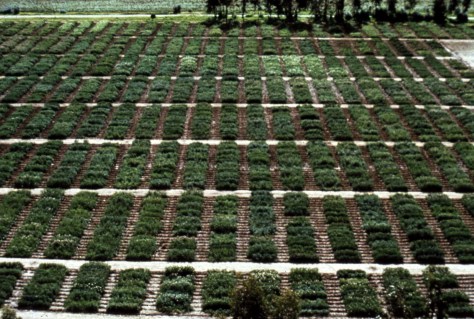
The CIP field collection of potato varieties planted in the Mantaro Valley near Huancayo in central Peru.

spuds

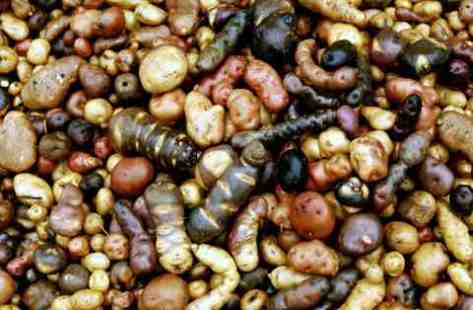
The diversity of Andean potato varieties.

The next couple of photos show some of the field work I carried out in various parts of Peru.

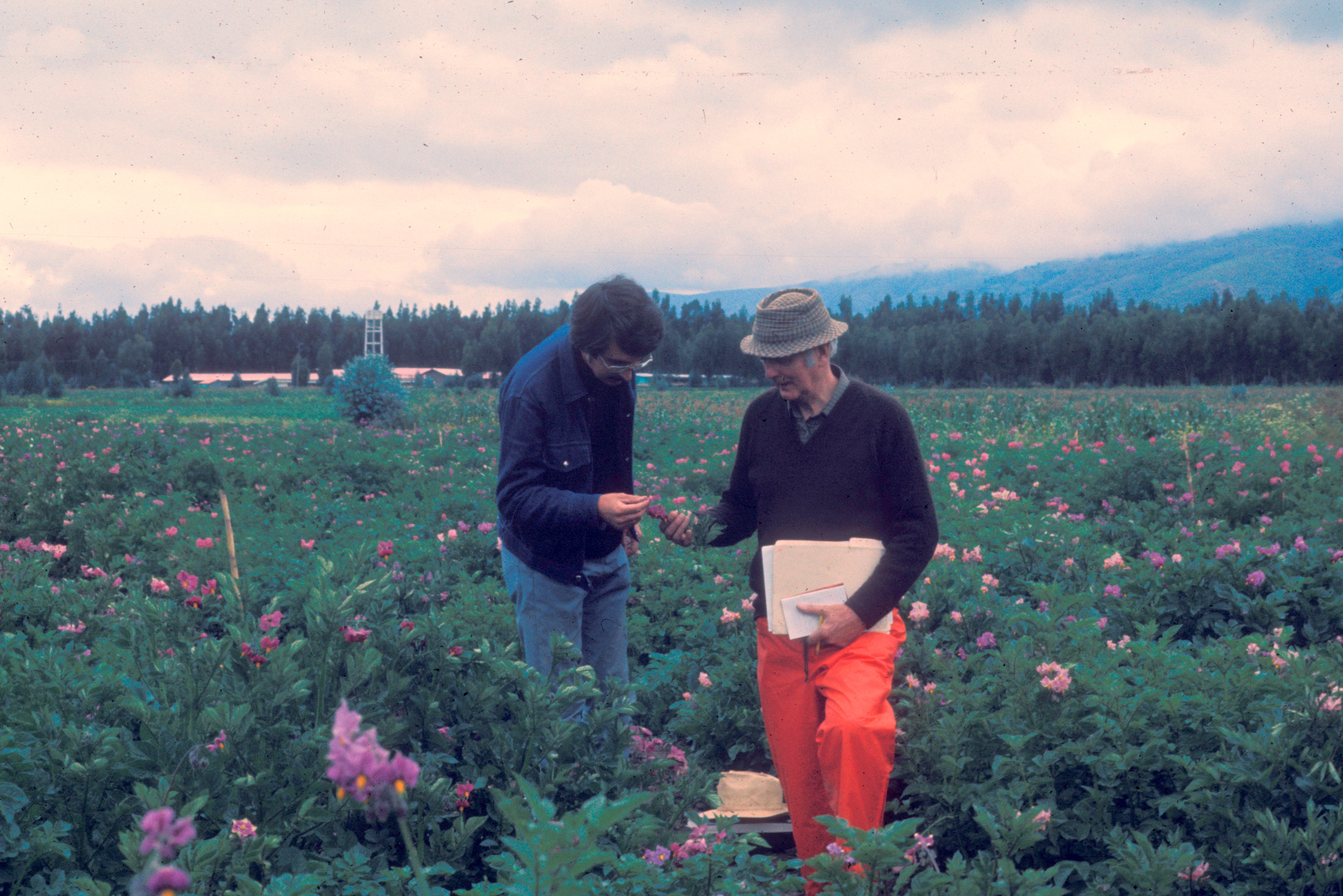
Mike Jackson and Jack Hawkes in the CIP potato germplasm collection, Huancayo, central Peru in early 1974

Learning from my supervisor, Professor Jack Hawkes, during one of his visits to Peru while I was carrying out my study.

MTJ in CIP

With CIP taxonomist, Professor Carlos Ochoa, a renowned Peruvian expert on potatoes and their wild relatives.

I was looking at the relationship between potato varieties with different chromosome numbers, so-called diploids and tetraploids, with 24 and 48 chromosomes respectively. If you can cross these two types you expect to produce some with an intermediate chromosome number. So, 48 x 24 = 36, the triploids. For the first years at CIP we didn’t have any glasshouses where we could work. Instead we had rather rustic polytunnels right in the field next to the germplasm collection, where I would make all those pollinations using the so-called cut-stem technique.

Experimental data from other parts of the world had shown that triploids were formed only rarely in such crosses. Yet triploid varieties were quite common and highly prized by potato farmers in the Andes. I was trying to determine if the crossability relationships of these native potatoes might be different in their indigenous environment. So I went on to make hundreds of crosses (and thousands of pollinations), as well as study indigenous farming systems in the south of Peru. This next gallery show some of the triploids potatoes grown by farmers. One of the most prized was the variety Huayro, and there were two forms, one round and the other elongated (and quite large). Both had red skins and yellow flesh.

Back to Birmingham
In May 1975, Steph and I headed back to the UK. But not directly. On the assumption that I would successfully defend my PhD thesis, CIP’s Director General had offered me a new position in the Outreach Department, and with the possibility of moving to Central America. So we headed for Costa Rica (where I’d eventually move to in April 1976) to see the lie of the land, so to speak. And from there we went on to Mexico for a few days to visit our old friends, and former CIP colleagues, John and Marion Vessey who had moved to maize and wheat center, CIMMYT, near Mexico City. From Mexico we headed to New York (first flight on a wide-bodied jet, an Eastern Airlines L-1011 Tristar) for a connection with British Airways to Manchester where my parents met us. We spent a further week looking for somewhere to live in Birmingham, and were fortunate to find an apartment very convenient to the university and only a few minutes walk from the Department of Botany (as it was then) Winterbourne Gardens where I had been assigned some lab space and a desk.

A nightmare waiting to happen
Now remember, there were no PCs or laptops, cloud computing, USB sticks or floppy disks in 1975. All my thesis data was available in hard copy only, and I carried a briefcase with four years of work with me from Lima to the UK on that journey I just related. The briefcase was hardly ever out of my sight! In those days it was not unknown for a graduate student to have lost a briefcase on a journey containing a complete draft of a thesis. No backup!

Getting into a routine
Once settled in Birmingham, I planned out my work for the coming months, with a deadline of 1 October. That was the final day of submission if I wanted to have my thesis examines and (if approved) have the degree awarded at the next congregation or commencement in early December that same year. But by the beginning of June I had not even begun to write, never mind complete the last minute field experiment I had planned (checking the ploidy of a set of hybrids produced earlier in the year) or create the figures I would include. Again, there was no digital technology available. I had to hand draw all my maps and other figures (my geography training in cartography at Southampton finally came in useful). While the department’s chief technician actually photographed all of these, I had to print all my own photographs (again, the experience I’d gained from my father, a professional photographer all his life, came in handy).

Working to a regular schedule every day, from around 7:30 am until 5 pm with a break for lunch, and spending another couple of hours after dinner, I soon began to make progress, although I didn’t actually start putting pen to paper until the beginning of July. It took me only six weeks to draft my thesis. Once I’d completed a chapter I’d hand it over to Jack Hawkes for review and revision. And to give him credit, he usually handed me back my draft with his comments within a couple of days only (and this was an approach I adopted with all my graduate students during the 1980s).

So, by mid-August or so I had a completed text, I’d checked the chromosome numbers of the hundred or so plants in the field, and set about the figures. I found someone who would type my thesis, but at the last moment he had to use a manual typewriter since the electric one he’d wanted to rent was no longer available. In 1975 The University of Birmingham changed the thesis submission regulations and it was no longer necessary to submit a thesis fully bound in a hard cover. I was able to submit in temporary binding, and this in fact saved perhaps three weeks from my tight schedule. I hit the 1 October deadline with about twenty minutes to spare just before 5 pm.

Thesis defence
I was quite surprised when my external examiner planned the defence of my thesis just three weeks later. All went to plan. In those days, the exam consisted of the graduate student, the external examiner and an internal examiner (usually the thesis supervisor). Today things might have changed, and even when I worked at Birmingham in the 80s the supervisor was no longer permitted to act as the internal examiner. I believe there may now also be a third panel member, to see fair play.

From the outset it was apparent that my thesis would pass muster, since the external examiner told me that he’d enjoyed reading the thesis. But we then went on to have a thorough discussion over the next three hours about many of the details, and the implications for potato genetic conservation and breeding. Phew!

And in early December, the 12th actually, I was able to celebrate with others from the department as we were awarded our degrees at the mid-year congregation.

19 Ed & Mike

L to R: Pam Haigh, Brenig Garrett,  me, Prof Trevor Williams, Prof Jack Hawkes, Dr Jean Hanson, Margaret Yarwood, Jane Toll, Stephen Smith

20 Ed & Mike

With my PhD supervisor, Prof. Jack Hawkes on my right, and MSc supervisor, Prof. Trevor Williams on my left; 12 December 1975.

PhD congregation, 12 December 1975 - with Mum and Dad

With my Mum and Dad.

bluedivider-hi

Was it worth it?
So let me come back to the question I posed in the title of this post. Was it worth it? Unequivocally Yes! Would I want to do it again? No!

Actually completing a PhD is probably the most selfish piece of research that a scientist will ever get to do. There’s one aim: complete a thesis and have the doctorate awarded. PhD research does not have to be ground-breaking at all. In fact much of it is pretty mundane, and that’s one of the down sides when things are not going so well. For Birmingham at least, the PhD regulations stated that the thesis had to represent a piece of original research, completed under supervision. And it’s the ‘under supervision’ that is critical. A PhD student is still maturing, so to speak. The work is guided by a mentor. Of course there can be breakthroughs that lead to the most prestigious prizes. I believe that Sir Paul Nurse’s PhD research set him off on the path that eventually led to his Nobel prize.

I have encouraged others to research for a PhD, and I hope I was able to give them the support and advice that my supervisors gave me. In that respect my PhD was a positive experience. It’s not always the case, and when student-supervisor relationships break down, every one suffers. It does not necessarily have to take many, many months (or years even) to write a thesis. It takes self-discipline but also support from the supervisor.

Without a PhD I would not have enjoyed the career in international agricultural research and academia that I did. My PhD was like a ‘union card’. It enabled me to seek opportunities that would probably have been closed without a PhD. But I also acknowledge that I was lucky. I moved into a field—genetic resources—that was just expanding, as were the international centers of the CGIAR. And I had mentors who were prepared to back me.

Forty years on I can look back to those days in 1975 with a fair degree of nostalgia. And then reflect on the benefits that accrued from that intense but disciplined period in the summer of 1975 (when there was a heat wave, and Arthur Ashe won the men’s title at Wimbledon), and which allow me now to enjoy the retirement I started five years ago.

Both of our daughters, Hannah and Philippa, went on to complete a PhD (in 2006 and 2010, respectively) in their chosen field: psychology! So I can’t have passed on so many negative vibes about graduate study, although their choice of psychology does make a profound statement, perhaps.

Peer-reviewed papers
Incidentally, I finally got around to publishing three papers from my thesis. When I returned to CIP just before New Year 1976, I moved into a new role and responsibilities. And even though I eventually found time to draft manuscripts, these took some time to appear in print after peer review, revision and acceptance. One of the papers—on the field work at Cuyo Cuyo—was originally submitted to the journal Economic Botany. And there it languished for over two years. I received an invitation from the editor of Euphytica to submit a paper on the same topic, so I withdrew my manuscript from Economic Botany. About that same time I received a letter from that journal’s interim editor in chief that manuscripts had been discovered unpublished up to 20 years after they had been submitted, and what did I want to happen to mine. It was published in Euphytica in 1980.

Jackson, M.T., J.G. Hawkes & P.R. Rowe, 1977. The nature of Solanumchaucha Juz. et Buk., a triploid cultivated potato of the South American Andes. Euphytica 26, 775-783. PDF

Jackson, M.T., J.G. Hawkes & P.R. Rowe, 1980. An ethnobotanical field study of primitive potato varieties in Peru. Euphytica 29, 107-113. PDF

Jackson, M.T., P.R. Rowe & J.G. Hawkes, 1978. Crossability relationships of Andean potato varieties of three ploidy levels. Euphytica 27, 541-551.PDF

Research impact is all around – or at least it should be.

I believe it was IRRI’s former head of plant pathology Dr Tom (Twng-Wah) Mew who first coined this aphorism to describe IRRI’s philosophical approach to research (and I paraphrase):

It’s not only necessary to do the right science,
but to do the science right.

I couldn’t agree more, and have blogged elsewhere about the relevance of IRRI’s science. But this is science or research for development (or R4D as it’s often abbreviated) and best explained, perhaps by the institute’s tagline or slogan:

Rice Science copy

This is not science in a vacuum, in an ivory tower seeking knowledge for knowledge’s sake. This is research to solve real problems: to reduce poverty and increase food security. I don’t really like the distinction that’s often made between so-called pure or basic science, and applied science. Surely it’s a continuum? Let me give you just one example from my own research experience.

I have also blogged about the problem of bacterial wilt of potatoes. It can be a devastating disease, not only of potatoes and other solaneaceous crops like tomatoes and eggplants, but also of bananas. While the research I carried out was initially aimed at identifying better adapted potatoes resistant to bacterial wilt, very much an ‘applied’ perspective, we also had to investigate why the bacterium was surviving so long in the soil in the apparent absence of susceptible hosts. This epidemiological focus fed into better disease control approaches.

But in any case, the only distinction that perhaps really matters is whether the science is ‘good’ or ‘bad’.

Why is rice science so crucial? Because rice is the world’s most important staple food, feeding more than half of the global population on a daily basis, even several times a day in some Asian countries. IRRI’s science focuses on gains for rice farmers and those who eat rice, research that can potentially affect billions of people. It’s all about impact, at different levels. While not all impact is positive, however, it’s important to think through all the implications and direction of a particular line of research even before it starts. In other words ‘What does success look like?‘ and how will research outputs become positive outcomes?

Now I don’t claim to be an expert in impact assessment. That’s quite a specialized field, with its own methodologies. It wasn’t until I changed careers at IRRI in 2001 and became the Director for Program Planning and Communications (DPPC) that I fully came to understand (or even appreciate) what ex ante and ex post impact meant in the context of R4D. I was fortunate as DPPC to call upon the expertise of my Australian colleague, Dr Debbie Templeton, now back in her home country with the Australian Center for International Agricultural Research (ACIAR).


11222449_888009937912763_3115952232097675704_oRice Science for a Better World?

IRRI has a prestigious scientific reputation, and deservedly so. It strives hard to maintain that reputation.

IRRI scientists publish widely in international journals. IRRI’s publication rate is second-to-none. On occasion IRRI has been criticized, censured almost, for being ‘obsessed with science and scientific publication’. Extraordinary! What for heaven’s sake does ‘Research’ in the name ‘International Rice Research Institute’ stand for? Or for that matter, in the name ‘CGIAR’ or ‘Consultative Group on International Agricultural Research’?

What our erstwhile colleagues fail to grasp, I believe, is that scientific publication is a consequence of doing good science, not an objective in itself. Having recruited some of the best scientists, IRRI provides an environment that brings out the best in its staff to contribute effectively to the institute’s common goals, while permitting them to grow professionally. Surely it must be the best of both worlds to have scientists contributing to a worthwhile and important research agenda, but knowing that their work is also esteemed by their scientific peers?

But what is the ‘right science’? Well, it depends of course.

IRRI is not an academic institution, where scientists are expected to independently pursue their own interests, and bring in large sums of research funding (along with the delicious overheads that administrators expect). All IRRI scientists contribute—as breeders, geneticists, pathologists, molecular biologists, economists, or whatever—to a common mission that:

. . . aims to reduce poverty and hunger, improve the health of rice farmers and consumers, and ensure environmental sustainability of rice farming. We do these through collaborative research, partnerships, and the strengthening of the national agricultural research and extension systems, or NARES, of the countries we work in.

IRRI’s research agenda and policies are determined by a board of trustees, guided by input from its partners, donors, end users such as farmers, and its staff. IRRI aims to meet five goals, aligned with the objectives of the Global Rice Science Partnership (GRiSP), that coordinates rice research among more than 900 international partners, to:

  • Reduce poverty through improved and diversified rice-based systems.
  • Ensure that rice production is stable and sustainable, does minimal harm to the environment, and can cope with climate change.
  • Improve the nutrition and health of poor rice consumers and farmers.
  • Provide equitable access to information and knowledge on rice and help develop the next generation of rice scientists.
  • Provide scientists and producers with the genetic information and material they need to develop improved technologies and enhance rice production.

Rice Science for a Better World, indeed.

International agricultural research like IRRI’s is funded from the public purse, in the main, though the Bill & Melinda Gates Foundation has become a major player supporting agricultural research over the past decade. Tax dollars, Euros, British pounds, Swiss francs, or Japanese yen are donated—invested even—through overseas development assistance budgets like USAID in the USA, the European Commission, DfID in the UK, SDC in Switzerland, and several institutions in Japan, to name just a handful of those donor agencies committed to finding solutions to real problems through research. Donors want to see how their funds are being used, and the positive benefits that their investments have contributed to. Unfortunately donors rarely share the same vision of ‘success’.

One of the challenges that faces a number of research organizations however, is that their research mandates fall short of effectively turning research outputs into research outcomes or impact. But having an idea of ‘what success looks like’ researchers can be in a better position to know who to partner with to ensure that research outputs become outcomes, be they national scientists, civil society organizations, NGOs, and the like.

As I said, when I became DPPC at IRRI, my office managed the process of developing and submitting research project funding proposals, as well as reporting back to donors what had been achieved. I had to get this message across to my research scientist colleagues: How will your proposed research project benefit farmers and rice consumers? This was not something they expected.

Quite early on in my DPPC tenure, I had a wake-up call after we had submitted a proposal to the Asian Development Bank (ADB), at their request I should add, to support some work on rice genomics. The science described in the proposal was first rate. After mulling over our proposal for a couple of months, I received a phone call from our contact at ADB in Manila who was handling the internal review of the proposal. He asked me to add a paragraph or two about how this work on rice genomics would benefit rice consumers otherwise ADB would not be able to consider this project in its next funding round.

So I went to discuss this apparent conundrum with the scientist involved, and explained what was required for ADB approval. ‘How will rice genomics benefit rice farmers and consumers?‘, I asked him. ‘I can’t describe that‘ he relied, somewhat woefully. ‘Well‘, I replied, ‘unless we can tell ADB how your project is going to benefit farmers etc, then your proposal is dead in the water‘.

After some thought, and based on my simplistic explanation of the impact pathway, he did come up with quite an elegant justification that we could submit to ADB. Despite our efforts, the project was not funded by ADB. The powers-that-be decided that the research was too far removed from the ultimate beneficiaries. But the process in itself was useful. It helped us to understand better how we should pitch our proposals and what essential elements to show we had thought things through.

Now the graphic below is obviously a simplistic representation of a complex set of issues. The figure on the left represents a farmer, a community, a situation that is constrained in some way or other, such as low yield, diseased crops, access to market, human health issues, and the like. The objective of the research must be clearly defined and described. No point tilting at the wrong windmills.

The solid black and dashed red line represents the impact pathway to a better situation, turning research outputs into outcomes. The green arrow represents the point on that impact pathway where the research mandate of an institute often ends—before the outcome is delivered and adopted. How to fill that gap?

Individual research projects produce outputs along the impact pathway, and outputs from one project can be the inputs into another.

Whatever the impact pathway, it’s necessary to describe what success looks like, an increase in production over a specified area, release and adoption of disease resistant varieties, incomes of X% of farmers in region Y increased by Z%, or whatever.

Impact pathway

Let me highlight two IRRI projects. One has already shown impact after a research journey of almost two decades. The other, perhaps on-going for the same time period, has yet to show impact. I’m referring to submergence tolerant or ‘scuba rice‘, and ‘Golden Rice’, respectively.

9203724733_3f71432126_zFor the development of scuba rice it was first necessary to identify and characterize genes conferring submergence tolerance—many years in the laboratory even before the first lines were tested in the field and the proof of concept realized. It didn’t take long for farmers to see the advantage of these new rice varieties. They voted with their feet! So, in a sense, the farmers themselves managed the dashed red line of the impact pathway. Scuba rice is now grown on more than 2.5 million hectares by 10 million farmers in India and Bangladesh on land that could not consistently support rice crops because of flooding.

golden-riceGolden Rice has the potential to eradicate the problem of Vitamin A deficiency, which can lead to blindness. As I mentioned earlier, rice is eaten by many people in Asia several times a day. It’s the perfect vehicle to enhance the Vitamin A intake. Varieties have been produced, the proof of concept completed, yet Golden Rice is not yet grown commercially anywhere in those countries that would benefit most. The dashed red line in my impact pathway diagram is the constraint. Golden Rice is a GMO, and the post-research and pre-release regulatory framework has not been surmounted. Pressure groups also have delayed the testing of Golden Rice lines, even destroying field experiments that would provide the very data they are so ‘afraid’ of. Thus its impact is more potential than real. Donors have been patient, but is there a limit to that patience?

Keeping donors on-side
What I also came to realize early on is that it’s so necessary to engage on a regular basis with donors, establish a good working relationship, visit them in their offices from time-to-time, sharing a drink or a meal. Mutual confidence builds, and I found that I could pick up the phone and talk through an issue, send an email and get a reply quickly, and even consulted by donors themselves as they developed their funding priorities. It’s all part of research management. Donors also like to have ‘good news stories’. Nowadays, social media such as Facebook and Twitter, blogging even, also keep them in the loop. After all donors have their own constituencies—the taxpayers—to keep informed and onside as well.

Achieving impact is not easy. But if you have identified the wrong target, then no amount of research will bring about the desired outcome, or less likely to do so. While impact is the name of the game, good communications is equally important. They go hand-in-hand.

I used to be uncertain, but now I’m not so sure (updated 5 December 2015)

Regular visitors to my blog will, by now, know that for many years from July 1991 I worked at the International Rice Research Institute (IRRI) in Los Baños in the Philippines, south of Manila. For the first 10 years, I was head of the Genetic Resources Center (GRC), having particular responsibility for the International Rice Genebank (now supported financially by the Global Crop Diversity Trust). Elsewhere on this blog I have written about the genebank and what it takes to ensure the long-term safety of all the germplasm samples (or accessions as they are known) of cultivated rices and related wild species of Oryza.

Well, consider my surprise, not to say a little perplexed, when I recently read a scientific paper¹ that had just been published in the journal Annals of Botany by my former colleagues Fiona Hay (IRRI) and Richard Ellis (University of Reading), with their PhD student Katherine Whitehouse, about the beneficial effect of high-temperature drying on the longevity of rice seeds in storage. Now this really is a big issue for curators of rice germplasm collections, let alone other crop species perhaps.

So why all the fuss, and why am I perplexed about this latest research? Building on a paper published in 2011 by Crisistomo et al. in Seed Science & Technology², this most recent research¹ provides significant evidence, for rice at least, that seed drying at a relatively low temperature and relative humidity, 15C and 15RH—the genebank standard for at least three decades—may not be the best option for some rice accessions, depending on the moisture content of seeds at the time of harvest. It’s counter-intuitive.

But also because germplasm regeneration and production of high quality seeds is one aspect of germplasm conservation most likely to be impacted by climate change, as Brian Ford-Lloyd, Jan Engels and I emphasized in our chapter in Genetic Resources and Climate Change.

To explain further, it’s necessary to take you back 24 years to when I first joined IRRI.

20150202-klaus-lampe

Dr Klaus Lampe, IRRI Director General 1988-1995

The first six months or so
The Director General in 1991, Dr Klaus Lampe, encouraged me to take a broad view of seed management services at IRRI, specifically the operations and efficiency of the International Rice Genebank (IRG). It was also agreed that I should develop research on the germplasm collection and its conservation, something that had not been considered when the GRC Head position was advertised in September 1990. I should add that in negotiating and accepting the GRC position, I had insisted that GRC should have a research arm, so to speak. I guess I was in a fairly strong negotiating position.

Dr TT Chang, first head of the International Rice Germplasm Center at IRRI

Dr TT Chang

Once at IRRI, I didn’t rush into things. After all, I had never run a genebank before let alone work on rice, although much of my career to that date had been involved in various aspects of germplasm conservation and use. But after about six months, I reckon I’d asked enough questions, looked at how the genebank was running on a day-to-day basis. I had developed a number of ideas that I thought should vastly enhance the long-term conservation of rice germplasm, but at the same time allow all the various operations of the genebank run smoothly and hopefully more efficiently. In one sense, managing the individual aspects or operations of a genebank are quite straight-forward. It’s bringing them all together that’s the tricky part.

There was another ‘delicate’ situation to address, however. All the Filipino staff had worked for only one person for many years, my predecessor as head of the genebank (then known as the International Rice Germplasm Center, or IRGC), Dr TT Chang. It’s not an understatement to say that many of these staff were fiercely loyal to Dr Chang (loyalty being one of their greatest virtues), firmly fixed in their ways, and didn’t feel—or maybe understand—that changes were desirable or even necessary. It was a classic change management situation that I was faced with. I needed to help them evaluate for themselves the current genebank management focus, and propose (with more than a little encouragement and suggestions from me) how we might do things differently, and better.

Some radical changes
But I don’t think anyone foresaw the radical changes to the management of the genebank that actually emerged. The genebank was ‘the jewel in IRRI’s crown’, the facility that every visitor to the institute just had to see. It seemed to run like clockwork—and it did, in its own way.

Staffing and responsibilities
Apart from several staffing issues, I was particularly concerned about how rice germplasm was being regenerated in the field, and how it was handled prior to medium-and long-term storage in the genebank. There were also some serious germplasm data issues that needed tackling—but that’s for another blog post, perhaps.

In terms of genebank operations, it was clear that none of the national staff had responsibility (or accountability) for their various activities. In fact, responsibilities for even the same set of tasks, such as germplasm regeneration or characterization, to name just two, were often divided between two or more staff. No-one had the final say. So very quickly I appointed two staff, Flora ‘Pola’ de Guzman and Renato ‘Ato’ Reaño to take charge of the day-today management of the seed collection (and genebank facilities per se) and germplasm regeneration, respectively. Another staff, Tom Clemeno, was given responsibility for all germplasm characterization.

Working in the field
But what seemed rather strange to me was the regeneration of rice germplasm at a site, in rented fields, some 10km east of the IRRI Experiment Station, at Dayap. This meant that everything—staff, field supplies, etc.—had to be transported there daily, or even several times a day. It made no sense to me especially as the institute sat in the middle of a 300 ha experiment station, right on the genebank’s doorstep. In fact, the screenhouse for the wild rice collection had been constructed on one part of the station known as the Upland Farm. To this day I still don’t understand the reasons why Dr Chang insisted on using the site at Dayap. What was the technical justification?

Also the staff were attempting to regenerate the germplasm accessions all year round, in both ‘Dry Season’ (approximately December to May) and the ‘Wet Season’ (June to November). Given that the IRRI experiment station has full irrigation backup, it seemed to me that we should aim to regenerate the rice accessions in the Dry Season when, under average conditions, the days are bright and sunny, and nights cooler, just right for a healthy rice crop, and when the best yields are seen. The Wet Season is characterized obviously by day after day of continuous rainfall, often heavy, with overcast skies, and poor light quality. Not to mention that Wet Season in the Philippines is also ‘typhoon season’. So we separated the regeneration (Dry Season) from the characterization (Wet Season) functions.

But could we do more, particularly with regard to ensuring that only seeds of the highest quality are conserved in the genebank?  That is, to increase the longevity of seeds in storage—the primary objective of the genebank, after all, to preserve these rice varieties and wild species for future generations? And in the light of the latest research by Katherine Whitehouse, Fiona and Richard, did we make the right decisions and were we successful?

Seed environment and seed longevity
That’s where I should explain about the research collaboration with Richard Ellis at that time (Ellis et al. 1993; Ellis & Jackson 1995), and helpful advice we received from Roger Smith and Simon Linington, then at Kew’s Wakehurst Place (and associated with the founding of the Millennium Seed Bank).

Dr N Kameswara Rao

Dr N Kameswara Rao, now head of the genebank at the International Center for Biosaline Agriculture (ICBA) in the UAE-Dubai.

I hired a post-doctoral fellow, Dr N Kameswara Rao, on a two-year assignment from sister center ICRISAT (based in Hyderabad).  Kameswara Rao had completed his PhD at Reading under seed physiologist Professor Eric Roberts.

We set about studying the relationship between the seed production environment and seed longevity in storage, and the effect of sowing date and harvest time on seed longevity in different rice types, particularly hard-to-conserve temperate (or japonica) rice varieties (Kameswara Rao & Jackson 1996a; 1996b; 1996c; 1997). And these results supported the changes we had proposed (and some even implemented) to germplasm regeneration and seed drying.

In 1991, the IRG did not have specific protocols for germplasm generation such as the appropriate harvest dates, and seed drying appeared to me to be rather haphazard, hazardous even. Let me explain. Immediately after harvest, rice plants in bundles (stems, leave and grains) were dried on flat bed dryers before threshing, heated by kerosene flames, for several days. Following threshing, and before final cleaning and storage, seeds were dried in small laboratory ovens at ~50C. It seemed to me that rice seeds were being cooked. So much for the 15C/15RH genebank standard for seed drying!

During the renovation of institute infrastructure in the early 1990s we installed a dedicated drying room³, with a capacity for 9000 kg, in which seeds could be dried to an equilibrium 6% moisture content (MC) or thereabouts, after a week or so, under the 15/15 regime.

A rethink
Now this approach has been apparently turned on its head. Or has it?

To read the headlines in some reports of the Whitehouse et al. paper, you would think that the 15/15 protocol had been abandoned altogether. This is not my reading of what they have to report. In fact, what they report is most encouraging, and serves as a pointer to others who are engaged in the important business of germplasm conservation.

In her experiments, Katherine compared seeds with different initial MC harvested at different dates that were then dried either under the 15/15 conditions, or put through up to six cycles of drying on a batch drier, each lasting eight hours, before placing them in the 15/15 seed drying room to complete the drying process, before different seed treatments to artificially age them and thereby be able to predict their longevity in storage before potential germination would drop to a dangerous level.

This is what Katherine and her co-authors conclude: Seeds harvested at a moisture content where . . . they could still be metabolically active (>16.2%) may be in the first stage of the post-mass maturity, desiccation phase of seed development and thus able to increase longevity in response to hot-air drying. The genebank standards regarding seed drying for rice and, perhaps, for other tropical species should therefore be reconsidered.

Clearly seeds that might have a higher moisture content at the time of harvest do benefit from a period of high temperature drying. Because of the comprehensive weather data compiled at IRRI over decades, Katherine was also able to infer some of the field conditions and seed status of the Kameswara Rao experiments. And although the latest results do seem to contradict our 1996 and 1997 papers, they provide very strong support for the need to investigate this phenomenon further. After all, Katherine studied only a small sample of rice accessions (compared to the 117,000+ accessions in the genebank).

The challenge will be, if these results are confirmed in independent rice studies—and even in other species, to translate them into a set of practical genebank standards for germplasm regeneration and drying and storage for rice. And it must be possible for genebank managers to apply these new standards easily and effectively. After all many are not so fortunate as GRC to enjoy the same range of facilities and staff support.

I’m really pleased to see the publication of this research. It’s just goes to demonstrate the importance and value of research on genebank collections, whatever the crop or species. Unfortunately, not many genebank are in this league, so it behoves the CGIAR centers to lead from the front; something I’m afraid that not all do, or are even able to do. Quite rightly they keep a focus on managing the collections. But I would argue that germplasm research is also a fundamental component of that management responsibility. Brownie points for IRRI for supporting this role for almost a quarter of a century. And for Fiona as well for ensuring that this important work got off the ground. Good luck to Katherine when she comes to defend her thesis shortly.

A recent seminar
On 12 November, Fiona gave a seminar at IRRI in the institute’s weekly series, titled How long can rice seeds stay alive for? In this seminar she explores changes that have been made to genebank operations over the years and the extent to which these did or did not affect the potential longevity of rice seeds in the genebank. She talks in some detail about the benefits of initial ‘high temperature’ drying that appears to increase potential longevity of seeds. As I queried with her in a series of emails afterwards, it’s important to stress that this high temperature drying does not replace drying in the 15/15 drying room. Furthermore, it will be necessary at some stage to translate these research findings into a protocol appropriate for the long term conservation of rice seeds at -18C.

Fiona has graciously permitted me to post her PowerPoint presentation in this blog, and the audio file that goes with it. You’ll have to open the PPT file and make the slide changes as you listen to Fiona speaking. I’ve done this and it’s actually quite straightforward to follow along and advances the slides and animations in her PPT. Click on the image below to download the PPT file. Just open it then set the audio file running.

Fiona Hay seminar title

Here’s the audio file.


I am also pleased to see that the CGIAR genebanks have also established a seed longevity initiative under the auspices of the Global Crop Diversity Trust. You can read more about it here.

Seed storage – an interesting anecdote
In 1992 we implemented the concept of Active (+3-4C) and Base (-18C) Collections in the IRG. Before then all rice seeds were stored in small (20g if I remember correctly) aluminium cans. We retained the cans for the Base Collection: once sealed we could expect that they would remain so for the next 50 years or more. But in the Active Collection there was no point having cans, if they had to be opened periodically to remove samples for distribution, and could not be re-sealed.

So we changed to laminated aluminium foil packs. Through my contacts at Kew – Wakehurst Place (home of the Millennium Seed Bank), Roger Smith and Simon Linington, we identified a manufacturer in the UK (from near Manchester I believe) who could make packs of different sizes, using a very high quality and tough laminate of Swedish manufacture (originally developed to mothball armaments). It had an extremely low, if not zero, permeability, and was ideal for seed storage. Unfortunately by the time we made contact, the company had gone into liquidation, but the former managing director was trying to establish an independent business. On the strength of a written commitment from IRRI to purchase at least 250,000 packs, and probably more in the future, this gentleman was able to secure a bank loan, and go into business once again. And IRRI received the seed storage packages that it ordered, and still uses as far as I know. The images below show genebank staff handling both aluminium cans in the Base Collection and the foil packs in the Active Collection. You can see the Active Collection in the video below at minute 1:09.

~~~~~~~~~~~~~~~~~~~~~~~~~~~~
¹ KJ Whitehouse, FR Hay & RH Ellis, 2015. Increases in the longevity of desiccation-phase developing rice seeds: response to high-temperature drying depends on harvest moisture content. Annals of Botany doi:10.1093/aob/mcv091.

² S Crisostomo, FR Hay, R Reaño and T Borromeo, 2011. Are the standard conditions for genebank drying optimal for rice seed quality? Seed Science & Technology 39: 666-672.

³ If you would like to see what the seed drying room looks like, just go to minute 9:40 in the video below:


Opportunities delayed: INGER @ 40

I don’t expect that the International Network for the Genetic Evaluation of Rice (INGER) will be familiar to many readers of this blog. Nor will the International Rice Testing Program (IRTP), the forerunner of INGER from 1975 to 1989.

INGER demonstration plots - the variation between varieties is striking

INGER demonstration plots – the diversity among these rice varieties is striking.

INGER is undoubtedly a rice germplasm exchange and testing network success story. You only have to look at the statistics on varieties tested, the number of testing sites, the collaboration between scientists, etc. to see the scope of what IRTP-INGER has achieved over its lifetime. More importantly, however, is the significant number of rice varieties that have been selected from INGER trials and released in one country even though they were bred in another. It’s also interesting to note how many varieties from Sri Lanka have been adopted in other countries through INGER.

rt-logoMany examples are highlighted in a recent article, INGER@40—and the crossroads, that just appeared in IRRI’s flagship magazine riceTODAY. Not only can the value of rice germplasm exchange be quantified in terms of millions (probably billions) of dollars of increased productivity of rice agriculture, but also think about how new varieties have benefited rice farmers and those who eat rice every day (or several times a day).

When IRTP-INGER was founded in 1975, it was fortunate to receive substantial funding each year from the United Nations Development Program (UNDP). That funding lasted for 20 years, but was both IRTP-INGER’s boon and its bane.

By the mid-1990s when UNDP support came to an end, it was always going to be difficult to find a donor to step in and provide long-term funding at the same level. And believe me, it was a struggle to persuade donors to emulate UNDP. Because the INGER model presented to donors was the one that UNDP has decided to discontinue funding, it was analogous to trying to sell a second-hand car rather than a brand new model with all the extras. We needed some bridging funds, and I was heavily involved in persuading a couple of IRRI’s donors, from Germany and Switzerland, to stump up USD1.5 million following review of a project proposal and a presentation to donors in Washington, DC in October 1994. However, the long-term funding situation was not resolved. Earlier that year I had made a review of INGER in Africa for the Directors General of IRRI and Africa Rice (WARDA as it then was), Drs Klaus Lampe and Eugene Terry, and made my first visit to Africa Rice headquarters in Bouaké, Ivory Coast. In the photo below, I planted a tree at the Bouaké site. I wonder if it’s still there. The other person in the photo is economist Dr Peter Matlon, who was DDG-Research in 1994, and later became Chair of the Board of Trustees.

In my opinion, INGER could—and should—have been more. According to the riceTODAY article, INGER is today, 40 years after it was founded, at ‘the crossroads’. But it was already at a crossroads almost 25 years ago when it became clear that UNDP support would end. Opportunities were not seized then, I contend, to bring about radical and efficient changes to the management and operations of this important rice germplasm network, but without losing any of the benefits of the previous 20 years. I also believed it should be possible to add even more scientific value.

Did we miss an opportunity?
But first, a little background, as it’s relevant to what subsequently took place—or rather didn’t.

In 1990 IRRI Management made the decision to reorganize the institute’s rice germplasm conservation and exchange activities. The Genetic Resources Center (GRC) was established bringing together INGER, the International Rice Germplasm Center (IRGC, the genebank), and the Seed Health Unit (SHU) into a single organizational unit, but with these three retaining their identities and functions. Recruitment for a founding head of GRC began in September 1990, and I was appointed from 1 July 1991. By then a decision had already been made (wisely in my opinion) to keep the SHU as an separate unit, given its important role of ‘policing’ the health of incoming rice germplasm and that being exported to other rice programs around the globe, under the auspices of the Plant Quarantine Service of the Philippines. We quickly lost the name International Rice Germplasm Center (how was it possible to have a center within a center?), and on my appointment GRC comprised the International Rice Genebank and INGER. While I was given overall responsibility for all GRC facilities and staff, the head of INGER (then Dr DV Seshu) ran the network on a daily basis, as I did the International Rice Genebank.

And it was through my role in GRC that I became involved in discussions about the future of INGER. I had joined IRRI from The University of Birmingham, where I had been a member of the Plant Genetics Group. Birmingham had a fine reputation for quantitative genetics, and my colleagues there had a lot of experience in running germplasm evaluation trials. Actually they had been trialing populations of tobacco for decades to understand the nature of quantitative variation in their experimental lines. With my colleagues Brian Ford-Lloyd and Martin Parry I’d also spearheaded discussions (controversial at the time) about climate change and how genetic resources could contribute towards adaptation. I had proposed a system of germplasm testing in Europe.

So with this dual focus, I felt that with a re-jigging of the INGER trials it would be possible to increase the data value of a smaller number of precision trials without losing the valuable germplasm testing and selection opportunities for breeders. There’s considerable evidence to demonstrate that it’s not necessary to run hundreds of trials to achieve a thorough evaluation and analysis of genotypes and their performance in different environments. Two trials are better than one, of course, four better than two. And twenty better than ten. More than twenty and the ‘Law of Diminishing Returns’ apparently kicks in, so my Birmingham quantitative genetics colleagues advised me.

A new approach to germplasm testing
In a nutshell, my proposal was to identify key sites across a range of rice-growing environments, characterize them thoroughly, keep careful weather data at each site, and trial germplasm there using different experimental designs as appropriate in order to develop a critical analysis of germplasm performance across environments, or genotype x environment interaction. With quality data being collated for analysis by IRRI—and rapidly—it would then be possible to predict and propose a smaller set of varieties to be tested more widely by breeders round the globe at their own sites. They would no longer be ‘required’ to test a large number of germplasm lines, most of which would not be suitable for their conditions in any case. Nor would INGER be ‘burdened’ with the costly distribution of a large amount of seeds in multiple trials annually.

During my travels many breeders had told me, off the record so-to-speak, that they found the large trials a burden. And as early as 1992 I’d had discussions with a post-doctoral fellow at IRRI (I can’t remember his name) how we might use geographical information systems (GIS), or perhaps I should say proto-GIS, to enhance and rationalize germplasm testing across multiple sites.

Just imagine what we could achieve today in terms of germplasm testing. There are now sophisticated GIS applications, satellite imagery, as well as all the molecular approaches to characterize germplasm lines even before they’ve been tested in the field. As early as 1995 we had shown that molecular markers could be used to predict the performance of germplasm. Think what might be possible today with the application of various ‘omics’ technologies*.

Let’s not delay
I don’t think that I’ve done particular justice to the ideas I raised almost a quarter of a century ago. Nor am I suggesting that they are necessarily the only or appropriate ones. But different ideas did—and still do—need to be put on the table. Unfortunately, at that time institutional politics, vested interests and, I have to say, some unimaginative leadership of the network for at least a decade or so after Dr Seshu retired, did not permit consideration in any meaningful way, let alone introduction, of a new strategy and approach for INGER.

In that sense I feel it was an opportunity (or opportunities) delayed. By now we could have had almost 25 years of solid and reliable data for G x E analyses that would stand up to critical scientific scrutiny. I just hope that when the time comes for further discussions about the future of INGER, as indicated in the riceTODAY article, that the new opportunities are not squandered. The network and its benefits are too important.

But the network has to be fit for purpose. It has to demonstrate its relevance and adopt new approaches. Only then can it contribute more effectively to the ‘Big Data’ approach highlighted in a recent Thomson Reuters web publication.

~~~~~~~~~~~~~~~~~~~~~~~~~~~~~~~
* My former IRRI colleague Ken McNally wrote an excellent chapter for our Genetic Resources and Climate Change book in 2014. My friend Rodomiro Ortiz has just published a book on plant breeding and ‘omics’.

Thank you Science!

Last Monday (3 August) I came across an interesting article in The Guardian newspaper here in the UK. It was all about the success—or so it would seem—in developing a vaccine against the Ebola virus, the deadly pathogen that hit three countries in West Africa so dramatically over the past year. In particular, one photo caught my eye, which I have included below (and I hope no-one from The Guardian nor the photographer objects).

801de426-aa9e-476f-b100-b9e58614d838-620x372

From The Guardian 3 August 2015: Six-year-old Cecilia Kamara from Robertsport, Liberia holds up a sign after receiving news about the Ebola vaccine. Photograph: Alphanso Appleton

The development of this Ebola vaccine depended on rigorous scientific research and testing, and a little serendipity and luck as well in some cases. Isn’t science wonderful?

Not a scientist?
So it must come as a bit of surprise if I declare, here and now, that I never aspired to become a scientist, even though that’s what I spent more than 40 years doing. As a youngster, I was never enthralled by the moon and stars; dinosaurs didn’t pique my interest. On the other hand, I was quite a keen bird watcher, and had a general interest in nature and conservation. So while I ended up taking a science degree at the University of Southampton, I guess it could have gone the other way and I might have studied humanities instead. And that’s especially so given my deep interest in history over the past decade or so. I have even considered taking a history degree at the Open University in retirement, but have consigned that to the realm of fantasy. I don’t think I could take the discipline of formal study once again.

Paul Nurse has a passion for science
I can’t complain, however. Science gave me a good career and living, but I never developed a passion for it as described by Nobel laureate and President of the Royal Society, Sir Paul Nurse, in the BBC’s Richard Dimbleby Lecture in 2012. It’s really worthwhile persevering for the whole 45 minutes as Nurse delivers a most erudite analysis (without referring to notes at any point) of the importance and relevance of science to and for society.

There’s much of what Sir Paul describes that I can empathize with. After all, my own work on the conservation and use of plant genetic resources was a contribution to so-called ‘Green Revolution’ agricultural research aimed at improving the livelihoods of poor farmers around the world and the hundreds of millions of poor who depend on staple crops for their daily well-being.

Did I do good science?
Only my peers can confirm that. I think I did some competent science that was successfully submitted for publication in internationally-recognized journals. There was nothing I did that was ground-breaking science. But in terms of my contributions to agricultural research, I like to think that fewer people went to bed hungry each night because of the research I had contributed. Managing the world’s largest collection of rice genetic resources in the International Rice Genebank, not only did we study the nature and scope of genetic variation in rice, but we also aimed to enhance the long-term survival of rice seeds in cold storage. The submergence tolerant varieties of rice developed by IRRI in partnership with scientists at the University of California, and now released throughout Bangladesh and India are already enhancing the productivity of rice farming. Several rice germplasm accessions tolerant of complete transient submergence are safely conserved in the International Rice Genebank Collection.

Research management
I felt much more comfortable as a research manager, with a team of much more competent and talented colleagues. My role was to develop a broad perspective on research needs, and prioritize which research to undertake. And to provide a research environment where my colleagues could be productive to the best of their abilities. I think that’s where my forte lay.

Design, luck, or serendipity?
Nevertheless, there are several things I was directly involved with, or decisions made, which merit some highlighting, with serendipity playing a significant role. As Sir Paul Nurse pointed out, it’s up to the scientist to recognize the significance of—and then exploit—observations and discoveries made.

My work on bacterial wilt of potatoes at the International Potato Center (CIP) in Costa Rica depended on recognizing the significance of diseased plants in a field trial that was set up originally to test potato varieties for adaptation to warm and humid climates. Having identified ‘resistant‘ plants, as well as the importance of the field testing site, we went on to establish the importance of a particular variety (Cruza 148) that went on to become one of the most important in East Africa.

In work at the University of Birmingham, with my colleagues Professor Brian Ford-Lloyd and Dr Susan Juned, we discovered differential responses of cv. Record clones in terms of somaclone production. But that wouldn’t have been possible had we not taken a simple decision from the outset to number each stock tuber individually, and all the somaclones selected from each.

The application of molecular biology to study germplasm collections has come a long way since a PhD student of mine, Adi Damania, published a paper in 1983 using RAPD markers with wheat and barley landraces. Then, with colleagues at The University of Birmingham (Dr Parminder Virk, Brian, and Professor John Newbury – now at the University of Worcester), we published in 1995 one of the first—if not the first—paper on association genetics, based on studies of accessions in the International Rice Genebank Collection.

The experience of years
I’d like to think that the books I’ve written or edited have also contributed in some way to the discussion about the value of genetic resources and their importance as the planet faces the threat of climate chnage. And some of our thinking goes back to 1989 when the whole idea of climate change was far more contentious than today (unless you’re a Republican presidential hopeful).

The value of research metrics?
Some research has an impact, benefits society directly, other research is much longer-term. How can this be valued? Well, there’s a plethora of metrics to assess the value of published research such as citation indices, and others that frankly I don’t understand the meaning of or how they are calculated and applied. Journals have a so-called ‘Impact Factor’, and there’s great pressure on researchers to publish in high impact journals. Fortunately I never had to worry about these things when I worked at The University of Birmingham in the 1980s, and it was never raised as an issue when I was with IRRI. But there is growing concern about the use—and misuse—of research metrics, as highlighted in a recent article in The Guardian newspaper.

When I was teaching at The University of Birmingham in the 1980s, a monthly bulletin, Teaching News, was circulated to staff, by the School of Education, I believe. There was one article I remember quite vividly discussing the use and misuse of citation indices. Crude numbers don’t tell you anything. And to emphasize the point further, the article went on to compare two articles with very different citation indices. One, with a low index, was a piece of eminent scholarship about rural communities in South Wales, but cited infrequently simply because sociological studies in this field were not frequent. The other, in the crowded field on the rise of Naziism, had a very high index, because it had been cited so often—but mainly in a negative way.

I also saw something from IRRI the other day stating that the ORYZA2000 model had been cited more than 16,000 times in scientific publications. I’m sure most of those citations do reflect a meaningful application of the model, but it would be interesting to see beyond the raw metric.

Science should never be kept in the closet. Knowledge increases as ideas are shared, tested, and accepted or rejected in the course of scientific exploration. While I may not have been a dedicated scientist per se, I can also say “Thank you Science!” It was fun while it lasted.


Indulging my [genetic resources] fantasies . . .

dnaLying in bed this morning, waiting for the news at 6 am on BBC’s Radio 4, I heard a brief ‘trailer’ for a new three-part series, Fantasy Festival, which begins on 13 August.

On the program’s website it states that: Festivals are fast becoming significant events on more and more people’s calendars. Whether it’s a huge rock fest or a small scale village event, it’s somebody’s job to imagine the festival before it happens, and to assemble all the pieces of the jigsaw that are needed to bring their vision to life.

But what if you could create your own festival – where you set the agenda, chose the guests, pick the acts, and dictate the weather, the food and the ambience? A festival where anyone – whether dead or alive – can be summoned to perform, and nothing is unimaginable.

What a treat!

Having been responsible for two international science conferences (on rice) in 2010, in Hanoi, and 2014, in Bangkok, I know all about the trials and tribulations of putting together a program of topics and speakers that most (never all) delegates will enjoy.

But, if there were no constraints at all, who would I invite to take part in a round-table discussion. From my perspective, it would be all about the nature and structure of genetic variation, and how it can be used for the benefit of society, especially under the threat of climate change.

So here’s a list I’ve just come up with. Who would be on yours?

I’m sure you must find this list rather surprising. And I can think of many more scientists* who could be a ‘panel member’. Some of my choices are obvious, others less so.

The fundamentals of evolution and genetics were the purview of Darwin and Mendel. What would they make of today’s advances in molecular biology, and how geneticists and plant breeders are using this sort of information to improve the crops that feed us. Susan McCouch is at the forefront of molecular genetics in her laboratory at Cornell University, dissecting the genome of rice and feeding that information into rice breeding. She’s also an excellent communicator.

Vavilov is the giant of genetic resources exploration and use. A genetic resources hero to many, no discussion of genetic conservation and use would be complete without his insights.

Edgar Anderson, a pioneer botanist in the USA, and former director of the Missouri Botanical Garden, demonstrated the importance of introgressive hybidization. Sir Otto Frankel is the father of the modern genetic resources movement, and an acclaimed wheat breeder in Australia. Jack Heslop-Harrison could turn his hand to almost anything botanical. But it’s for his broad perspectives on genetic variation in populations that I would include him, specifically for those on genecology.

Trevor Williams, a former director of the International Board for Plant Genetic Resources, oversaw the development of the international network of genebanks, and development of national capacity around the worked to successfully collect and conserve genetic resources. He had a broad view about conservation and use.

And sitting among these eminent scientists, from the pivotal year of 1953, is Nobel laureate Francis Crick. It would be interesting to know what he would have thought about these latest applications of molecular genetics in the service of humanity.

* G Ledyard Stebbins; Jack Hawkes; Erna Bennett; Clausen, Keck and Hiesey among others.

A lifetime’s work . . .

I published my first scientific paper in 1972. It described a new technique to make root tip squashes to count chromosomes, and it was published in the August 1972 volume of the Journal of Microscopy. It came out of the work I did for my MSc dissertation on lentils and their origin.

Then in January 1973 I entered the world of work, and for the next 37 years until my retirement in April 2010, I worked as a research scientist or research manager at just three organizations (although I actually held five different positions) at: the International Potato Center (CIP) in Peru (1973-1981); The University of Birmingham (1981-1991); and the International Rice Research Institute (IRRI) in the Philippines (1991-2010).

The focus of my research was primarily the conservation and use of plant genetic resources, specifically of potatoes, grain legumes, and rice, with biosystematics and genetic diversity, as well as different approaches to germplasm conservation, being particular themes. But I also studied potato diseases and agronomy.

So as much for my own interest and anyone else who might like to review my scientific contributions, this blog post relates specifically to my refereed papers, books, chapters, and other miscellaneous publications that I have written over the decades.

Science is a collaborative endeavour, and I have been extremely fortunate to have had the opportunity of working with some outstanding colleagues from different organizations around the world, as well as supervising the research of great graduate students at Birmingham for their PhD degrees, or staff at the Genetic Resources Center at IRRI. But having taken on a senior management role at IRRI in 2001 there was obviously less opportunity thereafter to engage in scientific publication, apart from several legacy studies from my active research years.

I have provided links to PDF copies of these papers where available. And I have also given, in [ ], the number of citations for each (details from Google Scholar, where available, as of 24 March 2024).

PAPERS IN REFEREED JOURNALS

Biosystematics & germplasm diversity
I trained as a biosystematist looking at the species relationships of lentils and potatoes. So when I moved to IRRI in 1991, I decided that we needed to understand better the germplasm collection (now more than 117,000 seed accessions of cultivated and wild rices) in terms of species range and relationships. Over the next 10 years we invested in a significant effort to study the AA genome species most closely related to cultivated rice, Oryza sativa. We also reported some of the first applications of molecular markers to study a germplasm collection, and one of the first—if not the first—studies in association genetics, in a collaboration with The University of Birmingham and the John Innes Centre, Norwich.

Wild rice crosses

The 39 papers listed here cover work on potatoes, rice, lentil, grass pea (Lathyrus), and a fodder legume, tagasaste, from the Canary Islands.

Damania, A.B., M.T. Jackson & E. Porceddu, 1984. Variation in wheat and barley landraces from Nepal and the Yemen Arab Republic. Zeitschrift für Pflanzenzüchtung 94, 13-24. PDF [21]

Ford-Lloyd, B.V., D. Brar, G.S. Khush, M.T. Jackson & P.S. Virk, 2008. Genetic erosion over time of rice landrace agrobiodiversity. Plant Genetic Resources: Characterization and Utilization 7(2), 163-168. PDF [27]

Ford-Lloyd, B.V., M.T. Jackson & A. Santos Guerra, 1982. Beet germplasm in the Canary Islands. Plant Genetic Resources Newsletter 50, 24-27. PDF [2]

Ford-Lloyd, B.V., H.J. Newbury, M.T. Jackson & P.S. Virk, 2001. Genetic basis for co-adaptive gene complexes in rice (Oryza sativa L.) landraces. Heredity 87, 530-536. PDF [24]

Francisco-Ortega, J. & M.T. Jackson, 1992. The use of discriminant function analysis to study diploid and tetraploid cytotypes of Lathyrus pratensis L. (Fabaceae: Faboideae). Acta Botanica Neerlandica 41, 63-73. PDF [4]

Francisco-Ortega, J., M.T. Jackson, J.P. Catty & B.V. Ford-Lloyd, 1992. Genetic diversity in the Chamaecytisus proliferus (L. fil.) Link complex (Fabaceae: Genisteae) in the Canary Islands in relation to in situ conservation. Genetic Resources and Crop Evolution 39, 149-158. PDF [23]

Francisco-Ortega, F.J., M.T. Jackson, A. Santos-Guerra & M. Fernandez-Galvan, 1990. Genetic resources of the fodder legumes tagasaste and escobón (Chamaecytisus proliferus (L. fil.) Link sensu lato) in the Canary Islands. Plant Genetic Resources Newsletter 81/82, 27-32. PDF [15]

Francisco-Ortega, J., M.T. Jackson, A. Santos-Guerra & M. Fernandez-Galvan, 1991. Historical aspects of the origin and distribution of tagasaste (Chamaecytisus proliferus (L. fil.) Link ssp. palmensis (Christ) Kunkel), a fodder tree from the Canary Islands. Journal of the Adelaide Botanical Garden 14, 67-76. PDF [31]

Francisco-Ortega, J., M.T. Jackson, A. Santos-Guerra & B.V. Ford-Lloyd, 1993. Morphological variation in the Chamaecytisus proliferus (L. fil.) Link complex (Fabaceae: Genisteae) in the Canary Islands. Botanical Journal of the Linnean Society 112, 187-202. PDF [9]

Francisco-Ortega, J., M.T. Jackson, A. Santos-Guerra, M. Fernandez-Galvan & B.V. Ford-Lloyd, 1994. The phytogeography of the Chamaecytisus proliferus (L. fil.) Link (Fabaceae: Genisteae) complex in the Canary Islands: a multivariate analysis. Vegetatio 110, 1-17. PDF [11]

Francisco-Ortega, J., M.T. Jackson, A.R. Socorro-Monzon & B.V. Ford-Lloyd, 1992. Ecogeographical characterization of germplasm of tagasaste and escobón (Chamaecytisus proliferus (L. Fil.) Link sensu lato) from the Canary Islands: soil, climatological and geographical features. Investigación Agraria: Producción y Protección Vegetal 7, 377-388. PDF

Gubb, I.R., J.C. Hughes, M.T. Jackson & J.A. Callow, 1989. The lack of enzymic browning in the wild potato species Solanum hjertingii Hawkes compared with commercial Solanum tuberosum varieties. Annals of Applied Biology 114, 579-586. PDF [14]

Jackson, M.T. 1975. The evolutionary significance of the triploid cultivated potato, Solanum x chaucha Juz. et Buk. PhD thesis, University of Birmingham. [10]

Jackson, M.T., J.G. Hawkes & P.R. Rowe, 1977. The nature of Solanum x chaucha Juz. et Buk., a triploid cultivated potato of the South American Andes. Euphytica 26, 775-783. PDF [39]

Jackson, M.T., J.G. Hawkes & P.R. Rowe, 1980. An ethnobotanical field study of primitive potato varieties in Peru. Euphytica 29, 107-113. PDF [58]

Jackson, M.T., P.R. Rowe & J.G. Hawkes, 1978. Crossability relationships of Andean potato varieties of three ploidy levels. Euphytica 27, 541-551. PDF [45]

Jackson, M.T. & A.G. Yunus, 1984. Variation in the grasspea, Lathyrus sativus L. and wild species. Euphytica 33, 549-559. PDF [170]

Juliano, A.B., M.E.B. Naredo & M.T. Jackson, 1998. Taxonomic status of Oryza glumaepatula Steud. I. Comparative morphological studies of New World diploids and Asian AA genome species. Genetic Resources and Crop Evolution 45, 197-203. PDF [40]

Juliano, A.B., M.E.B. Naredo, B.R. Lu & M.T. Jackson, 2005. Genetic differentiation in Oryza meridionalis Ng based on molecular and crossability analyses. Genetic Resources and Crop Evolution 52, 435-445. PDF [18]

Juned, S.A., M.T. Jackson & J.P. Catty, 1988. Diversity in the wild potato species Solanum chacoense Bitt. Euphytica 37, 149-156. PDF [32]

Juned, S.A., M.T. Jackson & B.V. Ford-Lloyd, 1991. Genetic variation in potato cv. Record: evidence from in vitro “regeneration ability”. Annals of Botany 67, 199-203. PDF [3]

Lu, B.R., M.E.B. Naredo, A.B. Juliano & M.T. Jackson, 1997. Hybridization of AA genome rice species from Asia and Australia. II. Meiotic analysis of Oryza meridionalis and its hybrids. Genetic Resources and Crop Evolution 44, 25-31. PDF [26]

Lu, B.R., M.E.B. Naredo, A.B. Juliano & M.T. Jackson, 1998. Taxonomic status of Oryza glumaepatula Steud. III. Assessment of genomic affinity among AA genome species from the New World, Asia, and Australia. Genetic Resources and Crop Evolution 45, 215-223. PDF [25]

Martin, C., A. Juliano, H.J. Newbury, B.R. Lu, M.T. Jackson & B.V. Ford-Lloyd, 1997. The use of RAPD markers to facilitate the identification of Oryza species within a germplasm collection. Genetic Resources and Crop Evolution 44, 175-183. PDF [80]

Naredo, M.E.B., A.B. Juliano, B.R. Lu & M.T. Jackson, 1997. Hybridization of AA genome rice species from Asia and Australia. I. Crosses and development of hybrids. Genetic Resources and Crop Evolution 44, 17-23. PDF [52]

Naredo, M.E.B., A.B. Juliano, B.R. Lu & M.T. Jackson, 1998. Taxonomic status of Oryza glumaepatula Steud. II. Hybridization between New World diploids and AA genome species from Asia and Australia. Genetic Resources and Crop Evolution 45, 205-214. PDF [35]

Naredo, M.E.B., A.B. Juliano, B.R. Lu & M.T. Jackson, 2003. The taxonomic status of the wild rice species Oryza ridleyi Hook. f. and O. longiglumis Jansen (Ser. Ridleyanae Sharma et Shastry) from Southeast Asia. Genetic Resources and Crop Evolution. Genetic Resources and Crop Evolution 50, 477-488. PDF [9]

Parsons, B.J., H.J. Newbury, M.T. Jackson & B.V. Ford-Lloyd, 1997. Contrasting genetic diversity relationships are revealed in rice (Oryza sativa L.) using different marker types. Molecular Breeding 3, 115-125. PDF [217]

Parsons, B., H.J. Newbury, M.T. Jackson & B.V. Ford-Lloyd, 1999. The genetic structure and conservation of aus, aman and boro rices from Bangladesh. Genetic Resources and Crop Evolution 46, 587-598. PDF [57]

Virk, P.S., B.V. Ford-Lloyd, M.T. Jackson & H.J. Newbury, 1995. Use of RAPD for the study of diversity within plant germplasm collections. Heredity 74, 170-179. PDF [383]

Virk, P.S., B.V. Ford-Lloyd, M.T. Jackson, H.S. Pooni, T.P. Clemeno & H.J. Newbury, 1996. Predicting quantitative variation within rice using molecular markers. Heredity 76, 296-304. PDF [233]

Virk, P.S., H.J. Newbury, M.T. Jackson & B.V. Ford-Lloyd, 1995. The identification of duplicate accessions within a rice germplasm collection using RAPD analysis. Theoretical and Applied Genetics 90, 1049-1055. PDF [207]

Virk, P.S., H.J. Newbury, M.T. Jackson & B.V. Ford-Lloyd, 2000. Are mapped markers more useful for assessing genetic diversity? Theoretical and Applied Genetics 100, 607-613. PDF [92]

Virk, P.S., J. Zhu, H.J. Newbury, G.J. Bryan, M.T. Jackson & B.V. Ford-Lloyd, 2000. Effectiveness of different classes of molecular marker for classifying and revealing variation in rice (Oryza sativa) germplasm. Euphytica 112, 275-284. PDF [207]

Williams, J.T., A.M.C. Sanchez & M.T. Jackson, 1974. Studies on lentils and their variation. I. The taxonomy of the species. Sabrao Journal 6, 133-145. PDF [61]

Woodwards, L. & M.T. Jackson, 1985. The lack of enzymic browning in wild potato species, Series Longipedicellata, and their crossability with Solanum tuberosum. Zeitschrift für Pflanzenzüchtung 94, 278-287. PDF [24]

Yunus, A.G. & M.T. Jackson, 1991. The gene pools of the grasspea (Lathyrus sativus L.). Plant Breeding 106, 319-328. PDF [65]

Yunus, A.G., M.T. Jackson & J.P. Catty, 1991. Phenotypic polymorphism of six isozymes in the grasspea (Lathyrus sativus L.). Euphytica 55, 33-42. PDF [36]

Zhu, J., M.D. Gale, S. Quarrie, M.T. Jackson & G.J. Bryan, 1998. AFLP markers for the study of rice biodiversity. Theoretical and Applied Genetics 96, 602-611. PDF [271]

Zhu, J.H., P. Stephenson, D.A. Laurie, W. Li, D. Tang, M.T. Jackson & M.D. Gale, 1999. Towards rice genome scanning by map-based AFLP fingerprinting. Molecular and General Genetics 261, 184-295. PDF [30]

Germplasm conservation
The 14 papers in this section focus primarily on studies we carried out at IRRI to enhance the conservation of rice seeds. It’s interesting to note that new research on seed drying just published by seed physiologist Fiona Hay and colleagues at IRRI has thrown some doubt on the seed drying measures we introduced in the mid-1990s. But there is much more to learn, and after all, that’s the way of science.
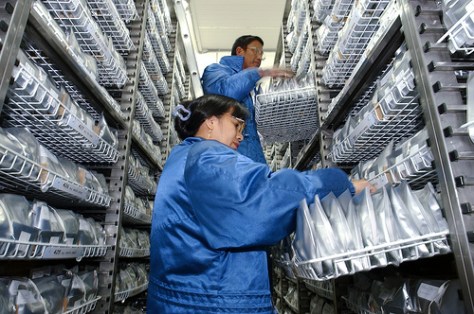
People_working_inside_the_International_Rice_Genebank

Appa Rao, S., C. Bounphanouxay, V. Phetpaseut, J.M. Schiller, V. Phannourath & M.T. Jackson, 1997. Collection and preservation of rice germplasm from southern and central regions of the Lao PDR. Lao Journal of Agriculture and Forestry 1, 43-56. PDF [13]

Appa Rao, S., C. Bounphanousay, J.M. Schiller & M.T. Jackson, 2002. Collection, classification, and conservation of cultivated and wild rices of the Lao PDR. Genetic Resources and Crop Evolution 49, 75-81. PDF [48]

Appa Rao, S., C. Bounphanousay, J.M. Schiller, A.P. Alcantara & M.T. Jackson, 2002. Naming of traditional rice varieties by farmers in the Lao PDR. Genetic Resources and Crop Evolution 49, 83-88. PDF [67]

Ellis, R.H., T.D. Hong & M.T. Jackson, 1993. Seed production environment, time of harvest, and the potential longevity of seeds of three cultivars of rice (Oryza sativa L.). Annals of Botany 72, 583-590. PDF [166]

Ellis, R.H. & M.T. Jackson, 1995. Accession regeneration in genebanks: seed production environment and the potential longevity of seed accessions. Plant Genetic Resources Newsletter 102, 26-28. PDF [13]

Ford-Lloyd, B.V. & M.T. Jackson, 1991. Biotechnology and methods of conservation of plant genetic resources. Journal of Biotechnology 17, 247-256. PDF [19]

Francisco-Ortega, F.J. & M.T. Jackson, 1993. Conservation strategies for tagasaste and escobón (Chamaecytisus proliferus (L. fil.) Link) in the Canary Islands. Boletim do Museu Municipal do Funchal, Sup. N° 2, 99-105. PDF

Kameswara Rao, N. & M.T. Jackson, 1996. Seed longevity of rice cultivars and strategies for their conservation in genebanks. Annals of Botany 77, 251-260. PDF [79]

Kameswara Rao, N. & M.T. Jackson, 1996. Seed production environment and storage longevity of japonica rices (Oryza sativa L.). Seed Science Research 6, 17-21. PDF [47]

Kameswara Rao, N. & M.T. Jackson, 1996. Effect of sowing date and harvest time on longevity of rice seeds. Seed Science Research 7, 13-20. PDF [31]

Kameswara Rao, N. & M.T. Jackson, 1997. Variation in seed longevity of rice cultivars belonging to different isozyme groups. Genetic Resources and Crop Evolution 44, 159-164. PDF [40]

Kiambi, D.K., B.V. Ford-Lloyd, M.T. Jackson, L. Guarino, N. Maxted & H.J. Newbury, 2005. Collection of wild rice (Oryza L.) in east and southern Africa in response to genetic erosion. Plant Genetic Resources Newsletter 142, 10-20. PDF [23]

Loresto, G.C., E. Guevarra & M.T. Jackson, 2000. Use of conserved rice germplasm. Plant Genetic Resources Newsletter 124, 51-56. PDF [11]

Naredo, M.E.B., A.B. Juliano, B.R. Lu, F. de Guzman & M.T. Jackson, 1998. Responses to seed dormancy-breaking treatments in rice species (Oryza L.). Seed Science and Technology 26, 675-689. PDF [98]

Germplasm evaluation & use
These five papers come from the work of some of my graduate students, looking primarily at the resistance of wild potato species to a range of pests and diseases, especially potato cyst nematode.
OLYMPUS DIGITAL CAMERA

Andrade-Aguilar, J.A. & M.T. Jackson, 1988. Attempts at interspecific hybridization between Phaseolus vulgaris L. and P. acutifolius A. Gray using embryo rescue. Plant Breeding 101, 173-180. PDF [33]

Chávez, R., M.T. Jackson, P.E. Schmiediche & J. Franco, 1988. The importance of wild potato species resistant to the potato cyst nematode, Globodera pallida, pathotypes P4A and P5A, in potato breeding. I. Resistance studies. Euphytica 37, 9-14. PDF [25]

Chávez, R., M.T. Jackson, P.E. Schmiediche & J. Franco, 1988. The importance of wild potato species resistant to the potato cyst nematode, Globodera pallida, pathotypes P4A and P5A, in potato breeding. II. The crossability of resistant species. Euphytica 37, 15-22. PDF [14]

Chávez, R., P.E. Schmiediche, M.T. Jackson & K.V. Raman, 1988. The breeding potential of wild potato species resistant to the potato tuber moth, Phthorimaea operculella (Zeller). Euphytica 39, 123-132. PDF [50]

Jackson, M.T., J.G. Hawkes, B.S. Male-Kayiwa & N.W.M. Wanyera, 1988. The importance of the Bolivian wild potato species in breeding for Globodera pallida resistance. Plant Breeding 101, 261-268. PDF [17]

Plant pathology & agronomy
Just three papers in this section. In the mid-1970s when I was based in Turrialba, I did some important work on bacterial wilt of potatoes.

Jackson, M.T., L.F. Cartín & J.A. Aguilar, 1981. El uso y manejo de fertilizantes en el cultivo de la papa (Solanum tuberosum L.) en Costa Rica. Agronomía Costarricense 5, 15-19. PDF [8]

Jackson, M.T. & L.C. González, 1981. Persistence of Pseudomonas solanacearum (Race 1) in a naturally infested soil in Costa Rica. Phytopathology 71, 690-693. PDF [38]

Jackson, M.T., L.C. González & J.A. Aguilar, 1979. Avances en el combate de la marchitez bacteriana de papa en Costa Rica. Fitopatología 14, 46-53. PDF [8]

Reviews
Hawkes, J.G. & M.T. Jackson, 1992. Taxonomic and evolutionary implications of the Endosperm Balance Number hypothesis in potatoes. Theoretical and Applied Genetics 84, 180-185. PDF [83]

Jackson, M.T., 1986. The potato. The Biologist 33, 161-167. PDF

Jackson, M.T., 1990. Vavilov’s Law of Homologous Series – is it relevant to potatoes? Biological Journal of the Linnean Society 39, 17-25. PDF [4]

Jackson, M.T., 1991. Biotechnology and the environment: a Birmingham perspective. Journal of Biotechnology 17, 195-198. PDF

Jackson, M.T., 1995. Protecting the heritage of rice biodiversity. GeoJournal 35, 267-274. PDF [92]

Jackson, M.T., 1997. Conservation of rice genetic resources: the role of the International Rice Genebank at IRRI. Plant Molecular Biology 35, 61-67. PDF [134]

Techniques
Andrade-Aguilar, J.A. & M.T. Jackson, 1988. The insertion method: a new and efficient technique for intra- and interspecific hybridization in Phaseolus beans. Annual Report of the Bean Improvement Cooperative 31, 218-219. [1]

Damania, A.B., E. Porceddu & M.T. Jackson, 1983. A rapid method for the evaluation of variation in germplasm collections of cereals using polyacrylamide gel electrophoresis. Euphytica 32, 877-883. PDF [51]

Kordan, H.A. & M.T. Jackson, 1972. A simple and rapid permanent squash technique for bulk-stained material. Journal of Microscopy 96, 121-123. PDF [1]

BOOKS
Brian Ford-Lloyd and I wrote one of the first general texts about plant genetic resources and their conservation in 1986. We were also at the forefront in the climate change debate in 1990, and published an update in 2014.

Ford-Lloyd, B.V. & M.T. Jackson, 1986. Plant Genetic Resources – An Introduction to Their Conservation and Use. Edward Arnold, London, p. 146. [212]

Jackson, M., B.V. Ford-Lloyd & M.L. Parry (eds.), 1990. Climatic Change and Plant Genetic Resources. Belhaven Press, London, p. 190. [20]

Engels, J.M.M., V.R. Rao, A.H.D. Brown & M.T. Jackson (eds.), 2002. Managing Plant Genetic Diversity. CAB International, Wallingford, p. 487.

Jackson, M., B. Ford-Lloyd & M. Parry (eds.), 2014. Plant Genetic Resources and Climate Change. CAB International, Wallingford, p. 291. [36]

BOOK CHAPTERS
There are 21 chapters in this section, and they cover a whole range of topics on germplasm conservation and use, among others.

Appa Rao, S., C. Bounphanousay, J.M. Schiller, M.T. Jackson, P. Inthapanya & K. Douangsila. 2006. The aromatic rice of Laos. In: J.M. Schiller, M.B. Chanphengxay, B. Linquist & S. Appa Rao (eds.), Rice in Laos. Los Baños (Philippines): International Rice Research Institute, pp. 159-174. PDF [1]

Appa Rao, S., J.M. Schiller, C. Bounphanousay, A.P. Alcantara & M.T. Jackson. 2006. Naming of traditional rice varieties by the farmers of Laos. In: J.M. Schiller, M.B. Chanphengxay, B. Linquist & S. Appa Rao (eds.), Rice in Laos. Los Baños (Philippines): International Rice Research Institute, pp. 141-158. PDF [6]

Appa Rao, S., J.M. Schiller, C. Bounphanousay, P. Inthapanya & M.T. Jackson. 2006. The colored pericarp (black) rice of Laos. In: J.M. Schiller, M.B. Chanphengxay, B. Linquist & S. Appa Rao (eds.), Rice in Laos. Los Baños (Philippines): International Rice Research Institute, pp. 175-186. PDF [17]

Appa Rao, S., J.M. Schiller, C. Bounphanousay & M.T. Jackson. 2006. Diversity within the traditional rice varieties of Laos. In: J.M. Schiller, M.B. Chanphengxay, B. Linquist & S. Appa Rao (eds.), Rice in Laos. Los Baños (Philippines): International Rice Research Institute, pp. 123-140. PDF [23]

Appa Rao, S., J.M. Schiller, C. Bounphanousay & M.T. Jackson, 2006. Development of traditional rice varieties and on-farm management of varietal diversity in Laos. In: J.M. Schiller, M.B. Chanphengxay, B. Linquist & S. Appa Rao (eds.), Rice in Laos. Los Baños (Philippines): International Rice Research Institute, pp. 187-196. PDF [3]

Bellon, M.R., J.L. Pham & M.T. Jackson, 1997. Genetic conservation: a role for rice farmers. In: N. Maxted, B.V. Ford-Lloyd & J.G. Hawkes (eds.), Plant Genetic Conservation: the In Situ Approach. Chapman & Hall, London, pp. 263-289. PDF [210]

Ford-Lloyd, B., J.M.M. Engels & M. Jackson, 2014. Genetic resources and conservation challenges under the threat of climate change. In: M. Jackson, B. Ford-Lloyd & M. Parry (eds.), Plant Genetic Resources and Climate Change. CAB International, Wallingford, pp. 16-37. [16]

Ford-Lloyd, B.V., M.T. Jackson & H.J. Newbury, 1997. Molecular markers and the management of genetic resources in seed genebanks: a case study of rice. In: J.A. Callow, B.V. Ford-Lloyd & H.J. Newbury (eds.), Biotechnology and Plant Genetic Resources: Conservation and Use. CAB International, Wallingford, pp. 103-118. PDF [50]

Ford-Lloyd, B.V., M.T. Jackson & M.L. Parry, 1990. Can genetic resources cope with global warming? In: M. Jackson, B.V. Ford-Lloyd & M.L. Parry (eds.), Climatic Change and Plant Genetic Resources. Belhaven Press, London, pp. 179-182. PDF [1]

Jackson, M.T., 1983. Potatoes. In: D.H. Janzen (ed.), Costa Rican Natural History. University of Chicago Press, pp. 103-105. PDF

Jackson, M.T., 1985. Plant genetic resources at Birmingham—sixteen years of training. In: K.L. Mehra & S. Sastrapradja (eds.), Proceedings of the International Symposium on South East Asian Plant Genetic Resources, Jakarta, Indonesia, August 20-24, 1985, pp. 35-38.

Jackson, M.T., 1987. Breeding strategies for true potato seed. In: G.J. Jellis & D.E. Richardson (eds.), The Production of New Potato Varieties: Technological Advances. Cambridge University Press, pp. 248-261. PDF [8]

Jackson, M.T., 1992. UK consumption of the potato and its agricultural production. In: Bioresources – Some UK Perspectives. Institute of Biology, London, pp. 34-37.

Jackson, M.T., 1994. Ex situ conservation of plant genetic resources, with special reference to rice. In: G. Prain & C. Bagalanon (eds.), Local Knowledge, Global Science and Plant Genetic Resources: towards a partnership. Proceedings of the International Workshop on Genetic Resources, UPWARD, Los Baños, Philippines, pp. 11-22.

Jackson, M.T., 1999. Managing genetic resources and biotechnology at IRRI’s rice genebank. In: J.I. Cohen (ed.), Managing Agricultural Biotechnology – Addressing Research Program and Policy Implications. International Service for National Agricultural Research (ISNAR), The Hague, Netherlands and CAB International, UK, pp. 102-109. PDF [4]

Jackson, M.T. & B.V. Ford-Lloyd, 1990. Plant genetic resources – a perspective. In: M. Jackson, B.V. Ford-Lloyd & M.L. Parry (eds.), Climatic Change and Plant Genetic Resources. Belhaven Press, London, pp. 1-17. PDF [23]

Jackson, M.T., G.C. Loresto, S. Appa Rao, M. Jones, E. Guimaraes & N.Q. Ng, 1997. Rice. In: D. Fuccillo, L. Sears & P. Stapleton (eds.), Biodiversity in Trust: Conservation and Use of Plant Genetic Resources in CGIAR Centres. Cambridge University Press, pp. 273-291. PDF [18]

Koo, B., P.G. Pardey & M.T. Jackson, 2004. IRRI Genebank. In: B. Koo, P.G. Pardey, B.D. Wright and others, Saving Seeds – The Economics of Conserving Crop Genetic Resources Ex Situ in the Future Harvest Centres of the CGIAR. CABI Publishing, Wallingford, pp. 89-103. PDF [1]

Lu, B.R., M.E.B. Naredo, A.B. Juliano & M.T. Jackson, 2000. Preliminary studies on the taxonomy and biosystematics of the AA genome Oryza species (Poaceae). In: S.W.L. Jacobs & J. Everett (eds.), Grasses: Systematics and Evolution. CSIRO: Melbourne, pp. 51-58. PDF [41]

Pham, J.L., S.R. Morin, L.S. Sebastian, G.A. Abrigo, M.A. Calibo, S.M. Quilloy, L. Hipolito & M.T. Jackson, 2002. Rice, farmers and genebanks: a case study in the Cagayan Valley, Philippines. In: J.M.M. Engels, V.R. Rao, A.H.D. Brown & M.T. Jackson (eds.), Managing Plant Genetic Diversity. CAB International, Wallingford, pp. 149-160. PDF [10]

Vaughan, D.A. & M.T. Jackson, 1995. The core as a guide to the whole collection. In: T. Hodgkin, A.H.D. Brown, Th.J.L. van Hintum & E.A.V. Morales (eds.), Core Collections of Plant Genetic Resources. John Wiley & Sons, Chichester, pp. 229-239. PDF [17]

MISCELLANEOUS PUBLICATIONS
There are 34 publications here, so-called ‘grey literature’ that were not reviewed before publication.

Aggarwal, R.K., D.S. Brar, G.S. Khush & M.T. Jackson, 1996. Oryza schlechteri Pilger has a distinct genome based on molecular analysis. Rice Genetics Newsletter 13, 58-59. [7]

Appa Rao, S., C. Bounphanousay, K. Kanyavong, V. Phetpaseuth, B. Sengthong, J.M. Schiller, S. Thirasack & M.T. Jackson, 1997. Collection and classification of rice germplasm from the Lao PDR. Part 2. Northern, Southern and Central Regions. Internal report of the National Agricultural Research Center, Department of Agriculture and Extension, Ministry of Agriculture and Forestry, Vientiane, Lao PDR, and Genetic Resources Center, International Rice Research Institute (IRRI), Los Baños, Philippines.

Appa Rao, S., C. Bounphanousay, K. Kanyavong, B. Sengthong, J.M. Schiller & M.T. Jackson, 1999. Collection and classification of Lao rice germplasm, Part 4. Collection Period: September to December 1998. Internal report of the National Agricultural Research Center, National Agriculture and Forestry Research Institute, Ministry of Agriculture and Forestry, Vientiane, Lao PDR, and Genetic Resources Center, International Rice Research Institute (IRRI), Los Baños, Philippines.

Appa Rao, S., C. Bounphanousay, V. Phetpaseuth, K. Kanyavong, B. Sengthong, J.M. Schiller & M.T. Jackson, 1998. Collection and Classification of Lao Rice Germplasm Part 3. Collecting Period – October 1997 to February 1998. Internal report of the National Agricultural Research Center, National Agriculture and Forestry Research Institute, Ministry of Agriculture and Forestry, Vientiane, Lao PDR, and Genetic Resources Center, International Rice Research Institute (IRRI), Los Baños, Philippines.

Appa Rao, S., C. Bounphanousay, V. Phetpaseuth, K. Kanyavong, B. Sengthong, J. M. Schiller, V. Phannourath & M.T. Jackson, 1996. Collection and classification of rice germplasm from the Lao PDR. Part 1. Southern and Central Regions – 1995. Internal report of the National Agricultural Research Center, Dept. of Agriculture and Extension, Ministry of Agriculture and Forestry, Vientiane, Lao PDR, and Genetic Resources Center, International Rice Research Institute (IRRI), Los Baños, Philippines.

Appa Rao, S,. V. Phetpaseut, C. Bounphanousay & M.T. Jackson, 1997. Spontaneous interspecific hybrids in Oryza in Lao PDR. International Rice Research Notes 22, 4-5. [1]

Arnold, M.H., D. Astley, E.A. Bell, J.K.A. Bleasdale, A.H. Bunting, J. Burley, J.A. Callow, J.P. Cooper, P.R. Day, R.H. Ellis, B.V. Ford-Lloyd, R.J. Giles, J.G. Hawkes, J.D. Hayes, G.G. Henshaw, J. Heslop-Harrison, V.H. Heywood, N.L. Innes, M.T. Jackson, G. Jenkins, M.J. Lawrence, R.N. Lester, P. Matthews, P.M. Mumford, E.H. Roberts, N.W. Simmonds, J. Smartt, R.D. Smith, B. Tyler, R. Watkins, T.C. Whitmore & L.A. Withers, 1986. Plant gene conservation. Nature 319, 615. [10]

Cohen, M.B., M.T. Jackson, B.R. Lu, S.R. Morin, A.M. Mortimer, J.L. Pham & L.J. Wade, 1999. Predicting the environmental impact of transgene outcrossing to wild and weedy rices in Asia. In: 1999 PCPC Symposium Proceedings No. 72: Gene flow and agriculture: relevance for transgenic crops. Proceedings of a Symposium held at the University of Keele, Staffordshire, U.K., April 12-14, 1999. pp. 151-157. [15]

Damania, A.B. & M.T. Jackson, 1986. An application of factor analysis to morphological data of wheat and barley landraces from the Bheri river valley, Nepal. Rachis 5, 25-30. [24]

Dao The Tuan, Nguyen Dang Khoi, Luu Ngoc Trinh, Nguyen Phung Ha, Nguyen Vu Trong, D.A. Vaughan & M.T. Jackson, 1995. INSA-IRRI collaboration on wild rice collection in Vietnam. In: G.L. Denning & Vo-Tong Xuan (eds.), Vietnam and IRRI: A partnership in rice research. International Rice Research Institute, Los Baños, Philippines, and Ministry of Agriculture and Food Industry, Hanoi, Vietnam, pp. 85-88.

Ford-Lloyd, B.V. & M.T. Jackson, 1984. Plant gene banks at risk. Nature 308, 683. [1]

Ford-Lloyd, B.V. & M.T. Jackson, 1990. Genetic resources refresher course embraces biotech. Biotechnology News No. 19, 7. University of Birmingham Biotechnology Management Group.

Jackson, M.T. (ed.), 1980. Investigación Agroeconómica para Optimizar la Productividad de la Papa. International Potato Center, Lima, Peru. Proceedings of the Regional Workshop held at Turrialba, Costa Rica, August 19-25, 1979.

Jackson, M.T., 1988. Biotechnology and the environment. Biotechnology News No. 15, 2. University of Birmingham Biotechnology Management Group.

Jackson, M.T., 1991. Global warming: the case for European cooperation for germplasm conservation and use. In: Th.J.L. van Hintum, L. Frese & P.M. Perret (eds.), Crop Networks. Searching for New Concepts for Collaborative Genetic Resources Management. International Crop Network Series No. 4. International Board for Plant Genetic Resources, Rome, Italy. Papers of the EUCARPIA/IBPGR symposium held in Wageningen, the Netherlands, December 3-6, 1990., pp. 125-131. PDF

Jackson, M.T., 1994. Preservation of rice strains. Nature 371, 470. [23]

Jackson, M.T. & J.A. Aguilar, 1979. Progresos en la adaptación de la papa a zonas cálidas. Memoria XXV Reunión PCCMCA, Honduras, Marzo 1979, Vol. IV, H16/1-10.

Jackson, M.T. & B.V. Ford-Lloyd, 1989. University of Birmingham holds international workshop on climate change and plant genetic resources. Diversity 5, 22-23.

Jackson, M.T. & B.V. Ford-Lloyd, 1990. University of Birmingham celebrates 20th anniversary of germplasm training course. Diversity 6, 11-12.

Jackson, M.T. & R.D. Huggan, 1993. Sharing the diversity of rice to feed the world. Diversity 9, 22-25. [45]

Jackson, M.T. & R.D. Huggan, 1996. Pflanzenvielfalt als Grundlage der Welternährung. Bulletin—das magazin der Schweizerische Kreditanstalt SKA. March/April 1996, 9-10.

Jackson, M.T., E.L. Javier & C.G. McLaren, 2000. Rice genetic resources for food security: four decades of sharing and use. In: W.G. Padolina (ed.), Plant Variety Protection for Rice in Developing Countries. Limited proceedings of the workshop on the Impact of Sui Generis Approaches to Plant Variety Protection in Developing Countries. February 16-18, 2000, IRRI, Los Baños, Philippines. International Rice Research Institute, Makati City, Philippines. pp. 3-8.

Jackson, M.T. & R.J.L. Lettington, 2003. Conservation and use of rice germplasm: an evolving paradigm under the International Treaty on Plant Genetic Resources for Food and Agriculture. In: Sustainable rice production for food security. Proceedings of the 20th Session of the International Rice Commission. Bangkok, Thailand, 23-26 July 2002.
http://www.fao.org/DOCREP/006/Y4751E/y4751e07.htm#bm07. Invited paper. PDF [24]

Jackson, M.T., G.C. Loresto & A.P. Alcantara, 1993. The International Rice Germplasm Center at IRRI. In: The Egyptian Society of Plant Breeding (1993). Crop Genetic Resources in Egypt: Present Status and Future Prospects. Papers of an ESPB Workshop, Giza, Egypt, March 2-3, 1992.

Jackson, M.T., J.L. Pham, H.J. Newbury, B.V. Ford-Lloyd & P.S. Virk, 1999. A core collection for rice—needs, opportunities and constraints. In: R.C. Johnson & T. Hodgkin (eds.), Core collections for today and tomorrow. International Plant Genetic Resources Institute, Rome, Italy, pp. 18-27. [25]

Jackson, M.T., L. Taylor & A.J. Thomson, 1985. Inbreeding and true potato seed production. In: Innovative Methods for Propagating Potatoes. Report of the XXVIII Planning Conference held at Lima, Peru, December 10-14, 1984, pp. 169-179. PDF [10]

Loresto, G.C. & M.T. Jackson, 1992. Rice germplasm conservation: a program of international collaboration. In: F. Cuevas-Pérez (ed.), Rice in Latin America: Improvement, Management, and Marketing. Proceedings of the VIII international rice conference for Latin America and the Caribbean, held in Villahermosa, Tabasco, Mexico, November 10-16, 1991. Centro Internacional de Agricultura Tropical, Cali, Colombia, pp. 61-65.

Loresto, G.C. & M.T. Jackson, 1996. South Asia partnerships forged to conserve rice genetic resources. Diversity 12, 60-61. [3]

Morin, S.R., J.L. Pham, M. Calibo, G. Abrigo, D. Erasga, M. Garcia, & M.T. Jackson, 1998. On farm conservation research: assessing rice diversity and indigenous technical knowledge. Invited paper presented at the Workshop on Participatory Plant Breeding, held in New Delhi, March 23-24, 1998.

Morin, S.R., J.L. Pham, M. Calibo, M. Garcia & M.T. Jackson, 1998. Catastrophes and genetic diversity: creating a model of interaction between genebanks and farmers. Paper presented at the FAO meeting on the Global Plan of Action on Plant Genetic Resources for Food and Agriculture for the Asia-Pacific Region, held in Manila, Philippines, December 15-18, 1998.

Newbury, H.J., B.V. Ford-Lloyd, P.S. Virk, M.T. Jackson, M.D. Gale & J.-H. Zhu, 1996. Molecular markers and their use in organising plant germplasm collections. In: E.M. Young (ed.), Plant Sciences Research Programme Conference on Semi-Arid Systems. Proceedings of an ODA Plant Sciences Research Programme Conference , Manchester, UK, September 5-6, 1995, pp. 24-25.

Pham, J.L., M.R. Bellon & M.T. Jackson, 1996. A research program for on-farm conservation of rice genetic resources. International Rice Research Notes 21, 10-11. [8]

Pham, J.L., M.R. Bellon & M.T. Jackson, 1996. What is on-farm conservation research on rice genetic resources? In: J.T. Williams, C.H. Lamoureux & S.D. Sastrapradja (eds.), South East Asian Plant Genetic Resources. Proceedings of the Third South East Asian Regional Symposium on Genetic Resources, Serpong, Indonesia, August 22-24, 1995, pp. 54-65.

Rao, S.A, M.T. Jackson, V Phetpaseuth & C. Bounphanousay, 1997. Spontaneous interspecific hybrids in Oryza in the Lao PDR. International Rice Research Notes 22, 4-5. [5]

Virk, P.S., B.V. Ford-Lloyd, M.T. Jackson, H.S. Pooni, T.P. Clemeno & H.J. Newbury, 1996. Marker-assisted prediction of agronomic traits using diverse rice germplasm. In: International Rice Research Institute, Rice Genetics III. Proceedings of the Third International Rice Genetics Symposium, Manila, Philippines, October 16-20, 1995, pp. 307-316. [25]

CONFERENCE PAPERS AND POSTERS
Over the years I had the good fortune to attend scientific conferences around the world—a great opportunity to hear about the latest developments in one’s field of research, and also to network. For some conferences I contributed a paper or poster; at others, I was an invited speaker.

15478148209_df32c0ed57_z

Alcantara, A.P., E.B. Guevarra & M.T. Jackson, 1999. The International Rice Genebank Collection Information System. Poster presented at the annual meeting of the Crop Science Society of America, Salt Lake City, October 31-November 4, 1999.

Appa Rao, S., C. Bounphanouxay, J.M. Schiller & M.T. Jackson, 1999. Collecting Rice Genetic Resources in the Lao PDR. Poster presented at the annual meeting of the Crop Science Society of America, Salt Lake City, October 31-November 4, 1999.

Cabanilla, V.R., M.T. Jackson & T.R. Hargrove, 1993. Tracing the ancestry of rice varieties. Poster presented at the 17th International Congress of Genetics, Birmingham, U.K., August 15-21, 1993. Volume of abstracts, 112-113.

Clugston, D.B. & M.T. Jackson, 1987. The application of embryo rescue techniques for the utilization of wild species in potato breeding. Paper presented at the Plant Breeding Section meeting of the Association of Applied Biologists, held at Churchill College, University of Cambridge, April 14-15, 1987.

Coleman, M., M. Jackson, S. Juned, B. Ford-Lloyd, J. Vessey & W. Powell, 1990. Interclonal genetic variability for in vitro response in Solanum tuberosum cv. Record. Paper presented at the 11th Triennial Conference of the European Association for Potato Research, Edinburgh, July 8-13, 1990.

Francisco-Ortega, F.J., M.T. Jackson, A. Santos-Guerra & M. Fernandez-Galvan, 1990. Ecogeographical variation in the Chamaecytisus proliferus complex in the Canary Islands. Paper presented at the Linnean Society Conference on Evolution and Conservation in the North Atlantic Islands, held at the Manchester Polytechnic, September 3-6, 1990.

Gubb, I.R., J.A. Callow, R.M. Faulks & M.T. Jackson, 1989. The biochemical basis for the lack of enzymic browning in the wild potato species Solanum hjertingii Hawkes. Am. Potato J. 66, 522 (abst.). Paper presented at the 73rd Annual Meeting of the Potato Association of America, Corvalis, Oregon, July 30 – August 3, 1989.

Hunt, E.D., M.T. Jackson, M. Oliva & A. Alcantara, 1993. Employing geographical information systems (GIS) for conserving and using rice germplasm. Poster presented at the 17th International Congress of Genetics, Birmingham, U.K., August 15-21, 1993. Volume of abstracts, 117.

Jackson, M.T., 1984. Variation patterns in Lathyrus sativus. Paper presented at the Second International Workshop on the Vicieae, held at the University of Southampton, February 15-16, 1984.

Jackson, M.T., 1993. Biotechnology and the conservation and use of plant genetic resources. Invited paper presented at the Workshop on Biotechnology in Developing Countries, held at the 17th International Congress of Genetics, Birmingham, U.K., August 15-21, 1993.

Jackson, M.T., 1994. Care for and use of biodiversity in rice. Invited paper presented at the Symposium on Food Security in Asia, held at the Royal Society, London, November 1, 1994.

Jackson, M.T., 1995. The international crop germplasm collections: seeds in the bank! Invited paper presented at the meeting Economic and Policy Research for Genetic Resources Conservation and Use: a Technical Consultation, held at IFPRI, Washington, D.C., June 21-22, 1995

Jackson, M.T., 1996. Intellectual property rights—the approach of the International Rice Research Institute. Invited paper presented at the Satellite Symposium on Biotechnology and Biodiversity: Scientific and Ethical Issues, held in New Delhi, India, November 15-16, 1996.

Jackson, M.T., 1999. Managing the world’s largest collection of rice genetic resources. In: J.N. Rutger, J.F. Robinson & R.H. Dilday (eds.), Proceedings of the International Symposium on Rice Germplasm Evaluation and Enhancement, held at the Dale Bumpers National Rice Research Center, Stuttgart, Arkansas, USA, August 30-September 2, 1998. Arkansas Agricultural Experiment Station Special Report 195. PDF [13]

Jackson, M.T., 1998. Intellectual property rights—the approach of the International Rice Research Institute. Invited paper at the Seminar-Workshop on Plant Patents in Asia Pacific, organized by the Asia & Pacific Seed Association (APSA), held in Manila, Philippines, September 21-22, 1998.

Jackson, M.T., 1998. Recent developments in IPR that have implications for the CGIAR. Invited paper presented at the ICLARM Science Day, International Center for Living Aquatic Resources Management, Manila, Philippines, September 30, 1998.

Jackson, M.T., 1998. The genetics of genetic conservation. Invited paper presented at the Fifth National Genetics Symposium, held at PhilRice, Nueva Ecija, Philippines, December 10-12, 1998.

Jackson, M.T., 1998. The role of the CGIAR’s System-wide Genetic Resources Programme (SGRP) in implementing the GPA. Invited paper presented at the Regional Meeting for Asia and the Pacific to facilitate and promote the implementation of the Global Plan of Action for the Conservation and Sustainable Use of Plant Genetic Resources for Food and Agriculture, held in Manila, Philippines, December 15-18, 1998.

Jackson, M.T., 2001. Collecting plant genetic resources: partnership or biopiracy. Invited paper presented at the annual meeting of the Crop Science Society of America, Charlotte, North Carolina, October 21-24, 2001.

Jackson, M.T., 2004. Achieving the UN Millennium Development Goals begins with rice research. Invited paper presented to the Cross Party International Development Group of the Scottish Parliament, Edinburgh, Scotland, June 2, 2004.

Jackson, M.T., 2001. Rice: diversity and livelihood for farmers in Asia. Invited paper presented in the symposium Cultural Heritage and Biodiversity, at the annual meeting of the Crop Science Society of America, Charlotte, North Carolina, October 21-24, 2001.

Jackson, M.T., A. Alcantara, E. Guevarra, M. Oliva, M. van den Berg, S. Erguiza, R. Gallego & M. Estor, 1995. Documentation and data management for rice genetic resources at IRRI. Paper presented at the Planning Meeting for the System-wide Information Network for Genetic Resources (SINGER), held at CIMMYT, Mexico, October 2-6, 1995.

Jackson, M.T. & L.C. González, 1979. Persistence of Pseudomonas solanacearum in an inceptisol in  Costa Rica. In: CIP, Developments in the Control of Bacterial Diseases of Potato. Report of a Planning Conference held at CIP, LIma, Peru, 12-15 June 1979. pp. 66-71. [4]

Jackson, M.T. & L.C. González, 1979. Persistence of Pseudomonas solanacearum in an inceptisol in Costa Rica. Am. Potato J. 56, 467 (abst.). Paper presented at the 63rd Annual meeting of the Potato Association of America, Vancouver, British Columbia, July 22-27, 1979.

Jackson, M.T., F.C. de Guzman, R.A. Reaño, M.S.R. Almazan, A.P. Alcantara & E.B. Guevarra, 1999. Managing the world’s largest collection of rice genetic resources. Poster presented at the annual meeting of the Crop Science Society of America, Salt Lake City, October 31-November 4, 1999.

Jackson, M.T., E.L. Javier & C.G. McLaren, 1999. Rice genetic resources for food security. Invited paper at the IRRI Symposium, held at the annual meeting of the Crop Science Society of America, Salt Lake City, October 31-November 4, 1999.

Jackson, M.T. & G.C. Loresto, 1996. The role of the International Rice Research Institute (IRRI) in supporting national and regional programs. Invited paper presented at the Asia-Pacific Consultation Meeting on Plant Genetic Resources, held in New Delhi, India, November 27-29, 1996.

Jackson, M.T., G.C. Loresto & F. de Guzman, 1996. Partnership for genetic conservation and use: the International Rice Genebank at the International Rice Research Institute (IRRI). Poster presented at the Beltsville Symposium XXI on Global Genetic Resources—Access, Ownership, and Intellectual Property Rights, held in Beltsville, Maryland, May 19-22, 1996.

Jackson, M.T., B.R. Lu, G.C. Loresto & F. de Guzman, 1995. The conservation of rice genetic resources at the International Rice Research Institute. Paper presented at the International Symposium on Research and Utilization of Crop Germplasm Resources held in Beijing, People’s Republic of China, June 1-3, 1995.

Jackson, M.T., B.R. Lu, M.S. Almazan, M.E. Naredo & A.B. Juliano, 2000. The wild species of rice: conservation and value for rice improvement. Poster presented at the annual meeting of the Crop Science Society of America, Minneapolis, November 5-9, 2000.

Jackson, M.T., P.R. Rowe & J.G. Hawkes, 1976. The enigma of triploid potatoes: a reappraisal. Am. Potato J. 53, 395 (abst.). Paper presented at the 60th Annual meeting of the Potato Association of America, University of Wisconsin—Stevens Point, July 26-29, 1976. [4]

Kameswara Rao, N. & M.T. Jackson, 1995. Seed production strategies for conservation of rice genetic resources. Poster presented at the Fifth International Workshop on Seeds, University of Reading, September 11-15, 1995.

Lu, B.R., A. Juliano, E. Naredo & M.T. Jackson, 1995. The conservation and study of wild Oryza species at the International Rice Research Institute. Paper presented at the International Symposium on Research and Utilization of Crop Germplasm Resources held in Beijing, People’s Republic of China, June 1-3, 1995.

Lu, B.R., M.E. Naredo, A.B. Juliano & M.T. Jackson, 1998. Biosystematic studies of the AA genome Oryza species (Poaceae). Poster presented at the Second International Conference on the Comparative Biology of the Monocotyledons and Third International Symposium on Grass Systematics and Evolution, Sydney, Australia, September 27-October 2, 1998.

Lu, B.R., M.E.B. Naredo, A.B. Juliano & M.T. Jackson, 2008. Genomic relationships of the AA genome Oryza species. In: G.S. Khush, D.S. Brar & B. Hardy (eds), Advances in Rice Genetics, Proceedings of the Fourth International Rice Genetics Symposium, Los Baños, Laguna, Philippines, 22-27 October 2000. pp. 118-121. [2]

Naredo, M.E., A.B. Juliano, M.S. Almazan, B.R. Lu & M.T. Jackson, 2000. Morphological and molecular diversity of AA genome species of rice. Poster presented at the annual meeting of the Crop Science Society of America, Minneapolis, November 5-9, 2000.

Newbury, H.J., P. Virk, M.T. Jackson, G. Bryan, M. Gale & B.V. Ford-Lloyd, 1993. Molecular markers and the analysis of diversity in rice. Poster presented at the 17th International Congress of Genetics, Birmingham, U.K., August 15-21, 1993. Volume of abstracts, 121-122.

Newton, E.L., R.A.C. Jones & M.T. Jackson, 1986. The serological detection of viruses of quarantine significance transmitted through true potato seed. Paper presented at the Virology Section meeting of the Association of Applied Biologists, held at the University of Warwick, September 29 – October 1, 1986.

Parsons, B.J., B.V. Ford-Lloyd, H.J. Newbury & M.T. Jackson, 1994. Use of PCR-based markers to assess genetic diversity in rice landraces from Bhutan and Bangladesh. Poster presented at the Annual Meeting of the British Ecological Society, held at The University of Birmingham, December 1994.

Pham, J.L., M.R. Bellon & M.T. Jackson, 1995. A research program on on-farm conservation of rice genetic resources. Poster presented at the Third International Rice Genetics Symposium, Manila, Philippines, October 16-20, 1995.

Pham J.L., S.R. Morin & M.T. Jackson, 2000. Linking genebanks and participatory conservation and management. Invited paper presented at the International Symposium on The Scientific Basis of Participatory Plant Breeding and Conservation of Genetic Resources, held at Oaxtepec, Morelos, Mexico, October 9-12, 2000.

Reaño, R., M.T. Jackson, F. de Guzman, S. Almazan & G.C. Loresto, 1995. The multiplication and regeneration of rice germplasm at the International Rice Genebank, IRRI. Paper presented at the Discussion Meeting on Regeneration Standards, held at ICRISAT, Hyderabad, India, December 4-7, 1995, sponsored by IPGRI, ICRISAT and FAO. [1]

Virk, P., B.V. Ford-Lloyd, M.T. Jackson & H.J. Newbury, 1994. The use of RAPD analysis for assessing diversity within rice germplasm. Paper presented at the Annual Meeting of the British Ecological Society, held at The University of Birmingham, December 1994.

Virk, P.S., H.J. Newbury, Y. Shen, M.T. Jackson & B.V. Ford-Lloyd, 1996. Prediction of agronomic traits in diverse germplasm of rice and beet using molecular markers. Paper presented at the Fourth International Plant Genome Conference, held in San Diego, California, January 14-18, 1996.

Watanabe, K., C. Arbizu, P. Schmiediche & M.T. Jackson, 1990. Germplasm enhancement methods for disomic tetraploid species of Solanum with special reference to S. acaule. Am. Potato J. 67, 586 (abst.). Paper presented at the 74th Annual meeting of the Potato Association of America, Quebec City, Canada, July 22-26, 1990. [4]

TECHNICAL PUBLICATIONS
Bryan, J.E., M.T. Jackson & N. Melendez, 1981. Rapid Multiplication Techniques for Potatoes. International Potato Center, Lima, Peru. PDF

Bryan, J.E., M.T. Jackson, M. Quevedo & N. Melendez, 1981. Single-Node Cuttings, a Rapid Multiplication Technique for Potatoes. CIP Slide Training Series, Guide Book I/2. International Potato Center, Lima, Peru. [25]

Bryan, J.E., N. Melendez & M.T. Jackson, 1981. Sprout Cuttings, a Rapid Multiplication Technique for Potatoes. CIP Slide Training Series, Guide Book I/1. International Potato Center, Lima, Peru. [2]

Bryan, J.E., N. Melendez & M.T. Jackson, 1981. Stem Cuttings, a Rapid Multiplication Technique for Potatoes. CIP Slide Training Series, Guide Book I/3. International Potato Center, Lima, Peru. [63]

Catty, J.P. & M.T. Jackson, 1989. Starch Gel Electrophoresis of Isozymes – A Laboratory Manual, Second edition. School of Biological Sciences, University of Birmingham.

Quevedo, M., J.E. Bryan, M.T. Jackson & N. Melendez, 1981. Leaf-Bud Cuttings, a Rapid Multiplication Technique for Potatoes. CIP Slide Training Series – Guide Book I/4. International Potato Center, Lima, Peru. [2]

BOOK REVIEWS
Jackson, M.T., 1983. Outlook on Agriculture 12, 205. Dictionary of Cultivated Plants and Their Regions of Diversity, by A.C. Zeven & J.M.J. de Wet, 1982. Pudoc, Wageningen.

Jackson, M.T., 1985. Outlook on Agriculture 14, 50. 1983 Rice Germplasm Conservation Workshop. IRRI and IBPGR, 1983. Manila.

Jackson, M.T., 1986. Journal of Applied Ecology 23, 726-727. The Value of Conserving Genetic Resources, by Margery L. Oldfield, 1984. US Dept. of the Interior, Washington, DC.

Jackson, M.T., 1989. Phytochemistry 28, 1783. World Crops: Cool Season Food Legumes, edit. by R.J. Summerfield, 1988. Martinus Nijhoff Publ.

Jackson, M.T., 1989. Plant, Cell & Environment 12, 589-590. Genetic Resources of Phaseolus Beans, edit. by P. Gepts, 1988. Martinus Nijhoff Publ.

Jackson, M.T., 1989. Heredity 64, 430-431. Genetic Resources of Phaseolus Beans, edit. by P. Gepts, 1988. Martinus Nijhoff Publ.

Jackson, M.T., 1989. Botanical Journal of the Linnean Society 102, 88-91. Seeds and Sovereignty, edit. by J.R. Kloppenburg, 1988. Duke University Press.

Jackson, M.T., 1989. Botanical Journal of the Linnean Society 100, 285-286. Conserving the Wild Relatives of Crops, by E. Hoyt, 1988. IBPGR/IUCN/WWF.

Jackson, M.T., 1989. Annals of Botany 64, 606-608. The Potatoes of Bolivia – Their Breeding Value and Evolutionary Relationships, by J.G. Hawkes & J.P. Hjerting, Oxford Scientific Publications.

Jackson, M.T., 1991. Botanical Journal of the Linnean Society 107, 102-104. Grain Legumes – Evolution and Genetic Resources, by J. Smartt, 1990, Cambridge University Press.

Jackson, M.T., 1991. Botanical Journal of the Linnean Society 107, 104-107. Plant Population Genetics, Breeding, and Genetic Resources, edit. by A.H.D. Brown, M.T. Clegg, A.L. Kahler & B.S. Weir, 1990, Sinauer Associates Inc.

Jackson, M.T., 1991. Field Crops Research 26, 77-79. The Use of Plant Genetic Resources, ed. by A.H.D. Brown, O.H. Frankel, D.R. Marshall & J.T. Williams, 1989, Cambridge University Press.

Jackson, M.T., 1991. Annals of Botany 67, 367-368. Isozymes in Plant Biology, edit. by D.E. Soltis & P.S. Soltis, 1990, Chapman and Hall.

Jackson, M.T., 1991. The Biologist 38, 154-155. The Molecular and Cellular Biology of the Potato, edit. by M.E. Vayda & W.D. Park, 1990, C.A.B. International.

Jackson, M.T., 1992. Diversity 8, 36-37. Biotechnology and the Future of World Agriculture, by H. Hobbelink, 1991, Zed Books Ltd.

Jackson, M.T., 1997. Experimental Agriculture 33, 386. Biodiversity and Agricultural Intensification: Partners for Development and Conservation, edit. by J.P. Srivastava, N.J.H. Smith & D.A. Forno, 1996. Environmentally Sustainable Development Studies and Monographs Series No. 11, The World Bank, Washington, D.C.

Jackson, M.T., 2001. Annals of Botany 88, 332-333. Broadening the genetic base of crop production, edit. By Cooper H.D., C. Spillane & T. Hodgkin, 2001. Wallingford: CAB International with FAO and IPGRI, Rome.

CONSULTANCY REPORT
CGIAR-IEA, 2017. Evaluation of CGIAR research support program for Managing and Sustaining Crop Collections. Rome, Italy: Independent Evaluation Arrangement (IEA) of CGIAR. Authored by M.T. Jackson, M.J. Borja Tome & B.V. Ford-Lloyd. [2]

OBITUARIES

Jackson, M.T., 2011. John Gregory Hawkes (1915–2007). Oxford Dictionary of National Biography, Oxford University Press. doi:10.1093/ref:odnb/99090. PDF

Jackson, M.T., 2013. Dr. Joseph Smartt (1931-2013). Genetic Resources and Crop Evolution 60, 1921-1922. PDF

Jackson, M.T. & N. Murthi Anishetty, 2015. John Trevor Williams (1938 – 2015). Indian Journal of Plant Genetic Resources 28, 161-162. PDF

Jackson, M.T., 2015. J Trevor Williams (1938–2015): IBPGR director and genetic conservation pioneer. Genetic Resources and Crop Evolution 62, 809–813. PDF

Jackson, M.T., 2023. Sheehy, John Edward (1942-2019). Oxford Dictionary of National Biography, Oxford University Press. https://doi.org/10.1093/odnb/9780198614128.013.90000380930. PDF.

Jackson, M.T., 2024. Williams, (John) Trevor (1938-2015). Oxford Dictionary of National Biography, Oxford University Press. https://doi.org/10.1093/odnb/9780198614128.013.90000382511. PDF.

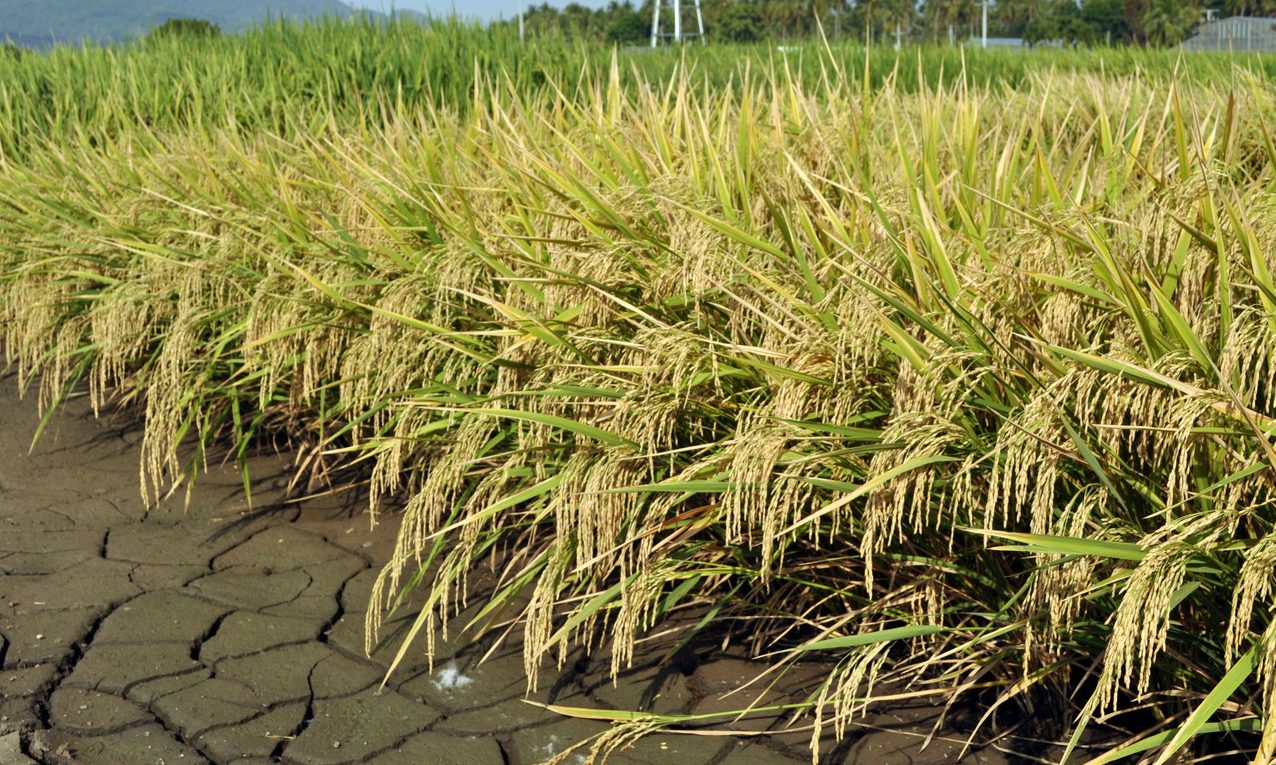
What’s in a name? I’m on a germplasm ID crusade!

What’s in a name? Well, not a lot it seems when it comes to crop germplasm. It’s a particular ‘bee in the bonnet’ I’ve had for many years.

We use names for everything. In the right context, a name is a ‘shorthand’ as it were for anything we can describe. In the natural world, we use a strict system of nomenclature (in Latin of all languages) – seemingly, to the non-specialist, continually and bewilderingly revised. Most plants and animals also have common names, in the vernacular, for everyday use. But while scientific nomenclature follows strict rules, the same can’t be said for common names.

Stretching an analogy
However, let me start by presenting you with an analogy. Take these two illustrious individuals for example.

We share the same name, though I doubt anyone would confuse us. Certainly not based on our phenotypes – what we look like. In any case, I’m WYSIWYG. Our ‘in common’ name implies no relationship whatsoever.

Marian_and_Vivian_BrownWhat about identical monozygotic twins, such as Marian and Val Brown? Dressing alike, they became celebrities in their adopted city of San Francisco from the 1970s until their deaths. Same genetics, but different names.

Maybe I’m stretching the analogy too much. I just want to hammer home the idea that sharing the same name should not imply common genetics. And different names might mask common genetics.

Naming crop varieties
So let’s turn to the situation in crop germplasm resources.

I had found in my doctoral research that apparently identical Andean potato varieties – based on morphology and tuber protein profiles – might have the same name or, if sourced from different parts of the country, completely different names given by local communities. And it also was not uncommon to find potatoes that looked very different having the same name – often based on some particular morphological characteristic. When we collected rice varieties in Laos during the 1990s, we described how Laotian farmers name their varieties [1].

During the 1980s my University of Birmingham colleague Brian Ford-Lloyd and I, with Susan Juned, studied somaclonal variation in the potato cv. Record. We received a sample of 50 or so tubers of Record, and fortunately decided to give each individual tuber its own ID number. The number of somaclones generated from each tuber was very different, and we attributed this to the fact that seed potatoes in the UK are ultimately produced from different tissue culture stocks. This suggested that there had been selection during culture for types that responded better to tissue culture per se [2]. The implication of course is that potato cv. Record (and many others) is actually an amalgam of many minor variants. I recently read a paper about farmer selection of somaclonal variants of taro (Colocasia esculenta) and cassava (Manihot esculenta) in Vanuatu.

Dropping the ID
But there is a trend – and a growing trend at that – to rely too much on names when it comes to crop germplasm. What I’ve found is that users of rice germplasm (and especially if they are rice breeders) rely too heavily on the variety name alone. And I’d be very interested to know if curators of other germplasm collections experience the same issue.

Why does this matter, and how to resolve this dilemma?

During the 1990s when we were updating the inventory of samples (i.e. accessions) in the International Rice Genebank Collection at IRRI, we discovered there were multiple accessions of several IRRI varieties, like IR36, IR64 or IR72. I’m not sure why they had been put into the collection, but they had been sourced from a number of countries around Asia.

13572539893_3f4b43dfd2_k

We decided to carefully check whether the accessions with the same name (but different accession numbers) were indeed the same. So we planted a field trial to carefully measure a whole range of traits, not just morphological, but also some growth ones such as days to flowering. I should hasten to add that included among the accessions of each ‘variety’ was one accession added to the genebank collection at the time the variety had been released – the original sample of each.

We were surprised to discover that there were significant differences between accessions of a variety. I raised this issue with then head of IRRI’s plant breeding department, the eminent Indian rice breeder Dr Gurdev Khush. Rather patronizingly, I thought, he dismissed my concerns as irrelevant. As a rice breeder with several decades of experience and the breeder responsible for their release, he assured me that he ‘knew’ what the varieties should look like and how they ought to perform. I think he regarded me as a ‘rice parvenu’.

It seemed to me that farmers had made selections from within these varieties that had been grown in different environments, but then had kept the same name. So it was not a question of ‘IR36 is IR36 is IR36‘. Maybe there was still some measure of segregation at the time of original release in an otherwise genetically uniform variety.

I have a hunch that some of the equivocal results from different labs during the early rice genome research using the variety Nipponbare can be put down to the use of different seed sources of Nipponbare.

Germplasm requests for seeds from the International Rice Genebank Collection often came by variety name, like Nipponbare or Azucena for example. But which Nipponbare or Azucena, since the there are multiple samples of these and many others in the collection?

What I also discovered is that when it comes to publication of their research, many rice scientists frequently omit to include the germplasm accession numbers – the unique IDs. Would ‘discard’ be too strong an indictment?

I was reviewing a manuscript just a few days ago, of a study that included rice germplasm from IRRI and another genebank. There was a list of the germplasm, by accession/variety name but not the accession number. Now how irresponsible is that? If someone else wanted to repeat or extend that study (and there are so many other instances of the same practice) how would they know which actual samples to choose? There is just this belief – and it beggars belief – that germplasm samples with the same name are genetically the same. However, we know that is not the case. It takes no effort to provide the comprehensive list of germplasm accession numbers alongside variety names.

Accession numbers should be required
I’m on the editorial board of Genetic Resources and Crop Evolution. I have proposed to the Editor-in-Chief that any manuscript that does not include the germplasm accession numbers (or provenance of the germplasm used) should be automatically sent back to the authors for revision, and even rejected if this information cannot be provided, whatever the quality of the science! Listing the germplasm accession numbers should become a requirement for publication.

Draconian response? Pedantic even? I don’t think so, since it’s a fundamental germplasm management and use issue.

~~~~~~~~~~~~~~~~~~~~~~~~~~~~~~~~~~~~~~~~~~~~~
[1] Appa Rao, S., C. Bounphanousay, J.M. Schiller & M.T. Jackson, 2002. Naming of traditional rice varieties by farmers in the Lao PDR. Genetic Resources and Crop Evolution 49, 83-88.
[2] Juned, S.A., M.T. Jackson & B.V. Ford-Lloyd, 1991. Genetic variation in potato cv. Record: evidence from in vitro “regeneration ability”. Annals of Botany 67, 199-203.


J Trevor Williams, genetic resources champion, passes away at 76

Yesterday evening I heard the sad news that an old friend and someone who was very influential at important stages of my career, had passed away peacefully at his home on 30 March, at the age of 76.

21 June 1938 – 30 March 2015

Professor J T Williams (JT to his friends, or simply Trevor) played an important role during the late 70s and throughout the 80s in establishing an international network of genebanks that today underpin world food security.

The Birmingham years
I first met Trevor in September 1970 when I joined the 1-year MSc course on Conservation and Utilization of Plant Genetic Resources at the University of Birmingham. There’s no need to write about the course here as I have done so elsewhere on my blog. Short and stocky, a whirlwind of energy – and an inveterate chain smoker – Trevor joined the Department of Botany in 1968 or 1969, having been recruited by head of department Jack Hawkes to become the Course Tutor for that genetic resources course (which opened its doors in September 1969 and continued to train students over more than three decades).

20 Ed & Mike

L to R: Prof. Jack Hawkes, Dr Mike Jackson, and Dr Trevor Williams. Graduation Day, 12 December 1975, University of Birmingham

One of Trevor’s main teaching responsibilities was a course on taxonomic methods that inspired me so much that very quickly I decided that I wanted to write my dissertation under his supervision. Fortunately, Trevor was quite happy to take on this role, and by November 1970 we had agreed on a topic: on the origin and diversity of lentils (Lens culinaris). I’d indicated an interest in working on grain legumes, a hangover, I guess, from my Southampton undergraduate days where Joe Smartt, a leading grain legume specialist, had encouraged me to apply to the Birmingham course. But why how did we settle on lentils? Trevor and I worked our way through the various genera of the Fabaceae in Flora Europaea until we came to Lens and read this concise statement under the cultivated lentil, L. culinaris: Origin not known. Well, that piqued our curiosity and we set about acquiring seed samples of as many different varieties from a wide geographical range as possible.

In 1971-72 my wife Steph also worked with Trevor for her dissertation on growth and reproductive strategies in a range of grain legumes – lentil and chickpea among them. While Trevor supervised several MSc students during his years at Birmingham, I believe he had only one PhD student – another close friend, Emeritus Professor Brian Ford-Lloyd, and together they carried out a pioneering study of the genus Beta (beets!) When I moved to the University of Birmingham in 1981, I was assigned Trevor’s old office in the Department of Plant Biology (formerly Botany).

Cambridge and Bangor
Trevor took his first degree in Natural Sciences from Cambridge University (Selwyn College, I believe), followed by a PhD at the University College of North Wales (now Bangor University) under the eminent ecologist and plant population biologist, Professor John Harper. Trevor then moved to Switzerland (I don’t remember where), and took a higher doctoral degree on the study of plant communities, or phytosociology. I’m also not sure if this was supervised by Josias Braun-Blanquet, the most influential phytosociologist of the time.

The move to Rome
In about 1977 Trevor was recruited to become the Executive Secretary of the International Board for Plant Genetic Resources that was founded under the auspices of the FAO in 1974. He remained with IBPGR until 1990. Following his retirement from IBPGR, it became the International Plant Genetic Resources Institute (IPGRI), then Bioversity International in 2006.Under his tenure, IBPGR sponsored a large number of collecting missions around the world – this was the germplasm collecting decade – as well sponsoring training opportunities for genetic resources specialists, not least to the MSc course at Birmingham. Although IBPGR/IPGRI remained under the auspices of FAO until the early 1990s, it had become part of the network of international agricultural research centers under the CGIAR. And Trevor served as Chair of the Center Directors for at least one year at the end of the 1980s. In 1989 the Birmingham course celebrated its 20th anniversary; IBPGR sponsored a special reunion and refresher course at Birmingham and in Rome for a number of past students. We also recognized the unique contribution of IBPGR and Trevor joined us for those celebrations – which I have written about elsewhere in my blog.

Adi Damania (now at UC-Davis) sent me the photo below, of IBPGR staff on 2 December 1985, and taken at FAO Headquarters in Rome.

JTWFAODec2_1985

Sitting from L to R: Dorothy Quaye, Murthy Anishetty, unknown, J. Trevor Willams, Jean Hanson, unknown, Jane Toll. Standing L to R: Unknown, Adi Damania, unknown, unknown, Jeremy Watts, Merril, unknown, George Sayour, Pepe Esquinas-Alcazar, unknown, Chris Chapman, John Peeters, Jan Konopka, unknown temp, unknown, John Holden, Dick van Sloten.

After IBPGR
In the 1990s Trevor spent some years helping to organize the International Network for Bamboo and Rattan (INBAR) as a legal entity with its headquarters in Beijing, China. And it was there in about 1995 or 1996 or so that our paths crossed once again. I was visiting the Institute of Botany in Beijing with one of my staff from IRRI’s Genetic Resources Center, Dr Bao-Rong Lu. One evening, after a particularly long day, we were relaxing in the hotel bar that overlooked the foyer and main entrance. As we were chatting, I noticed someone crossed the foyer and into the dining room who I thought I recognized. It was Trevor, and I joined him to enjoy more than a few beers until late into the night. I didn’t have any further contact with Trevor until one evening in January or February 2012. It was about 7.30 pm or so when the phone rang. It was Trevor ringing to congratulate me on my appointment as an OBE in the New Year’s Honours List. We must have chatted for over 30 minutes, and it was great to catch up. That was the last time I spoke with him, and even then he told me his health was not so good.

But let’s not be too sad at Trevor’s passing. Instead let’s celebrate the man and his enormous contribution to the conservation of plant genetic resources worldwide. His important role will be remembered and recognized for decades to come. I feel privileged that I knew and worked with him. His incisive intellect and commitment to the conservation of genetic resources and community made him one of my role models. Thank you, Trevor, for your friendship, words of wisdom, and above all, your encouragement – not only to me, but to your many students who have since contributed to the cause of genetic conservation.

Remembering Trevor – updates
Trevor’s funeral was held on Wednesday 22 April at 13:30, at St Chad’s Church, Handforth, Cheshire. His sister Wendy asked that in lieu of sending flowers, donations could be made to the Millennium Seed Bank at Kew. Jill Taylor, Development Officer at the Kew Foundation has set up an ‘account fund’ in Trevor’s name – that way she can collate the donations and be able to provide the family with a total amount raised. She will of course make sure that the whole amount is used for the work of the Millennium Seed Bank. All donations can be sent for Jill’s attention:

Jill Taylor Kew Foundation 47 Kew Green Richmond TW9 3AB
Tel: 020 8332 3248
Cheques should be made payable to ‘Millennium Seed Bank’
Donations can also be made online using this live link – https://thankqportal.kew.org/portal/public/donate/donate.aspx
 If you donate online, please also email Jill at commemorative@kew.org so that she can assign it to Trevor’s ‘fund’. That email inbox is monitored by a small group so will be attended even if Jill is away.

Brian Ford-Lloyd and I attended Trevor’s funeral, along with Roger Croston, also a Birmingham MSc course alumnus and a collector for IBPGR for about two years from 1980 or so.

Trevor’s sister, the Reverend Wendy Williams (celebrating 55 years since she was ordained) gave a beautiful eulogy, highlighting Trevor’s strong Christian faith – something neither Brian, Roger or I were aware of – and the charitable work he was involved with in Washington, DC after he left IBPGR, but also in Rome during his IBPGR years. Click on the image below to read the Service of Thanksgiving.

JTW

Obituaries
Here’s the link to the obituary that was published on 1 May in the UK’s Daily Telegraph broadsheet newspaper.

An obituary was published online on 1 July in the international journal Genetic Resources and Crop Evolution. Click here to read. And another in the Indian Journal of Plant Genetic Resources.

A biography of Trevor was published online (on 13 June 2024) in the Oxford Dictionary of National Biography. Click here to read.


Getting to know IRRI . . .

IRRI-logoand the CGIAR
The International Rice Research Institute (IRRI), based in Los Baños, Philippines (about 65 km south of Manila), was founded in 1960, the first of what would become a consortium of 15 international agricultural research institutes funded through the Consultative Group on International Agricultural Research (CGIAR).

IRRI from the air

Listen to CGIAR pioneers Dr Norman Borlaug and former World Bank President (and US Defense Secretary) Robert McNamara talk about how the CGIAR came into being in 1971.

I spent almost 19 years at IRRI, more than eight years at a sister center in Peru, the International Potato Center (CIP), and worked closely with another, Bioversity International (formerly known as the International Board for Plant Genetic Resources – IBPGR – from its foundation in 1974 to October 1991, when it became the International Plant Genetic Resources Institute – IPGRI – until 2006).

Who funds IRRI and the other centers of the CGIAR?
IRRI and the other centers receive much of their financial support as donations from governments through their overseas development assistance budgets. In the case of the United Kingdom, the Department for International Development (DFID)is the agency responsible for supporting the CGIAR, it’s USAID in the USA, and the Swiss Agency for Development and Cooperation (SDC) in Switzerland, for example. In the last decade, the Bill & Melinda Gates Foundation has become a major donor to the CGIAR.

During my second career at IRRI, from May 2001 until my retirement at the end of April 2010 I was responsible, as Director for Program Planning and Communications (DPPC), for managing the institute’s research portfolio, liaising with the donor community, and making sure, among other things, that the donors were kept abreast of research developments at IRRI. I had the opportunity to visit many of the donors in their offices in the capitals of several European countries and elsewhere. However, very few of the people responsible for the CGIAR funding in the donor agencies had actually visited IRRI (or, if they had, it wasn’t in recent years). One thing that did concern me in working with some donors was their blinkered perspectives on what constituted research for development, and the day-to-day challenges that an international institute like IRRI and its staff face. I guess that’s not surprising really since some had never worked outside their home countries let alone undertake field research.

International Centers Week 2002
In those days, the CGIAR used to hold its annual meeting – International Centers Week – in October, and for many years this was always held at the World Bank in Washington, DC. But from about 2000 or 2001, it was decided to move this annual ‘shindig’ outside the Bank to one of the countries where a center was located. In October 2002, Centers Week came to Manila in the Philippines, hosted by the Department of Agriculture.

What an opportunity, one that IRRI was not going to ignore, to have many of the institute’s donors visit IRRI and see for themselves what this great institution was all about. Having seen the initial program that would bring several hundred delegates to Los Baños over two days – on the 28th (visiting Philippine institutions) and 29th October (at IRRI) but returning to Manila overnight in between – we decided to invite as many donors as wished to be our guests overnight. Rumour had it that the Chair of the CGIAR then, Ian Johnson (a Vice President of the World Bank) and CGIAR Director Dr Franscisco Reifschneider, were not best pleased about this IRRI ‘initiative’.

Most donors did accept our invitation, and we hosted a dinner reception on the Monday evening, returning some of the hospitality we’d been offered during our visits to donor agencies. This also gave our scientists a great chance to meet with the donors and talk about their science. Most (but not all scientists) are the best ambassadors for their research and the institute; however, some just can’t avoid using technical jargon or see past the minutiae of their scientific endeavors.

As the dinner drew to a close, I spread word that the party would continue at my house, just a short distance from IRRI’s Guesthouse. As far as I remember about a dozen or so donor friends followed me down the hill, and we continued our ‘discussions’ into the small hours. Just after dawn I staggered out of bed and, with a rather ‘thick head’, went to see the ‘damage’ in our living room, where I found a large number of empty glasses, and several empty whisky, gin and wine bottles. A good time was had by all! Unfortunately it was also pouring with rain, which did nothing to lift my spirits. Our program for the day had been developed around a series of field visits – we didn’t have an indoor Plan B in case of inclement weather.

However, I’m getting ahead of myself. Let me tell you how did we went about organizing the IRRI Day on the 29th October.

Getting organized
12213957474_757eaf1d74_oRon Cantrell, IRRI’s Director General in 2002 asked me to organize IRRI Day. But what to organize and who to involve? We decided very early on that, as much as possible, to show our visitors rice growing in the field, but with some laboratory stops where appropriate or indeed feasible, taking into account the logistics of moving a large number of people through relatively confined spaces.
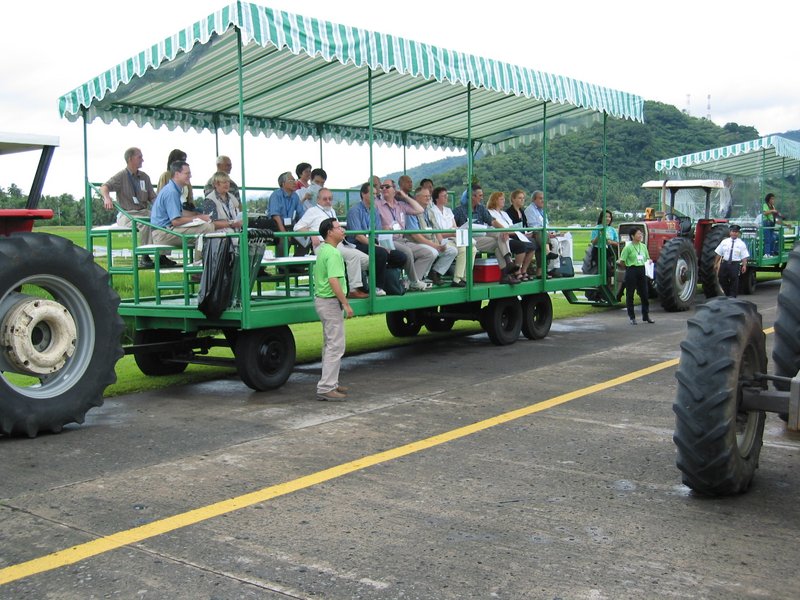
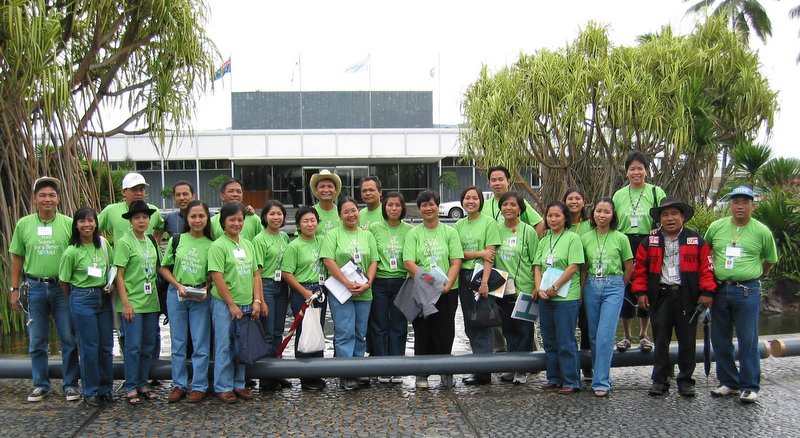
How to move everyone around the fields without having the inconvenience getting on and off buses? In 1998 I had attended a symposium to mark the inauguration of the Dale Bumpers National Rice Research Center in Stuttgart, Arkansas (self-proclaimed Rice and Duck Capital of the World). To visit the various field plots we were taken around on flat-bed trailers, towed by a tractor. We sat on straw bails, and each trailer also had an audio system. It was easy to hop on and off at each of the stops along the tour. However, we had nothing of that kind at IRRI and, in any case, we reckoned that any trailers would need some protection against the sun – or worse, a sudden downpour.

And that’s how I began a serious collaboration with our Experimental Farm manager, Joe Rickman to solve the transport issue.

rickman-about

Joe Rickman

We designed and had constructed at least 10 trailers, or bleachers as they became known. As far as I know these are still used to take visitors around the experimental plots when appropriate.

20021029008

So, transport solved. But what program of field and laboratory visits would best illustrate the work of the institute? In front of the main entrance to IRRI are many demonstration plots with roads running between them where we could show research on water management, long-term soil management, rice breeding, and pest management. We also opened the genetic transformation and molecular biology labs and, I think, the grain quality lab. I just can’t remember if the genebank was included. The genebank is usually on the itinerary for almost all visitors to IRRI but, given the numbers expected on IRRI Day, and that the labs are environment controlled – coll and low humidity – I expect we decided to by-pass that.

The IRRI All Stars
From the outset I decided that we would need staff to act as guides and hosts, riding the trailers, providing a running commentary between ‘research stations’. I put word out among the local staff that I was looking to recruit about 20-30 staff to act as tour guides; I also approached several staff who I knew quite well and who I thought would enjoy the opportunity of taking part. What amazed me is that several non-research staff approached me asking if they could participate, and once we’d made the final selection, we had both human resources and finance staff among the IRRI All Stars.

L-R: Carlos Casal, Jr., Josefina Narciso, Ato Reano, (???), Arnold Manza, Crisel Ramos, Varoy Pamplona, Lina Torrizo, (???), Jessica Rey, Caloy Huelma, Beng Enriquez, Joe Roxas, (???), Sylvia Avance, (???), Mark Nas, Ofie Namuco, Estella Pasuquin, (???), Ninay Herradura, Lily Molina, Tom Clemeno, Joel Janiya.

The IRRI All Stars L-R: Carlos Casal, Jr., Josefina Narciso, Ato Reano, Reycel Maghirang-Rodriguez, Arnold Manza, Crisel Ramos, Varoy Pamplona, Lina Torrizo, Tina Cassanova, Jessica Rey, Caloy Huelma, Beng Enriquez, Joe Roxas, Remy Labuguen, Sylvia Avance, Ailene Garcia-Sotelo, Mark Nas, Ofie Namuco, Estella Pasuquin, Ria Tenorio, Ninay Herradura, Lily Molina, Tom Clemeno, Joel Janiya.

Once we had a trailer available, then we began planning and practising in earnest. I wanted my colleagues to feel confident in their roles, knowledgeable about what everyone would see in the field, as well as feeling comfortable fielding any questions thrown at them by the visitors.

I think some of the All Stars felt it was a bit of a baptism by fire. I was quite tough on them, and encouraged everyone to critique each other’s ‘performance’. And things got tougher once we had the research scientists in the field strutting their stuff during the practice runs. My guides were merciless in their comments to colleagues about their research explanations. Not only did we reduce the jargon to a manageable level, but soon everyone appreciated that they had to be able to explain not only what they were researching, but why it was important to rice farmers. And in doing so, to actually talk to their audience, making eye contact and engaging with them.

It was worth all the time and effort we spent before IRRI Day. Because on the day itself, everyone shone. I don’t think I’ve been prouder of my colleagues. After the early morning rain, the clouds parted and by 9 am when we started the tours, it was a glorious Los Baños day at IRRI. The feedback from the delegates, especially the donor representatives, was overwhelming. Many had, as I mentioned earlier, a blinkered view of research for development, and rice research in particular. More than a few had a ‘Damascene experience’. Many had never even seen a rice paddy before. I believe that IRRI’s stock rose among the donor community during the 2002 International Centers Week – due in no small part to their very positive interactions with IRRI’s research staff and the All Stars.

On reflection, we had a lot of fun at the same time. It was extremely rewarding to see how positive all the staff were about contributing to the success of IRRI Day. But that’s the IRRI staff for you. Many a visitor has mentioned as they leave what a great asset are the staff to IRRI’s success. I know from my own 19 years there. In fact we had so much fun that just over a week later we held another IRRI Day for all staff, following the same route around the field and listening to the same researchers.

Using camera-mounted drones, it’s now possible to give IRRI’s visitors a whole new perspective.