The Commonwealth Potato Collection – it really is a treasure trove (revised and updated)*

I originally wrote this story in August 2021 after a friend and former colleague, Dr Glenn Bryan¹ posted a link on his Facebook page to a story—Treasure trove could hold secrets to potato problems—that had just appeared in the online edition of Dundee’s The Courier.

It was about the Commonwealth Potato Collection (CPC) that is held at The James Hutton Institute (JHI) at Invergowrie, just west of Dundee.

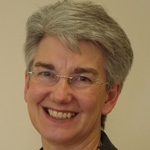
Until a couple of years ago (when he retired) Glenn led the Potato Genetics and Breeding Group at JHI, with Gaynor McKenzie as the CPC curator, a position she still occupies.

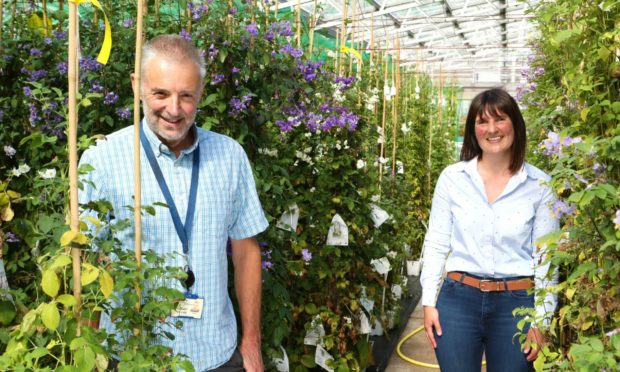
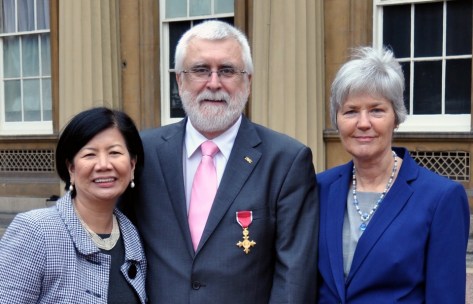
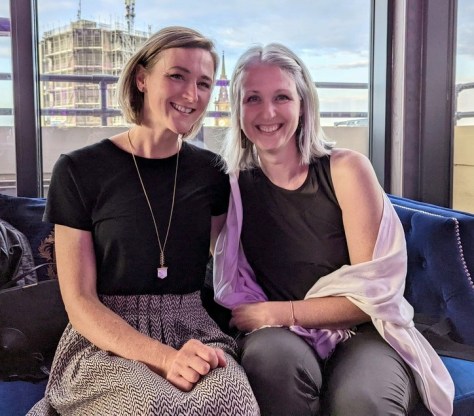
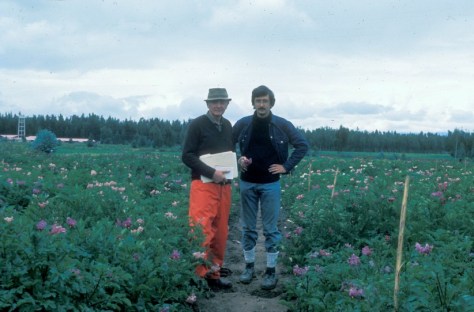
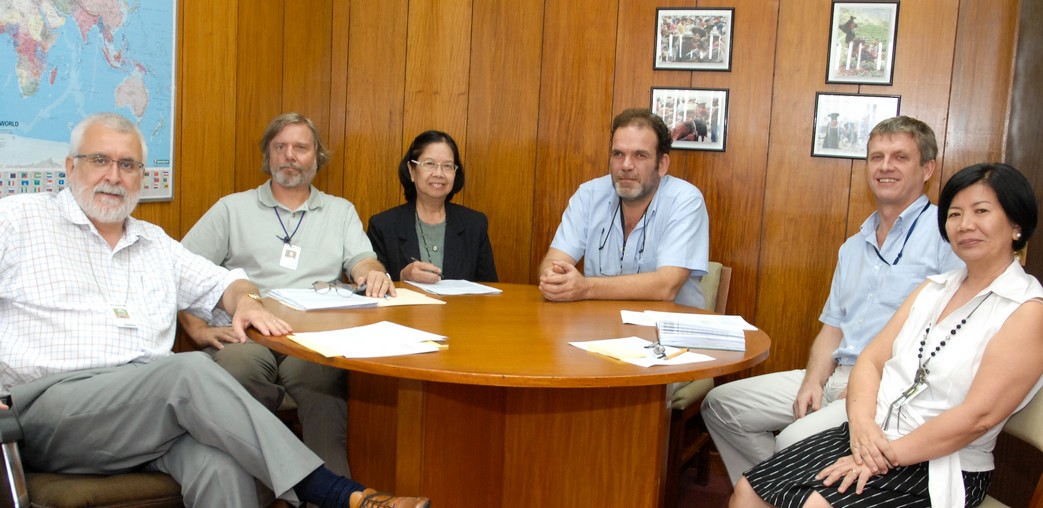
Glenn Bryan and Gaynor McKenzie at the James Hutton Institute in Invergowrie, where wild potato species in the Commonwealth Potato Collection are conserved.

The Commonwealth Potato Collection has a long and distinguished history, going back more than 80 years. It is one of a handful of potato germplasm collections around the world in which breeders have identified disease and pest resistance genes to enhance the productivity of cultivated varieties. The CPC is particularly important from a plant quarantine perspective because the collection has been routinely tested and cleaned for various pathogens, particularly seed-borne pathogens.

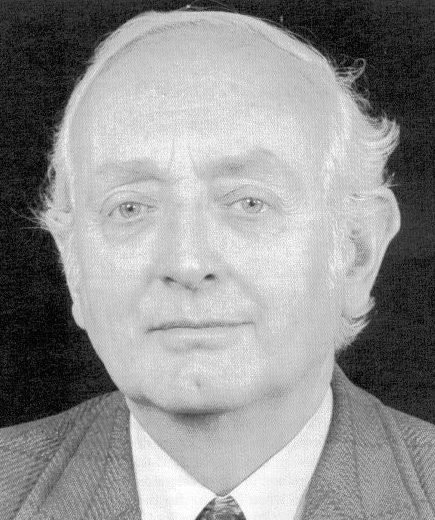
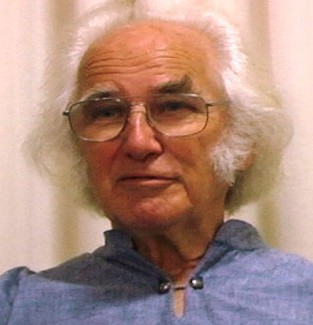
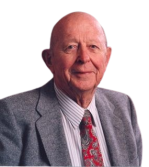
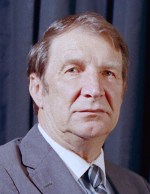
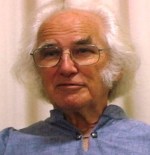
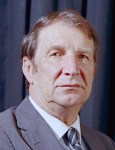
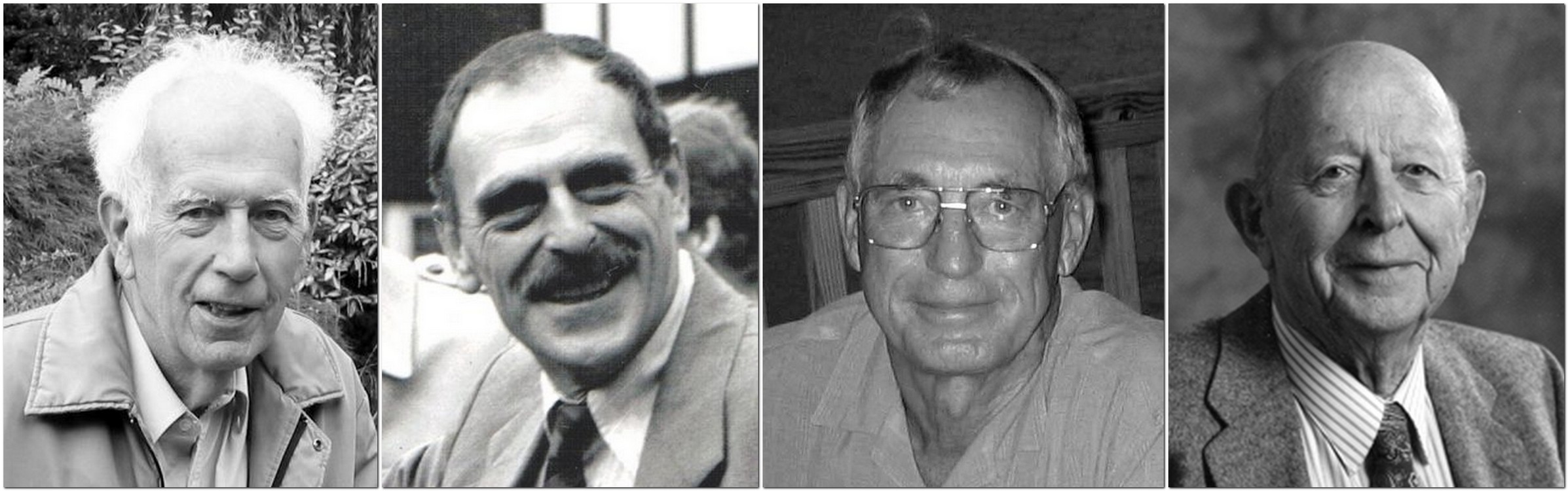
Jack Hawkes

It is a collection with which Steph and I have both a personal and professional connection, from the 1970s and 80s. It’s also the legacy of one man, Professor Jack Hawkes (1915-2007) with whom I had the privilege of studying for both my MSc and PhD degrees.

Let me tell that story.


In December 1938, a young botanist—just 23 years old the previous June—set off from Liverpool, headed to Lima, Peru to join the British Empire Potato Collecting Expedition to South America, the adventure of a lifetime.

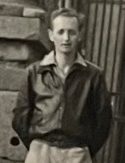
Jack in Bolivia in 1939

John ‘Jack’ Gregory Hawkes, a Christ’s College, Cambridge graduate, was destined to become one of the world’s leading potato experts and a champion of the conservation and use of plant genetic resources for food and agriculture.

He was the taxonomic botanist on the 1939 expedition, which was led by experienced plant collector Edwards Kent Balls (1892-1984). Medical doctor and amateur botanist William ‘Bill’ Balfour Gourlay (1879-1966) was the third member of the expedition. Balls and Gourlay had been collecting plants in Mexico (including some potatoes) in 1938 before moving on to Peru for the ‘Empire’ expedition.

The expedition had originally been scheduled to start in 1937, but had to be delayed because of ill health of the original expedition leader, Dr PS Hudson, Director of the Empire Bureau of Plant Breeding and Genetics in Cambridge. Jack had been hired as his assistant.

Whilst waiting for the expedition to get underway, Jack took the opportunity—in August 1938—to visit Leningrad to pick the brains of Russian botanists, Drs SM Bukasov, VS Juzepczuk, and VS Lechnovicz who had already collected potatoes in South America. Jack openly acknowledged that ‘as a raw recently graduated student, [he] knew very little about potatoes’.

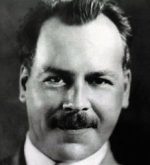
Nikolai Vavilov

Not only did Jack receive useful advice from these knowledgeable botanists, but he also met with the great geneticist and ‘Father of Plant Genetic Resources’ Nikolai Vavilov on several occasions during his visit to Leningrad and Moscow, ‘an experience that changed [his] life in many ways’. Vavilov had a profound effect on Jack’s subsequent career as an academic botanist and genetic resources pioneer. Alas there do not appear to be any surviving photos of Jack with Vavilov.

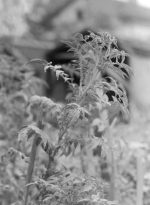
‘Solanum vavilovii’ growing at an experiment station near Leningrad in 1938

In Leningrad, Jack took this photo (right) of a wild potato species that had been described as Solanum vavilovii by Juzepczuk and Bukasov in 1937. Sadly that name is no longer taxonomically valid, and vavilovii is now considered simply as a variant of the species Solanum wittmackii that had been described by the German botanist Friedrich August Georg Bitter in 1913.


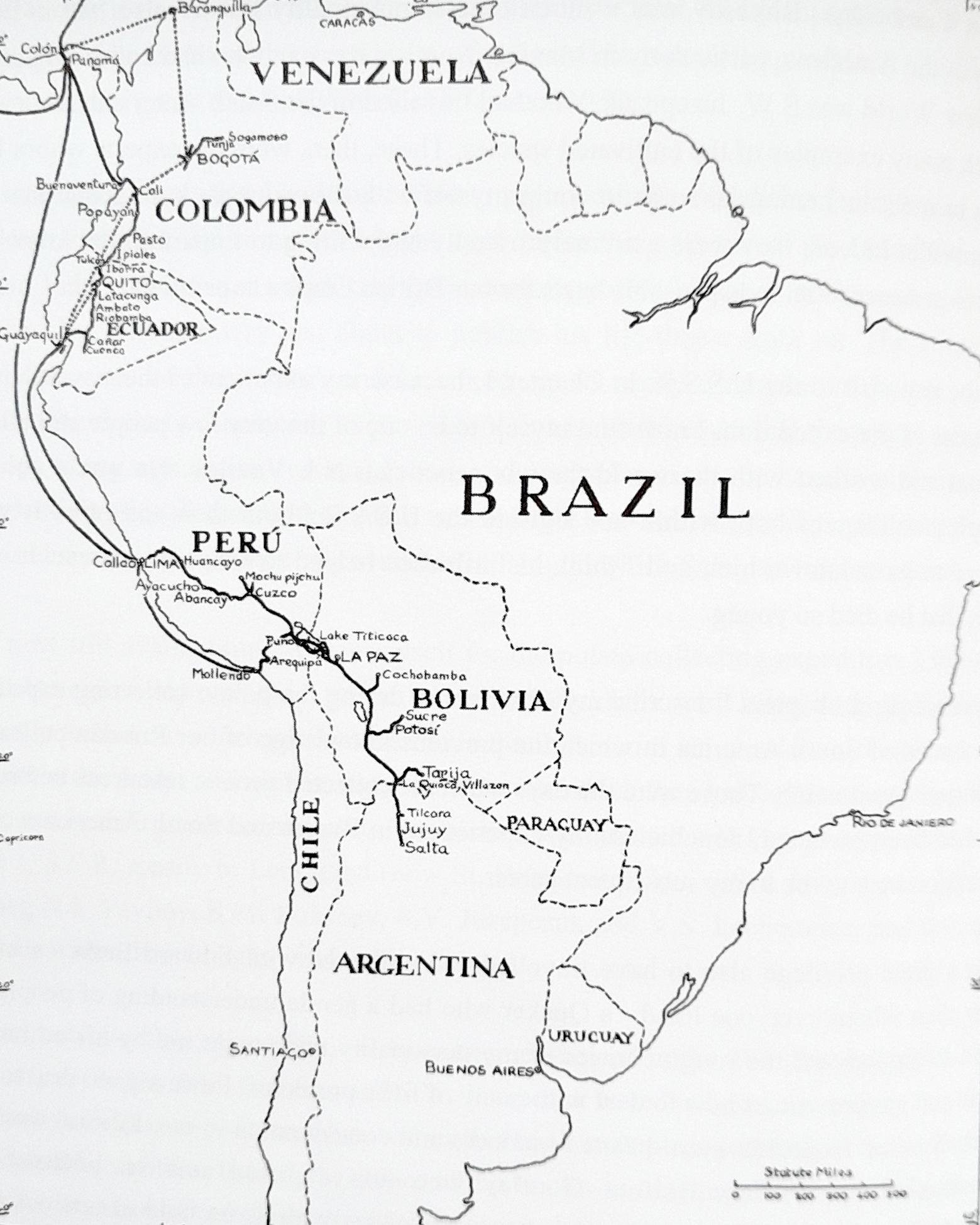
The Empire expedition lasted eight months from January 1939, covering northern Argentina, Bolivia, Peru, Ecuador, and ending in Colombia (a country where Jack was to reside for three years from 1948 when he was seconded to establish a national potato research station near Bogota).

Route taken by the Empire Potato Collecting Expedition

More than 1150 samples of cultivated and wild potatoes were collected in these five countries as well as a further 46 samples collected by Balls and Gourlay in Mexico in 1938.

Here is a small selection of photographs taken during the expedition (and a link to an album of photos).


By the time the expedition ended in early September 1939, war with Germany had already been declared, and Jack’s return to the UK by ship convoy from Halifax, Newfoundland was not as comfortable as the outbound voyage nine months earlier, docking in Liverpool early in November.

Jack published an official expedition report in March 1941. Then, in 2003, he published an interesting and lengthy memoir of the expedition, Hunting the Wild Potato in the South American Andes.

In December 2021, my friend Dr Abigail Amey and I published a website (with permission of the Hawkes family) about Jack’s experiences of the 1938-39 expedition, as well as others to the USA, Mexico, and Central America in 1958, and Bolivia in 1971. Just click on the red box below (and others) to open the links.

The website also has several of Jack’s original 16mm films (which we were able to digitise through a special grant from the Crop Wild Relatives Project at Kew and the Crop Trust).

Redcliffe N Salaman

Potato tubers (and presumably seeds) were shipped back to the UK, and after a quarantine inspection, were planted out in a glasshouse at the Potato Virus Research Station, Cambridge whose director was the renowned botanist (and originally a medical doctor) Redcliffe Nathan Salaman, author of the seminal work on potatoes, The History and Social Influence of the Potato, first published in 1949 and reprinted with a new introduction by Hawkes in 1985. I jealously guard the signed copy that Jack gave me.

On his return to the UK in 1939 Jack began to study the collected germplasm, describing several new species, and completing his PhD thesis (supervised by Salaman) at the University of Cambridge in 1941.

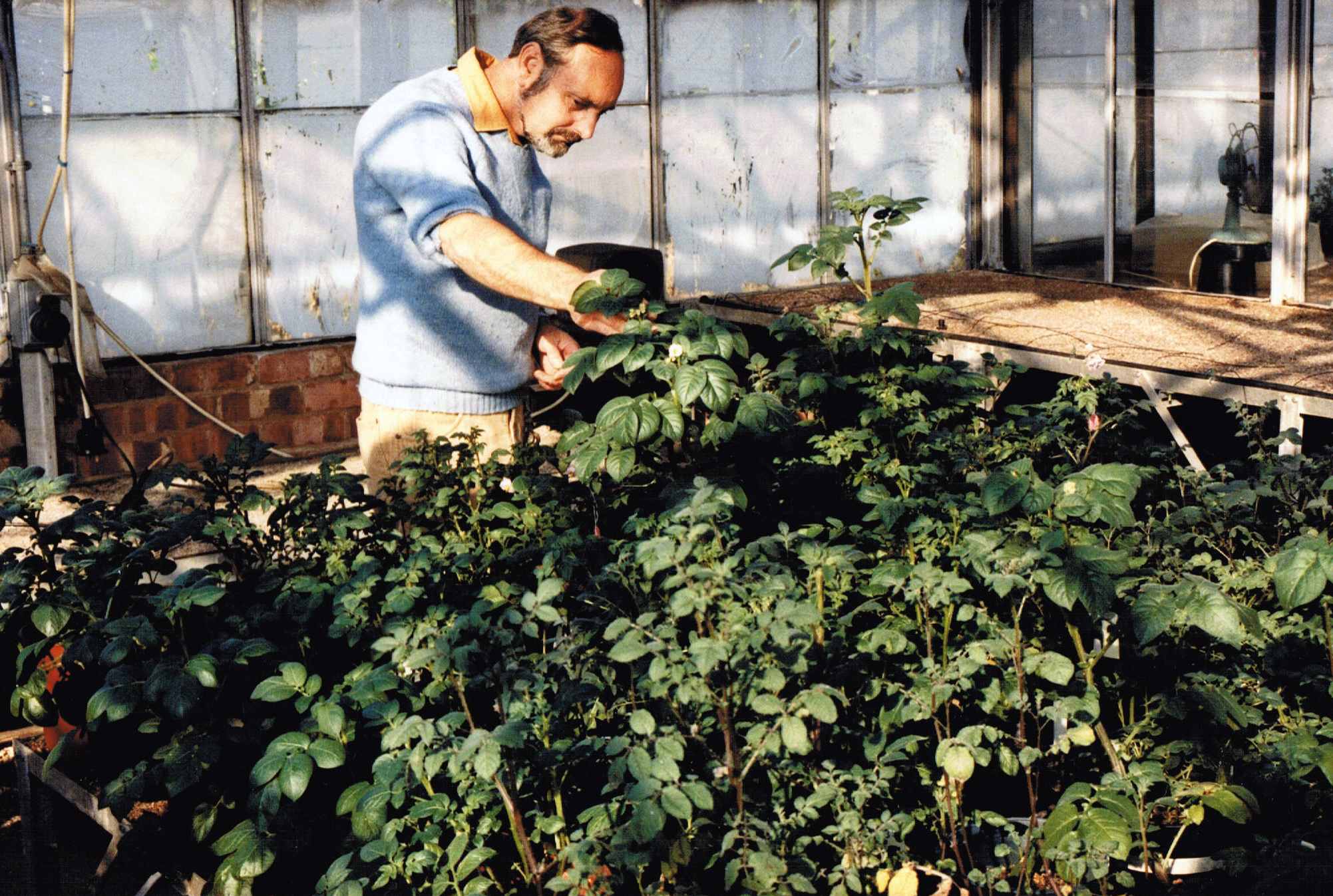
South American potato species in the Cambridge glasshouse in the summer of 1940

Among the species identified in the course of Jack’s dissertation research was Solanum ballsii from northern Argentina, which he dedicated to EK Balls in a formal description in 1944. However, in his 1963 revised taxonomy of the tuber-bearing Solanums (potatoes), Jack (with his Danish colleague Jens Peter Hjerting, 1917-2012) recognized Solanum ballsii simply as a subspecies of Solanum vernei, a species which has since provided many important sources of resistance to the potato cyst nematode.


Jack Hawkes in the glasshouse of the Empire Potato Collection at Cambridge in July 1947.

The 1939 germplasm was the foundation of the Empire Potato Collection. When the collection curator Dr Kenneth S Dodds was appointed Director of the John Innes Institute in Bayfordbury in 1954, the collection moved with him, and was renamed the Commonwealth Potato Collection.

By the end of the decade (or early 1960s) the CPC was on the move again. This time to the Scottish Plant Breeding Station (SPBS) at Pentlandfield just south of Edinburgh when Dr Norman W Simmonds moved there in 1959. He rose through the ranks to become the station’s Director.

Dodds and his colleague Dr GJ Paxman traveled through South America during 1959-60, and their research on the genetics of diploid potatoes was based on some of the material collected. Dodds and Simmonds also collected potatoes in early 1963.

But that was not the end of the CPC’s peripatetic existence. It remained at the SPBS until the early 1980s, when the SPBS amalgamated with the Scottish Horticultural Research Institute (which became the Scottish Crop Research Institute or SCRI, and now known as the James Hutton Institute), and the collection moved to its present site near Dundee.

Today, the CPC comprises some 1500 samples or accessions of about 80 wild and cultivated potato species. And over two-thirds were collected by Hawkes himself. Another 9% of the collection were collected by Dodds and his colleagues, as mentioned earlier. The remainder represent donations over the years from various individuals and institutions.


I am not sure how much the CPC grew in the intervening years, but there was a significant boost to the size and importance of the collection around 1987. Let me explain.

As I already mentioned, Jack spent three years in Colombia from 1948, returning to the UK in 1951 when he was appointed Lecturer in Taxonomy in the Department of Botany at the University of Birmingham. He was given a personal chair as Professor of Taxonomic Botany in April 1961, and became Head of Department and Mason Professor of Botany in July 1967. He remained at Birmingham until retirement in September 1982.

It was during his Birmingham years that Jack’s work on the tuber-bearing Solanums expanded significantly with several important monographs and taxonomic revisions published, based on his own field work over the years and experimental studies back at Birmingham on the potato samples he brought back to the UK and which formed an important collection in its own right. Because of the quarantine threat from these seeds (particularly of sexually-transmitted pathogens or new variants of potato viruses already present in the UK), Jack had a special quarantine licence from the then Ministry of Agriculture, Fisheries and Food (MAFF, now DEFRA) to maintain his collection at Birmingham.

In 1958, with Peter Hjerting and young research assistant Richard Lester (who later joined the Department of Botany as a Lecturer), Jack made a six month expedition to the USA , Mexico, and Central America.

Here is another account of that trip from the University of Birmingham Gazette. Besides potatoes, many other species were made for other institutions and botanic gardens.

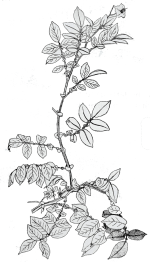
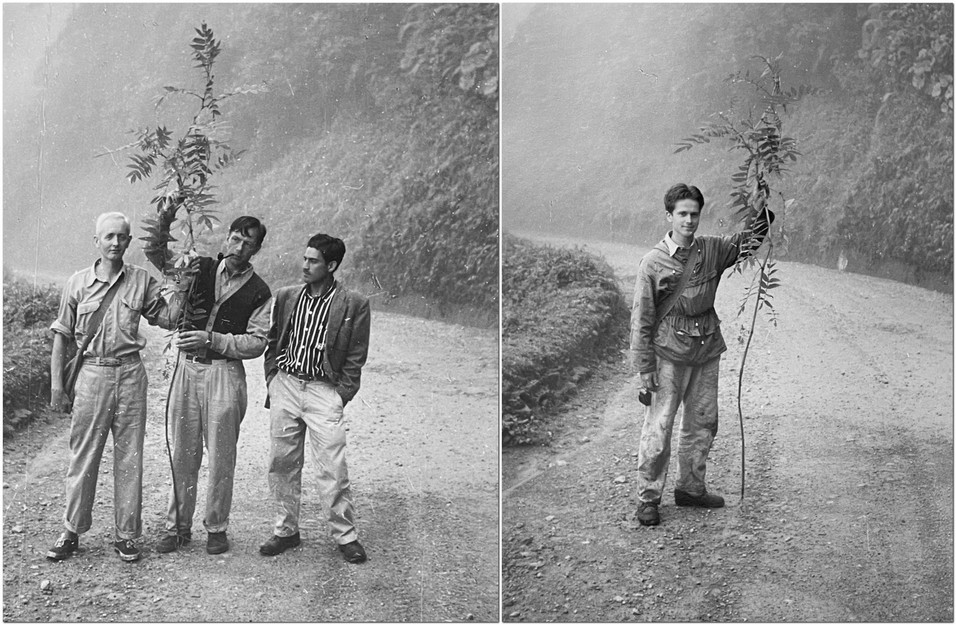
Collecting a sample of Solanum agrimonifolium (No. 1854) in Guatemala. L: Jack Hawkes, Peter Hjerting, and Morse (driver?); R: Richard Lester

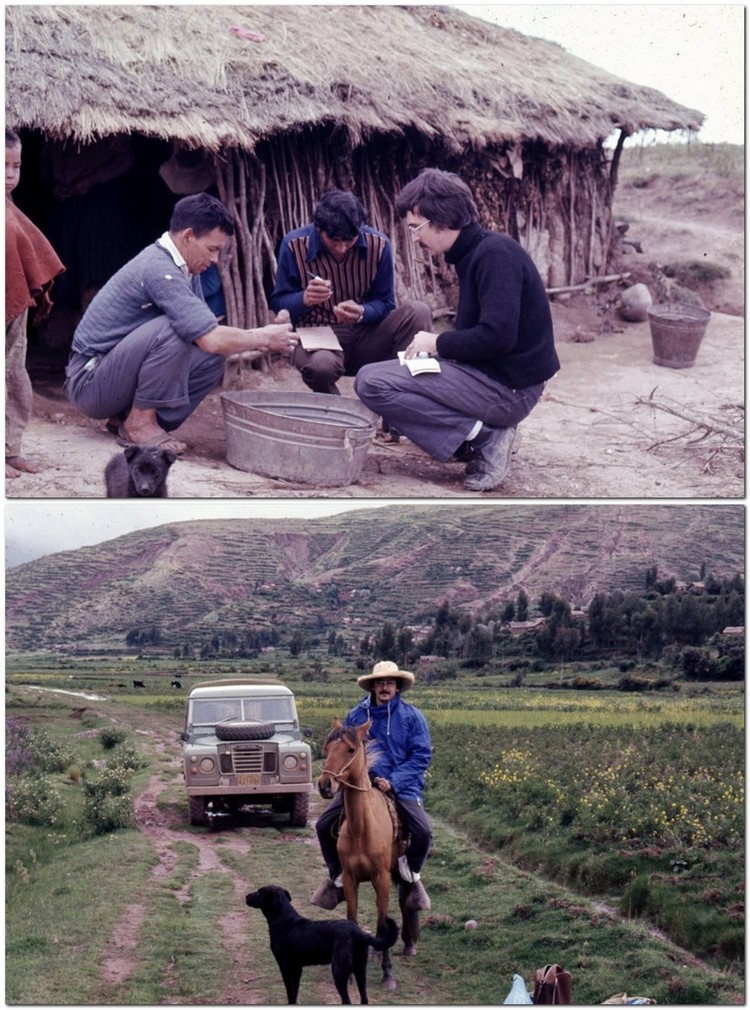
Just three months after I arrived at Birmingham in September 1970 to enrol on the MSc course on plant genetic resources, Jack was off on his travels once again, this time to Bolivia accompanied by Peter Hjerting once again, his research assistant Phil Cribb and, in South America by Zósimo Huamán from the International Potato Center (CIP) and Moisés Zavaleta and others from Bolivia.

This is the official trip report. Here are some images from the 1971 expedition, courtesy of Phil Cribb.

Jack and Peter made another trip to Bolivia in 1974 (with research assistant Dave Astley), and another in 1980. They published their monograph of The Potatoes of Bolivia in 1989.


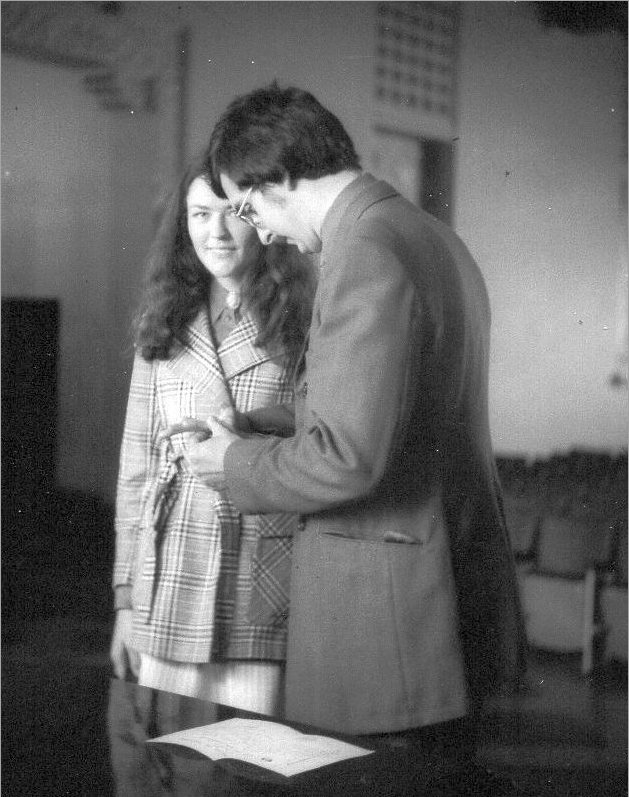
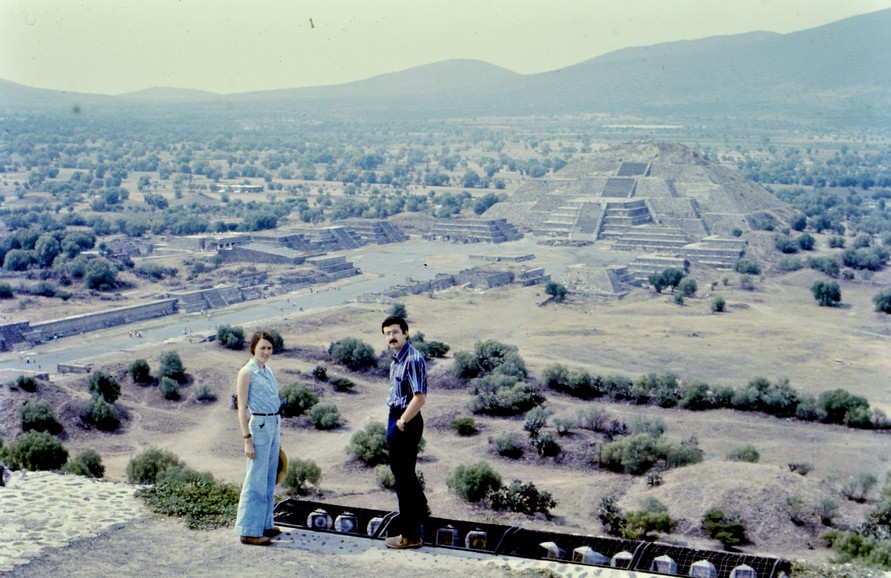
In September 1971, Zósimo Huamán and Moisés Zavaleta came to Birmingham to study on the genetic resources MSc course. In that same cohort was a young botanist, Stephanie Tribble, recently graduated from the University of Wales – Swansea (now Swansea University). During the summer of 1972, Steph and I became ‘an item’, so-to-speak. However, by then I was already making plans to leave the UK and join CIP in Lima by January 1973, and on graduation, Steph was keen to find a position to use the experiences and skills she had gained on the course.

Just at that time, a Scientific Officer position opened at the SPBS, as assistant to Dalton Glendinning who was the curator of the CPC. Steph duly applied and was appointed from about October that year. Jack must have supported her application. Coincidentally, the MSc course external examiner was no other that Norman Simmonds who met Steph during his course assessment.

I moved to Peru in January 1973, and within a few days discovered that Jack had mentioned Steph to CIP’s Director General, Richard Sawyer. Well, to cut a long story short, Steph was offered a position as Assistant Geneticist at CIP, to support management of CIP’s large potato collection, similar to the role she’d had at Pentlandfield. She resigned from the SPBS and joined me in Lima in July that year. We married there in October, remaining with CIP in Peru and Central America for another eight years.

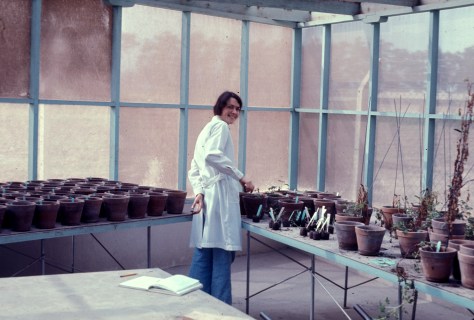
Steph working in one of CIP’s screen-houses at La Molina on the eastern outskirts of Lima in 1974.

In April 1981 I was appointed Lecturer in Plant Biology at Birmingham, 18 months before Jack’s retirement, the aim being that I would assume Jack’s teaching commitments on the MSc course. When I also took over the Hawkes potato collection in 1982, I had high hopes of identifying funding for biosystematics and pre-breeding research, and continuing the Birmingham focus on potatoes.

Dave Downing was the glasshouse technician who carefully managed the Hawkes collection at Birmingham for many years.

That was not the case, and as the collection needed a dedicated glasshouse and technician I could not justify (nor financially support) holding on to such valuable research space. And, in any case, continuing with the Hawkes collection was actually blocking the opportunities for other potato research because of the MAFF-imposed restrictions.

So, with some regret but also acknowledging that Jack’s collection would be better placed elsewhere, I contacted my colleagues at the CPC to see if they would be interested to receive it—lock, stock, and barrel. And that indeed was what happened. I’m sure many new potato lines were added to the CPC. The germplasm was placed in quarantine in the first instance, and has passed through various stages of testing before being added officially to the CPC. Throughout the 80s and 90s Jack would visit the CPC from time-to-time, and look through the materials, helping with the correct identification of species and the like.

Jack’s interest in and contributions to potato science remained with him almost up to his death in 2007. By then he had become increasingly frail, and had moved into a care home, his wife Barbara having passed away some years previously. By then, Jack’s reputation and legacy was sealed. Not only has his scientific output contributed to the conservation and use of potato genetic resources worldwide, embodied in the CPC that he helped establish all those decades earlier, but through the MSc course that he founded in 1969, hundreds of professionals worldwide have continued to carry the genetic conservation torch. A fine legacy, indeed!


¹ Glenn and I go back almost 30 years when, as a young scientist at the John Innes Centre (JIC) in Norwich, he was a member of a rice research project, funded by the British government, that brought together staff at the International Rice Research Institute (IRRI) in the Philippines where I was Head of the Genetic Resources Center, the University of Birmingham (where I had been a faculty member for a decade from 1981), and the JIC to use molecular markers to study IRRI’s large and globally-important germplasm collection conserved in its International Rice Genebank.

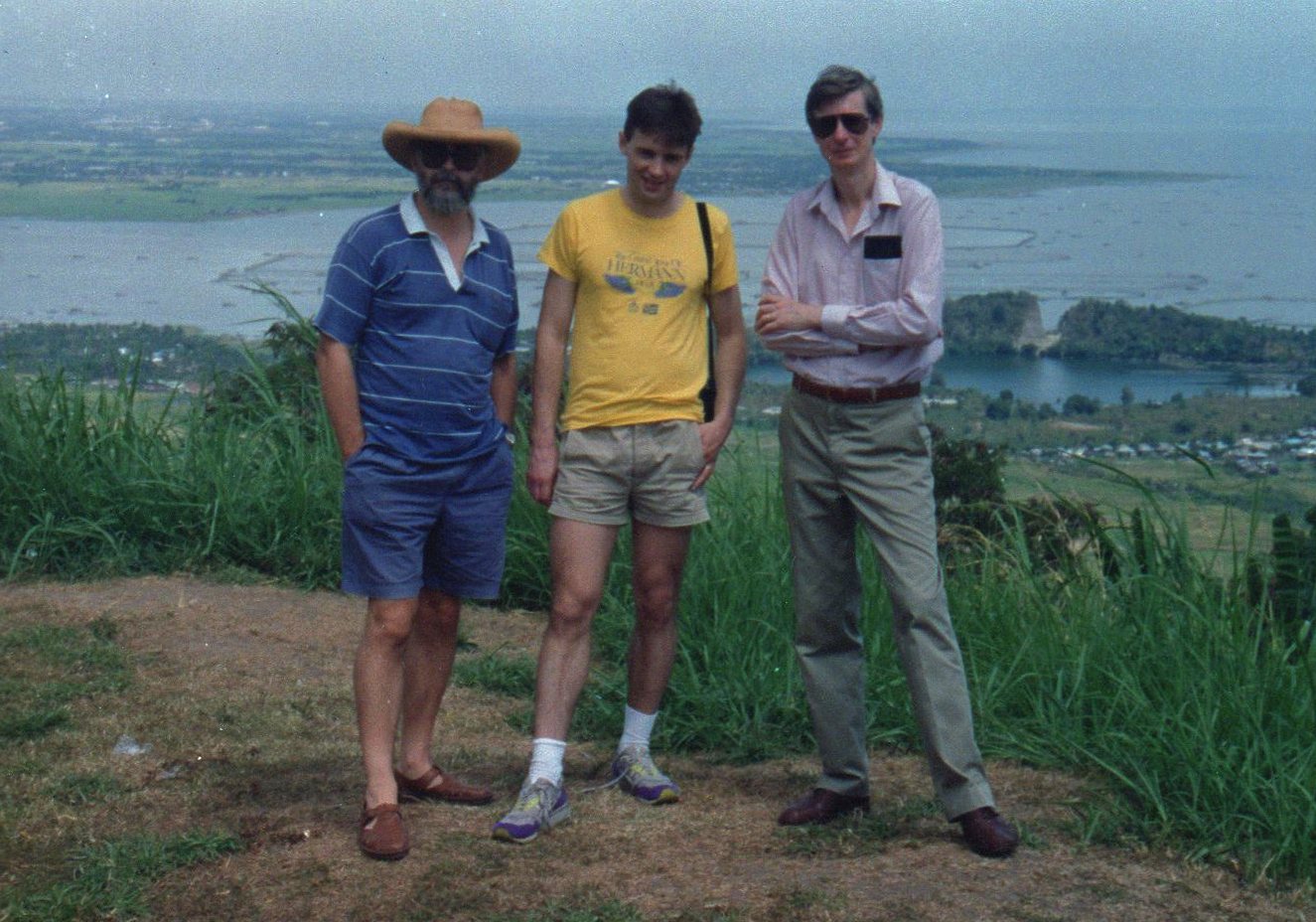
L-R: me, Glenn, and John Newbury (who later became professor at the University of Worcester) during a spot of sight-seeing near IRRI in 1993.


  • Originally published on 24 August 2021.

Reflections of a 1990s genebanker

Since I started this blog in February 2012, I have written a number of stories about rice genetic resources and their conservation at the International Rice Research Institute (IRRI) in the Philippines, one of the centers of the Consultative Group on Agricultural Research (CGIAR).

Written over several years, there is inevitably some overlap between the posts. I have now brought them together. Just click on the red boxes below to read each one or expand an image.

I was privileged to manage the International Rice Genebank at IRRI (the IRG, formerly known as the International Rice Germplasm Center or IGRC until 1995) for a decade from July 1991, as Head of the Genetic Resources Center (GRC) [1].

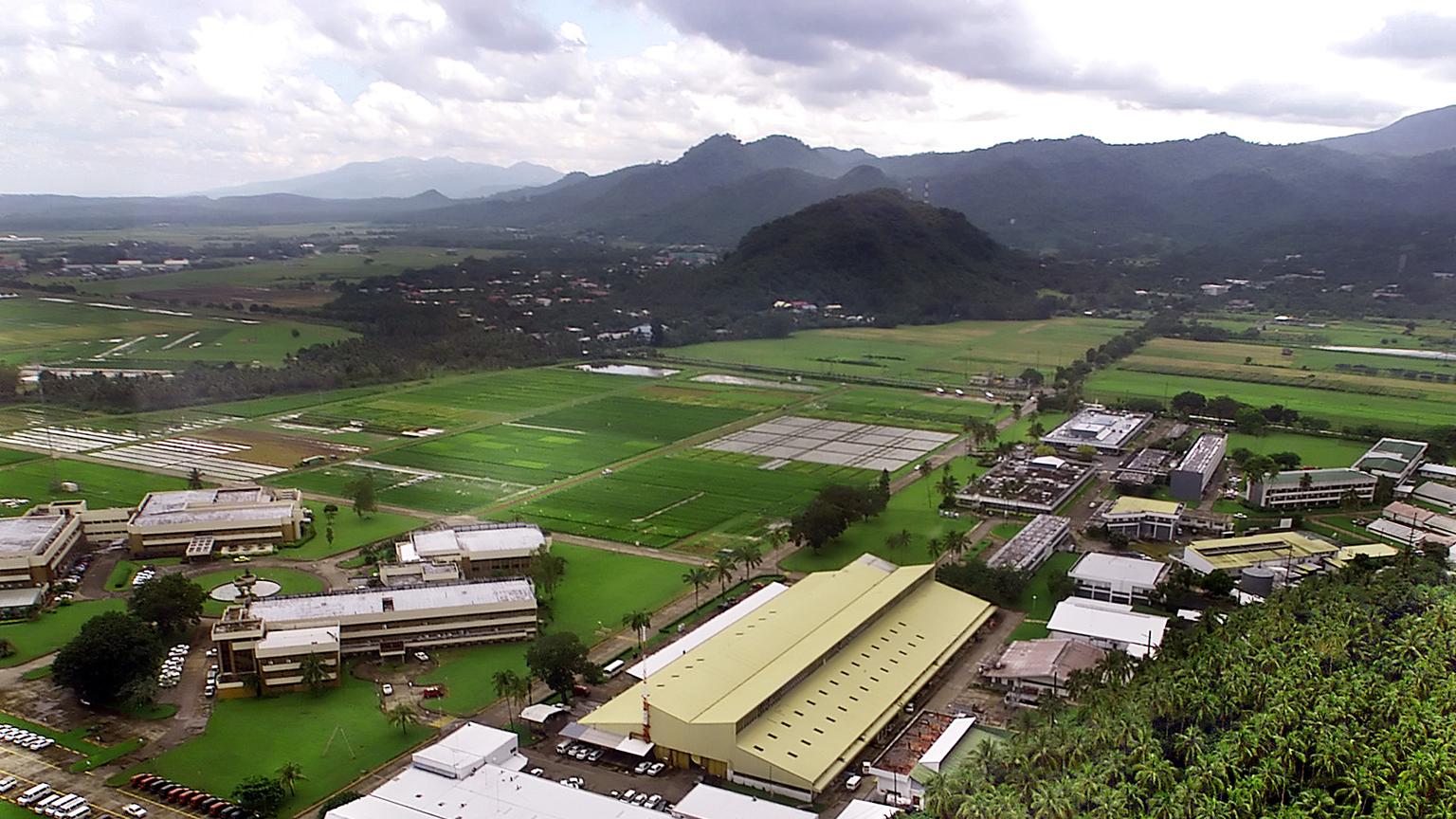
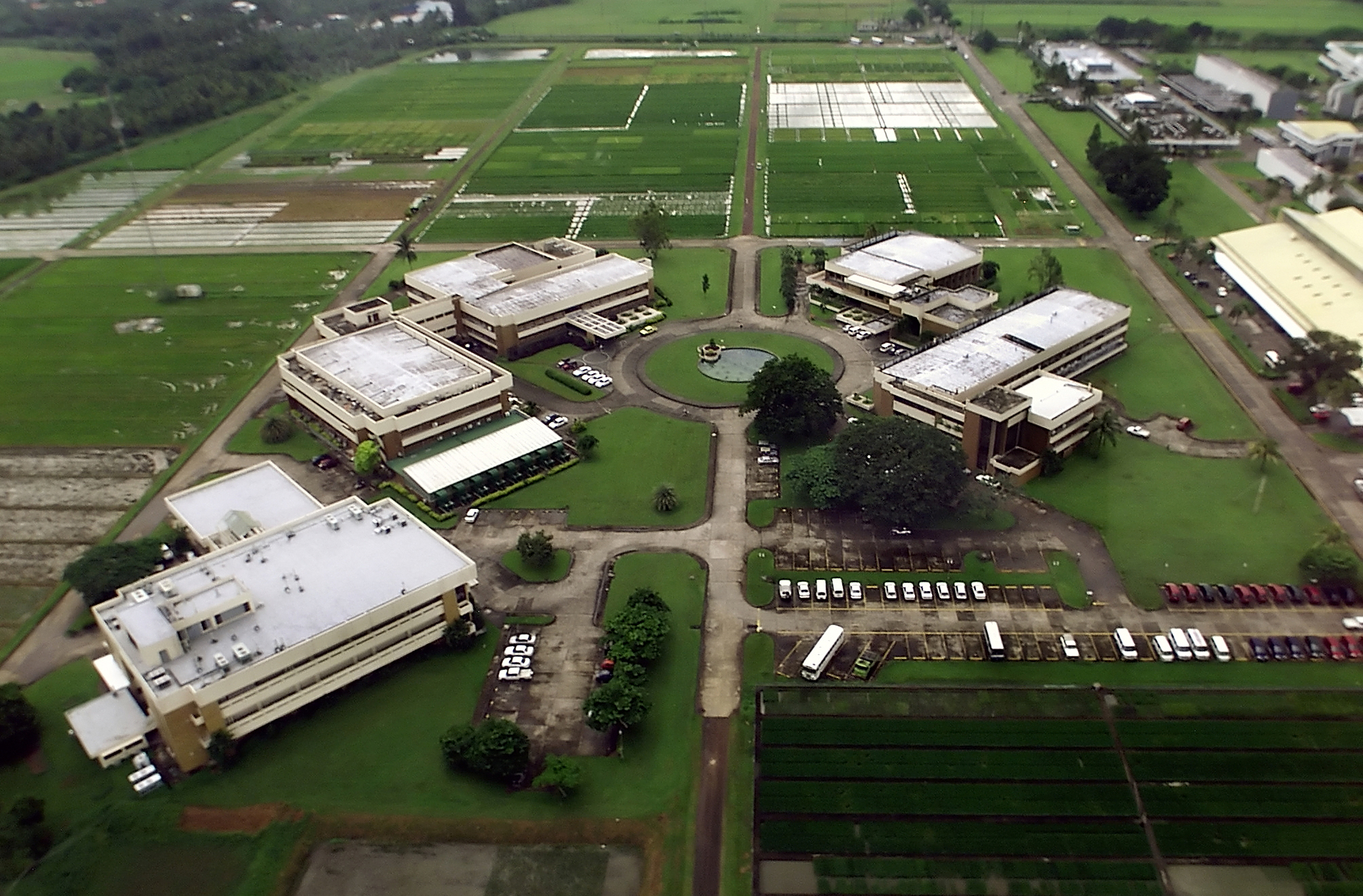
The IRRI campus at Los Baños, 70 km south of Manila. The Brady Laboratory (second from left) houses the genebank cold stores.

There are twelve CGIAR genebanks, and IRRI’s is one of the largest. It’s certainly the oldest. In April, IRRI will celebrate its 65th anniversary [2]. For almost six and a half decades, IRRI has successfully managed the world’s largest collection of rice genetic resources (farmer or landrace varieties, improved varieties, wild rice species, genetic stocks, and the like).

There’s perhaps no crop more important than rice. It’s the staple food of half the world’s population on a daily basis. The genebank is a crucial resource for plant breeders who use the germplasm to sustain and increase agricultural productivity, with the aim of reducing hunger among the world’s poor.

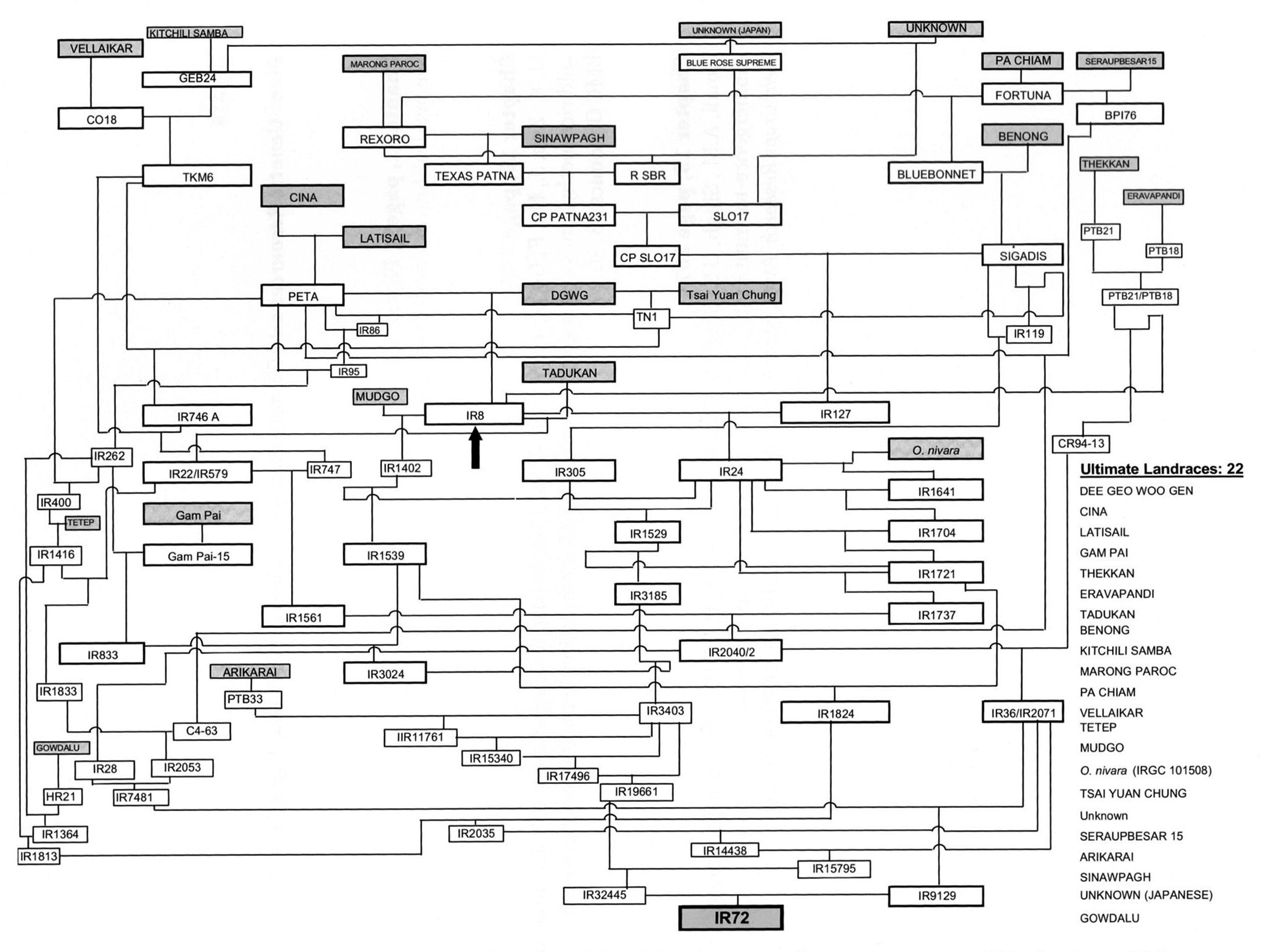
IRRI released the first of the semi-dwarf varieties in the 1960s; many others have followed over the decades, with increasingly more complex pedigrees.

Pedigree of rice variety IR72 showing 22 landraces (boxes with bold lines) and one wild species, Oryza nivara. In contrast, IR8, the first of the widely-grown modern semi-dwarf varieties (indicated by the arrow) had only three landraces in its pedigree.

When I joined IRRI, there were just over 70,000 seed samples (or accessions as they are known in genebank parlance) in the genebank.

During the 1990s, the collection grew by about 30% to a little over 100,000 accessions. This was quite remarkable in itself, given that the Convention on Biological Diversity (CBD) had come into effect in 1992, and for for at least a decade or more thereafter, many countries were reluctant to share their national germplasm until benefit-sharing mechanisms had been worked out. It says a lot about the mutual respect between national programs (particularly in Asia) and IRRI that we were able to mount a significant program to collect rice varieties and wild species. But more on that later.

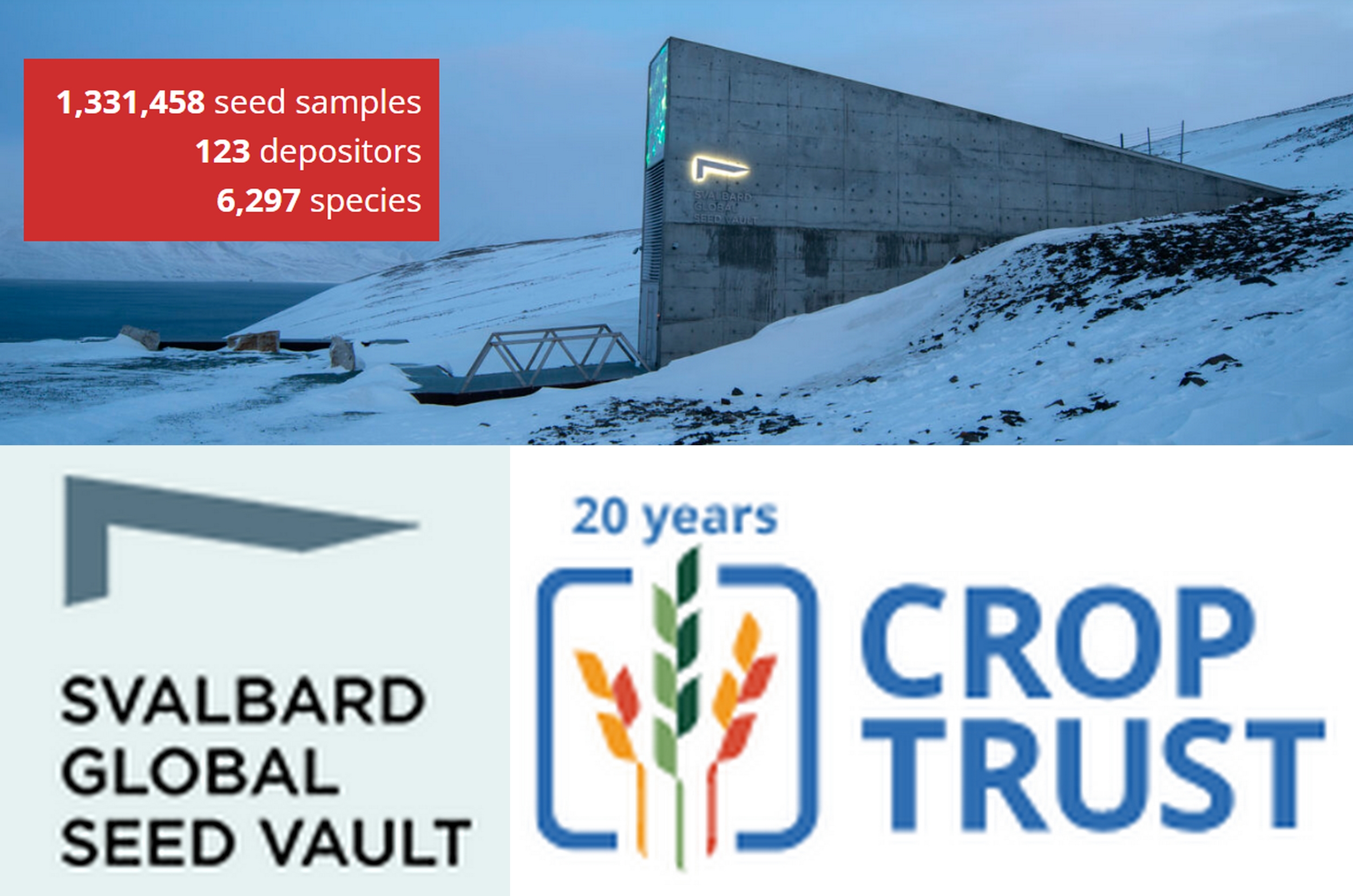
Today the collection is approaching 135,000 accessions, safely duplicated in the Svalbard Global Seed Vault (SGSV, under the auspices of the Government of Norway and the Crop Trust). Prior to 1991, and for at least the next decade or more, duplicates samples were also held in so-called ‘black box’ storage at the National Laboratory for Genetic Resources Preservation in Fort Collins, Colorado. I’m not sure whether IRRI has continued its arrangement with Fort Collins now that the SGSV is open.

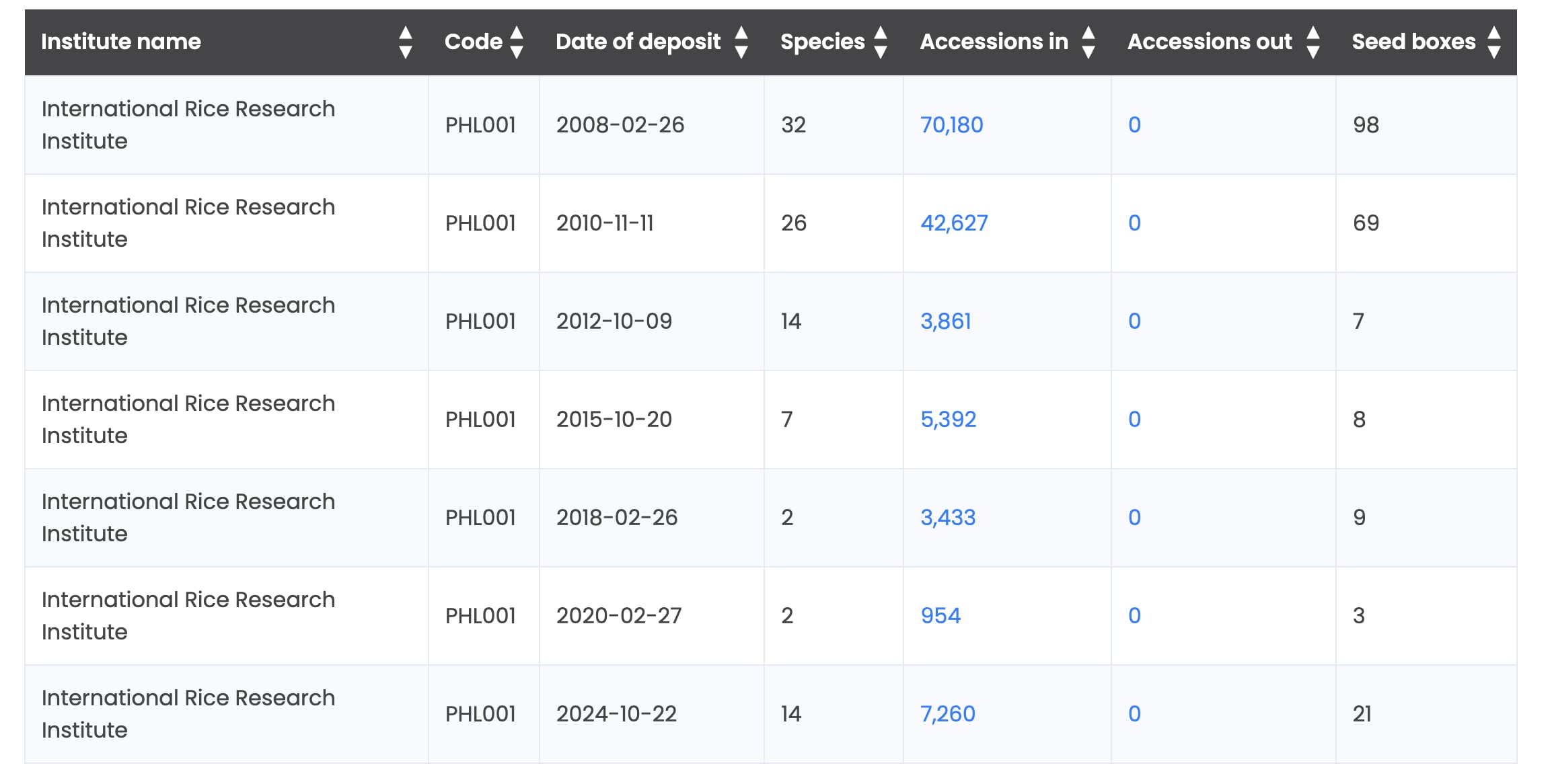
When the SGSV vault was opened in 2008, IRRI deposited more than 70,000 accessions, the first to be registered in the Vault. Since then, IRRI has made six more deposits, for a total of 133,707 accessions, almost the entire collection.

Given the amount of publicity that the SGSV has received, one could be forgiven for not knowing that there are many more genebanks around the world.

Inevitably there has been some misguided (as far as I’m concerned) criticism of the SGSV that I attempted to rebut in the next post.

The IRRI genebank became the first genebank of the CGIAR system to be identified by the Crop Trust for in-perpetuity funding that will ensure the availability of the conserved germplasm decades into the future.

The fact that IRRI was able to deposit so many accessions in the SGSV and receive in-perpetuity funding is due—in no small part—to the many changes we made to the management of the genebank and its collection during the 1990s. And which pre-emptively prepared it for the changes that all the CGIAR genebanks would eventually have to make.

But I’m getting ahead of myself just a little.

Although I had been involved with the conservation and use of plant genetic resources since 1970 (when I arrived at the University of Birmingham to attend the one-year MSc course on genetic conservation), I’d never worked on rice nor managed a genebank when I joined IRRI in 1991. All my experience to date had been with potatoes in South and Central America, and several grain legumes while teaching at Birmingham during the 1980s.

1991 was a fortuitous time to join IRRI. I was recruited by Director General Klaus Lampe (right), who had been appointed by the institute’s Board of Trustees in 1998 to revive the institute’s fortunes and refurbish its ageing infrastructure.

Lampe was very supportive of the genetic resources program, and it helped that I had a senior position as a department head, so was able to meet with him directly on a regular basis to discuss my plans for the genebank.

Before 1991 quite a number of staff retired, including the previous and first head of the IRGC, Dr Te-Tzu Chang (known universally simple as ‘TT’). TT and I had very different management styles, and I was determined to involve my genebank staff in the changes that I believed should be made. I spent six months determining how the genebank operations could be significantly enhanced.

As I said, Klaus Lampe was supportive, approving recruitment of junior staff to help with the considerable backlog of seed samples for cleaning and registering in the genebank, as well as including the genebank in the institute’s program of infrastructure refurbishment and equipment upgrades.

These two posts describe many of the changes we made, and include a video about the genebank that I made in 2010 just before I left IRRI.

I was fortunate to inherit a great group of staff, totally dedicated to the genetic conservation cause, and much more knowledgeable about rice than I ever became [3].

I quickly identified Ms Flora ‘Pola’ de Guzman (all Filipinos have a nickname) as a potential genebank manager, and she continued in that role until her retirement a couple of years back. When the in-perpetuity agreement was signed in 2018, Pola was given a special award, recognising her 40 years service to the conservation of rice genetic resources.

Inside the International Rice Genebank Active Collection, with genebank manager Pola de Guzman

I asked Renato ‘Ato’ Reaño to manage all the genebank’s field operations. Ato has also now retired.

One of the key aspects that had to be addressed was data management. As you can imagine, for a collection of 70,000+ accessions that I inherited in 1991, there was a mountain of data about provenance, as well data on morphological characters and response to biotic and abiotic stresses, across the cultivated rices (two different species) and 20+ wild species of Oryza. Essentially there were three databases that couldn’t effectively talk to each other. Big changes had to be made, which I described in this post.

It took almost two years, but when completed we had developed the International Rice Genebank Collection Information System (IRGCIS) to manage all the operations of the genebank. It has now been superseded by an international system based on the US-developed germplasm information network, GRIN.

That information situation also reminds of another information ‘bee in my bonnet’, which I wrote about here.

In my interviews at IRRI in January 1991, I stressed the need for the genebank to carry out research, something that had not been contemplated when the GRC position was advertised the previous year. In fact, I made it a condition of accepting a job offer that the genebank should conduct germplasm-relevant research, such as studies of seed survival, rice taxonomy, and the management of the collection.

I had concerns that we had insufficient information about the longevity of seeds in storage, or how the environment at Los Baños affected the quality of rice seeds grown there. We developed new seed production protocols, and post-harvest management in terms of seed drying. We installed a bespoke seed drying room with a capacity of over 1 tonne of seeds. In the 2000s (after I had moved from GRC to a senior management position at IRRI), seed physiologist Fiona Hay was recruited who improved on the seed handling protocols that we developed and which had already shown to be effective in increasing seed quality for long-term conservation.

Early in the decade, and with funding from the British government, we set up a collaborative project with my former colleagues at the University of Birmingham as well as at the John Innes Centre to study how molecular markers could be used to study the diversity in the rice collection and its management.

In 1994, we received a large grant (>USD 2.3 million) from the Swiss government:

  • to collect rice varieties and wild species throughout Asia, Africa, and parts of South America (essentially to try and complete the collecting of germplasm that had been little explored);
  • to conduct research about on-farm management of rice genetic resources; and
  • to train personnel from national germplasm programs in collecting, conservation techniques, and data management.

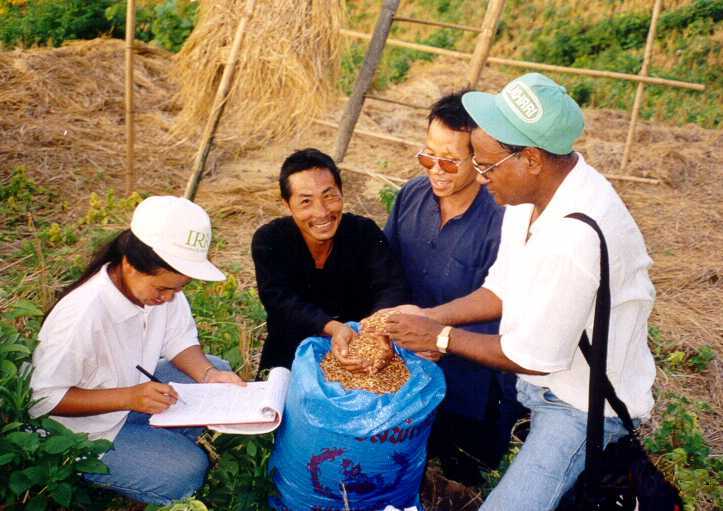
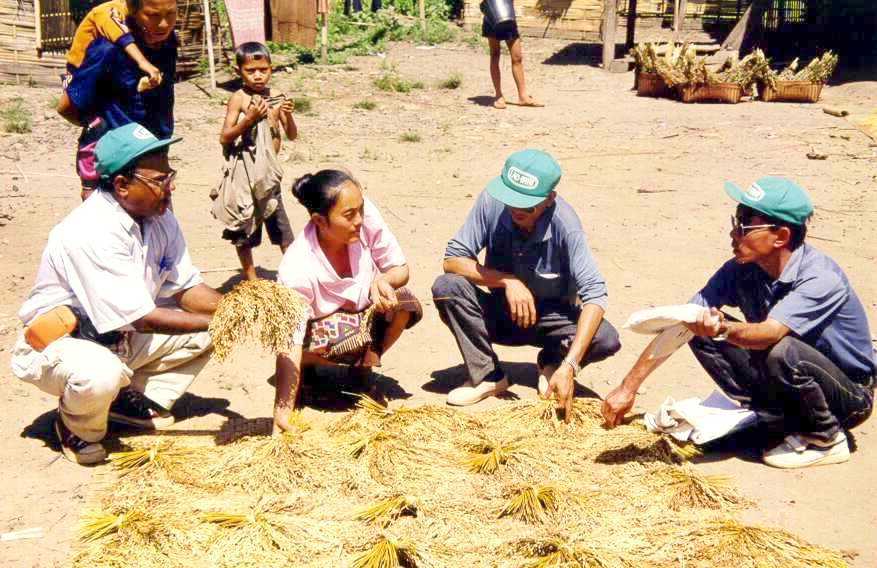
During the 1990s, IRRI had a special rice project with the Government of Laos, and a staff member based in Vientiane. Since little rice germplasm had been collected in that country, we recruited Dr Seepana Appa Rao to collect rice varieties there.

Appa Rao (right) and his Lao counterpart, Dr Chay Bounphanousay (left) sampling a rice variety from a Lao farmer.

Over a five year period he and his Lao colleagues collected more than 13,000 samples, now safely conserved in the International Rice Genebank. We also built a small genebank near Vientiane to house the germplasm locally.

My colleagues and I were quite productive in terms of research and publications. This post lists all the publications on which I was author/co-author, and there are links therein to PDF copies of many of them.

Every year, IRRI receives thousands of visitors, and when I first arrived at IRRI, it seemed as if anyone and everyone who wanted to visit the genebank was allowed to do so. On more than one occasion—until I put a stop to it—I’d find our colleagues from Visitor Services taking a large party of visitors, hordes of schoolchildren even, into the cold stores. With such large numbers it was not possible to keep all the doors closed, disrupting the carefully controlled temperature and humidity environment in the genebank and its laboratories.

I had to limit the number of visitors inside the genebank significantly, and ask my staff to take some of the load of attending to visitors. Nevertheless, I do understand the need to explain the importance of genetic resources and the role of the genebank to visitors, and build a constituency who can support the genebank and what it aims to achieve.

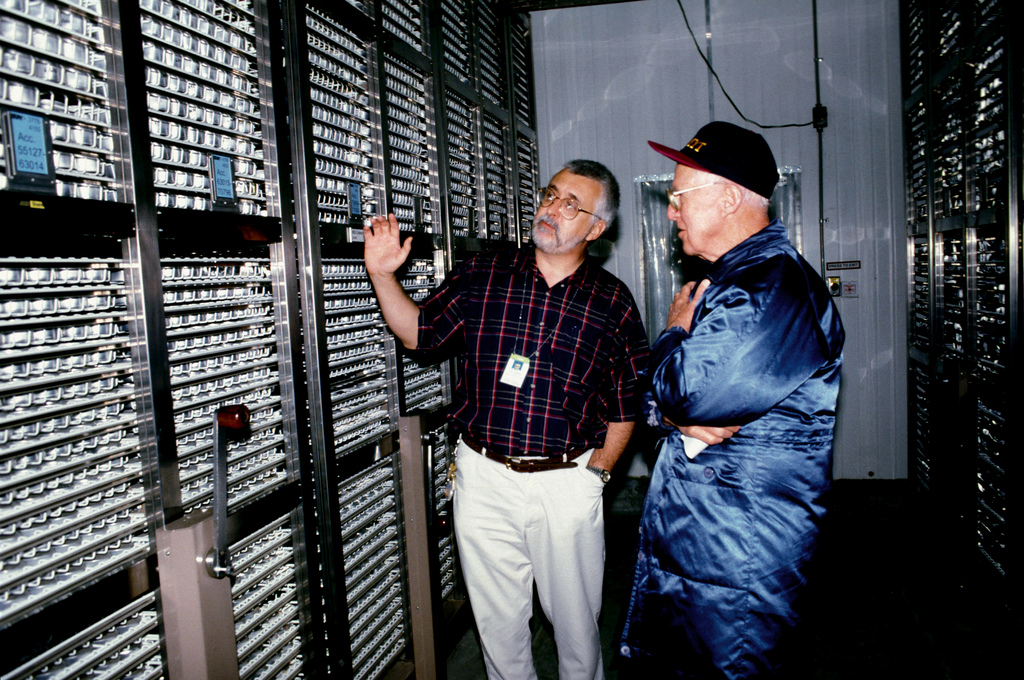
But it was a joy to meet with visitors such as wheat breeder, ‘Father of the Green Revolution’, and 1970 Nobel Peace Laureate, Dr Norman Borlaug.

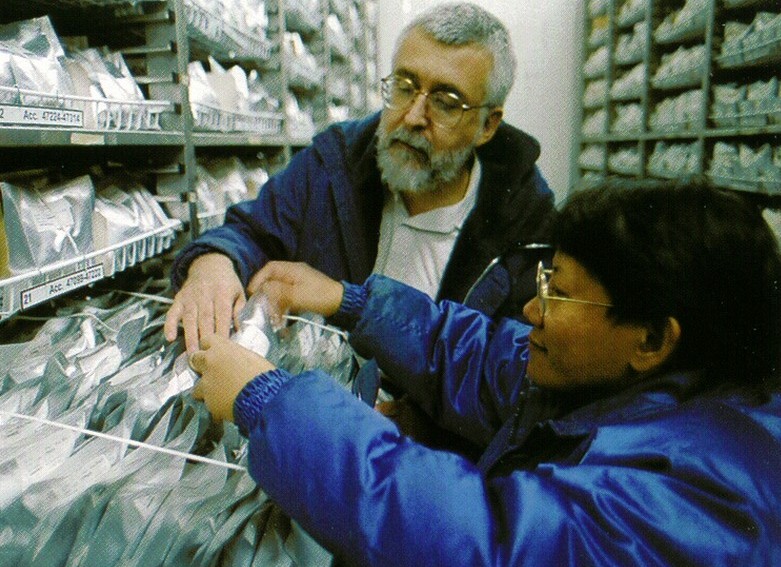
With Dr Norman Borlaug in the IRG Active Collection in the early 1990s, before we transferred the germplasm to aluminum pouches.

Finally, let me say something about IRRI’s genetic conservation role in the context of the CGIAR.

In the early 1990s, the heads of the CGIAR genebanks would meet each year as the Inter-Center Working Group on Genetic Resources (ICWG-GR). I attended my first meeting in January 1993 in Addis Ababa at the International Livestock Centre for Africa (ILCA, now part of the International Livestock Research Institute or ILRI). I was elected chair for three years, and during my tenure the System-wide Genetic Resources Program (SGRP) was launched with the ICWG-GR as its steering committee.

Earlier I mentioned the CBD. There’s no doubt that during the 1990s the whole realm of genetic resources became highly politicized, with the CGIAR centers contributing to CBD discussions as they related to agricultural biodiversity, and through the FAO Commission on Genetic Resources for Food and Agriculture.

The organization of the genebanks in the CGIAR has undergone several iterations since I moved away from this area in May 2001 (when I joined IRRI’s senior management team as Director for Program Planning and Communications). My successor Dr Ruaraidh Sackville Hamilton enthusiastically took on the role of representing the institute in the discussions on the formulation and implementation of the International Treaty on Plant Genetic Resources for Food and Agriculture (ITPGRFA). The Treaty aims to guarantee food security through the conservation, exchange, and sustainable use of the world’s plant genetic resources for food and agriculture. It also focuses on fair and equitable benefit sharing and recognition of farmers’ rights.

In 2016-17, I led a review of the Genebanks CRP (CGIAR Research Program). Since then, the Genebanks CRP evolved into the Genebank Platform, and is now the CGIAR Initiative on Genebanks.

What I can say is that all the CGIAR genebanks have raised their game with respect to the crops they conserve. Working with the Crop Trust, standards have increased, and genebanks held to account more rigorously in terms of how they are being managed. Nevertheless, I think that we can say that the CGIAR continues to play one of the major roles in genetic resources conservation worldwide.


[1] GRC comprised two units: the genebank (my day-to-day responsibility), and the International Network for the Genetic Evaluation of Rice or INGER, which was managed basis by one of my colleagues.

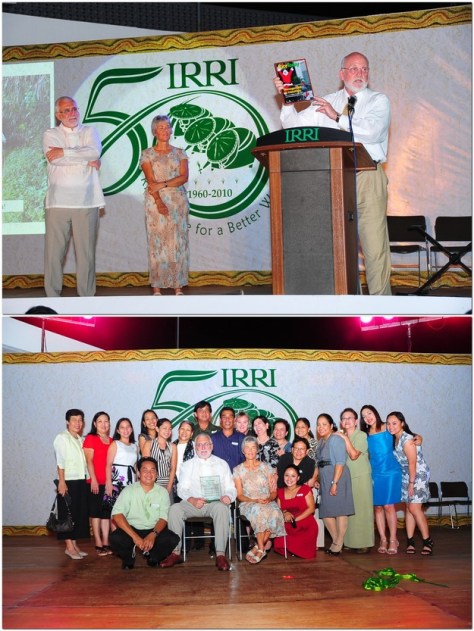
[2] It seems like only yesterday that I was organizing the institute’s Golden Jubilee in 2010, after which I retired and returned to the UK.

[3] Three key staff, Ms Eves Loresto, Tom Clemeno, and Ms. Amita ‘Amy’ Juliano sadly passed away, as have several other junior staff.


Then there was rice . . .

For 20 years before I joined the International Rice Research Institute (IRRI) in the Philippines in July 1991, as head of the Genetic Resources Center (GRC), my career in international agricultural research at the International Potato Center (CIP, 1973-1981) in Peru and academia (at The University of Birmingham, 1981-1991) focused on potatoes and legume species. Although I remained at IRRI until 2010 (when I retired), I was head of GRC for just a decade, after which I moved to a senior management position.

I’d travelled in Asia only twice before. And one of those trips had been to IRRI in January 1991 for interview. The other, in 1985, was to attend a genetic resources conference in Jakarta, Indonesia.
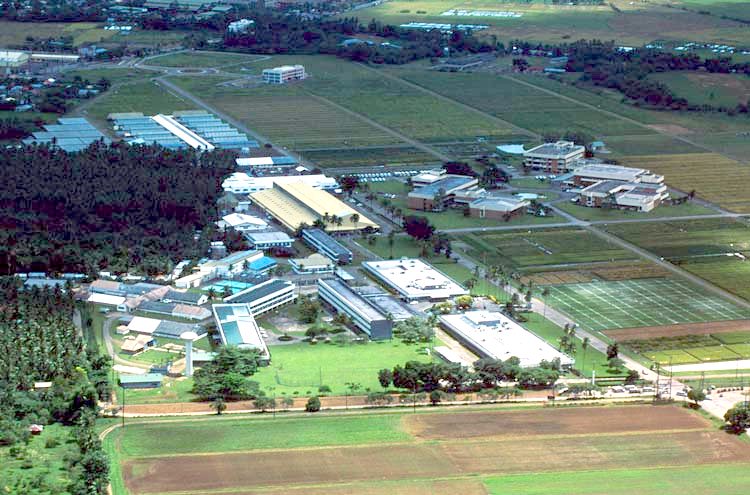
IRRI research center in Los Baños. GRC is housed in the Brady Building on the extreme right. Other buildings have been added since the photo was taken.

So my experience in Asia was limited to say the least, and non-existent for rice. Joining IRRI was certainly a challenge. Why?
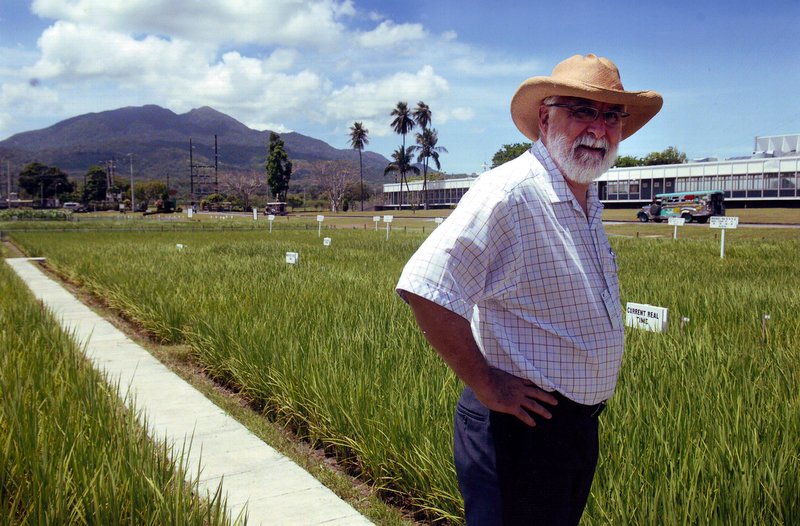
In the experiment field at IRRI research center in 2010, with Mt Makiling in the background. I bought that sombrero in Peru in January 1973, just a few days after I arrived there to begin my career in international agricultural research at CIP. The hat is still going strong 50+ years later – not so sure about the wearer.

At IRRI, I had to learn about rice from scratch, manage one of the world’s most important genebanks (I’d never managed a genebank before), and supervise a group of more than 70 professional and support staff. Furthermore, I had to learn (quickly) to empathise with a very different culture, specifically Filipino but Asian more broadly (very different from that I’d experienced in Latin America). It wasn’t so straightforward, but I was up for the challenge.

In 1991, Klaus Lampe (right, who passed away earlier this year) was IRRI’s Director General, who was appointed in 1988 to revive the institute’s status in the world of international agricultural research. That meant not only refurbishment of IRRI’s laboratories and offices at its Los Baños campus headquarters, but also involved a significant turnover of staff, replacing many (who had been with IRRI for a decade or more, even since the 1960s) with a cohort of younger staff who could bring new ideas,  enthusiasm, and skills to IRRI’s research for development agenda. I was part of that recruitment cohort.

I first heard about the GRC position at IRRI in September 1990. It was advertised as a new department, bringing together the rice genebank (then known as the International Rice Germplasm Center, later renamed the International Rice Genebank) and INGER, a global network for testing rice varieties and breeding lines. While the head would have overall management responsibility for GRC, his/her day-to-day duties would focus on the genebank, while another staff member was the INGER leader.

During my interviews at IRRI over three days I indicated I would only be interested in the position if there was a specific research component and funding to support it, something that had not been envisaged when GRC was established and the position advertised.

I must have been persuasive because I was offered the position, and Lampe approved a research role for GRC. Specifically for research aimed at managing and using the important rice germplasm collection of indigenous varieties, improved lines, genetic stocks, and wild species that, in 1991, totalled around 75,000 seed samples or accessions.

But in July 1991, research per se was not an immediate priority. There were other, more pressing issues to be attended to first—and their outcome equally as important as our many research publications.

I had to quickly familiarise myself with IRRI’s research and management culture as one of the world’s leading agricultural research centers (and oldest among the research centers supported through the Consultative Group on International Agricultural Research, or CGIAR), build a GRC culture and, specifically, work out just how the genebank could be better managed and the roles of each of the staff.

My predecessor (as head of the International Rice Germplasm Center) was eminent rice geneticist and upland rice breeder, Dr TT Chang. ‘TT’, as he was known, ran the genebank (I quickly discovered) along the lines: ‘Do as I say’, and staff had little or no individual responsibility or leeway to manage their work more effectively.

It didn’t take me long to realise that changes could and should be made to increase efficiency, and eliminate duplication of effort among staff. I needed to assign specific responsibilities (and accountability) to each staff member for seed conservation, germplasm multiplication and rejuvenation, for data management, among others, and also identify individuals who might take on a specific research role.

After six months of asking lots of questions and discussing the genebank operations, I had a genebank strategy and plan ready. And because my staff had been involved in developing the plan, its implementation was fairly plain-sailing from then on.

I’m not going to detail here the sorts of changes that were made. Almost none of the genebank operations in the field or in storage escaped our attention. Job descriptions were rewritten, and positions upgraded to reflect new responsibilities.
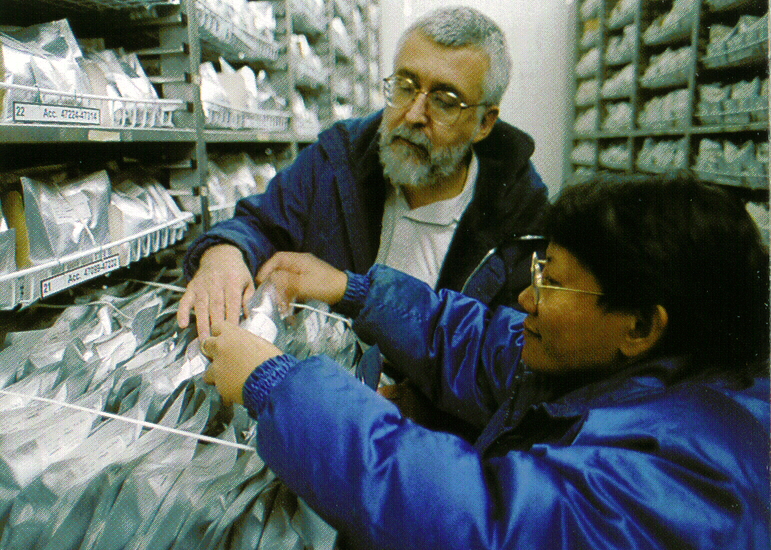
Inside the International Rice Genebank, with Pola de Guzman who became the genebank manager.

The genebank was fortunate to be included in the institute’s refurbishment plan, so we upgraded many of its facilities and installed a dedicated seed drying room, a significant addition.

In this post I summarised what it entails to run a genebank for rice. And check out this video I made  about the genebank in 2015 on a return visit to IRRI. Many of the staff who feature in the video have themselves now retired and some have sadly died.

Among the tasks we undertook was revision of the data management system, one of the most important components of genebank operations. For a number of reasons the data system I inherited was not really fit for purpose. It took two years to complete all the changes!

And for the sake of my successor(s), we wrote a genebank operations manual, the first of its kind among the CGIAR genebanks. Publishing the manual was not the only ‘first’ that IRRI achieved.

The fruits of our endeavours were recognised around 1994 when the CGIAR launched an external review of the center genebanks. The reviewers concluded that IRRI’s genebank was ‘a model for others to emulate‘. Our hard work had paid off. But we weren’t complacent, striving to make more improvements which were taken further by my immediate successor, Dr Ruaraidh Sackville Hamilton.


The management and status of the International Rice Genebank
Over the decade I was in charge of IRRI’s genebank, we published several papers and book chapters describing the rice collection and its management (and in the wider CGIAR context), how much it cost to run, who had requested germplasm and for what purpose, using biotechnology for conservation, as well as issues related to the management of intellectual property.

During the mid-1990s, and post-Convention on Biological Diversity (CBD) there was concern internationally about how germplasm was being conserved in the 11 CGIAR center genebanks.

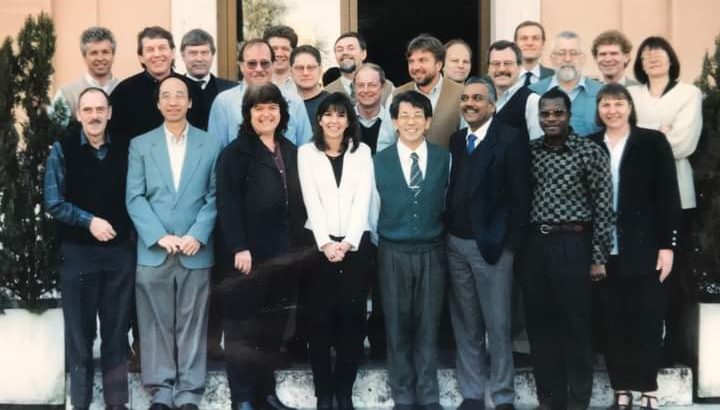
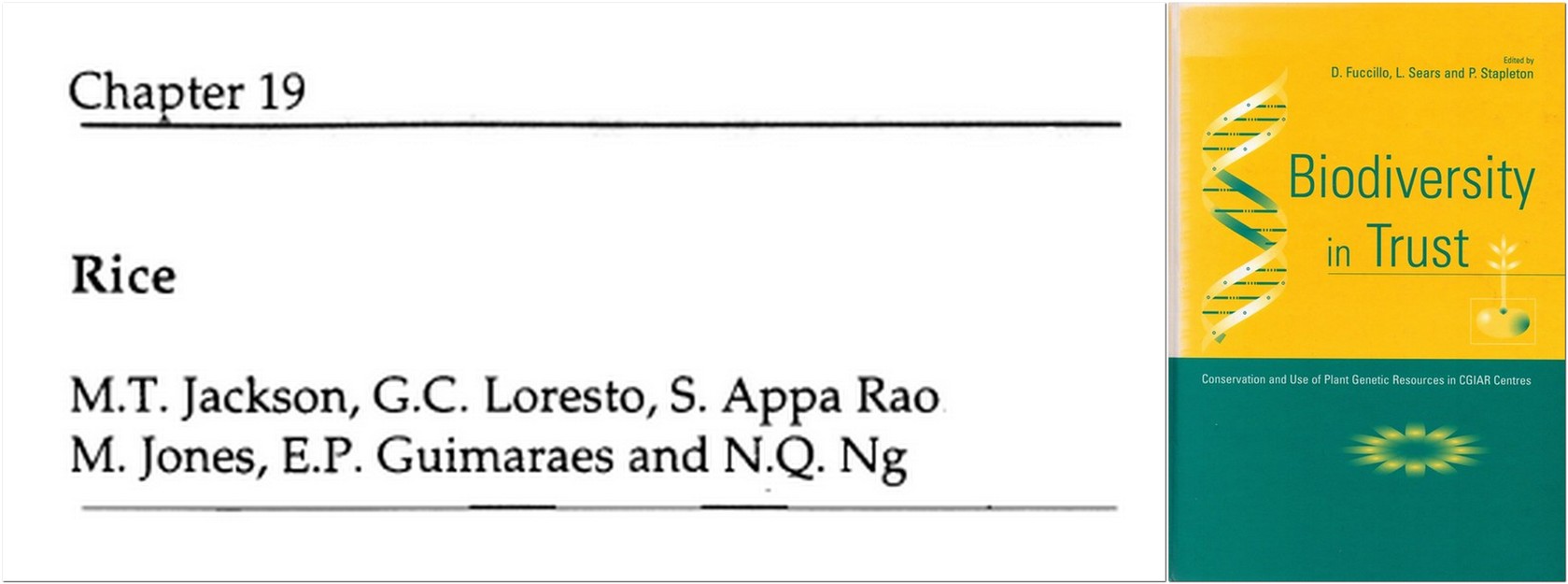
The CGIAR’s System-wide Genetic Resources Program (SGRP, launched in 1994 and which I chaired for several years, seen in the image below meeting in Rome had members from all CGIAR centers) responded to these concerns by publishing Biodiversity in Trust in 1997.
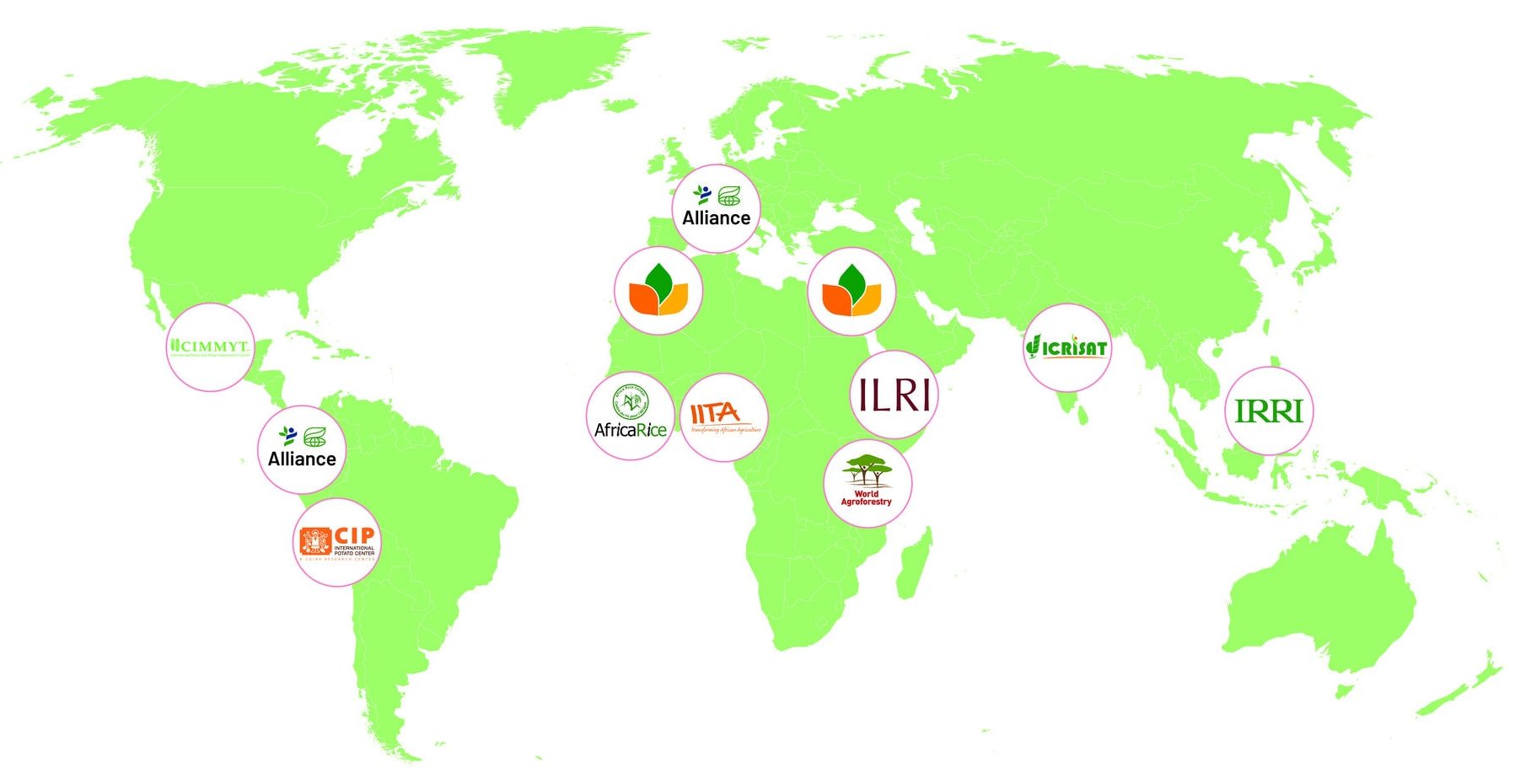
The chapters described the status and management of each of the crops held in trust in the genebanks. The rice chapter had authors from IRRI, Africa Rice (in Ivory Coast), IITA (in Nigeria), and CIAT (in Colombia), all of which had rice collections, with that at IRRI the largest and most comprehensive.
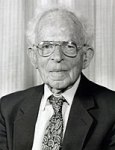
In the 1990s, there was considerable interest in developing ‘core collections’ (first proposed by genetic resources pioneer, Sir Otto Frankel (right, one of the pioneers of the plant genetic resources conservation movement launched in the 1960s, who I had the pleasure of meeting at that 1985 conference in Jakarta), a subset of the whole collection that encompassed all the diversity—a concept that has been (mis)interpreted in a multiplicity of ways ever since. I’ve never been much of an advocate for core collections, simply because we had so much to achieve to ensure the safety of the whole collection rather concentrate our efforts on a subset. Nevertheless, my colleague Duncan Vaughan (who left IRRI in 1993 to join a research institute in Tsukuba, Japan) and I speculated how a core collection for rice might be assembled.
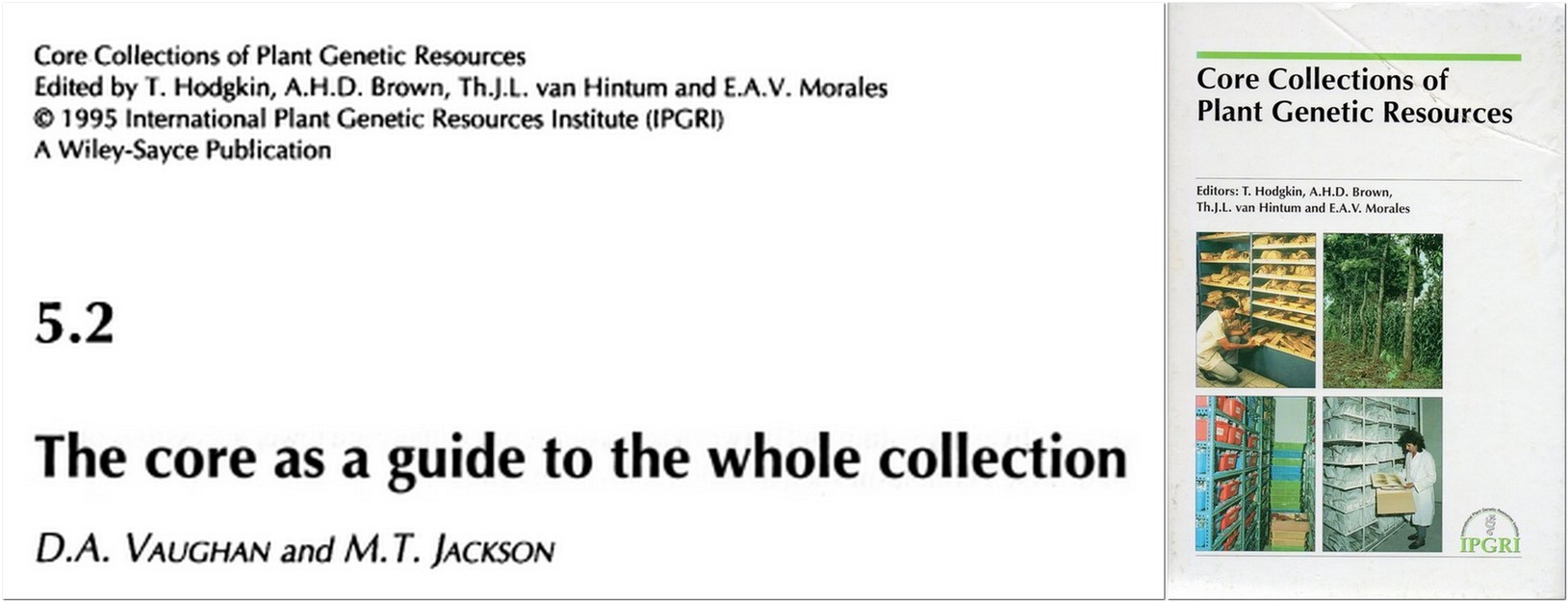
We published an update in 1999, after we’d had several years of molecular analysis experience.
The IRRI collection has been widely used in plant breeding, and rice research in general. It’s not a museum collection, and access to the germplasm is one justification for its continued financial support.

The long-term security of any genebank collection is dependent upon reliability of long-term funding. Fortunately the Crop Trust now provides a significant level of security to genebanks in perpetuity through its Endowment Fund.

But what does it cost to run a genebank like IRRI’s? In the late 1990s, we didn’t really have a good handle on this. With the help of agricultural economists Bonwoo Koo, Philip Pardey, and Brian Wright, several of the CGIAR genebanks made a stab at a costing exercise – subsequently revised since methodologies have been improved. Here is the original IRRI costing study, published in 2004.
During our research on the breeding relationships of wild and cultivated rices, we used in vitro culture of embryos (on nutrient medium), and over the years adopted various molecular approaches (see below) to study the diversity of the rice collection. Some of these also had implications for intellectual property management, and I addressed some of these issues in this chapter in 1999.
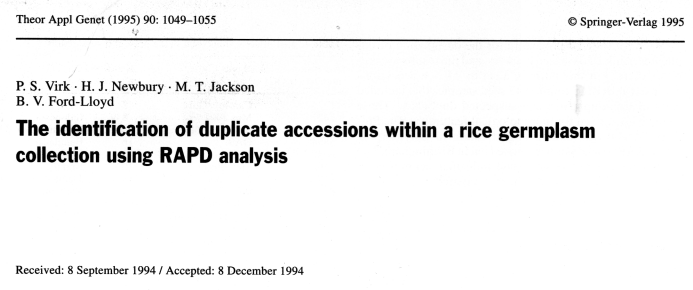
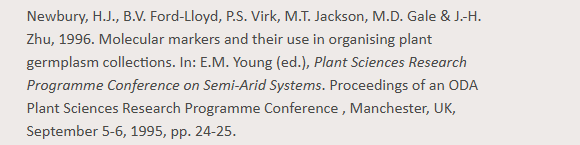
In a later section of this post I describe in more detail how we (with colleagues in the UK) adopted and developed molecular approaches to manage the collection (and study diversity). But here are two general descriptions of what we did.
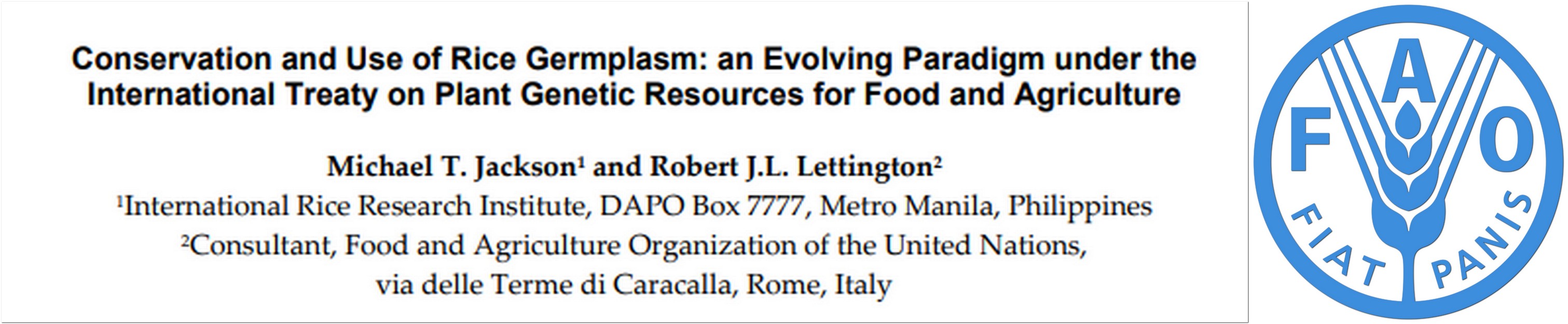
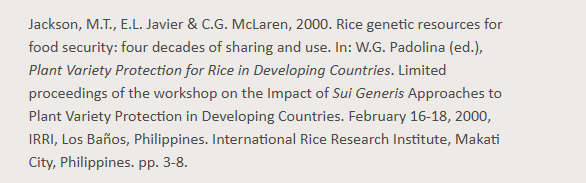
Post-CBD, and with the coming into force of the International Treaty on Plant Genetic Resources for Food and Agriculture, I (together with an FAO consultant Robert Lettington) was asked to provide FAO with an analysis of some of the current developments affecting access to germplasm, including the effects of the development of access legislation under the Convention on Biological Diversity (CBD), legislation on intellectual property rights (IPRs), and other relevant national legislation.
Now let me turn to GRC research per se, which focused on two main areas:

  • managing the germplasm collection; and
  • understanding the diversity of rice accessions in the collection.

From the outset it was clear to me that we would need external collaborators simply because we did not have the resources (human, laboratory, or financial) to carry out everything by ourselves. And in the account below, I’ll explain how and with whom we developed such collaboration.

Germplasm conservation
The top priority (or should be) for any genebank manager is to ensure that conserved germplasm is safe and will retain its viability for decades.

Since the IRRI collection comprised rice varieties and wild species from across the world, I was concerned that we had insufficient information how to improve the multiplication of diverse seed samples in one location, namely Los Baños (14°N). While there was quite a body of literature about seed multiplication, drying, and storage from a range of other species, not so much was known then about rice.
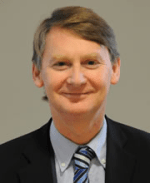
So I turned to my good friend at the University of Reading, Professor Richard Ellis (right), a leading expert in seed conservation, and together we successfully applied for one of the UK Overseas Development Administration’s (ODA, later to become the Department for International Development or DfID) ‘Holdback’ grants. This was a scheme in which the ODA set aside a small portion of its overseas aid budget to the CGIAR centers to fund collaborative work between British institutions and centers, but with the bulk of the funds spent in the UK.

Our project focused on how the seed production environment and time of harvest affected seed longevity in storage, leading to a couple of publications that guided our practices in the genebank.
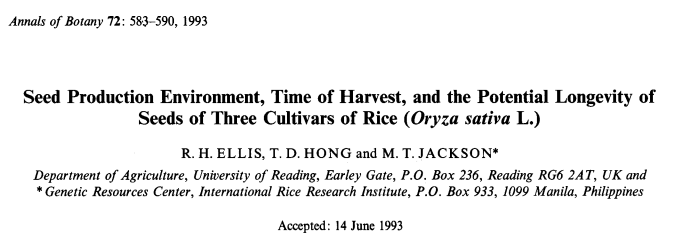
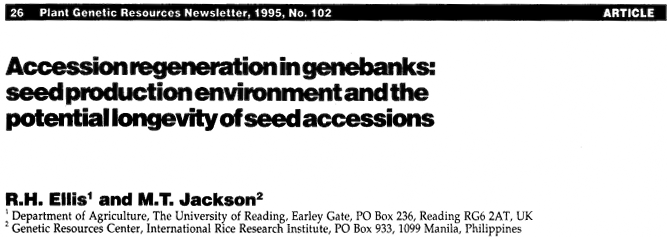
The next step was to expand the research in Los Baños itself looking at more rice varieties in a real rice-growing environment.

I recruited Dr N Kameswara Rao (right) from India (who had completed his PhD at Reading) to join GRC on a postdoctoral position for three years.

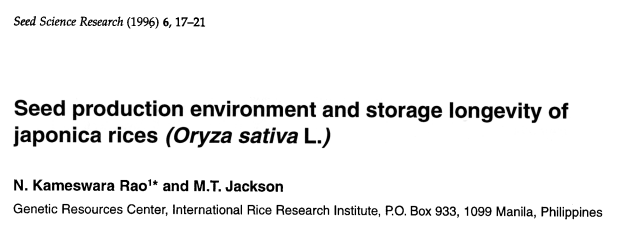
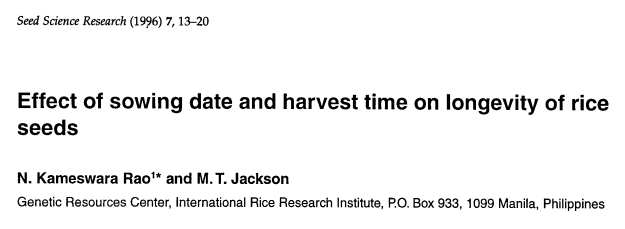
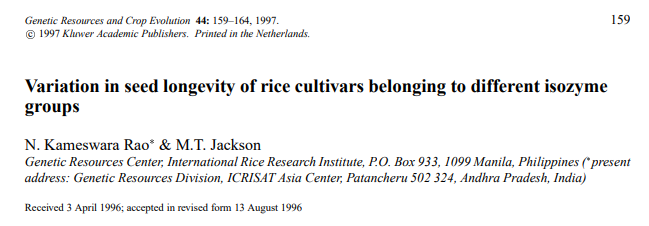
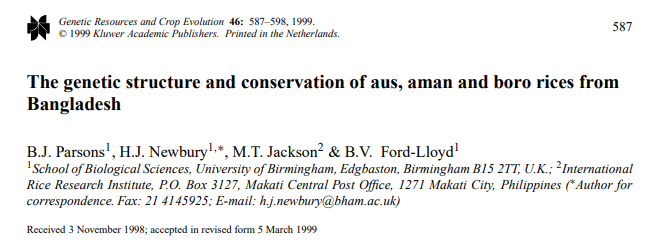
Kameswara Rao and I published these four papers:
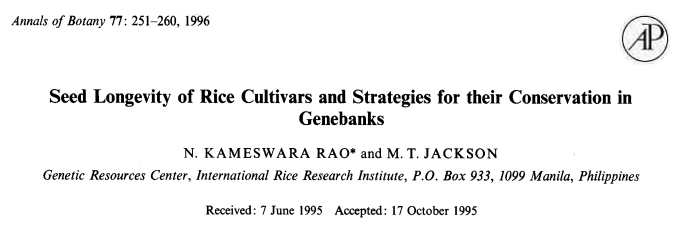
As a result of this project, we made several important changes to germplasm multiplication and rejuvenation, and post-harvest drying and management was enhanced, as I mentioned earlier, with the addition of a dedicated seed drying room (with a capacity of at least 2 tonnes, that allowed seeds to dry slowly) to the genebank.

Seed germination of wild rice species had always been somewhat hit-and-miss, so my staff set up a series of experiments to improve the germination rate, leading to the adoption of different protocols.
Molecular markers – collaboration with the University of Birmingham and the John Innes Centre
Even before I left the university to join IRRI, I had discussed with my colleagues Brian Ford-Lloyd and John Newbury [1] how we might continue to collaborate. Then, like I had with Richard Ellis at Reading, we successfully applied for a UK ‘Holdback’ grant (R5059) jointly with John Innes Centre (JIC, with the late Professor Mike Gale, FRS) in Norwich, to study how molecular markers could be used to reveal the nature of diversity in the germplasm collection and help in its management. Parminder Virk [2], a quantitative geneticist, joined the project in Birmingham, and added his considerable statistical analysis skills to the research. Dr Glenn Bryan [3] was the lead scientist at JIC.

But not without a little controversy at IRRI. Why should that have been? Well, some of my IRRI colleagues argued that the funds should come directly to the institute since there was a laboratory already established to use molecular markers (mainly Restriction Fragment Length Polymorphism markers or RFLPs), even though that lab was operating at almost full capacity.

They just couldn’t accept that ‘Holdback Funds’ would never be awarded directly to a center, even though we could allocate some of our expenses in the research to the project. In any case, it was clear to me that we had neither the capacity in house, nor did we have the trained personnel in GRC. With that in mind, I was able eventually to send one of my staff, Amita ‘Amy’ Juliano (who sadly passed away around 2004) for several weeks training (on a travel grant from the British Council) in the Birmingham lab, and on her return she set up her own lab in GRC.
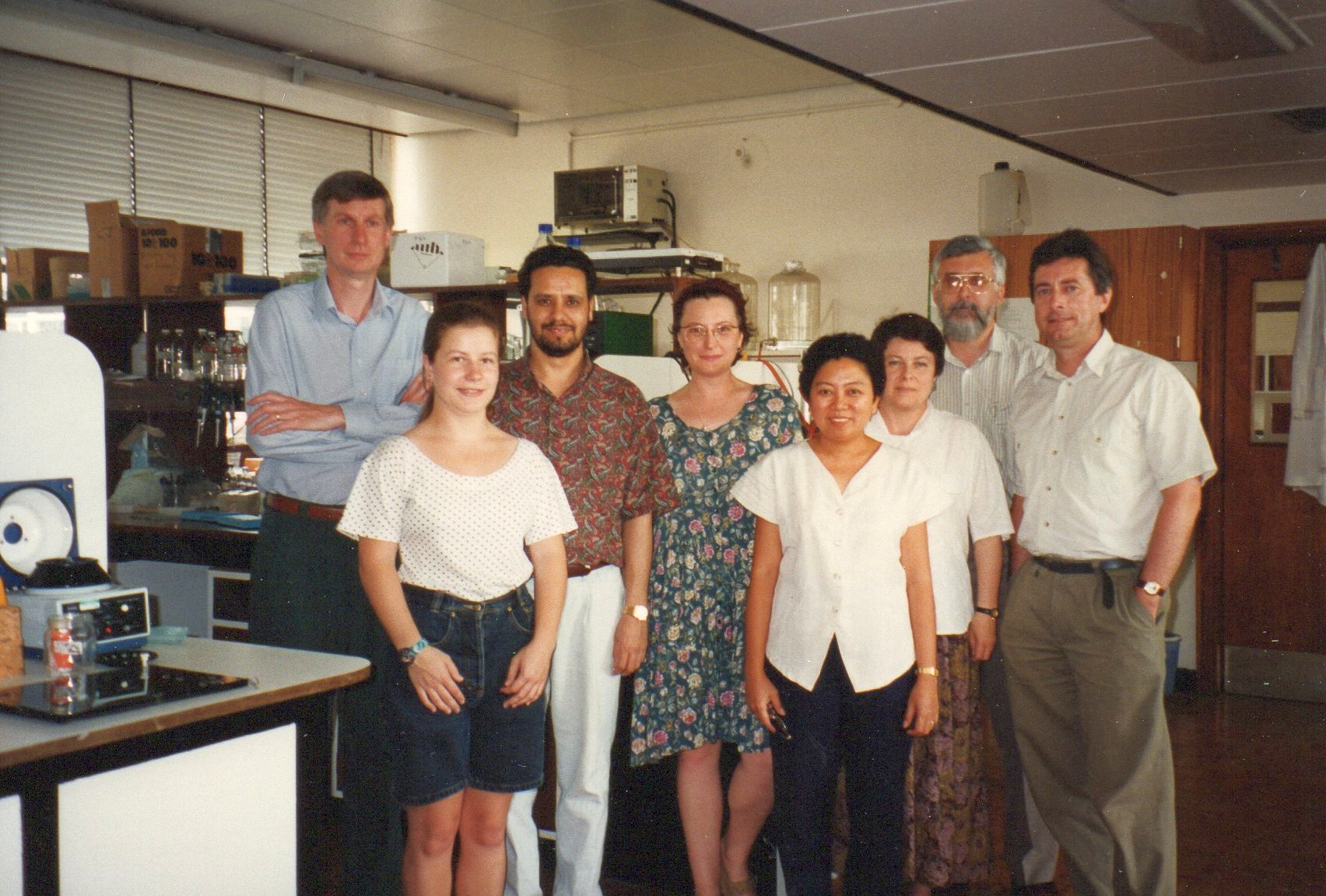
L-R: John Newbury, Faye Hughes (lab technician), Parminder Virk (postdoc), visitor, Amy Juliano (IRRI), visitor, me, Brian Ford-Lloyd in the lab at Birmingham.

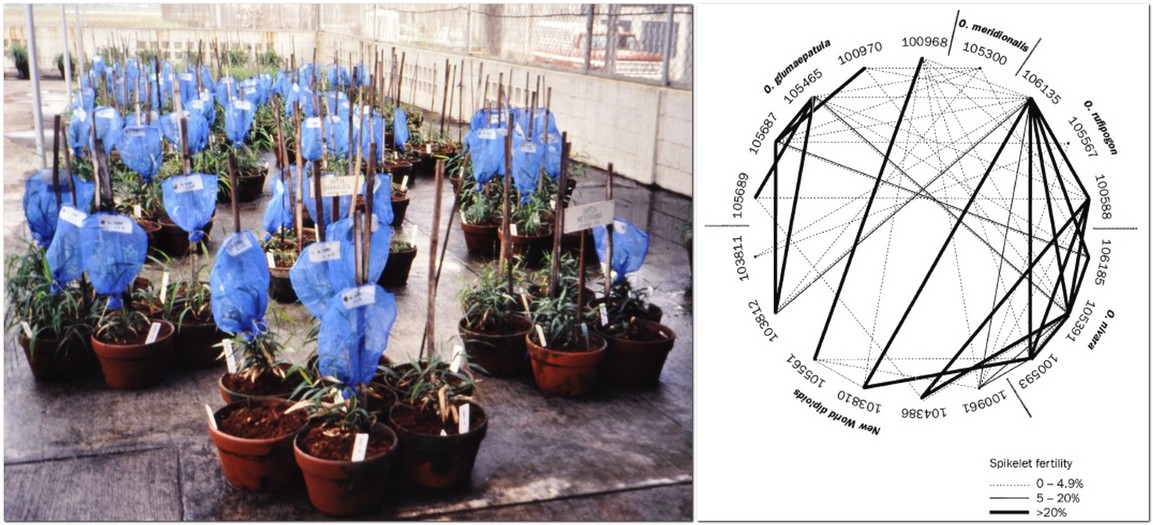
Birmingham had responsibility for the molecular screening (and development of techniques and methodologies), using PCR-based markers like Random Amplification of Polymorphic DNA or RAPD markers. What we at IRRI contributed was expertise to phenotype rice varieties in the field.

Compared to what molecular markers are available for research today (and more than a decade before the rice genome was sequenced in 2002), and the developments in genome sequencing that have taken place, our initial focus on RAPD markers was just the beginning of an innovative (pioneering even) molecular study of any germplasm collection. And has led to some molecular firsts.

We showed that RAPD markers were useful for expanding our knowledge of diversity beyond the purely morphological or isozyme data then available.
In a particularly significant development we demonstrated how RAPD markers could be used to predict the behaviour of rice varieties in the field (combining excellent molecular analysis with accurate phenotyping). This was one of the first (if not the first) examples of what came to be known as ‘association genetics’, dismissed at the time by many (including Mike Gale) but now widely verified in other species.
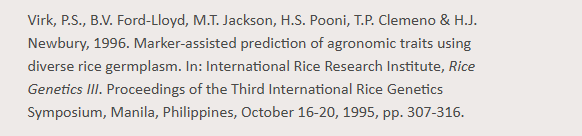
Our colleagues at the JIC also developed work on Amplified Fragment Length Polymorphism or AFLP markers to study rice germplasm. A young Chinese scientist, Zhu Jiahui, joined the project and eventually was awarded his PhD for the research.
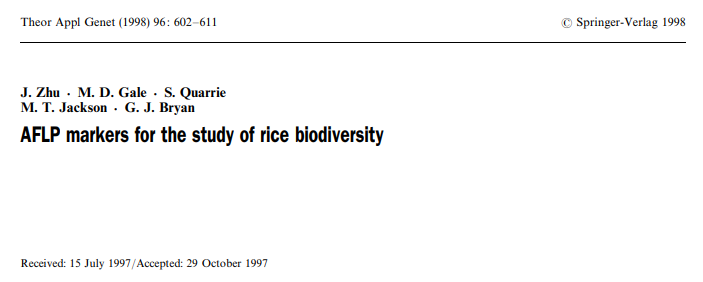
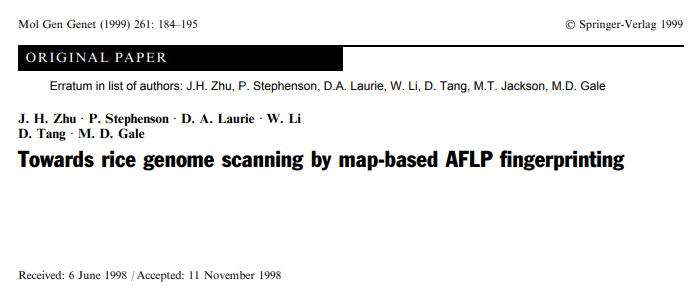
A couple of PhD students at Birmingham used molecular markers to study material from the collection.
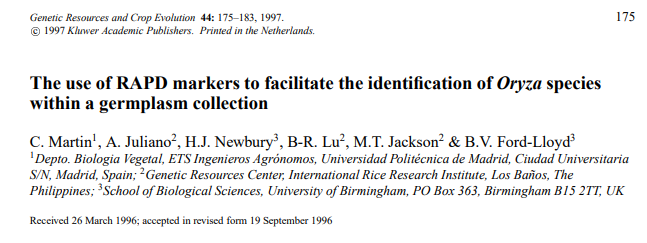
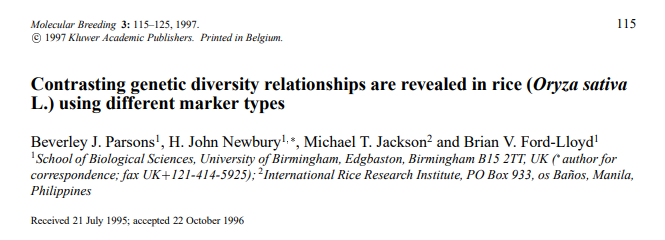
After several years of study we developed a deep appreciation of how molecular markers really did open a window on the diversity of the germplasm collection.
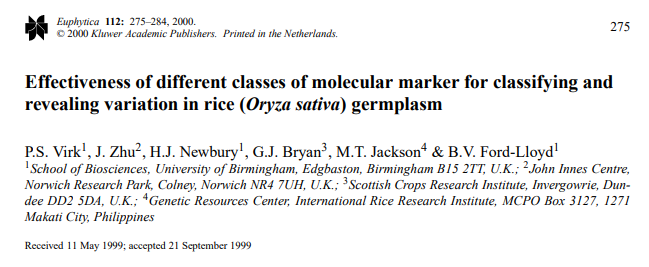
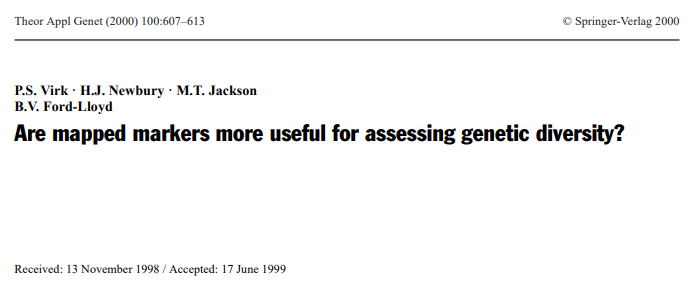
Biosystematics and pre-breeding
Wild species have been used to improve rice varieties, and the genebank collection holds many accessions of the 20 or so wild Oryza species. However, there had been little systematic study in terms of their taxonomy or their breeding relationships with the cultivated species. We decided to rectify that situation and launched a program to study the variation in and relationships of the wild and cultivated rices, Oryza sativa and Oryza glaberrima.
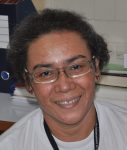
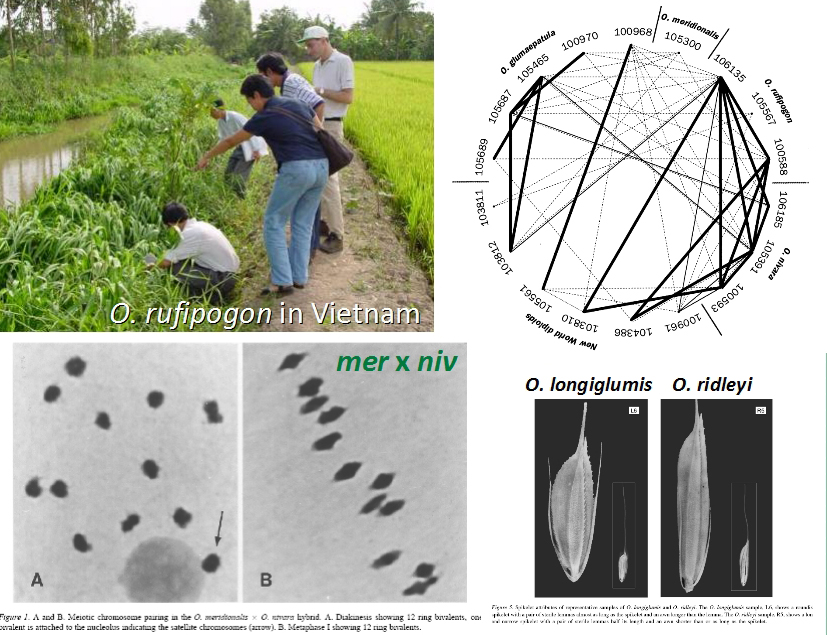
In 1994 we recruited Chinese cytogeneticist Dr Lu Bao-Rong (right, now at Fudan University in Shanghai) to lead this biosystematics initiative and to continue the collecting of wild species of his predecessor, Dr Duncan Vaughan. The two Filipino support staff were Amy Juliano and Maria Elizabeth ‘Yvette’ Naredo.

Under our supervision, Amy and Yvette carried out some important work on the AA genome rices (the two cultivated species and their closest wild relatives), establishing crossing and embryo rescue protocols.

In all, the biosystematics research led to these papers:
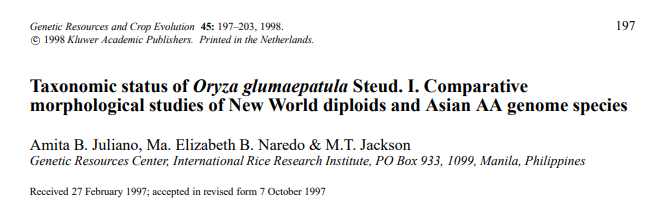
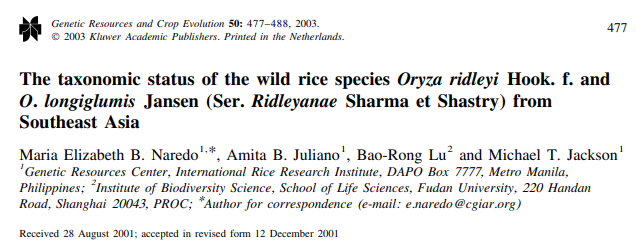
Yvette completed her MS degree at the University of the Philippines-Los Baños, co-supervised by me and a faculty member from the university, for a study on two distantly related species, Oryza ridleyi and Oryza longiglumis. Some years later she went on to complete her PhD as well.


In 1994, I applied to the Swiss government for funding to:

  • ‘complete’ the collection of rice varieties (and some wild species) throughout Asia, and wild rices in several African countries, and Costa Rica and Brazil in South America;
  • train personnel in national programs the principles and practices of rice germplasm conservation and use (including data management); and
  • evaluate the role for on-farm management of rice varieties as a component of genetic conservation.

We received a grant of USD3.286 million, and the project ran until 2000. I’ve written extensively about the project in this blog post. There you will find links to original project reports – and lots more.

Collecting rice germplasm
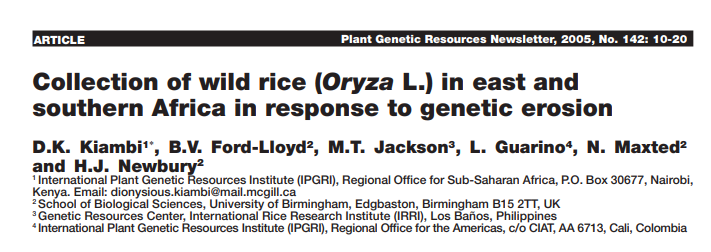
But in terms of collecting, one of my former MSc students at the University of Birmingham, Dr Dan Kiambi (a Kenyan national) coordinated collecting efforts in Africa.
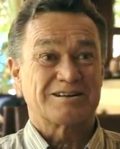
In Asia, few collections of rice germplasm had been made in Laos, due to the conflict that had blighted that country over many years. In fact it’s overall capacity for agricultural R&D was quite limited. At the end of the 1980s, and supported with Swiss funding, IRRI opened a country program office in Vientiane (the capital city), headed by the late Dr John Schiller (right), an Australian agronomist who became a good friend.

With funding from the rice biodiversity project, I hired a project scientist based in Vientiane who would work with the Lao national program to collect rice varieties throughout the country (as well as assisting collecting elsewhere if time permitted).
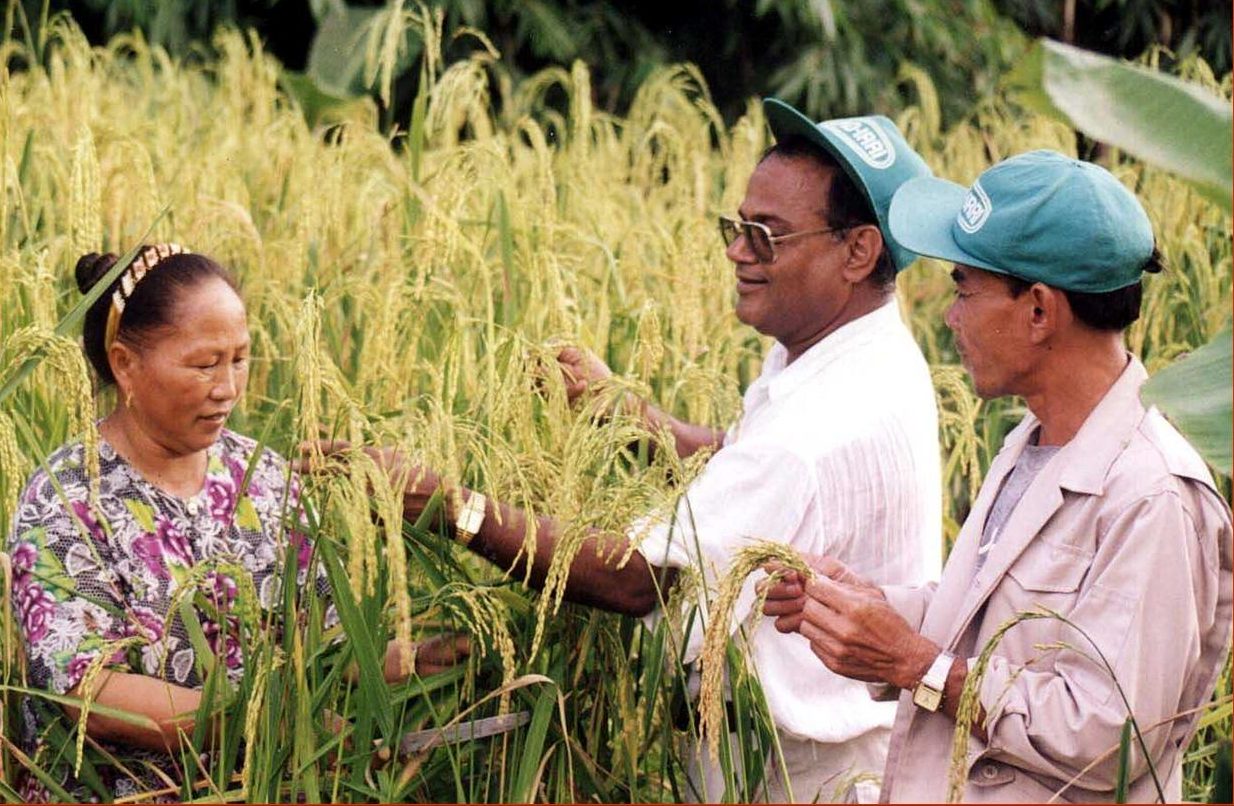
Dr Seepana Appa Rao (right, a germplasm scientist) came to us from a sister center, ICRISAT, in Hyderabad, India and he spent five years in Laos, assembling a comprehensive collection of 13,000 Lao rice samples which were duplicated in the International Rice Genebank. I wrote about this special aspect of the rice biodiversity project here.
Appa was an enthusiastic writer and here are two papers about the collections he made.
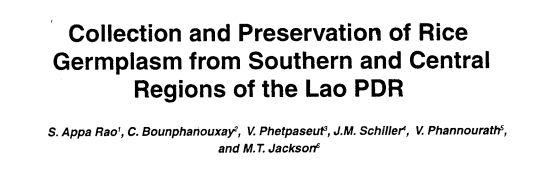
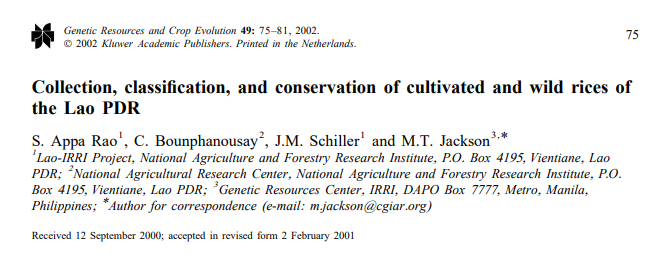
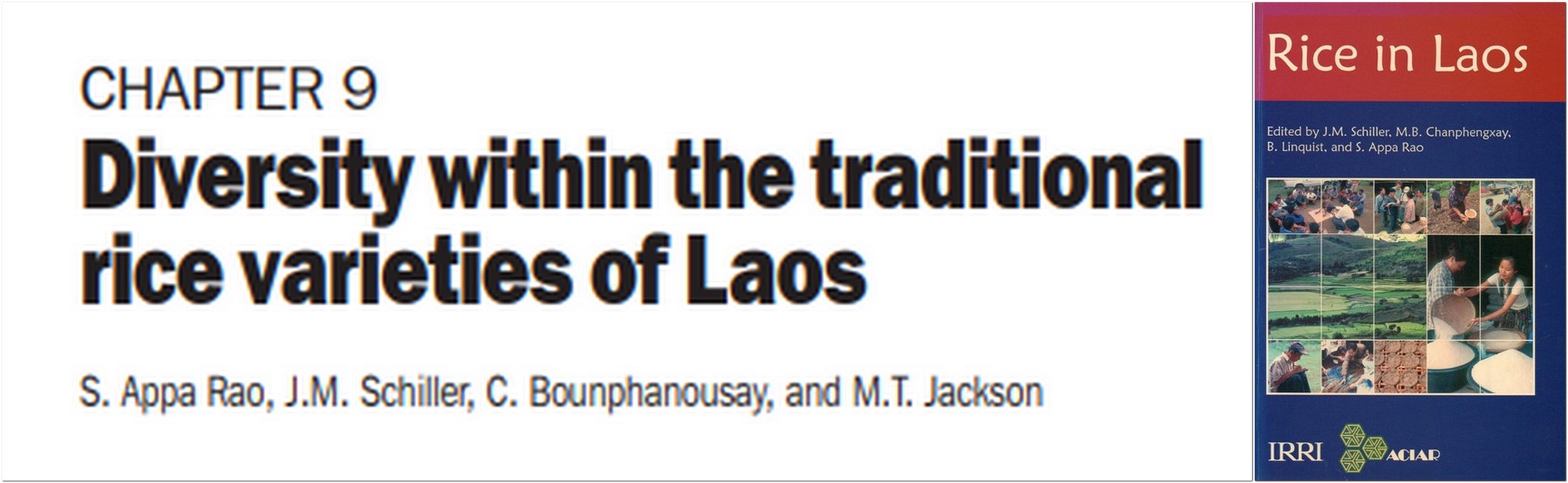
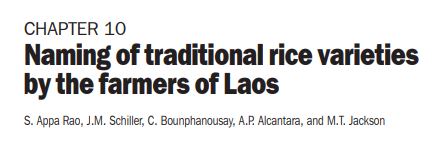
But Appa didn’t just collect rice varieties and leave it at that. With his Lao colleagues he studied the germplasm, leading to several interesting papers and book chapters.
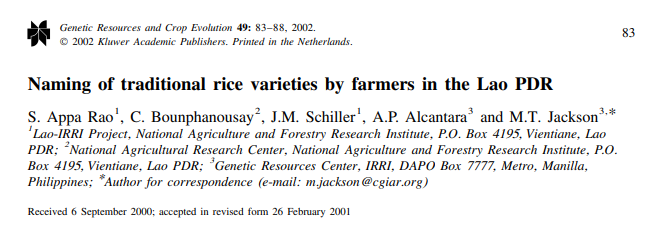
The following chapters were all published in the same book.
On-farm management of rice genetic resources
During the 1990s there was a concerted effort among some activist NGOs and the like to downplay the important (and safe) role of ex situ conservation in genebanks, instead promoting an in situ on-farm management (conservation) approach that should be adopted. Whereas there was a considerable body of scientific literature to support the efficacy of ex situ conservation, on-farm management seemed to almost be an ideology with little scientific basis to support its long-term consequences in terms of genetic conservation.

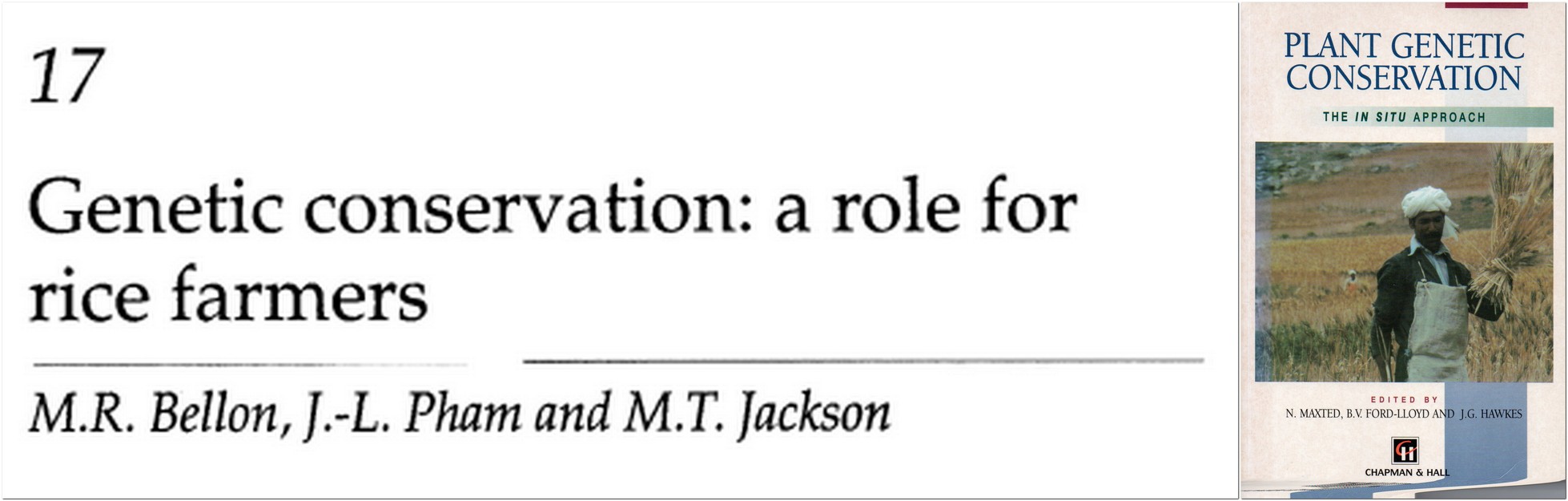
I felt we needed to tackle this situation head on, so I hired a population geneticist, Dr Jean-Louis Pham (on secondment from IRD in France) and a Mexican human ecologist, Dr Mauricio Bellon who together would look into the genetic and societal implications of on-farm management. After Mauricio moved to another institute after a couple of years, we recruited Dr Steve Morin, a social anthropologist from Nebraska.
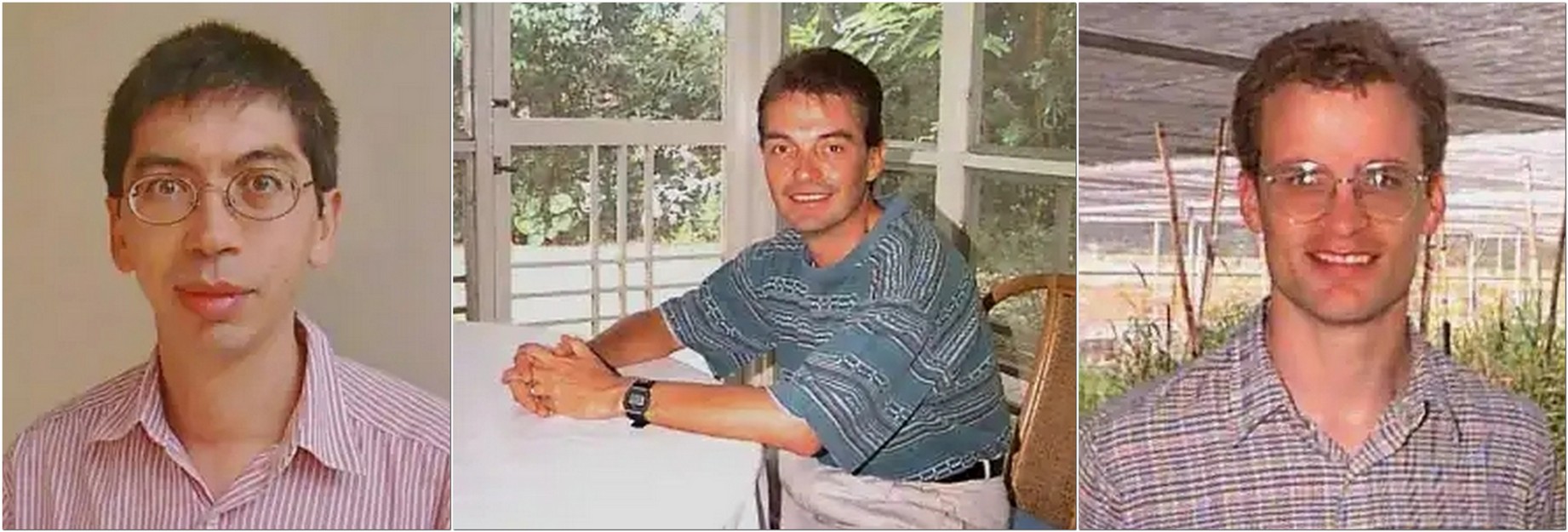
L-R: Jean-Louis Pham, Mauricio Bellon, and Steve Morin

All in all, quite a productive decade, upgrading the genebank and its collection, and establishing excellent collaborations with scientists in the UK and elsewhere, without whom we could never have achieved so much.
My Filipino staff grew in their roles, and the genebank went from strength to strength. I retired just as IRRI reached its Golden Jubilee.

Although I moved into a program management role after leaving GRC, I retained a keen interest in what my former colleagues were undertaking. And to this day, they keep me posted from time-to-time.


Besides the papers and chapters that I have included above, we presented these papers and posters at conferences. No digital copies are available.

1993
Cabanilla, V.R., M.T. Jackson & T.R. Hargrove, 1993. Tracing the ancestry of rice varieties. Poster presented at the 17th International Congress of Genetics, Birmingham, U.K., August 15-21, 1993. Volume of abstracts, 112-113.

Hunt, E.D., M.T. Jackson, M. Oliva & A. Alcantara, 1993. Employing geographical information systems (GIS) for conserving and using rice germplasm. Poster presented at the 17th International Congress of Genetics, Birmingham, U.K., August 15-21, 1993. Volume of abstracts, 117.

Jackson, M.T., 1993. Biotechnology and the conservation and use of plant genetic resources. Invited paper presented at the Workshop on Biotechnology in Developing Countries, held at the 17th International Congress of Genetics, Birmingham, U.K., August 15-21, 1993.

Jackson, M.T., G.C. Loresto & A.P. Alcantara, 1993. The International Rice Germplasm Center at IRRI. In: The Egyptian Society of Plant Breeding (1993). Crop Genetic Resources in Egypt: Present Status and Future Prospects. Papers of an ESPB Workshop, Giza, Egypt, March 2-3, 1992.

Newbury, H.J., P. Virk, M.T. Jackson, G. Bryan, M. Gale & B.V. Ford-Lloyd, 1993. Molecular markers and the analysis of diversity in rice. Poster presented at the 17th International Congress of Genetics, Birmingham, U.K., August 15-21, 1993. Volume of abstracts, 121-122.

1994
Jackson, M.T., 1994. Care for and use of biodiversity in rice. Invited paper presented at the Symposium on Food Security in Asia, held at the Royal Society, London, November 1, 1994.

Parsons, B.J., B.V. Ford-Lloyd, H.J. Newbury & M.T. Jackson, 1994. Use of PCR-based markers to assess genetic diversity in rice landraces from Bhutan and Bangladesh. Poster presented at the Annual Meeting of the British Ecological Society, held at The University of Birmingham, December 1994.

Virk, P., B.V. Ford-Lloyd, M.T. Jackson & H.J. Newbury, 1994. The use of RAPD analysis for assessing diversity within rice germplasm. Paper presented at the Annual Meeting of the British Ecological Society, held at The University of Birmingham, December 1994.

1995
Dao The Tuan, Nguyen Dang Khoi, Luu Ngoc Trinh, Nguyen Phung Ha, Nguyen Vu Trong, D.A. Vaughan & M.T. Jackson, 1995. INSA-IRRI collaboration on wild rice collection in Vietnam. In: G.L. Denning & Vo-Tong Xuan (eds.), Vietnam and IRRI: A partnership in rice research. International Rice Research Institute, Los Baños, Philippines, and Ministry of Agriculture and Food Industry, Hanoi, Vietnam, pp. 85-88.

Jackson, M.T., 1995. The international crop germplasm collections: seeds in the bank! Invited paper presented at the meeting Economic and Policy Research for Genetic Resources Conservation and Use: a Technical Consultation, held at IFPRI, Washington, D.C., June 21-22, 1995

Jackson, M.T., A. Alcantara, E. Guevarra, M. Oliva, M. van den Berg, S. Erguiza, R. Gallego & M. Estor, 1995. Documentation and data management for rice genetic resources at IRRI. Paper presented at the Planning Meeting for the System-wide Information Network for Genetic Resources (SINGER), held at CIMMYT, Mexico, October 2-6, 1995.

Jackson, M.T., B.R. Lu, G.C. Loresto & F. de Guzman, 1995. The conservation of rice genetic resources at the International Rice Research Institute. Paper presented at the International Symposium on Research and Utilization of Crop Germplasm Resources held in Beijing, People’s Republic of China, June 1-3, 1995.

Kameswara Rao, N. & M.T. Jackson, 1995. Seed production strategies for conservation of rice genetic resources. Poster presented at the Fifth International Workshop on Seeds, University of Reading, September 11-15, 1995.

Lu, B.R., A. Juliano, E. Naredo & M.T. Jackson, 1995. The conservation and study of wild Oryza species at the International Rice Research Institute. Paper presented at the International Symposium on Research and Utilization of Crop Germplasm Resources held in Beijing, People’s Republic of China, June 1-3, 1995.

Pham, J.L., M.R. Bellon & M.T. Jackson, 1995. A research program on on-farm conservation of rice genetic resources. Poster presented at the Third International Rice Genetics Symposium, Manila, Philippines, October 16-20, 1995.

Reaño, R., M.T. Jackson, F. de Guzman, S. Almazan & G.C. Loresto, 1995. The multiplication and regeneration of rice germplasm at the International Rice Genebank, IRRI. Paper presented at the Discussion Meeting on Regeneration Standards, held at ICRISAT, Hyderabad, India, December 4-7, 1995, sponsored by IPGRI, ICRISAT and FAO.

1996
Appa Rao, S., C. Bounphanousay, V. Phetpaseuth, K. Kanyavong, B. Sengthong, J. M. Schiller, V. Phannourath & M.T. Jackson, 1996. Collection and classification of rice germplasm from the Lao PDR. Part 1. Southern and Central Regions – 1995. Internal report of the National Agricultural Research Center, Dept. of Agriculture and Extension, Ministry of Agriculture and Forestry, Vientiane, Lao PDR, and Genetic Resources Center, International Rice Research Institute (IRRI), Los Baños, Philippines.

Jackson, M.T. & G.C. Loresto, 1996. The role of the International Rice Research Institute (IRRI) in supporting national and regional programs. Invited paper presented at the Asia-Pacific Consultation Meeting on Plant Genetic Resources, held in New Delhi, India, November 27-29, 1996.

Jackson, M.T. & R.D. Huggan, 1996. Pflanzenvielfalt als Grundlage der Welternährung. Bulletin—das magazin der Schweizerische Kreditanstalt SKA. March/April 1996, 9-10.

Jackson, M.T., 1996. Intellectual property rights—the approach of the International Rice Research Institute. Invited paper presented at the Satellite Symposium on Biotechnology and Biodiversity: Scientific and Ethical Issues, held in New Delhi, India, November 15-16, 1996.

Jackson, M.T., G.C. Loresto & F. de Guzman, 1996. Partnership for genetic conservation and use: the International Rice Genebank at the International Rice Research Institute (IRRI). Poster presented at the Beltsville Symposium XXI on Global Genetic Resources—Access, Ownership, and Intellectual Property Rights, held in Beltsville, Maryland, May 19-22, 1996.

Virk, P.S., H.J. Newbury, Y. Shen, M.T. Jackson & B.V. Ford-Lloyd, 1996. Prediction of agronomic traits in diverse germplasm of rice and beet using molecular markers. Paper presented at the Fourth International Plant Genome Conference, held in San Diego, California, January 14-18, 1996.

1997
Appa Rao, S., C. Bounphanousay, K. Kanyavong, V. Phetpaseuth, B. Sengthong, J.M. Schiller, S. Thirasack & M.T. Jackson, 1997. Collection and classification of rice germplasm from the Lao PDR. Part 2. Northern, Southern and Central Regions. Internal report of the National Agricultural Research Center, Department of Agriculture and Extension, Ministry of Agriculture and Forestry, Vientiane, Lao PDR, and Genetic Resources Center, International Rice Research Institute (IRRI), Los Baños, Philippines.

1998
Appa Rao, S., C. Bounphanousay, V. Phetpaseuth, K. Kanyavong, B. Sengthong, J.M. Schiller & M.T. Jackson, 1998. Collection and Classification of Lao Rice Germplasm Part 3. Collecting Period—October 1997 to February 1998. Internal report of the National Agricultural Research Center, National Agriculture and Forestry Research Institute, Ministry of Agriculture and Forestry, Vientiane, Lao PDR, and Genetic Resources Center, International Rice Research Institute (IRRI), Los Baños, Philippines.

Jackson, M.T., 1998. Intellectual property rights—the approach of the International Rice Research Institute. Invited paper at the Seminar-Workshop on Plant Patents in Asia Pacific, organized by the Asia & Pacific Seed Association (APSA), held in Manila, Philippines, September 21-22, 1998.

Jackson, M.T., 1998. Recent developments in IPR that have implications for the CGIAR. Invited paper presented at the ICLARM Science Day, International Center for Living Aquatic Resources Management, Manila, Philippines, September 30, 1998.

Jackson, M.T., 1998. The genetics of genetic conservation. Invited paper presented at the Fifth National Genetics Symposium, held at PhilRice, Nueva Ecija, Philippines, December 10-12, 1998.

Jackson, M.T., 1998. The role of the CGIAR’s System-wide Genetic Resources Programme (SGRP) in implementing the GPA. Invited paper presented at the Regional Meeting for Asia and the Pacific to facilitate and promote the implementation of the Global Plan of Action for the Conservation and Sustainable Use of Plant Genetic Resources for Food and Agriculture, held in Manila, Philippines, December 15-18, 1998.

Lu, B.R., M.E. Naredo, A.B. Juliano & M.T. Jackson, 1998. Biosystematic studies of the AA genome Oryza species (Poaceae). Poster presented at the Second International Conference on the Comparative Biology of the Monocotyledons and Third International Symposium on Grass Systematics and Evolution, Sydney, Australia, September 27-October 2, 1998.

Morin, S.R., J.L. Pham, M. Calibo, G. Abrigo, D. Erasga, M. Garcia, & M.T. Jackson, 1998. On farm conservation research: assessing rice diversity and indigenous technical knowledge. Invited paper presented at the Workshop on Participatory Plant Breeding, held in New Delhi, March 23-24, 1998.

Morin, S.R., J.L. Pham, M. Calibo, M. Garcia & M.T. Jackson, 1998. Catastrophes and genetic diversity: creating a model of interaction between genebanks and farmers. Paper presented at the FAO meeting on the Global Plan of Action on Plant Genetic Resources for Food and Agriculture for the Asia-Pacific Region, held in Manila, Philippines, December 15-18, 1998.

1999
Alcantara, A.P., E.B. Guevarra & M.T. Jackson, 1999. The International Rice Genebank Collection Information System. Poster presented at the annual meeting of the Crop Science Society of America, Salt Lake City, October 31-November 4, 1999.

Appa Rao, S., C. Bounphanousay, K. Kanyavong, B. Sengthong, J.M. Schiller & M.T. Jackson, 1999. Collection and classification of Lao rice germplasm, Part 4. Collection Period: September to December 1998. Internal report of the National Agricultural Research Center, National Agriculture and Forestry Research Institute, Ministry of Agriculture and Forestry, Vientiane, Lao PDR, and Genetic Resources Center, International Rice Research Institute (IRRI), Los Baños, Philippines.

Appa Rao, S., C. Bounphanouxay, J.M. Schiller & M.T. Jackson, 1999. Collecting Rice Genetic Resources in the Lao PDR. Poster presented at the annual meeting of the Crop Science Society of America, Salt Lake City, October 31-November 4, 1999.

Jackson, M.T., E.L. Javier & C.G. McLaren, 1999. Rice genetic resources for food security. Invited paper at the IRRI Symposium, held at the annual meeting of the Crop Science Society of America, Salt Lake City, October 31-November 4, 1999.

Jackson, M.T., F.C. de Guzman, R.A. Reaño, M.S.R. Almazan, A.P. Alcantara & E.B. Guevarra, 1999. Managing the world’s largest collection of rice genetic resources. Poster presented at the annual meeting of the Crop Science Society of America, Salt Lake City, October 31-November 4, 1999.

2000
Jackson, M.T., B.R. Lu, M.S. Almazan, M.E. Naredo & A.B. Juliano, 2000. The wild species of rice: conservation and value for rice improvement. Poster presented at the annual meeting of the Crop Science Society of America, Minneapolis, November 5-9, 2000.

Naredo, M.E., A.B. Juliano, M.S. Almazan, B.R. Lu & M.T. Jackson, 2000. Morphological and molecular diversity of AA genome species of rice. Poster presented at the annual meeting of the Crop Science Society of America, Minneapolis, November 5-9, 2000.

Pham J.L., S.R. Morin & M.T. Jackson, 2000. Linking genebanks and participatory conservation and management. Invited paper presented at the International Symposium on The Scientific Basis of Participatory Plant Breeding and Conservation of Genetic Resources, held at Oaxtepec, Morelos, Mexico, October 9-12, 2000.

2001
Jackson, M.T., 2001. Collecting plant genetic resources: partnership or biopiracy. Invited paper presented at the annual meeting of the Crop Science Society of America, Charlotte, North Carolina, October 21-24, 2001.

Jackson, M.T., 2001. Rice: diversity and livelihood for farmers in Asia. Invited paper presented in the symposium Cultural Heritage and Biodiversity, at the annual meeting of the Crop Science Society of America, Charlotte, North Carolina, October 21-24, 2001.

2004
Jackson, M.T., 2004. Achieving the UN Millennium Development Goals begins with rice research. Invited paper presented to the Cross Party International Development Group of the Scottish Parliament, Edinburgh, Scotland, June 2, 2004.


[1] Brian was subsequently appointed Professor of Conservation Genetics at Birmingham, and Deputy Head of the School of Biosciences. He retired almost a decade ago.

John moved to the University of Worcester in 2008 as Professor of Bioscience, and head of of the Institute of Science and the Environment. He is now retired.

[2] Parminder later joined IRRI as a rice breeder, and from there, in the early 2000s, joined the CGIAR’s Harvest Plus program. I believe he has now retired.

[3] When the project ended, Glenn moved to the James Hutton Institute near Dundee, Scotland where he was lead of the potato genetics and breeding group, retiring in July 2023.

 

Ken Brown – a life well lived

Just yesterday, I heard that an old friend of almost 50 years (who was a colleague of mine—supervisor, actually—at the International Potato Center in Lima, Peru) had died recently, just shy of his 96th birthday.

Ken Brown with potato researchers in East Africa, discussing diffuse light storage of seed tubers.

Ken Brown and I first met in February 1976 when he joined the center (known by its Spanish acronym CIP) as Coordinator for Regional Research and Training in the Outreach Program (shortly afterwards renamed Regional Research and Training).

I had returned to Peru at the end of December 1975, having just been awarded my PhD at the University of Birmingham, and was waiting for an assignment as a postdoc in Outreach (moving to Costa Rica in April 1976). My wife Steph and I were living in CIP’s guesthouse in La Molina, and as far as I can recall we were the only residents apart from the ‘wardens’, Professor Norman Thompson and his wife Shona, who were at CIP on a one-year sabbatical from a university in the USA (Michigan State I believe).

Until, one morning when we went into breakfast, and the Browns (Ken, his wife Geraldine, and five sons: Sean, James, Donal, and twins Ronan and Aidan) were already at the table, having arrived during the night.

L-R: Geraldine Brown, Steph, Josianne and Roger Cortbaoui (who joined CIP after the Browns had arrived), and Ken with Aidan on his knee.

Ken and I hit it off immediately. He had a wicked sense of humour. Throughout the years I worked alongside him, he was extremely supportive of all his staff, managing them and his program on a ‘loose rein’, never second-guessing or micro-managing. I learnt a lot about program and staff management from Ken. The Spanish term simpático sums up Ken to a tee.


Originally a cotton specialist (in plant physiology if my memory serves me correct), Ken had worked in Africa (where he met Geraldine), and immediately prior to joining CIP had been based at Lyallpur (now Faisalabad) in the Punjab region of Pakistan. He had an undergraduate degree from the University in Reading, and was awarded a PhD in 1969 after being persuaded by Professor Hugh Bunting (who held the chair in agricultural botany) to submit his publications for the degree.

In 1976 the head of the Outreach Program was American Richard ‘Dick’ Wurster. After he left CIP in 1978, Ken stepped up to become head of Regional Research. It was then that I also became CIP’s Regional Representative for Mexico, Central America, and the Caribbean (Region II) after the previous regional leader, Ing. Oscar Hidalgo (who passed away under a month ago) left his position in Mexico to pursue PhD studies at the North Carolina State University in Raleigh.

In April 1978, Ken was a member of the team that launched a major regional program in Central America and the Caribbean, perhaps the first consortium among the centers of the CGIAR (the organization that supports a network of international agricultural centers around the world, including CIP).
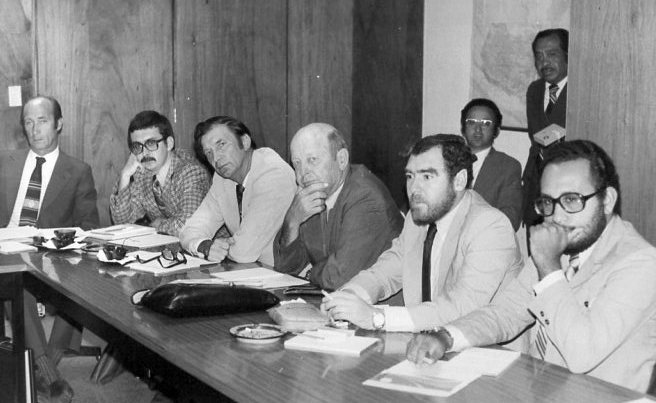
Known as PRECODEPA, the program was funded by the Swiss government, and the launch meeting was held in Guatemala City.

At the launch meeting of PRECODEPA in Guatemala City. L-R around the table: Ken Brown, me, CIP Director General Richard Sawyer, CIP senior consultant John Niederhauser, Ing. Carlos Crisostomo (Guatemala), and a representative from Honduras.


In the first months at CIP, the Browns remained in the CIP guesthouse until they found a house to rent or purchase, so I got to know them very well. It was on one of our trips to one of CIP’s research stations at San Ramon that Ken and I had many hours travel to discuss a whole slew of topics.

Ken learning, for the first time, about late blight of potatoes in the field at San Ramon from plant pathologist Ing. Liliam Gutarra.

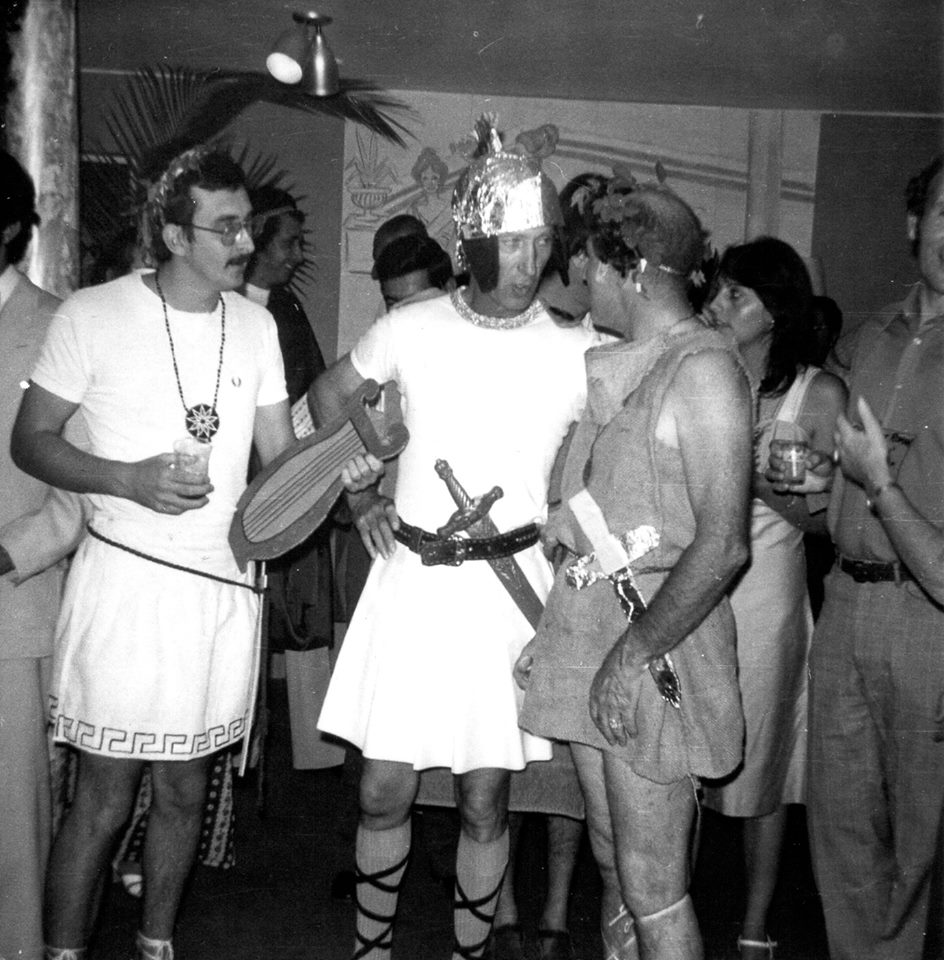
Not long after Ken arrived to Lima, there was a party at the home of CIP’s Director General, Richard Sawyer, to celebrate his birthday. Richard’s wife Norma had chosen a Roman theme for the party. And even though we were staying in the guesthouse, without easy access to costume accessories, Ken and I did our best to look the part, seen in this photo chatting (in Latin?) with Norm Thompson.


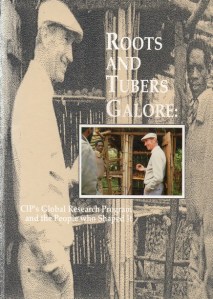
Ken remained at CIP until his retirement around 1993 when he published a short memoir: Roots and Tubers Galore: The Story of CIP’s Global Research Program and the People Who Shaped It.
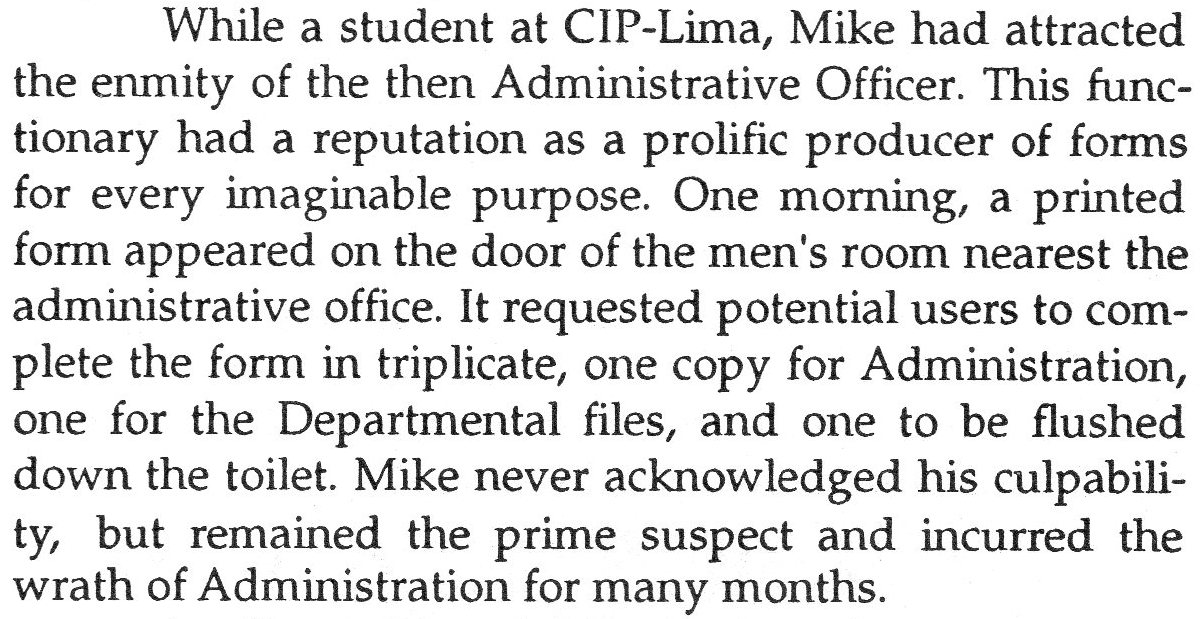
In a postscript, Ken wrote: I wrote this short account of the Regional [Research] Program not just to record part of CIP’s history, but also to provide some diversion from the usual round of reports and technical publications that are always dropping on your desks. Working with the Regions is enjoyable, and I hope that those of you who did participate during the early years will find these notes of interest. As all who know me are aware, I enjoy the humorous side of life as well as the serious aspects, so if I have been too free with my memories please accept my apologies. To all of you who are part of this story I want to say thank you and wish you every success in the coming years.

I am proud to have been part of that story, and to count Ken among my friends.

However, he was perhaps too free with one memory, about an incident that happened before he even joined CIP, and of which I have no recollection whatsoever. It seems that it forms part of the CIP history.

Between 1973 and 1975, I was an Associate Taxonomist, while also completing the research for my PhD.

But as I read this, I can’t deny that it is something I would be inclined to have done. I wouldn’t put it past me.

After retiring from CIP Ken and Geraldine set up home in Devon. Geraldine sadly passed away a few years back and Ken moved to Cheltenham to live with one of the twins, Aidan and his family.

After I heard that Ken had died, I contacted Donal who I had met several times during the course of our respective careers in international agricultural development. He told me that his father had “lived life to the full until the end and while his body got weaker his mind stayed very alert. He had a very happy and fulfilling life and final years and the end was quick, peaceful and painless – what more could one ask for.”

Indeed it was a life well lived.

Thanks for everything, Ken.


Ken’s funeral was held in Salisbury, Wiltshire on Tuesday 30 July at 3 pm, where he had moved into a retirement home a year or so back.

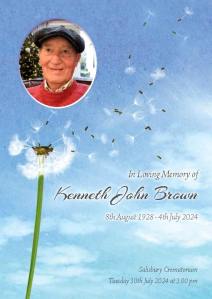
I attended his funeral online, and asked Donal for a copy of the Order of Service, which he has given me permission to post here. Click on the image to open a copy.

Ken’s coffin was carried into the crematorium chapel by his five sons to the strains of El Condor Pasa, a very fitting choice given Ken’s many years at the helm of Regional Research and Training at CIP in Peru.

One thing I learned about Ken that I hadn’t known before was his enthusiasm for reggae music, particularly by Bob Marley and The Wailers.

The funeral service concluded with the playing of Three Little Birds by Bob Marley as everyone left the chapel.

Don’t worry about a thing
‘Cause every little thing is gonna be alright


Celebrating the humble spud . . .

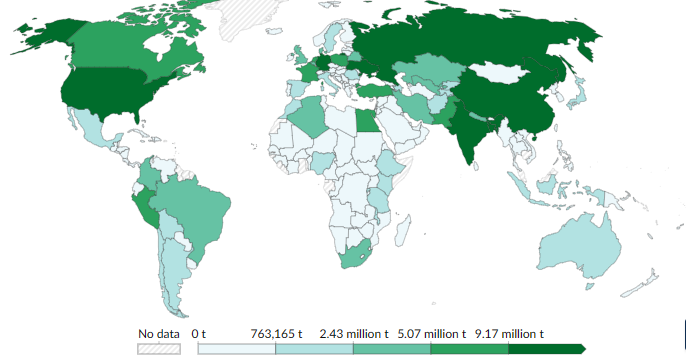
Not so humble really. The potato is an incredibly important crop worldwide (the fourth, after maize, rice, and wheat), with a production of 376 million metric tonnes in 2021. China is the leading producer, with 95.5 million metric tonnes, followed by India, Ukraine, Russia, and the USA.

Native to and a staple food in the Andean countries of South America, the potato spread to Spain in the 16th century [1, 2] and the rest of the world afterwards.

It’s no wonder that Peru championed the International Day of the Potato (decreed by the United Nations in December 2023 [3]) which is being celebrated today.

I thought this would be an excellent opportunity to reflect on my own journey with potatoes over 20 years in the 1970s and 1980s.


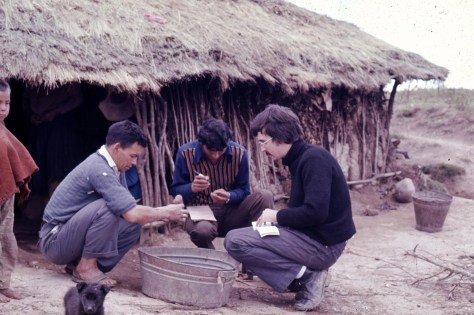
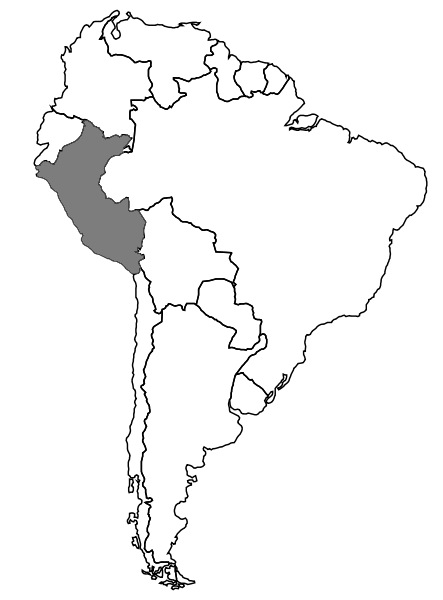
Fifty years ago (in May 1974) I had just returned to Lima after collecting potatoes for three weeks in the north of Peru (Department of Cajamarca), accompanied by my driver, Octavio.

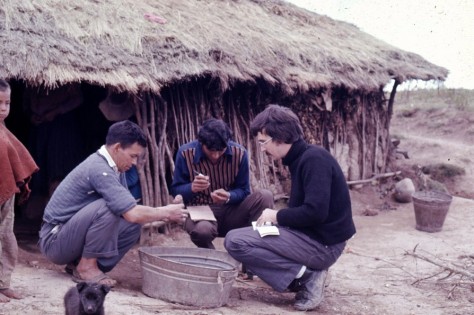
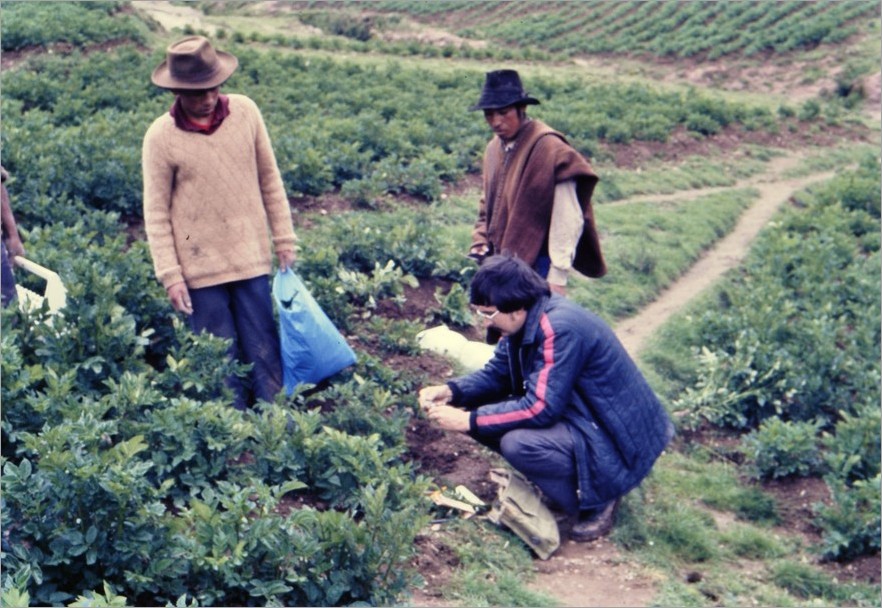
A farmer in Cajamarca discusses his potato varieties with me, while my driver Octavio writes a collecting number on each tuber and a paper bag with a permanent marker pen.

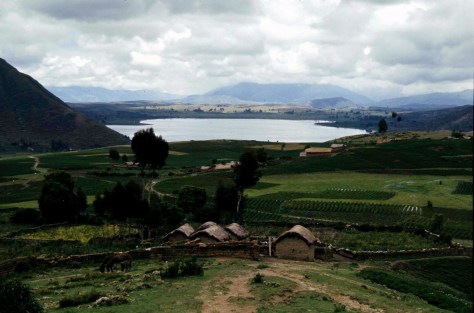
A few months earlier, at the beginning of February, I’d travelled to Cuyo Cuyo (Department of Puno in southern Peru) to make a study of potato varieties in farmers’ fields on the ancient terraces there (below).

So what was I doing in Peru?

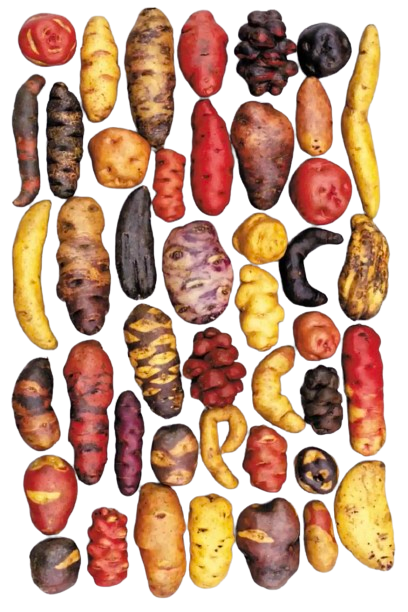
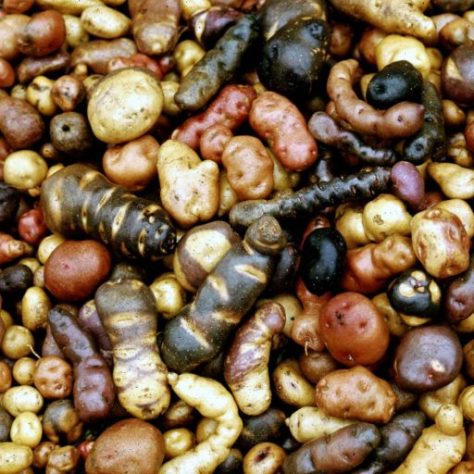
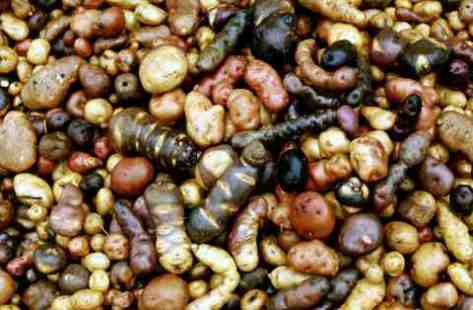
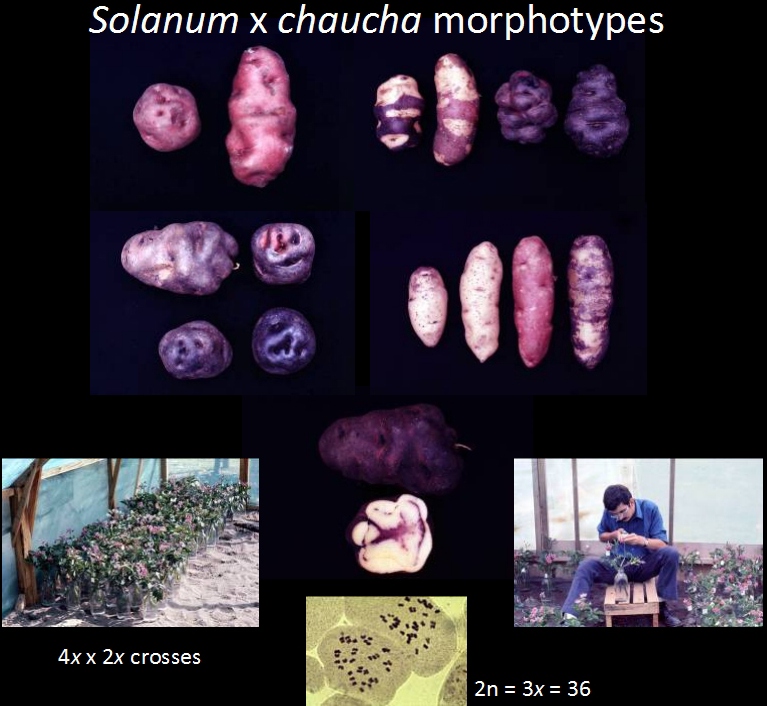
I’d joined the International Potato Center (CIP) in Lima the previous year, in January 1973 [4] as an Associate Taxonomist while continuing with my PhD research. And I found myself, a few months later—in May—travelling with with my colleague Zosimo Huamán (right) to the northern departments of Ancash and La Libertad where, over almost a month, we collected many indigenous potato varieties—the real treasure of the Incasthat were added to CIP’s growing germplasm collection. Here are just a few examples of the incredible diversity of Andean potato varieties in that collection. Maybe I collected some of these.

Source: International Potato Center (CIP)

In October 1975, I successfully defended my PhD thesis (The evolutionary significance of the triploid cultivated potato, Solanum x chaucha Juz. et Buk.) at the University of Birmingham, where my co-supervisor, potato taxonomist and germplasm pioneer Professor Jack Hawkes (right) was head of the Department of Botany.

During my time in Lima, Dr Roger Rowe (left, then head of CIP’s Breeding and Genetics Department) was my local supervisor.
Fifty years after I first met Roger in Peru, we had a reunion on the banks of the Mississippi in Wisconsin last year.

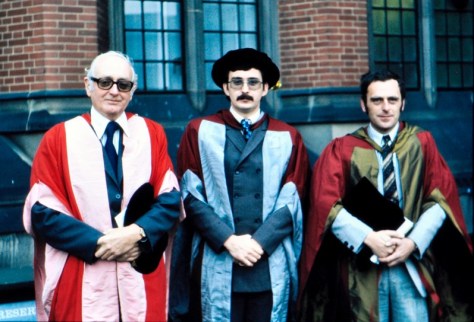
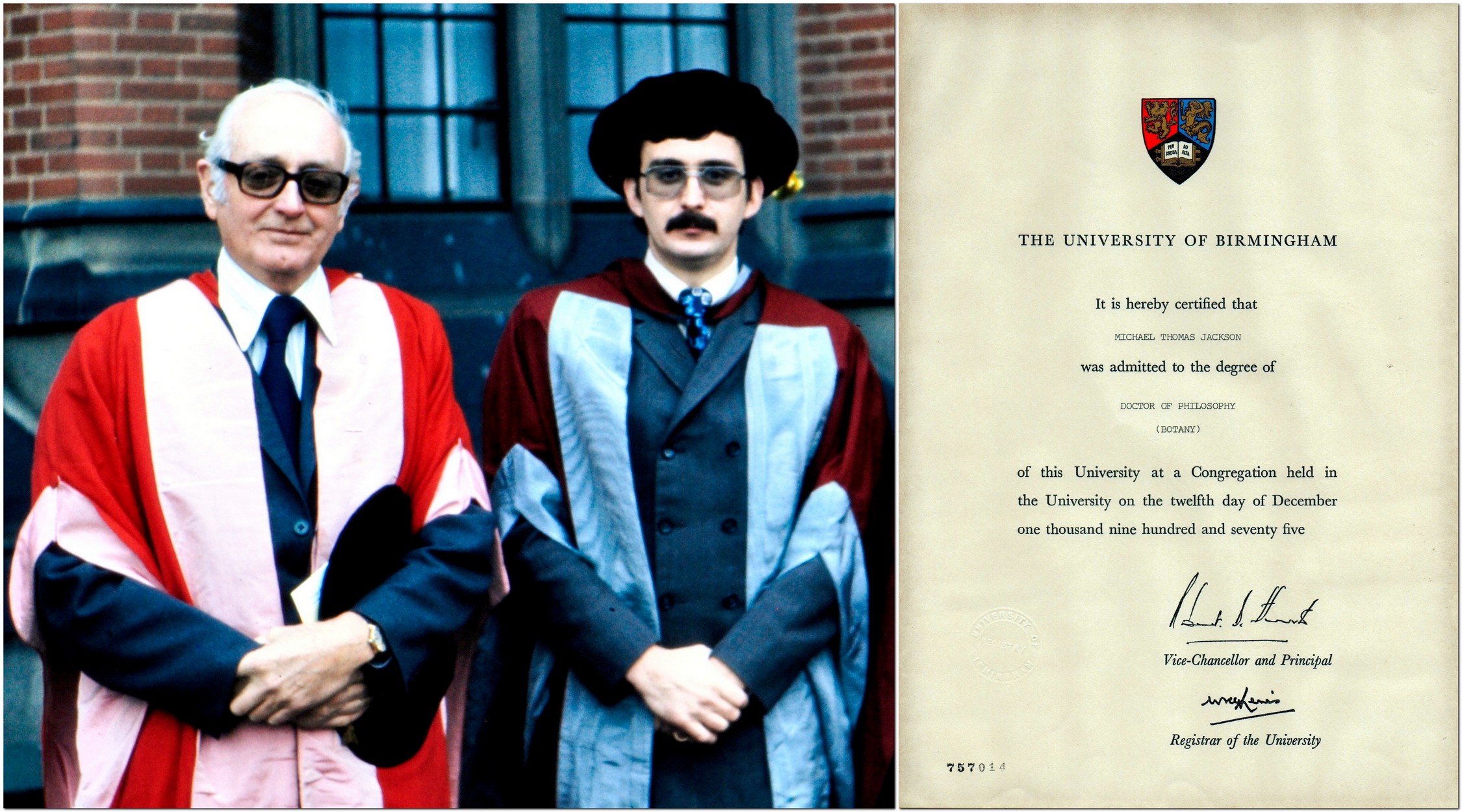
After the University of Birmingham congregation on 12 December 1975, with Jack Hawkes on my right, and Professor Trevor Williams (who supervised my MSc dissertation in 1971) on my left.

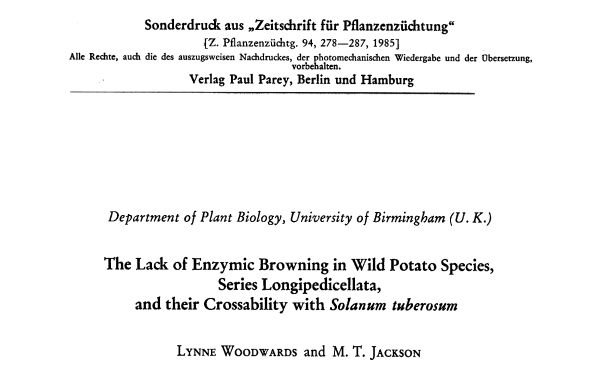
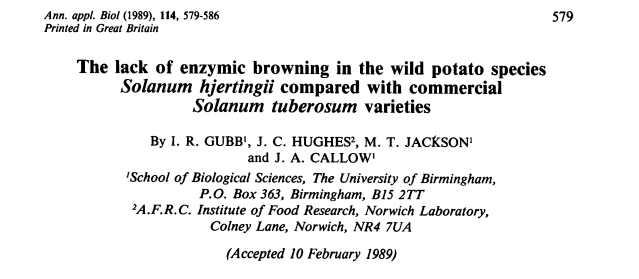
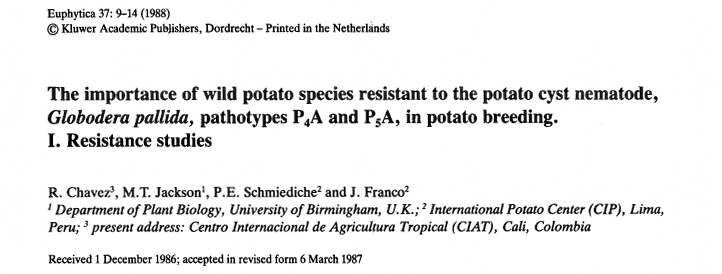
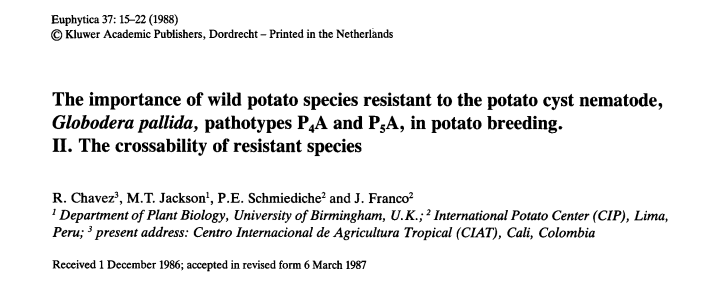
I published three papers from my thesis. Click on any title image below (and most others throughout this post) to read the full paper.

There’s an interesting story behind the publication of this third paper from my thesis.

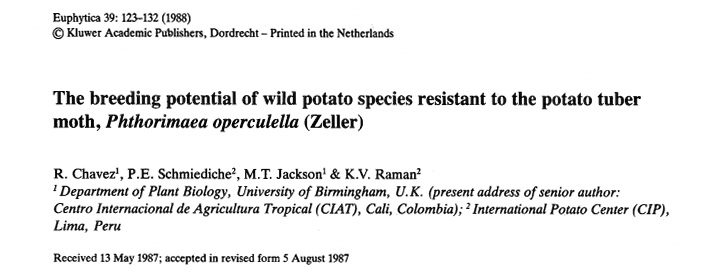
I originally sent a manuscript to Economic Botany, probably not long after I’d submitted the others to Euphytica.

I received an acknowledgment from Economic Botany, but then it went very quiet for at least a year.

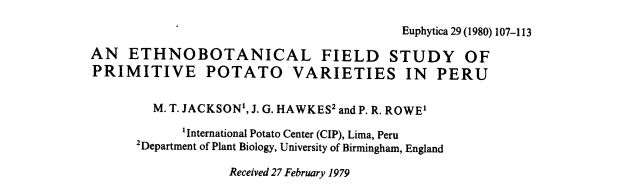
Anyway, towards the end of 1978 or early 1979 I received—quite out of the blue—a letter from the then editor-in-chief of Euphytica, Professor AC Zeven. He told me he’d read my thesis, a copy of which had been acquired apparently by the Wageningen University library. He liked the chapter I’d written about an ethnobotanical study in Cuyo-Cuyo, and if I hadn’t submitted a paper elsewhere, he would welcome one from me.

It was about that same time I also received a further communication from the incoming editor of Economic Botany, who had found papers submitted to the journal up to 20 years previously and still waiting publication, and was I still interested in continuing with the Economic Botany submission, since he was unable to say when or if my manuscript might be considered for publication. I immediately withdrew the manuscript and, after some small revisions to fit the Euphytica style and focus, sent the manuscript to Professor Zeven. It was published in February 1980.


I returned to Lima just before the New Year 1976, knowing that CIP’s Director General, Dr Richard Sawyer (right), had already approved my transfer to CIP’s Outreach Program (later renamed Regional Research). I relocated to Costa Rica in Central America in April 1976 (living and working at the Tropical Agricultural Research and Higher Education Center, CATIE in Turrialba), establishing a program to adapt potatoes to the warm humid tropics. I became leader of CIP’s regional program (or Regional Representative) in late 1977.

However, the tropical adaptation objective per se didn’t exactly endure. The potato trials were almost immediately attacked by bacterial wilt (caused by Ralstonia solaneacearum, formerly known as Pseudomonas solanacearum) even though no susceptible crops such as tomatoes had been planted on the CATIE experiment station in recent years. We subsequently discovered that the bacterium survived in a number of non-solanaceous weed hosts.

Screening for bacterial wilt resistance in CATIE’s experiment station.

I’ve posted earlier about our research on bacterial wilt and finding tolerance to the disease in a potato clone (not quite a commercial variety) known simply as Cruza 148.

Plant pathologist Professor Luis Carlos Gonzalez (right, from the University of Costa Rica in San José) and I also studied how to control the disease through a combination of tolerant varieties and soil and weed management.
We published these two papers, the first in the international journal Phytopathology, and the second in the Costarrican journal Fitopatologia.


During the late 1970s, CIP launched an initiative aimed at optimising potato productivity, jointly led by Chilean agronomist Dr Primo Accatino and US agricultural economist Dr Doug Horton. Contributing to this initiative in Costa Rica, I worked with potato farmers to reduce the excessive use of fertilizers, and fungicides to control the late blight pathogen, Phytophthora infestans. It was then (and probably remains) a common misconception among farmers that more input of fertilizer or fungicide, the better would be the outcome in terms of yield or disease control. What a fallacy! Our small project on fertilizer use was published in Agronomía Costarricense.

During the five years I spent in Costa Rica, my colleagues in the Ministerio de Agricultura y Ganadería (MAG) and I screened germplasm sent to us by CIP breeders in Lima for resistance to late blight, and common potato viruses like PVX, PVY, PLRV.

Ing. Jorge Esquivel (MAG) and me screening potatoes for virus resistance in a field trial on the slopes of the Irazú volcano in Costa Rica, while my assistants Jorge Aguilar and Moisés Pereira check plants nearby.


In 1977, Dr John Niederhauser (right, an eminent plant pathologist who had worked on late blight in Mexico for the Rockefeller Foundation before becoming an international consultant to CIP) and I worked together to develop and implement (from April 1978) a cooperative regional potato program, PRECODEPA, in six countries: Mexico, Guatemala, Honduras, Costa Rica, Panama, and the Dominican Republic. Funded by the Swiss Agency for Development and Cooperation, SDC (and for the next 25 years or so, and expanded to more countries in the region), the network was a model for regional collaboration, with members contributing research based on their particular scientific strengths.

Clean seed tubers are one of the most important components for successful potato production, and technologies to scale up the multiplication of clean seed were contributed by CIP to PRECODEPA. My colleague from Lima, Jim Bryan (an Idaho-born seed production specialist) joined me in Costa Rica in 1979 for one year, and together we successfully developed several rapid multiplication techniques, including stem cuttings and leaf node cuttings, and producing a technical bulletin (published also in Spanish).

And we showed that it was possible to produce one tonne in a year from a single tuber. Read all about that effort here.

I can’t finish this section about my time at CIP without mentioning Dr Ken Brown (left), who was head of Regional Research.
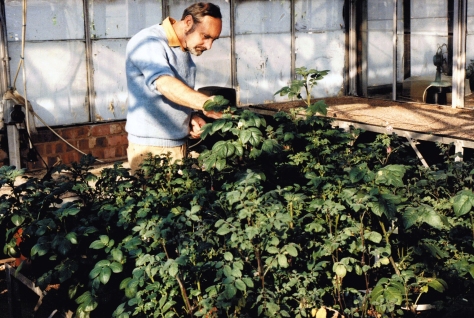
Ken, a cotton physiologist, joined CIP in January 1976 as head of Regional Research, just at the time Steph and I returned to Lima after I’d completed my PhD. He was one of the best program managers I have worked for, keeping everything on track, but never micro-managing. I learnt a great deal from Ken about managing staff, and getting the best out of them.

At the end of November 1980, I returned to Lima expecting to be posted to the Philippines. Instead, in March 1981, I resigned from CIP and accepted a lectureship in plant biology at the University of Birmingham, continuing potato research there, as well as working on several legume species.

I look back on those formative CIP years with great appreciation: for all that I learned about potatoes and potato production, the incredible scientists from around the world I met and worked with, and the many friendships I made.


Jack Hawkes retired from the university in September 1982, having left behind his large collection of wild potatoes accumulated during several expeditions to the Americas, and a legacy of potato research on which I endeavoured to build.

You can read all about Jack’s many expeditions, view many original photos, and watch several videos dating back to 1939 by clicking on the image below.

I soon realised there were few opportunities to continue research with Jack’s collection. It was almost impossible to secure funding. But I could offer short-term projects for MSc and PhD students.

Dave Downing was the technician managing the potato collection at Birmingham.

One MSc student, Susan Juned, studied the diversity in Solanum chacoense Bitt., a wild potato species from Argentina and Paraguay, in relation to in situ conservation opportunities.

Two MSc students from Uganda, Beatrice Male-Kayiwa and Nelson Wanyera evaluated resistance to potato cyst nematode (Globodera pallida) in wild potatoes from Bolivia. We asked Jack Hawkes to advise on the choice of germplasm to include, since he had made the collections in that country in the 1970s. Beatrice and Nelson worked at Rothamsted Experiment Station (now Rothamsted Research) in Hertfordshire with the late Dr Alan Stone.

Two PhD students, Lynne Woodwards and Ian Gubb, studied the lack of enzymic browning (potatoes turn brown when they are cut) in wild potatoes, Series Longipedicellata Buk., and one tetraploid (2n=4x=48 chromosomes) species from Mexico in particular, Solanum hjertingii Hawkes, and their crossability with cultivated potatoes. Ian’s studentship (co-supervised at Birmingham by Professor Jim Callow) involved a collaboration with the Institute of Food Research (now Quadram Institute Bioscience) in Norwich, where his co-supervisor was Dr JC Hughes.

Gene editing has recently successfully produced non-browning potatoes. Wide crossing is probably no longer needed.


I had two PhD students from Peru, René Chavez and Carlos Arbizu, who carried out their research at CIP (like I had in the early 1970s) and only came back to Birmingham to complete their residency requirements and defend their theses, although I visited them in Lima several times during their research.

René evaluated the breeding potential of wild species of potato for resistance to potato cyst nematodes and tuber moth, publishing three excellent papers from his thesis The use of wide crosses in potato breeding, submitted in 1984.

Carlos submitted his thesis, The use of Solanum acaule as a source of resistance to potato spindle tuber viroid (PSTV) and potato leaf roll virus (PLRV), in 1990. He never published any papers from his research, returning to Lima to work at CIP for a few years on Andean minor tuber crops, before setting himself up as a major avocado producer in Peru.


Denise Clugston (co-supervised by Professor Brian Ford-Lloyd) defended her thesis, Embryo culture and protoplast fusion for the introduction of Mexican wild species germplasm into the cultivated potato in 1988. She left biology almost immediately, and regrettably never did write any papers, although she did present this work at a conference held in Cambridge.

Another PhD student, Elizabeth Newton, worked on sexually-transmitted potato viruses of quarantine significance in the UK, in collaboration with one of my former colleagues at CIP, Dr Roger Jones who had returned to the UK and was working for the Ministry of Agriculture, Fisheries and Food (MAFF) at the Harpenden Laboratory. In 1989 she successfully submitted her thesis, Studies towards the control of viruses transmitted through true potato seed but never published any papers, only presenting this one at a conference in Warwick in 1986.

Because of the quarantine restrictions imposed on the Hawkes collection, I took the decision (with Jack’s blessing) to donate it to the Commonwealth Potato Collection in Dundee. Once the collection was gone, we had other opportunities for potato research at Birmingham.


In the late 1980s, my colleague Brian Ford-Lloyd (right) and I ran a project, funded by KP Agriculture (and managed by my former CIP colleague, Dr John Vessey) to generate somaclonal lines resistant to low temperature sweetening of the crisping var. Record .
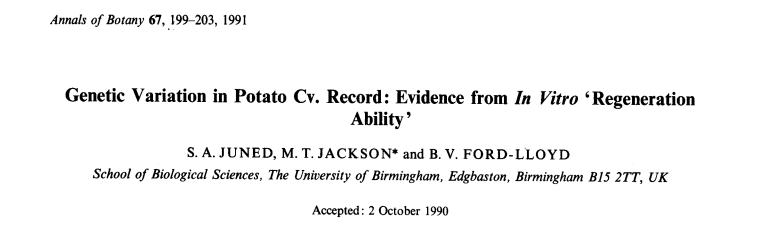
My former MSc student Susan Juned (right) was hired as a Research Associate.

We began the project with a batch of 170 Record tubers, uniquely numbering each one and keeping the identity of all somaclones derived from each tuber. And there were some interesting results (and an unexpected response from the media [5]).

Did the project meet its objectives? Well, this is what John later told us:

The project was successful in that it produced Record somaclones with lower reducing sugars in the tubers, but unsuccessful in that none entered commercial production . . . Shortly after the end of the project, Record was replaced by a superior variety, Saturna

The project very clearly showed the potential of somaclones but also emphasised that it needs to be combined with conventional breeding . . . Other important aspects were the demonstration that the commercial seed potato lines available were not genetically identical, as previously thought, and that regeneration of clones from single cells had to be as rapid as possible to avoid unwanted somaclonal variation. 

The majority of somaclones were derived from just a few of the 170 tubers, each potentially (and quite unexpectedly) a different Record clone. We suggested that the differential regeneration ability was due to genetic differences between tubers as it was found to be maintained in subsequent tuber generations. Furthermore, this would have major implications for seed potato production specifically and, more generally, for in vitro genetic conservation of vegetatively-propagated species.

Sue completed her PhD, Somaclonal variation in the potato (Solanum tuberosum L.) cultivar Record with particular reference to the reducing sugar variation after cold storage in 1994 after I’d already left Birmingham for the Philippines.

After leaving the university, Sue became a very successful local politician, even running in one General Election as a Liberal Democrat candidate for Parliament. Sue is now Leader of Stratford-on-Avon District Council.


From 1984, I had a project to work on true potato seed (or TPS) in collaboration with CIP, funded by the Overseas Development Administration (ODA, a UK government agency that eventually became the Department for International Development or DfID, but now fully subsumed into the Foreign, Commonwealth & Development Office).

For many reasons, this project was not a success. Let me explain.

At the end of the 1970s CIP launched a project to use TPS as an alternative production approach to seed potatoes (i.e., tubers). But the use of TPS is not without its challenges.

Potato genetics are complex because most cultivated potatoes are polyploid, actually tetraploid with 48 chromosomes. And although self compatible, and producing copious quantities of TPS through self pollination, the progeny are highly variable. My approach was to produce uniform or homozygous diploid (with 24 chromosomes) inbred lines. The only obstacle being that diploid potatoes are self incompatible. We aimed to overcome that obstacle. There were precedents, albeit from a species in a totally unrelated plant family but with a similar incompatibility genetic base.

One of my colleagues at Birmingham, geneticist Dr Mike Lawrence spent many years working on field poppy (Papaver rhoeas) and, through persistent selfing, had manage to break its strong self incompatibility. We believed that a similar approach using single seed descent might yield dividends in diploid potatoes. Well, at least ODA felt it was worth a try, and the project had CIP’s backing (although not enthusiastically from the leading breeder there at the time). However, in the light of subsequent research, I think we have been vindicated in taking this particular approach.

Because of quarantine restrictions at Birmingham that I already mentioned, we negotiated an agreement with the Plant Breeding Institute (PBI) in Cambridge to base the project there, building a bespoke glasshouse for the research. My counterpart at PBI was the head of potato breeding, Dr Alan J Thomson. We hired a postdoc, recently graduated with a PhD from the University of St Andrews, who came with glowing references.

We set out our perspectives on inbreeding at a CIP planning conference in Lima.

I further elaborated on these perspectives in a book chapter (published in 1987) based on a paper I presented at a joint meeting of EAPR and EUCARPIA at King’s College, Cambridge, in December 1985.

Ultimately the project did not meet its main objective. We encountered three problems, even though making progress in the first three years:

  1. By year five, we really did hit a ‘biological brick wall’, and couldn’t break the self incompatibility. We decided to pull the plug, so-to-speak, one year before the end of the project. It was a hard decision to make, but I think we were being honest rather than consuming the remaining financial resources for the sake of completing the project cycle.
  2. We lost momentum in the project after three years when Margaret Thatcher’s government privatised the PBI, and we had to relocate the project to the university campus in Birmingham (having disposed of the wild potato collection to the CPC as I mentioned earlier). And then build new glasshouse facilities to support the project.
  3. As the lead investigator, I was not successful in encouraging our postdoc to communicate more readily and openly. That lack of open communication did not help us make the best strategic decisions. And I take responsibility for that. However, on reflection, I think that her appointment to this pioneering project was not the best decision that Alan and I made.

Looking at the progress in diploid breeding since, it’s quite ironic really because several breeders published a call in 2016 to reinvent the potato as a diploid inbred line-based crop, just as we proposed in the 1980s. Our publications have been consistently overlooked.

Inbreeding in diploids became possible because of the discovery of a self compatibility gene, Sli, in the wild species Solanum chacoense after selfing over seven generations. With that breakthrough, such an inbreeding approach had become a reality. Pity that we were not able to break self incompatibility in cultivated diploid potatoes ourselves. And there’s no doubt that advances in molecular genetics and genomics since the 1980s have significantly opened up and advanced this particular breeding strategy.


Around 1988, I was invited by CIP to join three other team members (a program manager, an agronomist, and an economist) to review a seed production project, funded by the SDC [6], in Peru. I believe Ken Brown had suggested me as the seed production technical expert.

L-R: Peruvian agronomist, me, Cesar Vittorelli (CIP review manager), Swiss economist, and Carlos Valverde (program manager and team leader).

I flew to Lima, and we spent the next three weeks visiting sites in La Molina (next to CIP headquarters), in Huancayo in the central Andes, Cuzco in the south of Peru, and Cajamarca in the north.

That consultancy taught me a lot about program reviews and would stand me in good stead later on in my career. Once we had submitted our report, I returned to the UK, and a couple of weeks later spent a few days in Bern at the headquarters of the SDC for a debriefing session.

We found the project had been remarkably successful, making an impact in its operational areas, and we recommended a second phase, which the SDC accepted. Unfortunately, events in Peru overtook the project, as the Shining Path (Sendero Luminoso) guerrilla movement was on the ascendancy and it became too dangerous to move around the country.


After Jack Hawkes retired in 1982, he and I would meet up for lunch and a beer at least once a week to chat about our common interests in genetic resources conservation, and potatoes in particular. Out of those discussions came a couple of theoretical papers.

The Endosperm Balance Number (or EBN) hypothesis had been proposed to explain the crossability between tuber-bearing Solanum species (there are over 150 wild species of potato). We wrote this paper to combine the taxonomic classification of the different species and their EBNs.

In 1987, Jack asked me to contribute a paper to a symposium he was organizing with Professor David Harris of the Institute of Archaeology at University College London to celebrate the centenary of one of my scientific heroes, Russian geneticist and acclaimed as the Father of Plant Genetic Resources, Nikolai Vavilov. I conceptualized how Vavilov’s Law of Homologous Series could be applied to potatoes.

By the end of the 1990s, I was already looking for scientific pastures new – in rice! And in early 1991, I accepted a position at the International Rice Research Institute (IRRI) in the Philippines, and my research focus moved from potatoes to rice.

What surprises me is that some of my potato work endures, and I regularly receive citations of several of my papers, the last of which was published more than 30 years ago.

With the announcement of the International Day of the Potato, it certainly has brought back many memories of the couple of decades I enjoyed working on this fascinating crop.


[1] Hawkes, JG  and J Francisco-Ortega (1992). The potato in Spain during the Late 16th Century. Economic Botany 46: 86-97.

[2] Hawkes, JG and J Francisco-Ortega (1993). The early history of the potato in Europe. Euphytica 70: 1-7.

[3] The Food and Agriculture Organization of the United Nations (FAO) today welcomed the UN’s decision to designate 30 May as International Day of Potato, an opportunity to raise awareness of a crop regularly consumed by billions of people and of global importance for food security and nutrition.

The annual observance was championed by Peru, which submitted a proposal for adoption to the UN General Assembly based on an FAO Conference Resolution of July 7, 2023. The impetus for the Day, which builds upon the International Year of Potato that was observed in 2008, originates from the need to emphasize the significant role of the potato in tackling prevalent global issues, such as food insecurity, poverty and environmental threats.

[4] Steph joined me in Lima in July 1973 and we were married there in October. John Vessey and his wife Marian were our witnesses.

In November 1972, a couple of months after she had graduated with an MSc in genetic resources conservation from the University of Birmingham (where we met), Steph joined the Scottish Plant Breeding Station in Edinburgh as Assistant Curator of the Commonwealth Potato Collection. At CIP, she was an Associate Geneticist responsible for the day-to-day management of the institute’s potato germplasm collection.

Steph in one of CIP’s screenhouses at La Molina.

[5] In 1987, we wrote a piece about the somaclone project for the University of Birmingham internal research bulletin. This was picked up by several media, including the BBC and I was invited to appear on a breakfast TV show. Until, that is, the producer realised that the project was a serious piece of research.

One of the tabloid newspapers, The Sun, was less forgiving, and ran a brief paragraph on page 3 (Crunch time for boffins) alongside the daily well-endowed young lady. Click on the image to enlarge.

[6] The seed project was my second contact with the SDC (after PRECODEPA). After I joined IRRI in 1991, the SDC funded a five year project from 1995 to rescue rice biodiversity, among other objectives. I have written about that project here.


Potatoes have no special chemistry to induce romance . . . but they brought us together

Saturday 13 October 1973, 11:30 am
Lima, Peru

Fifty years ago today, Steph and I were married at the town hall (municipalidad) in the Miraflores district of Lima, where we had an apartment on Avenida José Larco. Steph had turned 24 just five days earlier; it would be my 25th in the middle of November.

Municipalidad de Miraflores, Lima

It was a brief ceremony, lasting 15 minutes at most, and a quiet affair.  Just Steph and me, and our two witnesses, John and Marian Vessey. And the mayor (or other official) of course.

John, a plant pathologist working on bacterial diseases of potato, was a colleague of ours at the International Potato Center (CIP) in Lima, who had joined the center a few months before I arrived in Lima in January 1973.
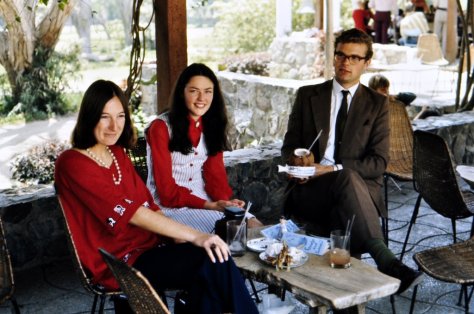
Enjoying pre-lunch drinks with Marian and John at ‘La Granja Azul‘ restaurant at Santa Clara – Ate, on the outskirts of Lima.

The newly-weds.


It’s by chance, I suppose, that Steph and I got together in the first place. We met at the University of Birmingham, where we studied for our MSc degrees in Conservation and Utilization of Plant Genetic Resources.

Steph arrived in Birmingham in September 1971, just after I had finished the one-year course. I was expecting imminently to head off to Peru where I had been offered a position at CIP to help curate the large collection of native potato varieties in the CIP genebank. So, had I flown off to South America then, our paths would have hardly crossed.

But fate stepped in I guess.

My departure to Peru was delayed until January 1973. So I registered for a PhD with renowned potato expert Professor Jack Hawkes (right, head of the Department of Botany and architect of the MSc course), and began my research in Birmingham while CIP’s Director General, Richard Sawyer, negotiated a financial package from the British government to support the center’s research for development agenda, and my work there in particular.

It must have been early summer 1972 that Steph and I first got together. Having completed the MSc written exams in May, Steph began a research project on reproductive strategies in three legume species, directed by Dr Trevor Williams (who had supervised my project a year earlier on lentils). And she completed the course in September.

By then, she had successfully applied for a scientific officer position at the Scottish Plant Breeding Station in Edinburgh (SPBS, now part—after several interim phases—of the James Hutton Institute in Dundee), as Assistant Curator of the Commonwealth Potato Collection. But that position wasn’t due to start until November.

Our VW Variant in Peru, around May 1973 – before receiving a Peruvian registration plate.

In early November I took delivery of a left-hand-drive Volkswagen for shipment to Peru. On a rather dismal Birmingham morning, we loaded up the VW with Steph’s belongings and headed north to Edinburgh. She returned to Birmingham in mid-December for her graduation.

Then, just after Christmas 1972, we met up in a London for a couple of days before I was due to fly out to Lima.

At that time we could not make any firm commitments although we knew that—given the opportunity—we wanted to be together.

Again fate stepped in. On 4 January 1973, Jack Hawkes and I flew to Lima. Jack had been asked to organize a planning conference to guide CIP’s program to collect and conserve native Andean potato varieties and their wild relatives.

Potato varieties from the Andes of Peru.

While I stayed in a small hotel (the Pensión Beech, in the San Isidro district) until I could find an apartment to rent, Jack stayed with Richard Sawyer and his wife Norma. And it was over dinner one evening that Jack mentioned to Richard that I had a ‘significant other’ in the UK, also working on potato genetic resources, and was there a possibility of finding a position at CIP for her. Richard mulled the idea over, and quickly reached a decision: he offered Steph a position in the Breeding and Genetics Department to work with the germplasm collection.

With that, Steph resigned from the SPBS and made plans to move to Lima in July, with us planning to get married later on in the year.

In the CIP germplasm screenhouses in La Molina. Bottom: with Peruvian potato expert Ing. Carlos Ochoa.


A couple of weeks after I arrived in Peru, I found an apartment in Miraflores at 156 Los Pinos (how that whole area has changed in the intervening 50 years), and that’s where Steph joined me.

In our Los Pinos apartment, Miraflores in July 1973.

A few weeks later we found a larger apartment, nearby at 730 Avda. Larco, apartment 1003. Very interesting during earthquakes!

Around mid-August 1973 we began the paperwork (all those tramites!) to marry in Peru. Not as simple as you might think, but on reflection perhaps not as difficult as we anticipated.

While we were allowed to post marriage banns in the British Embassy, we had to announce our intention to marry in the official Peruvian government gazette, El Peruano, and one of the principal daily broadsheets (El Comercio if memory serves me right), and have the police visit us at our apartment to verify our address. I think we also had to have blood tests as well. This all took time, but everything was eventually in place for us to set the wedding date: 13 October.
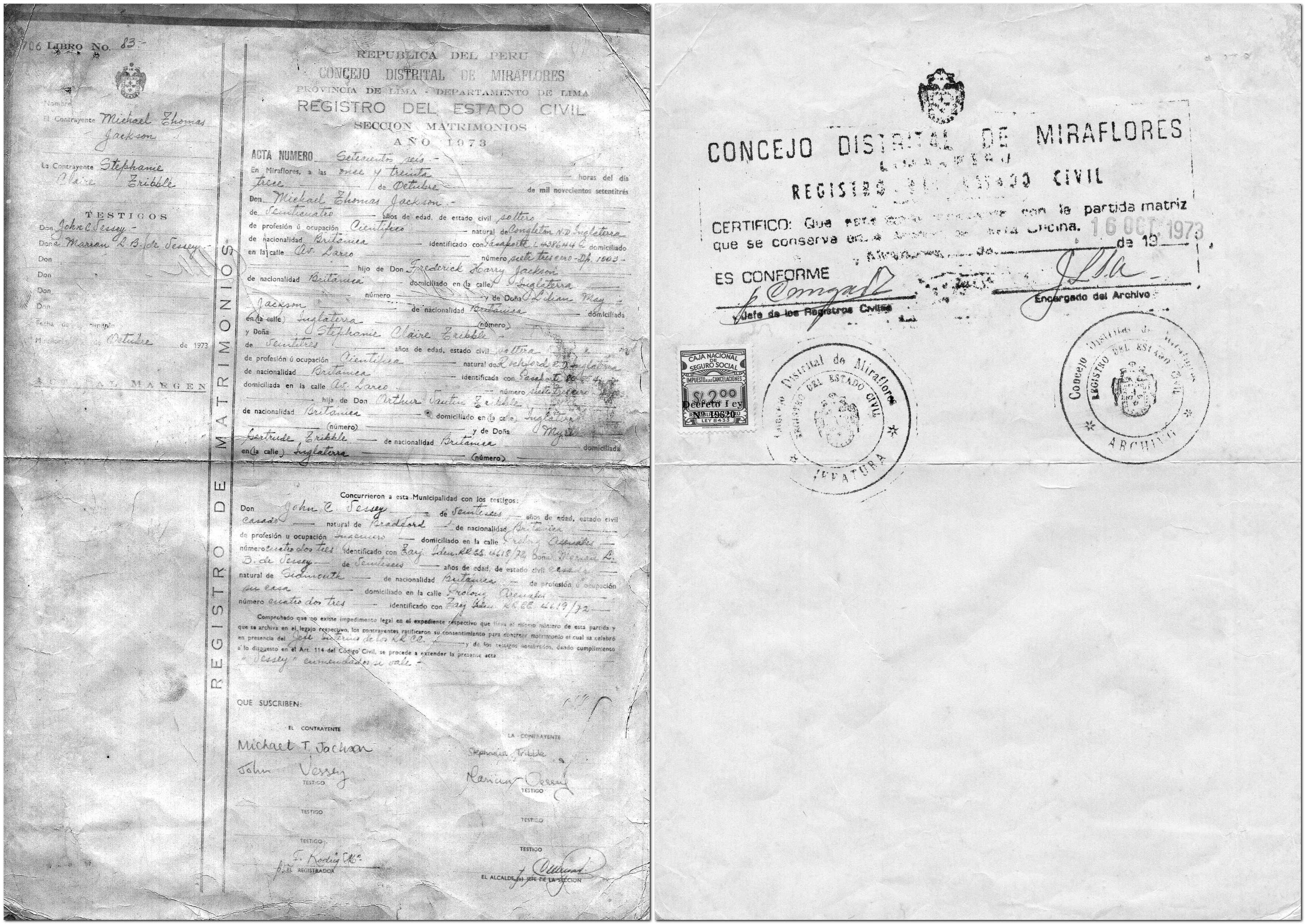
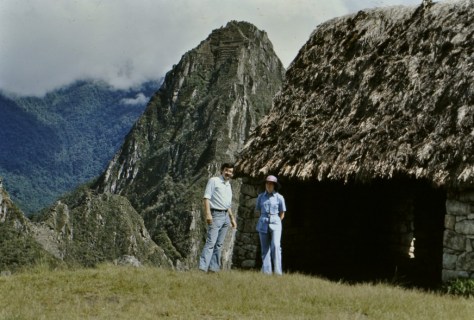
Some friends wanted to give us a big wedding, but Steph said she just wanted an intimate, quiet day. So that’s what we organized.

In the week leading up to our wedding, we had to present all the notarised documents at the municipality. After the ceremony, we signed the registry, hand-written in enormous volumes (or tomos). There was a bank of clerical staff, all with their Parker fountain pens, inscribing the details of each wedding in their respective tomo. A week later we collected our Constancia de Matrimonio (with some errors) which detailed in which tomo (No. 83, page 706) our marriage had been recorded, as well as photocopies (now sadly faded) of the actual page.

My work, collecting potatoes, took me all over the Andes; not so much for Steph who only made visits every other week or so to CIP’s highland experiment station (at over 3000 masl) in Huancayo east of Lima, and a six hour drive away.

However, Steph and I explored Peru together as much as we could, taking our VW on several long trips, to the north and central Andes, and south to Lake Titicaca. We also delayed our honeymoon until December 1973, flying to Cusco for a few days, and spending one night at Machu Picchu.

At Machu Picchu, December 1973.


In May 1975, we returned to the UK for seven months for me to complete my PhD, returning to Lima just before New Year.

With Jack Hakes and Trevor Williams at my PhD graduation on 12 December 1975 at the University of Birmingham.

Christmas Day 1976 in Turrialba.

Then, in April 1976, we moved to Costa Rica where I worked on potato diseases and production, based in Turrialba, some 70 km east of the capital city, San José. Under the terms of our visas, Steph was not permitted to work in Costa Rica. I became regional representative for CIP’s Region II (Mexico, Central America, and the Caribbean) in August 1997 when my colleague, Oscar Hidalgo (who was based in Toluca, Mexico) headed to North Carolina to begin his PhD studies.

Our elder daughter Hannah Louise was born in San José in April 1978. Later that year, we took our first home leave in the UK and both sets of grandparents were delighted to meet their first granddaughter.

24 April 1978 in the Clinica Santa Rita, San José, Costa Rica.

On home leave in the UK in September 1978.

With Steph’s parents Myrtle and Arthur (top) in Southend-on-Sea, and mine, Lilian and Fred, in Leek.

We spent five happy years in Costa Rica before moving back to Lima at the end of November 1980, and began making plans to move to the Philippines by Easter 1981.

However, in early 1981, a lectureship was created at the University of Birmingham, in the Department of Plant Biology (formerly Botany, where Steph and I had studied), for which I successfully applied. We left CIP at the end of March and had set up home in Bromsgrove (about 13 miles south of Birmingham in north Worcestershire) by the beginning of July.

4 Davenport Drive


A decade after we were married, we were already a family of four. In May 1982 Philippa Alice was born in Bromsgrove.

30 May 1982 in Bromsgrove hospital.

During the 1980s we enjoyed many family holidays, including this one in 1983 on the canals close to home.

Many other family holidays followed, in South Wales, in Norfolk, on the North York Moors, and in 1989, in the Canary Islands.

In Tenerife, Canary Islands in July 1989. Steph is carrying the binoculars that I bought around 1964 and which I still possess.

Hannah (left) and Philippa (right) thrived at local Finstall First School, shown here on their first day of school in 1983 and 1987, respectively.

My work at Birmingham kept me very busy (perhaps too busy), but I particularly enjoyed working with my graduate students (many of them from overseas), and my undergraduate tutees.

All in all, it looked like Birmingham would be a job for life. That was not to be, however. By the end of the 1980s, academic life had sadly lost much of its allure, thanks in no small part to the policies and actions of the Thatcher government. We moved on.


By 1993, we had already been in the Philippines for almost two years, where I had been hired (from July 1991) as head of the Genetic Resources Center (GRC) at the International Rice Research Institute (IRRI) in Los Baños, some 65 km south of Manila in the Philippines. I moved there ahead of Steph and the girls (then aged 13 and nine) who joined me just after Christmas 1991.

Meeting fellow newcomer and head of communications, Ted Hutchcroft and his wife at our joint IRRI welcoming party in early 1992.

In 1993 I learned to scuba dive, a year after Hannah, and it was one of the best things I’ve ever done. Philippa trained a couple of years later.

Getting ready to dive, at Arthur’s Place, Anilao, Philippines in January 2003.

Steph was quite content simply to snorkel or beachcomb, and we derived great pleasure from our weekends away (about eight or nine a year) at Anilao, 92 km south from Los Baños. In fact, our weekends in Anilao were one of our greatest enjoyments during the 19 years we spent in the Philippines.

Steph became an enthusiastic beader and has made several hundred pieces of jewelry since then. In Los Baños we had a live-in helper, Lilia, and so in the heat of Los Baños, Steph was spared the drudgery of housework or cooking, and could focus on the hobbies she enjoyed, including a daily swim in the IRRI pool, and looking after her garden and orchids.
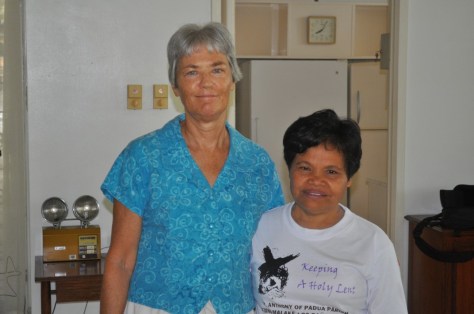
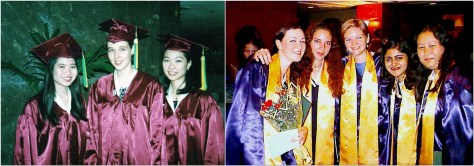
Steph and Lilia on our last day in IRRI Staff Housing #15 on 30 April 2010.

Hannah and Philippa completed their school education at the International School Manila (ISM) in 1995 and 1999 respectively, both passing the International Baccalaureate Diploma with commendably high scores.

Graduation at ISM: Hannah and Philippa with their friends from around the world.

Traveling to Manila each day from Los Baños had not been an easy journey, due to continual roadworks and indescribable traffic. It was at least two hours each way. By the time Philippa finished school in 1999, the buses were leaving Los Baños at 04:30 in order to reach Manila by the start of classes at 07:15.

In October 1996, Hannah started her university degree in psychology and social anthropology at Swansea University in the UK. However, after two years, she transferred to Macalester College, a highly-rated liberal arts college in St Paul, Minnesota, graduating summa cum laude in psychology and anthropology in May 2000. She then registered for a PhD in industrial and organizational psychology at the University of Minnesota. Philippa began her BSc degree in psychology at the prestigious University of Durham, UK later that same year, in October.

Hannah’s graduation in May 2000 at Macalester College, with Philippa and Michael (Hannah’s boyfriend, now her husband).

Once Hannah and Philippa had left for university, IRRI paid for return visits each year, especially at Christmas.

Christmas 2001. Michael joined Hannah for the visit.

While my work took me outside the Philippines quite often, Steph and I did manage holidays together in Hong Kong/Macau and Australia. And, together with Philippa, we toured Angkor Wat in Cambodia in December 2000.

But Steph also accompanied me on work trips to Laos, Bali, and Japan. She also joined me and my staff when we visited the rice terraces in northern Luzon in March 2009.

Enjoying a cold beer as the sun goes down, near Sagada, northern Luzon, Philippines.

Overlooking the Batad rice terraces in northern Luzon in March 2009.

However, we always used our annual home leave allowance to return to the UK, stay in our home in Bromsgrove (which we had purposely left unoccupied), and meet up with family and friends.

Philippa was awarded a 2:1 degree in July 2003, and the graduation ceremony took place inside Durham Cathedral. She then headed off to Vancouver for a year, before returning to the UK and looking for a job, eventually settling in Newcastle upon Tyne where she has lived ever since.

Outside Durham Cathedral where Phil received her BSc degree from the university’s Chancellor, the late Sir Peter Ustinov.

Hannah married Michael in May 2006, and finished her PhD. We flew to Minnesota from the Philippines.

15 May 2006, at the Marjorie McNeely Conservatory in Como Park, St Paul.

PhD graduation at the University of Minnesota.

Philippa registered for a PhD in biological psychology at Northumbria University in Newcastle upon Tyne where she was already working.

Professionally, the period between 2001 and my retirement in 2010 was the most satisfying. I had changed positions at IRRI in May, moving from GRC to join the institute’s senior management team as Director for Program Planning and Communications (DPPC). I worked with a great team, and we really made an impact to increase donor support for IRRI’s research program. However, by 2008/9 when my contract was up for renewal, Steph and I had already agreed not to continue with IRRI, but take early retirement and return to the UK.

But not quite yet. IRRI’s Director General, Bob Zeigler, persuaded me to stay on for another year, and organize the celebrations for the institute’s 50th anniversary. Which I duly did, and had great fun doing so.

But as our retirement date approached in April 2010, I was honored by the institute’s Board of Trustees with a farewell party (despedida) coinciding with the 50th anniversary of the very first Board meeting in April 1960.

14 April 2010 – IRRI’s 50th celebration dinner and our despedida.


Friday 30 April was my last day in the office.

With my DPPC friends. L-R: Eric, Corinta, Zeny, me, Vhel, and Yeyet.

We flew back to the UK two days later, arriving on Monday 3 May and taking delivery of our new car, a Peugeot 308, the following day.

Philippa and Andi flew off to New York in October 2010 and were married in Central Park. She graduated with her PhD in December.

By 2013 we had been married for four decades, and were well-settled into retirement, enjoying all the opportunities good weather gave us to really explore Worcestershire and neighboring counties, especially as National Trust and English Heritage members. And touring Scotland in 2015, Northern Ireland in 2017, Cornwall in 2018, East Sussex and Kent in 2019, and Hampshire and West Sussex in 2022.

We were, by then, the proud grandparents of three beautiful boys and a girl.

Callum Andrew (August 2010) – St Paul, Minnesota

Elvis Dexter (September 2011) – Newcastle upon Tyne

Zoë Isobel (May 2012) – St Paul, Minnesota

Felix Sylvester (September 2013) – Newcastle upon Tyne

And how could we ever forget a very special day in February 2012, when Steph, Philippa and my former colleague from IRRI, Corinta joined me at Buckingham Palace for an investiture.

Receiving my OBE from King Charles III (then HRH The Prince of Wales) on 14 February 2012.

With Steph and Philippa outside the gates of Buckingham Palace.

With Corinta and Steph in the courtyard of Buckingham Palace after the investiture.

Since 2010, we have traveled to the USA each year except during the pandemic years (2020-2022), and only returning there this past May and June. We’ve made some pretty impressive road trips around the USA, taking in the east and west coasts, and all points in between with the exception of the Deep South. Just click here to find a list of those road trips.

In July 2016, a few months after I broke my leg, Hannah and family came over to the UK, and we got together with Phil and Andi and the boys for the first time, sharing a house in the New Forest.

Our first group photo as a family, near Beaulieu Road station in the New Forest, 7 July 2016. L-R: Zoë, Michael, me (still using a walking stick), Steph, Callum, Hannah, Elvis, Andi, Felix, and Philippa.

And they came over again in July 2022, to our new home in the northeast of England where we had moved from Bromsgrove in October 2020 at the height of the Covid-19 pandemic.

In our garden in Backworth, North Tyneside, August 2022.

L-R: Felix, Elvis, Zoë, and Callum, at Dunstanburgh Castle, Northumberland in August 2022.


So it’s 2023, and fifty years have passed since we married.

During our visit to the USA this past May and June, we met up with Roger Rowe and his wife Norma, along the Mississippi River at La Crosse in Wisconsin.

Roger joined CIP in 1973 as head of the Breeding and Genetics Department and was our first boss. Roger also co-supervised my PhD. So it was great meeting up with them again 50 years on.

We’ve been in the northeast just over three years now, and haven’t regretted for a moment making the move north. It’s a wonderful part of the country, and in fact has given us a new lease of life.

At Steel Rigg looking east towards the Whin Sill, Crag Lough, and Hadrian’s Wall, Northumberland, February 2022.

Steph has taken great pleasure in developing her new garden here. It’s a work in progress, and quite a different challenge from her garden in Worcestershire, discovering what she can grow and what won’t survive this far north or in the very heavy (and often waterlogged) soil.

22 August 2023

I’ve had much enjoyment writing this blog since 2012, combining my interests of writing and photography. It has certainly given me a focus in retirement. I never thought I’d still be writing as many stories, over 700 now, and approaching 780,000 words. Since returning to the UK, I’ve also tried to take a daily walk of 2-4 miles. However, that’s not been possible these past six months. A back and leg problem has curtailed my daily walk, but I’m hopeful that it will eventually resolve itself and I’ll be able to get out and about locally, especially along the famous North Tyneside waggonways.

After 50 years together, we have much to be thankful for. We’ve enjoyed the countries where we have lived and worked, or visited on vacation. Our daughters and their families are thriving. Hannah is a Senior Director of Talent Management and Strategy for one of the USA’s largest food companies, and Philippa is an Associate Professor of Biological Psychology at Northumbria University.

Sisters!

With Hannah and Michael, Callum and Zoë (and doggies Bo and Ollie, and cat Hobbes) in St Paul, MN on 18 June 2023.

With Philippa and Andi, Elvis and Felix (and doggies Rex and Noodle) on 2 September 2023.

And here we are, at South Stack cliffs, in the prime of life (taken in mid-September) when we enjoyed a short break in North Wales.

Steph with Philippa and family on her birthday on 8 October.

13 October 2023 – still going strong!


While drafting this reminiscence, I came across this article by Hannah Snyder on the Northwest Public Broadcasting website, and it inspired the title I used.

The best job ever?

I was asked recently what was the best job I’d had.

Well, I guess the best job was the one I was occupying at the time. Until it wasn’t.

As a teenager in the 1960s, I had a Saturday job at a local garage, Peppers of Leek, pumping gasoline and helping in the car parts store, for which I earned 15/- (fifteen shillings or 75p in new money), equivalent today of less than £18 for an eight hour shift. What exploitation!

However, discounting that Saturday job, then I’ve held five different positions at three organizations over a fulfilling career lasting 37 years and 4 months. I took early retirement at the end of April 2010, aged 61.


Exploring Peru
My first job was at the International Potato Center (CIP) in Lima, Peru. I first met Richard Sawyer (left), CIP’s Director General when he visited the University of Birmingham after I’d completed my MSc degree in genetic resources conservation and use in September 1971.  He confirmed my appointment at CIP from January 1973. It was my first encounter with an American.

As an Associate Taxonomist at CIP I had two responsibilities: collecting potato varieties in the Andes of Peru, which were added to CIP’s large germplasm collection; and completing the field research for my PhD at the University of Birmingham.

In May 1973, just a few months after I arrived in Peru, I travelled to the north of Peru, specifically to the Departments of Ancash and La Libertad, with my Peruvian colleague Zosimo Huaman (seen in the photo below with two farmers). We explored remote valleys in this region (that has the highest mountains in the country) for almost a month, arriving back in Lima with a handsome collection of potato varieties.

Looking north towards Peru’s highest mountain, Huascaran (6768 m) in the Callejon de Huaylas in Ancash.

Some of the places we visited were so remote we could only access them on foot or on horseback.

In February 1974 I traveled to the south of Peru to carry out a field study of mixed variety potato cultivation as part of my thesis research in the remote valley of Cuyo Cuyo (below) with its fabulous terraces or andenes, northeast of Lake Titicaca.

And then, in May, I explored the Department of Cajamarca in the north of Peru with a driver, Octavio, seen in the photo below marking potato tubers with a collection number while I discussed these samples with the farmer.

Three years passed by in a flash. It had been a fantastic opportunity for a young person like myself. I was just 24 when I headed to Peru in 1973.

Working in CIP’s potato field genebank at Huancayo, 3100 m (>10,000 feet) in the central Andes.

Not many folks enjoy the same level of freedom to pursue a project as I did, or to travel throughout such an awe-inspiring country. I continue to count my blessings.
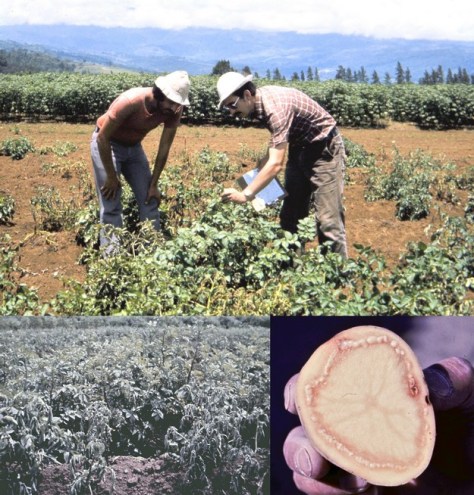
I also had a fantastic supervisor/head of department in geneticist Dr Roger Rowe (left).


Heading to Central America
I stayed with CIP for another five years, until March 1981. But not in Lima. It would have been fun to remain in the germplasm program, but there wasn’t a position available. The only one was filled by Zosimo. In any case, I was keen to expand my potato horizons and learn more about potato production in the round. So, after completing my PhD in December 1975, I joined CIP’s Outreach Program (that, in the course of time, became the Regional Research Program), not entirely sure what the future held. Costa Rica was mooted as a possible regional location.

In January 1976, Roger Rowe, Ed French (head of plant pathology at CIP), and I made a recce visit to Costa Rica, where we met officials at CATIE in Turrialba and it was agreed that CATIE would host a CIP scientist to work on adaptation of potatoes to warm environments. My wife Steph and I finally made it to Turrialba in April, and I set about setting up my research.

CATIE plant pathologist Raul Moreno (left) explains the center’s research in Turrialba on multiple cropping systems to (L-R) University of Wisconsin professor Luis Sequeira, Ed French, and Roger Rowe.

Quite quickly the focus changed to identify resistance to a disease known as bacterial wilt.

Evaluating potatoes in the field at Turrialba in 1977 (top). Potatoes showing typical asymmetrical wilt symptoms (bottom left) and bacterial exudate in infected tubers (bottom right).

Not only did we test different potatoes varieties for resistance to the bacterium, but we developed different agronomic solutions to control the amount of disease that was surviving from one season to the next.

I also worked closely with colleagues in the Ministry of Agriculture and the University of Costa Rica, and with potato farmers to reduce the high use of fertilizers and pesticides, as well as setting up a potato seed production project.
We developed a major regional project, PRECODEPA, during this time, involving six countries in the region and Caribbean, and funded by the Swiss government.
I was just 27 when we moved to Costa Rica. This was my first taste of program management; I was on my own (although I did receive administrative backup from CATIE, where we lived). My boss in Lima, Dr Ken Brown (left, head of the Regional Research Program) managed all his staff outside Lima on ‘a light rein’: encouraging, supporting, correcting program alignment when necessary. And always with great humor.

We spent five, happy years in Costa Rica. The work was enjoyable. I had a great couple of technical staff, Jorge and Moises, and secretary Leda.

I worked with the CIP team in Toluca, Mexico, and after the regional team leader left for the USA to pursue his PhD, Richard Sawyer asked me to take on the leadership of the program, which I did for over three years.

I learnt to grow a potato crop, and work alongside farmers and various government officials from the region. I learnt a lot about people management, and was all set to continue my career with CIP.

However, by November 1980, I decided that I needed a change. I’d achieved as much as I could in Central America. So we returned to Lima, with the expectation of moving with CIP to Brazil or the Philippines.


Joining academia
But fate stepped in. I was asked to apply for a lectureship at Birmingham, in my old department, now renamed ‘Plant Biology’. In January 1981 I flew back to the UK for interview (at my own expense!) and was offered the position to start in April that year. So, with some regret—but full of anticipation—I resigned from CIP and we returned to the UK in mid-March.

With the forthcoming retirement in September 1982 of Professor Jack Hawkes (right), Mason Professor of Botany and genetic resources MSc course leader (who had supervised my PhD), the university created this new lectureship to ‘fill the teaching gap’ following Jack’s departure, particularly on the MSc course.

I spent the next ten years teaching and carrying out research on potatoes and legume species at Birmingham. I had quite a heavy teaching load, mostly with graduate MSc students studying the theory and practice of the conservation and use of plant genetic resources (the same course that I had attended a decade earlier).

I co-taught a BSc third (final) year module on genetic resources with my close friend and colleague Brian Ford-Lloyd (left), and contributed half the lectures in a second-year module on flowering plant taxonomy with another colleague, Richard Lester. Fortunately I had no first year teaching.
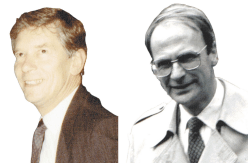
Over a decade I supervised or co-supervised ten PhD students, and perhaps 30 MSc students. I really enjoyed working with these graduates, mostly from overseas.

Around 1988, the four departments (Plant Biology, Zoology and Comparative Physiology, Microbiology, and Genetics) making up the School of Biological Sciences merged, and formed five research groups. I moved to the Plant Genetics Group, and was quite contented working with my new head of group, Professor Mike Kearsey (left above). Much better than the head of Plant Biology, Professor Jim Callow (right above, who was appointed in 1983 to succeed Hawkes as Mason Professor of Botany) who had little understanding of and empathy with my research interests.

By 1990 I still hadn’t hadn’t made Senior Lecturer, but I was on that particular pay scale and hoping for promotion imminently. I was working my way up the academic ladder, or at least I thought so. I took on wider responsibilities in the School of Biological Sciences, where I became Second Year Course Chair, and also as vice-chair of a university-wide initiative known as ‘Environmental Research Management’, set up to ‘market’ the university’s expertise in environmental research.

Nevertheless, I could see the writing on the wall. It was highly unlikely that I’d ever get my research on wild species funded (although I had received a large government grant to continue my potato collaboration with CIP). And with other work pressures, academia was beginning to lose its appeal.


Returning to international agricultural research
In September 1990, I received—quite out of the blue (and anonymously)—information about a new position at the International Rice Research Institute (IRRI) in the Philippines, as Head of a newly-created Genetic Resources Center (GRC).

Nothing ventured, nothing gained, I threw my proverbial hat in the ring, and was called for interview at the beginning of January 1991. My flight from London-Gatwick to Manila via Hong Kong was delayed more than 12 hours. Instead of arriving in Los Baños a day ahead of the interviews, I arrived in the early hours of the morning and managed about two hours sleep before I had a breakfast meeting with the Director General, Klaus Lampe (right) and his three deputies! The interview sessions lasted more than three days. There were two other candidates, friends of mine who had studied at Birmingham under Jack Hawkes!

To cut a long story short, I was offered the position at the end of January which I accepted once a starting salary had been agreed. However I wasn’t able to join IRRI until 1 July because I still had teaching and examination commitments at the university.

Quite a few of my university colleagues were surprised, concerned even, that I was giving up a tenured position. I’ll admit to some qualms as well. But the die was cast. I flew out to the Philippines on Sunday 30 June. Steph and our daughters Hannah (13) and Philippa (9) joined me at the end of December.

Not long after he joined IRRI in 1988, Klaus Lampe launched a major reorganization of departments and programs. The Genetic Resources Center combined two of the seed conservation and distribution activities of the institute: the International Rice Genebank (the largest and most genetically-diverse of its kind in the world), and the International Network for the Genetic Evaluation of Rice (INGER). Besides overall responsibility for GRC, I had day-to-day management of the genebank. INGER was led by an Indian geneticist and rice breeder Dr Seshu Durvasula who made it quite clear from the outset that he didn’t take kindly to these new arrangements nor having to report to someone who had never worked on rice. Such inflexible attitudes were not part of Lampe’s plan, and Seshu lasted only about 18 more months more before resigning. That’s yet another story.

I quickly realised that many improvements were needed to enhance the management of the genebank and its important rice germplasm collection. I took six months to familiarize myself fully with the genebank operations, consulting frequently with my staff, before making changes and assigning new responsibilities. Working with the genebank staff was a delight.

I convinced KLaus Lampe and senior management to invest appropriately in improving the genebank’s facilities, and to upgrade the positions of more than 70 staff. Since they constantly claimed that ‘the genebank was the jewel in IRRI’s crown‘, all I asked them was to put the money where their mouths were.

Our efforts paid off. We made the genebank ‘a model for others to emulate’. Not my words but those of external reviewers.

During my time in GRC, I had the privilege of meeting VIPs from around the world: presidents, prime ministers and other government officials, members of the diplomatic corps, and Nobel Prize winners.

In 1995 we initiated a major research and exploration project funded by the Swiss Government, which lasted for five years. We expanded the genebank collection by more than 25% to over 100,000 seed samples or accessions (since when it has grown further), many of them having been collected from farmers’ fields for the first time. This was a great opportunity to collect in more than 20 countries in Asia, Africa, and South and Central America where there were gaps in collections or, as in the case of Laos for example, war and other unrest had prevented any collections being made throughout the country until peace was established. In the photo below, taken in the Lao genebank at Vientiane in 1999, I’m with one of my staff Dr Seepana Appa Rao (center) and two genebank staff. On the left is Dr Chay Bounphanousay, head of the genebank, and now Director of the National Agriculture and Forestry Research Institute (NAFRI).

I had international commitments as well, chairing the Inter-Center Working Group on Genetic Resources (ICWG-GR) and establishing the System-wide Genetic Resources Program, the only program of the Consultative Group on International Agricultural Research (or CGIAR) involving all fifteen centers. In 1994, the ICWG-GR met in Kenya, and stayed at a hotel in the shadow of Mt Kenya (below). The ICWG-GR was a great group of colleagues to work with, and we worked together with great enthusiasm and collegiality. 

The early 1990s were an important time for genebanks since the Convention on Biological Diversity had come into effect in December 1992, and this began to have an impact on access to and use of genetic resources. However, one consequence was the increased politicization of genetic resources conservation and use. As the decade wore on, these aspects began to take up more and more of my time. Not so much fun for someone who was more interested in the technical and research aspects of genetic conservation.


A directorship beckons
Then, quite out of the blue at the beginning of January 2001, Director General Ron Cantrell (right) asked me to stop by his office. He proposed I should leave GRC and join the senior management team as a Director to reorganize and manage the institute’s research portfolio and relationships with the donor community. I said I’d think it over, talk with Steph, and give him my answer in a couple of days.
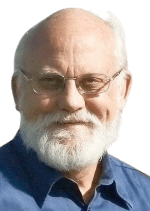
I turned him down! The  reasons are too complicated to explain here. I was contented in GRC. There were many things I still wanted to achieve there.

After about six weeks, Cantrell sent word he’d like to discuss his proposal once again. This time we came to an understanding, and my last day as head of GRC was 30 April 2001. I became IRRI’s Director for Program Planning and Coordination (later Communications) or DPPC, with line management for Communication and Publications Services (CPS), Library and Documentation Services (LDS), IT Services (ITS), the Development Office (DO), as well as the Program Planning and Communications unit (PPC).

Here I am with (left to right): Gene Hettel (CPS), Mila Ramos (LDS), Marco van den Berg (ITS), Duncan Macintosh (DO), and Corinta Guerta (PPC).

When I set up DPPC I inherited a small number of staff who had managed (not very effectively I’m sad to say) IRRI’s relationships with the donor community. IRRI’s reputation had hit rock bottom with its donors. I had to dig deep to understand just why the institute could not meet its reporting and financial obligations to the donors. After recruiting five new staff, we implemented new procedures to keep things on an even keel, and within six months we had salvaged what had been quite a dire situation. Data management and integration of information across different research and finance functions was the basis of the changes we made. And we never looked back. By the time I retired from IRRI, we had supported raising the institute’s annual budget to around USD 60 million, and IRRI’s was shining bright among the donors.

Here I am with PCC staff on my last day at IRRI, 30 April 2010. Left to right: Eric Clutario, Corinta Guerta, Zeny Federico, me, Vel Ilao, and Yeyet Enriquez. After I left IRRI, Corinta became head of PPC and was made a Director, the first national staff to rise through the ranks from Research Assistant in 1975 (she was originally a soil chemist) to a seat on the senior management committee.

As a Director, I was a member of IRRI’s senior management team taking responsibility for the institute’s strategy development and medium term plans, performance management, and several cross-cutting initiatives that enhanced IRRI’s welfare and that of the staff.

It wasn’t a bowl of cherries all the time at IRRI. There certainly were some impressive downs. The institute had a bit of a bleak patch for just under a decade from the time Lampe retired in 1995 until Bob Zeigler’s appointment in 2005. The institute had lost its way, and I guess that was one of the reasons I was asked to create the PPC office, to coordinate different functions of institute management.

But all good things come to an end, and by 2009 I’d already decided that I wanted to retire (and smell the roses, as they say), even though Zeigler encouraged me to stay on. By then I was already planning the celebrations for IRRI’s 50th anniversary, and agreed to see those through to April 2010. What fun we had, at the Big Show on Sunday 13 December 2009 and earlier.

With the Big Show production crew on stage afterwards.


The best?
Having thought long and hard about this, I believe that the DPPC role was the one I enjoyed most. That’s not to say that everything else I accomplished has not been cherished. But DPPC was different. I’d moved into a position where I could really influence events, I was managing areas of the institute’s portfolio and making a difference.

IRRI gave me the honour of hosting my despedida during the institute’s 50th gala anniversary dinner on 14 April 2010.

Do I have any regrets about the career choices I made? Not for one second.

I made some useful contributions to science (some of which is still being cited 40 years after publication). I traveled the world. I became fluent (for a while at least) in Spanish. And I have worked alongside many great scientists, fought with a few. Made many great friends, some sadly no longer with us.

Who could ask for more?


Launching a career in agricultural research

Over a career spanning almost four decades, I spent more than 27 years in international agricultural research in South and Central America, and Asia. And a decade teaching at the University of Birmingham.

It all started on this day, 50 years ago, when I joined the International Potato Center (CIP) in Lima, Peru as an Associate Taxonomist.

But first, let me take you back a couple of years, to September 1970.


I’d enrolled at the University of Birmingham for the MSc degree in Conservation and Utilization of Plant Genetic Resources, taught in the Department of Botany. It was the following February that I first heard about the possibility of joining CIP.

The head of department, potato expert Professor Jack Hawkes had just returned from a six week expedition to Bolivia (to collect wild species of potato) that was supported, in part, by the USAID-North Carolina State University-sponsored potato program in Peru.

The American joint leader of that program, Dr Richard Sawyer (left), mentioned to Jack that he wanted to send a young Peruvian scientist, Zosimo Huamán, to Birmingham for the MSc course in September 1971, and could he suggest anyone to fill a one-year vacancy.

On the night of his return to Birmingham, Jack phoned me about this exciting opportunity. And would I be interested. Interested? I’d long had an ambition to travel to South America, and Peru in particular.

However, my appointment at CIP was delayed until January 1973. Why? Let me explain.


In 1971, Sawyer was in the final stages of setting up the International Potato Center. However, a guaranteed funding stream for this proposed research center had not been fully identified.

At that time, there were four international agricultural research centers:

  • the International Rice Research Institute (IRRI) in Los Baños, the Philippines (founded in 1960);
  • the International Center for the Improvement of Maize and Wheat (CIMMYT) near Mexico City (1966);
  • the International Institute for Tropical Agriculture (IITA) in Ibadan, Nigeria (1967); and
  • the International Center for Tropical Agriculture (CIAT) in Cali, Colombia (also 1967).

All received bilateral funding from several donors, like the non-profit Rockefeller and Ford Foundations for example, or government agencies like USAID in the USA or the UK’s Overseas Development Administration.

In May 1971 there was a significant development in terms of long-term funding for agricultural research with the setting up of the Consultative Group on International Agricultural Research or CGIAR (an umbrella organization of donors, run from the World Bank in Washington, DC) to coordinate and support the four centers I already mentioned, and potentially others (like CIP) that were being established.

Since its inception, CGIAR-supported research was dedicated to reducing rural poverty, increasing food security, improving human health and nutrition, and ensuring more sustainable management of natural resources.

For more than 50 years, CGIAR and partners have delivered critical science and innovation to feed the world and end inequality. Its original mission—to solve hunger—is now expanding to address wider 21st century challenges, with the aim of transforming the world’s food, land, and water systems in a climate crisis. More on that below.


Back in 1971 the question was which funding agencies would become CGIAR members, and whether CIP would join the CGIAR (which it did in 1973).

Throughout 1971, Sawyer negotiated with the UK’s ODA to support CIP. But with the pending establishment of the CGIAR, ODA officials were uncertain whether to join that multilateral funding initiative or continue with the current bilateral funding model.

Decisions were, in the main, delayed. But one important decision did affect me directly. The ODA gave me a personal grant in September 1971 to remain in Birmingham until funding to CIP could be resolved. I therefore registered for a PhD on potatoes under Jack Hawkes’ supervision, and spent the next 15 months working on ideas I hoped to pursue further once I could get my hands on potatoes in the Andes, so to speak.

With Jack Hawkes in the potato field genebank at Huancayo, central Peru (3100 m above sea level) in early 1974.

In the event, the ODA provided £130,000 directly to CIP between 1973 and 1975 (= £1.858 million today), which funded, among other things, development of the center’s potato genebank, germplasm collecting missions around Peru, and associated research, as well as my position at the center.


Arriving in Peru was an ambition fulfilled, and working at a young center like CIP was a dream come true, even though, at just 24, I was somewhat wet behind the ears.

However, there were some great colleagues who taught me the ropes, and were important mentors then and throughout my career. I learnt a lot about working in a team, and about people management, very useful in later years as I moved up the management ladder.

For the first three years, my work was supervised and generously supported by an American geneticist, Dr Roger Rowe (right, with his wife Norma) who joined CIP on 1 May 1973 as head of the Breeding and Genetics Department. I owe a great deal to Roger who has remained a good friend all these years.

Always leading from the front, and never shy of making the tough decisions, Roger went on to fill senior management positions at several CGIAR centers. As a former colleague once commented to me, “Roger was the best Director General the CGIAR never had.” I couldn’t agree more.

When I joined CIP’s Regional Research group in 1976 and moved to Costa Rica, my new boss was Ken Brown (left). Ken had been working as a cotton physiologist in Pakistan for the Cotton Research Corporation, although he had previously worked in several African countries.

Ken never micromanaged his staff, was always there to help set priorities and give guidance. In those aspects of people management, I learned a lot from Ken, and he certainly earned my gratitude.

Aside from my work on potato genetic resources (and completing my PhD in 1975), I enjoyed the work on bacterial wilt and setting up a regional program, PRECODEPA as part of my Regional Research activities.

Jim Bryan (right, with Costarrican assistant Jorge Aguilar) was my closest friend at CIP. A native of Idaho, Jim was CIP’s seed production specialist. Down to earth and pragmatic, Jim taught me the importance of clean potato seed and seed production systems. He came to work with me in Costa Rica during 1979/80 and together we worked on a successful project (with the Costarrican Ministry of Agriculture) for the rapid multiplication of seed potatoes.

But by the end of 1980, I was looking for a new challenge when one came to my attention back home in the UK.


In April 1981, I joined the University of Birmingham as a Lecturer in the Department of Plant Biology (as the Department of Botany had been renamed since I graduated).

I have mixed feelings about that decade. Enthusiastic for the first few years, I became increasingly disenchanted with academic life. I enjoyed teaching genetic resources conservation to MSc students from many different countries, and particularly supervision of graduate students. I also kept a research link on true potato seed (TPS) with CIP, and around 1988 participated in a three-week review of a Swiss-funded seed production project at four locations in Peru.

With members of the project review team, with team leader Carlos Valverde on the right. Cesar Vittorelli, our CIP liaison is in the middle. I don’t remember the names of the two other team members, a Peruvian agronomist, on my right, and a Swiss economist between Vittorelli and Valverde.

But universities were under pressure from the Tory government of Margaret Thatcher. It was becoming a numbers, performance-driven game. And even though the prospects of promotion to Senior Lecturer were promising (I was already on the SL pay scale), by 1991 I was ready for a change.


And so I successfully applied for the position of Head of the Genetic Resources Center at IRRI, and once again working under the CGIAR umbrella. I moved to the Philippines in July, and stayed there for the next 19 years until retiring at the end of April 2010.

I was much happier at IRRI than Birmingham, although there were a number of challenges to face: both professional and personal such as raising two daughters in the Philippines (they were 13 and 9 when we moved to IRRI) and schooling at the International School Manila.

Whereas I’d joined CIP at the beginning of its institutional journey in 1973, IRRI already had a 30 year history in 1991. It was beginning to show its age, and much of the infrastructure built in the early 1960s had not fared well in the tropical climate of Los Baños and was in dire need of refurbishment.

A new Director General, Dr Klaus Lampe (right) from Germany was appointed in 1988 with a mandate to rejuvenate the institute before it slipped into terminal decline. That meant ‘asking’ many long-term staff to move on and make way for a cohort of new and younger staff. I was part of that recruitment drive. But turning around an institute with entrenched perspectives was no mean feat.


With responsibility for the world’s largest and most important rice genebank, and interacting with genebank colleagues at all the other centers, I took on the chair of the Inter-Center Working Group when we met in Ethiopia in January 1993, and in subsequent years took a major role in setting up the System-wide Genetic Resources Program (SGRP). This was a forerunner—and a successful one at that—of the programmatic approach adopted by the CGIAR centers.

The Swiss-funded project to collect and conserve rice varieties from >20 countries, and the innovative and pioneer research about on-farm conservation were highlights of the 1990s. As was the research, in collaboration with my old colleagues at Birmingham, on the use of molecular markers to study and conserve germplasm. A first for the CGIAR centers. Indeed a first for any crop.

Helping my genebank staff grow in their positions, and seeing them promoted gave me great satisfaction. I’d inherited a staff that essentially did what they were told to do. With encouragement from me they took on greater responsibility—and accountability—for various genebank operations, and their enthusiastic involvement allowed me to make the necessary changes to how the genebank was managed, and putting it at the forefront of CGIAR genebanks, a position it retains today.

My closest friend and colleague at IRRI was fellow Brit and crop modeller, Dr John Sheehy (right). John joined the institute in 1995, and I was chair of his appointment committee. Within a short time of meeting John for the first time, I recognized someone with a keen intellect, who was not constrained by a long-term rice perspective, and who would, I believed, bring some exceptional scientific skills and thinking to the institute.
Among his achievements were a concept for C4 rice, and persuading the Bill and Melinda Gates Foundation to back a worldwide consortium (now administered from the University of Oxford) of some of the best scientists working on photosynthesis to make this concept a reality.

By May 2001, however, change was in the air. I was asked to leave the Genetic Resources Center (and research) and join IRRI’s senior management team as Director for Program Planning and Communications, to reconnect the institute with its funding donors, and develop a strategy to increase financial support. I also took IT Services, the Library and Documentation Services, Communication and Publication Services, and the Development Office under my wing.

IRRI’s reputation with its donors was at rock bottom. Even the Director General, Ron Cantrell, wasn’t sure what IRRI’s financial and reporting commitments were.

We turned this around within six months, and quickly re-established IRRI as a reliable partner under the CGIAR. By the time I left IRRI in 2010, my office had helped the institute increase its budget to US$60 million p.a.


This increased emphasis on funding was important as, by the end of the 1990s, several donors were raising concerns about the focus of the centers and how they should be supported. Furthermore, a number of external factors like the Convention on Biological Diversity (CBD, agreed by 150 countries in 1992), the growing consensus on the threat of climate change, the adoption of the UN Millennium Development Goals (MDGs, and subsequent Sustainable Development Goals or SDGs) meant that the 15 CGIAR centers as they had become could not continue with ‘business as usual’.

Until the end of the 1990s, each center had followed its own research agenda. But it became increasingly clear that they would have to cooperate better with each other and with the national programs. And funding was being directed at specific donor-led interests.

There is no doubt that investment in the CGIAR over 50 years has brought about great benefits, economically and in humanitarian ways. Investment in crop genetic improvement has been the mainstay of the CGIAR, and although research on natural resources management (NRM, such as soils and water) has been beneficial at local levels, it has not had the widespread impact that genetic improvement has.

The impact of the CGIAR is well-documented. Take this 2010 paper for example. Click on the image for more information.

My good friend from the University of Minnesota, Professor Phil Pardey and two colleagues have calculated the economic benefits of CGIAR to be worth about 10 times the cost. Impressive. Click on the image below for more information.

I have watched a couple of decades of CGIAR navel gazing as the system has tried to ‘discover’ the best modus operandi to support national programs and the billions of farmers and consumers who depend on its research outputs.

There’s no doubt these changes have increased bureaucracy across the CGIAR. One early development was the introduction of 3-year rolling Medium Term Plans with performance targets (always difficult in agricultural and biological research), which led to perverse incentives as many centers set unambitious targets that would attract high scores and therefore guarantee continued donor support.

I did not favor that approach (supported by my DG), encouraging my colleagues to be more ambitious and realistic in their planning. But it did result in conflict with an accountant in the World Bank – a ‘bean counter’ – who had been assigned to review how the centers met their targets each year. I don’t remember his name. We had endless arguments because, it seemed to me, he simply didn’t understand the nature of research and was only interested if a particular target had been met 100%. Much as I tried to explain that reaching 75% or perhaps lower could also mean significant impact at the user level, with positive outcomes, he would not accept this point of view. 100% or nothing! What a narrow perspective.

A former colleague in the CGIAR Independent Evaluation Arrangement office in Rome and a colleague have written an excellent evaluation of this performance management exercise, warts and all. Click on the image below to access a PDF copy.

Now we have OneCGIAR that is attempting to make the system function as a whole. Very laudable, and focusing on these five highly relevant research initiatives. Click on the image below for more information.

What I’m not sure about are the levels of management that the new structure entails: global directors, regional directors, program or initiative leaders, center directors (some taking on more than one role). Who reports to whom? It seems overly complicated to my simple mind. And there is certainly less emphasis on the centers themselves – despite these being the beating heart of the system. It’s not bureaucrats (for all their fancy slogans and the like) who bring about impacts. It’s the hard-working scientists and support staff in the centers.


Nevertheless, looking back on 50 years, I feel privileged to have worked in the CGIAR. I didn’t breed a variety of rice, wheat, or potatoes that were grown over millions of hectares. I didn’t help solve a water crisis in agriculture. But I did make sure that the genetic resources of potato and rice that underpin future developments in those crops were safe, and ready to be used by breeders whenever. I also helped IRRI get back on its feet, so to speak, and to survive.

And along the way, I did make some interesting contributions to science, some of which are still being cited more than four decades later.

I’m more than grateful for the many opportunities I’ve been afforded.


Eat ’em to conserve ’em . . .

That’s right. Eat ’em to conserve ’em. Sounds counter-intuitive? Well, the answer is not what you might expect.

On a recent BBC Two program [1], Lisa, a pig breeder from North Yorkshire of rare—and very hairy—Hungarian Mangalica pigs, told one of the presenters (who’d wondered if he might turn vegetarian after seeing the cuteness of Mangalica piglets): “We need you to eat the meat, because if you don’t eat the meat, then farmers won’t breed them, and that’s how you lose them“.

Regular viewers of BBC One’s Countryfile (broadcast on Sunday evenings) will be familiar with the preservation of rare breeds in the UK. One of the presenters is Cotswold farmer Adam Henson, whose father Joe founded the Rare Breeds Survival Trust (RBST) in 1973. The RBST supports the UK National Livestock Gene Bank where semen and embryos are stored.

Joe Henson also set up the Cotswold Farm Park in 1971 on his farm near Guiting Power that Adam and his business partner continue to run, where the public can see different breeds of cattle, sheep, pigs, horses, and poultry, most of which no longer play any significant role in commercial agriculture. They only survive because of the interest and efforts of farmers like Adam and the RBST. While preservation of rare breeds is one of Adam’s passions, he frequently acknowledges that they have to pay their way. So, for many farmers like pig breeder Lisa, keeping rare breed livestock is a commercial enterprise. And there is a growing interest in and demand for rare breed meat.


What are the parallels in crops?

For decades now crops (and their wild relatives) have been conserved in genebanks around the world. Scientists in the 1960s acknowledged that unless these crop varieties were collected they might be lost forever. So the good news is that important genebank collections were established, crop varieties and diversity preserved, and used to create more productive varieties for farmers to grow.

Conservation in genebanks or seed banks (often referred to as ex situ conservation, and the plant equivalent of semen and egg or embryo storage) ensures that genetic diversity is protected over the long term, subject of course to the best genebank management practices.  However, there are crops, like potatoes that reproduce vegetatively by tubers (important for maintaining specific varietal identity), and others that either don’t produce seeds, or which are short-lived and cannot be stored in a seed bank.

In the UK there are several important genebank collections: the Commonwealth Potato Collection (CPC) at the James Hutton Institute, Dundee; the Germplasm Resource Unit (GRU, with important collections of wheat, barley, oat, and pea) at the John Innes Centre in Norwich; and the UK Vegetable Genebank (UKGVB) at the Warwick Crop Centre, Wellesbourne.

And the centers of the CGIAR around the world manage some of the largest and genetically most diverse genebank collections anywhere. I have been involved with two of these: for rice at the International Rice Research Institute, in Los Baños, in the Philippines, and for potatoes at the International Potato Center, in Lima, Peru. The Svalbard Global Seed Vault provides an extremely important safety backup to these and many national genebank collections.


However, what is the situation on farms? Do farmers continue to grow the varieties that have sustained their communities for generations? Is it feasible to conserve varieties on farm? And how many would opt to grow new varieties if these were available?

Just like livestock, crop varieties can only survive if farmers continue to care for them, and they are consumed. Eat ’em to conserve ’em.

Now many of these farmer varieties (often referred to as landrace or ‘heirloom’ varieties) are found in subsistence farm systems where the full impact of modern bred varieties has yet to be felt.

Take the situation of rice in the northern part of Laos in southeast Asia, for example. Many of the rice varieties grown there are upland rices, and modern rice breeding has produced fewer improved varieties for these agricultural systems. Farmers (many of them women) continue to grow hundreds of rice varieties. While I was head of genetic resources at the International Rice Research Institute in the Philippines during the 1990s, I spear-headed an international project to collect and conserve these varieties in Laos and many other countries, and one of my colleagues, Dr Seepana Appa Rao spent five years in Laos assisting local scientists there.

‘Heirloom’ rice varieties are an important cultural foundation of many societies throughout Asia (and Africa). But farmers need to make a living, aspire to a better life, producing food for their families, and generate income if possible to pay for their children’s education. Many farmers want something better than the drudgery of agriculture for their children.

Is it possible to make a profitable living from these varieties? What are the opportunities to make the old varieties more commercially appealing? To commodify them. Certainly if these traditional varieties could generate an income, then farmers would be more willing to grow them. And, in the process, fulfill an important objective of on-farm or in situ conservation in a sustainable manner, rather than having to rely on farmer-conservators or subsidies (which can always be taken away).

Nollie Vera Cruz

The Heirloom Rice Project (HRP) was a collaboration between the Philippines Department of Agriculture and the International Rice Research Institute (IRRI, coordinated by my former colleague, Dr Casiana ‘Nollie’ Vera Cruz) to enhance the productivity and enrich the legacy of ‘heirloom’ or traditional rice through empowered communities in unfavorable rice-based ecosystems. It focused on traditional rice varieties found only in the Cordillera Region provinces of Ifugao, Mountain Province, Benguet, and Kalinga or northern Luzon island.

As explained in one website story, ‘heirloom’ rice varieties come in grains of astonishing colors: brown, black, pink, purple, and pearly white; fragrant, nutty in taste, high in fiber; healthy to eat; a gourmet’s delight. Yet for all their captivating look and taste, they thrive in the most fragile places, on mountain tops, where dew, rain, and air are their only means of sustenance. 

Rice terraces at Banaue, Ifugao Province, Philippines.

Furthermore . . . ‘heirloom’ rice varieties have been grown on the terraces of the Cordillera Mountains of Luzon, Philippines [for centuries], terroirs known for their significant historical, cultural, and aesthetic values. However, heritage ‘heirloom’ rice farming is gradually being abandoned, mainly because of its lower productivity and the struggle of the sector to create a sustainable niche market for heirloom rice by branding its cultural, social, and nutritional values.

One of the important outcomes was to link farmers with markets so that these special rice varieties could find a particular niche in the market, even exported during the course of the project to the USA. And it’s those linkages that were so important.


Let’s now to cross to South America where there is a wealth of potato varieties grown throughout the Andes of Peru and Bolivia in particular, mainly (until now) for home consumption.

As I have seen for myself, as long ago as 1974 near Cuzco in southern Peru, farmers successfully combined the cultivation of commercial varieties for the market while cultivating the ‘old’ varieties in small plots close to the farmstead, the basis of household food security.

In this photo, northwest of Cuzco, large commercial plantings of improved varieties can be seen in the distance, while inside the wall surrounding the farmstead only native varieties were grown.

Have farmers found a way to make these ‘heirloom’ varieties more commercial? Well, there’s a very interesting initiative in Peru that has spread across quite a large part of the country.

Potato farmers have formed AGUAPAN(Asociación de Guardianes de la Papa Nativa del Centro del Perú) that is supported by Grupo Yanapai, an NGO that has considerable experience in participatory research.

Farmers commercialize their varieties directly to households in Lima, even delivered directly to the door, as mixtures (chaqru) under the trade name Miski Papa.

What is particularly interesting about the project is that individual farmers are identified, and the commercialization strategy is geared towards understanding their roles and the varieties they grow. See how Sra. Guerrero grows 180 different varieties!

Now look at these other photos (on AGUAPAN’s Facebook page) showing different farmers and their varieties.

AGUAPAN has taken the opportunity to increase farmer incomes through this project and at the same time ensuring farmers continue to grow ‘heirloom’ varieties. There is an interesting paper published in 2021 by a former colleague of mine at CIP, Andre Devaux (and others) that describes how these potato varieties have become a culinary sensation and a market innovation.


These two projects on rice and potatoes (there must be more around the world on the same and other crops) show how two objectives can be met:

  • Enhancement of farmer livelihoods through market innovations with native ‘heirloom’ varieties;
  • On-farm (in situ) conservation that permits the dynamics of farmer management to prosper, and exposing genetic diversity to environmental challenges, so important under a changing climate.

Personally, until now, I have had some doubts about the wisdom of prioritizing on-farm conservation for crop genetic resources. Certainly in the 1990s there was quite a push to promote in situ conservation, and in the rice biodiversity project that I referred to at the beginning of the post, we learned a great deal about the choices farmers make on a daily basis. And that is what on-farm conservation should be all about: allowing farmers to make informed choices, to change their varieties, to discard some, adopt others. Even though some farmers take on a role of conservators, I’ve never believed that subsidies paid to farmers to ‘conserve’ their varieties was a viable, long-term option. With the commercialization initiatives I’ve described here, there are now excellent opportunities to ensure the long-term survival of ‘heirloom’ varieties in the systems where they originated.

Eat ’em to conserve ’em!


[1] The Hairy Bikers Go North, Episode 4 North Yorkshire (not available everywhere), just before three minutes, first broadcast on 14 October 2021.


Collecting potatoes in Peru – following in Jack Hawkes’ footsteps (Part 1)

Professor Jack Hawkes examines a specimen of the wild potato species Solanum raphanifolium in the ruins of Sacsayhuaman outside Cuzco, January 1973

Potatoes are native to the Americas; the wild Solanum species are found from Colorado in the United States, south through Mexico and Central America, and throughout the Andes as far south as northern Argentina. They even grow on the plains of Argentina, Uruguay and Brazil. Different forms of potato were domesticated thousands of years ago in the Andean region and southern Chile. Even today, farmers in the Andes grow (and conserve) a wonderful range of potato varieties.

Over many decades potato scientists made expeditions to the Americas to collect wild and cultivated potatoes, to learn about their biology and ecology, and how they might be used to enhance potato productivity through plant breeding. Among the potato pioneers was my friend, colleague, and mentor, the late Professor Jack Hawkes, a world-renowned expert on potato diversity and taxonomy and a leading light in the genetic resources conservation movement that emerged in the 1960s.

The wonder of potato diversity

I began my own studies on potato under Jack’s tutelage in September 1971 at The University of Birmingham, after graduating with an MSc degree in genetic resources conservation. Jack took me under his wing, so to speak, to teach me about potatoes and prepare me for a posting at the International Potato Center (CIP) in Lima, Peru where (from January 1973) I worked as an Associate Taxonomist for three years. I had just turned 24 the previous November.

Jack made his first trip to South America in 1939 at the age of 23, turning 24 during the course of the expedition in June that year, as a member of the Empire Potato Collecting Expedition to South America and spending nine months collecting wild and cultivated potatoes along the Andes of Argentina, Bolivia, Peru, Ecuador, and Colombia.

Jack Hawkes (second from right) with expedition leader Edward Balls (on Jack’s right) and two others outside a church in La Paz, Bolivia in March 1939.

Returning to Cambridge in December 1939, just after the Second World War broke out, Jack continued to study the materials collected on the Empire expedition, completing his PhD in 1941. He remained at Cambridge until 1948 when he was seconded by the Government of Colombia to set up a research station for potatoes near Bogota.

In 1952, he returned to the UK, joining The University of Birmingham as a lecturer in the Department of Botany, but he returned to the Americas many times over the next four decades to collect potatoes. Awarded a personal chair in taxonomic botany in 1961, he became Mason Professor of Botany and head of department in 1967.

In 1969 he launched the one year MSc course I referred to earlier, and that’s when I first met him a year later. It would be no exaggeration to state that Jack Hawkes played an incredibly important role in shaping my subsequent career in international agricultural research and academia.


In December 1970, just three months after I arrived in Birmingham, Jack joined his Danish colleague Peter Hjerting on an expedition to collect wild potatoes in Bolivia, accompanied by Jack’s research assistant and PhD candidate Phil Cribb.

Richard Sawyer

The expedition received support from the newly-established International Potato Center (CIP) in Lima whose Director General, Dr Richard Sawyer kindly loaned a four-wheel drive vehicle. Joining the expedition was a young Peruvian scientist, Zósimo Huamán who had been hired by CIP to manage its large germplasm collection of native potato varieties.

While in Lima, Jack was asked to accept Zósimo on the Birmingham MSc course in September 1971. And then Sawyer asked Jack if he could recommend someone to join CIP on a one-year posting to cover for Zósimo while away in Birmingham. Apparently, so Jack later told me, my name immediately came to mind. Perhaps I’d mentioned that I had a burning ambition to visit South America and, in any case, I would graduate just when Zósimo was expected in the UK.

Anyway, to cut a long story short, immediately on his return to Birmingham at the end of February 1971, Jack told me about the opportunity at CIP. Was I interested? There was no question about it.

Zósimo and Jack in a potato field in Bolivia standing beside a variety of S. ajanhuiri

As it turned out, my departure to Peru was delayed by 15 months while different funding options for my posting were finalized. I began my PhD study, and after he graduated with his MSc in September 1972, Zósimo also registered for a PhD, studying the evolution of a frost-resistant form of cultivated potato known as Solanum ajanhuiri that he and Jack had collected at high altitude in Bolivia.

I departed for Lima on 4 January 1973, and by the beginning of April that year Zósimo had also returned to Peru having completed the first six month residency requirement for his PhD at Birmingham.


With hardly any time to get himself sorted after being outside Peru for 18 months, Zósimo and I organized a trip in May to collect potato varieties from two departments to the north of Lima: Ancash and La Libertad.

To say that I found the experiences beyond my expectations would be an understatement. Peru was everything I hoped it would be when I spent hours poring over a map of the country as a young boy. It is an extremely beautiful country, even if (at least in the 1970s) it was not the easiest country to travel around.


After 49 years, and without access to any notes we made, reports we wrote, or the books in which we recorded the germplasm samples collected, I am unable to detail the routes we took with any degree of confidence, except in the most broad terms. We were away from Lima for almost a month, and explored much of these two departments as best we could: by road, on foot, and on horseback.

At the end of the road, preparing to walk into a distant village; and below, riding back from a side-trip to a village

This was the first collecting trip that I had made. Time to put theory into practice. I bowed to Zósimo’s better knowledge, not only of potatoes and the terrain, but because he was a native Spanish speaker and after just a few months in Peru my Spanish was rudimentary to say the least. Also, as I mentioned earlier, Zósimo already had experience of collecting, having joined the Hawkes-led expedition to Bolivia in 1971.

We headed north on the Panamerican highway, destination Huaraz, the capital of Ancash located in the Callejón de Huaylas, a long north-south valley between the Cordillera Blanca to the east with the highest snow-covered peaks in the country and the Cordillera Negra to the west. Our aim was to explore regions right round these mountain ranges, and we certainly found ourselves in some remote locations.

We moved north into La Libertad, spending a little less time there than in Ancash before heading back to Trujillo on the coast for a well-deserved shower and rest at a good hotel, and better food before heading south to Lima, a journey of 575 km. I don’t recall if we attempted that last sector in one day or made an overnight stop about half way. In any case the journey would have taken about 10 hours or more, and given an incident on the way south that I’ll explain below, maybe we did split the journey.


In 1973, the Peruvian government was led by left-wing-leaning military junta headed by General Juan Velasco Alvarado who came to power in 1968 following a coup d’état. We encountered military checkpoints frequently on our travels in the mountains, often manned by young recruits or conscripts, teenagers even, armed with automatic weapons. Coming from a country where the police never carried firearms (at least then) nor were the armed forces deployed on the streets (that would change in Northern Ireland in the 1970s) I found it extremely disconcerting to be faced with soldiers pointing weapons at me and wondering if their discipline was as tight as I hoped. Needless to say we never encountered any specific threats or hostility.

What particularly struck me during this trip (and others that I made in 1974 and 1975, which I describe in Part 2) was the generosity of almost everyone we met. Farmers were generous with the potato varieties and knowledge they shared with us. Each potato variety collected was carefully labeled with a unique number inscribed on each tuber, and on the paper bags in which they were stored. All the details were recorded in a small booklet; I wonder if these are still archived in the CIP genebank in Lima.

Often we were invited to share a meal with a family, and only on one occasion did I baulk at what was put in front of me: fried cuy or guinea-pig (which are native to Peru and most households keep a small herd of them running around the house ready for the pot). I just couldn’t bring myself to tuck in. Guinea-pigs, to my mind, were furry pets. Needless to say that, as I grew older, such inhibitions diminished.

Despite being memory-deficient when it comes to the route or the places we stayed, there are several anecdotes that are still fresh today.

One experience was particularly emotional. Just 57 km north of Huaraz lies the town of Yungay, and a few kilometers closer to Huaraz, the town of Ranrahirca. On 31 May 1970 a powerful earthquake off the coast west of here, dislodged a massive landslide, a mixture of ice and rocks, that fell from Huascarán, Peru’s highest mountain.

Looking north along the Callejón de Huaylas towards the twin peaks of Huascarán

Travelling at speeds up to 335 kph the landslide quickly reached and obliterated both towns, killing tens of thousands. In Yungay, when we visited almost three years later, the only remains of the town still standing were the cemetery mound with a statue of Christ with outstretched arms, and four palm trees. They had survived, yet everywhere else the landscape was dotted with crosses marking where houses used to stand and presumably families perished. What a sobering sight indeed.

The statue of Christ in the site of Yungay, May 1973

This was the site of Ranrahirca where the town had been obliterated by boulders the size of houses, May 1973


We followed the road south from Huaraz and round to the east of the Cordillera Blanca, to Chavín de Huántar.

A stone tenon head, one of the iconic features of the ruins at Chavín

The next day we headed north up a steep and extremely muddy road, slipping and sliding from side to side. Fortunately the road was wide and there were no drop-offs, until we reached the highest point. The road levelled off, snaking along the side of the valley, barely wide enough for our Toyota Landcruiser. It was also quite muddy there as well.

We could see there was a drop-off, but given that we were in cloud, couldn’t see more than about 50-100 m ahead. It was only on the return journey and checking our maps that we saw that the side of the road plunged about 1000 m to the valley below. Talk about a stressful situation.

Having enjoyed a good bistek in Chavín that evening, we both got very drunk on Ron Pomalca, regretting sincerely the following morning that we had imbibed so freely. Incidentally, Zósimo found that the rum was also a useful liniment after several hours on horseback, and kept a bottle for that purpose.


On one occasion, we drove as far as we could before walking to two villages some kilometers away. When we arrived at the first village, we found everyone celebrating the jubilee of its founding (and were informed that the next village was also in fiesta mode). We were made welcome, offered refreshments, and talked with village officials before explaining that we had to push on to the next village before it got dark. There we found almost everyone in an advanced state of inebriation, especially the schoolteacher, who spoke a little English.

As special guests on that auspicious day, the mayor invited us to a reception, where the whole village crammed into the town hall. Speeches were made, with Zósimo translating for me. It was clear we would have to respond, especially me as a representative of La Reina Isabel. I frantically whispered to Zósimo how to say such and such in Spanish, writing his translations on the palm of my hand. When it was my turn to make a short speech, I nervously complimented the village on its anniversary and how pleased we were to be there. On sitting down, everyone in that room, at least a hundred men and women, maybe more, came and shook my hand. What a memory.

Zósimo (on the right) beside the teacher, his wife and child in front of his house where we spent the night


Later in the trip in La Libertad, we arrived in one village looking for a hotel. There were two: one had been opened not many months before our arrival there; the other was quite run down. We chose the new hotel, ignoring ‘advice’ that it was flea-infested. Surely that couldn’t be the case? How wrong could we be, waking next morning covered in flea bites and itching madly. Those pesky fleas got everywhere, so we had to endure several days of purgatory until we reached the coast and could send all our gear for cleaning. And take a welcome shower.


Finally, on the return journey south on the Panamerican Highway south of Trujillo, there was a puncture in the rear nearside tyre. We quickly replaced it with the spare, and resumed our journey, hoping to find a grifo or garage soon where the tyre could be repaired. I was driving. Suddenly there was a bang, and the vehicle lurched wildly. I managed to bring it under control, even though the rear was touching the ground. You can imagine our surprise when the wheel passed beside us, travelling at speed ahead. Zósimo and I had each thought the other made a final check of the wheel nuts. They just worked their way loose until the wheel fell off. Our humble jack was not powerful enough to lift the vehicle, but we flagged down a truck driver who used his more robust jack. We retrieved the wheel several hundred meters down the road, and even located all four wheel nuts scattered across the highway. What luck! Fortunately there were no further incidents before we reached CIP’s headquarters in the La Molina district of the Lima.


What an experience, and despite some stressful incidents (and occasional differences of opinion with Zósimo) we returned to Lima after a successful collecting trip. Maybe there were a couple of hundred samples or more to add to CIP’s germplasm collection. That collection eventually grew to around 15,000 samples or accessions but was reduced to its current more manageable size of around 4000 accessions after possible duplicate samples were removed (although converted to botanical or true seed samples before discarding the tubers). On his trips to Peru after 1973 Jack would spend time in the collection at CIP’s high altitude station in Huancayo (3100 m), a six-hour drive east of Lima, working through the germplasm samples and giving his advice about their conservation status. In the photo below, taken in early 1974, I briefly left off my own research to join Jack as he studied different varieties.


In Part 2, I write about the trips I made to Cuyo Cuyo in the south of Peru in February 1974, then to Cajamarca in May the same year. Finally, I describe the trip over a long weekend I made in March 1981 with Jack and a CIP colleague to collect wild potatoes in the mountains northeast from Lima. This was the only time that I went collecting with Jack, but even in that short journey I learned so much.


Is it really five decades?

years ago today (Friday 17 December 1971) I received my MSc degree in Conservation and Utilization of Plant Genetic Resources from the University of Birmingham. Half a century!

With my dissertation supervisor Dr (later Professor) Trevor Williams, who became the first Director General of the International Board for Plant Genetic Resources (now Bioversity International).

I hadn’t planned to be at the graduation (known as a congregation in UK universities). Why? I had expected to be in Peru for almost three months already. I was set to join the International Potato Center (CIP) (which has just celebrated its 50th anniversary) as an Associate Taxonomist after graduation, but didn’t actually get fly out to Lima until January 1973. Funding for my position from the British government took longer to finalize than had been envisaged. In the meantime, I’d registered for a PhD on the evolution of Andean potato varieties under Professor Jack Hawkes, a world-renowned potato and genetic resources expert.

So let’s see how everything started and progressed.


1970s – potatoes
Having graduated from the University of Southampton in July 1970 (with a BSc degree in Environmental Botany and Geography), I joined the Department of Botany at Birmingham (where Jack Hawkes was head of department) in September that year to begin the one year MSc course, the start of a 39 year career in the UK and three other countries: Peru, Costa Rica, and the Philippines. I took early retirement in 2010 (aged 61) and returned to the UK.

Back in December 1971 I was just relieved to have completed the demanding MSc course. I reckon we studied as hard during that one year as during a three year undergraduate science degree. Looking back on the graduation day itself, I had no inkling that 10 years later I would be back in Birmingham contributing to that very same course as Lecturer in Plant Biology. Anyway, I’m getting ahead of myself.

Arriving in Lima on 4 January 1973, I lived by myself until July when my fiancée Steph flew out to Peru, and join CIP as an Associate Geneticist working with the center’s germplasm collection of Andean potato varieties. She had resigned from a similar position at the Scottish Plant Breeding Station near Edinburgh where she helped conserve the Commonwealth Potato Collection.

Later that year, on 13 October, Steph and I were married in Miraflores, the coastal suburb of Lima where we rented an apartment.

At Pollería La Granja Azul restaurant, east of Lima, after we were married in Miraflores.

My own work in Peru took me all over the Andes collecting potato varieties for the CIP genebank, and conducting field work towards my PhD.

Collecting potato tubers from a farmer in the northern Department of Cajamarca in May 1974.

In May 1975, we returned to Birmingham for just six months so that I could complete the university residency requirements for my PhD, and to write and successfully defend my dissertation. The degree was conferred on 12 December.

With Professor Jack Hawkes

Returning to Lima just in time for the New Year celebrations, we spent another three months there before being posted to Turrialba, Costa Rica in Central America at the beginning of April 1976, where we resided until November 1980. The original focus of my research was adaptation of potatoes to hot, humid conditions. But I soon spent much of my time studying the damage done by bacterial wilt, caused by the pathogen Ralstonia solancearum (formerly Pseudomonas solanacearum).

Checking the level of disease in a bacterial wilt trial of potatoes in Turrialba, July 1977.

Each year I made several trips throughout Central America, to Mexico, and various countries in the Caribbean, helping to set up a collaborative research project, PRECODEPA, which outlasted my stay in the region by more than 20 years. One important component of the project was rapid multiplication systems for potato seed production for which my Lima-based colleague, Jim Bryan, joined me in Costa Rica for one year in 1979.

My two research assistants (in blue lab-coats), Moises Pereira (L) and Jorge Aguilar (R) demonstrating leaf cuttings to a group of potato agronomists from Guatemala, Panama, the Dominican Republic, and Costa Rica, while my CIP colleague and senior seed production specialist, Jim Bryan, looks on.

There’s one very important thing I want to mention here. At the start of my career with CIP, as a young germplasm scientist, and moving to regional work in Costa Rica, I count myself extremely fortunate I was mentored through those formative years in international agricultural research by two remarkable individuals.

Roger Rowe and Ken Brown

Dr Roger Rowe joined CIP in July 1973 as head of the Breeding and Genetics Department. He was my boss (and Steph’s), and he also co-supervised my PhD research. I’ve kept in touch with Roger ever since. I’ve always appreciated the advice he gave me. And even after I moved to IRRI in 1991, our paths crossed professionally. When Roger expressed an opinion it was wise to listen.

Dr Ken Brown joined CIP in January 1976 and became Director of the Regional Research Program. He was my boss during the years I worked in Central America. He was very supportive of my work on bacterial wilt and the development of PRECODEPA. Never micro-managing his staff, I learned a lot from Ken about people and program management that stood me in good stead in the years to come.


1980s – academia
By the middle of 1980 I was beginning to get itchy feet. I couldn’t see myself staying in Costa Rica much longer, even though Steph and I enjoyed our life there. It’s such a beautiful country. Our elder daughter Hannah was born there in April 1978.

To grow professionally I needed other challenges, so asked my Director General in Lima, Richard Sawyer, about the opportunity of moving to another region, with a similar program management and research role. Sawyer decided to send me to Southeast Asia, in the Philippines, to take over from my Australian colleague Lin Harmsworth after his retirement in 1982.

However, I never got to the Philippines. Well, not for another decade. In the meantime I had been encouraged to apply for a lectureship at the University of Birmingham. In early 1981 I successfully interviewed and took up the position there in April.

Thus my international potato decade came to an end, as did any thoughts of continuing in international agricultural research. Or so it seemed at the time.

For three months I lodged with one of my colleagues, John Dodds, who had an apartment close to the university’s Edgbaston campus while we hunted for a house to buy. Steph and Hannah stayed with her parents in Southend on Sea (east of London), and I would travel there each weekend.

It took only a couple of weeks to find  a house that suited us, in the market town of Bromsgrove, Worcestershire, about 13 miles south of the university. We moved in during the first week of July, and kept the house for almost 40 years until we moved to Newcastle upon Tyne in the northeast of England almost 15 months ago. However we didn’t live there continually throughout that period as will become apparent below.

Our younger daughter Philippa was born in Bromsgrove in May 1982. How does the saying go? New house, new baby!

With Brian when we attended a Mediterranean genetic resources conference in Izmir, Turkey in April 1972. Long hair was the style back in the day.

I threw myself into academic life with enthusiasm. Most of my teaching was for the MSc genetic conservation students, some to second year undergraduates, and a shared ten-week genetic conservation module for third year undergraduates with my close friend and colleague of more than 50 years, Brian Ford-Lloyd.

I also supervised several PhD students during my time at Birmingham, and I found that role particularly satisfying. As I did tutoring undergraduate students; I tutored five or six each year over the decade. Several tutees went on to complete a PhD, two of whom became professors and were recently elected Fellows of the Royal Society.

One milestone for Brian and me was the publication, in 1986, of our introductory text on plant genetic resources, one of the first books in this field, and which sold out within 18 months. It’s still available as a digital print on demand publication from Cambridge University Press.

This was followed in 1990 by a co-edited book (with geography professor Martin Parry) about genetic resources and climate change, a pioneering text at least a decade before climate change became widely accepted. We followed up with an updated publication in 2014.

The cover of our 1990 book (L), and at the launch of the 2014 book, with Brian Ford-Lloyd in December 2013

My research interests in potatoes continued with a major project on true potato seed collaboratively with the Plant Breeding Institute in Cambridge (until Margaret Thatcher’s government sold it to the private sector) and CIP. My graduate students worked on a number of species including potatoes and legumes such as Lathyrus.

However, I fully appreciated my research limitations, and enjoyed much more the teaching and administrative work I was asked to take on. All in all, the 1980s in academia were quite satisfying. Until they weren’t. By about 1989, when Margaret Thatcher had the higher education sector firmly in her sights, I became less enthusiastic about university life.

And, in September 1990, an announcement landed in my mailbox for a senior position at the International Rice Research Institute (IRRI) in the Philippines. I applied to become head of the newly-created Genetic Resources Center (GRC, incorporating the International Rice Genebank), and joined IRRI on 1 July 1991. The rest is history.

I’ve often been asked how hard it was to resign from a tenured position at the university. Not very hard at all. Even though I was about to be promoted to Senior Lecturer. But the lure of resuming my career in the CGIAR was too great to resist.


1990s – rice genetic resources
I never expected to remain at IRRI much beyond 10 years, never mind the 19 that we actually spent there.

Klaus Lampe

I spent the first six months of my assignment at IRRI on my own. Steph and the girls did not join me until just before the New Year. We’d agreed that it would be best if I spent those first months finding my feet at IRRI. I knew that IRRI’s Director General, Dr Klaus Lampe, expected me to reorganize the genebank. And I also had the challenge of bringing together in GRC two independent units: the International Rice Germplasm Center (the genebank) and the International Network for the Genetic Evaluation of Rice (INGER). No mean feat as the INGER staff were reluctant, to say the least, to ever consider themselves part of GRC. But that’s another story.

Elsewhere in this blog I’ve written about the challenges of managing the genebank, of sorting out the data clutter I’d inherited, investigating how to improve the quality of seeds stored in the genebank, collaborating with my former colleagues at Birmingham to improve the management and use of the rice collection by using molecular markers to study genetic diversity, as well as running a five year project (funded by the Swiss government) to safeguard rice biodiversity.

I was also heavily involved with the CGIAR’s Inter-Center Working Group on Genetic Resources (ICWG-GR), attending my first meeting in January 1993 in Addis Ababa, when I was elected Chair for the next three years.

The ICWG-GR at its meeting hosted by ILRI (then ILCA) in Addis Ababa, in 1993.

In that role I oversaw the development of the System-wide Genetic Resources Program (SGRP), and visited Rome several times a year to the headquarters of the International Plant Genetic Resources Institute (IPGRI, now Bioversity International) which hosted the SGRP Secretariat.

But in early 2001 I was offered an opportunity (which I initially turned down) to advance my career in a totally different direction. I was asked to join IRRI’s senior management team in the newly-created post of Director for Program Planning and Coordination.


The 2000s – management
It must have been mid-January 2001. Sylvia, the Director General’s secretary, asked me to attend a meeting in the DG’s office just after lunch. I had no idea what to expect, and was quite surprised to find not only the DG, Dr Ron Cantrell, there but also his two deputies, Dr Willy Padolina (DDG-International Programs) and Dr Ren Wang, DDG-Research.

To cut a long story short, Cantrell asked me to leave GRC and move into a new position, as one of the institute’s directors, and take over the management of resource mobilization and donor relations, among other responsibilities (after about one year I was given line management responsibility for the Development Office [DO], the Library and Documentation Services [LDS], Communication and Publications Services [CPS], and the Information Technology Services [ITS]).

With my unit heads, L-R: me, Gene Hettel (CPS), Mila Ramos (LDS), Marco van den Berg (ITS), Duncan Macintosh (DO), and Corinta Guerta (DPPC).

In DPPC, as it became known, we established all the protocols and tracking systems for the many research projects and donor communications essential for the efficient running of the institute. I recruited a small team of five individuals, with Corinta Guerta becoming my second in command, who herself took over the running of the unit after my retirement in 2010 and became a director. Not bad for someone who’d joined IRRI three decades earlier as a research assistant in soil chemistry. We reversed the institute’s rather dire reputation for research management and reporting (at least in the donors’ eyes), helping to increase IRRI’s budget significantly over the nine years I was in charge.

With, L-R, Yeyet, Corinta, Zeny, Vel, (me), and Eric.

I’m not going to elaborate further as the details can be found in that earlier blog post. What I can say is that the time I spent as Director for Program Planning and Communications (the Coordination was dropped once I’d taken on the broader management responsibilities) were among the most satisfying professionally, and a high note on which to retire. 30 April 2010 was my last day in the office.


Since then, and once settled into happy retirement, I’ve kept myself busy by organizing two international rice research conferences (in Vietnam in 2010 and Thailand in 2014), co-edited the climate change book I referred to earlier, and been the lead on a major review of the CGIAR’s Genebank Program (in 2017). Once that review was completed, I decided I wouldn’t take on any more consultancy commitments, and I also stepped down from the editorial board of the Springer scientific journal Genetic Resources and Crop Evolution.

As I said from the outset of this post, it’s hard to imagine that this all kicked off half a century ago. I can say, without hesitation and unequivocally, that I couldn’t have hoped for a more rewarding career. Not only in the things we did and the many achievements, but the friendships forged with many people I met and worked with in more than 60 countries. It was a blast!


Leaving academia . . . heading east

28 June 1991. It was a Friday. Ten years and three months since I joined the University of Birmingham as a Lecturer in Plant Biology. And it was my last day in that post. A brief farewell party in the School of Biological Sciences at the end of the day, and that was it. I was no longer an academic.

I’d left Peru in March 1981 with such enthusiasm for the next stage of my career at Birmingham. Having spent the previous eight years and three months in South and Central America with the International Potato Center (CIP), Steph and I were looking forward to setting up home with our daughter Hannah (then almost three) back in the UK. I joined the university on 1 April. Was I the fool?

By the end of the 1980s, however, my enthusiasm for academia had waned considerably. Not that I wasn’t getting on. Far from it. I was about to be promoted to Senior Lecturer, I had an active research group (looking at the relationships between crop plants and their wild species relatives), and I enjoyed teaching.

But I began to get itchy feet, and when the opportunity arose (in September 1990) for a move to the Philippines, to join the International Rice Research Institute (IRRI) as Head of the newly-established Genetic Resources Center (with its mandate to manage the world’s largest and genetically most important genebank for rice), I didn’t hesitate. Although, I have to admit, Steph and our daughters (Philippa was born in 1982) were less keen on the idea.

In early January 1991, I was interviewed for the position at IRRI (at its research center in Los Baños, about 70 km south of Manila, the capital city of the Philippines)

This was only my second trip to Asia. I’m not sure how or why at this distance of 30 years, but I flew to Manila (MNL) with British Airways out of London-Gatwick (LGW). Having checked in, I was informed that the flight to Manila was delayed because of a fault with the assigned aircraft (a 747), and that it would be replaced by an incoming aircraft – from Miami, which wasn’t expected for at least five hours. In the end, the delay was almost 15 hours, and I arrived in Los Baños just after 1 am on the Monday morning, having set out from the UK early on Saturday, with the expectation of arriving in the Philippines with just under 24 hours to recover from my trip before the interview schedule began. In the end, I had less than four hours sleep, and was up for a 7 am breakfast meeting with Director General Klaus Lampe (right) and his three Deputy Directors General!

By the end of the month I’d agreed a three year contract. Lampe wanted me to start on 1 April. But, as I explained—and he reluctantly accepted—I still had teaching and examination commitments at the university that would take me up to the end of June. So the earliest I would be able to join the institute was 1 July.

Even so, Lampe asked me to represent IRRI at a genetic resources meeting held in April at the Food and Agriculture Organization of the United Nations (FAO) in Rome. That would be the first of many meetings at FAO and even more visits to Rome where the International Plant Genetic Resources Institute (IPGRI, now Bioversity International) also had its office.


I flew out to the Philippines on Sunday 30 June. With just one day between leaving Birmingham and heading east, I still had some final packing. And, in any case, I had to make sure that everything was ship shape and Bristol fashion for Steph and the girls, as we’d agreed I would head off to the Philippines on my own, in the first instance, get settled into my new job, and they would join me just after Christmas.

That last couple of days were quite stressful. My friend and close colleague at Birmingham, Brian Ford-Lloyd and his wife Pat dropped by on the Saturday to wish me Bon Voyage! Brian has often told me subsequently that I looked rather drained. After all it was quite a step to up sticks and move the family to the Philippines. But it was a move we have never regretted.

Steph and I also agreed that we wouldn’t rent out our home in Bromsgrove (in northeast Worcestershire, and about thirteen miles south of Birmingham), but keep it locked up and safe in case we ever needed a bolt hole, as it were, should things not work out well at IRRI, or civil unrest required us to leave the country at short notice. Politics in the Philippines has always been volatile, to say the least.

So, come Sunday morning, it was a teary goodbye for all of us when the taxi arrived to take me to Birmingham airport (BHX) for the flight to MNL via London Heathrow (LHR) and Hong Kong (HKG). In subsequent years, and for a decade until Emirates had daily flights from BHX to Dubai (DXB) and on to MNL, we always flew with KLM via Amsterdam (AMS), much more convenient than transiting through LHR. Apart from our first home leave in the summer of 1992.

British Midland (now defunct) operated the connecting flight from BHX to LHR. Placing my two or three bags on the scales, the check-in agent told me that I was way over my allowance, and if I chose to check them through to MNL, then she would have to charge me £500. On the other hand, she could send them to LHR free of charge, and I could argue with my next carrier, British Airways, for the onward flight. She checked my schedule and we agreed there was more than sufficient time between landing in LHR and the departure of my HKG flight to pick up my bags in Terminal 1 and get to Terminal 4 to check-in for the HKG/MNL flight. Wrong!

The flight left BHX on time, but on landing at LHR we taxied to the perimeter of the apron because gates were either occupied or undergoing refurbishment. And there we sat for about 30 minutes until buses came along to take us to the terminal. All the while, my connection time was being eroded by the minute. Then I had to wait for my bags to offload, and for the bus to Terminal 4. On previous transits through LHR between terminals, the bus had always crossed to the other side of the airport where Terminal 4 is located through a tunnel, a journey of a matter of minutes. Not that day, however. Our bus headed out on to the public roads, hit the M25 then exited close to Terminal 4. By the time I reached the back of a check-in queue for my flight, it was due to depart in just five minutes. Panic stations!

Leaving my bags where they were, I politely walked to the front of the queue explaining to other waiting passengers my dilemma, and they kindly let me move to the front. I was in luck. The flight had been delayed by at least 30 minutes, and the agent reckoned I could still make it. What to do about the excess baggage charges? He agreed not to charge me the full amount, and after several attempts to charge my credit card, he waived the fees, told me to put the bags on an express shute, and RUN!

The aircraft door was closed immediately after I boarded and found the only empty seat in Business Class (my reserved seat having been reallocated), and we were off. I sat there, thanking my lucky stars that I’d made the flight after all, feeling rather sweaty, and hoping it wouldn’t be too long after take-off before the cabin crew brought round the drinks trolley and I could get stuck into my first G&T.


I don’t remember too much about the trip from that point. Not because of over-imbibing, I hasten to add. It was just uneventful. On arrival in Manila, I was greeted by Director of Administration Tim Bertotti (right) and his Vietnamese wife who would be my ‘welcomers’ for the next few weeks, show me the IRRI ropes, so to speak, and be a couple I could turn to for advice. Having collected my heavy bags, and found the IRRI driver we headed south to Los Baños, where I stayed in the IRRI Guesthouse for the next month or so until the house allocated to me had been redecorated.

I can’t deny that the first night in Los Baños was quite miserable. I was overwhelmed by a feeling of regret, whether I had made the right choice to give up a tenured position at the university (a number of colleagues there thought I was crazy to leave a tenured position for the ‘insecurity’ of short-term contracts overseas). And how would the family fare during the intervening six months until they headed east? So many questions, so many uncertainties. And hard to sleep because of jet-lag.


But the next morning there was no time for self pity. I had a job to do, and just get stuck in. A driver collected me from the Guesthouse after breakfast and took me down to the research center, less than a ten minute drive across the campus of the University of the Philippines-Los Baños (UPLB). I got my ID, was assigned a car, and made an appointment to meet with Klaus Lampe.

Jack Hawkes

Then it was off to GRC in the Brady Laboratory, a building named after IRRI’s second Director General, Nyle Brady. I was already aware that there was only measured enthusiasm among the GRC staff for my appointment. Three of us had been interviewed in January, all with MSc and PhD degrees from the University of Birmingham, and Professor Jack Hawkes had supervised our PhD research. The other two candidates already managed genebanks; I had no hands-on experience of genebank management. One of the candidates, a Chinese Malay national, had carried out his thesis research at IRRI (on rice of course) with my predecessor in the IRRI gene bank, Dr TT Chang, co-supervising his research. He was a known quantity for the GRC staff and, I think, their preferred candidate. Instead they got this straight-talking Brit.

First things first. I needed to understand in detail how the genebank was currently being managed, who the key personnel were, and what were their thoughts about how things might change. I also had to manage the merger of the genebank (known in 1991 as the International Rice Germplasm Center) with another group, the International Network for the Genetic Evaluation of Rice (INGER) that was coordinated by a senior Indian scientist, Dr Seshu Durvasula who, I’m sorry to say, had no intention of going along easily with the intended merger into GRC. He resented, I believe, that he had been overlooked for the leadership of GRC.  And, in any case, who was this British scientist with no rice experience?

Anyway, back to the genebank. I think the staff were quite surprised to be asked their opinions. That was not Dr Chang’s style. Thanks to Eves, Pola (who I quickly identified as someone to lead the genebank operations on a daily basis, as genebank manager), Ato, Tom, Soccie, the data management group (Adel, Myrna, and Vangie), and Yvette and Amy (who I assigned to wild species research) for being very patient, answering all my questions, and letting me know when one of my ideas was perhaps a step too far. But one thing was clear: the operations of the genebank had to be upgraded and made more efficient. After about six months I was ready to put a plan into operation. By then, Steph and the girls were ready to fly out to the Philippines to join me.

But I have to make special mention to two very special ladies, who made my first months at GRC (and IRRI in general) so much easier: the GRC secretaries Sylvia Arellano (L below) and Tessie Santos (R). Jewels in the IRRI crown.

Sylvia was my personal secretary, and had worked for TT Chang for a number of years before he retired. Tessie supported the other internationally-recruited scientist in the genebank, British geneticist Dr Duncan Vaughan, and the rest of the genebank staff as and when needed.

Sylvia (known as Syl to everyone) was a mine of information, knew exactly who to contact should I need to follow up on any issue, and was quick to advise me how to deal with colleagues (especially the old timers) with whom I had to work across the institute. She knew just how to get things done, call in favors, and the like. I reckon that without her day-to-day support my first few months at IRRI (before I knew the ropes or understood the institutional politics) would have been far less productive. I cannot thank her too much for all the support she gave me, and we remain in contact and good friends to this day, even though it’s eleven years since I retired from IRRI, and almost 25 years since she last worked with me.

When I was on home leave in the UK during the summer of 1997, I had a phone call from the then Director General, Dr George Rothschild, who asked ‘permission’ for Sylvia to move from my office to become Executive Secretary to the Director General. It was hardly an offer I could refuse, and in any case, it was a huge promotion for Syl. She remained as Executive Secretary to the DG until her retirement a few years back, serving under three DGs (possibly four) and an Acting DG.

Tessie was quite shy, and seemed rather in awe of me. But she was a valued member of the GRC staff, and on those occasions when Syl was away from the institute, Tessie would admirably step into her shoes as my personal secretary. After a few months and once she got used to me, Tessie began to relax in my presence. Tessie was just the sort of staff member that IRRI should be proud of: hard-working, loyal, knowledgeable. And it was my good fortune that Syl had someone like Tessie to back her up.


By the end of 1991, I was very much at home at IRRI. I had a good relationship with Klaus Lampe (well, for the next couple of years or so), I had the measure of my immediate boss, Deputy Director General for International Programs, Dr Fernando ‘Nanding’ Bernardo for whom, I’m sad to relate, I didn’t have much time, and I was moving ahead with plans for the upgrade of the genebank, and reorganization of the staff. It felt like the world was my oyster, and I looked forward to the coming year with the family in Los Baños as well.

Originally thinking that I’d remain at IRRI for perhaps a couple of three-year contracts, but certainly no longer than ten years, when I retired at the end of April 2010 I’d been at IRRI for almost 19 years. Joining IRRI was the best career move I made.


That’s not a fair question . . .

I worked overseas for much of my career—just over 27 years—in three countries. For those who are new to my blog, I’m from the UK, and I worked in agricultural research (on potatoes and rice) in Peru, Costa Rica, and the Philippines, besides spending a decade in the UK in between teaching plant sciences at the University of Birmingham.

I have been asked, from time to time, which of the three countries Steph and I enjoyed the most. That’s not really a fair question.

Each country was a totally different experience, reflecting to a large extent that stage of our lives. We were young and newly-married in Peru in the early 1970s, our first time abroad. We raised our elder daughter Hannah in Costa Rica in the late 1970s, and were already in our early 40s when we moved to the Philippines in 1991, with two growing daughters: Hannah was 13, and Philippa just nine (born in Worcestershire in the UK). I got to learn a second language, Spanish, and became quite fluent by the time we left the Americas in 1981.

Now that I’ve been retired for over a decade, it’s a good opportunity to reflect on those years spent abroad.


laurent_amerique_du_sud_politiqueI won’t deny that I have a particular soft-spot for Peru. It was a country I’d wanted to visit since I was a small boy, when I often spent hours poring over maps of South America, imagining what those distant countries and cities would be like to visit. 

I don’t know why I was particularly drawn to the map of South America. I guess it’s the iconic shape for one thing. But, when I first moved up to high school in 1960, just before my 12th birthday, our geography lessons focused on several South American countries. I wrote to a number of embassies in London asking for information packs, and was rewarded over the following weeks with a host of brochures, maps, and the like.

Anyway, to cut a long story short (I have posted several stories elsewhere about my early days in Lima), I was offered, in February 1971, the opportunity to work in Peru, initially for just a year from September that year. Things didn’t go to plan, and it wasn’t until January 1973 that I actually landed in Lima, which became my home for the next three years.

19731013 003 Wedding

13 October 1973

Steph joined me in July, and we married the following October in the Miraflores suburb where we rented an apartment. Working at the International Potato Center (known as CIP through its Spanish acronym) we both traveled frequently to the center’s research station in Huancayo, an important town in the central Andes of Peru, in the broad and fertile Mantaro valley, a 300 km journey that often took six hours or more. The highway, the Carretera Central, crossed the Andes at a highest point of 4,843 metres (15,890 ft) at Ticlio (around Km 120).

peru-037

In my own work collecting indigenous varieties of potatoes, I traveled to many parts of northern Peru, in the Departments of Ancash, La Libertad, and Cajamarca in 1973 and 1974.

And to the south around Lake Titicaca in the Department of Puno and near Cuzco, where I continued my research towards a PhD.

_DSC2828

Collecting potato flower buds for chromosome counts, from a farmer’s field near Cuzco, in February 1974.

Steph and I also took great pleasure in taking our Volkswagen deep into the mountains, and on long trips down the coast to Arequipa and up to Lake Titicaca. And north to the Callejón de Huaylas in Ancash, below Peru’s highest mountain Huascarán, and on to Cajamarca further north.

Peru 050(1)

Looking north to the Callejon de Huaylas, and Nevado Huascarán, Peru’s highest mountain.

I visited Cuzco and Machu Picchu just a week after I arrived in Peru, and had great pleasure taking Steph there in December the same year. In fact we delayed our honeymoon so we could book a stay at the tourist hotel at Machu Picchu (a hotel that closed many years ago).

Enjoying Machu Picchu in December 1973.

Our years in Lima were special. As I said, it was the first time Steph and I had worked abroad. CIP was a young organization, founded just over a year before I joined. There was a small group of staff, pioneers in a way, and there weren’t the layers of bureaucracy and procedures that bedevil much larger and longer-established organizations.

Peru is a stunningly beautiful country, and lived up to all my expectations. I was not disappointed. It had everything: culture, history, archaeology, landscapes. And wonderful food. You name it, Peru had it. 


But, after three years, it was time to move on, and that’s when we began a new chapter in Costa Rica from April 1976 a new chapter. Professionally, for me it was a significant move. I’d turned 27 a few months earlier. CIP’s Director General Richard Sawyer asked me to set up a research program to adapt potatoes to hot and humid conditions, so-called ‘tropical potatoes’. I was on my own; I had to rely on my own resources to a large extent. It was a steep learning curve, but so worthwhile and stood me in good stead for the rest of my career.

We remained in Costa Rica for almost five years, based at a regional agricultural research institute, CATIE, in the small town of Turrialba, some 70 km east of San José, the capital city.

The CATIE administration building

We enjoyed trips to the volcanoes nearby: Turrialba, Irazú, and Poás, to the beaches of northwest Costa Rica, just south of the frontier with Nicaragua on the Guanacaste Peninsula.  Also to the north of Panama where potatoes were the main crop in the volcanic region just south of the international border.

Hannah was born in Costa Rica in April 1978. It was a great place to raise a small child. In 1980 we took her the Monteverde National Biological Reserve in the northwest of the country (and many hours drive from Turrialba) in search of the Resplendent Quetzal.

Resplendent quetzal. (Image courtesy of Prof. Rob Beynon).

Professionally, I learnt a lot about potatoes as a crop, about the management of potato diseases, and seed production, and contributed to setting up one of the first multi-country programs among any of the CGIAR centers. PRECODEPA as it was known set the standard for multilateral cooperation between national programs for many years to come.

I had a great team, albeit small, working with me: Jorge, Moisés, and Leda, and I wrote about them and catching up again after 40 years in a recent blog post.

Costa Rica is such a beautiful, green country, a tropical paradise, with about 25% of its land area set aside for national parks and the like. It’s one of the most biodiverse countries in the world, and I spent many hours sitting on the doorstep at home, sipping a super ice-cold beer (Cerveza Tropical was my beverage of choice) watching the multitude of birds that visited our garden. On one Christmas bird survey in the Turrialba valley, me and my birding partner spotted around 100 different species in half a day! And mammals as well: skunks, armadillos, and coatimundi among those found in the garden, not to mention some of the world’s most poisonous snakes.

After almost five years there, it was time to move on, with the expectation of a posting with CIP to the Philippines. Instead we returned to the UK in 1981, and didn’t actually make it to the Philippines until a decade later. An archipelago of more than 7600 islands; the Land of Smiles.


By the end of the 1980s I was much less enamored of academic life, and had begun to look out for new opportunities. One particularly interesting one came along in September 1990 when I applied for the position of Head of the Genetic Resources Center (GRC) at the International Rice Research Institute (IRRI) in Los Baños, about 65 km south of Manila.

Getting the message out about genetic resources

For much of my career, I have taken a keen interest in science communication. Such that, a couple of years after I’d become IRRI’s Director for Program Planning & Coordination in 2001, I was asked to take on line management responsibility for several of IRRI’s administrative units, including the Communication and Publications Services (CPS) headed by my good friend Gene Hettel. My job changed to some degree, as did my title: Director for Program Planning & Communications.

I’ve always felt that scientists have a responsibility to explain their work to the general public in plain language. We’re fortunate here in the UK; there are several leading lights in this respect who have made their mark in the media and now represent, to a considerable extent, ‘the face of science’ nationally. None of them is shy about speaking out on matters of concern to society at large.

Sir David Attenborough (far left, above) is one of the world’s leading advocates for biodiversity conservation who also eloquently explains the threat and challenges of climate change. Professors Alice Roberts (second left, of The University of Birmingham) and Brian Cox (second right, The University of Manchester) have both made their mark in TV broadcasts in recent years, bringing fascinating programs covering a range of topics to the small screen. And then again, there’s Sir Paul Nurse (far right), Director of the Francis Crick Institute in London and former President of the Royal Society. I was particularly impressed with his Richard Dimbleby Lecture, The New Enlightenment, on the BBC in 2012 about his passion for science. It’s well worth a watch.


I would never claim to be in the same league as these illustrious scientists. However, over the years I have tried—in my small way—to raise awareness of the science area with which I am most familiar: plant genetic resources and their conservation. And in this blog, I have written extensively about some of my work on potatoes at the International Potato Center in Peru and on rice at the International Rice Research Institute in the Philippines, as well as training genetic resources scientists at the University of Birmingham.

So, when I was approached a few weeks ago to be interviewed and contribute to a podcast series, Plant Breeding Stories, I jumped at the chance.

The podcasts are hosted by Hannah Senior, Managing Director of PBS International, a world leading company in pollination control. So far, there have been eleven podcasts in two series, with mine broadcast for the first time just a couple of days ago. In this clip, Hannah explains the rationale for the series.

Just click on the image below to listen to our 35 minute conversation about genetic resources, genebanks, and their importance for plant breeding and food security. Oh, and a little about me and how I got into genetic resources work in the first place.

I hope you find the podcast interesting, and even a little bit enlightening. A transcript of the broadcast can be downloaded here. Thanks for listening.


Nothing comes for free . . .

Ask almost any scientist, and the one thing they (mostly) have in common is their dislike (I could put it stronger) of having to write reports or to be held to deadlines.

Many would prefer never to be reminded they have reporting commitments, and just bury their heads in the academic sand. Just yesterday, I came across a twitter thread started by an academic deploring the lack of support from her institute in terms of reporting and, for her, making the whole process unacceptably complicated.

Reports come in many guises: progress reports to supervisors or project leaders, to their institutions, and perhaps most importantly, to the body that provided funds for their research project.

So having labored for hours, days, weeks or longer to prepare a proposal for submission to a funding body, and having that agonizing wait until the project is actually approved for funding, research scientists then have to prepare reports periodically on progress, and how the funding has actually been spent. Nevertheless, it’s important that scientists appreciate that they do have a responsibility, commitment even, to account for their projects and funding, even though many see this as an unacceptable chore taking them away from valuable research time and writing scientific papers, rather than just another component of the project implementation.

Now, if you work for one of the international agricultural research institute sponsored by the CGIAR [1], like I did for about 27 years in South and Central America (on potatoes at the International Potato Center or CIP) and in the Philippines (on rice at the International Rice Research Institute or IRRI), report writing came with the territory, so to speak. But the demands for reports have changed over the decades since I first became involved in 1973.

Back in the day, there were no electronic communications to permit instantaneous delivery of research reports. For example, when I worked for CIP in Costa Rica from 1976 to 1980, I had to submit quarterly reports to headquarters in Lima. These were sent in the mail, taking two to three weeks to reach their destination. That was accepted practice.

Not today, however. Some donors have become increasingly dysfunctional, with constant demands for information. Now! Because reports can be submitted as email attachments, requests are often posted at the last minute, without ever appreciating that to provide the necessary information might take hours, even days, to compile.

That’s not to say that responding to such requests with some urgency is unnecessary. But to compile and analyse information into a coherent report takes time. And for many scientists, time is of the essence.


When it comes to international agricultural research, the ultimate donors are tax payers, and governments have to satisfy that their investment is used appropriately and, more importantly, delivers the expected outcomes. I’ve written about those aspects in another blog post a few years back.

And, in the case of the CGIAR centers, that means having a positive impact of the welfare and livelihoods of farming families around the world, and those who depend on their agricultural productivity to survive, especially urban populations in cities and mega-cities who do not produce their own food. Take the case of rice, for example. Half the world’s population—several billion people—eats rice at least once a day, over a million tons a day worldwide, maybe more. That’s . And rice farmers must maintain their productivity, increase it even, if the demand for this staple crop is met. So it’s important to use the diversity in genebank collections to breed new varieties, or to fight pests and diseases. Then again, supply constraints must be understood if farmers are to be empowered to sell their rice, or what prevents women farmers in particular from improving their livelihoods.


In 2001, I gave up day-to-day science to join IRRI’s senior management team, as Director for Program Planning and Communications with the brief (and mandate) to beef up the institute’s management of its many research projects, to liaise with its donor community, and increase donor support for IRRI’s overall research agenda. It would be no exaggeration to state that when we set up the Program Planning and Communications office, IRRI’s relations with its donor had almost hit rock bottom.

The PPC Team on my last day at IRRI on 30 April 2010. L-R: Eric Clutario, Zeny Federico, Corinta Guerta, me, Vel Hernandez-Ilao, Yeyet Enriquez.

For one thing, senior management had no clear picture of how many research projects were currently being funded, nor what commitments had been made to the respective donors. Indeed, things were so bad that some donors had threatened to pause existing funding support and not even consider new initiatives until the institute got its house in order.

Ron Cantrell

The Director General, Ron Cantrell, asked me to sort this deplorable situation and do whatever necessary to retrieve our standing with the donors. I can’t say that my efforts were universally welcomed by my colleagues at the outset. They had grown accustomed to not being held to account. But eventually they came to appreciate the value of having a support office like PPC.

First things first. It took a week to come up with a first but incomplete list of all donor-funded projects. The next step was to make sure we could identify each one uniquely. And like assigning an accession number to a sample of germplasm in a genebank, each project was given its own identity (DPPC-year-number), notwithstanding that each donor might also have assigned an ID according to their own project management. Even at the project concept stage, we assigned a DPPC number that remained with the project funded or not. We never re-assigned a DPPC number to another project. Eventually, as we built our project management system, we linked all the projects with the institute’s finance systems. Everyone was singing from the same hymn sheet.

Whereas IRRI was probably behind in its reporting on more than 75% of its projects when I set up the Program Planning & Communications Office in May 2001, we had recovered to less than 10% six months later. And, having worked with the donors by explaining what we were doing, they were very supportive. However, having made good progress in terms of improvement our relationship with donors, there were always a couple of prima donnas at IRRI who wouldn’t play ball, didn’t feel that any project management regime was their concern, and despite our best efforts rarely complied on time with requests for information and reporting. To the overall detriment of the institute, it has to be said. Having these scientists write a report was akin to getting blood from a stone.

Once we had a handle on the scope of IRRI’s projects, we set about establishing some standard operating procedures (SOP) to develop project ideas, to submit projects to donors, and to provide IRRI’s scientists with the appropriate support to meet donor expectations. We set up reporting schedules for each project, so that no scientist could claim they hadn’t realized a report was due, assisted scientists to finalize their reports in terms of donor formats, and editing, submitting reports on behalf of the institute and taking care of any follow up. One of the complexities we had to face were the different reporting formats and requirements that each donor adopted. But with support from my colleague Gene Hettel and his team (especially science editor Bill Hardy) in Communication and Publications Services (CPS) we always submitted quality reports easily recognizable as coming from IRRI.

The CPS Team in 2008. Gene Hettel (head of CPS) is second from the left, front row. Bill Hardy (scientific editor) is kneeling (right behind Gene), to my right.

Reporting became just another component of any successfully-managed project, not an undesirable add-on seen by scientists as an imposition on their freedom and time. But the type of reports needed by donors were not the same as writing a scientific paper for example, and we had to unlearn many scientists from their usual publication habits. Donors are interested in progress and need sufficient technical information to establish scientific credibility. They don’t want to be swamped by technical jargon that too many scientists rely on. The information needed to be accessible to a non-technical readership, and that’s how the PPC team helped out, supported by our CPS colleagues.

Donors do not like surprises, so I ensured that my office maintained good communications with the many donor offices around the world, by email, by telephone, and making personal visits at least once a year. Establishing that personal relationship with my donor counterparts was an important aspect of my job as Director for Program Planning & Communications. If a project encountered a problem, or we expected a report to be delayed, or anticipated a project overrun, we talked with our donors from the outset, not leaving things until after the fact, so to speak.

Project implementation and management is a two way affair. Once made, donors should honor their commitments. And one donor, the UK government, has palpably failed in this respect regarding overseas aid (from which the CGIAR centers are funded), reducing its statutory commitment of 0.7% of gross national income (or GNI) to 0.5% for the foreseeable future, in response to the financial crisis brought about by the coronavirus pandemic. The UK gave its support through the Department for International Development (DFID) that has now merged with the Foreign & Commonwealth Office to form the Foreign, Commonwealth & Development Office. Overseas aid no longer has its own profile, much to the detriment of the program, and because of the reduction in aid commitment, a significant number of projects worldwide (not just CGIAR) that relied on British aid have been cut and even staff made redundant. This is an appalling situation, and although I don’t have to hand how this aid commitment has affected the CGIAR centers, I’m sure there will be a negative budgetary consequence.

So, while the donors require (demand even) accountability for the funds they allocate, I believe it is equally important that donors like the British government maintain their financial commitments, and behave responsibly.


[1] CGIAR is a global research partnership for a food secure future dedicated to reducing poverty, enhancing food and nutrition security, and improving natural resources.

Fifty is a mature number . . .

I came across a tweet a few days ago from the International Potato Center (CIP, based in Lima, Peru), reminding everyone that the center will celebrate its Golden Jubilee later this year. Fifty years of successfully bringing improved potato and sweet potato varieties and enhanced technologies to the world!

And that got me thinking about the achievements of international agricultural research in general over the past half century, and even a little longer. Let me expand.

CIP’s founding Director General (1971-1991) was Dr Richard Sawyer who envisioned a regional research [network] and collaboration with researchers around the world to develop new technologies and innovations to improve food security. He was my first boss. I joined CIP in January 1973 (when it was still a small institute finding its feet), and just after it had become one of the first international agricultural research centers (often referred to as IARCs) sponsored by the nascent Consultative Group on International Agricultural Research or CGIAR.

CGIAR? As Bill Gates wrote in 2019: Never heard of CGIAR? You’re not alone. It’s an organization that defies easy brand recognition . . . It’s too bad that more people don’t know about CGIAR. Their work to feed our hungry planet is as important now as it’s ever been.

The CGIAR was founded on 19 May 1971 and also celebrates its 50th anniversary this year. It was set up as an informal organization of countries, international development agencies and private foundations [1] that cooperate in underwriting a network of independent, international agricultural research institutes, and originally co-sponsored by the World Bank, the Food and Agriculture Organization (FAO), the United Nations Development Program (UNDP), and the International Fund for Agricultural Development (IFAD).

The CGIAR has undergone a series of transformations since its founding and has, in my opinion, spent far too long navel gazing over the past 30 years about what its role should be—and those of the constituent centers—and how all that research effort could or should be organized. Goodness knows what the opportunity costs (and the actual costs) of interminable consultations, meetings, and the like have been.

Despite the organizational and funding bumps (and scientific challenges, sometimes failures) in the 50 year road, the CGIAR and the IARCs it supports have been incredibly successful. The return on investment in international agricultural research (particularly with regard to plant breeding) has been impressive, not only in monetary terms, but more crucially in terms of the numbers of people who were brought out of poverty or who avoided chronic food shortages.

Let me again quote Bill Gates: No other institution has done as much to feed our world as CGIAR.


Today, there are 15 IARCs in the CGIAR network in 14 (mainly tropical or sub-tropical) countries across the globe, although two, Bioversity International in Rome and the Centro Internacional de Agricultura Tropical (CIAT) in Cali, Colombia, have recently formed an Alliance under a single Director General and Board of Trustees.

Four of them pre-date the CGIAR, but were immediately adopted in 1971 once the CGIAR was up and running.

The oldest, at 61 years, is the International Rice Research Institute (IRRI), founded in 1960 [2] in the Philippines, where I happily (and productively) spent almost 19 years from 1991 to 2010. IRRI was responsible for the Green Revolution in Asia, releasing many high-yielding, short-strawed rice varieties (perhaps the most famous of which was IR8) that were widely adopted because they out-yielded the varieties that farmers were growing in the 1960s.

The International Wheat and Maize Improvement Center (known as CIMMYT by its Spanish acronym) is located just northeast of Mexico City, and was founded in 1966. It was the institutional home for many years of that pioneer of the Green Revolution and 1970 Nobel Peace Laureate, Dr Norman Borlaug.

Two regional centers, the International Institute of Tropical Agriculture (IITA, in Ibadan, Nigeria) and CIAT, were founded in 1967 in 1970, respectively. Unlike the crop specific mandates of IRRI and CIMMYT (on rice, wheat, and maize), these two centers had a broader ecogeographic focus on a range of crop and livestock systems.

The International Centre for Research in the Semi-Arid Tropics (ICRISAT, located in Hyderabad, India) was established in 1972, and along with CIP was adopted by the CGIAR that same year.

By 1980, there were 13 centers, and five more were added by 1990. There then followed a period of consolidation. Two centers in Ethiopia and Kenya working on livestock and animal diseases merged. A banana and plantain network in France was absorbed into the genetic resources institute (IPGRI, now Bioversity International) in Rome, and in 2002 another institute, ISNAR (in The Hague, Netherlands) was shut down.

So for the past decade and a half, the CGIAR system has stabilised around 15 centers, and to quote Bill Gates once again: . . . most referred to by their own confusing acronyms . . . leaving the uninitiated feeling as if they’ve fallen into a bowl of alphabet soup.

It was a privilege to work at CIP (1973-1981) and IRRI (1991-2010), over 27 years in total. And even while I was teaching at the University of Birmingham between 1981 and 1991, I retained research links with and visited CIP, and also carried out other consultancy work with it and other centers.


Much of the early CGIAR-sponsored research was directed towards increasing crop productivity, breeding new crop varieties that yielded better than existing varieties as I mentioned above in relation to rice. And delving into the large and impressive—and genetically diverse—genebank collections that the centers had set up as a safety net to preserve heritage varieties. There was increased adoption of new varieties by farmers seeking to improve their livelihoods, and old varieties had, in many instances, been cast aside. Who could question their desire to improve their lots, to feed their families, and send their children to school with the hope and expectation that education would help bring them out of poverty and a better life than as a subsistence farmer?

Then, in the 1980s and 1990s, more attention was focused on natural resources such as soils and water, and how these could be managed sustainably. And of course, lying at the heart of everything (which I’m bound to stress, given my background in conservation and use of plant genetic resources) are the eleven center genebanks, the largest and most important network of genebanks worldwide, safely conserving more than 760,000 samples (known as genebank accessions) of cereals, grain legumes, forages, tree species, root and tuber crops, and bananas. This network is supported in part through the Crop Trust.

By the 1990s the early CGIAR model of productivity-focused research was being challenged and, as I mentioned above, research was expanding on the sustainability of natural resources. Furthermore, even the role of international centers was being questioned, whether they were needed any longer. National programs were becoming stronger and less dependent on the international centers for resources and research support, although training of agricultural research professionals remained an important partnership outcome. The centers produce what are known as international public goods, having an impact across multiple locations and sites. The sharing of breeding lines and new varieties is perhaps one of the best examples. National program research is much more site specific.

The international framework within which the centers operated was also becoming more challenging. The Convention on Biological Diversity (CBD) came into force in 1993, followed by the International Treaty on Plant Genetic Resources for Food and Agriculture adopted in 2004. These directly affected how centers could maintain their collections of genetic resources and share them globally. On the financial front there was growing concern about the long-term funding to support these collections that has now been resolved, in part, by the intervention of the Crop Trust and its grants to support the center collections in perpetuity from the Endowment Fund.

Then, in September 2000, at its Millennium Summit, the United Nations General Assembly adopted the eight Millennium Development Goals (MDGs) setting out an ambitious agenda to be reached by 2015. A review of progress made in 2015—not as much as hoped for—culminated in the adoption of 17 Sustainable Development Goals (SDGs) by UN Member States.

Clearly the adoption of the MDGs, followed by the upgraded SDGs was something that the CGIAR could not ignore, it it wanted to remain relevant. Centers quickly set about explaining how CGIAR-supported researched aligned with and contributed towards achieving these important development goals.

Research across the CGIAR system was reorganized into a series of programs and other initiatives. In its latest reincarnation, One CGIAR is a dynamic reformulation of CGIAR’s partnerships, knowledge, assets, and global presence, aiming for greater integration and impact in the face of the interdependent challenges facing today’s world . . . providing scientific innovations for food, land and water systems. Here is an example how IITA . . . has participated in the unfolding plans and is strategically positioned to contribute to the One-CGIAR agenda in sub-Saharan Africa.

I should also add that, importantly, response to climate change (and its impact on agriculture and natural resources) has been an important element of the CGIAR agenda for many years now.

I don’t wish to sound cynical, but I think the jury is still out. The CGIAR hasn’t exactly covered itself in glory in its previous attempts to reorganize. When it comes to change management, it has, in my opinion, taken its collective eye off the ball in terms of the system’s greatest assets: the actual centers and their loyal staff. A former colleague recently shared with me a piece he’d written describing the various attempts to restructure the CGIAR over the years: A solid long-term programme of change management must be put in place which addresses the required culture change needed on merging institutions with long, proud histories and staff who may have served for decades becoming deeply steeped in a given institutional culture.


So, how was research organized and funded? The two are obviously not independent one from the other.

Back in the day, centers received block grants or ‘core’ funding (often referred to as ‘unrestrictive funding’) from donor countries and agencies through the CGIAR. Being independent of one another (and the CGIAR not having any legal identity then) centers set their own research agendas, reporting annually on what had been achieved (outcomes and impact being the name of the game) and how the funding had been spent. The enthusiasm for the IARC model in the 70s and 80s was reflected in the growth of support, and the expansion of the CGIAR agenda to include new centers.

But around the mid-90s, this funding model was under threat. Donors demanded more accountability for their funds, and to influence directly the actual research that centers carried out. They did this by resorting to competitive funding for defined and time-limited project grants, which also meant more time and effort to prepare, submit, and account (scientifically and financially) for these projects than centers had been accustomed to. But it was a model that was here to stay. Unrestricted funding is now almost a thing of the past.

When I left research in 2001 to become IRRI’s Director for Program Planning and Communications (DPPC) I took on responsibility for the institute’s research project portfolio. Not what we did; that was the role of the Deputy Director General-Research. My role, among other responsibilities, was to liaise with donors and keep them happy and, in doing so, grow the institute’s budget (which we did very successfully).

When centers were solely responsible, as it were, for their research agendas, they had to accommodate project funding into their research strategic plans—their research blueprints. But it’s important to emphasise that IARC research was never (or hardly ever) science for the sake of science. It was scientific research with a purpose, aimed at real-life issues and constraints. And it had to be the right science of the highest quality. Not that this lofty goal was always achieved.

When I arrived at IRRI in July 1991, its research was organized through the notoriously difficult matrix management, which does have its conceptual appeal. The research program had two axes: programs on one axis, and the contributing scientific divisions on the other. The programs set the research agenda, and the research divisions contributed the scientific expertise. Or, as another former colleague, and head of IRRI’s Plant Pathology Division, Tom Mew explained it (and here I paraphrase): the programs choose the right science (i.e., what needs to be done) and the divisions do the science right. What I soon realised was that at CIP (back in 1973) there was a form of matrix management, with the research arranged in Research Thrusts. But IRRI’s not-altogether-successful implementation of matrix management was probably the first real attempt to employ this approach. It depends on an equal balance (and some tension) between program leaders and division heads. And it was my perception that a couple of long-serving division heads didn’t take kindly to any ‘erosion’ of their influence under matrix management and therefore did not support its implementation as enthusiastically as one might have expected. I’ll say no more.

In this diagram, I have assigned illustrative percentage values of how each research division allocated its resources (particularly staff time) to each of the rice ecosystem-focused programs.

Just a few years later, as the CGIAR navel gazing began in earnest, the research agenda was being reformulated in system-wide programs, organized in a type of matrix management (read ‘centers’ for ‘divisions’) and involving many more players outside the CGIAR as full partners in the research. I should mention that healthy and extensive research partnerships between centers and other institutions had existed even from the early days. However, external players are now much more intimately involved in determining (and implementing) the research.


Since I’ve been retired for eleven years, I’ll be interested to see—from afar—how the CGIAR and its centers fare. While I feel that both have lost their way somewhat, I still have faith that the system will eventually come good, and bring about outcomes and impacts that were the signatures of the system’s heyday. Hopefully, there are better days ahead for international agricultural research. Whether that means another half century or less remains to be seen. Getting past the next decade will be challenge enough.


[1] The Bill & Melinda Gates Foundation is now one of the largest donors to the CGIAR.

[2] The agreement between the Government of the Philippines and the Ford and Rockefeller Foundations was signed on 9 December 1959. IRRI’s Board of Trustees met for the first time on 14 April 1960 and approved the institute’s constitution an by-laws. The 1960 date is often cited as the foundation date.


Exploring the mysteries of sex . . . and taking control!

I’ve been fascinated with sex (especially controlled sex) since my undergraduate days at the University of Southampton between 1967 and 1970. We were the socially permissive flower power generation.

But before you get too excited about this post’s content, I need to point out that, as a former botany student, I’m referring to sex among plants! And plant breeding. The real flower power!


Joe Smartt and Edgar Anderson

I guess it all started with two final year honours course on plant speciation (how different species evolve) and plant breeding, taught by geneticist Dr Joe Smartt. It was through the first that I discovered the beauty of introgressive hybridization (a mechanism that blends the gene pools of separate species; see a diagrammatic explanation in this post), a concept first expounded by another of my botanical heroes, Dr Edgar Anderson. And, there was this transformative book to dip into: Variation and Evolution in Plants (published 1950) by another great American botanist, G Ledyard Stebbins. In Joe’s introduction to plant breeding, we followed yet another classic text: Principles of Plant Breeding by American plant breeder and geneticist, Robert W Allard.

Trevor Williams

And when I moved to the University of Birmingham as a graduate student in September 1970, to study for a Master’s degree in plant genetic resources, Trevor Williams taught a fascinating course on plant variation, emphasising their breeding systems, and how understanding of these was important for the conservation and use of genetic resources. Much of my career subsequently was then spent studying variation and breeding systems in two important crop species, potatoes and rice, and a minor legume species, the grasspea.


Plants reproduce in the most weird and wonderful ways. If they didn’t, humanity’s days would be numbered. Where would we be if wheat and rice plants failed to produce their grains, the potato its underground treasure of tubers, or the banana those abundant hands of green fruits? No wonder in times past folks celebrated a Harvest Festival each autumn to give thanks for a successful harvest.

Beautiful acorns on the pedunculate oak, Quercus robur

You only have to look about you in late summer, as I did each day on my walks last year, to see Nature’s bounty all around—the consequence of plant sex. The trees and bushes were dripping with fruit—2020 was a mast year (as I have written about before). I don’t think I’ve seen such a year for acorns on the oak trees. And the chestnuts, hazels, and so many others. Such exuberant fecundity!


Have you ever looked closely at a ‘typical’ flower? Well, for the most part you can see the female pistil(s) comprising the style, stigma, and ovary, and the male stamens that carry the pollen.

However, there are many variations on this basic theme, different arrangements of the sex organs, even separate male and female flowers on the same plant (known as monoecy; maize is a good example) or separate plants (dioecy; holly). Differences in plant reproductive morphology promote self fertilization or cross fertilization. In addition, there is a host of physical and genetic mechanisms to promote or prevent self fertilization, as well as limiting sex between different species. All of this is aimed at ensuring a next generation of plants, and the one after that, and so on.

Plants attract a host of pollinators: visiting insects such as bees and moths, even some nectar-feeding marsupials and bats. I watched a remarkable sequence on David Attenborough’s latest blockbuster series, A Perfect Planet a few nights ago, about the fascinating pollination role of fig wasps.

Then I came across this tweet. Cockroaches of all creatures!

Wind pollination is a common feature of many grasses. However, several wheat and rice species, for example, promiscuously dangle their stamens apparently seeking cross fertilization. But they have often self fertilized before their flowers open. That’s not to deny that some cross pollination does occur in these species, but it’s generally the exception.
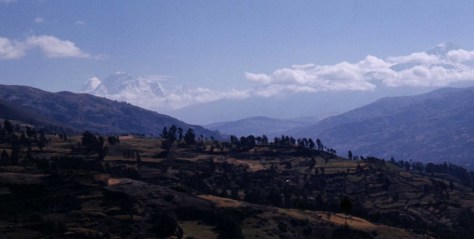
Some plants appear to reproduce sexually, but they have got around actual sex through a mechanism known as apomixis. These plants produce seeds but not following the normal fertilization process, so each seedling is a genetic copy of the ‘mother’ plant.
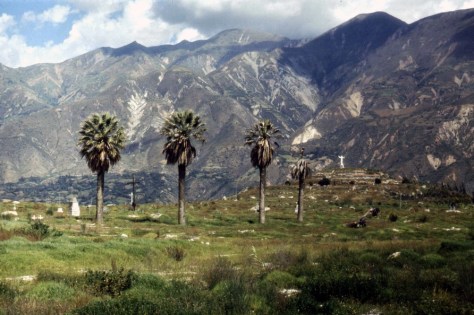
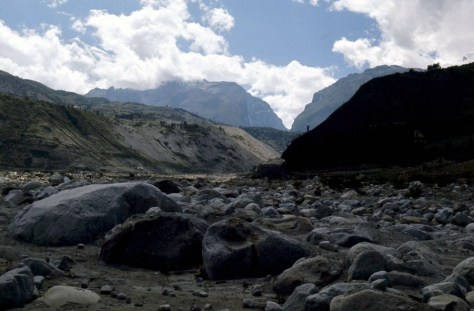
Berries on a diploid potato species, Solanum berthaultii

Other species have given up sex (almost) altogether, instead reproducing vegetatively with the ‘offspring’ being genetically identical (or essentially identical) to the mother plant. In others, like the potato, propagation is primarily through tubers. Yet, in the Andes especially where potatoes were first domesticated, many varieties are extremely sexually fertile, and produce berries rather like small tomatoes, although they are inedible. They contain lots of small seeds that we often refer to as true potato seed or TPS. In fact, in one experiment I observed at the International Potato Center (CIP) in Peru where I worked during the 1970s, a colleague of mine recorded a particular variety known as Renacimiento producing more than 20 t/ha of berries, in addition to about 20 t of tubers.


Anyway, I digress somewhat. During the years I was active scientifically (before I joined the ranks of senior management at the International Rice Research Institute in the Philippines, IRRI in the Philippines), I looked into various aspects of reproductive biology of several species.

In my doctoral research, carried out in the Andes of Peru, I investigated the breeding relationships between potato varieties with different numbers of chromosomes. The potato we consume almost on a daily basis (at least in my home) is known scientifically as Solanum tuberosum, and has four sets (48 in total) of chromosomes. It is what we call a tetraploid. Many other potato species have only two sets or 24 chromosomes, and are known as diploids. The tetraploid forms are mostly self fertile; diploids, on the other hand, have a genetic system of self incompatibility, and will only produce seeds if pollinated with pollen from a different genetic type.

This or similar system of self incompatibility is known from other species, like poppies for example. Anyway, the outcome is that ‘self’ pollen will not germinate on the stigma. The two images below (of various pollinations among wild potatoes), show a typical compatible pollination and fertilization event. Lots of pollen grains have stuck to the stigma, have germinated and grown the length of the style to reach the numerous ovules in the ovary.

In these next images, showing incompatible pollinations, few pollen grains remain on the stigma, not all germinated, and those that did, grew erratically. A few pollen tubes may reach the ovules but compared to the compatible pollinations, they are many fewer.


In the 1970s, one of my colleagues at CIP, Chilean breeder/agronomist Primo Accatino, championed the use of TPS as an alternative to propagation from seed tubers. One of the weak links, as it were, in any potato production cycle is the availability and cost of disease-free seed tubers. So TPS was seen as potentially fulfilling a gap in many developing countries that had neither the infrastructure nor staff to support seed potato production.

As I mentioned earlier, the common potato is a tetraploid with four sets of chromosomes, and this complicates the genetics and breeding. Breeding at the diploid level could be more straightforward. At least that was the hope and the challenge when I embarked on a project to produce TPS lines through inbreeding diploid potatoes and single seed descent. Funded by the British government, it involved scientists at the University of Birmingham (where I had joined the staff in 1981), the former Plant Breeding Institute in Cambridge, and CIP in Peru.

Was this just a pipe dream? Perhaps. Before developing the project concept, I’d had extensive discussions with my colleague at Birmingham, geneticist Dr Mike Lawrence who worked on self incompatibility in poppies (that has a similar genetic system to that in potatoes). His experience with poppies showed that if one tried long and hard enough, it was possible to break the self incompatibility.

Flowers of Solanum chacoense

We tried—and ultimately failed—closing the project after five years. We decided it would take just too much investment to make progress. If only we’d had available then what are now helping to transform potato breeding: self compatible diploid lines. At the end of the 1990s, scientists working at the USDA potato collection in Sturgeon Bay, Wisconsin identified self compatible lines in the widespread wild species Solanum chacoense. The Sli gene that confers self compatibility is apparently more widespread than previously thought, and has now been bred into diploid lines. Had we had those self compatible lines back in the 1980s, our work would have perhaps have reached a better conclusion.


When I moved to the Philippines in 1991 to head IRRI’s Genetic Resources Center (GRC), I had a collection of around 100,000 different lines of rice, cultivated and wild, to conserve in the institute’s International Rice Genebank.

With my colleagues in GRC, Dr Lu Bao-Rong, Amita ‘Amy’ Juliano and Dr Ma Elizabeth ‘Yvette’ Naredo, I spent several years investigating the breeding relationships between the cultivated forms of rice, Oryza sativa from Asia, and O. glaberrima from West Africa, and the closest wild Oryza species with a similar AA genome. We made thousands of crosses with the aim of understanding not only the breeding relationships, which is important to be able to better use wild species in rice breeding, but also to understand the taxonomy of wild and cultivated rices.

Pollinations (L) in the genebank screenhouse among AA genome species from Asia, Australia, and the New World, and (R) a crossing polygon from those pollinations expressed in terms of spikelet fertility.

This work led to several scientific publications, which you can access here: just look for publications with our names.


Another aspect of plant sex, important for genebank managers, is how the environment can affect plant fertility. While the seeds of many species (including rice and potatoes) can be stored at a low temperature (typically -18ºC) and for decades if not longer, it is essential that only the best seeds are placed in a genebank for long term conservation. That means ensuring that the growing conditions are the best possible to produce seeds of high quality—and in abundance—during an initial multiplication or later on for rejuvenation after some years of storage, if seed stocks are running low, or there are signs that seed viability may be declining.

At IRRI, in Los Baños south of Manila, we were faced with managing a large germplasm collection of rice lines from all over Asia, from Africa, and South America as well. And these had been collected over a very broad latitudinal range, while Los Baños sits at around 14ºN. We were attempting to grow in a single location many different rice lines, some of which had evolved under more temperate conditions, under different temperature regimes and daylengths.

Kameswara Rao

With my colleague Dr Kameswara Rao (and Professor Richard Ellis from the University of Reading, UK) we spent three years carefully analyzing the effects of different growing environments on seed quality for conservation. Just look for publications here under our names to check out what we achieved. The important changes we made to how we grew rice lines for optimum seed quality have endured until today, although (as I have reported elsewhere) changes to post-harvest handling of seeds have been improved through the work of former IRRI seed physiologist, Dr Fiona Hay.


So, as you can see, there are many different, and interesting, facets to plant sex. And as plant breeders and gene conservationists, we aim to exploit the idiosyncrasies of each species to produce more productive crop varieties or ensure the long term survival of varieties that no longer find favor with farmers, or wild species whose habitats are threatened through agricultural expansion, increasing urbanization, or climate change.


Combatting jet lag for job interviews across the globe

I started my first job on 1 January 1973. I retired (at 61) on 30 April 2010, after more than 37 years continuous employment. All but ten years were spent working abroad, in South and Central America, and in Asia. I also got to travel to more than 60 countries in the course of my work in international agricultural research and academia.

I’ve held five different positions in three organizations: the International Potato Center (CIP, in Lima, Peru); the University of Birmingham; and the International Rice Research Institute (IRRI, in the Philippines). However, I was interviewed for just two of those five positions, although during the course of my career I have flown all over the world for at least three other job interviews, none of which were successful as there always seemed to be an ‘internal candidate’ waiting in the wings. And in all cases, I had to combat jet lag to a greater or lesser extent all the while. You run on adrenaline and a certain degree of sang froid through the interviews [1].


My first job at CIP, as an Associate Taxonomist, came about almost by chance. In September 1970 I had enrolled on a one year MSc course on plant genetic resources conservation and use in the Department of Botany at the University of Birmingham.

The head of department, Professor Jack Hawkes, was an internationally-renowned potato expert and one of the pioneers of the 1960s genetic conservation movement. Just before Christmas that year he set off for a two month wild potato collecting trip to Bolivia, calling at CIP in Lima to seek some logistical help with the expedition. It was during that visit to CIP that the Director General, Dr Richard Sawyer mentioned that he wanted to send one of his young staff to the Birmingham course in September 1971. And did Jack know anyone who could come to CIP, for just one year, to help look at after the center’s growing germplasm collection of native Andean potato varieties (of which there are thousands).

On returning to the UK at the end of February 1971, Jack phoned me within a day of his return, and mentioned the position at CIP, and asked if I would be interested. I had no hesitation in saying an emphatic Yes! I’d always wanted to visit Peru, and having a position, albeit short-term, in genetic resources conservation was almost too good to be true.

Things didn’t go exactly to plan. There was a delay, while CIP negotiated with the UK government through the Overseas Development Administration (or was it Ministry of Overseas Development back in the day). My travel to Peru was put on hold, but I did register for and begin studies on potatoes towards a PhD in botany.

Richard Sawyer

Sometime during 1972 (I don’t remember exactly when) Richard Sawyer visited Birmingham, and I had an opportunity to sit down with him and Jack to discuss my posting in Lima. By then it had been agreed that it would be longer than just one year, and that I’d stay there long enough to complete the research for my PhD. I must have said all the right things, since Sawyer agreed to this arrangement. What I can say is that it wasn’t a formal interview as such. He had a habit of meeting prospective candidates around the world, often in airports, and deciding there and then if he wanted to hire them.

Anyway, to cut a long story short, I flew to Lima on 4 January 1973 and remained there until April 1975, when I returned to Birmingham to complete the residency requirements for my PhD and to submit my thesis. But before returning to the UK, I met with Sawyer concerning my future ambitions with CIP. And he made me an offer to move into CIP’s Outreach Program (later Regional Research) provided I successfully defended my thesis.

I was back in Lima just before the end of December, but not sure then to which regional office I would be posted although we had already initiated some plans for a move to Central America, about which I wrote recently. In April 1976, Steph and I left Lima headed for Turrialba in Costa Rica. And we remained there for almost five years, until the end of November 1980 in fact.

Returning to Lima, I had expected to move on to another of the CIP’s regional offices. Brazil was proposed, but when that fell through, we set about planning to move to the Philippines.


But fate intervened. Around September or October 1980 I heard about a new lectureship (in plant genetic resources) in my old department (by then renamed Plant Biology) at the University of Birmingham. I was torn. I was very happy at CIP and enjoyed the work I had been doing in various aspects of potato production. There again, a tenure-track university lectureship was too good an opportunity to ignore. So I sent in an application.

Around mid-December or so, I received feedback that my name would be put on the short list of candidates for interview, with one proviso. I had to commit to travel to Birmingham (at my own expense) for interview. After a long discussion with Steph, and looking at the most economical way of flying back to the UK (I eventually used Freddie Laker’s Skytrain airline into London-Gatwick from Miami), I confirmed my availability for interview during January.

I was in Birmingham for just over 36 hours (two nights) and afterwards I took the opportunity of visiting my mother who was staying with my eldest brother Martin and his family in Gloucestershire, south of Birmingham. I was in the UK for just under a week all told.

We were three candidates (one female, two male) and I guess that I was, to all intents and purposes, the ‘internal candidate’ (so I can’t rail too much about internal candidates) being the only one with an existing affiliation with the university. I was the last to be interviewed and arrived at the interview room a short while before my turn, to find the first candidate waiting in the corridor while the second was being grilled. We had been told to wait outside the interview room until all interviews had been concluded. One of us would be then invited back in to discuss a possible job offer.

With dry mouth and somewhat sweaty palms (and feeling rather jaded through jet lag) I entered the interview room with some trepidation. However, I was greeted by some friendly faces. The interview panel (certainly five persons) was chaired by Professor John Jinks, head of the Genetics Department and a formidable intellect. He was supported by Professor Derek Walker, head of the Biochemistry Department and Dean of the Science Faculty. There were three staff from Plant Biology: Jack Hawkes, Dr Dennis Wilkins (a fierce ecologist whose interviewing style seemed like a dog worrying a bone – I’d already come across him during my interview for a place on the MSc course, and as a graduate student), and Dr (later Professor) Brian Ford-Lloyd, who I’d known since my early graduate days and who has remained a lifelong friend and colleague with whom I have since published three books and many scientific papers. There may have been another person from the university administration, but I don’t recall.

I guess the interview must have lasted about 40 minutes, each member of the panel taking turns to probe my suitability for this lectureship. Unlike interviews for academic and research positions nowadays, I did not have to present a seminar to the department or be ‘interviewed’ by anyone outside the panel. (Incidentally, when the Mason Chair of Botany became vacant in 1982 on Jack Hawkes’ retirement, none of the staff met any of the professorial candidates nor were they expected to present a seminar).

Interview over, I joined the other two candidates outside, each of us deep in our own thoughts and very little conversation among us. After what seemed an age, but was probably no more than about 15 minutes, the door opened, and Brian came out to invite me back. John Jinks told me that the panel had agreed to offer me the lectureship and asked if I would accept it. I had already discussed with Steph what my answer would be under these circumstances. Unequivocally yes!

I don’t remember much after that. Except that Jack invited me for dinner at his house. I was staying in one of the guest rooms at Staff House in the center of the Birmingham campus. Early next morning, I made my way to the railway station and headed south for a few days before flying back to Peru and telling Steph (and our young daughter Hannah, almost three) the good news.


I joined the Plant Biology faculty on 1 April 1981 and spent ten years teaching undergraduate classes in flowering plant taxonomy, agricultural systems (as a component of a second year common course), and an honours course (with Brian) on plant genetic resources. But most of my teaching was at graduate level, to students from all over the world, who came to Birmingham for its world-renowned MSc course on genetic resources.

Then there was research on potatoes and legumes, and during this decade I supervised a number of graduate students to successfully submit their PhD theses. I had some administrative responsibilities that we were all expected to carry, some more than others. Towards the end of the 80s, however, things were changing at the university, and Margaret Thatcher’s government intervention in higher education was causing considerable disruption and disquiet. I found myself increasingly disillusioned with academic life.

Fate intervened, once again. I received notice of a new position at the International Rice Research Institute (IRRI) in the Philippines to lead one of the world’s most important genebanks. I decided to throw my hat in the ring. It was not an easy decision. Since IRRI was a sister institute to CIP, funded the same way through the Consultative Group on International Agricultural Research (or CGIAR) I knew, more or less what I would be letting myself in for if I joined IRRI.

However, there were more pressing personal issues. When we returned to the UK in 1981, our elder daughter Hannah was almost three. Her sister Philippa was born in May 1982. In 1991 they were thirteen and nine, and about to make the transition from from middle to high school, and from first to middle school, respectively. How would they cope with a move halfway across the world, leaving everything familiar behind, all their friends, and moving into an entirely new education system (we’d already decided that boarding school in the UK would not be an option).


Klaus Lampe

In early January 1991 I was invited for interview at IRRI, and flew with British Airways on a flight from London-Gatwick via Abu Dhabi and Hong Kong. The interviews were scheduled for Tuesday to Thursday, three rather intensive days of panel discussions, one-on-one meetings with senior staff, and a seminar. So I chose a flight that would get me into Manila on the Monday afternoon. Well, that was the plan. Arriving at Gatwick I discovered that my flight was delayed about 12 hours. Our designated 747 had a mechanical fault that could not be sorted easily, so we had to wait for a replacement plane to arrive from Florida before being turned around for the flight to the Far East. What a miserable experience. As a result I arrived to IRRI’s research campus in Los Baños (about 65 km south of Manila) around 01:30 on Tuesday morning and, checking over the interview schedule that had been left in my room at IRRI’s guesthouse, noted to my distinct discomfort that I had a breakfast meeting with the Director General, Dr Klaus Lampe, and his three Deputies at 07:00. Having left a request to be woken at 06:15, I took a sleeping pill, not that it helped much .
My internal clock was eight hours awry, but somehow I made it through the breakfast, and the next three days, taking a flight back to the UK late on Thursday night. I think I must have slept for a week once I was back in the UK.

There were three candidates for the genebank position. And we all had MSc (genetic resources) and PhD degrees (two on potatoes, one on rice) from the University of Birmingham and with Jack Hawkes as our PhD supervisor. I knew the other two candidates very well. One managed the Vegetable Genebank at Wellesbourne near Birmingham and the other headed the genebank at another CGIAR center in Nigeria, IITA. Although we overlapped some days at IRRI, our schedule of interviews and meetings meant that we hardly saw anything of each other.

On reflection, the interview schedule was gruelling, with hardly any time to catch one’s breath. We were kept on the go all the time, often with just short breaks between one interview and the next. It was an IRRI tradition to involve as many of the staff in interviewing candidates as possible, with a multiplicity of interview panels representing the different disciplines or a mixture [2]. And of course there was the more detailed interaction with staff in the genebank in my case.

Because the different panels did not interact with one another, candidates (as in my case) were faced with the same line of questions across different panels. Very repetitive and tiresome. And there were, in my opinion, the totally unacceptable and asinine questions from some IRRI staff, some of which received short shrift from me.

Let me give you two or three examples. I was asked if I was prepared to work hard. One line of questioning seemed to question my suitability for joining a center like IRRI and the CGIAR in general. I answered by a question: when did the person join the CGIAR? I was able to reply that I had joined and left the CGIAR years before this particular person had even first entered international agricultural research. 15: love to me! Another scientist, British, was obsessed with my undergraduate career and how successful I had been, notwithstanding that I had graduate degrees, and had been working already for almost 20 years.

A couple of weeks after arriving back in the UK I received a phone call from Lampe offering me the position, which I accepted after some negotiation over the salary and benefits package they originally put on the table. I joined IRRI on 1 July that year, and remained there until my retirement a decade ago.

After successfully running the genebank, in 2001 I was asked by Director General Ron Cantrell (with Board of Trustees approval) to join the senior management team, and become IRRI’s Director for Program Planning and Communications, a position I held until my retirement 2010.


[1] At one interview for the Crop Trust in Rome, I was interrupted by someone as I was delivering my seminar, a vision for the future of the organization. After the second interruption, in which this person had tried to ‘correct’ me, I had to tell her that this was my seminar, not hers, and went on to explain my thoughts on web presence. As it turned out I was not selected, but the organization did adopt my proposal for a more meaningful URL for its website.

On another occasion at Trinity College, Dublin, I delivered my seminar in the very lecture theater (in the Department of Botany) where Michael Caine had his wicked way with Julie Walters in the 1983 film Educating Rita.

When I interviewed for a position at ICARDA in Syria, much to my consternation and many members of staff the internal candidate accompanied me to one of the panel interviews, and even sat in on the interview. Needless to say a stop was soon put to that. Very unprofessional for senior management to even allow this to happen.

[2] When I joined IRRI and was involved in interviewing candidates (sometimes as chair of the selection committee) I tried to streamline the process somewhat, reducing the number of panel interviews per se, giving more time for informal interactions, while giving more responsibility to the selection panel.


Growing potatoes – growing professionally

November 1980. After almost five years (from April 1976) Steph and I were preparing to leave Costa Rica, the small Central American country sandwiched between Nicaragua to the north and Panama to the south. Our elder daughter Hannah was born there in April 1978. But our time in that beautiful country was coming to an end, and we were headed back to Lima.
So how come I ended up in Costa Rica working on potatoes, since agriculture there is dominated by rice and beans? And coffee and bananas, of course. Potatoes are small beer [1].

Let me explain.

It all started in January 1973, when I joined the staff of the International Potato Center (CIP) in Lima and, in the process, fulfilled an ambition I’d had since I was a small boy: to visit Peru.
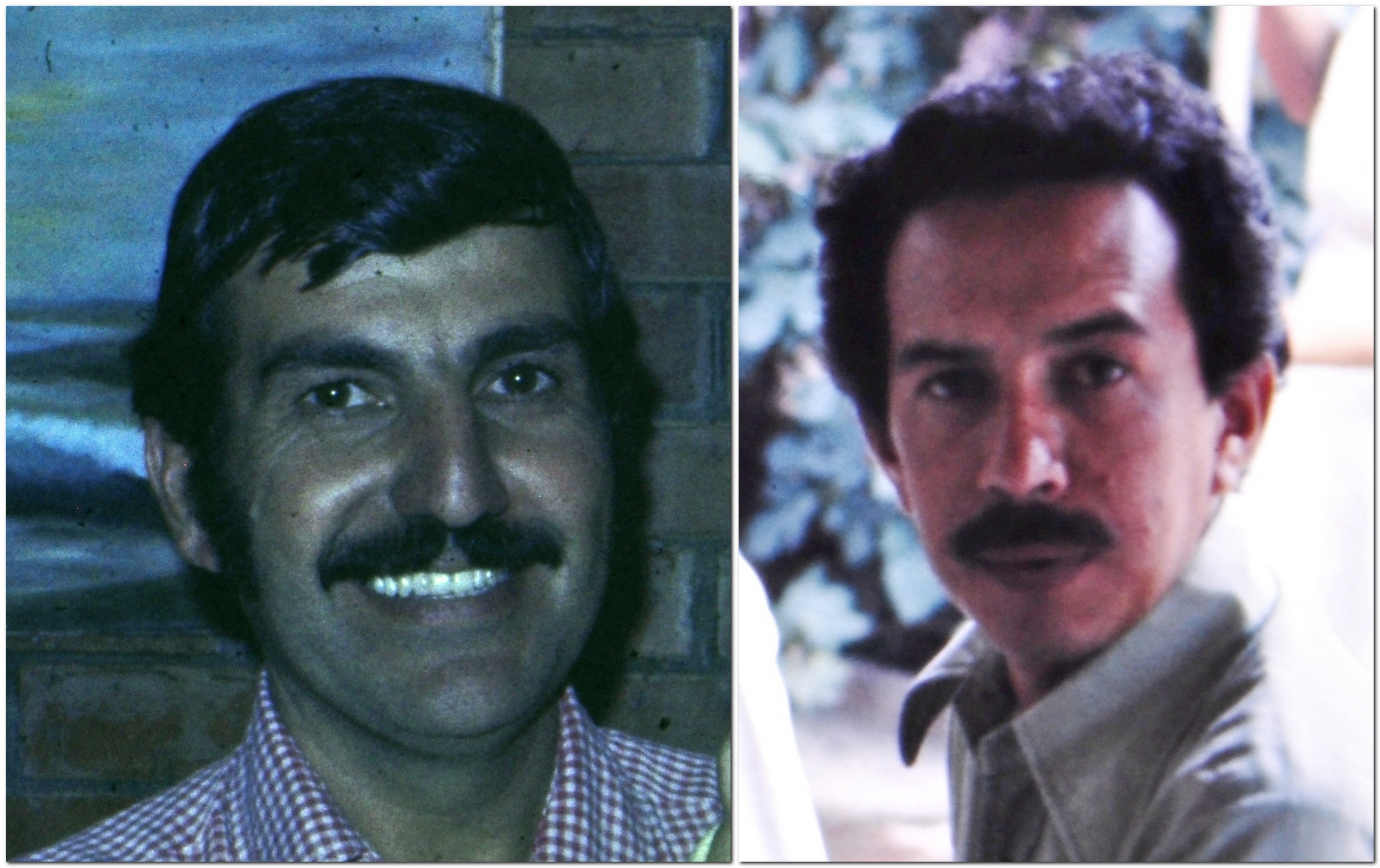
During the three years I was based in Lima, working as an Associate Taxonomist and helping to conserve CIP’s large collection of native Andean potato varieties, I completed research for my PhD degree, awarded by the University of Birmingham in December 1975.

Earlier that year, in April, I returned to Birmingham to complete the residency requirements for my degree, and to submit my thesis (which was examined in October). However, before leaving for the UK, I had discussions with CIP’s Director General, Richard Sawyer, about rejoining CIP after I had completed my PhD. I wanted to broaden my horizons and learn more about and contribute to potato production around the world, rather than continue working with the potato collection or taxonomy research. He offered me a post-doctoral position in CIP’s Outreach Program, being posted to one of the regional offices.

Exploring options
In 1975, CIP’s Region II program, encompassing Mexico, Central America, and the Caribbean, had its regional office in Toluca, Mexico (about 64 km west of Mexico City). Potatoes are not a major crop in this region—maize and beans being the staples—although they are locally and economically important in each country.

It was a year of transition. CIP’s regional representative at that time, Ing. Agr. MS Manuel J. Villareal González, had just been named leader of Mexico’s national potato program (in Toluca). My Lima colleague, Ing. Agr. MS Oscar Hidalgo, a plant pathologist, took over as Region II leader and moved to Mexico.

Manuel Villareal and Oscar Hidalgo

The other members of the CIP team in Toluca were local support staff: José Gómez and secretary Guillermina Guadarrama, formerly employees of the Rockefeller Foundation potato program, and some field and glasshouse technicians.

Jose and Guillermina

CIP management proposed setting up a sub-regional office in Costa Rica, without yet deciding what its programmatic responsibility and research focus might be.

To explore various possibilities, Steph and I were asked to visit Costa Rica and Mexico in April on our way back to the UK. And that’s what we did. I should add that I was nervous the whole trip. Why? I was carrying a briefcase full of my thesis research data. I was paranoid that some light-fingered individual might relieve me of the briefcase. There was no computer cloud storage in those days, let alone floppy disks or flash drives.

For many years it was not possible to fly direct between Lima and San José, the capital of Costa Rica. The journey inevitably required a stop-over in Panama City, usually overnight. On our trip north we stayed at the airport hotel but had time enough to explore parts of the city center (not the Canal Zone, unfortunately). And that’s when we had our first McDonald’s hamburgers. I have this distinct memory of my immediate boss, head of CIP’s Dept. of Plant Breeding & Genetics, Dr. Roger Rowe, coming back to Lima from one of his home leaves in the USA and telling us all about these ‘new’ hamburger joints that we should try when we had the opportunity. I had thought that, in 1975, McDonald’s was new to Panama, but from what I have found on the internet, McDonald’s opened its first restaurant there in 1971. Notwithstanding, it was a first for us.

Drs. Luis Carlos Gonzalez (L) and Rodrigo Gamez (R)

My Lima colleague, bacteriologist and head of CIP’s Dept. of Plant Pathology & Nematology, Dr. Ed French made arrangements for us to visit with fellow bacteriologist Dr. Luis Carlos Gonzalez Umaña and plant virologist Dr. Rodrigo Gámez Lobo (who, in later years went on to found and become President of the renowned INBio, the Instituto Nacional de Biodiversidad) at the University of Costa Rica.

Luis Carlos and Rodrigo made us very welcome and, with the leader of the Costarrican potato program, Ing. Agr. Luis Fernando Cartín, took us to see potatoes growing on the slopes of the Irazú Volcano east of San Jose, to labs in the university, and, as a side ‘tourist’ visit, to the Instituto Clodomiro Picado nearby where anti-snake venom serum is produced on a large scale (often in horses). Costa Rica has more than 20 highly venomous snake species.

I think we spent about four days in Costa Rica before travelling on to Mexico. We certainly came away from Costa Rica with a favorable impression. San José is dominated by a stunning landscape of volcanoes (Poás, Irazú, Turrialba), some active or recently active, covered in lush, tropical forest and, on the lower slopes, coffee plantations for which the country is famous. Back in the day, San José was a small city of about 456,000 inhabitants.

In Mexico, we stayed with our friends from Lima, John and Marian Vessey who had moved there in 1974 to work at the International Maize and Wheat Improvement Center (CIMMYT) near Mexico City. Apart from a visit to the potato program in Toluca, we had the opportunity for some sightseeing, with a memorable visit to the pre-Columbian pyramids at Teotihuacán about 32 km north from CIMMYT.

Steph and me on the top of the Sun Pyramid looking towards the Moon Pyramid at Teotihuacan (April 1975).

Ken Brown

Settling on Costa Rica
Steph and I returned to Lima just after Christmas, all set to move on later in 1976. But where? A decision had not yet been made about Costa Rica.

Meanwhile, a new Director of CIP’s Outreach Program, Dr. Ken Brown, had been appointed while I was back in the UK, and joined CIP in January. In due course, Outreach became the Regional Research Program. As both Ken and his family (wife Geraldine, and five boys) and Steph and I were staying in the center’s guest house for several weeks, we got to know the Browns quite well.

Prof. Luis Sequeira

In order to hasten our move to Region II, we needed to identify an appropriate international institute to host my posting in Costa Rica. So, Roger Rowe, Ed French, and I flew to Costa Rica for a week in early January [2]. There we met with Luis Carlos and Professor Luis Sequeira from the University of Wisconsin at Madison, a world renowned plant bacteriologist (and Costarrican by birth) with whom Luis Carlos had completed his PhD, who happened to be visiting family at the time.

We visited sites on the Irazú Volcano and near Alajuela (a regional town northwest of San José) where Luis Carlos was testing potato breeding lines for resistance to bacterial wilt.

We also visited the Tropical Agricultural Research and Higher Education Center (CATIE), a regional center in Turrialba dedicated to research and graduate education in agriculture, and the management, conservation and sustainable use of natural resources, established originally in 1942 as the headquarters of the Inter-American Institute for Agricultural Sciences (IICA).

The CATIE ‘Henry Wallace’ administration building

CATIE plant pathologist Dr. Raul Moreno from Chile explains the focus of the center’s farming systems research to (L-R) Luis Sequeira, Ed French, and Roger Rowe.

Turrialba is a small town just over 70 km due east of San José, although at a much lower elevation—around 650m compared with almost 1200m in the city.

The drive to Turrialba from San José via Cartago was not straightforward. Until around 1978 (or maybe later) the section between Cartago and Turrialba was a dirt road, and quite dangerous. It was also the main route from the Caribbean port of Limón to San José so there was a continual stream of heavy (and noisy) trucks travelling between the two cities. The road passed through a zone of frequent low cloud (neblina) with reduced visibility, sometimes quite severely. And, passing through several sugarcane plantations, there would be tractors towing ‘trains’ of carts carrying harvested cane snaking along the road to local sugar mills, and often without displaying any hazard lights. With the state of the road, the frequency of the heavy traffic, and limited visibility, one could get stuck behind one of these slow-moving ‘trains’ for many kilometers. Very frustrating!

At CATIE, we met with the Acting Director, Dr. Jorge Soria (a cocoa breeder) to discuss signing an agreement between CIP and CATIE that would allow me to work from CATIE as a regional base, and set up a research program to breed potatoes for hot humid climates. Turrialba has an average annual temperature of 22.9°C (73.2°F), and more than 2854 mm (or 112.4 inch) of rainfall per year. The wettest months are May to December, with heaviest rainfall in June and July. This, we assumed, would be an ideal, if not challenging environment in which to attempt to grow potatoes.

Anyway, to cut a long story short, an agreement was signed between CIP and CATIE, under which I was to be attached to CATIE’s Crops Department. It was also agreed that CIP would contribute to CATIE’s cropping systems program (funded through USAID’s Regional Office for Central America and Panama, ROCAP) once suitable potato varieties had been identified.

Steph and I headed to Costa Rica in early April 1976, and we remained there until the end of November 1980. I’ve been back there just once, in 1997.

Getting started in Turrialba
Back in 1976, I can’t deny that I was rather daunted about setting out on my own. I’d turned 27 only the previous November. And communicating with colleagues back in Lima was not straightforward, as I have described in another post.

We didn’t plant our first potato experiments in Turrialba until May 1977 to check whether any varieties would yield under the warm and humid conditions there. Instead, we were faced with bacterial wilt, a devastating disease of potatoes and other related crops like tomato (as well as bananas!), about which I have blogged before.

Between arriving in Costa Rica the previous year and then, I’d had to renovate screenhouses for our research, acquire a vehicle (that took several months), hire a research assistant and a secretary, as well as attend to other regional duties that Oscar Hidalgo asked me to undertake. In fact within a few weeks of arriving in Costa Rica he whisked me off to Mexico for a month to participate in a potato production course, leaving Steph on her own in (to her) a very strange Turrialba.
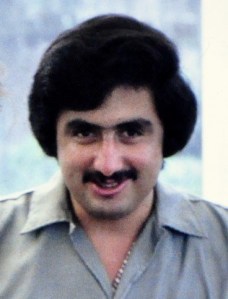
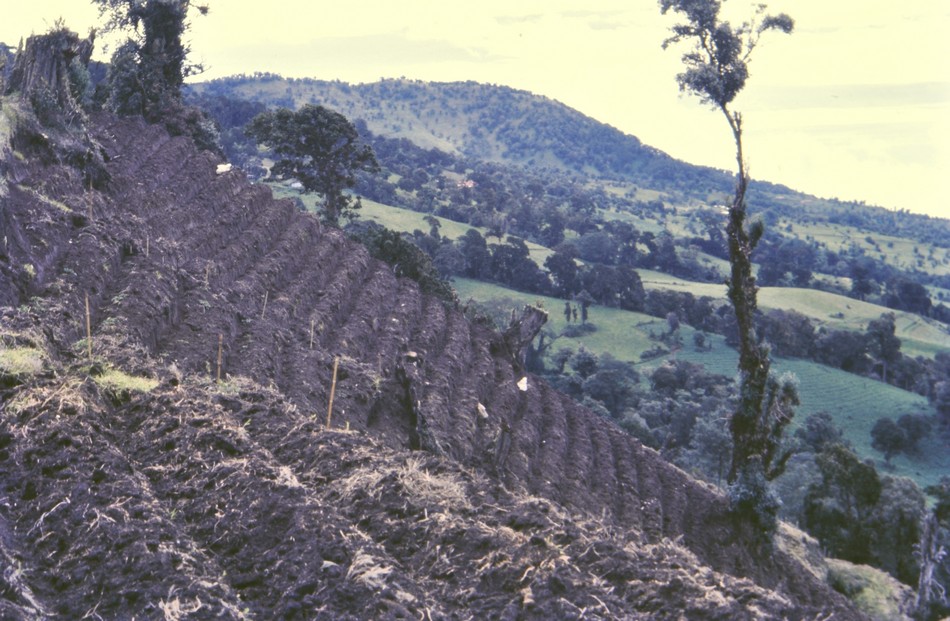
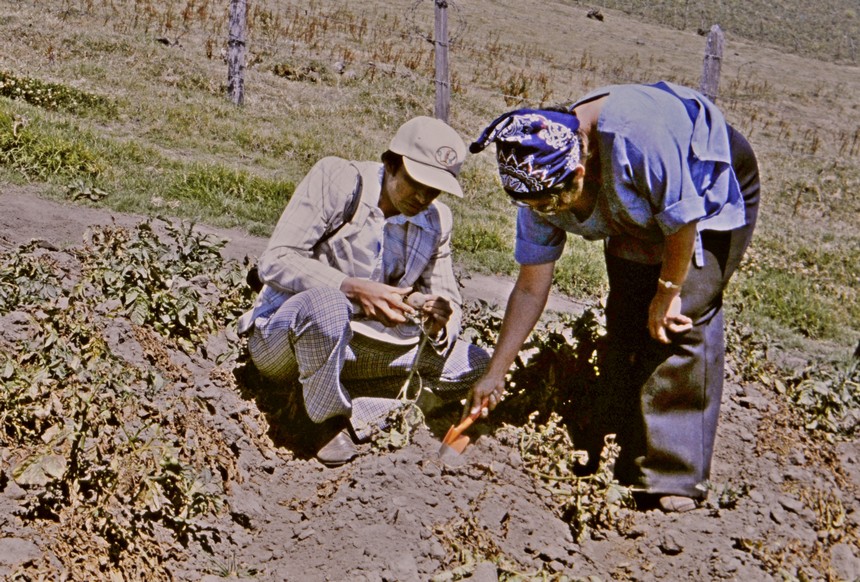
Within a couple of months or so, I’d hired a young man, Jorge Aguilar Martinez, as my research assistant. Jorge lived in Santa Rosa, a small village just outside Turrialba, where his father grew coffee on a small farm (finca). Jorge was 20 in June that year, recently married to Carmen (a secretary in the animal husbandry department at CATIE), and with a small boy, Leonardo (who is now Head of Information and Communication Technology at CATIE).

Jorge Aguilar

Jorge had applied for a position in the Crops Department at CATIE before I arrived there, but there were no vacancies. He seemed an ideal candidate: keen, interested to get on in the world. He was studying at night at the local campus of the University of Costa Rica for a qualification in business management. Apart from his coffee background, he had no field experience in crop agronomy, let alone potatoes! But Jorge was a quick learner. In fact, we learned a lot together how to grow potatoes. What particularly impressed me about him was his willingness to innovate, look for solutions. And have a flexible attitude to how we worked. We got the job done, and that often meant leaving for our experimental field plots higher up one of the nearby volcanoes before daybreak, and not returning to Turrialba until late in the afternoon once everything had been completed.

One of our isolation plots for seed multiplication high on the slopes of the Turrialba volcano.

Then a young woman, Leda Avila, from Alajuela joined my project as a bilingual secretary. Her support was fantastic. She had a bubbly and confident character, and was always curious to understand exactly what we were doing in the field. One day she asked me if she could join us on one of our visits to experimental plots we had planted on the slopes of the two local volcanoes, Irazú and Turrialba. She told me that as she typed research reports for Lima she had no idea what the work involved, but wanted to find out. So, one day, and donning her field boots, Leda joined the CIP team in the field.
She was so enthusiastic about her first field experience that she would join us thereafter as and when circumstances permitted. Much to the consternation of our CATIE colleagues. They’d never heard of such a thing. But to me, it just made sense to include Leda as a key member of the team.

Moisés Alonso Pereira

In late 1977, Oscar Hidalgo registered for his PhD at North Carolina State University, and left for the USA. On Ken Brown’s recommendation, Richard Sawyer asked me to take over leadership of the Region II Program. As a consequence, my travel schedule increased significantly (especially as we were developing an important cooperative program on potatoes involving six countries, PRECODEPA), and I had to find permanent technical support for Jorge. I hired Moisés Alonso Pereira as Research Technician, who was 17 or 18 then.

Searching for resistance to bacterial wilt (caused by the pathogen Ralstonia solanacearum) and ways to control it became an important focus of our research in Turrialba. But we also developed rapid multiplication techniques for seed production, and that work accelerated once my colleague and dear friend, Jim Bryan, joined the project in Costa Rica for one year in the late seventies, seen in some of the photos below passing on his encyclopedic knowledge about seed production and rapid multiplication techniques to Jorge and others. We also trained potato scientists from neighboring countries about these techniques through PRECODEPA.
At the same time as we were developing these rapid multiplication methods, my colleagues Bob Booth and Roy Shaw in Lima were adapting diffuse light potato storages for use on farm. We took one of their designs, and adapted it for use in Turrialba. With a double sandwich of fiberglass panels, a wide roof overhang to shade the sides, and an air conditioner to drop the temperature to a reasonable level (it was often more than 30ºC outside) we could successfully store potatoes for several months.

Turrialba became a prime site for testing potato varieties for their resistance to bacterial wilt, and CIP scientists from Lima would pass through to see for themselves how we were getting on. Given his interest and expertise in bacterial wilt it wasn’t surprising that Ed French visited us on at least one occasion.

Ed French and Jorge Aguilar checking the yield of some potato varieties after exposure to bacterial wilt. This plot is surrounded by the remains of wilted plants.

We also worked with colleagues in the Ministry of Agriculture and Animal Husbandry (MAG) in San José to test different potato lines against various diseases such as viruses, and worked with farmers to find ways to increase productivity.

The productivity of many potato farms was quite low. Why? Overuse of fertilizers and agrochemicals, and not applying these in the most effective way to control pests and diseases, especially control of the late blight disease to which the two main varieties Atzimba and Rosita were highly susceptible. Many farmers worked on the basis that twice the dose of a fungicide, for example, would provide twice the control. Sadly that was never the case. Working with individual farmers was possible, but having the potato growers association on side was important. And their president was a young and forward-looking farmer, Olman Montero.

With Olman Montero on his farm on the slopes of the Irazu volcano.

Our work led to a few publications. Scientific publication was always welcome, but was never a driving force in our work. We were more concerned to make a difference in farmers’ fields by providing clean seed, improving productivity, identifying resistant potato varieties, or managing diseases in the field.

  • Bryan, J.E., M.T. Jackson & N. Melendez, 1981. Rapid Multiplication Techniques for Potatoes. International Potato Center, Lima, Peru. PDF
  • Jackson, M.T., L.F. Cartín & J.A. Aguilar, 1981. El uso y manejo de fertilizantes en el cultivo de la papa (Solanum tuberosum L.) en Costa Rica. Agronomía Costarricense 5, 15-19. PDF
  • Jackson, M.T. & L.C. González, 1981. Persistence of Pseudomonas solanacearum (Race 1) in a naturally infested soil in Costa Rica. Phytopathology 71, 690-693. PDF
  • Jackson, M.T., L.C. González & J.A. Aguilar, 1979. Avances en el combate de la marchitez bacteriana de papa en Costa Rica. Fitopatología 14, 46-53. PDF

The five years that I spent in Costa Rica were among the best of my career. I really had to become self-reliant, learning to stand on my own two feet and grow professionally as a scientist and a project manager. There was no alternative. Being so far from CIP headquarters in Lima, and with communications vastly slower than today, I just couldn’t call on someone if I found myself in a spot of bother. Phone calls had to be booked at least a day in advance, or we could use telex – who remembers that? Otherwise I just mailed quarterly progress reports to keep everyone up to date with what was going on in Central America, and whether I was keeping to the work plans developed in December each year when the Regional Research staff from around the world congregated in Lima for a two week planning meeting. Ken Brown was an excellent Regional Research director; he let me and my Regional Research colleagues get on with things with only minor adjustments as and when necessary (keeping his staff ‘on a light rein’), so different from today when scientists are assailed frequently and from many quarters to account for their work and performance.

I owe a great debt to Jorge, Moisés, and Leda for all their contributions to the success of the CIP project in Costa Rica. And all my friends and colleagues in Costa Rica’s Ministry of Agriculture and Animal Husbandry, as well as other programs contributing to PRECODEPA.

It was with some sadness that Steph, Hannah, and I upped sticks and moved back to Lima. You might ask why we would make such a move when things were going well in the Costa Rica program. By November 1980 I felt that I had achieved what I’d been sent there for, and even if I stayed on for another year or so, the scope of the work wouldn’t have changed significantly. In any case, the PRECODEPA project was ticking along quite nicely, managed by the national programs themselves, and everyone felt that a more distant relationship with CIP would allow the project to grow and mature. In any case, I was also looking for another potato challenge. And I expected that to come with another Regional Research posting. Little did I know, at the end of November that year, what life would have in store for me in 1981 [3].


Where are they now?
Since leaving Costa Rica at the end of November 1980, I have only been back to Costa Rica once, in 1997 when I was managing a worldwide project on rice biodiversity for the International Rice Research Institute (IRRI) funded by the Swiss government. I did meet both Jorge and Leda on that trip; I don’t recall if I saw Moisés during that visit to Turrialba. I stayed a couple of days in Turrialba. Maybe Jorge, Moisés and I spent an evening at the hilltop bar-restaurant at Turrialtico (now a fancy lodge) near CATIE where we would venture to enjoy a few beers (and some typical bar snacks or bocas) after a day in the field. And I had mostly lost contact with all three former colleagues—until quite recently. Such is the power of social media!

Jorge, Leda, and Moisés are all now retired, more or less, although involved in various volunteer activities. They would be in their early to mid-sixties now.

Jorge continues to live in Turrialba, and still manages a small finca on a part-time basis. He and his wife Carmen have three sons and two granddaughters. Sofía and Amanda are Leonardo’s daughters.

Jorge and Carmen

L-R: Fabian (40), Leonardo (44). Carmen, Jorge, and Daniel (30).

Sofia (7) and Amanda (2)

After leaving CATIE in early 1980, Leda returned to Alajuela, and spent many years working at the headquarters of IICA on the outskirts of San José. She has enjoyed traveling in her retirement, most recently in Myanmar in 2019.

She has one son, Enrique (29) who I met in 1997. I stayed with Leda for a couple of nights in Alajuela, and Enrique graciously gave me his room.

Enrique and Leda on 9 November 2020 in her garden in Alajuela.

Moisés now lives in the La Pitahaya neighborhood of Cartago, a city at the heart of the Costarrican potato industry, lying more or less halfway between San José and Turrialba.

Leda, Moisés, and José Alonso

With his second wife Leda, he has one son José Alonso, who celebrated his 11th birthday just a few days ago. Moisés also has two daughters Ana Amelia (26) and Karen (24) from his first marriage. He also has two granddaughters aged sixteen and fifteen.

It’s wonderful to have reconnected with old friends.


[1] In 1983, I contributed a short piece on potatoes in Costa Rican Natural History, a book edited by eminent tropical biologist, Daniel Janzen who spent many years studying biodiversity in Costa Rica.

[2] I have two enduring memories of that trip. Actually, of the flight from Lima to Panama, and the return. As I mentioned earlier, there were no direct flights from Lima to Costa Rica back in the day. We took an early morning flight (around 06:30 or so) on Air Panama from Lima to Panama City, with an onward connection there to San José. Hardly had the aircraft (a Boeing 727) lifted off the runway in Lima when it was ‘open bar’ for the remainder of the flight. I think Roger, Ed, and I all enjoyed rum cocktails before breakfast! Then on the return flight from Panama (I have this idea at the back of my mind that it was a Braniff DC8 flight), we hit an air pocket somewhere over the Colombian Andes, and it felt as though the plane dropped 1000 feet. Bang! That was my first experience of some serious turbulence, but not the last by a long chalk over the next 45 years.

[3] We returned to Lima, with the expectation of moving to Brasilia (for the southern cone countries of South America). When that fell through, the next option was to join the CIP program for Southeast Asia, based in Los Baños in the Philippines. In the event, that didn’t come about since I had applied for a faculty position in the Department of Plant Biology (formerly Botany) at the University of Birmingham, being offered the position in January 1981. We moved back to the UK in March that year. It would be another decade before landing up in the Philippines. But that’s another story.

Potatoes or rice?

I graduated in July 1970 from the University of Southampton (a university on England’s south coast) with a BSc Hons degree in botany and geography. ‘Environmental botany’ actually, whatever that meant. The powers that be changed the degree title half way through my final (i.e. senior) year.
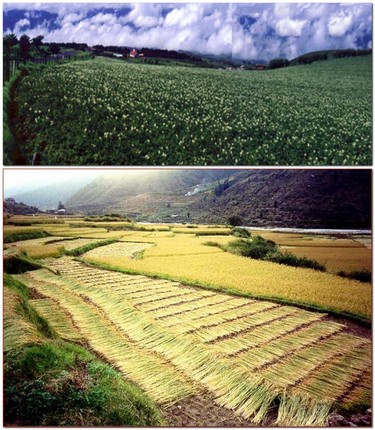

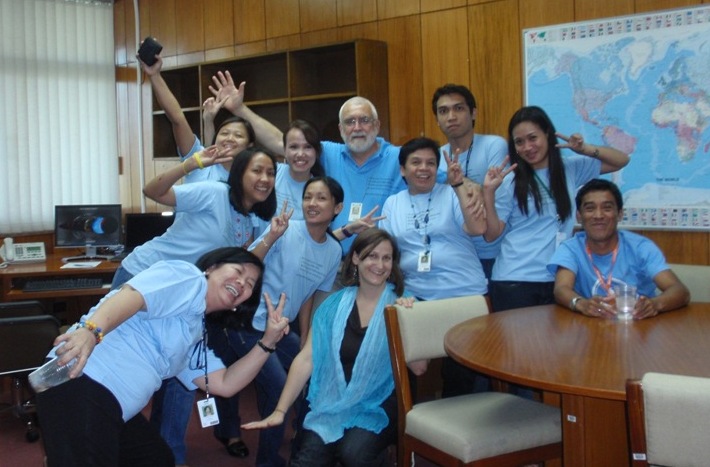
Anyway, there I was with my degree, and not sure what the future held in store. It was however the beginning of a fruitful 40 year career in international agricultural research and academia at three institutions over three continents, in a number of roles: research scientist, principal investigator (PI), program leader, teacher, and senior research manager, working primarily on potatoes (Solanum tuberosum) and rice (Oryza sativa), with diversions into some legume species such as the grasspea, an edible form of Lathyrus.

Potatoes on the lower slopes of the Irazu volcano in Costa Rica, and rice in Bhutan

I spent the 1970s in South and Central America with the International Potato Center (CIP), the 1980s at the University of Birmingham as a Lecturer in the School of Biological Sciences (Plant Biology), and almost 19 years from July 1991 (until my retirement on 30 April 2010) at the International Rice Research Institute (IRRI) in the Philippines¹.

I divided my research time during those 40 years more or less equally between potatoes and rice (not counting the legume ‘diversions’), and over a range of disciplines: biosystematics and pre-breeding, genetic conservation, crop agronomy and production, plant pathology, plant breeding, and biotechnology. I was a bit of a ‘jack-of-all-trades’, getting involved when and where needs must.

However, I haven’t been a ‘hands-on’ researcher since the late 1970s. At both Birmingham and IRRI, I had active research teams, with some working towards their MSc or PhD, others as full time researchers. You can see our research output over many years in this list of publications.

Richard Sawyer

Very early on in my career I became involved in research management at one level or another. Having completed my PhD at Birmingham in December 1975 (and just turned 27), CIP’s Director General Richard Sawyer asked me to set up a research program in Costa Rica. I moved there in April 1976 and stayed there until November 1980.


In these Covid-19 lockdown days, I’m having ample time to reflect on times past. And today, 30 April, it’s exactly 10 years since I retired.

Just recently there was a Twitter exchange between some of my friends about the focus of their research, and the species they had most enjoyed working on.

And that got me thinking. If I had to choose between potatoes and rice, which one would it be? A hard decision. Even harder, perhaps, is the role I most enjoyed (or gave me the most satisfaction) or, from another perspective, in which I felt I’d accomplished most. I’m not even going to hazard a comparison between living and working in Peru (and Costa Rica) versus the Philippines. However, Peru has the majesty of its mountain landscapes and its incredible cultural history and archaeological record (notwithstanding I’d had an ambition from a small boy to visit Peru one day). Costa Rica has its incredible natural world, a real biodiversity hotspot, especially for the brilliant bird life. And the Philippines I’ll always remember for all wonderful, smiling faces of hard-working Filipinos.

And the scuba diving, of course.

Anyway, back to potatoes and rice. Both are vitally important for world food security. The potato is, by far, the world’s most important ‘root’ crop (it’s actually a tuber, a modified underground stem), by tonnage at least, and grown worldwide. Rice is the world’s most important crop. Period! Most rice is grown and consumed in Asia. It feeds more people on a daily basis, half the world’s population, than any other staple. Nothing comes close, except wheat or maize perhaps, but much of those grains is processed into other products (bread and pasta) or fed to animals. Rice is consumed directly as the grain.


Just 24 when I joined CIP as a taxonomist in January 1973, one of my main responsibilities was to collect potato varieties in various parts of the Peruvian Andes to add to the growing germplasm collection of native varieties and wild species. I made three trips during my three years in Peru: in May 1973 to the departments of Ancash and La Libertad (with my colleague, Zósimo Huamán); in May 1974 to Cajamarca (accompanied by my driver Octavio); and in January/February 1974 to Cuyo-Cuyo in Puno and near Cuzco, with University of St Andrews lecturer, Dr Peter Gibbs.

Top: with Octavio in Cajamarca, checking potato varieties with a farmer. Bottom: ready for the field, near Cuzco.

My own biosystematics/pre-breeding PhD research on potatoes looked at the breeding relationships between cultivated forms with different chromosome numbers (multiples of 12) that don’t naturally intercross freely, as well as diversity within one form with 36 chromosomes, Solanum x chaucha. In the image below, some of that diversity is shown, as well as examples of how we made crosses (pollinations) between different varieties, using the so-called ‘cut stem method’ in bottles.

Several PhD students of mine at Birmingham studied resistance to pests and diseases in the myriad of more than 100 wild species of potato that are found from the southern USA to southern Chile. We even looked at the possibility of protoplast fusion (essentially fusion of ‘naked’ cells) between different species, but not successfully.

I developed a range of biosystematics projects when taking over leadership of the International Rice Genebank at IRRI, publishing extensively about the relationships among the handful (about 20 or so) wild rice species and cultivated rice. One of the genebank staff, Elizabeth Ma. ‘Yvette’ Naredo (pointing in the image below) completed her MS degree under my supervision.

Although this research had a ‘taxonomic’ focus in one sense (figuring out the limits of species to one another), it also had the practical focus of demonstrating how easily species might be used in plant breeding, according to their breeding relationships, based on the genepool concept of Harlan and de Wet, 1971 [1], illustrated diagrammatically below.


When I transferred to Costa Rica in 1976, I was asked to look into the possibility of growing potatoes under hot, humid conditions. At that time CIP was looking to expand potato production into areas and regions not normally associated with potato cultivation. One of the things I did learn was how to grow a crop of potatoes.

I was based in Turrialba (at the regional institute CATIE), at around 650 masl, with an average temperature of around 23°C (as high as 30°C and never much lower than about 15°C; annual rainfall averages more than 2800 mm). Although we did identify several varieties that could thrive under these conditions, particularly during the cooler months of the year, we actually faced a more insidious problem, and one that kept me busy throughout my time in Costa Rica.

Shortly after we planted the first field trials on CATIE’s experiment station, we noticed that some plants were showing signs of wilting but we didn’t know the cause.

With my research assistant Jorge Aguilar checking on wilted plants in one of the field trials.

Luis Carlos González

Fortunately, I established a very good relationship with Dr Luis Carlos González Umaña, a plant pathologist in the University of Costa Rica, who quickly identified the culprit: a bacterium then known as Pseudomonas solanacearum (now Ralstonia solanacearum) that causes the disease known as bacterial wilt.

I spent over three years looking into several ways of controlling bacterial wilt that affects potato production in many parts of the world. An account of that work was one of the first posts I published in this blog way back in 2012.

The other aspect of potato production which gave me great satisfaction is the work that my colleague and dear friend Jim Bryan and I did on rapid multiplication systems for seed potatoes.

Being a vegetatively-propagated crop, potatoes are affected by many diseases. Beginning with healthy stock is essential. The multiplication rate with potatoes is low compared to crops that reproduce through seeds, like rice and wheat. In order to bulk up varieties quickly, we developed a set of multiplication techniques that have revolutionised potato seed production systems ever since around the world.

AS CIP’s Regional Representative for Mexico, Central America, and the Caribbean (known as CIP’s Region II), I also contributed to various potato production training courses held each year in Mexico. But one of our signature achievements was the launch of a six nation research network or consortium in 1978, known as PRECODEPA (Programa REgional COoperativo DE PApa), one of the first among the CGIAR centers. It was funded by the Swiss Government.

Shortly after I left Costa Rica in November 1980, heading back to Lima (and unsure where my next posting would be) PRECODEPA was well-established, and leadership was assumed by the head of one of the national potato program members of the network. PRECODEPA expanded to include more countries in the region (in Spanish, French, and English), and was supported continually by the Swiss for more than 25 years. I have written here about how PRECODEPA was founded and what it achieved in the early years.

I resigned from CIP in March 1981 and returned to the UK, spending a decade teaching at the University of Birmingham.


Did I enjoy my time at Birmingham? I have mixed feelings.

I had quite a heavy teaching load, and took on several administrative roles, becoming Chair of the Biological Sciences Second Year Common Course (to which I contributed a module of about six lectures on agricultural ecosystems). I had no first teaching commitments whatsoever, thank goodness. I taught a second year module with my colleague Richard Lester on flowering plant taxonomy, contributing lectures about understanding species relationships through experimentation.

Brian Ford-Lloyd

With my close friend and colleague Dr Brian Ford-Lloyd (later Professor), I taught a final year module on plant genetic resources, the most enjoyable component of my undergraduate teaching.

One aspect of my undergraduate responsibilities that I really did enjoy (and took seriously, I believe—and recently confirmed by a former tutee!) was the role of personal tutor to 1st, 2nd and 3rd year students. I would meet with them about once a week to discuss their work, give advice, set assignments, and generally be a sounding board for any issues they wanted to raise with me. My door was always open.

Most of my teaching—on crop diversity and evolution, germplasm collecting, agricultural systems, among others—was a contribution to the one year (and international) MSc Course on Conservation and Utilization of Plant Genetic Resources on which I had studied a decade earlier. In my travels around the world after I joined IRRI in 1991, I would often bump into my former students, and several also contributed to a major rice biodiversity project that I managed for five years from 1995. I’m still in contact with some of those students, some of whom have found me through this blog. And I’m still in contact with two of my classmates from 1970-71.

Research on potatoes during the 1980s at Birmingham was not straightforward. On the one hand I would have liked to continue the work on wild species that had been the focus of Professor Jack Hawkes’ research over many decades.

With Jack Hawkes, collecting Solanum multidissectum in the central Andes north of Lima in early 1981 just before I left CIP to return to the UK. This was the only time I collected with Hawkes. What knowledge he had!

He had built up an important collection of wild species that he collected throughout the Americas. I was unable to attract much funding to support any research projects. It wasn’t a research council priority. Furthermore, there were restrictions on how we could grow these species, because of strict quarantine regulations. In the end I decided that the Hawkes Collection would be better housed in Scotland at the Commonwealth Potato Collection (or CPC, that had been set up after the Empire Potato Collecting Expedition in 1938-39 in which Jack participated). In 1987, the Hawkes Collection was acquired by the CPC and remains there to this day.

Dave Downing was the department technician who looked after the potato collection at Birmingham. He did a great job coaxing many different species to flower.

Having said that, one MSc student, Susan Juned, investigated morphological and enzyme diversity in the wild species Solanum chacoense. After graduating Susan joined another project on potato somaclones that was managed by myself and Brian Ford-Lloyd (see below). Another student, Ian Gubb, continued our work on the lack of enzymic blackening in Solanum hjertingii, a species from Mexico, in collaboration with the Food Research Institute in Norwich, where he grew his research materials under special quarantine licence. A couple of Peruvian students completed their degrees while working at CIP, so I had the opportunity of visiting CIP a couple of times while each was doing field work, and renew my contacts with former colleagues. In 1988, I was asked by CIP to join a panel for a three week review of a major seed production project at several locations around Peru.

With funding of the UK’s Overseas Development Administration (ODA, or whatever it was then), and now the Department for International Development (DFID), and in collaboration with the Plant Breeding Institute (PBI) in Cambridge and CIP, in 1983/84 we began an ambitious (and ultimately unsuccessful) project on true potato seed (TPS) using single seed descent (SSD) in diploid potatoes (having 24 chromosomes). Because of the potato quarantine situation at Birmingham, we established this TPS project at PBI, and over the first three years made sufficient progress for ODA to renew our grant for a second three year period.

We hit two snags, one biological, the other administrative/financial that led to us closing the project after five years. On reflection I also regret hiring the researcher we did. I’ve not had the same recruitment problem since.

Working with diploid potatoes was always going to be a challenge. They are self incompatible, meaning that the pollen from a flower ‘cannot’ fertilize the same flower. Nowadays mutant forms have been developed that overcome this incompatibility and it would be possible to undertake SSD as we envisaged. Eventually we hit a biological brick wall, and we decided the effort to pursue our goal would take more resources than we could muster. In addition, the PBI was privatized in 1987 and we had to relocate the project to Birmingham (another reason for handing over the Hawkes Collection to the CPC). We lost valuable research impetus in that move, building new facilities and the like. I think it was the right decision to pull the plug when we did, admit our lack of success, and move on.

We wrote about the philosophy and aims of this TPS project in 1984 [2], but I don’t have a copy of that publication. Later, in 1987, I wrote this review of TPS breeding [3].

Susan Juned

As I mentioned above, Brian Ford-Lloyd and I received a commercial grant to look into producing tissue-culture induced variants, or somaclones, of the crisping potato variety Record with reduced low temperature sweetening that leads to ‘blackened’ crisps (or chips in the USA) on frying. We hired Susan Juned as the researcher, and she eventually received her PhD in 1994 for this work. Since we kept the identity of each separate Record tuber from the outset of the project, over 150 tubers, and all the somaclone lines derived from each, we also showed that there were consequences for potato seed production and maintenance of healthy stocks as tissue cultures. We published that work in 1991. We also produced a few promising lines of Record for our commercial sponsor.

One funny aspect to this project is that we made it on to Page 3 of the tabloid newspaper The Sun, notorious in those days for a daily image of a well-endowed and naked young lady. Some journalist or other picked up a short research note in a university bulletin, and published an extremely short paragraph at the bottom of Page 3 (Crunch time for boffins) as if our project did not have a serious objective. In fact, I was even invited to go on the BBC breakfast show before I explained that the project had a serious objective. We weren’t just investigating ‘black bits in crisp packets’.

Brian and I (with a colleague, Martin Parry, in the Department of Geography) organized a workshop on climate change in 1989, when there was still a great deal of skepticism. We published a book in 1990 from that meeting (and followed up in 2013 with another).
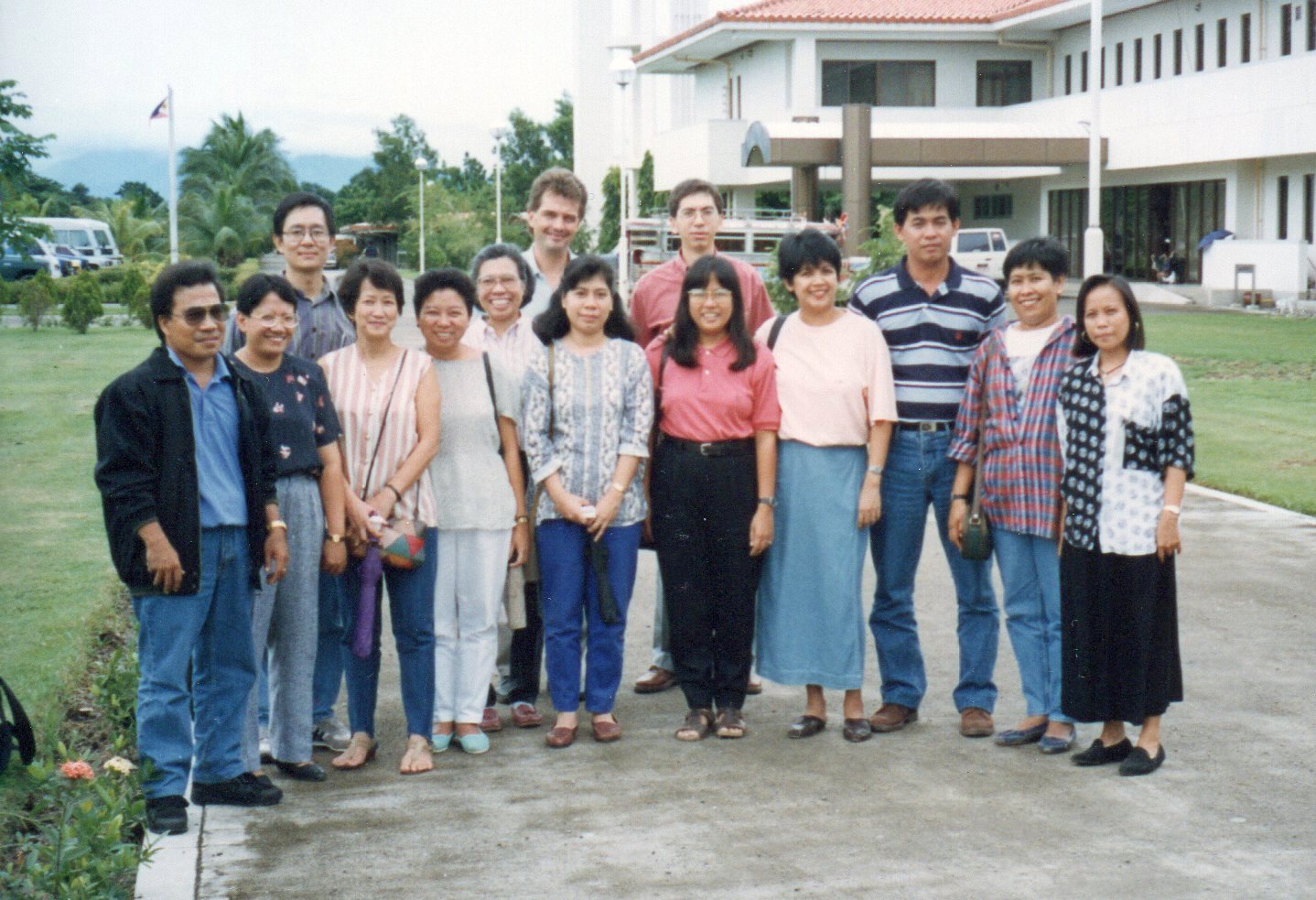
Despite some successes while at Birmingham, and about to be promoted to Senior Lecturer, I had started to become disillusioned with academic life by the end of the 1980s, and began to look for new opportunities. That’s when I heard about a new position at IRRI in the Philippines: Head of the newly-established Genetic Resources Center, with responsibility for the world renowned and largest international rice genebank. I applied. The rest is history,


Klaus Lampe

I was appointed by Director General Klaus Lampe even though I’d never actually run a genebank before. Taking on a genebank as prestigious as the International Rice Genebank was rather daunting. But help was on the way.

I knew I had a good team of staff. All they needed was better direction to run a genebank efficiently, and bring the genebank’s operations up to a higher standard.

Staff of the International Rice Genebank on a visit to PhilRice in 1996.

There was hardly an aspect of the operations that we didn’t overhaul. Not that I had the genebank team on my side from the outset. It took a few months for them to appreciate that my vision for the genebank was viable. Once on board, they took ownership of and responsibility for the individual operations while I kept an overview of the genebank’s operation as a whole.

With Pola de Guzman inside the Active Collection store room at +4C. Pola was my right hand in the genebank, and I asked her to take on the role of genebank manager, a position she holds to this day.

I’ve written extensively in this blog about the genebank and genetic resources of rice, and in this post I gave an overview of what we achieved.

You can find more detailed stories of the issues we faced with data management and germplasm characterization, or seed conservation and regeneration (in collaboration with my good friend Professor Richard Ellis of the University of Reading). We also set about making sure that germplasm from around Asia (and Africa and the Americas) was safe in genebanks and duplicated in the International Rice Genebank. We embarked on an ambitious five year project (funded by the Swiss government) to collect rice varieties mainly (and some wild samples as well), thereby increasing the size of the genebank collection by more than 25% to around 100,000 samples or accessions. The work in Laos was particularly productive.

My colleague, Dr Seepana Appa Rao (left) and Lao colleagues interviewing a farmer in Khammouane Province about the rice varieties she was growing.

We did a lot of training in data management and germplasm collecting, and successfully studied how farmers manage rice varieties (for in situ or on farm conservation) in the Philippines, Vietnam, and India.

One of IRRI’s main donors is the UK government through DFID. In the early 1990s, not long after I joined IRRI, DFID launched a new initiative known as ‘Holdback’ through which some of the funding that would, under normal circumstances, have gone directly to IRRI and its sister CGIAR centers was held back to encourage collaboration between dneters and scientists in the UK.

Whenever I returned on annual home leave, I would spend some time in the lab at Birmingham. John Newbury is on the far left, Parminder Virk is third from left, and Brian Ford-Lloyd on the right (next to me). One of my GRC staff, the late Amy Juliano spent a couple of months at Birmingham learning new molecular techniques. She is on the front row, fourth from right.

With my former colleagues at the University of Birmingham (Brian Ford-Lloyd, Dr John  Newbury, and Dr Parminder Virk) and a group at the John Innes Centre in Norwich (the late Professor Mike Gale and Dr Glenn Bryan) we set about investigating how molecular markers (somewhat in their infancy back in the day) could be used describe diversity in the rice collection or identify duplicate accessions.

Not only was this successful, but we published some of the first research in plants showing the predictive value of molecular markers for quantitative traits. Dismissed at the time by some in the scientific community, the study of  associations between molecular markers and traits is now mainstream.

In January 1993, I was elected Chair while attending my first meeting of the Inter-Center Working Group on Genetic Resources (ICWG-GR) in Ethiopia (my first foray into Africa), a forum bringing expertise in genetic conservation together among the CGIAR centers.

ICWG-GR meeting held at ILCA in Addis Ababa, Ethiopia in January 1993.

Over the next three years while I was Chair, the ICWG-GR managed a review of genetic resources in the CGIAR, and a review of center genebanks. We also set up the System-Wide Genetic Resources Program, that has now become the Genebank Platform.


I never expected to remain at IRRI as long as I did, almost nineteen years. I thought maybe ten years at most, and towards the end of the 1990s I began to look around for other opportunities.

Then, in early 2001, my career took another course, and I left genetic resources behind, so to speak, and moved into senior management at IRRI as Director for Program Planning and Coordination (later Communications, DPPC). And I stayed in that role until retiring from the institute ten years ago.

Top: after our Christmas lunch together at Antonio’s restaurant in Tagaytay, one of the best in the Philippines. To my left are: Sol, Eric, Corints, Vel, and Zeny. Below: this was my last day at IRRI, with Eric, Zeny, Corints, Vel, and Yeyet (who replaced Sol in 2008).

Ron Cantrell

The Director General, Ron Cantrell, asked me to beef up IRRI’s resource mobilization and project management. IRRI’s reputation with its donors had slipped. It wasn’t reporting adequately, or on time, on the various projects funded at the institute. Furthermore, management was not sure just what projects were being funded, by which donor, for what period, and what commitments had been set at the beginning of each. What an indictment!

I wrote about how DPPC came into being in this blog post. One of the first tasks was to align information about projects across the institute, particularly with the Finance Office. It wasn’t rocket science. We just gave every project (from concept paper to completion) a unique ID that had to be used by everyone. We also developed a corporate brand for our project reporting so that any donor could immediately recognise a report from IRRI.

So we set about developing a comprehensive project management system, restoring IRRI’s reputation in less than a year, and helping to increase the annual budget to around US$60 million. We also took on a role in risk management, performance appraisal, and the development of IRRI’s Medium Term Plans and its Strategy.

Bob Zeigler

Then under Ron’s successor, Bob Zeigler, DPPC went from strength to strength. Looking back on it, I think those nine years in DPPC were the most productive and satisfying of my whole career. In that senior management role I’d finally found my niche. There’s no doubt that the success of DPPC was due to the great team I brought together, particularly Corinta who I plucked out of the research program where she was working as a soil chemist.

Around 2005, after Bob became the DG, I also took on line management responsibility for a number of support units: Communication and Publications Services (CPS), Library and Documentation Services (LDS), Information Technology Service (ITS), and the Development Office (DO). Corinta took over day-to-day management of IRRI’s project portfolio.

With my unit heads, L-R: Gene Hettel (CPS), Mila Ramos (LDS), Marco van den Berg (ITS), Duncan Macintosh (DO), and Corinta Guerta (DPPC).


So, ten years on, what memories I have to keep my mind ticking over during these quiet days. When I began this post (which has turned out much longer than I ever anticipated) my aim was to decide between potatoes and rice. Having worked my way through forty years of wonderful experiences, I find I cannot choose one over the other. There’s no doubt however that I made a greater contribution to research and development during my rice days.

Nevertheless, I can’t help thinking about my South American potato days with great affection, and knowing that, given the chance, I’d be back up in the Andes at a moment’s notice. Potatoes are part of me, in a way that rice never became.

Farmer varieties of potatoes commonly found throughout the Andes of Peru.


Everyone needs good mentors. I hope I was a good mentor to the folks who worked with me. I was fortunate to have had great mentors. I’ve already mentioned a number of the people who had an influence on my career.

I can’t finish this overview of my forty years in international agriculture and academia without mentioning five others: Joe Smartt (University of Southampton); Trevor Williams (University of Birmingham); Roger Rowe (CIP); John Niederhauser (1990 World Food Prize Laureate); and Ken Brown (CIP)

L-R: Joe Smartt, Trevor Williams, Roger Rowe, and John Niederhauser.

  • Joe, a lecturer in genetics, encouraged me to apply for the MSc Course at Birmingham in early 1970. I guess without his encouragement (and Jack Hawkes accepting me on to the course) I never would have embarked on a career in genetic conservation and international agriculture. I kept in regular touch with Joe until he passed away in 2013.
  • At Birmingham, Trevor supervised my MSc dissertation on lentils. He was an inspirational teacher who went on to become the Director General of the International Board for Plant Genetic Resources (IBPGR) in Rome. The last time I spoke with Trevor was in 2012 when he phoned me one evening to congratulate me on being awarded an OBE. He passed away in 2015.
  • Roger joined CIP in July 1973 as Head of the Breeding and Genetics Department, from the USDA Potato Collection in Wisconsin. He was my first boss in the CGIAR, and I learnt a lot from him about research and project management. We are still in touch.
  • John was an eminent plant pathologist whose work on late blight of potatoes in Mexico led to important discoveries about the pathogen and the nature of resistance in wild potato species. John and I worked closely from 1978 to set up PRECODEPA. He had one of the sharpest (and wittiest) minds I’ve come across. John passed away in 2005.
  • Ken Brown

    Ken was a fantastic person to work with—he knew just how to manage people, was very supportive, and the last thing he ever tried to do was micromanage other people’s work. I learnt a great deal about program and people management from him.


[1] Harlan, JR and JMJ de Wet, 1971. Toward a rational classification of cultivated plants. Taxon 20, 509-517.

[2] Jackson, MT. L Taylor and AJ Thomson 1985. Inbreeding and true potato seed production. In: Report of a Planning Conference on Innovative Methods for Propagating Potatoes, held at Lima, Peru, December 10-14,1984, pp. 169-79.

[3] Jackson, MT, 1987. Breeding strategies for true potato seed. In: GJ Jellis & DE Richardson (eds), The Production of New Potato Varieties: Technological Advances. Cambridge University Press, pp. 248-261.