Traveling for 55 years

I have been very fortunate. There’s no denying. Since I made my first trip outside the UK, to the west coast of Ireland for a botany field course in July 1968, followed a year later, in September 1969 to participate in a folk festival in Czechoslovakia, I’ve had so many opportunities to travel around the globe—to more than 60 countries (sometimes on vacation, but mostly on business associated with my work in international agricultural research).

Morris dancing at the folk festival in Strakonice, Czechoslovakia in 1969. That’s me on the extreme right.

I’ve lived and worked in three countries (besides the UK of course): Peru (1973-76); Costa Rica (1976-1980); and the Philippines (1991-2010). I’ve visited several countries multiple times, and others just the once. Whenever I was traveling on business, I would also try to fit in some tourism over a weekend if possible. I have so many memories over those 55 years. Here are some that spring to mind.

The Americas
I guess I should begin this section with Peru. In 1971 I was thrilled to be offered a job in Peru, at the newly-founded International Potato Center (CIP), although I didn’t actually travel there until January 1973.
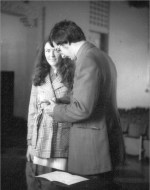
13 October 1973

So many memories. Steph and I were married in Lima in October 1973.

My work took me all over the Andes collecting native varieties of potatoes (and some of the hundreds of wild species of potato that are indigenous to Peru). And Steph and I made several road trips to the north, central, and southern Andes. I visited Machu Picchu twice, and we saw some remarkable sights and sites.

It’s almost impossible to choose any one aspect that stands out. The diversity of landscapes, with desert on the coast, the high Andes, and the jungle on the eastern side. The long history of agriculture in difficult environments, and the archaeology of civilizations that go way back before the invasion by the Spanish in the 16th century.

Then we moved to Costa Rica in April 1976, living in Turrialba, about 70 km east of the capita, San José. Once again I was working on potatoes and with farmers.

We enjoyed our five years in that beautiful country, and our elder daughter Hannah was born there in April 1978.

A land of volcanoes (some very active), Costa Rica is a verdant country, and there are national parks everywhere. The bird and plant life is extraordinary, so I guess this is what stands out for me in particular.

My work took me to all the countries of Central America, as well as to Mexico where, until 1977, CIP’s regional headquarters was based just outside Mexico City at Toluca. And also out into the Caribbean islands, to Haiti and the Dominican Republic, to Jamaica, St Kitts, Antigua, Montserrat, Barbados, and Trinidad.

In Mexico, most of my visits were to Toluca. But on one visit there, I joined the participants of a potato training course to study potato production in Mexico State, Michoacán, Puebla, Jalisco, and Guanajuato. Later, in the 1980s I also visited Nuevo Leon in the north, and Morelos south of Mexico City.

But if I had to choose one highlight, it would be the pyramids at Teotihuacán, northeast of Mexico City that Steph and visited in 1975 when we visited some friends at CIMMYT (a sister center to CIP) on our way back to the UK.
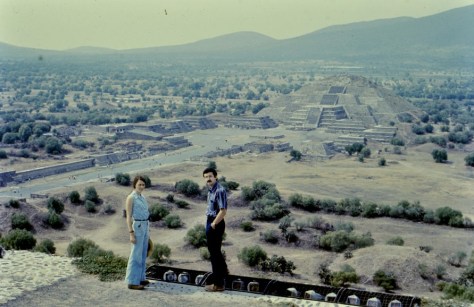
Guatemala is a fascinating and beautiful country, and I was a regular visitor. A land of lakes and volcanoes, it has a high indigenous population, who wear the most colorful fabrics.

In 1977, Steph and I flew into the Mayan city of Tikal, deep in the jungle, for an overnight stay.
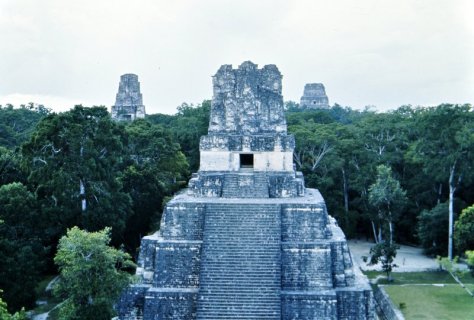
On another trip I spent a few days in Belize, first in Belize City on the coast, then in Belmopan, the smallest capital city in the Americas.

The overriding memory I have of Honduras was the white-knuckle landings in Tegucigalpa. How they managed to land jets there is beyond me. What pilot skill!

I visited El Salvador and Nicaragua just once each, and then only overnight. They had virtually no potato sector.

Flying in and out of Panama City was quite a regular occurrence. It was a transit for Costa Rica from South America. The main potato area was in the west of the country near the frontier with Costa Rica (map), north of the city of David at Volcán and Boquete. A region of deep volcanic soils, it was very good potato-growing country, and one I traveled to by road from my base in Turrialba on a couple of occasions.
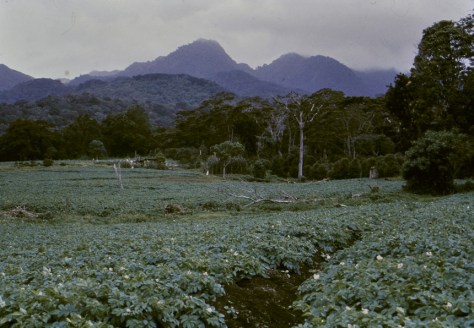
Potato fields in Boquete, northern Panama

It was only after I moved to the Philippines in 1991 that my work took me back to Costa Rica for the first time in about 15 years, and one other country, Venezuela, which I’d not visited before although landing at Caracas airport on several occasions. This airport is located on the Caribbean coast north of the city, and is connected by a 27 km motorway that crosses the mountains, a spectacular drive over what I assume is a northern extension of the Andes.

In the 1990s I spent a week in Caracas attending a potato network meeting, but seeing very little of the city, just the metro from hotel to meeting venue and back!

Another international agricultural research center in Cali, Colombia is CIAT (map), supported in the same way as CIP and CIMMYT (and the rice institute, IRRI, in the Philippines, that I joined in 1991). Located in the Cauca Valley, CIAT is surrounded by huge plantations of sugar cane, but the rice-growing area is nearby as well. The last time I was there (and in Peru and Mexico) was in July 2016 conducting a review of the CIAT genebank.

I was in Chile just the once, for a week in Santiago in July 1979. I’d flown down from Costa Rica to join two colleagues from Lima to carry out a short review of the Chilean potato program. Two things come to mind: wine and ABBA. Wine, because we were taken to dinner at Enoteca, a fine restaurant overlooking the city on Camino Real, where all the wines produced in Chile were on display, and we were invited to sample many of them. On one evening, while out enjoying some souvenir shopping, I heard (for the first time) the refrains of Chiquitita by ABBA emitting from one of the shops. My visit to Santiago will always be associated with ABBA.

What can I say about Brazil? It’s huge. My first visit there was in 1979 when I attended a potato conference at Poços de Caldas in Minas Gerais (map), followed by a couple of nights in Rio de Janeiro. On another occasion I attended a conference in Foz do Iguaçu (in Paraná state) close to the border with Argentina and Paraguay, and site of the impressive Iguazu Falls.
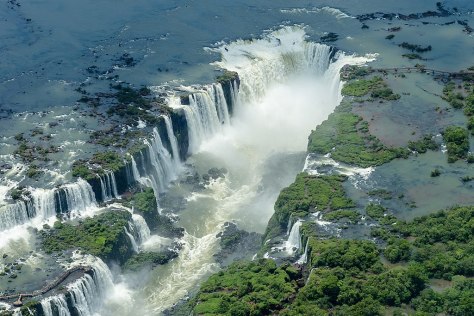
I’ve been to Brasilia twice, and once upon a time, that nearly became home for Steph and me when CIP’s Director General deliberated whether to post me to Brazil or the Philippines. In the event we returned to the UK in 1981 when I joined the faculty of the University of Birmingham.

I guess the most impressive thing I’ve experienced in Brazil is the statue of Christ at Corcovado, high above Rio de Janeiro, with the most spectacular views over the city. My dad was there in the 1930s.

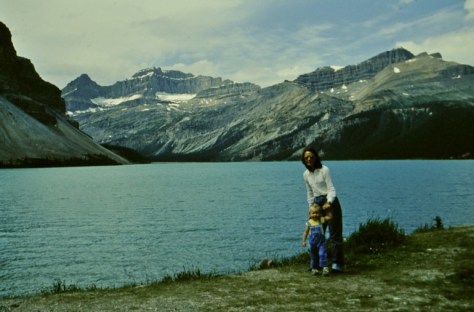
I’ve been to Canada twice, the first time in 1979 (with Steph and 15 month-old Hannah) when I attended a potato conference in Vancouver, then we drove across the Rockies to meet up with my late elder brother Ed and his wife Linda in Edmonton, AB.
In the early 2000s, I made a short visit to Ottawa to meet with representatives of Canadian overseas development assistance agencies, and managed to spend a day getting to know the city, before heading back to the USA.
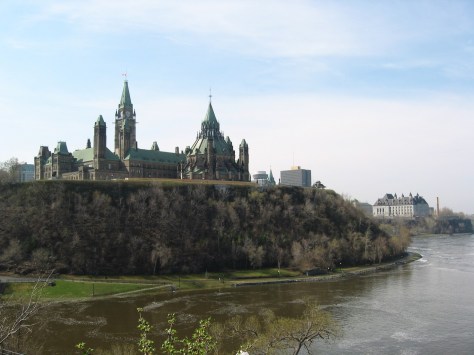
Parliament Hill from the banks of the Ottawa River

Over the decades I’ve traveled to the USA many times, and have now visited all states and DC except Hawaii, Alaska (although one flight touched down in Anchorage), Idaho, Nevada (I changed flights in Las Vegas), Oklahoma, Kansas, North Dakota, Louisiana, Mississippi, and Alabama. It’s such a vast country, but since 2011, Steph and I have managed several mega road trips and seen so many wonderful sights. It’s hard to pick any one. I have written about these trips and you can find a link here; just scroll down to the USA section).

But what highlights do I choose? The Oregon coast, Crater Lake, or the redwoods of northern California? Or would it be canyon country in Arizona? How about Yellowstone National Park, the Appalachians, the Mississippi River, Mt Washington in New Hampshire, or the coast of Maine? What about the Civil War sites like Gettysburg?

However, I’ve often said since we made the visit there in 2011, that if I ever got the opportunity to return, it would be to Canyon de Chelly in northeast Arizona. It’s a special place.

There’s not a lot of potatoes grown throughout the Caribbean, with only the Dominican Republic having any significant potato program, in the central highlands close to the border with Haiti. The Dominican Republic became one of the founder members of a regional potato program, PRECODEPA, set up in 1978, so I guess I must have traveled there five or six times.

I was just the once in Haiti, in the late 1970s attending a conference for about a week. We stayed in a nice hotel overlooking Port-au-Prince, and ventured out into the city just the once. Even then the city was not a safe place to wander round, and following the disastrous 2010 earthquake followed by the cholera outbreak, the country has become even more ungovernable, and not somewhere I would want to visit again. It’s one of the poorest countries in the Western Hemisphere.

I also paid short visits to Jamaica, St Kitts, Montserrat (which had a small but thriving potato sector before the Soufrière Hills volcano erupted in 1995, covering half the island with ash), Barbados, and Trinidad. Before long-haul jets could make the flight direct from Europe to South America, Antigua was a refuelling stop, which I made a couple of times. And after being being bumped off a flight to Montserrat, I spent the night in Antigua at a luxury resort (the only hotel bed I could find on the island!) and enjoying a delicious lobster dinner for the same price as a steak.

Asia

Let’s turn to Asia now. I spent almost 19 years in the Philippines, joining the International Rice Research Institute (IRRI) in 1991, first as head of the Genetic Resources Center (GRC, and managing the world’s largest genebank for rice) until 2001, when I became the institute’s Director for Program Planning and Communications (DPPC). In both roles my work took me all over the world. But let’s focus on the countries in the region to begin with.

My first trip to Asia, to Indonesia in fact, was in the early 1980s, when I attended a genetic resources meeting in Jakarta, but spending a weekend at the Bogor Botanical Garden beforehand. The oil palm tree on the right below is one of the original trees introduced into Asia and became the foundation of the oil palm industry.

Over the 19 years I spent living in the Philippines, I returned to Indonesia several times, the most memorable being in September 2005 when the IRRI Board of Trustees held one of it bi-yearly meetings there. Steph was able to join me on that trip, and along with excursions into the Bali countryside, we also enjoyed a long weekend break at our hotel before returning to the Philippines.
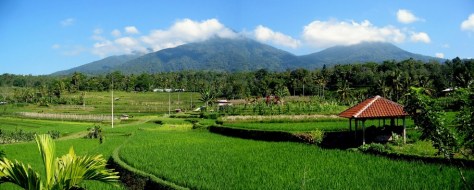
Bali landscape, Indonesia

In the Philippines, we lived in Los Baños, some 60 km south of Manila, where IRRI had its research center.
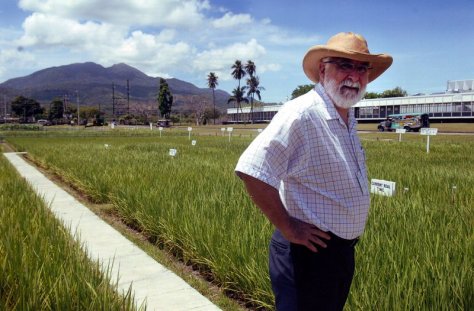
On the IRRI experiment station, with Mt Makiling (a dormant volcano) in the background.

Although we didn’t travel much around the Philippines (and apart from one short trip to Cebu, we didn’t wander beyond the island of Luzon), we went to the beach most months, and in March 2009, Steph joined me and my DPPC staff when we took an office outing over five days to the rice terraces in the mountains north of Manila. Very impressive.

Looking south towards Banaue town center.

In 1993 I learnt to scuba dive, one of the best things I’ve ever done, opening up a totally new world for me. The Philippines has some of the best diving in the world, especially at Anilao south of Manila.

Diving at Anilao, Philippines

But one of the best things about the Philippines? The Filipinos! Always smiling. Such friendly people. And I had great Filipino colleagues working with and for me in both the roles I took on at IRRI.
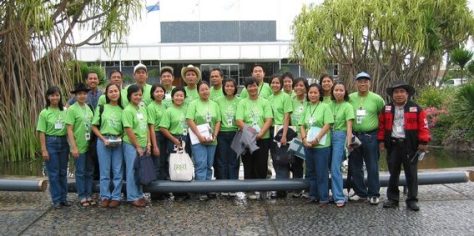
The ‘IRRI All Stars’ who helped during the IRRI Day in October 2002.
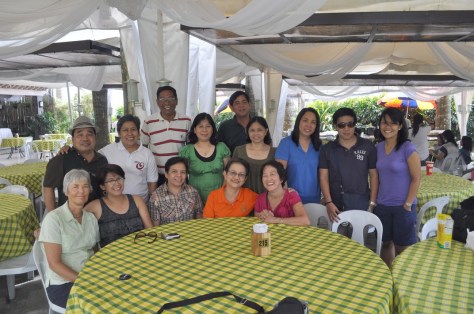
Colleagues from the Genetic Resources Center.

In 1995, I launched a major rice biodiversity project (funded by the Swiss government), and one of my staff, Dr Seepana Appa Rao was recruited to help the national rice program in Laos to collect native varieties of rice. Over five years, I visited Laos at least twice a year, taking part several times in a baci ceremony to welcome me to the country, and other visitors as well. Steph joined me on one trip, and here we are during one such ceremony at the house of my colleague, the late Dr John Schiller.

On that particular trip, we took a weekend off, flying to Luang Prabang and enjoying a river trip on the Mekong.

Mekong River, nr. Luang Prabang, Laos

IRRI had a country program in Cambodia, and I visited a couple of times to discuss rice germplasm conservation, and stayed in Phnom Penh. But after Christmas 2000, Steph and I were joined by our younger daughter Philippa (who had just begun her undergraduate studies at the University of Durham in the UK) for a mini-break in Cambodia (and Singapore).

We flew from Phnom Penh to Siem Reap, and spent three nights there visiting the amazing Angkor Wat temple complex, and a boat trip on the Tonle Sap, before flying back to the capital for one night, and back to Singapore.

We celebrated the New Year in Singapore, taking in the beautiful botanic gardens. Work has taken me to Singapore on several occasions, and Changi airport has to be one of the world’s aviation destinations. How it must have changed since I was last there.

Work took me to Seoul in South Korea on several occasions, and Japan. Steph joined me on one trip to Japan in September 2009 when the IRRI Board of Trustees met in Tsukuba north of Tokyo. We stayed on for a long weekend sightseeing in Tokyo, although she got to see more than I did earlier in the week, when a series of excursions for IRRI and Trustee wives were organised from Tsukuba.
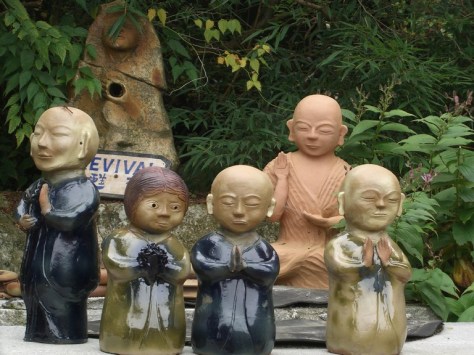
Narita airport was also a hub for Northwest Airlines (now Delta) for flights from Manila to the USA, so I would fly through there at least a couple of times a year, also Osaka.

I’ve been to Beijing in China a couple of times, taking in the Great Wall during my first visit in 1995.
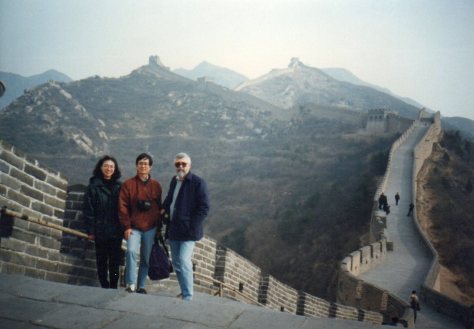
With my colleague, Bao-Rong Lu (middle) on the Great Wall, north of Beijing

On that trip we also took in Hangzhou and Guangzhou. I was in Beijing again around 2005 for a meeting, and in 2004, Steph and I flew to Hong Kong over Christmas and New Year. We also crossed to Macau on that trip.
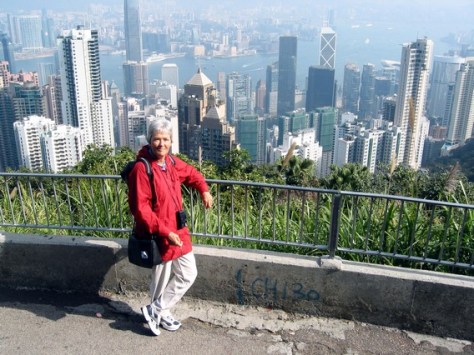
The view from Victoria Peak, Hong Kong
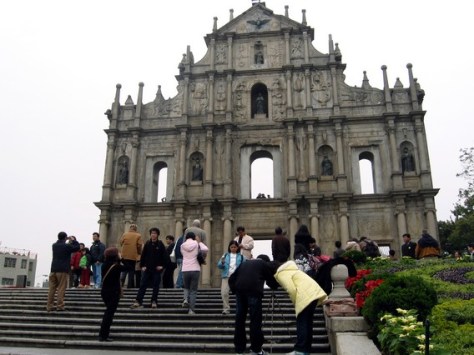
Ruins of St Paul’s, Macau

Again, Hong Kong was one of those hub airports that I passed through many times, first at the old Kai Tak airport alongside Kowloon harbor (an interesting approach), and later at the new airport reclaimed from the sea.

I’ve only been to India a handful of times, always to meetings, and only then to Delhi and Hyderabad, so I can’t say that I’ve ever seen much of the country. There’s no doubt it’s a fascinating country, but I’m not sure it’s really on my bucket list – except if I could travel on one of those luxury trains, perhaps.

The same goes for Bangladesh, with just a couple of visits to Dhaka so I can’t say that I’ve ever known the country.

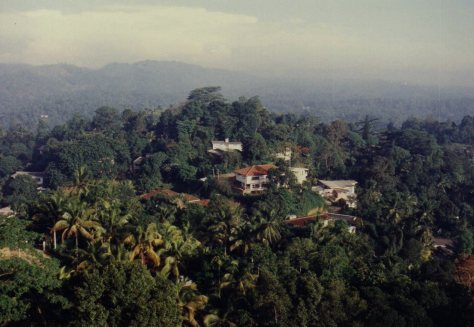
I was in Sri Lanka just the once, spending most of my time in Kandy. The hotel where I stayed was outside the city, on a hill, with breath-taking views over the surrounding hills. And I remember waking up early one still morning, and listening to the bird calls echoing all around. Magic!
I been to the north and south of Vietnam. On my first trip, I traveled to Can Tho in the Mekong Delta, and on the return journey to the airport in Ho Chi Minh City, I had to cross the river in a small boat (the bridge was down) and flag down a tuk-tuk for the last 20 km or so. I caught my flight!

Then I was in Hanoi several times in connection with the rice biodiversity project, but in 2010 I was the chair of the science committee for the 3rd International Rice Congress held in that city.
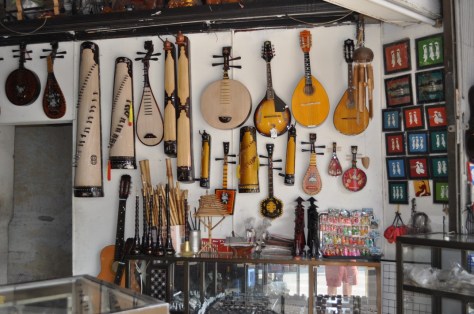
Myanmar has been closed off to visitors for many years, but I was able to visit just the once in the late 1990s, to the rice genebank at Yezin, about 250 miles north of the old capital Yangon. The train ride was interminable, and the sleeper on the return journey left a lot to be desired in terms of comfort and cleanliness. Nevertheless it was an interesting visit, but compared to the cuisine of other countries in the region (especially Thailand and Indonesia) the food was not inspiring: served quite cold and swilling in oil.

I’ve been in Bangkok many times, as it where I would change flights for Vientiane in Laos, having to spend one night to catch the early morning flight on Thai or Lao Airlines. But I never got to know the country, just a couple of visits to Chiang Mai in the north (again for meetings but no tourism). The same goes for Malaysia, with meetings in Kuala Lumpur and Penang.

In 2014 IRRI once again asked me to chair the science committee for the 4th International Rice Congress that was held in Bangkok, so I made several visits there (and on to the Philippines) before the congress was held in November.

Australia
I’ve been in Australia four times. As a family, Steph, our elder daughter Hannah, Philippa and I flew from the Philippines just after Christmas 1998 to Sydney, spending just under a week there, enjoying a trip up into the Blue Mountains, and watching the awesome fireworks display over Sydney Harbour on New Year’s Eve.

I made a work trip there around 2001, taking in Canberra, the rice-growing area in the Riverina, Adelaide, and Melbourne.

In December 2003, Steph and I drove from Sydney to Melbourne over the course of a week, taking the train back to Sydney, where we enjoyed a harbour dinner cruise.
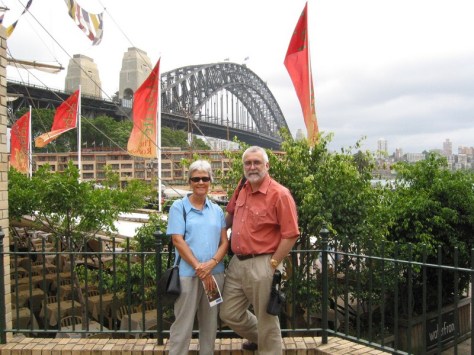
At the Sydney Harbour Bridge during our Christmas vacation in Australia in December 2003

We spent New Year’s Eve on the south coast near Melbourne.

Next stop: Antarctica

The last time I was there was November 2016, when my friend and former colleague, Professor Brian Ford-Lloyd flew from Birmingham to Melbourne for three days as part of a review of genebanks.
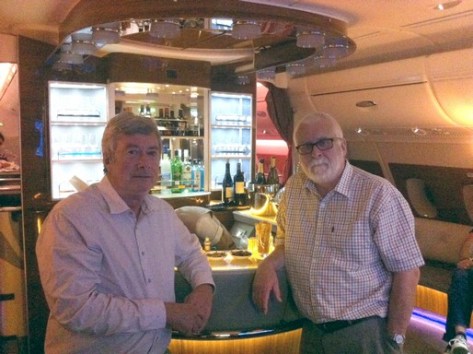
Enjoying a stiff one on the Emirates A380 flight from Melbourne to Dubai.

Africa
Africa now, where I have visited Morocco in the north, Ghana, Ivory Coast, and Nigeria in West Africa, Ethiopia and Kenya in East Africa, and Zambia, South Africa, Mozambique, and Madagascar in southern Africa. I wrote this general account in 2013.

There are several international agricultural research centers in Africa: ILRI (a livestock center) in Kenya and Ethiopia; World Agroforestry (ICRAF) in Kenya; IITA in Ibadan, Nigeria; and Africa Rice (WARDA) in Bouaké, Ivory Coast. I have attended meetings there on several occasions. In Ethiopia, the ILRI campus is located in Addis Ababa, and during my first visit there, in January 1993, I had the opportunity of traveling down into the Rift Valley. What I most remember about that trip, and the stay in Addis, was the incredible bird life. An ornithologist’s paradise. Likewise on the campus of IITA in Nigeria. IITA has a 1000 ha campus, and part of it has been left as pristine rainforest with its assemblage of species, some of them crop wild relatives.

Looking for wild yams on the IITA Forest Reserve.

I made my first visit to Nigeria and Ivory Coast after the genetic resources meeting in Addis Ababa in 1993. For security reasons, visitors to IITA who arrive in Lagos in the afternoon and evening spend the night there, before being escorted to Ibadan, around 2 hours by road to the northeast. I always enjoyed my visits to IITA. But Lagos airport was another thing. The situation there did improve, but throughout the 1990s, I always felt uneasy passing through, as officials (some in uniform, others in plain clothes) would often ask for a bribe.

I must have visited Ivory Coast a couple of times, the first time flying from Abidjan (the capital) to Bouaké on the national airline, a Boeing 727 that had once been the presidential aircraft! I made those visits before the disastrous civil wars of 2002-2004 and 2010-2011.

Africa Rice had to abandon its research center in Bouaké for many years, although the institute has now returned there. I planted a tree during my first visit. I wonder if it’s still there?
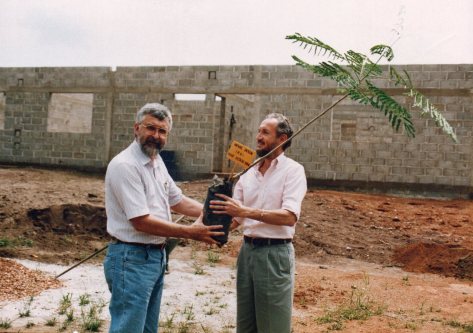
With Deputy Director General Perter Matlon at the tree planting.

On another occasion, I was in Ghana for a week, attending a planning meeting, and didn’t see much of Accra outside my hotel.

I’ve been in Kenya probably half a dozen times, straddled the Equator, and enjoyed the wildlife in the Nairobi National Park.
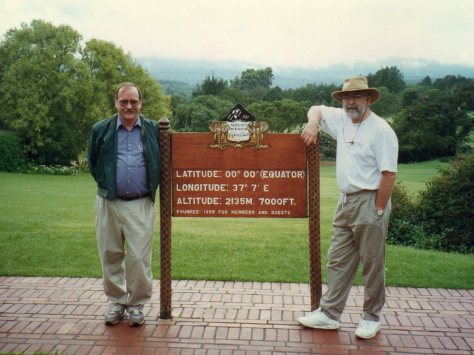
With my dear friend from CIMMYT, the late Sir Bent Skovmand (from Denmark), wheat pathologist and then head of the CIMMYT wheat genebank.

In October 2005, I was in Marrakech, Morocco to attend the annual meeting of the CGIAR, the consortium of donors and international centers. I got sick, and I had to work on a project proposal so spent much of my time in my hotel room, with just one excursion to the souk for some souvenir shopping.
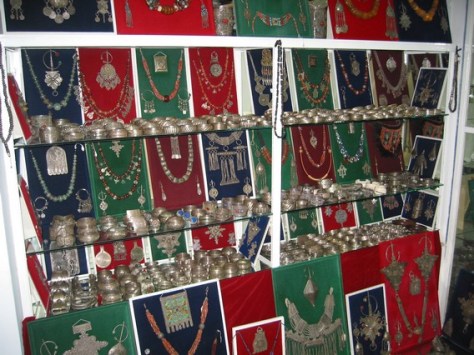
Looking for silver beads for Steph.

In southern Africa, I spent several days in Lusaka, Zambia visiting the SADC genebank there. I’ve passed through Johannesburg several times, and on my transit there (on my way to Lusaka) was caught up in a car bomb incident on the day of the election that first brought Nelson Mandela to power in April 1994. On another occasion I spent a week in Durban (meetings once again) with a side trip to Pietermaritzburg, almost 90 km inland from Durban,

IRRI had a country program in Mozambique, and I was there a couple of times. The rice program joined our biodiversity project, and the CGIAR held its annual meeting there in 2009.

I was in Madagascar just the once, staying in the capital Antananarivo on the east coast, and traveling along dreadful roads north to the rice experiment station. Madagascar also participated in the rice biodiversity project.
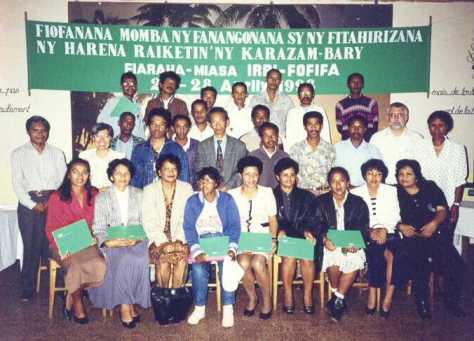
At a training course on rice genetic resources in Madagascar in 1998.

Middle East
I had the opportunity of visiting Izmir in Turkey in April 1972, one of my first overseas trips from Birmingham, to attend a genetic resources conference. There was an excursion to Ephesus.

On another visit (also to Izmir) in the late 1970s, I spent a day in Istanbul before taking an evening flight to the UK, enjoying the Topkapi Palace and various mosques.
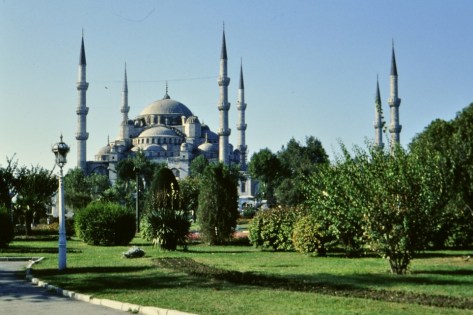
The Blue Mosque

I was fortunate to travel to Syria several times, to Aleppo, before the civil war pulled the country apart. Another agricultural research center, ICARDA, had its headquarters there and genebank. I even went for a job interview once. It’s a beautiful country, and I guess many of the beautiful almond orchards have probably been destroyed in the fighting. I also spent some time in Damascus, visiting the famous souk there.

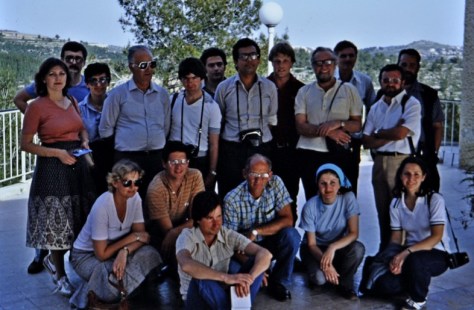
In 1982, I took a party of graduate students from the University of Birmingham to Israel for a two week course on genetic resources of the Mediterranean. I wrote about that visit here.
And then there’s Dubai in the United Arab Emirates. I’ve spent a few nights there in between flights but never had enough time to explore the city. When Emirates Airlines began a service from Manila (MNL) to Dubai (DXB), and on to Birmingham (BHX), we flew that route each year on home leave, and Emirates also became my airline of choice for trips into Europe. In the 1990s it had either been with Lufthansa into Frankfurt (FRA) or KLM into Amsterdam (AMS).

Europe
Steph and I have been married almost 50 years but we’ve never taken a vacation on mainland Europe. But my work has taken me there quite often, and to three countries, Germany, Switzerland and especially Italy, several times a year between 1991 and 2010.

On that first trip to Czechoslovakia in 1969, we traveled by road, through the Netherlands, southern German, and into Czechoslovakia.

I was next in Germany in the late 1980s, when I visited agricultural research institute near Hannover (also taking in the scenic town of Celle), before crossing into East Germany. I spent several interesting days at the genebank in Gatersleben (now part of The Leibniz Institute of Plant Genetics and Crop Plant Research), before flying on to Warsaw in Poland.

There I gave a series of seminars on crop evolution and genetic conservation (focusing on potatoes) to staff of the agricultural research institute (IHAR). My hosts took me to the family home of Frédéric Chopin west of Warsaw. As we walked around the gardens, we could hear several of Chopin’s piano pieces broadcast over speakers there. His Mazurka in D Major has remained a firm favorite ever since (here interpreted by acclaimed pianist Vladimir Horowitz), and is always a reminder of that visit whenever I hear it.

I also took in Cracow in the south of the country, a most elegant city.

While I was DPPC at IRRI, my work with the institute’s donors took me many times into Europe, particularly to Germany (Bonn and Frankfurt), to Switzerland (at Bern), and to Rome in Italy.

I had a good friend, plant pathologist Dr Marlene Diekmann, who lived near Bonn, and who worked for one of the German aid agencies. Whenever I was in Bonn, we’d try and spend some time walking the wine terraces of the Ahr Valley south of Bonn.
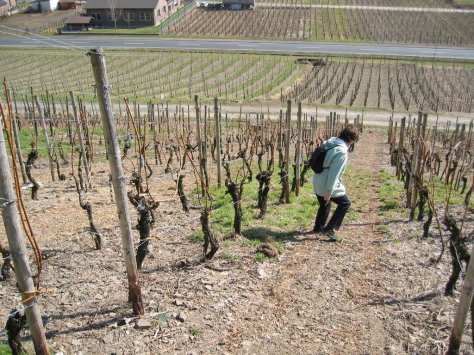
The last time I was in Bonn was 2016 during the genebank review I mentioned earlier.

I love trains, and have often traveled that way from one European capital to another. In fact I have traveled from my former home of Bromsgrove in Worcestershire to Rome, with stops in Belgium, Germany, and Switzerland on the way.

One of the best trips I made was to view the Matterhorn in Switzerland near Zermatt. I had a free weekend before I had to travel on to Rome, so I took the opportunity of a day excursion from Bern.

My trips to France have taken in Paris, where I spent a very wet weekend once walking around the city. But it was worth it. And to Montpellier on the Mediterranean coast several times, the last being in 2016.

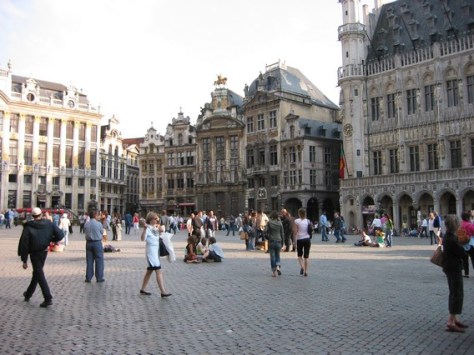
Brussels (in Belgium) has a beautiful central square, but I’ve never had much time to explore there.
For many years, Amsterdam was a hub airport for home leave flights back to the UK. In the Netherlands, I’ve spent time in the university town of Wageningen (east of Amsterdam), in the capital, The Hague, and in Amsterdam itself. A boat tour of the canals is well worth it.

My donor trips took me to Lisbon in Portugal and Madrid in Spain, which I wrote about in this blog post from 2019. Then in 2012, Steph and I visited my late eldest brother Martin and wife Pauline at their beautiful home in Tomar, north of Lisbon. What a glorious 10 days.
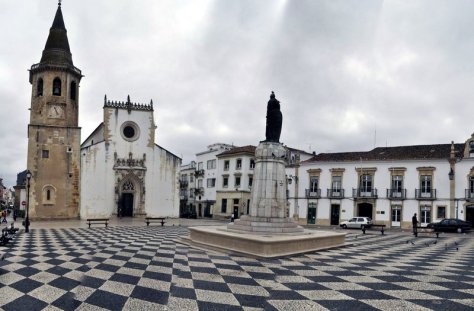
Central square in Tomar

I was in the Canary Islands (part of Spain) a couple of times, collecting various wild crop relatives. Steph, the girls, and me had a holiday there in 1989.

On the north coast of Tenerife
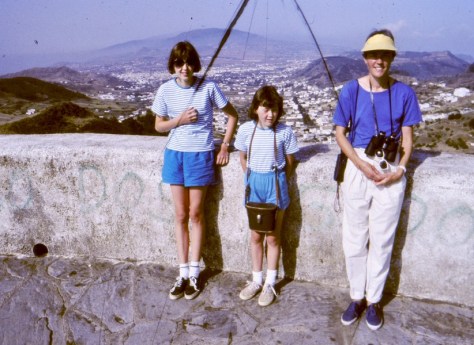
Looking over the Tenerife landscape.

However, the country I have visited most in Europe is Italy, and Rome in particular. I was once in the Po Valley southwest of Milan, looking at the rice research there. The Food and Agriculture Organization of the United Nations (FAO) has its headquarters in Rome, as does Bioversity International (formerly the International Plant Genetic Resources Institute, IPGRI). I guess over the 19 years I spent in the Philippines, I must have traveled to Rome at least once a year for one meeting or another, and up to five times in one year. It’s a magnificent place, although my elder daughter Hannah who has just spent a few days there commented on how dirty it was, and full of tourists. But I’ve always enjoyed my stays there, and have had ample opportunity to enjoy the history and archaeology, and the fantastic cuisine.
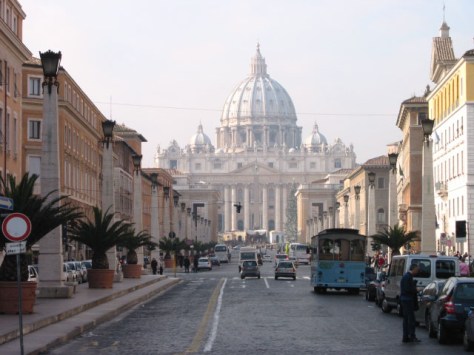
I’ve only been in Austria, Norway, and Denmark on one occasion each, and in the capitals Vienna, Oslo, and Copenhagen. In Vienna, I spent a week at the International Atomic Energy Agency (where they have a program in mutation breeding) consulting on germplasm databases. I visited donor agencies in Norway and Denmark, but had no time for any tourism in Oslo. It was a different situation in Copenhagen where I looked round the pretty city over a weekend.

I started this blog post in the Republic of Ireland, and Steph and I have returned there three times, two with Hannah and Philippa in the 1990s, and also in 2017 after we’d spent a little over a week touring Northern Ireland.

Northern Ireland was a revelation. Prosperous, and beautiful. We visited many National Trust properties over there, and I wrote about our 10 days there afterwards, with links in the post to many of the properties we visited.
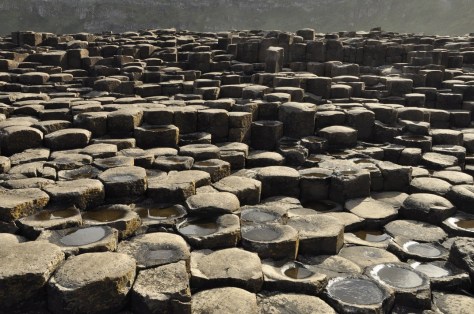
Giant’s Causeway, Northern Ireland

In Great Britain (United Kingdom minus Northern Ireland), Steph and I have visited so many National Trust and English Heritage properties around the country. This link gives a complete list (and maps) of all those we have visited.

Since we returned to the UK in 2010, we have toured Scotland, spent time in the south and southeast of England, and in Cornwall.

Now that we are living in the northeast of England, we have spent time exploring Northumberland, including its incredible Roman heritage.

The Whin Sill along Hadrian’s Wall

As a small boy, I spent many holidays with my parents in different parts of Wales, and Steph and I will be returning there at the beginning of September to renew our acquaintance with North Wales after so many decades.

So, there we have it. Fifty-five years of travel. So many special experiences.
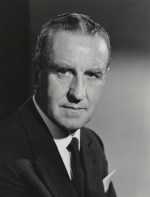


The importance of being Ernest

Ernest Marples

Ernest who? Ernest Marples. Minister of Transport in the Harold Macmillan and Alec Douglas-Home Conservative governments between October 1959 and October 1964.

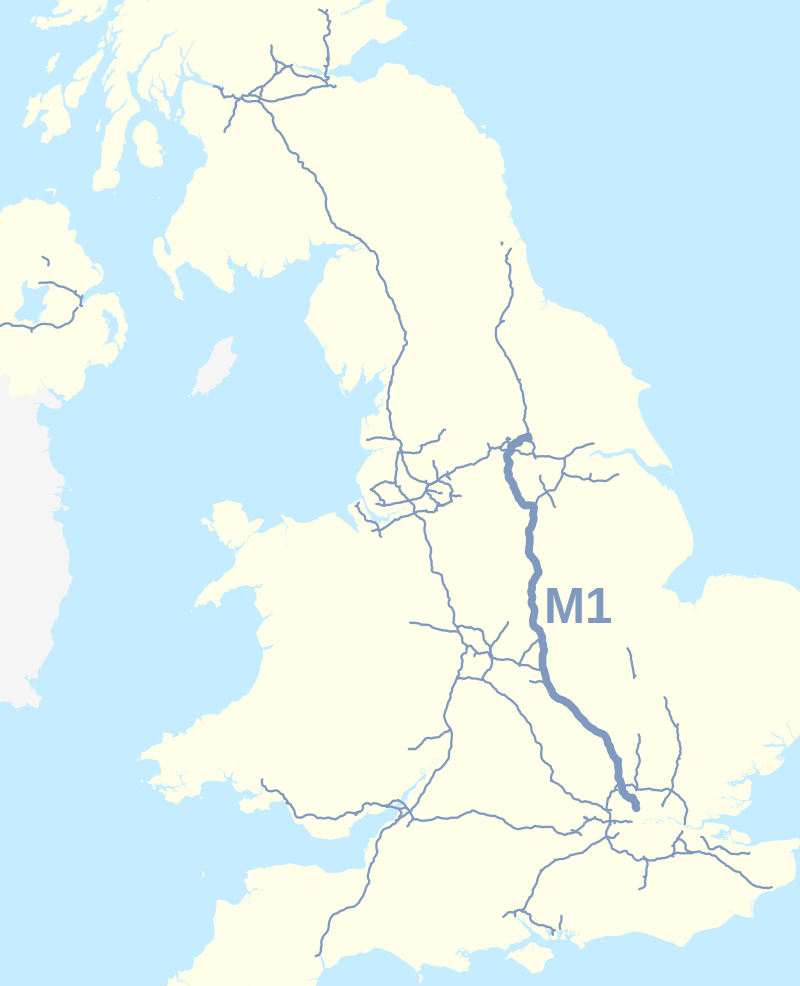
As Minister of Transport he introduced parking meters, the provisional driving licence, the MOT test, yellow parking lines, and traffic wardens. He also oversaw an expansion of the road network and the opening, in November 1959, of the first section (53½ miles) of the M1 motorway, between Luton and Crick (although it had been inaugurated a year earlier).

The M1 was not the country’s first motorway, however. That honor is given to an 8¼ mile section of the Preston by-pass, opened in November 1958, and which became part of the M6 motorway.

I remember the first time my father took us on the recently-opened first section of the M1. It must have been around 1960. What an experience on such wide carriageways, and very little traffic. That’s hardly the case today. More like Chris Rea’s The Road to Hell, released in 1989, supposedly about the London Orbital Motorway, the M25, although, to be fair, it could be about any of our motorways.

So much congestion, lines of juggernauts traveling nose-to-tail. I never relish having to take one of the motorways for my journeys, but they are a necessity. Many motorways were constructed with three lanes in each direction, but some like the M5 (opened in 1962 and connecting the West Midlands with the southwest of England) had only two for much of its length, but later widened to three.

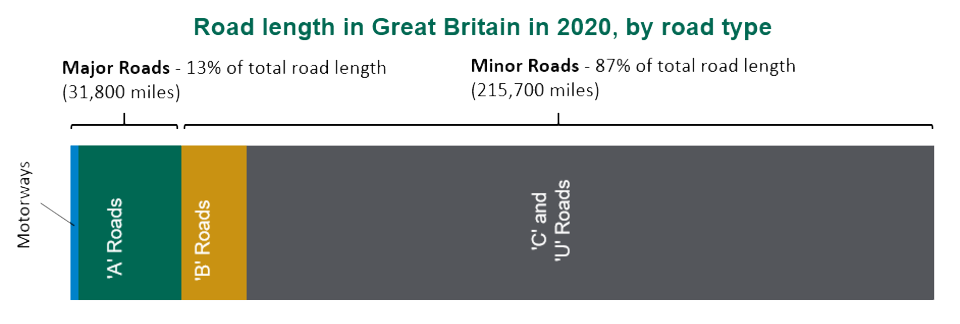
From those humble beginnings more than 60 years ago, the motorway network in Great Britain (not including Northern Ireland) now extends over 2300 miles (out of a total of 247,500 total road miles). Another 29,500 miles are A roads, major routes connecting cities, but only about 18% are what we in the UK call dual carriageways (divided highways in the US).

Originally there was no speed limit on the motorways. In December 1965 a temporary speed limit of 70 mph was introduced and made permanent in 1967. That remains in force today on motorways and dual carriageways, with 60 mph the limit on other A and B roads. The limit in urban areas is generally 30 (maybe 20) mph.

But if you want to really explore the countryside, as Steph and I like to do, then you have to get off the main routes and take the B roads, as you can see in this video, which I made recently as we crossed Northumberland (in the northeast of England). In any case, for me it’s never about the trip itself but the many interesting places and sights along the way.

I passed my driving test (at the second attempt) in May 1966, six months after my 17th birthday, the earliest age when one can apply for a driving licence here in the UK. I got to drive my father’s car from time to time, but while away at university between 1967 and 1972 I didn’t have much opportunity to drive, until I had my own car (in October 1971), a rather battered Ford Anglia. In September 1972 I bought a new left-hand drive Volkswagen Variant to export to Peru, where I moved in January 1973.

Between 1973 and 1981 we lived in Peru and Costa Rica (in Central America), and from 1991 spent almost 19 years in the Philippines (from where we traveled to and down the east coast of Australia). We also made two road trips around Ireland in the 1990s while on home leave from the Philippines. Our road trip experiences were very different.

Since retiring in 2010, however, Steph and I have enjoyed several road trips around the UK. taking in Scotland in 2015, Northern Ireland in 2017, Cornwall in 2018, and Sussex and Kent in 2019.

And, since 2010, we have (until the Covid pandemic struck) visited the USA every year and made some epic road trips that are described briefly later on.


Touring Peru
A couple of months after I arrived in Peru, the ship carrying my Volkswagen finally docked at Callao, the port for Lima. It was just the right sort of vehicle for the rugged roads that Steph and I traveled exploring that fascinating country. Solid suspension (although I did add heavy-duty shock absorbers) and an air-cooled engine.

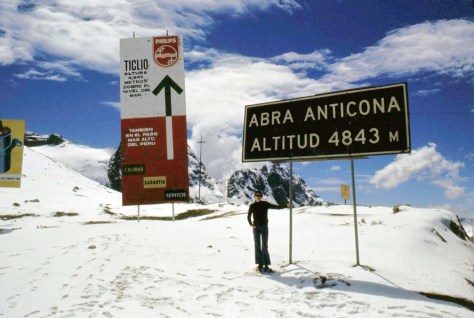
Almost five decades ago, there were few paved roads in Peru, the main one being the Panamerican Highway stretching the whole length of the country, just a single carriageway in each direction. And the Carretera Central from the coast to the central Andes at Huancayo, crossing the high pass at Ticlio on the way.

Most elsewhere, apart from in the towns and cities, the roads were unpaved. And through the Andes, these roads followed the contours of the valleys. Often you could see your destination in the valley below, but know there would be many kilometers to travel as the road snaked down the valley, as you can see in these photos.

Then there was the ever-present danger of landslides which might take hours if not days to clear, or precipitous drop-offs at the side of the road. I remember on one occasion driving along one road (in fog) in the north-central part of Peru, and afterwards checking the maps to discover that the drop was about 1000 m.

Three of the most interesting trips we made were to Arequipa and Puno on the shore of Lake Titicaca in the south of the country, to Cajamarca in the north, and to Ayacucho and the central Andes on another occasion.


In Costa Rica
Many of the roads in Costa Rica were paved when we lived there in the mid-70s, with some notorious exceptions. Turrialba, where we lived, lies 41 km due east from Cartago (San José lies a further 19 km beyond Cartago). From Turrialba to Cartago, there’s a climb of almost 800 m, passing through a cloud zone (zona de neblina) on a narrow and twisting road that was, back in the 1970s, unpaved for most part.

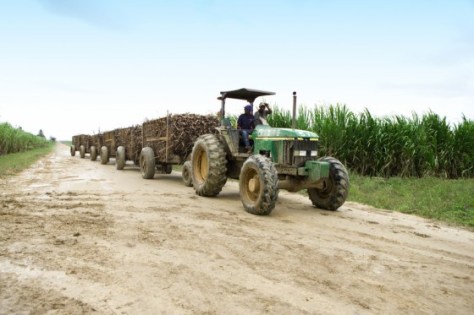
Further this was the main route from the Caribbean port of Limón on the east coast to San José, and was always busy with one juggernaut after another. Not to mention the tractors towing a dozen or more sugar cane carts along sections of the road, without any hazard lights whatsoever.


The Philippines
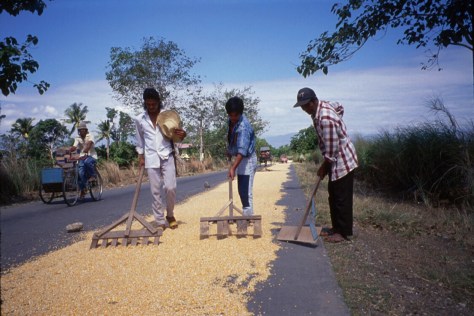
Mostly, the Philippines has good roads. It’s just the congestion and the lack of driver discipline that makes driving in that country stressful. Also, farmers drying their rice or maize harvest along one side of an already narrow road.

Drying maize along the highway in Nueva Ecija, north of Manila. The more numerous rice farmers do the same.

We lived in Los Baños, the Science City of the Philippines, location of the University of the Philippines-Los Baños, the Institute of Plant Breeding, a local office of PhilRice, as well as the headquarters of the International Rice Research Institute (IRRI) where I worked for almost 19 years.

Los Baños is sited along the shore of Laguna de Bay, and on the lower slopes of a dormant volcano, Mt Makiling. It’s almost 65 km south of Manila and, on a good day, a little under 90 minutes by road. Back in the day we used to joke that it took anywhere between 90 minutes and a lifetime to make the journey. Major road improvements took almost 15 years to complete and with traffic congestion (caused mainly by tricycles and jeepneys) the journey could take several hours. Here’s a short video of a trip to Tagaytay (a town that overlooks the Taal volcano), about 50 km west of Los Baños by the quickest route (map).

In 2009, my staff, Steph and I made a long-weekend trip to the world-famous rice terraces in the Ifugao-Mountain Province of northern Luzon. Staying in Banaue, we took a jeepney to the end of the trail leading to the Batad rice terraces.

From there we had to hike for well over an hour deep into the valley.

Steph and I would also spend about eight weekends a year on the coast at Anilao (map) where I scuba dived and she would snorkel.

When we first visited Arthur’s Place in March 1992, there was no passable road from Anilao to the resort, and we had to take a 30 minute outrigger or banca ride. By 2009, the road had been paved.


Touring the USA
I really enjoy driving in the USA, once I’d become familiar with a number of the driving norms and the various road signs. Our elder daughter lives in Minnesota so our trips have begun or ended there. Thank goodness for the interstate highways whose construction was begun under President Eisenhower in the 1950s. We prefer to follow the US or state highways mostly if we can, even county roads.

These are the trips we have taken:

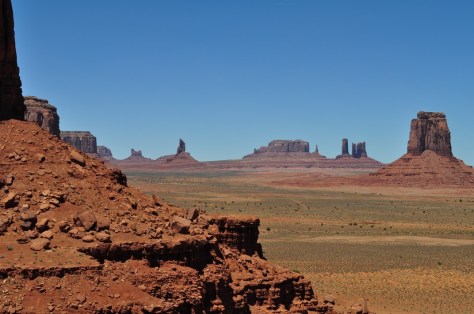
  • 2011 – the southwest states of Arizona and New Mexico, taking in the Grand Canyon, Monument Valley, Canyon de Chelly, among other wondrous sights.

Monument Valley, AZ

  • 2015 – since we had already traveled round Scotland earlier that year, we visited Chicago by train instead.
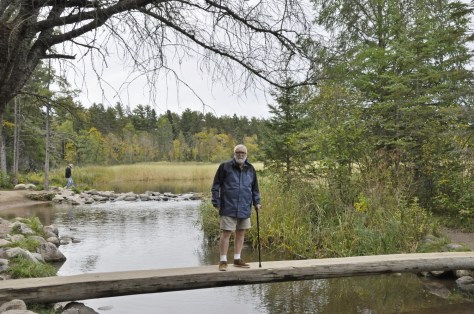
  • 2016 – I’d broken my leg in January, so when we visited in September, we spent a few days seeking out the source of the mighty Mississippi in Minnesota.

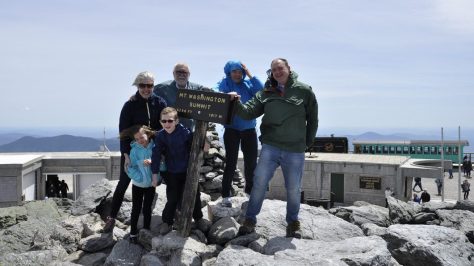
Mt Washington, NH


And, along these travels, one thing that caught my attention. In the UK, road construction has involved the building of just a few major bridges, over river estuaries, the most recent being a second bridge crossing the Firth of Forth west of Edinburgh in Scotland.

Not so in the USA. East-west or north-south, immense bridges had to be constructed across the many rivers that criss-cross that vast country. Some of the most impressive have been along the Mississippi, Missouri, and Ohio Rivers.

Here are a few more over which we drove.

A few weeks ago I read a novel that was set on the Lincoln Highway, the first to connect the east and west coasts from New York to San Francisco. I have traveled parts of the highway during the trips I’ve already outlined, but wasn’t aware of that at the time.


Oh, I do like to be beside the seaside . . .

. . . Oh, I do like to be beside the sea.

So sang Florrie Forde in her November 1909 recording of the popular 1907 British music hall song of the same title.

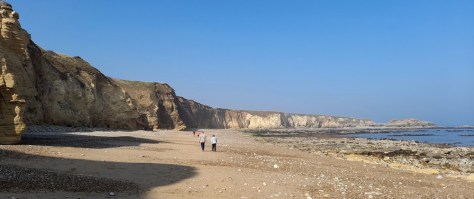
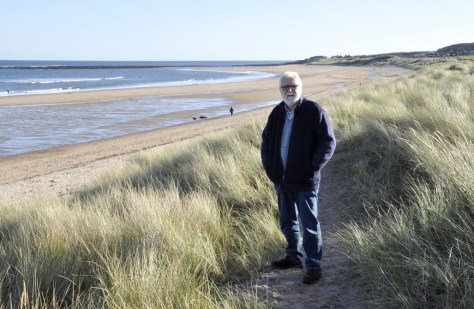
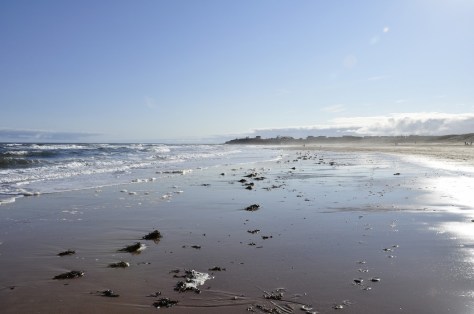
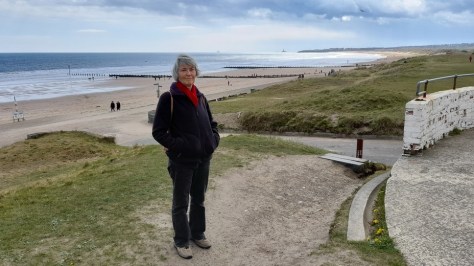
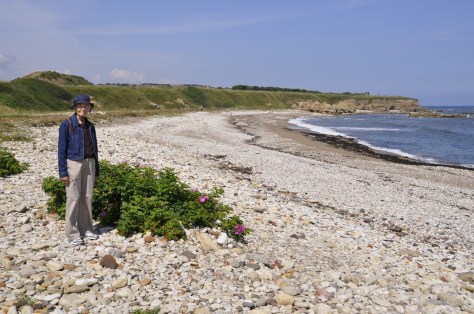
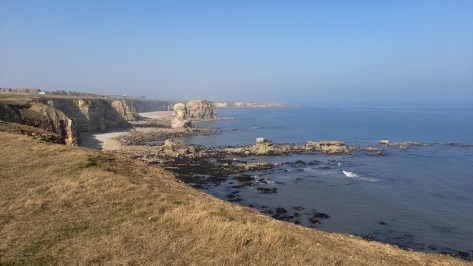
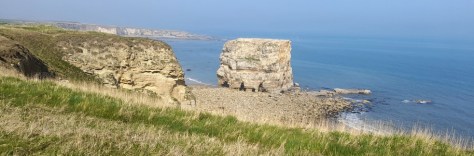
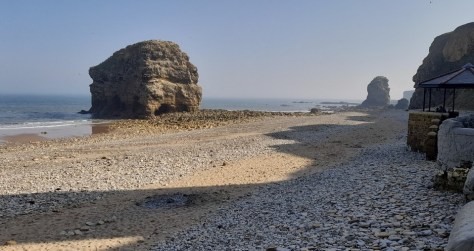
A few days back, the weather being the warmest and sunniest of the year so far, Steph and I took a walk along the coast south of the River Tyne here in the northeast of England, and about 11 miles from home. And as we sat down on Marsden Beach to enjoy our picnic lunch, I told Steph that I still had to pinch myself that we now lived so close to the coast.

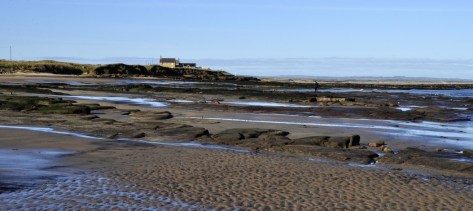
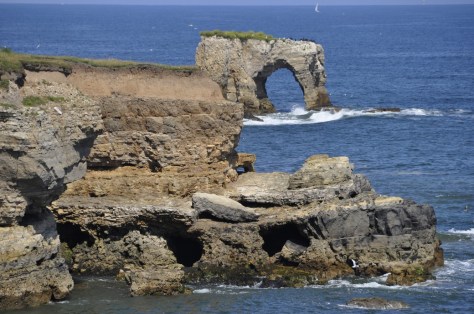
The magnesian limestone cliffs at Marsden Bay.

We moved to North Tyneside (just east of Newcastle upon Tyne city center) 18 months ago, and whenever we get chance, we head off to the coast to enjoy a bracing walk along the beach, the dunes, or cliffs. At its closest, the coast is less than 4 miles as the crow flies.


I hail originally from Staffordshire in the north Midlands, which is almost equidistant from the west and east coasts. So, when I was growing up, a trip to the seaside was always a treat, and holidays with parents were almost always spent camping at or near the coast.

Steph, on the other hand, comes from Southend-on-Sea and the closest beach to her family home was just 5 minutes walk.

Moving away to university in 1967, I chose Southampton on the south coast in Hampshire. However, apart from the odd day trip or field excursion connected with my botany and geography degree, I didn’t see much of the coast at all. Not so a decade earlier. Southampton is a major seaport, from where my father sailed when he worked for the Cunard company in the 1930s. And he took us visit the docks in the late 1950s/early 1960s just when both of Cunard’s Queens were in port.


When Steph and I moved to Peru in 1973, we lived just a few hundred meters inland from the cliffs overlooking the Pacific Ocean in the Lima suburb of Miraflores. During the ‘summer’ months between January and March, we’d spend at least one day each weekend on the beach at one of the resorts about 50 km south of Lima.

Moving to Costa Rica in 1976, we made only two trips to the beach in the northwest of the country to Playa Tamarindo on the Pacific coast of the Guanacaste peninsula (map). It was about 350 km (almost 7 hours) by road, but new routes have probably made the journey quicker since then. And just one trip to the Caribbean coast at Limón.


In the Philippines, we made about eight or nine weekend visits each year (over almost 19 years) to Arthur’s Place, a dive resort at Anilao on the Mabini Peninsula (map), a drive of just under 100 km south from Los Baños that, in 1992 (until about 2005), used to take about 3 hours. I’d go diving and Steph would snorkel.

In December 2003 we traveled to Australia and drove down the east coast from Sydney to Melbourne, around 1000 miles, enjoying each stretch of coastline every day. At Wilson’s Promontory in Victoria we stopped off at Tidal River, the furthest south (at almost 39°S) I’ve ever traveled. Antarctica next stop! And that same evening, New Year’s Eve, we sat on the beach near Wonthaggi and watched the sunset over the Indian Ocean (map).


Since retiring, we’ve visited the west and east coasts of the USA in Oregon and California, and Massachusetts and Maine, the coast roads right round Scotland, the coast of Northern Ireland, as well as Cornwall, and the southeast of England in East Sussex and Kent.


While here in England’s northeast (North Yorkshire, County Durham, and Northumberland) we don’t enjoy tropical temperatures, the region does boast some of the finest stretches of coastline and beaches in the country.

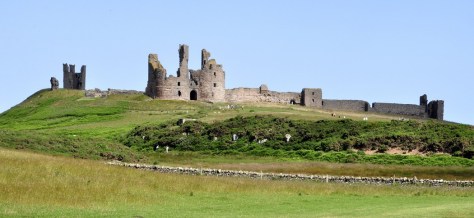
Dunstanburgh Castle and Craster
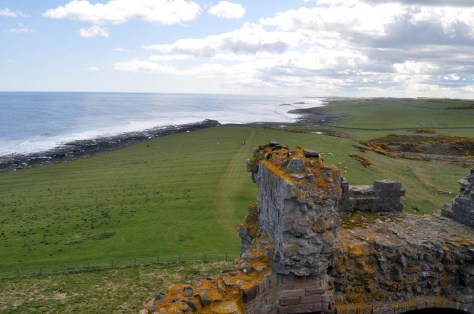
This is a rocky coast and the castle itself was built in the early 14th century on the Whin Sill, an outcrop of igneous dolerite that cuts across Northumberland. The castle is a walk of about 1¼ miles from the fishing village of Craster; there’s no road into the castle.

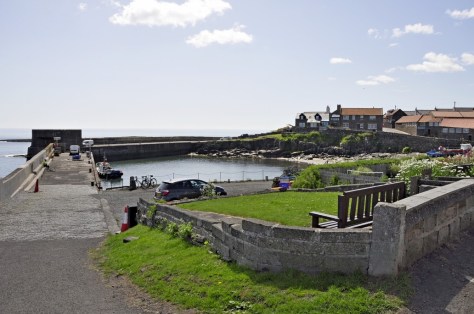
Craster itself has ample parking away from the harbor. The village is also famous for its smoked fish, especially kippers.

At Dunstanburgh a healthy population of kittiwakes nest on the cliffs.

To the north there are excellent views of Embleton Bay that we have yet to visit.

View north from the Great Gatehouse

Alnmouth
A tricky pronunciation. Some say ‘Aln-muth’, others ‘Allen-mouth’. I have no idea which is correct. It’s a pretty village at the mouth of the river of the same name. There’s good paid parking behind the beach for a couple of hundred cars.

Warkworth
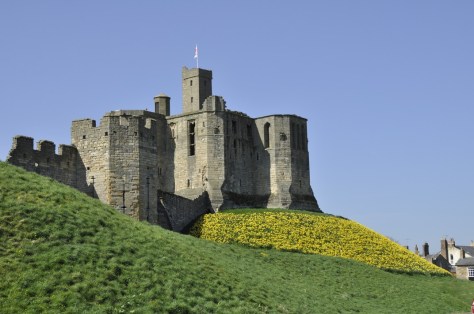
We’ve only visited the beach once, back in April 2018. It’s a nice long stretch of beach accessed from the north side of the town, which is more famous for its 12th century castle.

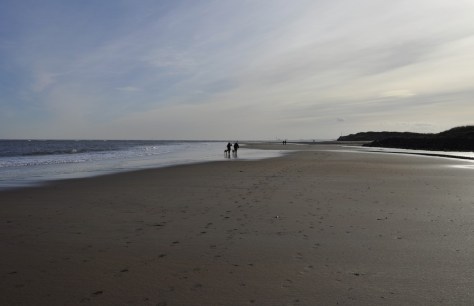
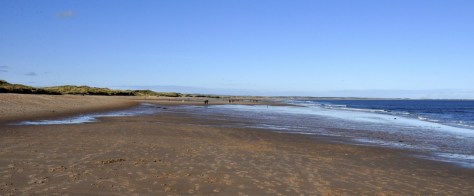
Looking north along Warkworth beach towards Alnmouth.

Warkworth Castle

Amble
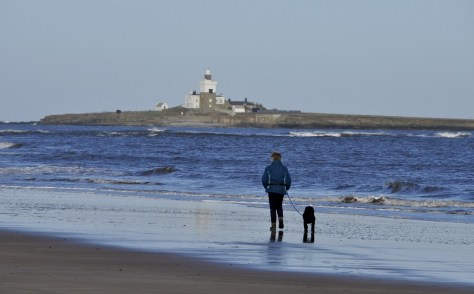
Standing at the mouth of the River Coquet, we’ve found the beaches very pleasant on the south side of the town (where there is free parking), and facing Coquet Island which is now a bird reserve with an internationally important colony of roseate terns in the breeding season.

The view south along the Amble beach with the Lynemouth power station in the far distance.

Coquet Island.

Druridge Bay and Hauxley Nature Reserve
This must be one of the longest beaches in Northumberland, with massive dunes at the rear of the beach in its southern portion.

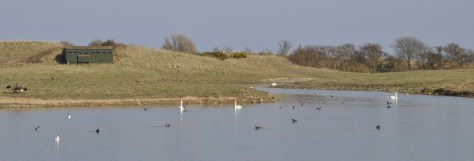
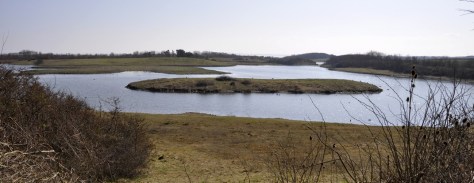
At the northern end, and just inland is Hauxley Nature Reserve, owned by Northumberland Wildlife Trust. When we visited last week, we observed 37 different bird species in the space of two hours. It really is a wonderful site, and we must go back there on a regular basis. There’s no entrance fee, but parking costs £2 all day. There’s also footpath access on to the dunes and beach, which lie just beyond the reserve’s perimeter fence.

The Tern Hide from the West Hide at Hauxley Nature Reserve.

The North Sea can be seen in the middle distance beyond the dunes and reserve perimeter fence.

Cresswell Bay
This was one of the first ‘northern’ beaches that we viisted in 2021, just 17 miles from home. It’s both sandy and rocky, and we saw somone collecting sea coal that had been washed up on the shore. All along the Northumberland and Durham coast there were once extensive coal mines. Waste from the pits was dumped in the sea. In places the beaches look quite black.

Blyth and Seaton Sluice Beaches
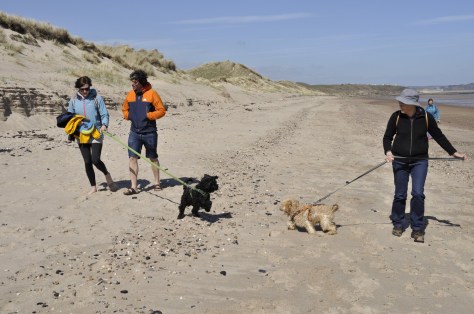
These are the closest to home, but are in effect a singe beach. Both are very popular with dog walkers, and we enjoy often heading there on a Sunday morning, weather permitting, for a late morning stroll.

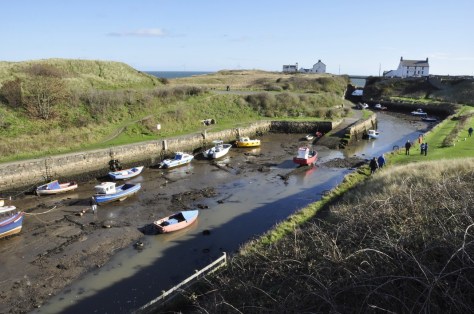
At the Seaton Sluice southern end of the beach, there is a small harbor, that had originally been constructed in the 17th and refurbished in the 18th century to handle coal shipments from local mines.

Seaton Sluice harbor, showing ‘The Cut’ in the middle distance.

St Mary’s Lighthouse and Whitley Bay
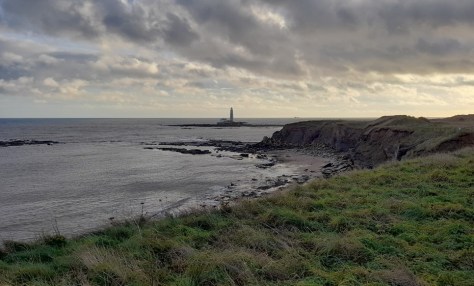
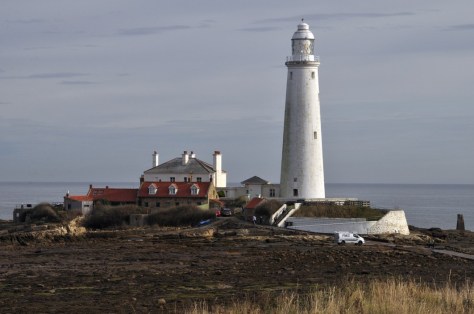
The lighthouse was built in 1898, but there had been lighthouses on the island for centuries. This lighthouse was decommissioned in 1984. The island lies at the north end of Whitley Bay, a popular resort.

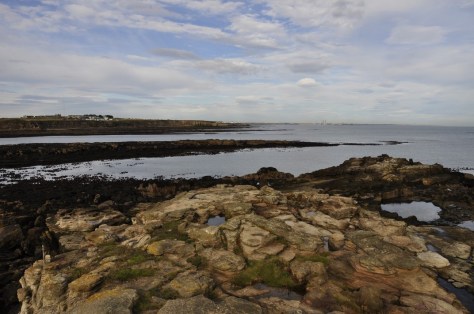
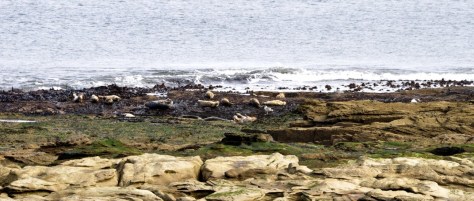
The island is approached across a causeway that is submerged at high tide. On the visits we have made we’ve often seen the grey seals that bask on the rocks.

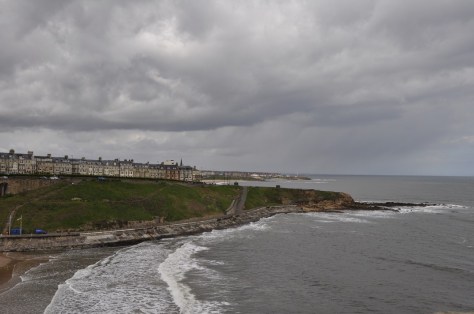
King Edward’s Bay, Tynemouth
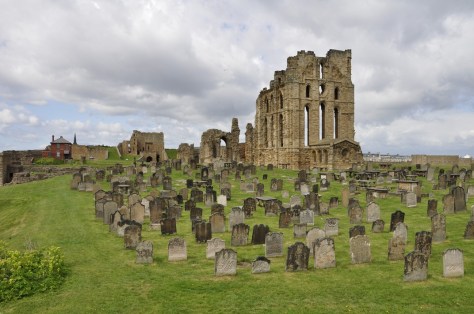
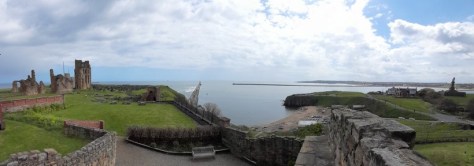
This is a small bay that lies beneath the headland on which Tynemouth castle and priory (now owned by English Heritage) were built.

From the headland there are magnificent views north along the Northumberland coast.

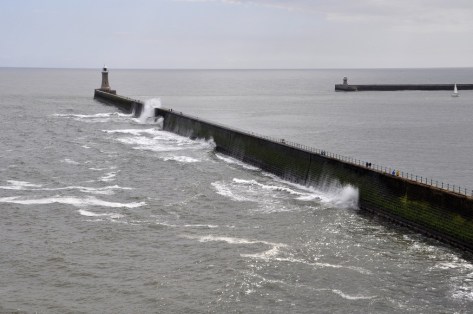
To the immediate south is the mouth of the River Tyne, and beyond the shore at South Shields and the coast south into County Durham.

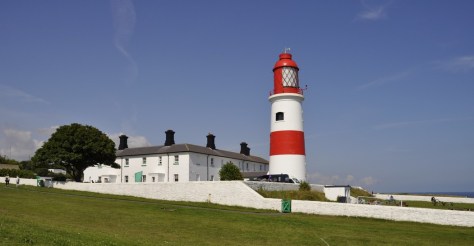
Souter Lighthouse and the Whitburn coast
The lighthouse was decommissioned in 1988. It stands on the edge of magnesian limestone cliffs, that stretch both north and south.

To the south of the lighthouse, there was a colliery and this area has been reclaimed and opened (under the National Trust) as a recreational area.

Immediately outside the walls of the lighthouse to the north is the site of a former mining village, Marsden, that was demolished soon after Whitburn Colliery closed in 1968.

The longer grass indicates where the two lines of terraced cottages once stood.

Marsden beach was very popular holiday or day-out destination in the early 20th century.

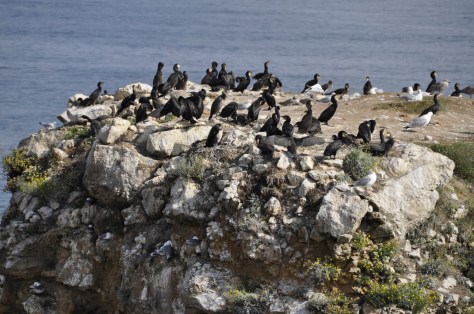
The cliffs are home to colonies of cormorants (one of the largest in the UK), herring gulls, kittiwakes, and fulmar petrels.

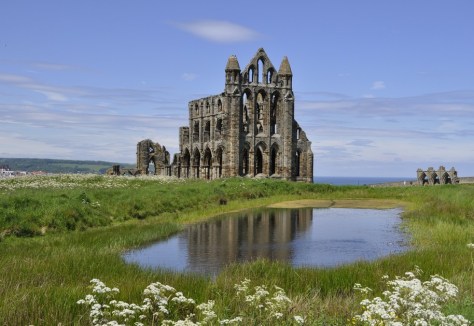
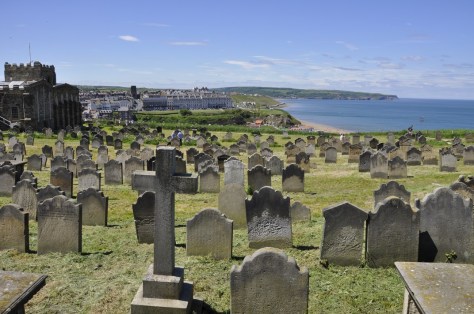
Whitby Abbey
The abbey, built in the 13th century, occupies a headland that juts out into the North Sea above the town of Whitby. It’s the furthest south we have ventured over the past 18 months.

The approach from the north along the A174 high above the coast affords the most spectacular views over the town and right along the North Yorkshire coast. Most impressive.


I don’t think I’ll ever tire of visiting the seaside. There’s something magical, inspirational about the interface between land and sea. Solid and liquid.

It’s the border, stupid

One news item on the radio this morning caught my attention. Today is the 50th anniversary of a civil rights march that took place in Londonderry, Northern Ireland, and which descended into violence as officers of the Royal Ulster Constabulary attacked demonstrators with batons.

This date, 5 October 1968, is widely regarded as the start of The Troubles that plagued Northern Ireland until the signing of the Good Friday or Belfast Agreement thirty years later, in April 1998. In the intervening two decades, Northern Ireland has prospered, and an open border with the Republic of Ireland facilitated by both the UK and the Republic being members of the European Union. Last year, Steph and I toured Northern Ireland and saw for ourselves how far the province has come since them, with clear signs of prosperity and peace.

Once again, the island of Ireland is dominating British (and European) politics. Northern Ireland is at the forefront of the Brexit agenda, because of the border issue between the province and the Republic of Ireland. Post-Brexit in March 2019 this border will be the UK’s only land border with the EU. During our holiday in Northern Ireland, we criss-crossed that border multiple times. In fact, a single road, denominated A3 in Northern Ireland and N54 in the Republic, crosses from one country to the other four or five times in the space of less than 10 miles.

We traveled that road, and the only evidence of crossing from one country to the other were speed warning signs for mph or kph (Northern Ireland or Ireland).

Concerns have been raised in all quarters about a return to a post-Brexit hard border between Northern Ireland and the Republic post-Brexit. That is one potential  (and awful) outcome of no withdrawal deal being reached between the UK and the EU. ‘Negotiations’ continue, and will come to a head in the next few weeks.

But no-one seems able to square the circle, and the UK government and the European Commission seem as far apart as ever. Incidentally, the dismantling of the hard border and its continued open status were conditions of the Good Friday Agreement that has undoubtedly brought peace and prosperity, It’s a legally-binding treaty that could potentially scupper Brexit. Brexiteers seem to forget the legality of this agreement.

On this 50th anniversary, it is appropriate in the context of the Brexit process to reflect on bitter times past and the consequences of communities unable to co-exist without resorting to violence.

It beggars belief, however, that someone as prominent in British politics as arch-Brexiteer Jacob Rees-Mogg can demonstrate, in recent cavalier and insensitive language that elicited widespread shock, his lack of understanding. He once again proved (to me at least) that he and acolytes are quite prepared to make Northern Ireland a sacrificial lamb in their determination to bring about a hard Brexit.


Unfortunately its devolved government has not been functioning since the power-sharing Northern Ireland Executive collapsed in January 2017, and effective government is at a standstill. The majority political party, the Democratic Unionist Party or DUP is pro-Brexit, and is playing hardball with Prime Minister Theresa May’s government which is in hock to the DUP for parliamentary support following the 2017 General Election when the Tories lost their overall majority.

I’m not going to go into detail about any or all of the various solutions that have been put forward to solve the border issue. Some involve technologies or approaches that have yet to prove their value or workability. To date these suggestions have been dismissed by one side or the other.

The Irish border question might be the ‘straw that breaks the camel’s back’. Inevitably, I guess, there will be a fudge, some compromise that will satisfy no-one. However, it’s possible—probable even—that any agreement that Theresa May secures from the EU will be voted down in parliament, and then the risks of crashing out of the EU escalate significantly.

I strongly support the demand for a People’s Vote (i.e. a second referendum in some form or other). That’s our democratic right. People do change their minds and as the vision of a post-Brexit UK becomes clearer, there is a growing clamour for a new vote. In a number of recent nation-wide polls not only is there growing support for a People’s Vote, but the outcome of that vote would support remaining in the EU, with a much higher proportion supporting Remain than voted Leave in 2016. Ironically, in the 2016 referendum, Northern Ireland voted to Remain in the EU by a majority of 56% to 44%. Going forward, Northern Ireland could be key to remaining in the EU.

Hope springs eternal!

Springhill: a complicated genealogy

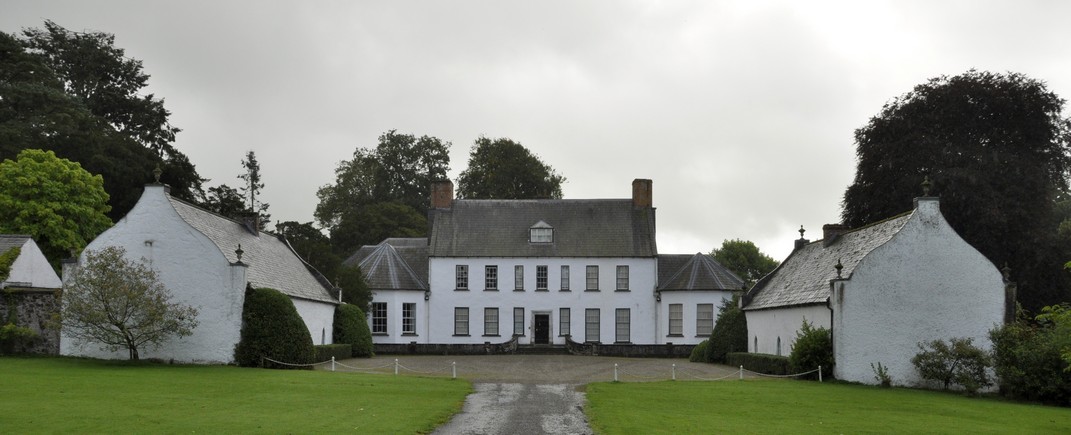
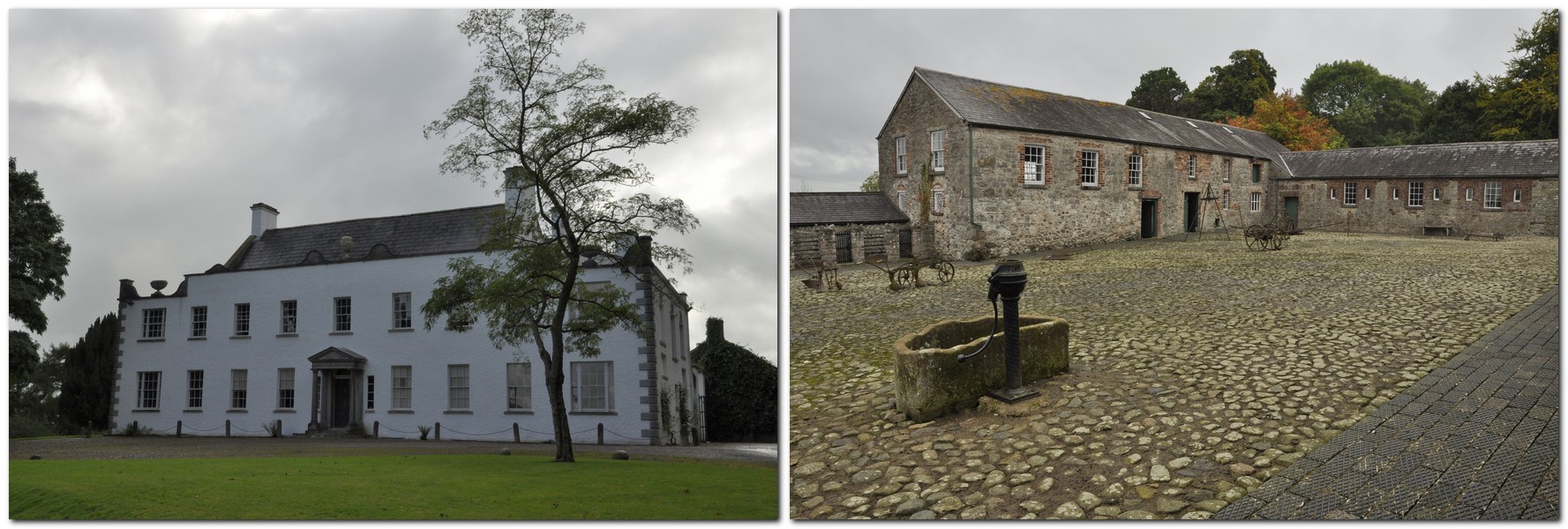
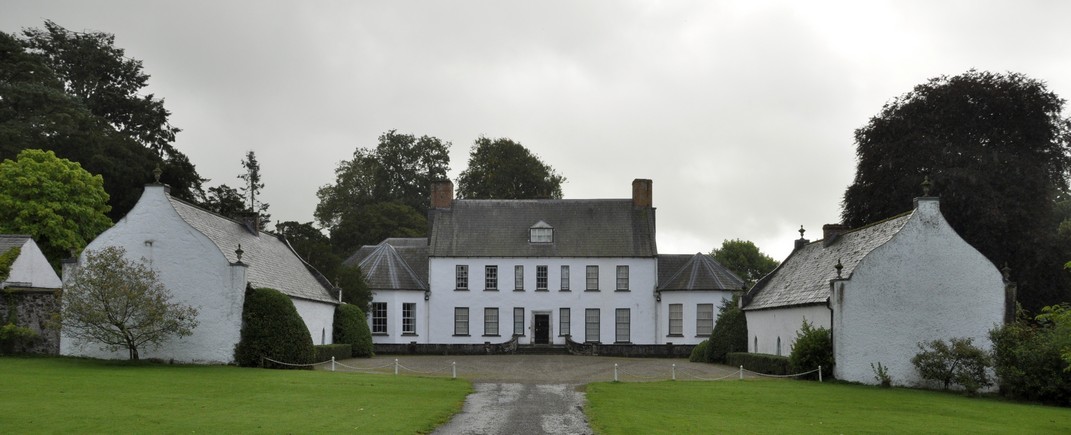
Springhill House, near Moneymore in Co. Londonderry, Northern Ireland, is a typical ‘Plantation House‘, a 17th century farmhouse that was embellished in the 18th century with the addition of single storey wings, and pavilions with Dutch gables on either side of the avenue leading up to the front of the house.

Constructed in about 1680, it was the home of the Conyngham family of Scottish settlers who came to Northern Ireland from Ayrshire around 1611. Becoming the property of the National Trust in 1957, the house had remained in the same family until then. The family name had changed to Lenox-Conyngham in the early 18th century. The genealogy is complicated by there being multiple Georges and Williams.

To one side of the entrance hall is a small study with a fine display or guns and swords, especially a long gun on one side of the fireplace. Original 18th century wallpaper was uncovered during the restoration of Springhill by the National Trust.

Ceilings are quite low in the 17th century parts of the house, but much higher in the 18th added wings. This can be seen quite distinctly, moving from the library, to the drawing room, and into the dining room.

Springhill is said to be haunted, by the ghost of Olivia, second wife of George Lenox-Conyngham (whose portrait hangs in the ‘haunted’ bedroom). Was he murdered by his wife or did he commit suicide? A secret door and passage were found in the bedroom, which you can just make out in the far right corner beyond the wash-stand, in the photo below. Was this how Olivia crept in to commit the foul deed? Some documents were found, but the evidence is circumstantial. We will never know for sure.

There’s an interesting costume museum, and ample opportunity for long walks on the estate. The weather (and time) was against us.

The Full Monty

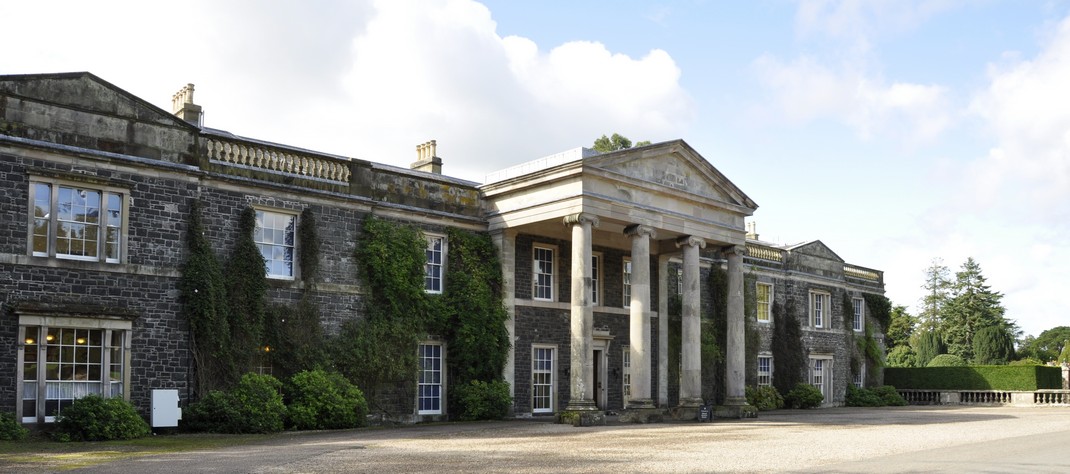
With extensive parkland, some of the most beautiful formal gardens, an elegant yet somewhat understated house that simply oozes wealth, position, and history, Mount Stewart on the Ards Peninsula in Co. Down has everything (map).

The Mount Stewart estate (then known as Mount Pleasant) was purchased in 1744 by wealthy merchant Alexander Stewart. His son became the 1st Marquess of Londonderry in 1816. Mount Stewart is the family home.

If I mentioned the name Robert Stewart, this would probably just evince a shrug of the shoulders. Mention Viscount Castlereagh, however, and the reaction would probably be very different, as he was one of the most influential politicians and diplomats of his age, Foreign Secretary in the British government, and a visionary of the Congress of Vienna in 1814-15 that sought to re-establish peace and order (and national borders) to post-Napoleonic Europe. Castlereagh became the 2nd Marquess of Londonderry in 1821 on the death of his father, the 1st Marquess. Yet he had committed suicide just a year later, and the title passed to his half-brother, Charles, who married (as his second wife) one of the wealthiest heiresses of the age, Lady Frances Anne Vane-Tempest. Her wealth gave the impetus for expansion and refurbishment of Mount Stewart. Charles had served as one of the Duke of Wellington’s generals in the Peninsula War, and was Ambassador to Austria at the time of the Congress of Vienna. After this marriage, the family name became, and continues as, Vane-Tempest-Stewart.

Mount Stewart became the principal home of the 7th Marquess and his wife Edith. She was a great socialite and political hostess, and much of today’s decor and the impressive formal gardens are due to her influence and creativity. Their youngest daughter, Mairi, their only child to be born there, was bequeathed Mount Stewart in the 7th Marquess’s will. One of Mairi’s daughters, Lady Rose Lauritzen, still has an apartment at Mount Stewart, and while we were touring the house, I saw her describing some ‘Congress chairs’ to one of the National Trust volunteers in the dining room.

There’s so much to see at Mount Stewart. It must be the ‘Jewel in the Crown’ of the National Trust in Northern Ireland. I’ve read that the Mount Stewart is counted among the world’s top ten gardens!

So let’s start with the grounds, followed by the formal garden, and then a tour of the house.

We took the lakeside walk, about a mile and a half, encountering the White Stag of Celtic legend, and visiting the family burial plot, Tir n’an Og.

To the south of the house, and up a slight hill about 10 minutes walk, you can find the Temple of the Winds, built in the late  18th century (before the house was even built). There are wonderful views over Strangford Lough to the west, and Scrabo Tower, just south of Newtownards on the other side of the lough. Scrabo Tower was constructed in 1857 as a memorial to Charles, 3rd Marquess. It has now been re-opened in partnership with the National Trust.

On the west side of the house, which faces southwest, there is a Sunken Garden and the Shamrock Garden, with a topiary Irish harp, as well as the Red Hand of Ulster planted with bright red salvias. Along the top of the hedges, there are other topiary figures.

You enter the larger garden through an impressive black and gilded gate. What a feast for the eyes, with lots of mythical animals, extinct ones like the dodo for example, and one clearly male fox!

You can explore the house on your own, but there are very knowledgeable and friendly National Trust volunteers in each room, ready and able to fill in the detail.

The entrance hall is quite unexpected, as you first pass through a modest vestibule, with the hall opening out into a sea of light.

Passing from the hall, towards the dining room, there is a very large portrait of the 3rd Marquess above an arch. To one side are some cabinets with articles of the family’s wealth and connections on display. In the room itself, there is a fine portrait of Castlereagh (the 2nd Marquess), and the ‘Congress chairs’ lining the wall beneath a portrait of a familiar figure: Napoleon Bonaparte.

From the dining room, you can enter the study of the 7th Marquess, and through to a Saloon-cum-breakfast room. The ceiling rose is mirrored in the beautiful inlaid woodwork on the floor. The table standing in the middle of the room is a so-called Irish coffin or wake table.

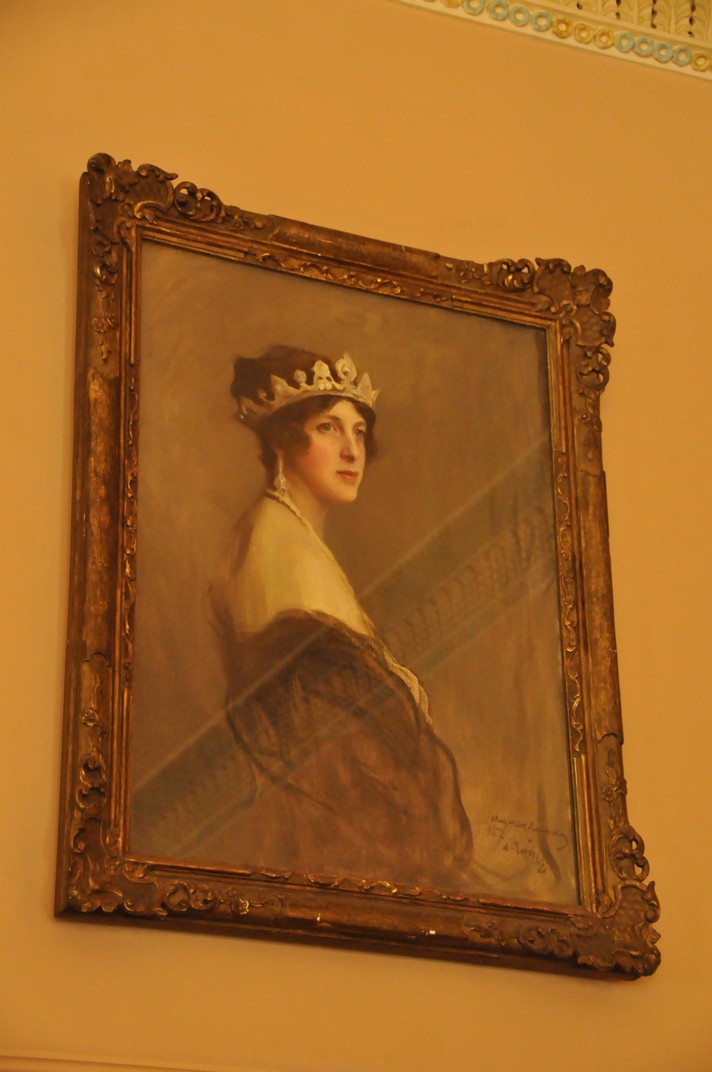
Lady Edith developed her own drawing room, luxuriously furnished, but homely at the same time. There’s a portrait of her on the wall.

At the bottom of the staircase, there are cabinets on either side displaying the family china. The cantilevered staircase divides halfway up, beneath a huge painting of a racehorse, that’s clearly out of proportion: in the horse itself, the length of the groom’s legs, and the right arm of the other boy.

Finally, in a large and very grand drawing room the walls are covered with portraits of family members, and lined with other objets d’art.

It’s no wonder that Mount Stewart is one of the National Trust’s most popular destinations. The history of the house and the family is almost unparalleled. And if you are ever in Northern Ireland, the trip out to Strangford Lough and Mount Stewart has to be high on your list of attractions. We were not disappointed. You won’t be either.


Fermanagh’s finest . . .

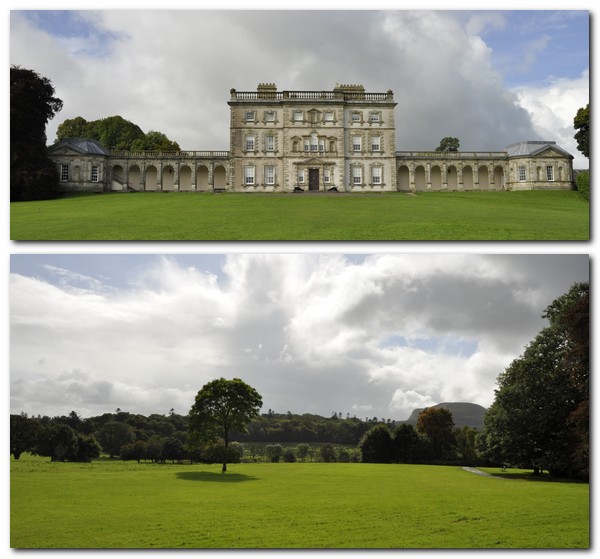
The National Trust manages three properties in Co. Fermanagh in the southwest of Northern Ireland: Castle Coole; Florence Court; and Crom. Florence Court is the Trust’s furthest west property in the United Kingdom. We took in all three on our recent tour of National Trust properties in Northern Ireland, but not on the same day.

Castle Coole and Florence Court and  are elegant 18th century mansions, just a few miles apart near Enniskillen. Crom is a little further south, on the east shore of Upper Lough Erne, close to the border with the Irish Republic (map).

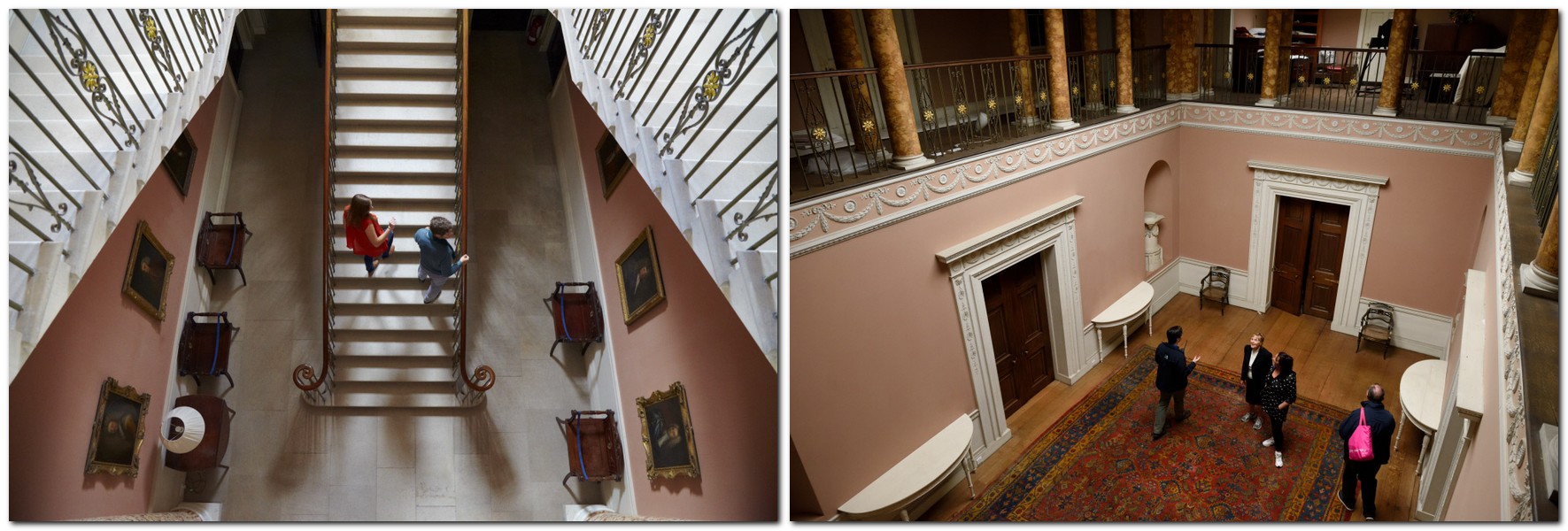
Interior photography is not permitted inside Castle Coole and Florence Court. The interior images included in this blog post are provided courtesy of, and used with permission, from the National Trust, to which I am most grateful. Access to both houses is through a guided tour.

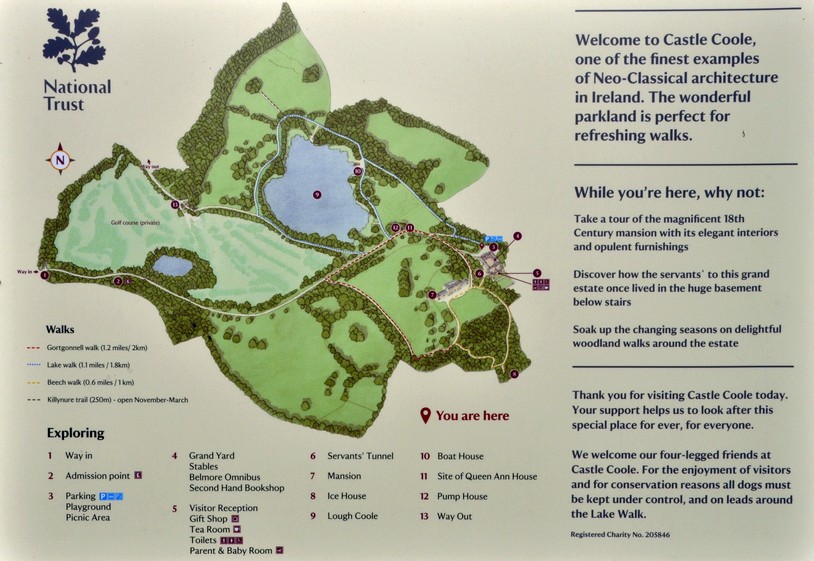
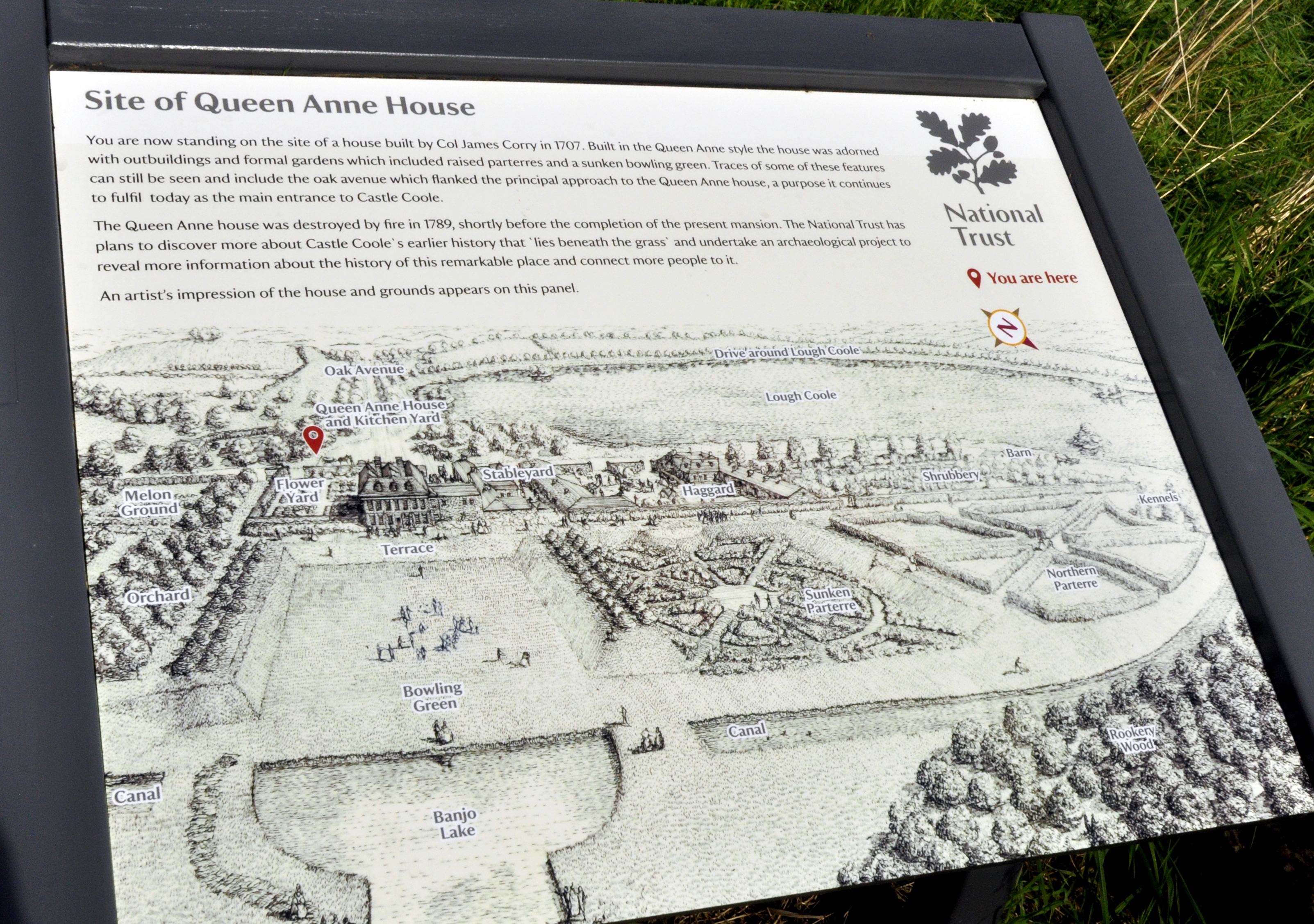
Castle Coole was built by Armar Lowry-Corry, 1st Earl Belmore between 1789 and 1798. He was the grandson of Belfast merchant John Corry who had purchased the estate in 1656. A fine Queen Anne house used to stand on the estate, to the north of the present mansion. The current and 8th Earl still lives in a cottage on the estate, and the family still has access to the south wing. It became the property of the National Trust in 1951 (from the 7th Earl), although the family still own most if not all the contents.

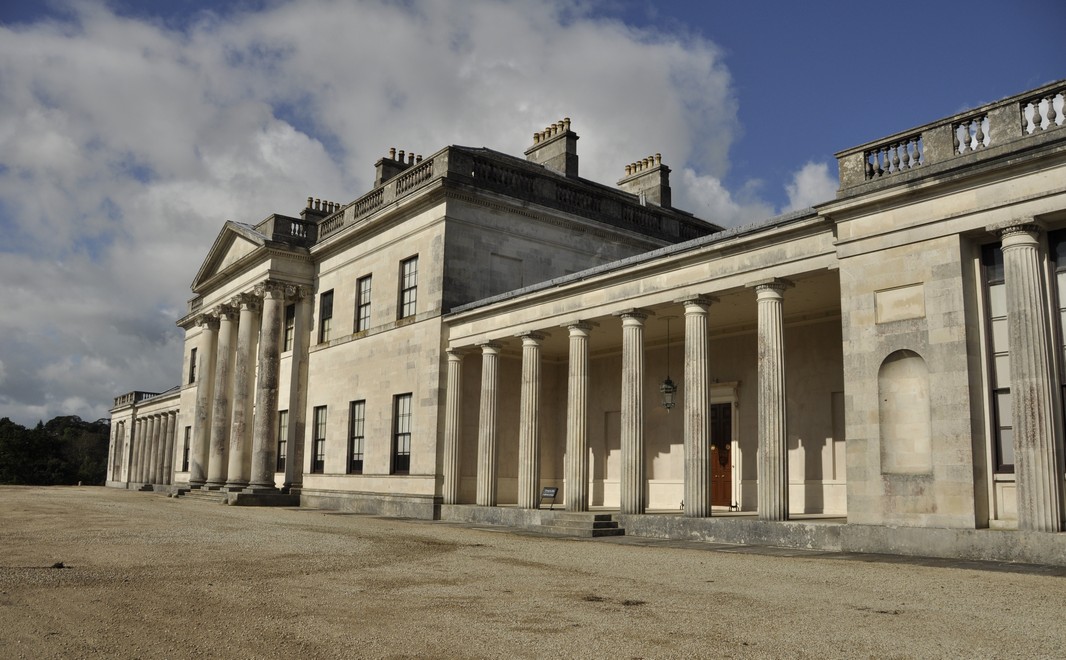
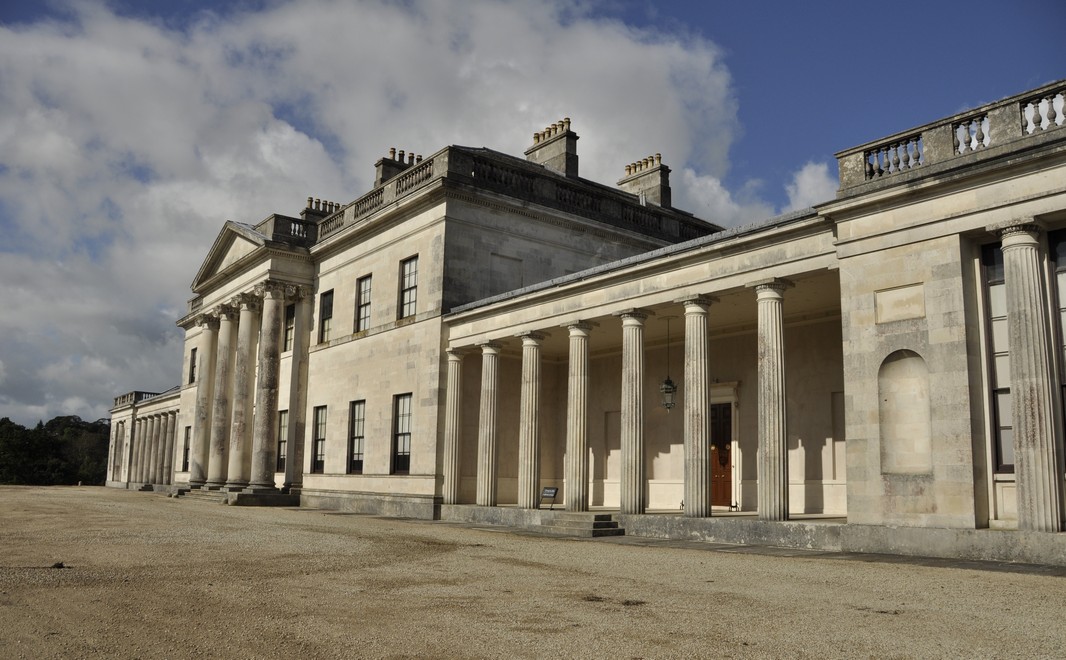
Castle Coole is a very grand, somewhat austere, Neo-Classical mansion with Portland stone façades, built to impress. It appears to have just been placed in the middle of a parkland. Nothing to soften the exterior. But that belies a delight for the eyes inside.

The rear of the house, from the north at the site of the Queen Anne house

There are no formal gardens at all close by. Irish architect Richard Johnston was originally commissioned to design Castle Coole, but got no further than the basement, after which renowned English architect James Wyatt was handed the brief to redesign and complete the building. He also designed some extremely elegant interiors, especially the Saloon, and the furniture to fill it. In fact, the Saloon is one of the most elegant rooms I have seen in my many visits to National Trust properties, and it’s a pity that I’m unable to share any images here.

The entrance hall has four massive scagliola columns, and beyond an impressive double cantilevered staircase, there is another saloon on the first floor, also with scagliola columns.

There is an impressive State Bedroom, decorated in a deep red, on the first floor that was prepared in 1821 for the expected visit to Castle Coole by King George IV. He never got much further north than the outskirts of Dublin, having encountered one of his many ‘lady friends’ there. Obviously he must have found a visit to Castle Coole (and the long journey that would have entailed) less attractive than the charms of M’Lady. Apparently the bedroom has never used on a regular basis subsequently.

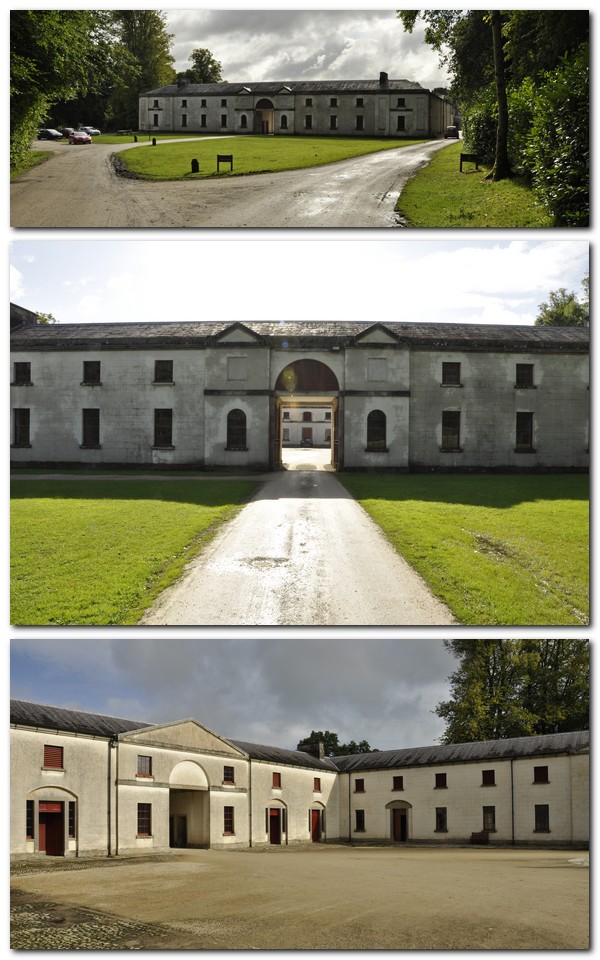
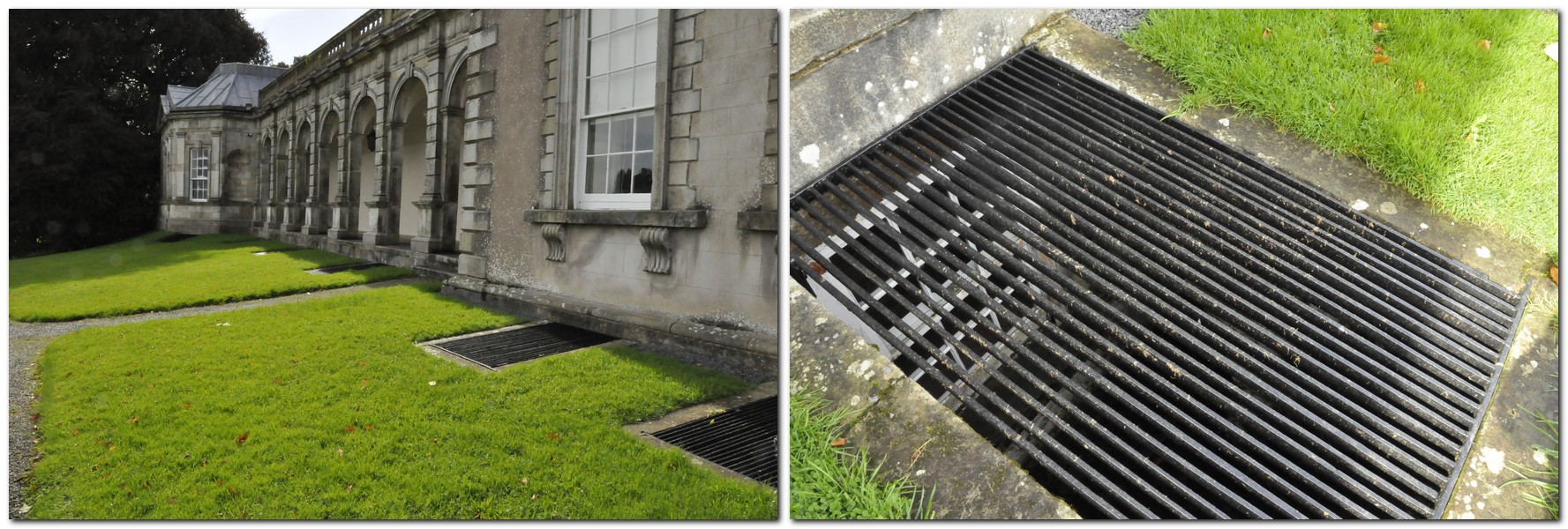
All around the outside of the building is an underground passage way, that permitted servants to move about unseen from the residents above. This passage connects, through an impressively wide tunnel (wide enough to accommodate a carriage and four, apparently) to a large stable yard to the north east. Supplies for the house, coal in particular, could be brought right up to the house and stored for easy access in underground storage rooms.

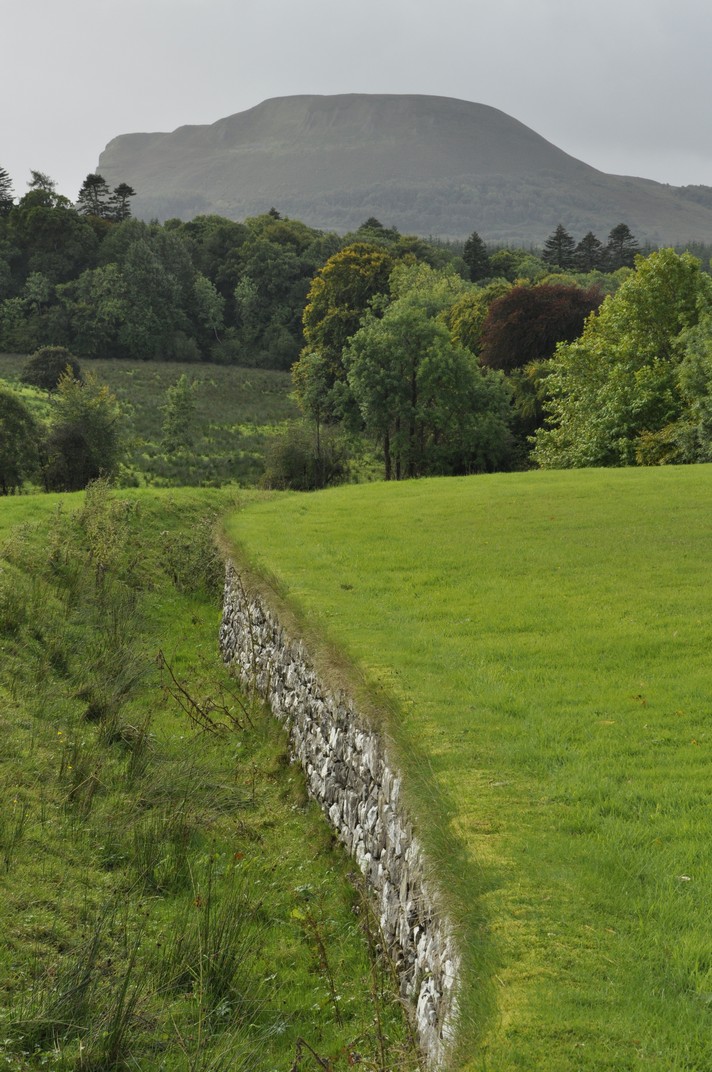
Florence Court sits well in its landscape, the estate nestling below Benaughlin Mountain in the Cuilcagh Mountain range, that straddles the border between C. Fermanagh in Northern Ireland and Co. Cavan in the Republic.

Home to the Earls of Enniskillen, the exact architectural history of Florence Court is somewhat of a mystery. Its central structure is flanked by two pavilions connected by colonnaded passages.

Like at Castle Coole, there is an underground passage that allowed servants to move around without being seen.

The decor of the rooms is defined by stucco plasterwork of the highest quality. When a major fire gutted the entrance hall and rooms immediately above in 1955, the National Trust was faced with a major challenge to repair the damage to the same standard. It is remarkable what they achieved. It’s somewhat ironic that Florence Court had no electricity supply until 1954, and it was an electrical fault that caused the fire! Fortunately, the fire itself did little damage to the rooms either side of the central section, apart from water damage that, at one point, threatened to bring down the ceiling in the drawing room. This was quickly rectified by the judicious drilling of several holes (two of which can still be seen) to allow the water to drain. What is also remarkable is how many of the original pieces of furniture, paintings and other objets d’art were saved. In the entrance hall, there is a rather fine bust of King William III. His travelling trunk is also in the hall, and that of his wife, Mary II, is on display in one of the bedrooms. The nose of the bust has clearly been damaged. Apparently, in the haste to remove artefacts from the burning building, King Billy was unceremoniously thrown on to the lawn outside, and the end of his nose broke off. The butler found it a few days later and glued it back on!

The outbuildings include a laundry with the highest ceilings I think I’ve seen in such a room, just appropriate for hanging out the drying linen.

There are extensive trails to explore throughout the estate, with views of the surrounding mountains. Because of the weather, and wanting to take an early tour of the house in the afternoon, we only took a short walk. There is a working water-wheel-driven sawmill, as well as a smithy in the grounds.

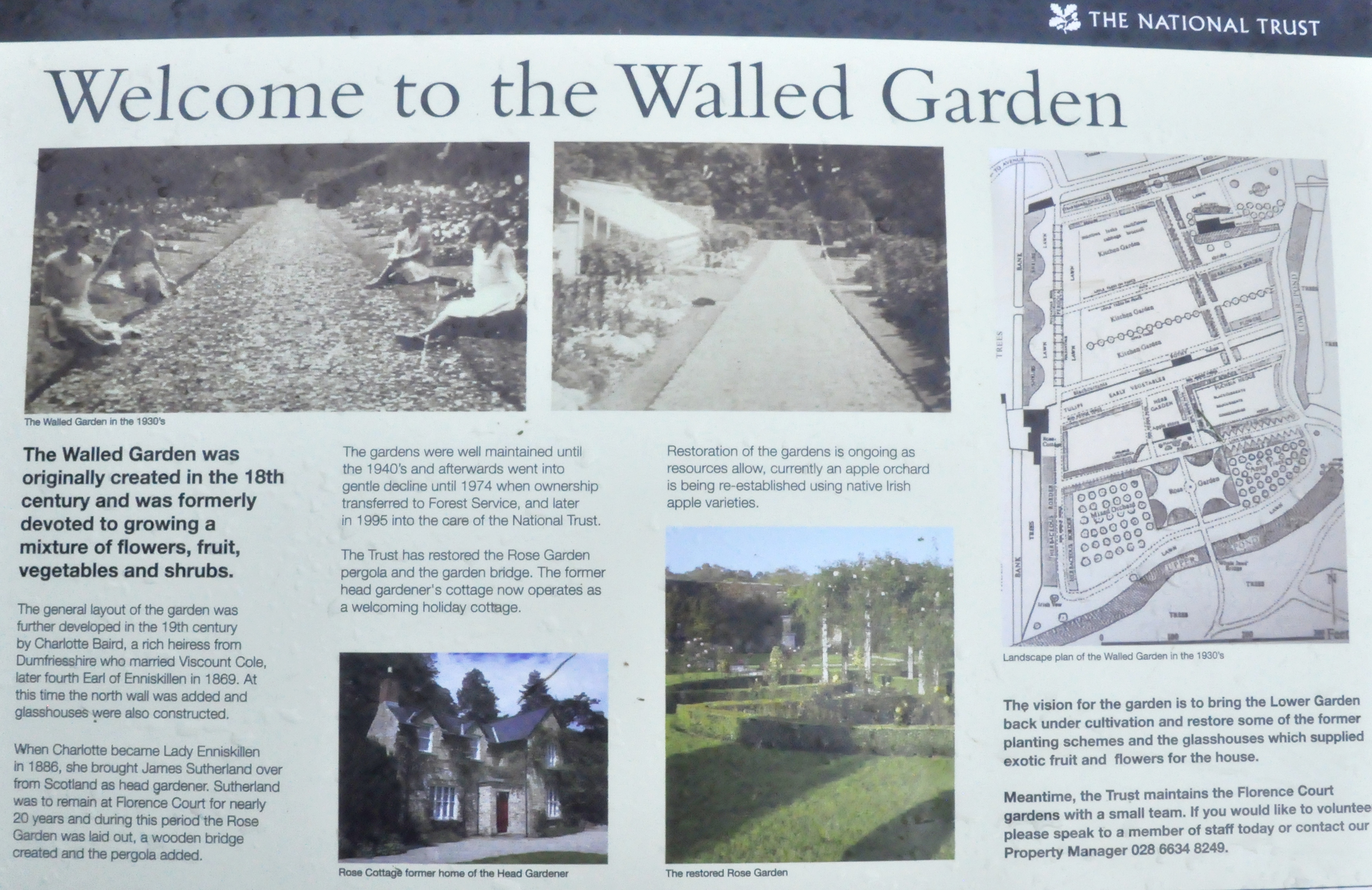
A large walled garden was developed by Charlotte, wife of the 4th Earl in the 1880s. The National Trust is working hard, and with results already, to restore this garden to its former glory.

Florence Court is well worth a visit. It had been high on my list of Trust properties in Northern Ireland. We had to dodge some pretty serious showers (as we did throughout our week in Northern Ireland), but we enjoyed about four hours walking around the estate, and taking the house tour. We learned that the title went to Andrew John Galbraith Cole in Kenya, who became the 7th earl in 1989, and who still resides in Kenya on his 40,000 acre estate!

There is privately-owned castle (not open to the public) on the Crom Estate, home to the Creighton (or Chrichton) family, Earls of Erne, built in 1820. The family acquired the estate in 1609, and there is also a ruined castle on the estate, on the shore of Upper Lough Erne. The estate is managed by the National Trust.

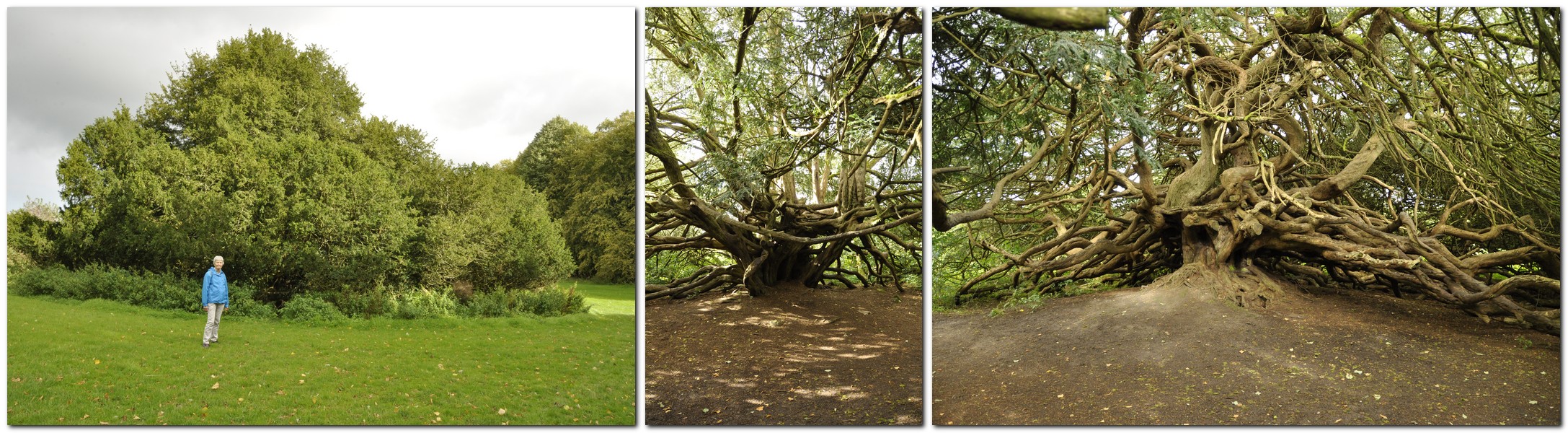
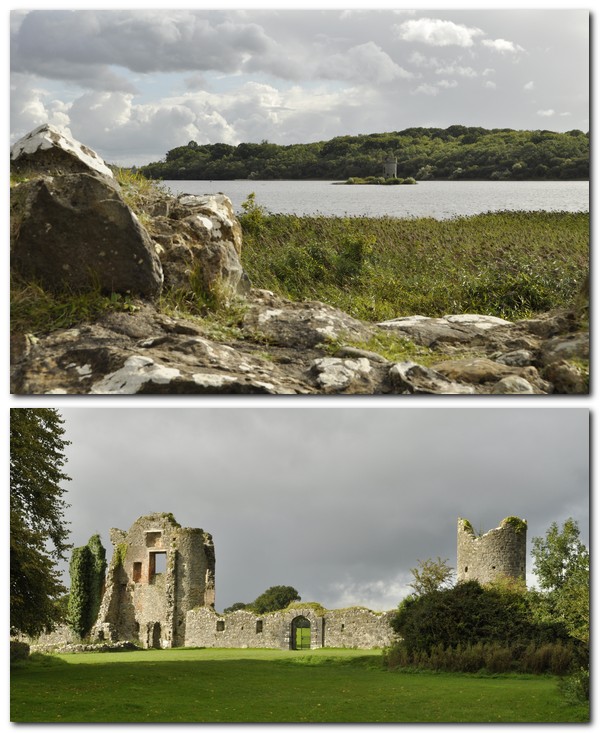
Leaving Florence Court by mid-afternoon, we reached the Visitor Centre by about 4 pm, and apart from two other couples we were the only visitors. The Visitor Centre closed at 5 pm. In any case, we wanted to take the short walk (less than a mile) to the ruins to take in a view of the lough, and the Creighton Tower on Gad Island, about half a mile offshore. Near the ruins are some impressive yew trees said to be about 1000 years old.

Following this visit, and closer to 6 pm, we headed back to our base on Mid-Ulster, via Co. Monaghan in the Republic and along one road, the A3/N54, that almost imperceptibly crisscrosses the border in just a few miles, and will be a complex situation to resolve during the Brexit talks.


Let’s call the whole thing off . . .

Thus end verses in the 1937 song penned by George and Ira Gershwin. And that’s what I was humming to myself after a recent visit to the National Trust’s Castle Ward, on the shore of Strangford Lough in Co. Down, Northern Ireland (map). It was built in the 1760s for Bernard Ward, 1st Viscount Bangor. However, the Ward family (originally from Cheshire) owned the estate since the 16th century, and an Old Castle (from about 1590) still stands north of the house.

The 1st Viscount and his good lady, Lady Ann Bligh, had very different tastes. It’s a wonder they went on to create a dynasty. But they did, having four sons and four daughters.

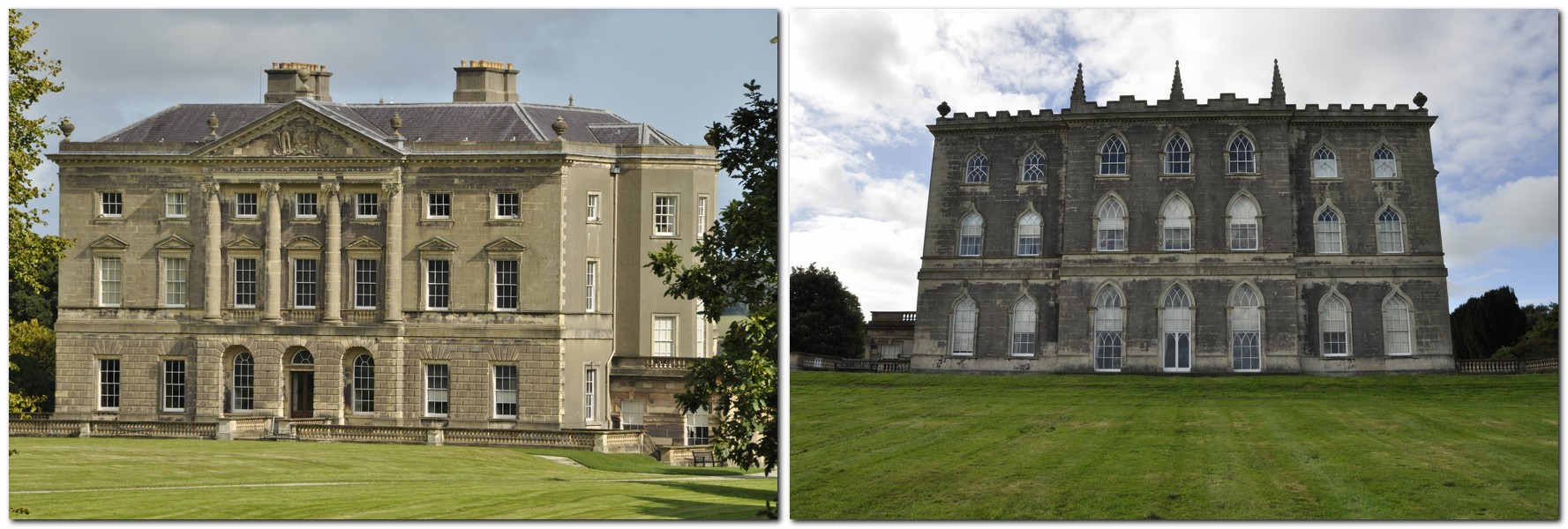
Bernard and Ann didn’t see eye to eye on all things architectural. As you drive up to Castle Ward (from the west) you see a typical Neo-Classical 18th century mansion, epitomised by its symmetry. Walk round to the east side, with its views over Strangford Lough, and you are faced with something quite different: 18th century Gothic. What an unexpected surprise, and a dramatic contrast. Certainly an interesting combination.

Neo-Classical and Georgian Gothic side by side, back to front

The view of Strangford Lough from the Gothic, east-facing side of Castle Ward

But the Bangor husband and wife differences were not restricted to the house’s exterior. It is almost perfectly divided down the center, Neo-Classical decor on one side, Gothic on the other. Quite extraordinary!

Ward’s son Nicholas succeeded as the 2nd Viscount, but having been declared insane, he died in 1827, unmarried and childless. The title passed to his nephew Edward. The current Viscount Bangor, the 8th, lives in London with his wife, Royal biographer Sarah Bradford, but they have an apartment at Castle Ward for their use. Castle Ward passed to the National Trust after 1950 when the 6th Viscount died, and the estate was accepted in lieu of death duties.

Entering through a Victorian porch on the south end, there is a staircase on the right leading to bedrooms on the first floor.

Just off this entrance is Lady Ann’s boudoir, with its flamboyant ceiling based apparently on that in Henry VII’s chapel in Westminster Abbey.

Passing through Boudoir into the Drawing Room, one encounters a room full of the Ward treasures, paintings, objets d’art, and furniture.

Further on, a study has paintings of the various Viscounts. The 5th Viscount (d. 1911) I think it was, had been a keen sailor, and desired to be buried at sea. It’s said that immediately after the funeral the Dowager Viscountess had his body consigned to Strangford Lough from the end of the family jetty. At least this is what National Trust volunteer guide George told us. You can see George in the photos above describing a beautiful tea chest.

On the west side of the house (the Neo-Classical side), there is a grand entrance hall, and off that a fine dining room.

From the Library, there is a ‘secret’ door to passages and a stairwell that would have been used by the servants to come and go without being seen.

Several bedrooms are open on the first floor. The Viscountess’s bedroom has original 18th century wallpaper, and there’s a wonderfully decorated screen in front of the fire.

The estate is extensive at Castle Ward, with walks down to the Old Castle, the farmyard, and along Lough (estate map).

Close to the house and stable yard is a Victorian sunken garden and a rockery.

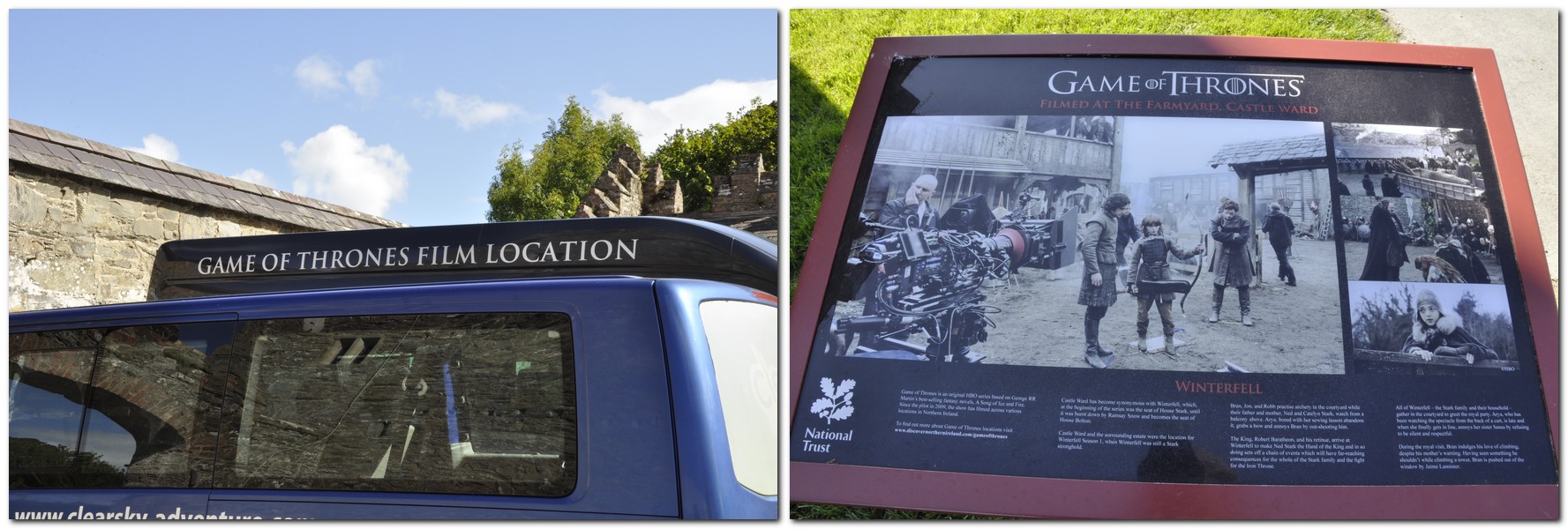
We also discovered that Castle Ward is one of the locations for ‘Game of Thrones’. And I suspect that many of the tourists we saw that day had come to Castle Ward for that purpose rather than taking in the beauty of the house itself.

On our way to Castle Ward, we stopped at Rowallane Garden (map) and had a very enjoyable wander through its natural and formal parts over almost 90 minutes. It’s certainly a haven of tranquility. And we discovered that Rowallane Garden is the headquarters of the National Trust in Northern Ireland. Rowallane Garden was laid out by the Rev. John Moore in the 1860s, and developed further by his nephew, Hugh Armytage Moore after 1903.

No longer on my travel bucket list . . . another igneous encounter

I’ve been very fortunate (and privileged) to have visited many places of interest all over the world: Machu Picchu in Peru; the temples of Tikal and Angkor Wat in Guatemala and Cambodia, respectively; some of the world’s iconic cities like New York, Sydney, and Hong Kong, to name just three; and many of the wonderful parks and monuments throughout the USA, such as the Grand Canyon, Devil’s Tower, or Crater Lake. I’ve written about these, and many others, in this blog.

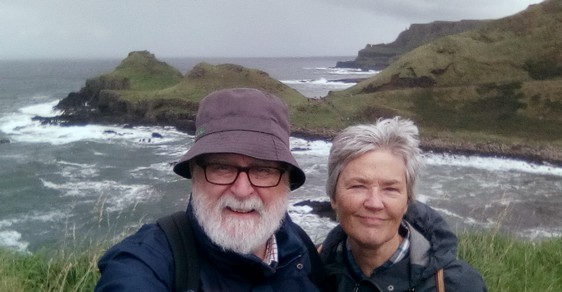
But there is one place, much closer to home, that I wanted to see as long as I can remember. And that place is the Giant’s Causeway, on the north coast of Antrim in Northern Ireland. Last week I was finally able to tick the Giant’s Causeway on my travel bucket list.

Steph and I have just returned from a week-long road trip to Northern Ireland, mainly to visit most of the properties owned by the National Trust over there. We actually got to visit nine houses, one garden, and the Giant’s Causeway.

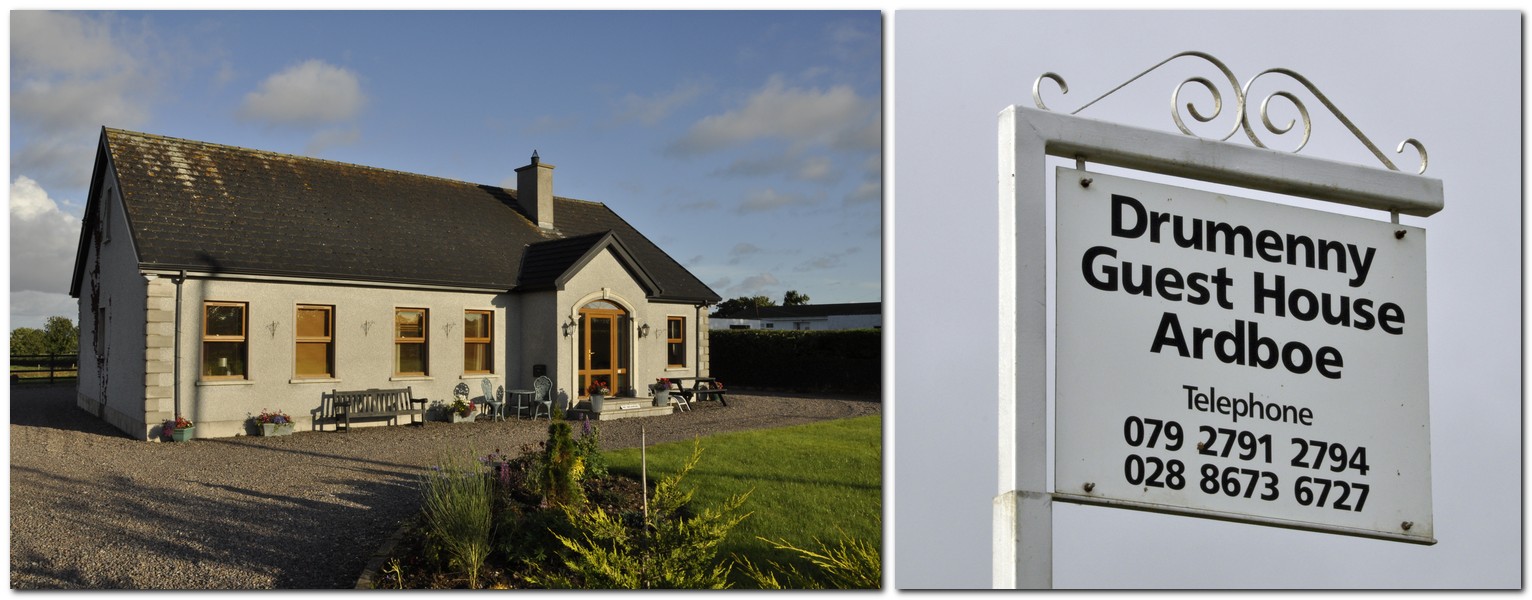
It took a little under two hours to drive north from our guesthouse in Ardboe, beside Lough Neagh, to the Visitor Centre – mainly because we decided to take back roads to avoid the expected early morning congestion around Coleraine, and also because we missed one turn and found ourselves heading east instead of north, delaying about 15 minutes as a consequence.

It must have been around 10:30 or so when we parked, and already the site was busy. The Giant’s Causeway is a UNESCO World Heritage Site, and attracts visitors—by the coach-load—from all over the world, most of whom (not being National Trust members) must handsomely boost the National Trust’s finances. I was surprised to note how many Chinese visitors we met at the Causeway.

The National Trust has built a fine Visitor Centre, with its gift shop and cafeteria, and many exhibits describing the geology and history of the site.

I was surprised how much limestone and chalk can be seen on the north Antrim coast, having been protected, as it were, by an overlay of volcanic rocks. Interesting geology!

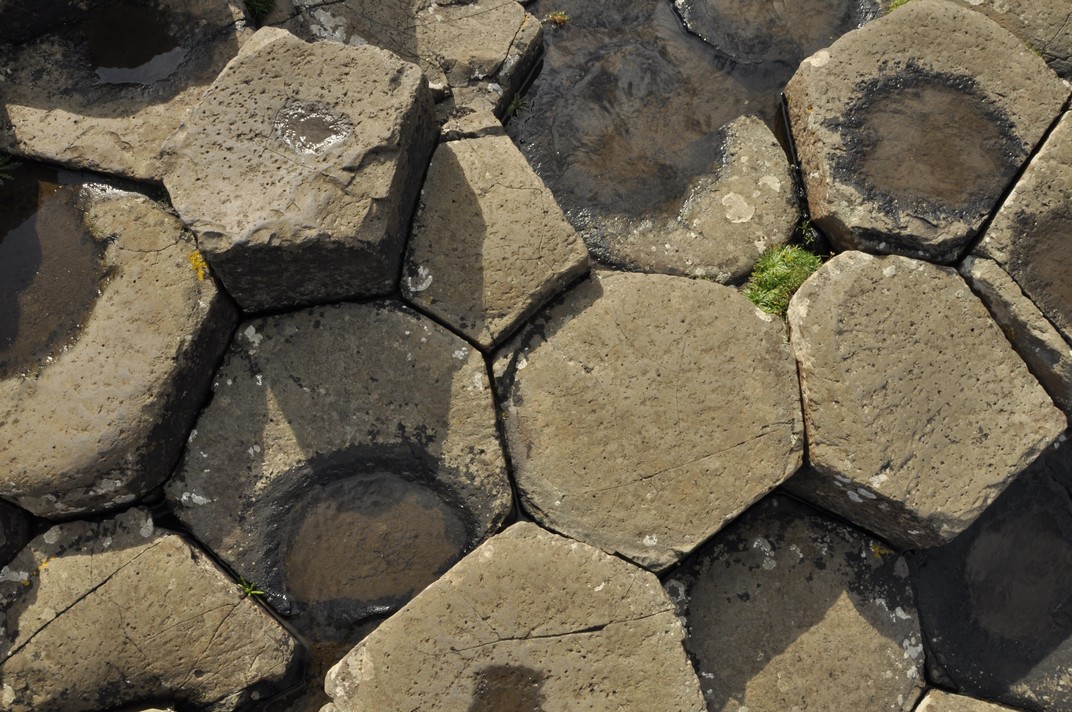
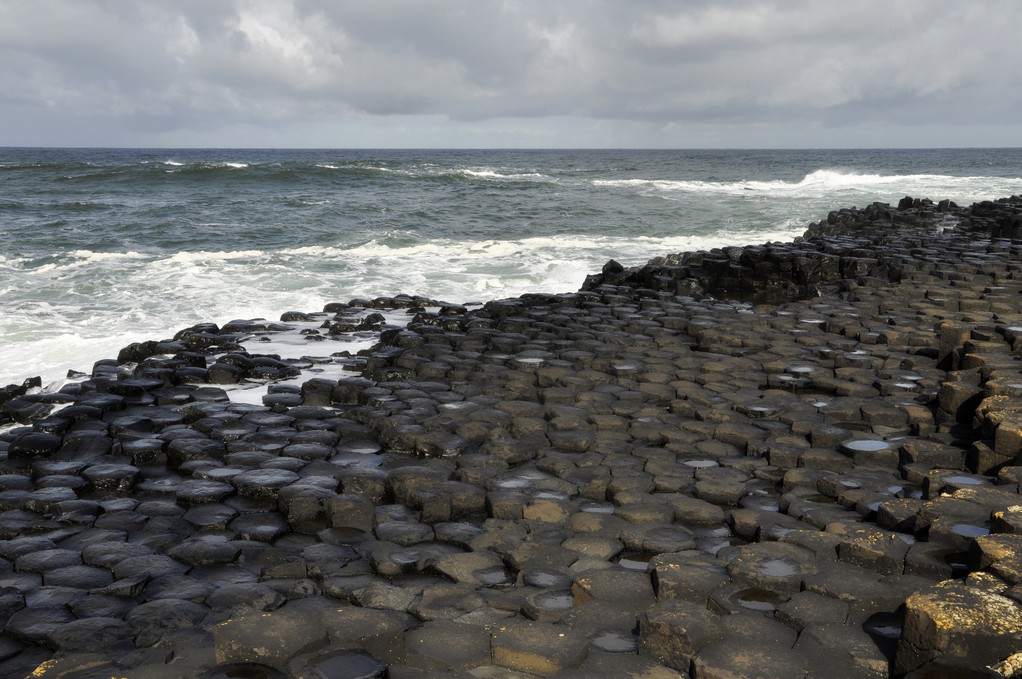
It’s the volcanic history that we see at the Giant’s Causeway, an outcrop of beautiful pentagonal and hexagonal basalt columns, stretching from the shore northwards into the incoming tide.

You have to walk just under a mile from the Visitor Centre down the cliff face to reach the Causeway itself. Fortunately, the National Trust does provide a regular shuttle bus service back up, free to members. We were happy to take the bus after wandering over the Causeway for well over an hour.

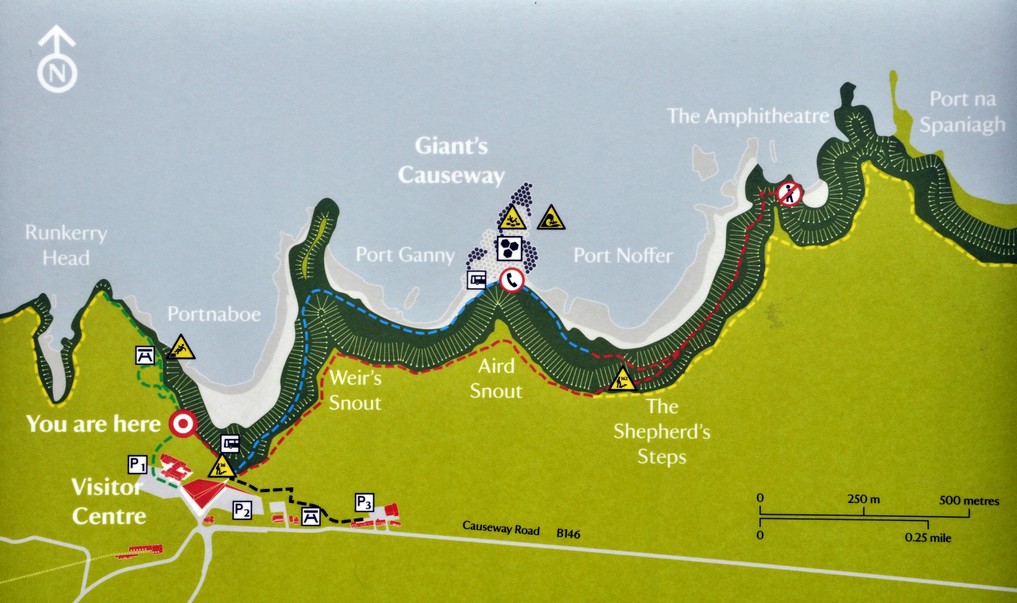
But the Causeway is not the only landscape attraction. The spectacular cliff backdrop to the landscape just adds that extra grandeur and mystery. Old Irish myths spring to mind! We also took a walk on Runkerry Head (on the left of the map below) so that we could view the Causeway from a distance through a gap in the next headland east (between Portnaboe and Port Ganny). In the far distance the crags of The Amphitheatre just add to the drama.

Looking east from Runkerry Head towards The Amphitheatre (in the far distance) and the Giant’s Causeway that can be seen through the gap in the next headland. The road down the cliff passes through that gap.

With some clever angles and hiding behind various basalt columns I was able to take most photos without any tourists showing, despite there being several hundred or more there at the time. I was also a little surprised at how small an area the Giant’s Causeway covered, but I guess that as the tide was in (or coming in) more would be exposed at low tide. I’m quite happy with my photos, but I have seen several more spectacular photos of the Causeway taken at dawn or sunset.

The Giant’s Causeway is certainly an impressive landscape. If you do plan a visit, do check the weather forecasts carefully. Although mainly overcast, we did have some sunny weather. Half an hour after we left, heading further east and south on the Antrim coast, the heavens opened, and visitors to another National Trust site, the Rope Bridge (where we stopped for a picnic only) were probably soaked to the skin, with the weather turning in the bat of an eyelid. Further south, the chalk is exposed at a number of points including here at Garron Point (map).

A National Trust trip around Northern Ireland

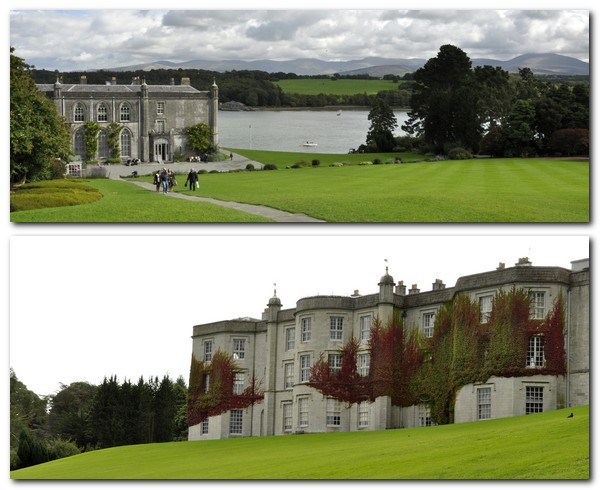
Well, if I count the visit to Plas Newydd on the southern shore of Anglesey, on the way to Holyhead to catch the ferry over to Ireland, Steph and I visited twelve National Trust properties in eight days.

We have wanted to visit Northern Ireland for many years, but until now never really had the opportunity, or we felt that the security situation didn’t make for a comfortable visit. All that has changed. Now retired, we have time on our hands. ‘The Troubles‘ are a thing of the past (fortunately), and the Peace Process in Northern Ireland has transformed the opportunities for that part of the United Kingdom.

Being members of the National Trust, and knowing that there were some splendid houses to see over in Northern Ireland, as well as some Trust-owned landscapes such as the spectacular Giant’s Causeway on the north Antrim coast, this was just the incentive we needed to decide, once and for all, to cross over to the island of Ireland again. We have visited south of the border several times. I first went to Co. Clare in 1968, and Steph and I had holidays there traveling around in 1992 and 1996.

Planning the trip – finding somewhere to stay
For a number of recent holidays, I have used booking.com to search for hotels when I was planning our road trips across the USA. So I used this company this time round when looking for an overnight stay in Holyhead, convenient for the ferry to Ireland early the next morning.

In Northern Ireland we were looking for somewhere central from where it would be a relatively easy drive each day to any part because the National Trust properties we wanted to visit were scattered all over (as shown in the map above). After reading various online reviews (are they always reliable?), and looking for value for money, we chose The Drummeny Guest House in Ardboe, Co. Tyrone (Mid-Ulster council district), on the west shore of Lough Neagh.

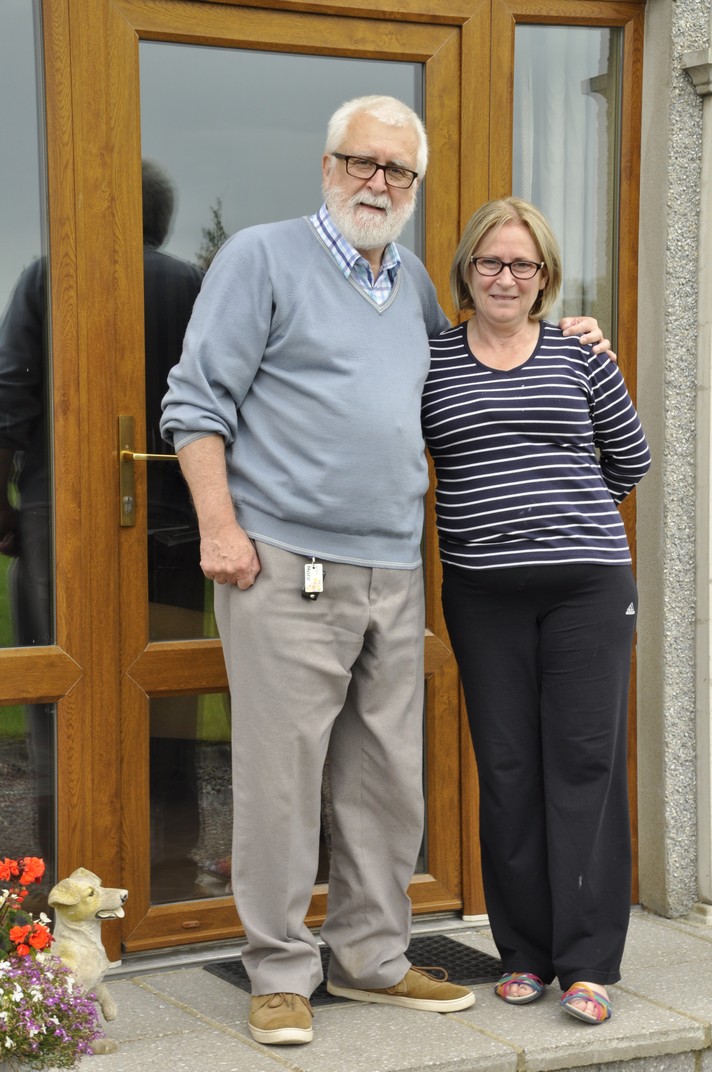
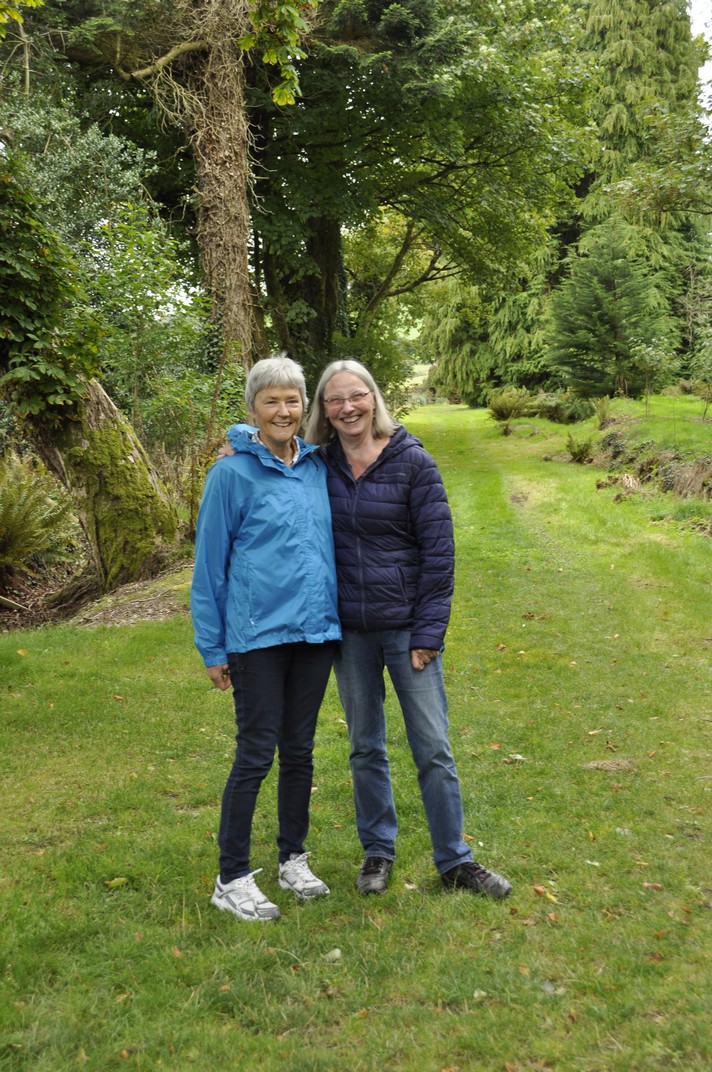
Me and Tina Quinn on the morning of our departure from The Drumenny Guest House

What a find! Our hosts, Tina and Damien Quinn, were the best. What a friendly welcome, and hospitality like you would never believe. The reviews on booking.com were all very positive. Were they accurate? Absolutely! In fact, our experience was even better than previous reviewers had described. Such a breakfast (full Irish), and lots of other extras that Tina provided. In fact, staying with Tina and Damien it felt as though we were staying with family, and a week at The Drumenny was better than we ever anticipated. So, if you ever contemplate a Northern Ireland holiday, there’s only one place to head for: The Drumenny Guest House in Ardboe. You won’t be disappointed.

Less than a mile away there’s a good restaurant, The Tilley Lamp, that serves good, simple food, and lots of it. Very convenient.

Day 1: 8 Sep — home to Holyhead, via Plas Newydd (168 miles; map)
Our Northern Ireland trip started just after 09:15, and because of major road works (and almost certain traffic congestion) we decided to travel northwest from Bromsgrove via Kidderminster and Bridgnorth, before joining the A5 south of Shrewsbury. We then continued on the A5 through Snowdonia, and over the Menai Strait to Plas Newydd House and Gardens, just a few miles west of Llanfair­pwllgwyngyll­gogery­chwyrn­drobwll­llan­tysilio­gogo­goch.

Home to the Marquesses of Anglesey (descendants of the 1st, who as the Earl of Uxbridge, served alongside the Duke of Wellington at the Battle of Waterloo, and had his leg blown off by a cannonball), Plas Newydd stands on the shore of the Menai Strait that separates Anglesey from mainland Wales.

Day 2: 9 Sep — Dublin to Ardboe, calling at Derrymore House near Newry, and Ardress House (120 miles), Co. Armagh
Our Stena Line Superfast X ferry arrived to Dublin Port on time, just after noon, and we quickly headed north on the M1, crossing into Northern Ireland just south of Newry in Co. Armagh.

Derrymore House lies a few miles west of the A1, and is open for just five afternoons a year. That was a piece of luck that we happened to pass by on one of those days. It’s a late 18th century thatched cottage. The ‘Treaty Room’ is the only room open to the public, and the 1800 Act of Union uniting the Kingdom of Great Britain and the Kingdom of Ireland is supposed to have been drafted there.

Further north, and the route to Ardboe, we also visited Ardress House, built in the 17th century, and embellished in the 18th. It has a traditional farmyard.

We arrived to our guesthouse around 18:00, and enjoyed a meal out that evening at The Tilley Lamp. The best pork chops I’ve ever tasted.

Day 3: 10 Sep — Ardboe Cross, Co. Tyrone, Springhill House, Co. Londonderry and The Argory, Co. Armagh (53 miles)
Sunday morning. We decided to briefly explore the Lough Neagh shore near Arboe, and see one of Ireland’s national monuments, the Ardboe Cross.

Springhill House is a typical 17th ‘Plantation‘ house, showing the history of ten generations of the Lenox-Conyngham family.


The Argory is just 20 miles south of Springhill, and was built in the 1820s and was the home of the MacGeough Bond family, and has remained unchanged since 1900. It has magnificent interiors, particularly the cantilevered staircase.

Day 4: 11 Sep — Florence Court and Crom Castle, Co. Fermanagh (169 miles)
Florence Court is the furthest west of all of the National Trust’s properties, a few miles southwest of Enniskillen in Co. Fermangh. It was the home of the Earls of Enniskillen, and was built in the 18th century. There are beautiful views of the nearby mountains from the front of the house. Inside, where photography is not permitted, the walls and ceilings have some of the finest stucco plaster work I have seen. In 1955 there was a disastrous fire and it’s credit to the National Trust how well they accomplished the refurbishment. Remarkably many of the precious items in the house were saved.

On our route back to Ardboe, we diverted to make a quick visit to the ruins of Crom Castle, on the banks of Upper Lough Erne. There was time for a walk to the ruins from the Visitor Centre before it closed for the day, and approaching showers drenched us. There were some lovely views over the lough to Creighton Tower.

We also saw how convoluted the border is between Northern Ireland and the Republic. Sorting that out during the Brexit negotiations will be a challenge, nightmare even, and so unnecessary. It is an invisible border, and hopefully obstacles will not be put in place by this incompetent Conservative government that will undermine the economic and social progress that Northern Ireland has made in recent years. This story on the BBC website (20 September) has a video of the very road we took back to Ardboe between the counties of Fermanagh (Northern Ireland) and Monaghan (Republic).

Day 5: 12 Sep — Giant’s Causeway and the Antrim coast, Co. Antrim (162 miles)
The Giant’s Causeway has long been on my Bucket List of attractions to visit. And we weren’t disappointed. We had carefully monitored the weather forecasts and chose what we hoped would be the best day of the week. In general it was. The drive north from Ardboe took just under 2 hours. We passed through the small town of Bellaghy, Co. Londonderry, burial site of Nobel Literature Laureate Seamus Heaney. I wish we had stopped.

Although it was not yet 10:30 when we reached the Visitors’ Centre at the Giant’s Causeway, it was already very busy, and just got busier over the three hours we stayed there. There were visitors from all over the world – particularly from China.

It’s a walk of more than a mile down the cliff to the actual Causeway, so we took a leisurely stroll there. But we did take advanatge of the free bus ride (as National Trust members) to go back up the cliff road.

We then headed east along the north Antrim coast, and stopped for a picnic at the Rope Bridge car park where a torrential downpour spoiled the view and prompted us to move on rather than have a wander around. Then we headed down the east coast on a road that hugs the bottom of cliffs along the seashore, before reaching Larne and then heading west around the top of Lough Neagh and home to The Drumenny.

Day 6: 13 Sep — Mount Stewart, Co. Down (127 miles)
On the northeast shore of Strangford Lough, just south of Newtownards, the Mount Stewart estate was purchased in the mid-18th century, and became the home of the Marquesses of Londonderry when the current house was built at the beginning of the 19th century. It has a beautiful formal garden, mostly the work of Lady Edith, wife of the 7th Marquess.

Day 7: 14 Sep — Castle Coole, Co. Fermanagh, Donegal (Republic of Ireland), and the Sperrin Mountains in Co. Londonderry and Co. Tyrone (200 miles)
On Day 7, we headed west once again to visit Castle Coole, situated just outside Enniskillen. We were not able to visit there when we had travelled west on Day 4, as the property had been closed for a special BBC Proms in the Park event.

Castle Coole was built by the 1st Earl Belmore between 1789 and 1797. It’s mostly the design of famous English architect James Wyatt, who also designed much of the interior and even the furniture. Photography is not permitted inside, and I’m unable to show you some of the splendours of this house, particularly the Saloon, which must rank as one of the finest examples of its kind among any of the stately homes in this country. The current Earl Belmore resides in a cottage on the estate.

Leaving Castle Coole, we headed west into the Republic, turning north at Donegal and crossing back into Northern Ireland at Strabane. We decided to cross the Sperrin Mountains, and had the weather been better (much of the journey north of Donegal was in torrential rain), I could have taken some nice photos. But we did have one surprise. Having taken one wrong turn too many when road signs petered out, we stumbled across a Bronze Age site of stone circles and cairns, at Beaghmore. It had stopped raining, everywhere was sparkling in the evening sun, and we enjoyed a half hour walk around the site.

Given the sunshine and showers, conditions just right for the appearance of rainbows. We saw ten throughout the day, some double.

Day 8: 15 Sep — Rowallane Garden and Castle Ward, Co. Down (136 miles)
Just south of Saintfield alongside the A7, Rowallane Garden is a haven of tranquility, about 50 acres, created in the mid-19th century by the Revd. John Moore and his nephew Hugh Armytage Moore. It’s also the headquarters of the National Trust in Northern Ireland.

Then we headed the further 16 miles southeast to Castle Ward on the tip of Strangford Lough. It’s an extraordinary building: Neo-Classical Gothic! The two architectural styles are reflected on the front and rear of the building, and mirrored inside, because, it is said, the 1st Viscount Bangor and his wife could not agree.

The Ward family, originally from Cheshire, settled here in the late 16th century, and there is an old castle on the estate – used in the hit HBO TV series Game of Thrones.
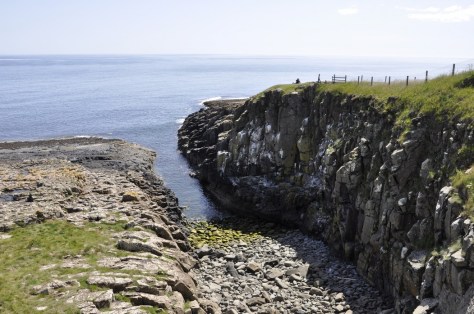
Steph (L) and Clare at Kilmacurragh Botanic Gardens

Day 9: 16 Sep — Arboe, Co. Tyrone to Rathdrum, Co. Wicklow (224 miles)
We travelled south into the Republic, taking a winding route through Co. Monaghan, Cavan, Longford, Westmeath, Offaly, Kildare and Wicklow to spend the night with old IRRI friends Paul and Clare O’Nolan. Paul had been the IT Manager at IRRI; Clare was my scuba dive buddy (video) for several years. On the evening of our arrival, Clare took us on a tour of the Kilmacurragh Botanic Gardens close to where they live on the edge of the Wicklow Mountains.
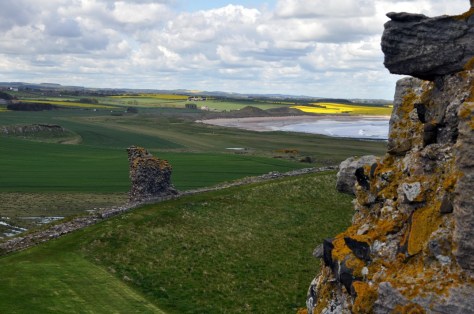
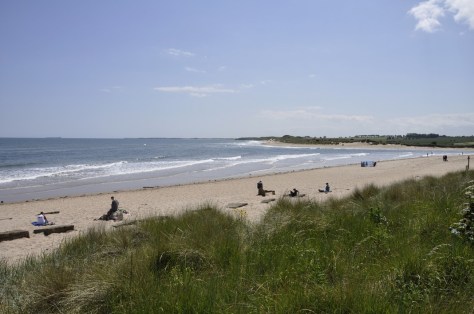
Day 10: 17 Sep — Rathdrum to Dublin, Holyhead to home (235 miles)
We left the O’Nolans just before noon, and headed north around the M50 to Dublin Port for our 15:10 Stena Superfast X ferry to Holyhead. We disembarked at exactly 19:00, and the drive home to Bromsgrove took four hours. Fortunately the roads were quite quiet and we made reasonably good progress until we were less than 20 miles from home when we were slowed down by major roadworks on the M5 motorway.

Ten days away, 1594 miles covered, twelve National Trust properties visited, seven enormous Irish breakfasts enjoyed. Northern Ireland was everything we hoped for: beautiful landscapes and friendly people. We had delayed our visit there for too long. And the National Trust was our excuse, if one was needed, to make the effort to visit.

All in all, ten days well spent! Here are the detailed posts for the properties:


Orange and Green: tribal loyalties and conflict in Northern Ireland

A story in The Guardian a couple of days ago caught my eye. It was a piece about happiness across the UK, the results from a survey by the Office for National Statistics (ONS). Those surveyed were asked to comment on their personal well-being, two components of which were ‘happiness’ and ‘anxiety’.

What surprised me, given its turbulent and uncertain past, were the apparent high level of happiness and low anxiety among those surveyed in Northern Ireland (relative to other regions of the UK). Now this interested me because I had just finished Michael Farrell’s detailed (and I have to say rather depressing) account of the birth of Northern Ireland, and the ethnic and religious conflicts and violence (tribal even, at least on the part of the Protestant community) that have characterized life in that province since 1922. Incidentally, the ONS survey provided aggregated data for Northern Ireland with no further breakdown across counties, some of which have a Catholic majority.

Northern Ireland: The Orange State is a comprehensive account of how partition and its aftermath shaped political, cultural and economic development in Northern Ireland, and how the domination of the Catholics by the majority Protestant Unionists or Loyalists was bound – eventually – to culminate in The Troubles that came to define the late 60s, the 70s and 80s.

The bald facts cannot be challenged. There was systematic and ‘official’ persecution of the Catholic population, collusion between the Unionist State and Protestant organizations like the Orange Order at the very least. With the backing of the Royal Ulster Constabulary (now disbanded and replaced with Police Service for Northern Ireland, PSNI), the Specials (particularly the violent B Specials) and other groups, the Northern Ireland government was determined never to let the Catholics improve their lot. Legislation, gerrymandering and discrimination (and thuggery) were used by the State as tools of repression of the Nationalist (Catholic) minority, and to prevent – as far as possible – the power and influence of the Protestant community from ever being assailed.

It’s no wonder then that at the end of the 1960s, a vibrant civil rights movement sprang up among the Catholic communities. And although I unreservedly condemn the violence that both sides of the conflict perpetrated on their fellow Irishmen, I can understand better the causes of that violence and what motivated the Provisional IRA to take up arms. And so Northern Ireland was subject to assassination and reprisals, often at ransom and against civilians not engaged in any form of political or civil disobedience or violence. Violence was used to inflict terror per se and, if Farrell’s analysis is to be believed, the Protestant community and its various bodies (including state bodies) has to carry the bulk of the blame. Even the British Army may have colluded with the Loyalist organizations to maintain the status quo.

In 1970 I was a young man of 21. Northern Ireland and its growing conflict didn’t really register on my radar. I was abroad for much of the 70s so didn’t fully appreciate what was happening in Northern Ireland. The 1980s (when I was back in the UK for a decade) were the Thatcher years, and the industrial conflicts seemed perhaps more newsworthy than what was happening across the Irish Sea. Frankly, my memory is now quite vague about those 10 years. And during the 1990s, when finally progress was being made in the Peace Process (with the active involvement of US President Bill Clinton and UK Prime Minister Tony Blair and their representatives) I was again out of the country, and got my news second-hand, so-to-speak.

I cannot – and don’t – claim to be a pundit on the affairs of Ireland. That would be naïve and presumptuous. As I have pointed out in other posts in this blog, I have been trying to understand my Irish ancestry and how the history of Ireland would have affected my family.

What I see today (simplistically or naïvely perhaps, and from afar it has to be said) is a more settled Northern Ireland, that is trying to come to grips with is turbulent past, trying to develop economically, and move forward. For several years the Peace process has led to a more stable democracy in which former arch enemies are working together, or at least giving the appearance of working together, and that can only be a positive thing. Unsavoury individuals like the Rev. Ian Paisley (whose bigotry and promotion of violence during the 60s and 70s must be roundly condemned), who formed the Democratic Unionist Party (DUP) that is the majority party in the Northern Ireland Assembly, eventually mellowed and did sit down in government with Sinn Féin. The signs of progress are everywhere to see. Derry-Londonderry is one of the 2013 European Cities of Culture. Who would have thought that would have been even thinkable several decades ago when Derry was the heart of the struggles.

But one of the iconic moments of the whole Peace Process in a broad sense happened in when HM The Queen visited Northern Ireland and was introduced to members of the Northern Ireland Assembly. Not only were its Assembly Leader Peter Robinson (DUP) and Martin McGuinness (Deputy, Sinn Féin, and a former commander of the Provisional IRA in Derry) standing side-by-side, but McGuinness shook hands with Her Majesty. Who would have predicted that?

Nevertheless serious tensions lie just below the surface, old wounds are opened, and violence breaks out between the two communities, as we see during the annual Orange Order marches (how they still remain so insensitive – indifferent  or disdainful might be better descriptions – beggars belief). And of course the Protestant community (or at least one hard-line element) came on to the streets in December 2012 to protest the ending of the flying the Union Flag above Belfast City Hall. Memories are long, and prejudices run deep in Northern Ireland, it seems. Even today, letter bombs have been sent to the Chief Constable of the PSNI, reportedly by dissident Republicans. And so it goes on.

Is there hope for the future? There has to be, and surely increasing economic prosperity – and a new generation – will bring about the lasting positive changes that most (but not all, I’m convinced) cherish. Even Burmese Nobel Peace Laureate Aung San Suu Kyi has visited Northern Ireland recently to understand more about the Peace Process. Nevertheless, I think I’ll have to leave Irish history for the time-being – it does begin to get to you after a while.