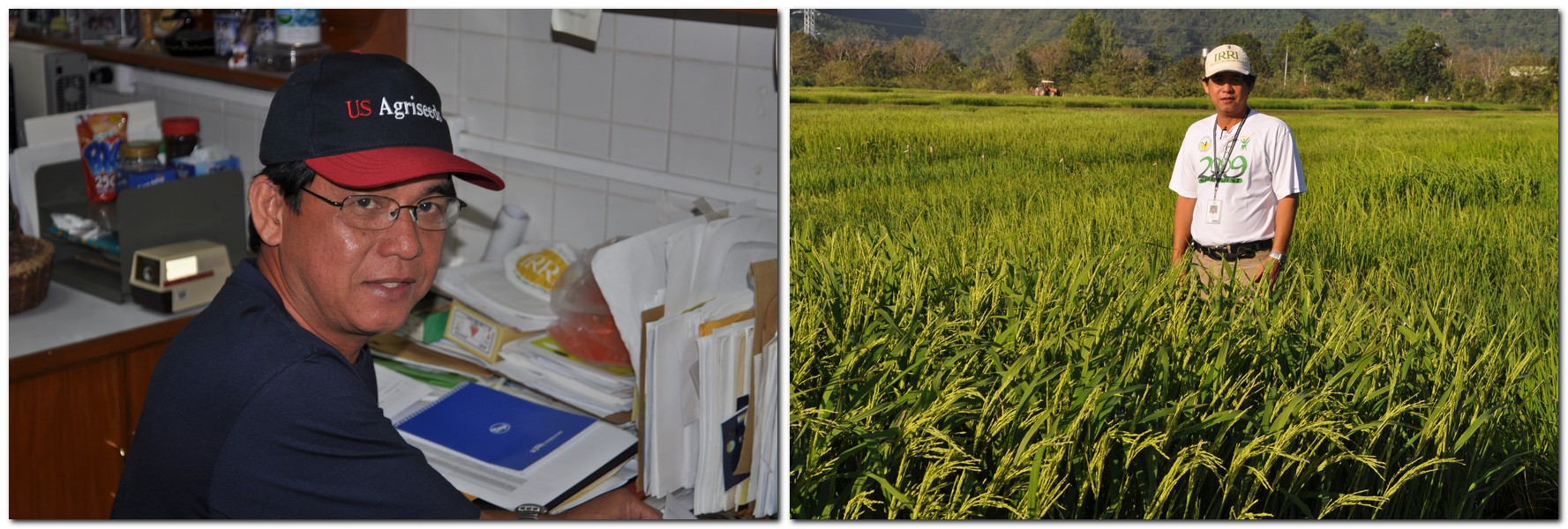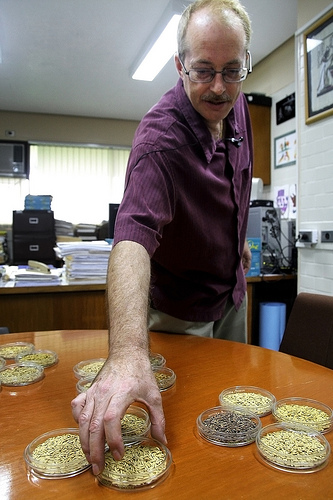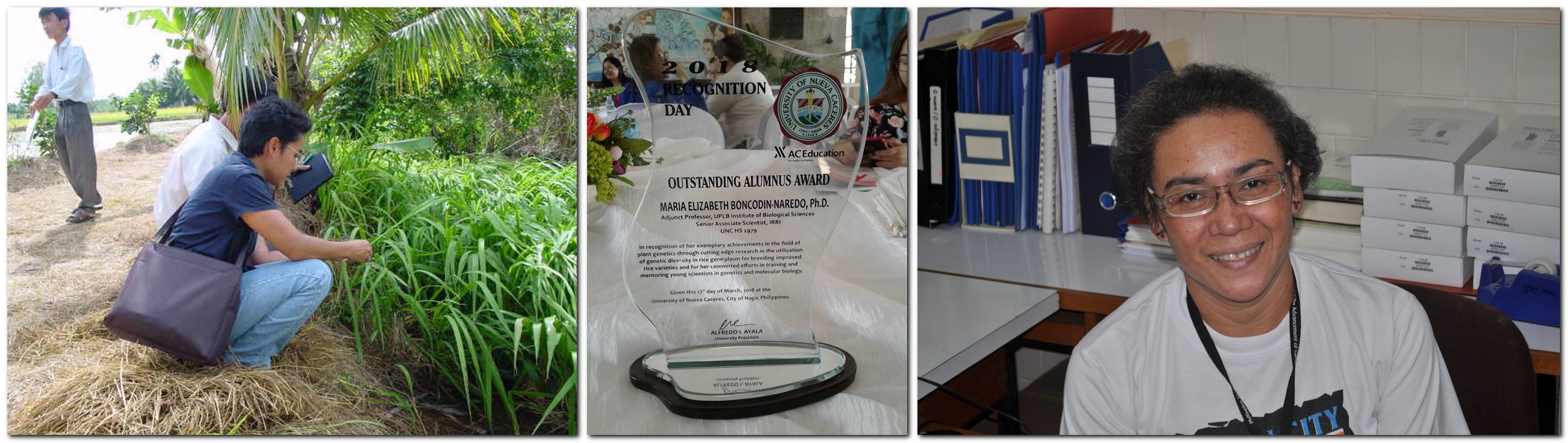
Discovering Vavilov, and building a career in plant genetic resources: (3) Becoming a genebanker in the 1990s, and beyond

My decision to leave a tenured position at the University of Birmingham in June 1991 was not made lightly. I was about to be promoted to Senior Lecturer, and I’d found my ‘home’ in the Plant Genetics Research Group following the reorganization of the School of Biological Sciences a couple of years earlier.

But I wasn’t particularly happy. Towards the end of the 1980s, Margaret Thatcher’s Conservative Government had become hostile to the university sector, demanding significant changes in the way they operated before acceding to any improvements in pay and conditions. Some of the changes then forced on the university system still bedevil it to this day.

I felt as though I was treading water, trying to keep my head above the surface. I had a significant teaching load, research was ticking along, PhD and MSc students were moving through the system, but still the university demanded more. So when an announcement of a new position as Head of the Genetic Resources Center (GRC) at the International Rice Research Institute (IRRI) in the Philippines landed on my desk in September 1990, it certainly caught my interest. I discussed such a potential momentous change with Steph, and with a couple of colleagues at the university.

Nothing venture, nothing gained, I formally submitted an application to IRRI and, as they say, the rest is history. However, I never expected to spend the next 19 years in the Philippines.


Since 1971, I’d worked almost full time in various aspects of conservation and use of plant genetic resources. I’d collected potato germplasm in Peru and the Canary Islands while at Birmingham, learned the basics of potato agronomy and production, worked alongside farmers, helped train the next generation of genetic conservation specialists, and was familiar with the network of international agricultural research centers supported through the Consultative Group on International Agricultural Research or CGIAR.

What I had never done was manage a genebank or headed a department with tens of staff at all professional levels. Because the position in at IRRI involved both of these. The head would be expected to provide strategic leadership for GRC and its three component units: the International Rice Germplasm Center (IRGC), the genebank; the International Network for the Genetic Evaluation of Rice (INGER); and the Seed Health Unit (SHU). However, only the genebank would be under the day-to-day management of the GRC head. Both INGER and the SHU would be managed by project leaders, while being amalgamated into a single organizational unit, the Genetic Resources Center.

I was unable to join IRRI before 1 July 1991 due to teaching and examination commitments at the university that I was obliged to fulfill. Nevertheless, in April I represented IRRI at an important genetic resources meeting at FAO in Rome, where I first met the incoming Director General of the International Board for Plant Genetic Resources (soon to become the International Plant Genetic Resources Institute or IPGRI), Dr Geoff Hawtin, with whom I’ve retained a friendship ever since.

On arrival at IRRI, I discovered that the SHU had been removed from GRC, a wise decision in my opinion, but not driven I eventually discerned by real ‘conflict of interest’ concerns, rather internal politics. However, given that the SHU was (and is) responsible, in coordination with the Philippines plant health authorities, to monitor all imports and exports of rice seeds at IRRI, it seemed prudential to me not to be seen as both ‘gamekeeper and poacher’, to coin a phrase. After all the daily business of the IRGC and INGER was movement of healthy seeds across borders.
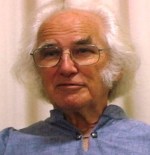

Klaus Lampe

My focus was on the genebank, its management and role within an institute that itself was undergoing some significant changes, 30 years after it had been founded, under its fifth Director General, Dr Klaus Lampe, who had hired me. He made it clear that the head of GRC would not only be expected to bring IRGC and INGER effectively into a single organizational unit, but also complete a ‘root and branch’ overhaul of the genebank’s operations and procedures, long overdue.

Since INGER had its own leader, an experienced rice breeder Dr DV Seshu, somewhat older than myself, I could leave the running of that network in his hands, and only concern myself with INGER within the context of the new GRC structure and personnel policies. Life was not easy. My INGER colleagues dragged their feet, and had to be ‘encouraged’ to accept the new GRC reality that reduced the freewheeling autonomy they had become accustomed to over the previous 20 years or so, on a budget of about USD1 million a year provided by the United Nations Development Program or UNDP.

When interviewing for the GRC position I had also queried why no germplasm research component had been considered as part of the job description. I made it clear that if I was considered for the position, I would expect to develop a research program on rice genetic resources. That indeed became the situation.

Once in post at IRRI, I asked lots of questions. For at least six months until the end of 1991, I made no decisions about changes in direction for the genebank until I better understood how it operated and what constraints it faced. I also had to size up the caliber of staff, and develop a plan for further staff recruitment. I did persuade IRRI management to increase resource allocation to the genebank, and we were then able to hire technical staff to support many time critical areas.

But one easy decision I did make early on was to change the name of the genebank.  As I’ve already mentioned, its name was the ‘International Rice Germplasm Center’, but it didn’t seem logical to place one center within another, IRGC in GRC. So we changed its name to the ‘International Rice Genebank’, while retaining the acronym IRGC (which was used for all accessions in the germplasm collection) to refer to International Rice Genebank Collection.

In various blog posts over the past year or so, I have written extensively about the genebank at IRRI, so I shall not repeat those details here, but provide a summary only.

I realized very quickly that each staff member had to have specific responsibilities and accountability. We needed a team of mutually-supportive professionals. In a recent email from one of my staff, he mentioned that the genebank today was reaping the harvest of the ‘seeds I’d sown’ 25 years ago. But, as I replied, one has to have good seeds to begin with. And the GRC staff were (and are) in my opinion quite exceptional.

In terms of seed management, we beefed up the procedures to regenerate and dry seeds, developed protocols for routine seed viability testing, and eliminated duplicate samples of genebank accessions that were stored in different locations, establishing an Active Collection (at +4ºC, or thereabouts) and a Base Collection (held at -18ºC). Pola de Guzman was made Genebank Manager, and Ato Reaño took responsibility for all field operations. Our aim was not only to improve the quality of seed being conserved in the genebank, but also to eliminate (in the shortest time possible) the large backlog of samples to be processed and added to the collection.

Dr Kameswara Rao (from IRRI’s sister center ICRISAT, based in Hyderabad, India) joined GRC to work on the relationship between seed quality and seed growing environment. He had received his PhD from the University of Reading, and this research had started as a collaboration with Professor Richard Ellis there. Rao’s work led to some significant changes to our seed production protocols.

Since I retired, I have been impressed to see how research on seed physiology and conservation, led by Dr Fiona Hay (now at Aarhus University in Denmark) has moved on yet again. Take a look at this story I posted in 2015.

Screen house space for the valuable wild species collection was doubled, and Soccie Almazan appointed as  wild species curator.

One of the most critical issues I had to address was data management, which was in quite a chaotic state, with data on the Asian rice samples (known as Oryza sativa), the African rices (O. glaberrima), and the remaining 20+ wild species managed in separate databases that could not ‘talk’ to each another. We needed a unified data system, handling all aspects of genebank management, germplasm regeneration, characterization and evaluation, and germplasm exchange. We spent about three years building that system, the International Rice Genebank Collection Information System (IRGCIS). It was complicated because data had been coded differently for the two cultivated and wild species, that I have written about here. That’s a genebank lesson that needs to be better appreciated in the genebank community. My colleagues Adel Alcantara, Vanji Guevarra, and Myrna Oliva did a splendid job, which was methodical and thorough.

In 1995 we released the first edition of a genebank operations manual for the International Rice Genebank, something that other genebanks have only recently got round to.

Our germplasm research focused on four areas:

  • seed conservation (with Richard Ellis at the University of Reading, among others);
  • the use of molecular markers to better manage and use the rice collection (with colleagues at the University of Birmingham and the John Innes Centre in Norwich);
  • biosystematics of rice, concentrating on the closest wild relative species (led by Dr Bao-Rong Lu and supported by Yvette Naredo and the late Amy Juliano);
  • on farm conservation – a project led by French geneticist Dr Jean-Louis Pham and social anthropologists Dr Mauricio Bellon and Steve Morin.

At the beginning of the 1990s there were no genome data to support the molecular characterization of rice. Our work with molecular markers was among use these to study a germplasm collection. The research we published on association analysis is probably the first paper that showed this relationship between markers and morphological characteristics or traits.

In 1994, I developed a 5-year project proposal for almost USD3.3 million that we submitted for support to the Swiss Development Cooperation. The three project components included:

  • germplasm exploration (165 collecting missions in 22 countries), with about half of the germplasm collected in Laos; most of the collected germplasm was duplicated at that time in the International Rice Genebank;
  • training: 48 courses or on-the-job opportunities between 1995 and 1999 in 14 countries or at IRRI in Los Baños, for more than 670 national program staff;
  • on farm conservation to:
    • to increase knowledge on farmers’ management of rice diversity, the factors that
      influence it, and its genetic implications;
    • to identify strategies to involve farmers’ managed systems in the overall conservation of
      rice genetic resources.

I was ably assisted in the day-to-day management of the project by my colleague Eves Loresto, a long-time employee at IRRI who sadly passed away a few years back.

When I joined IRRI in 1991 there were just under 79,000 rice samples in the genebank. Through the Swiss-funded project we increased the collection by more than 30%. Since I left the genebank in 2001 that number has increased to over 136,000 making it the largest collection of rice germplasm in the world.

We conducted training courses in many countries in Asia and Africa. The on-farm research was based in the Philippines, Vietnam, and eastern India. It was one of the first projects to bring together a population geneticist and a social anthropologist working side-by-side to understand how, why, and when farmers grew different rice varieties, and what incentives (if any) would induce them to continue to grow them.

The final report of this 5-year project can be read here. We released the report in 2000 on an interactive CD-ROM, including almost 1000 images taken at many of the project sites, training courses, or during germplasm exploration. However, the links in the report are not active on this blog.

During my 10 year tenure of GRC, I authored/coauthored 33 research papers on various aspects of rice genetic resources, 1 co-edited book, 14 book chapters, and 23 papers in the so-called ‘grey’ literature, as well as making 33 conference presentations. Check out all the details in this longer list, and there are links to PDF files for many of the publications.


In 1993 I was elected chair of the Inter-Center Working Group on Genetic Resources, and worked closely with Geoff Hawtin at IPGRI, and his deputy Masa Iwanaga (an old colleague from CIP), to develop the CGIAR’s System-wide Genetic Resources Program or SGRP. Under the auspices of the SGRP I organized a workshop in 1999 on the application of comparative genetics to genebank collections.
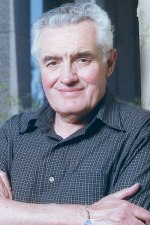
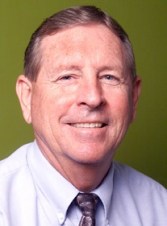
Professor John Barton

With the late John Barton, Professor of Law at Stanford University, we developed IRRI’s first policy on intellectual property rights focusing on the management, exchange and use of rice genetic resources. This was later expanded into a policy document covering all aspects of IRRI’s research.

The 1990s were a busy decade, germplasm-wise, at IRRI and in the wider genetic resources community. The Convention on Biological Diversity had come into force in 1993, and many countries were enacting their own legislation (such as Executive Order 247 in the Philippines in 1995) governing access to and use sovereign genetic resources. It’s remarkable therefore that we were able to accomplish so much collecting between 1995 and 2000, and that national programs had trust in the IRG to safely conserve duplicate samples from national collections.
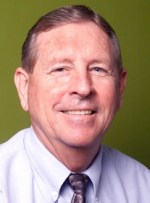
Ron Cantrell

All good things come to an end, and in January 2001 I was asked by then Director General Ron Cantrell to leave GRC and become the institute’s Director for Program Planning and Coordination (that became Communications two years later as I took on line management responsibility for Communication and Publications Services, IT, and the library). On 30 April, I said ‘goodbye’ to my GRC colleagues to move to my new office across the IRRI campus, although I kept a watching brief over GRC for the next year until my successor, Dr Ruaraidh Sackville Hamilton, arrived in Los Baños.

Listen to Ruaraidh and his staff talking about the genebank.


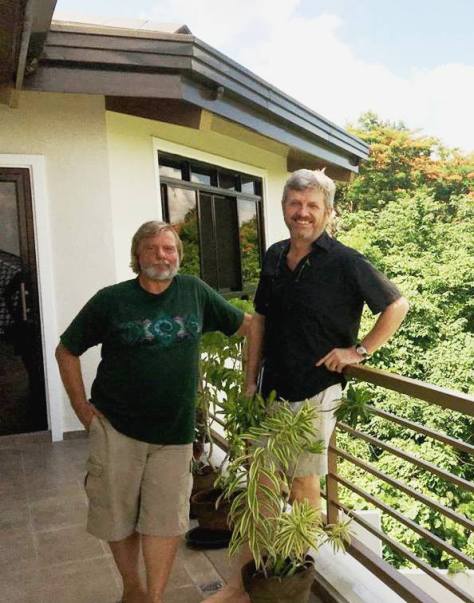
So, after a decade with GRC I moved into IRRI’s senior management team and set about bringing a modicum of rationale to the institute’s resource mobilization initiatives, and management of its overall research project portfolio. I described here how it all started. The staff I was able to recruit were outstanding. Running DPPC was a bit like running a genebank: there were many individual processes and procedures to manage the various research projects, report back to donors, submit grant proposals and the like. Research projects were like ‘genebank accessions’ – all tied together by an efficient data management system that we built in an initiative led by Eric Clutario (seen standing on the left below next to me).
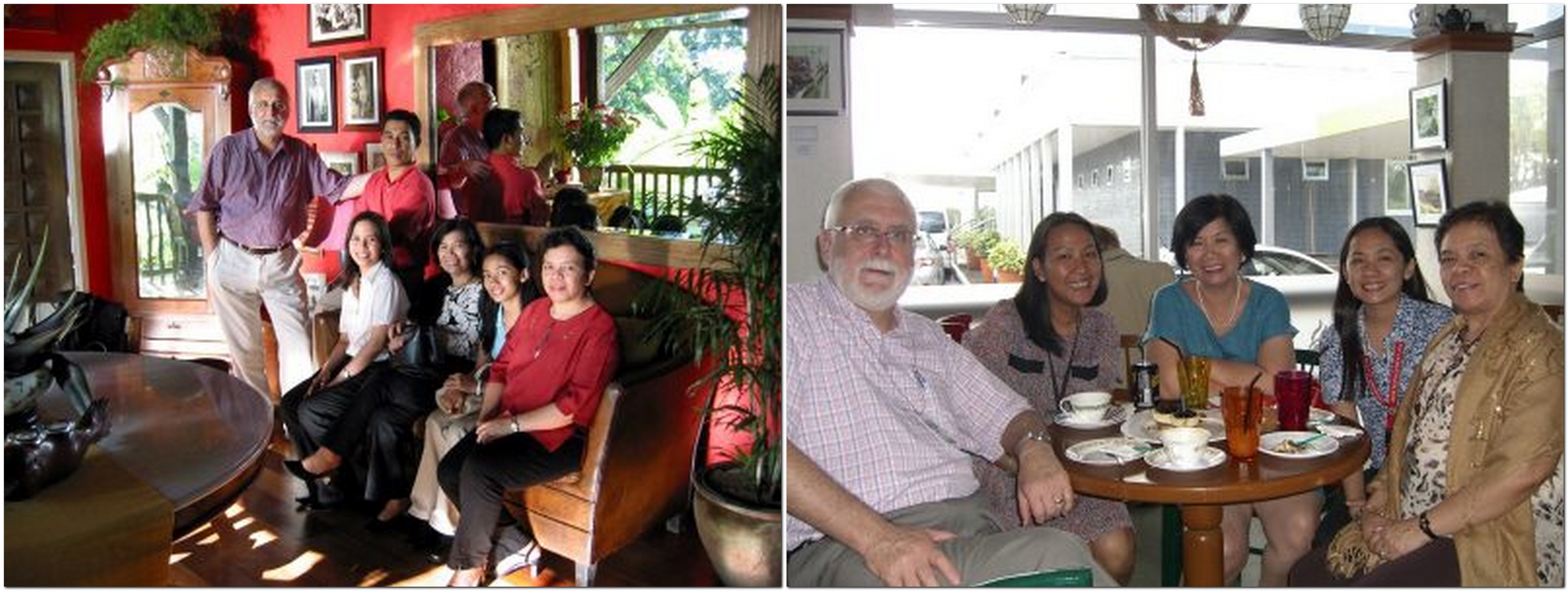
From my DPPC vantage point, it was interesting to watch Ruaraidh take GRC to the next level, adding a new cold storage room, and using bar-coding to label all seed packets, a great addition to the data management effort. With Ken McNally’s genomics research, IRRI has been at the forefront of studies to explore the diversity of genetic diversity in germplasm collections.

Last October, the International Rice Genebank was the first to receive in-perpetuity funding from the Crop Trust. I’d like to think that the significant changes we made in the 1990s to the genebank and management of rice germplasm kept IRRI ahead of the curve, and contributed to its selection for this funding.

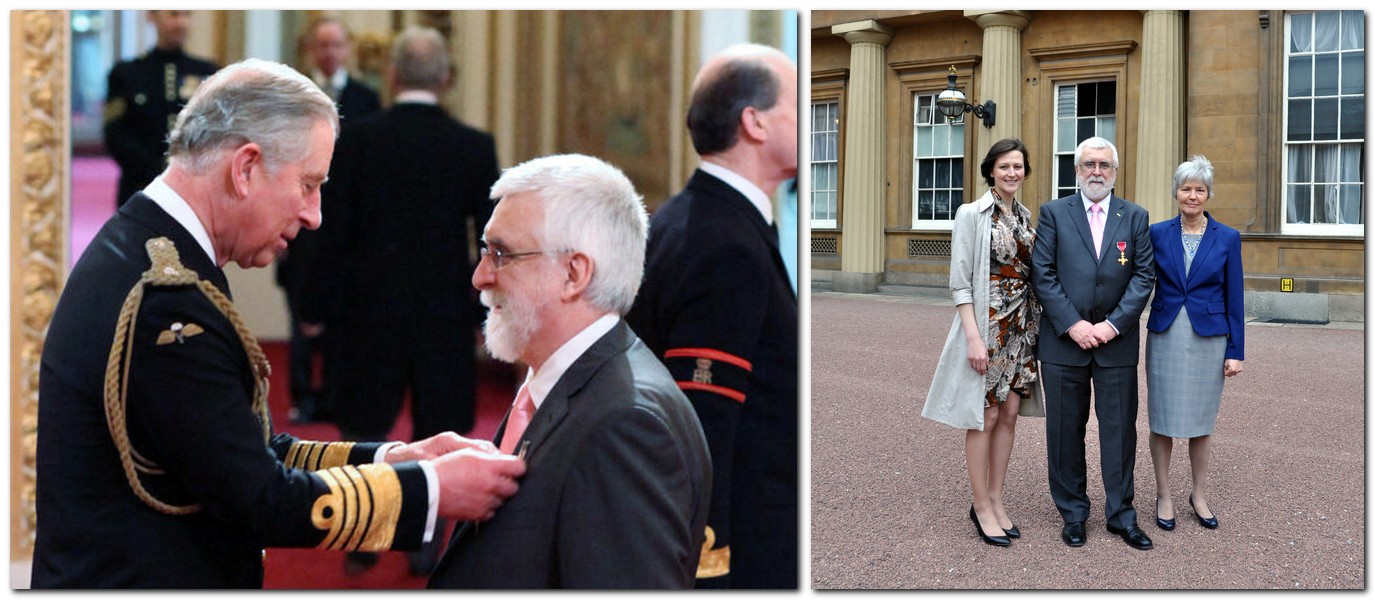
I completed a few publications during this period, and finally retired from IRRI at the end of April 2010. Since retirement I have co-edited a second book on climate change and genetic resources, led a review of the CGIAR’s genebank program, and was honored by HM The Queen as an Officer of the British Empire (OBE) in 2012 for my work at IRRI.

So, as 2018 draws to a close, I can look back on almost 50 years involvement in the conservation and use of plant genetic resources for food and agriculture. What an interesting—and fulfilling—journey it has been.


Discovering Vavilov, and building a career in plant genetic resources: (1) Starting out in South America in the 1970s

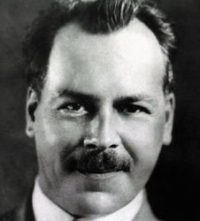
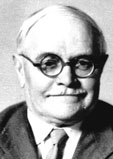
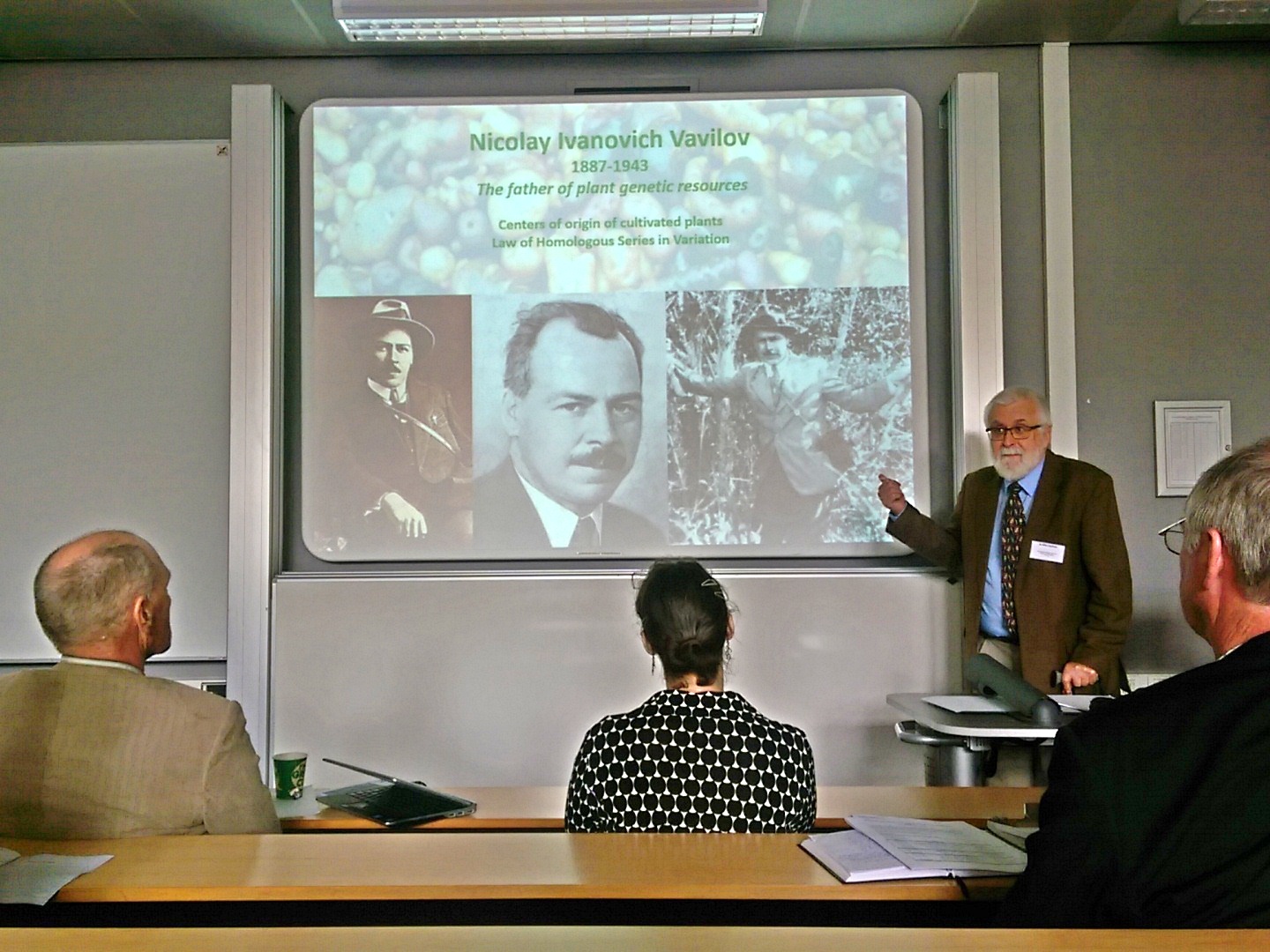
Nikolai Vavilov

Russian geneticist and plant breeder Nikolai Vavilov (1887-1943) is a hero of mine. He died, a Soviet prisoner, five years before I was born.

Until I began my graduate studies in the Department of Botany at the University of Birmingham in the conservation and use of plant genetic resources (i.e., crops and their wild relatives) almost 50 years ago in September 1970, his name was unknown to me. Nevertheless, Vavilov’s prodigious publications influenced the career I subsequently forged for myself in genetic conservation.

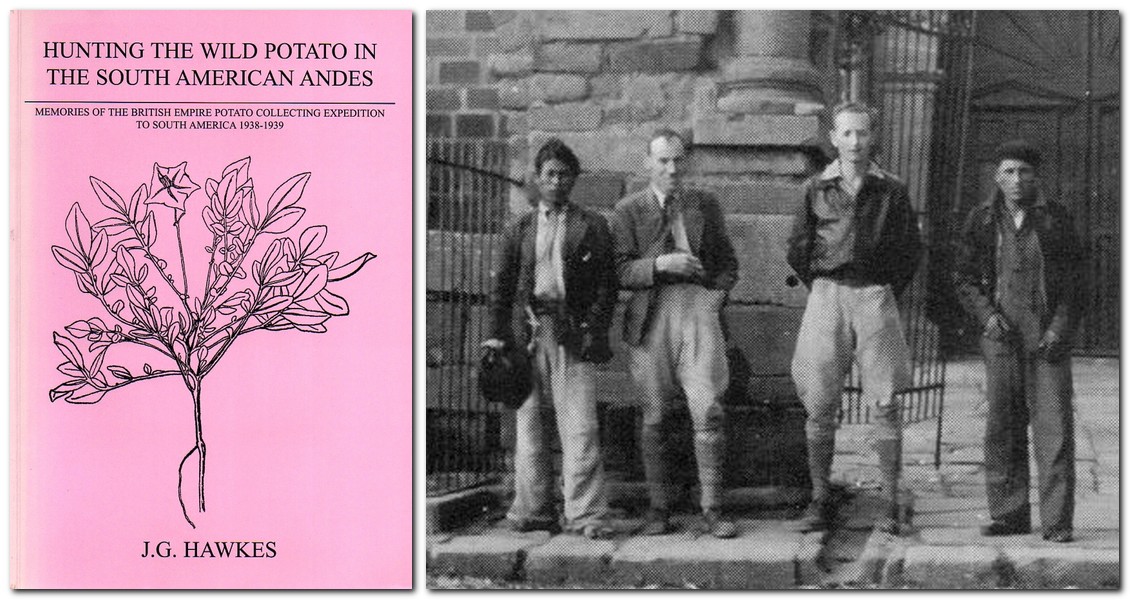
At the same time I was equally influenced by my mentor and PhD supervisor Professor Jack Hawkes, at Birmingham, who met .

Vavilov undoubtedly laid the foundations for the discipline of genetic resources —the collection, conservation, evaluation, and use of plant genetic resources for food and agriculture (PGRFA). It’s not for nothing that he is widely regarded as the Father of Plant Genetic Resources.

Almost 76 years on from his death, we now understand much more about the genetic diversity of crops than we ever dreamed possible, even as recently as the turn of the Millennium, thanks to developments in molecular biology and genomics. The sequencing of crop genomes (which seems to get cheaper and easier by the day) opens up significant opportunities for not only understanding how diversity is distributed among crops and species, but how it functions and can be used to breed new crop varieties that will feed a growing world population struggling under the threat of environmental challenges such as climate change.

These tools were not available to Vavilov. He used his considerable intellect and powers of observation to understand the diversity of many crop species (and their wild relatives) that he and his associates collected around the world. Which student of genetic resources can fail to be impressed by Vavilov’s theories on the origins of crops and how they varied among regions.

In my own small way, I followed in Vavilov’s footsteps for the next 40 years. I can’t deny that I was fortunate. I was in the right place at the right time. I had some of the best connections. I met some of the leading lights such as Sir Otto Frankel, Erna Bennett, and Jack Harlan, to name just three. I became involved in genetic conservation just as the world was beginning to take notice.


Knowing of my ambition to work overseas (particularly in South America), Jack Hawkes had me in mind in early 1971 when asked by Dr Richard Sawyer, the first Director General of the International Potato Center (CIP, based in Lima, Peru) to propose someone to join the newly-founded center to curate the center’s collection of Andean potato varieties. This would be just a one-year appointment while a Peruvian scientist received MSc training at Birmingham. Once I completed the MSc training in the autumn of 1971, I had some of the expertise and skills needed for that task, but lacked practical experience. I was all set to get on the plane. However, my recruitment to CIP was delayed until January 1973 and I had, in the interim, commenced a PhD project.

I embarked on a career in international agricultural research for development almost by serendipity. One year became a lifetime. The conservation and use of plant genetic resources became the focus of my work in two international agricultural research centers (CIP and IRRI) of the Consultative Group on International Agricultural Research (CGIAR), and during the 1980s at the University of Birmingham.


My first interest were grain legumes (beans, peas, etc.), and I completed my MSc dissertation studying the diversity and origin of the lentil, Lens culinaris whose origin, in 1970, was largely speculation.

Trevor Williams

Trevor Williams, the MSc Course tutor, supervised my dissertation. He left Birmingham around 1977 to become the head of the International Board for Plant Genetic Resources (IBPGR) in Rome, that in turn became the International Plant Genetic Resources Institute (IPGRI), and continues today as Bioversity International.

Joe Smartt

I guess that interest in legume species had been sparked by Joe Smartt at the University of Southampton, who taught me genetics and encouraged me in the first instance to apply for a place to study at Birmingham in 1970.

But the cold reality (after I’d completed my MSc in the autumn of 1971) was that continuing on to a PhD on lentils was never going to be funded. So, when offered the opportunity to work in South America, I turned my allegiance to potatoes and, having just turned 24, joined CIP as Associate Taxonomist.

From the outset, it was agreed that my PhD research project, studying the diversity and origin, and breeding relationships of a group of triploid (with three sets of chromosomes) potato varieties that were known scientifically as Solanum x chaucha, would be my main contribution to the center’s research program. But (and this was no hardship) I also had to take time each year to travel round Peru and collect local varieties of potatoes to add to CIP’s germplasm collection.

I explored the northern departments of Ancash and La Libertad (with my colleague Zósimo Huamán) in May 1973, and Cajamarca (on my own with a driver) a year later. Each trip lasted almost a month. I don’t recall how many new samples these trips added to CIP’s growing germplasm collection, just a couple of hundred at most.

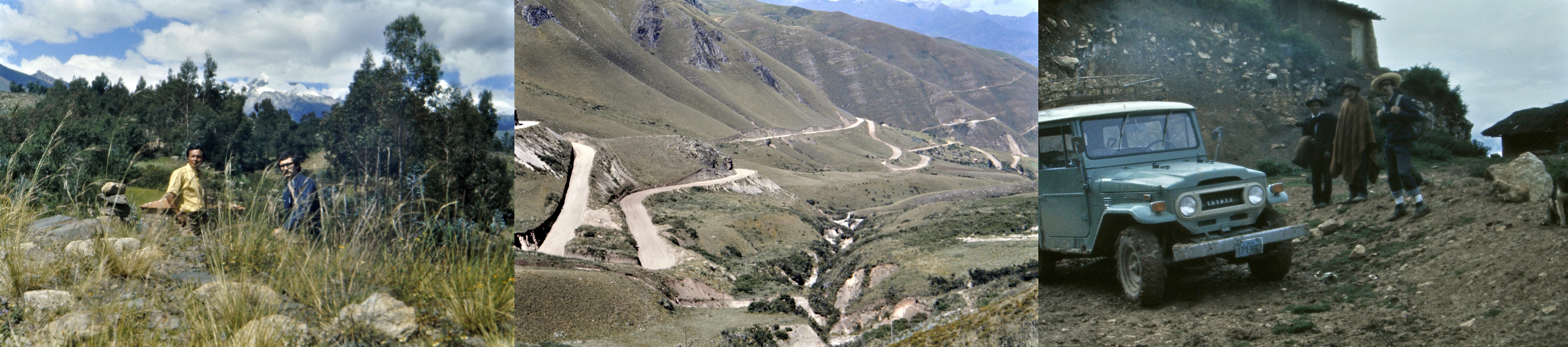
Collecting in Ancash with Zosimo Huaman in May 1973.

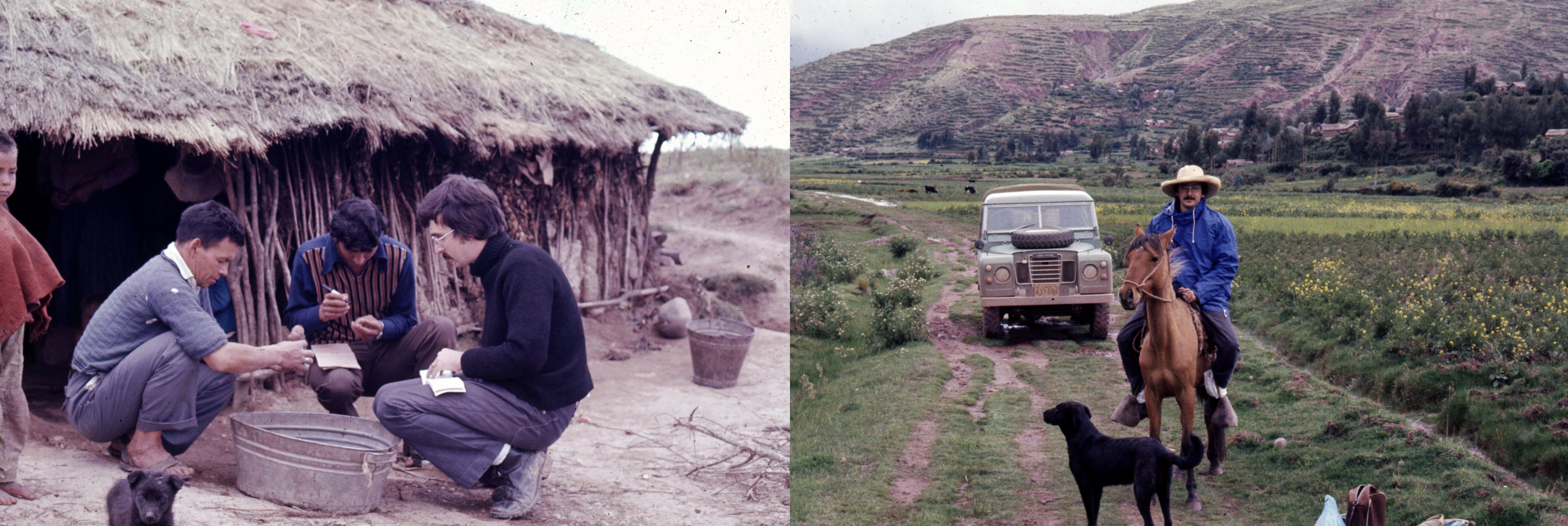
Collecting potatoes from a farmer in Cajamarca, northern Peru in May 1974 (L); and getting ready to ride off to a nearby village, just north of Cuzco, in February 1974 (R).

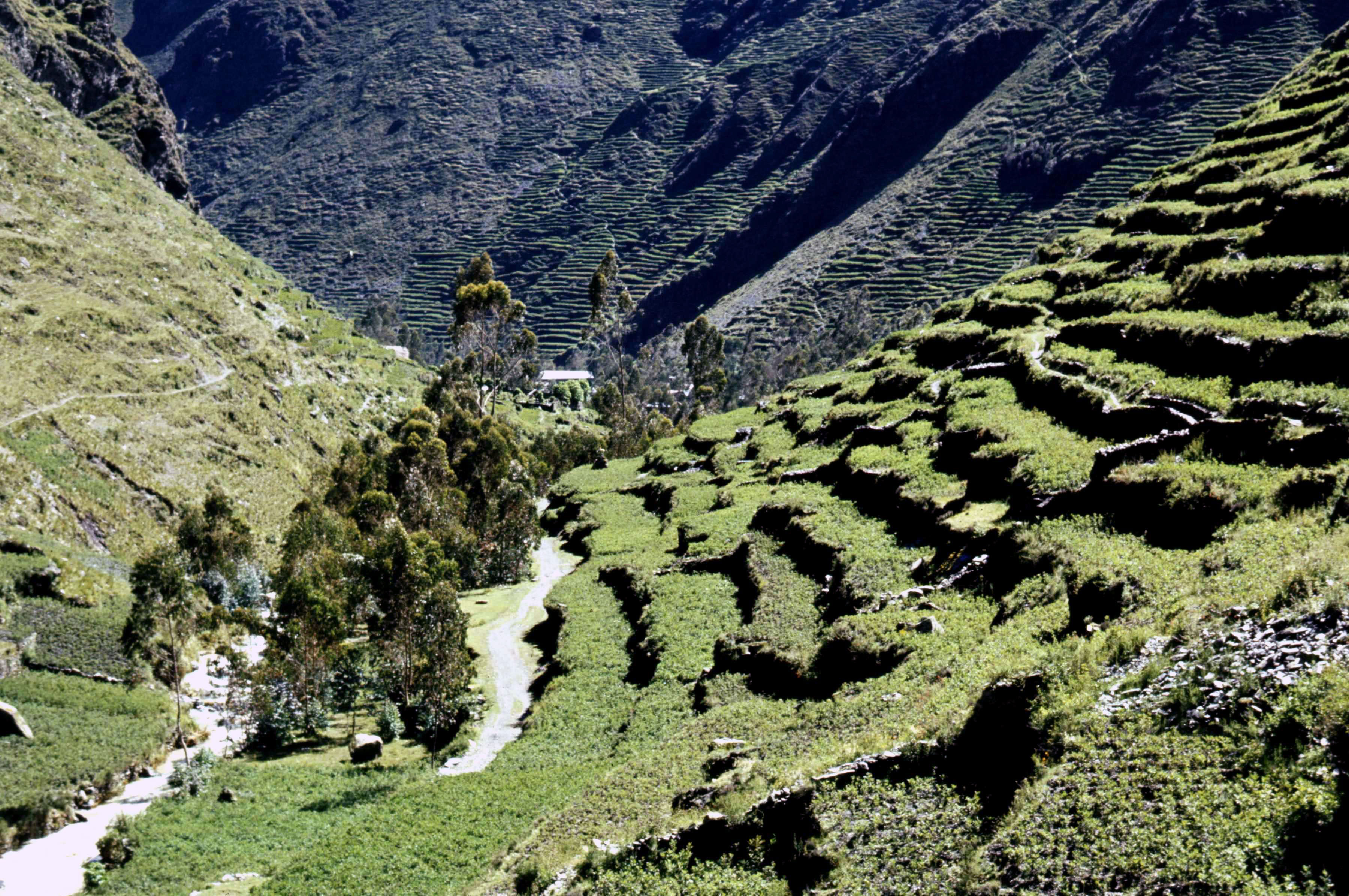
In February 1974, I spent a couple of weeks in the south of Peru, in the department of Puno, studying the dynamics of potato cultivation on terraces in the village of Cuyo-Cuyo.

Potato terraces at Cuyo Cuyo in Puno, southern Peru.

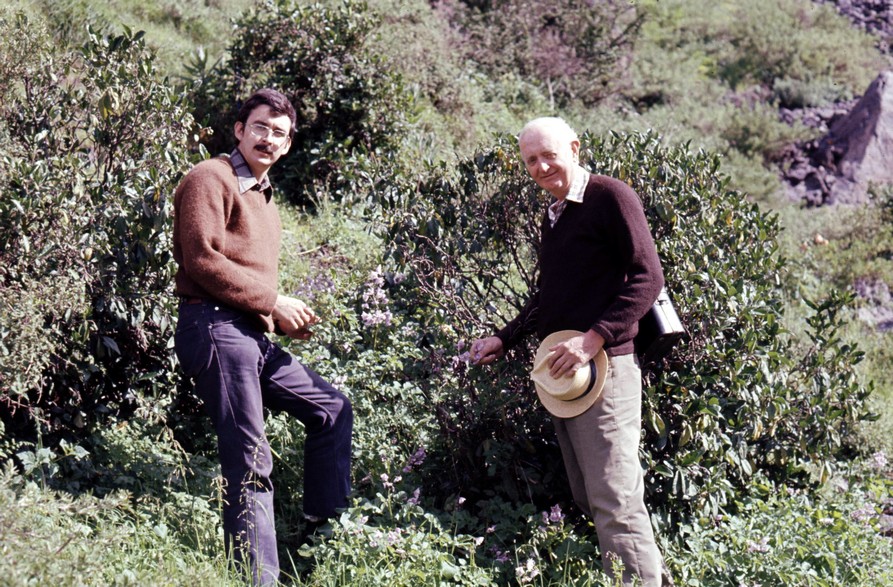
I made just one short trip with Jack Hawkes (and another CIP colleague, Juan Landeo) to collect wild potatoes in central Peru (Depts. of Cerro de Pasco, Huánuco, and Lima). It was fascinating to watch ‘the master’ at work. After all, Jack had been collecting wild potatoes the length of the Americas since 1939, and instinctively knew where to find them. Knowing their ecological preferences, he could almost ‘smell out’ each species.

With Jack Hawkes, collecting Solanum multidissectum in the central Andes north of Lima, early 1975.

My research (and Zósimo’s) contributed to a better understanding of potato diversity in the germplasm collection, and the identification of duplicate clones. During the 1980s the size of the collection maintained as tubers was reduced, while seeds (often referred to as true potato seed, or TPS) was collected for most samples.

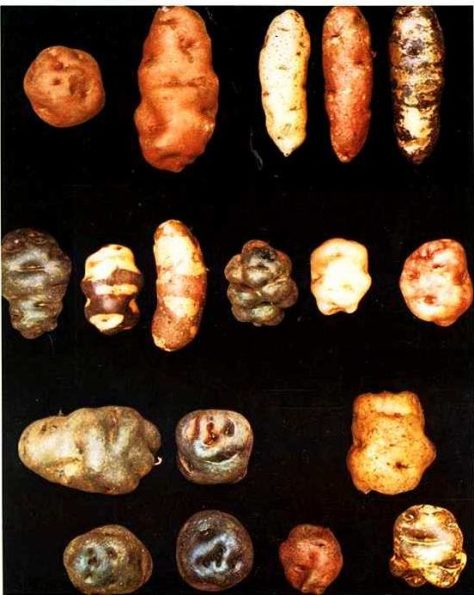
Potato varieties (representative ‘morphotypes’) of Solanum x chaucha that formed part of my PhD study. L-R, first row: Duraznillo, Huayro, Garhuash Shuito, Puca Shuito, Yana Shuito L-R, second row: Komar Ñahuichi, Pishpita, Surimana, Piña, Manzana, Morhuarma L-R, third row: Tarmeña, Ccusi, Yuracc Incalo L-R, fourth row: Collo, Rucunag, Hayaparara, Rodeñas

Roger Rowe

Dr Roger Rowe was my department head at CIP, and he became my ‘local’ PhD co-supervisor. A maize geneticist by training, Roger joined CIP in July 1973 as Head of the Department of Breeding & Genetics. Immediately prior to joining CIP, he led the USDA’s Inter-Regional Potato Introduction Project IR-1(now National Research Support Program-6, NRSP-6) at the Potato Introduction Station in Sturgeon Bay, Wisconsin.

Although CIP’s headquarters is at La Molina on the eastern outskirts of Lima, much of my work was carried out in Huancayo, a six hour drive winding up through the Andes, where CIP established its highland field station. This is where we annually grew the potato collection.

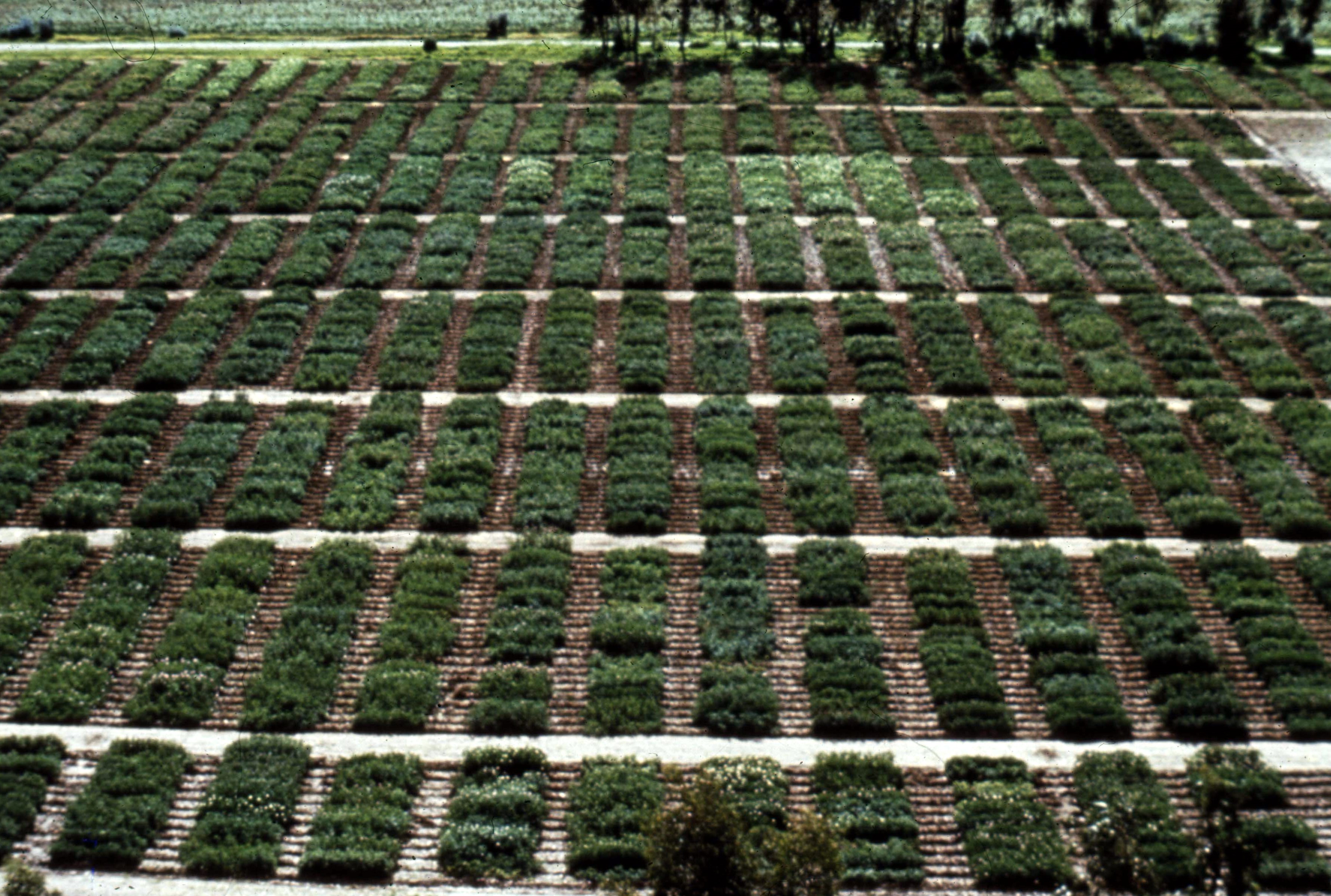
Aerial view of the potato germplasm collection at the San Lorenzo station of CIP, near Huancayo in the Mantaro Valley, central Peru, in the mid-1970s.

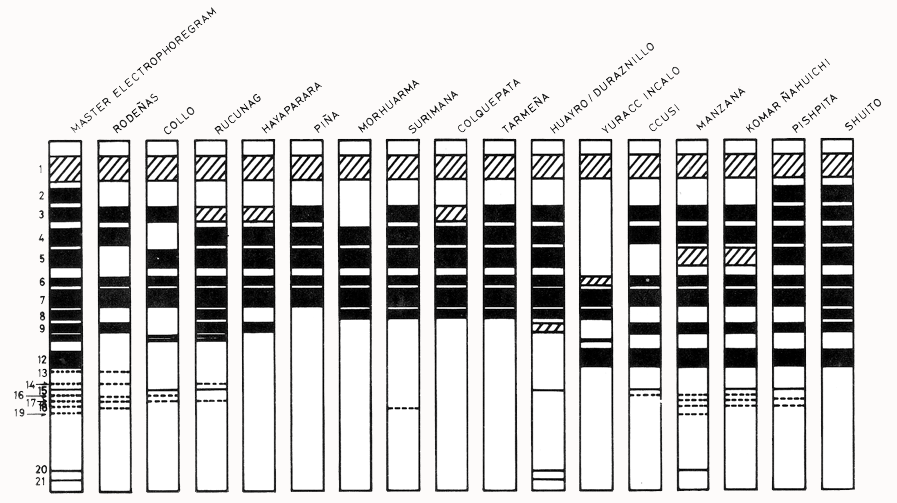
During the main growing season, from about mid-November to late April  (coinciding with the seasonal rainfall), I’d spend much of every week in Huancayo, making crosses and evaluating different varieties for morphological variation. This is where I learned not only all the practical aspects of conservation of a vegetatively-propagated crop, and many of the phytosanitary implications therein, but I also learned how to grow a crop of potatoes. Then back in Lima, I studied the variation in tuber proteins using a tool called polyacrylamide gel electrophoresis (that, I guess, is hardly used any more) by separating these proteins across a gel concentration gradient, as shown diagrammatically in the so-called electrophoregrams below. Compared to what we can achieve today using a range of molecular markers, this technique was really rather crude.

Jack Hawkes visited CIP two or three times while I was working in Lima, and we would walk around the germplasm collection in Huancayo, discussing different aspects of my research, the potato varieties I was studying, and the results of the various crossing experiments.

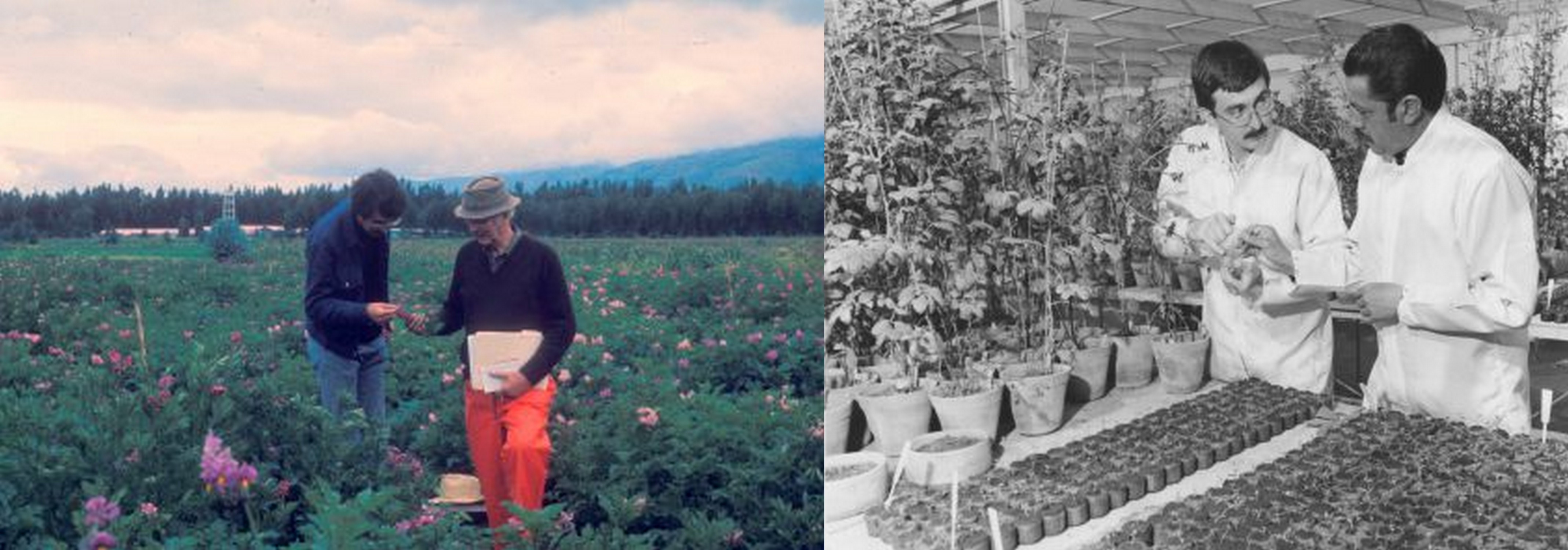
With Jack Hawkes in the germplasm collection in Huancayo in January 1975 (L); and (R), discussing aspects of my research with Carlos Ochoa in a screenhouse at CIP in La Molina (in mid-1973).

I was also fortunate (although I realized it less at the time) to have another potato expert to hand: Professor Carlos Ochoa, who joined CIP (from the National Agrarian University across the road from CIP) as Head of Taxonomy.

Well, three years passed all too quickly, and by the end of May 1975, Steph and I were back in Birmingham for a few months while I wrote up and defended my dissertation. This was all done and dusted by the end of October that year, and the PhD was conferred at a congregation held at the university in December.

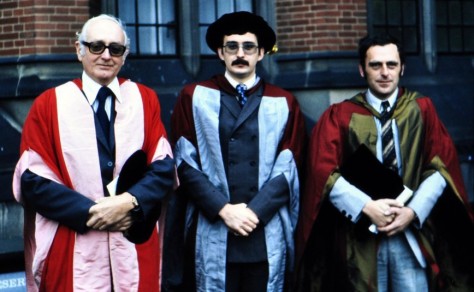
With Jack Hawkes (L) and Trevor Williams (R) after the degree congregation on 12 December 1975 at the University of Birmingham.

With that, the first chapter in my genetic resources career came to a close. But there was much more in store . . .


I remained with CIP for the next five years, but not in Lima. Richard Sawyer asked me to join the center’s Regional Research Program (formerly Outreach Program), initially as a post-doctoral fellow, the first to be based outside headquarters. Thus, in April 1976 (only 27 years old) I was posted to Turrialba, Costa Rica (based at a regional research center, CATIE) to set up a research project aimed at adapting potatoes to warm, humid conditions of the tropics. A year later I was asked to lead the regional program that covered Mexico, Central America, and the Caribbean.

CATIE had its own germplasm collections, and just after I arrived there, a German-funded project, headed by Costarrican scientist Dr Jorge León, was initiated to strengthen the ongoing work on cacao, coffee, and pejibaye or peach palm, and other species. Among the young scientists assigned to that project was Jan Engels, who later moved to Bioversity International in Rome (formerly IBPGR, then IPGRI), with whom I have remained in contact all these years and published together. So although I was not directly involved in genetic conservation at this time, I still had the opportunity to observe, discuss and learn about crops that had been beyond my immediate experience.

It wasn’t long before my own work took a dramatically different turn. In July 1977, in the process of evaluating around 100 potato varieties and clones (from a collection maintained in Toluca, Mexico) for heat adaptation (no potatoes had ever been grown in Turrialba before), my potato plots were affected by an insidious disease called bacterial wilt (caused by the pathogen Ralstonia solanacearum).

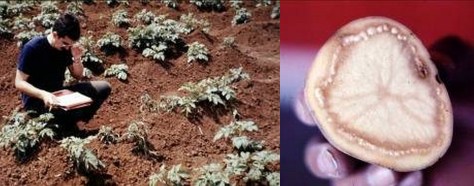
(L) Potato plants showing typical symptoms of bacterial wilt. (R) An infected tuber exuding the bacterium in its vascular system.

Turrialba soon became a ‘hot spot’ for evaluating potato germplasm for resistance against bacterial disease, and this and some agronomic aspects of bacterial wilt control became the focus of much of my research over the next four years. I earlier wrote about this work in more detail.

This bacterial wilt work gave me a good grounding in how to carefully evaluate germplasm, and we went on to look at resistance to late blight disease (caused by the fungus Phytophthora infestans – the pathogen that caused the Irish Potato Famine of the 1840s, and which continues to be a scourge of potato production worldwide), and the viruses PVX, PVY, and PLRV.

One of the most satisfying aspects of my work at this time was the development and testing of rapid multiplication techniques, so important to bulk up healthy seed of this crop.

My good friend and seed production specialist colleague Jim Bryan spent a year with me in Costa Rica on this project.

Throughout this period I was, of course, working more on the production side, learning about the issues that farmers, especially small farmers, face on a daily basis. It gave me an appreciation of how the effective use of genetic resources can raise the welfare of farmers and their families through the release of higher productivity varieties, among others.

I suppose one activity that particularly helped me to hone my management skills was the setting up of PRECODEPA in 1978, a regional cooperative potato project involving six countries, from Mexico to Panama and the Dominican Republic. Funded by the Swiss, I had to coordinate and support research and production activities in a range of national agricultural research institutes. It was, I believe, the first consortium set up in the CGIAR, and became a model for other centers to follow.

I should add that PRECODEPA went from strength to strength. It continued for at least 25 years, funded throughout by the Swiss, and expanding to include other countries in Central America and the Caribbean.

However, by the end of 1980 I felt that I had personally achieved in Costa Rica and the region as much as I had hoped for and could be expected; it was time for someone else to take the reins. In any case, I was looking for a new challenge, and moved back to Lima (38 years ago today) to discuss options with CIP management.

It seemed I would be headed for pastures new, the southern cone of South America perhaps, even the Far East in the Philippines. But fate stepped in, and at the end of March 1981, Steph, daughter Hannah (almost three) and I were on our way back to the UK. To Birmingham in fact, where I had accepted a Lectureship in the Department of Plant Biology.


The subsequent decade at Birmingham opened up a whole new set of genetic resources opportunities . . .


Gelia Castillo – a synthesis tour de force

I was searching YouTube the other day for videos about the recent 5th International Rice Congress held in Singapore, when I came across several on the IRRI channel about a long-time friend and former colleague, Professor Gelia Castillo, who passed away in August 2017 at the age of 89¹.
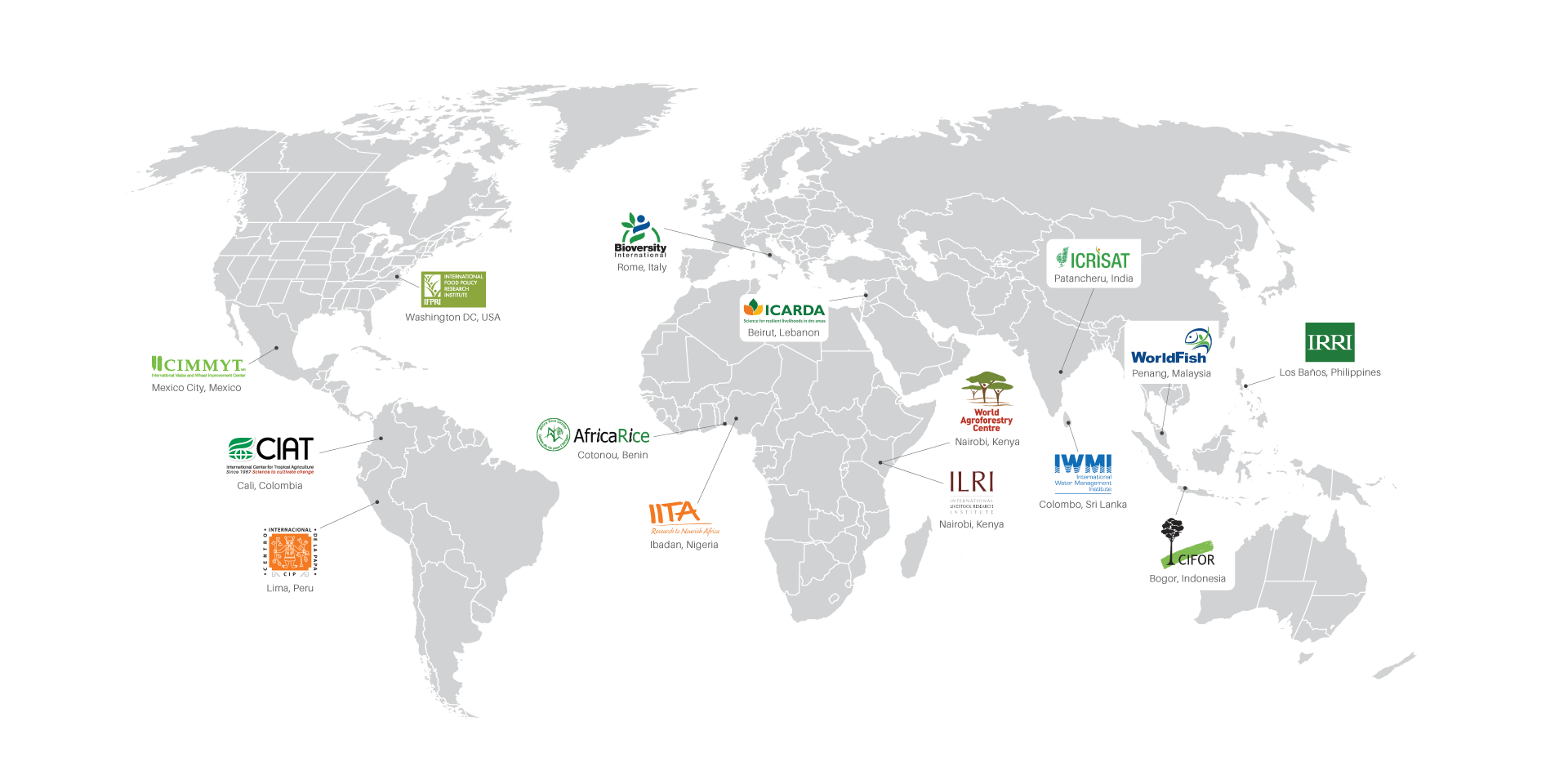
Gelia was a distinguished rural sociologist, emeritus professor at the University of the Philippines-Los Baños (UPLB) and, since 1999, a National Scientist of the Philippines, the highest honor that can be bestowed on any scientist.

I’m proud to have counted her among my friends.

I’d known Gelia since the late 1970s when she joined the Board of Trustees of the International Potato Center (CIP) in Lima, Peru, the first woman board member and, if memory serves me correctly, one of the first women to serve on any board among the CGIAR centers when they were dominated by white Caucasian males (a situation that no longer obtains, thankfully).

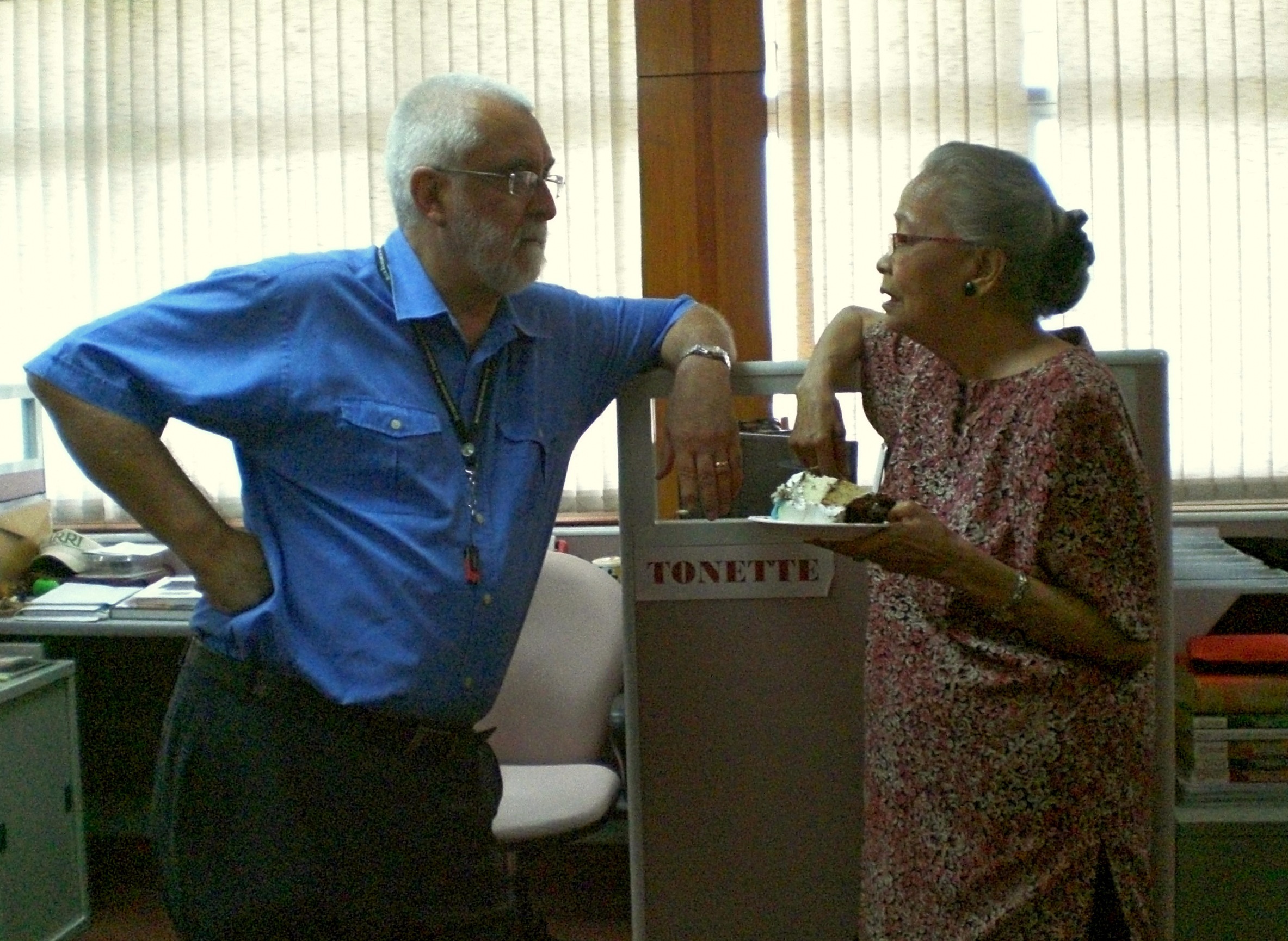
The CGIAR centers in 2018 (from CIAT Annual Report 2017-2018).

I know that Gelia went to serve on the board of the International Plant Genetic Resources Institute (now Bioversity International) based in Rome, and other boards inside and outside the CGIAR.

I was a young scientist, in my late 20s, working for CIP in Costa Rica (and throughout Central America) when Gelia joined the center’s board, bringing (as she did everywhere she went) a welcome breath of fresh air—and a clarity of independent thinking—that categorized all her intellectual contributions. She influenced policymakers in government, international development circles, and academe, [and] pioneered the concept of participatory development.

Gelia was born into a poor family in Pagsanjan in Laguna Province, just 31 km east of Los Baños, the city² where she spent her entire academic career. She completed her graduate studies in the United States with MS (1953) and PhD (1960) degrees in rural sociology from Penn State and Cornell, respectively. She retired from UPLB in 1993, a couple of years after I landed in the Philippines, when we renewed our friendship after more than a decade.

But retirement did not mean slowing down. Besides her international board commitments, Gelia became ‘synthesizer-in-chief’ at IRRI, an honorary role through which she attended institute seminars and science reviews. She was also a valued adviser to successive Directors General. Let Gelia herself explain.

Gelia kept us honest! Why do I say this? She had an uncanny ability always to see the broader picture and bring together quite different perspectives to bear on the topic in hand. She herself admitted that, early in her career, she decided to concentrate on ‘synthesis’, an academic and intellectual focus and a skill (gift almost) that few manage to harness successfully. It wasn’t just her social sciences training.

In developing a research strategy and plan, any organization like IRRI needs skilled and dedicated researchers. But often, because each is deeply involved in his or her own projects, they find it hard to see (often necessary) links with other disciplines and research outcomes. Gelia was able to extract the essence of the institute’s research achievements and pull it together, mostly with approval but sometimes with justified criticism. Given her expertise in participatory research, working with poor families in rural areas (the ‘clients, as it were, of IRRI’s research and products), and promoting gender studies, Gelia could, almost at the drop of a hat, deliver a succinct synthesis of everything she had listened to, and provide suggestions for future directions. After a week of intense annual science review presentations and discussions, Gelia would be called upon, at the end of the final afternoon, to deliver her synthesis. Here she is, at the IRRI science review in 2010.

And almost without fail, she could hit the mark; and while she could be critical, never were criticisms aimed at individuals. Her analysis never became personal. I’m sure her wise words are sorely missed at IRRI.

Permit me to finish with a personal recollection. I retired from IRRI in April 2010 and, in subsequent years, I only saw her a couple of times, later that same year and in August 2014, when I was organizing the 3rd and 4th International Rice Congresses, and had to visit IRRI in that capacity.

Sharing cake and reminiscences with Gelia (in the DPPC office) on my last day at IRRI, 30 April 2010.

But just before I retired, in March 2010, I delivered my ‘exit’ seminar: Potatoes, pulses and rice – a 40 year adventure, a synthesis of my career in international agricultural research and academia. It must have struck a chord with Gelia. Because after it was all over, she came up to me, took me by the hand, and planted a large kiss on my cheek. That was praise indeed! A memory I cherish.


¹ Written by my friend and former colleague, Gene Hettel (who had been Head of IRRI’s Communication & Publication Services), IRRI published this obituary shortly after her death. There you will also find links to the speeches at her memorial service.

² In 2000, under Presidential Proclamation Order No. 349, the Municipality of Los Baños was designated and declared a Special Science and Nature City of the Philippines.

In perpetuity . . . or longer (updated 17 October 2018)

The airwaves yesterday were full of the news¹ about the secure, in perpetuity funding that the Crop Trust has awarded (annually USD1.4 million) to support the operations of the International Rice Genebank at the International Rice Research Institute (IRRI), based in Los Baños, Philippines. The genebank conserves the largest and most genetically diverse collection of rice genetic resources that is the genetic base of rice improvement programs worldwide. It’s the first genebank to receive this sort of funding commitment.

In perpetuity! Forever! That’s a long time. In some ways, of course, it’s not a completely open-ended commitment. The agreement (to be signed on World Food Day, 16 October², during the 5th International Rice Congress in Singapore) will, I understand, be subject to five-year reviews, and the development of a business plan that will guide how, where and what will get done. That plan must inevitably evolve over time, as new technologies not only enhance how rice seeds can be better preserved but also how they can be used in rice improvement. Not that I can see IRRI screwing up and losing the funding. That behavior is not in the institutional DNA!

The collection holds more than 130,000 seed samples or accessions of landrace varieties, wild species, and other research materials, among others. You can check the status of the IRRI collection (and many more genebanks in the Genesys database).
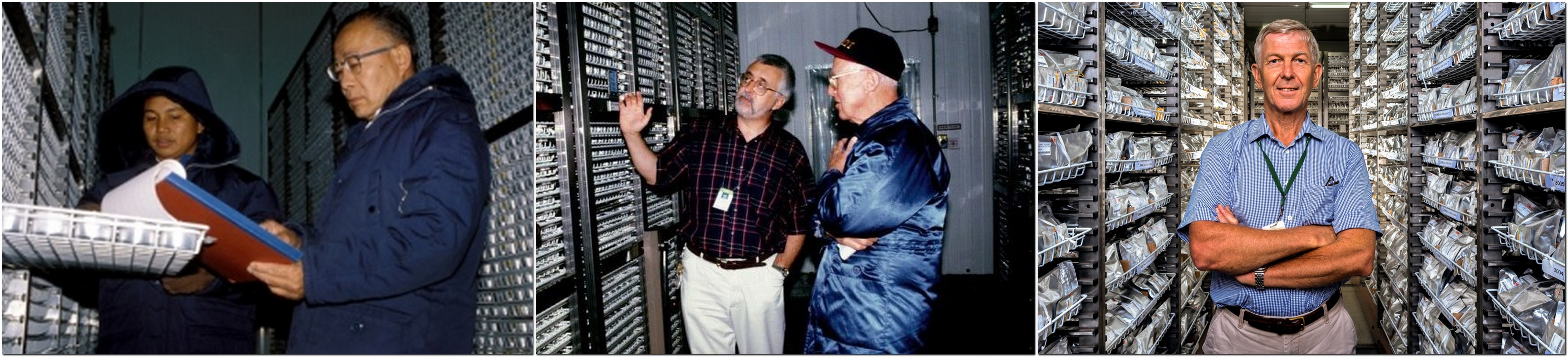
My congratulations to Genebank Head and compatriot, Ruaraidh Sackville Hamilton and his key genebank lieutenants, Genebank Manager Flora ‘Pola’ de Guzman and Sr Associate Scientist Renato ‘Ato’ Reaño, for guiding the genebank to this happy state.

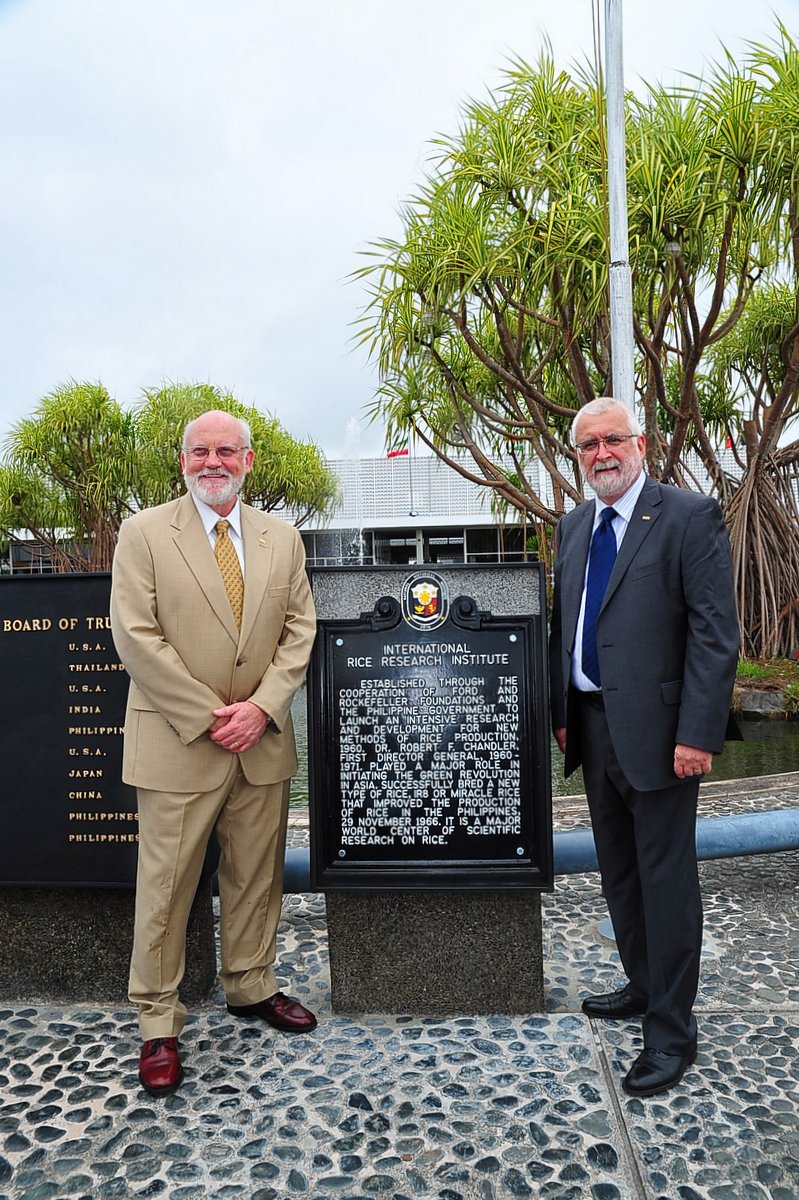
It has been a long journey, almost 60 years, from 1960 when IRRI was founded and Dr TT Chang (the first head of the genebank) began to assemble a collection of rice varieties that soon became the International Rice Germplasm Center (IRGC).

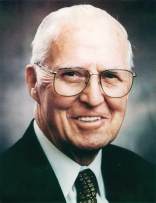
L-R: Dr TT Chang was head of the International Rice Germplasm Center from 1962-1990; Mike Jackson served as Head of the Genetic Resources Center (here with Nobel Peace Prize Laureate Dr Norman Borlaug) from 1991-2001; and Dr Ruaraidh Sackville Hamilton joined IRRI in 2002.

There was a significant change of direction, so to speak, to the genebank and its operations in 1991 after my appointment as Head of the newly-created Genetic Resources Center (the IRGC acronym was subsequently changed to International Rice Genebank Collection) with a mandate to rationalize and upgrade the genebank’s operations. I held that position for the next decade before moving on to the institute’s senior management team as Director for Program Planning & Communications in 2001. Ruaraidh joined IRRI in 2002 and has been at the helm ever since.

In other stories posted on this blog I have described what it entails to run a genebank for rice, and some of the important changes we made to modernize genebank management and operations, especially how they were impacted with respect to the institute’s international obligations to FAO and subsequently under the International Treaty on Plant Genetic Resources for Food and Agriculture.

In 2015 I made my own video to illustrate many of the different operations of the genebank, some of which have been modified in the light of new research concerning the handling of rice seeds post-harvest. Nevertheless, the video reflects the changes I introduced during my tenure as head of the International Rice Genebank, many of which still prevail.

Ruaraidh built upon the changes I introduced, bar-coding all samples for example, and linking the collection with others in the CGIAR through the Genebank Platform. There have been further improvements to how data about the collection are managed, and seed management was enhanced through the research of former employee and seed physiologist Dr Fiona Hay and her PhD student Kath (now Dr) Whitehouse.

Ruaraidh has also successfully steered IRRI and its genetic resources through the turbulent currents of international germplasm politics that culminated in the entering into force of the International Treaty in June 2004, and the subsequent negotiations over access and benefit sharing. I can’t deny I was quite happy to leave these ‘political’ aspects behind when I left GRC in 2001. Management and use of genetic resources in the 1990s were increasingly affected by the various negotiations that affected access to and sharing of biodiversity after the Convention on Biological Diversity (CBD) came into force in December 1993. To some extent they were a distraction (but an important one) from the technical aspects of rice genetic resources that I tackling.

It’s quite humbling that for generations to come, I will have been a part of securing the genetic heritage of rice. Besides making the necessary technical changes to genebank structure and operations in the 1990s, I’m particularly proud of the personnel structures I introduced. These permitted staff to really fulfill their potential.

I quickly recognized that Pola should be placed in the role of Genebank Manger, and Ato given responsibility for all field operations. We built a team that believed in a culture of mutual support.

Ken McNally

Another aspect was the recognition, way back in 1998, of the power of genomics and molecular genetics to unravel the secrets of rice diversity. To that end I had organized an international workshop in The Hague in September 1999, which is described about two-thirds through this blog post. I was fortunate to hire Dr Ken McNally as a molecular geneticist in this respect, and he has taken the study of rice genetic diversity to another level, supported by someone who I believed in from my early days at IRRI, Dr Elizabeth Naredo.

But the genebank is also facing some changes. Ruaraidh is expected to retire in the near future, and Pola and Ato can’t be far off retirement. No-one is irreplaceable, but they will be a hard act to follow. Finding individuals with the same breadth of experience, commitment to genetic resources conservation, and work ethic will certainly be a challenge. Other staff from my era have already retired; the genebank did not fall apart. With this secure funding from the Crop Trust the genebank can, for the first time in its 60 year history, set itself on a trajectory into the future in a way that was always uncertain in the past (because of year-to-year funding), but always the Holy Grail of genetic resources conservation.

I also hope that IRRI will step up to the plate and secure other funds to build a completely new genebank appropriate for the 21st century. After all, the facilities I ‘inherited’ from TT Chang are approaching 40-50 years, and even those I improved are 25 years old. Relieving the institute of the genebank annual operating budget should open up other opportunities.

Congratulations to IRRI, and on behalf of the genetic resources community (especially those depending on rice) a big thank you to the Crop Trust!


¹ BBC, Nature, and New Food Magazine, among others.

² My friend and former IRRI colleague, Gene Hettel, kindly sent me some photos and videos from yesterday’s signing ceremony in Singapore between IRRI and the Crop Trust.

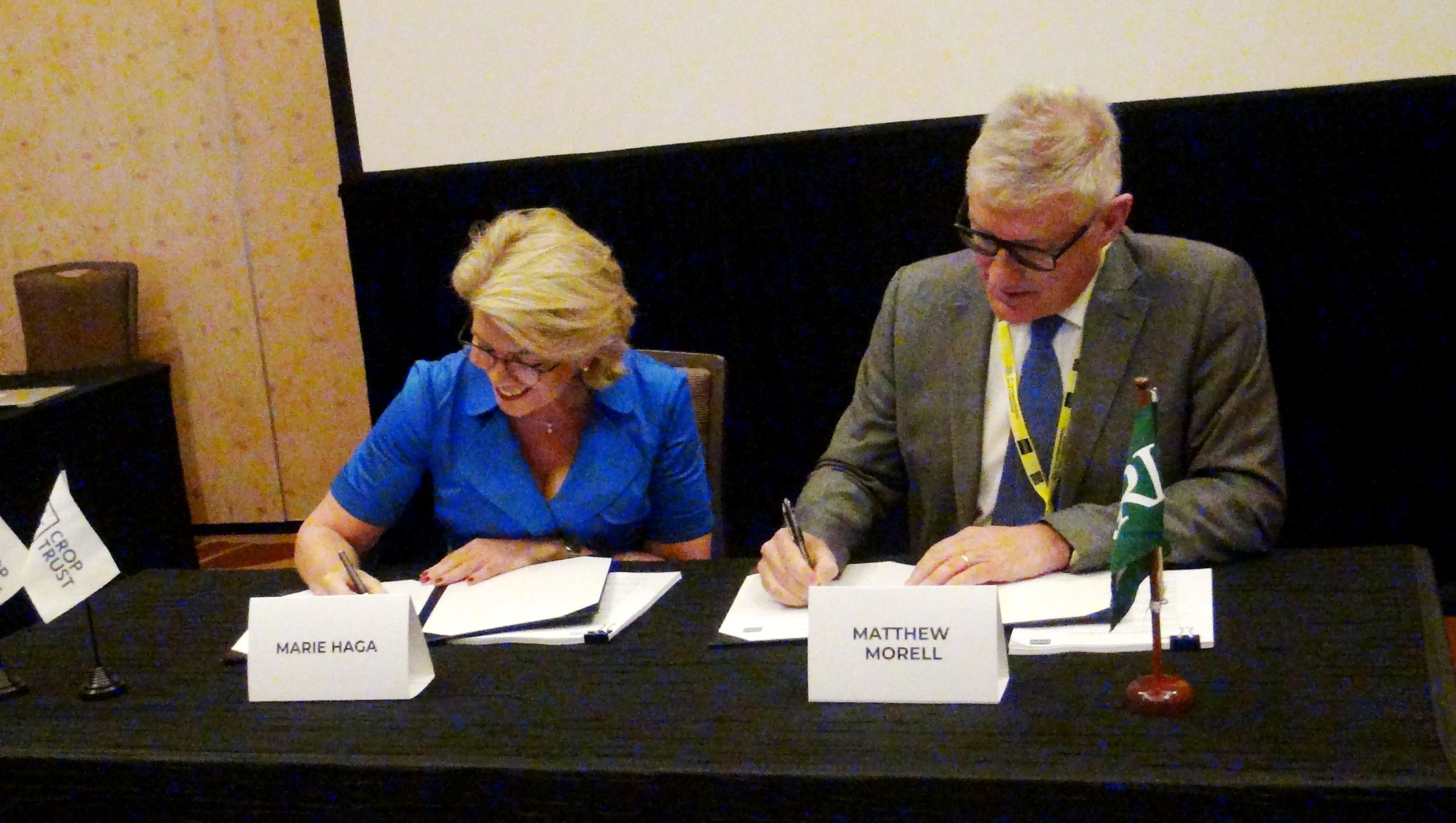
Crop Trust Executive Director Marie Haga and IRRI Director General Matthew Morell sign the agreement assuring in perpetuity funding for the International Rice Genebank.

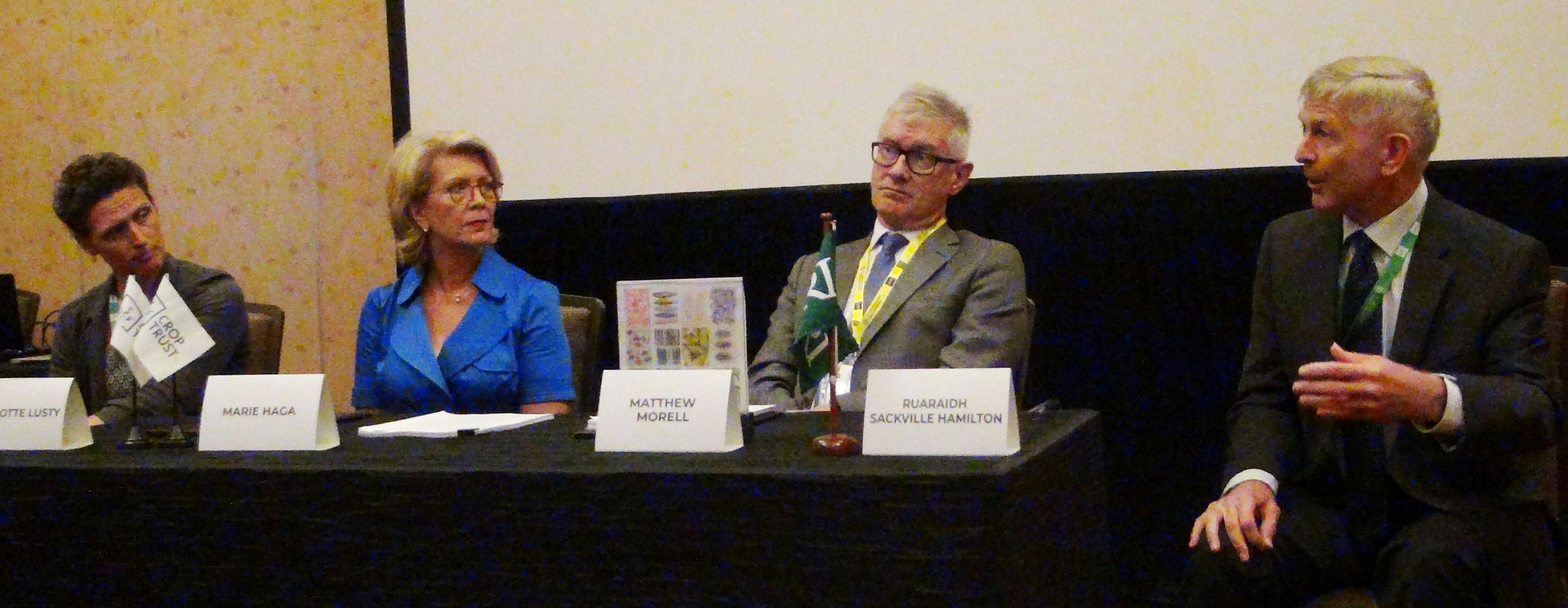
Head of the genebank Ruaraidh Sackville Hamilton speaking after the signing of the agreement. On the left is Charlotte Lusty, Head of Programs and Genebank Platform Coordinator at the Crop Trust.

One very nice touch during the ceremony was the recognition of Pola de Guzman’s 40 years dedicated service to genetic conservation at IRRI.

Well done, Pola!

Whither the grasspea?

Would you knowingly eat something that could harm you? That’s the dilemma facing millions of poor, subsistence farmers and their families from time to time, especially in India, Bangladesh, and Ethiopia, when the alternative is not eating anything at all. Famine.

From the beginnings of agriculture and earlier, 10,000 or more years ago, farmers have cultivated and consumed in times of adversity, the seeds of a plant known scientifically as Lathyrus sativus L.¹ Or, more commonly, the grasspea. It’s also an important fodder crop for livestock.

On the plus side, grasspea has a good protein profile and, as a legume, it supplies nitrogen to the soil through its root nodules. Its particular agricultural value is that it can be grown in times of drought, as well as when the land is flooded. It’s the ultimate insurance crop for poor, subsistence farmers.

Yet, it holds a deadly secret. β-ODAP. Or more precisely, β-L-oxalyl-2,3-diaminopropionic acid to give its full name, an amino acid that is also a neurotoxin responsible for the condition known as lathyrism, a non-reversible paralysis. No wonder, then, that its cultivation is banned in some Indian states. In the past, its consumption has also had severe consequences in Europe.

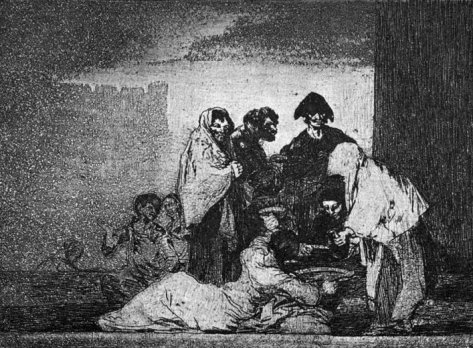
‘Gracias a la Almorta’ or ‘Thanks to the Grasspea’ by Francisco de Goya (painted between 1811 and 1813), painted during the Spanish War of Independence, when poor people turned to eating grasspea, and suffered paralysis from lathyrism. However, on the British Museum website it suggests grain (millet) rather than ‘grasspea’, and no mention of lathyrism. ‘Almorta’ is a Spanish word for grasspea.

Yet, when needs must, poor farmers turn to the grasspea when there is nothing else to eat because drought or floods have wiped out other crops.

So what’s being done to overcome the grasspea’s downside? Fortunately, an international collaborative research effort (funded by the UK Government’s Global Challenges Research Fund), Unlocking the Potential of Grass pea for Resilient Agriculture in Drought Prone Environments (UPGRADE), aims to breed ‘sweet’ varieties of grasspea with a low content of the neurotoxin.

I learned about this project yesterday evening when I happened to tune into BBC Radio 4’s Inside Science (you can listen from about 11′ 20″ into the program). The John Innes Centre in the UK is one of the project members, and in Prof. Cathie Martin‘s lab, Dr Anne Edwards is screening about 500 different grasspea lines, testing them for β-ODAP content, and also introgressing the lower content trait into different genetic backgrounds, for future testing in the field.

I was fascinated to hear how this international collaboration was making progress towards defeating the scourge of lathyrism, as I’d also worked on grasspea almost 40 years ago. But from a crop evolution and genetic resources point of view.

When I returned to The University of Birmingham in 1981, I decided to start a small research project on grasspea, looking at the diversity and broader genetic resources of this important but somewhat neglected crop, in addition to continuing my research on potatoes.

In 1981, one of the students attending the one-year MSc Course on Conservation and Utilization of Plant Genetic Resources was Abdul bin Ghani Yunus from Malaysia. He worked on his dissertation project under my supervision, to study the diversity of grasspea. I already had assembled a collection of grasspea varieties from different sources around the world including the Vavilov Institute in St Petersburg, so Ghani had quite a stock of varieties to work with.

His dissertation led to one scientific paper, Variation in the grasspea, Lathyrus sativus L. and wild species, published in the journal Euphytica in 1984. There were two principal conclusions:

  • L. sativus is a highly variable species, and there is a clear distinction between the blue-flowered forms from south-west Asia, Ethiopia and the Indian subcontinent, and the white and white and blue flowered forms with white seeds which have a more westerly distribution. Differences in vegetative parts may be due to selection for forage types.
  • L. sativus appears to be closely related to L. cicera and L. gorgoni, and this relationship needs further investigation.

Ghani returned to Malaysia in 1982 to continue his research and teaching at the University of Agriculture, Selangor and I heard little from him, until about 1986. Then, he contacted me again, asking about the possibilities of returning to Birmingham to complete a PhD under my supervision. He wanted to work on a tropical species from Malaysia. But since he did not envision spending time back in Malaysia during his PhD program, I explained that working on this species (I don’t now remember what it was) was not feasible, since we wouldn’t be able to grow it successfully in the glasshouse at Birmingham. After all, it wasn’t the species per se that was the most important aspect for his PhD; it would be the focus, the scientific methods and approaches he would learn and employ that were more important.

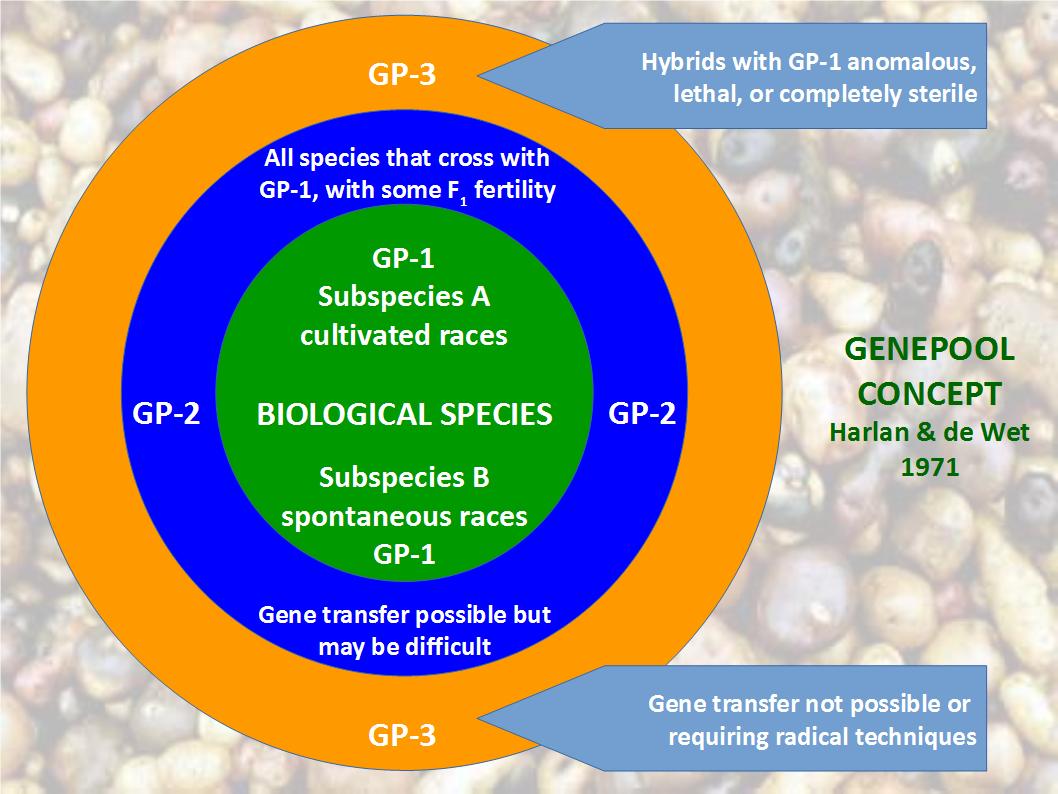
I convinced him to continue his work on Lathyrus, but broadening its scope to study the biosystematics or biological relationships of the grasspea with the species considered to be its closest relatives. In that way we anticipated better defining the genetic resources or gene pools of the grasspea (an essential prerequisite if, at some time in the future, a breeding program was set up that needed to exploit more diversity), as well as trying to shed some light on the origin of this neglected food crop.

In 1990, Ghani successfully presented his PhD thesis, Biosystematics of Lathyrus Section Lathyrus with special reference to the grass pea, L. sativus L., leading to two more useful scientific papers that have been widely cited:

  • The genepools of the grasspea, Lathyrus sativus L., in Plant Breeding (1991). This research concerned the cross-breeding relationships of the grasspea and its closest relatives, based on experimental pollinations, pollen tube growth microscopy, and chromosome pairing, confirming one of our earlier hypotheses about L. cicera.
  • Phenotypic polymorphism of six isozymes in the grasspea (Lathyrus sativus L.), in Euphytica (1991). Ghani concluded that there was more genetic variation than perhaps expected in this self-pollinating species, and we discussed the implications of exploiting this diversity in plant breeding.

Today, the International Center for Agricultural Research in the Dry Areas (ICARDA) receives financial support from the Crop Trust to conserve almost 4200 samples of grasspea in its genebank, with 2000 safely stored in the Svalbard Global Seed Vault above the Arctic Circle.

Of course, grasspea is not the only edible plant species that comes with a health risk. In South America, for example, there are so-called ‘bitter’ varieties of cassava, an important source of carbohydrate, producing cyanogenic compounds that must be removed before the roots are safe to eat. Indigenous communities throughout Brazil evolved techniques to express the poisonous juice and make the food safe. In other parts of South America ‘sweet’ varieties were selected over thousands of years, and became the genetic base of commercial cassava varieties grown world-wide. The International Center for Tropical Agriculture (CIAT), based in Cali, Colombia has the world’s largest cassava germplasm that I was privileged to see in 2016 when I was conducting an evaluation of the CGIAR’s genebanks program.

This grasspea story is a good example of how progress can be made when there’s a clear research project objective, funding is available, and researchers around the world agree to pool their expertise towards solving an important problem. With recent reports that the head of DFID (the UK’s government department managing overseas development assistance or ODA) is seriously considering making changes to the 0.7% of national income commitment to the ODA budget, grasspea improvement for marginalized communities goes to show just how important such funding is, and the potential impact it can have on the lives of some of the poorest people around the world. This is the raison d’être of international agricultural research for development, an endeavor in which I participated over four decades.


¹ Grasspea is a relative of the garden sweetpea, Lathyrus odoratus, a plant that is grown for its showy, fragrant blooms.

Crystal balls, accountability and risk: planning and managing agricultural research for development (R4D)

A few days ago, I wrote a piece about perceived or real threats to the UK’s development aid budget. I am very concerned that among politicians and the wider general public there is actually little understanding about the aims of international development aid, how it’s spent, what it has achieved, and even how it’s accounted for.

Throughout my career, I worked for organizations and programs that were supported from international development aid budgets. Even during the decade I was a faculty member at The University of Birmingham during the 1980s, I managed a research project on potatoes (a collaboration with the International Potato Center, or CIP, in Peru where I had been employed during the 1970s) funded by the UK’s Overseas Development Administration (ODA), the forerunner of today’s Department for International Development (DFID).

I actually spent 27 years working overseas for two international agricultural research centers in South and Central America, and in the Philippines, from 1973-1981 and from 1991-2010. These were CIP as I just mentioned, and the International Rice Research Institute (IRRI), a globally-important research center in Los Baños, south of Manila in the Philippines, working throughout Asia where rice is the staple food crop, and collaborating with the Africa Rice Centre (WARDA) in Africa, and the International Center for Tropical Agriculture (CIAT) in Latin America.

All four centers are members of the Consultative Group on International Agricultural Research (or CGIAR) that was established in 1971 to support investments in research and technology development geared toward increasing food production in the food-deficit countries of the world.

Dr Norman Borlaug

The CGIAR developed from earlier initiatives, going back to the early 1940s when the Rockefeller Foundation supported a program in Mexico prominent for the work of Norman Borlaug (who would be awarded the Nobel Peace Prize in 1970).

By 1960, Rockefeller was interested in expanding the possibilities of agricultural research and, joining with the Ford Foundation, established IRRI to work on rice in the Philippines, the first of what would become the CGIAR centers. In 2009/2010 IRRI celebrated its 50th anniversary. Then, in 1966, came the maize and wheat center in Mexico, CIMMYT—a logical development from the Mexico-Rockefeller program. CIMMYT was followed by two tropical agriculture centers, IITA in Nigeria and CIAT in Colombia, in 1967. Today, the CGIAR supports a network of 15 research centers around the world.

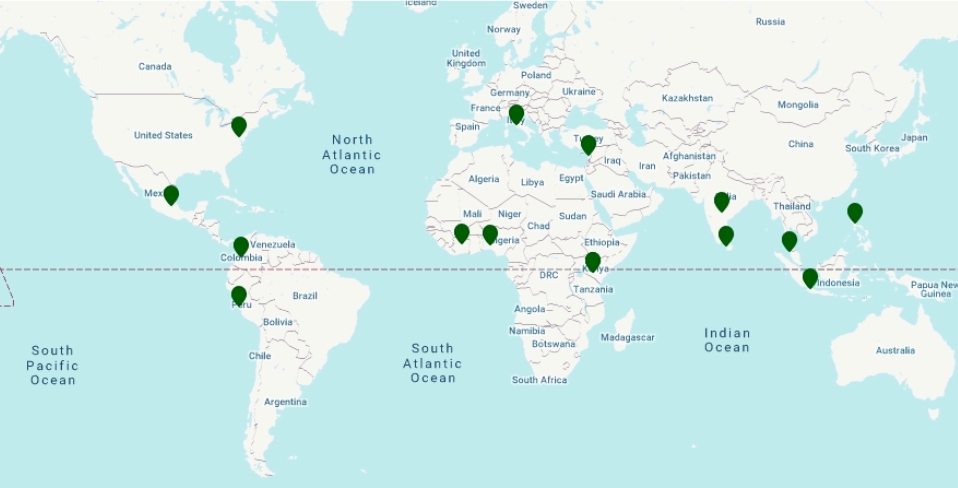
Peru (CIP); Colombia (CIAT); Mexico (CIMMYT); USA (IFPRI); Ivory Coast (Africa Rice); Nigeria (IITA); Kenya (ICRAF and ILRI); Lebanon (ICARDA); Italy (Bioversity International); India (ICRISAT); Sri Lanka (IWMI); Malaysia (Worldfish); Indonesia (CIFOR); and Philippines (IRRI)

The origins of the CGIAR and its evolution since 1971 are really quite interesting, involving the World Bank as the prime mover.

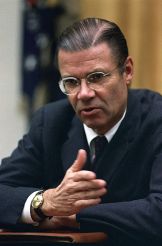
In 1969, World Bank President Robert McNamara (who had been US Secretary of Defense under Presidents Kennedy and Johnson) wrote to the heads of the Food and Agriculture Organization (FAO) in Rome and the United Nations Development Fund (UNDP) in New York saying: I am writing to propose that the FAO, the UNDP and the World Bank jointly undertake to organize a long-term program of support for regional agricultural research institutes. I have in mind support not only for some of the existing institutes, including the four now being supported by the Ford and Rockefeller Foundations [IRRI, CIMMYT, IITA, and CIAT], but also, as occasion permits, for a number of new ones.
Just click on this image to the left to open an interesting history of the CGIAR, published a few years ago when it celebrated its 40th anniversary.

I joined CIP in January 1973 as an Associate Taxonomist, not longer after it became a member of the CGIAR. In fact, my joining CIP had been delayed by more than a year (from September 1971) because the ODA was still evaluating whether to provide funds to CIP bilaterally or join the multilateral CGIAR system (which eventually happened). During 1973 or early 1974 I had the opportunity of meeting McNamara during his visit to CIP, something that had quite an impression on a 24 or 25 year old me.

In the first couple of decades the primary focus of the CGIAR was on enhancing the productivity of food crops through plant breeding and the use of genetic diversity held in the large and important genebanks of eleven centers. Towards the end of the 1980s and through the 1990s, the CGIAR centers took on a research role in natural resources management, an approach that has arguably had less success than crop productivity (because of the complexity of managing soil and water systems, ecosystems and the like).

In research approaches pioneered by CIP, a close link between the natural and social sciences has often been a feature of CGIAR research programs. It’s not uncommon to find plant breeders or agronomists, for example working alongside agricultural economists or anthropologists and sociologists, who provide the social context for the research for development that is at the heart of what the CGIAR does.

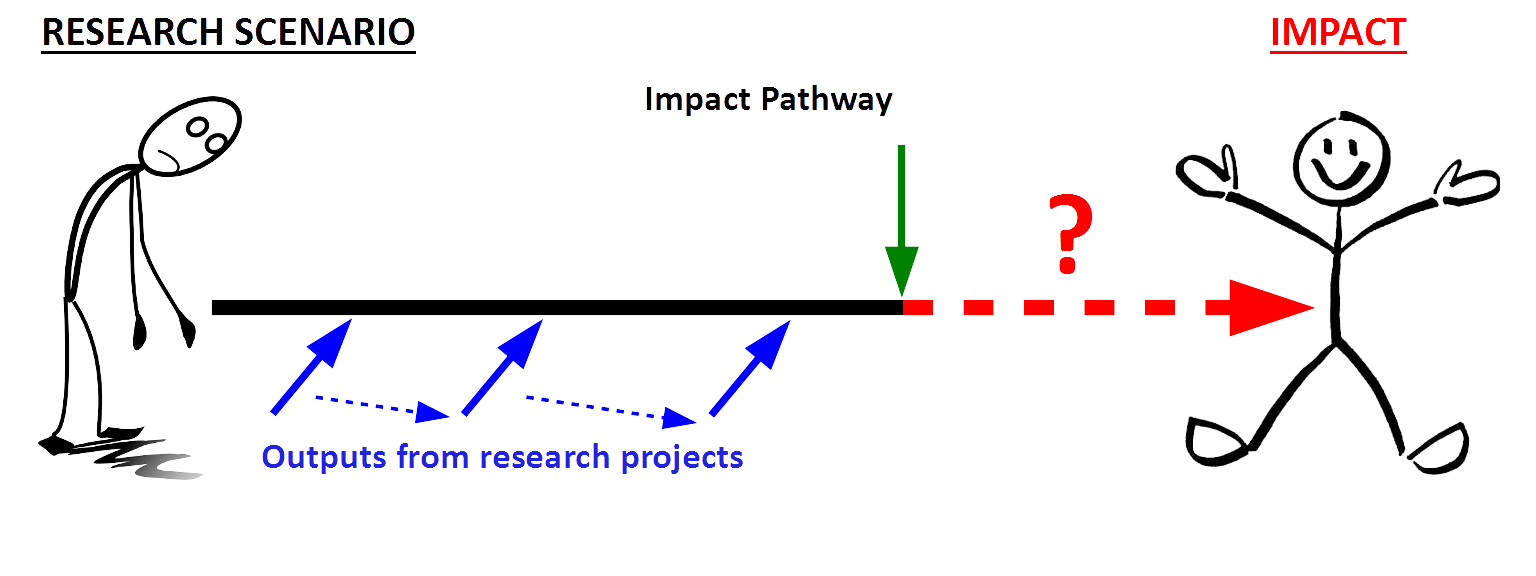
And it’s this research for development—rather than research for its own sake (as you might find in any university department)—that sets CGIAR research apart. I like to visualize it in this way. A problem area is identified that affects the livelihoods of farmers and those who depend on agriculture for their well-being. Solutions are sought through appropriate research, leading (hopefully) to positive outcomes and impacts. And impacts from research investment are what the donor community expects.

Of course, by its very nature, not all research leads to positive outcomes. If we knew the answers beforehand there would be no need to undertake any research at all. Unlike scientists who pursue knowledge for its own sake (as with many based in universities who develop expertise in specific disciplines), CGIAR scientists are expected to contribute their expertise and experience to research agendas developed by others. Some of this research can be quite basic, as with the study of crop genetics and genomes, for example, but always with a focus on how such knowledge can be used to improve the livelihoods of resource-poor farmers. Much research is applied. But wherever the research sits on the basic to applied continuum, it must be of high quality and stand up to scrutiny by the scientific community through peer-publication. In another blog post, I described the importance of good science at IRRI, for example, aimed at the crop that feeds half the world’s population in a daily basis.

Since 1972 (up to 2016 which was the latest audited financial statement) the CGIAR and its centers have received USD 15.4 billion. To some, that might seem an enormous sum dedicated to agricultural research, even though it was received over a 45 year period. As I pointed out earlier with regard to rice, the CGIAR centers focus on the crops and farming systems (in the broadest sense) in some of the poorest countries of the world, and most of the world’s population.

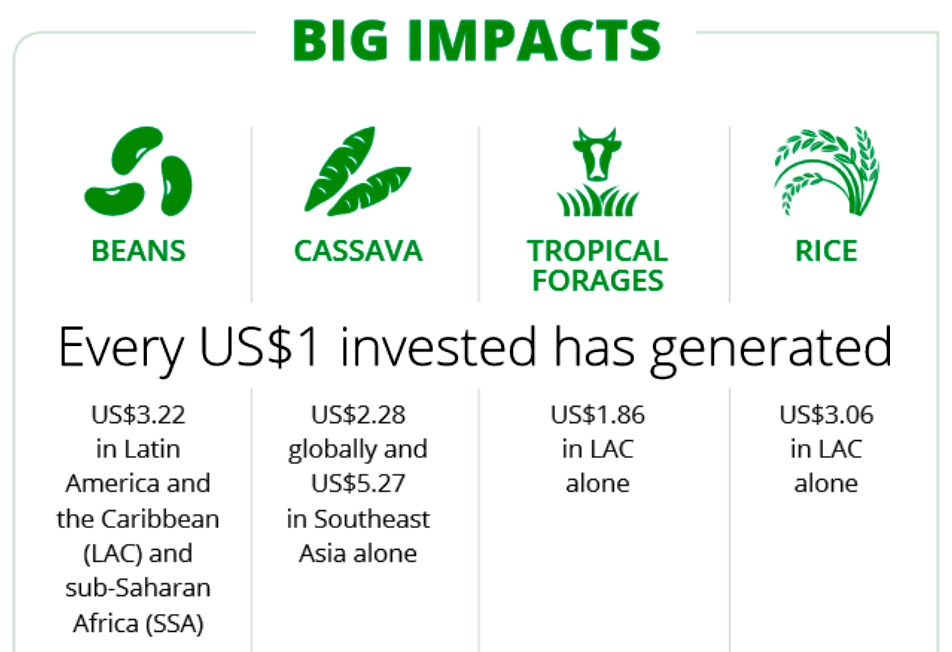
But has that investment achieved anything? Well, there are several ways of measuring impact, the economic return to investment being one. Just look at these impressive figures from CIAT in Colombia that undertakes research on beans, cassava, tropical forages (for pasture improvement), and rice.

For even more analysis of the impact of CGIAR research take a look at the 2010 Food Policy paper by agricultural economists and Renkow and Byerlee.

Over the years, however, the funding environment has become tighter, and donors to the CGIAR have demanded greater accountability. Nevertheless, in 2018 the CGIAR has an annual research portfolio of just over US$900 million with 11,000 staff working in more than 70 countries around the world. CGIAR provides a participatory mechanism for national governments, multilateral funding and development agencies and leading private foundations to finance some of the world’s most innovative agricultural research.

The donors are not a homogeneous group however. They obviously differ in the amounts they are prepared to commit to research for development. They focus on different priority regions and countries, or have interests in different areas of science. Some donors like to be closely involved in the research, attending annual progress meetings or setting up their own monitoring or reviews. Others are much more hands-off.

When I joined the CGIAR in 1973, unrestricted funds were given to centers, we developed our annual work programs and budget, and got on with the work. Moving to Costa Rica in 1976 to lead CIP’s regional program in Mexico, Central America and the Caribbean, I had an annual budget and was expected to send a quarterly report back to HQ in Lima. Everything was done using snail mail or telex. No email demands to attend to on almost a daily basis.

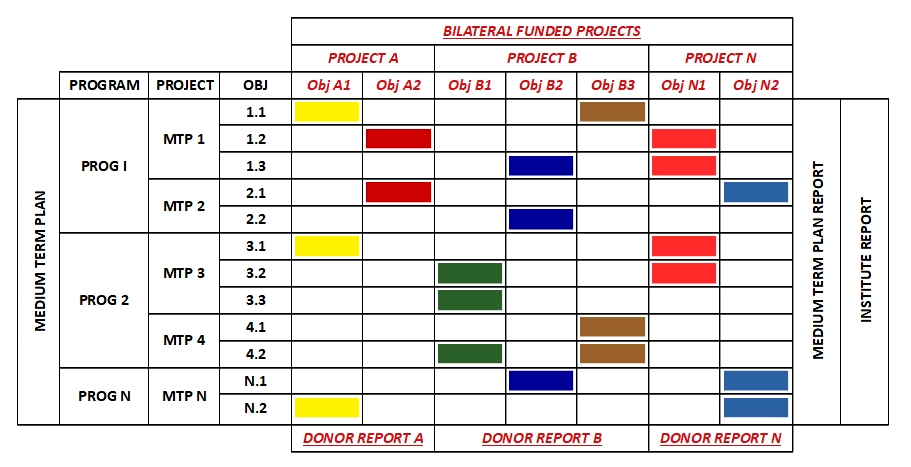
Much of the research carried out in the centers is now funded from bilateral grants from a range of donors. Just look at the number and complexity of grants that IRRI manages (see Exhibit 2 – page 41 and following – from the 2016 audited financial statement). Each of these represents the development of a grant proposal submitted for funding, with its own objectives, impact pathway, expected outputs and outcomes. These then have to be mapped to the CGIAR cross-center programs (in the past these were the individual center Medium Term Plans), in terms of relevance, staff time and resources.

What it also means is that staff spend a considerable amount of time writing reports for the donors: quarterly, biannually, or annually. Not all have the same format, and it’s quite a challenge I have to say, to keep on top of that research complexity. In the early 2000s the donors also demanded increased attention to the management of risk, and I have written about that elsewhere in this blog.

And that’s how I got into research management in 2001, when IRRI Director General Ron Cantrell invited me to join the senior management team as Director for Program Planning & Coordination (later Communications).
For various reasons, the institute did not have a good handle on current research grants, nor their value and commitments. There just wasn’t a central database of these grants. Such was the situation that several donors were threatening to withhold future grants if the institute didn’t get its act together, and begin accounting more reliably for the funding received, and complying with the terms and conditions of each grant.

Within a week I’d identified most (but certainly not all) active research grants, even those that had been completed but not necessarily reported back to the donors. It was also necessary to reconcile information about the grants with that held by the finance office who managed the financial side of each grant. Although I met resistance for several months from finance office staff, I eventually prevailed and had them accept a system of grant identification using a unique number. I was amazed that they were unable to understand from the outset how and why a unique identifier for each grant was not only desirable but an absolute necessity. I found that my experience in managing the world’s largest genebank for rice with over 100,000 samples or accessions stood me in good stead in this respect. Genebank accessions have a range of information types that facilitate their management and conservation and use. I just treated research grants like genebank accessions, and built our information systems around that concept.

Eric Clutario

I was expressly fortunate to recruit a very talented database manager, Eric Clutario, who very quickly grasped the concepts behind what I was truing to achieve, and built an important online information management system that became the ‘envy’ of many of the other centers.

We quickly restored IRRI’s trust with the donors, and the whole process of developing grant proposals and accounting for the research by regular reporting became the norm at IRRI. By the time IRRI received its first grant from the Bill & Melinda Gates Foundation (for work on submergence tolerant rice) all the project management systems had been in place for several years and we coped pretty well with a complex and detailed grant proposal.

Since I retired from IRRI in 2010, and after several years of ‘reform’ the structure and funding of the CGIAR has changed somewhat. Centers no longer prepare their own Medium Term Plans. Instead, they commit to CGIAR Research Programs and Platforms. Some donors still provide support with few restrictions on how and where it can be spent. Most funding is bilateral support however, and with that comes the plethora of reporting—and accountability—that I have described.

Managing a research agenda in one of the CGIAR centers is much more complex than in a university (where each faculty member ‘does their own thing’). Short-term bilateral funding (mostly three years) on fairly narrow topics are now the components of much broader research strategies and programs. Just click on the image on the right to read all about the research organization and focus of the ‘new’ CGIAR. R4D is very important. It has provided solutions to many important challenges facing farmers and resource poor people in the developing world. Overseas development aid has achieved considerable traction through agricultural research and needs carefully protecting.

There’s more to genebanking than meets the eye (or should be)

The weather was awful last Sunday, very cold, with snow showers blowing in on a strong easterly wind throughout the day. From time to time, I found myself staring out of the window at the blizzards and letting my mind wander. A couple of seemingly unconnected ideas were triggered by a tweet about genebanks I’d read earlier in the day, and something I’d seen about a former IRRI colleague on Facebook the day before.

That got me thinking. It’s almost eight years now since I retired from the International Rice Research Institute (IRRI) in the Philippines where I worked for almost 19 years from July 1991 until the end of April 2010. As the snowflakes fell in increasing abundance, obscuring the bottom of our garden some 15 m away, I began to reminisce on the years I’d spent at IRRI, and how they’d been (mostly) good years to me and my family. My work had been very satisfying, and as I retired I felt that I’d made a useful contribution to the well-being and future of the institute. But one thought struck me particularly: how privileged I felt to have worked at one of the world’s premier agricultural research institutes. It was though I was recalling a dream; not reality at all.

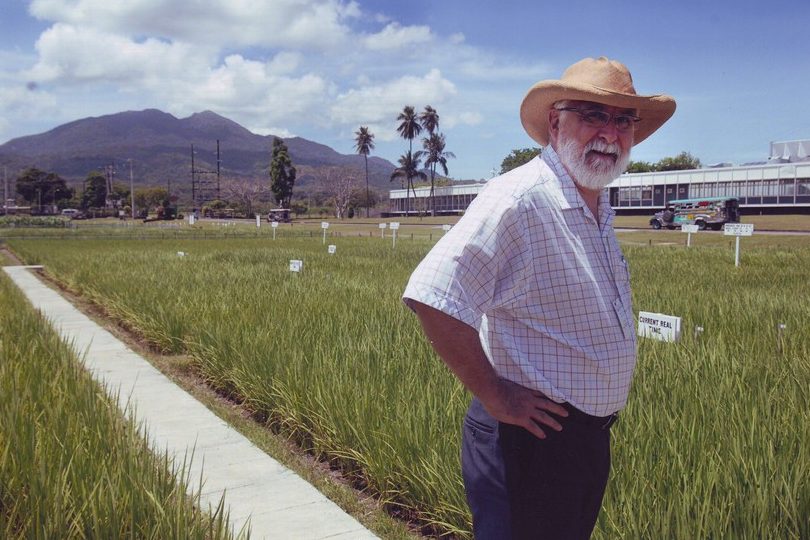
In rice fields at IRRI, with magnificent Mt. Makiling in the background.

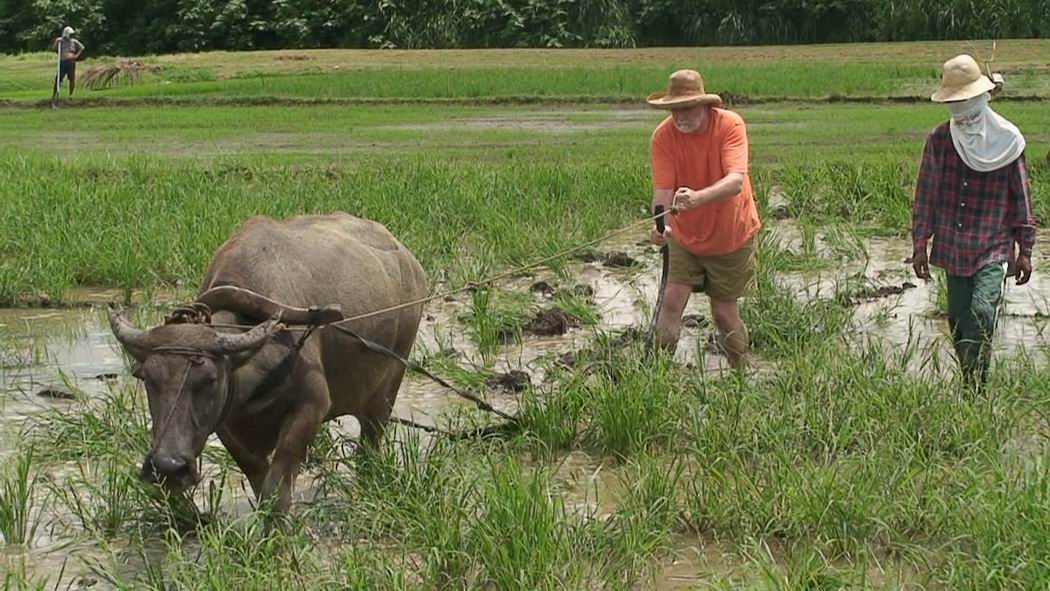
Behind the plough – now that IS reality. I still have that sombrero, which I purchased shortly after I arrived in Peru in January 1973.

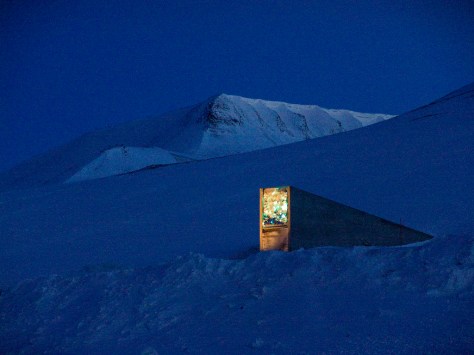
That journey began, as I said, in July 1991 when I became the first head of IRRI’s Genetic Resources Center (GRC) taking responsibility for one of the world’s largest and most important genebanks, the International Rice Genebank (IRG), as well as providing administrative oversight to the International Network for Genetic Evaluation of Rice (INGER). I gave up genebanking in 2001 and joined the institute’s senior management team as Director for Program Planning and Coordination (DPPC, later Communications). As I had made many important changes to the genebank operations and how rice germplasm was managed, my successor, Dr Ruaraidh Sackville Hamilton (who joined IRRI in 2002) probably did not face so many operational and staff challenges. However, he has gone on to make several important improvements, such as bar-coding, commissioning new facilities, and overseeing the first germplasm deposits (in 2008) in the Svalbard Global Seed Vault.

Any success I achieved at IRRI during those 19 years is also due to the fine people who worked closely with me. Not so long ago, I wrote about those who brought success to IRRI’s project management and resource mobilization. I haven’t, to date, written so much about my Filipino colleagues who worked in GRC, although you will find several posts in this blog about conserving rice genetic resources and how the genebank operates (or operated until 2010). The 15 minute video I made about the genebank shortly before leaving IRRI shows what IRRI’s genebank is and does, and featuring several staff.

The tweet I referred to earlier was posted by someone who I follow, Mary Mangan (aka mem_somerville | Wossamotta U, @mem_somerville), commenting on a genebank video produced by the Crop Trust on behalf of the CGIAR’s Genebank Platform.

She tweeted: Finally someone did a genebank video. People don’t understand that scientists are doing this; they are told by PBS [the broadcaster] that some grizzled farmer is the only one doing it.

What particularly caught my attention (apart from viewing the entertaining and informative video) was her comment about the role of scientists and, by implication I suppose, that genebanking is (or should be) supported by scientific research. From my own experience, however, a research role for genebanks has not been as common as you might think, or wasn’t back in the day. Unlike IRRI, where we did have a strong genebanking research program¹.

When I interviewed for the head of GRC in January 1991, I made it quite plain that I hoped for—expected even, almost a condition of accepting an appointment—a research role around germplasm conservation and use, something that had not been explicitly stated in the job description. Once I was appointed, however, at the same senior level as any other Division (i.e. department) Head or Program Leader, I was able to bring my genebanking perspectives directly to discussions about the institute’s research and management policies and program. In that respect, I was successful and, having secured an appropriate budget and more staff, I set about transforming the genebank operations.

The IRG organizational structure then was extremely hierarchical, with access to the head by the national staff often channeled through one senior member, Eves Loresto. That was how my predecessor, Dr TT Chang ran the genebank. That was not my style, nor did I think it an effective way to operate. I also discovered that most of the Filipino scientific staff, as Research Assistants, had been in those positions for several years, with little expectation of promotion. Something had to be done.

In 1991, the genebank collection comprised more than 70,000 seed samples or accessions² of cultivated rices (Oryza sativa or Asian rice, and O. glaberrima or African rice) and the 20 or so wild species of Oryza. I needed to understand how the genebank operated: in seed conservation; data management; the various field operations for regeneration, characterization and evaluation of germplasm; and germplasm exchange, among others. I’d never worked on rice nor managed a genebank, even though my professional formation was in the conservation and use of plant genetic resources for food and agriculture. That was a steep learning curve.

So I took my time, asked lots of questions, and listened patiently (mostly) to the detailed explanations of how and why rice germplasm was handled in this way and not that. It was also the period during which I got to know my Filipino staff. I say ‘got to know’ with some reservation. I’m ashamed to admit that I never did learn to speak Tagalog, although I could, at times, understand what was being said. And while almost all the staff spoke good English, there was always a language barrier. Obviously they always spoke Tagalog among themselves, even when I was around, so I came to rely on one or two staff to act as go-betweens with staff whose English was not so fluent.

After six months I’d developed a plan how to upgrade the genebank operations, and felt confident to implement staff changes. I was also able eventually to find a different (and more significant) role for Eves Loresto that took her out of the ‘chain of command’ between me and other staff members. We took on new ‘temporary’ staff to assist with the burdensome seed handing operations to prepare samples for long-term conservation (many of whom are still with the institute a quarter of century later), and I was able, now that everyone had better-defined responsibilities, to achieve the promotion of more than 70% of the staff.

The genebank needed, I believed, a flatter organizational structure, with each area of the genebank’s critical operations assigned to a single member of staff, yet making sure that everyone had a back-up person to take over whenever necessary. In the structure I’d inherited it was not uncommon for several members of staff to have overlapping responsibilities, with no-one explicitly taking a lead. And no-one seemed to be accountable. As I told them, if they wanted to take on more responsibility (which was a common aspiration) they had to be accountable for their own actions. No more finger-pointing if something went wrong.

How they all grew in their posts! Today, several of the national staff have senior research support positions within the institute; some have already retired.

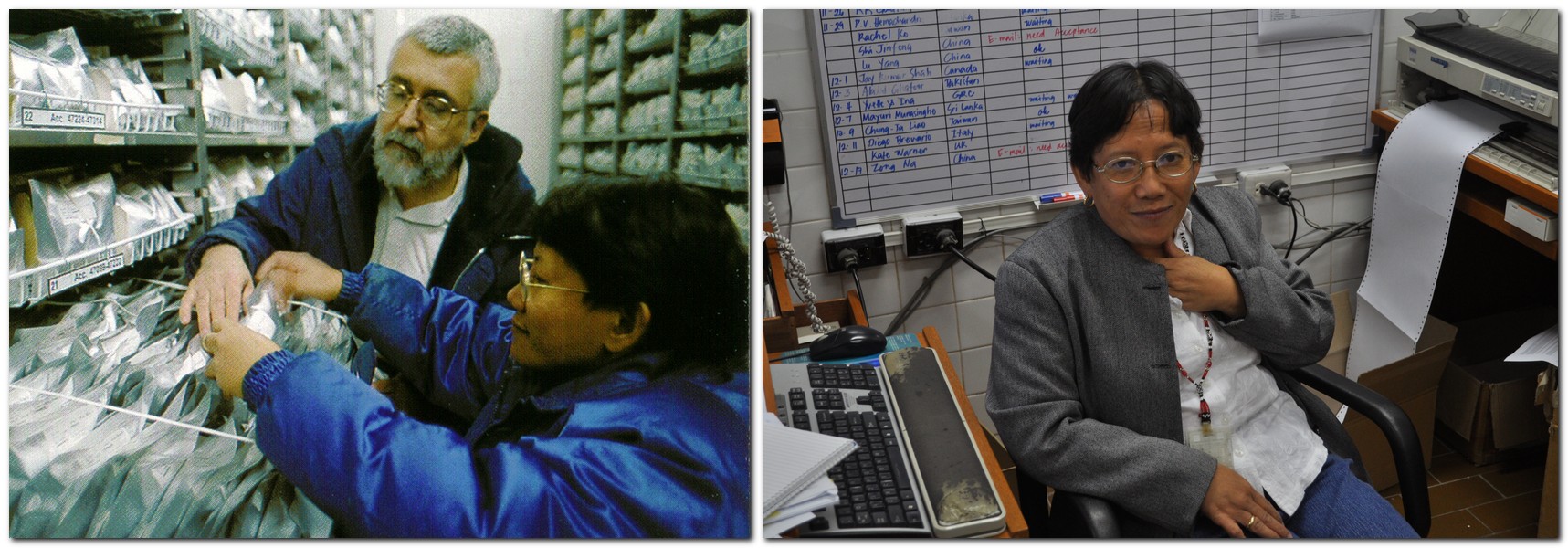
Flora de Guzman, known to one and all as Pola, is the genebank manager. It soon became obvious to me that Pola was someone itching to take on more responsibility, who was dedicated to germplasm conservation, and had a relevant MS degree. She didn’t let me down, and has become one of the leading lights in genebank management across the eleven CGIAR genebanks that are supported through the Genebank Platform that I mentioned earlier.

Pola manages all the operations inside the genebank: germplasm acquisition; seed cleaning and storage; and exchange (and all the paperwork that goes with that!). Take a peek inside the genebank with Pola, from 1:00 in the video. She worked closely with Renato ‘Ato’ Reaño for the multiplication/regeneration of seeds when seed stocks run low, or seed viability declines. She has done a fantastic job, leading a large team and has eliminated many of the seed conservation backlogs that were like a millstone around our collective necks in the early 1990s. She will be a hard act to follow when the time comes for her to retire.

Ato is a self-effacing individual, leading the genebank field operations. Just take a look at the video I mentioned (at around 2:03 onwards) to see Ato in his domain of several hectares of rice multiplication plots.

Taking the lead from my suggestions, Ato brought all the genebank field operations back on to the institute’s experimental station from farmers’ fields some distance away where they were when I joined IRRI. He enthusiastically adopted the idea of separating multiplication/regeneration of germplasm accessions from those related to characterization, effectively moving them into different growing seasons. For the first years, his colleague Tom Clemeno took on the germplasm characterization role until Tom moved away from GRC and eventually out of the institute. After a battle with cancer, Tom passed away in 2015. ‘Little Big Man’ is sadly missed.

Soccie Almazan became the curator of the wild rices that had to be grown in a quarantine screenhouse some distance from the main research facilities, on the far side of the experiment station. But the one big change that we made was to incorporate all the germplasm types, cultivated or wild, into a single genebank collection, rather than the three collections. Soccie brought about some major changes in how the wild species were handled, and with an expansion of the screenhouses in the early 1990s (as part of the overall refurbishment of institute infrastructure) the genebank at last had the space to adequately grow (in pots) all this valuable germplasm that required special attention. See the video from 4:30. Soccie retired from IRRI in the last couple of years.
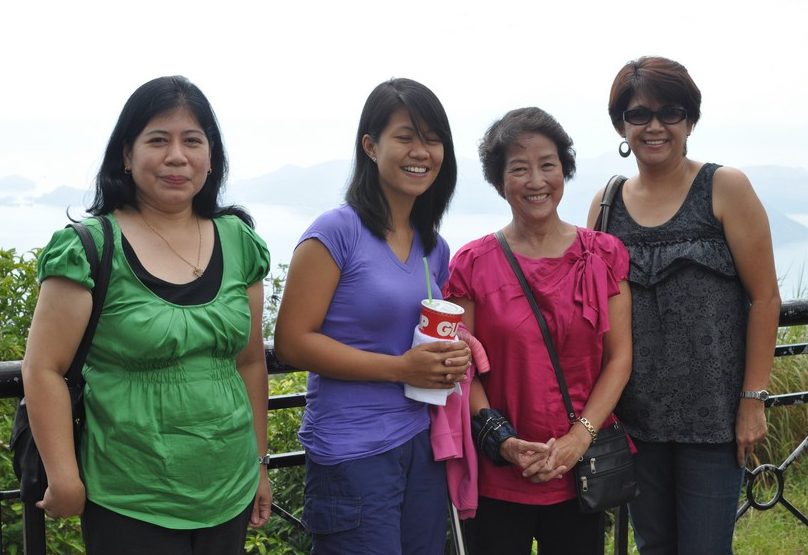
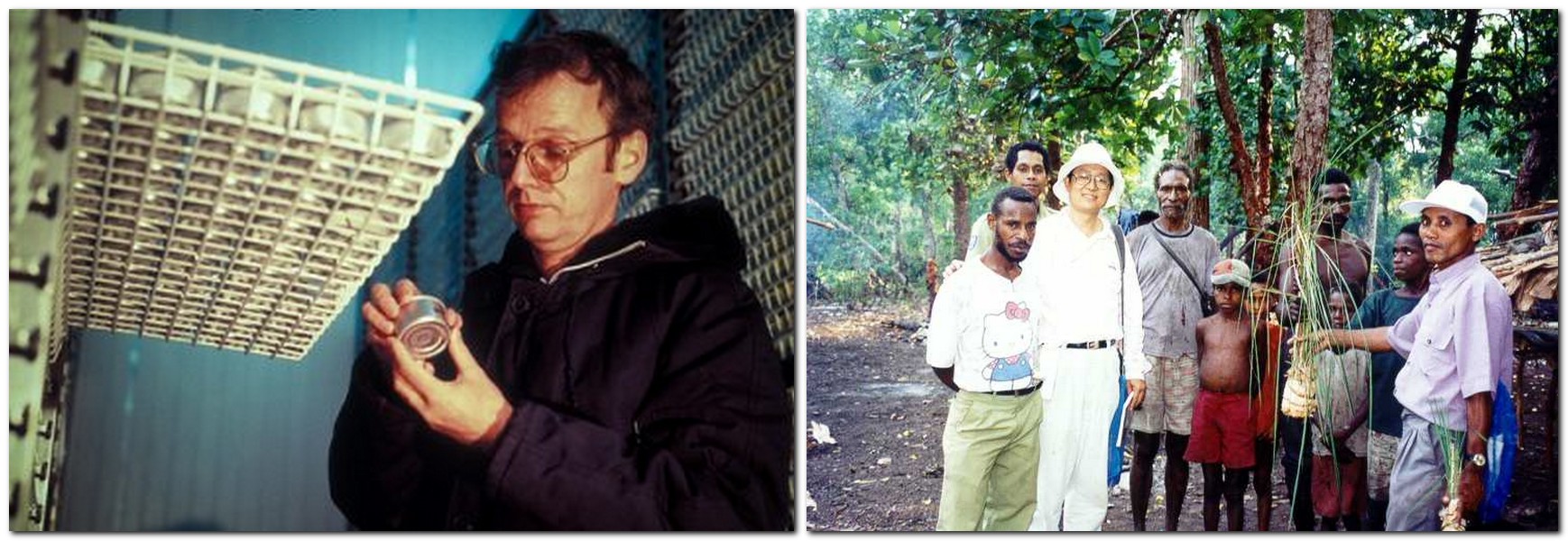
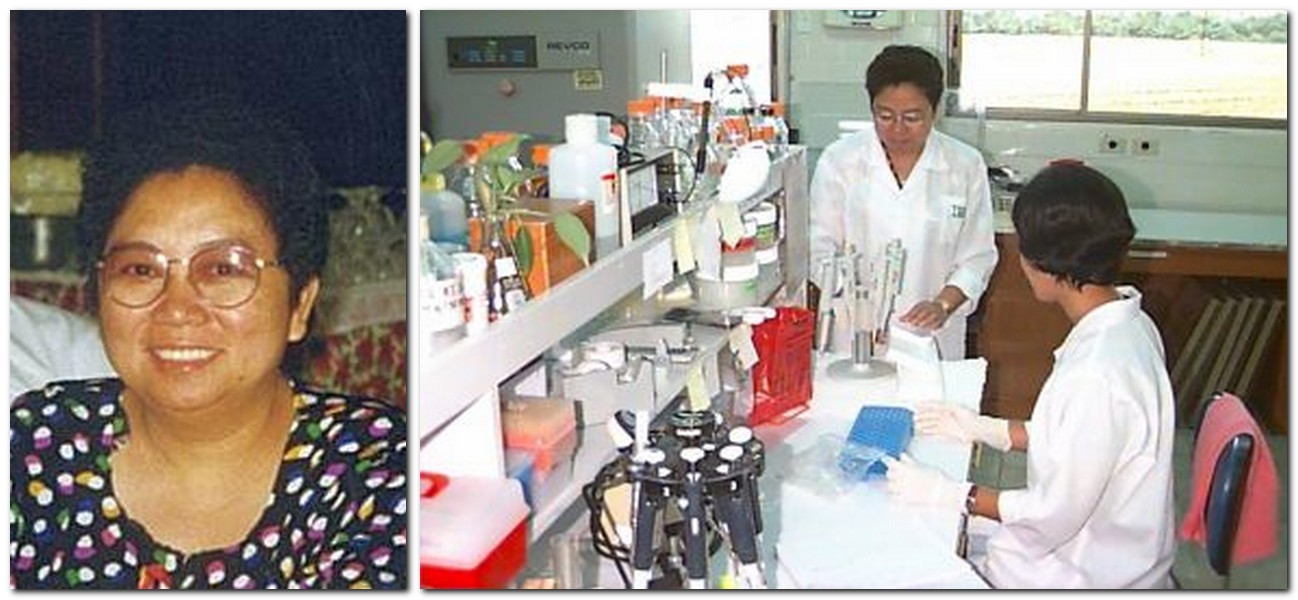
I’ve written elsewhere about the challenges we faced in terms of data management, and the significant changes we had to make in fusing what were essentially three separate databases using different coding systems for the same characters across the two cultivated species of rice and the wild species. There were three data management staff in 1991: Adel Alcantara, Vanji Guevarra, and Myrna Oliva.

L to R: Myrna, Adel’s daughter, Adel, and Vanji, during a GRC reunion in Tagaytay, just before my retirement in 2010.

One of the first changes we made during the refurbishment of GRC was to provide each of them with a proper workstation, and new computers. Each time our computers were upgraded, the data management staff were the first to benefit from new technology. Once we had made the necessary data structure changes, we could concentrate on developing a genebank management system that would incorporate all aspects from germplasm acquisition through to exchange and all steps in between. After a year or so we had a working system, the International Rice Genebank Collection Information System (IRGCIS). Myrna left IRRI by the mid-90s, and Adel and Vanji have retired or moved on. But their contributions to data management were significant, as access to and manipulation of data were fundamental to everything we did.

In terms of research per se, there were two young members of staff in 1991, Amy Juliano and Ma. Elizabeth ‘Yvette’ Naredo, who were tinkering with several projects of little consequence. They were supervised by a British scientist, Duncan Vaughan (who spent about six months a year collecting wild rices and writing his trip reports). As I said, I was keen to establish a sound research base to rice conservation in GRC, and felt that Amy and Yvette’s talents were not being put to good use. In my opinion we needed a better taxonomic understanding of the genus Oryza based on sound experimental taxonomic principles and methods. After all, the genebank contained several thousand samples of wild rice seeds, a resource that no other laboratory could count on so readily. Despite my best efforts to encourage Duncan to embrace more research he was reluctant to do so. I wasn’t willing to tolerate ‘passengers’ in my group and so encouraged him to seek ‘pastures greener’ more suitable to his personal objectives. By mid-1993 he had left IRRI for a new position in Japan, and we could recruit his replacement to lead the taxonomic research effort.

L to R: Duncan Vaughan inside the genebank’s cold store; Bao-Rong collecting wild rices in Irian Jaya.

Bao-Rong Lu joined us in 1994, having completed his PhD in Sweden, and took Amy and Yvette under his taxonomic wing, so to speak. Amy and Yvette flourished, achieving thousands of crosses between the different wild and cultivated rices, developing tissue culture techniques to rescue seedlings through embryo culture and, once we had a collaborative research project with the University of Birmingham and the John Innes Centre (funded by UK government department for international aid, DFID), establishing a laboratory to study molecular markers in rice germplasm.

Amy Juliano in the molecular marker laboratory in GRC that she developed (with Sheila Quilloy).

Amy spent a couple of months at Birmingham around 1996 learning new molecular techniques. She was destined for so much more. Sadly, she contracted cancer and passed away in 2004, a great loss to her family and GRC.

I knew from my early days at IRRI that Yvette had considerable promise as a researcher. She was curating the wild species collection, among other duties, and her talents were under-utilized. She took the lead for the biosystematics and cytogenetic research, and under my partial supervision, completed her MS degree at the University of the Philippines – Los Baños (UPLB).

Bao-Rong moved back to China around 2000, giving us the opportunity of moving the research in another direction, and recruiting molecular biologist/biochemist Ken McNally. Ken was already at IRRI, completing an assignment on a perennial rice project. Ken took GRC’s molecular research to another level, with Yvette working alongside, and expanding the research into genomics, culminating in the 3000 rice genomes project. Yvette completed her PhD at UPLB in 2013 as part of that international collaboration, but has now recently retired from IRRI. It was the Facebook post about her being recognized last weekend as a UPLB Outstanding Alumnus that partly triggered this post.

In the early 90s Dr Kameswara Rao and I, supported by Ato, looked at the effects of seed-growing environment and its effect on long-term viability of rice seeds. More recently, Ato worked with Fiona Hay, a British seed physiologist who was recruited to GRC around 2007 or 2008 to extend this research, and they made some interesting changes to seed multiplication protocols and how to dry them post harvest.

The collection grew significantly between 1995 and 2000, with funding from the Swiss Development Cooperation (SDC), especially with regard to germplasm from the Lao PDR where GRC staff member Dr Seepana Appa Rao was based. We also had an important research component about on-farm conservation of rice varieties recruiting staff with expertise in population genetics and social anthropology. You can read more about that particular Swiss-funded project, and the staff involved, in this story from 2015.

The GRC secretaries who worked with me (L ro R): Zeny (1997-2001); Sylvia (1991-1997), and Tessie (1991 until her retirement a couple of years ago).

There were many support staff who all played their roles, and formed a great team. But I cannot end this post without mentioning the secretaries, of course. When I joined GRC, my secretary was Sylvia Arellano. She helped me through those first months as I was finding my feet. Syl was supported by Tessie Santos. When Sylvia was ‘poached’ by the Director General George Rothschild to become his secretary in 1997 (a position she would occupy until her retirement a couple of years back), Zeny Federico became my secretary. When I crossed over to senior management in 2001, Zeny came with me.

Working with such dedicated staff in GRC made my job easier, and very enjoyable. It was always a pleasure to show others just what the staff had achieved, and invariably visitors to the genebank came away impressed by what they had seen. And they understood that conserving rice varieties and wild species was not just a case of putting seeds in a cold store, but that there were many important and inter-linked components, underpinned by sound research, that enabled to the genebank to operate efficiently and safely preserve rice germplasm long into the future.

~~~~~~~~~~~~~~~~~~~~~~~~~~~~~~~~~~~~~~~~~~~~

¹ The research led to many publications. Click here to see a list (and many more that I have published on crop species other than rice).

² The collection has now grown to almost 128,000 samples. During my tenure the collection grew by more than 25%.

The Birmingham Class of ’71: plant genetic resources pioneers

Pioneers. That’s what we were. Or, at least, that’s what we thought we were.

Five individuals arriving at The University of Birmingham’s Department of Botany in September 1970 to study on the one-year MSc degree course Conservation and Utilization of Plant Genetic Resources (CUPGR).

Professor Jack Hawkes was the Course Leader, supported by Dr Trevor Williams (as Course Tutor) [1].

Professor Jack Hawkes (L) and Dr Trevor Williams (R)

The MSc course had its first intake (of four students from Canada, Brazil, and the UK) in September 1969. Twenty years later (which was celebrated at the time), hundreds of students had received training in genetic conservation at Birmingham. The course would continue to flourish for a further decade or so, but by the early 2000s there was less demand, limited financial resources to support students, and many of the staff at the university who were the lynch-pins of teaching on the course had moved on or retired.

However, the course had made its impact. There is no doubt of that. Birmingham genetic resources graduates were working all around the world, leading collection and conservation efforts at national levels and, in many cases, helping their countries—and the world—to set policy for the conservation and use of plant genetic resources for food and agriculture (PGRFA). At the FAO conference on PGRFA held in Leipzig, Germany in 1996, for example, about 50 of the national delegations were led by, or had members, who had received training at Birmingham.

Former Birmingham MSc and Short Course PGR students (and two staff from IPGRI), at the Leipzig conference in 1996. Trevor Sykes (class of 1969) is wearing the red tie in the middle of the front row. Just two former students who attended the conference do not feature in this photo.

The Class of ’71
So, in September 1970, who comprised the second CUPGR cohort? We came from five countries:

  • Felix Taborda-Romero from Venezuela
  • Altaf-ur-Rehman Rao from Pakistan
  • Ayla Sencer from Turkey
  • Folu Dania-Ogbe from Nigeria
  • Mike Jackson (me!) from the UK

Having just graduated a couple of months earlier from the University of Southampton with a BSc degree in Botany and Geography, I was the youngest of the group, just approaching my 22nd birthday. Folu was almost four years my senior, and Ayla was perhaps in her late twenties or early thirties, but I’m not sure. Altaf was 34, and Felix the ‘elder’ of the class, at 38.

I guess Ayla was the only one with a specific genetic resources background, coming to Birmingham from an agricultural research institute near Izmir, and having already been involved with conservation work. Felix and Altaf were both academics. As recent graduates, Folu and I were just starting to think about a career in this new field of plant genetic resources. We wouldn’t be disappointed!

Studying alongside mature students who were not only older than my eldest brother (nine years my senior), but who had taken a year out from their jobs to study for a higher degree, was a novel experience for me. There was also a language barrier, to some extent. Felix probably had the weakest English skills; Ayla had already made some good progress before arriving in Birmingham but she struggled with some aspects of the language. Both Altaf and Folu spoke English fluently as a second language.

We occupied a small laboratory on the north corridor, first floor of the School of Biological Sciences building, just a couple of doors down from where Jack, as Mason Professor of Botany and Head of Department, had his office, and just across from Trevor’s office. In 1981, when I returned to Birmingham as Lecturer in Plant Biology, that same room became my research laboratory for six or seven years.

Folu and myself had desk space on one side of the lab, and the others on the other side. We spent a lot of time huddled together in that room. In order to save us time hunting for literature in the university library, we had access to a comprehensive collection of photocopies of many, if not most, of the scientific papers on the prodigious reading lists given to us.

Richard Lester

We had a heavy schedule of lectures, in crop evolution, taxonomic methods, economic botany (from Dr Richard Lester), population genetics and statistics (from staff of the Department of Genetics), computer programming and data management (in its infancy then), germplasm collection, and conservation, among others. At the end of the course I felt that the lecture load during that one year was equivalent to my three-year undergraduate degree course. We also had practical classes, especially in crop diversity and taxonomy, and at the end of the teaching year in May, we had to sit four written exam papers, each lasting three hours.

There were also guest lectures from the likes of experts like Erna Bennett (from FAO) and Jack Harlan from the University of Illinois.

We also had to choose a short research project, mostly carried out during the summer months through the end of August, and written up and presented for examination in September. While the bulk of the work was carried out following the exams, I think all of us had started on some aspects much earlier in the academic year. In my case, for example, I had chosen a topic on lentil evolution by November 1970, and began to assemble a collection of seeds of different varieties. These were planted (under cloches) in the field by the end of March 1971, so that they were flowering by June. I also made chromosome counts on each accession in my spare time from November onwards, on which my very first scientific paper was based.

At the end of the course, all our work, exams and dissertation, was assessed by an external examiner (a system that is commonly used among universities in the UK). The examiner was Professor Norman Simmonds, Director of the Scottish Plant Breeding Station (SPBS) just south of Edinburgh [2]. He made his scientific reputation working on bananas and potatoes, and published several books including an excellent text on crop evolution [3].
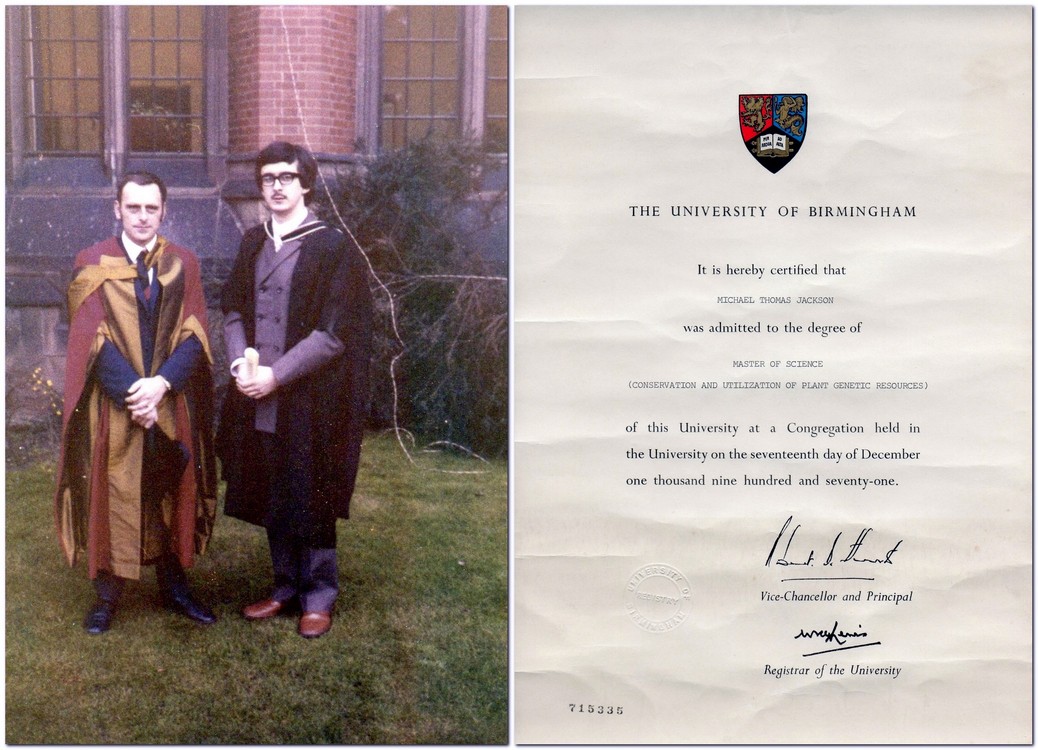
We graduated on 17 December 1971. I chose not to receive my degree in person although I attended the graduation ceremony to watch Folu receive hers. I did however borrow an academic gown (minus mortarboard) to have this photo with Trevor Williams.

Then and now
So how did we all end up in Birmingham, and what happened after graduation?

Felix received his first degree in genetics (Doutor em Agronomia) in 1955 from the Escola Superior de Agricultura Luiz de Queiroz, Universidade de São Paulo in Brazil. He was a contemporary of Almiro Blumenschein, who went on to collaborate with geneticist and Nobel Laureate Barbara McLintock on the maizes of South America, and head the Brazilian agricultural research institute EMBRAPA (which is the parent organization for the Brazilian national genebank CENARGEN).

Returning to Venezuela, Felix was involved (from 1956-1961) with a national project to breed the first Venezuelan hybrid corns and to organize commercial seed production while also looking after a collection of local varieties and races of corn.

In 1961 he started to work in the Facultad de Agronomía at the Universidad del Zulia, now one of the largest and most important universities in Venezuela. It seems he found out about the Birmingham course in 1969 through contact with Dr Jorge León, a Costarrican botanist working for IICA who had also been worked at FAO in genetic resources, and was a contemporary of Jack Hawkes in the 1960s genetic resources movement. León is second from right, standing, in the photo below. But Felix had also been inspired towards plant genetic resources by the book Plants, Man and Life by American geneticist Edgar Anderson.

Felix self-financed his studies at Birmingham, having taken a sabbatical leave from his university, and arriving in Birmingham by the middle of August. In December 1970, Felix returned briefly to Venezuela to bring his young wife Laura and his newly-born son Leonardo to Birmingham. They took up residence in a house owned by Jack Hawkes in Harborne, a suburb close to the university.

His dissertation, on the effect on growth of supra-optimal temperatures on a local Venezuelan sorghum variety, was supervised by plant physiologist Digby Idle. Having been awarded his MSc (the degree was conferred in December 1971), Felix returned to his university in Maracaibo, and continued his work in sorghum breeding. He was one of the pioneers to introduce grain sorghums in Venezuela, and continued working at the university up until about five years ago when, due to the deteriorating economic and social situation in his native country, Felix and Laura (who has an MSc degree from Vanderbilt University) decided to move to Florida and enjoy their retirement there. His three sons and six grandchildren had already left Venezuela.

Felix and I made contact with each other through Facebook, and it has been wonderful to catch up with him after almost five decades, and to know that since his Birmingham days he has enjoyed a fruitful career in academia and agricultural research, and remains as enthusiastic today, in his mid-eighties, as he was when I first knew him in September 1970.

Altaf was born in Faisalabad in December 1936, and when he came to Birmingham in 1970 he was already Assistant Professor in the Department of Botany at the University of Agriculture in Faisalabad. He had received his BSc (Agric.) degree from that university in 1957, followed by an MSc (Agric.) in 1962.

I cannot remember the topic of his dissertation nor who supervised it, perhaps Richard Lester. After graduation he moved to Bangor University to complete a PhD in 1974 on the genetic variation and distribution of Himalayan wheats and barleys, under the supervision of Professor John Witcombe (from whom I obtained the various photos of Altaf). In 1974 he joined a joint Bangor University-Lyallpur University to collect wheats and barley in northern Pakistan.

He continued his teaching at Faisalabad until 1996 when he retired as Professor of Botany. But he wasn’t finished. He joined the Cholistan Institute of Desert Studies at Islamia Universty and was director from 1998 to 2000. Sadly, in December 2000, just four days after his 64th birthday, Altaf passed away, leaving a wife, two daughters and four sons. Remembered for his devotion to plant genetic resources and desert ecology, you can read his obituary here.

Genetic resources conservation in Turkey received a major boost in the mid-1960s when an agreement was signed between the Government of Turkey and the United Nations Special Fund to establish a ‘Crop Research and Introduction Centre‘ at Menemen, Izmir. The Regional Agricultural Research Institute (ARARI, now the Aegean Agricultural Research Institute) became the location for this project, and Ayla was one of the first scientists to be involved.

Ayla came to Birmingham with a clear focus on what she wanted to achieve. She saw the MSc course as the first step to completing her PhD, and even arrived in Birmingham with samples of seeds for her research. During the course she completed a dissertation (with Jack Hawkes) on the origin of rye (Secale cereale), and she continued this project for a further two years or so for her PhD. I don’t recall whether she had the MSc conferred or not. In those days, it was not unusual for someone to convert an MSc course into the first year of a doctoral program; I’m pretty sure this is what Ayla did.

Completing her PhD in 1973 or 1974, Ayla continued to work with the Turkish genetic resources program until 1981 when she accepted a position at the International Maize and Wheat and Improvement Center (CIMMYT) near Mexico City, as the first curator of the center’s wheat collection.

I believe Ayla stayed at CIMMYT until about 1990 or so, and then returned to Turkey. I know that she has retired with her daughter to a small coastal town southwest from Izmir, but I’ve been unable to make contact with her directly. The photo below was sent to me by Dr Tom Payne who is the current curator of CIMMYT’s wheat collection. He had dinner with Ayla a couple of years ago during one of his visits to Turkey.

Folu married shortly before traveling to Birmingham. Her husband had enrolled for a PhD at University College London. He had seen a small poster about the MSc course at Birmingham on a notice board at the University of Ibadan, Nigeria where Folu had completed her BSc in Botany. She applied successfully for financial support from the Mid-Western Nigeria Government to attend the MSc course, and subsequently her PhD studies.
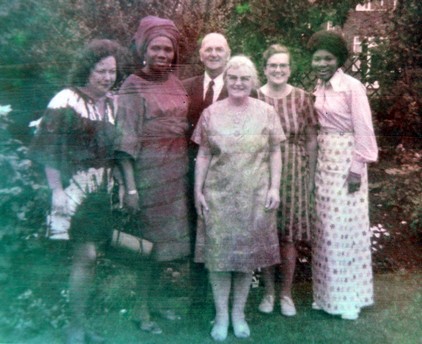
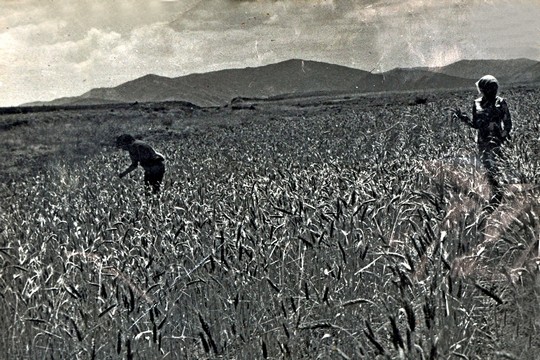
Dr Dennis Wilkins

Before coming to Birmingham, Folu had not worked in genetic resources, but had a flair for genetics. Like me, she hoped that the course would be a launch pad for an interesting career. Her MSc dissertation—on floating rice—was supervised Dr Dennis Wilkins, an ecophysiologist. In the late 70s and early 80s, Dennis supervised the PhD of World Food Prize Laureate Monty Jones, who is now the Minister of Agriculture, Forestry and Food Security in Sierra Leone.

After completing her MSc, Folu began a PhD under the supervision of Trevor Williams on the taxonomy of West African rice, which she completed in 1974. To successfully grow her rice varieties, half of one glasshouse at the department’s garden at Winterbourne was successfully converted to a rice paddy.

In this photo, taken during her PhD studies, Folu’s mother (who passed away in January 2018) visited her in Birmingham. Folu can’t remember the three persons between her and her mother, but on the far left is Dr Rena Martins Farias from Brazil, who was one of the first cohort of MSc students in 1969.

Folu also had the opportunity of joining a germplasm collecting mission to Turkey during 1972. In this photo, Folu (on the right) and Ayla (on the left) are collecting wheat landrace varieties.

Returning to Nigeria, Folu joined the Department of Plant Biology at the University of Benin, Benin City until 2010, when she retired. She taught a range of courses related to the conservation and use of plant genetic resources, and conducted research on the taxonomy of African crop plants, characterization of indigenous crops from West Africa, and the ethnobotany of useful indigenous African plants. She counts among her most important contributions to genetic resources the training courses she helped deliver, and the research linkages she promoted among various bodies in Nigeria. She has published extensively.
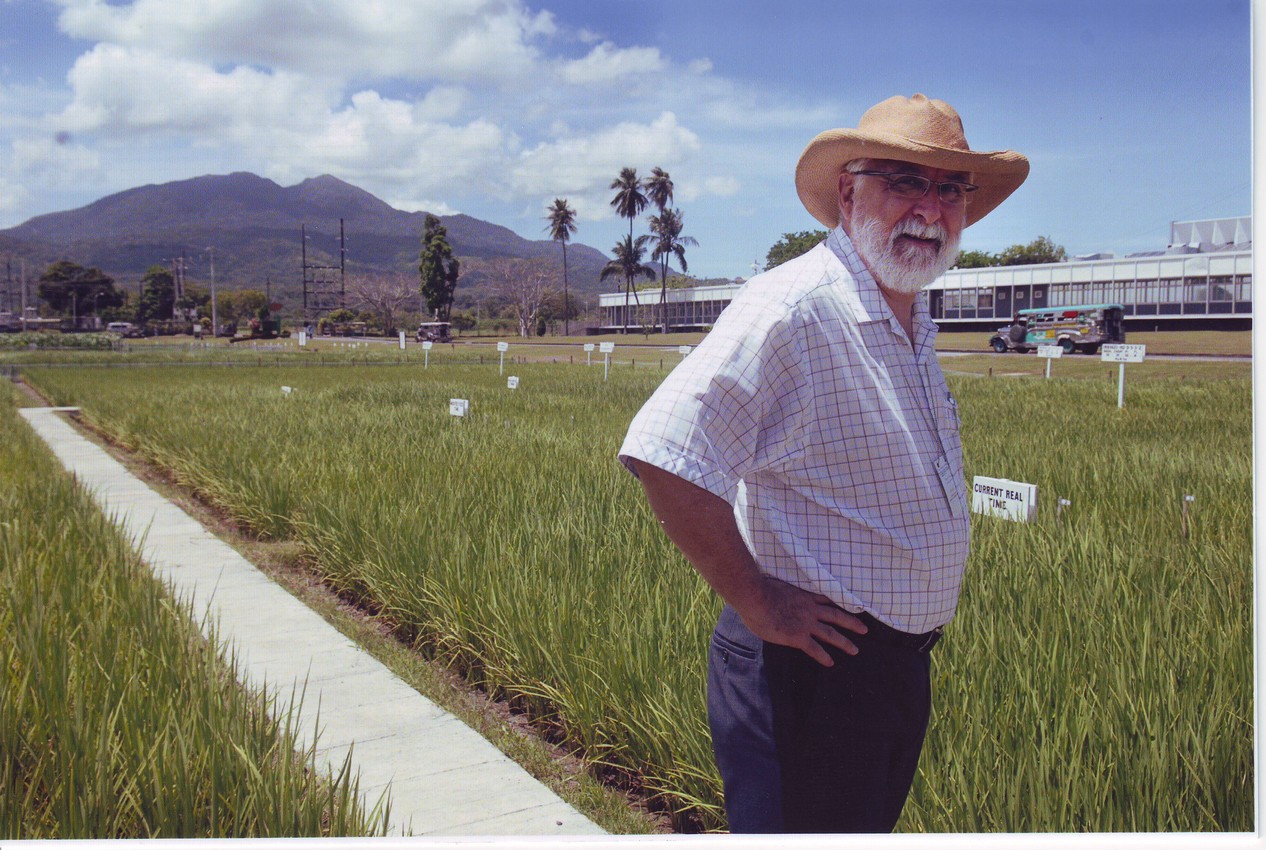
After retirement from the University of Benin, she was seconded to the new Samuel Adegboyega University at Ogwa in Edo State, where she is Professor and Dean of the College of Basic and Applied Sciences. She has three children and five grandchildren.
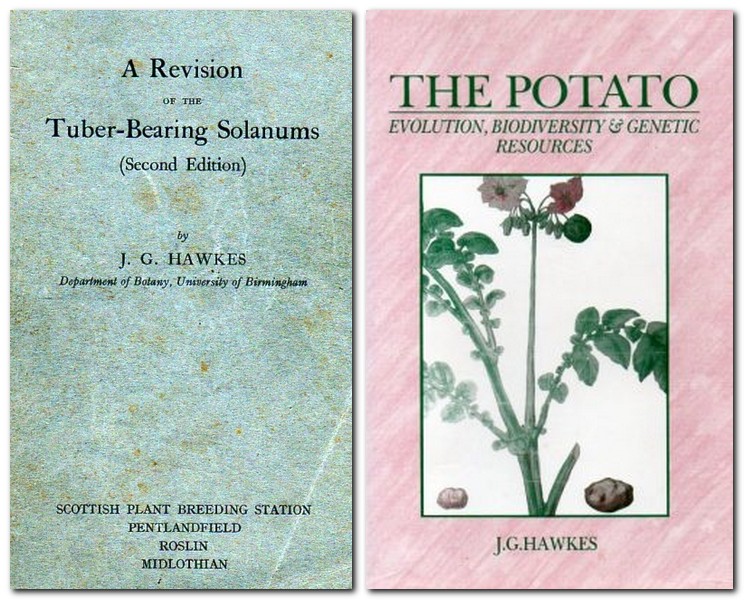
As for myself, I was the only member of our class to be interviewed for a place on the MSc course, in February 1970. I’d heard about it from genetics lecturer at Southampton, Dr Joe Smartt, who stopped me in the corridor one day and gave me a pamphlet about the course, mentioning that he thought this would be right up my street. He wasn’t wrong!

However, my attendance was not confirmed until late August, because Jack Hawkes was unable to secure any financial support for me until then.

Trevor Williams supervised my dissertation on the origin of lentil (Lens culinaris), but as early as February 1971, Jack Hawkes had told me about an opportunity to work in Peru for a year after I’d completed the course, looking after a germplasm collection of native potato varieties at the newly-established International Potato Center (CIP) in Lima. In October 1971 I began a PhD (under Jack’s supervision) on the relationships between diploid and tetraploid potatoes (which I successfully defended in October 1975), and joined CIP in January 1973. Continuing with my thesis research, I also made several potato collecting missions in different regions of Peru.

From 1976-1981 I continued with CIP as its regional research leader in Central America, based in Costa Rica, working on disease resistance and potato production. I spent a decade back at The University of Birmingham from April 1981, mainly teaching on the genetic resources MSc course, carrying out research on potatoes and legumes, and supervising PhD students.

In 1991, I joined the International Rice Research Institute (IRRI) at Los Baños in the Philippines as the first head of the Genetic Resources Center, looking after the International Rice Genebank, and managing a major project to collect and conserve rice genetic resources worldwide. In 2001, I gave up research, left the genebank, and joined IRRI’s senior management team as Director for Program Planning and Communications, until 2010 when I retired.

But I’ve not rested on my laurels. Since retirement, I’ve organized two international rice science conferences for IRRI in Vietnam and Thailand, co-edited a second book on genetic resources and climate change, and led a review of the CGIAR’s genebank program.

My wife Steph is a genetic resources graduate from Birmingham, in 1972, and she joined me at CIP in July 1973 after leaving her position at the Scottish Plant Breeding Station where she helped to curate the Commonwealth Potato Collection (CPC).

We have two daughters, Hannah and Philippa (both PhD psychologists), and four grandchildren.

Sitting (L to R): Callum, Hannah, Zoe, Mike, Steph, Elvis, Felix, and Philippa. Standing: Michael (L) and Andi (R).

Looking back at the past five decades, I think I can speak for all of us that we had successful careers in various aspects of the conservation and use of plant genetic resources, repaying the investments supporting us to study at Birmingham all those years ago. What a journey it has been!


[1] Trevor left Birmingham at the end of the 1970s to become the first Director General of the International Board for Plant Genetic Resources (now Bioversity International) in Rome.

[2] The SPBS merged with the the Scottish Horticultural Research Institute in Dundee in 1981 to become the Scottish Crops Research Institute. It is now the James Hutton Institute.

[3] Simmonds, NW (ed), 1976. Evolution of Crop Plants. Longman, London. A second edition, co-edited with Joe Smartt was published in 1995.


I came across this short account of Winterbourne Gardens (where the MSc course was ‘housed’ for many years, written by departmental secretary, Diane Wilson.

How long is a piece of string?

Just three decades after Spanish conquistador Francisco Pizarro first encountered the potato in the high Andes of Peru in 1532, the potato was already being grown in the Canary Islands. And it found its way to mainland Europe via the Canaries shortly afterwards [1].

The first known published illustration of the potato in Gerard’s Herball of 1597.

The potato was described by English herbalist John Gerard in his Herball published in 1597. In a revised version, published in 1633 over 20 years after his death, there is another beautiful woodcut of the potato, referred to Battata Virginiana or Virginian potatoes.

Potatoes became an important crop by the late 18th century, and particularly the staple of Ireland’s impoverished citizens in the years leading up to the Irish Potato Famine of the mid-1840s.

Today, potatoes are one of the world’s most important crops, grown in every continent except Antarctica. Known scientifically as Solanum tuberosum, it was given this name by the famous Swedish naturalist, Carl Linnaeus in his 1753 magnum opus, Species Plantarum.

The potato and its wild relatives must be one of the most studied groups of crop plants. Not that I’m biased (having researched potatoes for more than 20 years).

Potato diversity and germplasm collections
Its clear that there is a wealth of information about the diversity within the section of the genus Solanum that encompasses the potato. They have been studied extensively from a taxonomic point of view, breeding efforts worldwide have incorporated genes from many wild species to enhance productivity, and important germplasm collections were set up decades ago to preserve this important diversity, to study it, and use it in potato breeding.

My former colleague (and fellow PhD student at Birmingham), Dr Zosimo Huaman, describes the management of CIP’s wild potato collection in Huancayo to members of the CGIAR’s Inter-Center Working Group on Genetic Resources who held their annual meeting at CIP in 1996.

Among the most important collections are held at:

The wild relatives of the potato have one of the broadest geographical and ecological ranges among species that have been domesticated for human consumption. While the various forms of cultivated potatoes were domesticated in the Andes of Peru and Bolivia, and on the coast of Chile, the wild species are found from the southwest USA (in the coniferous forests of Arizona, for instance) through Mexico and the countries of Central America to Panama, along the Andes south to Chile and northern Argentina, and south and east on to the plains of Argentina, Brazil, Paraguay and Uruguay. Wild species are found in the coastal desert of Peru, in the cloud forests of central America to almost 3000 m, at the highest altitudes of the Andes, well over 4000 m, and also growing in the highly humid transition zone on the eastern side of the Andes dropping down to the lowland forests (known as the ‘eyebrow of the mountain’ or ceja de la montaña).

Here is just a very small sample of the diversity—and beauty—of wild potato species (photos courtesy of my friends at the Commonwealth Potato Collection).

How many potato species are there?
Well, it depends, to some extent, on one’s perspectives as a taxonomist, use of different species concepts, and the methods used to study species diversity, and also on the work that earlier taxonomists published.

Essentially, there are three basic taxonomic approaches:

  • Morphology: often based on the study of dried herbarium specimens collected in the wild. In the case of potatoes, this has led to the description of a multiplicity of species, with almost every variant being described as a separate species. This reliance on plant morphology was the approach taken by the 19th and early 20th century botanists.
  • Biosystematics: takes an experimental view of species diversity, of breeding behaviour and relationships, and very much based on collections in the field and the study of ecology, and growing samples in a uniform environment such as the study one of my PhD students, Susan Juned, made of Solanum chacoense, a species from Argentina and Paraguay.
  • Molecular biology: methods have become available in the last couple of decades to analyse the most basic variation in DNA, and helped to refine further how potato taxonomists view the diversity within the tuber-bearing Solanums, and the relationships between species.

While these different approaches still do not provide a definitive answer to the question of how many species there are, we know that taxonomists have described and named more than 200 species. To some extent it’s like asking how long is a piece of string. And that helps me to provide an analogy.

Take a piece of string. If you were to view this string along its length that, to your vision would be fore-shortened, it would be very difficult to say with any degree of certainty just how long the string actually was. However, if you increase the angle at which you view the string, until you are looking at right angles, your ability to estimate its length also increases. At right angles you can see the whole length, and measure it accurately in many different ways.

Taxonomic study is a bit like looking at the string from different angles. Each taxonomist builds on earlier studies, and describing new species or subsuming previously described ones into another species (as merely variants). This is one of the challenges of studying wild potato species: they are highly variable and show considerable phenotypic (or morphological) plasticity. It’s not always possible to study large numbers of plants under uniform conditions to reduce the variation caused by differences in habitats.

The 2n=3x=36 chromosomes of a triploid potato, from a root-tip squash in two cells.

Furthermore potatoes have considerable chromosomal variation, with a base number of x=12, with diploids (2n=24) the most frequent, and mostly self-incompatible (i.e. they cannot self fertilise), infertile triploids (2n=36, including two cultivated species), tetraploids with 2n=48 (mostly self-fertile, and including the cultivated Solanum tuberosum of world-wide agriculture), some pentaploids (2n=60; including one cultivated form), and a few hexaploids with 2n=72. Wild potatoes are uncommonly promiscuous when grown together under experimental conditions, and will inter-cross readily (they are bee-pollinated), yet hybrids often do not survive beyond the second generation in the wild. Many species are separated by ecology, and generally do not come into contact with each other, thus maintaining their species identity.

Nevertheless, this is what makes the study of potatoes and wild species so very interesting, and that captured my interest directly for over two decades, and continues to do so, even though I moved on to the study of other crops like rice and grain legumes.

The potato taxonomists
Many botanists have taken an interest in wild potatoes. During the 19th century, the Swiss-French botanist Alphonse de Candolle (d. 1893) named a number of species, as did François Berthault (d. 1916). But the first decades of the 20th century leading up to the Second World War saw a lot of collecting and taxonomic description. In Germany, Friedrich August Georg Bitter, who specialised in the genus Solanum, described and named many species. However, it was the involvement of several Russian botanists and geneticists, under the leadership of Nicolai Vavilov, that saw an expansion in the collection of potatoes throughout the Americas, but a systematic evaluation of this germplasm leading to even more species being described.

SM Bukasov

Two names come to mind, in particular: SM Bukasov and VS Juzepczuk. They were active during the 1920s and 30s, taking part in several missions to South America, and developing further the concept of potato species. But much of their work was based on morphological comparison leading to the identification of even small variants as new species.

In August 1938, a young Cambridge graduate, Jack Hawkes, traveled to Leningrad in Russia to meet and discuss with Bukasov and Juzepczuk (and Vavilov himself) in preparation for the 1938-39 British Empire Potato Collecting Expedition to South America (which Jack has described in his 2004 memoir Hunting the Wild Potato in the South American Andes [2]).

A young Jack Hawkes (second from right) stands outside a church near Lake Titicaca in northern Bolivia, alongside expedition leader Edward Balls (second from the left).

Jack Hawkes

That collecting expedition, and the subsequent studies (which led to Hawkes being awarded his PhD from the University of Cambridge in 1941 for a thesis Cytogenetic studies on South American potatoes supervised by renowned potato scientist Sir Redcliffe N Salaman), was the launch pad, so to speak, of potato taxonomy research for the rest of the 20th century, in which Hawkes became one of the leading exponents.

After Cambridge, Hawkes spent some years in Colombia (where he no doubt continued his studies of wild potatoes) but it was on his return to the UK in 1952 when appointed to a lectureship in the Department of Botany at The University of Birmingham (where he was to remain until his retirement in 1982) that his potato studies flourished, leading him to publish in 1956 his first taxonomic revision of the tuber-bearing Solanums (with a second edition appearing in 1963).

In 1990, he published his final synopsis of the tuber-bearing Solanums [3]; that taxonomic treatment is the one followed by the curators of the Commonwealth Potato Collection.

Jack’s approach to potato taxonomy was based on a thorough study of morphology backed up by rigorous crossing experiments, and a cytogenetic and sometimes serological evaluation of species relationships.

I first met Jack in February 1970 when he interviewed me for a place on his newly-founded MSc course on plant genetic resources, joining the course later that same year. In September 1971 I became one of Jack’s PhD students, joining others who were looking at the origin and evolution of the cultivated species [4].

Donovan S CorrellIn these revisions he was also taking into account the work of US botanist, Donovan S Correll who published his own potato monograph in 1962 [5], as well as three important South American botanists with whom he would collaborate from time-to-time: Professor César Vargas from the National University of Cuzco; Professor Martín Cárdenas from Cochabamba in Bolivia; and Professor Carlos Ochoa, originally from Cuzco, who was a professor at the Universidad Nacional Agraria (UNA) in La Molina, Lima and, around 1975 or so, joined the International Potato Center across the street from the UNA.

L-R: Danish botanist J Peter Hjerting, Martin Cardenas, and Jack Hawkes in Cochabamba.

Vargas published a number of species descriptions in the 1950s, but made his most significant contribution in his two part monographs, Las Papas Sudperuanas published in 1949 and 1956. I met Vargas on a couple of occasions, first in January 1973 just after I’d joined CIP as Associate Taxonomist. And a second time in February 1974 when I was passing through Cuzco with Dr Peter Gibbs from the University of St Andrews in Scotland. Peter was making a study of incompatibility among different forms of the Andean tuber crop, oca (Oxalis tuberosa), and had joined me on an excursion to Cuyo-Cuyo in the Department of Puno. Vargas’s daughter Martha was studying for her MSc degree under Peter’s supervision at St Andrews.

With Prof Cesar Vargas at his home in Urubamba, near Cuzco

It was Carlos Ochoa, however, whose studies of potatoes and their relatives rivalled (and in some respects eclipsed) those of Jack Hawkes. They were quite intense taxonomic rivals, with a not-altogether harmonious relationship at times. Carlos certainly played his taxonomic cards very close to his chest.

Me consulting with Carlos Ochoa concerning the identity of some triploid potatoes, in one the screenhouses at the International Potato Center in 1974.

But the fact that he grew up in the Andes and had, from an early age, taken an interest in the diversity of this quintessential Andean crop and its wild relatives, led him to dedicate his life to uncovering the diversity of potatoes in his homeland. He was also a potato breeder and released some of the most important varieties in Peru, such as Renacimiento, Yungay, and Tomasa Condemayta.

In this video (in Spanish, and broadcast on Peruvian TV on his death in 2008) he talks about his early life in Cuzco, the pressures on him to study medicine or become a lawyer, and how he found his true vocation: the study of wild potatoes.

Setting potato taxonomy and germplasm exploration priorities at CIP
Forty-five years ago this week, CIP convened the first planning workshop on the exploration and taxonomy of potatoes [6], inviting a group of taxonomists and potato breeders to meet in Lima and mull over the ‘state of play’ taking into consideration what taxonomic research had already been accomplished, what was in the pipeline, and what CIP’s germplasm exploration policy (especially in Peru) should be. I attended that meeting (as an observer), having landed in Lima just a few days earlier.

On the taxonomic side were Jack Hawkes, Carlos Ochoa, and Donald Ugent who was a ethnobotany professor at Southern Illinois University in Carbondale. Richard Tarn, a potato breeder from Agriculture Canada at Fredericton, New Brinswick, had completed his PhD under Jack’s supervision at Birmingham. Frank Haynes, a professor of genetics and potato breeder at North Carolina State University (and long-time friend and colleague of CIP’s first Director General, Richard Sawyer) and Roger Rowe [7], then curator of the USDA’s potato collection at Sturgeon Bay (who would join CIP in July 1973 as the Head of Breeding and Genetics, and become my PhD co-supervisor) were the other participants.

Workshop participants looking at CIPs germplasm collection in the field at Huancayo (3000 m) in central Peru. L-R: David Baumann (CIP field manager), Frank Haynes, Jack Hawkes, Roger Rowe, and Don Ugent.

In 1969, Jack had published (with his Danish colleague Peter Hjerting [8]) a monograph of the potatoes of southern cone countries of South America [9], and by the time of the CIP 1973 workshop was well into research on the potatoes of Bolivia [10], leading publication of a monograph in 1989.

Peter Hjerting collecting Solanum chacoense in Bolivia in 1980. Standing next to him is Ing. Israel Aviles, a Bolivian member of the expedition. Their driver looks on.

What I’ve never been able to fathom after all these years is why Ochoa decided to write his own monograph of the Bolivian species rather than concentrating in the first instance on the Peruvian species. Nevertheless Ochoa did produce his own fine monograph in 1990 [11], beautifully illustrated with some fine watercolours by CIP plant pathologist Franz Frey. This was followed by an equally magnificent volume on the potatoes of Peru in 2004 [12], also illustrated by Frey.

Throughout his expeditions and research, Ochoa was supported by several assistants, the most notable being Ing. Alberto Salas. Now in his mid-70s, he has been collecting wild potatoes for five decades.

I knew Alberto when I first joined CIP in 1973, and it was a delight to meet him again (although he had retired) during my visit to CIP in July 2016.

Taking up the baton
With retirement, Hawkes and Ochoa passed the potato taxonomy baton to a new generation of researchers, principally David Spooner, a USDA scientist at the University of Wisconsin-Madison who made several collecting trips throughout the Americas.

David Spooner

David’s research took potato systematics to a new level, employing the developing molecular and genomic approaches, and use of different classes of markers to help him refine his understanding of the diversity of the tuber-bearing Solanums, building of course on the very solid Hawkes and Ochoa foundations.

Although no longer working on potatoes (his most recent focus on carrots supported the PhD thesis of Carlos Arbizu, Jr, the son of one of my PhD students at Birmingham in the 1980s), David’s scientific output on potatoes has been prodigious. With molecular insights supporting more traditional methods he has proposed a 50% reduction in the number of potato species from the more than 200 listed in Hawkes’s 1990 publication.

Is this the end of the potato taxonomy story? Probably for the time-being. It’s unlikely that anyone will pursue these studies to the same depth as Hawkes and Hjerting, Ochoa, or Spooner. Nevertheless, as the curators of the Commonwealth Potato Collection have done, most potato researchers will take a pragmatic approach and fix on a particular taxonomic treatment on which to base their management or use of germplasm. Taxonomy is one of those disciplines in which subjective interpretations (obviously based on empirical studies of diversity) can lead to contrary classifications. What is a distinct species to one taxonomist may be merely a variant to another. Undoubtedly these different taxonomic treatments of the tuber-bearing Solanums have permitted us to have a much better appreciation of just how long ‘the potato piece of string’ really is.

~~~~~~~~~~~~~~~~~~~~~~~~~~~~~~~~~~~~~~~~~~~~~

[1] Hawkes, JG & J Francisco-Ortega, 1993. The early history of the potato in Europe. Euphytica 70, 1-7.

[2] Hawkes, JG, 2004. Hunting the Wild Potato in the South American Andes – Memories of the British Empire Potato Collectiing Expedition to South America 1938-1939. Wageningen, the Netherlands. ISBN: 90-901802-4.

[3] Hawkes, JG, 1990. The Potato – Evolution, Biodiversity and Genetic Resources. Belhaven Press, London.

[4] Since I was working on the origin and evolution of a cultivated species of potato for my PhD, I made only one short collecting trip for wild species with Jack in early 1975, to the Departments of Huanuco, Cerro de Pasco, and Lima. On his trips to Peru between 1973 and 1975 he would join me in the field to look at the germplasm I was studying and give me the benefit of his potato wisdom.

[5] Correll, DS, 1962. The Potato and its Wild Relatives. Contributions from the Texas Research Fiundation 4, pp. 606. Texas Research Foundation, Renner, Texas.

[6] International Potato Center, 1973. Report of the Workshop on Germplasm Exploration and Taxonomy of Potatoes. Lima, Peru. 35 pp.

[7] I’ve kept in touch with Roger and his wife Norma all these years. After I left CIP in 1981, Roger moved to East Africa to work with the animal diseases center that became ILRI after its merger with another CGIAR livestock center in Ethiopia. He was DDG-Research at CIMMYT in Mexico in the late 1980s and early 1990s. While I was at IRRI, he was based in Cairo working for the CGIAR center that became WorldFish (with its headquarters in Penang, Malaysia). Before it moved to Malaysia, ICLARM as it then was had its offices in Manila, and we would see Roger in the Philippines from time-to-time. It was great to meet up with Roger and Norma again in July 2016 when I was in Lima for the genebank review that I led.

[8] From what I can determine through a Google search, as of January 2018, Peter celebrated his 100th birthday in 2017. He has a Mexican tetraploid (2n=4x=48) species named after him, Solanum hjertingii. When I was at Birmingham in the 1980s I had two PhD students, Lynne Woodwards and Ian Gubb who studied this species because its tubers lack so-called enzymatic blackening, a trait that could be very useful in potato breeding.

[9] Hawkes, JG & JP Hjerting, 1969. The Potatoes of Argentina, Brazil, Paraguay, and Uruguay – A Biosystematic Study. Annals of Botany Memoirs No. 3. Clarendon Press, Oxford.

[10] Hawkes, JG & JP Hjerting, 1989. The Potatoes of Bolivia – Their Breeding Value and Evolutionary Relationships. Clarendon Press, Oxford.

[11] Ochoa, CM, 1990. The Potatoes of South America: Bolivia. Cambridge University Press, Cambridge.

[12] Ochoa, CM, 2004. The Potatoes of South America: Peru. International Potato Center, Lima, Peru.

In the blink of an eye, it seems, 50 years have passed

The first week of October 1967. 50 years ago, to the day and date. Monday 2 October.

I was setting off from my home in north Staffordshire to the port city of Southampton on the the UK’s south coast (via London for a couple of nights), to begin a three year BSc Combined Honours degree course in [Environmental] Botany and Geography at the university. I was about to become a Freshman or ‘Fresher’. Not only anticipating being away from home for the first time (although I’d always been sort of independent), I was looking forward to the excitement of ‘Freshers’ Week’ to make new friends, discovering new activities to take up.

On the afternoon of Wednesday 4 October, I joined the ‘Freshers’ Special’ from Waterloo Station in London, a train chartered by the Students’ Union, and met several fellow students in the same compartment who remained close friends throughout my time at Southampton. Unlike mainline rail services, our train stopped at the small suburban station at Swaythling, and hordes of Freshers were disgorged on to the platform and into buses to take them to their respective Hall of Residence, several of which were close-by.

I’d accepted a place in South Stoneham House (becoming Vice President of the Junior Common Room in my second year in autumn 1968), comprising a sixteen floor tower (now condemned for habitation as there’s a lot of asbestos) alongside a rather elegant Queen Anne mansion built in 1708.

I later discovered that the grounds had been landscaped by Capability Brown. Quite a revelation considering my interest in these things nowadays associated with my membership of the National Trust. It’s sad to know what has happened to South Stoneham in the last decade or so.

I had a room on the sixth floor, with a view overlooking Woodmill Lane to the west, towards the university, approximately 1.2 miles and 25 minutes away on foot. In the next room to mine, or perhaps two doors away, I met John Grainger who was also signed up for the same course as me. John had grown up in Kenya where his father worked as an entomologist. Now that sounded quite exotic to me.

Over the course of the next couple of days, I met the other students who had enrolled for Combined Honours as well as single honours courses in botany or geography, and others who were taking one of these as a two-year subsidiary or one-year ancillary subject.

We were five Combined Honours students: Stuart Christophers from Devon, Jane Elliman from Stroud in Gloucestershire, another whose name was Michael (I forget his surname; he came from Birmingham), John and me. Failing his exams at the end of the first year in early summer 1968, Michael was asked to withdraw, as were about one third of the botany class, leaving fewer than twenty students to head off to an end-of-year field course in Co. Clare, Ireland.

End of first year field course in Co. Clare, 27 July 1968. Dept of Botany lecturers Alan Myers and Leslie Watson are on the left. Beside them is Jenny ? Back row, L-R: Chris ? (on shoulders), Paul Freestone, Gloria Davies, John Grainger, Peter Winfield. Middle row: Nick Lawrence (crouching), Alan Mackie, Margaret Barran, Diana Caryl, John Jackson (Zoology with Botany subsidiary), Stuart Christophers. Front row: Jill Andison, Janet Beasley, Patricia Banner, Mary Goddard, Jane Elliman, Chris Kirby.

As ‘Combined’ students we had, of course, roots in both departments, and tutors in both as well: Dr Joyce ‘Blossom’ Lambert (an eminent quantitative ecologist) in Botany, and Dr Brian Birch, among others, in Geography. However, because of the course structure, we actually had many more contact hours in botany, and for my part, I felt that this was my ‘home department’.

Three years passed quickly and (mainly) happily. The odd pull at the old heart strings, falling in and out of love. I took up folk dancing, and started a Morris dancing team, The Red Stags, that continues today but outside the university as a mixed male-female side dancing Border Morris.

And so, in late May 1970 (the day after the Late Spring Bank Holiday), we sat (and passed) our final exams (Finals), left Southampton, and basically lost contact with each other.

In developing this blog, I decided to try and track down my ‘Combined’ colleagues John, Stuart, and Jane. Quite quickly I found an email address for Stuart and sent a message, introducing myself. We exchanged several emails, and he told me a little of what he had been up to during the intervening years.

Despite my best efforts, I was unable to find any contact information for John, although I did come across references to a ‘John Grainger’ who had been involved in wildlife conservation in the Middle East, primarily Saudi Arabia and Egypt. The profile seemed right. I knew that John had stayed on at Southampton to complete a PhD in ecology. Beyond that – nothing! Then, out of the blue in late 2015, John contacted me after he’d come across my blog and posts that I had written about Southampton. We’ve been in touch ever since.

To date, I’ve had no luck tracking down Jane.

Why choose Southampton?
Southampton was a small university in the late 1960s, maybe fewer than 5000 undergraduates. There was no medical faculty, and everything was centred on the Highfield campus. I recently asked John why he decided to study at Southampton. Like me, it seems it was almost by chance. We both sat the same A level exams: biology, geography, and English literature, and we both applied for quite a wide range of university courses. He got a place at Southampton through clearing; I had been offered a provisional place (Southampton had been my third or fourth choice), and my exam results were sufficiently good for the university to confirm that offer. I’d been very impressed with the university when I went for an interview in February. Instinctively, I knew that I could settle and be happy at Southampton, and early on had decided I would take up the offer if I met the grade.

John and I are very much in agreement: Southampton was the making of us. We enjoyed three years academics and social life. It gave us space to grow up, develop friendships, and relationships. As John so nicely put it: . . . thank you Southampton University – you launched me.

My story after 1970
After Southampton, I moved to the University of Birmingham in September 1970, completing a MSc in conservation and use of plant genetic resources in 1971, then a PhD under potato expert Professor Jack Hawkes in 1975. Thus began a career lasting more than 40 years, working primarily on potatoes and rice.

By January 1973 I’d moved to Peru to work in international agricultural research for development at the International Potato Center (CIP), remaining in Peru until 1975, and moving to Costa Rica between 1976 and 1981. Although it was not my training, I did some significant work on a bacterial pathogen of potatoes in Costa Rica.

I moved back to the UK in March 1981, and from April I taught at the University of Birmingham in the Dept. of Plant Biology (formerly botany) for ten years.

By 1991, I was becoming restless, and looking for new opportunities. So I upped sticks and moved with my family to the Philippines in July 1991 to join the International Rice Research Institute (IRRI), firstly as Head of the Genetic Resources Center until 2001, and thereafter until my retirement in April 2010 as Director for Program Planning and Communications.

In the Philippines, I learned to scuba dive, and made over 360 dives off the south coast of Luzon, one of the most biodiverse marine environments in the country, in Asia even.

Retirement is sweet! Back in the UK since 2010, my wife Steph and I have become avid National Trusters (and seeing much more of the UK than we had for many years); and my blog absorbs probably more time than it should. I’ve organized two major international rice congresses in Vietnam in 2010 and Thailand in 2014 and just completed a one year review of the international genebanks of eleven CGIAR centers.

Steph and me at the Giant’s Causeway in Northern Ireland in mid-September 2017

I was made an OBE in the 2012 New Year’s Honours for services to international food science, and attended an investiture at Buckingham Palace in February 2012.

Receiving my gong from HRH The Prince of Wales (L); with Philippa and Steph after the ceremony in the courtyard of Buckingham Palace (R)

Steph and I met at Birmingham when she joined the genetic resources MSc course in 1971. We married in Lima in October 1973 and are the proud parents of two daughters. Hannah (b. 1978 in Costa Rica) is married to Michael, lives in St Paul, Minnesota, and works as a group director for a company designing human capital and training solutions. Philippa (b. 1982), married to Andi, lives in Newcastle upon Tyne, and is Senior Lecturer at Northumbria University. Both are PhD psychologists! We are now grandparents to four wonderful children: Callum (7) and Zoë (5) in Minnesota; and Elvis (6) and Felix (4) in Newcastle.

Our first full family get-together in the New Forest in July 2016. Standing: Michael and Andi. Sitting, L-R: Callum, Hannah, Zoë, Mike, Steph, Elvis, Felix, and Philippa

Stuart’s story (in his own words, 2013)
I spent my first year after Southampton teaching English in Sweden and the following year doing a Masters at Liverpool University. From there I joined Nickersons, a Lincolnshire-based plant breeding/seeds business, acquired by Shell and now part of the French Group Limagrain. 

In 1984 I returned to my native Devon to run a wholesale seeds company that fortunately, as the industry rationalised, had an interest in seed-based pet and animal feeds. Just prior to coming home to Devon I was based near York working with a micronutrient specialist. A colleague of mine there was Robin Eastwood¹ who certainly knew of you. Robin tragically was killed in a road accident while doing consultancy work in Nigeria.

This is my third year of retirement. We sold on our business which had become centred around wild bird care seven years ago now and I stayed on with the new owners for four years until it was time to go !

Stuart has a son and daughter (probably about the same as my two daughters) and three grandchildren.

John’s story
John stayed on at Southampton and in 1977 was awarded his PhD for a study that used clustering techniques to structure and analyse grey scale data from scanned aerial photographs to assess their use in large-scale vegetation survey. In 1975 he married his girlfriend from undergraduate days, Teresa. After completing his PhD, John and Teresa moved to Iran, where he took up a British Council funded lecturing post at the University of Tehran’s Higher School of Forestry and Range Management in Gorgan, on the southern shore of the Caspian Sea.

Alice, Teresa, and John at the Hejaz railway in Saudi Arabia, c. 1981/82.

By early 1979 they were caught up in the Iranian Revolution, and had to make a hurried escape from the country, landing up eventually in Saudi Arabia in February 1980, where John joined the Institute of Meteorology and Arid Land Studies at King Abdul Aziz University in Jeddah. Between Iran and Saudi Arabia there was an ‘enforced’ period of leisure in the UK, where their daughter Alice was born in December 1979.

John’s work in Jeddah included establishing an herbarium, researching traditional range conservation practices (hima system), and exploring places with intact habitats and interesting biodiversity. This is when his career-long interest in and contributions to wildlife management took hold, and in 1987 he joined a Saudi Commission for wildlife conservation. The work included an ambitious programme of establishing protected areas and breeding endangered native wildlife species for re-introduction – particularly Arabian oryx, gazelles and houbara bustards. The photos below show some of the areas John visited in Saudi Arabia, often with air logistical support from the Saudi military. 

In 1992, he was recruited by IUCN to lead a protected area development project in Ghana where he spent an exhausting but exhilarating 28 months doing management planning surveys of eight protected areas including Mole National Park. Then in 1996, the Zoological Society of London appointed him as  the project manager for a five year, €6 million EU-funded project in South Sinai to establish and develop the Saint Katherine Protectorate. John stayed until 2003, but by then, Teresa and he had separated; Alice had gained a good degree from St Andrew’s University in Scotland.

With a range of other assignments, and taking some time out between in Croatia, South Africa and other places, he was back in Egypt by 2005 to head up a project aimed at enhancing the institutional capacity of the Nature Conservation Sector for planning and implementing nature conservation activities. By 2010, and happily settled with a new partner, Suzanne, John moved to South Africa for several years, returning to Somerset in the past year. Suzanne and John were married in 2014. Retirement brings extra time for pastimes such as sculpting (many stunning pieces can be seen on his website), and some continuing consultancies in the wildlife management sector.

But I can’t conclude this brief account of John’s career without mentioning his thoughts on what being at Southampton meant to him: I have many reasons to be grateful to Southampton University – the degree involved me in the nascent environmental movement and provided me with the general tools and qualifications to participate professionally in the field. It was I think in the years that I was a postgraduate that I learned the true value of being at university and to become intellectually curious.

John sent me a more detailed account of his post-Southampton career that you can read here.

What next?
Fifty fruitful years. Time has flown by. I wonder what others from our cohort got up to? I have some limited information:

  • Allan Mackie went into brewing, and he and I used to meet up regularly in Birmingham when I was a graduate student there.
  • Peter Winfield joined what is now the Department for Agriculture & Fisheries for Scotland at East Craigs in Edinburgh.
  • Diana Caryl married barrister Geoffrey Rowland (now Sir Geoffrey) who she met at Southampton, and moved to Guernsey, where Geoff served as the Bailiff between 2005 and 2012. She has been active with the plant heritage of that island.
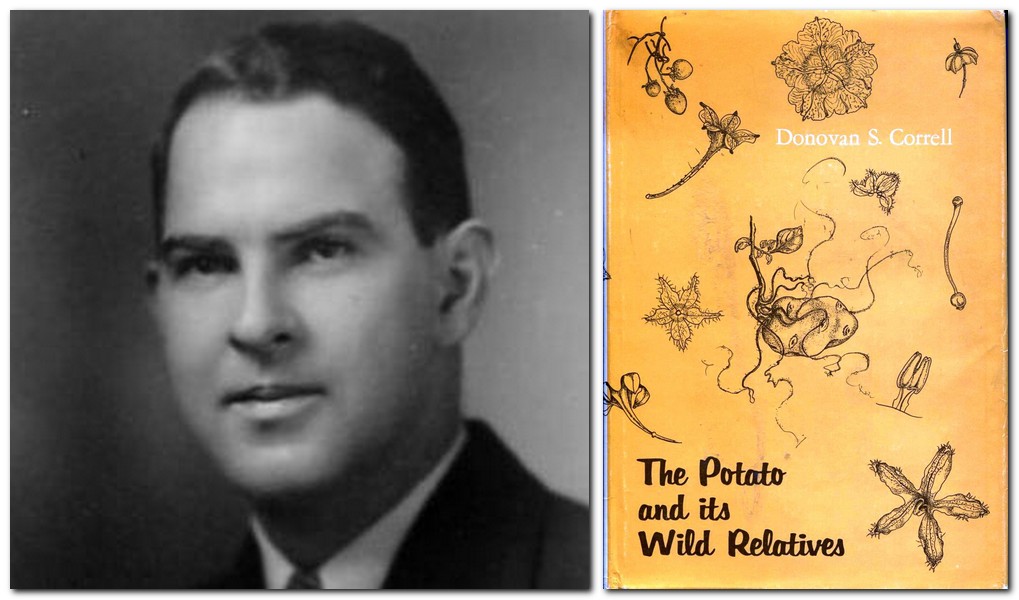
  • Mary Goddard completed a PhD at the Plant Breeding Institute in Cambridge (awarded by the University of Cambridge), and married Dr Don MacDonald from the university’s Dept. of Genetics.
  • Zoologist John Jackson (who took the subsidiary botany course for two years) completed a Southampton PhD on deer ecology in the New Forest, and spent many years in Argentina working as a wildlife coordinator for INTA, the national agricultural research institute.

The others? Perhaps someone will read this blog and fill in some details. As to geography, I have no contacts whatsoever.

However, through one of the earliest posts on this blog, Proud to be a botanist, which I wrote in April 2012, I was contacted by taxonomist Les Watson, who was one of the staff who took us on the first year field course to Co. Clare, and by graduate student Bob Mepham, who had taught a catch-up chemistry course to students like John Grainger and me, as we hadn’t studied that at A Level, and which was a requirement to enter the Single Honours course in botany. Another botany graduate, Brian Johnson, two years ahead of me and who sold me some books he no longer needed, also commented on one post about a field course in Norfolk.

I’m ever hopeful that others will make contact.

~~~~~~~~~~~~~~~~~~~~~~~~~~~~~~~~~~~~~

¹Robin Eastwood had completed the Birmingham MSc course in the early 1970s when I had already left for Peru. If memory serves me right, Robin did start a PhD, and was around the department when I returned from Lima in Spring 1975 to submit my PhD dissertation.

~~~~~~~~~~~~~~~~~~~~~~~~~~~~~~~~~~~~~

I wrote this story, looking back on my degree course, in October 1967. I added this link today, 10 July 2020, exactly 50 years since I graduated from Southampton with my BSc in Environmental Botany and Geography.

There’s beauty in numbers . . .

Now, what I want is, facts . . . Stick to the facts, sir!

Thus spoke businessman, MP, and school superintendent Thomas Gradgrind in the opening paragraph of Charles Dickens’ tenth novel, Hard Times, first published in 1854.

Increasingly however, especially on the right of the political spectrum, facts have become a debased currency. ‘Alternative facts’ and ‘fake news’ have become an ‘alternative religion’, faith-based and not susceptible to the norms of scientific scrutiny. Fake data are also being used as a ‘weapon’.

I am a scientist. I deal with facts. Hypotheses, observations, numbers, data, analysis, patterns, interpretation, conclusions: that’s what science is all about.

There really is a beauty in numbers, my stock-in-trade for the past 40 years: describing the diversity of crop plants and their wild relatives; understanding how they are adapted to different environments; how one type resists disease better than another; or how they can contribute genetically to breed higher-yielding varieties. The numbers are the building blocks, so to speak. Interpreting those blocks is another thing altogether.

Statistical analysis was part and parcel of my scientific toolbox. Actually, the application of statistics, since I do not have the mathematical skills to work my way through the various statistical methods from first principles. This is not surprising considering that I was very weak in mathematics during my high school years. Having passed the necessary examination, I intended to put maths to one side forever, but that was not to be since I’ve had to use statistics during my university education and throughout my career. And playing around with numbers, looking for patterns, and attempting to interpret those patterns was no longer a chore but something to look forward to.

So why my current obsession with numbers?

First of all, since Donald Trump took up residence in the White House (and during his campaign) numbers and ‘alternative facts’ featured prominently. Trump does not respect numbers. However, more of this later.

Second, I recently came across a scientific paper about waterlogging tolerance in lentils by a friend of mine, Willie Erskine, who is a professor at the University of Western Australia (although I first knew him through his work at ICARDA, a CGIAR center that originally had its headquarters in Aleppo, Syria). The paper was published last month in Genetic Resources and Crop Evolution. Willie and his co-authors showed that lentil lines did not respond in the same way to different waterlogging regimes, and that waterlogging tolerance was a trait that could be selected for in lentil breeding.

A personal data experience
While out on my daily walk a couple of days later, I mulling over in my mind some ideas from that lentil paper, and it reminded me of an MSc dissertation I supervised at The University of Birmingham in the 1980s. My student, Shibin Cai, came from the Institute of Food Crops, Jiangsu Academy of Agricultural Sciences, China where he worked as a wheat scientist.

Cai was interested to evaluate how wheat varieties responded to waterlogging. So, having obtained several wheat lines from the International Maize and Wheat Improvement Center (CIMMYT) in Mexico, we designed a robust experiment to evaluate how plants grew with waterlogging that was precisely applied at different critical stages in the wheat plant’s life cycle: at germination, at booting, and at flowering, as far as I remember. I won’t describe the experiment in detail, suffice to say that we used a randomized complete block design with at least five replicates per variety per treatment and control (i.e. no waterlogging whatsoever). Waterlogging was achieved by placing pots inside a larger pot lined with a polythene bag and filled with water for a definite length of time. Cai carefully measured the rate of growth of the wheat plants, as well as the final yield of grains from each.

After which we had a large database of numbers. Observations. Data. Facts!

Applying appropriate statistical tests to the data, Cai clearly showed that the varieties did indeed respond differently to waterlogging, and we interpreted this to indicate genetic variation for this trait in wheat that could be exploited to improve wheat varieties for waterlogging-prone areas. I encouraged Cai to prepare a manuscript for publication. After all, I was confident with the quality of his research.

We submitted his manuscript to the well-known agricultural research journal Euphytica. After due process, the paper was rejected—not the first time this has happened to me I should add. But I was taken aback at the comments from one of the anonymous referees, who did not accept our results—the observations, the data—claiming that there was no evidence that waterlogging was a verifiable trait in wheat, and especially in the lines we had studied. Which flew in the face of the data we had presented. We hadn’t pulled the numbers like a rabbit out of a hat. I did then wonder whether the referee was a wheat expert from CIMMYT. Not wishing to be paranoid, of course, but was the referee biased? I never did get an opportunity to take another look at the manuscript to determine if it could be revised in any way. As I said, we were confident in the experimental approach, the data were solid, the analysis sound—and confirmed by one of my geneticist colleagues who had a much better grasp of statistics than either Cai or me. Result? The paper was never published, something I have regretted for many years.

So you can see that there were several elements to our work, as in much of science. We had a hypothesis about waterlogging tolerance in wheat. We could test this hypothesis by designing an experiment to measure the response of wheat to waterlogging. But then we had to interpret the results.

Now if we had measured just one plant per variety per treatment all we could have said is that these plants were different. It’s like measuring the height say of a single plant of two wheat varieties grown in different soils. All we can state is the height we measured. We can make no inference about any varietal differences or responses. For that we need several measurements—numbers, data—that allow us to state whether if any observed differences are ‘real’ or due to chance. That’s what we do all time in science. We want to know if what we measure is a true reflection of nature. It’s not possible to measure everything, so we use a sample, and then interpret the data using appropriate statistical analyses. But we have to be careful as this interesting article on the perils of statistical interpretation highlights.

Back to The Donald
One of the most important and current data relationships is based in climate science. And this brings me back to The Donald. There is an overwhelming consensus among scientists that relationship between increased CO2 levels and increases in global temperatures is the result of human activity. The positive relationship between the two sets of data is unequivocal. But does that mean a cause and effect relationship? The majority of scientists say yes; climate deniers do not. That makes the appointment of arch-denier Scott Pruitt as head of the Environment Protection Agency in the US so worrying.

Donald Trump does not like facts. He doesn’t like numbers either unless he can misappropriate them in his favor (such as the jobs or productivity data that clearly relate to the policies under Mr 44). He certainly did not like the lack of GOP numbers to pass his repeal of the Affordable Care Act (aka Obamacare).

He regularly dismisses the verifiable information in front of his eyes, preferring ‘alternative facts’ and often inflated numbers to boot, instead. Just remember his sensitivity and his absurd claims that the 20 January National Mall crowds were largest for any presidential inauguration. The photographic evidence does not support this Trumpian claim; maybe fantasy would be a better description.

Time magazine has just published an excellent article, Is Truth Dead? based on an interview with The Donald, and to back it up, Time also published a transcript of the interview. This not only proves what Mr 45 said, but once again demonstrates his complete lack of ability to string more than a couple of coherent words together. Just take a look for yourselves.

Part of Trump’s rhetoric (or slow death by Tweet) is often based on assertions that can be verified: the biggest, the longest, the most, etc. Things can measured accurately, the very thing he seems to abhor. His aim to Make America Great Again cannot be measured in the same way. What is great? Compared to what or when? It’s an interpretation which can be easily contradicted or at the very least debated.

That’s what so disconcerting about the Trump Administration. The USA is a scientific powerhouse, but for how much longer if the proposed agency budget cuts that The Donald has promised really bite (unless related to the military, of course). There’s an increasing and worrying disdain for science among Republican politicians (and here in the UK as well); the focus on climate change data is the prime expression of that right now.

Rice Today . . . and tomorrow

Rice. Oryza sativa. A crop that feeds more people worldwide on a daily basis than any other.

20100409007

It’s the staple food of at least half the world’s population. In many countries, it is eaten several times a day. A meal without rice is no meal at all in many Asian countries. Rice is life!

41-copy

For almost 20 years from 1991-2010 it was also my life.

While you might know that rice is grown in flooded fields (in so-called rice paddies) in Asia, this crop can be found almost everywhere. It’s an important crop in California and Louisiana in the USA, grown widely in many Latin American countries, and in Europe it is found in the Camargue delta in the south of France, and in the Po Valley south of Milan in northern Italy, in sight of the snow-capped Alps!

Rice is a particularly important crop in West Africa where it evolved from an indigenous species, Oryza glaberrima. In the Riverina of New South Wales, Australia, rice is an irrigated crop, under threat due to water shortages, but where some of the highest global yields have been achieved. In the temperate regions of Japan and northern China rice agriculture is widely grown.

But it is South and Southeast Asia that has the largest areas of cultivation. Farmers throughout the region, particularly in the highlands of Indonesia and the Philippines, have adapted the environment to rice agriculture, terracing whole hillsides to provide pockets of land that can be flooded to grow rice.

The rice we eat in Europe has probably come from Thailand, one of the world’s major rice exporting nations. In Asia, many families subsist by growing their crops on small parcels of land – in flooded conditions, on steep slopes, wherever rice can be grown. Many farmers still grow the same varieties that have been nurtured for generations; yields are often low. Modern rice varieties, in contrast, can yield up to several tons per hectare, vital for feeding ever-burgeoning populations throughout Asia.

Here is a selection of rice agriculture photographs taken by my former colleague Dr Seepana Appa Rao (center in the photo below) who was based in the Lao People’s Democratic Republic (Lao PDR) for five years from 1995. They illustrate different types of rice agriculture, and farmers proudly displaying their varieties.

Appar Rao collecting upland rice in the Lao PDR

Together with Lao colleagues Appa (as we called him) collected, for the first time, more than 13,000 samples of indigenous rice varieties, many with interesting names that often describe their appearance or use in cooking.

rice-today-logoRice is such a fascinating crop you might want to understand a little more. And there’s no better source than Rice Today, a magazine launched by the International Rice Research Institute (IRRI) in 2002, and published quarterly ever since. It’s a solid mix of rice news and research, stories about rice agriculture from around the world, rice recipes even, and the odd children’s story about rice.

It was the brainchild of Gene Hettel, former head of IRRI’s Communication and Publications Services (CPS) and Duncan Macintosh, who was initially IRRI’s spokesperson and head of the Visitors’ Office; he became Director for Development. Duncan moved back to Australia a few years back. Recently he was back in the Philippines on a visit, and caught up with Gene.

17077864_10211719434403144_1059056041_n

Gene Hettel and Duncan Macintosh

The cover story on the very first Rice Today issue was all about the development of rice agriculture in Cambodia after the downfall of the brutal Pol Pot regime. It celebrated the role of Australian agronomist Dr Harry Nesbitt who was team leader for IRRI in Cambodia.

Now in it’s 16th volume, with a change of logo even, the cover of latest issue shows a painting of a traditional method of rice planting by Filipino artist Erick Dator. Throughout each issue, the graphics and images are stunning. Take for example the aerial photographs accompanying an article published in  the Jan-Mar 2008 issue, written by Gene about the of the Ifugao rice terraces in the Philippines.

For its 10th anniversary (Vol 11) in January 2012, former Director General Bob Zeigler talked about the value of Rice Today. Just click on the image below to read it.

pages-from-10th-anniversary_rice-today-vol-11-no-1

reyes_aboutRice Today is published by IRRI on behalf of Rice (GRiSP), the CGIAR research program on rice; it is also available online. Lanie Reyes (right) joined IRRI in 2008 as a science writer and editor. She is now editor-in-chief. She is supported by Savitri Mohapatra and Neil Palmer from sister centers Africa Rice Center in Côte d’Ivoire and CIAT in Colombia, respectively.

Gene was a close colleague of mine; we even won the odd communications award together as well! He came to IRRI in 1995 (having been a visiting editor in 1982-83) from a sister center, CIMMYT, based north of Mexico City that works on maize and wheat improvement, just like IRRI works on rice. He had been a communications expert at CIMMYT. Here is a younger Gene in a wheat field in Mexico with Nobel Peace Laureate Dr Norman Borlaug, who spent much of his career at CIMMYT.

hettel-borlaug

There’s more to genetic resources than Svalbard

Way above the Arctic Circle (in fact at 78°N) there is a very large and cold hole in the ground. Mostly it is dark. Few people visit it on a daily basis.

A germplasm backup for the world
Nevertheless it’s a very important hole in the ground. It is the Svalbard Global Seed Vault, where more than 70 genebanks have placed — for long-term security, and under so-called blackbox storage [1] — a duplicate sample of seeds from their genetic resources (or germplasm) collections of plant species important for agriculture. Many of the most important and genetically diverse germplasm collections are backed up in Svalbard. But there are hundreds more collections, including some very important national collections, still not represented there.

A beacon of light – and hope – shining out over the Arctic landscape. Photo courtesy of the Crop Trust.

Since it opened in 2008, the Svalbard vault has hardly ever been out of the media; here is a recent story from Spain’s El Pais, for example. If the public knows anything at all about genetic resources and conservation of biodiversity, they have probably heard about that in relation to Svalbard (and to a lesser extent, perhaps, Kew Gardens’ Millennium Seed Bank at Wakehurst Place in Sussex).

The Svalbard Vault is a key and vital component of a worldwide network of genebanks and genetic resources collections. It provides a long-term safety backup for germplasm that is, without doubt, the genetic foundation for food security; I have blogged about this before. At Svalbard, the seeds are ‘sleeping’ deep underground, waiting to be wakened when the time comes to resurrect a germplasm collection that is under threat. Waiting for the call that hopefully never comes.

Svalbard comes to the rescue
But that call did come in 2015 for the first and only time since the vault opened. Among the first depositors in Svalbard in 2008 were the international genebanks of the CGIAR Consortium, including the International Center for Agricultural Research in the Dry Areas (ICARDA). The ICARDA genebank conserves important cereal and legume collections from from the Fertile Crescent (the so-called ‘Cradle of Agriculture’) in the Middle East, and from the Mediterranean region. Until the civil war forced them out of Syria, ICARDA’s headquarters were based in Aleppo. Now it has reestablished its genebank operations in Morocco and Lebanon. In order to re-build its active germplasm collections, ICARDA retrieved over 15,000 samples from Svalbard in 2015, the only time that this has happened since the vault was opened. Now, thanks to successful regeneration of those seeds in Morocco and Lebanon, samples are now being returned to Svalbard to continue their long sleep underground.

ICARDA genebank staff ready to send precious seeds off to the Arctic. Dr Ahmed Amri, the ICARDA Head of Genetic Resources, is third from the right. Photo courtesy of ICARDA.

Another point that is often not fully understood, is that Svalbard is designated as a ‘secondary’ safety backup site. Genebanks sending material to Svalbard are expected to have in place a primary backup site and agreement. In the case of the International Rice Research Institute (IRRI), which I am most familiar with for obvious reasons, duplicate germplasm samples of almost the entire collection of 127,000 accessions, are stored under blackbox conditions in the -18°C vaults of The National Center for Genetic Resources Preservation in Fort Collins, Colorado. Although ICARDA had safety backup arrangements in place for its collections, these involved several institutes. To reestablish its active collections in 2015 it was simpler and more cost effective to retrieve the samples from just one site: Svalbard.

We see frequent reports in the media about seeds being shipped to Svalbard.  Just last week, the James Hutton Institute in Dundee, Scotland, announced that it was sending seeds of potatoes from the Commonwealth Potato Collection to Svalbard; it was even reported on the BBC. A few days ago, the International Maize and Wheat Improvement Center (CIMMYT) in Mexico sent a ton of seeds to the vault. The International Center for Tropical Agriculture (CIAT), in Cali, Colombia sent its latest shipment of beans and tropical forages last October.

30423318505_1b5fdb9c2d_z

Dr Åsmund Asdal, Coordinator of the Svalbard Global Seed Vault, from the Nordic Genetic Resource Center (NordGen), receives a shipment of germplasm from CIAT in October 2016. Photo courtesy of the Crop Trust.

The germplasm iceberg
Key and vital as Svalbard is, it is just the tip of the germplasm iceberg. The Svalbard vault is just like the part of an iceberg that you see. There’s a lot more going on in the genetic resources world that the public never, or hardly ever, sees.

There are, for example, other types of genetic resources that will never be stored at Svalbard. Why? Some plant species cannot be easily stored as seeds because they either reproduce vegetatively (and are even sterile or have low fertility at the very least; think of bananas, potatoes, yams or cassava); or have so-called recalcitrant seeds that are short-lived or cannot be stored at low temperature and moisture content like the seeds of many cereals and other food crop species (the very species stored at Svalbard). Many fruit tree species have recalcitrant seeds.

Apart from the ICARDA story, which was, for obvious reasons, headline news, we rarely see or hear in the media the incredible stories behind those seeds: where they were collected, who is working hard to keep them alive and studying the effects of storage conditions on seed longevity, and how plant breeders have crossed them with existing varieties to make them more resistant to diseases or better able to tolerate environmental change, such as higher temperatures, drought or flooding. Last year I visited a potato and sweet potato genebank in Peru, a bean and cassava genebank in Colombia, and one for wheat and maize in Mexico; then in Kenya and Ethiopia, I saw how fruit trees and forage species are being conserved.

Here is what happens at IRRI. You can’t do these things at Svalbard!

These are the day-to-day (and quite expensive) operations that genebanks manage to keep germplasm alive: as seeds, as in vitro cultures, or as field collections.

But what is the value of genebank collections? Check out a PowerPoint presentation I gave at a meeting last June. One can argue that all germplasm has an inherent value. We value it for its very existence (just like we would whales or tigers). Germplasm diversity is a thing of beauty.

Most landraces or wild species in a genebank have an option value, a potential to provide a benefit at some time in the future. They might be the source of a key trait to improve the productivity of a crop species. Very little germplasm achieves actual value, when it used in plant breeding and thereby bringing about a significant increase in productivity and economic income.

There are some spectacular examples, however, and if only a small proportion of the economic benefits of improved varieties was allocated for long-term conservation, the funding challenge for genebanks would be met. Human welfare and nutrition are also enhanced through access to better crop varieties.

impact-paper_small_page_01Last year, in preparation for a major fund-raising initiative for its Crop Diversity Endowment Fund, the Crop Trust prepared an excellent publication that describes the importance of genebanks and their collections, why they are needed, and how they have contributed to agricultural productivity. The economic benefits from using crop wild relatives are listed in Table 2 on page 8. Just click on the cover image (right) to open a copy of the paper. A list of wild rice species with useful agronomic traits is provided in Table 3 on page 9.

Linking genebanks and plant breeding
Let me give you, once again, a couple of rice examples that illustrate the work of genebanks and the close links with plant breeding, based on careful study of genebank accessions.

The indica variety IR72 was bred at IRRI, and released in 1990. It became the world’s highest yielding rice variety. One of its ancestors, IR36 was, at one time, grown on more than 11 million hectares. IR72 has 22 landrace varieties and a single wild rice, Oryza nivara, in its pedigree. It gets its short stature ultimately from IR8, the first of the so-called ‘miracle rices’ that was released in 1966. IRRI celebrated the 50th anniversary of that release recently. Resistance to a devastating disease, grassy stunt virus, was identified in just one accession of O. nivara from India. That resistance undoubtedly contributed to the widespread adoption of both IR36 and IR72. Just click on the pedigree diagram below to open a larger image [2].

IR Varieties_TOC.indd

The pedigree of rice variety IR72, that includes 22 landrace varieties and one wild species, Oryza nivara. Courtesy of IRRI.

A more recent example has been the search for genes to protect rice varieties against flooding [3]. Now that might seem counter-intuitive given that rice in the main grows in flooded fields. But if rice is completely submerged for any length of time, it will, like any other plant, succumb to submergence and die. Or if it does recover, the rice crop will be severely retarded and yield very poorly.

Rice varieties with and without the SUB1 gene after a period of inundation

Rice varieties with and without the SUB1 gene following transient complete submergence. Photo courtesy of IRRI.

Seasonal flooding is a serious issue for farmers in Bangladesh and eastern India. So the search was on for genes that would confer tolerance of transient complete submergence. And it took 18 years or more from the discovery of the SUB1 gene to the release of varieties that are now widely grown in farmers’ fields, and bringing productivity backed to farming communities that always faced seasonal uncertainty. These are just two examples of the many that have been studied and reported on in the scientific press.

There are many more examples from other genebanks of the CGIAR Consortium that maintain that special link between conservation and use. But also from other collections around the world where scientists are studying and using germplasm samples, often using the latest molecular genetics approaches [4] for the benefit of humanity. I’ve just chosen to highlight stories from rice, the crop I’m most familiar with.

~~~~~~~~~~~~~~~~~~~~~~~~~~~~~~~~~~~~~~~~
[1] Blackbox storage is described thus on the Crop Trust website (https://www.croptrust.org/our-work/svalbard-global-seed-vault/): “The depositors who will deposit material will do so consistently with relevant national and international law. The Seed Vault will only agree to receive seeds that are shared under the Multilateral System or under Article 15 of the International Treaty or seeds that have originated in the country of the depositor.

Each country or institution will still own and control access to the seeds they have deposited. The Black Box System entails that the depositor is the only one that can withdraw the seeds and open the boxes.” 

[2] Zeigler, RS (2014). Food security, climate change and genetic resources. In: M Jackson, B Ford-Lloyd & M Parry (eds). Plant Genetic Resources and Climate Change. CABI, Wallingford, Oxfordshire. pp. 1-15.

[3] Ismail, AM & Mackill, DJ (2014). Response to flooding: submergence tolerance in rice. In: M Jackson, B Ford-Lloyd & M Parry (eds). Plant Genetic Resources and Climate Change. CABI, Wallingford, Oxfordshire. pp. 251-269.

[4] McNally, KL (2014). Exploring ‘omics’ of genetic resources to mitigate the effects of climate change. In: M Jackson, B Ford-Lloyd & M Parry (eds). Plant Genetic Resources and Climate Change. CABI, Wallingford, Oxfordshire. pp. 166-189.

Plant Genetic Resources: Our challenges, our food, our future

phillips-jade

Jade Phillips

That was the title of a one day meeting on plant genetic resources organized by doctoral students, led by Jade Phillips, in the School of Biosciences at The University of Birmingham last Thursday, 2 June. And I was honoured to be invited to present a short talk at the meeting.

Now, as regular readers of my blog will know, I began my career in plant genetic resources conservation and use at Birmingham in September 1970, when I joined the one year MSc course on genetic conservation, under the direction of Professor Jack Hawkes. The course had been launched in 1969, and 47 years later there is still a significant genetic resources presence in the School, even though the taught course is no longer offered (and hasn’t accepted students for a few years). Staff have come and gone – me included, but that was 25 years ago less one month, and the only staff member offering research places in genetic resources conservation is Dr Nigel Maxted. He was appointed to a lectureship at Birmingham (from Southampton, where I had been an undergraduate) when I upped sticks and moved to the International Rice Research Institute (IRRI) in the Philippines in 1991.

image

Click on this image for the full program and a short bio of each speaker.

Click on each title below; there is a link to each presentation.

Nigel Maxted (University of Birmingham)
Introduction to PGR conservation and use

Ruth Eastwood (Royal Botanic Gardens, Kew – Wakehurst Place)
‘Adapting agriculture to climate change’ project

Holly Vincent (PhD student, University of Birmingham)
Global in situ conservation analysis of CWR

Joana Magos Brehm (University of Birmingham)
Southern African CWR conservation

Mike Jackson
Valuing genebank collections

Åsmund Asdal (NordGen)
The Svalbard Global Seed Vault

Neil Munro (Garden Organic)
Heritage seed library

Maria Scholten
Natura 2000 and in situ conservation of landraces in Scotland: Machair Life (15 minute film)

Aremi Contreras Toledo, Maria João Almeida, and Sami Lama (PhD students, University of Birmingham)
Short presentations on their research on maize in Mexico, landraces in Portugal, and CWR in North Africa

Julian Hosking (Natural England)
Potential for genetic diversity conservation – the ‘Fifth Dimension’ – within wider biodiversity protection

I guess there were about 25-30 participants in the meeting, mainly young scientists just starting their careers in plant genetic resources, but with a few external visitors (apart from speakers) from the Millennium Seed Bank at Kew-Wakehurst Place, the James Hutton Institute near Dundee, and IBERS at Aberystwyth.

The meeting grew out of an invitation to Åsmund Asdal from the Nordic Genetic Resources Center (NordGen) to present a School of Biosciences Thursday seminar. So the audience for his talk was much bigger.

asmund

Åsmund is Coordinator of Operation and Management for the Svalbard Global Seed Vault, and he gave a fascinating talk about the origins and development of this important global conservation facility, way above the Arctic Circle. Today the Vault is home to duplicate samples of germplasm from more than 60 depositor genebanks or institutes (including the international collections held in the CGIAR genebank collections, like that at IRRI.

Nigel Maxted’s research group has focused on the in situ conservation and use of crop wild relatives (CWR), although they are also looking at landrace varieties as well. Several of the papers described research linked to the CWR Project, funded by the Government of Norway through the Crop Trust and Kew. Postdocs and doctoral students are looking at the distributions of crop wild relatives, and using GIS and other sophisticated approaches that were beyond my comprehension, to determine not only where there are gaps in distributions, lack of germplasm in genebank collections, but also where possible priority conservation sites could be established. And all this under the threat of climate change. The various PowerPoint presentations demonstrate these approaches—which all rely on vast data sets—much better than I can describe them. So I encourage you to dip into the slide shows and see what this talented group of scientists has been up to.

Neil Munro from Garden Organic described his organization’s approach to rescue and multiply old varieties of vegetables that can be shared among enthusiasts.

n_munro

Seeds cannot be sold because they are not on any official list of seed varieties. What is interesting is that one variety of scarlet runner bean has become so popular among gardeners that a commercial seed company (Thompson & Morgan if I remember what he said) has now taken  this variety and selling it commercially.

julian

Julian Hosking from Natural England gave some interesting insights into how his organization was looking to combine the conservation of genetic diversity—his ‘Fifth Dimension’—with conservation of natural habitats in the UK, and especially the conservation of crop wild relatives of which there is a surprisingly high number in the British flora (such as brassicas, carrot, and onions, for example).

So, what about myself? When I was asked to contribute a paper I had to think hard and long about a suitable topic. I’ve always been passionate about the use of plant genetic diversity to increase food security. I decided therefore to talk about the value of genebank collections, how that value might be measured, and I provided examples of how germplasm had been used to increase the productivity of both potatoes and rice.

m_jackson

Nicolay Vavilov is a hero of mine

Although all the speakers developed their own talks quite independently, a number of common themes emerged several times. At one point in my talk I had focused on the genepool concept of Harlan and de Wet to illustrate the biological value (easy to use versus difficult to use) of germplasm in crop breeding.

Jackson FINAL - Valuing Genebank Collections

In the CWR Project research several speakers showed how the genepool concept could be used to set priorities for conservation.

Finally, there was one interesting aspect to the meeting—from my perspective at least. I had seen the titles of all the other papers as I was preparing my talk, and I knew several speakers would be talking about future prospects, especially under a changing climate. I decided to spend a few minutes looking back to the beginning of the genetic conservation movement in which Jack Hawkes was one of the pioneers. What I correctly guessed was that most of my audience had not even been born when I started out on my genetic conservation career, and probably knew very little about how the genetic conservation movement had started, who was involved, and what an important role The University of Birmingham had played. From the feedback I received, it seems that quite a few of the participants were rather fascinated by this aspect of my talk.

An exceptional CEO: Bob Zeigler, IRRI Director General, 2005-2015

When the Director General of one of the world’s premier agricultural research institutes talks about poverty and food security, and what has to change, the global development community better take note. The Director General of IRRI—the International Rice Research Institute, located in Los Baños, the Philippines—has a unique perspective on these issues, since rice is the most important staple crop on the planet, and the basis of food security for more than half the world’s population who eat rice at least once a day. And rice agriculture is also the livelihood for millions of farmers and their families worldwide. When rice prospers, so do they. They feed their families, they send their children to school. The converse, alas, is also true.

15795686657_1ea9eb116a_o

For the past decade, IRRI has been led by a remarkable scientist, someone I am honored to call a friend, and a close colleague for many years. In mid-December, however, Dr Robert ‘Bob’ Zeigler will step down as CEO and Director General of IRRI, a position he has held since March 2005. Bob is IRRI’s ninth Director General. And of all those who have held this position, he perhaps has been uniquely qualified, because of his practical experience of working in many developing countries, his in-depth understanding of international agricultural research funded through the Consultative Group on International Agricultural Research (CGIAR), and his profound knowledge of rice agriculture.

A passion for science
Bob hails from the USA, and completed his BS degree in biological sciences at the University of Illinois in 1972, followed by an MS from the University of Oregon in forest ecology in 1978. He joined the Peace Corps and spent a couple of years in Zaire (now Democratic Republic of Congo), and it was there that his passion for plant pathology was ignited. He returned to Cornell University to work for his PhD in 1982 on cassava diseases under the guidance of renowned plant pathologist Dr H David Thurston. For his PhD research, Bob also spent time at a sister center, the International Center for Tropical Agriculture (CIAT) in Cali, Colombia that has an important global cassava research program, and germplasm collection. After his PhD Bob returned to Africa, working in the national maize program in Burundi.

After three years, he joined CIAT as a senior plant pathologist and then became head of the rice program. IRRI recruited Bob in December 1991 to lead the Rainfed Lowland Rice Research Program, and I first met Bob around September of that year when he came for interview. I was also a newbie, having joined IRRI as head of the Genetic Resources Center just three months earlier. After a couple of years or so, he became leader of the Irrigated Rice Research Program. Much of his own research focused on the rice blast pathogen, Magnaporthe grisea, and I know he is particularly proud of the work he and his colleagues did on the population genetic structure of the pathogen.

As a program leader Bob visited all of the rice-growing countries in Asia, and with his experience in Latin America at CIAT, as well as working in Africa, he had a broad perspective on the challenges facing rice agriculture. And of all his eight predecessors as Director General of IRRI, Bob is the only one who made rice his career. This has given him the edge, I believe, to speak authoritatively about this important crop and rice research. His scientific credentials and passion for ‘doing the right science, and doing the science right‘ ensured that Bob was the candidate recruited as the next Director General when Ron Cantrell stepped down in 2004.

First departure from IRRI
Bob first left IRRI in 1998, and became professor and head of the Department of Plant Pathology at Kansas State University. But he couldn’t stay away from international agriculture for long, and by 2004 he became Director of the CGIAR’s cross-cutting Generation Challenge Program (GCP). I like to think my colleagues and I in the System-wide Genetic Resources Program (SGRP) had something to do with the founding of the GCP, since we held an interdisciplinary workshop in The Hague in September 1999 assessing the role of comparative genetics to study germplasm diversity. I invited Bob as one of the participants. Comparative genetics and its applications became one of the pillars of the GCP. And its was from the GCP that Bob returned to IRRI in March 2005 as the institute’s ninth Director General.

Back ‘home’ again
strategic_plan_cover_4a1f1e1b122f0c53ab77464b73eb40cbAnd it wasn’t long before his presence was felt. It’s not inappropriate to comment that IRRI had lost its way during the previous decade for various reasons. There was no clear research strategy nor direction. Strong leadership was in short supply. Bob soon put an end to that, convening an international expert group of stakeholders (rice researchers, rice research leaders from national programs, and donors) to help the institute chart a perspective for the next decade or so. In 2006 IRRI’s Strategic Plan (2007-2015), Bringing Hope, Improving Lives, was rolled out.

Bob wasn’t averse to tackling a number of staffing issues, even among the senior management team. And although the changes were uncomfortable for the individuals involved (and Bob himself), Bob built a strong team to support the finance, administration, and research challenges that he knew IRRI would face if it was to achieve its goals.

A born leader
Not every good scientist can become a good manager or research leader, but I do think that Bob was an exception. His major strength, as I see it, was to have a clear vision of what he wanted the institute to achieve, and to be able to explain to all stakeholders why this was important, what needed to be done or put in place, and how everyone could contribute. He nurtured an environment at IRRI where research flourished. Rice research was once again at the center of the international agricultural research agenda. Many visitors to the institute commented on the ‘science buzz’ around the institute. And if Bob felt he wasn’t equipped to tackle a particular situation, he sought—and took—advice. Perhaps uniquely among many of the Directors General of the CGIAR centers, Bob has this ability to listen, to argue fiercely if he thinks you are wrong or misguided. But once convinced of an argument, he accepts the alternatives and moves forward. However, he also admits when he gets something wrong, a very important attribute for any CEO.

Science at the heart of IRRI’s agenda
With Bob at the helm, IRRI’s research agenda expanded, as did the funding base, with significant funding coming from the Bill & Melinda Gates Foundation for submergence tolerant rice, for C4 rice, and stressed rice environments. Under Bob’s guidance IRRI developed the first of the CGIAR research programs, GRiSP—the Global Rice Science Partnership. I think that name is instructive. Science and partnership are the key elements. Bob has vigorously defended IRRI’s research for development focus in the face of quite hostile criticism from some of his colleagues and peers among the CGIAR Center Directors. As Bob has rightly rebutted their ‘anti-science’ attacks, by explaining that submergence tolerant rice varieties for example (that are now benefiting millions of farmers in Asia) didn’t materialize as if by magic. There had been an 18 year intensive research program to identify the genetic base of submergence tolerance, and several years to transfer the genes into widely-adapted rice varieties before farmers even had the first seeds.

These are just a few of the research innovations that have taken place with Bob at IRRI’s helm. No doubt there will be much more appearing in print in due course that will fill in many more of the details. I’ll let Bob tell us a few things in his own words, just published in the latest issue of Rice Today.

Public recognition
Over the past 10 years Bob has been invited to speak at many international meetings, including the World Economic Forum held each year in Davos. He’s appeared on numerous television broadcasts and news programs. His contributions to rice science have been recognized with numerous awards and honorary doctorates. Just last week he received from the Government of the Philippines its highest honour awarded to a foreign national—the Order of Sikatuna, Grand Cross (Rank of Datu), Gold Distinction (Katangiang Ginto).

A downturn . . . but continuing strength
It must be rather disappointing for Bob to leave IRRI just as the funding support for the centers has once again hit the buffers, and led to a trimming of IRRI’s research and staff. But even with these setbacks, Bob leaves a strong institute that can and will withstand such setbacks. Incoming Director General Matthew Morell, the current Deputy Director General for Research, has big shoes to fill. Nevertheless, I’m sure that the underlying strength of IRRI will enable Matthew to move IRRI once again towards the important goals of supporting rice farmers, enhancing food security, and reducing poverty. Rice research is closely aligned with the United Nations Millennium Development Goals, as it will be with the recently-agreed Sustainable Development Goals. In fact it’s hard to contemplate the successful delivery of these goals without rice being part of the equation.

20100414013

Bob Zeigler and Mike Jackson after the unveiling of one of two historical markers at IRRI, on 14 April 2010, IRRI’s 50th anniversary.

Thank you
So let me take this opportunity of thanking Bob for his friendship and collegiality over many years, and to wish him and Crissan many years of happy retirement back in Portland, OR. However, I’m sure it won’t be long before he is lured out of retirement in some capacity or other to continue contributing his intellect, experience, and broad perspectives to the global development agenda.

A few anecdotes
But I can’t end this blog post without telling a ‘tale’ or two.

Bob has a great sense of humor, often self-deprecating. Unfortunately this is not always understood by everyone. But I certainly appreciated it, as I’m much the same.

Not long after Bob joined IRRI he took up scuba diving, as did I. And we have, over the years, made some great dives together at Anilao, Batangas. Here are a few memorable photos from a great dive we made at the ‘coral garden’ site, to the south of Sombrero Island in April 2005.

In the 1990s, Bob rode the IRRI Staff bus to and from Staff Housing each day. The ten or so minute drive down to the research center was a good opportunity to catch up on gossip, check a few things with colleagues before everyone disappeared into their offices, or simply to exchange some friendly banter. On two occasions, Bob was the ‘victim’ of some leg-pulling from his colleagues, me included.

I don’t remember which year it was, but Bob had been asked to chair the committee organizing the biennial International Rice Research Conference that would be held at IRRI HQ. The guest speaker was President of the Philippines, Fidel Ramos, and it was Bob’s responsibility to introduce him. For several weeks Bob would be greeted with the sound advice from his colleagues each time he took the bus: “Remember“, they exhorted him, “It’s President Marcos. Marcos!” In the event, Bob cleverly avoided any embarrassment, simply introducing him as ‘Mr President’.

On a couple of occasions, Bob and I were members of the ‘IRRI Strolling Players’, taking part in a pantomime (usually three performances) in the institute’s auditorium. In 1995 the theme was Robin Hood and His Merry Men. I played a rather camp Prince John; Bob was Friar Tuck.

Bob had the awkward line at some point in the play: “My, that’s a cunning stunt“. And you can imagine the bus banter around that. “Remember Bob, you say it’s a ‘cunning stunt’!” Fortunately Bob was not susceptible to Spoonerisms.

Both Bob and I have contributed over the years to the Christmas festivities at Staff Housing by taking on the role of Santa (hush, don’t tell anyone).

It was fun working with Bob. He set a challenging agenda that staff responded to. It’s not for nothing that IRRI has continued to retain its high reputation for science and scientific impact. And for the past decade IRRI has indeed been fortunate to have Bob in charge.

Research impact is all around – or at least it should be.

I believe it was IRRI’s former head of plant pathology Dr Tom (Twng-Wah) Mew who first coined this aphorism to describe IRRI’s philosophical approach to research (and I paraphrase):

It’s not only necessary to do the right science,
but to do the science right.

I couldn’t agree more, and have blogged elsewhere about the relevance of IRRI’s science. But this is science or research for development (or R4D as it’s often abbreviated) and best explained, perhaps by the institute’s tagline or slogan:

Rice Science copy

This is not science in a vacuum, in an ivory tower seeking knowledge for knowledge’s sake. This is research to solve real problems: to reduce poverty and increase food security. I don’t really like the distinction that’s often made between so-called pure or basic science, and applied science. Surely it’s a continuum? Let me give you just one example from my own research experience.

I have also blogged about the problem of bacterial wilt of potatoes. It can be a devastating disease, not only of potatoes and other solaneaceous crops like tomatoes and eggplants, but also of bananas. While the research I carried out was initially aimed at identifying better adapted potatoes resistant to bacterial wilt, very much an ‘applied’ perspective, we also had to investigate why the bacterium was surviving so long in the soil in the apparent absence of susceptible hosts. This epidemiological focus fed into better disease control approaches.

But in any case, the only distinction that perhaps really matters is whether the science is ‘good’ or ‘bad’.

Why is rice science so crucial? Because rice is the world’s most important staple food, feeding more than half of the global population on a daily basis, even several times a day in some Asian countries. IRRI’s science focuses on gains for rice farmers and those who eat rice, research that can potentially affect billions of people. It’s all about impact, at different levels. While not all impact is positive, however, it’s important to think through all the implications and direction of a particular line of research even before it starts. In other words ‘What does success look like?‘ and how will research outputs become positive outcomes?

Now I don’t claim to be an expert in impact assessment. That’s quite a specialized field, with its own methodologies. It wasn’t until I changed careers at IRRI in 2001 and became the Director for Program Planning and Communications (DPPC) that I fully came to understand (or even appreciate) what ex ante and ex post impact meant in the context of R4D. I was fortunate as DPPC to call upon the expertise of my Australian colleague, Dr Debbie Templeton, now back in her home country with the Australian Center for International Agricultural Research (ACIAR).


11222449_888009937912763_3115952232097675704_oRice Science for a Better World?

IRRI has a prestigious scientific reputation, and deservedly so. It strives hard to maintain that reputation.

IRRI scientists publish widely in international journals. IRRI’s publication rate is second-to-none. On occasion IRRI has been criticized, censured almost, for being ‘obsessed with science and scientific publication’. Extraordinary! What for heaven’s sake does ‘Research’ in the name ‘International Rice Research Institute’ stand for? Or for that matter, in the name ‘CGIAR’ or ‘Consultative Group on International Agricultural Research’?

What our erstwhile colleagues fail to grasp, I believe, is that scientific publication is a consequence of doing good science, not an objective in itself. Having recruited some of the best scientists, IRRI provides an environment that brings out the best in its staff to contribute effectively to the institute’s common goals, while permitting them to grow professionally. Surely it must be the best of both worlds to have scientists contributing to a worthwhile and important research agenda, but knowing that their work is also esteemed by their scientific peers?

But what is the ‘right science’? Well, it depends of course.

IRRI is not an academic institution, where scientists are expected to independently pursue their own interests, and bring in large sums of research funding (along with the delicious overheads that administrators expect). All IRRI scientists contribute—as breeders, geneticists, pathologists, molecular biologists, economists, or whatever—to a common mission that:

. . . aims to reduce poverty and hunger, improve the health of rice farmers and consumers, and ensure environmental sustainability of rice farming. We do these through collaborative research, partnerships, and the strengthening of the national agricultural research and extension systems, or NARES, of the countries we work in.

IRRI’s research agenda and policies are determined by a board of trustees, guided by input from its partners, donors, end users such as farmers, and its staff. IRRI aims to meet five goals, aligned with the objectives of the Global Rice Science Partnership (GRiSP), that coordinates rice research among more than 900 international partners, to:

  • Reduce poverty through improved and diversified rice-based systems.
  • Ensure that rice production is stable and sustainable, does minimal harm to the environment, and can cope with climate change.
  • Improve the nutrition and health of poor rice consumers and farmers.
  • Provide equitable access to information and knowledge on rice and help develop the next generation of rice scientists.
  • Provide scientists and producers with the genetic information and material they need to develop improved technologies and enhance rice production.

Rice Science for a Better World, indeed.

International agricultural research like IRRI’s is funded from the public purse, in the main, though the Bill & Melinda Gates Foundation has become a major player supporting agricultural research over the past decade. Tax dollars, Euros, British pounds, Swiss francs, or Japanese yen are donated—invested even—through overseas development assistance budgets like USAID in the USA, the European Commission, DfID in the UK, SDC in Switzerland, and several institutions in Japan, to name just a handful of those donor agencies committed to finding solutions to real problems through research. Donors want to see how their funds are being used, and the positive benefits that their investments have contributed to. Unfortunately donors rarely share the same vision of ‘success’.

One of the challenges that faces a number of research organizations however, is that their research mandates fall short of effectively turning research outputs into research outcomes or impact. But having an idea of ‘what success looks like’ researchers can be in a better position to know who to partner with to ensure that research outputs become outcomes, be they national scientists, civil society organizations, NGOs, and the like.

As I said, when I became DPPC at IRRI, my office managed the process of developing and submitting research project funding proposals, as well as reporting back to donors what had been achieved. I had to get this message across to my research scientist colleagues: How will your proposed research project benefit farmers and rice consumers? This was not something they expected.

Quite early on in my DPPC tenure, I had a wake-up call after we had submitted a proposal to the Asian Development Bank (ADB), at their request I should add, to support some work on rice genomics. The science described in the proposal was first rate. After mulling over our proposal for a couple of months, I received a phone call from our contact at ADB in Manila who was handling the internal review of the proposal. He asked me to add a paragraph or two about how this work on rice genomics would benefit rice consumers otherwise ADB would not be able to consider this project in its next funding round.

So I went to discuss this apparent conundrum with the scientist involved, and explained what was required for ADB approval. ‘How will rice genomics benefit rice farmers and consumers?‘, I asked him. ‘I can’t describe that‘ he relied, somewhat woefully. ‘Well‘, I replied, ‘unless we can tell ADB how your project is going to benefit farmers etc, then your proposal is dead in the water‘.

After some thought, and based on my simplistic explanation of the impact pathway, he did come up with quite an elegant justification that we could submit to ADB. Despite our efforts, the project was not funded by ADB. The powers-that-be decided that the research was too far removed from the ultimate beneficiaries. But the process in itself was useful. It helped us to understand better how we should pitch our proposals and what essential elements to show we had thought things through.

Now the graphic below is obviously a simplistic representation of a complex set of issues. The figure on the left represents a farmer, a community, a situation that is constrained in some way or other, such as low yield, diseased crops, access to market, human health issues, and the like. The objective of the research must be clearly defined and described. No point tilting at the wrong windmills.

The solid black and dashed red line represents the impact pathway to a better situation, turning research outputs into outcomes. The green arrow represents the point on that impact pathway where the research mandate of an institute often ends—before the outcome is delivered and adopted. How to fill that gap?

Individual research projects produce outputs along the impact pathway, and outputs from one project can be the inputs into another.

Whatever the impact pathway, it’s necessary to describe what success looks like, an increase in production over a specified area, release and adoption of disease resistant varieties, incomes of X% of farmers in region Y increased by Z%, or whatever.

Impact pathway

Let me highlight two IRRI projects. One has already shown impact after a research journey of almost two decades. The other, perhaps on-going for the same time period, has yet to show impact. I’m referring to submergence tolerant or ‘scuba rice‘, and ‘Golden Rice’, respectively.
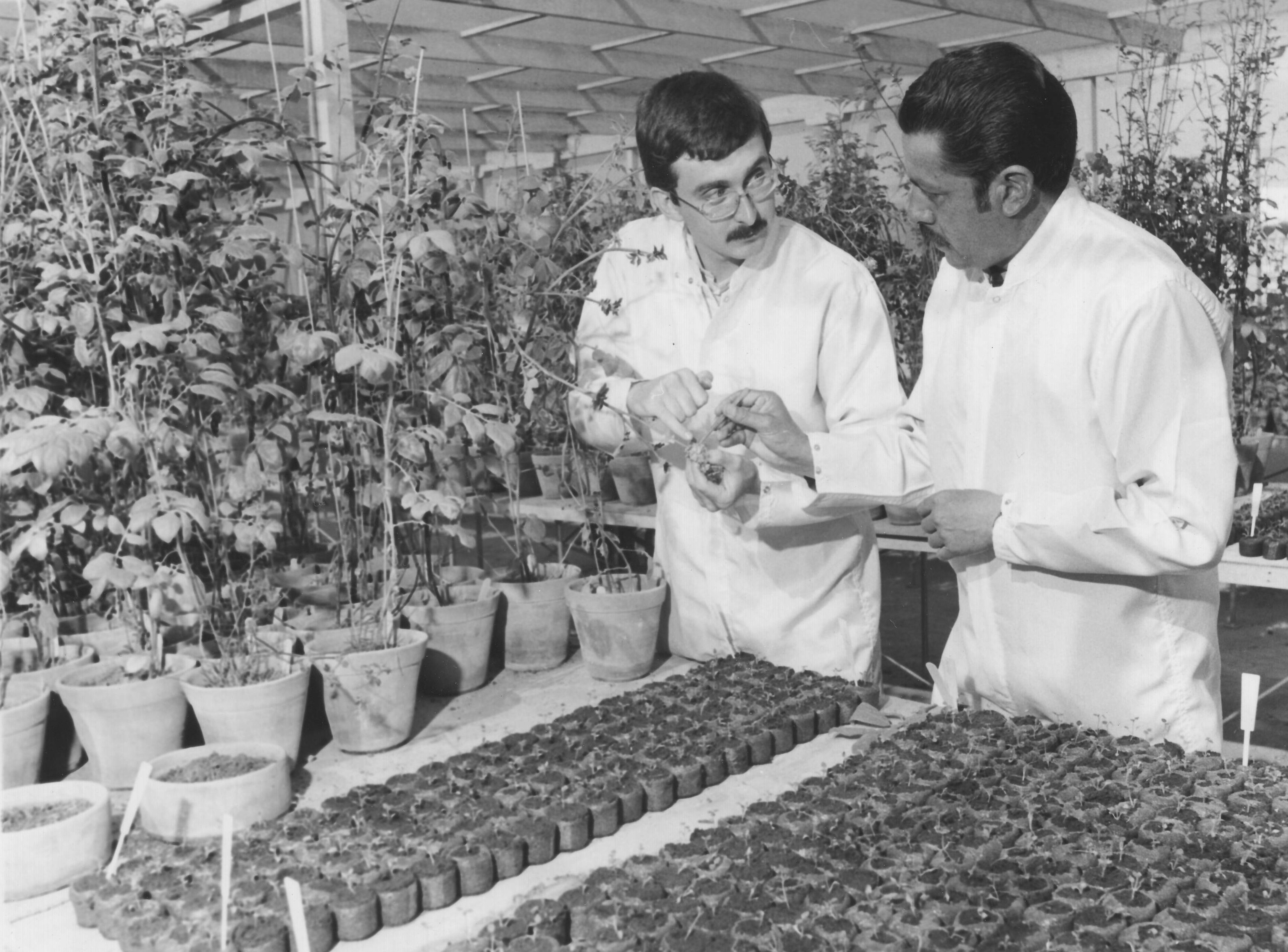
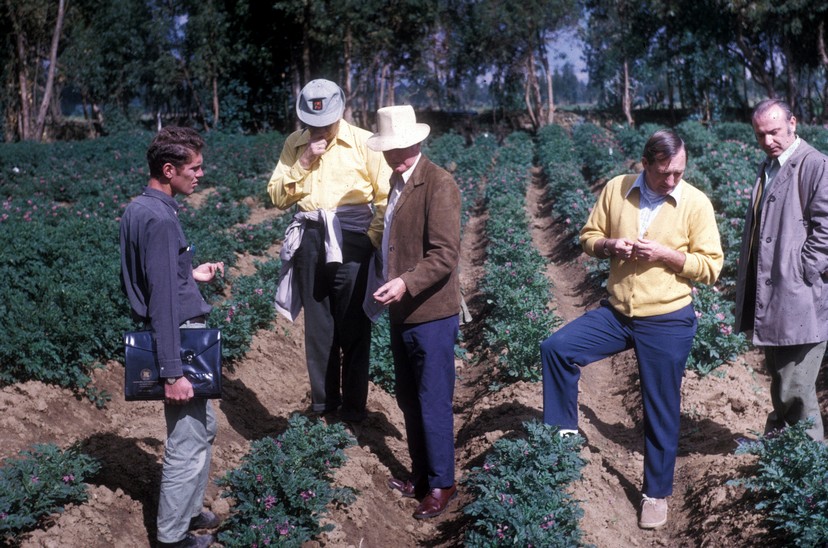
9203724733_3f71432126_zFor the development of scuba rice it was first necessary to identify and characterize genes conferring submergence tolerance—many years in the laboratory even before the first lines were tested in the field and the proof of concept realized. It didn’t take long for farmers to see the advantage of these new rice varieties. They voted with their feet! So, in a sense, the farmers themselves managed the dashed red line of the impact pathway. Scuba rice is now grown on more than 2.5 million hectares by 10 million farmers in India and Bangladesh on land that could not consistently support rice crops because of flooding.

golden-riceGolden Rice has the potential to eradicate the problem of Vitamin A deficiency, which can lead to blindness. As I mentioned earlier, rice is eaten by many people in Asia several times a day. It’s the perfect vehicle to enhance the Vitamin A intake. Varieties have been produced, the proof of concept completed, yet Golden Rice is not yet grown commercially anywhere in those countries that would benefit most. The dashed red line in my impact pathway diagram is the constraint. Golden Rice is a GMO, and the post-research and pre-release regulatory framework has not been surmounted. Pressure groups also have delayed the testing of Golden Rice lines, even destroying field experiments that would provide the very data they are so ‘afraid’ of. Thus its impact is more potential than real. Donors have been patient, but is there a limit to that patience?
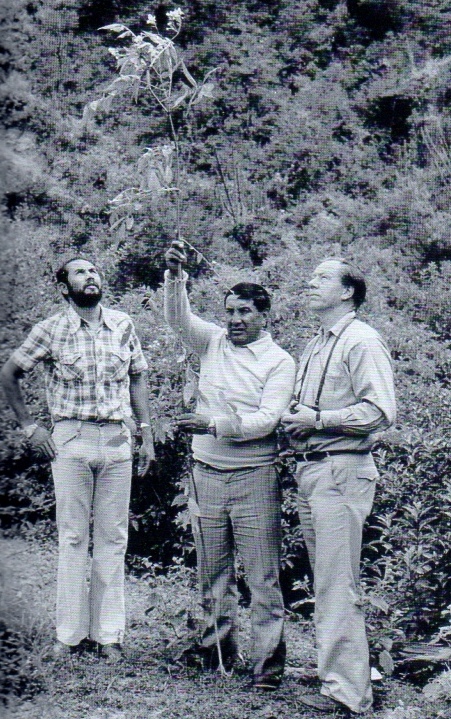
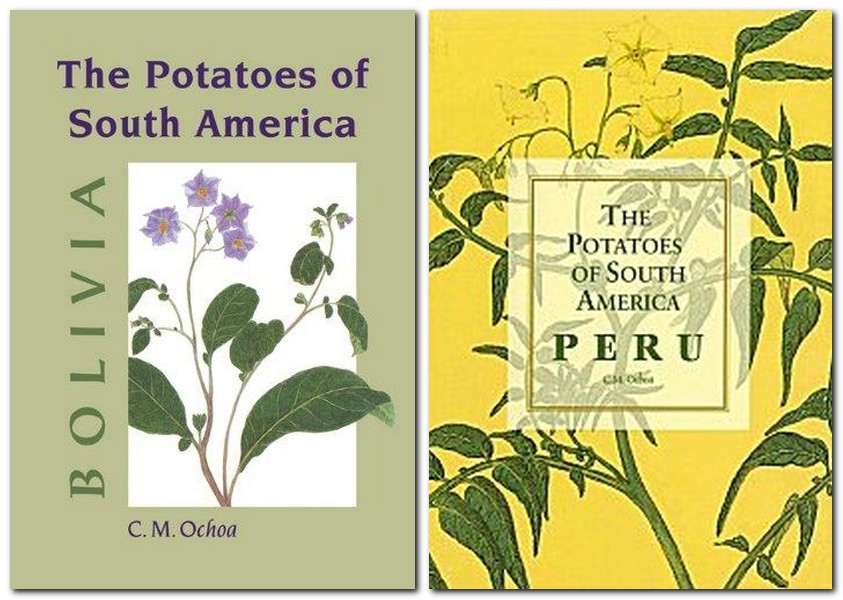
Keeping donors on-side
What I also came to realize early on is that it’s so necessary to engage on a regular basis with donors, establish a good working relationship, visit them in their offices from time-to-time, sharing a drink or a meal. Mutual confidence builds, and I found that I could pick up the phone and talk through an issue, send an email and get a reply quickly, and even consulted by donors themselves as they developed their funding priorities. It’s all part of research management. Donors also like to have ‘good news stories’. Nowadays, social media such as Facebook and Twitter, blogging even, also keep them in the loop. After all donors have their own constituencies—the taxpayers—to keep informed and onside as well.

Achieving impact is not easy. But if you have identified the wrong target, then no amount of research will bring about the desired outcome, or less likely to do so. While impact is the name of the game, good communications is equally important. They go hand-in-hand.

I used to be uncertain, but now I’m not so sure (updated 5 December 2015)

Regular visitors to my blog will, by now, know that for many years from July 1991 I worked at the International Rice Research Institute (IRRI) in Los Baños in the Philippines, south of Manila. For the first 10 years, I was head of the Genetic Resources Center (GRC), having particular responsibility for the International Rice Genebank (now supported financially by the Global Crop Diversity Trust). Elsewhere on this blog I have written about the genebank and what it takes to ensure the long-term safety of all the germplasm samples (or accessions as they are known) of cultivated rices and related wild species of Oryza.

Well, consider my surprise, not to say a little perplexed, when I recently read a scientific paper¹ that had just been published in the journal Annals of Botany by my former colleagues Fiona Hay (IRRI) and Richard Ellis (University of Reading), with their PhD student Katherine Whitehouse, about the beneficial effect of high-temperature drying on the longevity of rice seeds in storage. Now this really is a big issue for curators of rice germplasm collections, let alone other crop species perhaps.

So why all the fuss, and why am I perplexed about this latest research? Building on a paper published in 2011 by Crisistomo et al. in Seed Science & Technology², this most recent research¹ provides significant evidence, for rice at least, that seed drying at a relatively low temperature and relative humidity, 15C and 15RH—the genebank standard for at least three decades—may not be the best option for some rice accessions, depending on the moisture content of seeds at the time of harvest. It’s counter-intuitive.

But also because germplasm regeneration and production of high quality seeds is one aspect of germplasm conservation most likely to be impacted by climate change, as Brian Ford-Lloyd, Jan Engels and I emphasized in our chapter in Genetic Resources and Climate Change.

To explain further, it’s necessary to take you back 24 years to when I first joined IRRI.

20150202-klaus-lampe

Dr Klaus Lampe, IRRI Director General 1988-1995

The first six months or so
The Director General in 1991, Dr Klaus Lampe, encouraged me to take a broad view of seed management services at IRRI, specifically the operations and efficiency of the International Rice Genebank (IRG). It was also agreed that I should develop research on the germplasm collection and its conservation, something that had not been considered when the GRC Head position was advertised in September 1990. I should add that in negotiating and accepting the GRC position, I had insisted that GRC should have a research arm, so to speak. I guess I was in a fairly strong negotiating position.

Dr TT Chang, first head of the International Rice Germplasm Center at IRRI

Dr TT Chang

Once at IRRI, I didn’t rush into things. After all, I had never run a genebank before let alone work on rice, although much of my career to that date had been involved in various aspects of germplasm conservation and use. But after about six months, I reckon I’d asked enough questions, looked at how the genebank was running on a day-to-day basis. I had developed a number of ideas that I thought should vastly enhance the long-term conservation of rice germplasm, but at the same time allow all the various operations of the genebank run smoothly and hopefully more efficiently. In one sense, managing the individual aspects or operations of a genebank are quite straight-forward. It’s bringing them all together that’s the tricky part.

There was another ‘delicate’ situation to address, however. All the Filipino staff had worked for only one person for many years, my predecessor as head of the genebank (then known as the International Rice Germplasm Center, or IRGC), Dr TT Chang. It’s not an understatement to say that many of these staff were fiercely loyal to Dr Chang (loyalty being one of their greatest virtues), firmly fixed in their ways, and didn’t feel—or maybe understand—that changes were desirable or even necessary. It was a classic change management situation that I was faced with. I needed to help them evaluate for themselves the current genebank management focus, and propose (with more than a little encouragement and suggestions from me) how we might do things differently, and better.

Some radical changes
But I don’t think anyone foresaw the radical changes to the management of the genebank that actually emerged. The genebank was ‘the jewel in IRRI’s crown’, the facility that every visitor to the institute just had to see. It seemed to run like clockwork—and it did, in its own way.

Staffing and responsibilities
Apart from several staffing issues, I was particularly concerned about how rice germplasm was being regenerated in the field, and how it was handled prior to medium-and long-term storage in the genebank. There were also some serious germplasm data issues that needed tackling—but that’s for another blog post, perhaps.

In terms of genebank operations, it was clear that none of the national staff had responsibility (or accountability) for their various activities. In fact, responsibilities for even the same set of tasks, such as germplasm regeneration or characterization, to name just two, were often divided between two or more staff. No-one had the final say. So very quickly I appointed two staff, Flora ‘Pola’ de Guzman and Renato ‘Ato’ Reaño to take charge of the day-today management of the seed collection (and genebank facilities per se) and germplasm regeneration, respectively. Another staff, Tom Clemeno, was given responsibility for all germplasm characterization.

Working in the field
But what seemed rather strange to me was the regeneration of rice germplasm at a site, in rented fields, some 10km east of the IRRI Experiment Station, at Dayap. This meant that everything—staff, field supplies, etc.—had to be transported there daily, or even several times a day. It made no sense to me especially as the institute sat in the middle of a 300 ha experiment station, right on the genebank’s doorstep. In fact, the screenhouse for the wild rice collection had been constructed on one part of the station known as the Upland Farm. To this day I still don’t understand the reasons why Dr Chang insisted on using the site at Dayap. What was the technical justification?

Also the staff were attempting to regenerate the germplasm accessions all year round, in both ‘Dry Season’ (approximately December to May) and the ‘Wet Season’ (June to November). Given that the IRRI experiment station has full irrigation backup, it seemed to me that we should aim to regenerate the rice accessions in the Dry Season when, under average conditions, the days are bright and sunny, and nights cooler, just right for a healthy rice crop, and when the best yields are seen. The Wet Season is characterized obviously by day after day of continuous rainfall, often heavy, with overcast skies, and poor light quality. Not to mention that Wet Season in the Philippines is also ‘typhoon season’. So we separated the regeneration (Dry Season) from the characterization (Wet Season) functions.

But could we do more, particularly with regard to ensuring that only seeds of the highest quality are conserved in the genebank?  That is, to increase the longevity of seeds in storage—the primary objective of the genebank, after all, to preserve these rice varieties and wild species for future generations? And in the light of the latest research by Katherine Whitehouse, Fiona and Richard, did we make the right decisions and were we successful?

Seed environment and seed longevity
That’s where I should explain about the research collaboration with Richard Ellis at that time (Ellis et al. 1993; Ellis & Jackson 1995), and helpful advice we received from Roger Smith and Simon Linington, then at Kew’s Wakehurst Place (and associated with the founding of the Millennium Seed Bank).

Dr N Kameswara Rao

Dr N Kameswara Rao, now head of the genebank at the International Center for Biosaline Agriculture (ICBA) in the UAE-Dubai.

I hired a post-doctoral fellow, Dr N Kameswara Rao, on a two-year assignment from sister center ICRISAT (based in Hyderabad).  Kameswara Rao had completed his PhD at Reading under seed physiologist Professor Eric Roberts.

We set about studying the relationship between the seed production environment and seed longevity in storage, and the effect of sowing date and harvest time on seed longevity in different rice types, particularly hard-to-conserve temperate (or japonica) rice varieties (Kameswara Rao & Jackson 1996a; 1996b; 1996c; 1997). And these results supported the changes we had proposed (and some even implemented) to germplasm regeneration and seed drying.

In 1991, the IRG did not have specific protocols for germplasm generation such as the appropriate harvest dates, and seed drying appeared to me to be rather haphazard, hazardous even. Let me explain. Immediately after harvest, rice plants in bundles (stems, leave and grains) were dried on flat bed dryers before threshing, heated by kerosene flames, for several days. Following threshing, and before final cleaning and storage, seeds were dried in small laboratory ovens at ~50C. It seemed to me that rice seeds were being cooked. So much for the 15C/15RH genebank standard for seed drying!

During the renovation of institute infrastructure in the early 1990s we installed a dedicated drying room³, with a capacity for 9000 kg, in which seeds could be dried to an equilibrium 6% moisture content (MC) or thereabouts, after a week or so, under the 15/15 regime.

A rethink
Now this approach has been apparently turned on its head. Or has it?

To read the headlines in some reports of the Whitehouse et al. paper, you would think that the 15/15 protocol had been abandoned altogether. This is not my reading of what they have to report. In fact, what they report is most encouraging, and serves as a pointer to others who are engaged in the important business of germplasm conservation.

In her experiments, Katherine compared seeds with different initial MC harvested at different dates that were then dried either under the 15/15 conditions, or put through up to six cycles of drying on a batch drier, each lasting eight hours, before placing them in the 15/15 seed drying room to complete the drying process, before different seed treatments to artificially age them and thereby be able to predict their longevity in storage before potential germination would drop to a dangerous level.

This is what Katherine and her co-authors conclude: Seeds harvested at a moisture content where . . . they could still be metabolically active (>16.2%) may be in the first stage of the post-mass maturity, desiccation phase of seed development and thus able to increase longevity in response to hot-air drying. The genebank standards regarding seed drying for rice and, perhaps, for other tropical species should therefore be reconsidered.

Clearly seeds that might have a higher moisture content at the time of harvest do benefit from a period of high temperature drying. Because of the comprehensive weather data compiled at IRRI over decades, Katherine was also able to infer some of the field conditions and seed status of the Kameswara Rao experiments. And although the latest results do seem to contradict our 1996 and 1997 papers, they provide very strong support for the need to investigate this phenomenon further. After all, Katherine studied only a small sample of rice accessions (compared to the 117,000+ accessions in the genebank).

The challenge will be, if these results are confirmed in independent rice studies—and even in other species, to translate them into a set of practical genebank standards for germplasm regeneration and drying and storage for rice. And it must be possible for genebank managers to apply these new standards easily and effectively. After all many are not so fortunate as GRC to enjoy the same range of facilities and staff support.

I’m really pleased to see the publication of this research. It’s just goes to demonstrate the importance and value of research on genebank collections, whatever the crop or species. Unfortunately, not many genebank are in this league, so it behoves the CGIAR centers to lead from the front; something I’m afraid that not all do, or are even able to do. Quite rightly they keep a focus on managing the collections. But I would argue that germplasm research is also a fundamental component of that management responsibility. Brownie points for IRRI for supporting this role for almost a quarter of a century. And for Fiona as well for ensuring that this important work got off the ground. Good luck to Katherine when she comes to defend her thesis shortly.

A recent seminar
On 12 November, Fiona gave a seminar at IRRI in the institute’s weekly series, titled How long can rice seeds stay alive for? In this seminar she explores changes that have been made to genebank operations over the years and the extent to which these did or did not affect the potential longevity of rice seeds in the genebank. She talks in some detail about the benefits of initial ‘high temperature’ drying that appears to increase potential longevity of seeds. As I queried with her in a series of emails afterwards, it’s important to stress that this high temperature drying does not replace drying in the 15/15 drying room. Furthermore, it will be necessary at some stage to translate these research findings into a protocol appropriate for the long term conservation of rice seeds at -18C.

Fiona has graciously permitted me to post her PowerPoint presentation in this blog, and the audio file that goes with it. You’ll have to open the PPT file and make the slide changes as you listen to Fiona speaking. I’ve done this and it’s actually quite straightforward to follow along and advances the slides and animations in her PPT. Click on the image below to download the PPT file. Just open it then set the audio file running.

Fiona Hay seminar title

Here’s the audio file.


I am also pleased to see that the CGIAR genebanks have also established a seed longevity initiative under the auspices of the Global Crop Diversity Trust. You can read more about it here.

Seed storage – an interesting anecdote
In 1992 we implemented the concept of Active (+3-4C) and Base (-18C) Collections in the IRG. Before then all rice seeds were stored in small (20g if I remember correctly) aluminium cans. We retained the cans for the Base Collection: once sealed we could expect that they would remain so for the next 50 years or more. But in the Active Collection there was no point having cans, if they had to be opened periodically to remove samples for distribution, and could not be re-sealed.

So we changed to laminated aluminium foil packs. Through my contacts at Kew – Wakehurst Place (home of the Millennium Seed Bank), Roger Smith and Simon Linington, we identified a manufacturer in the UK (from near Manchester I believe) who could make packs of different sizes, using a very high quality and tough laminate of Swedish manufacture (originally developed to mothball armaments). It had an extremely low, if not zero, permeability, and was ideal for seed storage. Unfortunately by the time we made contact, the company had gone into liquidation, but the former managing director was trying to establish an independent business. On the strength of a written commitment from IRRI to purchase at least 250,000 packs, and probably more in the future, this gentleman was able to secure a bank loan, and go into business once again. And IRRI received the seed storage packages that it ordered, and still uses as far as I know. The images below show genebank staff handling both aluminium cans in the Base Collection and the foil packs in the Active Collection. You can see the Active Collection in the video below at minute 1:09.

~~~~~~~~~~~~~~~~~~~~~~~~~~~~
¹ KJ Whitehouse, FR Hay & RH Ellis, 2015. Increases in the longevity of desiccation-phase developing rice seeds: response to high-temperature drying depends on harvest moisture content. Annals of Botany doi:10.1093/aob/mcv091.

² S Crisostomo, FR Hay, R Reaño and T Borromeo, 2011. Are the standard conditions for genebank drying optimal for rice seed quality? Seed Science & Technology 39: 666-672.

³ If you would like to see what the seed drying room looks like, just go to minute 9:40 in the video below:


Thank you Science!

Last Monday (3 August) I came across an interesting article in The Guardian newspaper here in the UK. It was all about the success—or so it would seem—in developing a vaccine against the Ebola virus, the deadly pathogen that hit three countries in West Africa so dramatically over the past year. In particular, one photo caught my eye, which I have included below (and I hope no-one from The Guardian nor the photographer objects).

801de426-aa9e-476f-b100-b9e58614d838-620x372

From The Guardian 3 August 2015: Six-year-old Cecilia Kamara from Robertsport, Liberia holds up a sign after receiving news about the Ebola vaccine. Photograph: Alphanso Appleton

The development of this Ebola vaccine depended on rigorous scientific research and testing, and a little serendipity and luck as well in some cases. Isn’t science wonderful?

Not a scientist?
So it must come as a bit of surprise if I declare, here and now, that I never aspired to become a scientist, even though that’s what I spent more than 40 years doing. As a youngster, I was never enthralled by the moon and stars; dinosaurs didn’t pique my interest. On the other hand, I was quite a keen bird watcher, and had a general interest in nature and conservation. So while I ended up taking a science degree at the University of Southampton, I guess it could have gone the other way and I might have studied humanities instead. And that’s especially so given my deep interest in history over the past decade or so. I have even considered taking a history degree at the Open University in retirement, but have consigned that to the realm of fantasy. I don’t think I could take the discipline of formal study once again.

Paul Nurse has a passion for science
I can’t complain, however. Science gave me a good career and living, but I never developed a passion for it as described by Nobel laureate and President of the Royal Society, Sir Paul Nurse, in the BBC’s Richard Dimbleby Lecture in 2012. It’s really worthwhile persevering for the whole 45 minutes as Nurse delivers a most erudite analysis (without referring to notes at any point) of the importance and relevance of science to and for society.

There’s much of what Sir Paul describes that I can empathize with. After all, my own work on the conservation and use of plant genetic resources was a contribution to so-called ‘Green Revolution’ agricultural research aimed at improving the livelihoods of poor farmers around the world and the hundreds of millions of poor who depend on staple crops for their daily well-being.

Did I do good science?
Only my peers can confirm that. I think I did some competent science that was successfully submitted for publication in internationally-recognized journals. There was nothing I did that was ground-breaking science. But in terms of my contributions to agricultural research, I like to think that fewer people went to bed hungry each night because of the research I had contributed. Managing the world’s largest collection of rice genetic resources in the International Rice Genebank, not only did we study the nature and scope of genetic variation in rice, but we also aimed to enhance the long-term survival of rice seeds in cold storage. The submergence tolerant varieties of rice developed by IRRI in partnership with scientists at the University of California, and now released throughout Bangladesh and India are already enhancing the productivity of rice farming. Several rice germplasm accessions tolerant of complete transient submergence are safely conserved in the International Rice Genebank Collection.

Research management
I felt much more comfortable as a research manager, with a team of much more competent and talented colleagues. My role was to develop a broad perspective on research needs, and prioritize which research to undertake. And to provide a research environment where my colleagues could be productive to the best of their abilities. I think that’s where my forte lay.

Design, luck, or serendipity?
Nevertheless, there are several things I was directly involved with, or decisions made, which merit some highlighting, with serendipity playing a significant role. As Sir Paul Nurse pointed out, it’s up to the scientist to recognize the significance of—and then exploit—observations and discoveries made.

My work on bacterial wilt of potatoes at the International Potato Center (CIP) in Costa Rica depended on recognizing the significance of diseased plants in a field trial that was set up originally to test potato varieties for adaptation to warm and humid climates. Having identified ‘resistant‘ plants, as well as the importance of the field testing site, we went on to establish the importance of a particular variety (Cruza 148) that went on to become one of the most important in East Africa.

In work at the University of Birmingham, with my colleagues Professor Brian Ford-Lloyd and Dr Susan Juned, we discovered differential responses of cv. Record clones in terms of somaclone production. But that wouldn’t have been possible had we not taken a simple decision from the outset to number each stock tuber individually, and all the somaclones selected from each.

The application of molecular biology to study germplasm collections has come a long way since a PhD student of mine, Adi Damania, published a paper in 1983 using RAPD markers with wheat and barley landraces. Then, with colleagues at The University of Birmingham (Dr Parminder Virk, Brian, and Professor John Newbury – now at the University of Worcester), we published in 1995 one of the first—if not the first—paper on association genetics, based on studies of accessions in the International Rice Genebank Collection.

The experience of years
I’d like to think that the books I’ve written or edited have also contributed in some way to the discussion about the value of genetic resources and their importance as the planet faces the threat of climate chnage. And some of our thinking goes back to 1989 when the whole idea of climate change was far more contentious than today (unless you’re a Republican presidential hopeful).

The value of research metrics?
Some research has an impact, benefits society directly, other research is much longer-term. How can this be valued? Well, there’s a plethora of metrics to assess the value of published research such as citation indices, and others that frankly I don’t understand the meaning of or how they are calculated and applied. Journals have a so-called ‘Impact Factor’, and there’s great pressure on researchers to publish in high impact journals. Fortunately I never had to worry about these things when I worked at The University of Birmingham in the 1980s, and it was never raised as an issue when I was with IRRI. But there is growing concern about the use—and misuse—of research metrics, as highlighted in a recent article in The Guardian newspaper.

When I was teaching at The University of Birmingham in the 1980s, a monthly bulletin, Teaching News, was circulated to staff, by the School of Education, I believe. There was one article I remember quite vividly discussing the use and misuse of citation indices. Crude numbers don’t tell you anything. And to emphasize the point further, the article went on to compare two articles with very different citation indices. One, with a low index, was a piece of eminent scholarship about rural communities in South Wales, but cited infrequently simply because sociological studies in this field were not frequent. The other, in the crowded field on the rise of Naziism, had a very high index, because it had been cited so often—but mainly in a negative way.

I also saw something from IRRI the other day stating that the ORYZA2000 model had been cited more than 16,000 times in scientific publications. I’m sure most of those citations do reflect a meaningful application of the model, but it would be interesting to see beyond the raw metric.

Science should never be kept in the closet. Knowledge increases as ideas are shared, tested, and accepted or rejected in the course of scientific exploration. While I may not have been a dedicated scientist per se, I can also say “Thank you Science!” It was fun while it lasted.


Indulging my [genetic resources] fantasies . . .

dnaLying in bed this morning, waiting for the news at 6 am on BBC’s Radio 4, I heard a brief ‘trailer’ for a new three-part series, Fantasy Festival, which begins on 13 August.

On the program’s website it states that: Festivals are fast becoming significant events on more and more people’s calendars. Whether it’s a huge rock fest or a small scale village event, it’s somebody’s job to imagine the festival before it happens, and to assemble all the pieces of the jigsaw that are needed to bring their vision to life.

But what if you could create your own festival – where you set the agenda, chose the guests, pick the acts, and dictate the weather, the food and the ambience? A festival where anyone – whether dead or alive – can be summoned to perform, and nothing is unimaginable.

What a treat!

Having been responsible for two international science conferences (on rice) in 2010, in Hanoi, and 2014, in Bangkok, I know all about the trials and tribulations of putting together a program of topics and speakers that most (never all) delegates will enjoy.

But, if there were no constraints at all, who would I invite to take part in a round-table discussion. From my perspective, it would be all about the nature and structure of genetic variation, and how it can be used for the benefit of society, especially under the threat of climate change.

So here’s a list I’ve just come up with. Who would be on yours?

I’m sure you must find this list rather surprising. And I can think of many more scientists* who could be a ‘panel member’. Some of my choices are obvious, others less so.

The fundamentals of evolution and genetics were the purview of Darwin and Mendel. What would they make of today’s advances in molecular biology, and how geneticists and plant breeders are using this sort of information to improve the crops that feed us. Susan McCouch is at the forefront of molecular genetics in her laboratory at Cornell University, dissecting the genome of rice and feeding that information into rice breeding. She’s also an excellent communicator.

Vavilov is the giant of genetic resources exploration and use. A genetic resources hero to many, no discussion of genetic conservation and use would be complete without his insights.

Edgar Anderson, a pioneer botanist in the USA, and former director of the Missouri Botanical Garden, demonstrated the importance of introgressive hybidization. Sir Otto Frankel is the father of the modern genetic resources movement, and an acclaimed wheat breeder in Australia. Jack Heslop-Harrison could turn his hand to almost anything botanical. But it’s for his broad perspectives on genetic variation in populations that I would include him, specifically for those on genecology.

Trevor Williams, a former director of the International Board for Plant Genetic Resources, oversaw the development of the international network of genebanks, and development of national capacity around the worked to successfully collect and conserve genetic resources. He had a broad view about conservation and use.

And sitting among these eminent scientists, from the pivotal year of 1953, is Nobel laureate Francis Crick. It would be interesting to know what he would have thought about these latest applications of molecular genetics in the service of humanity.

* G Ledyard Stebbins; Jack Hawkes; Erna Bennett; Clausen, Keck and Hiesey among others.

What’s in a name? I’m on a germplasm ID crusade!

What’s in a name? Well, not a lot it seems when it comes to crop germplasm. It’s a particular ‘bee in the bonnet’ I’ve had for many years.

We use names for everything. In the right context, a name is a ‘shorthand’ as it were for anything we can describe. In the natural world, we use a strict system of nomenclature (in Latin of all languages) – seemingly, to the non-specialist, continually and bewilderingly revised. Most plants and animals also have common names, in the vernacular, for everyday use. But while scientific nomenclature follows strict rules, the same can’t be said for common names.

Stretching an analogy
However, let me start by presenting you with an analogy. Take these two illustrious individuals for example.

We share the same name, though I doubt anyone would confuse us. Certainly not based on our phenotypes – what we look like. In any case, I’m WYSIWYG. Our ‘in common’ name implies no relationship whatsoever.

Marian_and_Vivian_BrownWhat about identical monozygotic twins, such as Marian and Val Brown? Dressing alike, they became celebrities in their adopted city of San Francisco from the 1970s until their deaths. Same genetics, but different names.
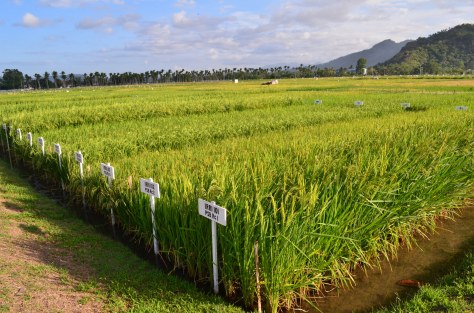
Maybe I’m stretching the analogy too much. I just want to hammer home the idea that sharing the same name should not imply common genetics. And different names might mask common genetics.

Naming crop varieties
So let’s turn to the situation in crop germplasm resources.

I had found in my doctoral research that apparently identical Andean potato varieties – based on morphology and tuber protein profiles – might have the same name or, if sourced from different parts of the country, completely different names given by local communities. And it also was not uncommon to find potatoes that looked very different having the same name – often based on some particular morphological characteristic. When we collected rice varieties in Laos during the 1990s, we described how Laotian farmers name their varieties [1].

During the 1980s my University of Birmingham colleague Brian Ford-Lloyd and I, with Susan Juned, studied somaclonal variation in the potato cv. Record. We received a sample of 50 or so tubers of Record, and fortunately decided to give each individual tuber its own ID number. The number of somaclones generated from each tuber was very different, and we attributed this to the fact that seed potatoes in the UK are ultimately produced from different tissue culture stocks. This suggested that there had been selection during culture for types that responded better to tissue culture per se [2]. The implication of course is that potato cv. Record (and many others) is actually an amalgam of many minor variants. I recently read a paper about farmer selection of somaclonal variants of taro (Colocasia esculenta) and cassava (Manihot esculenta) in Vanuatu.

Dropping the ID
But there is a trend – and a growing trend at that – to rely too much on names when it comes to crop germplasm. What I’ve found is that users of rice germplasm (and especially if they are rice breeders) rely too heavily on the variety name alone. And I’d be very interested to know if curators of other germplasm collections experience the same issue.

Why does this matter, and how to resolve this dilemma?

During the 1990s when we were updating the inventory of samples (i.e. accessions) in the International Rice Genebank Collection at IRRI, we discovered there were multiple accessions of several IRRI varieties, like IR36, IR64 or IR72. I’m not sure why they had been put into the collection, but they had been sourced from a number of countries around Asia.

13572539893_3f4b43dfd2_k

We decided to carefully check whether the accessions with the same name (but different accession numbers) were indeed the same. So we planted a field trial to carefully measure a whole range of traits, not just morphological, but also some growth ones such as days to flowering. I should hasten to add that included among the accessions of each ‘variety’ was one accession added to the genebank collection at the time the variety had been released – the original sample of each.

We were surprised to discover that there were significant differences between accessions of a variety. I raised this issue with then head of IRRI’s plant breeding department, the eminent Indian rice breeder Dr Gurdev Khush. Rather patronizingly, I thought, he dismissed my concerns as irrelevant. As a rice breeder with several decades of experience and the breeder responsible for their release, he assured me that he ‘knew’ what the varieties should look like and how they ought to perform. I think he regarded me as a ‘rice parvenu’.

It seemed to me that farmers had made selections from within these varieties that had been grown in different environments, but then had kept the same name. So it was not a question of ‘IR36 is IR36 is IR36‘. Maybe there was still some measure of segregation at the time of original release in an otherwise genetically uniform variety.

I have a hunch that some of the equivocal results from different labs during the early rice genome research using the variety Nipponbare can be put down to the use of different seed sources of Nipponbare.

Germplasm requests for seeds from the International Rice Genebank Collection often came by variety name, like Nipponbare or Azucena for example. But which Nipponbare or Azucena, since the there are multiple samples of these and many others in the collection?

What I also discovered is that when it comes to publication of their research, many rice scientists frequently omit to include the germplasm accession numbers – the unique IDs. Would ‘discard’ be too strong an indictment?

I was reviewing a manuscript just a few days ago, of a study that included rice germplasm from IRRI and another genebank. There was a list of the germplasm, by accession/variety name but not the accession number. Now how irresponsible is that? If someone else wanted to repeat or extend that study (and there are so many other instances of the same practice) how would they know which actual samples to choose? There is just this belief – and it beggars belief – that germplasm samples with the same name are genetically the same. However, we know that is not the case. It takes no effort to provide the comprehensive list of germplasm accession numbers alongside variety names.

Accession numbers should be required
I’m on the editorial board of Genetic Resources and Crop Evolution. I have proposed to the Editor-in-Chief that any manuscript that does not include the germplasm accession numbers (or provenance of the germplasm used) should be automatically sent back to the authors for revision, and even rejected if this information cannot be provided, whatever the quality of the science! Listing the germplasm accession numbers should become a requirement for publication.

Draconian response? Pedantic even? I don’t think so, since it’s a fundamental germplasm management and use issue.

~~~~~~~~~~~~~~~~~~~~~~~~~~~~~~~~~~~~~~~~~~~~~
[1] Appa Rao, S., C. Bounphanousay, J.M. Schiller & M.T. Jackson, 2002. Naming of traditional rice varieties by farmers in the Lao PDR. Genetic Resources and Crop Evolution 49, 83-88.
[2] Juned, S.A., M.T. Jackson & B.V. Ford-Lloyd, 1991. Genetic variation in potato cv. Record: evidence from in vitro “regeneration ability”. Annals of Botany 67, 199-203.