Reflections of a 1990s genebanker

Since I started this blog in February 2012, I have written a number of stories about rice genetic resources and their conservation at the International Rice Research Institute (IRRI) in the Philippines, one of the centers of the Consultative Group on Agricultural Research (CGIAR).

Written over several years, there is inevitably some overlap between the posts. I have now brought them together. Just click on the red boxes below to read each one or expand an image.

I was privileged to manage the International Rice Genebank at IRRI (the IRG, formerly known as the International Rice Germplasm Center or IGRC until 1995) for a decade from July 1991, as Head of the Genetic Resources Center (GRC) [1].

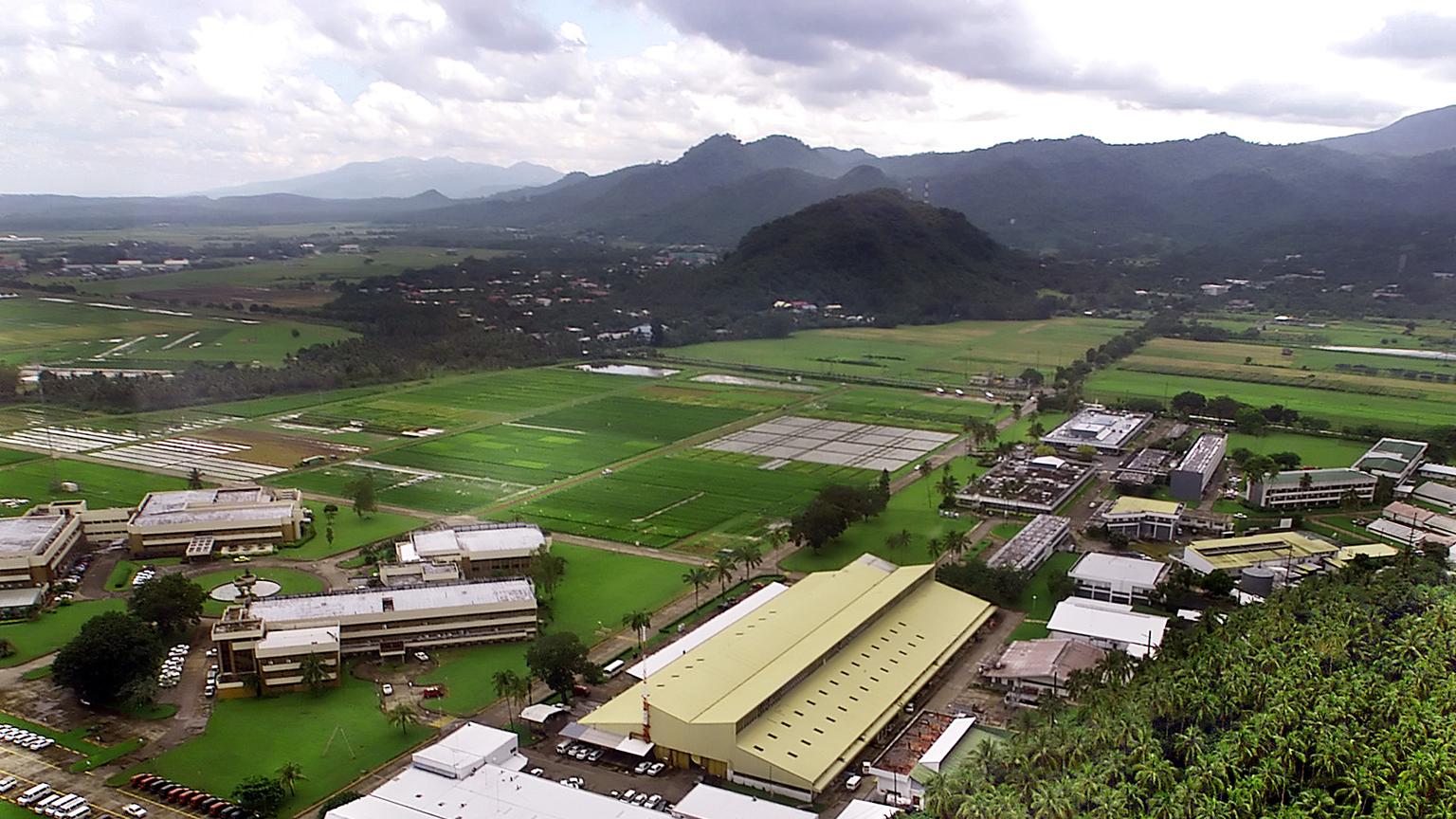
The IRRI campus at Los Baños, 70 km south of Manila. The Brady Laboratory (second from left) houses the genebank cold stores.

There are twelve CGIAR genebanks, and IRRI’s is one of the largest. It’s certainly the oldest. In April, IRRI will celebrate its 65th anniversary [2]. For almost six and a half decades, IRRI has successfully managed the world’s largest collection of rice genetic resources (farmer or landrace varieties, improved varieties, wild rice species, genetic stocks, and the like).

There’s perhaps no crop more important than rice. It’s the staple food of half the world’s population on a daily basis. The genebank is a crucial resource for plant breeders who use the germplasm to sustain and increase agricultural productivity, with the aim of reducing hunger among the world’s poor.

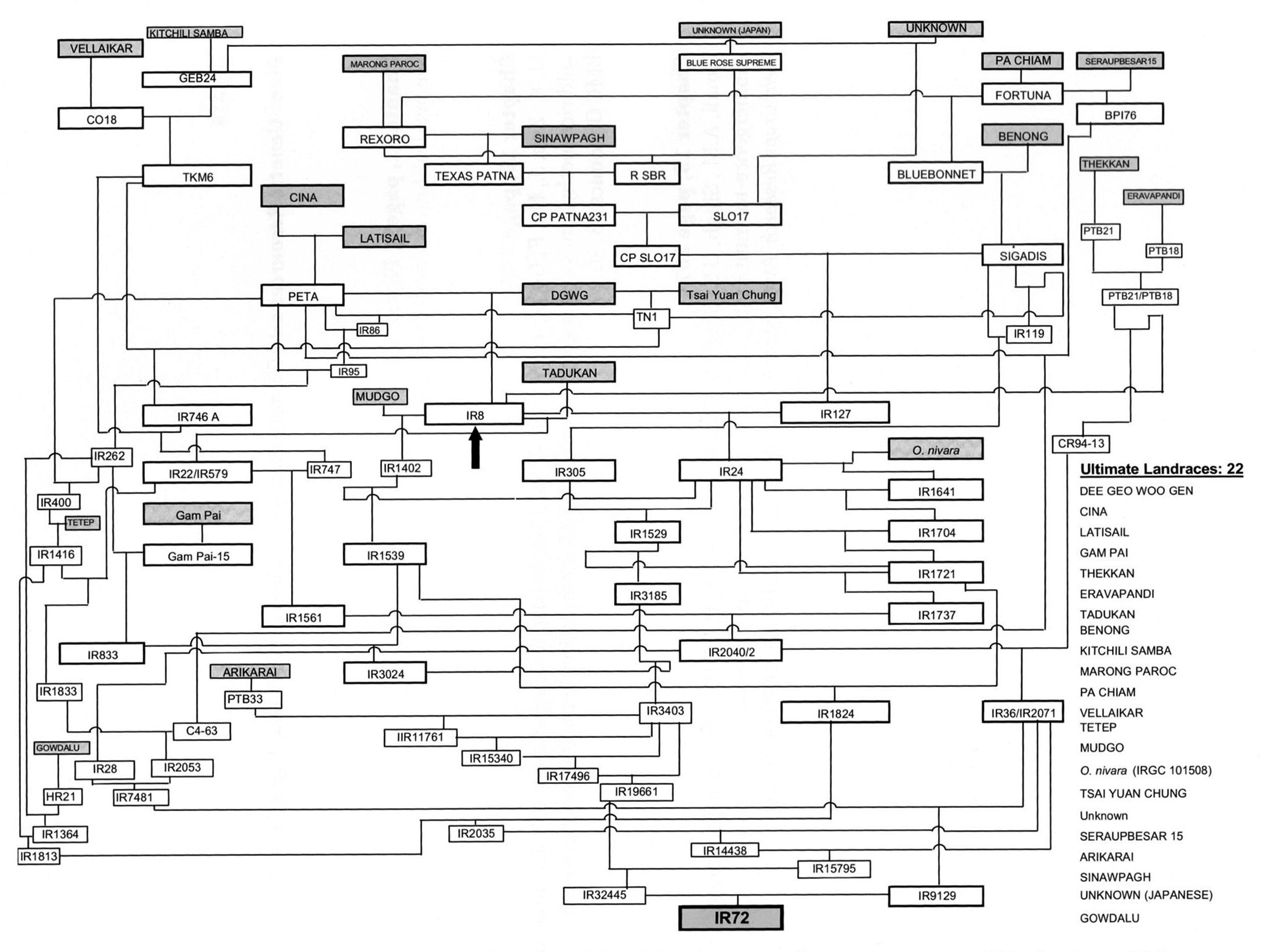
IRRI released the first of the semi-dwarf varieties in the 1960s; many others have followed over the decades, with increasingly more complex pedigrees.

Pedigree of rice variety IR72 showing 22 landraces (boxes with bold lines) and one wild species, Oryza nivara. In contrast, IR8, the first of the widely-grown modern semi-dwarf varieties (indicated by the arrow) had only three landraces in its pedigree.

When I joined IRRI, there were just over 70,000 seed samples (or accessions as they are known in genebank parlance) in the genebank.

During the 1990s, the collection grew by about 30% to a little over 100,000 accessions. This was quite remarkable in itself, given that the Convention on Biological Diversity (CBD) had come into effect in 1992, and for for at least a decade or more thereafter, many countries were reluctant to share their national germplasm until benefit-sharing mechanisms had been worked out. It says a lot about the mutual respect between national programs (particularly in Asia) and IRRI that we were able to mount a significant program to collect rice varieties and wild species. But more on that later.

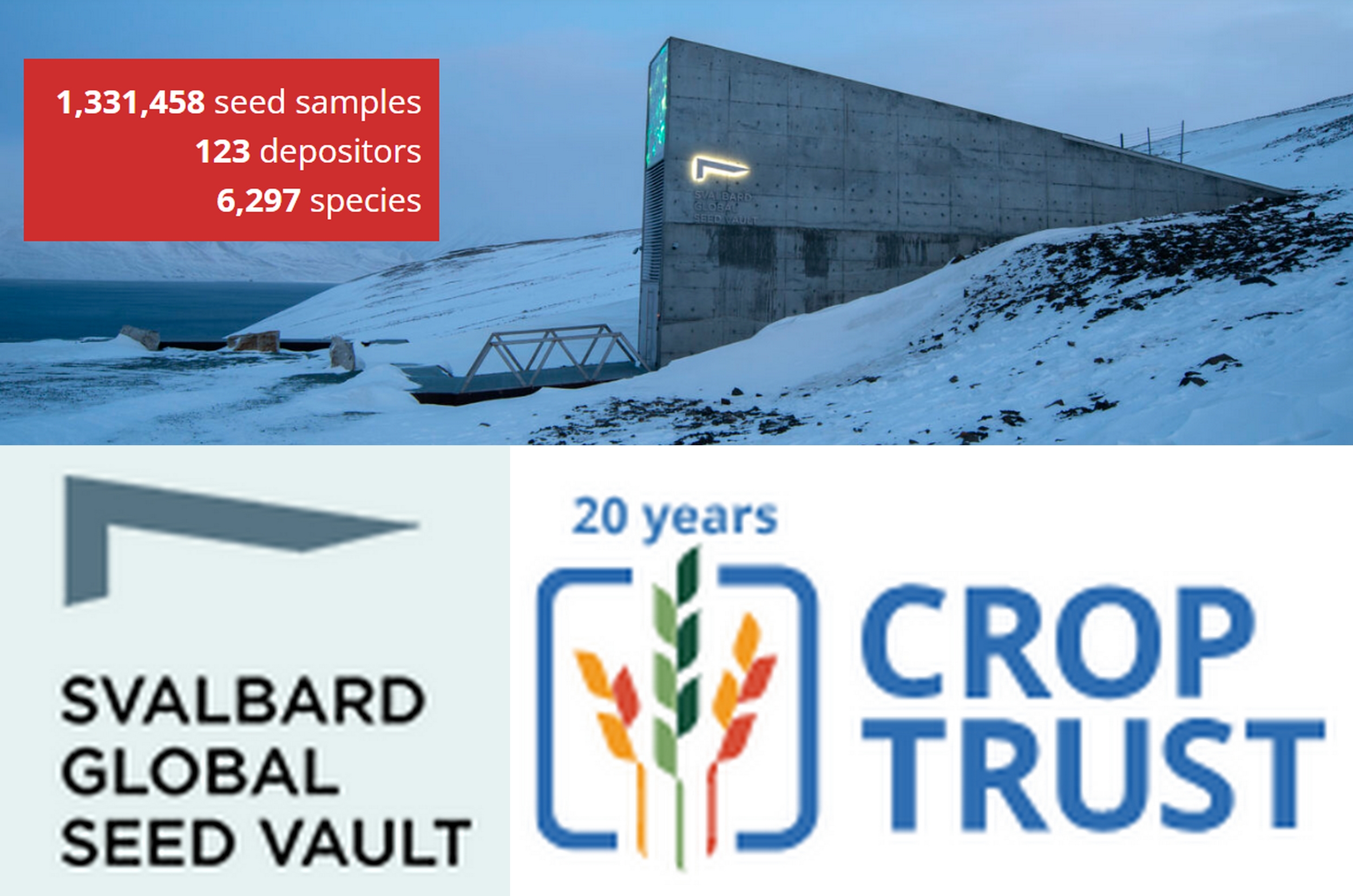
Today the collection is approaching 135,000 accessions, safely duplicated in the Svalbard Global Seed Vault (SGSV, under the auspices of the Government of Norway and the Crop Trust). Prior to 1991, and for at least the next decade or more, duplicates samples were also held in so-called ‘black box’ storage at the National Laboratory for Genetic Resources Preservation in Fort Collins, Colorado. I’m not sure whether IRRI has continued its arrangement with Fort Collins now that the SGSV is open.

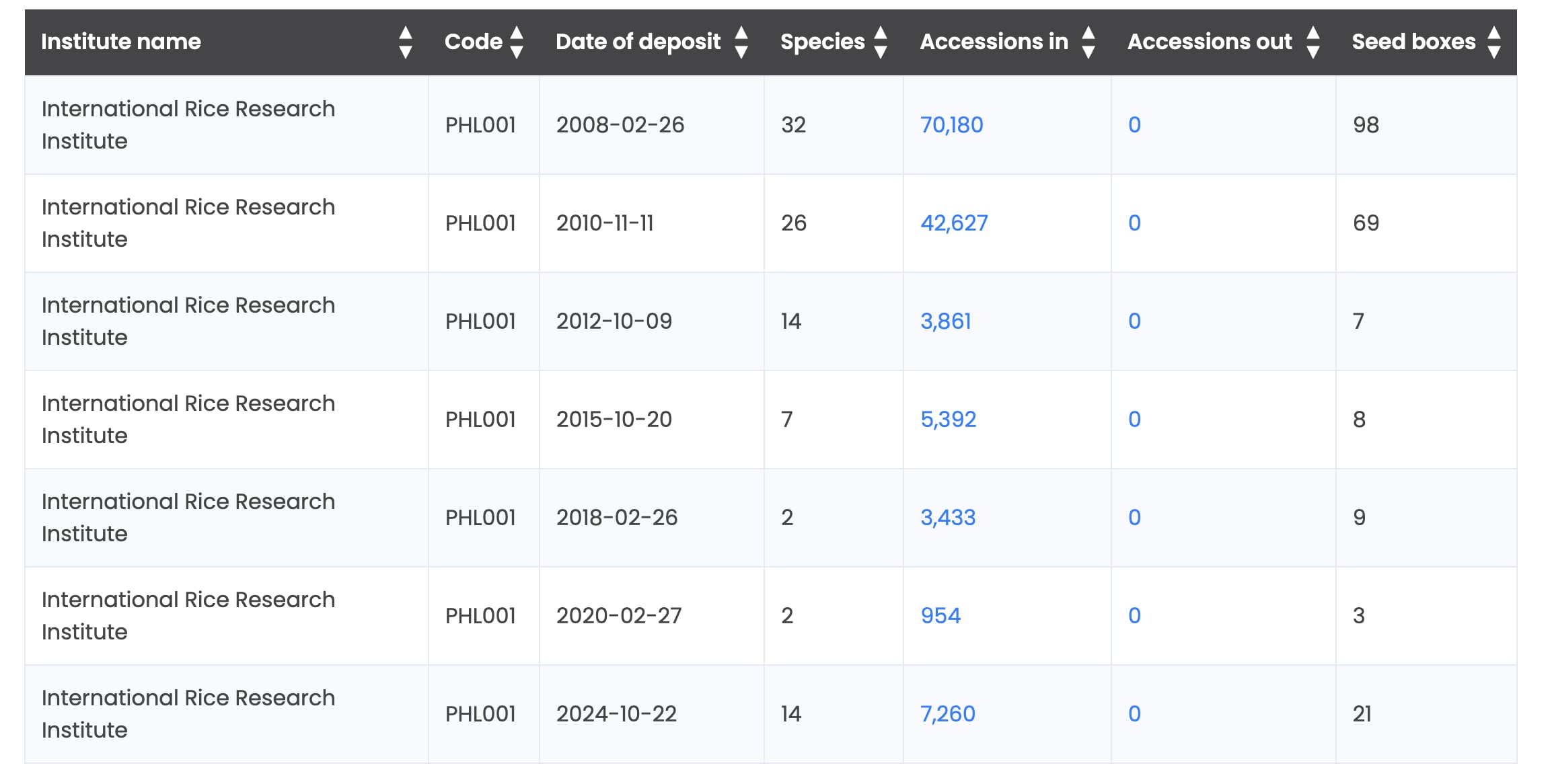
When the SGSV vault was opened in 2008, IRRI deposited more than 70,000 accessions, the first to be registered in the Vault. Since then, IRRI has made six more deposits, for a total of 133,707 accessions, almost the entire collection.

Given the amount of publicity that the SGSV has received, one could be forgiven for not knowing that there are many more genebanks around the world.

Inevitably there has been some misguided (as far as I’m concerned) criticism of the SGSV that I attempted to rebut in the next post.

The IRRI genebank became the first genebank of the CGIAR system to be identified by the Crop Trust for in-perpetuity funding that will ensure the availability of the conserved germplasm decades into the future.

The fact that IRRI was able to deposit so many accessions in the SGSV and receive in-perpetuity funding is due—in no small part—to the many changes we made to the management of the genebank and its collection during the 1990s. And which pre-emptively prepared it for the changes that all the CGIAR genebanks would eventually have to make.

But I’m getting ahead of myself just a little.

Although I had been involved with the conservation and use of plant genetic resources since 1970 (when I arrived at the University of Birmingham to attend the one-year MSc course on genetic conservation), I’d never worked on rice nor managed a genebank when I joined IRRI in 1991. All my experience to date had been with potatoes in South and Central America, and several grain legumes while teaching at Birmingham during the 1980s.

1991 was a fortuitous time to join IRRI. I was recruited by Director General Klaus Lampe (right), who had been appointed by the institute’s Board of Trustees in 1998 to revive the institute’s fortunes and refurbish its ageing infrastructure.

Lampe was very supportive of the genetic resources program, and it helped that I had a senior position as a department head, so was able to meet with him directly on a regular basis to discuss my plans for the genebank.

Before 1991 quite a number of staff retired, including the previous and first head of the IRGC, Dr Te-Tzu Chang (known universally simple as ‘TT’). TT and I had very different management styles, and I was determined to involve my genebank staff in the changes that I believed should be made. I spent six months determining how the genebank operations could be significantly enhanced.

As I said, Klaus Lampe was supportive, approving recruitment of junior staff to help with the considerable backlog of seed samples for cleaning and registering in the genebank, as well as including the genebank in the institute’s program of infrastructure refurbishment and equipment upgrades.

These two posts describe many of the changes we made, and include a video about the genebank that I made in 2010 just before I left IRRI.

I was fortunate to inherit a great group of staff, totally dedicated to the genetic conservation cause, and much more knowledgeable about rice than I ever became [3].

I quickly identified Ms Flora ‘Pola’ de Guzman (all Filipinos have a nickname) as a potential genebank manager, and she continued in that role until her retirement a couple of years back. When the in-perpetuity agreement was signed in 2018, Pola was given a special award, recognising her 40 years service to the conservation of rice genetic resources.

Inside the International Rice Genebank Active Collection, with genebank manager Pola de Guzman

I asked Renato ‘Ato’ Reaño to manage all the genebank’s field operations. Ato has also now retired.

One of the key aspects that had to be addressed was data management. As you can imagine, for a collection of 70,000+ accessions that I inherited in 1991, there was a mountain of data about provenance, as well data on morphological characters and response to biotic and abiotic stresses, across the cultivated rices (two different species) and 20+ wild species of Oryza. Essentially there were three databases that couldn’t effectively talk to each other. Big changes had to be made, which I described in this post.

It took almost two years, but when completed we had developed the International Rice Genebank Collection Information System (IRGCIS) to manage all the operations of the genebank. It has now been superseded by an international system based on the US-developed germplasm information network, GRIN.

That information situation also reminds of another information ‘bee in my bonnet’, which I wrote about here.

In my interviews at IRRI in January 1991, I stressed the need for the genebank to carry out research, something that had not been contemplated when the GRC position was advertised the previous year. In fact, I made it a condition of accepting a job offer that the genebank should conduct germplasm-relevant research, such as studies of seed survival, rice taxonomy, and the management of the collection.

I had concerns that we had insufficient information about the longevity of seeds in storage, or how the environment at Los Baños affected the quality of rice seeds grown there. We developed new seed production protocols, and post-harvest management in terms of seed drying. We installed a bespoke seed drying room with a capacity of over 1 tonne of seeds. In the 2000s (after I had moved from GRC to a senior management position at IRRI), seed physiologist Fiona Hay was recruited who improved on the seed handling protocols that we developed and which had already shown to be effective in increasing seed quality for long-term conservation.

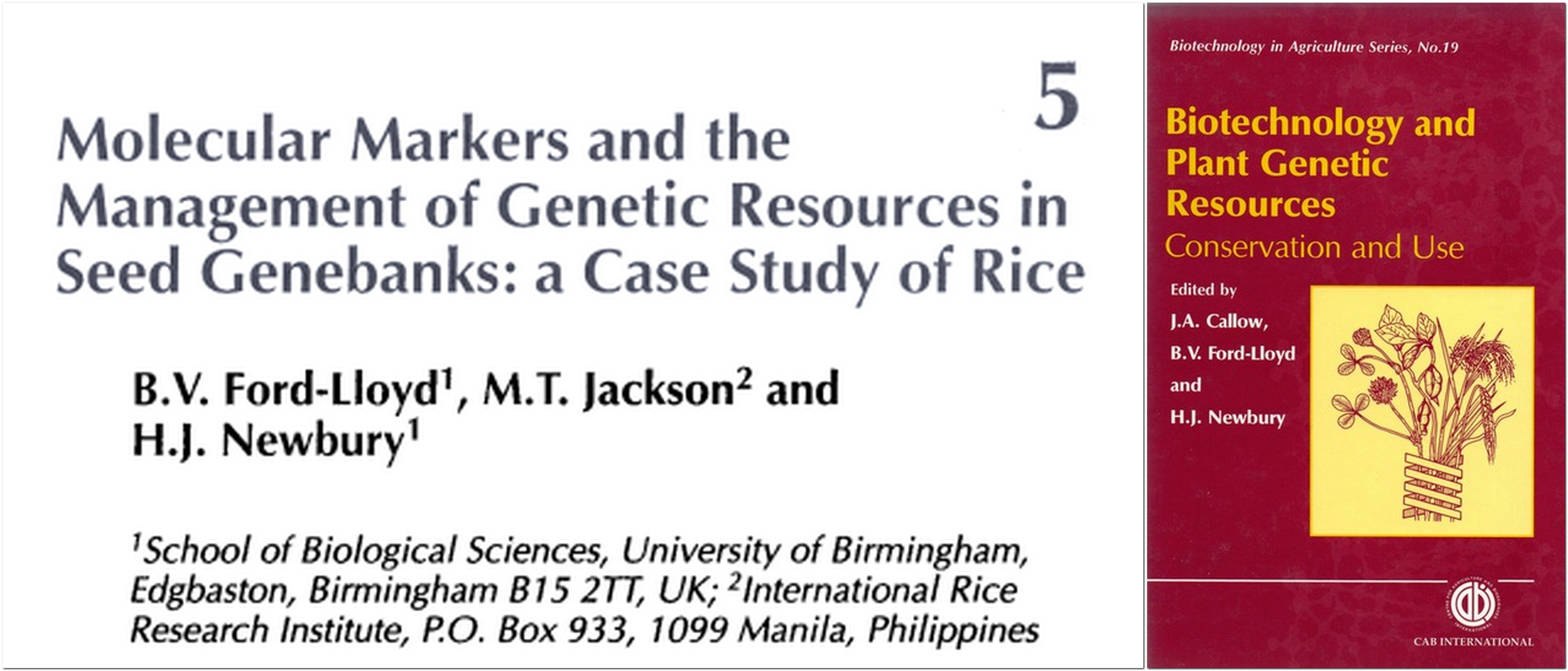
Early in the decade, and with funding from the British government, we set up a collaborative project with my former colleagues at the University of Birmingham as well as at the John Innes Centre to study how molecular markers could be used to study the diversity in the rice collection and its management.

In 1994, we received a large grant (>USD 2.3 million) from the Swiss government:

  • to collect rice varieties and wild species throughout Asia, Africa, and parts of South America (essentially to try and complete the collecting of germplasm that had been little explored);
  • to conduct research about on-farm management of rice genetic resources; and
  • to train personnel from national germplasm programs in collecting, conservation techniques, and data management.

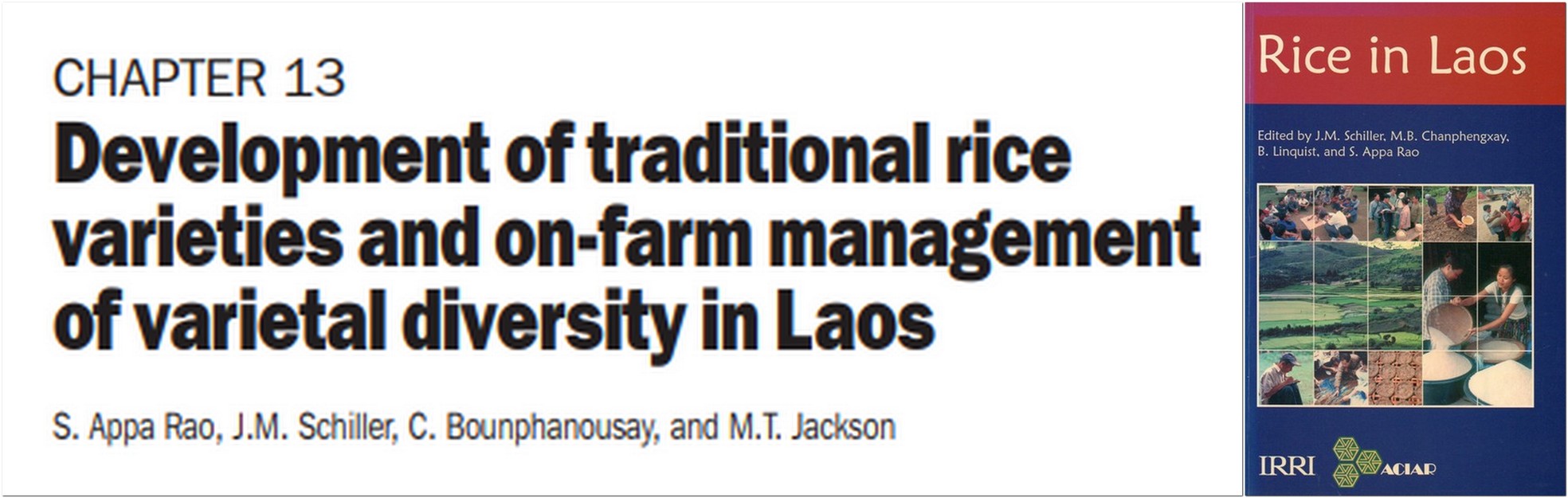
During the 1990s, IRRI had a special rice project with the Government of Laos, and a staff member based in Vientiane. Since little rice germplasm had been collected in that country, we recruited Dr Seepana Appa Rao to collect rice varieties there.

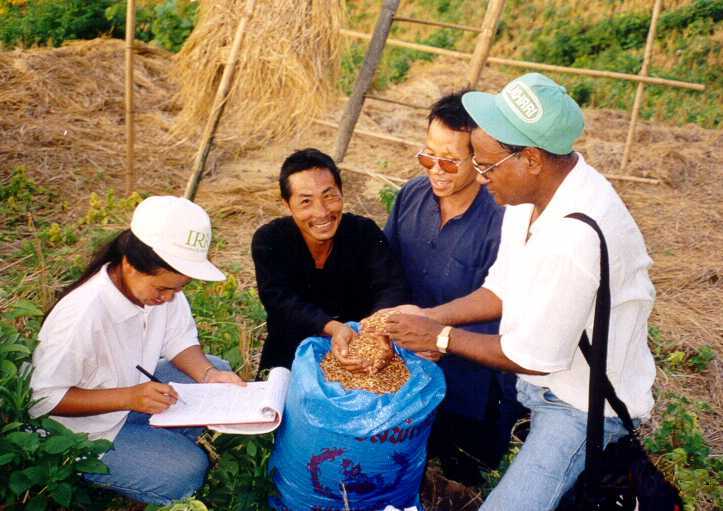
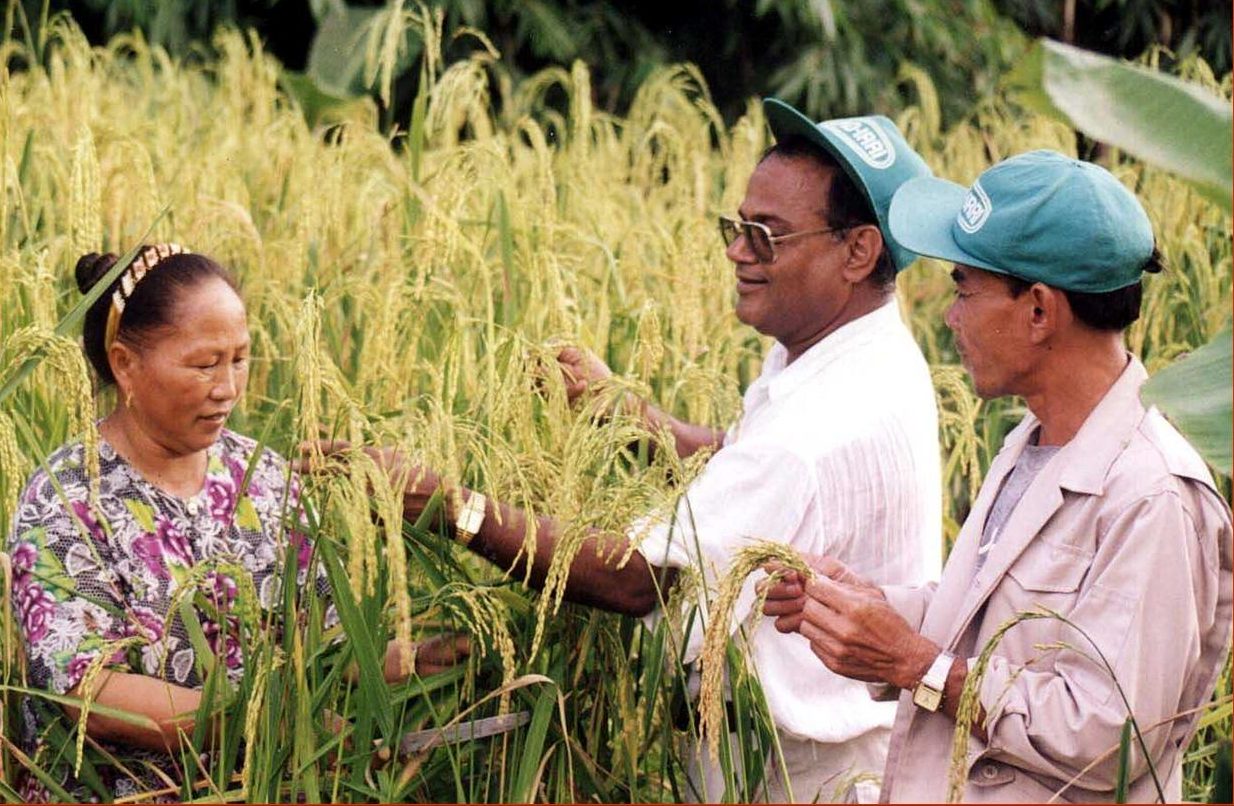
Appa Rao (right) and his Lao counterpart, Dr Chay Bounphanousay (left) sampling a rice variety from a Lao farmer.

Over a five year period he and his Lao colleagues collected more than 13,000 samples, now safely conserved in the International Rice Genebank. We also built a small genebank near Vientiane to house the germplasm locally.

My colleagues and I were quite productive in terms of research and publications. This post lists all the publications on which I was author/co-author, and there are links therein to PDF copies of many of them.

Every year, IRRI receives thousands of visitors, and when I first arrived at IRRI, it seemed as if anyone and everyone who wanted to visit the genebank was allowed to do so. On more than one occasion—until I put a stop to it—I’d find our colleagues from Visitor Services taking a large party of visitors, hordes of schoolchildren even, into the cold stores. With such large numbers it was not possible to keep all the doors closed, disrupting the carefully controlled temperature and humidity environment in the genebank and its laboratories.

I had to limit the number of visitors inside the genebank significantly, and ask my staff to take some of the load of attending to visitors. Nevertheless, I do understand the need to explain the importance of genetic resources and the role of the genebank to visitors, and build a constituency who can support the genebank and what it aims to achieve.

But it was a joy to meet with visitors such as wheat breeder, ‘Father of the Green Revolution’, and 1970 Nobel Peace Laureate, Dr Norman Borlaug.

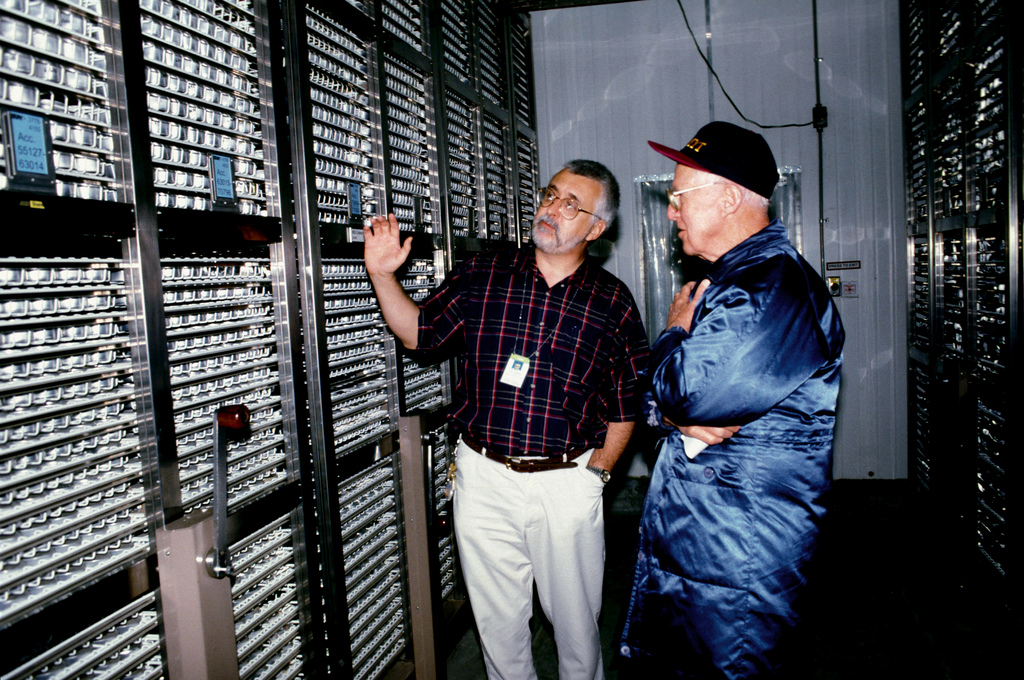
With Dr Norman Borlaug in the IRG Active Collection in the early 1990s, before we transferred the germplasm to aluminum pouches.

Finally, let me say something about IRRI’s genetic conservation role in the context of the CGIAR.

In the early 1990s, the heads of the CGIAR genebanks would meet each year as the Inter-Center Working Group on Genetic Resources (ICWG-GR). I attended my first meeting in January 1993 in Addis Ababa at the International Livestock Centre for Africa (ILCA, now part of the International Livestock Research Institute or ILRI). I was elected chair for three years, and during my tenure the System-wide Genetic Resources Program (SGRP) was launched with the ICWG-GR as its steering committee.

Earlier I mentioned the CBD. There’s no doubt that during the 1990s the whole realm of genetic resources became highly politicized, with the CGIAR centers contributing to CBD discussions as they related to agricultural biodiversity, and through the FAO Commission on Genetic Resources for Food and Agriculture.

The organization of the genebanks in the CGIAR has undergone several iterations since I moved away from this area in May 2001 (when I joined IRRI’s senior management team as Director for Program Planning and Communications). My successor Dr Ruaraidh Sackville Hamilton enthusiastically took on the role of representing the institute in the discussions on the formulation and implementation of the International Treaty on Plant Genetic Resources for Food and Agriculture (ITPGRFA). The Treaty aims to guarantee food security through the conservation, exchange, and sustainable use of the world’s plant genetic resources for food and agriculture. It also focuses on fair and equitable benefit sharing and recognition of farmers’ rights.

In 2016-17, I led a review of the Genebanks CRP (CGIAR Research Program). Since then, the Genebanks CRP evolved into the Genebank Platform, and is now the CGIAR Initiative on Genebanks.

What I can say is that all the CGIAR genebanks have raised their game with respect to the crops they conserve. Working with the Crop Trust, standards have increased, and genebanks held to account more rigorously in terms of how they are being managed. Nevertheless, I think that we can say that the CGIAR continues to play one of the major roles in genetic resources conservation worldwide.


[1] GRC comprised two units: the genebank (my day-to-day responsibility), and the International Network for the Genetic Evaluation of Rice or INGER, which was managed basis by one of my colleagues.

[2] It seems like only yesterday that I was organizing the institute’s Golden Jubilee in 2010, after which I retired and returned to the UK.

[3] Three key staff, Ms Eves Loresto, Tom Clemeno, and Ms. Amita ‘Amy’ Juliano sadly passed away, as have several other junior staff.


Unsurpassed beauty, nature, and thousands of years of history: the value of our heritage charities

For many years, Steph and I toyed with becoming members of the National Trust. But as we were living overseas, and only coming back to the UK each year on leave for just a few weeks, we didn’t think it was worth the membership cost.

However, when I retired in April 2010 and we moved back to the UK, we became members in February 2011. Since then, we have visited 153 properties, mostly historic houses and gardens, but also some of the most beautiful landscapes protected by the Trust, such as the White Cliffs of Dover and the Durham coast

We received gift membership of English Heritage (which cares for 400 historic places) at Christmas 2014, and made our first visits as members by April 2015. We had visited Witley Court, Worcestershire near our home in Bromsgrove several times before becoming members, and Belsay Hall, Dunstanburgh Castle, and Rievaulx Abbey when visiting our younger daughter in the northeast of England. Now that we live near Newcastle upon Tyne, we have in fact explored more English Heritage sites than National Trust locally; compared to further south, there are relatively few National Trust properties here.

Visiting these heritage sites gives us a purpose to get out of the house, benefit our physical and mental welfare, and to explore and learn more about the history of this nation of ours.

Over recent years, we have also taken week-long breaks or longer in various parts of the country to visit many of the heritage properties there. Such as Scotland in 2015, Northern Ireland in 2017, Cornwall in 2018, Kent and East Sussex in 2019, Hampshire and West Sussex in 2022, North Wales in 2023, and East Anglia in 2024.

This map shows all the National Trust and English Heritage properties we have now visited. You will have to zoom in to see more of the detail. There are also links to properties managed by partner organizations like the National Trust for Scotland, Historic Environment Scotland, and Cadw in Wales, as well as a few other sites not affiliated to any of these.

On this page, you can find a list of all 239 properties we have visited, by region, with links to a blog post I wrote, perhaps a photo album, or the official website. In any case, my blog posts are lavishly illustrated by my own photographs. There are also regional maps.

Just under a year ago, I wrote about some of the favorite places we had visited. Today’s blog updates the numbers somewhat.


The National Trust was the vision of its three founders in 1885: Octavia Hill, Canon Hardwicke Rawnsley, and Sir Robert Hunter.

Last week, on 12 January to be precise, the National Trust celebrated its 130th anniversary, and launched a 10-year strategy to 2035, People and Nature Thriving.

Today, the National Trust looks after more than 250,000 hectares of farmland, 780 miles of coastline and 500 historic places, gardens and nature reserves.

And despite the best (or worst) efforts of campaign group and forum Restore Trust to undermine the credibility, management, and success of the National Trust as a charity, the National Trust is overwhelmingly supported by its members (as evidenced from the support at last November’s AGM held in Newcastle), and provides a warm welcome for its thousands of members and visitors at all its sites.


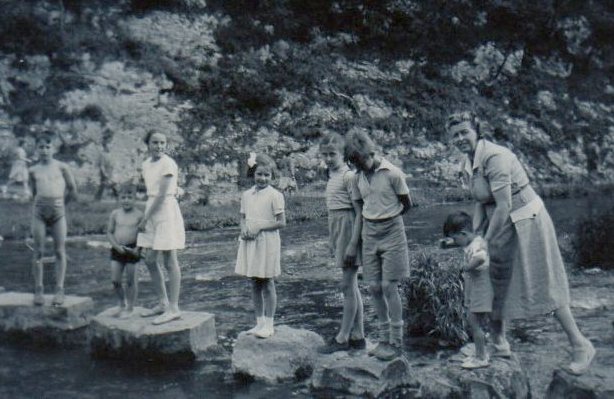
As I was drafting this post, I realised that I’d first visited a couple of properties, Dovedale in Derbyshire and Little Moreton Hall near Congleton, in Cheshire more than 70 years ago, and another, Biddulph Grange, decades before the National Trust acquired the garden.

The Stepping Stones in Dovedale. That’s me, on the right beside my mother, along with my brothers and sister and cousins. I reckon this photo was taken around 1951.

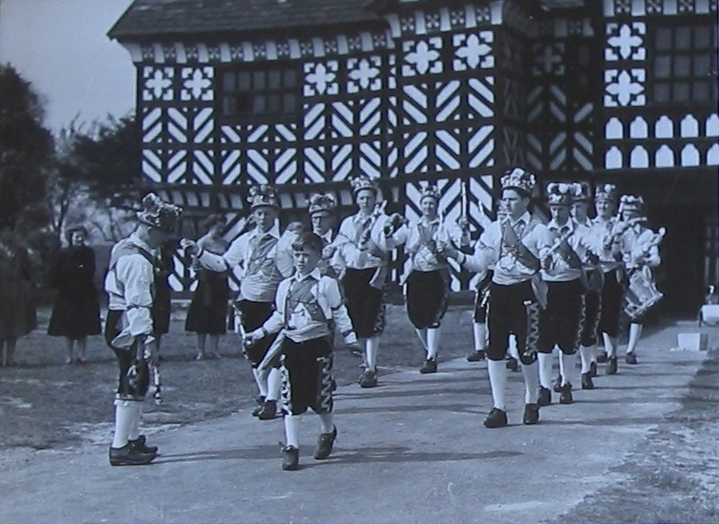
My father was the staff photographer at the Congleton Chronicle, and I remember visiting Little Moreton Hall with him when he took this photo and others of the Manley Morris men in 1954.

The Manley Morris Men at Little Moreton Hall on 8 May 1954.

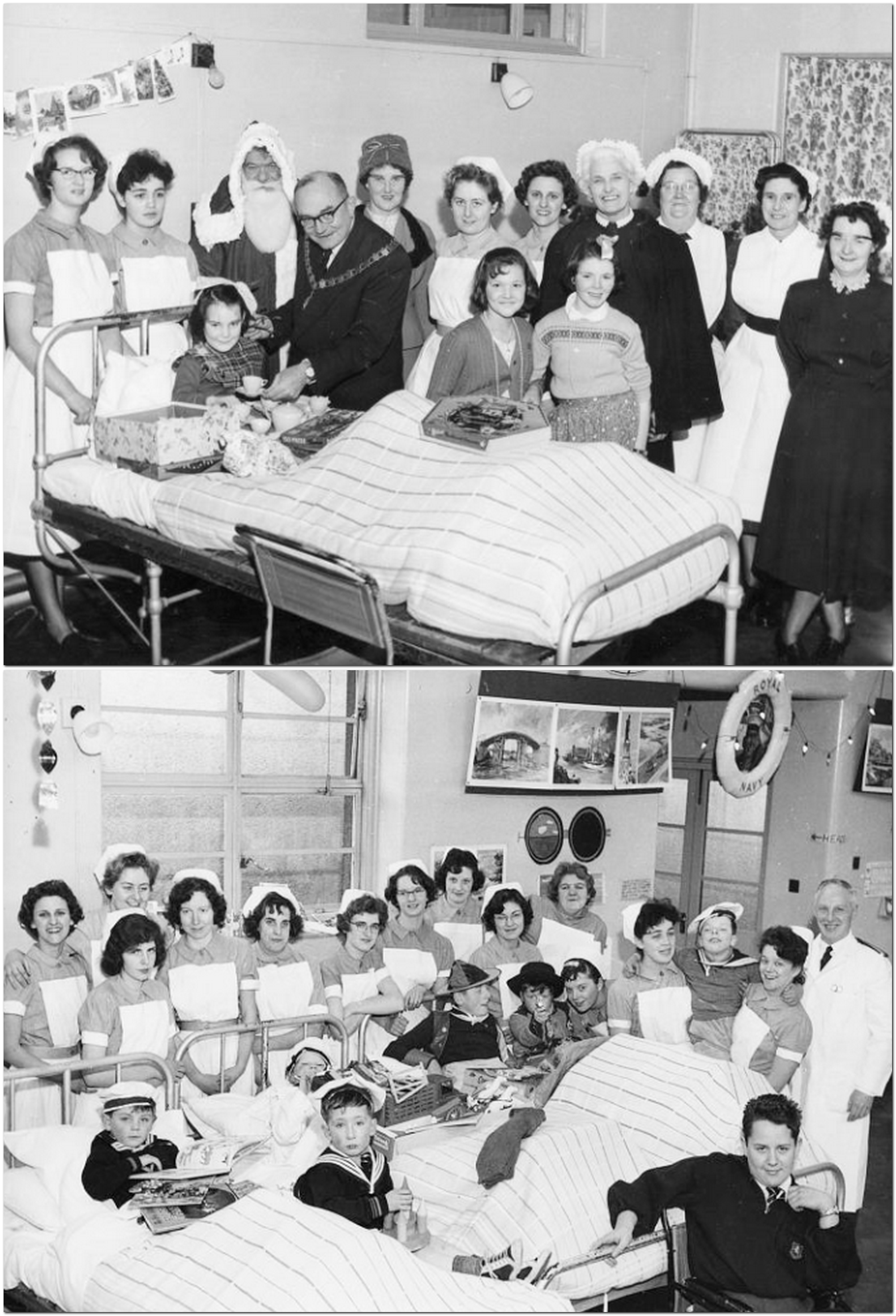
As to Biddulph Grange, Dad (and Mum) would visit the hospital on Christmas Day and take photos of Santa visiting the wards. Even after we moved to Leek in 1956 and Dad was no longer with the Congleton Chronicle, they would return to Biddulph Grange each Christmas until the early 1960s.

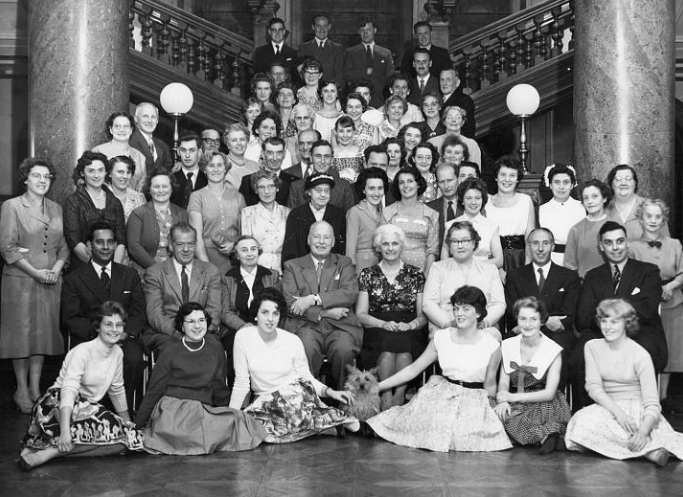
And attend some of the social functions held there for staff and friends. When Steph and I visited Biddulph Grange together for the first time in 2011, there was on display an album of photos about the previous history of the property as a hospital. I recognised many as taken by my Dad. Including this one at a staff summer dance. My mother is standing, fifth from the left, on the fourth row. I snapped this one on my phone.

Two Bs, two Ps, seven Us, and nine Ds

Education is a wonderful thing, and my family and I have taken advantage of the opportunities a good education opens up.

As I read an email a few days ago from the University of Birmingham, announcing its 125th anniversary celebrations later this year, my mind wandered back to 1975.

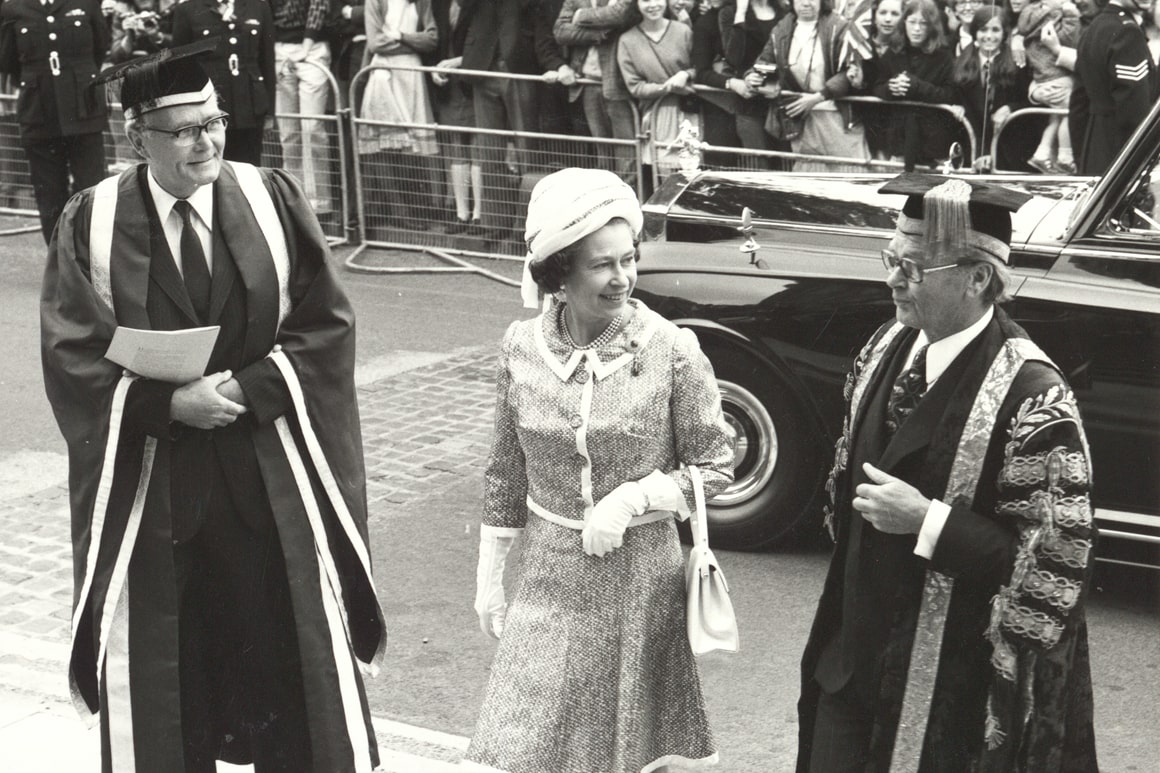
That was when the university celebrated the centennial of laying of the foundation stone of the Mason Science College in 1875, itself a successor of Queen’s College, founded in 1825 as a medical college. HM The Queen visited the university in 1975 to celebrate that centennial, seen in this photo with the university Chancellor, Sir Peter Scott (on the right) and the Vice-Chancellor, Dr Robert Hunter (later Baron Hunter of Newington, on the left). I was in the crowd there, somewhere.

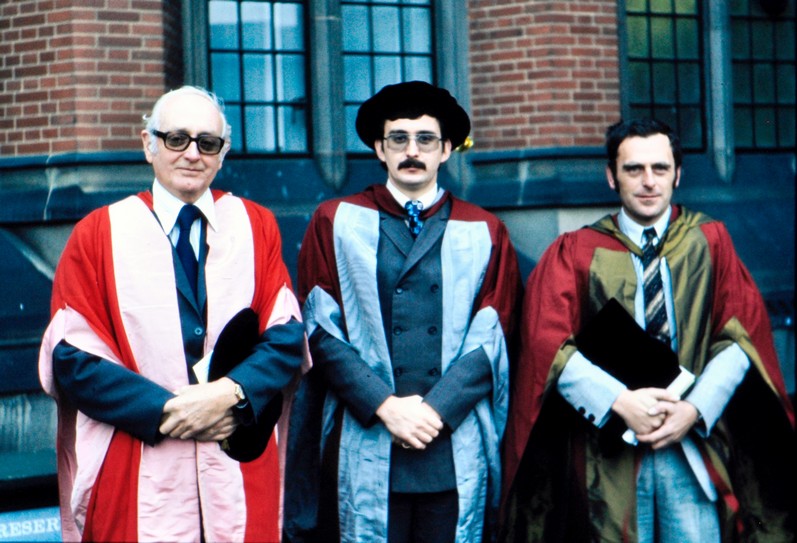
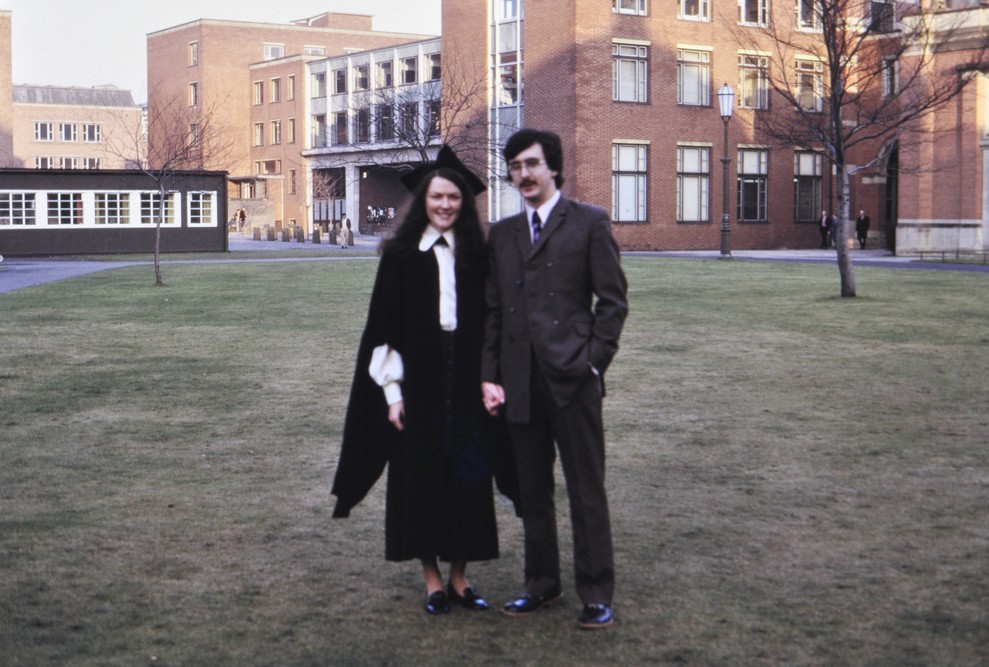
I was back at Birmingham for a few months (from the International Potato Center or CIP in Lima, Peru where I was working as an Associate Taxonomist) to complete the residency requirements for my PhD, and to submit my dissertation. I successfully defended that in late October, and the degree was conferred by Sir Peter Scott at a congregation on 12 December. In the photo below, my PhD supervisor and Mason Professor of Botany, Jack Hawkes is on my right, and Dr Trevor Williams on my left.

But I’m getting a little ahead of myself.

My first experience of Birmingham was in the late Spring of 1967, when I sat the Joint Matriculation Board Advanced or ‘A’ Level biology practical exam in the First Year Lab in the School of Biological Sciences. Many high schools took advantage of that arrangement if they had insufficient facilities in their own premises to hold the exam.

Going into my ‘A’ level exams I had ambitions to attend university. Not that I’d applied to Birmingham. That honour went to the University of Southampton where I had been accepted to study for a BSc degree in environmental botany and geography.

As ‘baby boomers’ my elder brother Edgar and I were the first in our family and among all our cousins to attend university. Once Edgar had persuaded our parents that he wanted to go to university (1964-1967) it was easier for me to follow that same path three years later.

I enjoyed my three years at Southampton. Although I’d registered for a combined degree in environmental botany and geography, my interests shifted significantly towards botany by my third and final year.

However, graduating in July 1970 and with just a BSc under my belt, I knew I’d have to pursue graduate studies to achieve my ambition of working overseas. And it was at the beginning of my final year at Southampton that a one year taught MSc course on the Conservation and Utilisation of Plant Genetic Resources was launched at Birmingham, under the leadership of Jack Hawkes. One of the lecturers at Southampton, geneticist Dr Joe Smartt, suggested that I should apply.

Which I duly did, and after an interview at Birmingham was offered a place for the following September, subject to funding being available for a maintenance grant and tuition fees. It was not until the course was about to commence that Professor Hawkes could confirm the financial support. By mid-September I headed to Birmingham, and the beginning of an association with the university that lasted several decades, as both student and member of staff.

I was awarded the MSc degree in December 1971. During that year, Hawkes (a world-renowned potato expert) had arranged for me to join CIP in Lima for just a year (which later extended to more than eight years) to help conserve its important collection of native potato varieties. An opportunity I jumped at. However, funding from the British government was not confirmed until late 1972. Instead of kicking my heels waiting for that funding to be confirmed, and concerned I might find a position elsewhere, Hawkes raised a small grant to allow me to begin a PhD project under his supervision, and that I would continue after arriving  in Peru.

A third cohort of students arrived in Birmingham in September 1971, among them Stephanie Tribble from Southend-on-Sea who had just graduated from the University College of Swansea (now Swansea University) with a degree in botany. By the summer of 1972 Steph and I had become an item.

In November 1972 she joined the Scottish Plant Breeding Station (SPBS) at Pentlandfield, south of Edinburgh, as assistant curator of the Commonwealth Potato Collection. She returned to Birmingham in December for the MSc degree congregation, just three weeks before I was due to fly out to Peru at the beginning of January 1973.

Well, things have a habit of turning out for the best. Once I was in Peru, I asked Steph to marry me and join me in Lima where I knew there would be a position for her at CIP. Resigning from the SPBS, she arrived in early July and we were married in the local registry office in Lima in October.

So that’s two botanists, three universities (Southampton, Swansea, and Birmingham), and five degrees (2xBSc, 2xMSc, 1xPhD) between us.


After another fruitful five years with CIP based in Costa Rica after I’d completed my PhD (during which our elder daughter Hannah was born), a lectureship opened in the Department of Plant Biology at Birmingham, so I applied. I flew back from Peru for an interview, and having been offered the position, I joined the university on 1 April 1981.

Much of my teaching focused on the genetic resources MSc course that was accepting ever more numbers of students from around the world. I remained at Birmingham for a decade, before deciding that I wasn’t really cut out for academia and, in any case, a more exciting opportunity had presented itself at the International Rice Research Institute (IRRI) in the Philippines. I joined IRRI as head of the Genetic Resources Center in July 1991, remaining in that position for almost a decade. In May 2001, I was appointed Director for Program Planning and Communications (DPPC), joining the institute’s senior management team, until my retirement in April 2010.

During the 1990s, I had an excellent research collaboration with my former colleagues in the School of Biological Sciences at Birmingham, and each year when I returned to the UK on home leave, I’d spend time in the university discussing our research as well as delivering several lectures to the MSc students, for which the university appointed me an Honorary Senior Lecturer.


As I mentioned before, Hannah was born in 1978 when we were living in Costa Rica. Once back in the UK her younger sister Philippa was born in 1982 in the small market town of Bromsgrove, about 13 miles south of the University of Birmingham in north Worcestershire.

Both girls thrived in Bromsgrove, enjoyed school, and each had a good circle of friends.

We upended their world when I took the position at IRRI and they moved to the Philippines with Steph just after Christmas 1991. Even more challenging was their enrolment in the International School Manila, which had a US-based curriculum, and eventually an academic stream based on the International Baccalaureate (IB). There’s no doubt that the first year was tough. Not only was it challenging academically, but living 70 km south of Manila, IRRI students were bussed into school each day departing around 04:30 to begin classes at 07:30, and returning by 16:30, or later if there were holdups on the highway, as was often the case.

Despite the bumpy start, Hannah and Phil rose to the challenge and achieved outstanding scores on the IB in 1995 and 1999 respectively.

From the outset, attending university had been part of our plan for them, and an ambition they readily embraced. Both took a gap year between high school and university. Hannah was drawn towards Psychology, with a minor in Anthropology. And she discovered that this combination was offered at few universities in the UK, opting to attend Swansea University in 1996. And although she was on course to excel academically, half way through her second year she asked if she could transfer to Macalester College, a liberal arts college in Minnesota, USA.

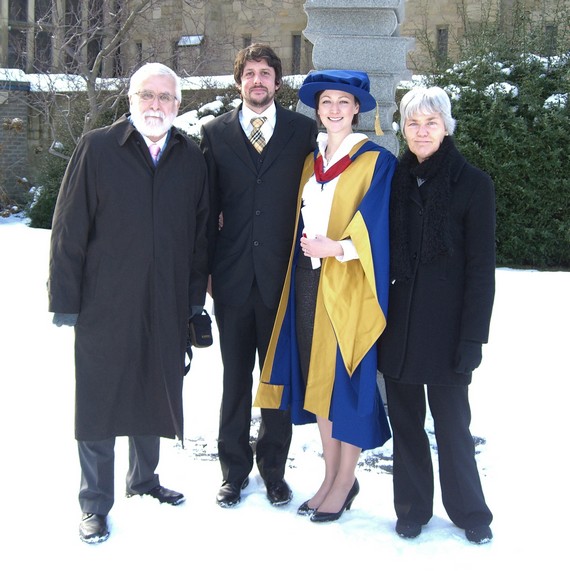
Macalester graduation in May 2000, with Hannah and Michael facing the camera.

Graduating Summa cum laude in May 2000 from Macalester, with a BA in Psychology and a minor in Anthropology, Hannah was then accepted into a graduate program in the Department of Psychology at the University of Minnesota in the Twin Cities.

She was awarded her PhD in Industrial and Organizational Psychology in 2006 with a thesis that assessed the behaviour and ethical misconduct of senior leaders in the workplace.

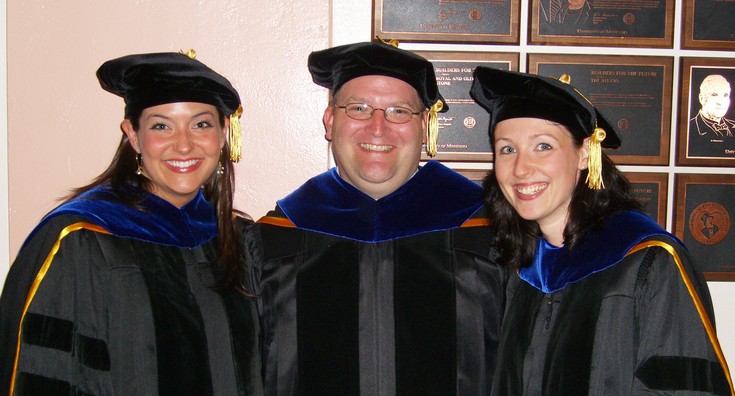
Hannah (right) with her peers in Industrial & organizational Psychology

That’s one psychologist, another two universities (Macalester and Minnesota), and two more degrees (BA, PhD).

Remaining in Minnesota, she married Michael (also a Macalester graduate) in 2006, became a US citizen, and has a senior position focused on talent management and performance with one of the largest international conglomerates. They have two children: Callum (14) and Zoë (12).


After a gap year, Philippa began her studies in Psychology at Durham University in 2000, graduating with a 2:i BSc degree three years later. Uncertain what path then to follow, she moved to Vancouver for a year, before having to return to the UK at short notice after the Canadian government refused to renew her work visa.

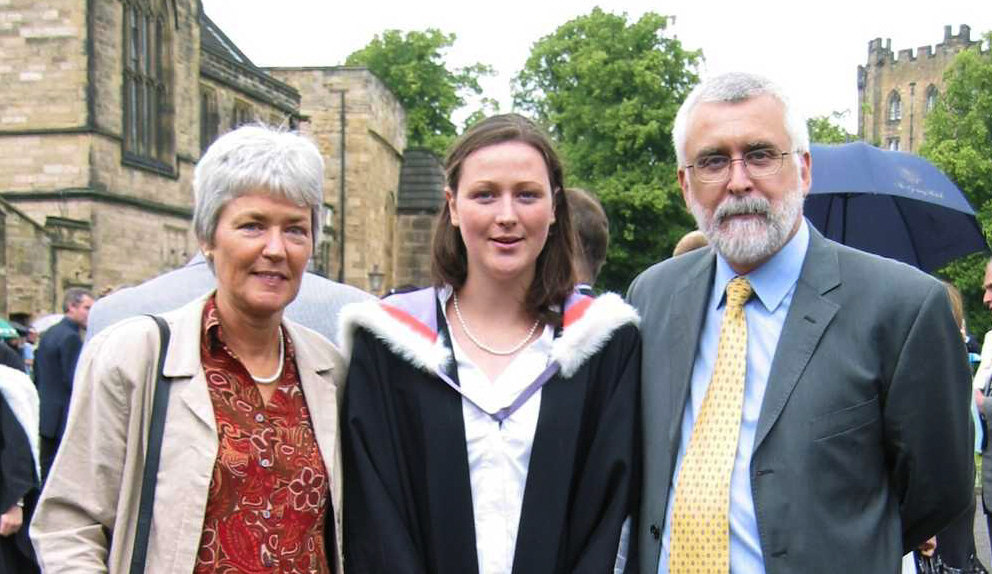
Post-graduation, outside Durham Cathedral.

She spent six months looking for a job, finally landing a research assistantship in the Brain, Performance and Nutrition Research Centre in the Department of Psychology at Northumbria University in Newcastle upon Tyne. After a couple of years she began her own PhD studies investigating the effects of bioactive lipids such as omega-3 fatty acids on cognition and brain health. She was awarded her PhD in December 2010.

Post-graduation with Steph and me, and Andi.

She’s the second psychologist in the family, with two more universities and two degrees (BSc, PhD) under her belt.

Philippa is now Director of the Brain, Performance and Nutrition Research Centre, and Associate Professor in Biological Psychology at Northumbria.

She married Andi in September 2010 (taking themselves off to New York to get married), and have two sons: Elvis (13) and Felix (11).


Two botanists and two psychologists. Who’d have thought it? Neither Hannah nor Philippa showed any interest in pursuing biology at degree level. Having two psychologists in the family we do wonder, from time-to-time, if we went wrong somewhere along the line.

Music stirs hidden memories . . .

Hidden but not forgotten. They are just lurking deep in the mind’s archive waiting to be awakened.

And that’s what happened to me just the other afternoon. I was listening to Classic FM. Well, just hearing really, not paying attention as I was reading a book at the time. High brow Muzak.

Pachelbel’s Canon in D major. A popular piece of music (number 35/300 in the Classic FM Hall of Fame 2024 chosen by listeners), by German composer Johann Pachelbel (right, 1653-1706), although its date of composition is not known with any certainty.

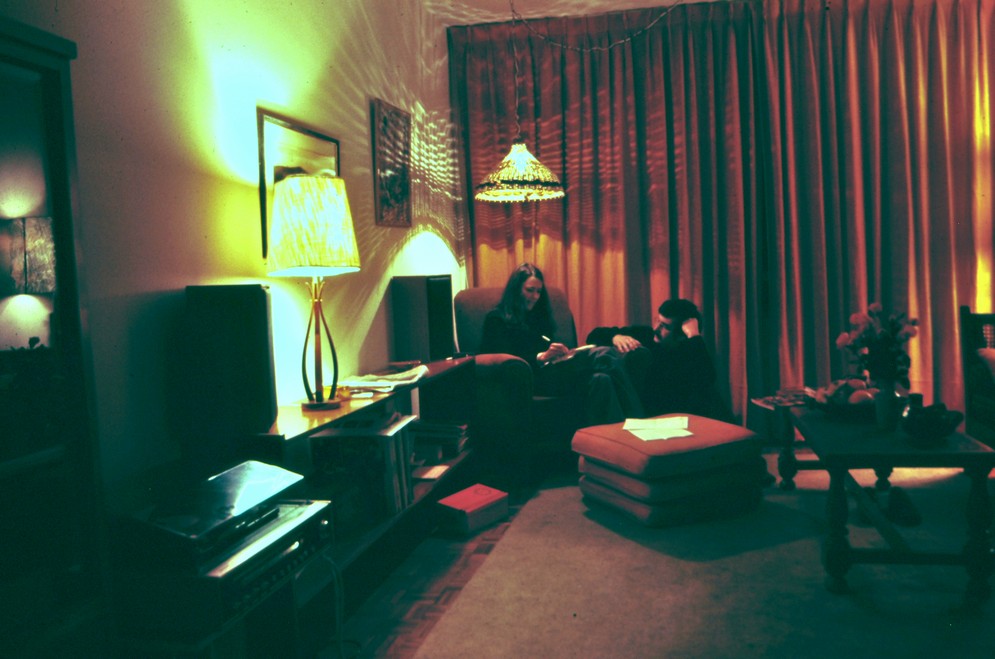
As I put my book down and listened more attentively, lots of memories resurfaced from my time in Lima, Peru in the early 1970s.

Here’s the twist, however. I’m not sure all those years ago if it was Pachelbel’s Canon or the  Adagio in G minor by ‘Tomaso Albinoni’ that I heard. Let me explain.

I’m guessing it was sometime between December 1973 and March 1974. So why should I zero in on those particular months?

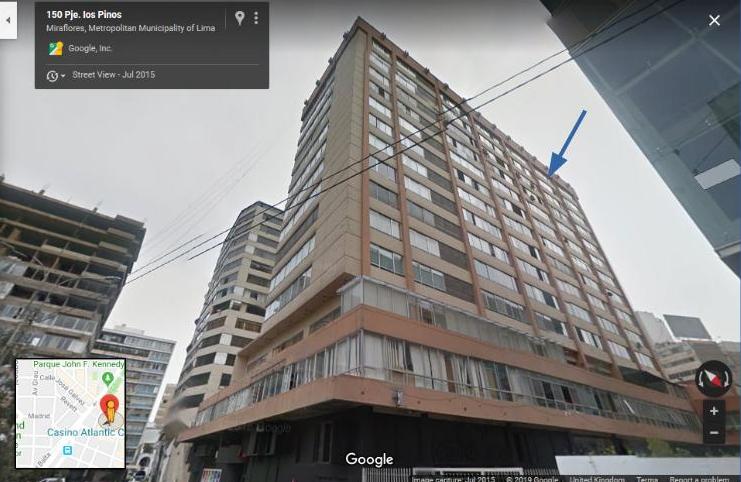
I know it was post-July 1973 because that’s when Steph joined me in Lima. And before April 1975, because that’s when we returned to the UK for a few months. And in any case we had already given up our apartment in Miraflores after the October 1974 earthquake, and spent the next six months house-sitting for colleagues from the International Potato Center (CIP) where Steph and I worked.

I do remember it was a weekend, and the weather was glorious. Bright and sunny, and rather hot, typical Lima summer weather (unlike the gloomy, foggy days of the middle months of the year). We’d left our apartment to go shopping, and pick up copies of Time and Newsweek from a bookshop in the San Isidro district that we often visited. This particular bookshop or libreria was located in a small shopping center overlooking Avda. Paseo de la Republica/Via Expressa, just opposite the Petroperú building.

I don’t think it’s there any more. I’ve looked on Google Maps and Streetview and it looks like the area has been redeveloped in the intervening decades. I hardly recognise any of the surroundings.

Anyway, to cut a long story short, we also decided to browse the bookshop’s music section. And in the background, I heard this piece of music I’d never heard before. The Canon or the Adagio? I don’t recall. But both pieces were on the same vinyl that I purchased there and then! I’ve enjoyed both ever since.


Tomaso Albinoni (left below, 1671-1751) was a Venetian composer, but did he write the Adagio in G minor? Is it a musical hoax? Its composition is attributed to Italian musicologist Remo Giazotto (right below, 1910-1998), an expert on Albinoni. He is said to have composed/elaborated the Adagio based on a fragment of one of Albinoni’s manuscripts while others believe he composed the whole piece. Certainly Giazotto had the copyright.

I was totally unaware of this interesting back story. Nevertheless, it is a beautiful and much appreciated piece of music, that gained position 170/300 in the Classic FM Hall of Fame 2024. Enjoy this interpretation.


That was the year that was . . .

New Year’s Eve, and another year coming to a close.

We just celebrated our fifth Christmas here in the northeast, on the eastern outskirts of Newcastle upon Tyne and a few miles inland from the North Sea coast. I thought I’d take this opportunity to look back on some of our 2024 highlights.

In the walled garden at Cragside, a National Trust property near Rothbury in Northumberland, in early December.

We’re both now in our mid-70s and fortunately keeping in reasonably good health. Steph has her daily yoga session before breakfast. I try (but don’t always succeed) to take a daily walk locally. As often as possible—weather-permitting—we head out to explore more of the glorious landscapes here in the northeast of England.

This past year, we’ve explored some new beaches just 10-15 miles north, at Cambois (pronounced Ka-miss) and Newbiggin-by-the-Sea, as well as returning to one of our favorite haunts: Hauxley Wildlife Discovery Centre, where there is always an abundance of bird species to observe. And it was there, around August, that I was able to tick one bird off my ornithological bucket list: a kingfisher, that we watched for almost 30 minutes from the Wildlife Centre café, as it flew from branch to branch beside the lake, occasionally diving for fish. What a sight! It’s only taken me almost 70 years!

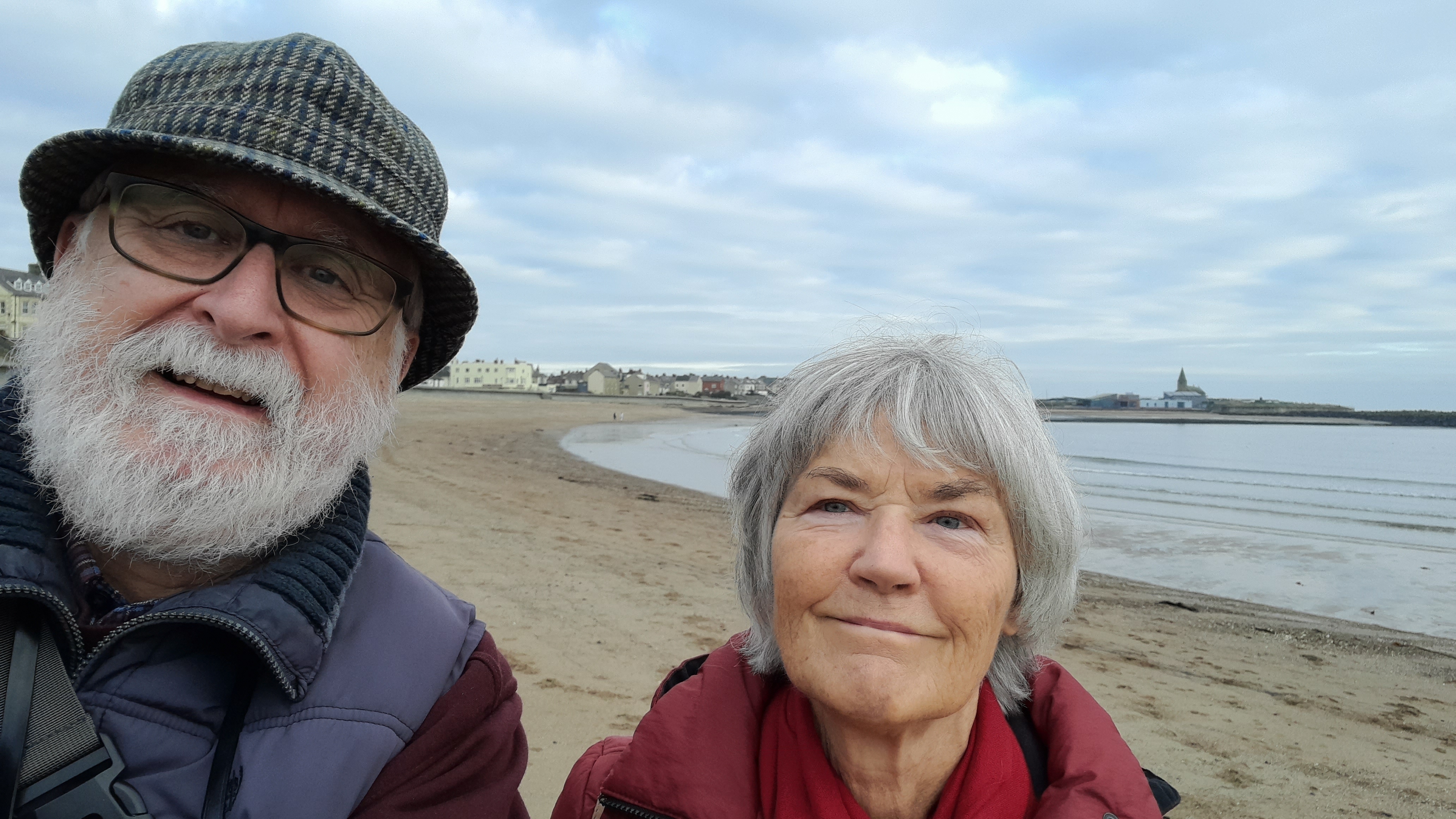
On the beach at Newbiggin at the beginning of November

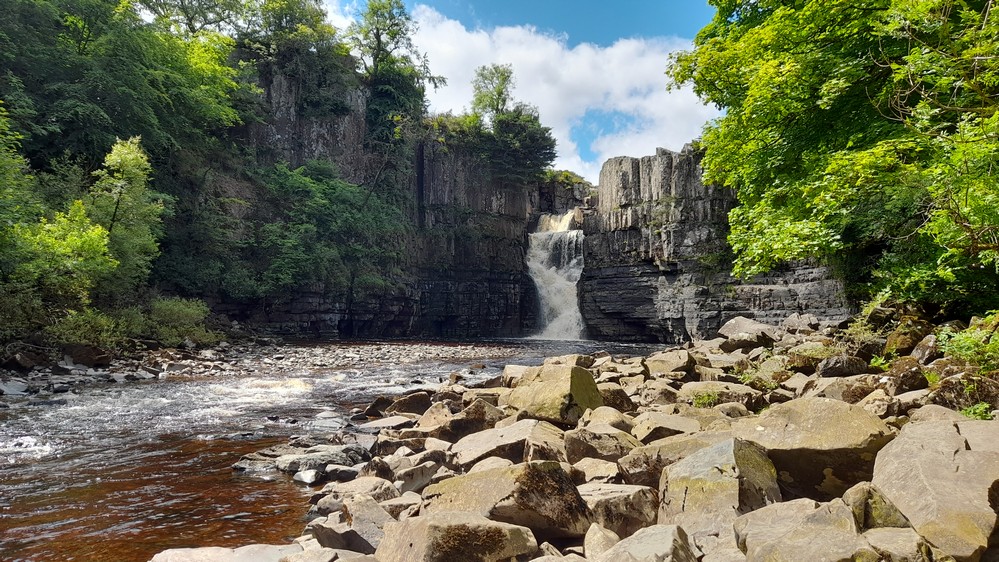
At the end of June we headed south of the River Tyne into Teesdale to visit one of the most spectacular waterfalls in the country, at High Force on the River Tees.

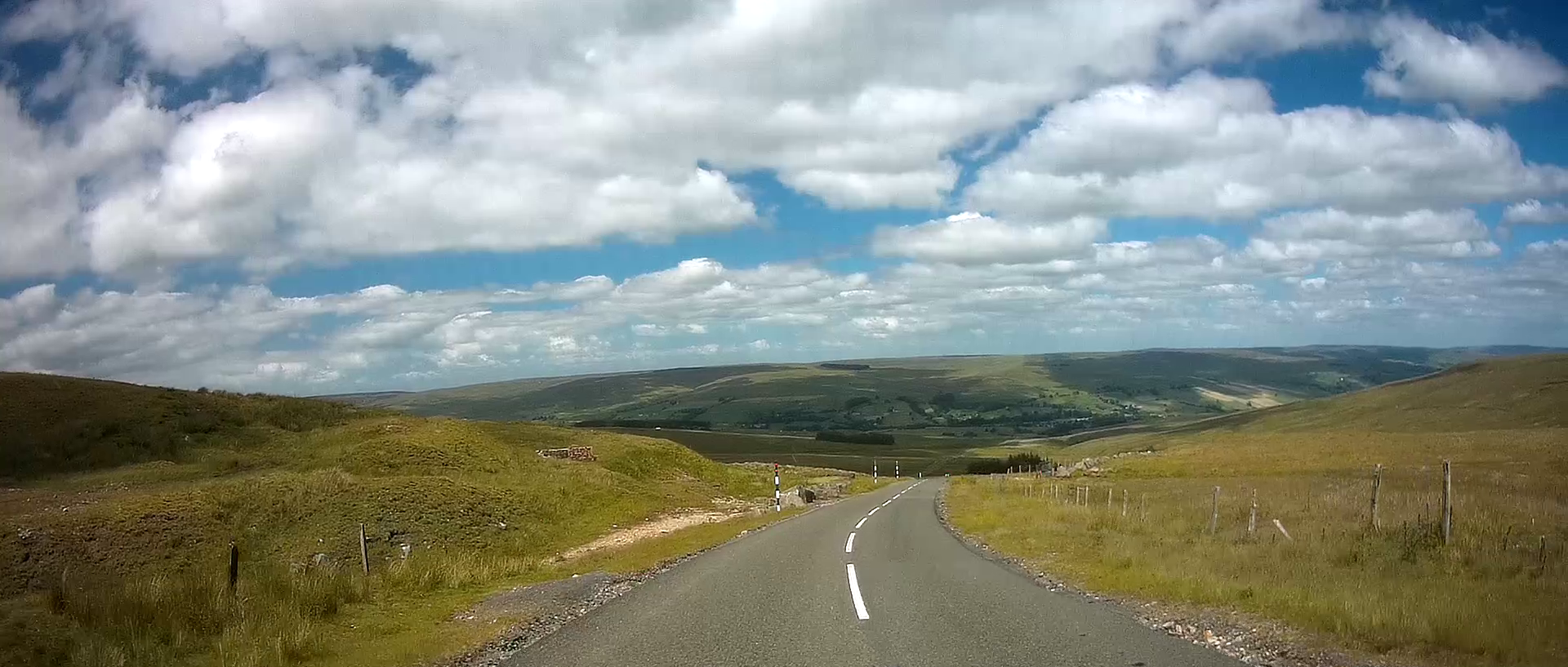
Afterwards, we headed up to Cow Green Reservoir in the hope of seeing some of the special Teesdale flora there, but they were past flowering. But we did enjoy crossing over into Weardale to the north, and exploring upland landscapes that were new to us.

Crossing north from Teesdale into Weardale

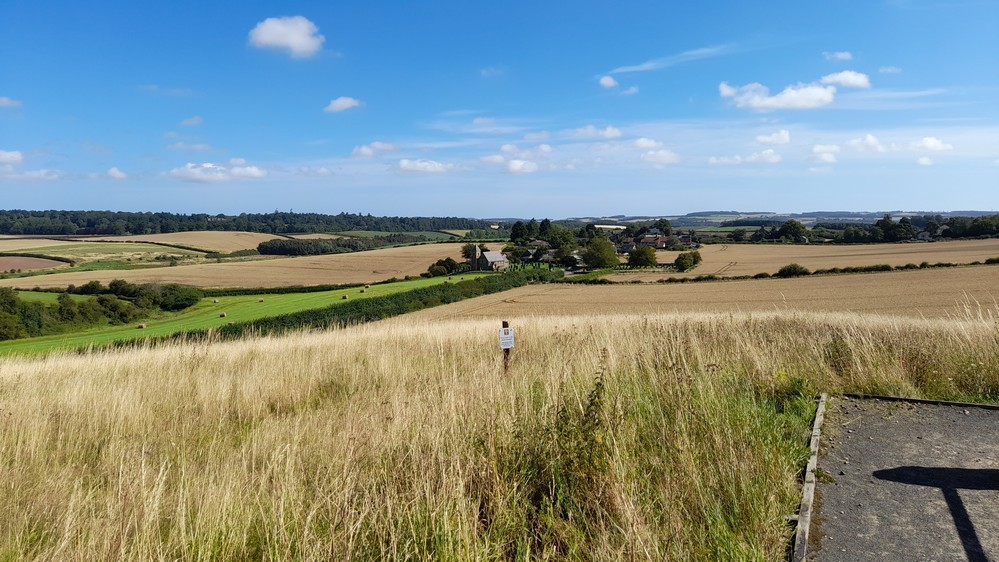
In mid-August we set off early one bright and sunny morning 55 miles north towards the border with Scotland, to visit four ancient sites. First of all there was the site of the Battle of Flodden Field, fought in 1513 between King James IV of Scotland and King Henry VIII of England, and in which James was killed.

The site of the Battle of Flodden Field. near Braxton Hill.

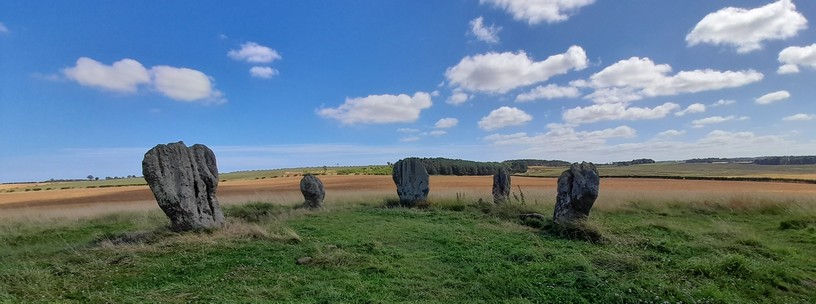
From there we headed to the Duddo Five Stones Circle, dating from the Neolithic/Bronze Age, and from where there are panoramic views of the Cheviot Hills to the south and the Lammermuir Hills to the north.

Then it was on to two castles managed by English Heritage at Etal and Norham, the latter overlooking the River Tweed, which is the border between England and Scotland. In fact, all four sites were within an easy 10 miles of each other, but it was nevertheless quite a full day. I wrote about those four visits in this post.

There is just a handful of National Trust properties in the northeast, among them Gibside (west of Newcastle), Seaton Delaval Hall (close to home), Wallington, and Cragside, all of which we visited this year.

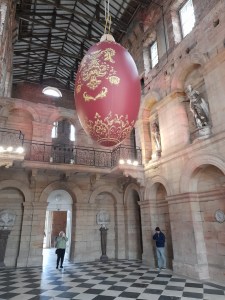
Each Christmas we try to visit one of Trust properties to see their Christmas decorations. And this year it was Cragside and Seaton Delaval in early December, where there was the most enormous bauble hanging from the ceiling of the main hall (which was destroyed by fire at the beginning of the 19th century).

Other excursions south of the Tyne took us to York in early March to meet up with my nephew Nicholas and his wife Metta from Edmonton, Canada. Nicholas is the younger son of my late elder brother Edgar and wife Linda. Philippa joined us on this trip as she hadn’t seen Nicholas since he was a small boy. We enjoyed a satisfying pub lunch before taking a walk around the city walls.

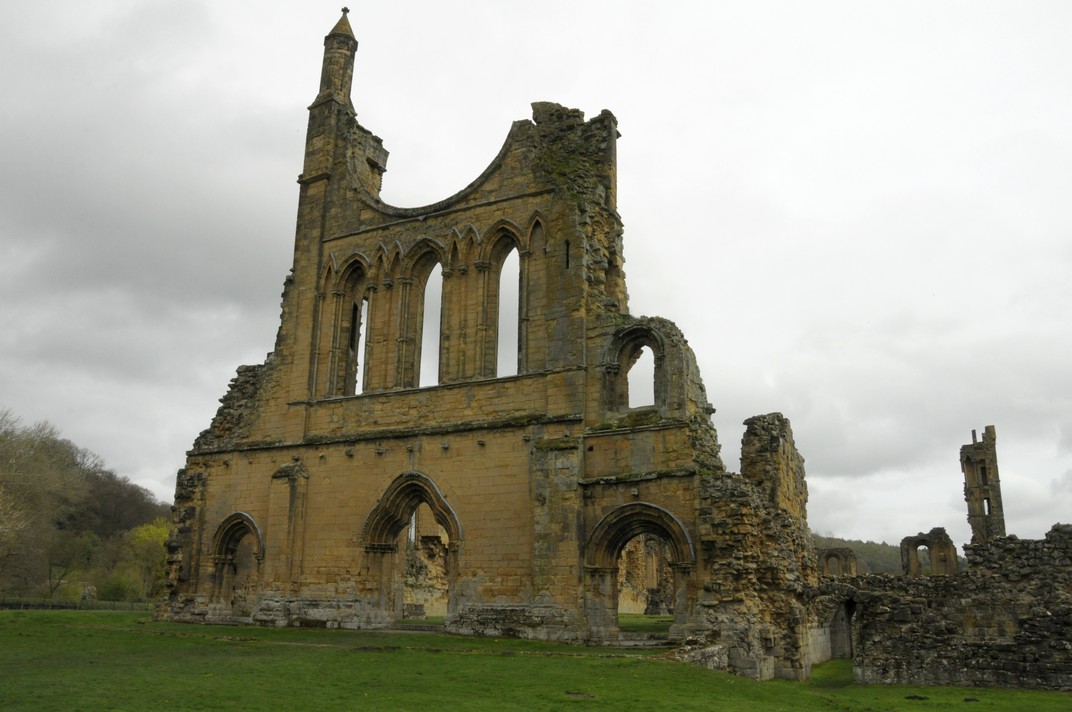
In April, we headed south again, calling in at Mount Grace Priory for a welcome cup of coffee before heading on to our destination, Byland Abbey. En route, we stopped off at the Church of St Mary the Virgin beside the A19 trunk road south that we’d often passed but never taken the opportunity to stop. I wrote about both visits in this post.

The west front of Byland Abbey

We have to travel much further afield now to find National Trust and English Heritage properties new to us. So in September we spent a week in East Anglia, visiting twelve properties over six days. I wrote about that trip here. We rented a small cottage on a farm near the Suffolk market town of Eye.

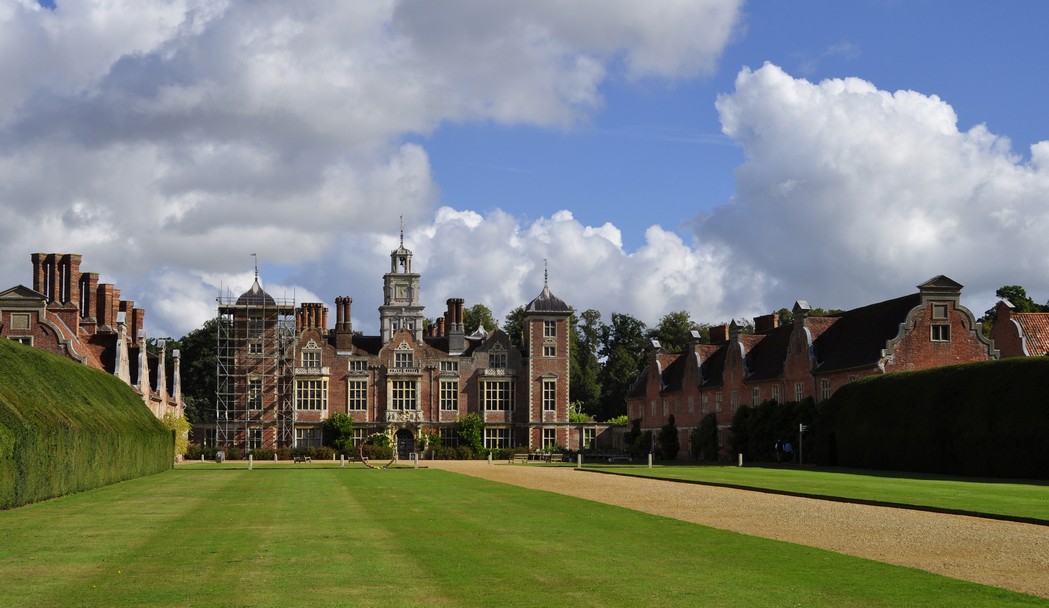
It’s hard to choose a favorite property, but if ‘forced’ to it would be Blickling Hall. What an awesome view along the gravel drive to the entrance of this magnificent Jacobean country house.

Our big trip of the year was our annual visit from early May to June (just over three weeks) to stay with Hannah and family in St Paul, Minnesota. After our last road trip in 2019 I had wondered if we’d make another one. But nothing ventured nothing gained, we decided to hit the road again, crossing Utah and Colorado, and visiting some of the best national parks and enjoying some spectacular desert and Rocky Mountain landscapes. You can read about that trip in this post.

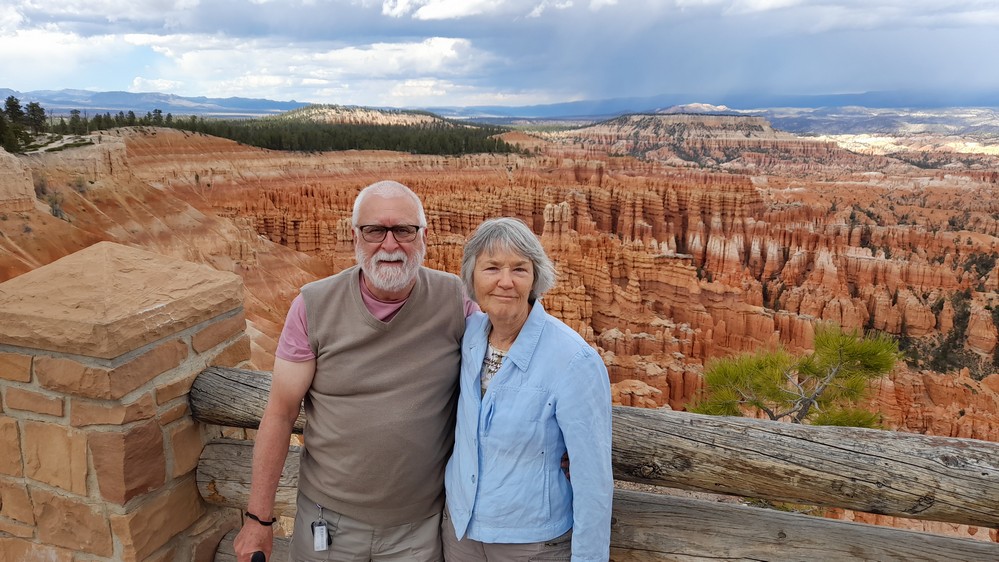
Flying into Las Vegas, we immediately headed to the Hoover Dam, then traveling north to Zion National Park, and on to Bryce Canyon National Park. Heading east we visited Arches and Canyonlands National Parks near Moab in eastern Utah. Then we crossed over into Colorado taking in the ‘Million Dollar Highway’ south through the San Juan range before arriving at Mesa Verde National Park. From there we headed east to Denver for the flight back to Minneapolis-St Paul.

Without doubt Bryce Canyon National Canyon was the highlight of the trip, but only just ahead of all the other fascinating places we visited.

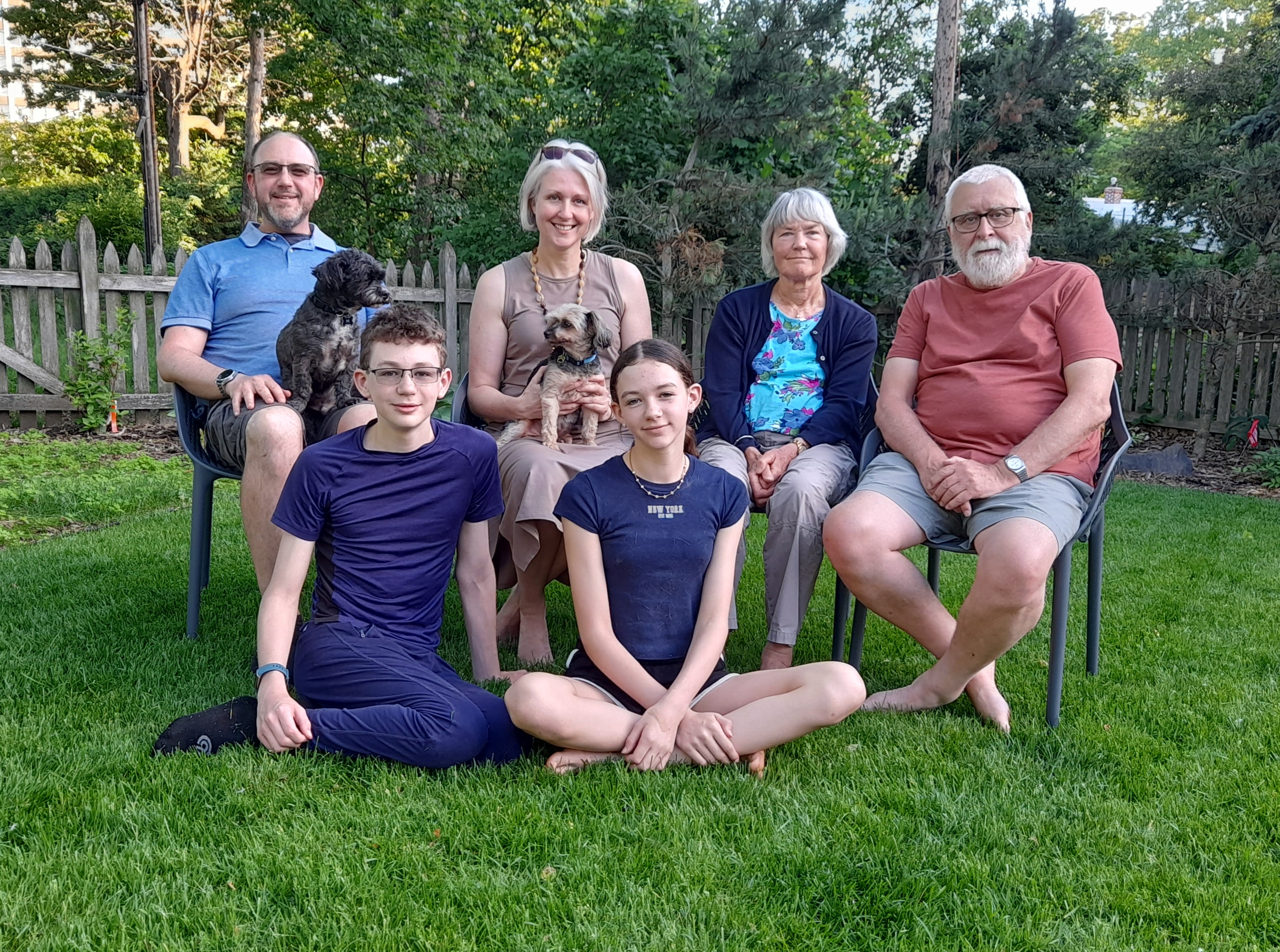
We had a delightful time with Hannah, Michael, Callum (then 13), and Zoë (12), and their doggies Bo and Ollie, and cat Hobbes (sadly no longer with us).

Enjoying the warm weather in St Paul, we spent much of our time relaxing in the garden, taking walks around the neighbourhood, or sitting on the front patio in the late afternoon/early evening just watching the world go by on Mississippi River Boulevard (Hannah’s house is just 50 m from the bluff overlooking the Mississippi River), savouring a gin and tonic (or two).

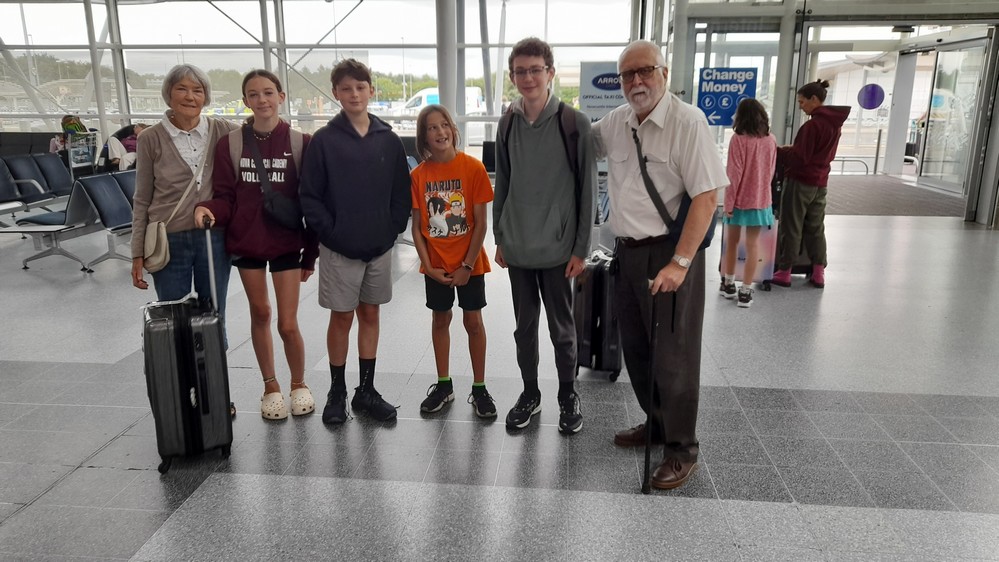
At the end of July, Callum and Zoë flew over to Newcastle to spend a couple of weeks with us, but more importantly to hang out with their cousins Elvis (now 13) and Felix (now 11), Phil and Andi’s boys.

Arrival at NCL on 25 July

They all went camping (a first for Callum and Zoë) to Bamburgh on the north Northumberland coast, and we spent a day with them.

All too soon, their visit came to an end, but it seems plans are afoot for them to repeat the visit in 2025.

We enjoyed a couple of outings with Elvis and Felix during the year—they are so busy with all their extracurricular activities—to Belsay Hall, and we enjoyed a performance of the Alice in Wonderland pantomime in Newcastle just before Christmas.

We spent Christmas Day with Phil and Andi and family followed, on Boxing Day, by a brisk walk at Souter Lighthouse and Marsden Beach.

I’m sure there must have been other things we got up to but I don’t recall. These have certainly been many of the year’s highlights.

So as the year comes to an end, I’ll take this opportunity to wish all my followers on this blog (and others who come across it by chance) A Happy, Peaceful, and Prosperous New Year 2025!


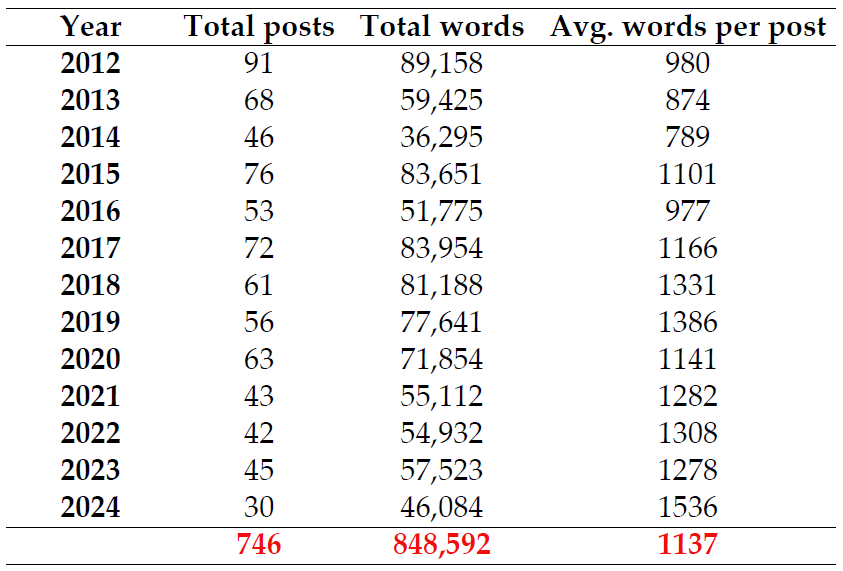
My blog activity was much reduced this past year, just 30 stories posted with 46,000 words compared to previous years, although on average each post was longer.

I’m not sure why I’ve been less productive. While I felt quite elated mid-year about the General Election win by Labour, having booted the Conservatives out after 14 years in power, I have to admit to becoming rather depressed at the beginning of November when Donald Trump reclaimed the US presidency. His occupancy of the White House does not bode well for 2025.


An unlikely trinity . . .

What comprises an unlikely trinity? Music, science, and film. Let me explain.

It’s remarkable how a piece of music can resurrect memories from the deep recesses of one’s mind.

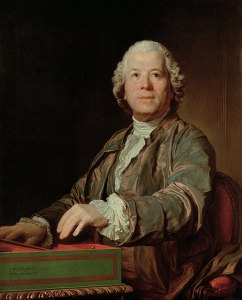
Christoph W Gluck

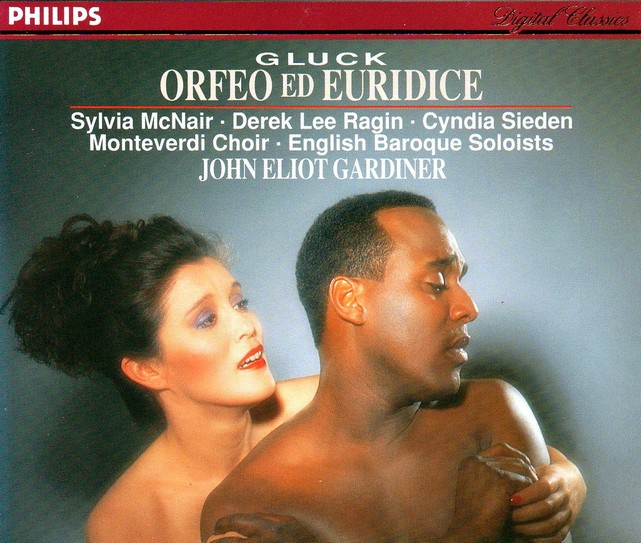
Just as Steph and I sat down to dinner last Saturday evening, I chose a CD (always classical) to play in the background as we ate. I’ve no idea precisely why I chose the opera Orfeo ed Euridice (first performed in October 1762) by Christoph Willibald Gluck other than it’s one of my favorite pieces of music. There’s one aria in particular, Che farò senza Euridice? (from Act 3) sung by the character of Orfeo, that became a signature concert piece for British soprano Kathleen Ferrier. And it’s a recording of hers that I remember from my childhood in the early 1950s. Ferrier died at age 41 in 1953, and I was born in 1948.

Traditionally however, Orfeo is played/sung by a counter tenor. And in this Philips release (CD 434 093-2, and available on Spotify) the counter tenor is Derek Lee Ragin.

Enjoy the power of Ragin’s voice as he reaches the highest notes in Che farò. Sends shivers down my spine.

I first came across this John Eliot Gardiner/Ragin/Sylvia McNair collaboration on a Lufthansa flight from the Philippines (where I was working at the International Rice Research Institute) to Dublin, Ireland (via Frankfurt) around March/April 1996. I flew quite frequently to Europe in the 1990s and Lufthansa was often my airline of choice because of the good connections to Rome. I always made the trip more enjoyable by listening to Lufthansa’s excellent classical music channel. And it was on that particular trip to Dublin that I heard this particular recording for the first time, and listened to the whole opera.

With some free time in Dublin, I took the opportunity of walking around the city center, and came across a record store on Grafton Street, where this recording of Orfeo ed Euridice was in stock. I also bought Mark Knopfler’s Golden Heart that had just been released. It’s remained a favorite of mine ever since.

So what was I doing in Dublin? There’s no obvious rice connection.

Well, I had been invited to interview for the Chair of Botany (1711) at Trinity College Dublin (TCD), and on a grey early Spring morning, I found myself among six candidates including one internal candidate who was subsequently appointed to the Chair (one of the oldest professorships at TCD). I’d certainly traveled furthest by a long chalk.

So that explains two points of the trinity: music and science. So what about film?

Educating Rita was released in 1983, starring Michael Caine and Julie Walters and written by Willy Russell based on his stage play. Although the storyline takes place at the Open University in England, several scenes were filmed on the Trinity College campus.

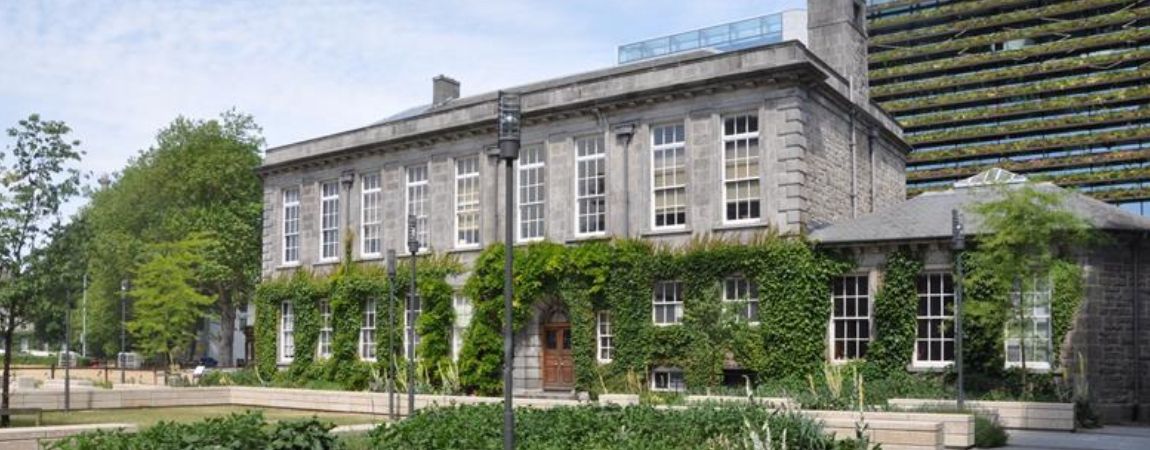
And one intimate scene between Caine and Walters was filmed in the lecture theater in the Botany Department. Or so the story goes. I’ve heard that but not (yet) been able to verify. And it was in that very same lecture theater that I presented my candidacy seminar.

Botany building at TCD

It’s interesting to note that botany is still offered today at TCD. Not ‘plant sciences’ or ‘plant biology’. Good old ‘botany’! It’s thriving and there are more staff than when I visited. It’s not a department as such but an important discipline in the School of Natural Sciences.

The Chair of Botany (1711) is now occupied by Professor Jennifer Mc Elwain, whose research focuses on the development and use of palaeobotanical methods (proxies) that use fossil plants to reconstruct the evolution of Earth’s atmospheric composition and climate on multimillion year timescales.

When I lectured in plant biology at The University of Birmingham between 1981 and 1991 a tutee of mine, Trevor Hodkinson, took a joint degree in biological sciences and geography. I don’t remember the dates, but he stayed on to complete his PhD supervised by one of my colleagues. He joined TCD shortly after my visit there, and has been Professor of Botany since 2016 focussing on molecular systematics, genetic resource characterisation, and endophyte biology.


So, as we sat down to a dinner of roast pork, accompanied by a delicious Reserve de Pierre Rosé 2023 from the Côtes du Rhône by winemaker Pierre Latard, all these memories came flooding back. And though, back in 1996, I was momentarily disappointed at the TCD outcome, I have no regrets about how my career turned out.


North, south, east, and west across the USA (and Canada)

Steph and I first travelled to/through the USA in May 1975, when we returned to the UK for several months so I could complete the residency requirements for my PhD at the University of Birmingham, and submit my thesis. We were working in Lima, Peru at the time, and had travelled home to the UK via Costa Rica and Mexico, before flying to New York (KJFK) on our first wide-bodied flight (it was an L-1011 or Tristar of Eastern Airlines) and then taking a British Airways 747 (our first flight on that iconic plane) to Manchester (EGCC).

Once we moved to Costa Rica in April 1976, I travelled quite often through Miami (KMIA) en route to various destinations in the Caribbean, sometimes spending a night in Miami to do some shopping before catching a flight back to San José (MROC). Each year, between 1978 and 1980, we flew through Miami when taking our home leave back in the UK.

During the 1980s (when I was working at the University of Birmingham) I made only one trip to the USA (as far as I can remember), to attend a botanical conference in St Louis, MO in 1982. It wasn’t until 1991, when I took a position at the International Rice Research Institute (IRRI) in the Philippines, that I began to travel regularly to the USA to attend meetings or conferences of one sort or another. Then, in 1978, our elder daughter Hannah transferred from her degree course in the UK to Macalester College in St Paul, MN. Whenever I travelled to the USA I scheduled a weekend in Minnesota because Northwest Airlines (now subsumed into Delta Airlines) had its hub in Minneapolis-St Paul (KMSP), and there were daily flights between Manila (RPLL) and KMSP in both directions, with a transit either in Tokyo Narita (RJAA) or Kansai Osaka (RJBB).

Since retiring in 2010, Steph and I have returned to the USA each year, with the exception of the pandemic years 2020 and 2021, and 2022 when Hannah and her family visited us here in the UK.

We have travelled extensively, making some epic road trips across the country, visiting several interesting cities, and taking in as many of the attractions as possible along the way. Together we have visited 38 states, and my travels have taken me to two more: Texas, Arkansas, and DC. It’s actually easier to list the states neither of us has visited: Hawaii, Alaska, Idaho, Nebraska, Kansas, Oklahoma, North Dakota, Louisiana, Mississippi, and Alabama.

I guess we have seen more of the USA than the vast majority of actual citizens.

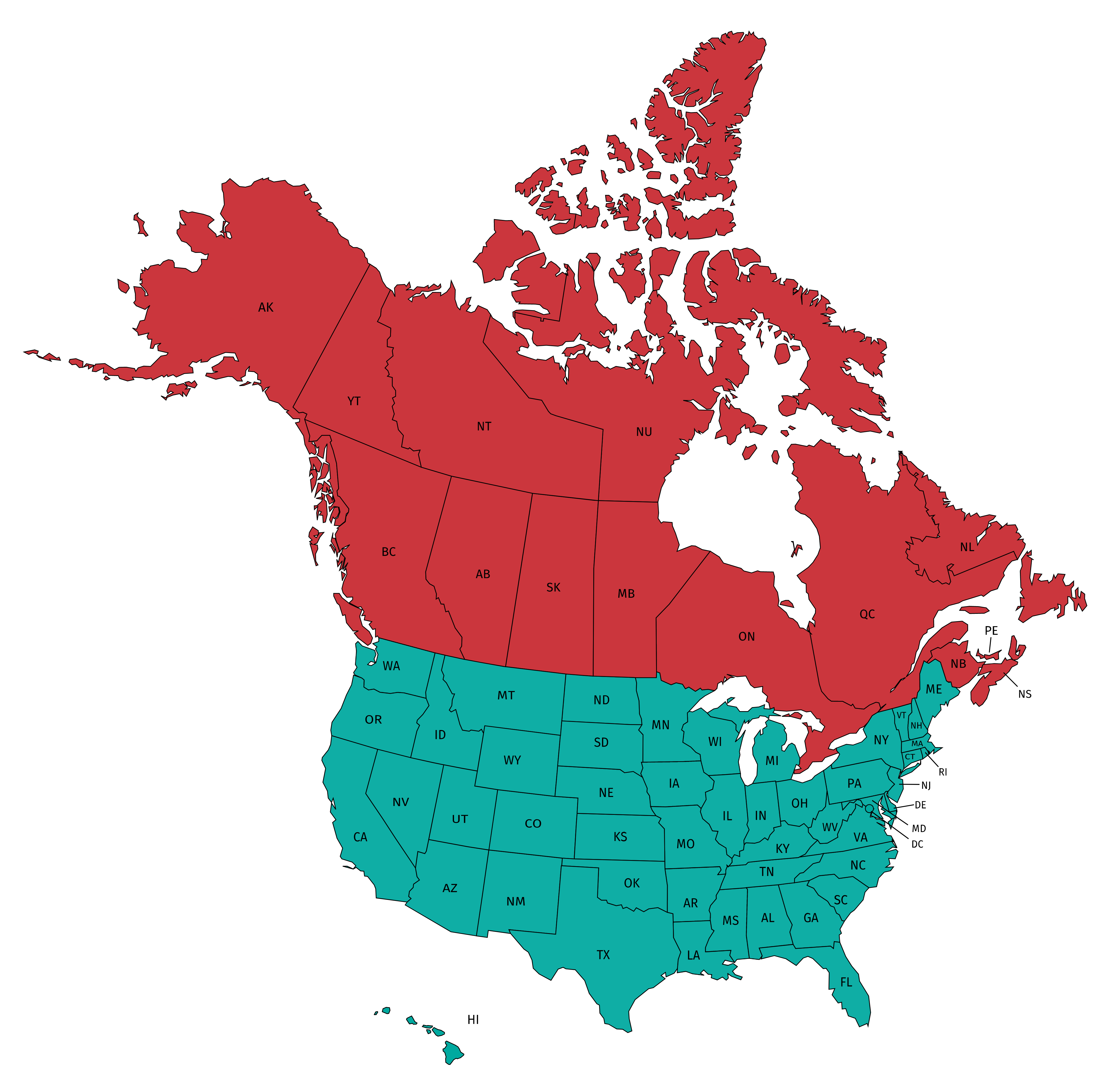
In this next map I have marked the places we have visited, stayed at, and the attractions we have enjoyed over the years. Yellow dots are the airports I have flown through. Green are the places where we have stayed, and dark red are the attractions (including some cities) we have enjoyed. I also included the various places visited in Canada during a couple of trips there in 1979 and 2002.

Completing this map with links, photos and descriptions is a work in progress. Do keep coming back for updates.

What a fascinating country. There is so much to see and do. And, in the main, we have found Americans to be friendly, polite, and with a generosity of spirit.

But, as we approach the 2024 Presidential Election in the USA next week, I do worry for the future. Why? Because if Donald Trump does not win I can’t see him accepting the result, and therefore expect him to stir up his MAGA base to violence once again, just as he did on 6 January 2021. And, heaven forefend, should he win (while most probably losing the national popular vote by a landslide) he is expected to immediately adopt Project 2025 as the blueprint for his administration. The country will be sliding down a very slippery slope towards authoritarianism, civil conflict even.

Would I want to travel around the USA if the country is headed in that direction? It would certainly be a less attractive proposition.


Then there was rice . . .

For 20 years before I joined the International Rice Research Institute (IRRI) in the Philippines in July 1991, as head of the Genetic Resources Center (GRC), my career in international agricultural research at the International Potato Center (CIP, 1973-1981) in Peru and academia (at The University of Birmingham, 1981-1991) focused on potatoes and legume species. Although I remained at IRRI until 2010 (when I retired), I was head of GRC for just a decade, after which I moved to a senior management position.

I’d travelled in Asia only twice before. And one of those trips had been to IRRI in January 1991 for interview. The other, in 1985, was to attend a genetic resources conference in Jakarta, Indonesia.
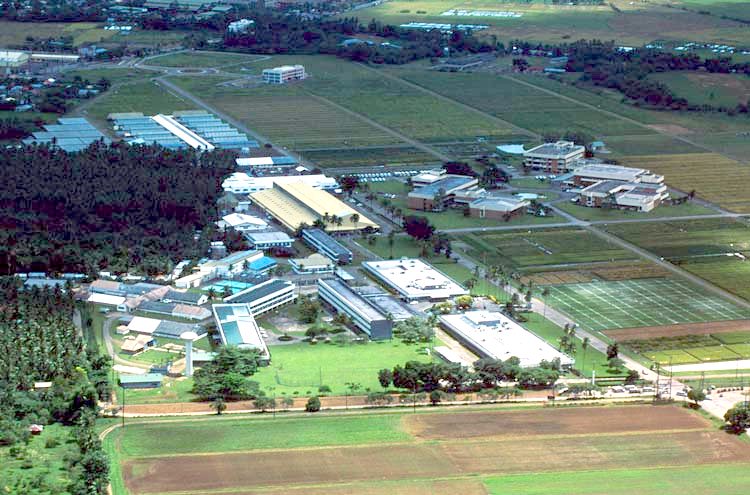
IRRI research center in Los Baños. GRC is housed in the Brady Building on the extreme right. Other buildings have been added since the photo was taken.

So my experience in Asia was limited to say the least, and non-existent for rice. Joining IRRI was certainly a challenge. Why?
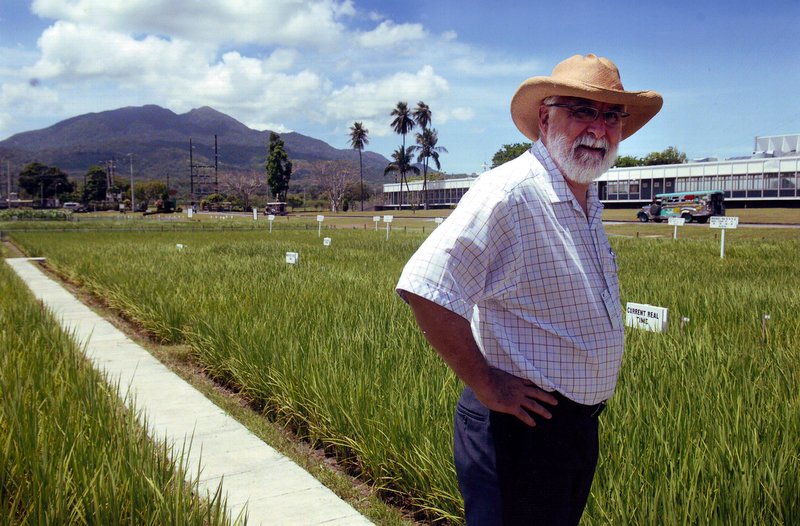
In the experiment field at IRRI research center in 2010, with Mt Makiling in the background. I bought that sombrero in Peru in January 1973, just a few days after I arrived there to begin my career in international agricultural research at CIP. The hat is still going strong 50+ years later – not so sure about the wearer.

At IRRI, I had to learn about rice from scratch, manage one of the world’s most important genebanks (I’d never managed a genebank before), and supervise a group of more than 70 professional and support staff. Furthermore, I had to learn (quickly) to empathise with a very different culture, specifically Filipino but Asian more broadly (very different from that I’d experienced in Latin America). It wasn’t so straightforward, but I was up for the challenge.

In 1991, Klaus Lampe (right, who passed away earlier this year) was IRRI’s Director General, who was appointed in 1988 to revive the institute’s status in the world of international agricultural research. That meant not only refurbishment of IRRI’s laboratories and offices at its Los Baños campus headquarters, but also involved a significant turnover of staff, replacing many (who had been with IRRI for a decade or more, even since the 1960s) with a cohort of younger staff who could bring new ideas,  enthusiasm, and skills to IRRI’s research for development agenda. I was part of that recruitment cohort.

I first heard about the GRC position at IRRI in September 1990. It was advertised as a new department, bringing together the rice genebank (then known as the International Rice Germplasm Center, later renamed the International Rice Genebank) and INGER, a global network for testing rice varieties and breeding lines. While the head would have overall management responsibility for GRC, his/her day-to-day duties would focus on the genebank, while another staff member was the INGER leader.

During my interviews at IRRI over three days I indicated I would only be interested in the position if there was a specific research component and funding to support it, something that had not been envisaged when GRC was established and the position advertised.

I must have been persuasive because I was offered the position, and Lampe approved a research role for GRC. Specifically for research aimed at managing and using the important rice germplasm collection of indigenous varieties, improved lines, genetic stocks, and wild species that, in 1991, totalled around 75,000 seed samples or accessions.

But in July 1991, research per se was not an immediate priority. There were other, more pressing issues to be attended to first—and their outcome equally as important as our many research publications.

I had to quickly familiarise myself with IRRI’s research and management culture as one of the world’s leading agricultural research centers (and oldest among the research centers supported through the Consultative Group on International Agricultural Research, or CGIAR), build a GRC culture and, specifically, work out just how the genebank could be better managed and the roles of each of the staff.

My predecessor (as head of the International Rice Germplasm Center) was eminent rice geneticist and upland rice breeder, Dr TT Chang. ‘TT’, as he was known, ran the genebank (I quickly discovered) along the lines: ‘Do as I say’, and staff had little or no individual responsibility or leeway to manage their work more effectively.

It didn’t take me long to realise that changes could and should be made to increase efficiency, and eliminate duplication of effort among staff. I needed to assign specific responsibilities (and accountability) to each staff member for seed conservation, germplasm multiplication and rejuvenation, for data management, among others, and also identify individuals who might take on a specific research role.

After six months of asking lots of questions and discussing the genebank operations, I had a genebank strategy and plan ready. And because my staff had been involved in developing the plan, its implementation was fairly plain-sailing from then on.

I’m not going to detail here the sorts of changes that were made. Almost none of the genebank operations in the field or in storage escaped our attention. Job descriptions were rewritten, and positions upgraded to reflect new responsibilities.
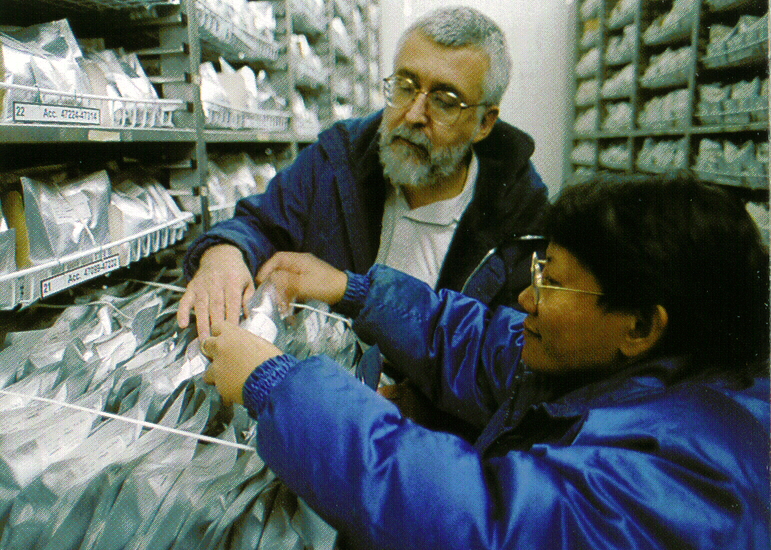
Inside the International Rice Genebank, with Pola de Guzman who became the genebank manager.

The genebank was fortunate to be included in the institute’s refurbishment plan, so we upgraded many of its facilities and installed a dedicated seed drying room, a significant addition.

In this post I summarised what it entails to run a genebank for rice. And check out this video I made  about the genebank in 2015 on a return visit to IRRI. Many of the staff who feature in the video have themselves now retired and some have sadly died.

Among the tasks we undertook was revision of the data management system, one of the most important components of genebank operations. For a number of reasons the data system I inherited was not really fit for purpose. It took two years to complete all the changes!

And for the sake of my successor(s), we wrote a genebank operations manual, the first of its kind among the CGIAR genebanks. Publishing the manual was not the only ‘first’ that IRRI achieved.

The fruits of our endeavours were recognised around 1994 when the CGIAR launched an external review of the center genebanks. The reviewers concluded that IRRI’s genebank was ‘a model for others to emulate‘. Our hard work had paid off. But we weren’t complacent, striving to make more improvements which were taken further by my immediate successor, Dr Ruaraidh Sackville Hamilton.


The management and status of the International Rice Genebank
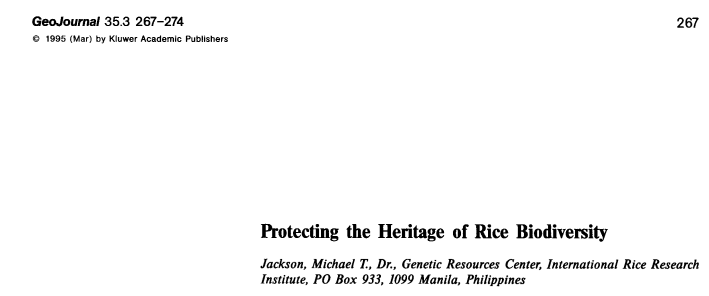
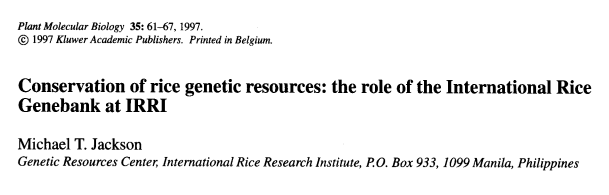
Over the decade I was in charge of IRRI’s genebank, we published several papers and book chapters describing the rice collection and its management (and in the wider CGIAR context), how much it cost to run, who had requested germplasm and for what purpose, using biotechnology for conservation, as well as issues related to the management of intellectual property.

During the mid-1990s, and post-Convention on Biological Diversity (CBD) there was concern internationally about how germplasm was being conserved in the 11 CGIAR center genebanks.

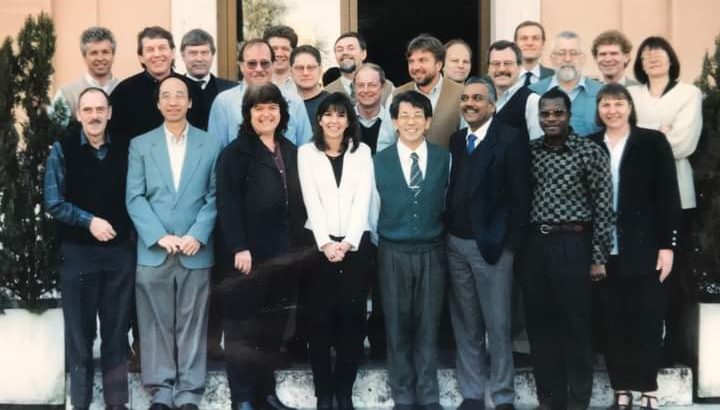
The CGIAR’s System-wide Genetic Resources Program (SGRP, launched in 1994 and which I chaired for several years, seen in the image below meeting in Rome had members from all CGIAR centers) responded to these concerns by publishing Biodiversity in Trust in 1997.
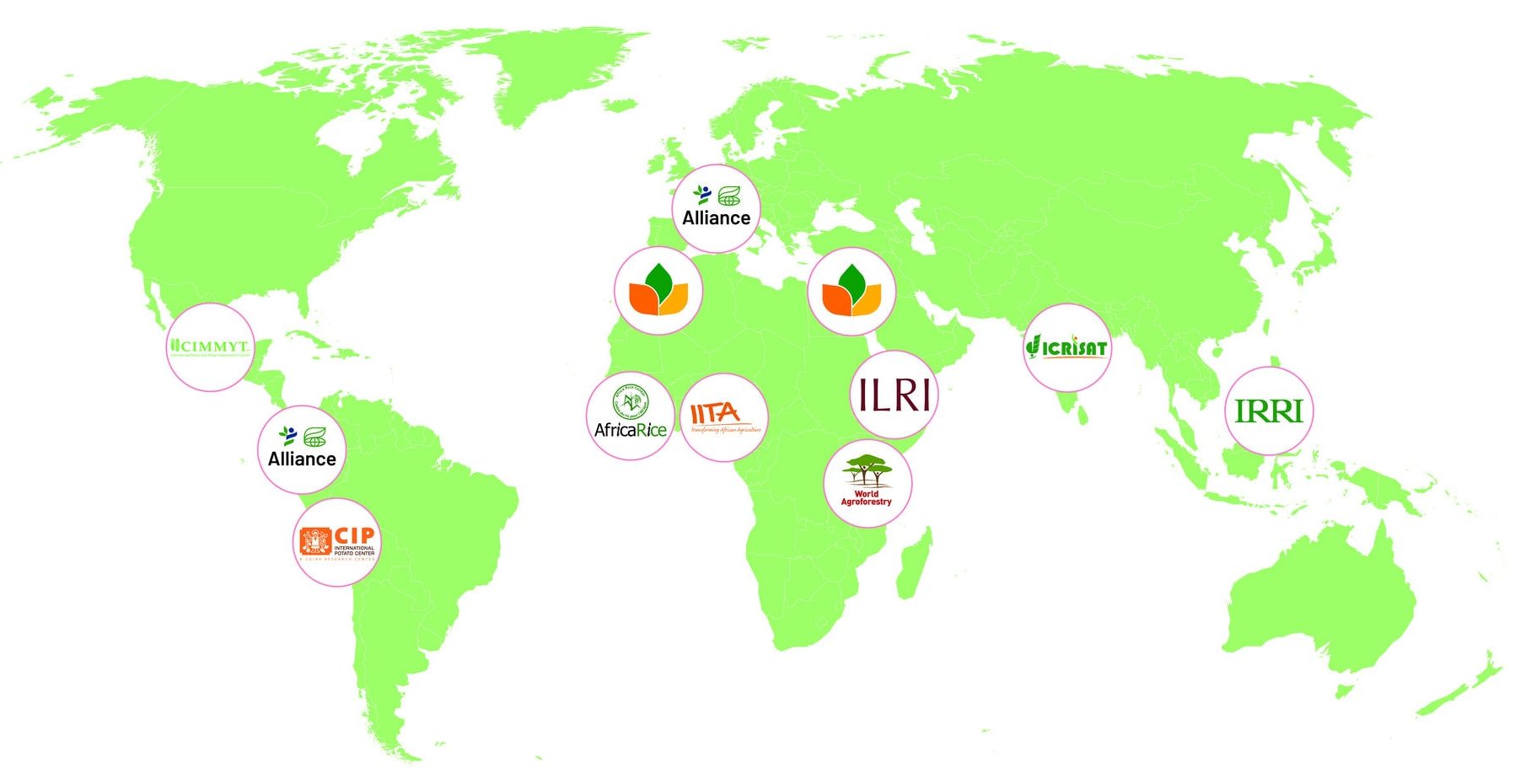
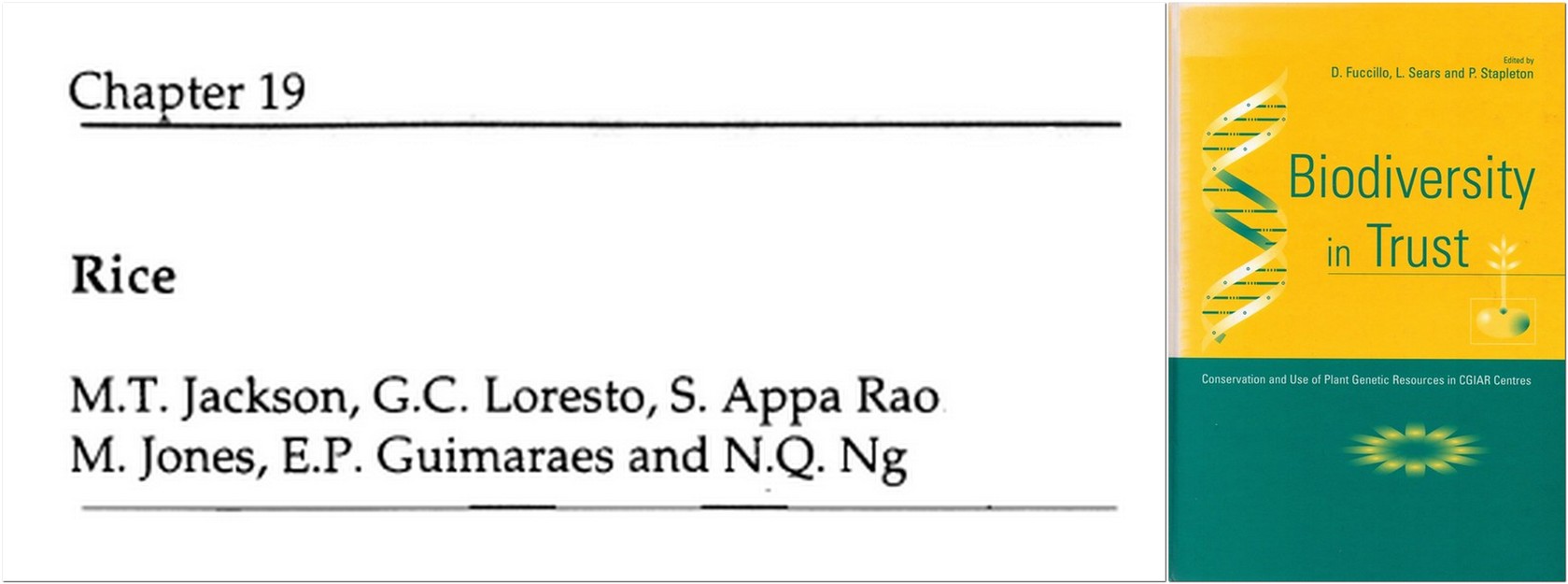
The chapters described the status and management of each of the crops held in trust in the genebanks. The rice chapter had authors from IRRI, Africa Rice (in Ivory Coast), IITA (in Nigeria), and CIAT (in Colombia), all of which had rice collections, with that at IRRI the largest and most comprehensive.
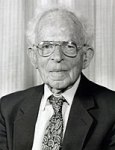
In the 1990s, there was considerable interest in developing ‘core collections’ (first proposed by genetic resources pioneer, Sir Otto Frankel (right, one of the pioneers of the plant genetic resources conservation movement launched in the 1960s, who I had the pleasure of meeting at that 1985 conference in Jakarta), a subset of the whole collection that encompassed all the diversity—a concept that has been (mis)interpreted in a multiplicity of ways ever since. I’ve never been much of an advocate for core collections, simply because we had so much to achieve to ensure the safety of the whole collection rather concentrate our efforts on a subset. Nevertheless, my colleague Duncan Vaughan (who left IRRI in 1993 to join a research institute in Tsukuba, Japan) and I speculated how a core collection for rice might be assembled.
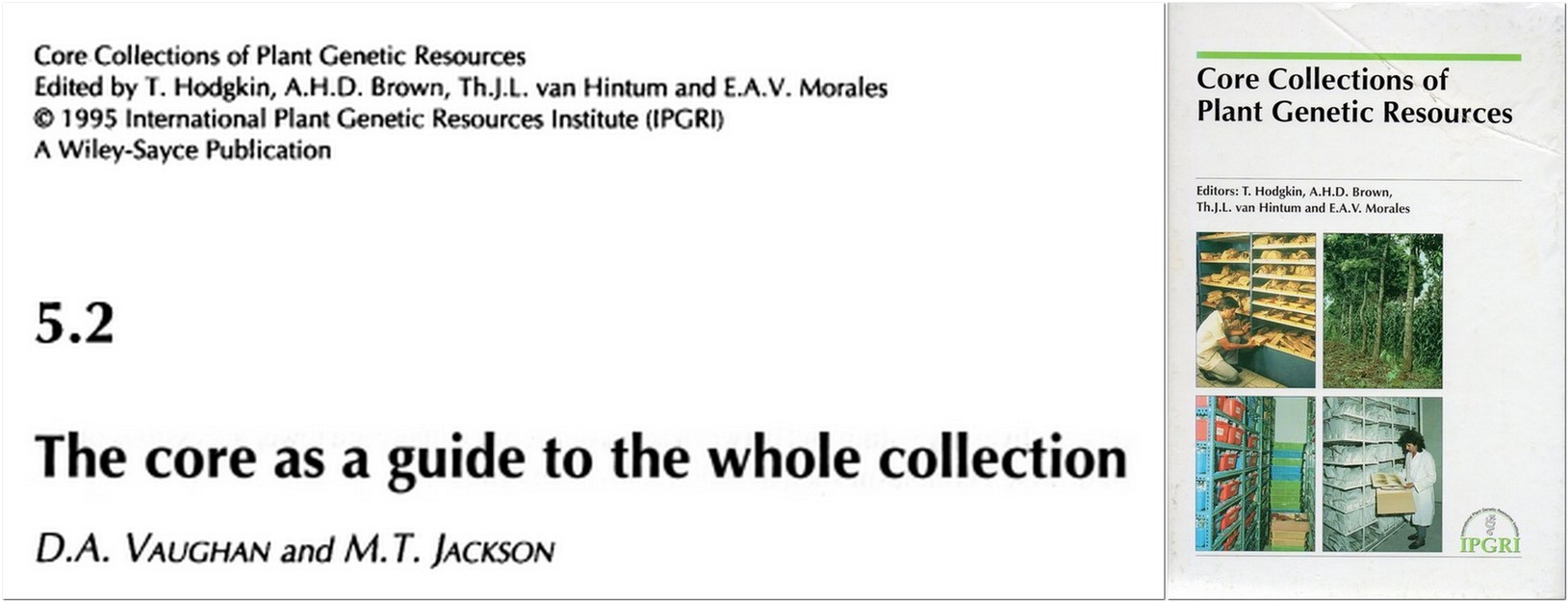
We published an update in 1999, after we’d had several years of molecular analysis experience.
The IRRI collection has been widely used in plant breeding, and rice research in general. It’s not a museum collection, and access to the germplasm is one justification for its continued financial support.

The long-term security of any genebank collection is dependent upon reliability of long-term funding. Fortunately the Crop Trust now provides a significant level of security to genebanks in perpetuity through its Endowment Fund.

But what does it cost to run a genebank like IRRI’s? In the late 1990s, we didn’t really have a good handle on this. With the help of agricultural economists Bonwoo Koo, Philip Pardey, and Brian Wright, several of the CGIAR genebanks made a stab at a costing exercise – subsequently revised since methodologies have been improved. Here is the original IRRI costing study, published in 2004.
During our research on the breeding relationships of wild and cultivated rices, we used in vitro culture of embryos (on nutrient medium), and over the years adopted various molecular approaches (see below) to study the diversity of the rice collection. Some of these also had implications for intellectual property management, and I addressed some of these issues in this chapter in 1999.
In a later section of this post I describe in more detail how we (with colleagues in the UK) adopted and developed molecular approaches to manage the collection (and study diversity). But here are two general descriptions of what we did.
Post-CBD, and with the coming into force of the International Treaty on Plant Genetic Resources for Food and Agriculture, I (together with an FAO consultant Robert Lettington) was asked to provide FAO with an analysis of some of the current developments affecting access to germplasm, including the effects of the development of access legislation under the Convention on Biological Diversity (CBD), legislation on intellectual property rights (IPRs), and other relevant national legislation.
Now let me turn to GRC research per se, which focused on two main areas:

  • managing the germplasm collection; and
  • understanding the diversity of rice accessions in the collection.

From the outset it was clear to me that we would need external collaborators simply because we did not have the resources (human, laboratory, or financial) to carry out everything by ourselves. And in the account below, I’ll explain how and with whom we developed such collaboration.

Germplasm conservation
The top priority (or should be) for any genebank manager is to ensure that conserved germplasm is safe and will retain its viability for decades.

Since the IRRI collection comprised rice varieties and wild species from across the world, I was concerned that we had insufficient information how to improve the multiplication of diverse seed samples in one location, namely Los Baños (14°N). While there was quite a body of literature about seed multiplication, drying, and storage from a range of other species, not so much was known then about rice.

So I turned to my good friend at the University of Reading, Professor Richard Ellis (right), a leading expert in seed conservation, and together we successfully applied for one of the UK Overseas Development Administration’s (ODA, later to become the Department for International Development or DfID) ‘Holdback’ grants. This was a scheme in which the ODA set aside a small portion of its overseas aid budget to the CGIAR centers to fund collaborative work between British institutions and centers, but with the bulk of the funds spent in the UK.

Our project focused on how the seed production environment and time of harvest affected seed longevity in storage, leading to a couple of publications that guided our practices in the genebank.
The next step was to expand the research in Los Baños itself looking at more rice varieties in a real rice-growing environment.

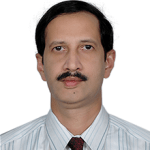
I recruited Dr N Kameswara Rao (right) from India (who had completed his PhD at Reading) to join GRC on a postdoctoral position for three years.

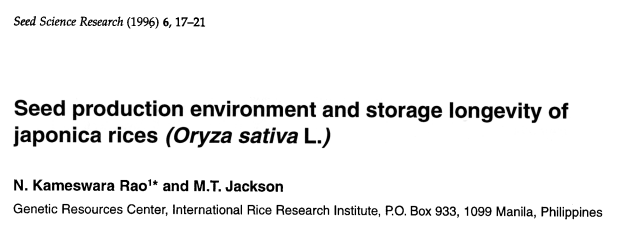
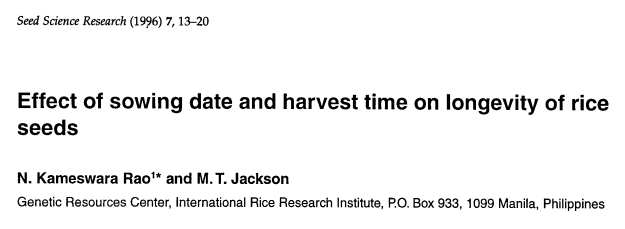
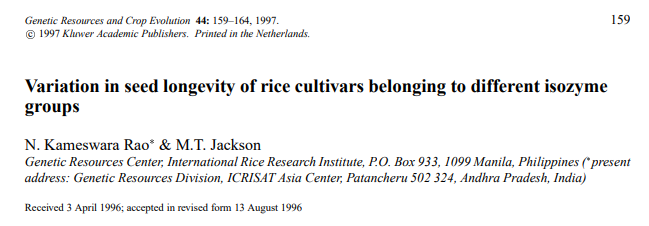
Kameswara Rao and I published these four papers:
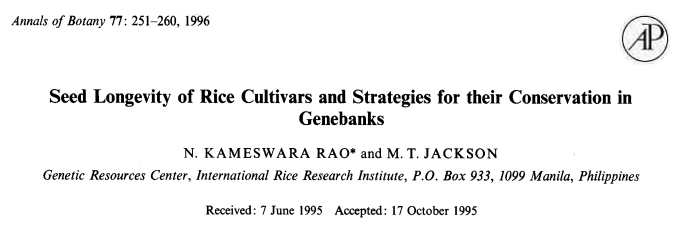
As a result of this project, we made several important changes to germplasm multiplication and rejuvenation, and post-harvest drying and management was enhanced, as I mentioned earlier, with the addition of a dedicated seed drying room (with a capacity of at least 2 tonnes, that allowed seeds to dry slowly) to the genebank.

Seed germination of wild rice species had always been somewhat hit-and-miss, so my staff set up a series of experiments to improve the germination rate, leading to the adoption of different protocols.

Molecular markers – collaboration with the University of Birmingham and the John Innes Centre
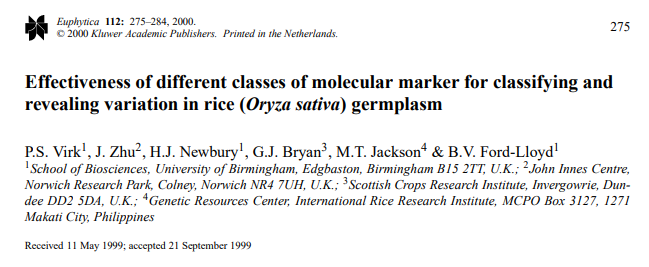
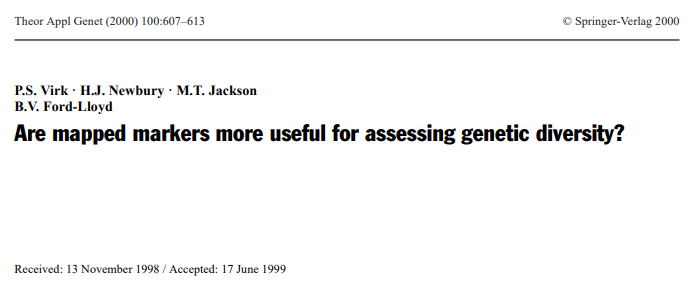
Even before I left the university to join IRRI, I had discussed with my colleagues Brian Ford-Lloyd and John Newbury [1] how we might continue to collaborate. Then, like I had with Richard Ellis at Reading, we successfully applied for a UK ‘Holdback’ grant (R5059) jointly with John Innes Centre (JIC, with the late Professor Mike Gale, FRS) in Norwich, to study how molecular markers could be used to reveal the nature of diversity in the germplasm collection and help in its management. Parminder Virk [2], a quantitative geneticist, joined the project in Birmingham, and added his considerable statistical analysis skills to the research. Dr Glenn Bryan [3] was the lead scientist at JIC.

But not without a little controversy at IRRI. Why should that have been? Well, some of my IRRI colleagues argued that the funds should come directly to the institute since there was a laboratory already established to use molecular markers (mainly Restriction Fragment Length Polymorphism markers or RFLPs), even though that lab was operating at almost full capacity.

They just couldn’t accept that ‘Holdback Funds’ would never be awarded directly to a center, even though we could allocate some of our expenses in the research to the project. In any case, it was clear to me that we had neither the capacity in house, nor did we have the trained personnel in GRC. With that in mind, I was able eventually to send one of my staff, Amita ‘Amy’ Juliano (who sadly passed away around 2004) for several weeks training (on a travel grant from the British Council) in the Birmingham lab, and on her return she set up her own lab in GRC.
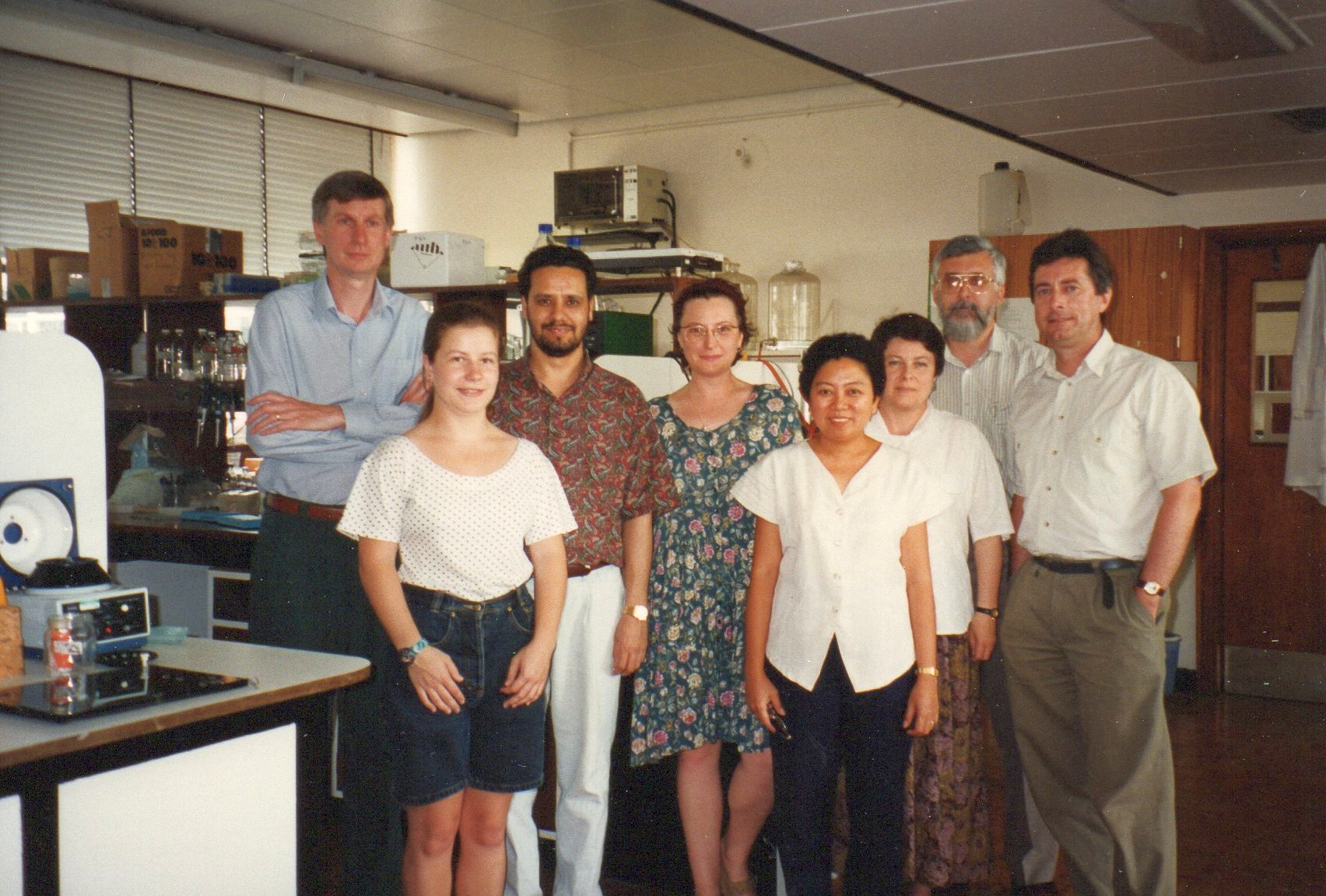
L-R: John Newbury, Faye Hughes (lab technician), Parminder Virk (postdoc), visitor, Amy Juliano (IRRI), visitor, me, Brian Ford-Lloyd in the lab at Birmingham.

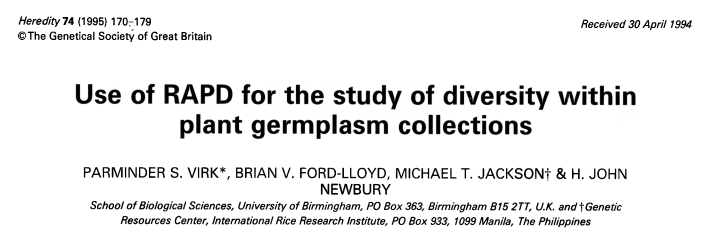
Birmingham had responsibility for the molecular screening (and development of techniques and methodologies), using PCR-based markers like Random Amplification of Polymorphic DNA or RAPD markers. What we at IRRI contributed was expertise to phenotype rice varieties in the field.

Compared to what molecular markers are available for research today (and more than a decade before the rice genome was sequenced in 2002), and the developments in genome sequencing that have taken place, our initial focus on RAPD markers was just the beginning of an innovative (pioneering even) molecular study of any germplasm collection. And has led to some molecular firsts.

We showed that RAPD markers were useful for expanding our knowledge of diversity beyond the purely morphological or isozyme data then available.
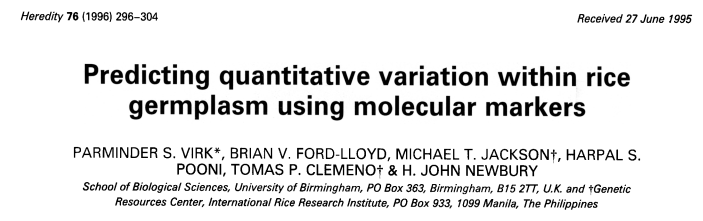
In a particularly significant development we demonstrated how RAPD markers could be used to predict the behaviour of rice varieties in the field (combining excellent molecular analysis with accurate phenotyping). This was one of the first (if not the first) examples of what came to be known as ‘association genetics’, dismissed at the time by many (including Mike Gale) but now widely verified in other species.
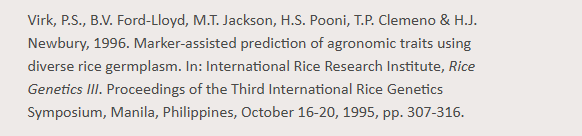
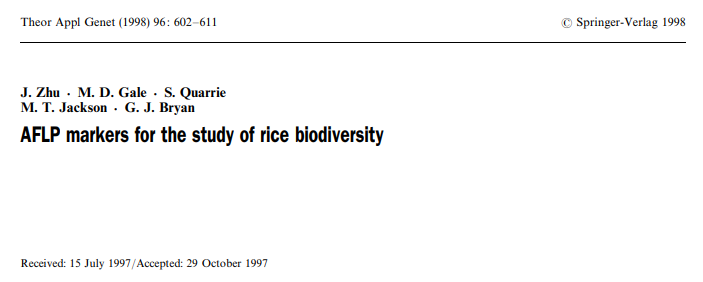
Our colleagues at the JIC also developed work on Amplified Fragment Length Polymorphism or AFLP markers to study rice germplasm. A young Chinese scientist, Zhu Jiahui, joined the project and eventually was awarded his PhD for the research.
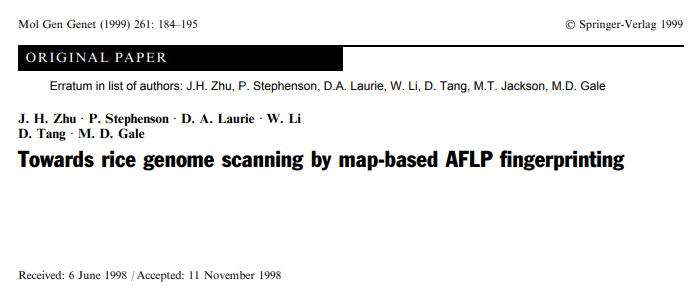
A couple of PhD students at Birmingham used molecular markers to study material from the collection.
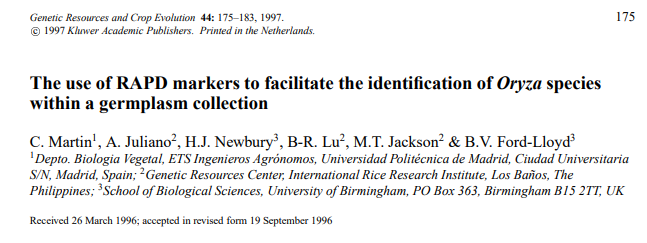
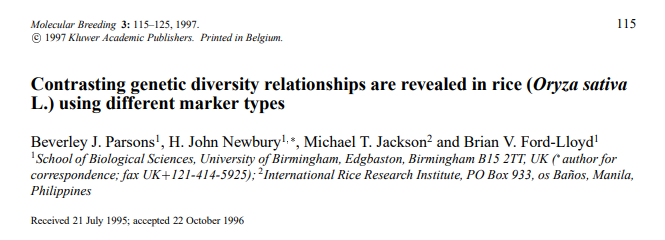
After several years of study we developed a deep appreciation of how molecular markers really did open a window on the diversity of the germplasm collection.
Biosystematics and pre-breeding
Wild species have been used to improve rice varieties, and the genebank collection holds many accessions of the 20 or so wild Oryza species. However, there had been little systematic study in terms of their taxonomy or their breeding relationships with the cultivated species. We decided to rectify that situation and launched a program to study the variation in and relationships of the wild and cultivated rices, Oryza sativa and Oryza glaberrima.
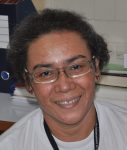
In 1994 we recruited Chinese cytogeneticist Dr Lu Bao-Rong (right, now at Fudan University in Shanghai) to lead this biosystematics initiative and to continue the collecting of wild species of his predecessor, Dr Duncan Vaughan. The two Filipino support staff were Amy Juliano and Maria Elizabeth ‘Yvette’ Naredo.

Under our supervision, Amy and Yvette carried out some important work on the AA genome rices (the two cultivated species and their closest wild relatives), establishing crossing and embryo rescue protocols.

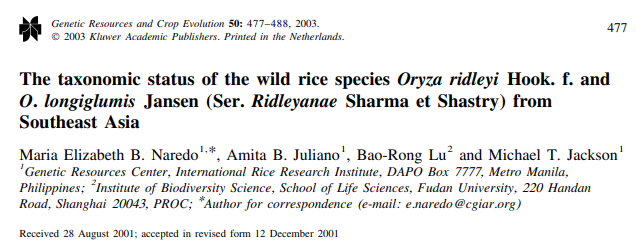
In all, the biosystematics research led to these papers:
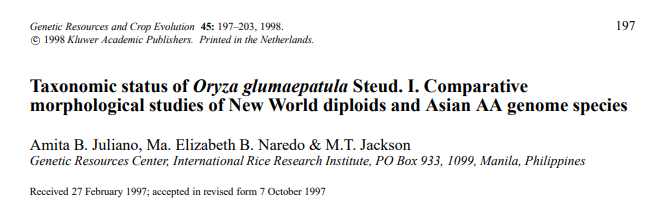
Yvette completed her MS degree at the University of the Philippines-Los Baños, co-supervised by me and a faculty member from the university, for a study on two distantly related species, Oryza ridleyi and Oryza longiglumis. Some years later she went on to complete her PhD as well.


In 1994, I applied to the Swiss government for funding to:

  • ‘complete’ the collection of rice varieties (and some wild species) throughout Asia, and wild rices in several African countries, and Costa Rica and Brazil in South America;
  • train personnel in national programs the principles and practices of rice germplasm conservation and use (including data management); and
  • evaluate the role for on-farm management of rice varieties as a component of genetic conservation.

We received a grant of USD3.286 million, and the project ran until 2000. I’ve written extensively about the project in this blog post. There you will find links to original project reports – and lots more.

Collecting rice germplasm
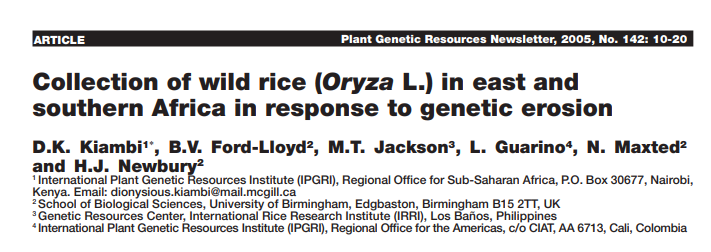
But in terms of collecting, one of my former MSc students at the University of Birmingham, Dr Dan Kiambi (a Kenyan national) coordinated collecting efforts in Africa.
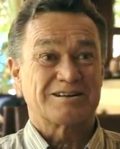
In Asia, few collections of rice germplasm had been made in Laos, due to the conflict that had blighted that country over many years. In fact it’s overall capacity for agricultural R&D was quite limited. At the end of the 1980s, and supported with Swiss funding, IRRI opened a country program office in Vientiane (the capital city), headed by the late Dr John Schiller (right), an Australian agronomist who became a good friend.

With funding from the rice biodiversity project, I hired a project scientist based in Vientiane who would work with the Lao national program to collect rice varieties throughout the country (as well as assisting collecting elsewhere if time permitted).
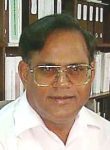
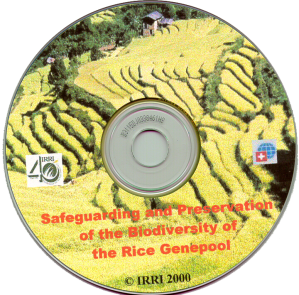
Dr Seepana Appa Rao (right, a germplasm scientist) came to us from a sister center, ICRISAT, in Hyderabad, India and he spent five years in Laos, assembling a comprehensive collection of 13,000 Lao rice samples which were duplicated in the International Rice Genebank. I wrote about this special aspect of the rice biodiversity project here.
Appa was an enthusiastic writer and here are two papers about the collections he made.
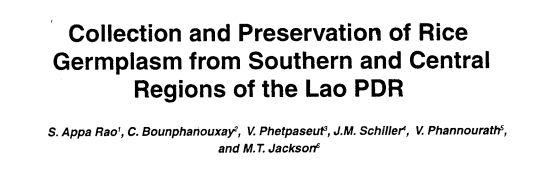
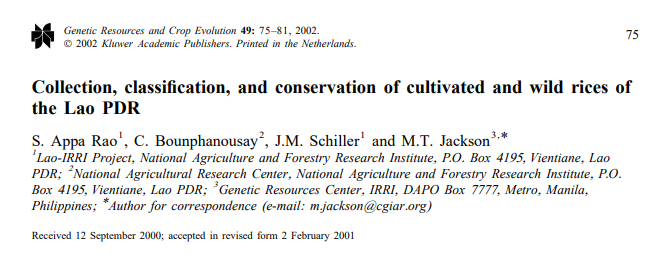
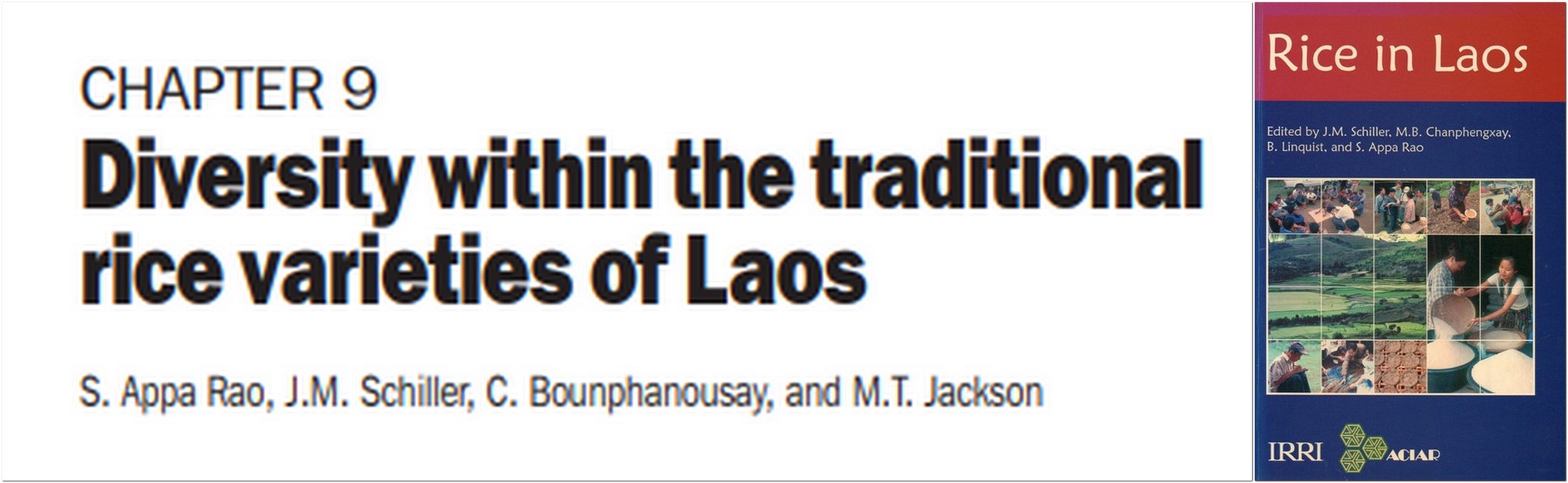
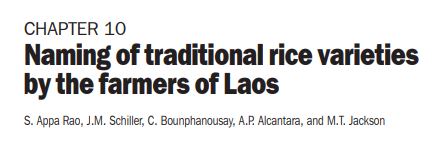
But Appa didn’t just collect rice varieties and leave it at that. With his Lao colleagues he studied the germplasm, leading to several interesting papers and book chapters.
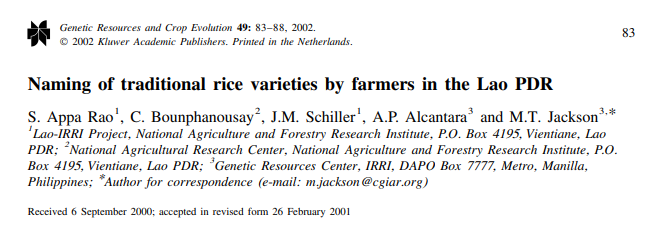
The following chapters were all published in the same book.
On-farm management of rice genetic resources
During the 1990s there was a concerted effort among some activist NGOs and the like to downplay the important (and safe) role of ex situ conservation in genebanks, instead promoting an in situ on-farm management (conservation) approach that should be adopted. Whereas there was a considerable body of scientific literature to support the efficacy of ex situ conservation, on-farm management seemed to almost be an ideology with little scientific basis to support its long-term consequences in terms of genetic conservation.

I felt we needed to tackle this situation head on, so I hired a population geneticist, Dr Jean-Louis Pham (on secondment from IRD in France) and a Mexican human ecologist, Dr Mauricio Bellon who together would look into the genetic and societal implications of on-farm management. After Mauricio moved to another institute after a couple of years, we recruited Dr Steve Morin, a social anthropologist from Nebraska.
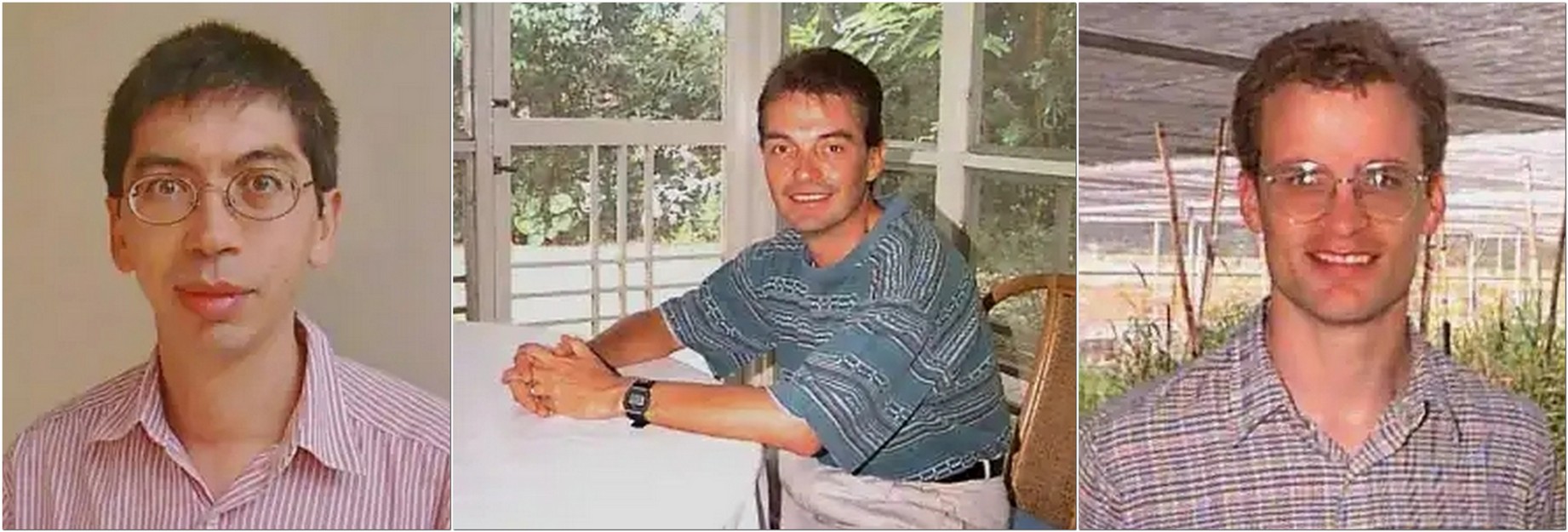
L-R: Jean-Louis Pham, Mauricio Bellon, and Steve Morin

All in all, quite a productive decade, upgrading the genebank and its collection, and establishing excellent collaborations with scientists in the UK and elsewhere, without whom we could never have achieved so much.

My Filipino staff grew in their roles, and the genebank went from strength to strength. I retired just as IRRI reached its Golden Jubilee.

Although I moved into a program management role after leaving GRC, I retained a keen interest in what my former colleagues were undertaking. And to this day, they keep me posted from time-to-time.


Besides the papers and chapters that I have included above, we presented these papers and posters at conferences. No digital copies are available.

1993
Cabanilla, V.R., M.T. Jackson & T.R. Hargrove, 1993. Tracing the ancestry of rice varieties. Poster presented at the 17th International Congress of Genetics, Birmingham, U.K., August 15-21, 1993. Volume of abstracts, 112-113.

Hunt, E.D., M.T. Jackson, M. Oliva & A. Alcantara, 1993. Employing geographical information systems (GIS) for conserving and using rice germplasm. Poster presented at the 17th International Congress of Genetics, Birmingham, U.K., August 15-21, 1993. Volume of abstracts, 117.

Jackson, M.T., 1993. Biotechnology and the conservation and use of plant genetic resources. Invited paper presented at the Workshop on Biotechnology in Developing Countries, held at the 17th International Congress of Genetics, Birmingham, U.K., August 15-21, 1993.

Jackson, M.T., G.C. Loresto & A.P. Alcantara, 1993. The International Rice Germplasm Center at IRRI. In: The Egyptian Society of Plant Breeding (1993). Crop Genetic Resources in Egypt: Present Status and Future Prospects. Papers of an ESPB Workshop, Giza, Egypt, March 2-3, 1992.

Newbury, H.J., P. Virk, M.T. Jackson, G. Bryan, M. Gale & B.V. Ford-Lloyd, 1993. Molecular markers and the analysis of diversity in rice. Poster presented at the 17th International Congress of Genetics, Birmingham, U.K., August 15-21, 1993. Volume of abstracts, 121-122.

1994
Jackson, M.T., 1994. Care for and use of biodiversity in rice. Invited paper presented at the Symposium on Food Security in Asia, held at the Royal Society, London, November 1, 1994.

Parsons, B.J., B.V. Ford-Lloyd, H.J. Newbury & M.T. Jackson, 1994. Use of PCR-based markers to assess genetic diversity in rice landraces from Bhutan and Bangladesh. Poster presented at the Annual Meeting of the British Ecological Society, held at The University of Birmingham, December 1994.

Virk, P., B.V. Ford-Lloyd, M.T. Jackson & H.J. Newbury, 1994. The use of RAPD analysis for assessing diversity within rice germplasm. Paper presented at the Annual Meeting of the British Ecological Society, held at The University of Birmingham, December 1994.

1995
Dao The Tuan, Nguyen Dang Khoi, Luu Ngoc Trinh, Nguyen Phung Ha, Nguyen Vu Trong, D.A. Vaughan & M.T. Jackson, 1995. INSA-IRRI collaboration on wild rice collection in Vietnam. In: G.L. Denning & Vo-Tong Xuan (eds.), Vietnam and IRRI: A partnership in rice research. International Rice Research Institute, Los Baños, Philippines, and Ministry of Agriculture and Food Industry, Hanoi, Vietnam, pp. 85-88.

Jackson, M.T., 1995. The international crop germplasm collections: seeds in the bank! Invited paper presented at the meeting Economic and Policy Research for Genetic Resources Conservation and Use: a Technical Consultation, held at IFPRI, Washington, D.C., June 21-22, 1995

Jackson, M.T., A. Alcantara, E. Guevarra, M. Oliva, M. van den Berg, S. Erguiza, R. Gallego & M. Estor, 1995. Documentation and data management for rice genetic resources at IRRI. Paper presented at the Planning Meeting for the System-wide Information Network for Genetic Resources (SINGER), held at CIMMYT, Mexico, October 2-6, 1995.

Jackson, M.T., B.R. Lu, G.C. Loresto & F. de Guzman, 1995. The conservation of rice genetic resources at the International Rice Research Institute. Paper presented at the International Symposium on Research and Utilization of Crop Germplasm Resources held in Beijing, People’s Republic of China, June 1-3, 1995.

Kameswara Rao, N. & M.T. Jackson, 1995. Seed production strategies for conservation of rice genetic resources. Poster presented at the Fifth International Workshop on Seeds, University of Reading, September 11-15, 1995.

Lu, B.R., A. Juliano, E. Naredo & M.T. Jackson, 1995. The conservation and study of wild Oryza species at the International Rice Research Institute. Paper presented at the International Symposium on Research and Utilization of Crop Germplasm Resources held in Beijing, People’s Republic of China, June 1-3, 1995.

Pham, J.L., M.R. Bellon & M.T. Jackson, 1995. A research program on on-farm conservation of rice genetic resources. Poster presented at the Third International Rice Genetics Symposium, Manila, Philippines, October 16-20, 1995.

Reaño, R., M.T. Jackson, F. de Guzman, S. Almazan & G.C. Loresto, 1995. The multiplication and regeneration of rice germplasm at the International Rice Genebank, IRRI. Paper presented at the Discussion Meeting on Regeneration Standards, held at ICRISAT, Hyderabad, India, December 4-7, 1995, sponsored by IPGRI, ICRISAT and FAO.

1996
Appa Rao, S., C. Bounphanousay, V. Phetpaseuth, K. Kanyavong, B. Sengthong, J. M. Schiller, V. Phannourath & M.T. Jackson, 1996. Collection and classification of rice germplasm from the Lao PDR. Part 1. Southern and Central Regions – 1995. Internal report of the National Agricultural Research Center, Dept. of Agriculture and Extension, Ministry of Agriculture and Forestry, Vientiane, Lao PDR, and Genetic Resources Center, International Rice Research Institute (IRRI), Los Baños, Philippines.

Jackson, M.T. & G.C. Loresto, 1996. The role of the International Rice Research Institute (IRRI) in supporting national and regional programs. Invited paper presented at the Asia-Pacific Consultation Meeting on Plant Genetic Resources, held in New Delhi, India, November 27-29, 1996.

Jackson, M.T. & R.D. Huggan, 1996. Pflanzenvielfalt als Grundlage der Welternährung. Bulletin—das magazin der Schweizerische Kreditanstalt SKA. March/April 1996, 9-10.

Jackson, M.T., 1996. Intellectual property rights—the approach of the International Rice Research Institute. Invited paper presented at the Satellite Symposium on Biotechnology and Biodiversity: Scientific and Ethical Issues, held in New Delhi, India, November 15-16, 1996.

Jackson, M.T., G.C. Loresto & F. de Guzman, 1996. Partnership for genetic conservation and use: the International Rice Genebank at the International Rice Research Institute (IRRI). Poster presented at the Beltsville Symposium XXI on Global Genetic Resources—Access, Ownership, and Intellectual Property Rights, held in Beltsville, Maryland, May 19-22, 1996.

Virk, P.S., H.J. Newbury, Y. Shen, M.T. Jackson & B.V. Ford-Lloyd, 1996. Prediction of agronomic traits in diverse germplasm of rice and beet using molecular markers. Paper presented at the Fourth International Plant Genome Conference, held in San Diego, California, January 14-18, 1996.

1997
Appa Rao, S., C. Bounphanousay, K. Kanyavong, V. Phetpaseuth, B. Sengthong, J.M. Schiller, S. Thirasack & M.T. Jackson, 1997. Collection and classification of rice germplasm from the Lao PDR. Part 2. Northern, Southern and Central Regions. Internal report of the National Agricultural Research Center, Department of Agriculture and Extension, Ministry of Agriculture and Forestry, Vientiane, Lao PDR, and Genetic Resources Center, International Rice Research Institute (IRRI), Los Baños, Philippines.

1998
Appa Rao, S., C. Bounphanousay, V. Phetpaseuth, K. Kanyavong, B. Sengthong, J.M. Schiller & M.T. Jackson, 1998. Collection and Classification of Lao Rice Germplasm Part 3. Collecting Period—October 1997 to February 1998. Internal report of the National Agricultural Research Center, National Agriculture and Forestry Research Institute, Ministry of Agriculture and Forestry, Vientiane, Lao PDR, and Genetic Resources Center, International Rice Research Institute (IRRI), Los Baños, Philippines.

Jackson, M.T., 1998. Intellectual property rights—the approach of the International Rice Research Institute. Invited paper at the Seminar-Workshop on Plant Patents in Asia Pacific, organized by the Asia & Pacific Seed Association (APSA), held in Manila, Philippines, September 21-22, 1998.

Jackson, M.T., 1998. Recent developments in IPR that have implications for the CGIAR. Invited paper presented at the ICLARM Science Day, International Center for Living Aquatic Resources Management, Manila, Philippines, September 30, 1998.

Jackson, M.T., 1998. The genetics of genetic conservation. Invited paper presented at the Fifth National Genetics Symposium, held at PhilRice, Nueva Ecija, Philippines, December 10-12, 1998.

Jackson, M.T., 1998. The role of the CGIAR’s System-wide Genetic Resources Programme (SGRP) in implementing the GPA. Invited paper presented at the Regional Meeting for Asia and the Pacific to facilitate and promote the implementation of the Global Plan of Action for the Conservation and Sustainable Use of Plant Genetic Resources for Food and Agriculture, held in Manila, Philippines, December 15-18, 1998.

Lu, B.R., M.E. Naredo, A.B. Juliano & M.T. Jackson, 1998. Biosystematic studies of the AA genome Oryza species (Poaceae). Poster presented at the Second International Conference on the Comparative Biology of the Monocotyledons and Third International Symposium on Grass Systematics and Evolution, Sydney, Australia, September 27-October 2, 1998.

Morin, S.R., J.L. Pham, M. Calibo, G. Abrigo, D. Erasga, M. Garcia, & M.T. Jackson, 1998. On farm conservation research: assessing rice diversity and indigenous technical knowledge. Invited paper presented at the Workshop on Participatory Plant Breeding, held in New Delhi, March 23-24, 1998.

Morin, S.R., J.L. Pham, M. Calibo, M. Garcia & M.T. Jackson, 1998. Catastrophes and genetic diversity: creating a model of interaction between genebanks and farmers. Paper presented at the FAO meeting on the Global Plan of Action on Plant Genetic Resources for Food and Agriculture for the Asia-Pacific Region, held in Manila, Philippines, December 15-18, 1998.

1999
Alcantara, A.P., E.B. Guevarra & M.T. Jackson, 1999. The International Rice Genebank Collection Information System. Poster presented at the annual meeting of the Crop Science Society of America, Salt Lake City, October 31-November 4, 1999.

Appa Rao, S., C. Bounphanousay, K. Kanyavong, B. Sengthong, J.M. Schiller & M.T. Jackson, 1999. Collection and classification of Lao rice germplasm, Part 4. Collection Period: September to December 1998. Internal report of the National Agricultural Research Center, National Agriculture and Forestry Research Institute, Ministry of Agriculture and Forestry, Vientiane, Lao PDR, and Genetic Resources Center, International Rice Research Institute (IRRI), Los Baños, Philippines.

Appa Rao, S., C. Bounphanouxay, J.M. Schiller & M.T. Jackson, 1999. Collecting Rice Genetic Resources in the Lao PDR. Poster presented at the annual meeting of the Crop Science Society of America, Salt Lake City, October 31-November 4, 1999.

Jackson, M.T., E.L. Javier & C.G. McLaren, 1999. Rice genetic resources for food security. Invited paper at the IRRI Symposium, held at the annual meeting of the Crop Science Society of America, Salt Lake City, October 31-November 4, 1999.

Jackson, M.T., F.C. de Guzman, R.A. Reaño, M.S.R. Almazan, A.P. Alcantara & E.B. Guevarra, 1999. Managing the world’s largest collection of rice genetic resources. Poster presented at the annual meeting of the Crop Science Society of America, Salt Lake City, October 31-November 4, 1999.

2000
Jackson, M.T., B.R. Lu, M.S. Almazan, M.E. Naredo & A.B. Juliano, 2000. The wild species of rice: conservation and value for rice improvement. Poster presented at the annual meeting of the Crop Science Society of America, Minneapolis, November 5-9, 2000.

Naredo, M.E., A.B. Juliano, M.S. Almazan, B.R. Lu & M.T. Jackson, 2000. Morphological and molecular diversity of AA genome species of rice. Poster presented at the annual meeting of the Crop Science Society of America, Minneapolis, November 5-9, 2000.

Pham J.L., S.R. Morin & M.T. Jackson, 2000. Linking genebanks and participatory conservation and management. Invited paper presented at the International Symposium on The Scientific Basis of Participatory Plant Breeding and Conservation of Genetic Resources, held at Oaxtepec, Morelos, Mexico, October 9-12, 2000.

2001
Jackson, M.T., 2001. Collecting plant genetic resources: partnership or biopiracy. Invited paper presented at the annual meeting of the Crop Science Society of America, Charlotte, North Carolina, October 21-24, 2001.

Jackson, M.T., 2001. Rice: diversity and livelihood for farmers in Asia. Invited paper presented in the symposium Cultural Heritage and Biodiversity, at the annual meeting of the Crop Science Society of America, Charlotte, North Carolina, October 21-24, 2001.

2004
Jackson, M.T., 2004. Achieving the UN Millennium Development Goals begins with rice research. Invited paper presented to the Cross Party International Development Group of the Scottish Parliament, Edinburgh, Scotland, June 2, 2004.


[1] Brian was subsequently appointed Professor of Conservation Genetics at Birmingham, and Deputy Head of the School of Biosciences. He retired almost a decade ago.

John moved to the University of Worcester in 2008 as Professor of Bioscience, and head of of the Institute of Science and the Environment. He is now retired.

[2] Parminder later joined IRRI as a rice breeder, and from there, in the early 2000s, joined the CGIAR’s Harvest Plus program. I believe he has now retired.

[3] When the project ended, Glenn moved to the James Hutton Institute near Dundee, Scotland where he was lead of the potato genetics and breeding group, retiring in July 2023.


 

Comfortable, but definitely not numb

Pink Floyd in January 1968. L-R: Nick Mason, Syd Barrett, Roger Waters, Richard Wright, and David Gilmour (seated)

I came late to Pink Floyd. I’ll be 76 next month, and I must have been well into my 40s before I started listening to them with any regularity. That would be in the 1990s when I acquired a CD player; I’d never listened to them on vinyl.

I should add, however, that I have seen Pink Floyd live—on 26 January 1968 (and supported by T-Rex), in the Students’ Union at the University of Southampton where I began my degree in October the previous year.

During the 1970s I was working in South and Central America, and Pink Floyd were not on my musical radar. Except for one occasion, around the end of 1979. I’d travelled to Guatemala from my home in Costa Rica. My Pan Am flight from San José landed in Guatemala City in the early evening, and I headed straight to my hotel.

As I was unpacking my suitcase, I’d turned on the TV, and whatever channel I’d tuned to (my recollection was MTV, but I’ve checked and MTV wasn’t launched until 1981) was broadcasting a rather interesting video, of cartoon hammers marching in step—in the last minute of Another Brick in the Wall (Pt. 2) by Pink Floyd, which was released in November 1979, from their studio album The Wall.

And that video (and where I first viewed it) has been etched in my mind ever since.

And there is one track from The Wall which features perhaps one of the greatest guitar solos, by David Gilmore. I’m referring of course to Comfortably Numb. It’s a favorite of mine that I listen to regularly, and one of eight I would choose were I to be cast away on a desert island (Desert Island Discs).

Just yesterday, I came across a video on YouTube, by American YouTube personality, multi-instrumentalist, music producer, and educator, Rick Beato (right). Among the videos he presents, he has a series called What Makes This Song Great? And this particular video was all about Comfortably Numb.

Much as I enjoy music of all kinds I have little or no musical knowledge (even though I did play – badly – the cello for several years while in high school). So I found Beato’s analysis of Comfortably Numb absolutely fascinating (even though I didn’t understand many of the descriptions per se), but I could appreciate just what a fine musician David Gilmore is. I’m sure it will enhance your appreciation of this track.

And, at 78, still going strong having just commenced a tour to promote his fifth studio album Luck and Strange, with concerts in Rome, London, New York, and Los Angeles. Comfortably Numb is always a crowd pleaser from clips I’ve seen from the recent Rome concerts.

One track on Luck and Strange that has caught my attention (written and released by The Montgolfier Brothers in 1999) features Gilmore’s 22 year old daughter Romany.

A great interpretation.


Two castles in one day . . .

The weather during June and July was appalling, very wet and cool. However, summer returned temporarily mid-July so we grabbed that rare opportunity to visit two castles in North Yorkshire, around 62 miles south from home.

Richmond Castle (founded in the 1070s) and 12th century Middleham Castle (just 10 miles south of Richmond) in Swaledale and Wensleydale respectively, are among the most important castles in the north of England, perhaps in the country as a whole. They simply exude history! The former was at the heart of one of the largest post-Norman Conquest estates; the other was the boyhood home and later power base of one of England’s most notorious kings.

I have to admit to being a little disappointed initially with Richmond Castle. Until viewed from the south (which we did as we headed to Middleham, but could not stop because of parking restrictions), it’s not easy at ground level to appreciate just how magnificent it must have been in its heyday. 

Richmond Castle from the south, with the residential accommodation on the right, and the later Keep behind.

Richmond Castle from the air, clearly showing the size of the enclosure which must have been full of other ‘temporary’ buildings when the castle was originally occupied. The residential accommodation is in the top right corner, with the Cockpit Garden beyond.

The original castle was built by Alan Rufus (a cousin of William I, the Conqueror) after 1071 but it wasn’t until the 12th century that the magnificent Keep was added.

An artist’s impression of how the castle must have looked not longer after its foundation in the late 11th century.

By the middle of the 16th century the castle had become derelict, but was revived centuries later and a barracks was built along the western wall in the 19th century, as well as a cell block adjoining the keep. In fact the castle was occupied during the Great War (1914-18) and housed conscientious objectors, with some kept as prisoners in the cell block.

I’m not going to describe in detail the history of Richmond Castle here. There is much more information on the English Heritage website, where you can also find a detailed site plan.

From the roof of the Keep there are magnificent views over the castle enclosure and to all points of the compass around Swaledale and the town of Richmond itself. The castle stands to one side of the market place.

The residential block (Scolland’s Hall), on the southeast corner of the enclosure is contemporaneous with the late 11th century curtain wall, but service buildings were added around 1300.

To the east of this area lies the Cockpit Garden (mainly yew shrubs and lawn) surrounded by walls built in the 12th century and some of uncertain age. English Heritage has developed an ornamental section on the north side.

On the eastern wall there is a small chapel, dedicated to St Nicholas and dating from the late 11th century.

The 19th century barracks block has long since been demolished, but a cell block adjoining the Keep, also from the 19th century still stands, and via steps on to its roof provide easier access to the first floor of the Keep rather than the very narrow and steep spiral staircase in the southwest corner of the ground floor.

There is an excellent exhibition on the floor above the visitor entrance and shop. I wish I’d taken more time to look at the various posters, especially those dealing with the incarceration of conscientious objectors in WW1. Read all about their fate on the English Heritage website

But we’d already decided to move on to Middleham Castle, and having enjoyed a picnic lunch beside the River Swale (reportedly one of the fastest-flowing rivers in England), that’s precisely what we did, crossing over the bridge that replaced an original medieval one.

Middleham Castle is much more impressive, and it’s remarkable how much has survived the ravages of the centuries.

Middleham Castle from the southwest, probably from the site of William’s Hill where an original fortification was constructed shortly after the Norman Conquest.

From the moment you walk through the impressive gatehouse, it’s impossible to ignore the grandeur of this castle, which was more a palatial residence than a fortification.

Close by the castle are the remains of an early castle, probably constructed after the Norman Conquest in 1066. Known as William’s Hill, it can easily be seen from the top of Middleham’s south-east turret as the cluster of trees on the skyline in the image below.

Construction of the stone castle began in the later 12th century, and was extended over several centuries. In 1260, the castle passed into the Neville family, one of the most powerful in the kingdom. Richard Neville (1428-1471), the 16th Earl of Warwick and 6th Earl of Salisbury came to be known as ‘Warwick the Kingmaker’ given the power and influence he wielded.

Middleham’s central keep was one of the largest of any castle in the country, and the oldest part of the castle. There are extensive basements with kitchens, above which were the main hall and family apartments. Surrounding the keep is a curtain wall, with several towers, only one of which is round, the Prince’s Tower on the southwest corner.

English Heritage has a detailed ground plan of the castle on its website. There is also a comprehensive historical account here and illustrations of how the castle must have looked in its heyday. It certainly has the feel of a family residence, a show of wealth and opulence. One feature that English Heritage highlights in its introduction and on ground plan is the large number of latrines, with some dedicated latrine towers. It seems that no-one was ever caught short at Middleham.

The original entrance to the castle was on the east side, but this was changed around 1400 to a gatehouse on the north wall. The entrance to the keep is via a modern stairway to the first floor. As I ascended those stairs I imagined what it must have been like all those centuries ago as guests arrived at the castle and were escorted to their rooms. And ascending to the top of the south-east turret gives a wonderful view over the ruins and the wider landscape of Wensleydale.

Surrounding the central keep on the north, west and south sides, are a series of chambers that must have once been accommodation for staff.

One interesting feature inside the south wall is a large circular ‘trough’, and a raised circular platform next to it. While the left hand feature in the image below is described as ‘ovens’ on the ground plan, there is no description for the trough. 

The ovens and ‘trough’ from the south-east turret.

Both date from the 16th century when, apparently, the local folk were allowed into the castle to use the ovens and the trough. I had to ask, and the best guess is that the trough was a cider press, perhaps as shown in this illustration.

Richard, Duke of Gloucester (1452-1485) was the youngest brother of Edward IV, who spent his boyhood at Middleham (along his elder brother George, who was created Duke of Clarence). The Kingmaker’s two daughters Isabel and Anne grew up at Middleham. Isabel married Clarence, and Anne married Gloucester.

Middleham became Gloucester’s northern stronghold, a base from which to gain power and eventually the crown, becoming King Richard III in June 1483. There is a commemorative statue of Richard just inside the castle.

He was defeated by Henry Tudor (who would become King Henry VII) at the Battle of Bosworth Field (the last significant battle of the Wars of the Roses) in August 1485, where he was killed. And disappeared from history so to speak until his body was discovered beneath a car park in Leicester in 2012-13.

Two castles in one day. Being just a few miles apart it was an easy excursion for us from North Tyneside, and well worth the journey south. A highly recommended day out!

Neither castle has dedicated parking. In Richmond we chose the Fosse Car Park just below the castle. I think it was £3 for 4 hours. There is parking available in the Market Place beside the castle, but I believe it’s more time limited. In Middleham, we parked in Back Street just outside the castle, where there was space for just a handful of vehicles. Parking would be trickier, I guess, on a busier day.


Photo album for Richmond Castle

Photo album for Middleham Castle

What’s on your birding bucket list?

Ever since I was a small boy, I’ve been a birder. Not perhaps as enthusiastic as many, but it’s a hobby I’ve enjoyed for almost seven decades. I’ll be 76 in November.

I guess my ‘golden years’ were those I spent between 1976 and 1980 in Costa Rica in Central America, where the bird life was out of this world. The years I spent in the Philippines between 1991 and 2010 were disappointing from a birding point of view. I’d been spoilt by Costa Rica. But if I had taken the effort, like my close friend and colleague Graham McLaren did, there were plenty of exotic species to find in the fields and forests close to our home in Los Baños, south of Manila.

Since I retired in 2010, and especially since we moved to the northeast of England four years ago, I’ve taken to birding once again, and enjoy walking the waggonways that criss-cross North Tyneside, and where the bird life is quite exceptional.

But yesterday, I fulfilled a birding dream that has taken me all my life to achieve.

With the weather set reasonably fair, Steph and I decided to head north to the Hauxley Wildlife Discovery Centre and Nature Reserve (just south of Amble), one of the best bird-watching sites on the Northumberland coast, next to the beach at the north end of Druridge Bay. It’s somewhere we have visited several times since moving north, and a walk around the lake never disappoints. There are several hides from which to quietly observe all the birds around the site.

I guess we left home around 10:15, and arrived to the Centre just before 11:00. First stop: the café for a welcome Americano (and a ‘comfort stop’, of course).

We’d just sat down to enjoy our coffees when a lady at the next table beside the window suddenly stood up, binoculars to her eyes, and exclaimed ‘blue!’.

Male kingfisher (source: RSPB).

Did I hear correctly? It could only mean one bird that I have waited all my life to see: the iconic common kingfisher (Alcedo atthis). Grabbing my binoculars, I scanned the vegetation on the other side of the lake, and finally had a male  kingfisher in view.

It’s an elusive, shy bird. Many people only ever see a flash of metallic blue-green feathers along a watercourse. But we were in luck.

Over the next 20 minutes or so we had magnificent views of this beautiful bird. This boy was fishing, choosing between two perches some 10 meters apart and just above the water. So we were able to see him diving and returning to his perch to enjoy his catch.

And those iridescent wing and dorsal feathers which we saw in their full glory as he emerged from the water, desperately flapping his wings to gain height and return to his perch, just like in this video (from YouTube).

What a start to the day, and probably one of the best for birds we’ve enjoyed at Hauxley, observing almost 30 species including a pair of Egyptian geese and a dozen herons.

I’ve seen a number of different kingfisher species in Costa Rica, in the Philippines, and Australia. But there’s no doubt about it. That sighting of a lone common kingfisher yesterday was a brilliant moment that’s now etched in my memory.


Ken Brown – a life well lived

Just yesterday, I heard that an old friend of almost 50 years (who was a colleague of mine—supervisor, actually—at the International Potato Center in Lima, Peru) had died recently, just shy of his 96th birthday.

Ken Brown with potato researchers in East Africa, discussing diffuse light storage of seed tubers.

Ken Brown and I first met in February 1976 when he joined the center (known by its Spanish acronym CIP) as Coordinator for Regional Research and Training in the Outreach Program (shortly afterwards renamed Regional Research and Training).

I had returned to Peru at the end of December 1975, having just been awarded my PhD at the University of Birmingham, and was waiting for an assignment as a postdoc in Outreach (moving to Costa Rica in April 1976). My wife Steph and I were living in CIP’s guesthouse in La Molina, and as far as I can recall we were the only residents apart from the ‘wardens’, Professor Norman Thompson and his wife Shona, who were at CIP on a one-year sabbatical from a university in the USA (Michigan State I believe).

Until, one morning when we went into breakfast, and the Browns (Ken, his wife Geraldine, and five sons: Sean, James, Donal, and twins Ronan and Aidan) were already at the table, having arrived during the night.

L-R: Geraldine Brown, Steph, Josianne and Roger Cortbaoui (who joined CIP after the Browns had arrived), and Ken with Aidan on his knee.

Ken and I hit it off immediately. He had a wicked sense of humour. Throughout the years I worked alongside him, he was extremely supportive of all his staff, managing them and his program on a ‘loose rein’, never second-guessing or micro-managing. I learnt a lot about program and staff management from Ken. The Spanish term simpático sums up Ken to a tee.


Originally a cotton specialist (in plant physiology if my memory serves me correct), Ken had worked in Africa (where he met Geraldine), and immediately prior to joining CIP had been based at Lyallpur (now Faisalabad) in the Punjab region of Pakistan. He had an undergraduate degree from the University in Reading, and was awarded a PhD in 1969 after being persuaded by Professor Hugh Bunting (who held the chair in agricultural botany) to submit his publications for the degree.

In 1976 the head of the Outreach Program was American Richard ‘Dick’ Wurster. After he left CIP in 1978, Ken stepped up to become head of Regional Research. It was then that I also became CIP’s Regional Representative for Mexico, Central America, and the Caribbean (Region II) after the previous regional leader, Ing. Oscar Hidalgo (who passed away under a month ago) left his position in Mexico to pursue PhD studies at the North Carolina State University in Raleigh.

In April 1978, Ken was a member of the team that launched a major regional program in Central America and the Caribbean, perhaps the first consortium among the centers of the CGIAR (the organization that supports a network of international agricultural centers around the world, including CIP).

Known as PRECODEPA, the program was funded by the Swiss government, and the launch meeting was held in Guatemala City.
At the launch meeting of PRECODEPA in Guatemala City. L-R around the table: Ken Brown, me, CIP Director General Richard Sawyer, CIP senior consultant John Niederhauser, Ing. Carlos Crisostomo (Guatemala), and a representative from Honduras.


In the first months at CIP, the Browns remained in the CIP guesthouse until they found a house to rent or purchase, so I got to know them very well. It was on one of our trips to one of CIP’s research stations at San Ramon that Ken and I had many hours travel to discuss a whole slew of topics.

Ken learning, for the first time, about late blight of potatoes in the field at San Ramon from plant pathologist Ing. Liliam Gutarra.

Not long after Ken arrived to Lima, there was a party at the home of CIP’s Director General, Richard Sawyer, to celebrate his birthday. Richard’s wife Norma had chosen a Roman theme for the party. And even though we were staying in the guesthouse, without easy access to costume accessories, Ken and I did our best to look the part, seen in this photo chatting (in Latin?) with Norm Thompson.


Ken remained at CIP until his retirement around 1993 when he published a short memoir: Roots and Tubers Galore: The Story of CIP’s Global Research Program and the People Who Shaped It.

In a postscript, Ken wrote: I wrote this short account of the Regional [Research] Program not just to record part of CIP’s history, but also to provide some diversion from the usual round of reports and technical publications that are always dropping on your desks. Working with the Regions is enjoyable, and I hope that those of you who did participate during the early years will find these notes of interest. As all who know me are aware, I enjoy the humorous side of life as well as the serious aspects, so if I have been too free with my memories please accept my apologies. To all of you who are part of this story I want to say thank you and wish you every success in the coming years.

I am proud to have been part of that story, and to count Ken among my friends.

However, he was perhaps too free with one memory, about an incident that happened before he even joined CIP, and of which I have no recollection whatsoever. It seems that it forms part of the CIP history.

Between 1973 and 1975, I was an Associate Taxonomist, while also completing the research for my PhD.

But as I read this, I can’t deny that it is something I would be inclined to have done. I wouldn’t put it past me.

After retiring from CIP Ken and Geraldine set up home in Devon. Geraldine sadly passed away a few years back and Ken moved to Cheltenham to live with one of the twins, Aidan and his family.

After I heard that Ken had died, I contacted Donal who I had met several times during the course of our respective careers in international agricultural development. He told me that his father had “lived life to the full until the end and while his body got weaker his mind stayed very alert. He had a very happy and fulfilling life and final years and the end was quick, peaceful and painless – what more could one ask for.”

Indeed it was a life well lived.

Thanks for everything, Ken.


Ken’s funeral was held in Salisbury, Wiltshire on Tuesday 30 July at 3 pm, where he had moved into a retirement home a year or so back.

I attended his funeral online, and asked Donal for a copy of the Order of Service, which he has given me permission to post here. Click on the image to open a copy.

Ken’s coffin was carried into the crematorium chapel by his five sons to the strains of El Condor Pasa, a very fitting choice given Ken’s many years at the helm of Regional Research and Training at CIP in Peru.

One thing I learned about Ken that I hadn’t known before was his enthusiasm for reggae music, particularly by Bob Marley and The Wailers.

The funeral service concluded with the playing of Three Little Birds by Bob Marley as everyone left the chapel.

Don’t worry about a thing
‘Cause every little thing is gonna be alright


History in the writing . . .

There’s nothing I enjoy more nowadays (apart from an exhilarating walk on a fine day, which have been few and far between in recent months) than to settle down with a good book and some music in the background (from Radio Paradise, Classic FM, or maybe a choice on Spotify).

My reading habits have changed over the years. Having studied English Literature in high school, I’m afraid I didn’t pick up a book for several years afterwards. Apart from one or two texts (such as the poetry of William Butler Yeats) I found the constant analysis just took all the joy out of reading.

But, with time on my hands, so to speak, when we lived in Costa Rica between 1976 and 1980, and didn’t have a television, I needed something to occupy the dark evenings. And there’s only so much beer or whisky one can safely consume.

In the capital city, San José, there was an English language bookshop selling an impressive range of books. Because they were so expensive, I didn’t want to invest in ‘cheap’ novels that I’d read once perhaps and then discard.

I was encouraged (by the wife of a visiting colleague at the agricultural institute where we lived in Turrialba, who was a professor of English Literature at Cornell University) to tackle the novels of Victorian author, Anthony Trollope (1815-1882).

So, without further ado, I launched into Trollope’s six Palliser novels: Can You Forgive Her? (1864), Phineas Finn (1869), The Eustace Diamonds (1873), Phineas Redux (1874), The Prime Minister (1876), and The Duke’s Children (1879). The novels (as described in the Wikipedia page) . . . encompass several literary genres including: family saga, bildungsroman, picaresque, as well as satire and parody of Victorian (or English) life, and criticism of the British government’s predilection for attracting corrupt and corruptible people to power.

I then followed up with Trollope’s Chronicles of Barsetshire series of novels: The Warden (1855), Barchester Towers (1857), Doctor Thorne (1858), Framley Parsonage (1860), The Small House at Allington (1862). and The Last Chronicle of Barset (1867). These six novels (according to the Wikipedia write-up) . . . concern the dealings of the clergy and the gentry, and the political, amatory, and social manoeuvrings among them.

I also decided to delve into the Wessex novels of Thomas Hardy (1840-1928). At the time (in the 1970s), I really did enjoy them, particularly Far from the Madding Crowd and The Mayor of Casterbridge, published in 1874 and 1886, respectively. About five years ago, I decided to return to these novels, but for whatever reason, I just didn’t take to them as I had 40 years earlier.

In 2017, I spent almost a whole year reading the novels of Charles Dickens, perhaps one of the greatest of the Victorian novelists.

And what an enjoyable experience that was, considering I’d been turned off Dickens as a schoolboy. It’s hard to say which novel I enjoyed the most but, if pushed, I’d have to choose The Pickwick Papers, Dickens’ first novel.

For many years, all I read were biographies or histories – the Greeks, the Romans, medieval England, 18th century wars and early 19th (Napoleon!), and the American Civil War, among many.

But I have taken a fancy to historical novels, some executed better than others. A year or so back, when it was all the rage on TV, I tackled Hilary Mantel’s Wolf Hall trilogy, which cover the period between 1500 and 1535 in Tudor England, and the rise and dramatic fall of Thomas Cromwell, one time chief minister to King Henry VIII.

And I’ve just finished 21 novels in the Sharpe series by British author Bernard Cornwell.

1799 | 1803 | 1803

1805 | 1807 | 1809

1809 | 1809 | 1810

1811 | 1811 | 1811

1812 | 1812 | 1812

1813 | 1813 | 1814

1814 | 1815 | 1820-1821

The novels, published between 1981 and 2024 (although I haven’t read the two published in 2023 and 2024, Sharpe’s Command and Sharpe’s Storm, respectively), follow the career of Richard Sharpe from his enlistment in the army in the 1790s and his deployment in India, through the Peninsula War in Portugal and Spain, and the Battle of Waterloo in 1815 (and beyond).

Sergeant Richard Sharpe, the bastard son of a London whore, saves the life of the British commander of the British forces, Major General Arthur Wellesley (later the Duke of Wellington), at the Battle of Assaye in India in 1803, and receives a battlefield commission as an Ensign.

So why the interest in the Sharpe novels? I hadn’t come across the early ones in the 1980s while I was still living in the UK. And it wasn’t until I returned to the UK in 2010 that I came across repeat showings of a TV series of 16 episodes broadcast between 1993 and 1997, and 2006 and 2008). Not all episodes were based on one of the novels, nor necessarily followed exactly the sequence of events or characters described in the novels.

The novels relate Sharpe’s exploits with the 95th Rifles and the South Essex Regiment, his relationships with his ‘chosen men’ in particular Sergeant Patrick Harper, an Irishman from Co. Donegal, and the continual disdain, contempt even, he experiences from fellow officers who bought their commissions, and consider Sharpe an uneducated upstart. Which he is. And his persecution by his arch nemesis, Obadiah Hakeswill, played in the TV series by the late, great Pete Postlethwaite. The series starred Sean Bean as Richard Sharpe, and Daragh O’Malley as Patrick Harper. The casting of Sean Bean was an interesting choice. Why? In the novels, Sharpe is a Cockney, with dark hair. Bean has blond hair and is from Yorkshire, and portrayed Sharpe as a Yorkshireman.

L-R: Sean Bean as Major Richard Sharpe, Daragh O’Malley as Sergeant Patrick Harper, and Pete Postlethwaite as Sergeant Obadiah Hakeswill.

Through the novels, Sharpe follows Wellesley through Portugal and Spain, earning notoriety and fame for his heroic exploits, particularly the capture (with Sergeant Harper) of a French eagle at the Battle of Talavera in 1809.

By Waterloo, Sharpe has risen through the ranks and has become a Lieutenant Colonel.

Anyway, having enjoyed the TV programs, I thought it would be interesting to see how faithfully they had followed the novels. So I decided to read them in chronological order, not publication order. I haven’t yet come across those published over the past couple of years that encompass events much earlier in the chronology.

The novels are full of details of the various battles that Wellington fought. Cornwell visited a number of the battlefields, and clearly has an impressive knowledge of military history and equipment. He’s always explaining the contrast between the slow-loading, but very much more accurate Baker rifle with a longer range used by the Rifles, and the muskets used by most recruits. This level of detail certainly lends a veracity to the narratives.

The Napoleonic Wars have long been an interest of mine, and working my way through the Sharpe novels has given a another dimension to that period of conflict in the early 19th century.


Celebrating the humble spud . . .

Not so humble really. The potato is an incredibly important crop worldwide (the fourth, after maize, rice, and wheat), with a production of 376 million metric tonnes in 2021. China is the leading producer, with 95.5 million metric tonnes, followed by India, Ukraine, Russia, and the USA.

Native to and a staple food in the Andean countries of South America, the potato spread to Spain in the 16th century [1, 2] and the rest of the world afterwards.

It’s no wonder that Peru championed the International Day of the Potato (decreed by the United Nations in December 2023 [3]) which is being celebrated today.

I thought this would be an excellent opportunity to reflect on my own journey with potatoes over 20 years in the 1970s and 1980s.


Fifty years ago (in May 1974) I had just returned to Lima after collecting potatoes for three weeks in the north of Peru (Department of Cajamarca), accompanied by my driver, Octavio.

A farmer in Cajamarca discusses his potato varieties with me, while my driver Octavio writes a collecting number on each tuber and a paper bag with a permanent marker pen.

A few months earlier, at the beginning of February, I’d travelled to Cuyo Cuyo (Department of Puno in southern Peru) to make a study of potato varieties in farmers’ fields on the ancient terraces there (below).

So what was I doing in Peru?

I’d joined the International Potato Center (CIP) in Lima the previous year, in January 1973 [4] as an Associate Taxonomist while continuing with my PhD research. And I found myself, a few months later—in May—travelling with with my colleague Zosimo Huamán (right) to the northern departments of Ancash and La Libertad where, over almost a month, we collected many indigenous potato varieties—the real treasure of the Incasthat were added to CIP’s growing germplasm collection. Here are just a few examples of the incredible diversity of Andean potato varieties in that collection. Maybe I collected some of these.

Source: International Potato Center (CIP)

In October 1975, I successfully defended my PhD thesis (The evolutionary significance of the triploid cultivated potato, Solanum x chaucha Juz. et Buk.) at the University of Birmingham, where my co-supervisor, potato taxonomist and germplasm pioneer Professor Jack Hawkes (right) was head of the Department of Botany.

During my time in Lima, Dr Roger Rowe (left, then head of CIP’s Breeding and Genetics Department) was my local supervisor.

Fifty years after I first met Roger in Peru, we had a reunion on the banks of the Mississippi in Wisconsin last year.

After the University of Birmingham congregation on 12 December 1975, with Jack Hawkes on my right, and Professor Trevor Williams (who supervised my MSc dissertation in 1971) on my left.

I published three papers from my thesis. Click on any title image below (and most others throughout this post) to read the full paper.

There’s an interesting story behind the publication of this third paper from my thesis.

I originally sent a manuscript to Economic Botany, probably not long after I’d submitted the others to Euphytica.

I received an acknowledgment from Economic Botany, but then it went very quiet for at least a year.

Anyway, towards the end of 1978 or early 1979 I received—quite out of the blue—a letter from the then editor-in-chief of Euphytica, Professor AC Zeven. He told me he’d read my thesis, a copy of which had been acquired apparently by the Wageningen University library. He liked the chapter I’d written about an ethnobotanical study in Cuyo-Cuyo, and if I hadn’t submitted a paper elsewhere, he would welcome one from me.

It was about that same time I also received a further communication from the incoming editor of Economic Botany, who had found papers submitted to the journal up to 20 years previously and still waiting publication, and was I still interested in continuing with the Economic Botany submission, since he was unable to say when or if my manuscript might be considered for publication. I immediately withdrew the manuscript and, after some small revisions to fit the Euphytica style and focus, sent the manuscript to Professor Zeven. It was published in February 1980.


I returned to Lima just before the New Year 1976, knowing that CIP’s Director General, Dr Richard Sawyer (right), had already approved my transfer to CIP’s Outreach Program (later renamed Regional Research). I relocated to Costa Rica in Central America in April 1976 (living and working at the Tropical Agricultural Research and Higher Education Center, CATIE in Turrialba), establishing a program to adapt potatoes to the warm humid tropics. I became leader of CIP’s regional program (or Regional Representative) in late 1977.

However, the tropical adaptation objective per se didn’t exactly endure. The potato trials were almost immediately attacked by bacterial wilt (caused by Ralstonia solaneacearum, formerly known as Pseudomonas solanacearum) even though no susceptible crops such as tomatoes had been planted on the CATIE experiment station in recent years. We subsequently discovered that the bacterium survived in a number of non-solanaceous weed hosts.

Screening for bacterial wilt resistance in CATIE’s experiment station.

I’ve posted earlier about our research on bacterial wilt and finding tolerance to the disease in a potato clone (not quite a commercial variety) known simply as Cruza 148.

Plant pathologist Professor Luis Carlos Gonzalez (right, from the University of Costa Rica in San José) and I also studied how to control the disease through a combination of tolerant varieties and soil and weed management.

We published these two papers, the first in the international journal Phytopathology, and the second in the Costarrican journal Fitopatologia.


During the late 1970s, CIP launched an initiative aimed at optimising potato productivity, jointly led by Chilean agronomist Dr Primo Accatino and US agricultural economist Dr Doug Horton. Contributing to this initiative in Costa Rica, I worked with potato farmers to reduce the excessive use of fertilizers, and fungicides to control the late blight pathogen, Phytophthora infestans. It was then (and probably remains) a common misconception among farmers that more input of fertilizer or fungicide, the better would be the outcome in terms of yield or disease control. What a fallacy! Our small project on fertilizer use was published in Agronomía Costarricense.

During the five years I spent in Costa Rica, my colleagues in the Ministerio de Agricultura y Ganadería (MAG) and I screened germplasm sent to us by CIP breeders in Lima for resistance to late blight, and common potato viruses like PVX, PVY, PLRV.

Ing. Jorge Esquivel (MAG) and me screening potatoes for virus resistance in a field trial on the slopes of the Irazú volcano in Costa Rica, while my assistants Jorge Aguilar and Moisés Pereira check plants nearby.


In 1977, Dr John Niederhauser (right, an eminent plant pathologist who had worked on late blight in Mexico for the Rockefeller Foundation before becoming an international consultant to CIP) and I worked together to develop and implement (from April 1978) a cooperative regional potato program, PRECODEPA, in six countries: Mexico, Guatemala, Honduras, Costa Rica, Panama, and the Dominican Republic. Funded by the Swiss Agency for Development and Cooperation, SDC (and for the next 25 years or so, and expanded to more countries in the region), the network was a model for regional collaboration, with members contributing research based on their particular scientific strengths.

Clean seed tubers are one of the most important components for successful potato production, and technologies to scale up the multiplication of clean seed were contributed by CIP to PRECODEPA. My colleague from Lima, Jim Bryan (an Idaho-born seed production specialist) joined me in Costa Rica in 1979 for one year, and together we successfully developed several rapid multiplication techniques, including stem cuttings and leaf node cuttings, and producing a technical bulletin (published also in Spanish).

And we showed that it was possible to produce one tonne in a year from a single tuber. Read all about that effort here.

I can’t finish this section about my time at CIP without mentioning Dr Ken Brown (left), who was head of Regional Research.

Ken, a cotton physiologist, joined CIP in January 1976 as head of Regional Research, just at the time Steph and I returned to Lima after I’d completed my PhD. He was one of the best program managers I have worked for, keeping everything on track, but never micro-managing. I learnt a great deal from Ken about managing staff, and getting the best out of them.

At the end of November 1980, I returned to Lima expecting to be posted to the Philippines. Instead, in March 1981, I resigned from CIP and accepted a lectureship in plant biology at the University of Birmingham, continuing potato research there, as well as working on several legume species.

I look back on those formative CIP years with great appreciation: for all that I learned about potatoes and potato production, the incredible scientists from around the world I met and worked with, and the many friendships I made.


Jack Hawkes retired from the university in September 1982, having left behind his large collection of wild potatoes accumulated during several expeditions to the Americas, and a legacy of potato research on which I endeavoured to build.

You can read all about Jack’s many expeditions, view many original photos, and watch several videos dating back to 1939 by clicking on the image below.

I soon realised there were few opportunities to continue research with Jack’s collection. It was almost impossible to secure funding. But I could offer short-term projects for MSc and PhD students.

Dave Downing was the technician managing the potato collection at Birmingham.

One MSc student, Susan Juned, studied the diversity in Solanum chacoense Bitt., a wild potato species from Argentina and Paraguay, in relation to in situ conservation opportunities.

Two MSc students from Uganda, Beatrice Male-Kayiwa and Nelson Wanyera evaluated resistance to potato cyst nematode (Globodera pallida) in wild potatoes from Bolivia. We asked Jack Hawkes to advise on the choice of germplasm to include, since he had made the collections in that country in the 1970s. Beatrice and Nelson worked at Rothamsted Experiment Station (now Rothamsted Research) in Hertfordshire with the late Dr Alan Stone.

Two PhD students, Lynne Woodwards and Ian Gubb, studied the lack of enzymic browning (potatoes turn brown when they are cut) in wild potatoes, Series Longipedicellata Buk., and one tetraploid (2n=4x=48 chromosomes) species from Mexico in particular, Solanum hjertingii Hawkes, and their crossability with cultivated potatoes. Ian’s studentship (co-supervised at Birmingham by Professor Jim Callow) involved a collaboration with the Institute of Food Research (now Quadram Institute Bioscience) in Norwich, where his co-supervisor was Dr JC Hughes.

Gene editing has recently successfully produced non-browning potatoes. Wide crossing is probably no longer needed.


I had two PhD students from Peru, René Chavez and Carlos Arbizu, who carried out their research at CIP (like I had in the early 1970s) and only came back to Birmingham to complete their residency requirements and defend their theses, although I visited them in Lima several times during their research.

René evaluated the breeding potential of wild species of potato for resistance to potato cyst nematodes and tuber moth, publishing three excellent papers from his thesis The use of wide crosses in potato breeding, submitted in 1984.

Carlos submitted his thesis, The use of Solanum acaule as a source of resistance to potato spindle tuber viroid (PSTV) and potato leaf roll virus (PLRV), in 1990. He never published any papers from his research, returning to Lima to work at CIP for a few years on Andean minor tuber crops, before setting himself up as a major avocado producer in Peru.


Denise Clugston (co-supervised by Professor Brian Ford-Lloyd) defended her thesis, Embryo culture and protoplast fusion for the introduction of Mexican wild species germplasm into the cultivated potato in 1988. She left biology almost immediately, and regrettably never did write any papers, although she did present this work at a conference held in Cambridge.

Another PhD student, Elizabeth Newton, worked on sexually-transmitted potato viruses of quarantine significance in the UK, in collaboration with one of my former colleagues at CIP, Dr Roger Jones who had returned to the UK and was working for the Ministry of Agriculture, Fisheries and Food (MAFF) at the Harpenden Laboratory. In 1989 she successfully submitted her thesis, Studies towards the control of viruses transmitted through true potato seed but never published any papers, only presenting this one at a conference in Warwick in 1986.

Because of the quarantine restrictions imposed on the Hawkes collection, I took the decision (with Jack’s blessing) to donate it to the Commonwealth Potato Collection in Dundee. Once the collection was gone, we had other opportunities for potato research at Birmingham.


In the late 1980s, my colleague Brian Ford-Lloyd (right) and I ran a project, funded by KP Agriculture (and managed by my former CIP colleague, Dr John Vessey) to generate somaclonal lines resistant to low temperature sweetening of the crisping var. Record .

My former MSc student Susan Juned (right) was hired as a Research Associate.

We began the project with a batch of 170 Record tubers, uniquely numbering each one and keeping the identity of all somaclones derived from each tuber. And there were some interesting results (and an unexpected response from the media [5]).

Did the project meet its objectives? Well, this is what John later told us:

The project was successful in that it produced Record somaclones with lower reducing sugars in the tubers, but unsuccessful in that none entered commercial production . . . Shortly after the end of the project, Record was replaced by a superior variety, Saturna

The project very clearly showed the potential of somaclones but also emphasised that it needs to be combined with conventional breeding . . . Other important aspects were the demonstration that the commercial seed potato lines available were not genetically identical, as previously thought, and that regeneration of clones from single cells had to be as rapid as possible to avoid unwanted somaclonal variation. 

The majority of somaclones were derived from just a few of the 170 tubers, each potentially (and quite unexpectedly) a different Record clone. We suggested that the differential regeneration ability was due to genetic differences between tubers as it was found to be maintained in subsequent tuber generations. Furthermore, this would have major implications for seed potato production specifically and, more generally, for in vitro genetic conservation of vegetatively-propagated species.

Sue completed her PhD, Somaclonal variation in the potato (Solanum tuberosum L.) cultivar Record with particular reference to the reducing sugar variation after cold storage in 1994 after I’d already left Birmingham for the Philippines.

After leaving the university, Sue became a very successful local politician, even running in one General Election as a Liberal Democrat candidate for Parliament. Sue is now Leader of Stratford-on-Avon District Council.


From 1984, I had a project to work on true potato seed (or TPS) in collaboration with CIP, funded by the Overseas Development Administration (ODA, a UK government agency that eventually became the Department for International Development or DfID, but now fully subsumed into the Foreign, Commonwealth & Development Office).

For many reasons, this project was not a success. Let me explain.

At the end of the 1970s CIP launched a project to use TPS as an alternative production approach to seed potatoes (i.e., tubers). But the use of TPS is not without its challenges.

Potato genetics are complex because most cultivated potatoes are polyploid, actually tetraploid with 48 chromosomes. And although self compatible, and producing copious quantities of TPS through self pollination, the progeny are highly variable. My approach was to produce uniform or homozygous diploid (with 24 chromosomes) inbred lines. The only obstacle being that diploid potatoes are self incompatible. We aimed to overcome that obstacle. There were precedents, albeit from a species in a totally unrelated plant family but with a similar incompatibility genetic base.

One of my colleagues at Birmingham, geneticist Dr Mike Lawrence spent many years working on field poppy (Papaver rhoeas) and, through persistent selfing, had manage to break its strong self incompatibility. We believed that a similar approach using single seed descent might yield dividends in diploid potatoes. Well, at least ODA felt it was worth a try, and the project had CIP’s backing (although not enthusiastically from the leading breeder there at the time). However, in the light of subsequent research, I think we have been vindicated in taking this particular approach.

Because of quarantine restrictions at Birmingham that I already mentioned, we negotiated an agreement with the Plant Breeding Institute (PBI) in Cambridge to base the project there, building a bespoke glasshouse for the research. My counterpart at PBI was the head of potato breeding, Dr Alan J Thomson. We hired a postdoc, recently graduated with a PhD from the University of St Andrews, who came with glowing references.

We set out our perspectives on inbreeding at a CIP planning conference in Lima.

I further elaborated on these perspectives in a book chapter (published in 1987) based on a paper I presented at a joint meeting of EAPR and EUCARPIA at King’s College, Cambridge, in December 1985.

Ultimately the project did not meet its main objective. We encountered three problems, even though making progress in the first three years:

  1. By year five, we really did hit a ‘biological brick wall’, and couldn’t break the self incompatibility. We decided to pull the plug, so-to-speak, one year before the end of the project. It was a hard decision to make, but I think we were being honest rather than consuming the remaining financial resources for the sake of completing the project cycle.
  2. We lost momentum in the project after three years when Margaret Thatcher’s government privatised the PBI, and we had to relocate the project to the university campus in Birmingham (having disposed of the wild potato collection to the CPC as I mentioned earlier). And then build new glasshouse facilities to support the project.
  3. As the lead investigator, I was not successful in encouraging our postdoc to communicate more readily and openly. That lack of open communication did not help us make the best strategic decisions. And I take responsibility for that. However, on reflection, I think that her appointment to this pioneering project was not the best decision that Alan and I made.

Looking at the progress in diploid breeding since, it’s quite ironic really because several breeders published a call in 2016 to reinvent the potato as a diploid inbred line-based crop, just as we proposed in the 1980s. Our publications have been consistently overlooked.

Inbreeding in diploids became possible because of the discovery of a self compatibility gene, Sli, in the wild species Solanum chacoense after selfing over seven generations. With that breakthrough, such an inbreeding approach had become a reality. Pity that we were not able to break self incompatibility in cultivated diploid potatoes ourselves. And there’s no doubt that advances in molecular genetics and genomics since the 1980s have significantly opened up and advanced this particular breeding strategy.


Around 1988, I was invited by CIP to join three other team members (a program manager, an agronomist, and an economist) to review a seed production project, funded by the SDC [6], in Peru. I believe Ken Brown had suggested me as the seed production technical expert.

L-R: Peruvian agronomist, me, Cesar Vittorelli (CIP review manager), Swiss economist, and Carlos Valverde (program manager and team leader).

I flew to Lima, and we spent the next three weeks visiting sites in La Molina (next to CIP headquarters), in Huancayo in the central Andes, Cuzco in the south of Peru, and Cajamarca in the north.

That consultancy taught me a lot about program reviews and would stand me in good stead later on in my career. Once we had submitted our report, I returned to the UK, and a couple of weeks later spent a few days in Bern at the headquarters of the SDC for a debriefing session.

We found the project had been remarkably successful, making an impact in its operational areas, and we recommended a second phase, which the SDC accepted. Unfortunately, events in Peru overtook the project, as the Shining Path (Sendero Luminoso) guerrilla movement was on the ascendancy and it became too dangerous to move around the country.


After Jack Hawkes retired in 1982, he and I would meet up for lunch and a beer at least once a week to chat about our common interests in genetic resources conservation, and potatoes in particular. Out of those discussions came a couple of theoretical papers.

The Endosperm Balance Number (or EBN) hypothesis had been proposed to explain the crossability between tuber-bearing Solanum species (there are over 150 wild species of potato). We wrote this paper to combine the taxonomic classification of the different species and their EBNs.

In 1987, Jack asked me to contribute a paper to a symposium he was organizing with Professor David Harris of the Institute of Archaeology at University College London to celebrate the centenary of one of my scientific heroes, Russian geneticist and acclaimed as the Father of Plant Genetic Resources, Nikolai Vavilov. I conceptualized how Vavilov’s Law of Homologous Series could be applied to potatoes.

By the end of the 1990s, I was already looking for scientific pastures new – in rice! And in early 1991, I accepted a position at the International Rice Research Institute (IRRI) in the Philippines, and my research focus moved from potatoes to rice.

What surprises me is that some of my potato work endures, and I regularly receive citations of several of my papers, the last of which was published more than 30 years ago.

With the announcement of the International Day of the Potato, it certainly has brought back many memories of the couple of decades I enjoyed working on this fascinating crop.


[1] Hawkes, JG  and J Francisco-Ortega (1992). The potato in Spain during the Late 16th Century. Economic Botany 46: 86-97.

[2] Hawkes, JG and J Francisco-Ortega (1993). The early history of the potato in Europe. Euphytica 70: 1-7.

[3] The Food and Agriculture Organization of the United Nations (FAO) today welcomed the UN’s decision to designate 30 May as International Day of Potato, an opportunity to raise awareness of a crop regularly consumed by billions of people and of global importance for food security and nutrition.

The annual observance was championed by Peru, which submitted a proposal for adoption to the UN General Assembly based on an FAO Conference Resolution of July 7, 2023. The impetus for the Day, which builds upon the International Year of Potato that was observed in 2008, originates from the need to emphasize the significant role of the potato in tackling prevalent global issues, such as food insecurity, poverty and environmental threats.

[4] Steph joined me in Lima in July 1973 and we were married there in October. John Vessey and his wife Marian were our witnesses.

In November 1972, a couple of months after she had graduated with an MSc in genetic resources conservation from the University of Birmingham (where we met), Steph joined the Scottish Plant Breeding Station in Edinburgh as Assistant Curator of the Commonwealth Potato Collection. At CIP, she was an Associate Geneticist responsible for the day-to-day management of the institute’s potato germplasm collection.

Steph in one of CIP’s screenhouses at La Molina.

[5] In 1987, we wrote a piece about the somaclone project for the University of Birmingham internal research bulletin. This was picked up by several media, including the BBC and I was invited to appear on a breakfast TV show. Until, that is, the producer realised that the project was a serious piece of research.

One of the tabloid newspapers, The Sun, was less forgiving, and ran a brief paragraph on page 3 (Crunch time for boffins) alongside the daily well-endowed young lady. Click on the image to enlarge.

[6] The seed project was my second contact with the SDC (after PRECODEPA). After I joined IRRI in 1991, the SDC funded a five year project from 1995 to rescue rice biodiversity, among other objectives. I have written about that project here.


USA 2024 (2) – On the road again

Well, after our road trip in 2019 I ‘promised’ myself that would be the last one. And although enjoyable, maybe I pushed myself a little too much; I found it rather tiring.

Tuesday 14 May. And here we were preparing to jet off to Las Vegas to begin another trip, this time across Utah and Colorado over the next seven days.

It was an early start to the airport for the 07:00 flight to LAS.

As I mentioned in my recent post, I already had a route planned and all our hotels booked. But the route was always subject to change, and that’s precisely what happened once we were on the road and could see the progress we made each day.

Now back in Minnesota I’ve been editing >1100 images and have placed them in photo albums at the end of this post.

I also used my dashcam throughout the whole trip, so I’m busy editing >222 GB of footage into short videos, some of which are included in the narrative below.

When I was planning this trip, and in touch with my old friend and former colleague, Roger Rowe, he suggested I should play Willie Nelson’s On the Road Again as a background theme to our travels.

Well, I’m not a particular Willie Nelson fan, but his words certainly resonated each morning as we set out on each leg of the trip, that I’ve documented here with maps and descriptions of the many interesting places we visited along the way, over more than 1600 miles. And, my British readers will be surprised to learn, at a gasoline cost of only £0.06 (6p) per mile.


Day 1: 14 May – Las Vegas, NV to St George-Washington, UT via the Hoover Dam (185 miles)
After a three hour flight from Minneapolis-St Paul (MSP) we landed in Las Vegas on time just after 08:00 and, having only hand luggage, were quickly out of the terminal, catching the shuttle bus to the car rental center south of the airport. Which was a good location for us as we were headed southeast to the Hoover Dam.

I’d booked an intermediate SUV through Alamo, and the pickup in LAS was quick and efficient. Choosing a VW Tiguan (with California plates) among several options on offer, we must have been on the road just after 09:00, heading for a supermarket en route to pick up supplies of drinking water, fruit, and other snacks for the trip.

Construction of the Hoover Dam, straddling the Nevada-Arizona state line, began over 90 years ago, and it was commissioned in 1935. What a magnificent example of engineering expertise of the time. Walking across the dam, and taking in its art deco features, you can’t help wonder at the sheer scale of its construction. And the Mike O’Callaghan-Pat Tillman Memorial Bridge, which opened in 2010, is the second highest in the USA and carries Interstate 11 and US Route 93 over the Colorado River. You can really appreciate the scale of this bridge in this video.

We arrived late morning, parked in the covered car park (worth it, at $10 a time, since the temperature was approaching 100°F). Later on we drove across the dam to the Arizona side (and a different time zone) to eat our lunch overlooking Lake Mead, and noting just how low the water level had become.

Then it was time to head north for our first stop of the trip in St George-Washington just over the Arizona-Utah state line.

The route we took passed through the Lake Mead National Recreational Area, offering great views of the lake and the mountains in the distance, before joining Interstate 15 for the final 70 miles.

Day 2: 15 May – St George-Washington to Bryce Canyon City via Zion National Park and Bryce Canyon N.P. (207 miles)

First stop of the day was Kolob Canyons, part of Zion National Park, some 30 miles north of St George-Washington.

There’s just a 5 mile road from the Visitor Center to an overlook point over the canyons to the east. This was our first introduction to ‘canyon country’ on this trip (we’d visited the Grand Canyon and Monument Valley in 2011).

Then, retracing our steps a few miles, we took Utah Scenic Highway 9 through Zion National Park eastwards to Carmel Junction.

Zion was heaving with tourists and this wasn’t by any stretch of the imagination the peak season. All campgrounds were full, and there was no parking available at the Visitor Center.

It was never our intention to take the shuttle into the canyon itself, but just drive through. And what a drive it was with magnificent red sandstone cliffs rising all around.

Even though we took our time to drive through the park, we realised that we would reach Bryce Canyon by mid-afternoon. And, rather than delay that visit until the following morning, decided to enter the park there and then, and actually benefitted by seeing some of the more iconic landscapes in the late afternoon sun. Landscapes to make your heart sing. As the park brochures states: Red rocks, pink cliffs, and endless vistas! The sandstone pillars reminded me of China’s Terracotta Army.

Day 3: 16 May – Bryce Canyon City to Moab, UT via Grand Staircase – Escalante National Monument (290 miles)
We set out early on Day 3, knowing we had one of the longest drives of the trip to reach Moab. As we had originally planned to tour Bryce Canyon that morning, I had chosen a route to Moab taking in the major roads, knowing it was likely to be faster. But with the whole day to reach Moab, and discovering that the route across the desert, Scenic Byway Route 12 (SR-12), through the Grand Staircase-Escalante National Monument, is also designated as an All-American Road, and not as remote as I had imagined just looking at a highways map.

What an experience, and definitely a must-travel route if you are ever in that area.

Look out for the ‘Hogback’, where the road has sheer drops on both sides, just after 18 minutes in the video below.

Reaching I-70 by mid-afternoon, we made good progress to Moab as the speed limit on this interstate was 80 mph. A mostly boring drive, but with one spectacular section.

Day 4: 17 May – Moab to Grand Junction, CO via Arches N.P. and Canyonlands N.P. (231 miles)

Arches National Park is just a few miles north of Moab, and beyond the park entrance, there’s an impressive climb along the cliff face to enter the park proper. Admission to the park is by timed tickets, and I’d reserved a slot for 08:00 as soon as they became available in early April.

Arches is a ‘closed’ park, with entrance and exit the same, with a drive of about 18 miles to the furthest point, the Devil’s Garden Trailhead. I was quite surprised how fast and determined many drivers seemed to be heading there, until we also arrived there about three hours later and found there were no parking spaces at all.

But that didn’t bother us, as we were more than happy to potter along, stopping wherever we could and just taking in the most incredible scenery, and views of the La Salle Mountains to the southeast.

We spent most time walking up to the Two Windows arches and Turret Arch (I guess a little over a mile in total), where there were wonderful views over the park.

We saw the free-standing Delicate Arch from a lower viewpoint. The walk to the arch, about a mile, up a steep cliff face, and in the blistering heat was beyond our capabilities by that point.

After a picnic lunch at Panorama Point, we headed out of the park north to where UT 313 peels west from US191, towards the entrance gate to Canyonlands National Park. It’s a 34 mile drive southwest to the furthest point at Grand View Point.

Canyonlands is the Grand Canyon on a smaller scale, overlooking the Colorado and Green Rivers and their confluence to the south. It’s so vast it was hard to take it all in.

Late afternoon, and we headed north again to re-join I-70 for the remaining 81 miles to Grand Junction, CO and our next hotel stop.

Day 5: 18 May – Grand Junction to Durango via the ‘Million Dollar Highway’ and Mesa Verde N.P. (291 miles)
This was always going to be the most challenging day of driving, crossing several passes in the San Juan Mountains, on the ‘Million Dollar Highway’ between Ouray and Silverton.

I’d already done my research about the ‘Million Dollar Highway, read reports, and watched various videos on YouTube. Almost all said the highway was not for the faint-hearted, because of the gradients, sharp curves, and steep and deep drop-offs with no guard rails. Had it been raining heavily (we only had a short shower as we left Ouray), foggy, or icy I probably would have chosen another route to Durango.

However, looking back on this section of our trip, it was not as challenging as others would have you believe. We went slowly, and I used semi-automatic use of low gears whenever necessary. Frightening? No, it was exhilarating, crossing three passes at over 10,000 feet, the highest being Red Mountain Pass at 11,013 feet (or 3358 m).

There were few places to stop to take photos, although I was able to capture stills from the video footage.

Having left Grand Junction by 08:00, and even taking into consideration the slower traverse of the mountains, we arrived in Durango by early afternoon, so decided to continue on to Mesa Verde National Park, about 35 miles west, rather than leaving the visit for the following morning.

The park is a World Heritage Site, where communities of Ancestral Pueblo people lived for over 700 years, building dwellings on the mesa and cliffs. It’s hard to imagine what drove these Ancestral Puebloans to choose such sites for their houses and temples half way up sheer cliff faces. Caught in the late afternoon sunshine they were indeed impressive.

One location we stopped at was the Montezuma Valley Overlook (map). In July 1958, while leading an expedition to collect wild potato species in the USA, Mexico, and Central America, my PhD supervisor and mentor, Professor Jack Hawkes, stopped here and took the photo on the left below. Here I am at the same spot almost 66 years later.

Then it was back into Durango for the night, just in time to catch one of the best grass-fed beef burgers I’ve tasted in a long while.

Day 6: 19 May – Durango to Cañon City, CO via Chimney Rock National Monument (272 miles)
I’d chosen Cañon City as our next destination as I wanted to view the Royal Gorge Bridge (‘America’s Bridge’, and the highest in the country) standing 955 feet (or 291 m) above the Arkansas River.

This was just a travel day, with no scheduled stops. That is until we saw a sign, about 29 miles east of Durango, that the Chimney Rock National Monument was just 26 miles ahead. Well I’d never heard of this location, nor had spotted it on the maps I had prepared for the trip.

Anyway, at the turn-off, we noted that the monument was just a handful of miles south from the main road US-160E. What a find!

Chimney Rock National Monument is an Ancestral Puebloan site, with an impressive kiva on the summit of the mesa, and just a stone’s throw from the twin peaks, Chimney Rock and Companion Rock, that give the site its name. Fortunately there’s a dirt road almost to the summit of the mesa, and from there to the buildings is a quarter mile walk, and 200 foot ascent (which I did very carefully).

But what a view from the summit, all the way into New Mexico.

At Chimney Rock, we’d hardly dented our journey to Cañon City, and having spent just under two hours there, with more than 200 miles more to travel (and over several mountain ranges), we didn’t reach our destination until around 19:00. And we were lucky to find somewhere to dine, as it was a Sunday evening.

This next video shows the ascent into the mountains on US-160 beyond Pagosa Springs, crossing Wolf Creek Pass summit at 10,856 feet, and descending towards South Fork.

Day 7: 20 May – Cañon City to Denver via Royal Gorge Bridge and the Florissant Fossil Beds National Monument (184 miles)
Built in just six months in 1929, the Royal Gorge Bridge used to carry a road over the gorge, but is now closed to traffic. It stands within a resort and theme park, and pedestrians are allowed to cross – if they dare! It wouldn’t suit me; I suffer from vertigo.

I failed to find an unofficial viewpoint that would have given us a great view down the deep gorge, so had to make do with those from the resort car park.

Then it was off to the Florissant Fossil Beds National Monument, just under 50 miles north, one of the richest and most diverse fossil deposits in the world. Petrified redwood stumps up to 14 feet wide and thousands of detailed fossils of insects and plants reveal the story of a very different, prehistoric Colorado.

Even though off the beaten track, so to speak, we were somewhat surprised how many other visitors showed up shortly after we arrived a few minutes after the opening time of 10:00.

The fossilised redwood trees are indeed impressive, buried in a volcanic mudflow or lahar 34 million years ago, as was the revelation that the monument is probably one of the fossil hotspots in the world. Here’s a film from the National Parks Service about the site.

We took the Petrified Forest Trail (about 1½ miles), viewing some of the redwoods, including Big Stump.

Then, we headed to Denver for our last night on the road, at a hotel near the airport, just as a major storm hit town with hailstones the size of marbles. In fact the last 60 miles after we joined US-285 and then I-70 once again, with several lanes of fast moving traffic, were quite a shock to the system after driving along relatively deserted rural roads for the previous week.


But we reached Denver safely, enjoyed a good night’s sleep before departing for the car rental center around 08.15, in order to catch our flight back to Minnesota at 11:15.

It’s quite illuminating to compare the landscapes around Denver (big agriculture, and very flat with the Rockies to the far west of Denver) with the arrival into leafy Minneapolis-St Paul.

What a wonderful trip! It’s quite hard to choose the highlights, but from a landscape point of view I’d have to choose Bryce Canyon, and the ‘Million Dollar Highway’ and other routes over the Rockies.

Hotels were variable. We always choose a budget or mid-range chain. All we want is a clean room, bed, and bathroom before moving on the next day. What we did notice, however, is how much more expensive hospitality and accommodation has become in the US.

So that’s that for 2024, abroad at least. We are having a week away in East Anglia in the UK during September.

Will we make another US road trip in 2025? Maybe, but currently we’re more inclined towards a three day break in New Orleans, a city we’ve wanted to visit for a long time.


Before potatoes and rice, there were pulses

Although I spent most of my career working on potatoes and rice, my first interest was pulse crops or grain legumes. In fact the first pulse that I studied was the lentil (Lens culinaris Medik.) when I was an MSc student at the University of Birmingham from 1970-1971.

So why the interest in pulses?

It was surely the influence of one of my mentors, Dr Joe Smartt (right) at the University of Southampton where I was awarded my BSc in Environmental Botany and Geography in 1970. A geneticist who had studied groundnuts in Africa and at Southampton was working on Phaseolus beans, Joe taught a second year genetics course, and two in the third or final year, on plant breeding and plant speciation.

He published two seminal texts on pulses in 1976 and 1990.

It was Joe who ignited my interest in plant genetic resources, and encouraged me to apply for a place on the one year MSc course at Birmingham on Conservation and Utilization of Plant Genetic Resources (CUPGR). The course had been launched by the head of the Department of Botany, potato expert, and genetic resources pioneer, Professor Jack Hawkes, with the first intake of students commencing their studies in September 1969. I landed in Birmingham a year later.

My three year undergraduate course at Southampton was a stroll in the park compared to the intensity of that one year MSc course. We had eight months of lectures and practical classes, followed by written examinations at the end of May. Each student also had to complete a piece of independent but supervised research, and present a dissertation for examination in September. In order to take full advantage of the summer months, planning and some initial research began much earlier. First of all for most of us, we had to decide on a topic that was feasible and doable in the allotted time, and assemble the necessary seed samples ready for planting at the most appropriate date.

Almost immediately I decided on three points. First, I wanted to run a project with a taxonomy/natural variation theme. Second, I wanted—if feasible—to work on a pulse species. And finally (which I decided quite quickly after arriving in Birmingham) I wanted to work with Dr Trevor Williams (right) who delivered a brilliant series of lectures on variation in natural populations, among others.

Trevor and I thumbed our way through the Leguminosae (now Fabaceae) section of Flora Europaea, until we came upon the entry for Lens, and the topic for my project leapt off the page: Lens culinaris Medik. Lentil. Origin unknown.

My project had two components:

  • An analysis of variation in the then five species of lentil (one cultivated, the others wild species; the taxonomy has changed subsequently) from herbarium specimens borrowed from several herbaria in Europe. I also spent a week in the Herbarium at Kew Gardens in London taking measurements from their complete set of lentil specimens.
  • A study of variation in Lens culinaris from living plants, with seeds obtained from Russia (the Vavilov Institute in St Petersburg), from the (then) East German genebank in Gatersleben, and from the agricultural research institute in Madrid.

With the guidance of another member of the Botany department staff, Dr Herb Kordan, I made chromosome preparations and counts of all the Lens culinaris samples I’d obtained, confirming they were all diploid with 2n=2x=14 chromosomes. In the process, we developed a simple but effective technique for making chromosome squash preparations, and this led to my first ever publication in 1972. Just click on the title below (and others in this post) to read the full text.

In September 1971, I submitted my dissertation, Studies in the genus Lens Miller with special reference to Lens culinaris Medik. (which was examined by Professor Norman Simmonds who was the course External Examiner), and the degree was awarded.

I proposed that the wild progenitor of the cultivated lentil was Lens orientalis (Boiss.) Hand.-Mazz., a conclusion reached independently by Israeli botanist Daniel Zohary in a paper published the following year.

In 1971-1972, Carmen Kilner (née Sánchez) continued with the lentil studies at Birmingham, leading to a publication in SABRAO Journal in 1974. Our paper added further evidence to confirm the status of Lens orientalis.

When I began my lentil project, I had ideas to extend it to a PhD were the funding available. However, in February 1971 Jack Hawkes had just returned from a potato collecting mission to Bolivia, and told me about an exciting opportunity to spend a year in Peru at the newly-founded International Potato Center (CIP), from September that same year. My departure to Peru was delayed until January 1973, so I began a PhD on potatoes with Jack in the meantime. And with that move to potatoes, I assumed that any future work with pulses was more or less ruled out. However, from April 1981 I was appointed Lecturer in Plant Biology at Birmingham, and needed to develop a number of research areas. Would pulses figure in those plans?


While I wanted to continue projects on potatoes at Birmingham, I also decided to return partially to my first interest: pulses. And while I never had major grants in this area, I did supervise graduate students for MSc and PhD degrees who worked on a range of grain and forage legume/pulse species. Here I highlight the work of three students. There may have been more who worked on pulses, but after four decades I can’t remember those details.

Almost immediately after returning to Birmingham, I discovered (by looking through Flora Europaea once again) that the origin of the grasspea, Lathyrus sativus, was unknown. The grasspea is a distant relative of the ornamental sweetpea, Lathyrus odoratus, one of my favorite flowers since I was a small boy. My grandfather used to grow a multitude of sweetpeas in his cottage garden in Derbyshire. Anyway, I set about assembling a large collection of seed samples (or accessions) of grasspea and wild Lathyrus species from agricultural centers and botanic gardens worldwide.

The academic year September 1981-September 1982 was my first full year at Birmingham. Among the CUPGR intake was a Malaysian student, Abdul bin Ghani Yunus (right), who asked me to supervise his MSc research project. I persuaded him to tackle a study of variation in the grasspea and its wild relatives, much along the lines I had approached lentil a decade earlier.

We published this paper in 1984, and I guess it heralded what would become, a several decades later, an international collaborative effort to improve the grasspea and make it safer for human consumption.

Ghani returned to Malaysia, and I didn’t hear from him for several years. Then, in 1987, he contacted me to say he’d secured a Malaysian government grant to study for his PhD and would like to return to Birmingham. But to work on a tropical species, the name of which I cannot remember.

I persuaded him that would not really be feasible in Birmingham as we didn’t have the glasshouse space available, and it would be hit or miss whether we would be able to grow it successfully. I suggested it would be better to carry on his Lathyrus work from where he left off. And that’s what he did, successfully submitting his thesis in 1990 from which these papers were published.


Among the 1986 CUPGR intake was a student from Mexico, José Andrade-Aguilar (right) who was keen to attempt a pre-breeding study in Phaseolus beans, specifically trying to cross the tepary bean, Phaseolus acutifolius A. Gray with the common bean, Phaseolus vulgaris L.

José published two papers from his dissertation.

This next paper (for which I no longer have a copy) described how pollinations in Phaseolus species could be made more successful.


Then, in 1987, a student from Spain, Javier Francisco-Ortega (right, actually from Tenerife in the Canary Islands) joined the course, and he and I worked closely on his MSc and PhD projects until I left Birmingham to join IRRI in the Philippines in July 1991.

Javier was an extraordinary student: hard-working, focused, and very productive. After completing his PhD in 1992, he took two postdoctoral fellowships in the USA (at Ohio State University and the University of Texas at Austin) before joining the faculty of the Department of Biological Sciences at Florida International University in 1999, where he has been Professor in Plant Molecular Systematics since 2012.

For his 1988 MSc dissertation, Javier studied the variation in Lathyrus pratensis L., using multivariate analysis, and publishing this paper some years later.

Then, having successfully completed his MSc, and being awarded a second Spanish government scholarship, Javier began a PhD project to study the ecogeographical variation in an endemic forage legume from the Canary Islands, Chamaecytisus proliferus (L. fil.) Link., known locally as tagasaste or escobón, depending whether it is cultivated or a purely wild type.

With a special grant from the International Board for Plant Genetic Resources (IBPGR, now Bioversity International) in Rome, Javier returned to the Canary Islands in the summer of 1989 to survey populations and collect seeds from as many provenances as possible across all the islands, and I joined him there for several weeks.

Collecting escobón (Chamaecytisus proliferus) in Tenerife in 1989

After I left Birmingham, my colleague Professor Brian Ford-Lloyd took over supervision of Javier’s research, seeing it through to completion in 1992.

Together we published these papers from his research on tagasaste and escobón.

Once I was in the Philippines, I forgot completely about legume species, apart from contributing to any of the papers that were published after I’d left Birmingham.

One aspect that is particularly gratifying however is seeing the work Ghani Yunus and I did on Lathyrus still being cited in the literature as efforts are scaled up to improve grasspea lines.


Belsay redux . . .

The relentless wet weather these past weeks has been a bit of a theme in my recent blog posts. Such that we haven’t been able to get out and about as much as we’d like. But when the forecast promises better days—even a few hours on some days—we grab those opportunities with enthusiasm. And so it was last Tuesday: sunny intervals although there was a cold wind blowing from the north.

Just after 09:30 we headed out to Belsay Hall, Castle, and Gardens, which is about 19 miles west from home on the route we took, on the A696 past Newcastle International airport and through Ponteland.

We first visited Belsay in 2009 while I was still working in the Philippines and we were back in this country on home leave. Since we moved to the northeast in 2020 we been back a handful of times, the last apparently in May 2022 (according to my photographic records) although I really did think we’d visited since then.

Belsay has been home to the Middleton family since the 13th century, living (until the early 19th century) in a castle and manor house some distance from the large hall that stands there today.

Sir Charles Monck (1779-1867)

To some eyes, Belsay Hall must appear rather austere, built between 1810 and 1817 for Sir Charles Monck, the 6th baronet (according to his own design – he was enthusiastic for the Greek classical style). It’s exactly square, 100 feet (30 m more or less) on all sides.

So why Monck? In order to inherit his maternal grandfather’s estates in Lincolnshire, Sir Charles he changed his surname from Middleton to Monck. His grandson, Arthur (the 7th baronet) inherited Belsay in 1867, and changed his name back to Middleton almost a decade later.

The Middleton baronetcy was created in 1662, but became extinct in 1999 on the death of the 10th baronet. However, the Middleton family still live on the Belsay estate, but not in the hall. That is an empty shell, and remains so under terms of its guardianship agreement from 1980. But that doesn’t mean that the interiors cannot be used for other purposes, as we saw last week. But more of that later on.


Belsay has been through a renaissance, receiving a huge investment to make the hall watertight by replacing its roof.

Two years ago Belsay was completely encased in scaffolding and English Heritage offered timed visits to see the repair work on the roof, which we just missed on our last visit.

A tubular slide was erected from the top of the building, which Steph and I could not resist trying out.

Now the scaffolding has been removed and you can once again appreciate Belsay in all its classical glory.

And English Heritage has not stopped there. Some of the estate buildings have been refurbished, such as the new café and toilets close to the castle. A new, and much larger car park has been opened close to the hall.

The gardens (which were always attractive) have received a lot of loving attention from staff gardeners and volunteers. We were told by one volunteer that during the Covid lockdown, there were only two gardeners working on the estate, and between them they planted more than 30,000 plants. On our visit the gardens were looking in excellent condition. It appeared that paths had been repaired, lots of new signs had been placed around explaining details about and the history of Belsay, and enhancing the visitor experience.

The Quarry Garden is a special place, and was waking up, with even some rhododendrons in full bloom. Having arrived just after 10 am, and after a welcome cup of americano in the café, we strolled through the gardens to the castle, and more or less had the whole garden to ourselves. So very peaceful.

The Belsay ‘wild man’.

On our walk around Belsay, there were many references to the ‘wild man‘, a medieval mythical figure —perhaps a Northumberland version of the ‘Green Man‘—adopted as a symbol of the Middleton family from the fifteenth century . . . and appear[ing] as a crest on the family’s coat of arms, in wall paintings, [and] as a carved stone statue. And in the ground floor hall of the castle, his story was told in an animation projected on the wall.

We also like to find the carved faces. Have you ever seen them?

Then it was back into the hall for the first time since 2021. As I mentioned earlier, all the rooms are bare, the wood panelling having been removed after World War II due to dry rot. And the leaky roof until recently didn’t help the situation one iota. Here’s an album of photos taken in 2021.

Since we became members of the National Trust and English Heritage in 2011 and 2015, respectively, I have become slightly obsessed with vintage wallpapers in their properties. And these have featured in several of my posts.

Belsay has some impressive wallpapers in several of the bedrooms on the first floor, although badly damaged in some rooms through damp and silverfish.

Having no furniture to display, Belsay Hall has become an excellent venue for art exhibitions, such as the Lucky Spot by Stella McCartney made from thousands of Swarovski crystals suspended from the ceiling of the Great Hall of the Castle, which we viewed in July 2009.

And there was another exhibition, by Ingrid Pollard MBE, on display last week, which will continue until mid-July.

Ingrid Pollard’s exhibition covers the ground floor Pillar Hall, library, and dining room, and three first floor bedrooms, as well as several strategically placed polished steel mirrors in the Quarry Garden.

On the whole, I’m afraid I didn’t find her pieces too inspiring, apart from the mirrors in the Quarry Garden (Fissures in Reflection), and the sandstone rock suspended from the Pillar Hall balcony by ropes.

However, I do applaud English Heritage for taking every opportunity of exhibiting (and even commissioning, I believe) works of art to be displayed amongst Belsay’s impressive architecture.


“You don’t stumble upon your heritage. It’s there, just waiting to be explored and shared.” Robbie Robertson

Steph and I are enthusiastic members of the National Trust (NT, since 2011) and English Heritage (EH, since 2015). And we have now visited 145 National Trust properties, and 43 from English Heritage. As well as a smattering of others owned by the National Trust for Scotland, Historic Environment Scotland, and the Welsh heritage organization, Cadw, as well as some not affiliated with any of these organizations.

On this map, I have included all of these properties. You can also expand the map to full screen by clicking on this icon [ ] in the top right corner of the map. Just zoom in to explore in more detail, and click on each icon for more information.  They are also listed by region as well on this page.

Until three years ago, we lived in north Worcestershire, and visited many (almost all?) of the NT and EH properties within a 50 mile radius. Since 2020, we have lived in North Tyneside and have been exploring what the northeast has to offer. The NT has fewer properties close to home here in the northeast, although it does manage some spectacular stretches of coastline (as elsewhere in the country).

As you can see from the map, there are several regions of the country that we have yet to explore in any detail. We’ve still to visit the Lake District where the NT is well represented. English Heritage has more properties here in the northeast, but we’ve hardly scratched the surface yet.

Later this year we will spend a week in Norfolk and Suffolk, and have already planned which NT and EH properties to make a beeline for.


It’s hard to choose which have been my favorite visits over the past 13 years. Nevertheless, here are a few choices according to some rather arbitrary categories. The web links will take you to the stories I posted on this blog after each visit or to albums of my own photos.

Our heritage organizations are custodians of many fine properties, which frequently reflect the history of wealth accumulation over the centuries by the families that built and lived in them. As the National Trust is increasingly showing (and rightly so in my opinion, although it’s an approach not unanimously appreciated) how such wealth was accumulated, often off the back of nefarious activities like slavery. Also, even since we became members of the National Trust, visitors now have much more access than before, and photography (without flash) is now widely permitted. And that has made my visits all the more enjoyable.

So, here goes . . .

If I had to choose one property for its ostentation, it would have to be Waddesdon Manor, the former family home of the Rothschild family, near Aylesbury in Buckinghamshire. We visited in August 2014.

What a treasure trove! Magnificent! It’s quite easy to be overwhelmed.

However, coming close behind must surely be Kingston Lacy in Dorset, Belton House in Lincolnshire, and Mount Stewart in Northern Ireland. And, of course, there’s Penrhyn Castle outside Bangor in North Wales that we visited for the first time last September.

Many of the houses have quite spectacular interiors, and I’ve taken quite an interest in those architectural features and furnishings. In 2016, we took a trip south from Bromsgrove to Claydon House in Buckinghamshire.

On arrival I discovered that, due to copyright considerations (the Verney family still live in one part of the property and own many of the furnishings), photography is not permitted inside the house. However, after a chat with the National Trust house manager, and explaining my blog and interest in design features of the house, I was given permission to photograph these and never published any photo until I’d been given clearance.

The carvings throughout the house are some of the finest in the country and work of 18th century carver and stonemason Luke Lightfoot (1722-1789).

In terms of carved woodwork, examples of the exquisite craftsmanship of Grinling Gibbons (1648-1721) can be seen at Petworth in West Sussex, Lyme in Cheshire, Belton House, and Sudbury Hall in Derbyshire.

Many properties have significant collections of paintings. There’s one that has particularly attracted my attention. It’s the enclosed courtyard at Wallington, where bright Pre-Raphaelite murals by Victorian painter William Bell Scott, several depicting local scenes and personalities, cover the walls. They are simply exquisite.

Over the many visits we’ve made, I’ve taken an interest in wallpapers, particularly those designed by William Morris. I guess one of the best examples has to be Wightwick Manor near Wolverhampton, which we visited in 2014.

I don’t have any photos from there since photography inside the house was not permitted. But here are some examples from Standen House in West Sussex.

During our visit to Northern Ireland in 2017, we spent a week visiting as many National Trust properties as possible. And there’s no doubt about it. Castle Ward, overlooking Strangford Lough, must be the most architecturally quirky anywhere across the nation.

Built in the 1760s by the 1st Viscount Bangor, he and his good lady wife were unable to agree on architectural style. So the southwest face is Classical Georgian while the northeast is Gothic. And this is repeated throughout the house. Quite extraordinary.

If I had to choose any others, it would be for the eclectic possessions accumulated by their owners and never discarded, at Erddig near Wrexham and Calke Abbey in Derbyshire. Or the active collecting of Charles Paget Wade at Snowshill Manor in the Cotswolds (below).

All of these heritage properties have claim to historic fame in one way or another. Where history was written. On reflection I have given that accolade to Chartwell, near Sevenoaks in Kent, the home of former Prime Minister Sir Winston Churchill. What a life lived!

I wasn’t sure quite what to expect, but was quite overwhelmed at the access visitors had to all areas of the house, to a huge number of Sir Winston’s possessions, and those of his wife Lady Clementine. Even Sir Winston’s huge collection of paintings. It was quite overwhelming.

Being a scientist, I’d always wanted to visit two properties in particular: Down House in Kent, the home of Charles Darwin; and Woolsthorpe Manor near Grantham in Lincolnshire, the birthplace of 17/18th century polymath, Sir Isaac Newton.

I was a little disappointed with the Down House visit. I felt that English Heritage hadn’t made as much of presenting the property as they might have.

And, due to Darwin family restrictions, photography was not permitted inside. Nevertheless, as a student of evolution, it was a privilege to wander around the house and gardens, knowing this was where Darwin formulated his theory of the origin of species.

The legacy of 18th century landscape architect Lancelot ‘Capability’ Brown (right) can be seen at multiple properties across the country. He was born in Kirkharle, Northumberland, just over 19 miles (30 km) northwest of where we now live.

For me, there are two standout landscapes that Brown designed, one of them—at Croome Court in Worcestershire—being among his earliest commissions. The other is at Stowe in Buckinghamshire.

The parkland at Croome has the Croome River that was hand dug over several years, against the backdrop of the Malvern Hills. Quite spectacular, and being one of our ‘local’ heritage sites, Croome became a favorite of ours when we lived in Bromsgrove.

We visited Stowe just the once, but there’s no doubt that it is one of the finest examples of so-called ‘natural’ gardening that flourished under Capability’s supervision.

Steph is a very keen gardener, so our garden visits are always a pleasure. I guess Sissinghurst in Kent, designed by Vita Sackville-West and her husband, would be at the top of our list.

A close second has to be the Arts and Craft garden at Hidcote Manor on the northern edge of the Cotswolds, the inspiration of Lawrence Johnston. Since there are so many fine heritage gardens it almost seems unfair to choose just a couple.

Cragside, near Rothbury in Northumberland was the first house to be powered by hydroelectricity. Home of William, 1st Baron Armstrong (a wealthy engineer and industrialist, eminent scientist, inventor and philanthropist), Cragside has many other innovations throughout the house. And equally impressive, 150 years later, is the estate of trees from around the world that have now matured into such magnificent specimens.

And while I’m on the topic of technology, I guess anyone has to be impressed by the industrial technology that led to the construction of the bridge across the River Severn at Ironbridge in Shropshire in 1779.

Also Thomas Telford’s suspension bridges at Conwy (below) and over the Menai Strait, both completed in 1826.

Over the years, I’ve become quite an aficionado of parterres that were popular design features at many country houses. My favorite is the one at Hanbury Hall in Worcestershire, which was the heritage property closest to our home when we lived in Bromsgrove, just seven miles. We’d often pop over to Hanbury for a walk in the parkland, and take a look at the parterre in all seasons. It certainly is a credit to the garden staff and volunteers who keep it in such fine shape.

A number of properties have literary links, and a couple were the homes of Nobel Literature Laureates. Of course, I’m referring to Rudyard Kipling at Bateman’s and Sir Winston Churchill at Chartwell.

Rudyard Kipling was named after the village of Rudyard in North Staffordshire, just a few miles from my home town of Leek. Kipling’s parents had met there.

Bateman’s is an elegant Jacobean mansion in the East Sussex countryside, acquired by Kipling in 1902 and remained the family home until his death in 1936. Our visit to Bateman’s in May 2019 inspired me to reach into Kipling’s novels, which I hadn’t before, and subsequently enjoyed.

I found visits to a couple of National Trust properties quite emotional, sufficient to bring tears to my eyes. In November 2018 I celebrated my 70th birthday, and Steph and I spent a long weekend in Liverpool, taking in The Beatles Childhood Homes of John Lennon and Paul McCartney.

When I was inside John Lennon’s home at ‘Mendips’, 251 Menlove Avenue in the Woolton suburb, I was suddenly overcome with a powerful emotion. Hard to explain, but I felt myself welling up. As a teenager in the 1960s, The Beatles were very much part of my formative years.

The other place where this has happened was at The Firs, the birthplace of that great English composer Sir Edward Elgar. We’d toured the cottage, looked round the small garden, then headed back to the fascinating museum. It was when we were watching a short documentary film about Elgar to the accompaniment of one of his most memorable compositions, Variation IX commonly known as Nimrod from the Enigma Variations, that I once again felt tears coming. Music can be such a powerful stimulus.

I wrote recently about a successful birding walk around the parkland and woods at Wallington in Northumberland. But there’s one site where the birding opportunities are out of this world. In the Farne Islands just off the Northumberland coast.

Puffins, with guillemots closer to the cliff edge.

Steph and I visited there in 1998, and have plans to revisit again this year. The islands have been closed to visits for the past couple of years because of bird flu that had seriously depleted some of the colonies. We also look forward to birding on the Suffolk coast at Orford Ness later this year.

All the heritage charities maintain an impressive portfolio of castles, some more complete than others. The northeast is particularly rich in castles. Many were reduced to ruins, or slighted, centuries ago following conflicts.

But if I had to choose a couple to put at the top of my list, they would be Caernarfon Castle, owned by Cadw, and which we visited last September during an enjoyable week’s holiday exploring North Wales, and Dover Castle, owned by English Heritage.

Caernarfon (below) is one of four castles built by King Edward I in the late 13th century.

Of the four (the others being Conwy, Beaumaris, and Harlech), Caernarfon is the most complete, and Cadw allows access to much of the castle. Although it was a grey day when we visited, there were relatively few other tourists and we easily had access to all parts.

Speaking of access, English Heritage has innovatively opened up Kenilworth Castle and Hardwick Old Hall (below) by constructing internal stairways and viewing platforms that just expand one’s appreciation of these buildings.

Of the many ruined abbeys and priories we have visited, Rievaulx Abbey in North Yorkshire stands out for me (closely followed by Fountains Abbey and Whitby Abbey). I guess it must be to do with Rievaulx’s location in the valley of the River Rye. The monks knew just where to build!

However, there is one church where worship is still celebrated today, and is quite outstanding. That has to be St Mary’s Church in the village of Kempley in Gloucestershire. The interior walls are decorated with beautiful frescoes.

The British landscape is blessed with the remains of ancient cultures going back thousands of years, from various standing stones (like Stonehenge and the Avebury Ring), ancient villages (Chysauster in Cornwall), and Iron Age settlements and hill forts.

Impressive as Stonehenge and Avebury are, there’s something about the Calanais Stones in the Isle of Lewis in the Outer Hebrides. I first came across these standing stones in the summer of 1967, and Steph and I visited them during our tour of Scotland in 2015.

Of all the Roman remains throughout these islands, Hadrian’s Wall (and all its associated forts and watchtowers) has to the number one attraction. And it’s on our doorstep.

In February 2022, on a bright but sunny day, we decided to walk a short length of the Wall, from Steel Rigg Car Park to Sycamore Gap (below). And we saw the iconic tree before it was maliciously felled in 2023.


Undoubtedly there are so many more properties to choose from, and I’m sure my choices won’t be to everyone’s taste. But the heritage is out there to explore and enjoy, and that’s what Steph and I will continue to do, come rain or shine.


Birding at Wallington

Over the past 12 months I have been afflicted by a bad back that has also affected my legs and mobility (finally—after an MRI scan last August—diagnosed as spinal stenosis). Consequently, I’ve not been walking quite as regularly as I used to. Well, not as far on each walk as I had enjoyed up until about March last year, and I’m still using a stick for support.

However, with medication and exercises, my condition has improved thank goodness, and I enjoy getting out and about again, trying for about 2 miles each time. But, when I’m feeling up to it, and the weather looks promising, it’s always a pleasure to enjoy a longer walk.

And that’s precisely why Steph and I headed out into Northumberland last Monday to the National Trust’s Wallington, just under 23 miles northwest from home, a drive of around 40 minutes depending on route and traffic. Even though the temperature was only around 6°C, it was bright and sunny, a gentle breeze, and there was some early Spring warmth in the sunshine.

Leaving home around 09:45, we arrived at Wallington before 10:30 and headed immediately to the café for a welcome cup of Americano. It was our intention to complete the River Walk through the grounds of Wallington (around 45 hectares or 111 acres) and along the upper reaches of the River Wansbeck (which rises 5 miles or so further west above Sweethope Lough).

The walk around the Wallington estate has been shut temporarily on several occasions in the past few years. Intense named storms have become a feature of our winters in recent years, and have brought down trees. The National Trust had to close paths until the fallen timber could be made safe.

The stepping stones over the Wansbeck were closed as one of the stones had been washed away, so we had to by-pass that section of the walk. The last time we tried to take the River Walk (in December 2020) we couldn’t cross because the river was in spate.

The walk was a little over three miles. Click on the special symbols in the map to see some of the birds seen at those points on the walk, or other landscape features we came across. And because Monday was such a fine day, I decided to take my binoculars in the hope of seeing some of the birdlife so common through Wallington’s woods and on its ponds.

Quite often I’ll leave my binoculars at home, and regret doing so after we catch sight of something interesting.

Along the path beside the Garden Pond, there’s a newly installed sculpture of an owl, carved from one of the downed trees, standing in open woodland (mainly of beech) but with lots of understorey bushes.

I had wondered if—and hoped—we’d see nuthatches (below) scurrying along the branches and picking out insects above our heads,

It’s a bird I’ve seen on only a few occasions, but that particular habitat was just right for nuthatches.

Then, a very small bird alighted on the branch just a few meters in front of me, and in full sunlight. I was fortunate to bring my binoculars to bear on this little bird, and I had a brief view before it flew off.

My immediate reaction was that it was a goldcrest, the smallest bird in the UK. But as it turned its head towards me, and the sun caught the feathers on its head, they appeared a much deeper reddish-orange rather than yellow. And its cheeks seemed whiter than I’d seen in a goldcrest. A firecrest was my next reaction.

I checked my bird books and online photographs when we arrived home. Although it seems that firecrests are quite uncommon in Northumberland, I’m now convinced—more than ever, and having compared images of a goldcrest and a firecrest side by side—that I saw a firecrest. Here are two images sent to me by my Northamptonshire friend, Barry Boswell (whose beautiful bird images I have used in other blog posts).

Goldcrest (L) and firecrest (R)

On the Garden Pond there was a small group of little grebes or dabchicks, several moorhens, and a flock of about 30 mallard ducks.

We walked through the walled garden, and enjoyed the crocus lawns at their best on the upper terrace, before heading through the gate that led to the River Walk path.

As I mentioned, we couldn’t cross the Wansbeck at the Stepping Stones, so had to walk along the road until we came to the fine 18th century hump-backed bridge, and then took the path alongside the river on its southern/western bank. Having left the road, we had a fine view of the bridge behind us.

Given the state of the river, with tranquil stretches interspersed with shallow rapids, I was hopeful that we might see a dipper or two.

And we weren’t disappointed. Just as we approached the footbridge, there was a solitary dipper sitting on a stone in mid-stream, preening itself. And taking no notice of us whatsoever, we had a great view for at least five minutes, before we crossed over the footbridge close by.

On the opposite bank there is an interesting piece of bespoke artwork depicting wolves, Nothing Exists Alone, which you can only appreciate fully from the right angle.

Click on this next image to read the description more easily.

Then we took the path away from the river and climbed towards the thick woodland on the brow of the hill (with a great view of a wren at the side of the path), ending up at the wildlife hide.

Wren

There was a range of bird feeders there, attracting a range of tit species (great, blue, coal, and long-tailed) and some chaffinches.

Making our way back to the house, we saw another nuthatch in one of the large trees, and a pair of beautiful teal ducks on the Middle Pond.

Then, as we were making our way back to the car park, we saw a large flock of chaffinches on the bird feeders close to the entrance drive, one of the largest flocks I’ve seen in a long while.

Of course these weren’t the only birds that caught our attention as we wandered round the River Walk. There were numerous blackbirds and robins, as well as crows and jackdaws in the fields.

But this Wallington walk will be remembered for that flash of reddish-orange early on. I wonder if others have spotted a firecrest there as well?


The wonder of Cambodia’s temples

You’ve probably never heard of Jayavarman VII (right).

Born around 1122/25, he is widely regarded as one of the most powerful of Khmer monarchs, and ruled the vast Khmer Empire between 1181 and 1218. He was the first Khmer king to fully embrace Buddhism (earlier kings had been Hindu).

The empire was founded at the beginning of the 9th century, and at its zenith in the 12th century had subjugated much of Southeast Asia. By the middle of the 15th century however it had disappeared. All the temples and surrounding buildings were reclaimed by the jungle, and not uncovered again until the 19th century, mainly by French archaeologists. Archaeology is thriving in Cambodia today, and new discoveries are being made.

Southeast Asia circa 900 CE, showing the Khmer Empire in red.

At the heart of the empire was the capital, Angkor, with its principal temple Angkor Wat, now one of the most visited heritage sites worldwide. Angkor Wat features on the national flag of Cambodia.

Steph and I (with our younger daughter Philippa) had the privilege of visiting Angkor Wat in December 2000.

Angkor Wat was actually built by Suryavarman II (ruled 1113– c.1150) as a Hindu temple, and took almost 30 years to construct. Under Jayavarman II, it gradually became a Buddhist one. The king was also responsible for one of the most beautiful temples, Bayon (below), at Angkor.

And he established an impressive network of more than 100 hospitals throughout his empire, and other temples and cities that are now only being intensively studied in the northwest of Cambodia close to the frontier with Thailand.

Last Saturday Steph and I watched (on Channel 4) the third and final part of Lost Temples of Cambodia, fronted by British archaeologist Pauline Carroll (about whom I can find no information other than she worked on the dig in Leicester that discovered the remains of King Richard III in 2012). Click on the image below to access each of the programs.

Filmed at Angkor Wat and other close-by sites, the programs also explored newly-discovered sites to the north west close to the frontier with Thailand. And, as with Angkor Wat, the temples at Banteay Chhmar (and another recently-discovered a short distance away at Banteay Toap) are revealing much about the king who built them.

As we watched the programs, it was hard not to pinch ourselves that we had been so lucky to have visited Angkor Wat before it became overrun with tourists. We had flown to Siem Reap from the Philippines (where I was working at the International Rice Research Institute) via Singapore on Silk Air, and spent three nights there. Which gave us two full days to explore the many Angkor sites and take a boat ride on the large lake nearby, the Tonlé Sap.

Just click on each of the icons on the Angkor map below to explore a photo album for each, and zoom out to see the location of other sites in the northwest of Cambodia that were featured in the Channel 4 programs.

We didn’t join any tour to explore Angkor. Through one of my IRRI colleagues based in Phnom Penh we arranged for a driver to pick us up at the airport, and then stay with us over the next two and a half days. Once we had toured one of the sites, the driver quickly whisked us off to the next, finding the best locations to start from. Such as at Banteay Kdei (photo album), where he dropped us at one entrance, and picking us up on the far side of the site once we had walked through at our own pace, and not one dictated by any tour guide.

Even at Angkor Wat itself it’s quite remarkable how many photos I was able to take with only a smattering (if any) of other tourists (photo album).

As we watched the TV programs, it brought back to us how beautiful are the many bas-reliefs and stone carvings in general through the Angkor complex. Absolutely exquisite! And to some extent, those at Banteay Chhmar and Banteay Toap (more recent than Angkor Wat although constructed by Jayavarman II) are even finer.

Here is just a small selection of those we saw.


Taking the Angkor complex in total (and the many other sites across Cambodia) the construction of temples and other buildings would have required millions of tons of sandstone that had to be quarried some distance away and transported to the sites.

The stone came from Phnom Kulen, a range of hills to the northeast of Angkor Wat by about 30 miles. A series of canals was constructed to float the millions of stone blocks to the construction sites, on rafts pulled by elephants. Evidence for the canals was first gleaned from satellite images, and verified at ground level.

The construction must have involved a very large population. It has been estimated that perhaps as many 1 million people lived at Angkor, making it one of the largest cities in the ancient world. And they would have to be fed. But on what? Rice, of course, and that crop remains the staple in Cambodia today, thriving in the hot humid lowland climate, even in seasonally deep-water sites.

Eventually the Khmer Empire declined. Was it due to overpopulation, climate change affecting agricultural productivity, or warfare both internal and foreign? Certainly the Khmer faced threats and invasion from Thailand and Vietnam. Probably it was a combination of many factors.

But as new sites are discovered and recovered from the jungle, the history of this once thriving empire is being revealed in ever more detail.


There were a few things that caught my attention in the three program series on Channel 4.

I mentioned that Pauline Carroll was an unknown entity before now. And yet, she didn’t ‘front’ the series in quite the way you might expect in such programs. There was a background narrative, from restaurateur and presenter of The Great British Bake Off, Prue Leith. What a strange choice as narrator! Instead, Pauline Carroll was left to wander around the various sites, ask a few questions of local archaeologists, and occasionally speak to camera.

Second, as with many documentary programs nowadays, considerable use was made of drones to capture aerial shots, which certainly enhanced appreciation of the scope and scale of Angkor Wat and the other sites. In the past, such aerial photography would have required helicopters, but even low-cost drones can provide high quality output, and reaching areas inaccessible to helicopters.

And the final point I would like to make is about the healthy state, it seems, of Cambodian archaeology. Pauline Carroll met and spoke with several knowledgeable Cambodian archaeologists who have taken on the role of revealing their nation’s cultural history. And this is even more remarkable and encouraging considering it’s not that many decades since the appalling Cambodian genocide perpetrated by the murderous regime of Pol Pot in the 1970s, when millions of lives were sacrificed, particularly from the intelligentsia.