Steph and I are enthusiastic members of the National Trust (NT, since 2011) and English Heritage (EH, since 2015). And we have now visited 145 National Trust properties, and 43 from English Heritage. As well as a smattering of others owned by the National Trust for Scotland, Historic Environment Scotland, and the Welsh heritage organization, Cadw, as well as some not affiliated with any of these organizations.
On this map, I have included all of these properties. You can also expand the map to full screen by clicking on this icon [ ] in the top right corner of the map. Just zoom in to explore in more detail, and click on each icon for more information. They are also listed by region as well on this page.
Until three years ago, we lived in north Worcestershire, and visited many (almost all?) of the NT and EH properties within a 50 mile radius. Since 2020, we have lived in North Tyneside and have been exploring what the northeast has to offer. The NT has fewer properties close to home here in the northeast, although it does manage some spectacular stretches of coastline (as elsewhere in the country).
As you can see from the map, there are several regions of the country that we have yet to explore in any detail. We’ve still to visit the Lake District where the NT is well represented. English Heritage has more properties here in the northeast, but we’ve hardly scratched the surface yet.
Later this year we will spend a week in Norfolk and Suffolk, and have already planned which NT and EH properties to make a beeline for.
It’s hard to choose which have been my favorite visits over the past 13 years. Nevertheless, here are a few choices according to some rather arbitrary categories. The web links will take you to the stories I posted on this blog after each visit or to albums of my own photos.
Our heritage organizations are custodians of many fine properties, which frequently reflect the history of wealth accumulation over the centuries by the families that built and lived in them. As the National Trust is increasingly showing (and rightly so in my opinion, although it’s an approach not unanimously appreciated) how such wealth was accumulated, often off the back of nefarious activities like slavery. Also, even since we became members of the National Trust, visitors now have much more access than before, and photography (without flash) is now widely permitted. And that has made my visits all the more enjoyable.
So, here goes . . .
If I had to choose one property for its ostentation, it would have to be Waddesdon Manor, the former family home of the Rothschild family, near Aylesbury in Buckinghamshire. We visited in August 2014.
The North Front and main entrance
Waddesdon Manor, home of the Rothschilds
The Parterre from the first floor
What a treasure trove! Magnificent! It’s quite easy to be overwhelmed.
However, coming close behind must surely be Kingston Lacy in Dorset, Belton House in Lincolnshire, and Mount Stewart in Northern Ireland. And, of course, there’s Penrhyn Castle outside Bangor in North Wales that we visited for the first time last September.
Many of the houses have quite spectacular interiors, and I’ve taken quite an interest in those architectural features and furnishings. In 2016, we took a trip south from Bromsgrove to Claydon House in Buckinghamshire.
On arrival I discovered that, due to copyright considerations (the Verney family still live in one part of the property and own many of the furnishings), photography is not permitted inside the house. However, after a chat with the National Trust house manager, and explaining my blog and interest in design features of the house, I was given permission to photograph these and never published any photo until I’d been given clearance.
The carvings throughout the house are some of the finest in the country and work of 18th century carver and stonemason Luke Lightfoot (1722-1789).
In terms of carved woodwork, examples of the exquisite craftsmanship of Grinling Gibbons (1648-1721) can be seen at Petworth in West Sussex, Lyme in Cheshire, Belton House, and Sudbury Hall in Derbyshire.
Many properties have significant collections of paintings. There’s one that has particularly attracted my attention. It’s the enclosed courtyard at Wallington, where bright Pre-Raphaelite murals by Victorian painter William Bell Scott, several depicting local scenes and personalities, cover the walls. They are simply exquisite.
Over the many visits we’ve made, I’ve taken an interest in wallpapers, particularly those designed by William Morris. I guess one of the best examples has to be Wightwick Manor near Wolverhampton, which we visited in 2014.
I don’t have any photos from there since photography inside the house was not permitted. But here are some examples from Standen House in West Sussex.
During our visit to Northern Ireland in 2017, we spent a week visiting as many National Trust properties as possible. And there’s no doubt about it. Castle Ward, overlooking Strangford Lough, must be the most architecturally quirky anywhere across the nation.
Built in the 1760s by the 1st Viscount Bangor, he and his good lady wife were unable to agree on architectural style. So the southwest face is Classical Georgian while the northeast is Gothic. And this is repeated throughout the house. Quite extraordinary.
If I had to choose any others, it would be for the eclectic possessions accumulated by their owners and never discarded, at Erddig near Wrexham and Calke Abbey in Derbyshire. Or the active collecting of Charles Paget Wade at Snowshill Manor in the Cotswolds (below).
All of these heritage properties have claim to historic fame in one way or another. Where history was written. On reflection I have given that accolade to Chartwell, near Sevenoaks in Kent, the home of former Prime Minister Sir Winston Churchill. What a life lived!
I wasn’t sure quite what to expect, but was quite overwhelmed at the access visitors had to all areas of the house, to a huge number of Sir Winston’s possessions, and those of his wife Lady Clementine. Even Sir Winston’s huge collection of paintings. It was quite overwhelming.
Being a scientist, I’d always wanted to visit two properties in particular: Down House in Kent, the home of Charles Darwin; and Woolsthorpe Manor near Grantham in Lincolnshire, the birthplace of 17/18th century polymath, Sir Isaac Newton.
I was a little disappointed with the Down House visit. I felt that English Heritage hadn’t made as much of presenting the property as they might have.
And, due to Darwin family restrictions, photography was not permitted inside. Nevertheless, as a student of evolution, it was a privilege to wander around the house and gardens, knowing this was where Darwin formulated his theory of the origin of species.
The legacy of 18th century landscape architect Lancelot ‘Capability’ Brown (right) can be seen at multiple properties across the country. He was born in Kirkharle, Northumberland, just over 19 miles (30 km) northwest of where we now live.
For me, there are two standout landscapes that Brown designed, one of them—at Croome Court in Worcestershire—being among his earliest commissions. The other is at Stowe in Buckinghamshire.
The parkland at Croome has the Croome River that was hand dug over several years, against the backdrop of the Malvern Hills. Quite spectacular, and being one of our ‘local’ heritage sites, Croome became a favorite of ours when we lived in Bromsgrove.
Looking east along the ha-ha to the Church of St Magdalene
We visited Stowe just the once, but there’s no doubt that it is one of the finest examples of so-called ‘natural’ gardening that flourished under Capability’s supervision.
The view from in front of the East Lake Pavilion across the Octagon Lake to Stowe House
Looking west down the Grecian Valley from the Fane of Pastoral Poetry
The Temple of Concord and Victory
The Palladian Bridge from the west
The Palladian Bridge
The Temple of Ancient Virtue taken from in front of the Temple of British Worthies
Steph is a very keen gardener, so our garden visits are always a pleasure. I guess Sissinghurst in Kent, designed by Vita Sackville-West and her husband, would be at the top of our list.
A close second has to be the Arts and Craft garden at Hidcote Manor on the northern edge of the Cotswolds, the inspiration of Lawrence Johnston. Since there are so many fine heritage gardens it almost seems unfair to choose just a couple.
Cragside, near Rothbury in Northumberland was the first house to be powered by hydroelectricity. Home of William, 1st Baron Armstrong (a wealthy engineer and industrialist, eminent scientist, inventor and philanthropist), Cragside has many other innovations throughout the house. And equally impressive, 150 years later, is the estate of trees from around the world that have now matured into such magnificent specimens.
National Trust Cragside
Cragside
Cragside
And while I’m on the topic of technology, I guess anyone has to be impressed by the industrial technology that led to the construction of the bridge across the River Severn at Ironbridge in Shropshire in 1779.
Also Thomas Telford’s suspension bridges at Conwy (below) and over the Menai Strait, both completed in 1826.
Over the years, I’ve become quite an aficionado of parterres that were popular design features at many country houses. My favorite is the one at Hanbury Hall in Worcestershire, which was the heritage property closest to our home when we lived in Bromsgrove, just seven miles. We’d often pop over to Hanbury for a walk in the parkland, and take a look at the parterre in all seasons. It certainly is a credit to the garden staff and volunteers who keep it in such fine shape.
A number of properties have literary links, and a couple were the homes of Nobel Literature Laureates. Of course, I’m referring to Rudyard Kipling at Bateman’s and Sir Winston Churchill at Chartwell.
The front door and garden (7)
The House (6) from the Rose Garden (12)
The Hall
Rudyard Kipling was named after the village of Rudyard in North Staffordshire, just a few miles from my home town of Leek. Kipling’s parents had met there.
Bateman’s is an elegant Jacobean mansion in the East Sussex countryside, acquired by Kipling in 1902 and remained the family home until his death in 1936. Our visit to Bateman’s in May 2019 inspired me to reach into Kipling’s novels, which I hadn’t before, and subsequently enjoyed.
I found visits to a couple of National Trust properties quite emotional, sufficient to bring tears to my eyes. In November 2018 I celebrated my 70th birthday, and Steph and I spent a long weekend in Liverpool, taking in The Beatles Childhood Homes of John Lennon and Paul McCartney.
When I was inside John Lennon’s home at ‘Mendips’, 251 Menlove Avenue in the Woolton suburb, I was suddenly overcome with a powerful emotion. Hard to explain, but I felt myself welling up. As a teenager in the 1960s, The Beatles were very much part of my formative years.
The other place where this has happened was at The Firs, the birthplace of that great English composer Sir Edward Elgar. We’d toured the cottage, looked round the small garden, then headed back to the fascinating museum. It was when we were watching a short documentary film about Elgar to the accompaniment of one of his most memorable compositions, Variation IX commonly known as Nimrod from the Enigma Variations, that I once again felt tears coming. Music can be such a powerful stimulus.
I wrote recently about a successful birding walk around the parkland and woods at Wallington in Northumberland. But there’s one site where the birding opportunities are out of this world. In the Farne Islands just off the Northumberland coast.
Puffins, with guillemots closer to the cliff edge.
Steph and I visited there in 1998, and have plans to revisit again this year. The islands have been closed to visits for the past couple of years because of bird flu that had seriously depleted some of the colonies. We also look forward to birding on the Suffolk coast at Orford Ness later this year.
All the heritage charities maintain an impressive portfolio of castles, some more complete than others. The northeast is particularly rich in castles. Many were reduced to ruins, or slighted, centuries ago following conflicts.
But if I had to choose a couple to put at the top of my list, they would be Caernarfon Castle, owned by Cadw, and which we visited last September during an enjoyable week’s holiday exploring North Wales, and Dover Castle, owned by English Heritage.
Caernarfon (below) is one of four castles built by King Edward I in the late 13th century.
Of the four (the others being Conwy, Beaumaris, and Harlech), Caernarfon is the most complete, and Cadw allows access to much of the castle. Although it was a grey day when we visited, there were relatively few other tourists and we easily had access to all parts.
Speaking of access, English Heritage has innovatively opened up Kenilworth Castle and Hardwick Old Hall (below) by constructing internal stairways and viewing platforms that just expand one’s appreciation of these buildings.
The Derbyshire landscape west of Hardwick Old Hall.
Looking down six floors in the Old Hall. And the magnificent plasterwork on the walls.
Of the many ruined abbeys and priories we have visited, Rievaulx Abbey in North Yorkshire stands out for me (closely followed by Fountains Abbey and Whitby Abbey). I guess it must be to do with Rievaulx’s location in the valley of the River Rye. The monks knew just where to build!
View of the Abbey from Rievaulx Terrace
View of the Abbey from Rievaulx Terrace
The Day Room
The Day Room
Tiers of gothic windows
Rievaulx Abbey
However, there is one church where worship is still celebrated today, and is quite outstanding. That has to be St Mary’s Church in the village of Kempley in Gloucestershire. The interior walls are decorated with beautiful frescoes.
St Michael and the Virgin.
The north wall with its paintings of the Wheel of Life, and those of St Anthony of Egypt and St Michael and the Virgin, either side of window.
Six of the 12 apostles on the north wall of the chancel., St Mary’s Kempley
The British landscape is blessed with the remains of ancient cultures going back thousands of years, from various standing stones (like Stonehenge and the Avebury Ring), ancient villages (Chysauster in Cornwall), and Iron Age settlements and hill forts.
Impressive as Stonehenge and Avebury are, there’s something about the Calanais Stones in the Isle of Lewis in the Outer Hebrides. I first came across these standing stones in the summer of 1967, and Steph and I visited them during our tour of Scotland in 2015.
Of all the Roman remains throughout these islands, Hadrian’s Wall (and all its associated forts and watchtowers) has to the number one attraction. And it’s on our doorstep.
Housesteads from the air (Source: English Heritage)
Hadrian’s Wall, near Housesteads fort
Underfloor heating at Chester’s Roman Fort (English Heritage)
Underfloor heating
In February 2022, on a bright but sunny day, we decided to walk a short length of the Wall, from Steel Rigg Car Park to Sycamore Gap (below). And we saw the iconic tree before it was maliciously felled in 2023.
Undoubtedly there are so many more properties to choose from, and I’m sure my choices won’t be to everyone’s taste. But the heritage is out there to explore and enjoy, and that’s what Steph and I will continue to do, come rain or shine.
Born around 1122/25, he is widely regarded as one of the most powerful of Khmer monarchs, and ruled the vast Khmer Empire between 1181 and 1218. He was the first Khmer king to fully embrace Buddhism (earlier kings had been Hindu).
The empire was founded at the beginning of the 9th century, and at its zenith in the 12th century had subjugated much of Southeast Asia. By the middle of the 15th century however it had disappeared. All the temples and surrounding buildings were reclaimed by the jungle, and not uncovered again until the 19th century, mainly by French archaeologists. Archaeology is thriving in Cambodia today, and new discoveries are being made.
Southeast Asia circa 900 CE, showing the Khmer Empire in red.
At the heart of the empire was the capital, Angkor, with its principal temple Angkor Wat, now one of the most visited heritage sites worldwide. Angkor Wat features on the national flag of Cambodia.
Steph and I (with our younger daughter Philippa) had the privilege of visiting Angkor Wat in December 2000.
Angkor Wat was actually built by Suryavarman II(ruled 1113– c.1150) as a Hindu temple, and took almost 30 years to construct. Under Jayavarman II, it gradually became a Buddhist one. The king was also responsible for one of the most beautiful temples, Bayon (below), at Angkor.
And he established an impressive network of more than 100 hospitals throughout his empire, and other temples and cities that are now only being intensively studied in the northwest of Cambodia close to the frontier with Thailand.
Last Saturday Steph and I watched (on Channel 4) the third and final part of Lost Temples of Cambodia, fronted by British archaeologist Pauline Carroll (about whom I can find no information other than she worked on the dig in Leicester that discovered the remains of King Richard III in 2012). Click on the image below to access each of the programs.
Filmed at Angkor Wat and other close-by sites, the programs also explored newly-discovered sites to the north west close to the frontier with Thailand. And, as with Angkor Wat, the temples at Banteay Chhmar (and another recently-discovered a short distance away at Banteay Toap) are revealing much about the king who built them.
As we watched the programs, it was hard not to pinch ourselves that we had been so lucky to have visited Angkor Wat before it became overrun with tourists. We had flown to Siem Reap from the Philippines (where I was working at the International Rice Research Institute) via Singapore on Silk Air, and spent three nights there. Which gave us two full days to explore the many Angkor sites and take a boat ride on the large lake nearby, the Tonlé Sap.
Just click on each of the icons on the Angkor map below to explore a photo album for each, and zoom out to see the location of other sites in the northwest of Cambodia that were featured in the Channel 4 programs.
We didn’t join any tour to explore Angkor. Through one of my IRRI colleagues based in Phnom Penh we arranged for a driver to pick us up at the airport, and then stay with us over the next two and a half days. Once we had toured one of the sites, the driver quickly whisked us off to the next, finding the best locations to start from. Such as at Banteay Kdei (photo album), where he dropped us at one entrance, and picking us up on the far side of the site once we had walked through at our own pace, and not one dictated by any tour guide.
Even at Angkor Wat itself it’s quite remarkable how many photos I was able to take with only a smattering (if any) of other tourists (photo album).
As we watched the TV programs, it brought back to us how beautiful are the many bas-reliefs and stone carvings in general through the Angkor complex. Absolutely exquisite! And to some extent, those at Banteay Chhmar and Banteay Toap (more recent than Angkor Wat although constructed by Jayavarman II) are even finer.
Here is just a small selection of those we saw.
Taking the Angkor complex in total (and the many other sites across Cambodia) the construction of temples and other buildings would have required millions of tons of sandstone that had to be quarried some distance away and transported to the sites.
The stone came from Phnom Kulen, a range of hills to the northeast of Angkor Wat by about 30 miles. A series of canals was constructed to float the millions of stone blocks to the construction sites, on rafts pulled by elephants. Evidence for the canals was first gleaned from satellite images, and verified at ground level.
The construction must have involved a very large population. It has been estimated that perhaps as many 1 million people lived at Angkor, making it one of the largest cities in the ancient world. And they would have to be fed. But on what? Rice, of course, and that crop remains the staple in Cambodia today, thriving in the hot humid lowland climate, even in seasonally deep-water sites.
Eventually the Khmer Empire declined. Was it due to overpopulation, climate change affecting agricultural productivity, or warfare both internal and foreign? Certainly the Khmer faced threats and invasion from Thailand and Vietnam. Probably it was a combination of many factors.
But as new sites are discovered and recovered from the jungle, the history of this once thriving empire is being revealed in ever more detail.
There were a few things that caught my attention in the three program series on Channel 4.
I mentioned that Pauline Carroll was an unknown entity before now. And yet, she didn’t ‘front’ the series in quite the way you might expect in such programs. There was a background narrative, from restaurateur and presenter of The Great British Bake Off, Prue Leith. What a strange choice as narrator! Instead, Pauline Carroll was left to wander around the various sites, ask a few questions of local archaeologists, and occasionally speak to camera.
Second, as with many documentary programs nowadays, considerable use was made of drones to capture aerial shots, which certainly enhanced appreciation of the scope and scale of Angkor Wat and the other sites. In the past, such aerial photography would have required helicopters, but even low-cost drones can provide high quality output, and reaching areas inaccessible to helicopters.
And the final point I would like to make is about the healthy state, it seems, of Cambodian archaeology. Pauline Carroll met and spoke with several knowledgeable Cambodian archaeologists who have taken on the role of revealing their nation’s cultural history. And this is even more remarkable and encouraging considering it’s not that many decades since the appalling Cambodian genocide perpetrated by the murderous regime of Pol Pot in the 1970s, when millions of lives were sacrificed, particularly from the intelligentsia.
Well, I might be exaggerating a wee bit. We didn’t walk all the way there. Just the last half mile. Let me explain.
Thursday was, for the first time in many days, bright and sunny although much cooler than we have enjoyed of late. And while the weather has been better here on the coast (we live just a few miles inland), it has been much more unpredictable in the hills, and rainy on many days.
However, with a more promising forecast we decided to head off to the Cheviots, and specifically to Chew Green Roman fort and encampment (built around 79 AD) close to the border with Scotland, and a location we have visited twice before.
At its nearest, the Scottish border is only 40 miles or so (65 km) northwest as the crow flies from our home in North Tyneside, or about 55 miles or so by road. This is the route we took.
Chew Green is just beyond the ‘end’ of the road near the headwaters of the River Coquet, and the drive there (on a very narrow road) beyond Alwinton winds its way through beautiful Upper Coquetdale.
This video, of the drive from Alwinton to Chew Green lasts over 41 minutes. You can double the playback speed (without affecting your appreciation of the marvellous landscapes) by clicking on the Settings button.
The road does continue beyond Chew Green. However, it passes over the Otterburn Ranges, an area of the Northumberland National Park controlled by the Ministry of Defence where troops are trained and live firing takes place. Access is often restricted, as it was on Thursday, when the red flags are raised.
Nevertheless, we just drove a few hundred meters beyond the parking spot, climbing the hill facing Chew Green to get a better view of the embankments of the camp, something we had not done on either of our previous visits.
Leaving the parking spot on foot, we headed west (just south of the fort/encampment) until we reached a dip in the landscape with a small burn (and tributary of the River Coquet, if not the beginnings of the river itself), crossing over a stile, and stepping into Scotland.
No border patrols here, although for centuries past this was a most contentious border, and the location of many cross-border raids and cattle rustling.
That’s Scotland beyond the dip in the landscape in this video. It’s a pity there was no post along the path to indicate exactly where you pass from one nation into the other.
One foot in England, the other in Scotland.
Then we walked up over the fort, and made our way back to the car. Dere Street, one of the most important Roman roads that connected Eboracum (York) with Roman forts beyond Hadrian’s Wall and over the border into Scotland, runs right beside Chew Green. It’s remarkable that the camp’s embankments are so well preserved, after 1900 years.
At its headwaters here in the Cheviots, the River Coquet is no more than a babbling brook.
But within a short distance from Chew Green, it becomes a substantial river (as you can see in this video of the return journey down the valley) wending its way east to the North Sea at Amble.
Fifty years ago today, Steph and I were married at the town hall (municipalidad) in the Miraflores district of Lima, where we had an apartment on Avenida José Larco. Steph had turned 24 just five days earlier; it would be my 25th in the middle of November.
Municipalidad de Miraflores, Lima
It was a brief ceremony, lasting 15 minutes at most, and a quiet affair. Just Steph and me, and our two witnesses, John and Marian Vessey. And the mayor (or other official) of course.
John, a plant pathologist working on bacterial diseases of potato, was a colleague of ours at the International Potato Center (CIP) in Lima, who had joined the center a few months before I arrived in Lima in January 1973.
Enjoying pre-lunch drinks with Marian and John at ‘La Granja Azul‘ restaurant at Santa Clara – Ate, on the outskirts of Lima.
Steph arrived in Birmingham in September 1971, just after I had finished the one-year course. I was expecting imminently to head off to Peru where I had been offered a position at CIP to help curate the large collection of native potato varieties in the CIP genebank. So, had I flown off to South America then, our paths would have hardly crossed.
But fate stepped in I guess.
My departure to Peru was delayed until January 1973. So I registered for a PhD with renowned potato expert Professor Jack Hawkes (right, head of the Department of Botany and architect of the MSc course), and began my research in Birmingham while CIP’s Director General, Richard Sawyer, negotiated a financial package from the British government to support the center’s research for development agenda, and my work there in particular.
It must have been early summer 1972 that Steph and I first got together. Having completed the MSc written exams in May, Steph began a research project on reproductive strategies in three legume species, directed by Dr Trevor Williams (who had supervised my project a year earlier on lentils). And she completed the course in September.
By then, she had successfully applied for a scientific officer position at the Scottish Plant Breeding Station in Edinburgh (SPBS, now part—after several interim phases—of the James Hutton Institute in Dundee), as Assistant Curator of the Commonwealth Potato Collection. But that position wasn’t due to start until November.
Our VW Variant in Peru, around May 1973 – before receiving a Peruvian registration plate.
In early November I took delivery of a left-hand-drive Volkswagen for shipment to Peru. On a rather dismal Birmingham morning, we loaded up the VW with Steph’s belongings and headed north to Edinburgh. She returned to Birmingham in mid-December for her graduation.
Then, just after Christmas 1972, we met up in a London for a couple of days before I was due to fly out to Lima.
At that time we could not make any firm commitments although we knew that—given the opportunity—we wanted to be together.
Again fate stepped in. On 4 January 1973, Jack Hawkes and I flew to Lima. Jack had been asked to organize a planning conference to guide CIP’s program to collect and conserve native Andean potato varieties and their wild relatives.
Potato varieties from the Andes of Peru.
While I stayed in a small hotel (the Pensión Beech, in the San Isidro district) until I could find an apartment to rent, Jack stayed with Richard Sawyer and his wife Norma. And it was over dinner one evening that Jack mentioned to Richard that I had a ‘significant other’ in the UK, also working on potato genetic resources, and was there a possibility of finding a position at CIP for her. Richard mulled the idea over, and quickly reached a decision: he offered Steph a position in the Breeding and Genetics Department to work with the germplasm collection.
With that, Steph resigned from the SPBS and made plans to move to Lima in July, with us planning to get married later on in the year.
In the CIP germplasm screenhouses in La Molina. Bottom: with Peruvian potato expert Ing. Carlos Ochoa.
A couple of weeks after I arrived in Peru, I found an apartment in Miraflores at 156 Los Pinos (how that whole area has changed in the intervening 50 years), and that’s where Steph joined me.
In our Los Pinos apartment, Miraflores in July 1973.
A few weeks later we found a larger apartment, nearby at 730 Avda. Larco, apartment 1003. Very interesting during earthquakes!
Around mid-August 1973 we began the paperwork (all those tramites!) to marry in Peru. Not as simple as you might think, but on reflection perhaps not as difficult as we anticipated.
While we were allowed to post marriage banns in the British Embassy, we had to announce our intention to marry in the official Peruvian government gazette, El Peruano, and one of the principal daily broadsheets (El Comercio if memory serves me right), and have the police visit us at our apartment to verify our address. I think we also had to have blood tests as well. This all took time, but everything was eventually in place for us to set the wedding date: 13 October.
Some friends wanted to give us a big wedding, but Steph said she just wanted an intimate, quiet day. So that’s what we organized.
In the week leading up to our wedding, we had to present all the notarised documents at the municipality. After the ceremony, we signed the registry, hand-written in enormous volumes (or tomos). There was a bank of clerical staff, all with their Parker fountain pens, inscribing the details of each wedding in their respective tomo. A week later we collected our Constancia de Matrimonio (with some errors) which detailed in which tomo (No. 83, page 706) our marriage had been recorded, as well as photocopies (now sadly faded) of the actual page.
My work, collecting potatoes, took me all over the Andes; not so much for Steph who only made visits every other week or so to CIP’s highland experiment station (at over 3000 masl) in Huancayo east of Lima, and a six hour drive away.
However, Steph and I explored Peru together as much as we could, taking our VW on several long trips, to the north and central Andes, and south to Lake Titicaca. We also delayed our honeymoon until December 1973, flying to Cusco for a few days, and spending one night at Machu Picchu.
At Machu Picchu, December 1973.
In May 1975, we returned to the UK for seven months for me to complete my PhD, returning to Lima just before New Year.
With Jack Hakes and Trevor Williams at my PhD graduation on 12 December 1975 at the University of Birmingham.
Christmas Day 1976 in Turrialba.
Then, in April 1976, we moved to Costa Rica where I worked on potato diseases and production, based in Turrialba, some 70 km east of the capital city, San José. Under the terms of our visas, Steph was not permitted to work in Costa Rica. I became regional representative for CIP’s Region II (Mexico, Central America, and the Caribbean) in August 1997 when my colleague, Oscar Hidalgo (who was based in Toluca, Mexico) headed to North Carolina to begin his PhD studies.
Our elder daughter Hannah Louise was born in San José in April 1978. Later that year, we took our first home leave in the UK and both sets of grandparents were delighted to meet their first granddaughter.
24 April 1978 in the Clinica Santa Rita, San José, Costa Rica.
On home leave in the UK in September 1978.
With Steph’s parents Myrtle and Arthur (top) in Southend-on-Sea, and mine, Lilian and Fred, in Leek.
We spent five happy years in Costa Rica before moving back to Lima at the end of November 1980, and began making plans to move to the Philippines by Easter 1981.
However, in early 1981, a lectureship was created at the University of Birmingham, in the Department of Plant Biology (formerly Botany, where Steph and I had studied), for which I successfully applied. We left CIP at the end of March and had set up home in Bromsgrove (about 13 miles south of Birmingham in north Worcestershire) by the beginning of July.
4 Davenport Drive
A decade after we were married, we were already a family of four. In May 1982 Philippa Alice was born in Bromsgrove.
30 May 1982 in Bromsgrove hospital.
During the 1980s we enjoyed many family holidays, including this one in 1983 on the canals close to home.
Many other family holidays followed, in South Wales, in Norfolk, on the North York Moors, and in 1989, in the Canary Islands.
In Tenerife, Canary Islands in July 1989. Steph is carrying the binoculars that I bought around 1964 and which I still possess.
Hannah (left) and Philippa (right) thrived at local Finstall First School, shown here on their first day of school in 1983 and 1987, respectively.
My work at Birmingham kept me very busy (perhaps too busy), but I particularly enjoyed working with my graduate students (many of them from overseas), and my undergraduate tutees.
All in all, it looked like Birmingham would be a job for life. That was not to be, however. By the end of the 1980s, academic life had sadly lost much of its allure, thanks in no small part to the policies and actions of the Thatcher government. We moved on.
By 1993, we had already been in the Philippines for almost two years, where I had been hired (from July 1991) as head of the Genetic Resources Center (GRC) at the International Rice Research Institute (IRRI) in Los Baños, some 65 km south of Manila in the Philippines. I moved there ahead of Steph and the girls (then aged 13 and nine) who joined me just after Christmas 1991.
Meeting fellow newcomer and head of communications, Ted Hutchcroft and his wife at our joint IRRI welcoming party in early 1992.
In 1993 I learned to scuba dive, a year after Hannah, and it was one of the best things I’ve ever done. Philippa trained a couple of years later.
Getting ready to dive, at Arthur’s Place, Anilao, Philippines in January 2003.
Steph was quite content simply to snorkel or beachcomb, and we derived great pleasure from our weekends away (about eight or nine a year) at Anilao, 92 km south from Los Baños. In fact, our weekends in Anilao were one of our greatest enjoyments during the 19 years we spent in the Philippines.
Steph became an enthusiastic beader and has made several hundred pieces of jewelry since then. In Los Baños we had a live-in helper, Lilia, and so in the heat of Los Baños, Steph was spared the drudgery of housework or cooking, and could focus on the hobbies she enjoyed, including a daily swim in the IRRI pool, and looking after her garden and orchids.
Steph and Lilia on our last day in IRRI Staff Housing #15 on 30 April 2010.
Hannah and Philippa completed their school education at the International School Manila (ISM) in 1995 and 1999 respectively, both passing the International Baccalaureate Diploma with commendably high scores.
Graduation at ISM: Hannah and Philippa with their friends from around the world.
Traveling to Manila each day from Los Baños had not been an easy journey, due to continual roadworks and indescribable traffic. It was at least two hours each way. By the time Philippa finished school in 1999, the buses were leaving Los Baños at 04:30 in order to reach Manila by the start of classes at 07:15.
In October 1996, Hannah started her university degree in psychology and social anthropology at Swansea University in the UK. However, after two years, she transferred to Macalester College, a highly-rated liberal arts college in St Paul, Minnesota, graduating summa cum laude in psychology and anthropology in May 2000. She then registered for a PhD in industrial and organizational psychology at the University of Minnesota. Philippa began her BSc degree in psychology at the prestigious University of Durham, UK later that same year, in October.
Hannah’s graduation in May 2000 at Macalester College, with Philippa and Michael (Hannah’s boyfriend, now her husband).
Once Hannah and Philippa had left for university, IRRI paid for return visits each year, especially at Christmas.
Christmas 2001. Michael joined Hannah for the visit.
While my work took me outside the Philippines quite often, Steph and I did manage holidays together in Hong Kong/Macau and Australia. And, together with Philippa, we toured Angkor Wat in Cambodia in December 2000.
But Steph also accompanied me on work trips to Laos, Bali, and Japan. She also joined me and my staff when we visited the rice terraces in northern Luzon in March 2009.
Enjoying a cold beer as the sun goes down, near Sagada, northern Luzon, Philippines.
Overlooking the Batad rice terraces in northern Luzon in March 2009.
However, we always used our annual home leave allowance to return to the UK, stay in our home in Bromsgrove (which we had purposely left unoccupied), and meet up with family and friends.
Philippa was awarded a 2:1 degree in July 2003, and the graduation ceremony took place inside Durham Cathedral. She then headed off to Vancouver for a year, before returning to the UK and looking for a job, eventually settling in Newcastle upon Tyne where she has lived ever since.
Outside Durham Cathedral where Phil received her BSc degree from the university’s Chancellor, the late Sir Peter Ustinov.
Hannah married Michael in May 2006, and finished her PhD. We flew to Minnesota from the Philippines.
15 May 2006, at the Marjorie McNeely Conservatory in Como Park, St Paul.
PhD graduation at the University of Minnesota.
Philippa registered for a PhD in biological psychology at Northumbria University in Newcastle upon Tyne where she was already working.
Professionally, the period between 2001 and my retirement in 2010 was the most satisfying. I had changed positions at IRRI in May, moving from GRC to join the institute’s senior management team as Director for Program Planning and Communications (DPPC). I worked with a great team, and we really made an impact to increase donor support for IRRI’s research program. However, by 2008/9 when my contract was up for renewal, Steph and I had already agreed not to continue with IRRI, but take early retirement and return to the UK.
But as our retirement date approached in April 2010, I was honored by the institute’s Board of Trustees with a farewell party (despedida) coinciding with the 50th anniversary of the very first Board meeting in April 1960.
14 April 2010 – IRRI’s 50th celebration dinner and our despedida.
Friday 30 April was my last day in the office.
With my DPPC friends. L-R: Eric, Corinta, Zeny, me, Vhel, and Yeyet.
We flew back to the UK two days later, arriving on Monday 3 May and taking delivery of our new car, a Peugeot 308, the following day.
Philippa and Andi flew off to New York in October 2010 and were married in Central Park. She graduated with her PhD in December.
By 2013 we had been married for four decades, and were well-settled into retirement, enjoying all the opportunities good weather gave us to really explore Worcestershire and neighboring counties, especially as National Trust and English Heritage members. And touring Scotland in 2015, Northern Ireland in 2017, Cornwall in 2018, East Sussex and Kent in 2019, and Hampshire and West Sussex in 2022.
We were, by then, the proud grandparents of three beautiful boys and a girl.
Callum Andrew (August 2010) – St Paul, Minnesota
Elvis Dexter (September 2011) – Newcastle upon Tyne
Zoë Isobel (May 2012) – St Paul, Minnesota
Felix Sylvester (September 2013) – Newcastle upon Tyne
And how could we ever forget a very special day in February 2012, when Steph, Philippa and my former colleague from IRRI, Corinta joined me at Buckingham Palace for an investiture.
Receiving my OBE from King Charles III (then HRH The Prince of Wales) on 14 February 2012.
With Steph and Philippa outside the gates of Buckingham Palace.
With Corinta and Steph in the courtyard of Buckingham Palace after the investiture.
Since 2010, we have traveled to the USA each year except during the pandemic years (2020-2022), and only returning there this past May and June. We’ve made some pretty impressive road trips around the USA, taking in the east and west coasts, and all points in between with the exception of the Deep South. Just click here to find a list of those road trips.
In July 2016, a few months after I broke my leg, Hannah and family came over to the UK, and we got together with Phil and Andi and the boys for the first time, sharing a house in the New Forest.
Our first group photo as a family, near Beaulieu Road station in the New Forest, 7 July 2016. L-R: Zoë, Michael, me (still using a walking stick), Steph, Callum, Hannah, Elvis, Andi, Felix, and Philippa.
And they came over again in July 2022, to our new home in the northeast of England where we had moved from Bromsgrove in October 2020 at the height of the Covid-19 pandemic.
In our garden in Backworth, North Tyneside, August 2022.
L-R: Felix, Elvis, Zoë, and Callum, at Dunstanburgh Castle, Northumberland in August 2022.
So it’s 2023, and fifty years have passed since we married.
During our visit to the USA this past May and June, we met up with Roger Rowe and his wife Norma, along the Mississippi River at La Crosse in Wisconsin.
Roger joined CIP in 1973 as head of the Breeding and Genetics Department and was our first boss. Roger also co-supervised my PhD. So it was great meeting up with them again 50 years on.
We’ve been in the northeast just over three years now, and haven’t regretted for a moment making the move north. It’s a wonderful part of the country, and in fact has given us a new lease of life.
At Steel Rigg looking east towards the Whin Sill, Crag Lough, and Hadrian’s Wall, Northumberland, February 2022.
Steph has taken great pleasure in developing her new garden here. It’s a work in progress, and quite a different challenge from her garden in Worcestershire, discovering what she can grow and what won’t survive this far north or in the very heavy (and often waterlogged) soil.
22 August 2023
I’ve had much enjoyment writing this blog since 2012, combining my interests of writing and photography. It has certainly given me a focus in retirement. I never thought I’d still be writing as many stories, over 700 now, and approaching 780,000 words. Since returning to the UK, I’ve also tried to take a daily walk of 2-4 miles. However, that’s not been possible these past six months. A back and leg problem has curtailed my daily walk, but I’m hopeful that it will eventually resolve itself and I’ll be able to get out and about locally, especially along the famous North Tyneside waggonways.
After 50 years together, we have much to be thankful for. We’ve enjoyed the countries where we have lived and worked, or visited on vacation. Our daughters and their families are thriving. Hannah is a Senior Director of Talent Management and Strategy for one of the USA’s largest food companies, and Philippa is an Associate Professor of Biological Psychology at Northumbria University.
Sisters!
With Hannah and Michael, Callum and Zoë (and doggies Bo and Ollie, and cat Hobbes) in St Paul, MN on 18 June 2023.
With Philippa and Andi, Elvis and Felix (and doggies Rex and Noodle) on 2 September 2023.
And here we are, at South Stack cliffs, in the prime of life (taken in mid-September) when we enjoyed a short break in North Wales.
Steph with Philippa and family on her birthday on 8 October.
13 October 2023 – still going strong!
While drafting this reminiscence, I came across this article by Hannah Snyder on the Northwest Public Broadcasting website, and it inspired the title I used.
Portrait in Westminster Abbey supposedly depicting Edward I, installed sometime during his reign.
KingEdward I of England. Eldest son of Henry III. Born 1239, reigned 1272 to 1307.
Also known as Edward Longshanks (on account of his height, over six feet) and Hammer of the Scots.
Notwithstanding his campaigns against the Scots, Edward I left a permanent legacy of 17 castles in Wales following military campaigns against the Welsh princes.
During our recent holiday in North Wales, we took time out to visit four of these (all owned and managed by Cadw, on whose website you can find the necessary information for visiting), among the most impressive still standing today, and all of them World Heritage Sites: (1) Caernarfon, (2) Conwy, (3) Harlech, and (4) Beaumaris.
Their construction began in 1283, but one—Caernarfon Castle—was not completed until 1330, long after Edward’s death when his grandson, Edward III was already king. Situated along the coast they were presumably more easily re-supplied than if they had been built inland, like many others.
These castles are not only impressive feats of medieval engineering but also symbolic representations of English dominance over Wales. They played a significant role in shaping the political and cultural landscape of the region for centuries to come. Today, these castles stand as enduring testaments to the historical events that unfolded in North Wales during Edward I’s reign.
Behind the design and construction of these castles was master of works/architect, James of Saint George from Savoy, regarded as one of the greatest architects of the European Middle Ages.
Caernarfon Castle
Situated on the Menai Strait, Caernarfon Castle is perhaps the grandest fortress constructed by Edward I in Wales.
Begun in 1283, it took 47 years to complete, at the enormous cost of £25,000. The remains of the Roman fort Segontium (founded AD 77) are close by.
Caernarfon Castle from the southwest, across the Afon Seiont.
The castle was designed not only as a military stronghold but also as a royal residence, exemplifying Edward’s desire to display English authority in North Wales. Edward I’s fourth son (who became Edward II) was born at Caernarfon in April 1284 and later, in 1301, he was invested here as the first English Prince of Wales. Caernarfon Castle was the location, in July 1969, for the investiture of Prince Charles (now King Charles III) as Prince of Wales. Not a popular occasion for many proud Welsh.
Caernarfon’s distinctive polygonal towers and color-coded stone work make it one of the most visually striking castles in the region.
Conwy Castle One of the most iconic examples of Edwardian architecture, Conwy Castle, built in the remarkably short period between 1283 and 1289, stands at the mouth of the River Conwy. The castle is characterized by its twin-towered gatehouse and imposing curtain walls. Once again, James of Saint George was the master mason.
The town of Conwy was also enclosed in town walls, like at Caernarfon.
Harlech Castle Perched dramatically on a cliff overlooking the Irish Sea, Harlech Castle was strategically positioned to control the vital sea routes along the western coast of Wales.
Its design included a concentric structure, making it an architectural marvel of its time. Harlech played a significant role in the Welsh uprisings of the 15th century, becoming a symbol of Welsh resistance.
Beaumaris Castle
While Beaumaris Castle was part of Edward I’s comprehensive plan to assert control over North Wales, it remained unfinished. He ran out of funds while campaigning against the Scots. So although the castle today looks like it was slighted (demolished), the towers never reached their projected height. Nevertheless, its design was highly innovative for its time, incorporating concentric walls and a water-filled moat. Beaumaris Castle is located on Anglesey.
Although the castle was never completed due to resource shortages, its architectural prowess is evident in its symmetrical layout.
Cadw does a great job of looking after these castles, and enhancing the visitor experience as much as possible. There’s lots of information posted everywhere.
I was surprised to find such extensive access to the castle walls and towers/turrets, from where there are excellent views over the castles and surrounding landscapes, as you can see from the photos I have posted. And the passageways inside the walls connecting the various exterior towers.
During our visit to Harlech the walls were closed because workmen were repairing the safety handrails. Just one turret (very high) was accessible there, but the climb was well worth it, with just enough space at the top for four or five people.
At Caernarfon, Cadw has constructed a viewing platform on the King’s Gate Tower (the main entrance), where the gift shop and a cafe are also located, for those unable or unwilling to tackle the walls and numerous (and narrow) tower steps.
Speke Hall, a National Trust property on the eastern outskirts of Liverpool (right next to Liverpool John Lennon Airport, built on former Speke estate land) is a typical half-timbered, moated Tudor manor house. Although the moat has long since dried up.
However, much of the interior is—to all intents and purpose—Victorian.
Speke Hall is a late Elizabethan house, completed by Edward Norris (son of Sir William Norris, who had begun the build) in 1598. Although, at the rear of the house, another gate also displays the date 1605.
The main entrance to Speke Hall, showing the 1598 date.
The rear of the house, with an arched stone gateway with the date 1605.
Being short on time during our visit (we’d stopped off on our way home from holiday in North Wales), we took the guided tour and missed some of the rooms that remain closer to their Tudor origins. Only in one bedroom that we viewed, above the main entrance, was there a fireplace with clear Tudor craftsmanship.
The house is also a tale of two families: the Norris family that built the house and lived there for generations; and the Watt family that purchased the Speke estate in 1795. Both the Norrises and Watts made their fortunes from the transatlantic slave trade and plantations in the Caribbean.
There were a number of tenants over the centuries, the most prominent being Frederick Leyland (right), a Liverpool shipping magnate who lived at Speke for a decade from 1867, while the current owner, Adelaide Watt (1857-1921) was living in Scotland until she came of age and could inherit the estate.
There’s a nice potted history of the hall and its inhabitants on the National Trust website.
It was Leyland who refurbished the Speke interior in heavy and dark Victorian Gothic style.
After Leyland’s tenancy came to an end, Adelaide Watt (right) returned to Speke, and although only a young woman (around 21 years of age, and unmarried) set about running the estate herself, and introducing numerous innovations to make the estate more productive.
She immersed herself in every detail of the estate’s management. Today we’d view her as the archetypal micromanager, perhaps almost a termagant. But the estate thrived.
In her will Adelaide named three members of the Norris family as estate trustees (who sold off land to Liverpool corporation), with the proviso that the estate would transfer to the National Trust after 21 years. In 1942 the estate was handed to the Trust, which took on full management from 1986.
During our recent short break in North Wales, Steph and I visited two very different gardens for the first time, Bodnant and Plas yn Rhiw, and made a quick return visit to a third (Plas Newydd on Anglesey), all managed by the National Trust.
Bodnant, a few miles south of Conwy in the river valley of the same name, is a world-famous garden home to National Collections and Champion Trees, covering around 80 acres (32 ha), and with 8 miles of trails to explore. Just click on the map below to open a larger version.
The history of Bodnant goes back 150 years or so, and is the story of the Pochin and McLaren families, who were united when Laura Pochin married Charles McLaren in 1877. Charles was ennobled in 1911 and took the name Lord Aberconway. The Aberconway family is still closely associated with the garden, and owns Bodnant House (which is not open to the public).
Like other gardens we have visited (such as Cragside in Northumberland), it never ceases to amaze me what vision the creators of these gardens had. They introduced and planted all manner of species, with many trees today reaching skywards more than 100 feet (among them various redwoods), a landscape they could only have dreamed about but never seen. It has been left to their descendants to nurture that vision alongside the National Trust.
I guess we must have arrived by about 10:30, and after enjoying a welcome cup of coffee, headed off into the garden.
Just inside the garden, beside one of the main paths, was a glorious perennial border, in full early Autumn bloom.
Given my more limited mobility over the past months, we initially decided just to walk the more accessible paths, and the various terraces that add so much magnificence to the garden, and from which there are inspiring views over the Snowdonia foothills to the west, across the other side of the Rover Conwy.
Below the west elevation of Bodnant House, there is a series of five terraces, the uppermost and another below it planted to roses. There are two large pools, a long rectangular one almost covering the length of the lowest terrace where a pavilion known as The Pin Mill (8 on the map) can be found.
Bodnant House
Pin Mill
Pin Mill
We then followed the path towards the tower known as The Poem (19), then descending to the bottom of The Dell, and crossing over the Waterfall Bridge (20).
The Dell
The Poem
The Waterfall Bridge
The Old Mill
We then walked along The Dell as far as the Old Mill (10), taking in the beautiful blue hydrangeas growing along the banks of the stream (which you can see in the video clip), before ascending towards Bodnant House and the exit.
I visited Bodnant once before, 60 or so years ago, with members of Leek Camera Club but remember very little of that excursion. I’m sure that National Trust has made great improvements in the garden with the Aberconways in the intervening decades. Our recent visit was most enjoyable.
At the tip of the Llŷn Peninsula, near the small community of Aberdaron, Plas yn Rhiw is a delightful 17th century manor house, and an estate of approximately 150 acres (61 ha).
It’s owned by the National Trust, but not open every day. As from October, it will close for the winter. So we were lucky that we found an opportunity of making our visit.
It was the home of three unmarried sisters, Eileen, Lorna and Mary Honora Keating from Nottingham, and their mother, Constance, who could trace their ancestry back to the original owners of the manor. They bought the estate in 1939. In 1946 they donated the surrounding land to the National Trust to honor the memory of their parents William (d. 1893) and mother (d. 1945). Then, in 1952, the house was given to the National Trust (although it had been open to the public before then), and continued to live there until the last sister, Lorna, died in 1981.
Honor was made an OBE in 1939 for her work with maternity and child welfare.
The sisters were passionate about the environment, and they set about refurbishing the house. The front porch overlooks a small ornamental garden, and from there to the coast and views of Cardigan Bay.
The house is like a time capsule, full of all the sisters’ belongings. Check out this photo album to view many images of the interior of the cottage.
It’s a real gem of a National Trust property and well worth making the trip along the Llŷn Peninsula (which is worth a trip in it’s own right).
On the way back to our holiday cottage, we stopped off in Aberdaron and enjoyed the view (although hazy) over Cardigan Bay, as well as along the north coast of the Llŷn Peninsula.
Do bridges speak to your soul? They do to mine. I find them completely fascinating. Many are architecturally stunning, and wonders of engineering, apart from the odd miscalculation that can lead to catastrophic collapse, as was the case of the Tacoma Narrows Bridge, Washington in 1940.
Many have stood the test of time, crossing obstacles in the landscape and connecting communities for hundreds of years.
Numerous bridges across rivers in the USA aided the westward expansion, and I wrote about many that we have seen (and crossed) in a blog posted in April 2022 (just scroll down to the section about the USA).
Some bridges, like the Golden Gate (opened 1937) in San Francisco, the Sydney Harbour Bridge (1932), or the Forth Bridge (1890) for example, have become icons in their own right.
Golden Gate (taken in 1979)
Sydney Harbour Bridge (in 2003)
Forth Bridge (in 2009)
More recent icons include the Millau Viaduct (20004) in France, or the road and rail Øresund Bridge (2000) connecting Denmark and Sweden (and featured in that excellent Scandi Noir series, The Bridge).
I’m now living in Newcastle upon Tyne, where there are several road, rail, and pedestrian bridges over the River Tyne. The iconic Tyne Bridge (1928) is home, during the nesting season, to some 700 pairs of kittiwakes, the furthest inland colony in the world.
The Millennium Bridge in Newcastle
The Tyne Bridge, Newcastle
Kittiwakes nesting on the Tyne Bridge
Kittiwakes on the nearby Baltic Centre for Contemporary Art
In the small community of Ironbridge, in Shropshire, stands a remarkable bridge over the River Severn. Erected in 1779, it was the world’s first cast iron bridge, the pieces fitting together as though constructed from wood.
While we were on holiday just over a week ago in North Wales we crossed the Menai Strait to Anglesey several times, on the Britannia Bridge that was first opened (as a tubular bridge of wrought iron to carry rail traffic only) in 1850. It was designed by Robert Stephenson, son of the great railway engineer, George Stephenson (the Father of the Railways), who was born in the small village of Wylam, Northumberland, west of Newcastle in 1781.
The Britannia Bridge today, seen from Plas Newydd, home to the Marquesses of Anglesey.
Thomas Telford
So why was the Britannia Bridge rail only to begin with? That’s because there was already a suspension road bridge, carrying the A5 trunk road, further east, designed and built by an even more famous engineer, Thomas Telford (1757-1834).
Telford was a Scottish civil engineer, who established himself as an engineer of road and canal projects in Shropshire, and designing numerous infrastructure projects in his native Scotland, as well as harbours and tunnels.
The Menai Suspension Bridge (and its ‘little brother’, the Conwy Suspension Bridge further east up the coast) was opened in 1826, as was the Conwy bridge.
It really is a marvel of early 19th century engineering, being the world’s first iron suspension bridge, 1,265 feet/305m long, with a central span of 579 feet/177m and its roadway set 98m/30m above the water to allow tall ships to sail beneath.
It was constructed from iron links, and you can appreciate its construction in the video below as we crossed the bridge. It is remarkable that it’s still open to traffic after almost 200 years, although it is currently undergoing some serious maintenance to extend its life.
Exactly the same construction method was used on the Conwy Bridge. Check out this informative National Trust video.
The three Conwy bridges from Conwy Castle.
Conwy Suspension Bridge
Entrance to the railway bridge seen from the walls of Conwy Castle
The Conwy bridgeis open only to pedestrians, and is managed by the National Trust. To the west is a modern road bridge. To the east, a tubular rail bridge, also designed by Robert Stephenson, and opened in 1849.
Until 1972, the Menai Suspension Bridge was the only road link on to Anglesey.
After a major fire in 1970 caused extensive damage to the Britannia Bridge, it was reconstructed and a second deck was added above the rail level to take road traffic. That was opened in 1980. Even so, and although much wider than the Menai Suspension Bridge, it carries traffic in each direction in one lane only, reducing from dual carriageway on both sides of the bridge. And is therefore a source of considerable traffic congestion at busy times of the day.
On our way back home from North Wales, we stopped off briefly at Speke Hall on the eastern outskirts of Liverpool, right next to Liverpool John Lennon Airport. Our route in from North Wales took us over the Mersey Gateway Bridge. Opened in 2017, and spanning the River Mersey and the Manchester Ship Canal, it adds a new elegance to the local landscape.
Until recently, I hadn’t been back to North Wales for decades, apart from just passing through on three occasions when traveling to Holyhead (on Anglesey) to catch the ferry to Ireland.
It was different in the late 1950s and early 60s. My parents loved camping in North Wales. It was less than 100 miles west from their home in Leek in North Staffordshire, and most summers they would head off there for a week.
Until around 1955, we enjoyed family holidays there, including my eldest brother Martin and sister Margaret. Later on, just my my elder brother Edgar and I would join Mum and Dad. I guess it must have been around 1963 that I last went camping with them. I would have been fourteen.
At Holyhead
Below Menai Strait Bridge
Walking across Menai Strait Bridge
Camping coach at Abergele
On the beach at Abergele
Wakey wakey
At Capel Curig
With Maire and Carmel Yates in Capel Curig
Morfa Bychan
Ten days ago, Steph and I traveled the 246 miles south from our home in North Tyneside to a holiday cottage just inland from the Menai Strait, and five miles from Caernarfon, to enjoy a week exploring this fascinating part of the country.
The return journey home was slightly longer as we stopped off at a National Trust property, Speke Hall, on the eastern outskirts of Liverpool. But more of that later.
Our base for the week was Hafod, a one bedroom self-catering granary cottage at Tŷ Mawr Farm, a great (and very comfortable) location for exploring the whole area. Highly recommended! The owner, Jane, also offers bed and breakfast accommodation on the farm.
This video shows our arrival at the farm, where I initially took a slightly wrong turn, before parking in front of our cottage. Entering the farm drive, you can see Yr Wyddfa (Mt Snowdon) and surrounding mountains off to the left. Yr Wyddfa is the highest peak in Wales, at 1,085 metres or 3,560 ft.
Yr Wyddfa is the peak in the center of this image, taken from the Tŷ Mawr farmyard.
On arrival, we found that Jane had left several plates of baked treats (including her excellent Welsh cakes) for us to enjoy throughout our stay.
Looking back on our holiday, it’s amazing how much we managed to pack so much into just six days, as you can see from this map. Just use the +/- buttons to view more details.
And, despite earlier forecasts, the weather behaved during the whole week – just a couple of overcast days, but mostly sunny, and even quite warm.
I’ll also be blogging about some of the places we visited in more detail.
Our National Trust visits took in Penrhyn Castle, near Bangor, Bodnant Garden, a horticultural jewel in the Conwy valley, the Conwy Suspension Bridge (built by Thomas Telford in 1826), Plas yn Rhiw, a cottage overlooking Aberdaron bay at the far western end of the Llŷn Peninsula, and we made a return visit to Plas Newydd on Anglesey to have another look at the Whistler mural and the Italian garden. We’d first visited Plas Newydd in 2017 on our way to Northern Ireland.
Penrhyn
Penrhyn
Penrhyn
Bodnant
Bodnant
Bodnant
Conwy Suspension Bridge
Conwy Suspension Bridge
Plas yn Rhiw
Plas yn Rhiw
Plas yn Rhiw
Plas Newydd
Plas Newydd
Plas Newydd
As members of English Heritage, we could use our membership to visit Cadw (the Welsh heritage protection organization) sites. And we took full advantage of that privilege.
On the way to Plas yn Rhiw, we stopped off to view a medieval farmhouse at Penarth Fawr.
In the late 13th century, King Edward I (also known as Edward Longshanks – on account of his height; reigned 1272-1307) built a string of castles along the North Wales coast as part of his campaign to subdue the Welsh. We visited four at Caernarfon (built from 1283 for almost 40 years), Conwy (1283-1287), Beaumaris (started in 1295 but never completed), all along the coast separating the mainland from Anglesey, and Harlech (1283-1289), a little further south and standing on a cliff overlooking Cardigan Bay.
Caernarfon Castle
Caernarfon Castle
Caernarfon Castle
Conwy Castle
Conwy Castle
Conwy Castle
Beaumaris Castle
Beaumaris Castle
Beaumaris Castle
Harlech Castle
Harlech Castle
The view north from Harlech Castle
Just by chance we came across two prehistoric sites on Anglesey, also managed by Cadw. On the northwest tip of the island lies Holy Island, and overlooking the Irish Sea are the remains of about 20 hut circles, dating back to the Iron Age, 2500 years ago. But there’s also evidence of ancient farmers growing wheat, oats, and barley among other crops, and keeping livestock, as long ago as 5500 years.
Holyhead Mountain Hut Circles
Holyhead Mountain Hut Circles
Holyhead Mountain Hut Circles
On the east side of the island we eventually found the celtic village of Din Lligwy, which dates from around 400 AD, at about the time the Romans were abandoning these islands.
Din Lligwy
Din Lligwy
Din Lligwy
Thomas Telford (1757-1834) was a remarkable engineer. Besides the smaller suspension bridge at Conwy, his bridge over the Menai Strait must be one of his most remarkable designs and constructions.
Opened in 1826, a marvel of early 19th century engineering, it was the world’s first iron suspension bridge, 1,265 feet/305m long, with a central span of 579 feet/177m and its roadway set 98m/30m above the water to allow tall ships to sail beneath.
It still carries traffic today, and we crossed it, but it’s also undergoing some extensive maintenance works, and only one lane was open.
In 1845, the larger Britannia Bridge carrying both road and rail traffic was constructed further west, and today is the main route on to Anglesey. Designed by renowned railway engineer Robert Stephenson (son of George), the bridge took four years to complete. It suffered a serious fire in 1970. While the main road is a dual carriageway, the bridge itself has only one in each direction, and is the cause of considerable traffic congestion during peak travel times.
And in our travels around North Wales, there were so many spectacular landscapes to admire, but so few places where we could stop and capture them photographically. But we managed some, shown on the map.
On our tour of Snowdonia National Park, we stopped off in the village of Beddgelert, to view the grave of Gelert, the faithful hound of Llywelyn ab Iorwerth (Llywelyn the Great).
According to the legend, Llywelyn returned from a hunting trip (when—unusually—he hadn’t taken Gelert along), only to find his son missing from his cradle, and the dog covered in blood. Believing that the dog had killed his son, he thrust his sword through its heart. At that moment he heard a cry and discovered his son was alive. Beside the boy was a dead wolf that Gelert had killed while saving the baby. Grief-stricken, Llywelyn buried the hound where we now find the grave.
On one of visits to Anglesey, I had to stop briefly in the small community of Llanfairpwllgwyngyll, which probably has one of the most famous railway stations in the world. And certainly the longest name.
I was there just the once, about 70 years ago. In the B&W photo below, taken around 1954, I’m the little boy on the extreme left, with my mum and her sister, my two brothers Edgar (next to me) and Martin, and sister Margaret.
Having changed our plans to tour Snowdonia on one particular day, we decided on Anglesey as the weather looked much more promising. And we weren’t disappointed, heading to the Royal Society for the Protection of Birds (RSPB) reserve at South Stack cliffs on the northwest tip of Holy Island, very close to the hut circles mentioned earlier.
The view over the cliffs to the lighthouse is spectacular. There are 400+ steps down the cliff to the lighthouse, and a suspension bridge over to the island on which the lighthouse stands.
Even if I didn’t have my current mobility issue, we wouldn’t have attempted visiting the island. Too many steps. But in the late 1950s, on holiday with our parents, my elder brother Edgar and I did make the climb down and up the cliff, and even climbed to the top of the lighthouse, which was open to visitors in those days.
Overlooking South Stack lighthouse
Overlooking South Stack lighthouse
On South Stack island, with the cliffs step behind my dad
At the top of the lighthouse
I remember quite distinctly that my mum (who must have been around 52 or so) being quite distressed once we had reached the top of the cliff again. I wonder how I would have felt had I made the excursion today, just short of my 75th birthday. Not good!
And besides the great views, the main reason for our visit was to see the choughs, iconic birds for the South Stack cliffs, and some of the only 300 breeding pairs in the UK. We’d first seen choughs on our visit to Cornwall at The Lizard in 2018.
We weren’t disappointed. Within a couple of minutes of our arrival in the RSPB car park, a flock of about six or seven choughs flew low overhead. And throughout the couple of hours we walked around, we had several more sightings. Impressive. And the icing on the bird cake was a flock of seventeen greenfinches perched on the telegraph wires. Greenfinches have been in serious decline in recent years, and I hardly ever see one nowadays. So to see seventeen was wonderful.
One cannot help but be impressed by the many different landscapes of North Wales: the coast, the mountains and river valleys, the lush greenness. Here are just a few views that we enjoyed, and which, with any luck, we might return to enjoy once again.
Aberdaron
Aberdaron
Looking west across the Llyn Peninsula
Beddgelert
Aber Glaslyn
Beddgelert
Beddgelert
Menai Strait and suspension bridge
South Stack lighthouse
View south towards Llyn Peninsula
South Stack lighthouse
Porth Darach
Bull Bay, Anglesey
Barmouth rail bridge
View towards Blenau Ffestiniog
View towards Blenau Ffestiniog
Upper Conwy valley
Views towards Yr Wydffa
Views towards Yr Wydffa
We decided to break our journey home a week later. It was almost 83 miles from Hafod to Speke Hall on the eastern outskirts of Liverpool (right next to Liverpool John Lennon Airport that was built on land that once belonged to the Speke estate).
On the outside it’s a Tudor building, built in 1598. But it was extensively remodelled inside during the 19th century, and from that perspective, Speke Hall is essentially Victorian. It was only ever owned by two families, the Norrises and the Watts although various tenants did live there, notably Frederick Leyland, a Liverpool shipping magnate, for a decade from 1867. It was Leyland who made most of the interior alterations.
From Speke, it was a 3 hour 15 minute (and 177 miles) drive northeast along the M62, M1, A1(M), and A19 to arrive home safe and sound just around 4:15 pm, and to enjoy a cup of tea with some more Welsh cakes provided by Jane just as we departed Tŷ Mawr.
As you exit the Tyne Tunnel south on the A19, there’s a road sign on the right, pointing left towards South Shields, Jarrow, and Hebburn on the A185, and a brown sign for Jarrow Hall and St Paul’s, with the English Heritage logo (right) prominently displayed. A road we’d not been down until last week.
St Paul’s is a part-Saxon church and ruins of a Saxon-medieval monastery, dating from the 7th century, which surely must be one of the most significant sites for early English Christianity. It has been an active site of worship for over 1300 years.
The site was excavated by the late Professor Dame Rosemary Cramp of Durham University (who died in April this year) between 1963 and 1978. Today, flat stones mark out the Anglo-Saxon monastery, and cobbles the later medieval buildings.
The church and monastery were built on land given by King Ecgfrith of Northumbria in AD 681, beside the River Don, on the south bank of the River Tyne, into which it flows (map). The community was founded by Benedict Biscop (right) an Anglo-Saxon abbot from a noble Northumbrian family, who had also founded—seven years earlier—St Paul’s twin, St Peter’s (below) on the north bank of the River Wear at Monkwearmouth (map).
Steph and I had first come across the name of Benedict Biscop when we visited the National Glass Centre in Sunderland in November 2022. In AD 674 Biscop had sought help from craftsmen from Gaul to make windows for St Peter’s, which is close by the glass center.
So why is St Paul’s so significant? Having entered the monastic life, aged seven, at Monkwearmouth around AD 680, and transferring later to St Paul’s at Jarrow, their most famous resident was Saint Bede (often known as the Venerable Bede). Although traveling to other ecclesiastical communities around the country, Bede essentially spent his life at Jarrow, and died there around AD 735. He is now buried in Durham Cathedral.
Portrait of Bede writing, from a 12th-century copy of his Life of St Cuthbert (British Library, Yates Thompson MS 26, f. 2r).
Bede is considered one of the most important teachers and writers of the early medieval period, his most famous work being Ecclesiastical History of the English People written about AD 731. In 1899, Pope Leo XIII declared him a Doctor of the Church, a rare accolade indeed.
So what is there to see at Jarrow¹? St Paul’s was dedicated on 23 April 685, but the only surviving Saxon section is the chancel.
The Victorian north door, with west door (and main entrance today) on the right.
The rest was added or refurbished by the Victorian architect Sir George Gilbert Scott in the 1860s. In the nave of the church the foundations of the original church can also be seen in a window placed in the floor.
The Anglo-Saxon chancel on the right. A belfry was added in the 12th century.
Click on the image below to open a larger version.
The dedication stones can be seen above the arch leading into the chancel which is the only surviving section of the original Saxon church.
The ruins alongside the church are quite extensive and date mostly from the 11th century. And, like all other ecclesiastical communities it suffered during the Dissolution of the Monasteries during the reign of Henry VIII. Here is a selection of some of the photos I took during our visit. I have put all of them (including images of the English Heritage information boards) in this photo album.
Northumbria was certainly a cradle of Christianity in England. To the south of St Paul’s and St Peter’s stand Finchale Priory and Durham Cathedral on the banks of the River Wear. North and northeast in the heart of the Northumberland landscape stand at least two medieval chapels at Edlingham (dedicated to St John the Baptist) and Heavenfield (dedicated to St Oswald), and the early Christian pilgrimage site of Lady’s Well, Holystone.
St Jon’s Anglo-Saxon church, Edlingham
¹ I must take this opportunity to recognise the very friendly and knowledgeable volunteers inside St Paul’s who made us feel most welcome.
I have been very fortunate. There’s no denying. Since I made my first trip outside the UK, to the west coast of Ireland for a botany field course in July 1968, followed a year later, in September 1969 to participate in a folk festival in Czechoslovakia, I’ve had so many opportunities to travel around the globe—to more than 60 countries (sometimes on vacation, but mostly on business associated with my work in international agricultural research).
Morris dancing at the folk festival in Strakonice, Czechoslovakia in 1969. That’s me on the extreme right.
I’ve lived and worked in three countries (besides the UK of course): Peru (1973-76); Costa Rica (1976-1980); and the Philippines (1991-2010). I’ve visited several countries multiple times, and others just the once. Whenever I was traveling on business, I would also try to fit in some tourism over a weekend if possible. I have so many memories over those 55 years. Here are some that spring to mind.
The Americas I guess I should begin this section with Peru. In 1971 I was thrilled to be offered a job in Peru, at the newly-founded International Potato Center (CIP), although I didn’t actually travel there until January 1973.
13 October 1973
So many memories. Steph and I were married in Lima in October 1973.
Looking at a farmer’s field of potatoes in the Mantaro Valley near Huancayo.
Solanum lignicaule, 2n=2x=24, from southern Peru
In Pisac market
The street of the thirteen-sided stone.
Cuzco cathedral.
School time.
North of Ayacucho, but before the Mantaro gorge.
Arequipa’s cathedral with El Misti in the background.
On the river near Puerto Bermudez
Near Cuzco in southern Peru, 1974
Machu Picchu
Sacsayhuaman at Cuzco
It’s almost impossible to choose any one aspect that stands out. The diversity of landscapes, with desert on the coast, the high Andes, and the jungle on the eastern side. The long history of agriculture in difficult environments, and the archaeology of civilizations that go way back before the invasion by the Spanish in the 16th century.
Then we moved to Costa Rica in April 1976, living in Turrialba, about 70 km east of the capita, San José. Once again I was working on potatoes and with farmers.
We enjoyed our five years in that beautiful country, and our elder daughter Hannah was born there in April 1978.
A land of volcanoes (some very active), Costa Rica is a verdant country, and there are national parks everywhere. The bird and plant life is extraordinary, so I guess this is what stands out for me in particular.
Potato fields of var. Atzimba on the slopes of the Irazu volcano
Northern Costa Rica on the way to Monteverde.
Just after we’d taken delivery of our VW Brasilia
Typical ox carts in Costa Rica
Steph and Hannah at the Monteverde Biological Reserve
A respendent quetzal that we saw at Monteverde
Carrying Hannah on my back at Monteverde
Tamarindo Beach on the Guanacaste coast in northwest Costa Rica
CATIE in Turrialba
The Turrialba volcano from our garden at CATIE
Hannah growing up at CATIE
On a visit to the Poas volcano
My work took me to all the countries of Central America, as well as to Mexico where, until 1977, CIP’s regional headquarters was based just outside Mexico City at Toluca. And also out into the Caribbean islands, to Haiti and the Dominican Republic, to Jamaica, St Kitts, Antigua, Montserrat, Barbados, and Trinidad.
In Mexico, most of my visits were to Toluca. But on one visit there, I joined the participants of a potato training course to study potato production in Mexico State, Michoacán, Puebla, Jalisco, and Guanajuato. Later, in the 1980s I also visited Nuevo Leon in the north, and Morelos south of Mexico City.
But if I had to choose one highlight, it would be the pyramids at Teotihuacán, northeast of Mexico City that Steph and visited in 1975 when we visited some friends at CIMMYT (a sister center to CIP) on our way back to the UK.
Guatemala is a fascinating and beautiful country, and I was a regular visitor. A land of lakes and volcanoes, it has a high indigenous population, who wear the most colorful fabrics.
In 1977, Steph and I flew into the Mayan city of Tikal, deep in the jungle, for an overnight stay.
On another trip I spent a few days in Belize, first in Belize City on the coast, then in Belmopan, the smallest capital city in the Americas.
The overriding memory I have of Honduras was the white-knuckle landings in Tegucigalpa. How they managed to land jets there is beyond me. What pilot skill!
I visited El Salvador and Nicaragua just once each, and then only overnight. They had virtually no potato sector.
Flying in and out of Panama City was quite a regular occurrence. It was a transit for Costa Rica from South America. The main potato area was in the west of the country near the frontier with Costa Rica (map), north of the city of David at Volcán and Boquete. A region of deep volcanic soils, it was very good potato-growing country, and one I traveled to by road from my base in Turrialba on a couple of occasions.
Potato fields in Boquete, northern Panama
It was only after I moved to the Philippines in 1991 that my work took me back to Costa Rica for the first time in about 15 years, and one other country, Venezuela, which I’d not visited before although landing at Caracas airport on several occasions. This airport is located on the Caribbean coast north of the city, and is connected by a 27 km motorway that crosses the mountains, a spectacular drive over what I assume is a northern extension of the Andes.
In the 1990s I spent a week in Caracas attending a potato network meeting, but seeing very little of the city, just the metro from hotel to meeting venue and back!
Another international agricultural research center in Cali, Colombia is CIAT (map), supported in the same way as CIP and CIMMYT (and the rice institute, IRRI, in the Philippines, that I joined in 1991). Located in the Cauca Valley, CIAT is surrounded by huge plantations of sugar cane, but the rice-growing area is nearby as well. The last time I was there (and in Peru and Mexico) was in July 2016 conducting a review of the CIAT genebank.
I was in Chile just the once, for a week in Santiago in July 1979. I’d flown down from Costa Rica to join two colleagues from Lima to carry out a short review of the Chilean potato program. Two things come to mind: wine and ABBA. Wine, because we were taken to dinner at Enoteca, a fine restaurant overlooking the city on Camino Real, where all the wines produced in Chile were on display, and we were invited to sample many of them. On one evening, while out enjoying some souvenir shopping, I heard (for the first time) the refrains of Chiquitita by ABBA emitting from one of the shops. My visit to Santiago will always be associated with ABBA.
What can I say about Brazil? It’s huge. My first visit there was in 1979 when I attended a potato conference at Poços de Caldas in Minas Gerais (map), followed by a couple of nights in Rio de Janeiro. On another occasion I attended a conference in Foz do Iguaçu (in Paraná state) close to the border with Argentina and Paraguay, and site of the impressive Iguazu Falls.
I’ve been to Brasilia twice, and once upon a time, that nearly became home for Steph and me when CIP’s Director General deliberated whether to post me to Brazil or the Philippines. In the event we returned to the UK in 1981 when I joined the faculty of the University of Birmingham.
I guess the most impressive thing I’ve experienced in Brazil is the statue of Christ at Corcovado, high above Rio de Janeiro, with the most spectacular views over the city. My dad was there in the 1930s.
I’ve been to Canada twice, the first time in 1979 (with Steph and 15 month-old Hannah) when I attended a potato conference in Vancouver, then we drove across the Rockies to meet up with my late elder brother Ed and his wife Linda in Edmonton, AB.
In the early 2000s, I made a short visit to Ottawa to meet with representatives of Canadian overseas development assistance agencies, and managed to spend a day getting to know the city, before heading back to the USA.
Parliament Hill from the banks of the Ottawa River
Over the decades I’ve traveled to the USA many times, and have now visited all states and DC except Hawaii, Alaska (although one flight touched down in Anchorage), Idaho, Nevada (I changed flights in Las Vegas), Oklahoma, Kansas, North Dakota, Louisiana, Mississippi, and Alabama. It’s such a vast country, but since 2011, Steph and I have managed several mega road trips and seen so many wonderful sights. It’s hard to pick any one. I have written about these trips and you can find a link here; just scroll down to the USA section).
However, I’ve often said since we made the visit there in 2011, that if I ever got the opportunity to return, it would be to Canyon de Chelly in northeast Arizona. It’s a special place.
Canyon de Chelly, AZ
Spider Rock in the Canyon de Chelly
There’s not a lot of potatoes grown throughout the Caribbean, with only the Dominican Republic having any significant potato program, in the central highlands close to the border with Haiti. The Dominican Republic became one of the founder members of a regional potato program, PRECODEPA, set up in 1978, so I guess I must have traveled there five or six times.
I was just the once in Haiti, in the late 1970s attending a conference for about a week. We stayed in a nice hotel overlooking Port-au-Prince, and ventured out into the city just the once. Even then the city was not a safe place to wander round, and following the disastrous 2010 earthquake followed by the cholera outbreak, the country has become even more ungovernable, and not somewhere I would want to visit again. It’s one of the poorest countries in the Western Hemisphere.
I also paid short visits to Jamaica, St Kitts, Montserrat (which had a small but thriving potato sector before the Soufrière Hills volcano erupted in 1995, covering half the island with ash), Barbados, and Trinidad. Before long-haul jets could make the flight direct from Europe to South America, Antigua was a refuelling stop, which I made a couple of times. And after being being bumped off a flight to Montserrat, I spent the night in Antigua at a luxury resort (the only hotel bed I could find on the island!) and enjoying a delicious lobster dinner for the same price as a steak.
My first trip to Asia, to Indonesia in fact, was in the early 1980s, when I attended a genetic resources meeting in Jakarta, but spending a weekend at the Bogor Botanical Garden beforehand. The oil palm tree on the right below is one of the original trees introduced into Asia and became the foundation of the oil palm industry.
Bogor botanical garden
Bogor botanical garden
One of the original oil palms in the garden
Over the 19 years I spent living in the Philippines, I returned to Indonesia several times, the most memorable being in September 2005 when the IRRI Board of Trustees held one of it bi-yearly meetings there. Steph was able to join me on that trip, and along with excursions into the Bali countryside, we also enjoyed a long weekend break at our hotel before returning to the Philippines.
Bali landscape, Indonesia
In the Philippines, we lived in Los Baños, some 60 km south of Manila, where IRRI had its research center.
On the IRRI experiment station, with Mt Makiling (a dormant volcano) in the background.
Although we didn’t travel much around the Philippines (and apart from one short trip to Cebu, we didn’t wander beyond the island of Luzon), we went to the beach most months, and in March 2009, Steph joined me and my DPPC staff when we took an office outing over five days to the rice terraces in the mountains north of Manila. Very impressive.
Looking south towards Banaue town center.
In 1993 I learnt to scuba dive, one of the best things I’ve ever done, opening up a totally new world for me. The Philippines has some of the best diving in the world, especially at Anilao south of Manila.
Diving at Anilao, Philippines
But one of the best things about the Philippines? The Filipinos! Always smiling. Such friendly people. And I had great Filipino colleagues working with and for me in both the roles I took on at IRRI.
The ‘IRRI All Stars’ who helped during the IRRI Day in October 2002.
Colleagues from the Genetic Resources Center.
In 1995, I launched a major rice biodiversity project (funded by the Swiss government), and one of my staff, Dr Seepana Appa Rao was recruited to help the national rice program in Laos to collect native varieties of rice. Over five years, I visited Laos at least twice a year, taking part several times in a baci ceremony to welcome me to the country, and other visitors as well. Steph joined me on one trip, and here we are during one such ceremony at the house of my colleague, the late Dr John Schiller.
On that particular trip, we took a weekend off, flying to Luang Prabang and enjoying a river trip on the Mekong.
Mekong River, nr. Luang Prabang, Laos
IRRI had a country program in Cambodia, and I visited a couple of times to discuss rice germplasm conservation, and stayed in Phnom Penh. But after Christmas 2000, Steph and I were joined by our younger daughter Philippa (who had just begun her undergraduate studies at the University of Durham in the UK) for a mini-break in Cambodia (and Singapore).
We flew from Phnom Penh to Siem Reap, and spent three nights there visiting the amazing Angkor Wat temple complex, and a boat trip on the Tonle Sap, before flying back to the capital for one night, and back to Singapore.
We celebrated the New Year in Singapore, taking in the beautiful botanic gardens. Work has taken me to Singapore on several occasions, and Changi airport has to be one of the world’s aviation destinations. How it must have changed since I was last there.
Work took me to Seoul in South Korea on several occasions, and Japan. Steph joined me on one trip to Japan in September 2009 when the IRRI Board of Trustees met in Tsukuba north of Tokyo. We stayed on for a long weekend sightseeing in Tokyo, although she got to see more than I did earlier in the week, when a series of excursions for IRRI and Trustee wives were organised from Tsukuba.
Narita airport was also a hub for Northwest Airlines (now Delta) for flights from Manila to the USA, so I would fly through there at least a couple of times a year, also Osaka.
I’ve been to Beijing in China a couple of times, taking in the Great Wall during my first visit in 1995.
With my colleague, Bao-Rong Lu (middle) on the Great Wall, north of Beijing
On that trip we also took in Hangzhou and Guangzhou. I was in Beijing again around 2005 for a meeting, and in 2004, Steph and I flew to Hong Kong over Christmas and New Year. We also crossed to Macau on that trip.
The view from Victoria Peak, Hong Kong
Ruins of St Paul’s, Macau
Again, Hong Kong was one of those hub airports that I passed through many times, first at the old Kai Tak airport alongside Kowloon harbor (an interesting approach), and later at the new airport reclaimed from the sea.
I’ve only been to India a handful of times, always to meetings, and only then to Delhi and Hyderabad, so I can’t say that I’ve ever seen much of the country. There’s no doubt it’s a fascinating country, but I’m not sure it’s really on my bucket list – except if I could travel on one of those luxury trains, perhaps.
The same goes for Bangladesh, with just a couple of visits to Dhaka so I can’t say that I’ve ever known the country.
I was in Sri Lanka just the once, spending most of my time in Kandy. The hotel where I stayed was outside the city, on a hill, with breath-taking views over the surrounding hills. And I remember waking up early one still morning, and listening to the bird calls echoing all around. Magic!
I been to the north and south of Vietnam. On my first trip, I traveled to Can Tho in the Mekong Delta, and on the return journey to the airport in Ho Chi Minh City, I had to cross the river in a small boat (the bridge was down) and flag down a tuk-tuk for the last 20 km or so. I caught my flight!
Then I was in Hanoi several times in connection with the rice biodiversity project, but in 2010 I was the chair of the science committee for the 3rd International Rice Congress held in that city.
Myanmar has been closed off to visitors for many years, but I was able to visit just the once in the late 1990s, to the rice genebank at Yezin, about 250 miles north of the old capital Yangon. The train ride was interminable, and the sleeper on the return journey left a lot to be desired in terms of comfort and cleanliness. Nevertheless it was an interesting visit, but compared to the cuisine of other countries in the region (especially Thailand and Indonesia) the food was not inspiring: served quite cold and swilling in oil.
I’ve been in Bangkok many times, as it where I would change flights for Vientiane in Laos, having to spend one night to catch the early morning flight on Thai or Lao Airlines. But I never got to know the country, just a couple of visits to Chiang Mai in the north (again for meetings but no tourism). The same goes for Malaysia, with meetings in Kuala Lumpur and Penang.
In 2014 IRRI once again asked me to chair the science committee for the 4th International Rice Congress that was held in Bangkok, so I made several visits there (and on to the Philippines) before the congress was held in November.
Australia
I’ve been in Australia four times. As a family, Steph, our elder daughter Hannah, Philippa and I flew from the Philippines just after Christmas 1998 to Sydney, spending just under a week there, enjoying a trip up into the Blue Mountains, and watching the awesome fireworks display over Sydney Harbour on New Year’s Eve.
I made a work trip there around 2001, taking in Canberra, the rice-growing area in the Riverina, Adelaide, and Melbourne.
In December 2003, Steph and I drove from Sydney to Melbourne over the course of a week, taking the train back to Sydney, where we enjoyed a harbour dinner cruise.
At the Sydney Harbour Bridge during our Christmas vacation in Australia in December 2003
We spent New Year’s Eve on the south coast near Melbourne.
Next stop: Antarctica
The last time I was there was November 2016, when my friend and former colleague, Professor Brian Ford-Lloyd flew from Birmingham to Melbourne for three days as part of a review of genebanks.
Enjoying a stiff one on the Emirates A380 flight from Melbourne to Dubai.
Africa
Africa now, where I have visited Morocco in the north, Ghana, Ivory Coast, and Nigeria in West Africa, Ethiopia and Kenya in East Africa, and Zambia, South Africa, Mozambique, and Madagascar in southern Africa. I wrote this general account in 2013.
There are several international agricultural research centers in Africa: ILRI (a livestock center) in Kenya and Ethiopia; World Agroforestry (ICRAF) in Kenya; IITA in Ibadan, Nigeria; and Africa Rice (WARDA) in Bouaké, Ivory Coast. I have attended meetings there on several occasions. In Ethiopia, the ILRI campus is located in Addis Ababa, and during my first visit there, in January 1993, I had the opportunity of traveling down into the Rift Valley. What I most remember about that trip, and the stay in Addis, was the incredible bird life. An ornithologist’s paradise. Likewise on the campus of IITA in Nigeria. IITA has a 1000 ha campus, and part of it has been left as pristine rainforest with its assemblage of species, some of them crop wild relatives.
Looking for wild yams on the IITA Forest Reserve.
I made my first visit to Nigeria and Ivory Coast after the genetic resources meeting in Addis Ababa in 1993. For security reasons, visitors to IITA who arrive in Lagos in the afternoon and evening spend the night there, before being escorted to Ibadan, around 2 hours by road to the northeast. I always enjoyed my visits to IITA. But Lagos airport was another thing. The situation there did improve, but throughout the 1990s, I always felt uneasy passing through, as officials (some in uniform, others in plain clothes) would often ask for a bribe.
I must have visited Ivory Coast a couple of times, the first time flying from Abidjan (the capital) to Bouaké on the national airline, a Boeing 727 that had once been the presidential aircraft! I made those visits before the disastrous civil wars of 2002-2004 and 2010-2011.
Africa Rice had to abandon its research center in Bouaké for many years, although the institute has now returned there. I planted a tree during my first visit. I wonder if it’s still there?
With Deputy Director General Perter Matlon at the tree planting.
On another occasion, I was in Ghana for a week, attending a planning meeting, and didn’t see much of Accra outside my hotel.
I’ve been in Kenya probably half a dozen times, straddled the Equator, and enjoyed the wildlife in the Nairobi National Park.
With my dear friend from CIMMYT, the late Sir Bent Skovmand (from Denmark), wheat pathologist and then head of the CIMMYT wheat genebank.
In October 2005, I was in Marrakech, Morocco to attend the annual meeting of the CGIAR, the consortium of donors and international centers. I got sick, and I had to work on a project proposal so spent much of my time in my hotel room, with just one excursion to the souk for some souvenir shopping.
Looking for silver beads for Steph.
In southern Africa, I spent several days in Lusaka, Zambia visiting the SADC genebank there. I’ve passed through Johannesburg several times, and on my transit there (on my way to Lusaka) was caught up in a car bomb incident on the day of the election that first brought Nelson Mandela to power in April 1994. On another occasion I spent a week in Durban (meetings once again) with a side trip to Pietermaritzburg, almost 90 km inland from Durban,
IRRI had a country program in Mozambique, and I was there a couple of times. The rice program joined our biodiversity project, and the CGIAR held its annual meeting there in 2009.
I was in Madagascar just the once, staying in the capital Antananarivo on the east coast, and traveling along dreadful roads north to the rice experiment station. Madagascar also participated in the rice biodiversity project.
At a training course on rice genetic resources in Madagascar in 1998.
Middle East
I had the opportunity of visiting Izmir in Turkey in April 1972, one of my first overseas trips from Birmingham, to attend a genetic resources conference. There was an excursion to Ephesus.
On another visit (also to Izmir) in the late 1970s, I spent a day in Istanbul before taking an evening flight to the UK, enjoying the Topkapi Palace and various mosques.
The Blue Mosque
I was fortunate to travel to Syria several times, to Aleppo, before the civil war pulled the country apart. Another agricultural research center, ICARDA, had its headquarters there and genebank. I even went for a job interview once. It’s a beautiful country, and I guess many of the beautiful almond orchards have probably been destroyed in the fighting. I also spent some time in Damascus, visiting the famous souk there.
In 1982, I took a party of graduate students from the University of Birmingham to Israel for a two week course on genetic resources of the Mediterranean. I wrote about that visit here.
And then there’s Dubai in the United Arab Emirates. I’ve spent a few nights there in between flights but never had enough time to explore the city. When Emirates Airlines began a service from Manila (MNL) to Dubai (DXB), and on to Birmingham (BHX), we flew that route each year on home leave, and Emirates also became my airline of choice for trips into Europe. In the 1990s it had either been with Lufthansa into Frankfurt (FRA) or KLM into Amsterdam (AMS).
Europe
Steph and I have been married almost 50 years but we’ve never taken a vacation on mainland Europe. But my work has taken me there quite often, and to three countries, Germany, Switzerland and especially Italy, several times a year between 1991 and 2010.
On that first trip to Czechoslovakia in 1969, we traveled by road, through the Netherlands, southern German, and into Czechoslovakia.
I was next in Germany in the late 1980s, when I visited agricultural research institute near Hannover (also taking in the scenic town of Celle), before crossing into East Germany. I spent several interesting days at the genebank in Gatersleben (now part of The Leibniz Institute of Plant Genetics and Crop Plant Research), before flying on to Warsaw in Poland.
There I gave a series of seminars on crop evolution and genetic conservation (focusing on potatoes) to staff of the agricultural research institute (IHAR). My hosts took me to the family home of Frédéric Chopin west of Warsaw. As we walked around the gardens, we could hear several of Chopin’s piano pieces broadcast over speakers there. His Mazurka in D Major has remained a firm favorite ever since (here interpreted by acclaimed pianist Vladimir Horowitz), and is always a reminder of that visit whenever I hear it.
I also took in Cracow in the south of the country, a most elegant city.
While I was DPPC at IRRI, my work with the institute’s donors took me many times into Europe, particularly to Germany (Bonn and Frankfurt), to Switzerland (at Bern), and to Rome in Italy.
I had a good friend, plant pathologist Dr Marlene Diekmann, who lived near Bonn, and who worked for one of the German aid agencies. Whenever I was in Bonn, we’d try and spend some time walking the wine terraces of the Ahr Valley south of Bonn.
The last time I was in Bonn was 2016 during the genebank review I mentioned earlier.
I love trains, and have often traveled that way from one European capital to another. In fact I have traveled from my former home of Bromsgrove in Worcestershire to Rome, with stops in Belgium, Germany, and Switzerland on the way.
One of the best trips I made was to view the Matterhorn in Switzerland near Zermatt. I had a free weekend before I had to travel on to Rome, so I took the opportunity of a day excursion from Bern.
My trips to France have taken in Paris, where I spent a very wet weekend once walking around the city. But it was worth it. And to Montpellier on the Mediterranean coast several times, the last being in 2016.
Brussels (in Belgium) has a beautiful central square, but I’ve never had much time to explore there.
For many years, Amsterdam was a hub airport for home leave flights back to the UK. In the Netherlands, I’ve spent time in the university town of Wageningen (east of Amsterdam), in the capital, The Hague, and in Amsterdam itself. A boat tour of the canals is well worth it.
My donor trips took me to Lisbon in Portugal and Madrid in Spain, which I wrote about in this blog post from 2019. Then in 2012, Steph and I visited my late eldest brother Martin and wife Pauline at their beautiful home in Tomar, north of Lisbon. What a glorious 10 days.
Central square in Tomar
I was in the Canary Islands (part of Spain) a couple of times, collecting various wild crop relatives. Steph, the girls, and me had a holiday there in 1989.
On the north coast of Tenerife
Looking over the Tenerife landscape.
However, the country I have visited most in Europe is Italy, and Rome in particular. I was once in the Po Valley southwest of Milan, looking at the rice research there. The Food and Agriculture Organization of the United Nations (FAO) has its headquarters in Rome, as does Bioversity International (formerly the International Plant Genetic Resources Institute, IPGRI). I guess over the 19 years I spent in the Philippines, I must have traveled to Rome at least once a year for one meeting or another, and up to five times in one year. It’s a magnificent place, although my elder daughter Hannah who has just spent a few days there commented on how dirty it was, and full of tourists. But I’ve always enjoyed my stays there, and have had ample opportunity to enjoy the history and archaeology, and the fantastic cuisine.
I’ve only been in Austria, Norway, and Denmark on one occasion each, and in the capitals Vienna, Oslo, and Copenhagen. In Vienna, I spent a week at the International Atomic Energy Agency (where they have a program in mutation breeding) consulting on germplasm databases. I visited donor agencies in Norway and Denmark, but had no time for any tourism in Oslo. It was a different situation in Copenhagen where I looked round the pretty city over a weekend.
I started this blog post in the Republic of Ireland, and Steph and I have returned there three times, two with Hannah and Philippa in the 1990s, and also in 2017 after we’d spent a little over a week touring Northern Ireland.
Northern Ireland was a revelation. Prosperous, and beautiful. We visited many National Trust properties over there, and I wrote about our 10 days there afterwards, with links in the post to many of the properties we visited.
Giant’s Causeway, Northern Ireland
In Great Britain (United Kingdom minus Northern Ireland), Steph and I have visited so many National Trust and English Heritage properties around the country. This link gives a complete list (and maps) of all those we have visited.
Since we returned to the UK in 2010, we have toured Scotland, spent time in the south and southeast of England, and in Cornwall.
South Harris beach, Outer Hebrides
Calanais Standing Stones, Isle of Lewis
Isle of Skye
Stormy weather at the Butt of Lewis
The Lizard, Cornwall
Cape Cornwall
Tintagel Castle, Cornwall
At the White Cliffs of Dover, Kent
Th whole family together for the first time, in the New Forest in 2016
South Harting from Hartin Down, West Sussex
Now that we are living in the northeast of England, we have spent time exploring Northumberland, including its incredible Roman heritage.
The Whin Sill along Hadrian’s Wall
As a small boy, I spent many holidays with my parents in different parts of Wales, and Steph and I will be returning there at the beginning of September to renew our acquaintance with North Wales after so many decades.
So, there we have it. Fifty-five years of travel. So many special experiences.
It really is! Standing at the heart of Crook Hall Gardens along the bank of the River Wear in Durham, it’s hard to believe you are only a short distance from the center of a bustling city. Peaceful hardly describes it. Just the occasional rumble as trains arrive at or depart from Durham railway station just to the north.
The River Wear alongside Crook Hall Gardens.
Since we returned from our trip to Minnesota towards the end of June, there have been few opportunities, weather-wise, for any excursions. I can’t remember when we last experienced such a dismal July (after all the hot dry weather of June); it’s been so cold and wet.
Anyway, the forecast for yesterday seemed hopeful, so we decided to make the short, 22 mile and 30 minute drive south to Durham to take in Crook Hall Gardens. The Trust acquired the property in 2022, and if I understood correctly, it was opened to the public for the first time in March this year.
Crook Hall has its own car park, free for National Trust members, that really is a blessing in a city where parking is at a premium, and not cheap. We arrived around 10:20, and headed immediately to the cafe for a refreshing Café Americano.
The gardens have been there for many centuries. In fact there is a 14th century medieval hall (which is open to the public) adjoining an 18th century Georgian house overlooking a beautiful walled garden.
Crook Hall was a family home since the 1300s, and occupied over the centuries by several families who stamped their mark on the property. Originally it was the home of the Billingham family for 300 years from 1372. Between 1834 and 1858 it was rented by the Raine family. Canon James Raine (right, 1791-1858) was a historian and librarian at nearby Durham Cathedral. He died at Crook Hall.
By 1979 the property was essentially derelict, but was taken on by Mary and John Hawgood who rescued it from oblivion. Mary believes she saw The White Lady of Crook Hall in 1989. The Hawgoods moved on in 1995 when it was sold to Maggie and Keith Bell, and Crook Hall became a wedding venue, with the gardens open to the public on occasion.
With the onset of the Covid-19 pandemic, the Bell’s wedding business collapsed, and in 2020 Crook Hall was put up for sale. Then, in stepped the National Trust – thankfully.
Here’s a potted history of Crook Hall from a 2020 article in The Northern Echo.
The gardens, which cover about 10 acres (or 4 ha), comprise a series of interconnected gardens, each with their own character, are a credit to the National Trust garden staff and volunteers.
Being mid-summer, many of the flower beds were in full bloom, although roses and some others were past their best. Notwithstanding, the gardens were a delight for the spirit, and by the looks on the faces of other visitors (it was quite busy considering) they also felt the same way.
A path leads up the garden from the entrance and cafe, and immediately on the right is a cotoneaster maze planted in 2000. We gave that a miss, heading instead for the Solar Wing Garden and the Walled Garden.
Entrance to the maze
Just a hint . . .
The footpath leading up into the garden.
Wild flower beds alongside the path
Looking back towards the entrance and cafe.
I really do like the style of planting adopted at Crook Hall, with so many different species clustered together to provide a kaleidoscope of color.
Entrance to the Solar Wing garden
Who’s smiling at who?
Adjacent to the medieval hall is a second-hand bookshop in the Georgian house, and on one wall, some of the brightest—and botanical—wallpaper I have ever seen.
Passing through a small courtyard (with a small fountain and yet another statue) we headed towards the Moat Pond at the top of the garden. The pond itself is a relatively new feature, created in 1998 beside what was a 14th century defensive dry ditch.
Turning back towards the entrance, there is a series of four gardens: the Silver and White Garden (dating from 1983); the Orchard; the Shakespeare Garden (with Will observing the garden from a corner); and finally the Cathedral Garden, with its magnificent views towards the city and Durham Castle and Cathedral. There’s also a Wooded Glade.
In the Wooded Glade
As you exit the Cathedral Garden and turn towards the maze, a side path leads to a pebble garden. Also there are informal beds of wild flowers.
Ever since we noted, in the National Trust Handbook for 2023, that there was a new property in Durham, we’ve been waiting for an appropriate day to visit. Although the weather had been forecast as showery, we only experienced (for just a short while) threatening black clouds overhead, but apart from that, a bright and sunny—and for once, warm—day. We shall return.
We’ve just returned from a very relaxing vacation in Minnesota, visiting our elder daughter Hannah and her family: son-in-law Michael, and grandchildren Callum (almost a teenager) and Zoë (just 11).
Our last evening in Minnesota.
Since we’d decided not to make any serious road trip this visit, apart from a short, overnight stay to La Crosse in Wisconsin, about 150 miles south of the Twin Cities, I travelled light this year. No heavy DSLR camera, no laptop. In fact, for the first time, I simply used my mobile phone for both images and video clips.
When we moved north to Newcastle upon Tyne in the autumn of 2020, I acquired a new – and better – mobile that allowed me to run many of the apps that so many utilities expect everyone to deploy these days. And, of course, the Samsung model I chose had a far better resolution camera than my Chinese cheepo.
And because of my more limited mobility right now (a painful nerve inflammation affecting my lower back, legs, and feet) Steph and I stayed close to home in St Paul, only taking our usual local walks as we’ve enjoyed in previous visits when I felt up to it. Even so, close to where Hannah and Michael live there is so much to see; their house sits at the top of the Mississippi Gorge bluff.
The weather was incredible, mostly warm (hot even) and dry. Just one afternoon of rain on Michael’s birthday when we had to postpone the planned grilling until the next day.
And talking of grilling. I can’t remember a visit when Michael fired up the BBQ or the Big Green Egg so many times, or we simply ate outside, even at the various restaurants we patronised.
Our flight from Amsterdam to Minneapolis-St Paul arrived on time on 29 May at around 12:30, and Hannah, Callum, and Zoë were waiting at the airport to meet us. Navigation through US Immigration, baggage claim, and Customs was probably the smoothest I’ve enjoyed throughout the many decades I’ve been visiting the USA. It was actually quite a pleasant experience.
So, for us, it was early evening British Summer Time, and normally Steph and I would manage to stay awake for only an hour or two before submitting to jet lag, and finally crashing. Not this time. We both had a reasonably comfortable flight over the Atlantic in Delta Comfort+, and managed some sleep.
On arrival, it was bright and sunny and warm and, being Memorial Day, everyone was at home. So we sat in the garden, enjoying a cup of tea to begin with, followed (in my case) by a couple of the fantastic local beers. There are so many to choose from these days. But more of that later.
Late afternoon, and Michael cranked up the BBQ and we enjoyed a very satisfying dinner of Von Hanson steaks, beer brats, and salad. So it must have been almost 9 pm that we admitted defeat, and headed to bed. I’ve never been over jet lag so quickly.
I now wish I’d taken more notice of the various beers I sampled – I could have tried a different beer for everyday of our stay, there are so many to choose from. There’s nothing quite like a cold, cold beer on a hot afternoon when the temperature is reaching 90ºF.
Less than a mile from Hannah and Michael’s home in the Highland Park area of St Paul (map), redevelopment of the 122 acre site of the former Ford Motor Company Twin Cities Assembly Plant (closed in 2011) began in 2020, now renamed Highland Bridge.
The local supermarket, Lunds & Byerlys has relocated a couple of blocks west along Ford Parkway to Highland Bridge. On the first floor they have opened The Mezz Taproom—with a terrace overlooking the new development—where you have the choice of about 20+ beers on tap, plus some wines. Michael took me there one blisteringly hot afternoon a few days after we arrived in St Paul.
It’s an interesting concept. There is no bar. With an electronic wrist tag (which opens the beer tap) you can sample as much or as little of any of the beers on offer, with a wide range of glass sizes and shapes to match. You just pay for the amounts consumed, which are electronically tallied. Simples!
Panorama of the Highland Bridge redevelopment, looking west.
The Highland Bridge redevelopment comprises commercial and residential units, including those for the elderly, and townhouses. Thoughtfully, and together with the St Paul Parks and Recreation department, the developers have created several parks with innovative water features that also act as storm drainage (when it rains in St Paul, it really rains). All parks cater for all ages, with paths, seating, and roller and skateboard parks, beach volleyball courts, and even a Little League pitch as well.
Gateway Park
Gateway Park
Gateway Park
Gateway Park
Gateway Park
Gateway Park
Highland Bridge River Plaza
Highland Bridge River Plaza
Highland Bridge River Plaza
Highland Bridge River Plaza
Highland Bridge River Plaza
Elderly care residences
Town houses
Steph and I took a wander (very slowly) through these. What an impressive development, even though I can’t say I particularly admired the architecture. The water features are already attracting a range of wildlife, and it will be interesting to see how the biodiversity increases in years to come.
Michael’s birthday celebration was postponed one day due to rain on the actual day. He smoked pork ribs on the Big Green Egg. I don’t think I have ever tasted such delicious (and meaty) ribs, that just fell off the bone.
Several years ago, Hannah and Michael adopted a lovely (but occasional crabby) rescue ginger cat called Hobbes, now about 11 years old.
Then, during the Covid lockdown, Bo (a rescue Yorkshire terrier from Alabama) joined the family, followed about 18 months later by Ollie (a combined Yorkie, Shih Tzu, and at least one another breed, also from Alabama). Ollie and me bonded very quickly.
Bo
Ollie
Earlier, I mentioned my reduced mobility during this trip. But one evening, after enjoying another fine BBQ, and with a couple of G&Ts tucked away, not to mention a glass or two of red wine, I couldn’t resist the music (just take a listen, an incredible track from Joe Bonamassa with Australian Mahalia Barnes, Riding With The Kings).
Here’s the outcome, that I very much regretted the following morning (and perhaps posting this video might come to regret for a long time to come).
Compare this with another video, taken six years earlier with a five-year-old Zoë which, given my back and legs, would have been more appropriate.
Actually, that should be GEMS. But more of that shortly.
While in Minnesota, I took the opportunity of looking up an old friend, Phil Pardey, at the University of Minnesota. A native Australian, Phil is Professor of Science and Technology Policy in the Department of Applied Economics.
So how did I, as someone working in genetic resources of rice, meet and become good friends with an agricultural economist?
From 1991-2001, I was head of the Genetic Resources Center at the International Rice Research Institute (IRRI) in the Philippines, and between 1993 and 1995, Chair of the CGIAR’s Inter-Center Working Group on Genetic Resources (ICWG-GR). Phil was a Senior Research Fellow at the International Food Policy Research Institute (IFPRI) in Washington, DC, a sister center of IRRI’s under the aegis of the Consultative Group on International Agricultural Research (CGIAR).
The ICWG-GR brought together representatives from all the CGIAR centers with genebanks, and others like Phil from IFPRI who were conducting research on the impact and use of genetic resources. At that particular time, Phil and a couple of colleagues were analysing the economics of conserving crop genetic resources, and developing methodologies to estimate the costs of running genebanks. I contributed to chapter 6 on rice in this book (right) published by CABI in 2004. It was an important publication as the centers were developing ideas on how to fund their germplasm collections in perpetuity and what it would take to set up an endowment fund for that purpose (now managed through the Crop Trust).
Phil left IFPRI in 2002 to move to the U of M, and I retired in 2010. So with a less hectic schedule this year during our visit to the USA (although we haven’t traveled there since 2019 because of the Covid-19 pandemic) I contacted Phil and we arranged to meet for lunch a couple of weeks ago.
Phil and me beside a bust of Dr Norman Borlaug, ‘Father of the Green Revolution’ in the foyer of Borlaug Hall on the University of Minnesota campus, where I presented a seminar in the early 2000s.
Phil had a lot to tell me about a fascinating new initiative that he co-directs at the university.
Which was music to my ears. Let me explain.
GEMS Informatics, launched in 2015, is a unique public-private collaboration that is forging the future of the Data Revolution in agriculture. Minnesota is the birthplace of supercomputing in the early 1960s and has long been home to the world’s leading agri-food companies, making it the natural nexus for data-driven, public-private partnerships that create solutions to the complex challenges facing local and global agri-food systems.
Phil’s co-director is Jim Wilgenbusch, Director of Research Computing at the university.
What is so special about GEMS is that it brings together an impressive team of experts in super-computing, data management, genetics, genomics and bioinformatics, geospatial analysis, life sciences, and economics. Just take a look at the GEMS website to better understand the scope of what this initiative does deliver. And just imagine what such a combination of skills and resources could deliver even more in the future.
One of the areas that intrigued me most was the GEMS applications for multilocation testing of germplasm. Faced with the challenges of global climate change, plant breeders need to be able to better predict where the lines they have developed are successfully adapted and could be deployed to enhance agricultural activity. GEMS is bringing together data (not just numbers) on crop variety performance (yield in particular), weather, soils, and genomics (among others) to better understand the behavior of these across locations, or what we call genotype by environment interaction (GxE).
I’ve had a long interest in multilocation testing. In 1990, I presented a paper¹ at a symposium in Wageningen, the Netherlands about the challenge of global warming, and how plant breeders should collaborate better across Europe to evaluate germplasm.
Then, in a blog post I published in August 2015, I wrote about the International Network for the Genetic Evaluation of Rice (INGER, managed by IRRI) as it celebrated its 40th anniversary. While recognizing the networks unequivocal and important role in facilitating the sharing of rice varieties and lines globally, I lamented that INGER had lost opportunities to transform itself to permit more critical and predictive testing of germplasm. My criticism was merited, I believe, but unlike GEMS Informatics, we did not have many of its computing and analysis tools. Had we built a database of quality trial data, gathering environmental as well as crop response data, we could go back today, using genomics tools, to ferret out those traits which endow varieties with superiority across environments.
GEMS is already pointing the way. Just look at the case studies that are highlighted on the GEMS website.
With progress like this in just eight years, just imagine where this initiative might take us. No wonder it was music to my ears, even though (being retired) I’m no longer involved in the conservation and use of plant genetic resources.
I really look forward to following future developments of GEMS Informatics. Not only did it take a strong vision to get it up and running, but support from the university and private sector organizations was crucial to implement that vision. Impressive indeed!
As we headed off to lunch, Phil just had to show me a new addition to the university campus, just in front of Borlaug Hall. It was a seven foot bronze statue of Norman Borlaug, who I had the pleasure of meeting at IRRI in the 1990s.
Borlaug was born in Cresco, Iowa in March 1914, where Steph and I passed through at the end of one of our long road trips in 2017.
I now wish we’d taken the time to visit the Borlaug homestead in Cresco.
Anyway, Borlaug was an alumnus of the U of M, originally in forestry before converting to plant pathology. And the rest is history – the man who saved a billion lives.
The statue on the campus is a duplicate of one sculpted by Idaho resident Benjamin Victor (1979– ) that stands in the National Statuary Hall Collection in the Capitol Building in Washington, DC. The original was given by the state of Iowa to the Collection in 2014 on the centenary of Borlaug’s birth.
In the National Statuary Hall, each state is permitted to display just two statues, so that of former United States Senator, and Secretary of the Interior James Harlan, which the state of Iowa donated to the Collection in 1910, had to make room for Borlaug. And fittingly so.
¹Jackson, M.T., 1991. Global warming: the case for European cooperation for germplasm conservation and use. In: Th.J.L. van Hintum, L. Frese & P.M. Perret (eds.), Crop Networks. Searching for New Concepts for Collaborative Genetic Resources Management. International Crop Network Series No. 4. International Board for Plant Genetic Resources, Rome, Italy. Papers of the EUCARPIA/IBPGR symposium held in Wageningen, the Netherlands, December 3-6, 1990. pp. 125-131.
It was hard to imagine, when we landed in the Twin Cities on 29 May, that only five or six weeks previously there had been snow on the ground and sub-zero temperatures.
Why? The trees were in full leaf (as you can see in this photo below as we landed at MSP – so many trees in the Twin Cities!), many plants were in full flower, and some even setting seed. Spring and early summer arrive quickly in Minnesota.
During our stay (of three weeks) we had just one day of rain (and then not all day), and during daylight hours the temperature never dipped below 70°F, often rising to 90°F or more. I don’t think we’ve ever experienced such a long dry spell on any of our other visits there.
Over the couple of decades or more that we have been visiting the Twin Cities, one of our favorite places to visit is the Marjorie McNeely Conservatory in Como Park.
Just scroll out to see its location in St Paul.
The Conservatory was opened in 1915, and in 2002 renamed in honor of Marjorie McNeely (right), a remarkable woman who made many contributions to arts and culture during her lifetime.
Each season, summer and winter, the staff of the Conservatory develop elegant planting schemes, and we always look forward to whatever they have designed, bringing together sympathetic varieties and colors.
We’ve had two particularly memorable visits to the Conservatory. Our elder daughter Hannah married Michael at the Conservatory on a particularly cold evening in May 2006 – although it was beautifully warm inside.
Then, at Christmas the following year, Steph and I spent the holiday with Hannah and Michael in a very cold St Paul. Our first white Christmas. But inside the Conservatory, it was red and pink Christmas poinsettias everywhere.
This year the planting scheme was less flamboyant compared to what we have seen before, but nevertheless quite beautiful.
There is also a tropical wing to the Conservatory, with many moisture-loving (and some edible plants) on display, including a range of orchids and bromeliads.
A visit to the Conservatory is always worthwhile. When we arrived, there were loads of schoolchildren already disgorging from their buses. But not to visit the Conservatory (which, unusually, we had to ourselves for about 10 minutes). They were headed to the Como Park zoo.
Entrance to the Conservatory and Zoo is free, but recommended donations are welcome.
The other venue we have visited several times is the Minnesota Landscape Arboretum, about 26 miles due west from St Paul. Since we were last there in 2019, the Arboretum has rebranded itself as the arb!
Entrance tickets for adults are $30, but children 15 and under go free.
We took our grandchildren Callum and Zoë to the arb after they finished school for the year. In past years, we have walked quite some distance around the various gardens close to the visitor center or along the Three Mile Drive. Due to my reduced mobility this year, we concentrated on the Three Mile Drive and just a selection of some of the gardens (map).
I think my favorite is the prairie garden, and across the road, the staff have set out to recreate a prairie community that once covered vast areas of the country before agriculture changed the landscape forever.
The whole site was covered in tall Baptisia alba (I think it was) and other species in full flower. Quite a sight!
The Chinese Garden was quite new when we last visited, and there were some large steel dragons, now removed from the garden. But it was a tranquil setting to spend a few minutes of contemplation.
The Harrison Sculpture Garden is located on about 3 acres (1.2 ha) surrounding the arboretum’s High Point. Even though we didn’t notice any new additions to the garden, it’s always a pleasure to view the 26 pieces (some by very famous sculptors like Barbara Hepworth – she has three there) in different light and from different angles. Here are five that caught my attention this time.
‘Canto Notturno’ 1984, bronze, by Italian Mimmo Paladino (1948 – )
‘Disc Spiral’ 2000, green and black granite, by American Jesus Bautista Moroles (1950 – 2015)
‘The Cathedral’ 1960, bronze with green patina, by Argentinian Alicia Penalba (1913 – 1982)
‘Stone Arch’ 1995, limestone, by Swiss René Küng (1934 – )
‘Gahn Dancer II, Apache Mountain Spirit Dancer’ 1993, bronze, by American San Carlos Apache Craig Dan Goseyun (1960 – )
The bedding plants near the Visitor Center had yet to flower in profusion, but the Rose Garden was just beginning to come into its own.
After a quick lunch in The Eatery (and inevitable ice cream) we headed home after an enjoyable visit of around four hours. We’ll be back.
Since Callum and Zoë had a 10 days free between finishing school for the year and summer camp, we had many opportunities to enjoy their company on day trips. Another favorite venue of ours is Taylors Fall on the St Croix River, just over 53 miles northeast of St Paul. There, in the Interstate State Park (with Wisconsin on the opposite bank of the river), there is a fascinating formation of glacial potholes formed at the end of the last Ice Age when the St Croix was one of the world’s greatest rivers.
Then we headed south to Stillwater (also along the St Croix), a small town very popular with tourists, where we took a short walk along the riverfront, and then enjoyed some of the best toasted cheese sandwiches at Leo’s Grill and Malt Shop in the town center, an establishment we have patronized on several occasions before.
The historic Stillwater Lift Bridge across the St Croix River, connecting Minnesota and Wisconsin, now closed to traffic since the St Croix Crossing south of the town was opened in August 2017.
I’m totally unfamiliar with the convention that gives names to rivers.
The Mississippi is only the second longest river in the United States. At 2,340 miles it’s shorter than the Missouri, by just one mile apparently. Yet, when they come together (or the Missouri flows into the Mississippi) north of St Louis, the river takes on the name of the Mississippi. And again, near Cairo in southern Illinois, the Ohio joins the Mississippi, and loses its identity thereafter even though the Ohio is a much bigger river in terms of discharge (but shorter) at that point.
The Mississippi flows through 10 states: Minnesota, Wisconsin, Iowa, Illinois, Missouri, Kentucky, Tennessee, Arkansas, Mississippi, and Louisiana. It flows through Minnesota for 681 miles, the most miles of any state.
By the time the Mississippi reaches Minneapolis-St Paul (the Twin Cities) from its origin at Lake Itasca in the northern part of the state (which we visited in 2016), it’s already an impressive river, fast flowing, deep, and wide. Our elder daughter Hannah lives just a stone’s throw from the bluff overlooking the river, which you would easily see if it wasn’t for the dense stand of trees on both banks.
That line of trees across the road from Hannah’s is the top of the Mississippi Gorge bluff.
Nevertheless, there are various scenic viewpoints, riverside regional parks, and overlooks in the Twin Cities where you can admire the majesty of the river. Whenever we visit our daughter and her family, we always take the opportunity of spending some time beside the Mississippi. I somehow feel it drawing me to its banks.
Ford Parkway Bridge over the Mississippi near the Highland Park district of St Paul
Along Mississippi River Boulevard
The Mississippi at Hidden Falls Regional Park
At Hidden Falls Regional Park, looking south
At Hidden Falls Regional Park, looking north
During this year’s Minnesota vacation, we decided not to make any long distance road trips as we have done in previous years (and which you can read about in the USA section of my blog here). Except for one overnight stay at La Crosse on the Mississippi in Wisconsin, about 150 miles south of the Twin Cities. And for a very special reason, that I’ll come to in a moment.
The route south on US61 and US14 follows the river, and you’re never very far from it. In several places the Mississippi opens out into large lakes before continuing its flow south to the Gulf of Mexico. And it was while we were driving along that I realised just how close to the river the railroad line was built, and which we experienced in 2015 on Amtrak’s Empire Builder to Chicago and back.
So why the visit to La Crosse? A couple months back I was contacted by an old friend of 50 years, Roger Rowe, who lives in Peru with his wife Norma. Now 87, Roger was planning to visit central Illinois where his younger brother farms corn and soybeans, and would be celebrating his 80th birthday. Knowing of our visit to St Paul, Roger enquired whether we could meet up, halfway (more or less) between Princeton, IL and the Twin Cities. And that’s precisely what we did on 6/7 June.
Just after I joined the International Potato Center (CIP) in January 1973, a workshop was held to plan for a research program on the conservation of cultivated and wild potatoes from the Andes, and their taxonomy. At that time, Roger was the geneticist/curator of the USDA’s potato collection at Sturgeon Bay in Wisconsin, and one of the participants of the workshop.
Here we are in the field in Huancayo, in central Peru where CIP grew its large potato collection.
L-R: David Baumann (CIP), Dr Frank Haynes (North Carolina State University), Professor Jack Hawkes (University of Birmingham), Dr Roger Rowe (USDA-Sturgeon Bay), and Dr Donald Ugent (University of Southern Illinois-Carbondale).
Several months later, in May 1973, Roger joined CIP as the head of the breeding and genetics department and became my first boss there. He also became a co-supervisor (with Jack Hawkes) of my PhD dissertation. Steph joined CIP in July as an associate geneticist in the same department.
So, 50 years later, we were again reunited on the banks of the Mississippi in La Crosse.
We enjoyed several beers and dinner together, reminiscing over old times, as well as putting the world and the CGIAR to rights.
After I left CIP in 1981 to take up a faculty position at the University of Birmingham, I didn’t meet up with him again until 1993, although I’d met Norma in Mexico during a British Council-sponsored visit to that country in 1988.
Members of the ICWG-GR from all the CGIAR centers with genebanks, in Addis Ababa, January 1993.
From CIMMYT, Roger joined another CGIAR center, ICLARM (later becoming WorldFish) as Deputy Director General for one of its programs based in Egypt. Steph and I would meet up with Roger for Sunday breakfast in Manila whenever he was in town since ICLARM then had its headquarters in Manila.
Before our reunion in La Crosse, the last time I’d seen Roger and Norma was in Lima in July 2016, when I was the lead author for a review of the center genebanks and their management, and I was visiting CIP. We managed to catch a couple of hours together for pisco sours.
At my hotel in Lima, just after I had arrived from the UK.
As I mentioned, our hotel in La Crosse was right beside the Mississippi, and ‘underneath’ the Big Blue Bridges (actually the Cass Street Bridge and the Cameron Avenue Bridge) that cross from the Minnesota side to Wisconsin.
That got me thinking. The population expansion across the USA in the 19th and 20th centuries involved crossing many rivers, and building many bridges. On the Mississippi alone there are at least 130 bridges along its length. In the Twin Cities alone there are nine major crossings and several minor ones. One of the most impressive is the Smith Avenue or High Level Bridge, from where there is a magnificent view of the St Paul skyline and the river.
The Smith Avenue bridge from the river.
As this video pans right, you can first see the magnificent Catholic cathedral, then the white Capitol building, followed by downtown St Paul.
Finally, on our last Thursday in St Paul, we took our grandchildren Callum and Zoë on a relaxing 90 minute river cruise up the Mississippi to the confluence of the Minnesota River with the Mississippi, which is a short distance downriver from where Hannah and Michael live. They tell us that the Fall cruises, when the autumn colors are at their height is a great time to cruise the river.
You can read about some of our other Mississippi adventures here.
Every year since 2010, Steph and I have visited our elder daughter Hannah and her family in St Paul, Minnesota, one half of the Twin Cities (with Minneapolis). We made our last visit in 2019, and then the Covid-19 pandemic struck.
Travel wasn’t possible in 2020 or 2021, but last year Hannah, Michael, Callum, and Zoë flew over to the UK to spend a couple of weeks with us in the northeast of England, just outside Newcastle upon Tyne.
Even though for most people the pandemic is over, and Covid is perhaps less of a risk right now, it’s still around, so Steph and I have continued to mask when we shop at the supermarket, in fact, in any situation where we could be in close proximity with others.
So it was with some slight trepidation that I went online at the end of January and booked flights to the Twin Cities with Delta, to depart from Newcastle International Airport (NCL) on 29 May, and returning from Minneapolis-St Paul (MSP) on 19 June. And with both schedules transiting through Schipol (AMS). Until Delta made a schedule change for us, and had us returning via Detroit (DTW) and AMS.
On 29 May, we had an early start to get to the airport for our 06:05 KLM952 flight (codeshare DL9627) to AMS. I’d booked a taxi with the local Blueline Taxis for 03:45, and about 15 minutes before it arrived I received, via the company’s mobile app, details of the taxi (make of vehicle, color, registration) and name and photo of the driver. NCL is only a few miles west of Newcastle city center, and just 11 miles from our home. At that time of the morning it took only 20 minutes or so for the journey.
For the past three months I have struggled with my mobility (due to a nerve issue in my lower back, legs and feet) and have to use a walking stick for added stability. However, that has certain advantages when there are long queues at check-in. We were invited to move to the front of the queue, using the business class lane.
That’s our KLM Boeing 737-800 (registration PH-BCK) at the terminal.
We had just under an hour to wait until boarding, when a very kind member of the cabin crew saw me attempting to climb the steps into the aircraft, carrying a light piece of hand luggage at the same time. She came down to meet me and took the bag to my seat.
And there we sat for the next hour, until 07:17. Why the delay?
There was a high pressure weather system over the UK that morning, giving clear and calm conditions at NCL. In the Netherlands at Schipol on the other hand, the airport was experiencing brisk northerly breezes, and had to change the landing runways. However, one of the two used for landing into northerly winds was under maintenance, and so our flight wasn’t given permission to leave NCL until a landing slot had been confirmed. Meanwhile, the attentive crew served drinks and snacks and kept everyone well-informed of flight connection details and any complications.
Fortunately we were not affected since we had more than two hours connecting time between flights. Arriving at Gate D28 (if my memory serves me right) at the far end of the pier, we had to make our way to D3 close to the main concourse. So, by the time we’d picked up some duty free and made our way slowly to our gate, flight DL161 was already boarding, and business class passengers called forward for the 10:40 departure.
Once again, Steph and I were directed to the front of the queue and once on board, settled ourselves into seats 30A and B in the Delta Comfort+ section of the economy cabin.
We’ve travelled in Comfort + several times now, and find that it’s definitely worth the extra premium you have to pay for that little bit of extra legroom that can make a long flight more bearable. Also our seats were against a bulkhead, making access to the aisle that little bit easier.
Our aircraft, an Airbus A330-300 (registration N801NW) had been in service for around 20 years, and was beginning to show its age somewhat. The flight pulled back from the gate 36 minutes late and the taxi at AMS to runway 36L took another 15 minutes. But we were soon on our way, arriving in MSP just over 8 hours later.
Here’s a video of that flight. I was unable to take any video of the flight from NCL to AMS. Seated in row 10, there was no window!
On our return to the UK on 19 June, flight DL2619 (an Airbus A320-212, registration N368NW) departed MSP at just after 09:00, arriving in DTW at 11:35 (taking into account the 1 hour time difference from CDT to EDT).
We had four hours to kill. The McNamara Terminal at DTW is enormous, 1 mile long. There is an express tram inside the terminal—just under the roof—travelling the length of terminal and connecting to the gates at various stops. In the video below, there’s a short clip of the tram.
The Airbus A350-900 (registration N503DN) on DL132 to AMS was a new aircraft for me, and I used Skymiles to upgrade to the Delta Premium Select cabin (seats 22H and J, aisle and window).
Premium Select cabin 2-4-2 configuration on the left (that’s Steph sitting in the third row), and the economy (3-3-3 configuration) on the right.
It’s a beautiful aircraft, and its enormous Rolls-Royce Trent WXB engines swiftly launched us on our way. I think you will be impressed with the take-off in the video. On landing in AMS, after a 7 hour flight, the pilot applied the brakes rather abruptly and you can hear all manner of glass and cutlery crashing to the floor (around 12’36”).
Route of DL132 from DTW-AMS on 19/20 June 2023
Our final 1 hour connection to NCL was a KLM Cityhopper-operated flight, KL953 (codeshare DL9689) on an Embraer E190 (registration PH-EZT).
Despite all the glorious weather in the UK over the three weeks we were away, the approach into NCL from the west was cloudy, and we saw very little of the glorious Northumberland landscape until we descended through the thick cloud layer.
So, after four years, what were our impressions and experience of flying once again? As with so much air travel, it’s not the flying per se, it’s navigating the airports. And having a mobility issue, I’ve come to realise how unfriendly so many airports can be in terms of accessibility. Too many stairs, or broken elevators or walkways!
Then there are the unannounced gate changes. On our arrival in AMS at 05:35 on 20 June (Gate E6), we had to walk towards the main concourse before we found a departure board, listing our NCL flight departing from E21, exactly in the opposite direction from which we had walked, and right at the end of the pier. It was a bus gate. But after an hour waiting patiently there, I noticed that the monitor was no longer showing our flight. But there was no further information nor announcement about a gate change.
After some enquiries I discovered that we had to go all the way back to D6, and although I asked for transport from a KLM representative, she told me it wasn’t anything to do with her, and we’d have make our own way to the gate.
Our flight from AMS to MSP was comfortable and smooth, in the main. I noticed that the safety announcements no longer referred to ‘turbulence’ but ‘rough air’. Perhaps ‘turbulence’ implies much more. Our return flight in the Premium Select seats was definitely more comfortable, with an extendable leg rest.
Overall, I felt that the service offered in Delta Comfort + had declined, and was essentially the same in Premium Select (which had a printed menu, steel cutlery, and a better amenity bag and headphones). The food was the same, served in compressed (and presumably recyclable) containers, but with wooden cutlery in Delta Comfort + that was hardly usable.
Served with ice cream from Northumberland!
I’m not sure I would actually pay the extra for a Premium Select seat, but as long as Steph and I have Skymiles to ‘spend’, then I reckon we might well upgrade again in the future.
Well, that’s how we flew to the USA and returned. You’ll find out what we got up to during our three week vacation in Minnesota in the other blog posts in this series.
Have you ever bumped into an old acquaintance, even a relative, who you haven’t seen for a long time, just by chance?
This has happened to me on several occasions. The planets must have been in an appropriate alignment.
It was 1969. I was an undergraduate student at the University of Southampton, studying for a BSc degree in Environmental Botany and Geography. On one of the infrequent occasions that I actually used the university library (I burnt the candle at one end more than the other), I was leaving the building on my way to grab a bite to eat, when two young women who I didn’t know asked if I would like to buy a raffle ticket for the city-wide student rag events and charities.
I happily coughed up, and having thanked me, they turned to walk away. But I had to stop them. During our brief encounter, I’d had a very strong feeling that I knew one of them. Not only that, but we were related. How odd. I couldn’t let them walk away without asking.
I turned to the one with very long, almost black hair and asked: ‘Is your surname Jackson?‘ Her jaw dropped, and she replied ‘Yes‘. ‘Then‘, said I, ‘I think your name is Caroline and you’re my cousin [daughter of my dad’s younger brother Edgar]’. And, of course it was Caroline.
I had last seen her around the summer of 1961 or 1962 when my parents and I took our caravan to the New Forest (west of Southampton) and met up with my Uncle Edgar and his wife Marjorie, and cousins Timothy and Caroline.
L-R: Caroline, Timothy, me, and Barley the labrador, and my mum in the background talking to her brother-in-law Edgar, and Marjorie.
It wasn’t until the summer of 2008 that I met her again, when Steph and I joined Caroline’s eldest brother Roger at a special steam event in Wiltshire.
After Southampton, I began my graduate studies in genetic conservation and potato taxonomy at the University of Birmingham. One of my classmates the following academic year, Dave Astley, was, for several years, the research assistant of our joint PhD supervisor, Professor Jack Hawkes.
In January 1973 I joined the International Potato Center (CIP) in Lima, Peru. By August, Steph and I were settled in a larger two bedroom apartment on Avda. Larco in the commercial Miraflores district of Lima, close by the Pacific Ocean. So, the following January, Dave stayed with us for a few days before continuing on to Bolivia where he joined a potato germplasm expedition led by Jack Hawkes.
By 1976, Steph and I had moved to Costa Rica, where I was CIP’s regional leader for Mexico, Central America, and the Caribbean. In early 1980, I was returning from a trip to the Dominican Republic, and transiting overnight in Miami. Joining one of the (interminable) immigration queues, I looked over to my right and, lo and behold to my surprise, Dave was just a couple of passengers ahead of me in the parallel queue. He had just flown in from the UK, on his way to Bolivia, his second expedition there. He had a connecting flight, and once we were both through immigration we only had about 15 minutes to chat before he had to find his boarding gate. What a coincidence!
During that expedition in Bolivia, Dave collected a new species of Solanum that was described by Hawkes and his Danish colleague Peter Hjerting in 1985 and named after Dave as Solanum astleyi (right, from JG Hawkes and JP Hjerting, 1989, The Potatoes of Bolivia, Fig. 22, p. 206. Oxford University Press).
In 1991, I resigned from the University of Birmingham where I had worked for the previous decade as a lecturer in the Department of Plant Biology and joined the International Rice Research Institute (IRRI) in the Philippines as Head of the Genetic Resources Center (GRC)
I made my first visit to China in March 1995, accompanied by one of my colleagues in GRC, Dr Lu Bao-Rong, a Chinese national who had just completed his PhD in Sweden before starting at IRRI in 1993 as a rice taxonomist/cytogeneticist in GRC.
With my colleague, Lu Bao-Rong (middle) on the Great Wall, north of Beijing, and a staff member from the Institute of Botany, Chinese Academy of Sciences.
The first part of our trip took us to Beijing (followed by visits to Hangzhou and Guangzhou). And it was while we were in Beijing that I had my third unexpected encounter.
I think it must have been our last night in Beijing. Our hotel had a very good restaurant serving delicious Sichuan cuisine (Bao-Rong’s native province), and after dining, Bao-Rong and I retired to the hotel bar for a few beers. The bar was on a raised platform with a good view over the hotel foyer and main entrance.
I happened to casually glance towards the foyer and saw, I thought, someone I knew heading for the restaurant. Curiosity didn’t kill the cat, but I had to find out. And sure enough, it was that person: Dr Trevor Williams, who supervised my MSc dissertation on lentils in 1971, and who left the University of Birmingham in 1976 to join the International Board for Plant Genetic Resources (IBPGR) in Rome. The last time I saw Trevor as a Birmingham faculty member was in 1975 when I returned there to complete my PhD dissertation and graduate.
Graduation Day at the University of Birmingham, 12 December 1975. With my PhD supervisor Professor Jack Hawkes on my right, and MSc dissertation supervisor Dr Trevor Williams on my left.
I met him again in 1989 at IBPGR, which had approved a small grant to enable a PhD student of mine from the Canary Islands to collect seeds of a forage legume there as part of his study. And also later that same year when he attended the 20th anniversary celebration of the MSc Course on Conservation and Utilisation of Plant Genetic Resources.
Trevor Williams planting a medlar tree with Professor Ray Smallman, Dean of the Science and Engineering Faculty at the University of Birmingham.
However, by 1990, Trevor had left IBPGR and was working out of Washington, DC, helping to set up the International Network for Bamboo and Rattan (INBAR, now the International Bamboo and Rattan Organization) that was founded in Beijing in 1997. And that’s how our paths came to cross.
Lastly, I had an encounter last year with someone who I hadn’t seen for 63 years.
I was born in Congleton, Cheshire in 1948 and until 1956, when my family moved to Leek (about 12 miles away), my best friend from our toddler years was Alan Brennan who lived a few doors away on Moody Street. Although we made contact with each other in recent years (he found me through this blog) we never met up.
At the end of April last year, Steph and I visited the National Trust’s Quarry Bank mill, just south of Manchester, on our way north from a week’s holiday in the New Forest. Making our way to the mill entrance, we crossed paths with a couple with a dog. I took no notice, but just as we passed, the man called me by name. It was Alan, and his wife Lyn. He recognised me from a recent photo on the blog!
L-R: Steph, me, Alan, and Lyn
Neither of us had too much time to catch up unfortunately. Alan and Lyn were coming to the end of their visit to Quarry Bank (essentially just down the road from Congleton where they still live), and we had yet to look round the cotton mill before completing the remainder of our journey north, around 170 miles. But the planets were definitely lined up on that day. What were the chances that we’d be in the same place at the same time – and actually meet?
So, there you have it. Chance but brief encounters close to home and on the other side of the globe. It really is a small world.
Our elder daughter Hannah and family live in St Paul, Minnesota, and since 2010 we have visited them each year, until 2019.
With the onset of the Covid-19 pandemic in March 2020, our plans for travel that year and the next were well and truly scuppered. In 2022, Hannah, Michael, Callum, and Zoë came over to the UK for a fortnight.
But, at the end of May, Steph and I will once again be heading westwards to Minnesota. And we’re really looking forward to being in the Twin Cities once again. No road trips this time, however. We are just going to take it nice and easy. We’ve not done too bad over the decades in visiting many parts of the USA that I guess will be unfamiliar to the vast majority of US citizens.
Steph and I first visited the United States almost 50 years ago. We were on our way back to the UK from Peru, via Costa Rica and Mexico, and transiting through New York (JFK) for a flight to Manchester (MAN). That was also our first flight on a Boeing 747.
After we moved to Costa Rica in April 1976, my work travel took me through Miami a couple of times a year, as this was the most direct route for flights to various Caribbean islands.
Then, in July 1979, Steph and 15 month old Hannah joined me on a conference trip to Vancouver, and we stopped over for a couple of nights in San Francisco. We returned to Costa Rica via Edmonton in Canada (where my elder brother Ed and his wife Linda lived) and Madison, WI with a side trip to visit a potato research station at Sturgeon Bay, 185 miles northwest of Madison.
On the Edmonton-Madison sector, we had to pass through US immigration in Minneapolis-St Paul (MSP). Little did we realise that the Twin Cities would become Hannah’s home nineteen years later.
Then, in March 1981, after I had resigned from my position with the International Potato Center (CIP), we returned to the UK via New York, spending a couple of nights there and seeing some of the sights, like the Empire State Building.
Steph and Hannah at the top of the Empire State Building, looking out over Manhattan
During the 1980s when I worked at the University of Birmingham, I made only one visit to the USA, for a conference held at the Missouri Botanical Garden in St Louis, just after I’d recovered from a bout of glandular fever.
However, after we moved to the Philippines in 1991, I traveled to the USA quite frequently on work trips, but with little time for any tourism.
In 1998, Hannah transferred to Macalester College in St Paul, MN to complete her junior and senior years, and then stayed on for graduate studies at the University of Minnesota. So whenever I had to travel to the USA, I usually planned my itinerary through MSP so I could spend a weekend or more with her. Hannah married Michael in St Paul in 2006, and is now a US citizen.
Since 2011, our road trips have taken us right across the country. Links to those trips can be found at the bottom of this page.
To date, I have visited 41 of the 50 states, plus the District of Columbia, but I have transferred flights in Nevada (Las Vegas), and on one flight from Tokyo to MSP, there was a medical emergency and the plane landed in Anchorage, Alaska.
In the map below, tourist hotspots (and not-so-hotspots) we have visited are shown with blue markers. Click on the marker and there will be a link to a blog post and/or a photo album.
Towns and cities have rarely been the focus of our trips, but there are some, with red markers. And the yellow ones show cities I visited primarily on business (mainly scientific conferences).
Although we haven’t traveled much in the Deep South, nor some of the Mid-West states, our coverage elsewhere has been pretty impressive, coast to coast. The USA has so much to offer in terms of diverse landscapes: coasts, rivers, deserts, forests, mountains, caves. You name it, the USA has it. Here is just a small selection of some of the places visited since 2011.
Crater Lake, OR
Coast south of Netarts, OR
Giant redwoods, CA
Monument Valley, AZ
Canyon de Chelly, AZ
The Painted Desert, AZ
The Mississippi at Louisiana, MO
Ore carrier entering Duluth, MN
Mammoth Cave, KY
Grand Canyon, AZ
Grand Teton, WY
Cherohala Skyway, TN
Chicago skyline, IL
Niagara Falls, NY
At the top of Mt Washington, NH
Savannah, GA
Devil’s Tower, WY
Little Bighorn battlefield, MT
Pennsylvania Monument, the largest on the battlefield, recording the names of every soldier who served at Gettysburg, PA
Yesterday, Steph and I took full advantage of our concessionary travel cards to make a round trip by bus to the ferry terminal at North Shields, crossing the River Tyne by ferry to South Shields, and returning home by the metro to our closest station at Northumberland Park.
Our travel concession permits unlimited bus travel after 09:30 each day (nationwide in fact), and with an additional Gold Card payment each of £12, unlimited travel on the local ferry and Metro as well.
The Tyne and Wear Passenger Transport Executive, branded as NEXUS, manages an integrated transport system in the northeast of the UK around Newcastle upon Tyne.
NEXUS brings together the bus, ferry, and Metro services across the five metropolitan boroughs of North Tyneside (where we live) and Newcastle upon Tyne north of the River Tyne, and Gateshead, South Tyneside, and Sunderland south of the river, that together once constituted the metropolitan county of Tyne and Wear.
So, with that in mind, we planned our excursion that would use all three of these services to get around.
Our journey started at 10:25 from a bus stop less than a couple of hundred meters from home. The No 19 service was supposed to operate every hour, although there was some confusion yesterday since a new operator had just taken over the route, and some services did not show up. Ours was about five minutes late, and the journey to the ferry took about 35 minutes.
The journey was quite interesting since it took us through areas of North Tyneside (south of where we live) that we have never explored. It was a little bit longer than we anticipated, since we did not recognise the ferry bus stop, and so stayed on board while the bus completed its route around North Shields before returning to the ferry stop.
We just missed the 11 am ferry to South Shields. But that didn’t matter. Although quite cold (just 2-3°C), it was a bright and sunny day, so we enjoyed exploring the ferry quay and reading about its history before our ferry, Spirit of the Tyne docked around 11:20.
The trip across the Tyne takes about seven minutes, with interesting views along each bank where heavy industries like ship building once thrived. Nowadays some of the land has been converted to choice waterside apartment buildings, although further up river there is an active Port of Tyne, and quays for the ferry service to Amsterdam and where cruise ships also dock. In port yesterday was the Fred Olsen Bolette, preparing for a cruise to Iceland later that same evening.
The ferry quay on the South Shields side is just a stone’s throw from the town center.
We didn’t actually have any plan at all yesterday, apart from making the round trip. But as soon as we had landed in South Shields we discovered that the remains of an important Roman fort (which I had read about but totally forgotten) were less than a mile away. So we headed through the town center to reach Arbeia, on a plot of land known as The Lawes high above the town.
And we were in luck as yesterday was the first day of opening this year. Entrance was free.
Founded around AD 160, Arbeia was a key garrison and military supply base to support the troops who constructed and afterwards manned Hadrian’s Wall further west. The remains of numerous granaries (there were, at one time, up to 24 of these store houses) can be clearly seen from the ramparts of the reconstructed West Gatehouse.
In addition to the gatehouse, there is a reconstructed barracks showing what life might have been like for Roman and auxiliary soldiers all those centuries ago.
The first archaeological investigation of Arbeia began in 1870. More photos of the site and inside the reconstructed buildings (with explanations) can be viewed here.
After a quick picnic lunch, we had a look round the museum, before heading to view the mouth of the River Tyne and across the river to Tynemouth and its priory.
By about 14:00 we had arrived back at South Shields’ new Metro station at the Interchange Square, where we took the metro back home.
South Shields is the end of the line, and just as we stepped on to the platform, the next train was pulling into the station.
Trains from South Shields (yellow line) head into Newcastle city center, before turning east to Whitley Bay and Tynemouth on the North Sea coast and looping back to the St James terminus.
Our stop, Northumberland Park, was 24 stops, and almost 50 minutes. Sitting in a stuffy Metro carriage, surrounded (for part of the journey from South Shields to Jarrow) by a class of high spirited and noisy schoolchildren who we’d seen at Arbeia) was a bit trying, but crossing the River Tyne between Gateshead and Central Station (where the line goes underground for a few stops) and seeing all the bridges downriver always lifts one’s spirits.
About 15 minutes later we pulled into Northumberland Park, and the train headed off on its continuing journey to the coast.
Then it was a short 10 minute walk home, relief at being able to put my feet up (we’d walked about 4½ miles), and enjoy a welcome afternoon cup of tea. All in all, a good day’s excursion.


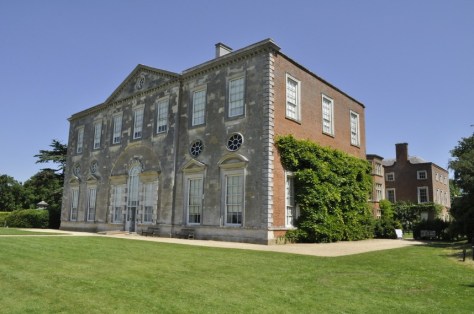


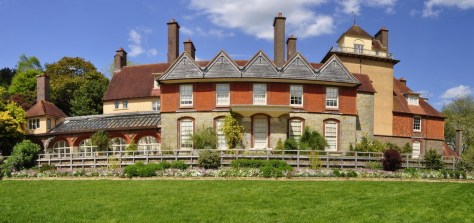


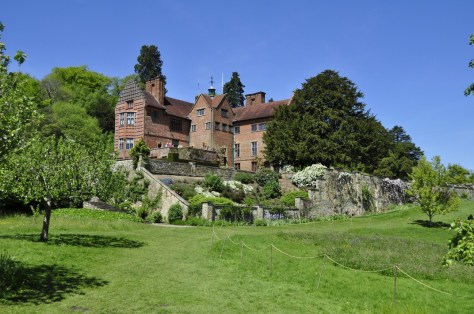


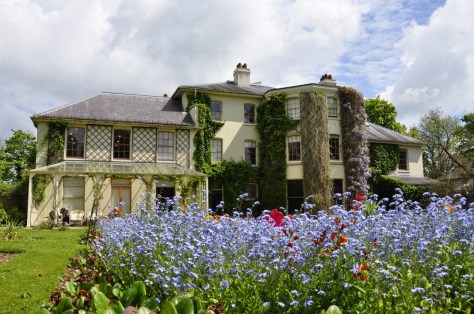
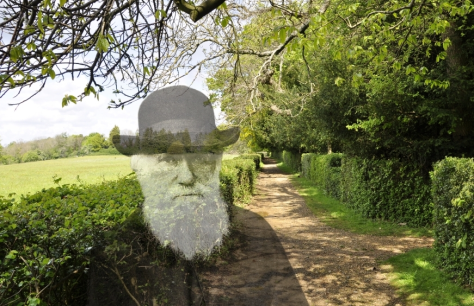
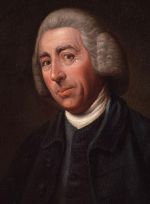


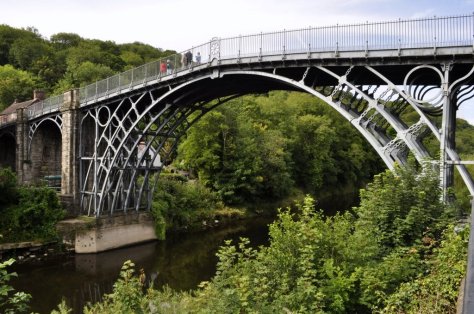
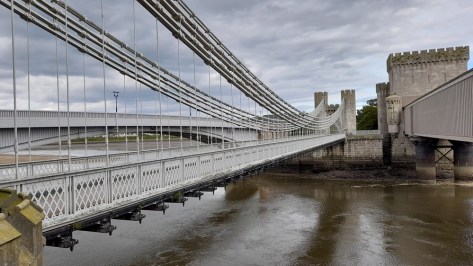


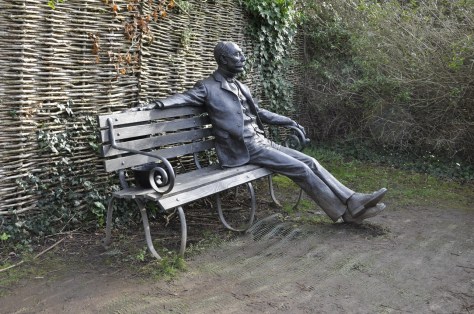
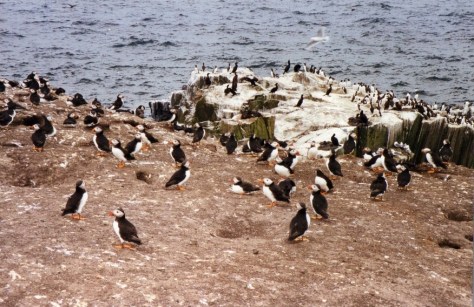


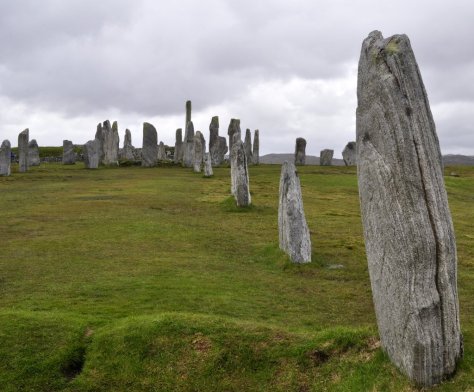


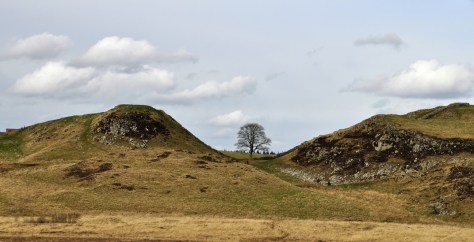
 You’ve probably never heard of
 At the heart of the empire was the capital, Angkor, with its principal temple

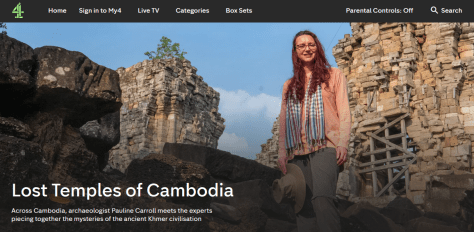



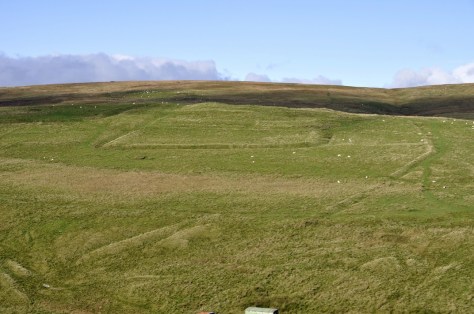


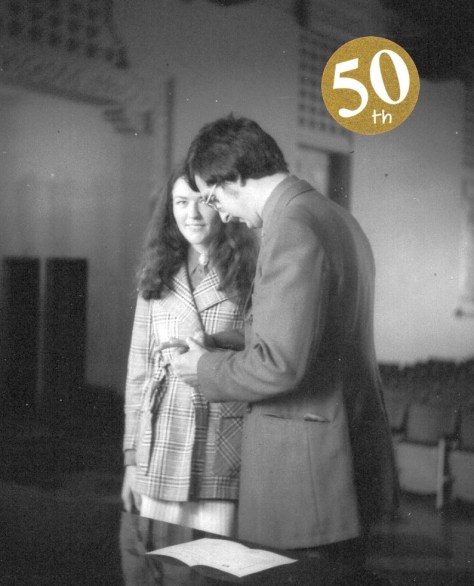
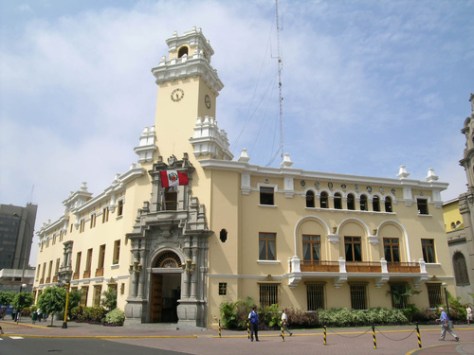
 John, a plant pathologist working on bacterial diseases of potato, was a colleague of ours at the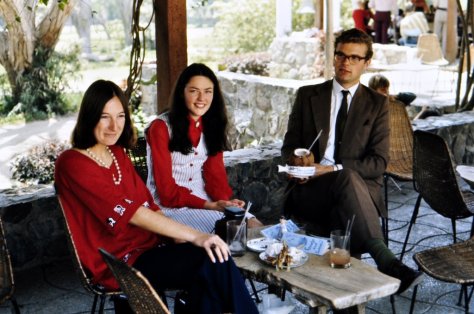

 It’s by chance, I suppose, that Steph and I got together in the first place. We met at the University of Birmingham, where we studied for our MSc degrees in
  But fate stepped in I guess.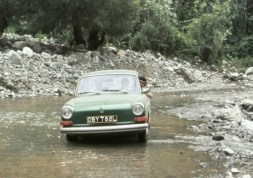
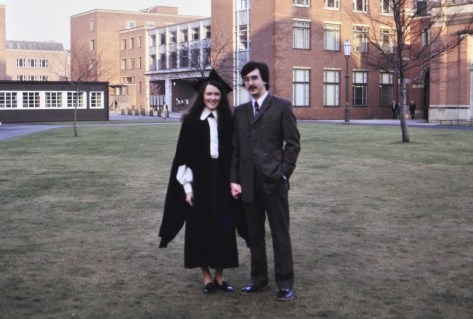



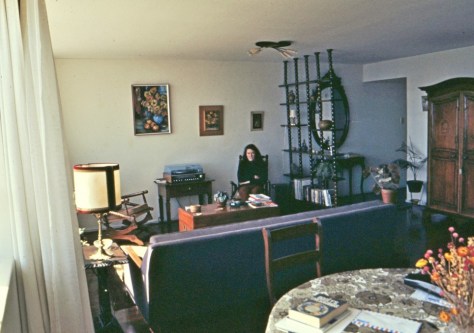
 While we were allowed to post marriage banns in the British Embassy, we had to announce our intention to marry in the official Peruvian government gazette, El Peruano, and one of the principal daily broadsheets (El Comercio if memory serves me right), and have the police visit us at our apartment to verify our address. I think we also had to have blood tests as well. This all took time, but everything was eventually in place for us to set the wedding date: 13 October.
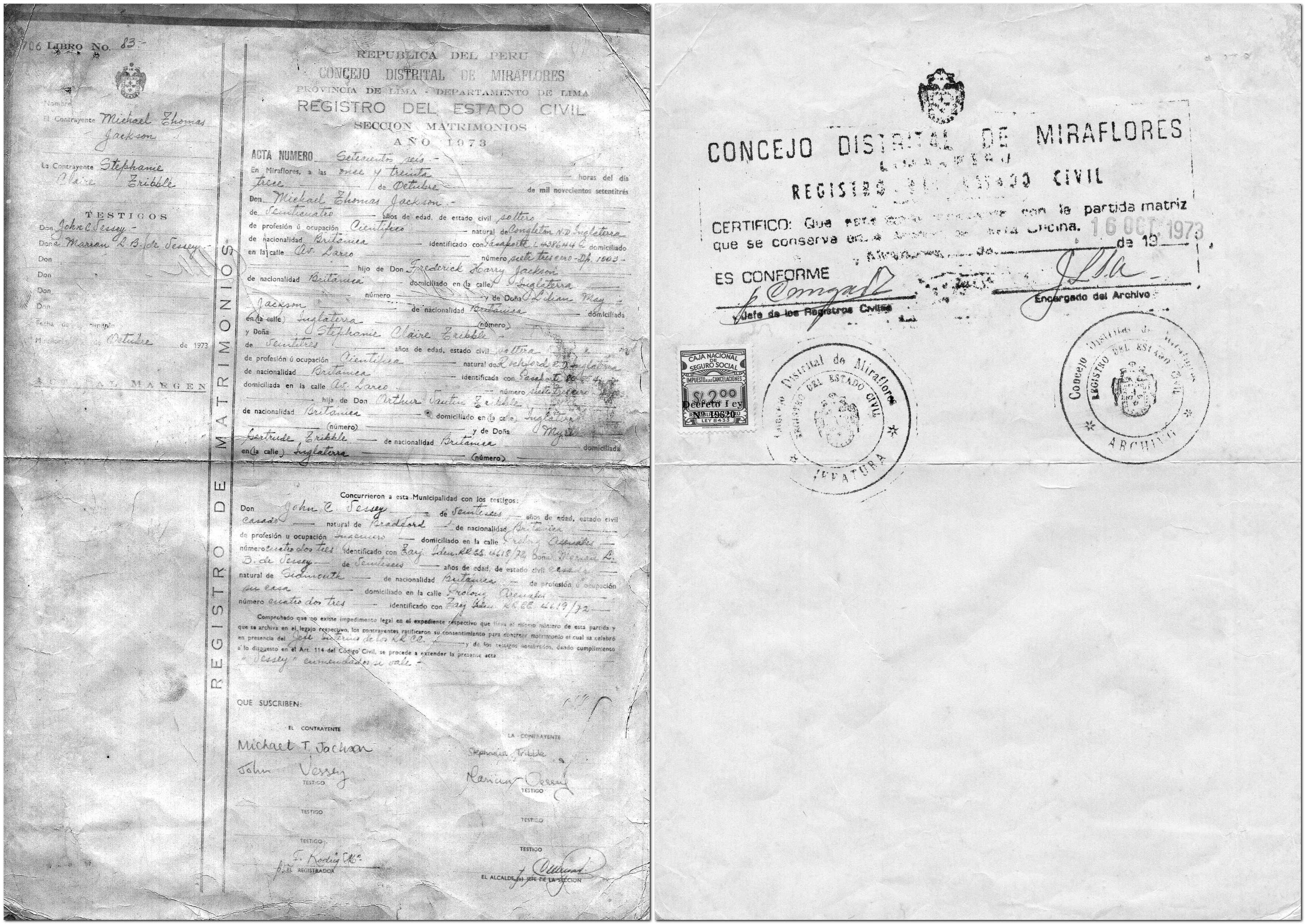
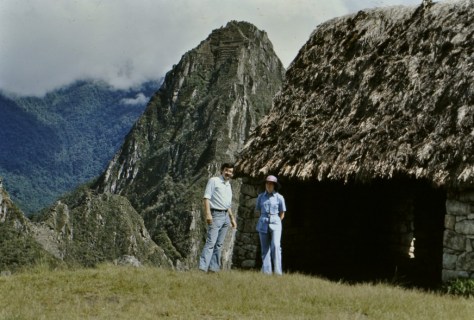
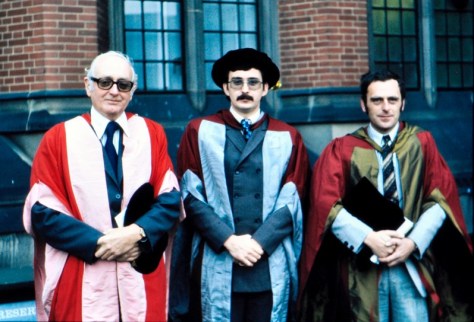
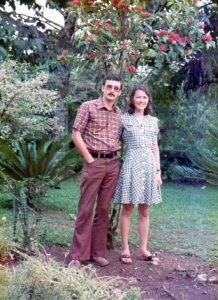
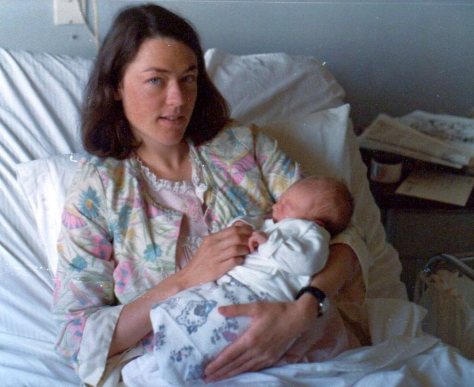
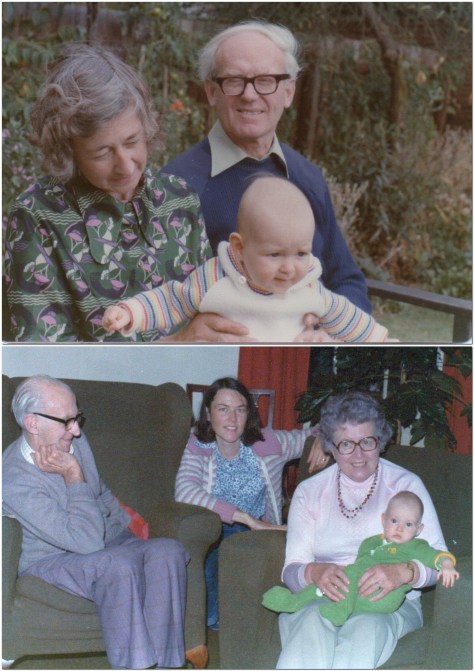
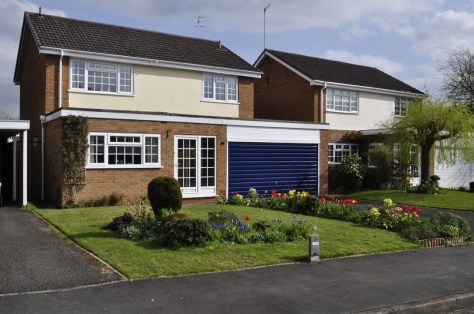
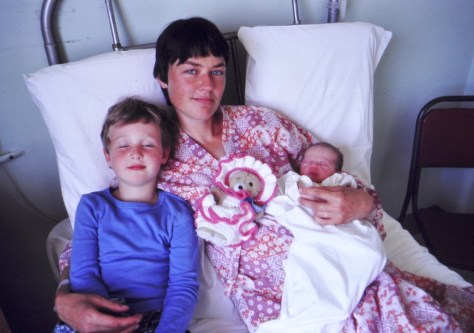


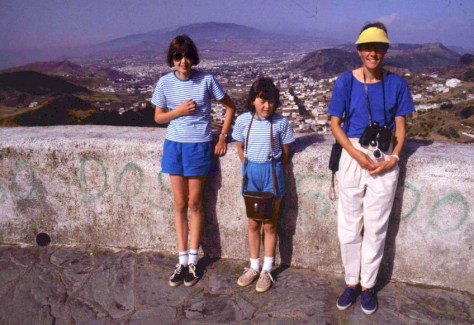
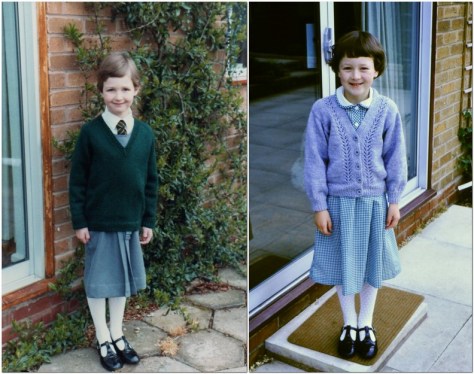


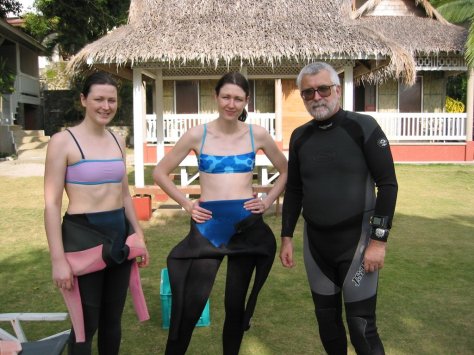

 Steph became an enthusiastic beader and has made several hundred pieces of jewelry since then. In Los Baños we had a live-in helper, Lilia, and so in the heat of Los Baños, Steph was spared the drudgery of housework or cooking, and could focus on the hobbies she enjoyed, including a daily swim in the IRRI pool, and looking after her garden and orchids.
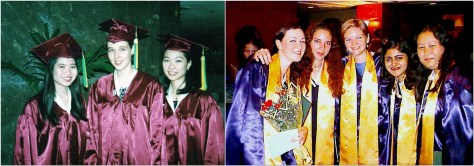


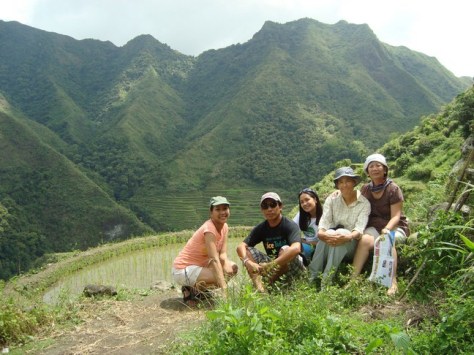
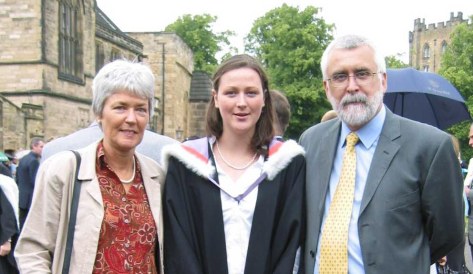
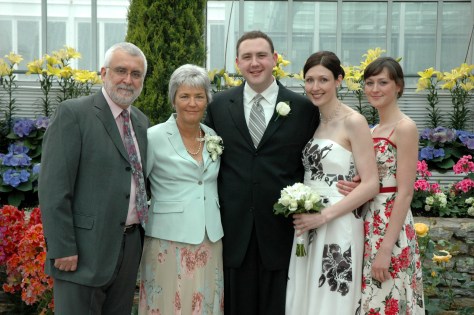
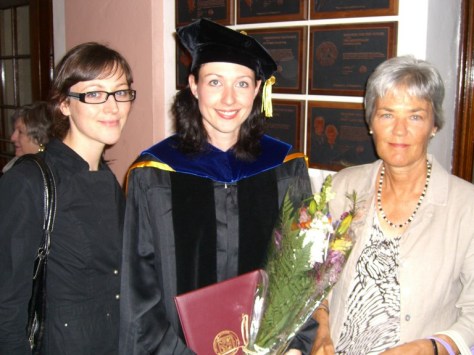
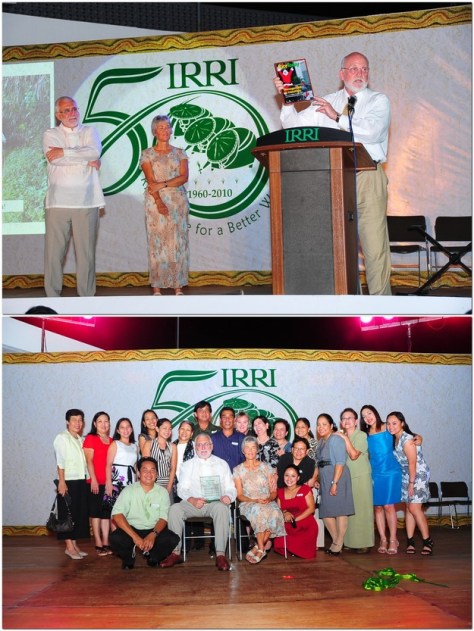
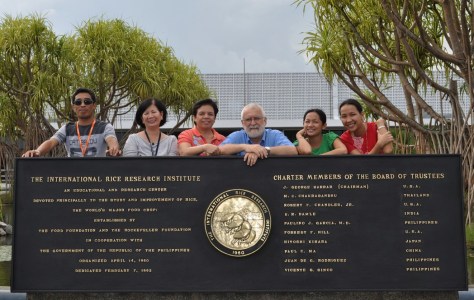
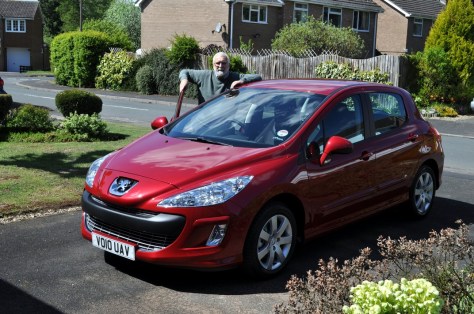
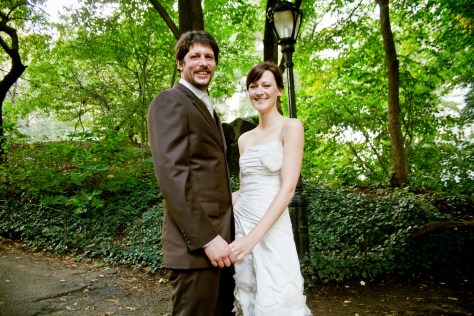
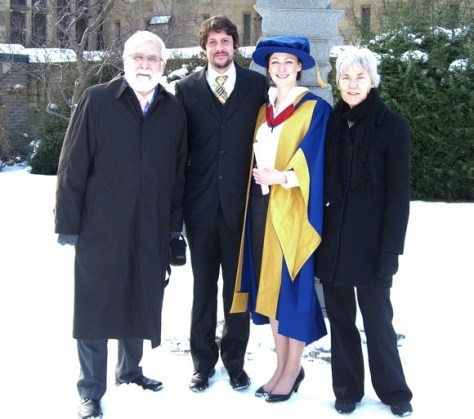

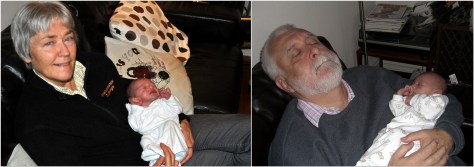
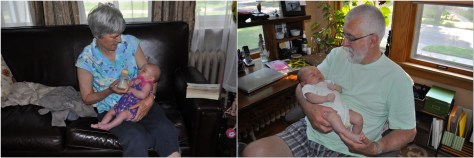
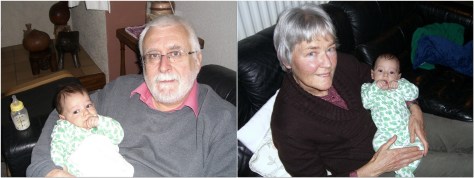

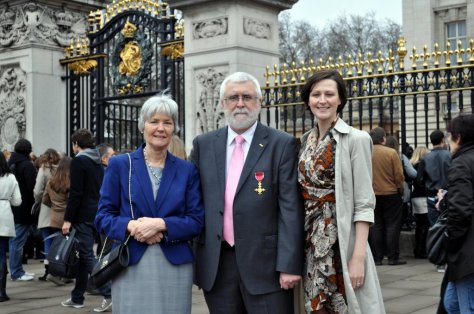
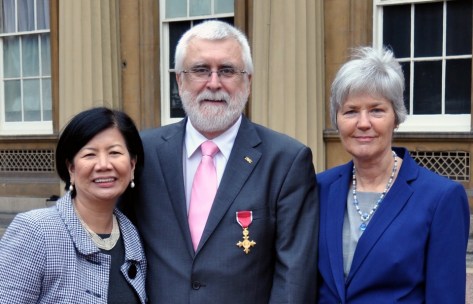

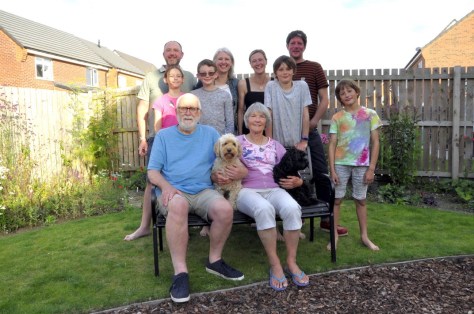

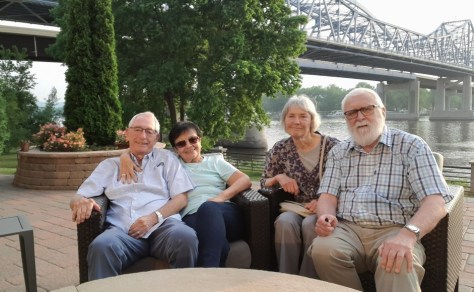
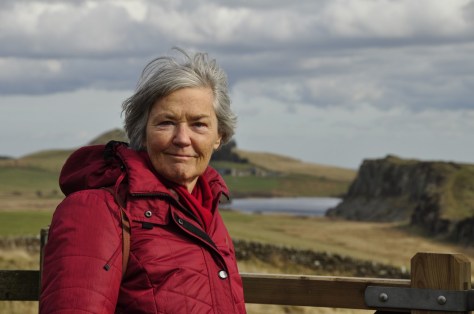
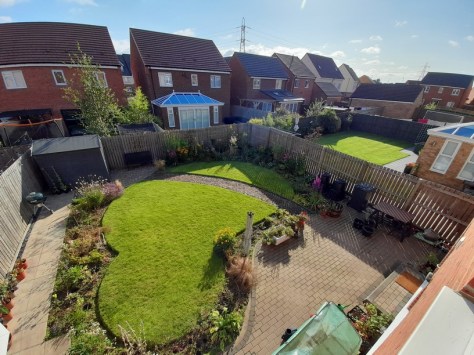
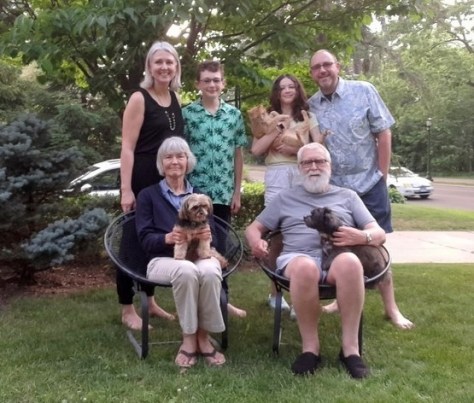
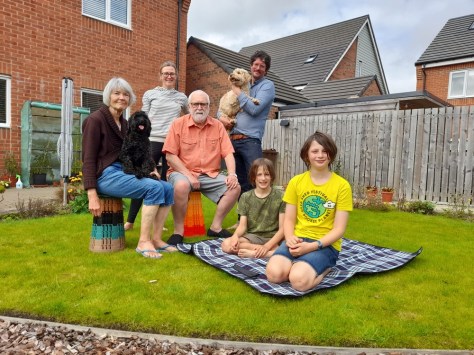
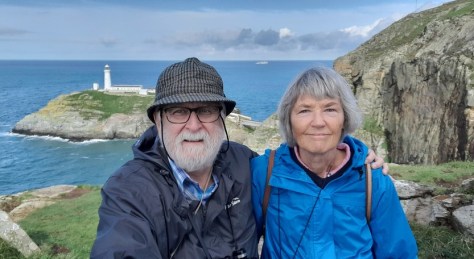


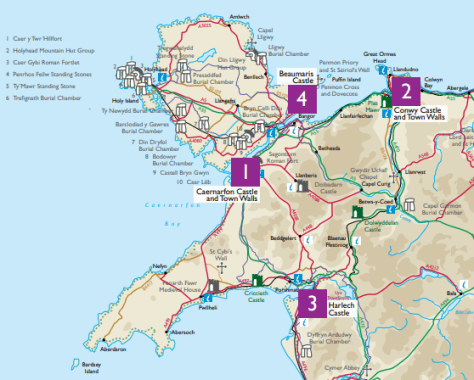
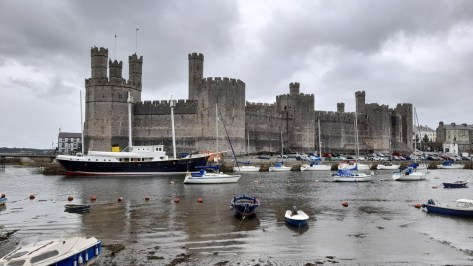


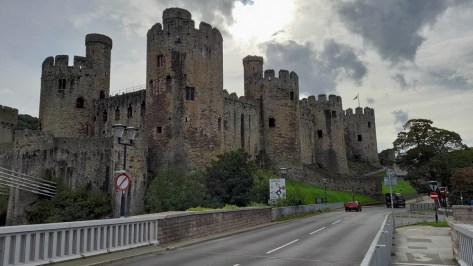


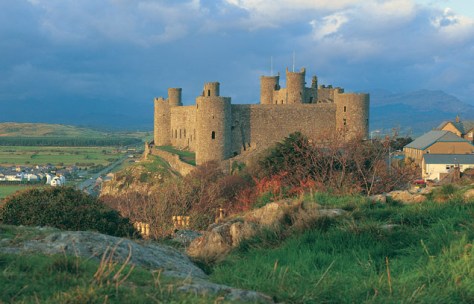


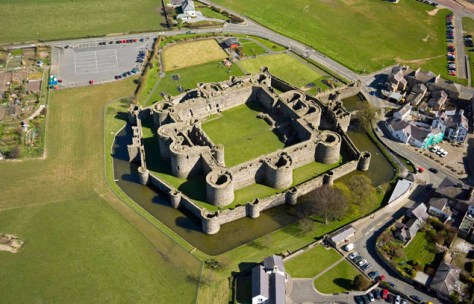


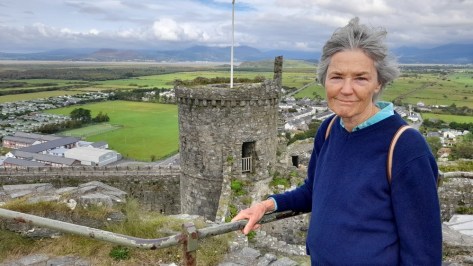
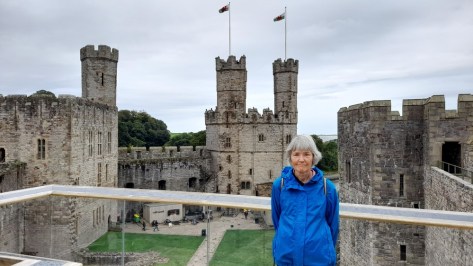
 Speke Hall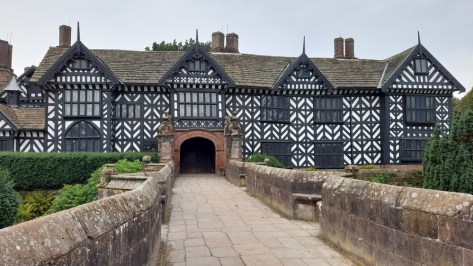
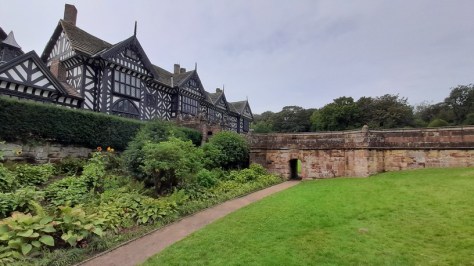
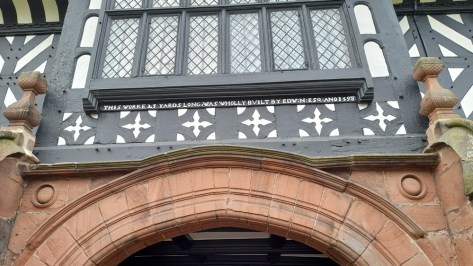
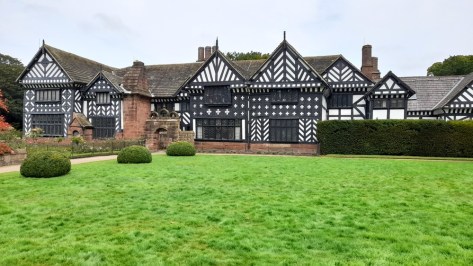
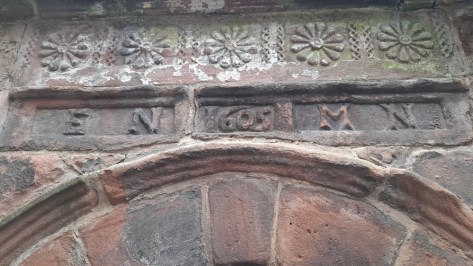
 There were a number of tenants over the centuries, the most prominent being


 Bodnant
 Like other gardens we have visited (such as Cragside in Northumberland), it never ceases to amaze me what vision the creators of these gardens had. They introduced and planted all manner of species, with many trees today reaching skywards more than 100 feet (among them various redwoods), a landscape they could only have dreamed about but never seen. It has been left to their descendants to nurture that vision alongside the National Trust.


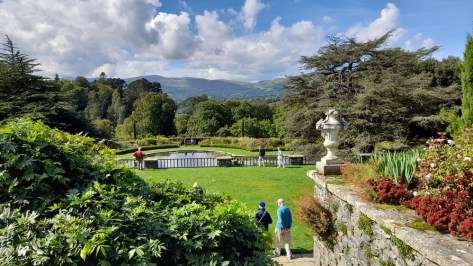


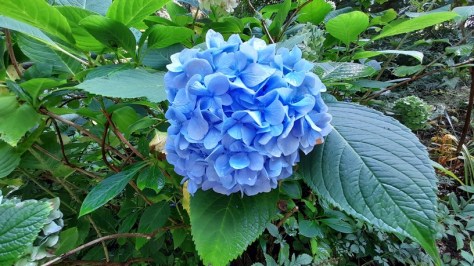


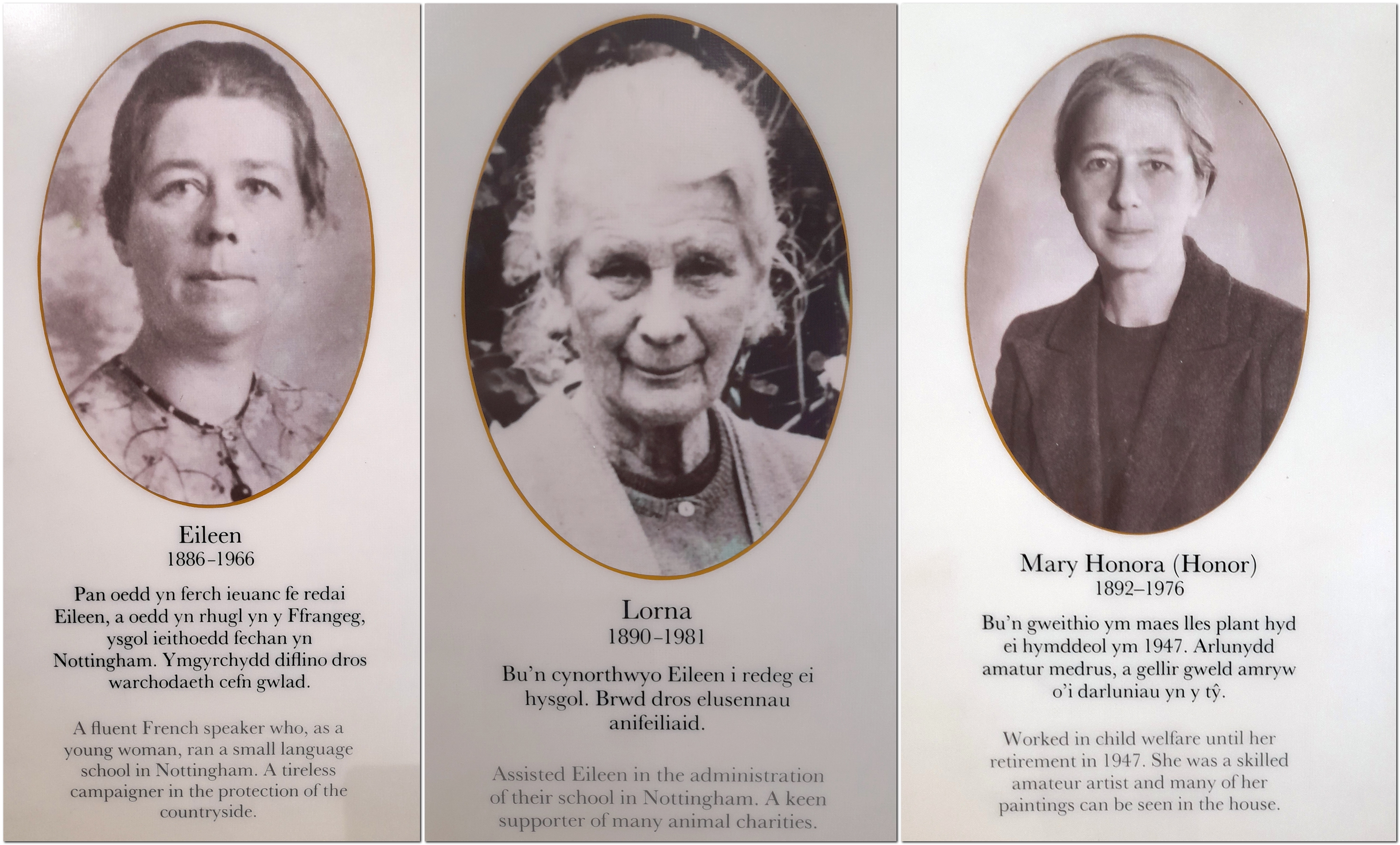


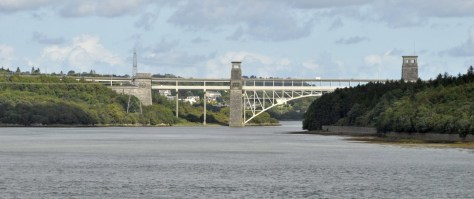
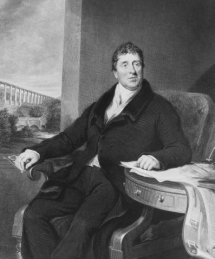
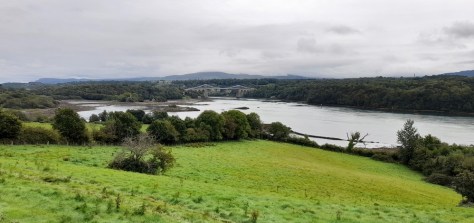
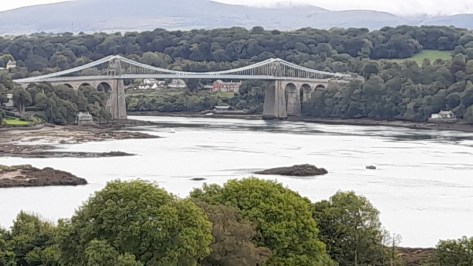


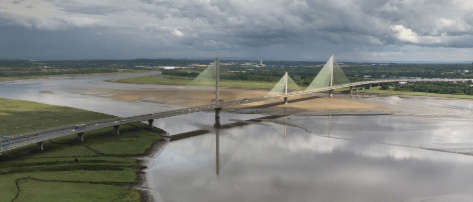


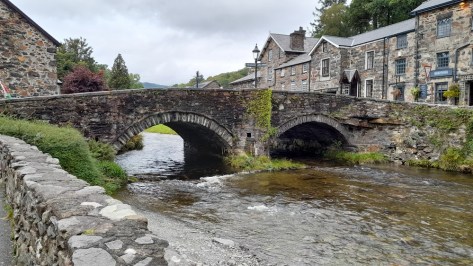


 According to the legend, Llywelyn returned from a hunting trip (when—unusually—he hadn’t taken Gelert along), only to find his son missing from his cradle, and the dog covered in blood. Believing that the dog had killed his son, he thrust his sword through its heart. At that moment he heard a cry and discovered his son was alive. Beside the boy was a dead wolf that Gelert had killed while saving the baby. Grief-stricken, Llywelyn buried the hound where we now find the grave.



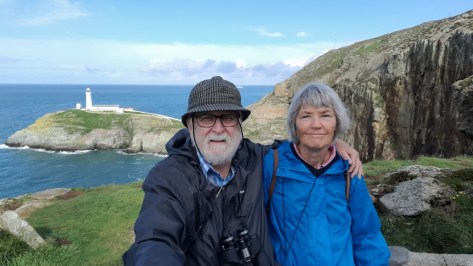


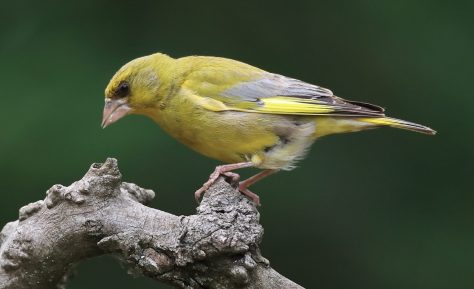


 towards South Shields, Jarrow, and Hebburn on the A185, and a brown sign for Jarrow Hall and St Paul’s, with the English Heritage logo (right) prominently displayed. A road we’d not been down until last week.
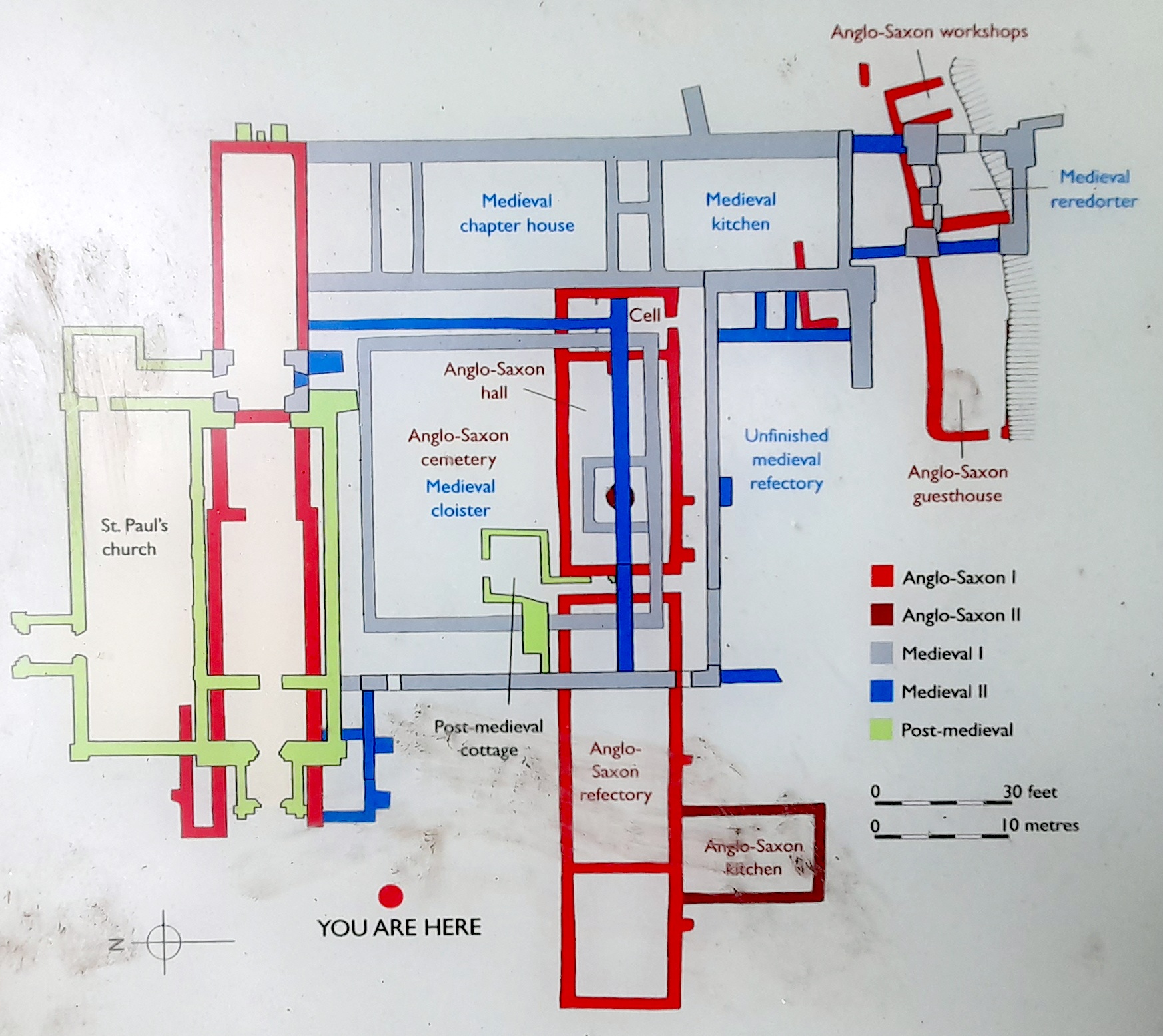
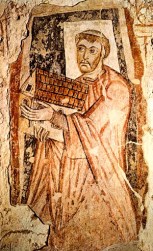 The church and monastery were built on land given by

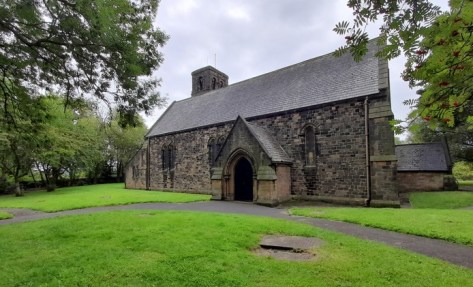


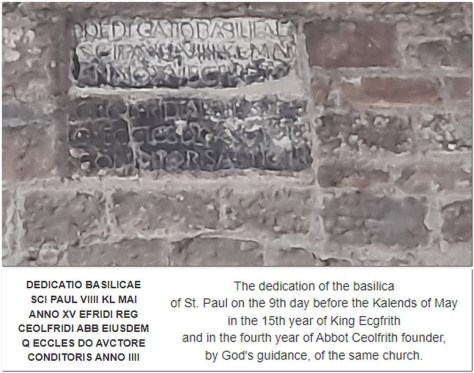


 I guess I should begin this section with


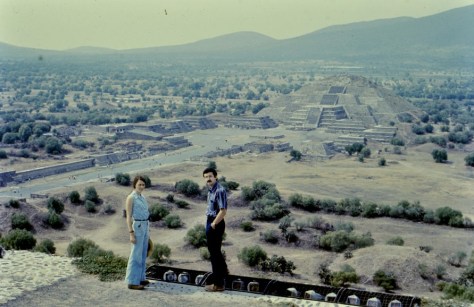


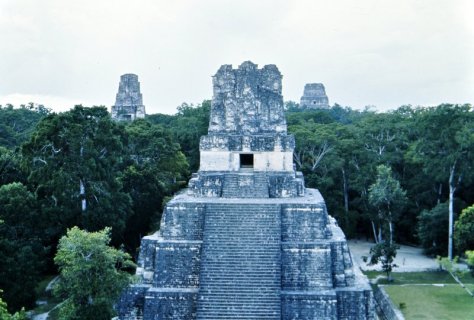
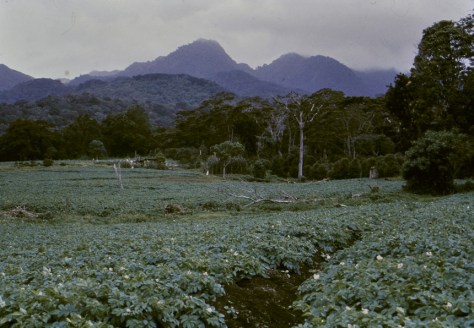
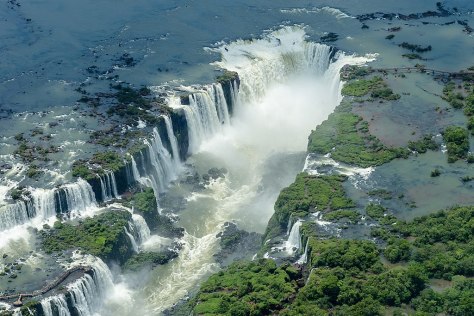


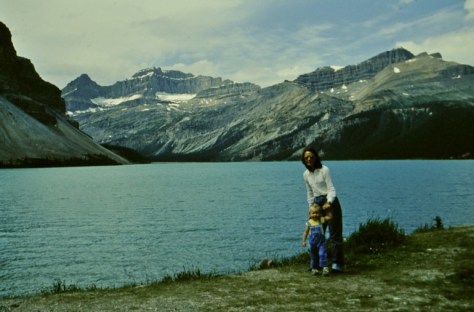
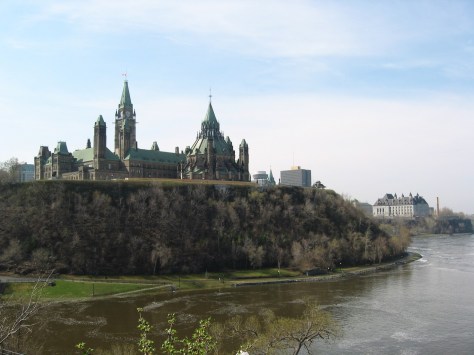


 Let’s turn to Asia now. I spent almost 19 years in the Philippines, joining the


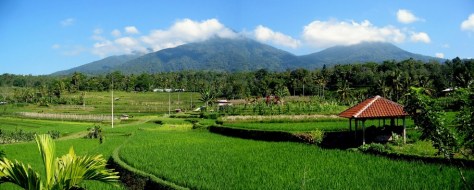
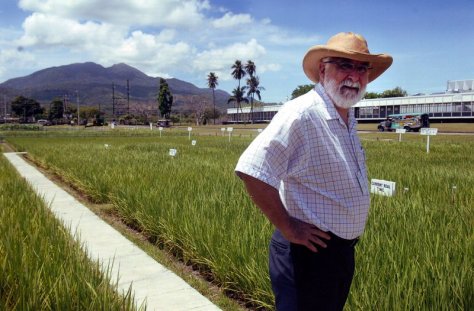


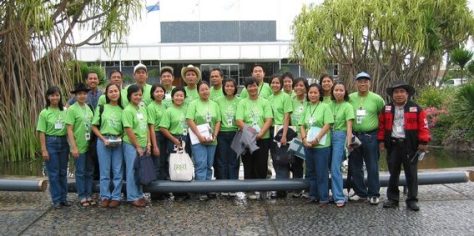
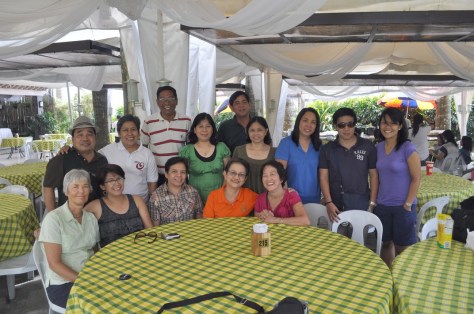


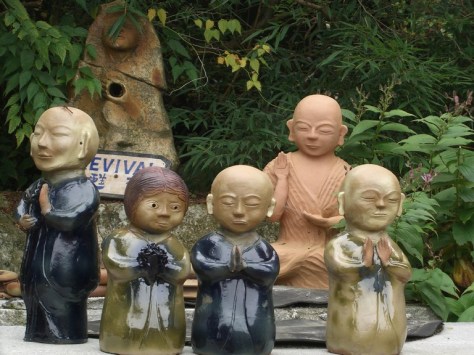
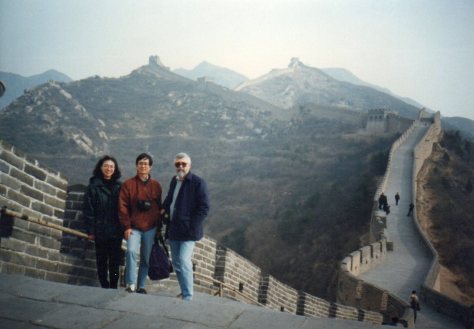
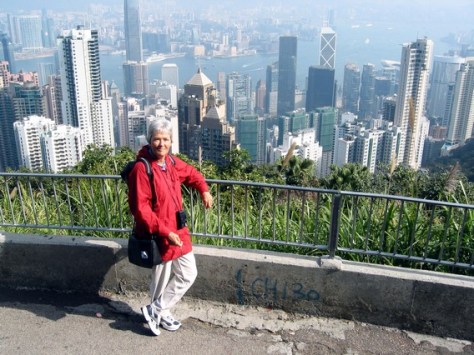
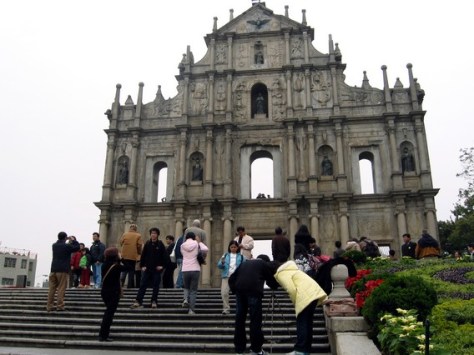

 In 2014 IRRI once again asked me to chair the science committee for the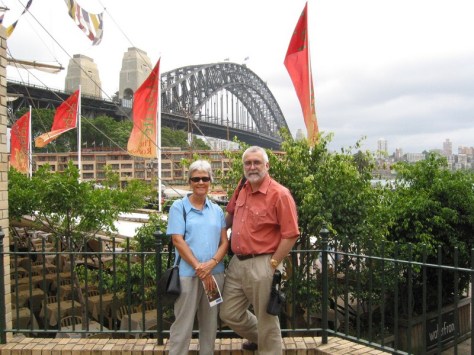


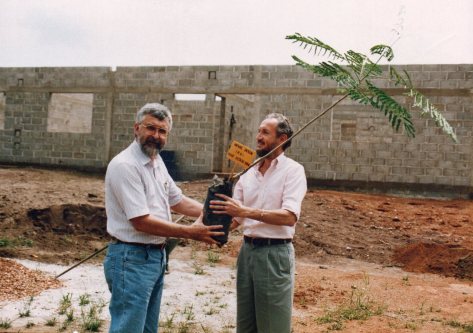
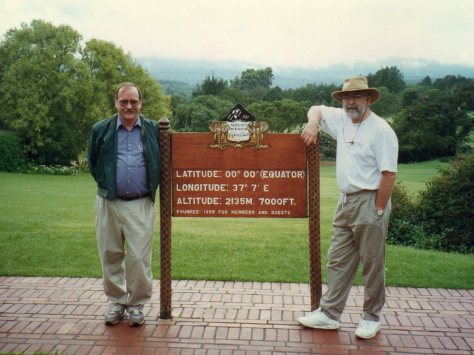


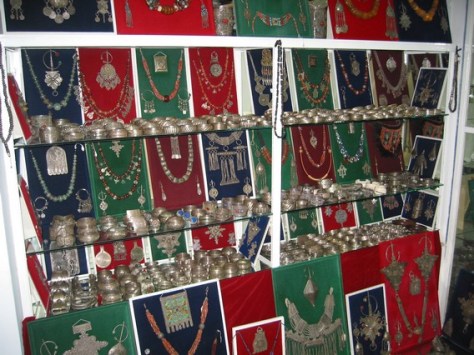
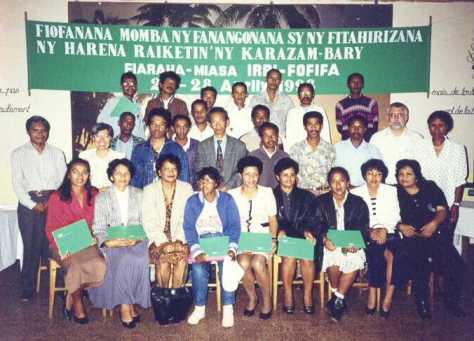

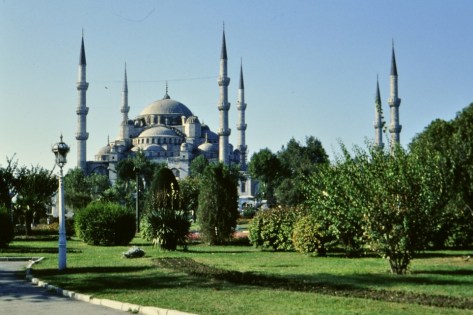
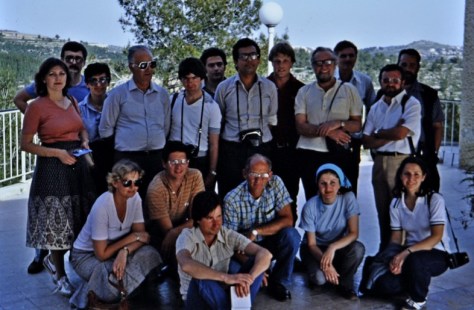
 I was next in Germany in the late 1980s, when I visited agricultural research institute near Hannover (also taking in the scenic town of Celle), before crossing into East Germany. I spent several interesting days at the
  There I gave a series of seminars on crop evolution and genetic conservation (focusing on potatoes) to staff of the agricultural research institute (IHAR). My hosts took me to the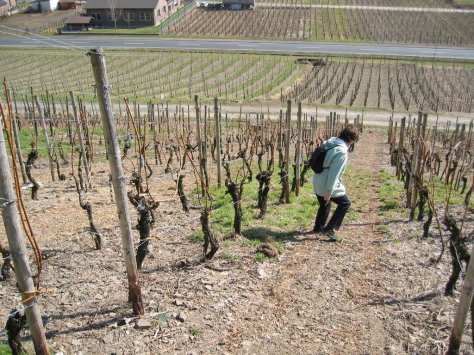
 One of the best trips I made was to view the Matterhorn in Switzerland near Zermatt. I had a free weekend before I had to travel on to Rome, so I took the opportunity of a day excursion from Bern.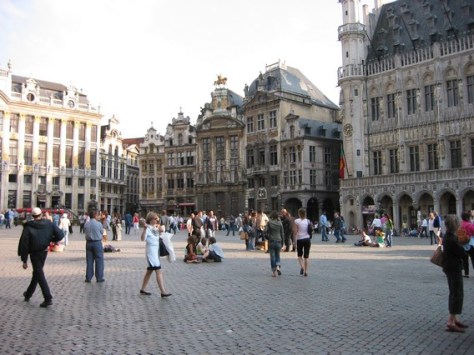
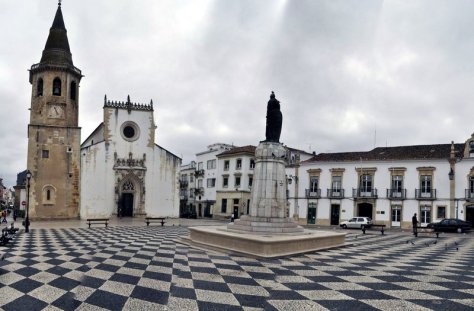

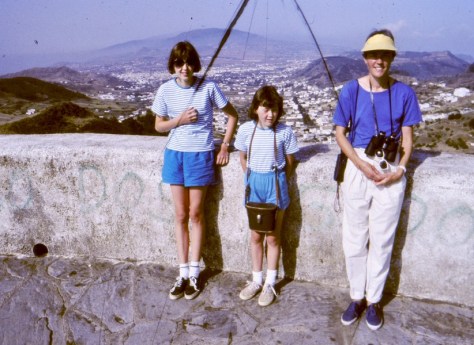
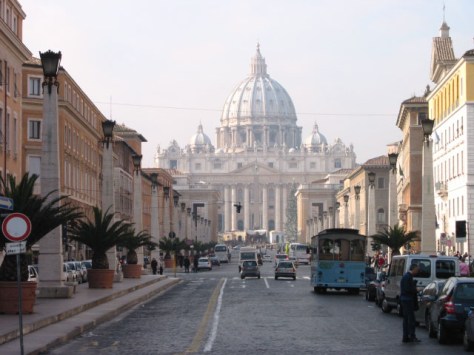


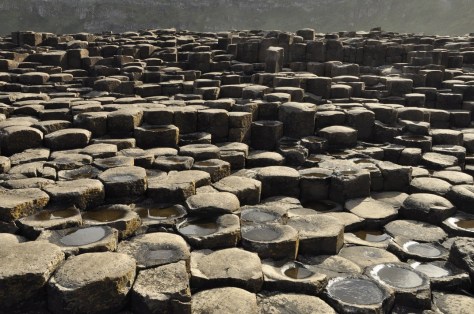


 Anyway, the forecast for yesterday seemed hopeful, so we decided to make the short, 22 mile and 30 minute drive south to Durham to take in Crook Hall Gardens. The Trust acquired the property in 2022, and if I understood correctly, it was opened to the public for the first time in March this year.
 Crook Hall was a family home since the 1300s, and occupied over the centuries by several families who stamped their mark on the property. Originally it was the home of the Billingham family for 300 years from 1372. Between 1834 and 1858 it was rented by the Raine family. Canon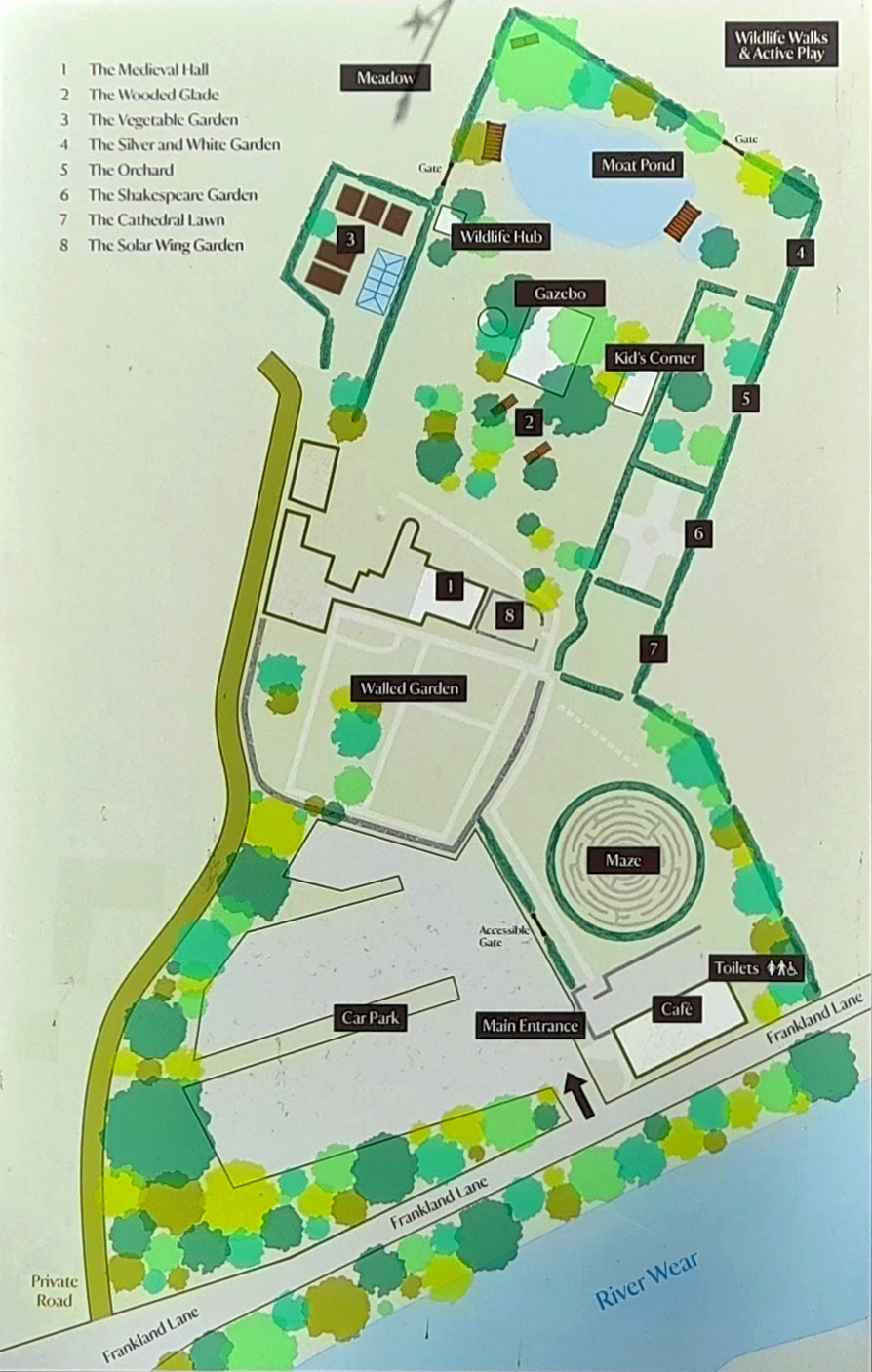


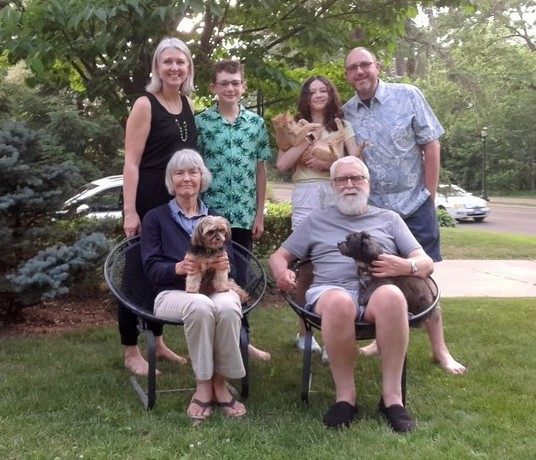
 Late afternoon, and Michael cranked up the BBQ and we enjoyed a very satisfying dinner of


 The local supermarket, Lunds & Byerlys has relocated a couple of blocks west along Ford Parkway to Highland Bridge. On the first floor they have opened The Mezz Taproom—with a terrace overlooking the new development—where you have the choice of about 20+ beers on tap, plus some wines. Michael took me there one blisteringly hot afternoon a few days after we arrived in St Paul.







 While in Minnesota, I took the opportunity of looking up an old friend,
  The ICWG-GR brought together representatives from all the CGIAR centers with genebanks, and others like Phil from IFPRI who were conducting research on the impact and use of genetic resources. At that particular time, Phil and a couple of colleagues were analysing the economics of conserving crop genetic resources, and developing methodologies to estimate the costs of running genebanks. I contributed to chapter 6 on rice in this book (right) published by CABI in 2004. It was an important publication as the centers were developing ideas on how to fund their germplasm collections in perpetuity and what it would take to set up an endowment fund for that purpose (now managed through the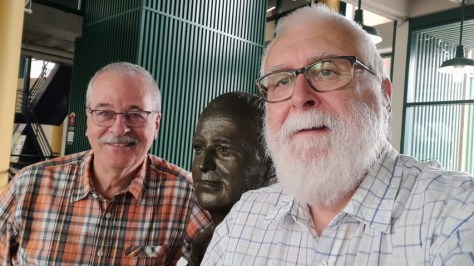


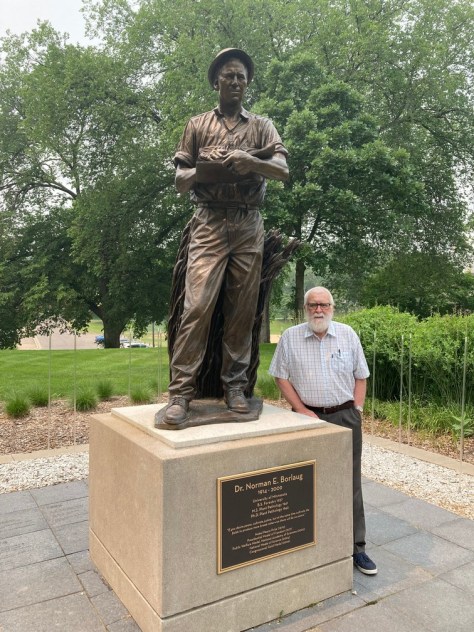
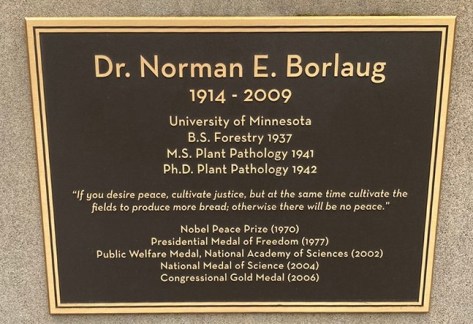
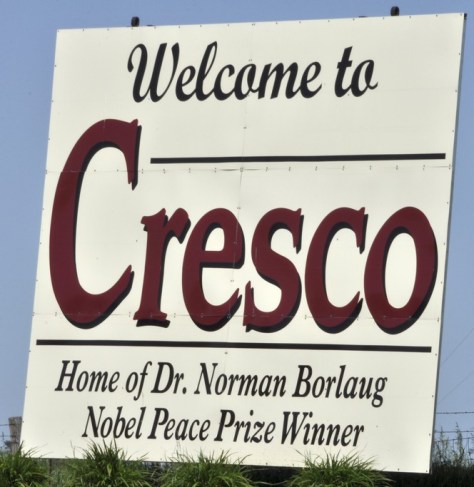


 The
The 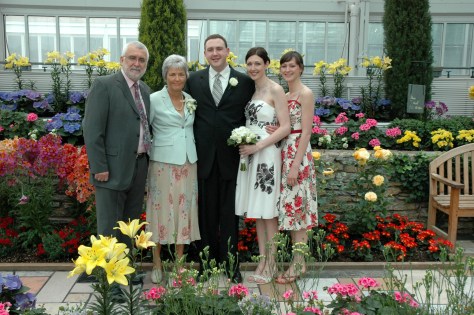
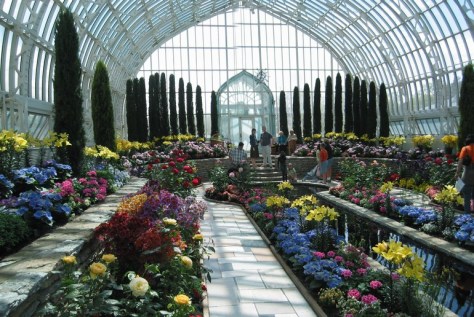
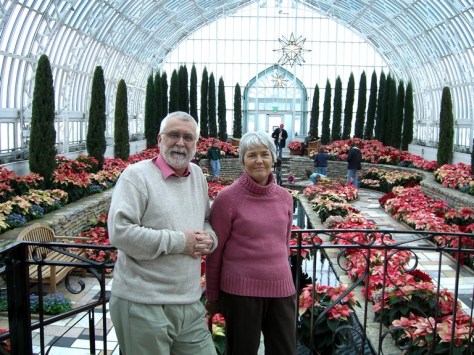

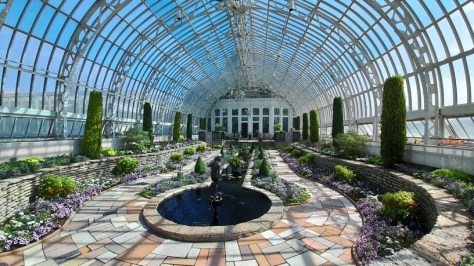


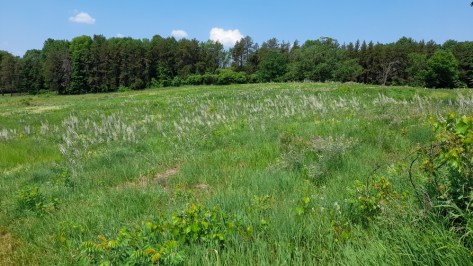





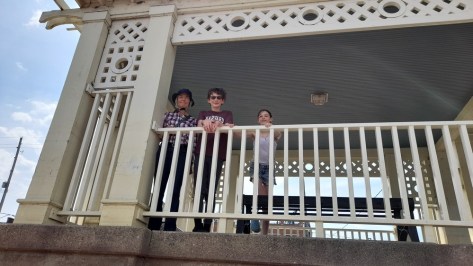


 The route south on US61 and US14 follows the river, and you’re never very far from it. In several places the Mississippi opens out into large lakes before continuing its flow south to the Gulf of Mexico. And it was while we were driving along that I realised just how close to the river the railroad line was built, and which we experienced in 2015 on


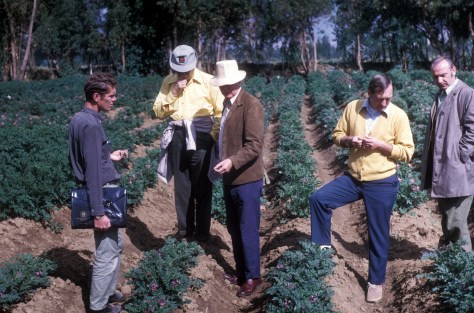
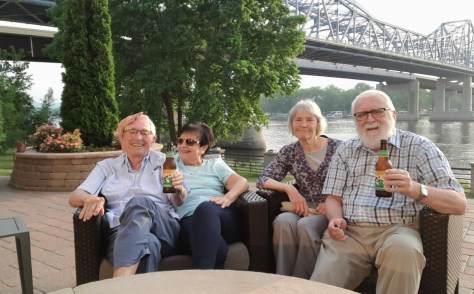
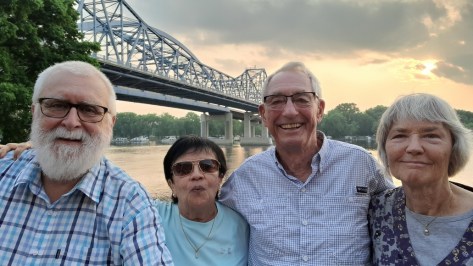


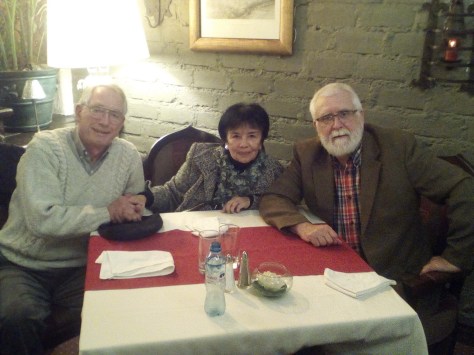
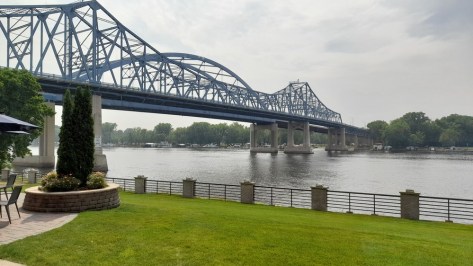


 So it was with some slight trepidation that I went online at the end of January and booked flights to the Twin Cities with Delta, to depart from Newcastle International Airport (NCL) on 29 May, and returning from Minneapolis-St Paul (MSP) on 19 June. And with both schedules transiting through Schipol (AMS). Until Delta made a schedule change for us, and had us returning via Detroit (DTW) and AMS.

 Once again, Steph and I were directed to the front of the queue and once on board, settled ourselves into seats 30A and B in the Delta Comfort+ section of the economy cabin.
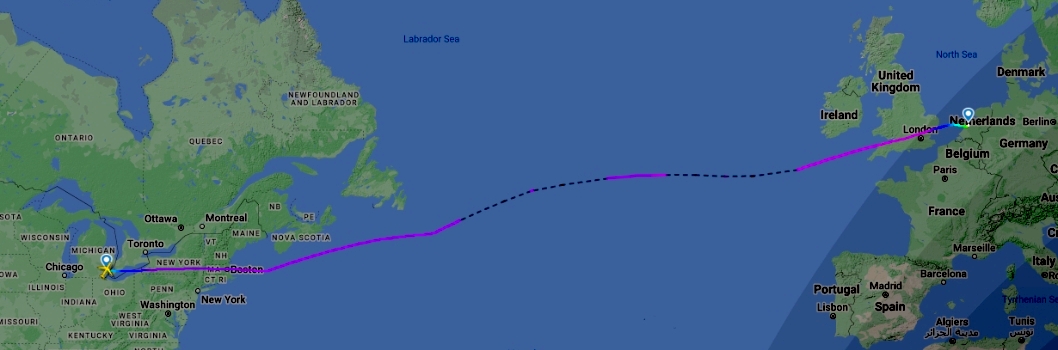
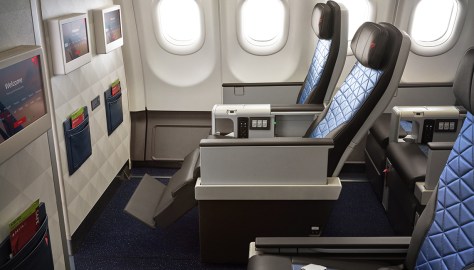
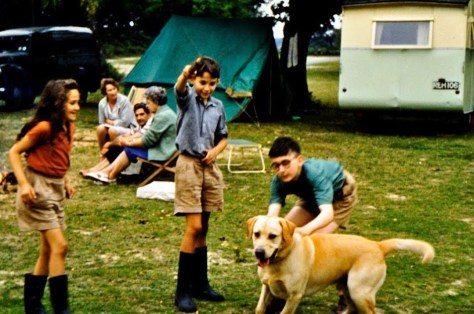
 By 1976, Steph and I had moved to Costa Rica, where I was CIP’s regional leader for Mexico, Central America, and the Caribbean. In early 1980, I was returning from a trip to the Dominican Republic, and transiting overnight in Miami. Joining one of the (interminable) immigration queues, I looked over to my right and, lo and behold to my surprise, Dave was just a couple of passengers ahead of me in the parallel queue. He had just flown in from the UK, on his way to Bolivia, his second expedition there. He had a connecting flight, and once we were both through immigration we only had about 15 minutes to chat before he had to find his boarding gate. What a coincidence!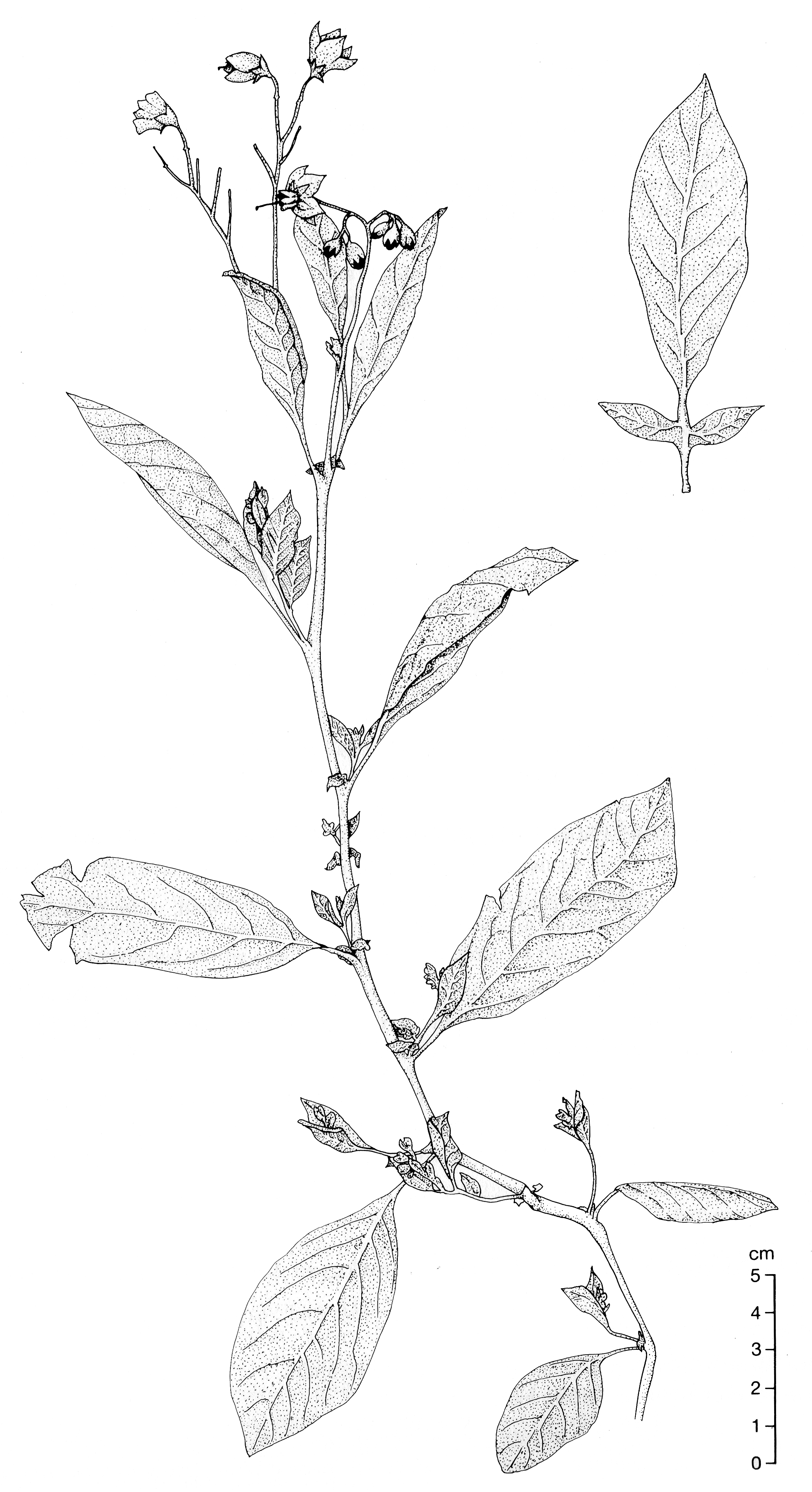
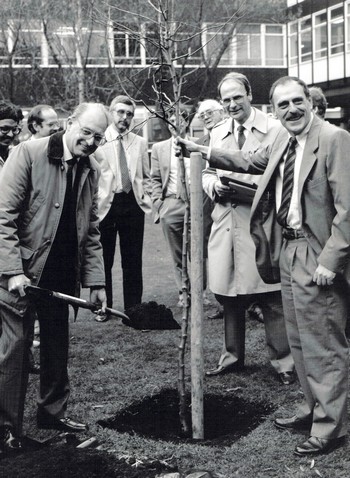
 However, by 1990, Trevor had left IBPGR and was working out of Washington, DC, helping to set up the International Network for Bamboo and Rattan (INBAR, now the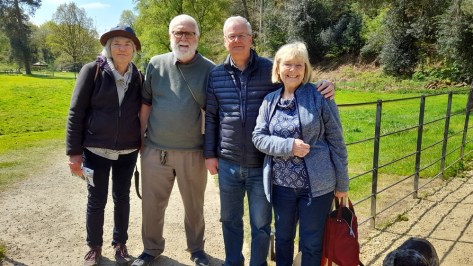
 With the onset of the Covid-19 pandemic in March 2020, our plans for travel that year and the next were well and truly scuppered. In 2022, Hannah, Michael, Callum, and Zoë came over to the UK for a fortnight.
 Then, in July 1979, Steph and 15 month old Hannah joined me on a conference trip to Vancouver, and we stopped over for a couple of nights in San Francisco. We returned to Costa Rica via Edmonton in Canada (where my elder brother Ed and his wife Linda lived) and Madison, WI with a side trip to visit a potato research station at Sturgeon Bay, 185 miles northwest of Madison.






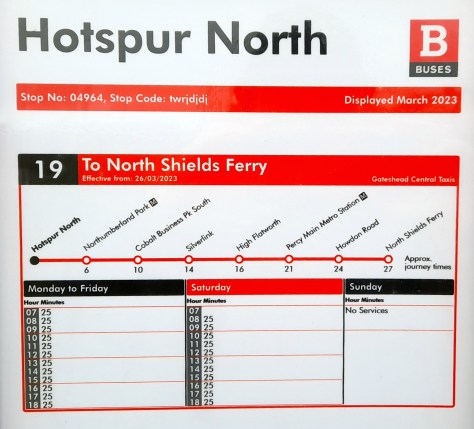


 We didn’t actually have any plan at all yesterday, apart from making the round trip. But as soon as we had landed in South Shields we discovered that the remains of an important Roman fort (which I had read about but totally forgotten) were less than a mile away. So we headed through the town center to reach


 A balanced diet . . .